



Blue and brown box braids work because the brown keeps the blue from turning loud, and the blue keeps the brown from blending into the crowd. That balance is the whole trick. Done well, the style looks rich and deliberate; done badly, it can look like two hair packs fighting for attention.
Small choices change everything.
A chestnut base with cobalt ends reads very differently from a navy-heavy set with thin mocha braids tucked between the rows. Braid size matters. So does parting. So does whether the blue sits at the crown, near the face, or only at the ends where it flashes when you move.
I’ve always liked two-tone braids for one simple reason: they give you color without forcing the whole style into one mood. Some looks feel soft and expensive. Others feel bold and sharp. Blue and brown box braids can do both, and that’s why they stay interesting even after you’ve worn braids for a while.
The best part is how adaptable they are. You can keep the blue hidden until you toss your braids into a ponytail, or you can put the color right up front and let it do the talking. Either way, the mix of cool blue and warm brown has more range than people expect, and the details below show just how far you can push it.
1. Honey Brown Roots with Cobalt Blue Ends
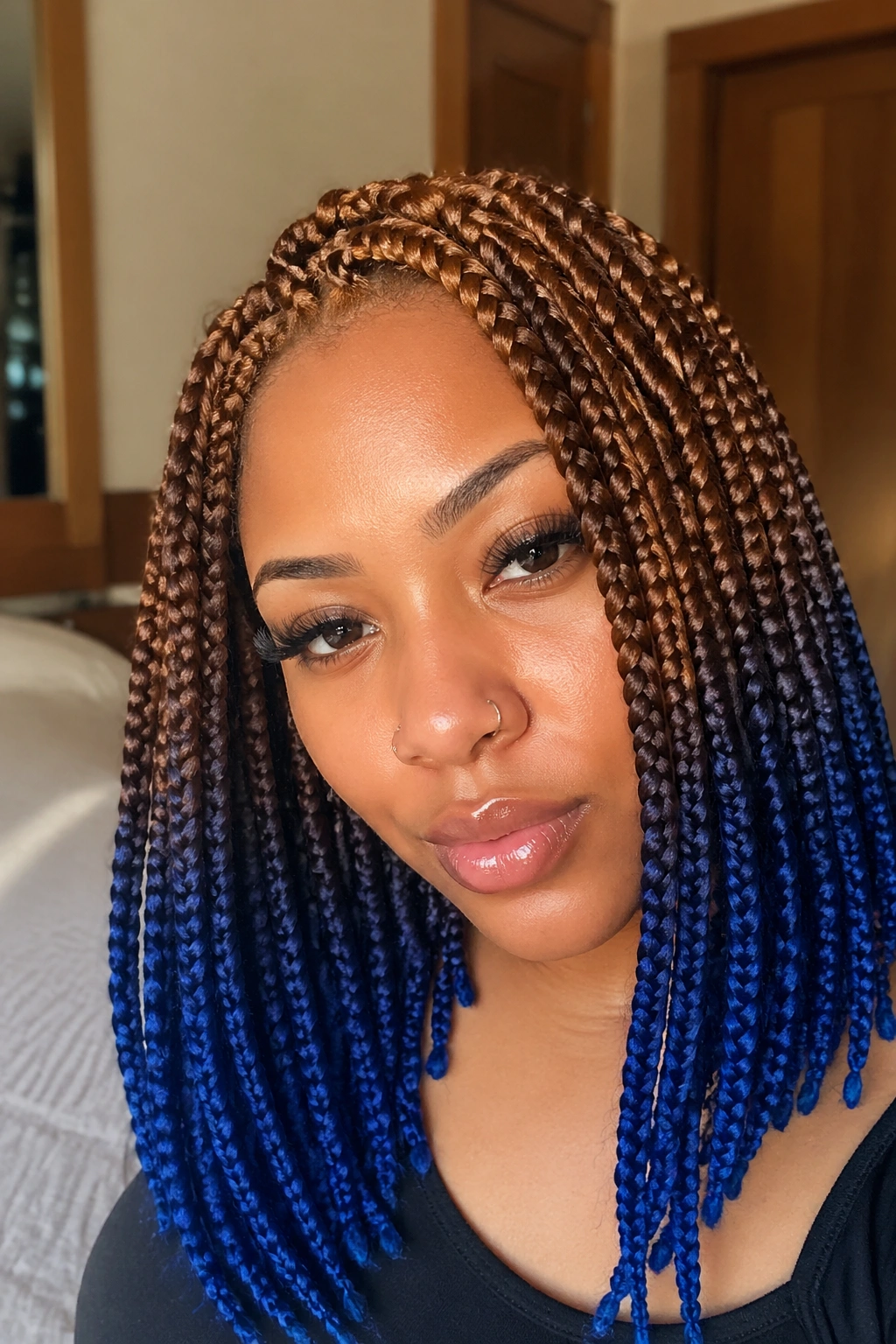
Brown keeps this look grounded. The honey-brown base softens the blue, which matters if you want color that feels wearable instead of loud for the sake of being loud. Cobalt at the ends gives the braids a clean finish, and it looks sharper than a random blend of blue through the whole braid.
Why the gradient works
The eye reads the brown first, then lands on the blue at the ends. That gives the style a little movement without making every braid fight for attention. I like this version on medium-length box braids, especially when the ends brush the collarbone or fall a few inches below it.
It also grows out gracefully. When your roots start showing, the brown base does a lot of the visual work, so the style does not fall apart fast. That’s a real advantage if you keep braids in for more than a few weeks.
- Best braid size: medium or jumbo, since the color shift shows more clearly on thicker sections.
- Best blue shade: cobalt or royal blue, not neon.
- Best brown shade: honey, caramel, or chestnut.
- Good match for: people who want color without covering the whole head.
One smart move: keep the blue in the last third of the braid, not halfway up. The contrast lands harder that way.
2. Chestnut and Denim Alternating Feed-In Braids
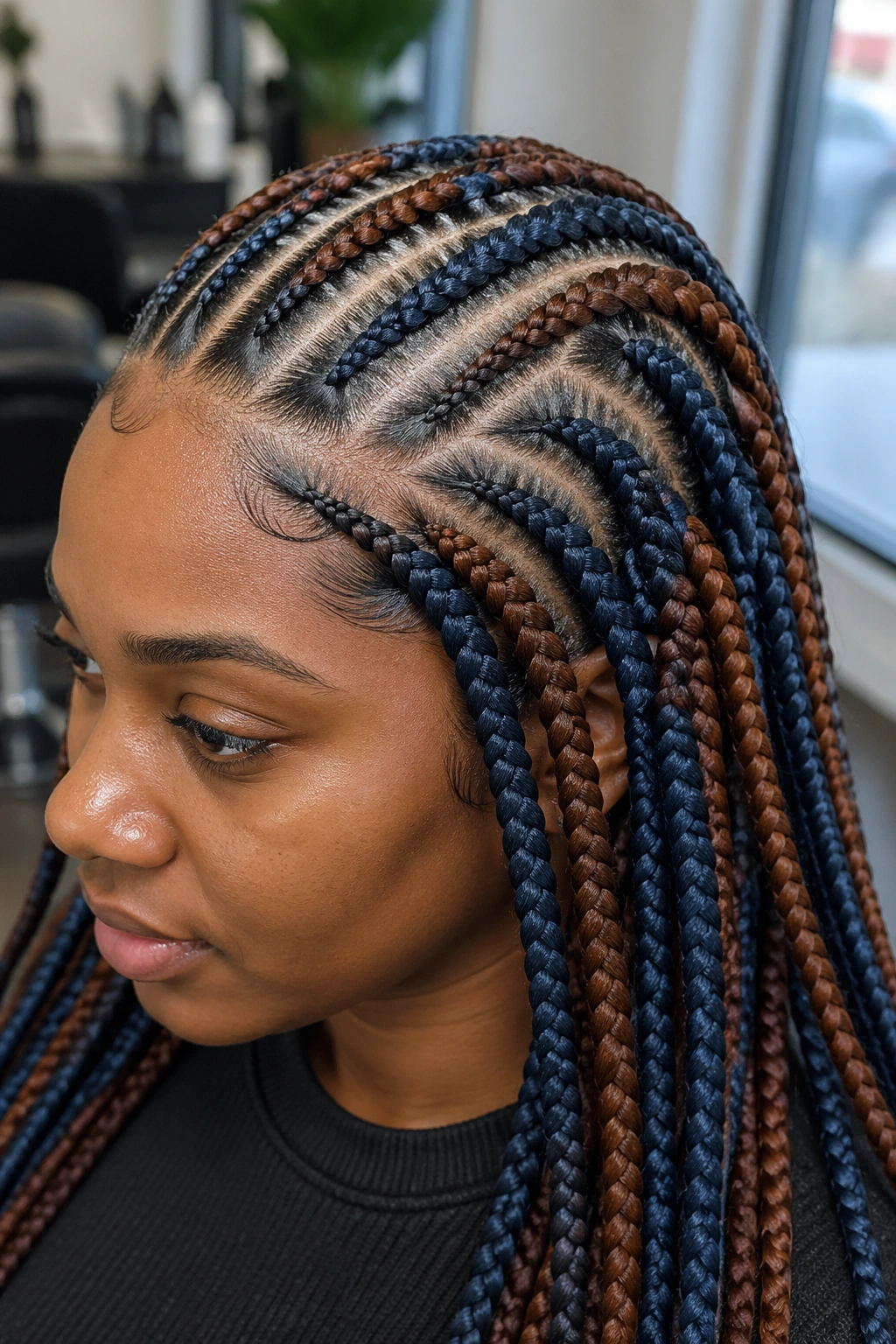
Why does alternating the colors look so different from an ombré? Because the braid itself becomes the design. Each section carries its own little beat, and the whole head gets a rhythm that you can see from across the room.
Feed-in braids make that rhythm even cleaner. The brown and denim-blue pieces don’t melt together; they sit next to each other in a way that feels orderly, almost graphic. If you like styles that look neat from every angle, this one earns its place.
There’s also a practical upside. Alternating braids let you control where the brighter color lands, so you can place more blue toward the sides or the back if you want a softer front view. That’s useful when you want color, but not too much of it near your face.
The key is consistency. Random placement looks messy fast. A steady pattern, even if it’s simple, gives the braids a stronger finish and keeps the two colors from feeling scattered.
3. Jumbo Peekaboo Blue and Brown Box Braids
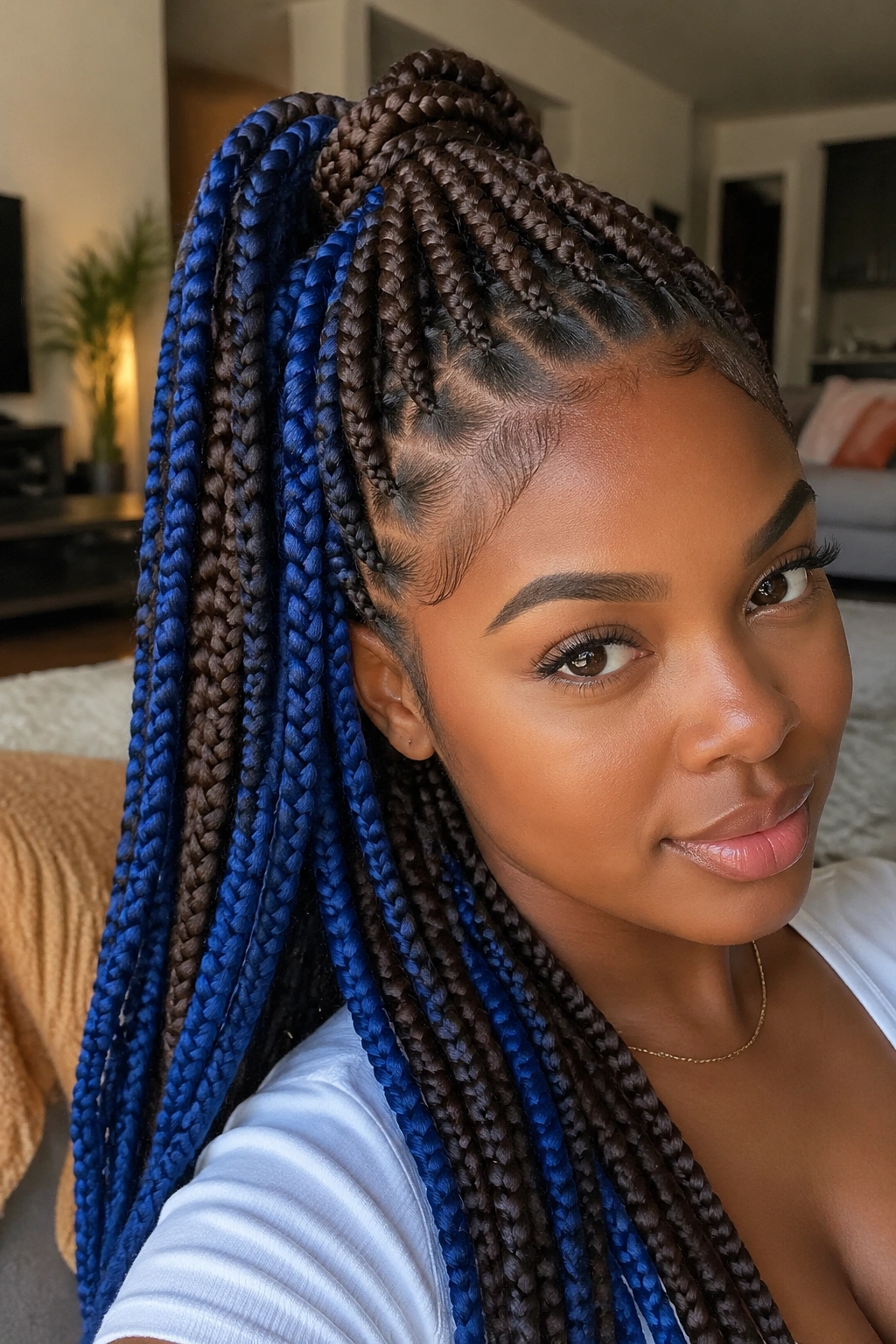
Picture your braids pulled into a half-up ponytail, and the blue flashes underneath the brown. That’s the whole appeal of peekaboo color. It stays hidden when the hair hangs loose, then shows up the second you twist, lift, or pin the braids up.
Jumbo braids make this effect easier to see because there are fewer sections and each braid carries more color. I like this style when the blue sits on the underside or inner layers. The brown stays on top, which keeps the look calm, but the blue still surprises people when the hair moves.
What to watch for
- Keep the blue underneath if you want a subtle effect.
- Use fewer, thicker braids so the color blocks read clearly.
- Skip tiny sections if you want the peekaboo effect to show.
- Choose this for updos if you wear your hair up often.
There’s one catch. Jumbo braids can be heavier than medium ones, and that weight is more noticeable when the color is concentrated in a few big sections. Ask for clean parting and a comfortable install, because a good color idea is not worth a sore scalp.
4. Blue Money Pieces Around the Face
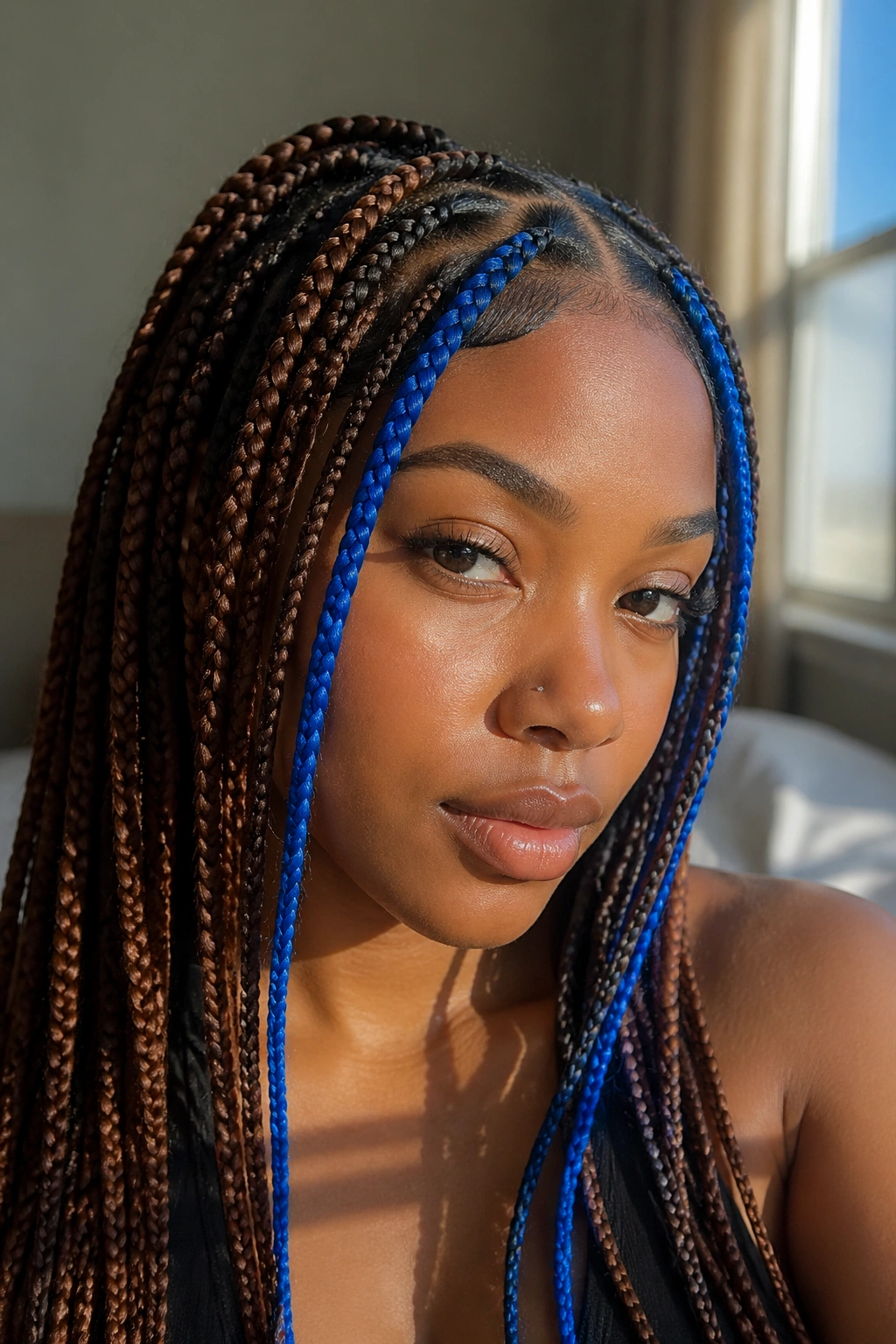
The loudest place for blue is not the whole head. It’s the front.
That sounds backward at first, but face-framing braids do the job fast. A few blue braids near the temples or along the hairline can change your whole look, especially when the rest stays brown. The brown gives the style warmth; the blue gives it edge.
I like this version for people who want color but do not want to commit every braid to blue. It’s a smart middle ground. You get a visible change when you look straight on, and the back of the style stays easier to wear with everyday clothes.
Why it reads so cleanly
A face-framing blue section works because your eyes go there first. The color sits near skin, brows, earrings, and makeup, so it gets noticed even if the rest of the braids are quiet. If you wear bold lips or a sharp liner, this version ties the whole look together without much effort.
Keep the front pieces medium-sized. Very chunky money pieces can pull the eye too hard and make the rest of the style feel like an afterthought. A few well-placed blue braids are enough.
5. Triangle-Part Cocoa and Royal Blue Braids
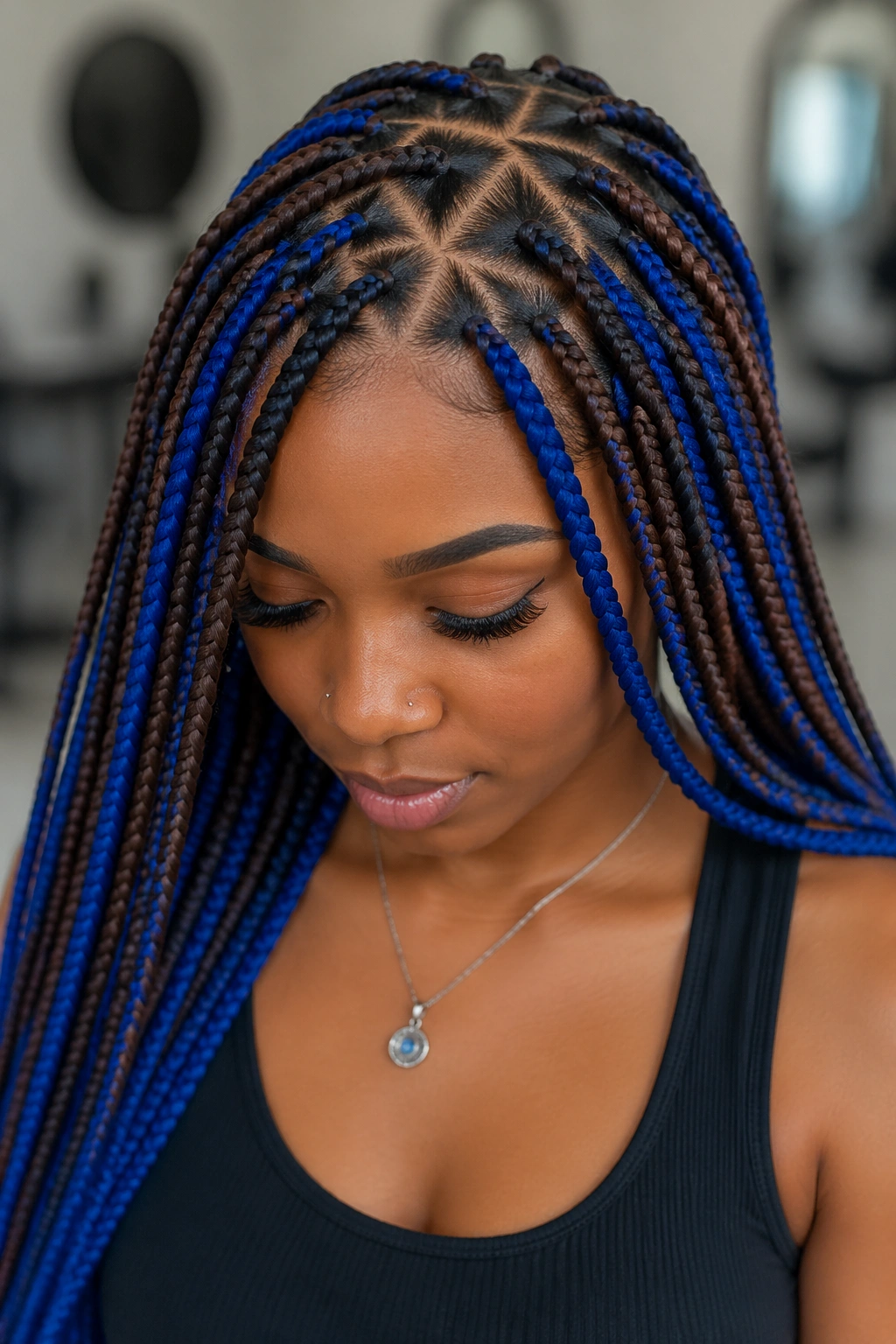
Triangle parts change the mood before the color even shows. The scalp pattern looks sharper than a standard square part, and that geometric feel makes the blue and brown pairing look more planned.
This style is one of my favorites when the braids themselves are simple. You do not need a lot of extra accessories or fancy wrapping. The triangle parting carries enough visual weight on its own, and the color contrast does the rest.
Royal blue works especially well here because it’s strong without being neon. Cocoa brown keeps the style from reading cold or flat. Together, they make the parting lines stand out in a way that looks neat rather than busy.
If your braider is good with clean sections, this is a satisfying style to wear. The scalp pattern stays visible, the color separation stays crisp, and the whole look feels more intentional than a standard part-and-color combo.
6. Waist-Length Blue and Brown Box Braids
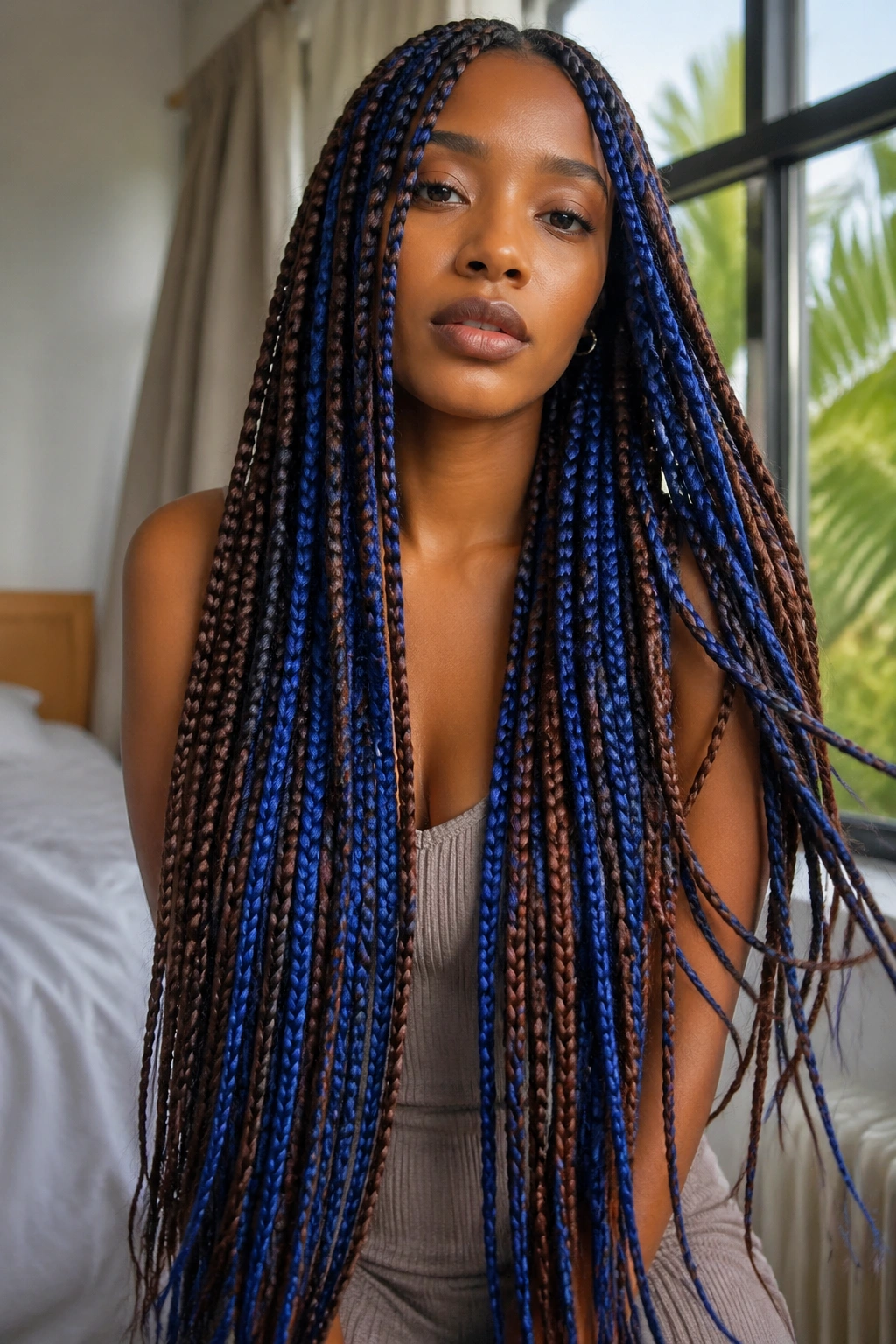
Long braids change the whole mood. When blue and brown box braids reach the waist, the color has room to show off its movement, and the ends become part of the design instead of an afterthought.
I only like this length when the braid count is reasonable. Too many tiny braids at waist length can feel like maintenance with a capital M. Medium or jumbo braids keep the weight more manageable, and they let the blue show in long, clear stretches instead of vanishing into a blur.
What to ask for
- Ask for a visible color shift below the chest or ribcage, not right at the top.
- Keep the brown dominant if you want the length to feel softer.
- Use sealed ends so the blue stays neat as the braids age.
- Pick pre-stretched braiding hair if you want smoother, less bulky ends.
There is a reason long braids keep coming back. They move well. The blue catches attention when you walk, sit, or toss the braids over one shoulder, and the brown keeps the whole thing from turning harsh.
7. Boho Box Braids with Curly Blue Tips
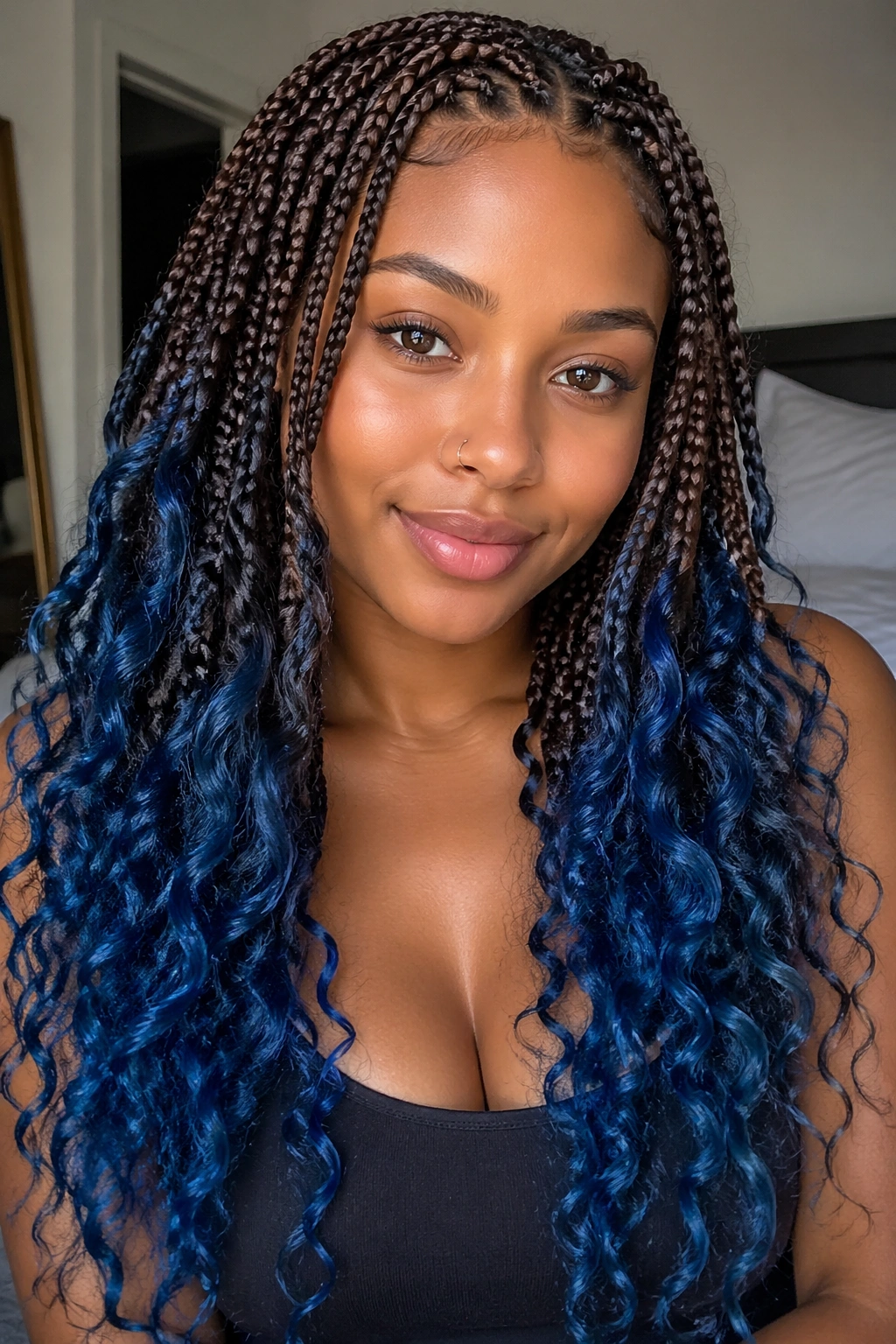
Loose curls at the ends soften the harder edges of blue. That’s the real charm here. Instead of a straight, polished finish, you get texture at the bottom, and the blue feels a little more relaxed because of it.
This style suits people who like their braids to look touched, not stiff. The curly pieces add movement, and when the blue sits in the tips, the whole braid looks more layered. Brown at the root or mid-length keeps the style rooted; blue at the ends gives it a playful finish.
How to keep the curls from going flat
- Use lightweight mousse on the curled ends, not heavy cream.
- Sleep in a satin scarf or bonnet so the curls don’t get crushed.
- Refresh the ends with cool water mist and a little mousse if they start to frizz.
- Separate the curls by hand, not with a comb, or they’ll puff too fast.
This is not the lowest-maintenance look on the list. It does ask for attention. Still, if you like soft texture and you want the blue to feel a little less rigid, the tradeoff is worth it.
8. Side-Swept Braids with a Deep Blue Part
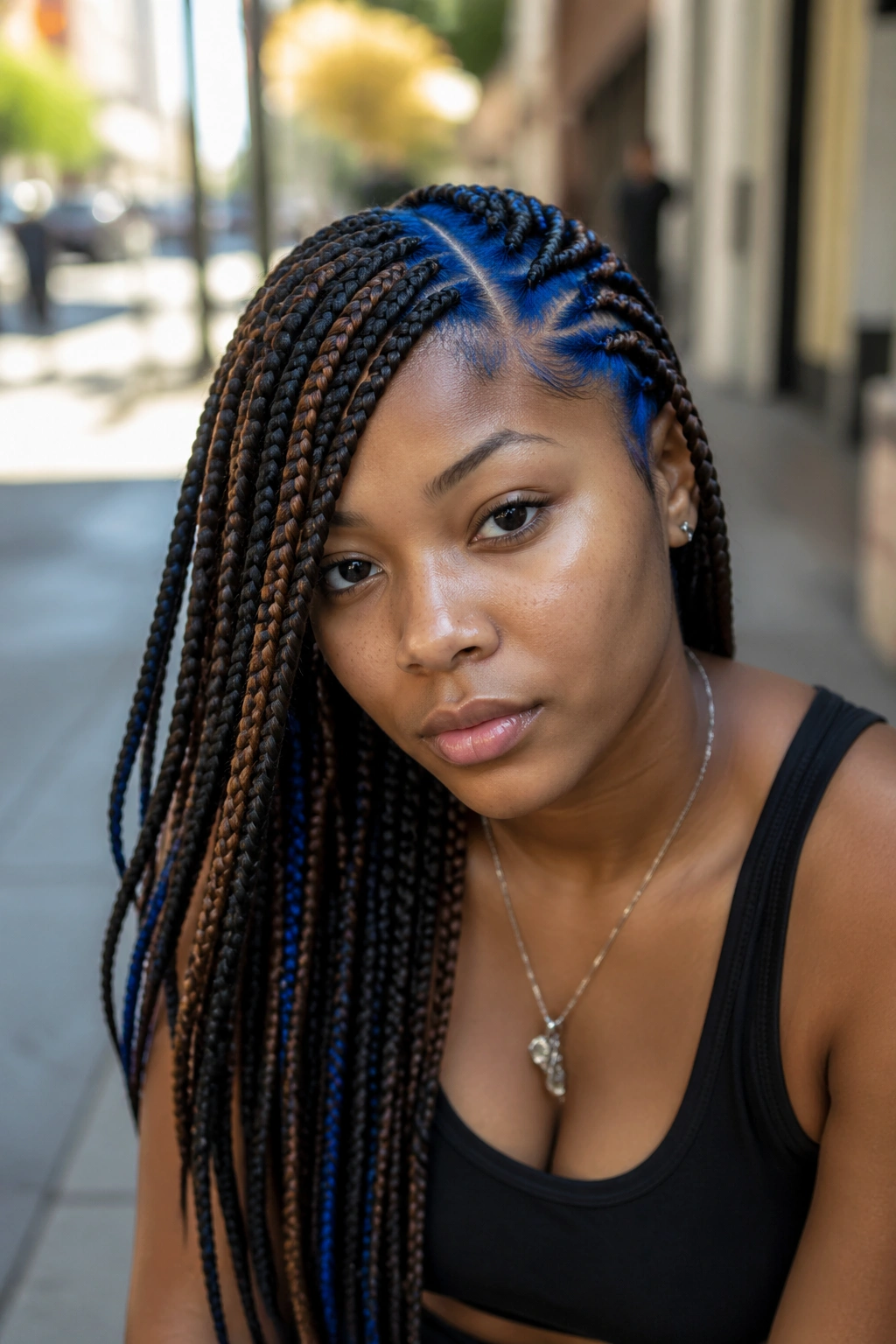
A side part is not subtle when the color contrast is this strong. It changes the whole silhouette of the braids, and it gives the blue a different job. Instead of sitting evenly across the head, the blue can fall heavier on one side and shape the face that way.
That asymmetry is what makes the style interesting. A side-swept layout looks good with longer braids, but it can also work on shoulder-length styles if you want the blue to sit closer to the cheek and jawline. The result feels sharper and a little more styled, even when the braids are just hanging loose.
I also like it because it pairs well with earrings. A blue-heavy side opens up the other side of the face, which makes hoops, cuffs, or a bold stud stand out more. It’s a small thing, but it matters.
If you’re the type who gets bored of symmetrical styles fast, this is a safe choice. It gives you color placement with a bit of attitude.
9. Shoulder-Length Blue and Brown Box Braids
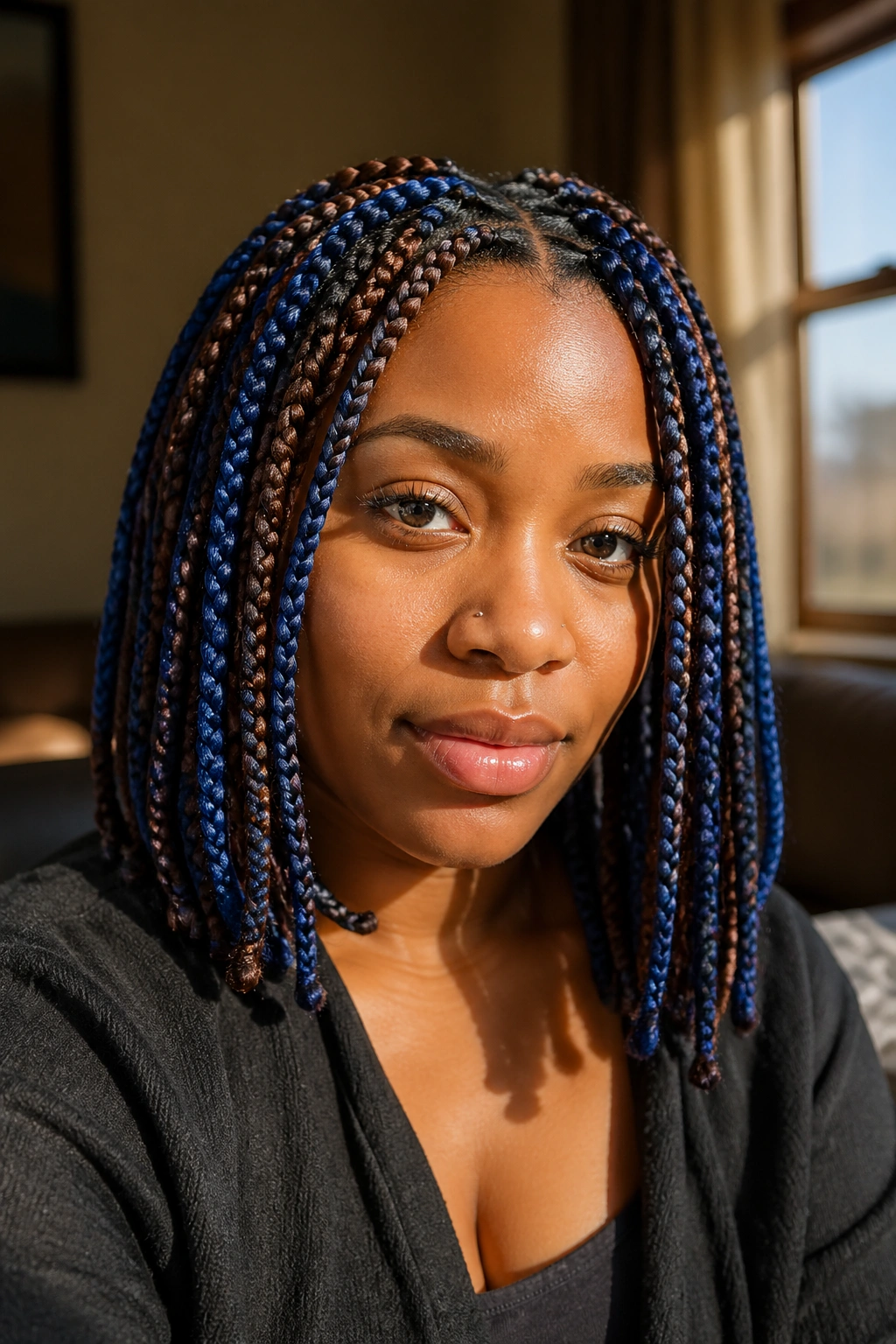
Shoulder-length braids are the quiet workhorse of this list. They’re easy to wear, they don’t drag as much, and the color shows up fast because the braids sit closer to the face and neckline.
The blue and brown mix reads more clearly at this length than people expect. Long braids can hide the pattern if the colors are spread thin. Shoulder-length braids cut that problem down. Every movement of the head shows a little more of the contrast, and that keeps the style from feeling flat.
The other advantage is practicality. Washing and drying are easier. Sleeping is easier. High buns are still possible, but the weight is lighter, which matters if your scalp gets tired of long installs.
This is the version I’d point people to if they want a two-tone look without a lot of drama. It feels manageable, but not plain.
10. Half-Up Half-Down Blue and Brown Braids
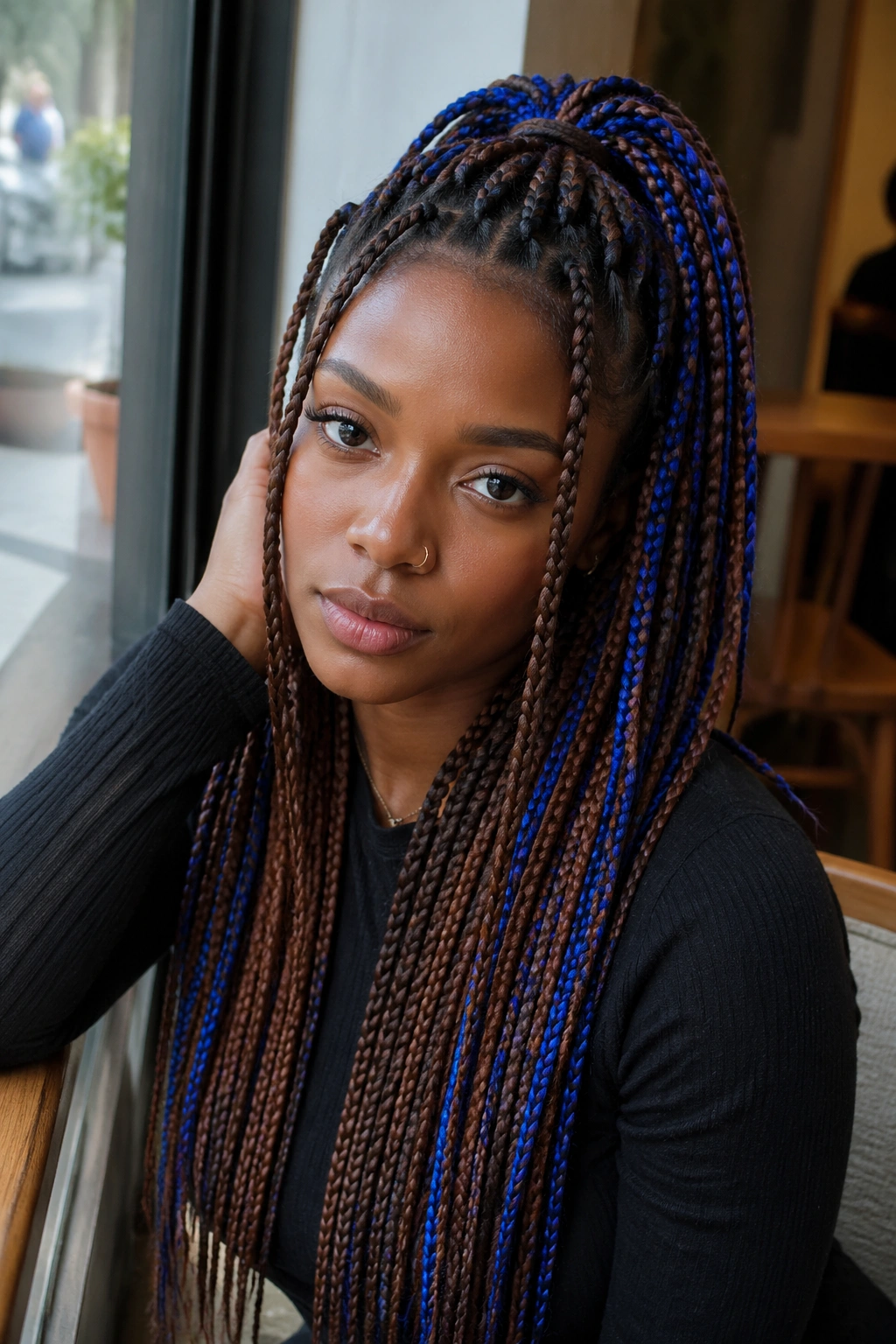
Half-up styles make two-tone braids look finished. When the top section is pulled back, the blue and brown underneath get framed instead of buried, and the whole style looks like it was styled on purpose rather than left hanging.
The top knot, bubble ponytail, or wrapped bun all work here. I lean toward a clean half-up ponytail when the braids are medium length, because it lets the color blocks show without too much bulk at the crown. If the braids are jumbo, a bun can be easier on the head.
Best way to place the top section
Take enough braids to make the crown feel full, but not so many that the front pulls tight. Tension at the edges is the enemy here. A style that looks neat for two hours is not worth it if your hairline pays for it later.
This is also a good option for days when you want the color to feel more playful. The down section moves freely, and the lifted section gives the style structure. It’s a nice balance.
11. Beads and Cuffs on Brown-and-Blue Braids
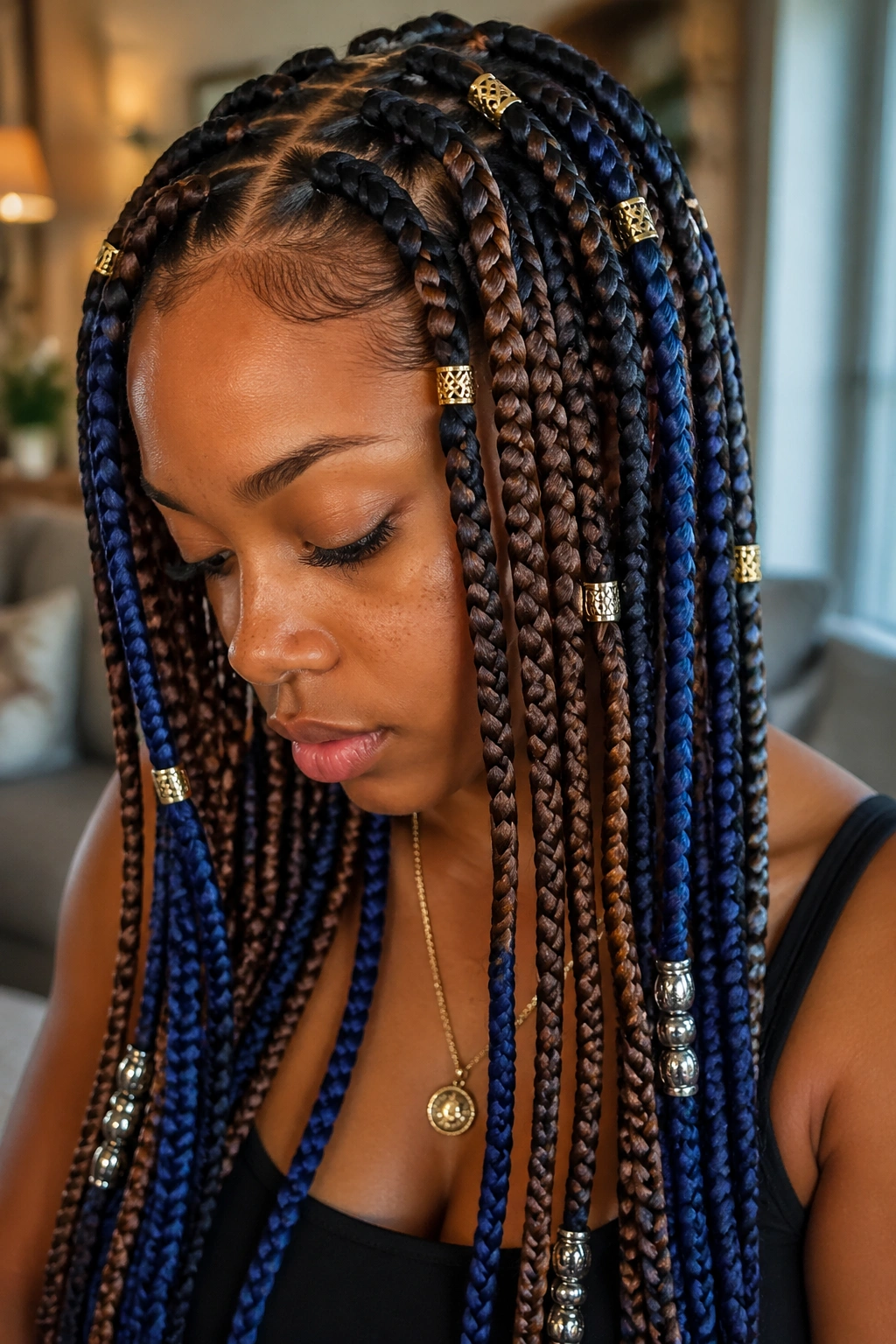
Beads change how the color moves. So do cuffs. Add them to blue and brown box braids, and the style starts picking up sound, shine, and little flashes of metal or wood every time you turn your head.
I like accessories on this color combo because they help decide where the eye should go. Bronze or gold cuffs warm up the brown. Silver, clear, or dark metal pieces sharpen the blue. Wooden beads feel a little more grounded and can soften a bright braid set that needs a calmer finish.
A few accessory ideas that work
- Bronze cuffs on brown braids for a warmer look.
- Silver cuffs on blue braids for a cooler edge.
- Clear beads if you want the color to stay in front.
- Wood beads if you want a softer, earthy feel.
There’s a small warning here. Too many accessories can make the style look cluttered fast. Pick one or two placements and repeat them with intention. A few well-placed cuffs are stronger than a whole handful of mixed pieces.
12. Fulani-Inspired Blue and Brown Box Braids
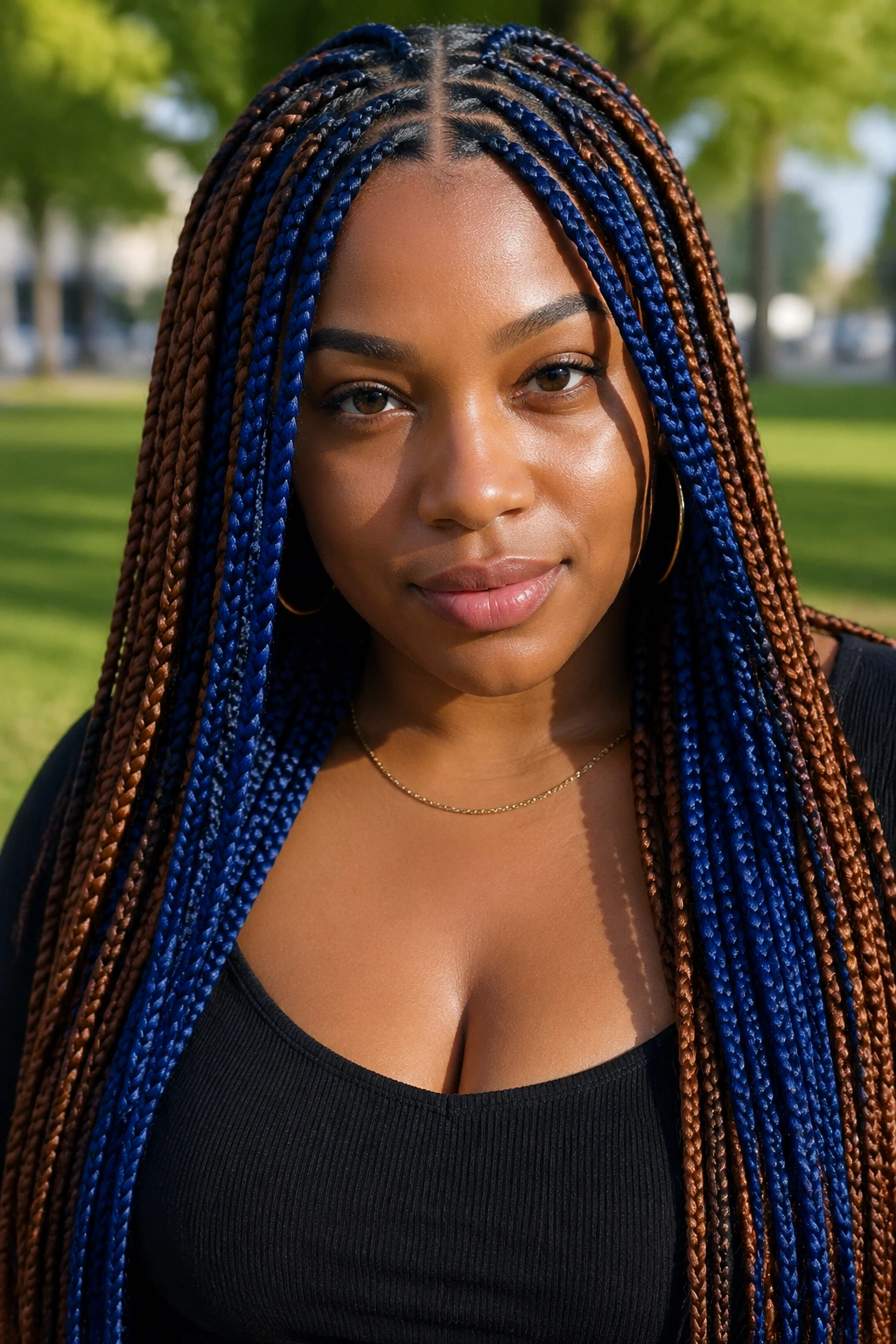
A center braid line gives blue and brown a lane to follow. That is what makes this style feel so neat. The pattern has built-in structure, so the two colors do not need to carry the entire look on their own.
With this layout, I like the blue to sit in the center rows or in a few side braids that echo the middle. Brown can stay on the outer sections and keep the style grounded. The effect is polished without being stiff, and the braid pattern itself becomes part of the color story.
The important thing is clean execution. Messy parting ruins the look faster here than it does on looser styles. If the rows drift or the spacing gets uneven, the eye notices immediately.
This kind of braid pattern works best when you want shape first and color second. The blue adds personality, but the structure is what makes the style feel finished.
13. Micro Box Braids in Cocoa and Navy
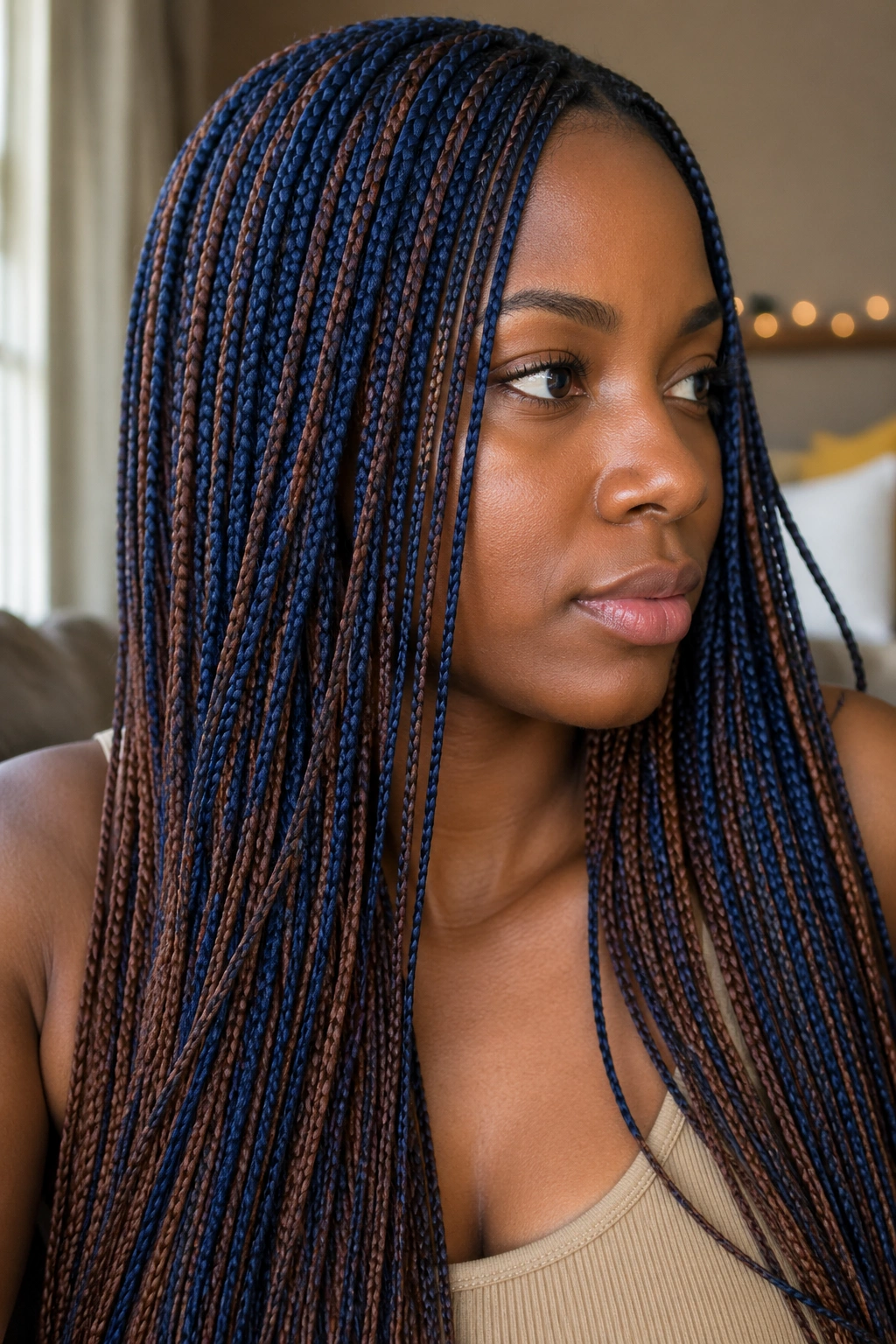
Micro box braids are tiny, patient work. That’s the first thing to know. The second thing is that the blue and brown mix looks denser here, because the smaller sections blend the colors visually even when each braid is only carrying one shade.
Navy works especially well in micro braids. It reads rich and deep instead of loud, which keeps the style from getting too busy. Cocoa brown softens the whole set and helps the navy show up in a way that feels clean rather than dark and flat.
Why people choose this size
- More braid movement because the sections are small.
- A softer color blend from a normal viewing distance.
- Light scalp feel compared with some jumbo installs.
- A lot of styling room for buns, ponytails, and twists.
The catch is maintenance. Micro braids take time to install, and they need careful scalp care so they do not get dry or fuzzy too fast. If you like detail and do not mind a longer sit in the chair, the result is worth it. If you get restless halfway through installs, skip this one.
14. High Ponytail Blue and Brown Box Braids
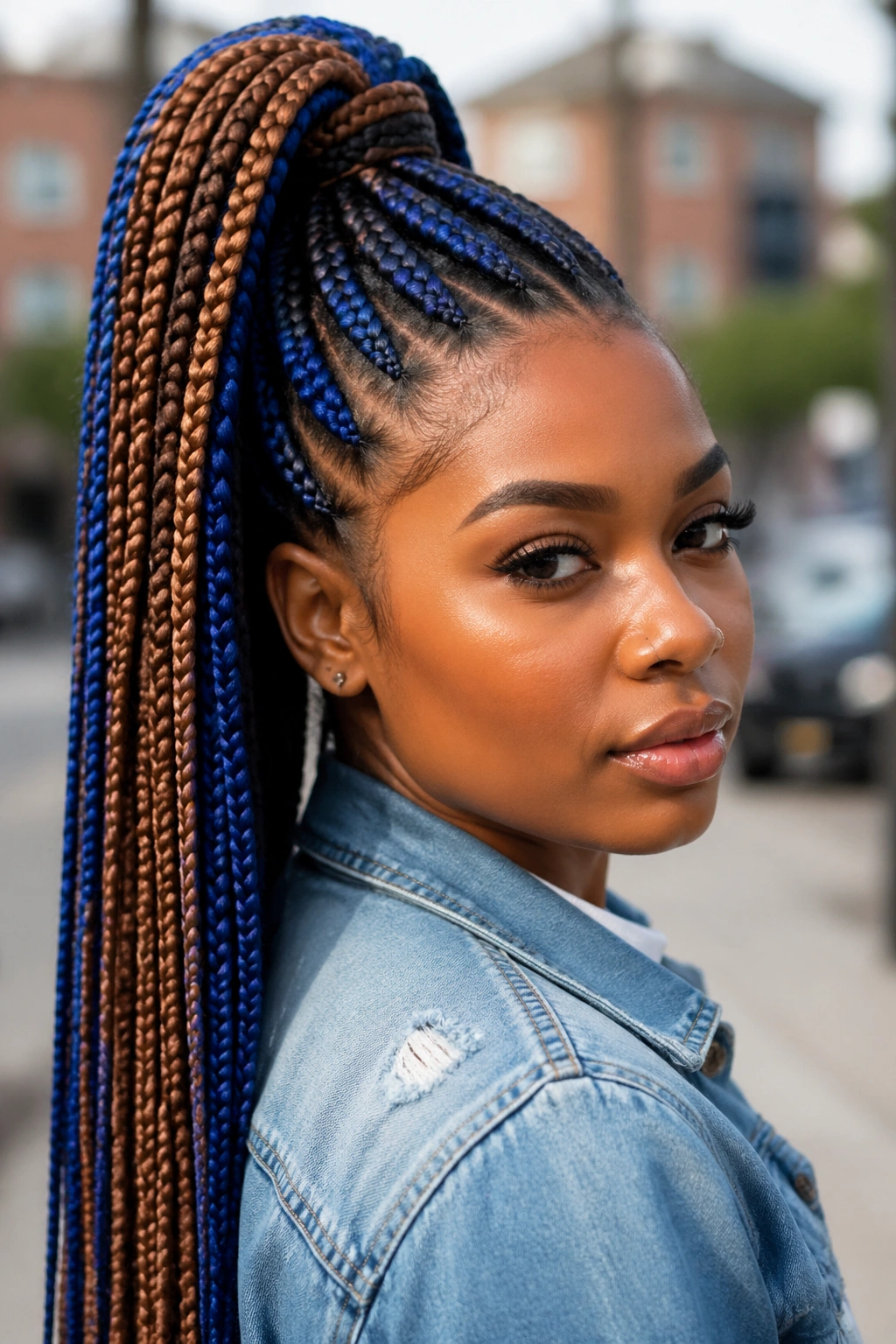
Gather the braids at the crown, and the blue suddenly looks sharper. That’s the magic of a high ponytail. It lifts the color into one tight area, so the contrast feels bolder than it does when the braids hang loose.
This style works best when the top section is secure but not yanked back hard. I’m picky about that. A pretty ponytail means nothing if your edges ache by lunchtime. Keep the base snug enough to hold the weight, then let the rest fall freely so the blue and brown can mix as the braids swing.
What makes the ponytail work
- A wrapped base hides the elastic and cleans up the finish.
- A few face-framing braids keep the front from feeling too severe.
- Medium or jumbo braids show the color better in motion.
- A soft brush or edge control can smooth the hairline, but don’t pile it on.
This is one of the easiest ways to make the color look fresh on a busy day. You get height, movement, and a clear view of both shades. No extra drama needed.
15. Chunky Block-Color Blue and Brown Box Braids
If you want the color choice to be obvious from across the room, block coloring is the blunt instrument of the bunch. Large blue sections against large brown sections create a stronger read than thin highlights or scattered pieces ever will.
I like this version when the contrast is deliberate. One side can carry more blue. The back can alternate in broad panels. Or the braids can switch color in heavy chunks from top to bottom. What matters is that the pattern feels bold on purpose, not random.
This style is not shy, and that’s the appeal. It works best on people who like statement hair and don’t mind the braid pattern becoming part of the outfit. Keep the clothing simpler if you want the braids to stay in charge, because the style already has enough going on.
The easiest mistake here is overcomplicating the parting. Block-color braids need room to breathe. Give the sections space, keep the lines clean, and the whole look will land harder.
Blue and brown box braids work because the contrast is strong, but not harsh. That gives you room to play. If you want the safest first step, start with brown-dominant braids and blue at the ends or in the front. If you want the strongest statement, go with block color or a high ponytail and let the contrast do the work.
Bring shade references when you sit in the chair. “Blue” can mean cobalt, navy, denim, royal, or something almost electric, and each one sits differently against brown. The same goes for brown itself. Chestnut, mocha, honey, and espresso all change the mood, sometimes more than people expect.
