



Multi-color box braids work best when the color story feels planned, not random. That’s the part a lot of people miss. A braid set can have five shades in it and still look calm if the darkest color anchors the roots, the mid-tone carries the body, and the brightest shade shows up in just the right places.
The other mistake is treating color like an afterthought. It isn’t. In box braids, color changes the whole shape of the hairstyle. It can make the braids read softer, sharper, warmer, cooler, longer, or even denser, depending on where the shades sit and how bold the contrast is.
I’ve always thought the best multi-color braids look intentional from six feet away and interesting up close. You notice the movement first, then the color shifts, then the little details — a ribbon of blonde tucked under a black braid, a burgundy panel near the face, a metallic thread winding through a section. That’s the fun of it.
And yes, the hair itself matters. Pre-stretched braiding hair, clean sectioning, and a color mix that doesn’t fight your undertone can make the difference between “busy” and “exactly right.” Keep that in mind as you scan the ideas below, because the good ones usually come down to placement more than drama.
1. Jet Black Roots with Honey Blonde Ribbons
A friend once told me this was the safest way to wear color without feeling like the color was wearing you. She was right. Jet black roots give the style a clean frame, and the honey blonde runs through the lengths like narrow ribbons, which keeps the look sharp instead of streaky.
Why this combination works
The black base gives the braids weight. The honey blonde brings movement. When the blonde is threaded through in thin sections rather than stacked in chunky blocks, the eye reads it as texture first and color second.
Best use case:
- You want contrast without a full blonde head.
- You like polished braids with a little warmth.
- You wear a lot of black, cream, denim, or gold jewelry.
- You need a style that still looks neat when the braids settle.
A small trick helps here: keep the blonde concentrated from mid-length to ends, not at the root. That keeps the scalp area tidy and avoids the “striped helmet” effect. It also grows out more gracefully. Use 2 to 3 blonde strands per braid, not a full handful, if you want that ribbon look.
2. Black and Burgundy Braids That Read Rich, Not Loud
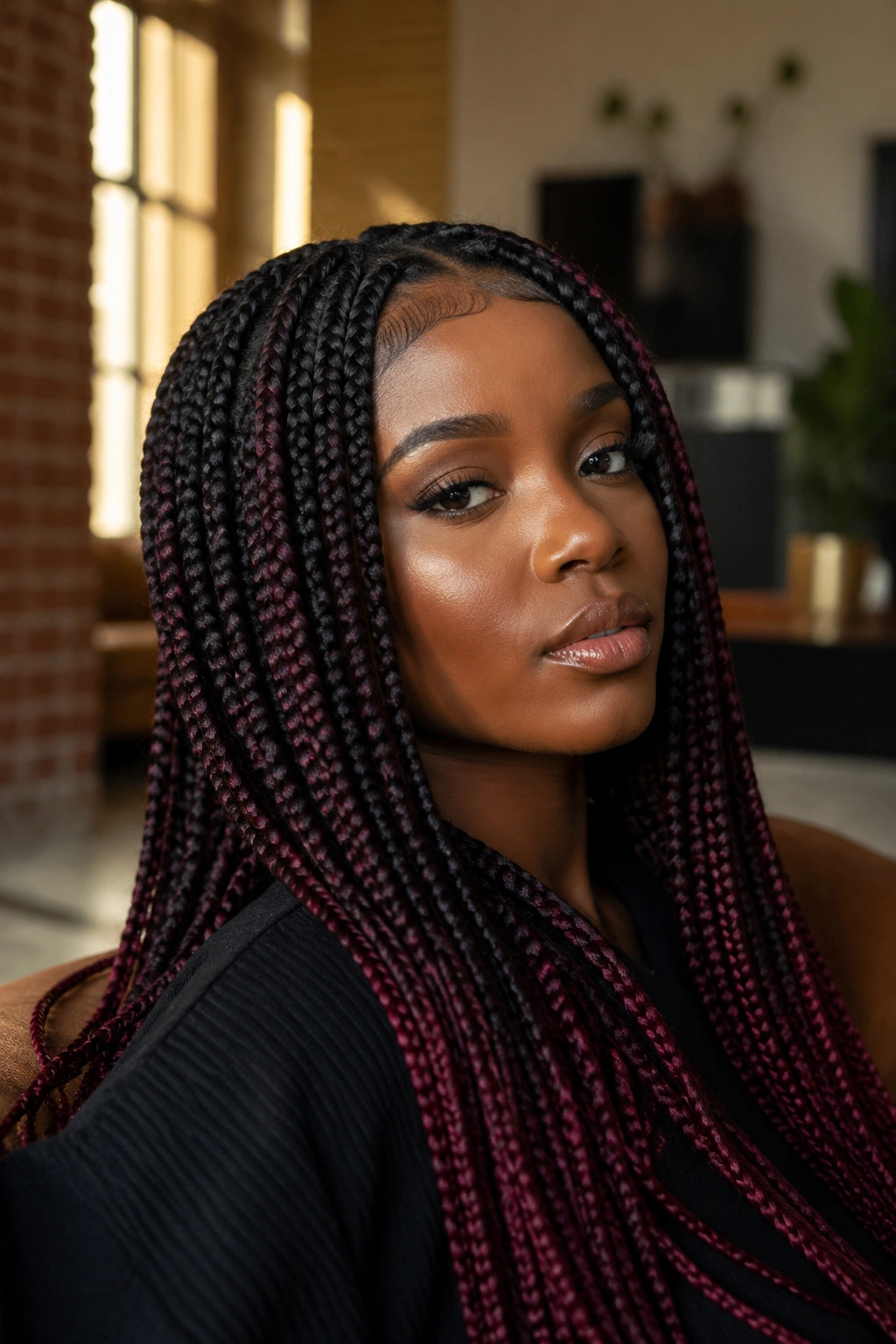
Burgundy next to black is one of those combinations that almost never fails. It has depth, and it doesn’t scream for attention the way a bright red can. The whole style feels darker and more expensive-looking, even though that’s not the right word for hair, because what you really notice is the saturation.
The best version uses burgundy as the supporting shade, not the lead. Let the black do most of the visual work, then bring burgundy in through the mid-lengths and ends. If you flip your braids and the color flashes under the light, that’s enough. You do not need every braid screaming at once.
If you’re wearing long box braids, this combo is especially good because the color shows more as the hair moves. Shorter lengths still work, but the effect is moodier. Deep wine tones work better than bright cherry tones here. They sit closer to black and give the whole style more polish.
3. Copper Ends on Chestnut Braids
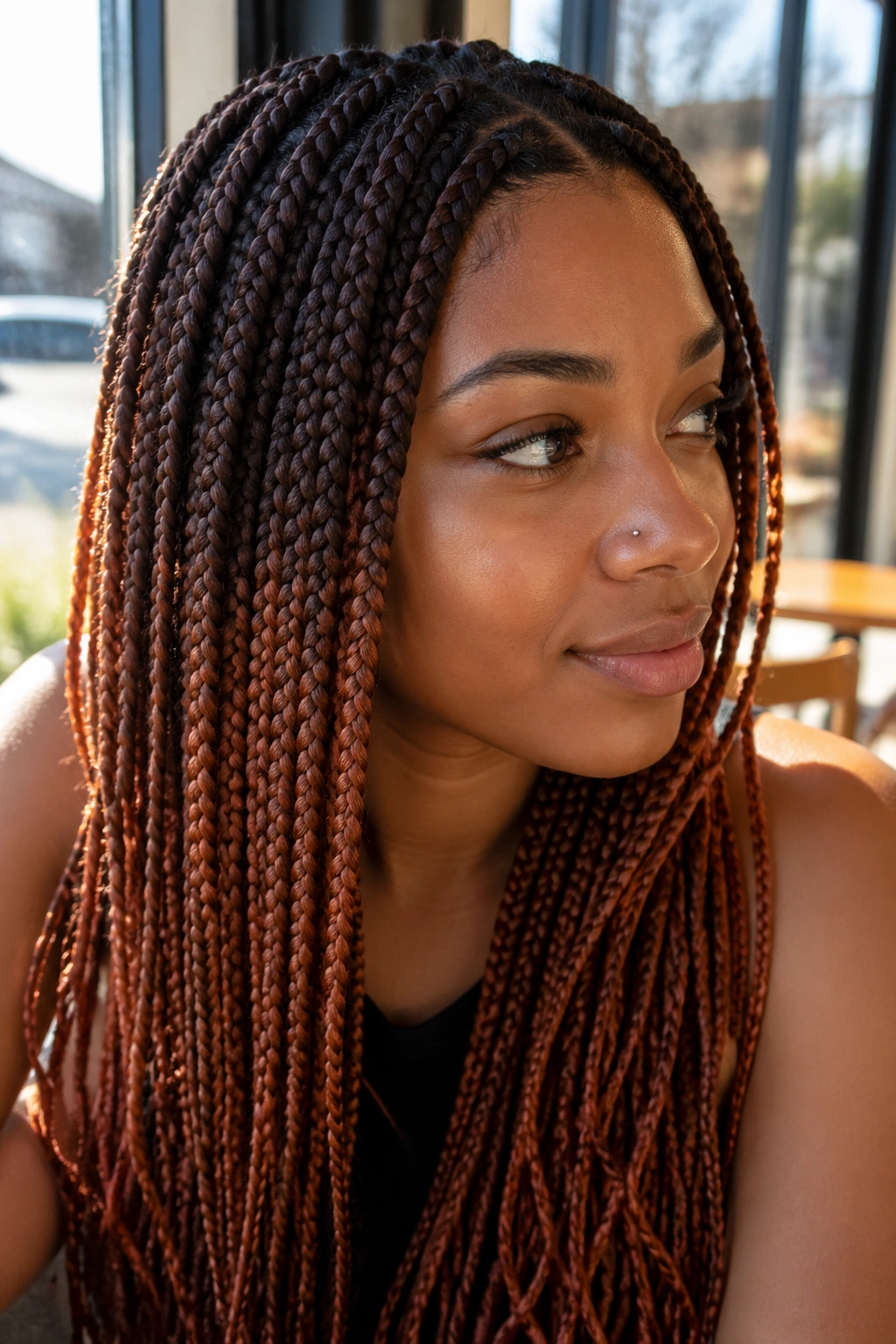
Why does copper look so good in braids? Because it catches attention without needing a harsh contrast. Chestnut brown gives the style a grounded base, and copper ends add warmth right where movement shows up most. That little shift at the bottom can change the whole feel of the braid set.
How to wear it
If your goal is soft color, keep the copper to the lower third of the braid. If you want a bolder result, let the copper begin around ear level so the change reads sooner. Both versions work. The first feels quiet. The second feels more styled.
This shade pair is especially nice if you tend to wear gold hoops, rust, tan, or olive clothing. It also photographs in a cleaner way than some brighter mixes because the tones stay in the same warm family. Ask for a chestnut base and a copper blend that leans reddish, not orange, if you want the color to stay rich instead of brassy.
4. Espresso, Mocha, and Ash Brown Braids
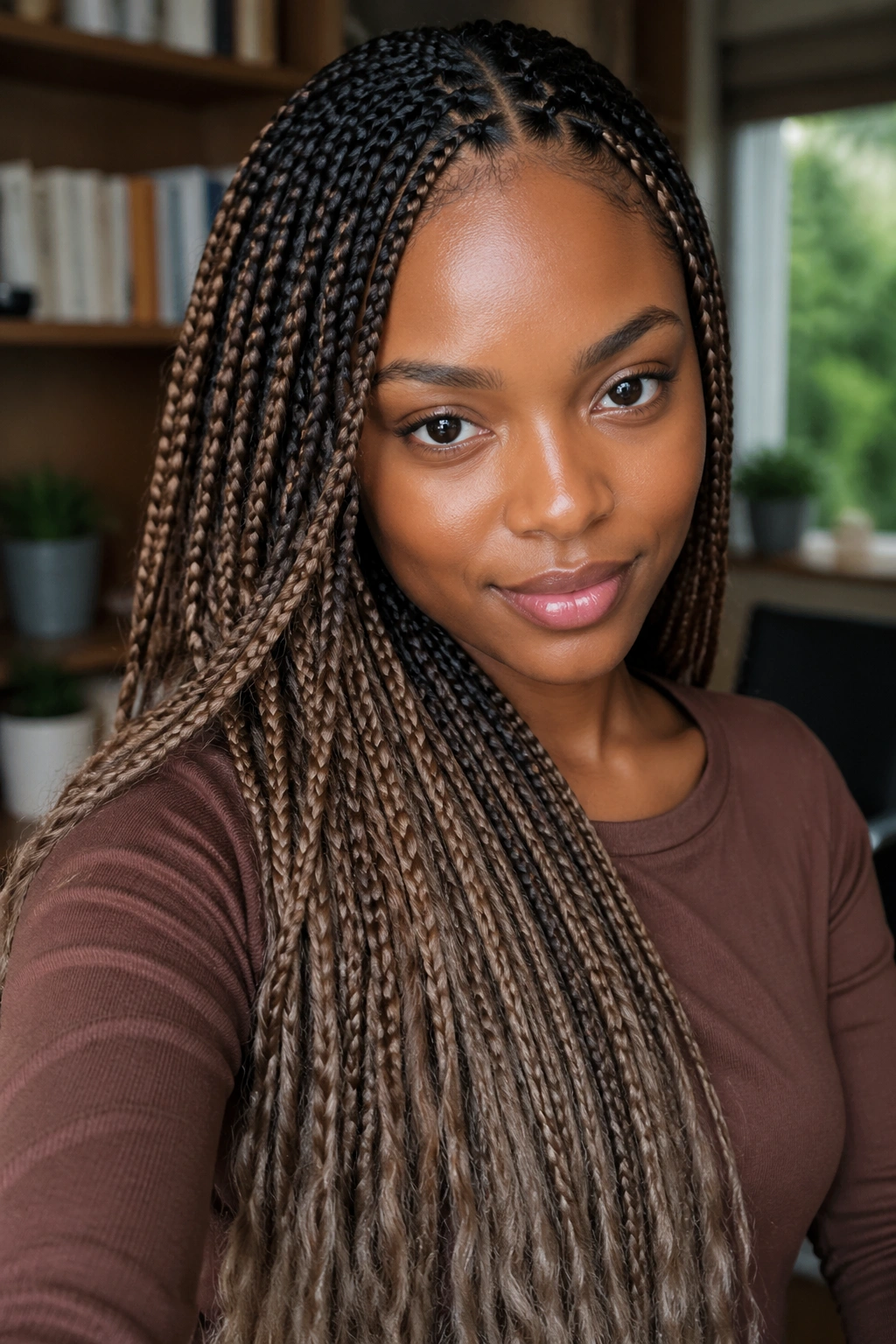
This is the set for people who don’t want the color to announce itself from across a room. And that’s not a knock. Some of the best multi-color box braids are the ones that reward a second look. Espresso, mocha, and ash brown do that job well.
The mix works because the shades are close enough to feel cohesive but different enough to break up the blockiness of a single-color install. Espresso gives you depth at the root. Mocha softens the middle. Ash brown cools the whole thing down so it doesn’t drift too warm. The result is a braid set that looks layered rather than flat.
I like this palette for medium to long braids because the shift in tone becomes clearer as the hair moves. On short braids, you still get texture, just less drama. If you want something professional-looking without going plain, this is one of the smartest routes.
One more thing: this is a good choice when you’re unsure about color. It’s low-risk, but it doesn’t look lazy.
5. Plum and Lilac Panels Woven Through Black Braids
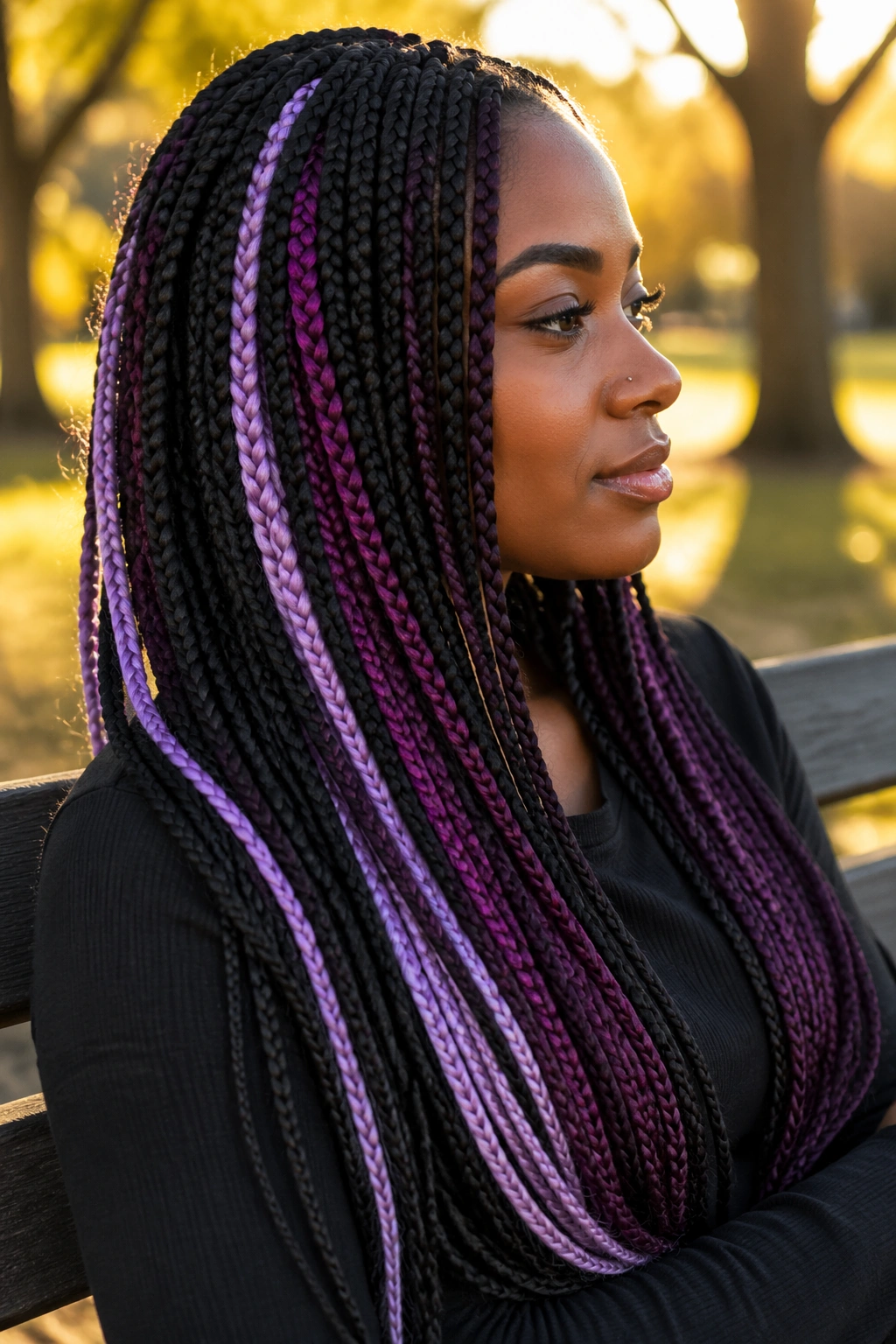
Unlike a full-head purple install, this version gives you control. The black keeps the style grounded. The plum and lilac panels bring the fun. You get color blocking instead of a wash, which means the braids look intentional even when the shades are bright.
What makes it different
The panel placement matters more than the exact shades. Put the plum where the braid will swing, and tuck lilac into thinner outer sections or face-framing pieces. That way the lighter purple acts like an accent, not a blanket. If all the color sits in the same place, the set can look heavy. Spread it out a little.
This style is strongest on medium or jumbo box braids because the color blocks have room to show. Tiny braids can make the palette look busy unless the paneling is very clean. If you want the look to stay elegant, keep black as the dominant color and use the purples as accents rather than the main event.
6. Teal, Aqua, and Midnight Blue Braids
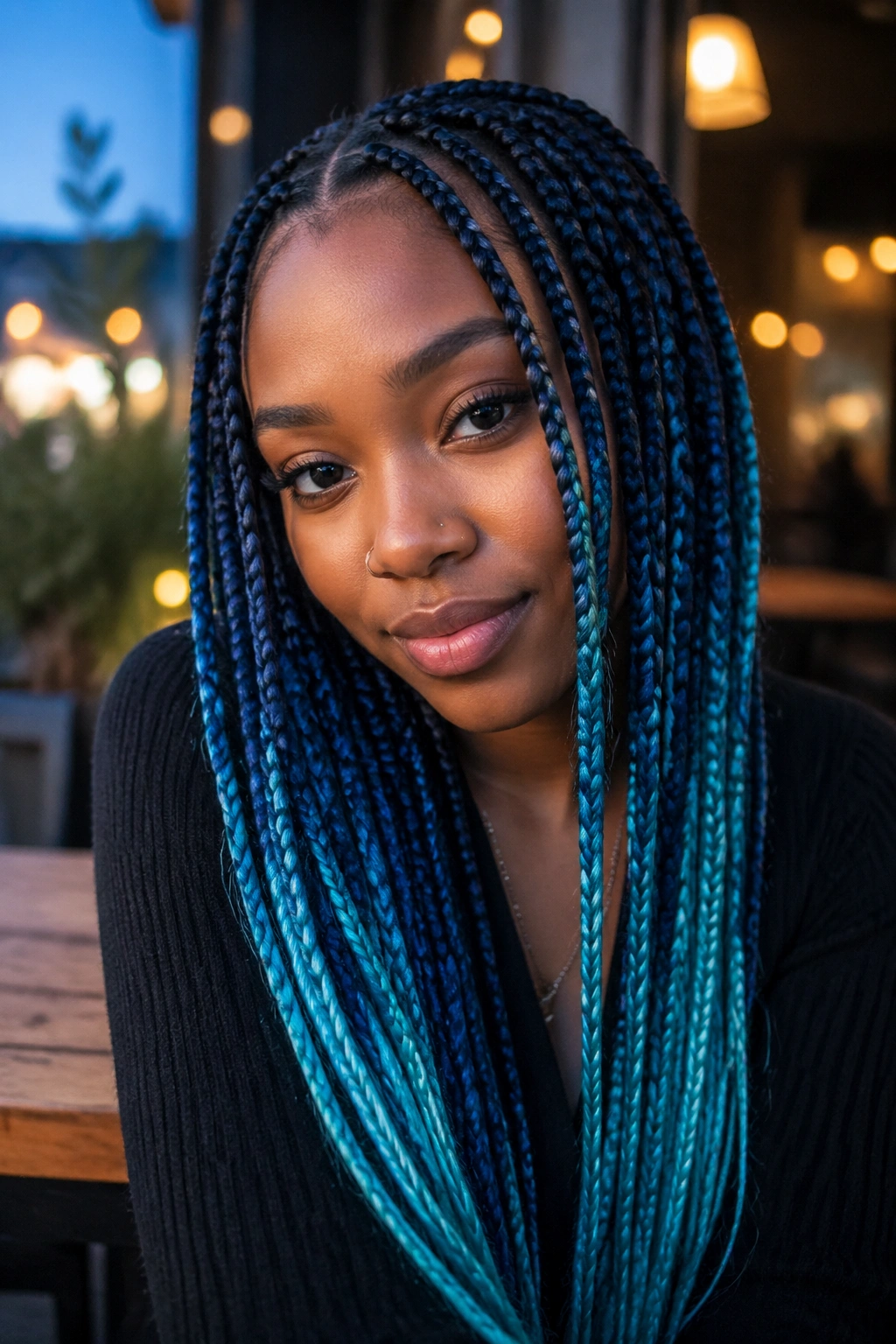
The first time you see teal and aqua mixed into midnight blue braids, it looks almost electric. Then you notice how much the darker blue calms everything down. That’s the trick. The deep shade gives the brighter tones a place to land.
Quick placement notes
- Put midnight blue closest to the root or in the thickest sections.
- Use aqua in thinner braids or tucked panels.
- Add teal where the hair will move, especially near the shoulders.
- Keep your parts crisp so the color reads as design, not spillover.
This combo works best when the braids are medium length or longer, because the color shifts need space to breathe. Too short, and the shades can collapse into one another. Too long, and the lighter aqua may need more upkeep if you’re rough with washing.
A matte finish mousse helps here. It keeps the synthetic hair from looking frizzy and lets the colors stay readable instead of fuzzy.
7. Red, Orange, and Gold Braids with Sunset Energy
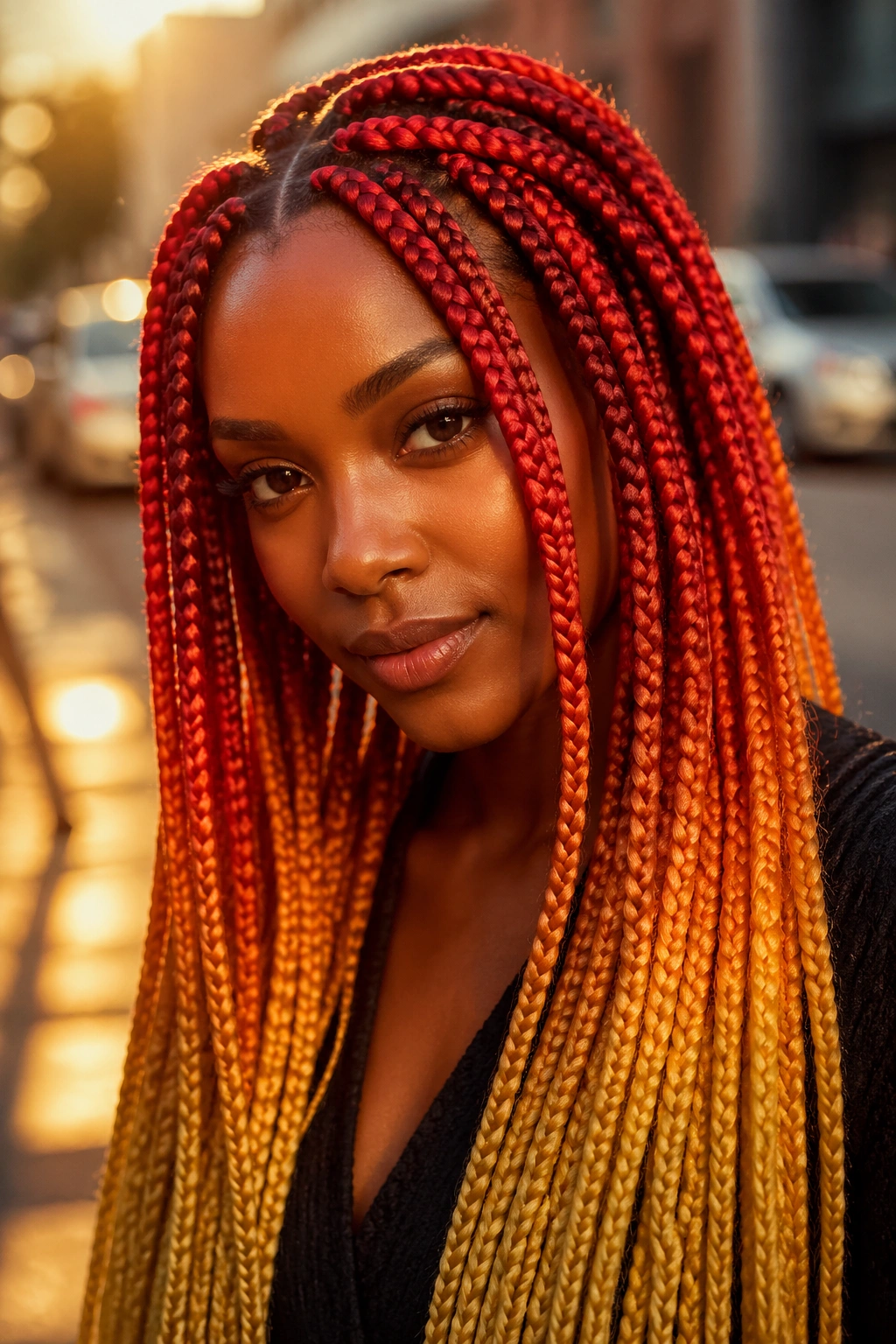
Some braid sets look pretty. This one looks like it has a pulse. Red, orange, and gold can be loud if you throw them together carelessly, but when the placement is clean, the effect is warm and vivid without feeling random.
I’d keep red near the top or around the face, orange in the body of the braids, and gold at the ends or in thin streaks through the length. That gives you a real gradient. Not a hard stripe. A gradient. The difference matters more than people think.
This is one of those styles that looks better with confidence than with overthinking. Big curls at the ends can soften it. So can gold cuffs or clear beads. If you wear warm-toned makeup, this set plays nicely with copper blush, bronze shadow, and brown liner. If you want the color story to stay clean, avoid adding too many extra hair accessories at once. The braids already carry enough visual weight.
8. Rose Gold Braids with Soft Pink Accents
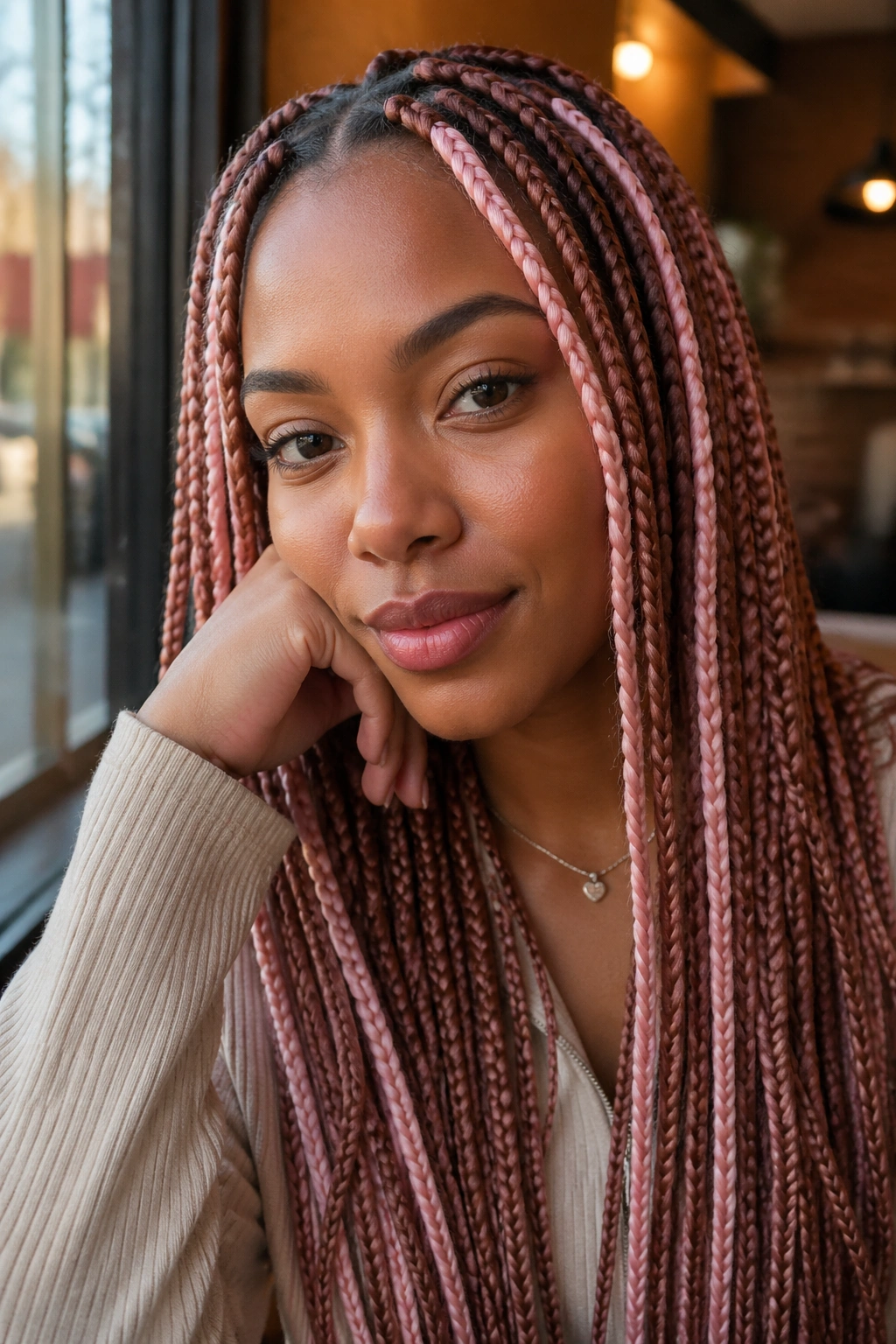
Rose gold braids can go cheesy fast, which is why placement and tone matter so much. The good version feels airy and soft, not sugary. A deeper rose gold base with soft pink accents gives you that balance. It reads feminine without tipping into costume.
This style is especially useful if you like color but don’t want neon. The rose gold sits somewhere between blonde and copper, so it reflects light well. The pink accents keep it playful. Put the pink in face-framing braids, the lower half of a few braids, or a hidden layer that shows when the hair moves. That keeps the whole head from going flat.
One thing I like here is the way rose gold works with brown skin, especially when the shade has a little warmth to it. Cooler pinks can sometimes look washed out. Warmer pinks hold their own better. If your braider uses pre-colored synthetic hair, pick shades that lean dusty rather than bubblegum.
9. Emerald and Forest Green Braids
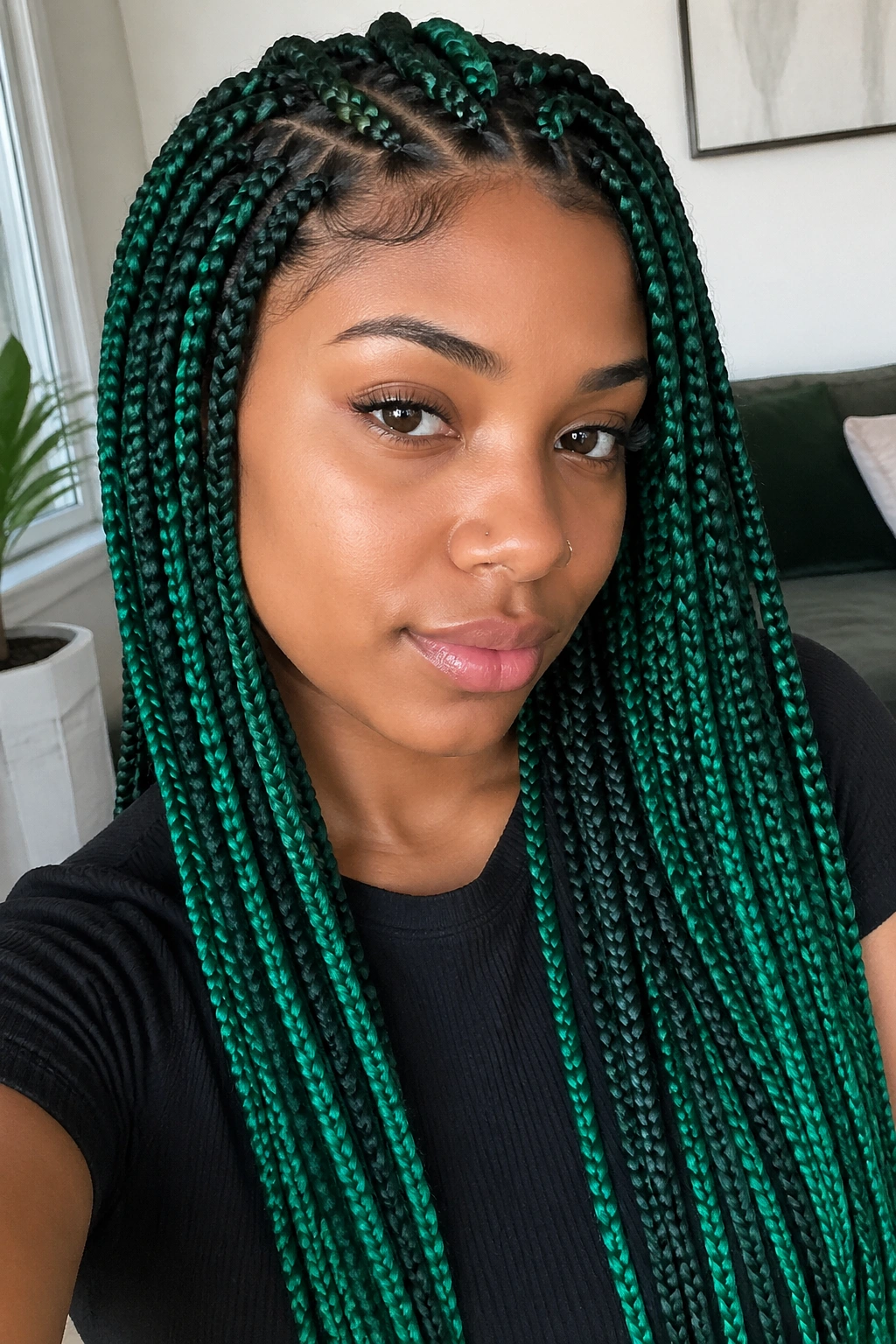
Green braids can look expensive or awkward. There’s not much middle ground. Emerald and forest green solve that by staying deep and saturated, which keeps the style from reading like a novelty piece.
The beauty of this combo is the texture it creates. Emerald gives you the brighter flash. Forest green keeps the palette anchored. Together, they make the braid pattern easier to see, especially if the parts are clean and the braid size is medium. On very tiny braids, the two greens may blend too much. On jumbo braids, the color blocks can look bold in a good way.
This is a strong choice if you wear black, cream, deep brown, or gold. It also works well with minimalist clothes because the hair can carry the color story by itself. No need to pile on accessories. A few gold cuffs are enough. Anything more and the look starts to drift.
10. Silver, Charcoal, and Black Smoke Braids
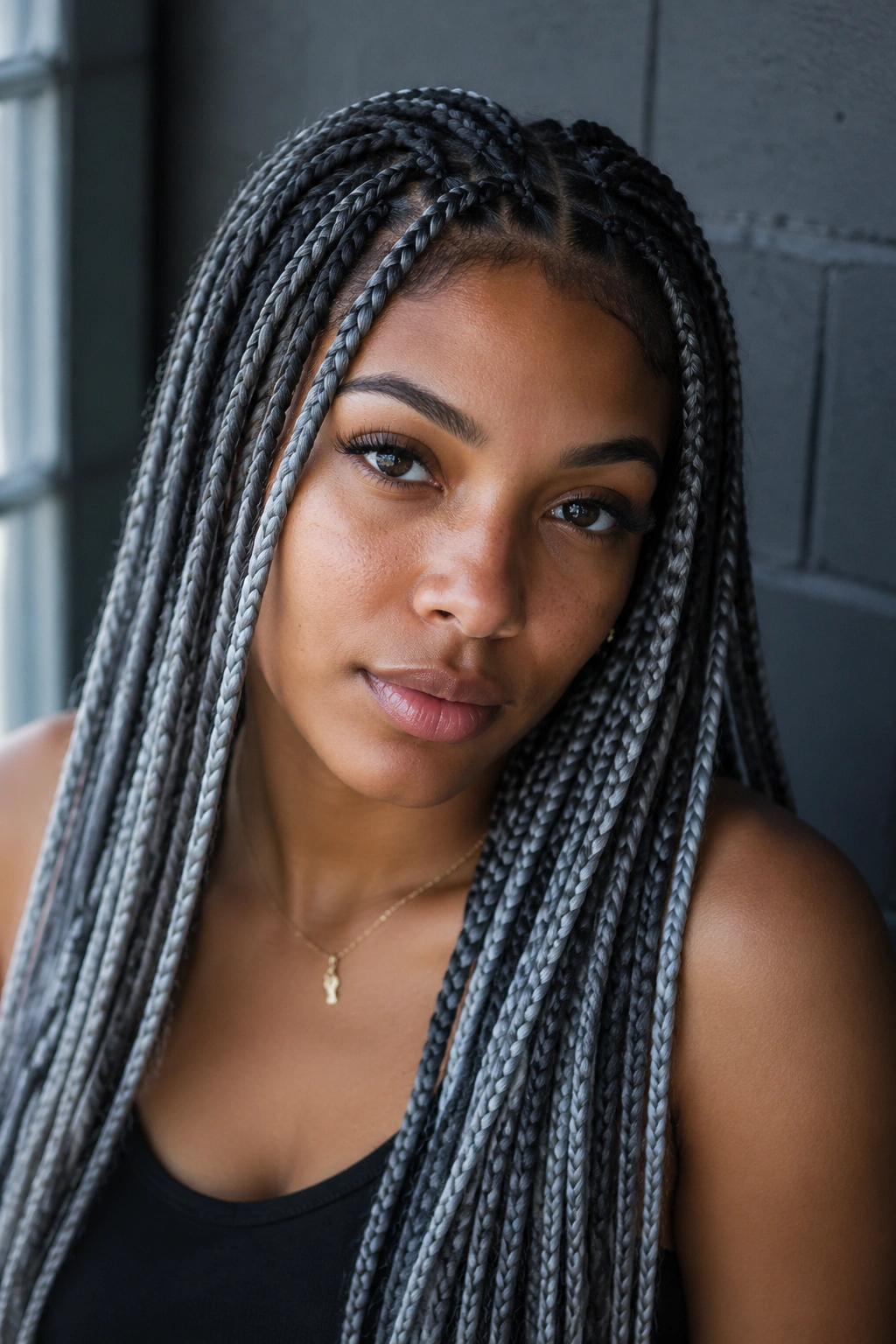
Why do silver braids look so different from blonde braids? Because silver sits cooler and carries a sharper edge. When you mix it with charcoal and black smoke tones, the whole style feels sleek rather than sunny. That makes it a strong pick if warm shades never quite sit right on you.
How to keep it from going dull
The danger with silver is that it can look flat if the tones are too close. You need enough contrast between the charcoal and the silver to make the braid pattern visible. Black smoke at the base solves that. It gives the style depth and keeps the lighter shade from floating.
Wear this set with simple accessories. Silver cuffs, clear beads, or matte black wraps work better than bright gold here. The cooler metal tones can also be easier to coordinate if you wear gray, white, navy, or black a lot. Avoid using too many pale shades in the same install, or the color can lose its shape.
11. Half-and-Half Split Color Box Braids
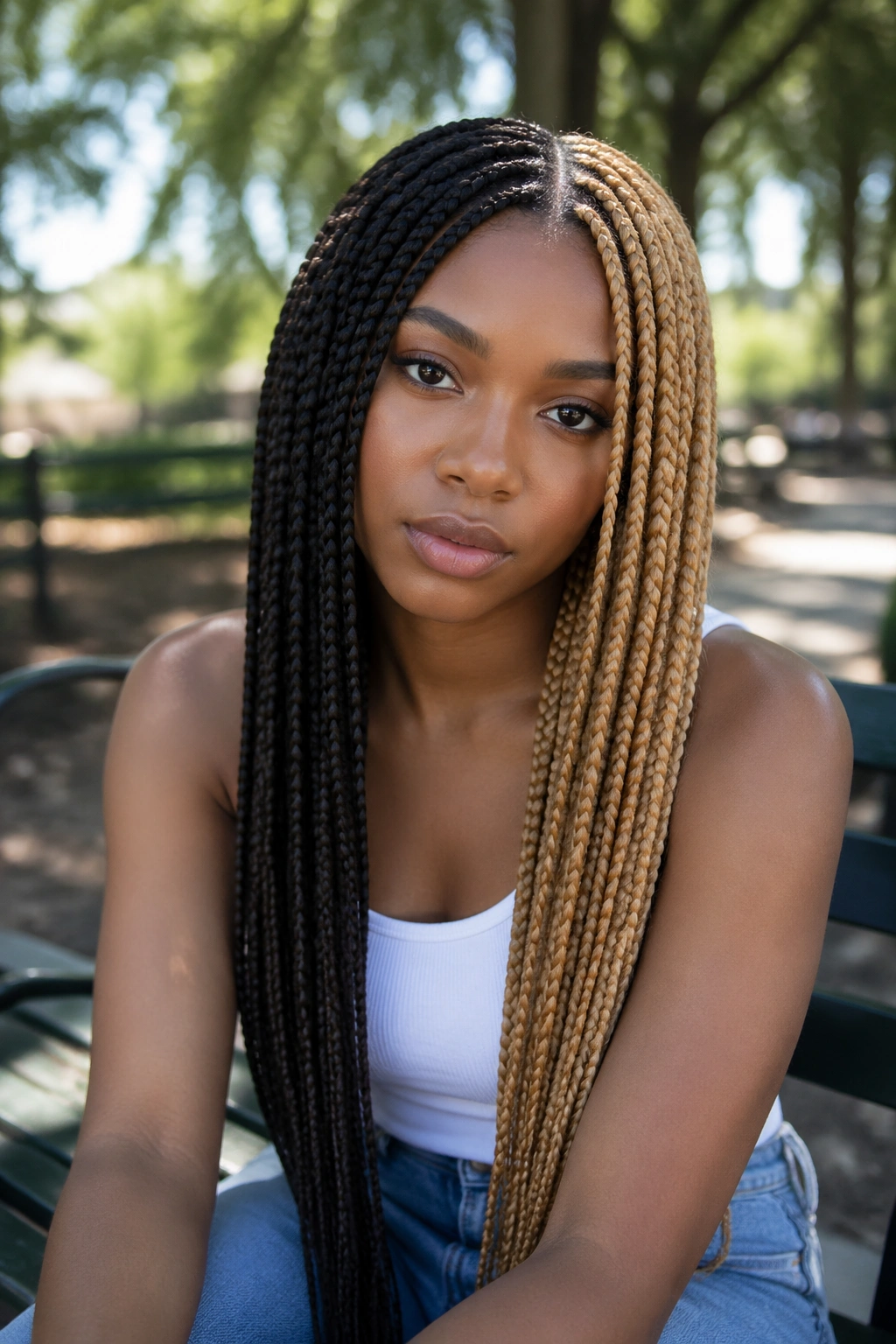
Half-and-half braids are not subtle. That’s the point. One side can be black and burgundy, the other side black and blonde, or you can go even bolder with teal on one side and plum on the other. The split makes the color read as design instead of decoration.
What makes this style work
The braid pattern matters more here than the exact shades. A clean middle part gives the split its power. If the parting is messy, the whole thing loses the sharpness that makes it interesting. You want the viewer to notice the line first, then the color. That’s the order.
This style suits people who like symmetry with a little edge. It also gives you two moods in one install. One side can be calm, the other louder. Or both sides can stay within the same family and just change the temperature. If you’re trying this for the first time, keep one side darker so the overall look doesn’t feel too loud too fast.
12. Blonde Face-Framing Braids Around a Dark Base
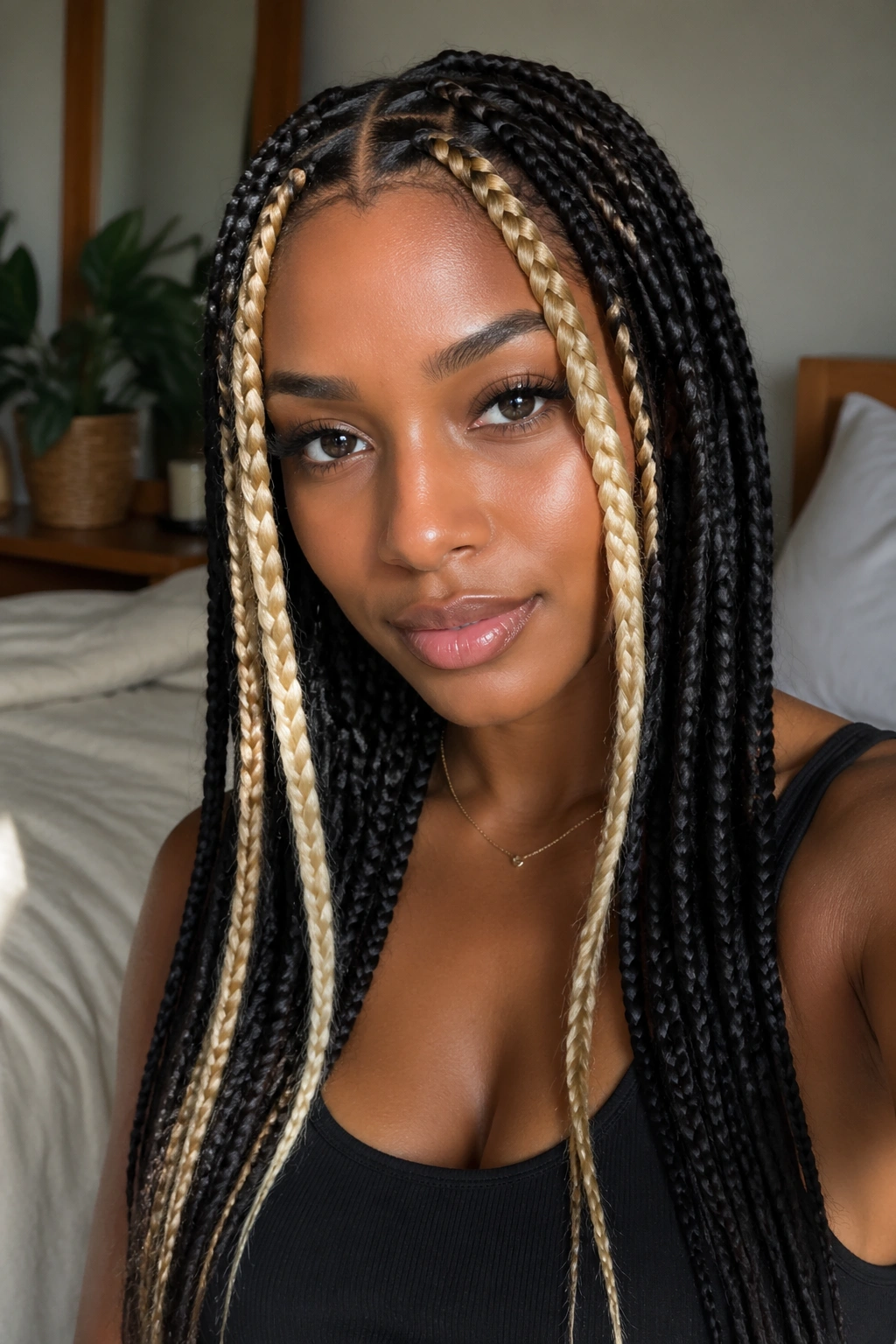
A dark base with blonde face-framing braids is one of those looks that changes your whole face without changing the whole head. The lighter strands pull attention forward, which is handy if you want the braid style to open up your features a little. It’s also one of the easiest ways to test color if you’re cautious.
Quick details to get right
- Keep the blonde on 2 to 6 braids near the front.
- Let the back stay dark so the style still feels grounded.
- Use lighter pieces near the cheekbones, not just at the hairline.
- Add a few blonde tips if you want more movement.
This style is cleaner than a full blonde install and easier to maintain. You can refresh the front pieces without redoing the entire head. That matters more than people realize, especially if you like to keep braids in for a while. A soft blonde, not a platinum blonde, usually looks smoother against a dark root.
13. Peekaboo Purple Braids Under the Top Layer
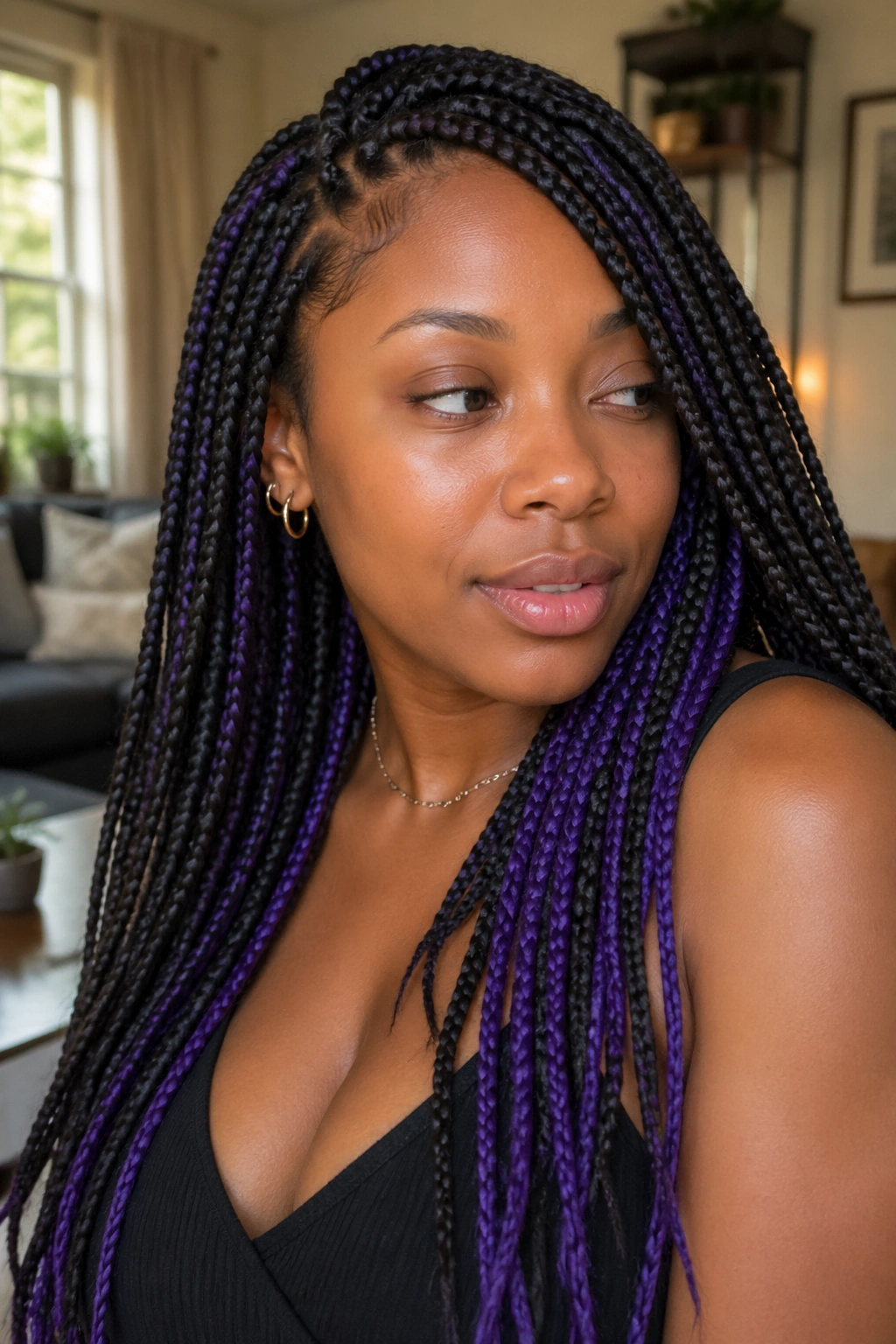
Hidden color has a charm that full color sometimes loses. Peekaboo purple braids give you that effect. From the front, the style can look fairly calm. Then you turn your head, sweep the braids into a ponytail, or tuck them behind your shoulder, and the purple shows up like a small surprise.
That kind of placement is smart if you want color without committing to a loud first impression. Put the purple under the top layer and keep the visible outer braids black, brown, or dark burgundy. The color underneath becomes part of the movement, not the headline.
This is also a good option if you work in a place where you like to keep things a little quieter. You still get personality. You just choose when to show it. If you’re using two purple tones, keep one deeper than the other so the peekaboo effect doesn’t turn muddy.
14. Tri-Color Chunky Braids with Clear Stripe Placement
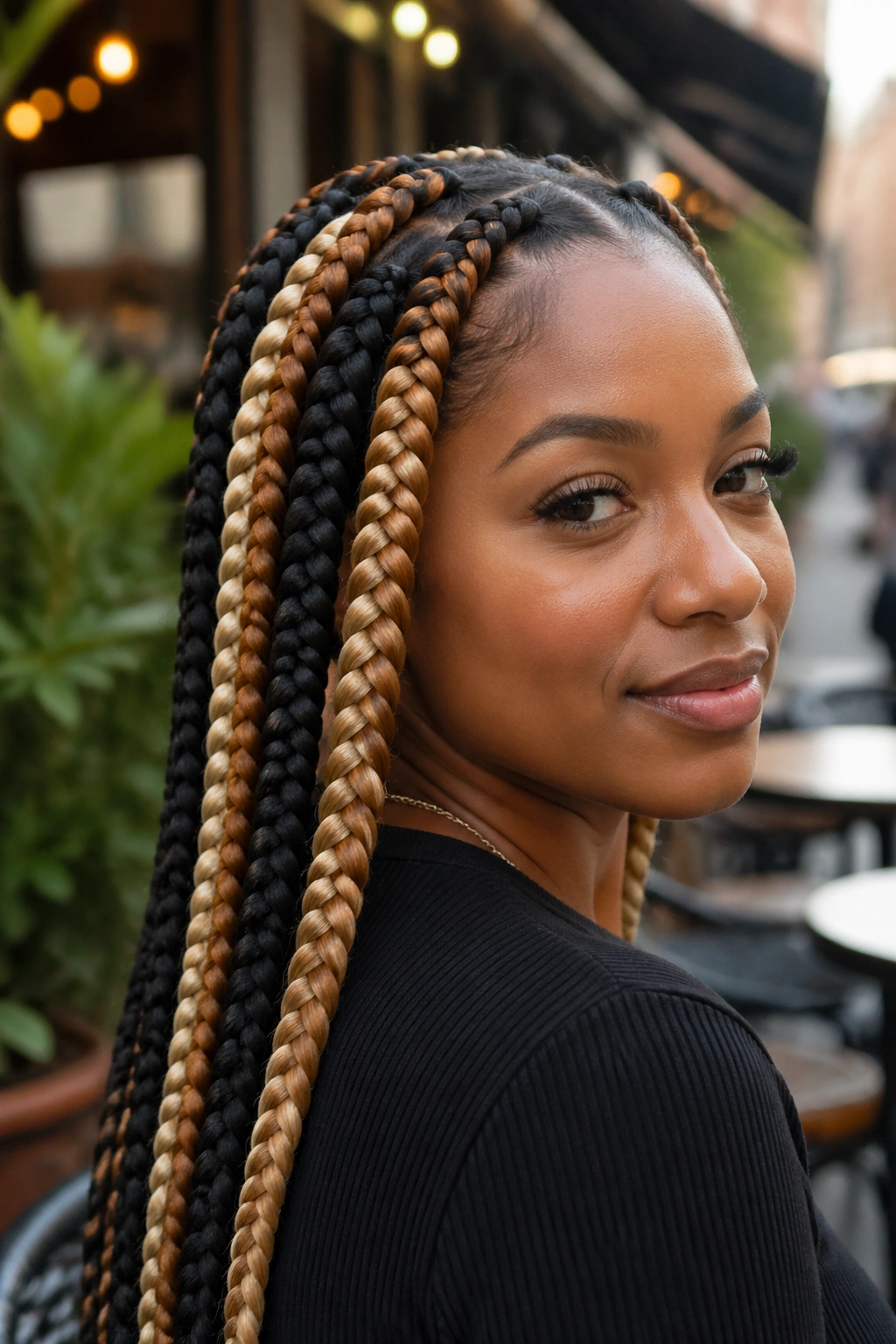
Tri-color braids can go bad fast if the colors are too evenly blended. The cleaner version uses clear stripe placement. Think of it as a small stack of shades inside each braid rather than a smear across all three. Chunky braids make that easier because each section has room to hold its own.
I like this style with one dark color, one mid-tone, and one bright accent. For instance, black, mocha, and blonde. Or burgundy, plum, and black. The key is contrast. Not chaos. The colors should still feel like they belong to the same family, even when they differ.
This look has a lot of personality, so the parting should be neat. That keeps the color from looking accidental. It’s also a good pick when you want the braids themselves to be the accessory. If the braids are jumbo, leave more space between the color changes; the larger the braid, the clearer the stripe pattern needs to be.
15. Pastel Cotton-Candy Braids with a Soft Finish
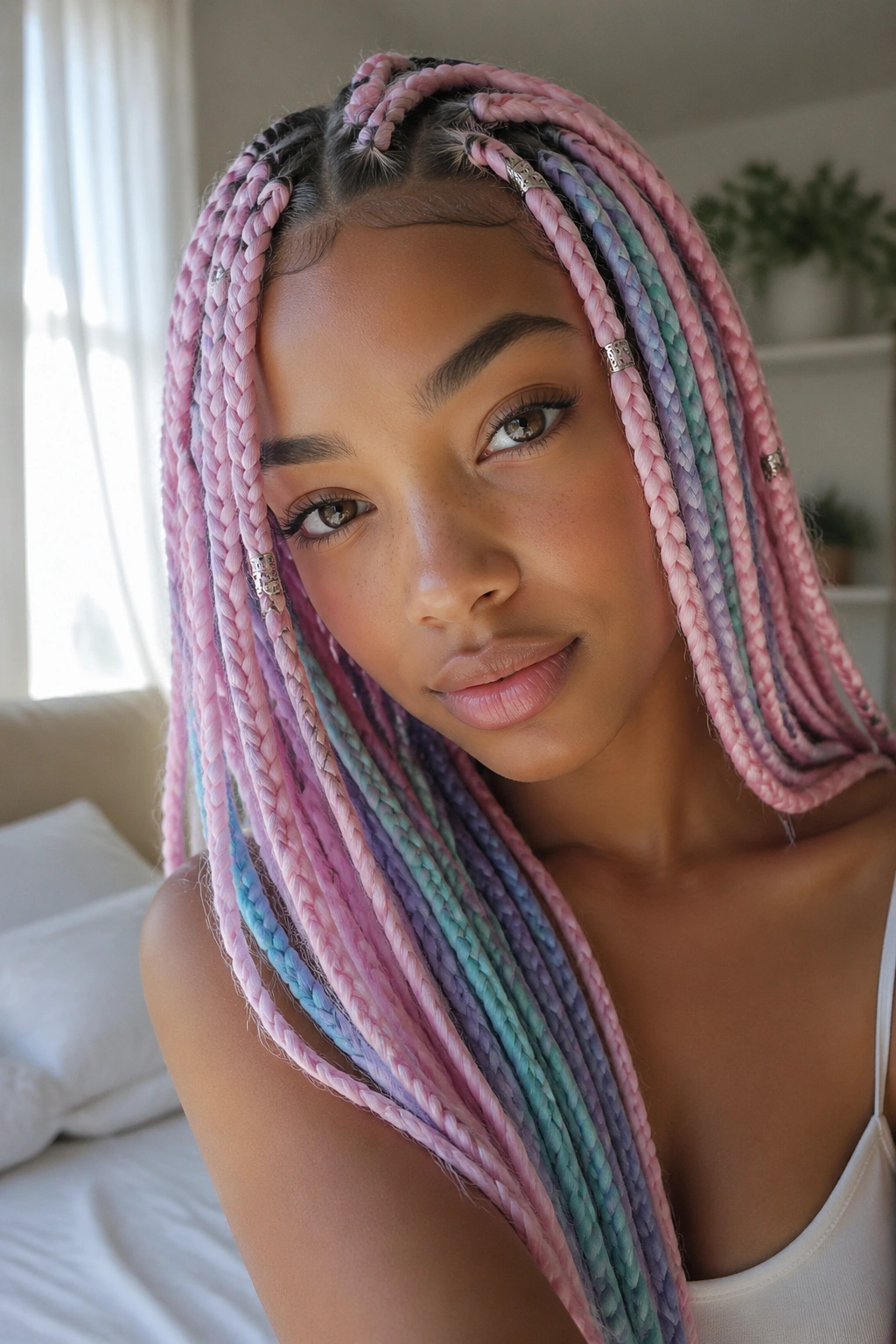
Pastel braids are tricky because the hair can look chalky if the shades are too pale or the blend is too thin. Cotton-candy pink, lilac, mint, and pale blue can work, but only if the finish stays soft and the colors don’t fight each other. A little restraint helps a lot.
Best way to wear them
Use pastels on medium-length braids, not ultra-short ones. The colors need room to show before they fade into each other visually. Keep one shade dominant and the others as accents. If you try to give every pastel the same amount of space, the style starts to look frosted instead of intentional.
This palette often looks best with loose ends, beads in clear or pearl finishes, and minimal makeup that doesn’t compete with the hair. You can also tuck in a few darker pieces at the root if you want the style to hold shape. A soft rose or dusty lavender usually reads better than a hyper-saturated pastel when the hair is synthetic.
16. Earthy Terracotta, Clay, and Sand Braids
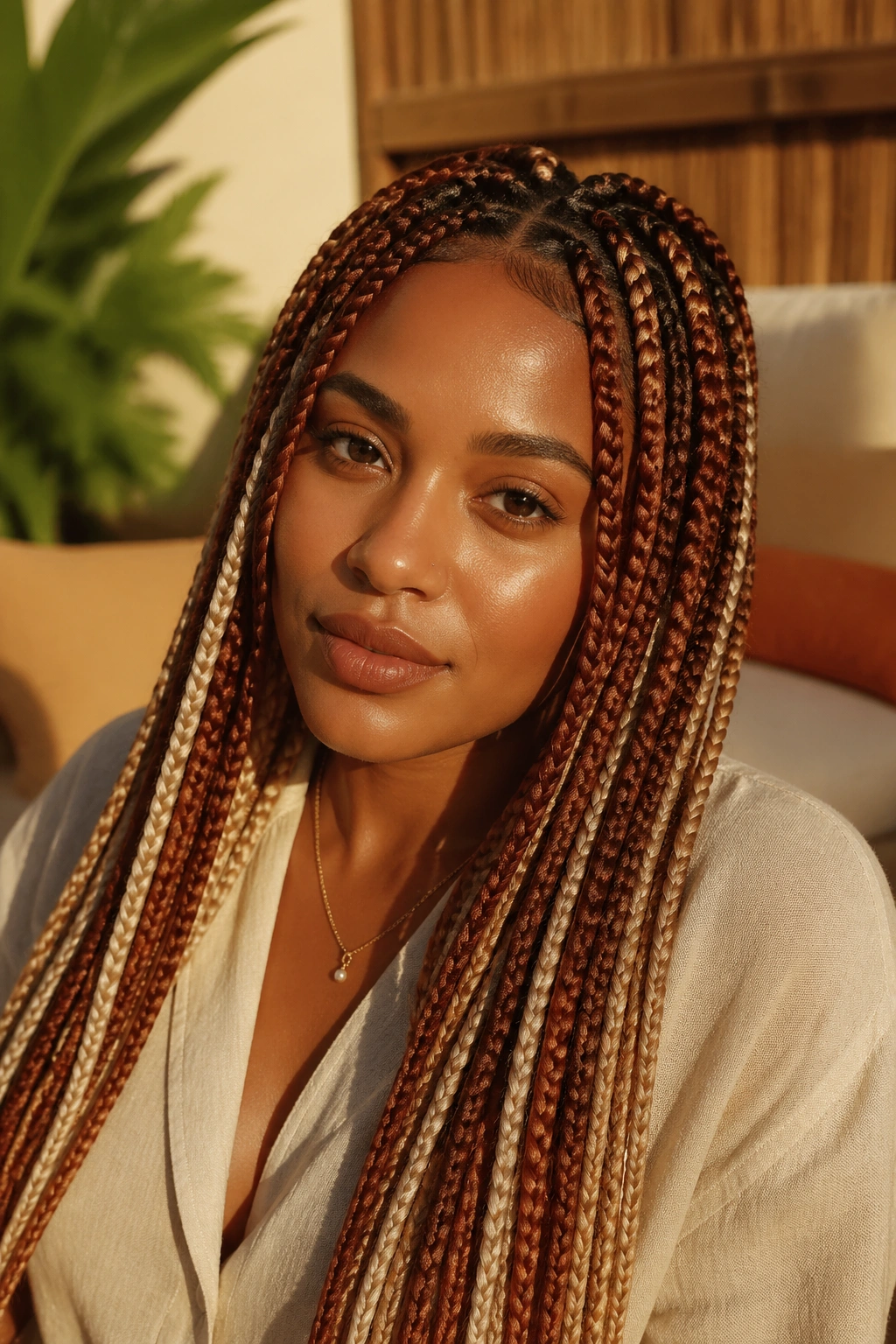
Some color stories feel loud. This one feels grounded. Terracotta, clay, and sand shades create a warm braid set that looks especially good when you want color but still want the style to feel easy to wear.
The appeal here is how natural the tones sit together. Terracotta gives you the stronger orange-red note. Clay cools it down a little. Sand lightens the whole thing without turning it blonde. The palette is good for people who like warm neutrals more than bright colors, and it pairs well with linen, denim, brown leather, and gold jewelry.
This is also one of the easiest multi-color looks to wear for a long stretch because the grow-out doesn’t hit hard. The shades are already close to natural hair colors, so the root line stays softer. If your skin leans warm or neutral, this mix tends to look especially smooth.
17. Neon Accent Braids on a Dark Base
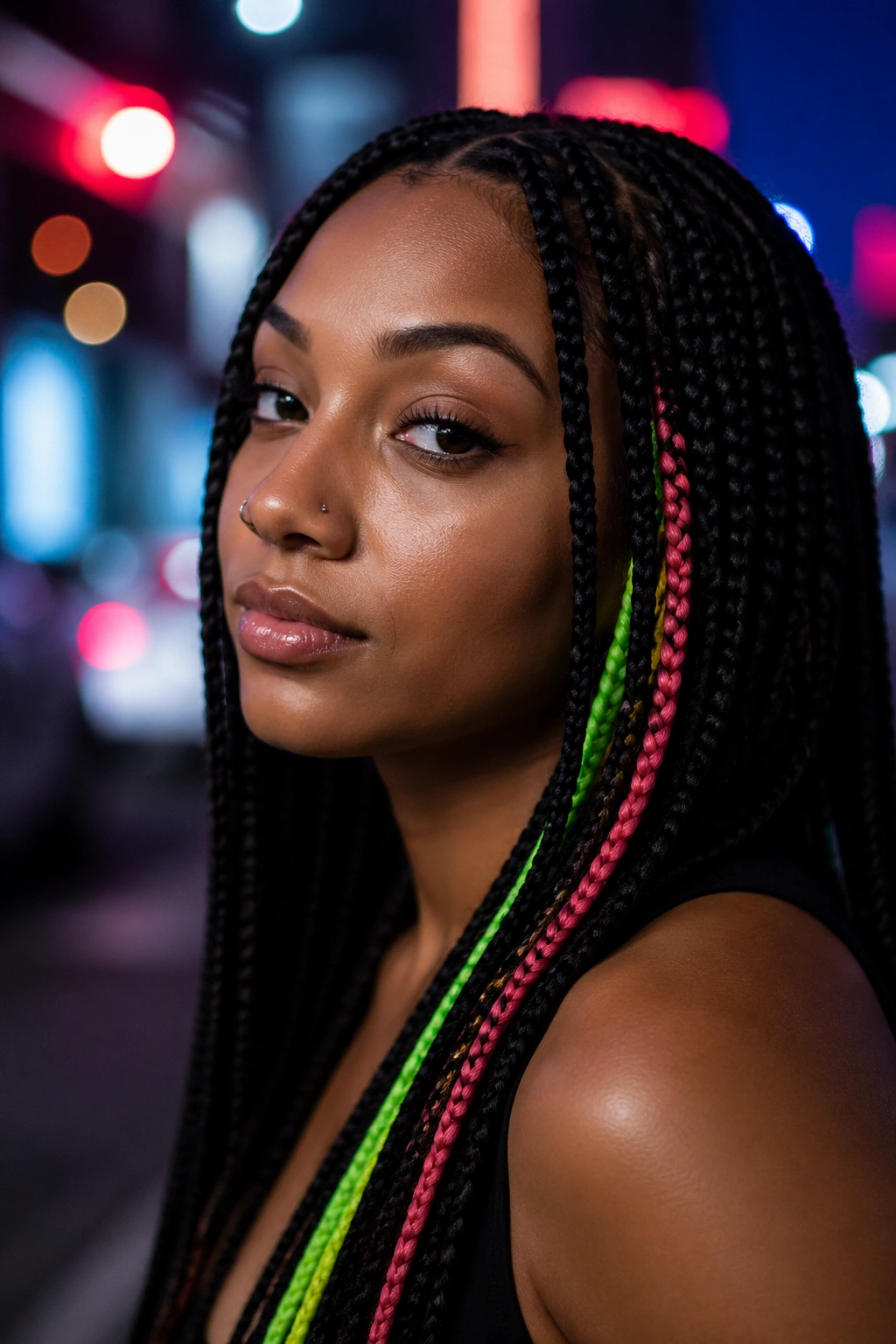
Neon braids can look fantastic in tiny doses and overwhelming in big ones. That’s why the dark base matters. It acts like a frame. The neon becomes an accent, not a flood.
Think lime green, electric pink, bright orange, or acid yellow tucked into a mostly black or deep brown install. Just a few braids are enough. A streak near the front. A row under the top layer. A handful at the nape. That’s usually all you need. The color will still show when you move, and it won’t fight every outfit you own.
This style makes the most sense if you like contrast and don’t mind people noticing your hair first. It’s also fun for events, vacations, or just breaking out of a rut. Keep the braid size medium or small if you want the neon to feel crisp instead of blocky.
18. Short Bob Box Braids in Three Colors
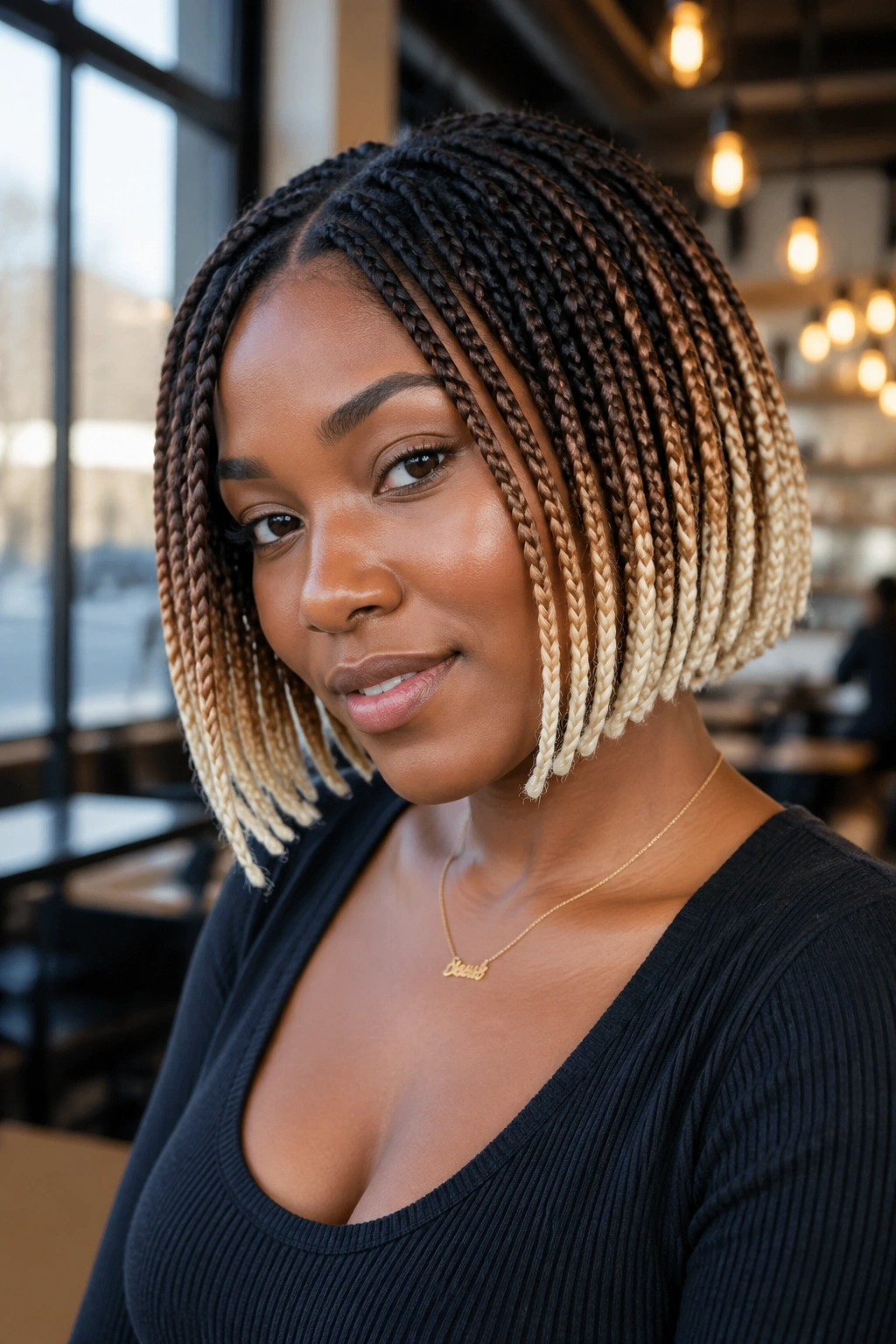
Short braids are underrated. People think color needs length, but a bob can carry a strong color mix if the placement is tight and the ends are clean. Three colors is usually the sweet spot. Enough variety to keep it interesting, not so much that the cut loses shape.
What to watch for
- Use a darker shade at the top for definition.
- Put the brightest color around the perimeter or ends.
- Keep the braid length around jaw to shoulder level for a clean bob line.
- Choose colors that stay readable even when the hair tucks in.
This is a smart pick if you want something lighter on the neck and easier to style every day. It also makes your color choices more visible because the hair sits near the face. A bob with burgundy, black, and blonde can feel cleaner than the same colors on waist-length braids. The shorter length sharpens everything.
19. Waist-Length Gradient Braids That Shift in Stages
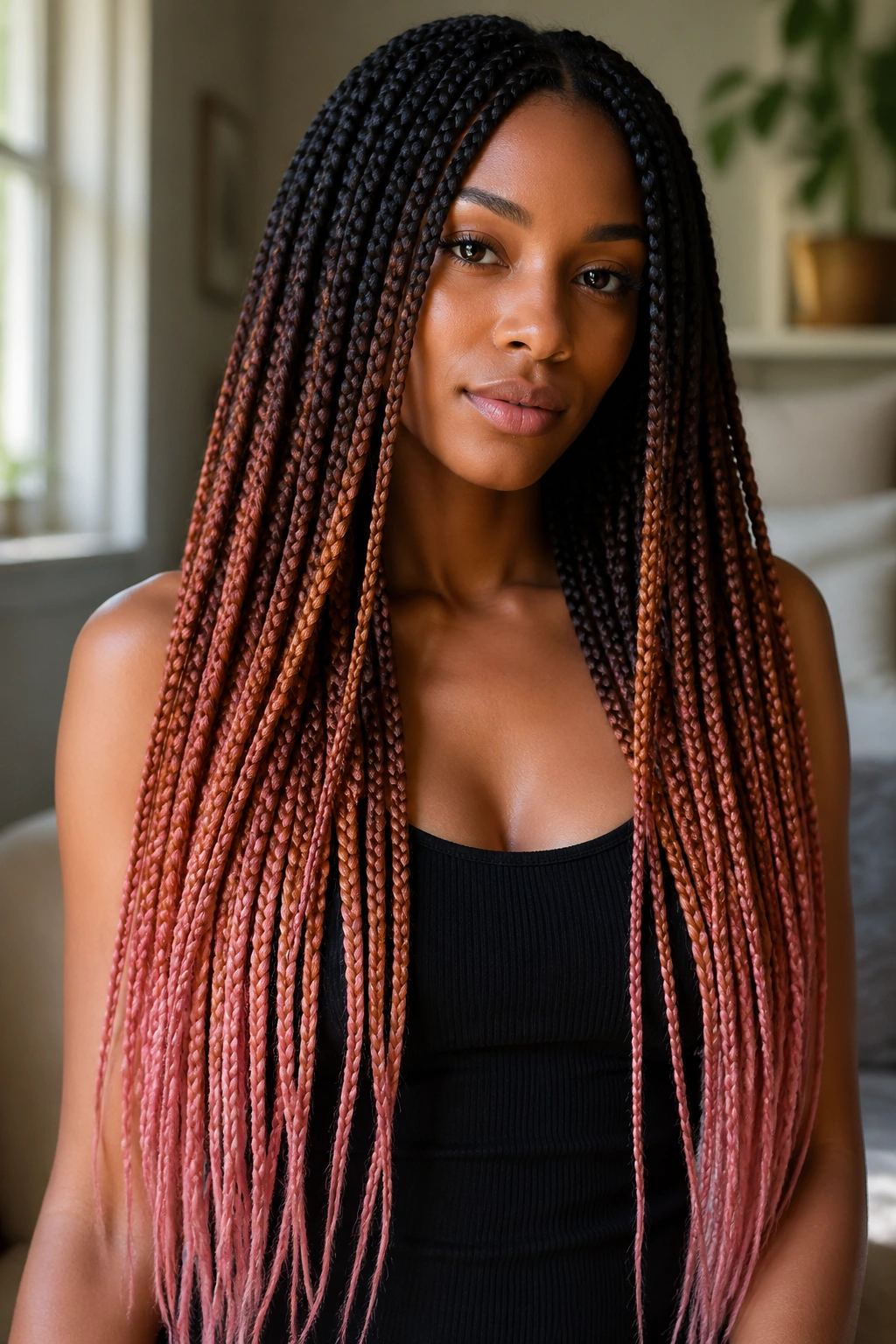
Long braids are where gradient color really gets to breathe. You can move from black to brown to copper, or from dark burgundy to plum to rose. The stages matter. A true gradient looks gradual enough that your eye slides through the shift instead of hitting a hard wall.
The main thing to get right is balance. Don’t make every braid change color at the same exact point. Slight variation keeps the style from looking manufactured. A few braids can shift a little higher, a few a little lower. That small irregularity feels more natural.
This kind of install is not the quickest option, but it’s one of the most satisfying if you like long hair and you want the color to show in motion. Because the length carries so much of the visual weight, keep the roots darker and the ends lighter if you want the braid set to feel lighter overall.
20. Beaded Multi-Color Braids with Color-Matched Hardware
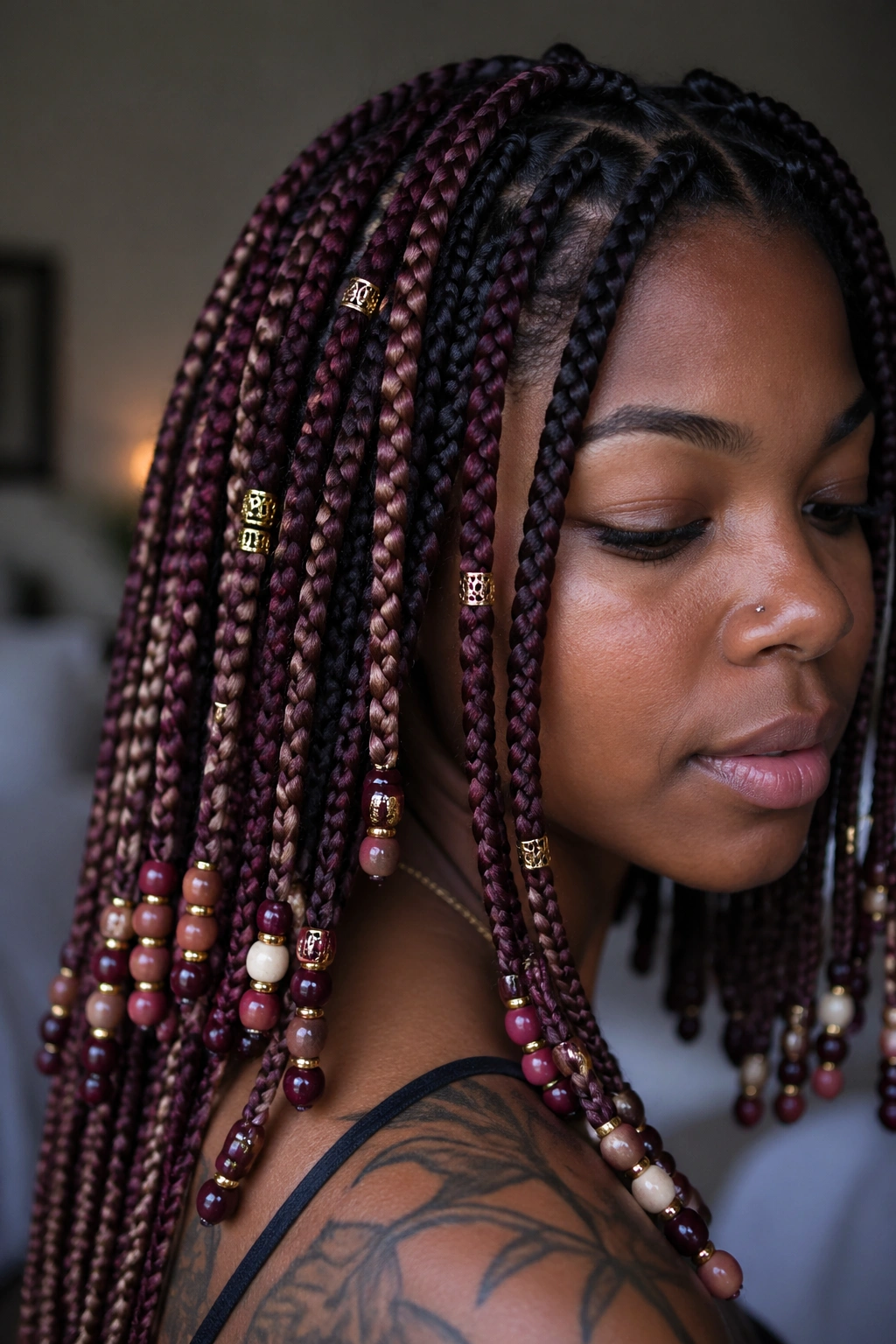
Beads can make color feel smarter. That sounds odd, but it’s true. When the beads match one of the shades in the braids, the whole look stops feeling random and starts looking edited. A burgundy braid with burgundy or clear beads. A blonde braid with gold cuffs. A teal braid with transparent aqua beads. It all ties together.
This style works especially well if the braid colors themselves are already busy. The hardware gives your eye a place to land. It also lets you repeat one shade at the ends, which can help the whole install look more cohesive.
A few practical notes matter here. Heavy beads pull more on the ends, so don’t overload thin braids. And if you sleep with your braids loose, use a bonnet or scarf so the beads don’t snag the fabric. Choose fewer, better-placed beads rather than covering every braid. The restraint reads better.
21. Rainbow Micro Mix for a Full Spectrum Look
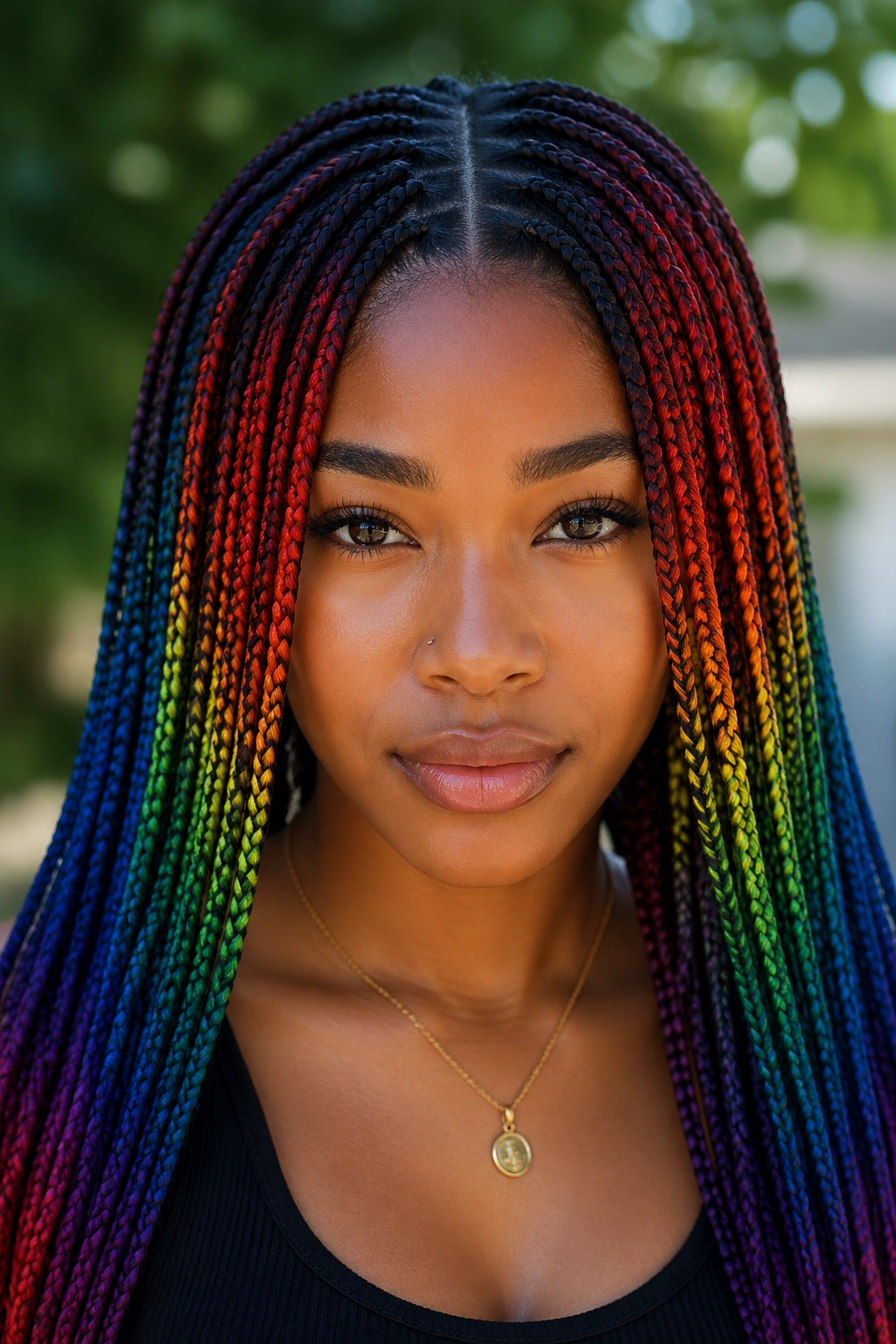
A rainbow mix can be gorgeous. It can also look like a bag of candy exploded on your head if the spacing is sloppy. The difference is control. Micro braids or very small box braids help because the color shifts stay delicate instead of chunky.
How to keep it from looking busy
Use one anchor shade, usually black or dark brown. Then layer in small amounts of red, orange, yellow, green, blue, and purple. Not every color needs equal space. In fact, equal space is usually the wrong move. Let some colors repeat more than others so the eye can travel across the head without getting stuck.
This style works best when the braids are neat and the parting is precise. A clean scalp makes the colors feel deliberate. If the sections are rough, the rainbow will fight the structure. Tiny braids are your friend here because they let the colors blend visually while still keeping each shade distinct.
22. Ribbon-Wrapped Box Braids with Added Thread
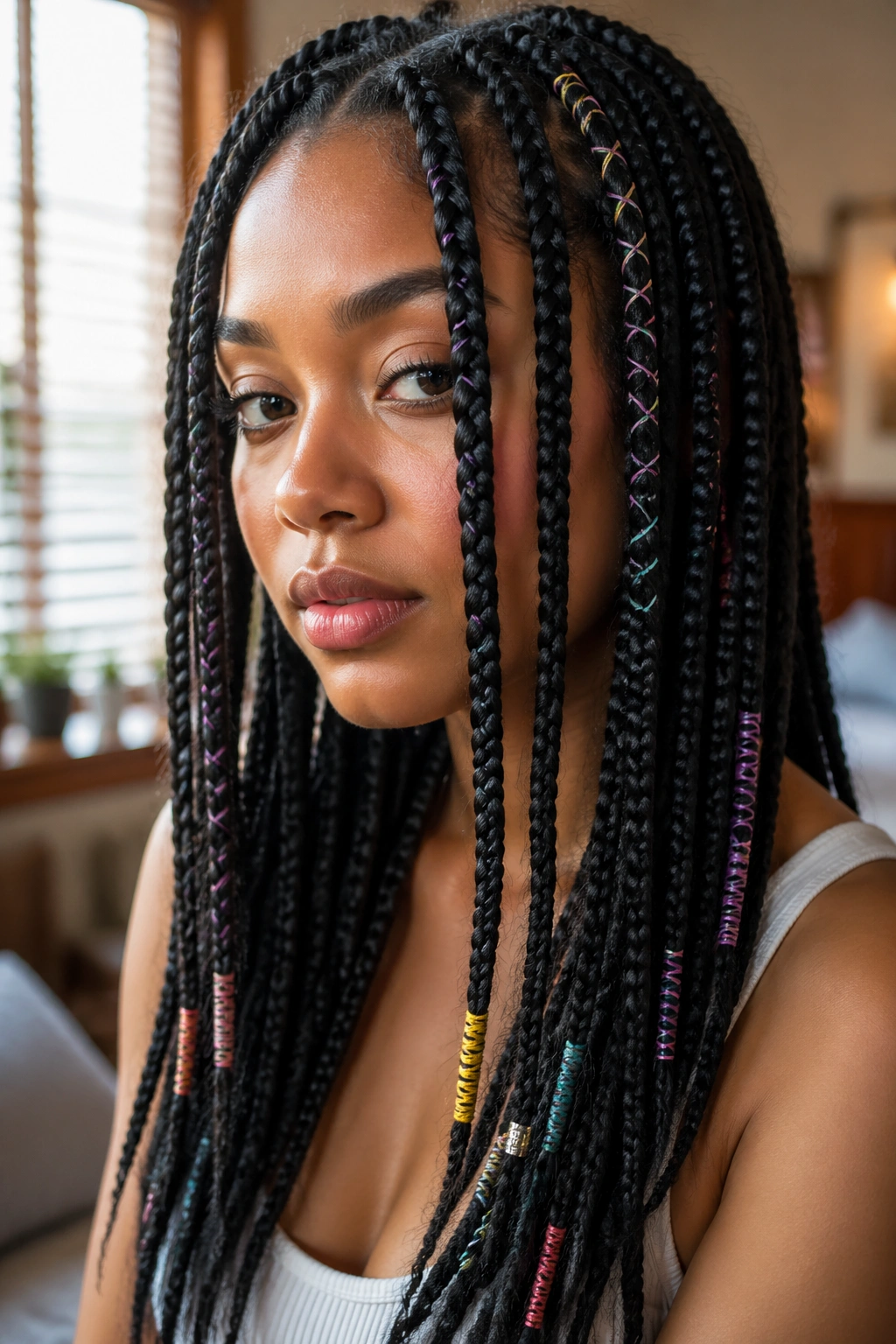
Thread-wrapped braids have a handmade feel that I still like a lot. They’re not flashy in the usual way, but they add color in a different direction. Instead of changing the braid hair itself, you wrap thread, yarn, or thin ribbon around selected sections. That gives you color without committing the whole install to one palette.
The nice thing is control. You can wrap just the ends, just the top third, or a few braids near the face. You can also repeat one color from your clothes or jewelry, which makes the style feel intentional in a way that plain braids sometimes don’t.
This approach works well with black or brown braids because the thread stands out. It also makes sense if you want to wear a color you don’t want to commit to in synthetic hair. Keep the wraps snug but not tight enough to distort the braid pattern.
23. Chunky Jewel-Tone Braids with Gold Cuffs
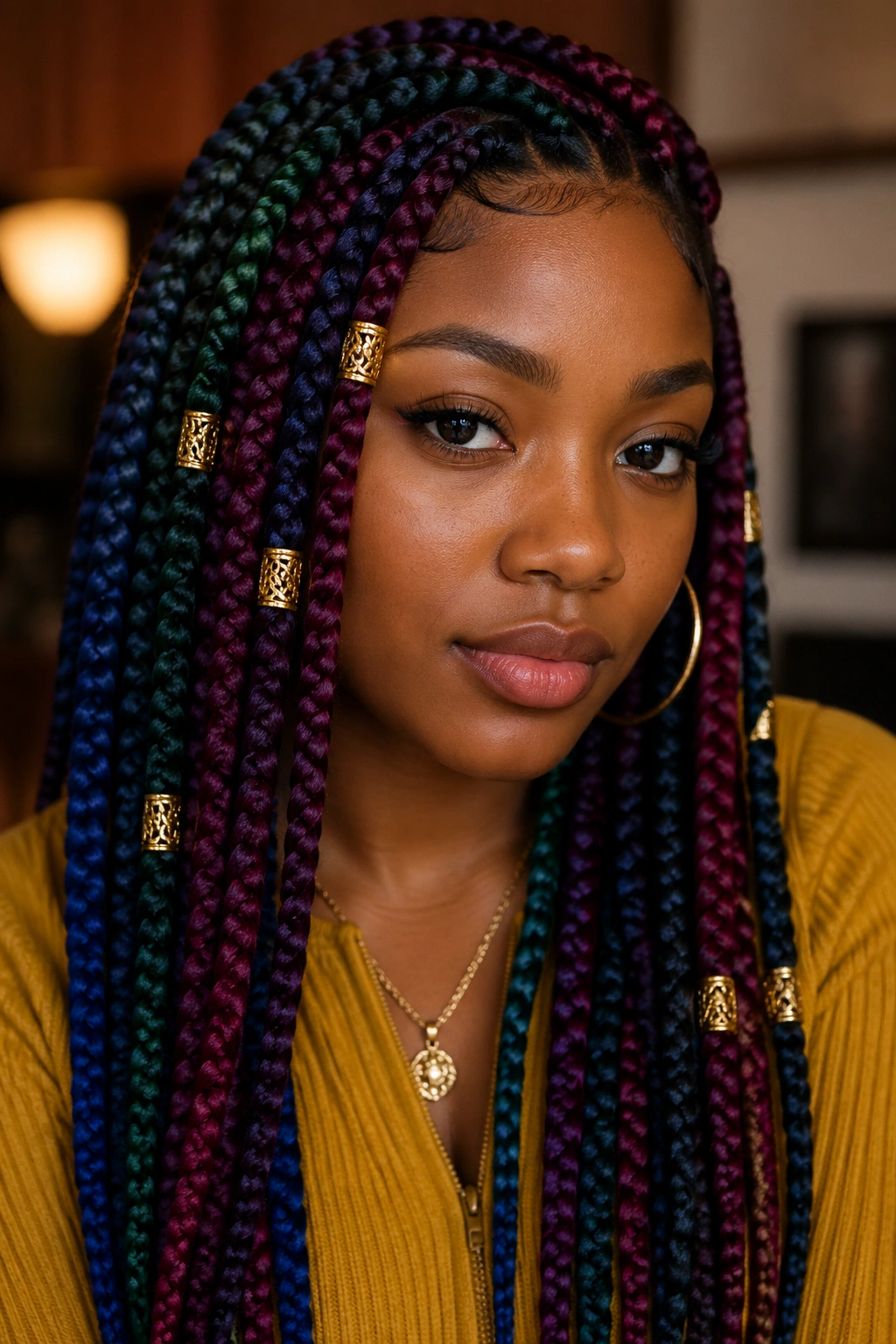
Jewel tones have a built-in richness that works well on box braids. Think sapphire blue, emerald green, amethyst purple, and ruby red. Add gold cuffs and the whole style starts to feel finished, not just colorful.
The reason this combination works is contrast. Jewel tones are saturated, but they’re deep enough to stay wearable. Gold cuffs echo the warmth in the shades and help separate the braids visually. Without the cuffs, the color can blur together. With them, the braid sections stay easier to read.
This is a strong choice for chunky braids because the larger sections can hold richer colors without losing shape. It’s also useful if you want a style that looks dressed up with almost no extra effort. Don’t over-accessorize this one. Two or three gold accents per side is usually plenty.
24. Multi-Color Braids with Curly Ends
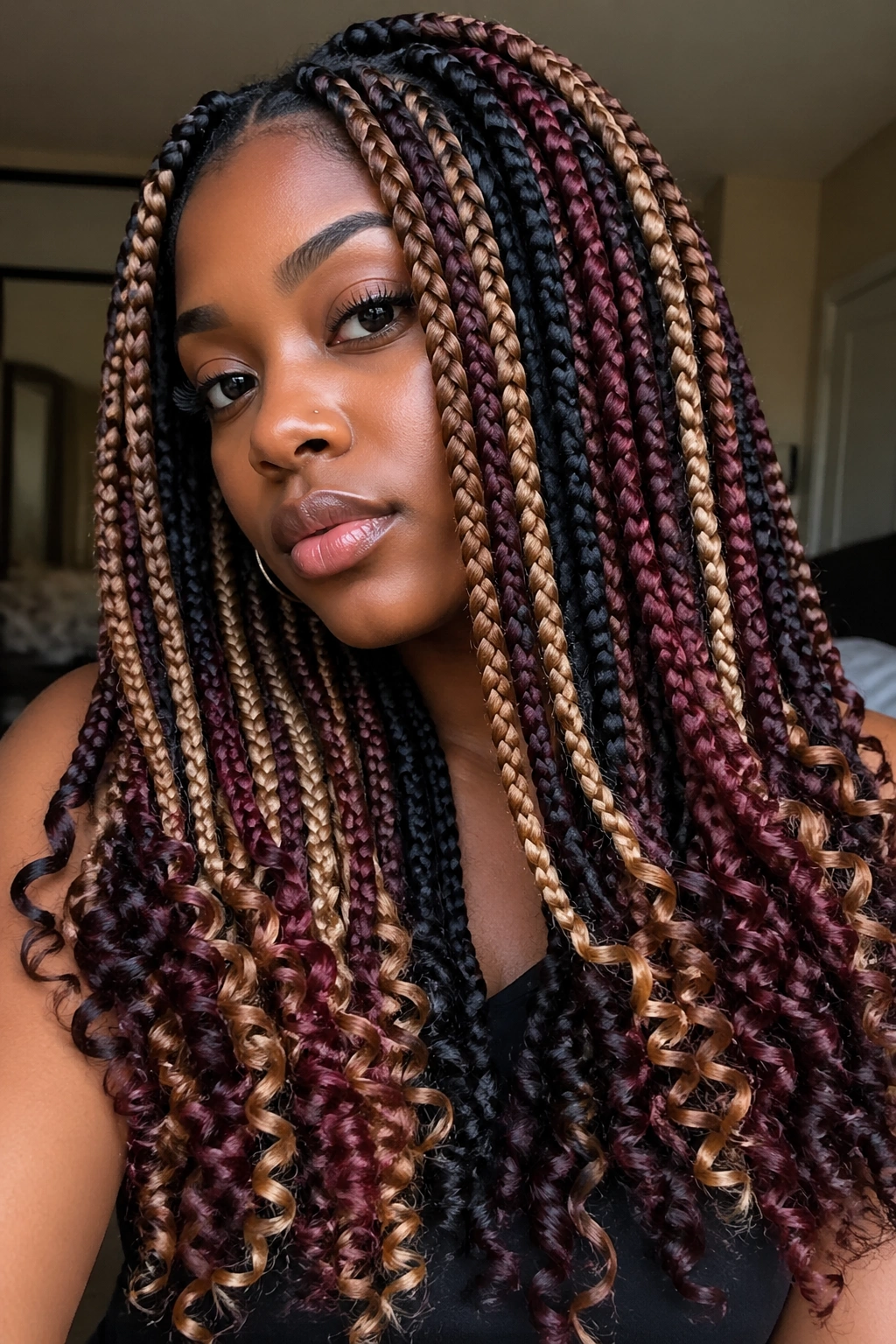
Curly ends change everything. Suddenly the style feels softer, more textured, and a little less rigid. When you add multiple colors to braids with curly ends, the curls act like a color frame. They catch the eye at the bottom and keep the braid set from feeling too stiff.
Why the finish matters
Curly ends work best when the color change happens before the curl starts. That way the curl doesn’t hide the blend. If you push all the color into the ends, the curls can swallow the effect. Better to let the braid carry the shades and let the curl finish the shape.
This look is especially good with warm blends like brown, honey, and copper, but cooler mixes can work too. The main thing is texture. Curls add softness to color that might otherwise feel strong. Use a light mousse on the curly ends and separate them gently with your fingers so they don’t clump.
25. The Low-Key Everyday Blend That Still Feels Fresh
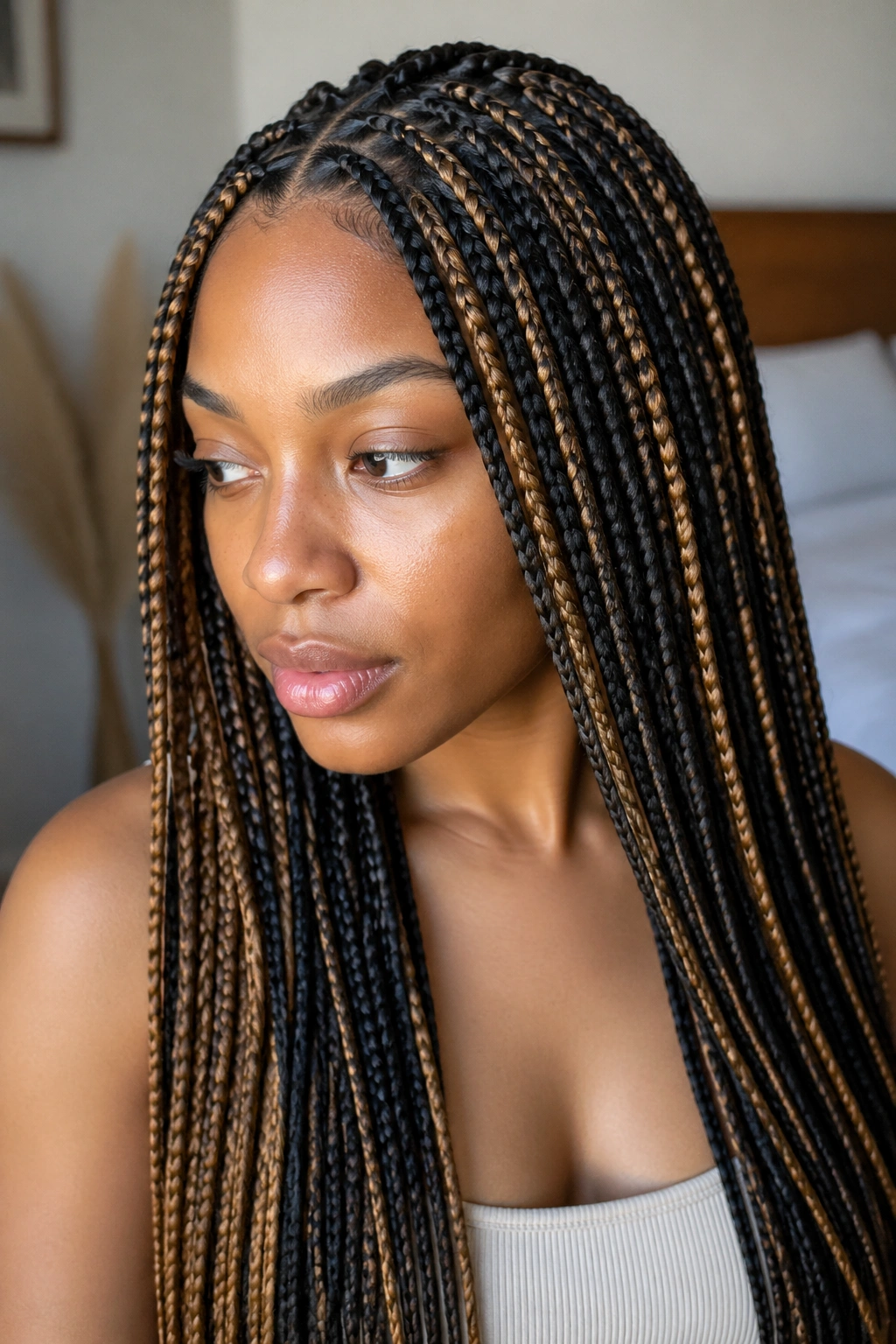
Not every good braid set needs a loud centerpiece. Some of the best multi-color box braids are the ones you can wear to work, to brunch, to the grocery store, and still feel like yourself. A low-key everyday blend usually means three shades that stay in the same family — black, dark brown, and mocha; or brown, caramel, and honey; or burgundy, plum, and black.
The point is movement, not spectacle. You want the color shifts to show when the braids swing, not shout when you walk into a room. That makes the style easier to live with, which matters more than people admit. A lot of stunning hair ideas fall apart in real life because they’re exhausting to style around. This one doesn’t have to be.
If you want a braid set you won’t get tired of fast, choose shades that repeat what you already wear most. Warm clothing calls for warm hair. Cooler wardrobes usually look cleaner with ash, plum, black, or silver-based mixes. The best everyday color braid is the one that still looks intentional after the first week of wear.
A good rule: if you can imagine the braids working with a sweatshirt, a blazer, and a silk scarf without changing a thing, you’re in the right territory. That’s a stronger test than trying to impress a camera. And it holds up.
The smartest multi-color braid styles don’t rely on color alone. They rely on placement, contrast, and restraint. Once those three pieces are in place, even a quiet palette can feel fresh.
