



Red and white box braids never try to blend in, and that is exactly why they work. The contrast is sharp, graphic, and easy to read from across a room, but the look can go in very different directions depending on braid size, parting, length, and where the white sits against the red. A clean set of medium braids feels crisp and modern. A heavy jumbo set feels louder and more sculptural. Add curls, beads, or a bun, and the whole mood shifts again.
There’s a practical side people ignore. White braiding hair shows buildup, lint, and dullness faster than darker shades, so the style lives or dies on neat sectioning and a careful hand with product. Red can also swing from cherry-bright to deep burgundy depending on the bundle you choose, which means shade choice matters more than most people expect. Small choices make a big difference here.
The smartest red and white box braids usually have a plan. Sometimes that plan is straight alternating rows. Sometimes it is a hidden pop of white under a red top layer. Sometimes it is a face-framing strip of red against a pale base, or an ombre fade that softens the whole thing. That range is what makes the color combo so fun, and the first version on the list is the cleanest place to start.
1. Classic Red and White Box Braids
This is the version that makes the color story easy to read at a glance. Medium box braids, one red braid next to one white braid, then back again. No tricks, no extra layers, no need to squint and figure out where the color went.
The best thing about this layout is the rhythm. Your eye keeps moving across the scalp and down the length of the braids because the colors alternate in a steady pattern. That steady rhythm looks especially good with a center part or a neat middle section that runs from the hairline to the nape. Keep the sections around half an inch to three-quarters of an inch if you want the color split to stay clear.
Why It Works
Medium braids give both colors enough space to show. Go too thick and the white can look patchy. Go too thin and the contrast gets busy fast.
- Best for: people who want the red and white combo to feel balanced, not theatrical.
- Parting: clean squares or slightly staggered rows.
- Length: collarbone to mid-back keeps the look tidy.
- Texture note: pre-stretched synthetic hair helps the finished braid hang smoother.
One thing I like here is how easy it is to style. A half-up ponytail, a low bun, or a simple side sweep all still let the color do the work. You do not need extra decoration. The braid pattern is already the decoration.
2. Red-Heavy Braids with White Peekaboo Layers
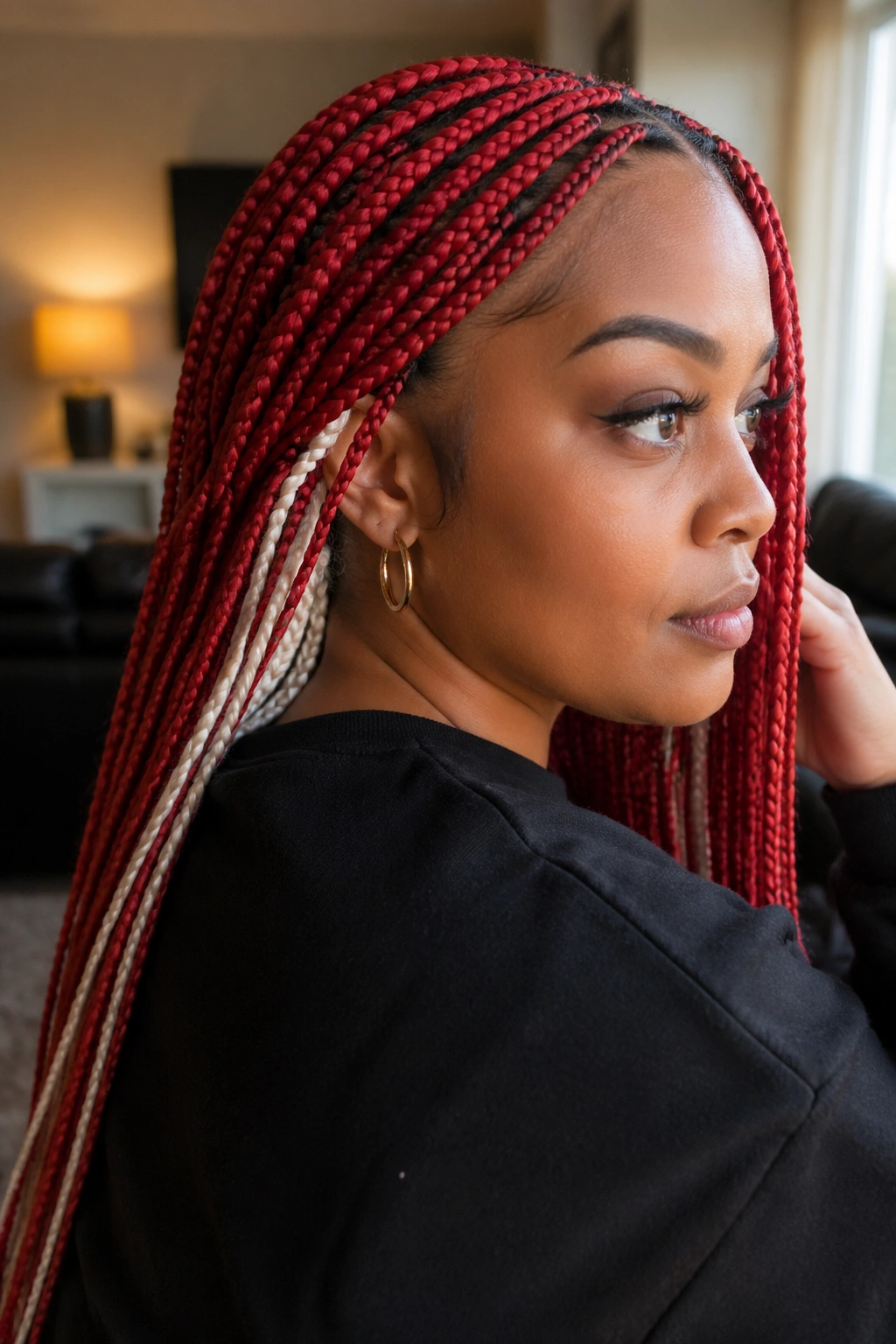
If you want red to lead and white to act like a surprise, this is the smarter move. Most of the braids sit in a bold red, while the white hides underneath or in lower rows where it flashes when you turn your head.
That hidden placement changes the whole feel. The braids look solid and dark from the front, then the white starts showing when the hair swings or gets pinned up. It feels a little more grown-up than a fully split color pattern, and it works well if you like a red look but do not want the white to take over the room.
The trick is placement. Put the white in the rows closest to the nape, behind the ears, or in a few narrow interior sections. Then keep the top rows red so the style has a strong first read. When the braids are worn down, the red stays dominant. When they are gathered into a ponytail or bun, the white shows off.
Best move: ask your braider to map the white into the inner layers before they start. Random placement can look messy. Planned placement looks deliberate.
3. White Box Braids with Red Face-Framing Pieces
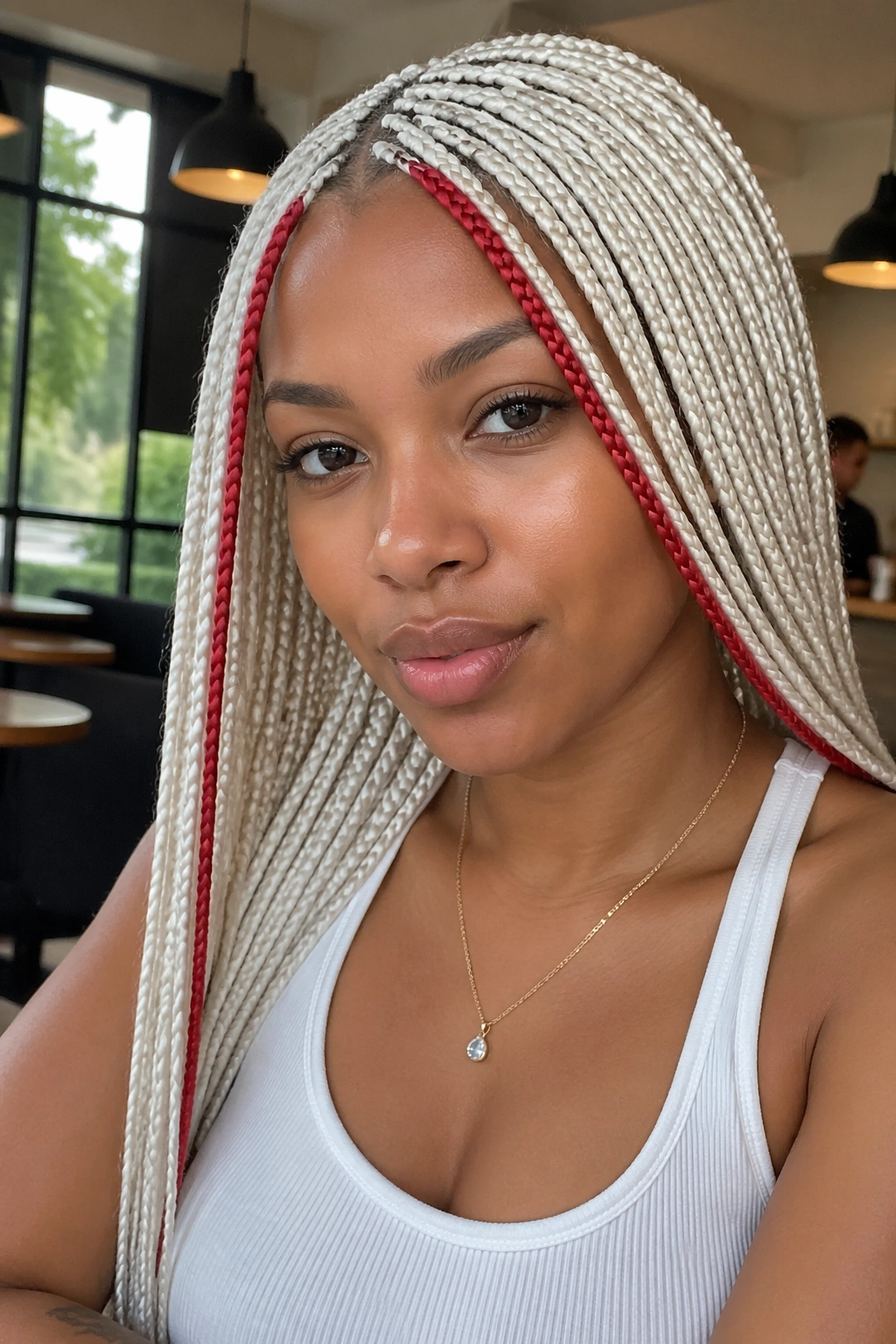
White braids with a few red pieces around the face can look incredibly sharp. It is the opposite of the previous style: white carries the weight, and red becomes the accent that stops the look from going flat.
That face-framing section matters more than people think. Two red braids on each side, or even one thicker braid tucked near each temple, can make the whole style feel intentional fast. The white base gives the style space. The red gives it direction.
How to Wear It
This version works well if you like bright makeup, a strong brow, or jewelry that already does some talking. The red pieces frame the face like a border, and the white gives them room to pop. If you wear lip color often, this combo makes the face area look finished without needing much else.
A few small details keep it from feeling harsh:
- Keep the red face-framing braids slightly thinner than the white ones.
- Let the front pieces start just behind the hairline instead of right on it.
- Use a clean middle part or a soft off-center part.
- Leave the baby hairs tidy and minimal so the color stays the focus.
I’d skip heavy edge control here. White hair and heavy product are not friends for long.
4. Jumbo Red and White Box Braids
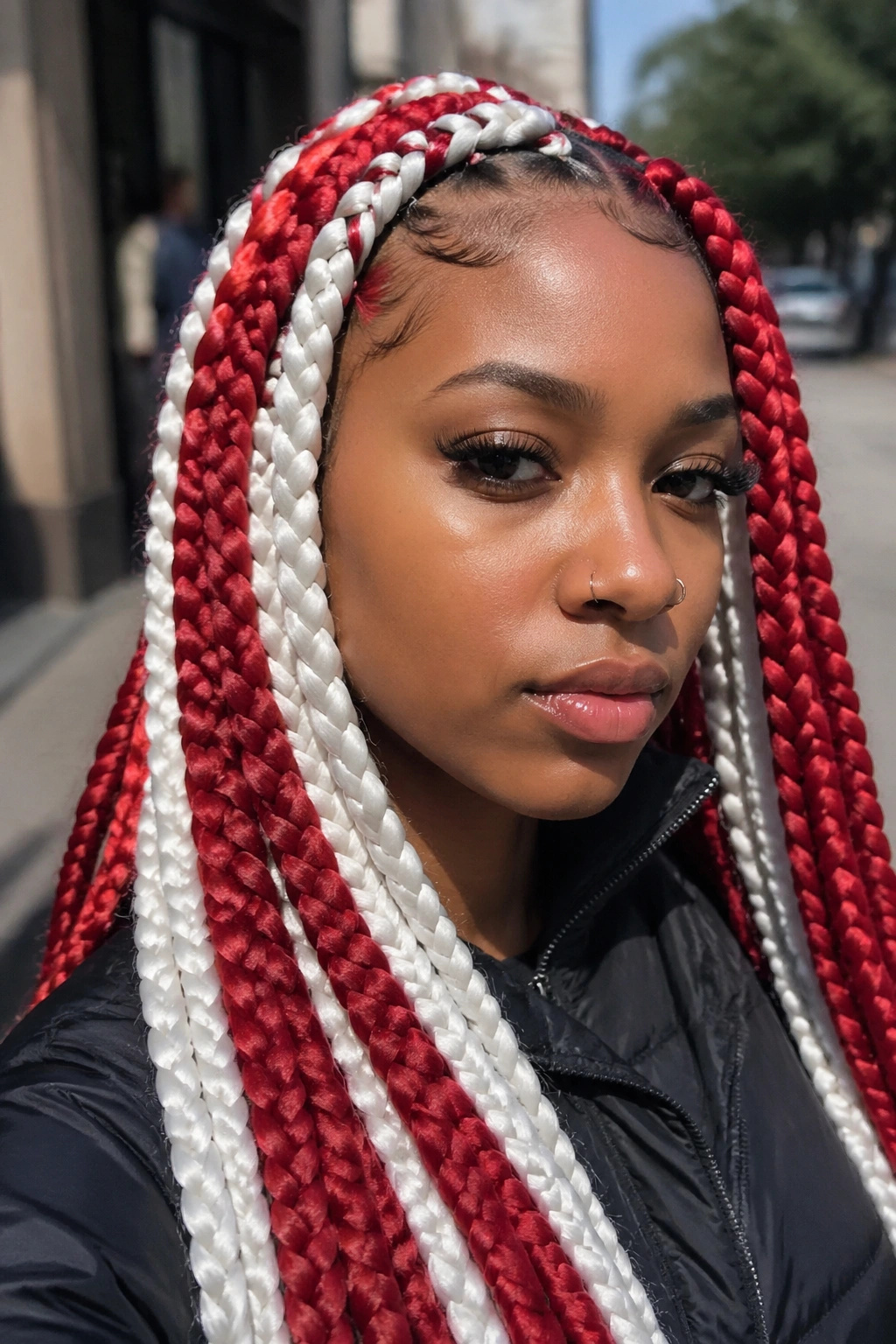
Jumbo braids turn the color contrast into big stripes. There is no subtlety here, and that is the point. Each section has room to show the red or white clearly, so the style reads bold even before you add any accessories.
Compared with medium or small braids, jumbo braids make the head shape look fuller and more sculpted. They also take less time in the chair, which is a real perk if you do not want to sit forever. The tradeoff is weight. If you push the length too far, the ends can start to pull on the scalp and the whole style loses some of its clean line.
This version works best at shoulder length to just past the shoulders. Past that, the weight starts to stack up fast. Keep the color blocks large and simple. A red braid, then a white braid, then another red braid gives the set enough drama already.
If you like a big braid that can be tied into a low ponytail or wrapped into a bun, this is a good one to ask for. It feels confident without needing extra decoration. One bold piece is enough.
5. Small Knotless Red and White Box Braids
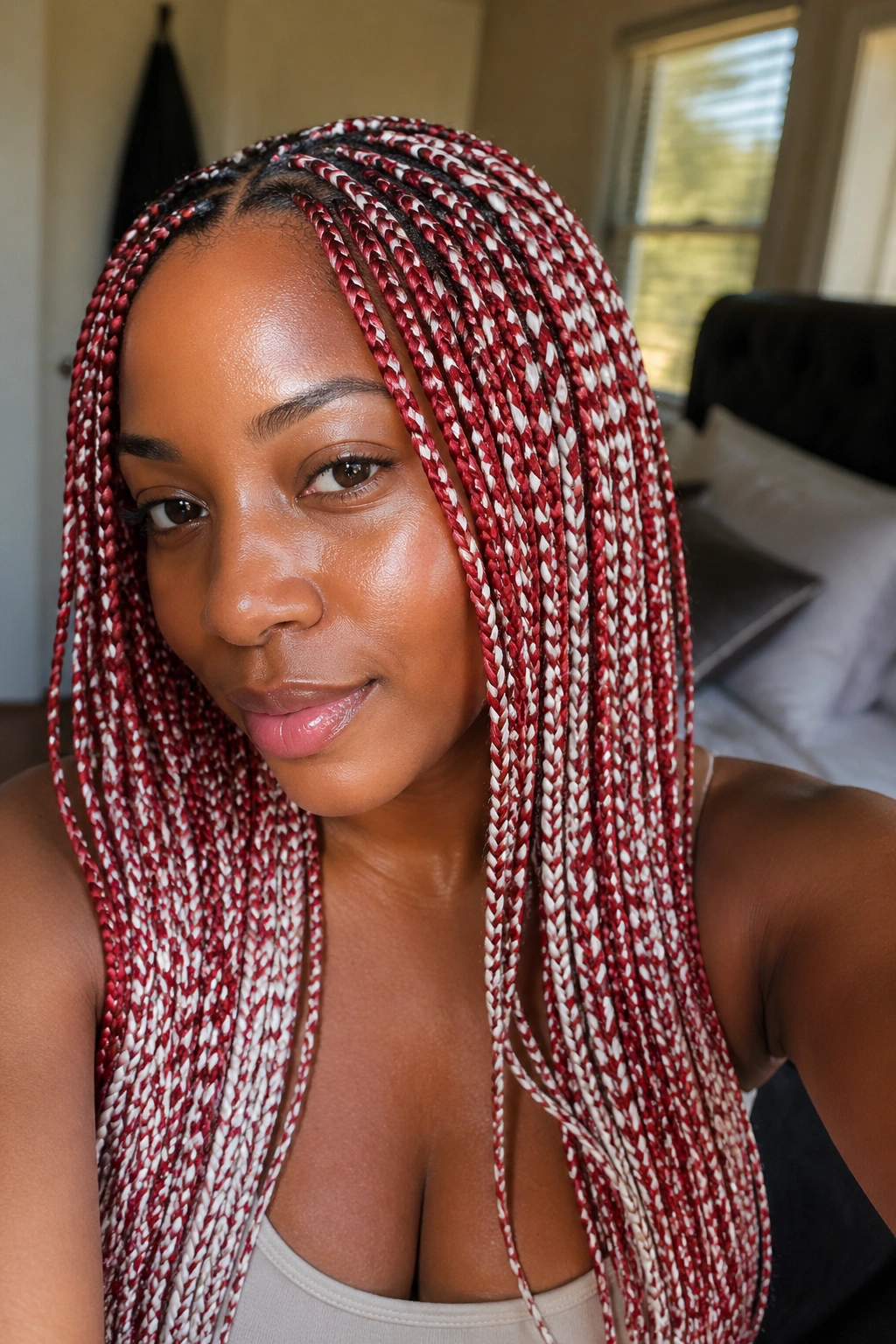
Why do small knotless braids change the feel so much? Because the tiny sections make the colors look woven instead of blocked. Red and white stop reading like two separate halves and start looking like a pattern.
Knotless braids are easier on the hairline, and that matters here because small braids already create a dense look. When the parts are narrow and the color alternates often, the style gets crisp fast. A full head can take on a checkerboard feel, especially if the rows are neat and the braids land at the same length.
What to Ask For
Tell your braider you want narrow sections, consistent braid size, and clean alternating color placement from row to row. That matters more than the exact braid count.
- Sections about the width of a pinkie nail to a pencil eraser keep the look tight.
- Knotless starts help the front line sit flatter.
- A slight side or middle part both work.
- Mid-back length gives the pattern room to show.
This is a good pick if you like detail and do not mind a fuller head of braids. It is also the one I would choose for anyone who likes their hair to look considered from every angle, not just the front.
6. Red and White Box Braids in a Shoulder-Length Bob
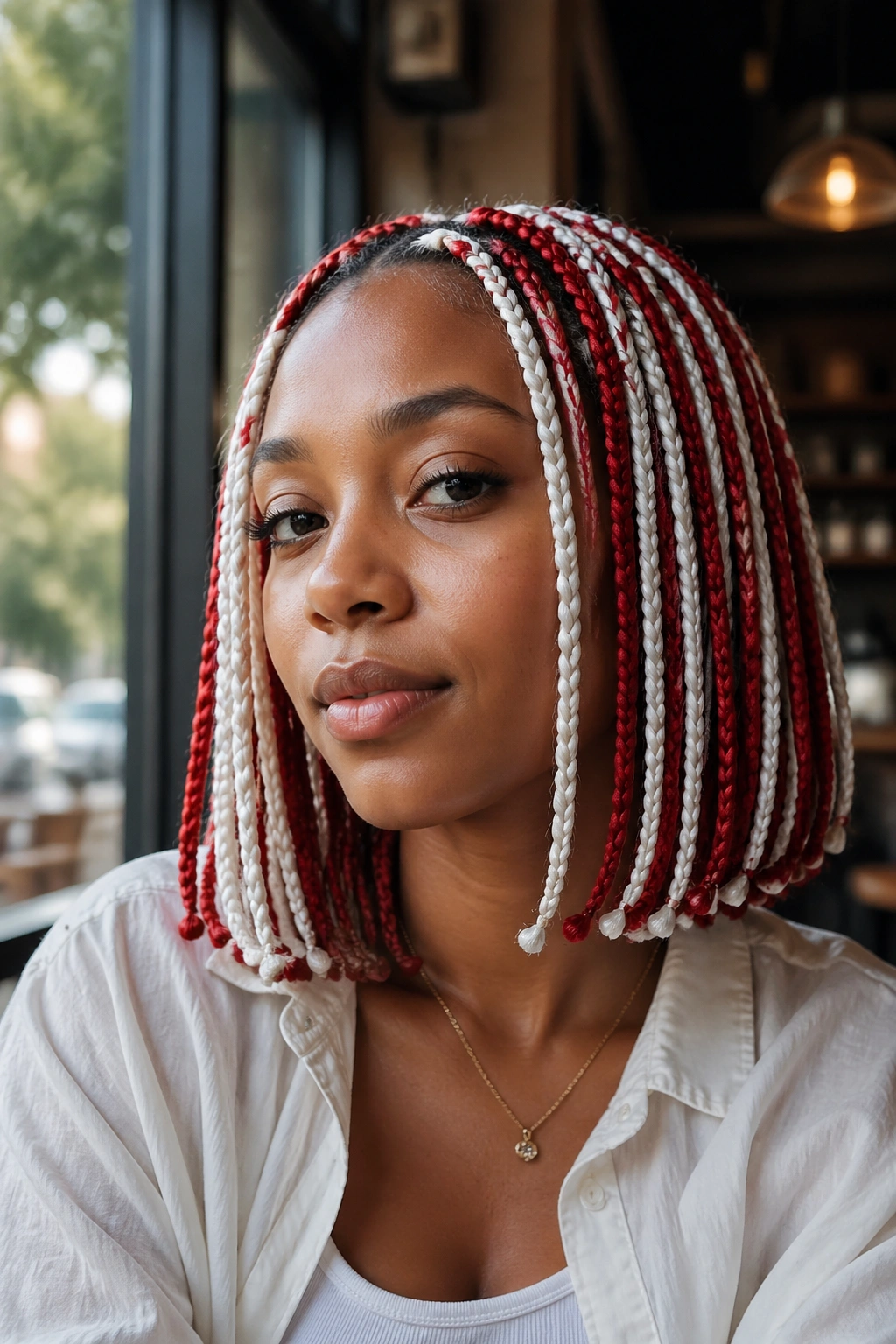
A bob changes the tone completely. Long red and white braids can feel loud in a big, swinging way. A shoulder-length cut feels sharper and easier to wear every day.
The blunt edge does half the work. When the ends sit around the shoulders or just above them, the color blocks stay visible and the whole style feels neat instead of heavy. White tips do not drag down under their own weight. Red sections stay bright near the face. The haircut also makes the braids easier to tuck behind the ears, which sounds small until you try it and realize how often you do it.
One nice thing about a bob is drying time after washing. A shorter set is simpler to rinse, simpler to dry, and less annoying to sleep on. That matters if you like fresh hair but hate sitting around with damp braids for hours.
It’s a practical look. Also a very good one.
If you want a red and white style that reads polished rather than flashy, start here.
7. Curled Ends on Red and White Box Braids
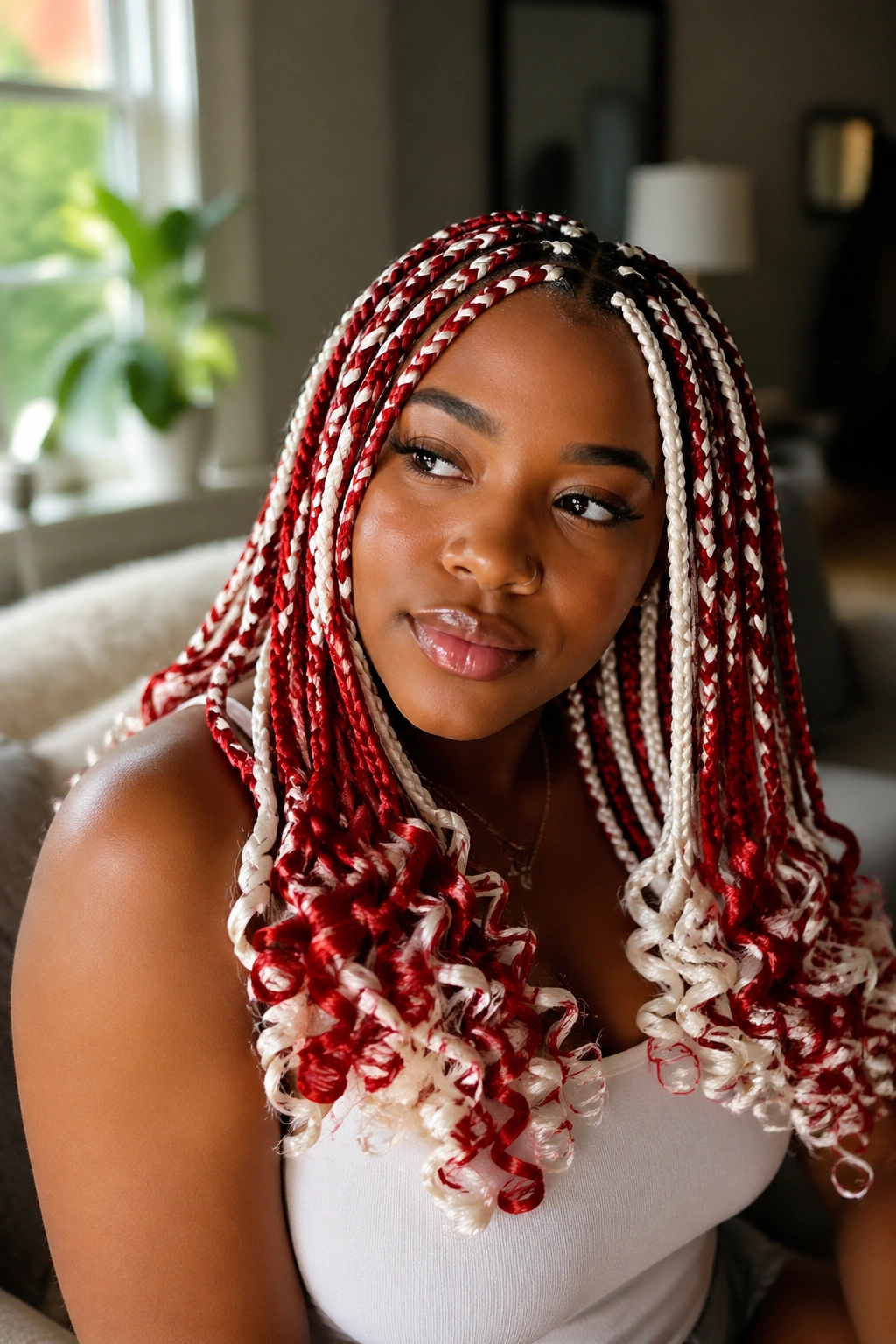
Straight braid ends look neat. Curled ends look softer. That’s the whole appeal.
When you leave the last few inches loose and set them on rods before dipping them in hot water, the braids finish with movement instead of a hard stop. Red and white both look less rigid that way. The curl breaks up the color blocks a little, which is useful if you want the style to feel less boxy.
Best Use Cases
This version is strong when you want the braids to move around your shoulders and not sit like a wall. It also helps if your face shape looks better with a bit of softness near the jaw. The curls draw the eye downward in a gentler line.
- Use medium flexi rods if you want a looser bend.
- Use smaller perm rods for a tighter curl.
- Leave the curled section about 2 to 4 inches long.
- Dip carefully. Hot water sets the curl, but steam burns are real.
The detail I like most is how the curls make the color look more expensive, for lack of a better word. The style stops feeling like two flat shades and starts feeling layered. That shift is small in theory. In the mirror, it shows up fast.
8. Half-Up High Ponytail Red and White Box Braids
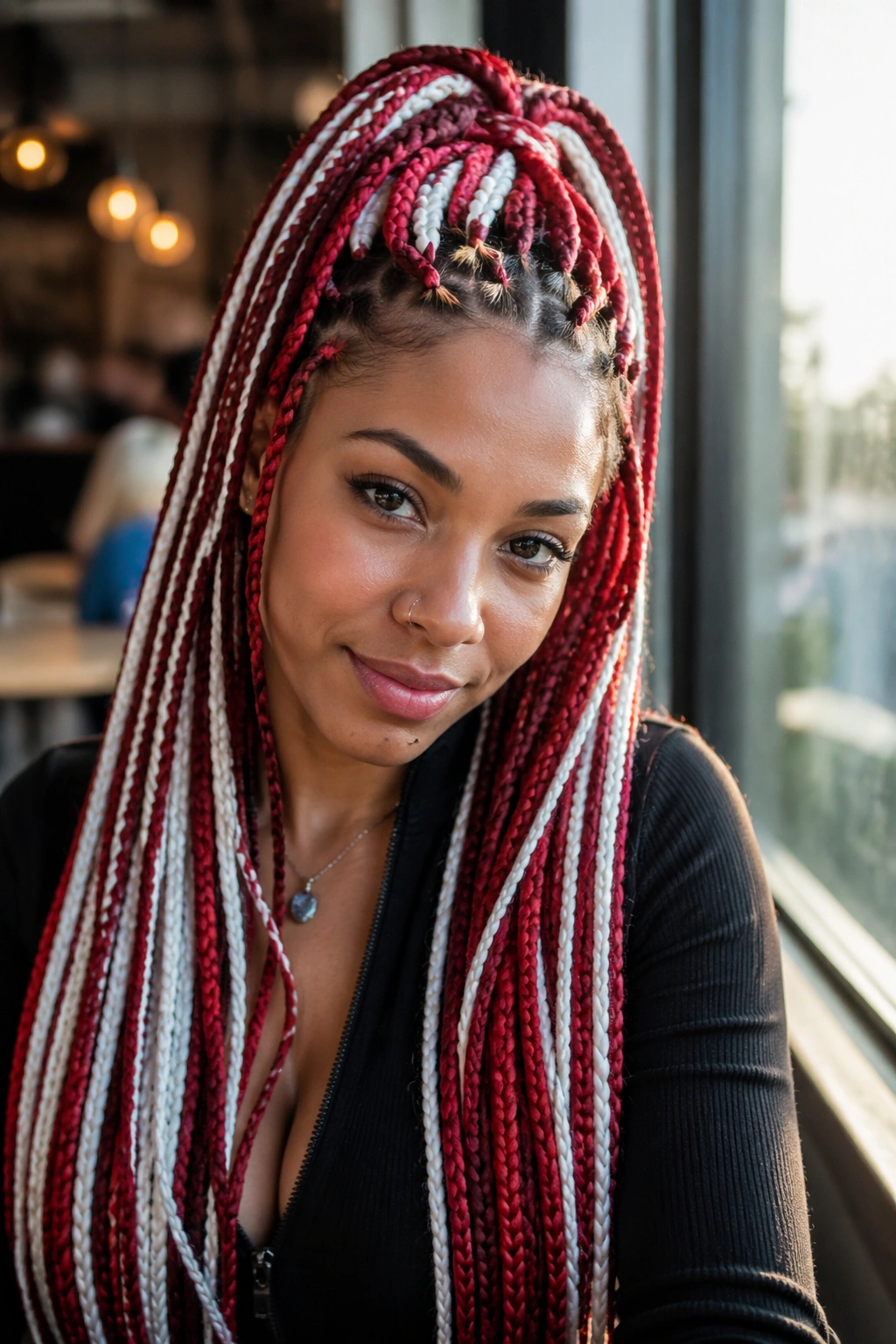
Pulling half the braids up changes the whole mood. Suddenly the red and white pattern stacks toward the crown, and the color reads faster than it does when the braids are loose.
This is one of those styles that looks simple but depends on good placement. If the top rows are uneven, the ponytail can sag or lean to one side. If the colors are arranged well, the lifted section becomes a clean burst of red and white that sits high and proud on the head.
A high half-up ponytail works especially well with medium or small braids because the gathered section still has enough movement. Jumbo braids can do it too, but the tie can get bulky. Keep the crown neat. Use a wrapped section of braid to hide the hair tie if you want the finish to look deliberate.
One small warning: too much edge gel at the front can dull the white pieces near the hairline. Use only what you need. The point is lift, not plaster.
This style is good for days when you want your face fully open but still want the colors to be visible from the front.
9. Triangle-Part Red and White Box Braids
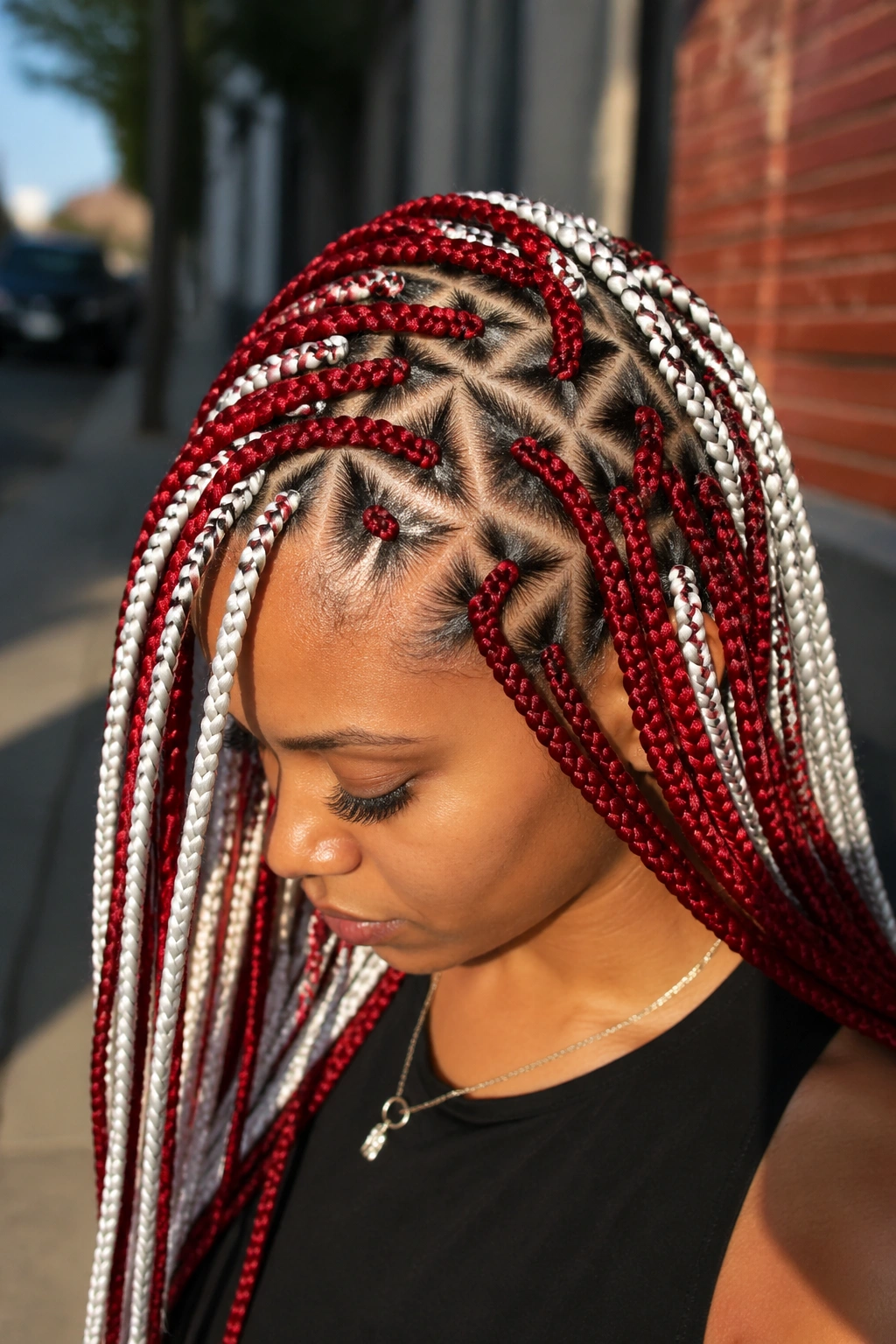
Triangle parts turn the scalp into part of the design. That sounds dramatic, but it is true. With red and white braids, the geometry matters because the color contrast already grabs attention. Add triangle parts, and the pattern gets even sharper.
Why does that matter? Square parts feel classic. Triangle parts feel a little more pointed and dynamic, especially when the braids are medium or jumbo. The triangles also let the rows tilt in a way that makes the alternating colors look less rigid. If the color placement is clean, the scalp pattern almost acts like a frame.
Where the Parting Pays Off
Triangle parts work best when the braids are not too tiny. Small braids can hide the part shape once the hair settles. Medium sections show it well.
- Best on medium to large braids.
- Works with middle parts or side parts.
- Looks strong with alternating rows of red and white.
- Especially good if you like the scalp design to show when the hair is pulled back.
A lot of people focus on the color and forget the parting. That is a mistake. The parting is the skeleton. If the structure is clean, the red and white finish looks expensive and deliberate. If the parts are sloppy, the whole style wobbles.
10. Red and White Box Braids with Beads and Cuffs
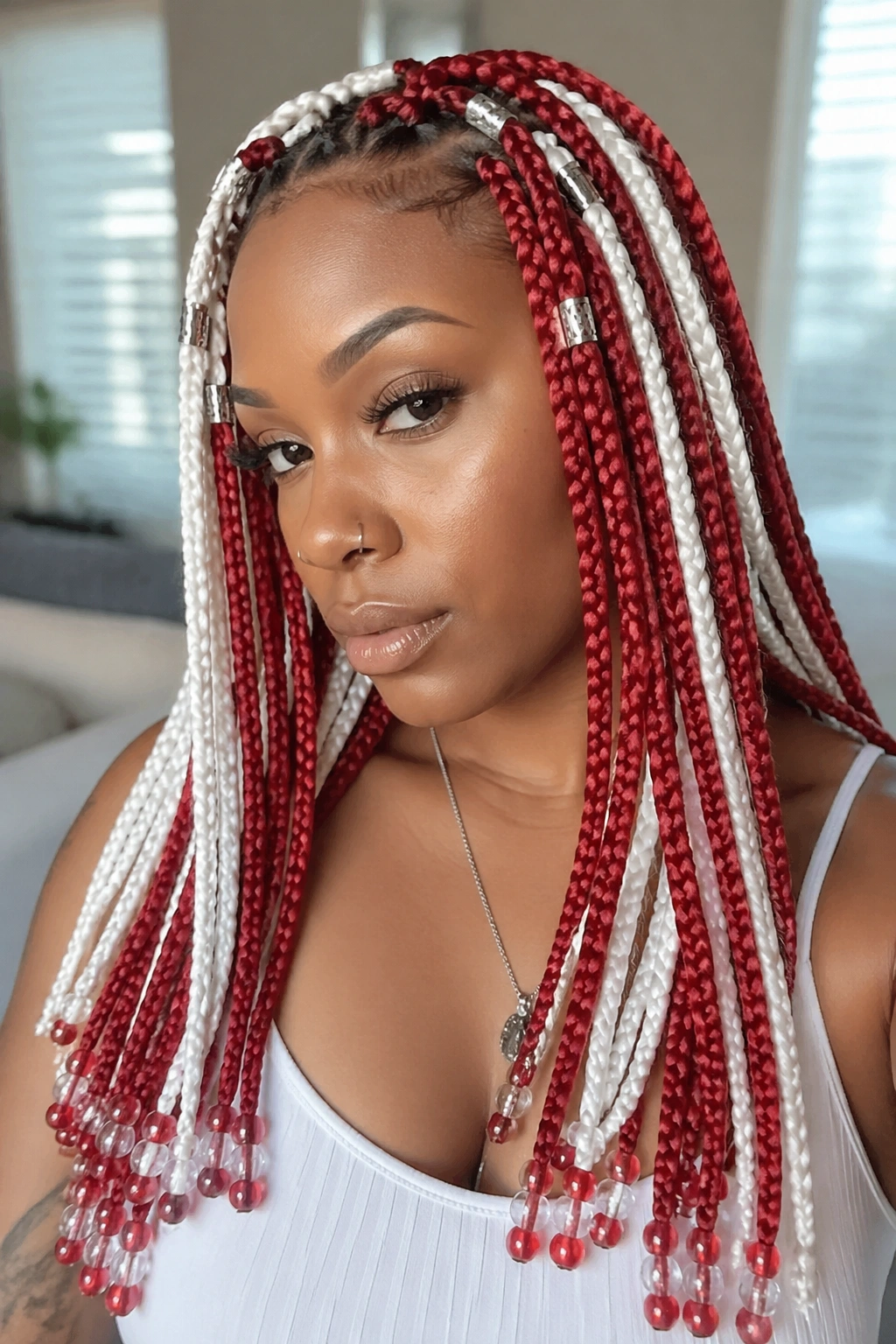
Accessories can either help a style or bury it. Here, they help. A few well-placed beads or cuffs can make red and white braids feel finished without stealing the show.
The best approach is restraint. Put cuffs on the front braids, or place a few beads on the ends of the red pieces so the color and metal echo each other. On white braids, clear beads, silver cuffs, or matte white accents keep things tidy. Heavy, chunky charms can slide around and look noisy, especially on thinner braids.
This is the version I’d pick for someone who likes details at the ends more than at the scalp. The braids themselves stay fairly simple, which gives the accessories room to matter. You can wear it loose, half-up, or in a low bun and still keep the accents visible.
A small rule helps here: decorate three or four braids, not thirty. That keeps the style from turning into a hardware store. One cuff near the temple and one bead stack near the nape can be enough.
11. Ombre Red to White Box Braids
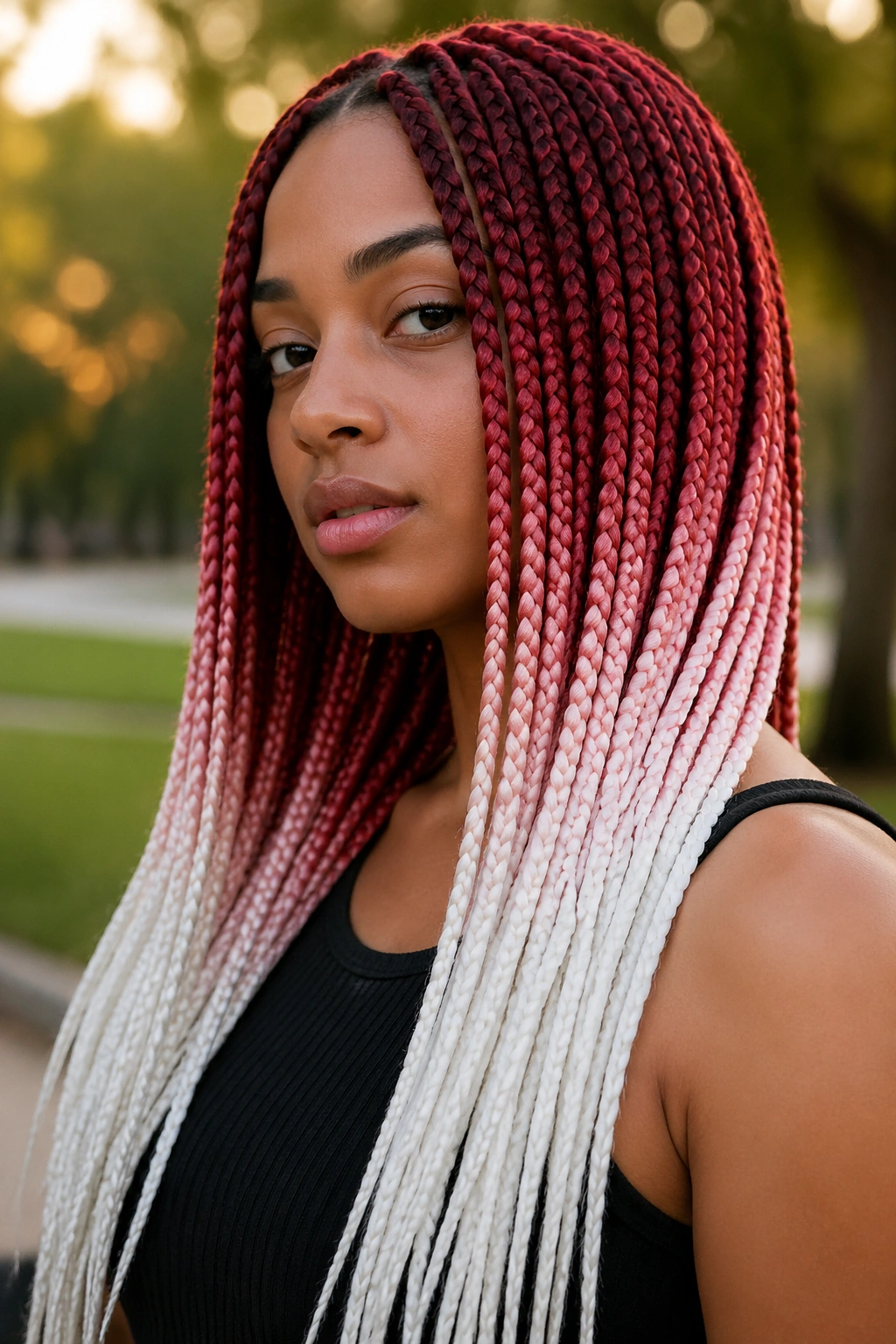
Ombre changes the way the colors interact. Instead of red and white sitting side by side in hard blocks, one shade slides into the other along the length of the braid.
That fade can go in either direction. Red roots fading into white ends give the style a lighter finish, while white roots melting into red tips look a little more striking. If you want the braid to read softer, use a mid-tone in between — something blush, cherry, or pale rose — so the shift does not jump too hard. A straight red-to-white switch can look abrupt unless the braid length is long enough to carry it.
Color Placement Matters
The longer the braid, the better the fade reads. Mid-back and waist-length braids give the transition room to breathe.
- Start with a deep red or ruby red near the top if you want the fade to feel grounded.
- Add a softer pink-red in the middle if you want a smoother shift.
- Finish with bright white at the ends for a crisp look.
- Keep the braid size even, or the fade will look uneven from braid to braid.
This one is for people who want the palette to feel a little more grown and less graphic. It still has contrast, but the eye gets a slow reveal instead of a hard stop. That difference matters more in person than it does in photos.
12. Layered Long Red and White Box Braids
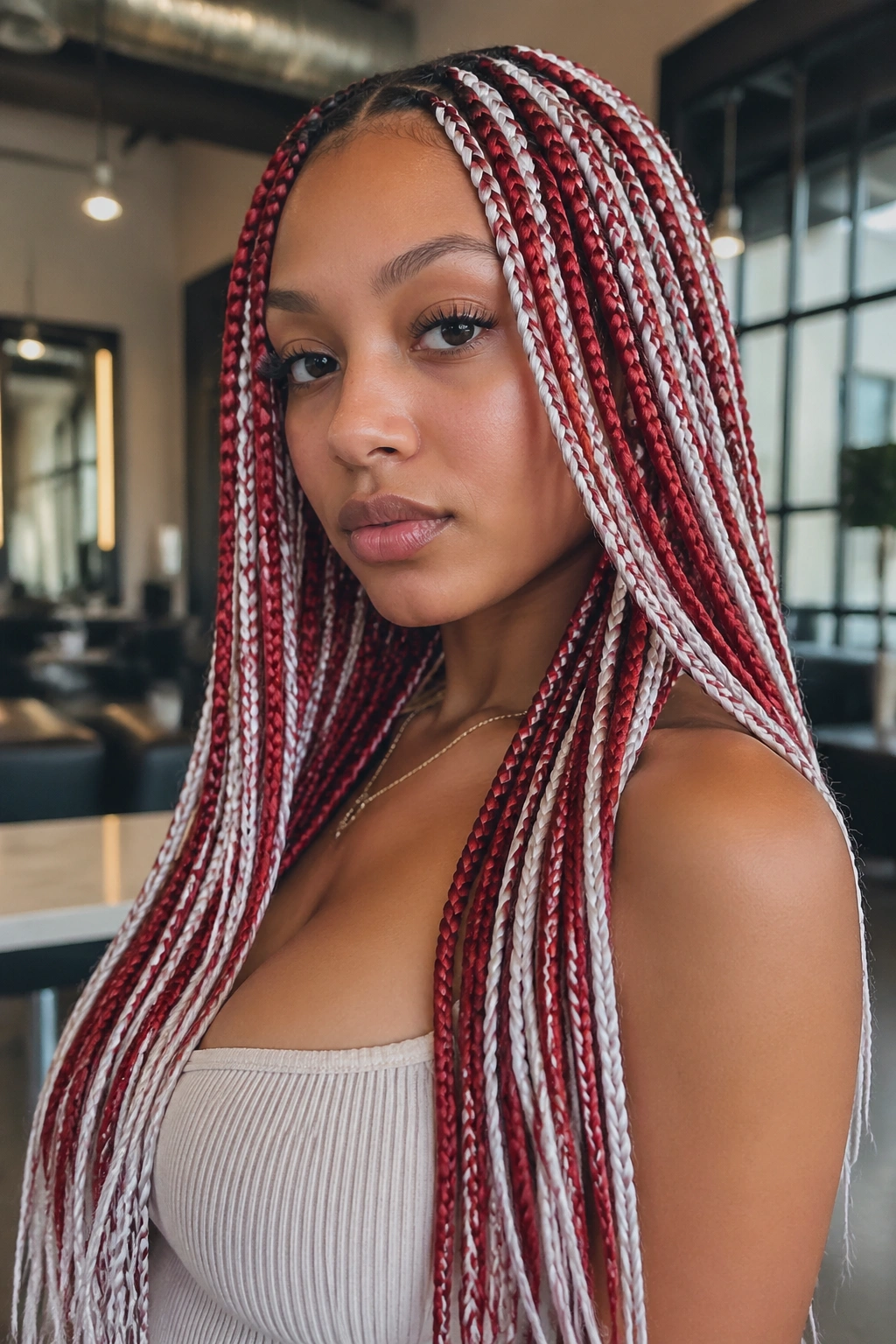
Long braids can drag if every strand hits the same spot. Layering fixes that. Shorter pieces sit around the shoulders and collarbone while the longest braids fall lower, so the whole set has movement instead of one blunt curtain.
The layered look is especially useful with red and white because the color stays visible at multiple heights. A red braid landing at shoulder level beside a white braid that falls to the waist gives the whole style depth. It keeps the eye moving. It also makes the hair feel lighter, even if the total length is still long.
I like this version for people who want drama but do not want the weight to sit in one single line. It looks better when the front is a little shorter than the back, or when the face-framing pieces drop a few inches above the rest. That small difference in length changes everything.
- Shortest layer: around the collarbone or shoulder.
- Middle layer: around the upper chest.
- Longest layer: around the mid-back or waist.
If you wear earrings, this cut gives them room to show. Nice bonus.
13. Side-Part Red and White Box Braids
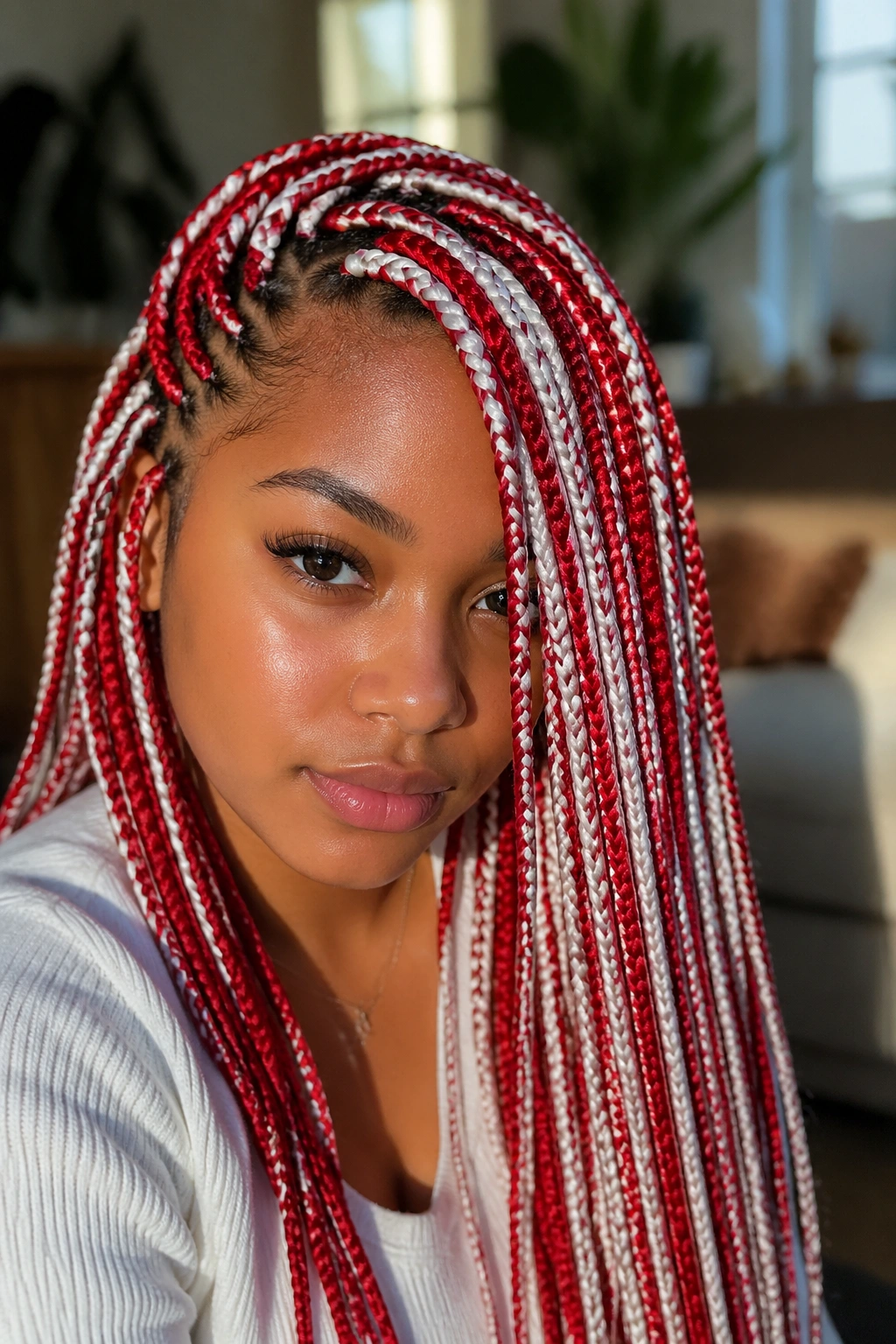
A side part changes which color gets the first word. That is the main reason this style works.
If your red pieces are heavier, a deep side part helps them sweep across the forehead and frame one eye line. If the white is dominant, the side part can keep the look from feeling too centered or severe. Either way, the diagonal line gives the braid pattern motion before the hair even moves.
How to Place the Part
The part should start clean at the front hairline and curve back without wobbling. If it darts around, the whole style loses its shape fast.
A side part also helps if you like to wear one side tucked behind the ear. The exposed side shows more color, and the tucked side gives the style a break. That contrast can be cleaner than a straight center part, especially on long braids.
This version works well for glasses too. Leave a little room at the temple so the braids do not pile up on the frame. Small detail. Big comfort difference.
Side-part braids tend to feel a touch softer than center-part styles. The colors still hit hard, but the angle gives them a little room to breathe.
14. Red and White Box Braids Styled Into a Low Bun
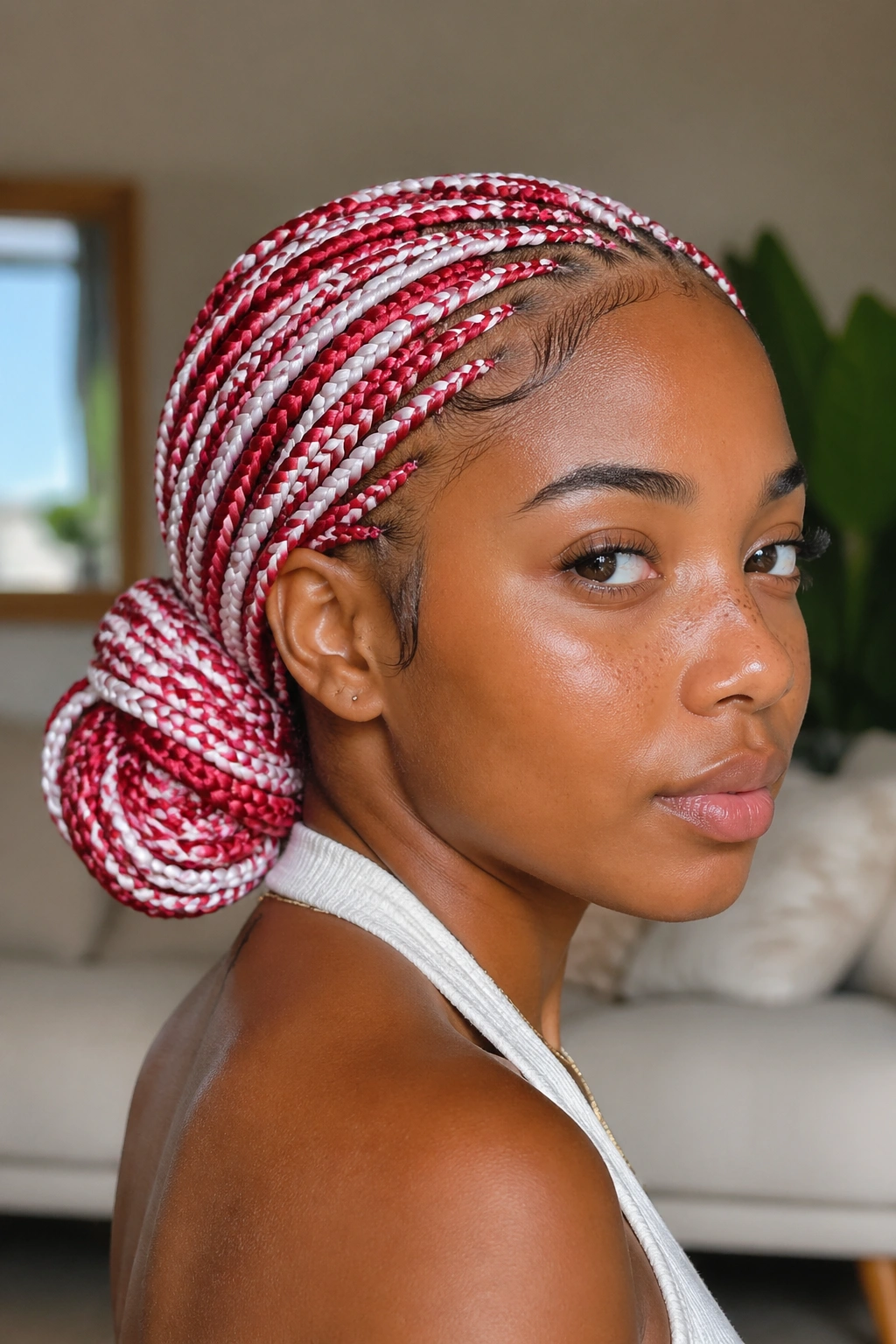
A bun turns the color pattern into a shape study. All those braids wrap around each other, and the red and white pieces start forming rings, stripes, and loops instead of long lines.
That is why this style feels polished fast. Even if the braids themselves are simple, the bun creates structure. It is a smart choice for warm weather, formal events, or any day when you want your hair off your neck without hiding the color. If the braids are medium or long, the bun can sit low and full. If they are jumbo, it ends up chunkier and more sculptural.
A few practical details help the bun hold. Use a strong hair tie first, then pin the rest with U-pins or long bobby pins. A single wrap won’t do the job if the set is heavy. Keep the nape braids slightly smaller if you know you’ll wear the style up often; they sit flatter and make the bun easier to balance.
Clean, low, and solid. That’s the sweet spot.
15. Boho Red and White Box Braids with Loose Curls
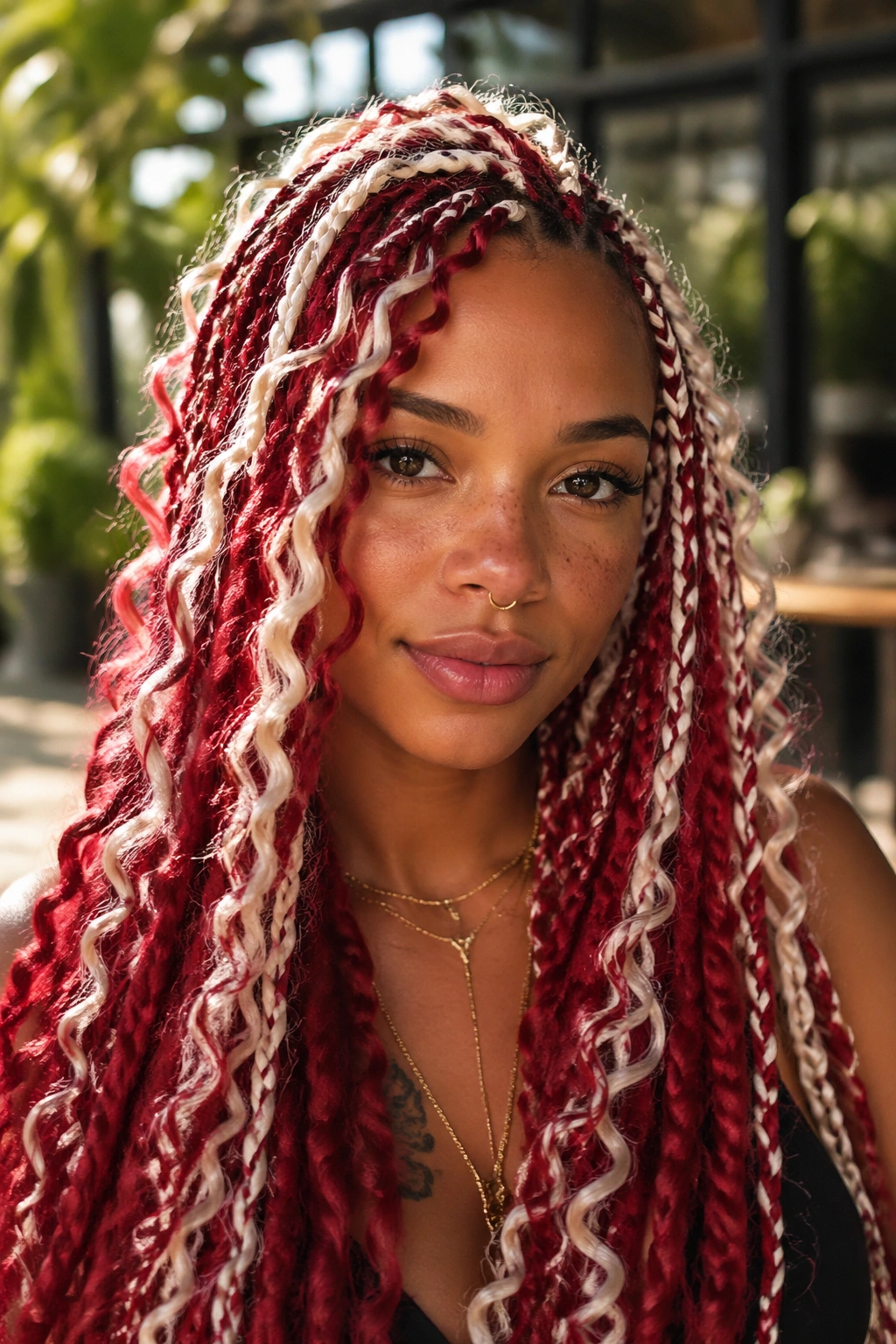
This is the softest version on the list, and it works because it breaks the strictness of the braid pattern. The loose curls threaded through the set take some of the edge off the red and white contrast without dulling it.
Boho braids usually leave a few strands curly from root to tip or add loose curl pieces at the ends. With red and white, that extra texture matters. Straight braids alone can feel graphic. Curly pieces make the whole look breathe. The curls also move differently in the light, so the color shift feels less rigid and more layered.
What to Ask For
Keep the curly pieces controlled, or the style turns fuzzy.
- Use curls around the front and crown for softness.
- Leave some braids fully straight so the style does not get busy.
- Pick curls that hold a loose spiral rather than a tight ring.
- Ask for the red and white curls to be spread evenly, not dumped in one area.
This is the style for someone who wants a little romance with the drama. It looks strong, but it does not feel hard. That balance is hard to pull off, and this version gets there without trying too hard.
Final Thoughts
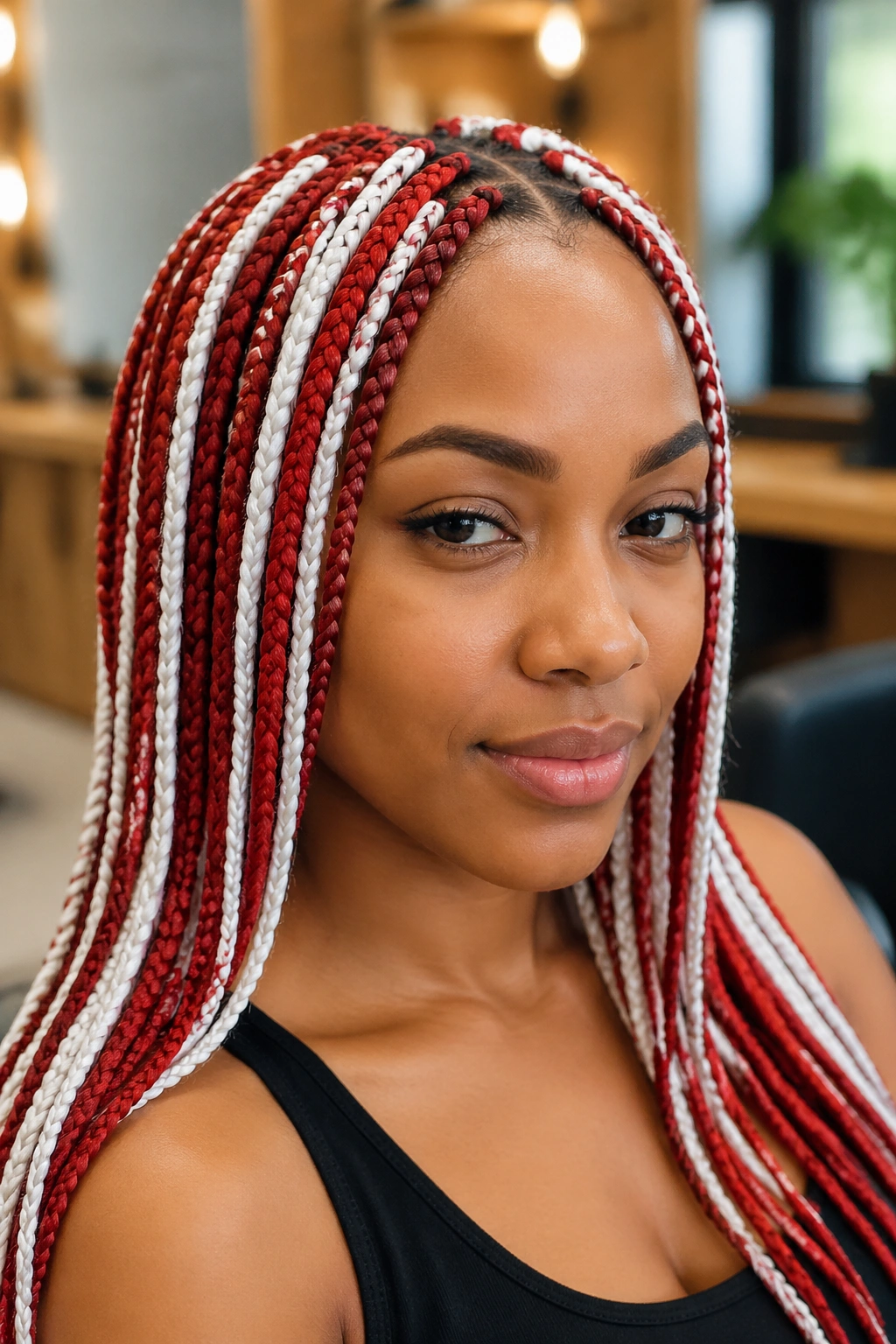
Red and white box braids give you more range than people expect. One version feels sharp and graphic, another feels soft and layered, and a third turns the color story into an updo that barely needs accessories. The braid size, parting shape, and finish all matter, sometimes more than the exact shade you start with.
If you want the cleanest read, go for alternating medium braids or a neat bob. If you want movement, choose curls or layered lengths. If you want drama with less fuss, a jumbo set or a high half-up ponytail gets you there fast. The style works best when the color placement has a plan, not when the red and white are thrown together and hoped for.
One useful habit: lay out the color pattern before the first braid is started. A few test sections at the front or nape can show you whether the ratio feels too busy or too flat. That small check saves time, and it usually makes the finished look feel much more deliberate.
