



Brown and white box braids have a way of looking polished and a little bit daring at the same time. The mix can go soft and creamy, sharp and graphic, or warm and almost caramel-toned, depending on how much white you place near the face and how deep the brown runs through the rest of the braid. That’s the part people miss. Color placement changes the whole mood.
There’s also a practical side to this style that deserves more attention. White braiding hair shows product buildup faster than darker colors, and brown roots can make regrowth look more intentional instead of messy. That matters if you want the style to last more than a quick weekend. It also means the braid size, parting pattern, and finish matter just as much as the color itself.
Some versions are soft enough for everyday wear. Others look like they were meant to walk straight into a photoshoot or a concert crowd. That range is what makes brown and white box braids so fun to work with.
1. Mocha Roots with White Ends
This is the easiest place to start if you want brown and white box braids without jumping straight into something loud. Brown at the roots gives the style a grounded look, then the white takes over through the mid-lengths and ends so the whole braid feels brighter as it falls. It reads clean, not busy.
Why It Works
The brown near the scalp does two useful things. First, it softens the contrast so the white does not feel like a hard stripe. Second, it hides regrowth better, which is a gift if you do not enjoy rushing back to the salon every few weeks.
The white ends are the part people notice from a distance. They catch the eye when you move, but they do not dominate the whole head. That balance makes this version friendly for work, school, or anyone who wants color without committing to a full snow-on-the-scalp look.
- Ask for brown feed-in hair at the root and white added from the midshaft down.
- Keep the braids medium-sized so the color shift shows clearly.
- Use matte mousse, not heavy cream, to keep the white from looking greasy.
- Wrap the hair at night with a satin scarf or bonnet so the ends stay crisp.
Best tip: keep the white away from your scalp if you use a lot of edge control. White hair shows residue fast.
2. Jumbo Feed-In Braids in Brown and White
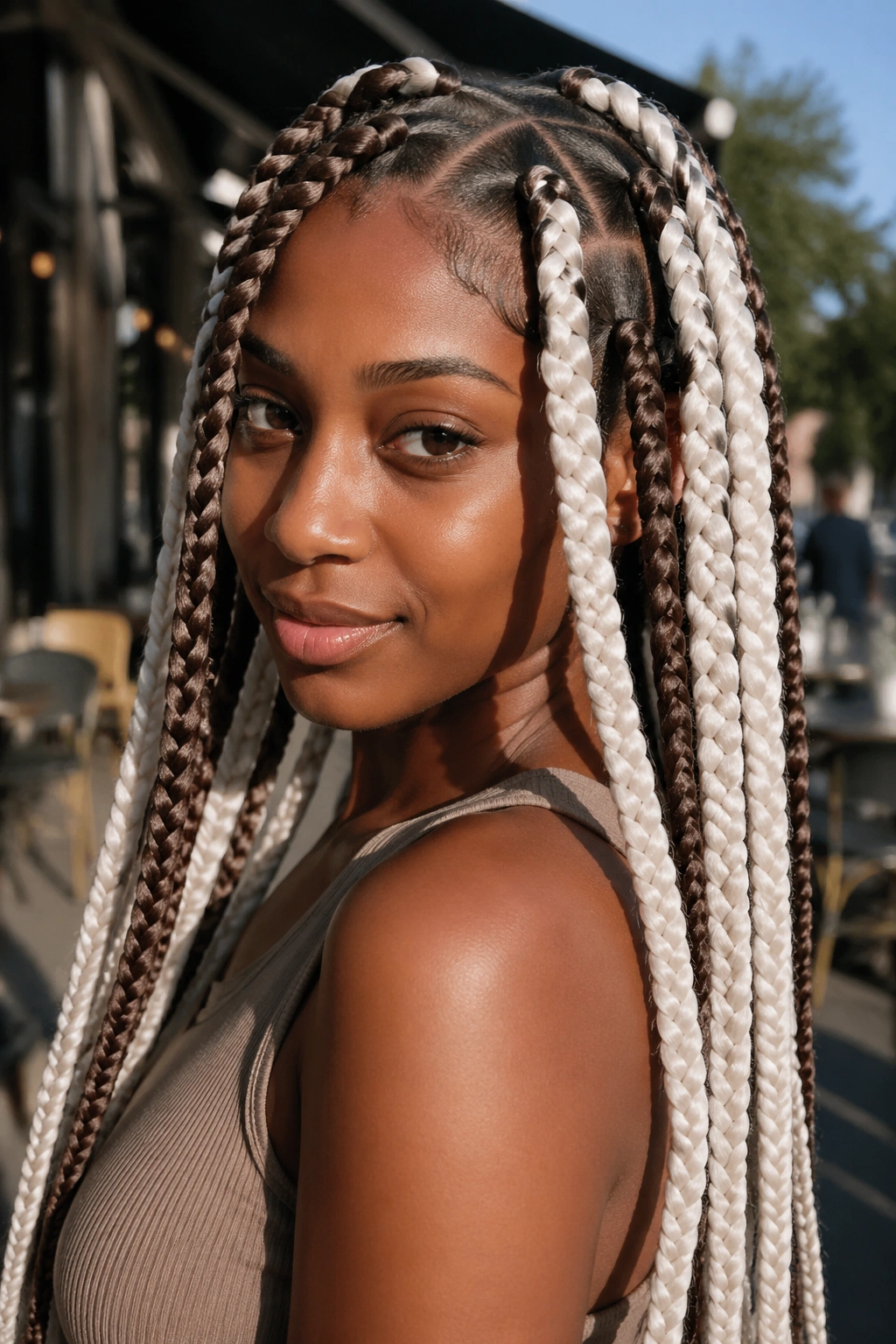
Big braids are where the color contrast starts to feel expensive instead of fussy. The larger sections give the brown and white room to breathe, so each braid looks intentional rather than crowded. If you want something that reads bold from across the room, this is the one I’d point to first.
The feed-in method helps here because the root stays flatter and more natural-looking. That matters with jumbo braids, which can feel heavy if the base is bulky. A clean feed-in makes the style sit better on the scalp and keeps the parting neat longer.
You can keep the palette simple: dark brown roots, white lengths, or alternating brown and white feed-ins on each braid. I prefer a ratio that leans brown, then lets the white flash in the movement. Too much white on jumbo braids can look blocky.
Wear this style with large hoops, a plain tee, or a sharp jacket. It already has presence, so you do not need much else. And if your braider is precise with the parting, the whole look turns crisp in a way that smaller braids sometimes struggle to match.
3. Waist-Length Ombre Box Braids
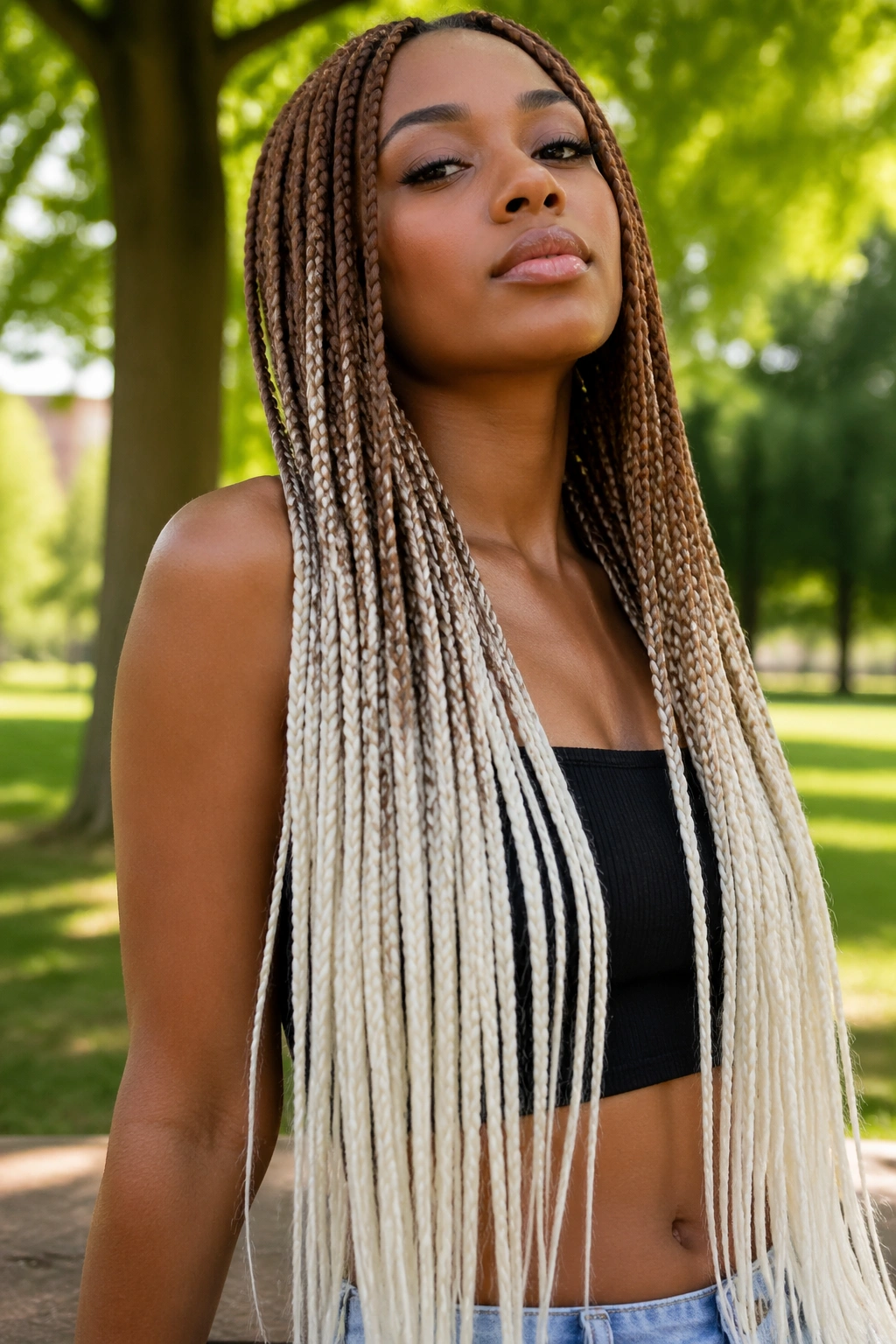
Why does an ombre blend feel softer than a straight split of brown and white? Because the eye can travel through it. Instead of hitting a hard color change, you get a slow shift from brown near the scalp to pale white through the lower half. It looks smoother, and in person, that smoothness matters more than on a screen.
How to Wear It
The longest versions work best when the white starts below the ears. That keeps the top from looking too stark and gives the braid movement when you walk, turn, or pull the hair over one shoulder. If the white starts too high, it can flatten the face unless your features are already strong and angular.
This style loves a middle part. A middle part makes the braid fall like a curtain, which gives the ombre room to show. A side part works too, though it feels a little softer and less formal.
If you want the look to stay fresh, keep oils away from the roots. White synthetic hair is unforgiving. One oily finger swipe near the front can change the whole mood of the style.
4. Shoulder-Length Brown and White Box Braids Bob
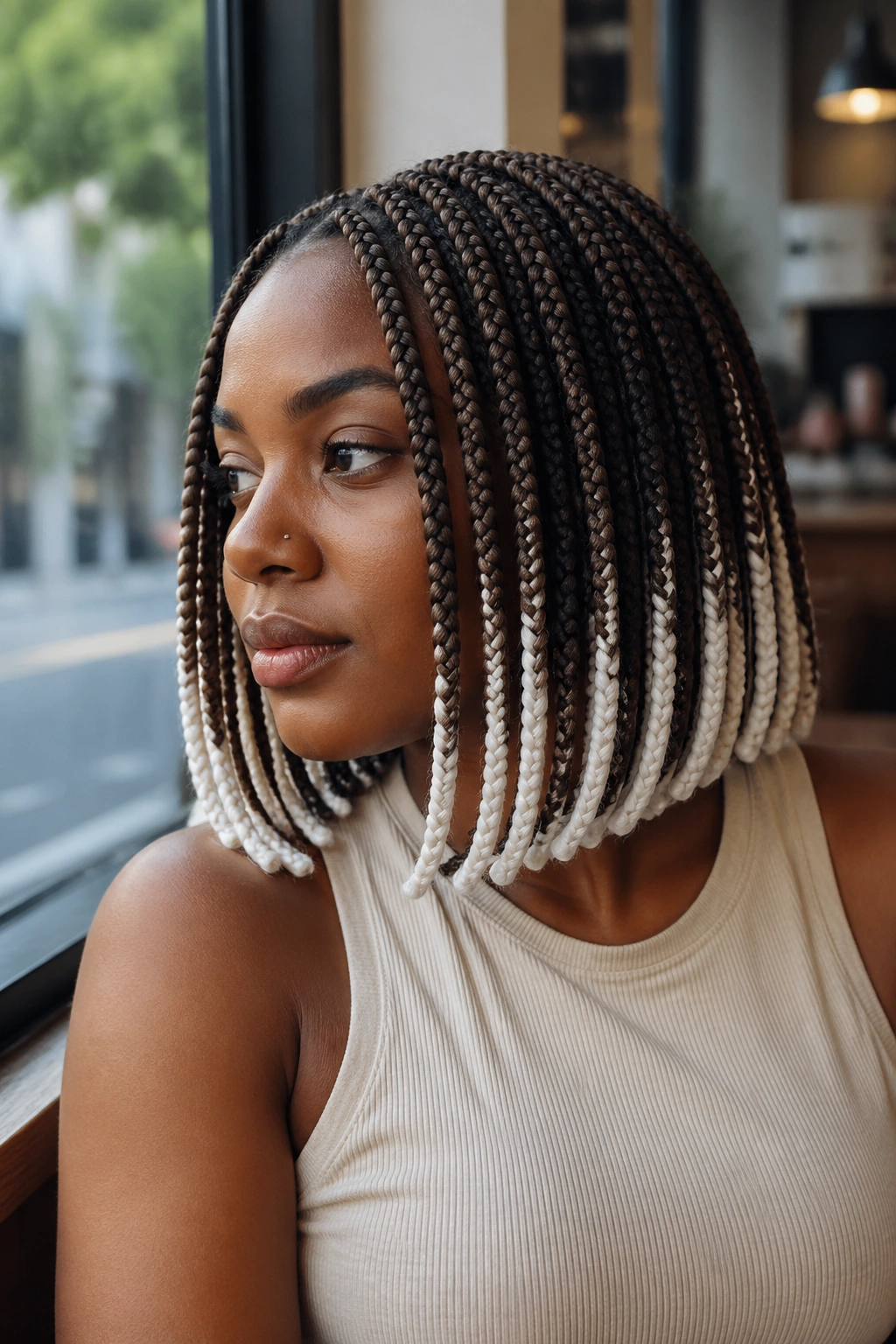
A shoulder-length bob is the version I recommend to people who want the color story without the weight of long braids dragging on the neck. It feels neat, easy to move in, and a little cheeky. The shorter length also makes the brown-and-white contrast look cleaner because there is less hair competing for attention.
The visual trick here is simple: the white has nowhere to hide. On a bob, every braid sits in plain view, so the color placement needs to be tidy. That is exactly why this version looks so sharp when it’s done well. A blunt cut at the ends gives the style a full shape, while slightly tapered ends feel softer and more lived-in.
- Works well with triangle or square parts, depending on how geometric you want the finish.
- Pairs nicely with gold cuffs near the front if you want one small accent.
- Easier to wash and dry than waist-length braids.
- Less tugging on the scalp, which matters if you wear braids often.
A bob is not boring. It just knows when to stop.
5. Side-Part Face-Framing Brown and White Braids
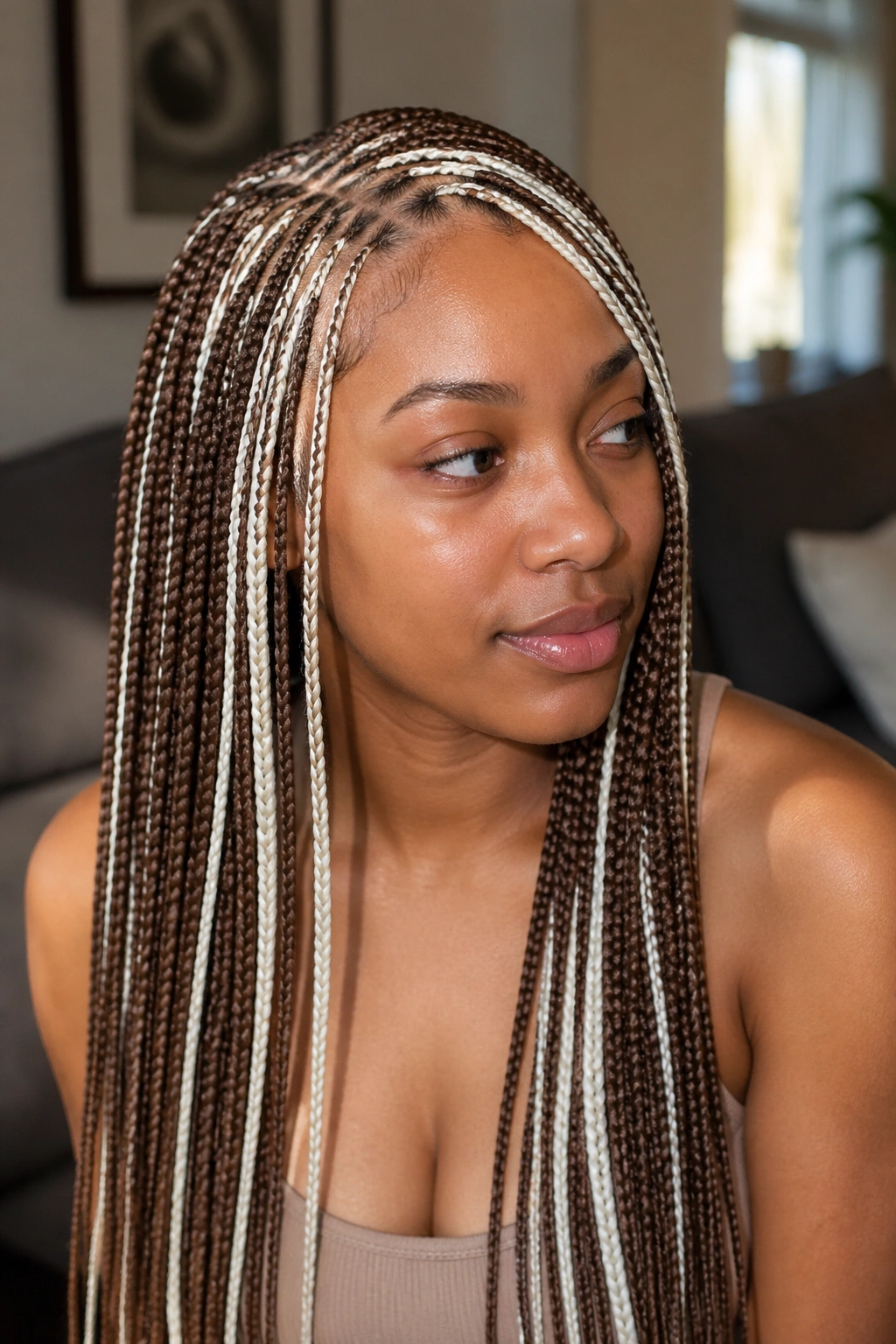
A side part can do more for this style than another layer of color ever will. Move the part off-center and the white pieces near the face start acting like a frame, not a headline. That tiny shift changes the whole vibe from evenly balanced to softly directional.
The best thing about face-framing braids is how forgiving they are. If your features are round, the side part creates length. If your forehead feels broad, a few lighter braids near the front break up the shape without making the style look busy. And if you wear glasses, this version keeps the color around the temples instead of letting it fight with your frames.
The brown should do most of the anchoring here. White works best in the first two or three braids on each side, then again in the lower lengths where it can fall naturally. Too much white at the front can look harsh under strong light.
I like this style on people who want a braid look that feels styled even when it’s down. No extra work. No huge accessories. Just a clean part, a few bright strands, and enough contrast to make the whole thing feel finished.
6. Triangle-Part Brown and White Box Braids
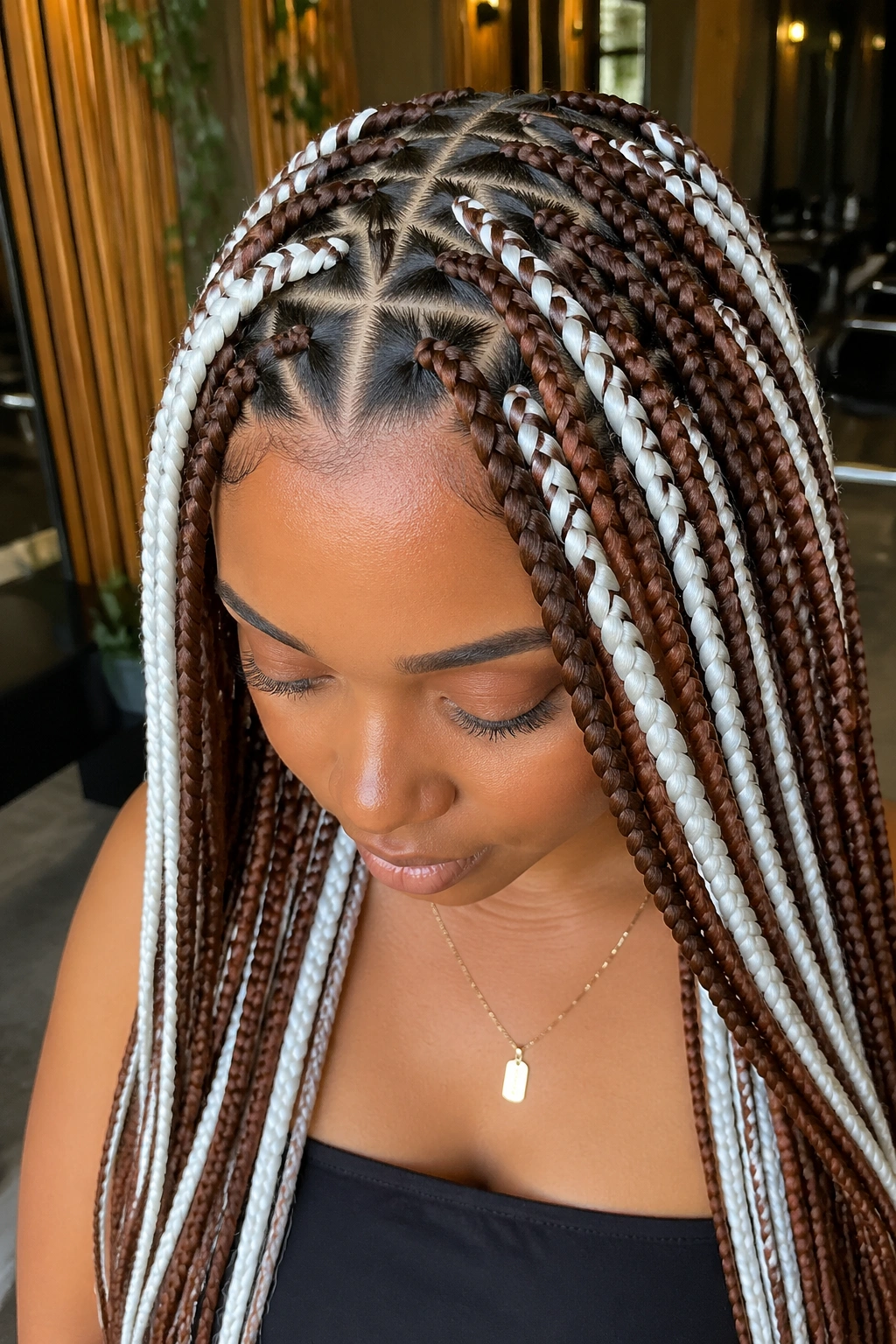
Triangle parts are for people who like detail, full stop. Square parts are classic, sure, but triangle parting gives brown and white box braids a more decorative look before the braids even begin. The scalp pattern becomes part of the design, which is half the fun.
What makes triangle parts different is the way they break up the color. Instead of placing the white in predictable blocks, the triangular sections create small shifts in angle and spacing. The result feels a little more playful and a lot less standard. On medium to long braids, that pattern really shows.
When to Choose Triangle Parts
If you like styles that look neat up close and interesting from far away, this is a strong pick. The parts themselves are tidy, but they do not feel stiff. That’s useful if you want the white to look more scattered and less uniform.
I would pair this with medium-sized braids and a mostly brown base. Let the white appear in alternating lengths or at the ends. That keeps the parting from doing all the work and lets the color stay active through the full style.
7. Medium Knotless Brown and White Braids
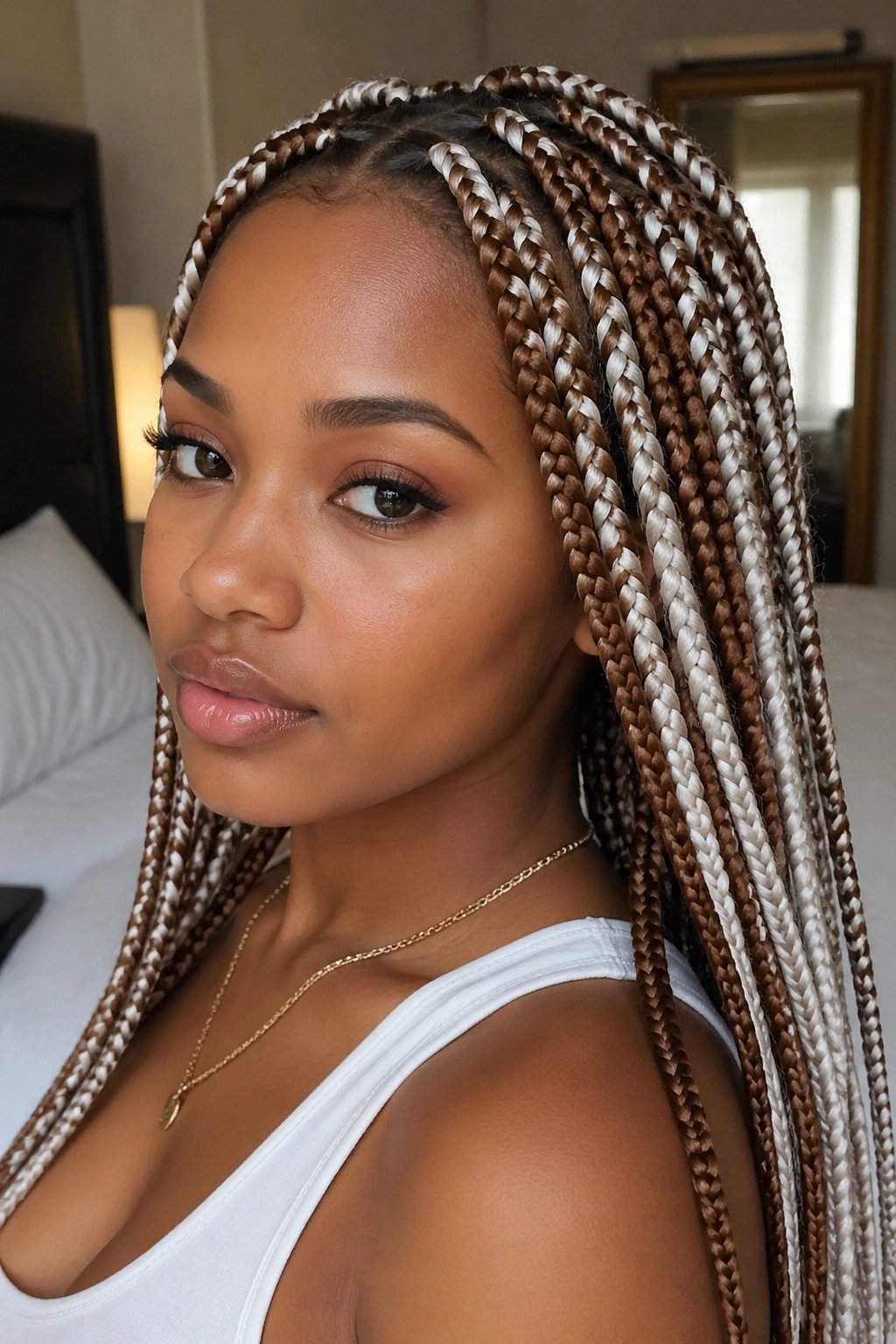
Knotless braids change the whole feel of a color style. Without that tight knot at the root, the brown and white mix looks lighter at the scalp and more natural as it starts. The braid seems to emerge from the hair instead of sitting on top of it. That difference is subtle until you see it in person. Then it’s obvious.
This is the version I’d point first-time braid wearers toward if they want comfort along with style. Medium knotless braids put less strain on the edges, and the color blend looks smoother because the feed-in hair can shift gently from brown to white. The braid has a little swing. It moves in a way stiff jumbo styles do not.
- Ask for medium thickness if you want a balanced look that lasts.
- Keep the first inch or two near the scalp mostly brown for a softer grow-out.
- Use a light mousse every few days so the white stays clean-looking.
- Avoid heavy edge products at the front.
The neat thing about knotless braids is how easy they make the color feel. Nothing screams. The whole style just settles.
8. Half-Up, Half-Down Brown and White Box Braids
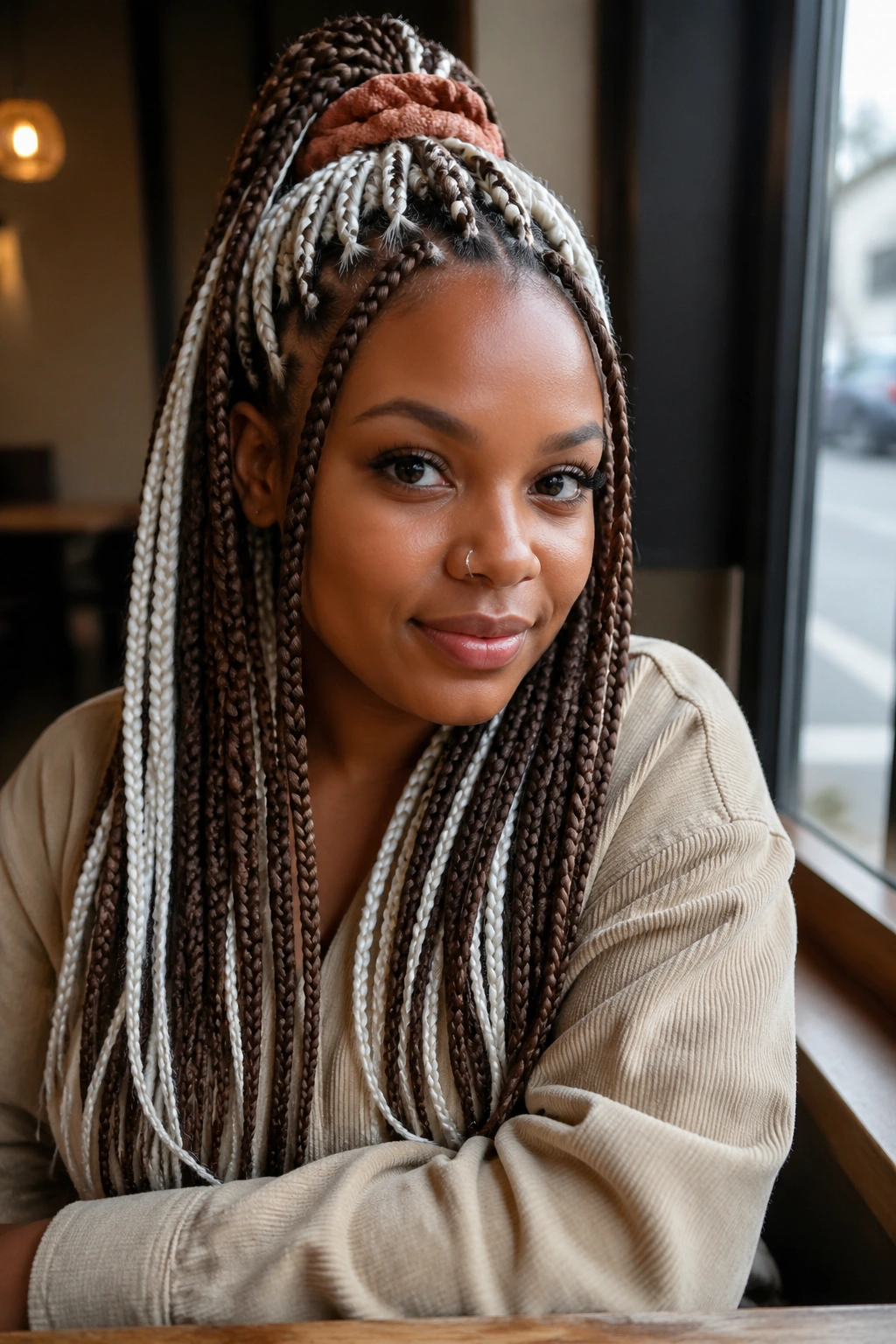
A half-up, half-down style gives the color a place to perform. Pull the top section up and the white braids on top become the first thing people see. Leave the rest down and the brown underneath keeps the style from tipping into costume territory. That contrast is the whole point.
This version works best when the top section includes the brightest braids. You want white near the crown, where it can catch attention, and darker pieces under it so the shape still feels anchored. If the white only lives in the bottom half, the style loses some of its punch.
It’s a good option for busy days because it gets the braids off your face without hiding the color. The top knot, puff, or clipped section gives you a cleaner neckline too. That matters more than people admit. Braids are beautiful, but they can feel warm on the shoulders.
Wear it with a chunky scrunchie, a simple claw clip, or a few wrapped braids around the base. Keep the top loose enough to look relaxed. Too tight and it starts to feel like a workout hairstyle, which is not the same thing at all.
9. Brown and White Box Braids with Beads
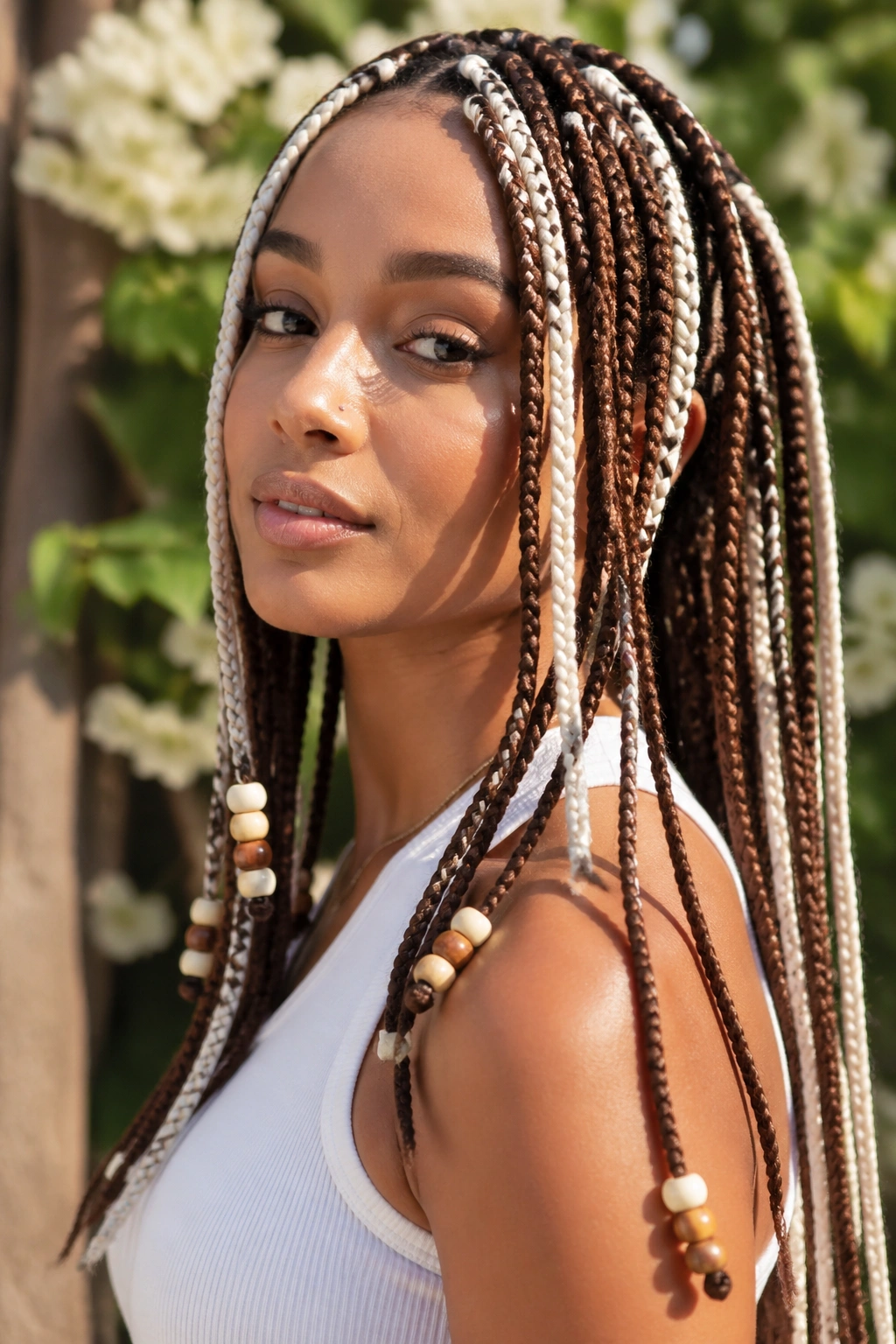
Do beads make the style louder? Yes. That’s the point.
White and brown braids already carry contrast, and beads turn that contrast into motion. A few clear, ivory, or wooden beads near the ends can echo the palette without making the look messy. Gold cuffs work too, but I like them best when the beads are doing most of the talking. Otherwise the finish can get crowded fast.
How to Keep It Balanced
Place the beads on only a few braids, not every single one. Three or four beaded sections in the front usually give enough movement. If you add beads everywhere, the style starts clacking and loses the smooth fall that makes box braids so easy to wear.
The brown braids can handle heavier accents, while the white braids usually look best with lighter pieces. Clear beads, frosted beads, and slim wooden rings all work. Anything chunky near the face should be used sparingly.
This is the version for weekends, concerts, vacations, or any day when a little personality feels right. It’s still box braids. It just has a pulse.
10. Small Brown and White Micro Box Braids
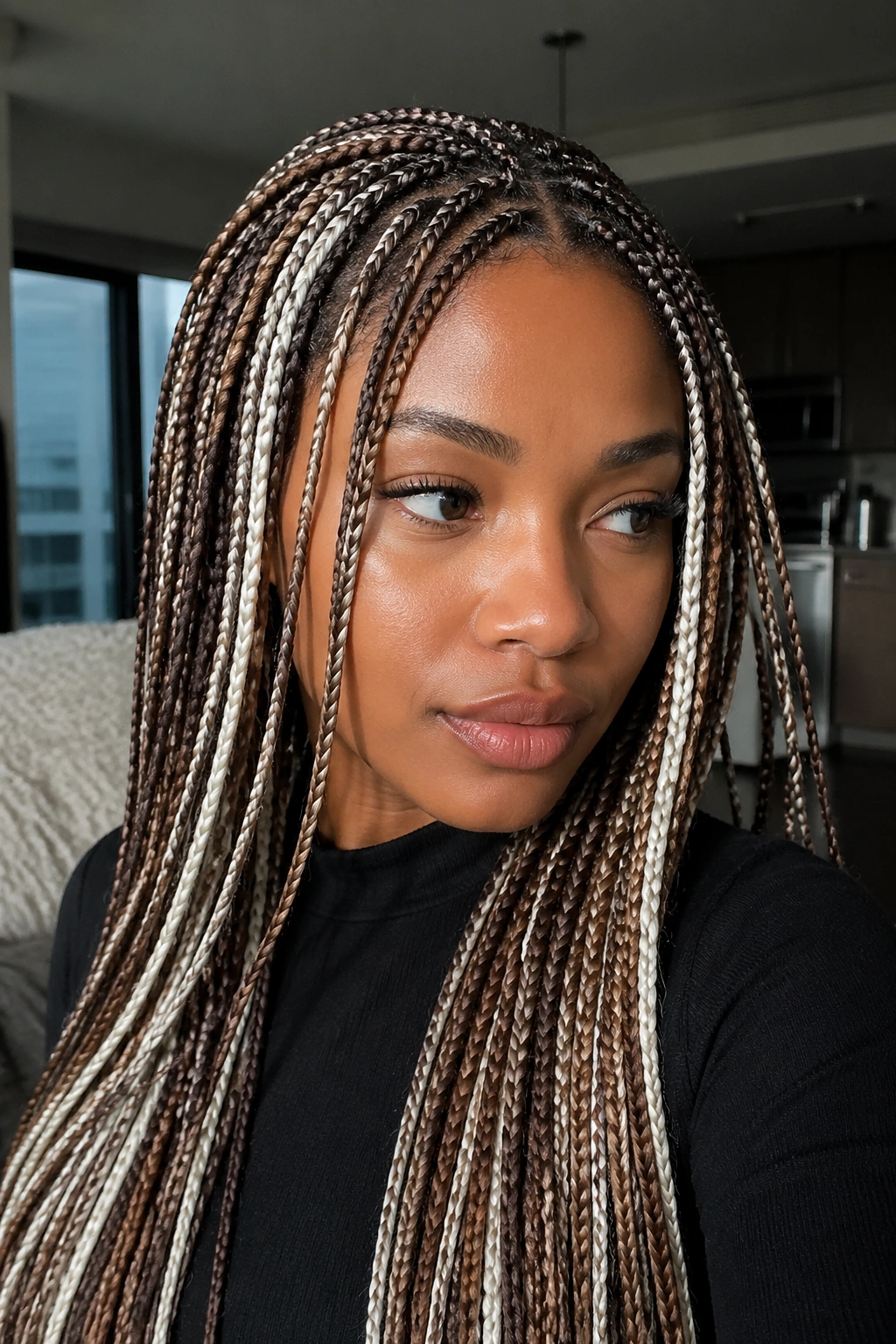
Small braids are for people who like detail and have the patience to sit through it. The payoff is worth it, though. With micro-sized brown and white box braids, the color blending gets finer and more textured, almost like woven fabric. You stop seeing blocks of color and start seeing movement.
The smaller the braid, the more important the placement becomes. White pieces can disappear if they’re too few, so I’d lean into a rhythm: two brown braids, one white braid, then repeat. That gives the eye something to follow. It also keeps the look from turning patchy.
- Best if you want long wear and a very detailed finish.
- Use lightweight synthetic hair to avoid pulling at the roots.
- Keep the parting very clean; small braids expose mistakes fast.
- Expect a longer install time. That’s normal.
Micro braids are not low-effort, and I would never pretend otherwise. They ask for time, but they pay it back with a polished, textured look that bigger braids cannot quite match.
11. Curly-End Brown and White Box Braids
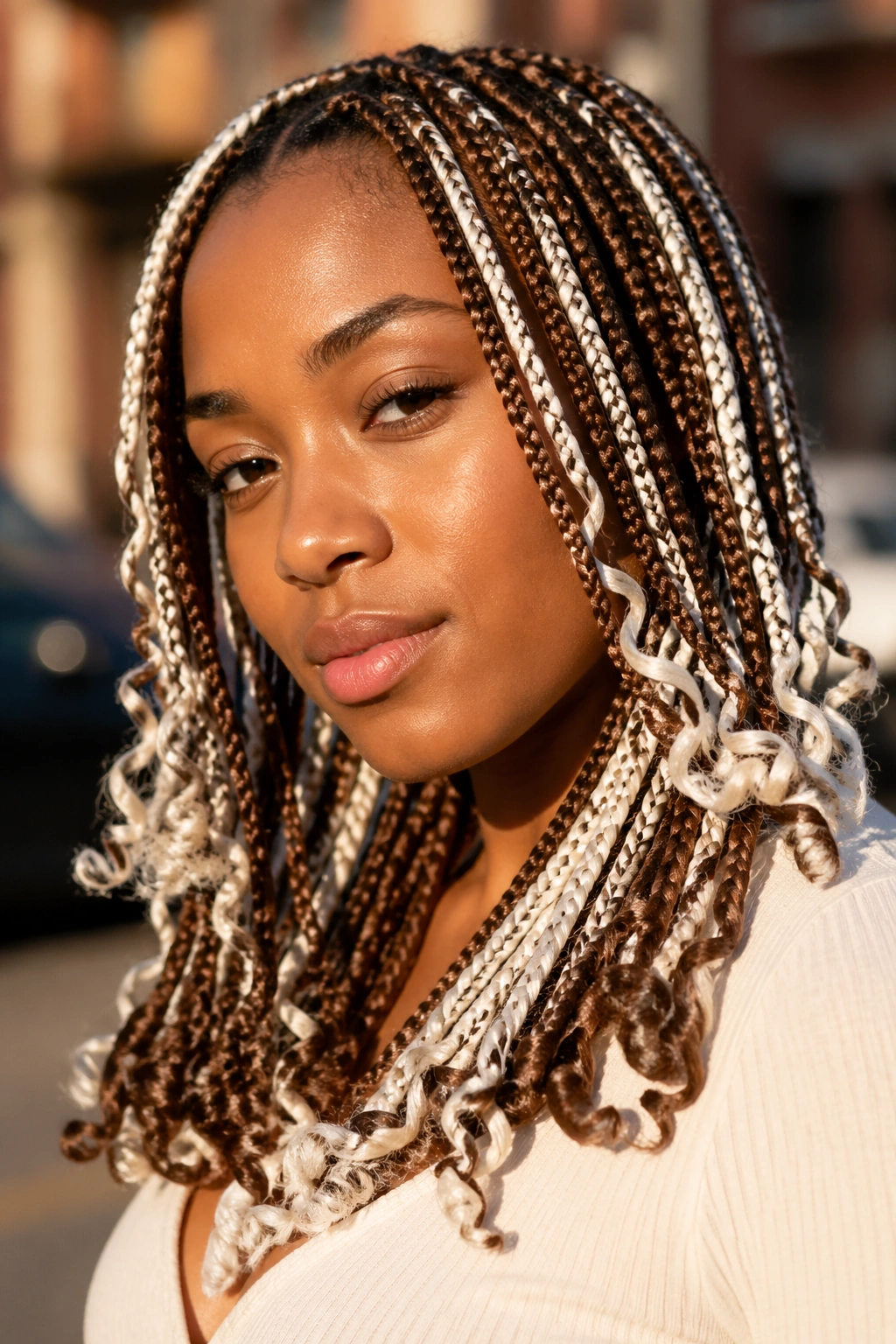
Curly ends soften the whole attitude of brown and white box braids. Straight ends can feel crisp and graphic; curled ends feel a little looser, a little more playful, and far less severe. If you want the white to blend instead of shout, this is a smart move.
The curl at the bottom also gives the color a nice visual stop. Brown can dominate the upper braid, then white takes over in the curl, where the texture makes the lighter color look airy instead of stark. On shoulder-length braids, the effect is especially pretty because the curls sit close to the face and neck.
I like this look when the braids are finished with hot water and set on perm rods or flexi rods before the dip. That gives the ends a round shape instead of a blunt bend. The key is to keep the curls neat enough to last, but not so tight that they start tangling after two days. That balance matters.
A little mousse goes a long way here. Too much product weighs the curls down. Too little, and the ends puff out in a way that looks unfinished.
12. Peekaboo White Underlayers
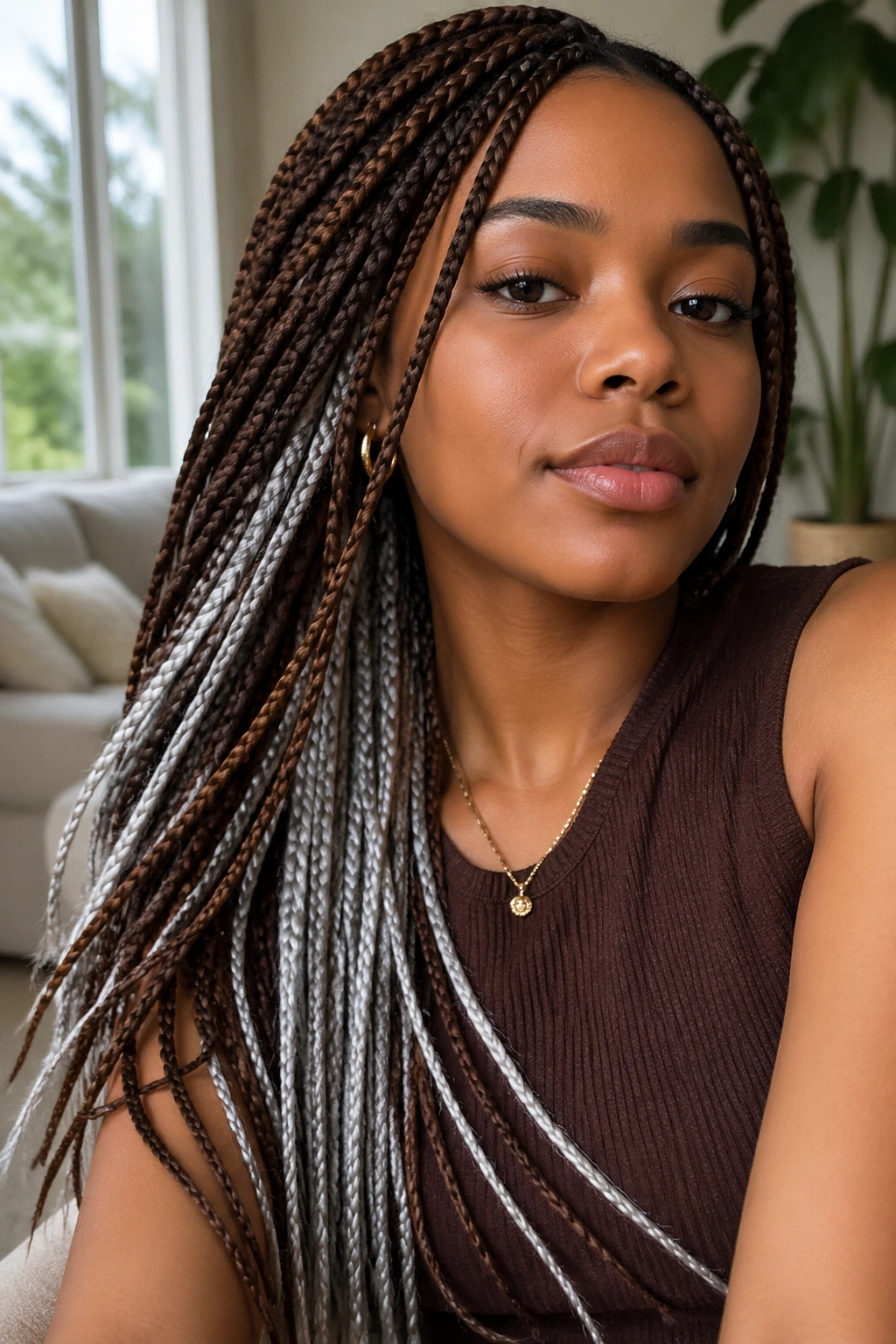
Peekaboo color is one of my favorite braid tricks because it gives you drama without demanding attention all day. From the front, the style can read mostly brown. Then you turn your head, gather the hair into a bun, or toss it over one shoulder, and the white underneath flashes through. That surprise is half the charm.
This approach works especially well if you need a braid style that plays nice in conservative settings. The white is there, but it isn’t leading the conversation. You can control how much shows by changing your part or pinning the top layer back. That flexibility is useful, and honestly, a little underrated.
The best peekaboo versions keep the white concentrated in the middle or lower layers. If the white sits too close to the top, you lose the hiding effect. If it’s too low, it barely shows at all unless the hair is up. A good braider will separate the layers cleanly so the contrast shows when it should and disappears when it should.
It’s a quiet style. Quiet, but not plain.
13. Center-Part Brown and White Box Braids
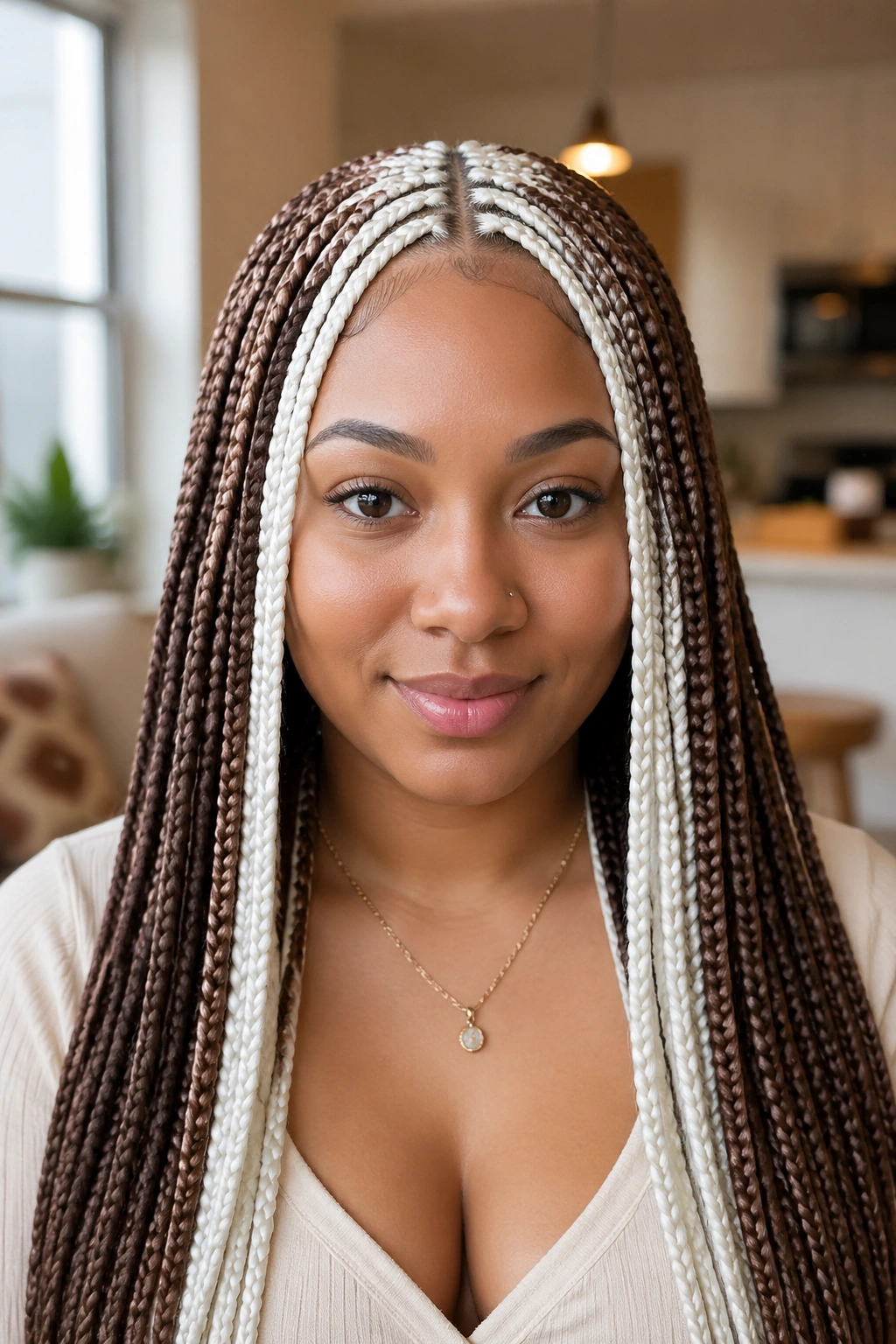
A center part makes the color scheme feel deliberate. Even if the braid mix is simple, the symmetry gives the whole head a strong shape. Brown on both sides keeps the style grounded, while white braids running down the center create a clean lane right through the middle. That line has real impact.
Why It Stands Out
The center part is blunt. It does not soften anything. That’s exactly why it works so well with high-contrast colors. Brown and white already pull the eye; a center line tells the eye where to go. The result feels tidy and assertive, especially if the braids are medium to long.
This is a strong choice if you like styles that look composed even when the rest of your outfit is casual. White braids near the part brighten the face. Brown around the edges keeps the style from looking too stark. If your hairline is a little uneven from past styles, a sharp center part can also reset the visual balance.
Use this one when you want the braids to look clean from every angle. No extra fluff needed. The part does the heavy lifting.
14. Tousled Boho Brown and White Braids
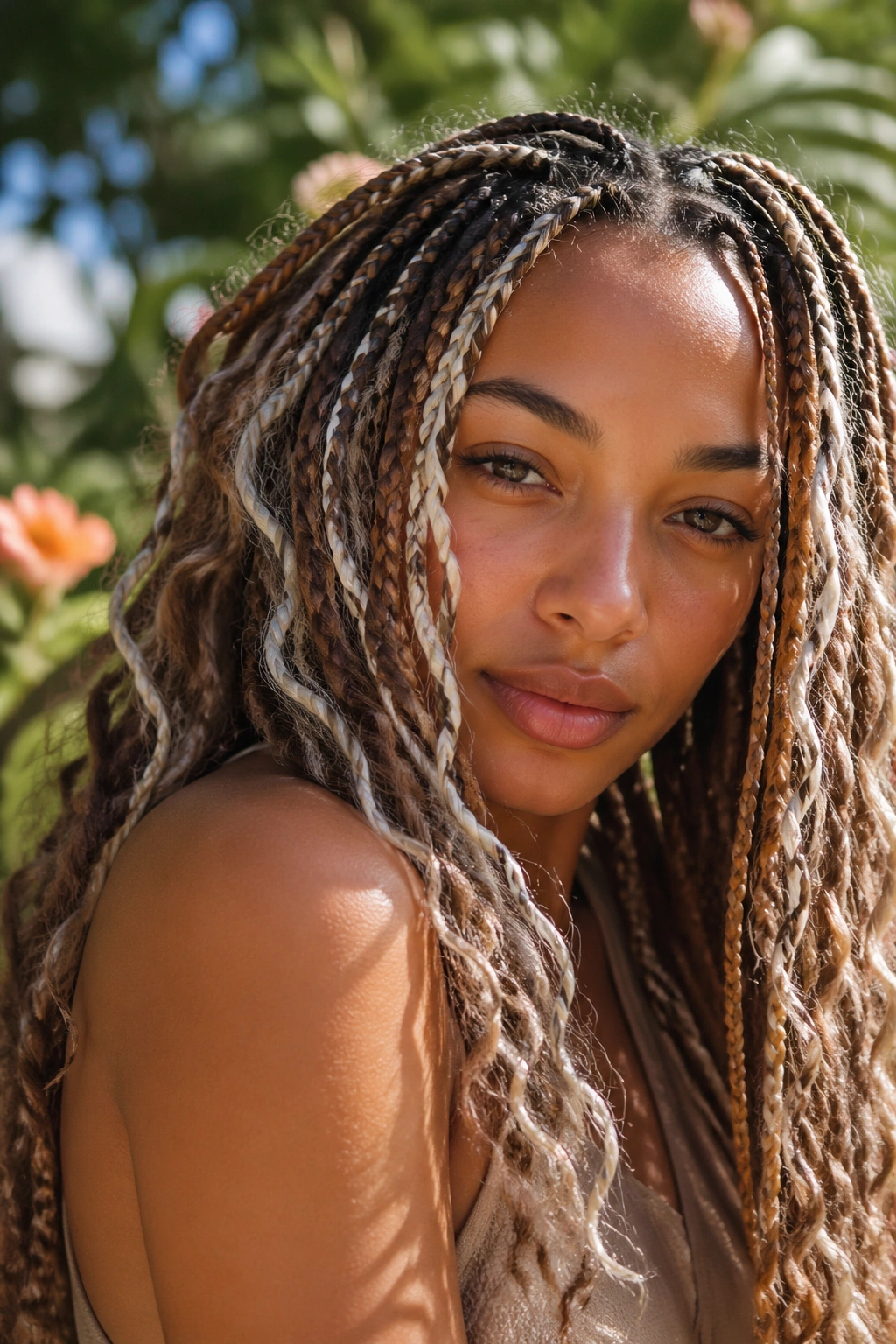
Boho braids loosen the rules a bit, and I mean that in a good way. Instead of every braid being perfectly tight and polished, you let small curly pieces, loose ends, or wavy strands break up the line. Brown and white in that texture feels softer and more lived-in. Less hard edge. More movement.
The white pieces look especially nice here because they catch between the loose curls instead of lying flat against the braid. That creates a softer contrast, almost like highlights scattered through fabric. It’s a good look if you like your braids to feel a little undone on purpose.
I would not overpack this style with accessories. The texture is already doing enough. A few cuffs or one or two beads are plenty. If you add too much, the boho feel gets cluttered fast, and clutter is the enemy here.
This version suits people who want their braids to look casual but still styled. It feels relaxed without drifting into messy. That’s a useful line to walk, and this style walks it well.
15. Alternating Brown-and-White Pattern Braids
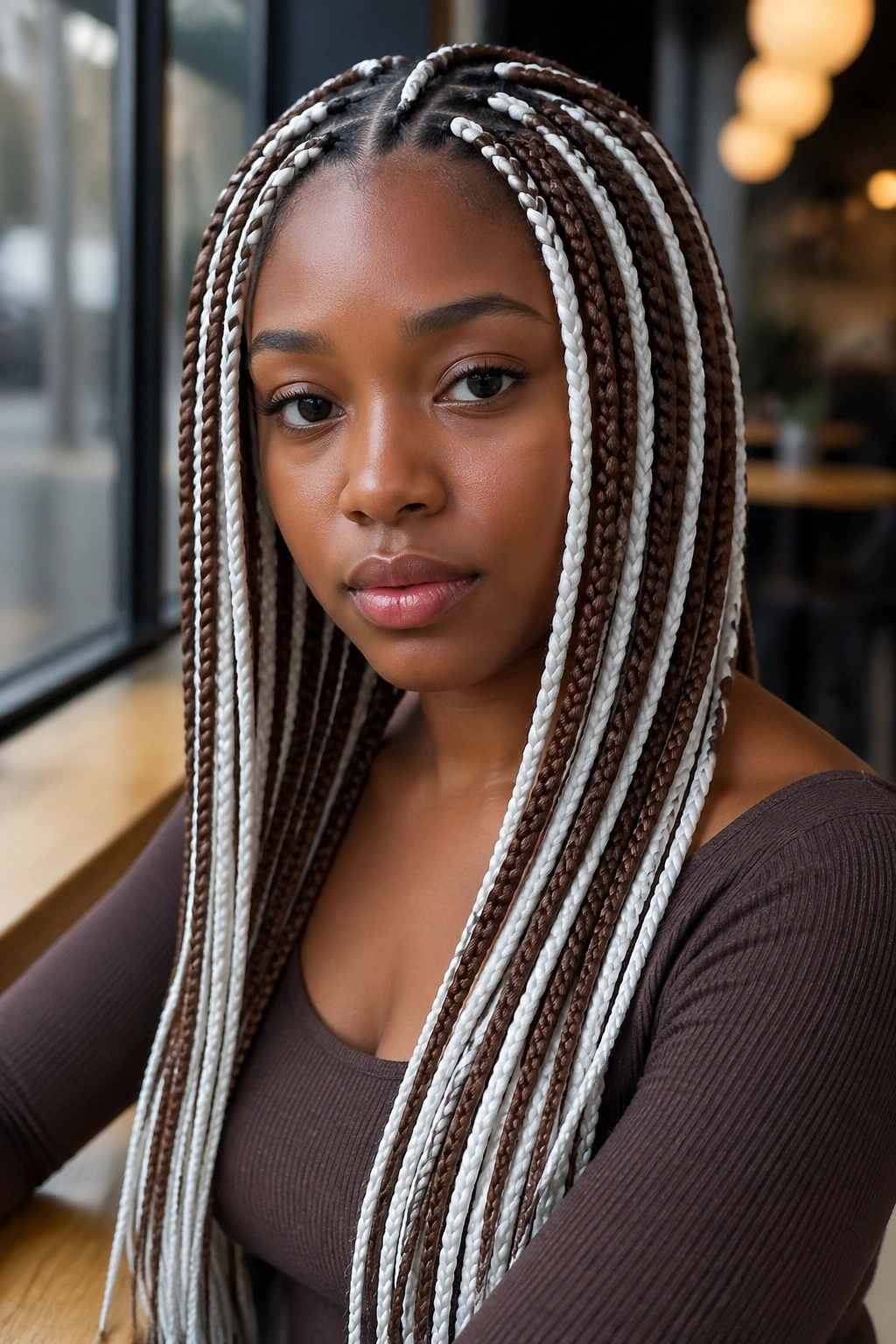
If you want the color to read immediately, alternating braids are the cleanest solution. Brown, white, brown, white. Or two brown braids followed by one white braid if you want a softer rhythm. The pattern matters more than the length here because the eye catches repetition first.
The nice thing about this setup is that it feels graphic without needing much styling. The braids themselves become the design. You do not need curls, beads, or a dramatic cut. A crisp parting pattern and a steady color rhythm are enough. That’s refreshing, honestly. Not every style needs accessories to do its job.
How to Ask for It
Tell your braider whether you want an exact alternating pattern or a looser mix. Exact alternation looks bold and orderly. A looser ratio gives you more room to soften the look around the hairline or in the back. I prefer the second option if the hair is very long, because it keeps the head from looking striped from every angle.
This style is a good fit for people who like clear structure. It feels modern, a little architectural, and easy to read.
Final Thoughts
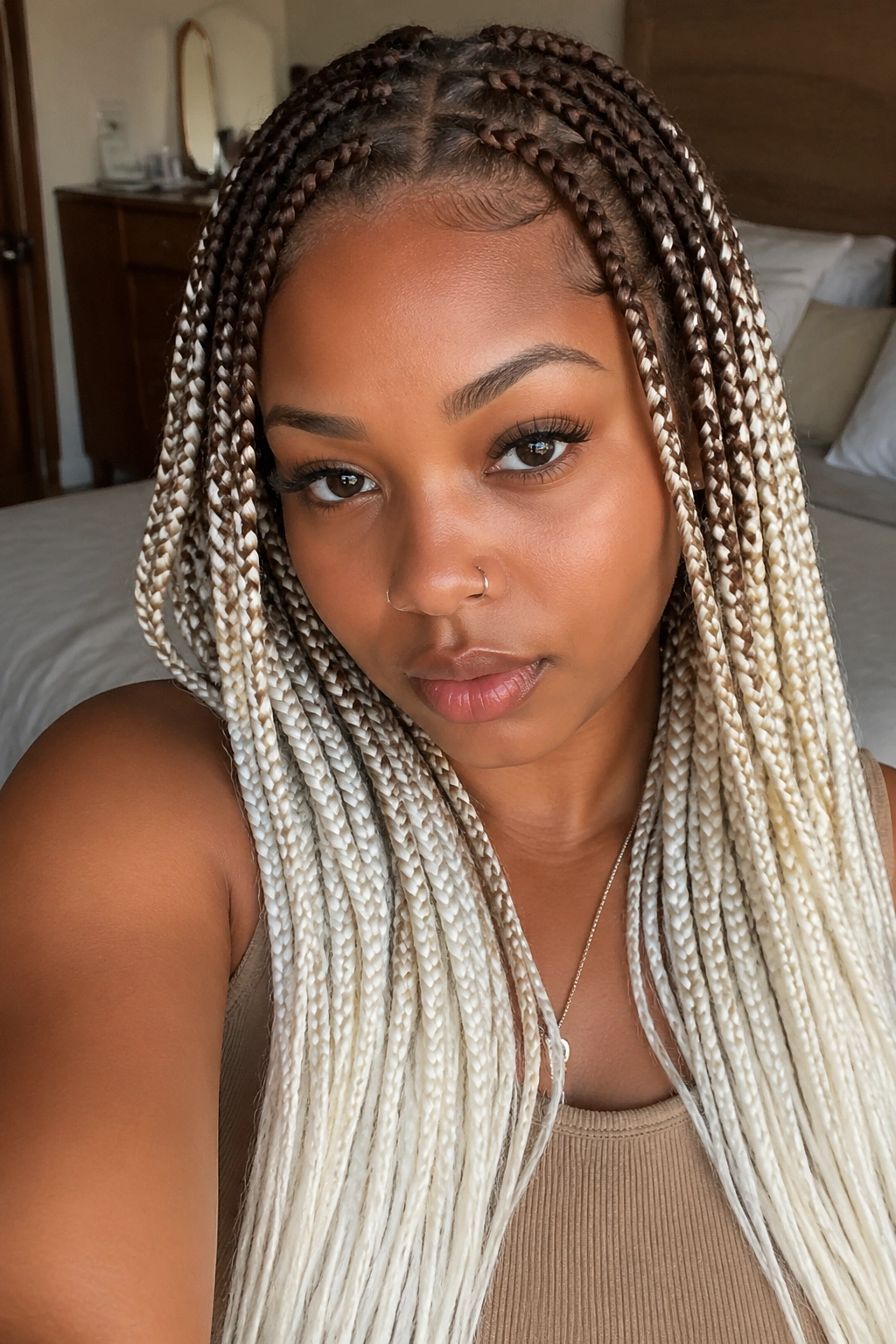
Brown and white box braids work because the color story has range. You can keep the white tucked into the ends, spread it through the whole head, or hide it underneath and let it flash out only when you move. That flexibility is the real draw.
The parting, braid size, and finish matter more than people expect. A neat center part feels different from a side part. Jumbo braids feel different from knotless ones. Even the same brown and white mix can read soft, bold, clean, or playful depending on those choices.
If I had one practical tip, it would be this: bring your braider two photos, not one. One for the color placement and one for the braid shape. That tiny bit of clarity saves a lot of back-and-forth, and it usually leads to a style that feels like yours instead of a loose guess.
