



Grey and purple box braids can look cool and sharp, or soft and smoky, depending on where the purple lands and how much grey you let show at the root. The combination sounds bold on paper. On the head, it can be surprisingly wearable, because grey gives the style that metallic base while purple brings warmth back in—sometimes in a whisper, sometimes in a full hit of plum.
The colors do not have to fight each other. That is the fun part. Ash grey next to lilac feels calm and airy. Charcoal next to eggplant feels heavier and more dramatic. Put the purple underneath, and the whole set reads quiet until you move. Put it on the outside, and it becomes the first thing people notice.
Part size, length, and braid method change the whole mood too. Jumbo braids feel bold and fast. Knotless braids look softer at the scalp. A bob keeps the color close to the face, while waist-length braids give the shades room to fade and blend. I like grey and purple best when the tones are chosen on purpose, not just grabbed because they were available in the beauty-supply aisle.
The styles below lean in different directions, from soft lilac fades to darker grape-and-silver sets, and each one has its own personality.
1. Smoky Grey Roots and Lilac Tips
Muted is doing a lot of work here. When the roots stay smoky grey and the ends drift into lilac, the whole style feels softer than a full purple set, but still has enough color to read clearly from across a room.
Why the soft fade reads so well
The color shift works because your eye moves slowly from one tone to the next. There is no hard break, so the braids feel polished even when the parting is simple. That makes this style a smart pick if you want grey and purple box braids that can sit comfortably with plain outfits, a blazer, or a hoodie.
- Best length: Shoulder length to mid-back, where the fade has room to show.
- Best braid hair: Silver synthetic hair, pale lavender, and a small amount of white-blend hair if you want more brightness.
- Best finish: A neat hot-water seal on the ends so the lilac tips stay smooth instead of frayed.
- Best placement: Keep the lilac on the outer braids if you want the color visible from the front.
Tip: Ask for the lilac to be a shade lighter than you think you want. On braids, color always reads stronger once the hair is separated into neat, narrow ropes.
2. Deep Plum Panels Woven Through Silver Braids
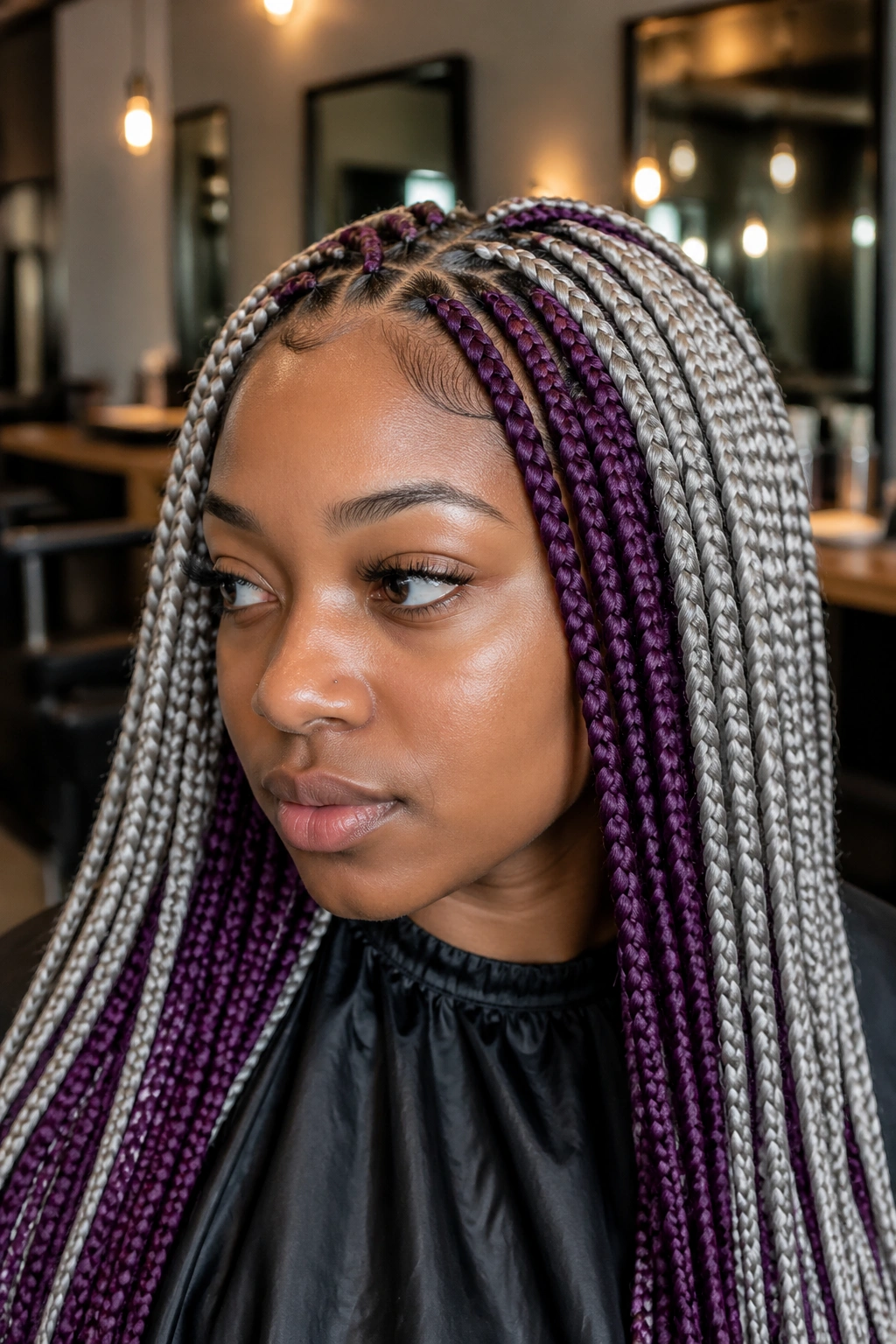
If you want the color to feel richer, stop trying to make every braid equal. Broad plum panels woven through silver braids give the set a steady rhythm, and that rhythm is what makes it look intentional instead of random.
The contrast lands harder than a soft fade, but it still feels wearable because the silver keeps the whole style from getting too dark. I like this version on people who want purple to show up without screaming for attention. Plum has that advantage. It looks expensive when the shade is deep enough.
This style also photographs in a more forgiving way than bright violet. The silver catches the eye first, then the plum pulls it back in. That push and pull gives the braids movement even when you are standing still. If your wardrobe leans black, cream, denim, or olive, this combination slips right in.
It is a good choice for medium to long braids, especially when the purple is placed in wide vertical sections rather than tiny streaks. Tiny streaks can get lost. Wide panels do not.
3. Jumbo Waist-Length Grey and Purple Box Braids
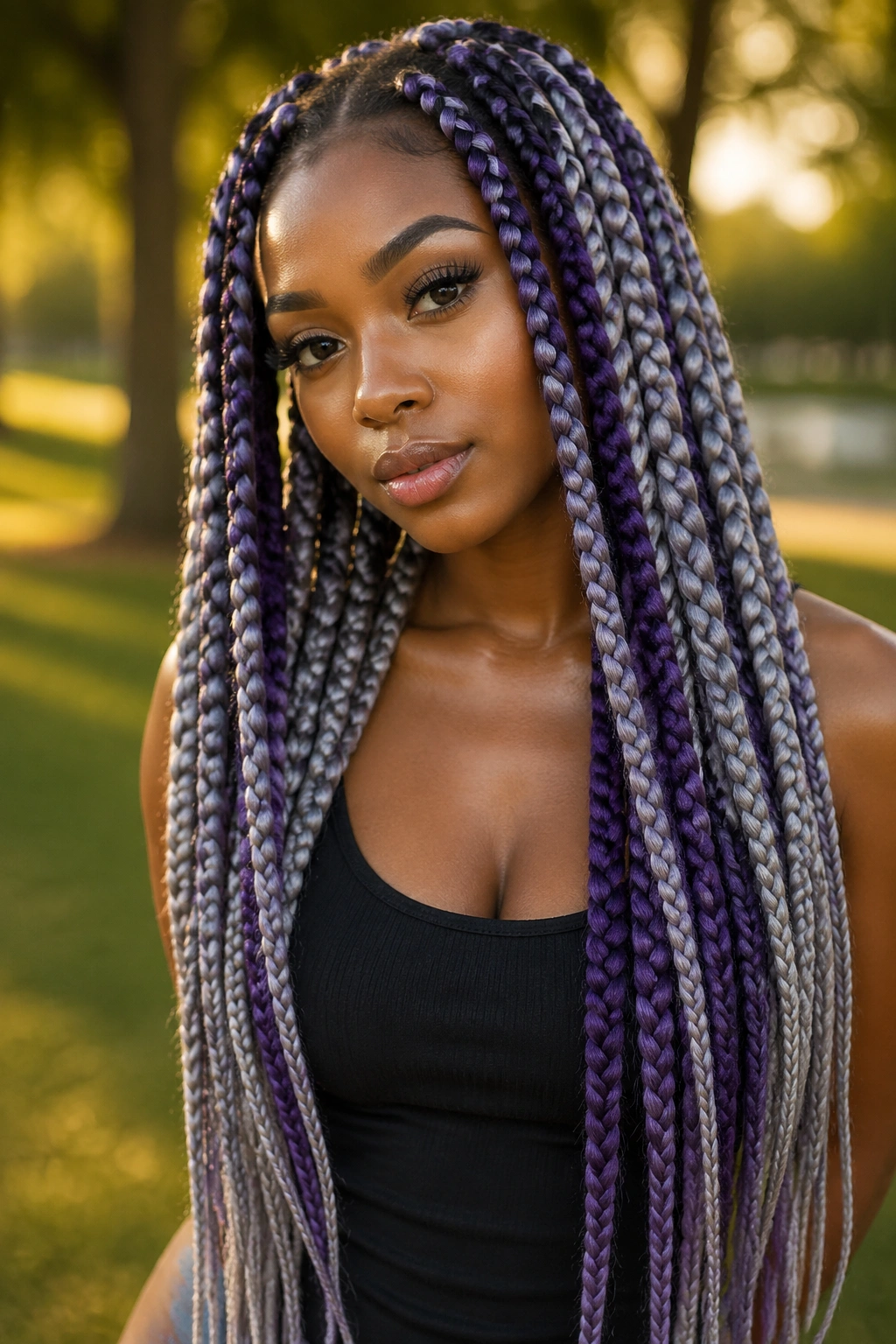
Picture wanting a dramatic look that does not eat your entire day in the salon chair. Jumbo waist-length grey and purple box braids are that style. They bring the color in fast, the parting stays clean, and the length gives the silver and purple enough room to drape instead of just sit there.
The heavy lift here is in the shape, not the detail. Big braids let you show off a bold grey base with chunky purple blocks or curled tips, and they look best when the sections are even from front to back. If one side is denser than the other, the whole set starts to feel lopsided. Not the vibe.
- Good for: People who want fewer braids, less install time, and a style that feels bold without being tiny and busy.
- Watch for: Weight. Waist length is lovely, but long jumbo braids can pull on the scalp if the first rows are too tight.
- Color idea: Use grey at the roots and push purple into the mid-lengths or ends for a stronger drape.
- Finish move: Add 2 to 4 cuffs near the front or a few clear beads at the ends if you want extra shine.
This is the set I would choose if I wanted the color to be seen from a distance and I did not want to fuss with small, fussy details every morning.
4. Shoulder-Length Bob with Alternating Grey and Violet
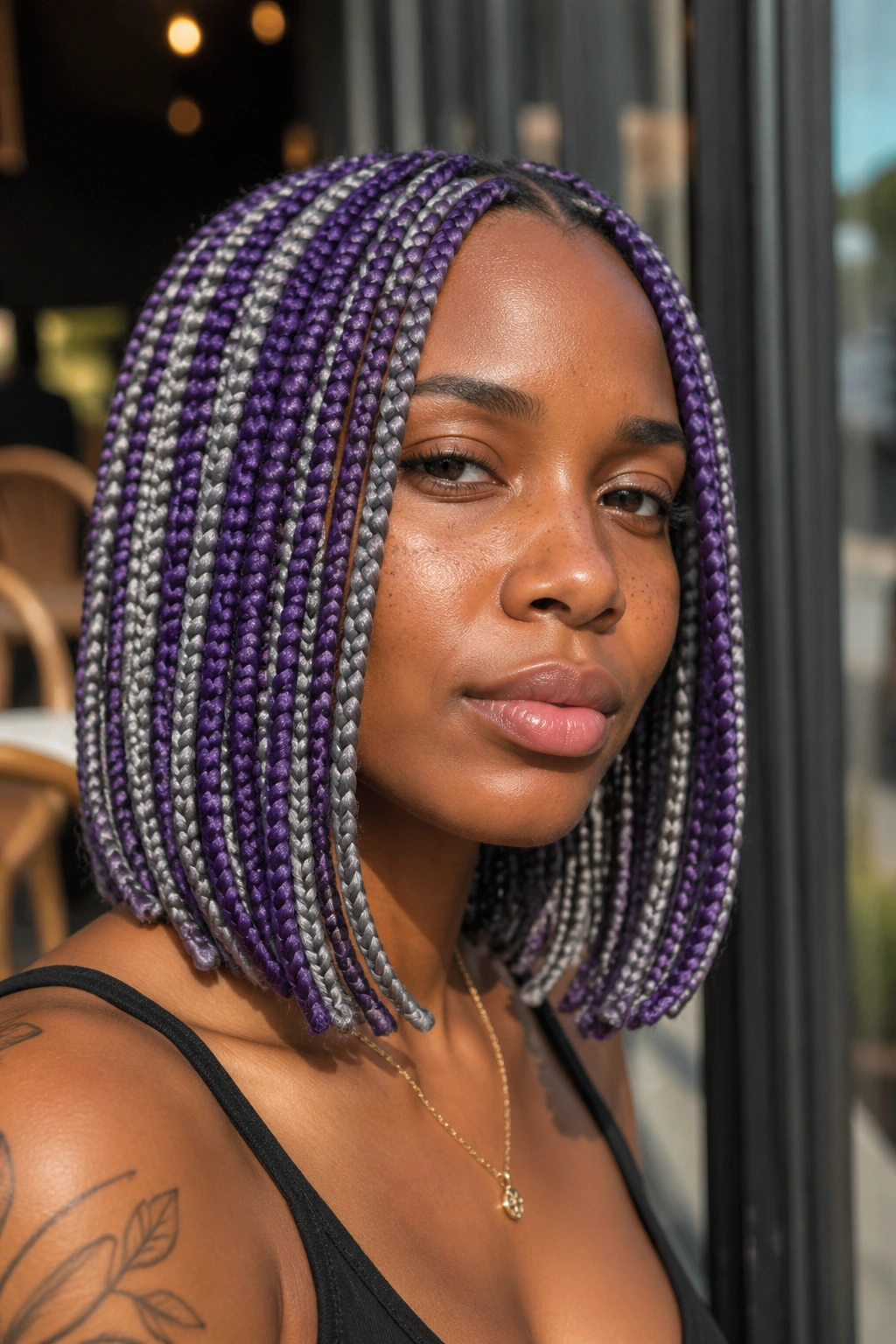
A bob changes everything. At shoulder length, grey and purple box braids stop feeling like a long, heavy statement and start acting more like a clean shape around the jaw, neck, and collarbone.
Alternating grey and violet braids make the cut feel sharper. One braid lands silver, the next lands purple, and the rhythm is enough to keep the style from looking flat. The shorter length also makes the color look denser, because your eye sees more of each braid and less of the empty space between them. That matters more than people think.
This is one of the easier versions to wear if you are active, if you keep your hair on your shoulders a lot, or if you simply do not want braids swinging against your back all day. A blunt bob looks crisp. A slightly curved bob looks softer. Both work.
I like this style best when the purple leans violet instead of neon. The cooler shade sits better beside grey, and it keeps the whole look from tipping into costume territory. There is a line there, and this cut knows where it is.
5. Knotless Grey Braids with Purple Feed-In Streaks
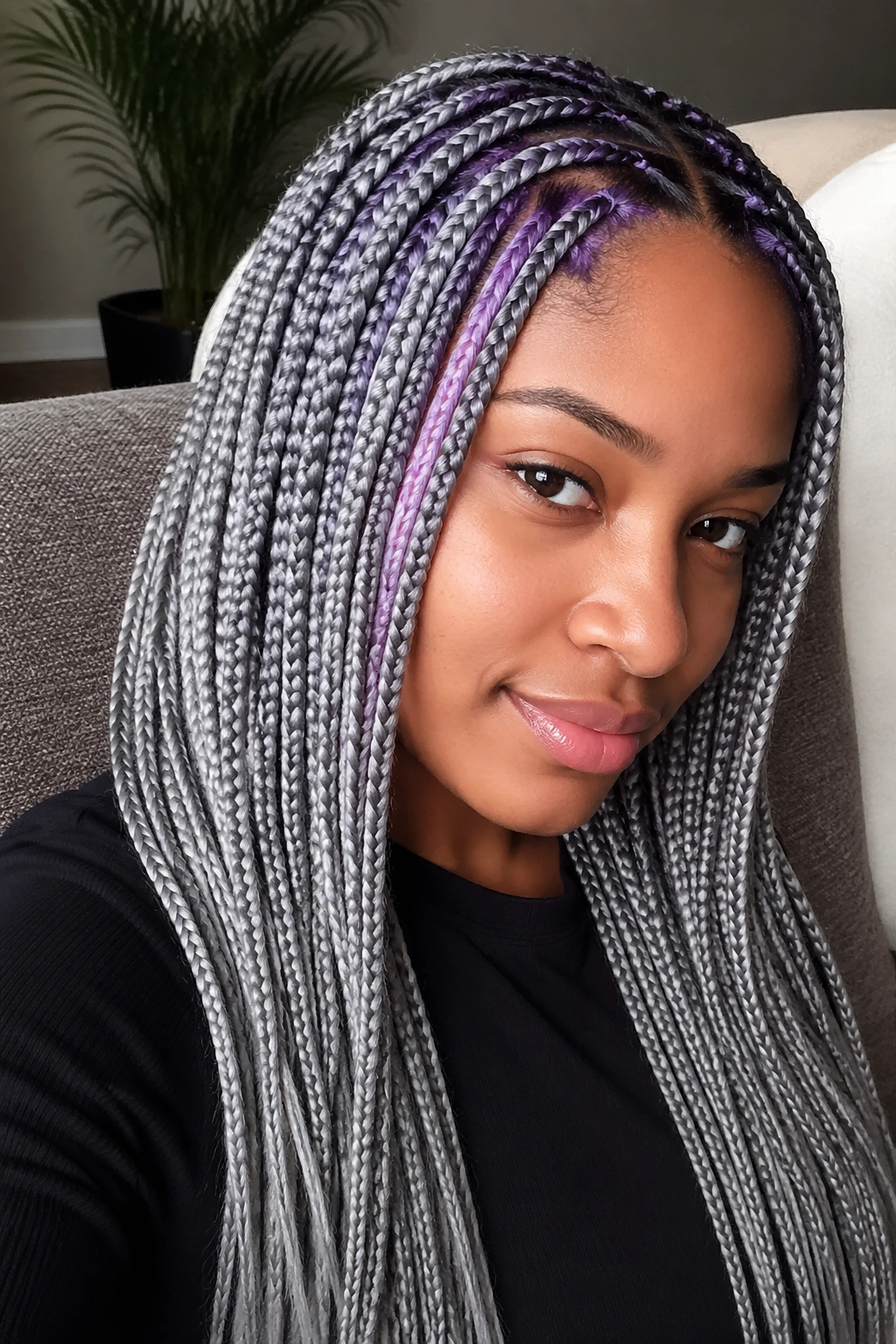
Why do knotless braids work so well here? Because the softer start at the scalp lets the color feel lighter, especially when the purple is fed in gradually instead of dropped in as a block.
How the feed-in color sits
The braid begins with a small base, then the grey and purple strands are added little by little. That gradual build makes the color change feel smooth, and it also helps the roots look less bulky. If your scalp gets sore fast, knotless is the safer bet. The whole set lies flatter, and that matters when the braids are medium to long.
You can push the purple streaks into just a few face-framing braids, or you can weave them through every section for a stronger pattern. I prefer the first option when you want the style to breathe a little. Too much purple at the root can fight the grey instead of supporting it.
- Best for tender scalps: Yes, especially if you usually hate the tight pull of traditional starts.
- Best braid size: Small to medium, because the feed-in technique shows off the color blend.
- Best placement: Front rows and crown, where the color gets seen first.
- Best extra detail: A light mousse pass after install helps the braids settle without turning stiff.
If you want grey and purple box braids that feel sleek rather than heavy, this is one of the easiest wins.
6. Triangle Parts and Lavender Ribbons
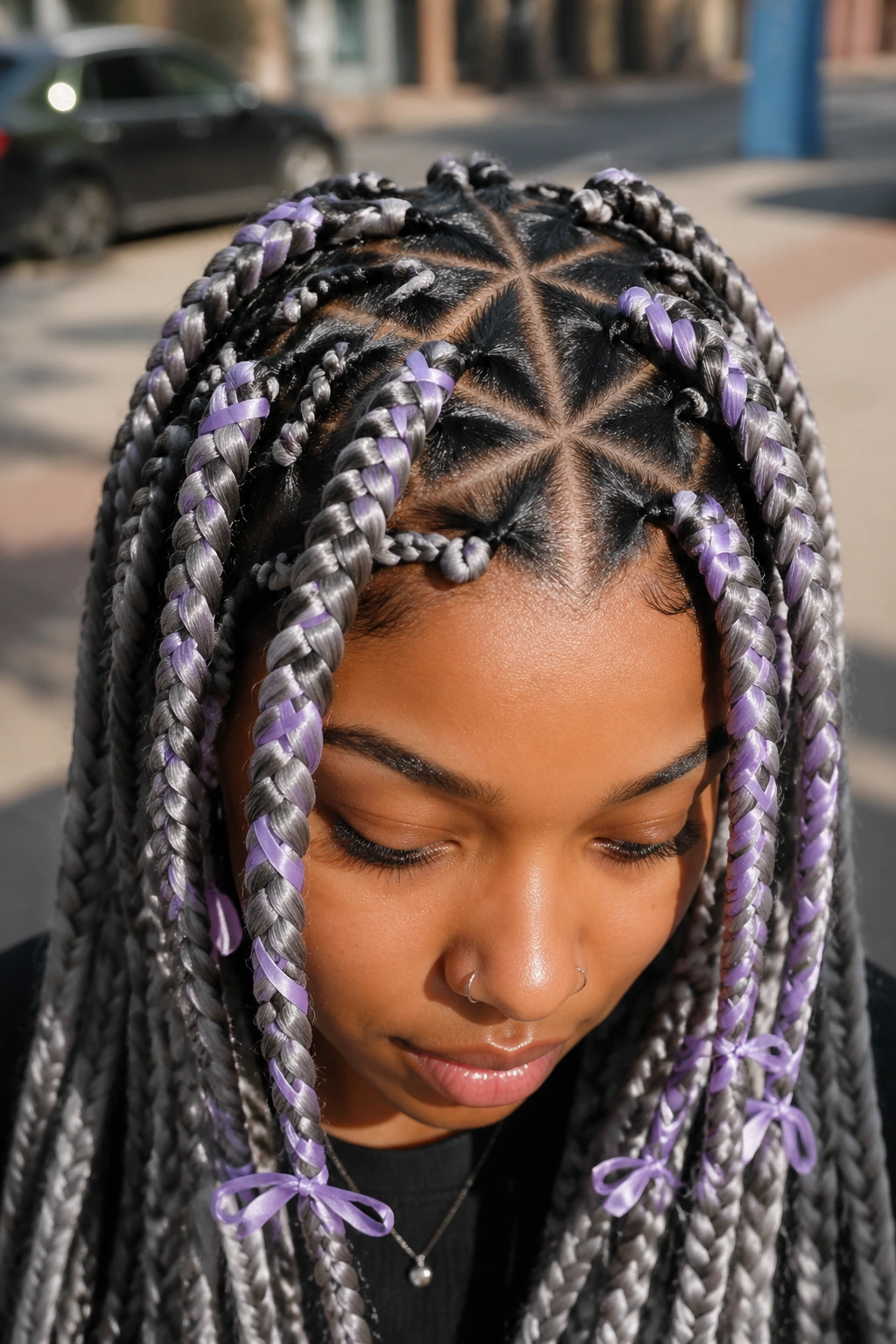
Unlike square parts, triangle parts give each braid a little edge right from the scalp. The parting itself becomes part of the design, which is useful when you want the grey and purple mix to feel sharper and less expected.
Triangle sections work especially well with lavender ribbons or narrow purple strips running through silver braids. The geometry keeps your eye moving, so the color does not need to do all the work. That is handy if you like softer shades and do not want to rely on loud purple to make the style interesting.
This version suits medium-density hair best. If your hair is very thick, triangle parts can still work, but the sections need to be clean or the shape gets messy fast. If your hair is finer, smaller triangles help the braids sit evenly and keep the scalp from looking too exposed.
I would choose this style for anyone who likes the braid pattern to be visible. Square parts can fade into the background. Triangle parts do not. They have more attitude, and they hold their own even when the color is subtle.
7. Half-Up Top Knot in Steel Grey and Orchid
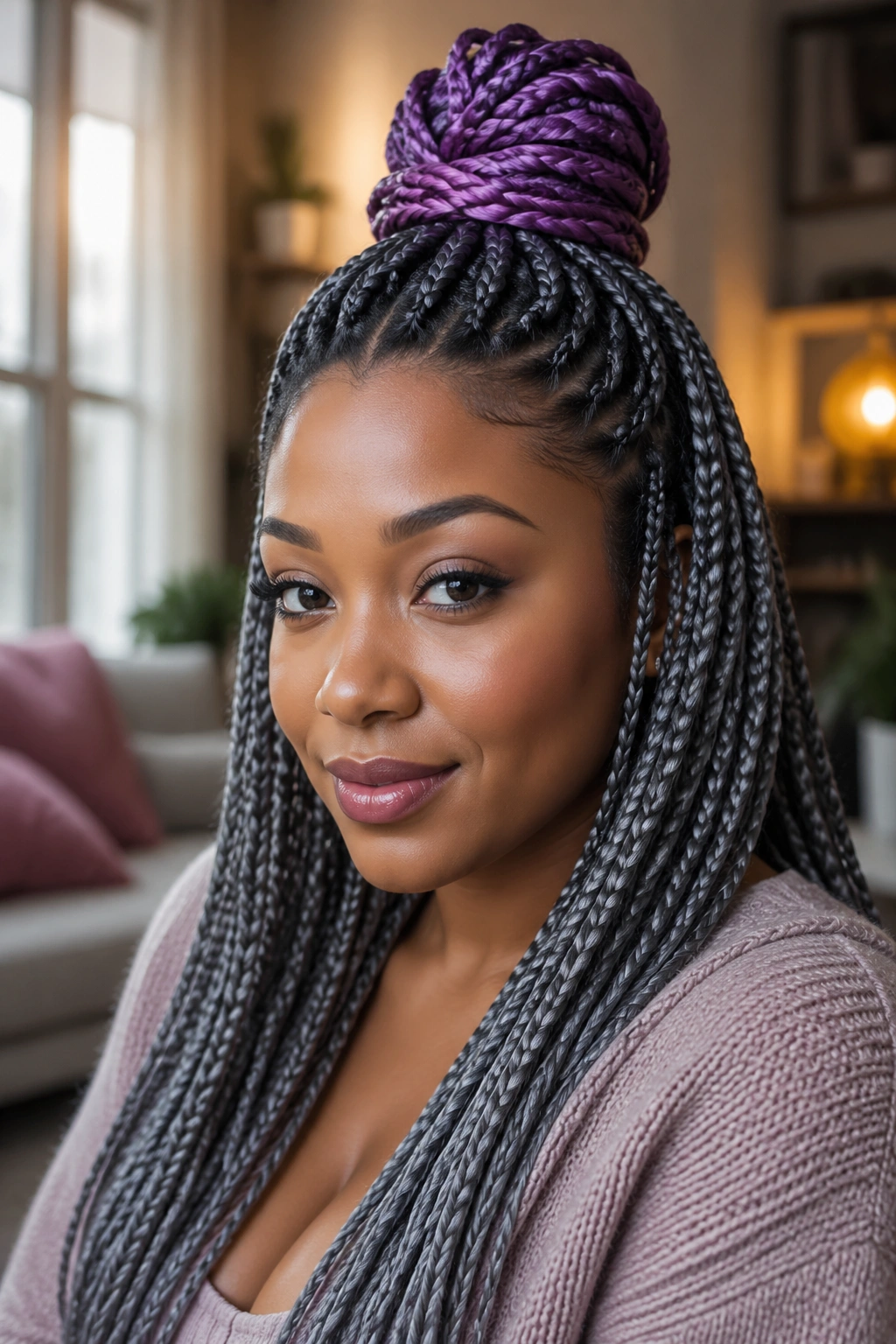
A half-up top knot gives grey and purple box braids a built-in focal point. The lifted section shows off the top layers, while the rest of the braids hang loose and keep the shape from feeling too formal.
Why the top knot matters
The knot changes the balance. Steel grey on the lower braids keeps the style grounded, and orchid on the top section gives the eye somewhere bright to land. That mix works well when you want a style that can be worn to dinner, then worn again the next day without looking flat.
The best part is how easy the shape is to adjust. Tie the knot higher if you want more drama. Keep it lower if you want something softer. You can also leave a few front braids free to frame the face, which helps if your forehead is broad or you simply do not like every braid pulled back.
- Use this when: You want a style that feels dressed up without needing a full updo.
- Choose this braid size: Medium, because tiny braids can get swallowed by the knot and jumbo braids can make it bulky.
- Add-ons that work: Small cuffs around the knot base or one purple scarf wrapped around the elastic.
- Do not do this: Pull the top section too tight. The style should sit, not clamp.
It is a clean way to show off both colors without making the whole head busy.
8. Medium Box Braids with Purple Peekaboo Layers
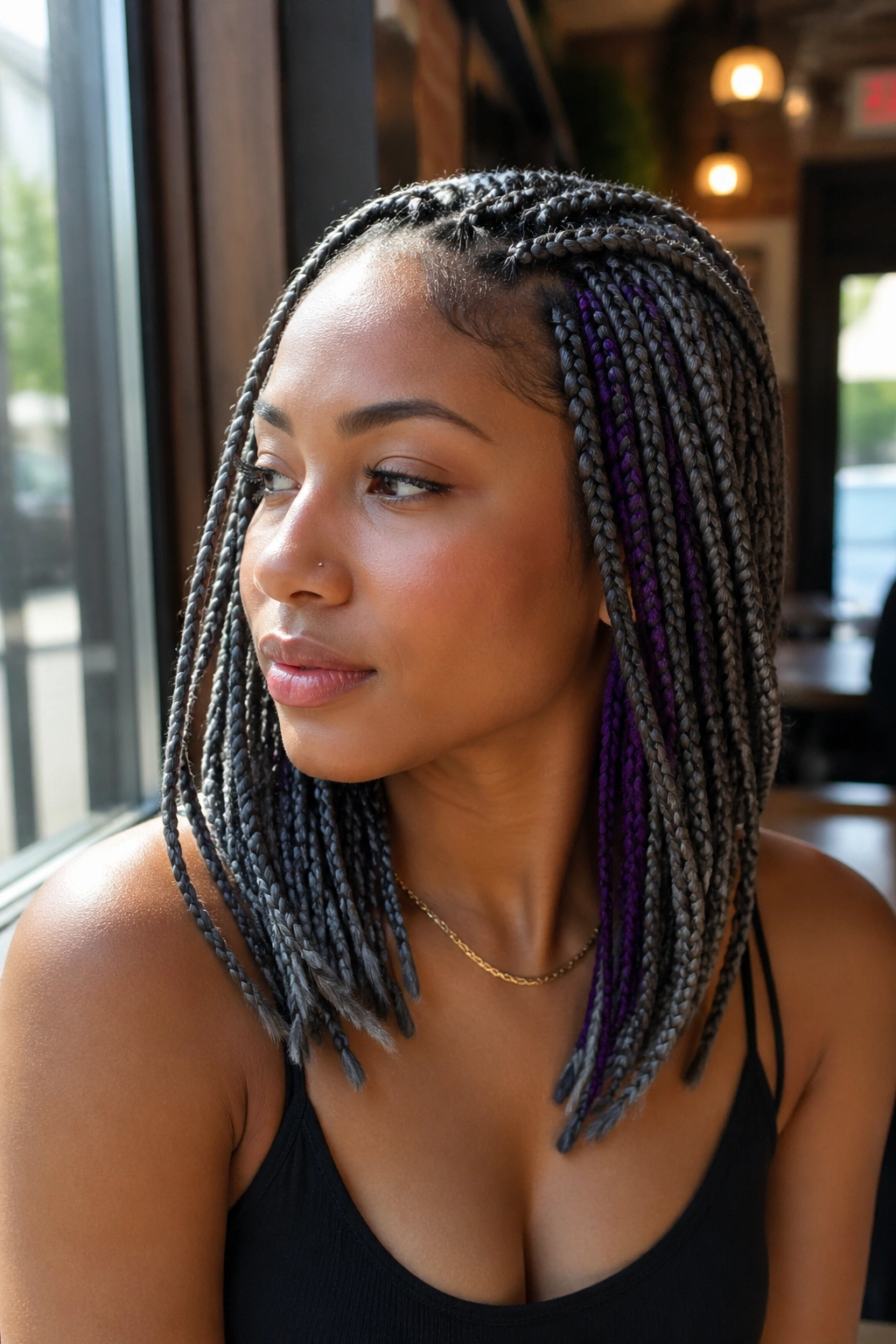
Hidden color is underrated. Medium grey box braids with purple peekaboo layers stay calm from the front, then flash color when you turn your head, swing the braids over one shoulder, or toss them into a low ponytail.
That little surprise makes the style feel richer than a plain two-tone set. Grey covers the visible surface, so the purple never overwhelms the look. It waits underneath, and that restraint is what gives it punch. People often think louder color reads stronger. Sometimes the opposite is true.
This style is especially good if you wear your braids down most of the time. If you always wear a bun, the hidden layers do not get a chance to show. But if you like to flip your hair, tuck one side behind the ear, or pull the braids to one shoulder, the purple starts doing real work.
I like peekaboo color when the purple is a touch deeper than the grey. Lilac can disappear too easily under the top layer. Plum, grape, or a smoky violet usually holds up better.
9. Goddess Box Braids with Loose Curls and Mauve Ends
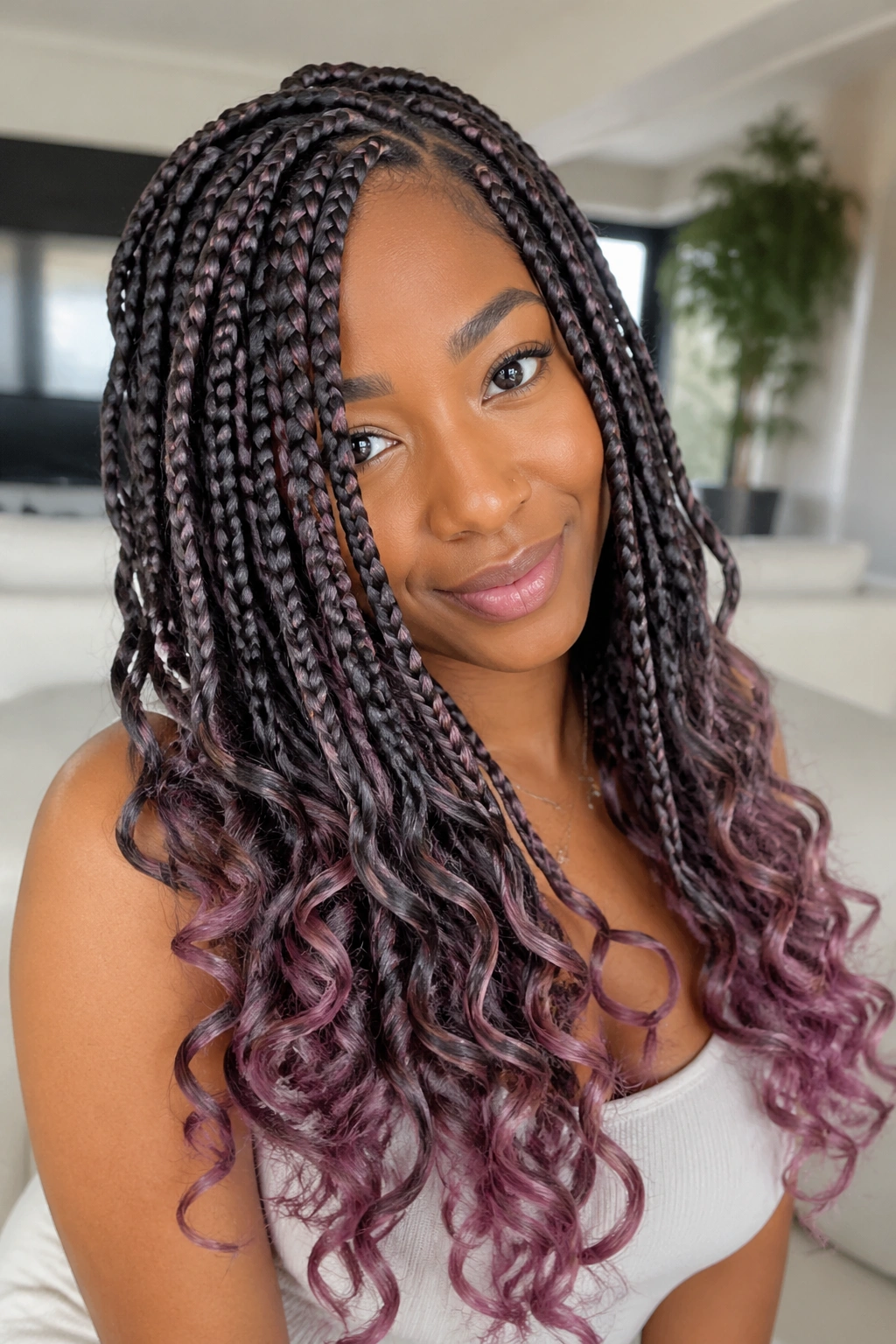
The first thing I notice here is softness. Goddess box braids take the sturdy shape of a box braid and break it open with loose curls, and mauve ends keep the whole style from feeling too rigid or too dark.
Where the texture shift happens
The curls can sit at the ends, hang from a few braids, or be added in thin pieces throughout the set. I prefer the end-focused version when the braids already have a lot of color. It keeps the look tidy near the scalp and airy where the hair moves. Mauve works especially well because it sits between pink and purple, so it softens grey instead of clashing with it.
- Good curl choices: Flexi-rodded synthetic pieces or pre-curled braiding hair.
- Best braid size: Small to medium, so the curls do not overwhelm the braids.
- Best length: Mid-back or longer, where the curls can hang without hitting your shoulders every second.
- Maintenance note: A light mousse and a satin scarf at night help the curls stay bouncy instead of frizzy.
This is the style I would hand to someone who wants grey and purple box braids with a little movement and a little softness. It has shape, but it does not feel stiff.
10. Side-Swept Ash Grey and Eggplant Braids
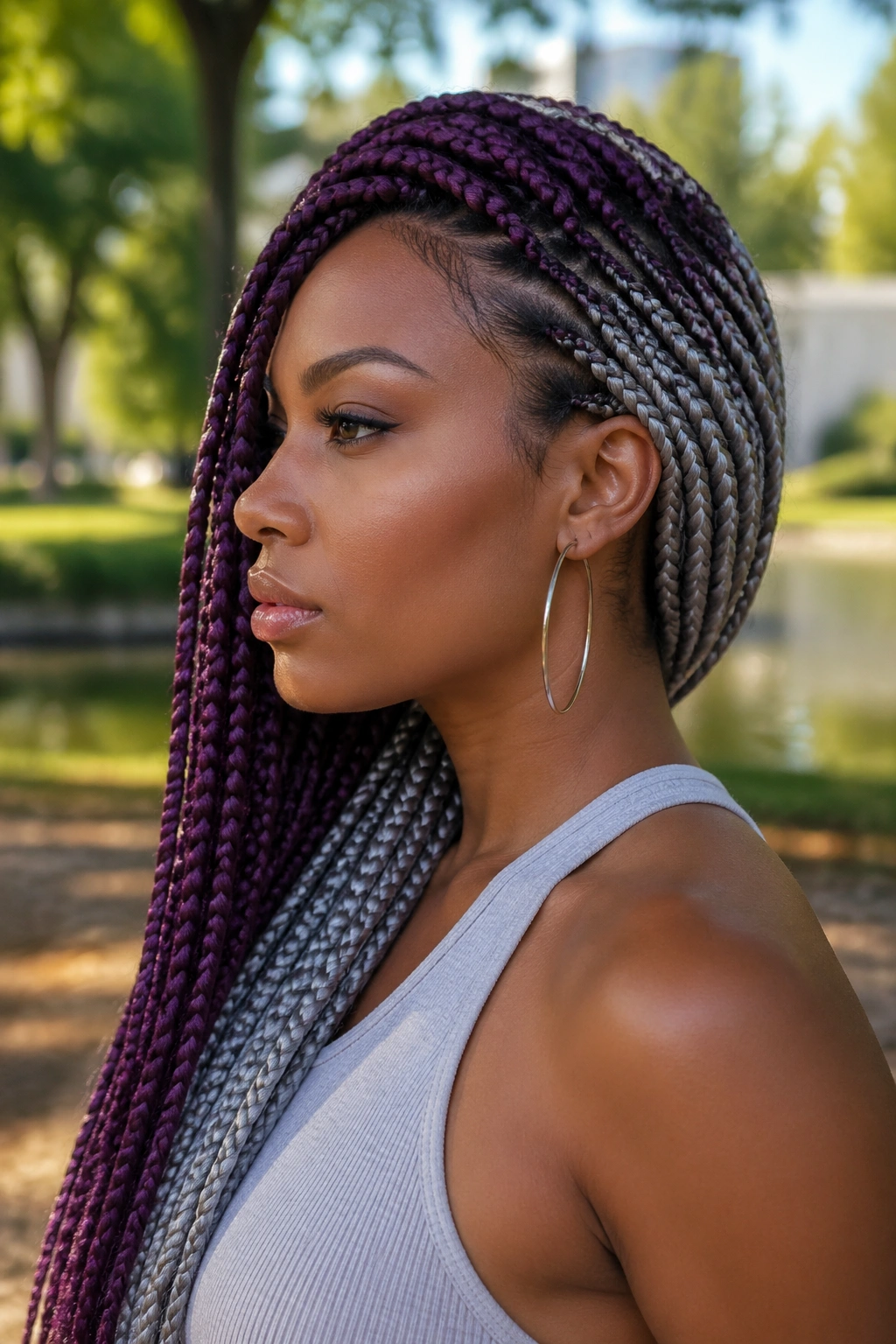
Why let both sides behave the same? A side-swept set of ash grey and eggplant braids gives the color a clear direction, and direction is what makes asymmetry look deliberate instead of accidental.
The side sweep lets one color take the lead. Usually I like the deeper eggplant side to carry the most weight, with ash grey filling in the rest. That darker side frames the face, while the lighter side keeps the style from feeling heavy. It is a neat trick, and it works better than people expect.
How to wear it
A deep side part helps the sweep hold its shape, especially if the braids are medium or long. Pin the heavier side back with one barrette or a flat clip if you want the face framing to stay visible. If your face is round, this shape adds length. If your face is oval, it gives you a strong diagonal line that keeps the look from going flat.
This is also one of the best styles for showing off earrings. The swept side leaves room for a hoop, a drop earring, or a small cuff, and the purple side gives the whole thing a little weight. It feels grown, but not stiff. Good line. Good color. Nothing wasted.
11. Braided Ponytail Wrapped in Grey and Violet
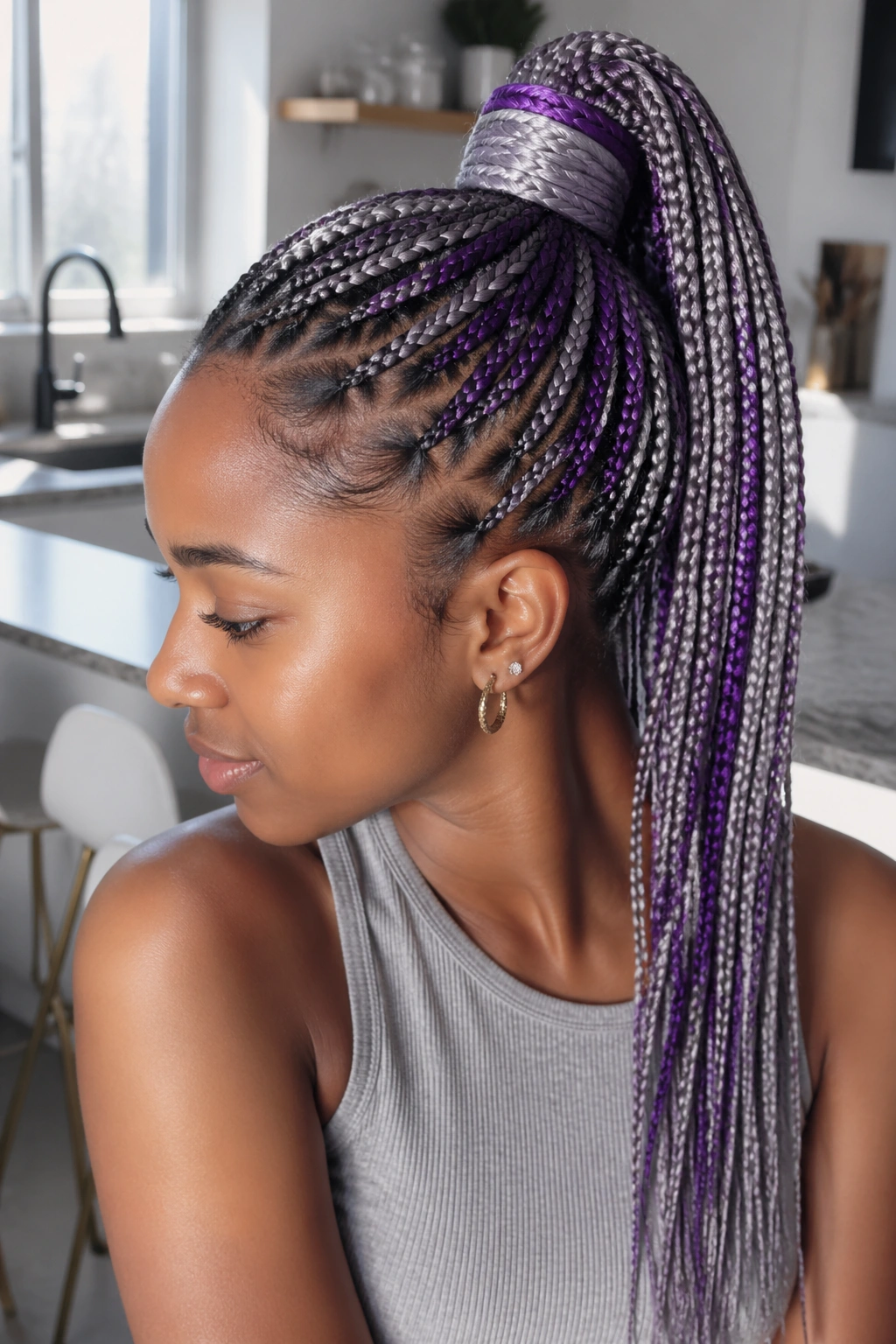
A braided ponytail is the most practical style on this list, and that is not a bad thing. When grey and violet braids get pulled high and wrapped neatly around the base, the whole look becomes cleaner, tighter, and easier to wear on busy days.
The strength here is the shape. The ponytail exposes the color layers all at once, then the wrap hides the elastic and makes the finish look intentional. If the grey sits closer to the scalp and the violet is heavier near the ends, the ponytail swings with a nice color shift every time you move. That motion matters. It keeps the style from feeling static.
I like this version when the braids are medium-long and not too thick. Tiny braids can disappear into the ponytail, while jumbo braids can make the tie too bulky. Somewhere in the middle is the sweet spot. A satin scrunchie under the wrap helps the base stay smooth, and it cuts down on friction.
Strong ponytail, strong silhouette. That is the whole point. You get color, lift, and a shape that works with jackets, big earrings, and plain makeup.
12. Beaded Grey and Purple Braids for a Bold Finish
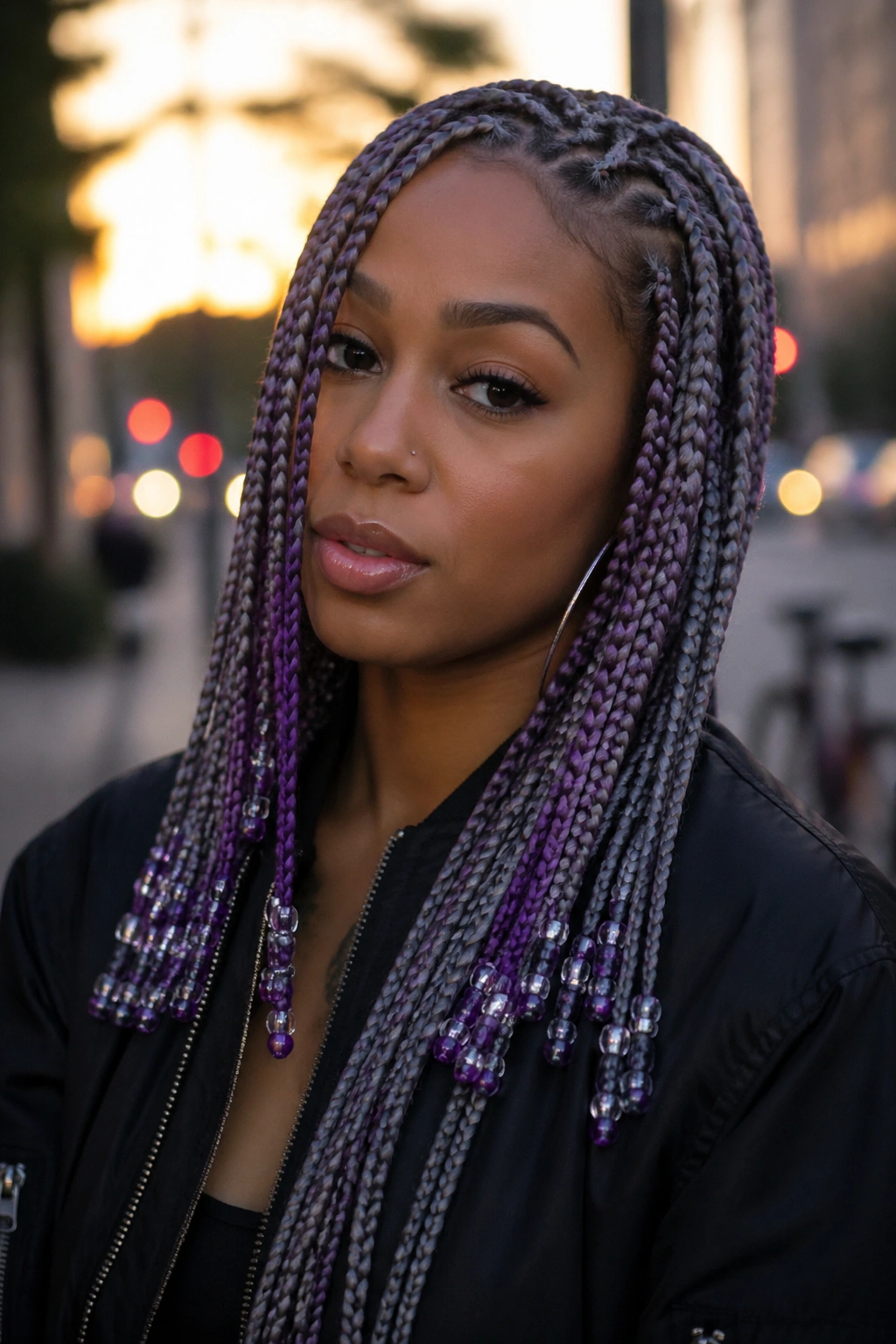
Beads change the story. Without them, grey and purple box braids can feel sleek and calm. Add beads, and the ends become part of the design, not just the thing you tuck away.
This style is useful when you want the color to stop at the braid and not disappear into a plain sealed end. Clear beads, smoky beads, silver cuffs, and even deep plum beads all work here, but I would not load every braid with hardware. That starts to feel heavy fast, especially on fine hair. A few rows around the front or the sides are usually enough.
Compared with a plain braid set, beads also give shorter braids more presence. If your braids stop at the shoulders or chin, the beading creates movement that length alone cannot give. The little click of the beads matters too. It makes the style feel alive when you walk.
For the cleanest finish, keep the braid color fairly simple and let the bead work do the talking. Too many color shifts plus too many beads can look crowded. A cleaner base gives the accessory room to breathe.
13. Charcoal-to-Grape Ombre Box Braids
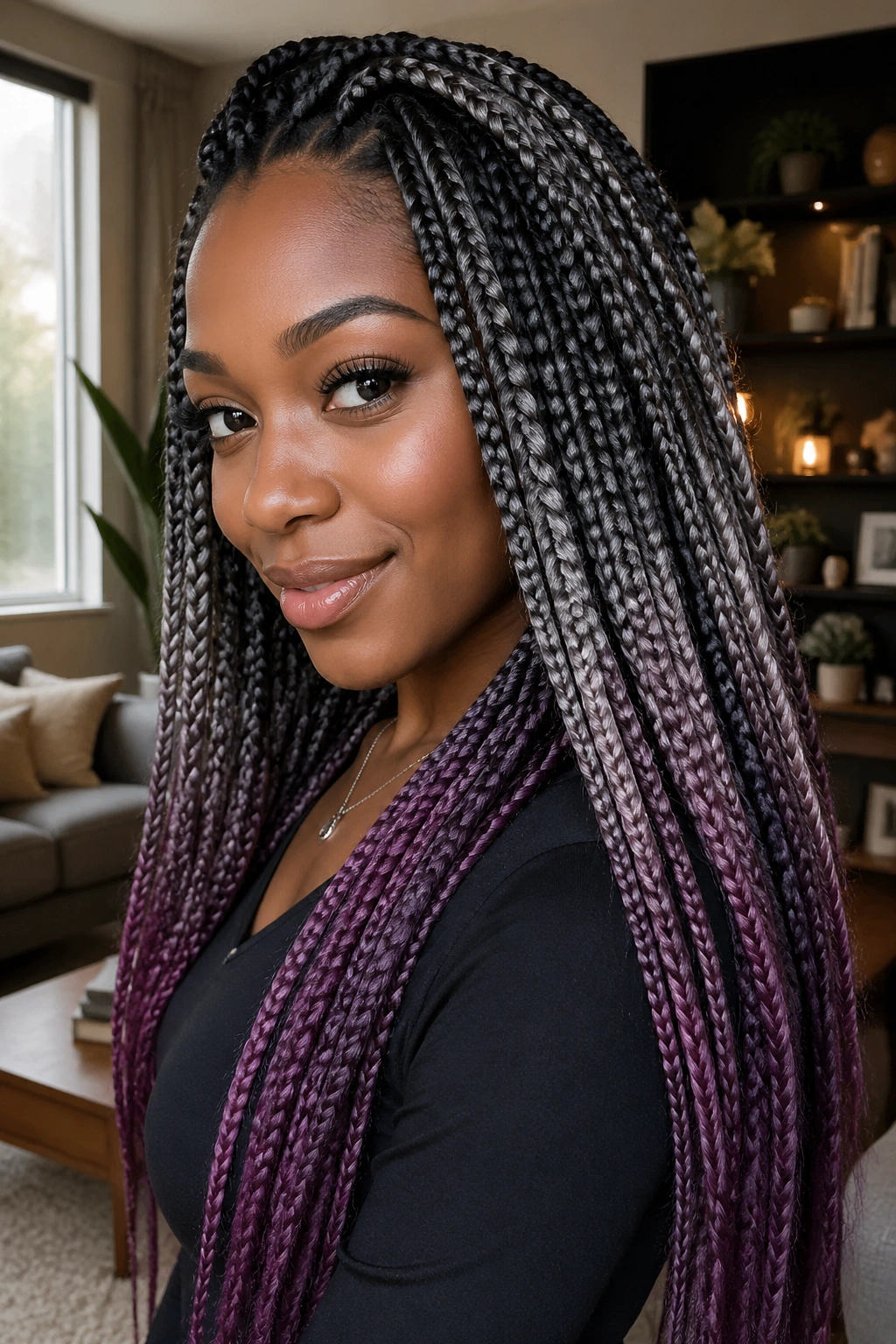
A charcoal-to-grape ombre is the kind of color move that looks expensive without trying too hard. The charcoal roots keep the style grounded, then the grape shade blooms through the middle and ends in a richer purple finish that feels deeper than lilac and less sharp than neon violet.
What makes the fade look smooth
The important part is the blend. You do not want a hard line where charcoal stops and purple starts. The transition should feel like the colors were mixed by hand, not stacked in bands. That is why this version looks best with two or three closely related shades rather than one grey and one bright purple. A little silver in the middle helps the fade soften.
- Best for: Longer braids, where the ombre has time to show.
- Best color mix: Charcoal, silver-grey, and grape or plum.
- Best parting: Clean squares or neat triangles; both work as long as the sectioning stays even.
- Best tip for blending: Hold the grey and purple hair together in your hands before adding them to the braid, so the transition starts naturally.
This is the style I’d choose if I wanted purple that feels richer than playful. It has depth. It also grows out neatly, which is one of those small things you appreciate after week two.
14. Chunky Bob with Purple Face-Framing Pieces
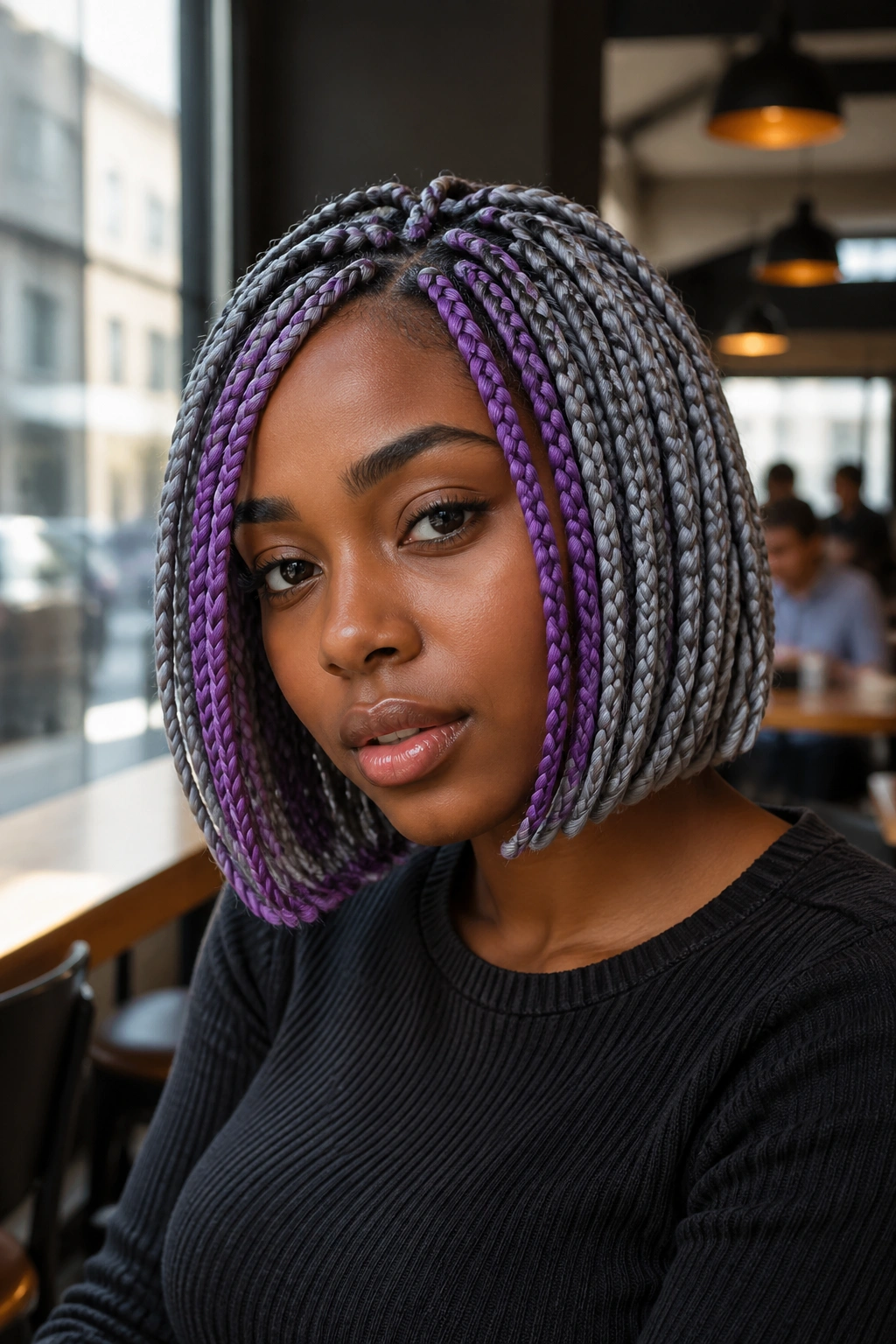
Bold claim: a chunky bob with purple face-framing pieces does more for your features than a long set that hides the color halfway down your back.
The shorter shape puts the braids right around the cheekbones and jawline, so the purple pieces become part of the face, not an afterthought. Grey keeps the overall look calm, while the purple pieces break up the front and stop the bob from reading too uniform. If you wear glasses, this is especially good, because the color can sit around the frames instead of fighting them.
I like chunky braids here rather than tiny ones. Tiny braids can make the bob feel busy. Chunky ones give it weight and keep the shape crisp. If the ends curve inward a little, even better. It softens the line without losing the edge.
One small warning: a bob this bold needs clean ends. If the tips fray, the whole style loses its shape fast. Keep the ends sealed neatly, and the color will stay front and center where it belongs.
15. Soft Fade Braids with Dusty Lilac Ends
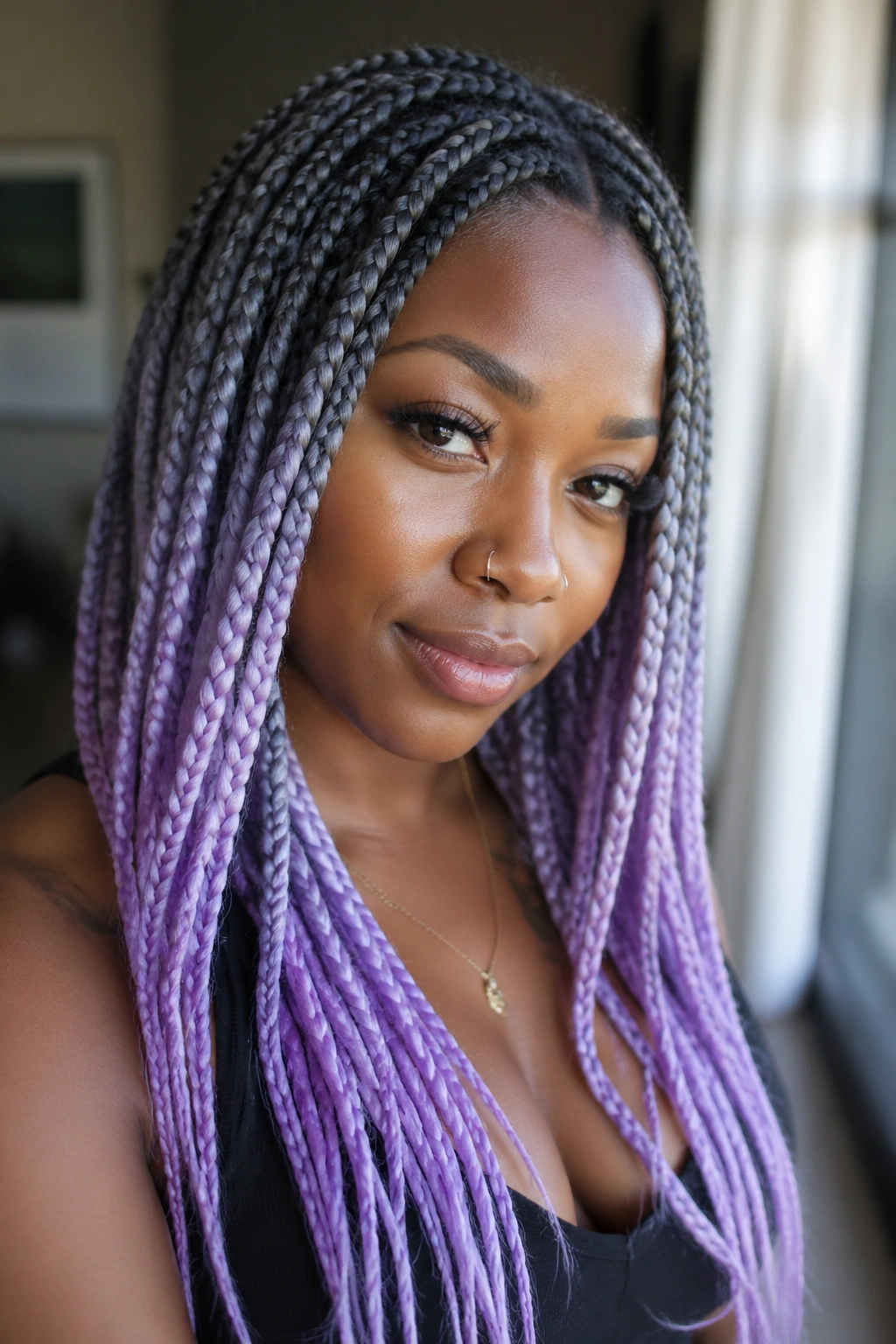
Dusty lilac is one of my favorite ways to finish grey and purple box braids because it stays gentle even when the braids are long. Bright purple can get loud fast. Dusty lilac feels quieter, and that makes it easier to wear day after day without tiring your eyes.
The soft fade also grows out well. When the grey at the root starts to show more, the transition still looks deliberate because the purple ends are muted rather than neon. That matters more than people think. A braid style can be beautiful on day one and awkward by week three. This one usually keeps its shape longer because the color story is calm from top to bottom.
I would point someone here if they want the safest first step into grey and purple box braids. It gives you the mood of color without demanding that every braid shout. You can dress it up with cuffs, leave it plain, wear it down, or toss it into a low bun and let the ends do the talking.
If you are torn between a bold plum set and something softer, this is the one I would keep on the short list. It wears well. It grows out cleanly. And it still looks like you meant to make a choice, which is half the battle with colored braids.
