


Straight parts are tidy. Zigzag box braids have more attitude.
The parting alone can change the whole mood of a braid set. A clean zigzag line makes classic box braids look sharper, more deliberate, and a lot less predictable, even when the braids themselves are a familiar size and length. I’ve always liked that about this style: you get a visual twist without needing a pile of accessories or a complicated finish.
There’s a catch, though. If the zigzags are too tight near the hairline, the style can feel strained before you’ve even left the chair. A good braid set should look crisp and still feel wearable after the first hour, not just from one flattering angle in the mirror. That means paying attention to part width, tension, and how the front rows are drawn.
Some versions lean polished. Some read playful. Some are almost plain until the light hits the scalp pattern and the whole style wakes up. That range is exactly why zigzag box braids stay interesting.
1. Medium Zigzag Box Braids with Crisp Part Lines
Medium braids are the sweet spot when you want the zigzag to show without turning the style heavy. The parts are wide enough to read clearly, but not so large that the pattern gets lost under the braid size. I tend to like this version on people who want a braid set they can wear often, because it gives you shape without demanding a lot of fuss.
Why Medium Braids Work So Well
The parting pattern does most of the visual work here. With sections around 1/2 inch to 3/4 inch, the zigzag bends stay visible from the front and from above, which matters more than people think. If the braids are much bigger than that, the zigzag can look like an afterthought. Too small, and the scalp pattern starts to feel busy.
- Best for: everyday wear, first-time zigzag braids, and people who want a balanced look
- Part size: medium, clean, and evenly spaced
- Length: shoulder-skimming to mid-back works especially well
- Feel: lighter than jumbo braids, more visible than tiny braids
My favorite detail: ask for the bends to move a little instead of making every angle match perfectly. That tiny irregularity makes the style feel human, not stamped out.
2. Jumbo Zigzag Box Braids with a Strong Scalp Pattern
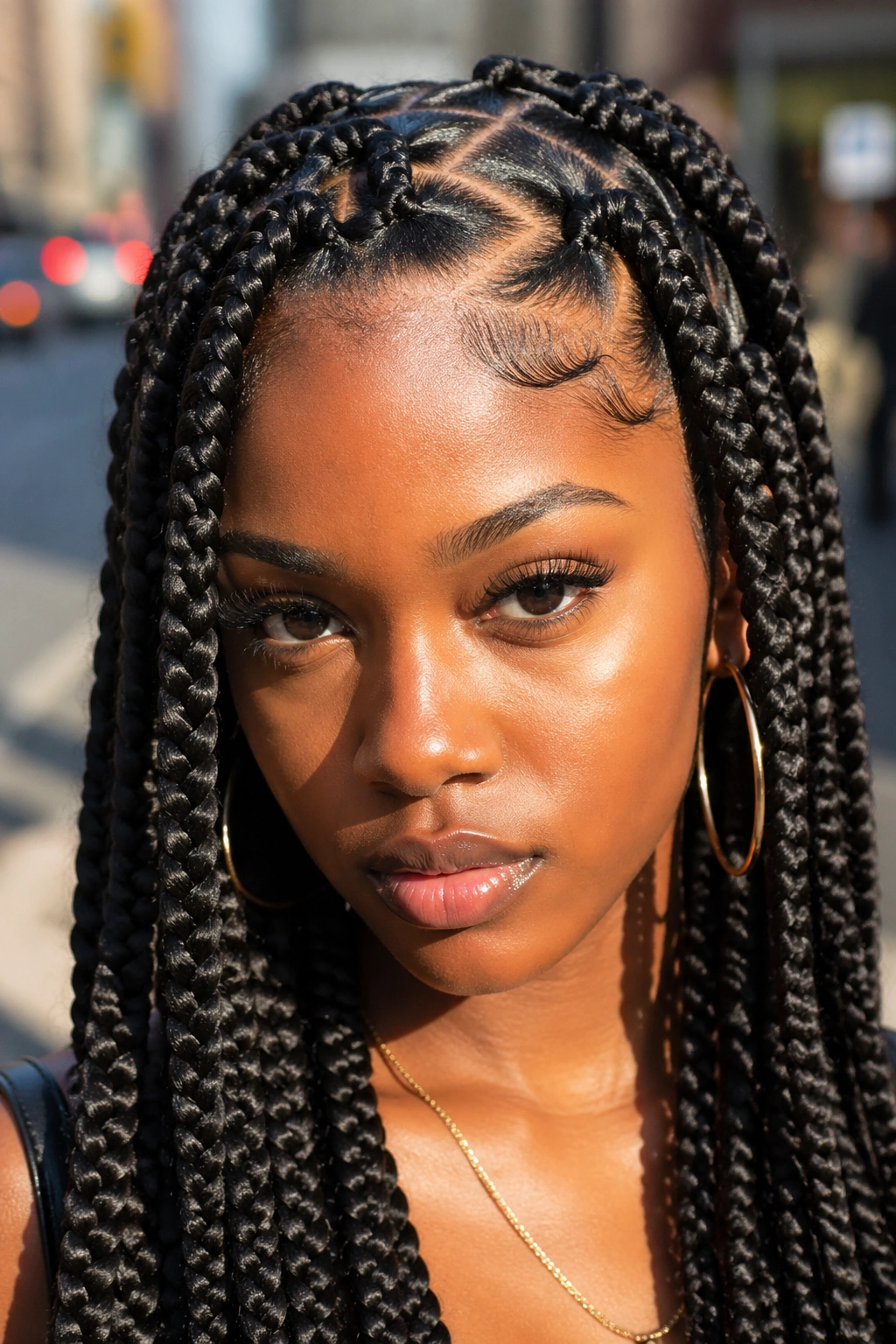
Jumbo zigzag box braids are not subtle, and that’s exactly why they work. The thicker braid size leaves more of the scalp pattern exposed, so the zigzag becomes part of the style instead of just a neat background detail. If you want something that looks bold from a distance and still feels simple to manage, this is the lane.
The tradeoff is weight. Fewer braids usually means less time in the chair, but each braid carries more hair, so the style can feel heavier on the head and neck. I like jumbo versions best when they stay at a manageable length—mid-back rather than waist-grazing—because the style keeps its clean shape without tugging too much.
Wear this one when you want the parting to do the talking. It pairs nicely with a plain outfit, a sharp lip color, or no extras at all. Seriously, it doesn’t need much. If the parts are clean and the starts are neat, the whole set already has enough personality.
3. Waist-Length Zigzag Box Braids that Swing Easily
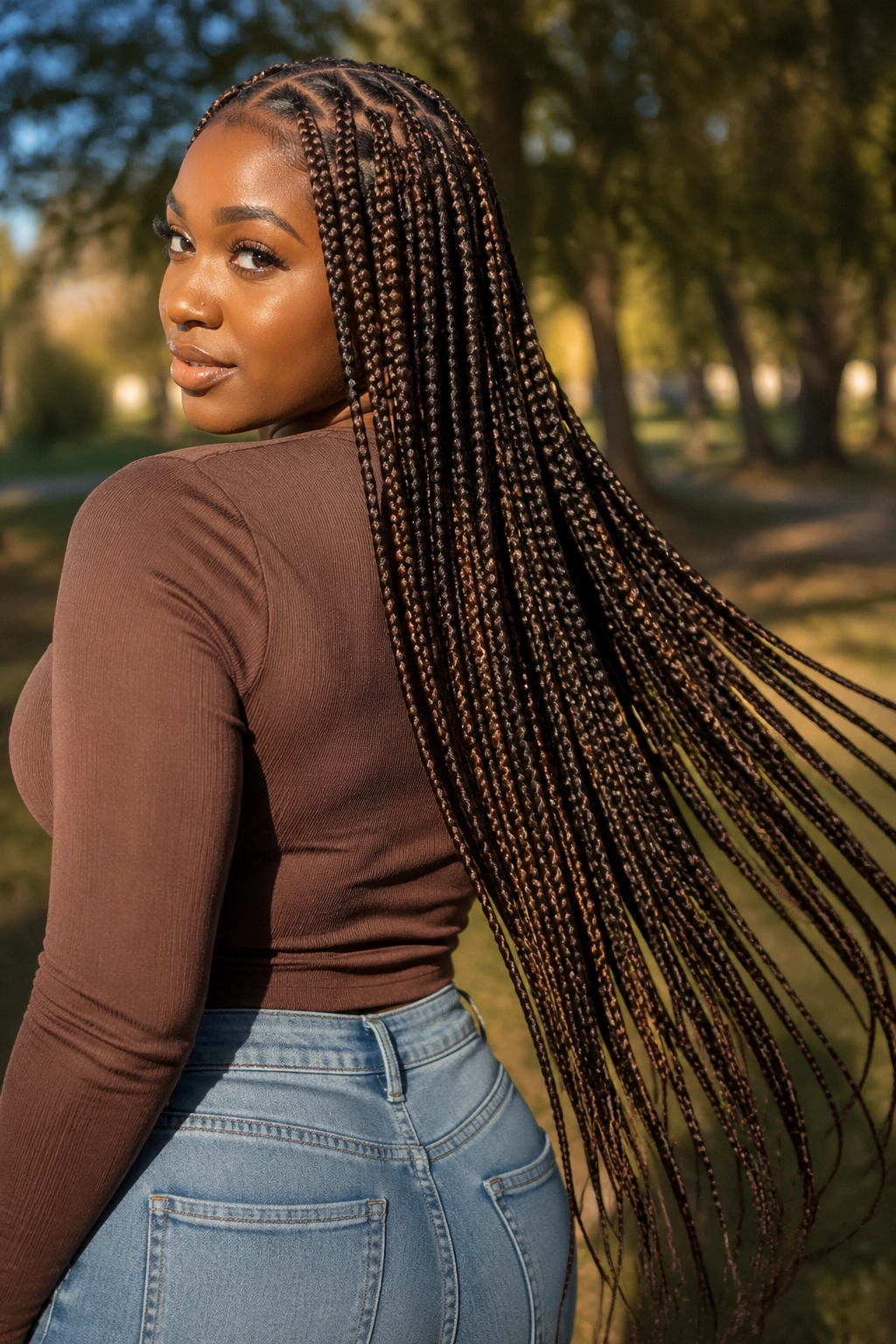
Why do waist-length zigzag box braids feel different the second you move? Because length changes everything. A long braid set makes the parting pattern feel more dramatic up top, then turns the ends into a kind of moving curtain, which is a nice contrast when the scalp area is crisp and the lengths are loose.
How to Wear It
This style works best when the braids are medium rather than oversized. Long braids already carry visual weight; if each braid is too thick, the whole look can start to drag. Keep the roots clean, keep the sections consistent, and let the movement happen in the length.
You can wear them loose down the back, tossed over one shoulder, or pulled into a low pony when you want the zigzag rows to stay visible. A little braid mousse at the roots helps the parting stay neat, but don’t pile on product. The style should still feel airy when you run your fingers over the top.
The best part is how it grows out. Long zigzag braids usually keep their shape even after a little new growth shows at the root, which makes them easy to live with.
4. Chin-Length Zigzag Box Braids in a Sharp Bob
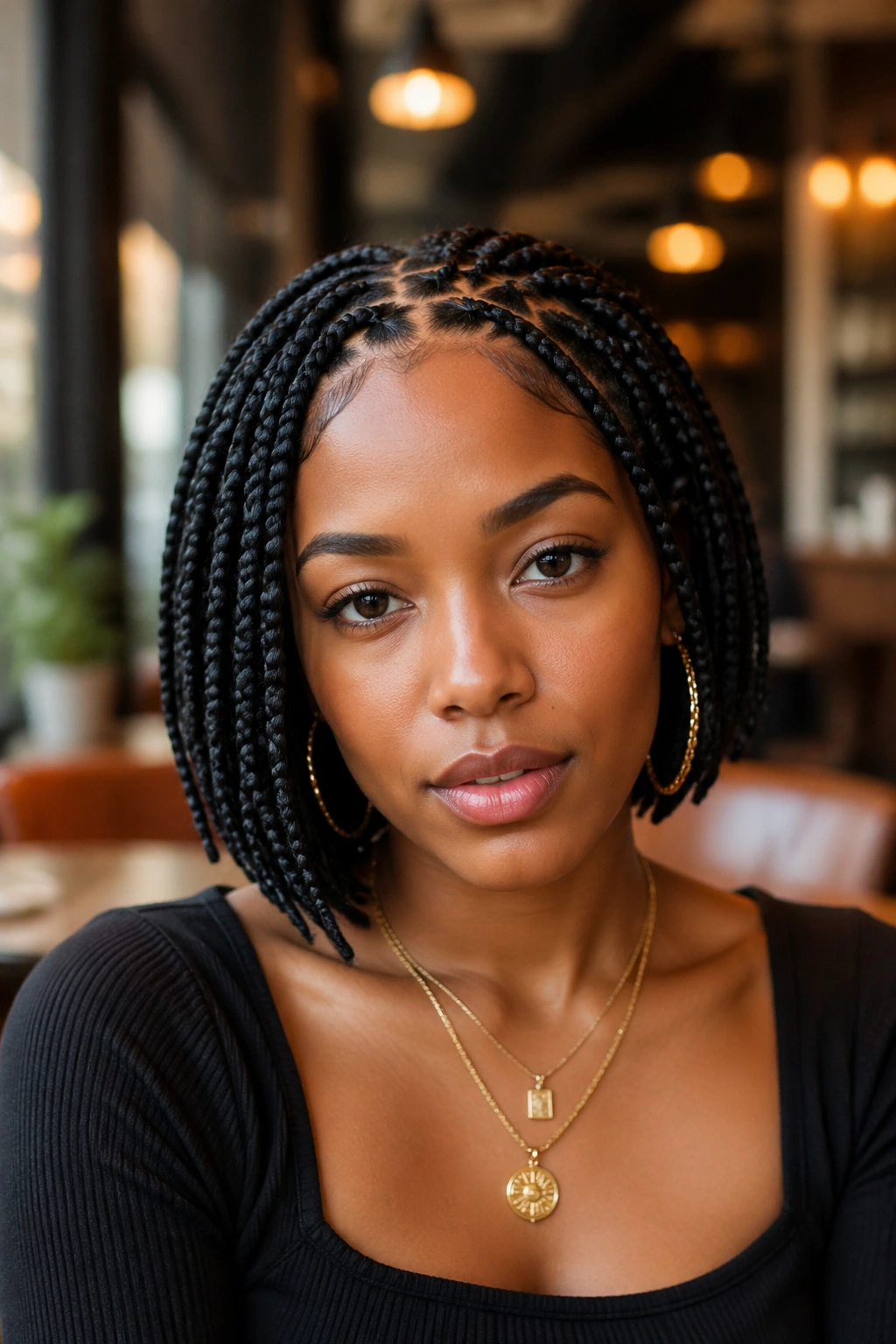
Picture braids that skim the jaw and expose the zigzag pattern right away. That’s the charm of a chin-length bob with zigzag parts: there’s nowhere for the detail to hide, so the scalp work becomes the first thing people see. It’s neat, cheeky, and much more confident than people expect from a short braid set.
Shorter braids also make the parting pattern feel cleaner because there’s less length pulling the eye downward. The result is a style that looks fresh even when it’s simple. I like this length on anyone who wants less weight on the neck, easier washing, and a braid set that doesn’t take forever to style each morning.
- Easy to manage in a bun or half-up clip
- Good for hot days when long hair feels like too much
- Shows off earrings and makeup without competing with them
- Makes the zigzag part lines obvious from the front
The real payoff is movement. A chin-length bob swings when you turn your head, and the zigzag parting keeps it from looking basic. That little bit of tension between clean and playful is the whole reason to wear it.
5. Half-Up Half-Down Zigzag Box Braids
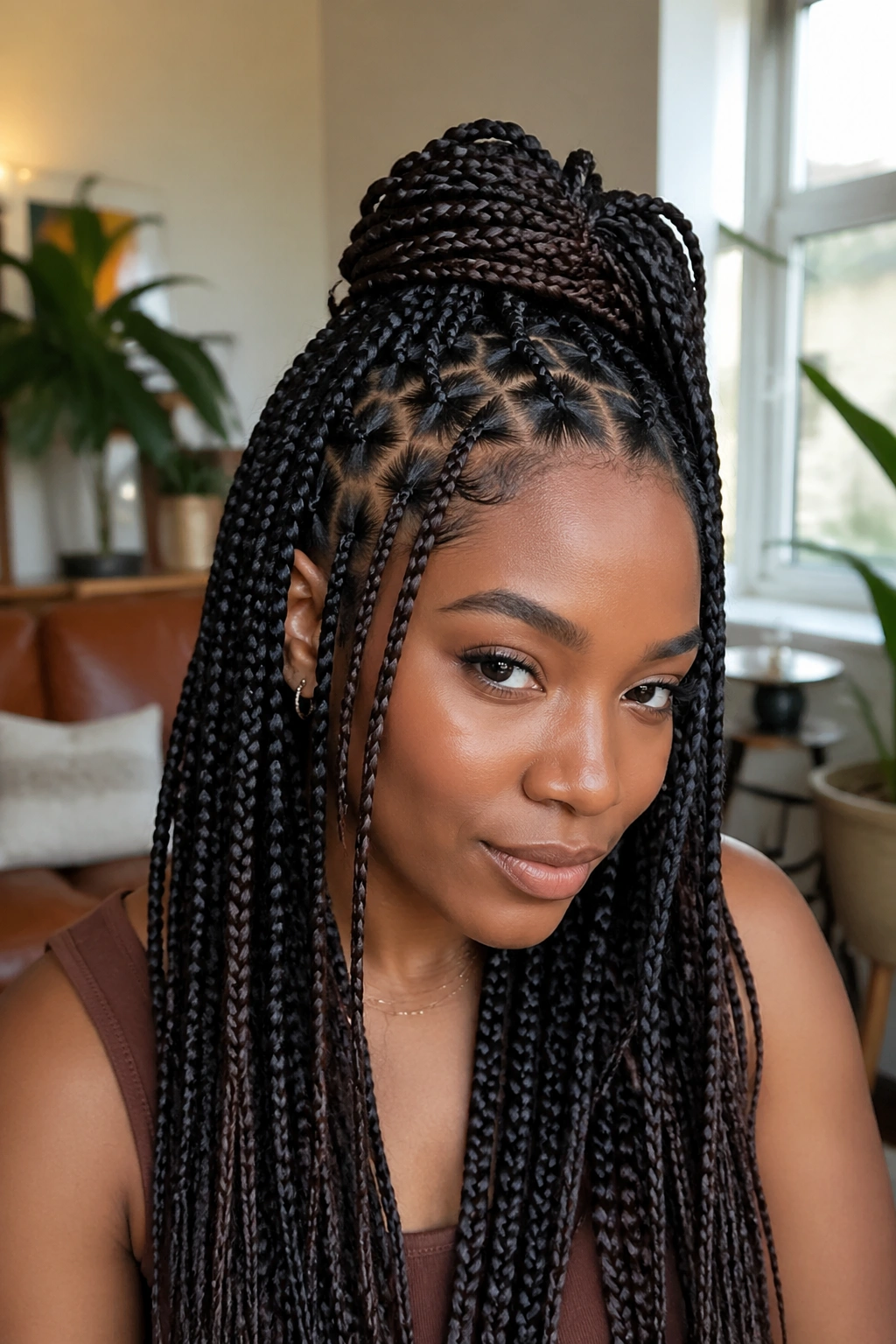
Half-up half-down zigzag box braids solve a simple problem: you want your hair off your face, but you do not want to lose the shape of the style. That’s why this version works so well on medium and long braids. The upper section lifts the front rows, which puts the zigzag pattern on display, while the lower section keeps the set feeling full and relaxed.
There’s also a nice practical side to it. If you wear braids for a stretch of time, a half-up style gives your scalp a break from full tension without making the look feel undone. A small elastic, a soft scrunchie, or a braid wrapped around the base is usually enough. No need to make it fussy.
I like this style more than a full ponytail on days when you want movement. The braids still hang, the parting still shows, and the top has a little lift. It looks especially good when the front rows are slightly softer at the edges, because the style stays clean without feeling severe. Simple, but not plain.
6. Zigzag Box Braids with Curled Ends
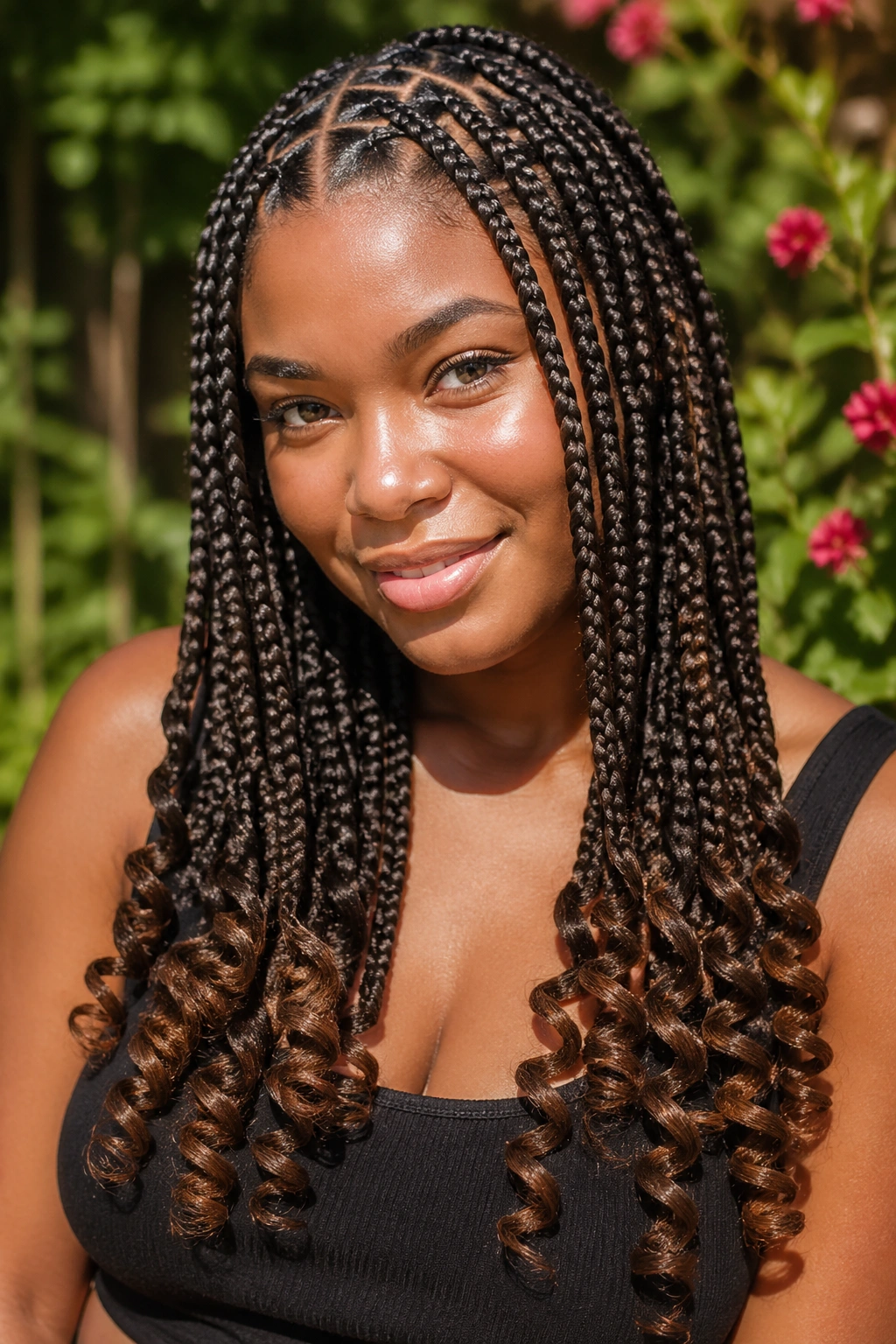
Blunt ends make zigzag braids look harder. Curled ends soften them fast. That’s the whole trick here, and it works because the eye moves from a sharp scalp pattern into a looser, springier finish at the bottom. The contrast is good. It keeps the style from feeling too rigid.
This version is especially nice if you like a braid set with some bounce. You can curl the ends with perm rods, flexi rods, or pre-curled hair if you’re starting from synthetic braiding hair that holds shape well. I usually prefer curls that stay on the last 3 to 4 inches of the braid, because too much curl can make the style look cluttered.
Who should skip it? Anyone who wants a severe, graphic look. Curled ends lean softer and more romantic, even when the parting is sharp. If that sounds like your lane, great. If you want the braids to stay sleek all the way down, keep the ends straight and leave the softness to the parting instead.
7. Beaded Zigzag Box Braids at the Ends
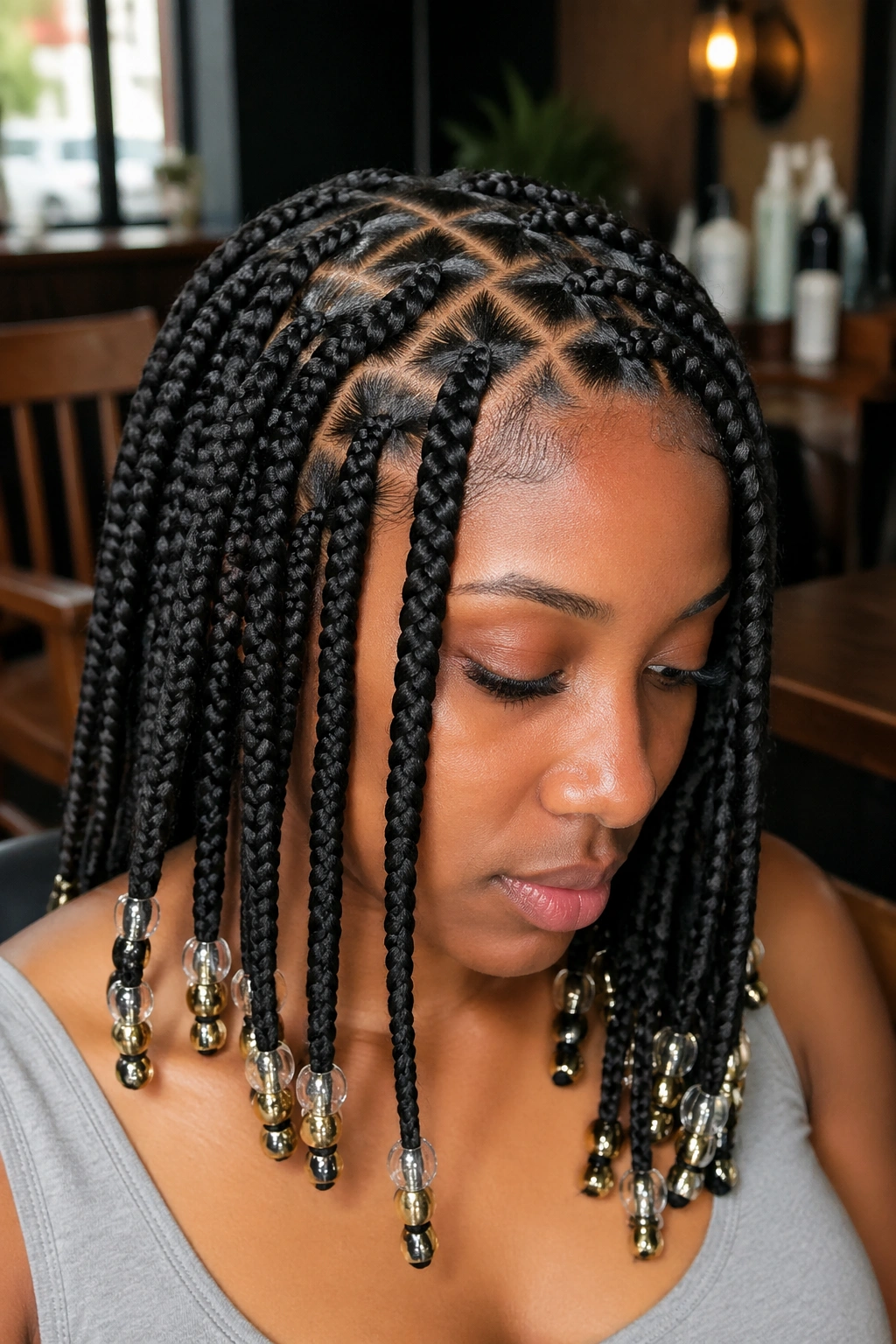
Beads change the sound and the feel of braids in a way that never gets old. On zigzag box braids, they work best when they’re used with restraint. A few beads on the front rows or clustered at the ends can highlight the parting without making the whole head feel noisy.
Where the Beads Belong
I like beads most when they’re placed where the eye already wants to go. That usually means the braids nearest the face, the lower ends, or a few scattered pieces that break up a large braid set. Heavy beads near the roots are a mistake if the braids are already thick. They tug, and you feel it.
- Use lightweight beads on longer braids
- Place them near the ends if the style is already full at the crown
- Mix one or two bead sizes instead of loading every braid the same way
- Keep the front rows lighter if you plan to wear the braids down a lot
The best beaded sets feel intentional, not crowded. One or two rows can say enough. More than that, and the parting starts to compete with the hardware.
8. Knotless Zigzag Box Braids with Soft Roots
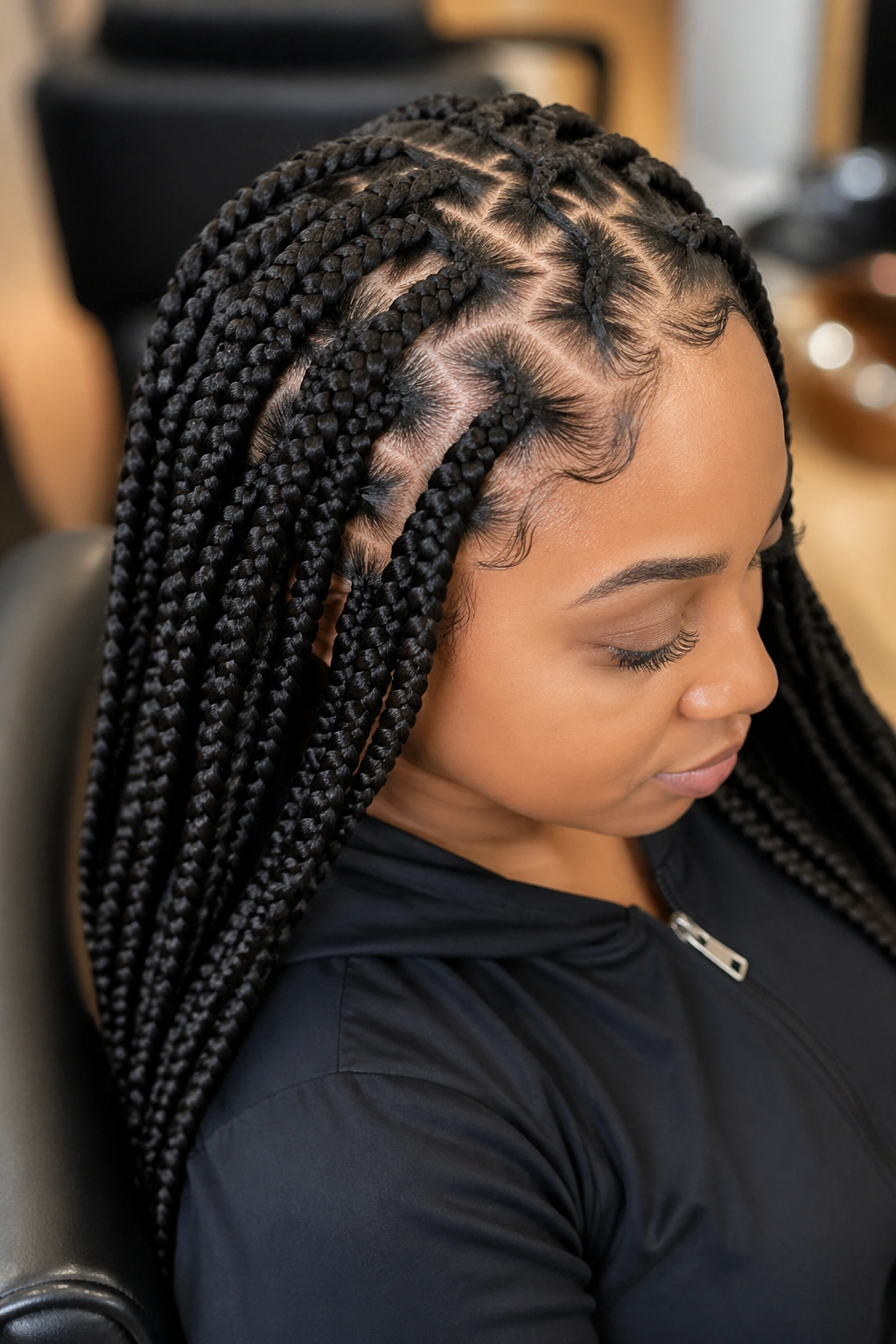
If your scalp flinches at tight starter knots, knotless zigzag braids are the better bet. The root looks smoother, the start feels gentler, and the zigzag parting still reads clearly because the scalp work stays visible. It’s one of those styles that looks polished without asking your head to suffer for the look.
The main difference is the base. Instead of a bulky knot right at the scalp, the braid is fed in gradually, so the root lies flatter. That matters with zigzag parts because the pattern already has enough visual interest. You do not need a chunky knot fighting for attention too.
I’d ask for this version if you’re sensitive around the hairline, wear braids often, or simply want a cleaner start. It’s also a smart option when you plan to style the braids into ponytails or buns, because the flatter base sits better. The style still has structure. It just doesn’t feel as aggressive.
9. Side-Swept Zigzag Box Braids
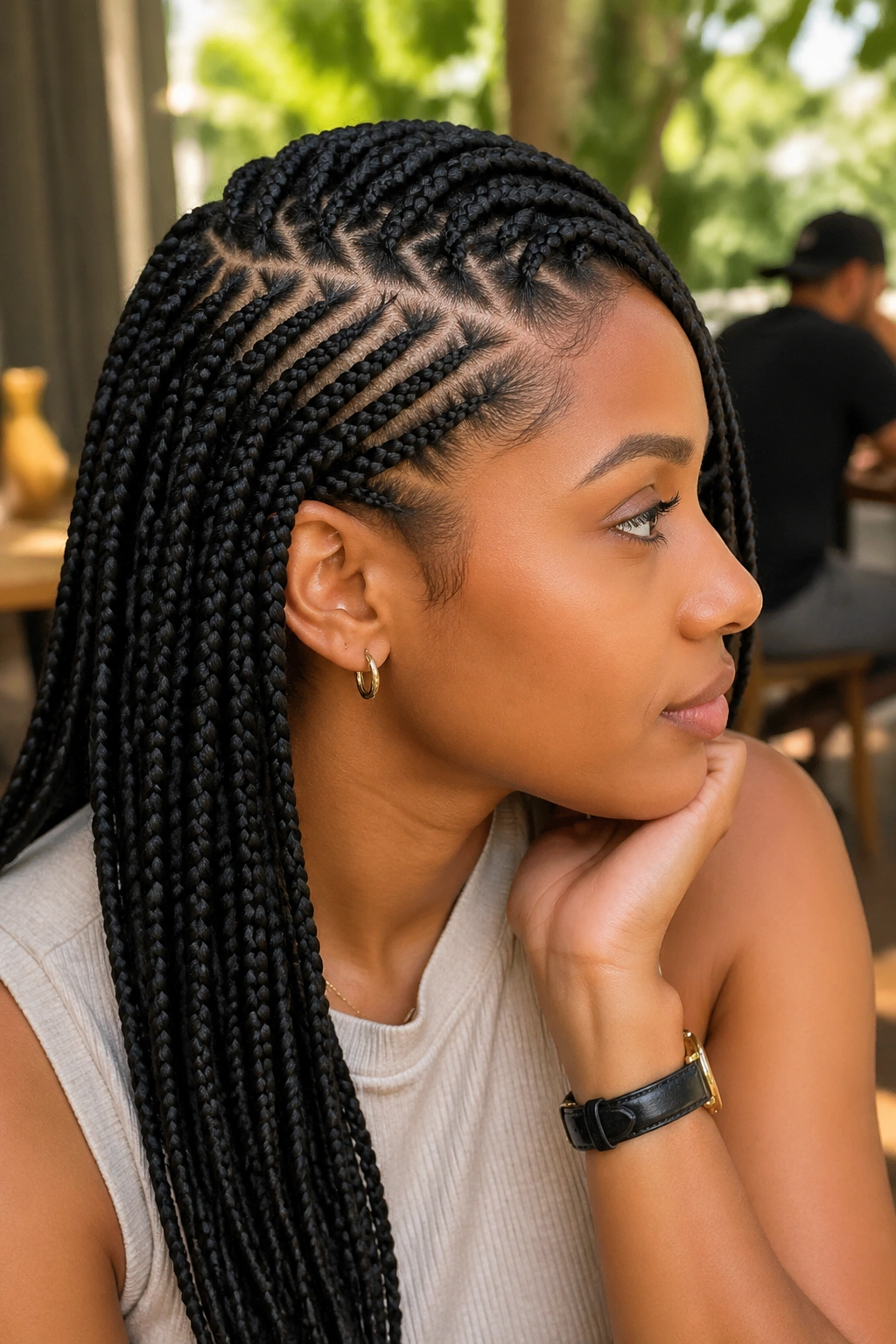
What happens when the zigzag starts at the side instead of the middle? The whole style shifts. A side-swept zigzag pulls the eye across the head, which makes the braids feel softer and a little more directional, almost like the style is moving even when you’re standing still.
That side placement can be especially flattering if you like one shoulder more than the other, or if you want your front rows to frame the face without splitting it straight down the center. It’s a nice choice when a middle part feels too exact. The diagonal energy does some of the work for you.
How to Wear It
Wear the front heavier side tucked behind one ear, or let it fall in front for a more relaxed look. A light braid spray at the roots helps the part stay crisp, but the real trick is keeping the zigzag lines smooth rather than jagged. Sharp corners can feel harsh on a side-swept style. Gentle bends look better.
10. Triangle-and-Zigzag Parted Box Braids
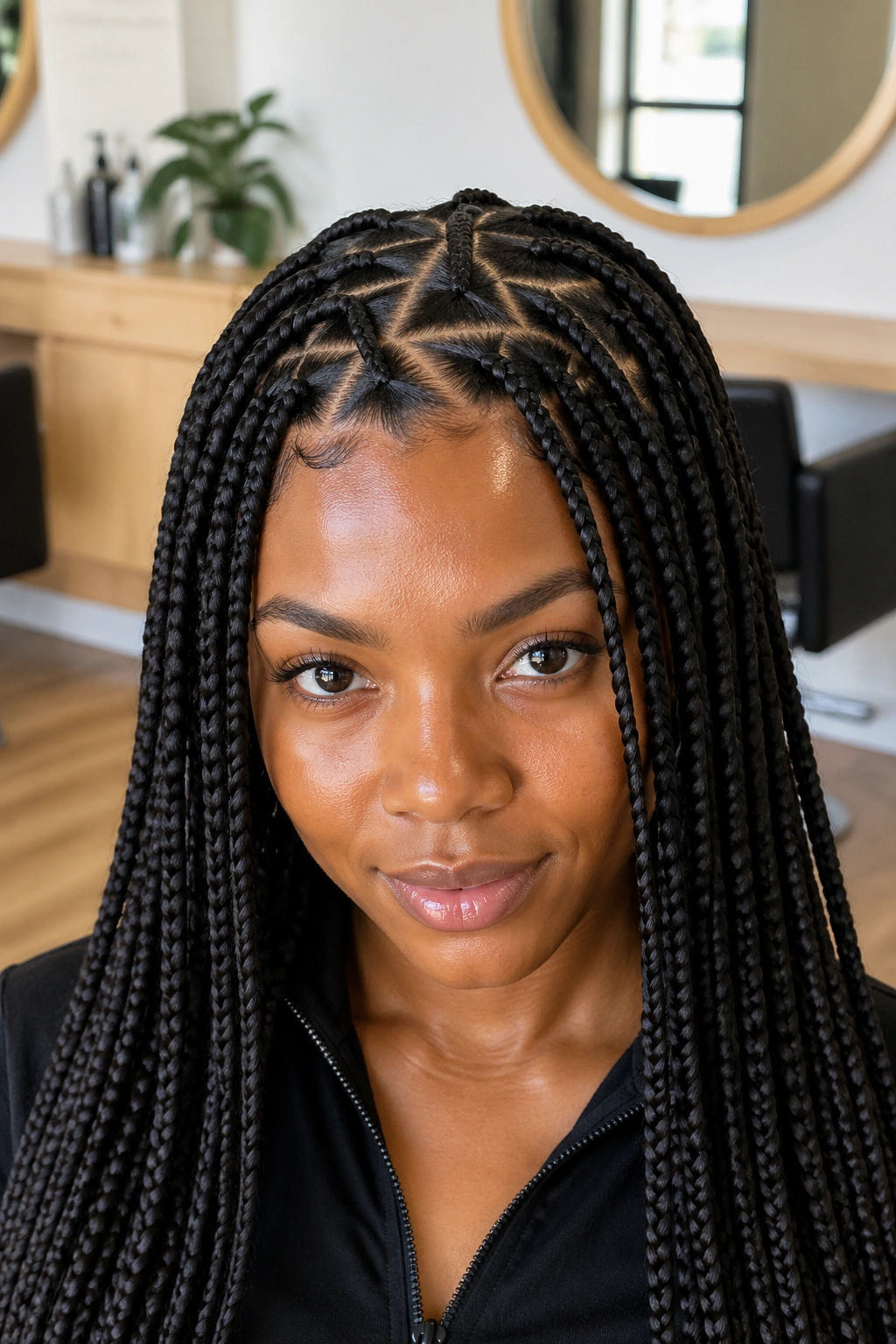
Some braid sets need more than one parting shape to feel interesting. Alternating triangle rows with zigzag rows does exactly that. It keeps the scalp pattern from looking too uniform, which is handy if you like detail but do not want the head to look overworked.
The trick is balance. If the braids are all tiny and all different, the style starts to feel busy in a bad way. Keep the braid size consistent, then let the part shapes do the variation. That gives you enough texture without turning the scalp into a puzzle.
- Works best with medium braids
- Looks cleanest when the triangles are even
- Feels more decorative near the front
- Needs careful sectioning before braiding starts
I like this style on people who notice small details. It rewards a neat part line, and it stays interesting even when the braids are pulled back. That’s not a small thing.
11. Color-Blocked Zigzag Box Braids
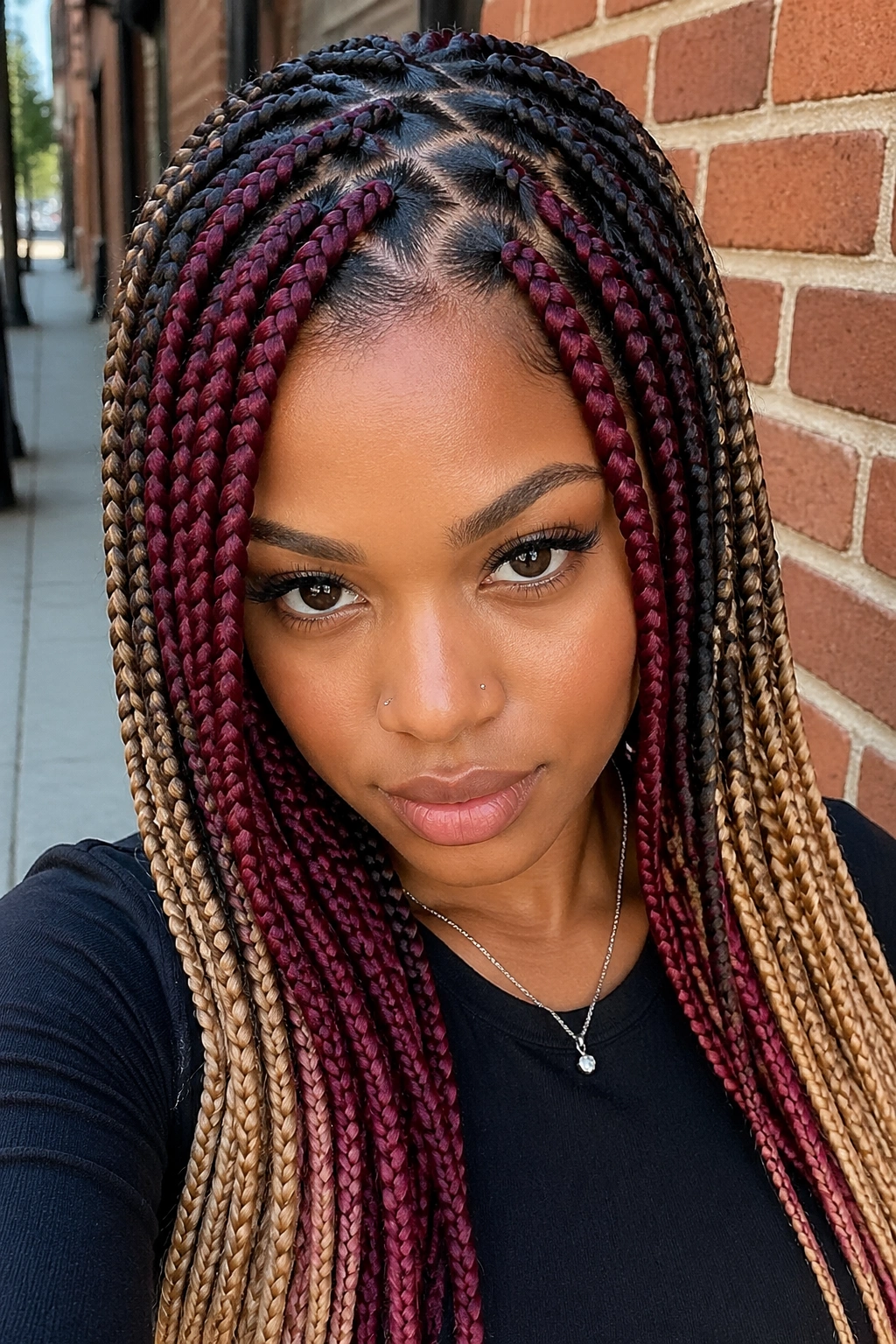
Color-blocked zigzag box braids have a different kind of energy. The parting still matters, but now the color does some of the visual lifting too. A dark root with lighter lengths, two contrasting braid colors, or even a few face-framing pieces in a stronger shade can make the zigzag pattern pop harder than plain hair ever could.
The key is restraint. If every braid is a different color, the scalp pattern gets lost. I prefer one dominant shade and one accent tone, usually kept to the front rows or the lower half of the braid set. That keeps the eye moving without scattering attention everywhere.
There’s something especially good about color against a sharp part line. The bends in the zigzag start to look more intentional when they sit beside a visible color shift. That is the kind of detail I notice immediately in a braid set. Not the flashiest color. The smarter one.
12. Layered Zigzag Box Braids with Face-Framing Pieces
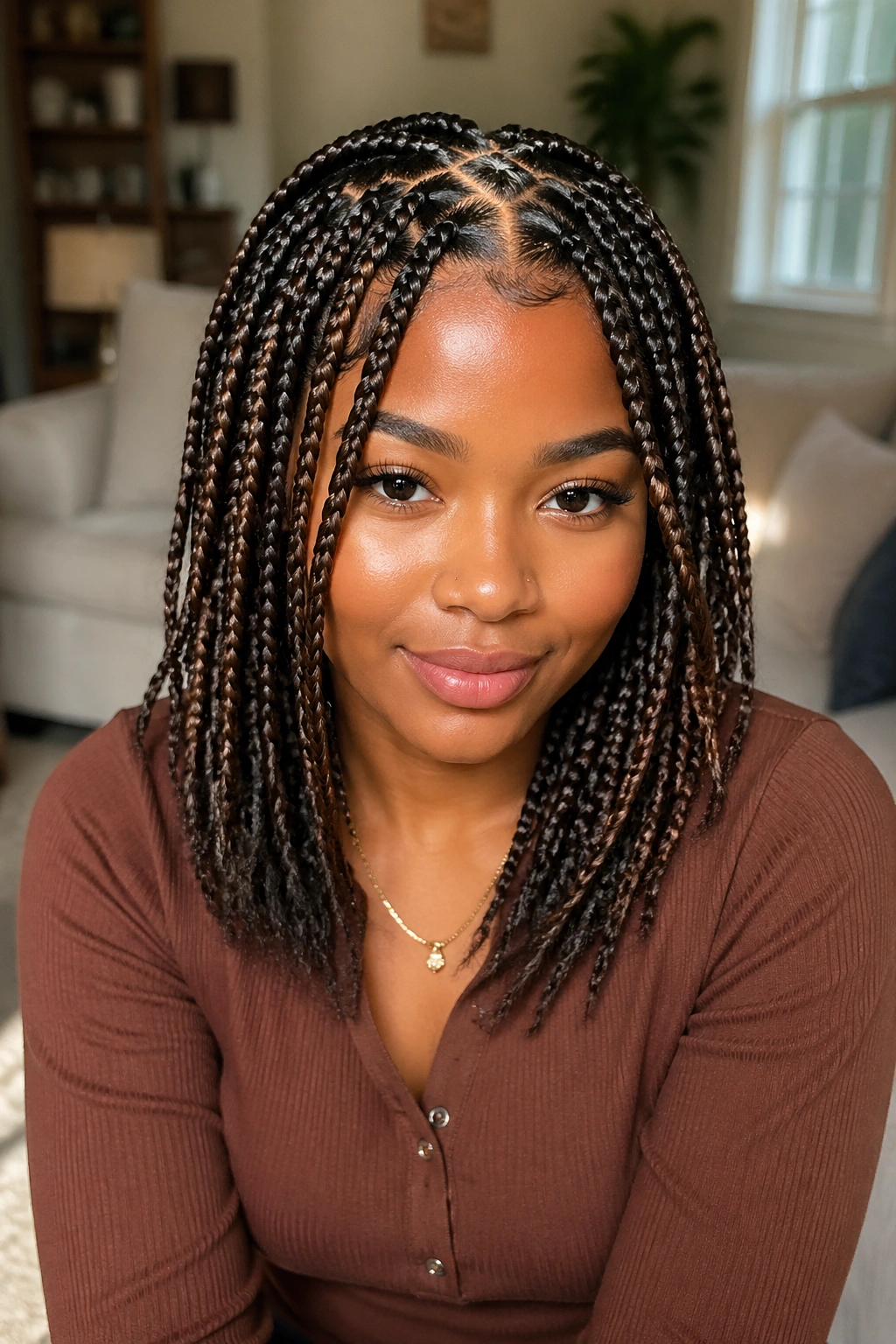
Uniform-length braids can hang like a curtain. Layers fix that. When a zigzag box braid set is cut or installed with shorter front pieces and longer back pieces, the whole look gets movement, and the parting has room to breathe instead of disappearing under a wall of hair.
This is the version I’d point to if you wear braids loose most of the time. The face-framing pieces soften the forehead and cheek area, while the longer back rows keep the set looking full. It’s a nice compromise between structure and motion.
What Makes It Different
The layered effect works best when the shortest pieces stop just below the chin or at the jawline, depending on how dramatic you want the face frame to be. Too short, and the style starts looking choppy. Too long, and you lose the shape. The back can stay several inches longer so the contrast feels deliberate.
If you want the zigzag parts to stay visible, ask for the front rows to be neat and not overly thick. The layers will already give the style plenty to look at.
13. High Ponytail Zigzag Box Braids
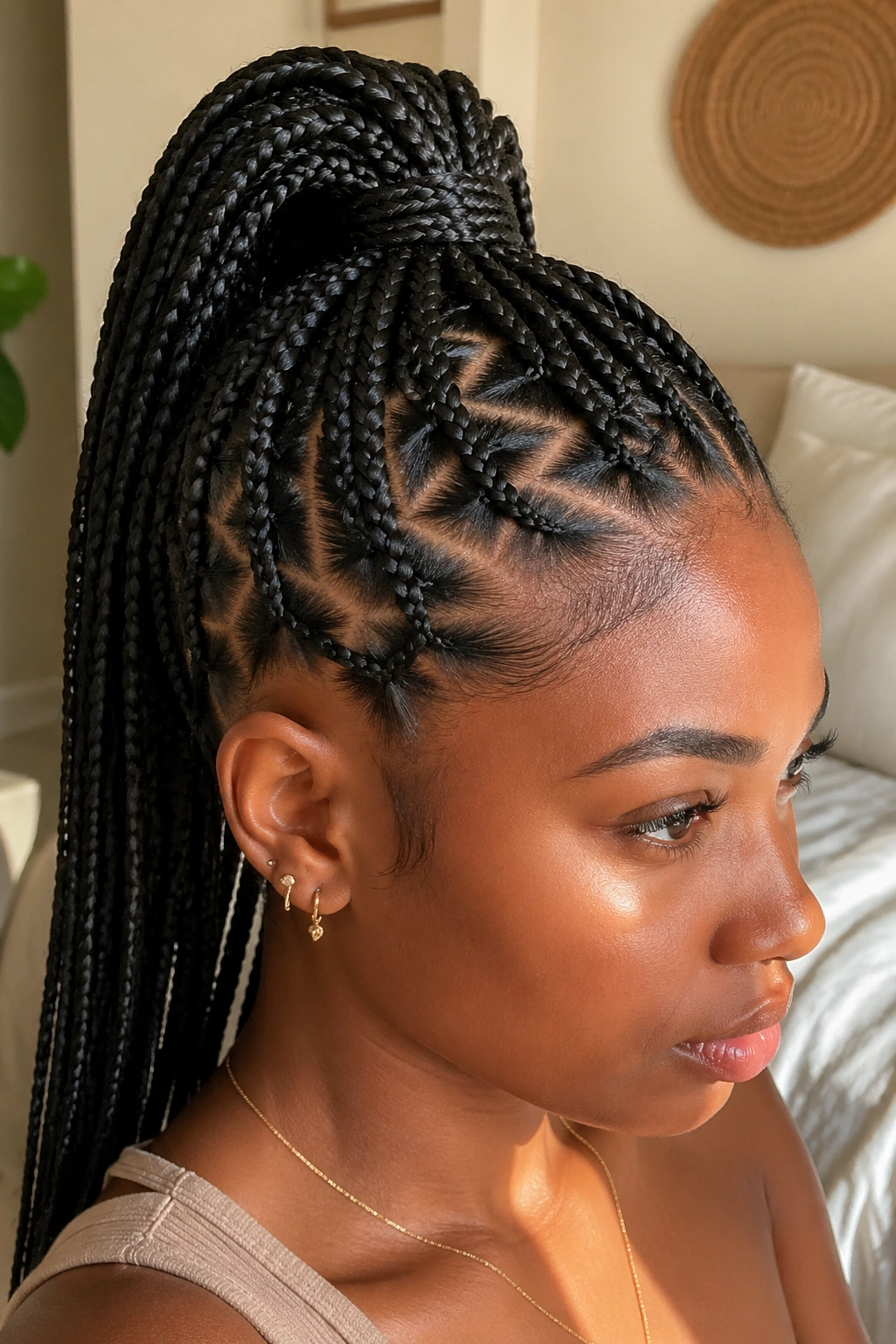
A high ponytail is the easiest way to show off a clean zigzag map. Once the braids are lifted, the scalp pattern sits front and center, and the style instantly feels more lifted. It also gives the face a sharper line, which is why this version works so well when you want the braids to feel energetic instead of heavy.
The ponytail has to be built carefully, though. If it’s yanked too tight, the style loses its charm fast. I’d rather see a high ponytail that sits secure but still has a little movement at the base than one that looks strained. Use a snag-free band, wrap one braid around the base if you want a cleaner finish, and keep the edges calm.
This style is best with medium or small braids, because jumbo braids can feel bulky when gathered high. The whole point is lift and shape. You want the zigzag to stay visible, not disappear into a knot of hair.
14. Low Bun Zigzag Box Braids
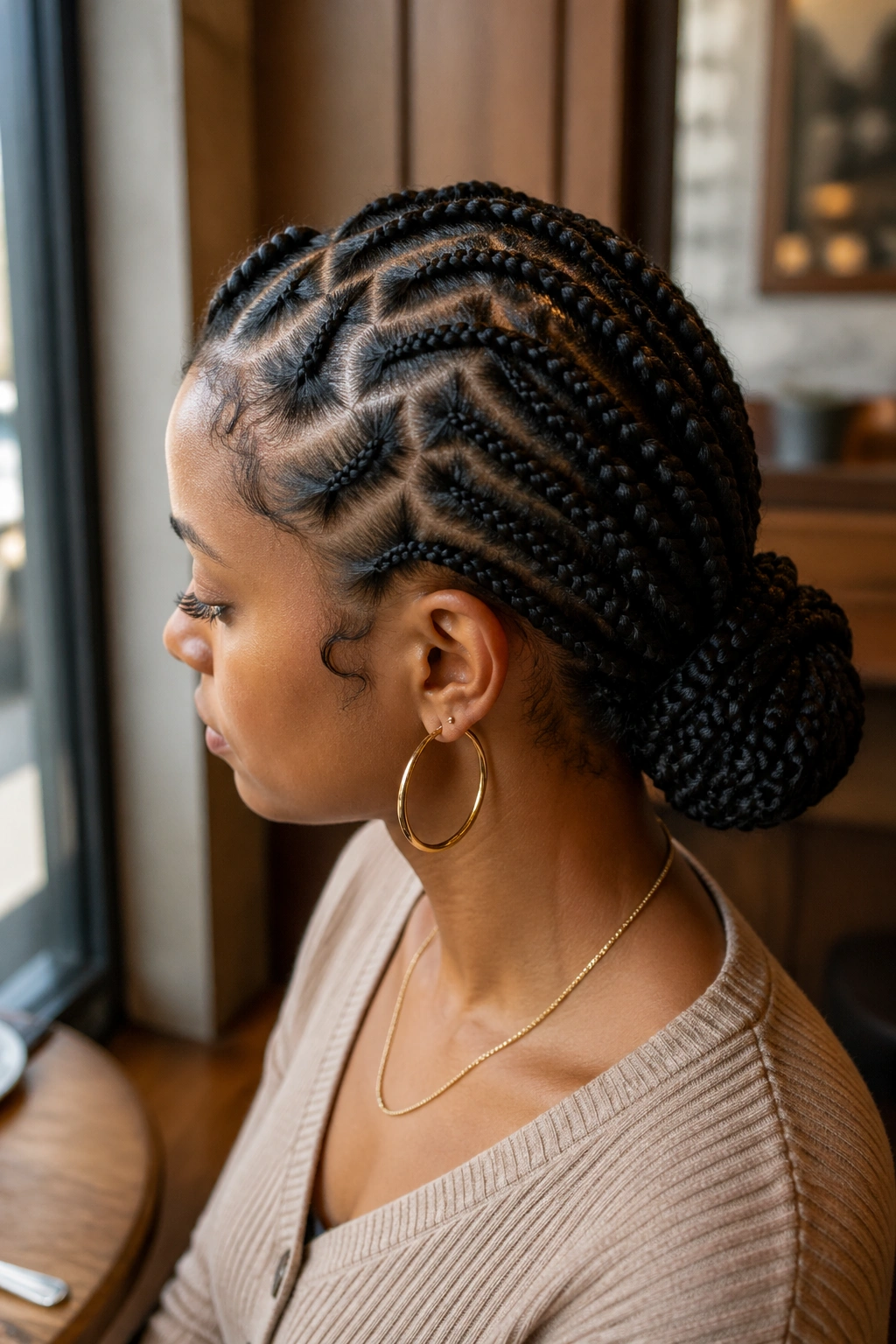
Low buns are underrated because they let the braid pattern do something quiet and sharp at the same time. When the braids are gathered at the nape, the zigzag rows around the crown and temples stay visible, and the bun itself becomes a tidy anchor instead of the main event.
I like this style when the braids are medium-length or longer and you want them out of the way without losing the shape of the set. A low bun can be polished, but it can also be loose and slightly imperfect. The looser version is the better one, in my opinion. It keeps the braids from looking overcontrolled.
This style earns its keep on long days, work days, and any day when you do not want hair brushing your shoulders. It also plays well with earrings and high collars, because nothing is fighting for space around your face. Small detail. Big payoff.
15. Small Zigzag Box Braids with Tight Parting
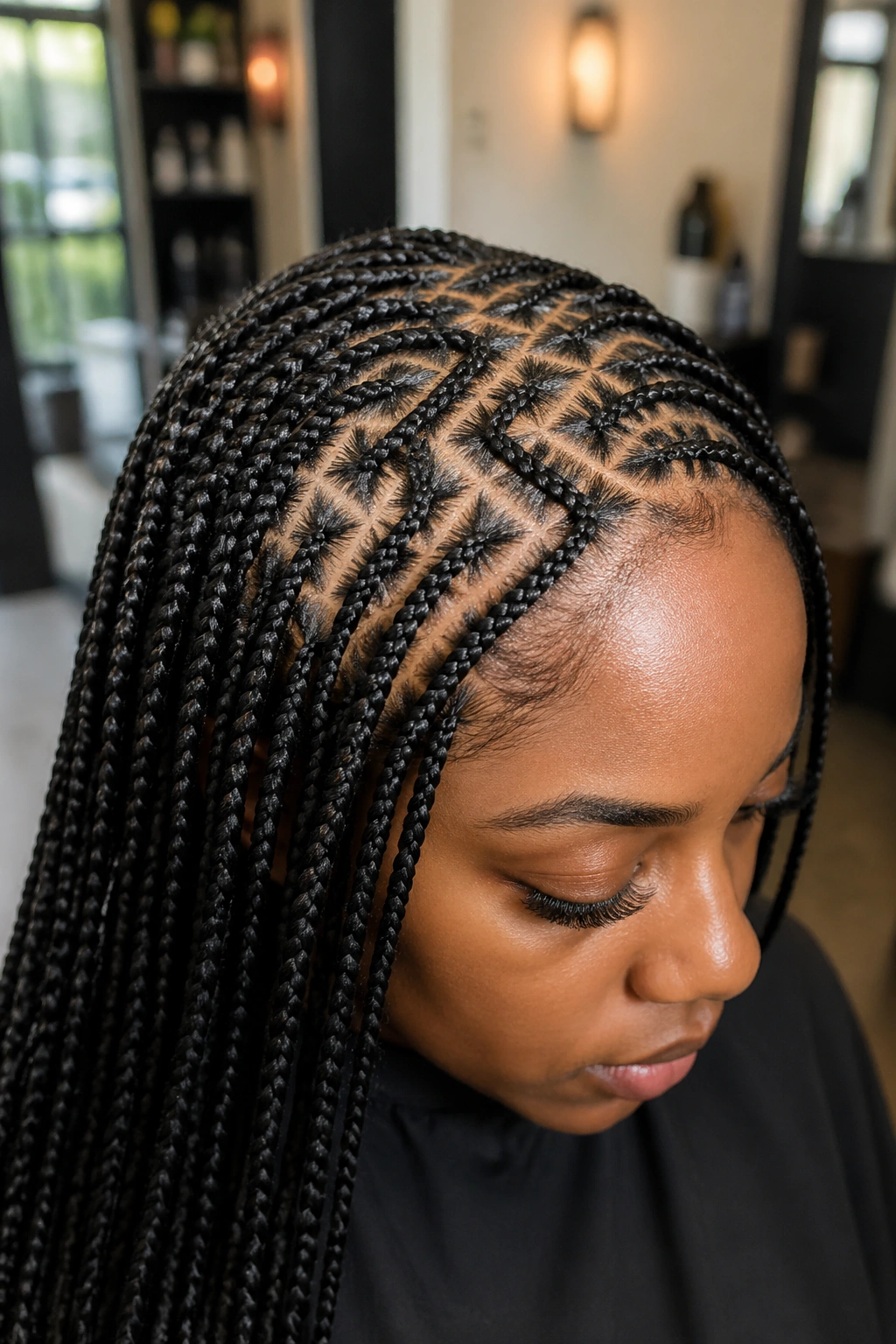
Why do small braids make the zigzag seem more detailed? Because there are simply more lines to see. The scalp pattern becomes the star, and the braids themselves act like a frame around it. If you like crispness and you do not mind spending more time in the chair, this is one of the most satisfying versions.
How to Keep Them Neat
Small braids depend on sectioning. If the parts are uneven at the start, the whole set looks off by the time you finish the back. Use a rat-tail comb, clip away finished sections, and keep the part width as consistent as you can. The braid size should match the part size. That sounds obvious, but it gets ignored all the time.
- Use precise sectioning from front to back
- Keep tension even so the roots sit flat
- Avoid too much product at the scalp
- Check the zigzag bends in a mirror before moving on
The payoff is longevity. Small zigzag braids tend to hold their visual shape well, even after the first few weeks of wear, because the parting has room to stay readable.
16. Boho Zigzag Box Braids with Loose Curls
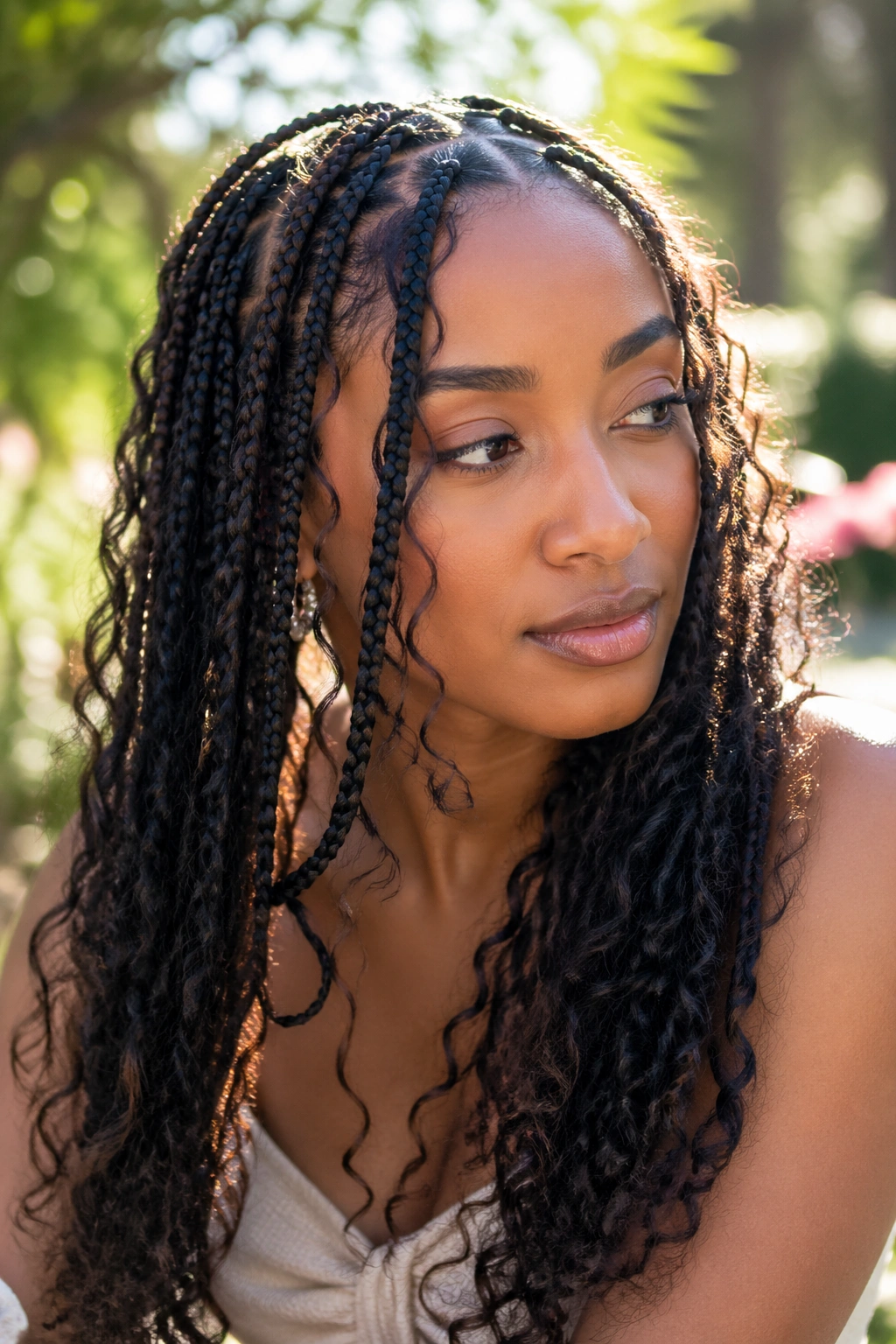
Some braid sets look too stiff until you loosen them a little. Boho zigzag box braids do exactly that. They keep the neatness of the zigzag parts at the scalp, then soften the lengths with loose curls or a few free pieces that move around the face and shoulders.
The best versions still look planned. A little curl is enough; too many loose strands and the braid pattern disappears. I usually like the curls concentrated at the ends and in a few face-framing sections, not scattered everywhere. That keeps the style airy instead of messy.
A braid set like this is a good fit if you want movement but not chaos. The curls give the braids a softer edge, and the zigzag parting keeps the whole look anchored. That contrast matters. Without it, boho braids can start to feel fuzzy in a hurry.
17. Zigzag Box Braids with Gold Cuffs
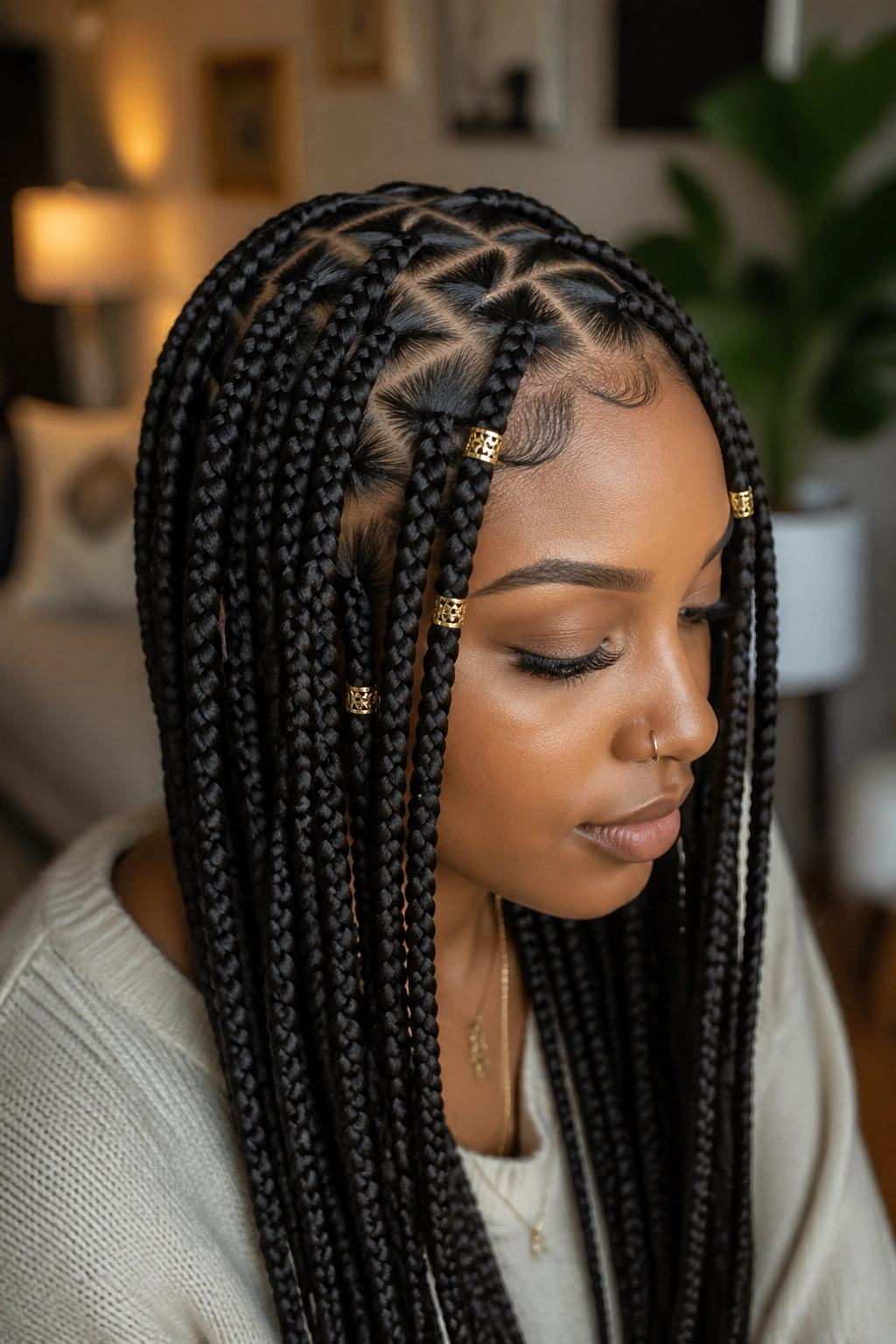
Gold cuffs can be lovely on zigzag box braids, but only if you know where to stop. A few well-placed cuffs catch the eye and trace the braid lines in a way that flatters the parting. Too many, and the whole style starts to clink and shine like it’s trying too hard.
I like cuffs best on the front rows or on a few lower braids that already have enough length to carry the hardware. They work especially well when the braids are clean and medium-sized, because the accessories have room to stand out. If the braids are tiny, cuffs can overwhelm them. If they’re jumbo, you may only need one or two.
The easiest way to think about it is this: the cuffs should follow the braid set, not compete with it. A small cluster near one side can look sharper than ten scattered cuffs all over the head. Less noise. Better line.
18. Feed-In Zigzag Box Braids at the Front
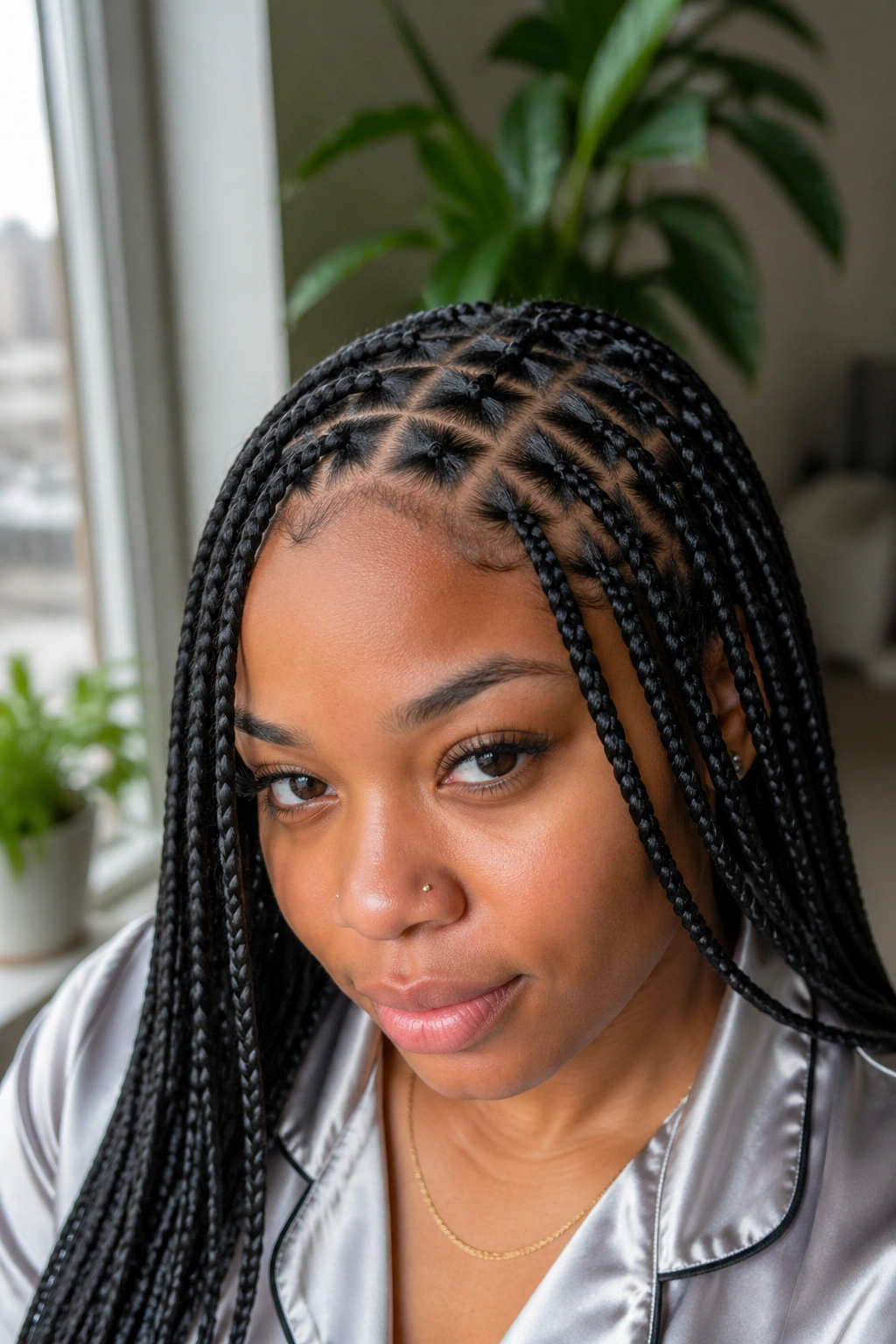
Instead of making the whole head feed-in, do it only at the front. That’s where this style gets smart. The front rows can start with a softer, flatter feed-in base that follows the zigzag pattern cleanly, while the back stays in standard box braids for easier maintenance and less time in the chair.
That split approach gives you the best of both worlds. The hairline looks polished, the parting is easy to read, and the back does not need to be overengineered. It’s especially good if you like wearing your braids down but still want a strong face frame.
Where This Style Shines
This version works best when the front rows are kept narrow and neat, usually around 2 to 6 rows, depending on head size and braid density. The point is to highlight the forehead and temples without making the front feel crowded. If the front is too heavy, the style loses the lightness that makes feed-in rows appealing.
I’d reach for this look when I want a braid set that feels finished in the mirror and still behaves like a practical protective style once the day starts moving.
19. Asymmetrical Zigzag Box Braids
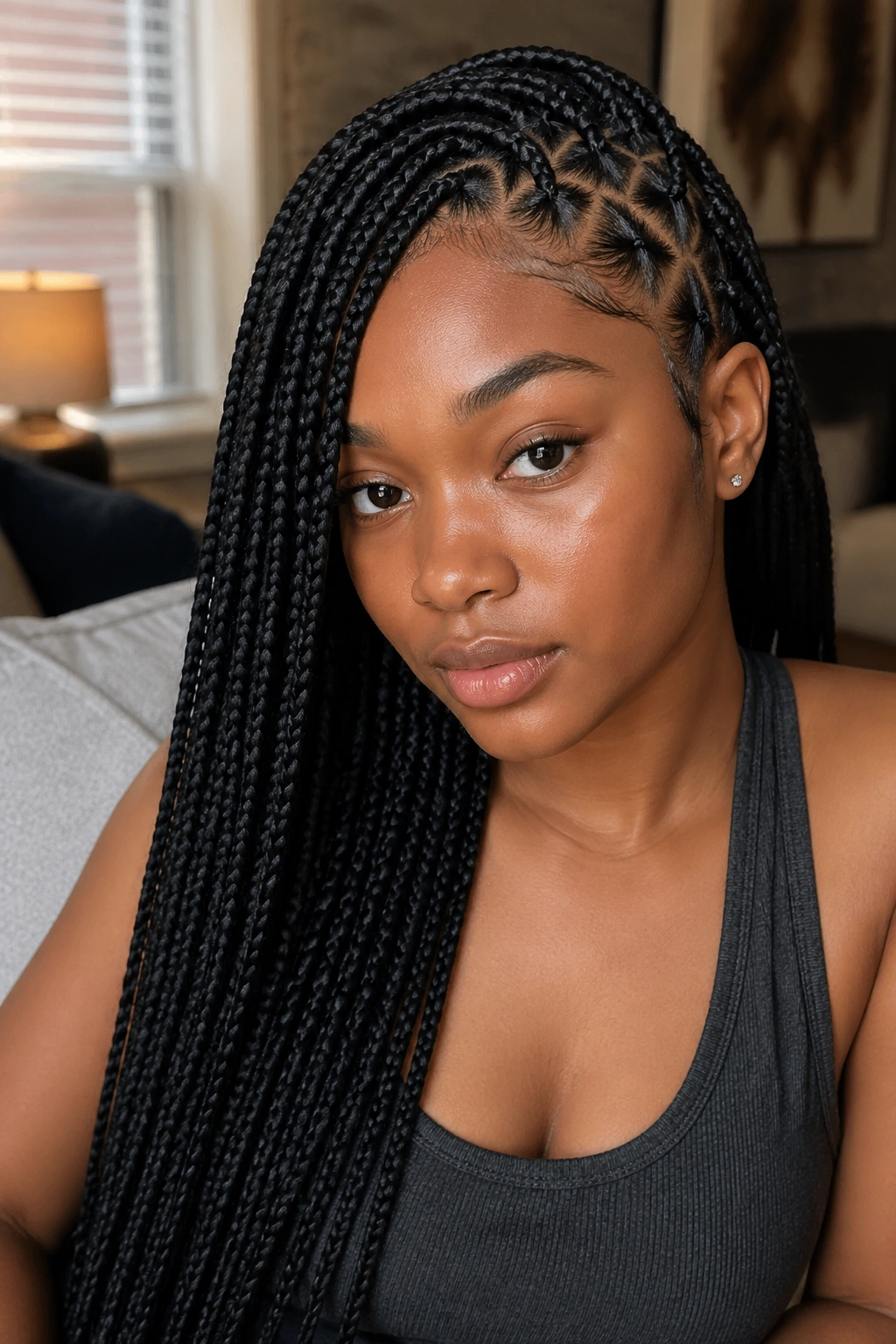
Symmetry is not mandatory. A braid set with asymmetrical zigzag parts can feel more modern than a perfectly centered one, especially when one side is a touch heavier, longer, or more crowded with detail. That little imbalance makes the whole style feel alive.
Why the Imbalance Works
The eye likes a little surprise. If one side starts with a deeper bend, a wider section, or a slightly longer fall, the style stops feeling copied and starts feeling chosen. That matters on braid sets, where strict repetition can get boring fast.
- One side can be longer while the other sits closer to the shoulder
- The front pattern can be denser on one temple
- The back can stay clean so the asymmetry does not get messy
- A single side part can carry the whole shape if it’s placed well
My advice is to keep the imbalance controlled. You want deliberate asymmetry, not a style that looks unfinished. A good asymmetrical set still feels neat when you tuck one side back, and that’s the real test.
20. Sleek Minimal Zigzag Box Braids
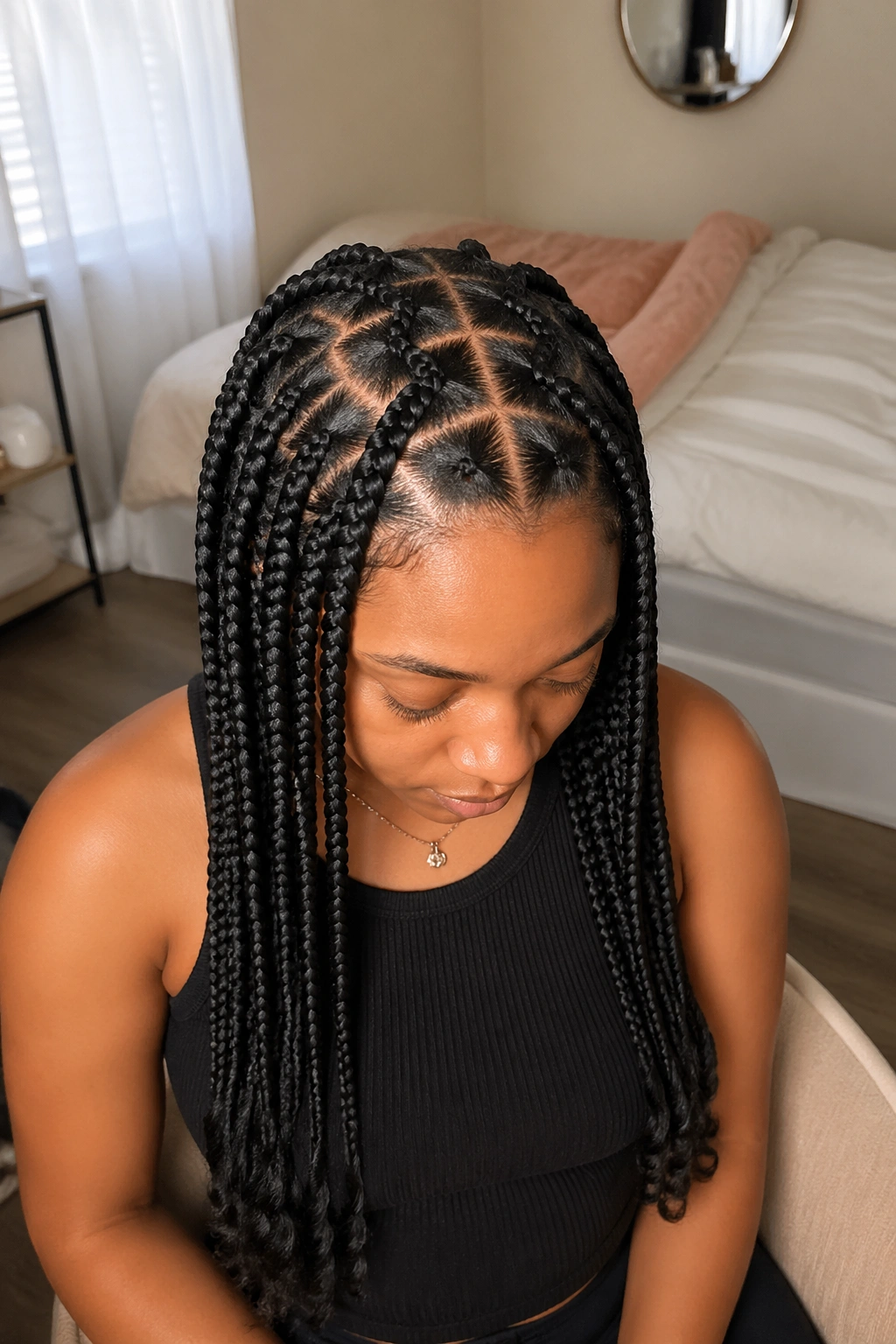
Not every zigzag set needs extras. Some of the strongest ones are the quietest: clean parts, medium-small braids, no cuffs, no beads, no curls, no loud color shift. The style depends on shape and finish, and that can be enough when the parting is sharp and the roots lie flat.
This is the version I’d pick for someone who wants the zigzag pattern to stay readable for as long as possible. Minimal styles age better in a practical sense, too. They tend to look intentional even after a little new growth shows, because there isn’t a lot of decoration to compete with the braid structure.
And that’s the part I keep coming back to. The best braid sets do not need to shout. They just need clean parting, good tension, and a shape that still looks right when you pull it over one shoulder and head out the door.