



A bob and natural hair are not shy about volume. Put them together, and half up half down styles start making a lot more sense than a full ponytail ever does.
Short hair loves structure. It also loves a little freedom.
That’s the sweet spot here: enough lift at the crown to make the style feel finished, enough hair left down to show off curl pattern, bend, and shape. A rat-tail comb, a few snag-free elastics, bobby pins, a light gel or mousse, and a satin scarf can take you through most of these looks without turning your bathroom into a mess.
The best part is that a natural-hair bob gives you options that longer hair sometimes hides. The nape stays visible. The front can be sleek or soft. And when the style is built with the length you actually have, not the length you wish you had, it usually looks better.
1. Mini Puff Half Up Half Down Bob
A tiny puff at the crown solves one of the biggest bob problems: the top wants lift, but the ends still need to hang on to their shape. On coily or tightly curled hair, that little puff gives the style height without stealing the whole show.
Why This One Works on Short Natural Hair
This look is especially good if your bob shrinks up after drying. The top can be gathered into a small puff with a soft band, while the back stays loose and defined. You get shape on top and movement below.
- Gather only the top third of the hair.
- Place the band about 1 to 2 inches above the crown.
- Keep the puff small enough that the bob still reads as a bob.
- Smooth the hairline lightly, not like you’re trying to plaster it down.
Best tip: If the puff sits too low, the whole style looks sleepy. Move it up just a touch and the shape wakes right up.
2. Sleek Flat Twists at the Hairline
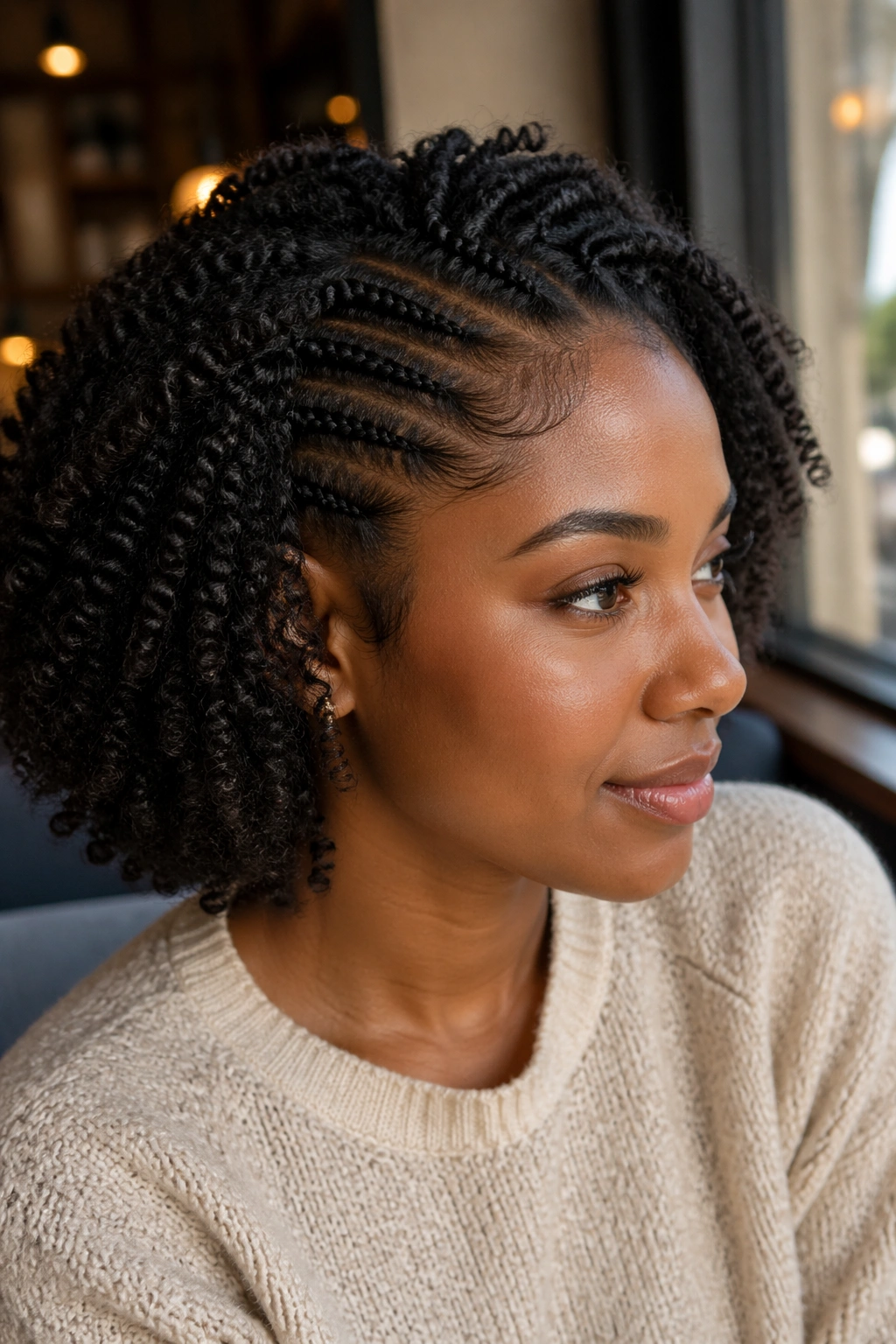
Flat twists are one of the cleanest ways to make a natural-hair bob look intentional fast. They keep the front neat without forcing the whole head into a tight style, which is where a lot of bob updos start to fall apart.
I like this one when the front is a little fuzzy and the rest of the hair still has a good curl pattern. Twist each side from the temple back toward the crown, then let the back stay loose. If your bob has a side part, even better. The part gives the twists a lane to follow, and the loose ends keep the style from feeling too severe.
Use a small amount of cream or butter on the twists, then seal the roots with a touch of gel. Don’t soak the whole front. That’s the mistake people make. Too much product weighs the twists down, and on shorter hair the whole style can collapse by lunchtime.
3. Side-Swept Clip-Back Bob
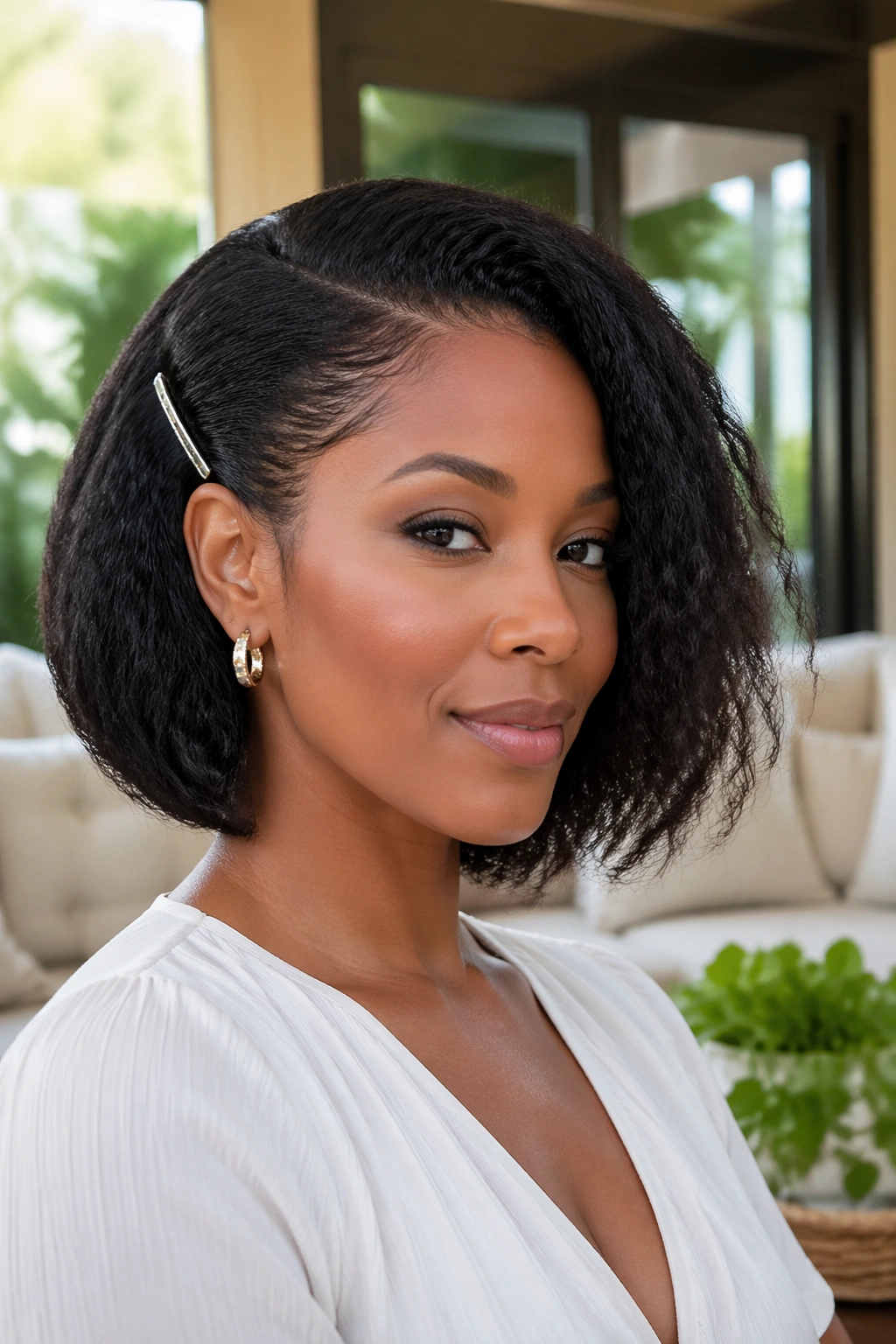
Why does one side clipped back look so polished on a bob? Because it shows the haircut on purpose. You’re not hiding the length. You’re framing it.
This style works with loose curls, twist-outs, braid-outs, or a stretched bob with a little bend in the ends. Sweep one side back from temple to ear and secure it with a barrette, jewel clip, or a flat snap clip. Leave the other side down so the bob still has movement. The contrast is what makes it interesting.
How to Keep It From Slipping
Pick a clip that grips hair, not just hair that’s silky and cooperative in theory.
- Use a clip that is wide enough to catch at least 2 inches of hair.
- Place it a little above the ear, not right on the edge.
- If the front is layered, pin the shorter pieces first.
- Add one hidden bobby pin under the clip if your hair is dense.
This is one of those styles that looks casual, but not lazy. That matters.
4. Two Space Buns With Loose Bob Ends
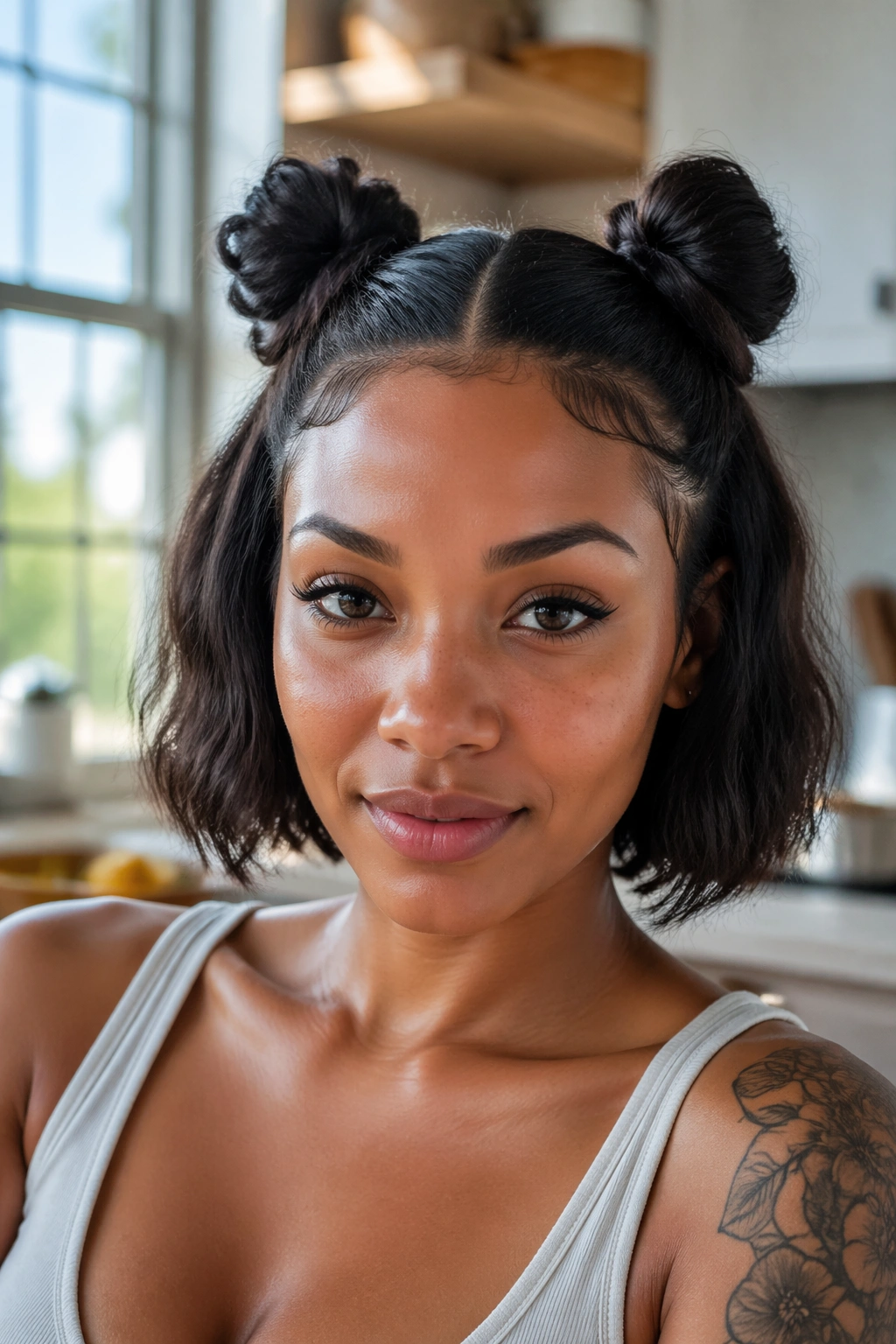
There’s a sweet spot between playful and childish, and two small buns sit right there when they’re done on a bob. The trick is keeping them small. Big buns on short hair can look like they’re trying too hard.
Start with a middle part, then gather the top section on each side into two mini buns close to the crown. Leave the bottom layers out so the bob still shows. On curly hair, this works best when the hair has a bit of stretch, because the buns sit cleaner and the loose ends fall in a better shape.
A few things matter here:
- Keep the buns about the size of a plum, not a grapefruit.
- Tie them near the top of the head, not at the temples.
- Leave the bottom section loose and shaped.
- Use pins instead of forcing extra elastic if the hair is short.
Tiny buns feel cleaner on a bob. Big ones can swallow the whole haircut.
5. Braided Crown Half Up Half Down Bob
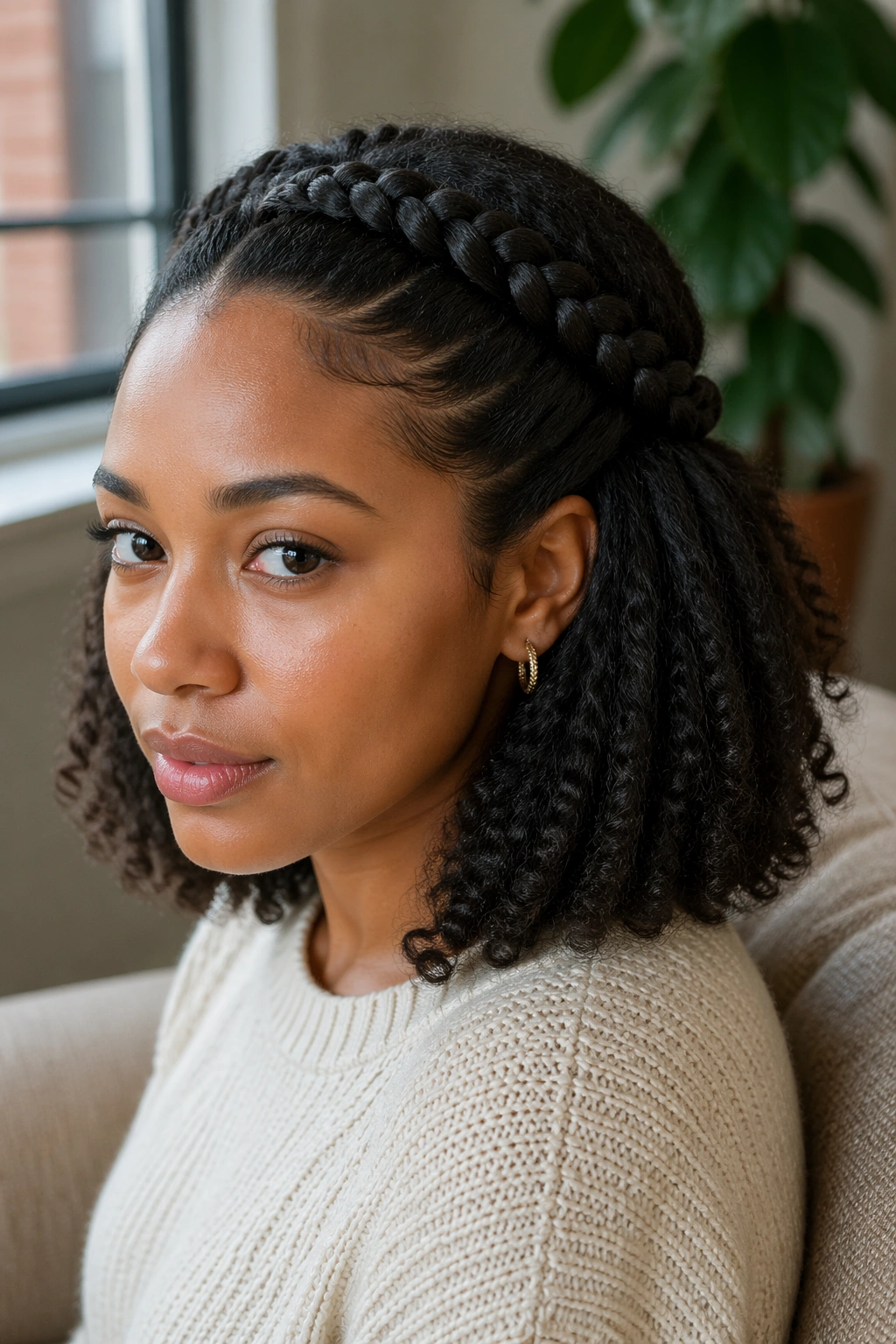
A braided crown gives a bob a little ceremony. Not too much. Just enough. It’s the style I’d pick for a dressier day when you still want the hair to feel like hair, not like a helmet.
You can braid from one side of the hairline across the top and tuck the end behind the opposite ear, or split the top into two braids that meet at the back. Either version keeps the front controlled and the back loose. On twist-outs and stretched coils, the braid sits neatly and the texture below it keeps the style from looking stiff.
The main thing to watch is tension. Short hair does not need a tight braid to stay put. A braid that’s too tight pulls the front flat and makes the bob look narrower than it is. That’s a bad trade.
A little styling cream on the fingertips helps the braid look smooth, and a pin hidden under the back layers keeps the crown from shifting. Once it’s set, the style has a nice balance: neat on top, soft underneath, and just enough structure to make the haircut stand out.
6. Twisted Top Knot With Curly Ends
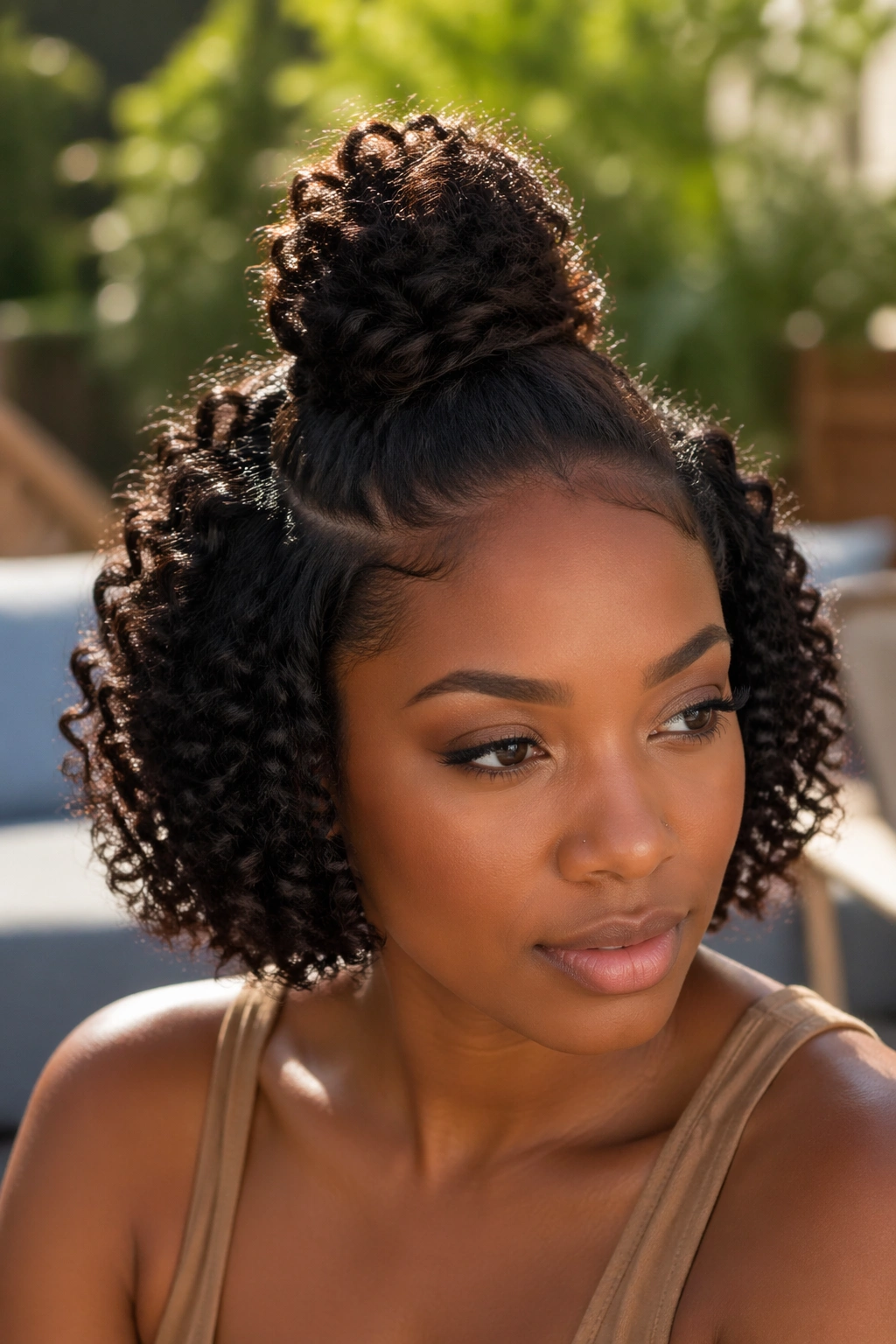
Unlike a full bun, this version leaves the bob visible from every angle. That’s why it works so well on short natural hair. You get the lift and the shape of an upstyle, but you still keep the curl pattern and cut line that make the bob look like a bob.
Gather the top section from temple to temple, twist it once or twice, and pin it into a compact knot at the crown. Let the back stay loose. If the hair is thick, split the top into two twists first, then wrap them together. If it’s finer, one twist is enough.
This style shines on second- or third-day hair because the curls already have some memory. Freshly washed hair can work too, but it usually needs a little mousse and more drying time. The knot should be no larger than a small orange on a chin-length bob. Bigger than that, and the proportion gets strange.
It’s a good pick when you want your face open and the rest of the style easy. No drama. Just shape.
7. Pineapple Half Up Bob for Natural Hair
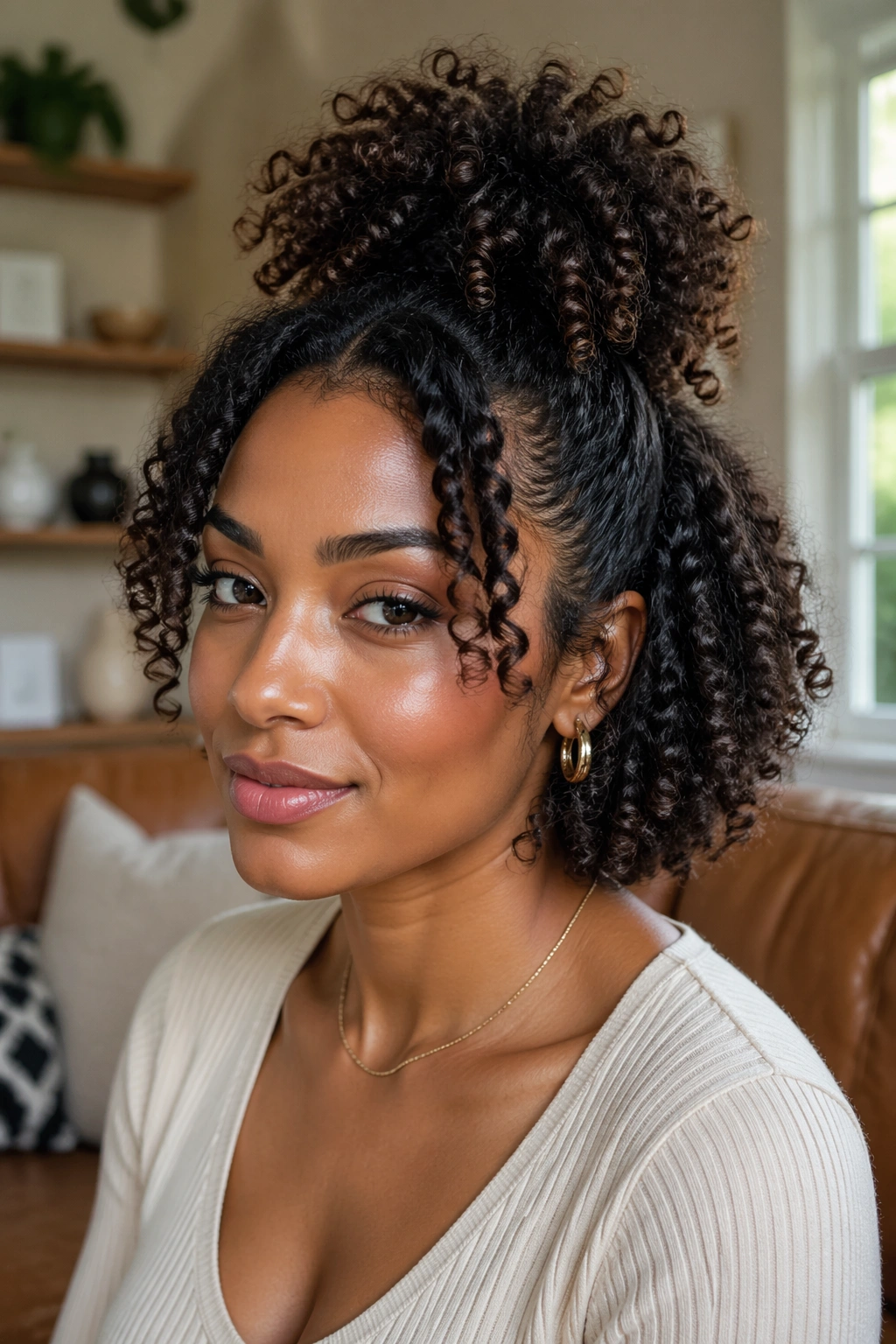
Can a bob do a pineapple? Absolutely. It just needs to be a smaller, smarter pineapple. The goal is to lift the top curls high enough to frame the face while letting the rest of the bob spill down naturally.
Use a soft scrunchie or stretch band and gather the top section as high as the hair will comfortably go. Don’t drag it tight. The curls should rise, not flatten. If your bob is layered, leave a few front pieces out so they can fall around the cheekbones. That little bit of looseness keeps the style from looking boxy.
How to Make It Sit Right
The placement matters more than the height.
- Put the band at the highest point of the head that still feels comfortable.
- Let the curls fan upward instead of pressing them straight back.
- If the back is shorter, fluff the loose curls with your fingers.
- Use a touch of oil on the ends, not the roots.
This is a favorite for curl patterns that swell up naturally. It looks easy because it is easy, but only if you respect the shape you already have.
8. Faux Hawk With Pinned Sides
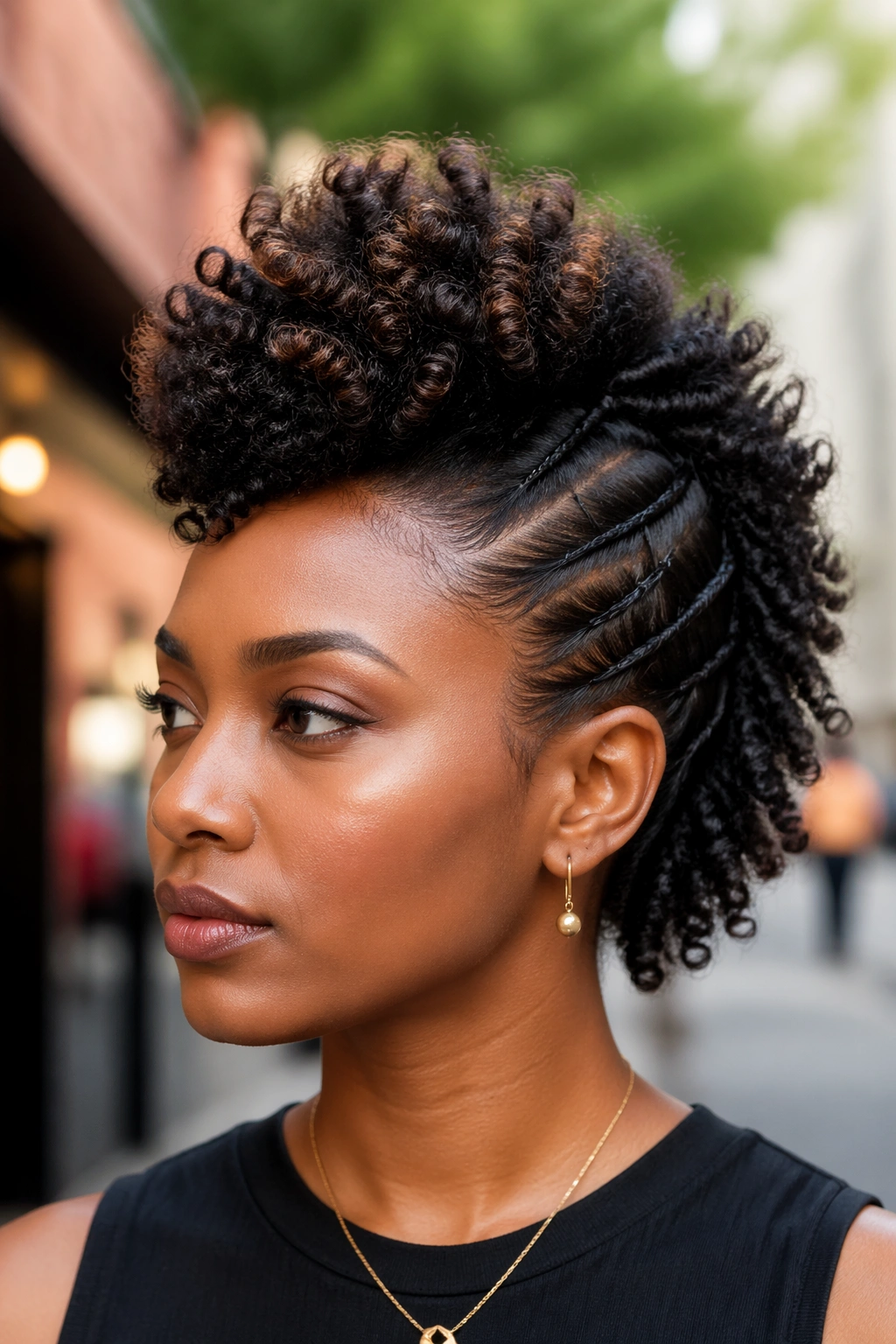
Sharp. Clean. A little bold.
That’s the whole point of a faux hawk on a natural-hair bob. You pin the sides back in a curved line, then leave the center section lifted and full so the eye runs straight down the middle of the head. On a bob, the style feels especially cool because the length is short enough to show the shape clearly.
Start by dividing the hair into three zones: left side, center, right side. Pin the sides upward and toward the middle with bobby pins or flat clips, then fluff the center section so it stands a bit higher than the sides. A bit of mousse at the roots helps the lift hold without making the hair crunchy.
Use these details to keep it neat:
- Keep the center section wide enough to show texture.
- Pin the sides in a gentle curve, not in a straight line.
- Use 6 to 8 pins if your hair is dense.
- Mist lightly, then shape with your fingers.
The faux hawk reads best when the center has life. Stiffness ruins it.
9. Bubble Ponytail Half Up Bob
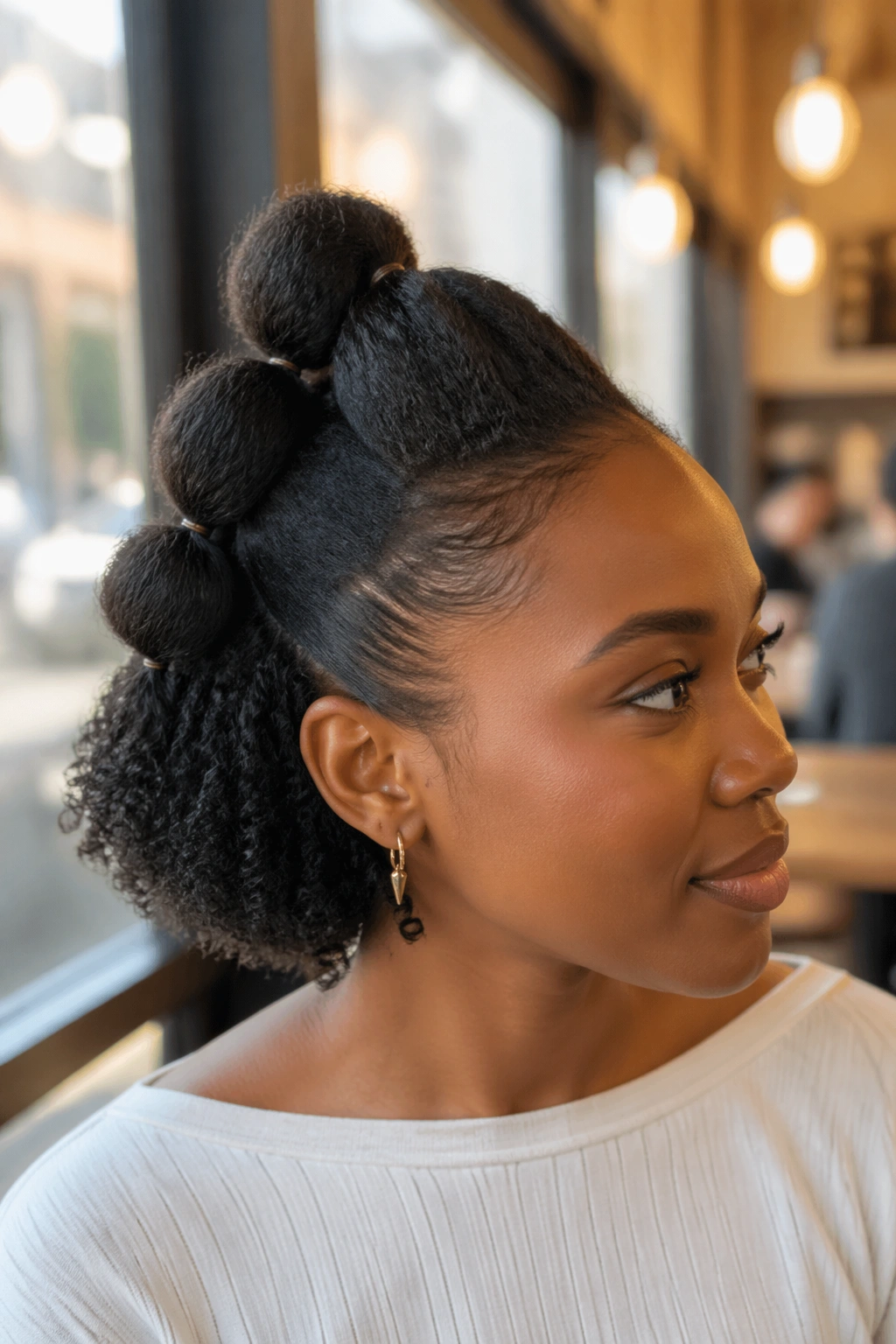
This one looks fancier than it is, which is always a nice surprise. A bubble ponytail on a bob gives you structure and a bit of edge, and it works even when the hair is too short for a long ponytail.
Pull the top half into a small ponytail at the crown. Then add tiny elastics every 1 to 2 inches down the section and puff each space with your fingers. The bubbles should look round, not tight. On natural hair, especially when stretched a little first, the effect is clean and playful.
The shape matters more than the number of bubbles. One or two bubbles is enough on a shorter bob. If you add too many, the style starts to feel crowded and the length disappears. That’s the trap with short hair—you can fit a lot in, but you do not need to.
I’d reach for this on a day when the curls are cooperating but the roots need a little order. A tiny bit of oil on the fingertips helps each bubble separate without frizzing apart. Keep the ponytail itself centered, and the whole style reads balanced.
10. Bantu Knot Crown With Loose Curls
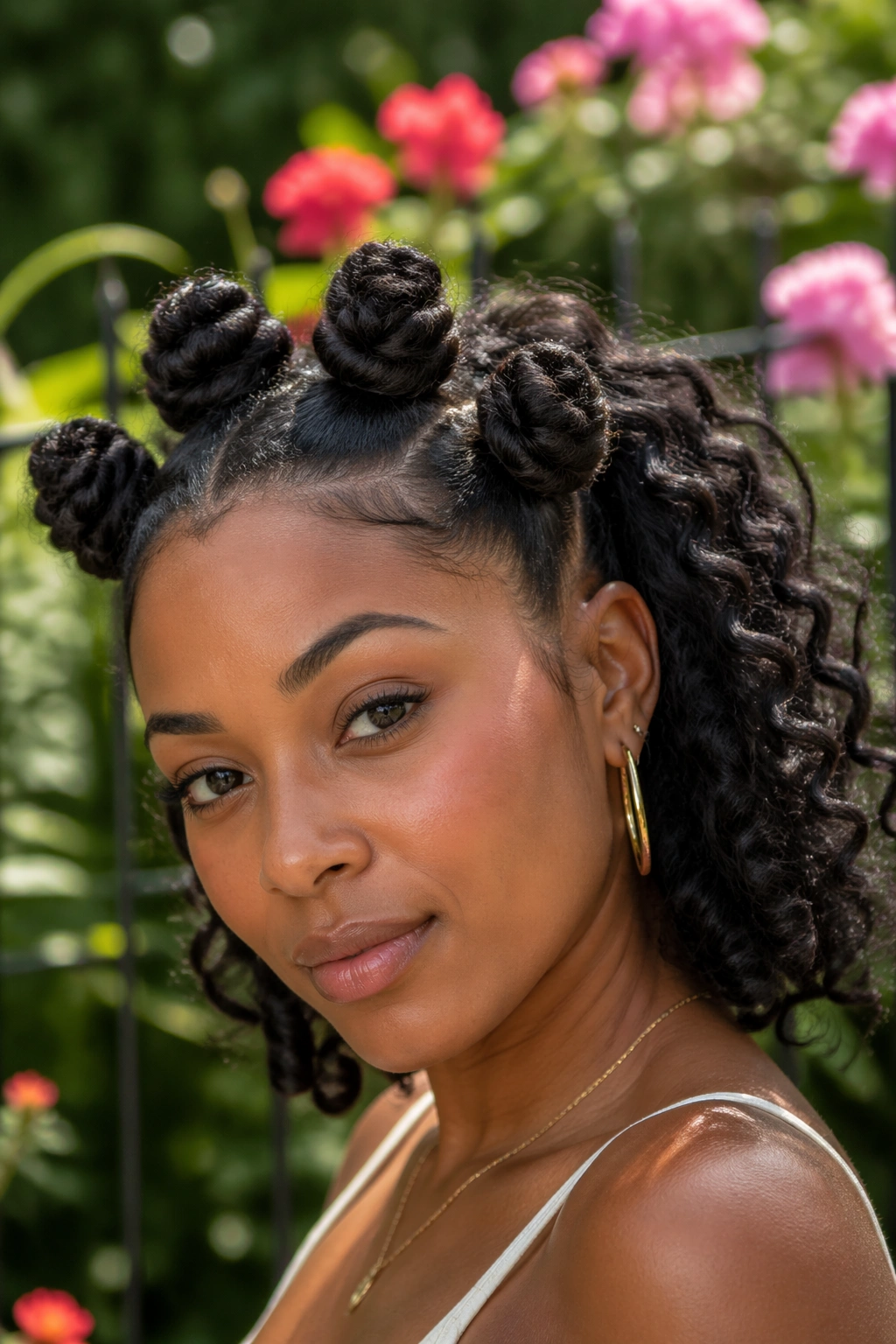
Three or four Bantu knots at the front can do what a whole updo can’t: they make a short bob look deliberate. The knots pull attention upward, and the loose curls in back keep the style soft enough to wear anywhere.
The key is restraint. A bob usually does better with a small row of knots or a half crown of them, not a head full of tiny knots unless you’re aiming for a very specific look. Start at the front hairline, section off small squares, twist each one until it coils on itself, then wrap it into a knot and pin it flat.
Leave the rest of the hair down. That contrast is what makes the style work. The knots give height and shape, while the loose curls keep the haircut visible. If the bob is layered, the ends will move a little when you walk, and that makes the style feel less stiff.
A little butter or cream on each section before twisting helps the knots stay smooth. Don’t overload them. Too much product makes the knots slip.
11. Cornrow Front Into a Half Ponytail
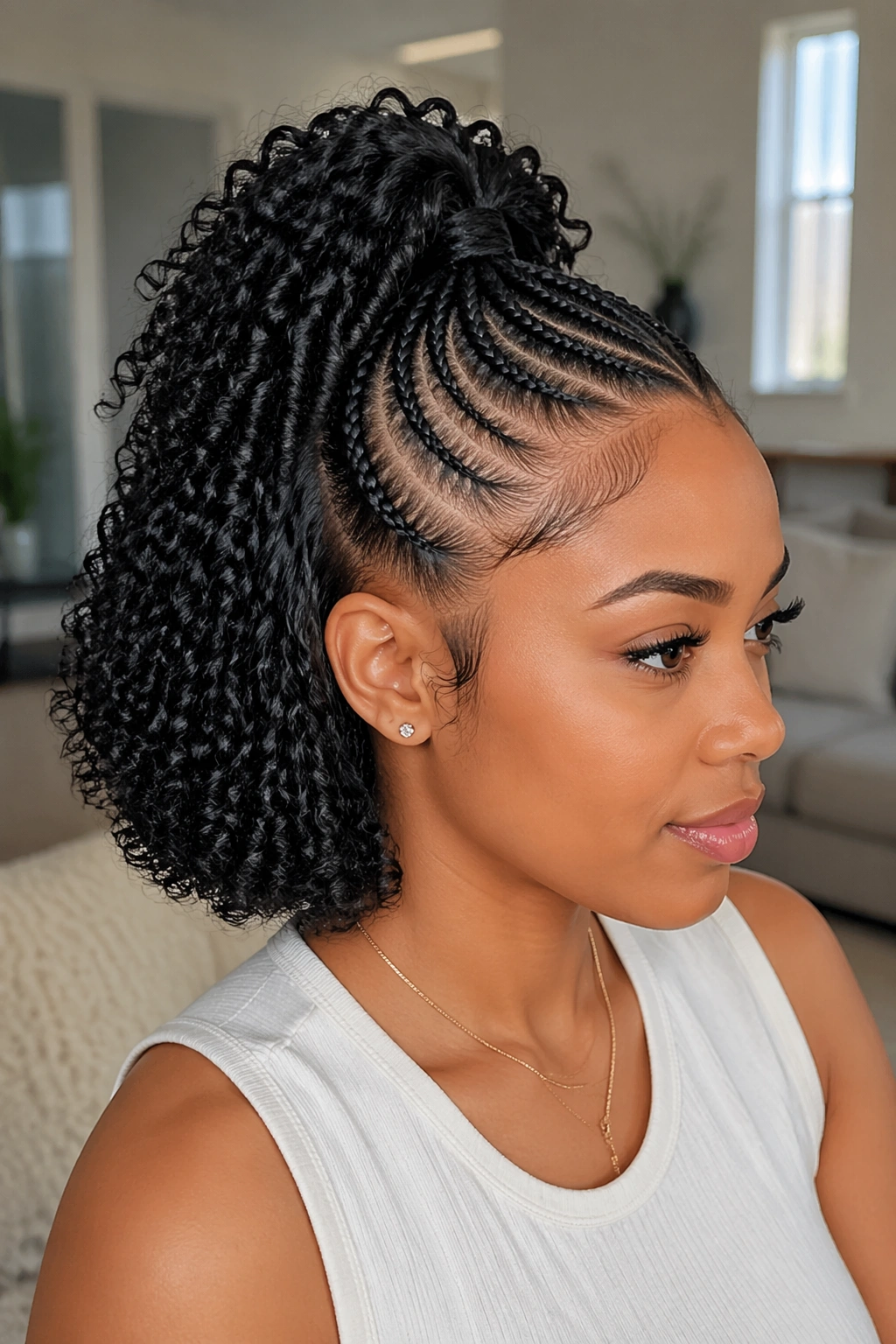
If flat twists feel soft and cornrows feel sharp, this is the sharp end of the spectrum. Cornrows keep the front secure for hours, which is why they’re such a good fit for active days, humid air, and short natural hair that refuses to stay put.
Braid two to four small cornrows from the front hairline back toward the crown, then collect the remaining top section into a half ponytail or small puff. The rows can be straight or curved depending on the look you want. Straight rows feel more modern. Curved rows feel a little softer and usually flatter the face better on a bob.
This style is a strong choice if you want your hair off your face but don’t want the back pulled into a full ponytail. On a bob, that matters. The haircut keeps its shape, and the braids give you control at the front where the hair tends to frizz first.
If you’re doing it at home, part the sections cleanly before you start braiding. Messy parts show fast with cornrows. A rat-tail comb and a mirror on each side help more than people admit.
12. Claw-Clip Sweep Back Bob
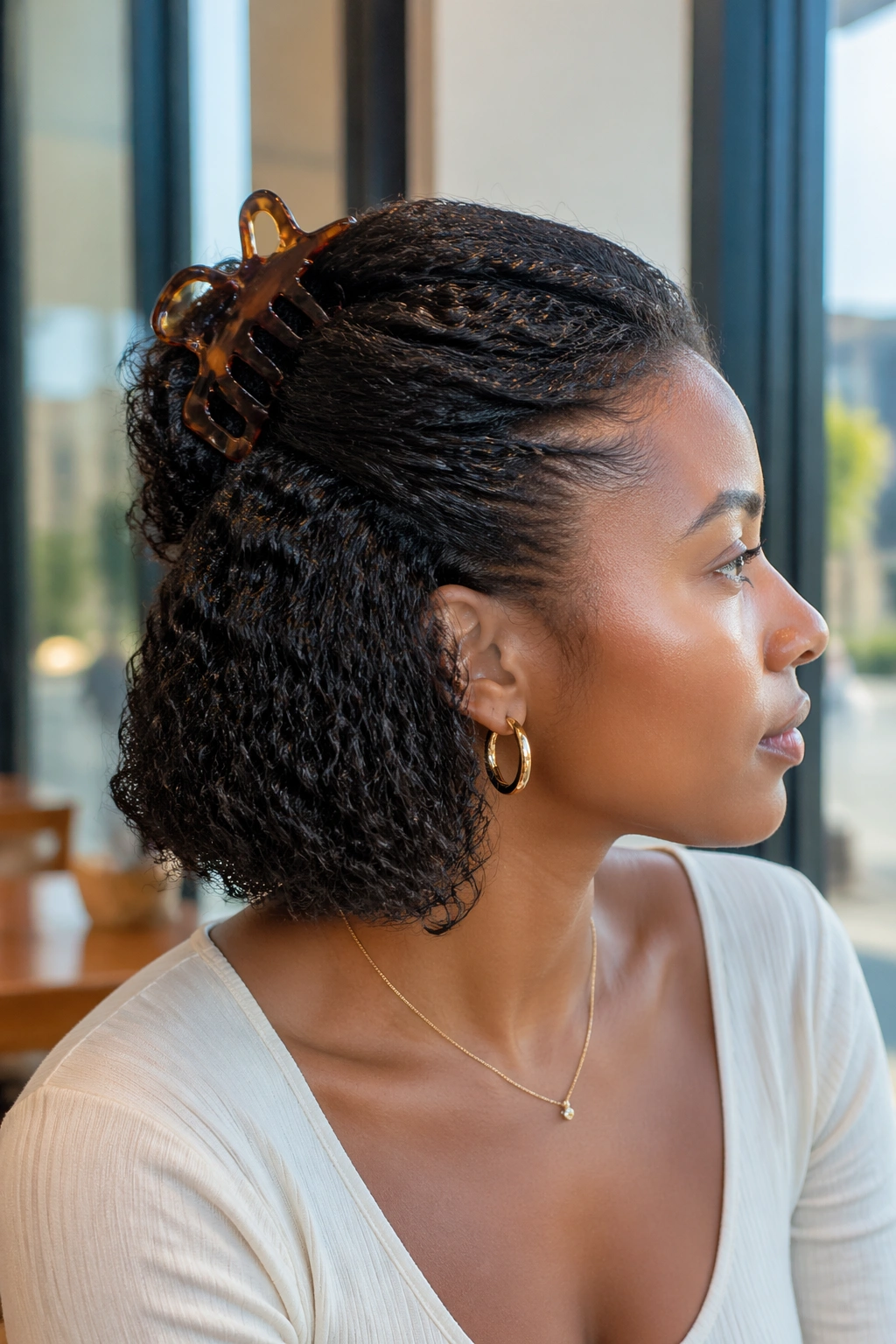
A good claw clip grabs the crown, lifts the roots, and lets the ends spill out in a way that looks easy on purpose. On a natural-hair bob, that’s gold.
Sweep the top section back as if you’re making a loose half ponytail, then twist it once and clip it in place. The loose ends should still show plenty of texture below the clip. If the hair is thick, a medium or large claw clip works better than the tiny ones that keep sliding off. If the bob is fine or short, a smaller curved clip can hold the shape without swallowing it.
Best Clip Shapes
- Curved claw clips work well on dense curls because they follow the head shape.
- Flat clips sit closer to the scalp and are nice for tighter bobs.
- Mini clips are better for half-up details than for full support.
- Matte finishes grip better than shiny plastic in my experience.
This is a lazy-day style, but not a sloppy one. That’s the difference.
13. Rolled Bangs and Face-Framing Curls
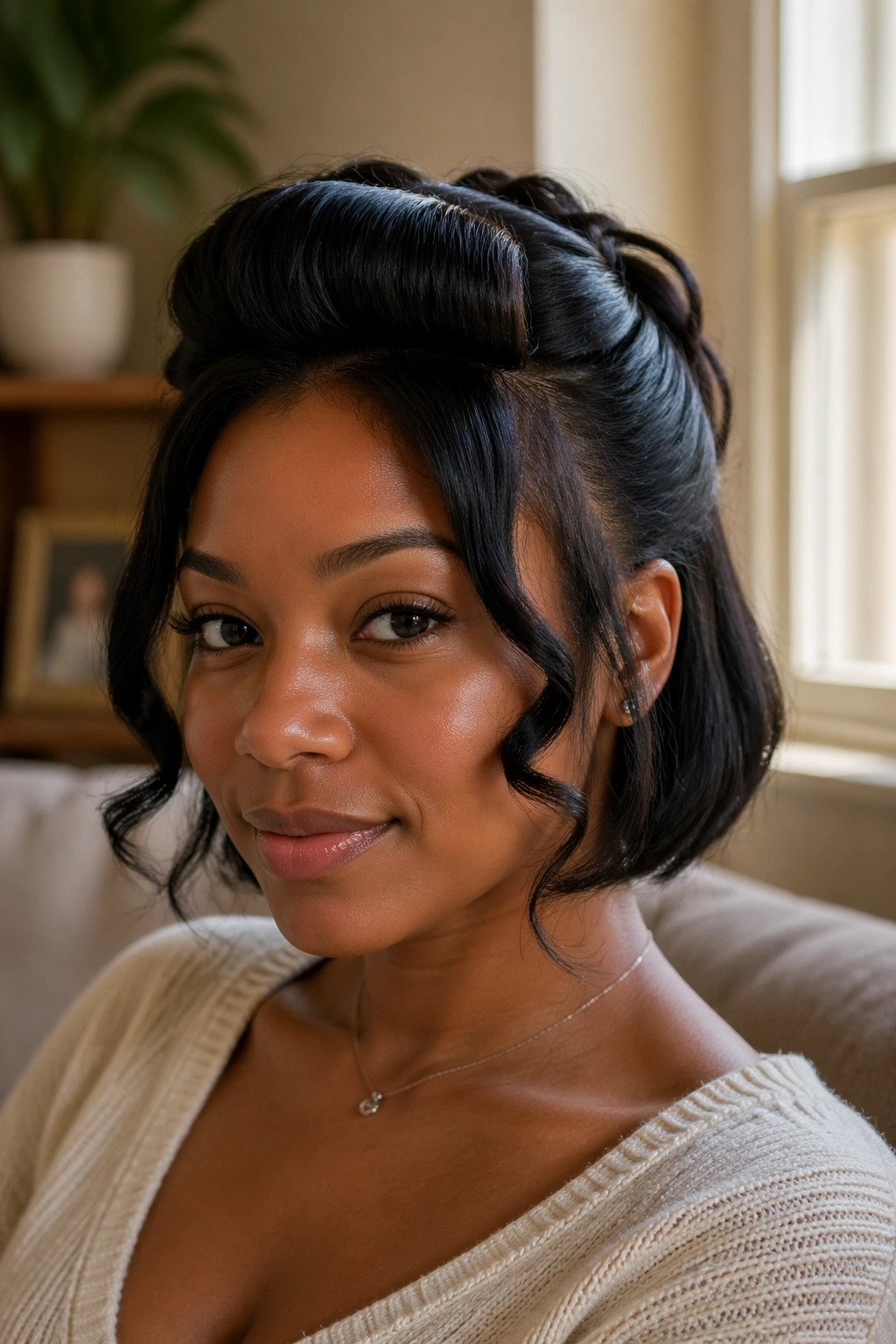
If the front is neat, the whole bob looks dressed up. That’s why rolled bangs and a few face-framing curls can carry a half up half down style all by themselves.
Roll one or two front pieces back toward the crown and pin them under so the ends disappear. Then leave the rest of the bob loose. If you have a side part, roll the heavier side first. If you have a center part, roll both sides back a little and let the center curls fall forward. The shape is soft, but the face gets opened up.
I like this look more than a hard slick-back on short natural hair. It keeps the edges soft, which feels better on a bob. Too much gel at the hairline can make the whole style look boxed in, and that is rarely the goal.
A small flexi-rod set on the front pieces can help if you want the curls to sit with more bend. If not, finger-coiling those front strands works fine. The point is to make the front behave without flattening the whole hairstyle.
14. Halo Braid Over a Loose Bob
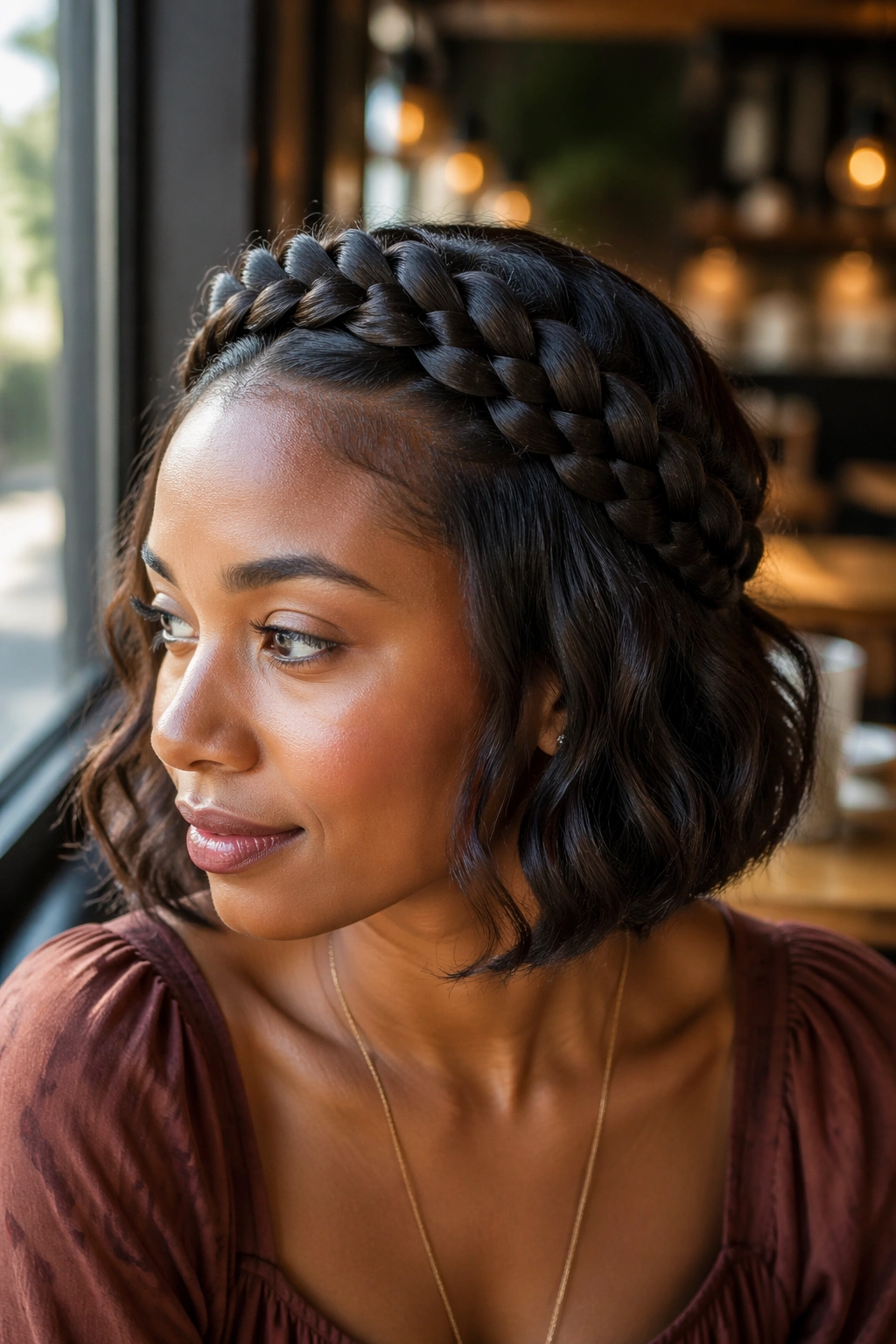
Why does a halo braid read so clean on short hair? Because the braid does not need length to look finished. It just needs a path.
Braid or twist along the perimeter of the hairline, then meet the sections near the back of the head and pin them in place. Leave the bob loose underneath. On a natural-hair bob, this gives you a crown-like frame without asking the back to do anything difficult. That’s the charm of it.
This style works best on stretched hair or a defined twist-out, since the braid sits neater when the strands have a little control. If the hair is too fluffy at the roots, the halo can blur into the rest of the hair and lose its edge. A light layer of mousse before braiding helps.
The look has a dressier feel than a simple half ponytail, but it’s not fussy. That matters if you want something that looks careful without taking an hour. I’d choose it for dinners, events, or any day when the bob needs to look a bit more framed.
15. Stacked Mini Ponytails in Back
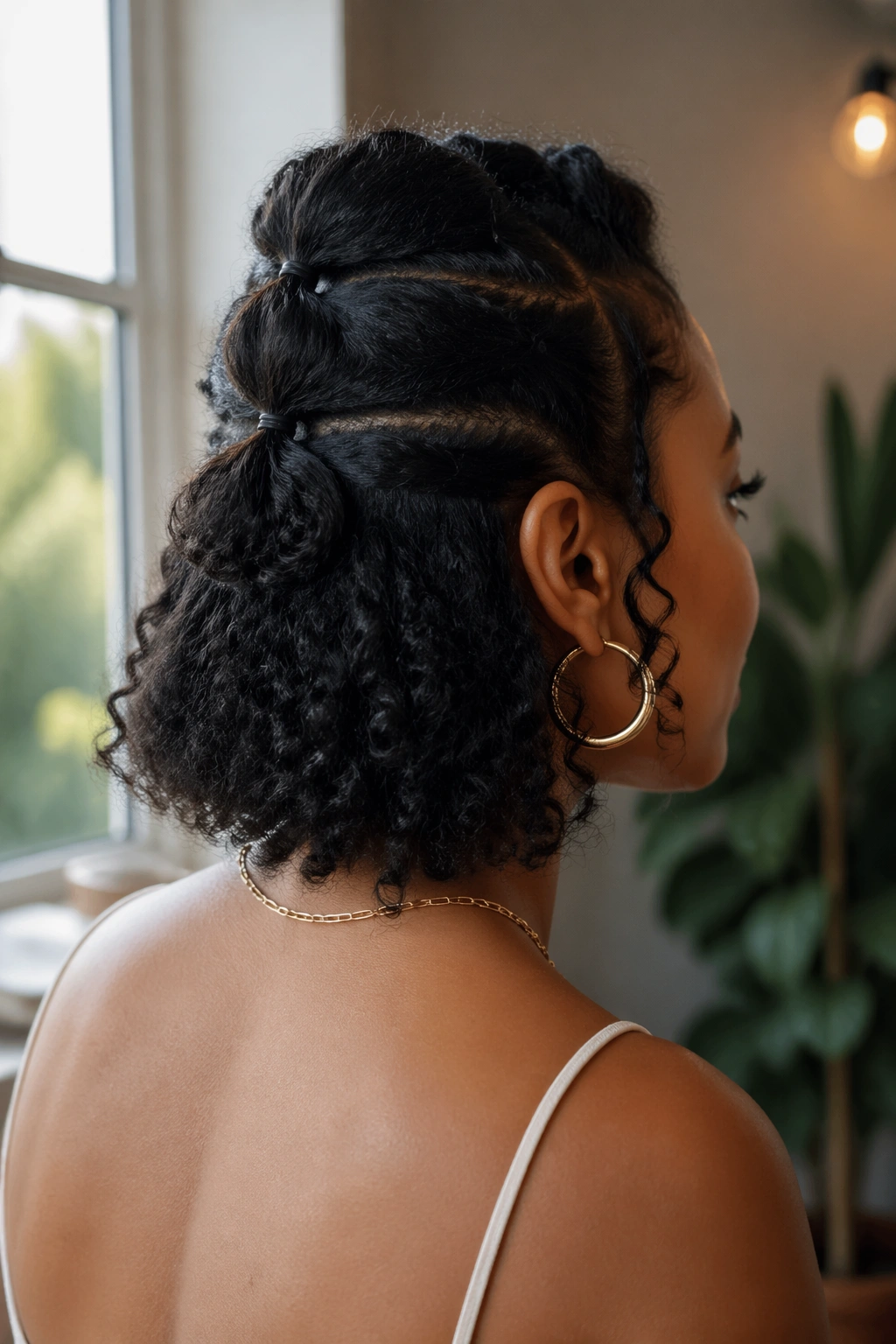
If your bob barely reaches the nape, stacked mini ponytails can fake more length and give the crown a nice lift. The style is neat, a little playful, and much easier than trying to force every strand into one ponytail.
Split the top half into two or three small sections from front to back. Tie each section with a tiny elastic, one behind the other, so they sit like a row. Then gently pull each section a bit apart to add volume. The loose lower layers stay down, so the bob still shows.
How to Keep Them Clean
- Make the parts straight before you tie anything.
- Use small, clear elastics so the style does not look bulky.
- Keep each ponytail loose enough to puff slightly.
- Smooth the roots with a touch of gel, then stop there.
This is one of those looks that can feel casual or polished depending on how tight you make the parts. I prefer it with a little softness. Too perfect, and it starts looking like a school-day style. A touch of texture keeps it grown.
16. Satin-Scarf Wrapped Half Up Bob
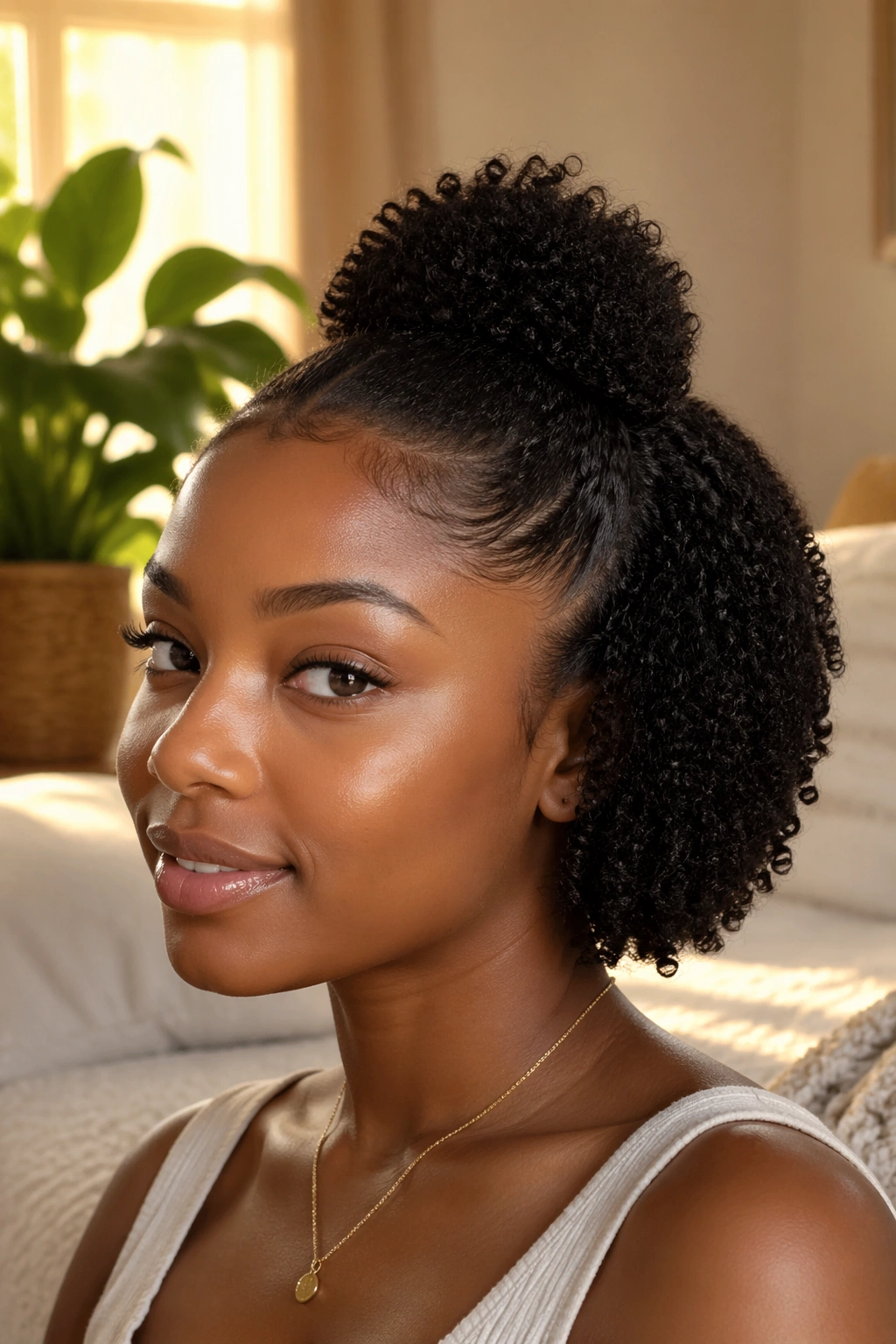
When the style needs polish more than height, a satin scarf does half the work for you. Wrap it around the base of the half-up section, tie it at the crown, and let the bob fall free below. The scarf becomes the detail, and the hair gets to stay simple.
This works especially well on medium-density natural hair because the scarf helps the top sit flat while the ends keep their movement. You can use a printed scarf for personality or a plain one if the rest of the outfit is already doing a lot. Either way, the trick is to make the wrap look intentional, not like you grabbed the first fabric nearby.
A few extra steps help the style last. Smooth the top section with a little cream before wrapping, then press the edges with your hands or a scarf for 5 to 10 minutes. That gives the look a cleaner finish without making the curls stiff. If the bob has layers, let a few pieces fall forward near the cheeks. It keeps the whole thing from feeling too rigid.
For a natural-hair bob, that final wrap often matters more than extra pins.
