
Twin ponytails can look playful, polished, or sharp enough for a night out, and bangs are what decide which lane they land in. On Black hair, that combination gets even better because texture gives the style body, lift, and a little attitude that straight hair sometimes has to work for.
The trick is not making the ponytails match each other too perfectly. A clean center part, a soft side part, a curved bang, or a braided fringe can change the whole mood without changing the basic shape. And yes, tension matters. Too tight and the style starts looking strained; too loose and the parting can go fuzzy before the day is over.
I’m a fan of styles that do more than just sit there and look neat. Give me texture, a little shine, a bang that does something useful for the face, and enough detail that the style reads from across the room. These 25 double ponytails for Black women with bangs lean into all of that, from sleek and sculpted to fluffy, braided, beaded, and full of movement.
1. Sleek High Twin Ponytails with Blunt Bangs
A sharp middle part and two high ponytails can make the whole style feel expensive-looking, even when it’s simple to build. The blunt bangs are the part that really locks it in. They sit straight across the forehead and give the style a clean edge that works well with pressed natural hair, relaxed hair, or a good silk-pressed base.
Why it works
The height adds lift, and the bang keeps the style from feeling too sporty. If your face reads rounder, the straight fringe can shorten the forehead a little and make the twin ponytails feel more balanced.
Use a light gel at the roots, a soft-bristle brush, and a silk scarf for 10 to 15 minutes after smoothing. Do not pull the ponytails too tight. The style should feel secure, not like it is fighting your scalp.
- Best with medium to long hair
- Works well with glossy wraps or long extension pieces
- Looks crisp with hoop earrings or a clean neckline
My favorite detail: a little shine spray on the finished ponytails, not the bangs. Bangs get greasy fast.
2. Low Twin Ponytails with Curtain Bangs
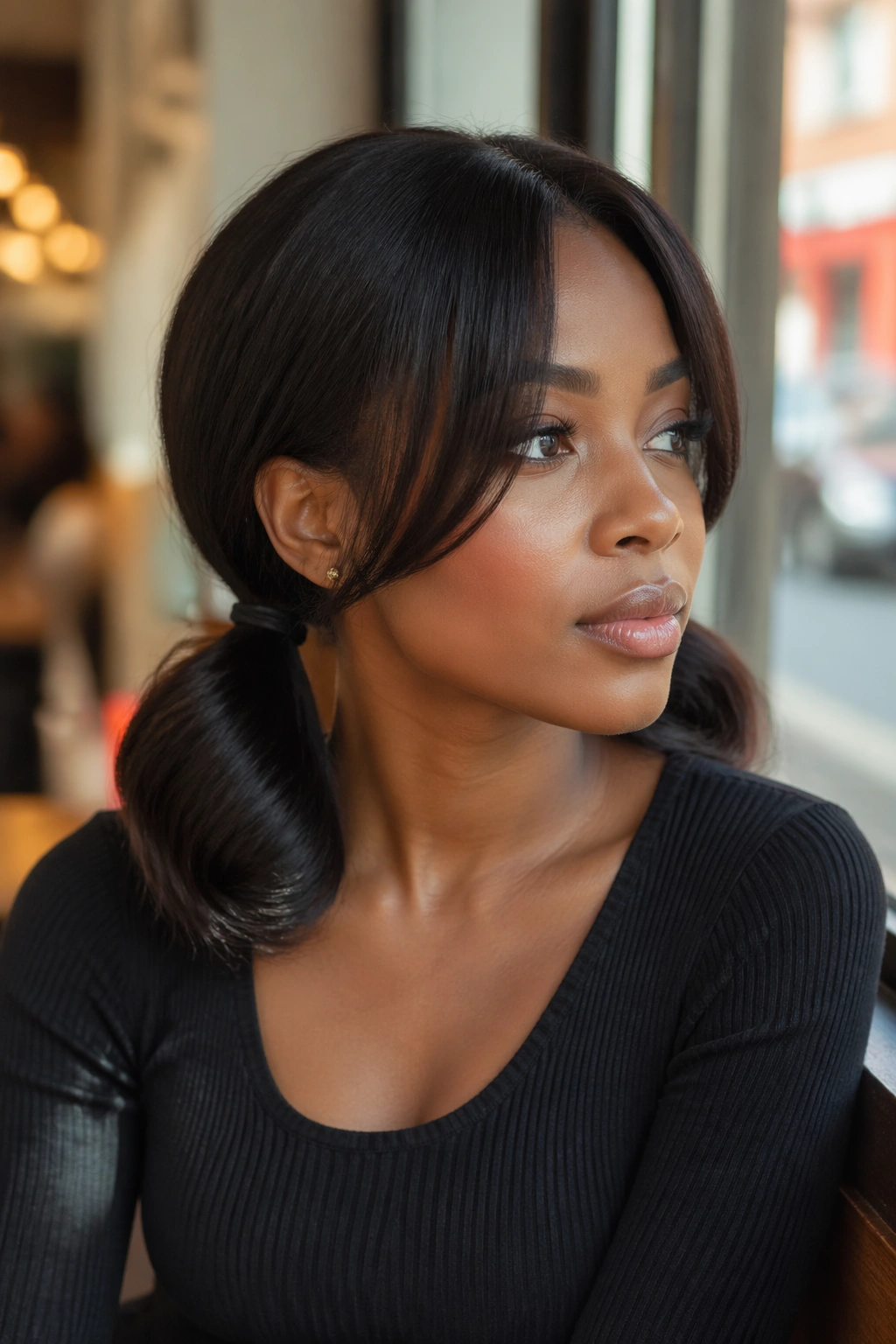
Want something softer than a high, tight look? Low twin ponytails with curtain bangs give you that easy shape without losing polish. The ponytails sit near the nape, which makes the whole style calmer, while the bangs part in the center and fall gently on both sides of the face.
This is one of those styles that looks like you planned it, even when the actual styling is fairly quick. The curtain bangs work especially well if your hair is stretched or blow-dried first, because the front pieces can bend instead of puffing out.
I like this version for work days, brunch, or any place where you want neat hair without a severe finish. A 1-inch curling iron or flexi rods on the bang pieces helps them curve inward instead of hanging flat. Keep the ponytails smooth, but don’t over-polish the bangs. A little softness is the whole point.
3. Side-Part Twin Ponytails with Swoop Bangs
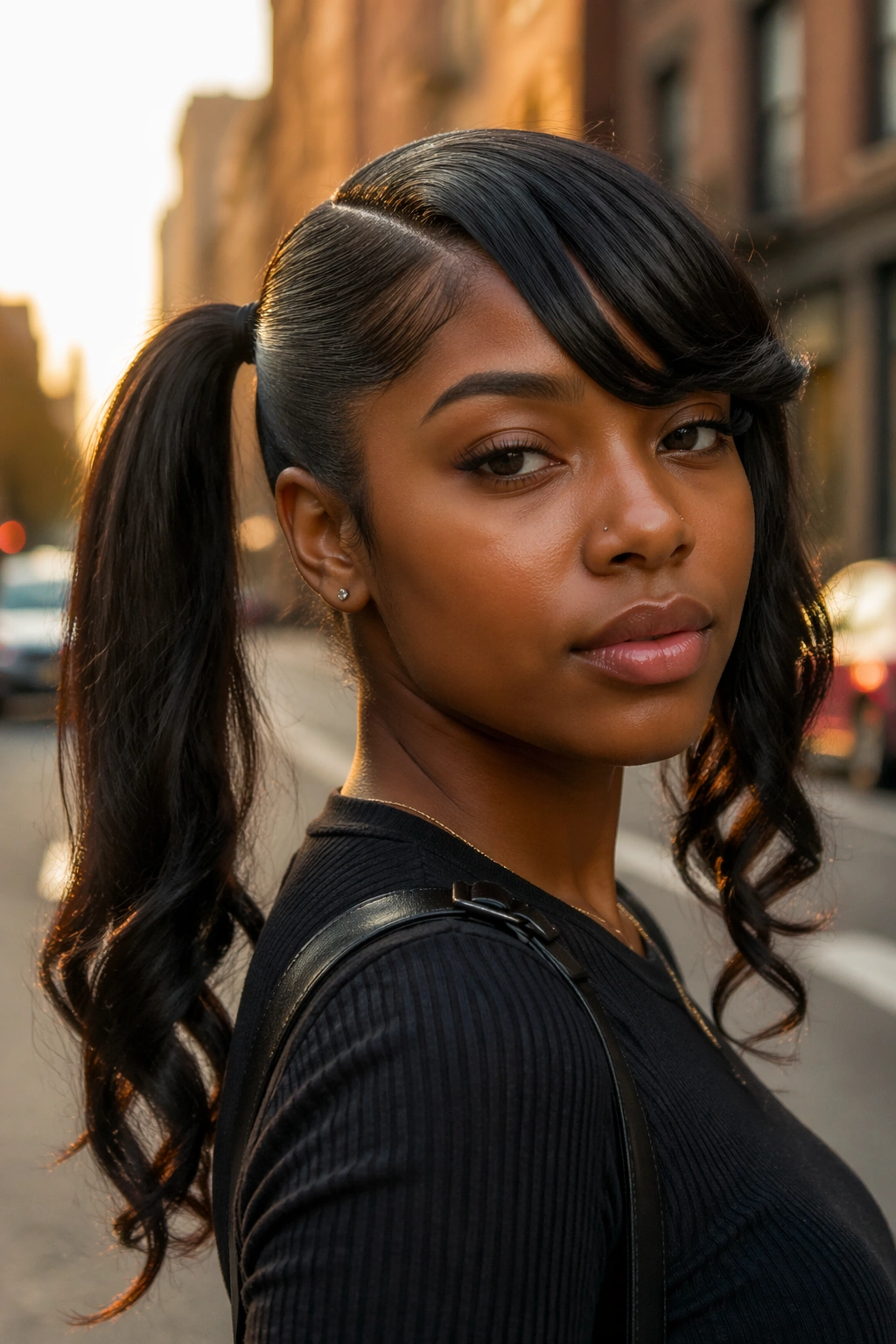
A deep side part changes everything. It pushes one ponytail a little forward, lets the other sit back, and gives the swoop bangs room to stretch across the forehead in that dramatic, face-skimming way.
This style is flattering when you want movement without giving up structure. It also works nicely on hair that has a little natural bend, because the swoop bang can blend with the texture instead of fighting it. If you use edge control, use it sparingly. Too much product turns the hairline stiff, and that never looks as good as people hope.
Styling note
The bang should sweep, not hover. Aim for a soft arc that starts deeper on one side and ends near the outer brow on the other. A small round brush helps if you’re blow-drying the front section.
A side-part twin ponytail reads a little more grown than a center part. That’s not a rule, just what I see most often when the front section gets that long curve.
4. Curly Puff Twin Ponytails with Curly Fringe
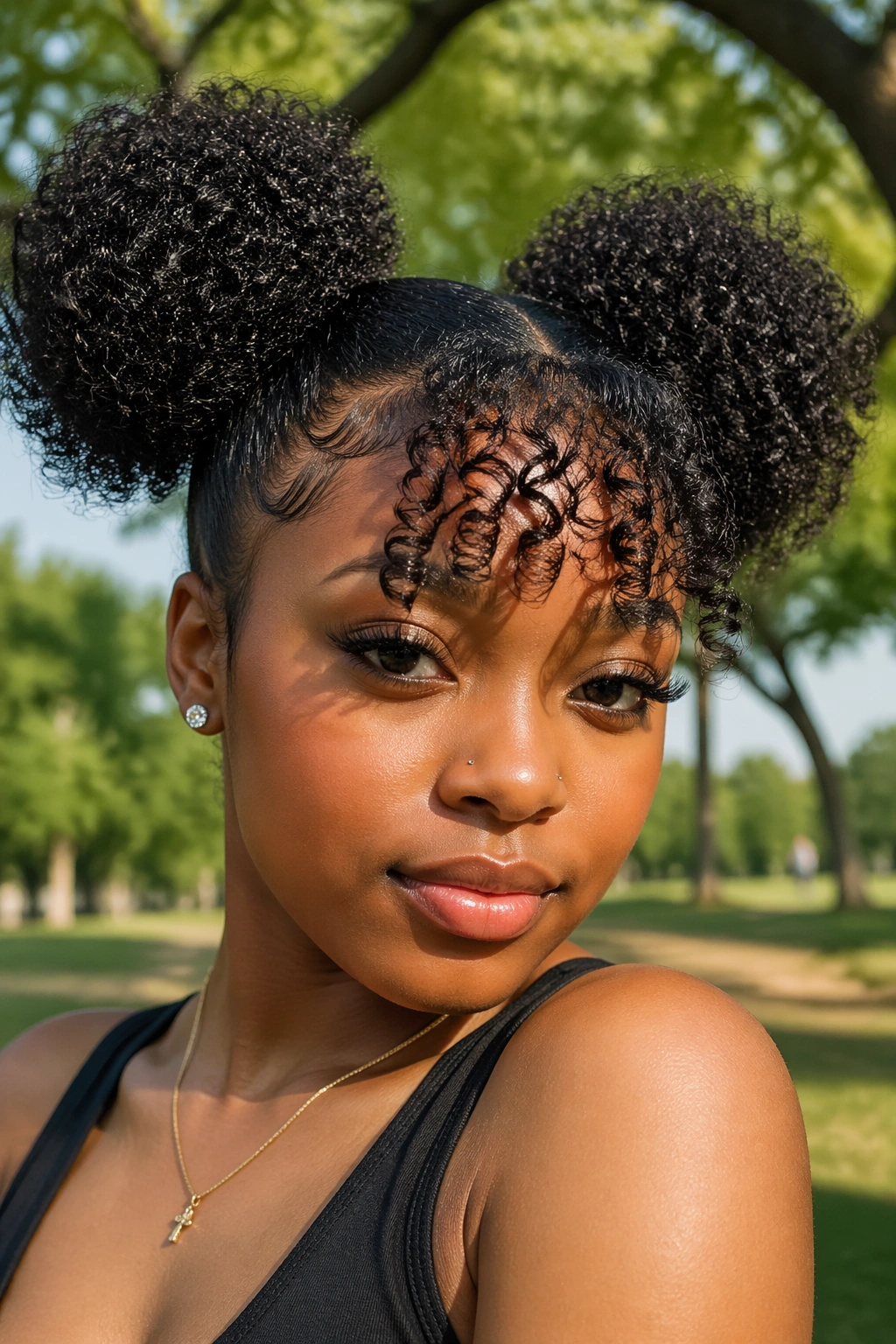
Curly puff twin ponytails are pure personality. The puffs sit high or mid-height, and the fringe falls forward in curls, coils, or twisted-out pieces that make the front feel playful instead of stiff.
This version is especially good if your natural texture wants volume. You do not need to force the hair flat just to fit the style. In fact, the puff shape looks better when it keeps some body at the roots and the bangs keep their curl pattern. A curl cream, light gel, and a diffuser can help, but the goal is definition, not helmet hair.
If the front pieces shrink up more than you want, stretch them with medium rollers or a twist set before you start the ponytails. That way the bangs still read as bangs and not just random front pieces.
Skip heavy oils here. They weigh down the curls and make the front collapse faster than you’d expect.
5. Braided Twin Ponytails with Braided Bangs
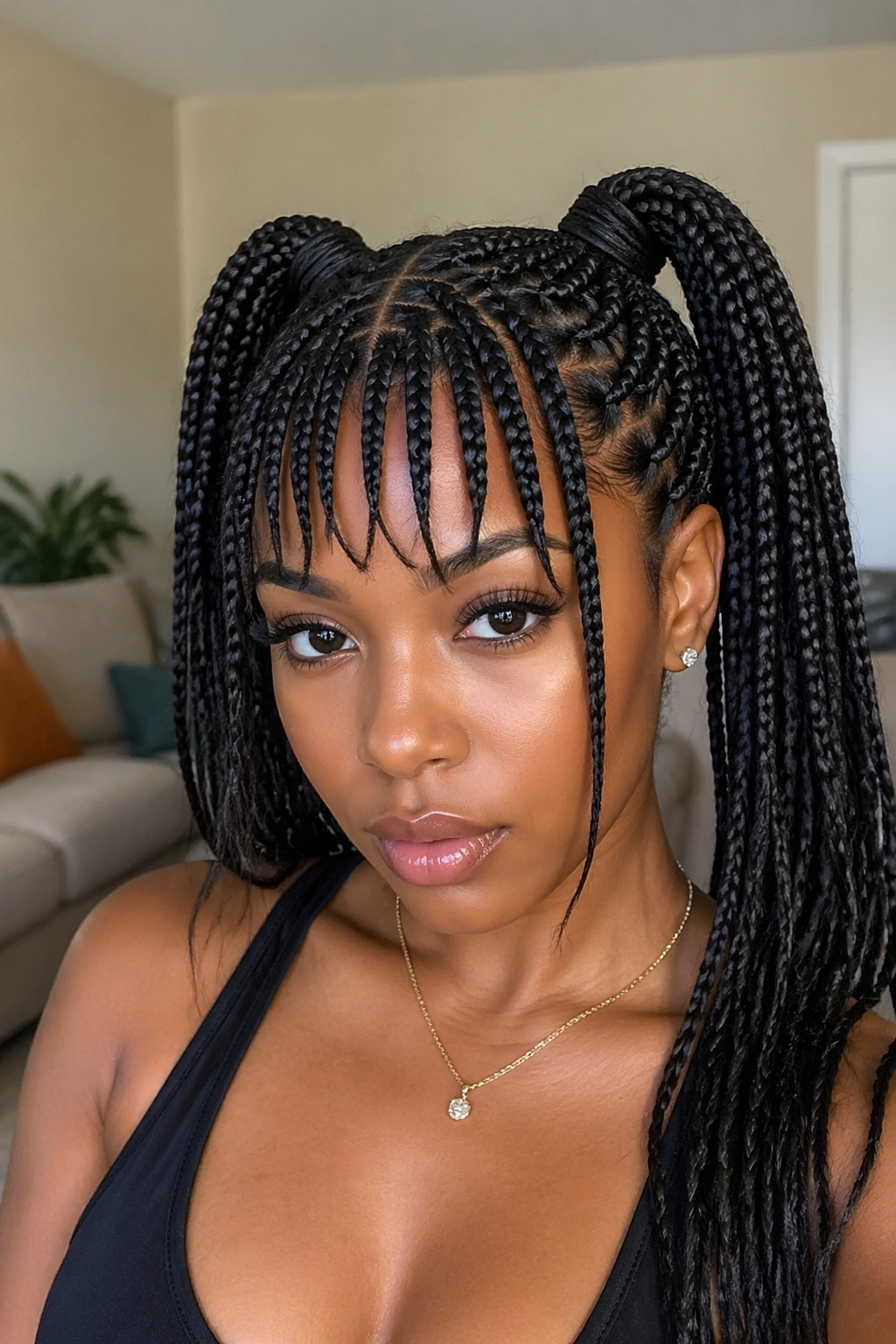
Braids solve a lot of problems at once. They keep the style neat, they last longer than loose hair, and they give the bangs their own texture instead of asking them to lie flat and behave.
Braided bangs can be tiny, medium, or chunky, depending on how much detail you want. I like this look when the ponytails themselves are box braids, knotless braids, or feed-in braids. The front pieces can be braided straight across, angled slightly, or split into two shorter pieces that sit beside the forehead.
What makes it different
The braid texture gives the style a built-in pattern, so you do not need much else. A few gold cuffs or tiny rubber bands are enough. That’s the nice part. The style already has a lot going on, so the bang does not have to do all the work.
If you want the bangs to sit close to the face, finish them with a touch of mousse and let them set before touching them again.
6. Feed-In Cornrow Twin Ponytails with a Straight Bang Panel
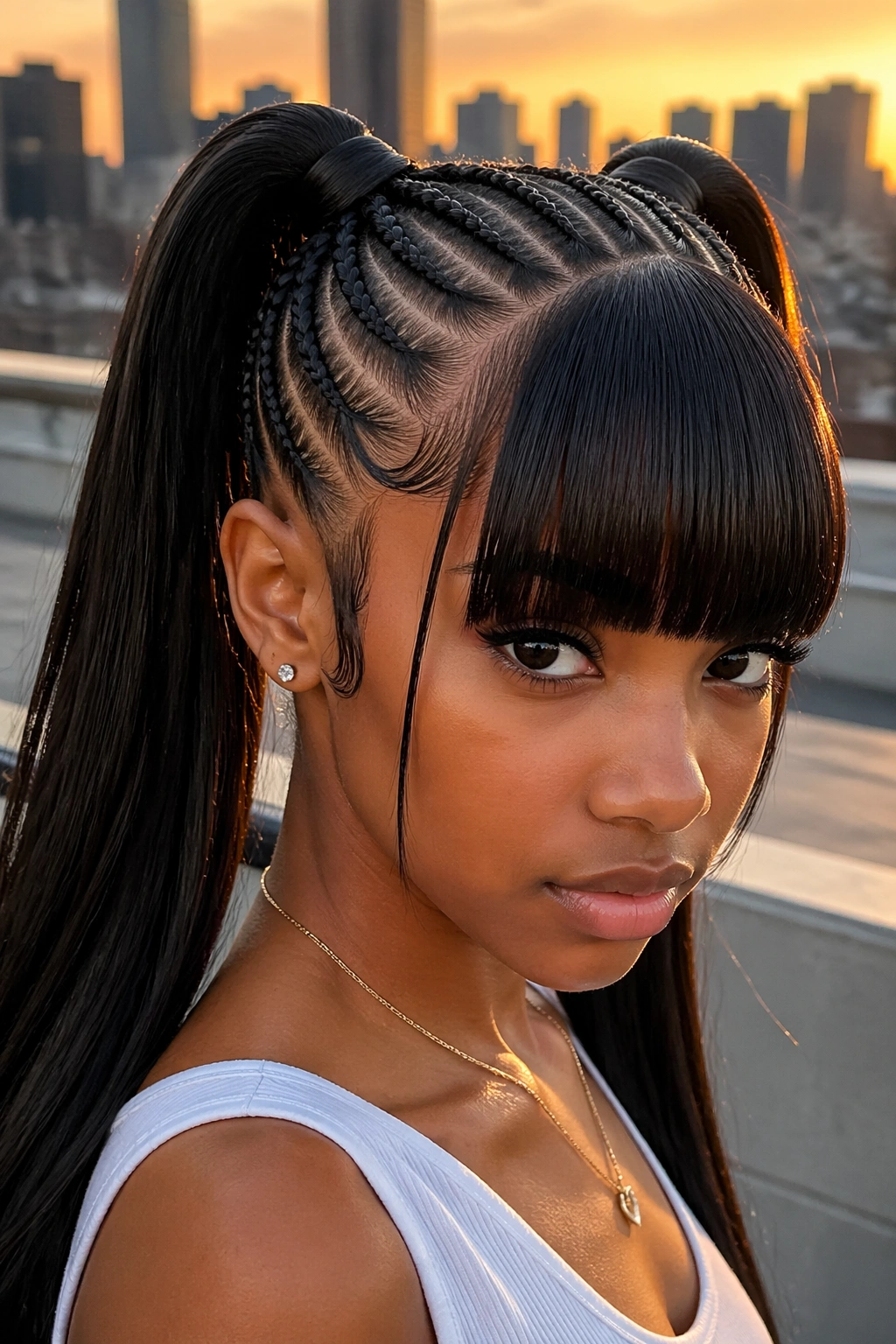
Feed-in cornrows make the roots look tidy and deliberate, and a straight bang panel across the front gives the style a clean frame. This is one of the more structured double ponytail looks, which means it works beautifully when you want your hair to stay put for a long day.
The front bang panel can be one thick braided strip or a few narrow rows that sit flat across the forehead. I prefer the latter because it feels lighter and gives the face a little more space. The ponytails themselves can be braided extensions, curly pieces, or straight lengths, depending on how polished you want the finish.
This style is a strong pick for events where you know you will be moving around. It holds shape well. It also photographs in a very crisp way because the braids create sharp lines and the ponytails give you swing.
One warning: if the front rows are too tight, they can make the whole look less wearable. Ask for neat, not yanking.
7. Bubble Twin Ponytails with Wispy Bangs
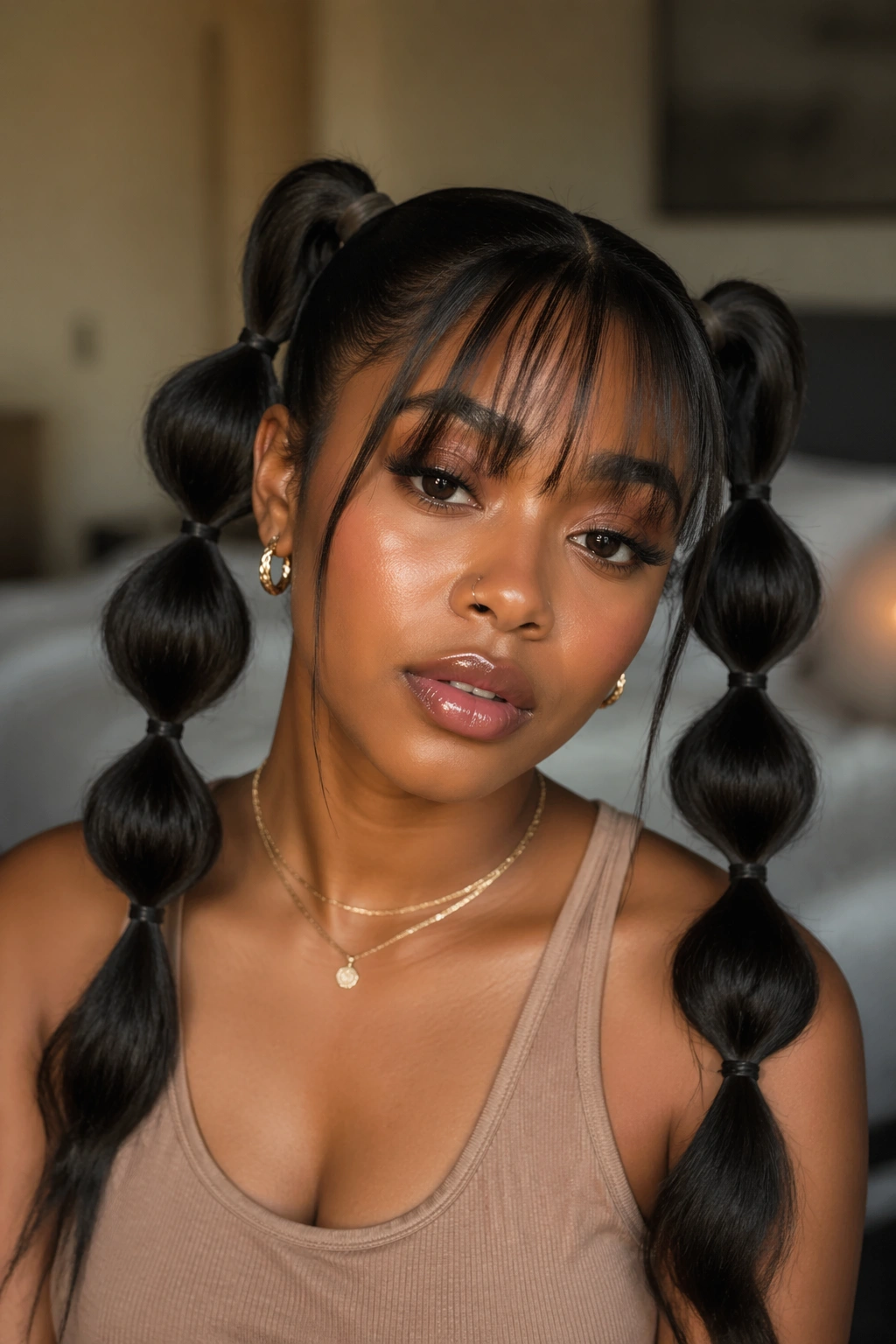
Bubble ponytails are fun in a way that still looks grown when the rest of the styling is clean. Split the hair into two ponytails, then add small elastics every 2 to 3 inches down each side to create the bubble effect. A wispy bang keeps the front from feeling too heavy.
The wispy bangs matter here because bubble ponytails already have a lot of shape. A full blunt fringe would fight the silhouette. Thin, light pieces in the front keep the look airy and soften the face a little.
If your hair is thick, this style is easy to build. If it is finer, extensions make the bubbles more even. Use a small bit of mousse on each section before tying it off, and gently tug the sides of each bubble so they round out instead of staying flat.
This is one of those styles that looks playful without being childish. That’s harder to pull off than people think.
8. Rope-Twist Twin Ponytails with Side-Swept Bangs
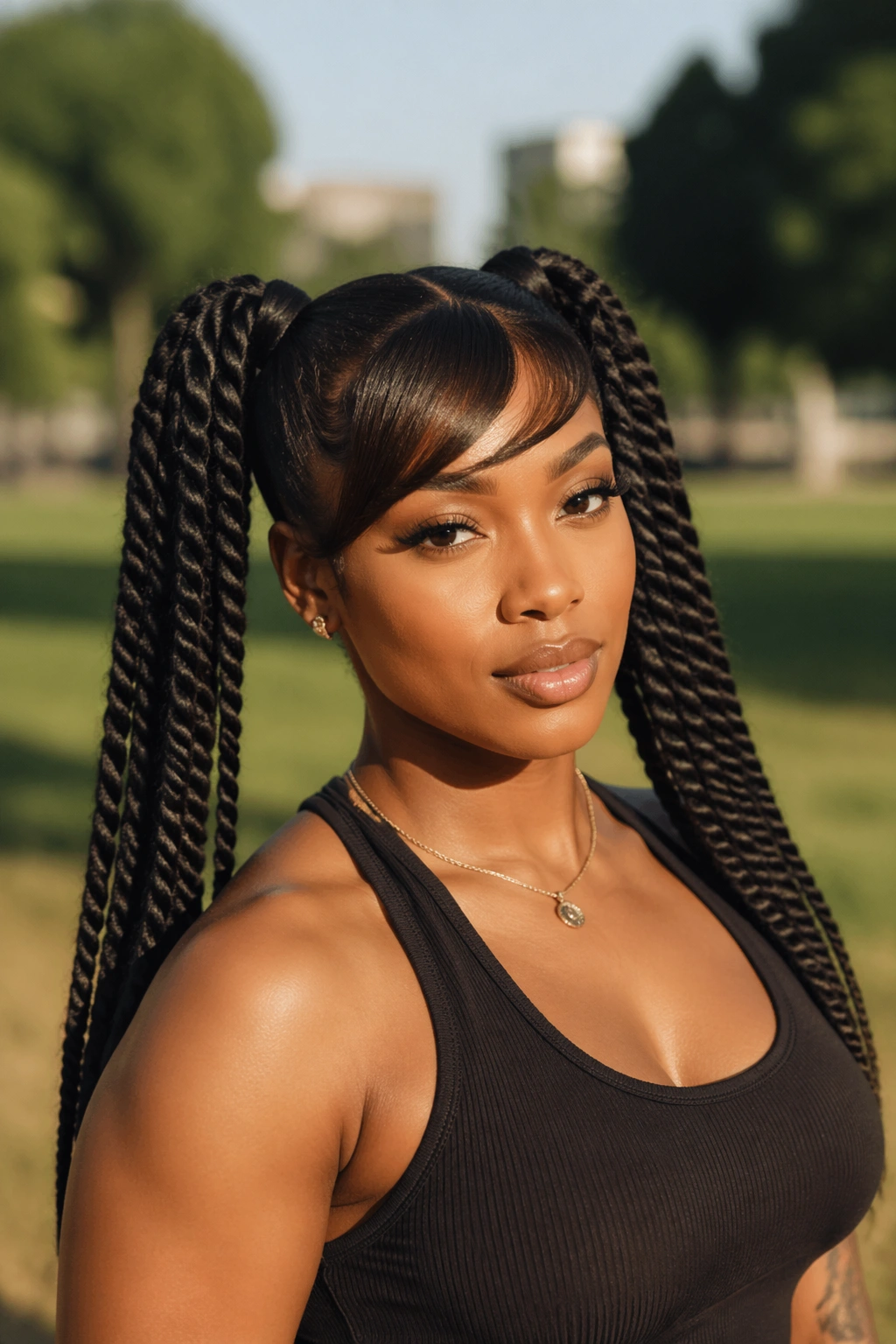
Rope twists give the ponytails a smooth spiral look that is a little different from braids and a little softer than a sleek press. Side-swept bangs finish the shape nicely because they bend with the twist texture instead of trying to flatten it.
I like this style for natural hair that has been stretched or blown out first. The twists hold better on hair that has a bit of length and grip. The bangs can be made from a small front section twisted loosely to one side, or you can let a bit of fringe fall freely and shape it with a brush.
A side-swept bang also helps if you want the style to feel less formal. The angle breaks up the symmetry and makes the two ponytails feel more relaxed. Add a satin ribbon or a few cuffs near the ends if you want to dress it up.
The movement here is the point. Keep the twists smooth, but don’t squeeze the life out of them.
9. Jumbo Twin Ponytails with Micro Bangs
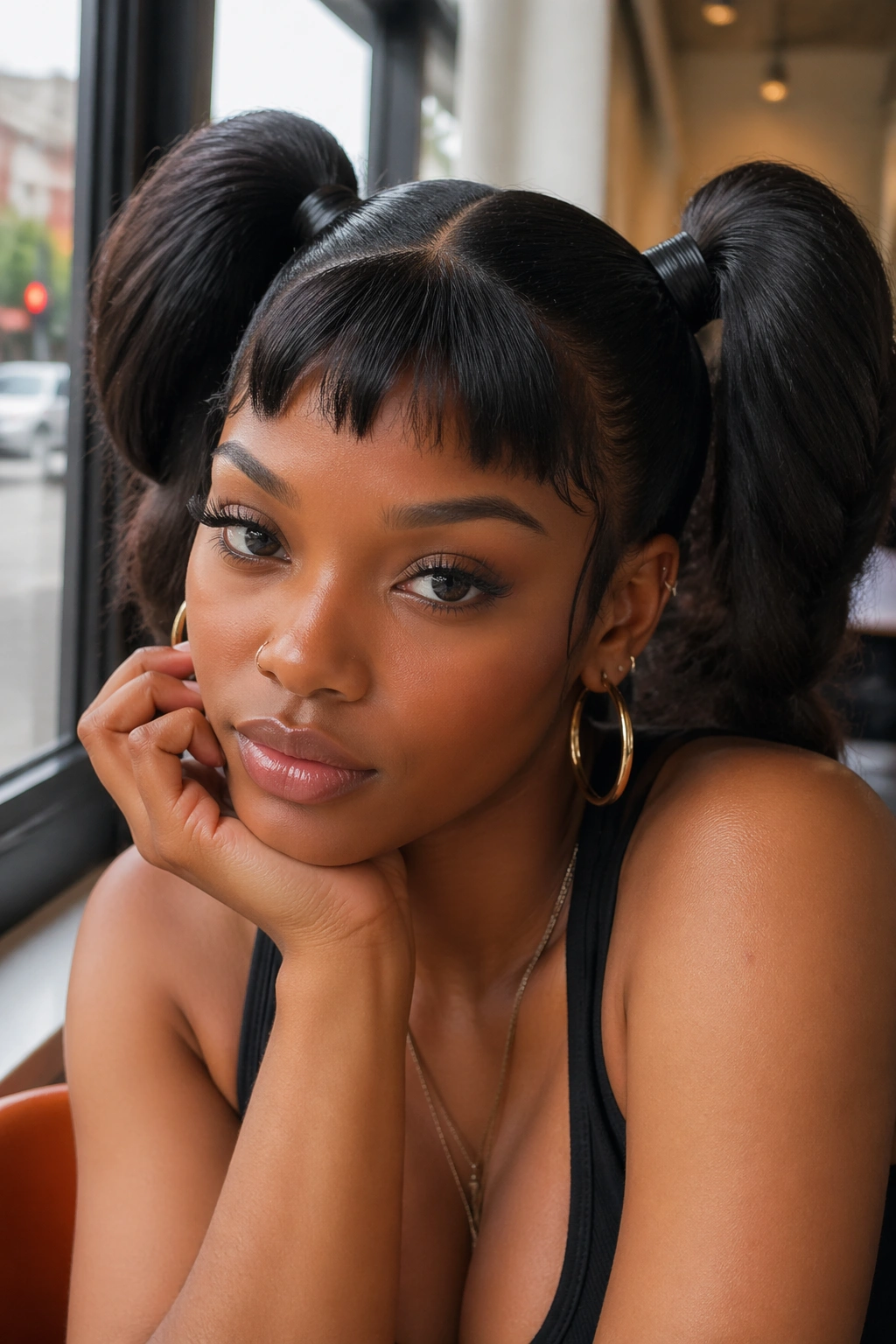
Jumbo twin ponytails have attitude. They are bold, full, and a little bit cheeky, and micro bangs add an unexpected twist that makes the style look editorial instead of predictable.
The contrast is what makes this one work. Big ponytails need a smaller front shape, and micro bangs deliver exactly that. They sit high on the forehead, usually above the brows, so the face stays open while the ponytails do the heavy visual work.
How to wear it
- Keep the ponytails full and rounded
- Trim the micro bangs carefully so they sit evenly
- Use a strong but flexible hold on the front
- Avoid making the bangs too thick or they will overpower the look
This style is not for someone who wants to blend into the background. It has presence. If you like your hair to start conversations, this is a smart one to try.
10. Stitch-Braid Twin Ponytails with Layered Bangs
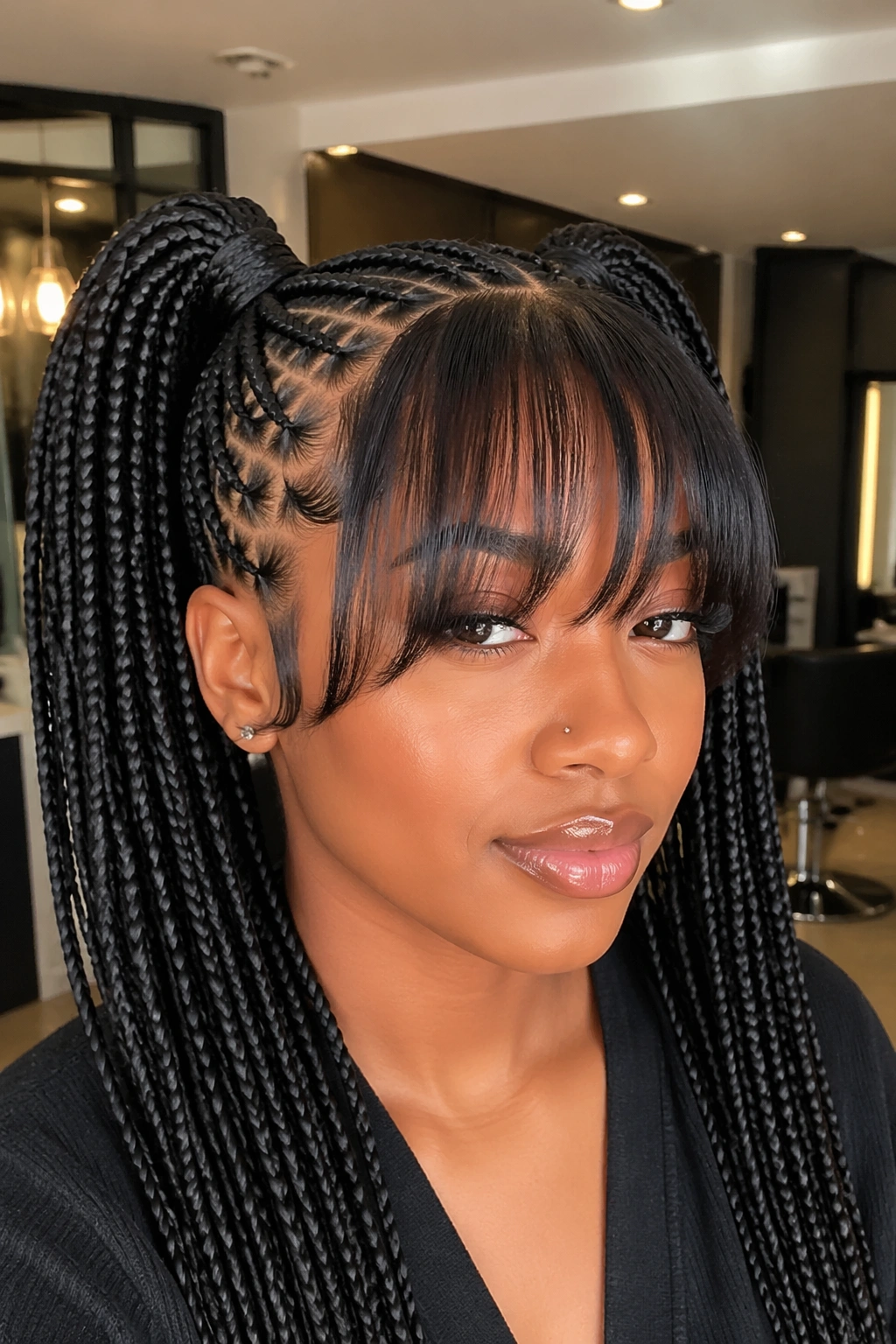
Stitch braids give the roots that crisp, lined look people love, and layered bangs stop the front from feeling boxy. The layers can be braided pieces of different lengths or loose front sections that fall in stages across the forehead.
I think this style works especially well when you want a sleek base but do not want the front to feel too hard. The stitch pattern brings structure. The layered bangs soften it. That balance matters more than most people realize.
If the ponytails are extensions, keep them long enough to swing but not so long that they drag the whole style down. A shoulder-grazing or mid-back length often looks cleaner than very heavy lengths. The bang pieces can be braided straight and then gently curled at the ends for a little bend.
This is one of the more polished options on the list. Clean parting, neat rows, and bangs that do a bit of framing. Nice and sharp.
11. Loc Ponytails with Face-Framing Bangs
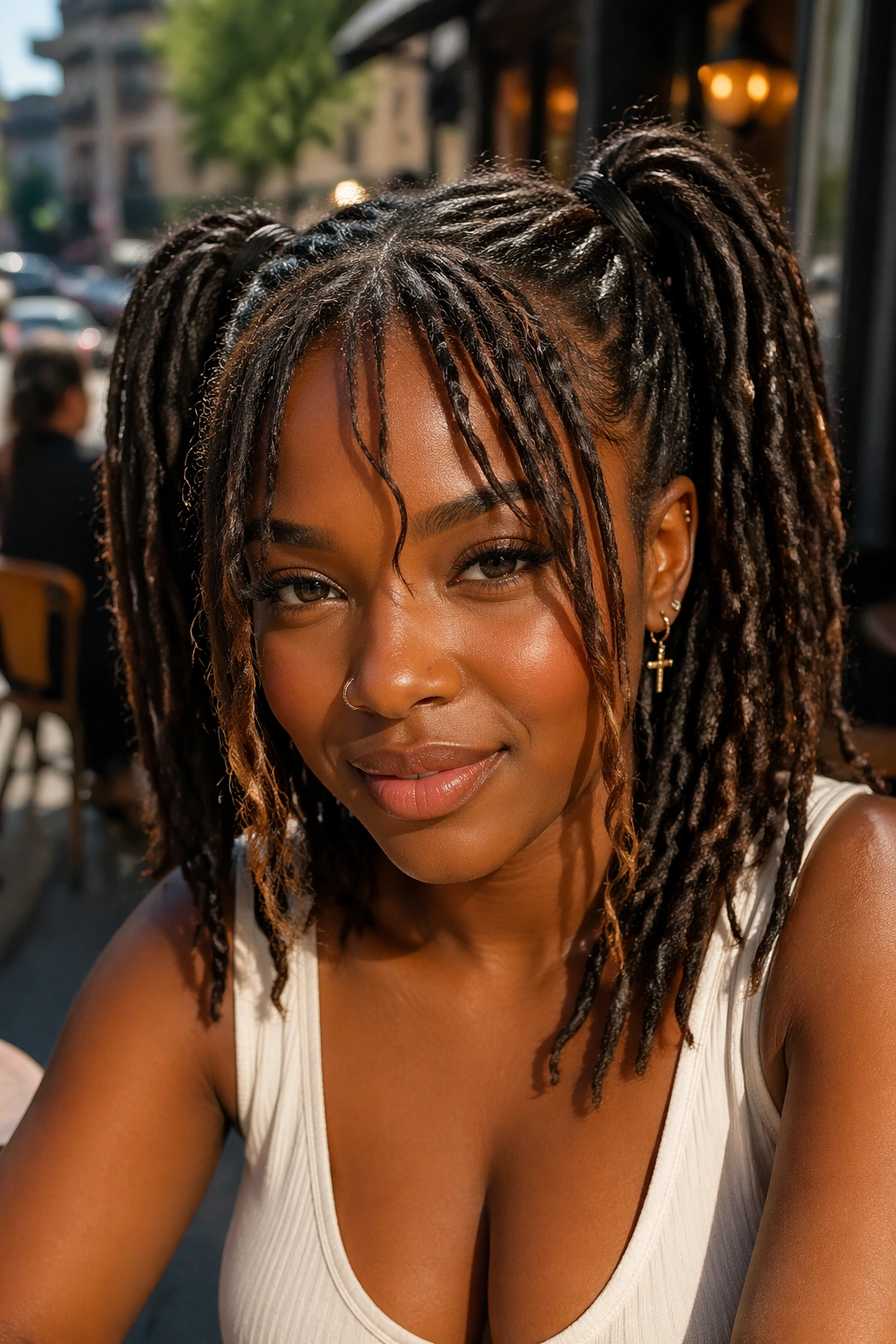
Loc ponytails have a beautiful weight to them. When you split the hair into two ponytails and leave out a few shorter locs or twisted pieces at the front, the face-framing bangs make the style feel personal instead of rigid.
The bang pieces can be free locs, thin twists, or curled front strands if your locs are styled with added texture. I like this look because it keeps the character of the locs front and center while still giving the face a softer outline. The ponytails can sit high, low, or somewhere in between, depending on how much lift you want.
A few loc cuffs, wooden beads, or wrapped thread accents can add interest without making the style feel busy. Keep the front pieces light. You want them to frame the eyes, not cover them.
This style has a calm confidence to it. No fuss. No fake slickness.
12. Twin Ponytails with Beads and a Full Fringe
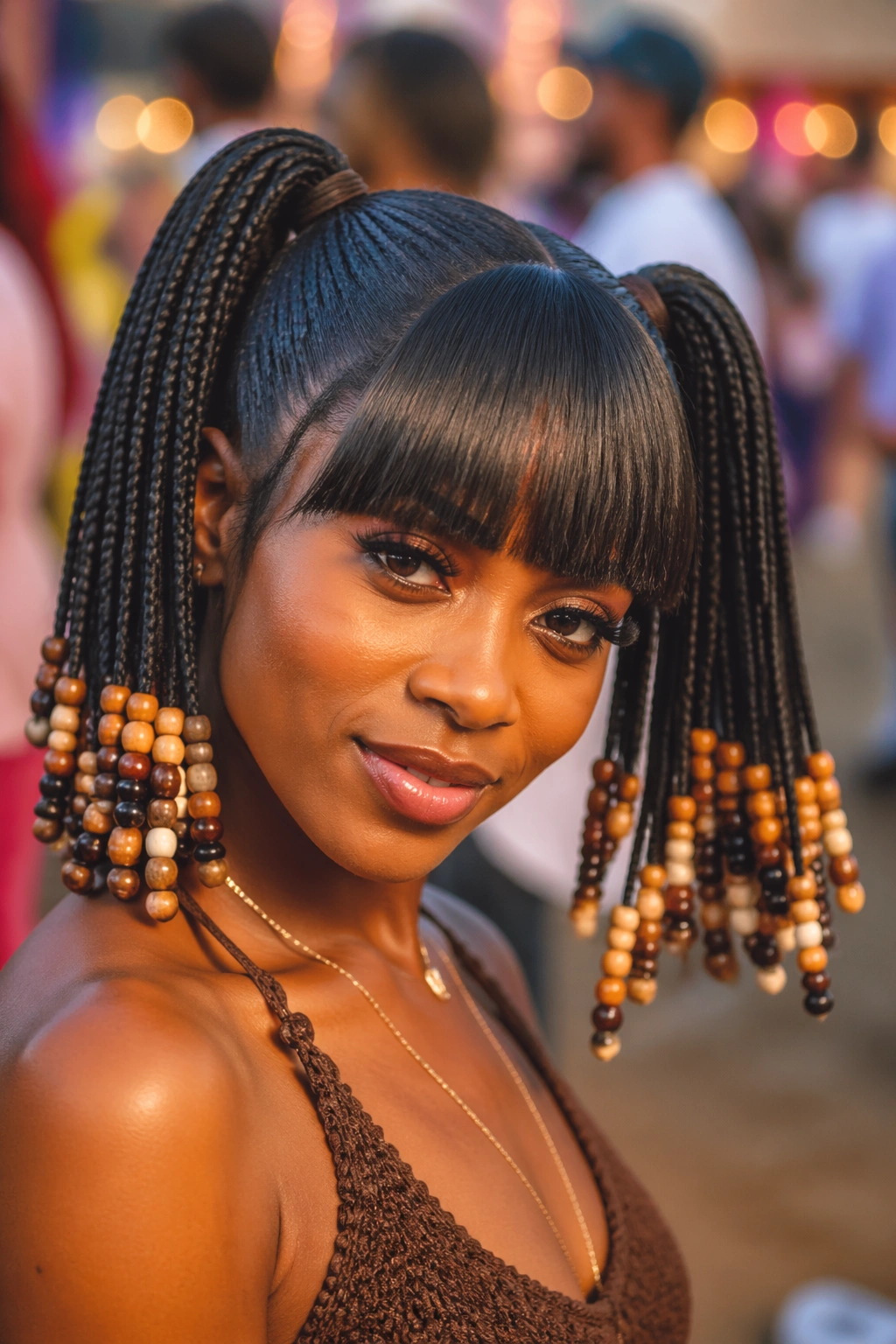
Beads change the mood fast. Add them to the ends of the ponytails, keep the fringe full across the forehead, and the style shifts into something playful, rhythmic, and full of movement.
The bangs can be blunt, softly curved, or braided into a full fringe that sits in a clean line. What matters is that the front feels complete enough to balance the bead weight at the ends. If the beads are large, keep the ponytails medium to long so the proportions stay even.
This look is especially good when you want the hair to make a sound and a statement. Every bead shifts a little when you walk. That little movement gives the style life. Just make sure the beads are secured well so they do not slide around during the day.
I’d use this for festivals, family events, or any setting where you want a bit of joy built into the style. It is hard to be bored wearing beads.
13. Half-Up Twin Ponytails with Loose Bangs
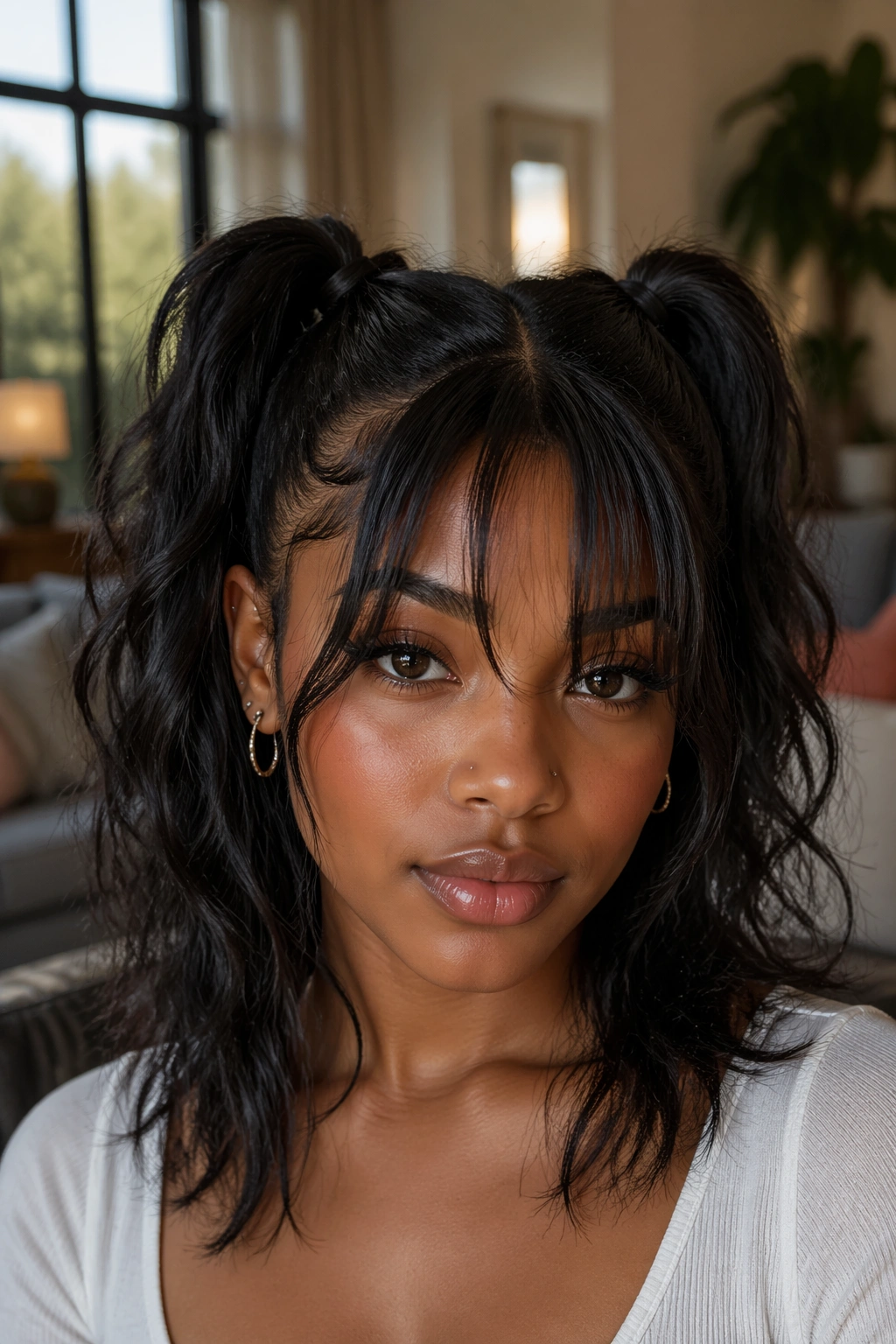
Half-up twin ponytails are a nice compromise when you want the drama of two ponytails but not the full pull of having all your hair lifted. The lower section stays down, while the top section splits into two playful ponytails. Loose bangs soften the front and help the style blend instead of looking chopped up.
This version is especially good on shoulder-length to long hair. The loose hair underneath gives extra texture and movement, which keeps the ponytails from feeling too cute or too young. If you curl the lower section in loose bends, the whole style gets richer and less flat.
A little teasing at the crown gives the top ponytails lift. Keep it controlled, not fluffy in a messy way. The bangs should sit lightly on the forehead or split slightly to one side, depending on your face shape.
Best detail: a silk press or stretched blowout makes this much easier to shape, but twist-outs can work too if the texture is defined enough.
14. High Crown Twin Ponytails with Curled Ends and Full Bangs
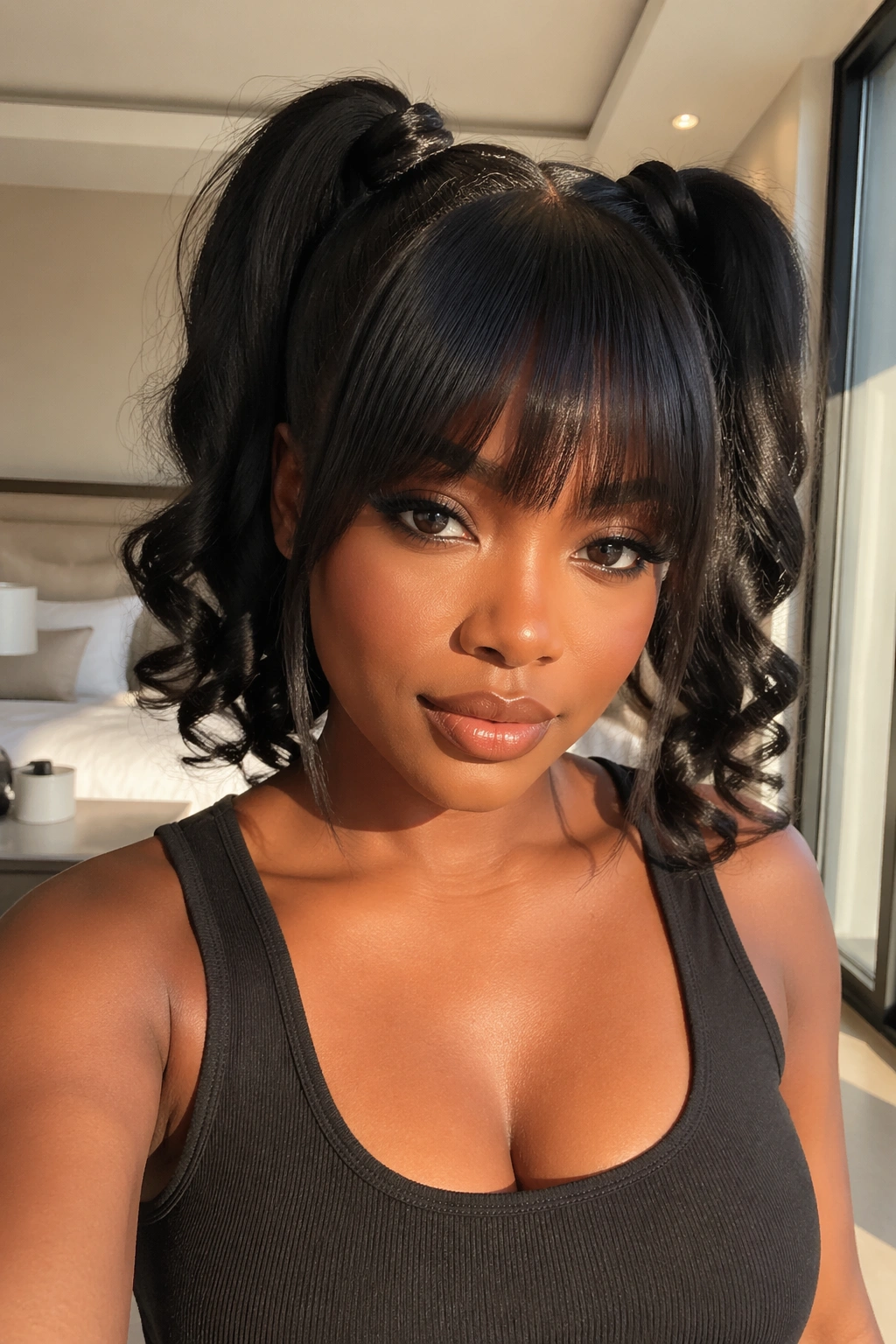
A high crown placement gives the style lift right where it counts. The ponytails start closer to the top of the head, the ends are curled or set with flexi rods, and the full bangs bring weight back to the front so the style does not drift too far upward visually.
This is one of my favorite shapes for people who want a little glam without going into full updo territory. The curled ends soften the look and keep the ponytails from feeling too severe. Full bangs help anchor the style, especially if you have a longer face or want the forehead area to feel less open.
Use a medium barrel iron, flexi rods, or wand curls on the ends only. That keeps the top smooth while giving the tail ends movement. A light setting spray helps the curls hold without turning stiff.
The result is polished, but not stiff. That matters.
15. Low Nape Twin Ponytails with Sleek Middle Bangs
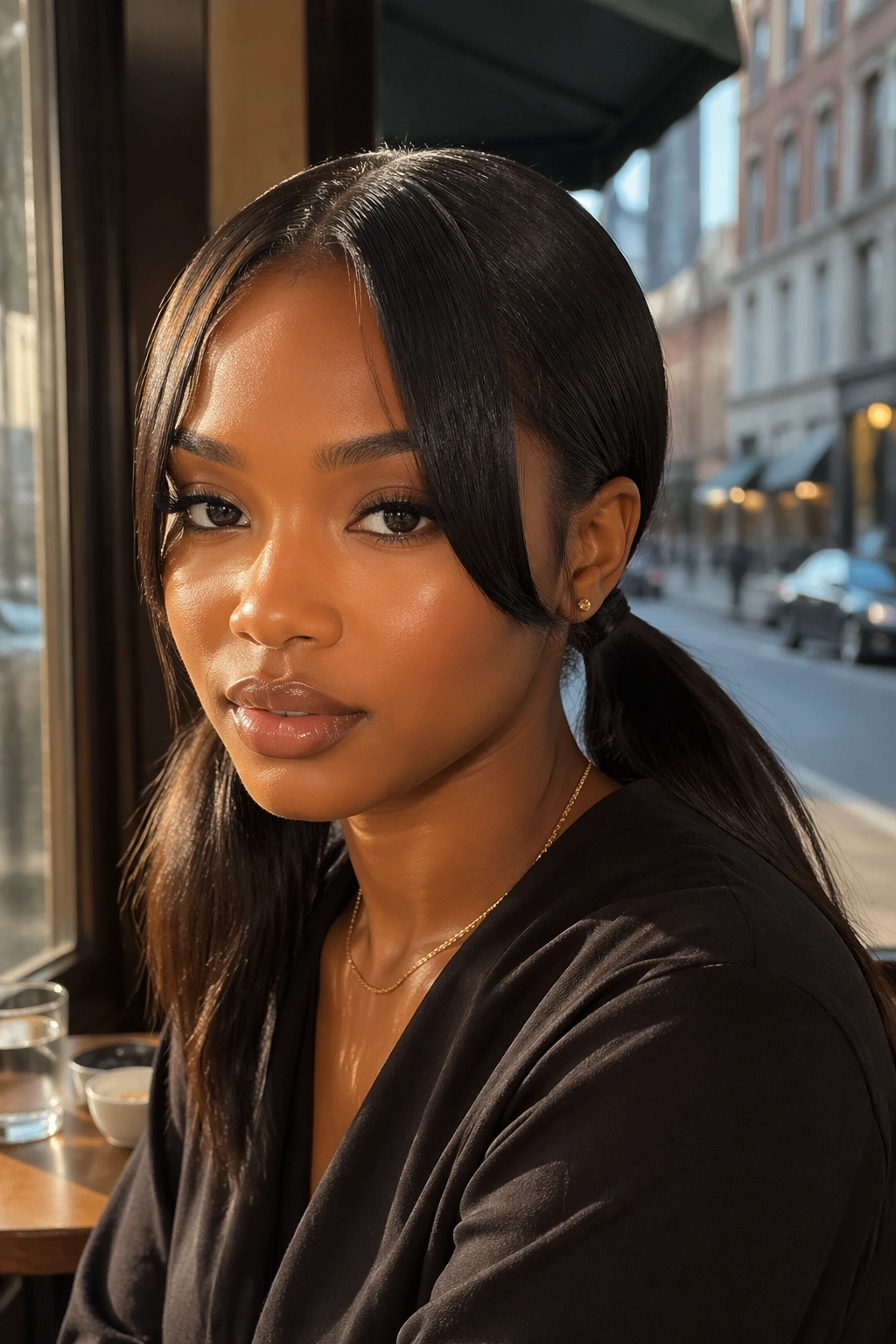
Low nape ponytails have a quiet kind of elegance. They sit low, hug the neck, and make room for a middle bang that falls straight down the center or parts just enough to soften the forehead.
I like this style because it looks neat even when it is not trying hard. A sleek base does most of the work, and the middle bang gives the face a long line that feels balanced. If your hair is thick, this can help keep the silhouette controlled. If your hair is finer, it can make the ponytails look fuller by contrast.
A little edge control at the temples is enough. You do not need to coat the whole hairline. I’d keep the ends either bone-straight or gently curled inward, depending on whether you want a sharper or softer finish.
This is a good style for formal settings, but it does not feel stuffy. That’s the charm.
16. Afro Puff Twin Ponytails with Tapered Bangs
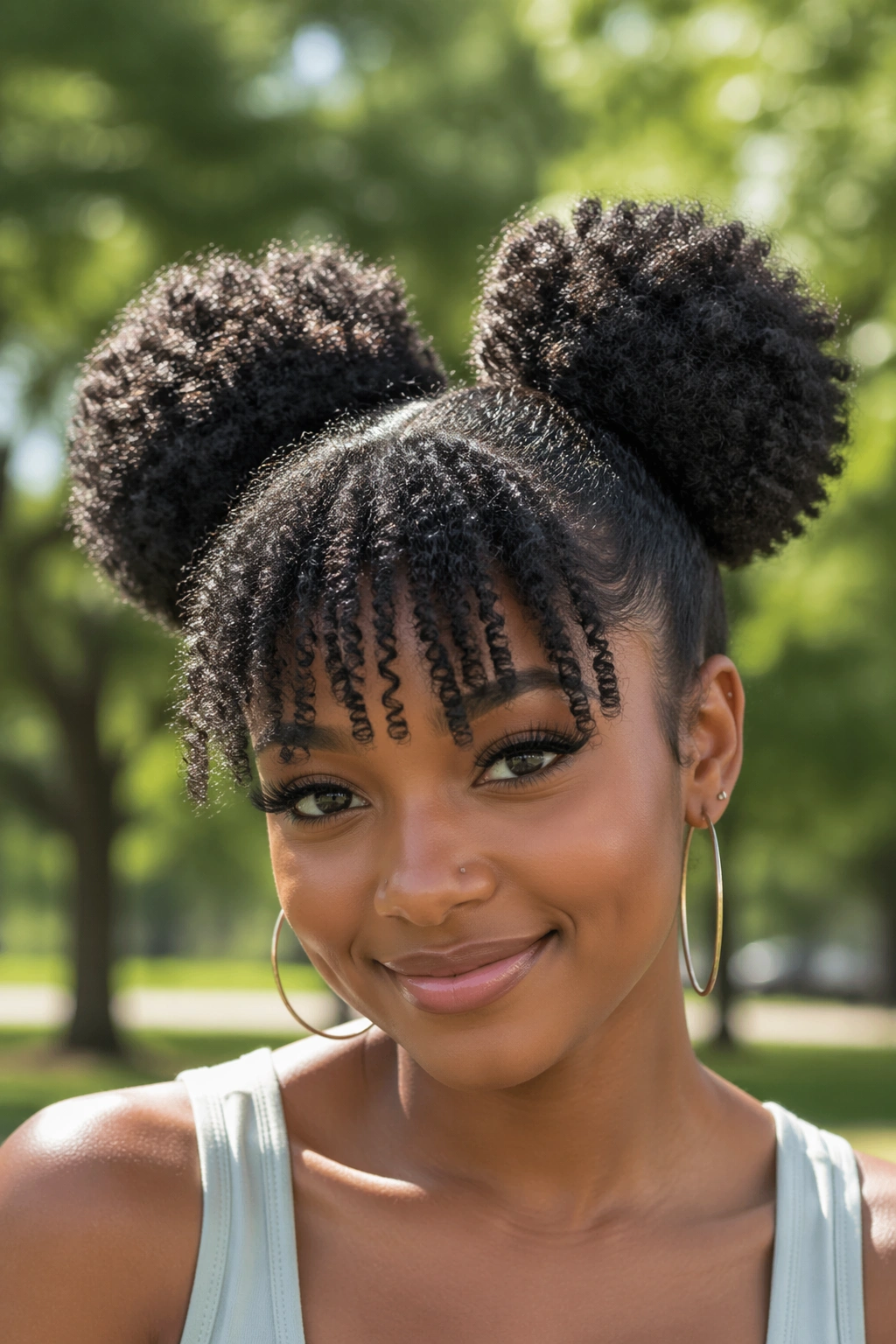
Two afro puffs are already fun. Add tapered bangs in the front and the style gets a more shaped, intentional finish instead of just reading as “hair pulled into puffs.” The bangs can be softly trimmed, brushed forward, or shaped with curl cream so they taper around the face.
This style is strongest on natural hair with volume. The puffs should be rounded and full, sitting high enough to balance the front. Tapered bangs work because they echo the softness of the puffs without adding another heavy block of hair across the forehead.
What to keep in mind
- Use a light moisturizer before styling
- Stretch the front if shrinkage is too aggressive
- Shape the puff with your hands instead of over-brushing it
- Let the bang pieces keep some texture
The whole look feels youthful in the best way. Not babyish. Just lively, textured, and easy to move in.
17. Twin Ponytails with Edge Art and Braided Parting
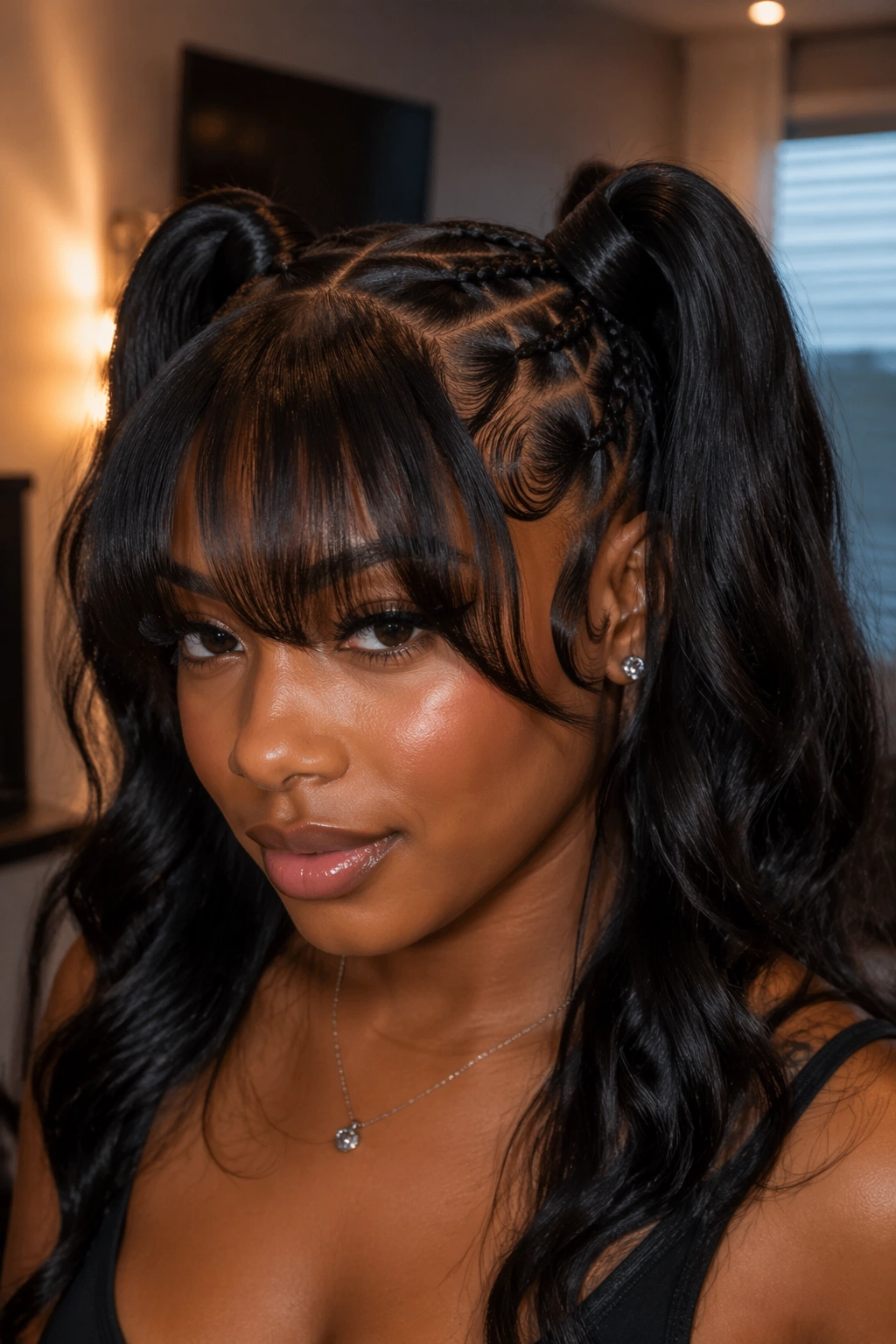
If you like a little detail near the hairline, edge art and braided parting can make twin ponytails feel custom instead of standard. The bangs can be loose, braided, or lightly curled, but the real focus is the line work at the scalp.
Think thin braid tracks, curved parts, or small swoops at the temples that guide the eye into the ponytails. This is the kind of style that looks more intricate the closer someone stands to it. From a distance, it still reads clean and balanced.
The bangs should not compete with the detailing. Keep them simple enough to let the parting shine. A soft side bang or a few curled front pieces usually works better than a heavy blunt fringe here.
This is a strong choice if you enjoy styles that reward a second look. It is a little art piece, really.
18. Flipped-End Twin Ponytails with Full Fringe
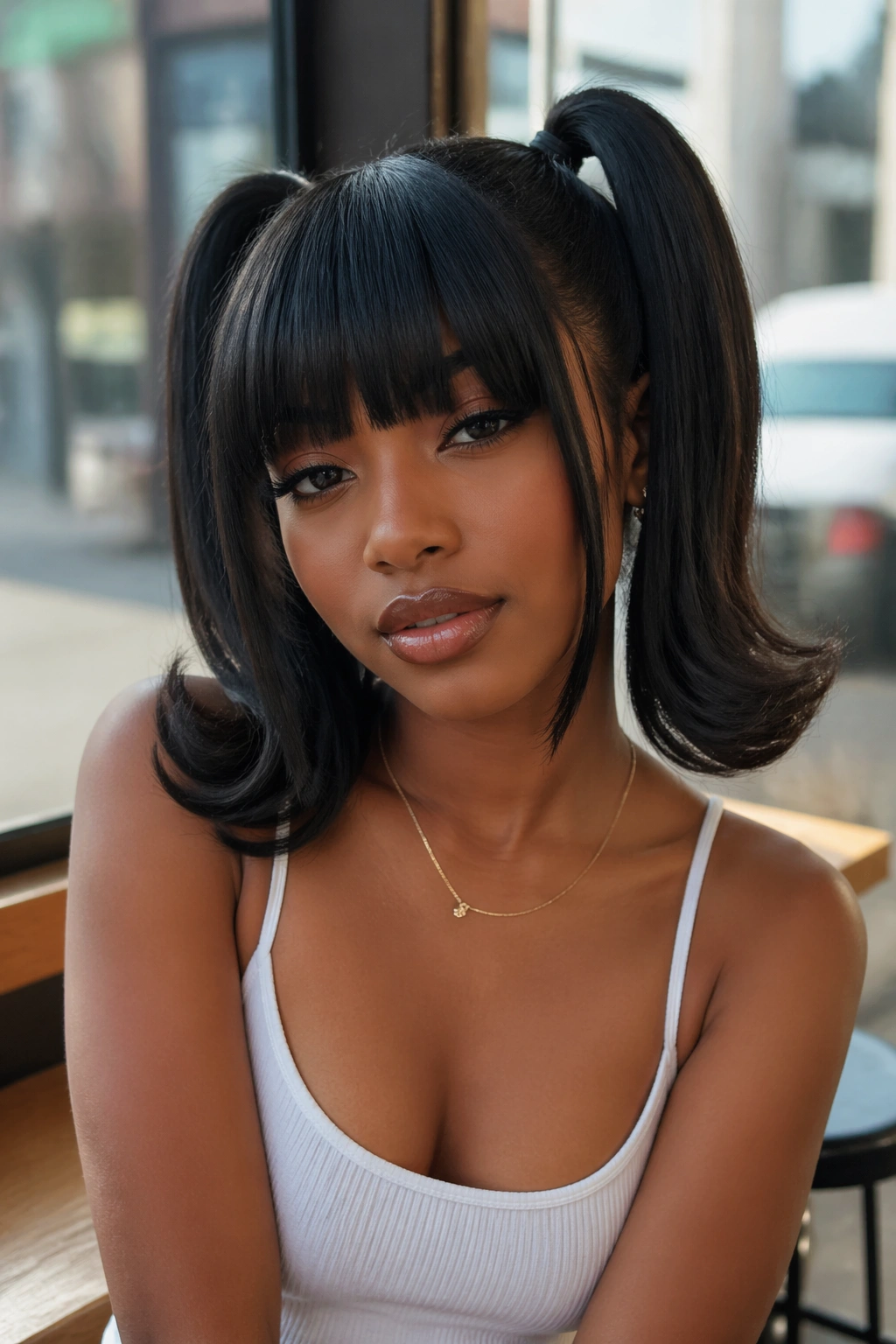
Flipped ends bring a retro feel without making the style look old-fashioned. Split the hair into two ponytails, keep the bangs full and even, then turn the ends outward with a flat iron, curling iron, or roller set so they kick away from the shoulders.
The flip at the ends makes the ponytails feel bouncy. The full fringe keeps the front grounded and stops the shape from feeling too airy. Together, they make a nice contrast. Straight lines in front, movement at the bottom.
This style looks especially good when the hair has a clean finish and the bangs are cut to sit just above the brows. If you want the front to look softer, slightly feather the edges of the bangs instead of keeping them razor-straight.
It has that cool, lived-in energy I always notice on styles that are both controlled and a little playful. No need to overthink it.
19. Two-Strand Twist Twin Ponytails with Soft Bangs
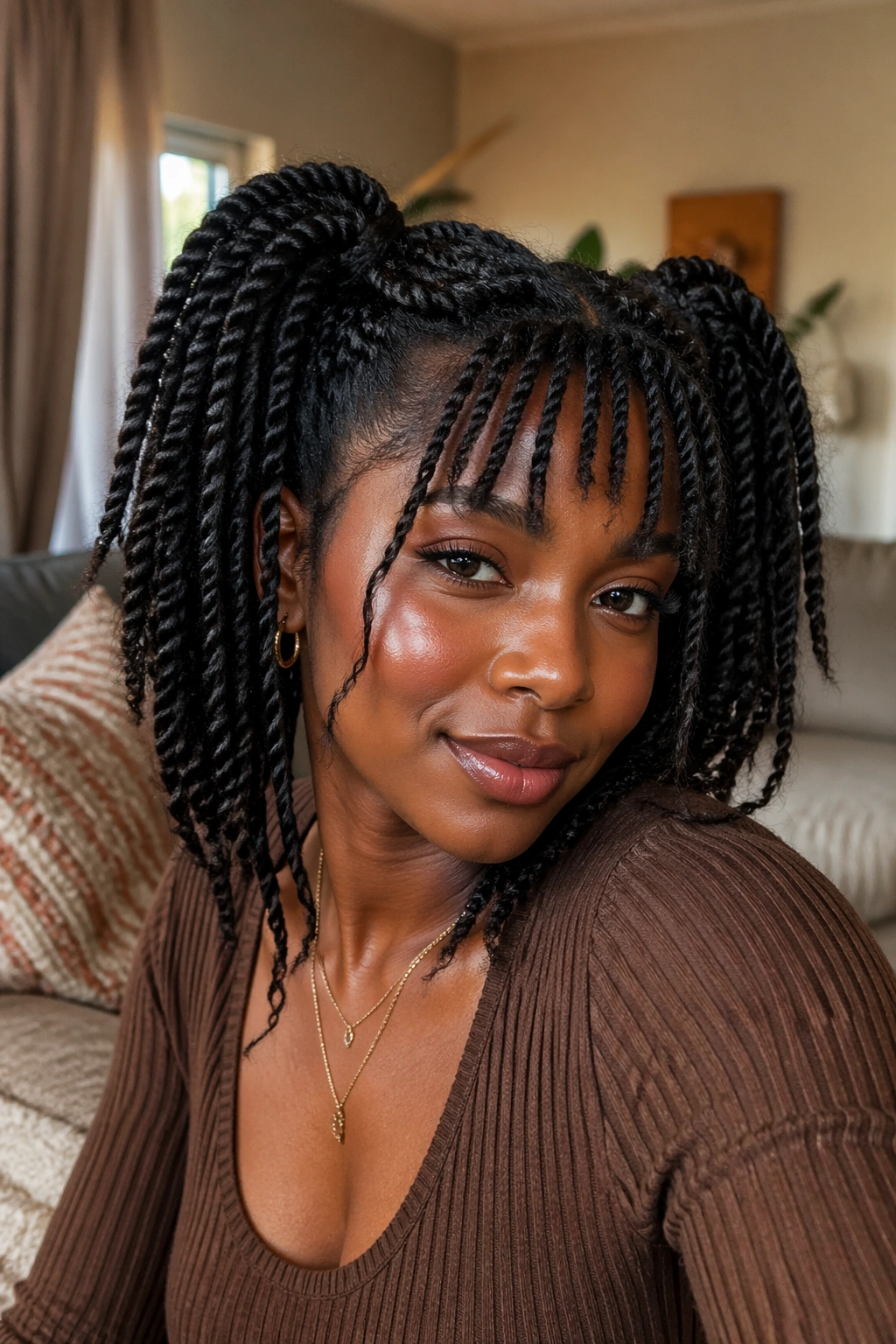
Two-strand twists make an easy base for twin ponytails because they hold shape without needing the kind of tension braids sometimes bring. Soft bangs add a little looseness up front and keep the style from getting too uniform.
I like this version for protective styling or for days when you want something that looks finished but does not demand heat. The twist texture already gives you movement, so the bangs can stay simple. Let them fall as a short twist fringe, or stretch them out with bands if you want a longer face-framing shape.
The good thing about this look is the texture. The twists and the bangs both feel tactile, like you want to touch them. That can be a bad thing if you over-style it, though. A little mousse and a satin wrap while it sets are usually enough.
This is one of the easiest styles on the list to wear for more than a day or two.
20. Sporty Twin Ponytails with Long Swoop Bangs
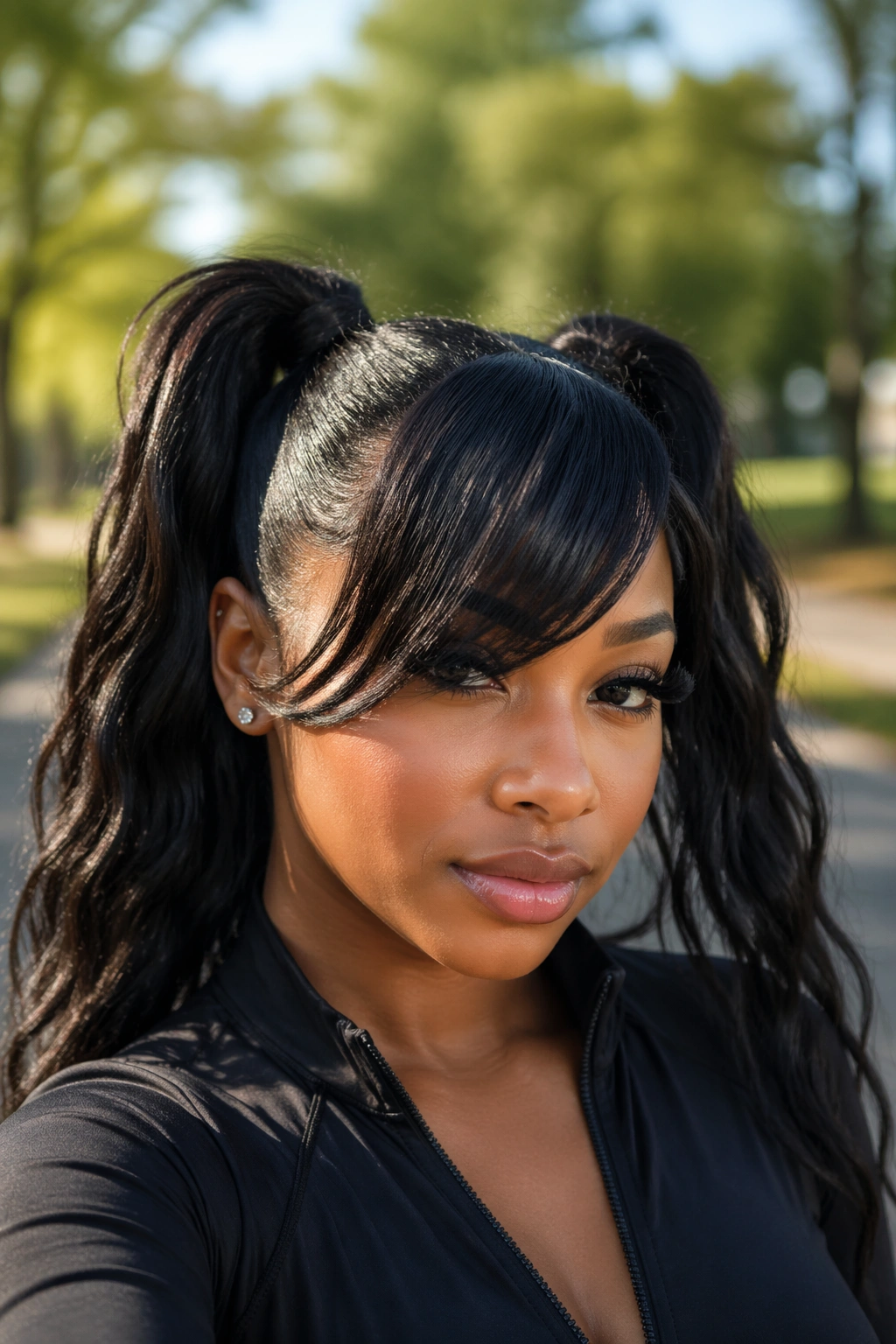
Sporty does not have to mean plain. Long swoop bangs can make twin ponytails feel active and sleek at the same time, especially when the ponytails sit high and move a little when you walk.
This style makes sense for days when you want hair off your face but still want some front drama. The bang should sweep across the forehead and end somewhere near the temple or cheekbone. That length is useful because it softens the shape of the face and keeps the style from looking too bare.
Use a stretch-friendly base so the ponytails hold. If the hair is tightly coiled at the roots, the style can puff up faster than you want. A bit of mousse at the front, then a scarf for setting, helps the swoop stay smooth.
No fuss. Just a style that can handle motion and still look intentional.
21. Colored Extension Twin Ponytails with Blunt Bangs
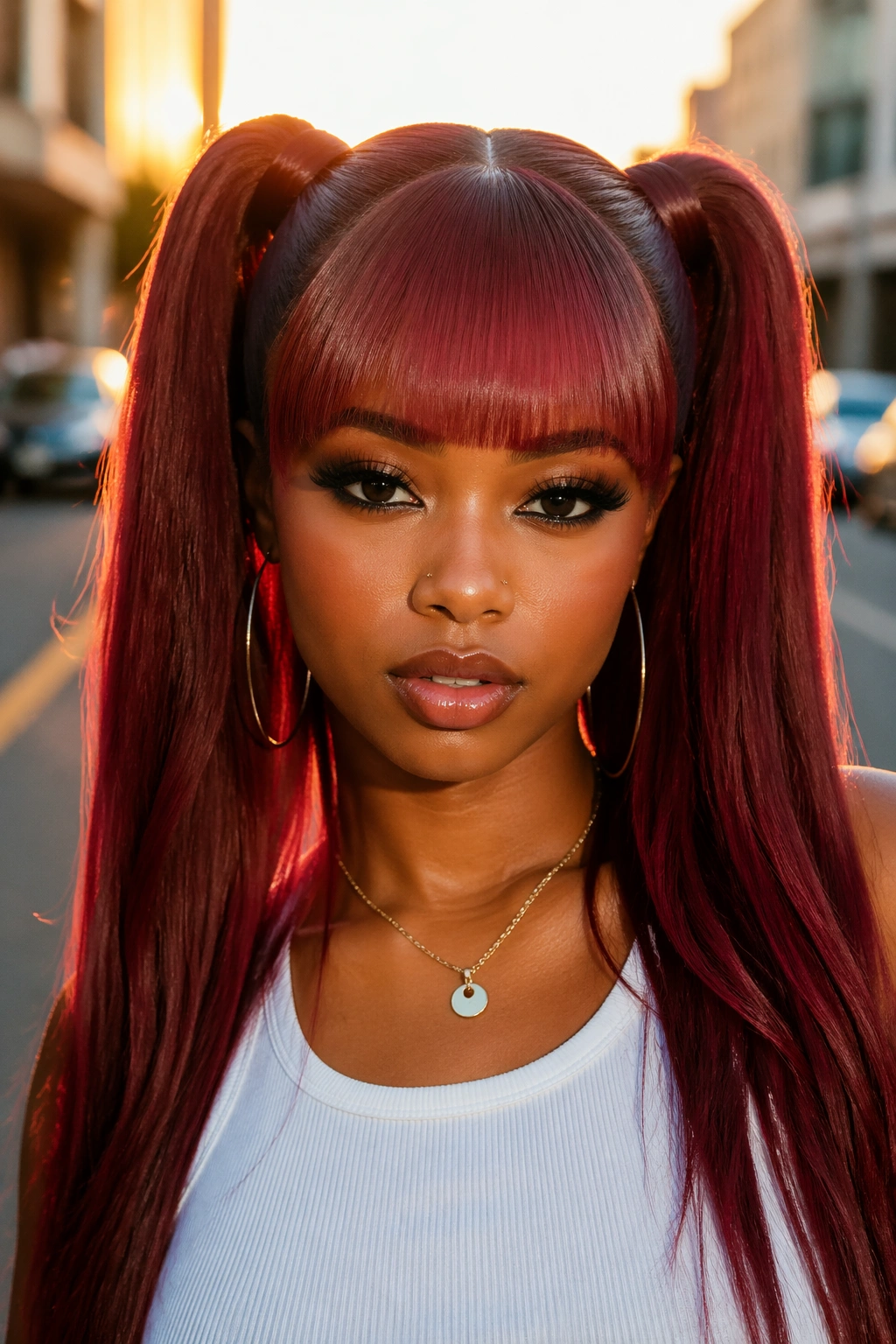
Color changes the whole mood of twin ponytails. Burgundy, copper, honey brown, chestnut, or even two-tone extensions can make the style feel brighter without you having to commit to coloring your own hair. Pair that with blunt bangs and the look gets bold fast.
The blunt fringe gives the color a frame. Without it, the style can drift into “just long hair.” With it, the ponytails feel designed. That matters, because color needs shape to look finished. If the extensions are very long, keep the bangs neat and compact so the face does not disappear behind all the length.
I’d choose this when you want the hairstyle to do the talking. Add minimal jewelry and let the color lead. If you go for warmer tones, keep the makeup soft. If the color is cooler or ashier, a sharper lash or lip can balance it.
The point is contrast. Color up top, bluntness in front, movement at the sides. Clean and loud at the same time.
22. Scarf-Tied Twin Ponytails with Wispy Bangs
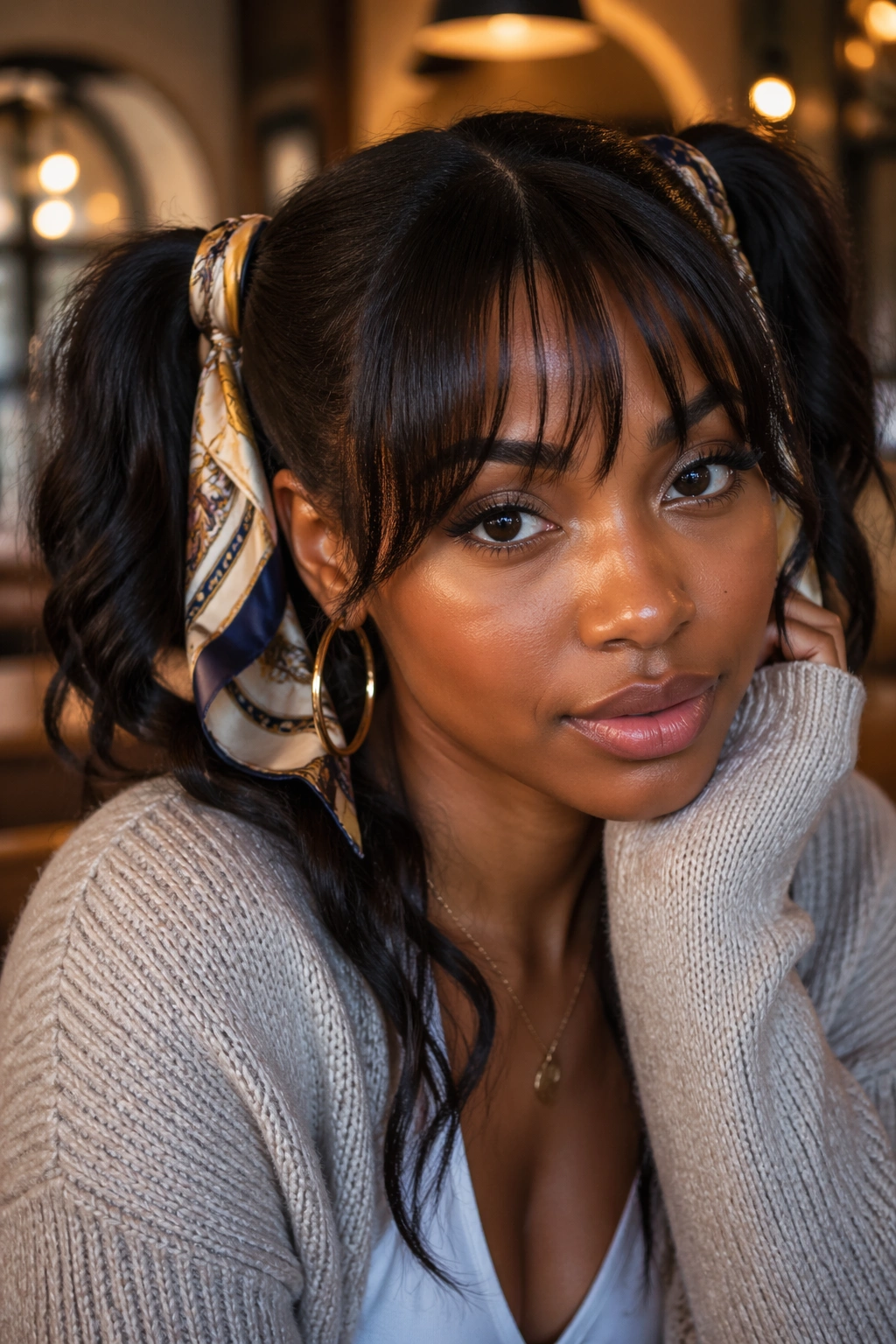
A scarf can make twin ponytails feel more styled with almost no extra effort. Tie it around the base of each ponytail or wrap it where the sections meet, then let wispy bangs fall lightly across the forehead.
This is a smart choice when you want to hide a plain elastic or add color without doing much else. The scarf also gives the style a softer finish, which keeps the ponytails from reading too hard or too sporty. Wispy bangs are the right partner here because they leave room for the scarf to be noticed.
Choose a scarf that is light enough to tie cleanly. Thick fabric can bulk up the base in a weird way. Silk, satin, or a smooth cotton blend works better. Keep the bangs airy and separated with your fingers instead of brushing them into one solid sheet.
A small detail, yes. But it changes the whole feel.
23. Wrapped-Braid Twin Ponytails with Side Bangs
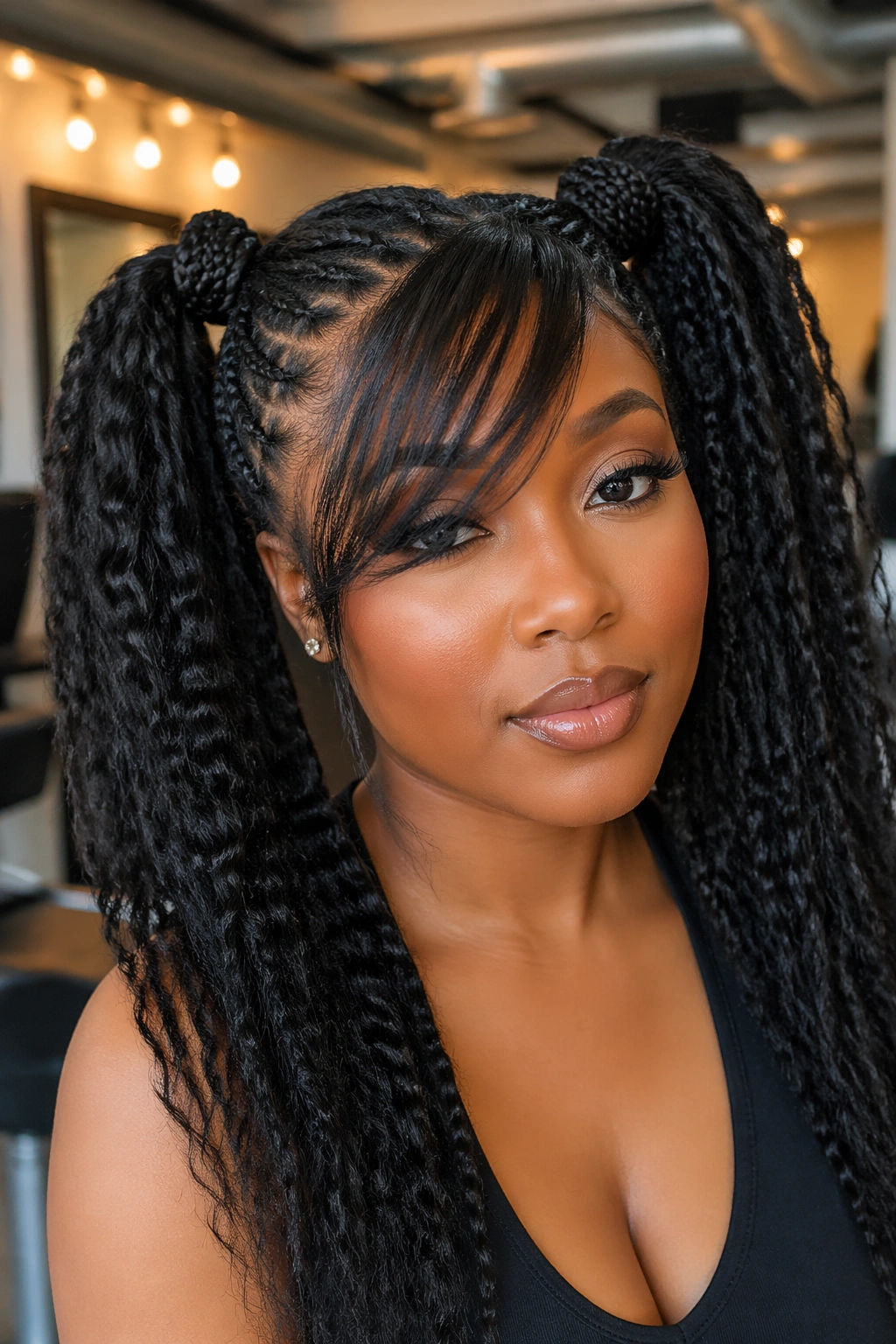
Wrapped braids around the base of each ponytail add texture where you usually expect plain hair ties. That little braid wrap turns a basic twin ponytail into something more finished, and side bangs keep the front from feeling too centered or severe.
The wrap can be a short braid from the front section, a longer braid wound around the ponytail base, or a decorative braid that leads into the tail itself. I like side bangs here because they balance the extra detail at the base. Straight-across bangs can fight with the braids if the style is already heavy on texture.
This version works well for long natural hair, braided extensions, or even a mix of both. The wrapped braid gives the style a handmade look, which I find more interesting than a standard elastic every time.
If you want a style that looks like you paid attention to the small stuff, this is it.
24. Layered Curl Twin Ponytails with Face-Framing Bangs
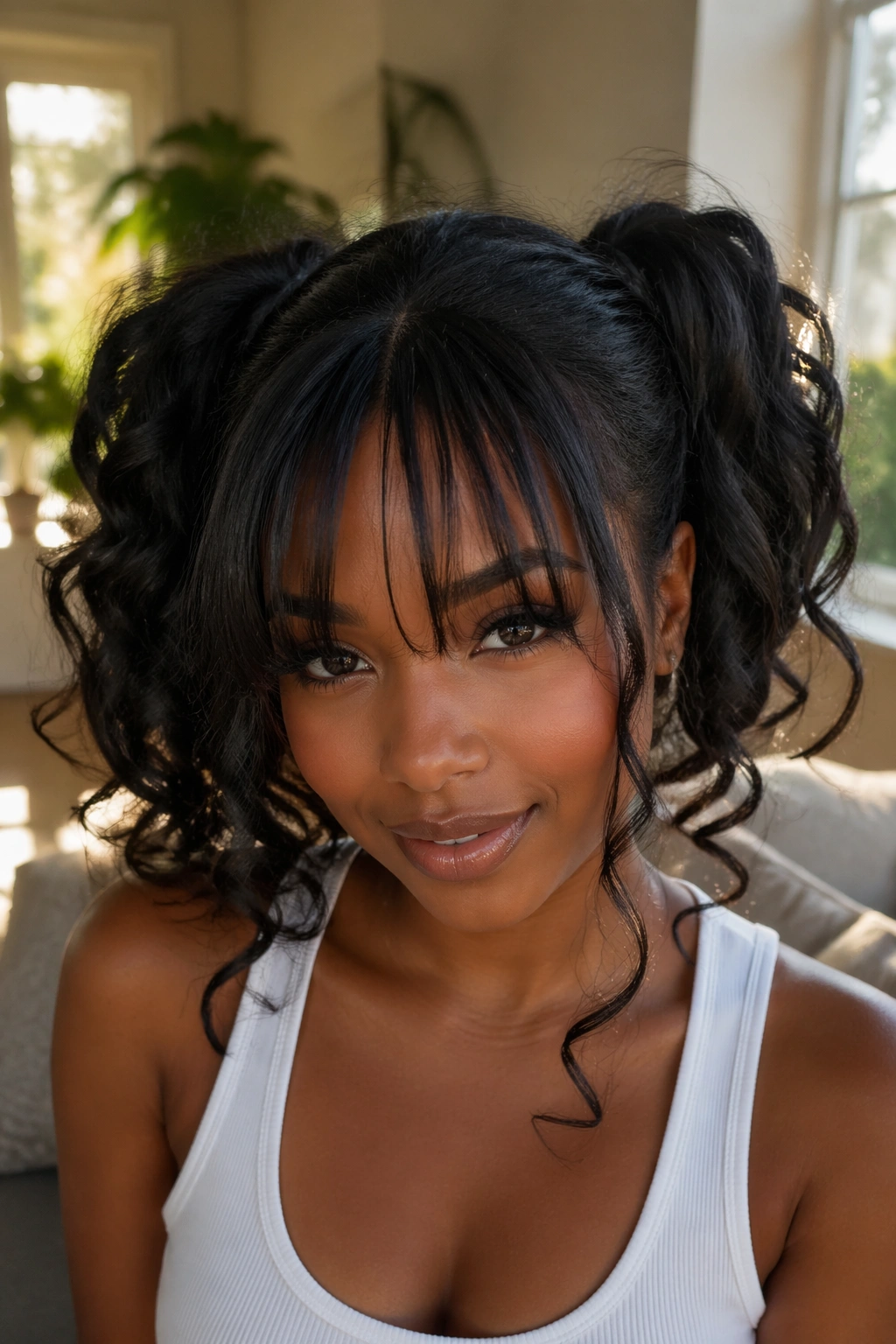
Layered curls are what keep twin ponytails from getting boxy. Instead of one flat sheet of hair on each side, the layers break the shape up and give the ends a little bounce. Face-framing bangs finish the outline by leading the eye toward the cheekbones and jaw.
This style is especially good if your hair is curled, wand-styled, or set in a stretched curl pattern. The layers can be built with the cut itself or created by curling different lengths in slightly different directions. That unevenness is what makes the style move well.
I like this one for people who want softness but not frizz. The curls should have shape, not stiffness. Use a light hold spray and finger-separate only once the curls are fully dry. If you keep touching them, the whole thing loses definition fast.
It is a flattering shape. That’s the honest answer. The face-framing pieces do a lot of work without looking like they’re trying to.
25. Accessory-Heavy Statement Twin Ponytails with Bangs
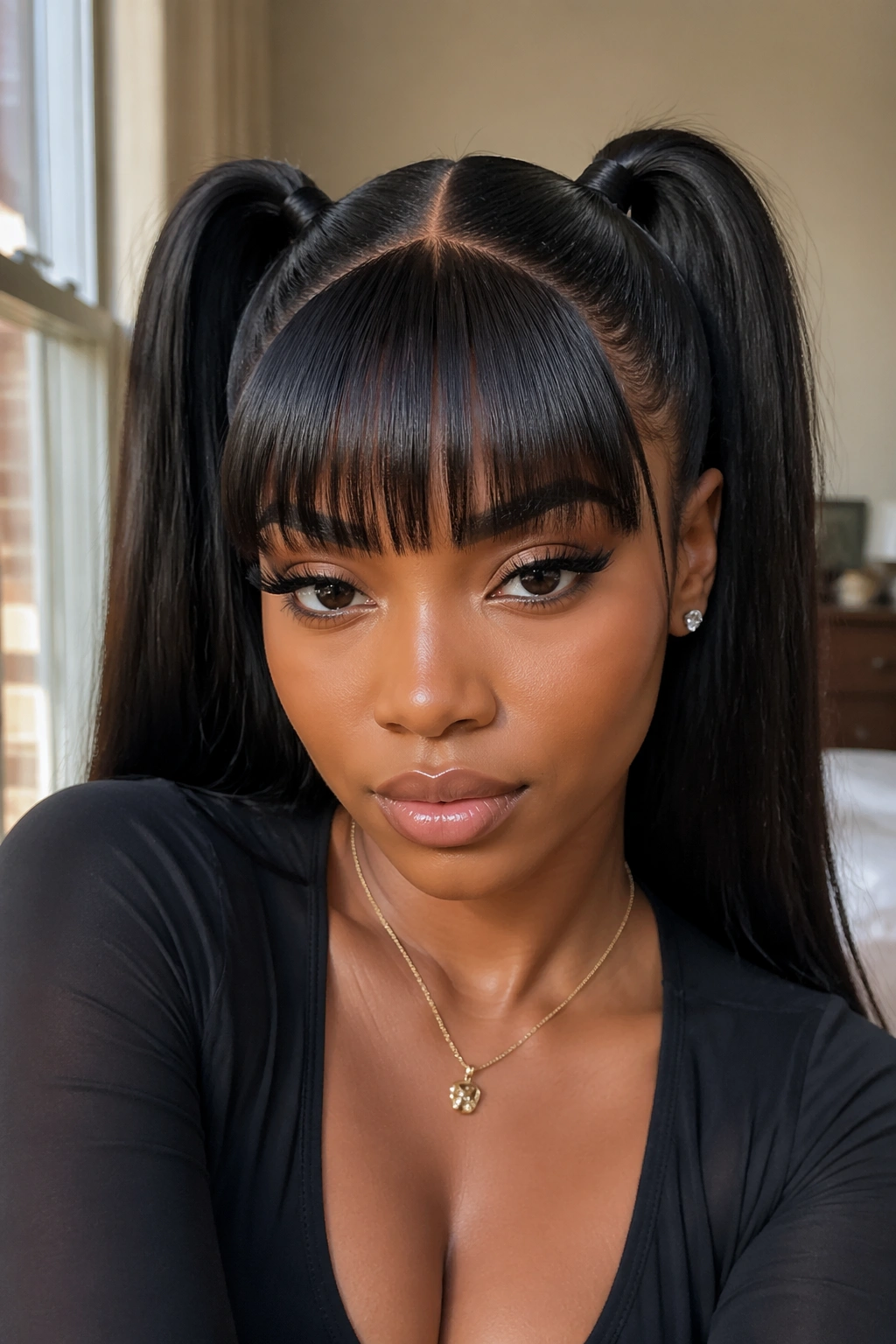
If you want the twin ponytails to feel like the main event, pile on the details with care. Hair cuffs, pearl pins, ribbons, small clips, or a mix of metals can turn the style into a statement without changing the structure itself. The bangs can stay simple or slightly textured so the accessories have room to shine.
This is the style I’d pick when the outfit is plain and the hair needs to carry more of the look. Keep the ponytails smooth enough to support the accessories, but not so flat that they lose shape. A few well-placed pieces do more than a dozen random ones.
My rule here
Pick one dominant accent and let the rest support it. Gold cuffs plus a satin ribbon? Good. Gold cuffs, pearl pins, rhinestones, three colors of ribbon, and a huge bow? That can slide into clutter fast.
The best part is that this style can be adapted to almost any texture, length, or extension choice. It is the most flexible ending point on the list, and maybe the one with the most personality when you get it right.