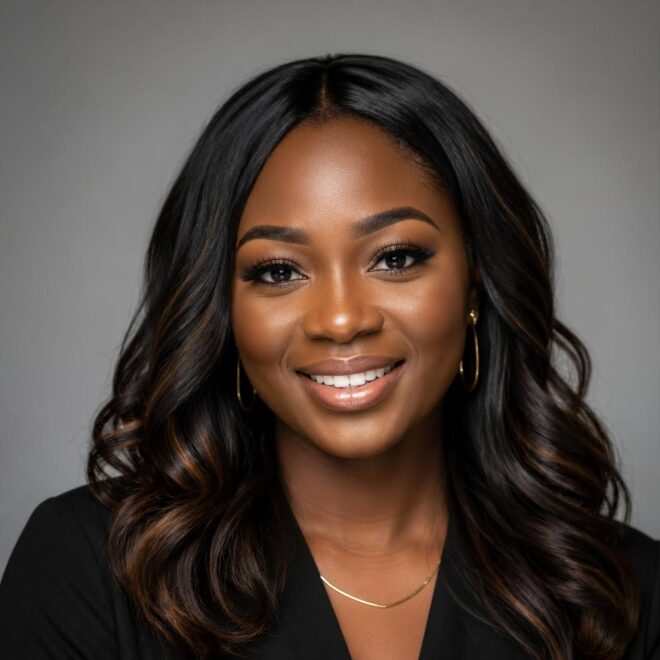


Short hair doesn’t play by the same rules at a wedding, and that’s exactly why braided half up half down styles can look so good on it. A chin-length bob with a tiny crown braid can feel more polished than a long, overworked updo, especially when the braid is doing double duty as decoration and structure.
Bridal hair on short lengths lives or dies on grip. You need texture at the roots, a few hidden pins, and a braid that’s small enough to hold without swallowing the rest of the style. That is the mistake I see most often: people try to force a big braid onto a bob, and the whole thing starts to slide by cocktail hour.
There’s a sweet spot, though. When the braid is scaled to the haircut, short hair looks fresh, modern, and a little bit cheeky in the best way—soft around the face, secure at the crown, and easy to pair with pearls, fresh flowers, or a veil. The styles below lean into that balance, and they work especially well when you want movement at the ends instead of a helmet of hairspray.
1. Mini Crown Braid with Soft Waves
A mini crown braid is one of those styles that makes short hair look more deliberate than people expect. It sits close to the head, so it does not need a ton of length, and it gives a bob or lob that bridal lift right away.
Why It Works on Short Hair
The trick is scale. Keep the braid narrow—about the width of your index finger—and let the rest of the hair fall in soft waves or bends. On short hair, a chunky braid can overpower the cut. A small one reads as elegant and clean.
- Best for chin-length bobs and collarbone-length lobs
- Works well with side parts and soft center parts
- Holds up better when the roots have dry shampoo or texture spray
- Looks polished with pearl pins or a small comb
My favorite part: it frames the face without making the whole style feel stiff. That matters on wedding days, when you still want to move your head without worrying about the braid shifting.
2. Side Braid Tucked Behind One Ear
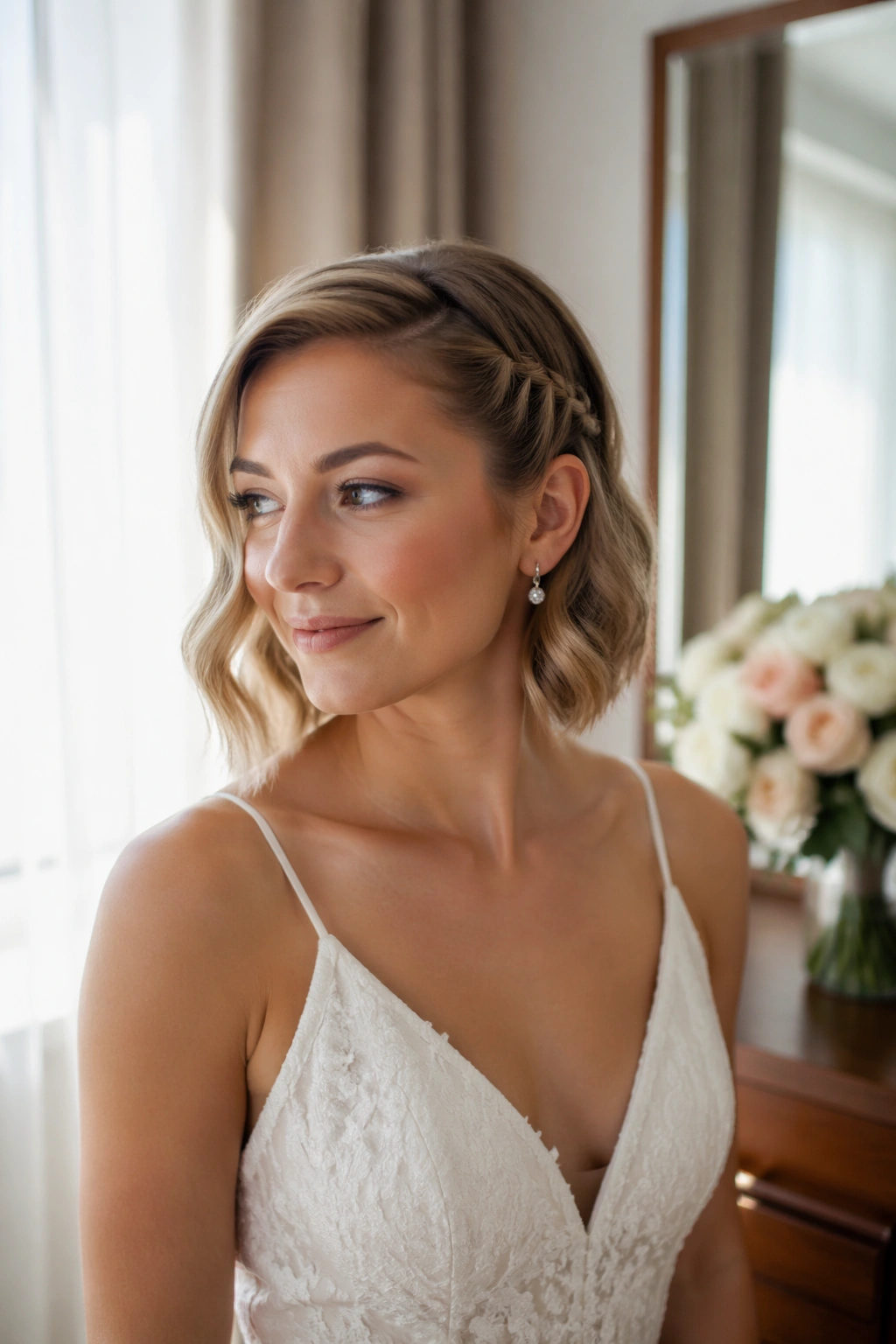
If you want a wedding style that feels polished without looking precious, the side braid is the easiest place to land. It pulls one side back, leaves the other side soft, and gives short hair a shape that feels intentional from every angle.
The asymmetry is what makes it work. On a bob, a side braid tucked behind one ear creates a clean line across the crown, then lets the ends breathe. I like this especially for dresses with one-shoulder necklines or heavier earrings, because the hair is there to frame, not compete.
It also forgives a lot. Slightly uneven layers? Fine. A fringe that never cooperates? Also fine. The braid can sit just above the ear, with the rest of the hair curled under or flipped out depending on the dress.
One small thing: keep the braid flat at the temple and secure the end under the back layer with two crossed pins. Loose ends at the side are what make this style fall apart.
3. Double Twists Into a Center Braid
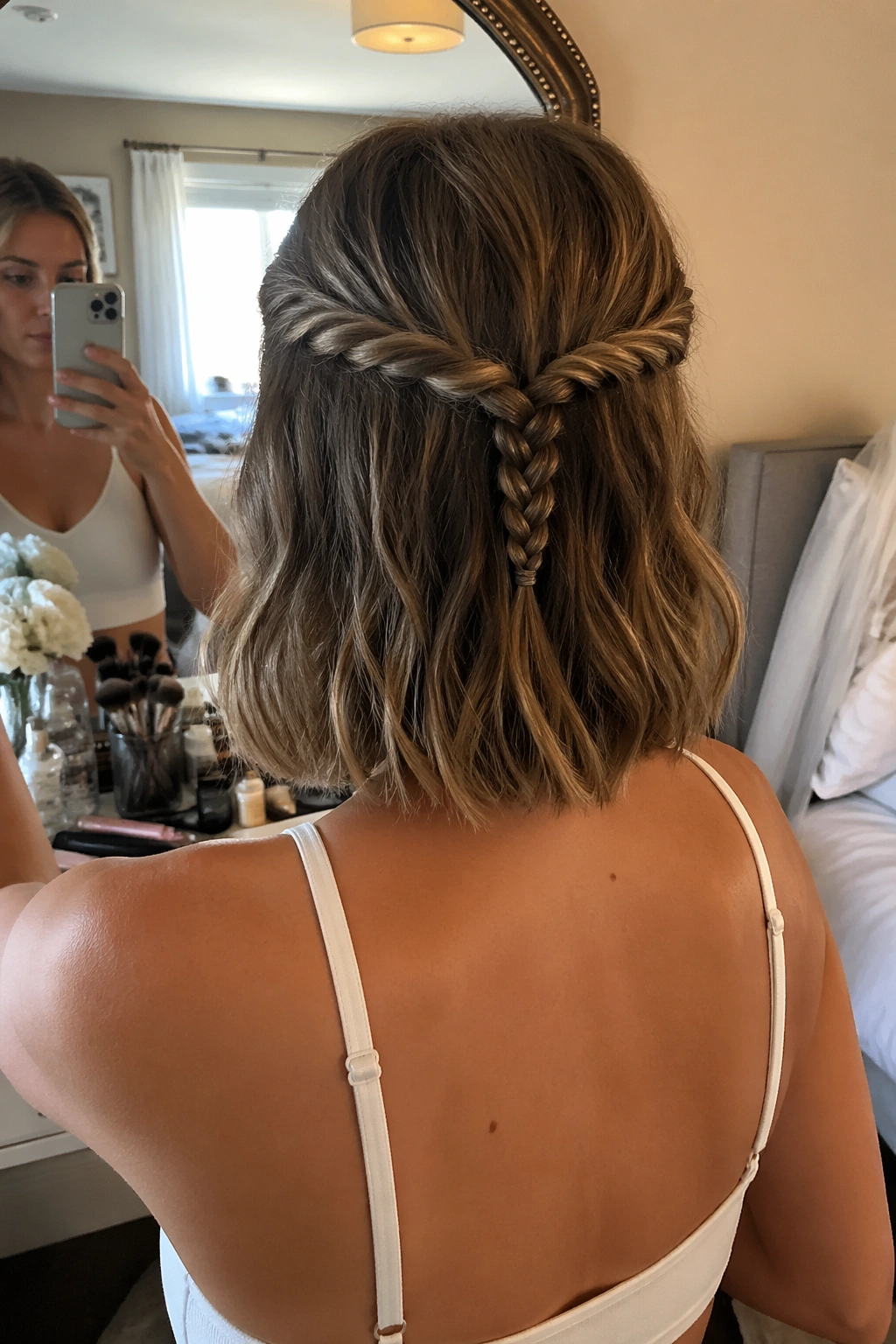
Why do twists work so well on short hair? Because they borrow length from themselves. Two small twists from the temples can feed into a tiny center braid at the back, and suddenly the hair looks fuller than it really is.
How to Style It
Start with textured hair, not freshly washed hair. Short lengths slip when they’re too clean. Section out the front pieces, twist each side back toward the crown, and join them into a narrow braid or rope plait at the back. It’s a small detail, but it gives the whole style a groomed shape.
- Best on layered bobs and lobs
- Good for veils that attach low on the head
- Uses fewer pins than a full braided crown
- Needs a light mist of flexible-hold spray, not stiff lacquer
This one feels especially nice for brides who want the half up half down idea, but don’t want hair hanging in their face all day. It stays neat, and it photographs cleanly from the side.
4. Dutch Braid Half Crown
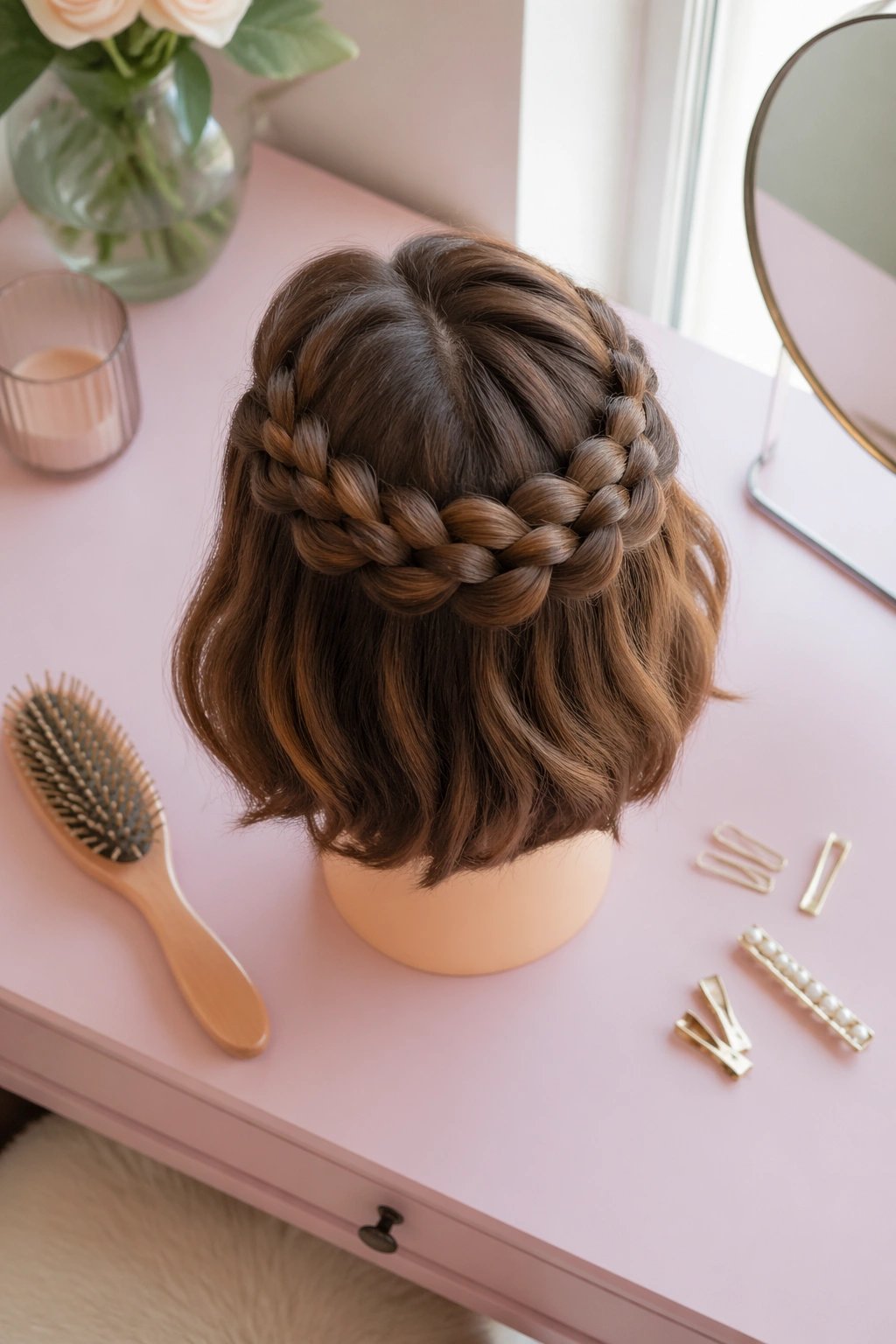
Picture a fine-haired chin-length bob that usually collapses by noon. A Dutch braid fixes that problem fast because the braid sits on top of the hair instead of disappearing into it, which creates visible lift at the crown.
That little bit of height matters. On short bridal hair, lift is often more important than length. A Dutch braid half crown gives the illusion of fuller hair without needing extensions, and it keeps the top half of the style from looking flat under a veil or floral comb.
It’s also a good match for dresses with detailed backs. The braid makes the top of the hairstyle interesting, while the ends stay soft and relaxed. I would choose this for a bride who wants the hair to feel structured but not severe.
Use a tail comb to keep the parting neat, then pancake the braid only slightly after pinning it. Too much pulling and it turns floppy. Too little and it looks narrow in a way that disappears on camera.
5. Waterfall Braid for a Bob
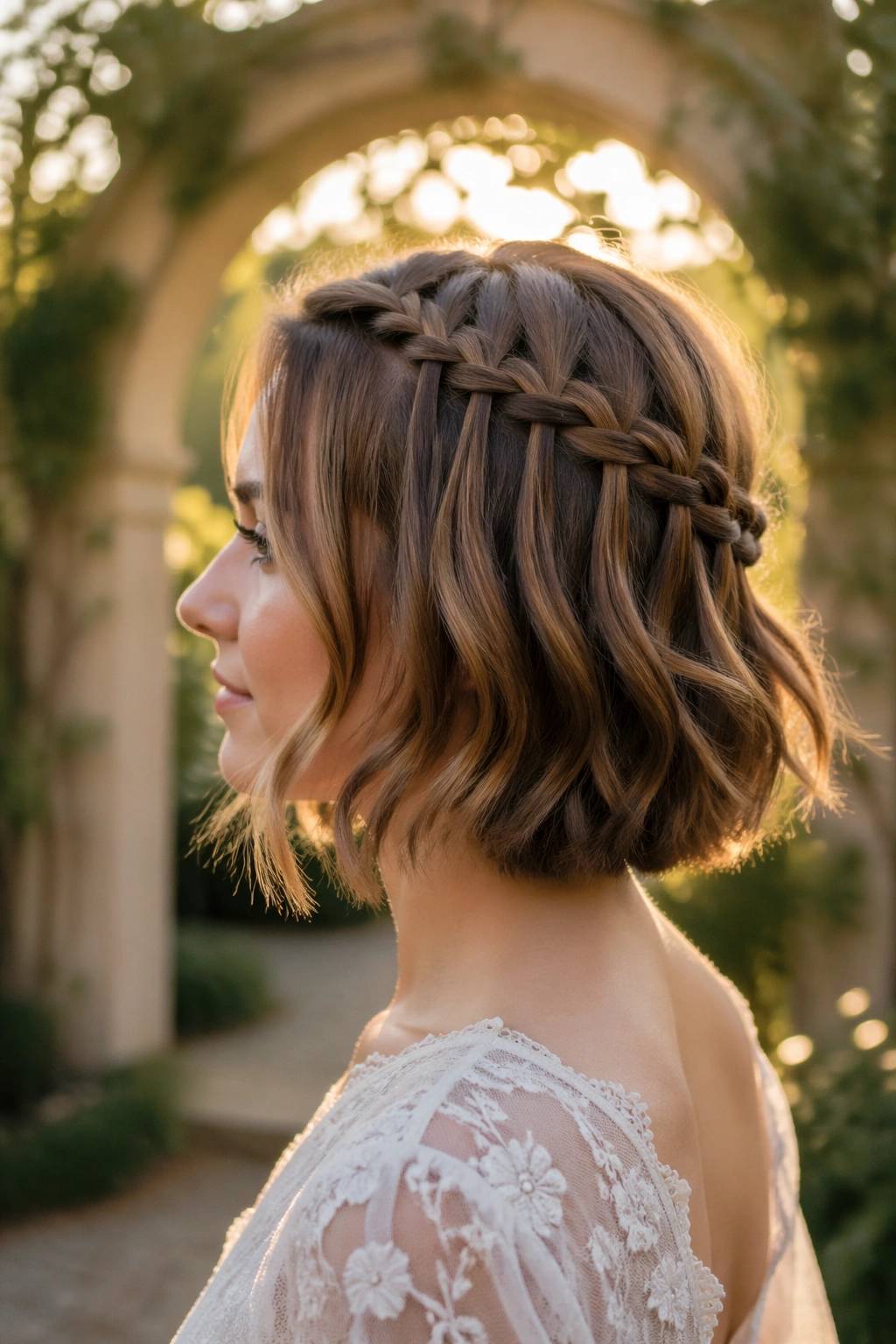
A waterfall braid is the romantic option that short hair can still pull off beautifully. The dropped strands give it movement, and the braid itself stays light enough that it doesn’t swallow the haircut.
It looks especially good on a bob with loose bends through the ends. Straight hair can make the waterfall effect too sharp, while a soft wave lets the braid blend in. The result is airy and delicate, almost like a ribbon tracing across the head.
I like this one for brides who want a softer face frame. The braid can start at the temple and skim across the crown, then stop before it gets crowded. That stopping point matters. Short hair looks best when the braid knows when to quit.
A tiny shine cream on the ends helps, but keep it away from the roots. Heavy product near the braid will make the sections look greasy, and that ruins the whole thing fast.
6. Rope Braids with Pearl Pins
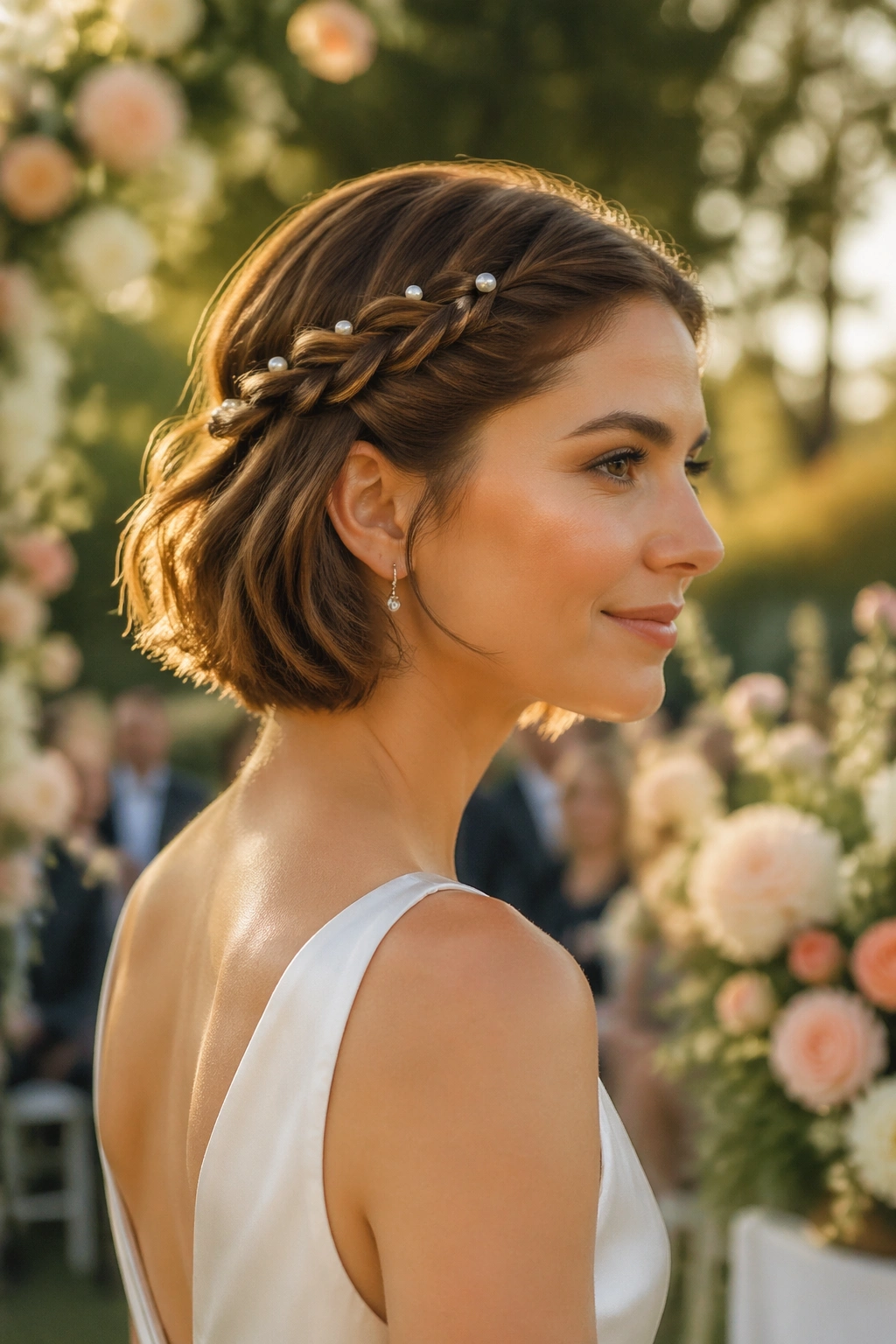
Rope braids are underrated for wedding hair. They’re flatter than a three-strand braid, easier to build on short layers, and they give you a clean twist that looks sharp with pearl pins or a satin dress.
Unlike a traditional braid, a rope braid doesn’t need much hair to show its shape. Two sections twisted together already give you the detail you need. That makes it useful for short cuts where a fuller braid would puff up and lose its line.
This style also sits nicely under accessories. A few small pearl pins can hide the elastic or anchor point, and the braid itself doesn’t fight with a necklace or earring. That’s why I keep coming back to it for minimalist brides.
If your hair has fine texture, spray the twists lightly with texture spray before braiding. If your hair is thick, keep the rope braid a little looser so it doesn’t stick out from the head.
7. French Braid with a Soft Crown Lift
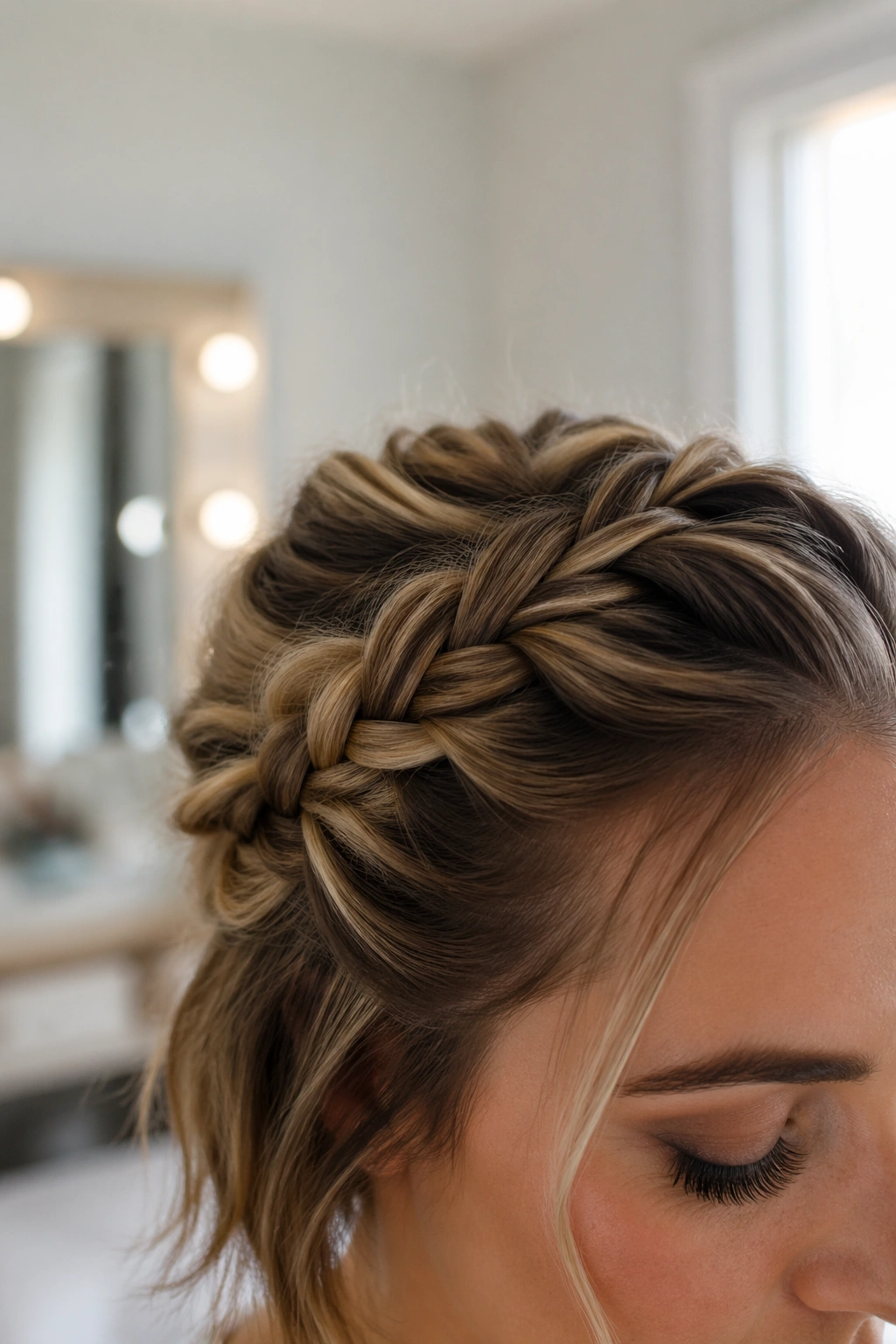
Some brides want soft. Some want a bit of edge. This one gives you both. A French braid that runs from the front hairline into the crown creates a lifted shape that feels a little stronger than a loose twist, but still very bridal.
Keep the Sides Soft
The key is not to drag the braid too tight. You want the roots to rise, not look pulled. Leave a bit of softness around the temples and let the lower layers fall naturally, curled or tucked under depending on the cut.
- Works well on pixies with longer top layers
- Fits short bobs with enough crown length to grip
- Pairs well with bold earrings
- Stays put when anchored with crossed pins under the braid
I like this for modern gowns and sharper silhouettes. It gives the hairstyle a clean spine, which sounds technical, but really just means the braid helps the whole look feel composed.
8. Braided Headband Half Up
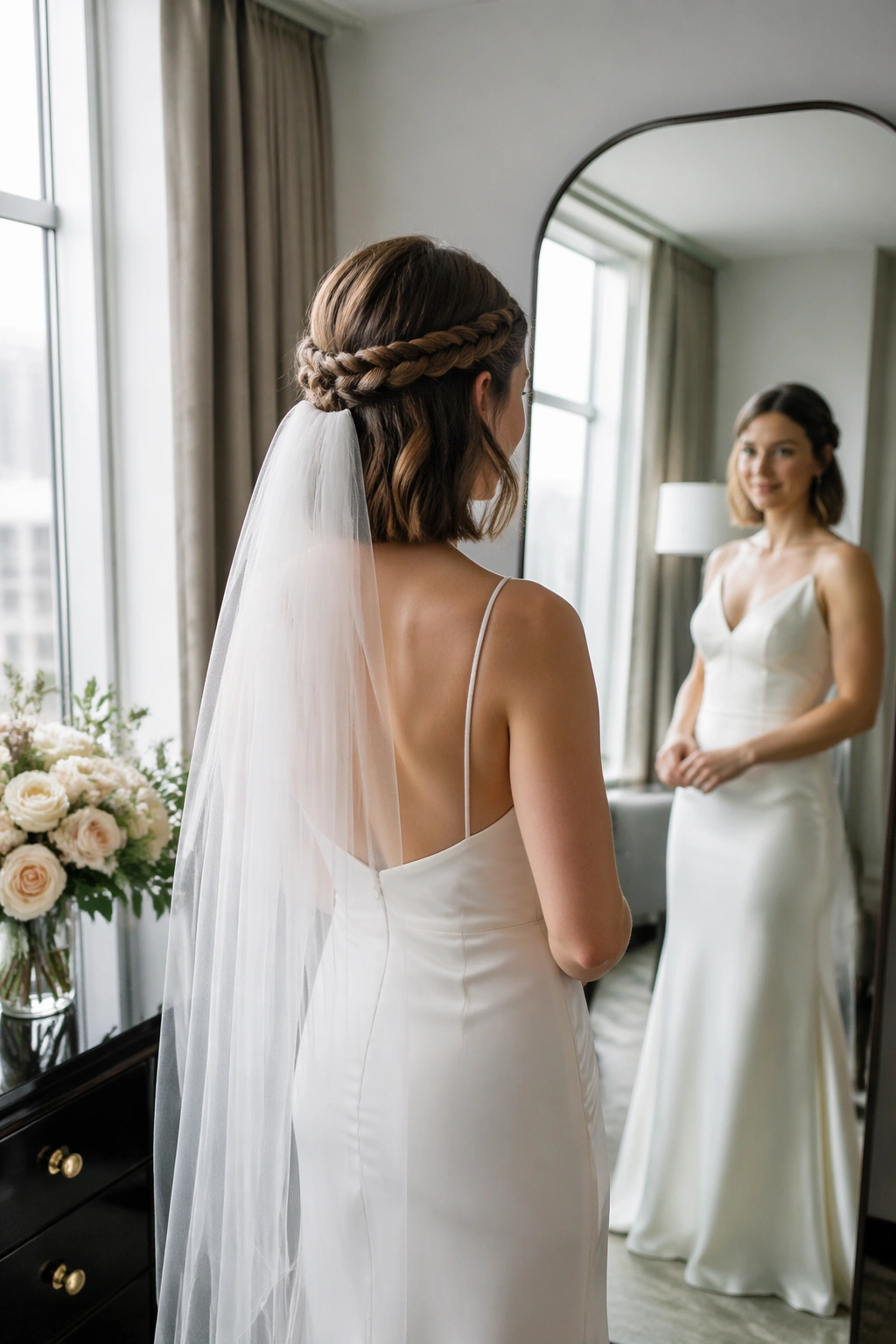
A braided headband is the style I trust when a veil needs a place to sit. It keeps the front controlled, leaves the back soft, and gives short hair a clean line across the crown.
It works especially well on bobs that fall at the jaw or just above the shoulders. The braid acts like a built-in accessory, so you don’t need much else. That’s a blessing if the dress already has beading, lace, or a dramatic neckline.
This style can lean sweet or crisp depending on how tight the braid is. A loose version feels gentle and slightly bohemian. A tighter one reads more tailored. Either way, the shape is easy to wear because the braid stays close to the head.
Place the veil under the braid if you want the top detail to stay visible. If the veil sits above it, the braid can disappear under layers of tulle, and that feels like a waste.
9. Boho Fishtail Crown
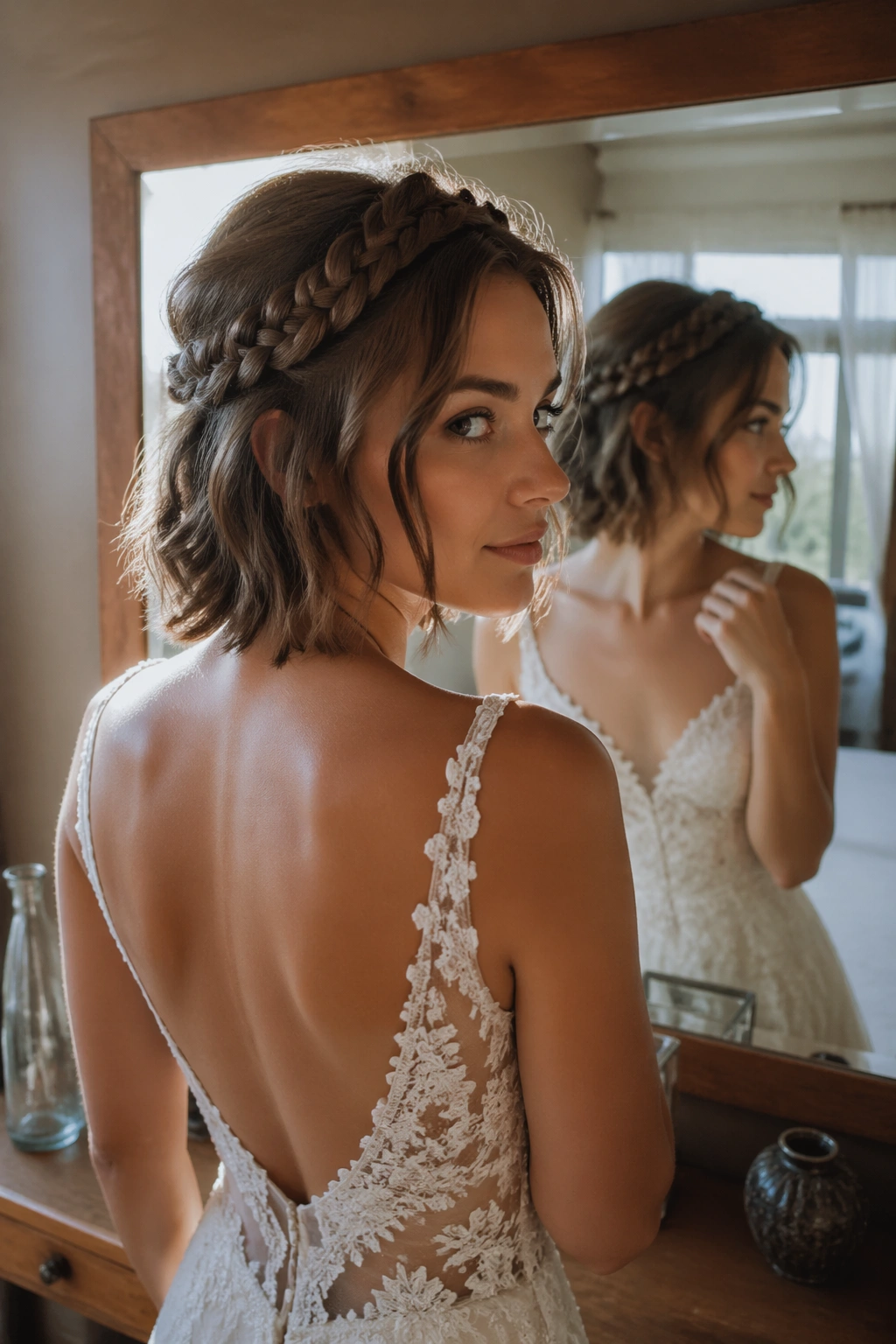
Why does a fishtail braid feel softer than a regular three-strand braid? The weave is narrower, so it breaks up the line of the hair in tiny pieces instead of one bold pattern. On short hair, that can be a gift.
A boho fishtail crown suits hair with a little wave and body. The braid can start near one temple, travel across the crown, and stop before the opposite ear, leaving the rest loose and textured. If you pancake the braid a touch, it looks fuller without losing the fishtail detail.
When to Choose It
This is the style I’d point to for garden weddings, dressy outdoor ceremonies, or any bride who wants softness first.
- Best on lobs and grown-out bobs
- Needs texture spray before braiding
- Looks better when the ends are waved, not pin-straight
- Can be finished with tiny baby’s-breath pins or nothing at all
It’s not the simplest braid to do on short hair, but when it works, it looks easy. That is the whole trick.
10. Pull-Through Braid Half Up
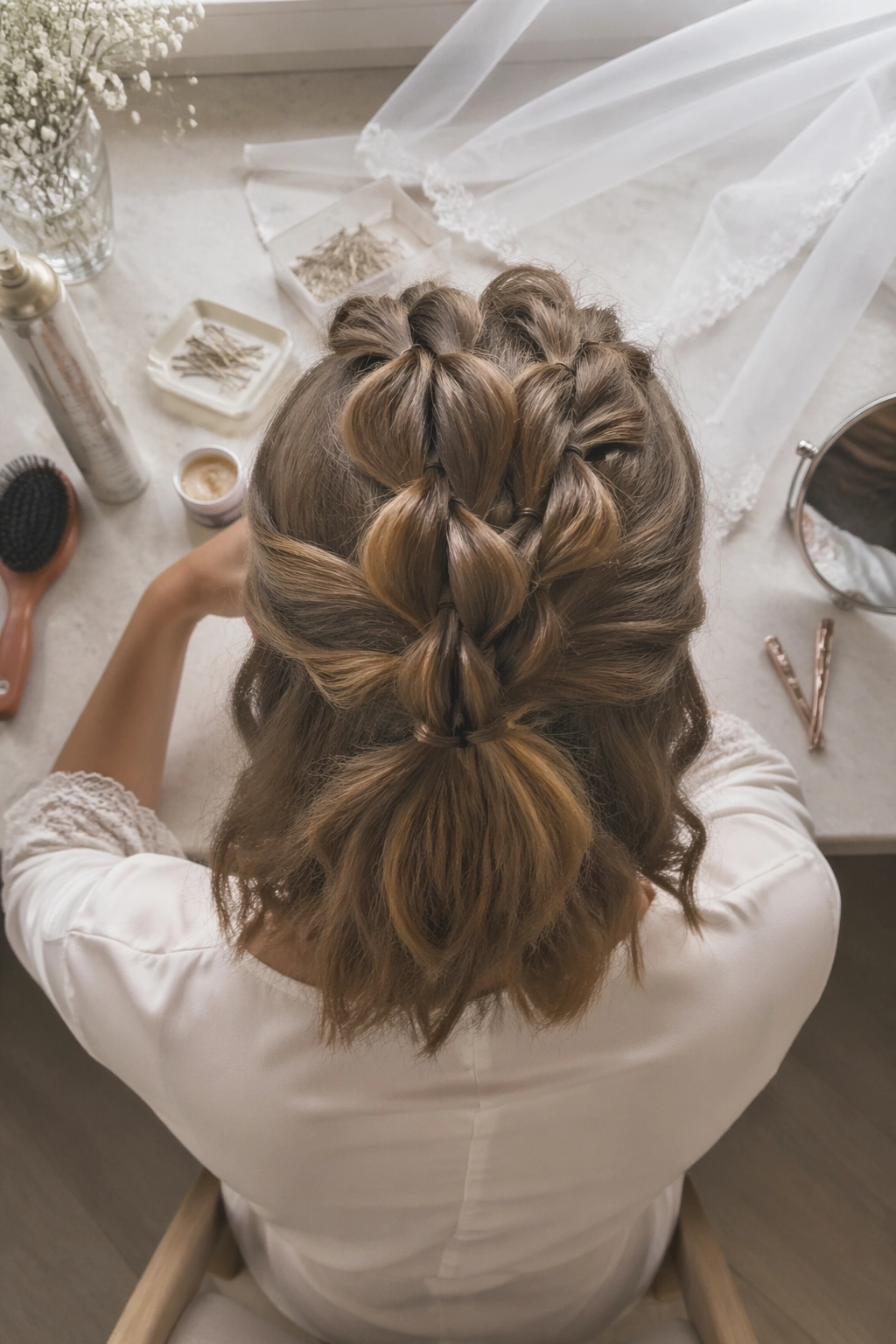
If your hair is too short for a normal braid, cheat a little. Pull-through braids use small elastics to create the look of thick woven sections, and they’re a smart fix for short wedding hair that needs more visual weight.
The style is especially useful for fine hair. Instead of trying to make each section do too much, you build the braid in little steps and fluff each loop slightly. That gives the crown more presence, which keeps the hairstyle from sinking into the haircut.
It also photographs well from above. The repeated loops create shape, and the half-up position keeps the rest of the hair free. I’d choose this for brides who want a fuller braid without adding extensions.
A small warning: the elastics need to be hidden carefully. Wrap each one with a tiny strand of hair or cover them with pins. Visible elastics can cheapen the whole look in a second.
11. Side-Swept Braid with Veil-Friendly Finish
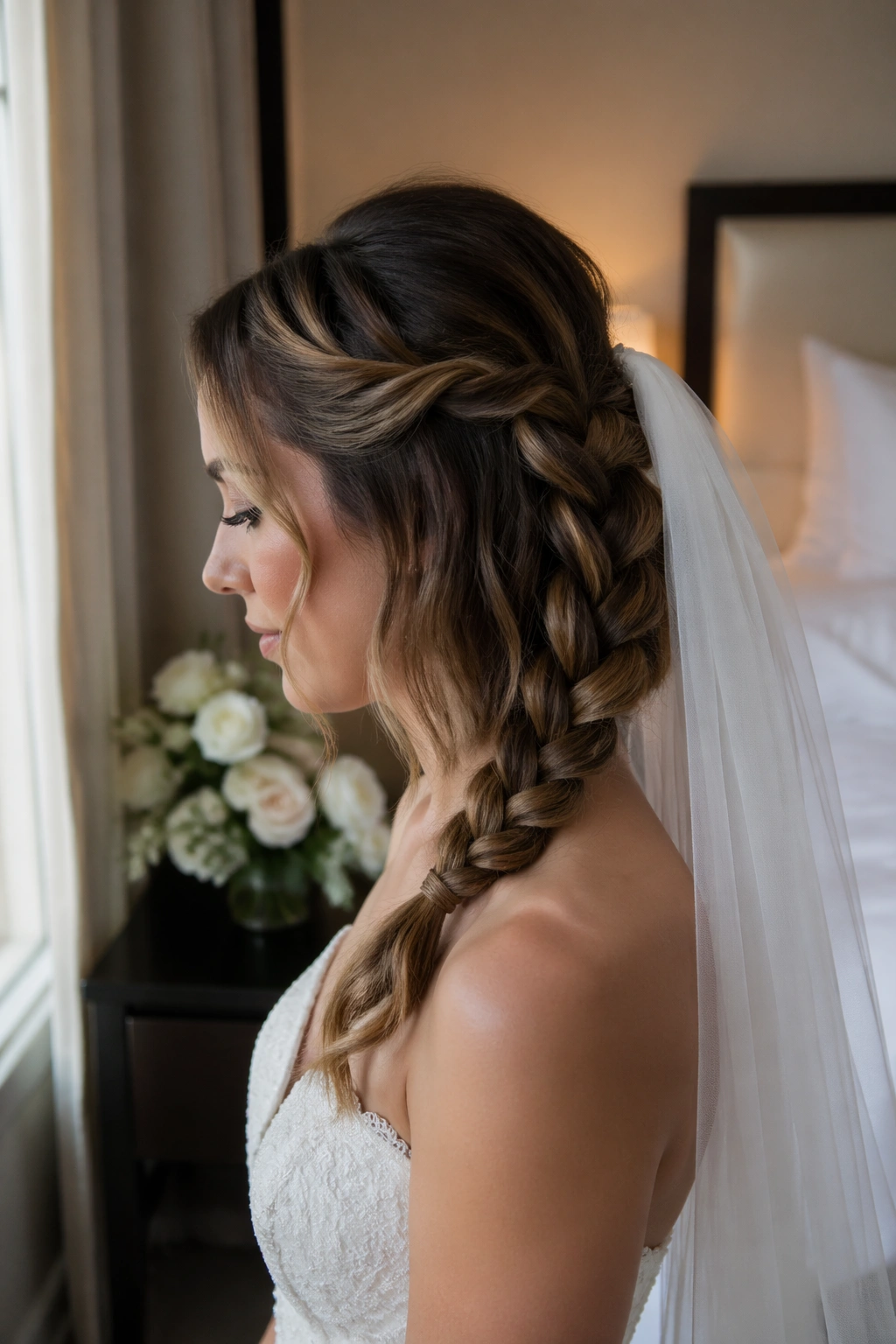
A side-swept braid is one of the easiest ways to make short hair look wedding-ready without overthinking it. The braid lives off to one side, which leaves a clean landing spot for a veil or hair comb at the back.
That placement matters more than people think. A lot of bridal styles fail because the veil and the braid fight for the same space. Here, they don’t. The braid frames the face, the veil sits behind it, and the ends fall softly where they should.
I especially like this on layered lobs, where the front sections need a bit of control. A side braid keeps those pieces from slipping into the face while still letting the style feel relaxed. It’s neat, but not severe. That’s a nice place to be.
If you want a little more polish, curl the loose ends inward with a 1-inch iron and let them cool before touching them. That gives the style a smoother finish without making it stiff.
12. Halo Braid with Tucked Ends
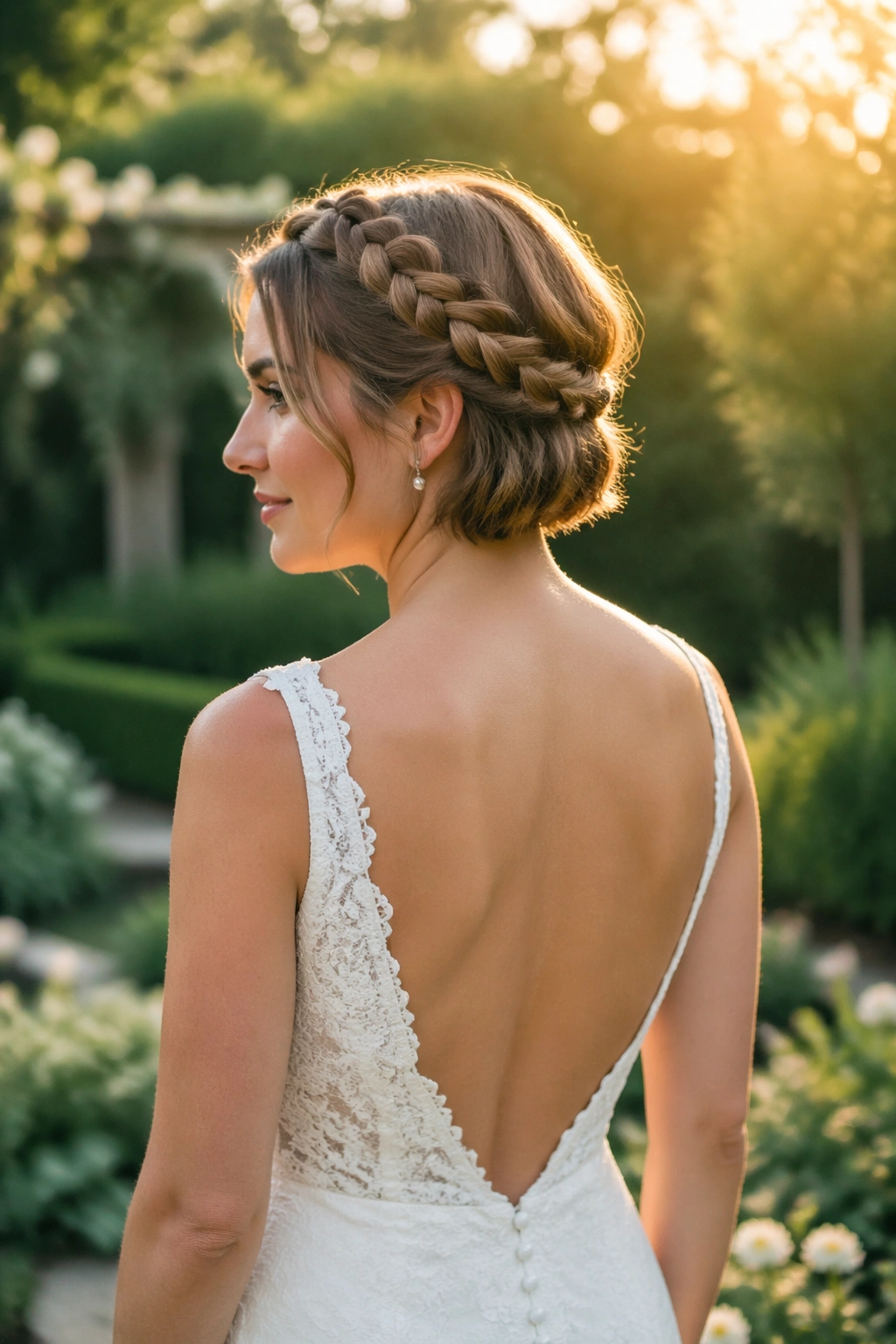
Unlike a full halo updo, this version leaves the ends loose and soft, which is exactly why it works on short hair. A halo braid can circle the crown, then tuck its ends under the back layers so the style keeps some movement.
It’s a strong choice for hair that barely reaches the shoulders. The braid gives the illusion of a fuller shape around the head, but you do not need enough length to wrap everything into a full updo. That makes it one of the more practical bridal braid looks for shorter cuts.
This style suits dresses with open backs or simpler necklines because the braid itself becomes the main detail. I’d keep accessories small here. A single comb or a few pearl pins is enough.
There’s a nice bonus too. The tucked ends keep the style from looking unfinished, which can be a problem with short hair when braids stop too early and leave awkward little tails.
13. Micro Braids Across the Hairline
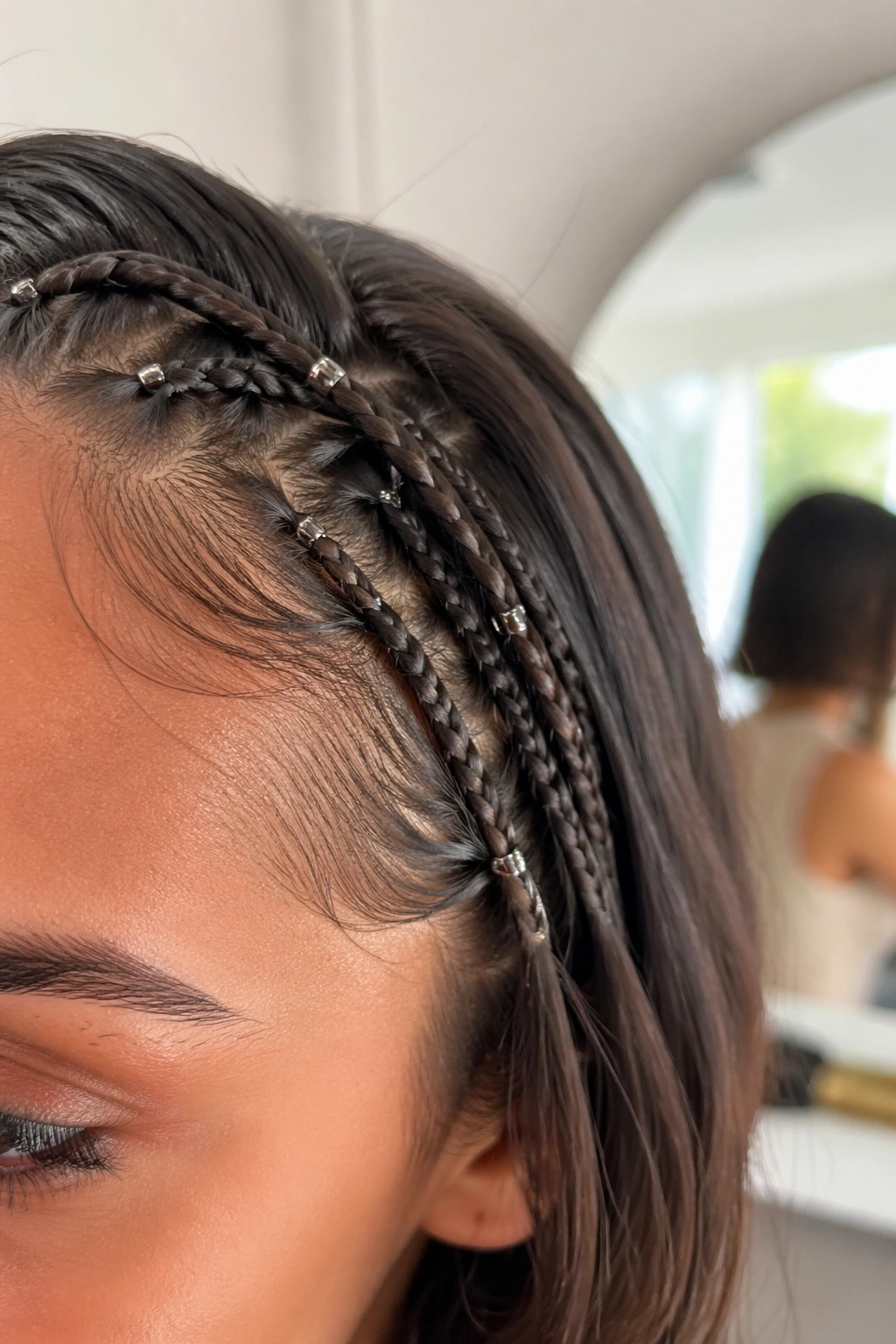
Micro braids across the hairline are the kind of detail that looks delicate from a distance and surprisingly cool up close. They’re tiny, so they work even when the haircut is too short for a fuller braid.
What Makes Them Different
Instead of one big braided section, you build 2 or 3 narrow braids at the front and let the rest of the hair stay loose. The effect is subtle. That’s the point. The braids act like a thin frame, not the main event.
- Best for pixies, shaggy bobs, and very layered cuts
- Good with a middle part or a soft off-center part
- Easy to decorate with tiny gems, beads, or pins
- Needs a little wax or pomade to keep short pieces in place
I like this style for brides who wear sharper makeup or a modern dress. It has edge without looking harsh, and it keeps short hair from feeling like it was left out of the party.
14. Textured Braid with a Floral Clip
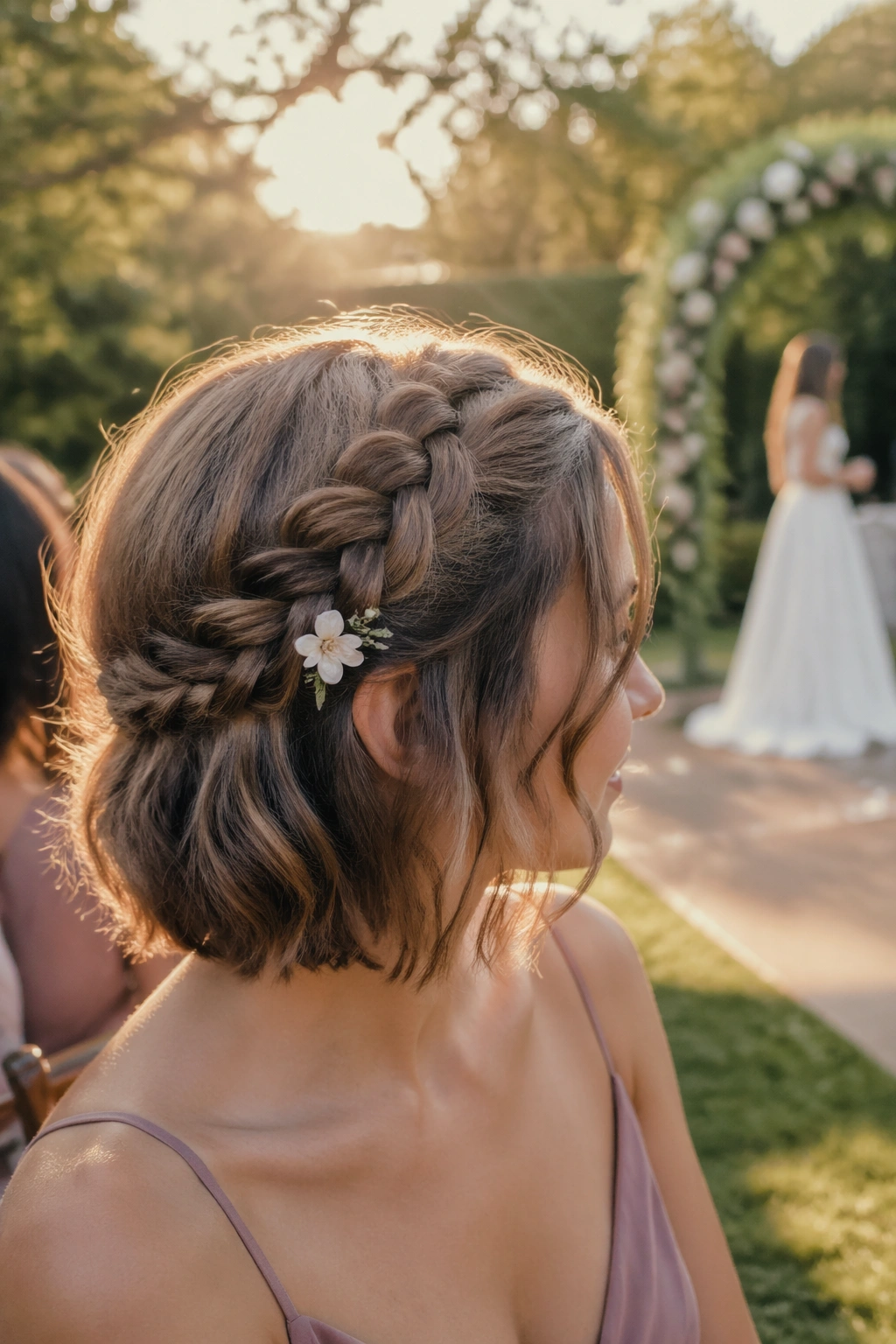
A floral clip should look placed, not piled on. That’s why a textured braid with one strong flower or a small cluster of blooms often looks better than stuffing the hair with a whole bouquet.
The braid here doesn’t have to be perfect. In fact, a little looseness helps. Pull the braid apart slightly after it’s pinned, let the crown lift a bit, and then tuck the floral piece just above one ear or near the braid’s anchor point. That gives the style a focal point without drowning the haircut.
This one is especially good for outdoor ceremonies or softer dresses with movement in the fabric. The texture keeps it from feeling too formal, and the flower gives the braid a reason to exist beyond decoration.
I’m picky about the size of the clip. If it’s too heavy, short hair sags. A light comb, small silk flowers, or one fresh bloom works far better than a big statement piece.
15. Braided Knot at the Crown
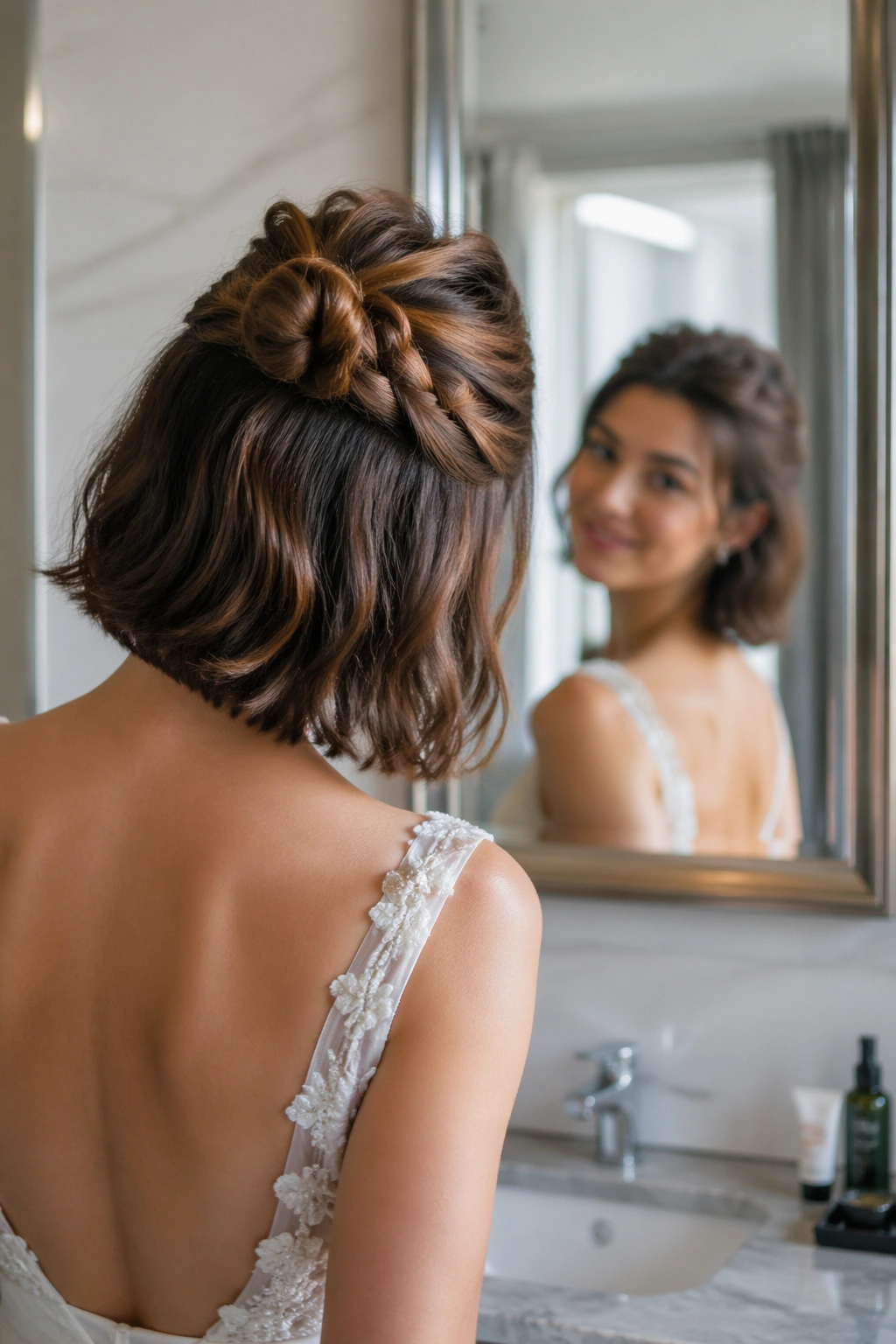
Can a short bob fake a bun? A little, yes. A braided knot at the crown gives you that lifted, gathered feeling without demanding long hair, and it’s one of the best tricks for wedding short hair that needs shape.
The braid feeds into a small knot or rolled coil at the top half of the head. The rest stays loose, so you still get movement through the ends. That mix is what makes the style useful. It offers structure where the eye wants it, then leaves the haircut itself visible.
How to Place It
The knot should sit high enough to show, but not so high that it looks like a topknot from the wrong decade. Keep it centered or slightly off-center depending on the part.
- Good for straight or slightly waved hair
- Needs a strong base of pins under the knot
- Works well with drop earrings
- Looks best when the ends are softly curled or beveled under
I’d call this one quietly dramatic. It has shape. It has hold. It does not need much else.
16. Messy Braid with Curled Ends
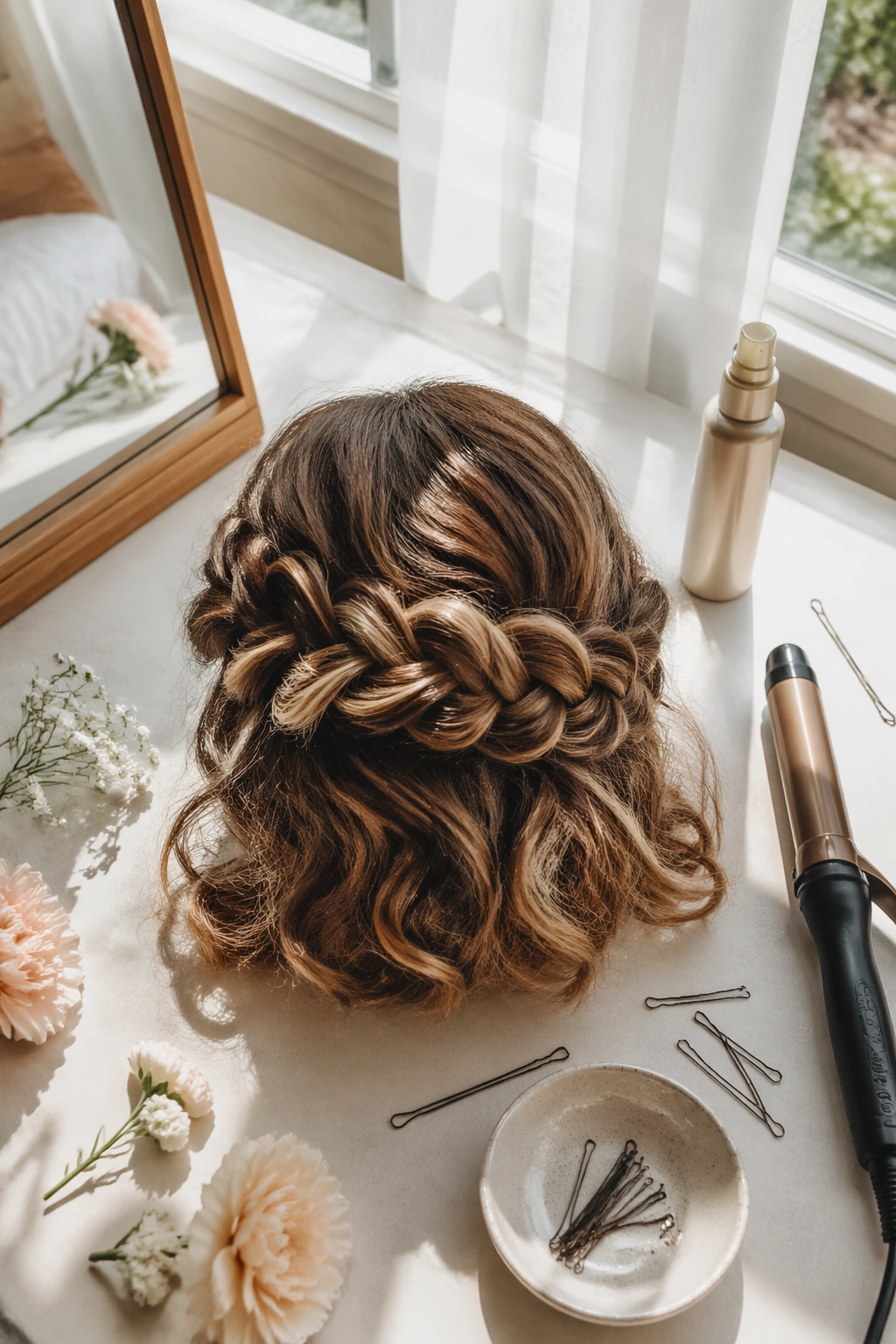
A messy braid only looks messy when the mess is controlled. That’s the useful part. For short wedding hair, a loose braid with curled ends gives you softness at the top and movement at the bottom, which keeps the style from feeling boxy.
Start with a little root texture and a few bends through the lengths. Then braid the upper section loosely, pull out a few face-framing pieces, and curl the ends under with a small iron. The contrast between the loose braid and the shaped ends is what makes it feel bridal instead of casual.
This style is especially good for brides who hate anything too strict. It works with soft tulle, lace sleeves, and dresses that already carry a lot of romance. It also hides uneven layers better than a sleek braid.
A small warning: do not over-pull the braid. If you pancake it until it spreads too far, the style loses the braid pattern entirely and starts looking fuzzy. You want softness, not collapse.
17. Sleek Braided Half Up for a Modern Wedding
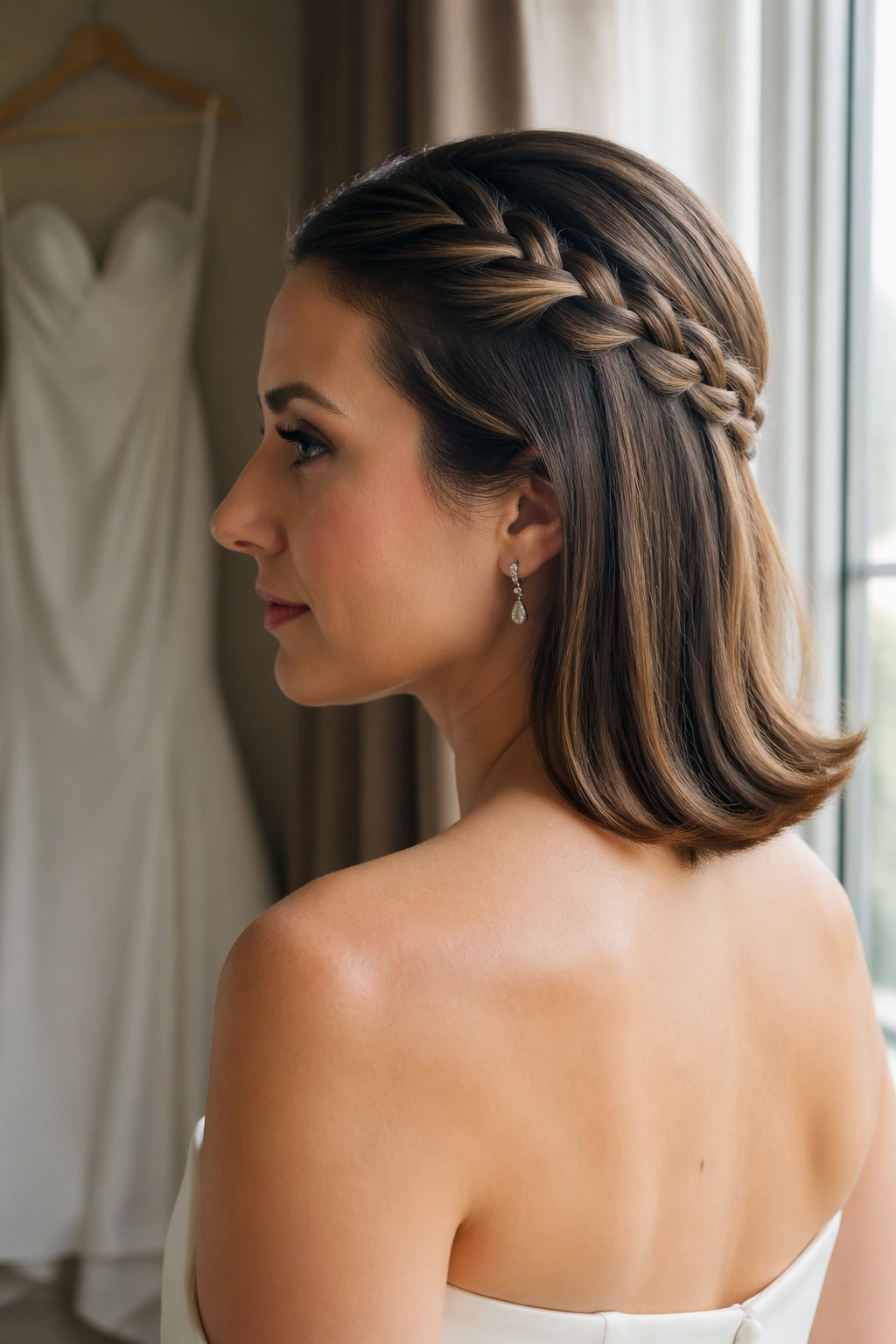
Sleek braided half up hair is the right answer when the dress is clean, the lines are sharp, and the bride wants the hairstyle to feel polished instead of romantic. It’s the minimalist version of the braided half up half down look, and short hair wears it well.
The part is usually straight, the braid is narrow, and the rest of the hair is smooth with a little bend at the ends if needed. I like this for structured gowns, sharp suits, or brides who wear a very tailored look. There’s no fluff here. That’s the appeal.
It also suits short hair because it doesn’t ask for fullness that the haircut may not have. The braid becomes a graphic line across the head, and the smooth finish makes the style feel deliberate from every angle.
Use a fine-tooth comb, a light gloss spray, and a couple of hidden pins under the braid. That’s enough. Add one slim accessory if you want, but do not crowd it. The style already knows what it is.
Final Thoughts
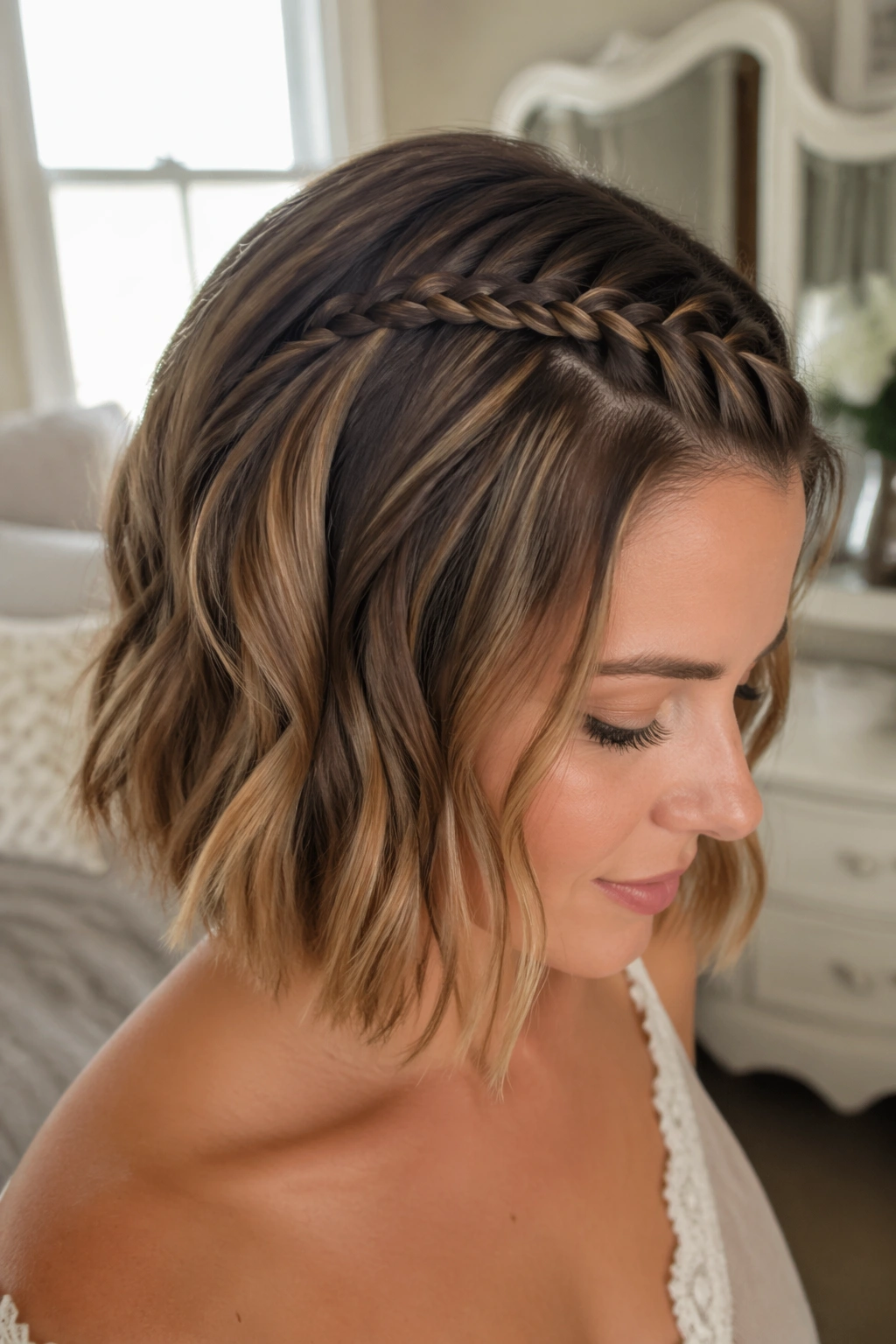
Short hair does not need to apologize at a wedding. It needs the right braid, the right hold, and a shape that works with the cut instead of arguing with it.
The best braided half up half down styles for wedding short hair do one simple thing well: they make the haircut look considered. Some lean soft, some feel sharp, and a few walk that line in the middle. The important part is scale. Keep the braid small enough to hold, and the whole style starts behaving.
If you’re choosing between two looks, put the veil, earrings, and neckline beside them and be honest about what needs room to breathe. Short hair can handle more than people think. It just likes a cleaner plan.