



Curly hair and claw clips have a strange little relationship. Put the clip in the wrong place and the whole style collapses into a lumpy knot that feels like it was done in the dark. Put it in the right place and the same hair suddenly looks deliberate, lifted, and comfortable enough to wear all day.
That’s why half up half down claw clip looks for curly hair have such a loyal following. They keep the crown off your face, let the lengths stay loose, and avoid the hard, flattened look that happens when curls are forced into a tight elastic. A good clip style doesn’t fight the curl pattern. It works with the bends, the volume, the frizz, and the bits that insist on doing their own thing.
The trick is usually smaller than people think. You rarely need to gather half your head. You need the right section, the right angle, and a clip with enough grip to hold real hair — not just a few polished strands from the mirror.
Some looks are clean and polished. Some are messy in a good way. A few look like you spent ages on them, even though they take less than two minutes once your hands learn the shape. That’s the fun part.
1. The Loose Crown Twist for Curly Hair
A loose crown twist is one of those styles that makes curly hair look intentionally styled without flattening the top. You gather the front and side sections, twist them back once or twice, then let the curl mass keep its own shape underneath the clip. It’s simple, but not lazy.
Why It Holds Without Crushing the Curl Pattern
The key is keeping the twist loose at the root. If you pull too tight, the crown goes flat and the ends start poking out in strange directions. If you leave a little room, the curls sit on top of each other instead of being squashed into a hard ridge.
- Take a section from temple to temple.
- Twist each side back separately before joining them.
- Place the claw clip slightly above the occipital bone, not right at the hairline.
- Let a few curls escape near the ears if your hair needs softness.
Tip: a medium clip with long teeth usually grips curly hair better than a tiny decorative one. Tiny clips are cute. They are not always useful.
2. The Center-Part Mini Lift
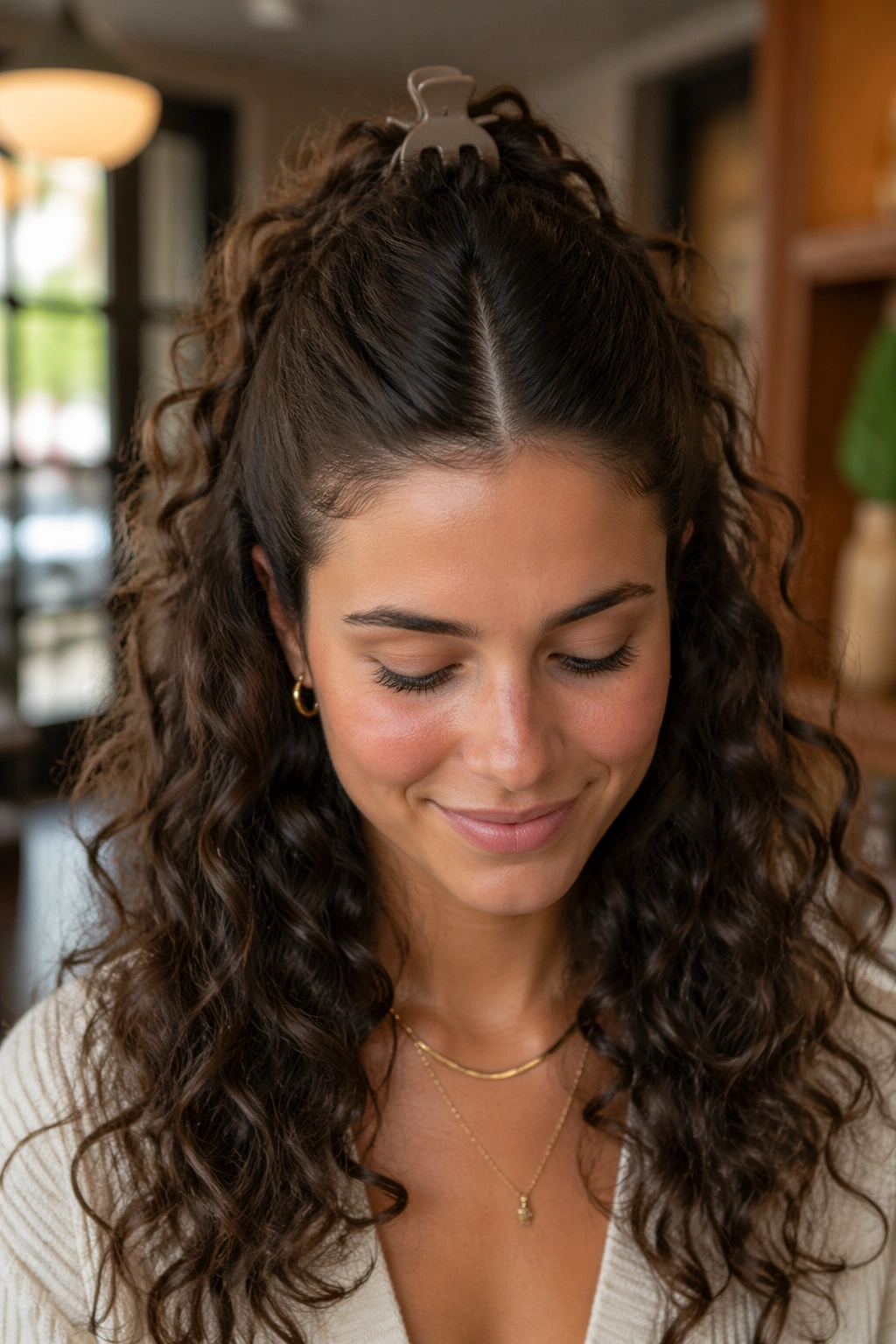
A center part can look severe on some curl patterns, which is exactly why a small half-up lift can help. You only need the top third of the hair. That’s enough to open the face, keep the curls from falling into your eyes, and preserve the length underneath.
The part line matters here. Keep it neat, then lift the hair from just above the temples and meet in the middle. The result is cleaner than a full twist, and it works especially well when your curls are medium to tight and already have a lot of shape on their own. No need to overbuild it.
What I like about this one is the contrast. The top looks neat, the back stays loose, and the overall effect is calmer than a full updo but less casual than leaving everything down. It’s the kind of style that works with a plain T-shirt and still looks put together with a blazer.
A matte clip helps. Shiny plastic can slide a little on softer curls.
3. The Low-Slung Twist and Clip
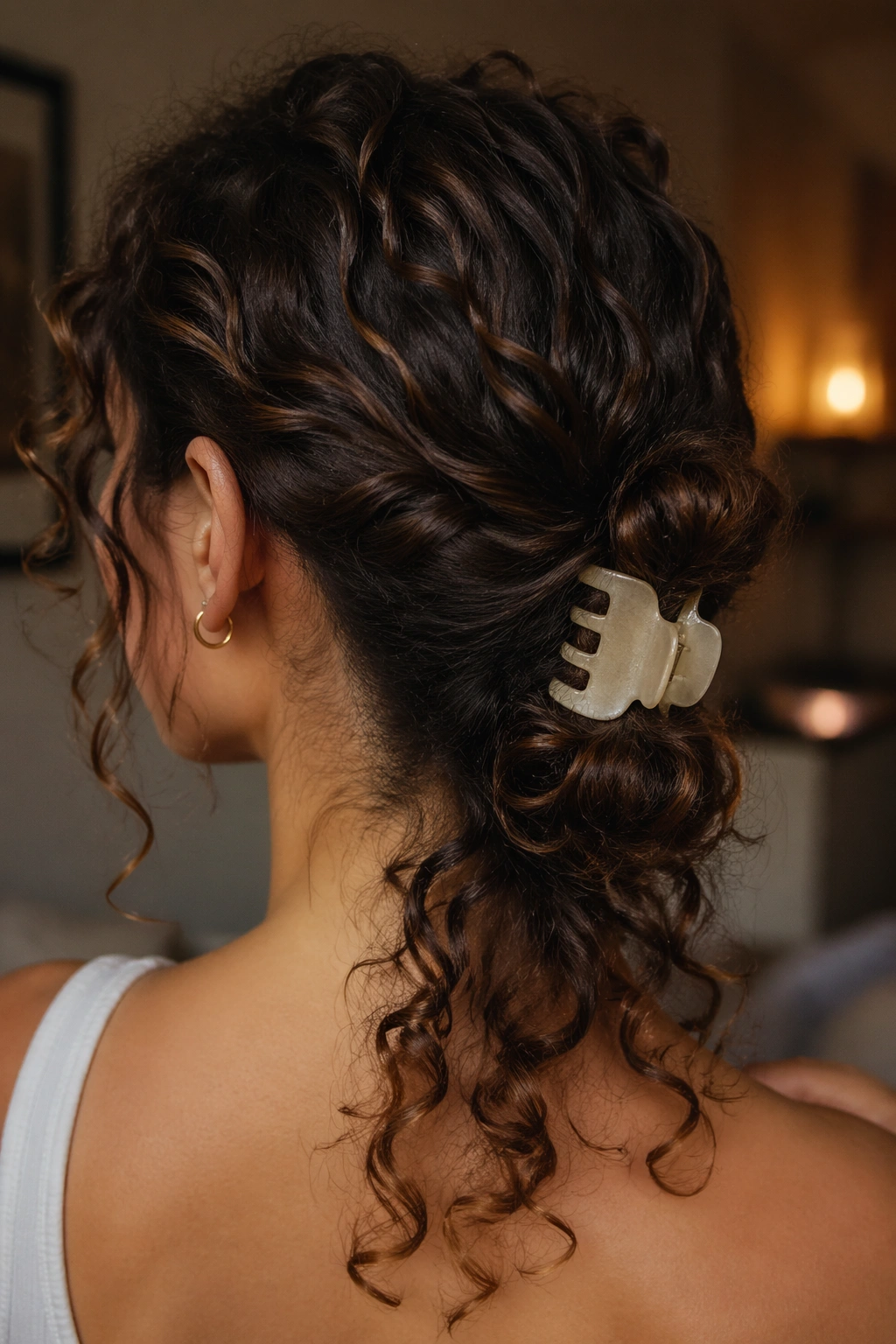
Ever notice how some half-up styles sit too high and make curly hair look puffed up in the wrong place? A low-slung twist fixes that. You work closer to the back of the head, almost at the top of the neck, then tuck the twisted section into a larger clip so the style lies long instead of tall.
How to Style It
Start with hair that’s fully dry or mostly dry. Wet curls are heavy, and the shape changes as they dry, which can throw off the placement. Take two side sections, twist them toward the center, and meet them just above the back of the head. Clip there, not at the crown.
The look is quiet, but not dull. It lets the curls on the bottom half stay big while the top section sits lower and cleaner. That makes it a smart option for long, thick curls that can eat up a tiny clip in seconds.
This one is also good when you want a softer profile from the front. The hairline stays open, the volume stays in the lower half, and the whole shape feels balanced instead of top-heavy.
4. The Side-Part Sweep
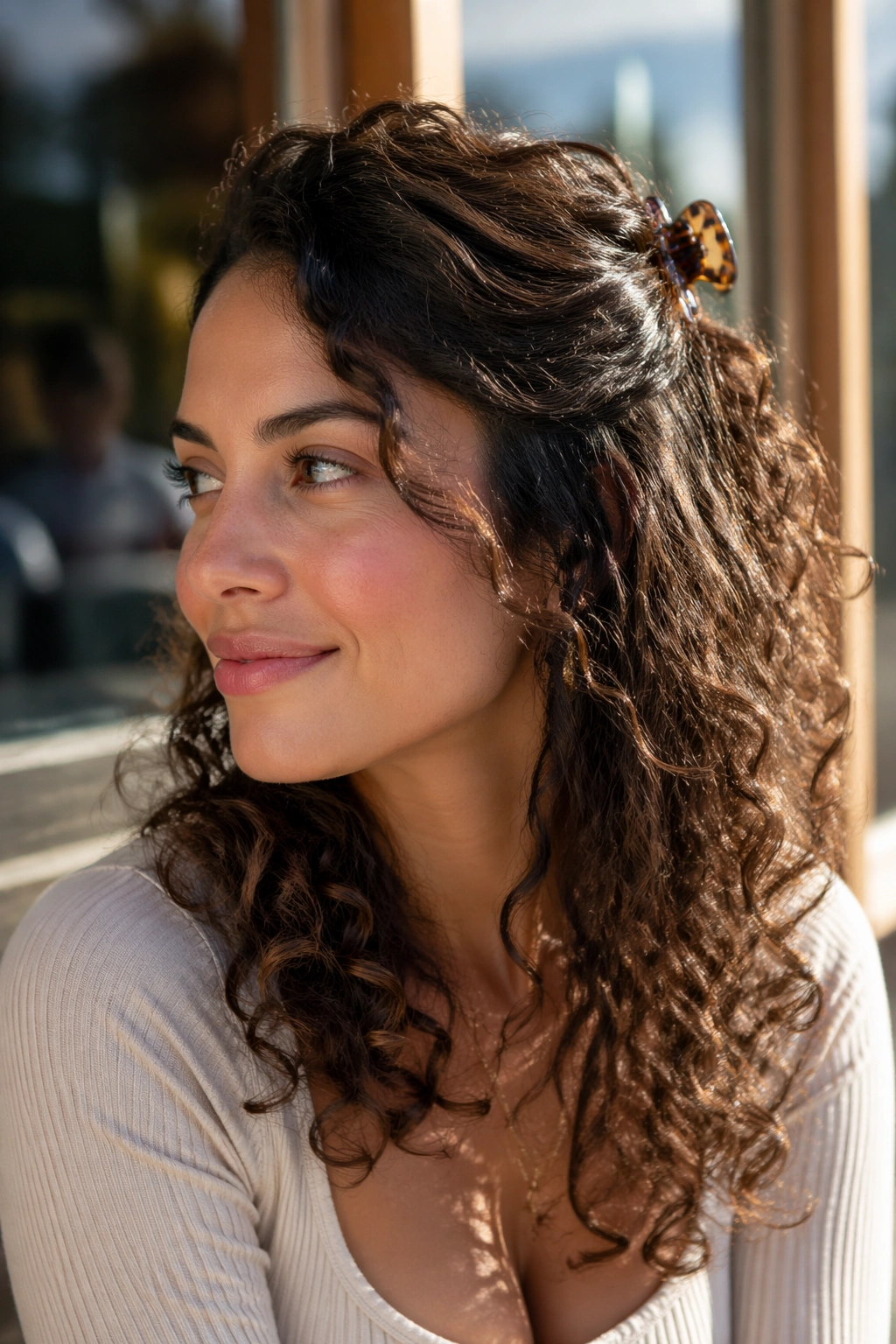
A side part can change everything. Curl patterns often have a favorite side anyway, and if you follow that direction instead of fighting it, the half-up shape tends to sit more naturally. Sweep the larger front section back, let the smaller side stay a little fuller, and clip the gathered hair just behind the higher eyebrow line.
There’s a reason this feels flattering. The asymmetry gives the style movement, and the clip stops the heavier side from falling into your face. If your curls clump well, this style shows that off. If they frizz a little at the edges, the side sweep softens it instead of exposing it.
- Use a side part that follows your natural bend.
- Leave one or two front curls loose near the cheekbones.
- Position the clip off-center, not dead square.
- Choose a clip with a curved jaw if your hair is dense.
Small detail, big payoff: the off-center placement keeps the style from looking stiff.
5. The Double-Clip Stack
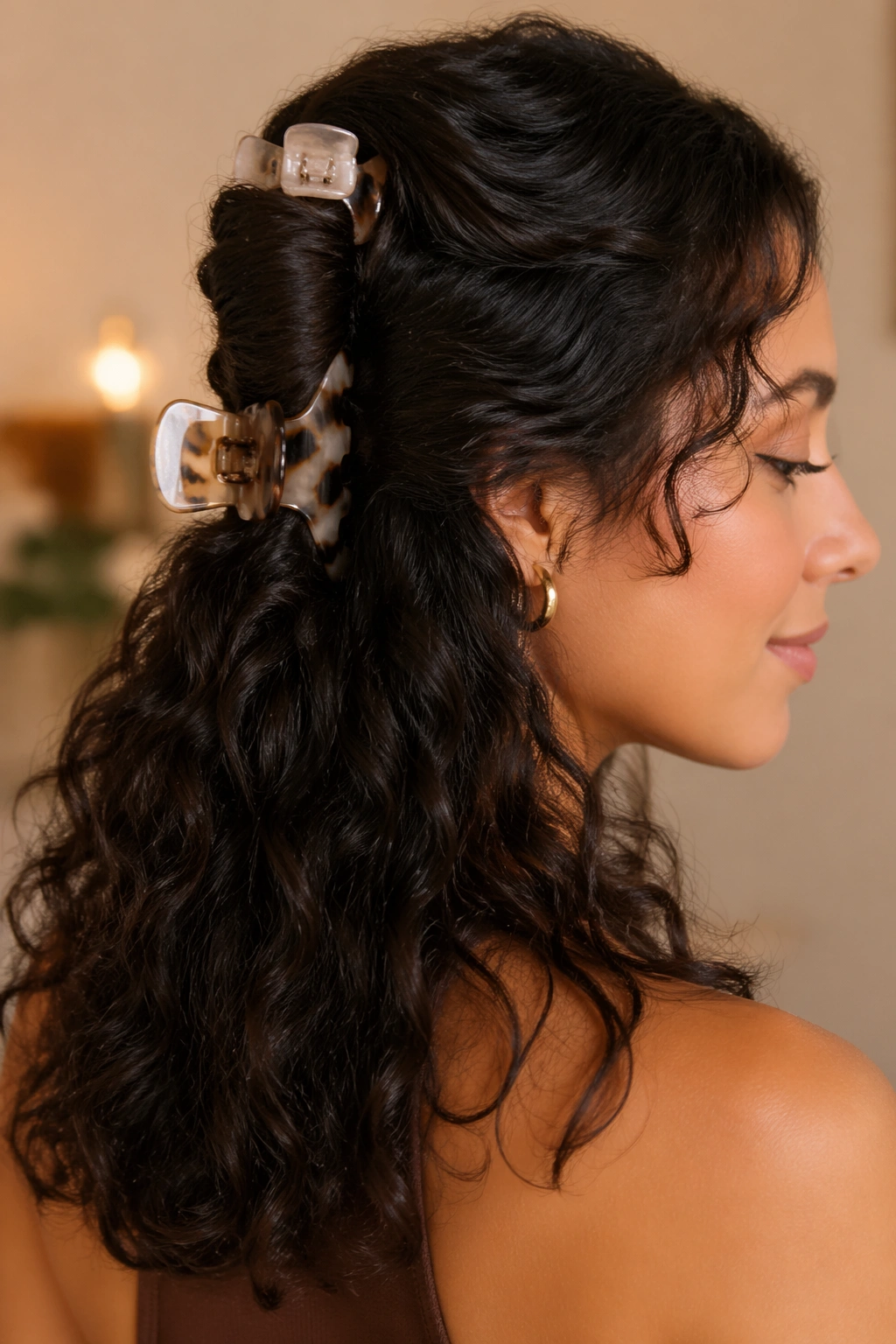
Two clips can be better than one when your curls are thick, long, or packed with volume. The stacked version uses a larger lower clip to hold the main section, then a smaller clip just above it to keep the twist from slipping. It sounds a little fussy. It isn’t, once you’ve done it once.
What makes this look work is pressure distribution. One clip has to do less. That matters with curly hair, because a single small jaw can slide on smooth ringlets or get pushed open by bulk at the root. Two clips spread the load and make the shape feel more secure.
This style leans practical, but it doesn’t look plain. The stacked hardware adds a little structure without turning the hair into a helmet. If you use two clips in a matching color — matte black, tortoiseshell, deep brown — the look stays tidy.
A good rule: the lower clip should carry the hair. The upper one should behave like insurance.
6. The Half Bun with a Hidden Clip
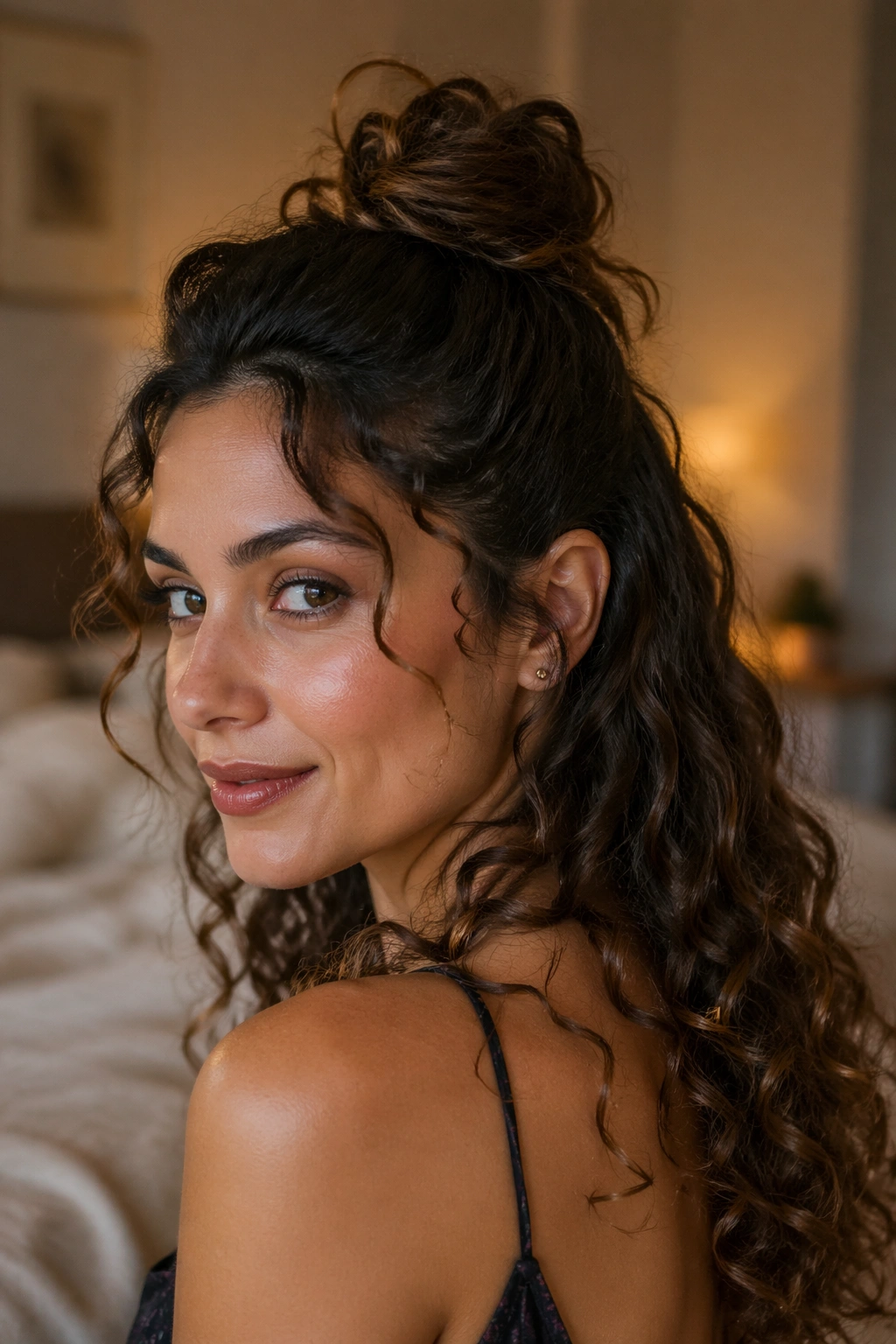
A half bun and a claw clip are not the same thing, and that’s exactly why this version works. You twist the top section into a soft knot, fold it once, then hide the clip underneath so the bun reads as a shape rather than a pile of hair. From the outside, it looks like the style is simply sitting there on its own.
That hidden support is useful for curls because it keeps the bun from collapsing. A lot of curly half buns sag at the roots after an hour or two. With the clip tucked beneath the knot, the style keeps its lift and doesn’t lean backward as much.
This is one of the better choices for day-two curls that have lost a little spring at the roots. The ends can stay loose, the top gets control, and the whole thing feels easy without looking unfinished. It’s also a good option if you want a more playful shape than a straight twist.
Not everything needs to look elegant. Sometimes it just needs to stay up.
7. The Face-Framing Hold
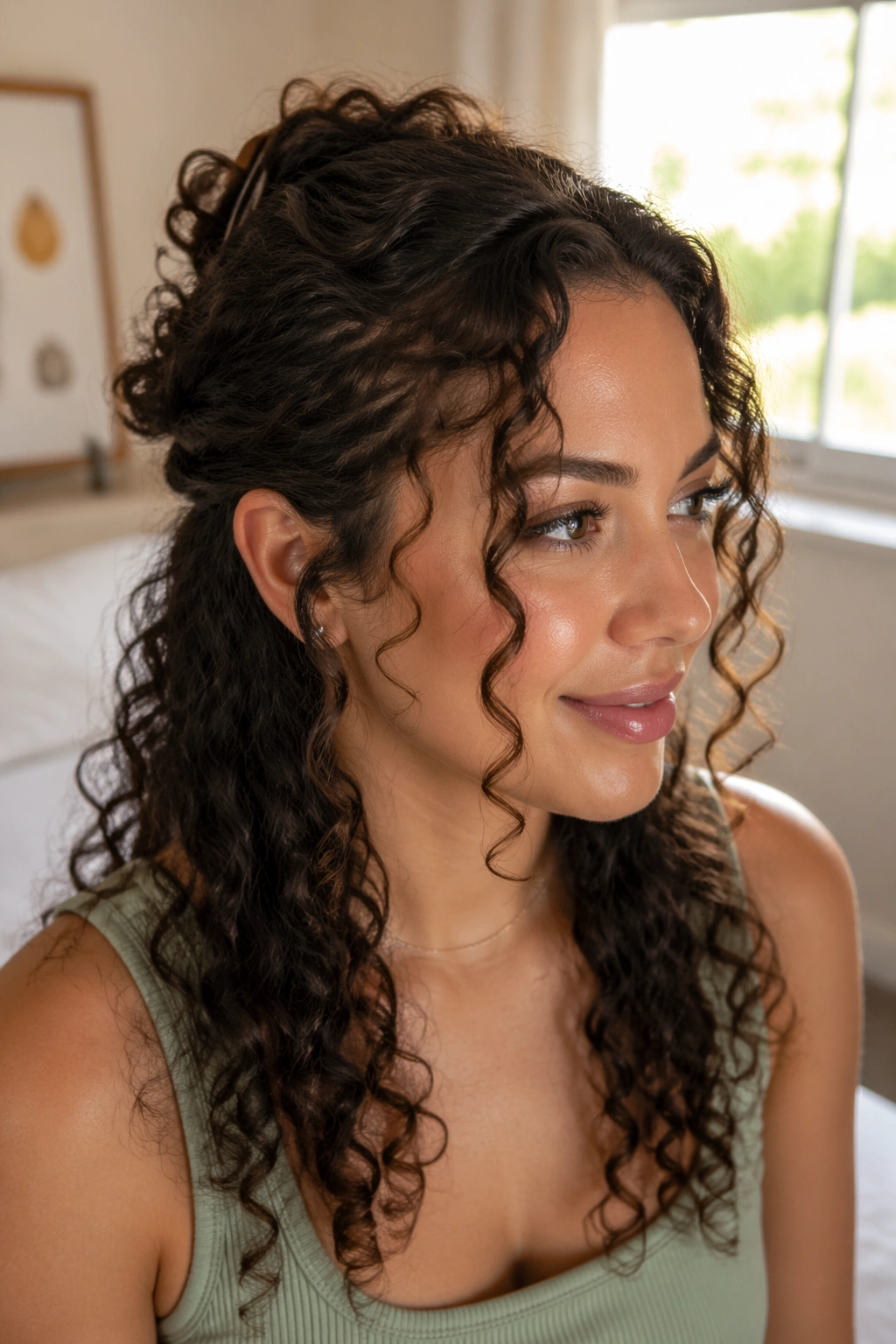
The face-framing version is for people who like their curls around the face but hate them falling into their mouth every ten minutes. You gather only the hair from the temples and the very top front, then clip it back while leaving the front curls just loose enough to curve around the cheeks.
What Makes It Different
Unlike a full half-up style, this one keeps the bulk at the back untouched. The half-up section is narrow, which means the clip sits lightly and doesn’t flatten the top layer. That makes it a strong option for shorter curls, layered cuts, or anyone with fringe pieces growing out.
A few things help this look stay neat:
- Clip the hair after it’s dried into its natural pattern.
- Leave the smallest front curls out on purpose.
- Place the clip about two finger widths behind the hairline.
- Use a clip with teeth that aren’t too sharp, so the front section doesn’t break apart.
It’s a small change, but it makes the whole style feel softer.
8. The Clipped Mohawk Puff
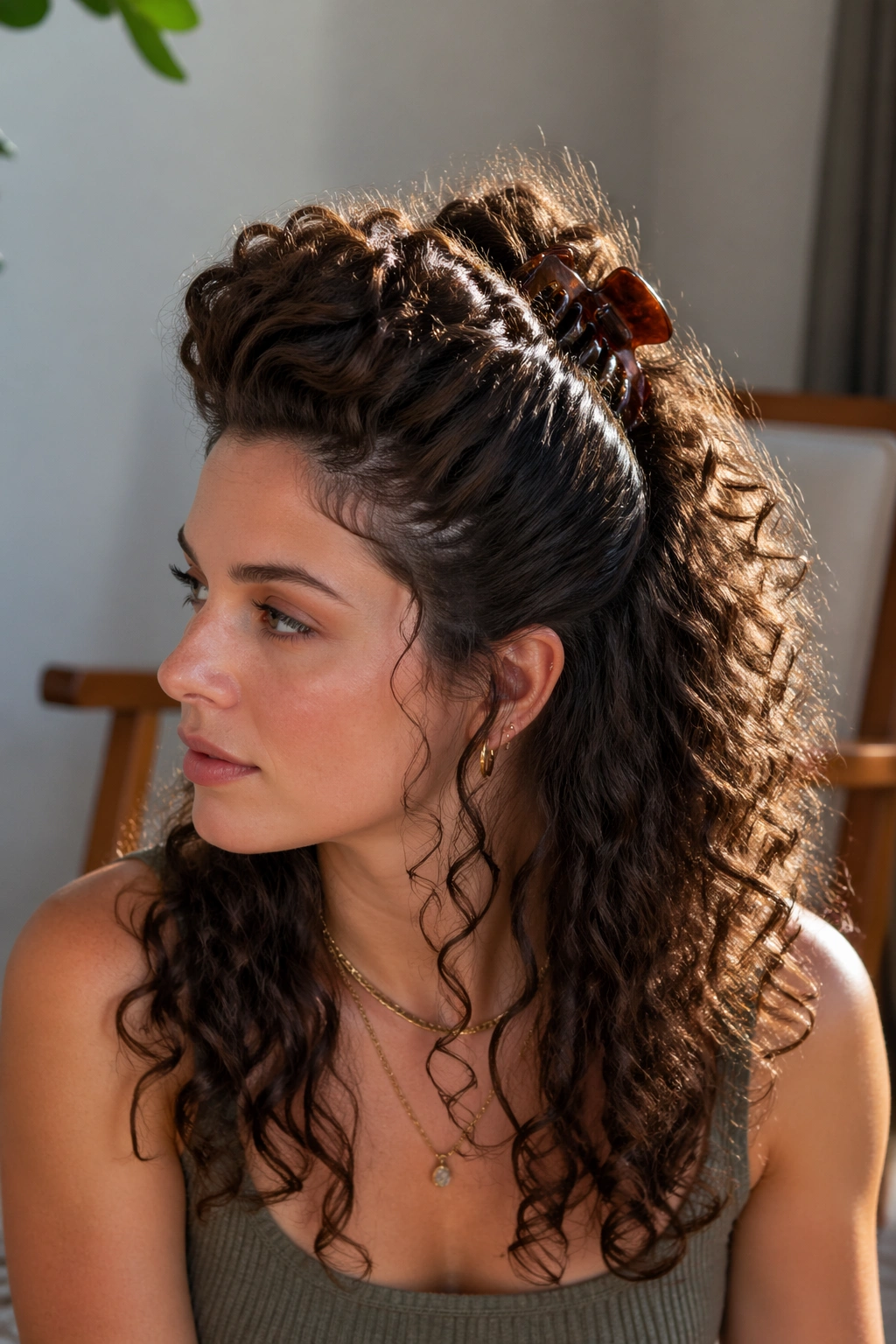
This one has attitude. You take the top center section from forehead to crown, lift it straight back, and let the sides stay loose so the silhouette gets that curved, almost mohawk-like shape. A claw clip holds the lifted strip at the crown, while the rest of the curls fall down both sides.
The look works because it respects volume instead of flattening it. Curly hair has height. Denying that usually makes things worse. This style leans into the height and turns it into a shape. The result is bold but not overworked.
If your hair is dense, this is one of the few half-up looks that can actually use that density as an advantage. The larger the curl mass, the fuller the puff. You can make it softer by pulling a few face pieces forward, or sharper by smoothing the sides with your fingers before clipping.
Short version: if you like a little drama, this is the one.
9. The Rope Twist Half-Up
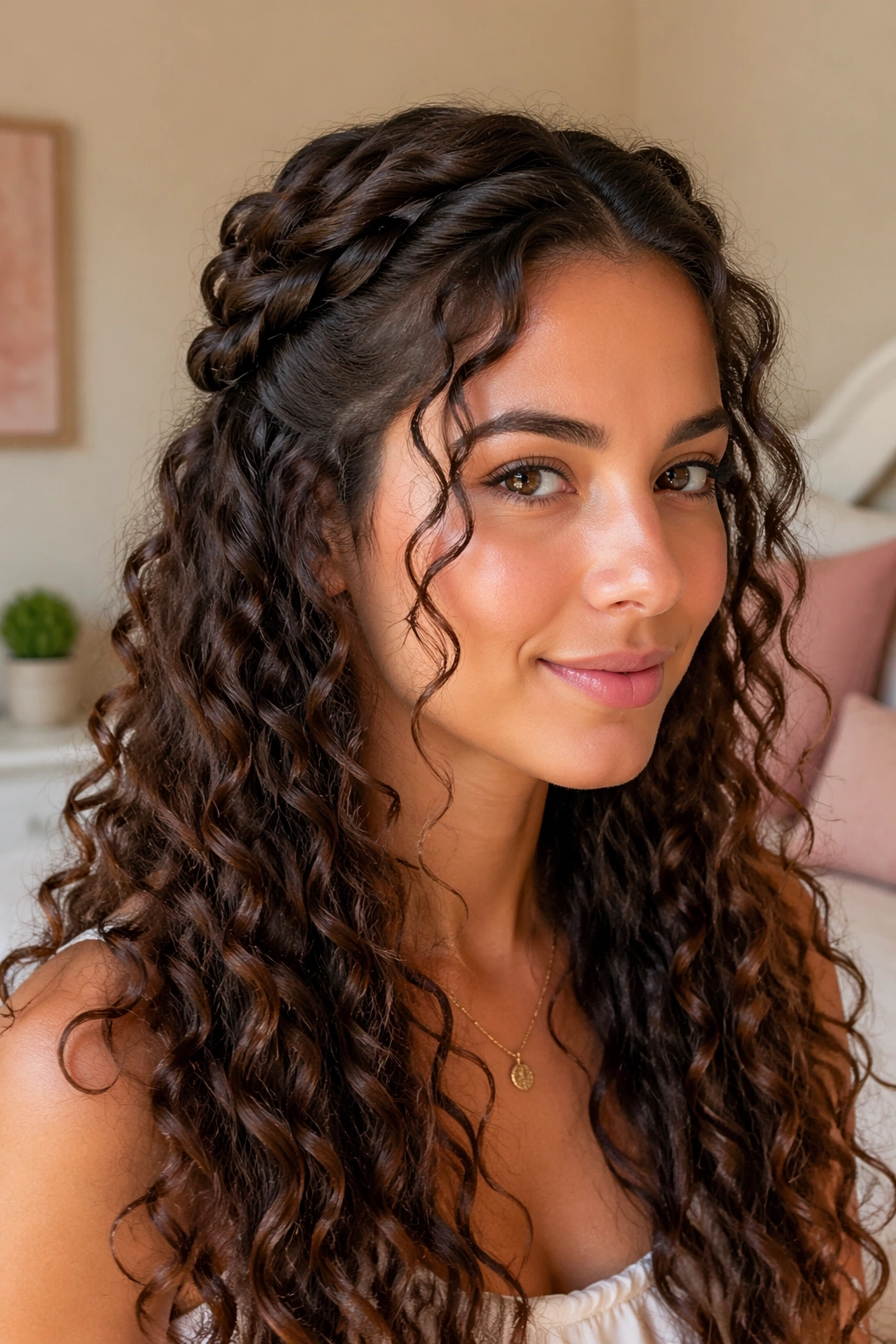
Rope twists are neat without feeling stiff, which is why they suit curly hair so well. Split each side section into two strands, twist them around each other, then bring them back to meet in the center. The texture of the curls and the twist work together instead of competing.
The style sits somewhere between polished and relaxed. It’s more defined than a casual grab-and-clip, but it doesn’t have the tight feel of a formal updo. Because the twist narrows the gathered hair, the clip can hold it with less strain. That helps if your hair is thick at the roots but finer through the ends.
A rope twist also helps tame frizz near the top of the head. Not by hiding it — that would be silly — but by giving those shorter pieces a direction. If the ends stick out a bit, they usually blend into the curl pattern instead of looking messy.
The important part is not twisting too hard. You want the rope, not the cable.
10. The Crown Lift with Soft Back Volume
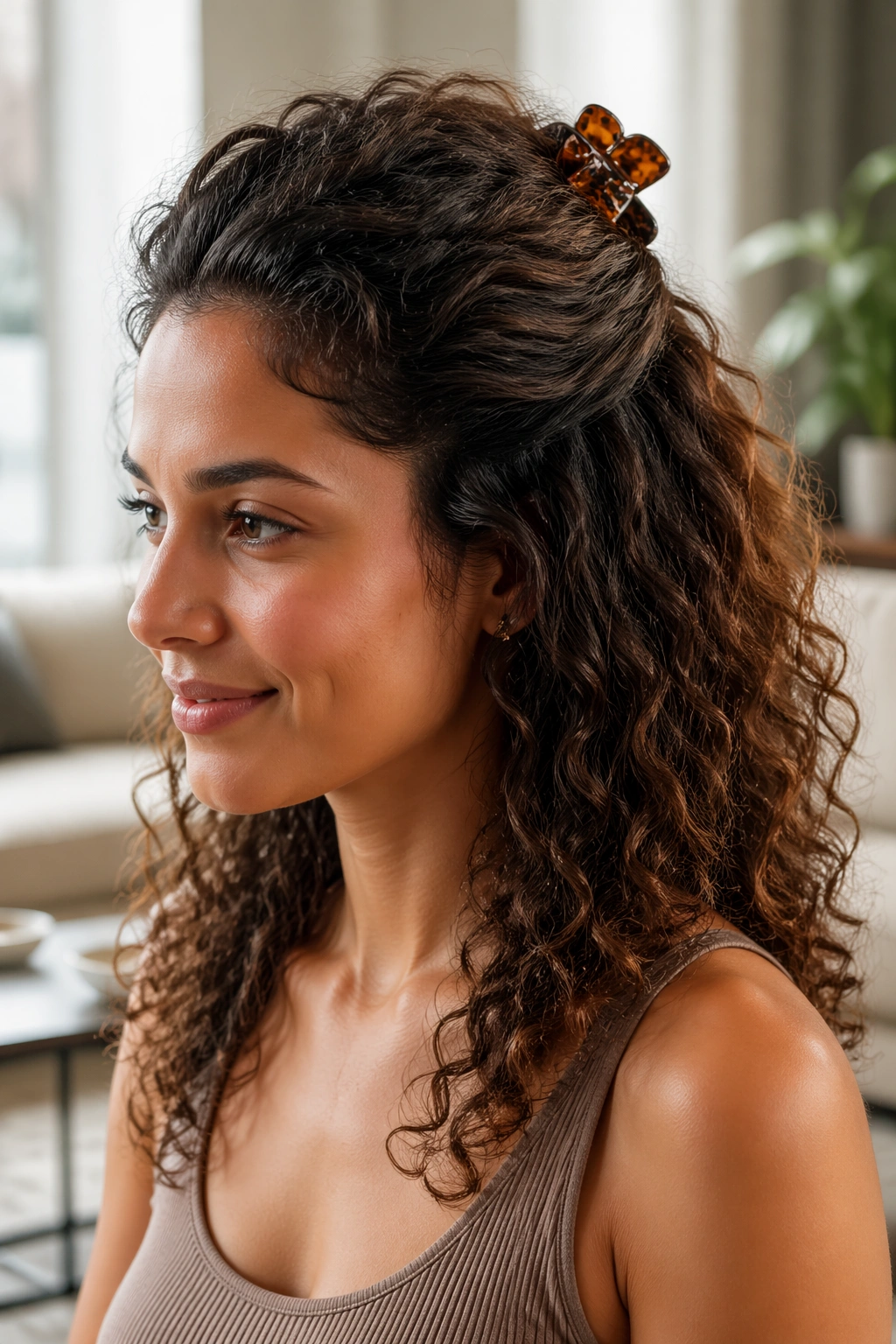
Why does this one look so good on curly hair? Because it leaves the back alone. You lift a section from the crown, clip it high enough to open the face, and let the lower curls keep their own shape and weight. The result is volume where you want it and movement where you need it.
How to Keep It Soft
A crown lift can turn rigid fast if you over-section it. Keep the gathered portion narrow — usually from just above the temples back to the top center — and clip it at a slight angle so it doesn’t sit like a bar across the head. The best version still has air around it.
Use your fingers, not a brush. A brush can pull too much hair into the top section and make the crown look boxy. Fingers let the curls stay grouped without turning them into a hard line.
This look works especially well with loose spirals and larger curl patterns. It gives shape without stealing the drama from the rest of the hair. And that’s the point, really. Let the curls stay curls.
11. The Double-Clip Symmetry Look
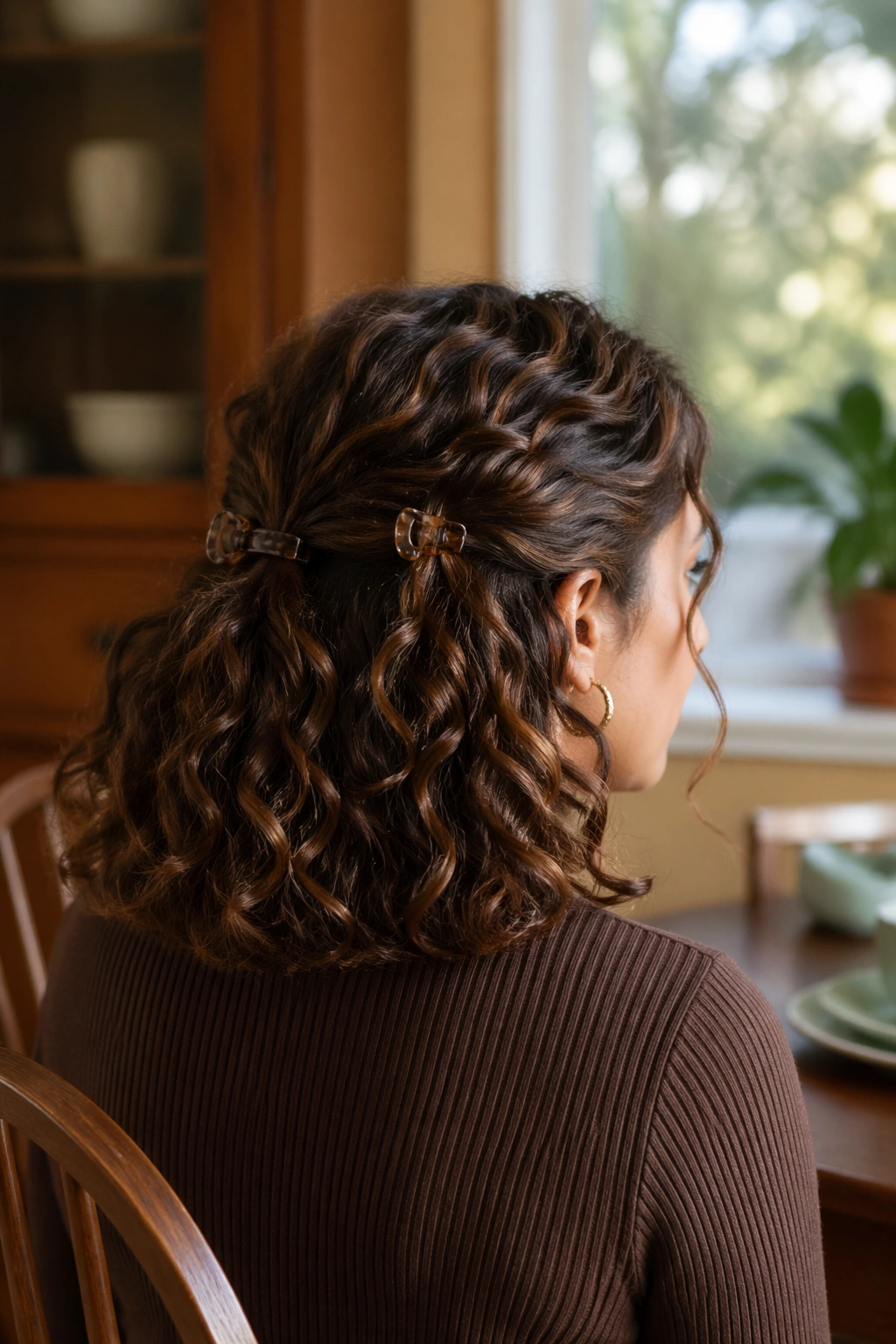
Two matching clips placed evenly on each side of the back section can look cleaner than one big clip, especially if your curls are high-density or your top layer is short. Instead of forcing all the hair into one center point, you divide the load and let each clip hold a smaller section.
The symmetry makes the style feel intentional. It’s tidy, but not severe. If you like the look of centered balance without having a huge clip dominating the back of your head, this is a strong option. Small tortoiseshell clips work well here. So do matte black ones if you want the style to disappear a bit.
This is one of the better choices for shoulder-length curls, which often slip out of a single clip because the gathered section is too short to anchor properly. Two clips solve that problem without needing bobby pins all over the place.
A tiny warning: space them too far apart and the section can split. Too close, and they just fight each other.
12. The Messy Folded Knot
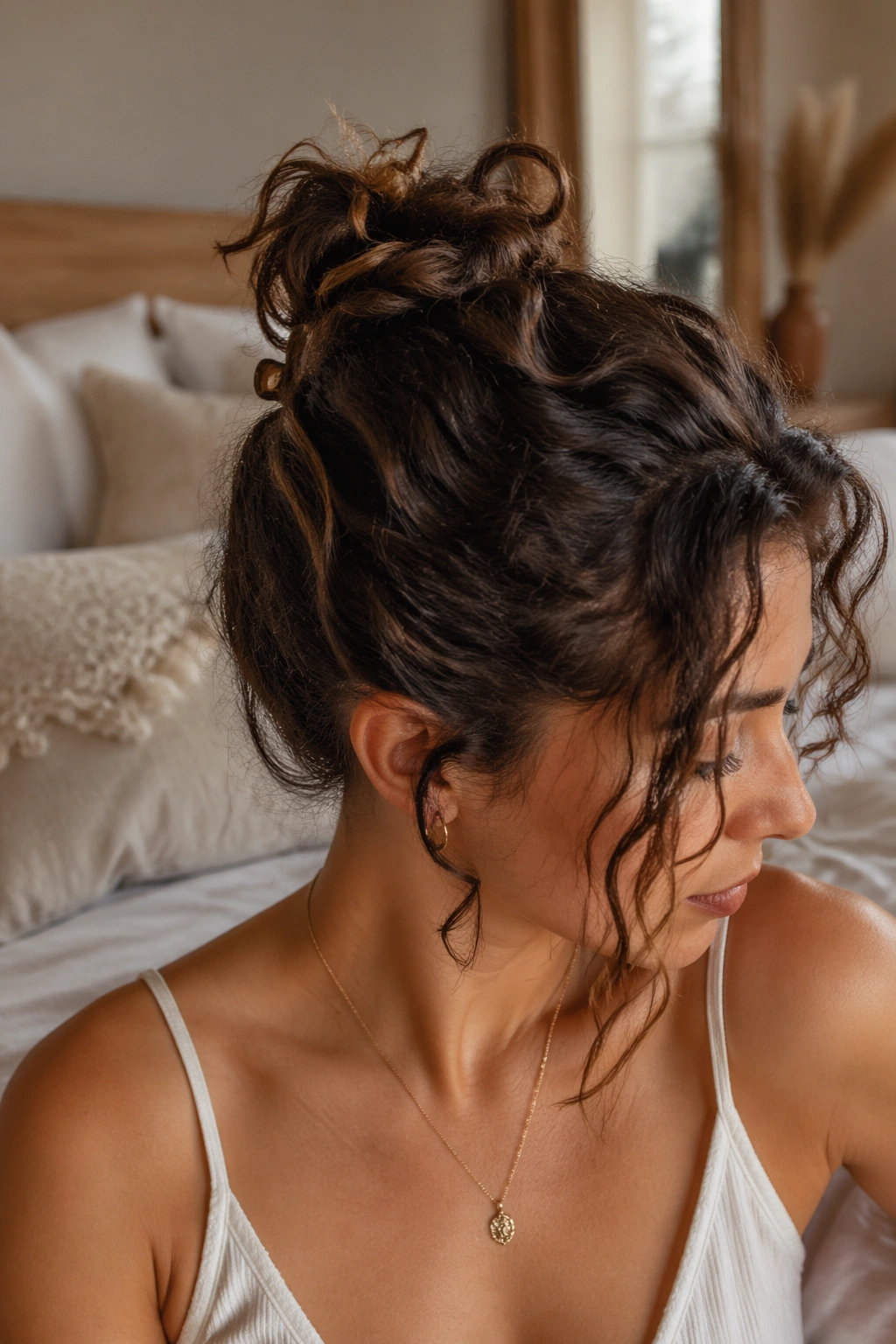
Some mornings, the curls look good everywhere except the roots. That’s when a folded knot comes in handy. You gather the top half loosely, fold the length back on itself once, and clip the fold so the ends sit tucked in but not hidden. The shape ends up soft, lopsided in a good way, and a little undone around the edges.
It is not a style that wants perfection. If the twist isn’t exact, it often looks better. The loose ends add texture near the clip, and the rest of the curls stay free so the style doesn’t feel overmanaged. That’s why this one works on days when you want your hair to look like hair, not a hairdo.
What I like most is how forgiving it is. If one side is fuller, leave it. If a curl springs loose, leave that too. The clip should do enough work that you don’t have to keep touching the style.
A neat knot is fine. A slightly imperfect one usually looks more alive.
13. The Half-Up Ponytail Clip
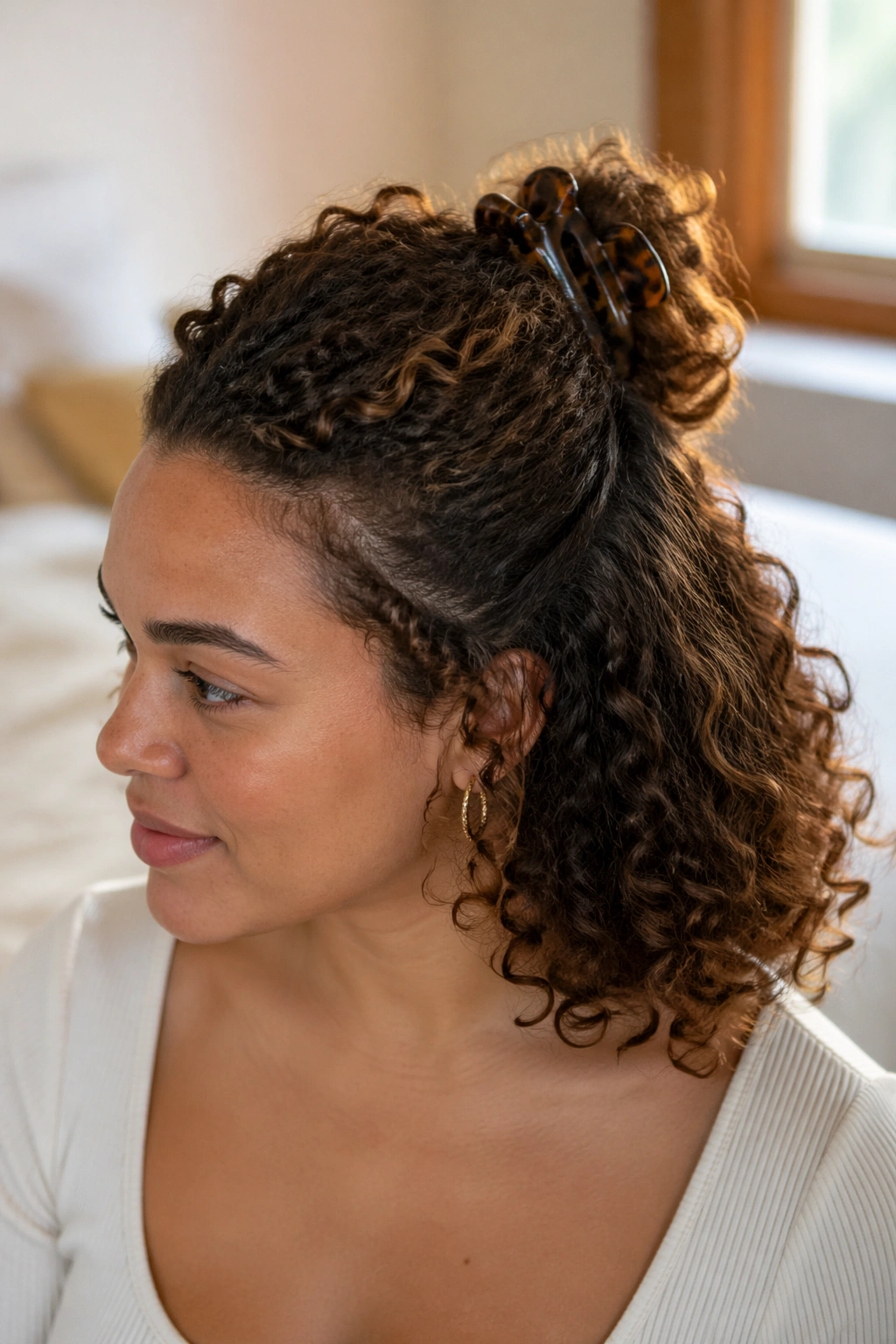
This is the closest thing to a ponytail without fully committing to one. Pull the top section into a short half pony, fold the tail upward once, then trap the base with a claw clip so the lifted shape stays in place. The ends can spill out, curl under, or tuck inward depending on your length.
It’s a smart shape for curls that need a little height at the crown. The ponytail base creates lift, while the clip stops the section from sliding. A regular elastic can leave a hard dent in curly hair; the clip softens that by holding more hair at once.
If your curls are long, this style can look almost sculptural. If they’re shorter, it reads more playful and casual. Either way, it gives the impression of a real half-up ponytail while keeping the pressure low on the scalp.
The best part? It keeps the neck free. That alone makes it worth knowing.
14. The Sleek Front, Big Back Contrast
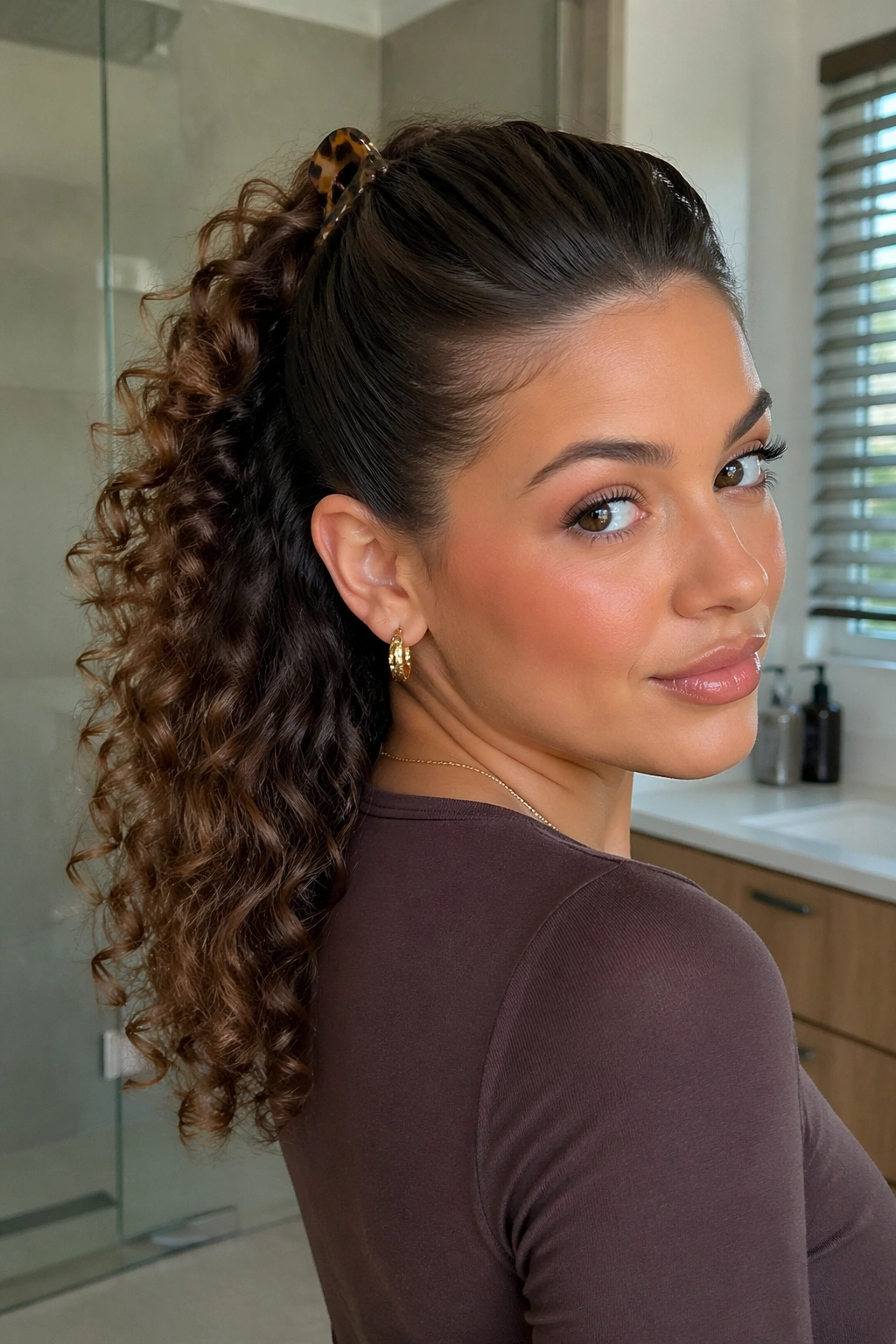
A contrast style is good when you want the front to look neat and the back to keep its volume. Smooth the front section with damp fingers or a tiny bit of gel, then clip the top back while leaving the rest of the curls open and full. The contrast between the clean front and the loose back does half the styling work for you.
What to Watch For
Do not smooth the whole head. That defeats the point. The front should be controlled; the back should stay airy and textured. Use just enough product to stop flyaways at the temples, then stop.
- Clean up the hairline with damp hands.
- Gather a narrow strip from the front top.
- Clip it high enough to lift the face.
- Leave the back curls untouched so they keep their shape.
This is a strong choice for formal-casual dressing, which is a silly phrase but an accurate one. It looks polished enough for dinner and relaxed enough for a plain button-up. The contrast is what makes it work.
15. The Loose Curl Cascade
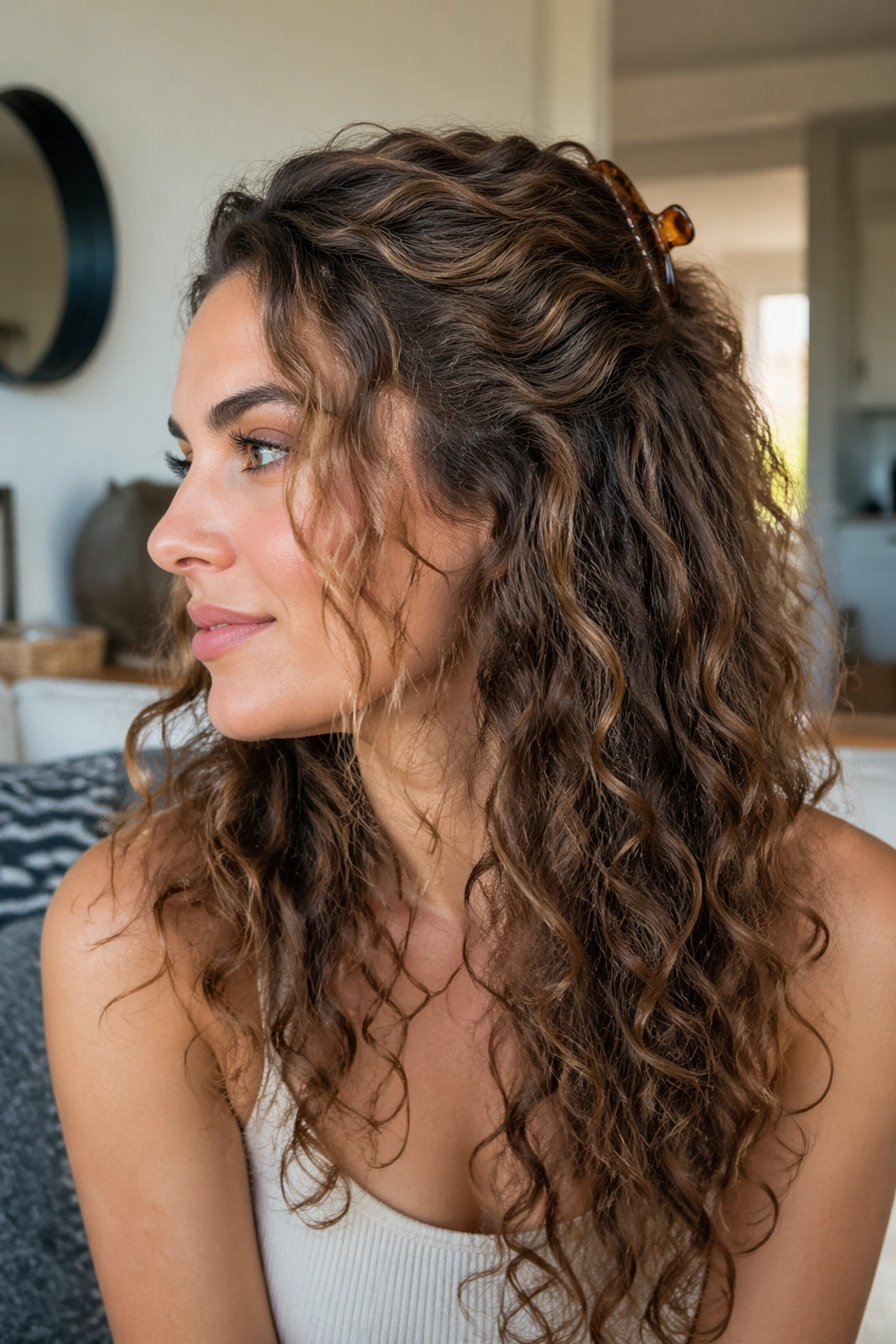
Sometimes the best claw clip style is the one that barely touches the hair. A loose curl cascade uses only a small section at the crown, just enough to hold the front away from the face, while the rest of the curls pour down in full view. It feels almost like the hair is half up by accident, which is part of the charm.
This version is especially good if your curl pattern is the main event. Tight coils, springy ringlets, and layered waves all look better when they aren’t swallowed by an oversized clip. A tiny or medium clip works here, because the goal is support, not control.
The style is also handy on days when you want your curls to stay visible from every angle. The back remains the star. The clip is almost a footnote.
You could say it’s the least fussy version on this list. I’d call it the one people reach for when they want to look like they did something, but not too much.
16. The Mini Clip Cluster
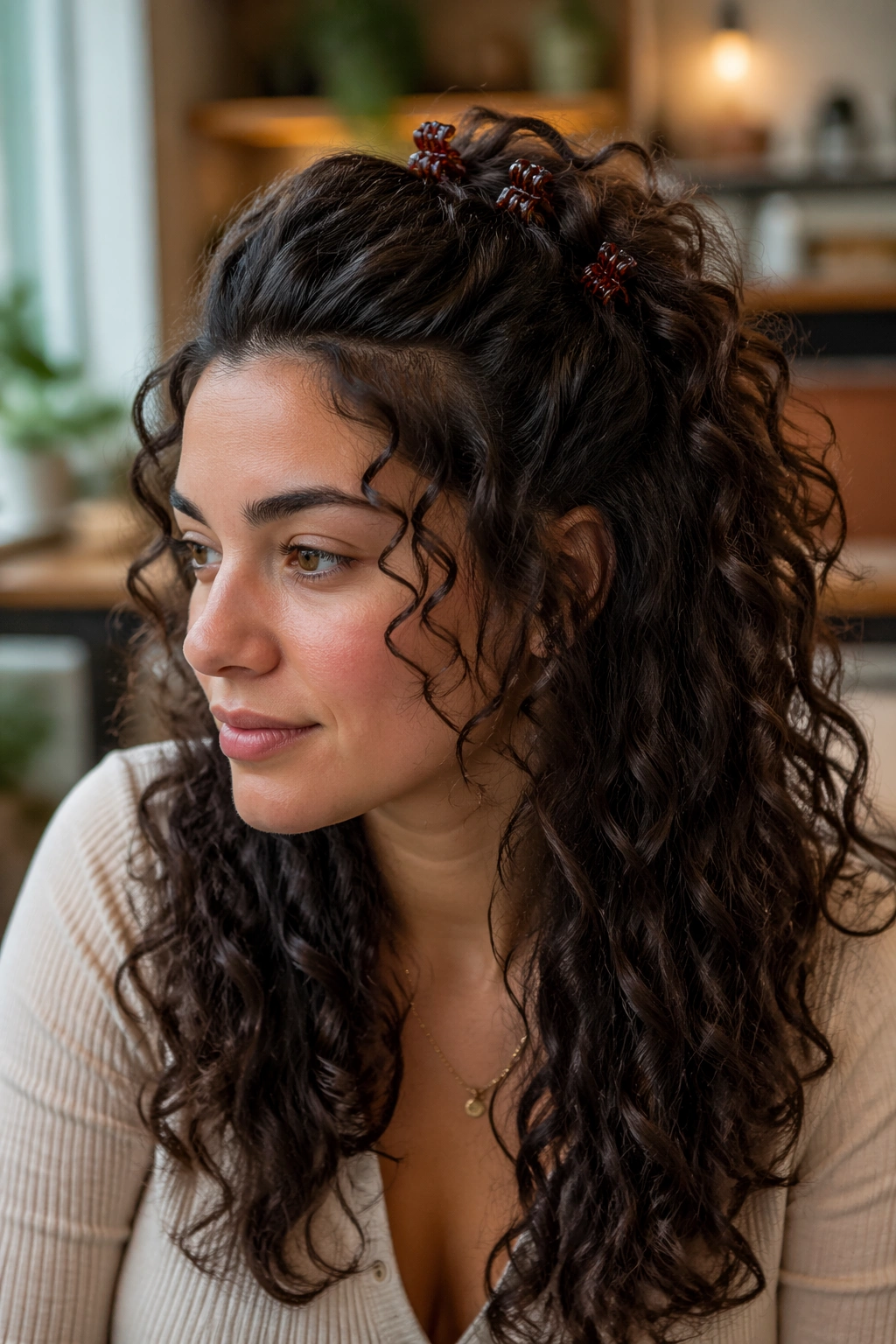
A cluster of small claw clips can look playful and surprisingly secure on curly hair. Instead of one large clip, you use three smaller ones to pin a gathered half-up section in overlapping spots. It’s a bit decorative, sure, but it’s also useful when your curls are layered and a single clip won’t catch every piece.
The trick is to keep the cluster tight enough to feel like one design. Spread the clips evenly across the half-up section, usually one at the center and one on either side, or line them in a soft curve along the crown. Too much spacing and the style starts to look accidental.
This works well on medium-density curls that need a little help staying in place after a refresh. It also gives you more flexibility with clip color. You can match them or mix two tones if the clips are small enough not to compete with the hair.
A row of little clips can look charming. A random scatter can look messy. Placement matters.
17. The Wrapped Twist for Long Curls
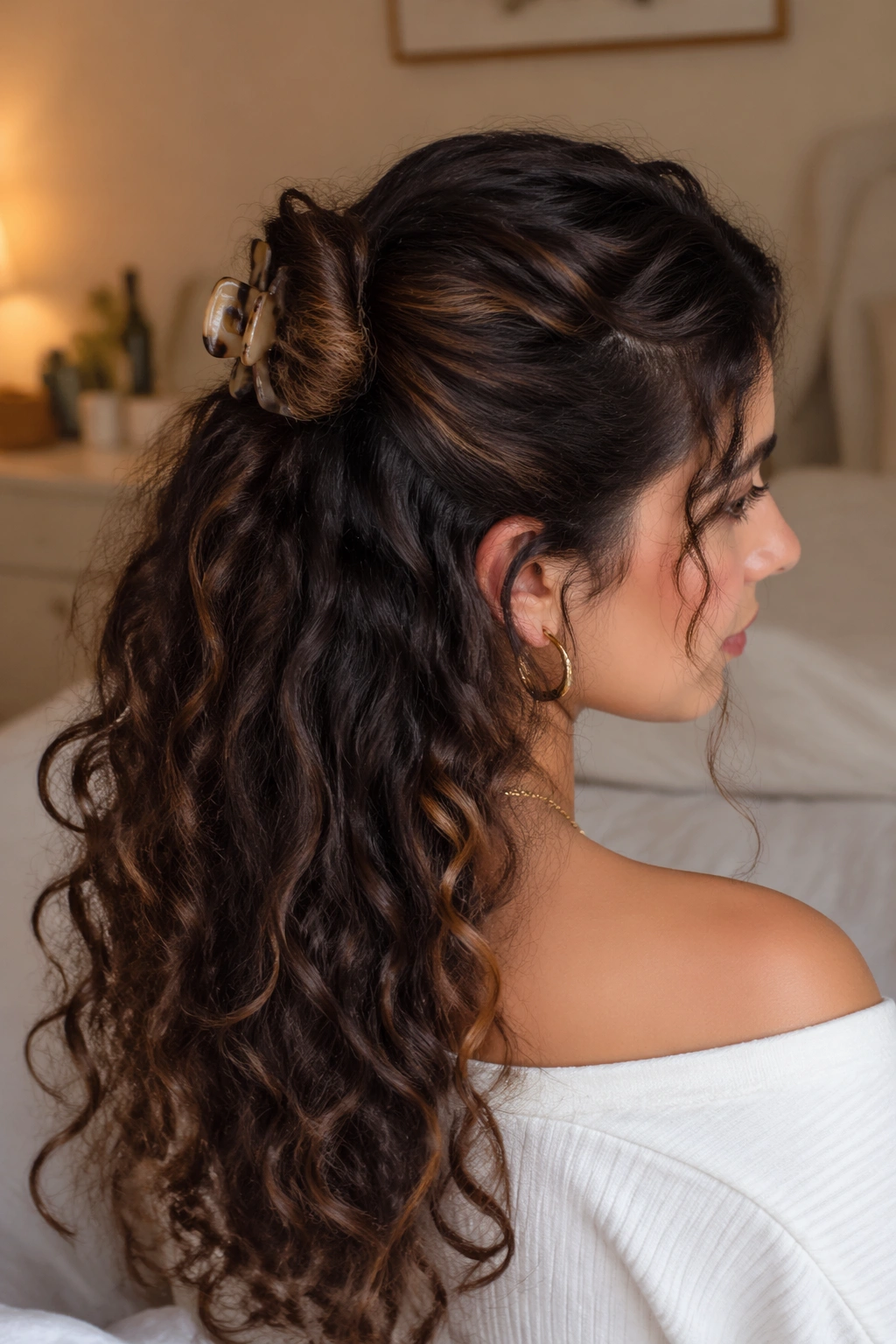
Long curls can swallow a standard half-up clip. That’s the problem. The wrapped twist solves it by giving the gathered section an extra fold before the clip goes in. You twist the hair back, wrap the length once around itself, then clamp the fold so the ends have somewhere to sit.
That extra wrap changes the shape. Instead of a loose bundle flopping away from the head, you get a rounded section with enough thickness for the clip to bite into. The style also keeps long curls from dragging downward and making the top go flat.
This is one of the most secure looks in the group if your hair is past the shoulders and heavy at the ends. It’s also a good option if you’ve got stretched curls that lose bounce as the day goes on. The wrap gives them a little structure.
The look is practical, but it does not have to feel plain. Use a clip with a curved jaw and the whole thing reads softer.
18. The Short-Curl Pinch and Lift
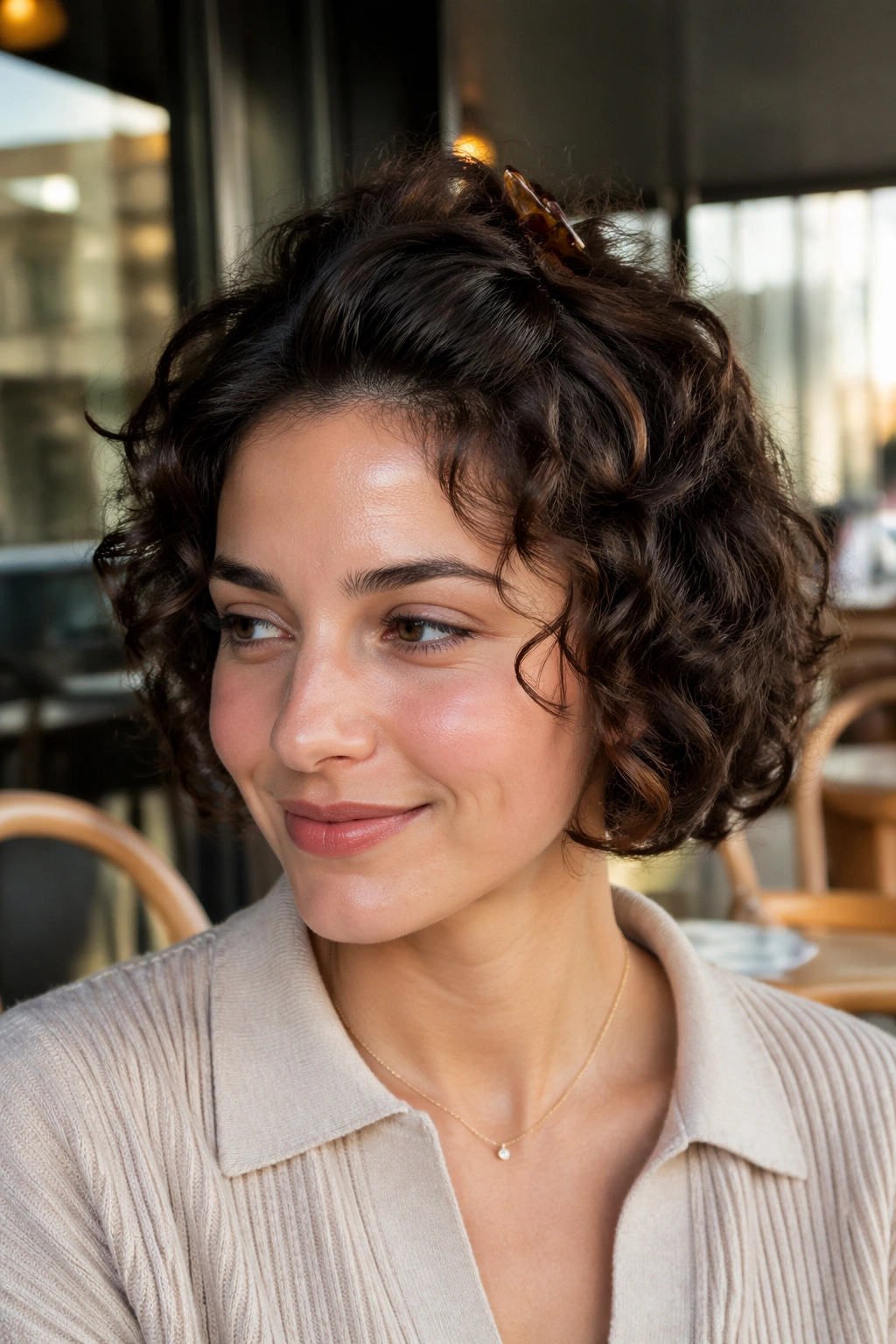
Short curly hair needs a different hand. You can’t grab a huge section and expect it to sit neatly. The pinch-and-lift version takes only a modest top section, lifts it at the roots with your fingers, and clamps it in place before the curls have a chance to spread too far.
Why does this matter? Because short curls need vertical room, not bulk. If you gather too much, the clip will sit awkwardly and the bottom layer will puff out in the wrong direction. A small clip or a narrow medium clip usually works best here.
Clip Size Matters
For chin-length or collarbone-length curls, a clip that looks tiny in photos can be the right size in real life. The opening matters more than the look of it. You want enough spring to hold the lifted section without crushing the curl ringlets near the root.
This style is one of the easiest ways to keep short curls off the face while still showing off the cut. It’s tidy, fast, and a little underrated.
19. The Formal Folded Half-Up
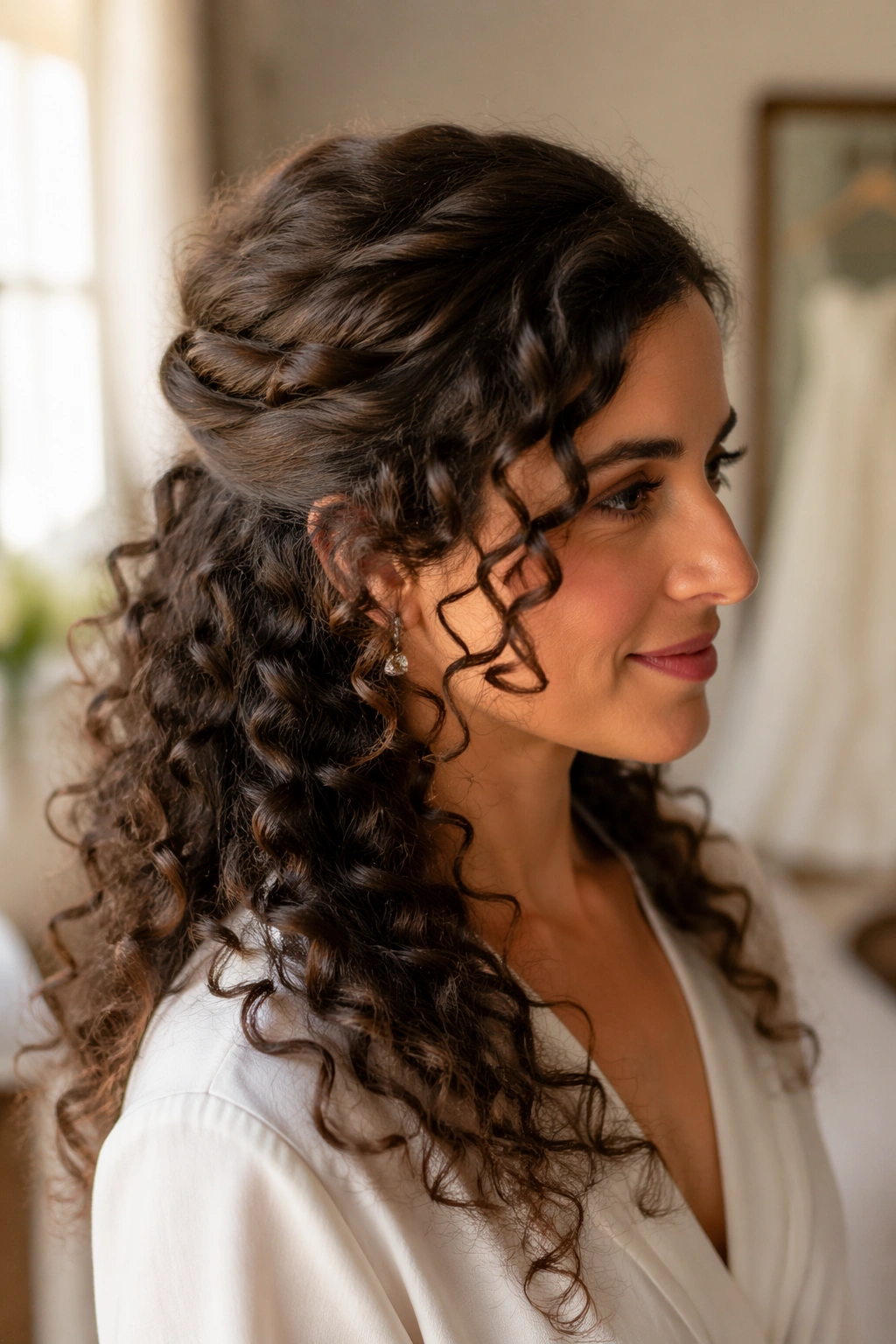
There’s a version of the claw clip look that can handle weddings, dinners, and anything else that makes you stand up straighter. The formal folded half-up uses a smoother top section, a more centered fold, and a clip that sits almost like a clasp rather than a casual grab.
The shape matters more than decoration here. Keep the gathered section neat, fold it inward so the ends hide behind the top layer, and place the clip with the hinge tucked out of sight. A matte or dark-toned clip usually reads cleaner than a glossy one, especially on defined curls.
This is one of the few styles where a little prep pays off. If the top surface is too frizzy, the whole look can go from refined to chaotic fast. A pea-sized amount of cream or gel on the surface only — not the whole head — is usually enough.
It’s still a claw clip look. It just knows how to dress up.
20. The Grab-and-Go Claw Clip Look for Curly Hair
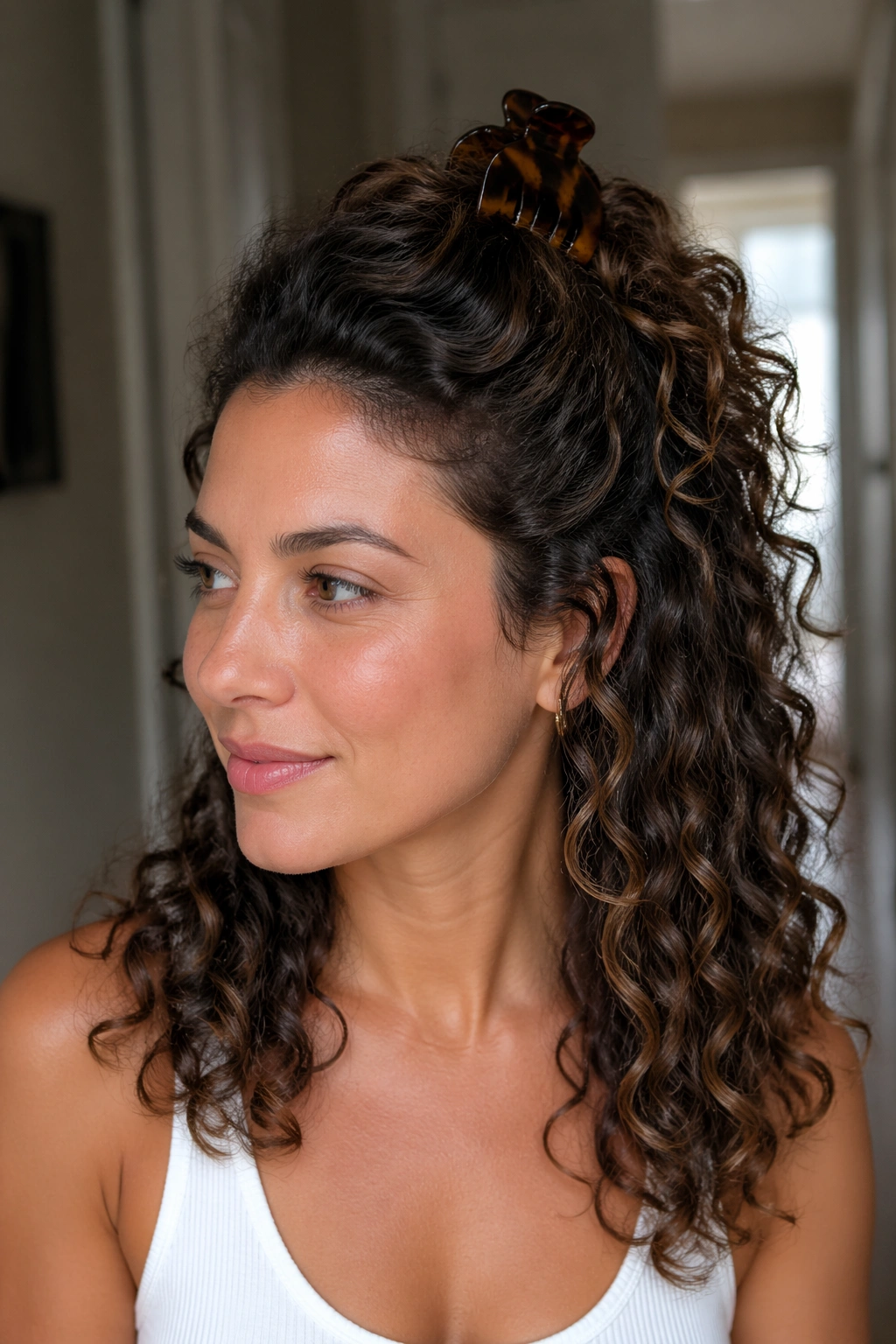
Some styles ask for a mirror and a minute of patience. This one asks for about ten seconds and a steady hand. You gather the top section wherever it naturally wants to sit, fold it once if needed, and clip it where the curls feel supported rather than forced. That’s the whole idea.
The grab-and-go version is useful because it respects real life. Maybe your curls are second-day and a little uneven. Maybe you’re leaving the house with damp ends and dry roots. Maybe you just do not want to think about it. A clip that can handle imperfect sectioning is worth more than one that only works when everything is pristine.
I like this style best with medium to thick hair, because the clip has enough hair to bite into. Thin curls can still wear it, but they may need a smaller clip and a lighter hand. Either way, the charm is the same: it looks casual, but not careless.
Some days that’s the whole job.
Final Thoughts
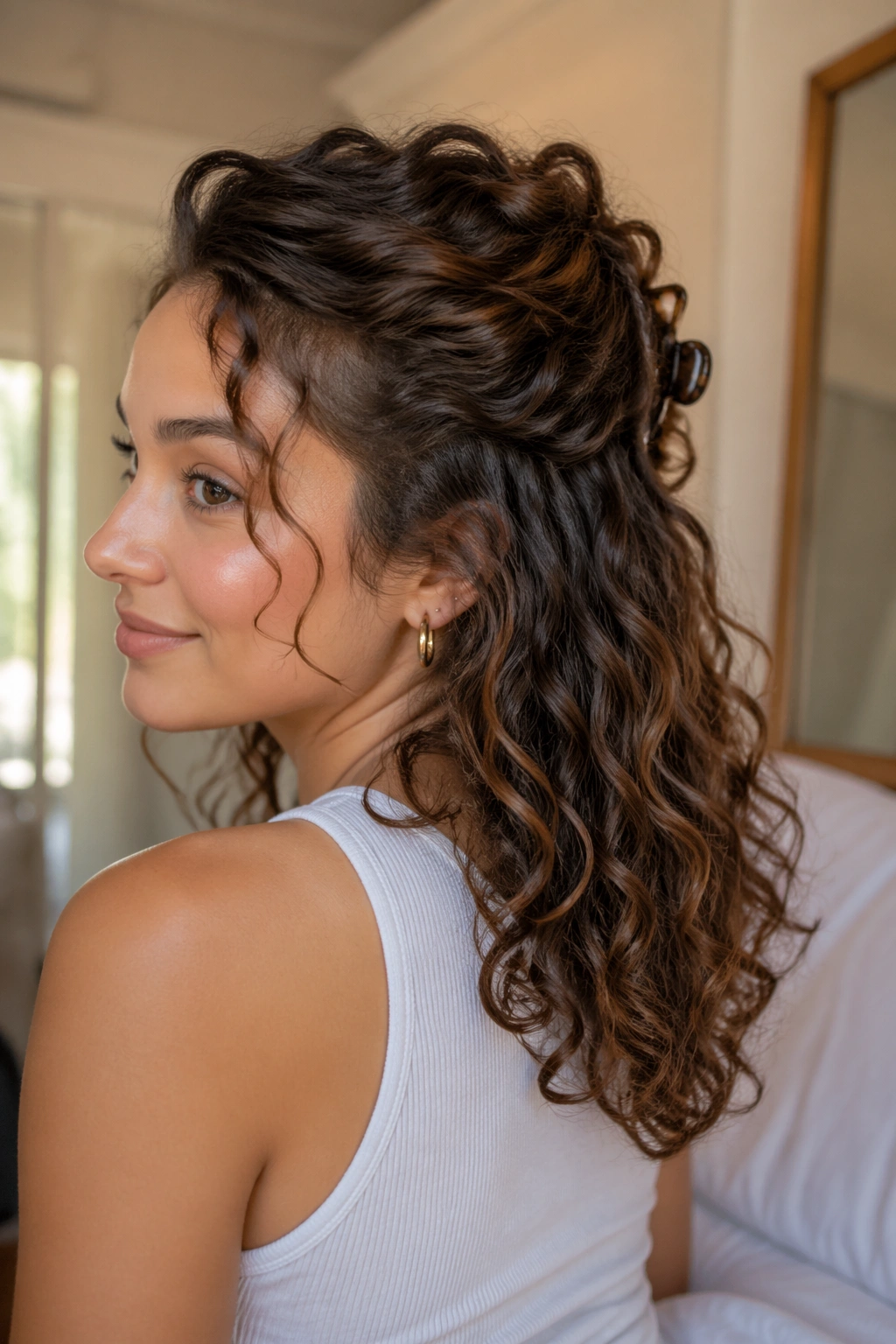
The best half up half down claw clip looks for curly hair usually do one simple thing well: they hold the top without bullying the curls underneath. That’s why the exact placement matters so much. An inch too high or too low can change the whole shape.
If your curls are dense, start with a bigger clip than you think you need. If your hair is finer or shorter, choose a clip that grips rather than one that just looks pretty in the drawer. The style should feel secure after a few head turns, not perfect for one photo and gone by lunch.
And if a look feels too tight, it probably is. Curly hair usually looks better with a little breathing room.
