



Some curly hairstyles survive every haircut swing because they do one thing well: they respect the curl pattern instead of fighting it. A shape that still looks good after a damp commute, a hat, or a rushed refresh at the sink is the one worth keeping.
That’s why the styles people come back to are rarely the loudest ones. They leave room for shrinkage, keep the ends from ballooning out, and give curls a shape that makes sense when the hair loosens up or tightens down.
Curls need room.
I keep circling back to that idea because it explains almost every good curly cut and set on this list. Some are cropped, some are long, some are dressed-up versions of a lazy day shape, but all 20 work because they make the texture look intentional without making it feel locked into one fixed look.
1. The Curly Bob at the Jawline
The curly bob is one of those shapes that never asks for much. It lands around the jaw or just below it, so the hair springs outward in a way that feels tidy without going stiff. On curls, that length is magic because it gives you enough body to see the pattern, but not so much weight that everything drags down.
What to ask for
Ask for a dry cut or curl-by-curl shaping if your stylist is comfortable with it. A bob cut wet can look fine in the chair and then land much shorter once it dries, which is how people end up surprised in the bathroom mirror. A slight roundness through the back keeps the shape from turning boxy.
- Keep the length at the jaw or 1 inch below it.
- Ask for a soft perimeter, not a blunt shelf.
- Leave the front a touch longer if your curls shrink a lot.
A bob like this works especially well if you want your face to stay the focus. It’s neat, it moves, and it doesn’t need a ton of product to look finished. A light mousse or a small amount of gel is usually enough.
Pro tip: let the bob air-dry halfway before you touch it. Touching wet curls too soon is how the top goes frizzy and the ends lose their shape.
2. Shoulder-Length Layers for Curly Hair
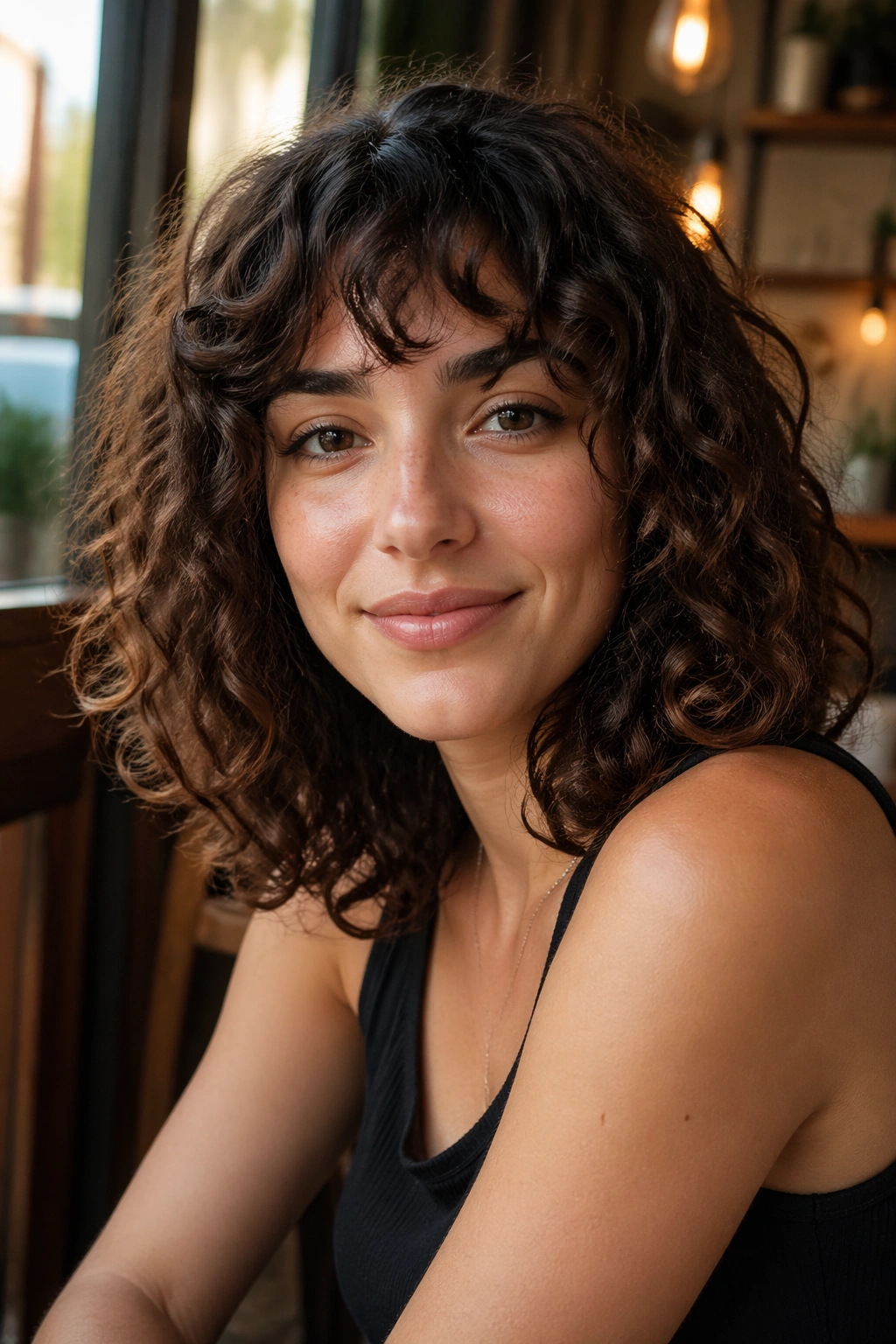
If you want curls with movement, shoulder-length layers are hard to beat. That length gives the curls space to bounce, but it still feels substantial enough to hold shape. It’s the sweet spot for people who don’t want a short cut and also don’t want long hair dragging the pattern flat.
The trick is in the layers. Start them around the cheekbone or a little lower, then let them fall in a way that removes bulk without chopping the silhouette to pieces. Too many layers and the whole head can look puffy. Too few, and the curls stack into a triangle that nobody asked for.
I like this length on dense hair because it gives the lower half some air. Fine curls can wear it too, but the layers need to stay soft and spaced out. A diffuser helps, sure, but the haircut does most of the work.
One good shoulder-length cut can make mornings easier. That’s the honest appeal.
3. Long Curly Layers That Keep Movement
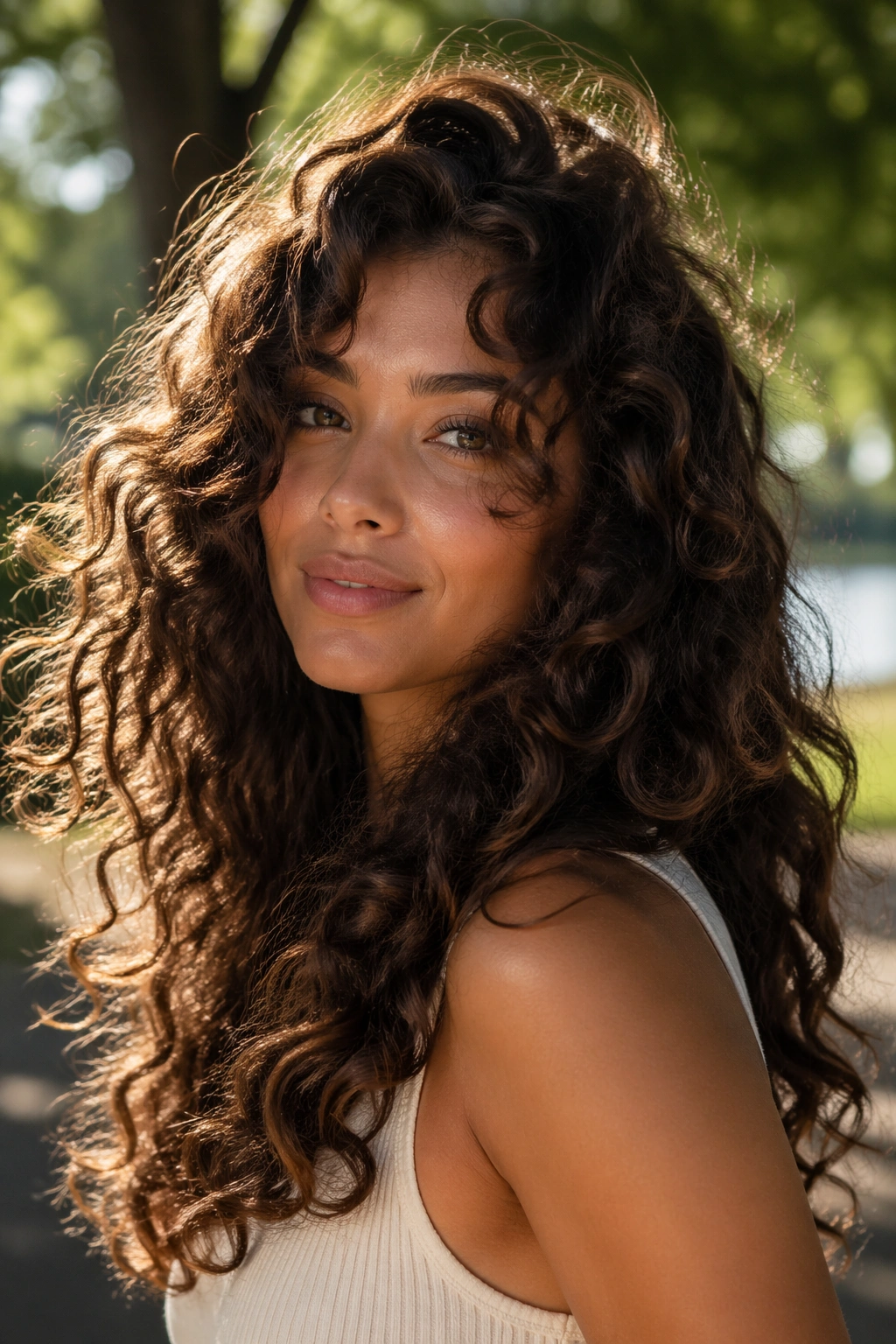
Why do long curls sometimes feel heavy? Because weight pulls the curl pattern down, and the shape gets stuck at the bottom. Long layers fix that by breaking up the bulk without making the hair look thin or over-cut.
Ask for layers that start below the chin and continue through the mids, with the longest pieces staying intact. The point is not to carve holes through the hair. It’s to let the curls spring instead of hanging like damp rope. A good stylist will usually shape the front first, then work through the back so the overall line still feels clean.
Best for thicker curls
Thicker curl patterns usually need this most. The underside can get dense fast, especially if the hair grows wide before it grows long. Light internal layering helps the curls stack better and keeps the back from puffing out under sweaters, scarves, and coat collars.
Long layers also give you room for updos later. That matters more than people think. Hair that’s been cut too blunt can feel awkward in a ponytail, while layered curls usually slip into a clip or bun without fighting every pin.
4. The Curly Shag
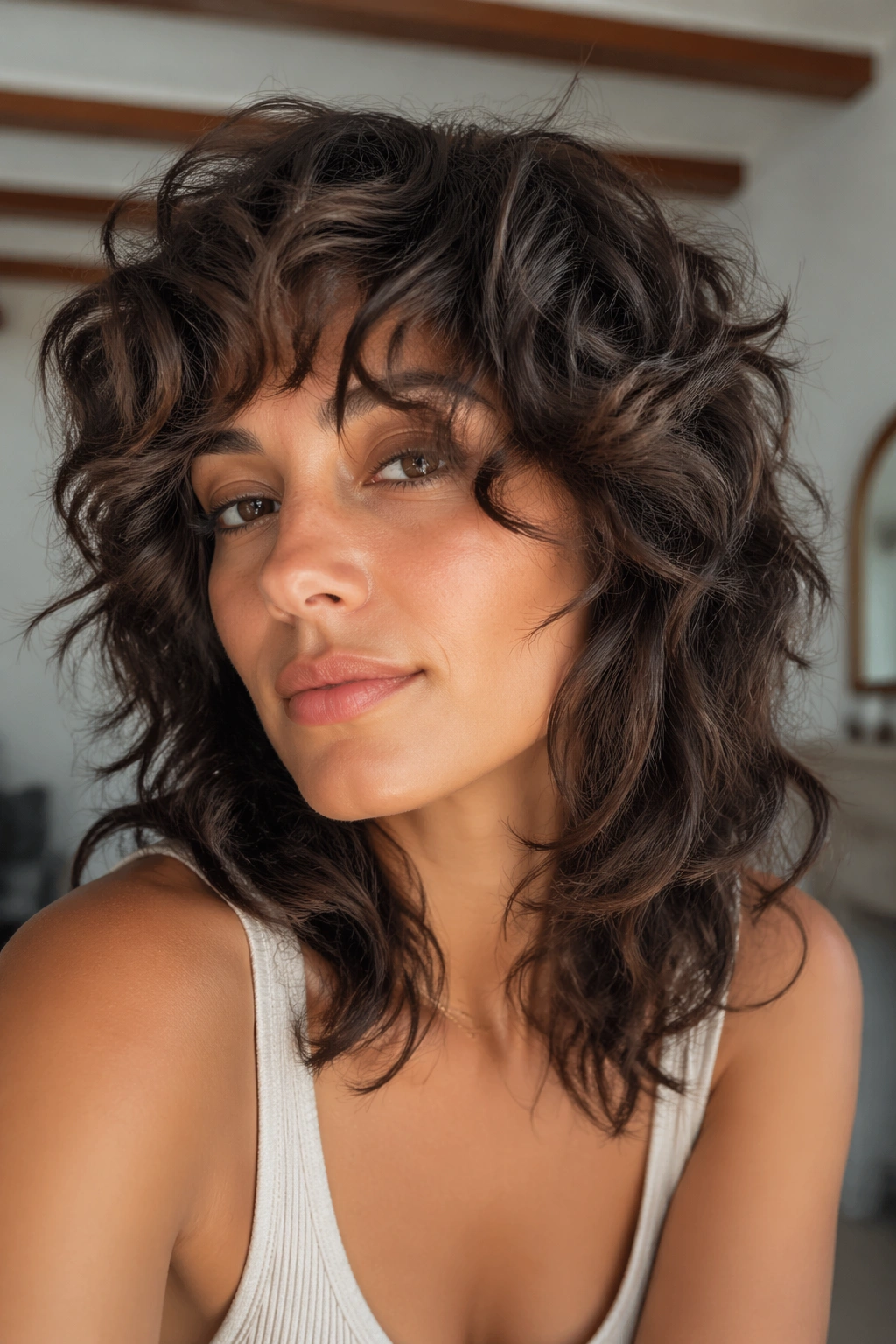
The shag has lasted because it understands curls better than most cuts do. It’s messy in the good way, with layers that start higher on the head and a fringe or curtain bang that softens the whole line. If your curls have a loose or medium pattern, this cut can look almost effortless—though it is not, in fact, effortless. Someone had to put the shape there.
The reason it works is simple: volume moves upward instead of outward. That gives the hair a little lift at the crown and some air through the sides, which keeps the whole thing from swelling into a triangle. I’ve always thought the shag looks best when it’s a little imperfect. A curl that flips differently on one side can make it better, not worse.
Why it stays flattering
- It softens a strong jawline.
- It adds shape to flatter crowns.
- It works with natural texture instead of asking for heat styling.
If you like hair that feels lived-in, this is a good one. If you want every curl to line up like a row of beads, it may frustrate you. The shag likes motion. It likes a little mess.
5. A Short Curly Pixie
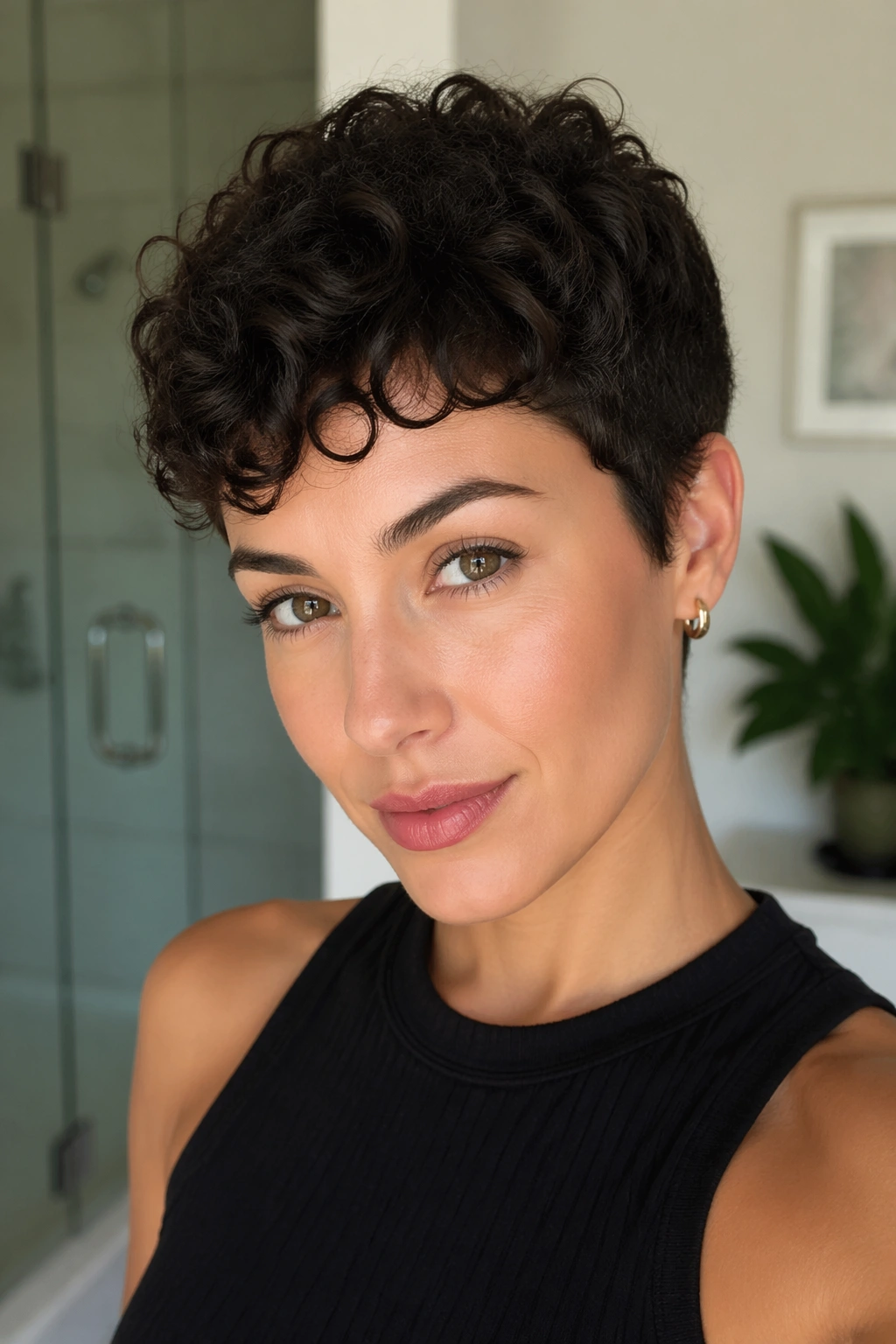
A curly pixie works when the top stays soft and the sides stay neat. That’s the whole deal. Cut it too close everywhere and the curls lose their personality. Leave too much bulk on the crown and the shape turns mushroomy fast.
The best version keeps the sides and nape tapered while leaving enough length on top for the curls to bend and stack. Think of it as a sculpted shape, not a shaved one. The top can be pushed forward, swept up, or let fall in tiny loose pieces, depending on how much definition you want that day.
A short cut like this needs maintenance. Not a ton, but enough. Plan on trims every 6 to 8 weeks if you want the outline to stay clean. Heavy creams can weigh it down, so a light mousse or curl foam usually does more for it than a thick butter.
Tiny cut. Big shape.
That’s why people keep coming back to it.
6. Curly Bangs That Sit Softly on the Forehead
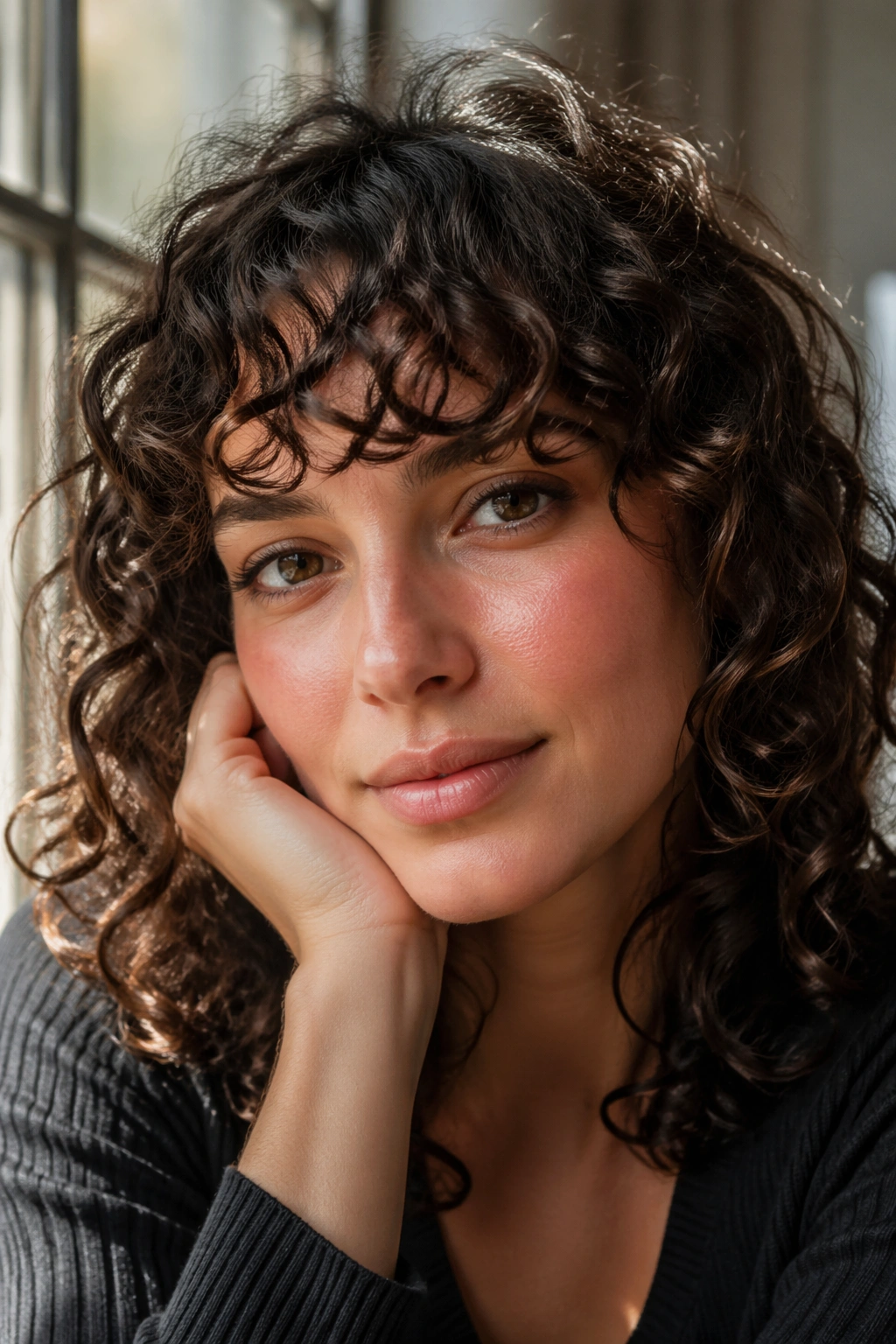
Can curly bangs work without looking fussy? Yes, if they’re cut with the curl pattern in mind. The mistake people make is treating bangs like straight hair bangs, which is how you end up with a brow-length curl that bounces right into the middle of the forehead.
The smarter move is to cut them dry, or nearly dry, and leave them a little longer than you think. A curl that looks eyebrow-length while stretched can shrink up to an inch or more once it dries. I’d rather see bangs land softly at the brow line than sit too short and feel jumpy.
How they stay soft
Use a small amount of styling cream on the bang area only, then twist the front pieces around your finger so they settle into a loose curve instead of a hard bend. If your forehead tends to get oily, keep the product light. Heavy oils on bangs are a bad trade; they collapse fast.
Curly bangs look especially good with bobs, lobs, and shags. They frame the face without stealing the show, which is part of the charm. They’re a little dramatic, but not in a way that dates itself.
7. A Deep Side Part for Curly Hairstyles
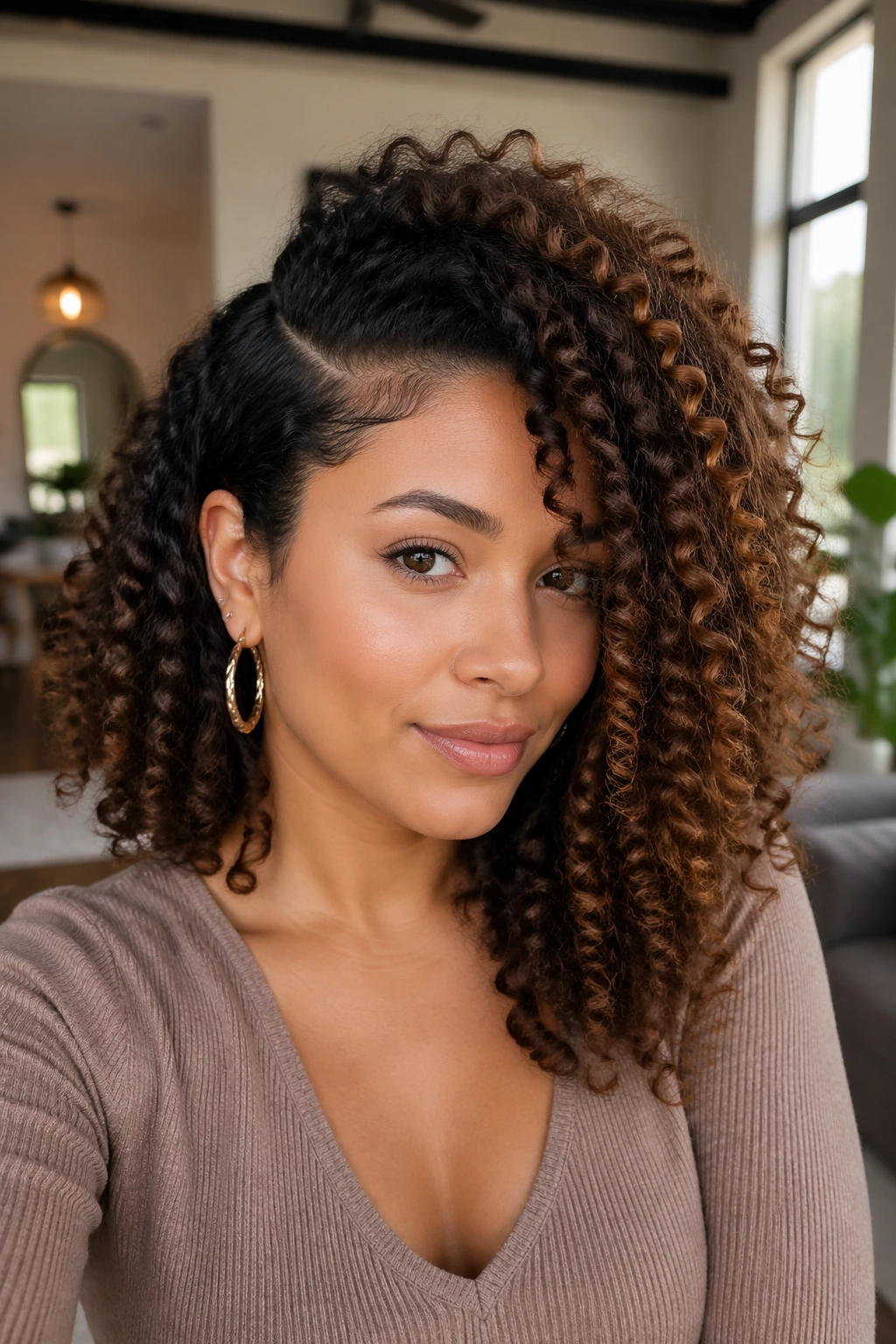
A deep side part changes the whole face frame without changing the haircut. That’s why it shows up in curly hairstyles over and over again. Move the part a few inches off center, and suddenly the roots lift on one side while the other side falls with more weight and drama.
The best side part starts near the arch of the eyebrow and sweeps back toward the crown. On curls, that one move can make the hair look fuller at the front and more polished at the temples. If your curls tend to flatten near the part line, flip the part when the hair is still damp and clip the heavier side up for 10 minutes while it sets.
How to set it
- Place the part before styling cream dries.
- Clip the fuller side at the crown for lift.
- Lift the roots with your fingers, not a brush.
This look can be casual or dressed up. It works on loose waves, springy curls, and even tighter patterns that need a little asymmetry to wake up the face. And yes, it looks especially good when one ear is tucked back.
8. Half-Up, Half-Down Curls
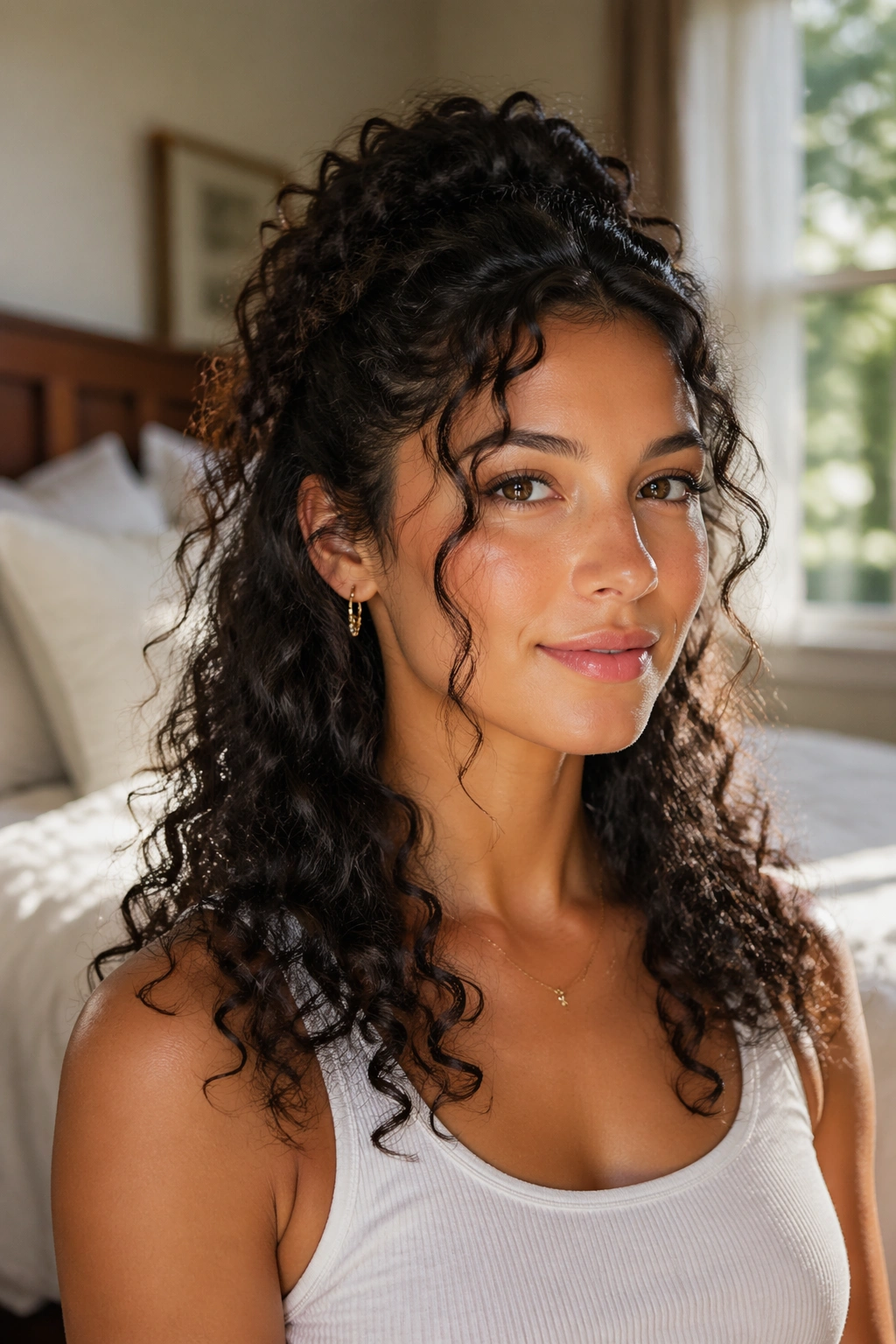
If your curls look nicest once they’ve dropped a little, the half-up, half-down style is a gift. You get the lift of an updo without losing the texture that makes curls worth wearing in the first place. It also solves the practical problem of hair falling into your face every 30 seconds.
The section you pull up should usually run from temple to temple, or just behind that if your hair is very thick. Gather it at the crown, not the back of the head, so the top keeps some height. A satin scrunchie or a large clip works better than a tight elastic, because it lets the hair sit instead of biting into it.
Leave a few face-framing pieces loose. Not too many. Just enough to soften the sides and keep the style from feeling severe. The best half-up looks are a little casual on purpose, never over-smoothed.
One small thing makes a difference here: don’t brush the curls flat before you pin them. Keep the texture. That’s the point.
9. A High Curly Ponytail
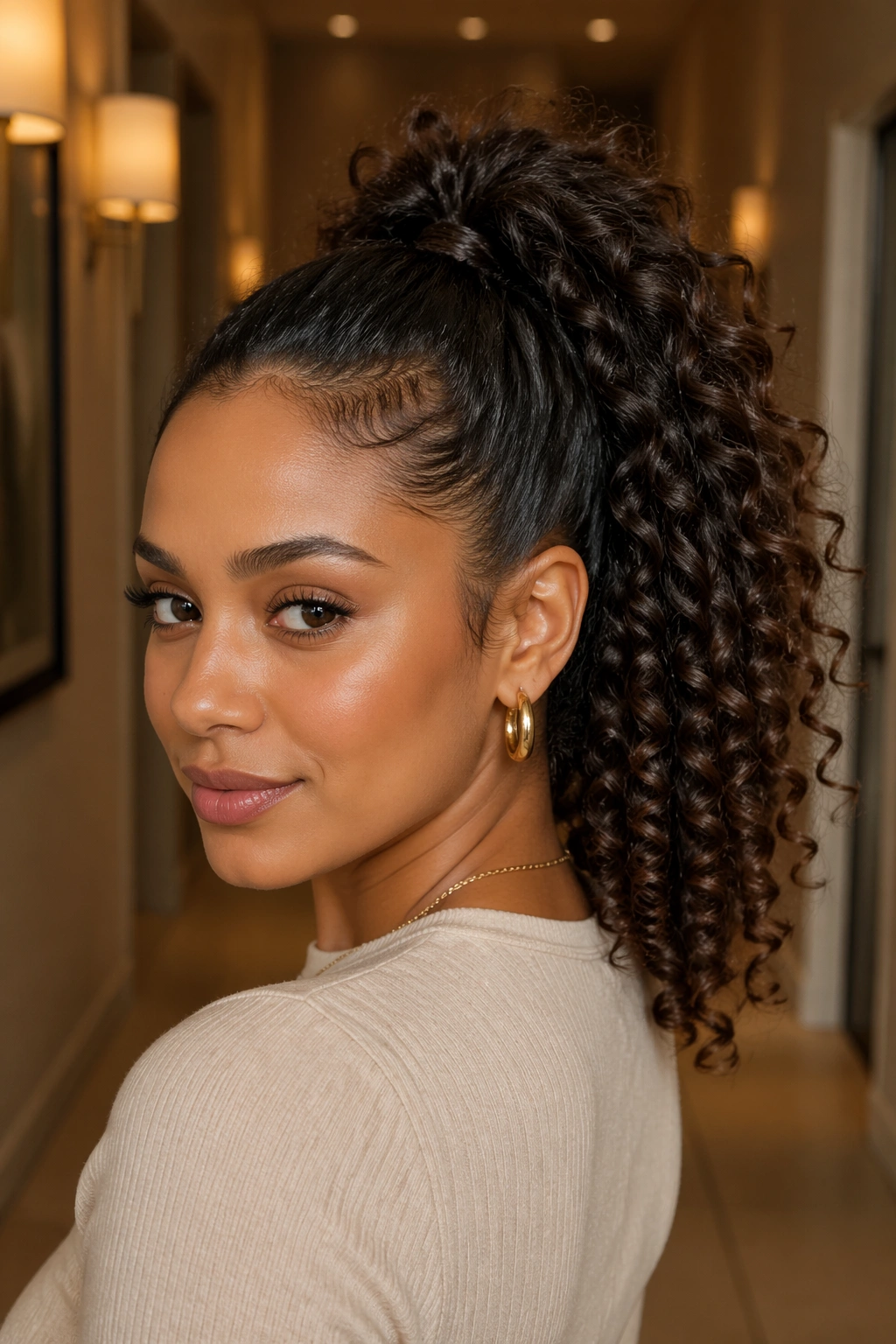
A high curly ponytail is not the same as a slick ponytail with texture on top. It should still look like curly hair, which means the crown has lift and the length keeps its shape instead of being scrubbed into submission. That’s what makes it feel fresh instead of gym-class plain.
Put the ponytail high enough that it sits near the crown, then secure it with a snag-free elastic. If your hair is dense, use two elastics instead of pulling one too tight. The first one holds the base; the second one keeps the style from sagging by midday.
Small tricks that help
- Wrap a small curl around the elastic to hide it.
- Pull a few curls loose at the front for softness.
- Use a light gel only at the hairline if you need control.
The style is good for busy days, but it also works with a dress or a blazer. A high ponytail has a clean line, and curly hair gives it energy. That mix never gets old.
10. A Low Curly Bun at the Nape
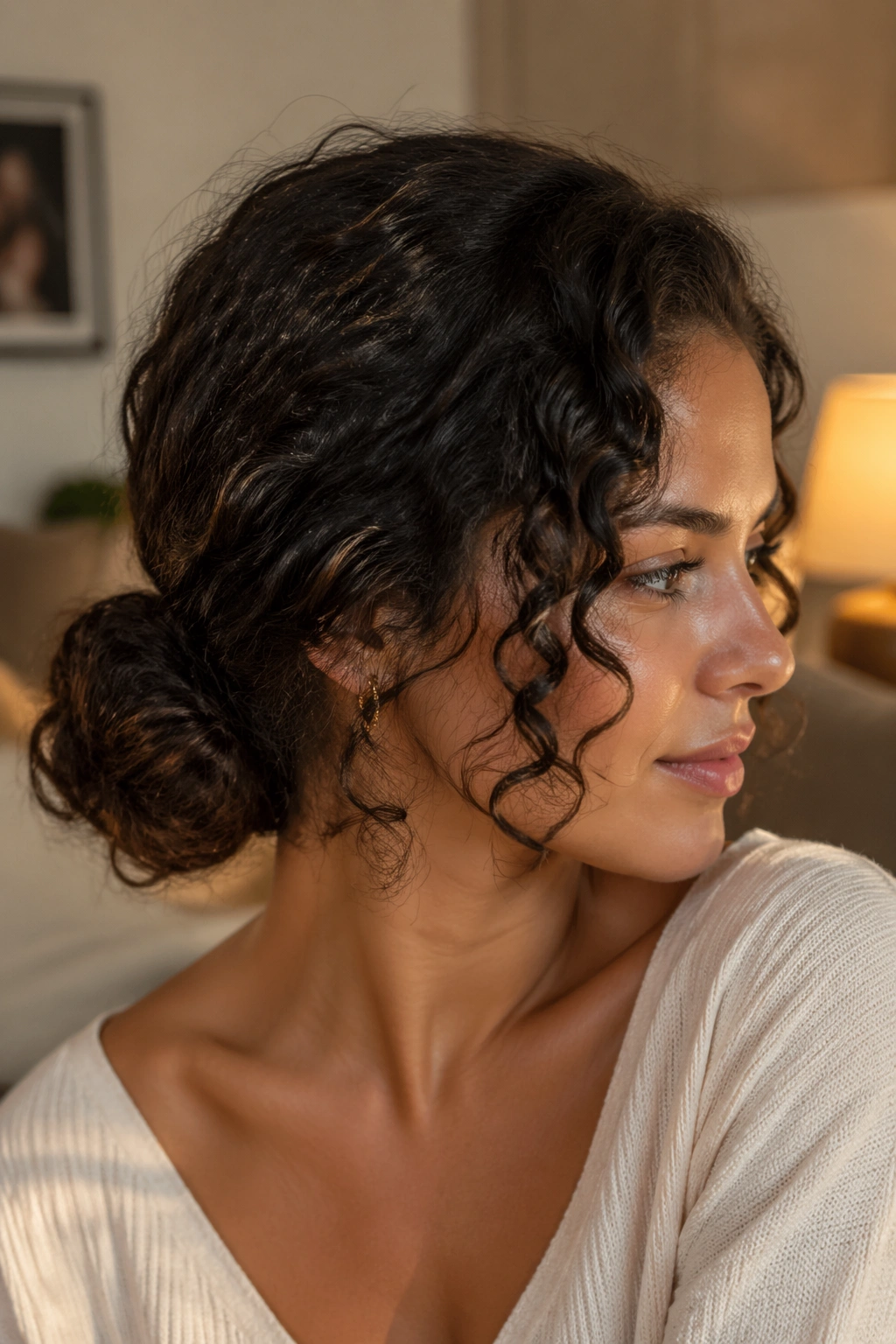
A low bun is what I reach for when curls need to look calm. It sits at the nape, keeps the neck clear, and still lets the texture show around the edges. Tight buns can feel severe on curly hair, so the better version is looser and a little softer.
Gather the curls into a low ponytail first, then twist the length around itself and pin it into a bun shape. Don’t worry if the ends peek out a bit. That little bit of texture keeps the style from looking too formal. Two or three U-pins are usually enough if the bun is small; heavier hair may need a few more.
A few face-framing pieces make a big difference. So does leaving the crown slightly lifted instead of flattened down. If you want the style to look done, not stiff, keep the bun compact but not tight.
This one is a workhorse. Office, dinner, wedding guest, grocery run—same shape, same good behavior.
11. The Pineapple Updo
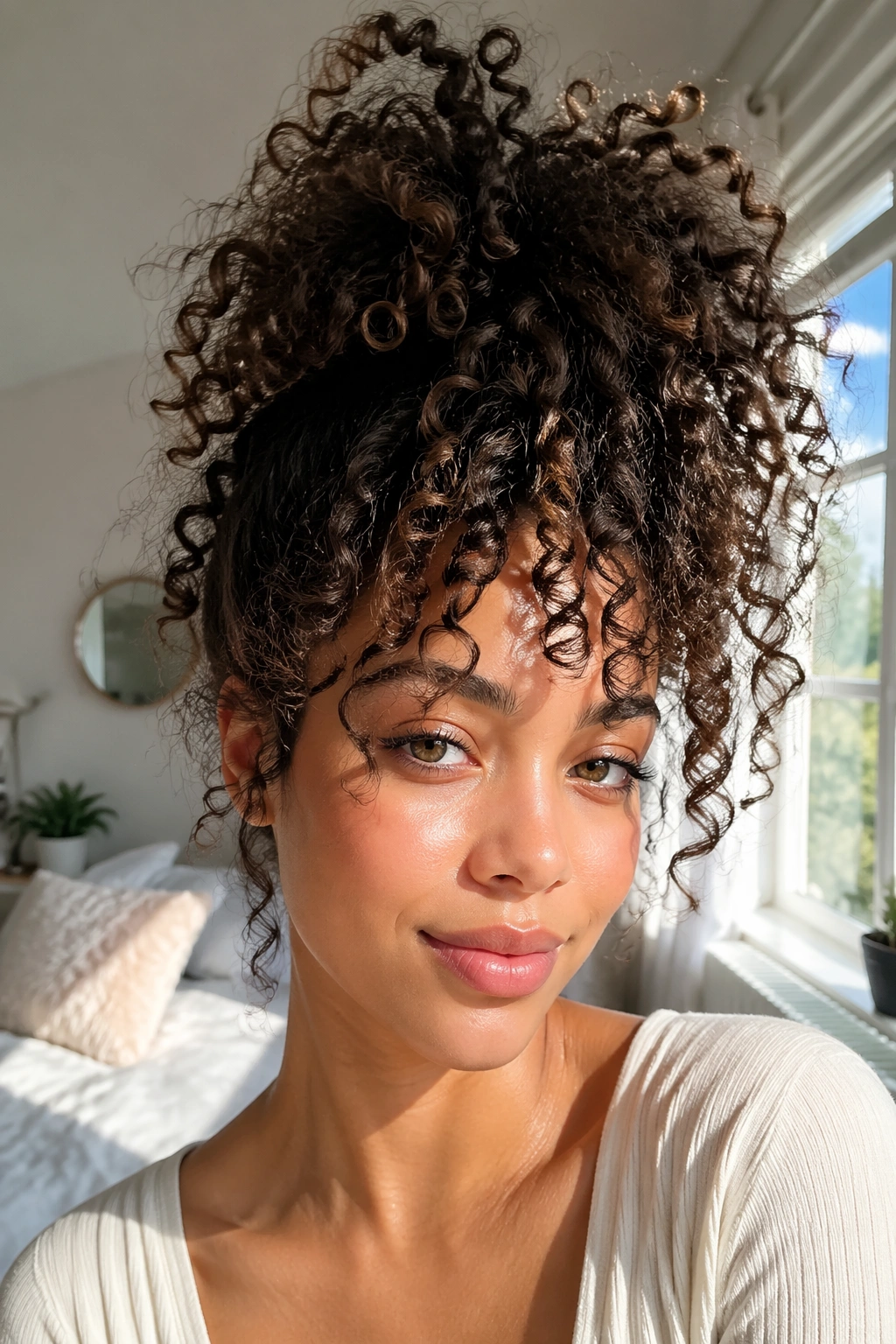
The pineapple is half hairstyle, half curl-saving habit. Gather the hair loosely at the very top of the head, secure it with a satin scrunchie, and let the curls spill forward like a fountain. It’s a classic move for preserving curl shape overnight, but it also works as a daytime style when you want your face clear and your volume still visible.
The key is looseness. If you pull the roots too tight, the style turns into a headache with a better name. If you keep it soft, the curls around the face stay bouncy and the rest of the hair keeps its pattern. It’s especially good on medium to long curls that flatten if they’re left loose too long.
It is part style, part survival.
I also like it for second-day hair because the curl clumps are already formed. A little finger fluff at the crown, maybe one clip near the back if the shape needs help, and you’re done. No fussing with every strand. That’s the charm.
12. The Curly Lob at the Collarbone
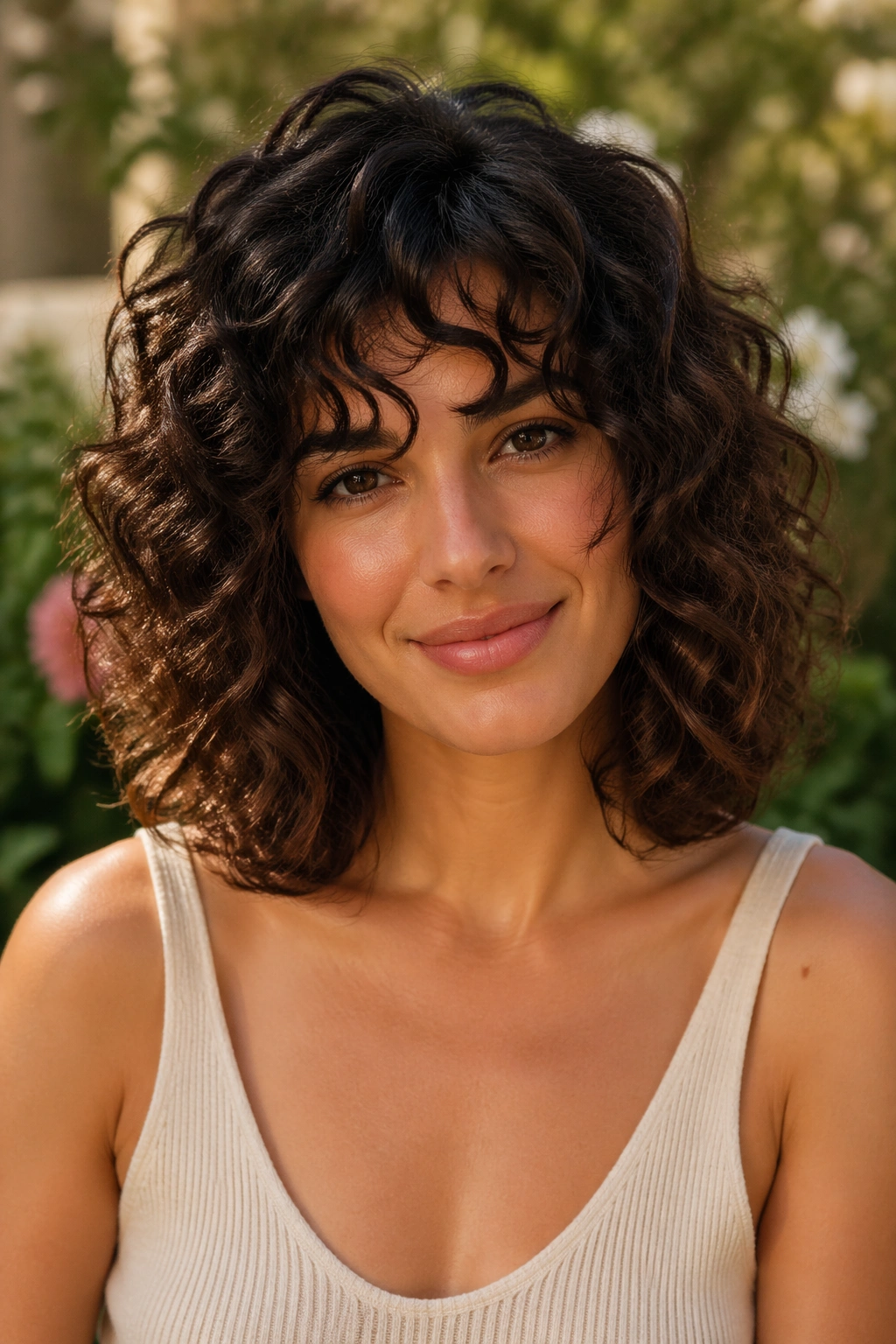
The curly lob sits at the collarbone, and that extra inch or two makes a real difference. It gives the curls room to expand, but it still feels long enough to tuck behind the ears or pull into a clip. Compared with a bob, it has more swing. Compared with long hair, it asks for less effort.
This length is good for curls that change shape as they dry. You get a bit of forgiveness here. If the pattern tightens up, the cut still looks intentional. If the curls loosen later in the day, the collarbone line keeps everything from looking sloppy.
Why it stays flattering
The lob is one of the easiest cuts to grow out because the shape doesn’t collapse the second it gains a half-inch. Ask for soft layers through the mids and a clean perimeter at the bottom. Too many layers can make the ends look wispy; too few can make the haircut sit like a block.
I like this cut on people who want options. Wear it down, clip one side back, or gather it into a low ponytail. It gives you room to move.
13. The Tapered Afro Cut
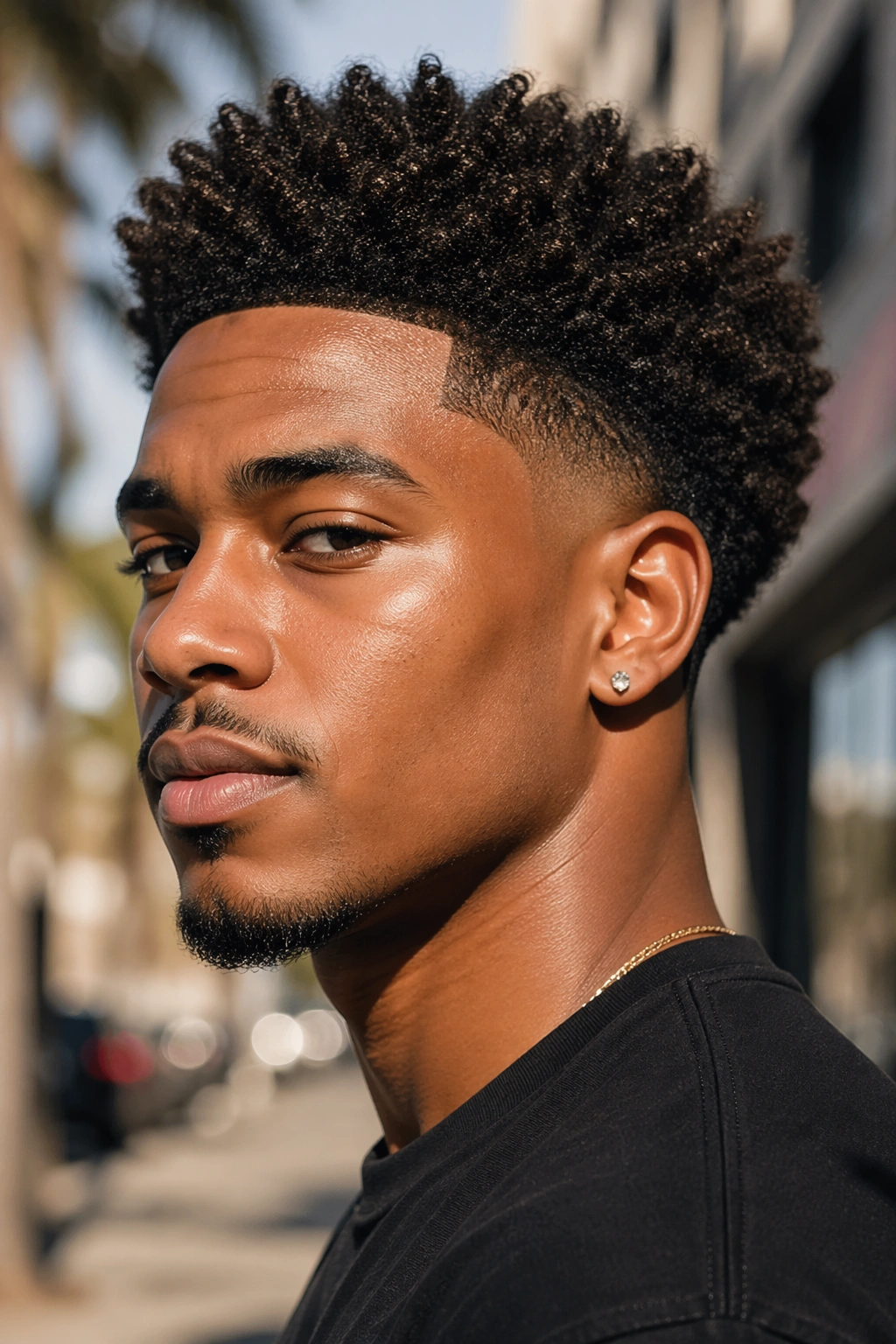
A tapered afro is one of the cleanest shapes curly hair can wear. Shorter sides and nape, fuller top, and a line that follows the head instead of fighting it. It’s sharp without looking harsh, and it lets the curl texture become the main event.
The tapered shape works because it controls width where hair tends to bulk up first. The temples, neckline, and sides stay neat, while the top keeps enough length to show the curl pattern or coil pattern in full. That contrast gives the haircut its edge. It also makes daily styling faster, because the shape already does part of the work.
Where it shines
- Tight coils that need a crisp outline.
- Thick hair that expands sideways.
- Short styles that need shape, not length.
A small amount of cream or leave-in is usually enough. The worst thing you can do is drown it in product and flatten the top. Keep the roots airy, and the cut holds its line better. Regular edge cleanups help too, especially around the neck and ears.
14. The Rounded Afro
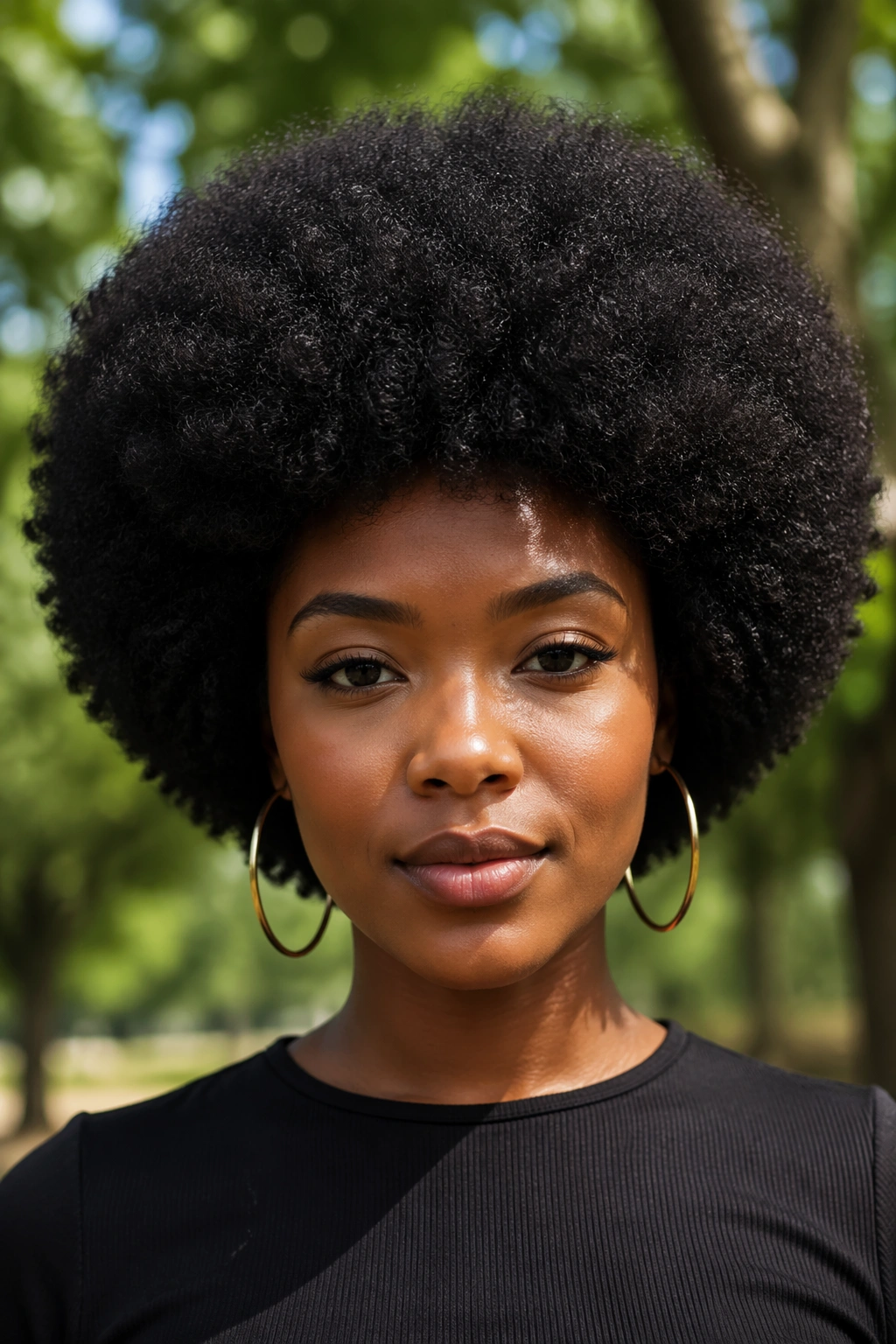
Why does a rounded afro still look so good? Because the shape is balanced from every angle. There’s no hard corner, no awkward shelf, no extra weight hanging in one place. Just a clean round outline that lets the texture take center stage.
This style is shaped outward and upward in a controlled way. A wide-tooth pick or a rounded comb can lift the roots, but you do not want to rake so hard that you destroy the curl pattern. The goal is volume with a line. A little moisture at the ends helps keep the shape soft, while a light-hold product keeps the surface from frizzing up too fast.
The rounded afro is also forgiving in a way that matters. It still looks intentional when it grows a little, which is one reason people keep wearing it. You can trim it into shape every so often and keep the same general feel for a long time.
There’s a reason it’s never felt dated. The shape is honest.
15. Wash-and-Go Curly Hairstyles
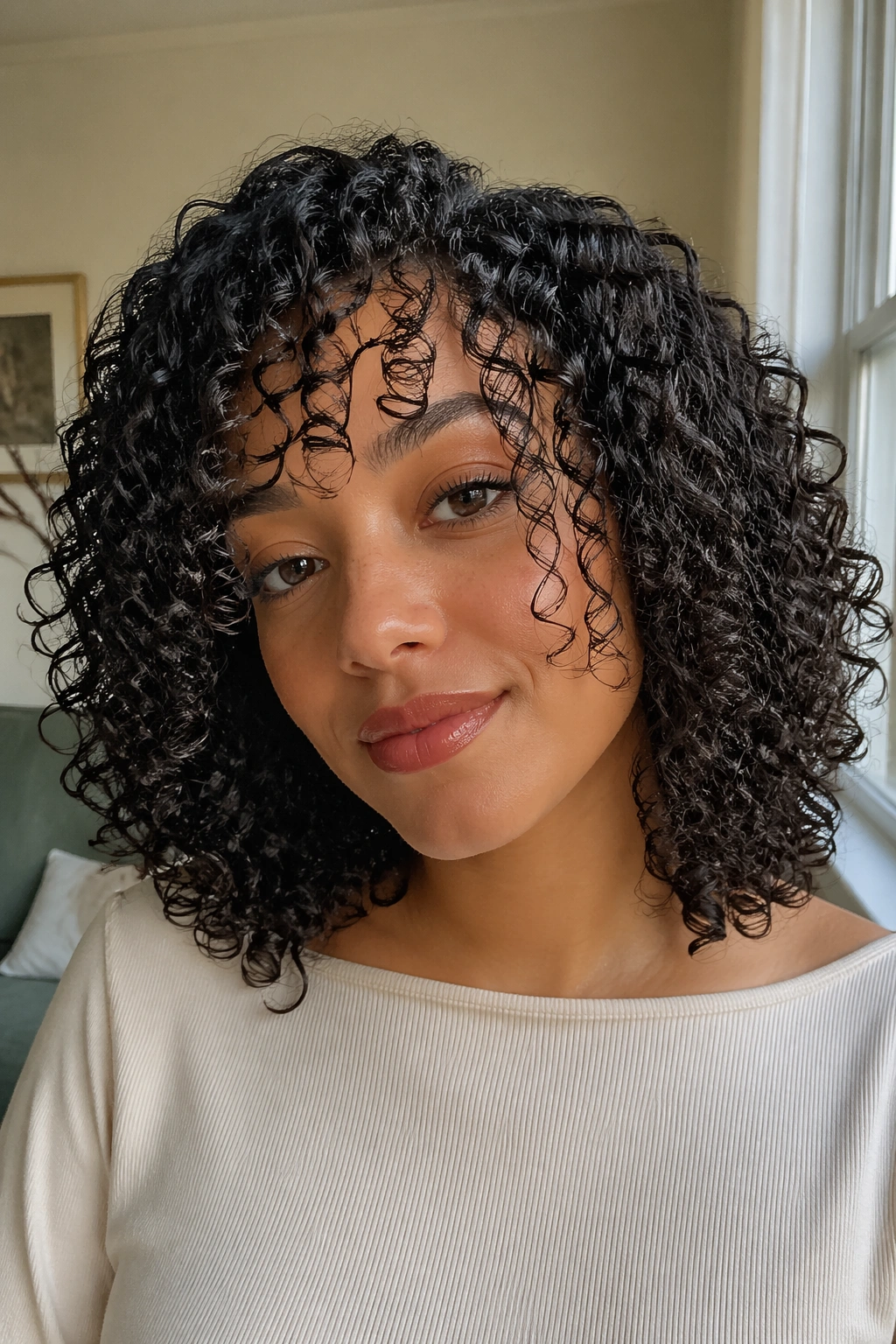
Wash-and-go curly hairstyles work because they let the pattern speak first. No braids, no rollers, no long set time. You cleanse, define, and leave the curls to dry in the shape they already want. That sounds simple, but the best versions are built with care, especially at the roots and around the face.
The styling usually starts on soaking-wet hair. Work in a leave-in, then layer a gel or foam through sections about 2 inches wide. Scrunch lightly, rake only where needed, and let the curls clump before you touch them again. If you diffuse, hover first, then cup the curls once a cast begins to form. That cast—the firm shell around the curl—helps the shape last longer.
How to make it hold
- Apply product on very wet hair.
- Keep the section size small and even.
- Do not break the cast until the hair is fully dry.
The wash-and-go is a shape, not a shortcut. When it works, though, it’s hard to beat. The hair looks like itself, only sharper.
16. Twist-Out Curls
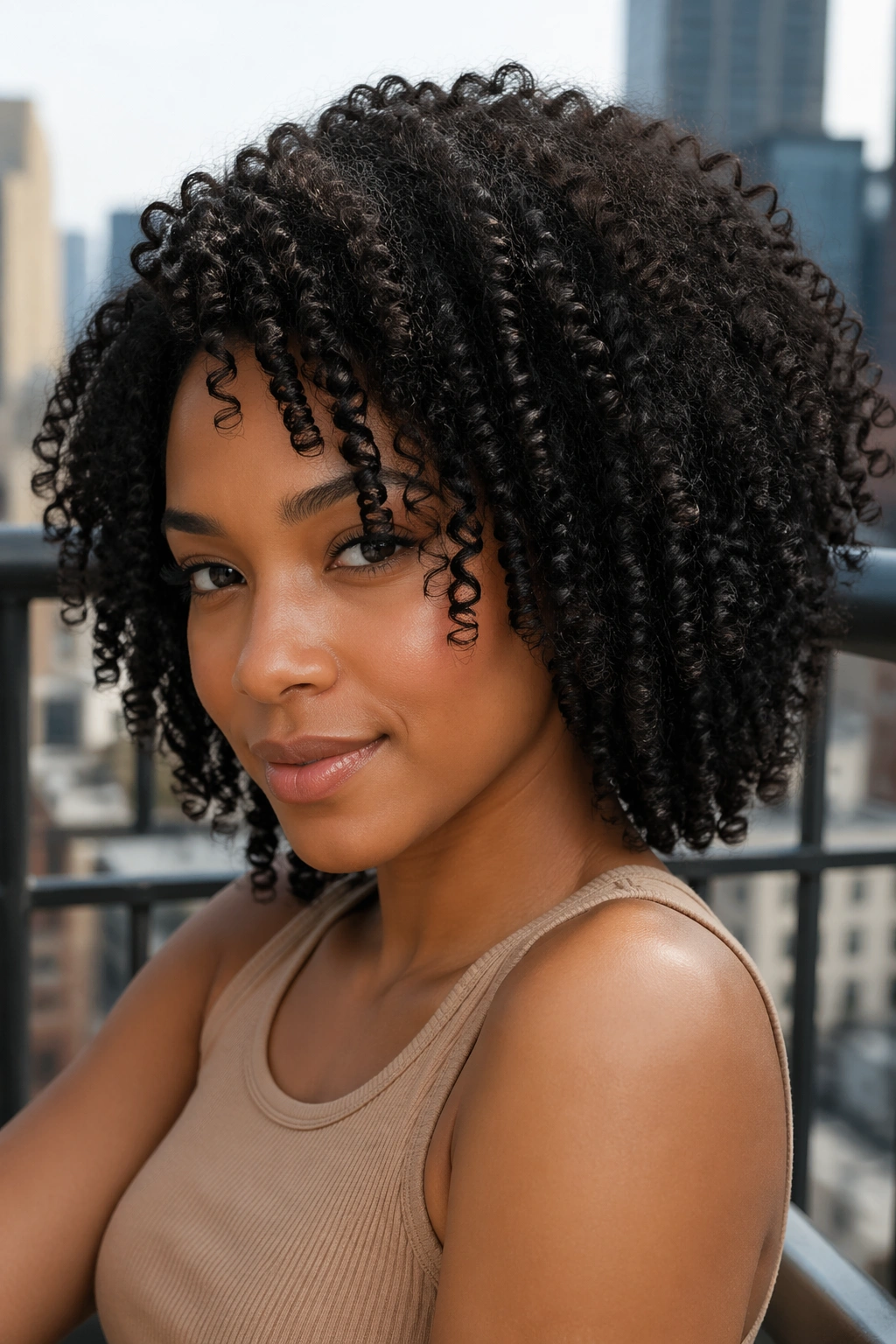
A twist-out looks best when you stop fussing with it. The hair is twisted while damp, left to dry fully, then separated into softer curls with a little oil on the fingers. The result is fuller than finger coils and more controlled than a wash-and-go, which is why so many people keep it in rotation.
The size of the twists changes the result. Small twists give tighter definition; bigger ones create looser, fluffier waves. If your hair is prone to frizz, make the twists consistent and keep the ends sealed well. That part matters. Loose ends unravel fast and steal definition from the whole style.
Where people rush
The biggest mistake is unraveling too soon. If there’s even a little dampness left inside the twist, the style will puff up and lose its shape by midday. Drying under a hood dryer helps, but air-drying overnight works too if the sections aren’t too thick.
A twist-out has a friendly kind of volume. It looks styled, but not stiff. And once it softens a bit on day two, it often looks even better.
17. Finger Coils
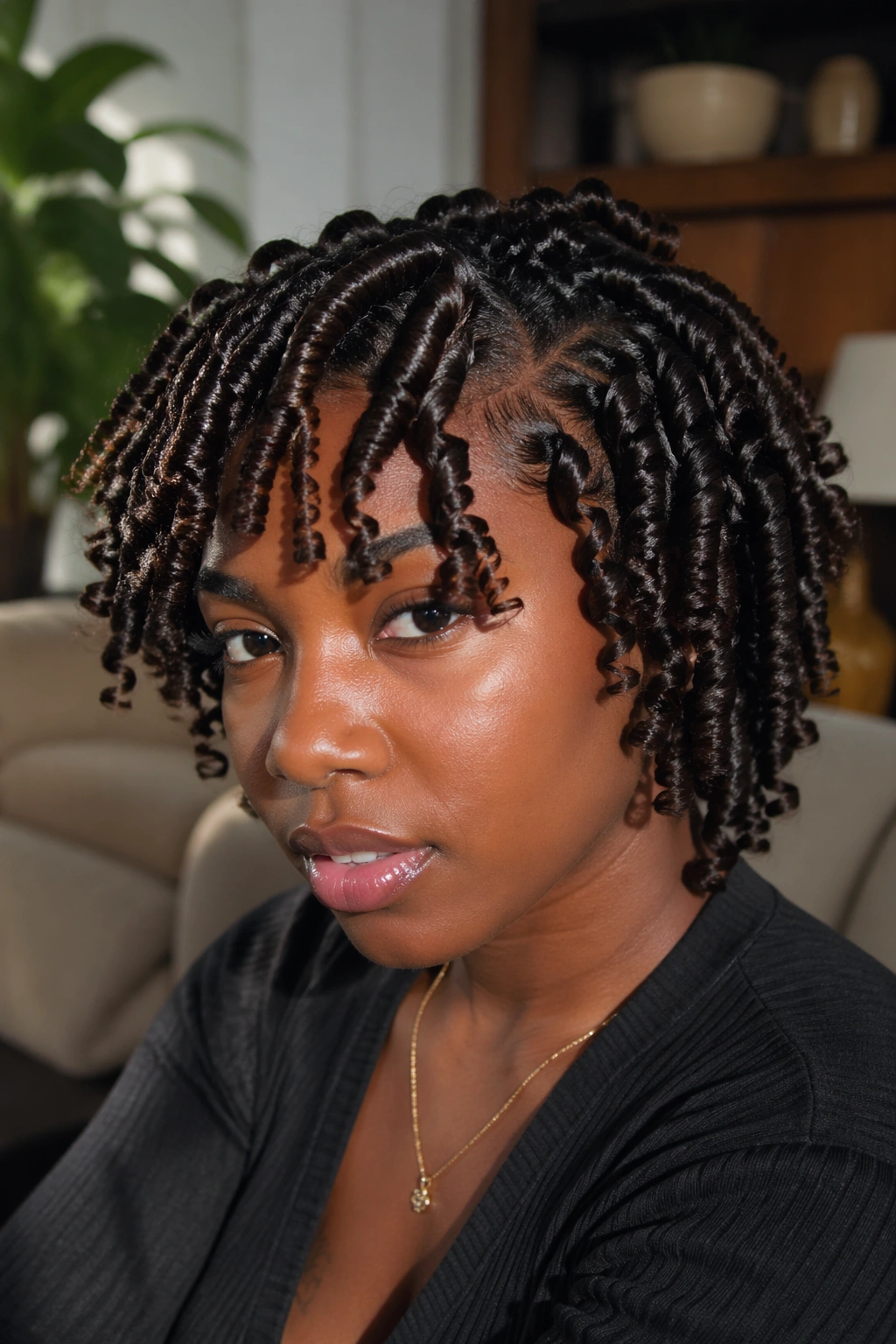
Finger coils are the most patient-looking style on this list. Each small section is wrapped around the finger until it forms a neat spiral, which gives you sharp definition and a very clean finish. Unlike twist-outs, the curl pattern here is more sculpted and less fluffy.
This style works best when you want the curls to read as individual pieces. Short to medium lengths tend to show it best, but tighter textures can wear it beautifully at longer lengths too. Use a small amount of gel or curl cream on each section, then coil from root to tip without pulling hard. The coil should look smooth while it dries, not stretched.
I like finger coils on days when the hair needs to look deliberate. They take time. No way around that. But the payoff is strong shape and curls that stay separated for a while, which can be useful when humidity is doing its usual nonsense.
18. Side-Swept Glam Curls
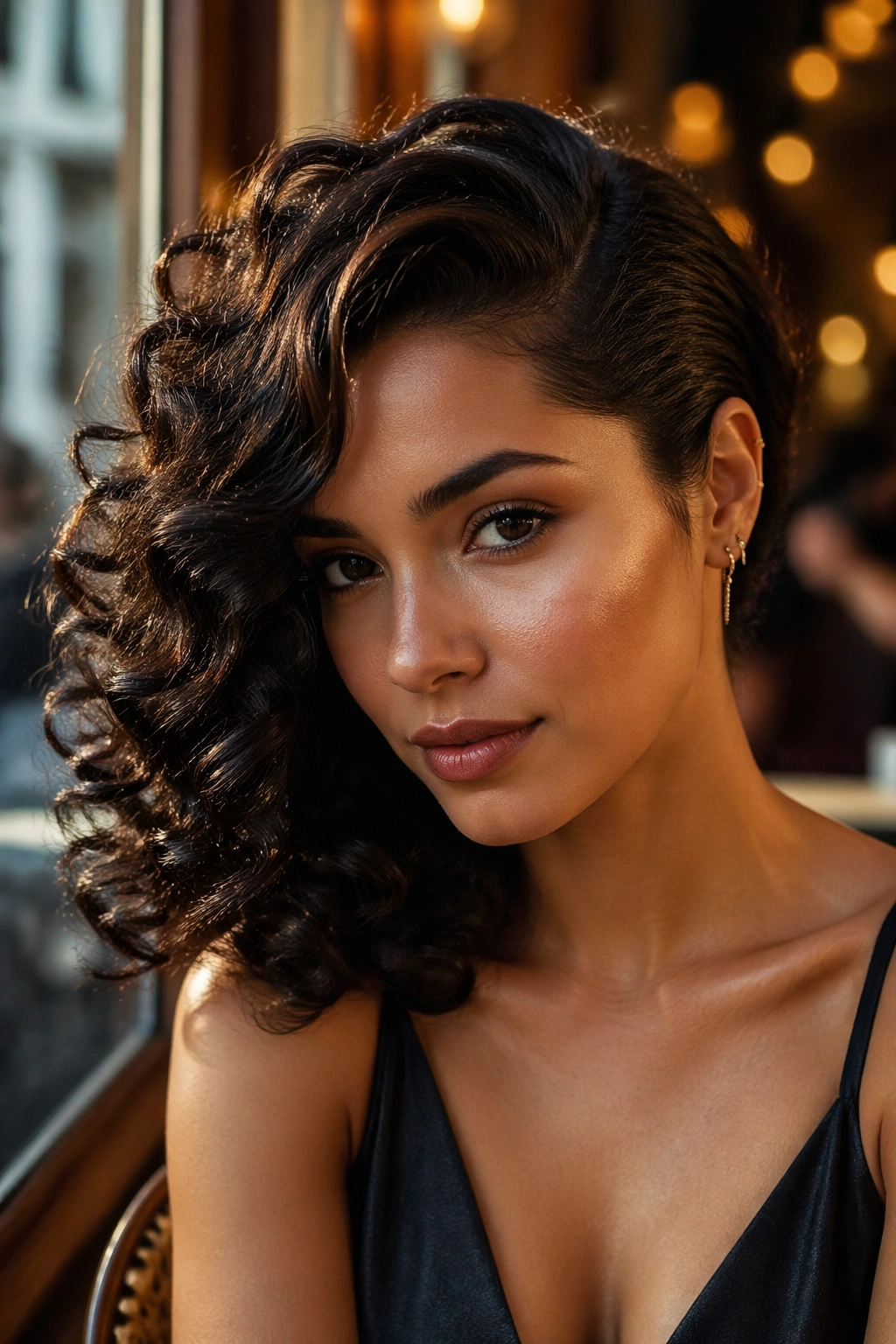
Side-swept glam curls bring a little old dressing-room energy without feeling costume-like. The shape starts with a deep side part, then one side gets pinned back or tucked behind the ear while the rest falls across the shoulder. The curls can be loose, brushed into soft waves, or left more defined depending on how formal you want the finish.
What makes this look work is the contrast. One side opens the face, the other side carries the volume. That balance makes it flattering on a lot of lengths, especially shoulder-length and longer curls. If the front is too poofy, gently smooth the root area with your hands and let the ends keep their texture.
A few details that help
- Place the part low enough to create a clear sweep.
- Pin the lighter side with one or two hidden bobby pins.
- Keep the curls around the shoulder soft, not clipped flat.
This is the style I’d pick for a dinner, a photo, or any moment when you want the curls to feel dressed up without losing their shape.
19. The Crown Braid with Loose Curls
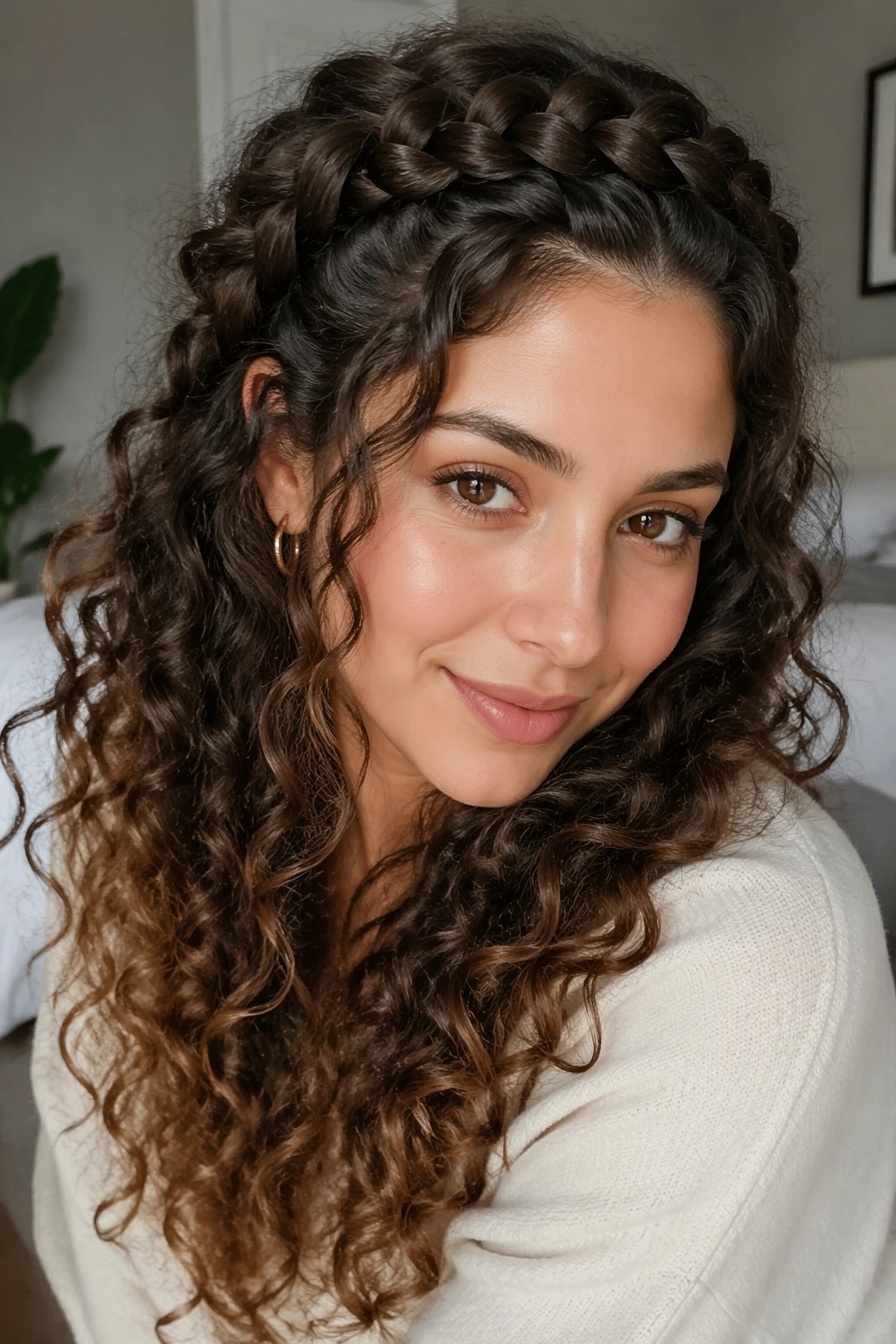
Why does a crown braid keep showing up in curly hair? Because it does the neat part and the soft part at the same time. The braid holds the hairline away from the face, while the rest of the curls stay loose and visible. That mix is hard to beat.
The braid usually runs from one temple across the top or along the hairline to the other side. It can be tight and tidy, or a little pulled apart for softness. The loose curls beneath should stay springy, not brushed out flat. If the braid feels too formal, leave a few tiny pieces out near the temples. That keeps it from looking sealed up.
How to keep it soft
A crown braid looks best when the braid itself is small and the curls underneath are the star. Use a little edge control only where you need it, then stop. Too much product near the braid can make the top look greasy by the end of the day, and nobody needs that.
It’s a pretty good compromise when you want your hair off your face but still want the texture to show.
20. Old-Hollywood Curly Waves
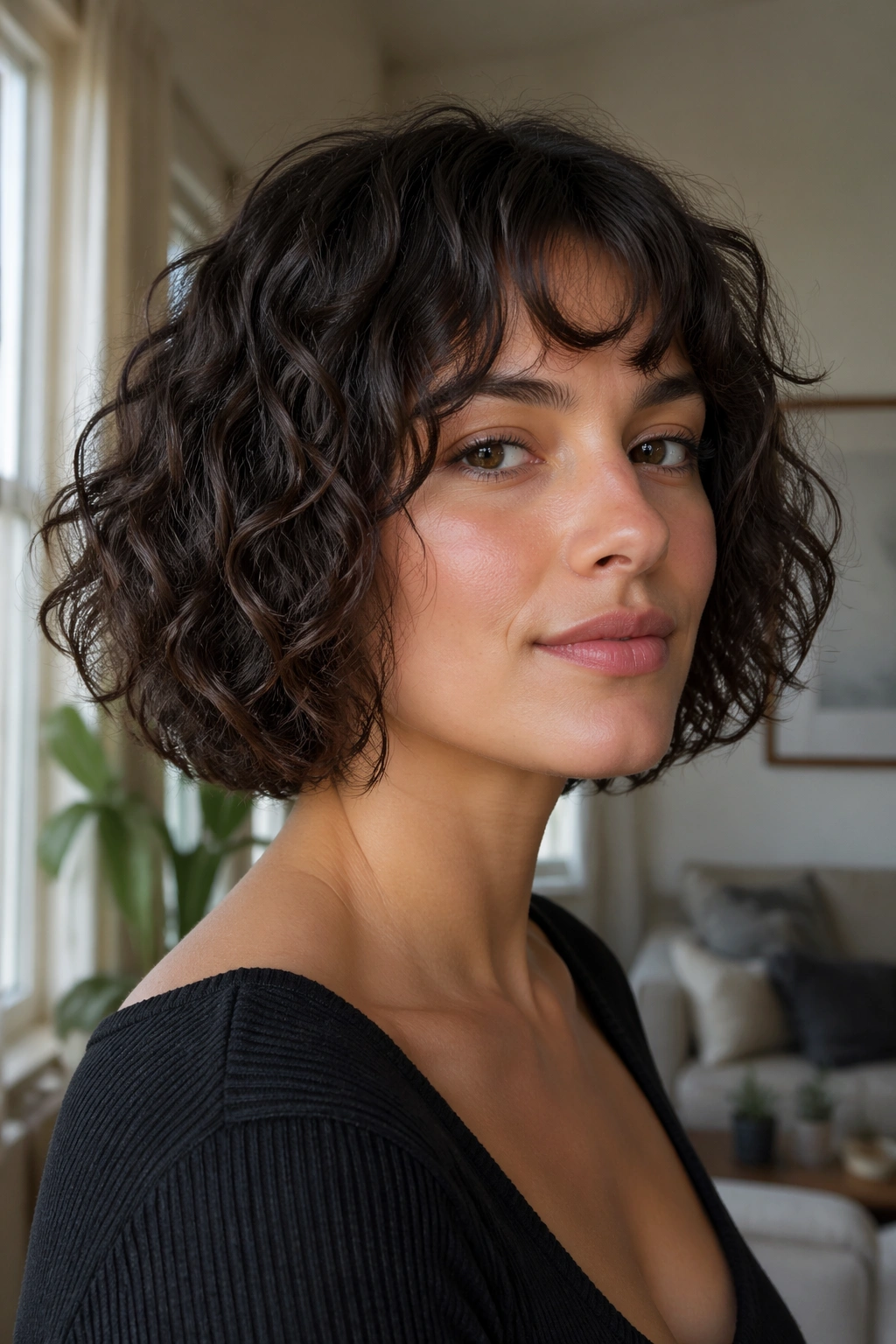
Old-Hollywood curly waves survive because they frame the face before they decorate the hair. That is why the style still has such pull. The deep side part, the smooth root, the glossy wave that falls over one eye a little—it all feels deliberate without looking fussy.
On naturally curly hair, you can get there a few ways. Some people set the hair with rollers or a large-barrel iron, then brush the shape lightly once it cools. Others stretch the curls a bit first so the wave pattern reads smoother. Either way, the front matters most. The line near the face should be soft and controlled, while the rest of the hair can keep more texture and body.
The style works because it balances structure with movement. It has enough shine to look dressed up, but it still leaves room for curl. That’s a rare combination. When you want curls to feel elegant without turning flat, this is the one I’d keep in the folder.
