



Curly hair after 40 does not need to be tamed into something flat and polite. It needs shape, movement, and a cut that works with the curl pattern you actually have — not the one a salon photo pretends you have.
The biggest mistake I see is this: women keep length because they fear losing softness, then the ends get thin and wispy, the top gets too much lift, and the whole style turns into a triangle. No thanks. A good curly haircut should do the opposite. It should give your curls somewhere to go, make your face look brighter, and keep the outline clean enough that you are not wrestling with it every morning.
And there’s another wrinkle. Curl texture often shifts with age. Some women get looser curls, some get tighter, some get drier, and a lot of people notice a few gray strands that feel wirier than the rest. That means the same cut that worked at one point can start fighting you later on. The right answer is rarely “cut it all off” or “grow it longer.” Usually, it’s better shape, smarter layering, and a style that respects the way curly hair actually moves.
So the useful question is not whether curly hair can still look polished, modern, or soft after 40. It can. The real question is which shape lets your curls do their best work without turning the styling routine into a second job.
1. Shoulder-Length Curly Lob with Face-Framing Layers
A shoulder-grazing lob is one of the easiest curly hairstyles for women over 40 because it keeps enough length to feel feminine while cutting out the dead, stringy ends that drag curls down. It also sits in that sweet spot where the hair has movement, but it does not eat your whole face.
Why It Works So Well
Face-framing layers matter here more than people think. A few well-placed pieces around the cheekbone and jaw soften the outline, especially if your curls are dense or tend to puff at the sides. Ask for the cut to be done on dry or mostly dry hair if your stylist knows curly hair; that helps them see where each curl actually lands.
The shape should look rounded, not puffy. That means the weight is kept low enough to stop the ends from looking thin, while the front gets just enough shaping to keep the whole cut from feeling boxy.
Best for: medium to tight curls, round or square faces, and anyone who wants a low-drama grow-out.
Watch out for: too many short layers at the top. That’s how you get the dreaded mushroom shape.
My favorite part: it still looks good when you air-dry and leave the diffuser in the drawer.
2. Chin-Length Curly Bob with a Side Part
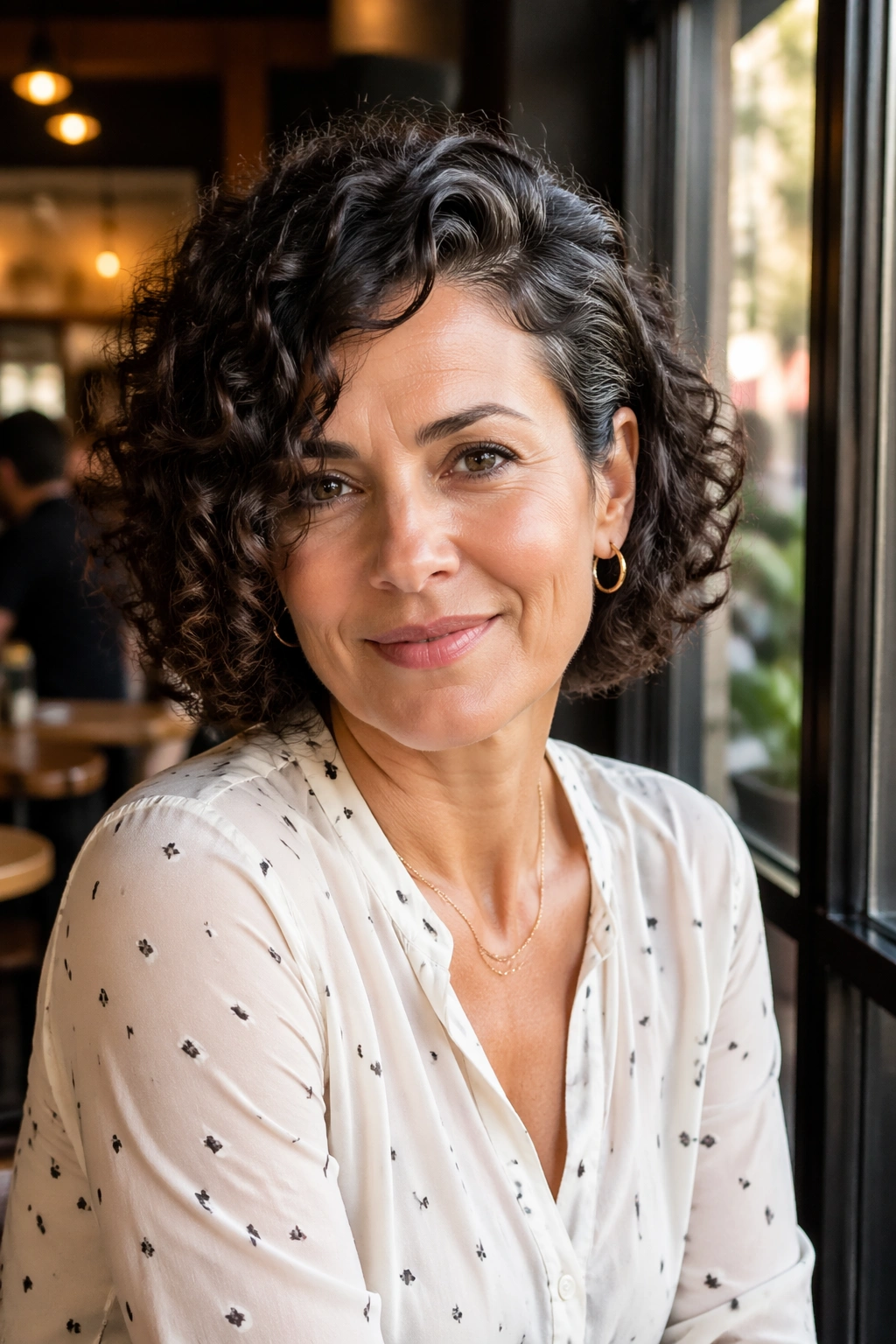
A chin-length curly bob can look sharper than longer hair when the cut is clean. The side part gives it a little sweep and keeps the volume from sitting dead center on the head, which is where curly bobs can start looking too round.
This length is especially useful if your curls are loose to medium and you want the jawline to show. A blunt-ish perimeter with tiny internal layers keeps the bob from turning into a triangle, but you do not want the layers so aggressive that the ends disappear. That’s the line to hold.
A side part also helps if one side of your hair wants to lie flatter than the other. Curly hair loves a little asymmetry. It feels less stiff, and frankly, it often looks more expensive than a perfectly centered shape.
- Keeps weight around the cheek and jaw
- Gives the face a cleaner outline
- Works with glasses without crowding them
- Easy to pin back on one side when you want a change
One blunt note: if your curls are very tight and shrink a lot, ask for the bob to land a little below the chin when wet.
3. Layered Long Curls That Keep Their Shape
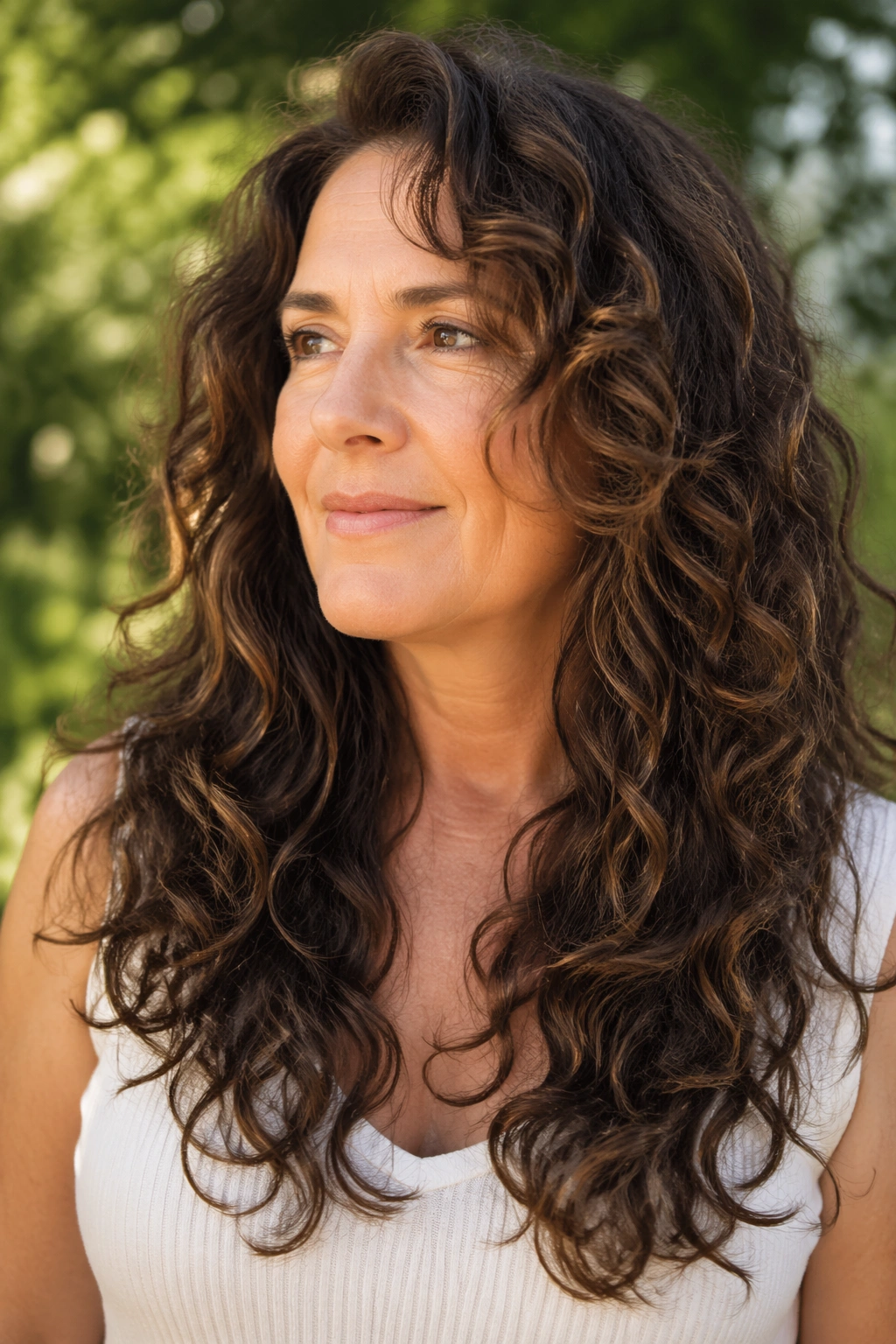
Do you still want length? Then the answer is usually layers, not more length.
Long curly hair can look rich and elegant after 40, but only when the layers are cut with a purpose. If everything hangs in the same length, the weight drags the curls out. If the layers are too short, the top balloons and the ends go sparse. What you want is a long, staggered shape that lets the curls stack naturally.
How to Keep Long Curls From Going Flat
The longest pieces should usually sit below the shoulders, with the shortest visible layers beginning around the cheek or collarbone. That gives your curls a chance to spring without collapsing at the sides. A light face frame helps, but I would skip anything that starts too high unless your curls are very dense.
This style is one of the best curly hairstyles for women over 40 who wear their hair down most of the time and want movement without a lot of daily fuss. The key is weight control. Too much. Too little. Both are annoying.
If your ends look see-through when dry, you need a shape-up more than another product.
4. Curly Pixie with Soft Texture
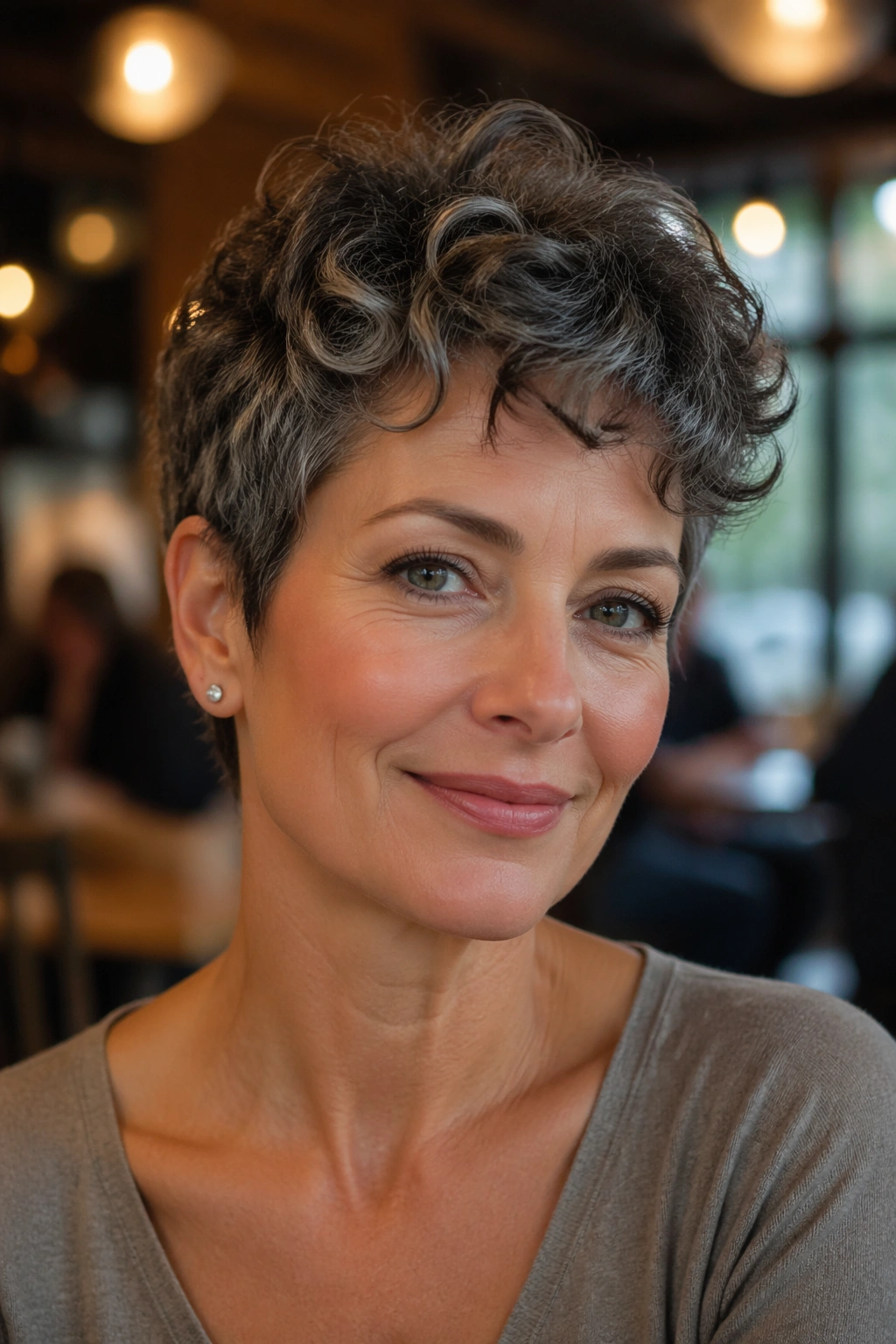
A curly pixie is not a “brave” haircut. It’s a practical one, and I wish more people said that out loud.
When the sides and nape are kept tidy and the top is left long enough for the curls to move, the result can look clean, lively, and a little cheeky in a good way. It also shows off earrings, glasses, and the neckline of a shirt without trying too hard.
The trick is softness. A curly pixie should not look helmet-like or overly clipped. The top needs enough length — usually a couple of inches, sometimes more — so the curls can bend instead of standing up in little spikes. A small fringe or a few longer pieces near the forehead can make the whole cut feel less severe.
- Best with springy curls that hold their shape
- Works well for active mornings
- Needs regular shaping around the ears and nape
- Looks especially nice with silver or salt-and-pepper hair
If you have ever wanted to wash your hair, scrunch in cream, and be done, this is the style that makes that possible.
5. Curly Shag with Curtain Bangs
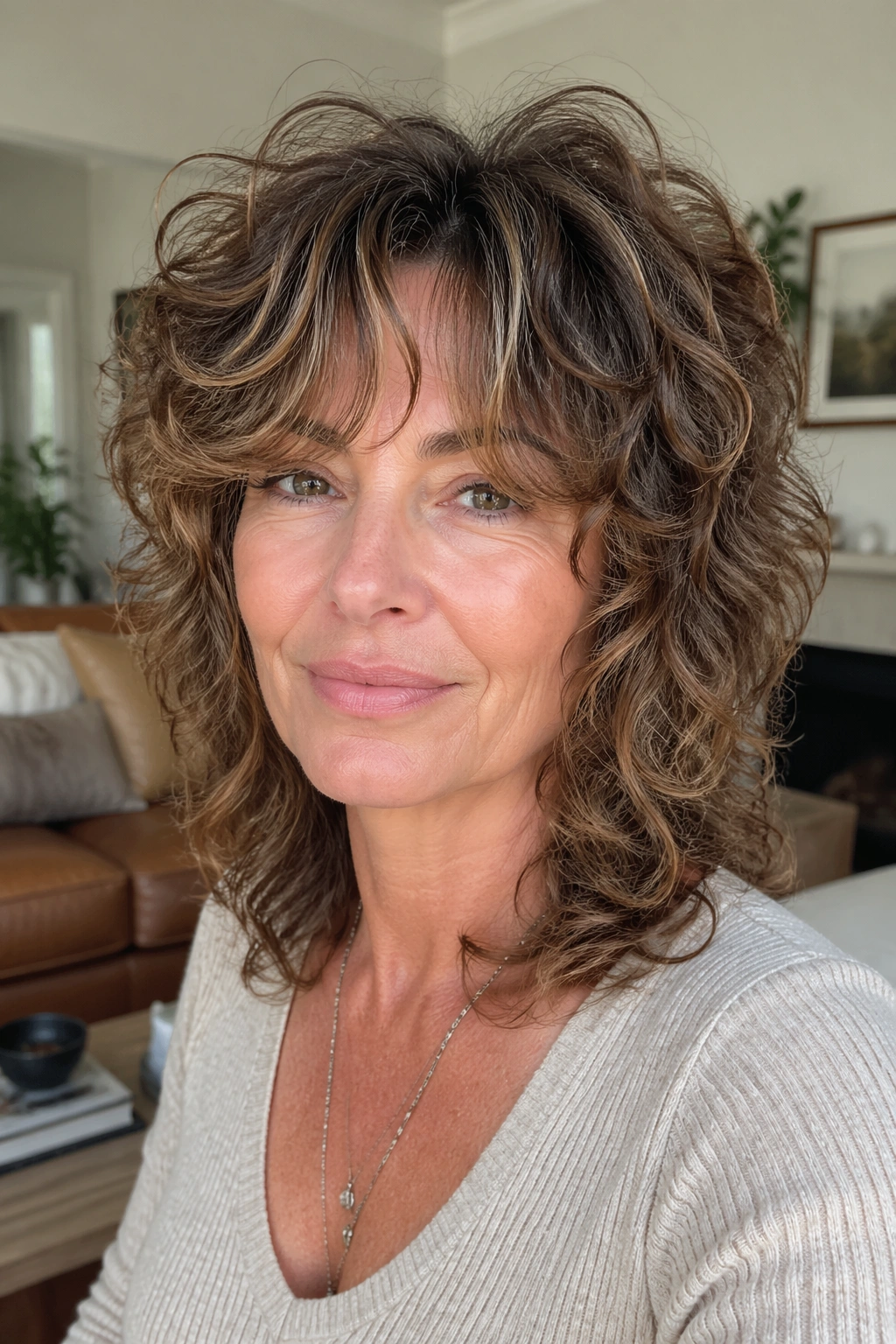
The curly shag has a bit of attitude, and that is exactly why it works. It lifts the crown, opens the face, and gives curls a lived-in shape that does not feel over-edited. Curtain bangs help soften the forehead without trapping the style in one fixed look.
What I like about this cut is the way it handles density. Thick curls can get heavy at the bottom, especially if they are all one length. The shag breaks that up. It lets the top breathe and gives the lower half more movement, which is a fancy way of saying the hair stops sitting there like a curtain.
Curtain bangs are especially useful if you wear your curls pulled back half the time. They fall nicely to either side, and when they grow a little, they do not look messy. They just look a bit more relaxed.
This cut suits women who do not want their curls to look precious. It is a little undone. That is the point.
6. Blunt Mid-Length Curls with a Clean Edge
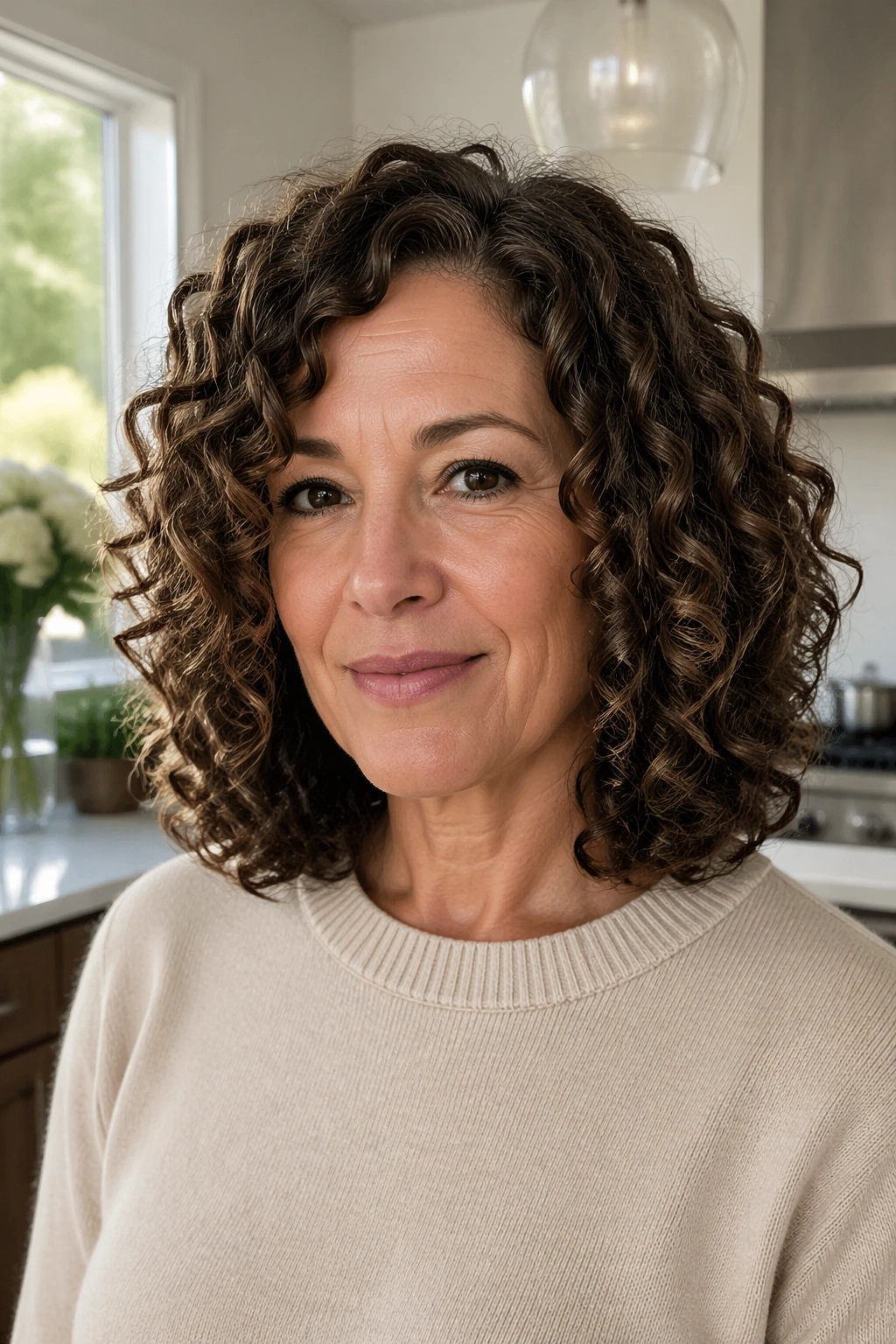
A blunt line sounds boring until you see what it does to curls.
Unlike heavily layered cuts, a blunt mid-length shape keeps the weight where curls need it most: at the bottom. That helps looser curls and waves look fuller, shinier, and less frayed. It also gives the style a clean finish, which can be lovely if your hair has started feeling thinner at the ends.
The danger, of course, is bulk. If your hair is dense and coarse, a blunt cut without internal shaping can sit too wide. So the answer is not “no layers ever.” It is “the right kind of layers, hidden where they do not wreck the outline.”
This works best when the cut lands between the collarbone and upper chest. Shorter than that can puff too much. Longer than that can lose the crisp line that makes the style interesting in the first place.
Good for: loose curls, waves, and women who like a polished shape.
Less good for: very tight curls that shrink a lot unless the stylist leaves extra length.
7. Tapered Curly Crop
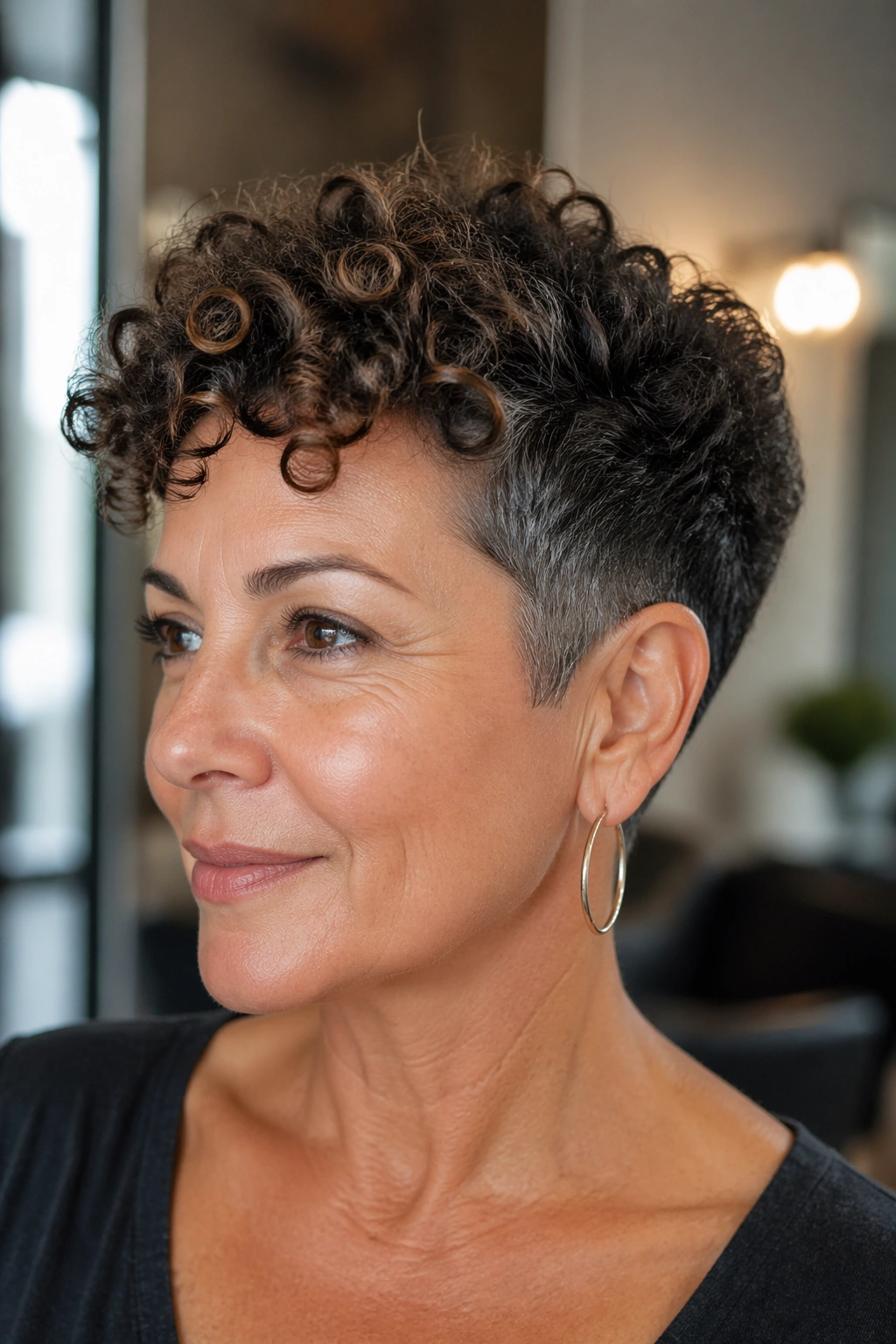
A tapered crop is the haircut for someone who wants structure without fuss. The sides and back are cut shorter, the top keeps more length, and the whole head gets a neat, lifted outline that reads as intentional rather than accidental.
That taper matters. It stops the silhouette from going boxy and keeps the curls from building up too much width at the temples and jaw. On dense hair, that can feel like a small miracle. On finer curls, it can create the illusion of more shape at the crown.
You do need a stylist who understands curl patterns, because a bad taper can look choppy instead of clean. The top should still have enough softness to move, and the transition into the sides should not feel abrupt.
I especially like this cut with gray curls. The contrast between the short sides and the textured top makes the silver look crisp, not fuzzy.
No fluff. Just shape.
8. Half-Up Twist with Loose Curls
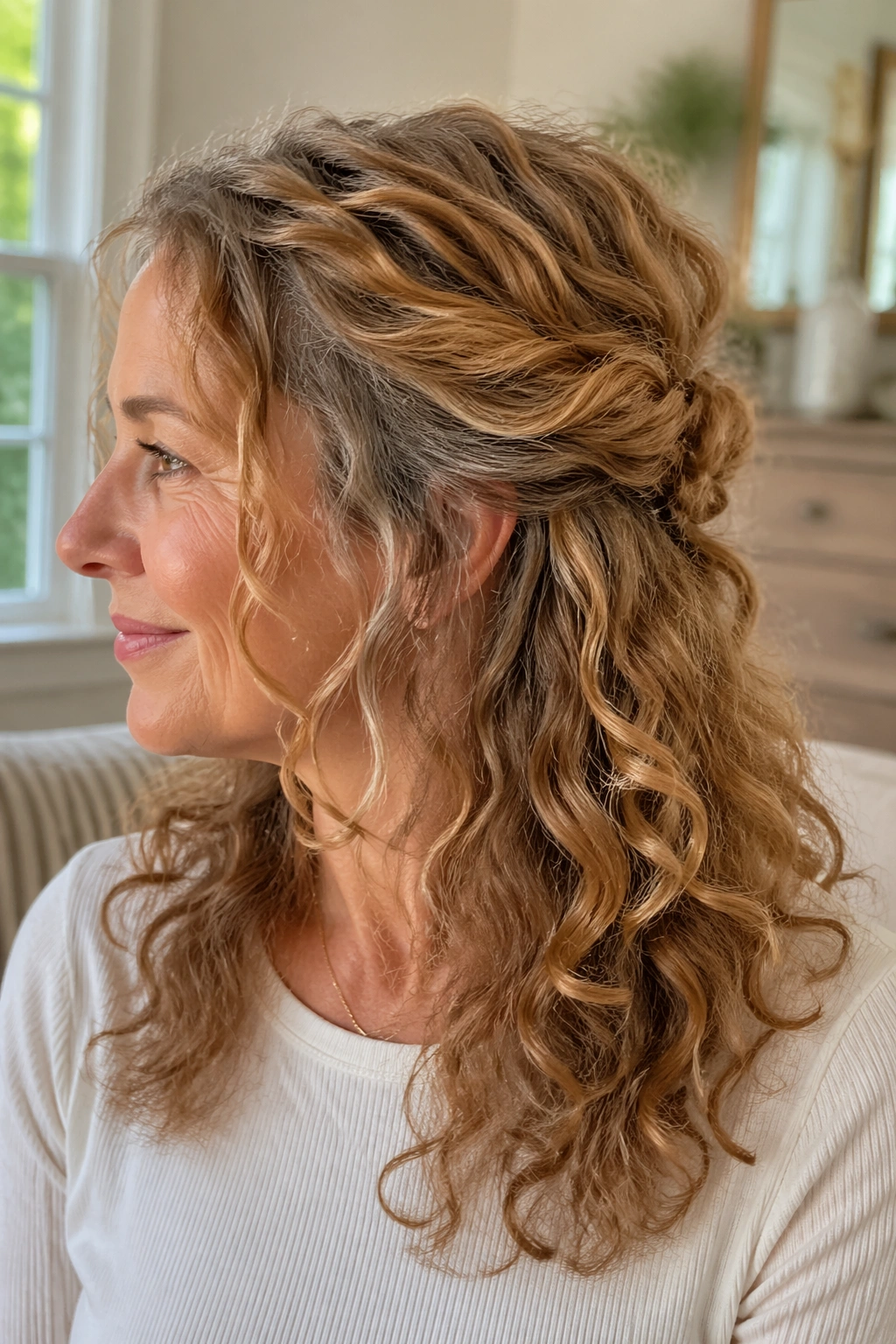
Need your hair off your face, but you do not want to pin it into something stern? The half-up twist is the answer most people skip right past.
Start by gathering the top section from temple to temple, twist it loosely at the back, and pin it with two bobby pins crossed in an X. Leave the lower curls free. That keeps the crown lifted while preserving length and movement through the back.
What Makes It Look Grown-Up
The style works because it does not try to make curly hair look straight or overly neat. A few tendrils around the temples soften the front, and the twist gives enough control that it still feels finished. If your hair is medium to long, this is one of those styles that can go from lunch to dinner without needing a redo.
It also helps on day-two curls when the top looks a little flat but the ends still hold shape. A tiny mist of water at the crown, a dab of cream, and the twist snaps back fast.
Use it when your curls are cooperating only halfway. That’s most days, honestly.
9. Pineapple Updo with Face-Framing Pieces
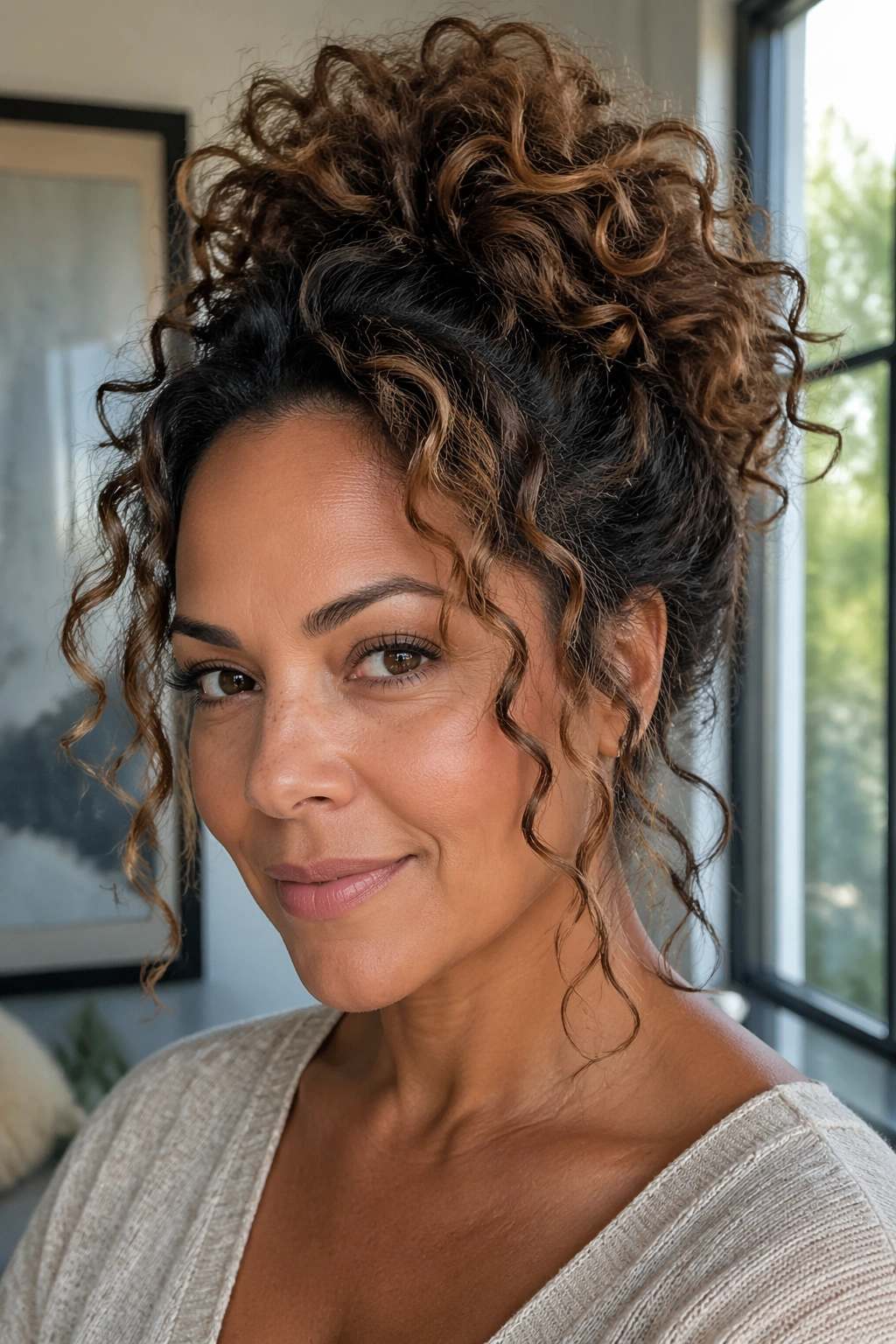
Why does a pineapple updo work so well? Because it respects the curl pattern instead of crushing it.
The hair is gathered high on the crown, loosely secured, and left a little messy on purpose so the curls can stack without flattening. For women over 40, this can feel fresh without looking like you borrowed it from a teenager. The trick is leaving a few curls free around the face and at the nape so it does not feel too severe.
If your curls are shoulder length or longer, this is a smart day-to-day style for heat, errands, or a quick polished look. You can tuck the ends in a soft claw clip, or pin the top with a fabric scrunchie that will not leave a dent.
How to Make It Look Finished
- Keep the crown loose, not tight
- Pull out one or two curls near the temples
- Smooth the front hairline with a tiny bit of gel
- Avoid making the lift too tall unless your face shape can handle it
A pineapple can look casual or chic. The difference is the front. Sloppy front, sloppy style. Clean front, easy win.
10. Low Curly Chignon
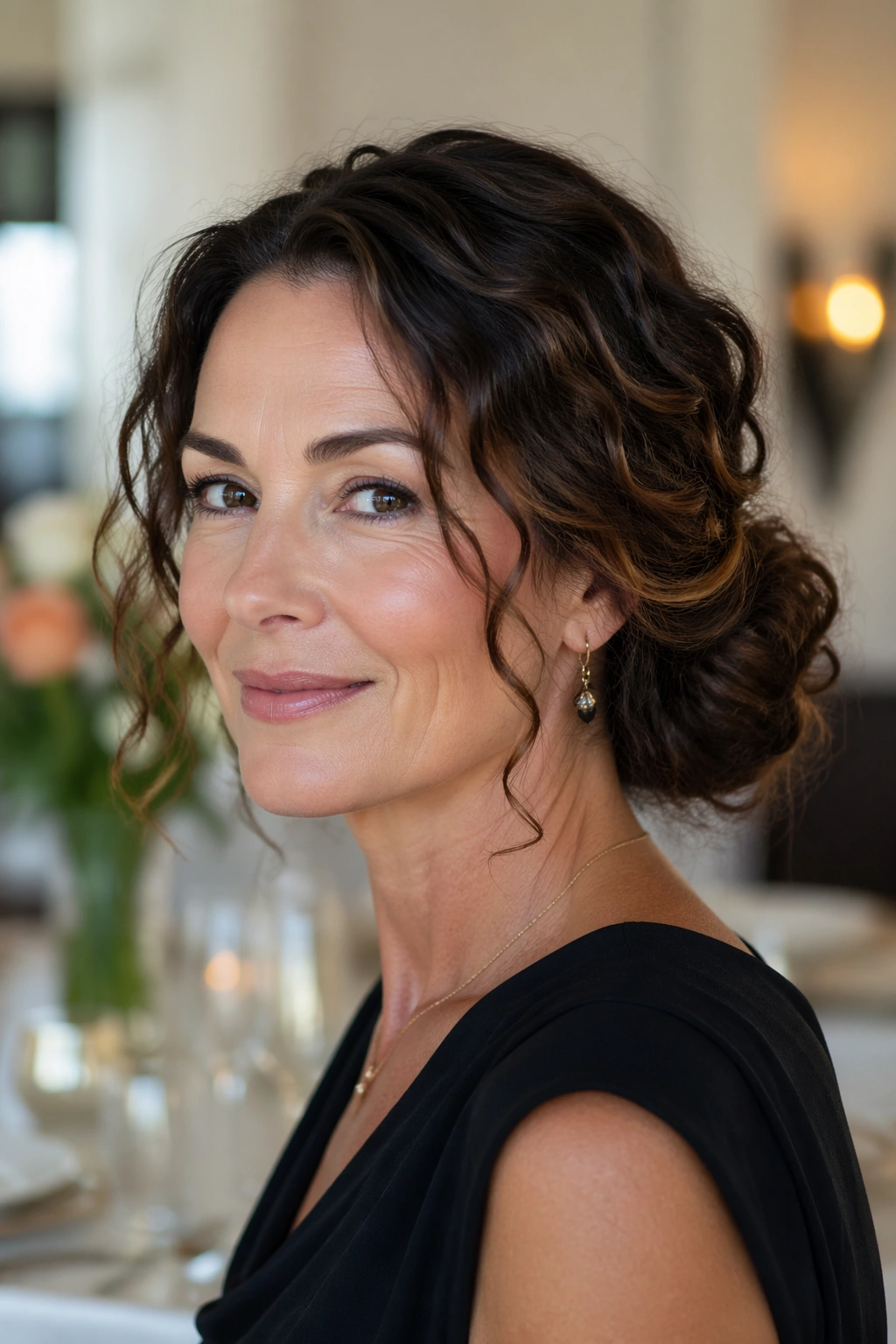
A low curly chignon has a quiet kind of polish that works for dinners, meetings, weddings, and the days when you want your hair off your neck but still want texture visible.
This style is at its best when the curls are gathered low and twisted into a soft knot rather than a tight bun. Tight buns can flatten the curl pattern and make the whole thing look overworked. A loose chignon lets the curls keep some personality, and that matters more than people think.
Leave a few tendrils out near the ears and the nape. Not too many. A couple is enough. Those soft pieces keep the style from feeling severe and help the face look less boxed in.
I like this on medium to thick curls because the texture gives the bun enough body to stay interesting. Fine curls can do it too, but they may need a little texturizing spray at the roots first.
A side part makes it feel more relaxed. A center part makes it look cleaner. Pick your mood.
11. Side-Swept Curly Bangs with Medium Length
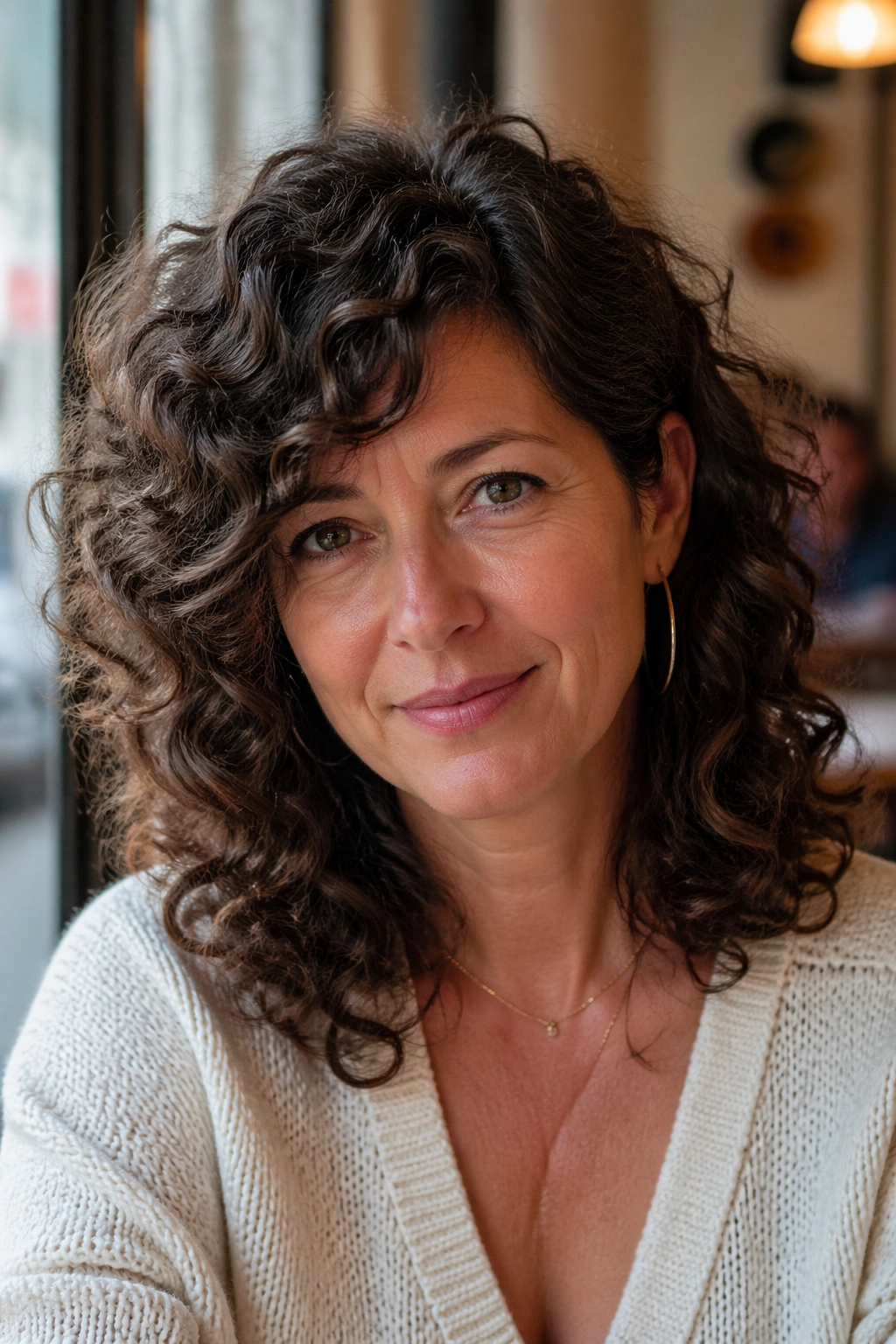
Straight-across bangs are where curly hair can get fussy fast. Side-swept bangs are kinder.
They blend better into the rest of the cut, and they grow out without that awkward shelf line that can make a style feel stale. For women over 40 who want some forehead coverage without the commitment of a full fringe, this is the smarter move. It softens the upper face and plays nicely with glasses.
The rest of the hair can sit at shoulder or collarbone length, with enough layering to keep the front from getting too heavy. The bangs should be long enough to tuck behind one ear or sweep across the brow when the curl pattern shrinks up.
This is also one of the easiest ways to disguise a cowlick at the front hairline. You are not fighting it; you are folding it into the cut.
If your curls tend to separate instead of clump, ask for a little more length in the bang area. Too short and they spring up like little hooks. Not cute. Not worth it.
12. Waterfall Braid Into Loose Curls
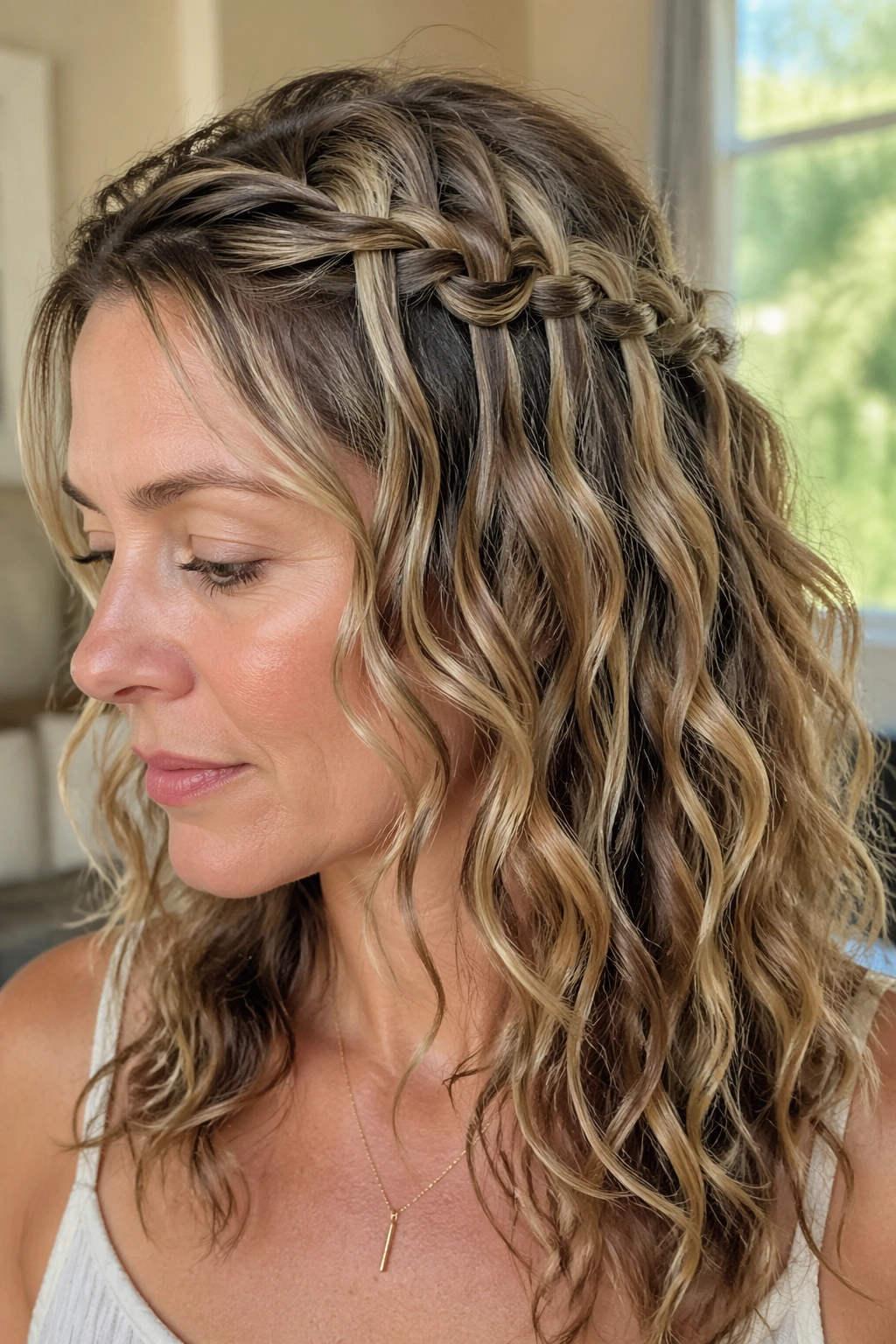
A waterfall braid adds structure without stealing the softness from curly hair. That balance is the whole reason it works.
The braid starts near the front hairline and lets sections drop through as it moves back, so the curls underneath stay visible. It is a nice choice for medium or long hair when you want the front controlled and the back free. If you wear curls to work, to a lunch, or to anything where you want polish without a hard updo, this sits in a useful middle ground.
It does take a little patience. Curly hair has grip, which helps, but it can also make neat braiding harder if the hair is very dry or very frizzy. A light mist of water or leave-in spray makes the sections easier to handle.
Try it on second-day hair. Freshly washed curls can be too slippery, and the braid may puff out before lunch.
The best part is simple: it looks more complicated than it is. I’m a fan of that.
13. Defined Wash-and-Go Ringlets
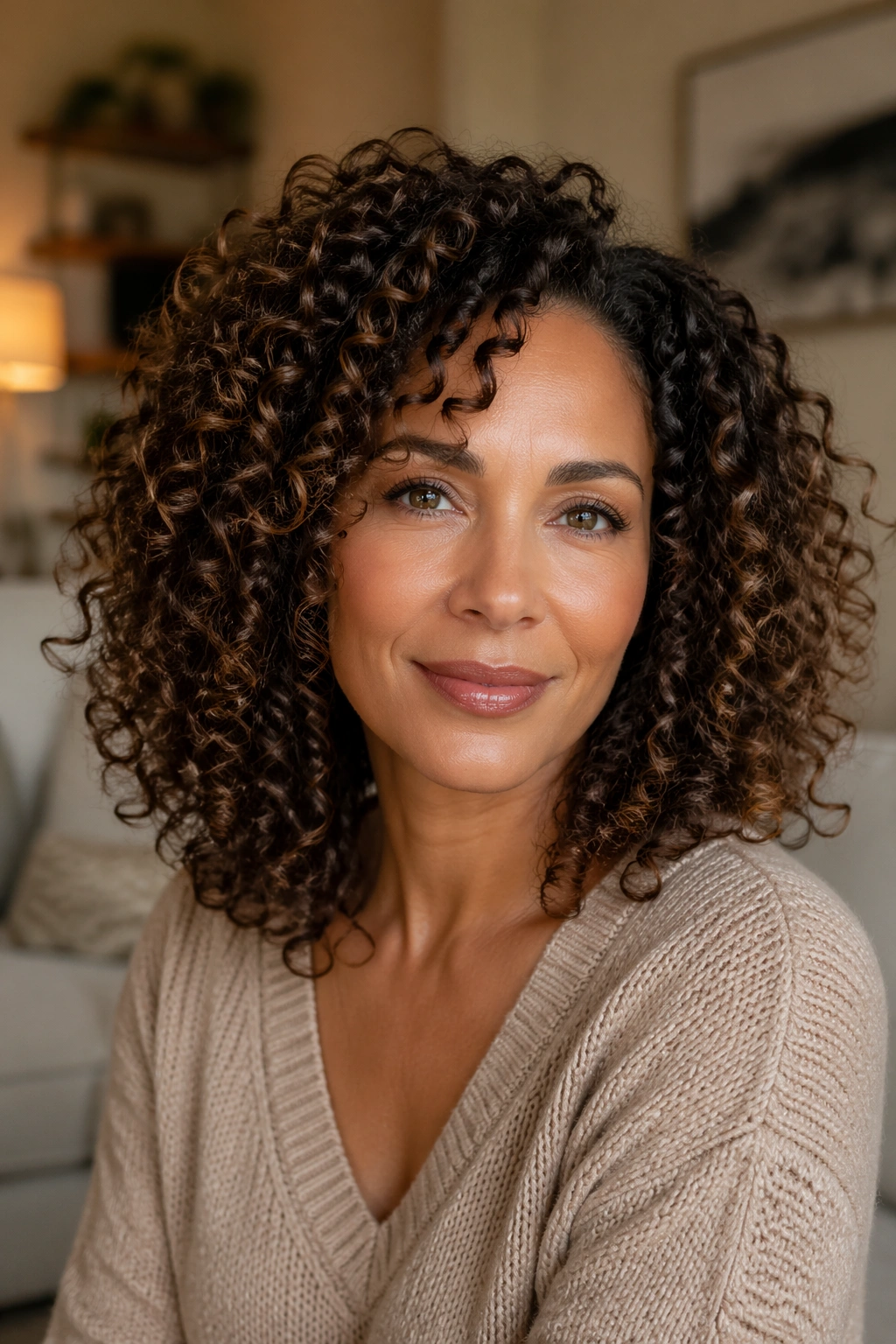
Can a wash-and-go count as a hairstyle? Absolutely, if the shape is good.
The whole point here is definition. You want curls that clump well, hold their pattern, and dry into a shape that looks intentional instead of chaotic. That means the cut needs smart layers, and the product routine needs enough hold to keep the curl families together.
How to Get the Most From It
Start on wet hair. Apply leave-in first, then a curl cream or light gel, and work in sections. Scrunch upward with your hands or a microfiber towel, then either air-dry or diffuse on low heat until the roots are fully dry. If the hair is even a little damp at the scalp, the style will collapse faster than you want.
This look is good if you prefer your curls to be the main event. No teasing, no elaborate pinning, no hiding. Just defined ringlets with a clean finish around the face.
It is also honest. If the haircut is uneven, this style will tell on it.
14. Curly Bob with a Nape Undercut
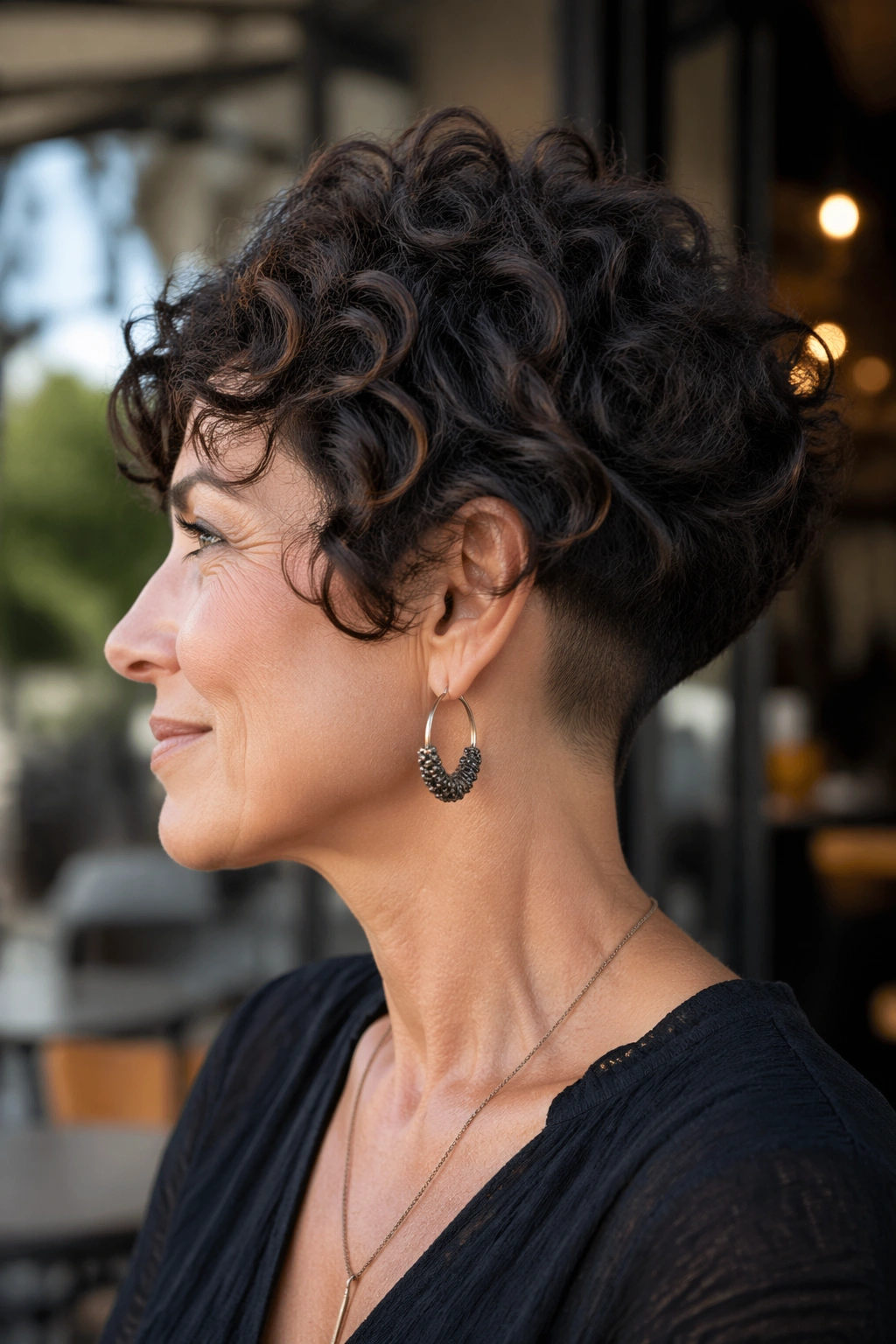
If your curls build too much bulk at the back, a nape undercut can fix the whole silhouette. It removes weight where it hides anyway and lets the curly bob sit closer to the neck.
The result is cleaner than people expect. From the front, you still get the softness and fullness of a bob. From the back, the shape stops stacking out like a helmet. That matters if your hair is dense, especially if the lower section tends to balloon.
This is not a quiet haircut, and that is part of the appeal. It gives you control without flattening the curls. You can keep the top rounded, leave the front a bit longer, and still have enough lift at the crown to feel lively.
A nape undercut does require maintenance, though. The shaved section grows in fast and can get fuzzy. If you hate upkeep, skip it. If you love a crisp neck line and less bulk under a high collar, it is worth the extra trip back.
I’d choose this before I’d choose more thinning shears. Every time.
15. Voluminous Natural Afro with Tapered Edges
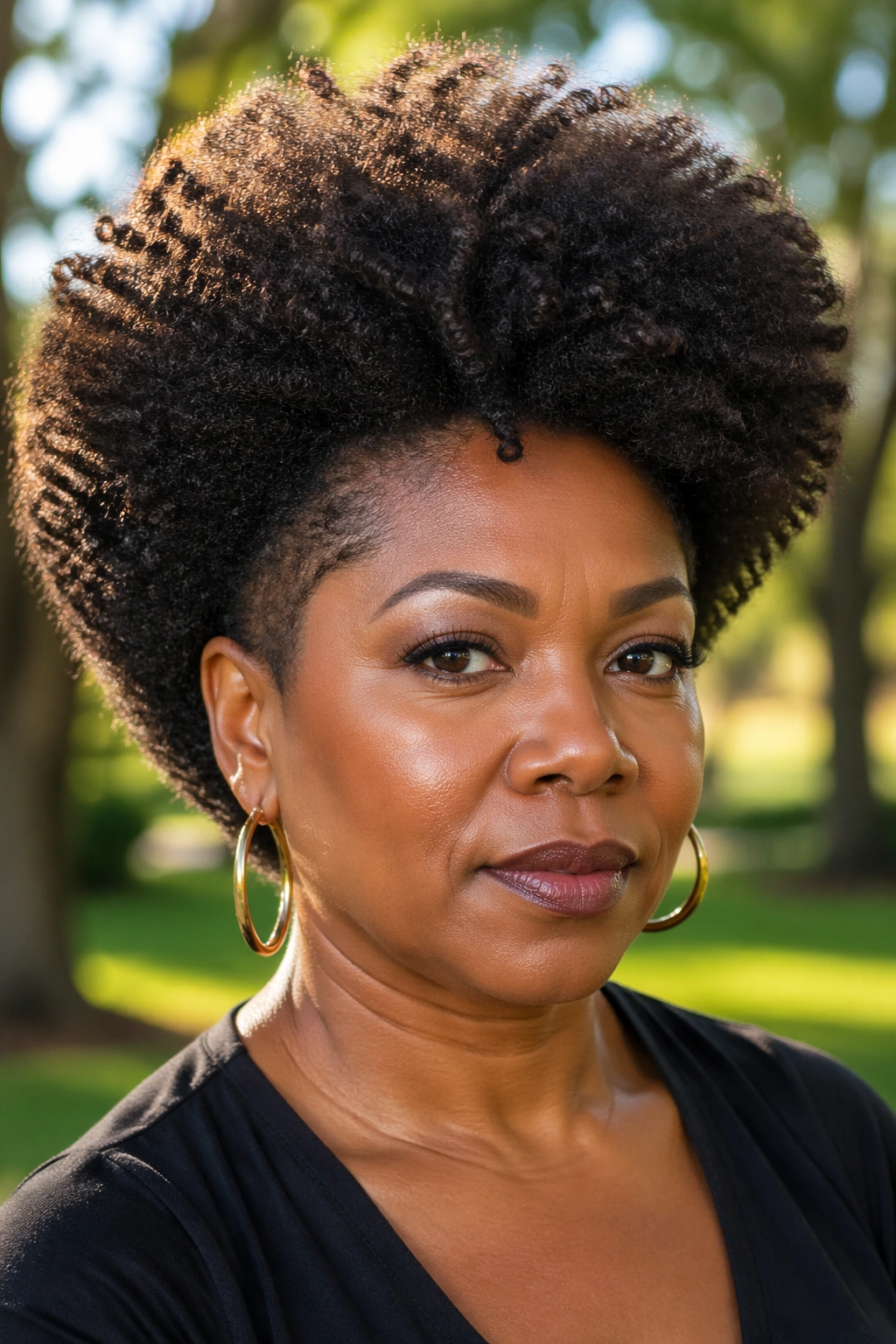
A well-shaped afro is not about making hair bigger. It is about giving it a shape that belongs to your face and your curl pattern.
Tapered edges help a lot here. They keep the silhouette controlled at the temples and around the neck while allowing the body of the hair to stay full. That keeps the style from becoming square. It also draws attention upward, which can be lovely if you want the eyes to land on your face first.
Moisture matters, but not in some vague internet way. Use a leave-in that makes the hair feel pliable, then seal the ends lightly so they do not frizz out before the rest of the style settles. Once dry, a pick at the roots can lift the shape without breaking up the definition too much.
This is a powerful look, but not a complicated one when the cut is right. The best afros are precise. They just do not look fussy.
And no, there is nothing “too much” about them.
16. Loose Romantic Updo with Soft Tendrils
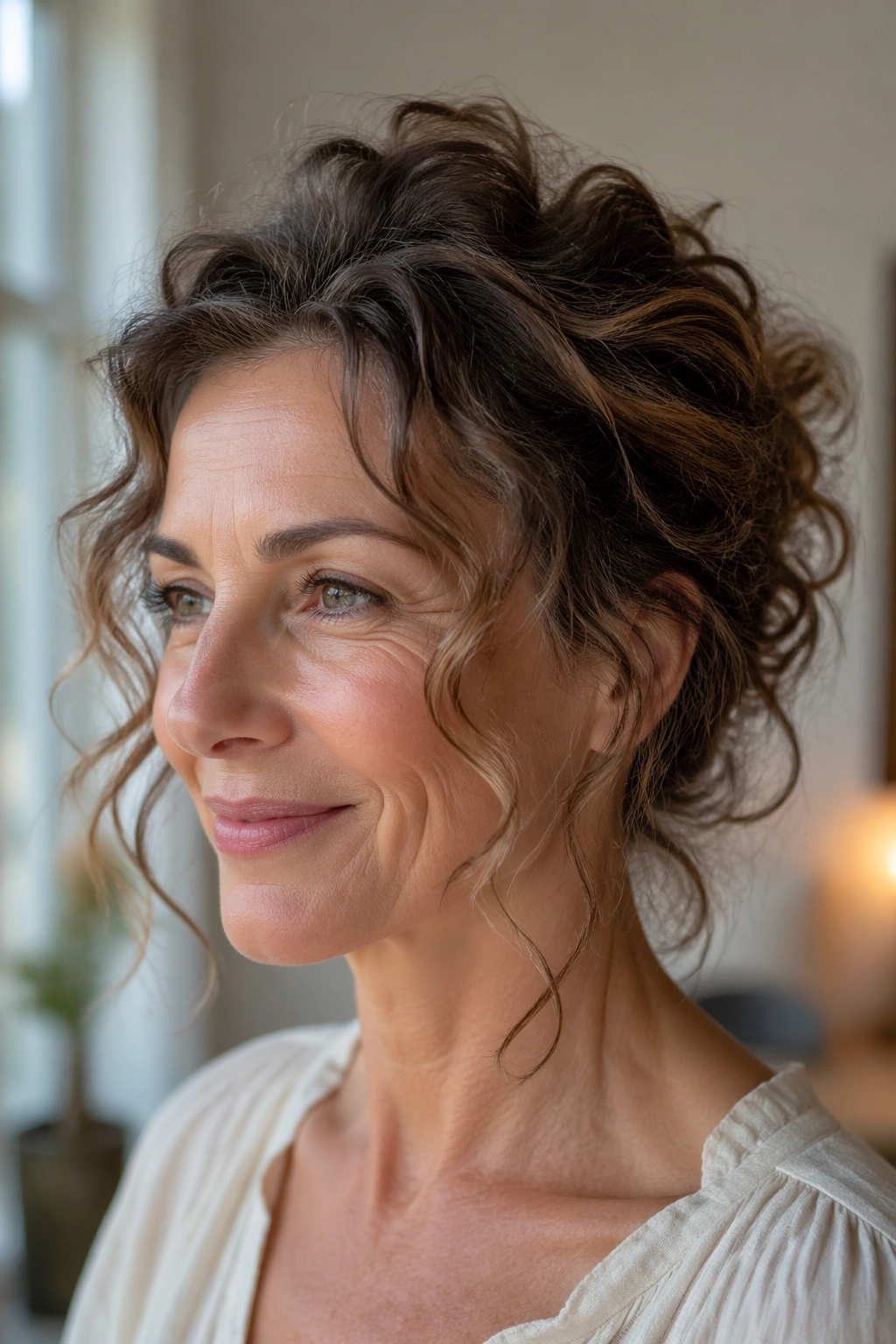
Need your hair off your neck, but do not want it to look stiff? The loose romantic updo handles that well.
Think of it as pinned curls gathered low or mid-back with enough softness left around the face to keep the whole style from feeling formal in a harsh way. It works especially well when the curls have a little day-two texture, because slightly lived-in hair grips pins better and stays put longer.
A few tendrils near the temples and jaw make a big difference. Without them, the updo can pull the face back too hard. With them, the style feels gentler and more flattering around the cheekbones.
The shape does not need to be symmetrical. In fact, a bit of imbalance is usually better. Twist one side a little tighter, leave the other side looser, and let the texture do some of the work. That gives the style a human feel instead of a bridal-catalog finish.
If your hair is long but not especially thick, backcombing a small section at the crown helps the pins hold. Tiny move. Big payoff.
17. Long Curls With a Deep Side Part
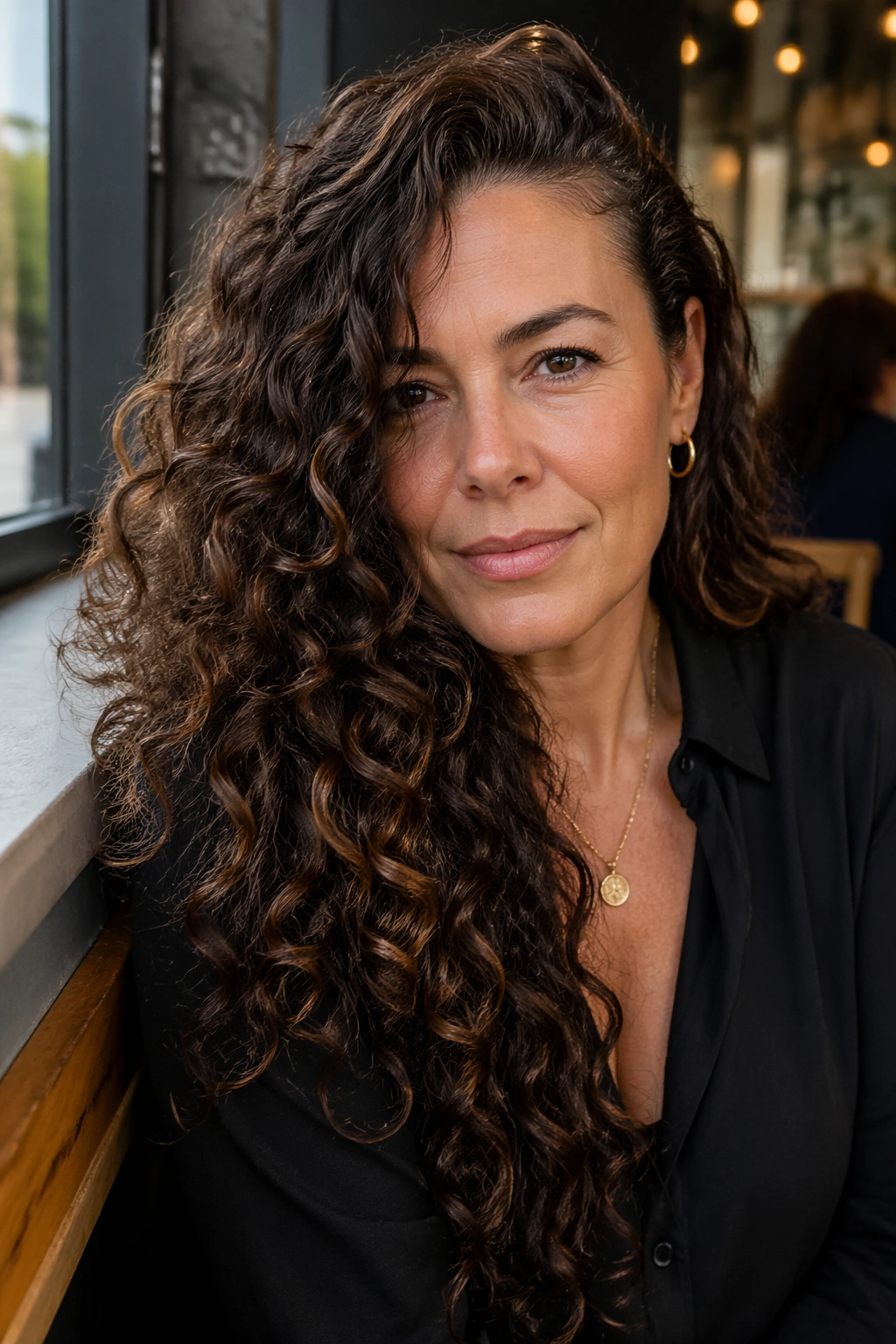
A deep side part can change the mood of long curls fast. It shifts the volume, creates lift at the crown, and gives the face a more sculpted outline without a haircut at all.
This style is especially useful if your curls tend to fall flat on top. Moving the part over by even two or three inches can wake up the whole head. The heavier side gets to fall across the cheek, while the lighter side gets a little height. That asymmetry does a lot of work.
- Adds lift without teasing
- Works with loose, medium, or tight curls
- Helps longer curls avoid a center-heavy look
- Plays well with side-swept bangs or no fringe at all
If you like changing your look without changing your length, this is one of the simplest tricks on the list. It also photographs cleanly, which matters if your hair tends to hide in a straight-on view.
A deep side part is one of those tiny changes that makes the rest of the cut look sharper.
18. Collarbone Cut With Chunky Layers
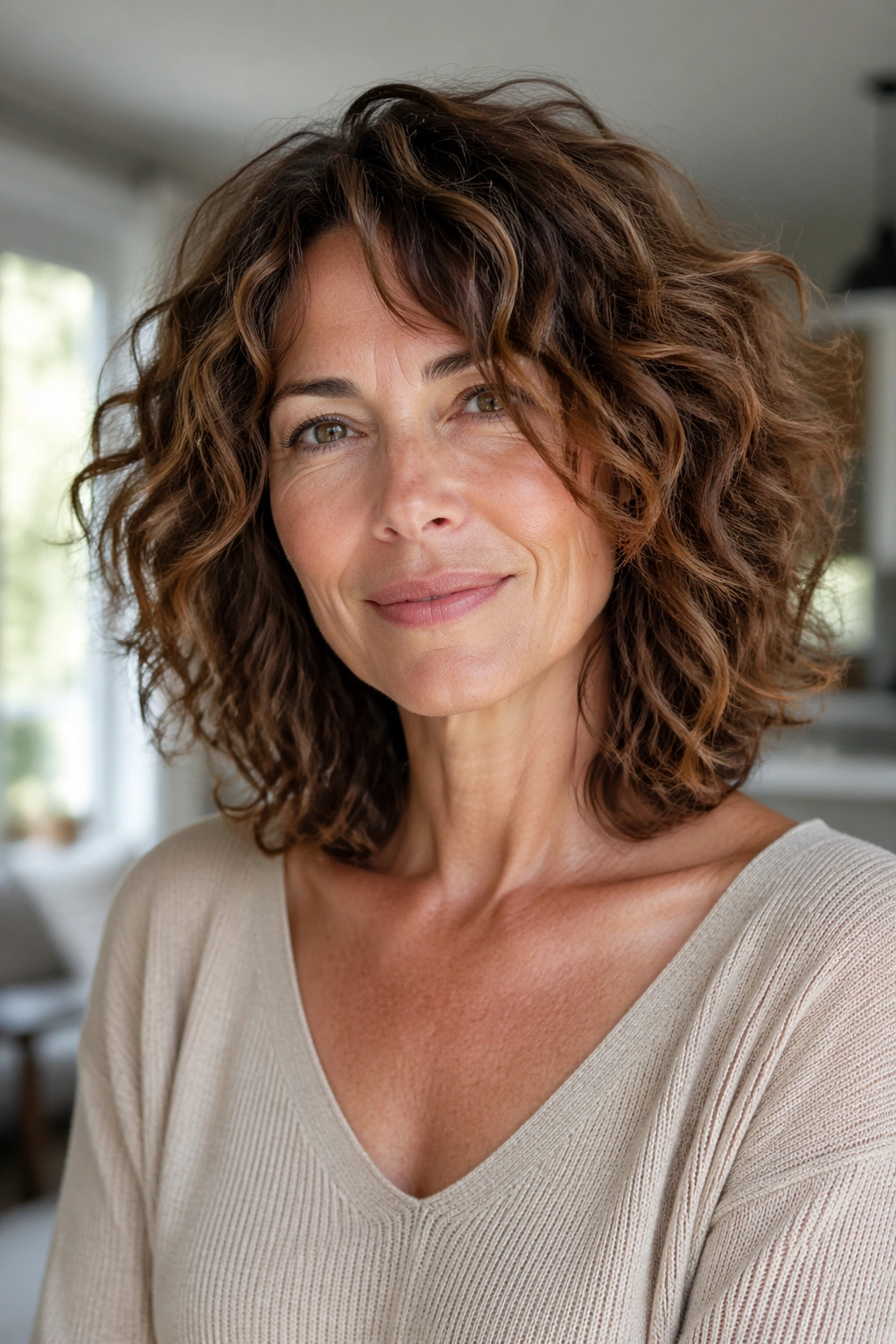
A collarbone cut with chunky layers has a little more shape than a plain lob and a little more ease than a full shag. That’s why it sits in such a useful middle place.
The chunky layers are not meant to disappear. They are meant to show. You want enough separation that the curls fall in visible pieces, but not so much slicing that the ends go thin. This works especially well when the curl pattern is loose enough to show movement but strong enough to hold the layered shape.
What makes it age well is the balance. The collarbone length gives coverage if you want it, while the layers prevent that heavy, dragged-down look that can happen with one-length curls. If you wear your hair tucked behind one ear often, this cut does that neatly without losing shape on the other side.
I would pair it with a side part more often than not. It keeps the outline from getting too symmetrical, and curly hair usually looks better when it has a little bend in the overall design.
It’s tidy, but not stiff. That matters.
19. Twist-Out Style With Soft Separation
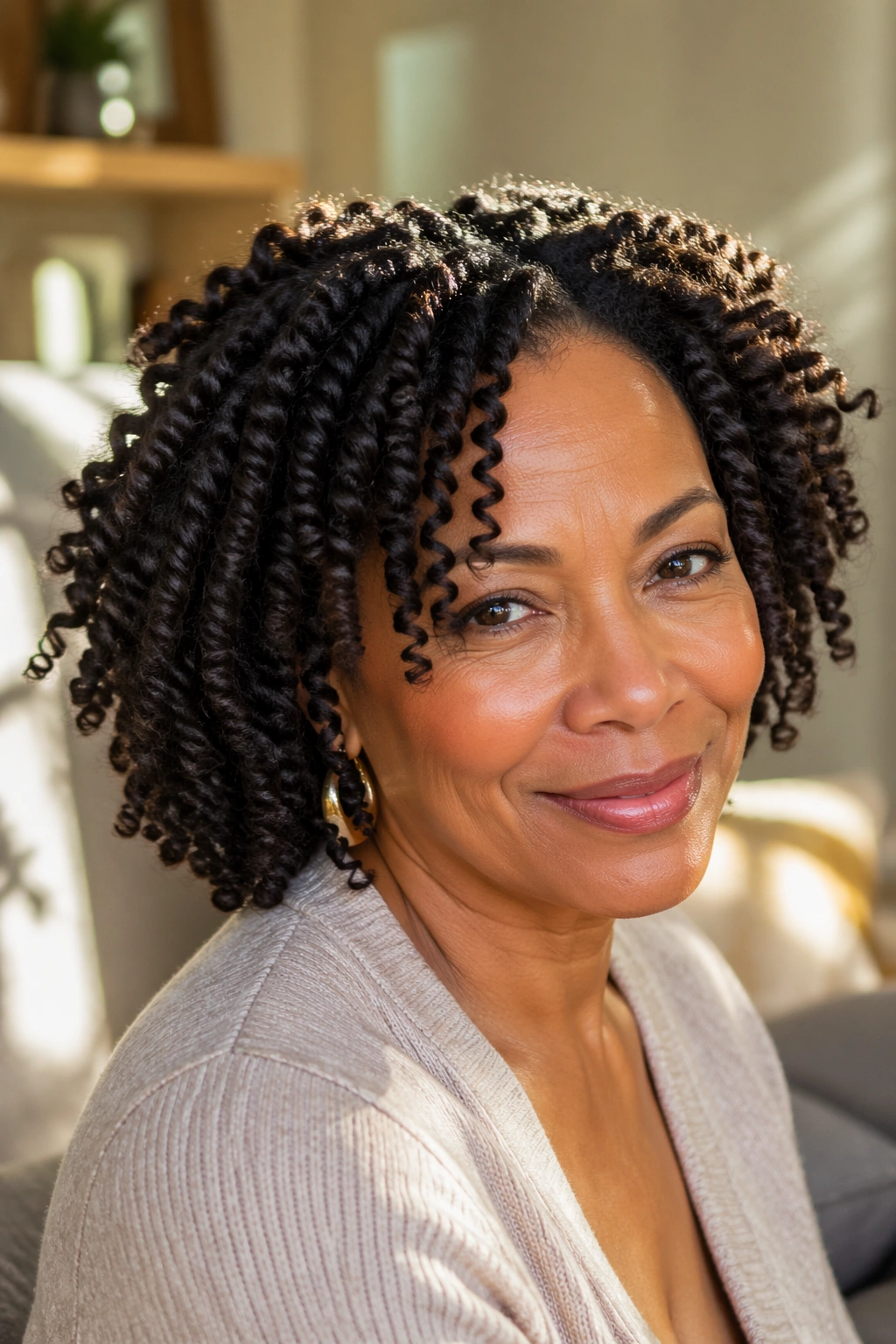
A twist-out is one of the best ways to get definition on coily or tightly curled hair without losing movement.
The style begins with sections twisted while damp or moisturized, then fully dried before separation. Once the twists come apart, the hair keeps a clear pattern and a little stretch. That stretch is the part people often miss. It gives the style shape without making the curls disappear.
The size of the twist changes the outcome. Smaller twists usually create more definition and less frizz. Larger twists give a looser, fuller result. Neither one is wrong. They just tell a different story.
The finish matters too. Separate the twists gently with oiled fingers, not with force, and stop before the hair starts fluffing too much at the ends. If you pull every twist apart to death, the style gets big fast and the definition fades.
A twist-out can feel polished, playful, and practical all at once. That is a rare combination. Take advantage of it.
20. Silver Curls With Soft Layers
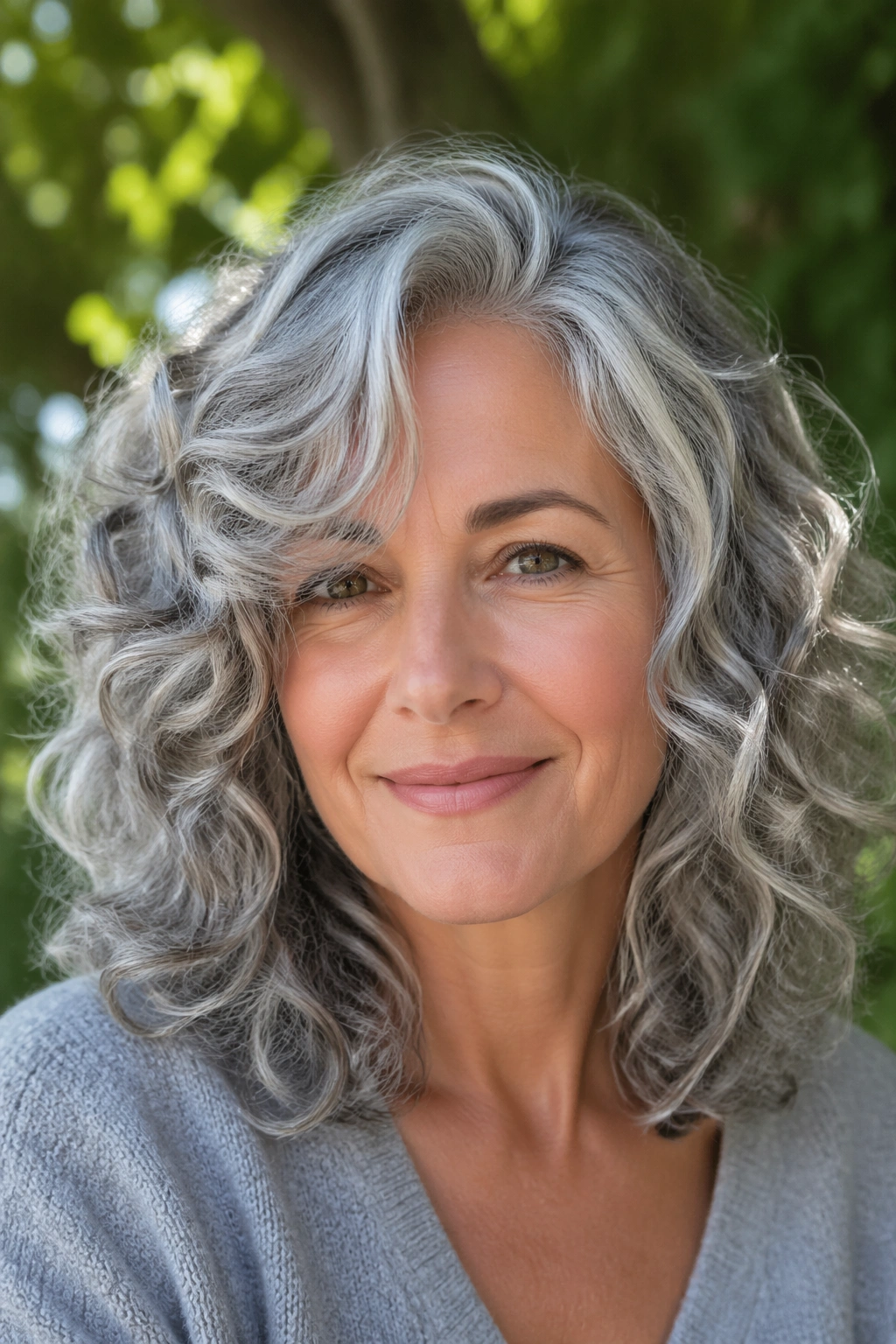
Gray and silver curls have their own texture, and I am convinced the best haircut is one that lets that texture show rather than fighting it.
Soft layers keep silver curls from looking too blocky. They also help balance the fact that gray strands can be wirier in some spots and finer in others. A single length can make those differences feel awkward. Layers smooth them out, especially around the face and crown.
A side part works well here, but so does a gentle off-center part if you want a softer line. The goal is not sharpness. It is clarity. You want the curls to look intentional, not like they were left to fend for themselves.
This is one of the most flattering curly hairstyles for women over 40 because it does not pretend age changes nothing. It works with the texture changes, the density shifts, and the little surprises that show up in the mirror. The result feels honest. And honestly, that often looks better than trying to force hair into a younger version of itself.
There is a clean, confident look in silver curls that have been cut with care. It never needs much explaining.
Final Thoughts
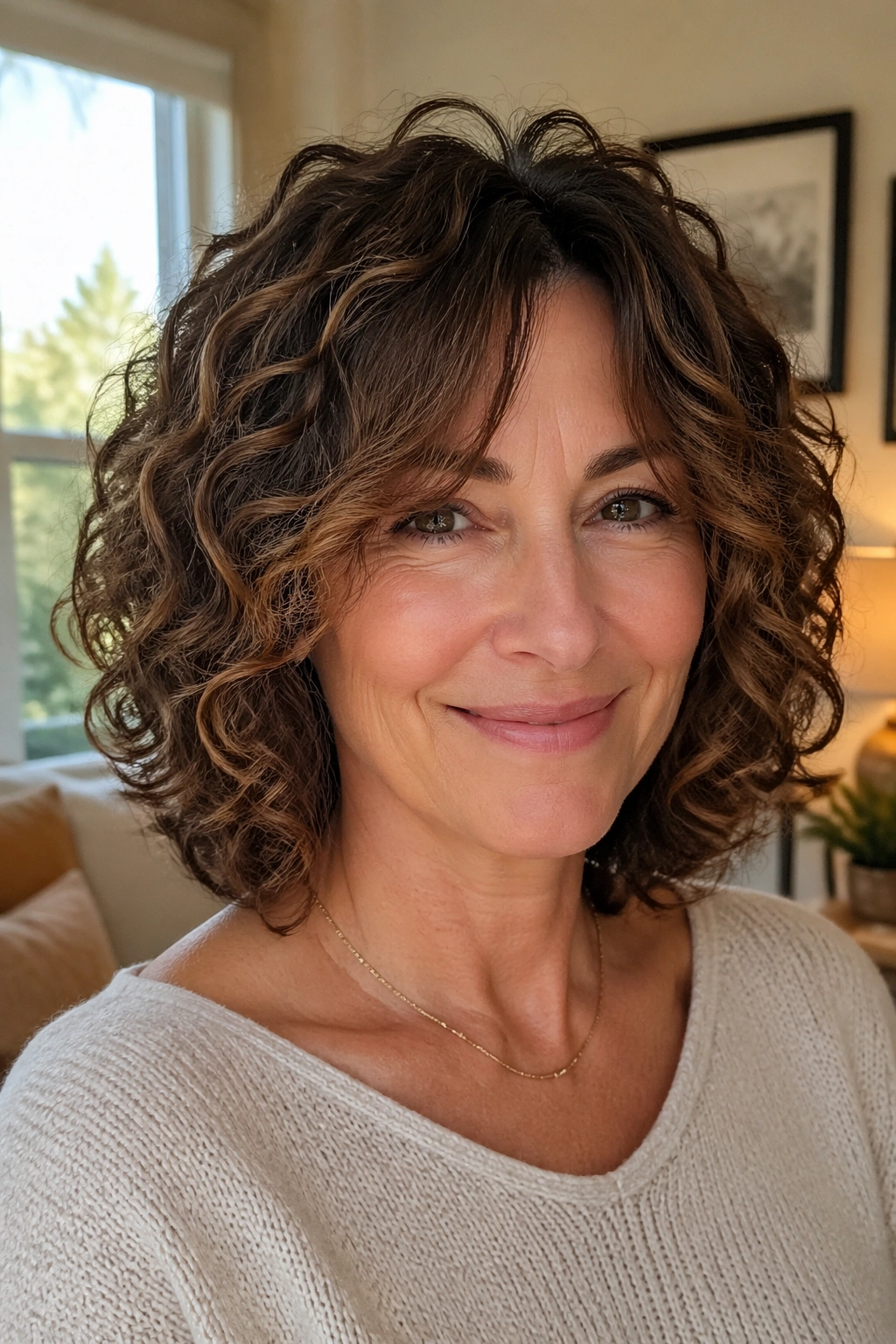
The curls that work best after 40 are the ones with shape, weight control, and enough softness to move. A good cut should keep the outline tidy while leaving the texture alone where it belongs.
If you are choosing between length and volume, choose the shape first. Length without shape gets tired fast. Shape without enough length can feel fussy. The sweet spot is usually somewhere in the middle, where your curls can sit naturally and still look finished.
Bring a photo, yes, but bring a real one from a normal day, not the best hair day you have ever had. That tells a stylist more than a dozen saved images ever will.
