



Wavy hair sits in a uniquely beautiful middle ground — loose enough to move fluidly, textured enough to show color in multiple dimensions simultaneously. If you have wavy hair, you already know the particular magic of watching your waves catch sunlight at different angles throughout the day. Color on wavy hair amplifies that magic significantly. Waves create natural variation in how light hits each strand — the peaks appear brighter, the valleys appear deeper — which means color on wavy textures looks more complex and dimensional than the same color would on straight hair. These 21 hair colors for wavy hair women are chosen specifically to work with the way waves interact with light, fade, and movement.
The Unique Advantage of Waves and Color
Wavy hair has a structural advantage that straight hair lacks and tight curls partially obscure: the individual wave pattern is large enough to be clearly visible while being tight enough to create genuine texture and dimension. That combination is ideal for color.
When color sits on wavy hair, each wave acts as its own micro-canvas. The high points of each wave catch direct light and appear several shades lighter than the same color in the low points between waves. This creates what colorists call “natural dimension” — the impression of multiple shades within a single color application.
Highlights and balayage techniques look especially natural on wavy hair for this reason. The wave pattern’s existing light-and-shadow play blends painted highlights seamlessly into the rest of the hair. The color looks like something that could have happened in the sun rather than in a salon.
Hair colors for wavy hair also tend to fade more gracefully than on straight hair. The wave texture diffuses the grow-out line, which means wavy hair at four or six weeks post-color still looks intentional even as roots emerge and ends fade.
Understanding Wavy Hair Types
Wavy hair spans three subtypes, and each interacts with color slightly differently.
2A waves are loose, barely-there waves — almost straight except for a soft wave pattern through the mid-length and ends. Color on 2A hair looks more similar to color on straight hair, since the wave pattern is gentle. Highlights and balayage work beautifully here because the loose waves create natural-looking dimension without too much blending.
2B waves are medium-definition waves with some frizz and a more pronounced S-pattern through the hair. Color on 2B hair starts to show the dimensional quality that wavy hair is famous for — highlights look more scattered and natural, single-process colors show more variation between wave peaks and valleys.
2C waves are the most defined, verging on loose ringlets. They have the most texture and therefore interact with color most like curly hair — creating genuine shadow and highlight variation within each wave that makes color look multi-dimensional even in single-process applications.
Balayage Was Made for Wavy Hair
If there’s one color technique that was born for wavy hair, it’s balayage. The freehand painting technique places color on the sections of hair that naturally receive the most light — the upper surface of waves, the mid-lengths, the ends — leaving the underneath layers dark.
On straight hair, balayage requires careful blending to look natural. On wavy hair? The waves do the blending themselves. As the hair moves and waves overlap, the painted sections and the unpainted sections intertwine in a way that looks completely organic — like the sun genuinely spent a season kissing specific pieces of your hair.
Balayage also grows out beautifully on wavy hair. Because there’s no distinct root line to maintain, the grow-out looks like an intentional continuation of the sun-kissed effect rather than a neglected color job.
What the Frizz Factor Means for Color
Wavy hair that experiences frizz has a specific relationship with color: frizzy sections often have higher porosity, which means they absorb color more readily and can appear darker or more saturated than the smoother sections. This is actually an advantage in some color applications — it means color self-adjusts to look dimensional even without careful placement.
But it does mean that predictability matters. A test strand before committing to full processing helps you understand how your specific waves will respond to color, and it prevents surprises like certain sections looking dramatically different from others.
Frizz also accelerates color fading in high-porosity sections. Sealing with a lightweight oil after every wash helps close the cuticle slightly and extend color life.
Building a Color Routine for Wavy Hair
Wavy hair benefits from a lighter touch than tight curls when it comes to product — heavy butters and creams can weigh down waves and destroy the pattern. The same principle applies to color care: use lightweight, hydrating products that maintain the wave pattern while providing moisture.
A sulfate-free shampoo is essential for color maintenance. A lightweight color-safe conditioner from roots to ends (yes, all the way to the roots on wavy hair — waves need moisture even at the scalp). A leave-in that hydrates without weighing waves down, and a lightweight oil or serum to seal.
For the first 48-72 hours after coloring, avoid washing to allow the color to fully settle into the hair shaft. Style with a diffuser on a low heat setting to set waves without the heat damage that fades color faster.
1. Sun-Kissed Blonde Balayage
Sun-kissed blonde balayage on wavy hair is so natural-looking that people spend years trying to convince others it’s not actually from the sun. The wave pattern blends painted sections seamlessly, creating an all-over warmth that reads as effortless.
How to Achieve It
- Ask for a “lived-in” balayage with irregular section sizes — some thin, some chunky
- Focus placement on the top layer and face frame
- Tone with a warm golden-beige to avoid brassiness
- Maintain with purple shampoo once a week for cool blondes
Bold tip: The best balayage on wavy hair uses three to four tones placed at different depths — some surface-only for light hit, some penetrating deeper for a darker tone that adds depth between waves.
2. Honey Brown with Highlights
A warm honey brown base with lighter honey or golden highlights woven through — this is a color strategy rather than a single shade, and on wavy hair it creates a look that reads as expensive and dimensional.
The combination of a mid-tone base and lighter highlights means that even when the highlights start to fade, the underlying base color keeps the overall look warm and intentional. This is a long-lasting approach to color that requires relatively infrequent refreshing.
3. Auburn Waves
Auburn — the perfect marriage of red and brown — on wavy hair is stunning in a way that feels completely natural. The wave pattern breaks the color into sections that appear alternately redder and browner as they catch and release light, creating a depth that single-process color rarely achieves.
No bleaching required for most naturally dark-haired women going to a deep auburn. A high-lift or permanent auburn formula deposits warm red-brown over a dark base with visible result. In sunlight, auburn on wavy hair almost appears to glow from within.
4. Copper Ombre
Dark roots fading to vivid copper at the ends — the warmth and metallic quality of copper works especially beautifully on wavy hair because each wave catches the copper’s metallic warmth and releases it as the wave shifts. Copper waves look like they’re made of warm metal in motion.
The ombre application places bleach from mid-shaft to ends, then applies copper direct dye or toner to the lifted sections. The grow-out is entirely natural-looking — the dark roots simply extend over time without creating a harsh line.
5. Chocolate Brown Gloss
A glossy chocolate brown on wavy hair transforms the texture from potentially dull or flat to rich, reflective, and deeply beautiful. Gloss treatments on wavy hair seal the cuticle and add a surface shine that makes the wave pattern appear defined and intentional.
The chocolate warmth also has a practical effect on the appearance of frizzy wavy hair: the deeper, warm tone masks individual frizzy strands that might be visible in lighter or more muted hair colors, creating an overall look of smooth, cohesive texture.
6. Ashy Blonde with Cool Undertones
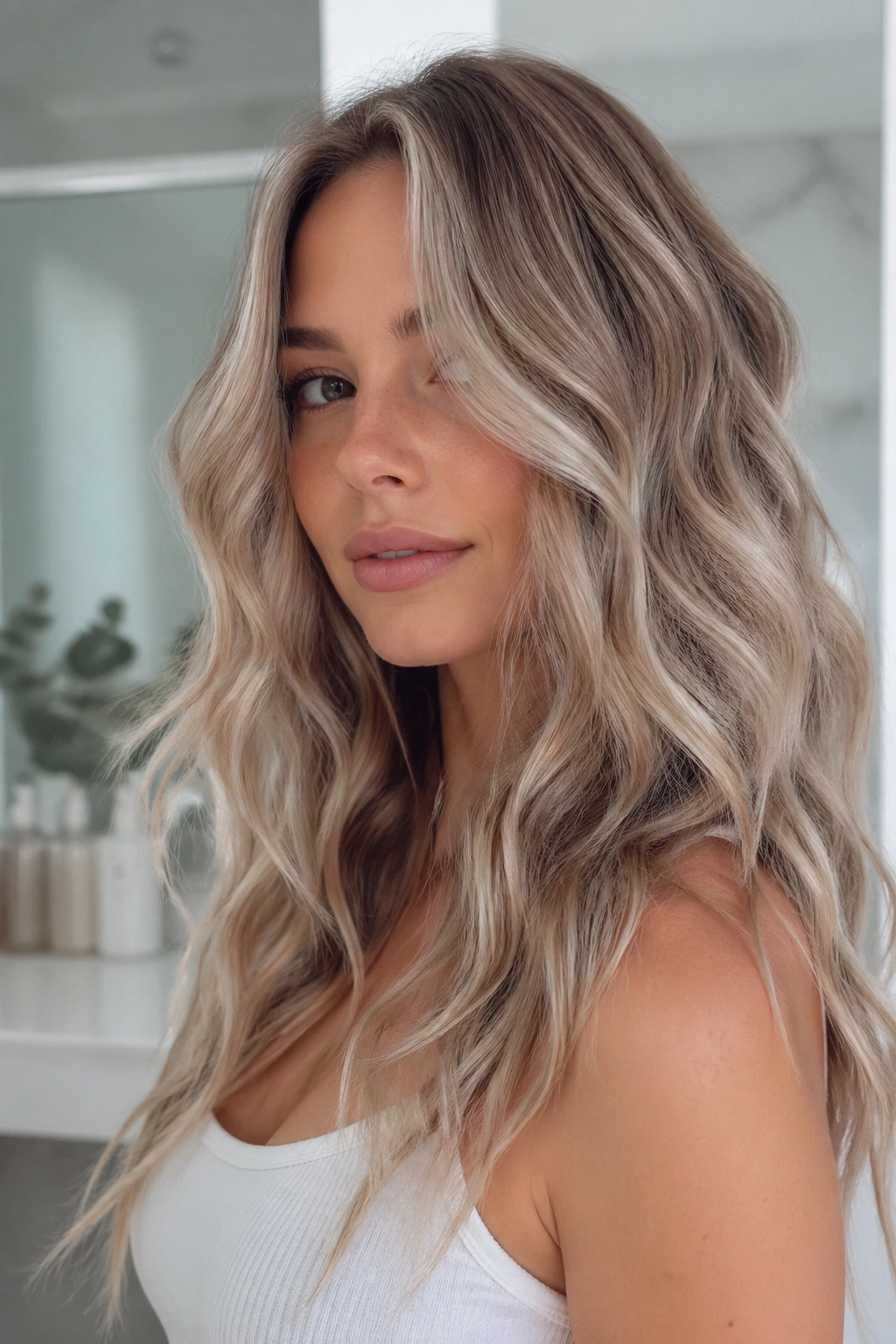
Cool ash blonde on wavy hair creates an editorial, sophisticated look that’s far from the warm, sun-kissed blonde balayage. Ash blonde reads as almost silver in some lighting conditions — particularly on very pale lifts — and creates a muted, cool dimension that photographs beautifully.
Maintaining ash blonde on wavy hair requires consistent purple shampoo use (once per week) and periodic toning appointments to prevent brassiness. The effort is real, but the result is a color that reads as intentional and precise in a way that warm blondes sometimes don’t.
7. Rose Gold Waves
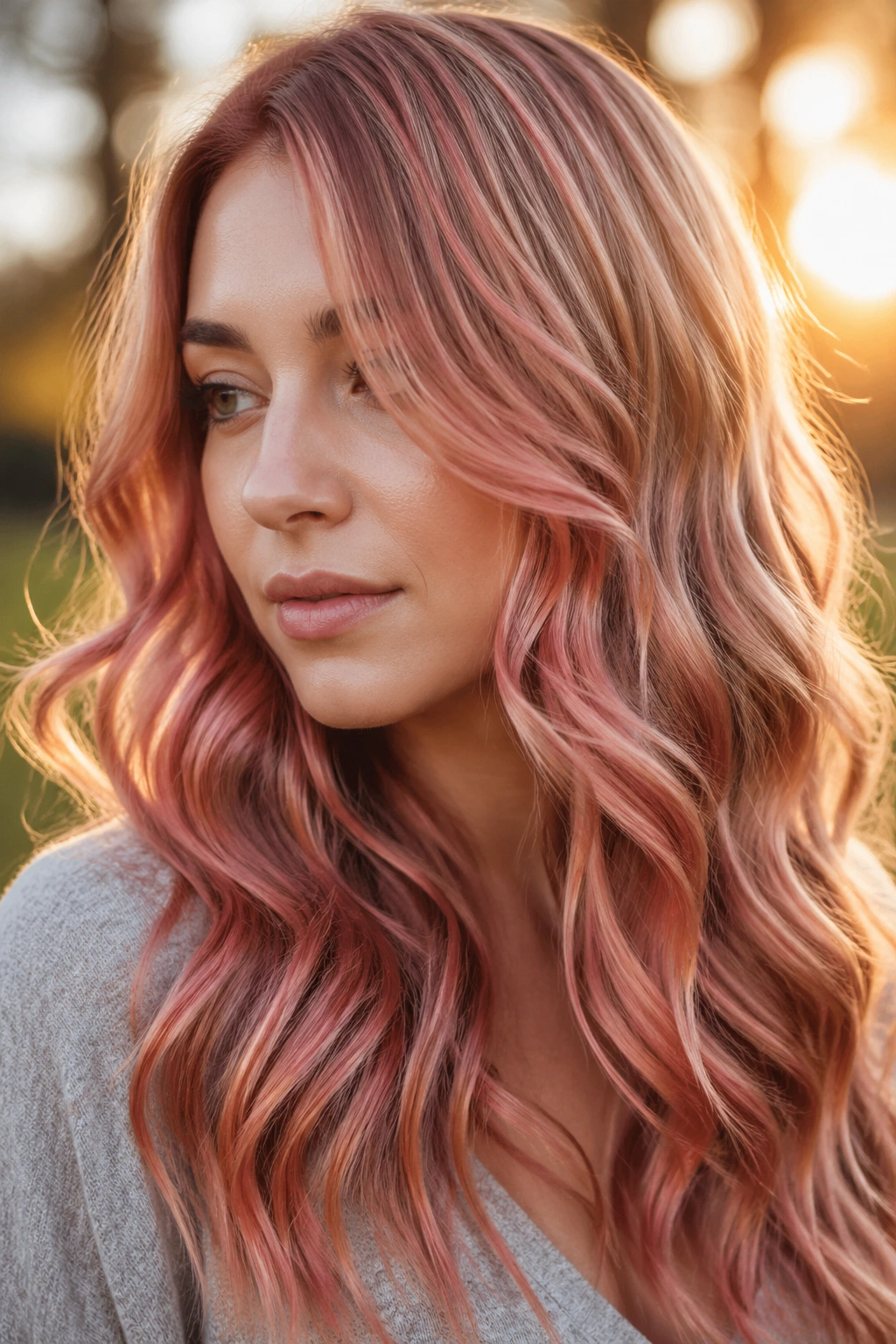
Rose gold — the pink-gold hybrid that somehow flatters everyone — on wavy hair creates a warm, romantic look with every wave. The pink-gold tones shift from more pink in cool light to more golden in warm light, which means your rose gold waves never look exactly the same twice.
On wavy hair with some warmth in the natural base, rose gold absorbs particularly beautifully. The underlying warmth of lifted hair plays into the golden part of rose gold’s formula, creating a depth that might not be achievable on a completely neutral blonde base.
8. Caramel Highlights Throughout
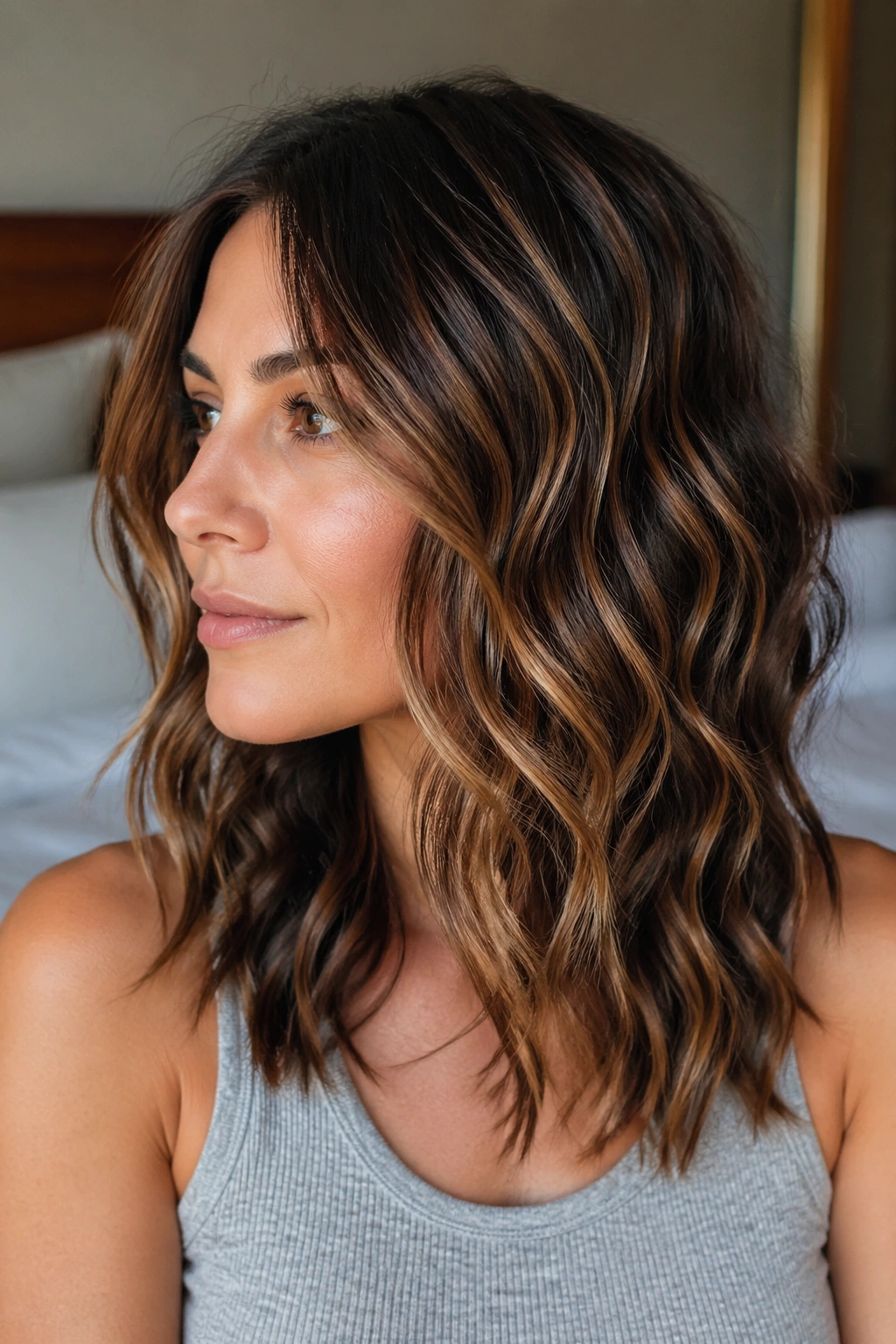
Caramel highlights woven through dark wavy hair — not concentrated in the face frame or the crown, but distributed throughout the entire length — create a full-body warmth that makes the entire wave pattern appear to glow. Everywhere you look within the waves, there’s warmth.
This requires more highlighted sections than a traditional balayage, which means more lifting — but the result is a color that reads as a full-scale transformation rather than an accent.
9. Deep Burgundy Waves
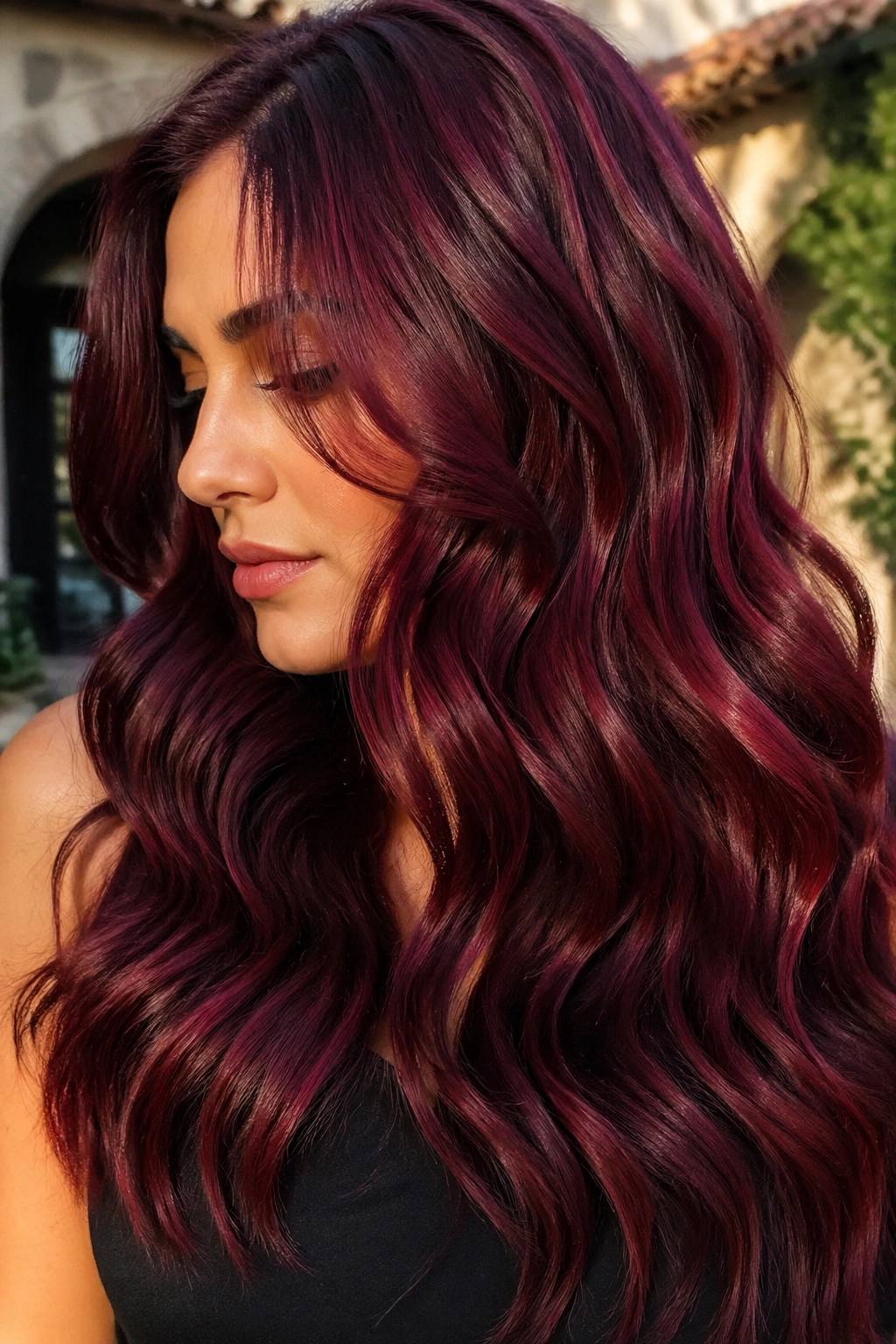
Rich, deep burgundy on wavy hair is one of the most wearable vivid colors for women who want color impact without the maintenance demands of brighter vivid shades. Burgundy is deep enough to be low-key professional in most settings, vivid enough to read unmistakably in photos and sunlight.
The wave pattern makes burgundy particularly interesting — the peaks of each wave appear slightly lighter (more red-toned), while the valleys appear deeper (more purple-toned), creating a natural dimension within the single shade.
10. Strawberry Blonde Waves
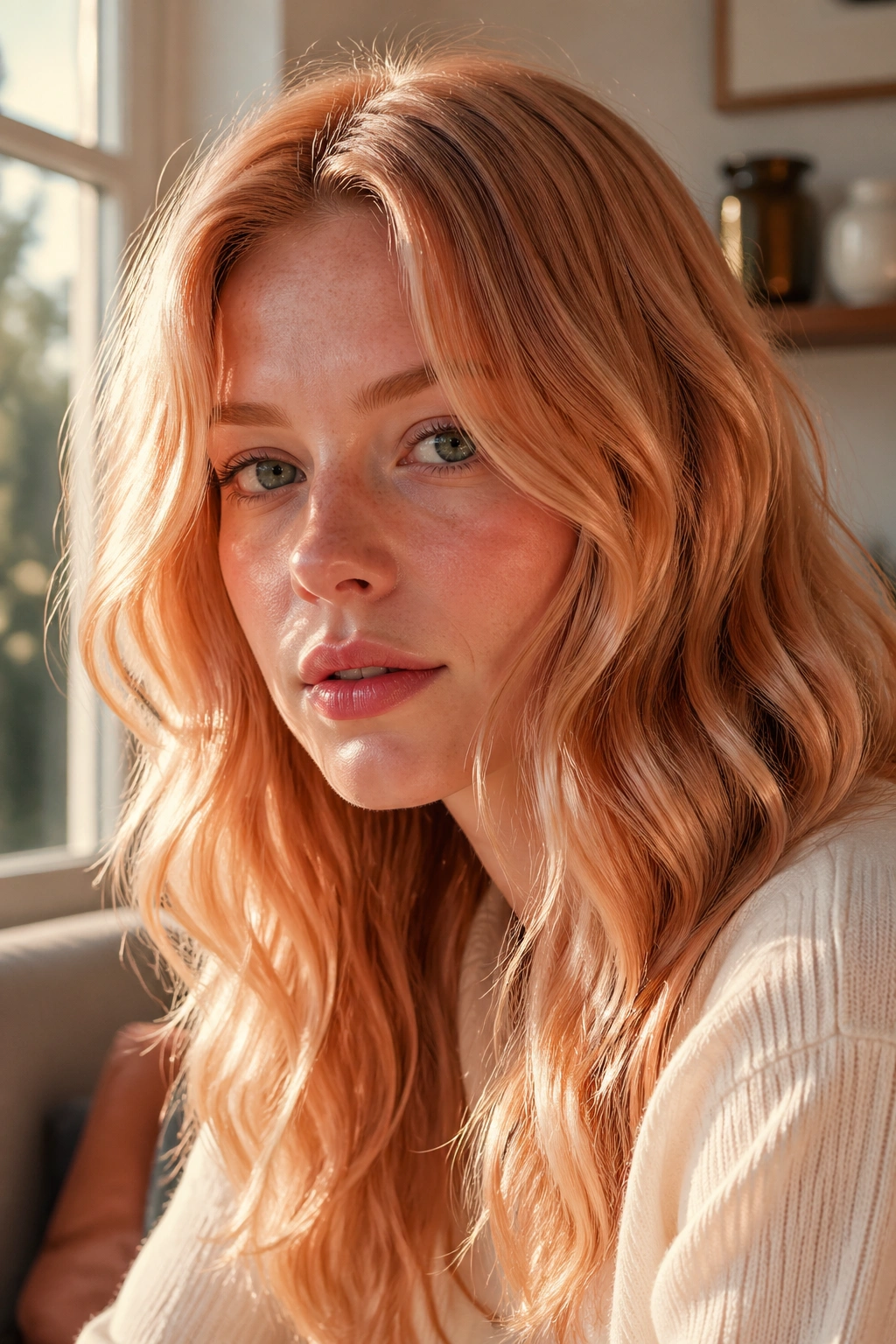
Strawberry blonde — warm, peachy, somewhere between blonde and the softest pink — on wavy hair creates one of the most romantically beautiful looks in the color spectrum. Each wave takes on a peach-gold glow that shifts in natural light, giving the hair a warmth that reads almost like a filter applied to real life.
Achieving true strawberry blonde requires lifting to a pale yellow before applying a warm peachy-pink toner. The existing warmth of a pale lift actually enhances the peachy tones in strawberry blonde.
11. Dark Brown with Subtle Red Tones
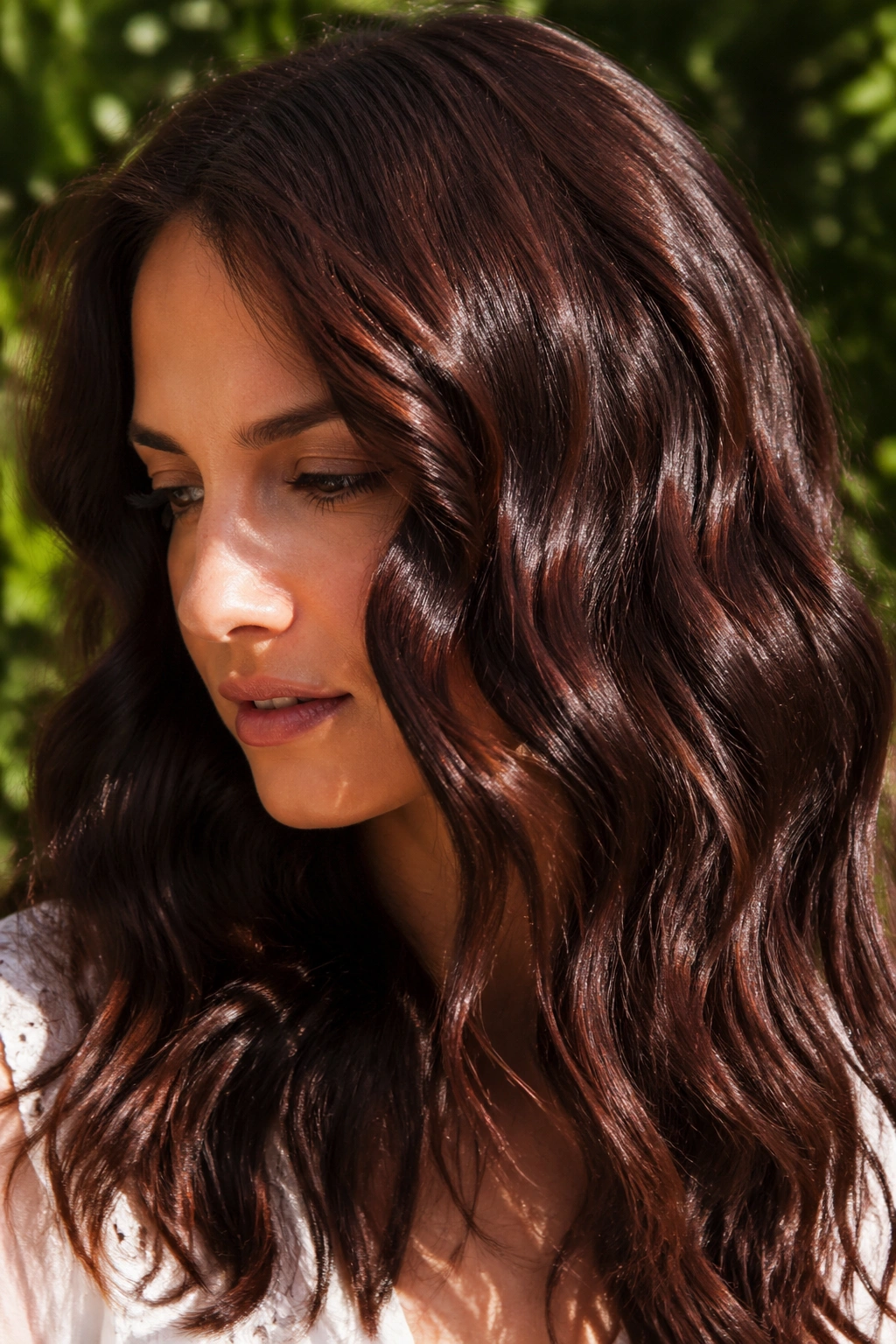
A dark brown formula with visible red undertones — not full auburn, not burgundy, but a brown that reveals unexpected warmth in sunlight. On wavy hair, this translucent red shows up primarily on the wave peaks where direct light hits, creating a color that looks perfectly normal indoors and beautifully warm outdoors.
This is a “stealth color” approach — the kind that doesn’t read as dyed until the sunlight shows you what’s actually there.
12. Golden Blonde Face Frame on Brown Waves
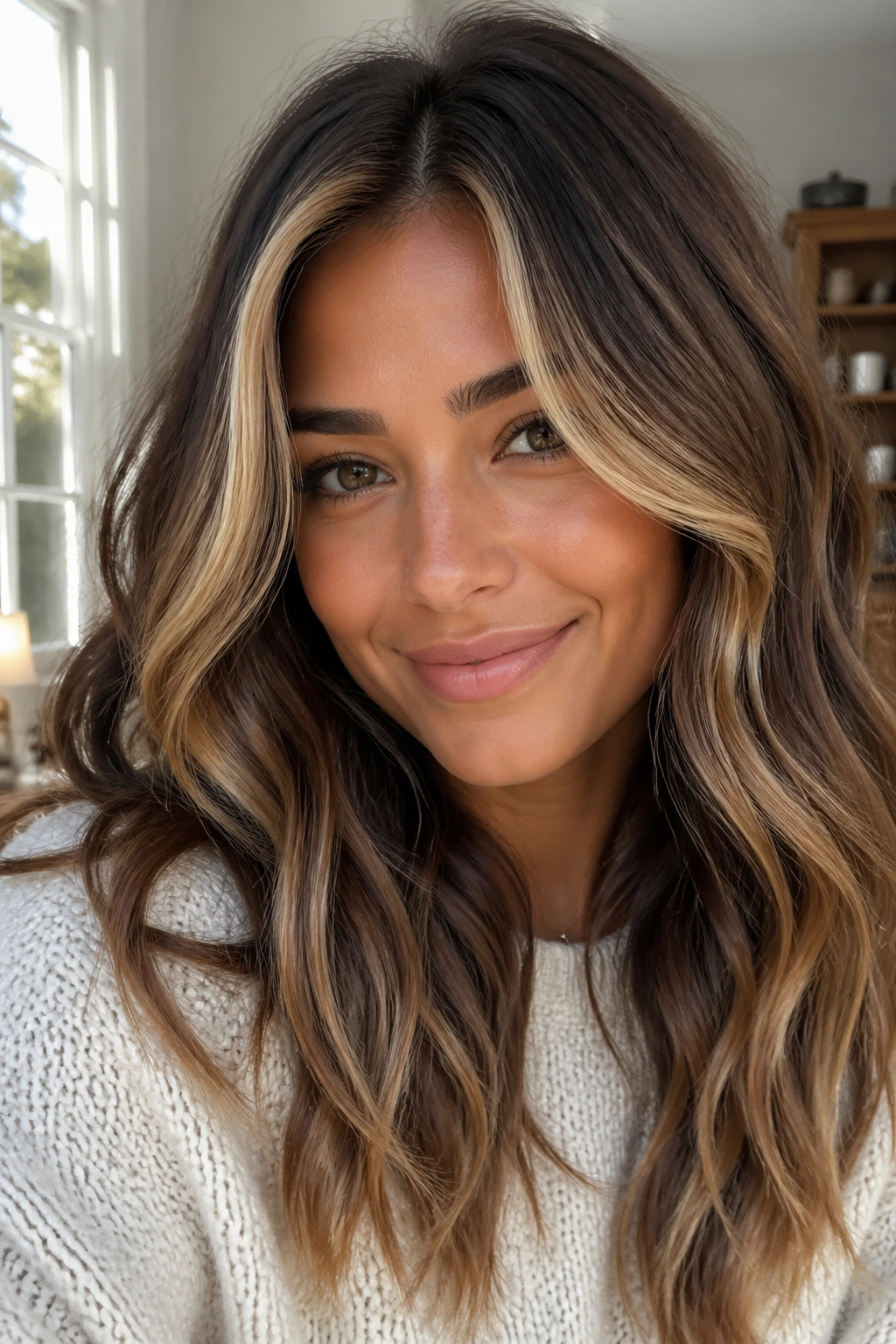
Concentrated golden blonde highlights around the face — not throughout the hair, just the face-framing sections on either side of the part — create a brightening effect that lifts the overall look and draws attention to features without dramatically changing the hair’s overall color.
On wavy hair, face-framing highlights blend naturally into the surrounding dark waves. The wavy texture diffuses any harsh transition line between lightened and unlightened sections.
13. Platinum Peek-A-Boo Pieces
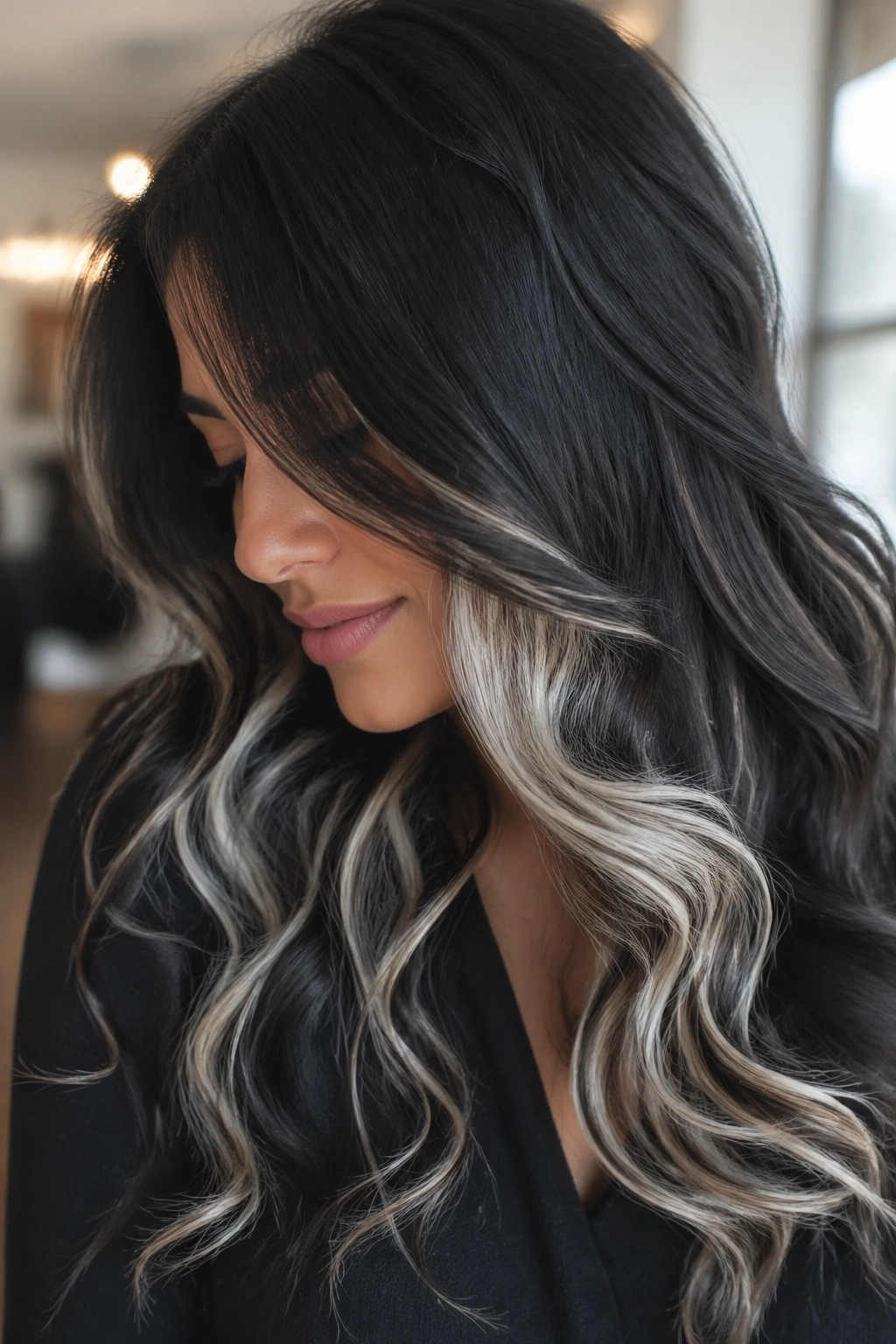
Platinum sections — very light, nearly white-blonde — tucked underneath or within the natural wavy hair, visible only when the hair moves or parts. On dark wavy hair, platinum peek-a-boo pieces create a striking contrast that appears and disappears as the waves shift.
This approach lets you experience the drama of platinum without committing to full-head lightening. Only the chosen sections need to be lifted to platinum level, which significantly reduces overall chemical exposure.
14. Soft Lavender on Light Brown Waves
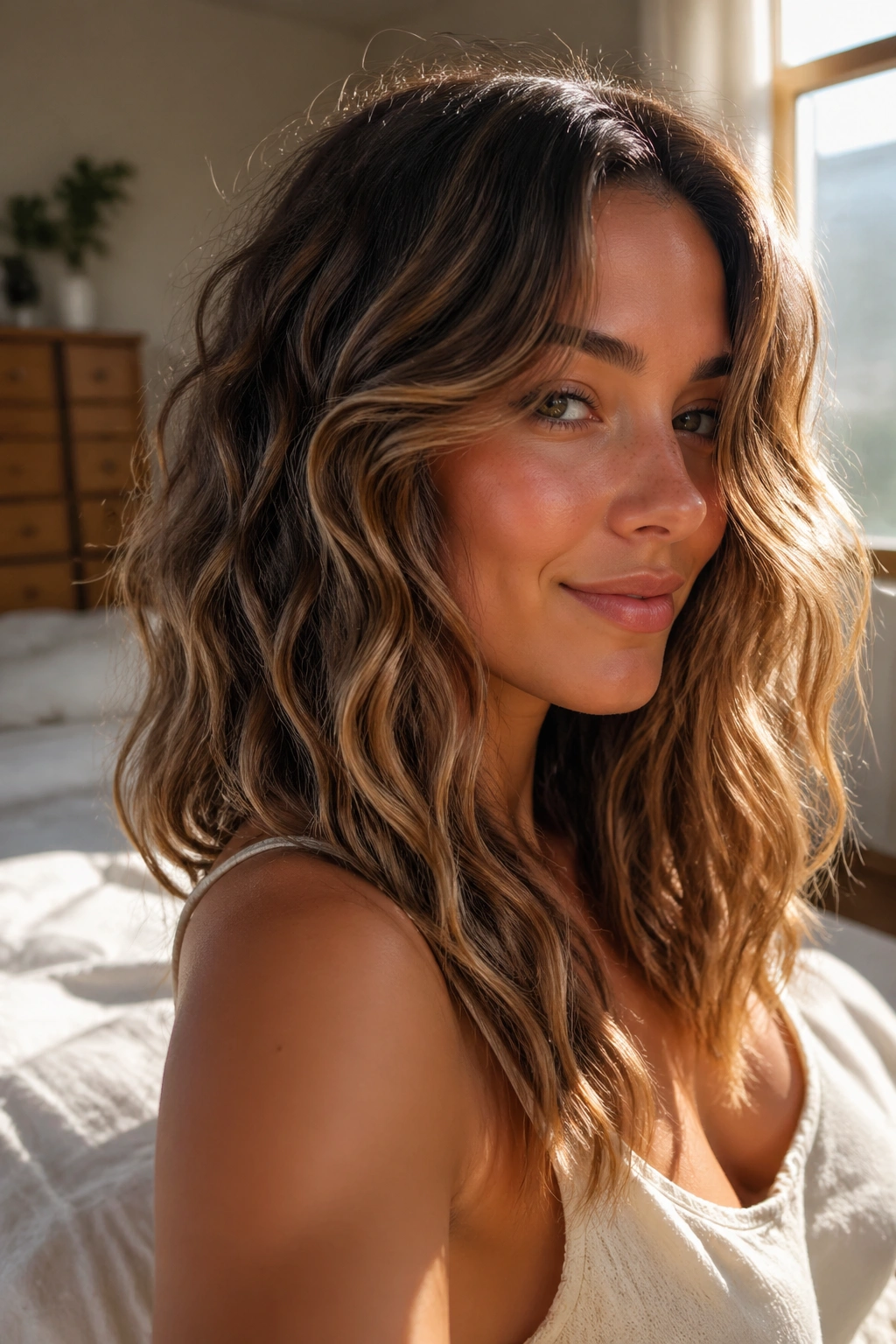
Soft lavender — barely there, like a purple-tinted mist over light brown waves — requires a light to medium blonde base before toning with a sheer lavender formula. On light brown or naturally blonde wavy hair, the process is less intensive than on dark hair, and the result is a soft, cool wash of color that reads as ethereal.
This is a particularly good color choice for 2A and 2B wavy hair, where the loose wave pattern lets the soft color read clearly without being overwhelmed by texture.
15. Mahogany Waves
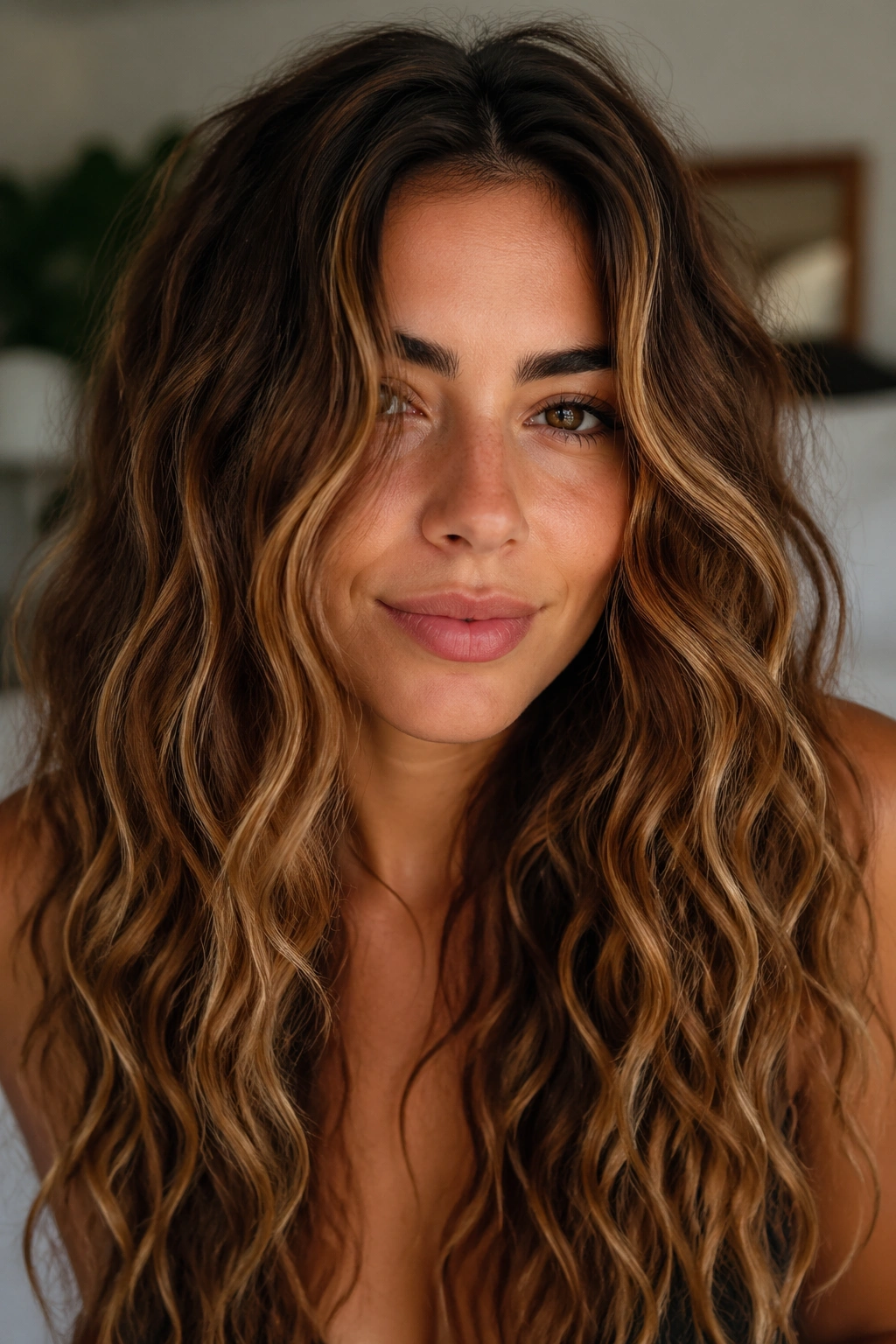
Mahogany — a red-brown hybrid with warm, slightly earthy undertones — on wavy hair adds depth and warmth in a way that reads as genuinely natural. The mahogany tone sits comfortably between “I colored my hair” and “my hair just does this” — a quality that many women actively seek in a color update.
No bleaching required for most dark naturals going to a deep mahogany. A single-process formula with red-brown tones creates visible warmth without dramatic lift.
16. Tortoiseshell Color
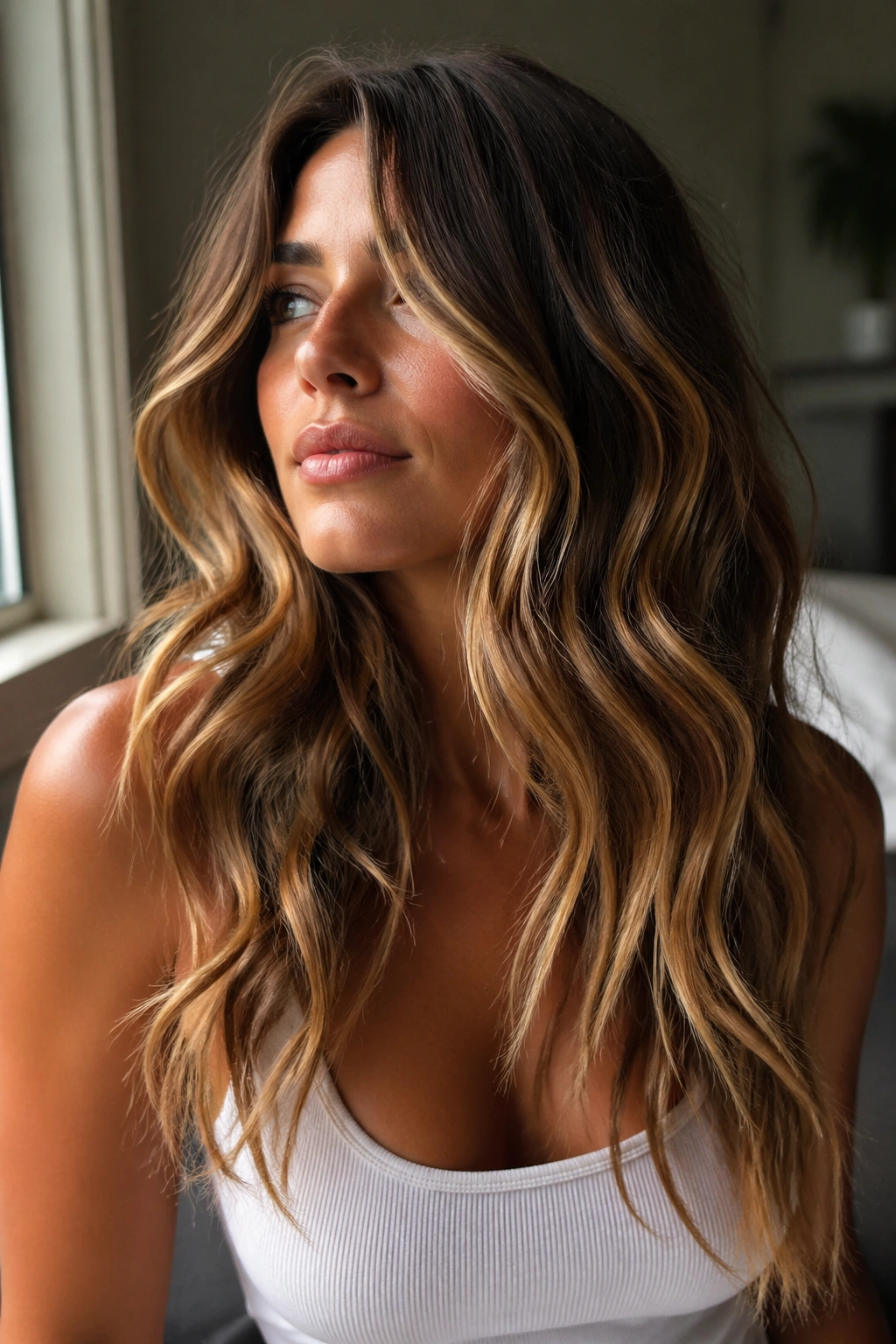
Tortoiseshell is a multi-tonal color technique that places different shades of brown, amber, honey, and dark brown throughout the hair in an irregular, organic pattern — like the mottled shell pattern of a tortoise. On wavy hair, the irregular placement blends completely naturally as the waves mix and overlap.
The result is a color that looks like it happened naturally over years of sun exposure, shifting weather, and organic lightening — not a salon formula. It grows out beautifully because there’s no single color to maintain or single root line to address.
17. Vivid Blue-Black
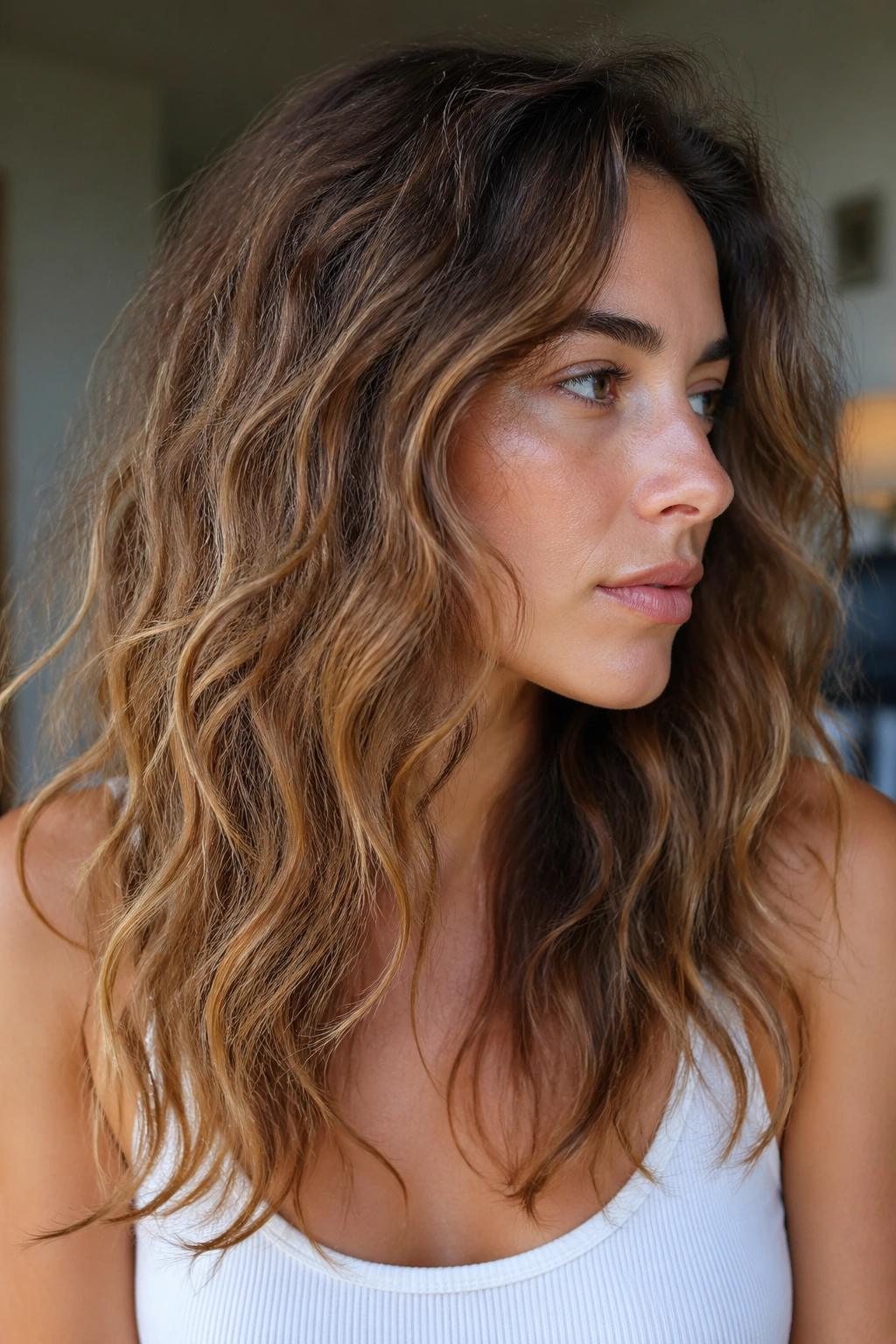
Blue-black — a black formula with visible blue iridescence — on wavy hair creates a look that’s simultaneously dramatic and wearable. The blue sheen catches light as waves move, creating a subtle chromatic shift that makes deep dark hair look dynamic rather than flat.
No bleaching required. A blue-black direct dye formula applied over natural dark hair creates the iridescent effect. This is one of the lowest-maintenance vivid colors because the dark base handles grow-out invisibly.
18. Soft Teal Highlights on Light Waves
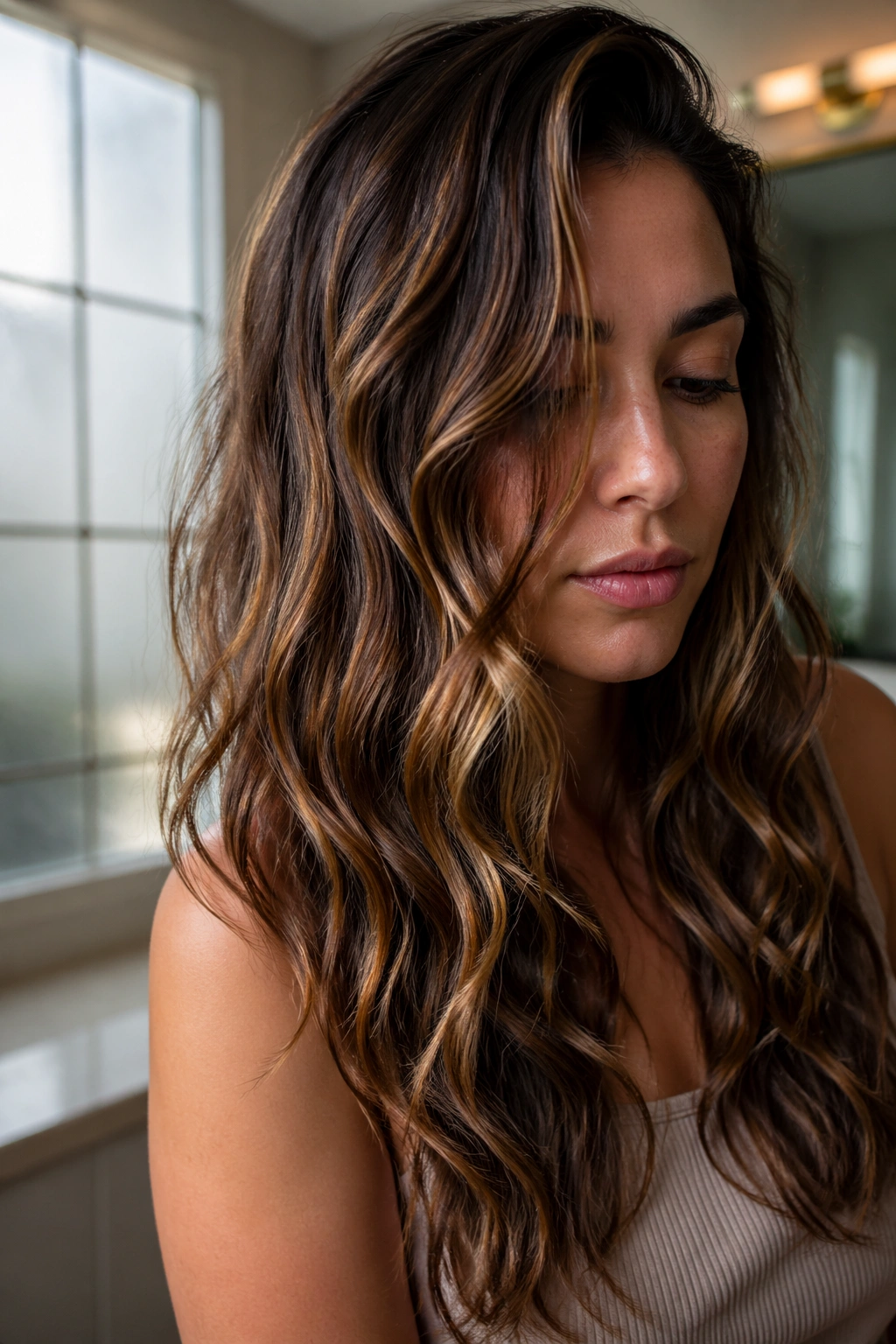
For wavy hair that’s already light brown or naturally blonde, teal highlights applied to select sections create an unexpected, cool-toned pop of color that reads as both bohemian and intentional.
On wavy hair, teal highlights don’t need to be perfectly placed — the waves do the blending, and the irregular way waves overlap means the teal sections appear and disappear naturally as the hair moves.
19. Warm Chestnut Brown
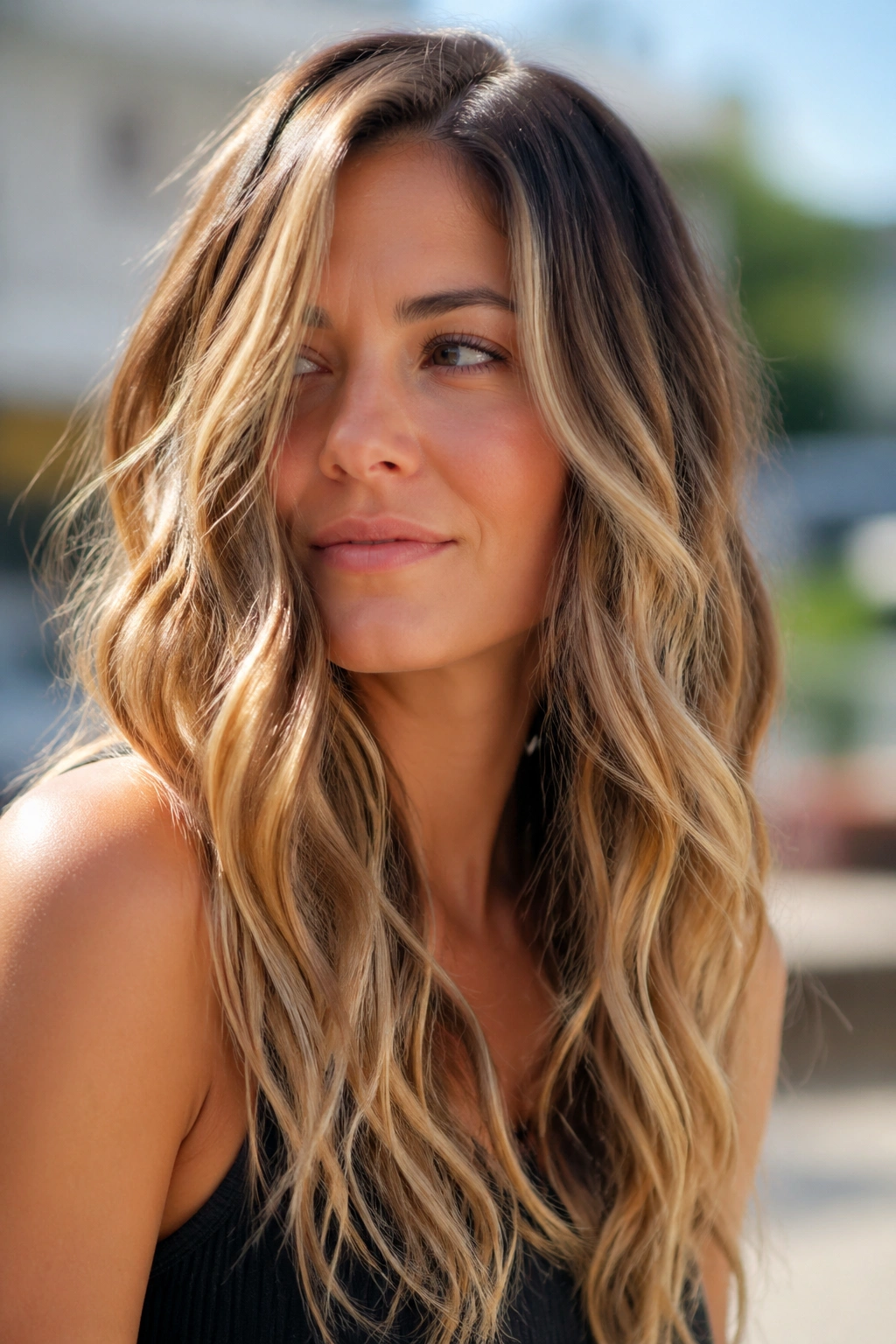
Warm chestnut — a rich, warm brown with golden undertones that sits between chocolate and auburn — on wavy hair creates a color that’s undeniably warm and glowing without committing to red or copper territory.
Chestnut is a natural-looking color that’s universally flattering and genuinely beautiful on wavy textures. It’s the kind of shade that makes people say “your hair looks great” without necessarily being able to articulate what’s different.
20. Sandy Brown Balayage
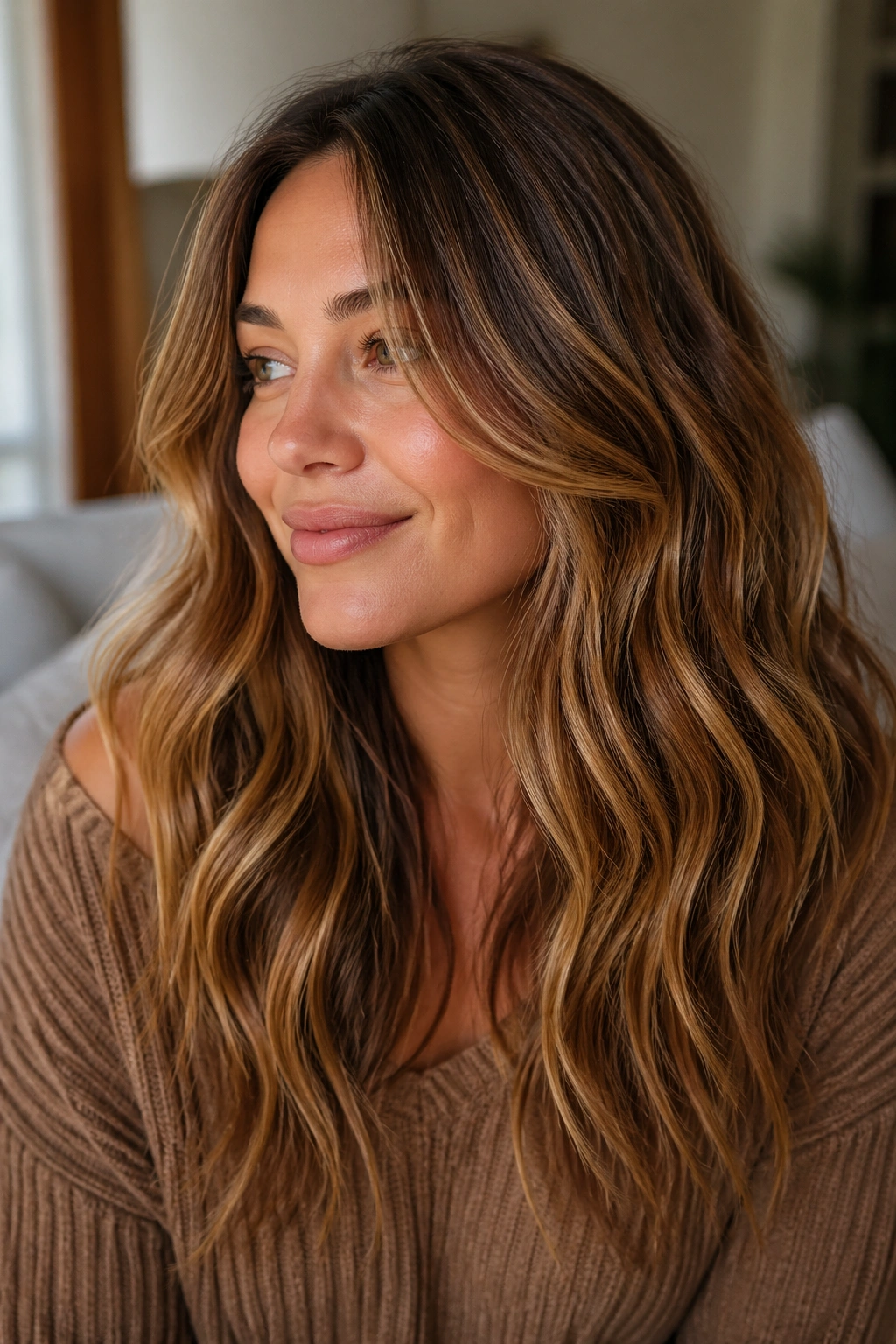
Sandy brown — a warm, neutral brown with golden or beige undertones — applied as a balayage through darker wavy hair creates a casual, effortless look that reads as vacation hair year-round. The sandy tones are warm without being vivid, dimensional without being dramatic.
On 2B and 2C wavy hair, sandy brown balayage looks especially natural because the wave pattern scatters the painted sections in a way that mimics sun lightening. The result is a color that seems like it might have happened on its own.
21. Dimensional Deep Brown
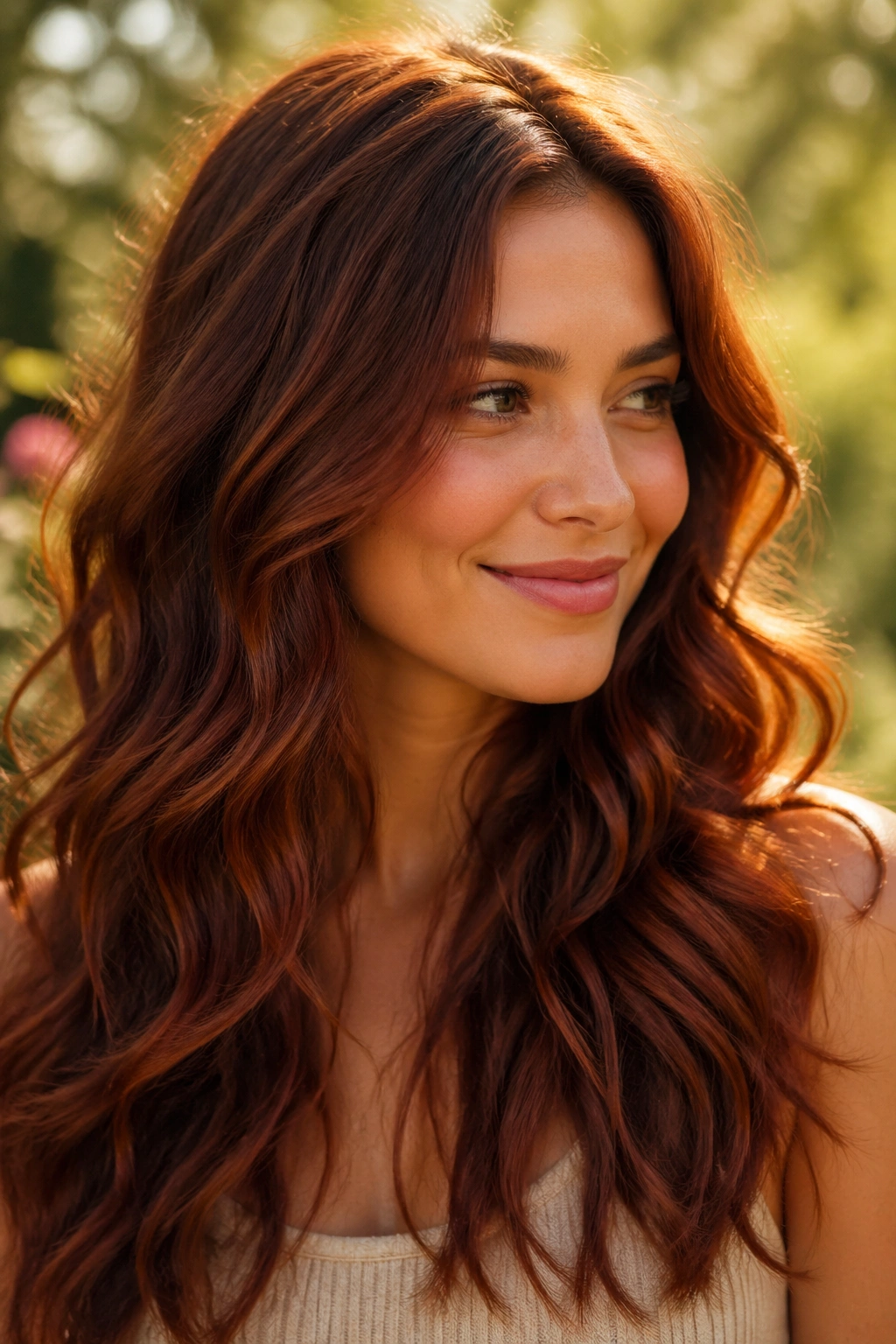
Dimensional deep brown isn’t a single shade — it’s a color strategy that uses a dark brown base with medium brown mid-tones and lighter brown or golden highlights woven throughout, all within the same brown family, to create depth that reads as complex and multidimensional.
On wavy hair, the dimensional placement is amplified by the wave pattern’s own light-and-shadow variation. The result is a rich, deep brown that catches light differently in every section — a color that rewards close attention and looks genuinely different in every lighting environment.
Choosing What Works for Your Waves
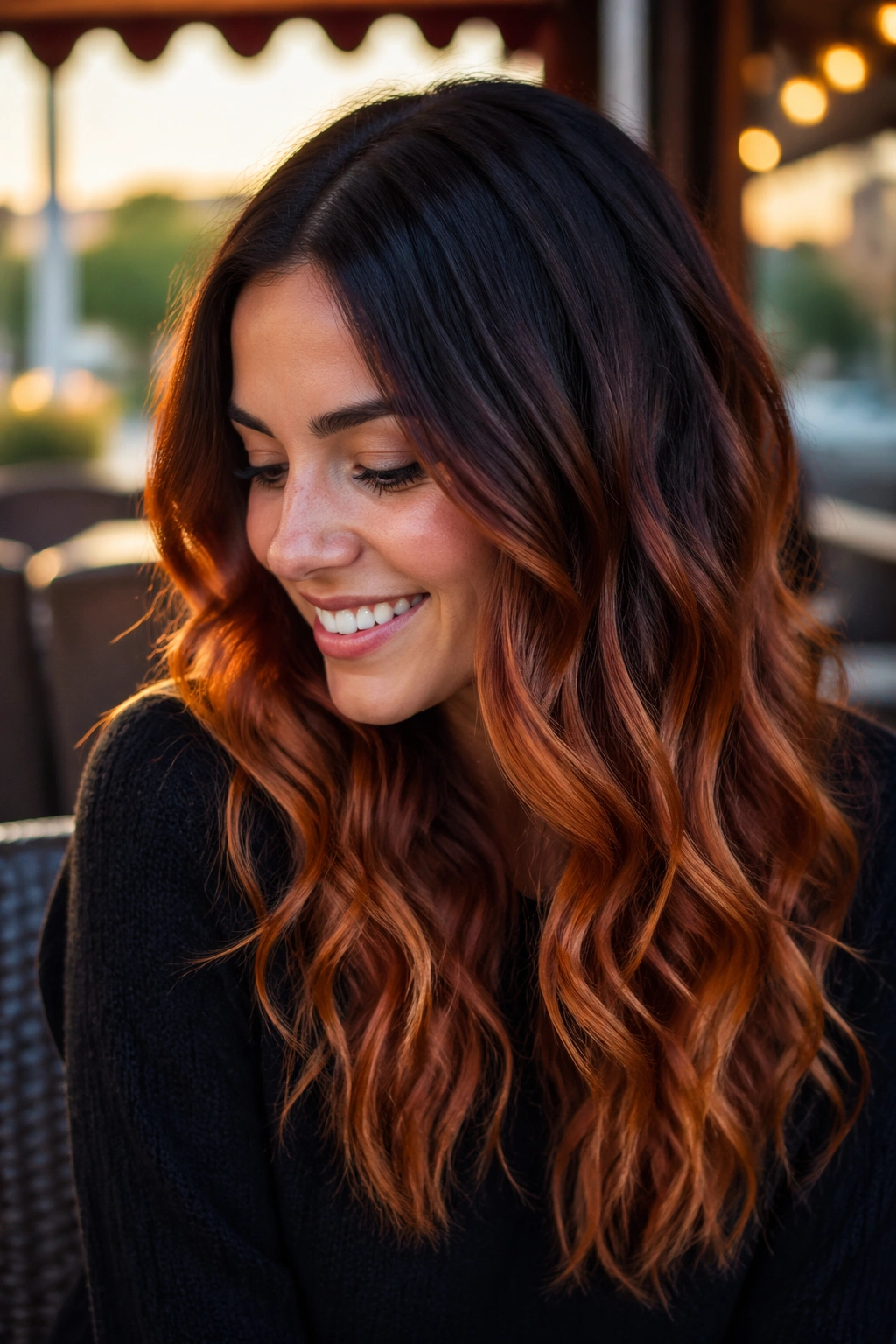
The best hair color for wavy hair isn’t necessarily the most dramatic or the most technically complex — it’s the one that works with your specific wave pattern, your lifestyle, and your hair’s health. Wavy hair at its best is glossy, defined, and full of movement. The right color amplifies all three of those qualities.
Start with your skin tone and undertones as a guide, consult a colorist who understands wavy hair texture specifically, and choose something that excites you. Wavy hair is forgiving — it grows out gracefully, blends colors naturally, and makes most shades look better than they would on any other texture.
After Coloring: Keeping Your Waves Defined
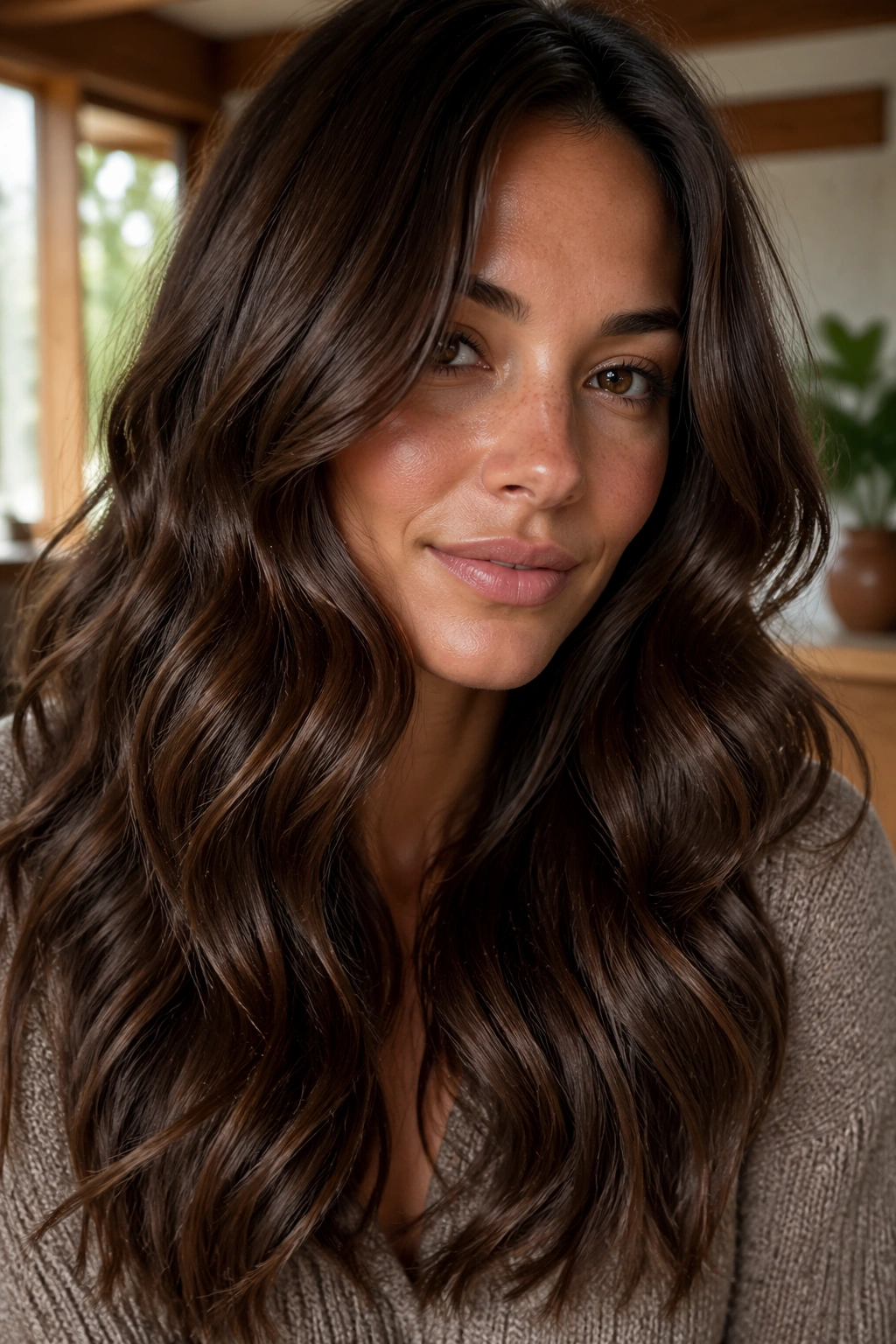
Color-treated wavy hair needs moisture, but it also needs definition products that don’t weigh waves down. A lightweight curl-enhancing cream or mousse applied to soaking-wet hair, then diffused on low heat, sets waves without frizz and without weighing the pattern down.
Avoid heavy butters and thick oils directly on color-treated wavy hair — these can flatten waves and reduce the definition that makes color look so good on this texture. Stick to lightweight serums and oils as a finishing touch on dry hair, applied to the ends only.
The goal is wavy hair that’s hydrated enough to shine, light enough to move, and defined enough to show off every dimension of your chosen color. That combination — hydration plus definition plus movement — is what makes color on wavy hair so extraordinary.
