



Bleached curly hair is one of the most striking looks in the natural hair world — and one of the most misunderstood. The word “bleach” carries weight in natural hair communities, and understandably so. Bleaching changes the protein structure of natural curls, it requires careful moisture management, and done incorrectly, it can cause real damage. But done thoughtfully — with a skilled colorist, a solid pre-care routine, and an equally solid post-care plan — curly bleached hair can be both stunning and genuinely healthy. These 24 ideas cover the full range of what bleached natural curls can become, from barely-lifted caramel to full platinum transformation.
The Truth About Bleaching Natural Curls
Let’s start with honesty. Bleaching is the most chemically intensive color process you can apply to natural hair. It doesn’t deposit color — it removes it. Bleach works by opening the hair cuticle and dissolving the melanin (natural pigment) that gives hair its color. That process alters the hair’s structure at a molecular level, which is why bleached curls feel different and behave differently than they did before.
That said: Bleached natural hair is not inherently damaged hair. The difference between healthy bleached curls and damaged bleached curls comes down to preparation, process management, and aftercare. Women with Type 4C hair have achieved and maintained beautiful, defined, healthy bleached curls. The key is treating bleaching as a medical procedure for your hair — something that requires preparation, skilled execution, and recovery.
What bleaching actually does to curls: it increases porosity (which affects how your curls absorb and release moisture), it can temporarily loosen the curl pattern (which usually returns with moisture), and it makes the hair shaft more vulnerable to mechanical damage (meaning you need to handle bleached curls more gently). Understanding these changes lets you counteract them directly.
Pre-Bleach Preparation: The Work You Do Before the Chair
The condition of your hair going into a bleach appointment determines much of what comes out. Hair that’s already strong, hydrated, and low in chemical history handles lightening significantly better than hair that’s been previously processed, heat-damaged, or deeply dry.
In the 6-8 weeks before any bleaching appointment, adopt a protein-moisture balance protocol: alternate between protein treatments (every 2-3 weeks) and moisture-rich deep conditioning masks (every week). This builds the hair’s internal structure and elasticity, making it more resilient under the bleach.
Avoid heat styling in the weeks before. Avoid any chemical treatments including relaxers, texturizers, or other dyes. Let your curls rest in their natural state and build up a reserve of health that the bleach will draw from.
On the day of the appointment: come with clean, product-free hair that’s been conditioned the day before. Don’t put oil or conditioning treatments in right before — that can interfere with how bleach lifts. Clean hair processes more evenly.
The Lightening Process Explained
There are two primary approaches to lightening natural curls: single-process bleach and multi-session bleaching.
Single-process bleach lifts in one sitting — appropriate for hair that starts at medium brown and needs to go to a warm honey or caramel level. One session is often sufficient, with a developer strength matched to the hair’s starting level and target.
Multi-session bleaching — two or more sessions spaced 4-8 weeks apart — is the appropriate approach for dark brown or black natural hair aiming for significantly lighter results (golden blonde, platinum, or vivid pastel colors). Going slowly is not a limitation — it’s what separates beautiful, healthy bleached curls from breakage.
During lightening, your hair passes through stages: from black to dark brown to medium brown to warm red-brown to orange to gold to pale yellow to almost white. The stage you stop at determines what toner or color is applied afterward to achieve the desired shade.
Post-Bleach Care: The Non-Negotiables
This is where most bleached natural hair either thrives or suffers. Post-bleach care is not optional or flexible — it’s the entire game.
Protein reconstruction immediately after lifting. A professional bond-building treatment (applied by your colorist at the salon during the appointment) reconnects broken disulfide bonds in the hair shaft. This is the single most important post-bleach step, and it makes an immediate visible difference in how curls behave after lifting.
Deep conditioning after every wash — without exception. Color-treated curls that have been bleached need intensive moisture replenishment on a regular schedule. Weekly deep conditioning masks, left on for 20-30 minutes under heat, restore the flexibility and softness that bleaching reduces.
Protein-moisture rotation. Bleached curls need protein to maintain structure and moisture to maintain softness. Too much protein causes stiffness and brittleness — the hair becomes harder than it should be. Too much moisture without protein causes what’s known as “hygral fatigue” — curls that feel mushy and weak when wet. Rotate a protein treatment monthly with weekly moisture treatments.
Handle with extreme care. Bleached curls are more fragile than undyed curls. Detangle with wide-tooth combs or fingers only, never with fine-tooth tools. Avoid high-manipulation styles that require repeated handling. Protective styles are your best friend while your hair recovers and adapts.
Understanding Toning After Bleach
Toning is the step that transforms lifted natural hair from warm yellow or orange into the desired color. After bleaching, the remaining warmth in the hair’s undertone needs to be neutralized or enhanced depending on your target shade.
For cool shades (platinum, ash blonde, silver): a violet or blue toner neutralizes the yellow and pulls the result toward cool, silver-blonde.
For warm shades (honey, caramel, golden blonde): a warm golden or amber toner enhances and deepens the existing warmth.
For vivid colors: the lifted base is the “canvas” for your color. The lighter the lift, the more vivid the resulting color. Pink on a pale yellow base reads differently than pink on an orange base — the former is true pink, the latter has more salmon-warmth.
Toning is typically semi-permanent and requires refreshing. Purple shampoo between toning appointments helps maintain cool blonde shades.
1. Full Platinum Curls
Platinum on natural curls is the full transformation — the complete removal of natural pigment, replaced with a toned, cool, nearly white-blonde result. On Type 3 curls, platinum creates an extraordinary effect: the white-blonde base makes every curl detail visible, almost like a sketch of a curl rather than hair.
How to Achieve It Safely
- Requires multiple sessions — plan for 2-3 appointments over 3-6 months
- Use bond-building treatments at each session (Olaplex or equivalent)
- Tone with a pearl or violet toner after each lift to maintain cool tones
- Deep condition twice weekly after achieving platinum
Bold tip: The curl pattern on platinum hair is often more visible than on dark hair because the light base creates contrast between curl peaks and valleys that dark hair naturally obscures.
2. Honey Blonde Bleached Curls
Stopping the lightening process at the warm honey stage — a level 8-9, warm gold — and toning with a honey gloss creates one of the most beautiful and manageable bleached curly hair looks. Honey blonde doesn’t require the extensive lifting that platinum demands, and the warmth of honey is self-correcting — a little brassiness reads as enhanced warmth rather than a failed tone.
On 4A-4B hair, honey blonde creates a rich, multi-toned field of warm gold coils that look incredibly dimensional. Every curl catches the honey light differently.
3. Platinum Tips on Dark Natural Roots
Dark natural roots, untouched, transitioning to platinum-lightened tips — an ombre approach where only the ends are taken to near-white. This concentrates the most intense lifting at the oldest, most expendable part of the hair shaft (the ends), protects the newer growth at the roots, and creates a dramatic gradient look.
On curly hair, the platinum tips highlight the end of every curl — creating a glowing, almost backlit effect when the hair moves. Each coil appears outlined in light.
4. Bleached Blonde Braid-Out
A braid-out on bleached blonde natural hair creates a wave pattern on top of the lightened color, creating a beautiful layered texture effect. The braid-out’s defined S-waves catch the blonde color in alternating light and shadow as the waves rise and fall, creating a dimensional look that a wash-and-go doesn’t achieve.
The maintenance consideration here: braid-outs on bleached hair should use gentle products — avoid heavy manipulation and use moisturizing styling creams that won’t snap bleached strands.
5. Golden Orange Bleached Curls
Stopping the lift at a bright warm orange-gold and leaving it at that — no toning, no color — creates a vivid, natural-looking result that sits between copper and orange. On 4C hair, this orange-gold level is often visible as a distinct warm tone that looks intentional and striking.
Some naturals choose to embrace the “unfinished” warmth of a stopped lift rather than toning it. When the orange is bright and even across all sections, it reads as an intentional warm statement — not a failed bleach job.
6. Bleached Curly Locs
Locs bleached to a warm blonde or honey level are a stunning visual — the structured texture of locs shows blonde in a geometric pattern that’s entirely different from loose curls. Each loc is its own cylinder of color, and when those cylinders are honey or golden blonde, the overall effect is warm, textured, and architectural.
Locs hold bleach differently than loose hair — the density of the loc means the interior may process slower than the exterior. Processing times need to be monitored carefully, and the condition of the loc (starter vs. mature) affects how the bleach penetrates.
7. Two-Tone Bleached Sections
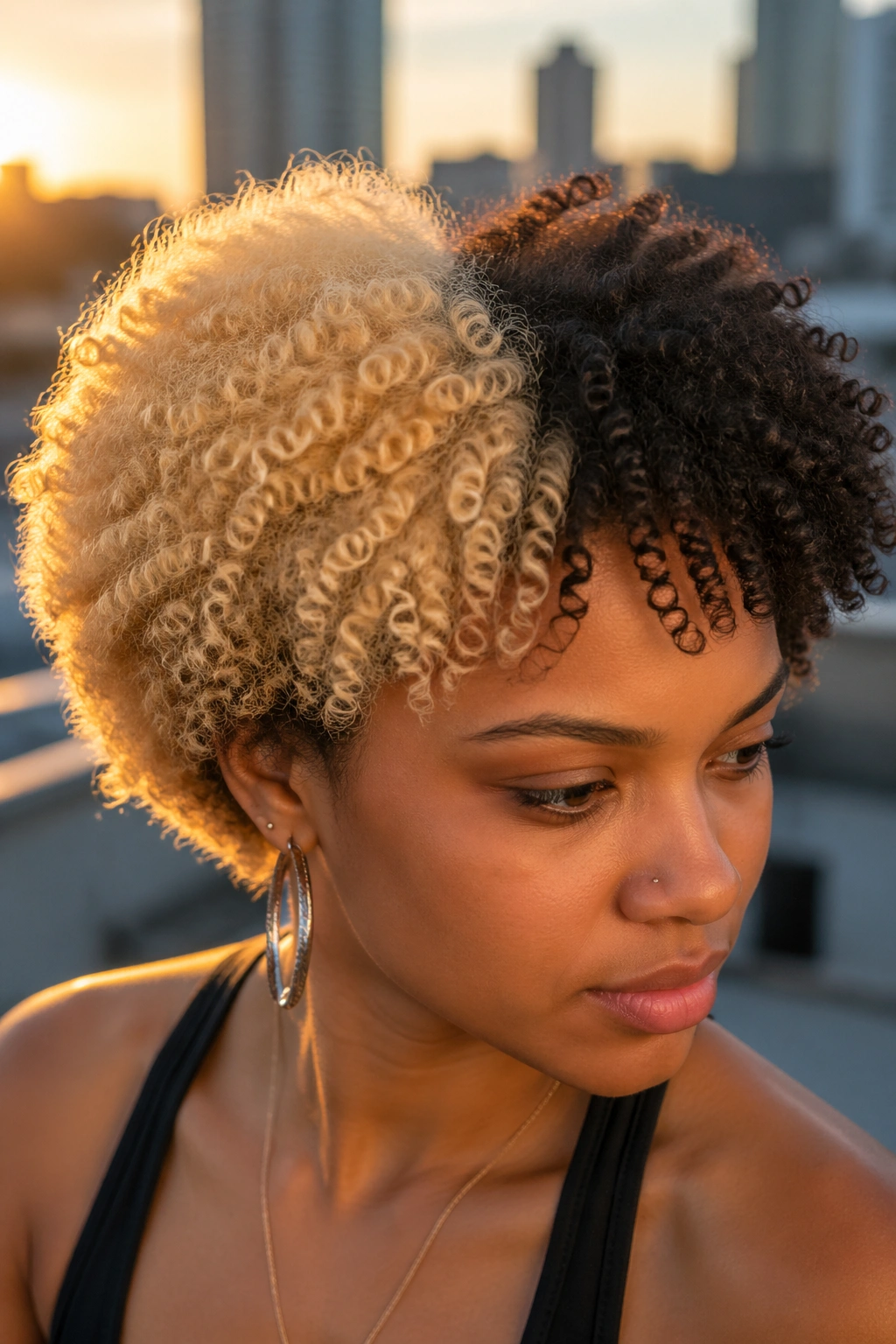
Half the head bleached to platinum or golden blonde, the other half left in its natural color — a deliberate two-tone placement that creates a graphic, editorial look. The division can be a center part split, an underlayer arrangement, or a front-to-back placement.
On curly hair, the two tones mix naturally at their border — the boundary between bleached and unbleached curls is softened by the texture, so the split reads as intentional rather than harsh.
8. Bleached with Vivid Pink Color
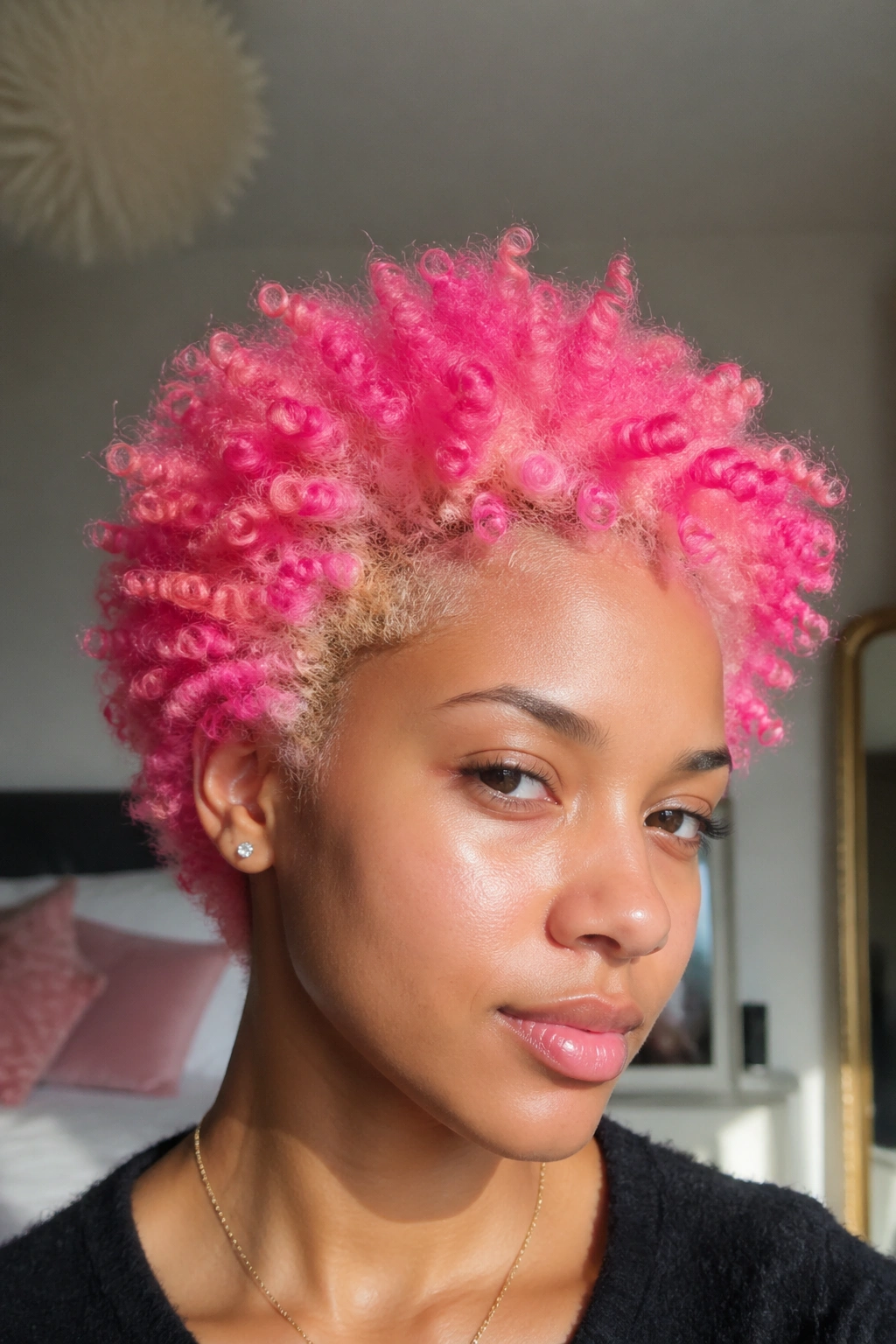
Bleached natural hair used as the canvas for vivid pink — applied after achieving the pale base needed for true pink to show through. The bleaching process is the means; vivid pink is the end goal.
Pink on bleached 4C hair is extraordinary. The tight coils create a surface that shows pink in dense, repeating patterns — like a field of small pink flowers when viewed from a distance.
9. Bleached Curls with Purple Toner
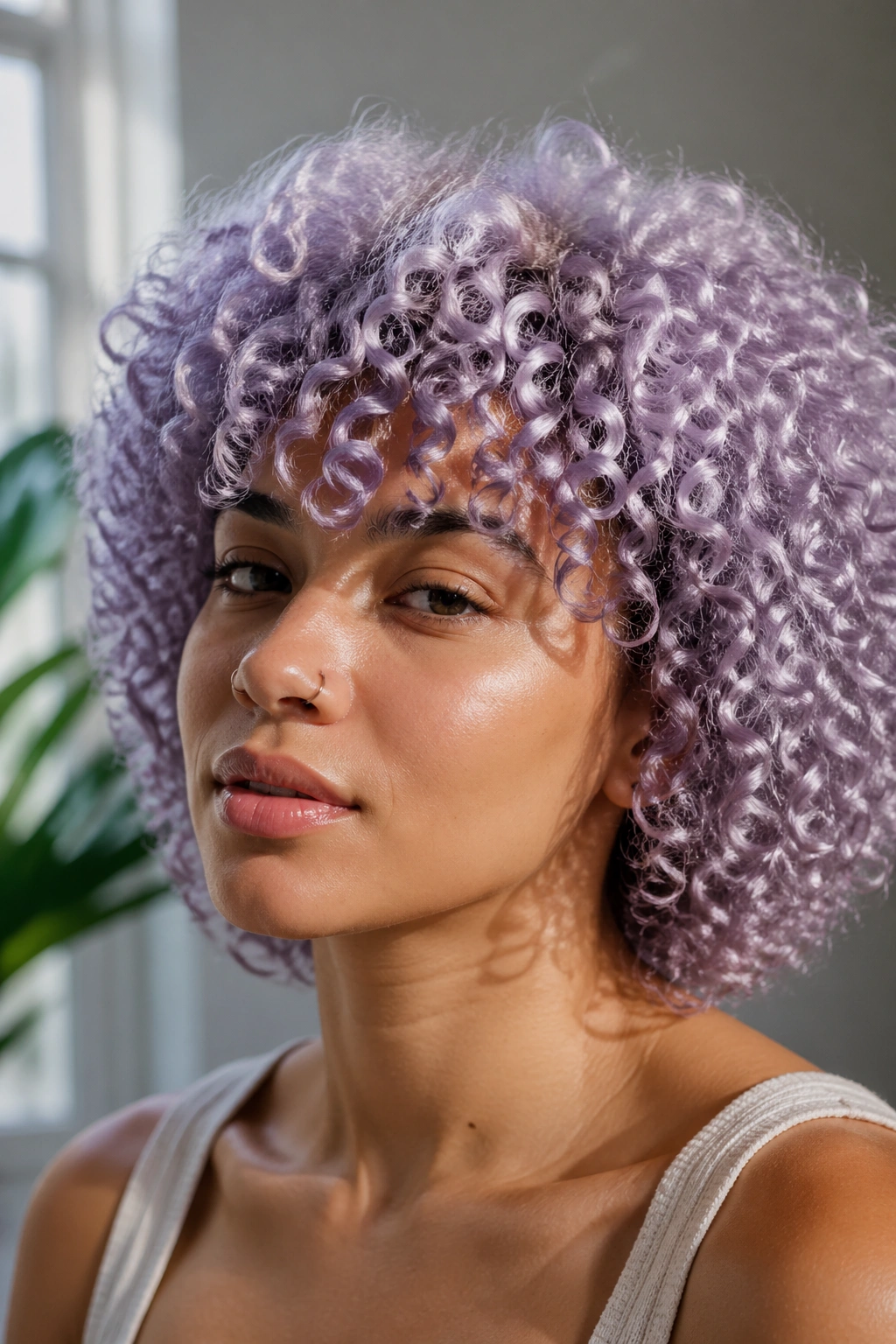
Rather than bleaching to create blonde, bleach applied to create the base for a vivid purple toner — soft lavender applied to pale yellow lift. On natural curls, lavender creates an ethereal, barely-there color wash that reads as silver-lavender in most lighting and purple in photographs.
Lavender toners fade relatively quickly — plan for refreshing every 3-4 weeks. But the regular upkeep is justified by a color that’s genuinely rare and beautiful on natural curls.
10. Bleached Curly Puff in Champagne Blonde
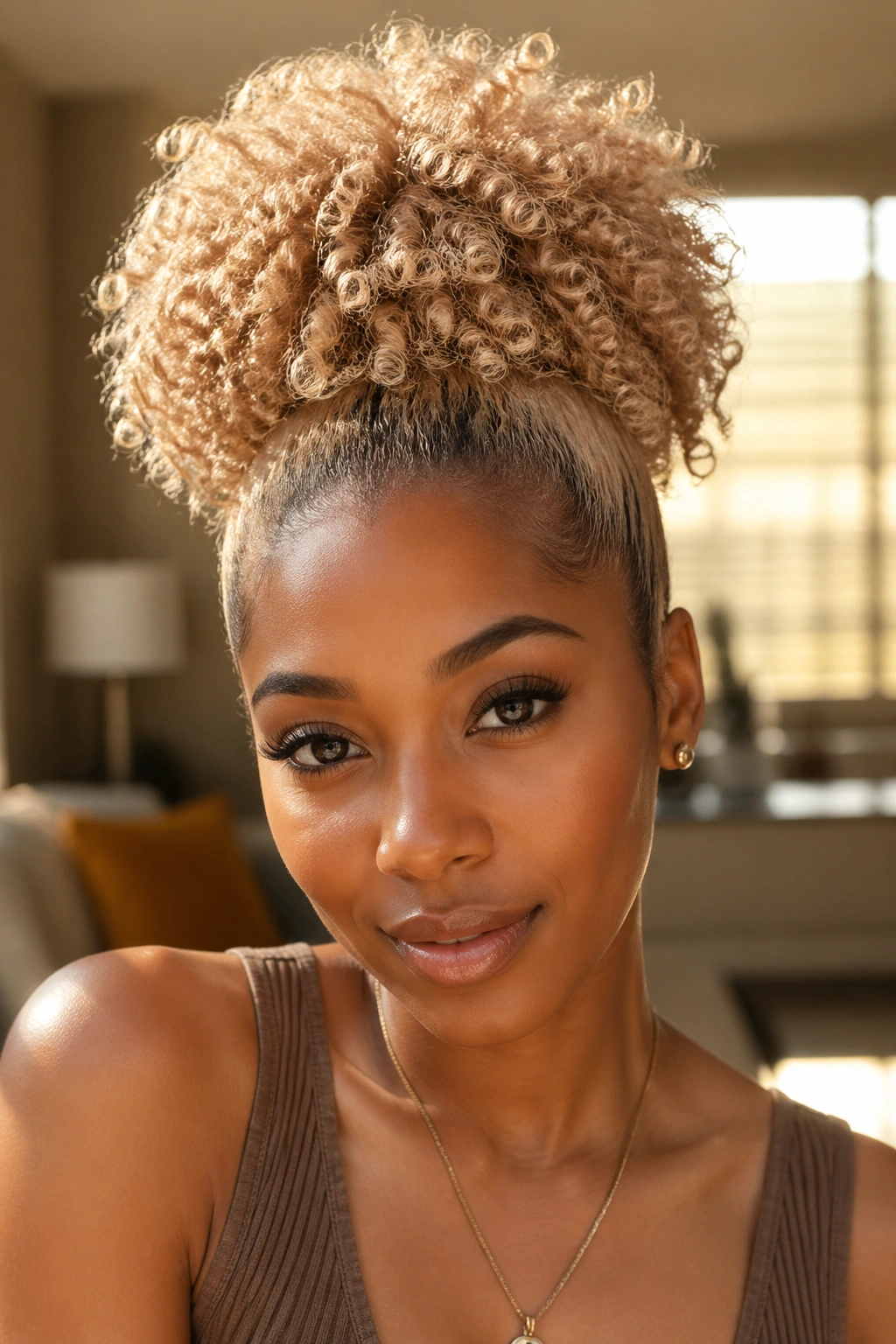
A high curly puff bleached to champagne blonde — a soft, beige-gold that sits between warm blonde and cool ash — is a look that manages to be simultaneously bold (in the puff’s volume) and refined (in the muted, sophisticated champagne tone). The puff’s density shows the champagne color in a richly textured field of warm light.
11. Bleached Section Framing the Face
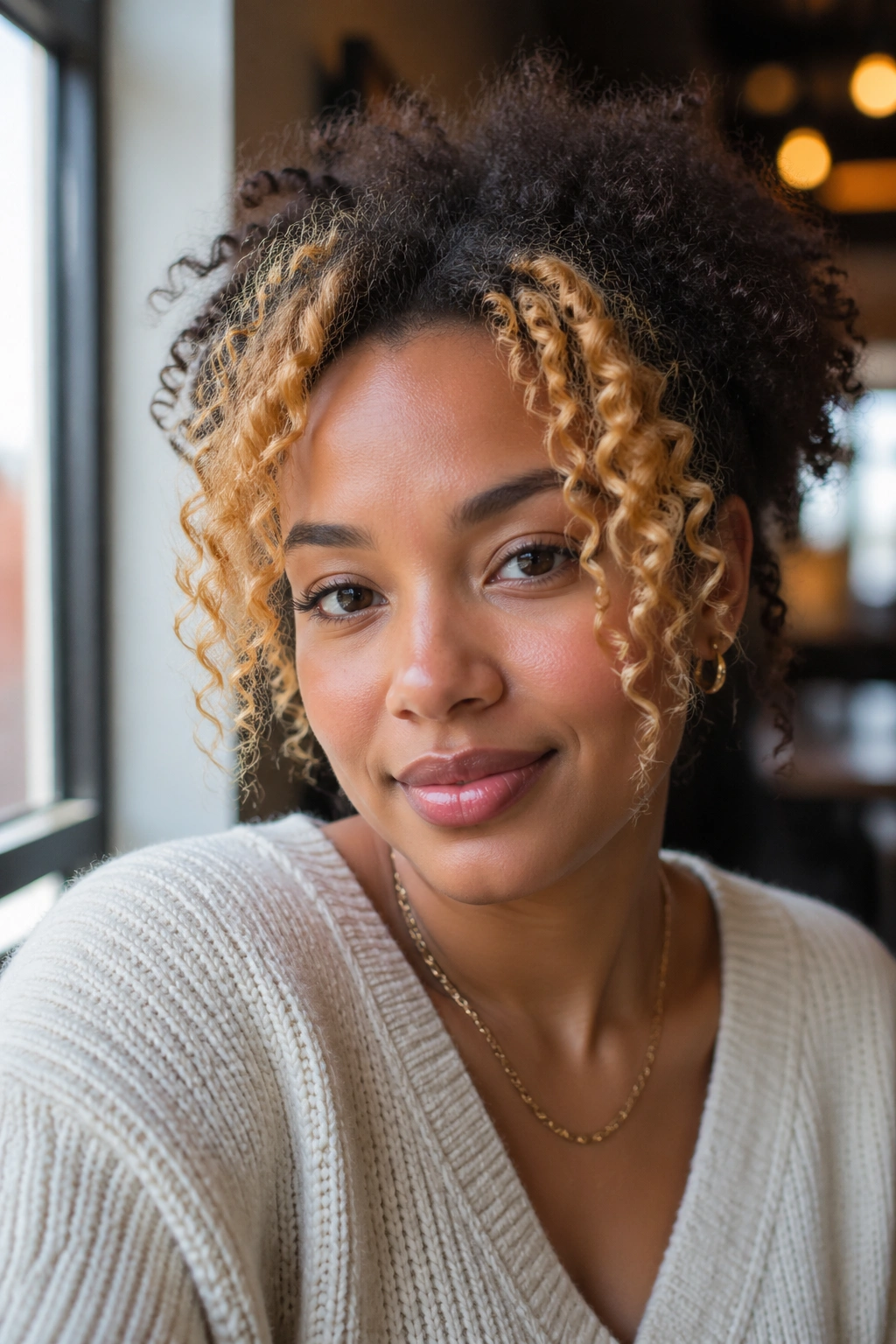
Just the front sections — the curls that naturally frame the face from hairline to cheek — bleached to golden or honey blonde while the rest remains natural. This face-frame bleaching technique requires minimal overall lifting but creates significant visual impact because the face-framing color is in constant view.
On curly hair, face-frame bleaching is particularly effective because curly front sections naturally spring forward around the face, ensuring the lightened curls are always in motion and always visible.
12. Bleached TWA in Silver
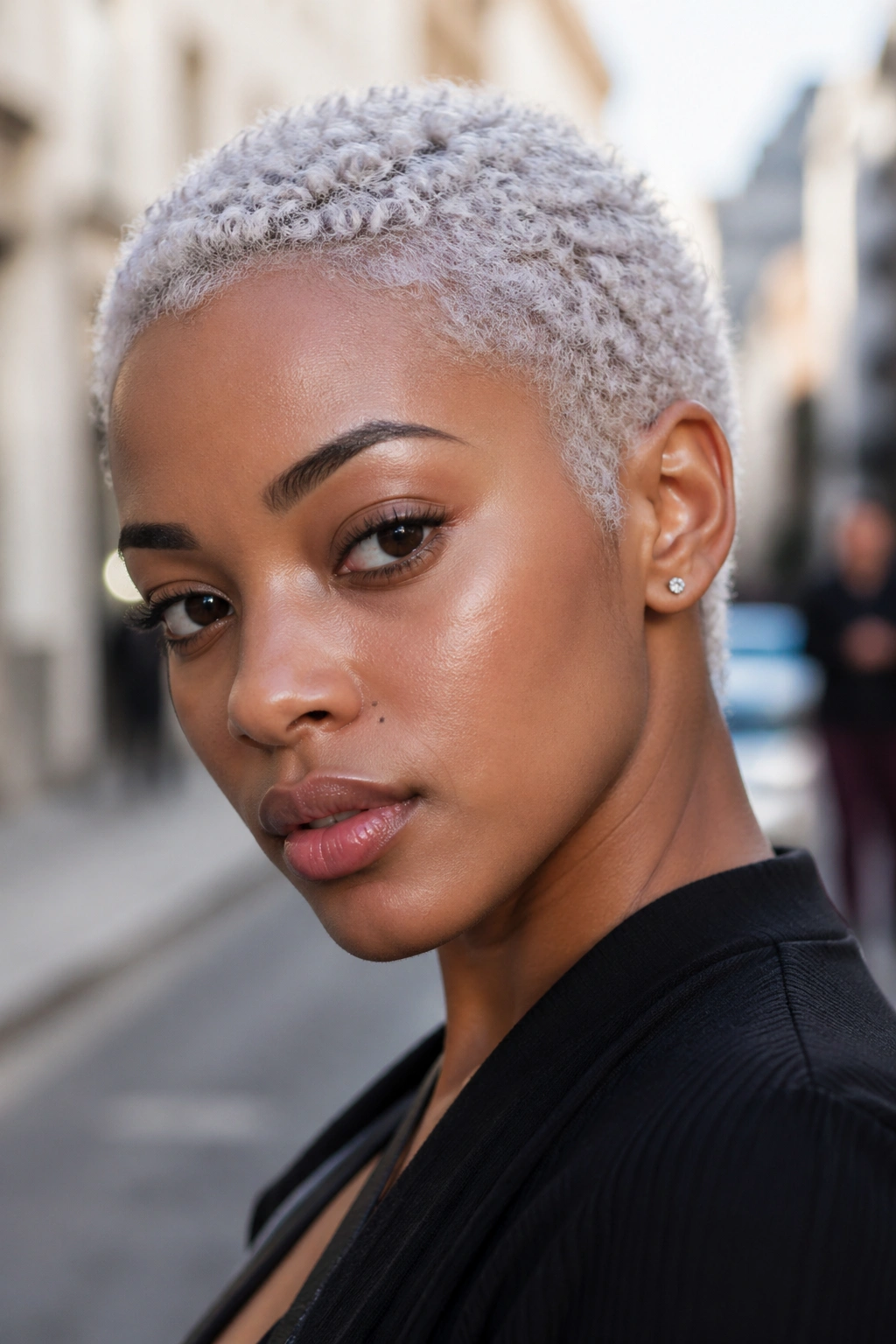
A TWA bleached to pale blonde and toned to a soft silver — cool-gray, slightly iridescent — is an entirely unexpected and completely stunning look. Silver has become increasingly visible in natural hair spaces, and on a short natural TWA, it reads as bold, editorial, and deeply intentional.
The short length means the lifting process applies to a small amount of hair, making this more manageable than a full-length silver transformation while delivering maximum visual impact.
13. Bleached Curls with Bronze Highlights
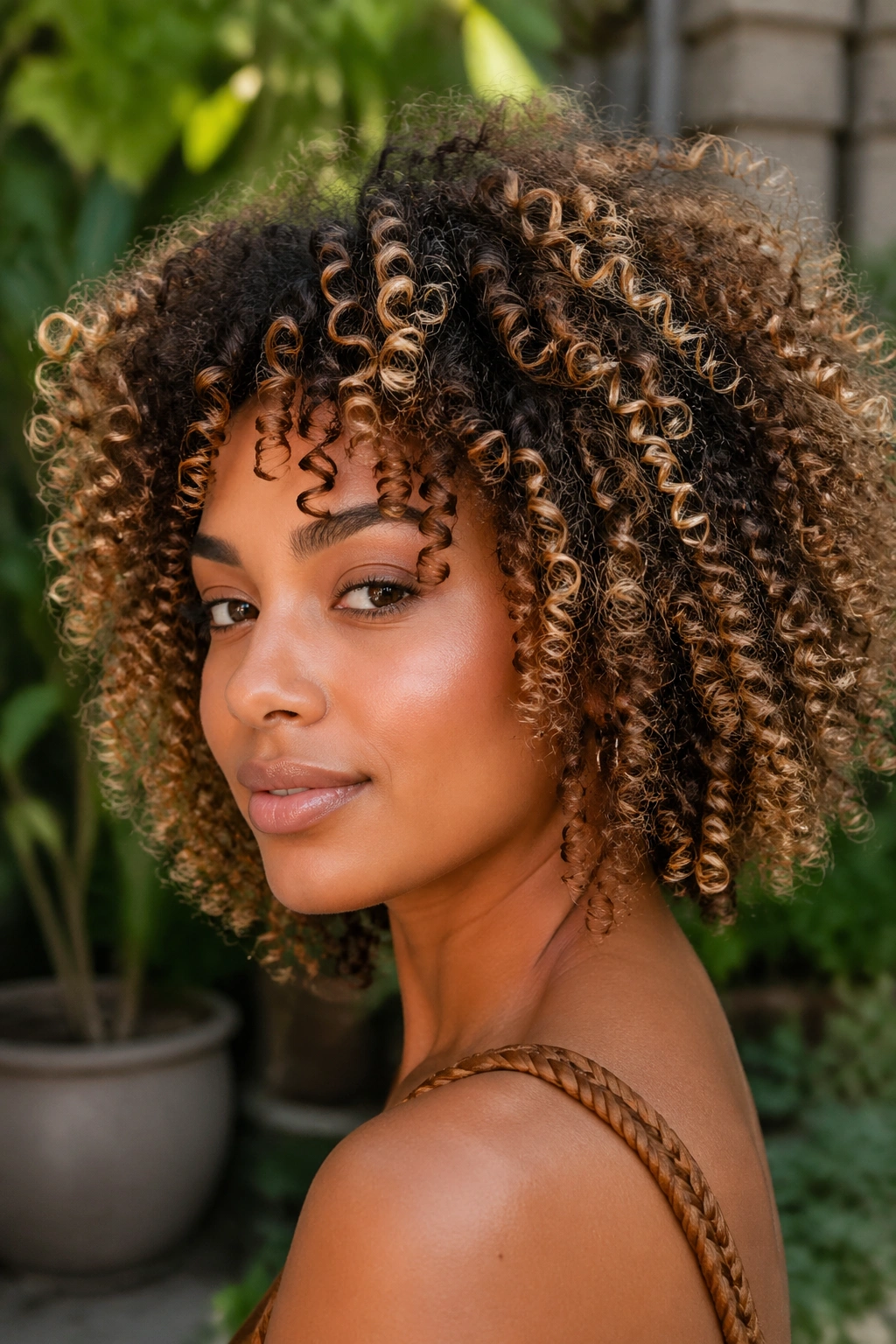
Rather than bleaching the entire head, targeted sections are lifted to warm bronze — a red-gold or orange-gold that’s richer and more metallic than standard blonde. The bronze sections catch light with a metallic warmth that’s different from both copper and standard honey blonde.
On 3C-4A curls specifically, bronze highlights create an interaction between the individual coils and the metallic warmth that’s hard to describe — it has to be seen to be appreciated.
14. Bleached Ombre Starting at Mid-Shaft
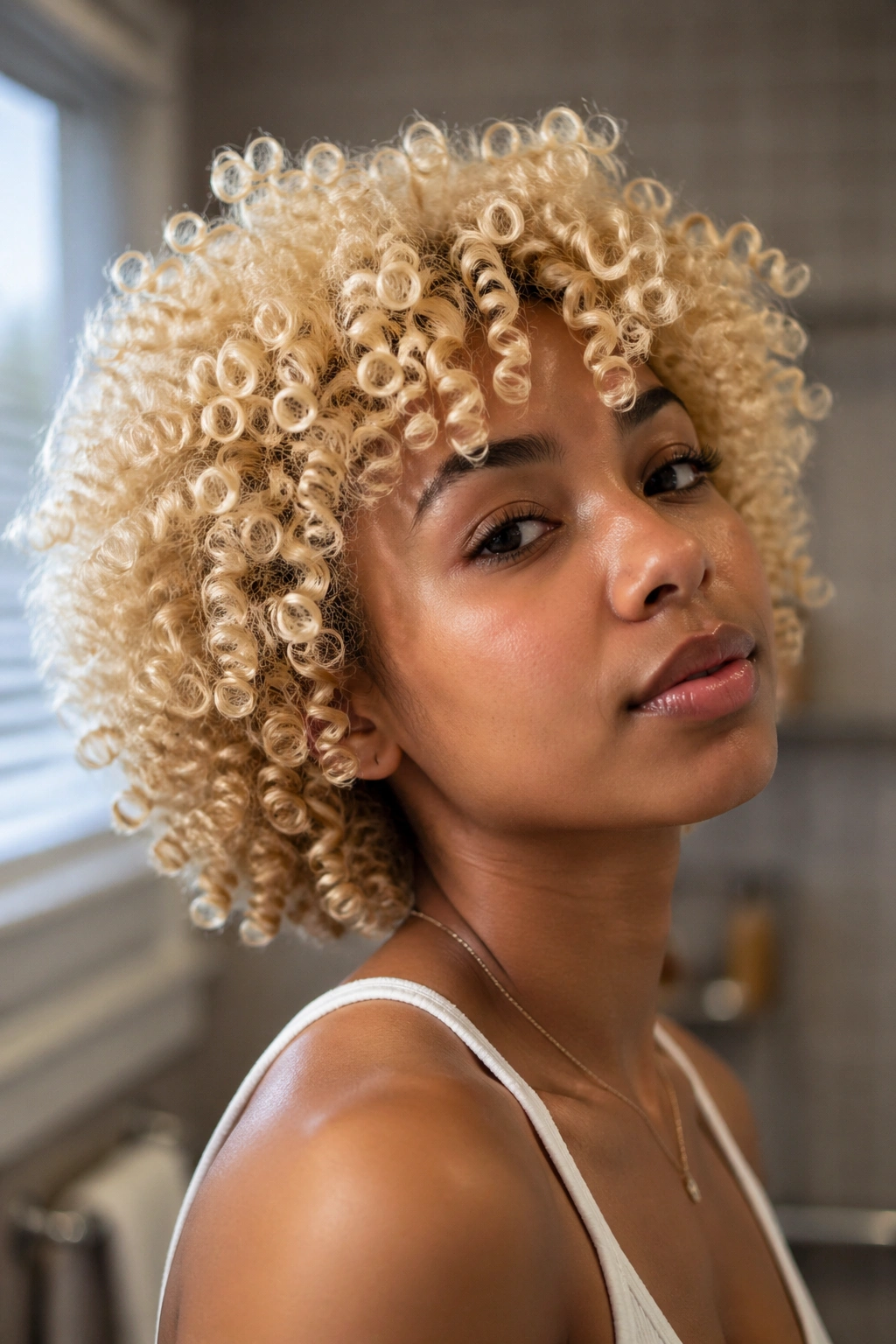
Bleach applied from mid-shaft to ends, creating a gradient from natural roots to golden or light blonde at the tips. On curly hair, the mid-shaft starting point means the transition falls within the natural curl pattern, so the grow-out looks intentional for significantly longer than a traditional root-application would.
The golden-to-blonde ends of curly hair catch light as the curls bounce, creating a look that appears to glow during movement.
15. Bleached with Teal Color
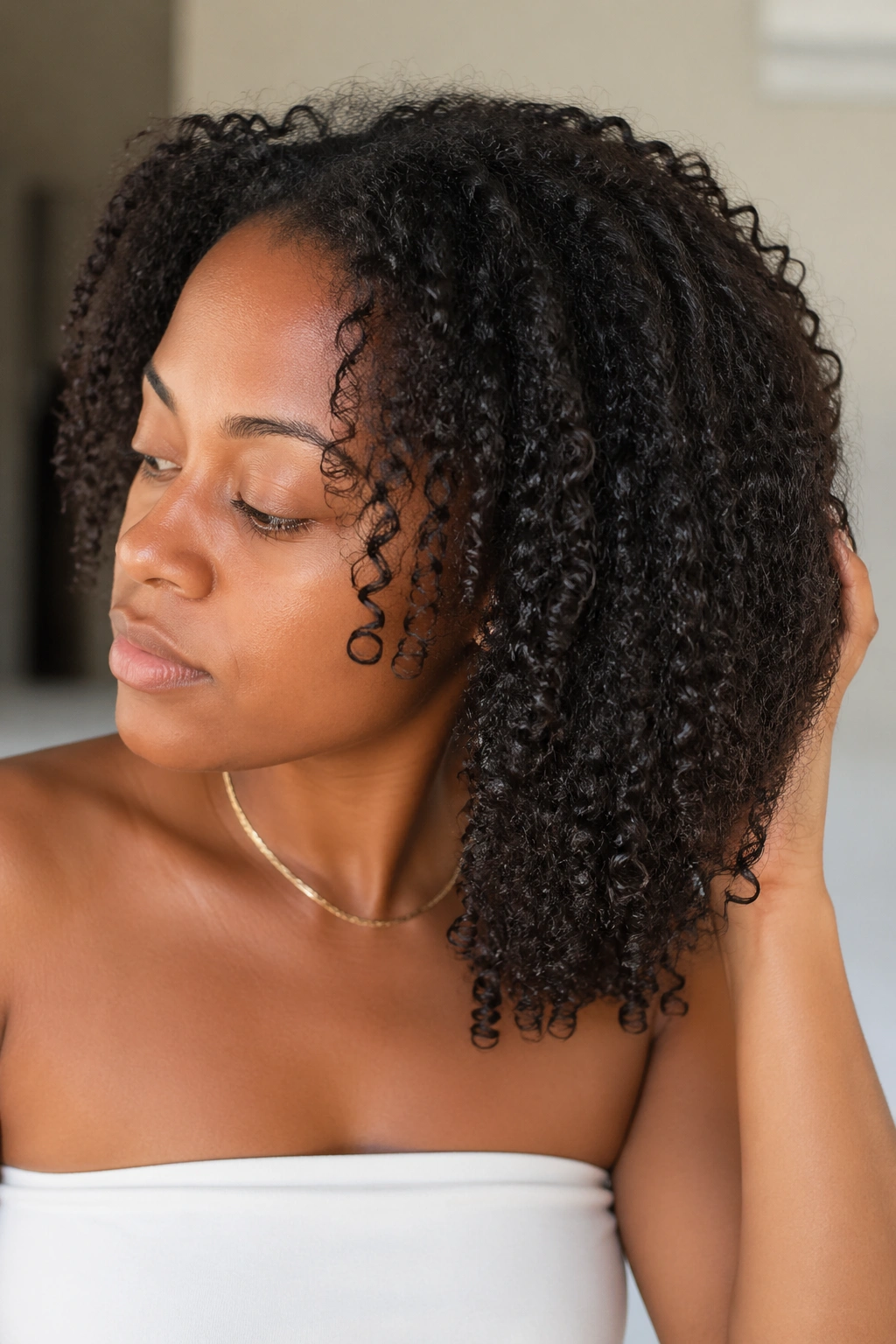
The same principle as pink over bleach — teal applied to a pale-blonde lifted base creates a vivid, true teal rather than a muted blue-green. On natural curls, vivid teal is particularly dramatic: the coolness of the teal against the warmth of various skin tones creates a striking chromatic contrast that makes both the color and the person wearing it more striking.
16. Full Bleach to Gold on 4C Hair
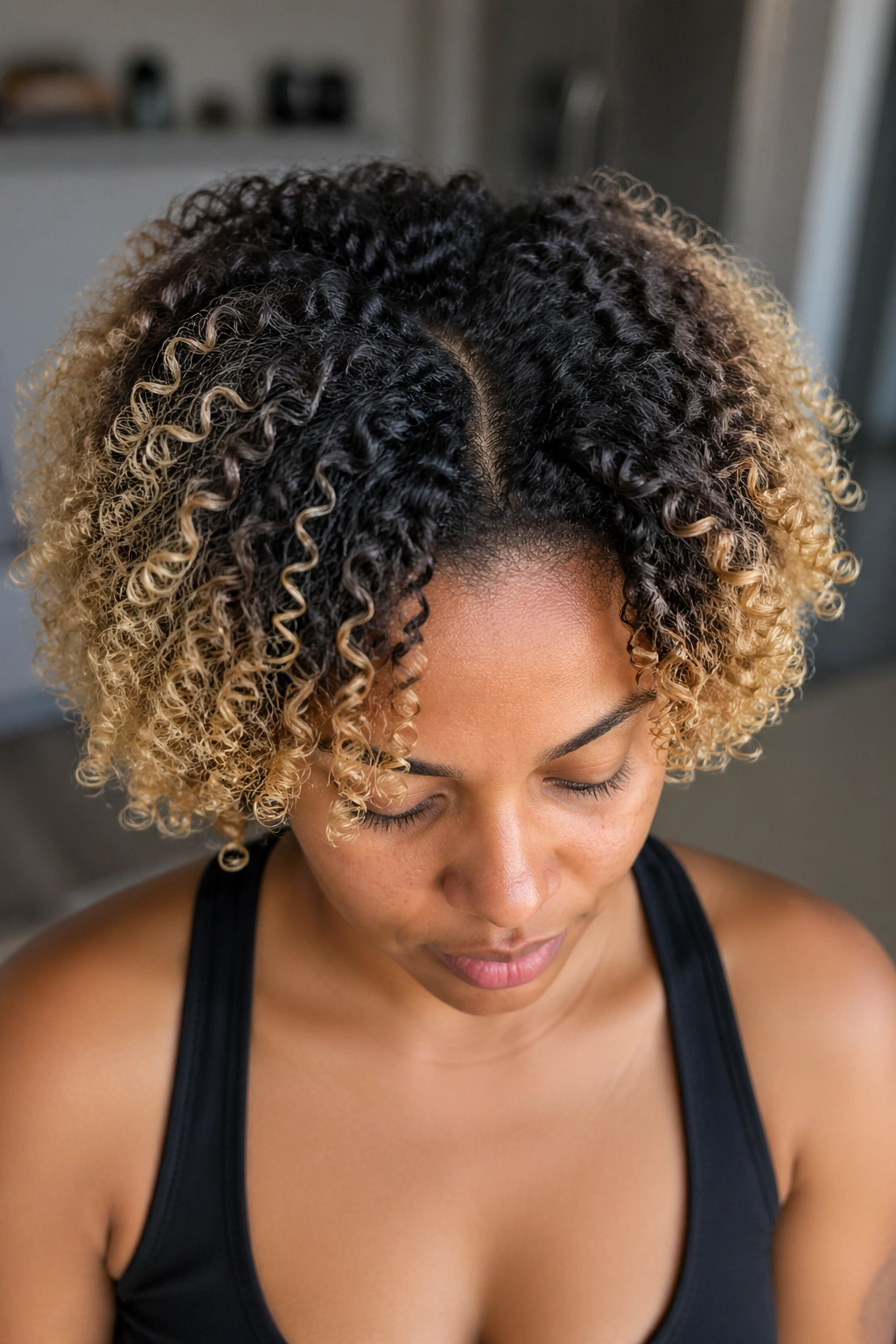
Taking 4C hair to a bright, vivid golden level — not platinum, not honey, but a pure warm gold — and leaving it toned warm rather than neutralizing the warmth. Gold on 4C hair is magnificent. The tight coil pattern creates a surface that reads like hammered gold leaf — textured, dimensional, and deeply warm.
Many women discover they love this warm gold stage and never take it further. It’s a valid destination, not just a stopping point on the way to blonde.
17. Bleached Crown with Natural Roots
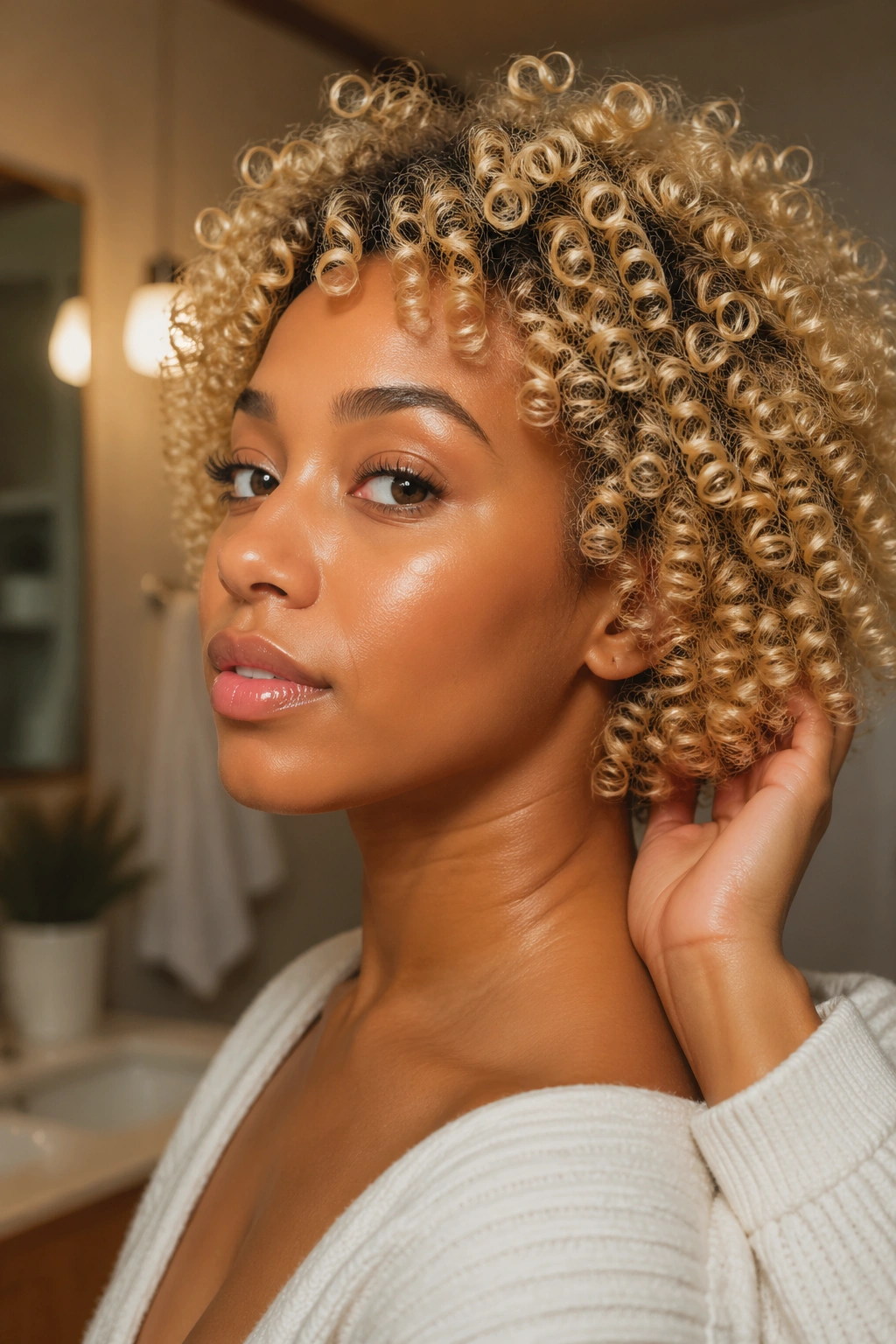
Bleaching only the top/crown section of a high-volume natural style — the part that sits at the highest point of a puff or afro — while leaving the lower layers and root area natural. On a large puff, this means the brightest, most bleached color is at the crown, giving the impression of a halo of light around the top of the head.
This targeted approach minimizes overall chemical exposure while creating a visually interesting color effect that’s only possible on natural textured hair.
18. Bleached Curly Bangs
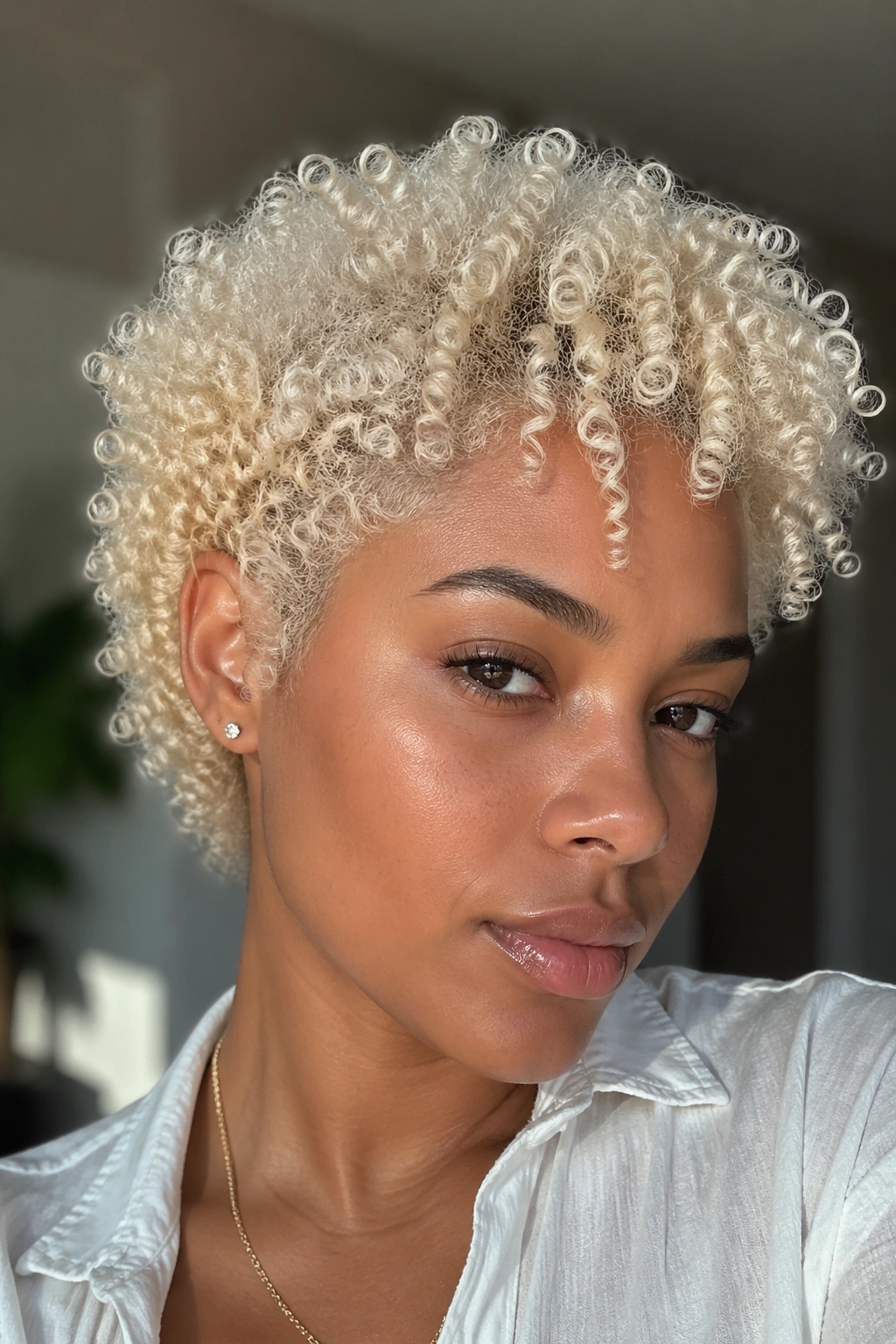
Curly bangs bleached to honey or blonde while the rest of the hair remains natural. Bangs are in constant proximity to the face, which means bleached bangs have a brightening, face-illuminating effect that other color placements don’t achieve.
Curly bleached bangs also require less maintenance effort than full-head bleached hair — only a small section needs color refreshing, toning, or moisture attention.
19. Bleached Curls with Green Color
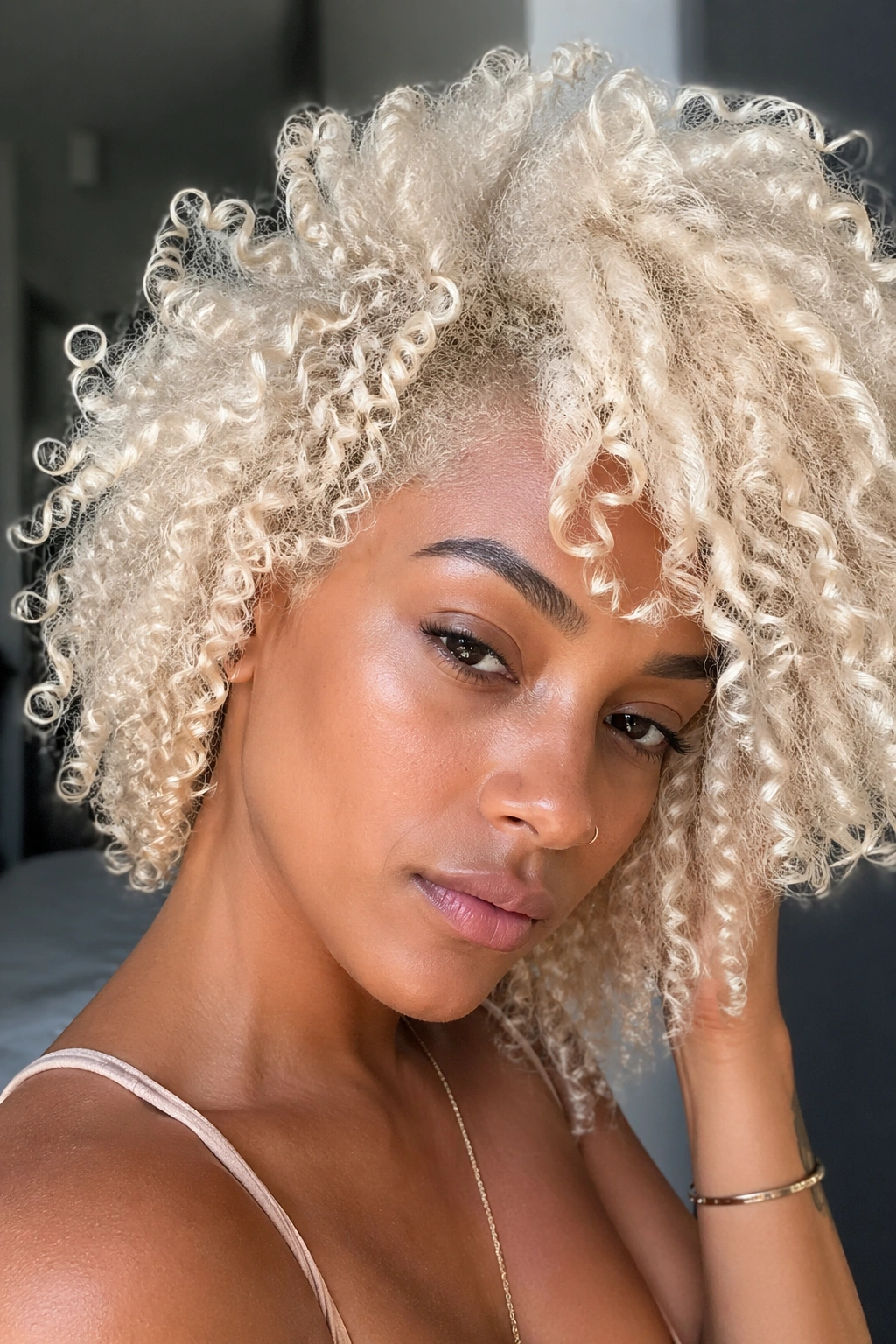
Natural curls bleached to a warm gold before applying vivid green — the gold base enhances the warmth in the green, creating a richer, more complex green than would be achieved on a cool pale yellow base. The result is a green that reads as jewel-toned and dimensional rather than flat.
This is a particularly striking choice for darker skin tones — the warmth of deep brown or ebony skin against vivid green creates one of the most photographically stunning color contrasts in natural hair.
20. Bleached Spiral Curls in Strawberry Blonde
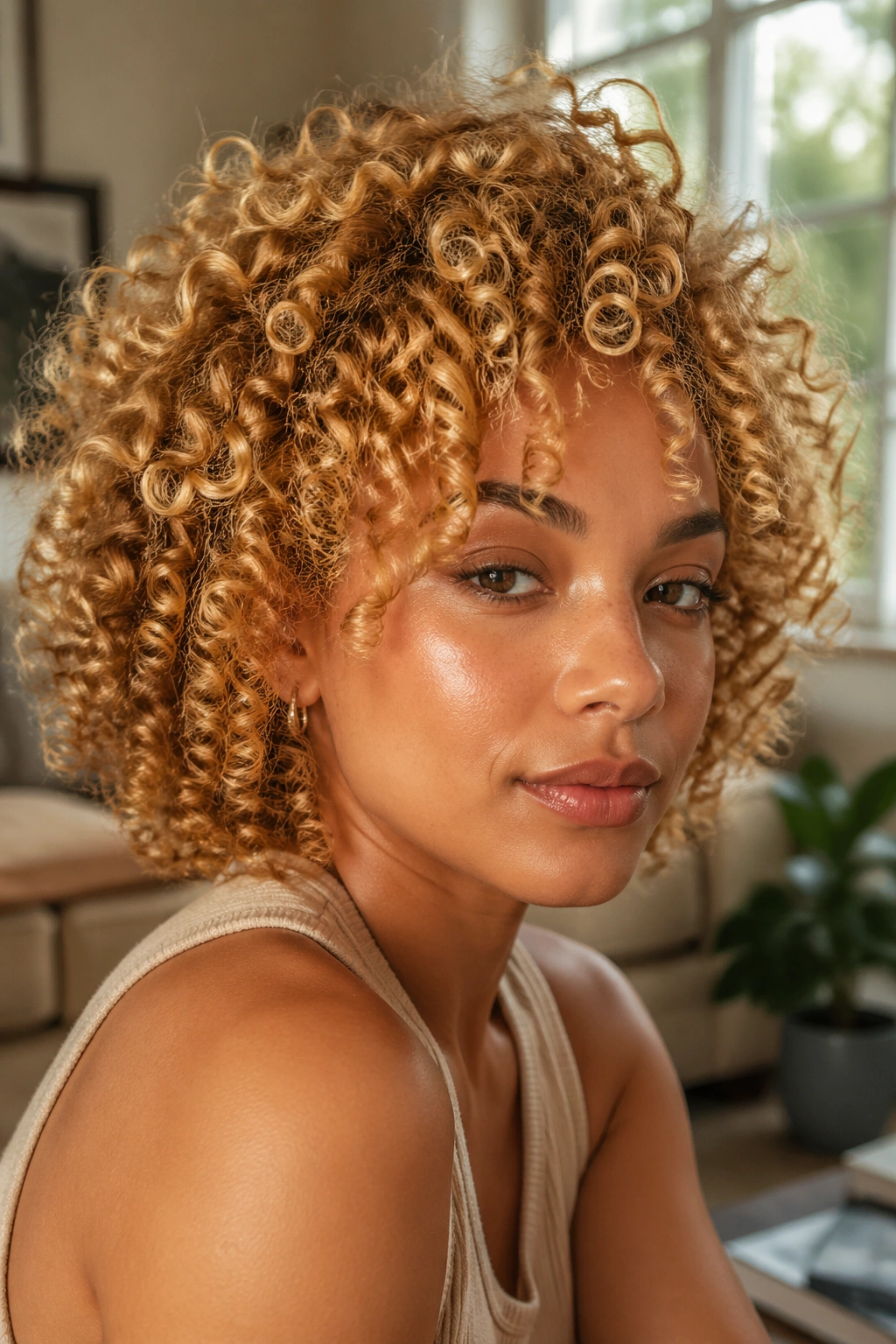
Strawberry blonde — peach-warm, pink-gold — on defined spiral curls. Each spiral shows the peachy warmth differently depending on its position, creating a romantic, lit-from-within effect that’s entirely unique to curly textures.
Strawberry blonde requires a pale yellow-blonde base before toning with a warm peach-gold formula. The maintained result — glossy, warm, glowing spirals — rewards the multi-session process it typically requires.
21. Bleached Curls with Rose Gold Gloss
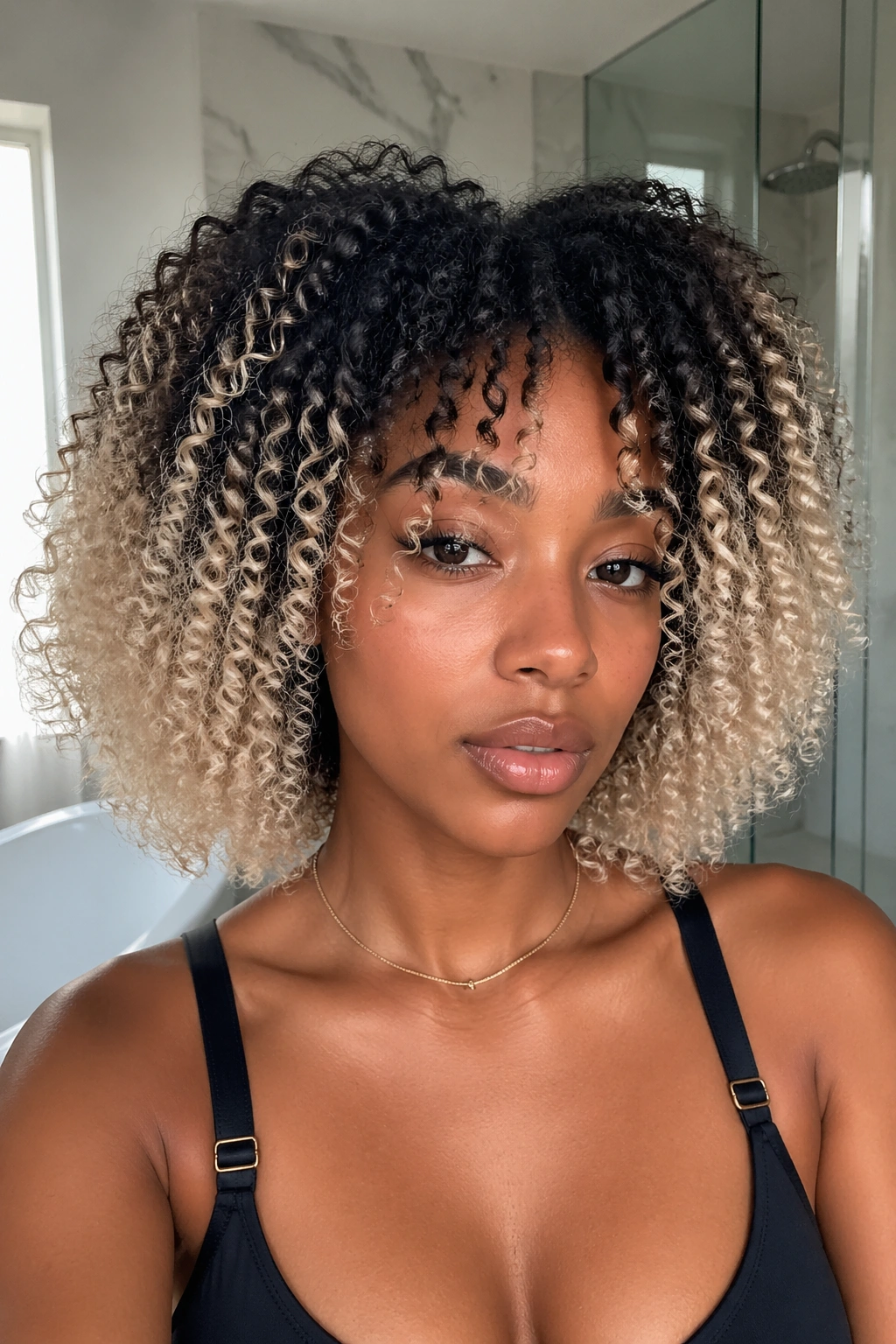
After achieving a blonde or golden blonde lift, a rose gold gloss (rather than a direct dye) applied over the top creates a soft, translucent rose-gold wash that’s sheer rather than opaque. The underlying gold of the bleached hair shows through the gloss, creating depth that’s uniquely dimensional.
As the gloss fades over 4-6 weeks, it transitions gracefully through warm gold-pink stages back toward the pure blonde base — each stage beautiful in its own right.
22. Bleached Highlights on Protective Style
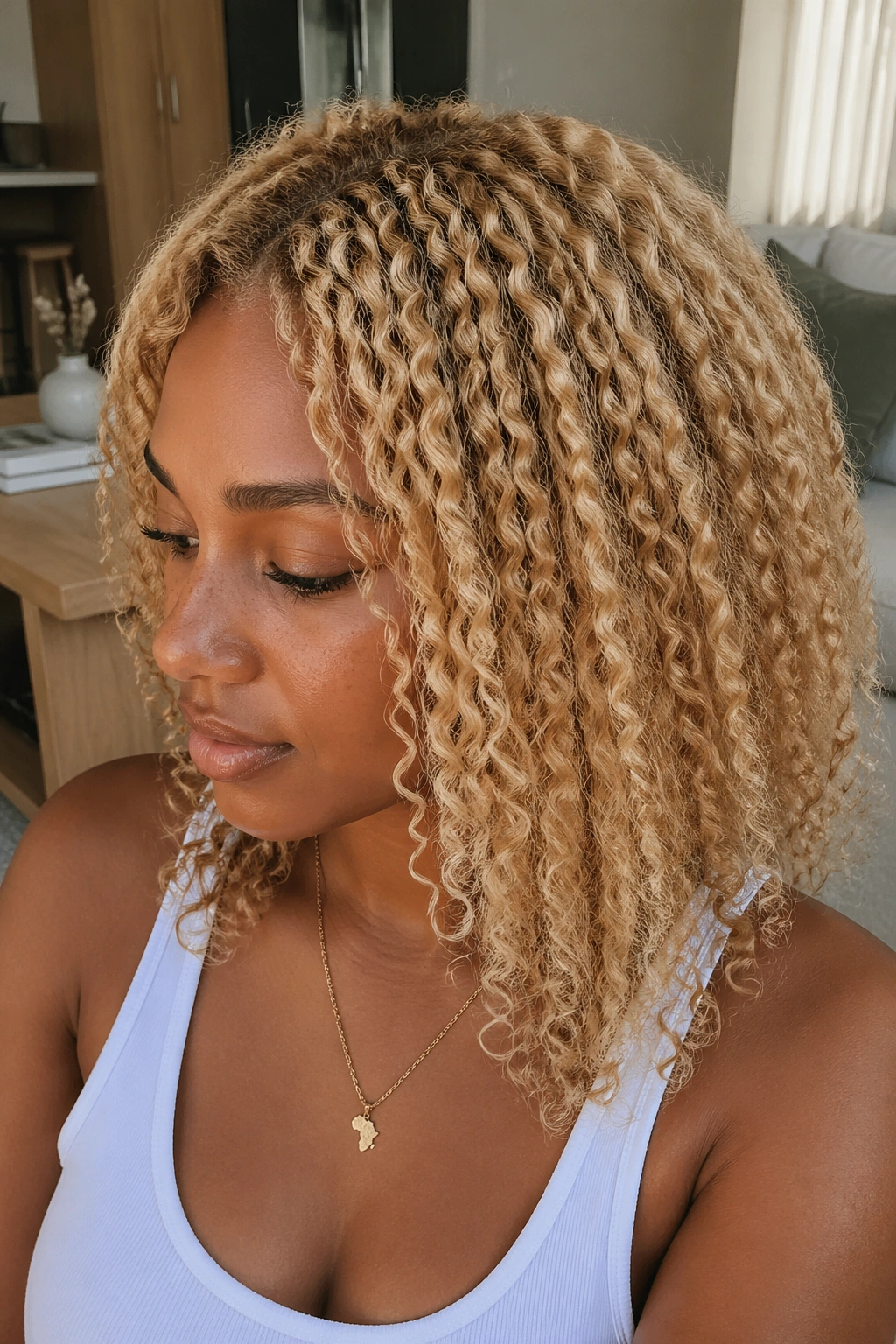
Bleach highlights applied to two-strand twists or cornrows — processing time longer to penetrate the density of the twisted hair — then unraveled to reveal highlighted sections. This protective-style highlighting technique is particularly useful for 4C hair, where bleach application to loose hair can result in uneven processing due to density variation.
By highlighting through a twisted or braided structure, the colorist ensures even access to each section of hair, resulting in more uniform color placement.
23. Platinum Bob on Natural 3B Hair
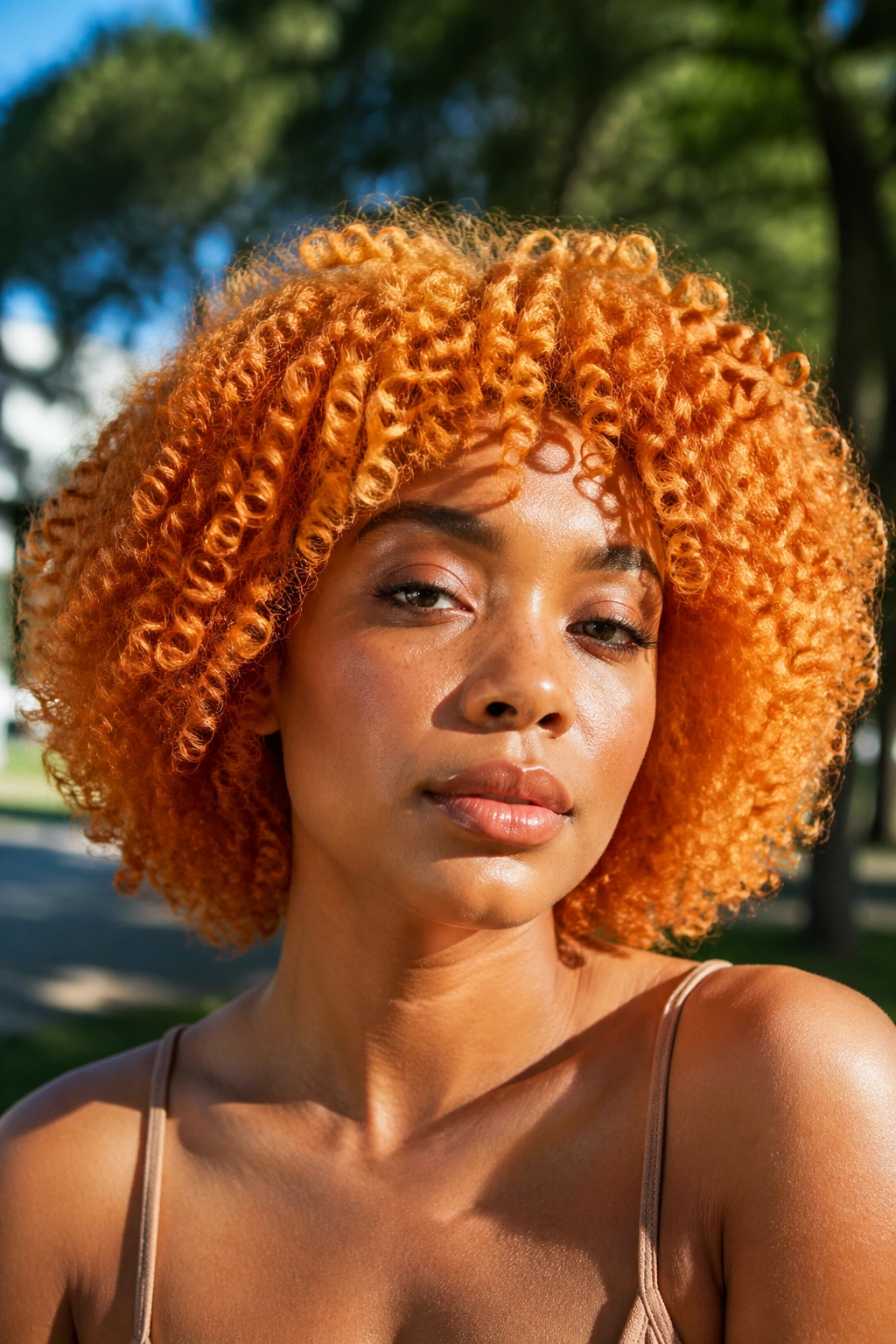
3B hair bleached to platinum and styled in a bob — the loose, defined ringlets of 3B texture in near-white blonde is a look that exists at the intersection of bold and ethereal. The cool platinum amplifies the defined spiral structure of 3B curls, making every ringlet appear crisp and intentional.
The bob structure constrains the volume of 3B hair — which can be enormous — into a structured silhouette that shows the platinum color as a cohesive, deliberate shape rather than a cloud.
24. Bleached Natural Hair Embracing the Brassiness
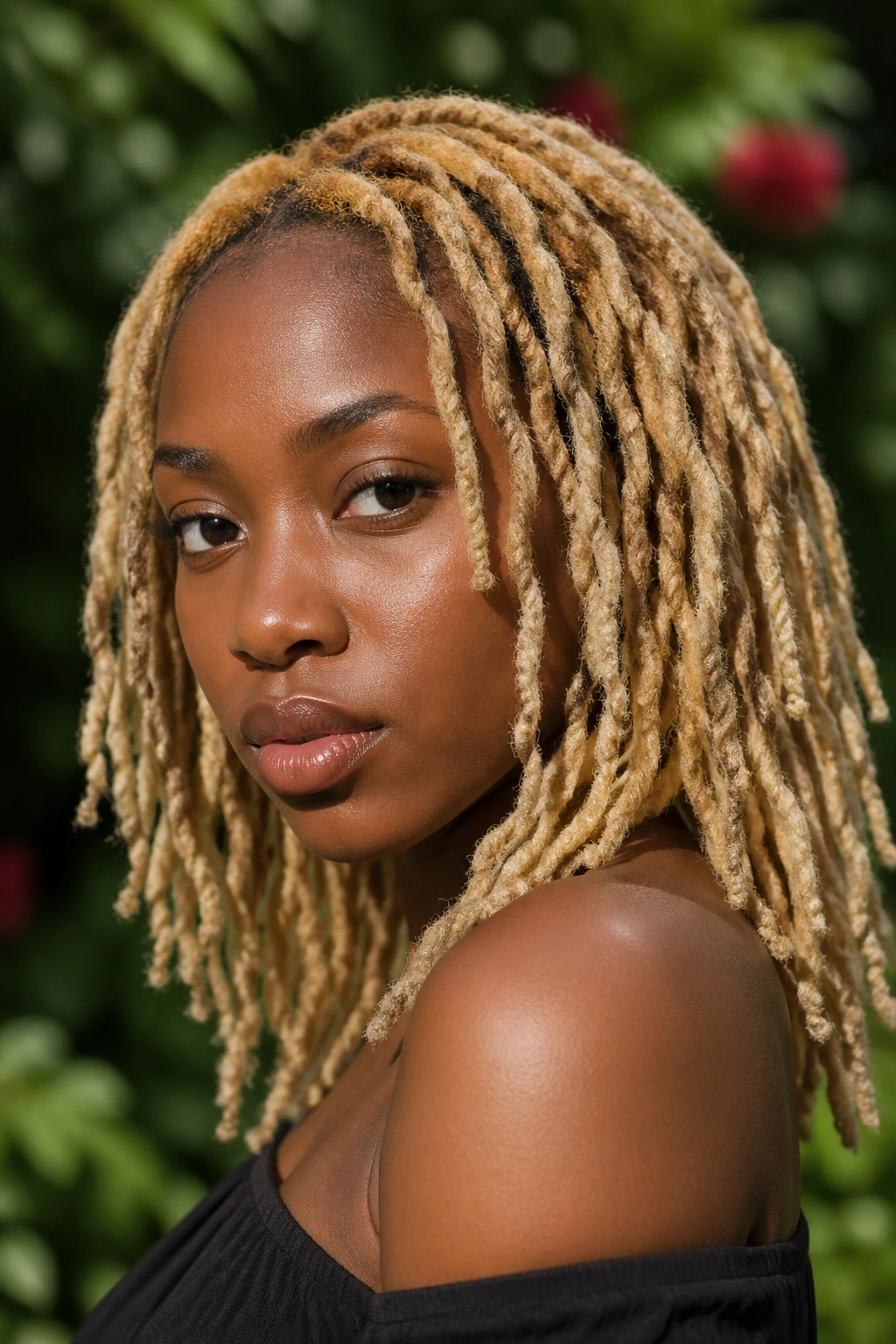
Not every bleached natural hair result needs to be toned neutral or cool. Intentionally warm, brassy, orange-gold bleached natural hair — left without toner or toned warm to enhance rather than neutralize — is a color statement in itself.
Warm orange-gold natural curls have a defiant energy that cool blondes don’t. They refuse to be conventional. They celebrate the warmth that bleach naturally reveals in dark hair rather than treating it as something to be fixed. And on 4A-4C curl patterns especially, warm orange-gold looks genuinely stunning — earthy, vibrant, and powerful.
Long-Term Management of Curly Bleached Hair
Bleached natural curls need a long-term care plan, not just an immediate post-processing routine. Over months, the porosity of bleached curls means they’ll need consistent moisture attention — deep conditioning should remain a weekly habit indefinitely, not just in the immediate aftermath of lightening.
Protein treatments spaced monthly (or whenever hair starts to feel limp or excessively stretchy when wet) maintain the hair’s structural integrity over time. If hair starts to feel hard, stiff, or snapping without much tension — that’s too much protein, and you back off for a few weeks.
Trim regularly. Bleached ends are the most vulnerable part of the hair shaft and the oldest cells. Trimming every 8-10 weeks keeps the style looking healthy and prevents damage from traveling up the shaft.
When to Give Your Curls a Break
There are real signals that bleached curls need a rest from further processing: breakage at the line of demarcation between bleached and natural hair, excessive shedding during styling, curls that won’t define regardless of product use, and ends that look thin or wiry rather than full. These signals mean pause — not stop forever, but pause to rebuild.
A 3-6 month break from all chemical processing, combined with intensive moisture and protein care, rebuilds the hair’s health enough to handle the next color appointment safely. Most hair recovers. Patience and consistency are the tools.
Bleached curly hair is a journey, not a destination. And it’s one of the most beautiful journeys in the natural hair world.
