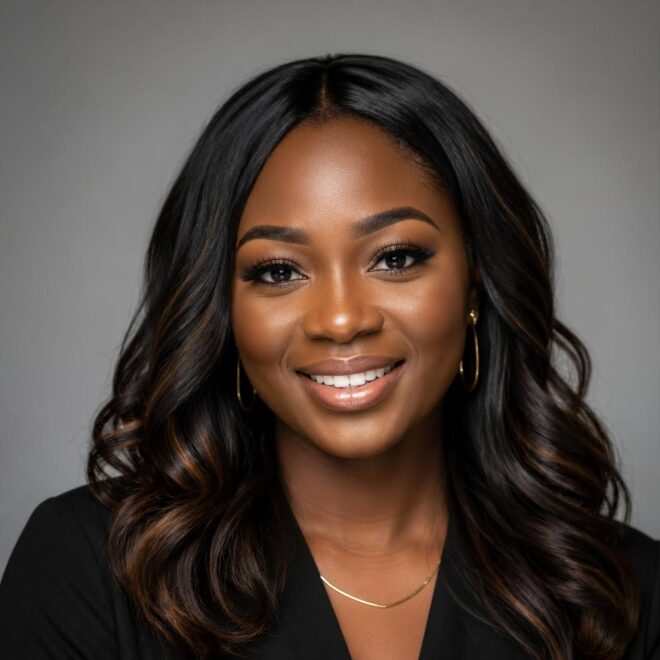


Stretched curl styles for natural hair solve one of the most common frustrations in the natural hair community — shrinkage. Beautiful, healthy natural hair can shrink up to 75% of its actual length, and while shrinkage is absolutely a sign of healthy elasticity, it can also mean that the length you’ve grown painstakingly over months or years is hiding from the world. Stretched curl styles let you show that length while still keeping your natural texture visible and beautiful — not eliminated, just revealed.
Why Shrinkage Happens and Why Stretching Matters
Shrinkage is built into the structure of natural hair. The tighter your natural curl pattern, the more it contracts when wet or in humid conditions. Shrinkage is not damage — it’s actually the opposite. Hair that springs back dramatically when wet has healthy protein bonds and strong elasticity. Hair that doesn’t shrink at all, or that stays stretched even when wet, may be experiencing heat damage or significant protein loss.
But understanding that shrinkage is healthy doesn’t mean you have to love the way it limits your styling options. Stretched curl styles work with your natural hair’s structure to show length and create volume without using heat to permanently alter your curl pattern. The key word is “temporarily” — a stretched curl style done correctly will revert when wet, which is exactly what you want. If your hair stops shrinking, that’s a warning sign, not a styling win.
The degree of stretching you choose for any given style is entirely personal. Some naturals prefer a gentle stretch — just enough to reduce shrinkage by 30-40% and show some length. Others go for a more dramatic stretch that brings their hair closer to full extended length. Both are valid, and different styles work best at different levels of stretch.
Heat vs. Heat-Free Stretching Methods
There are two broad categories of stretching methods for natural hair: those that use heat and those that don’t. Heat-free stretching is almost always preferable from a hair health standpoint — it achieves similar results without the risk of heat damage, and it’s gentle enough to do as frequently as you wash your hair without accumulating damage over time.
The most popular heat-free stretching methods are banding, threading, African threading, braiding, twisting, and blow-drying on the cool setting. Each produces a slightly different level and type of stretch, and most naturals have a favorite that works best for their specific texture and styling goals.
Heat-based stretching — primarily the blow dryer on medium or high heat — gives the most dramatic stretch but comes with the known risks of heat damage if used too frequently or without proper protection. For stretched curl styles that incorporate a blow-dryer, always use a heat protectant, keep the heat setting as low as possible while still achieving your goal, and limit heat sessions to once or twice a month at most.
Banding: The Most Versatile Stretching Method
Banding is probably the most accessible and widely used heat-free stretching method — it requires only your styling products, small hair elastics or bands, and a bit of patience. The concept is simple: you wrap bands around small sections of hair at intervals from root to tip, which prevents the hair from shrinking back on itself as it dries.
To band your hair, divide it into sections, apply your products as normal, and then place a small band around each section about an inch from the roots. Add another band an inch further down, another another inch after that, and continue to the ends. Leave the bands in as your hair air-dries. Once dry, remove the bands and your sections will be noticeably more elongated than they would be without banding.
The resulting hair isn’t straight — it retains its natural curl texture — but it’s significantly longer-looking, and when you style on top of the banded stretch, your curls show more visible length. Banding is particularly effective for creating the foundation for a stretched twist-out, stretched braid-out, or stretched rod set.
African Threading for Maximum Stretch
African threading is a traditional technique that achieves extraordinary stretch without heat, using thread (typically a thick, durable thread like nylon thread or yarn) wrapped tightly around small sections of hair. Threading can stretch natural hair to nearly its full extended length, which is far more than banding achieves, making it the gold standard for heat-free stretching.
Divide your hair into small sections and wrap thread around each section tightly from root to tip. The thread creates consistent tension that holds the hair straight as it dries. Leave the threads in until the hair is completely dry, then carefully unwrap — your sections will be dramatically more elongated than before threading.
Threading is particularly popular in West African hair care traditions and has been used for protective stretching for generations. The results are stunning, but the process is time-consuming. It’s a commitment worth making for major styles or special occasions, and the stretch it achieves is noticeably superior to other heat-free methods.
The Role of Stretched Curls in Protective Styling
Stretched curl styles are protective styles — maybe not in the traditional sense of tucked-away ends, but in the very real sense of reduced daily manipulation and reduced tangling. Stretched natural hair tangles significantly less than fully shrunk hair, which means every detangling session causes less breakage, and your overall hair health improves over time.
Highly shrunken natural hair is particularly vulnerable to manipulation damage because the tight coils interlock with each other, creating tangles and knots that require force to undo. Stretched hair, by contrast, has defined sections that remain relatively separate, making detangling far less stressful for both the hair and the person doing the detangling.
Many naturals find that their hair retains more length over time when they incorporate regular stretched styling into their routine — not because stretching makes hair grow faster, but because less breakage means the length they’re growing stays on their head rather than ending up in the drain or the brush.
1. Stretched Twist-Out
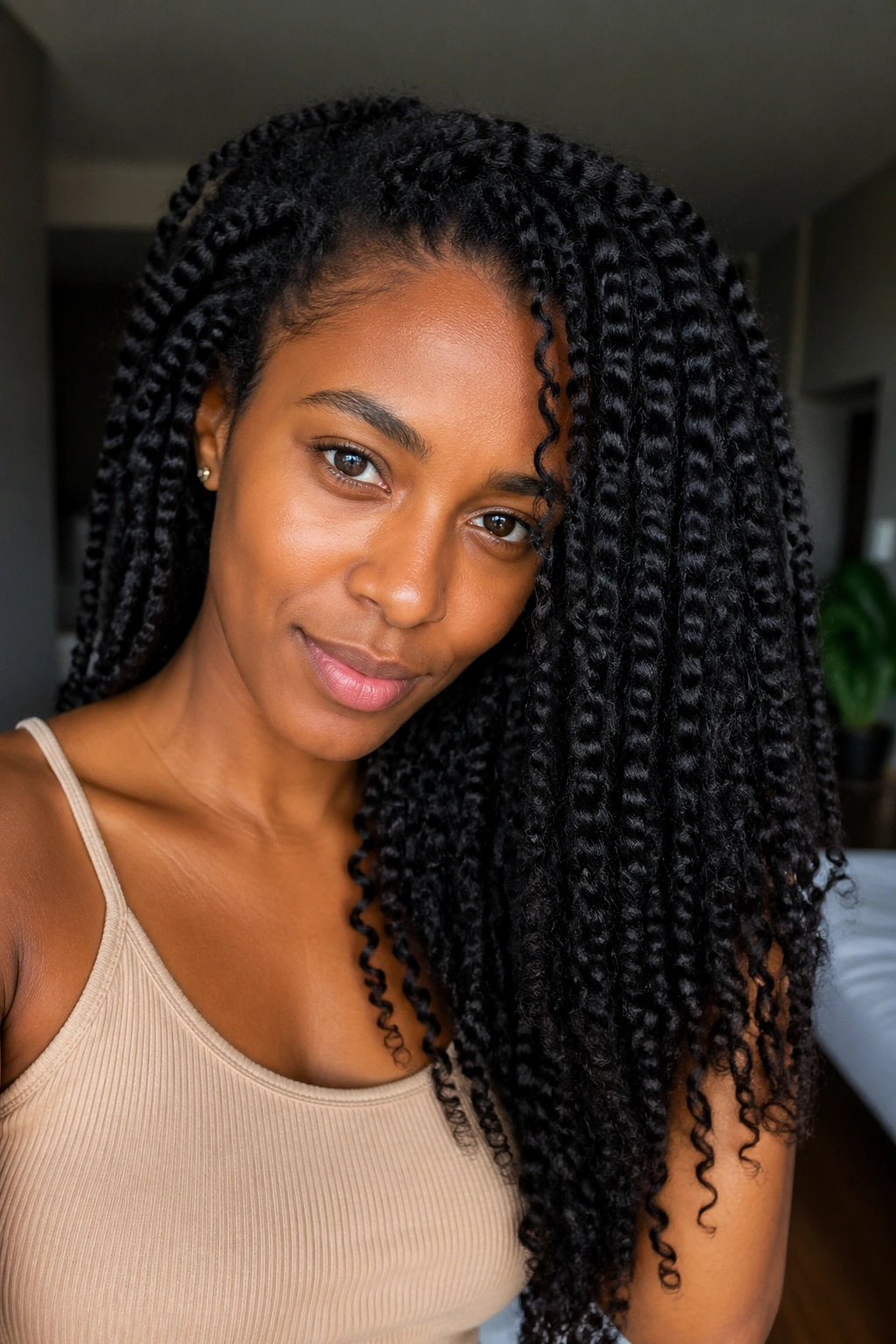
The stretched twist-out is the classic foundation of stretched curl styling — a two-strand twist installed on stretched or stretching hair that, when taken down, produces a longer, more defined curl than a twist-out on fully shrunken hair.
The most common approach is to band your hair during the drying process, removing the bands when dry and then installing your twists on the now-stretched sections. Alternatively, you can install twists while your hair is still damp from washing and band over the twists as they dry — both the stretch and the twist set are happening simultaneously.
Getting the Best Stretched Twist-Out
- Apply a generous amount of curl cream or custard before twisting
- Work in larger sections for bigger, more voluminous curls
- Make sure twists are fully dry before unraveling — damp twists produce frizz
- Separate with oiled hands and use a pick at the roots for volume
Key result: A stretched twist-out shows significantly more length than a standard twist-out while still maintaining the distinct two-strand twist curl pattern. If your twist-outs typically clump at chin length due to shrinkage but your hair is actually collarbone-length when stretched, the stretched version reveals that full collarbone-length curl.
2. Banded Wash-and-Go
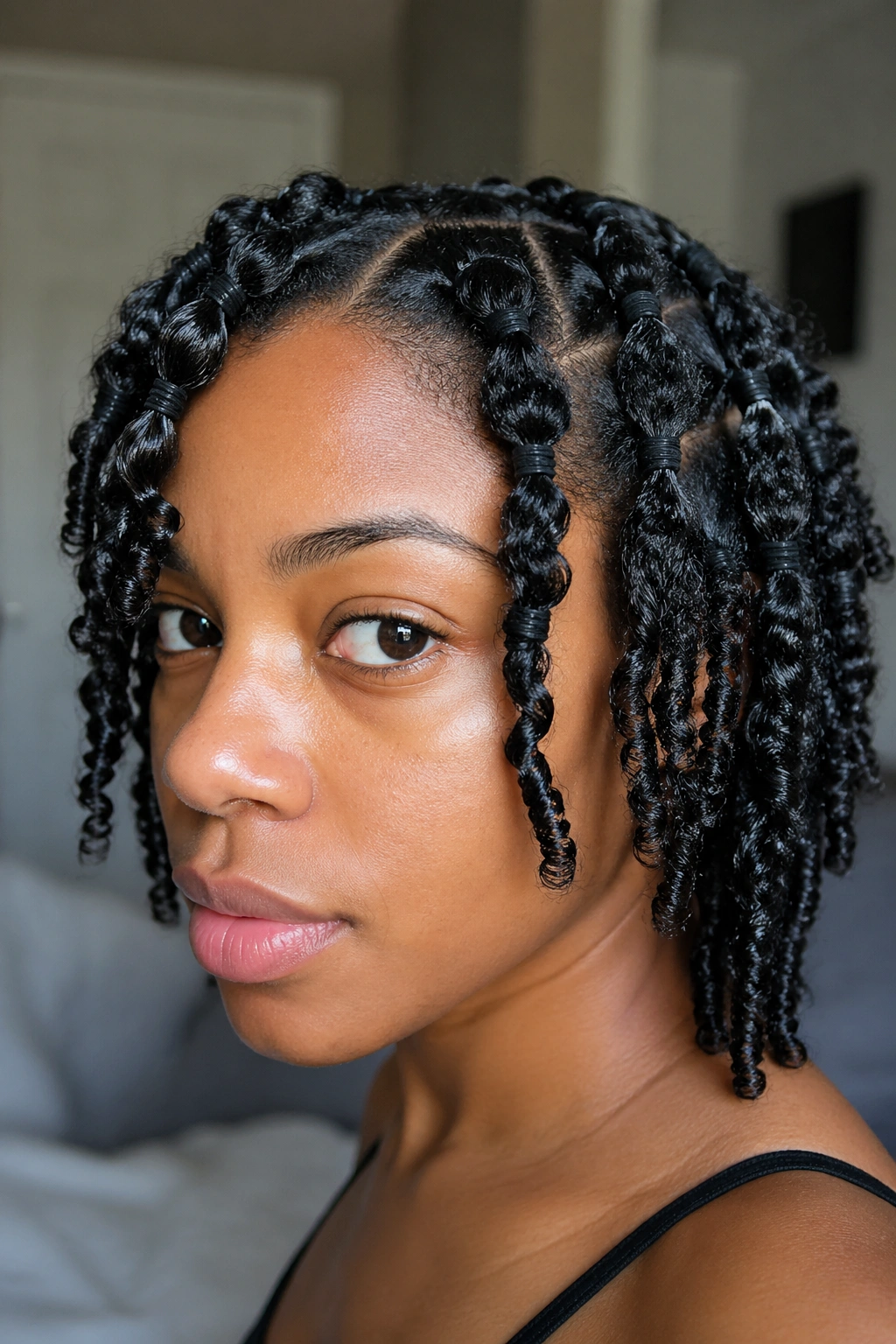
The banded wash-and-go is one of the best options for naturals who love wash-and-go definition but wish their curls showed more length. You apply all your products as you normally would for a wash-and-go, then band each section as it dries.
Apply your leave-in, curl cream, and gel on soaking wet hair in sections. Once each section is fully product-coated, immediately band it with small hair elastics at one-inch intervals. Let your hair air-dry completely with the bands in place. When dry, carefully remove each band and your wash-and-go will show your curls at noticeably greater length than air-drying without banding would produce.
The curl definition of a wash-and-go is retained — you’re not changing the style, just preventing the full degree of shrinkage that would otherwise hide your length.
3. Stretched Braid-Out
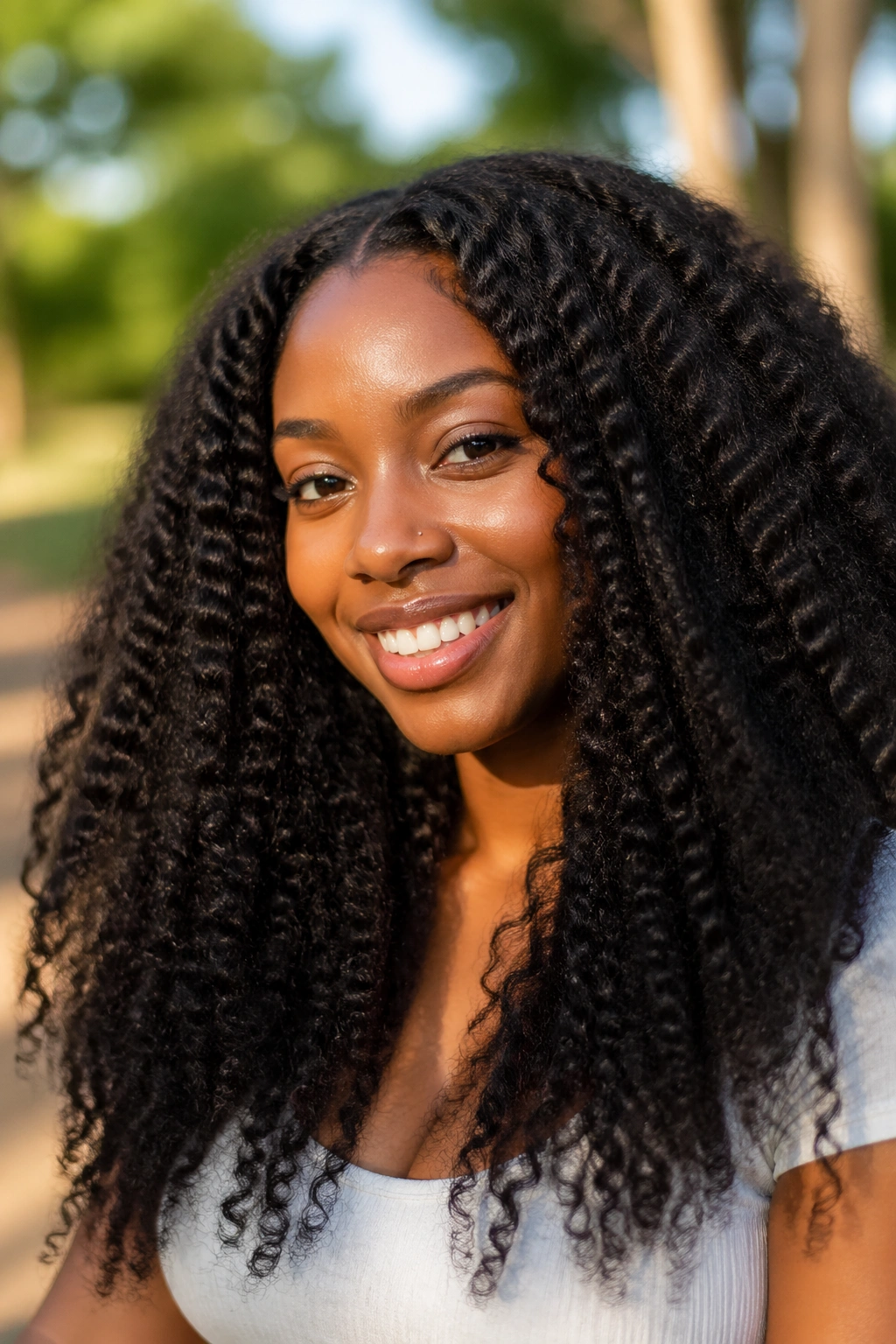
A braid-out on stretched hair produces a wave pattern with more visible length and a more dramatic, flowing quality than a standard braid-out on shrunken hair. The stretch means the wave has room to fall and move rather than being compressed tight by shrinkage.
Band or thread your hair to stretch it, then install your braids on the stretched sections once dry. The braids set the wave pattern in the already-stretched hair. When you take them down, the resulting style has significantly more length than an unstreched braid-out and a looser, more flowing wave that looks genuinely glamorous.
4. Stretched Perm Rod Set
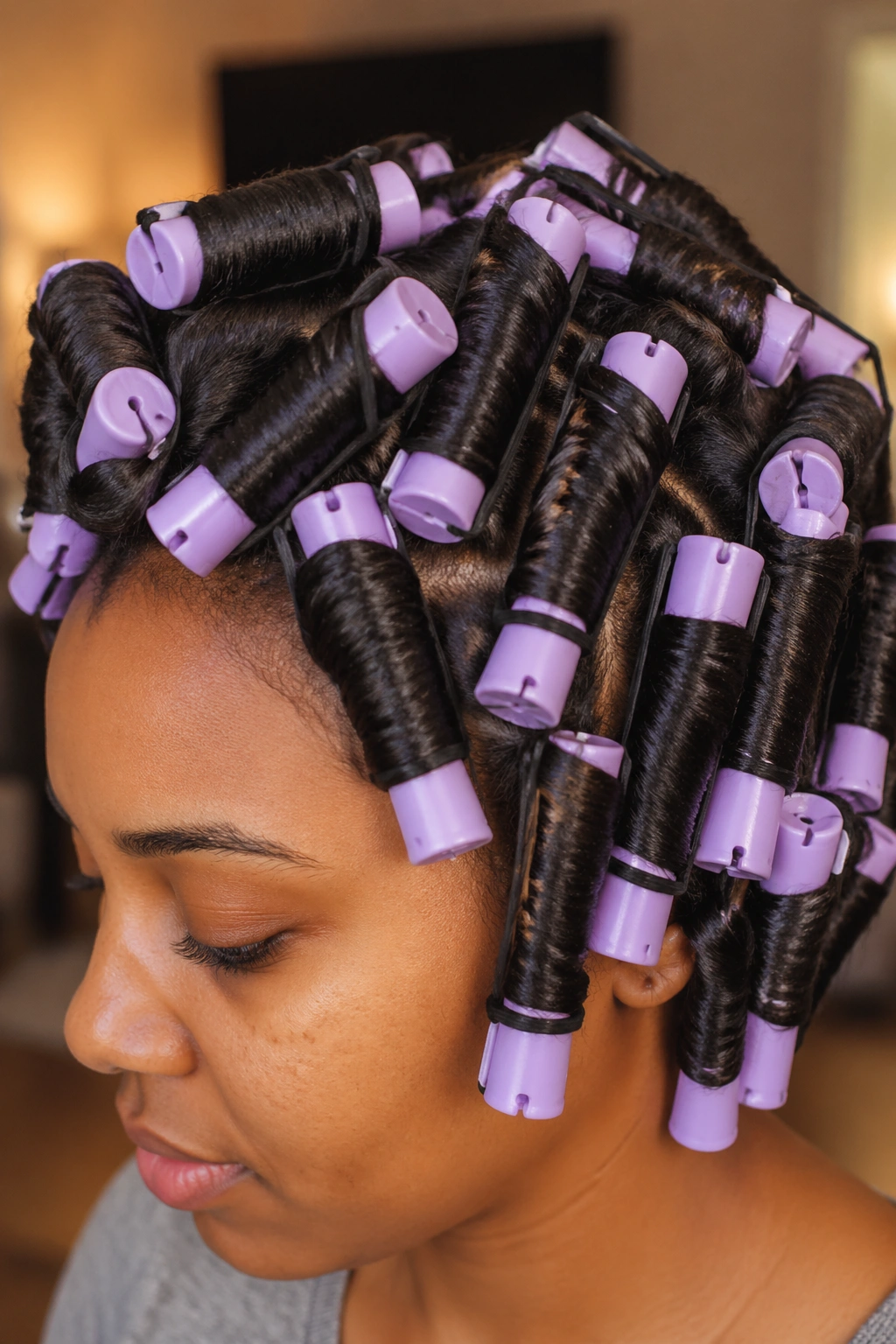
Perm rods installed on stretched, banded hair produce a curl with more visible length than rods on unstreetched hair. For naturals who love perm rod sets but wish the resulting curls showed more of their hair’s actual length, pre-stretching before the rod set is the solution.
Band your hair to stretch it during the initial drying phase after washing. Once dry, remove the bands and immediately set on perm rods while the hair is still in its stretched state. Dry under a hooded dryer or let air-dry, then take down for defined, springy curls that hang noticeably lower than an unstreched perm rod set on the same hair.
5. African Threaded Updo
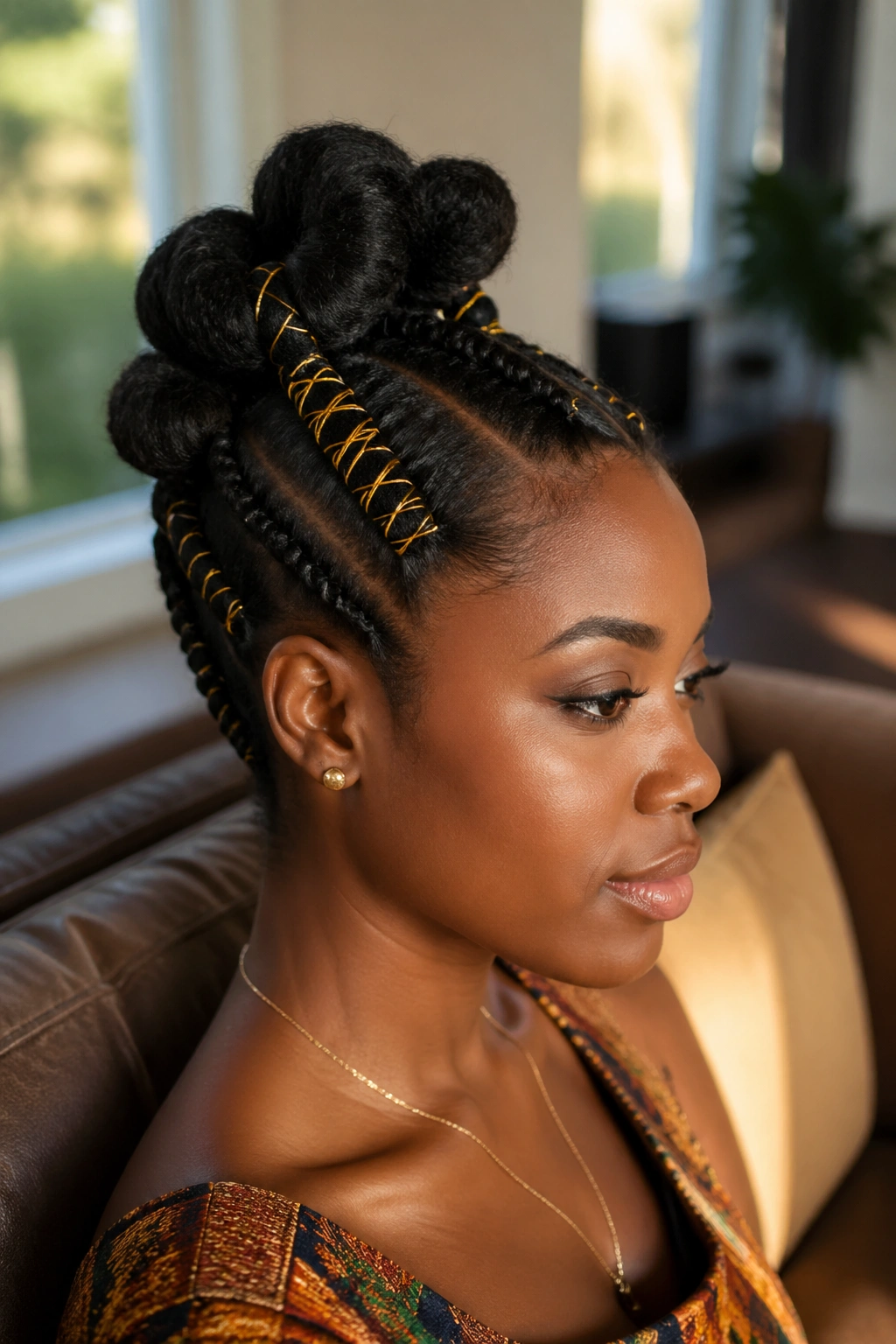
African threading is particularly spectacular when used to create an updo — because the extraordinary stretch it achieves means your updo can incorporate your hair’s full length in ways that a standard updo on shrunken natural hair cannot.
Thread your hair into multiple sections, leaving the threads in until completely dry. Then, with your hair at its maximum stretched length, create an updo — pinning sections into a bun, coiling them into a crown, or creating an elaborate pinned style. The thread can also be left visible as part of the style itself, with threads in various colors creating a deliberately decorative element alongside the stretched hair.
6. Stretched Curly Afro
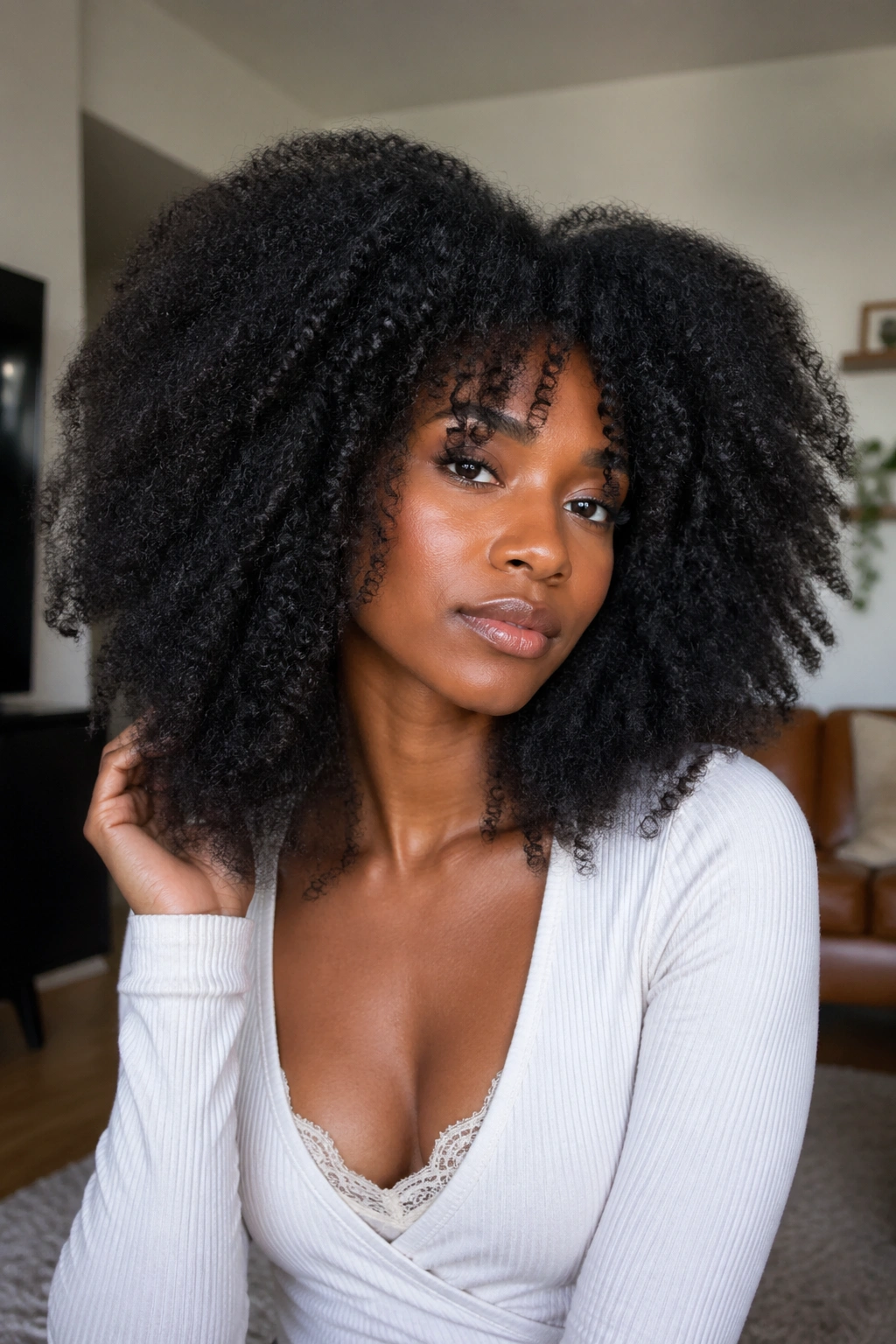
A stretched afro is a specific look that sits between a full, shrunken afro and a blown-out afro — the hair is stretched enough to show more length and even texture but still retains its natural curl pattern and the full volume of a natural afro.
The simplest approach is to band your hair section by section while damp, letting it dry in the banded state, then removing bands and gently pulling the curl pattern apart with your hands. The resulting afro will be noticeably bigger than your fully shrunken natural afro because the stretch reveals more of your actual hair length and volume. Use a pick to shape and refine the silhouette.
7. Stretched High Puff
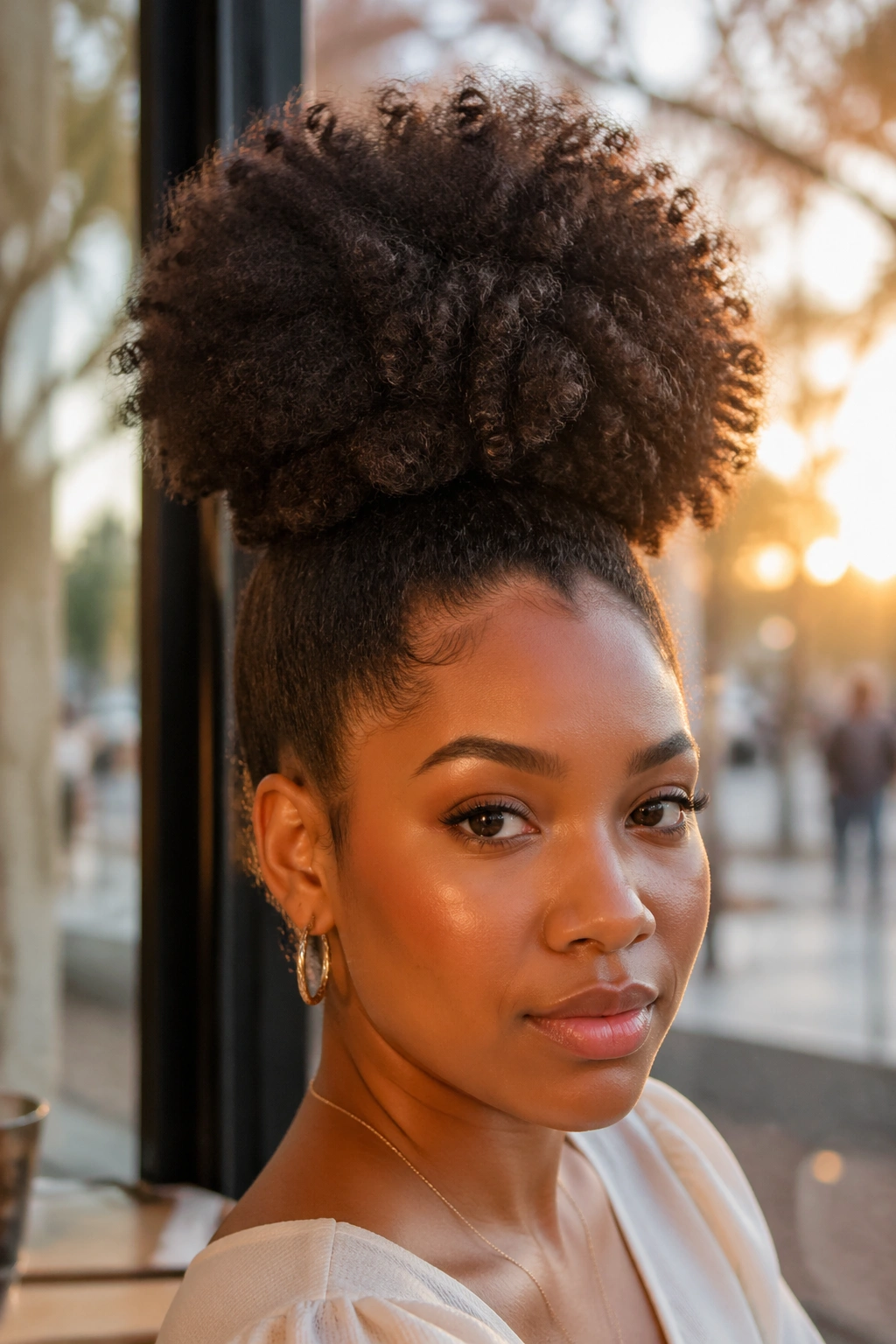
A high puff on stretched hair is dramatically larger than a standard puff on unstroked hair — and “dramatically larger” is exactly the goal. For naturals whose natural puffs feel small due to high shrinkage, stretching first transforms the puff into something genuinely impressive.
Band your hair from root to tip in sections while damp and let dry fully. Once dry, remove the bands and gather everything into a high puff — the additional length from the stretch means the puff will have more volume and height than usual. Secure loosely and expand by pulling individual sections outward from the scrunchie. The stretched-afro-puff hybrid is beautiful.
8. Blow-and-Go Stretched Style
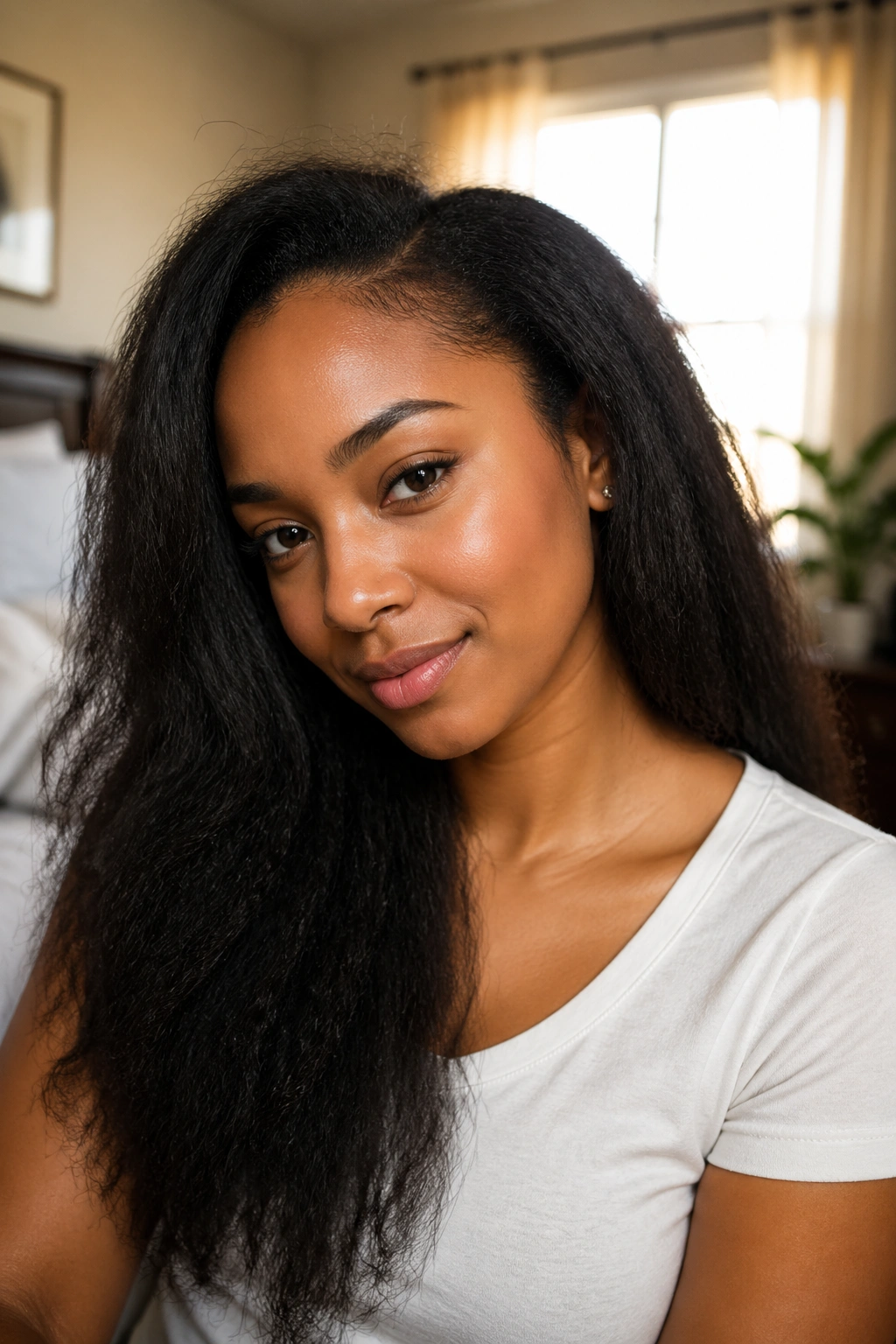
A blow-and-go style uses the blow dryer on the lowest effective heat setting — sometimes just the cool setting — to stretch natural hair while preserving most of its natural curl texture. It’s not a full blowout; it’s a partial, heat-minimized stretch with the blow dryer as the tool.
Apply your heat protectant and styling products to damp hair. Use a diffuser on the lowest heat setting and direct the airflow upward and outward, which stretches the curl as it dries. The goal is not to blow out the curl but to prevent it from contracting fully. The result is a wash-and-go with noticeably more length and a more open, defined curl pattern — a step between a standard wash-and-go and a full blowout.
9. Stretched Flat Twist-Out
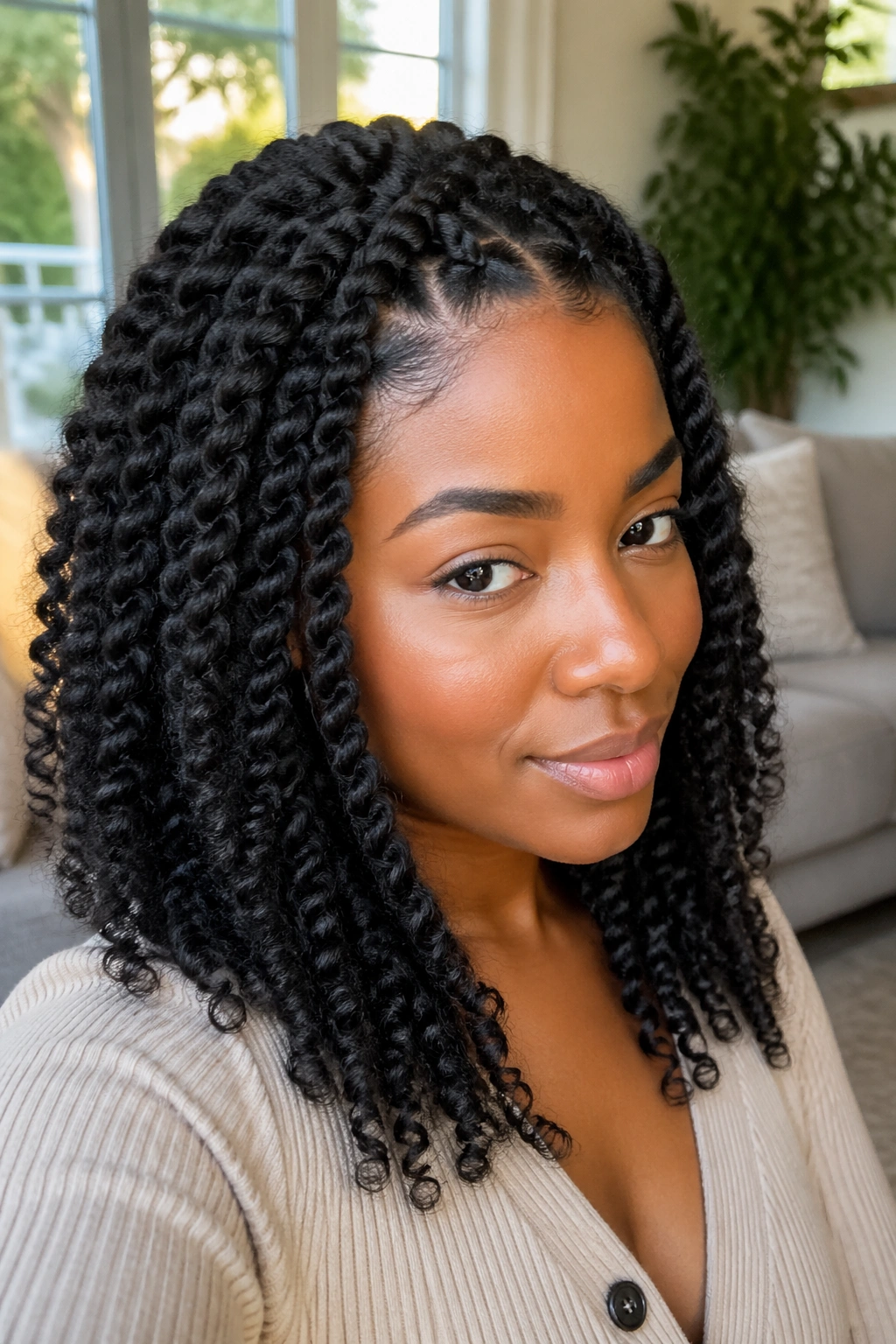
A flat twist-out, unlike a regular two-strand twist-out, uses flat twists that lie close to the scalp — similar to cornrows but with only two strands. On stretched hair, a flat twist-out produces a different texture than a standard twist-out — flatter at the root and more defined at the mid-length and ends.
Install flat twists on stretched or banded hair, letting them dry completely before unraveling. The result is a style with a smooth, stretched root area and a defined, curl-pattern mid-length and end — a combination that’s particularly flattering for naturals who want length on display and definition in the curl.
10. Thread-Styled Defined Curls
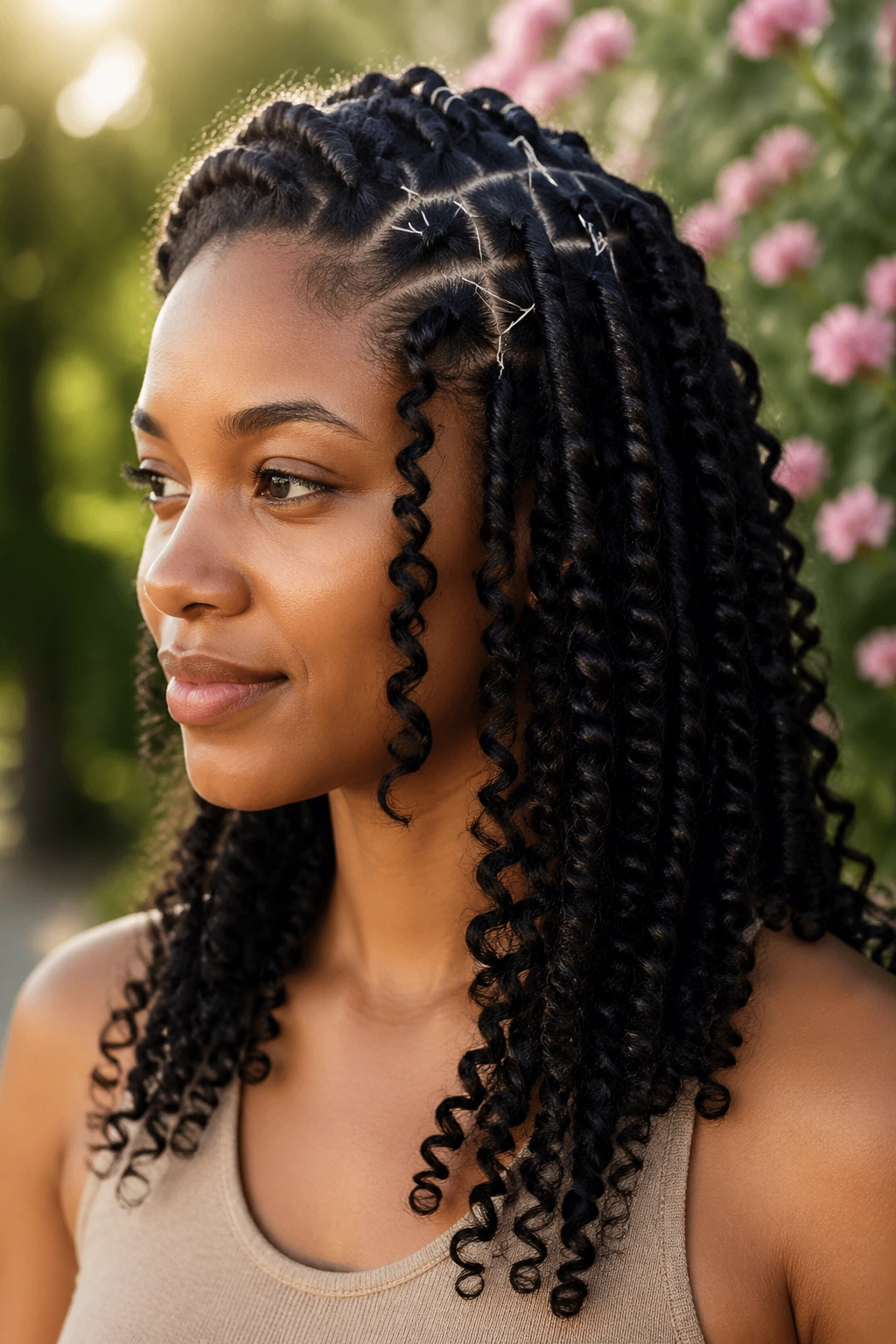
African threading can be used not just for stretching but as a deliberate styling tool — sections threaded in different directions create different curl directions when unwrapped, giving a specific, intentional curl flow to the finished style.
Thread sections of your hair in directions that correspond to how you want your curls to fall when unwrapped. Sections threaded curling toward the face will fall forward when unwrapped. Sections threaded upward will spring upward. By controlling the threading direction, you can create a stretched curl style with intentional flow and curl direction — a level of control that most heat-free stretching methods don’t offer.
11. Stretched Curls with Accessories
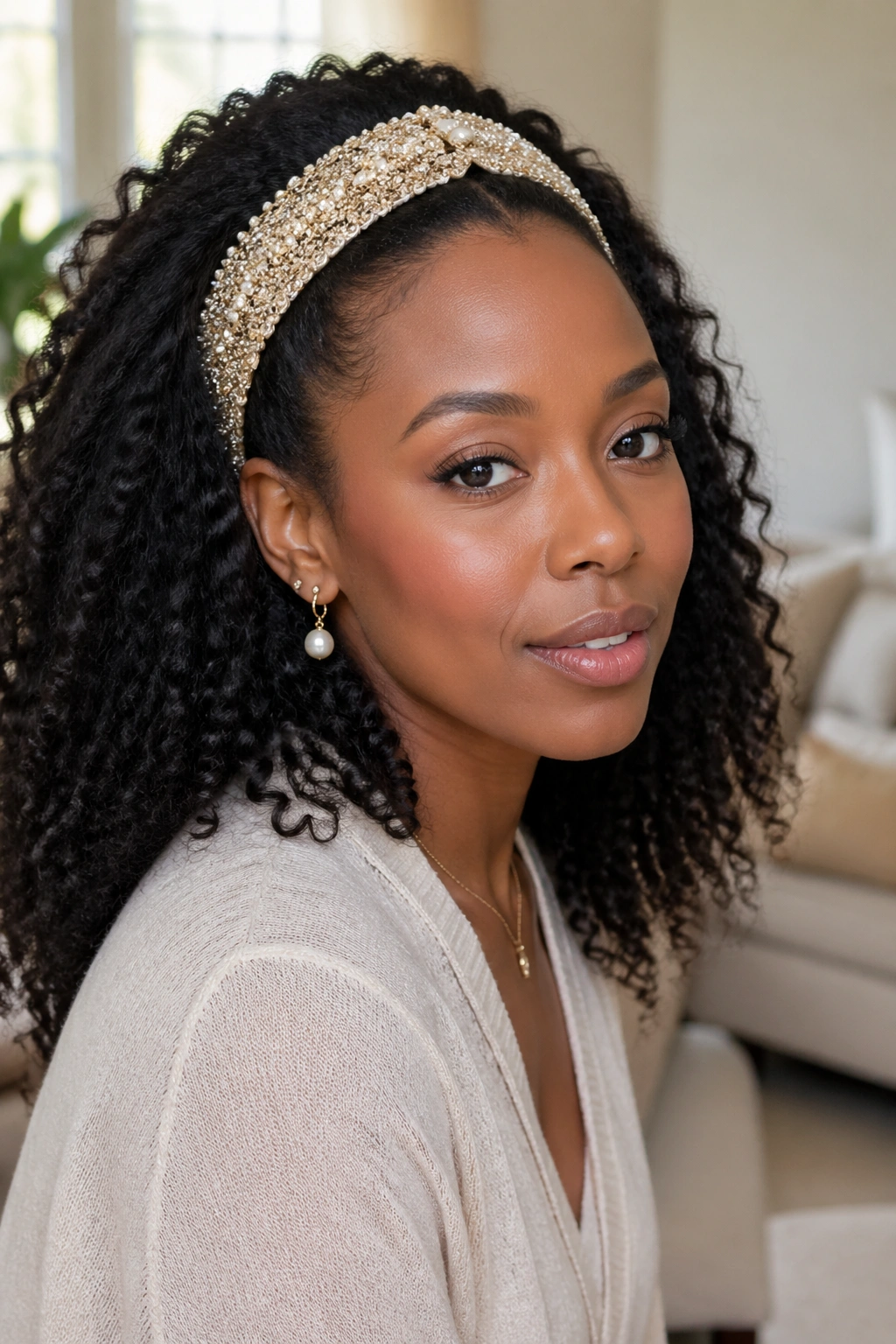
Stretched curl styles create a particular kind of beauty when paired with accessories — the visible length gives accessories more to interact with, draping over satin headbands, falling through barrettes, and framing decorative pins in a way that fully shrunken hair cannot.
Style your stretched curls using your preferred technique, then add accessories as a finishing layer. A wide, decorative headband placed at the front hairline allows stretched curls to cascade up and over it. Large statement barrettes clipped at the side of stretched curls add color and personality. Gold or jeweled pins scattered through a stretched curl style create a celebratory, runway-worthy look.
12. Stretched Wash-and-Go on 4C Hair
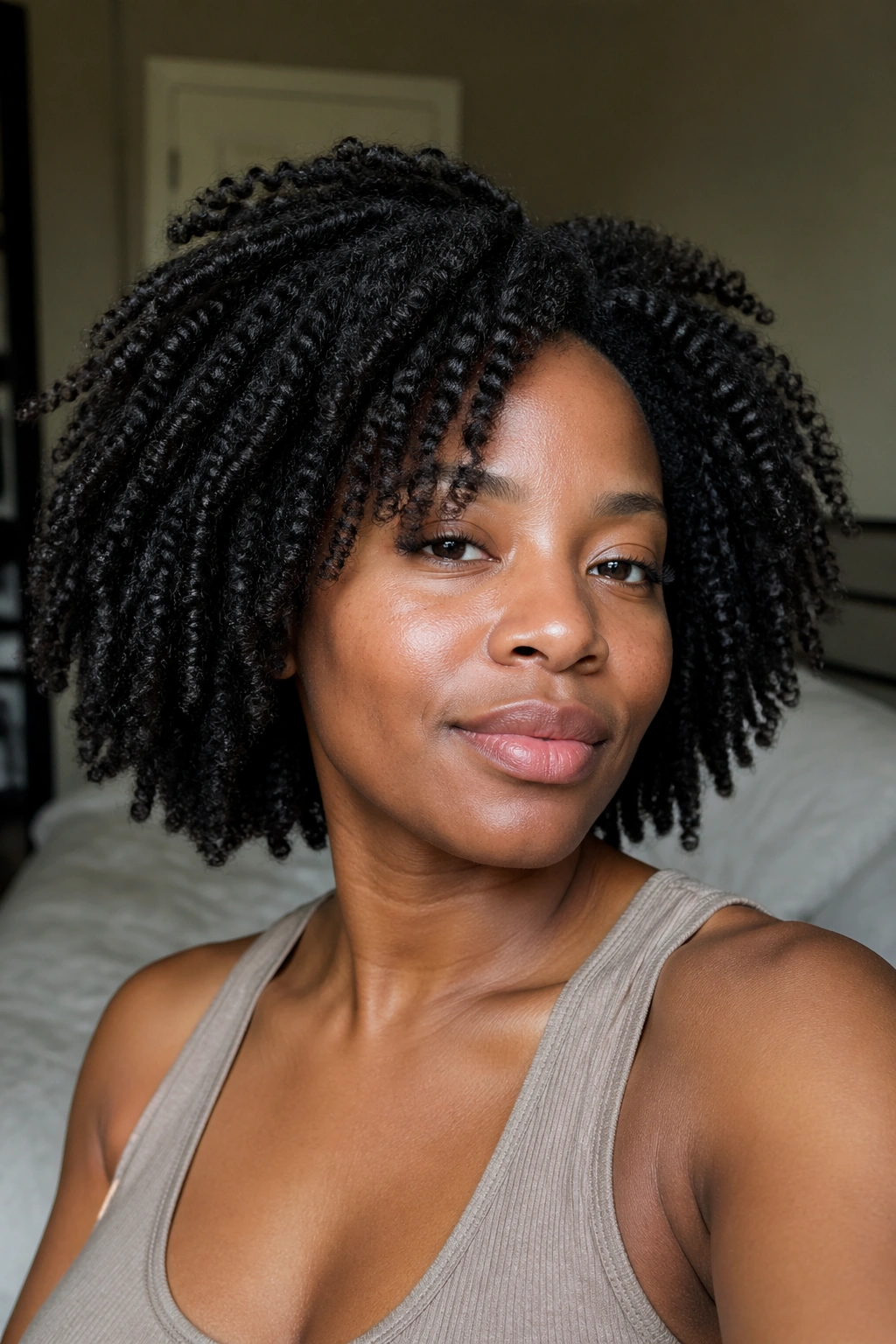
The stretched wash-and-go is perhaps the most transformative style for 4C hair specifically, because 4C shrinkage can be so significant that a standard wash-and-go looks very different from what most people picture when they hear “wash-and-go.” On stretched 4C hair, the defined coils show dramatically more length and the overall style looks more similar to what the hair would look like if there were no shrinkage at all.
Apply products as you normally would for a 4C wash-and-go — heavy on the leave-in and curl cream — and then band sections immediately. As the style dries in the banded state, the product sets the curl pattern in the stretched position. Remove bands only when completely dry. The resulting curls will show your 4C pattern at its most visible — defined, elongated, and genuinely stunning.
13. Stretched Curly Half-Up Half-Down
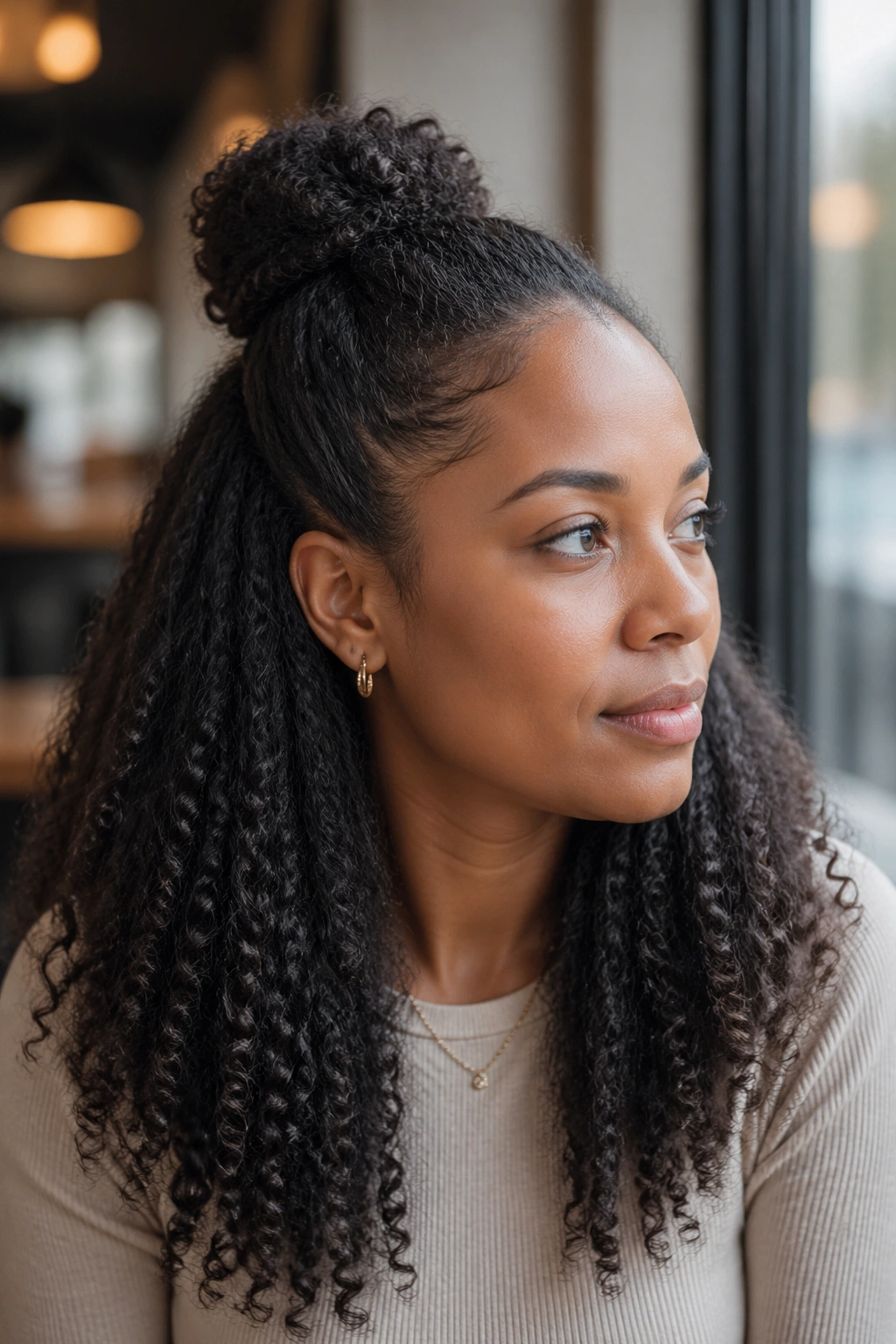
A half-up, half-down style on stretched hair shows significantly more of the hair’s natural length in both sections — the top half gathered puff is bigger, and the bottom half hanging curls are longer, both benefiting from the pre-stretch.
Band and stretch your hair first, then style with your preferred technique. Once the style is set, gather the top half into a loose half-up position and secure. Because the hair is stretched, both the top gathered section and the bottom free section will show considerably more length and volume than the same style on unstreched hair. The overall effect is dramatically more impressive.
14. Braided Stretch Method Twist-Out
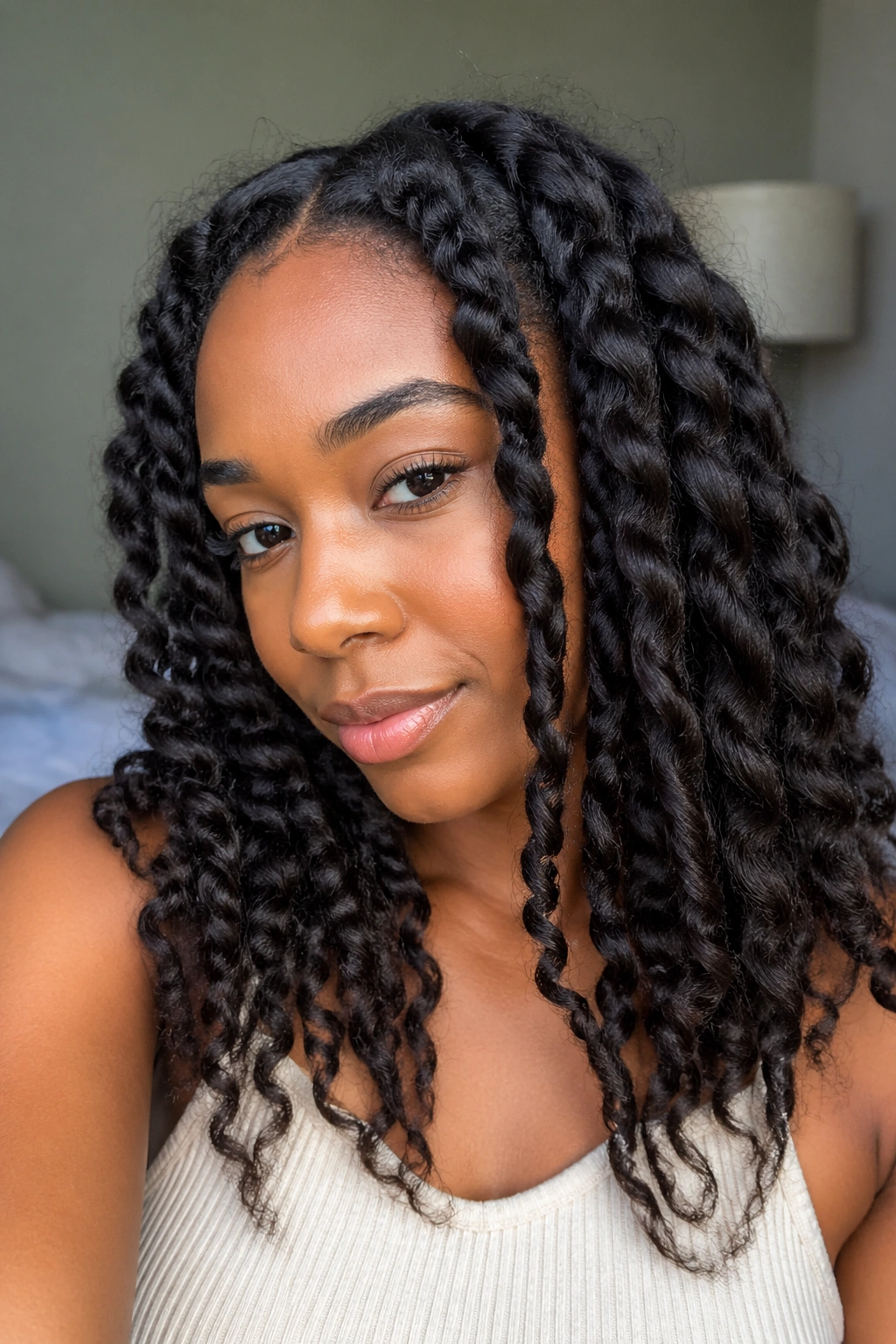
The braided stretch method — braiding hair in large sections while damp and leaving until dry — stretches the hair as a byproduct of the braid pattern. Once unraveled, the hair is both braided-wavy and stretched, creating an ideal foundation for a twist-out that shows both textures.
Braid your freshly washed hair in large sections and allow to dry completely. Unravel the braids to find stretched, wavy hair, then immediately install two-strand twists on the wavy, stretched sections. Let those twists dry fully and unravel for a style that has both the stretch of the braided base and the defined curl of the twist. The texture is uniquely layered and dimensional.
15. Stretched Curly Frohawk
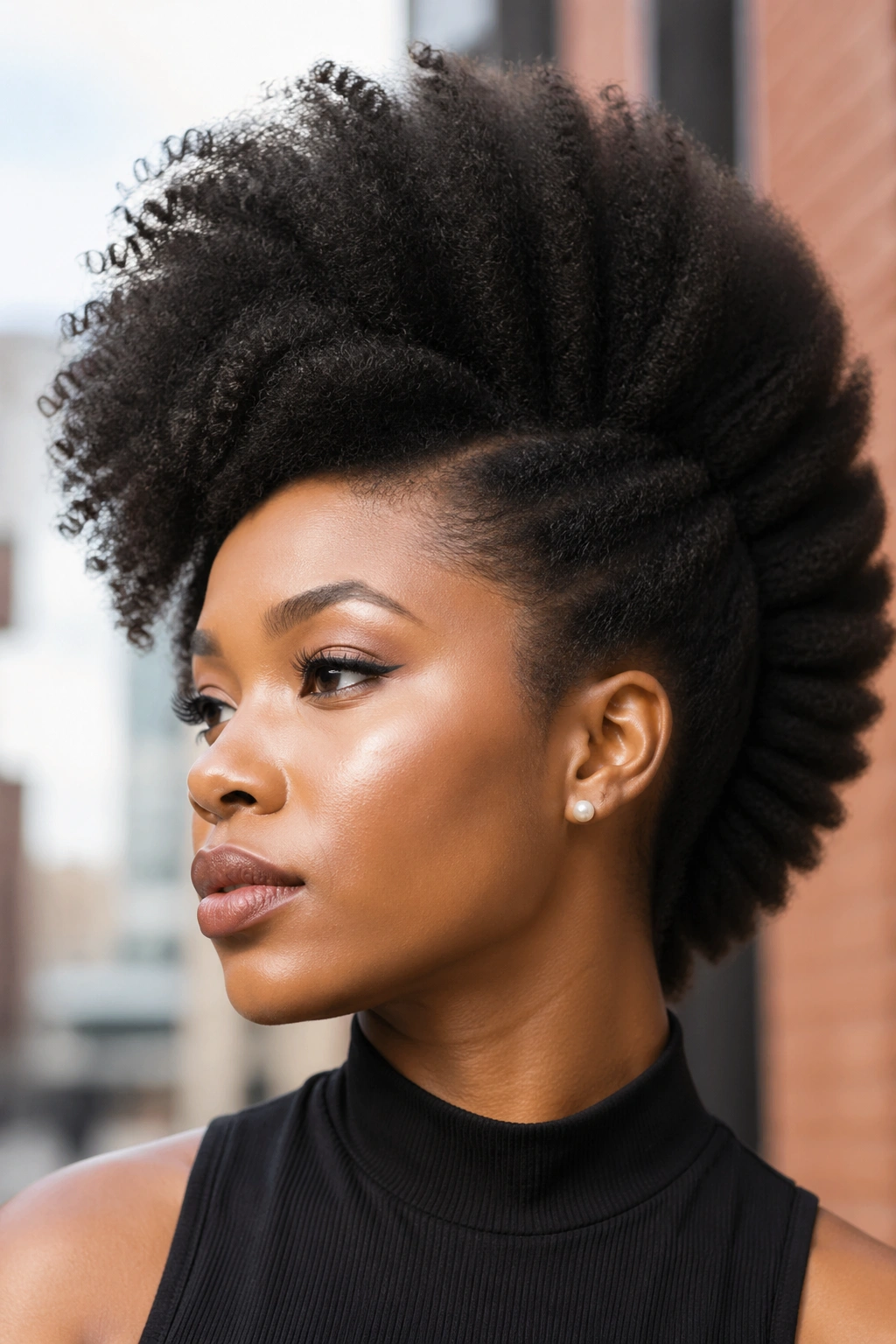
A frohawk on stretched hair has a specific kind of elegance that an unstretched frohawk can’t quite achieve — the center section, when stretched, has more visible height and length, making the mohawk silhouette more dramatic and the overall style more striking.
Stretch your center section using banding or threading while leaving the sides unstroked (or vice versa, depending on your preference). Once stretched, create your frohawk by pinning or twisting the sides and leaving the center free. The stretched center section will have noticeably more visible height and texture than an unstretched center — creating a more dramatic, editorial frohawk silhouette.
16. Stretched Curl Ponytail
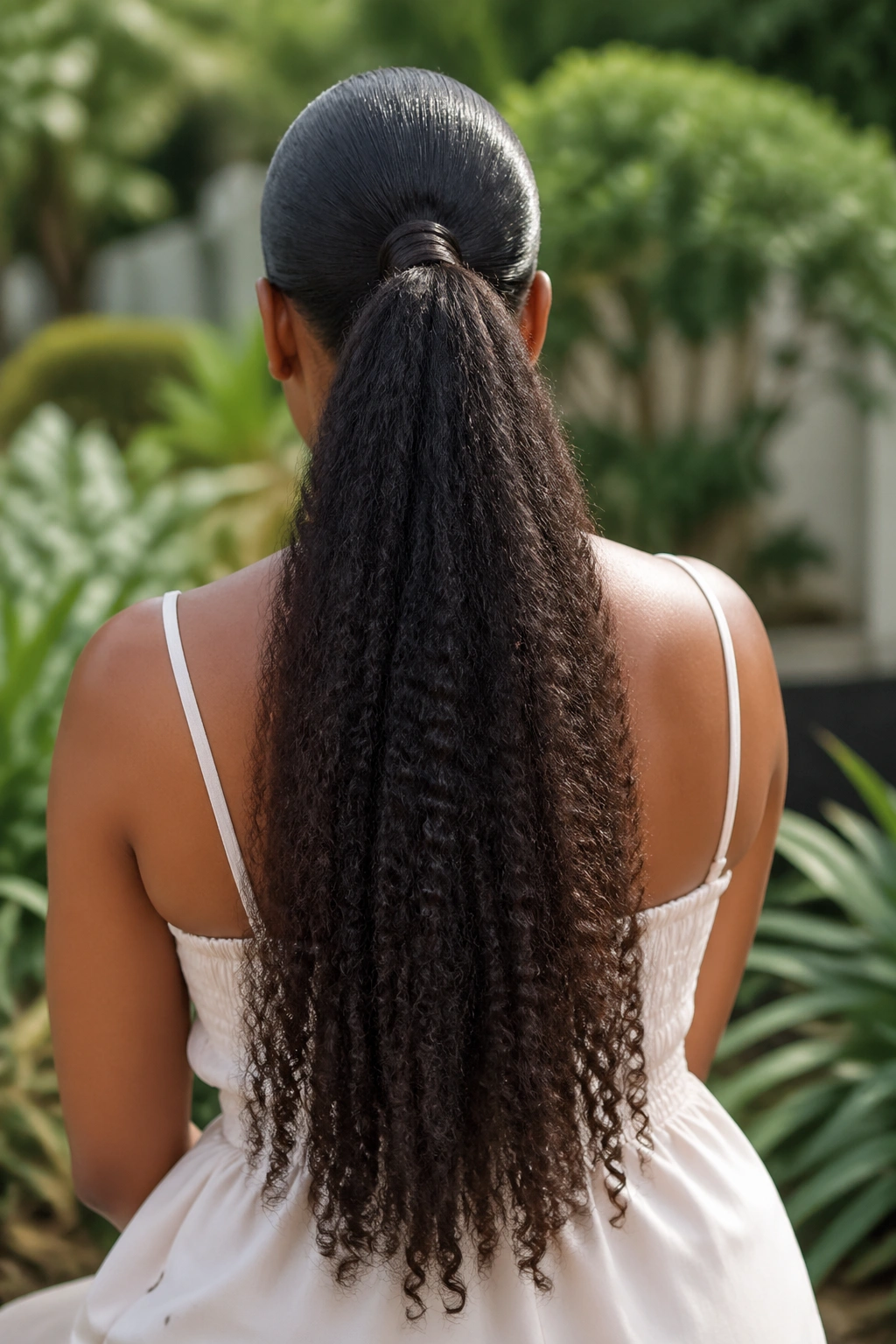
A ponytail on stretched natural hair shows your hair’s actual length rather than its shrunken length — and for many naturals, that reveals a significant difference. If your hair shrinks to ear-length but is actually shoulder-length when stretched, a stretched ponytail shows your true shoulder-length natural hair in ponytail form.
Band and stretch your hair section by section, then gather into a high or mid ponytail while the stretch is still in place. Secure with a soft, large scrunchie. The ponytail will be noticeably longer and fuller than a standard ponytail on unstreched hair. You can leave it with the stretch intact or add a curl technique — flexi rods, finger coils — to define the stretched ponytail section.
17. Overnight Band-Out Style
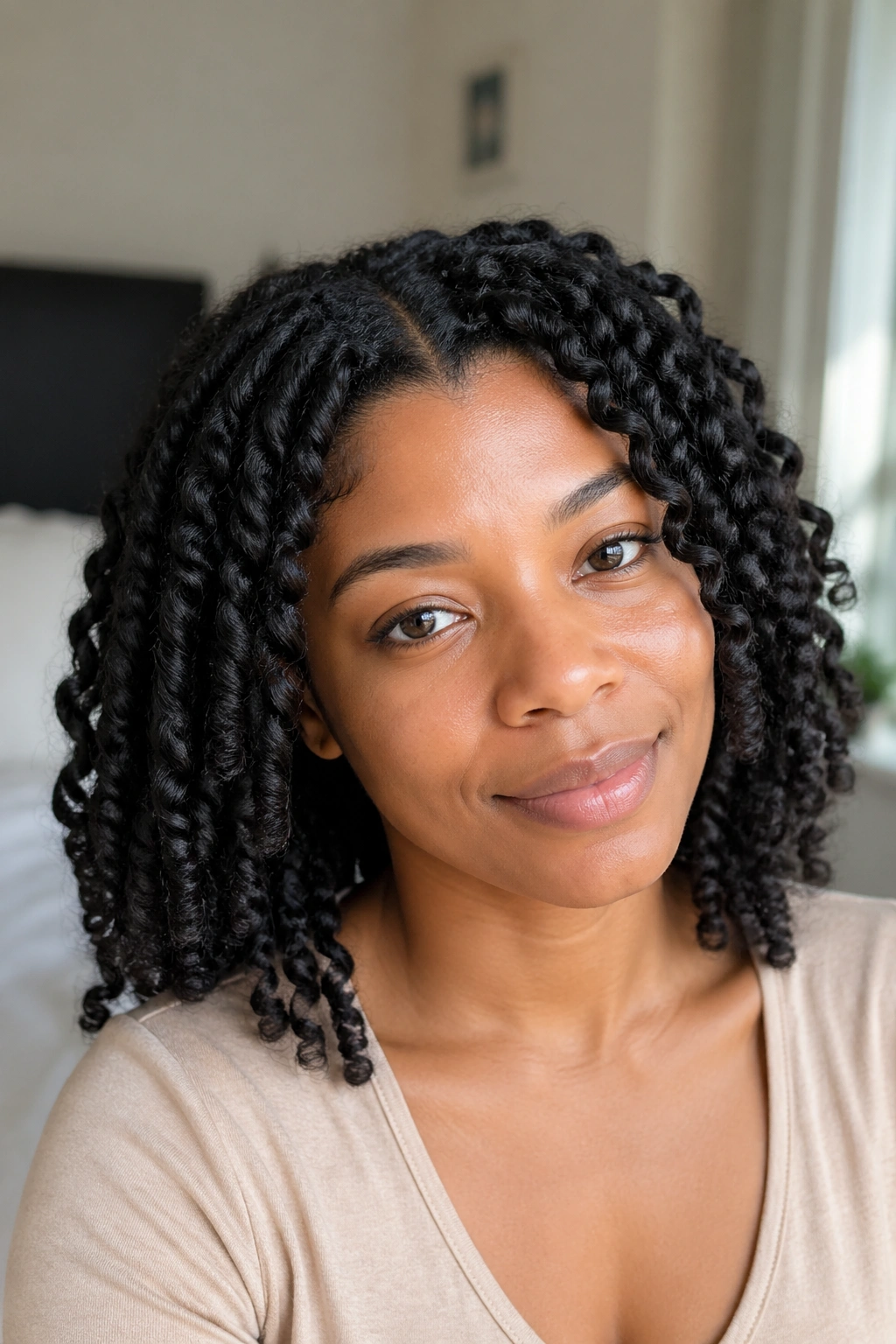
The band-out is a style in its own right — banding your hair in sections overnight and wearing the resulting stretched curls as the actual style the next day, without any additional heat-based styling on top.
Apply your leave-in and a light cream to damp hair. Band each section from root to tip and sleep on your satin pillowcase or in your satin bonnet overnight. In the morning, remove the bands to reveal stretched, defined sections of natural hair. Separate the sections gently with oiled hands. The result is a stretched, softly defined natural style that sits somewhere between a twist-out and a wash-and-go in terms of texture — and it’s genuinely beautiful for a no-effort morning style.
18. Stretched Roller Set
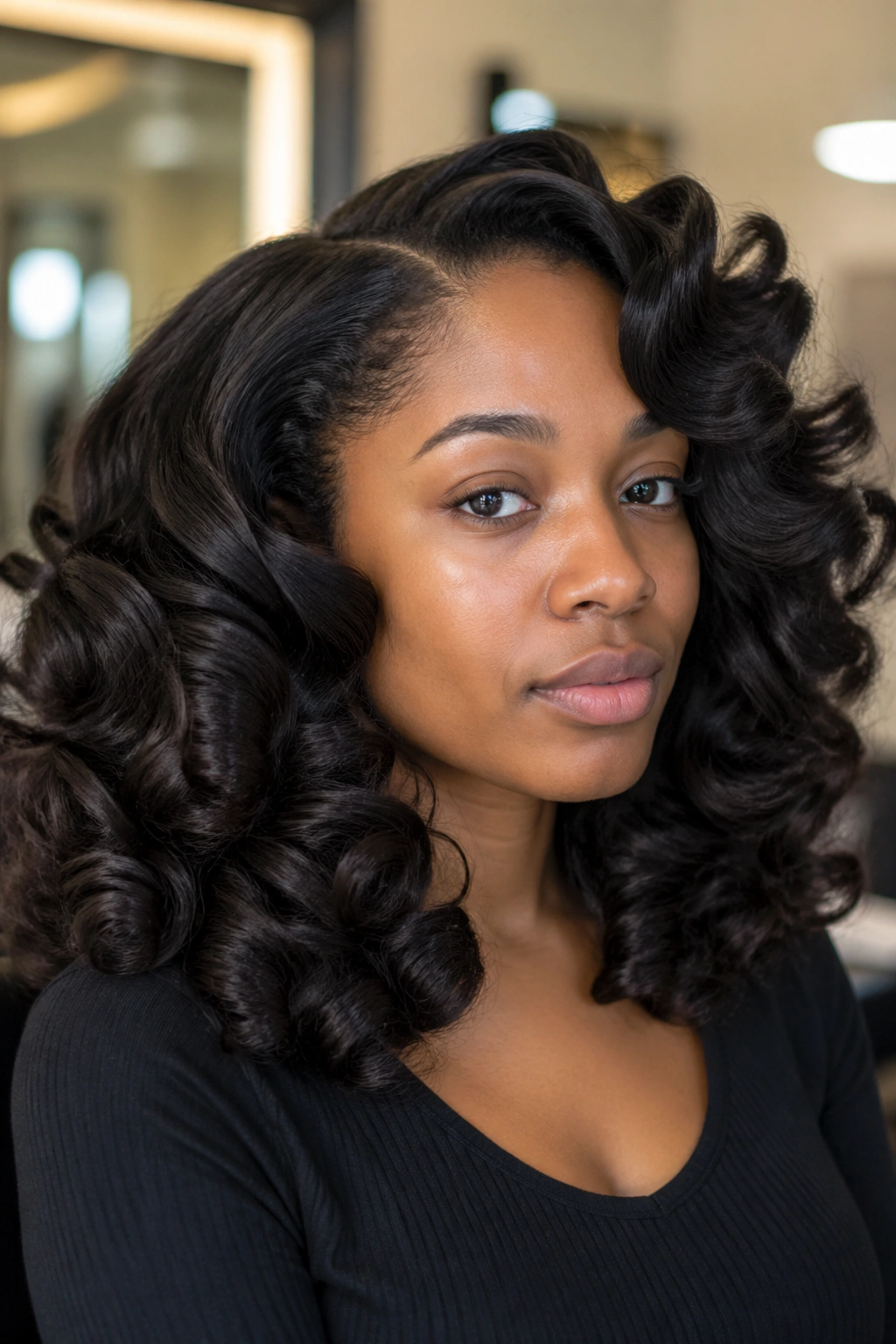
A roller set installed on stretched hair — rather than on freshly washed, fully shrunken hair — produces a significantly bigger, more dramatic curl result. The stretch already in the hair means the roller has more length to work with, and the final curl is larger and more flowing.
Stretch your hair first using bands or threading. Once stretched and dry, apply a setting lotion to each section and set on large rollers. Dry under a hooded dryer for the most even result, then take down and separate gently. The combination of stretched foundation and roller-set curl creates an extraordinary, voluminous curl style that shows significant length while retaining beautiful curl definition.
19. Stretched Style with Defined Edges
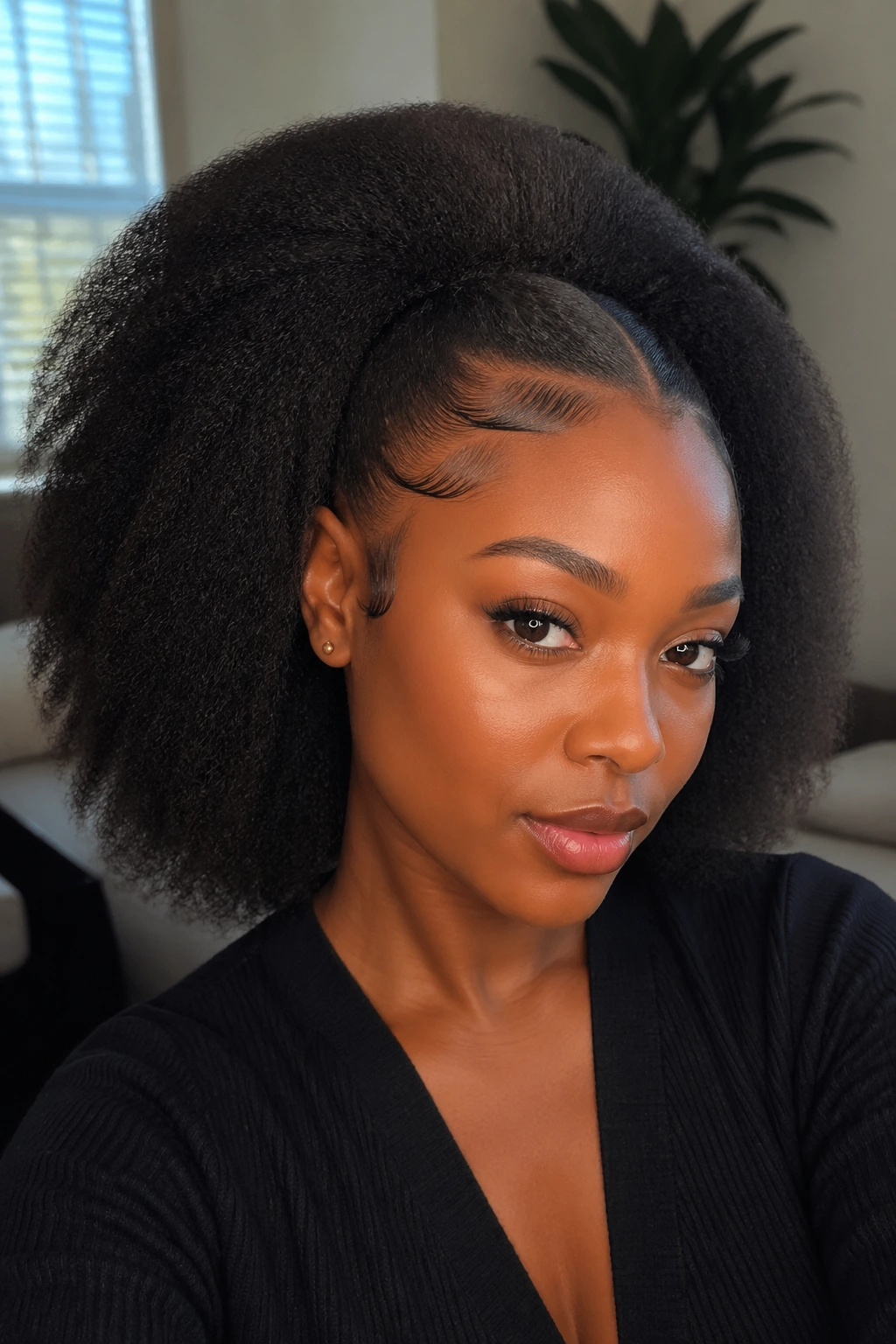
One of the most polished applications of stretched curl styles is pairing a stretched, voluminous style with deliberately defined, smooth edges. The contrast between the big, textured stretched style and the sleek, defined hairline is incredibly striking and professional-looking.
Create your stretched curl style — afro, twist-out, braid-out, or puff. Then apply an edge control or light gel to your hairline, using a small brush or baby toothbrush to smooth and define the edges into swirls, swoops, or clean, flat patterns. The defined edges frame the stretched style and give the overall look a finished, intentional quality that elevates it significantly.
20. Twisted Stretched Bun
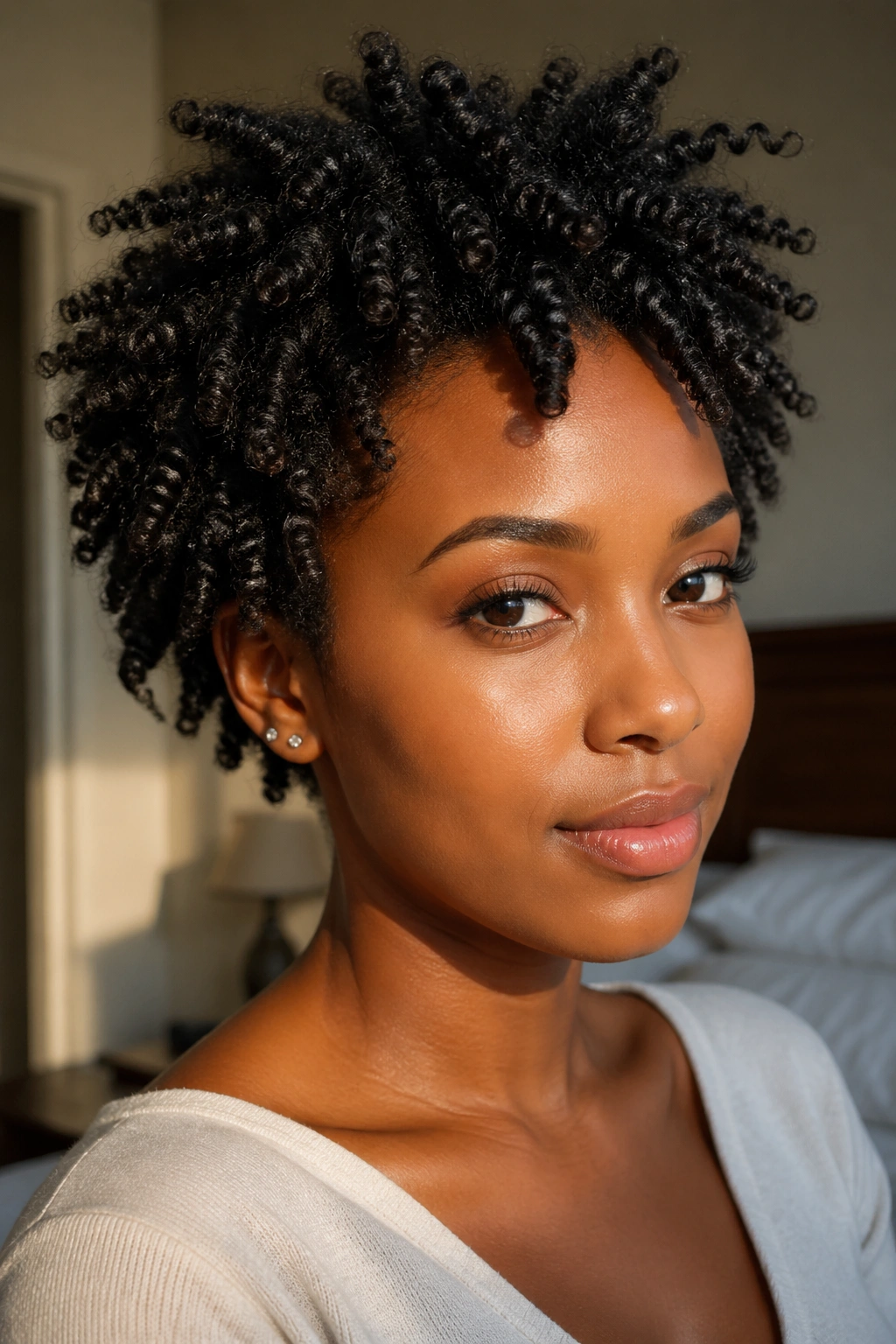
A bun created from stretched, twisted natural hair is both a practical protective style and a genuinely elegant look. The stretch means the bun can be larger and more volumous, while the twisted texture adds visual interest that a smooth, sleek bun lacks.
Stretch your hair using your preferred method. Once stretched, divide into two large sections and two-strand twist each section. Coil the two large twists around each other at the base of your desired bun position, tucking and pinning the ends underneath. The resulting bun will be large, textured, and visually interesting — a stretched style that doubles as an elegant, protective one.
21. Stretched Curly Side Bun
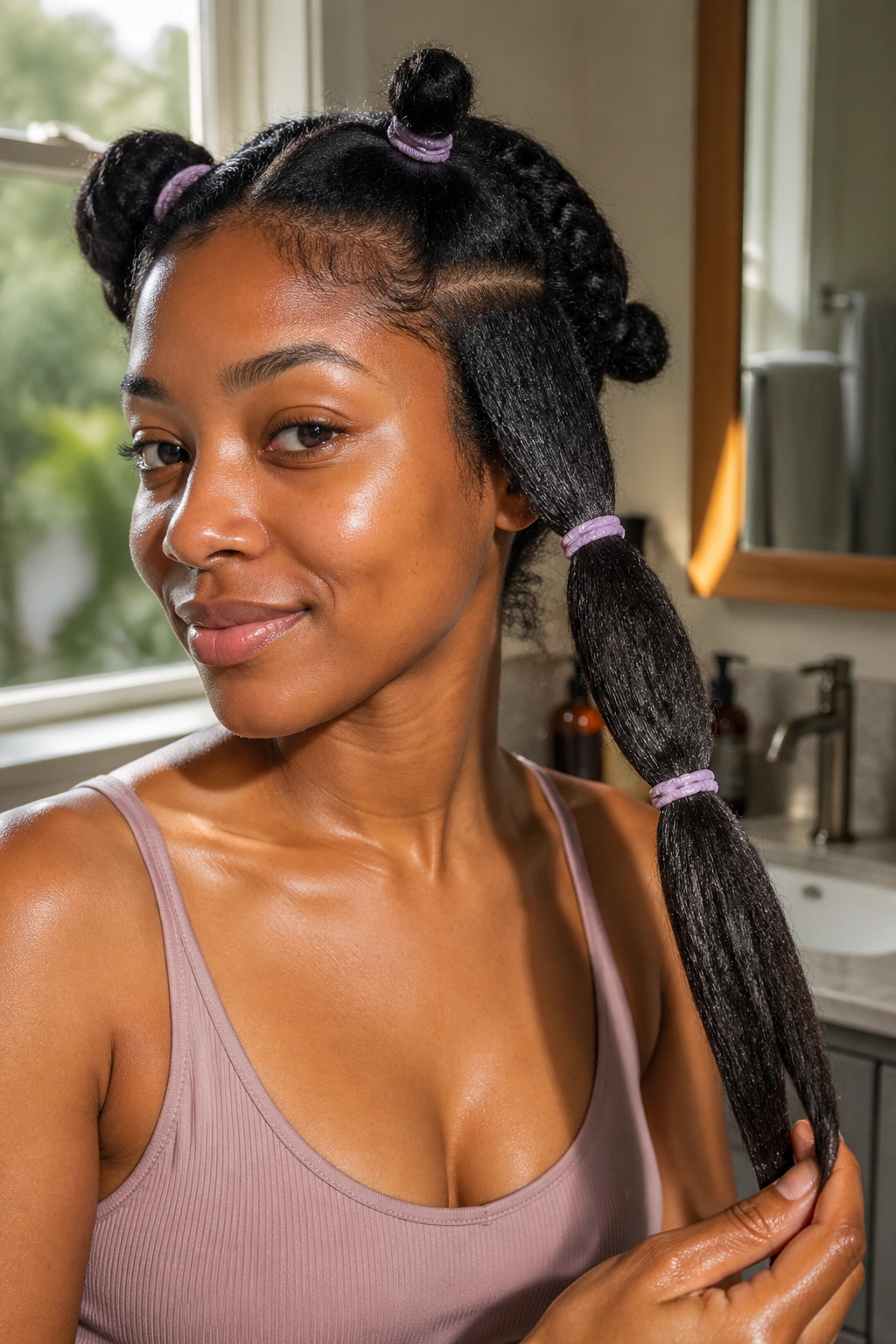
A side bun on stretched natural hair has a loose, romantic quality that’s completely different from a sleek, tight side bun on straight hair. The stretch allows you to gather your curls to one side and pin them into a large, textured bun that sits at the nape or side of your head with beautiful, escaping curls.
After stretching your hair, gather all your curls loosely to one side. Don’t smooth or sleek — just gather loosely. Pin into a large, loose bun at the base of the gathered section, allowing individual curls to spring out and drape freely around the bun. The result is incredibly romantic and effortless-looking — a style that suggests you woke up this way.
22. Flat-Twist Stretch Combo
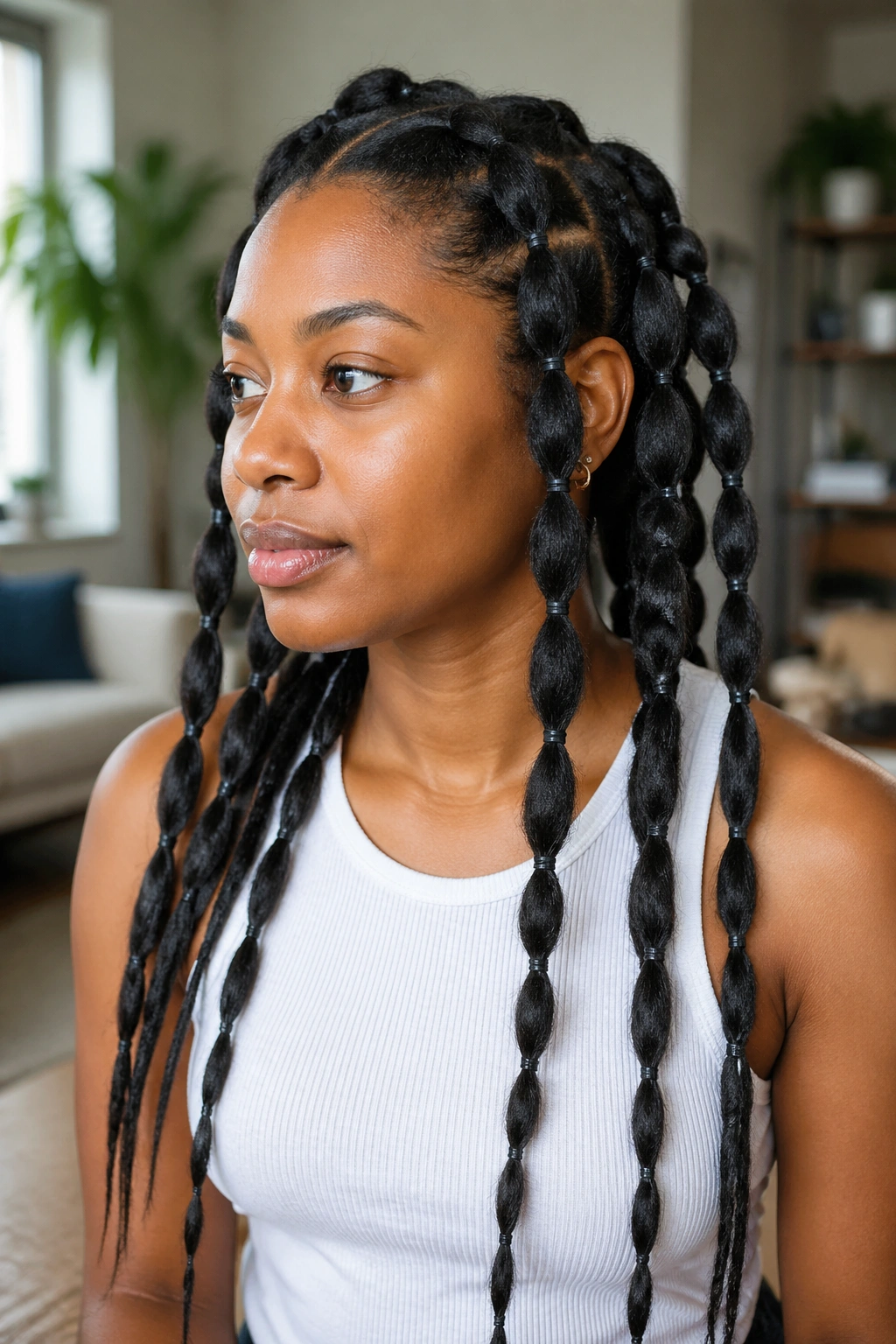
Using flat twists as both a stretching tool and a styling element creates a two-in-one approach where the process of stretching is itself the style. The flat twists lie close to the scalp and add a sculptural element, while the untwisted or flat-twisted-out sections below show the stretched curl.
Install flat twists along the hairline and crown of your head, stretching the hair as you go. Leave the back and sides in their natural stretched state or style with a rod set. The flat-twisted sections provide a clean, geometric frame for the fuller, stretched sections — creating a style that’s part protective, part showcase.
23. Full-Length Stretched Curl Showcase
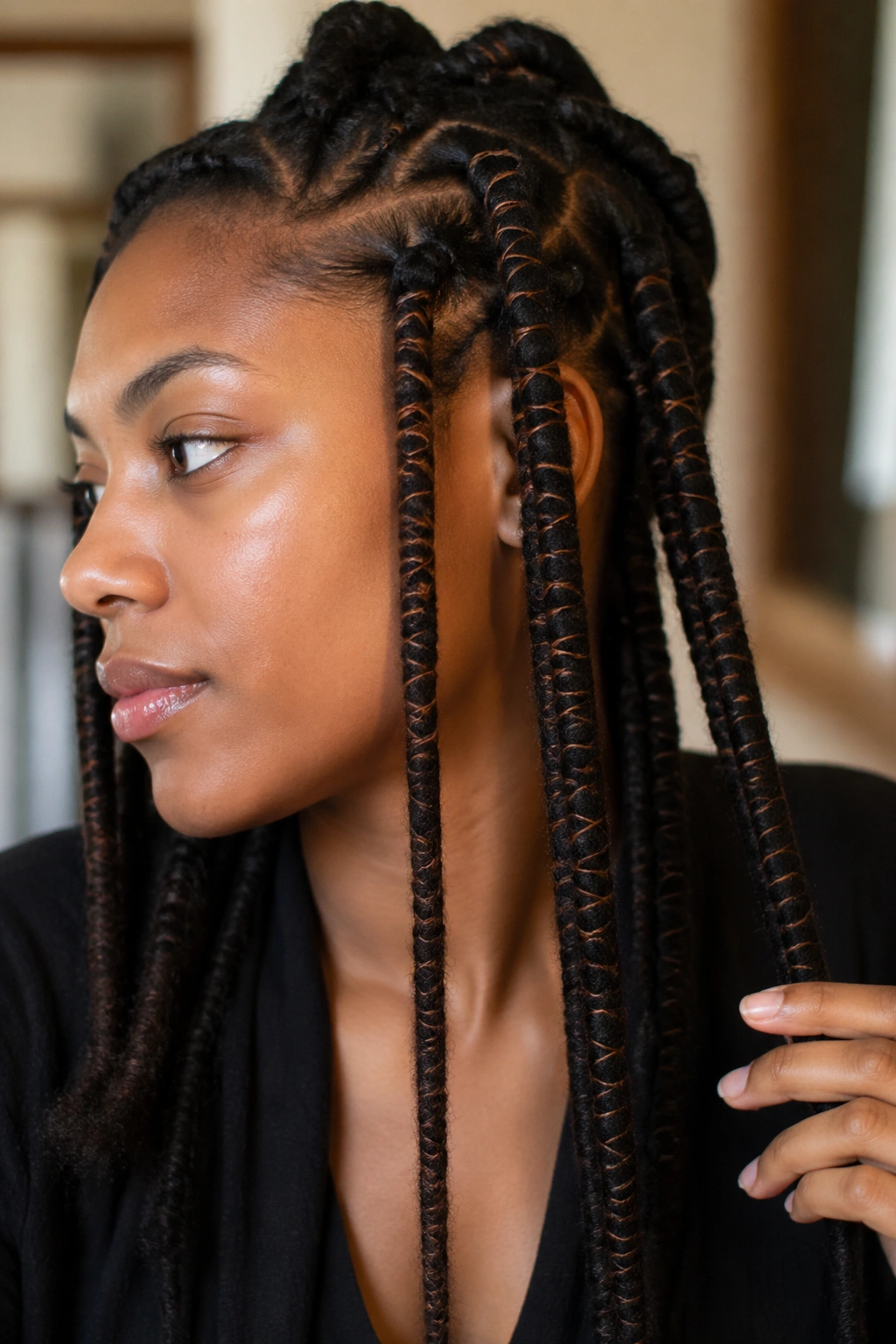
The ultimate stretched curl style is simply letting your natural hair show its full length in curl form — no specific updo, no particular technique on top of the stretch, just your curls at their longest possible expression, hanging freely.
Stretch your hair using African threading or maximum banding for the most dramatic elongation. Once stretched and styled, wear your hair completely down, letting it hang in its stretched curl state. For naturals with significant shrinkage, this reveal of full length is often genuinely astonishing — even to yourself. It’s a reminder of how much length exists in your natural hair when it isn’t contracted by shrinkage.
And that’s the deeper value of stretched curl styles: they’re not about fixing something wrong with your hair. They’re about revealing everything that’s already there.
Building a Consistent Stretching Routine
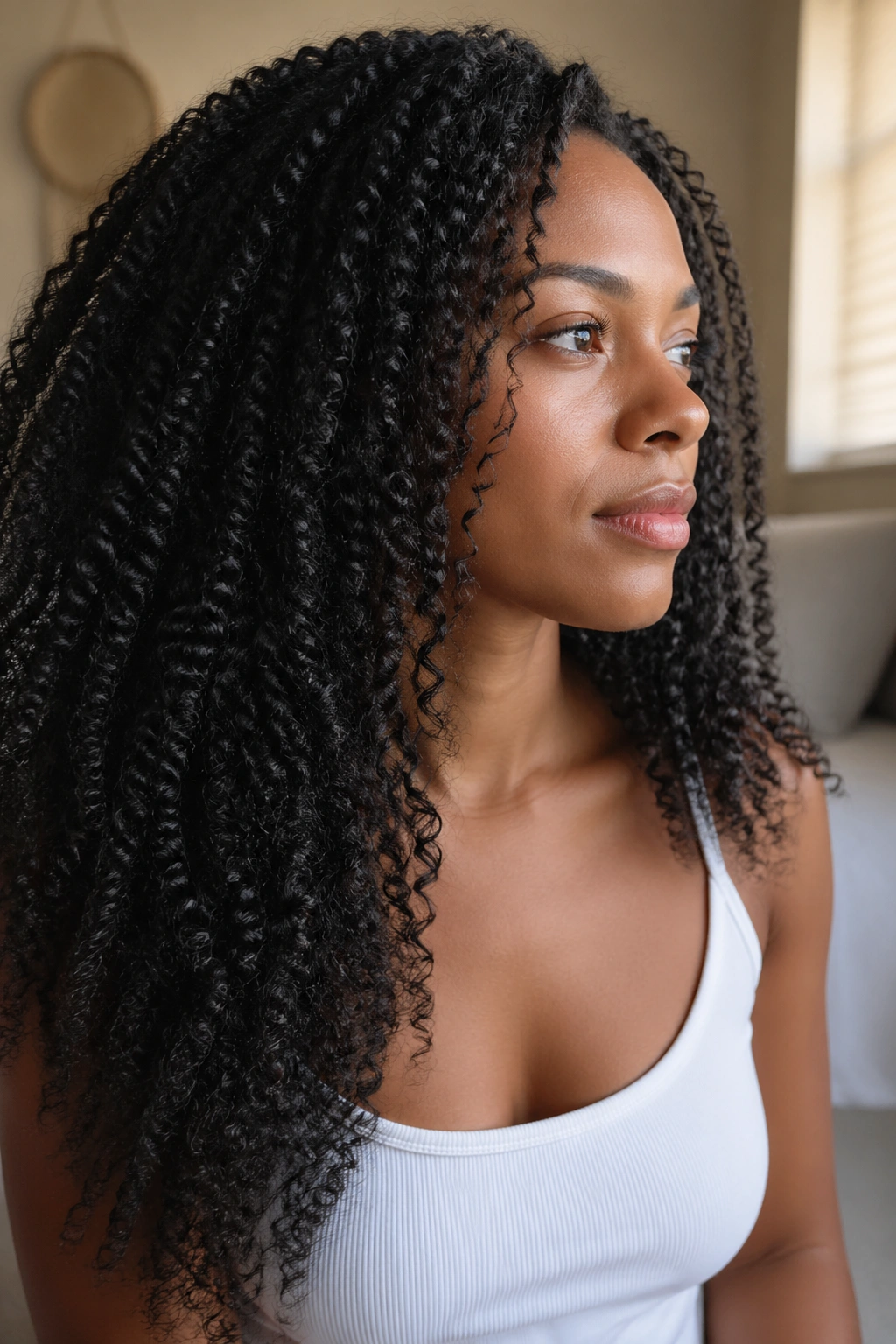
Incorporating stretching into your natural hair routine regularly gives you consistent length-showing results without the variability of constantly trying new methods. Once you find the stretching technique that works best for your texture — whether that’s banding, threading, braiding, or a gentle blow-dry — sticking with it allows you to refine your technique over time and produce better results with each wash day.
Stretched curl styles also tend to last longer than fully shrunken styles because the hair isn’t contracting on itself as much, which means less tangling, less manipulation, and less daily maintenance. A stretched twist-out or braid-out that shows full collarbone length can look fresh and defined for four to five days with proper nighttime care — significantly longer than a fully shrunken version of the same style might last.
The investment in learning your best stretching methods pays dividends in every style you wear from that point forward. Your natural hair has more length than shrinkage gives it credit for. Stretched curl styles let the world see it.