
Stitch braid ponytails for medium hair have a kind of built-in tension that I love: the braid base looks crisp and controlled, but the ponytail itself still has room to move. On shoulder-length or collarbone-length hair, that balance matters. Too much added hair and the style starts to feel heavy at the scalp. Too little and you lose the clean, sculpted look that makes stitch braids worth the effort.
A stitch braid is all about the parting pattern. Instead of a soft, blurry feed-in, you get those neat, visible “stitches” marching across the scalp, almost like someone drew them with a fine comb. Medium hair is a sweet spot for that technique because the braid base has enough length to hold shape, but not so much bulk that the ponytail drags.
What makes these styles useful is that they cover a lot of ground. Some are sleek enough for a workday. Some lean playful with curls, bubbles, cuffs, or zigzags. Some sit high and sharp; others stay low and smooth, which is often the better move if your hairline hates tension. Pick the shape first. The rest tends to fall into place.
1. The Sleek High Stitch Braid Ponytail
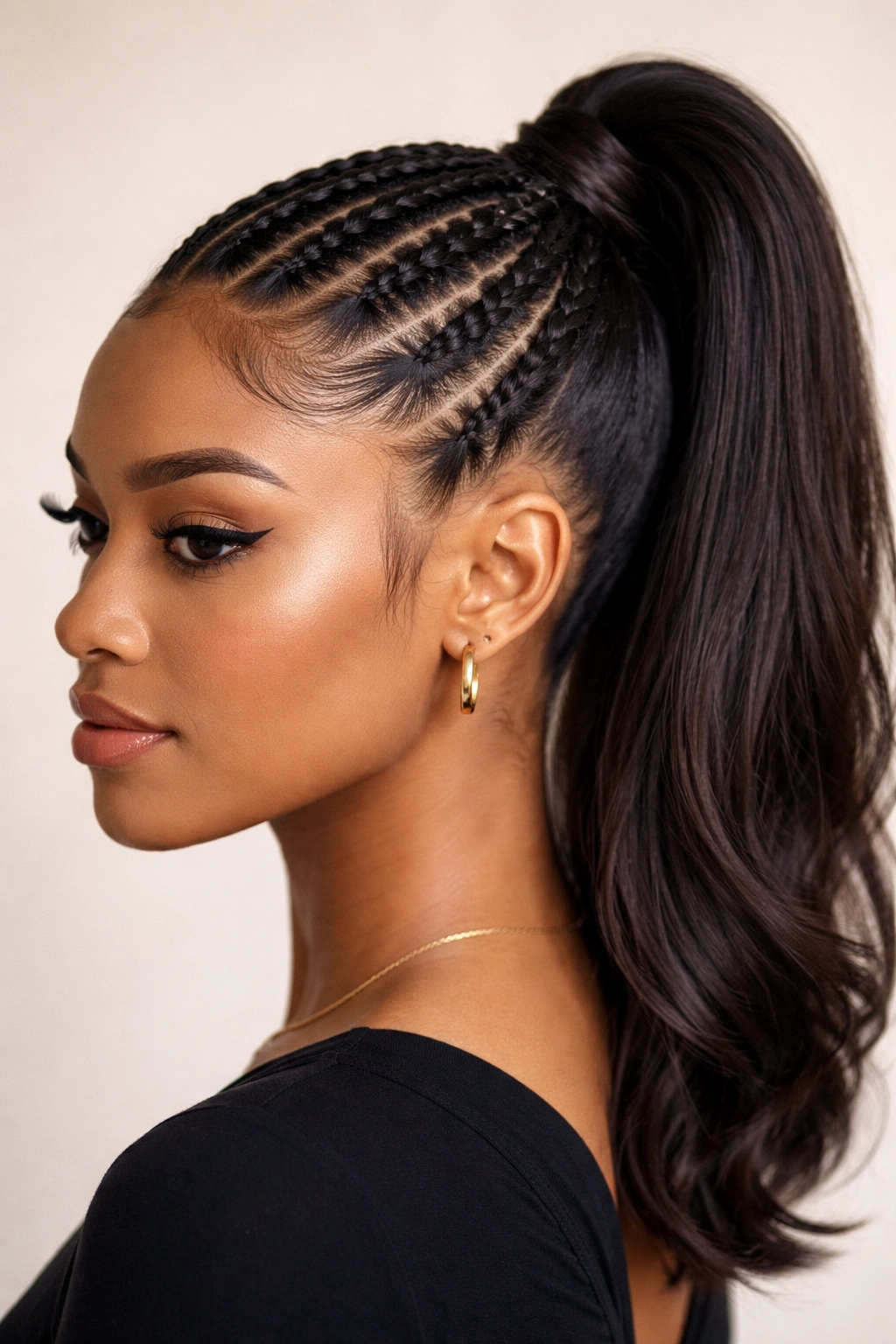
A high stitch braid ponytail is the style I’d hand to anyone who wants a lifted, clean look without a ton of extra fuss. The stitch pattern keeps the front sharp, and the high placement gives medium hair more bounce than a low tie ever could.
Why it works so well
The height pulls the eye upward, which helps medium hair read longer and fuller. That matters if your natural length sits around the shoulders, because the ponytail gets to do some of the visual heavy lifting. The braids also keep the front flat, so the style looks neat even when the rest of your hair has a little puff or texture.
A good version sits snug at the crown, not yanked back so hard that your scalp feels sore after an hour. If you’re adding braid hair, keep the ponytail portion light. Two bundles are plenty for most medium-length installs. More than that, and the swing starts to disappear.
- Ask for even stitch spacing so the rows look intentional from every angle.
- Keep the ponytail base tight, but not painful.
- Wrap a small strand around the elastic for a cleaner finish.
- Use a light shine mist, not a greasy oil.
Best move: leave the tail straight if you want polish, or curl the ends for a softer look.
2. The Deep Side-Part Stitch Braid Ponytail
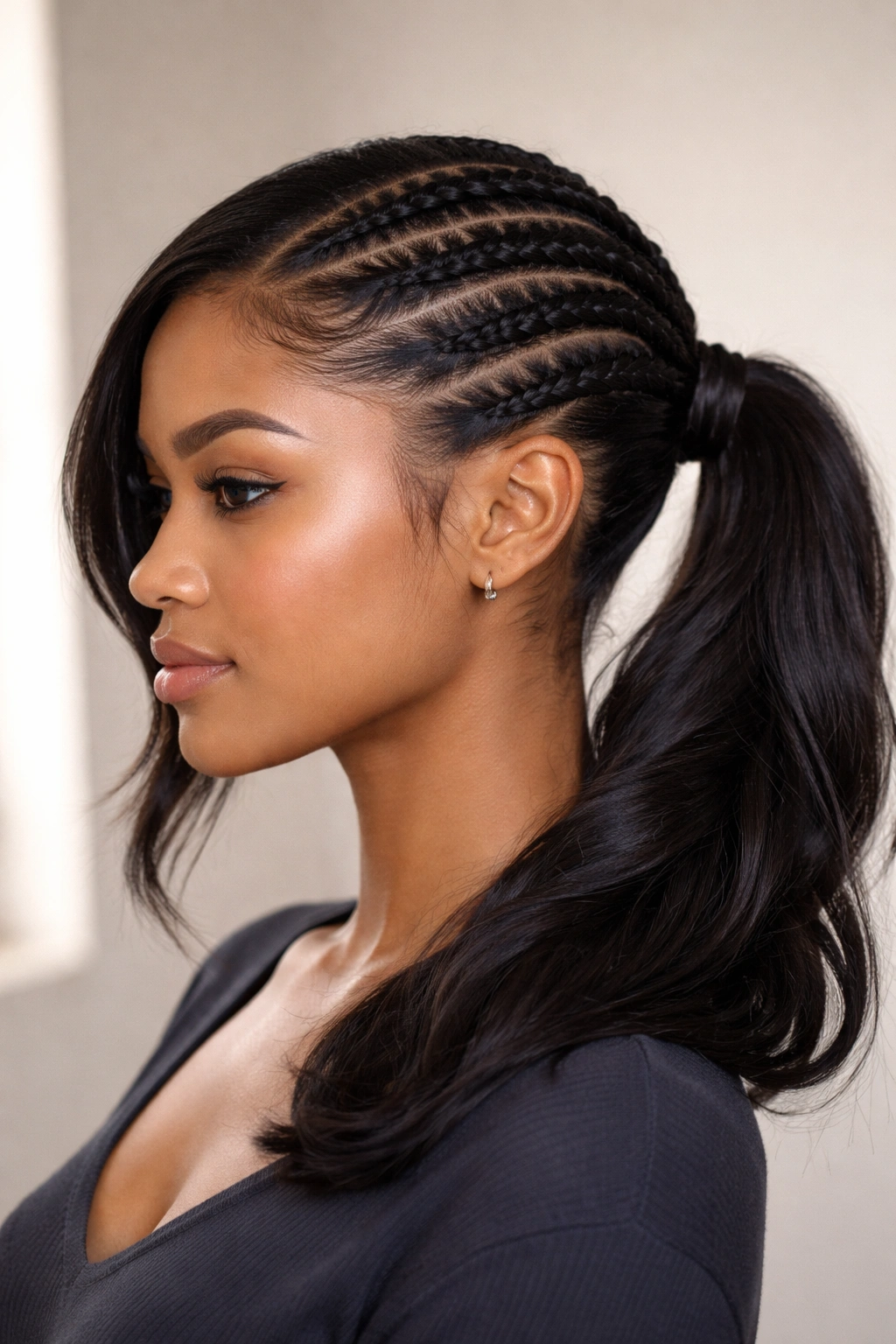
Why does a deep side part change the whole mood? Because it gives the braid pattern a direction. Instead of sitting straight down the middle, the rows sweep across the scalp and lead your eye straight into the ponytail.
That little shift makes the style feel less severe. The front can frame one cheekbone, which is nice if you like some softness around the face but still want your hair pulled back. On medium hair, a side part also helps if one side of your hairline is a little fuller than the other. The asymmetry hides that in a way a center part sometimes cannot.
Keep the part clean and wide enough to show the stitch lines. If the side part is too tiny, the style looks accidental instead of designed. I’d also keep the ponytail low to mid-height here. That keeps the weight balanced and stops the side sweep from feeling lopsided.
How to keep it crisp
Use a rat-tail comb and clip the unworked side away before you start. A little edge control near the hairline helps, but don’t cake it on. You want shine, not shellac. The best version looks smooth when you move, not frozen in place.
3. Two Stitch Rows Into a Low Ponytail
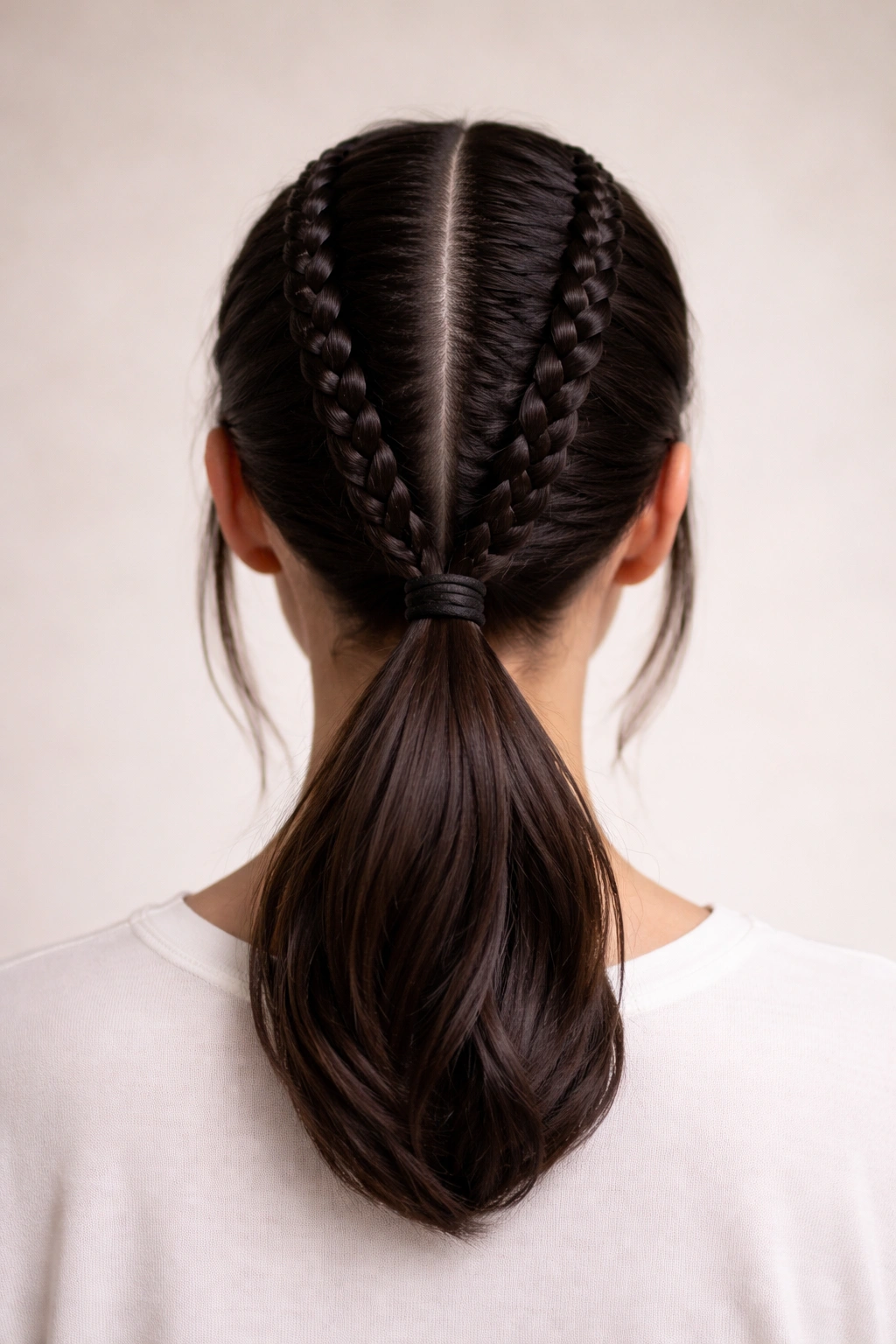
Picture this: two tight stitch braids on each side, both feeding into a low ponytail at the nape. It’s tidy, practical, and has just enough detail to look deliberate without feeling busy.
This is the style I’d pick for a day when you want your hair secure but not severe. Medium hair works nicely here because the low ponytail keeps the weight centered. If your hair is thick, the two-row setup spreads the tension better than one broad braid pulling from the front.
The base should feel snug across the scalp, but the ponytail itself can stay soft. That contrast is what makes the look interesting. Hard at the top, looser at the tail. Nice and clean. If you want a touch more shape, curl only the last 3 to 4 inches of the ponytail so the ends don’t hang flat.
- Works well with middle-part symmetry.
- Keeps the hairline protected if the braids are not pulled too tight.
- Looks good with hoops or small studs.
- Fits medium hair without needing a huge amount of added hair.
Pro tip: if you want the rows to show, keep the stitch sections narrow and even from the start.
4. The Wrapped-Base Stitch Ponytail
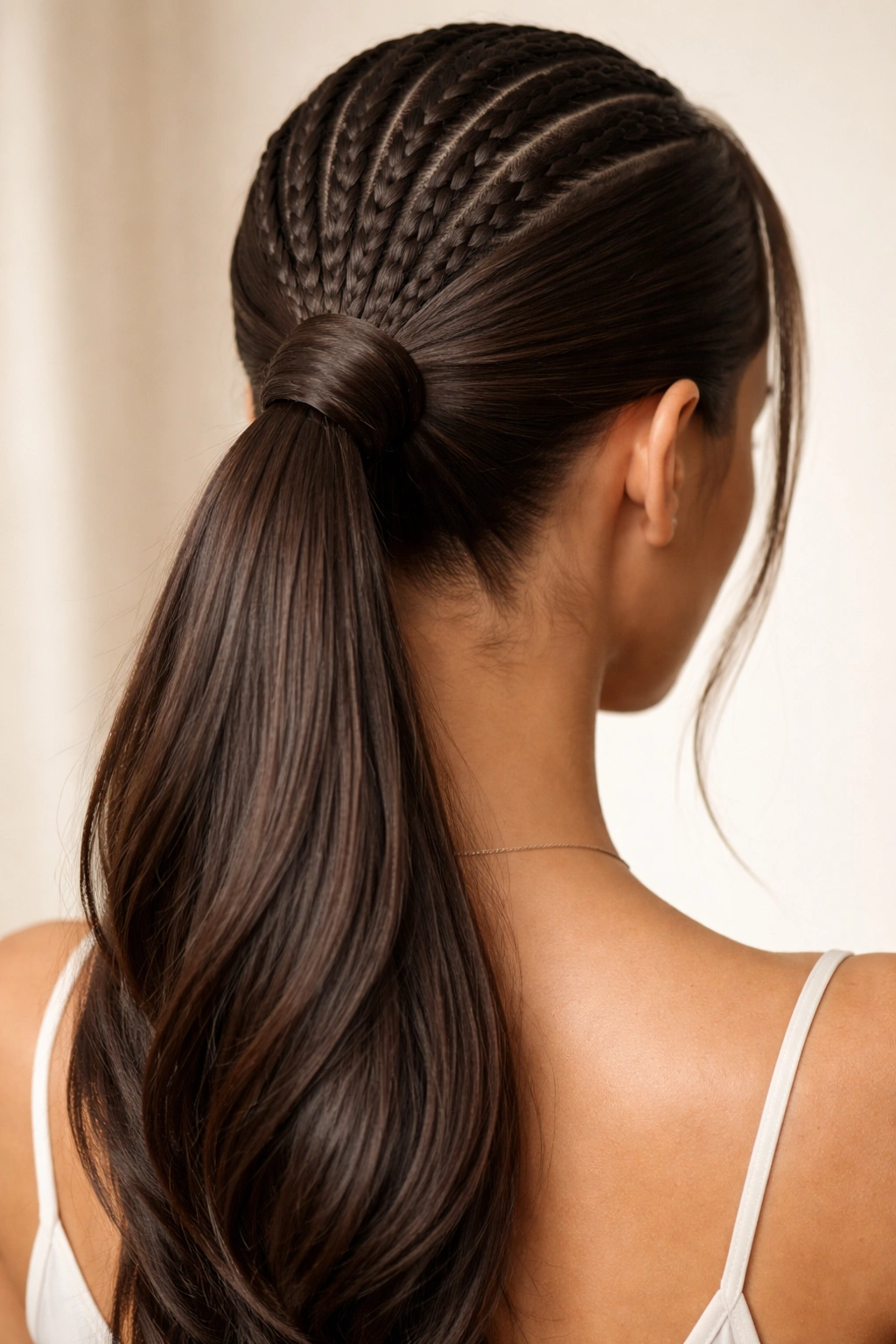
A wrapped base makes a plain ponytail look finished in about ten seconds, and I mean that literally. Once the elastic is hidden, the whole style reads cleaner and more expensive-looking without becoming fussy.
The wrapped-base version is especially useful on medium hair because the tail length may not be dramatic on its own. Hiding the elastic makes the ponytail look longer than it is, which I always appreciate. You can keep the stitch braids tight and neat, then let the ponytail rest smooth and straight behind you.
What I like here is the contrast. The braid work is detailed. The tail is calm. Nothing is fighting for attention.
If your hair is layered, this trick matters even more. Loose layers can stick out at the tie point and make a regular ponytail look messy fast. Wrapping a small braid or a small strip of hair around the base solves that in one move. It also works if you want to pin the end underneath instead of spraying it into place.
Best for: anyone who wants the braid pattern to be the star and the elastic to disappear completely.
5. Curled Ends on a Stitch Braid Ponytail
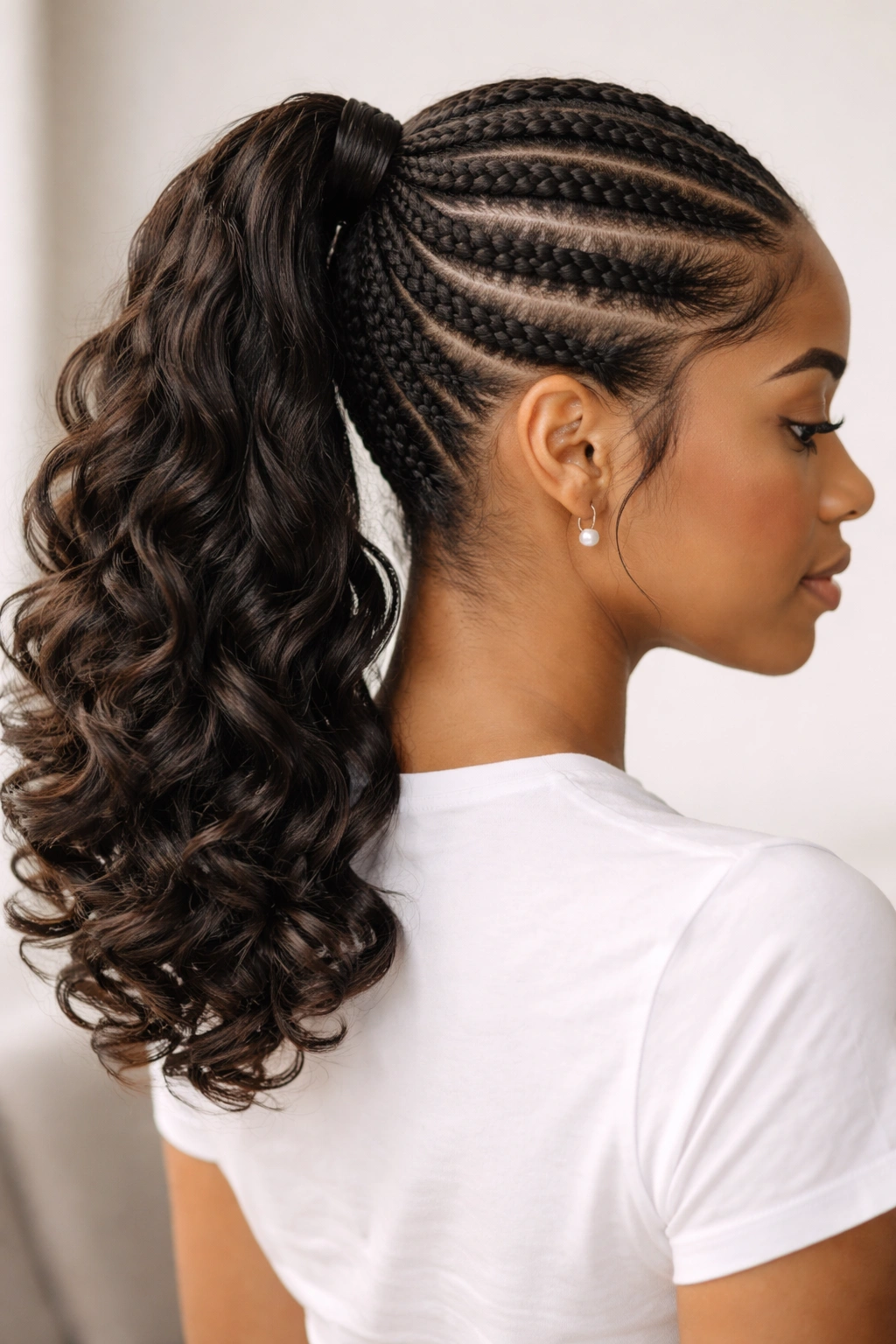
A straight ponytail is fine. A curled one has more life. The ends bounce, the shape opens up, and medium hair suddenly looks like it had more length than it really does.
This version is one of my favorites for a dressed-up day because the curls keep the style from feeling too rigid. The stitch braids stay crisp at the scalp, which gives the base structure, while the curled tail softens everything from the ear down. If you’re using extension hair, curl the ends with a medium barrel iron or flexi rods and let them cool fully before touching them.
The shape matters here. You want the ponytail to move, not become a tight spiral that sits stiffly on your back. Loose curls or polished bends are better than tiny ringlets unless that’s the exact look you want.
What makes it hold better
Start with a light mousse on the tail, then set the curls and pin them while they cool. That gives medium hair more memory. A quick mist of holding spray after the curls are set helps, but don’t drown them. Too much product makes the ends look crunchy and dull.
6. The Half-Up Stitch Braid Ponytail
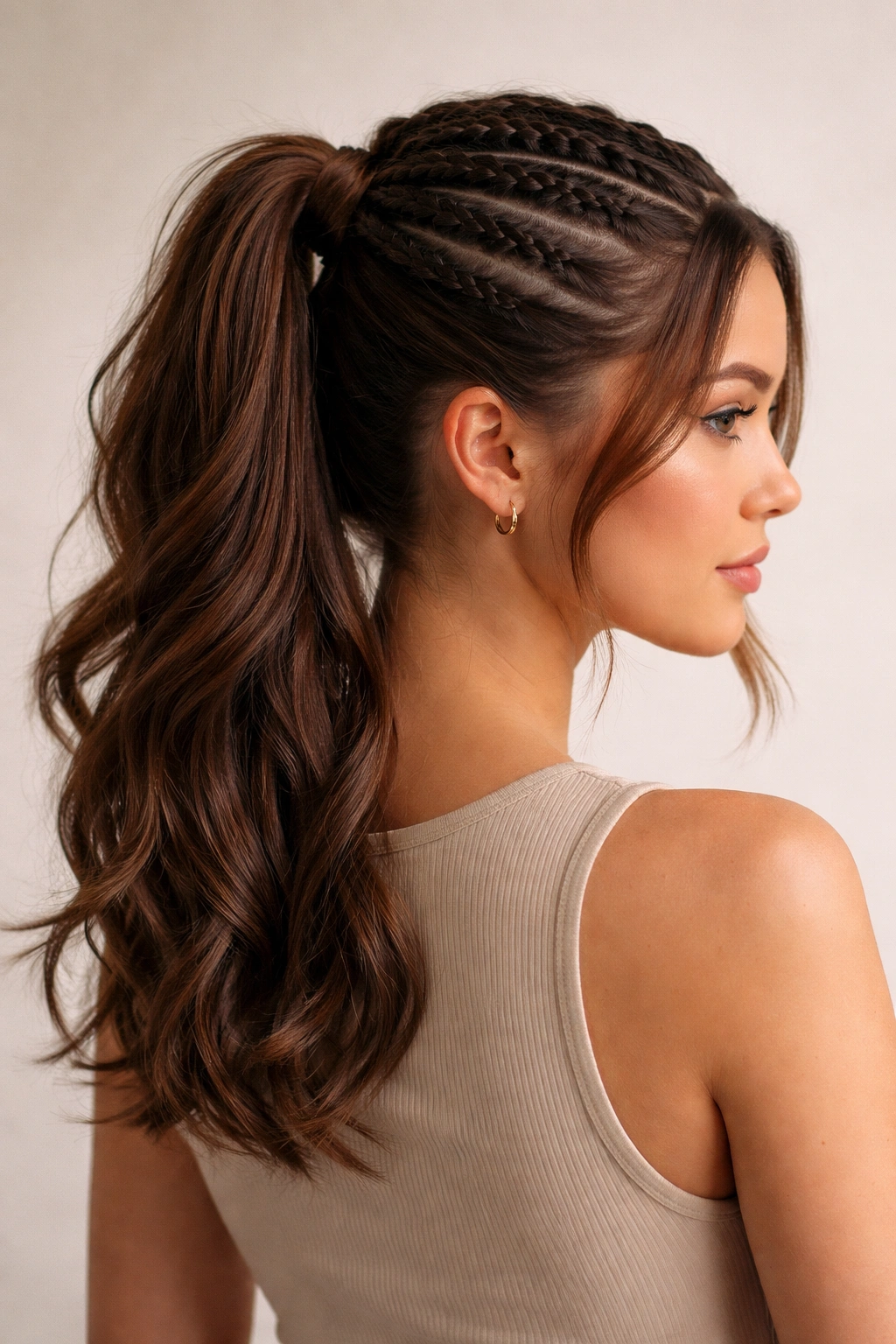
Half-up styles solve a problem medium-haired people know well: you want some hair out of your face, but you do not want everything pulled back so tightly that the style feels harsh. A half-up stitch braid ponytail gives you the best part of both.
The top section can be braided in clean stitch rows and gathered into a compact ponytail, while the lower half stays loose and free. That looseness is the point. It adds movement around the shoulders and keeps the look from feeling overworked. If your hair is layered, the loose section also helps the cut look intentional instead of awkward.
I like this version when the braid design is strong enough on its own. You don’t need a huge tail up top. You need shape. A couple of stitch rows, a tight gather, and a smooth drop into the back do the job.
Good for: concerts, casual days, and anyone who wants a style that doesn’t flatten the whole head.
The tricky part is balance. If the upper ponytail is too bulky, the lower section looks thin by comparison. Keep the top compact and the result stays elegant, not top-heavy.
7. Zigzag-Part Stitch Braid Ponytail
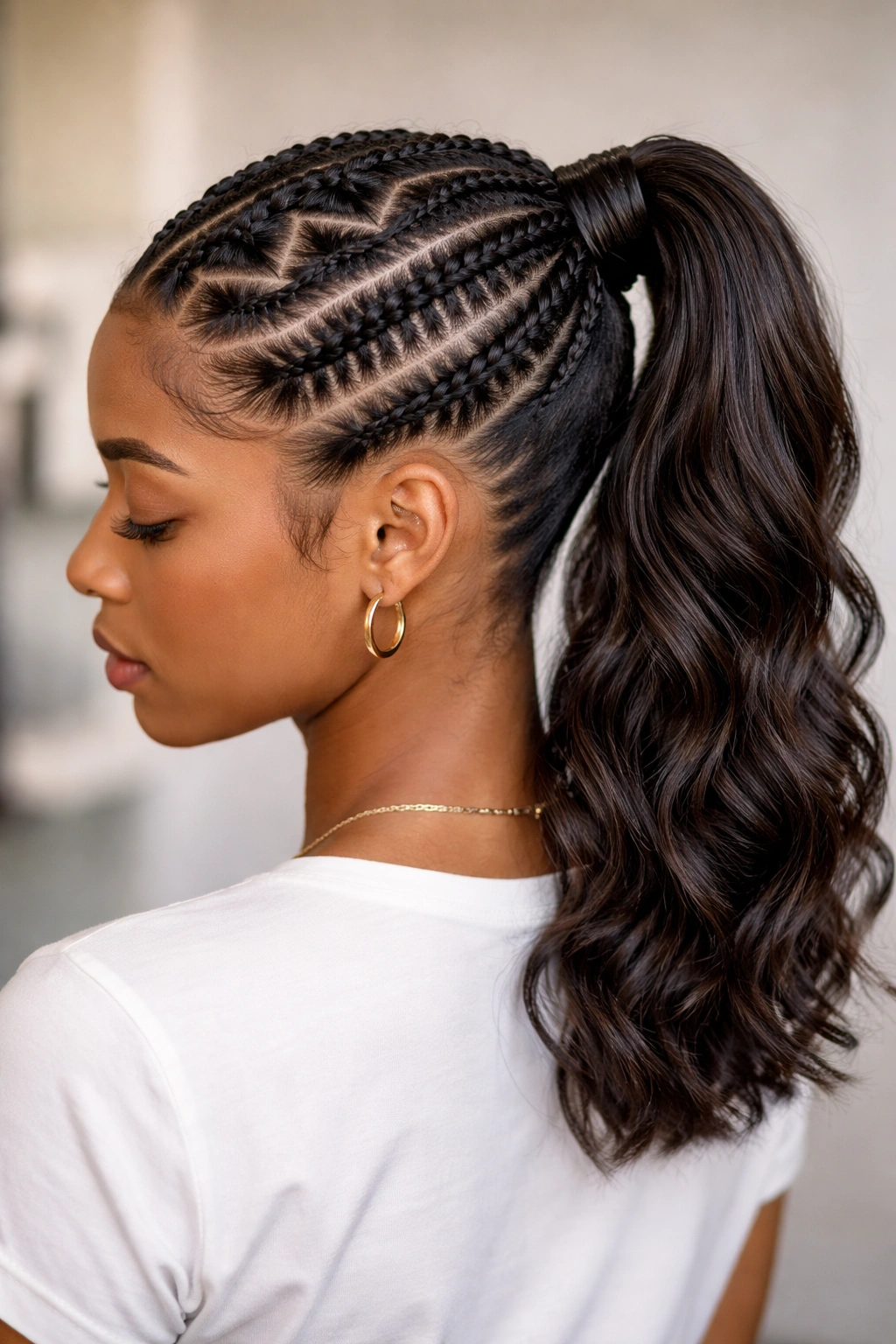
A zigzag part sounds dramatic, but it’s actually a smart way to break up medium hair when you want the style to look more designed. The part itself becomes part of the decoration. That’s the appeal.
The stitch braids follow the zigzag line and make the scalp pattern look sharper from the front. It’s a good choice if you’re tired of the usual straight rows. A zigzag gives the braid base more movement before the ponytail even starts. Small detail. Big payoff.
How to get the most from it
- Use a fine-tooth rat-tail comb for the zigzag.
- Keep the angles clean and consistent.
- Don’t make the zigzag too tiny or it will blur fast.
- Add cuffs only after the braid is finished, so the pattern stays visible.
This style works especially well on medium hair that needs a little visual drama without extra length. The ponytail can stay simple because the parting already does the talking. I’d keep the tail straight or lightly bent, not heavily curled, so the parting remains the focus.
8. The Bubble Stitch Braid Ponytail
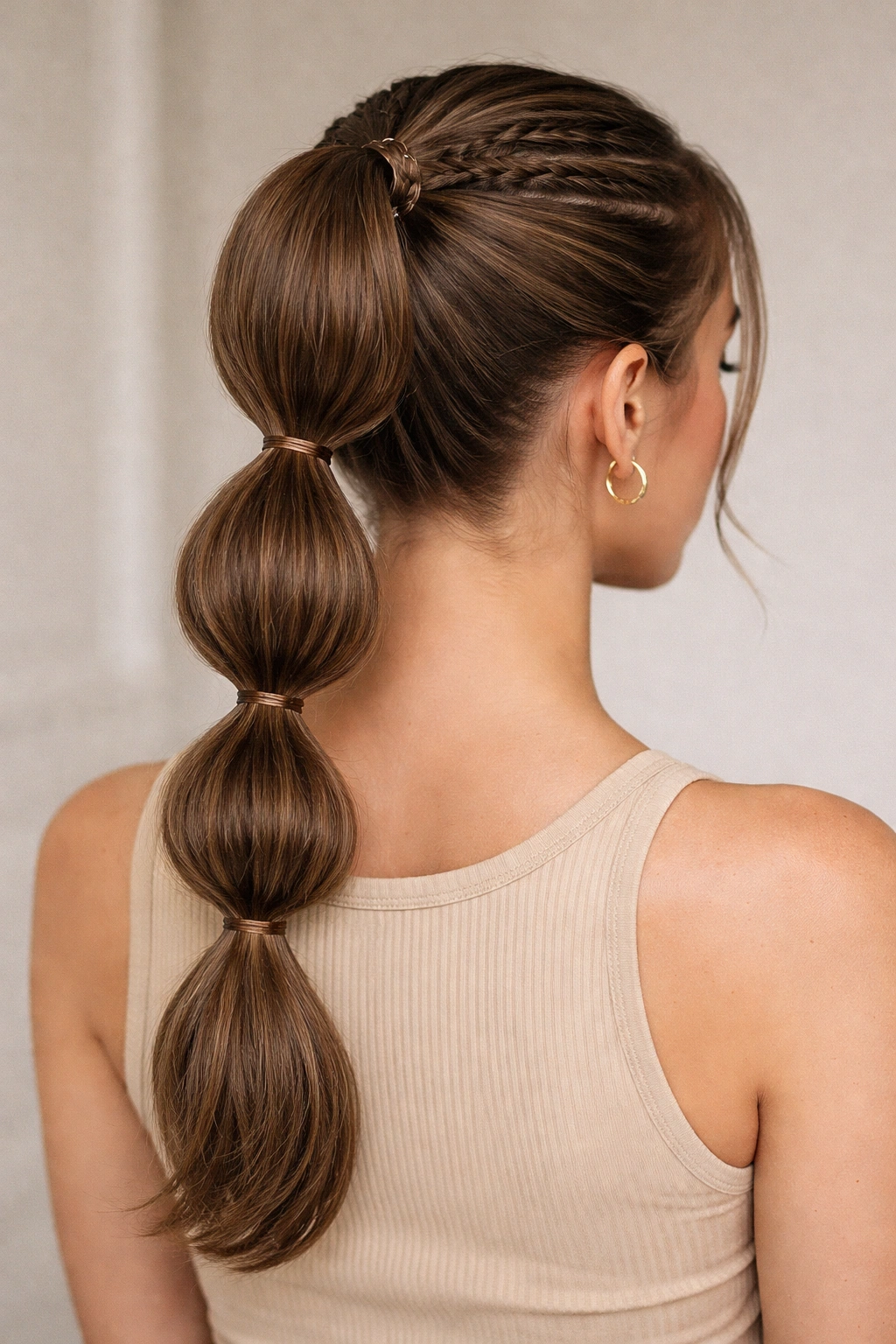
Bubble ponytails are playful, and the stitch braid base gives them structure so they don’t look childish. That combination matters. A regular bubble ponytail can sag or puff in odd places on medium hair. The braided base holds the whole thing in line.
Here’s the cleanest version: stitch braids at the top, one gathered ponytail, then evenly spaced elastics down the length of the tail with each section gently pulled out to form bubbles. Keep the spacing even—about 2 to 3 inches apart for medium hair—so the bubbles don’t bunch together near the top and leave the ends flat.
This style has a nice rhythm to it. Tight at the scalp. Rounded through the tail. If you’re going somewhere social and want people to notice the hair without making it loud, this is a strong pick.
A small warning: don’t over-fluff the bubbles. If you pull the sections too hard, they collapse into frizzy lumps. Gentle shaping is enough.
9. The Side-Swept Stitch Braid Ponytail
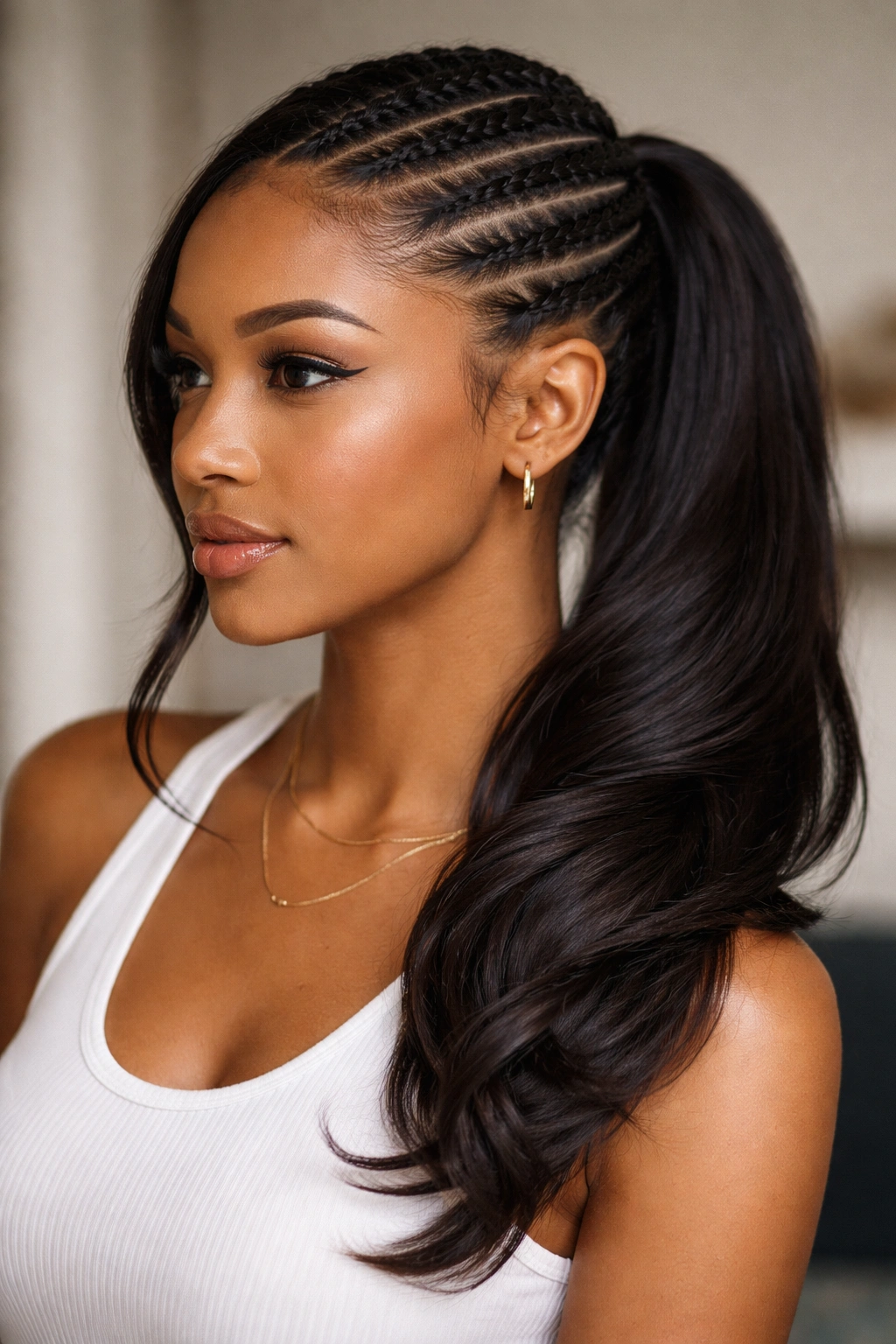
A side-swept ponytail gives medium hair a soft, slanted line that feels a little more relaxed than a straight-back tie. The stitch braids lead diagonally toward one shoulder, which changes how the whole style sits against the face.
I like this look when you want movement but you don’t want loose hair everywhere. The ponytail still stays controlled, yet the shape feels less strict than a center-back version. It’s also a useful way to show off a profile or earrings. Small thing, but it changes the vibe.
The braid work should sweep cleanly without a bunch of tiny bumps along the line. If the sections are uneven, the side direction gets messy fast. Keep the base smooth and the tail weighted enough to fall naturally over one shoulder.
- Best with medium-length layers that can blend into the tail.
- Works well with curled ends.
- Keeps the nape clear.
- Looks nicer when the ponytail rests on the same side as the swept braids.
Tip: set the side direction before you start braiding. Changing your mind halfway through usually makes the parting sloppy.
10. The Mohawk-Inspired Stitch Ponytail
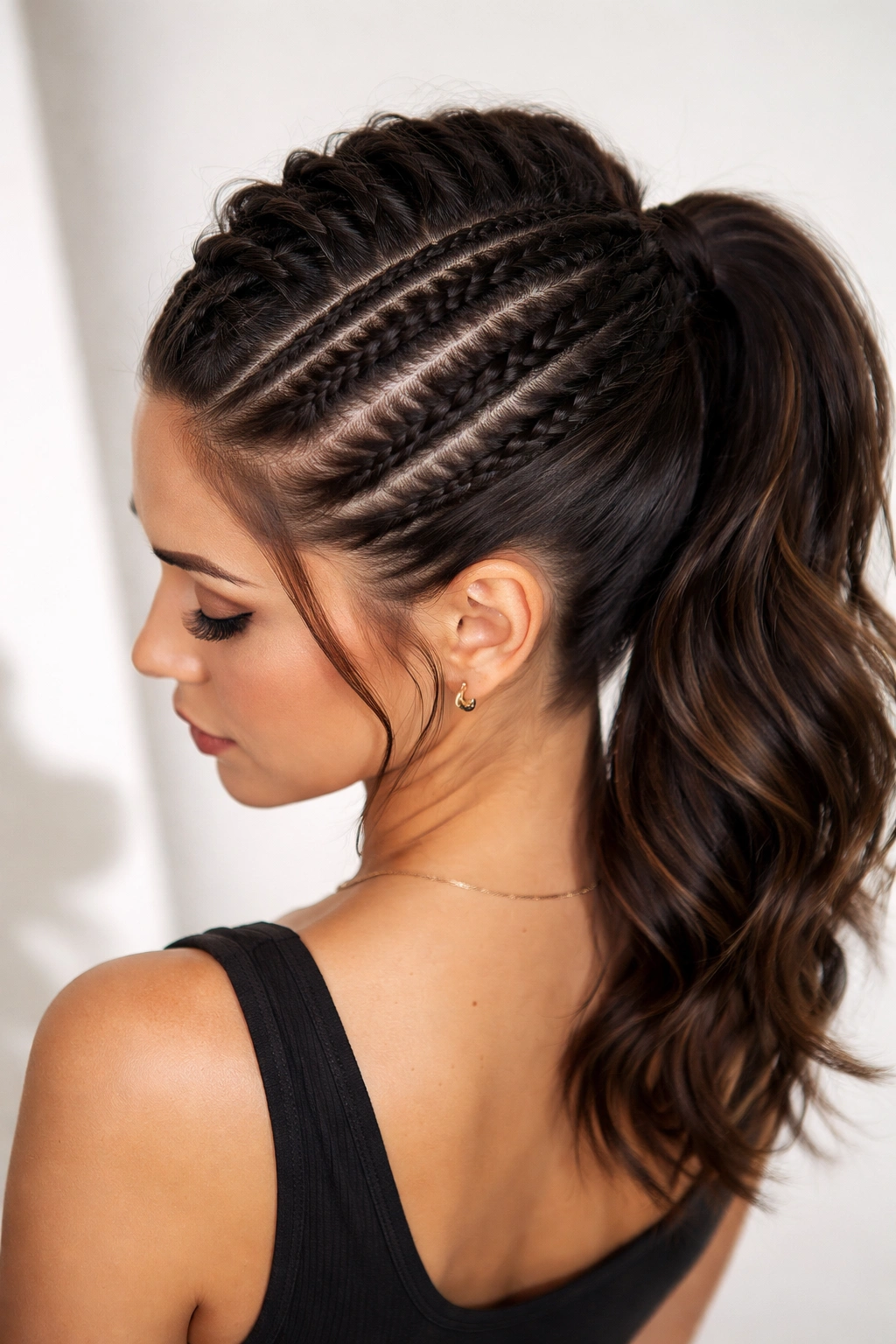
A mohawk-inspired ponytail is not shy. The braid rows are tighter at the sides, the center ridge stands out, and the ponytail gets all the height it needs from that middle track.
This style is a favorite when medium hair needs more attitude. It makes the crown look longer and the sides look cleaner, which is a strong visual contrast. If you’ve got strong cheekbones or a defined jaw, this shape can be especially flattering because it keeps the sides close and lifts everything through the center.
What keeps it wearable is restraint. You do not need a giant, stiff ponytail to make the look work. A medium-size tail with a bit of wave or curl is enough. Too much bulk turns the style from sharp into clunky.
How to keep it balanced
Work the center braid first so the ridge stays straight. Then bring the side rows in low and tight. If the ponytail sits too far back, you lose the mohawk effect. If it sits too high, the shape can feel cartoonish. Right in the middle is the sweet spot.
11. Stitch Braids with Hair Cuffs and a Clean Ponytail
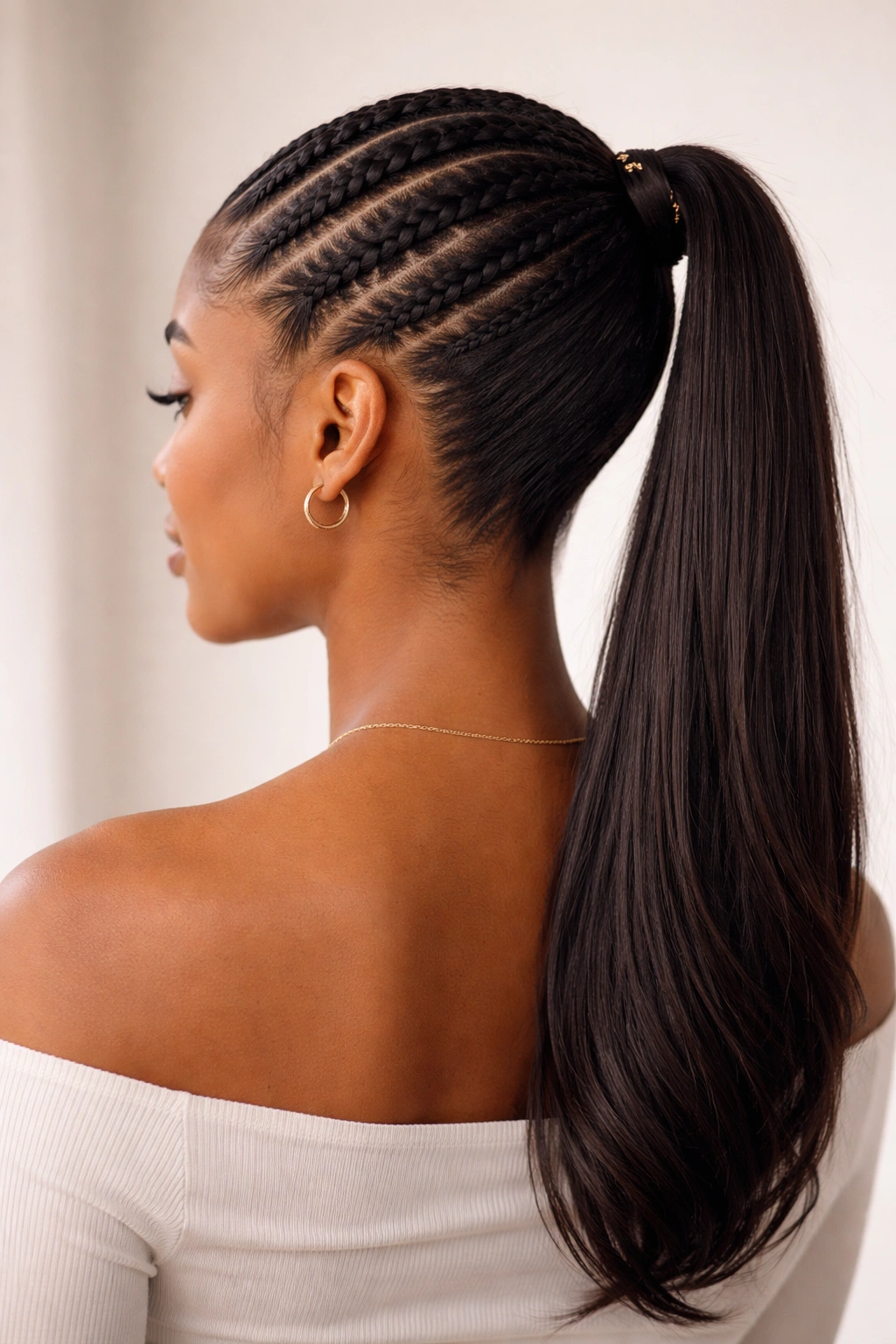
Hair cuffs are one of those little things that can save a style when the braid pattern is nice but needs a finishing touch. A few gold or silver cuffs along the stitch lines catch the eye and give the ponytail a more styled, less routine look.
The trick is not to overdo it. Two or three cuffs on each visible row is enough for medium hair. More than that and the braid starts to look crowded. I prefer placing the cuffs near the center of the braid or close to the ponytail base so they frame the style instead of scattering attention everywhere.
This version works well when your clothes are simple and you want the hair to do a little more. A black top, hoop earrings, and cuffed stitch braids can look finished without much effort. The ponytail can stay straight, or you can curve the ends a bit if you want softness.
Small note: cuffs slide less on cleaner, tighter stitch braids, so install them after the braid is fully secured.
12. The Feed-In Stitch Ponytail with Extra Length
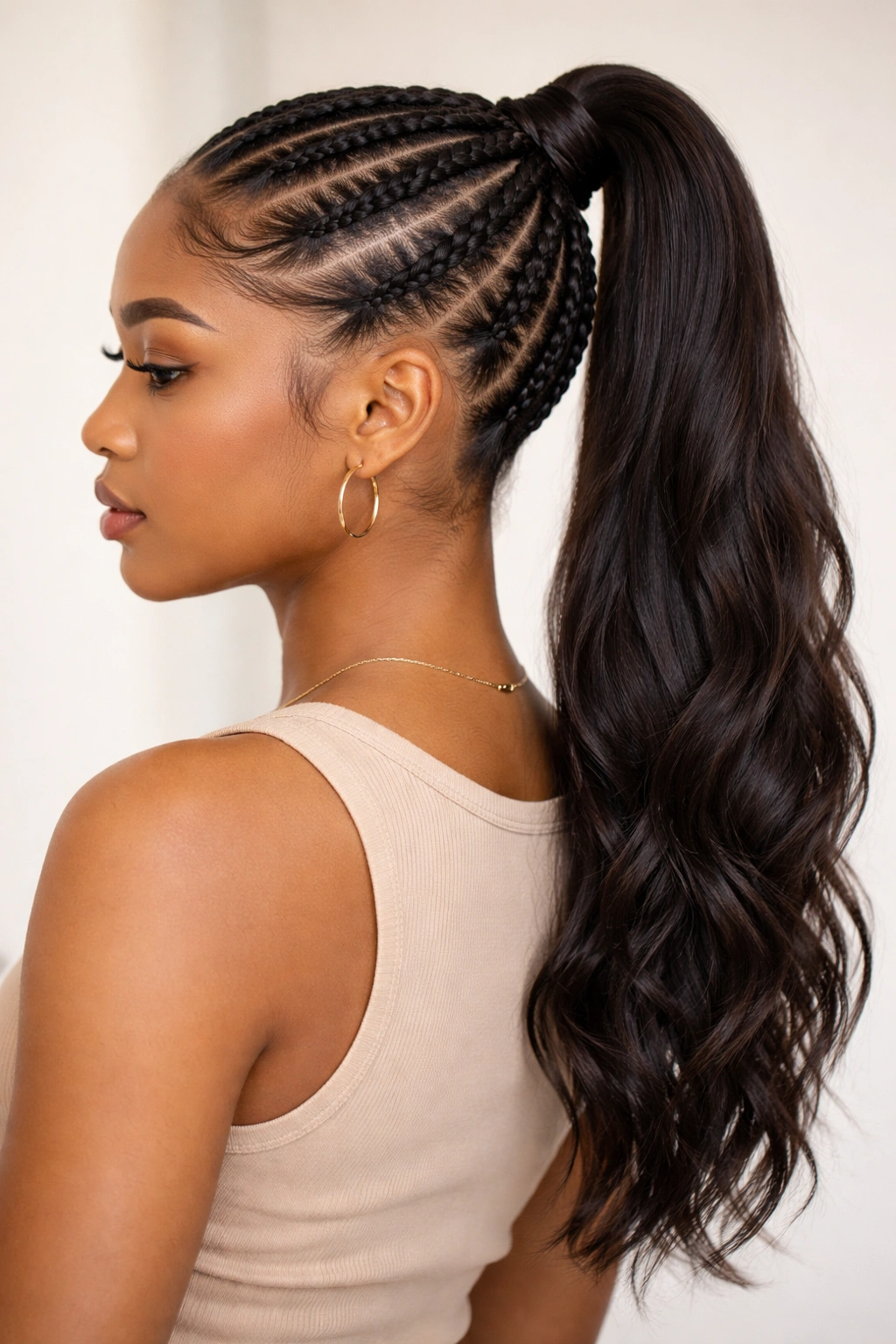
A lot of medium hair can wear a ponytail just fine. The difference comes down to length, swing, and how much hair you want hanging down your back. Feed-in hair solves that without making the base bulky.
The best feed-in stitch ponytail starts with a restrained amount of added hair at the root and grows heavier only near the tail. That gives you a natural-looking transition. If you add too much too soon, the braid base gets thick and starts lifting off the scalp in a way that looks forced.
What to ask for
- A small-to-medium feed-in at the root.
- Lightweight braiding hair for the ponytail.
- A tail that stays mobile, not stiff.
- Soft tapering where the braid meets the ponytail.
This style is especially useful if your medium hair stops at the shoulders and you want the ponytail to read longer. It’s also kinder than forcing a giant ponytail onto a small base. The end result should feel balanced when you move, not like the style is carrying extra weight. That’s where a lot of people go wrong.
13. The Soft Romantic Stitch Braid Ponytail
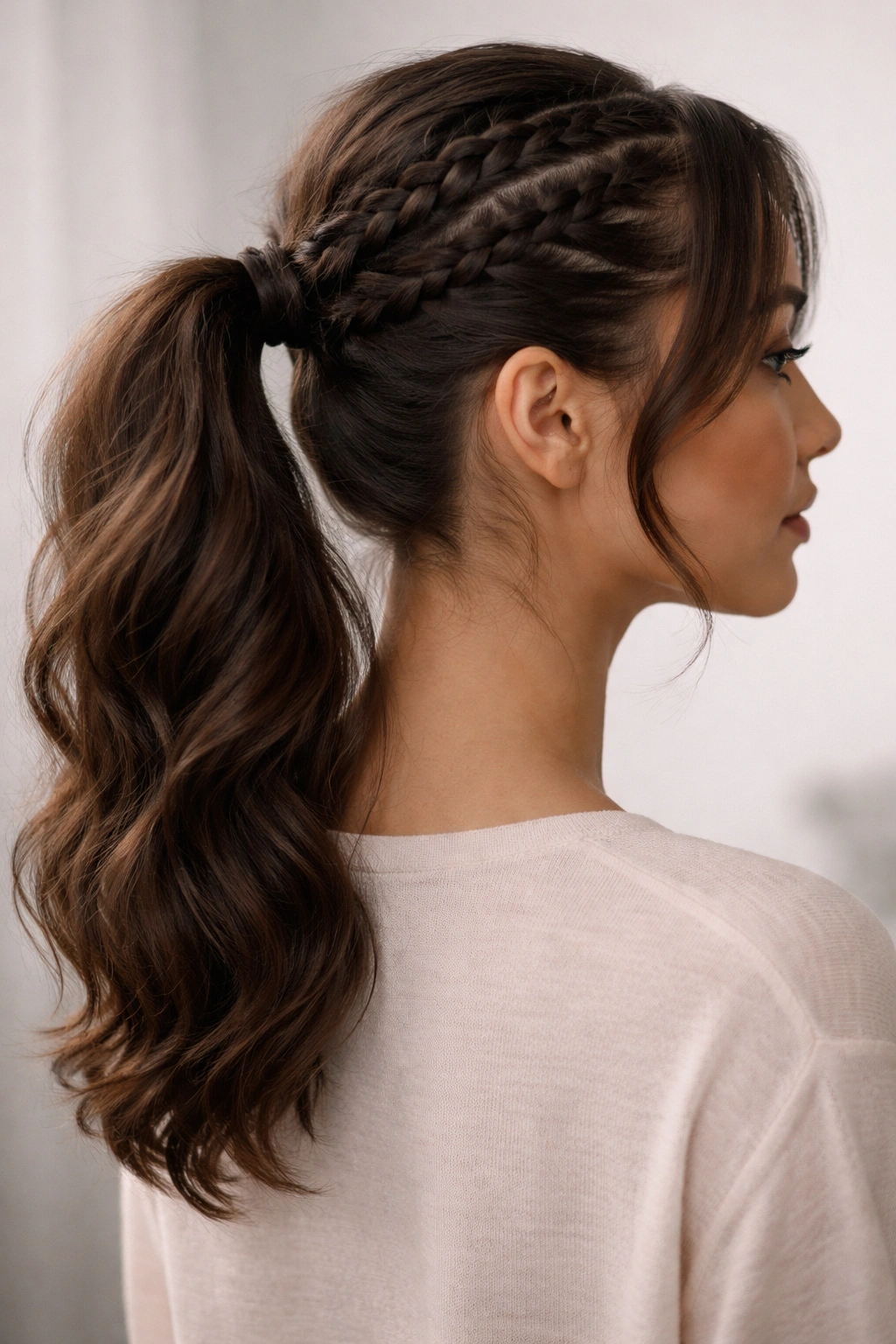
Not every stitch braid ponytail has to feel sharp enough to cut glass. A softer version, with looser edges and a gently curved ponytail, can look much warmer and easier to wear.
I like this when the braid pattern is still neat but the finish is less strict. Think cleaner edges, a little sheen, and a tail that bends instead of hanging poker-straight. On medium hair, that softness helps the style sit naturally with layered cuts and rounded face shapes.
You can keep the stitch lines visible while still brushing out the tail a bit for fullness. A light mist of mousse or setting foam on the loose section before it dries helps the ends separate in a nicer way. Not crunchy. Not stiff. Just soft enough to move.
This style pairs well with small hoops, a knit sweater, or anything that makes a hard-edged ponytail feel a little too formal. It’s the version I’d choose if I wanted polish without looking overly done.
14. The Tight Sporty Stitch Ponytail
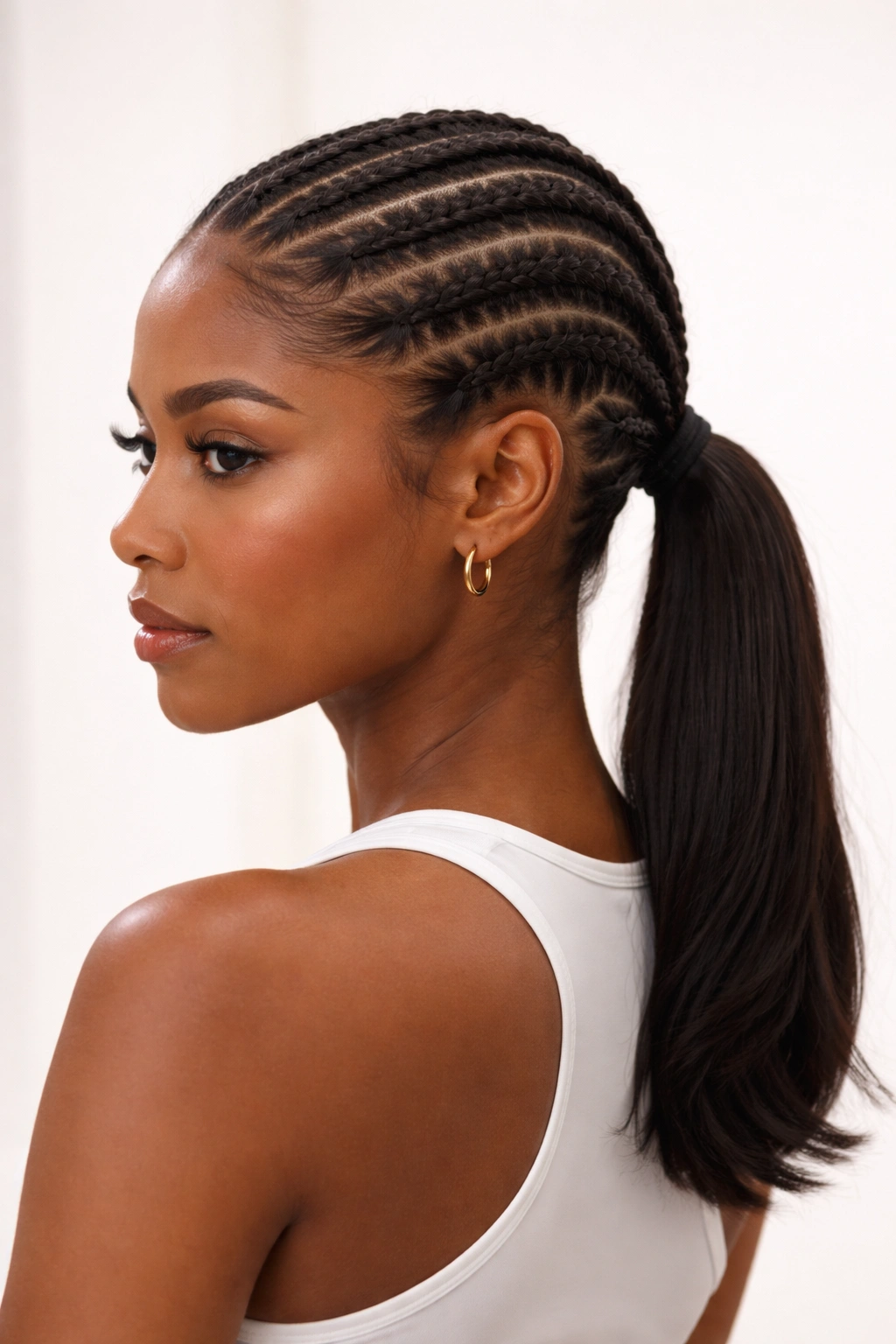
A tight sporty ponytail is about function first, and I mean that in the best way. It keeps medium hair off the neck, stays put, and can handle a long day without falling apart every time you turn your head.
The stitch braids should sit close to the scalp, and the ponytail should be secured low enough that it does not tug upward during movement. If you work out, run errands, or just hate hair in your face, this is one of the most useful versions. There’s no extra drama here. That’s the appeal.
What matters most is tension control. Too loose and the ponytail slides. Too tight and your edges start screaming by midday. A snug base with a smooth finish is the goal. I’d avoid heavy accessories here because they bounce around and get annoying fast.
A thin elastic, a little edge control, and a quick pass of light hold spray are enough. Leave the rest alone. This is not the place for ten different finishing products.
15. The Braided Crown Into a Low Ponytail
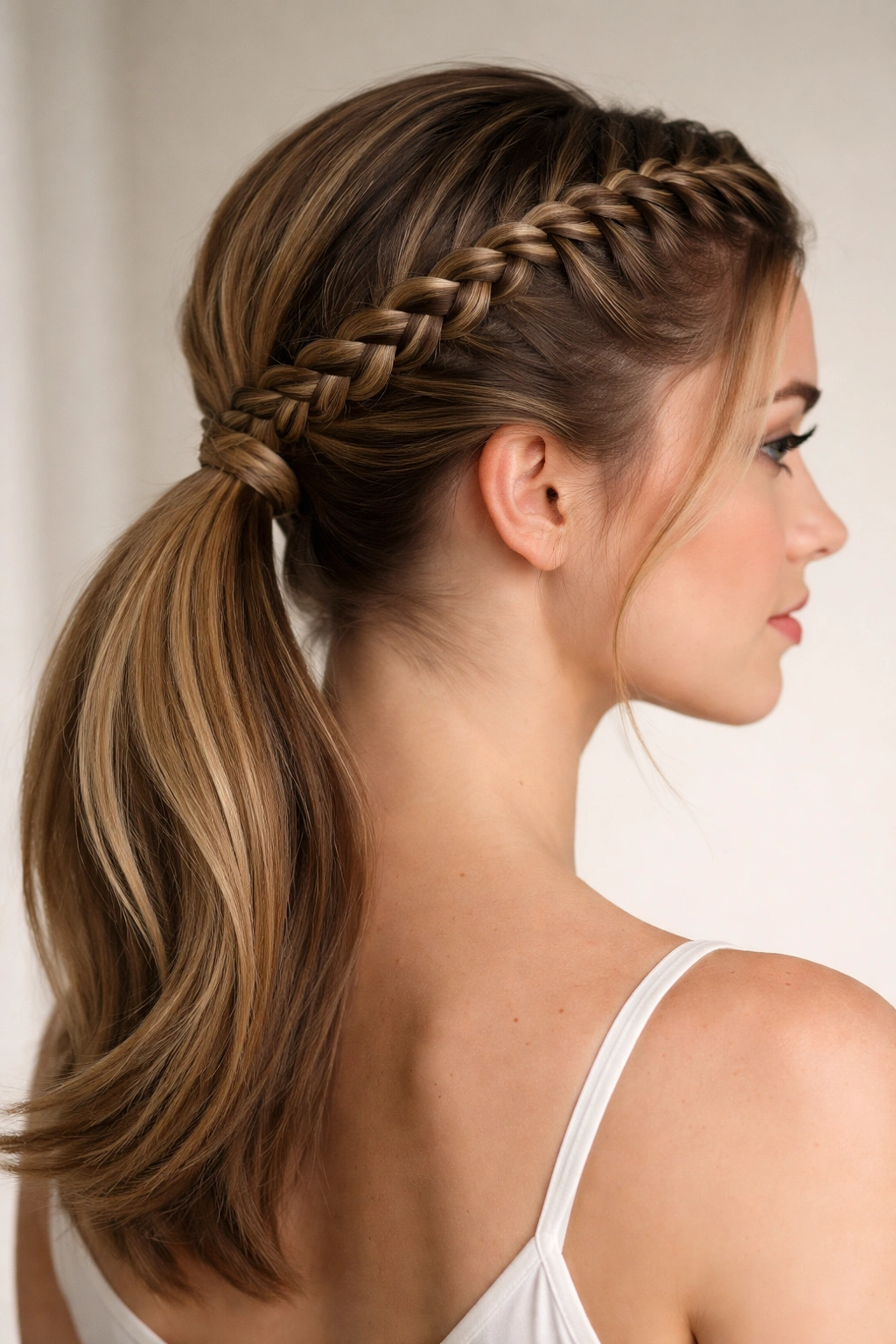
A crown-style stitch braid looks like it has more work in it than it really does. The braids curve around the head before dropping into a low ponytail, which makes medium hair look more deliberate from every angle.
This is one of those styles that reads polished even if the ponytail itself is plain. The crown section gives the eye a path to follow, and the low gather keeps the whole thing grounded. It’s especially nice if you want the front and sides to be the feature, not just the tail.
Why it stands out
The crown shape opens up the face a little more than straight-back braids. That makes it useful for days when you want the forehead and temples visible. It also keeps the ponytail from sitting too high, which can be a problem on medium hair if the base gets bulky.
If you want a little softness, leave the tail brushed out. If you want structure, wrap the base and add one curled bend near the bottom. Either way, the crown detail does the heavy lifting.
16. Four Clean Stitch Rows Into a Ponytail
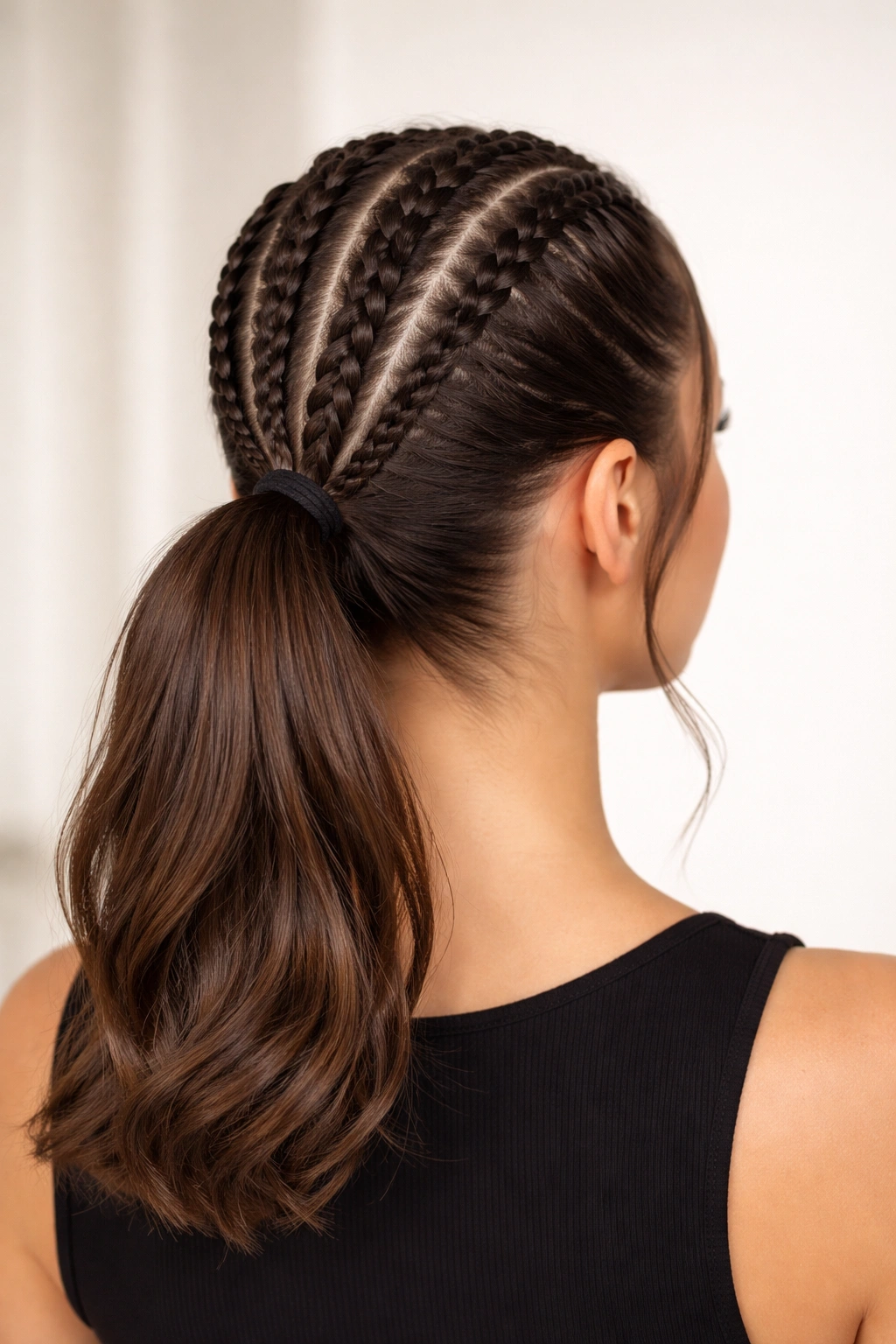
Four-row styles are where precision starts to matter. With medium hair, four neatly spaced stitch braids can make the scalp look balanced and give the ponytail a strong, architectural base.
What to ask for
- Four rows with equal width.
- Slightly narrower sections near the hairline.
- A ponytail base that sits centered, not shifted.
- Clean part lines between each row.
This setup is useful if your hair is medium density and you want the braid pattern to show clearly without overcrowding the scalp. It can look amazing on straight, relaxed, or stretched natural hair because the rows stay visible longer when the surface is smooth.
The key is not cramming too much hair into each braid. Four rows already carry visual weight. If each one is too thick, the top of the head gets boxy fast. Keep the lines clean, let the ponytail stay simple, and the style reads sharp instead of heavy.
17. Stitch Braid Ponytail with Soft Bangs or Fringe
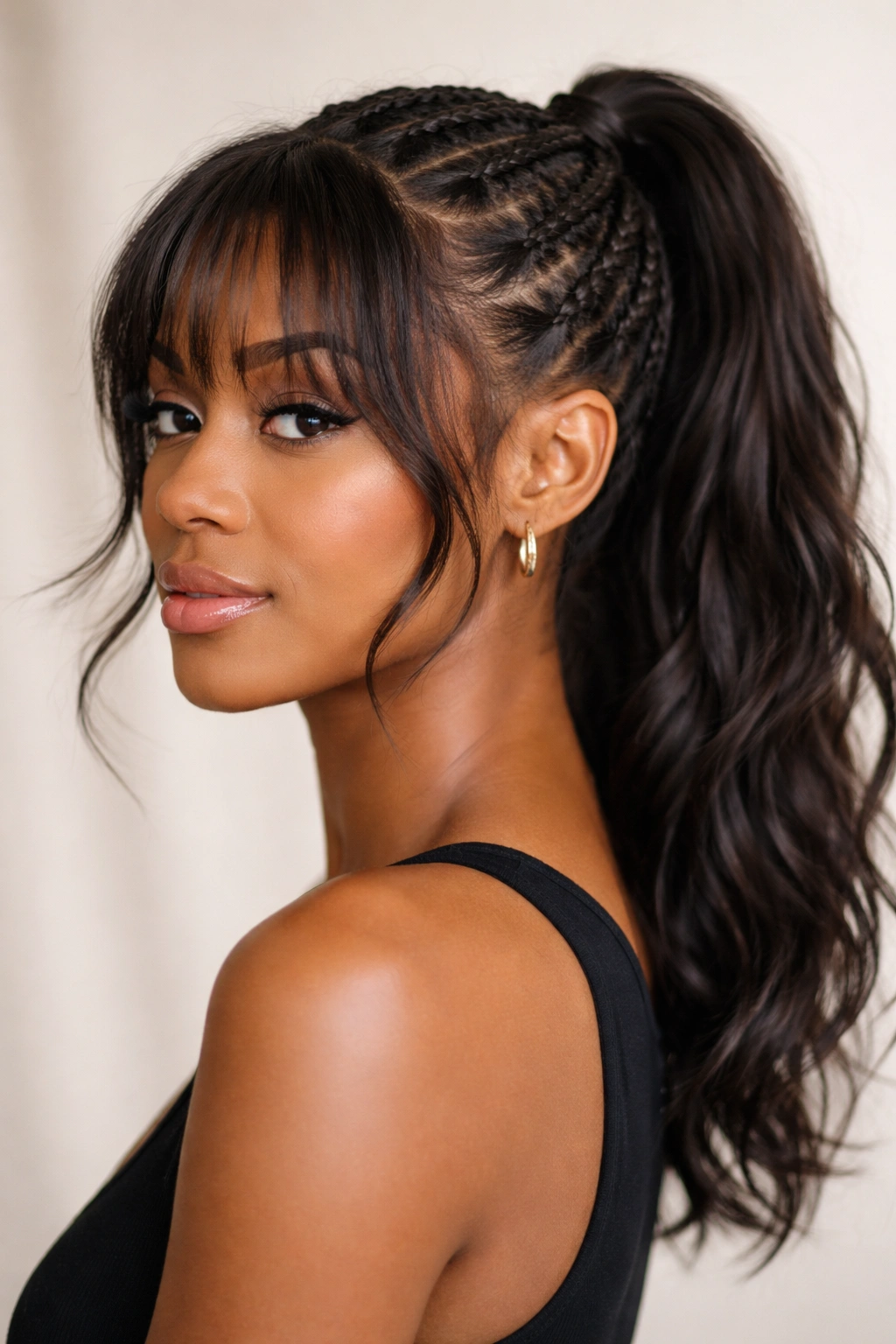
Leaving out bangs or a curly fringe changes the whole face shape around a stitch braid ponytail. The braids stay structured, but the front feels less severe because something is softening the forehead area.
This version works well for medium hair if your face sometimes looks too open with everything pulled back. A few pieces around the front can solve that without undoing the style. You can leave natural fringe, shape a curled front piece, or pull out a small section on each side for a gentler frame.
A strong ponytail with soft front pieces creates a nice contrast. Tight and clean at the back. Lighter around the face. That balance keeps the style from looking harsh. I’d choose this when I want a ponytail but I’m not in the mood for a fully slicked finish.
Be careful with the amount you leave out. Too much and the style gets messy; too little and you might as well have pulled everything back anyway. A little goes a long way.
18. The Low Side Stitch Braid Ponytail
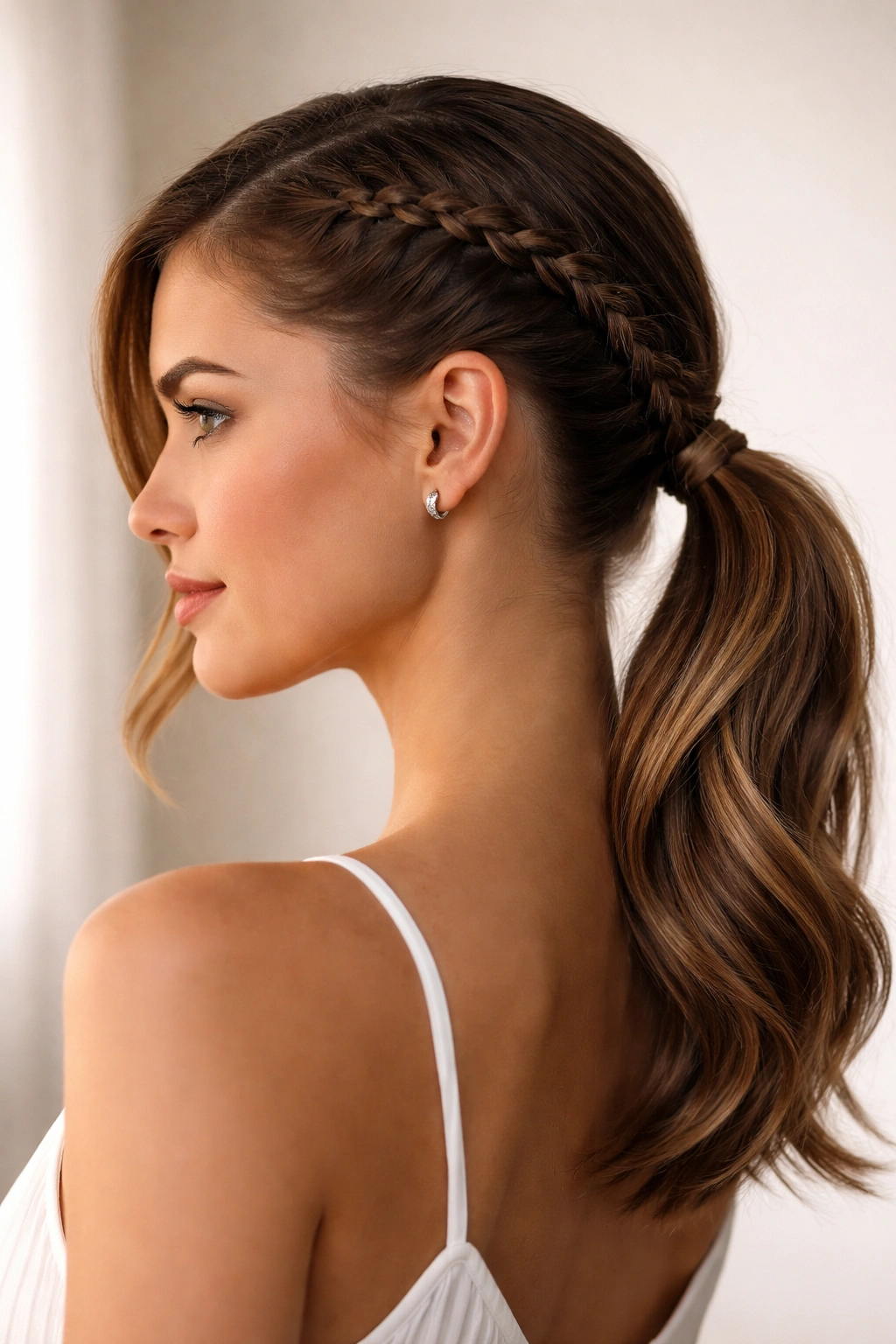
A low side ponytail can be sweeter than a straight-back version, and stitch braids give it enough structure to keep it from looking too casual. The ponytail sits just behind one ear or under the jawline, which makes the style easy to wear with earrings or a collared shirt.
I like this one when medium hair needs a softer resting point. The side placement stops the style from flattening the back of the head. It also works well if one side of your parting naturally falls better than the other. Don’t fight the hair. Use it.
A few details that matter
- Keep the side part smooth and clean.
- Anchor the ponytail low enough that it doesn’t pull.
- Brush the tail toward the shoulder before securing it.
- Use a small ribbon or wrap if you want a softer finish.
This is one of those styles that looks calm without being boring. The stitch braids give it enough edge to stay interesting.
19. The High Ponytail with Braided Corners and Loose Length
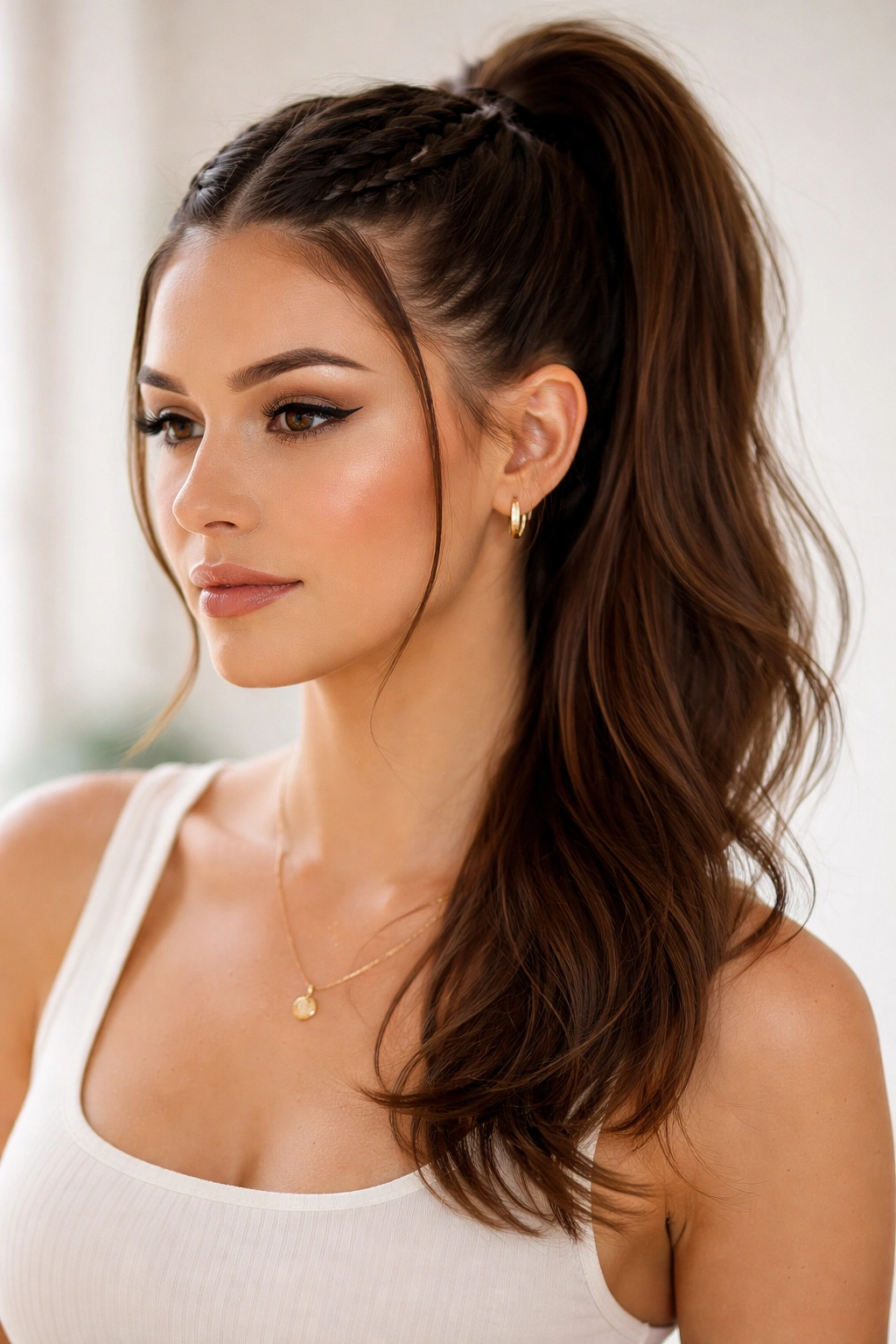
Here’s a nice middle ground: stitch braids only at the front and corners, then a high ponytail with some loose length left flowing behind. It gives medium hair a little of everything—clean lines, height, and movement.
The braided corners frame the face and keep the front tight, while the rest of the hair stays free enough to move. That balance makes this style feel less structured than a full braided base. It’s a good choice when you want a ponytail that looks styled but doesn’t feel sealed down.
The loose length can be straight, curled, or brushed into a soft bend. I’d avoid overstyling it. The point is contrast, not perfection. If the top is too polished and the loose part is too glossy, the whole thing can start looking stiff.
This is especially nice on medium hair because the natural length can carry the style without needing a huge amount of added hair. Sometimes restraint is the better move.
20. Stitch Braids for Thick Medium Hair
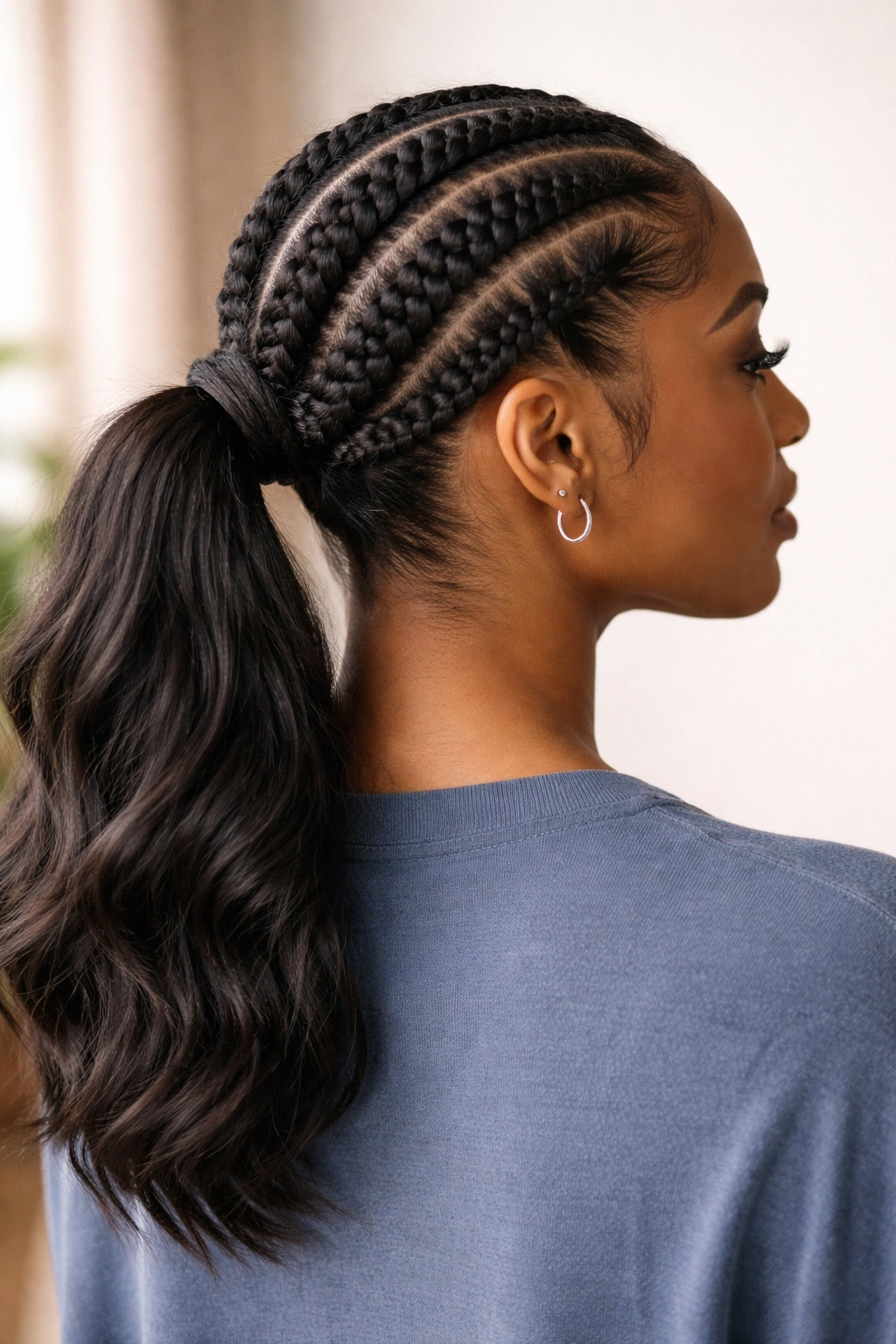
Thick medium hair needs a different hand. The braid pattern has to control bulk without flattening everything into a hard shell, and that takes a little more planning than people expect.
What works best
- Use slightly wider stitch sections to keep the scalp comfortable.
- Keep the ponytail base firm, but not tiny.
- Add enough hair to smooth the tail, not so much that the base balloons.
- Ask for balanced tension around the temples and crown.
A thicker texture can make stitch lines look gorgeous, but it can also make the style heavy fast. That’s why I prefer a ponytail that sits at mid-height or low. The weight has somewhere to go. High versions can pull too much, especially if the ponytail is long.
This style also benefits from a satin wrap at night. Thick hair can puff the braid edges faster than finer hair, and the stitch pattern loses its clean look if you skip care. The good news is that the style usually looks fuller and richer when it’s done right.
21. Stitch Braids for Fine Medium Hair
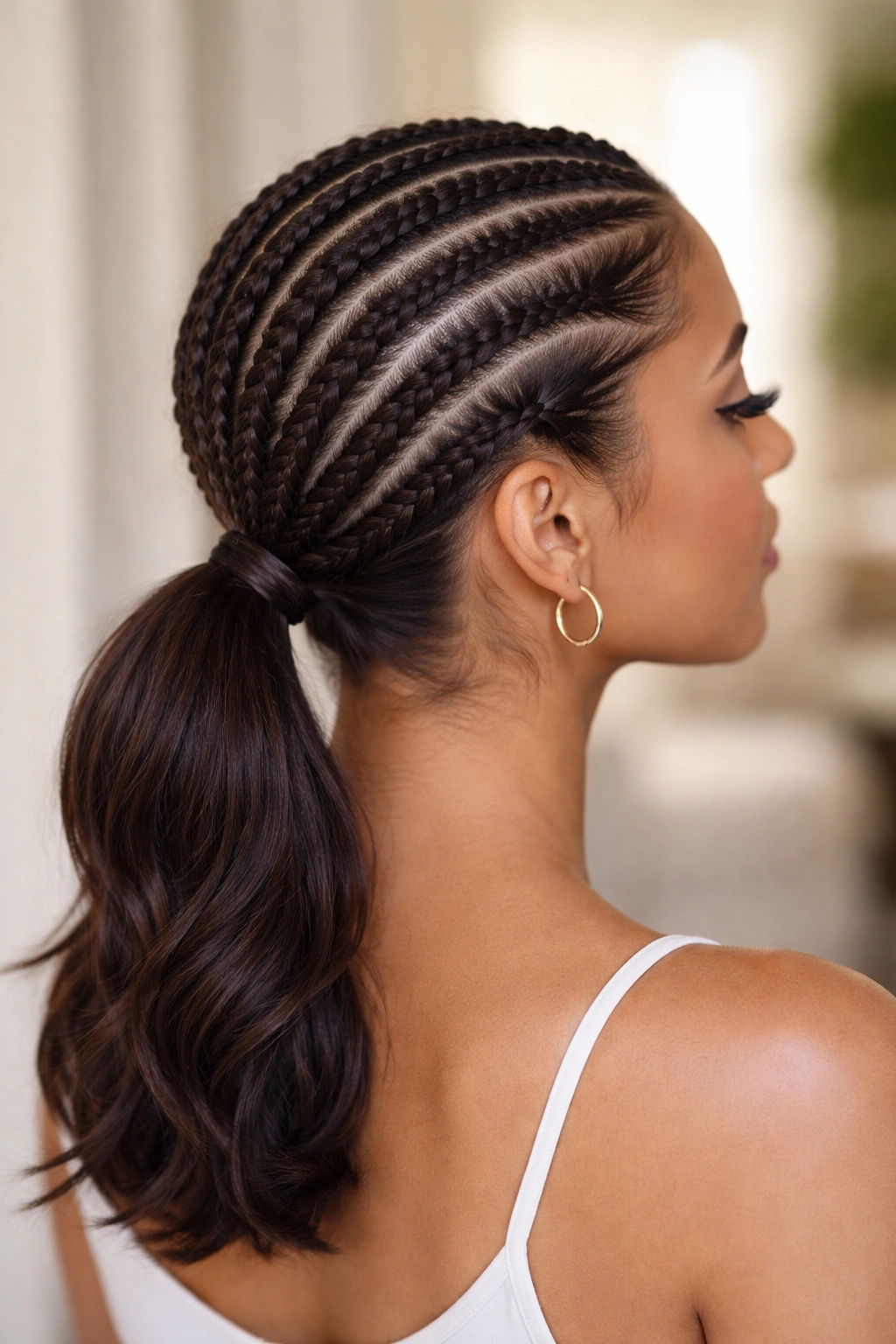
Fine medium hair needs the opposite approach. The braid base should create the illusion of density without exposing every tiny gap along the scalp. Too much added hair can overwhelm the natural strands and make the ponytail look separate from the head.
The cleanest version uses smaller, tidy stitch rows and a ponytail that isn’t overloaded. A little feed-in hair can help the tail look fuller, but keep the transition subtle. If the extension hair is too heavy, the base starts sliding and the style loses shape faster.
I’d keep the ponytail lower and closer to the neck if the hair is very fine. That gives it a better anchor point. A high tie can look cute, but it often needs more support than fine medium hair wants to give.
A light teasing at the tail base can help, though I wouldn’t go wild with it. Fine hair can get fuzzy fast. The goal is body, not a bird’s nest.
22. The Knotless Stitch Braid Ponytail
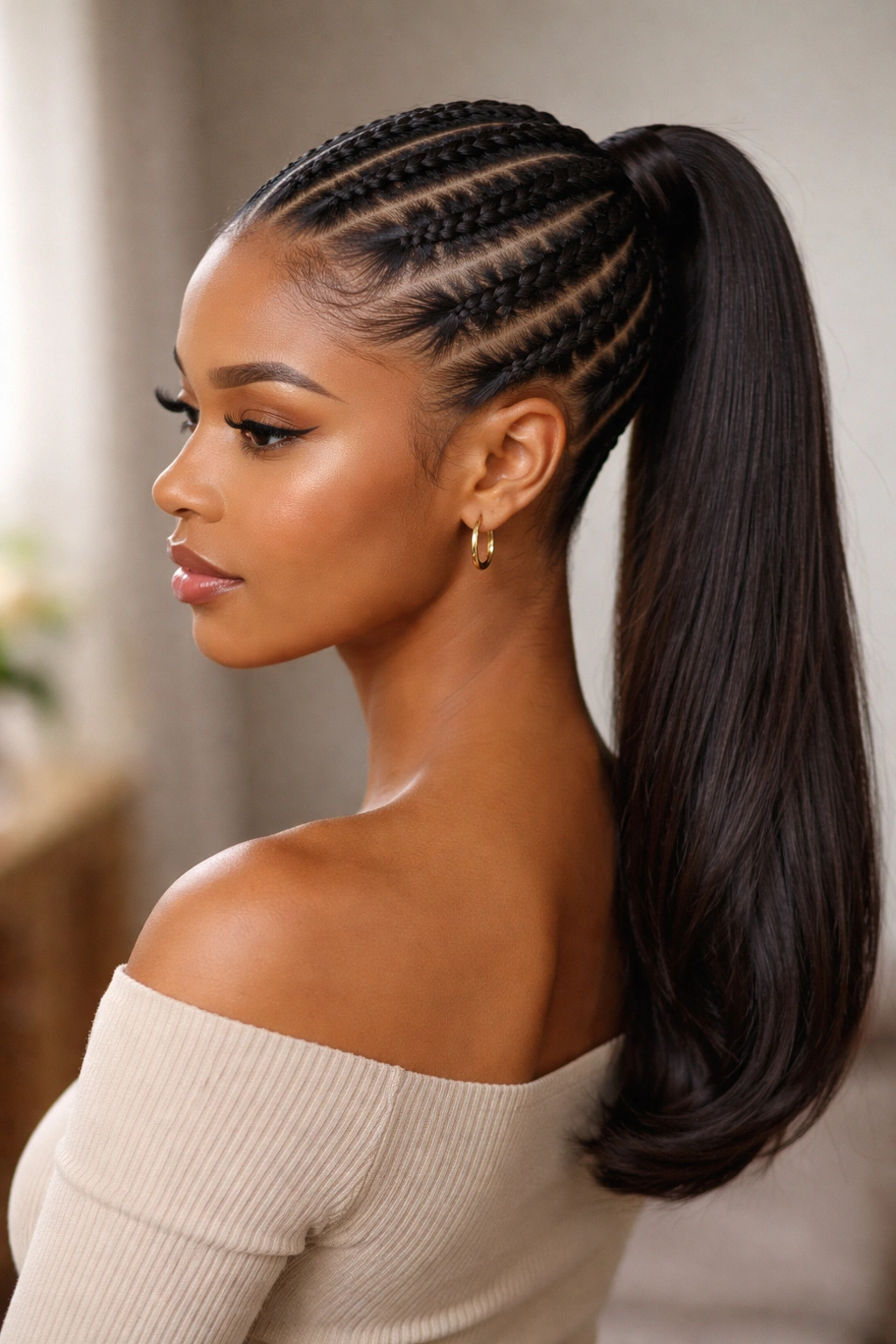
A knotless version softens the look right from the root. Instead of a bulky knot at the base, the added hair feeds in gradually, which makes the front sit flatter and more natural on medium hair.
That gradual start is what I like most. The braid doesn’t have that abrupt bump some tight styles get near the hairline. It’s easier on the scalp, and it tends to look smoother in photos and in person. More important, it feels less harsh if you’ll be wearing it for a full day.
The ponytail can be straight, curled, or even braided into a longer tail. Because the base stays slim, the overall style looks cleaner and more refined. If you want the stitch pattern to be the main visual feature, knotless is a smart place to begin.
Watch for this: if the feed-in hair is added too fast, the base becomes lumpy. Gradual sections make the whole style look more natural and sit better on medium hair.
23. The Everyday Clean Stitch Braid Ponytail
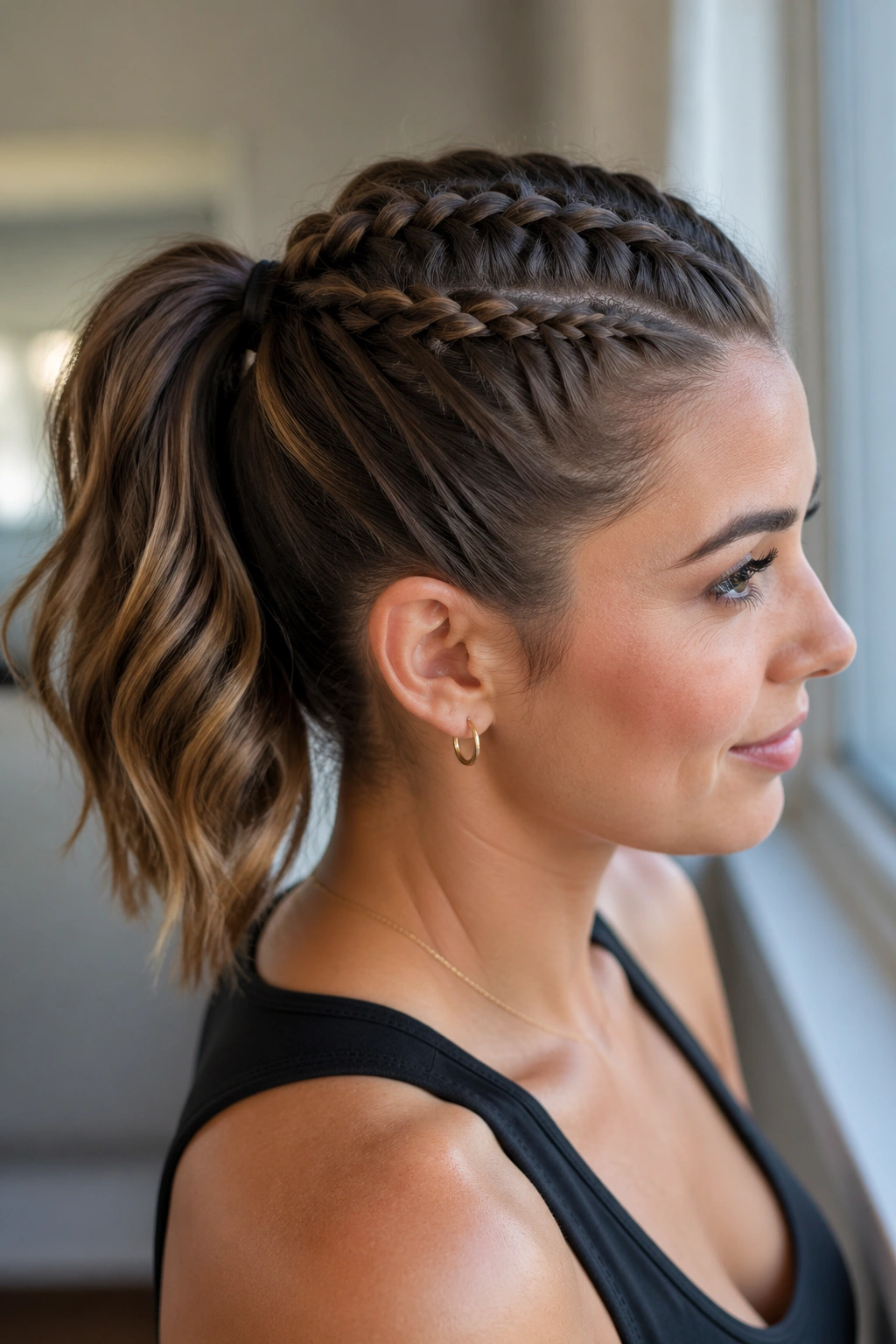
Some styles are for big moments. This one is for the ordinary days that still deserve a decent hair day. A clean stitch braid ponytail with medium hair can be simple, neat, and genuinely useful without looking boring.
The reason I keep coming back to this shape is that it does not fight your life. It holds up for work, errands, dinner, and everything in between. The stitch rows keep the front organized, and the ponytail can stay straight or slightly bent, depending on how much movement you want. If your medium hair tends to fluff up by midday, this is the kind of style that keeps that under control better than a loose ponytail ever will.
I’d keep the finish light. A touch of edge control, a smooth part, and a secure elastic are enough. Heavy products just make the scalp look greasy before the day is over. If you want a little more personality, add one cuff, a thin ribbon, or curled ends. That’s enough. No need to stack ten extras on top.
The nicest part is that this version works with almost any outfit and doesn’t need a special occasion to make sense. Some hairstyles ask for a reason. This one doesn’t.