



Pink braided ponytails can swing from sweet to sharp in one move. The braid pattern does most of the talking; the pink shade decides whether the whole thing feels playful, polished, or a little rebellious.
Pastel blush, bubblegum, rose, neon, magenta — each one changes the mood. On dark hair, pink braids can read like ribbon woven through the tail. On light hair, the same style can look airy and soft, almost like candy floss with structure.
The part that gets missed most often is the base. A clean part, a little grip at the roots, and the right braid tension decide whether the style holds its shape or starts puffing out in the wrong places halfway through the day. Too tight, and the crown looks stiff. Too loose, and the whole ponytail loses its line.
Some versions are built for a school run or a workday. Others lean into dinner, a party, a wedding guest look, or a big night when you want the braid to do the heavy lifting. The styles below cover the full range, from neat and glossy to oversized and dramatic.
1. Cotton-Candy High Pink Dutch-Braid Ponytail
This is the version that makes pink look crisp instead of sugary. A high Dutch braid feeds straight into a ponytail at the crown, so the braid sits proud on the head rather than disappearing into the hair. That raised braid line gives the style shape even when the pink shade is soft and pastel.
Why It Works
A Dutch braid shows more depth than a standard three-strand braid because the sections cross underneath and the braid lifts off the scalp. That matters with pink hair. The color catches the braid pattern, and the braid pattern gives the color structure.
- Best on medium to long hair with some grip at the roots
- Works well with clip-in pink extensions for extra length
- Looks clean with a center part or a slight off-center part
- Needs a firm elastic at the crown so the ponytail does not sag
Keep the tail loose. If the braid is tight and the ponytail is soft, the style feels balanced instead of severe. A light mist of shine spray on the lengths helps the pink read richer without making the braid greasy.
This is the one I’d pick for birthdays, brunch, or any day that needs a little lift without drifting into costume territory.
2. Sleek Bubble-Section Pink Ponytail
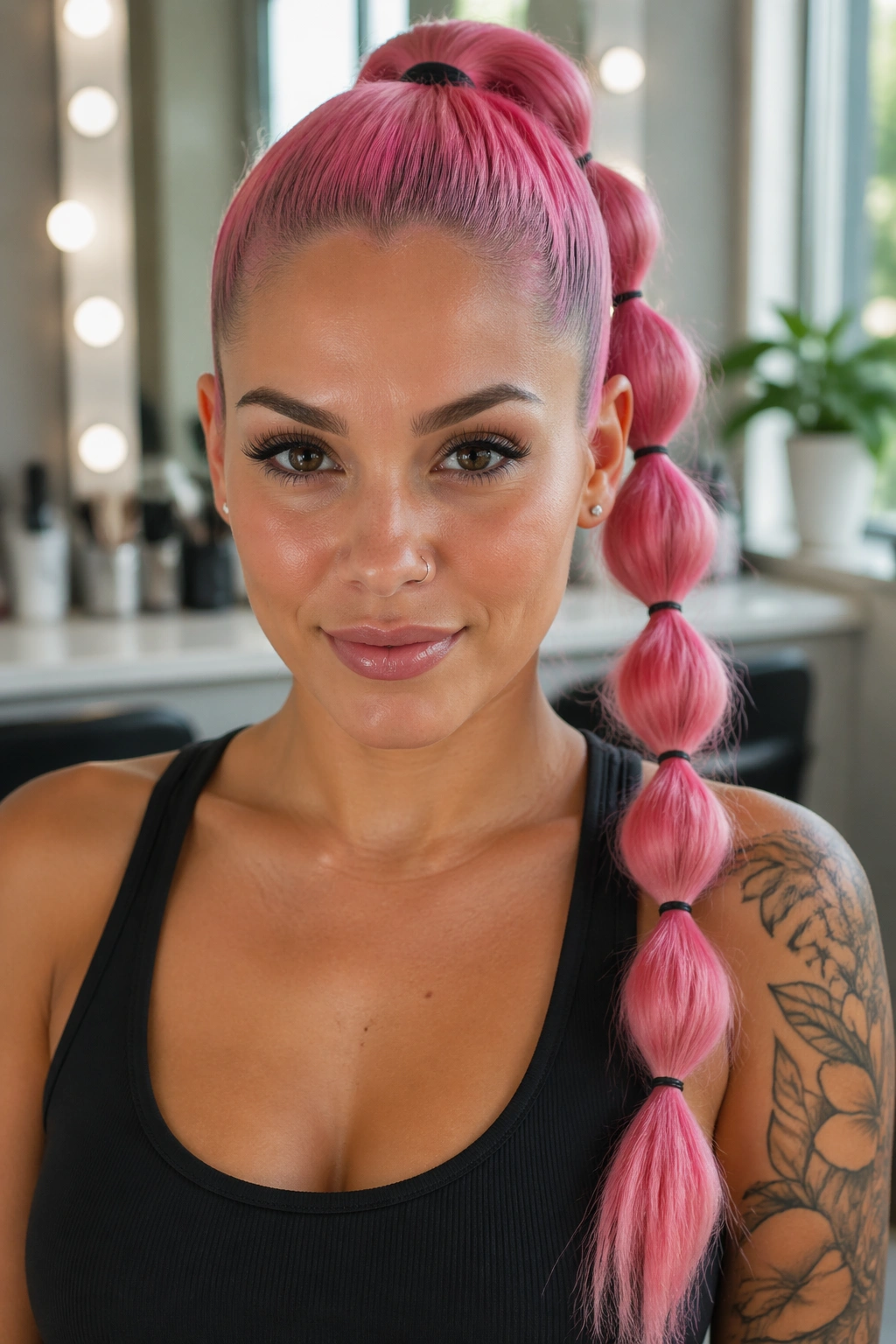
If you want graphic shape without spending forever braiding, this is the one. A bubble ponytail uses elastic bands spaced down the length of the tail, then each section is gently pulled outward until it rounds into a puff. Add pink hair, and every bubble becomes a color block.
Bubble spacing matters more than people think. If the elastics sit too close together, the ponytail looks cramped. Too far apart, and the shape falls flat between sections. I like a spacing of about 2 to 3 inches on medium-length hair, a little wider if the tail is thick.
A fine-tooth comb and a few clear elastics do most of the work. Tiny sections of hair wrapped around each band clean up the finish, and a light backcomb in each bubble helps it hold the rounded shape. No heavy products here. A sticky cream makes the bubbles droop.
This one works for parties, concerts, or a day when you want pink to look modern and a little architectural. It’s fast, but not lazy. That’s the difference.
3. Dusty Rose Side Fishtail Ponytail
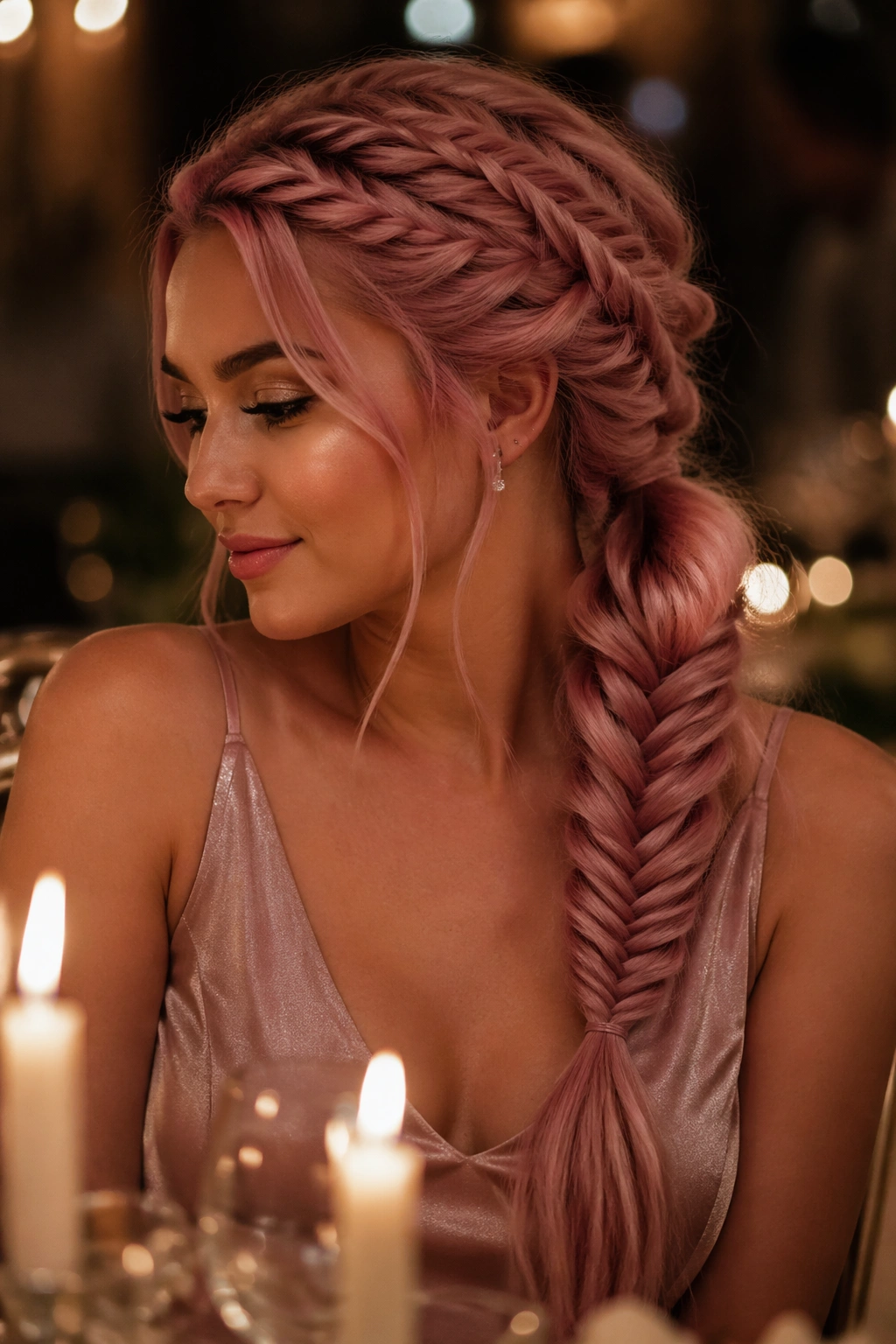
Why does a side braid feel softer than a centered one? Because the whole shape follows the line of the face instead of sitting straight down the back. A fishtail ponytail swept over one shoulder turns pink into something quieter and more romantic, especially in a dusty rose shade.
The fishtail braid itself is more delicate than a regular braid. You split the hair into two sections, then keep lifting tiny pieces from the outer edge into the opposite side. That fine weave shows off color changes beautifully if your pink has darker roots or blended extensions. It also keeps the tail from looking chunky.
How to Style It
Start the ponytail low and slightly behind one ear. Keep the front pieces loose, then braid the tail about two-thirds of the way down before securing it with a small elastic. A gentle tug at the edges gives the fishtail more width, which helps the pink color read clearly from the side.
This version suits dinner plans, date nights, and formal events where you want movement without a stiff finish. It feels softer than a high ponytail, but still has enough detail to hold attention.
4. Double Boxer Braids into One Pink Ponytail
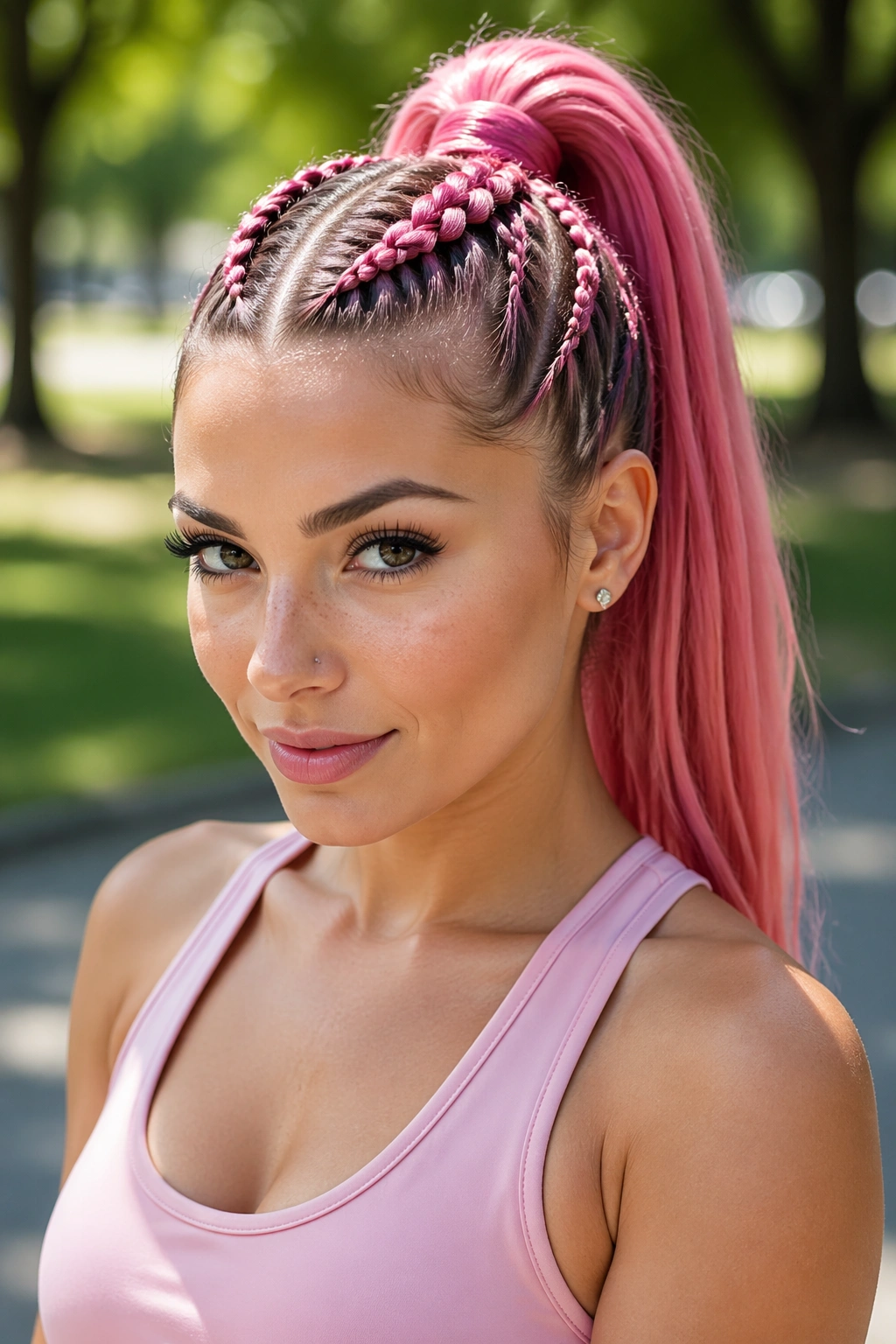
Hair that will not sit still at the crown? Two tight boxer braids solve that fast. They hold the front of the hair flat, keep the part clean, and feed into one ponytail at the back so the style still feels pulled together.
This is a strong look. No fluff. The two braids can start at the hairline and run straight back, then merge into a high or mid-height ponytail. Pink extensions sharpen the contrast, especially if you use a brighter tone like hot pink or raspberry. The result feels sporty, but it doesn’t have to read as gym-only.
- Works well on thick hair that needs control
- Great for active days, travel, and outdoor events
- Holds better with a little gel along the part
- Looks sharper when the braid tension is even on both sides
A small note: the part has to be clean. If one braid starts wider than the other, the whole style looks off. Once the ponytail is secured, smooth the ends with a drop of lightweight oil so they don’t fray.
5. Low Satin Pink Ponytail with a Rope-Braid Wrap
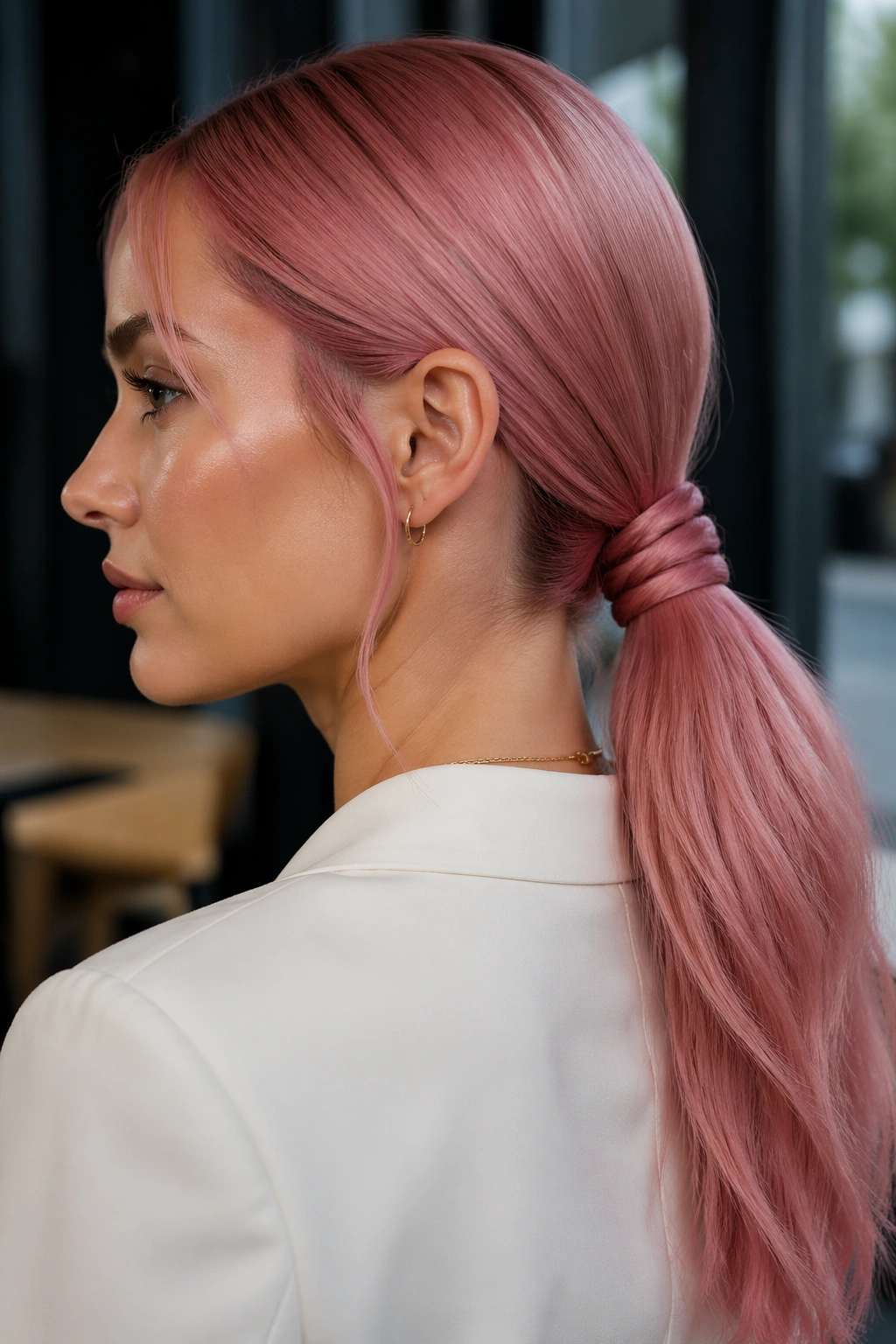
The low ponytail is where pink stops shouting and starts sounding expensive — or at least polished, which is the real goal. Keep the base tucked at the nape, add a rope-braid wrap around the elastic, and the whole style gains a quiet finish that works with dresses, blazers, and clean necklines.
A rope braid is simple: twist two sections in one direction, then twist them around each other in the opposite direction so they coil together. It creates a neat spiral that sits flatter than a bulky braid, which is exactly why it suits a low ponytail so well. The wrap hides the hair tie and gives the base one strong detail.
Satin-finish pink shades look especially good here. Dusty rose, blush, and soft mauve all work because the sheen matters as much as the color. If the hair is fine, a little root lift before you gather it back helps keep the crown from collapsing. If it’s thick, a paddle brush and a touch of smoothing cream will keep the top glossy without making it stiff.
This is a good one for office days that turn into dinner. Clean, calm, and not boring.
6. Crisscross Feed-In Pink Ponytail
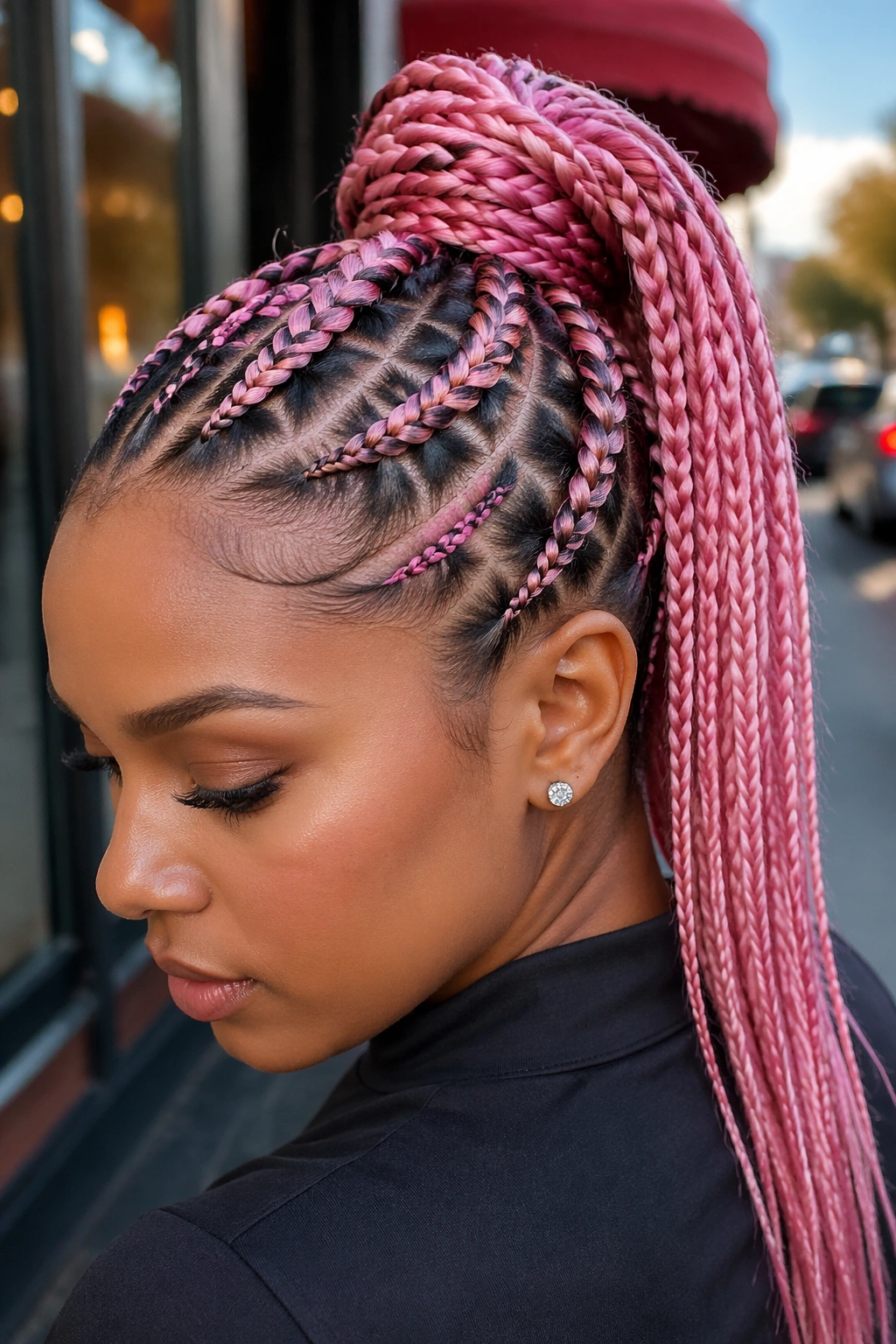
Unlike one single braid running down the head, a crisscross feed-in ponytail builds a cleaner scalp line and a more sculpted shape. The hair is divided into sections that feed into each other, so the pattern creates a woven look before the ponytail even starts. With pink braiding hair, every crossing line stands out.
This style has a sharp, tailored feel. It works especially well when the braid sections are kept narrow near the front and widened slightly as they move back, which gives the head shape without making the crown look crowded. The feed-in method also helps the style sit flatter, so it lasts longer and stays neater.
It suits longer wear, especially if you need a style that keeps its outline through a full day. A stylist can use blendable shades — blush at the front, deeper pink through the tail — to build depth without relying on extra curls or accessories. That small color shift does a lot.
Best for anyone who likes braided detail and wants the ponytail to look engineered, not improvised. It has edge. It also has discipline. Nice combination.
7. Half-Up Pink Braided Ponytail with Loose Waves
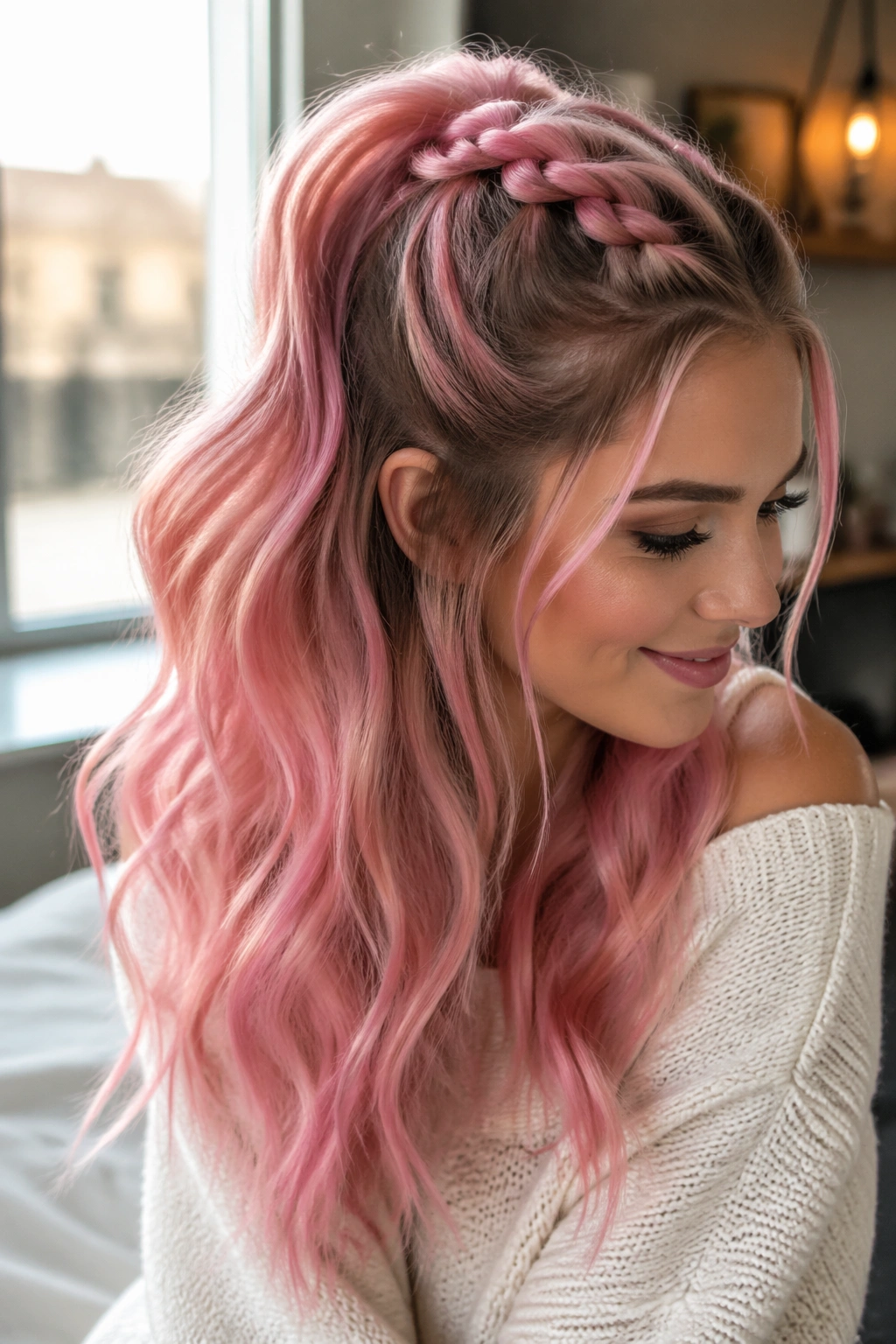
Half-up styles are underrated. They give you the lift of a ponytail without giving up the movement of the rest of the hair, and that mix works especially well when pink is the headline color. The braid sits at the top, the waves stay loose below, and the whole look feels easy without looking plain.
Best Features of the Half-Up Shape
- Keeps hair off the face while leaving length down
- Uses less braiding time than a full ponytail
- Works with natural waves, heat-styled bends, or extension pieces
- Gives pink color a softer frame around the face
A small Dutch braid or three-strand braid from each temple can meet at the crown and secure into a half ponytail. After that, the loose hair can be left wavy or curled into broad bends with a 1-inch iron. The key is not overstyling the bottom half. Let it move.
Pinch the crown once the braid is secured. That tiny lift keeps the top from looking flat and helps the pink braid stand out. This is a lovely choice for daytime plans, casual dinners, or events where you want polish without a full-updo feeling.
8. Jumbo Pull-Through Pink Ponytail
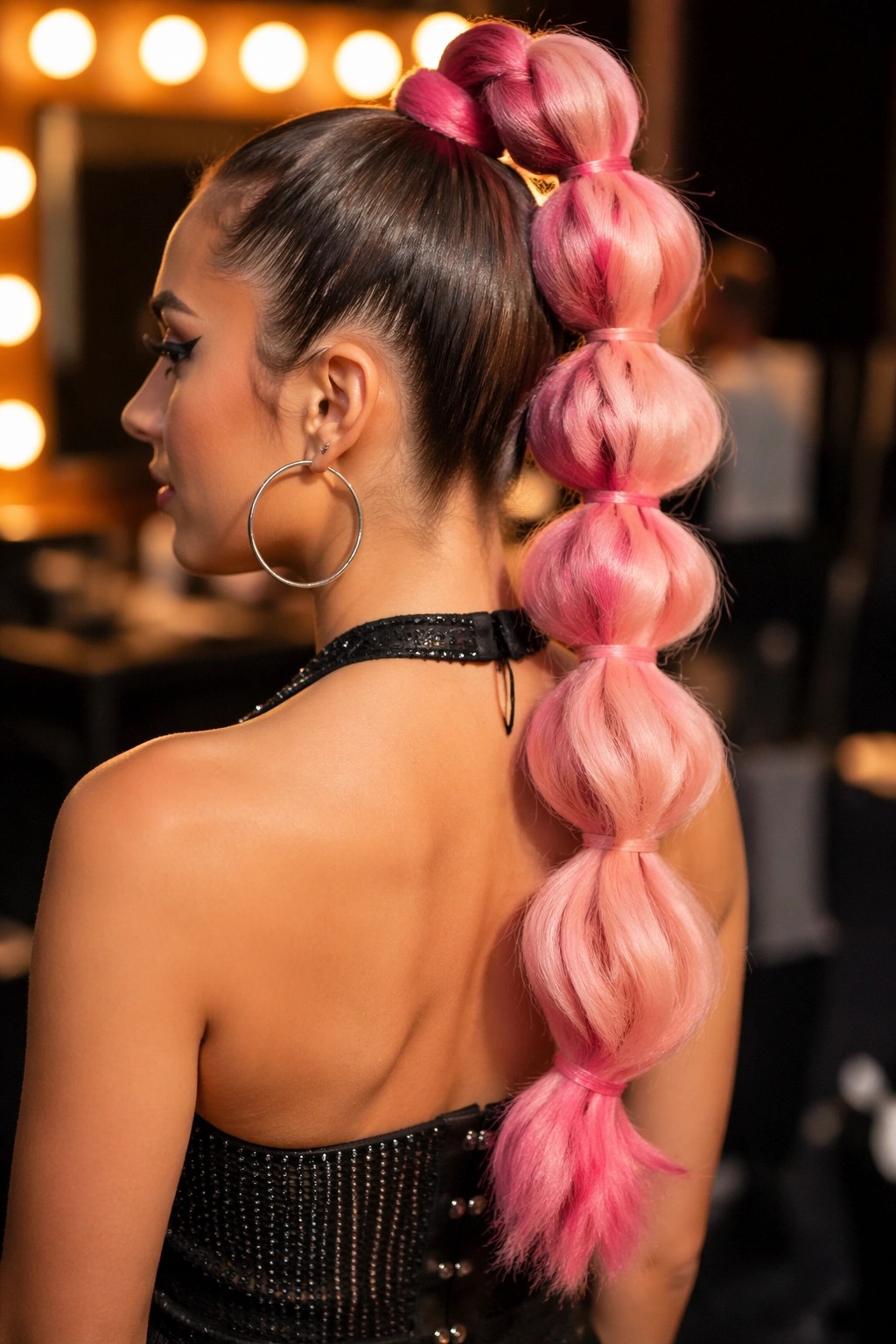
Big braid energy, little technical fuss. A pull-through braid looks complicated from a distance, but it’s really a stack of ponytail sections folded into each other with elastics. That makes it one of the best choices for a dramatic pink ponytail when you want volume more than tiny braid detail.
The style is especially useful on fine hair or shorter layers, because the stacked sections create thickness that a regular braid can’t fake as well. Pink extensions or pre-colored braiding hair make the links read clearly, and each section can be tugged outward a bit to build width. Don’t overdo the pulling. You want fullness, not a frayed mess.
I like this style for performances, parties, or any setting where the ponytail needs to stand out from across the room. It’s also forgiving. If one section is slightly uneven, the next one usually covers it.
A secure elastic at each step matters. Use small bands, keep the spacing even, and hide the final tie with a wrapped strand or ribbon. That little finish keeps the style from looking thrown together. It has drama, but it still feels planned.
9. Heart-Part Pink Braided Ponytail
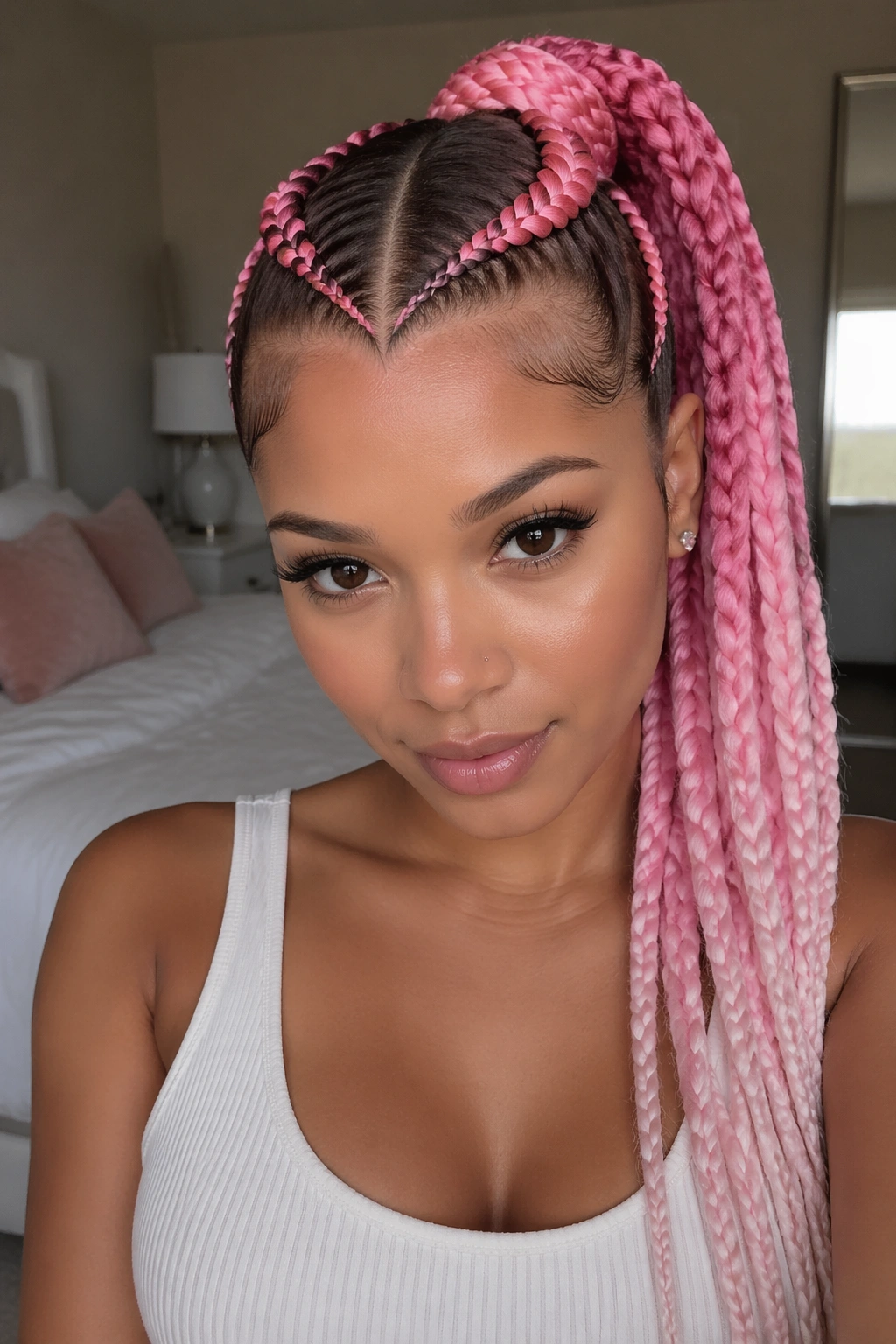
What makes a ponytail feel special before the braid even starts? The part. A heart-shaped part turns the whole style into something sharper and more playful, and pink hair makes the shape easier to notice because the color picks up every curve.
This one takes patience with a tail comb. You sketch one half of the heart first, then mirror it on the other side so the two curves meet at the point. Once the part is clean, the hair can be gathered into a braid and finished as a ponytail at the back or just below the crown. If the hair is slick, a little mousse at the roots helps the part hold its shape.
How to Get the Heart Shape Right
The curves need to stay wide enough to read from above. Tiny, cramped curves blur together and stop looking like a heart. A soft blush pink works well because the shape feels sweet without becoming obvious in a cloying way.
This style is a strong choice for birthdays, themed events, or any day when detail matters more than speed. The part does most of the talking. The braid just keeps it grounded.
10. Micro-Braid Pink Ponytail with Beaded Ends
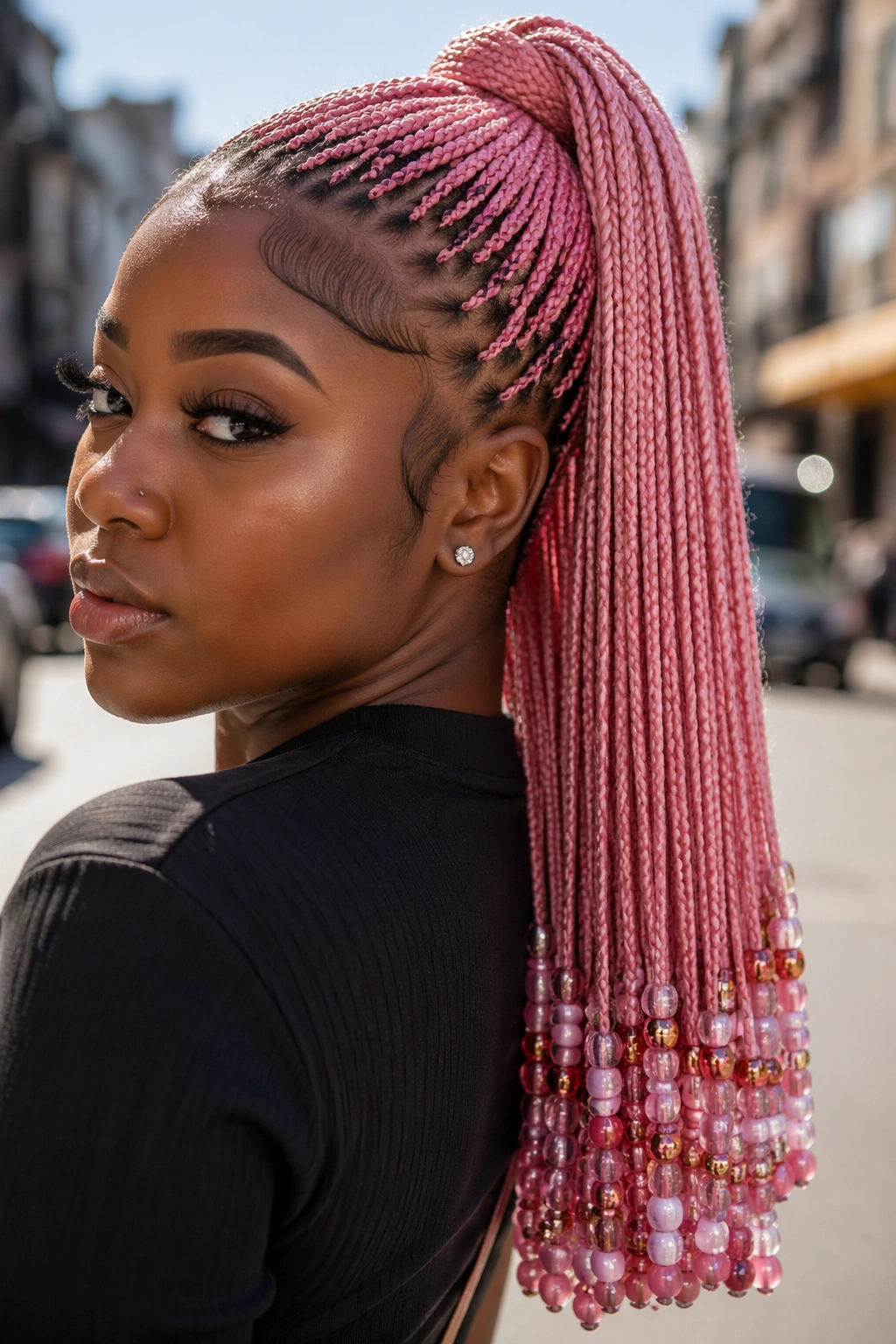
If you like detail, this is the one that keeps rewarding a closer look. Micro braids build texture line by line, then gather into a ponytail that moves in narrow strands instead of one big block. Pink makes the whole thing feel lighter, especially when the color runs through the lengths in a smooth gradient.
Micro braids take time. There is no shortcut around that. But the payoff is a ponytail that stays neat for a long stretch and gives you a lot of styling room at the end. Beads, cuffs, or small wrapped elastics can finish the tips in a way that feels personal without overloading the braid.
- Best for long hair or added braiding hair
- Holds well when the sections are kept small and even
- Works with bright pink, rose, or a mix of both
- Feels secure enough for travel or multi-day wear
The main thing to watch is tension. Too tight, and the scalp feels angry fast. Too loose, and the braids start slipping into each other. A balanced pull is the whole game here. If you get that right, the style is elegant in a slightly intricate way.
11. Messy Pink Festival Ponytail with Face-Framing Braids
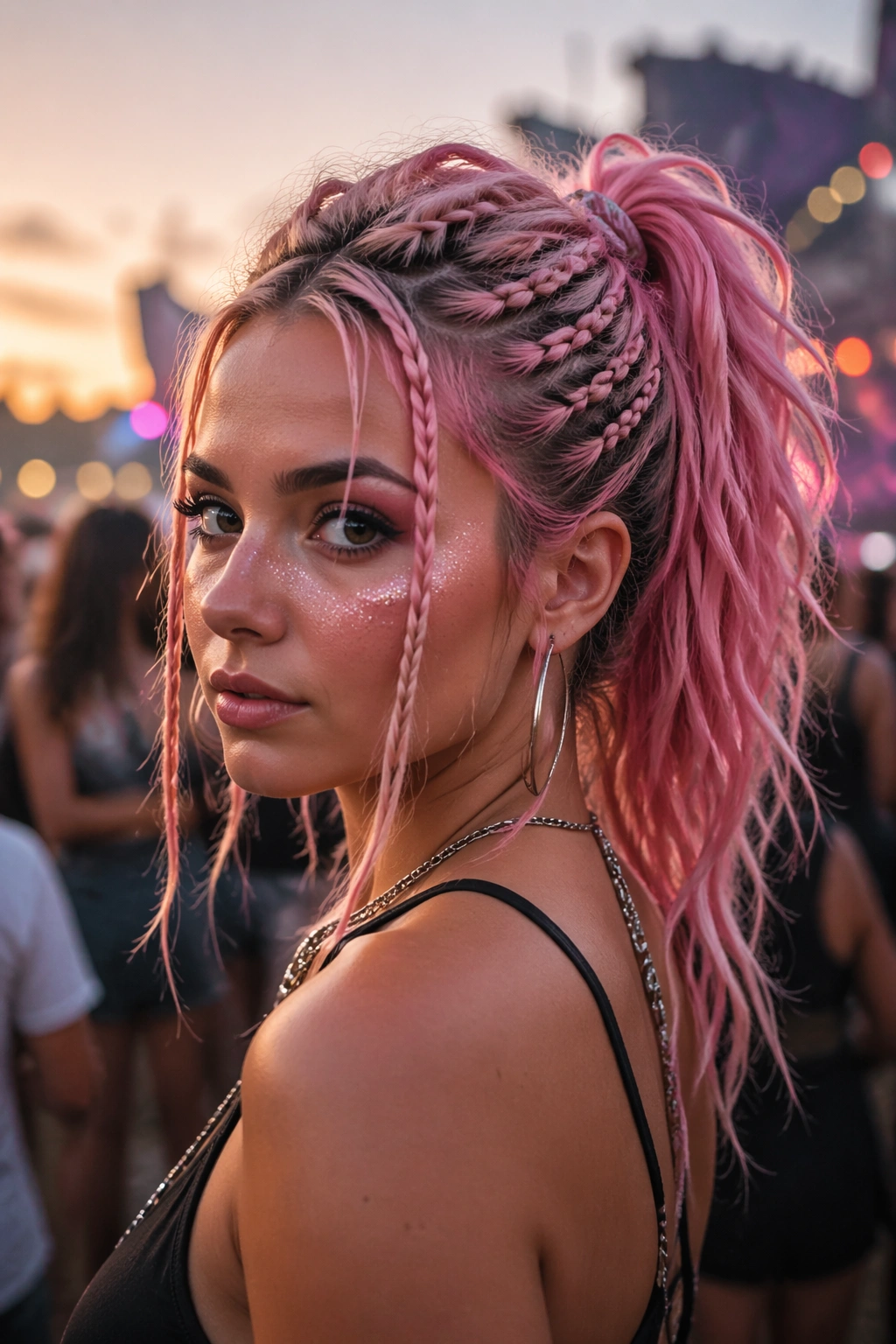
A messy pink ponytail is only messy if it looks accidental. The better version has a plan: a teased crown, a few face-framing braids, loose texture through the tail, and pieces that bend in different directions on purpose. That controlled looseness is what makes it feel fun instead of unfinished.
This style loves texture spray. Work it through the mid-lengths, then rough up the braid edges with your fingers so the plaits open a little. Leave a couple of slim sections out around the temples. They soften the face and stop the ponytail from looking too strict. If the pink is bright, the undone texture keeps it from becoming too glossy and hard-edged.
I’d reach for this one for concerts, outdoor gatherings, or casual weekends when neatness is the last thing you want. It can also hide day-two hair surprisingly well. A little lived-in texture helps, not hurts.
Do not chase symmetry here. A few uneven pieces make the style better. The trick is to look intentional, not messy by accident. There’s a difference, and people can usually tell.
12. Ribbon-Woven Pink Ponytail
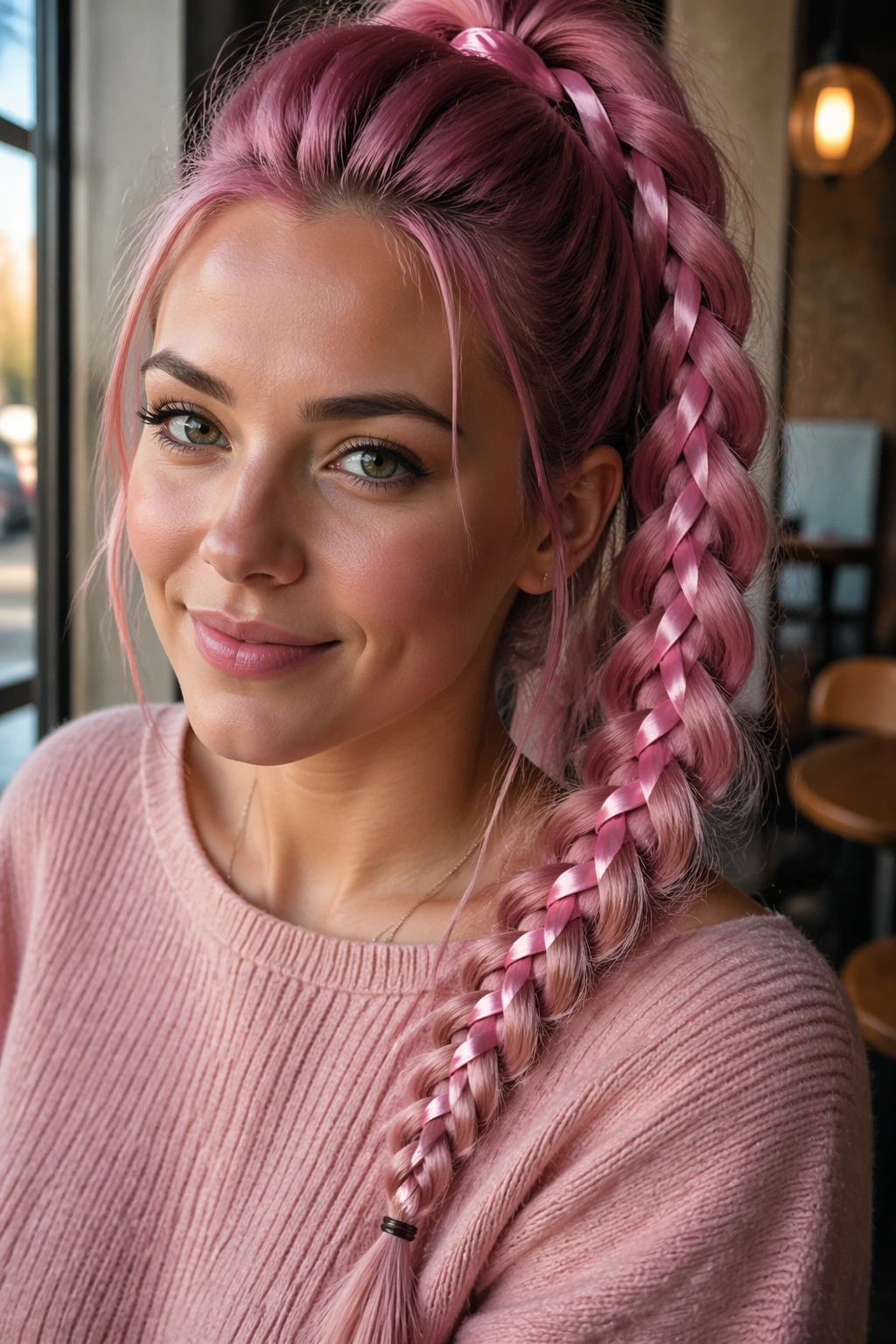
A ribbon can do something hair alone can’t: it gives the braid a second color line that stays visible even when the braid is dense. That makes a ribbon-woven pink ponytail a smart choice for anyone who wants a clearer accent without adding more hair.
Unlike a full braid built only from strands, this version lets a narrow satin or grosgrain ribbon thread through the sections as you braid. A ribbon about ¼ to ½ inch wide usually sits neatly without overpowering the shape. Thinner ribbons work better on small braids; wider ones need a fuller tail.
This look is lovely for creative events, birthdays, brunch, or even a neat school-day style if the ribbon color stays soft. Match the ribbon to the pink in the hair, or go one shade deeper for contrast. Both work. The contrast can actually help the braid show up more clearly in photos and in flat indoor light.
Finish the end with a small elastic and tie the ribbon in a clean knot or bow. Keep the tails trimmed short if you want the style to stay sleek. Long ribbon ends feel playful; short ones feel polished.
13. Braided Pink Mohawk Ponytail
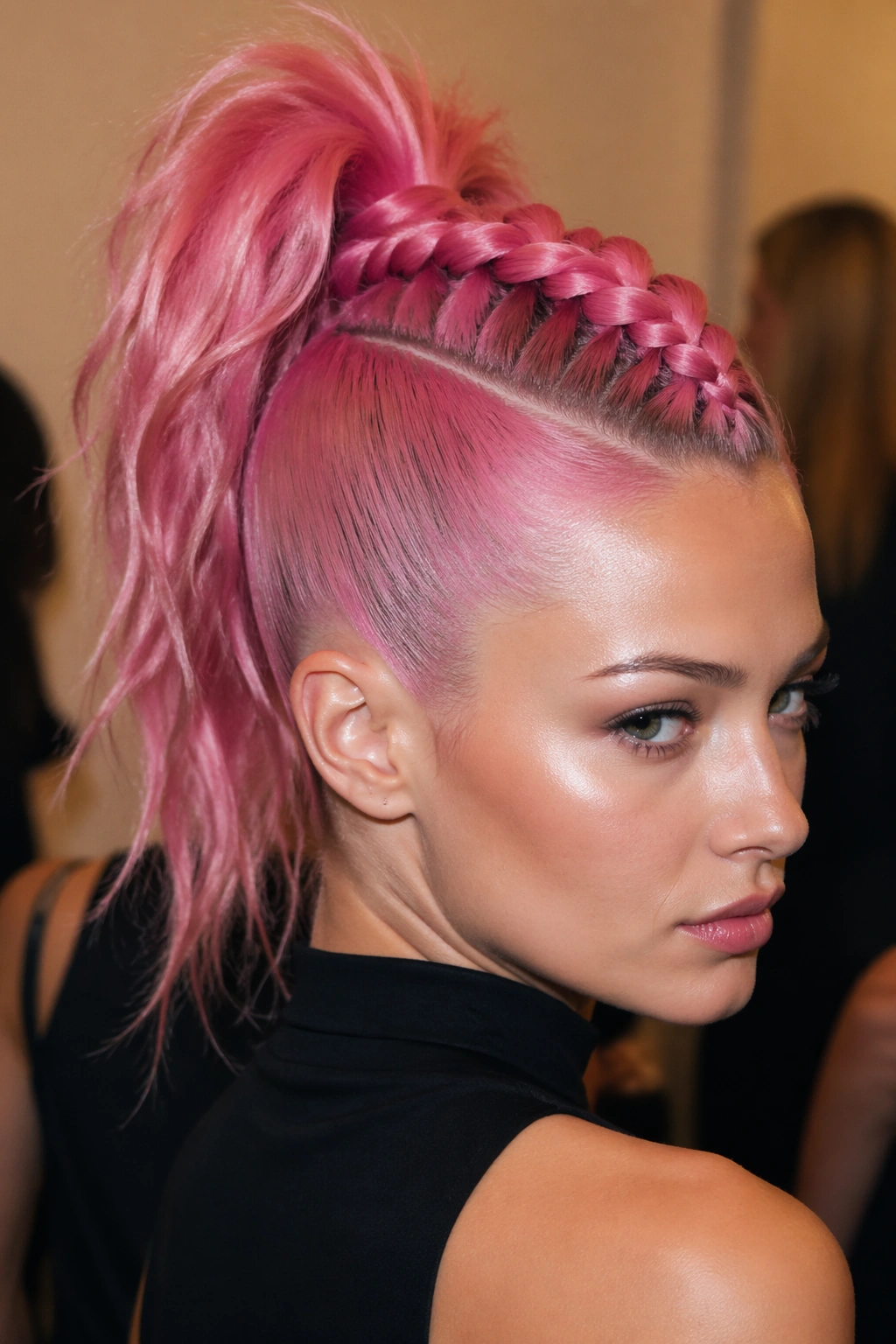
This one changes the shape of the head, not just the tail. A braided mohawk ponytail pushes the sides flat and leaves a ridge of braid down the center, then gathers everything into a ponytail that sits high and proud. Pink gives the whole thing a softer edge, which helps balance the sharp structure.
The middle braid can be a single Dutch braid or a stack of narrow feed-in braids, depending on how much texture you want. The sides should stay smooth, close to the scalp, and finished with gel or pomade if the hair likes to puff up. That contrast — flat sides, raised center — is what makes the style work.
Where It Shines
- Fashion events and nights out
- Strong graphic makeup looks
- Shorter hair with added extensions
- Anyone who likes a more angular profile
A hot pink or deep rose shade makes the braid ridge easy to read from the front and the side. If you want the style to feel less hard, let the ponytail itself stay a little fluffy at the ends. The mohawk shape does enough drama on its own.
14. Low Wedding Pink Ponytail with Soft Side Braids
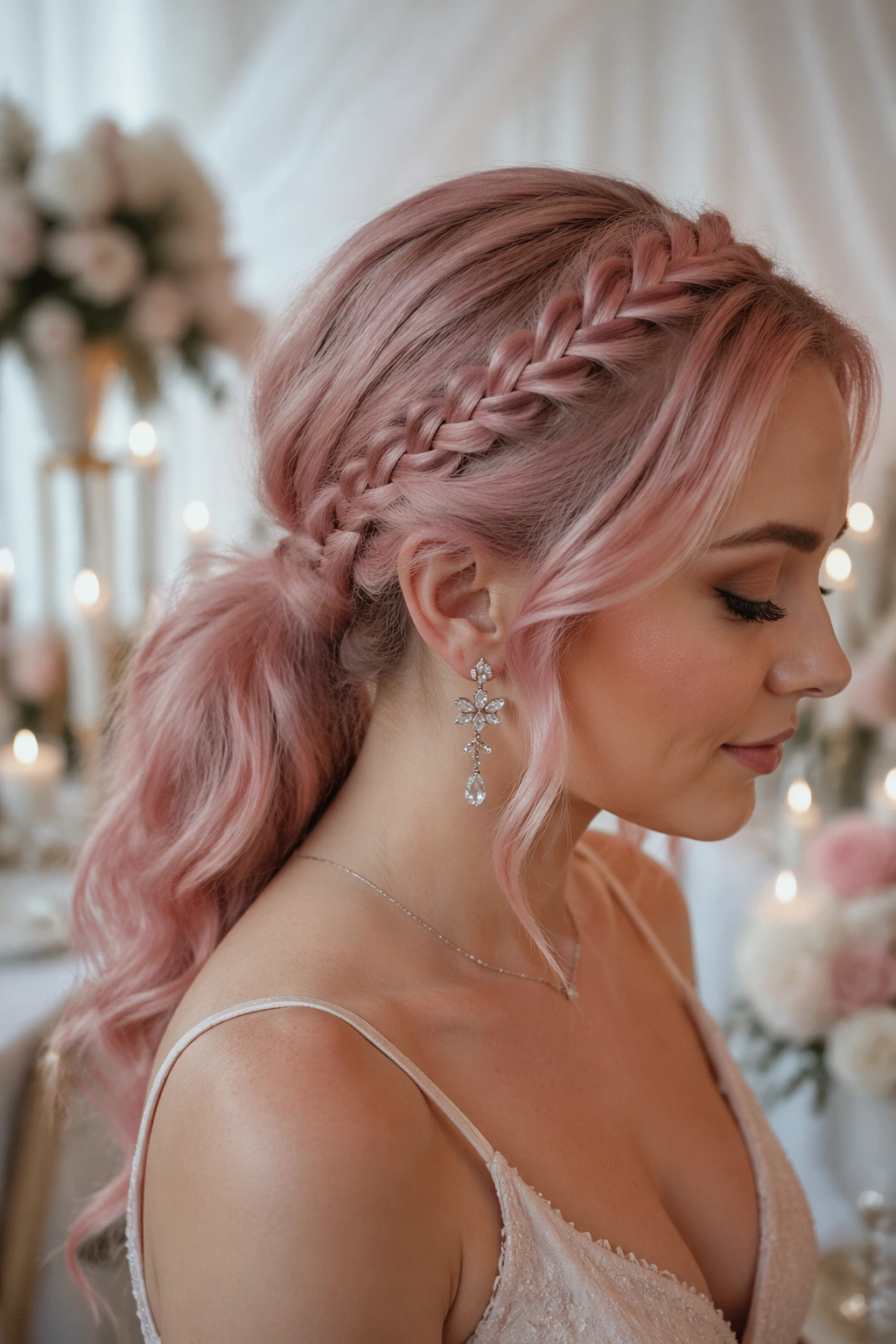
A low pink ponytail can look formal without trying too hard. That is the appeal. Add two soft side braids feeding into the nape, and the style starts to feel dressed up enough for a ceremony, a dinner, or a polished guest look without falling into stiff updo territory.
The trick is softness at the top and control at the base. The side braids should be loose enough to curve rather than press flat against the scalp. A blush or pale rose tone makes the whole thing gentler, especially if the outfit leans clean and structured. If the hair is too glossy, the braid detail can disappear; if it’s too dry, the finish looks rough. Somewhere in the middle is the sweet spot.
A veil, jeweled pin, or pearl comb can sit right above the ponytail tie without fighting the braid pattern. That’s another reason this style works so well for weddings. It leaves room for accessories without crowding the head.
Keep the ends brushed out, not crunchy. A soft tail moves better and feels more modern than a stiff curl held in place with too much product.
15. Crown-Braided Pink Ponytail
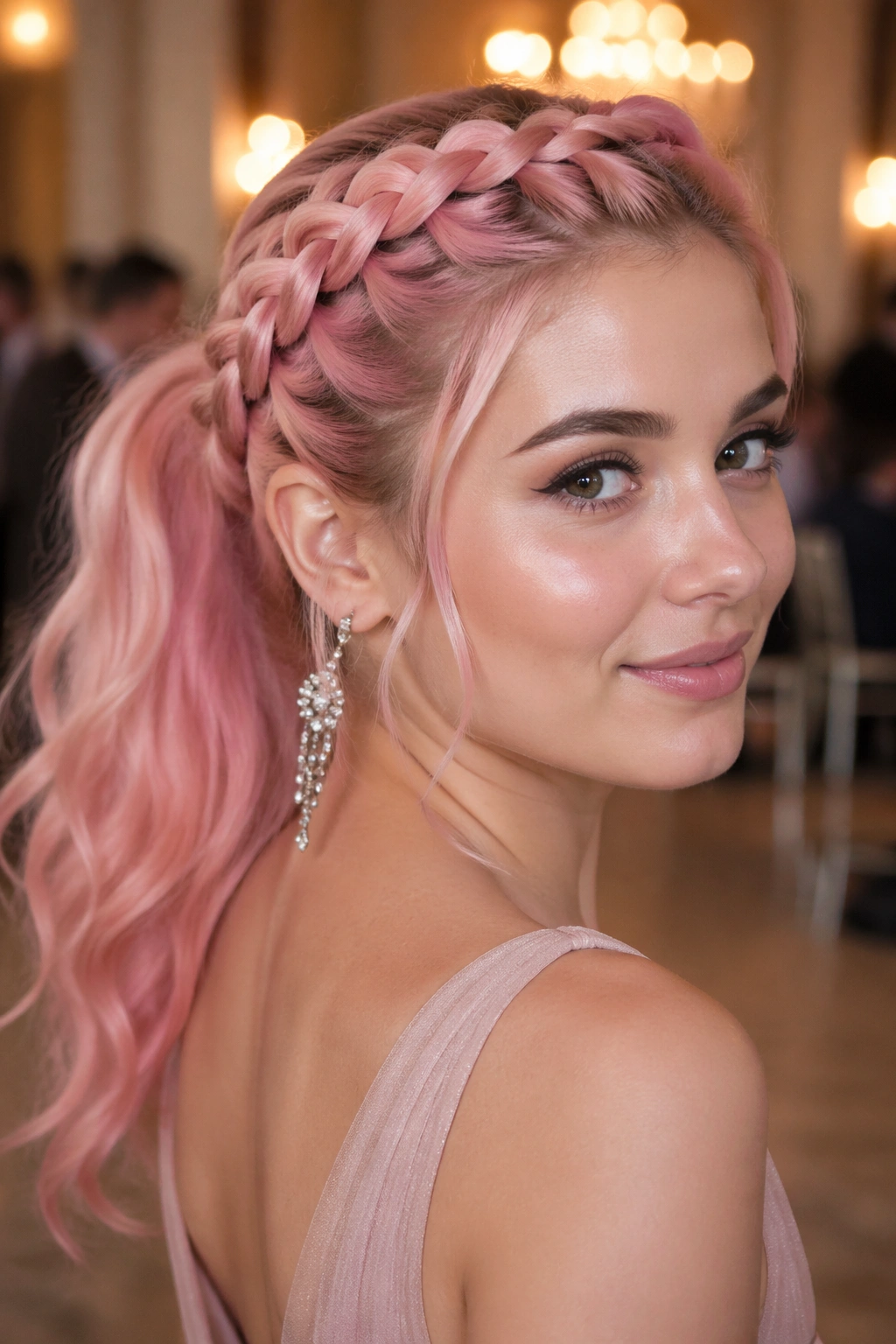
Can a ponytail feel regal without a bun? Yes. A crown braid solves that by wrapping braided hair around the hairline and guiding it back into a ponytail, so the head gets a framed shape before the tail even begins.
This style works best when the braid sits about 1 to 2 inches back from the hairline. Any closer, and it can start to look tense. Any farther back, and the crown effect weakens. The braid should travel smoothly around the head, then meet the ponytail at the back or slightly to one side, depending on the face shape and outfit.
A soft pink shade keeps the look from turning too formal. The braid detail still gives structure, but the color lightens it. That makes the style useful for graduations, formal dinners, or photo-heavy events where you want the hair to hold its shape from every angle.
How to Wear It Well
Let the baby hairs stay soft if you like a gentler finish. If you prefer a sharper look, smooth them down and tuck the ends of the braid neatly into the ponytail tie. Both approaches work. The choice depends on how clean you want the final line to feel.
16. Side Pink Ponytail with a Deep Braid Wrap
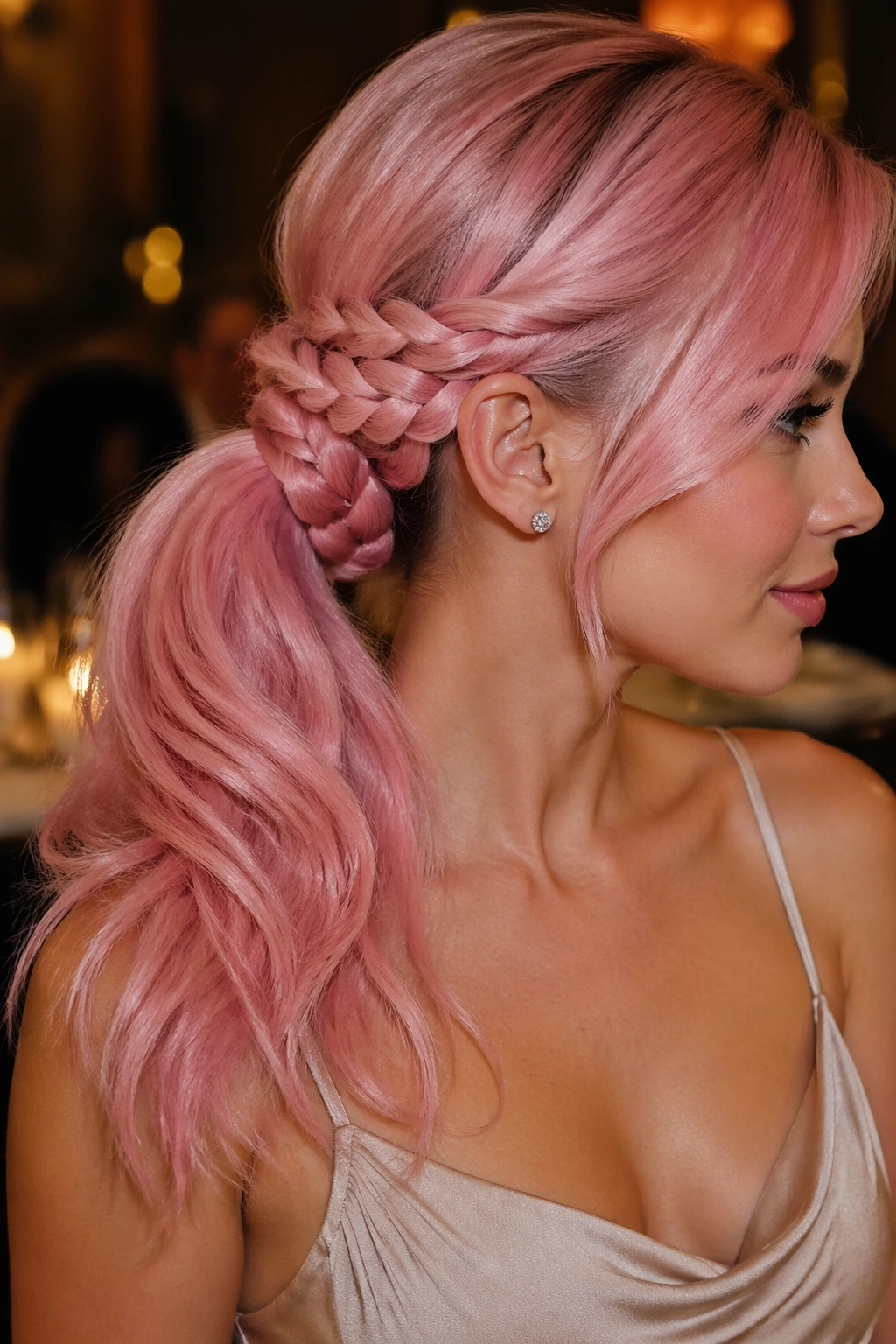
One-shoulder tops and side parts practically ask for this style. A deep side braid sweeps the hair over and wraps into a side ponytail, so the whole look leans into asymmetry instead of trying to correct it.
The braid wrap is the feature here. It can be a thick rope braid, a Dutch braid, or a tighter three-strand braid that crosses the base of the ponytail before anchoring underneath. The goal is to make the wrap visible from the front. If it disappears, the style loses its charm.
- Best with medium to long hair
- Works well with soft rose, pink-pearl, or brighter magenta
- Pairs nicely with shoulder-baring outfits
- Looks strongest when the opposite side is smooth and tucked
This is a smart option for dinners, dances, or any event where the neckline matters. A side ponytail clears the face and lets earrings show, which is handy if the rest of the outfit is doing something interesting.
The braid should feel secure but not pulled to the point of strain. A side style already has visual weight. It does not need extra tension.
17. Knotted Pink Rope Ponytail
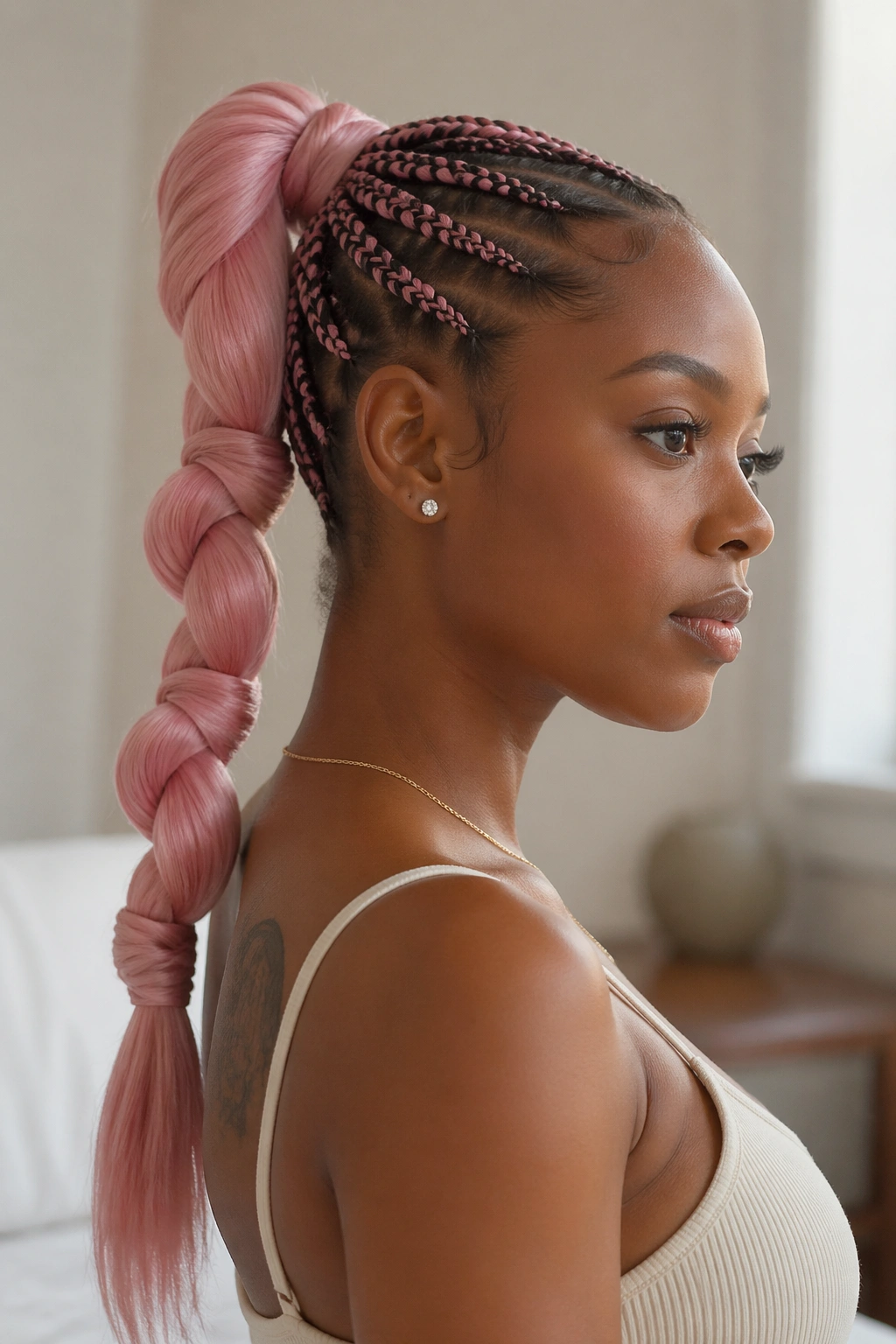
A knotted ponytail is a little different from the braids most people expect, and that difference is exactly why it works. Instead of weaving three sections over and under, you twist two sections and knot or loop them into a repeating pattern that runs down the tail. In pink, the knots read like sculpted links.
The shape is cleaner than a loose braid and less familiar than a standard rope twist. That makes it a nice fit for modern outfits, minimalist makeup, or a sharp collar. It also works well on hair that is a bit slippery, because the knots hold the sections in place once they’re anchored with small elastics.
A matte pink shade gives this style more bite. Glossy pink can feel sweet; matte pink feels cooler and more deliberate. If the hair is long, leave the ends slightly uneven so the tail has movement. If it is shorter, keep the knot spacing tighter so the form stays visible.
This is one of those styles that looks like it took more time than it did. I like that. It’s a neat trick, but it doesn’t shout about it.
18. Pearl-Pinned Pink Braided Ponytail with Soft Curls
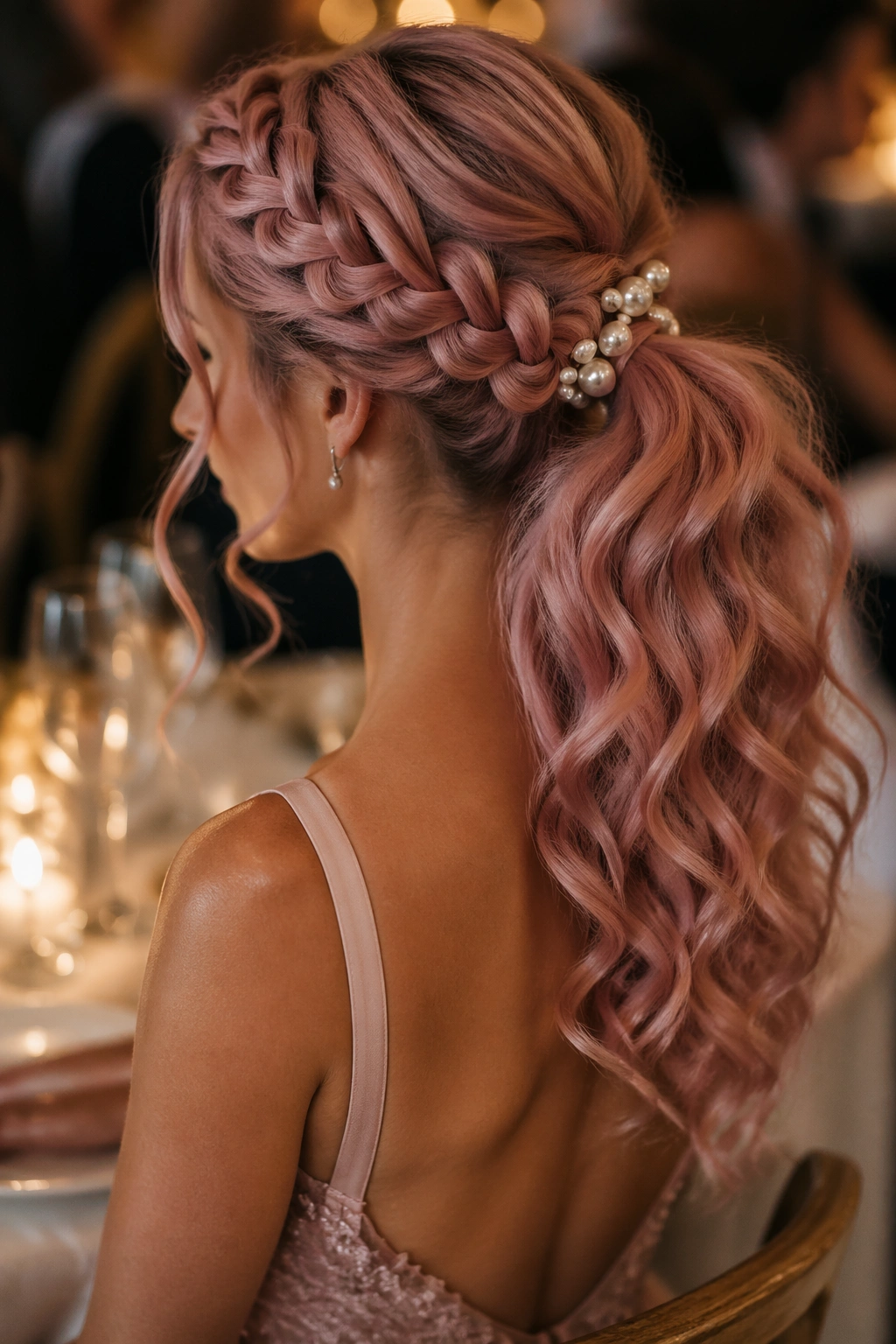
Unlike stiff formal ponytails that try too hard to stay frozen, this version leans soft and finished at the same time. A braid at the base or through the top anchors the ponytail, then loose curls through the tail and a few pearl pins near the wrap point add polish without making the hair look helmet-like.
Pearls work here because they break up the pink in a gentle way. One pin near the braid base is subtle. Three clustered together make the whole style feel more decorated. Keep the placement near the braid, not scattered all the way down the tail, or the look starts to lose focus.
This style is a good match for showers, weddings, gallery nights, or dressier dinners. The curls keep it from feeling too severe, and the braid gives the tail a clear shape from the top. If the hair is fine, curl only the bottom half so the roots stay smooth. If the hair is thick, brush the curls out a little so the tail does not look bulky.
Softness is the point. The braid should hold the shape while the curls move around it. That contrast is what makes the style feel elegant without becoming fussy.
19. Pastel Pink Braided Ponytail for Short Hair
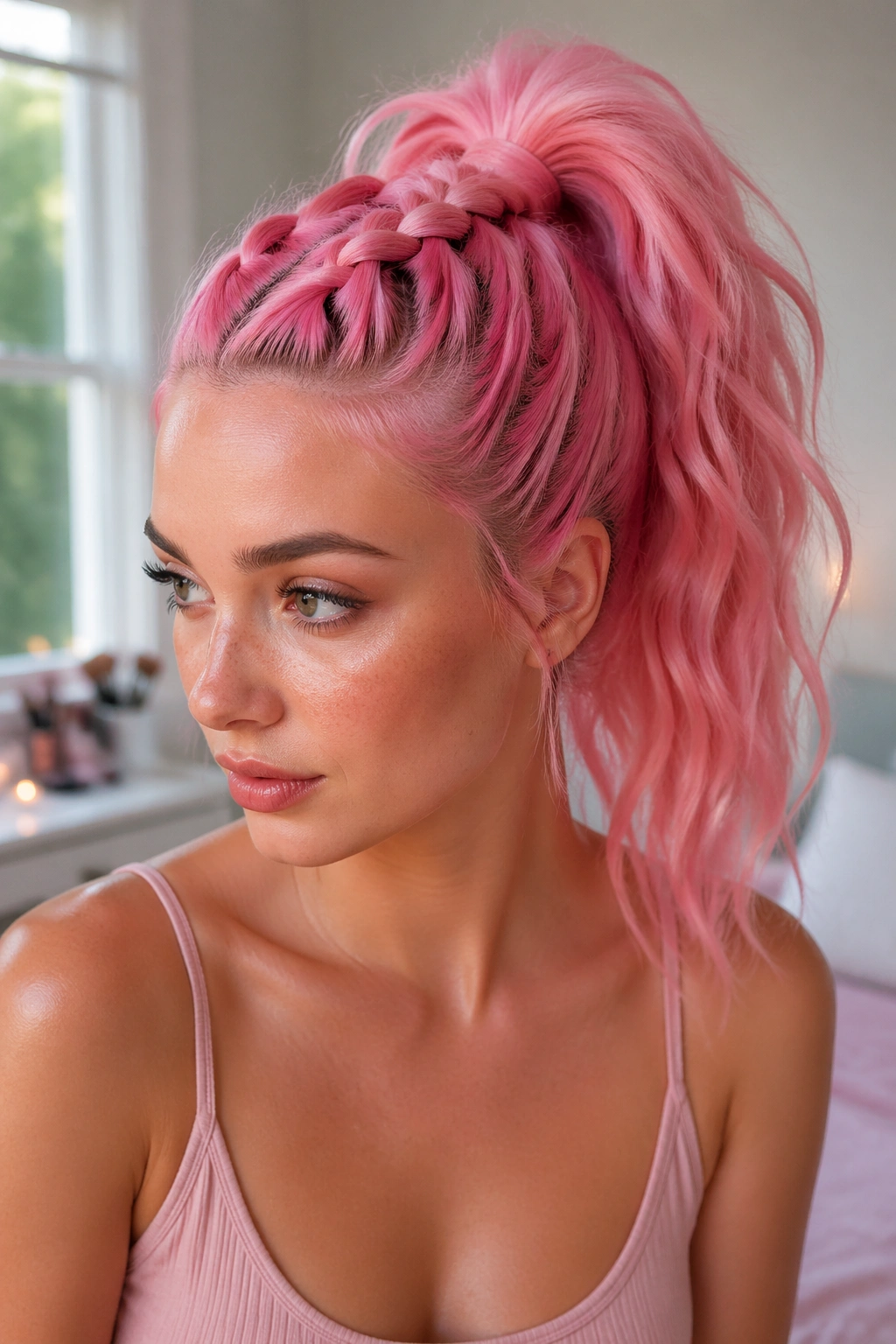
Short hair does not rule out pink braided ponytails. It just asks for a smarter setup. If the hair stops at the collarbone or just below, a pastel pink braided ponytail can still work with a low braid base, a few clip-in pieces, or braiding hair added only through the tail.
The trick is to start lower than you think. When the braid begins too high on shorter hair, the sections look crowded and the tail runs out of length fast. A lower start point gives the ponytail room to hang and lets the pink color stay visible instead of disappearing into the braid. Pastel pink helps too, because the soft shade keeps the shorter length from feeling heavy.
What Makes It Work
- Use a small amount of added braid hair if the tail needs more length
- Keep the braid loose enough to show the pattern
- Smooth the crown first so the shorter layers do not stick out
- Finish with a light mist of hold spray, not a stiff shell
This is the friendliest version for anyone testing the pink-braid look for the first time. It feels wearable, not precious. And if you want one style that can move from daytime errands to dinner without a full restart, this is the one I’d hand over first.
