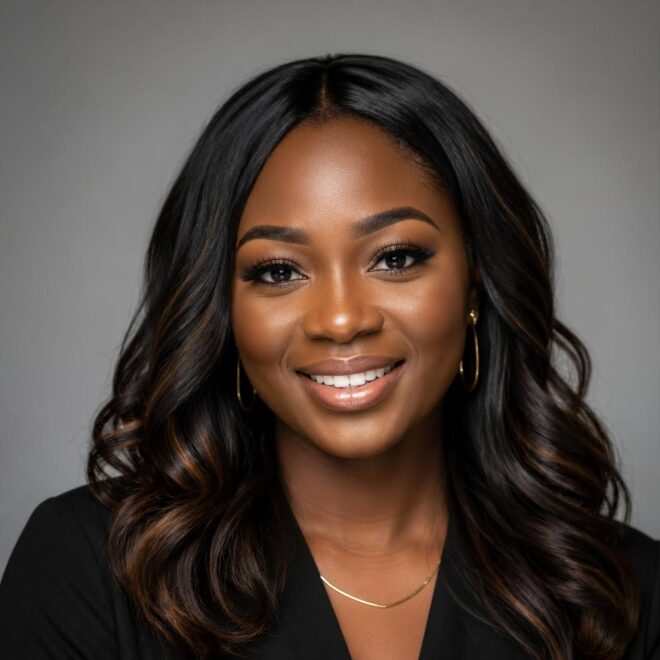


A ponytail on kinky hair has to earn its place.
On tight coils, it needs to hold, flatter, and leave your scalp alone. That is why ponytails for kinky hair look better when they work with the texture instead of trying to flatten it into something it is not. A good style can sit high and full, low and smooth, braided and protective, or soft enough to wear on a tired wash-day morning.
Shrinkage is not the enemy. It is the whole point.
The smartest ponytails use that density on purpose: they keep the shape clean at the roots, protect the fragile hairline, and let the ends do something interesting. A wide snag-free elastic, a rat-tail comb, a light gel or mousse, and a satin scarf can change the result more than any fancy bottle ever will. The details matter here. A little too much tension, and your edges complain by lunchtime. Too little hold, and the style starts sliding before you leave the house.
These 25 looks cover everyday puffs, polished sleek styles, braided options, extension-friendly versions, and a few ideas that work when your hair is short, coily, or both. Some are fast. Some take a bit of patience. All of them make sense for textured hair.
1. High Puff Ponytail for Kinky Hair
A high puff is the style I reach for when I want fullness without fuss. It sits at the crown, shows off the texture, and makes shrinkage look deliberate instead of accidental. On dense coils, that matters.
Why the Puff Shape Works
The trick is placement. Put the ponytail where your hair still has enough stretch to gather cleanly, usually just above the crown, and let the rest bloom upward instead of backward. A puff looks best when the base feels secure but not strangled. If your roots feel sore after ten minutes, the band is too tight.
- Use a wide elastic or a soft puff cuff so the roots do not get sliced by a thin band.
- Smooth the hair with lightly damp hands, not a soaking spray bottle.
- Fluff the puff outward after tying it down so the shape looks round, not flat.
Tip: Wrap the base with a tiny strip of hair or a satin ribbon. It hides the band and makes the style look finished in about ten seconds.
2. Sleek High Ponytail with Laid Edges
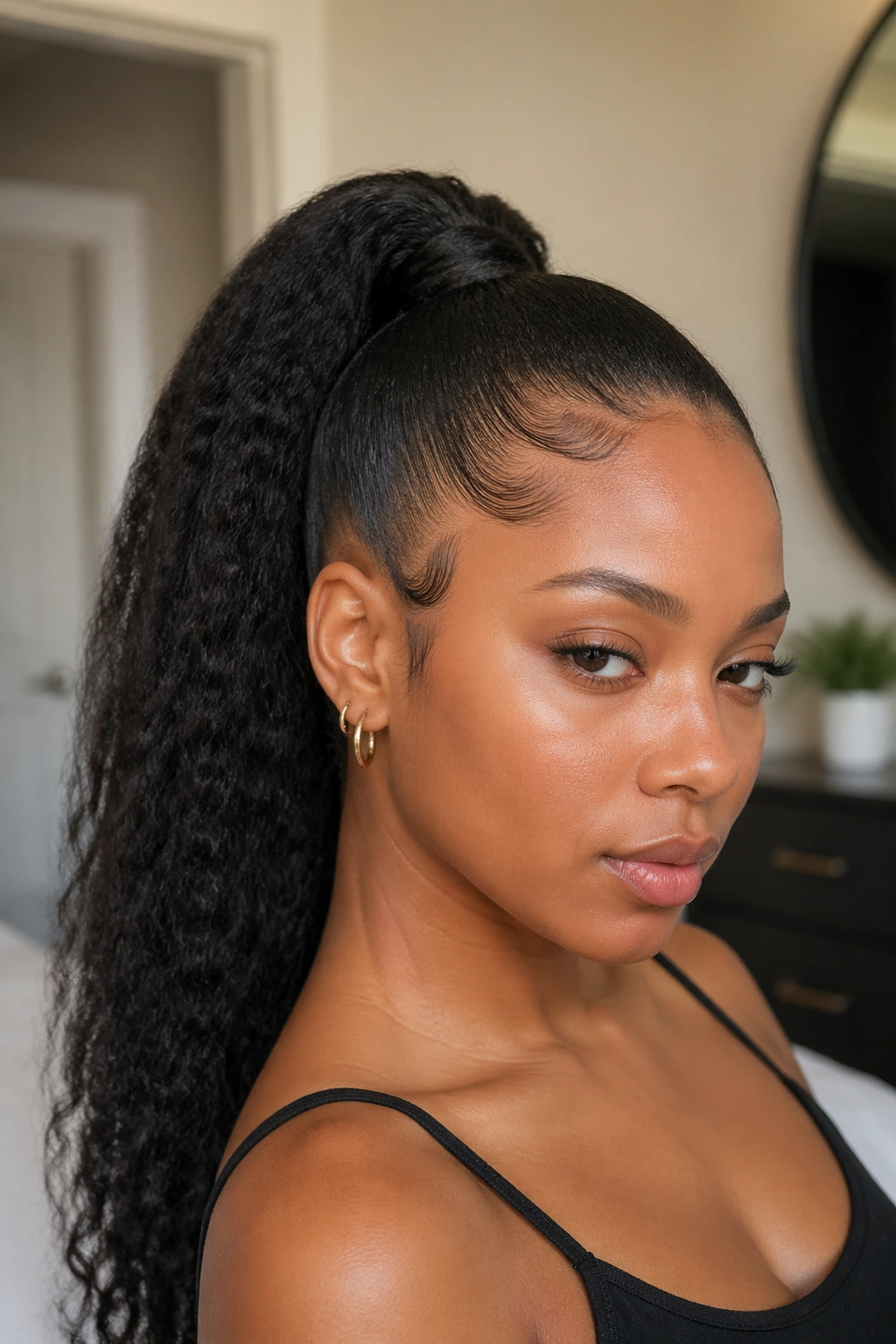
A sleek high ponytail does not mean your whole head has to be plastered down. That is the mistake people make. On kinky hair, the smartest version keeps the perimeter smooth and lets the ponytail itself stay textured, full, or even braided.
Use a rat-tail comb to make the partings clean, then brush the hair upward in small sections instead of attacking the whole head at once. A dime-sized amount of edge control per temple is usually enough. More than that tends to build up and flake. A silk scarf pressed around the hairline for 10 to 15 minutes makes the front sit flatter without needing another half-tube of gel.
This style works best on hair that has been stretched a little, either by banding, blow-drying on low heat, or a fresh twist-out. It is sharp, yes, but it still feels like textured hair.
3. Low Puff at the Nape
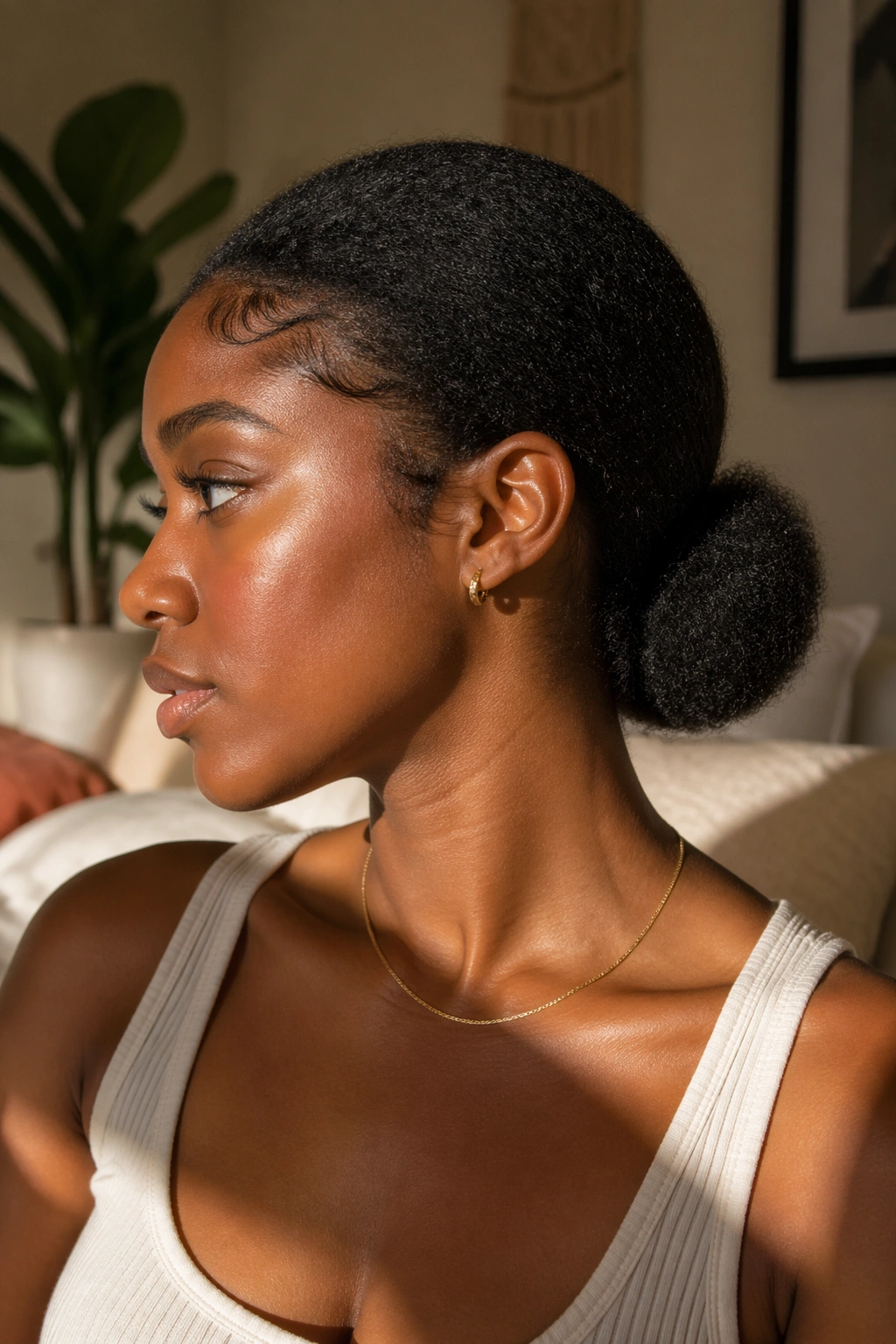
A low puff feels softer than a high one, and sometimes that is exactly what the day calls for. The ponytail sits at the nape, which means less pull on the hairline and a little more room for your coils to breathe. If your scalp is tender, start here.
The shape is especially good on braid-outs, twist-outs, and hair that has a little leftover definition from the day before. A side part can make the whole style look more thoughtful, even if you took two minutes to do it. Keep the elastic loose enough that the puff still springs out instead of being pinned down.
One small detail helps a lot: smooth the front, but do not chase every flyaway. A low puff looks better when it still has some texture around the edges. Too much polish can make it feel stiff, and that is not the mood.
4. Side Ponytail with a Deep Part
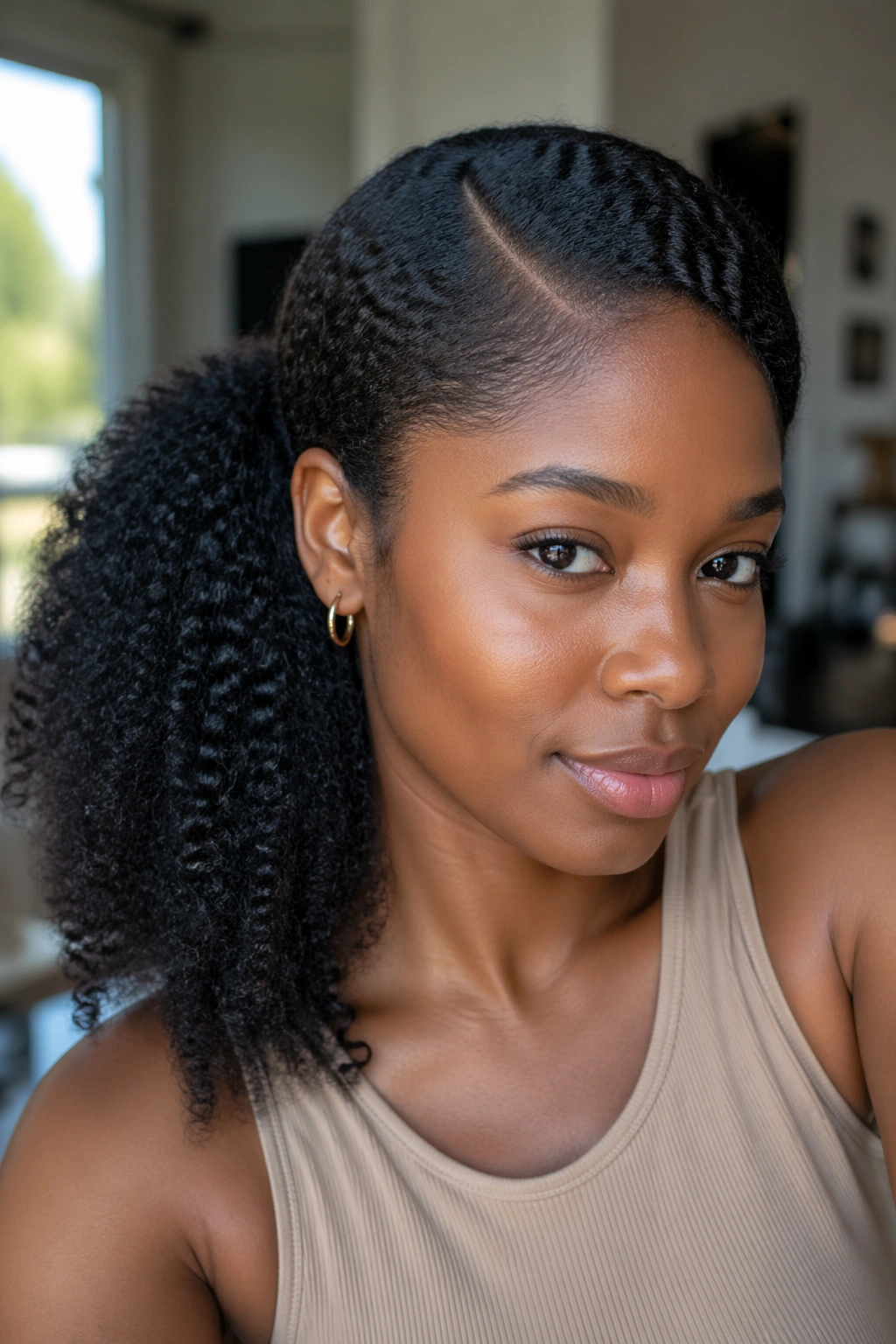
A side ponytail gives kinky hair shape fast. It shifts the weight off the center of the head, which makes the style feel a little softer and a little more styled, even when the actual steps are simple. The deep part is doing a lot of the work.
Unlike a center ponytail, this version leaves room for one side to frame the cheekbone while the other side stays sleek and tucked. It works especially well on braid-outs, stretched coils, or a blowout that still has some bend in it. Gather the ponytail near the jawline or just behind the ear, then wrap the base with a small section of hair so the elastic disappears.
If your hair is thick, part it a touch off center instead of making the line dramatic. That keeps the style from getting bulky on one side. Small change. Big difference.
5. Bubble Ponytail on Stretched Hair
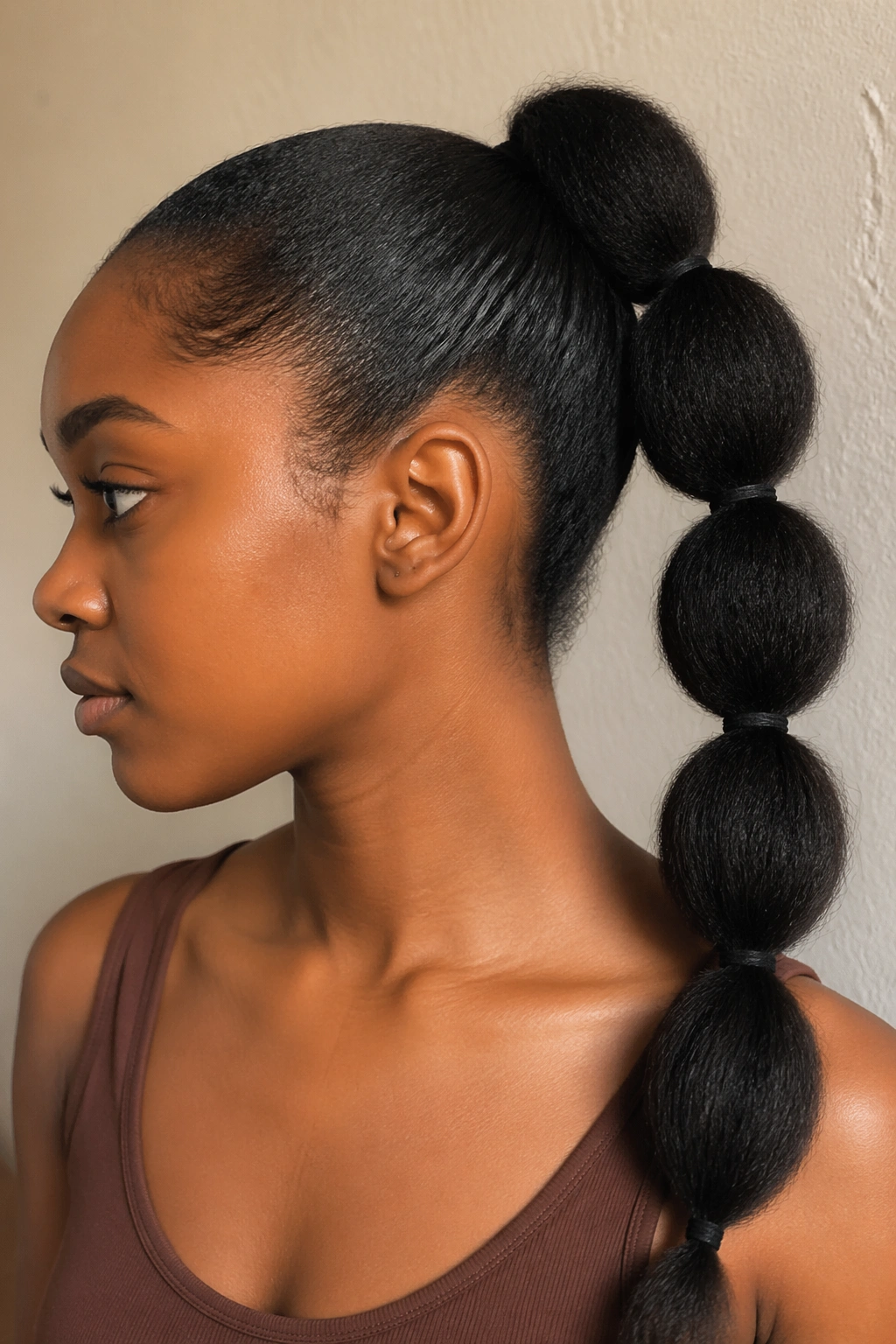
Bubble ponytails look playful, but they are more practical than people think. On kinky hair, the style gives you shape and length without needing perfect smoothness from root to tip. The bubbles do the visual work for you.
Start with a ponytail that is already stretched, braided, or lightly blown out. Then add clear or satin-covered elastics every 2 to 3 inches down the length. Gently pull each section outward with your fingers until it rounds into a bubble. Do not yank the hair apart. You want puff, not frizz.
The style gets better when the spacing is uneven on purpose. The section near the base can be smaller, while the lower bubbles get a little room to swell. If your hair is shorter, tuck in a kinky-curly extension to fake more length. That is not cheating. That is styling.
6. Braided Base Ponytail for Kinky Hair
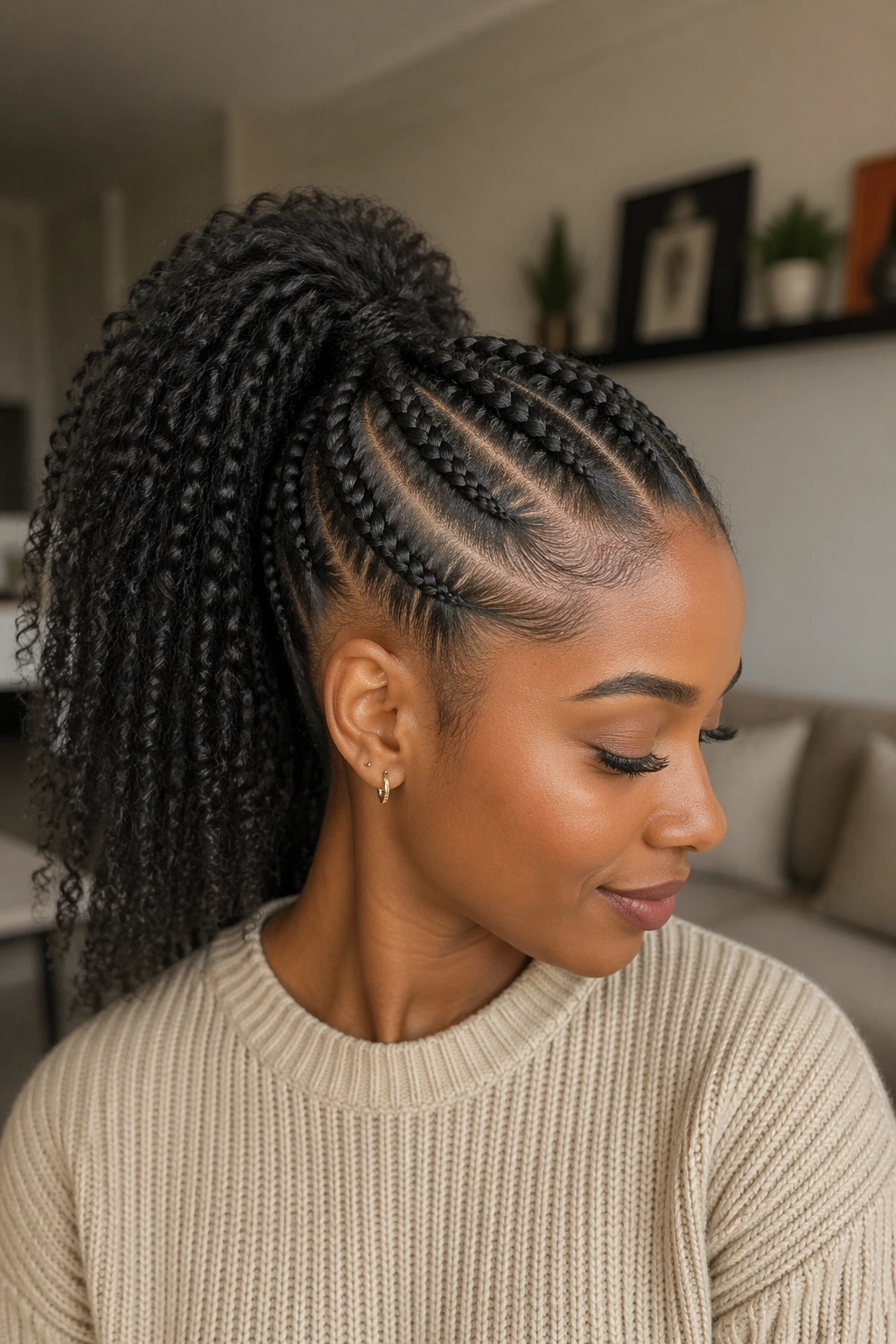
Can a ponytail feel more secure without looking heavy? Yes. A braided base is the answer.
Instead of pulling everything into a single elastic, braid the first few inches at the scalp and let the rest drop into the ponytail. That keeps the roots flatter and gives the style a cleaner line. It also helps if your hair is thick and likes to push bands backward by noon. A simple three-strand braid, a French braid, or a few feed-in braids can all do the job.
How to Use It
- Braid the front section first, then gather the remaining hair into the ponytail.
- Keep the braid tension medium, not tight enough to make the scalp feel hot.
- Use a small scrunchie or elastic at the base, then wrap a section of hair around it.
If you want a ponytail that stays put through a long day, this is one of the most reliable choices.
7. Two-Strand Twist Ponytail
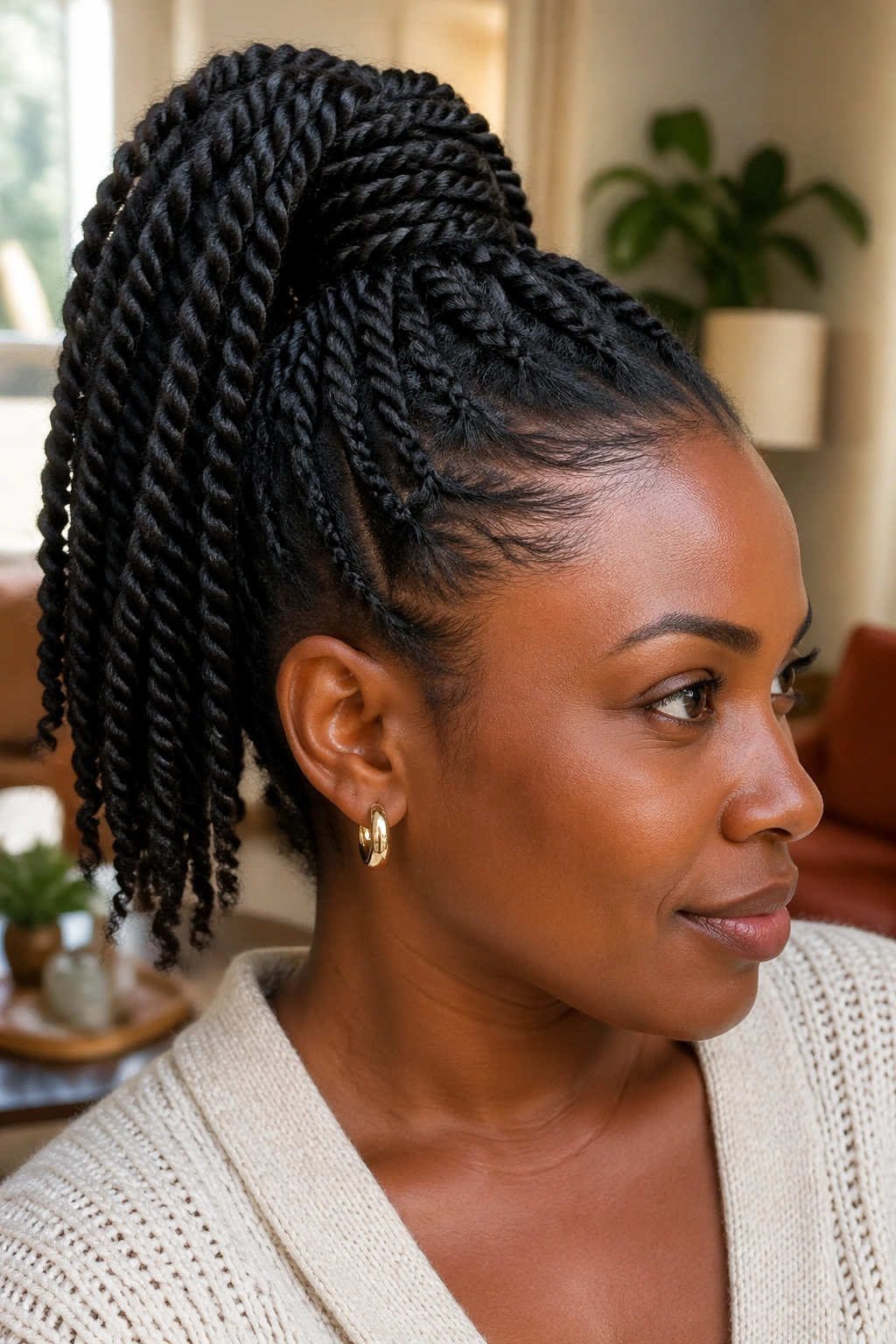
Twists make a ponytail feel softer, and they are kinder to the ends than a style that depends on brushing everything smooth. A two-strand twist ponytail can sit high, low, or off to the side, depending on how much movement you want.
This style shines on fresh twists, old twists, or twist-outs that have started to separate a little. Gather the twists loosely so the roots do not flatten too hard, then let the ends hang free or tuck them into a small coil. A drop of light oil on the fingertips helps the twists stay neat without turning them greasy.
What to Watch For
- If the twists are dry at the ends, seal them before you pull them back.
- Use a soft band that does not snag the twist pattern.
- Keep the ponytail loose enough that the twists still swing.
It is an easy look, but it never reads as plain.
8. Pineapple Ponytail for Coily Hair
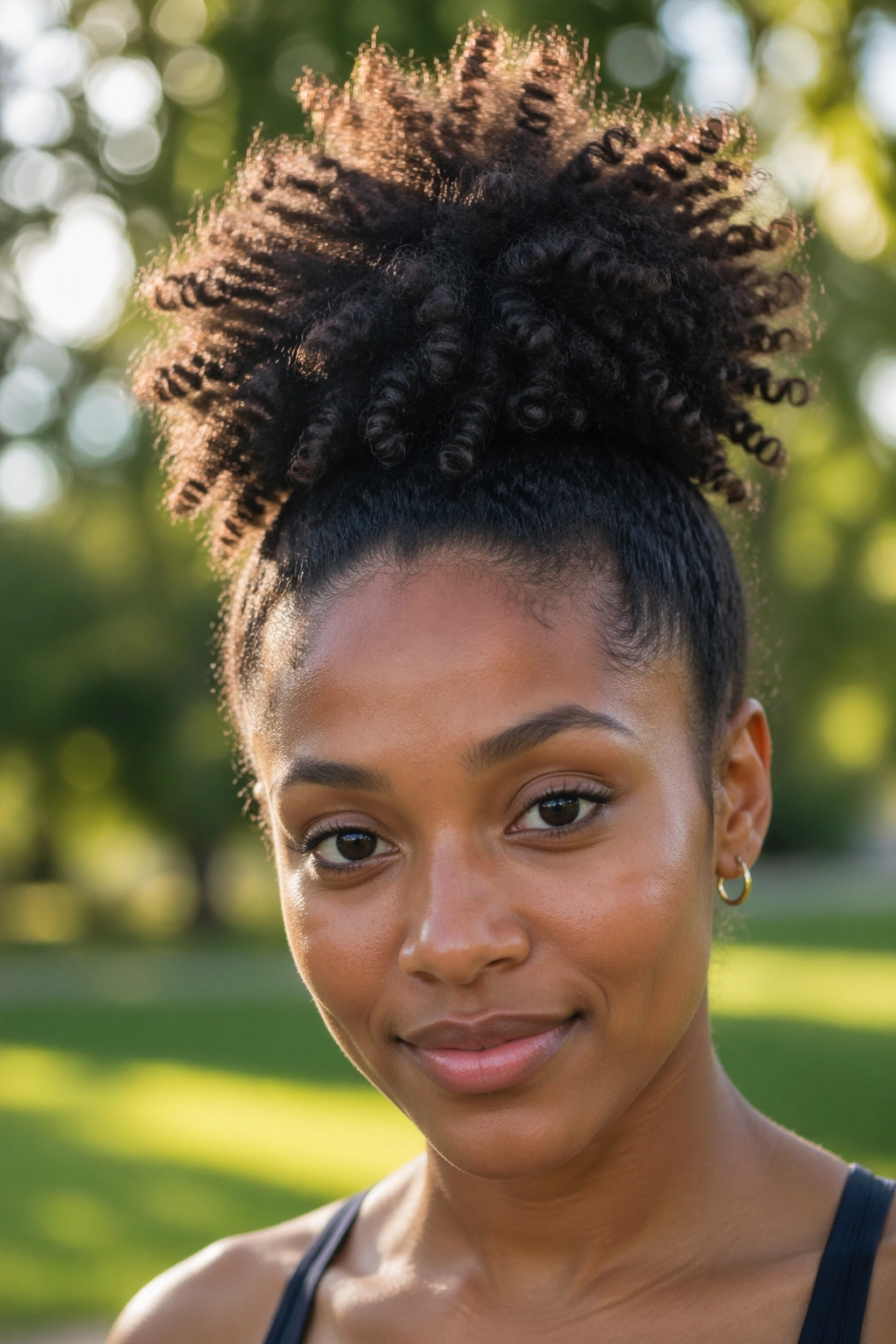
A pineapple ponytail is basically the friendliest high ponytail for coils. It gathers the hair up and forward so the crown keeps its height, and the ends stay protected instead of getting crushed. If you already like wash-and-go texture, this one will feel natural.
The ponytail should sit high but not rigid. Use a satin scrunchie or a soft scarf tie so the base does not leave a hard line in the hair. The shape works best when the curls are still defined enough to bunch upward without being brushed out. That means day-one or day-two hair often behaves better than hair that has been handled all week.
This look is useful outside the house, not only at night. It keeps the silhouette round and airy, and it does a decent job of hiding the fact that you may not have had time for a full restyle.
9. Half-Up Ponytail with Loose Length
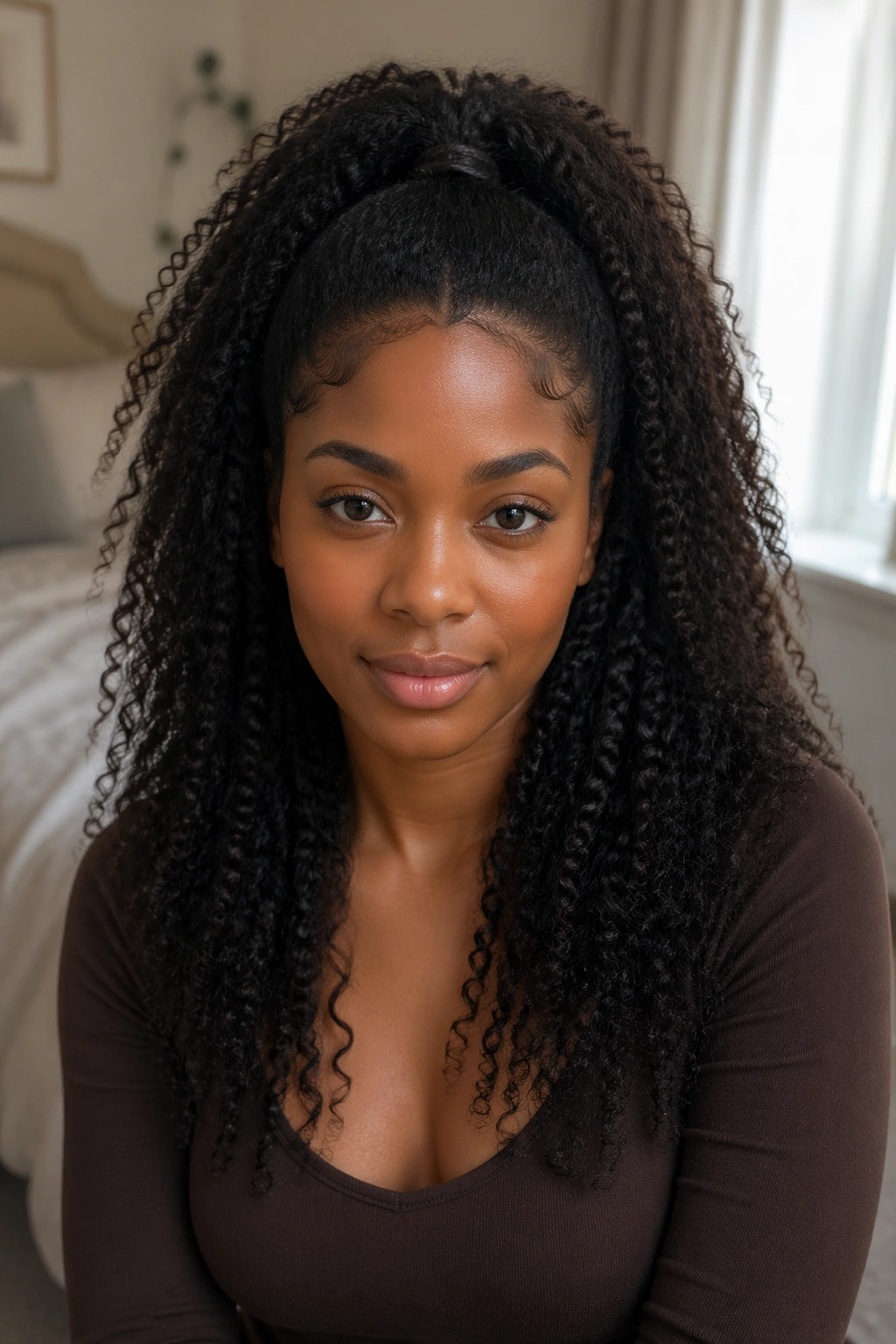
If you hate losing all your volume, half-up is the easy fix. The top section goes into a ponytail, while the bottom stays free, which means you still get lift without giving up texture. On kinky hair, that balance feels right.
The shape works especially well when the hair has different lengths. A tight all-over pony can pull short layers out awkwardly, but a half-up style lets the shorter pieces live where they want. Keep the parting clean from ear to ear, then gather the top section at the crown or slightly behind it.
A half-up ponytail also gives you room for accessories. A small cuff at the base, a pair of gold clips, or even a wrapped band can make it look finished fast. It is one of those styles that looks more styled than it really is, and I mean that in the nicest way.
10. Cornrow Feed-In Ponytail for Kinky Hair
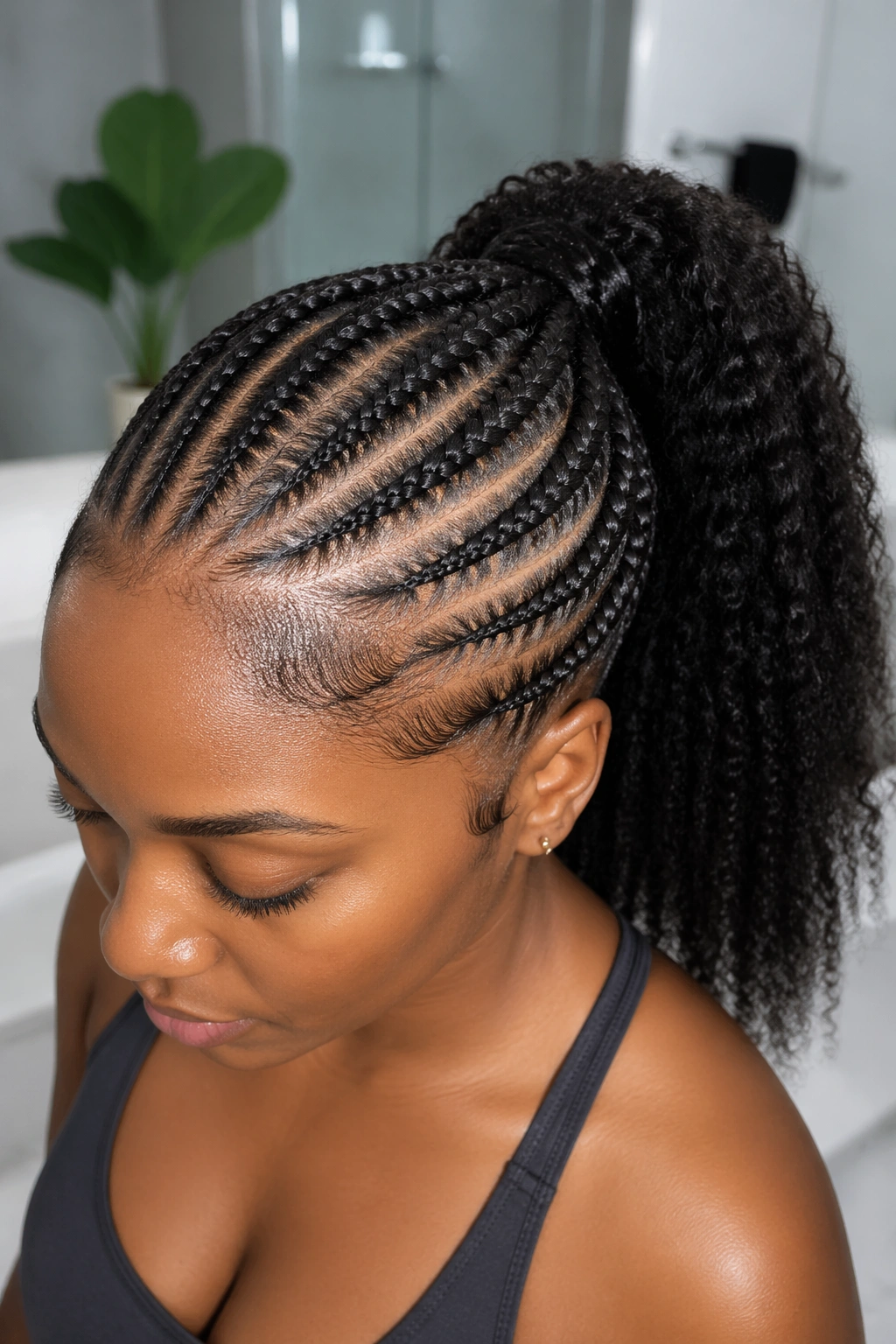
Unlike a simple slick-back, a cornrow feed-in ponytail gives you structure from the scalp outward. The braids create a clean path into the ponytail, and the result lasts longer than a loose gathered style. That is why it is such a strong choice for busy weeks or events where you do not want to redo your hair every morning.
Feed-in braids also help reduce bulk at the hairline, which is a real bonus on dense type 4 hair. Keep the tension medium. Tight braids can look neat on day one and feel terrible by day two, and that trade is not worth it. A pattern with 4 to 6 rows is usually enough for a polished look without making the style feel heavy.
This one is best for people who like neat lines, long wear, and a ponytail that stays controlled even when the rest of the day does not.
11. Faux Hawk Ponytail with Raised Sections
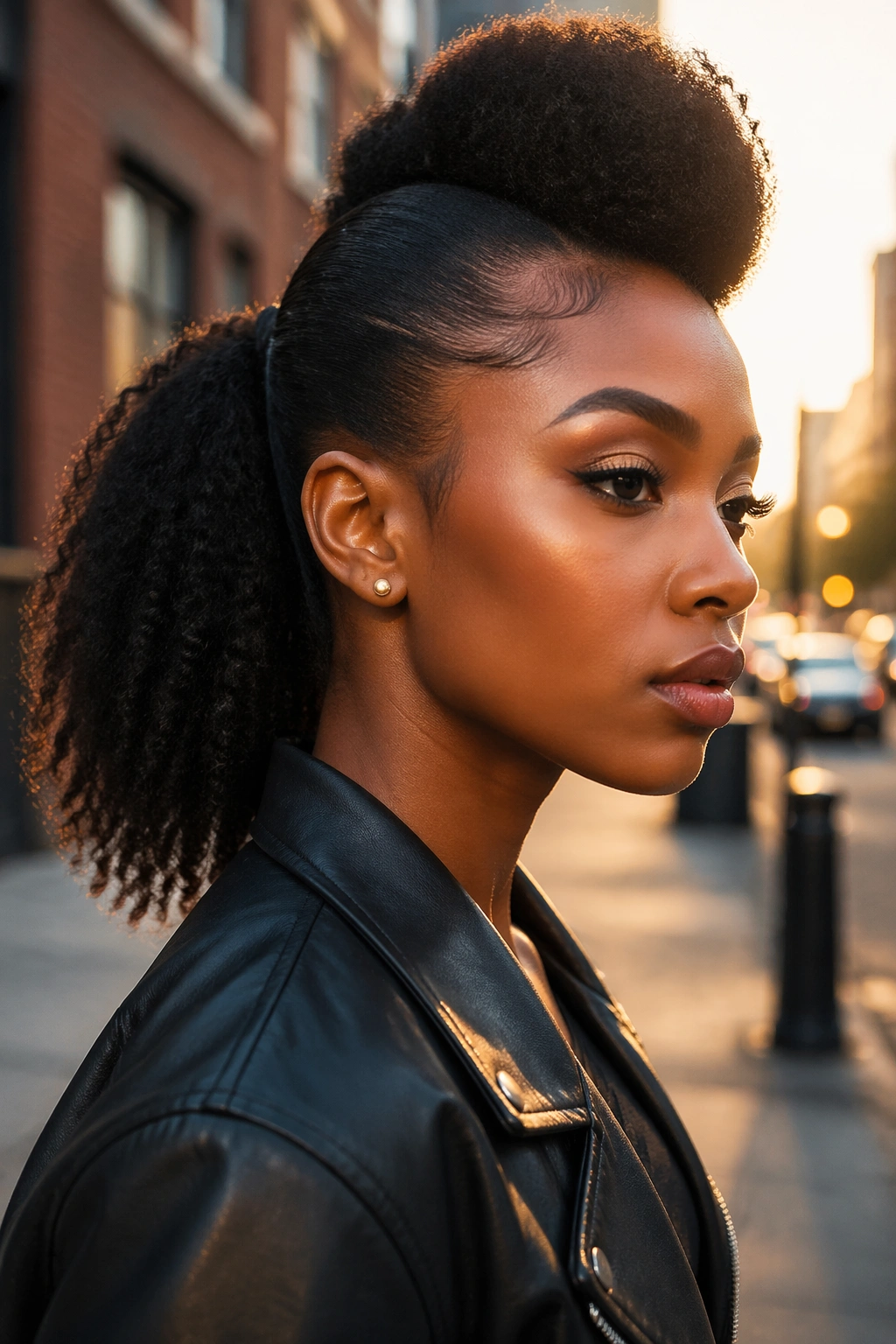
A faux hawk ponytail makes kinky hair look dramatic without requiring a full cut or a tricky updo. The center section stays lifted, while the sides are slicked or braided back, which creates that sculpted ridge down the head. It is bold, but not messy in a bad way.
The key is division. Use 3 elastic points or a few pinned sections so the center line stays raised instead of collapsing. If the sides are thick, braid them flat before pulling them back. That keeps the silhouette neat and stops the shape from puffing out in the wrong places.
This style is especially good when you want volume in the middle and clean sides around it. It has a bit of attitude, which honestly is part of the fun. Some ponytails are polite. This one is not.
12. Drawstring Ponytail on Blown-Out Hair
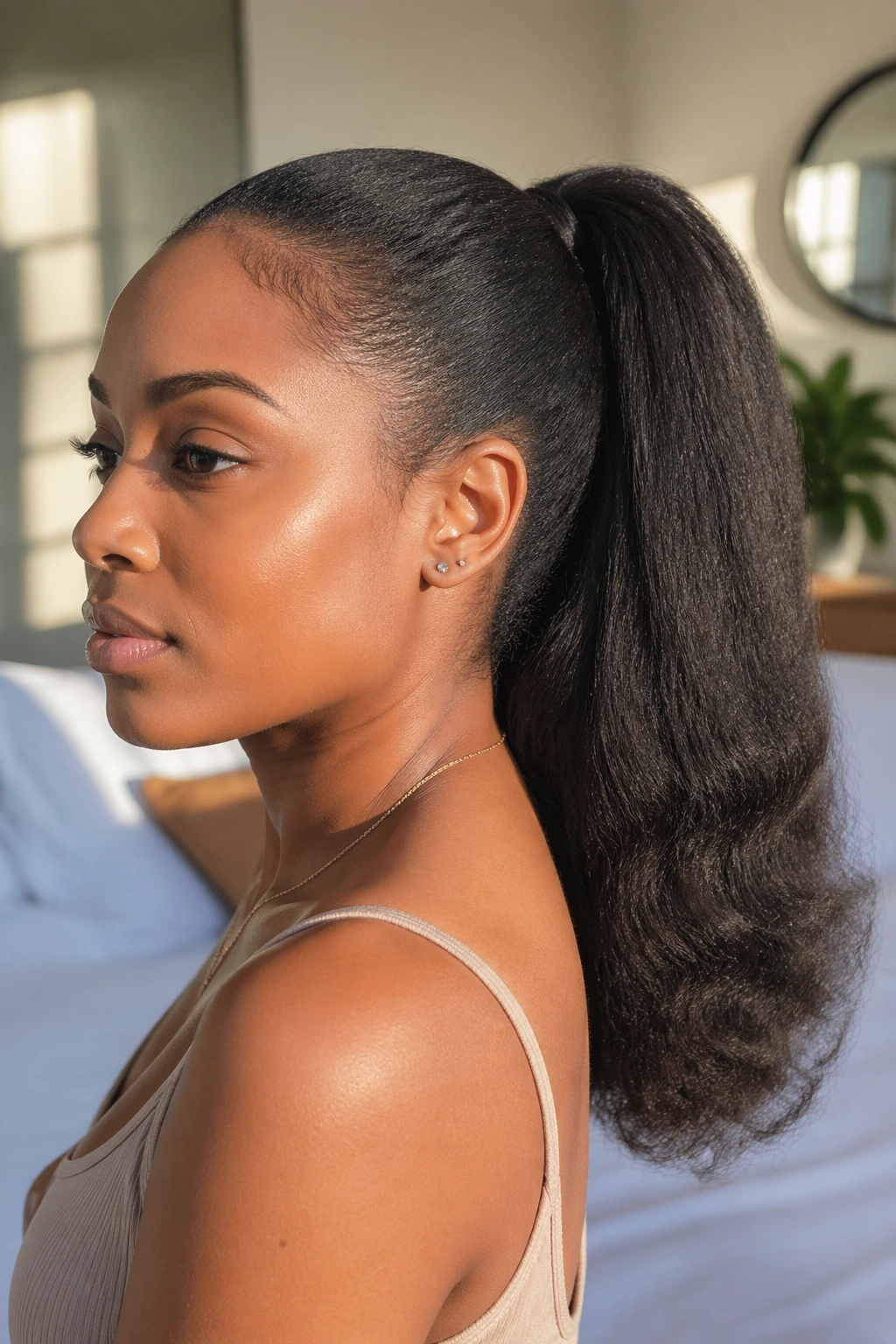
Need length in five minutes? A drawstring ponytail can save the day.
The best versions start with a small bun, braided base, or flat anchor at the back of the head. Then the drawstring piece slides over it, and the cord tightens around the base until it feels snug. Not tight. Snug. If the band digs into your scalp, loosen it before you even leave the mirror.
How to Make It Blend
- Match the texture of the attachment to your own coils as closely as you can.
- Leave a little of your own hairline out if the ponytail has a curl pattern that needs blending.
- Fluff the base with fingers so the transition from your hair to the attachment does not look abrupt.
This style works best on stretched hair because the shape underneath stays flatter. If your hair is too bulky, the drawstring sits oddly and starts sliding.
13. Curly Extension Ponytail
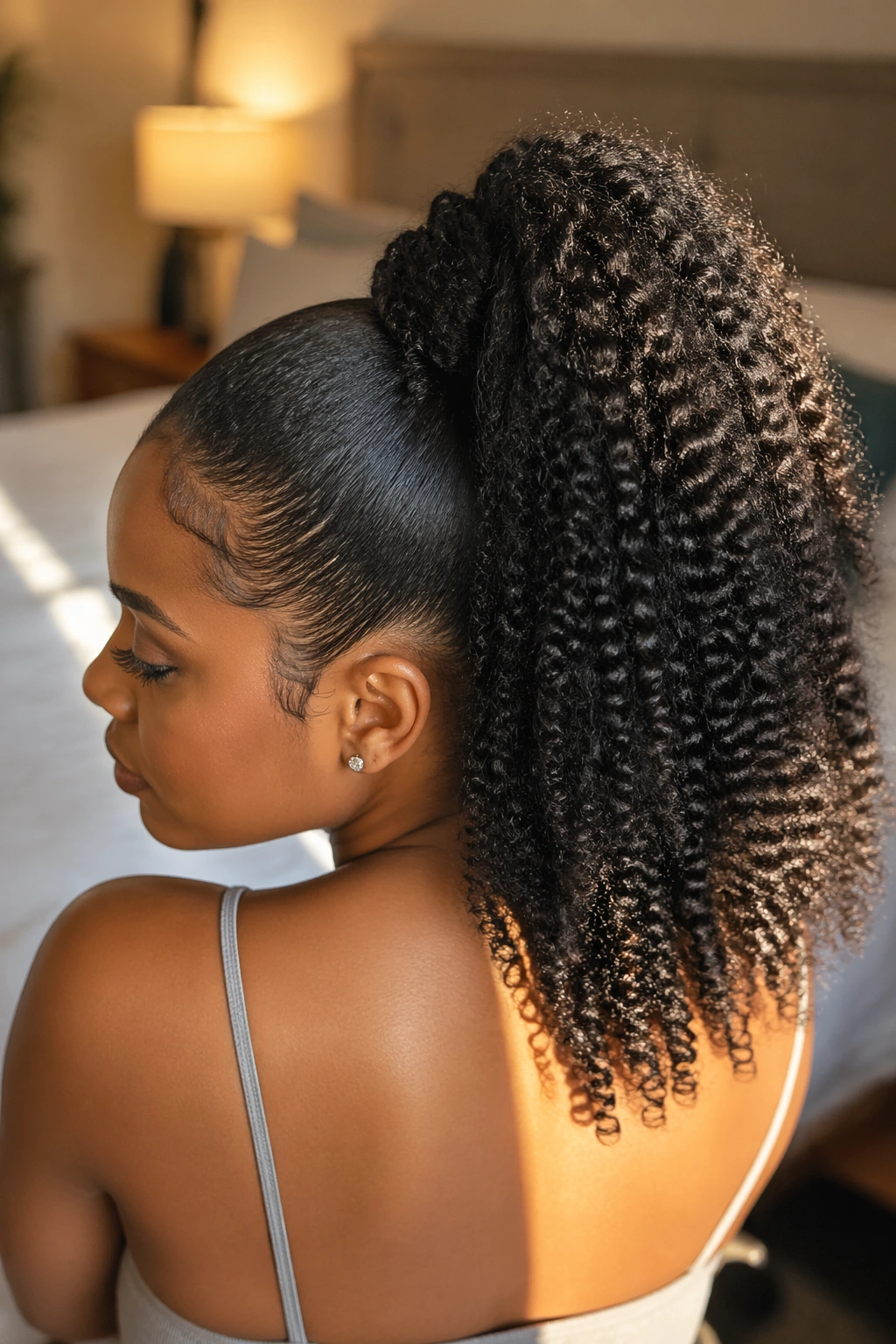
A kinky-curly extension ponytail looks best when the texture is close enough to fool the eye. Straight bundles on coily hair can work for a glam look, but they do not always blend cleanly. A texture that matches your own curl pattern sits more naturally and moves better.
Most people only need 1 or 2 bundles, depending on how full they want the ponytail to be. Wrap your own hair into a firm anchor first, then secure the extension around it and cover the join with a strip of hair or a decorative wrap. A small leave-out at the front can help the blend if your hairline and the extension need a little help meeting in the middle.
The nice thing here is flexibility. You can make the ponytail big and fluffy or longer and sleeker, but the curl pattern still feels like it belongs on your head. That matters more than people admit.
14. Wrapped Ponytail with a Scarf
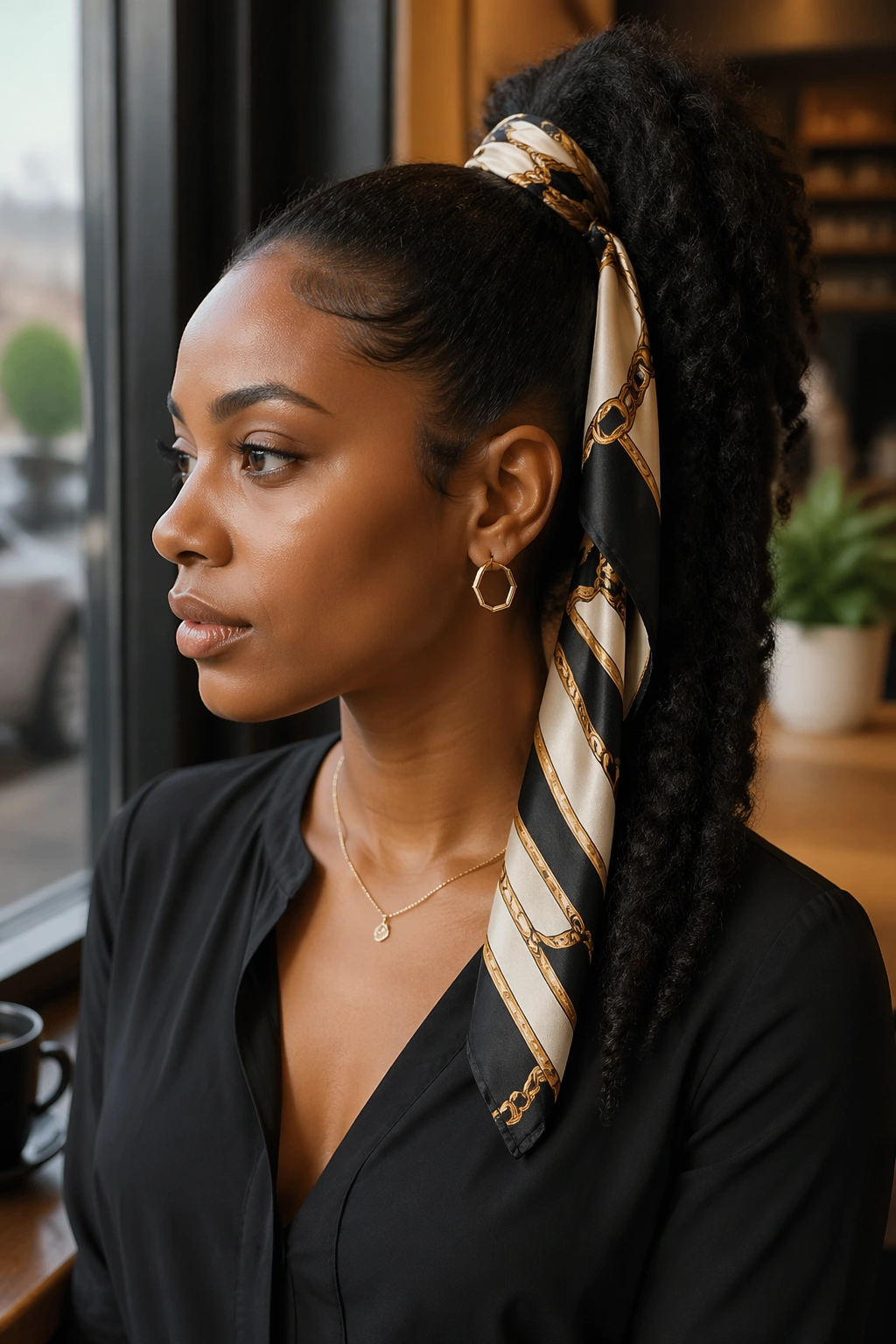
A scarf is not a cover-up here; it is the whole point.
Wrapped ponytails let you turn a basic gathered style into something sharper or softer, depending on the fabric and color. Satin or silk keeps friction down, which is a relief for edges and nape hair that gets rubbed the wrong way by rougher materials. You can wrap only the base, or let the scarf trail through the ponytail for extra length and movement.
This style is especially useful on days when the roots are cooperating but not behaving perfectly. Instead of fighting every flyaway, you just frame the ponytail with the scarf and let the wrap do the visual cleanup. A flat knot works better than a bulky bow if you want the style to sit close to the head.
It is one of those looks that feels dressed up without trying too hard. Which, frankly, is a rare and welcome thing.
15. Stacked Double Ponytail
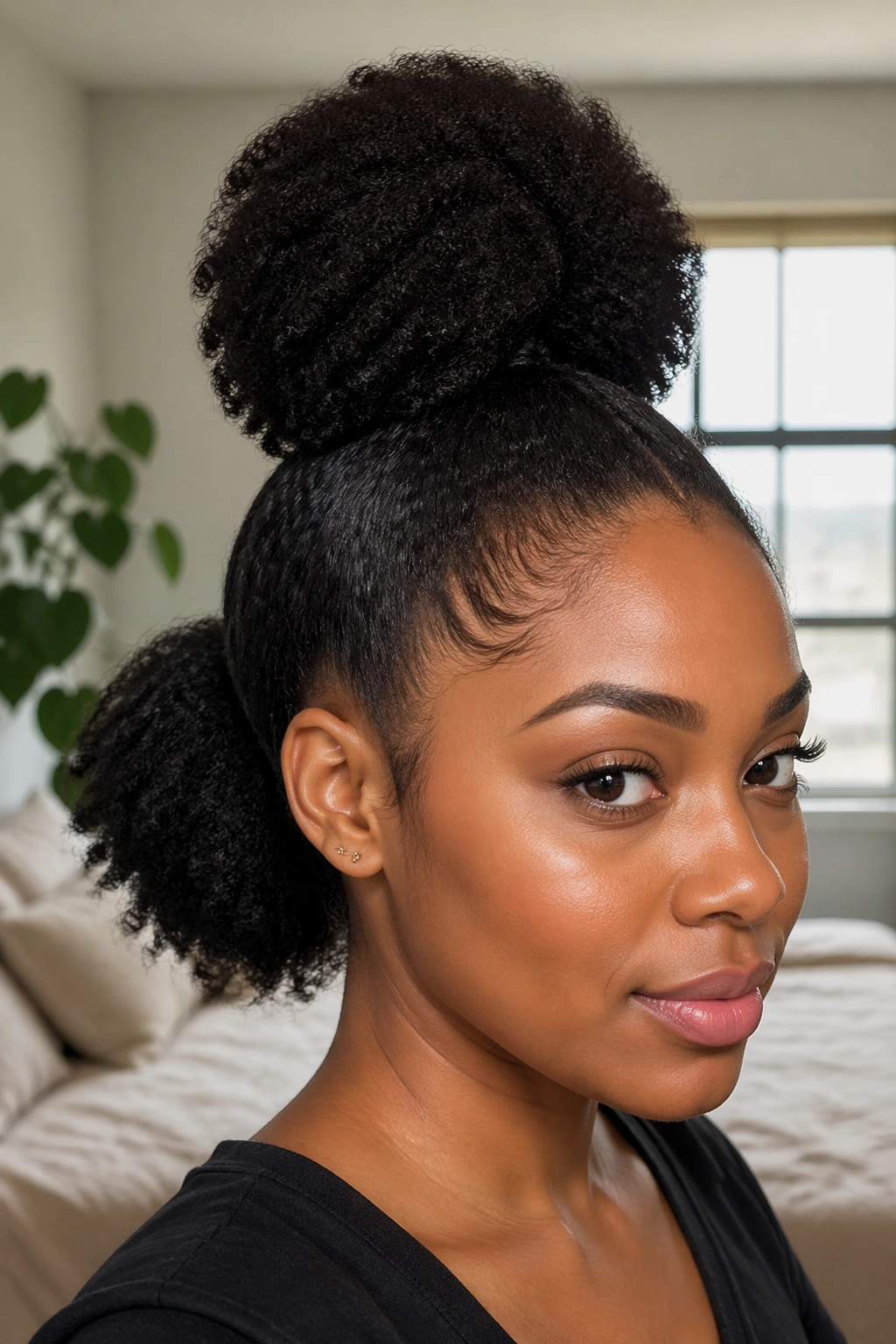
Shorter hair often needs a little cheating, and stacked ponytails are honest about it.
The idea is simple: one ponytail sits a little higher, and another sits just below it, so the finished shape looks fuller and longer than either section would on its own. On kinky hair, this works because the texture hides the seam between the two ties. You do not need a perfect illusion. You just need enough lift for the shape to make sense.
Key Details
- Use 2 soft elastics, one at the crown and one a few inches below.
- Keep the top section slightly puffed so the upper tie does not collapse.
- Blend the two sections with fingers instead of brushing them into one flat mass.
The style is a smart choice when you want volume and length without adding extensions. It is practical. Also a little clever.
16. Low Nape Ponytail with Rolled Ends
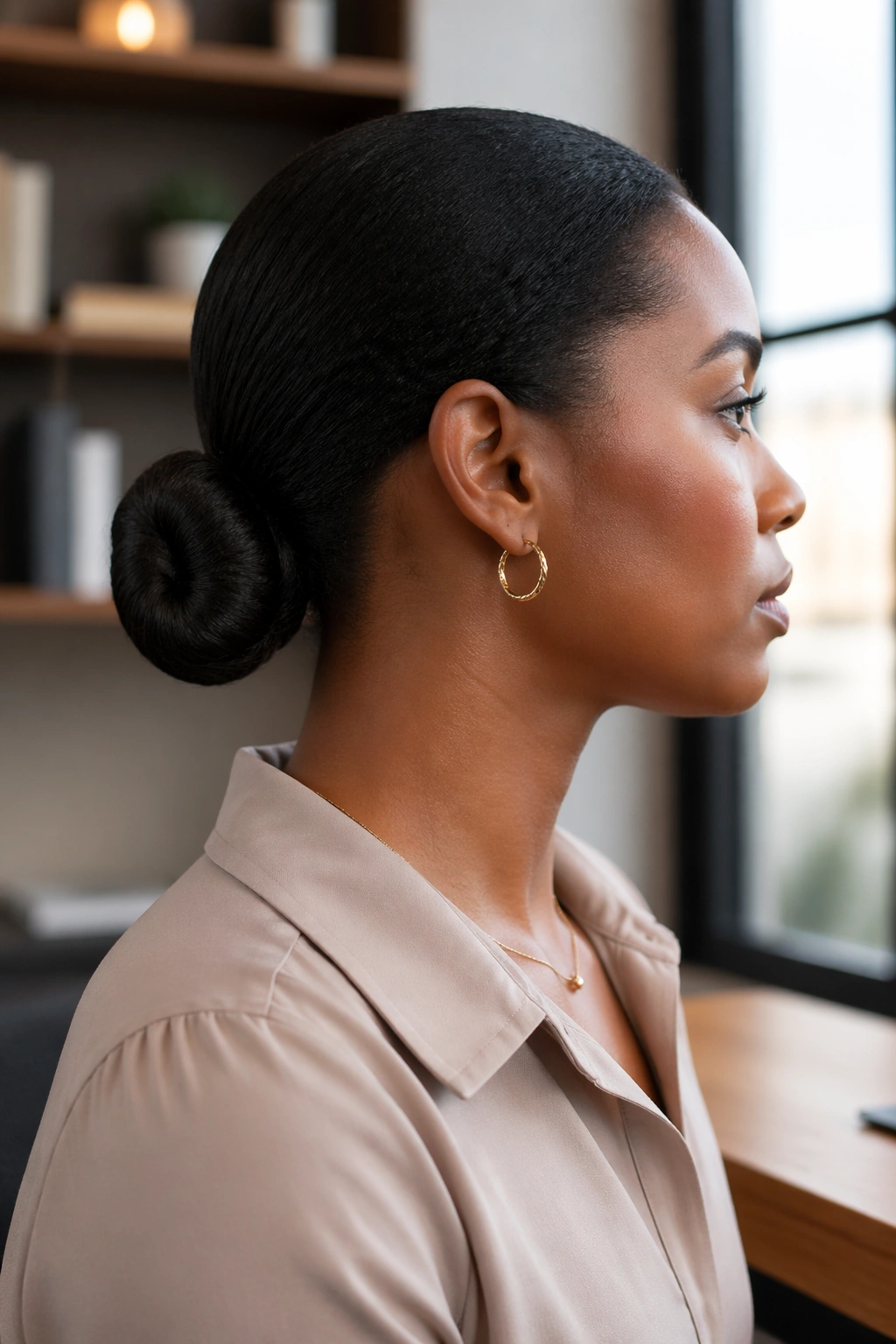
A low nape ponytail with rolled ends feels calmer than a high puff, and that makes it useful for formal settings, workdays, or any time you want a cleaner line. The ponytail sits close to the neck, and the ends are tucked or rolled so the silhouette stays neat.
This one works best on stretched hair, a press, or a braid-out that has enough length to fold under. If the hair is too shrunken, the roll starts fighting the texture instead of helping it. Use a soft brush only on the outer layer, then secure the base and shape the ends with pins or a tucked wrap.
Compared with a high ponytail, this style asks for less drama and gives more control. It is not loud. It does not need to be. The quiet shape is the point.
17. Ponytail with Bangs
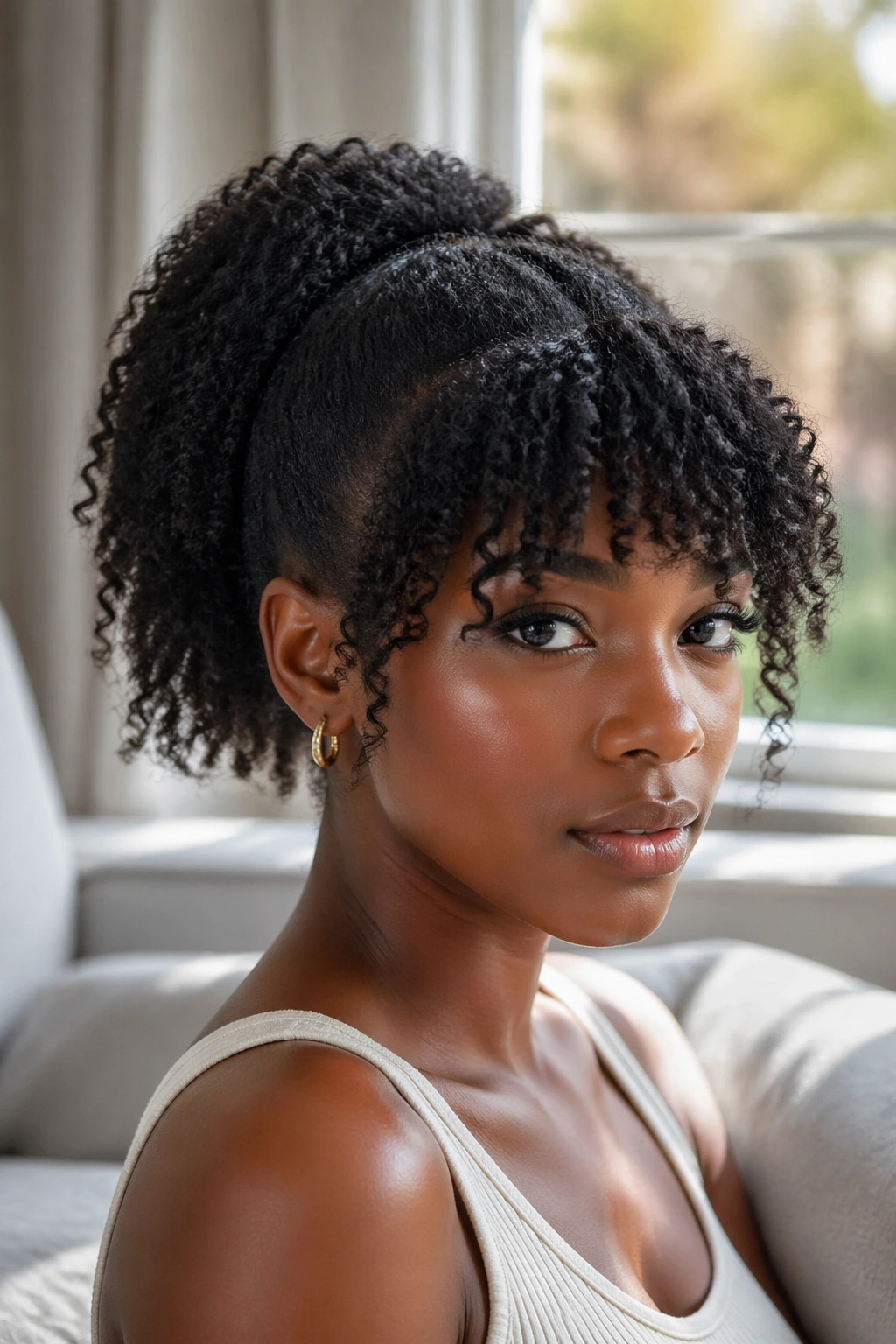
A ponytail with bangs changes the whole face line. That is the main reason it works. It draws attention upward, softens a high forehead, and breaks up the long vertical line that some ponytails create on kinky hair.
You can wear actual cut bangs, but you do not need to. A twisted front section, a curled fringe, or a stretched piece left out and shaped forward can create the same effect for one day. If the rest of the hair is sleek, even a little texture in the bangs keeps the style from feeling too rigid. If the ponytail itself is full, the fringe gives it balance.
This is one of my favorite options for people who want a ponytail but do not want the whole style to sit behind the face. It feels a touch softer and a touch more personal.
18. Rope Braid Ponytail
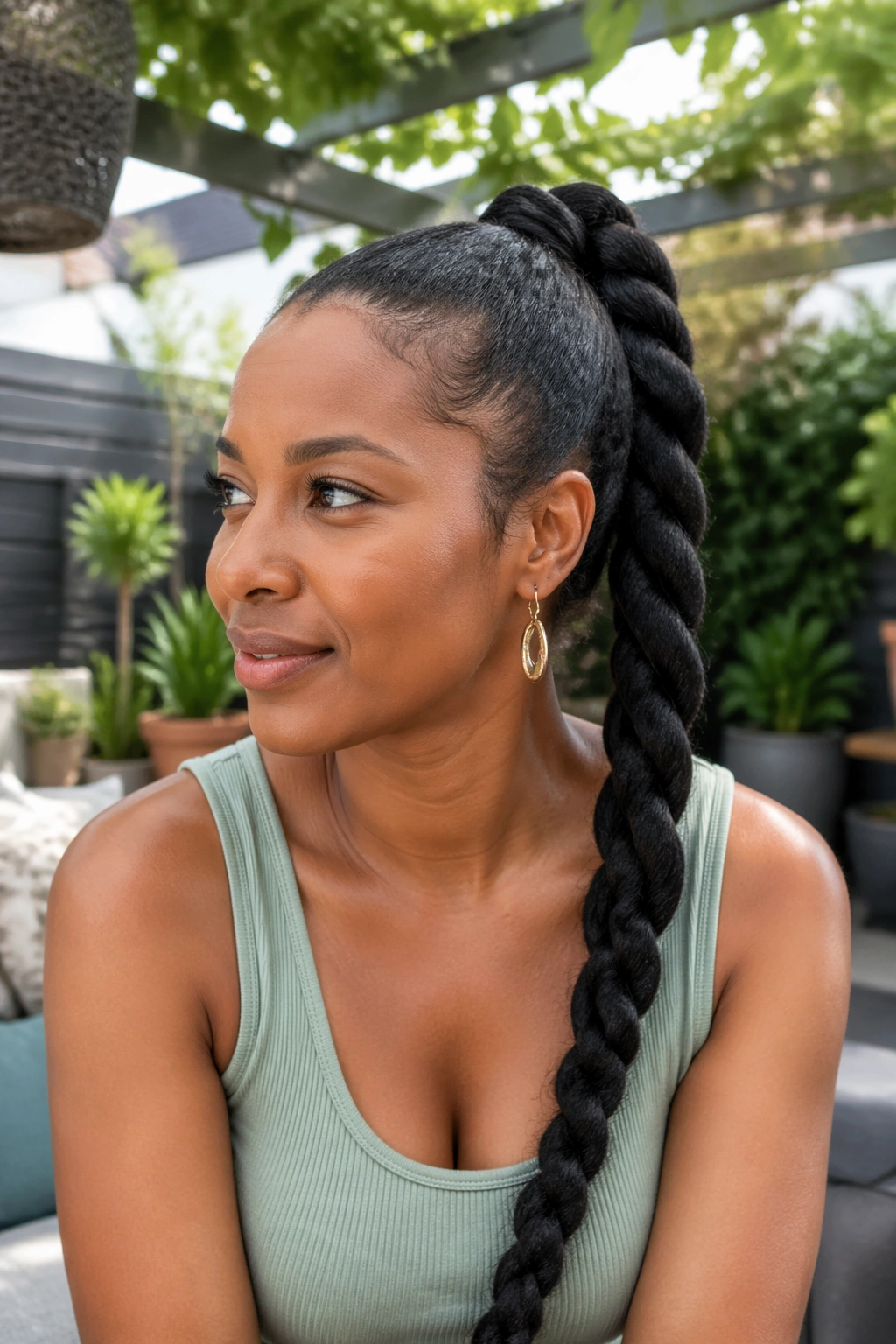
Why twist the ponytail itself? Because it keeps the ends contained and gives the style a neat finish without demanding perfect straightness.
A rope braid ponytail starts like a regular ponytail, then gets divided into two sections that twist around each other. On kinky hair, that twist pattern can hold well because the texture grips itself. The result is clean, long-looking, and a little more interesting than a plain hang-down ponytail.
How to Get the Most From It
- Divide the ponytail into two equal parts before twisting.
- Twist each section in the same direction, then wrap them around each other in the opposite direction.
- Tie the ends with a tiny elastic or seal them with a curl rod if the hair is long enough.
This style works best when the ponytail itself is already secure and not too tight at the base. That way the braid can stay smooth without pulling your roots.
19. Beaded Ponytail with Braids or Twists
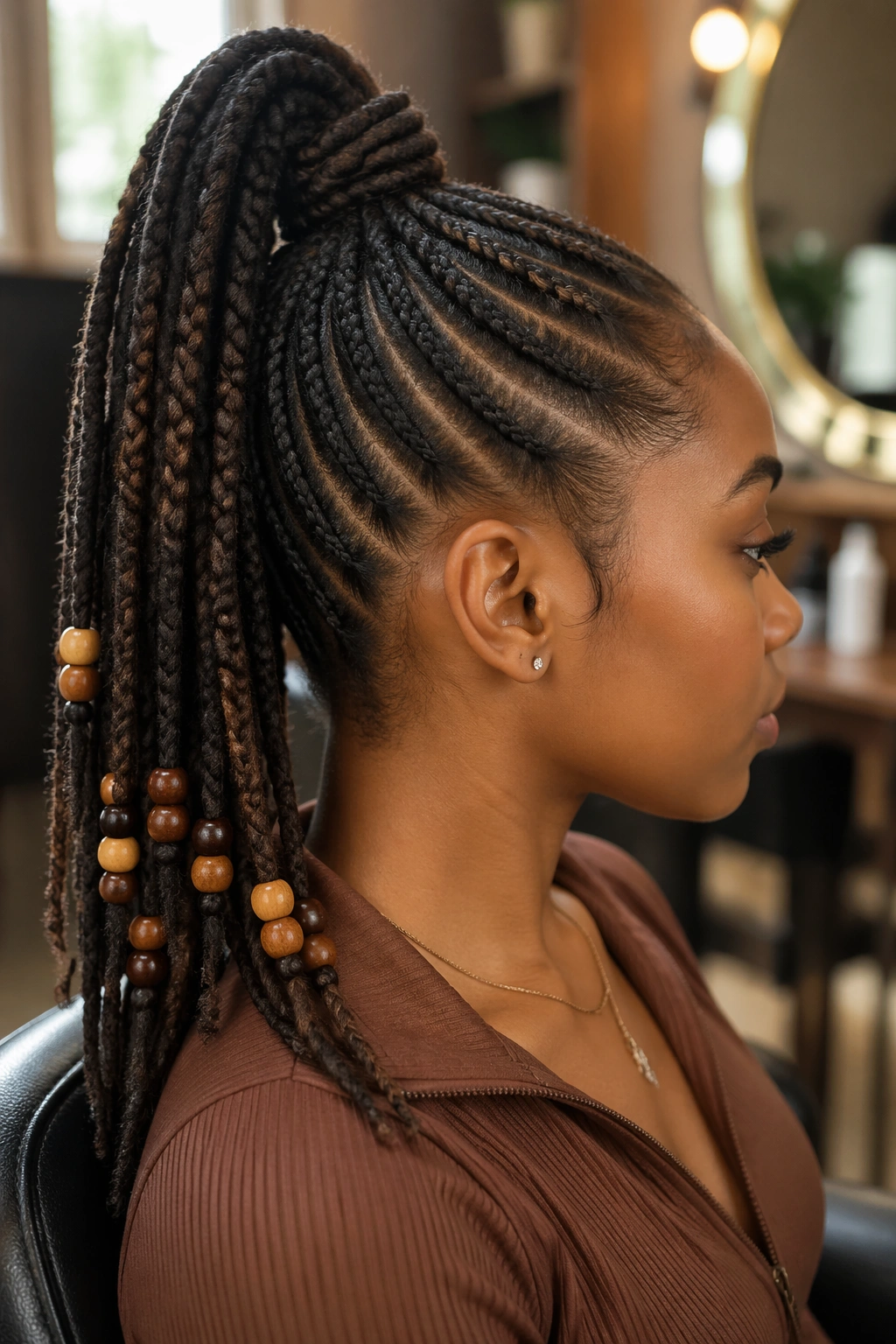
Beads change the mood fast. A plain ponytail becomes something playful, rhythmic, and a little more personal the second you add them. On kinky hair, beads work best when they are attached to braids or twists inside the ponytail, not just slapped on loose ends.
The weight matters. Use 6 to 12 medium beads rather than piling on so many that the hair starts dragging. If your hairline is delicate, keep the heavier pieces away from the front and let the beads live toward the ends. That keeps the style from feeling stiff.
A beaded ponytail makes a nice sound when you move, which is one of those small details people forget to mention. It is not subtle. That is the point. If you want a ponytail that feels a little celebratory, this is the one.
20. Defined Afro Puff with a Front Swirl
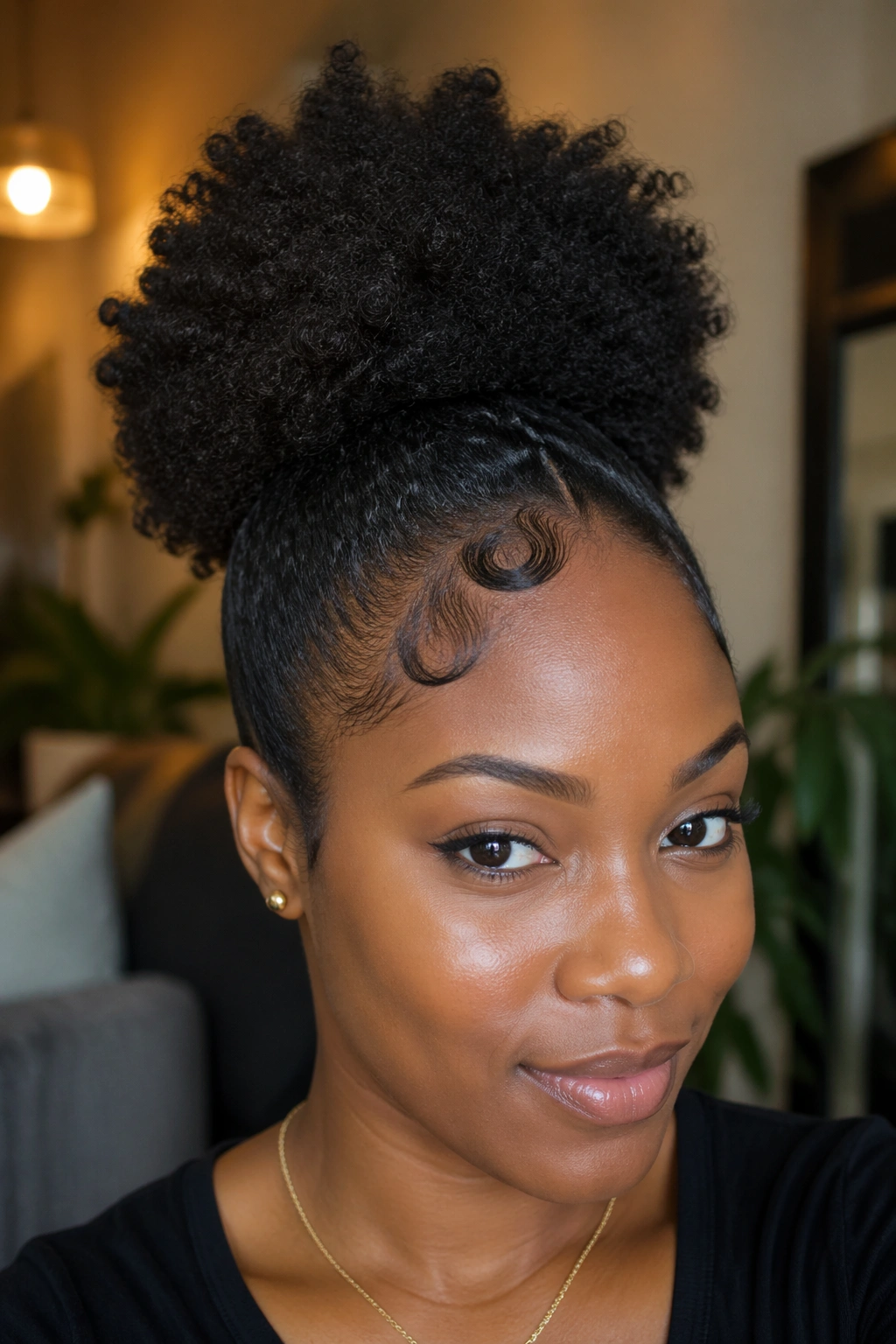
A puff does not have to be all volume and no shape. A defined front swirl gives the style a line, and that one detail can make the whole ponytail look more intentional.
Use a small amount of curling cream or gel on the front 1 to 2 inches of hair, then brush or finger-coil that section into a soft swirl before gathering the rest into a puff. The back can stay big and airy. That contrast is what makes it good. Too much product on the front, though, and the hair starts looking wet and hard. Less is better here.
This version works well on day-two hair when the front needs a little discipline but the rest of the puff still has life. It is a nice middle ground between fully sleek and fully loose.
21. Party Ponytail with Rhinestone Pins
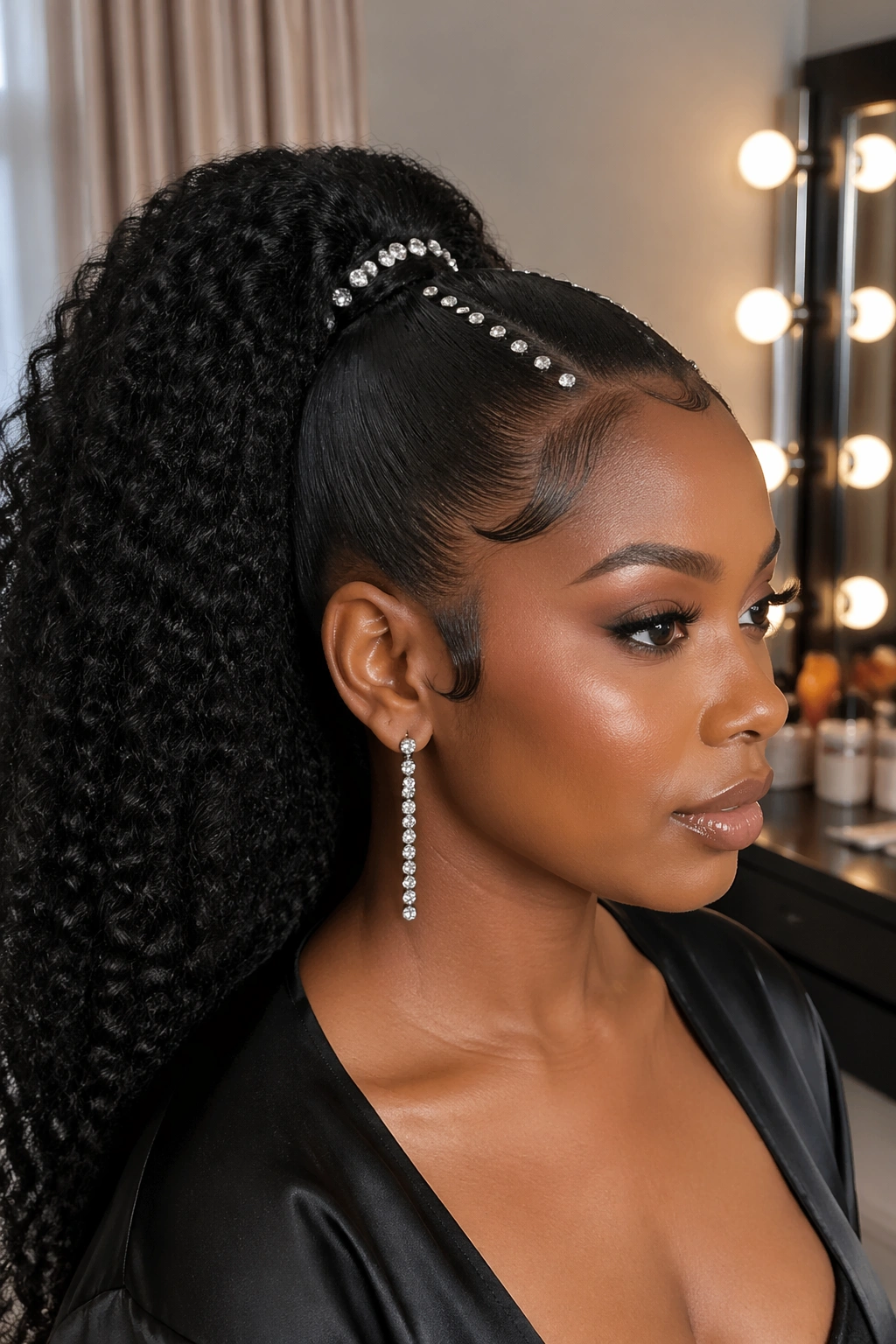
A party ponytail does not need a complicated shape. Sometimes all it needs is one sharp detail. Rhinestone pins, pearl clips, or a few metallic slides can turn a simple ponytail into something more dressed up without changing the whole structure.
The trick is restraint. Place the pins along a part line, around the base, or just on one side of the ponytail so the styling looks deliberate rather than overloaded. A sleek low ponytail or a high puff both work here, but the surface should stay relatively clean so the accessories can stand out. If the hair is too busy, the sparkle disappears into the texture.
This style is useful when the outfit is already doing a lot and the hair needs to stay neat. It also photographs well, which is nice, but more important is that it stays put and does not feel fussy.
22. Center-Part Low Ponytail
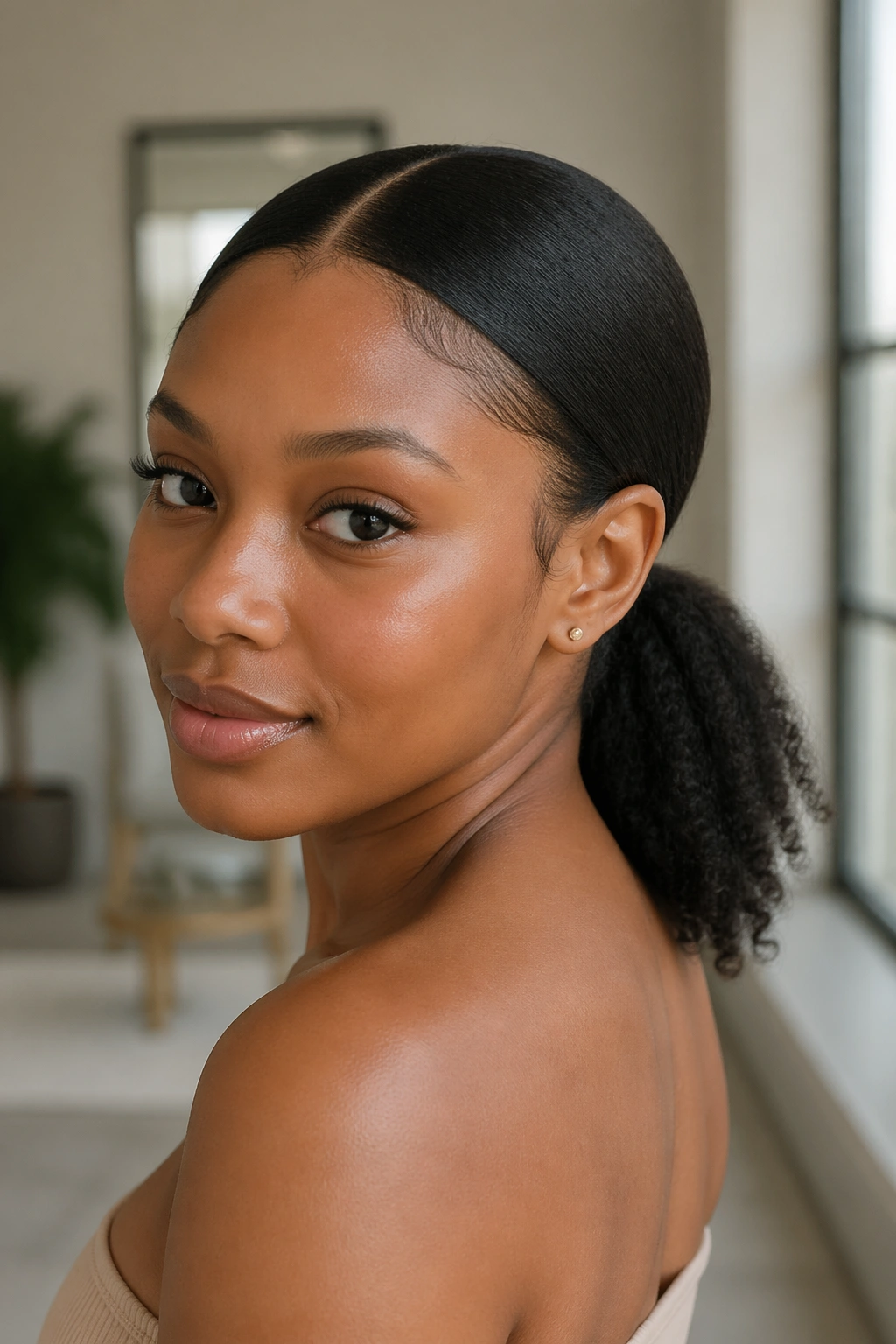
If side parts feel playful, the center-part low ponytail is the clean line you can draw. It gives kinky hair symmetry and a calm shape that feels polished without leaning stiff or overworked.
Make the part with the tail of a comb, then smooth each side in small sections toward the nape. That keeps the roots flat without making the whole head feel scraped back. A soft brush helps, but a lot depends on patience. Rush it and you will have bumps. Take an extra minute and the style settles nicely.
This look works on stretched hair, blown-out hair, or a pressed-out base. It is especially good when you want earrings, makeup, or a strong neckline to do some visual work. The ponytail is not fighting for attention. It is just sitting there being sharp.
23. High Ponytail with Curled Ends
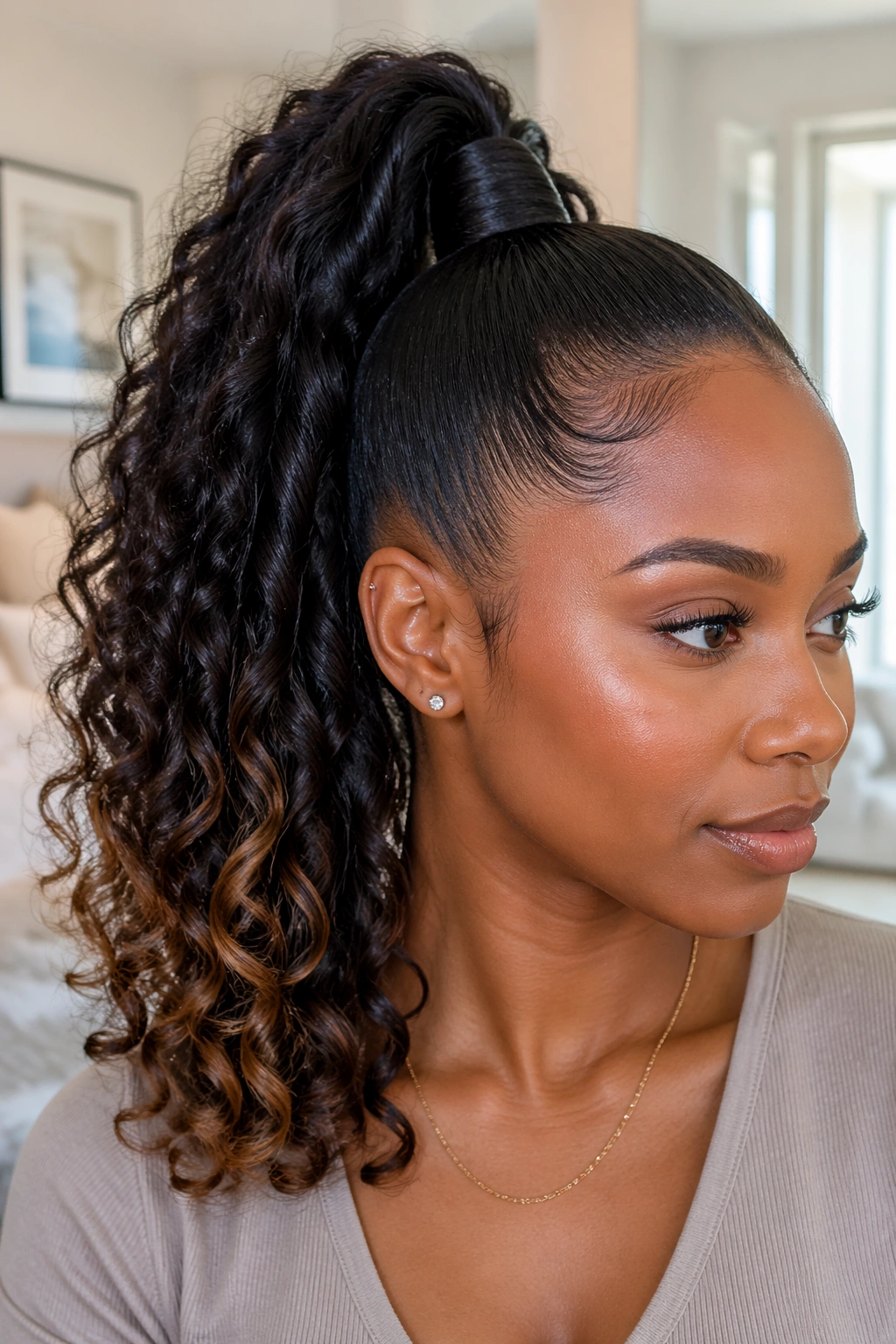
Curled ends keep a high ponytail from looking blunt. On kinky hair, that matters more than people think, because dense texture can make a ponytail look stubby if the tail just hangs straight.
Use flexi rods, perm rods, or a curling iron on the ends only. If the hair is natural and stretched, wrap small sections around medium rods and let them dry fully before taking them down. If you are using an extension ponytail, set the ends the same way so the texture looks intentional from base to tip. The finish should feel bouncy, not stiff.
This style is one of the easiest ways to make a ponytail look a little more dressed up without changing the whole structure. The curls at the end give movement, and movement makes the whole look feel alive.
24. Short-Hair Ponytail for Tapered Cuts
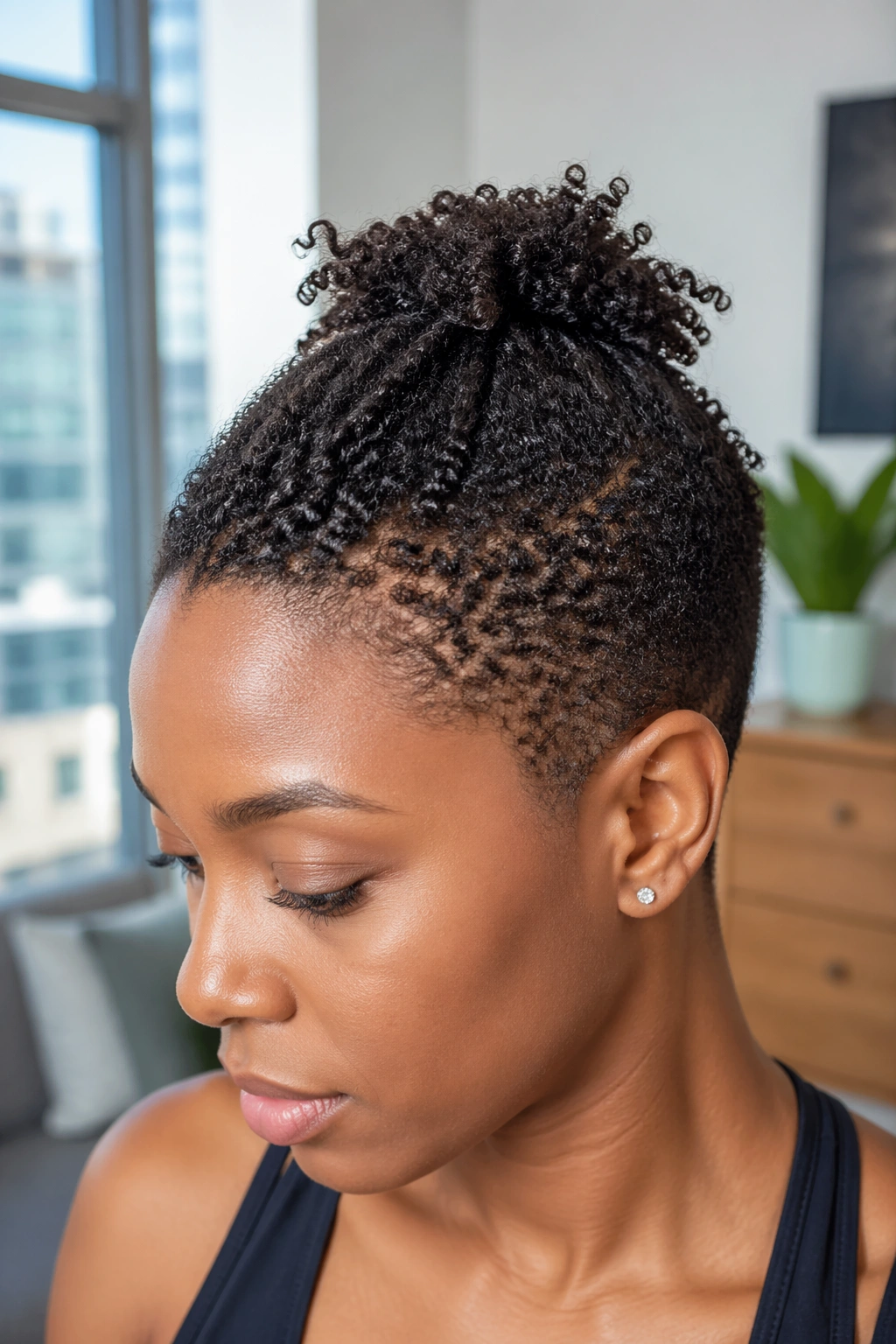
Can short hair do a ponytail? Yes, but it needs a smarter plan.
On tapered cuts and shorter coils, the goal is usually a mini ponytail or a small puff at the crown rather than a full-length swing. Start by gathering the longest hair on top, then secure it with a small elastic that does not have to fight the nape. If the sides are too short to join in, leave them clean and let the contrast be part of the style.
What Works on Shorter Coils
- Use a tiny elastic or puff cuff that grips without snagging.
- Smooth only the section you are gathering, not the whole head.
- Add a clip-in ponytail or small extension if you want extra length.
This style is about honesty. Trying to force short coils into a long ponytail usually creates tension and a weird shape. A compact ponytail looks better than a strained one every time.
25. Jumbo Protective Ponytail with Feed-In Braids
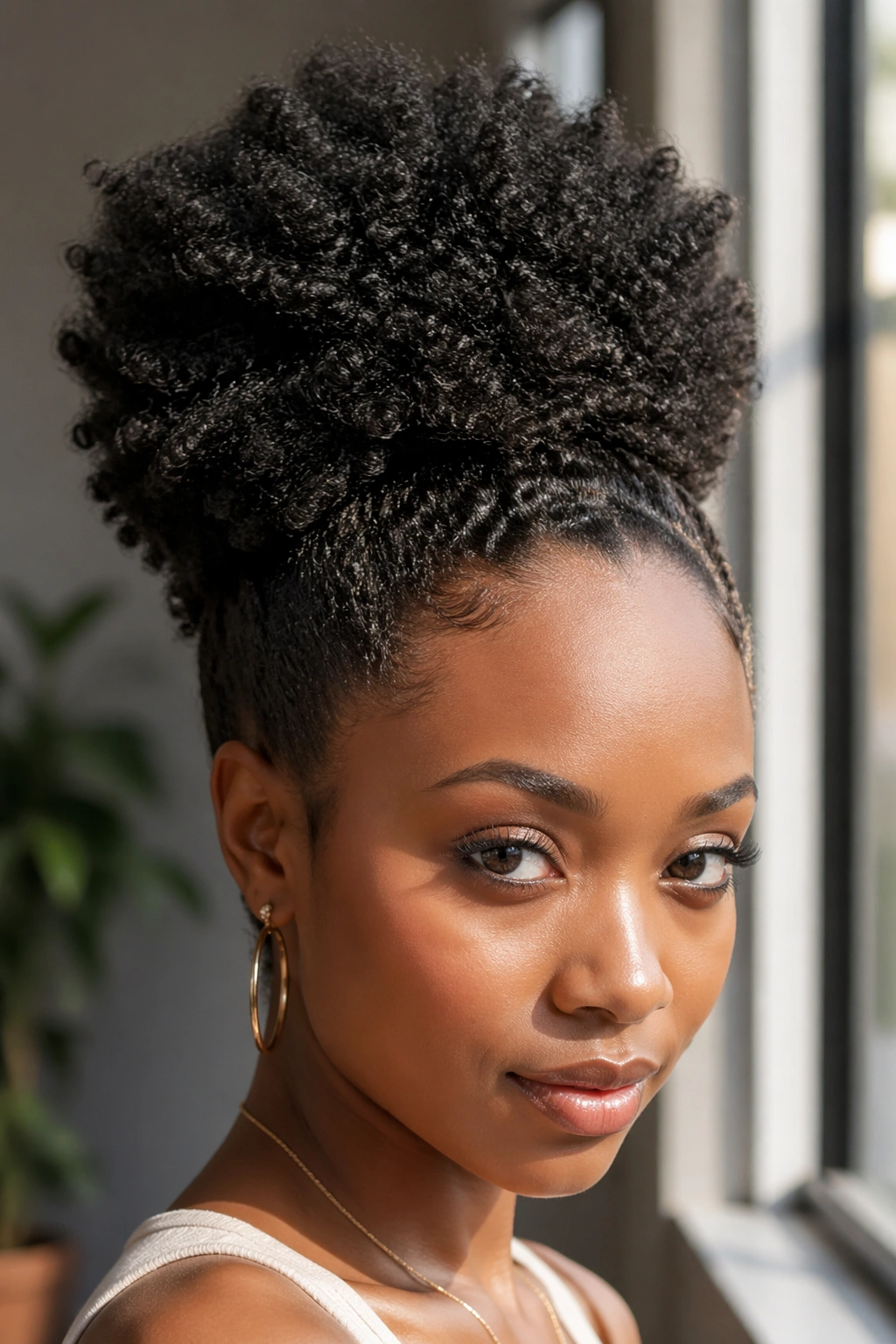
A jumbo protective ponytail buys you time.
The front or sides are braided into feed-ins, then everything meets in one large ponytail that can hold volume, length, or a curly extension. It is one of the strongest ponytails for kinky hair when you want a style that lasts longer and keeps the roots tucked away. The key is tension management. If your scalp feels hot, the braids are too tight. If the ponytail slides around, the anchor is too loose. There is a narrow middle ground, and that is where this style lives.
A style like this works especially well when you want a low-maintenance stretch without giving up shape. It can look sharp, sporty, or dressed up depending on the finish. Add a wrapped base, leave the tail curly, or keep it braided clean. Any of those choices works.
If your hair likes density, start with the high puff. If your scalp likes peace, choose the low or wrapped versions. If you want the style to last, let the braids do the heavy lifting. That is usually the smartest move anyway.