
Long, straight hair can look polished in five minutes, then slide flat the second you walk outside. That’s exactly why braided half up half down looks work so well here: they give the top section grip, shape, and a little staying power while leaving the lengths free to move.
The trick is not making the braid too neat. Straight hair tends to show every pin, every gap, every bit of tension. So the smartest styles borrow a little texture up top, keep the braid anchored close to the scalp, and let the bottom half stay clean and glossy. That contrast is what makes these styles look intentional instead of fussy.
A good half-up braid on straight hair should do three things at once. It should hold, frame the face, and stop the crown from looking too flat. If you have hair that slips out of elastics or feels too sleek to braid, a dusting of dry shampoo or a light texturizing spray near the roots makes a bigger difference than most people expect.
Some of these looks are barely there. Others are a little more dressed up and take ten minutes with a mirror that does not lie. All of them can work on long straight hair if you place the braid in the right spot and keep the lengths soft enough to contrast with it.
1. Center-Part Twin Dutch Braids
This is the style I reach for when straight hair needs shape fast. Two Dutch braids start near the temples, travel back just enough to hold the crown, and leave the rest of the hair loose and clean. It looks crisp without feeling severe.
Why it works so well on straight hair
Dutch braids sit a little higher than classic three-strand braids, which helps when the top layer is flat. On long straight hair, that extra lift keeps the style from disappearing into the head. The two braids also create symmetry, which is handy if your part is already sharp and you like things to look balanced.
A tiny bit of grit helps. If the hair is silky, spray the roots with dry shampoo first, then braid with medium tension. Too tight and the braids look stiff. Too loose and they slide apart before you finish the second side.
Best for: everyday wear, school runs, casual brunches, and days when you want your hair out of your face but still down.
2. Waterfall Braid Across the Crown
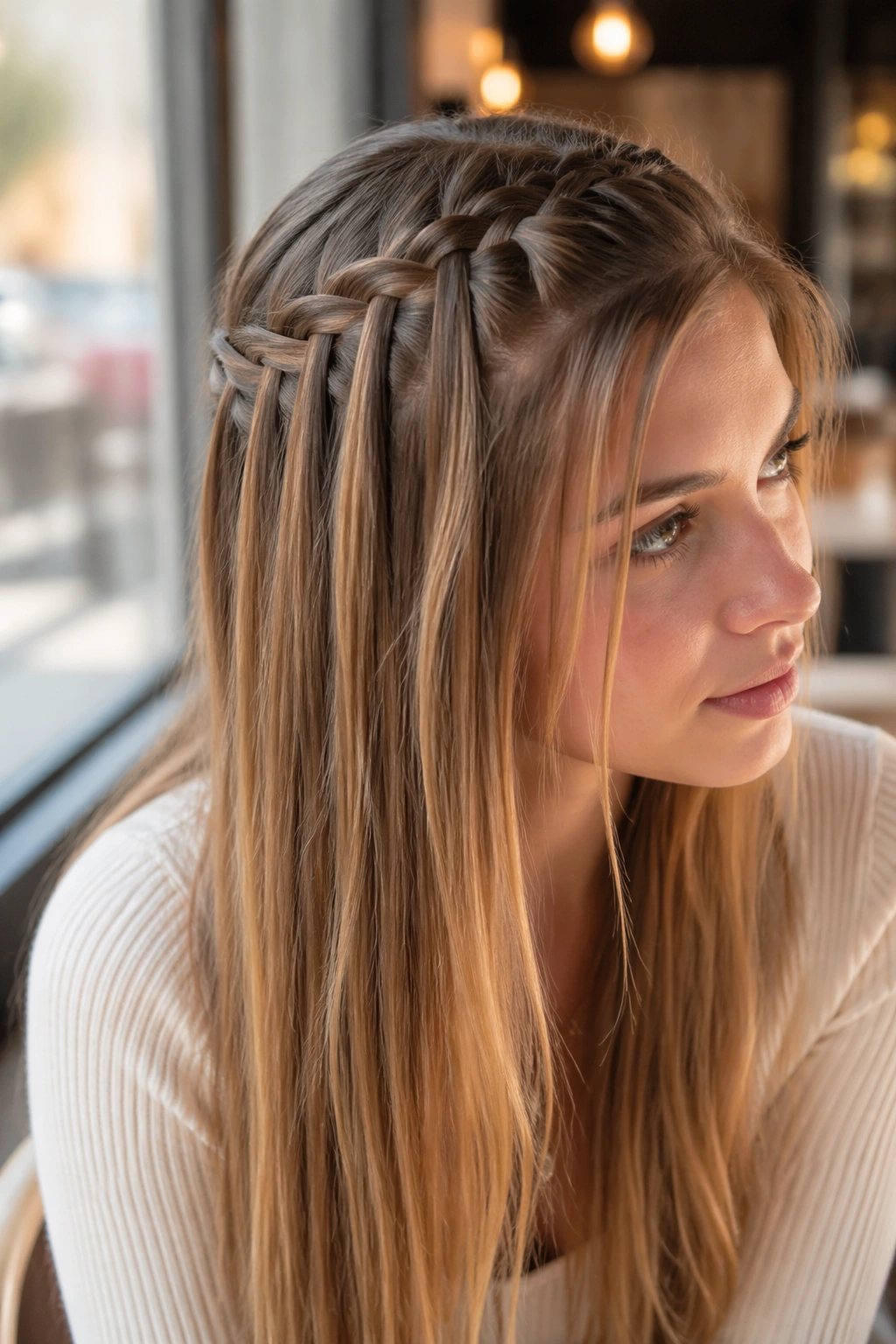
A waterfall braid gives long straight hair a softer, more airy look than a regular half-up braid. The braid runs across the crown, and every few passes, one strand drops out to create that “falling” effect through the lengths. It sounds delicate, and it is.
The style is prettier than it is complicated. The braid makes a clean line across the top, while the loose sections below keep the hair looking long and smooth. If your hair is very straight, this one looks especially nice because the dropped pieces hang neatly instead of puffing out.
Use a tail comb to make a tidy part, then keep the braid close to the head. If you lift it too far off the scalp, the waterfall effect loses its shape. A few bobby pins under the braid will keep the crown from sagging.
3. Side-Swept Fishtail Half-Up
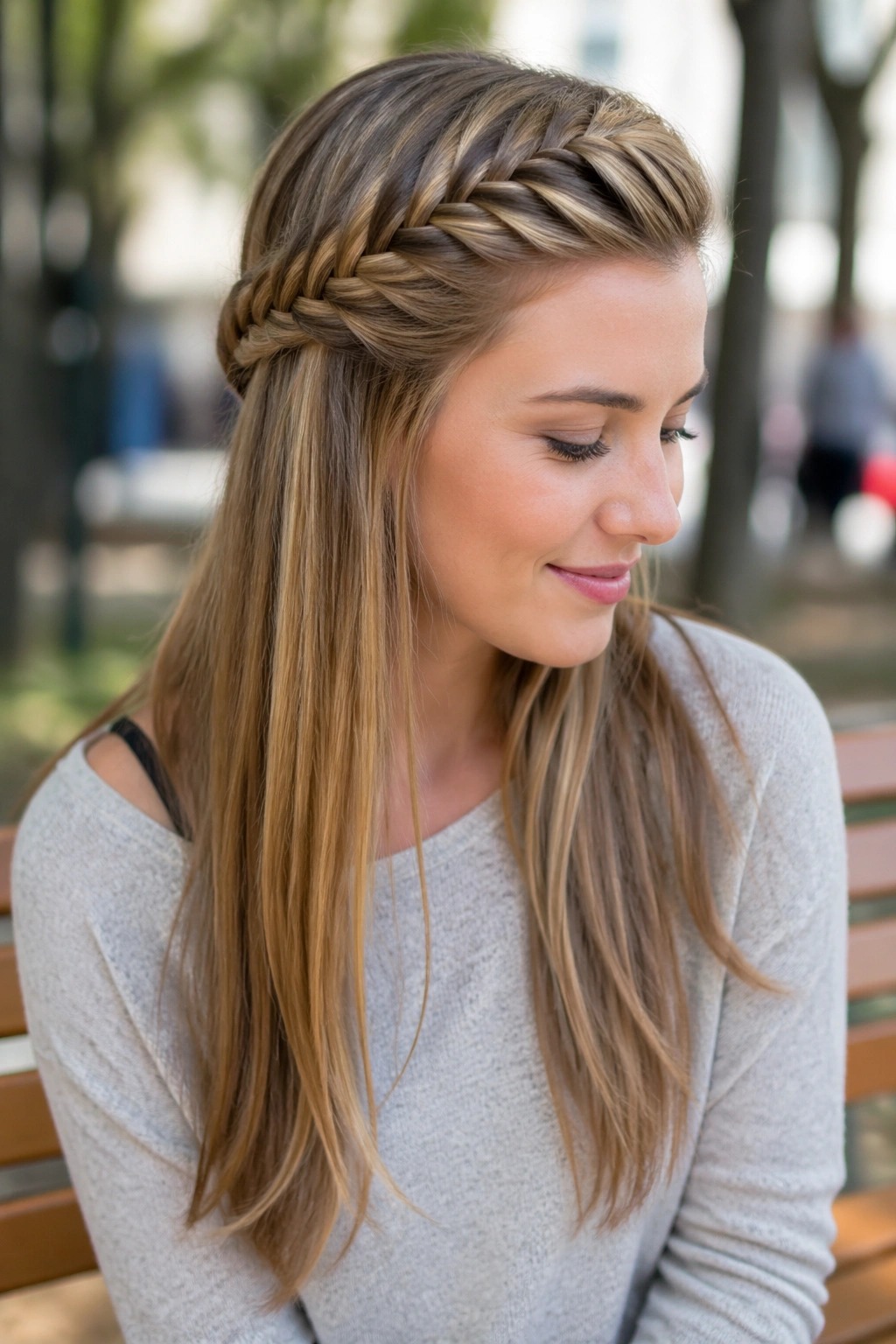
Why does a fishtail braid look so good on long straight hair? Because the texture is the whole point. The tiny woven pattern stands out against smooth lengths, and the side placement makes the style feel a little less expected than a center braid.
Start the braid above one temple and pull it diagonally toward the back of the head. Stop once you’ve gathered enough hair to make the half-up section feel anchored, then tie it off and gently tug the braid wider with your fingertips. That “pancaking” step matters. A fishtail can look skinny and stiff if you skip it.
How to wear it
- Pull out one thin front piece on the braid side if you want softness around the face.
- Use a clear elastic first, then wrap a small strand of hair around it.
- Let the bottom lengths stay straight and glossy. The contrast does the work.
This one is especially good when you want something a little more dressed up without going full evening hair.
4. Braided Headband With Sleek Lengths
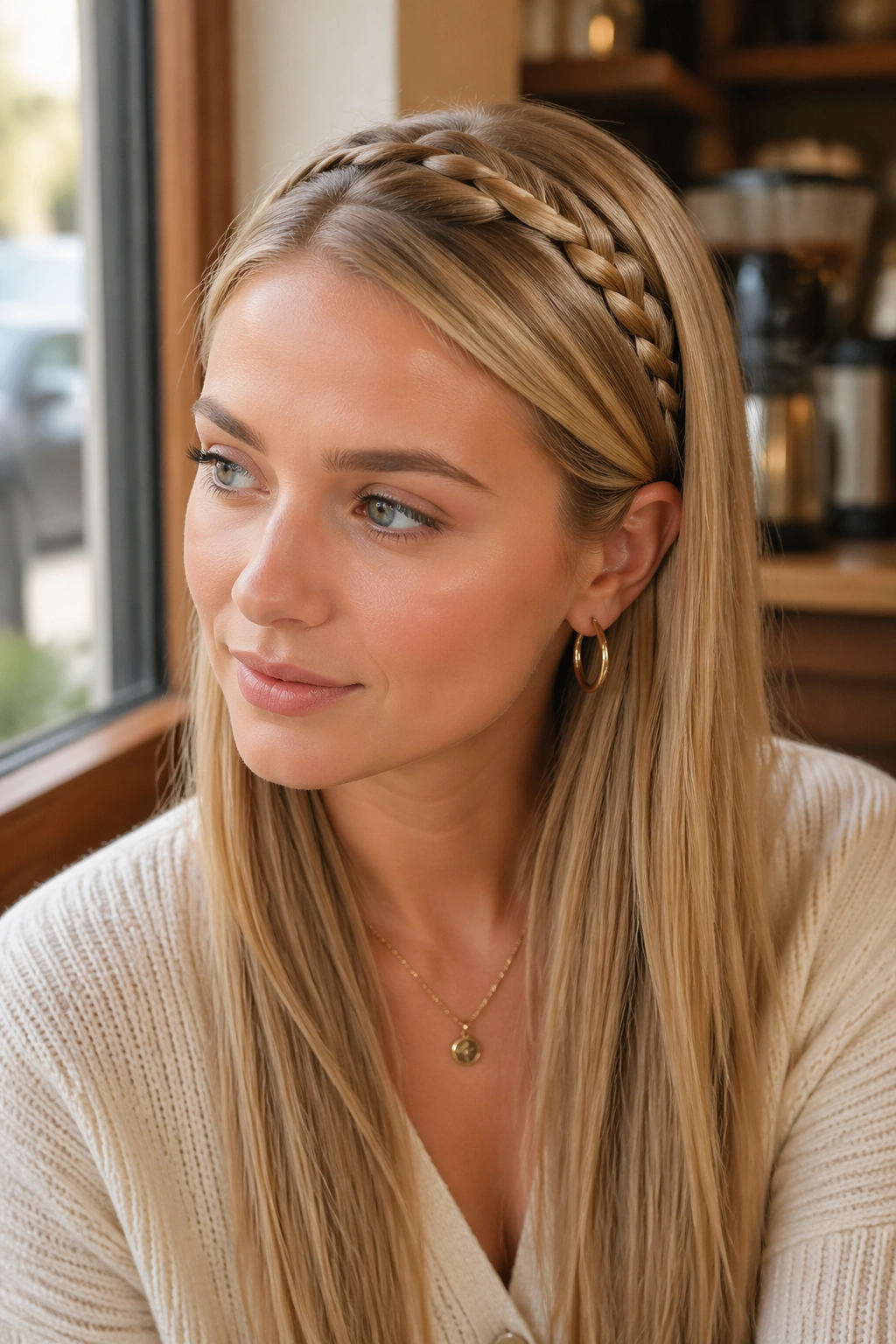
A braided headband look is one of those styles that makes straight hair feel intentional in about eight minutes. You braid a section from one side, bring it across the top like a band, and pin it behind the opposite ear. The rest hangs loose and polished.
It works because it breaks up all that straightness without covering it. Straight hair can look heavy when every strand falls the same way. A braid across the front adds a clear line and gives the eyes somewhere to go. That sounds small, but it changes the whole read of the hairstyle.
Keep the braid narrow if your hair is very dense. A chunky band can swallow the face. If your hair is finer, a slightly wider braid gives the style more presence. Either way, tuck the ends under the top layer and pin them flat so the finish looks clean from the side.
5. Tiny Temple Braids Feeding the Back
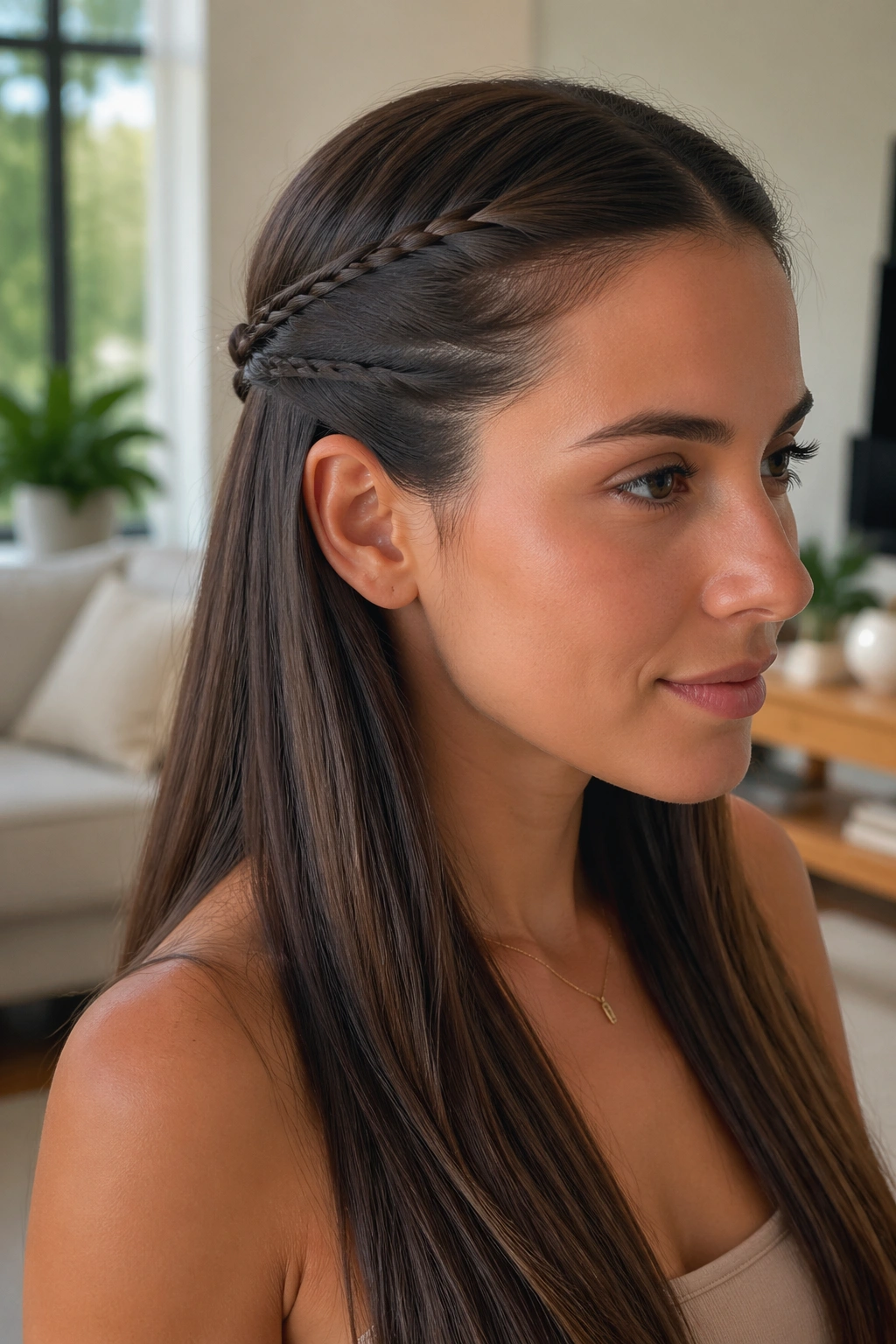
Tiny braids near the temples are one of my favorite low-effort moves for long straight hair. They barely change the shape of the style, but they add detail where the hair usually falls a little plain. Two thin braids pulled back and secured together give you that half-up effect without taking over the whole head.
This is the kind of style that looks best when the braids are neat and the rest of the hair stays smooth. You do not need much. Two small sections, each braided tightly for about 2 to 3 inches, is enough. Secure them together with a clear elastic or a small barrette, then leave the lengths untouched.
It’s a good choice when you want the hair off the face but you still want the straight lengths to show. And honestly, it’s a nice option for people who like braids but do not want to spend forever on them.
6. Crisscross Braids at the Back of the Head
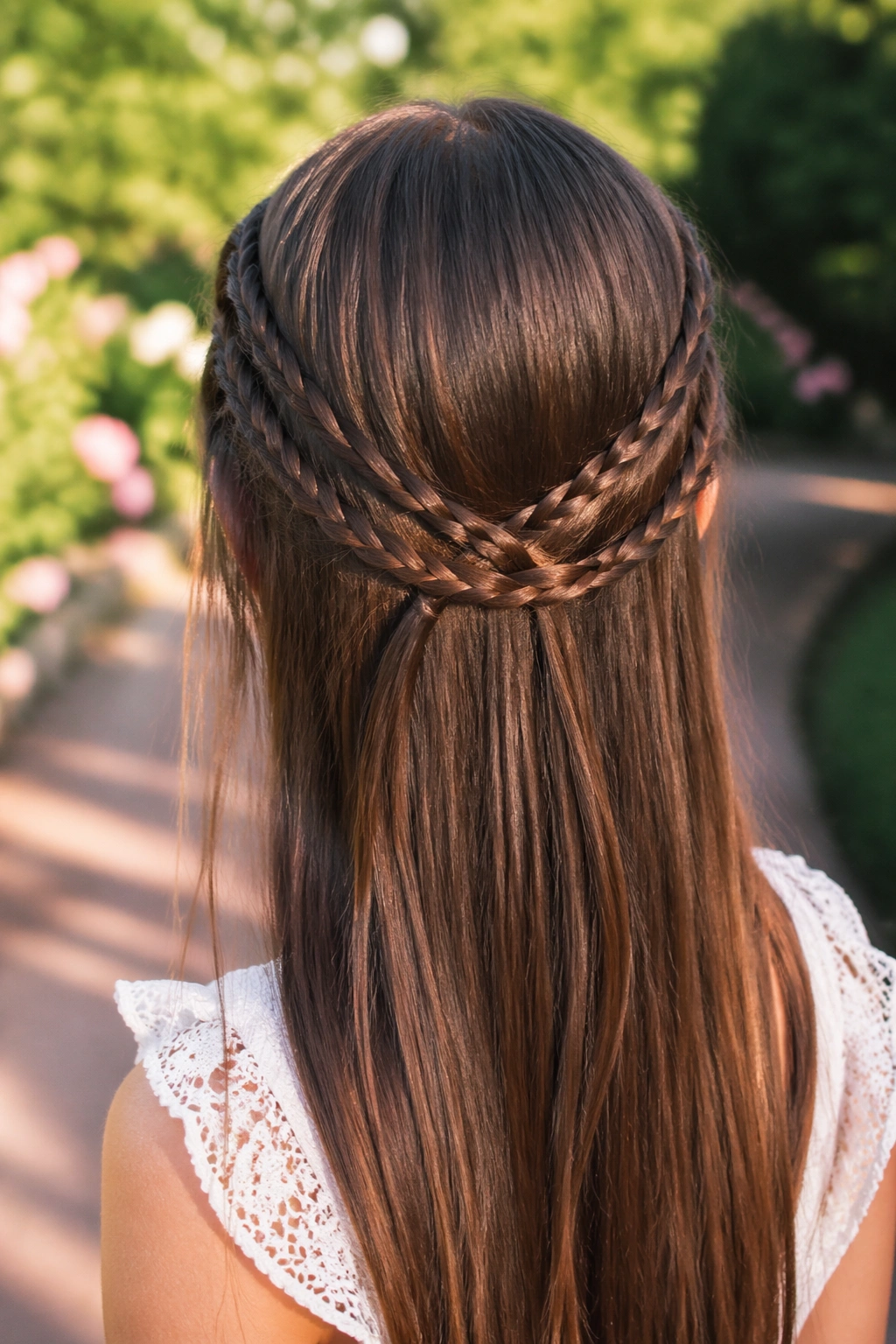
This one looks more complex than it is. Two small braids from each side cross over one another in the back, then pin into place so the pattern looks woven rather than stacked. On long straight hair, that crossing motion makes the top section feel sculpted.
The visual payoff is in the overlap. Straight hair tends to lie flat, so a crisscross pattern creates structure without needing a lot of volume. You can keep the braids thin for a clean, modern finish, or go wider if you want the half-up section to read from across the room.
A couple of pins do the heavy lifting here. Pin each braid where it lands, then slide one more pin horizontally under the crossover to stop it from shifting. If your hair is extra sleek, rough up the top layer slightly with a texturizing spray first. Otherwise the braids will try to escape.
7. Pull-Through Braid Half-Up
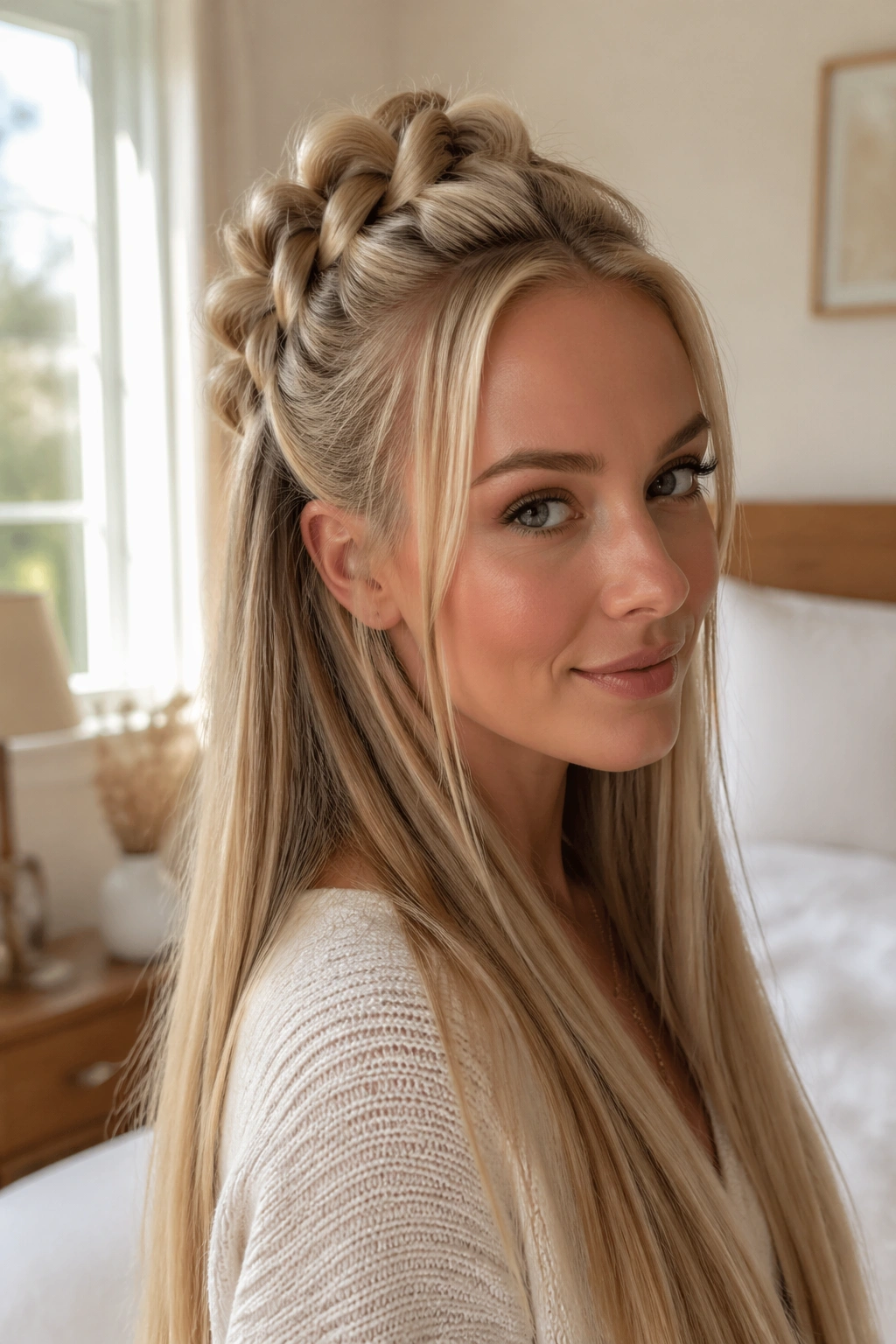
Pull-through braids are the answer when you want a big braid look without the fuss of perfectly even sections. They give long straight hair a fuller, thicker shape, which is useful if your strands are smooth and tend to look a little thin when braided.
The best part? The braid stays visible. Instead of blending into the hair, each loop creates a bold panel. That makes the half-up section feel more like a feature and less like an afterthought. If your hair is very long, this style looks especially good because the braid has room to stretch.
A quick way to think about it
- Tie the first top section back.
- Add more small sections under it.
- Keep the loops centered and even.
- Gently pull the sides wider at the end.
The result is chunkier and more graphic than a classic braid, which is exactly why it suits straight hair so well.
8. Rope-Twist Braids With Loose Ends
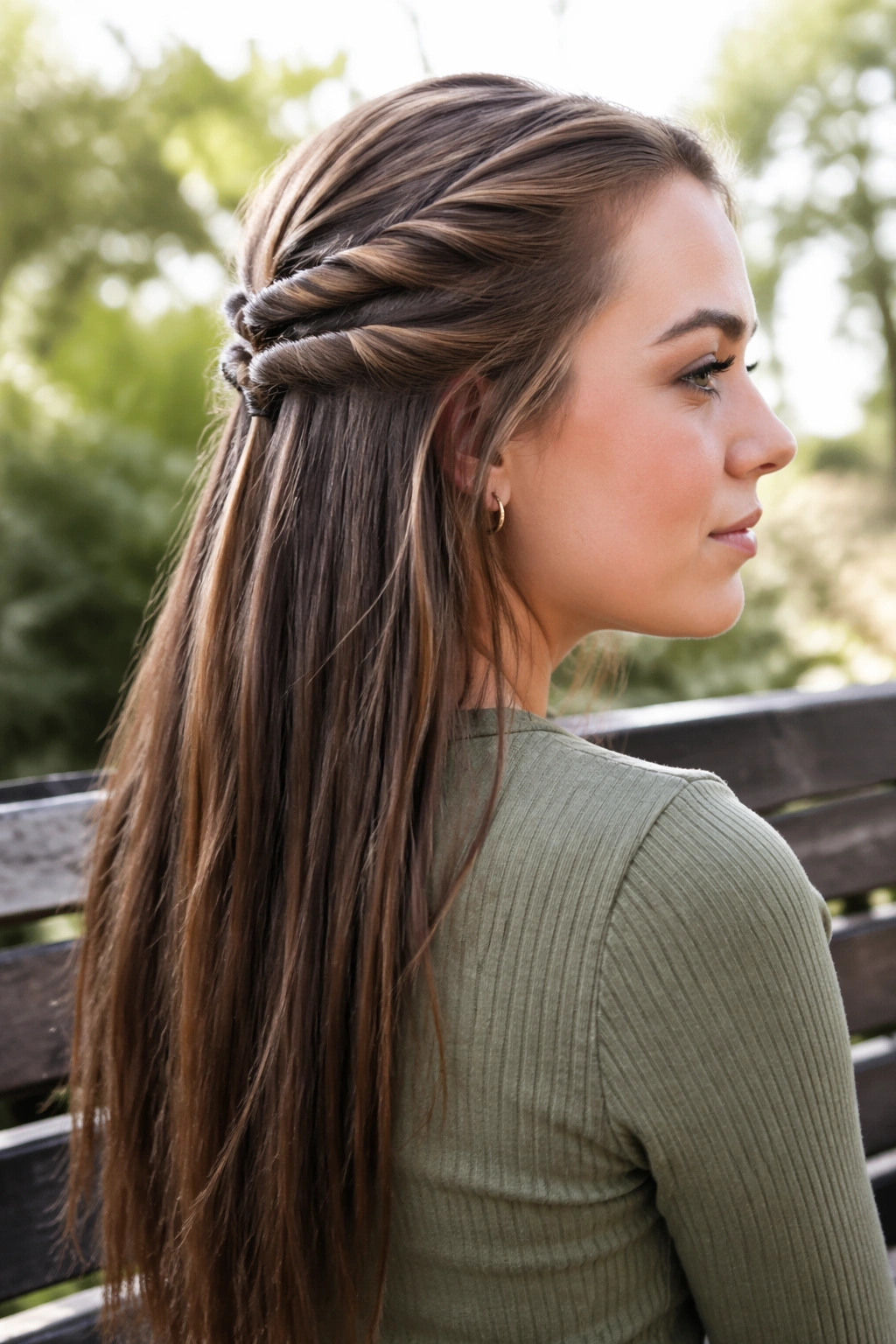
Rope twists sit somewhere between a braid and a twist, and that middle ground looks clean on straight hair. Twist two sections around each other, secure them at the back, and let the rest hang down. It’s simple, but the shape feels a little more polished than a basic half-up tie.
This style is especially nice if your hair resists more complicated braids. You do not need three sections. You do not need perfect tension. You just need two even pieces and a firm twist. That makes it a practical option on mornings when the mirror is not your friend.
The twist shows best on hair that has been smoothed with a light cream or serum. Too much product, though, and the twist can slide. A pea-size amount is enough for most long straight hair. Anything more and the style starts to collapse at the crown.
9. Braided Top Knot Half-Up
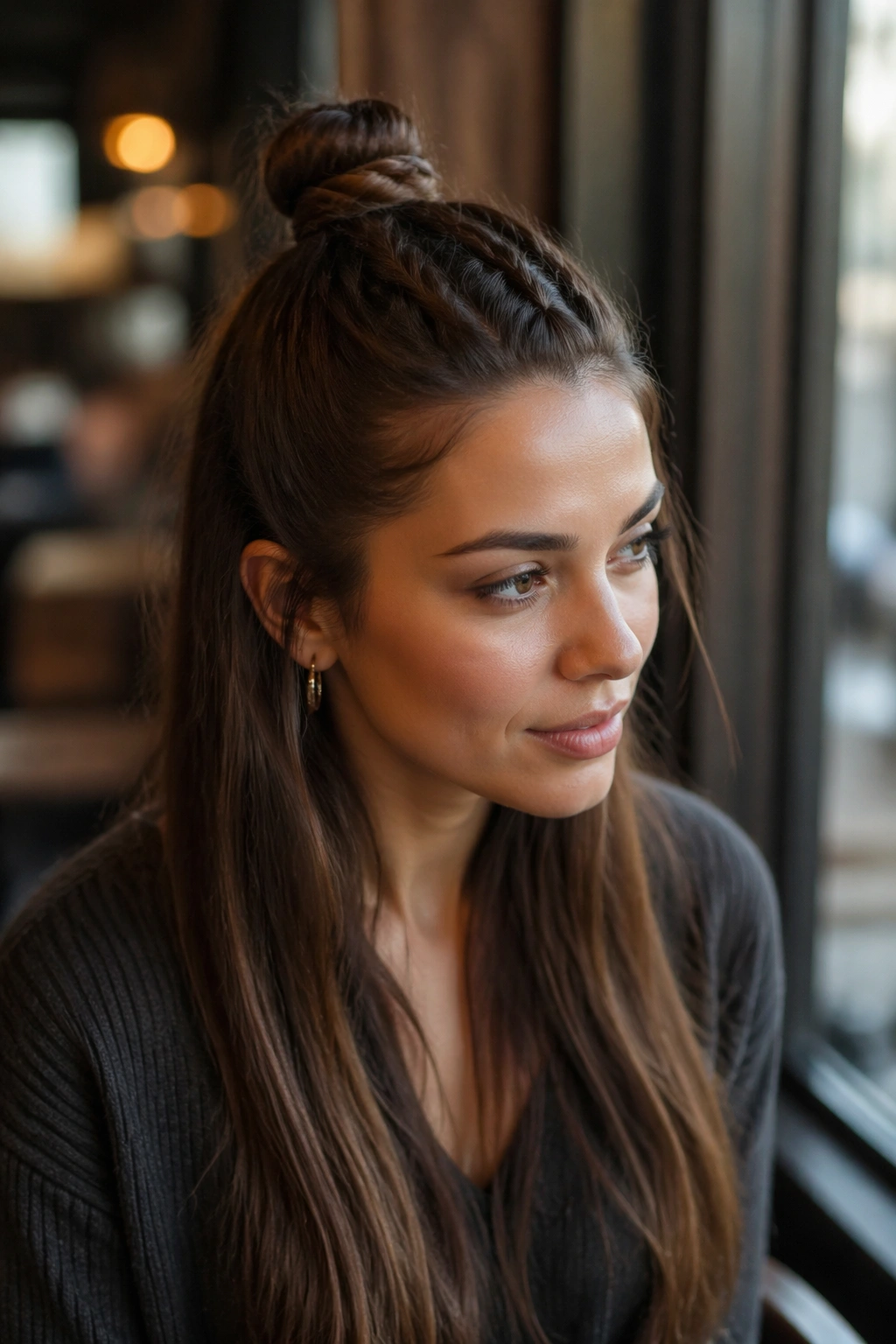
A braided top knot is a smart way to keep the top half of long straight hair from going limp by mid-afternoon. Braid the gathered section first, then coil it into a small knot and pin it flat. The bottom lengths stay loose, so the whole style feels relaxed rather than severe.
It is a good look when the hair is too fresh and too silky for anything delicate. The knot gives the style weight. It also keeps the braid from unraveling, which is half the battle with very straight hair.
Do not make the knot too large. A small, tight coil looks cleaner and sits better on the crown. If the knot starts to mushroom out, the style can look top-heavy fast. A few hidden pins through the base are enough to keep it steady.
10. Double Mini Braids Meeting in the Center
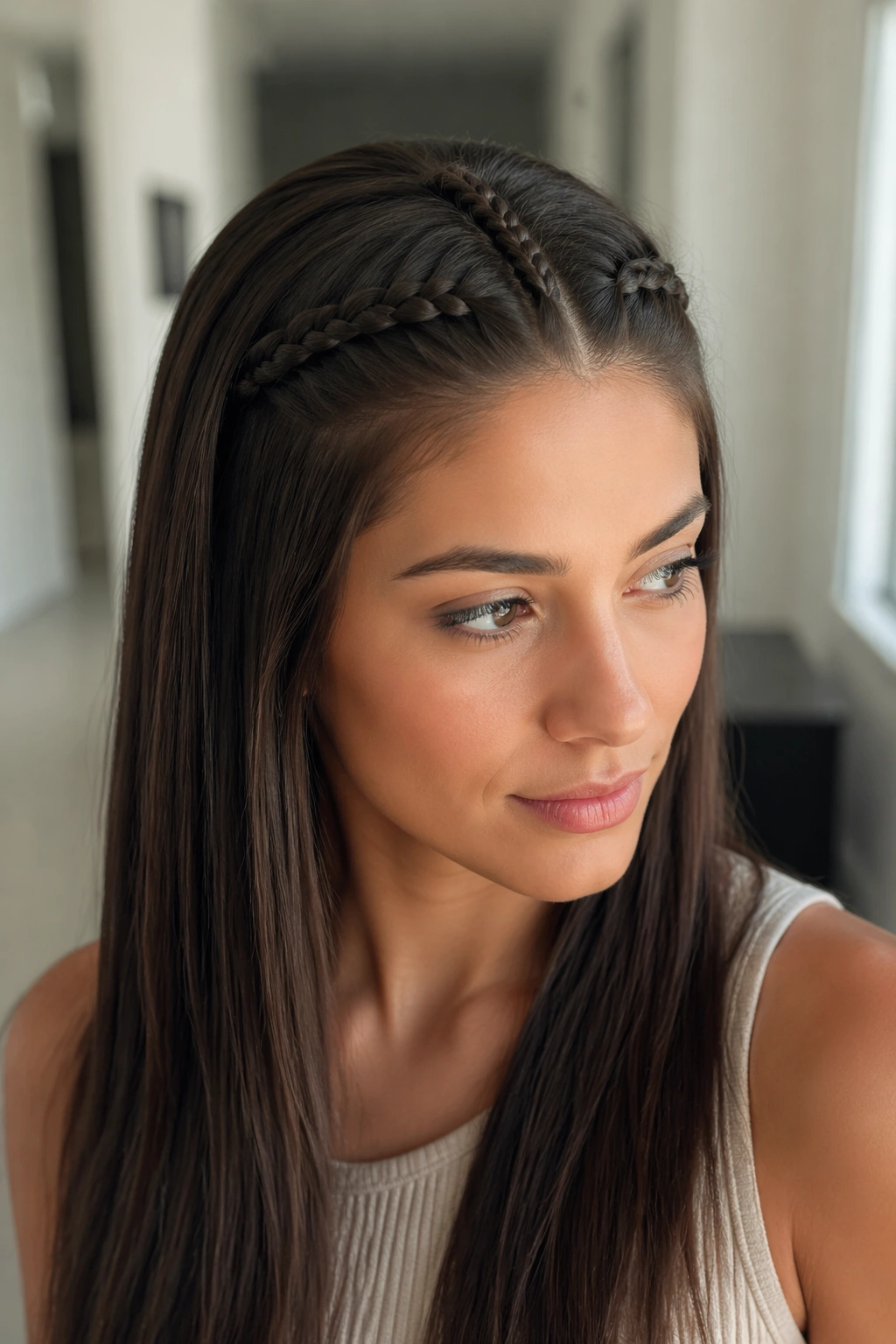
There’s something charming about two tiny braids meeting in the middle and disappearing into the loose lengths. This look is a little softer than twin braids and a little less formal than a full crown braid. It gives straight hair just enough detail to feel styled.
Start near the front on each side, braid a slim section, then pull both toward the back and tie them together. You can stop there, or let the joined section tuck into the hair underneath. Either way, the small braids create a neat frame around the face.
This works especially well on long straight hair that falls very flat at the sides. The braids break up the sheet-like effect. If you want more lift, tease the roots where the braids begin. Not much. Just a light lift, about the size of a fingertip.
11. Lace Braid With Curtain Pieces
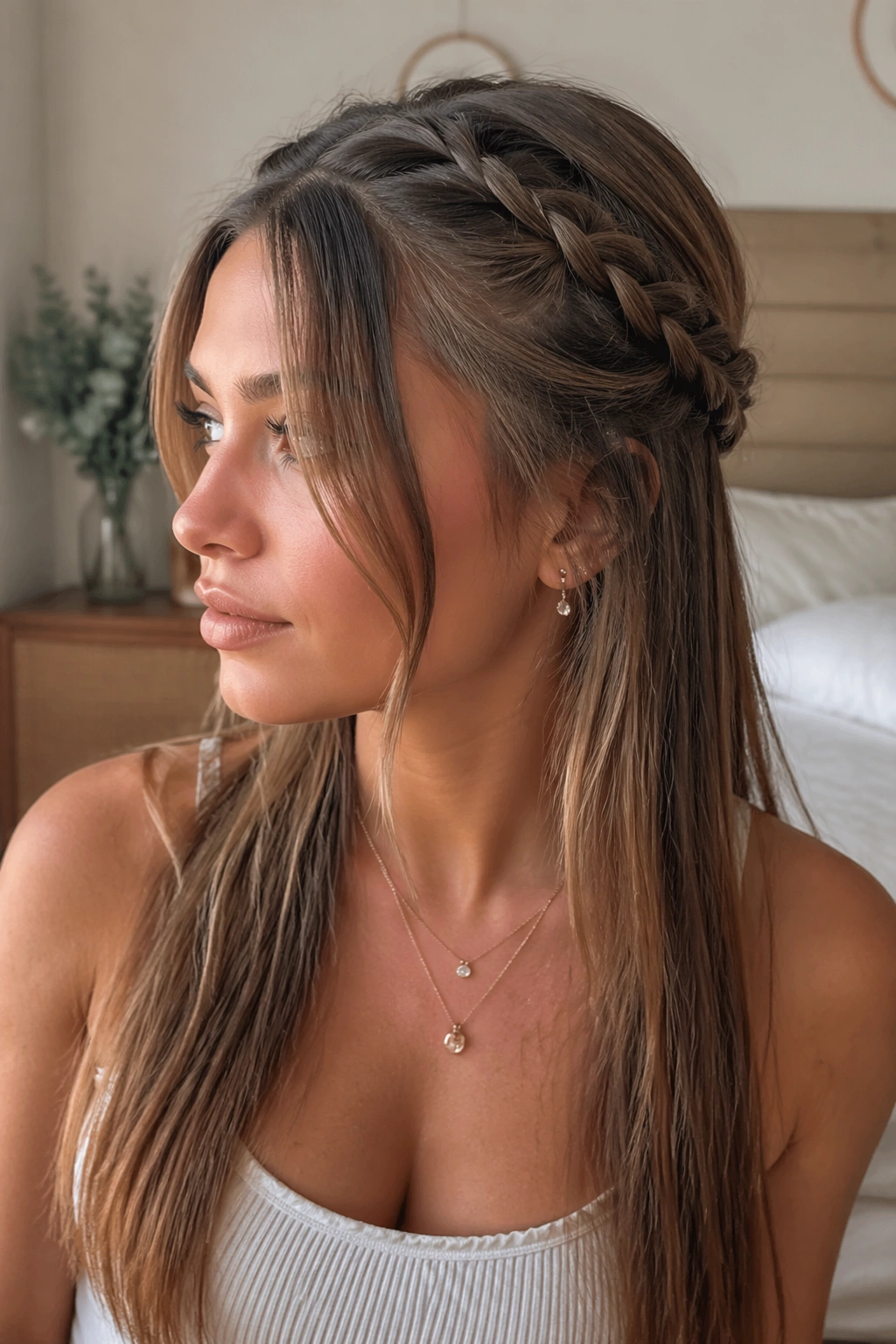
A lace braid keeps picking up hair from one side while leaving the other side to drop away, and that partial structure is what makes it so good for straight hair. It hugs the head closely, then releases into the rest of the length with almost no hard line.
The style looks neat near the crown and soft toward the ends. That balance is the whole appeal. Straight hair can sometimes look too clean, almost severe, but a lace braid with a couple of curtain pieces in front keeps the face open and the style friendly.
Here’s the bit people skip: loosen the braid a touch after you tie it off. If the braid stays too tight, it looks pinched. A slightly wider braid reads softer and sits better against the head, especially if your hair is long enough that the bottom section is already carrying a lot of visual weight.
12. Pancaked Crown Braid
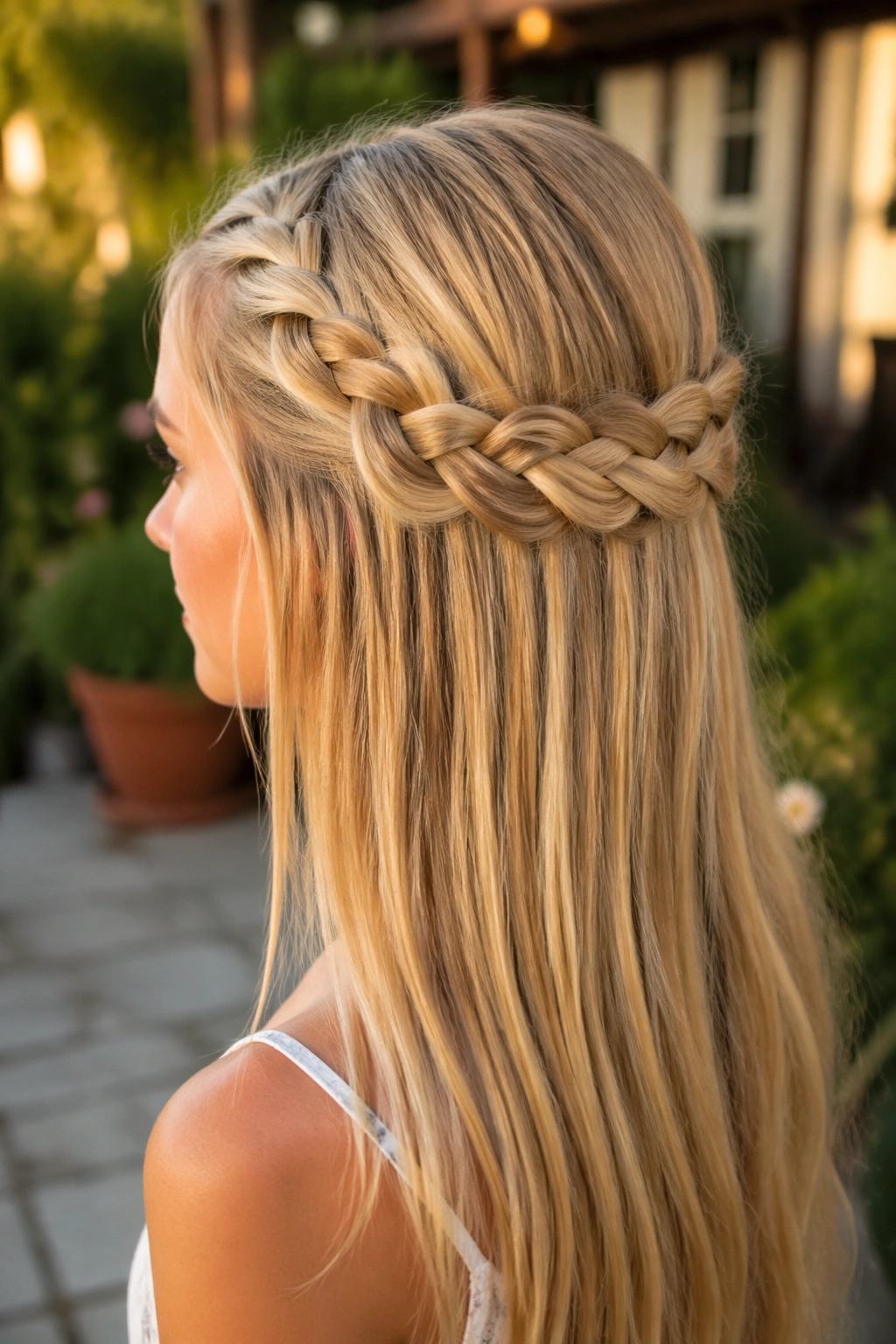
Pancaking sounds odd, but the effect is easy to love. You braid the half-up section across the back, then gently tug the outer edges so the braid widens and looks fuller. On long straight hair, that extra width makes the style visible instead of whisper-thin.
This is one of the few styles that can rescue very sleek hair without adding waves. The braid gives shape, the pancaked edges give presence, and the loose lengths keep the whole look from feeling too formal. It’s especially nice if your hair is thick and you want to show it off in a more controlled way.
Be gentle when you widen the braid. Pull the sides, not the center. If you tug from the middle, the braid can collapse into a lopsided strip and you’ll spend the next five minutes trying to fix it. Been there. Not worth it.
13. Hidden Underlayer Braid
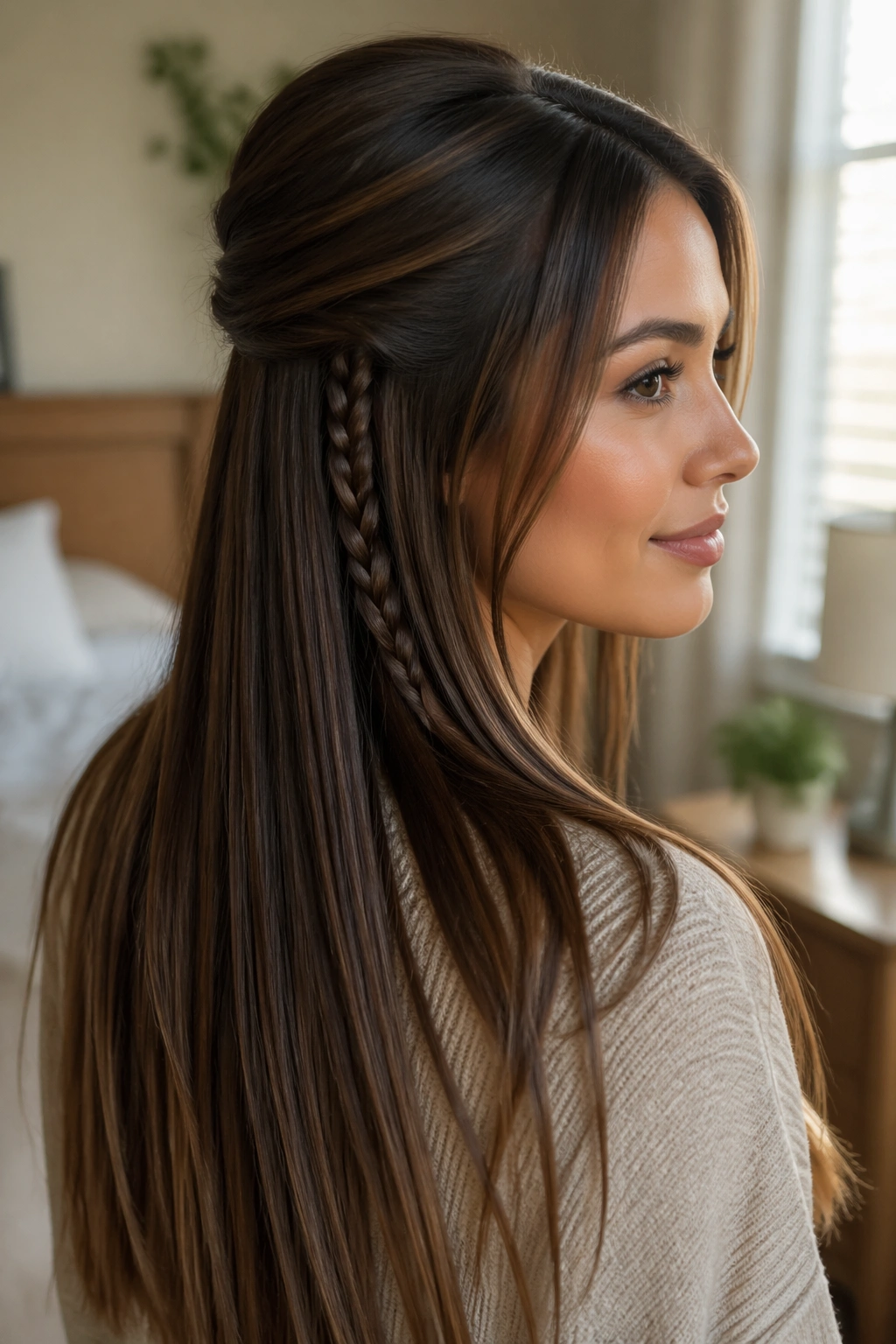
A hidden underlayer braid is for people who want a little surprise in the style. The top layers stay smooth, but a braid runs just beneath them so it peeks out when the hair moves. It’s subtle, and that’s what makes it good.
Long straight hair can sometimes look plain from the back. This style fixes that without making the whole head look busy. You braid a section underneath the crown layer, then let the top hair fall over it so only parts of the braid show. The effect is more interesting than obvious.
It’s a solid choice for workdays, dinner plans, or anywhere you want the hairstyle to look thought out without looking loud. If your hair is layered, pin the braid a little tighter so shorter pieces do not pop out and break the line.
14. Ribbon-Woven Half-Up Braid
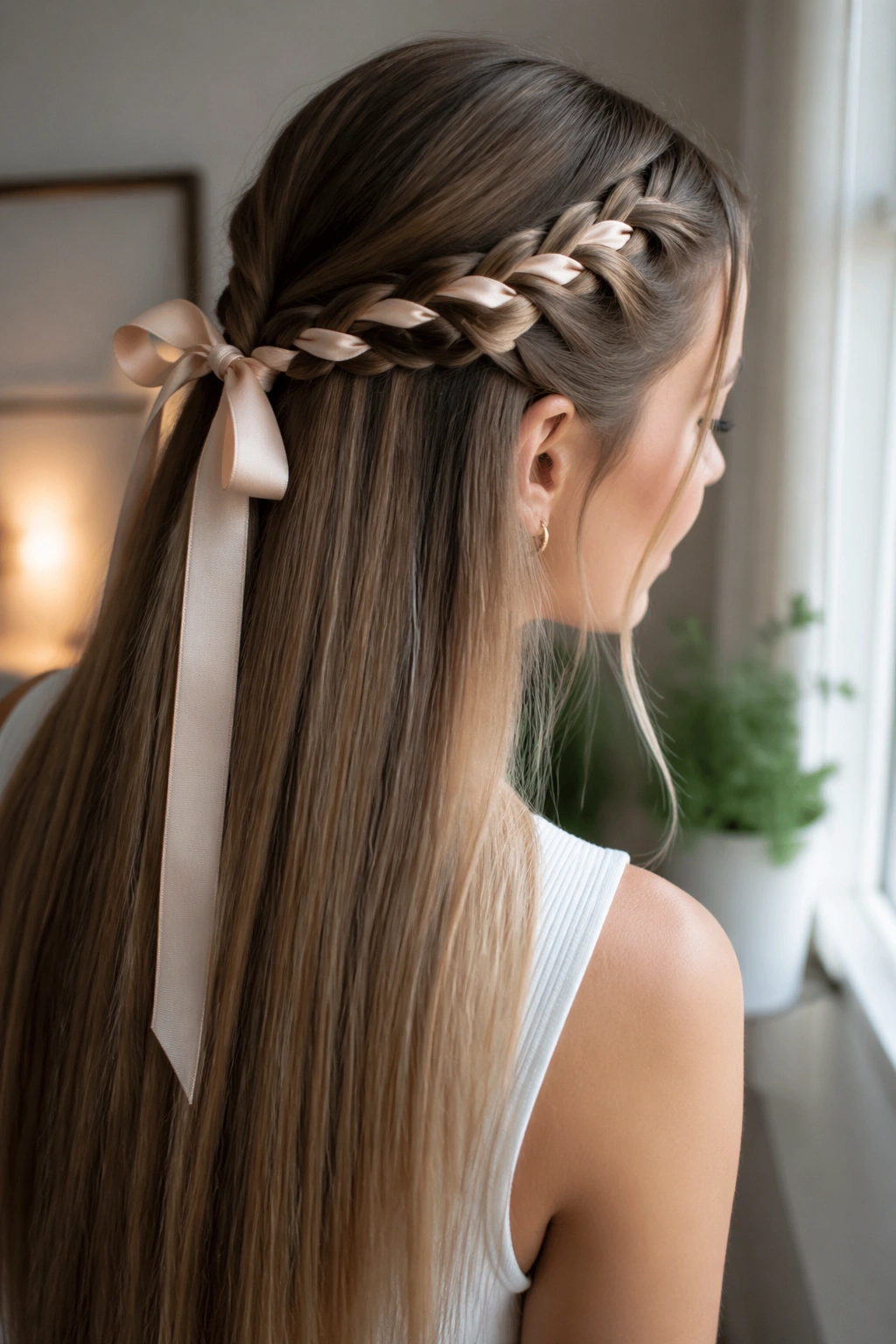
A ribbon woven through a braid gives straight hair a softer, more finished feel. The ribbon is not just decoration. It adds color, holds the braid together, and makes the half-up section stand out against the rest of the hair.
Choose a ribbon that is about ½ inch wide if you want it visible but not bulky. Satin gives a smooth finish; grosgrain has more grip and stays put better. Thread it through the braid as you go, or tie it at the start and work it in with each section.
This style shines on long straight hair because the smooth texture lets the ribbon sit flat. Curly hair can eat the ribbon a little. Straight hair lets it show. That makes the whole look cleaner, especially when the lengths below stay simple and glossy.
15. Four-Strand Center Braid
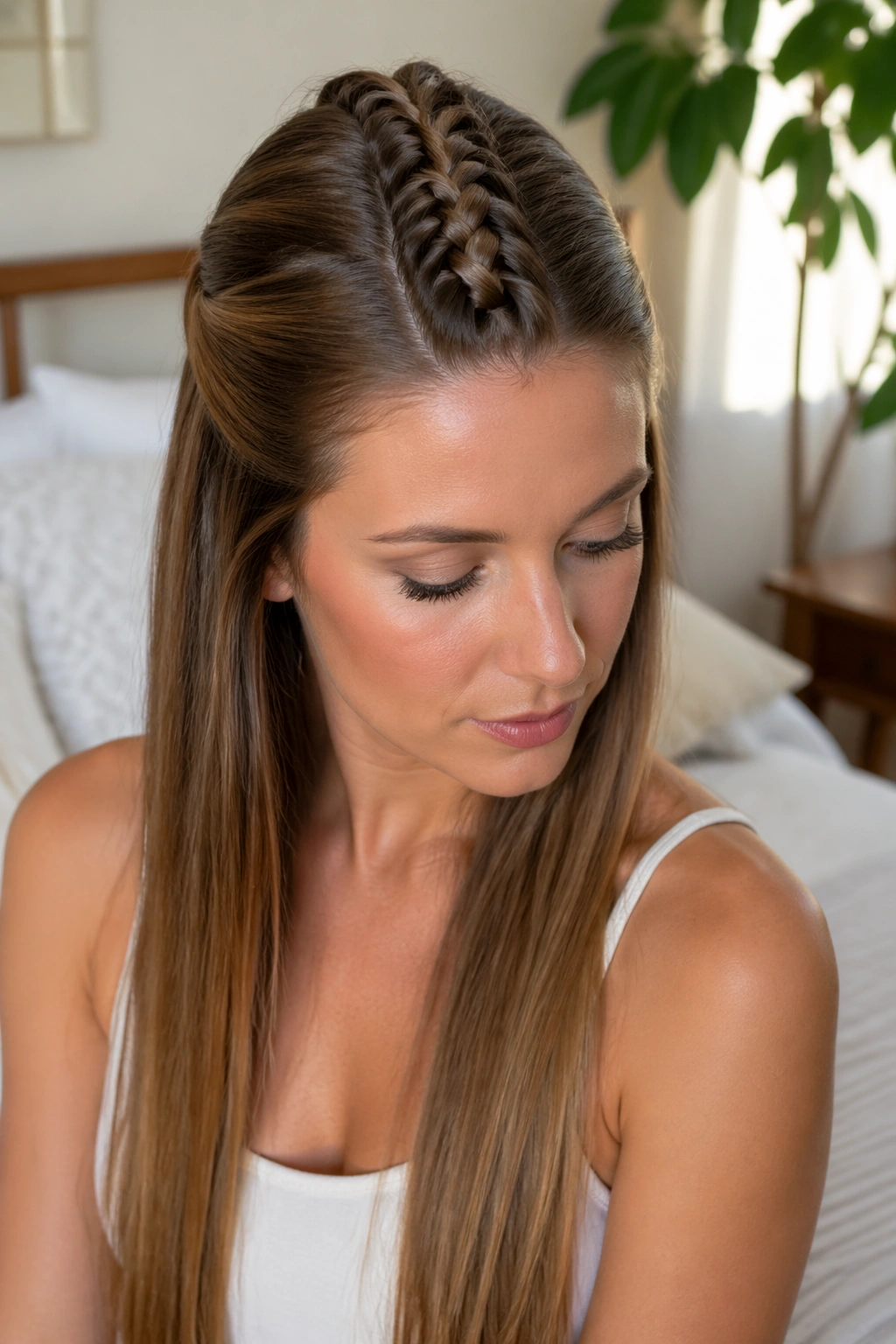
A four-strand braid looks more intricate than a standard braid, but it still behaves well on straight hair. The extra strand gives the braid a flatter, woven appearance, which sits nicely at the crown and leads into long loose lengths.
It is a strong choice if you are bored of the usual three-strand half-up braid. The pattern is denser, so it reads as more detailed without needing extra decorations. Keep the braid centered and fairly low on the crown so it does not stand up awkwardly.
You do have to keep your fingers awake for this one. A four-strand braid takes a little more attention, especially if your hair is slippery. But once it’s set, it holds a beautiful line and feels more tailored than a basic braid.
16. Twisted Side Braids Meeting at the Back
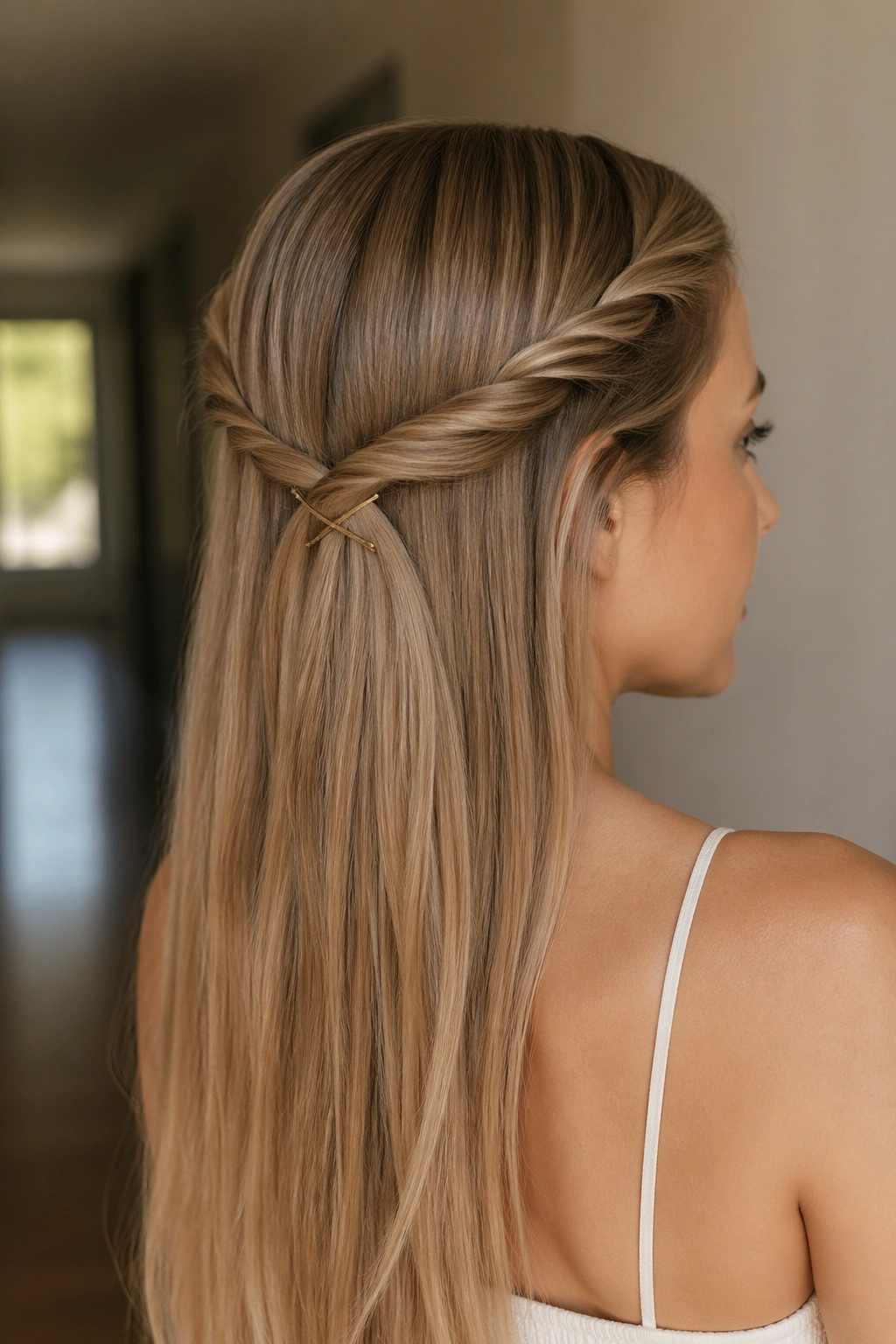
This style starts with two small side sections that are twisted rather than braided, then brought together at the back and pinned. It gives you the soft shape of braiding without the tighter texture. On long straight hair, that can be a nice change.
The twists help keep the front neat without creating too much detail. That matters if the rest of your hair is already very sleek. Too many layers of texture can make straight hair look busy fast, and this avoids that problem.
Use two to three bobby pins crossed in an X where the twists meet. Straight hair likes to slip, and crossed pins hold better than one pin alone. If the ends poke out, tuck them under the joining point before you pin. Small fix. Big difference.
17. Heart-Shaped Braid Accent
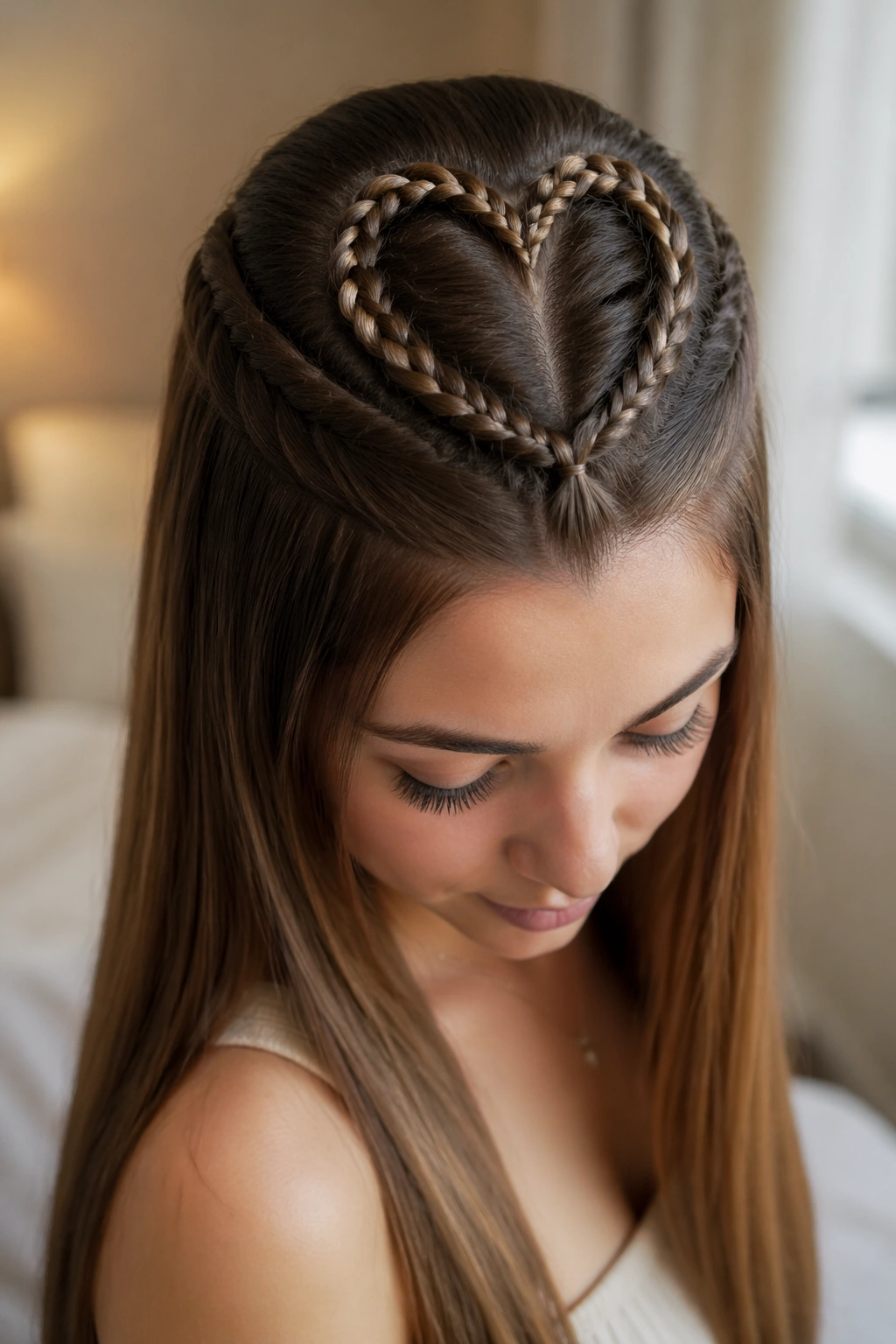
A heart braid sounds playful because it is, but on long straight hair it can also look surprisingly polished. You create two curved braids or twist sections that meet in the center and form a heart-like shape before dropping into the loose lengths.
This works best when the top section is neat and the rest of the hair stays smooth. The shape itself is the decoration, so you do not need extra accessories unless you want them. A tiny clear elastic and a few pins are enough.
It’s a nice choice for a date, a birthday, or any day when a plain half-up style feels too plain. The heart doesn’t need to be perfect either. If the curves are a little uneven, it still reads well, and honestly, that makes it more wearable.
18. Braided Halo With Straight Curtain Lengths
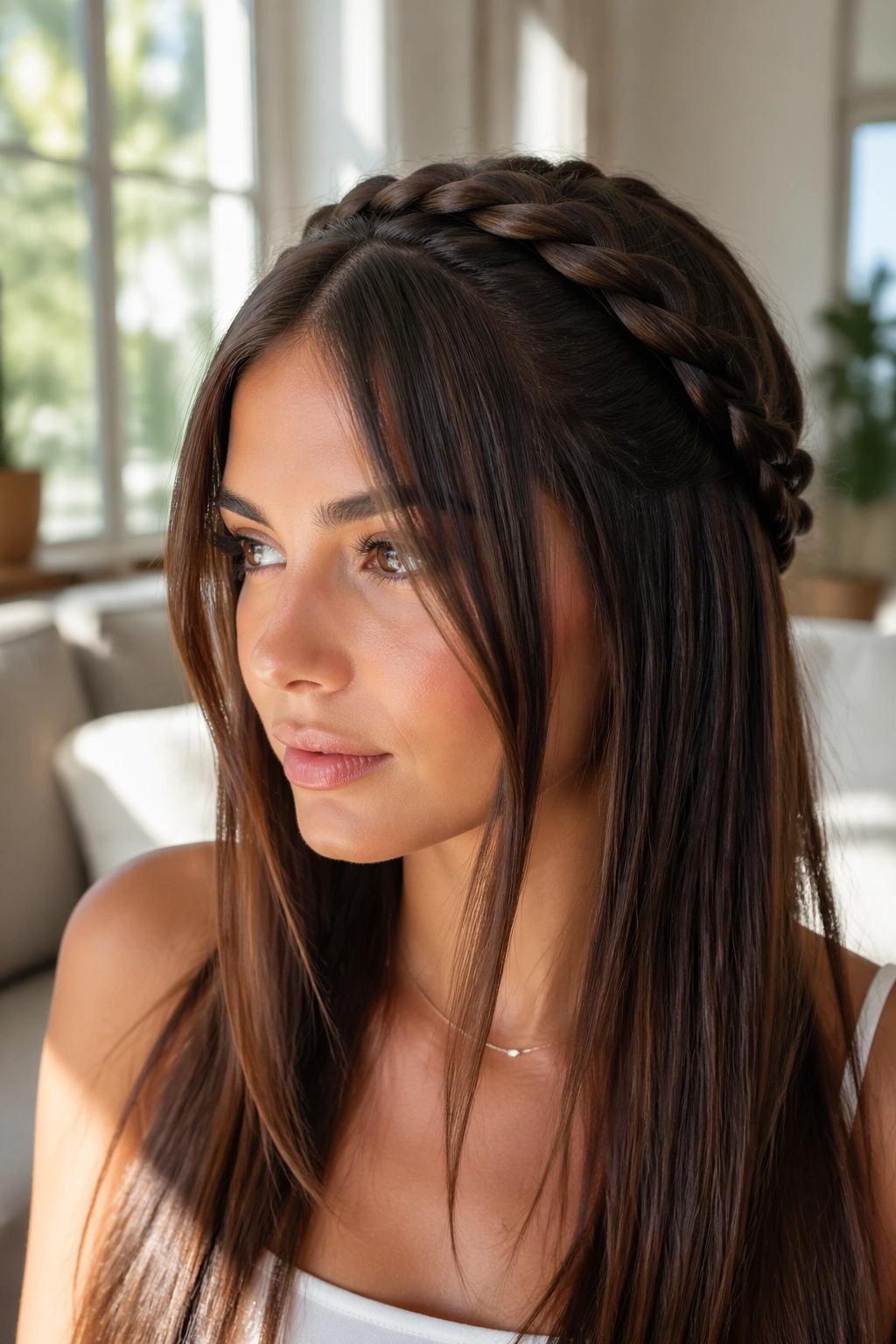
A halo braid around the top of the head gives long straight hair a very clean frame. Unlike a full crown braid that wraps the whole head, this version stays in the half-up zone and leaves the lower lengths free and straight.
The style has an almost dressed-up feel because the braid creates a clear outline. That makes it a strong pick for events where you want the hair to look finished but not stiff. The curtain lengths around the face keep it from feeling too rigid.
If your hair is fine, gently tug the braid wider after pinning it. If your hair is thick, keep the braid tighter and let the volume come from the density of the strands themselves. Either way, pin the ends under the braid instead of letting them hang. The finish looks cleaner that way.
19. Micro-Braid Scatter With One Main Braid
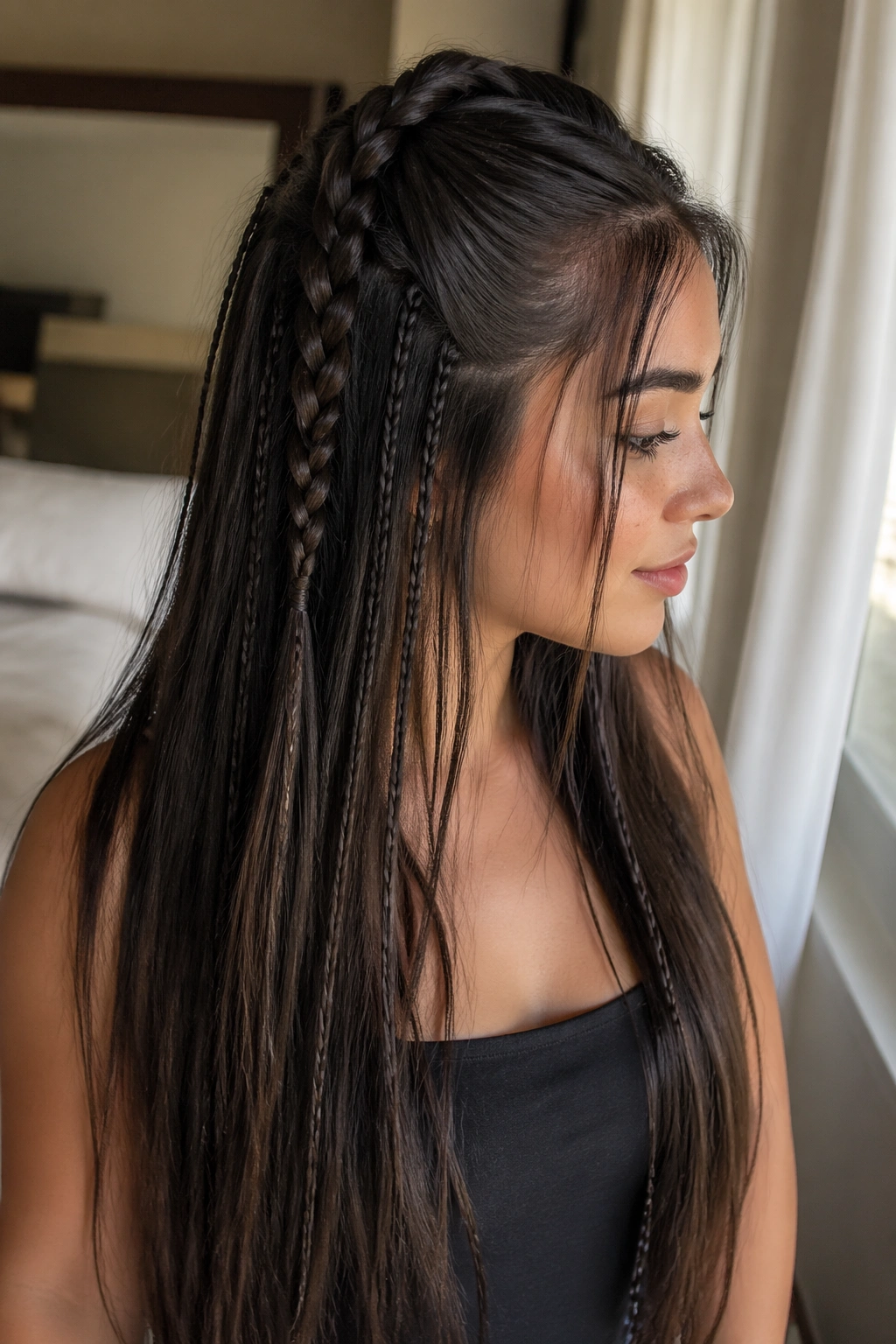
This one is a little messier in the best way. You place one main half-up braid at the center, then add a few tiny micro-braids around it so the top section feels layered. On long straight hair, that mix of braid sizes keeps the style from looking too flat.
The tiny braids do not need to be uniform. In fact, they look better when they are not. One on each side, plus a small braid near the center part, is enough to create texture without turning the hair into a craft project.
Keep the bottom section smooth so the contrast stays clear. If everything is textured, the style loses its shape. That’s the part people sometimes miss. The loose length is what makes the micro-braids stand out.
20. Bubble Braid Half-Up Hybrid
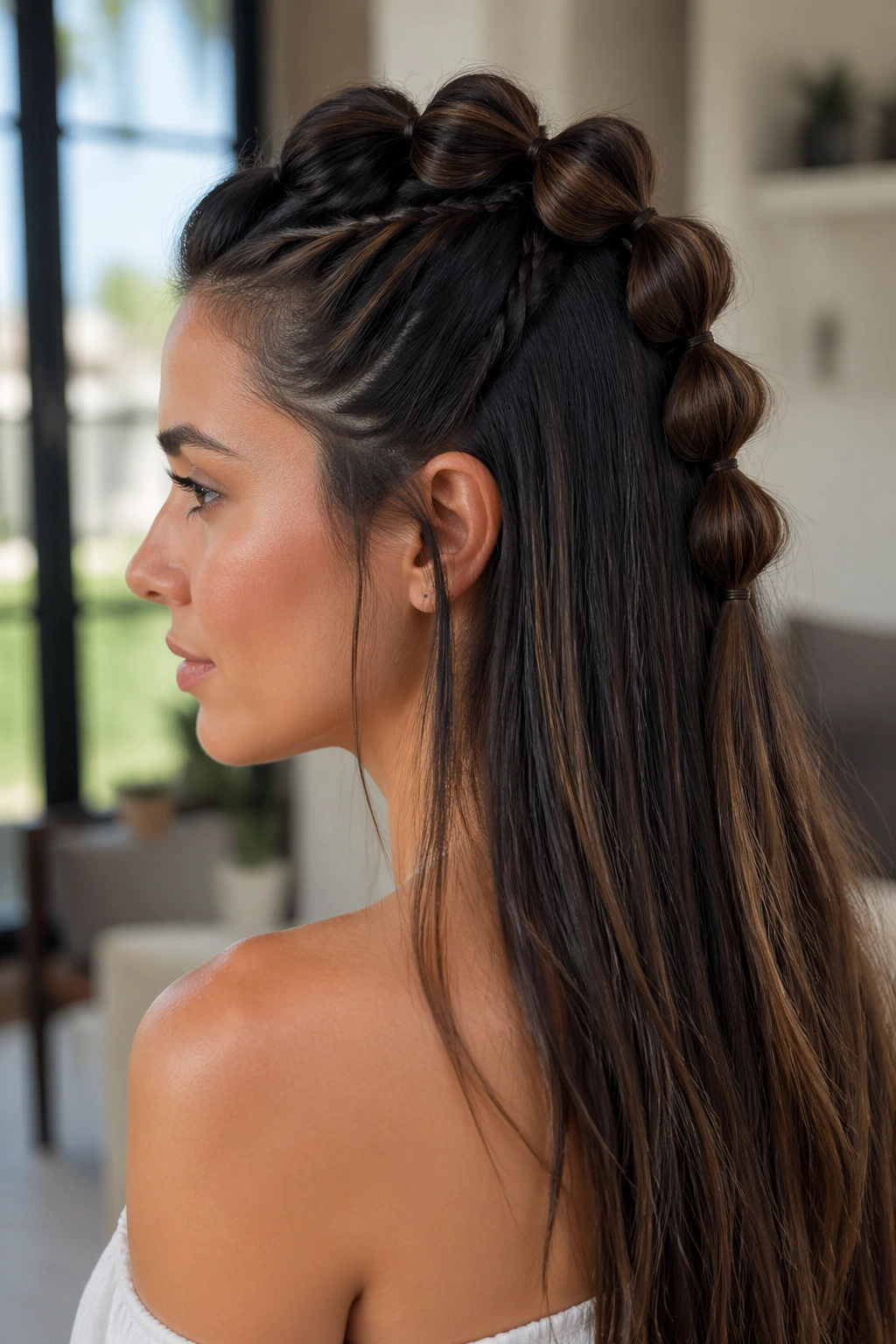
A bubble braid hybrid gives straight hair a playful shape without requiring perfect braiding skill. You secure the half-up section with small elastics every few inches, then gently pull each section outward to make the “bubbles.” A small braid at the start ties the whole thing together.
This works because straight hair loves structure. The bubbles stay visible, the braid anchors the top, and the loose lengths add movement underneath. If your hair is extra long, the bubbles can be spaced farther apart, which looks balanced. Shorter long hair, if that makes sense, needs closer spacing to keep the proportions right.
A satin ribbon or tiny elastic can finish the end. Just keep the bubbles even enough that the style feels intentional. They do not need to be perfectly round. Slightly uneven bubbles actually look more relaxed.
21. Infinity Braid Accent
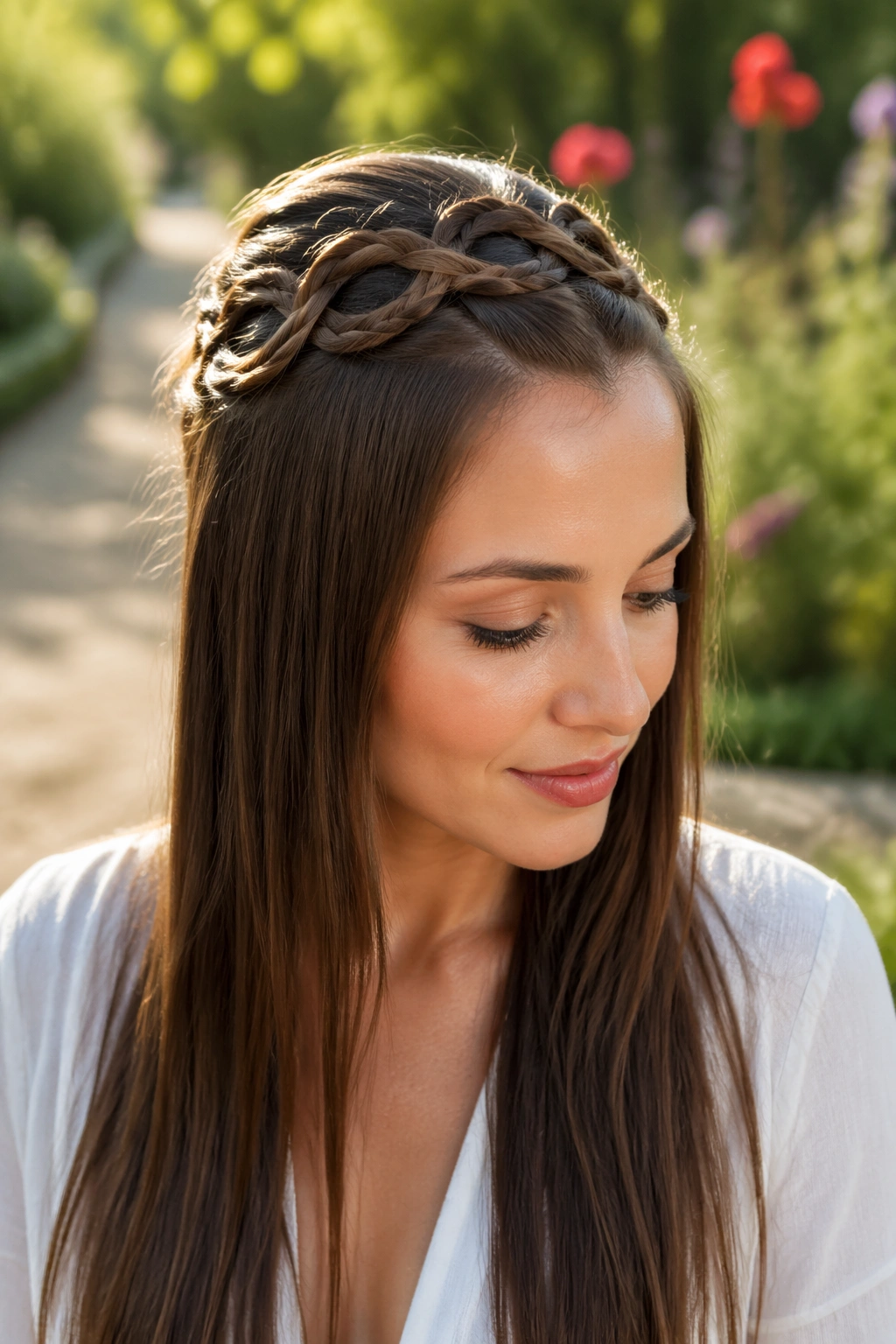
An infinity braid sits neatly on the crown and gives straight hair a woven, looped detail that looks fancier than the amount of work it takes. The shape is compact, so it’s useful when you want the half-up section to stay small and refined.
The loops are the whole trick. They create a figure-eight look that stands out against the flatness of straight hair. You do not need to cover much area for it to work. One good braid centered at the back can carry the entire style.
Because the braid is small, the rest of the hair should stay sleek and smooth. That contrast keeps the look from getting too busy. If the braid feels too tight at first, loosen the outer loops a bit with your fingertips. That softens the shape and keeps it from looking stiff.
22. Braided Knot Half-Up
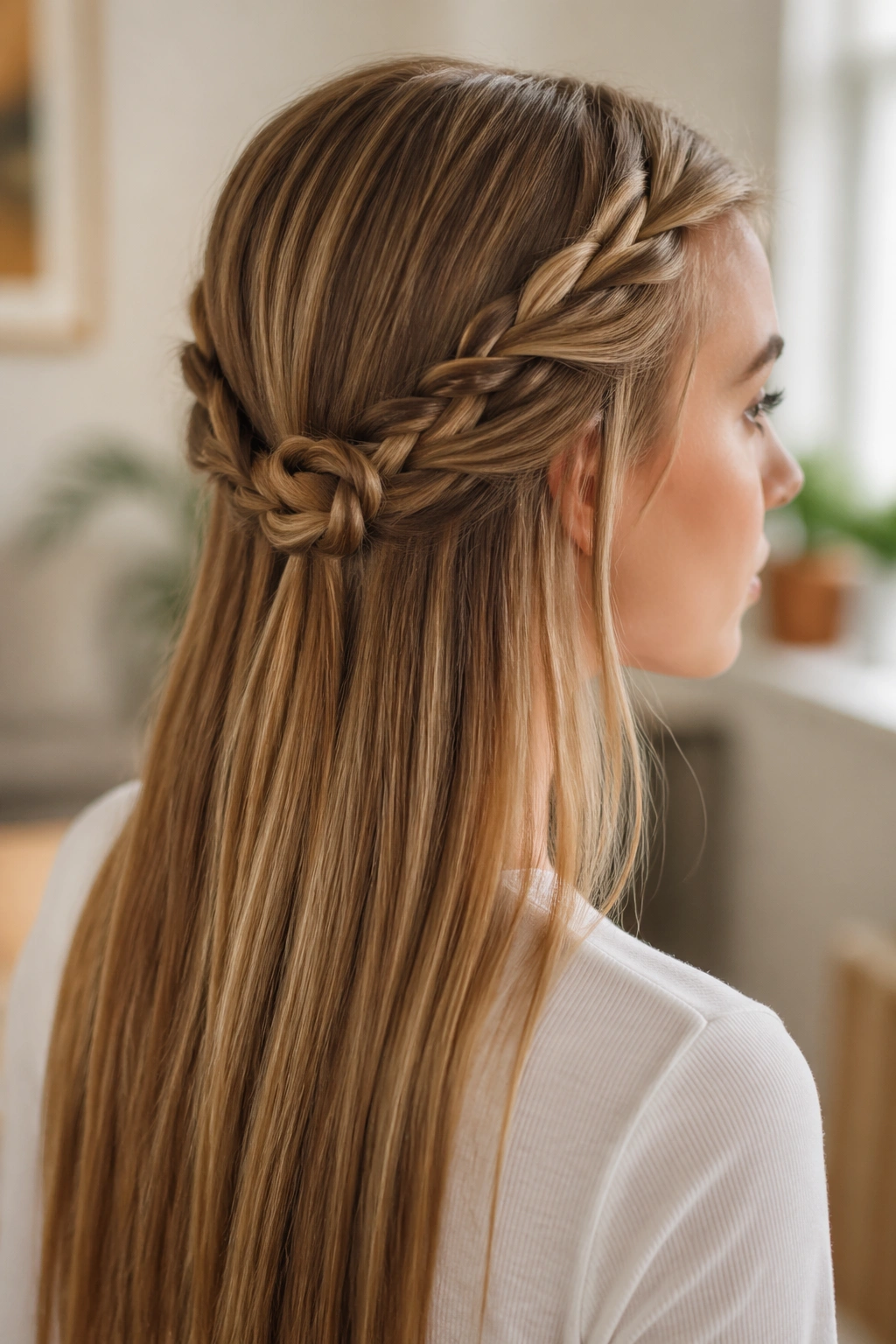
A braided knot is one of those styles that looks more complicated than it is. Braid two side sections, tie them together in the back, then loop the joined section into a small knot and pin it flat. The result is tidy, secure, and good on long straight hair that likes to slip.
The knot gives the top half a little structure without adding height. That’s useful if you want a low-profile style that still feels finished. It also sits well under coats, scarves, or anything else that tends to mess with hair at the nape.
Use flat bobby pins and place them crosswise. Straight hair can be slippery, and a single pin often gives up before lunch. A crossed pin shape holds better and keeps the knot from rotating.
23. Claw-Clip Braid Half-Up
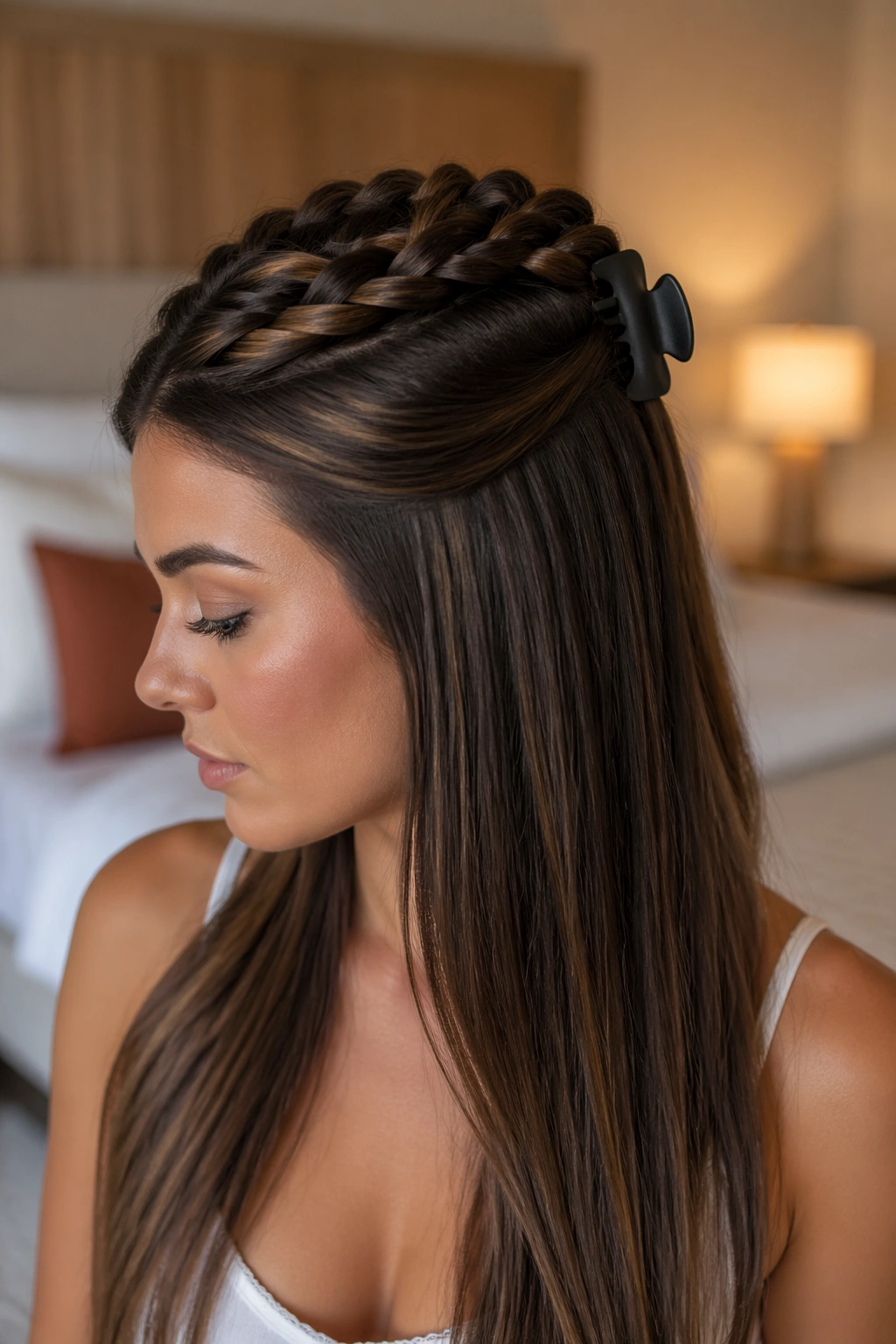
A claw-clip braid half-up style is practical in the best way. You braid the top section, fold it upward or inward, and secure it with a clip instead of an elastic-heavy finish. On long straight hair, that clip gives the braid some grip and keeps the rest of the hair free.
The look depends on the clip. A matte claw clip holds better than a slick shiny one, especially if your hair is fine or extra smooth. Medium-sized clips usually work best because they hold the braid without swallowing it. If the clip is too small, the style starts slipping. Too big, and it takes over the whole head.
This is the kind of style you can put on fast and still have it look deliberate. A braid plus a clip beats a bare clip every time, and that tiny bit of braid makes the style feel more finished.
24. Side Braid With Long Straight Ends
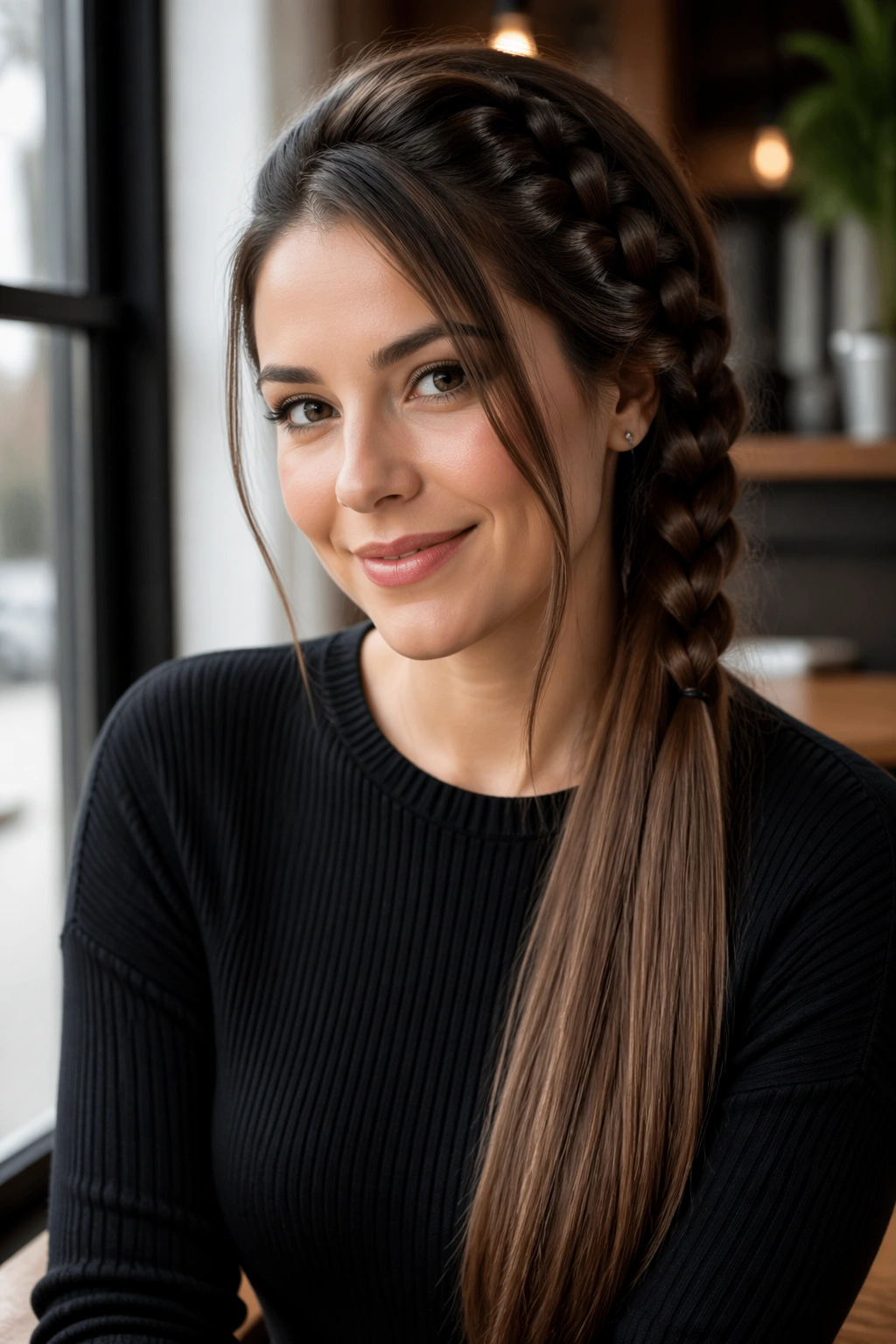
A deep side braid at the half-up section brings a little sweep and movement to straight hair. Instead of dividing the hair evenly, you pull the top section toward one side and braid it low, then let the lengths fall over the shoulder or down the back.
The side placement gives the style shape without needing volume everywhere. That’s useful when the hair is long and very straight, because straight hair can drag downward if all the detail sits dead center. Moving the braid off to one side changes the weight of the style.
Keep the braid loose enough that it bends naturally with the head. If it’s too tight, the side sweep disappears and you lose the best part. A soft braid and straight ends can look cleaner than a heavily styled finish. Sometimes less really is more, even if that sounds a little too tidy to say out loud.
25. Sleek Wrapped Braid With Glassy Lengths
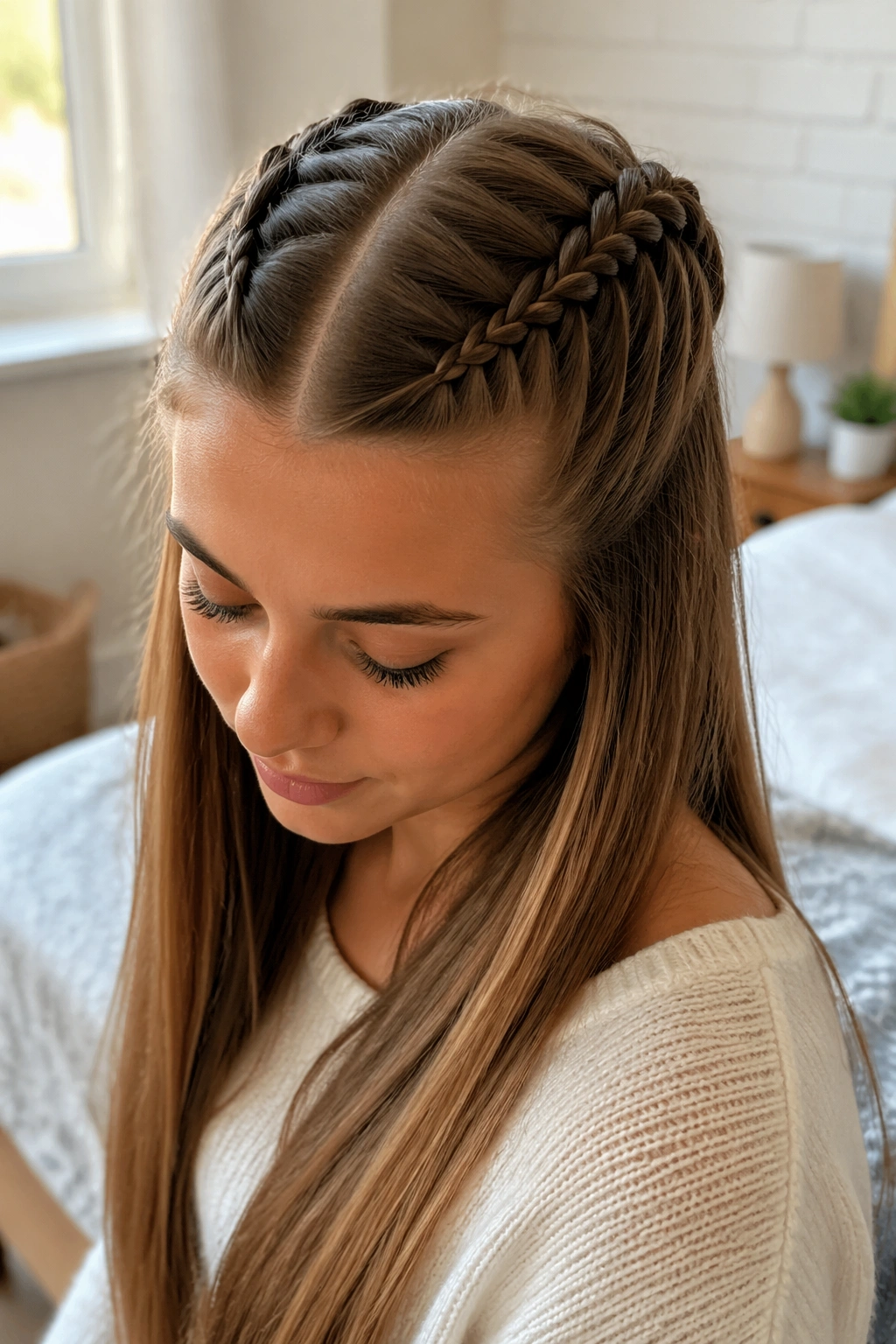
This is the polished one. A neat braid at the crown gets wrapped with a thin strand of hair so the elastic disappears, then the long straight lengths are left as smooth and glossy as possible. It feels clean, modern, and a little dressier than the rest.
What makes it work is restraint. You are not trying to crowd the style with extra texture. The braid gives you shape, the wrapped base gives you a neat finish, and the straight lengths do what they do best: fall long and smooth. If the hair has a little shine serum on the ends, even better.
This is a strong pick for occasions where you want your hair to look put together without looking overworked. And if you only try one style from the whole list, make it one that respects the straightness instead of fighting it. That’s usually where the best half-up braid starts.