



Short wavy hair can do a ponytail, but it rarely behaves like the sleek, high-gloss version people pin on long, straight hair. That’s not a flaw. It’s the whole point.
The wave pattern gives you lift, texture, and a little natural movement that straight hair usually has to fake with styling products. The catch is that short lengths slip out faster, especially around the temples and nape, where layers like to rebel. So the trick is not forcing your hair into a long-hair shape. It’s choosing ponytail styles that work with the bend, the flyaways, and the shorter pieces that never quite reach the elastic anyway.
A good ponytail for short wavy hair usually has one of three things going for it: a small, secure base, some intentional texture, or a clever detail that hides the fact that your ends are not waist-length. Tiny elastics, bobby pins, texturizing spray, and a few loose face-framing pieces can do more than a heavy styling session ever will.
Some of these styles look polished. Some are messy on purpose. A few are the kind you throw up in under two minutes and still leave the house feeling put together. And a couple are lifesavers when your hair is in that awkward in-between stage where it can almost make a full ponytail, but not quite.
1. The Mini Low Ponytail at the Nape
A tiny pony sitting right at the nape is one of the easiest wins for short wavy hair. It keeps the style grounded and stops the shorter layers around your crown from popping loose all over the place.
Why It Works on Short Waves
The lower placement gives your hair a little more room to bend naturally. Instead of pulling everything tight and fighting the wave, you let the texture sit where it wants to sit. That usually means less frizz around the hairline and fewer ends sticking out like little hooks.
- Use a small clear elastic or a thin snag-free band.
- Gather the hair with your fingers first, then smooth the top lightly with a brush.
- Leave the pony a little loose so the waves can show.
- Pull out a few tiny pieces near the ears if the style feels too strict.
Best tip: twist the pony once before the final wrap. It helps the ends stay together instead of fanning out.
2. The Sleek Side-Part Ponytail
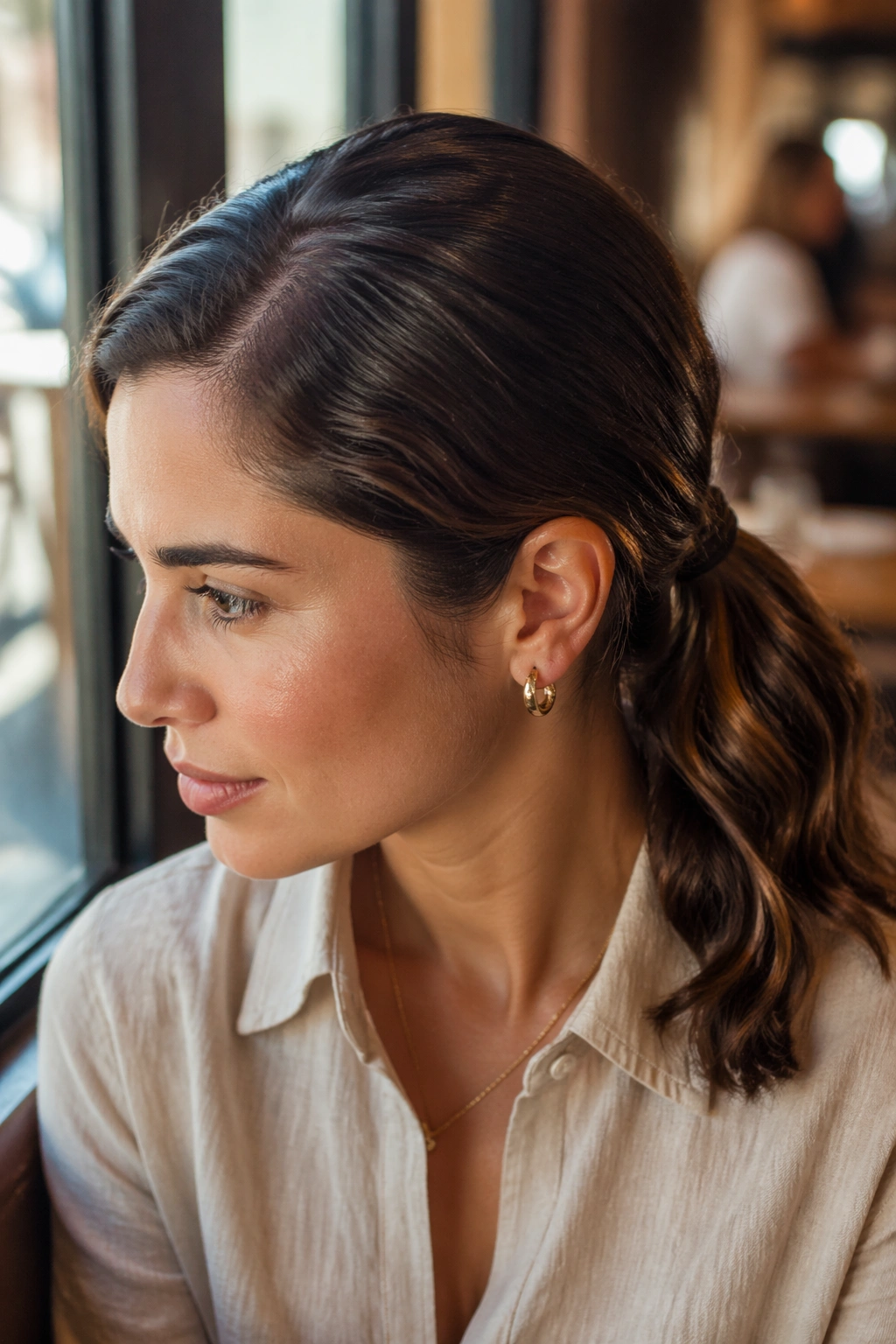
A deep side part changes everything. It gives short wavy hair a shape that feels deliberate, not like you ran out of ideas halfway through getting ready.
This style works best when you smooth the front and top just enough to control the bulk, then let the ponytail itself keep some texture. I like that contrast. The crown looks clean, but the tail still has movement, which keeps the style from looking flat or stiff.
Use a pea-sized amount of smoothing cream on the top layer and a bit of shine spray on the part if your hair gets fuzzy there. Then gather the pony low and off to one side, just behind the ear. If your hair is chin-length, the side placement helps the shorter bottom layers blend instead of sticking out in the back.
It’s neat. Not severe.
3. The Half-Up Ponytail With Loose Ends
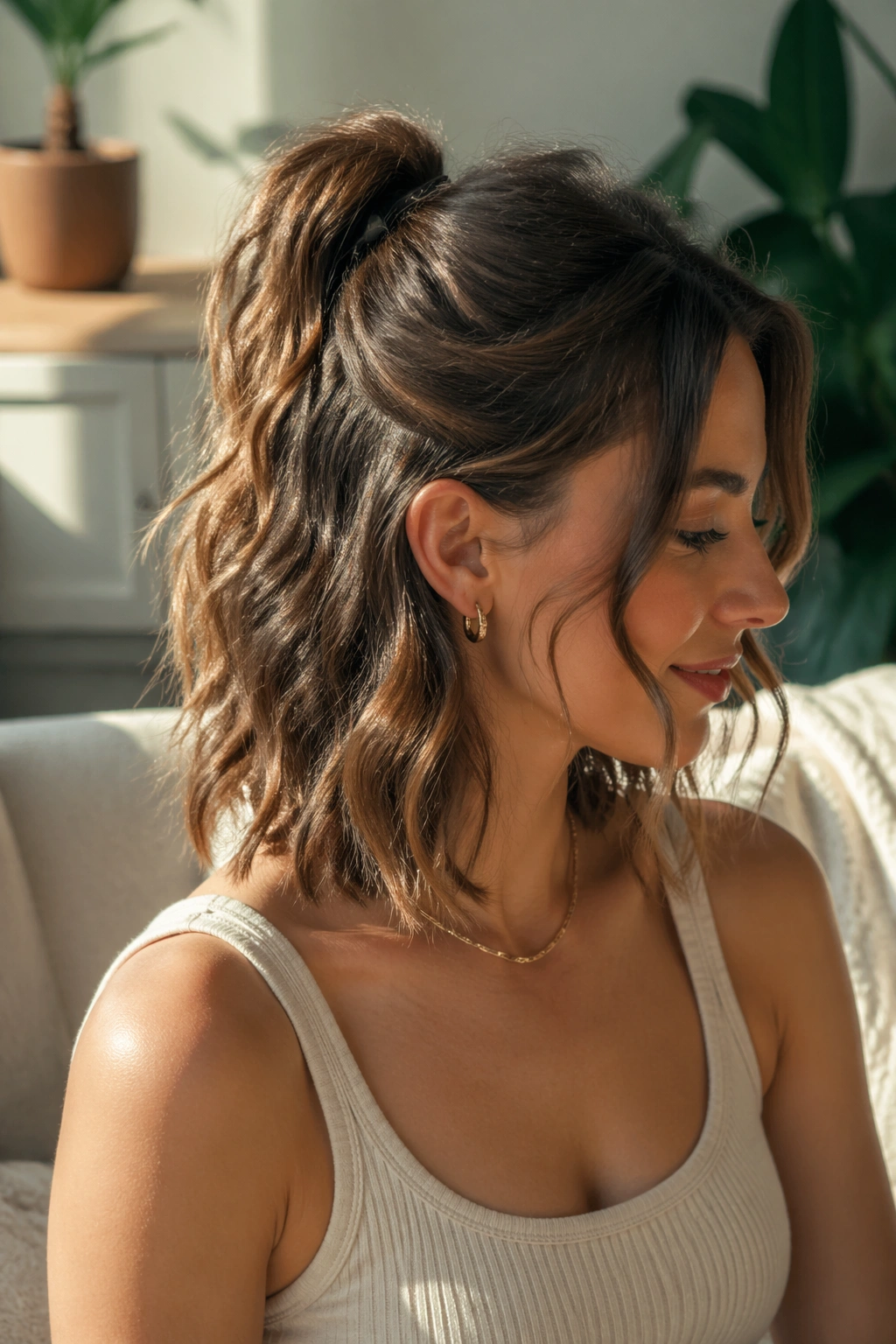
What if your hair is too short for a full ponytail, but you still want that lifted look? A half-up ponytail is usually the answer.
How to Wear It
Pull back only the top third or half of your hair, depending on how much length you have to work with. The goal is to make the top look lifted while letting the lower waves stay loose and soft. That keeps the style from feeling cramped, which happens fast with short hair when every strand gets dragged into one tie.
If the crown wants to collapse, tease just a little at the roots before you gather it. Not much. A few quick backcombed strokes are enough. Then pin the side pieces back with one or two bobby pins if the shape needs more structure.
The nicest part is how forgiving it is. You can wear it polished, messy, or somewhere in the middle. All three work.
4. The Bubble Ponytail for Shoulder-Length Waves
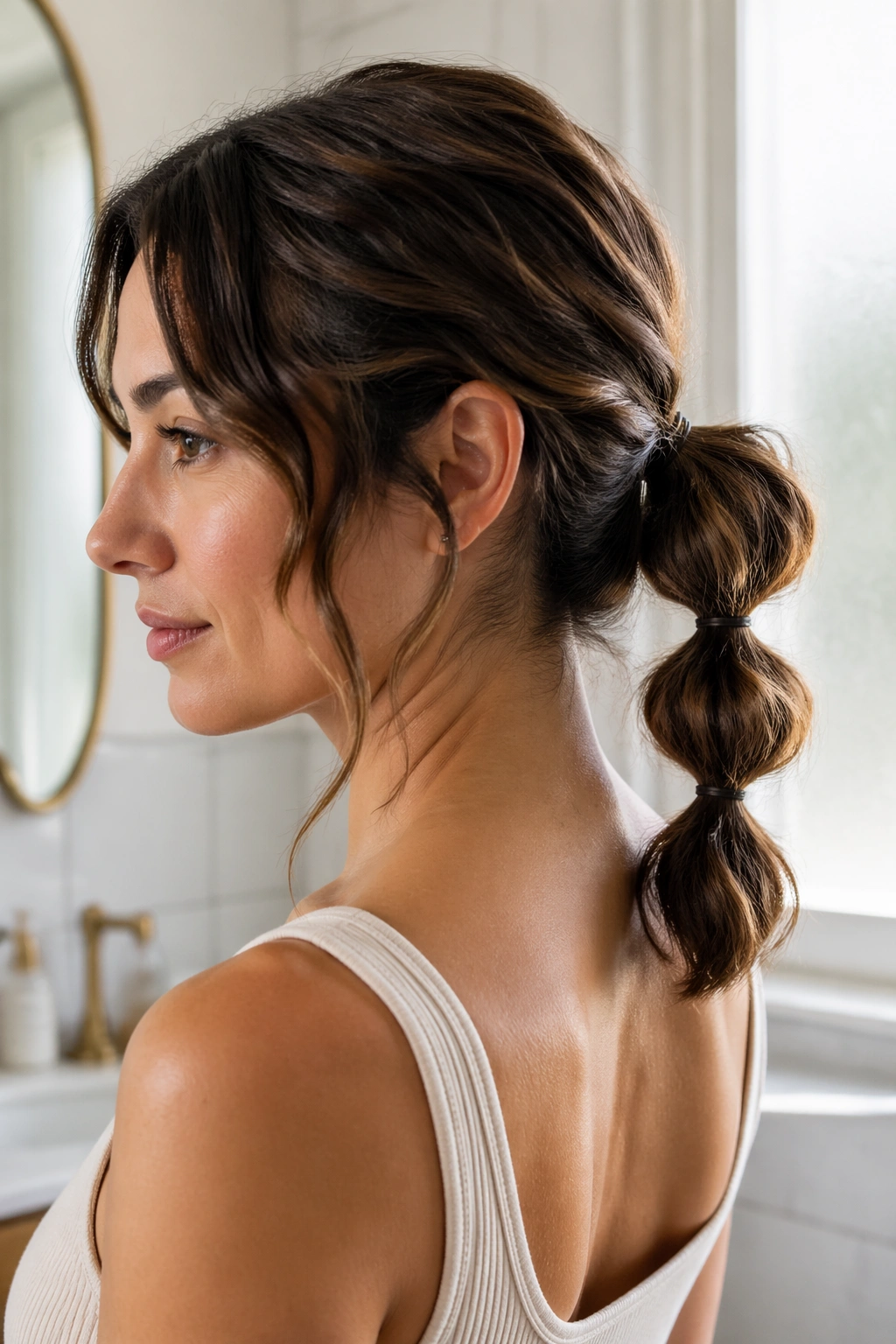
The bubble ponytail looks playful on short wavy hair, and it gives you structure when your ends are too short to make a long, sleek tail.
I first like this style on hair that reaches the shoulders or just above them. You gather a small pony, then add clear elastics every 1½ to 2 inches down the tail. After each tie, gently tug the hair between the elastics so it puffs out into rounded sections. That little puff is the whole trick. It makes a short tail look fuller than it is.
- Use 3 to 5 small elastics, depending on length.
- Keep the spaces even, or the bubbles start looking lopsided.
- Lightly mist the sections with hairspray if your wave pattern is slippery.
- Pinch the bubbles outward instead of pulling from the top, which can flatten the crown.
A bubble pony is one of those styles that looks more complicated than it is. Which is a nice thing to have in your back pocket.
5. The Twisted Nape Ponytail
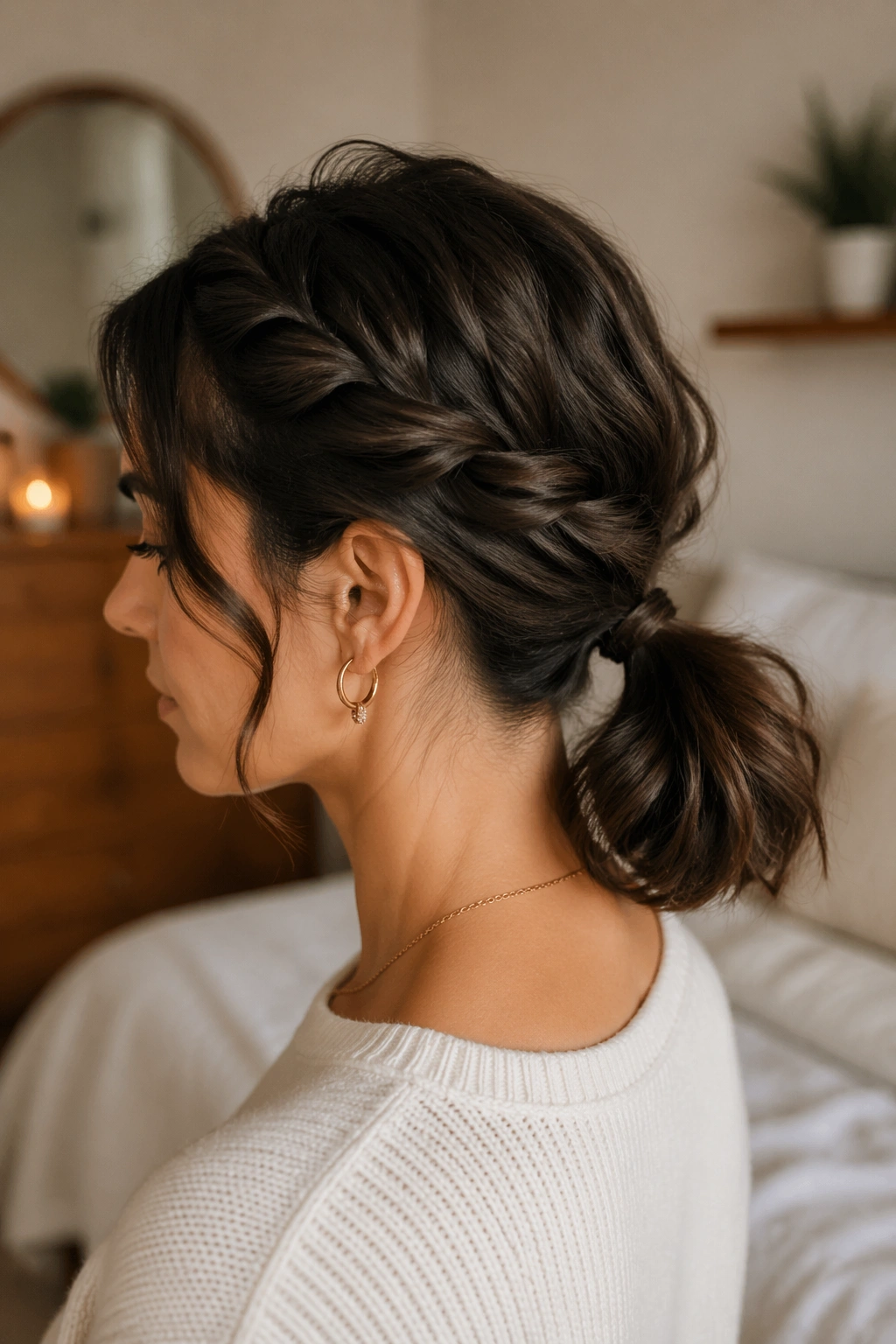
A twisted nape ponytail is a quiet fix for short layers that refuse to stay down. You take two front sections, twist them back toward the base of the neck, and gather everything into a low pony at the end.
The twist does two jobs at once. It gives you control over the hair around the face, and it hides the awkward bits near the hairline that tend to stick out on short cuts. The rest of the hair can stay wavy and loose, which keeps the look soft instead of overworked.
This style is especially good if your hair has grown out from a bob and the layers around your ears are still doing their own thing. I’d call it a neat little cheat. Not in a bad way. In the useful, practical way that saves you five minutes and a lot of frustration.
A small claw clip can hold the twist while you make the pony if your arms get tired.
6. The Tucked-In Short Ponytail
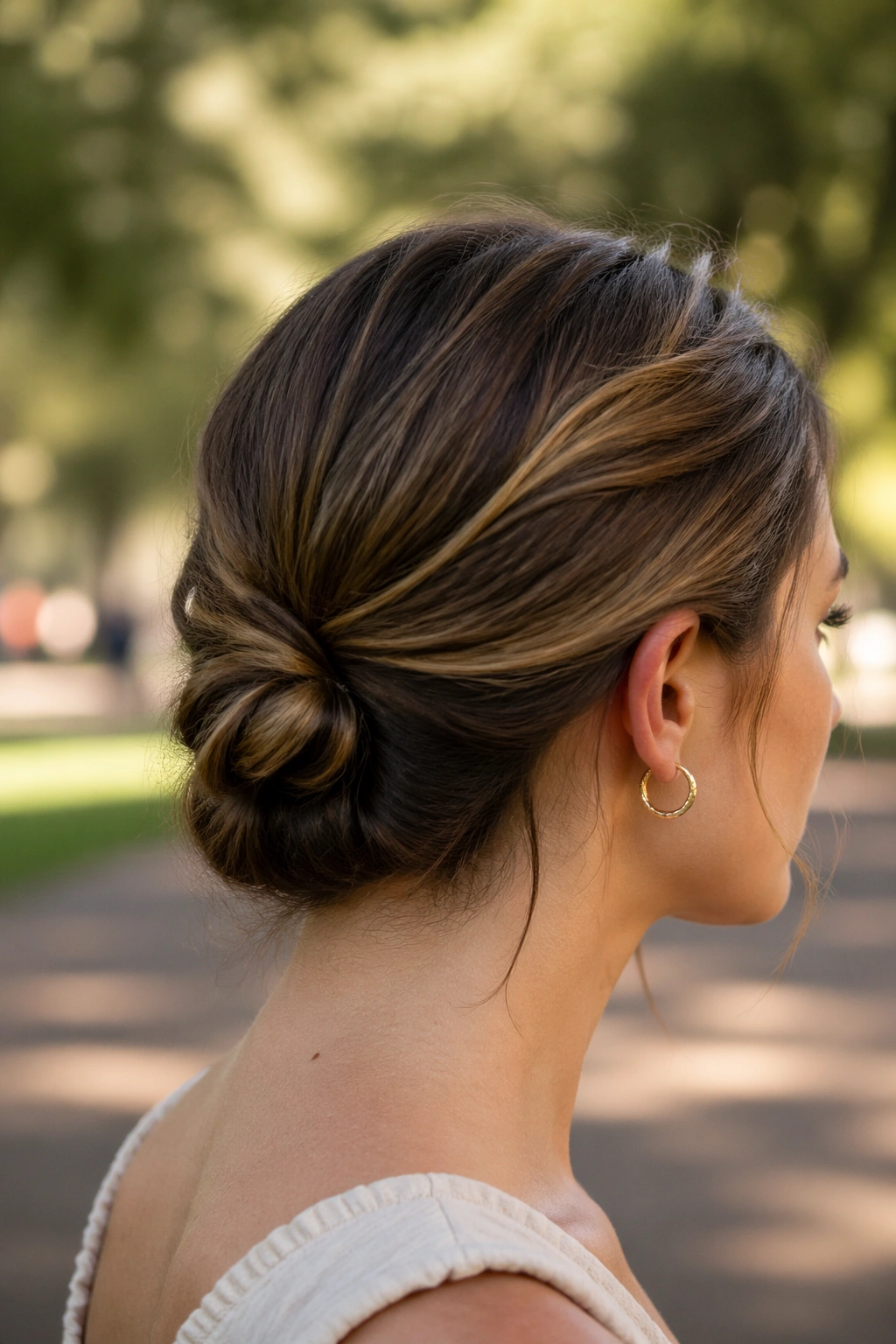
Can you make a ponytail when your ends barely clear the elastic? Yes. You just stop thinking of it as a long tail and start treating it like a tucked style.
The Trick
Gather the hair at the nape, secure it with a small elastic, then tuck the ends upward or inward and pin them close to the base with two bobby pins. If the hair is too short to tuck neatly, fold it under itself once and pin that fold in place. The result looks cleaner than a bunch of ends poking in every direction.
This works best on hair that sits around the jawline or just touches the collarbone. Shorter than that, and you may need extra pins or a second elastic above the first one. Don’t fight the shape. Let the cut be the cut.
A little matte paste on the fingertips helps tame the shorter pieces around the ears. Use very little. Too much and the style turns heavy fast.
7. The Messy High Ponytail With Face-Framing Pieces
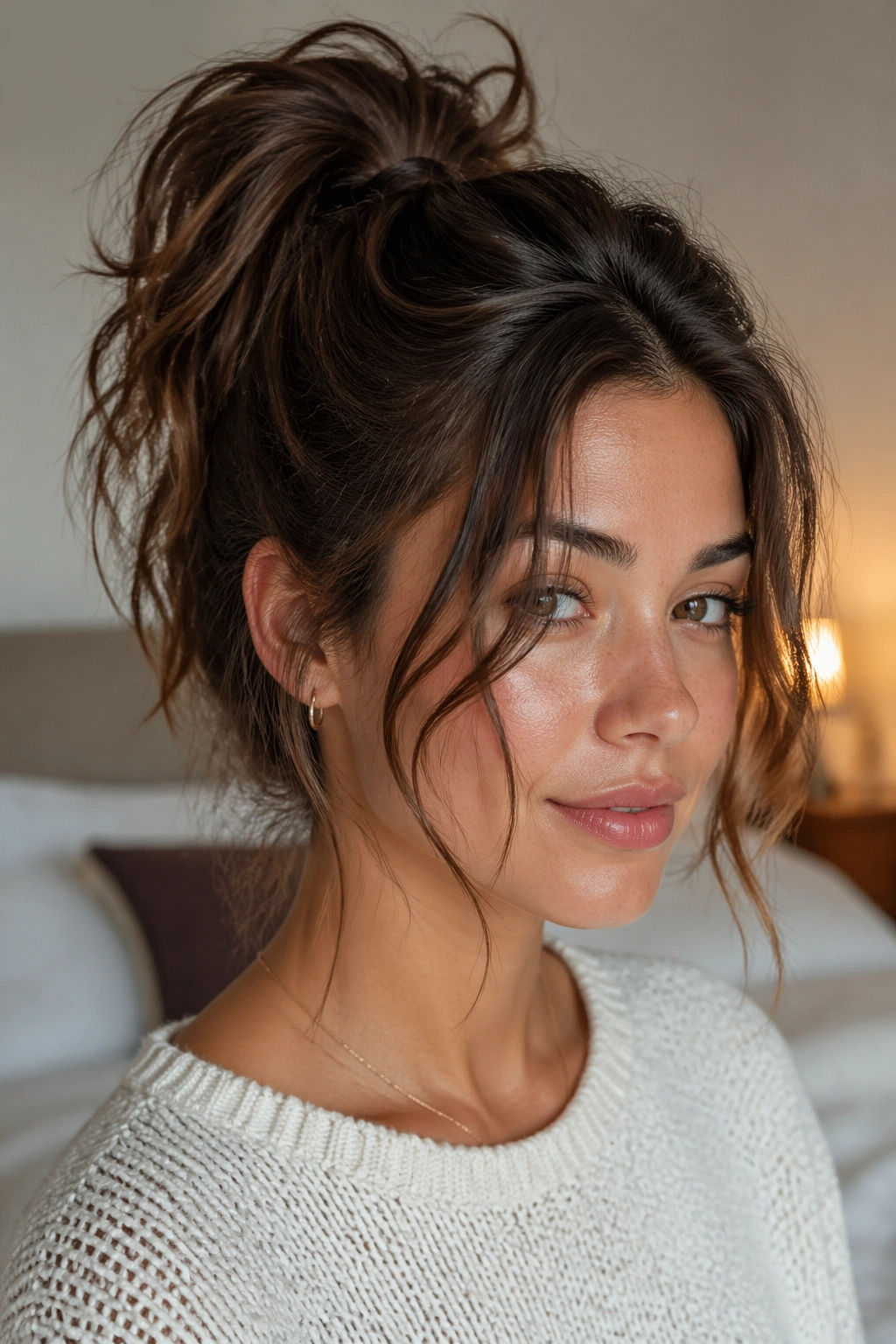
A high ponytail can work on short wavy hair if you stop trying to make it look like a ballet bun’s cousin.
The key is softness at the hairline. Pull the hair up, but leave a couple of face-framing pieces out before you secure the tie. Then pinch the crown loose a touch so the waves can lift instead of getting pressed flat. That one move changes the whole mood. It goes from strict to easy.
For this style, I like a tiny amount of dry shampoo at the roots before gathering. It gives the hair grip and a bit of roughness, which helps the pony stay up longer. If your hair is layered, the shorter pieces at the back may need a pin or two tucked under the elastic.
This is one of the best styles when you want volume. Not fake volume. Just the kind short wavy hair gives on its own when you stop over-smoothing it.
8. The Claw-Clip Ponytail Hybrid
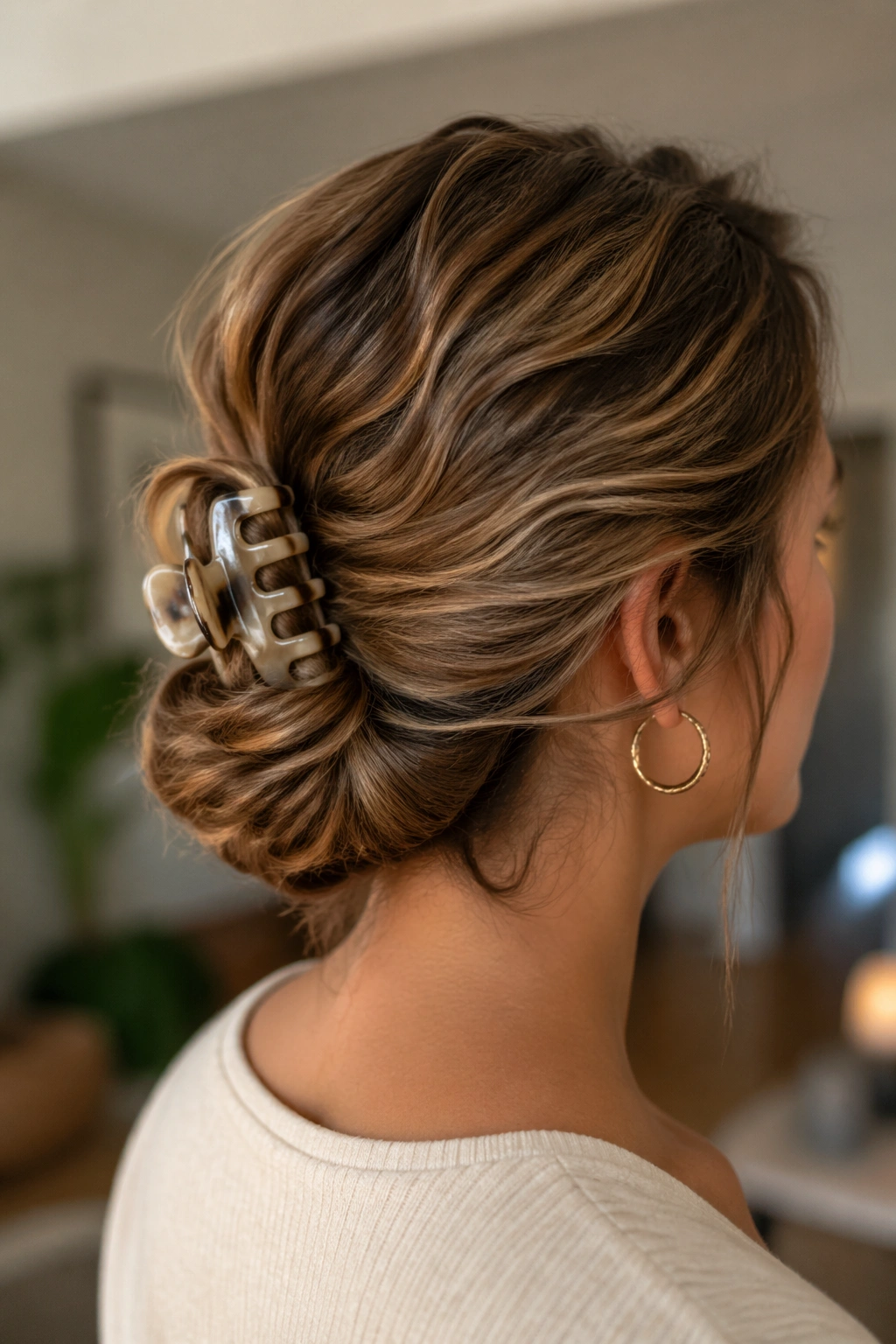
A claw-clip ponytail hybrid is the move for days when your hair won’t stay contained and you don’t want to wrestle it into submission.
Picture this: the hair is gathered low, twisted lightly, then clipped with a medium claw clip so the ends fold upward instead of hanging straight down. You can add a small elastic first if the clip needs a little backup. On short wavy hair, that combo usually holds better than a clip alone.
This style shines on second-day waves. The hair already has shape, so the clip doesn’t have to do much. A little mess in the back is fine. Actually, it looks better that way. If the top feels too puffed, smooth the crown with damp hands and a drop of leave-in cream before clipping.
The result is half ponytail, half updo, and much easier than it looks.
9. The Rope-Braid Base Ponytail
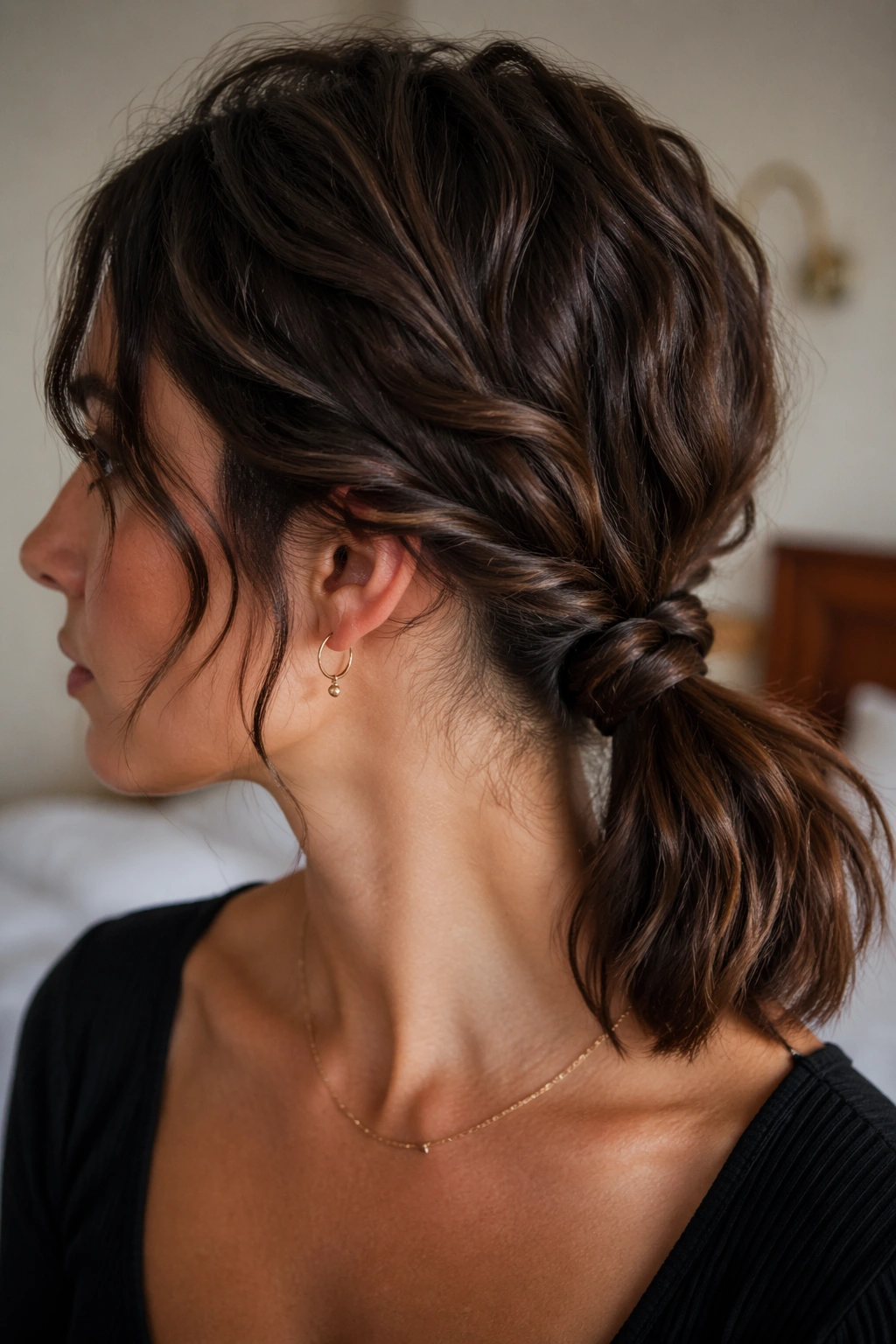
Unlike a plain elastic, a rope-braid base gives short layers something to cling to. That matters when the back of your hair is full of pieces that want to slip free two minutes after you tie it.
Start by taking two small sections from each side of the head, twisting them back toward the nape, then wrapping them around each other before gathering the rest into a ponytail. The rope twist acts like a soft frame at the base. It keeps the style from puffing out in odd places.
What Makes It Different
The texture at the base hides the fact that the ponytail itself may be tiny. That’s useful for wavy short hair, where the pony often looks best when the base has a little visual interest. No one needs a giant tail. A compact one with a neat twist can look sharper.
I reach for this style when I want the hair off my neck but still want the cut to show through.
10. The Low Ponytail With a Wrapped Hair Tie
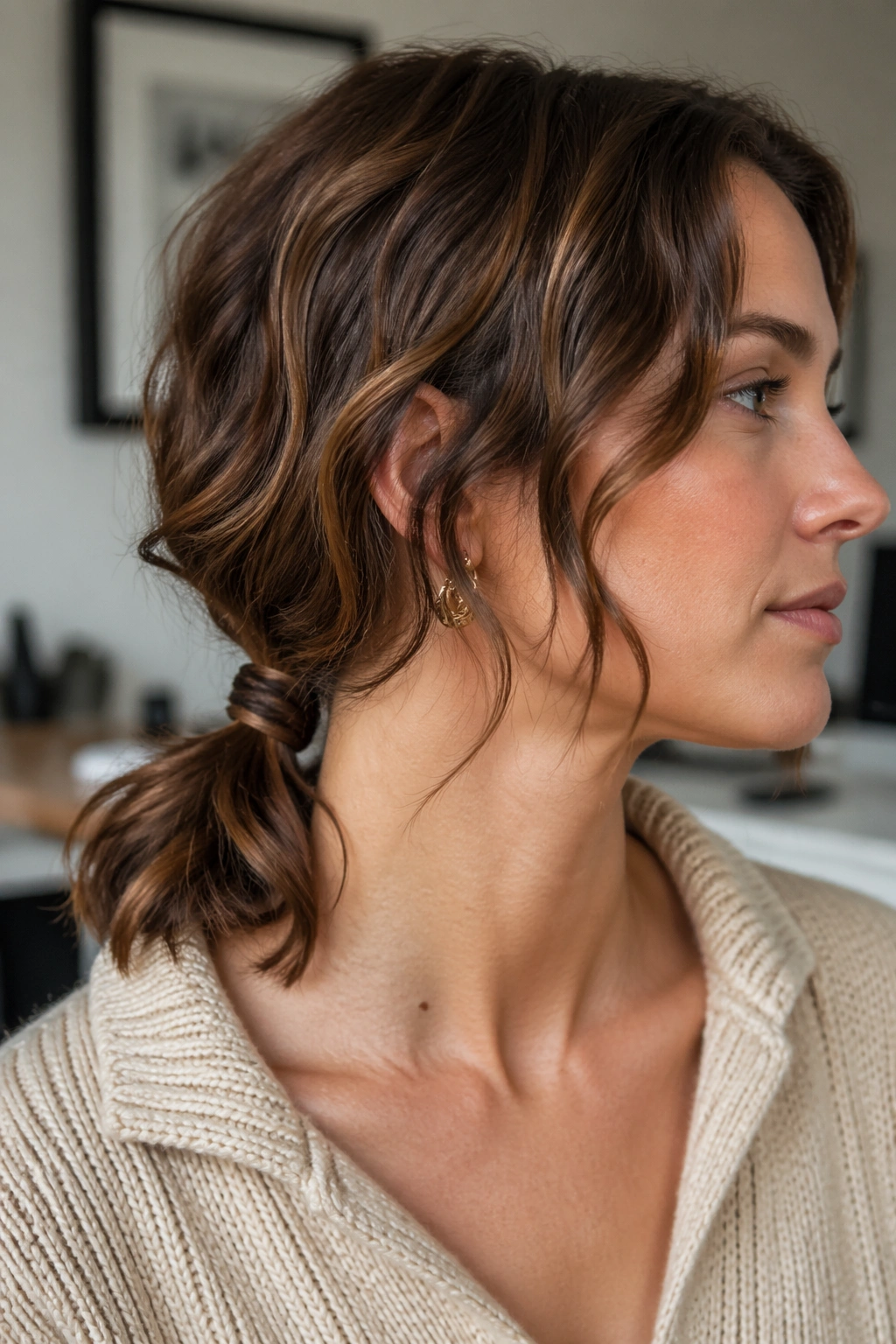
A wrapped hair tie is one of those small details that makes a short ponytail feel finished instead of accidental.
After you secure the pony low, take a thin strand from underneath the tail and wrap it around the elastic once or twice. Pin the end underneath with a bobby pin. That’s all. The wrap hides the tie, but it also gives the style a cleaner line, which matters when your hair is short enough that the elastic would otherwise be the loudest thing in the room.
This look works well for office days, dinners, or any time you want something neat without flattening your wave pattern. You can keep the pony loose and airy, or tighten it slightly if you want more polish at the crown.
One small warning: if your hair is very layered, don’t take the wrapping strand too thin. It may slip. A slightly thicker piece holds better.
11. The Double-Section Ponytail for Extra Grip
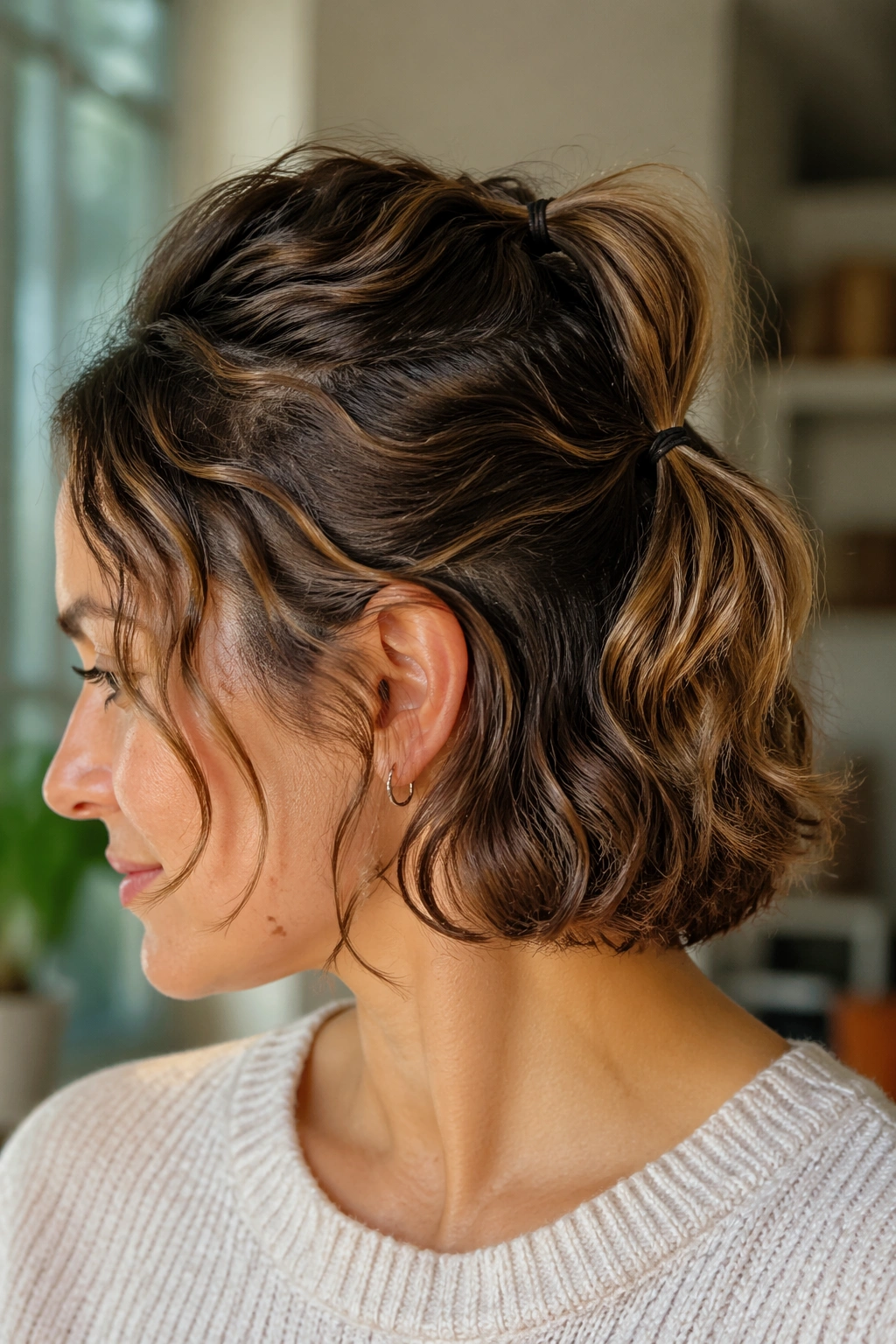
What do you do when a single ponytail keeps sagging? Split the job in two.
Best for Slippery Layers
Start by gathering the top half of your hair into a small pony and securing it. Then bring the remaining bottom hair up to join it, either with a second elastic or by wrapping it around the first base. This gives short hair more support, which is handy when the layers are too soft or smooth to hold one strong pony on their own.
The double-section method is especially helpful on wavy hair that slips when it’s freshly washed. You get a stronger anchor and less pulling at the sides. If your hair is fine, this style can save you from having to use a heavy amount of product.
It’s not the sleekest look in the group. It is, however, one of the most dependable.
12. The Curly-Wavy Puffed Ponytail
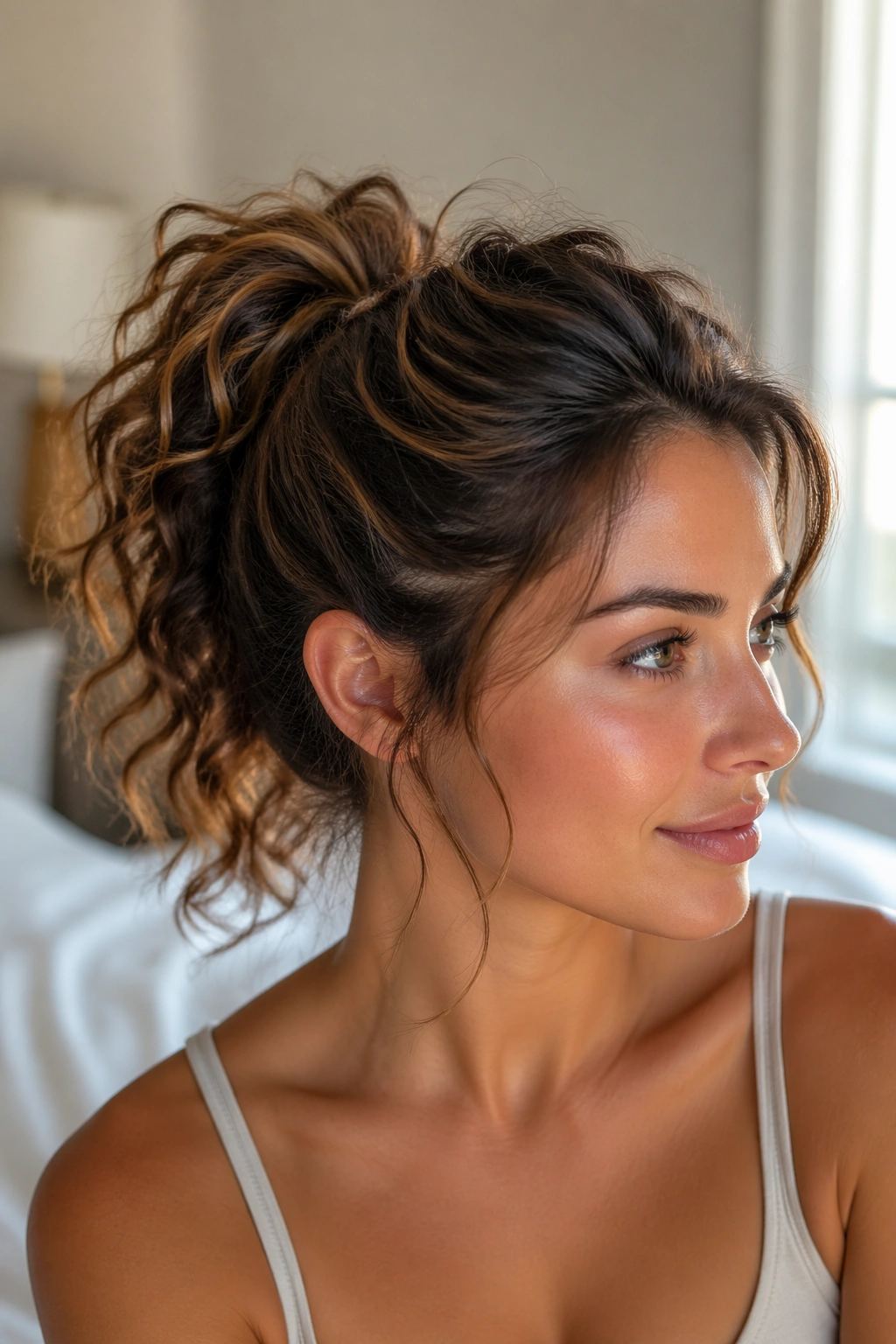
A puffed ponytail is what happens when you stop trying to make every wave lie flat and let the texture work for you instead.
The style starts with a loose pony at the back or crown. Then you tug gently at the top and sides to create a little lift, not a full teased helmet. The tail itself stays soft and airy, with the waves puffing out a bit instead of hanging in a tight line. That’s the whole charm.
I like this one when the hair has been air-dried and has a little bend but not enough polish to feel styled. A dab of mousse scrunched through damp hair helps keep the puff from turning fuzzy. If you want extra shape, twist the front sections back once before gathering them.
This ponytail looks better when it isn’t overcontrolled. That’s the secret. Short wavy hair usually does better with a little room.
13. The Micro Ponytail With a Middle Part
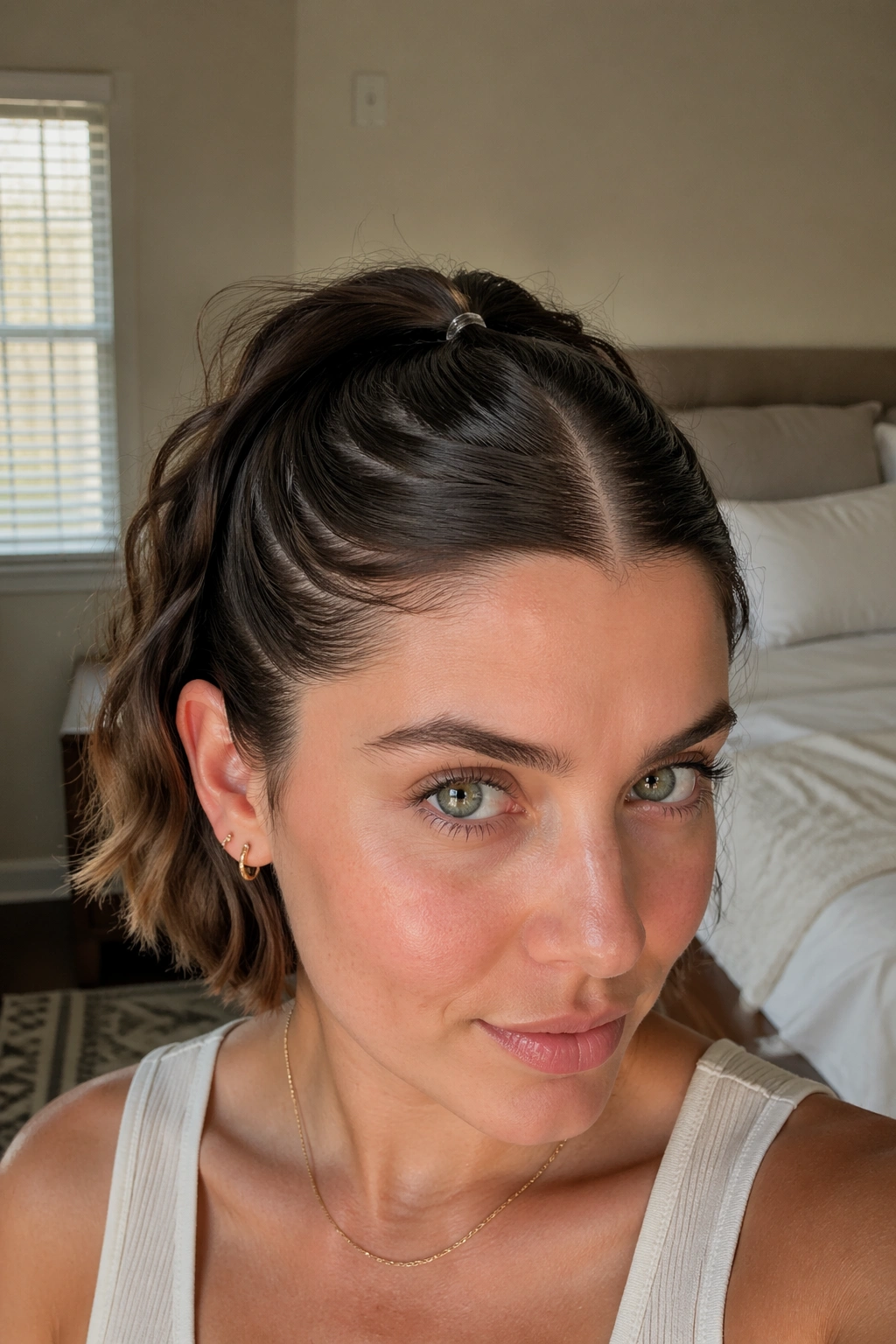
A micro ponytail is tiny, tidy, and surprisingly good on short wavy hair that sits somewhere between a bob and a grown-out pixie.
Quick Details
- Use a clear elastic no wider than 1/4 inch.
- Part the hair cleanly down the middle for balance.
- Smooth the sides with your palms, not a brush, so the wave pattern doesn’t disappear.
- If the tail sticks out in a stubby way, pin it underneath itself for a neater finish.
The middle part keeps the shape even, which matters when the hair is short enough that one side can look puffier than the other in a second. This style works best if you want neatness without making a giant production out of it. It’s small. That’s the point.
I wouldn’t wear this to chase high drama. I would wear it to look intentional while doing ordinary things.
14. The Side Ponytail for Short Layers
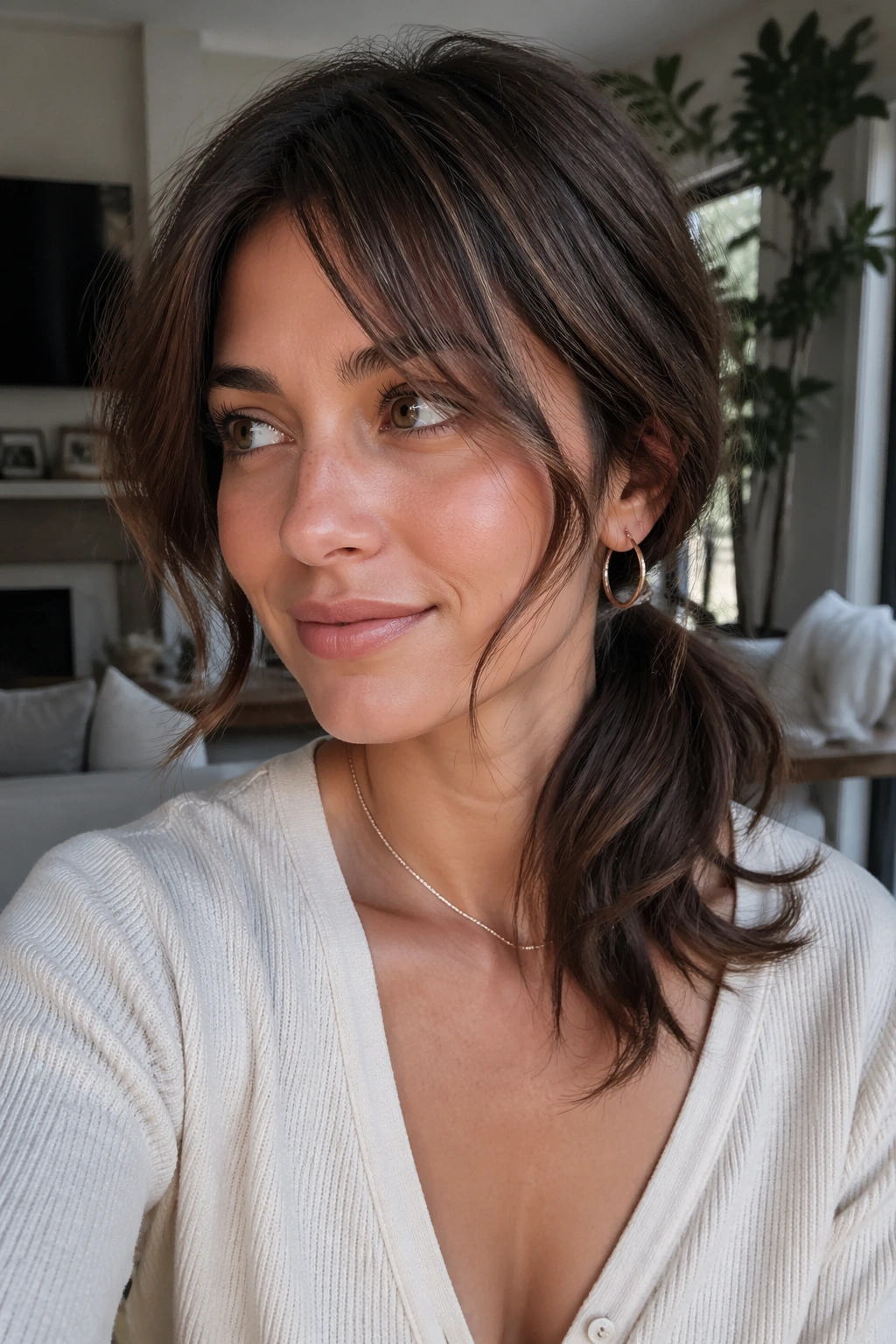
A side ponytail gives short wavy hair a better chance to blend the layers, especially when the front sections are too short to cooperate in the center.
By moving the pony off to one side, you let the shorter pieces fall into a softer shape instead of fighting gravity straight down the back. It’s a small adjustment, but it changes the silhouette a lot. A center pony can expose every uneven layer. A side pony hides more of them.
This style is good when your cut has movement around the cheekbones or nape. Let those bits live. Pulling them too tight usually makes them pop out later anyway. A loose side pony with a little wave around the face looks easier and, frankly, smarter.
If your hair is thick, use two tiny elastics stacked together. One alone can feel flimsy at the side.
15. The Sporty Elastic-Stack Ponytail
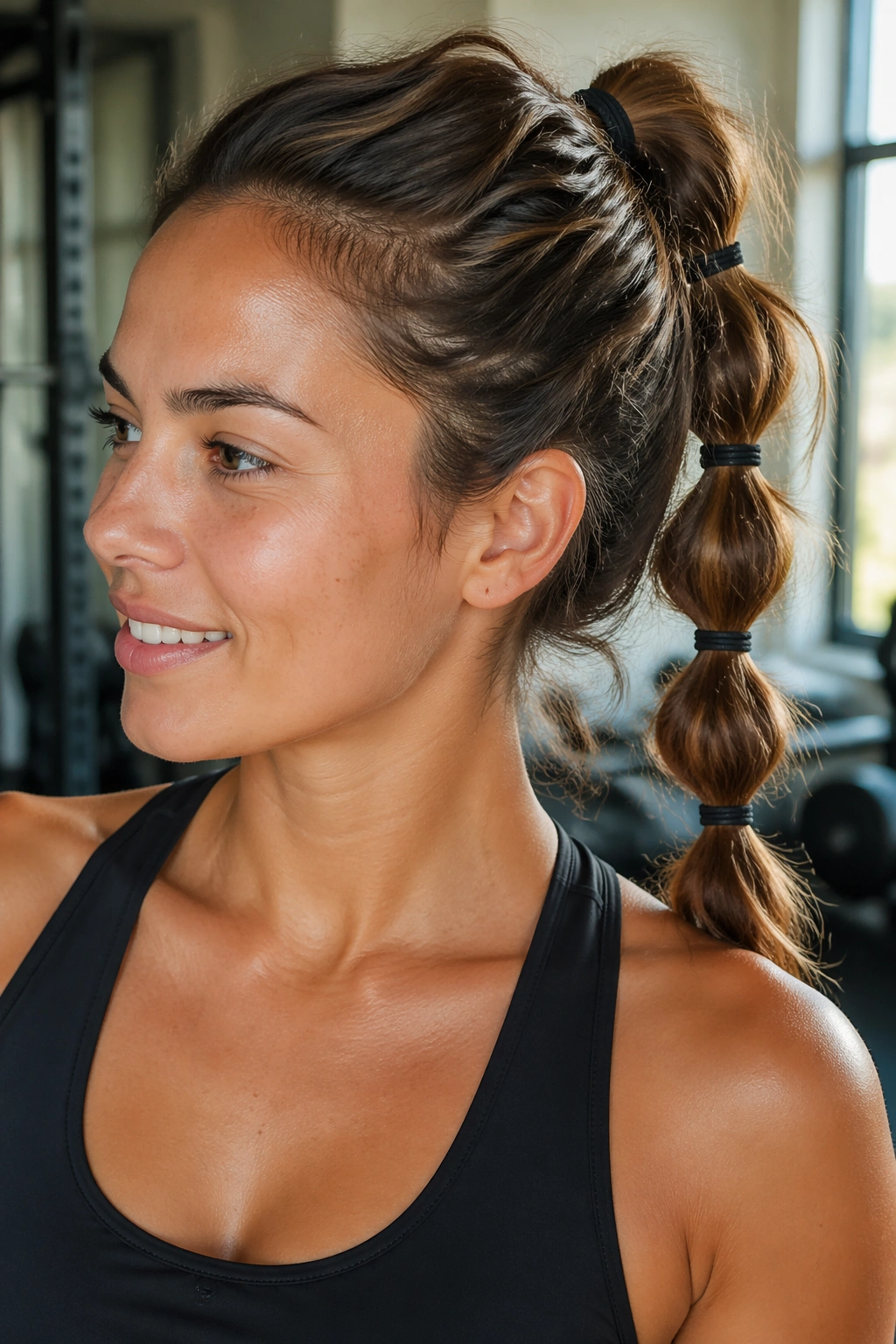
The sporty elastic-stack ponytail is basically a mini version of those segmented athletic styles, and it works shockingly well on short wavy hair.
You tie the first pony low or mid-height, then add another elastic a few inches below it, and another after that if the length allows. Each section gets a slightly puffed shape from the wave pattern, so the hair looks fuller without needing extensions or extra teasing. It’s tidy, active, and practical for days when you need the hair out of the way.
Why It Holds Better
The stacked ties keep the shorter layers from sliding out as easily because the tension is spread across the tail. That matters on wavy hair, which can be slippery one minute and fuzzy the next.
I like this version when I’m running errands or heading to the gym. It stays put better than a loose tail and doesn’t demand perfect smoothness. Good. Because short hair rarely stays perfect for long anyway.
16. The Soft Faux Hawk Ponytail
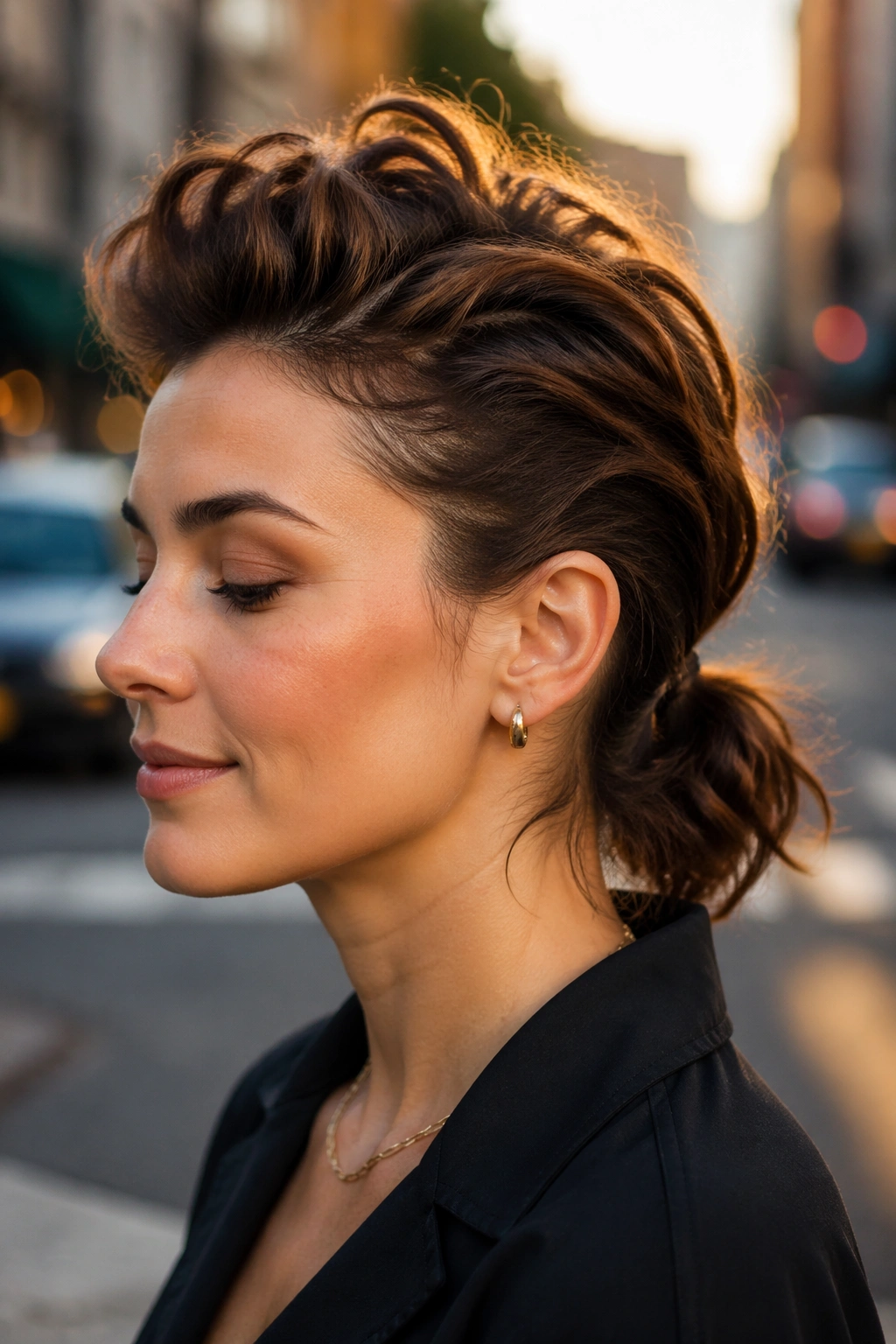
A soft faux hawk ponytail gives short wavy hair a bit of edge without asking you to shave anything or commit to a hard look.
Start by pinning the sides back in small sections so the middle strip of hair gets lifted. Then gather the remaining length into a small pony at the back. The lifted center creates the faux hawk shape, while the pony at the end keeps it wearable. You get height through the top and a little attitude without the style turning stiff.
This one looks especially good on layered bobs. The wave adds texture right where the faux hawk needs it. A little dry shampoo at the roots helps keep the top from collapsing. If the front has a stubborn wave that wants to fall forward, use two bobby pins crossed over each other rather than one.
It’s one of the more fun styles here. Not loud. Just a little sharper.
17. The Ribbon-Tied Ponytail for Short Waves
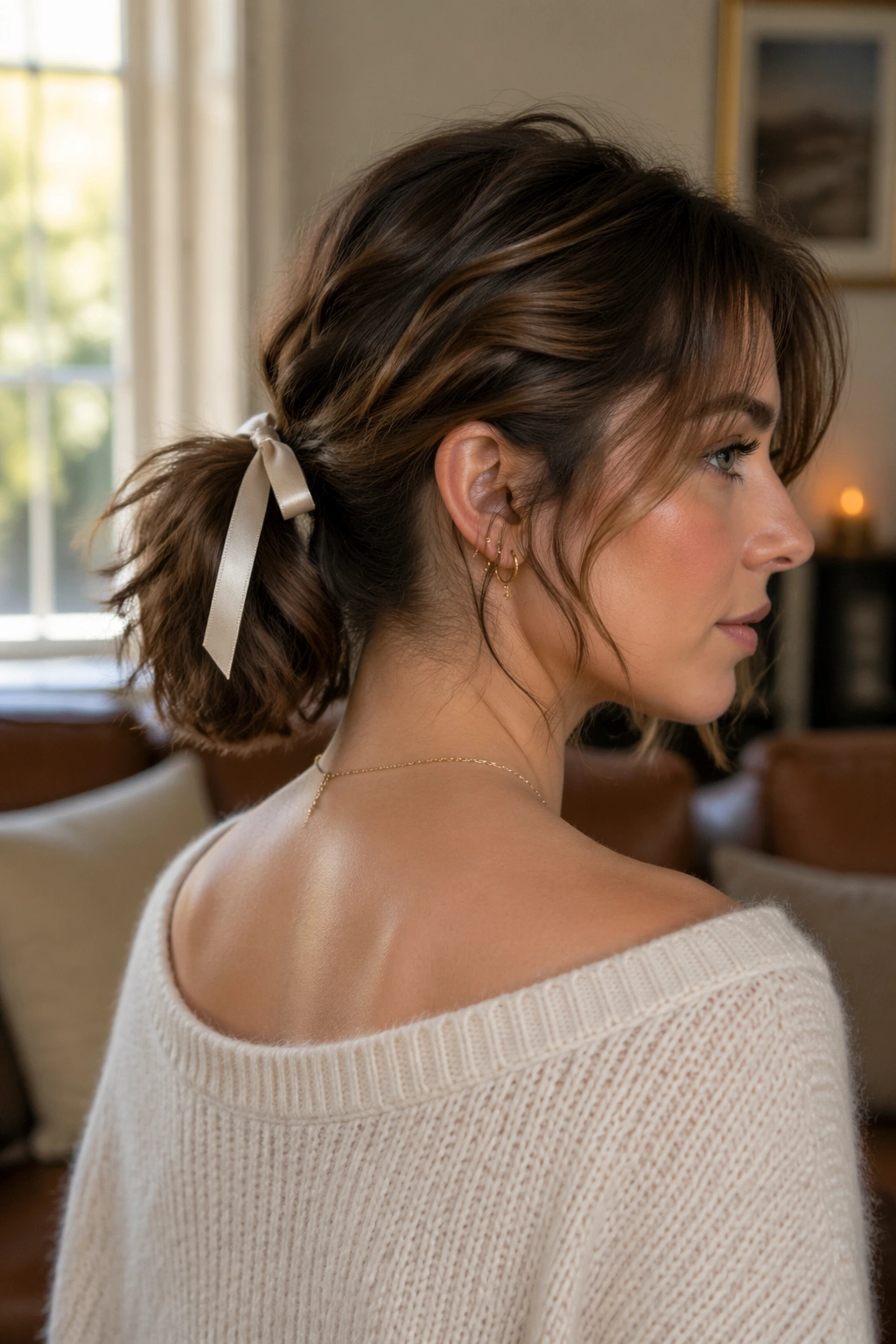
Can a ribbon help short hair? Absolutely. A narrow satin ribbon can make a small ponytail look finished instead of bare.
Tie the pony low and secure it first with an elastic. Then knot the ribbon over the elastic or thread it through the base if the pony is short enough. Let the tails of the ribbon fall alongside the hair. That bit of softness makes the cut feel intentional, especially when the pony itself is tiny.
A ribbon works best on short wavy hair when the rest of the style is simple. Don’t pile on extra tricks. The ribbon is the detail. It already does enough. If your hair is very slippery, choose a slightly textured ribbon rather than a slick one, because it stays put better.
This is the style I’d call low effort, high payoff. Which is rare, honestly.
18. The Bent-Ends Ponytail
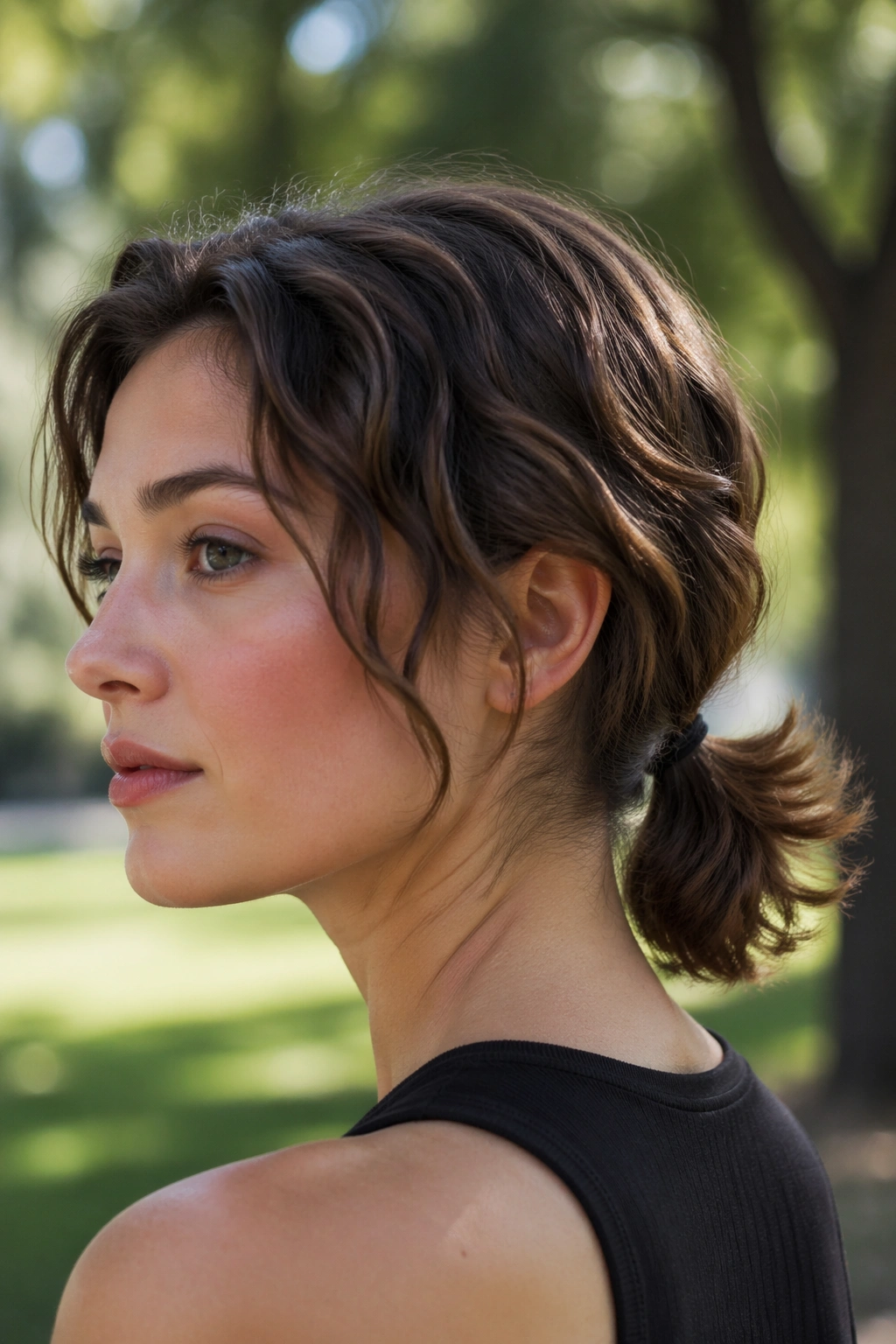
A bent-ends ponytail embraces the fact that short hair rarely falls in one clean line.
Instead of forcing the tail straight, let the ends bend upward, curl under, or kick out a little. That irregular finish makes sense on wavy hair. It looks like part of the style, not a mistake. A tiny curling iron can help if the ends are refusing to cooperate, but often a finger twist while the hair is still warm from blow-drying is enough.
This style works well when the pony sits at the nape or just above it. The shorter the hair, the more natural the bent ends look. You’re not trying to mimic a long, glossy tail. You’re shaping what’s already there.
I prefer this version over a tight, flat pony on short waves. It feels less fussy and more like the hair belongs to the head it’s on.
19. The Wavy Ponytail With a Puff at the Crown
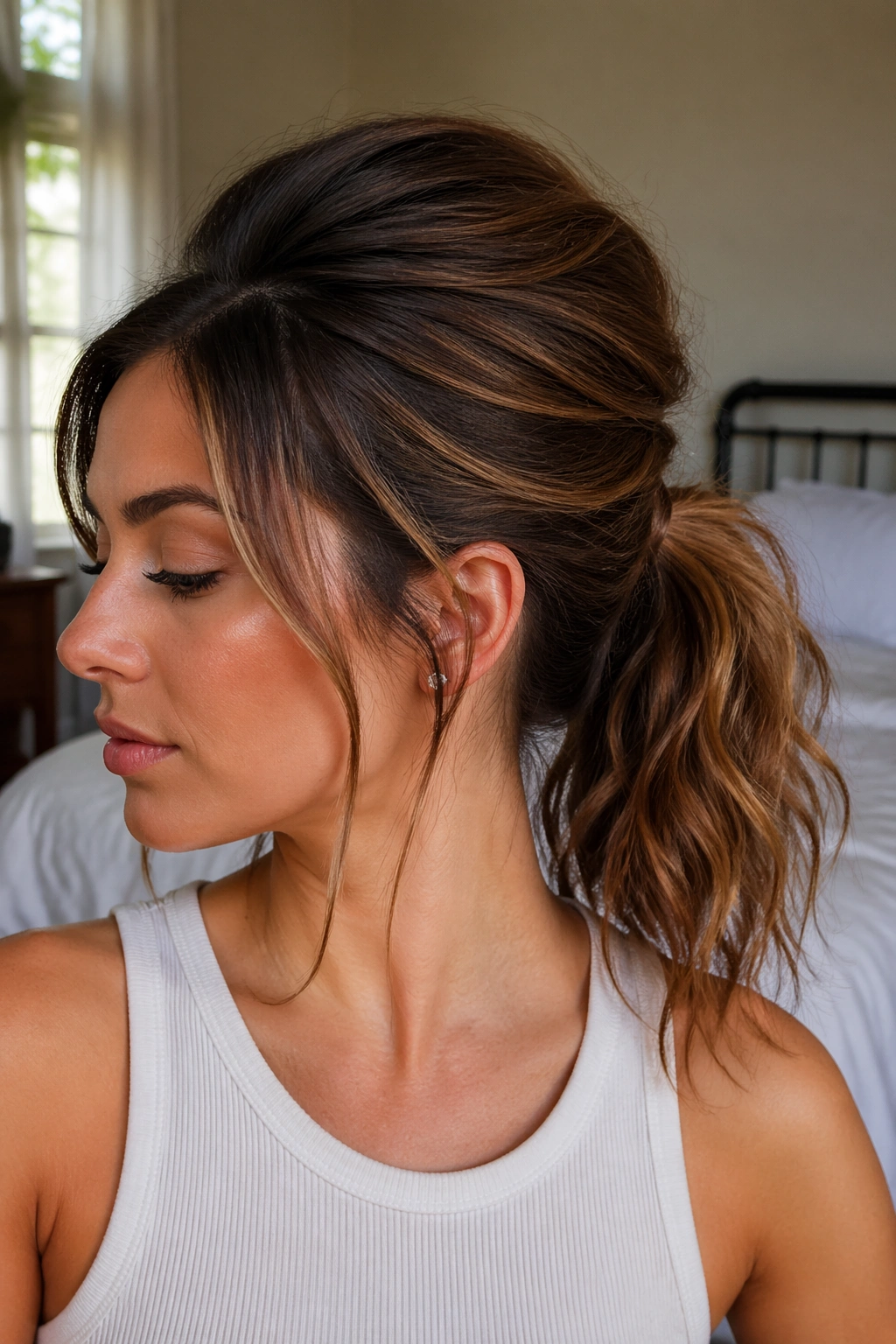
Flat roots can make short wavy hair look tired fast. A crown puff fixes that in a few minutes.
Tease only the top inch or so at the crown, then smooth the outer layer over it so the lift stays hidden. Gather the pony low or mid-height, depending on how much length you have. The puff gives the head shape, and the pony keeps the waves from disappearing into the scalp.
A Small but Useful Detail
Use dry shampoo or texturizing spray before you tease. Clean hair often falls flat again too quickly, and then you’re right back where you started. A little grit keeps the lift in place.
This style is nice on days when your waves are second-day soft but the roots are losing steam. It gives you height without looking overdone. The trick is to keep the puff modest. A big crown on short hair can look awkward fast. Small is better.
20. The Slept-In, Air-Dried Ponytail

What if you skip the heat and work with the hair you already have? That’s usually the best move on busy mornings.
Air-dried waves often have the right amount of bend for a ponytail already. Gather them gently with your fingers, not a brush, so you don’t break up the natural shape. If the front is frizzy, smooth a drop of leave-in cream over the top layer before tying. Then secure a loose pony low or mid-height and let the tail fall where it wants to.
This style is honest. It doesn’t pretend your hair is something else. And on short cuts, that honesty is useful because the ends tend to do their own thing anyway.
A little frizz is fine here. Too much polishing can flatten the waves and make the whole style look stubborn. Better to keep some movement.
21. The Twists-Into-Ponytail Style
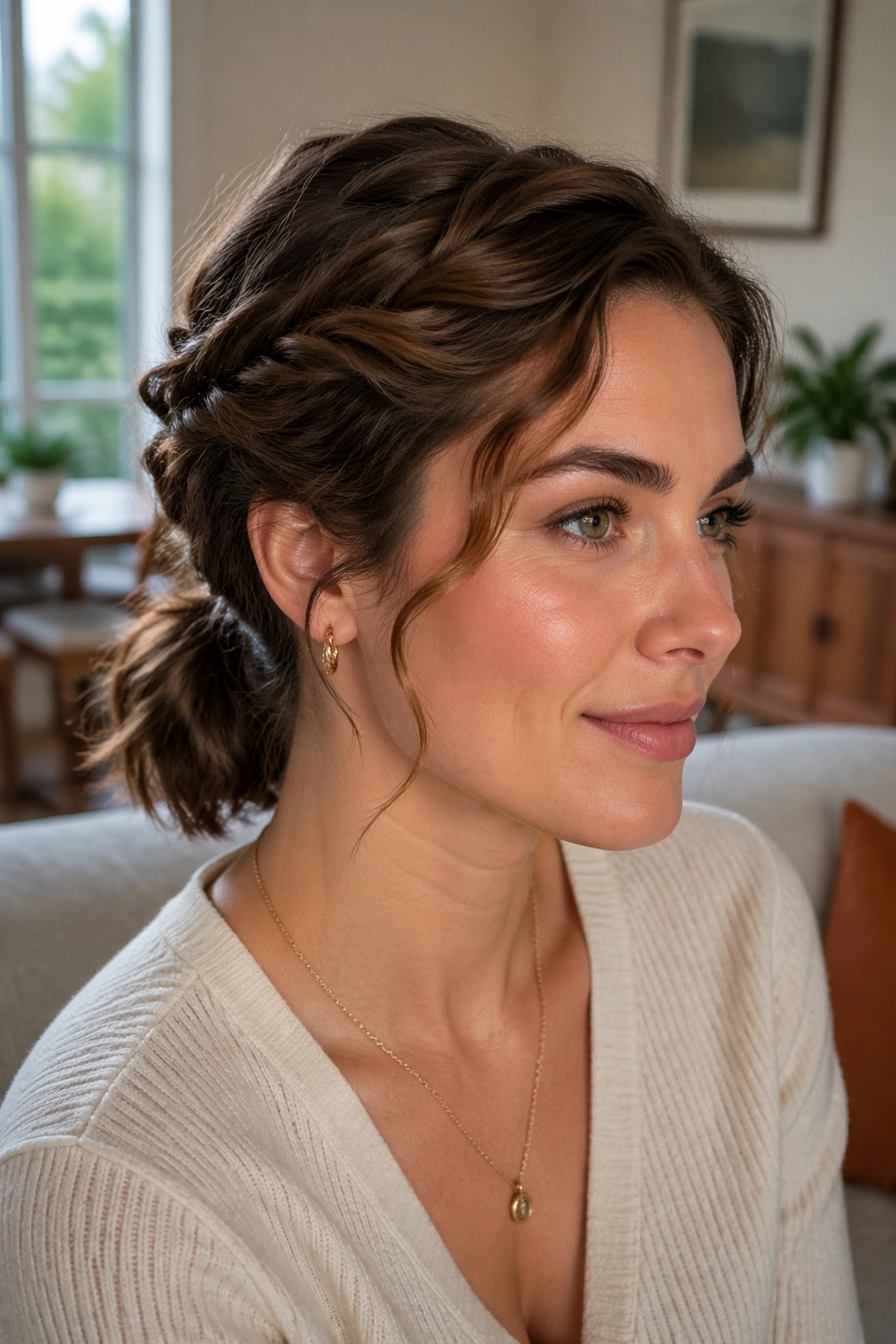
A twists-into-ponytail style is one of the cleanest ways to control short wavy hair without flattening it.
Take a section from each side of the head, twist them back toward the nape, and join them into a small ponytail. The twists keep the hair around the ears from slipping loose, and they frame the face in a softer way than a full slick-back pony. It’s a nice middle ground when you want order but not severity.
A Cleaner Way to Get the Hair Off Your Face
This style works especially well when the hair around the temples is too short to stay tucked. The twists catch those pieces before they can escape. If the twists feel thin, tug them slightly after securing so they look fuller and less rope-like.
A tiny amount of styling cream on the fingertips helps keep the twist smooth. Go easy. Heavy product can make the waves around the crown go limp, and nobody wants that.
22. The Low Ponytail With Two Loose Tendrils
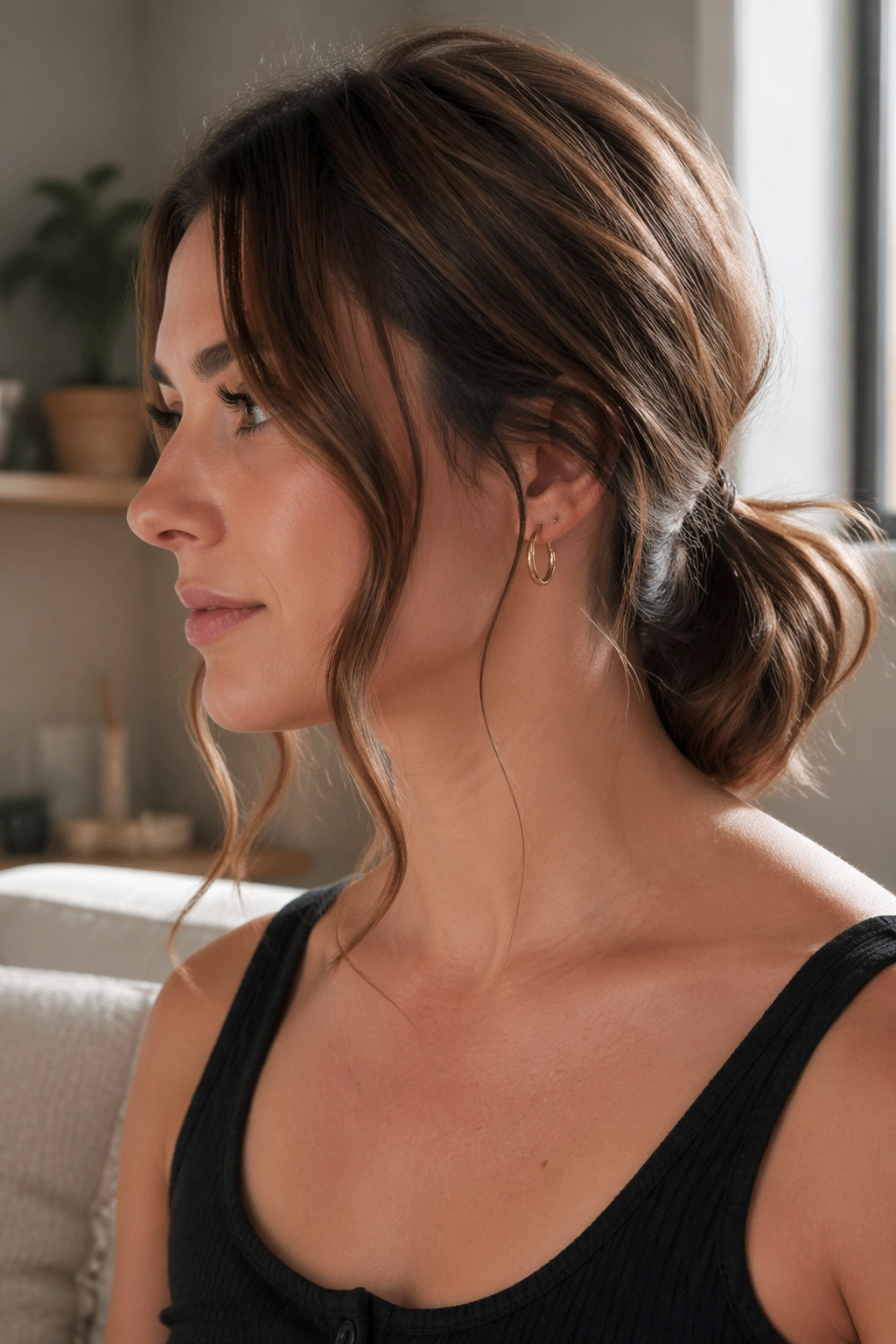
A couple of loose tendrils can make a short ponytail look deliberately styled instead of hurried.
Pull the hair back low and leave two face-framing pieces out, one on each side. Keep them narrow. About 1/2 inch to 1 inch wide is enough. Anything thicker can take over the whole look. The tendrils soften the face and let the rest of the short waves stay tucked back in a neat base.
This style is good when the hairline is a little uneven or the layers near the temples are too short to join the pony cleanly. You’re not hiding those pieces. You’re using them. That’s a better move.
If the tendrils are too straight, wrap them loosely around a finger for a second while the hair is damp. The bend helps them sit better against the face.
23. The Mini Braided Base Ponytail
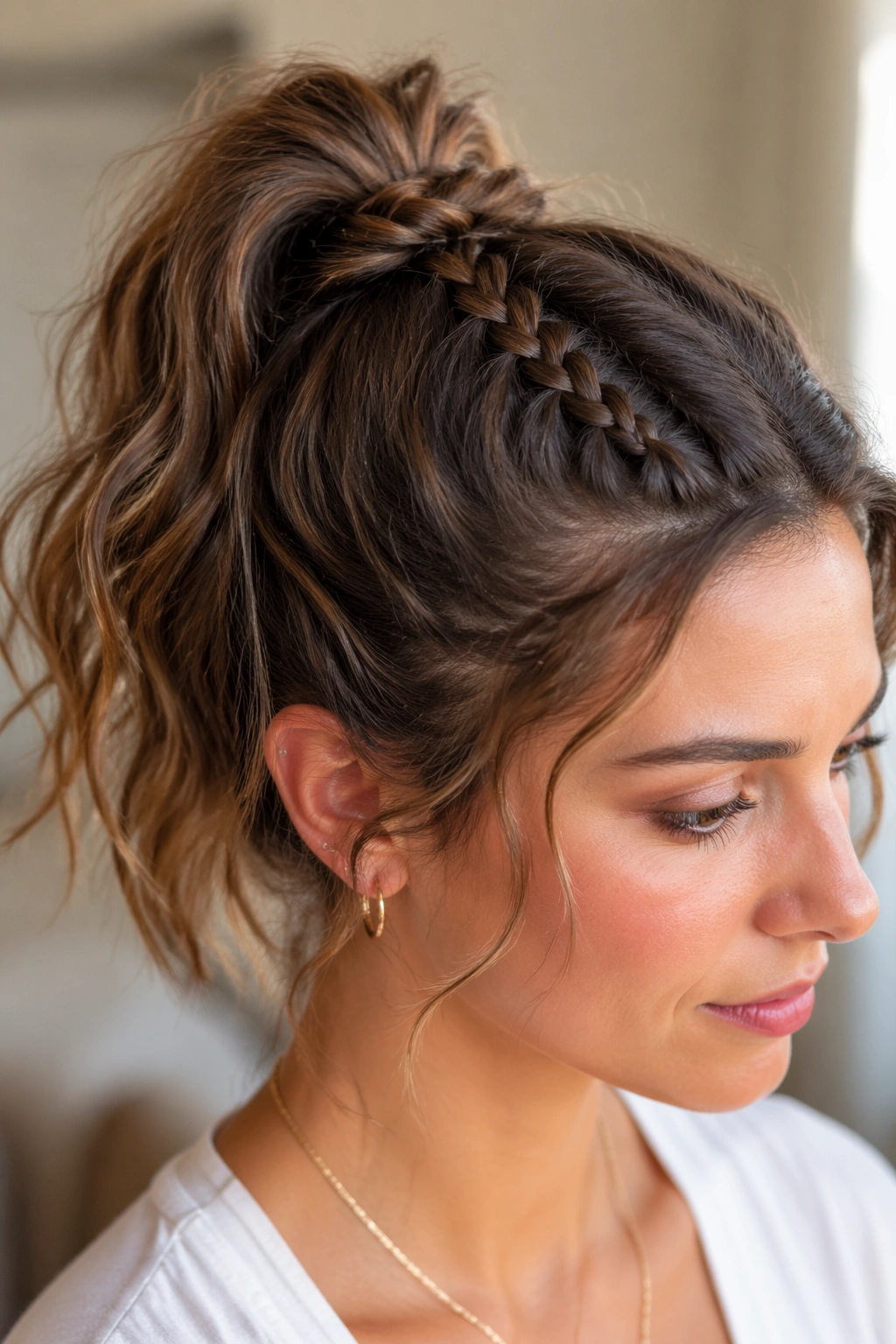
A mini braided base can make a tiny ponytail on short wavy hair feel much more secure.
You braid a small strip of hair near the crown or down the center back, then gather the rest of the hair into a pony at the end of the braid. The braid works like an anchor, and it keeps short layers from separating around the top. That matters more than people think. Short hair likes to shed pieces all day long if it can.
Compared with a plain pony, this style has a little more texture at the top and a little more grip. It’s a good choice if your hair is fine or freshly washed and tends to slip right out of elastics.
I like it best when the braid is small and tight enough to stay neat, but not so tight that the scalp feels pulled. A tiny braid is enough.
24. The Pin-Secure Ponytail for Very Short Hair
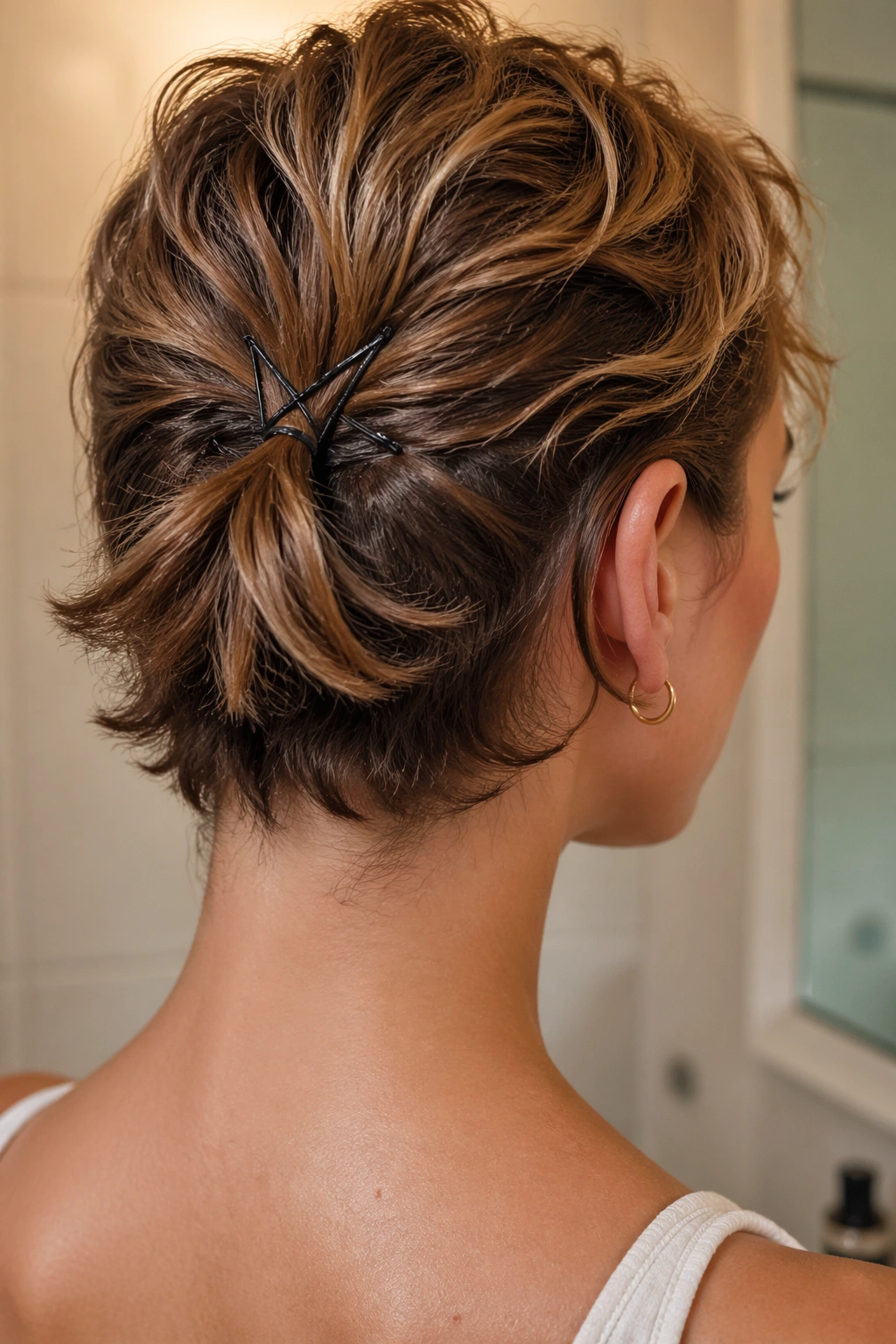
Very short wavy hair needs support, not brute force. Bobby pins are the support.
How to Set It Up
Gather the hair into the smallest pony you can make, then pin the loose sections around the base in a crossed pattern. One pin holds from the left, another from the right, and a third can tuck the shortest bits underneath if needed. The idea is to build a little frame around the elastic so the hair doesn’t pop free the second you move.
- Use matte bobby pins if your hair is slippery.
- Insert each pin with the wavy side facing down for better grip.
- Keep the pins close to the scalp, not floating above it.
- Finish with a light mist of hairspray only on the base, not the whole head.
This is not the flashiest ponytail here. It is, however, the one you reach for when your hair is barely cooperating and you still need it off your face. There’s value in that.
25. The Best Everyday Ponytail Formula for Wavy Short Hair
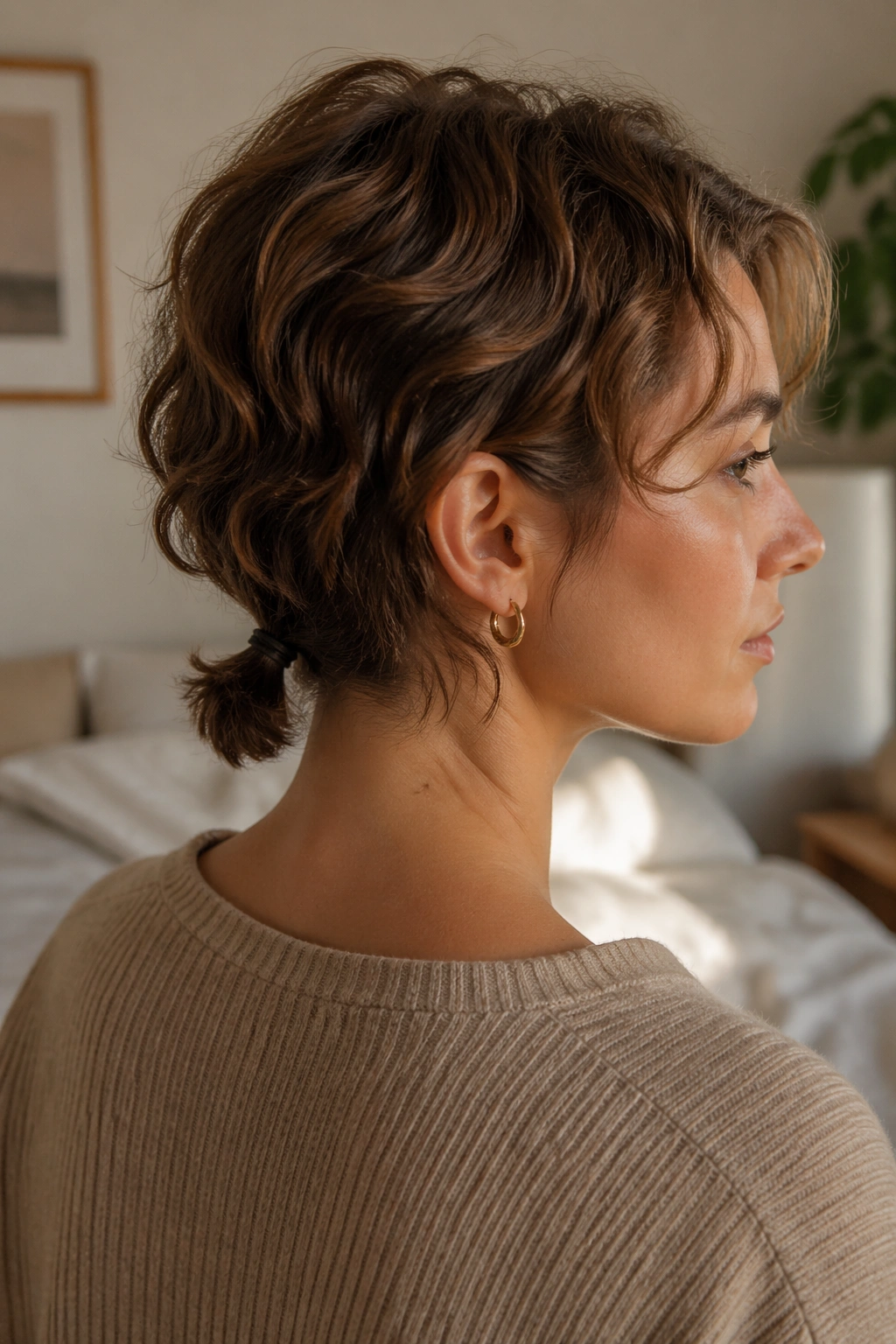
The best everyday ponytail for short wavy hair usually follows the same formula: build a small, secure base, keep some texture at the crown, and leave at least one detail soft. That might be a tendril, a twist, a ribbon, or a few bent ends. The exact style changes. The logic doesn’t.
If your hair is chin-length, low styles tend to stay put longer. If it reaches the shoulders, you can play with height a little more. Either way, the wave pattern works in your favor when you stop chasing perfect smoothness. A little texture gives the pony grip. A little mess keeps it from looking too tight.
The styles that last longest are usually the ones with the fewest hard rules. That’s the part people miss. Short wavy hair doesn’t need to be coaxed into behaving like long straight hair. It needs a shape it can actually hold, and once you find that balance, the ponytail stops feeling like a compromise. It starts feeling like a smart move.
