



Afro hair gives a faux ponytail real shape fast. A good one can add lift at the crown, length down the back, and a cleaner outline than most people expect from a hairpiece alone.
The trick is not slapping on a tail and hoping for the best. The base has to match your texture, your density, and the amount of tension your scalp can handle. If the roots are slicked down but the tail is too shiny, or the braid pattern is bulky under a sleek style, the whole look gives itself away.
Faux ponytails for Afro hair work best when the style choice matches the hair you actually have underneath. A puff ponytail, a Marley twist tail, a feed-in braided pony, and a curly extension pony all solve different problems. One gives volume. One gives length. One keeps your ends tucked away.
Some styles need stretched hair. Some need cornrows. Some need a strong elastic, a satin scarf, and five calm minutes in front of a mirror. The good ones look deliberate, not rushed, and the really good ones can carry you through a full day without the back of your head feeling like it’s in a tug-of-war.
1. The Drawstring Puff Ponytail
A drawstring puff ponytail is the easiest place to start because it works with what Afro hair already does well: fullness. You’re not trying to flatten the texture into something else. You’re just gathering it, shaping it, and letting the puff do the talking.
Why it flatters dense coils
The puff sits where the hair naturally wants to expand, so it looks believable fast. If your curls are 4A, 4B, or 4C, the texture blend tends to be forgiving, especially when the base is lightly stretched first. A little edge control around the perimeter helps, but the star of the style is still the volume.
- Best on stretched or lightly blown-out hair
- Works with a puff cuff, drawstring puff, or clip-in puff
- Feels lighter than a long extension ponytail
- Gives a clean shape without forcing your hair flat
Pro tip: place the puff slightly above the center of the back of your head. Too low can make it droop; too high can pull at your crown.
2. Sleek Low Ponytail With a Wrapped Base
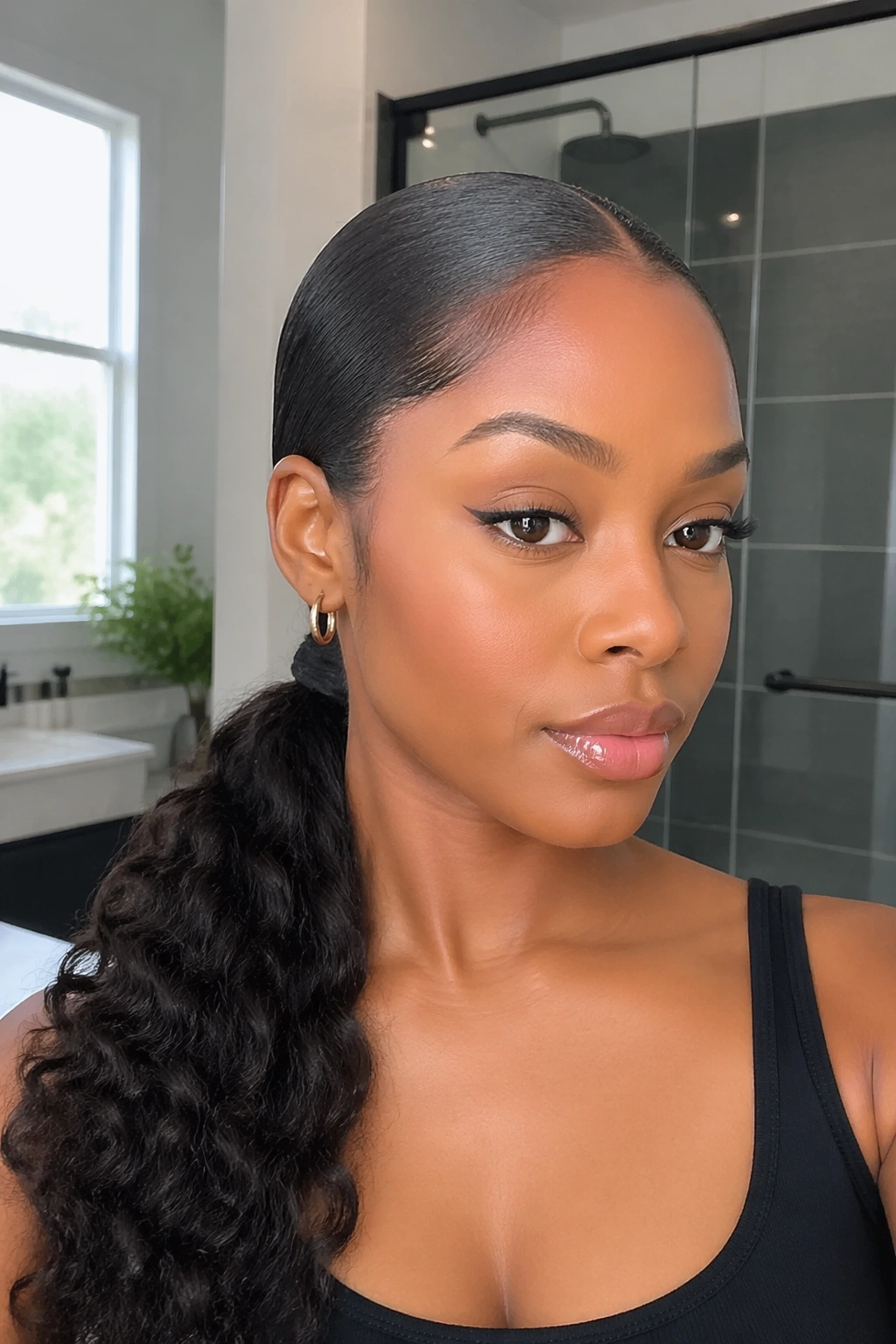
Why do sleek low ponytails stay so popular on Afro hair? Because they give you that clean, pulled-back shape without asking your hair to be straight. The base is the whole job here. If the roots are smooth and the wrap is neat, the style reads polished from across the room.
Start with stretched hair or a fresh blow-dry if that fits your routine. Use a firm brush, a medium-hold gel, and a small amount of edge control near the hairline, not half the jar. Then secure the ponytail low at the nape and wrap a section of hair, or a matching extension strand, around the elastic until it disappears.
The part people get wrong is tension. A sleek ponytail should feel secure, not sharp. If your scalp hurts when you blink, the style is too tight.
A satin scarf for 10 to 15 minutes after styling can make the surface look smoother and help the flyaways settle. It is boring. It also works.
3. Feed-In Braided High Ponytail
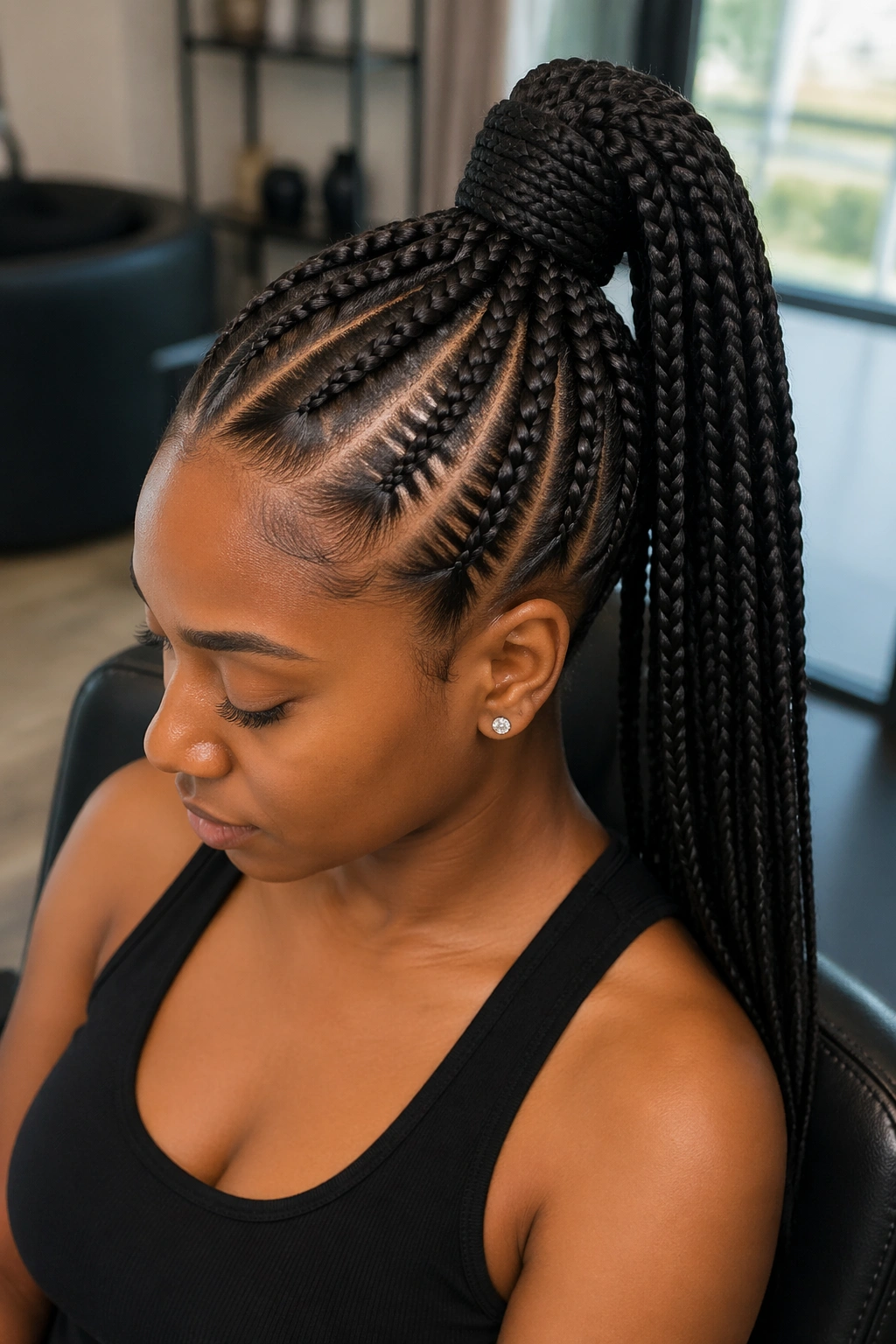
A feed-in braided high ponytail gives you height, structure, and a little drama without needing a full head of loose hair. The braid pattern feeds into the ponytail gradually, so the base looks neat instead of bulky. That gradual buildup matters a lot on Afro hair, where density can make styles look heavy if the foundation is too thick.
What makes it look clean
The feed-in method is good because it spreads the braid weight out across the scalp. You usually want 6 to 10 cornrows, depending on your head size and hair density, and the braids should angle toward the crown so the ponytail sits high and balanced. Pre-stretched braiding hair helps the tail hang smoothly instead of looking jagged at the ends.
A high pony like this is especially good when you want your hair off your neck but still want length. It also plays nicely with curled ends, box braid tails, or a straight finish if that’s your thing.
Watch the edges. High ponytails look sharp, but the style should never be built by yanking the front hairline into submission.
4. Cornrow Base With a Curly Weave Tail
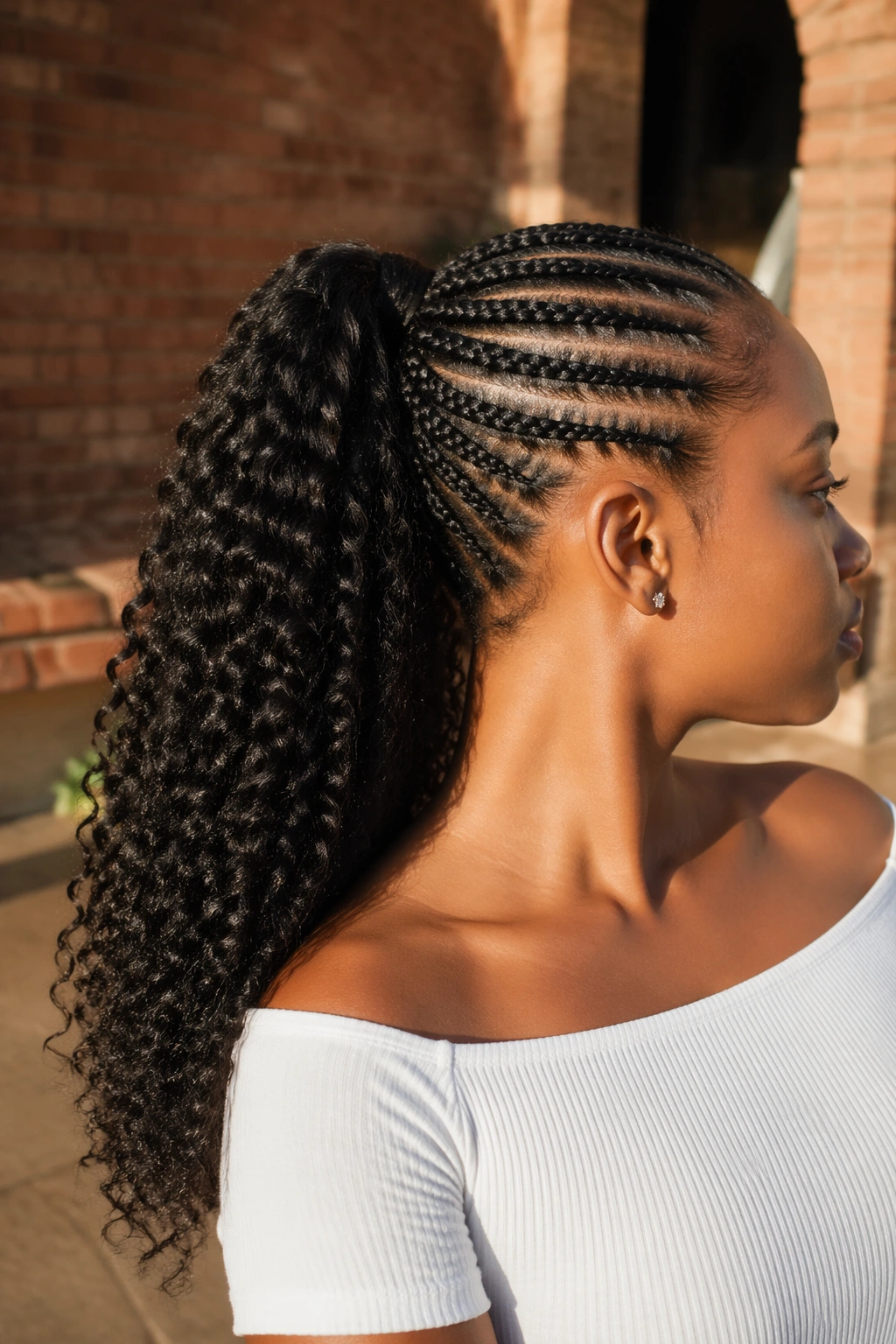
This is the style for someone who wants movement. Cornrows keep the base tight and tidy, while a curly weave tail brings bounce, softness, and a little swing when you turn your head. It is one of the better faux ponytails for Afro hair when you want length without the stiff, straight look.
The cornrow base can be simple or detailed. Four to eight braids are enough for most heads, and the exact pattern matters less than the direction and the grip. You want the braids to funnel into a single anchor point, usually at the back of the crown or the nape, depending on how high you want the ponytail to sit.
Deep wave, kinky curly, and water-wave bundles all work here, but they give different moods. Deep wave has more defined bends. Kinky curly looks closer to natural coil texture. Water-wave is softer and looser. Pick the one that matches your everyday hair better, not the one that looks flashiest on a hanger.
5. Bubble Ponytail on Stretched Natural Hair
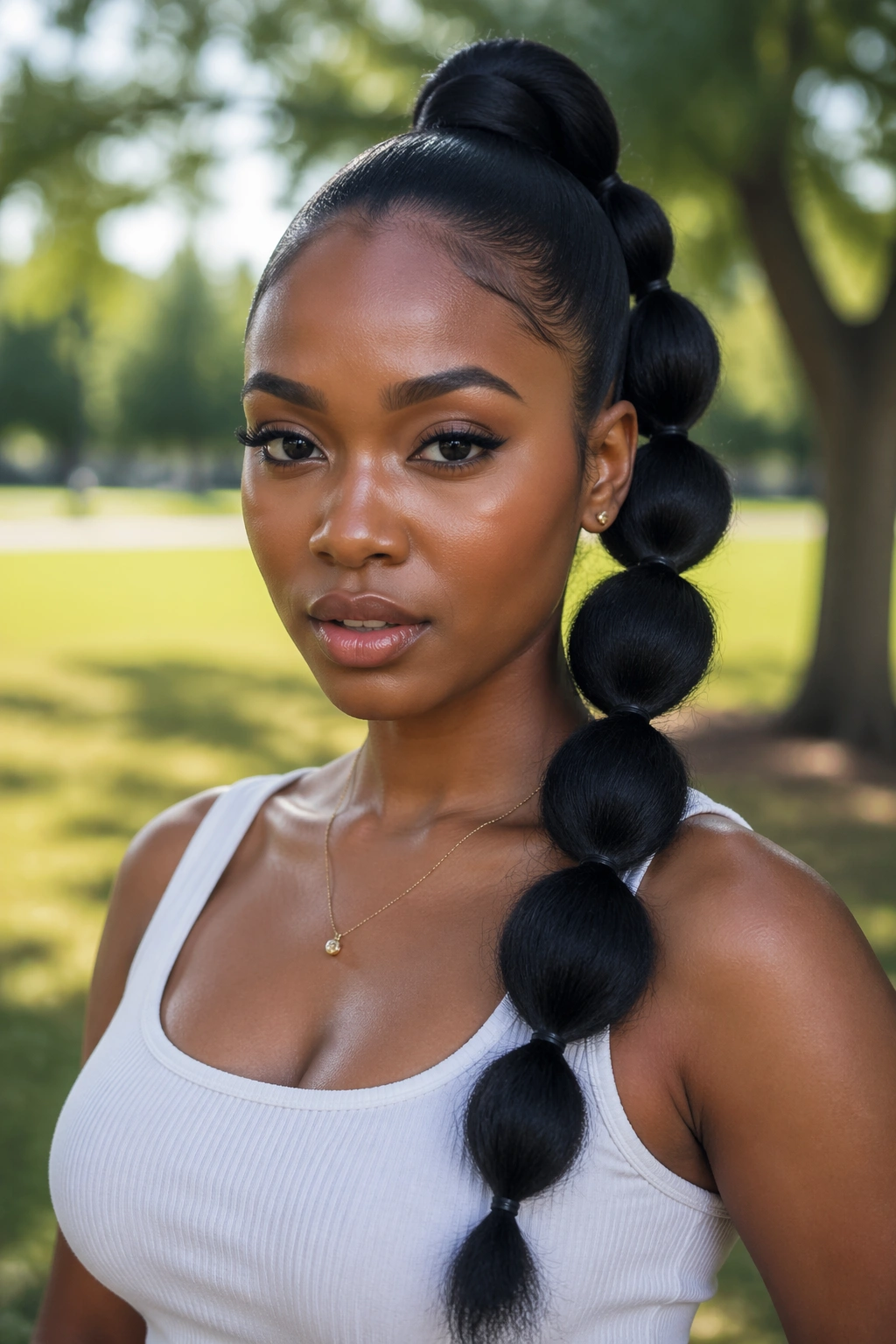
Bubble ponytails are playful, but they are also practical when you want your Afro hair to hold shape without a lot of fuss. The style is built by placing elastics down the length of the ponytail and gently puffing each section into a rounded “bubble.” It looks more complicated than it is.
The base needs some stretch. A blowout, banding method, or a stretched twist-out gives the tail enough length to form visible sections. If the hair is too short or too tightly coiled, the bubbles collapse fast and the style turns stubby. That is not a flaw of the style; it’s just a length issue.
Use small snag-free elastics and space them about 2 to 3 inches apart. Then pull each section outward with your fingers until it rounds out. Do not yank the hair hard. The goal is shape, not frizz.
A bubble ponytail can go casual or dressed up depending on the base. Sleek at the roots, playful at the tail. That contrast is the point.
6. Claw-Clip Faux Ponytail for Twist-Out Texture
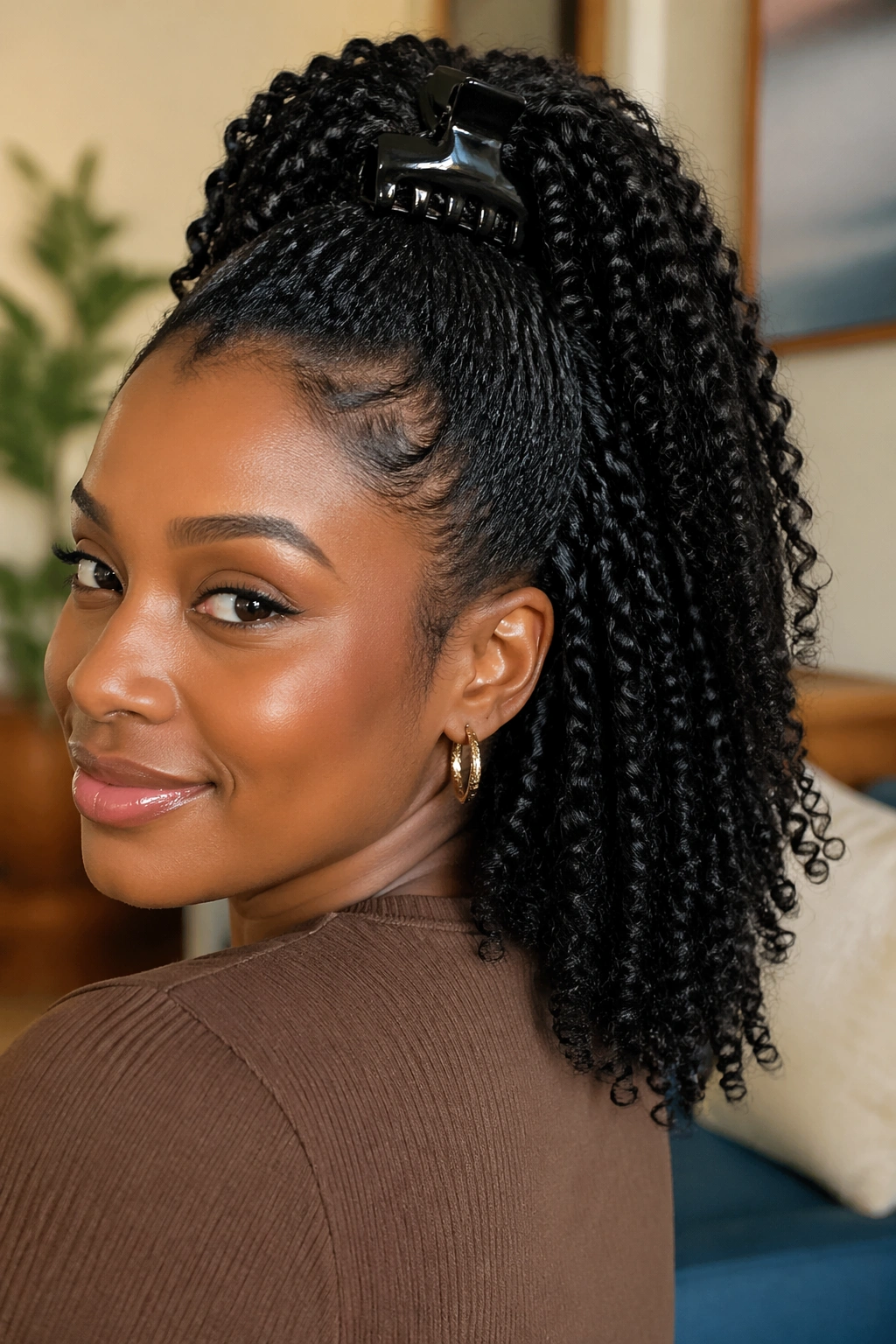
A claw-clip faux ponytail is the kind of style that saves the day when you do not want to commit to a full install. It works especially well if your hair is in a twist-out, braid-out, or stretched curl pattern that already has body. The clip handles the base, and a matching ponytail piece fills out the back.
I like this style because it feels less precious than some of the sleeker options. You can toss it up for errands, then make the front a little neater if you’re going somewhere later. That flexibility matters. Not every ponytail needs to look like it has its own security detail.
Choose a large claw clip with teeth that grip without chewing through the strands. Then pin or clip the hair upward, leaving enough puff at the base so the attachment hides inside the texture. A small clip-in curly ponytail or puff can blend in well.
It is not the most formal option on this list. It is, however, one of the easiest to live with.
7. Side-Swept Ponytail With Body and Movement
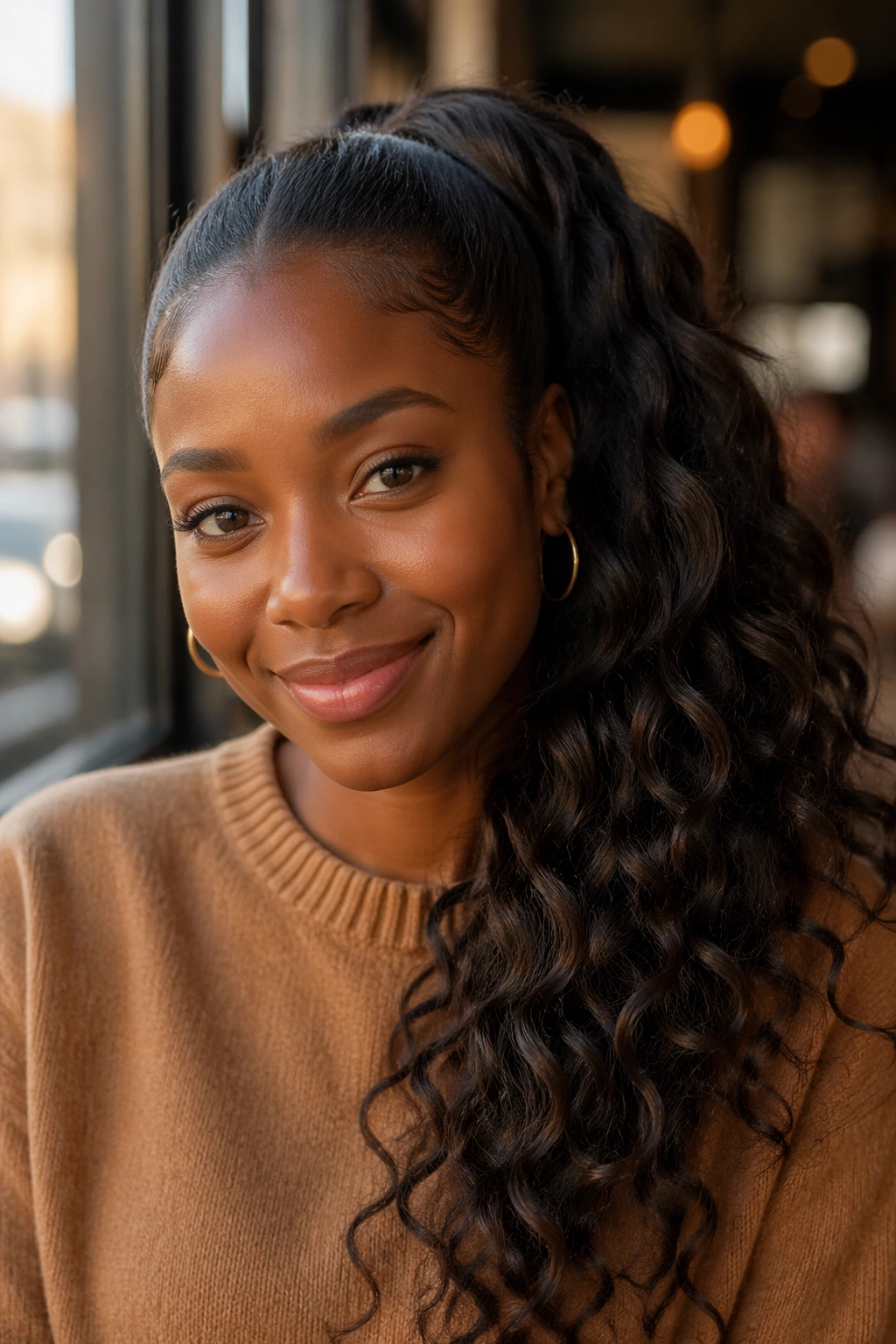
A side-swept ponytail changes the whole mood of a look. Instead of centering the tail, you shift it over one shoulder or slightly behind one ear, which gives the style a softer line and more movement. On Afro hair, that side placement also helps balance volume when your natural density is thicker on one side than the other.
The best version starts with a deep side part and a low or mid ponytail anchor. From there, the tail can be curly, wavy, braided, or kinky straight. The part matters, but the drape matters more. If the tail just hangs, the style can feel stiff. If it curves across the shoulder, it starts to look intentional.
This is a good choice for nights out, but it does not have to be flashy. A simple side-swept pony with a smooth base and a textured tail can read expensive without trying very hard. That’s one of the few times I’m happy to use that word.
8. Marley Twist Ponytail
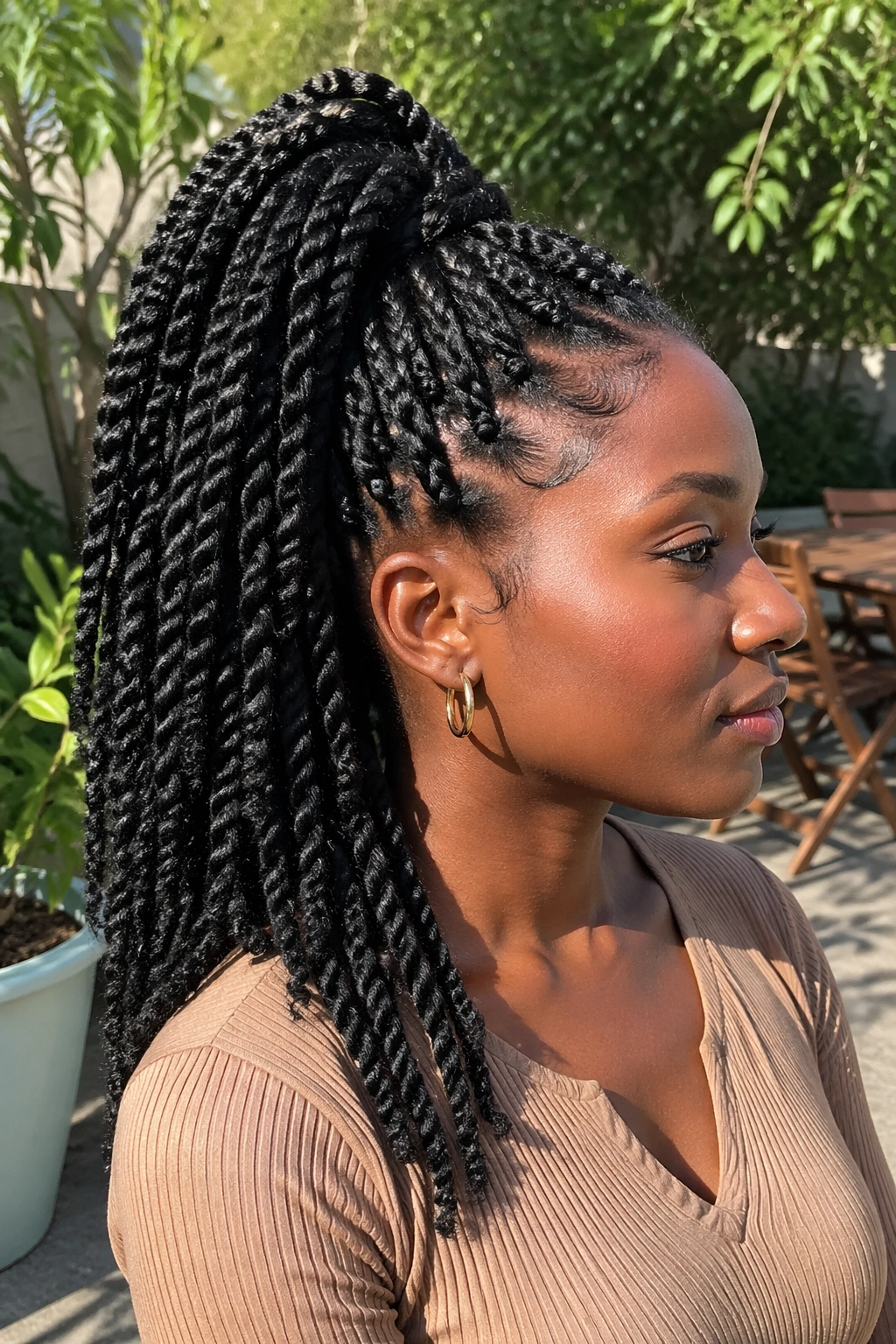
Marley twist ponytails are one of the most texture-friendly faux ponytails for Afro hair because they do not fight the texture. The finish is matte, soft, and a little rope-like, which helps the style blend with natural coils instead of sitting on top of them like a glossy wig tail.
Where the weight sits
The key detail here is weight distribution. Marley hair is denser than some other extension types, so the ponytail should be anchored with a strong base and supported well at the crown or nape. If the tail is long, keep the section count reasonable. Too much hair can make the ponytail feel like a sack hanging from your head.
The twists themselves can be thick or medium-sized, depending on how much movement you want. Thick twists feel bolder and faster to install. Medium twists move better and usually look lighter around the face.
If you wear this style for several days, sleep with a satin bonnet or a loose satin scarf. Marley fiber can frizz at the ends, and once that starts, the style loses the neatness that makes it work.
9. Roll-and-Tuck Low Ponytail
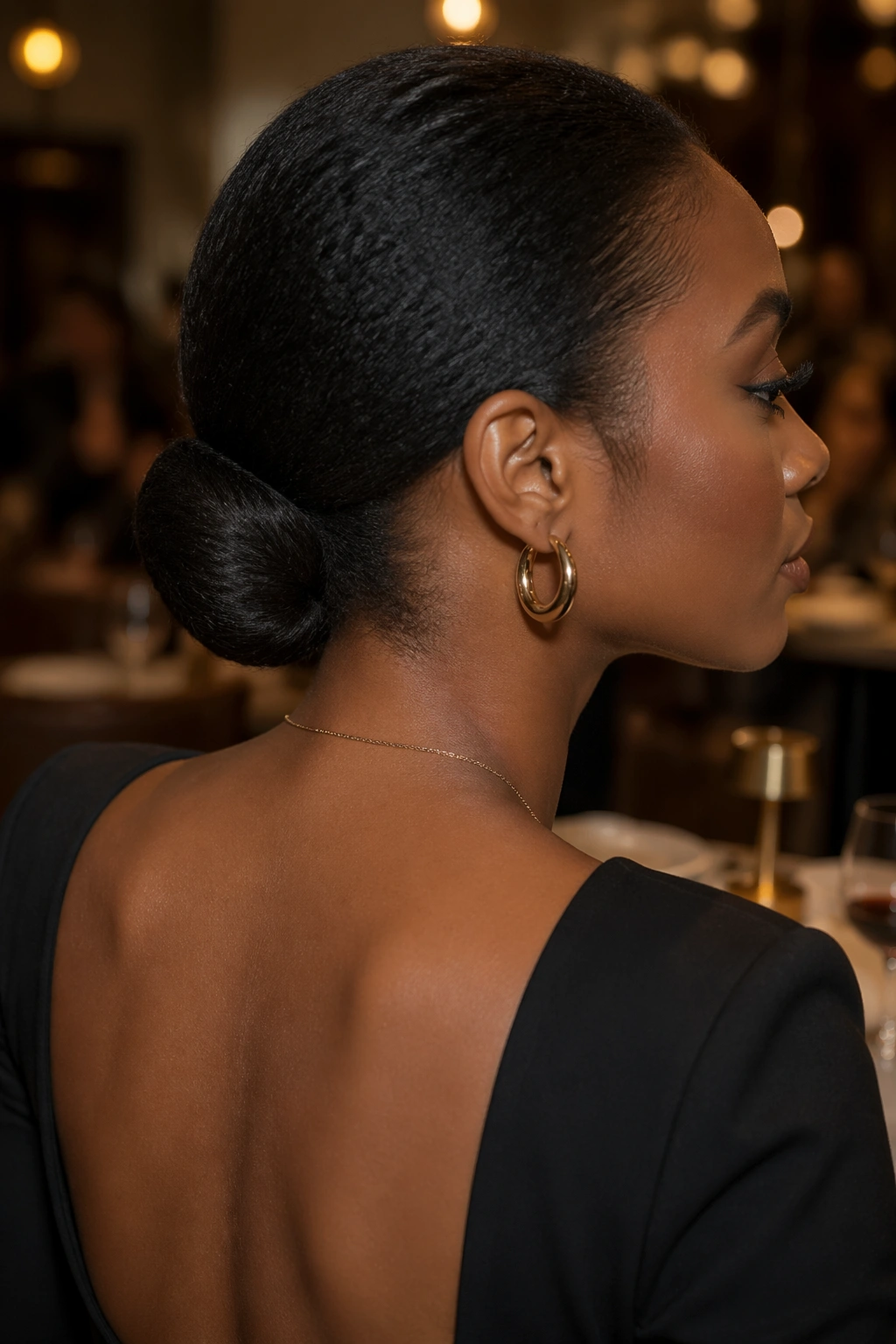
Roll-and-tuck ponytails have a quiet kind of elegance. They work by gathering the hair low, rolling the ends upward or inward, and pinning them so the final shape sits smooth against the nape. On Afro hair, the style is especially useful when your length is medium and you want the look of a longer ponytail without adding a lot of extension hair.
What to use
- 6 to 10 bobby pins, depending on density
- A soft brush for smoothing the base
- Light-hold gel or styling cream
- A small hairpiece if you want extra fullness
The trick is keeping the roll compact. A loose tuck can sag after an hour. A tight one stays put and gives that clean, almost sculpted line at the back of the head.
This is the style I’d pick for a dinner, a work event, or any day when you want your hair to stay out of your way but still look finished. It is not loud. That’s the charm.
10. Matching Afro Puff Ponytail
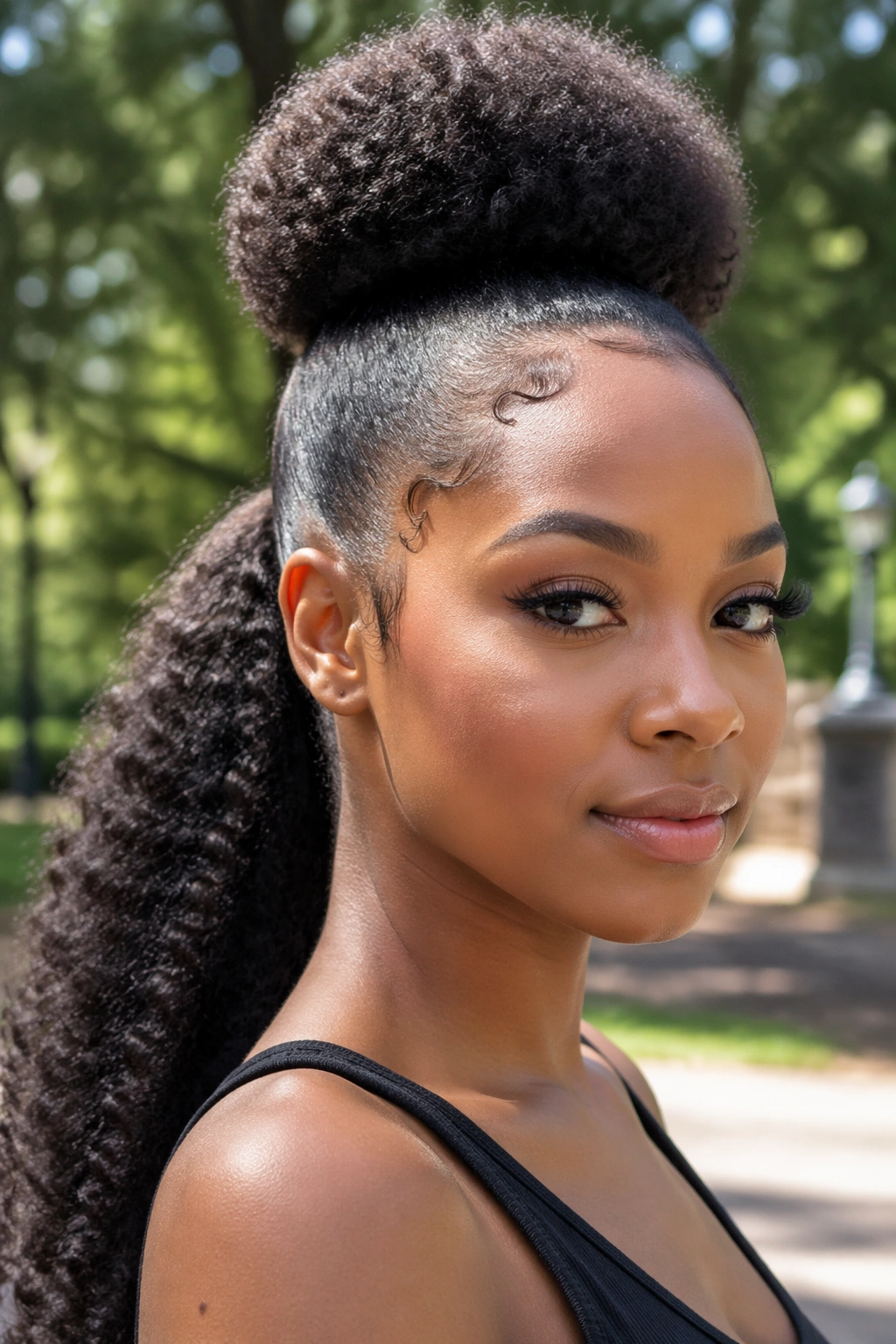
If you want a ponytail that does not fight your texture, this is the one. A matching Afro puff ponytail is basically the extension version of a well-shaped natural puff, which means the end result looks fuller and softer than a straight synthetic tail ever will on tightly coiled hair.
The reason it works is simple: the texture match does most of the blending for you. A puff with a similar coil pattern hides the transition point better, especially when the base is stretched and the edges are kept clean but not shellacked. You still need a secure anchor, but the style has more room to breathe than a slick ponytail.
This is also one of the more forgiving faux ponytails for Afro hair if you’re not into high-shine finishes. The texture gives the style some bite. It doesn’t need much else.
If you like volume and hate the feeling of your hair being pressed flat, start here. You may not go back.
11. Faux Hawk Ponytail With Raised Sections
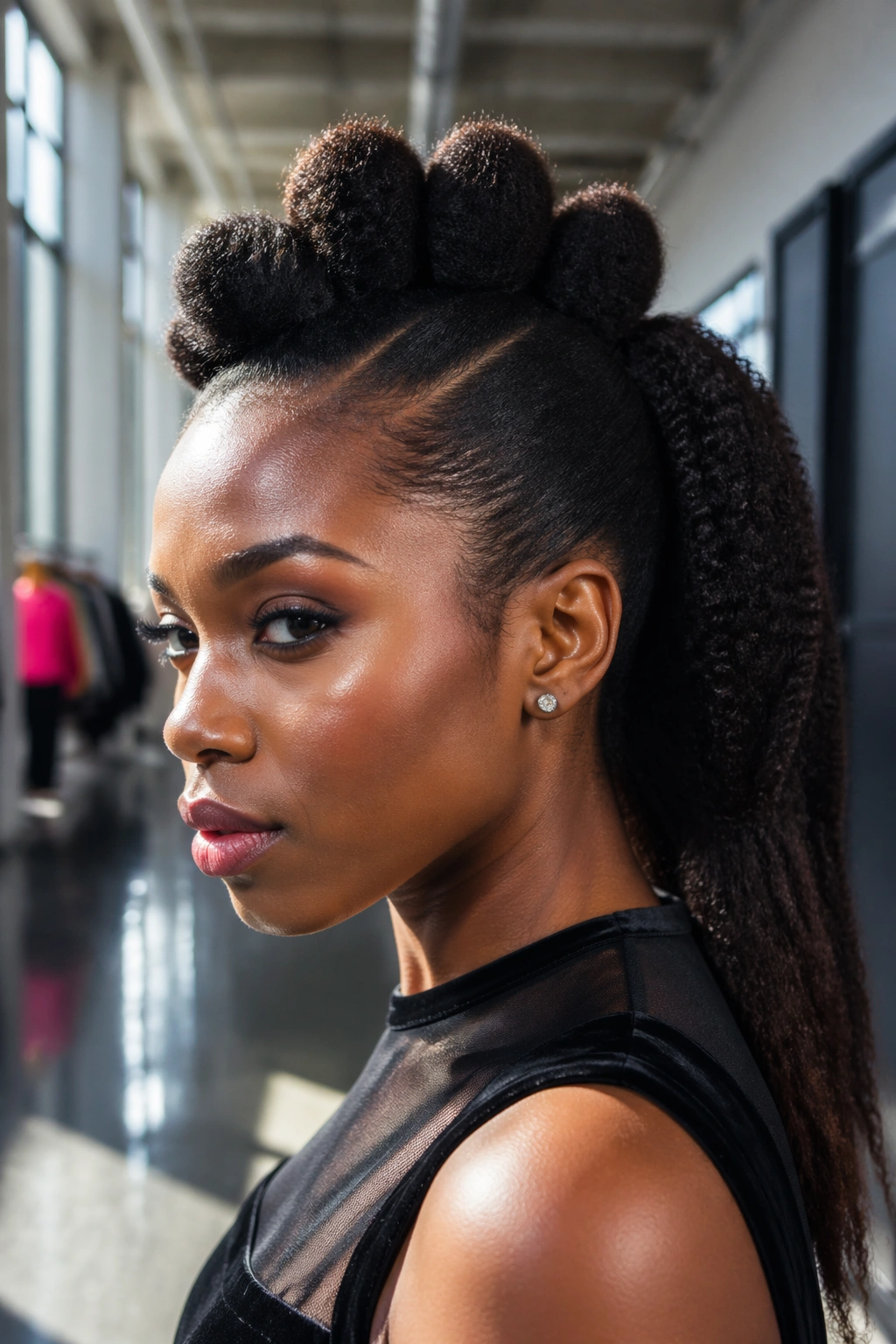
A faux hawk ponytail is the dramatic cousin in the group. It builds height down the middle of the head while keeping the sides sleek, braided, or pinned close. That shape gives Afro hair a sharp profile and a lot of attitude without needing a full mohawk cut.
Why the center ridge matters
The center ridge is what sells the look. You can create it with 3 or 4 ponytail sections, then join or layer them so the middle stays raised and the sides stay controlled. The sections should be snug, but not over-tight, and the spacing between them should be even enough that the head shape feels balanced from front to back.
This style is a smart fit for textured extension hair, braided tails, or a curly puff at the back. It also plays well with short leave-out at the front, which softens the overall shape.
A faux hawk can look edgy or neat, depending on how polished the sides are. I prefer it when the sides stay clean and the middle has some texture. Too glossy and it starts to feel costume-like. A little grit helps.
12. Half-Up, Half-Down Faux Ponytail
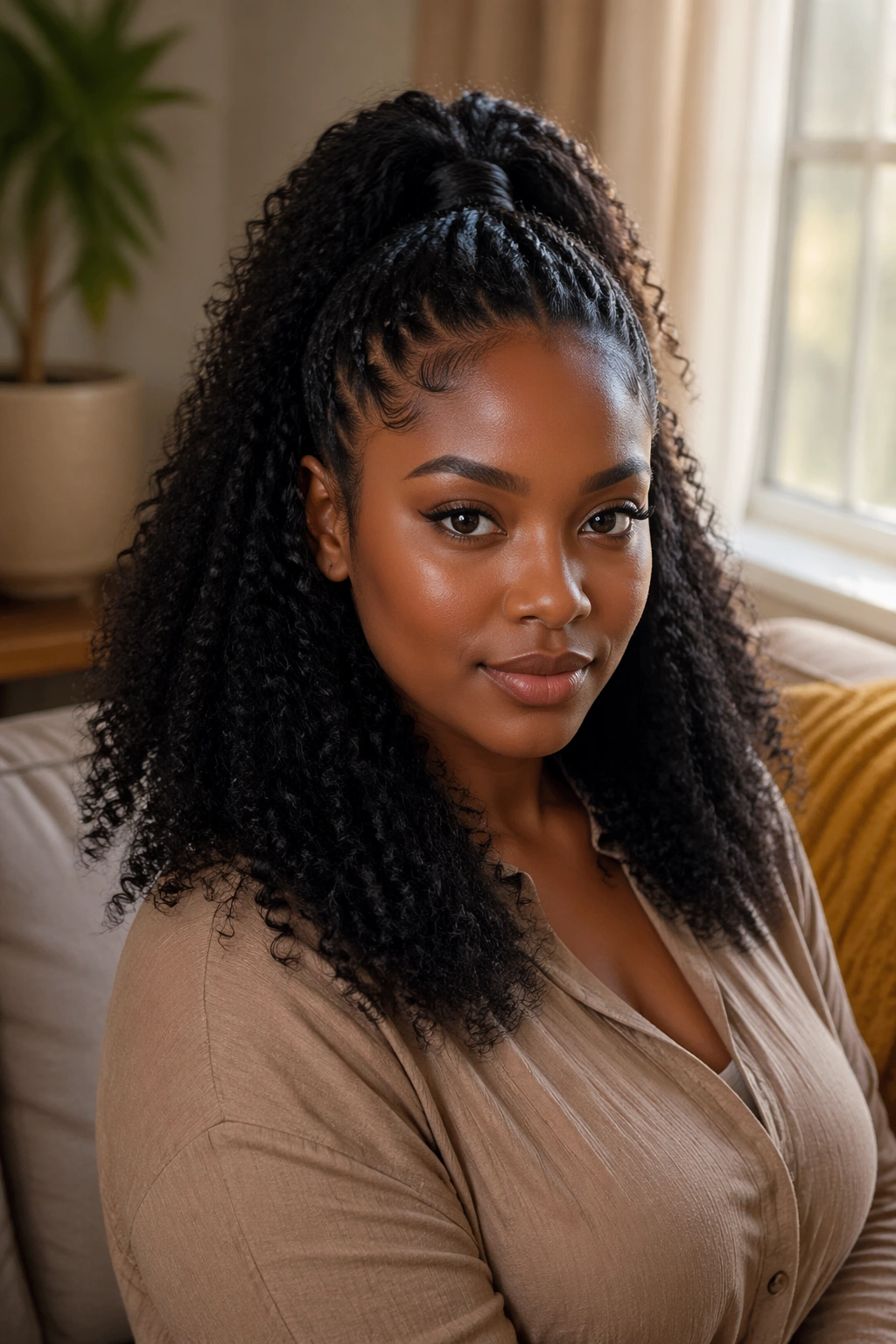
Why do half-up styles keep coming back? Because they solve two problems at once. The top section gets secured, which cuts down on frizz and face-framing flyaways, while the bottom stays loose and soft. On Afro hair, that balance feels especially useful when you want movement but do not want your whole head pulled back.
The top ponytail can be small and neat or full and high. A curly extension tail looks especially good here because it gives the upper section a clear anchor point while the lower hair keeps its natural shape. If your own hair is stretched or braided out, the blend gets even easier.
This is one of those styles that looks more relaxed than a full ponytail but still gives you control where you need it most. It is good for days when your crown needs a little discipline and your ends want freedom.
If your hairline gets tired quickly, this style is kinder than a tight high ponytail. That alone makes it worth keeping around.
13. Rope-Twist Ponytail
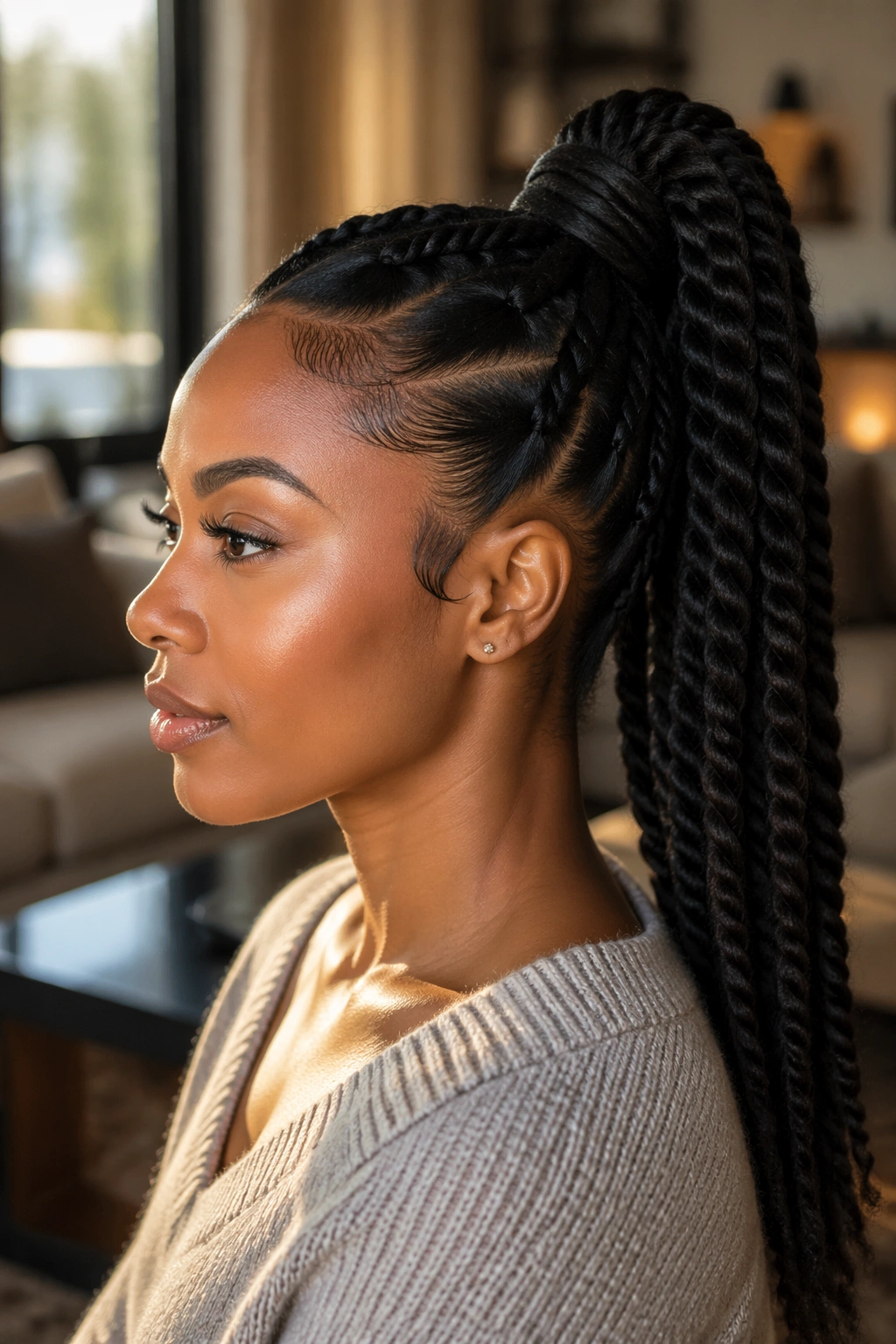
A rope-twist ponytail has a cleaner, tighter look than loose curls, but it still feels softer than box braids. The twist pattern adds texture, and because the strands are wrapped around each other, the tail hangs with a nice, slim profile.
This style works best when the twists are even in size. I’d keep them around 1 to 2 inches wide if you want a balanced look, though smaller twists create more movement. The base can be a ponytail of your own hair, a cornrow anchor, or a wrapped extension base. Any of those can work if the roots are controlled first.
Rope twists are a good fit for people who want a protective style that doesn’t feel too heavy or too sculpted. They also age well. A twist that starts to loosen at the ends still looks like a twist. A braid that loosens can look messy fast. Small difference. Big payoff.
14. Braided Ponytail With Face-Framing Pieces
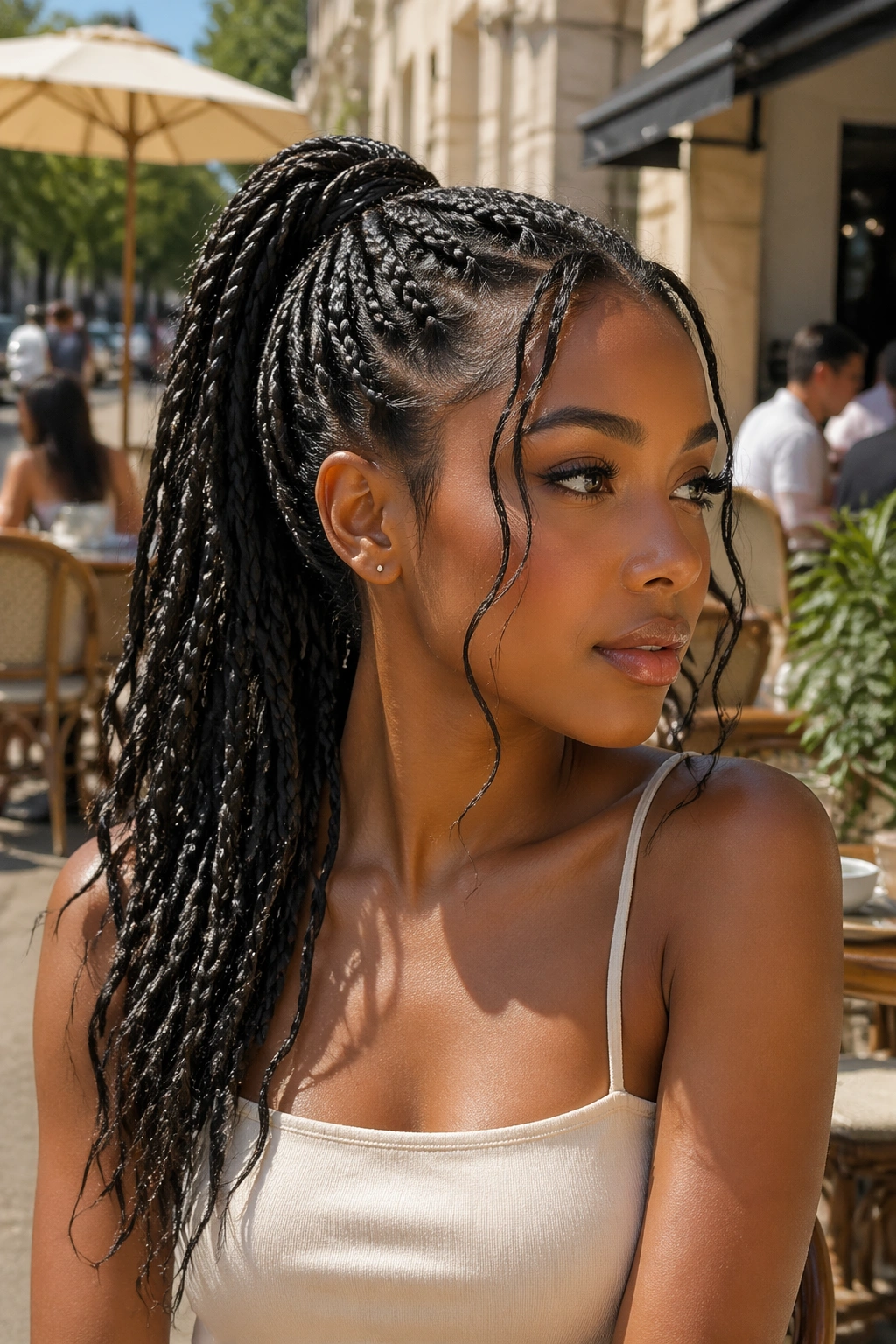
A braided ponytail with face-framing pieces gives you structure at the back and softness at the front. That combination is hard to beat if you want a style that feels finished but not severe. The braid keeps the ponytail neat; the front pieces keep it human.
Keeping the front pieces soft
The pieces near the temples should be slim enough to move, but not so thin that they disappear. You can curl them with a flexi-rod, bend them with a flat iron on low heat, or leave them in a natural coil pattern if your hair already has enough definition. The goal is a little motion beside the face, not a curtain of hair that fights the rest of the style.
This version works especially well with medium to long braids, since the ponytail itself can be the main event while the front stays understated. If you want to wear earrings, this is a smart pick. The face-framing strands leave room for them to show.
It is a simple idea, but it changes the whole mood of a braid-based ponytail. A little softness goes a long way.
15. Deep Side Part Low Ponytail
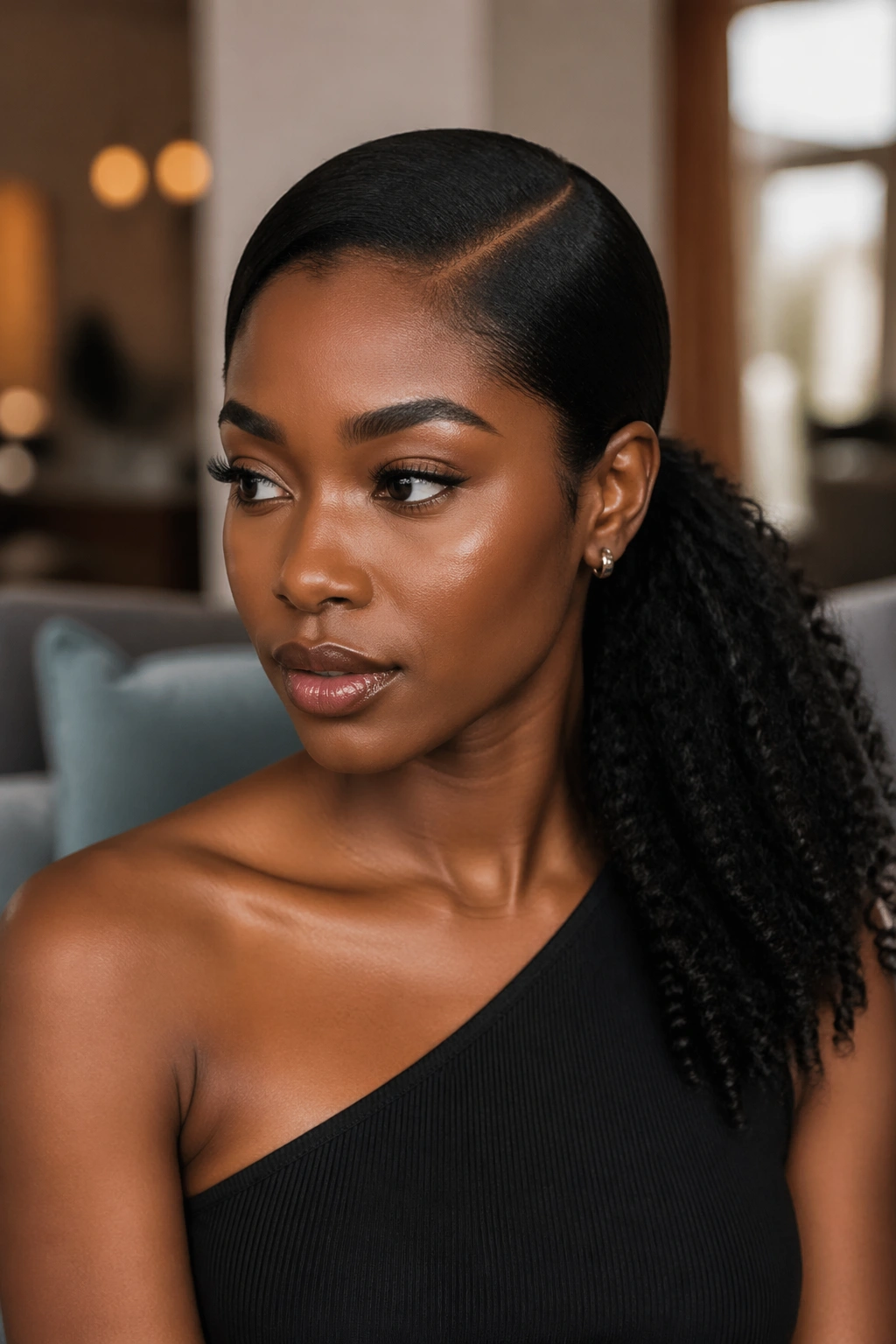
A deep side part low ponytail is the polished version of the side-swept look. Instead of letting the tail drape casually, this style pulls everything low and controlled while letting the part do the visual work. On Afro hair, that sharp part can be striking because it sets off the density of the rest of the style.
The beauty of this ponytail is restraint. You do not need a lot of ornament. A smooth base, a clean part, and a tail with some length are enough. If the tail is kinky straight or softly curled at the ends, even better. The contrast between sleek roots and textured length gives the style a nice balance.
I like this one for settings where you want to look put together without turning your hair into a hard shell. It feels grown, if that makes sense. Not stiff. Just composed.
And yes, the part needs to be precise. A wavering side part is the quickest way to knock the whole style off course.
16. Box-Braid Ponytail With Long Tail
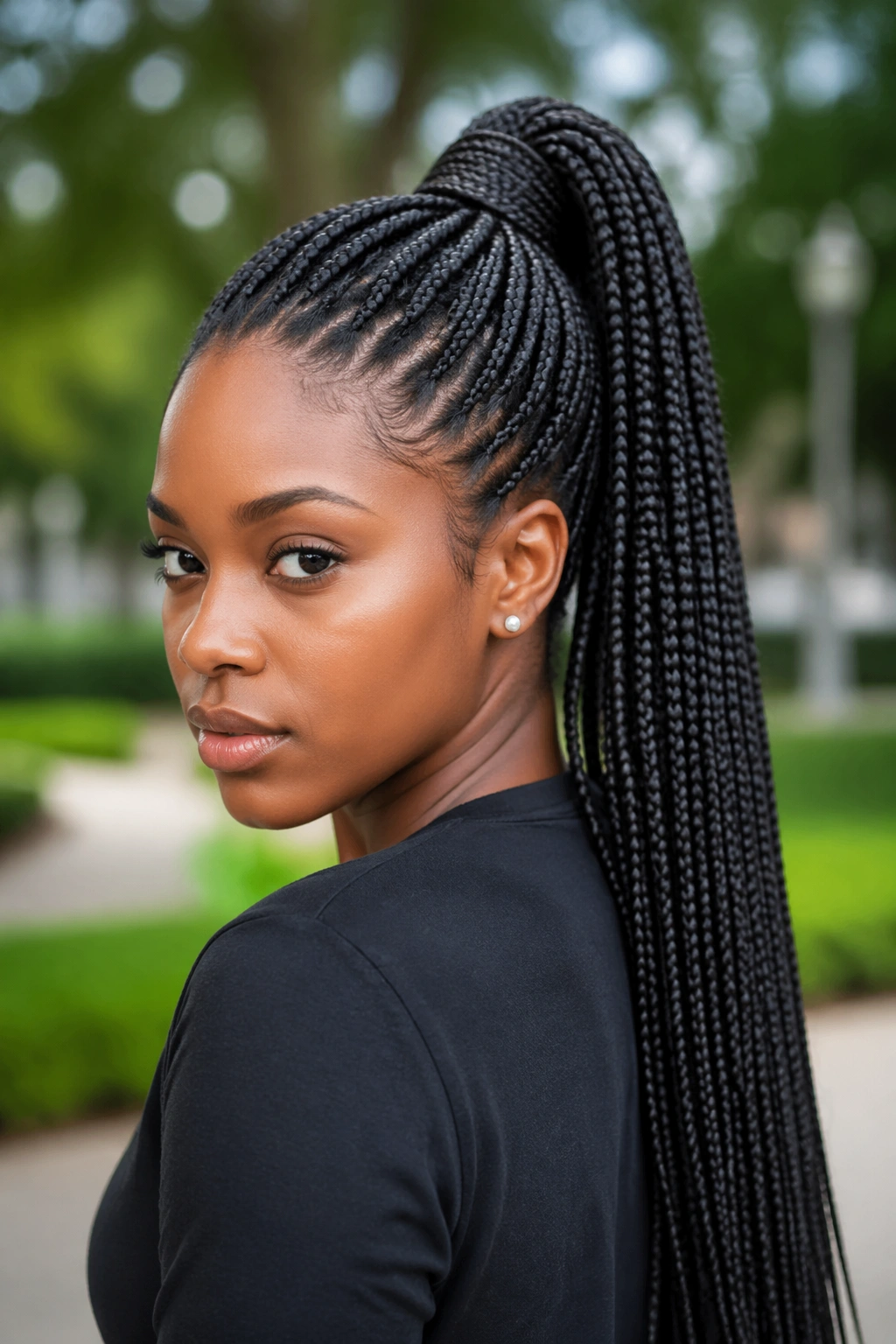
A box-braid ponytail is one of the most straightforward faux ponytails for Afro hair, and that is part of its appeal. Box braids already bring their own shape, so once they’re gathered into a ponytail, the style gets long, structured, and easy to recognize from a distance.
What makes it stay balanced
- Keep braid sizes consistent, usually between 1/4 inch and 1/2 inch
- Anchor the base with a strong elastic or a wrapped braid
- Let the tail fall from a high, mid, or low point depending on the weight you want
- Use braid spray lightly so the lengths stay soft, not sticky
A long box-braid tail does ask for a bit of neck awareness. If the braids are waist-length and thick, you will feel the weight. That is fine if you like the drama. If not, stop a little shorter and save your shoulders.
The good thing is that once it’s in place, the style takes care of itself better than many loose-hair ponytails. Braids do not unravel because you moved too quickly in the morning.
17. Kinky-Straight Ponytail
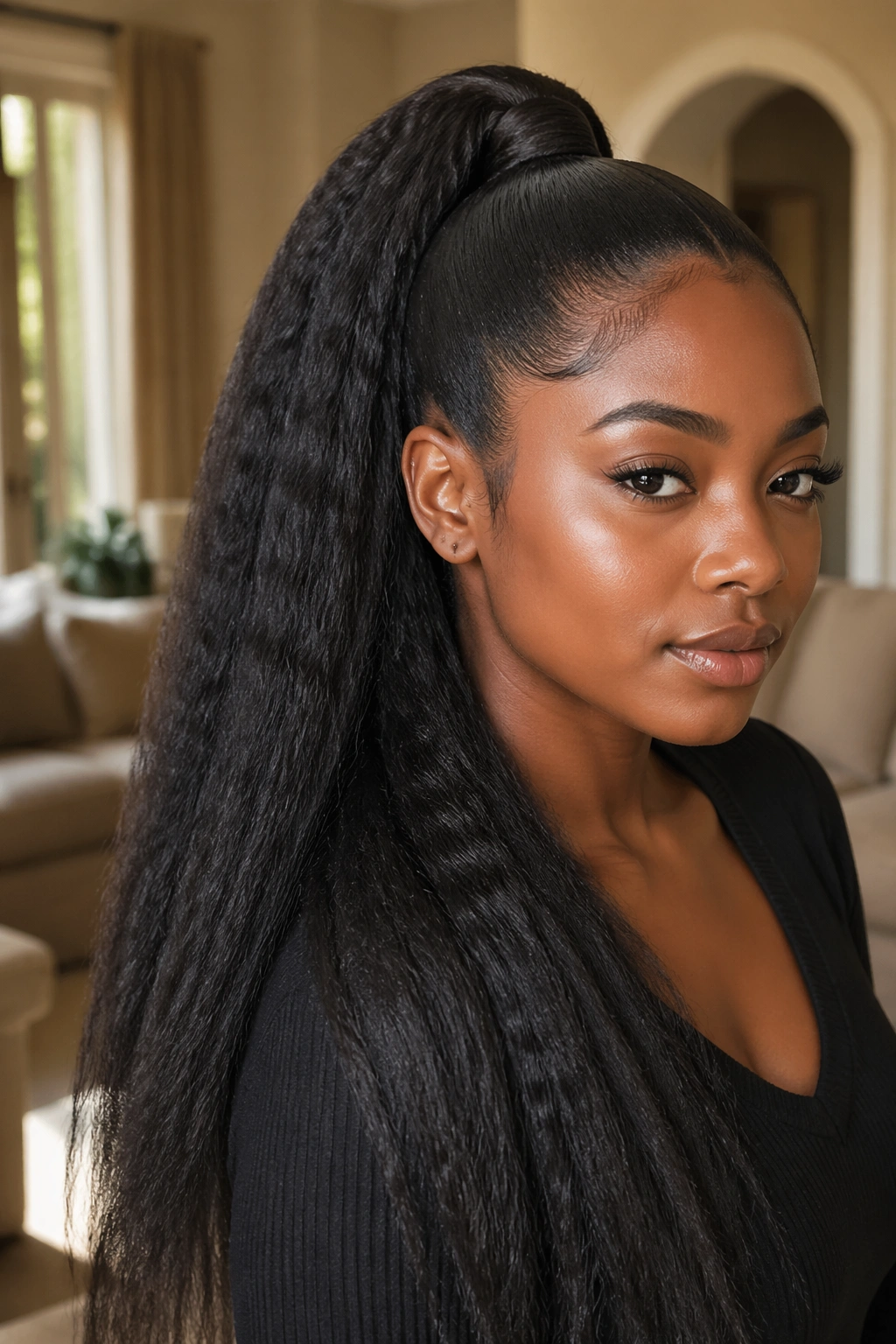
Kinky-straight hair sits in a sweet spot between natural texture and sleek ponytail finish. It has enough texture to blend with blown-out Afro hair, but not so much shine that it looks obviously synthetic. That makes it one of the best options if you want a ponytail that feels believable from root to tip.
This style tends to work best when the base is smooth but not glassy. A little texture at the roots helps the ponytail blend, especially if your own hair has some puff or stretch left in it. If you press everything down too hard, the tail can look disconnected, like it belongs to a different head.
Kinky-straight is also forgiving around the ends. A slight bend, a flip, or a soft wave still looks natural. Straight silkier tails show every little mismatch. This one hides more.
If you want length without losing the feel of your own hair texture, this is a strong pick. It is probably the most practical “long and sleek” option in the whole group.
18. Loc-Friendly Faux Ponytail
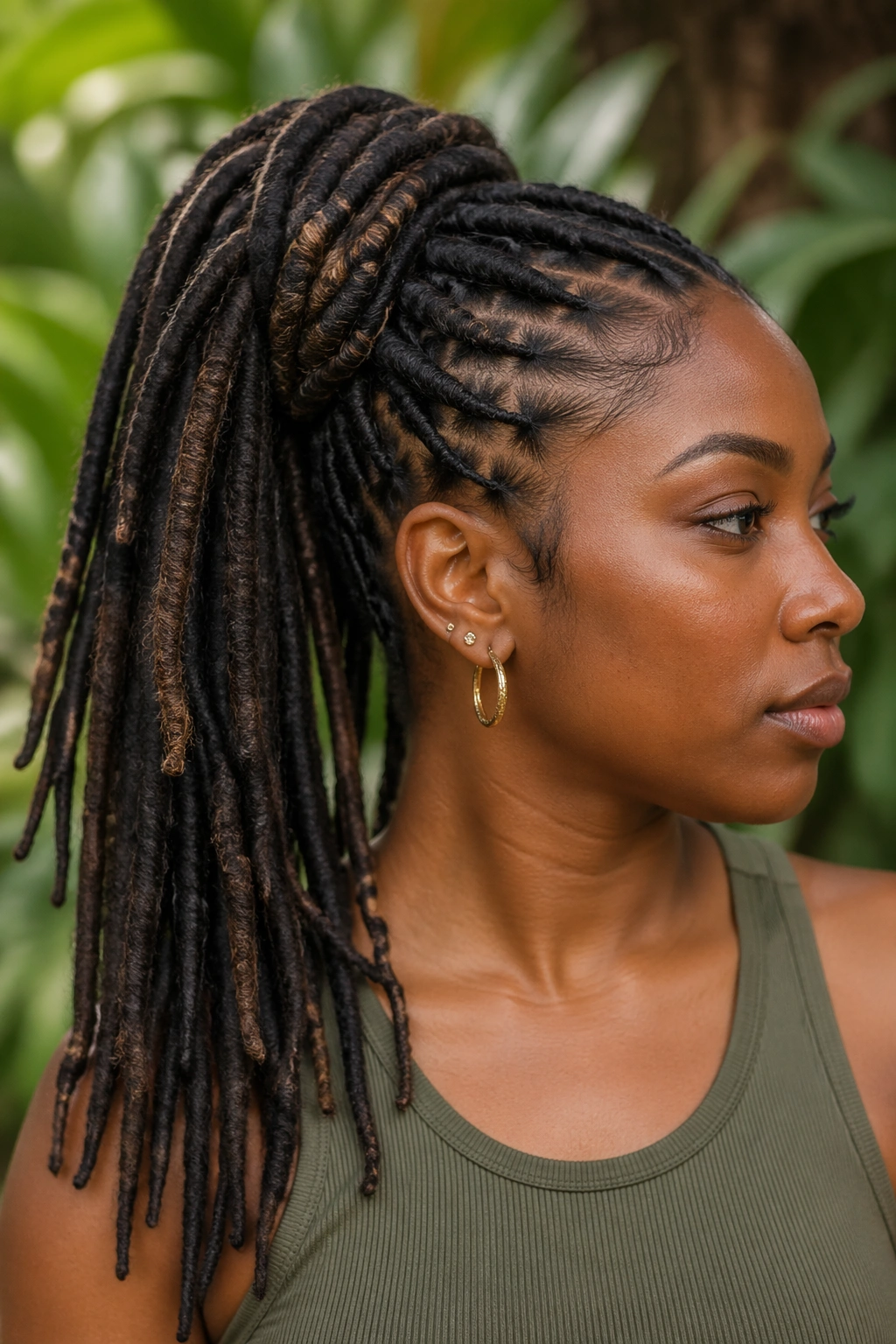
Locs need their own kind of ponytail logic. The weight is different, the base is different, and the attachment method has to respect the roots instead of pulling against them. A loc-friendly faux ponytail can be stunning, but only if the support sits where it should.
Where the weight should sit
The base needs to be wide enough to distribute tension across several locs rather than loading up a few at the front. A wrapped ponytail cuff, a strong band, or a clipped extension piece can help, but the key is still balance. If the ponytail feels heavy at the hairline, the setup needs to change.
This style can be high, low, or side-swept. I tend to prefer it low or mid-height because the locs already bring their own mass, and a lower anchor keeps the neck from getting tired. You can also add cuffs, string wraps, or braided accents without crowding the whole head.
A loc ponytail should feel sturdy, not strained. That difference matters more than any decoration.
19. Double-Stacked Ponytails
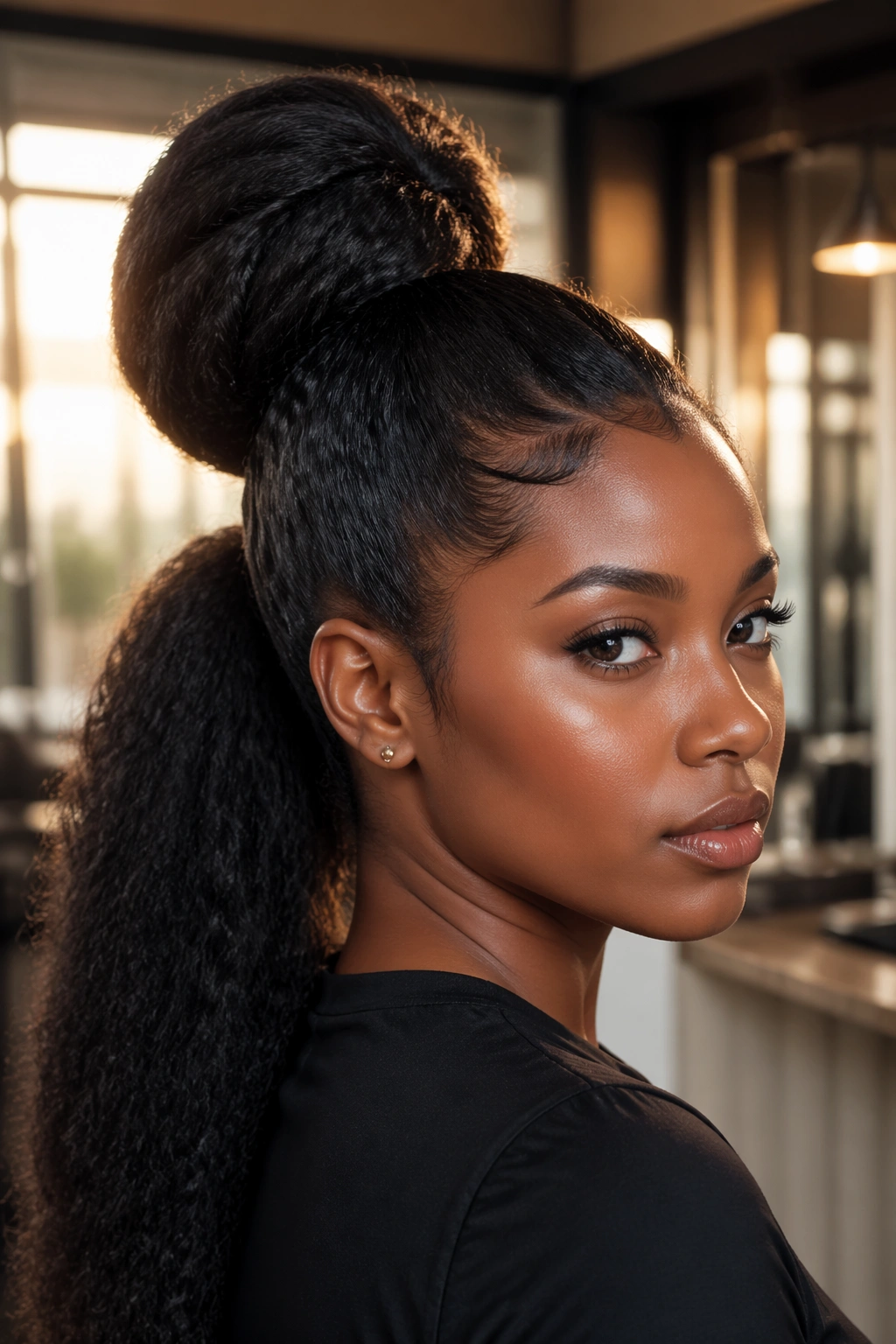
Double-stacked ponytails are playful, but they’re not childish when they’re done well. The trick is building two ponytails one above the other so the upper one lifts the profile while the lower one fills out the length. It creates a fuller silhouette without needing a single huge anchor point.
I like this style on medium-length natural hair because it adds structure without trying to fake a huge tail from one elastic. You can also use extension hair in one or both sections if you want extra length. The spacing between the ponytails is usually only 3 to 4 inches, which keeps the shape compact and readable.
This style has a nice editorial feel when the sections are neat and the ends are curled or puffed out a little. It also feels lighter than one giant ponytail, which your scalp may appreciate.
A small thing, but useful: make sure the upper ponytail is not sitting too far forward. If it creeps onto the forehead, the whole shape gets awkward fast.
20. Ponytail With Curly Ends
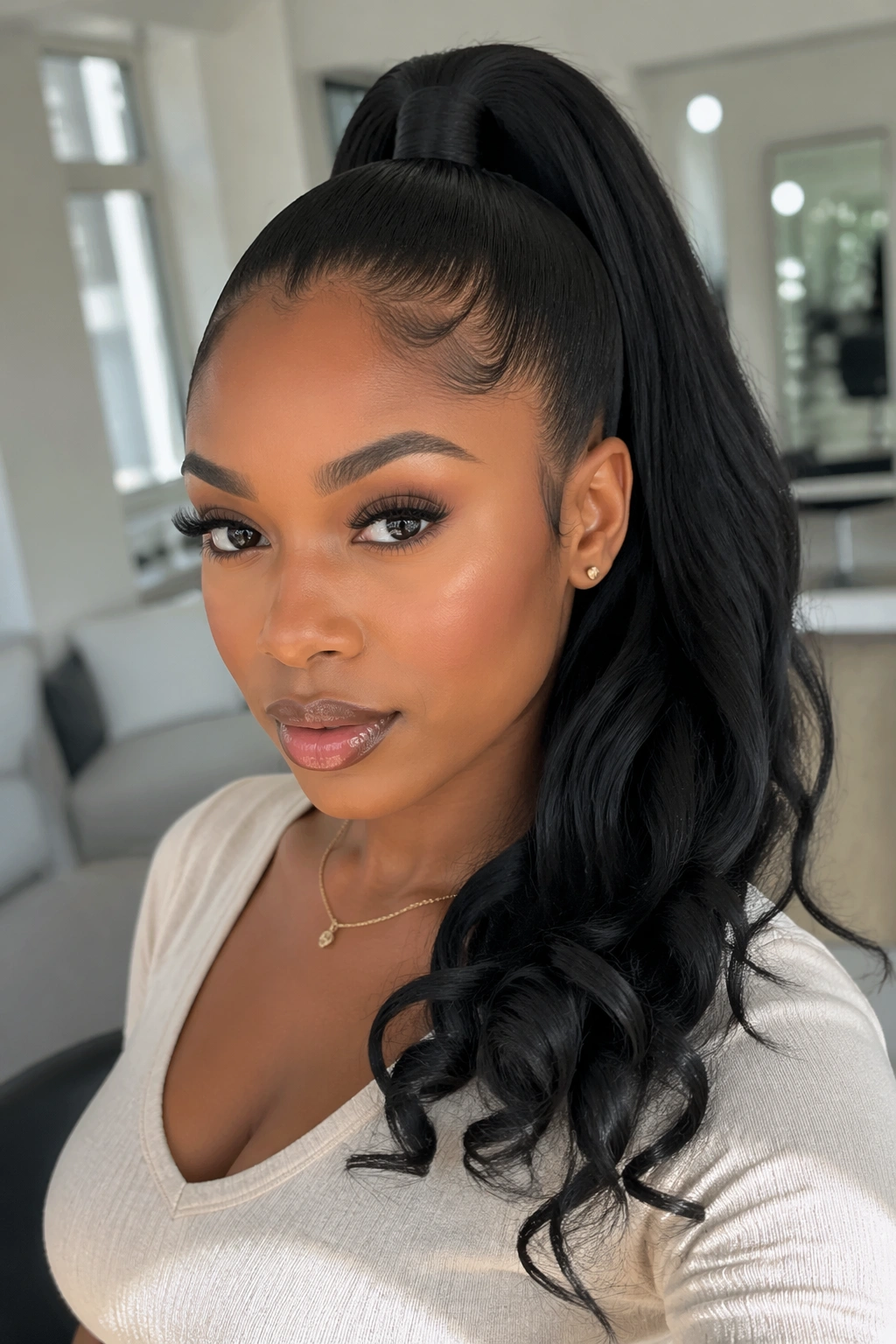
A ponytail with curly ends is one of the easiest ways to soften a long look. The base can be straightened, stretched, braided, or smoothed down, while the final few inches of the tail stay curled. That contrast keeps the style from looking too severe.
Curl the ends last
The safest way to get this finish is to style the base first, then add the curls at the end with a wand, flexi-rods, or pre-curled extension pieces. If the tail is synthetic, check the heat limit before touching it with hot tools. Some fibers will melt faster than you think.
This look works with high ponytails, low ponytails, and even side-swept styles. The curled ends catch the eye without requiring a fully curly tail, which is useful when you want length but not a lot of bulk. It also lets you blend different textures a little more easily.
A straight base with curly ends has a soft, dressed-up feel. It is one of those details that makes people think you spent longer on your hair than you did.
21. Satin-Scarf Wrapped Ponytail
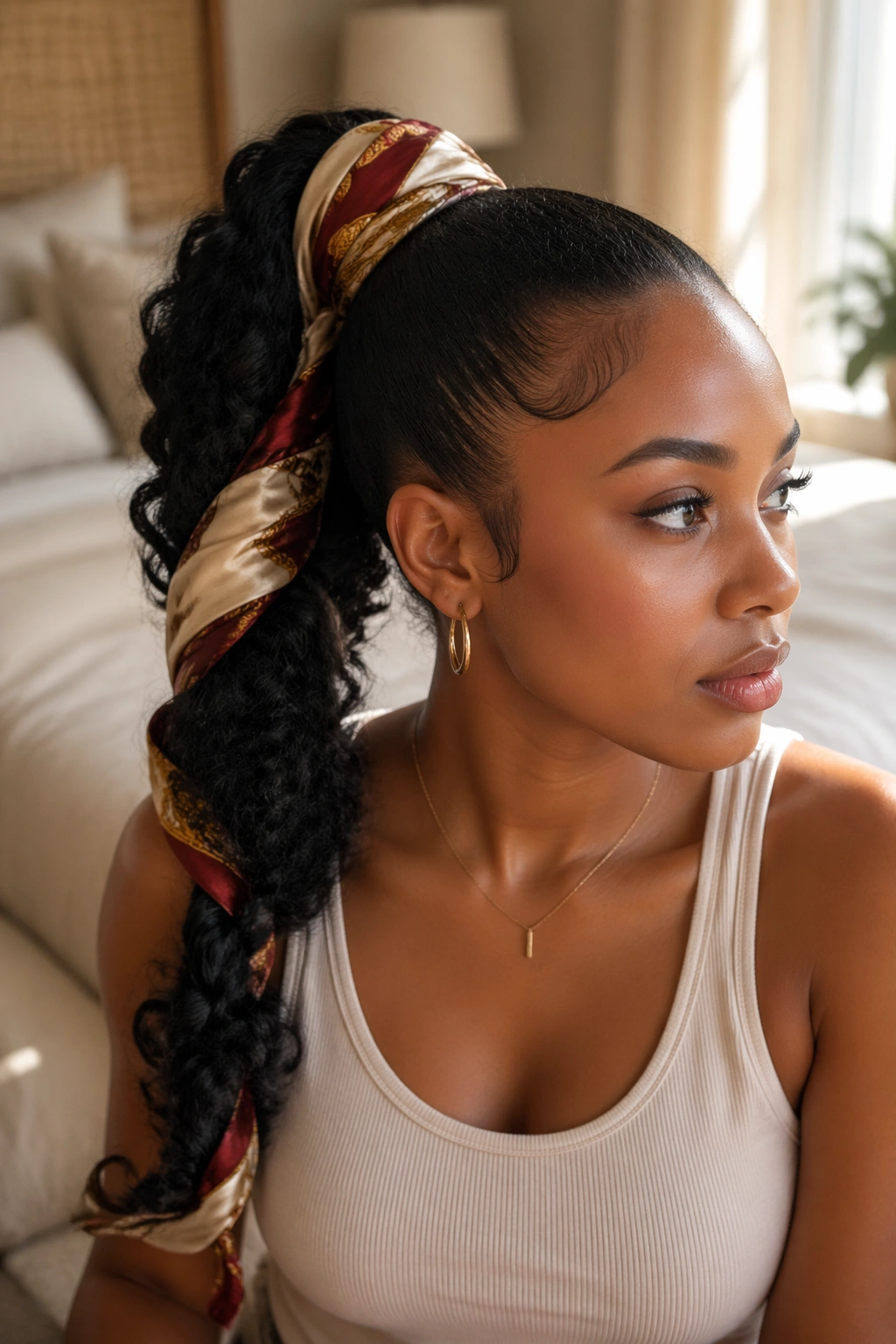
Can an accessory change the whole ponytail? Absolutely. A satin-scarf wrapped ponytail is one of the fastest ways to make a simple base feel styled, and it is especially handy on Afro hair when you want to protect the hairline or hide a less-than-perfect wrap.
The scarf can be tied around the base, twisted through the ponytail, or wrapped into the length if you want a more finished look. A scarf that’s about 1 to 2 inches wide, or a narrow silk ribbon, is easier to manage than a huge square that keeps slipping off.
- Use satin or silk, not rough cotton
- Tie the scarf snugly, but not tight
- Match the scarf color to your outfit or hair tone
- Keep the tail simple if the scarf is doing the visual work
This style is especially nice on second-day hair when you do not want to restyle everything. Sometimes the smartest move is adding one good detail and leaving the rest alone.
22. Short Faux Ponytail for TWA or Short Natural Hair
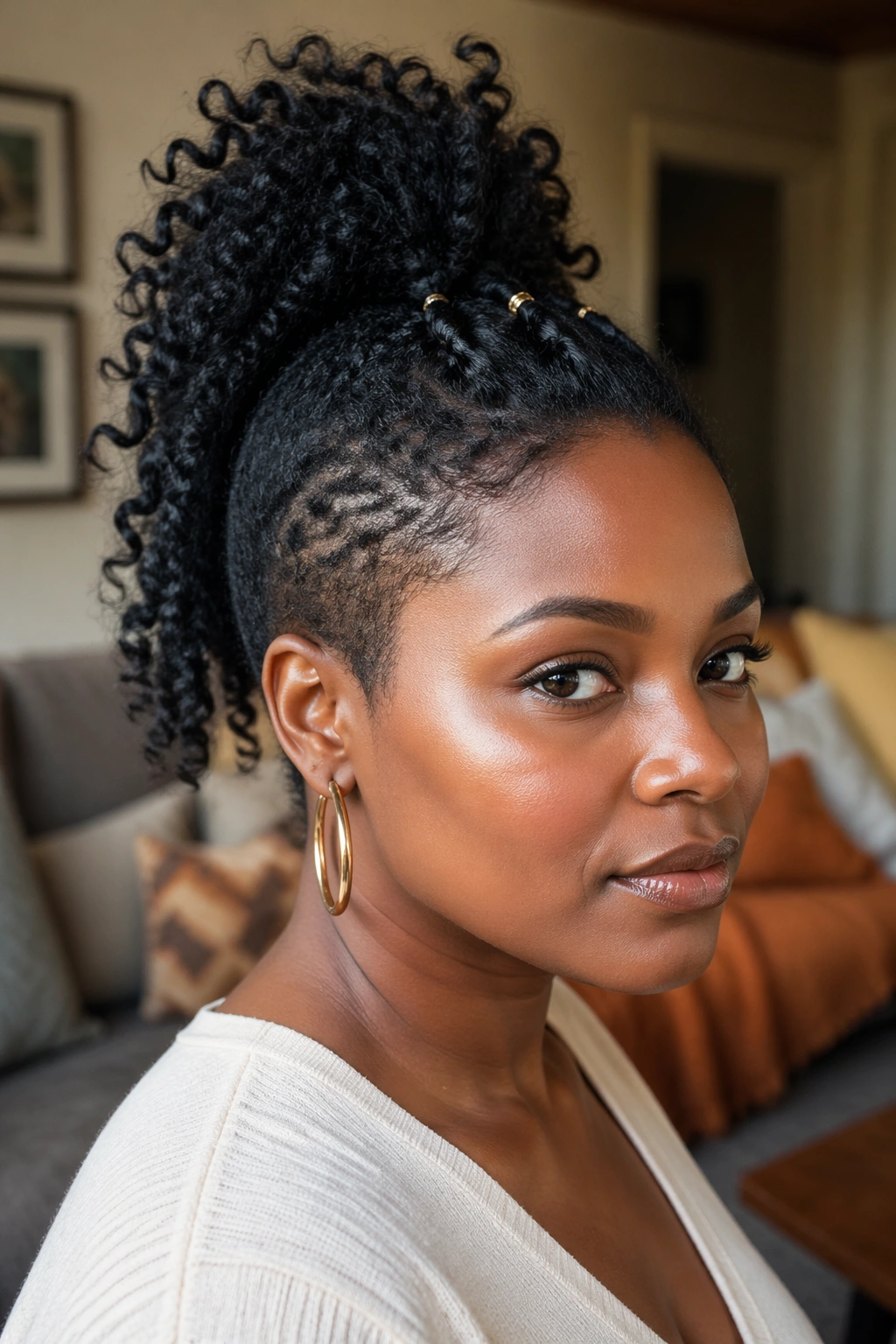
Short hair can wear faux ponytails. It just needs a different approach. A TWA or short natural cut usually benefits from a tiny anchor ponytail, a puff sleeve, or a clip-in tail that sits securely over a small base without forcing the hair to do too much.
The base should be tiny and firm
If your hair is short, the foundation matters more than the tail. You may need a few flat twists, mini cornrows, or a small banded puff to create enough grip for the attachment. Once the base is secure, the tail can be much more dramatic than the hair underneath would suggest.
This is one of the most useful styles for people growing out their hair or trying to avoid constant heat. It gives you a ponytail shape while letting your hair stay mostly protected. That is a quiet win, but a real one.
Short hair does not mean you are locked out of ponytail styles. It just means the attachment has to do more of the talking.
23. Long Event Ponytail With Waist-Length Drama
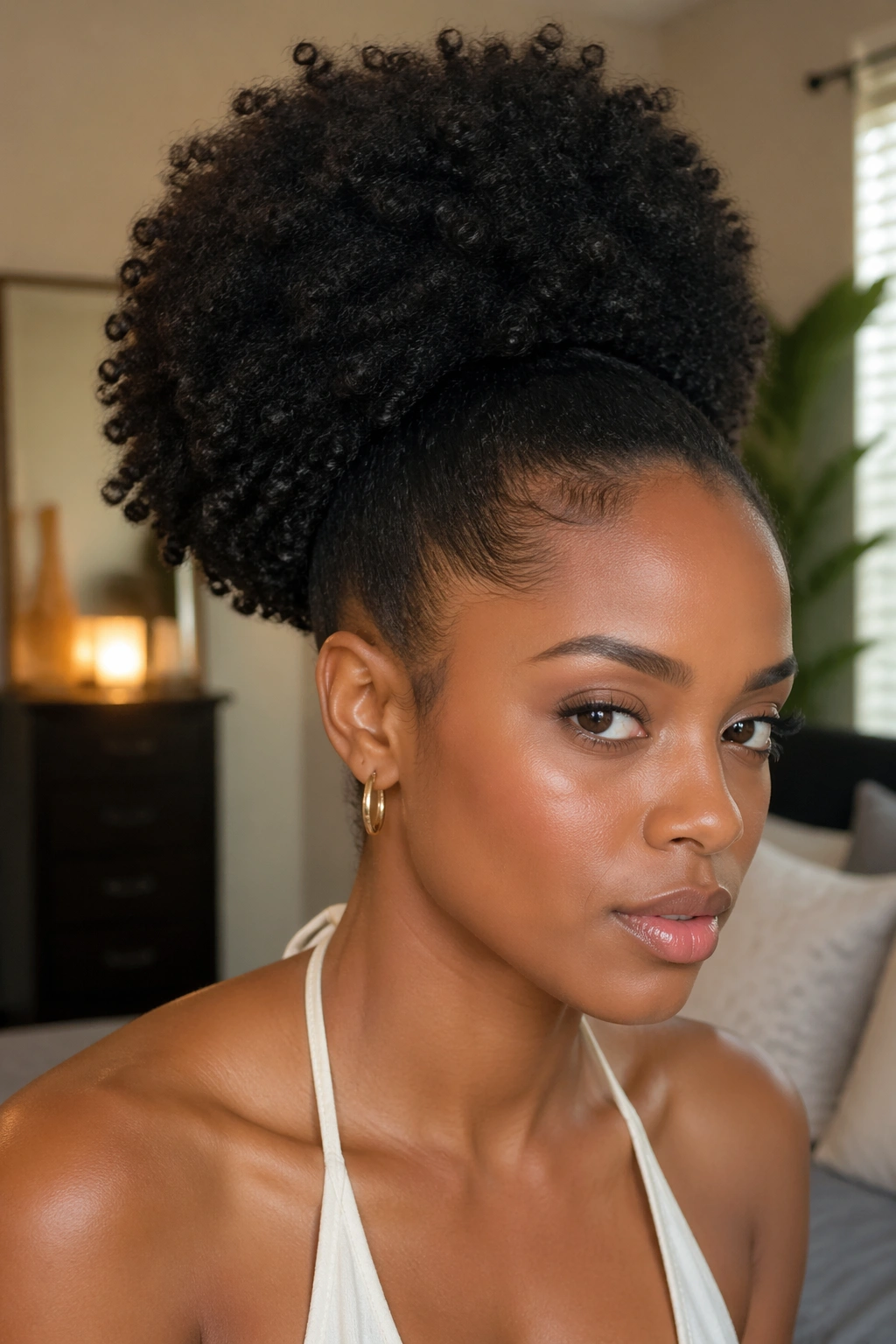
A long event ponytail is the showpiece version of the whole category. Think sleek base, strong anchor, and a long tail that falls well past the shoulders. On Afro hair, this style lands best when the base is respected first and the length comes second. If you skip the foundation, the drama starts to look shaky.
The tail can be straight, kinky-straight, curled at the ends, or even braided depending on the mood you want. I like a long tail with a slight bend near the bottom because it keeps the length from looking too rigid. A bone-straight finish can work, but it asks for a very clean base and a careful wrap.
This is the kind of ponytail people wear when they want the hair to do something a little extra. Weddings, photo shoots, birthdays, formal dinners — all fair game. Still, the style only looks good if it feels secure. A long ponytail that tugs every time you turn your head is not worth the hour you spent on it.
Choose length with your neck and scalp in mind. The pretty part should not come at the cost of comfort.
