
Double braided ponytails solve a specific hair problem: you want something that looks done, stays put, and doesn’t sag into a sad elastic by lunch. Two braids give the style structure; the ponytail keeps it moving. That mix is why the look works on straight hair, curls, thick hair, and the kind of layered cut that usually slips out of everything.
The trick is not making the braids identical. It’s choosing where they sit, how tight they are, and how polished the finish should be. A braid that starts at the temple and feeds into a high ponytail feels sporty. Shift the same braid lower and loosen the edges a little, and suddenly it belongs with a blazer or a soft dress.
I keep coming back to this shape because it gives you options without asking for a dozen tools. A rat-tail comb, two or three clear elastics, maybe a little gel, and you can steer the look from clean to romantic fast. One base. Twenty-three very different moods.
1. Sleek Center-Part Double Braided Ponytail
A middle part makes this look crisp fast. Narrow braids start at each temple, hug the head, and meet in a ponytail at the back, which keeps the face open without making the style feel severe.
Why It Reads So Clean
The braid lines do most of the work here. When you keep the sections even and flatten the roots with a little gel or wax stick, the whole shape looks deliberate instead of loose and accidental.
- Best on straight, blow-dried, or lightly waved hair.
- Use a rat-tail comb for the part; fingers make it fuzzy.
- Wrap a small strand of hair around the elastic if you want the finish to look sharper.
Tip: keep the braids narrow and the ponytail sleek; that contrast is what makes the style feel polished.
2. High Athletic Double Dutch Ponytail
This is the one that stays put. Double Dutch braids lift away from the scalp, so the style has more grip and more height than a flat braid ever will.
A good version starts with a tight crown and ends high, right where the head begins to curve. That placement matters more than people think. Too low and it loses energy; too high and the braid base feels cramped.
Use it on second-day hair with a little dry shampoo at the roots. The grippier texture helps the braids hold their shape, and the ponytail swings instead of collapsing. On thick hair, keep the sections just large enough to control the braid without making your arms ache halfway through.
3. Low Nape Double Braided Ponytail
Want something softer than a gym ponytail? This is the answer. Two French braids sweep back from the front hairline and land at the nape, where the ponytail sits low and calm instead of loud.
How to Wear It
A low version works especially well when your clothes already have shape — a sharp collar, a turtleneck, a coat with broad shoulders. The hair doesn’t compete with the outfit.
It also flatters fine hair because the braids add texture near the scalp, which makes the ponytail look fuller than it really is. Leave the ends straight for a tidy finish, or bend them with a curling iron if you want the style to feel a little softer.
A tiny side part can change the whole mood. Straight middle parts make it neat. A slight off-center part makes it feel less formal and a bit easier.
4. Wrapped Crown Braid Ponytail
If you want the braids to do more than just feed into a ponytail, this version gives them the spotlight. Two braids arc around the head like a soft crown, then meet at the back in a ponytail that can be sleek, wavy, or curled.
The shape is useful because it keeps hair away from the face while still looking intentional from every angle. No awkward flatness at the temples. No loose front pieces unless you want them there.
- Works well for weddings, dinner plans, and photo-heavy events.
- A little backcombing at the crown adds lift without turning the style into a helmet.
- Pin the braid ends underneath before you secure the ponytail so the join stays clean.
Best detail: if the braids are slightly wider near the front and narrower near the back, the whole crown looks more balanced.
5. Soft Side-Swept Double Braided Ponytail
A side-swept version has a gentler feel than the center-part styles. The braids travel diagonally across the head and gather into a low ponytail over one shoulder, which makes the style feel easy in a good way.
Loose face pieces help here, but don’t go too far. Two or three slim tendrils around the cheekbones are enough. If you leave half the front hanging free, the braid work starts to feel pointless.
I like this one on medium-length hair because the side placement gives the ponytail a longer look. A little texture spray at the roots helps the braids hold, and a soft wave through the ends keeps the shape from feeling too sharp. It’s the kind of style that looks deliberate without acting fussy, which is a rare sweet spot.
6. Fishtail Double Braided Ponytail
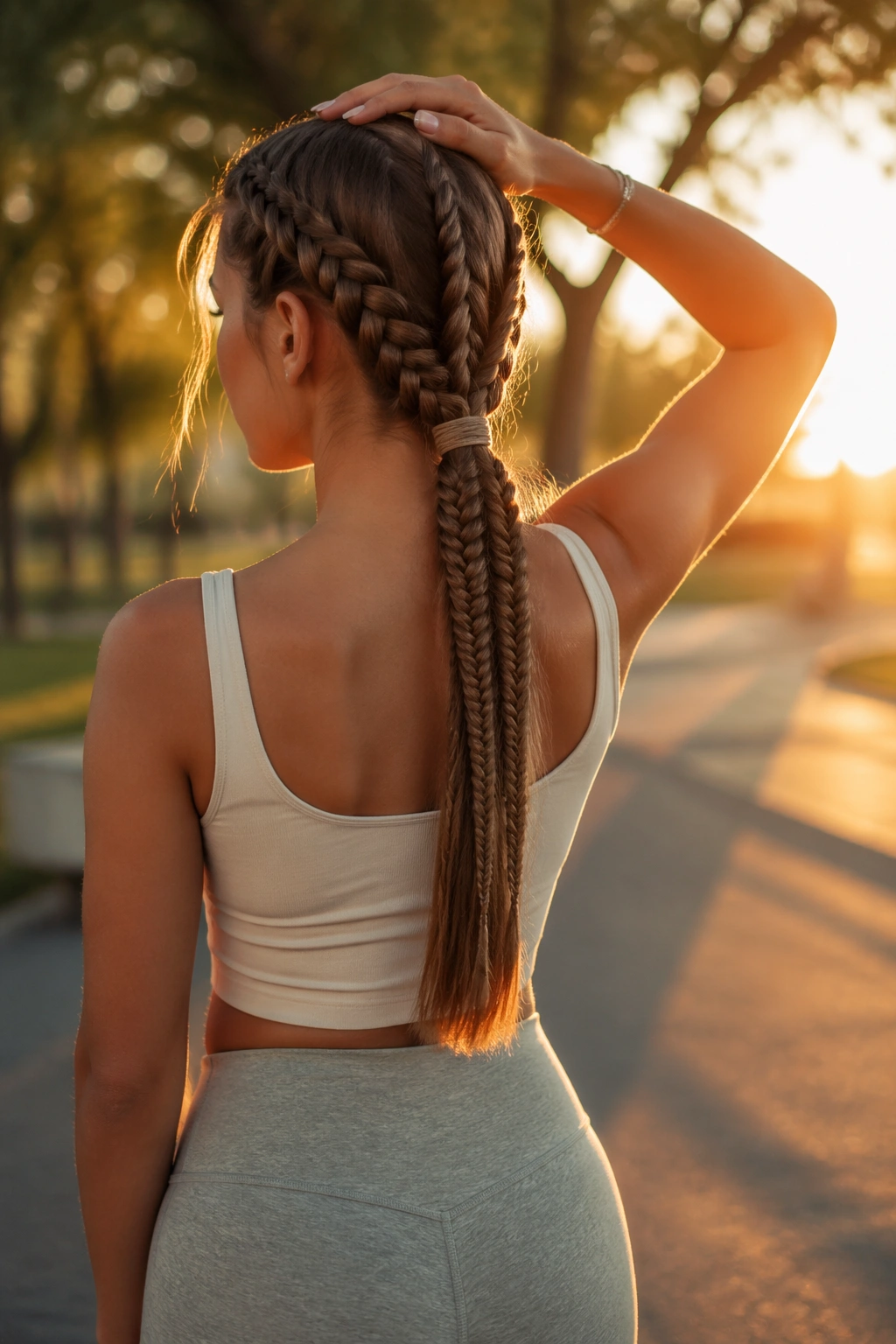
A fishtail ponytail changes the whole texture of the look. Instead of the chunkier three-strand pattern, the braid has a finer, woven surface that looks detailed even when the styling is simple.
That detail makes this one feel richer on long hair. On shorter lengths, fishtails can fall apart before the ponytail even begins, so the style is better when you have enough length to keep the pattern visible. Thick hair helps too, because the braid holds its shape instead of looking thin at the edges.
The cleanest version starts with two tight fishtails on each side, then joins them into one ponytail at the back. Keep the tension even. If one side is pulled tighter, the braid pattern turns lopsided fast. A dab of lightweight cream through the ends helps tame the little frays that love to show up with fishtails.
7. Bubble Ponytail with Tiny Twin Braids
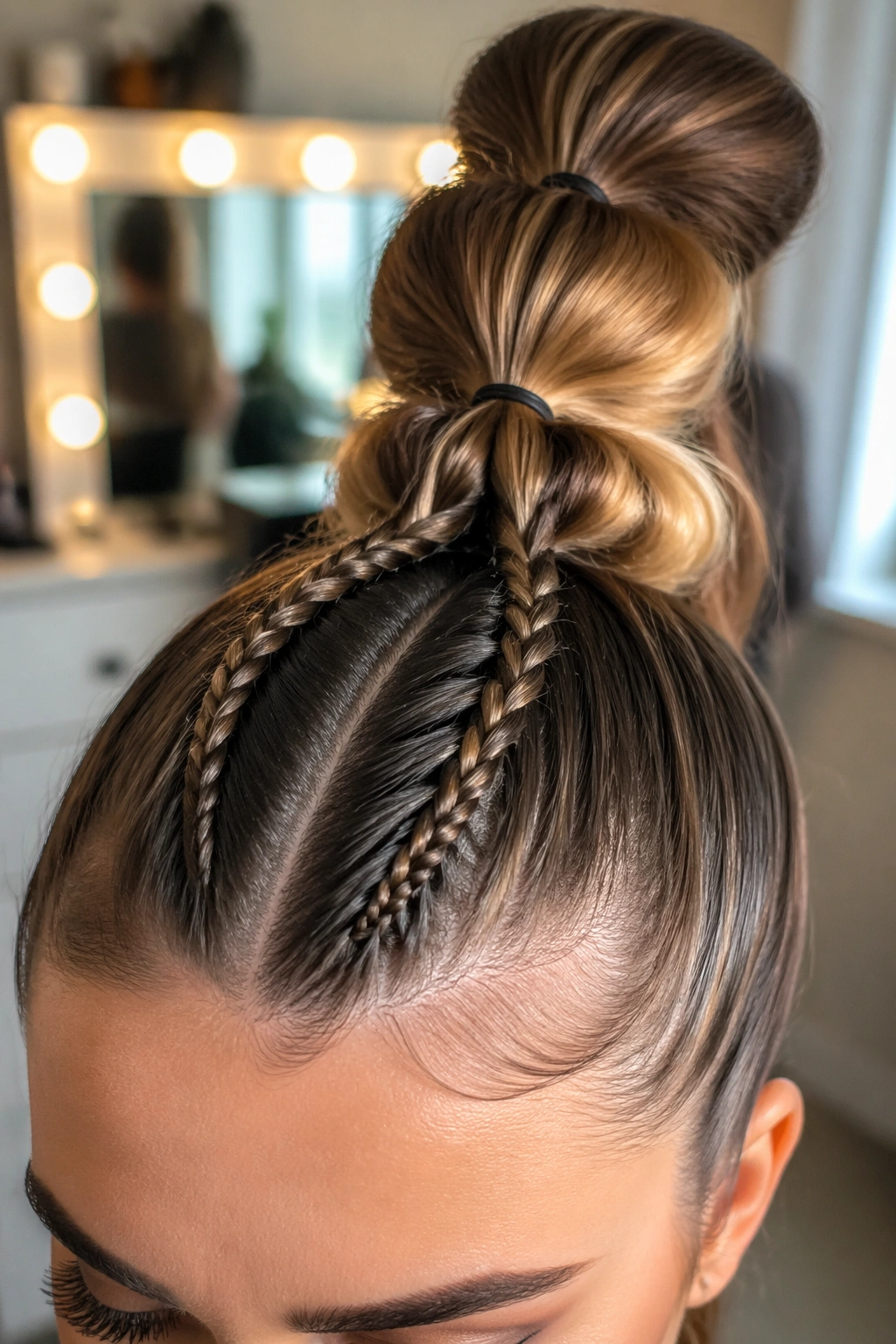
A few clear elastics change this one a lot. Tiny double braids at the front feed into a bubble ponytail, and the result feels playful without looking messy.
How to Keep the Bubbles Even
The bubbles work best when the ponytail has some volume. If your hair is fine, gently tug each section after tying it off to puff the shape a little. If your hair is thick, you may not need much teasing at all.
- Place elastics every 2 to 3 inches.
- Smooth each bubble with your hands before moving to the next tie.
- Hide the first elastic with a small wrapped strand if you want the base to look neater.
This style is good for parties, casual weekends, or any day when you want something with movement. It also photographs well from the side because the bubbles catch light in a way a flat ponytail never does.
8. Curly Double Braided Ponytail
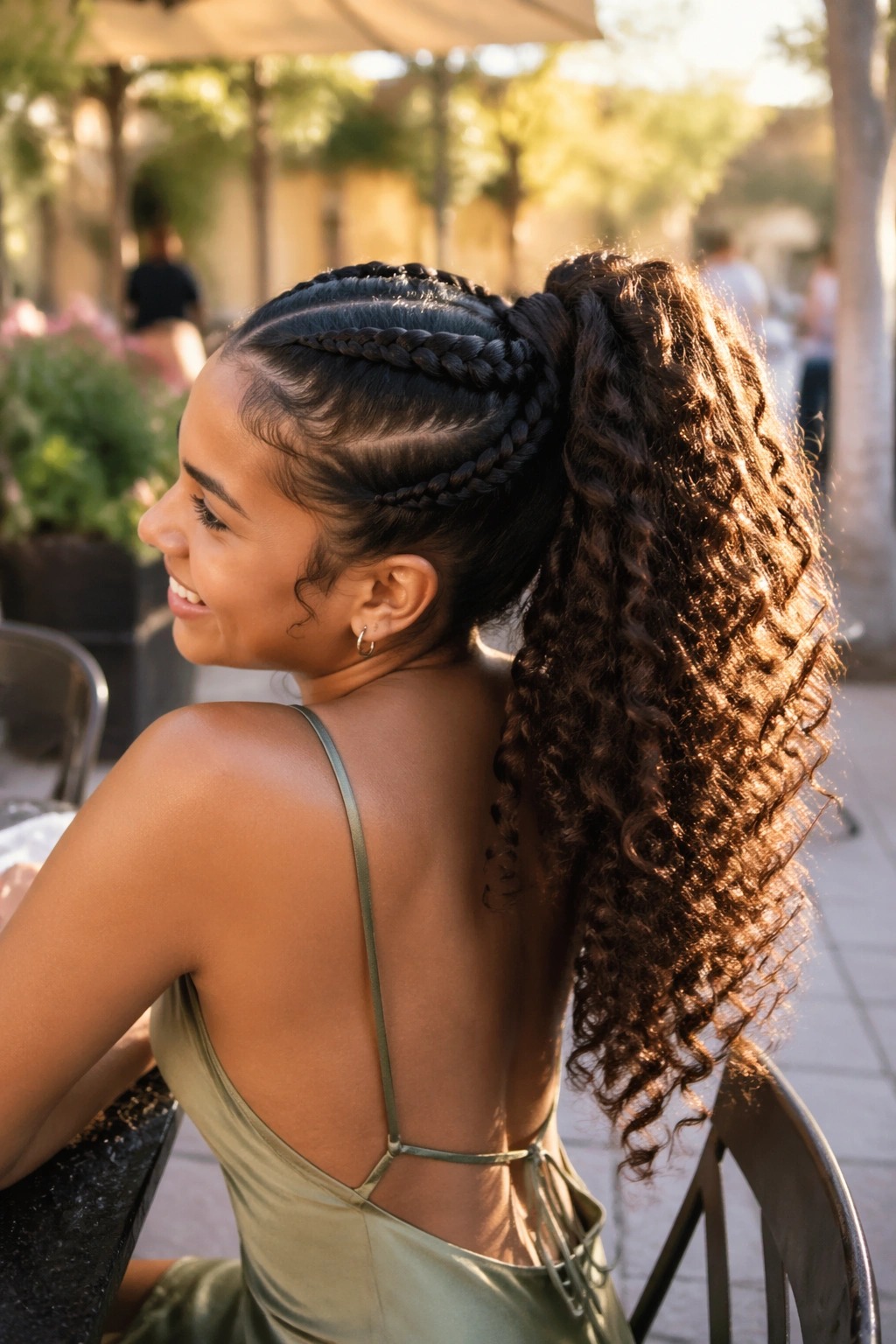
Curly hair deserves a base that behaves. Two braids along the hairline keep the top controlled, and the ponytail can stay full, springy, and very much itself.
The shape matters here. If you brush curls too much before braiding, they go frizzy and lose their coil pattern. Better to use a curl cream or leave-in on damp hair, then braid once the roots are dry enough to hold. The ponytail should be gathered gently, not yanked tight.
A diffuser helps if you want more lift at the crown. A curling iron can clean up a few ends, but I would not chase every curl into perfection. A little unevenness gives the style life. Leave a few pieces around the face, and the whole thing feels softer without losing structure.
9. Ribbon-Laced Double Braided Ponytail
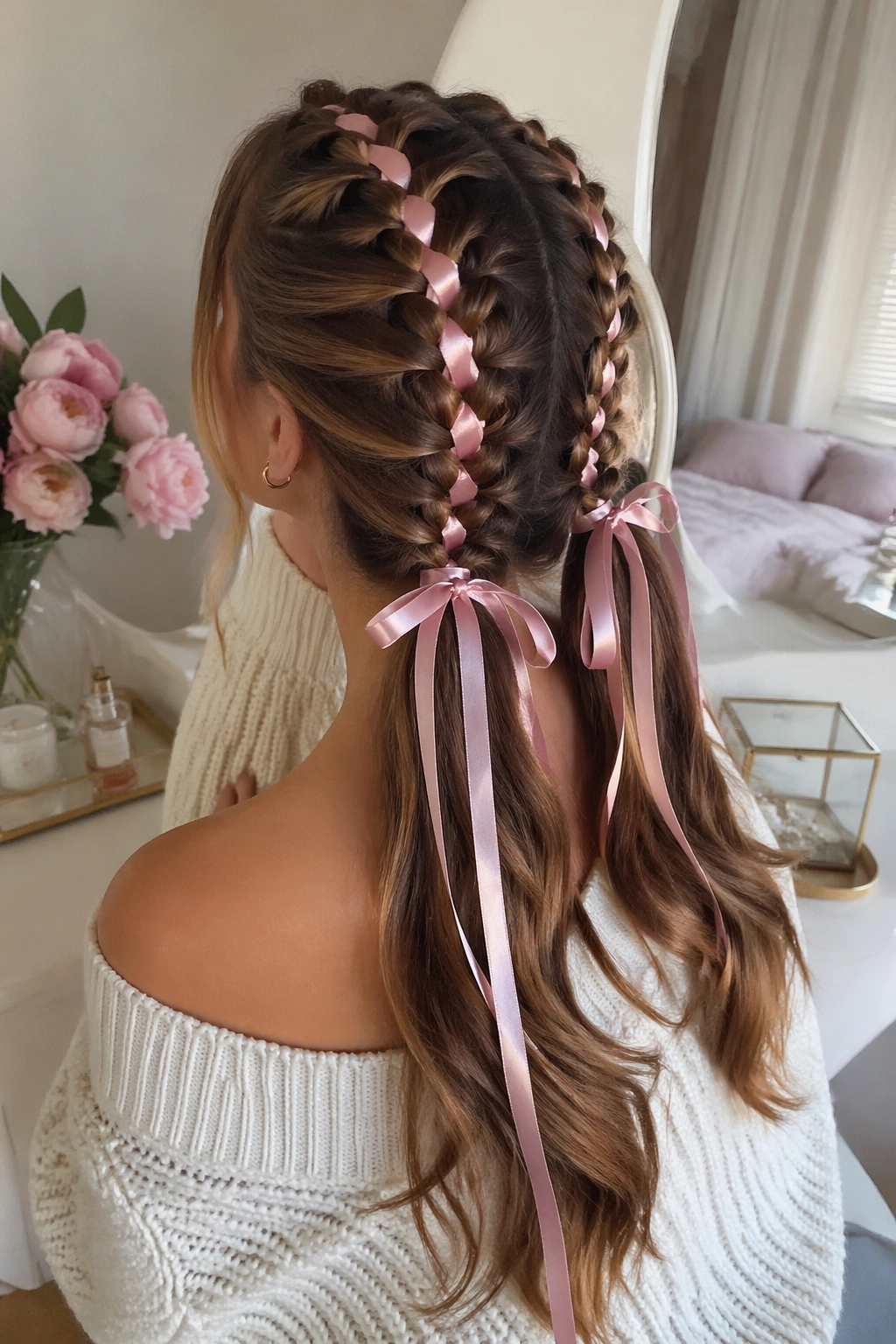
A ribbon changes the mood fast. Weave satin or grosgrain through the braids, and the style turns from everyday to dressed-up without needing a different shape.
What Makes the Ribbon Matter
The ribbon should not fight the braid. Thin ribbon, around a quarter inch to half an inch wide, is enough for most hair types. Wider ribbon can overwhelm fine hair and make the braids feel bulky.
- Bright ribbon works well against dark hair.
- Deep tones look rich on lighter hair.
- Tie the ribbon into the elastic rather than knotting it at the braid start; the hold is cleaner.
This is one of those styles that looks more complicated than it is. The braid pattern stays simple, but the ribbon gives the eye another line to follow. I like it for birthdays, holiday dinners, and any night when a plain ponytail feels too plain.
10. Braided Mohawk Ponytail
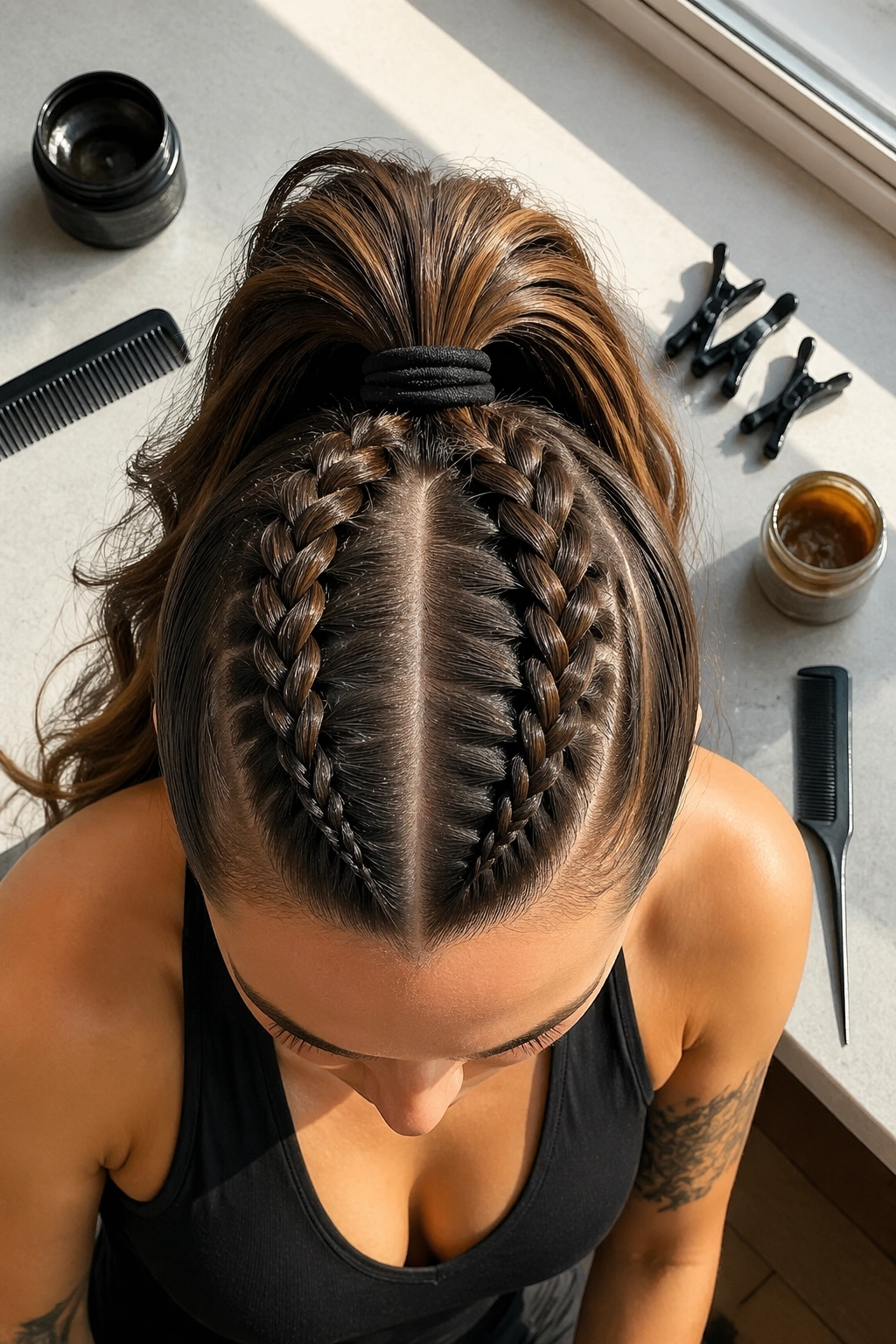
If you want edge, this is the one. Two braids run along the sides while the center section stays lifted, creating a faux-hawk shape that ends in a ponytail at the crown.
The trick is keeping the side sections tight enough to show the shape, but not so tight that the scalp looks pulled. That line between sculpted and strained is thin. A little root lift at the top helps the middle section stand up, and a teasing brush at the crown gives the ponytail more height without building a stiff base.
What to Watch For
- Keep the side braids narrow so the center strip stays visible.
- Secure the ponytail with two elastics if your hair is heavy.
- Smooth flyaways with a small amount of pomade, not a heavy cream.
This style works especially well on square or round faces because it adds length through the center.
11. Braids Wrapped Around the Base Ponytail
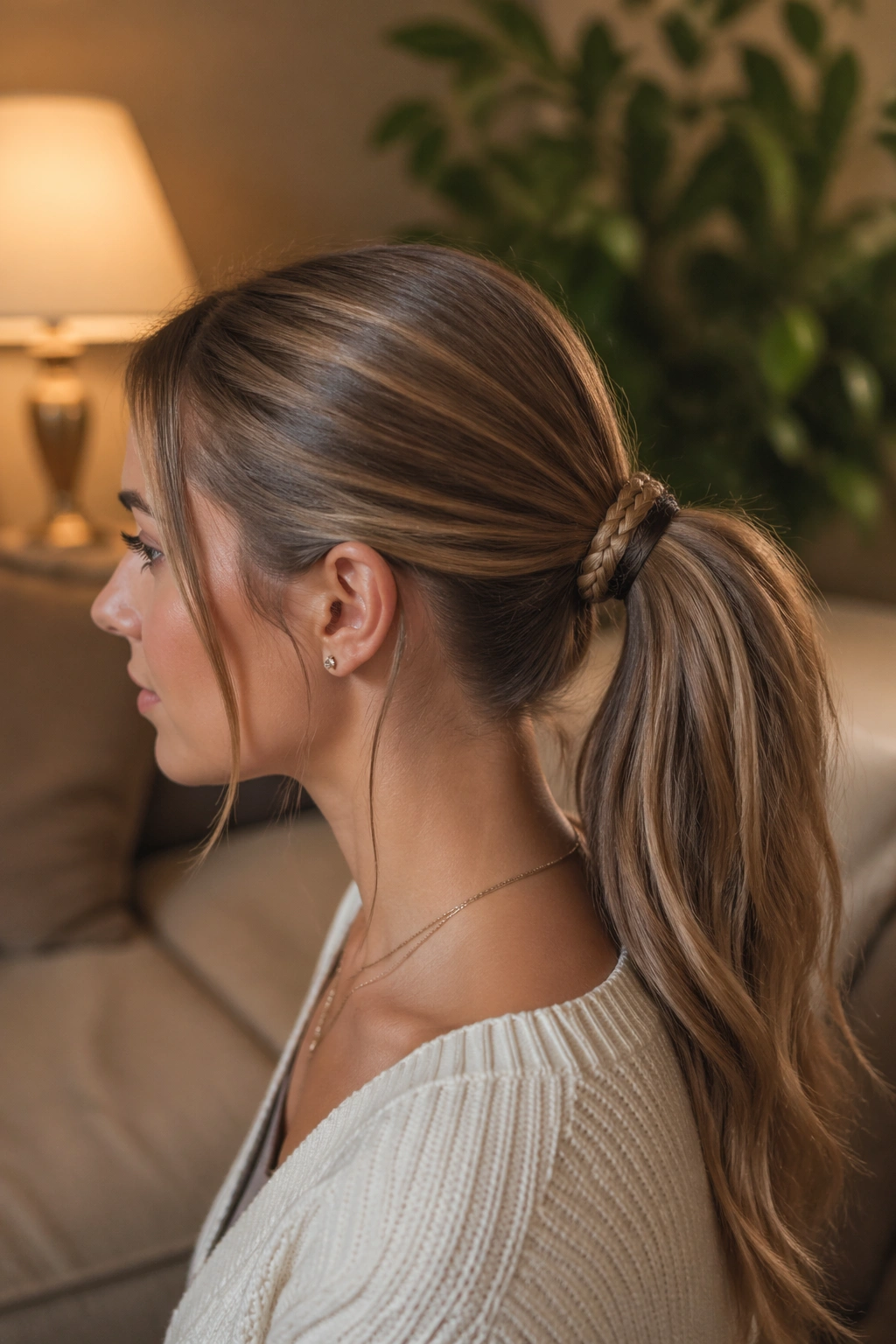
Sometimes the smartest move is the quiet one. Two slim braids wrapped around the base of a ponytail hide the elastic and make a simple style feel finished.
The look is especially useful when your hair is fine or you don’t want a lot of braid bulk near the face. The braids can start at the temples, travel back, and then coil around the ponytail holder before being pinned underneath. That tiny detail changes the whole feel of the style.
A matching hair color keeps the wrapped braids subtle. A contrasting color makes them stand out. Either can work. The key is keeping the wrapped pieces smooth so they don’t puff up and unravel after an hour. A pair of bobby pins crossed under the wrap usually holds better than one lonely pin.
12. Half-Up Double Braided Ponytail
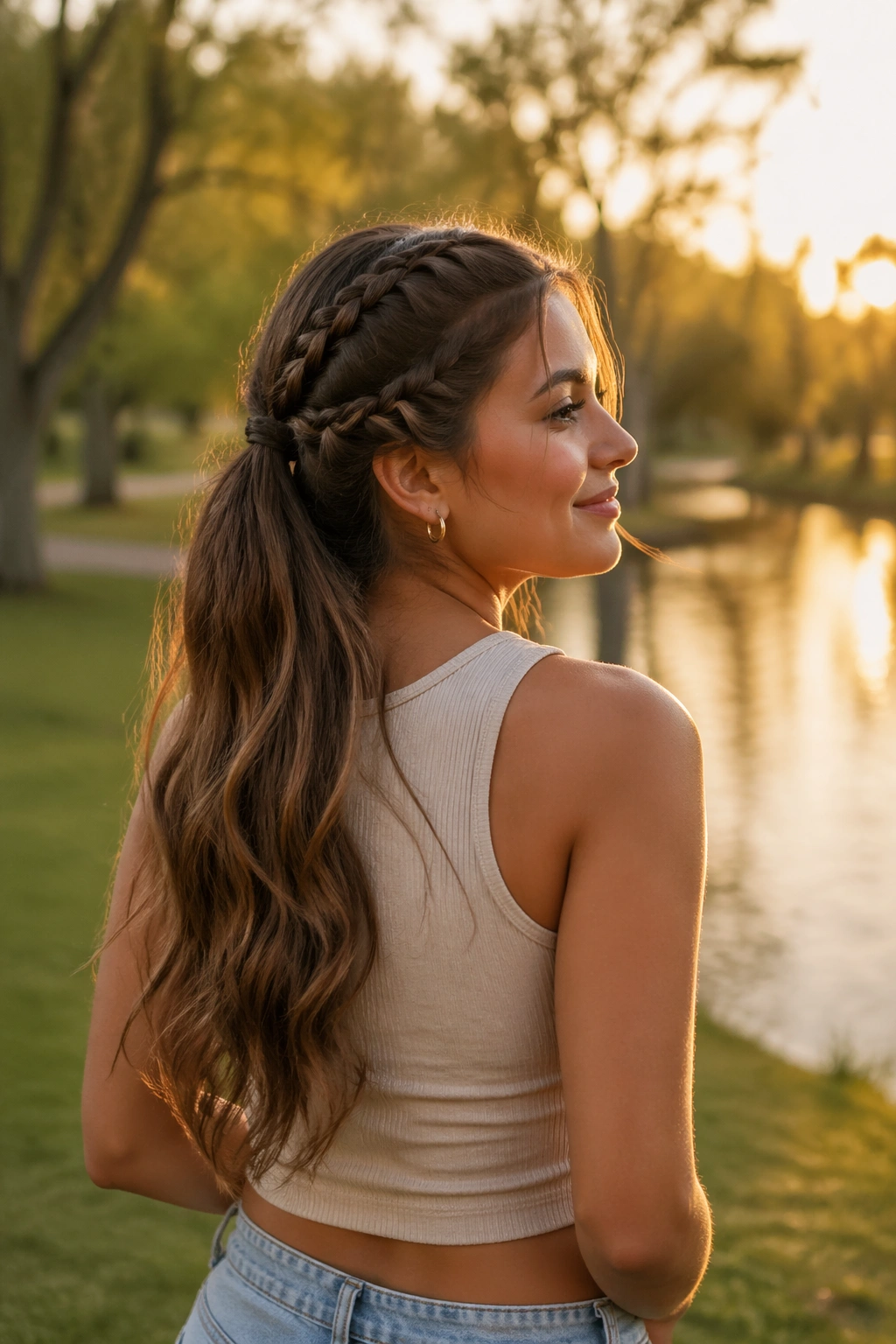
This one is easy to underestimate. Half-up styles get overlooked because they seem simple, but the twin braids give the shape enough structure to feel finished.
Unlike a full ponytail, this keeps the lower length loose, which is handy if your ends are layered, curly, or just a little dry. The braids start near the temples and meet at the crown or just behind it, where they join a smaller ponytail. The rest of the hair falls free.
It works on shorter lengths too, which is rare for braid-heavy looks. If your hair barely reaches a full ponytail, the half-up version still gives you room to play. A wave through the loose section makes the contrast between the braids and the rest of the hair look more deliberate, and honestly, that contrast is the charm.
13. Side Ponytail with Twin Braids
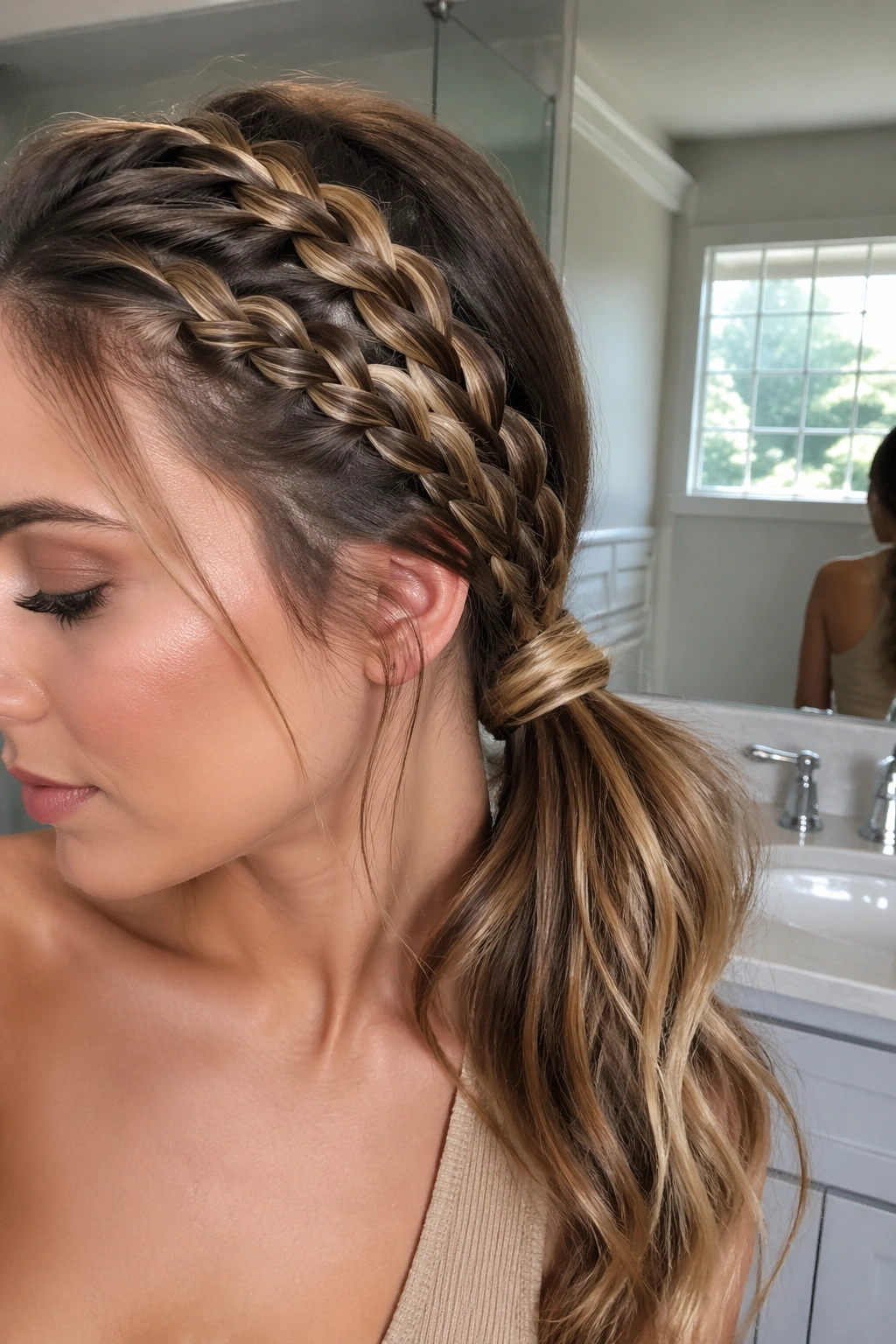
A side ponytail always feels a little more relaxed, and the twin braids make it look styled rather than accidental. The braids angle from the front hairline toward one shoulder, where the ponytail rests low and off-center.
Why It Works for Dressy Outfits
One-shoulder necklines love this shape. So do big earrings. The hair stays out of the way and still gives you enough detail near the face to keep things interesting.
- Curl the ponytail ends for a softer finish.
- Leave the side braids a little loose if you want a less formal look.
- Use a satin scrunchie if you want the base to feel gentler on delicate strands.
This version can lean romantic or playful depending on how neat the braids are. Tight braids and a smooth ponytail feel polished. Softer braids and textured ends feel looser, almost like you did the style in five minutes, even when you didn’t.
14. Messy Textured Double Braided Ponytail
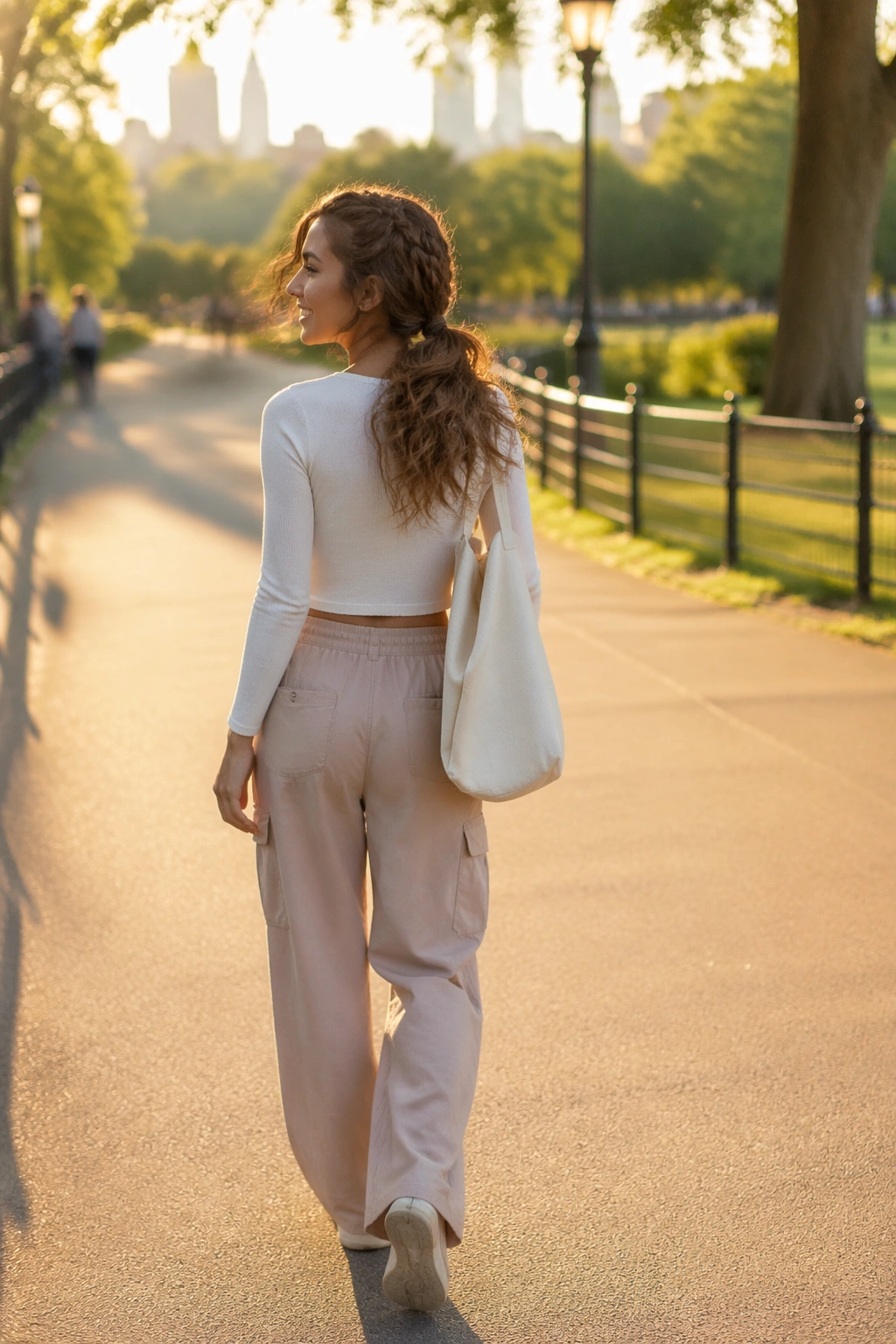
A little roughness helps this one. The braids are still there, but the texture spray, loose pulls, and piecey ends keep the style from feeling overworked.
I like this version on hair that holds texture well — wavy hair, second-day hair, hair with a bit of dry shampoo in it. Clean, slippery hair can make the braids collapse, and then the whole point of the look gets lost. The ponytail should feel airy, not stiff.
Pull the braids apart slightly after tying them off. Not too much. Just enough to make the weave show. A small amount of matte pomade at the roots keeps the front from fuzzing out, but leave the lengths soft. This is one of the easiest places to overdo product. Heavy cream kills the movement, and that’s the part the style needs most.
15. Mini Accent Braids into a Ponytail
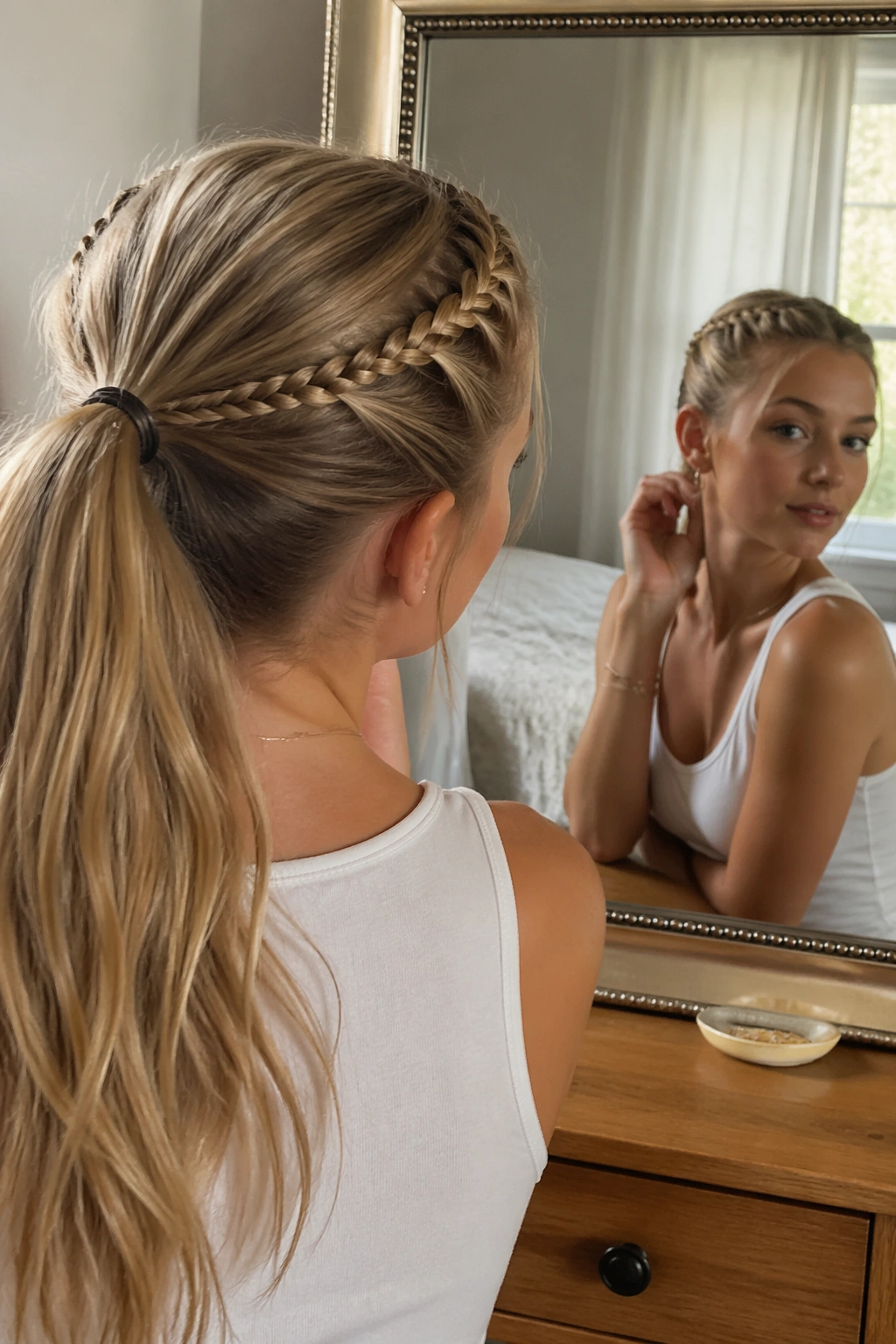
Not every double braided ponytail needs to take over the whole head. Two tiny accent braids near the temples or just above the ears can feed into a regular ponytail and still change the look in a noticeable way.
The Small-Detail Version
This is the style for days when you want a little something extra and not much else. The braids can be under half an inch wide, which makes them easy to add to short layers or fine hair without pulling too much attention away from the ponytail itself.
Because the braid sections are small, the finish needs to be tidy. Tiny clear elastics help. So does a clean part. A slightly tousled ponytail balances out the precision of the braids and keeps the whole thing from feeling overbuilt.
I reach for this one when I want hair out of my face but still want people to notice that I bothered. It gives that effect without asking for much time.
16. Chunky Thick-Hair Double Braided Ponytail
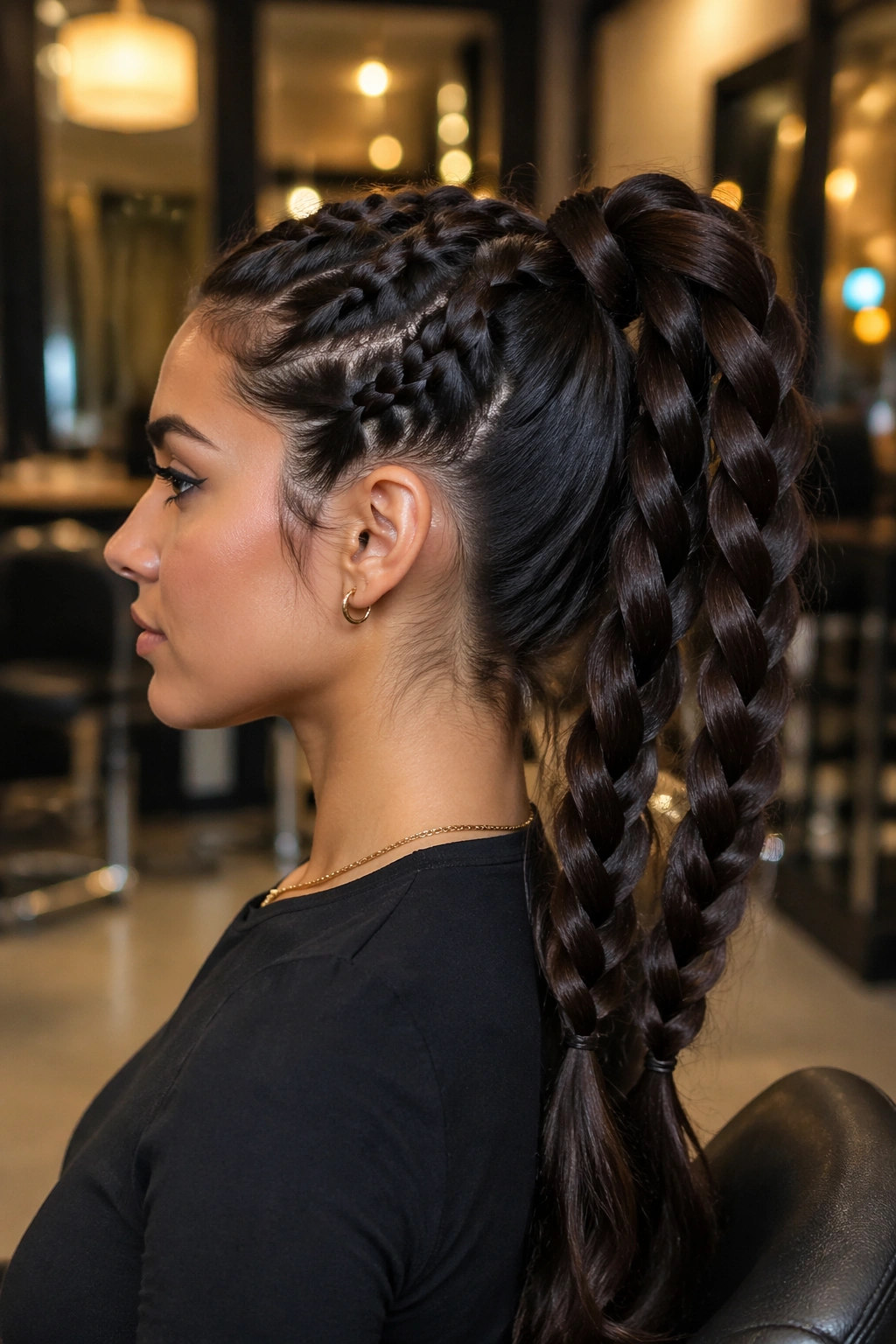
Thick hair can carry bigger sections, and this style uses that weight on purpose. The braids are wider, the parts are deeper, and the ponytail ends up full enough to look substantial without needing a lot of extra teasing.
Narrow braids on dense hair can disappear. That’s the mistake. Bigger sections show off the natural thickness and keep the braid pattern readable from the side. The ponytail itself should sit high or mid-level, where the weight doesn’t pull it flat too fast.
A strong elastic matters here. Sometimes two elastics stacked together hold better than one. If your hair is long, a quick twist through the ponytail before the final wrap gives the base more support. The result feels bold, but not heavy-looking — and that matters more than people think.
17. High Glam Ponytail with Braided Sides
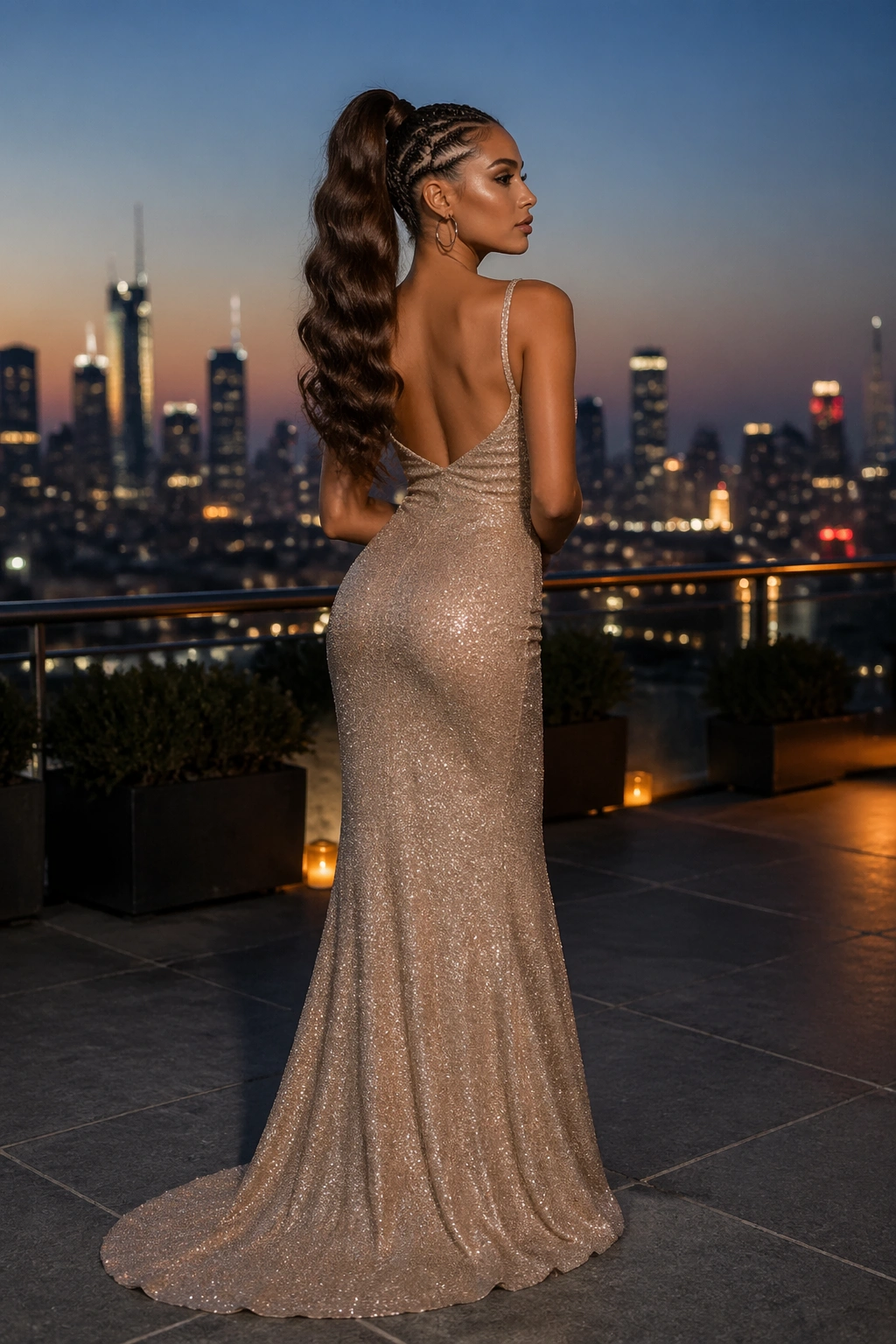
This is the formal version with a little drama built in. The braids stay tight along the sides, the crown gets lifted, and the ponytail itself is full, curled, and glossy.
Small Tweaks That Make It Dressy
A few details change the whole tone. Curl the ends with a one-inch iron. Wrap the base with a strand of hair. Use shine serum only on the outer lengths, not near the roots, or the style can start to look greasy by mistake.
- Place the ponytail at the upper crown for height.
- Keep the side braids narrow so they frame the face instead of crowding it.
- Pin the crown lightly if you need extra lift under the pony.
This one works for evening events because it has shape from every angle. It also holds up well under flash photos, which is not something every ponytail can claim.
18. Rope-Braid Double Ponytail
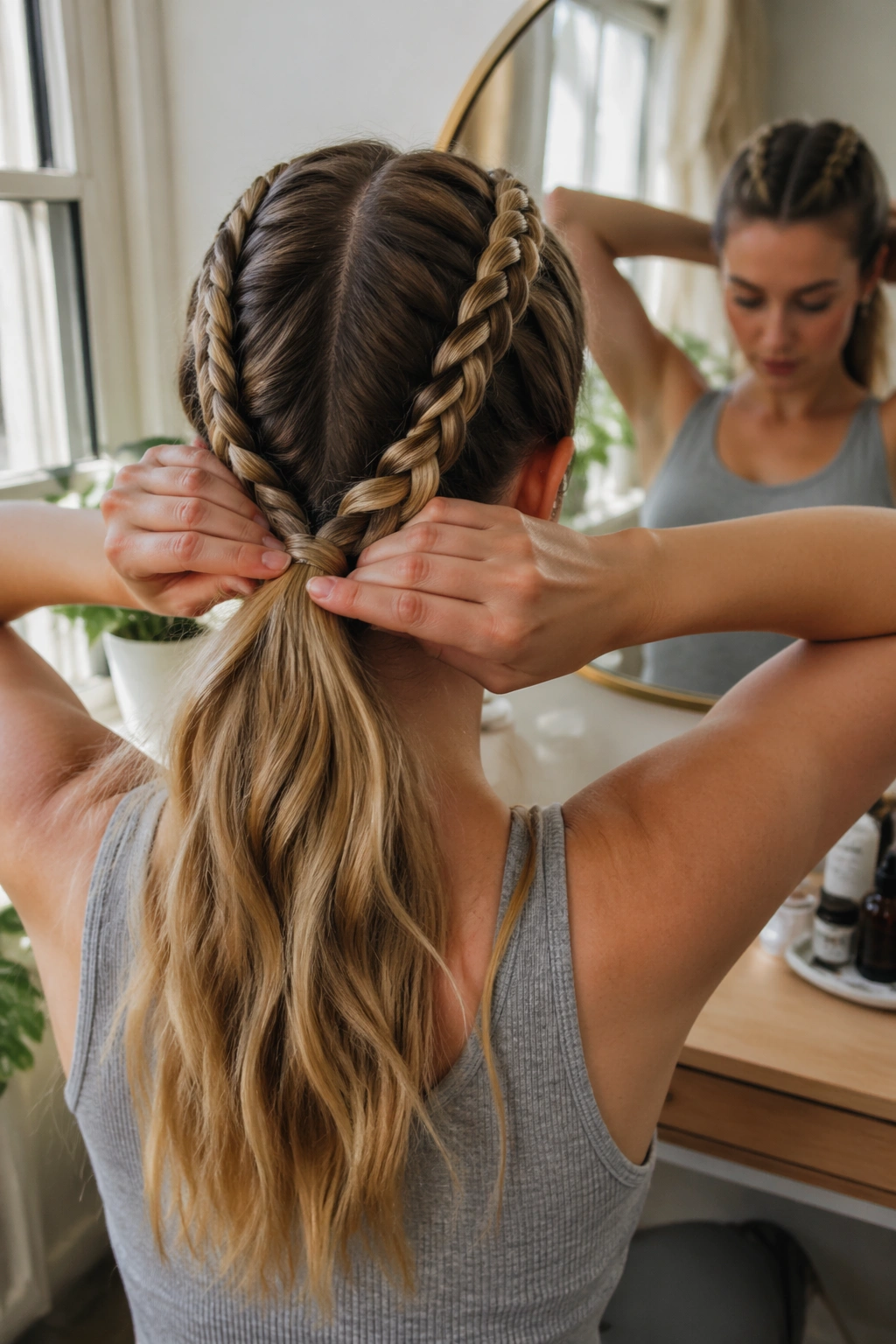
Rope braids twist faster than three-strand braids, and that makes this look useful when you want a cleaner line without spending forever in the mirror. Two rope braids on the sides feed into a ponytail that feels neat and a little sleeker than a standard braid set.
The twist pattern shows best when the hair has a bit of grip. A small amount of cream or light mousse helps the sections stay together. Too much slip and the rope braids loosen before you finish the second side.
How It Differs
Unlike standard braids, rope braids create a spiraled surface that looks sharper on medium-thick hair. They’re also easier to redo if one side comes out uneven, because the twist is more forgiving than a three-piece weave.
I like this one on days when I want the ponytail to feel tidy without looking rigid. It’s a good middle ground.
19. Festival Double Braided Ponytail
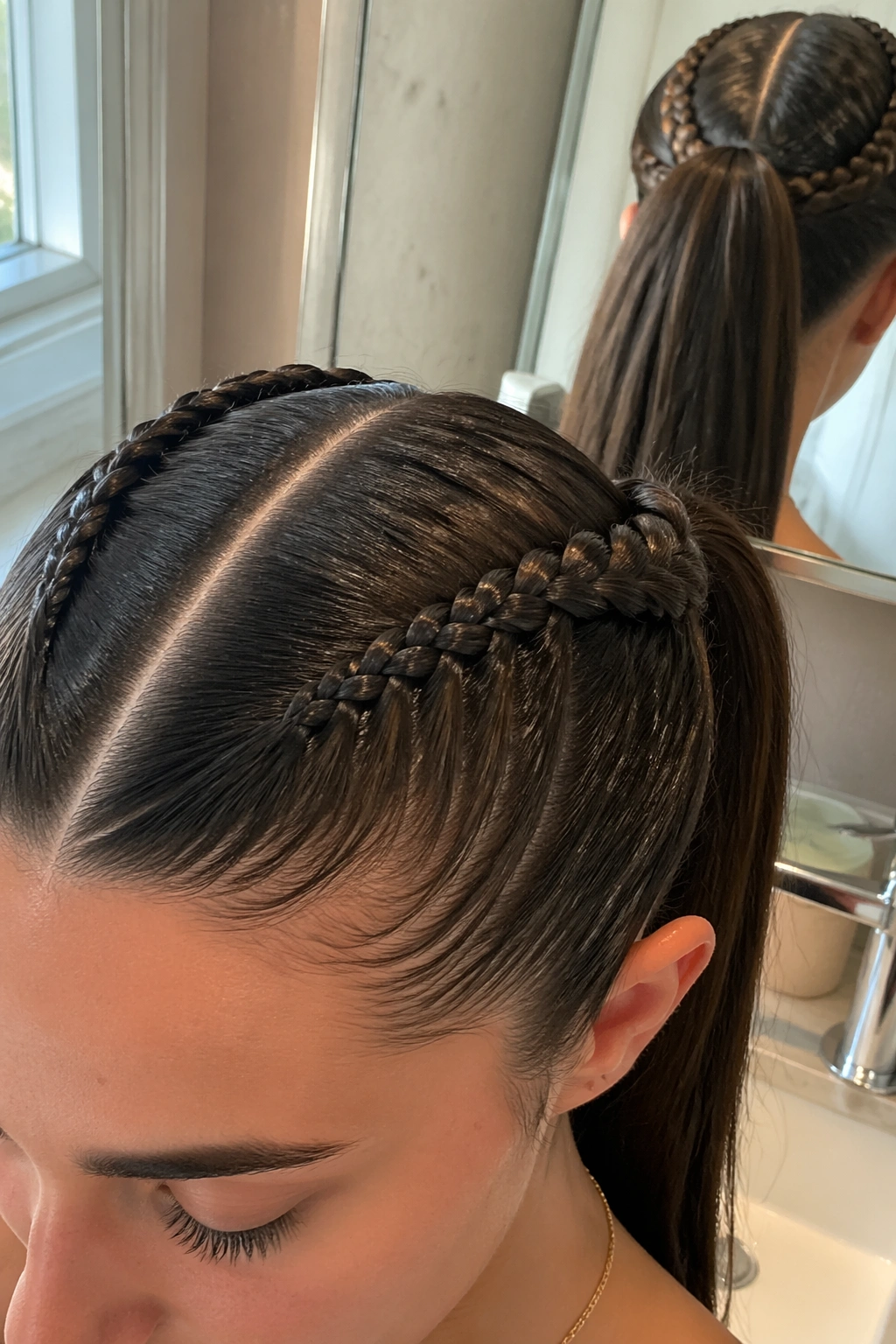
Want something with movement and a little attitude? This is the fun version. Two braids can start at the front, cross through the crown, and end in a ponytail with beads, thread, or tiny cuffs scattered through the lengths.
What to Add and What to Skip
Keep the accessories light enough to move. Heavy clips drag the ponytail down and make the braids feel stiff. Thread, small rings, and a few beads usually do the job without weighing the hair down.
- Add color near the braid ends, not all over the head.
- Use flexible elastics so the ponytail still swings.
- Leave the ponytail textured rather than pinned flat.
This style likes motion. It feels better when the hair can move in the wind or across the shoulders. That is part of the point, after all.
20. Office Sleek Double Braided Ponytail
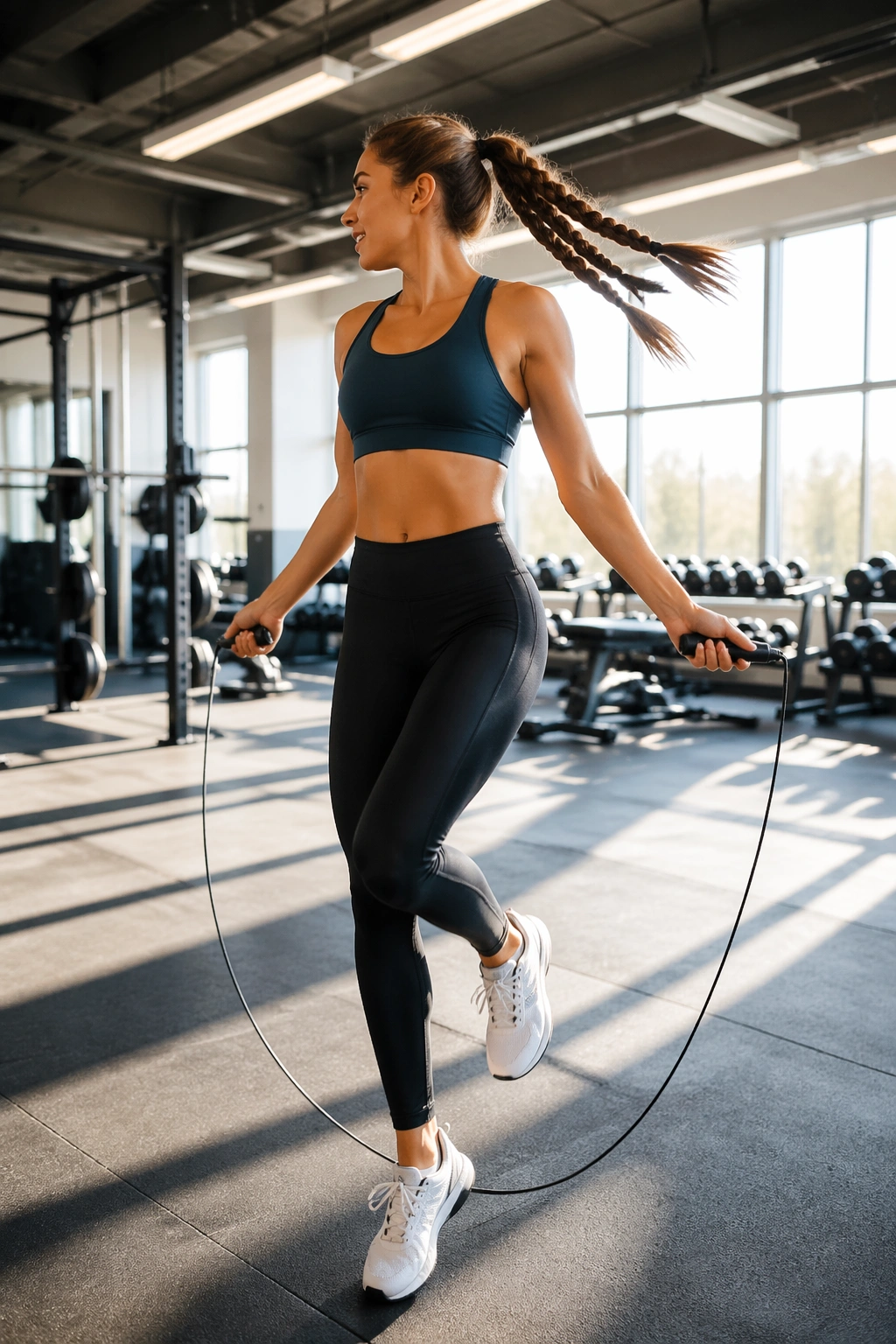
This version says you had time, even when you didn’t. Two narrow braids feed into a low or mid ponytail, the hairline stays smooth, and the whole shape looks controlled without feeling severe.
The finish is where it lives or dies. Flyaways around the part can make a neat ponytail look half-done, so a little gel at the roots and a soft brush over the top are worth the extra minute. Keep the accessory choice quiet — clear elastics, matte pins, maybe a small neutral tie.
It works especially well with tailored clothes, collared shirts, and earrings that need room to show. I’d choose this over a plain ponytail on any day you want a sharper line without wearing your hair down. No fuss. No drama. Just a clean shape that behaves.
21. Wedding Guest Soft Double Braided Ponytail
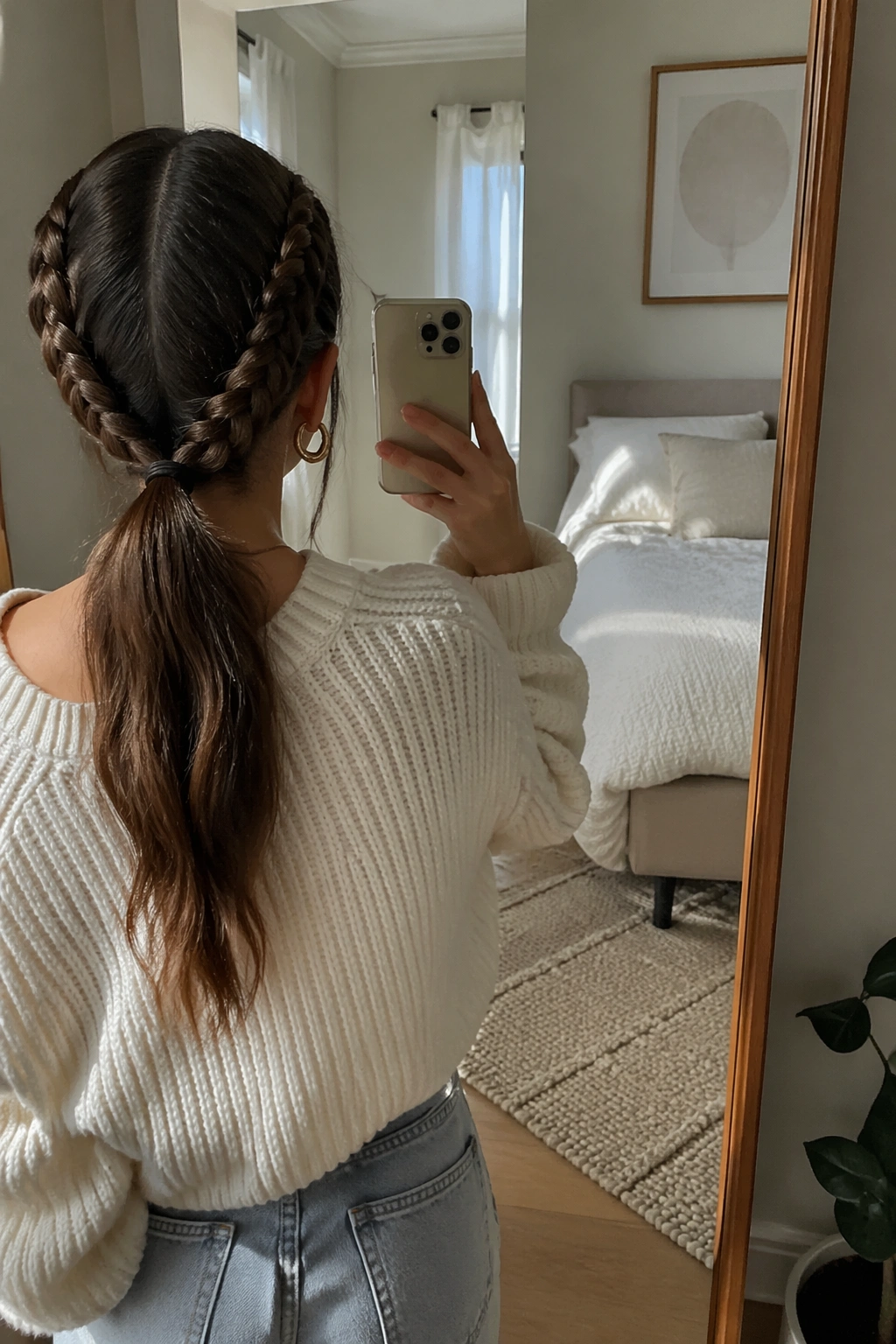
There’s a sweeter version of this look that suits dresses, heels, and long event nights. The braids are looser, the ponytail sits low or mid-low, and the ends are softly curled instead of left sharp.
A few face-framing strands help, but they should look placed, not forgotten. The braid edges can be tugged open just a little to make the crown feel fuller. Pearls, tiny pins, or a thin ribbon can sit near the join if the outfit needs a touch of finish.
What I like about this version is that it feels dressed up without competing with the rest of the outfit. If the dress already has lace, satin, or a detailed neckline, a soft ponytail with braided sides gives you balance. It is flattering in photos and comfortable enough to keep on for hours, which matters more than people admit.
22. Protective Style Double Braided Ponytail
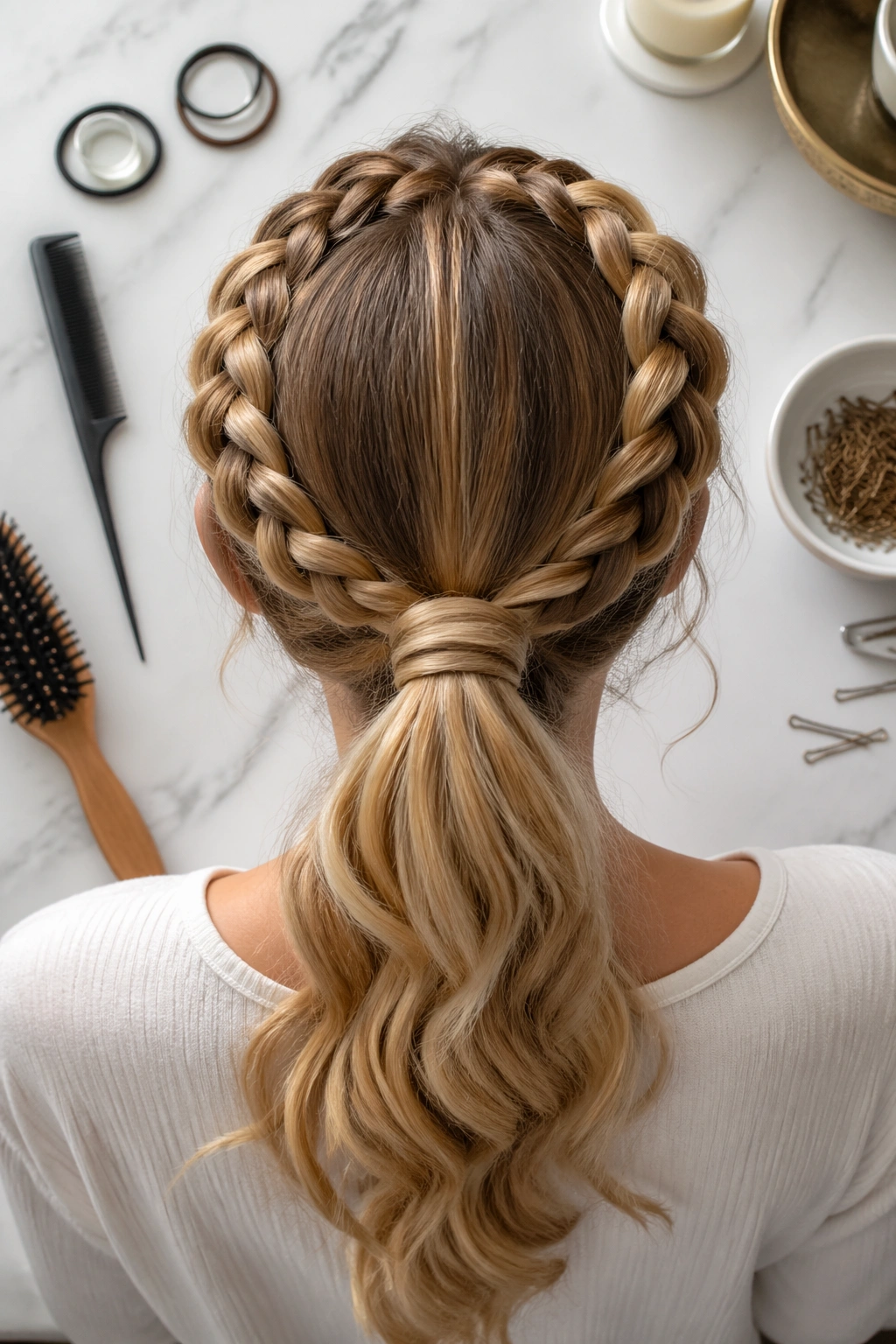
A protective version starts with respect for the hair itself. The braids should not pull at the edges, and the ponytail base should sit comfortably, not tight enough to leave a sore scalp by evening.
How to Keep It Comfortable
Moisture goes first. Detangle gently, add leave-in conditioner or braid cream, and section the hair cleanly before you start. If you use extensions, match the weight carefully so the style does not feel heavy at the roots.
- Keep tension low around the hairline.
- Use satin at night to reduce friction.
- Avoid tiny sections if your hair is already dry or fragile.
This style works because it gives shape while still letting the hair rest. A soft hold on the braid base is enough. Anything harsher starts working against the point of the style.
23. Dramatic Volume Double Braided Ponytail
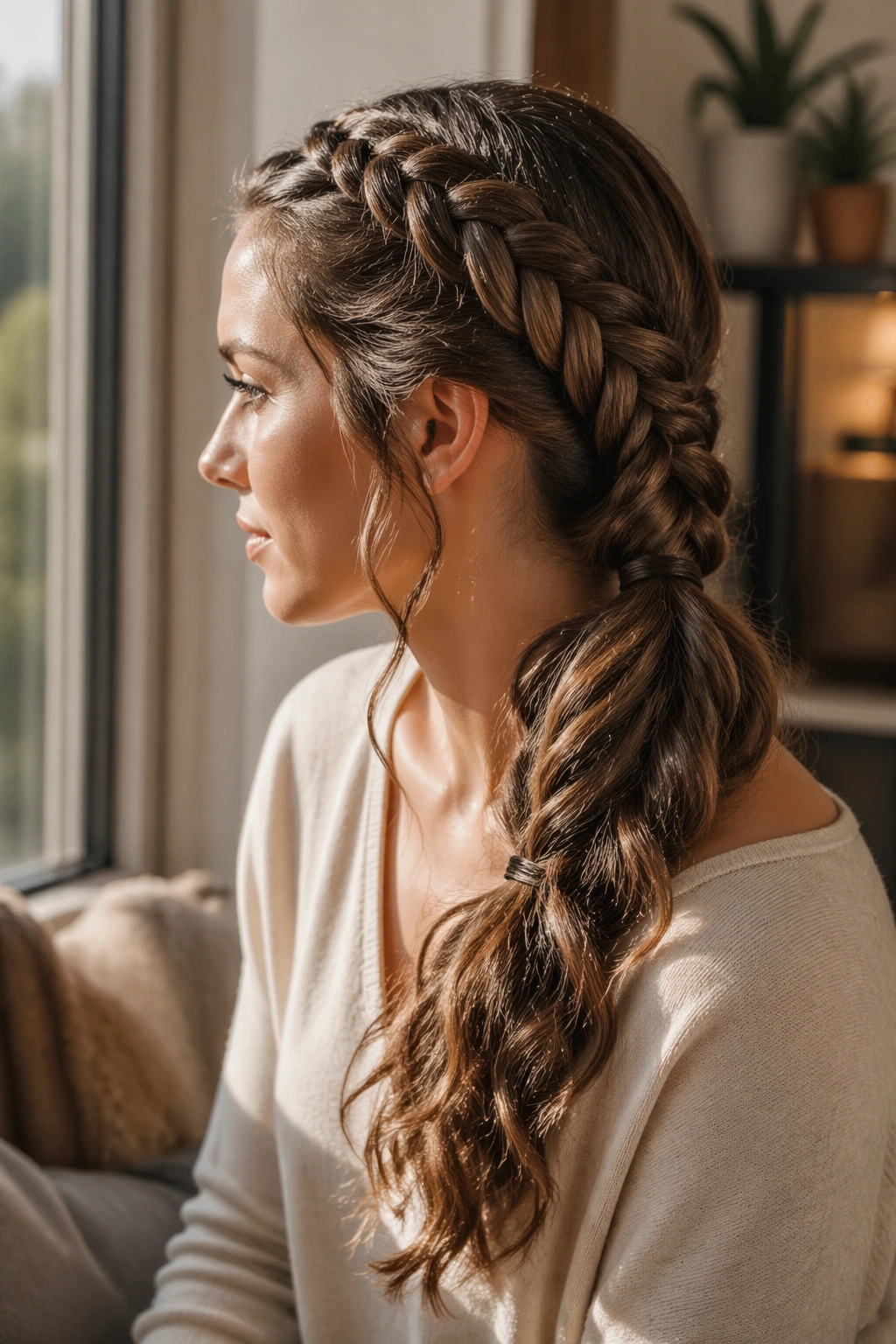
When you want the ponytail to look big, this is the version that does the job. The braids feed into a high or mid-high ponytail, the crown gets a little lift, and the lengths are curled or waved so the whole shape feels full from top to bottom.
This one is especially good for events where the hair needs to read from across a room. The braid sections can be pulled open a bit, but not so much that the pattern disappears. The ponytail wants body, not puffiness. There’s a difference. If the root area feels flat, a light tease under the top layer gives the style more height without changing the clean front view.
Keep the ends glossy and soft. That’s the part people notice last, but it’s the piece that finishes the silhouette. When the braid sections are even and the ponytail has the right amount of lift, the whole look does the work for you.