



Long curly hairstyles for natural hair are the kind of goal that takes patience, consistency, and the right knowledge to actually achieve — and once you get there, the options are genuinely breathtaking. Length on natural hair changes everything. It opens up styles that shorter hair simply can’t do: braided updos with flowing ends, wash-and-gos with serious curtain-like movement, half-up styles that frame the face while keeping volume in full view. If you’re already there or working your way toward it, this is your style guide.
Why Long Natural Hair Requires a Different Approach
Here’s what a lot of people don’t talk about enough: long natural hair is structurally different from long straight hair, and the styling rules don’t translate one-to-one. Straight hair hangs under its own weight, gets longer-looking as it grows, and loses volume with length. Natural hair — depending on curl pattern — can actually appear shorter as it gets longer, because shrinkage condenses length. A woman with 12 inches of 4c hair might wear what looks like a 6-inch afro.
This matters for styling because many long natural hairstyles are actually stretched styles — meaning the hair is elongated through braiding, twisting, banding, or blow-drying before being worn. Understanding that distinction changes how you think about “long natural hair looks.”
Moisture retention also becomes more critical at longer lengths. The ends of your hair are the oldest, most fragile part — and the longer your hair gets, the further those ends are from your scalp’s natural oils. You have to bring moisture to them intentionally.
Protective Styling as a Length-Retention Tool
More women with long natural hair rely on protective styling than those with shorter lengths — and for good reason. Protective styles tuck away your ends, reduce daily manipulation, and minimize the breakage that can sabotage length retention.
But protective styling at longer lengths also gives you access to the most stunning long natural hair looks: jumbo box braids, Senegalese twists, goddess locs, and jumbo knotless braids all look dramatically different — and dramatically better — when your natural hair underneath is long enough to contribute real length and volume to the style.
Protective styles aren’t just for protection. They’re also a form of styling that happens to protect. At longer lengths, that double benefit is even more valuable.
The Best Products for Long Natural Hair
Product choice matters more at longer lengths because you have more surface area to cover and more variation in curl pattern across different sections of your hair. What works at the nape might not work at the crown. A few principles that hold across the board:
- Moisture before everything. A good leave-in conditioner is non-negotiable at longer lengths. Apply it in sections while hair is soaking wet.
- Avoid heavy butters on fine or low-porosity hair. They build up and create limp, weighed-down curls that look the opposite of what you want.
- Layer products by weight — lighter products first (leave-ins, milks), heavier products last (creams, gels).
- Don’t skip detangling. Long natural hair tangles — and unaddressed tangles become knots that become breakage. Detangle with a wide-tooth comb or your fingers in small sections while hair is wet and saturated with conditioner.
Protective Styles vs. Worn-Out Styles — Knowing the Difference
Some long natural hairstyles are meant to be worn daily — wash-and-gos, twist-outs, braid-outs, puffs. Others are protective — braids, locs, twists with tucked ends. And some fall somewhere in between — like loose two-strand twists worn out without tucking, which are technically a worn style with some protective benefits.
Knowing where a style falls on that spectrum helps you plan your hair care routine. If you’re in a fully protective style, you can go several weeks without washing (though scalp care still matters). If you’re wearing your hair out daily, you need a wash-and-conditioning routine that supports that level of manipulation.
The goal isn’t to always be in a protective style. It’s to balance wear-out styles and protective phases in a way that keeps your hair healthy and your length growing.
Scalp Care at Longer Lengths
Scalp health is often overlooked when people focus on long natural hair goals. But the truth is, healthy hair growth starts at the scalp — and at longer lengths, your scalp can be harder to reach and easier to neglect, especially when protective styles cover it for weeks at a time.
Invest in a scalp massager or a pointed applicator bottle for applying lightweight scalp oils between wash days. Peppermint oil diluted in a carrier oil is a classic option — it stimulates circulation, which supports growth. Jojoba oil is another good choice because it closely mimics the scalp’s natural sebum.
When you do wash your hair, make sure you’re actually cleansing your scalp, not just running shampoo over your hair. Use your fingertips (not your nails) to gently massage the scalp in small circular motions.
1. The Long Wash-and-Go
There’s something almost magical about a long natural wash-and-go done right. All that length, all those curls, all that volume — moving together as one. It’s arguably the most dramatic expression of long natural hair there is.
The challenge is that wash-and-gos on longer hair require more product, more sectioning, and more patience than shorter lengths. You can’t just scrunch and go when your hair falls past your shoulders — you need to work in sections, applying product evenly, and clumping your curls deliberately.
How to Get It
Section your hair into four to eight parts (more sections = more even product distribution). In each section, apply leave-in conditioner, then a curl cream or gel on soaking-wet hair. Smooth from root to tip to encourage clumping. Let air dry completely or use a diffuser. Don’t touch it while it’s drying.
The single most important rule: don’t touch it until it’s 100% dry. Touching wet natural hair breaks up the curl clumps and creates frizz.
2. The High Bun With Curly Volume
A high bun on long natural hair isn’t the same as a high bun on straight hair. On natural hair — especially type 4 — a high bun becomes a big, fluffy cloud of texture gathered at the crown. The bun itself is often less of a sleek knot and more of a voluminous puff-knot hybrid.
Pull your hair up into a high ponytail using a scrunchy (not an elastic that’ll snag), then twist or tuck loosely and secure with bobby pins if needed. Let curls and ends fall freely rather than forcing them into a smooth bun shape.
3. The Puff Pony
The puff pony is one of the most iconic long natural hair styles — a high puff at the crown with enough length that the curls actually cascade rather than just sitting compact. On shorter hair, puffs are round and contained. On longer hair, they get dramatic.
This is one of those styles where length genuinely transforms the look. A puff on 6 inches of hair is cute. A puff on 12 inches of hair is a statement.
4. The Long Twist-Out
Two-strand twists on longer natural hair create elongated, defined spirals that stretch your curl pattern and add visible length. The twist-out is the classic technique for natural hair wearers who want definition without heat — and on longer hair, the results are particularly stunning.
How to Get It
Wash, condition, and apply a styling cream to damp hair in sections. Twist each section tightly from root to tip. Let dry completely (this is crucial — undried twists unravel into frizz). Then carefully unravel each twist, using a small amount of oil on your fingertips to separate the sections without causing frizz.
5. The Braided Updo
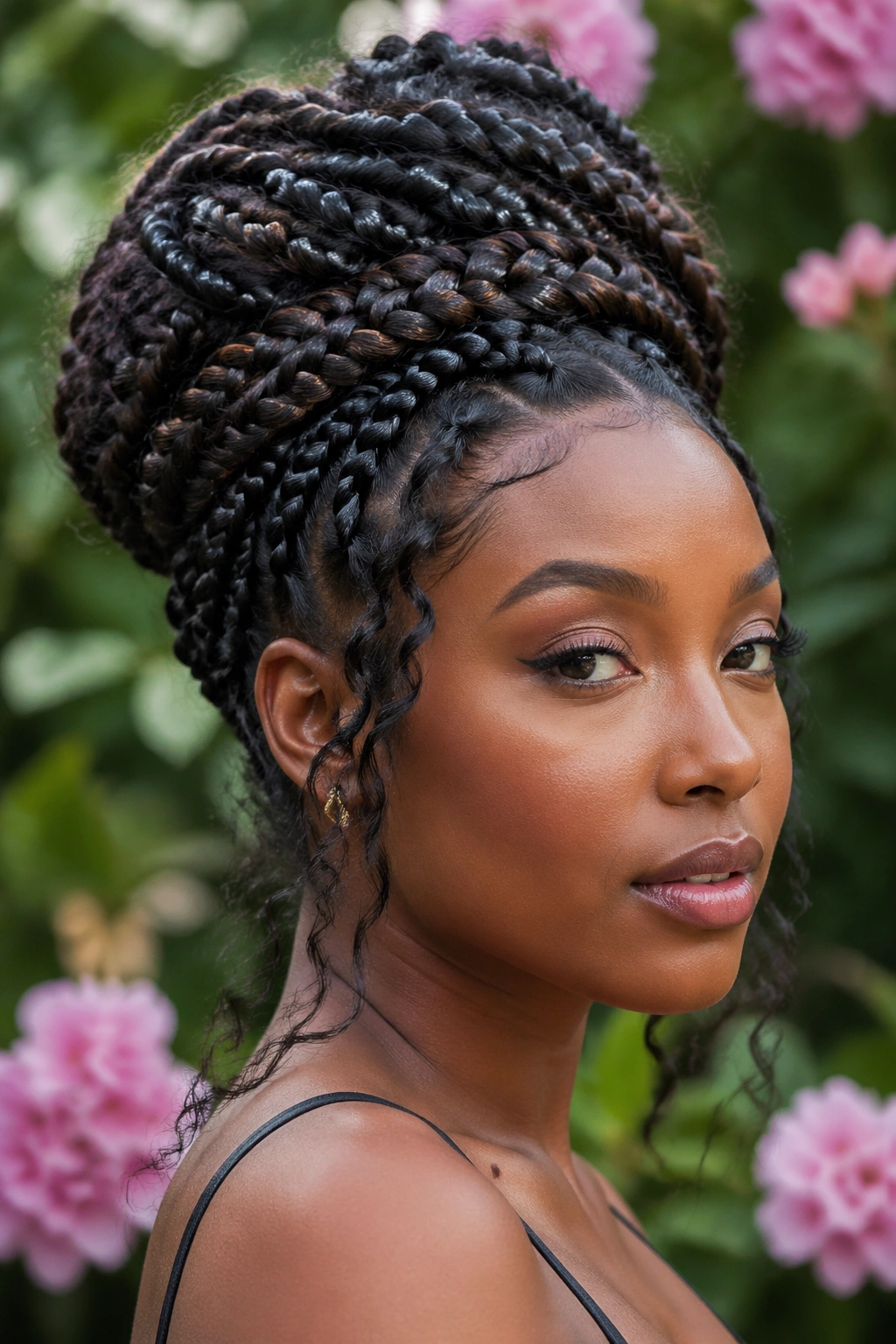
Long natural hair gives you the length needed for elaborate braided updos that short hair simply can’t pull off. Think crown braids, halo braids, braided buns, and multi-strand braided updos that take your hair up and away from the neck while still looking dramatically beautiful.
A braided updo is also one of the best protective styles for long natural hair — it keeps your ends tucked, reduces daily manipulation, and can last several days before needing to be redone.
6. The Half-Up Half-Down Style
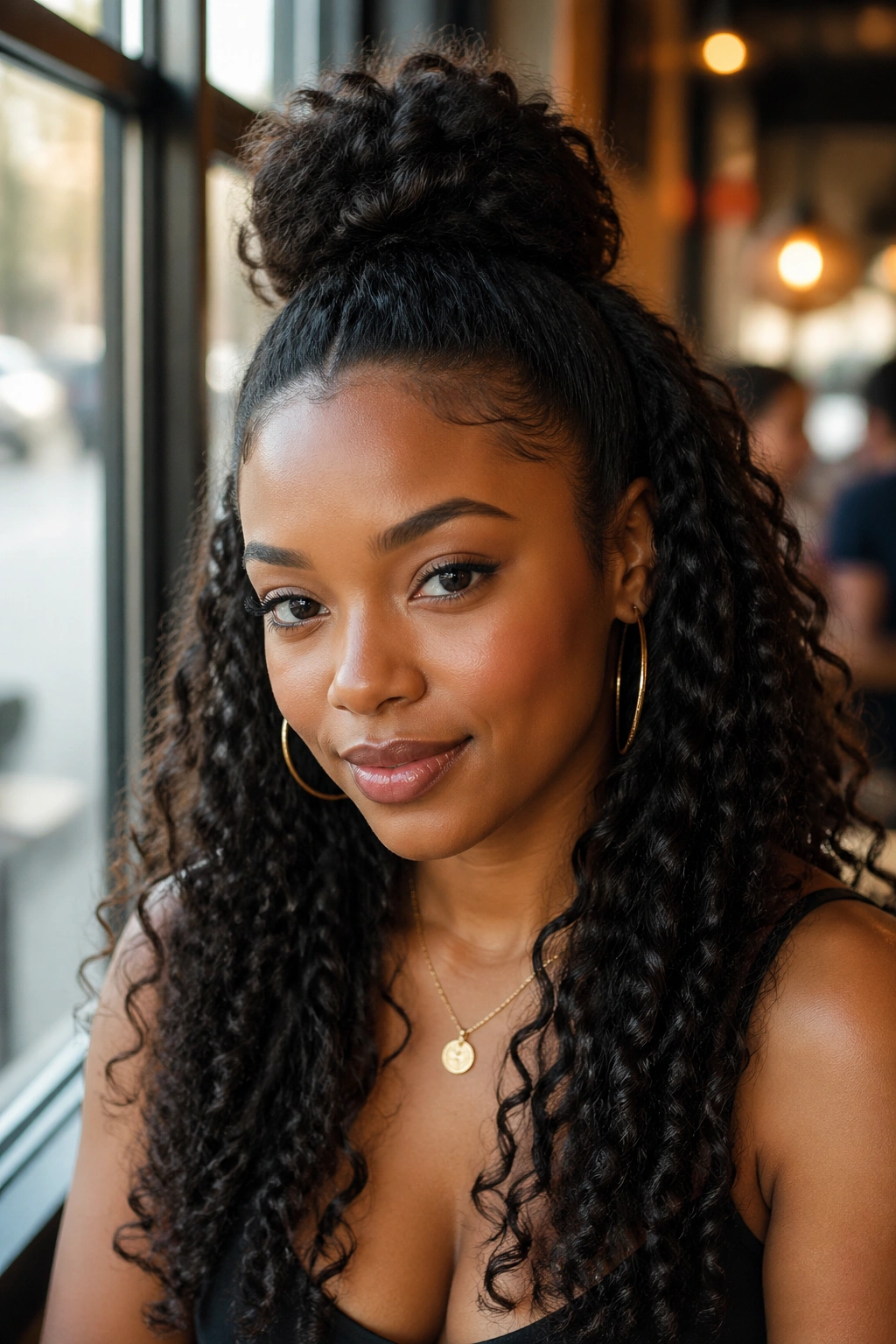
This is one of the most universally flattering long natural hairstyles because it combines the face-framing benefits of wearing your hair down with the elegance of having it partially up. Gather the top section of your hair into a puff, bun, or braid at the crown while leaving the rest down.
The half-up creates a visual structure that draws the eye upward, which can be especially effective for elongating the appearance of rounder face shapes.
7. The Long Braid-Out
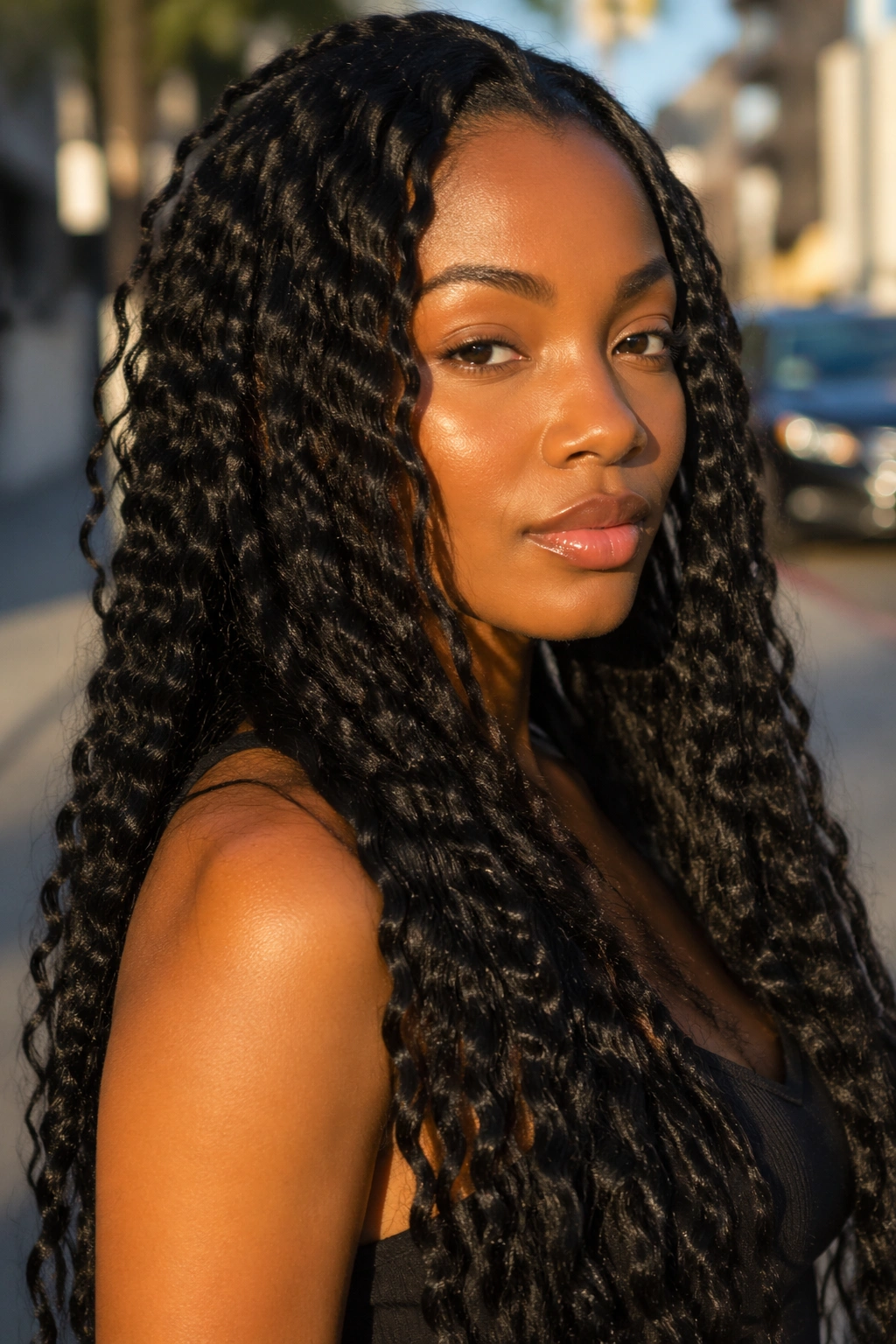
Similar to a twist-out but with a slightly different texture, the braid-out uses three-strand braids instead of two-strand twists. The result is a wavier, more zigzagged curl pattern that has incredible volume on longer hair.
Some women prefer the braid-out over the twist-out because it tends to last longer without frizzing and holds its shape better in humid conditions.
8. The Stretched Blowout (Heatless)
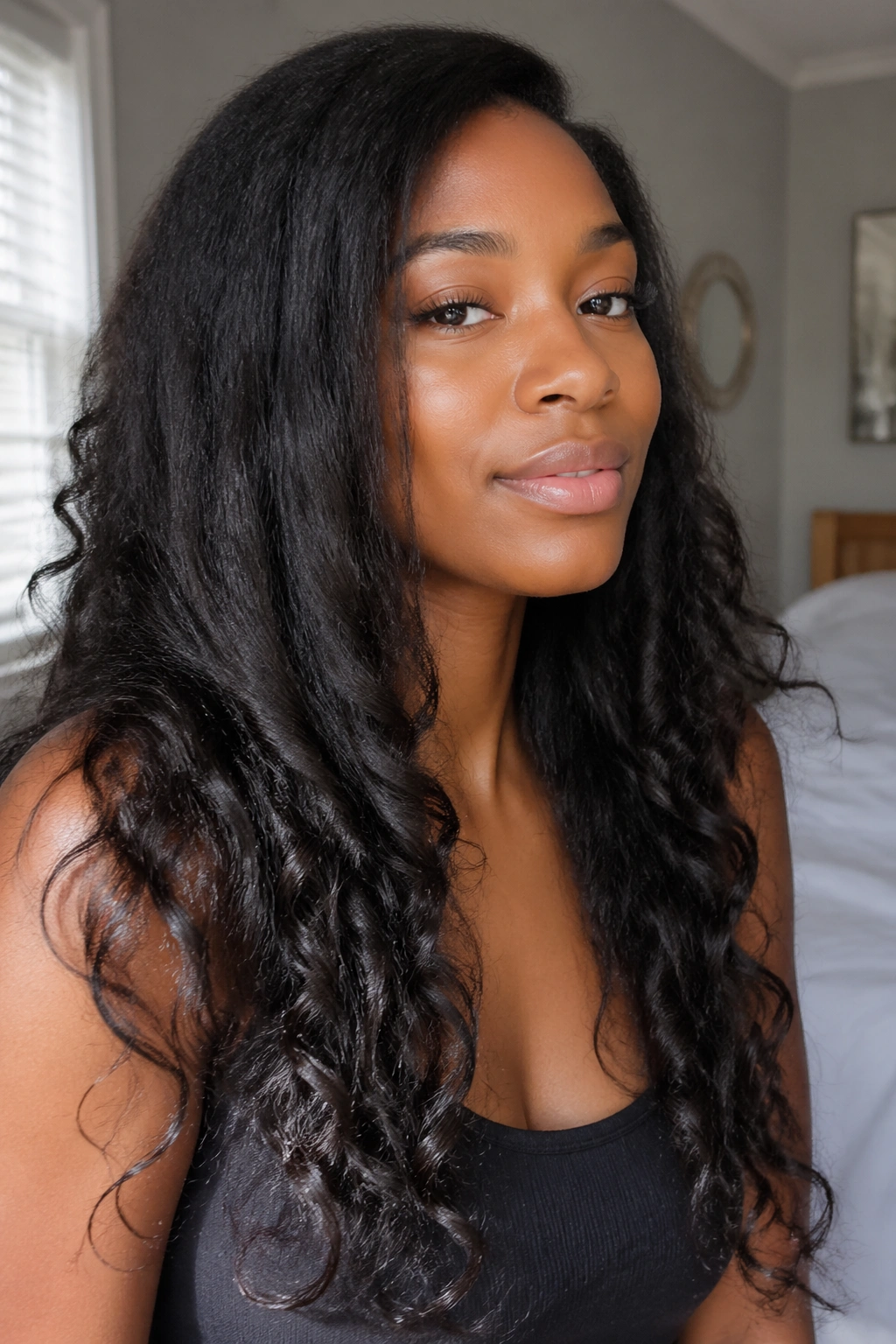
You don’t need heat to stretch natural hair. African threading, banding, and braiding-while-wet are all heatless methods that can stretch your hair significantly without the damage that comes from flat irons or blow-dryers.
On longer natural hair, a well-stretched style looks dramatically different from a fully contracted curl style — and gives you access to sleeker looks without compromising your curl pattern long-term.
9. The Crown Braid
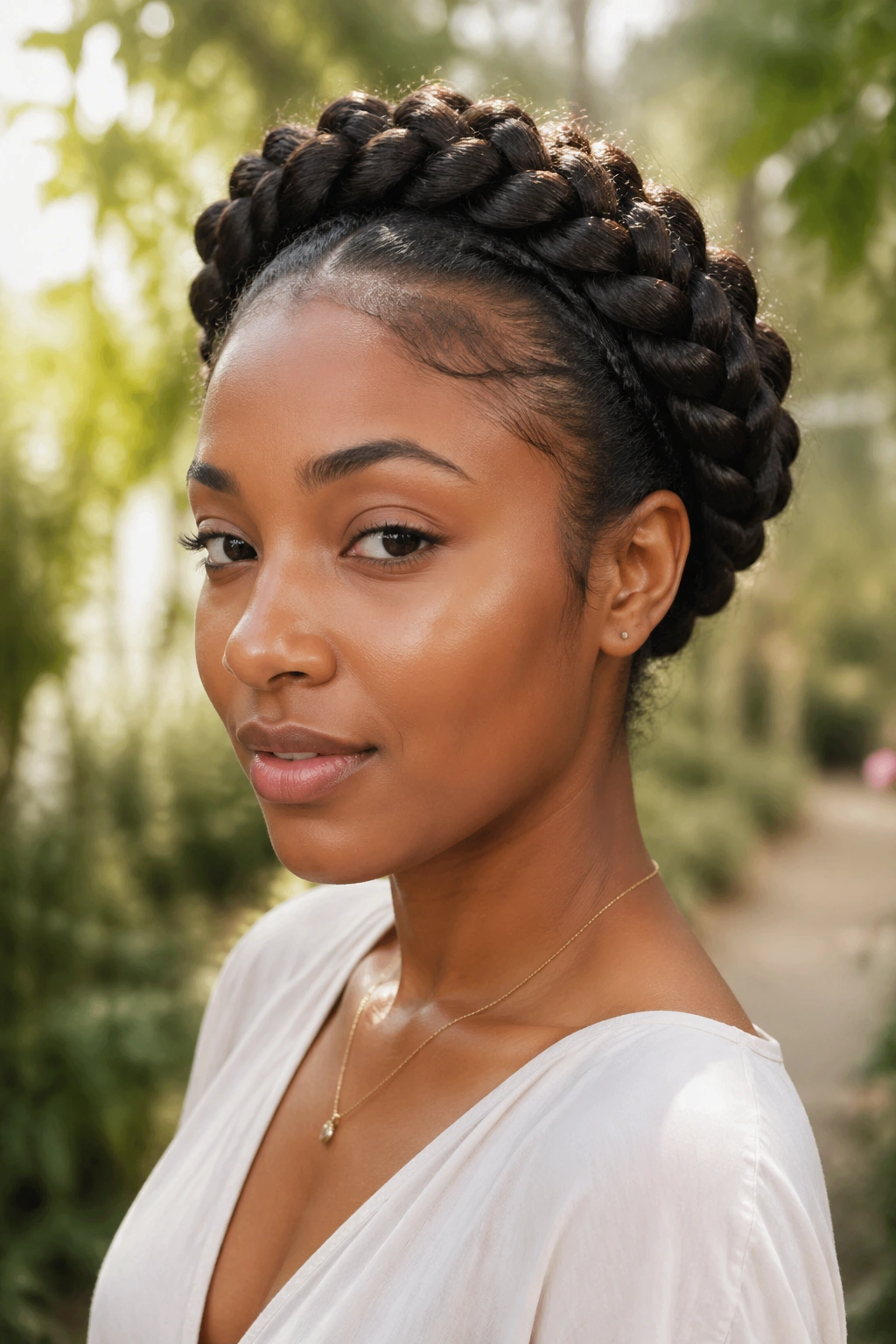
A crown braid — also called a halo braid — takes long hair braided along the hairline all the way around the head, creating a circular crown of braids. It’s elegant, regal, and one of the most dramatic things you can do with long natural hair.
This style requires significant length — typically shoulder length or longer — to complete the full circle. It also works best with stretched natural hair, so plan accordingly.
10. The Bantu Knot-Out at Length
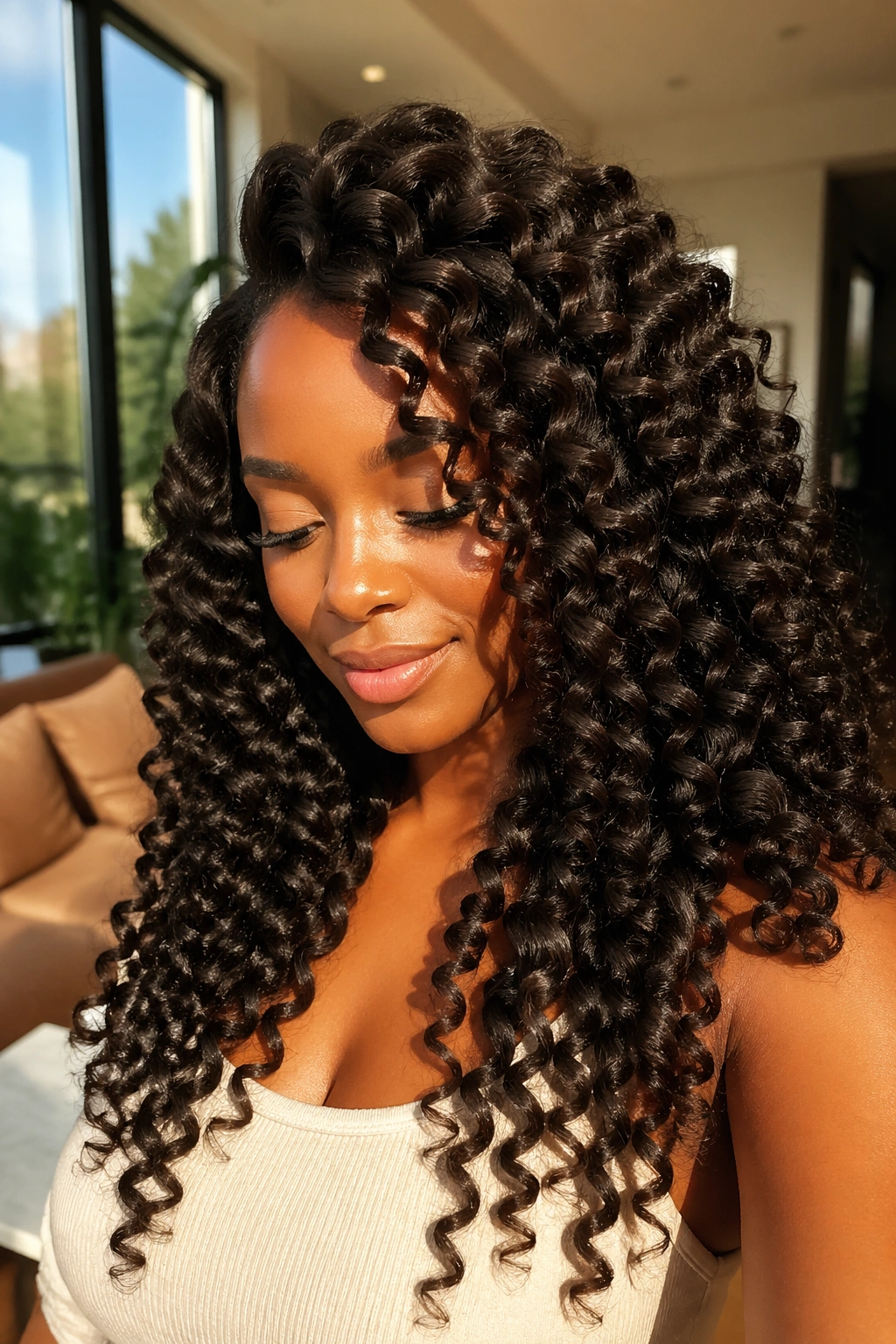
On shorter hair, Bantu knot-outs create compact, defined spirals. On longer hair? They create big, flowing ringlets with serious movement and volume. The longer the hair, the more dramatic the knot-out result.
Section the hair, apply styling cream to each section, then twist into Bantu knots. The more sections you create, the tighter and more defined the resulting curls. Let dry completely before unraveling.
11. The Goddess Locs
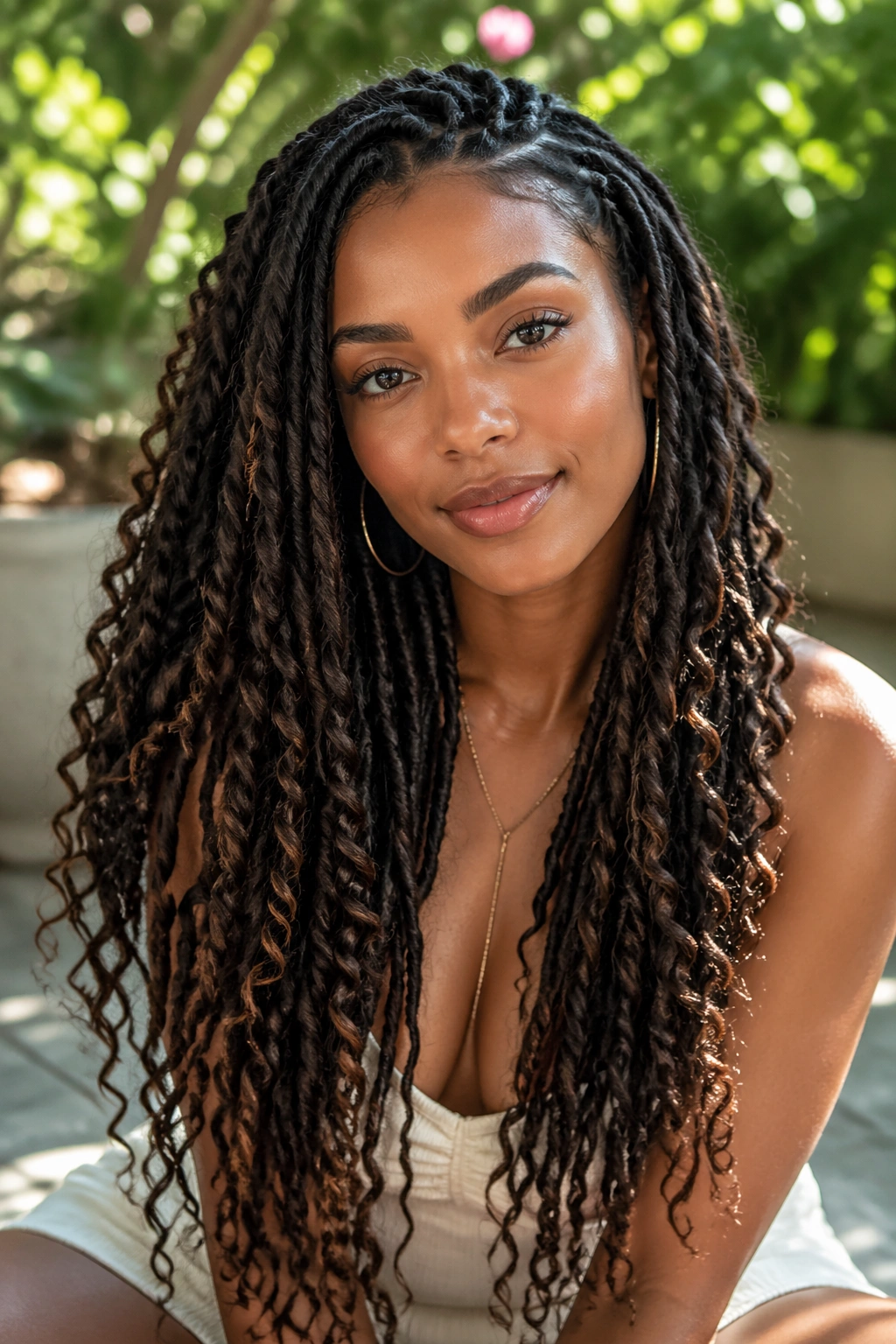
Goddess locs are a semi-protective style that combines the structure of locs with loose, flowing, bohemian ends. On long natural hair, goddess locs look absolutely lavish — they add length, texture, and a completely different visual personality.
The “goddess” element comes from the loose, curly ends that aren’t fully wrapped like traditional locs. Those free ends create movement and a romantic quality that sets this style apart.
12. The Box Braids
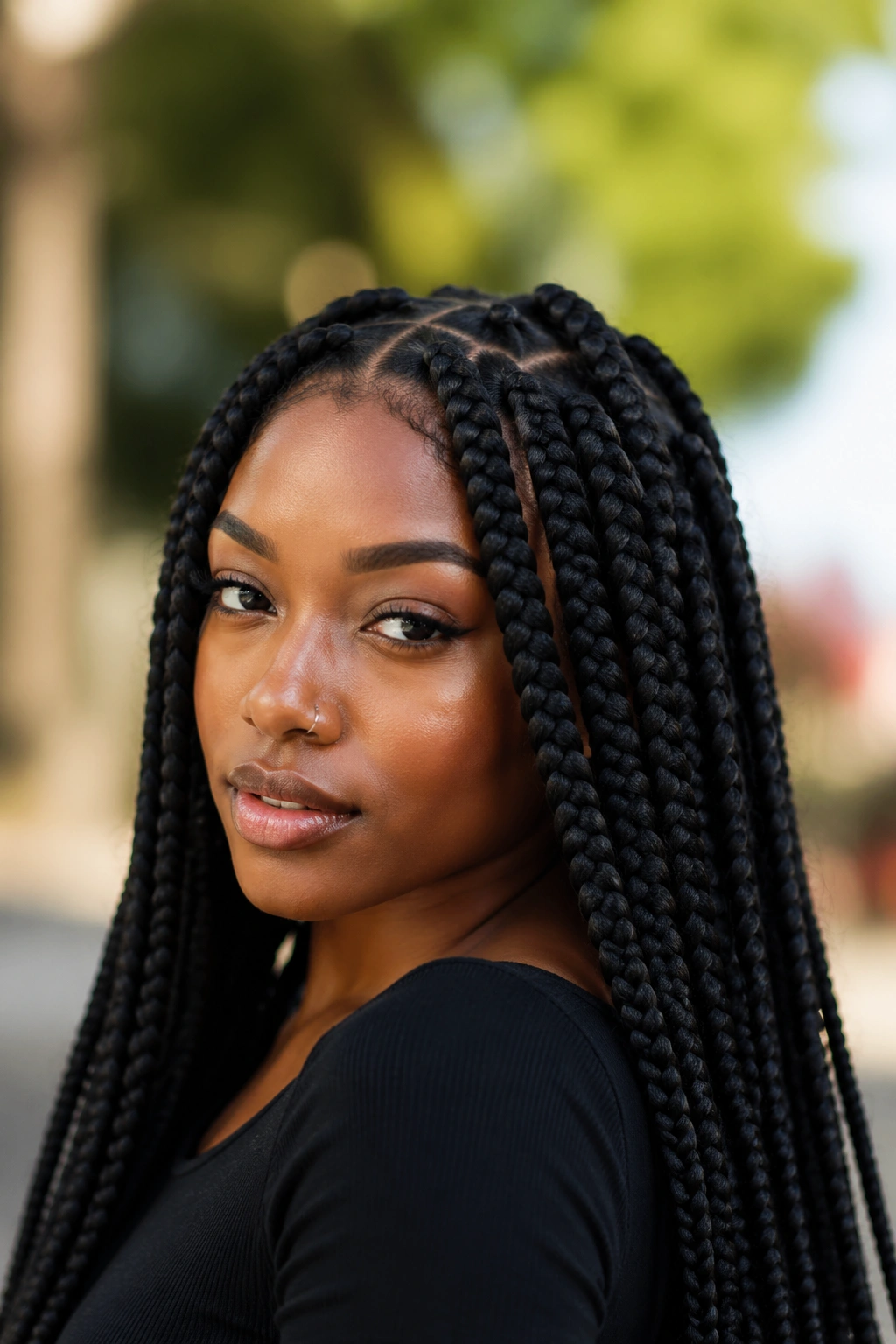
Jumbo or medium box braids on long natural hair are a cornerstone of Black hair culture — beautiful, protective, versatile, and deeply rooted in history. On longer natural hair, box braids can be done with less extension hair (or none at all) because your natural length contributes to the overall braid.
Box braids last 6-8 weeks when properly maintained, making them one of the most practical long-term protective styles available.
13. The Loose Twist-Out Puff
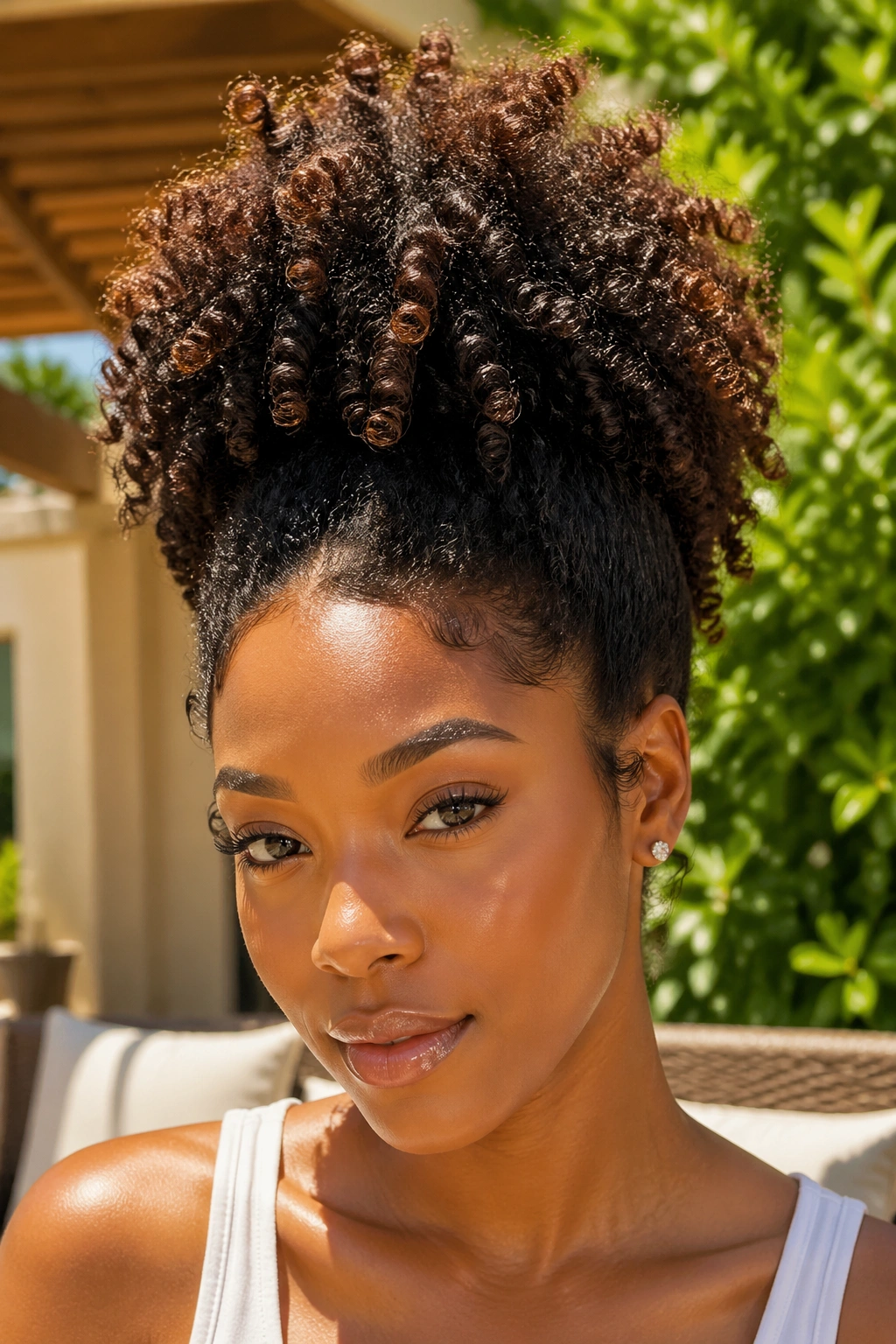
Take your twist-out result and gather the curls into a loose, high puff rather than wearing them all down. The twist-out texture in puff form creates a different visual effect than a standard puff — more defined, more structured, and with visible curl pattern even from a distance.
14. The Side-Swept Long Curls
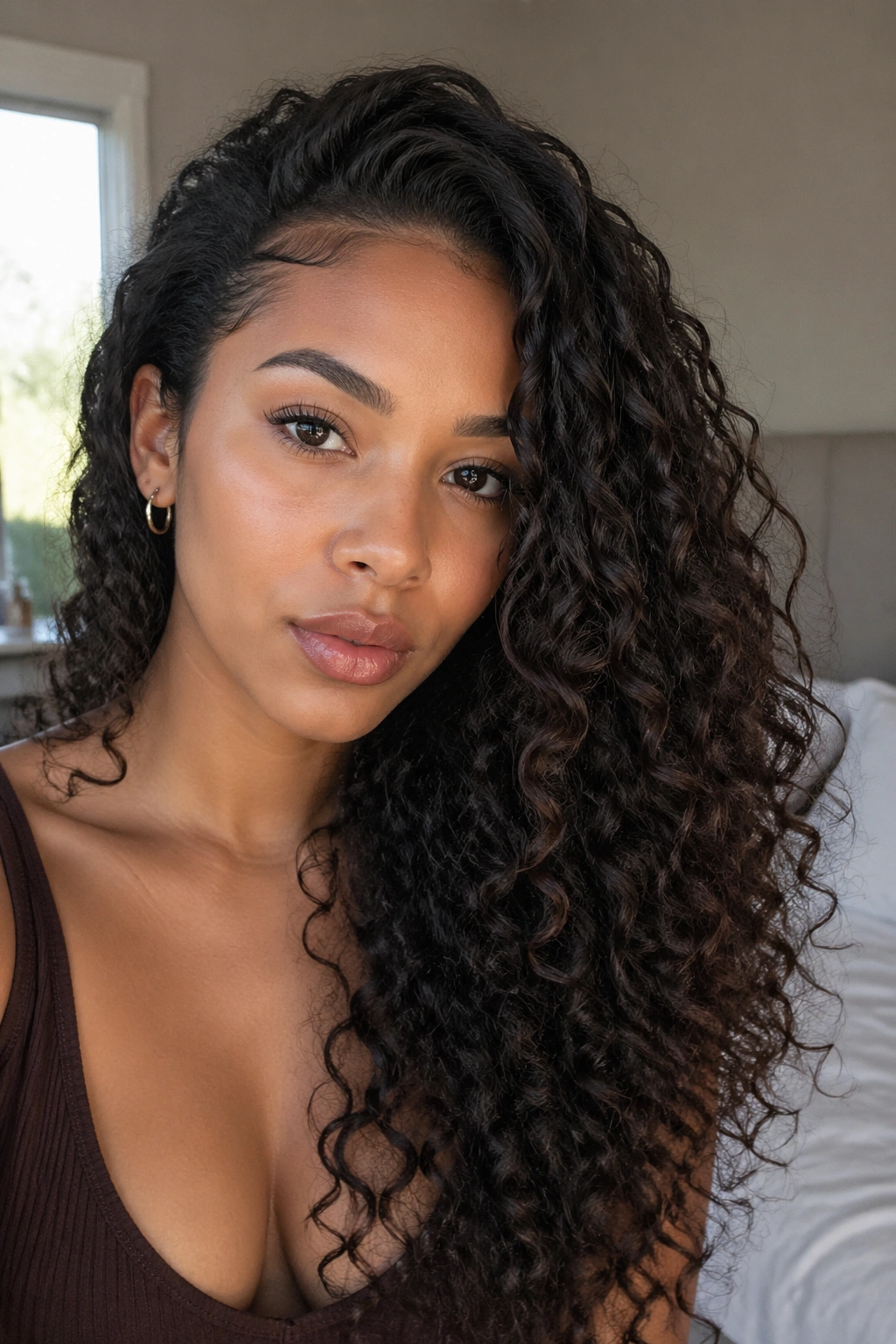
Simply sweeping all your long curls to one side creates a dramatic asymmetrical look that photographs beautifully and works for everything from casual outings to formal events. You can secure the swept side behind one ear or hold it in place with a decorative clip or pin.
On long natural hair, a side sweep can also help control volume in humid or windy conditions — everything gathered and draped to one side is less likely to expand wildly in all directions.
15. The Low Bun With Curly Face-Framing Pieces
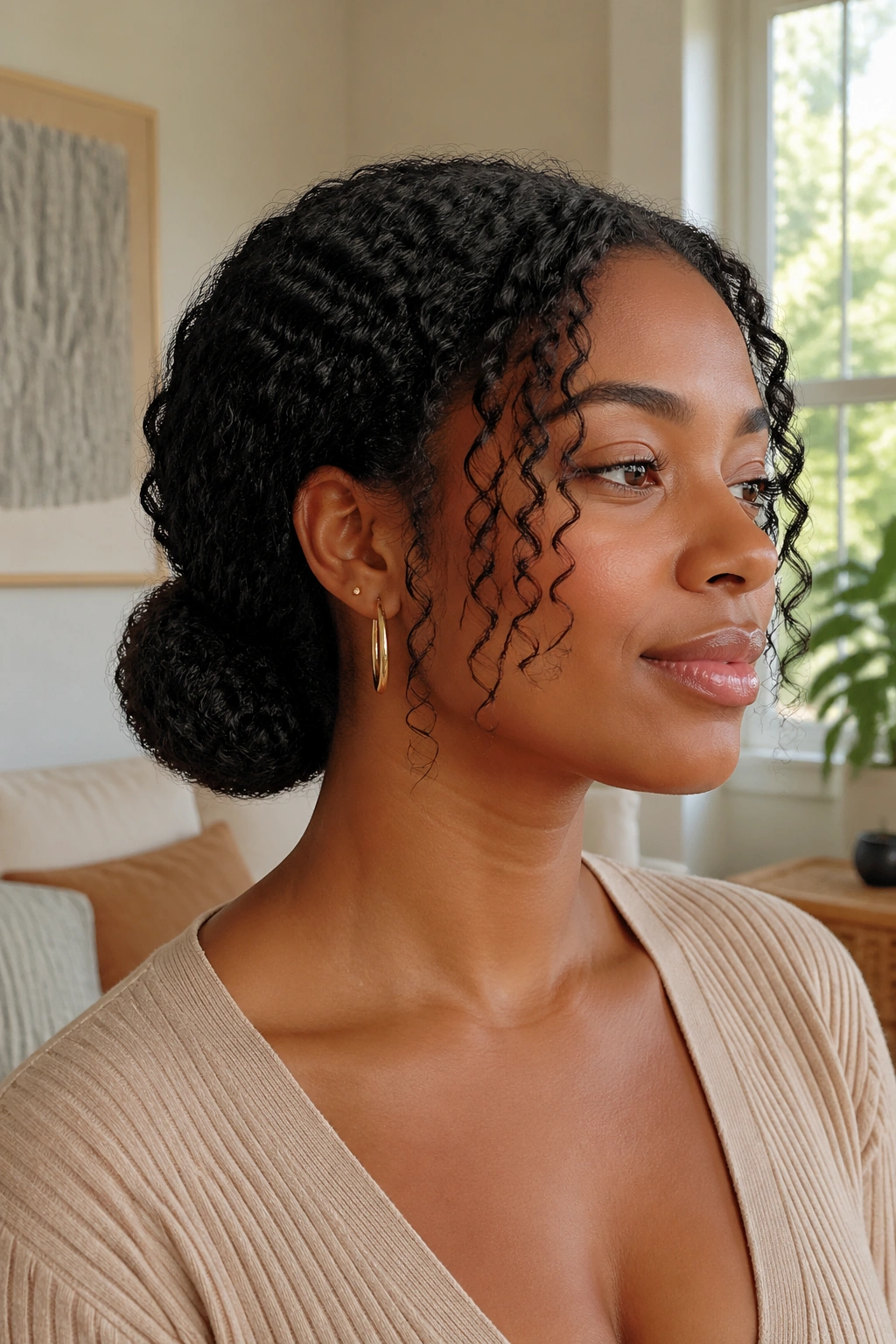
Pull most of your long hair into a low bun at the nape, then let a few curly sections frame your face at the front. It’s a style that reads polished and deliberate while still celebrating your natural curl texture.
This works particularly well when your natural hair has some length variation — the shorter pieces at the front naturally fall around your face, while the longer sections in the back go into the bun.
16. The Knotless Braids
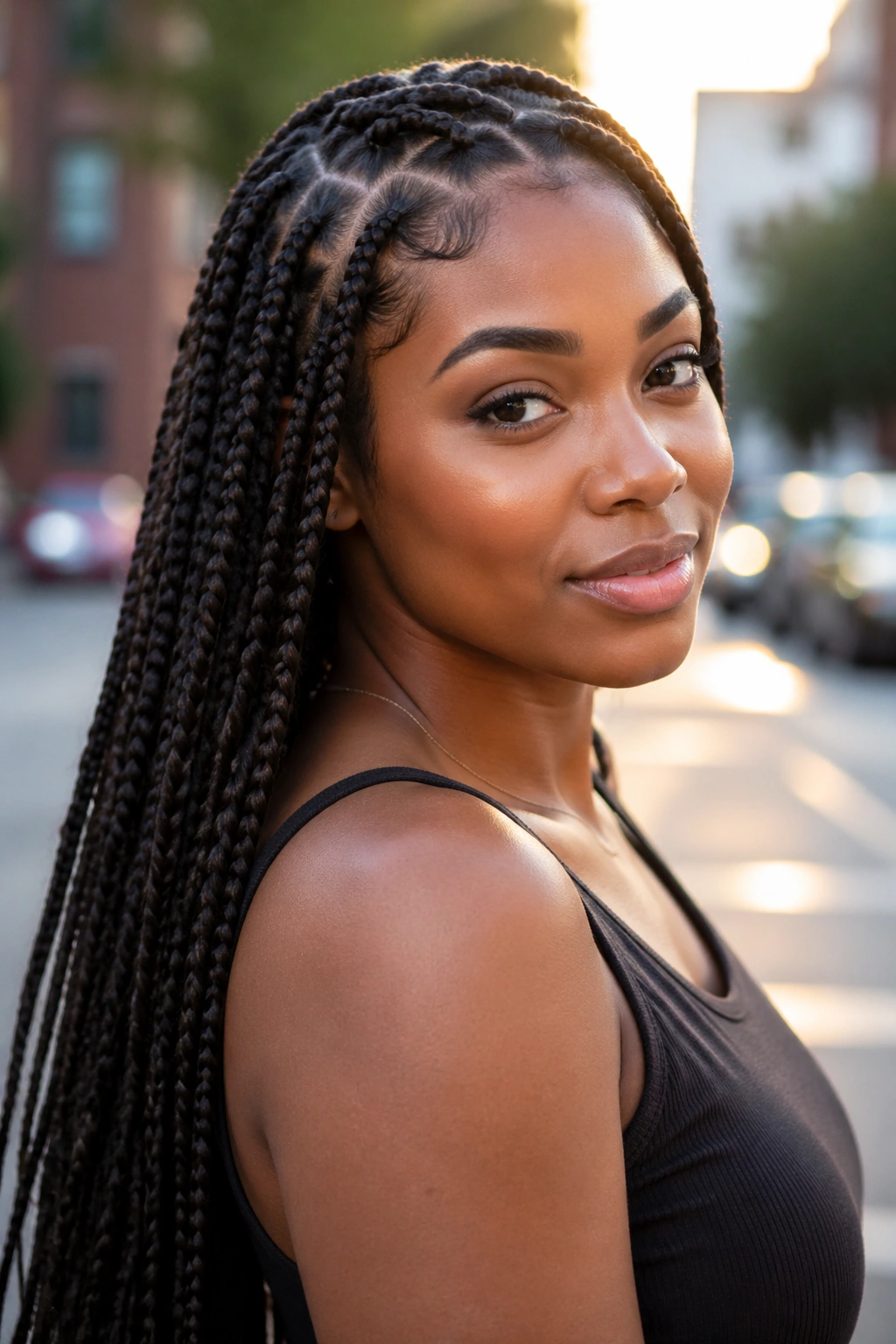
Knotless braids have largely replaced traditional box braids in popularity because they’re gentler on the scalp — there’s no tight knot at the root, so tension is distributed more evenly. On long natural hair, knotless braids look seamless and natural at the root.
They also tend to lay flatter against the head for the first few inches, which creates a more natural appearance where the braids emerge from the scalp.
17. The Pineapple Updo
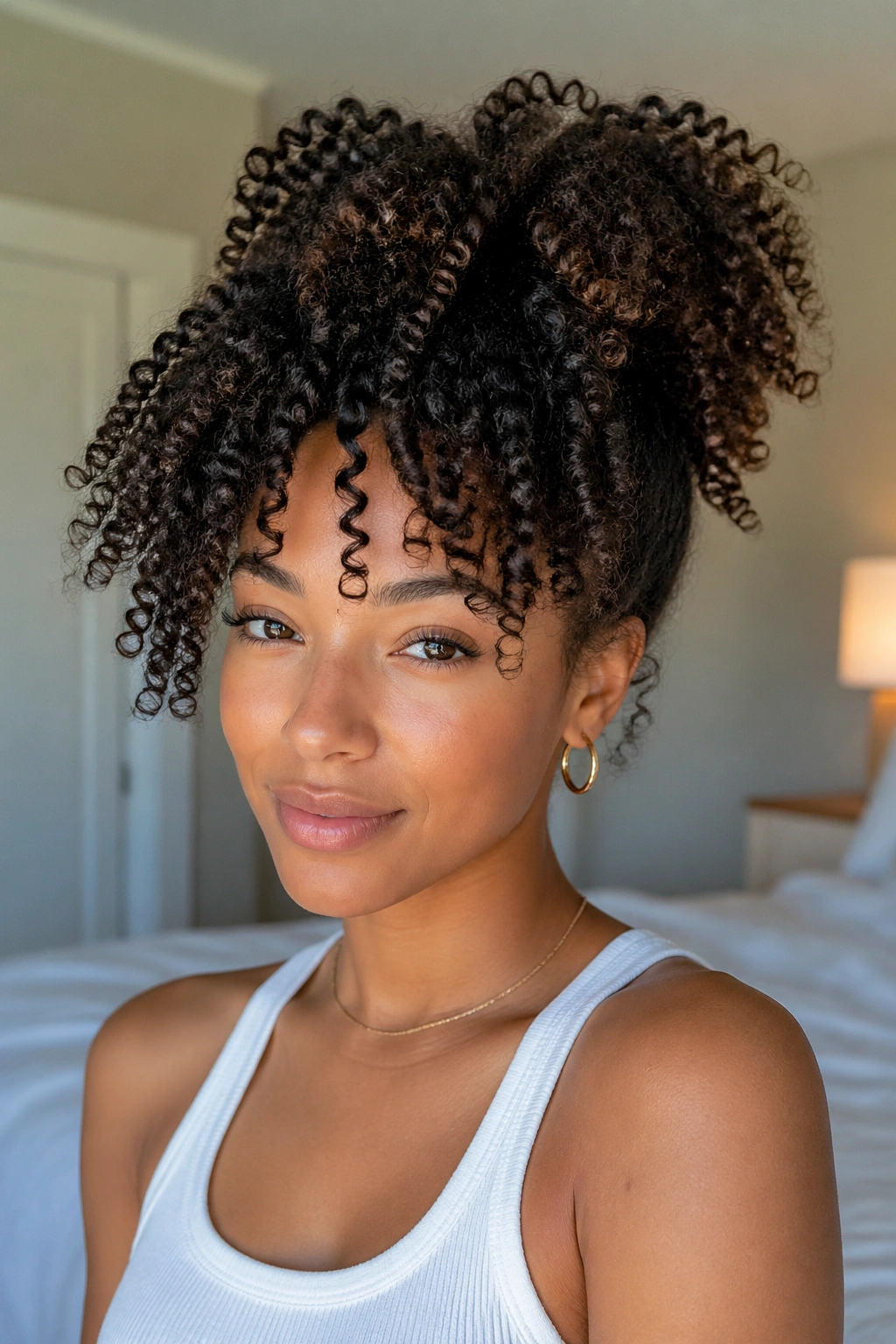
The pineapple is the classic way to sleep with and preserve long natural hair — but it’s also a full-on style in its own right. Gather all your hair into a loose, high puff at the very crown of your head and secure loosely with a scrunchy. The curls spill forward and to the sides like the top of a pineapple.
On longer hair, the pineapple has serious drama. The length cascades forward, sometimes falling over the forehead, and the volume is substantial.
18. The Defined Spiral Set
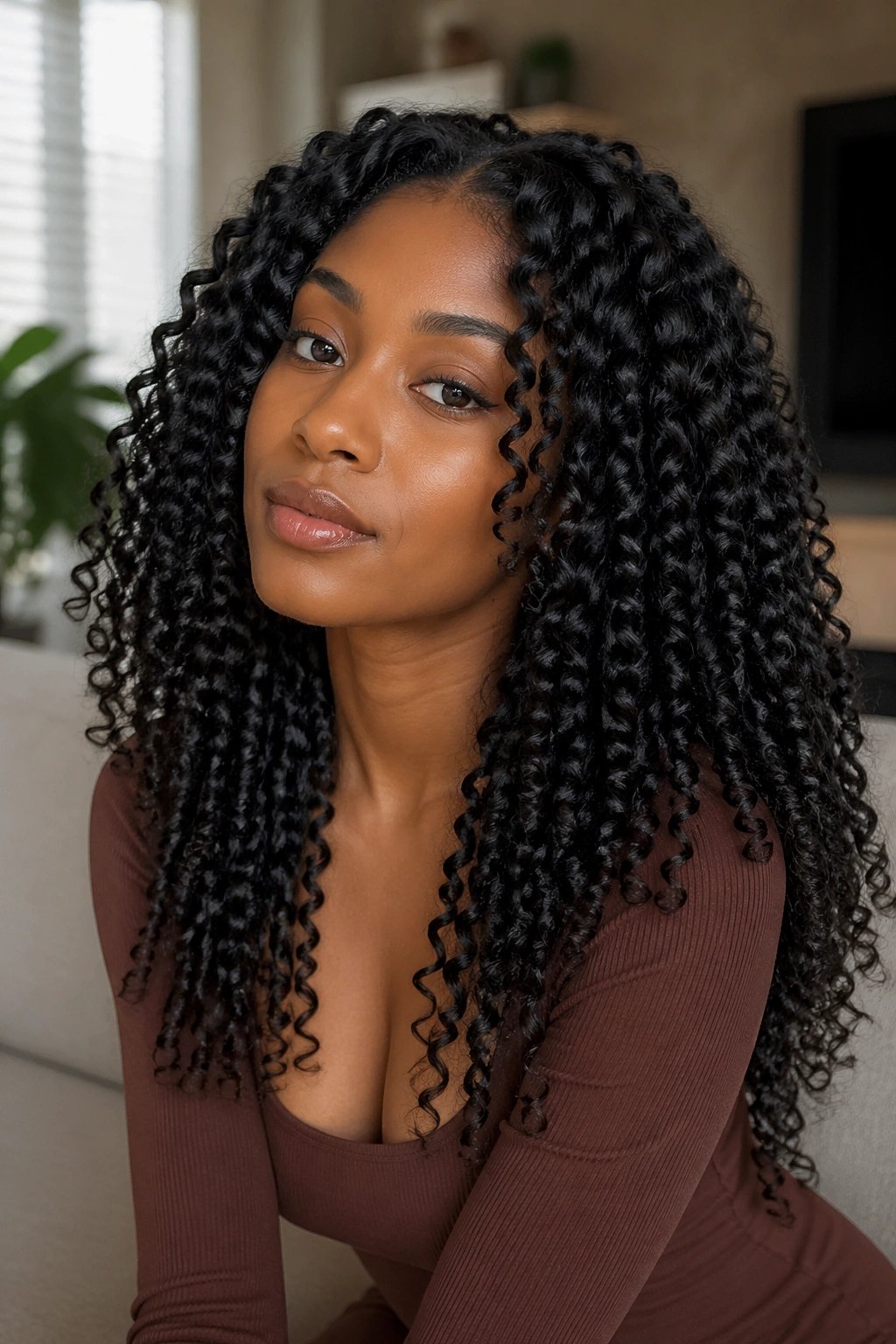
Using flexi-rods, perm rods, or curlformers on longer natural hair creates a fully set style with uniform, defined spirals from root to tip. It’s more time-intensive than a wash-and-go but delivers a polished, intentional result that lasts 3-5 days.
Smaller tools = tighter spirals. Larger tools = looser ringlets. Mix sizes for variation.
19. The Senegalese Twists
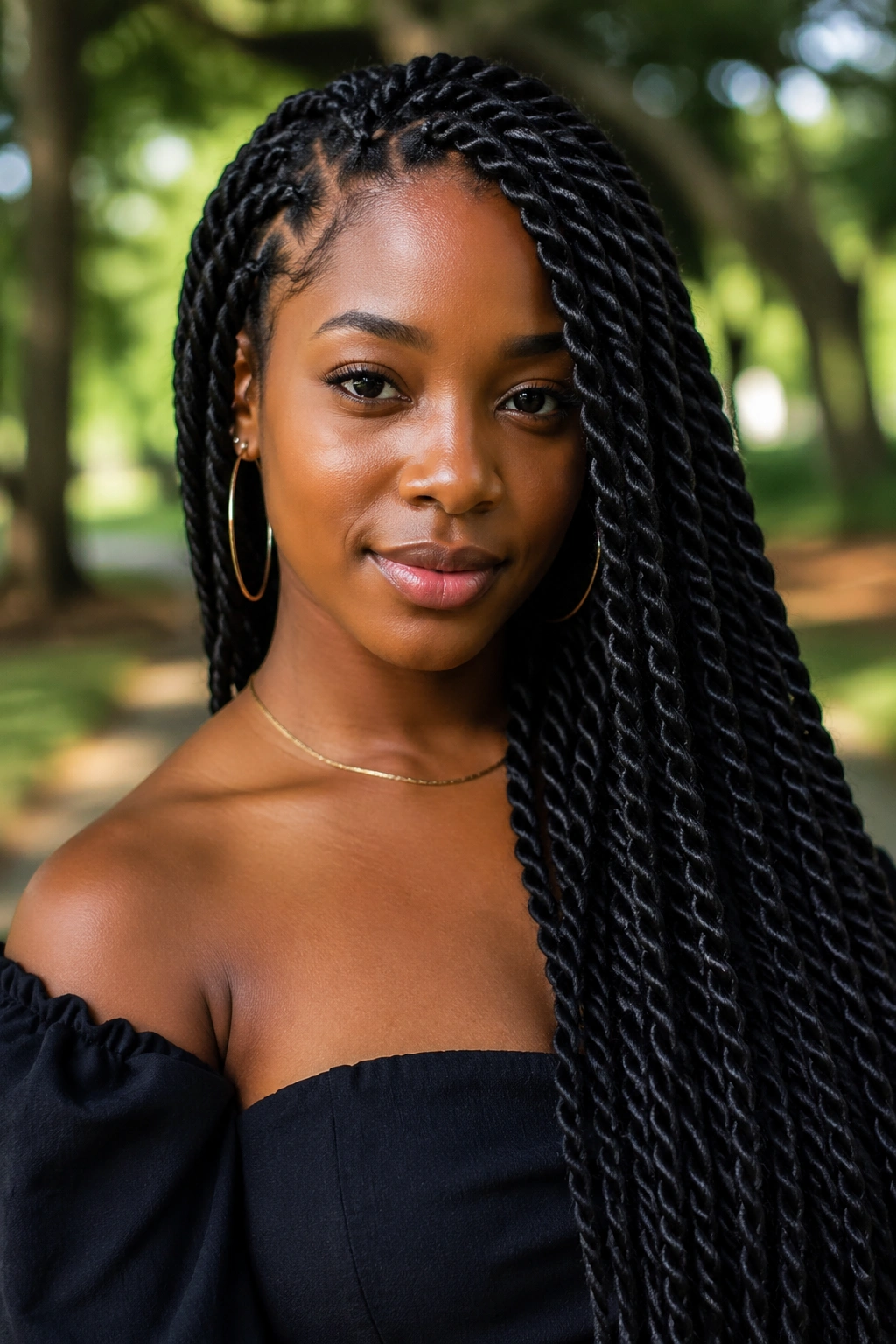
Senegalese twists are smoother and more rope-like than box braids — created by twisting two sections of hair (usually with extension hair added) rather than braiding three. On longer natural hair, they hang beautifully and last 6-8 weeks.
They tend to be lighter-feeling than box braids, which makes them more comfortable for longer wear.
20. The Cornrow Updo
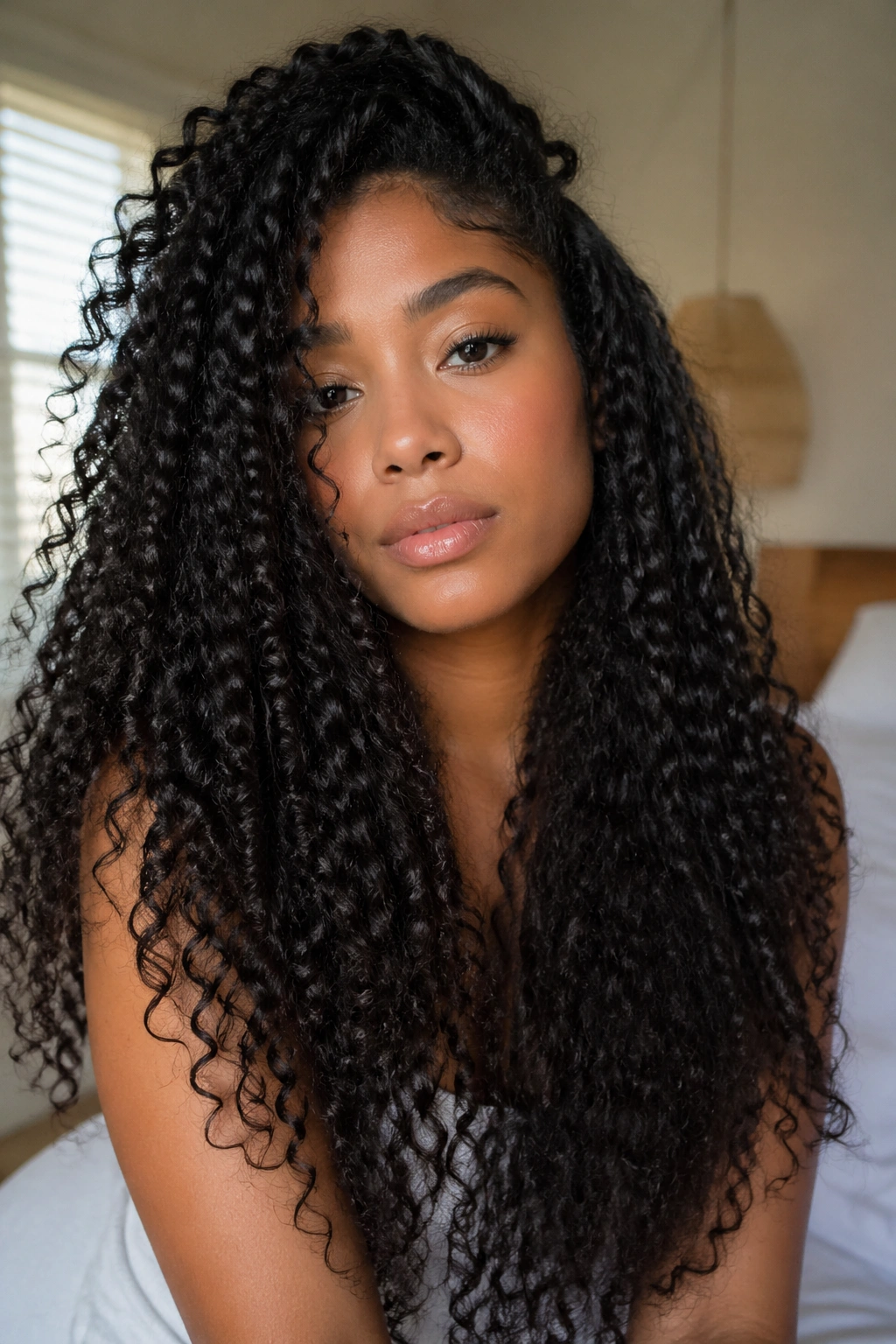
Flat cornrows on long natural hair create the foundation for a wide range of updo styles — from simple straight-back rows that pull all the hair away from the face to elaborate multi-directional patterns that are works of art on their own. The cornrow updo is both a protective style and a style statement.
21. The Loose Natural Afro
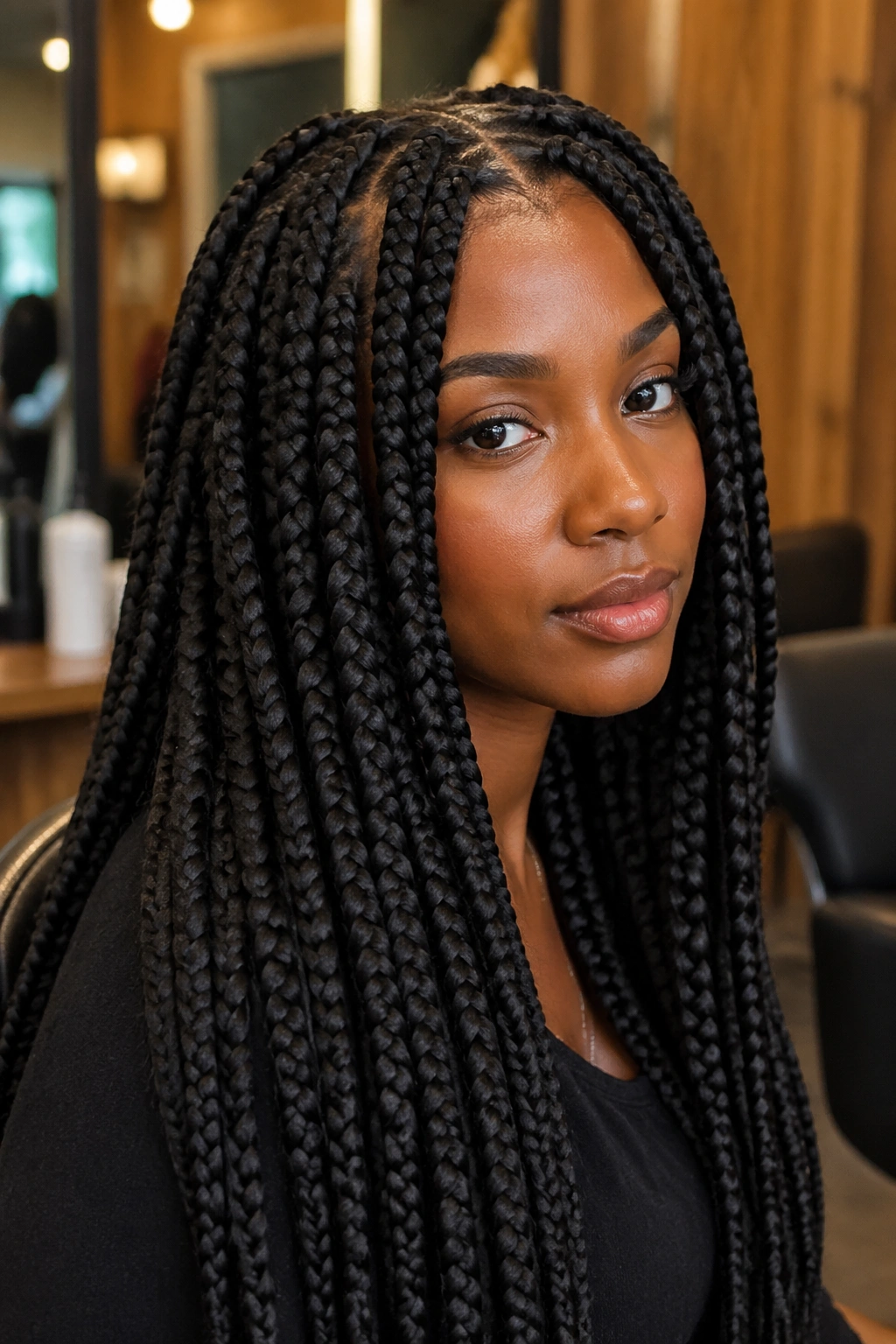
At longer lengths, the afro becomes truly majestic. A picked-out, shaped afro on long natural hair can achieve heights and widths that simply aren’t possible on shorter hair. This is one of those styles where the longer you grow your hair, the more dramatic the result.
The afro is also one of the most political and culturally significant natural hairstyles — wearing it with pride is an act of self-affirmation that carries real meaning beyond aesthetics.
22. The Long Halo Braid
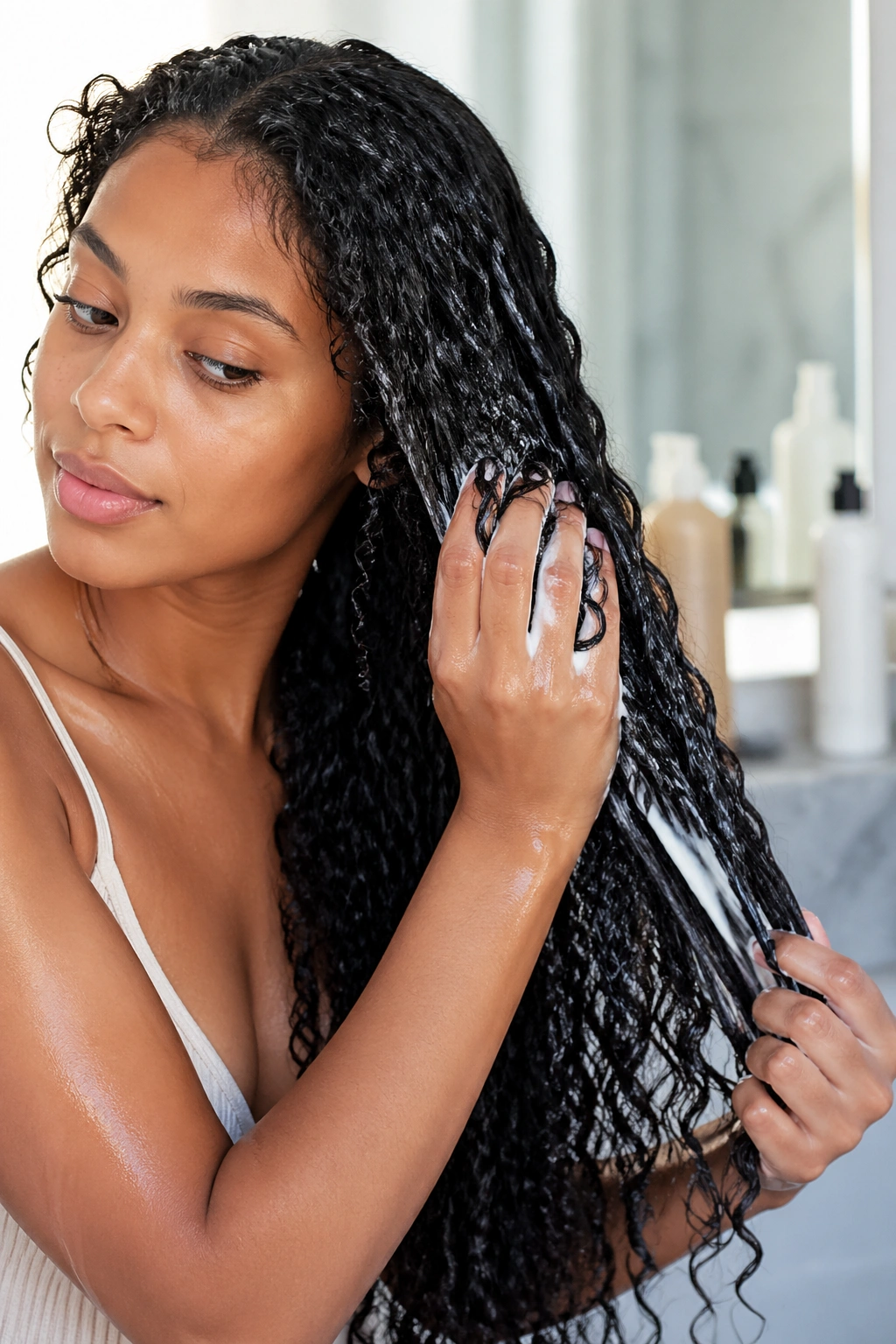
The halo braid on long natural hair wraps all the way around the head in a circle, but with the extra length, it can be doubled or even tripled — creating a thicker, more substantial crown. Done with your own stretched natural hair (no extensions needed at longer lengths), this style is genuinely stunning.
23. The Curly Blowout
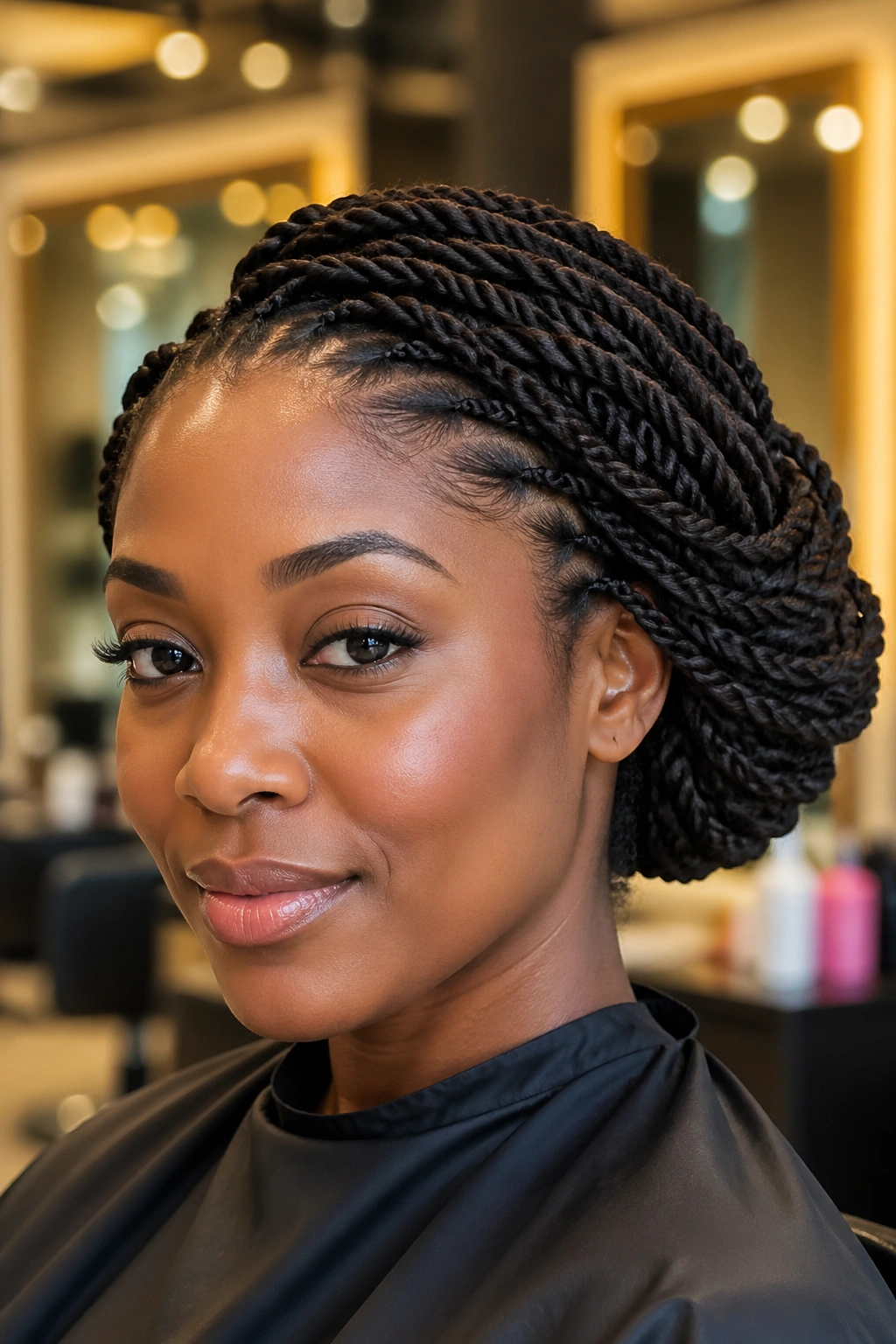
Using a blow-dryer with a diffuser or a comb attachment on the lowest heat setting, you can stretch your natural hair while maintaining significant curl volume — the curly blowout. It’s a slightly stretched, big-volume style that sits between fully contracted natural curls and a full heat-straightened look.
On longer hair, a curly blowout creates an enormous, flowing cloud of texture that’s genuinely hard to ignore.
24. The Flexi-Rod Set
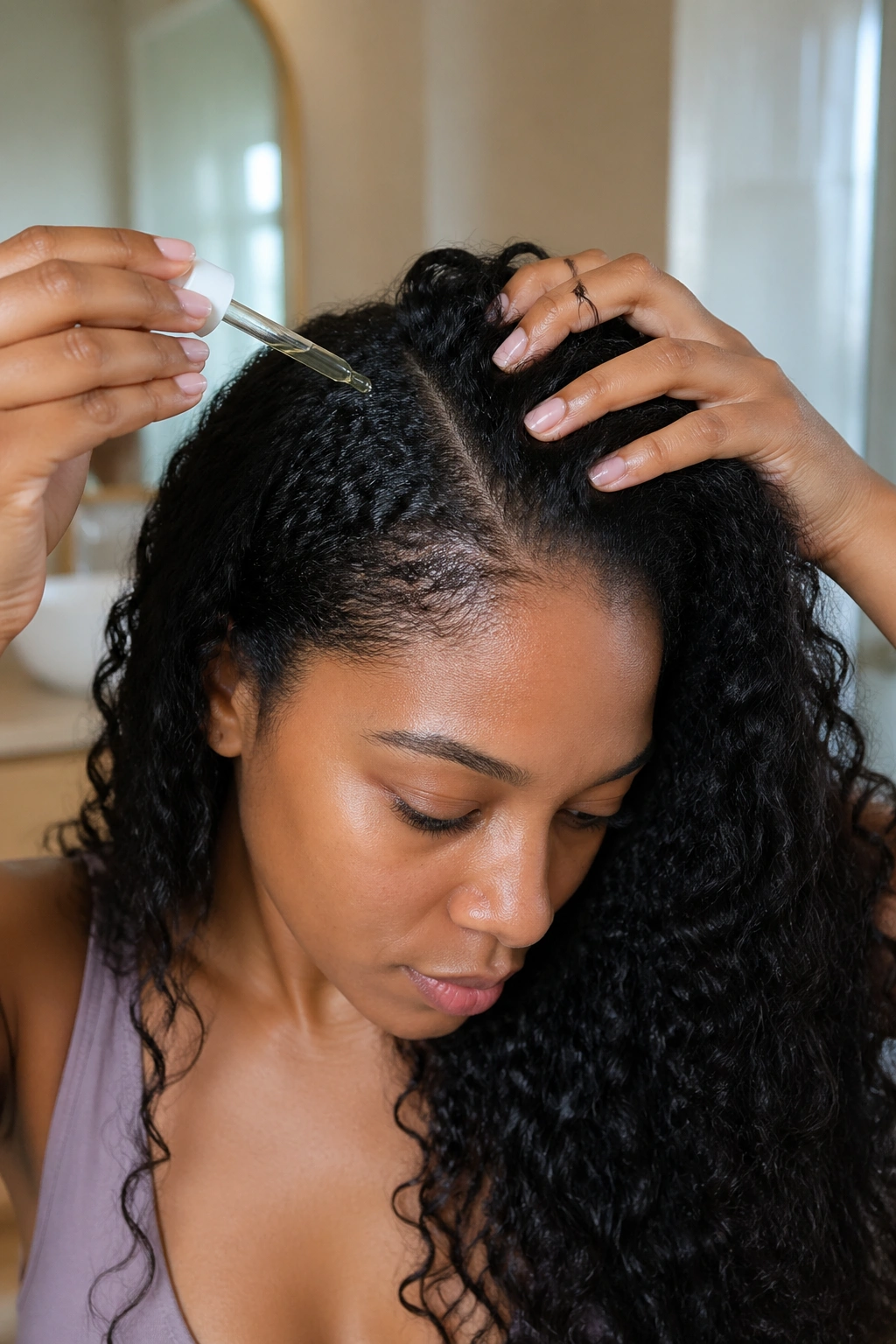
Flexi-rods on longer natural hair create one of the most glamorous results possible — full, defined, uniform curls with serious length and movement. The time investment is significant (setting and drying time can take several hours), but the result lasts days and photographs beautifully.
25. The Long Protective Updo With Accessories
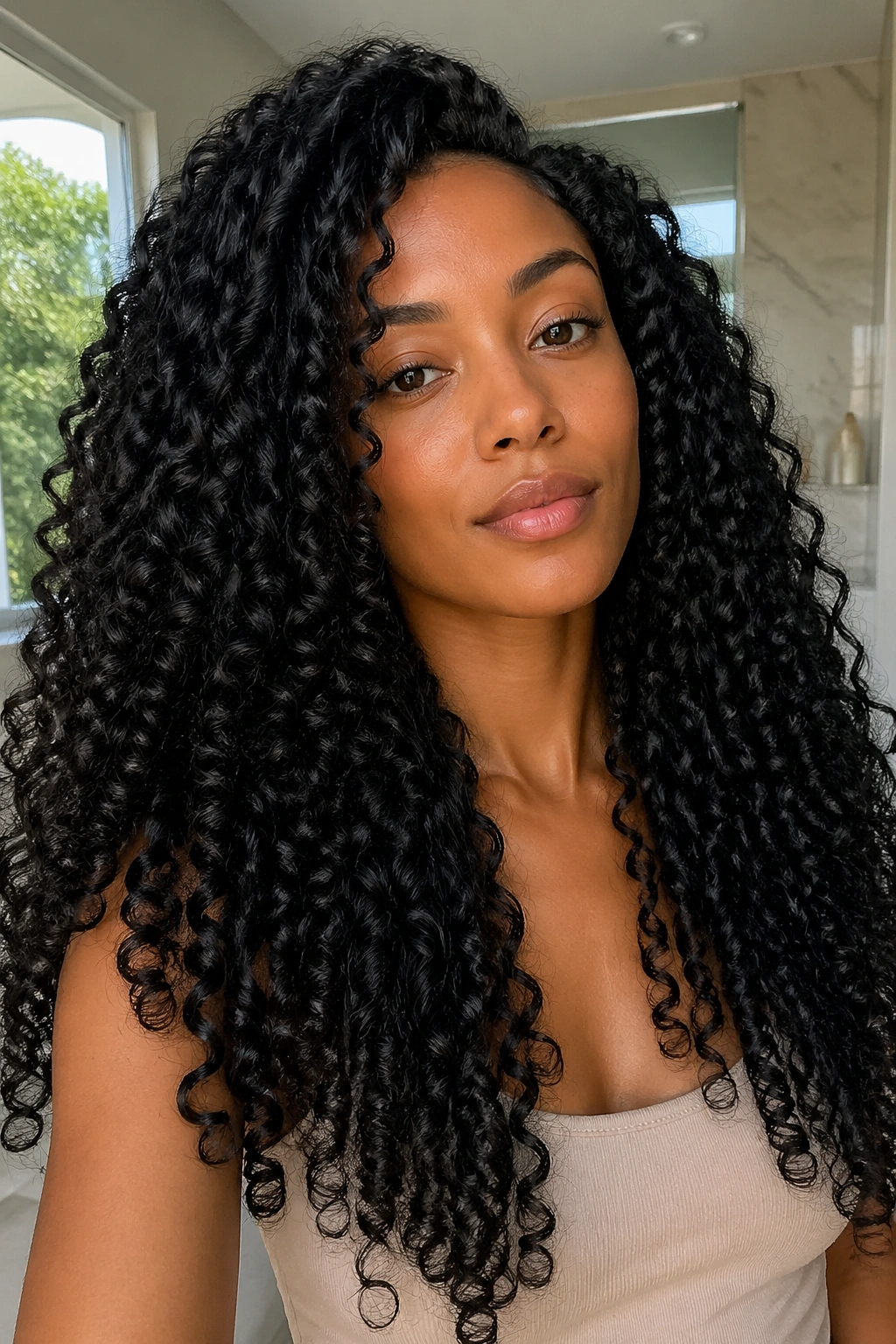
Taking long natural hair up into a protective updo and adding accessories — gold cuffs, cowrie shells, decorative pins, wraps — elevates a practical style into something celebratory and culturally resonant. Accessories have deep roots in African hair culture, and incorporating them into your styling is a beautiful form of connection to that heritage.
26. The Loose Goddess Braids
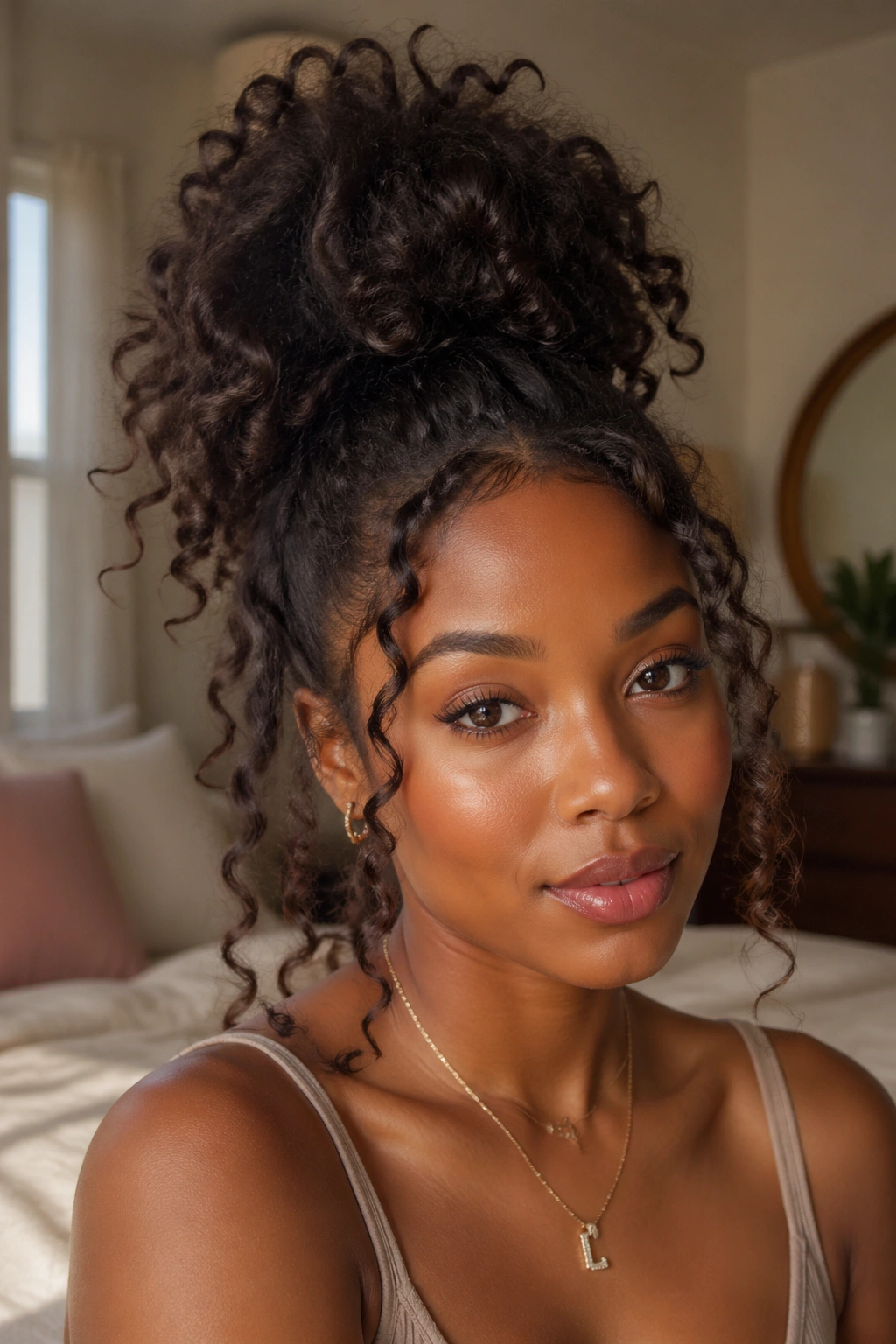
Thick, chunky braids left loose rather than gathered into an updo — goddess braids on long natural hair create a style that’s simultaneously easy and stunning. Two or three large braids hanging loose can last several days and require minimal daily maintenance.
Maintaining Long Natural Hair Between Styles
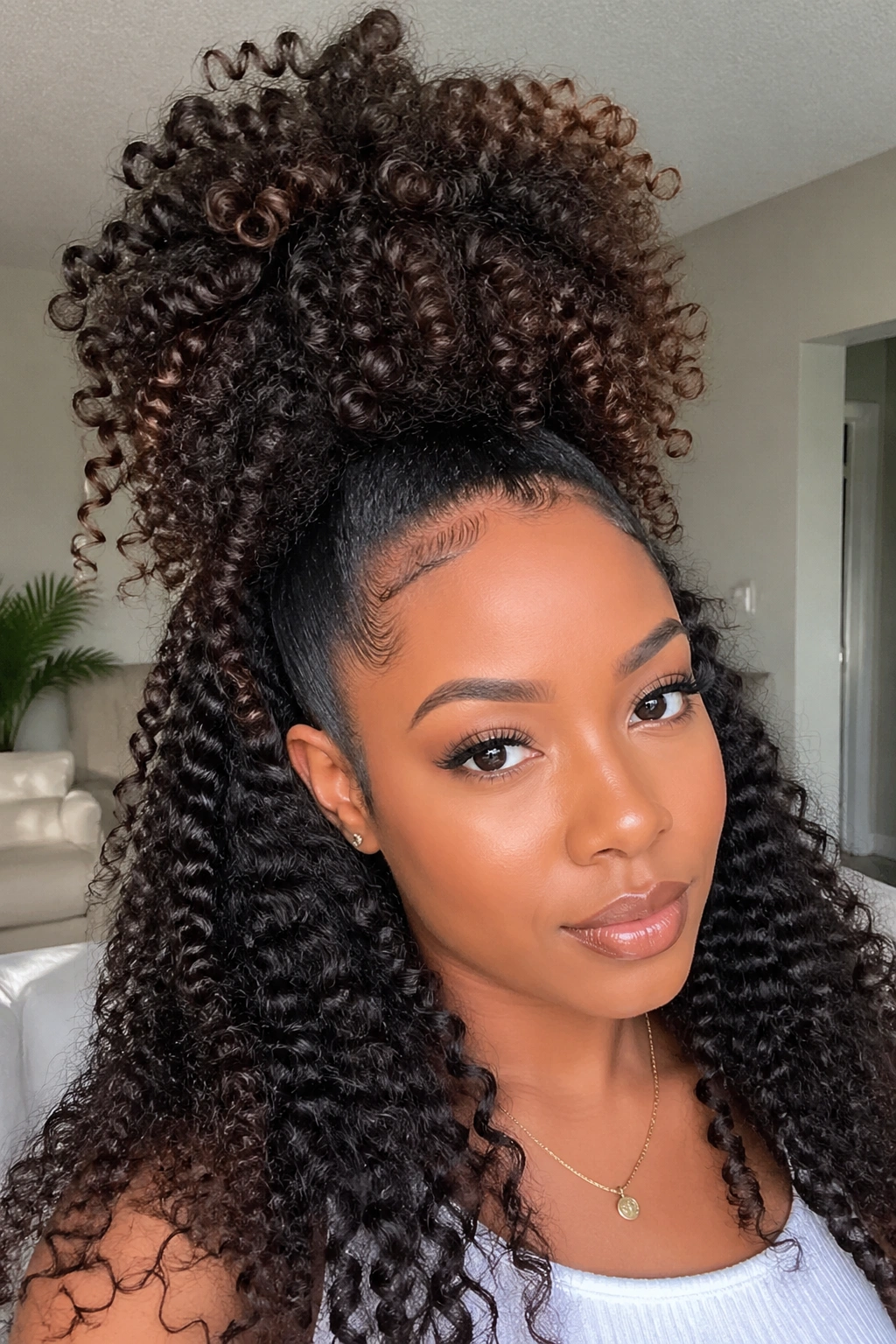
The work of having long natural hair isn’t just in the styling — it’s in the between-style maintenance. A few habits that make the biggest difference:
- Protective style at night. Sleeping on cotton pillowcases causes friction that leads to breakage. Use a satin pillowcase or bonnet.
- Moisturize your ends regularly. Don’t wait until wash day to address dry ends. A quick spritz of water and a seal with light oil keeps them from snapping off.
- Detangle gently and consistently. Letting tangles accumulate is one of the fastest ways to lose length. Work through tangles when your hair is wet and conditioned.
- Trim regularly. It feels counterintuitive, but regular trims (every 3-4 months) actually help you retain length by removing split ends before they travel up the hair shaft.
Knowing When Your Hair Is Ready for Longer Styles
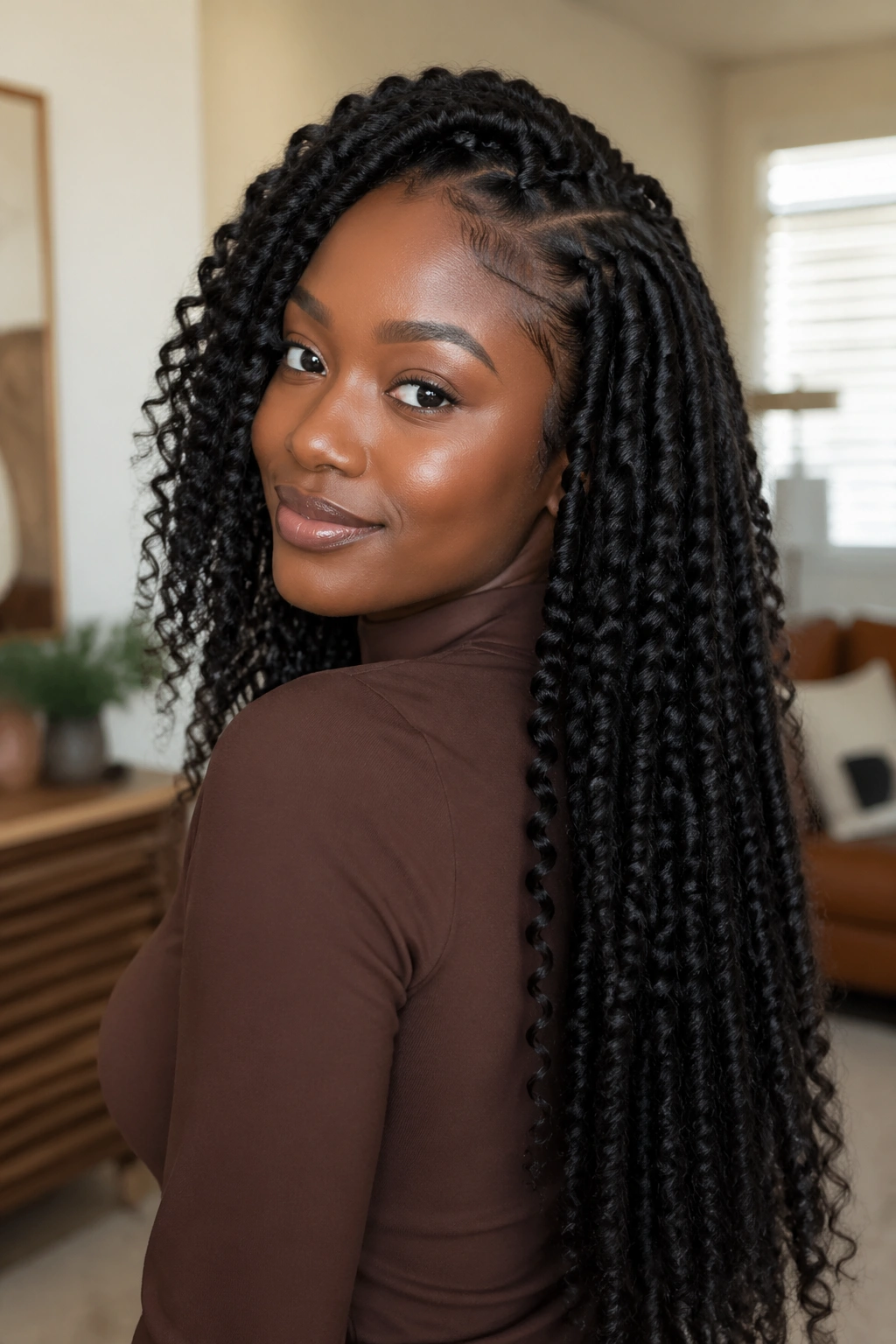
Some long natural hairstyles genuinely require length that not all natural hair wearers have yet — and that’s okay. Part of working with natural hair is understanding where your hair actually is versus where you want it to be, and making peace with meeting it there.
If certain styles feel like too much of a stretch right now, add them to your vision board. Focus on protective styling, consistent moisture, and gentle handling — and the length will come. When it does, you’ll have a whole list of styles ready to try.
