


Wavy natural hair sits in a category all its own — not quite straight, not quite curly, and often misunderstood by stylists who specialize in one or the other extreme. But haircuts for wavy natural hair, when done right, are some of the most effortlessly beautiful styles in natural hair. The right cut on wavy natural hair takes what’s already there — that natural S-wave movement, that gentle bend, that tendency to catch light differently at every angle — and frames it so perfectly that people assume you spent hours achieving a look that air-dried itself while you ate breakfast.
Understanding Wavy Natural Hair Before Picking a Cut
Wavy natural hair sits in the 2A–2C range of the curl typing system, with 2A being the gentlest, loosest wave and 2C being the tightest wave before the pattern starts to be considered curly. Within that range, wavy hair can look very different — some wavy hair has a consistent S-wave from root to tip, some has a stronger wave at the mid-shaft, and some has waves primarily at the ends with a flatter root.
Understanding your specific wave pattern matters for choosing a cut because different wave patterns respond differently to different cutting techniques. A 2A wave pattern needs subtler layering because the wave is delicate and easy to disrupt with too aggressive a cut. A 2C wave pattern can handle more layering and benefits from techniques usually associated with curly hair styling.
The other factor is porosity and density — two wavy natural hair people with the same wave type can have dramatically different hair if one has fine, low-porosity strands and the other has coarse, high-porosity strands. Both of these factors influence which products work best, how the hair holds a style, and how aggressively it needs to be cut to achieve a balanced silhouette.
The Most Common Wavy Natural Hair Problem — and How a Cut Solves It
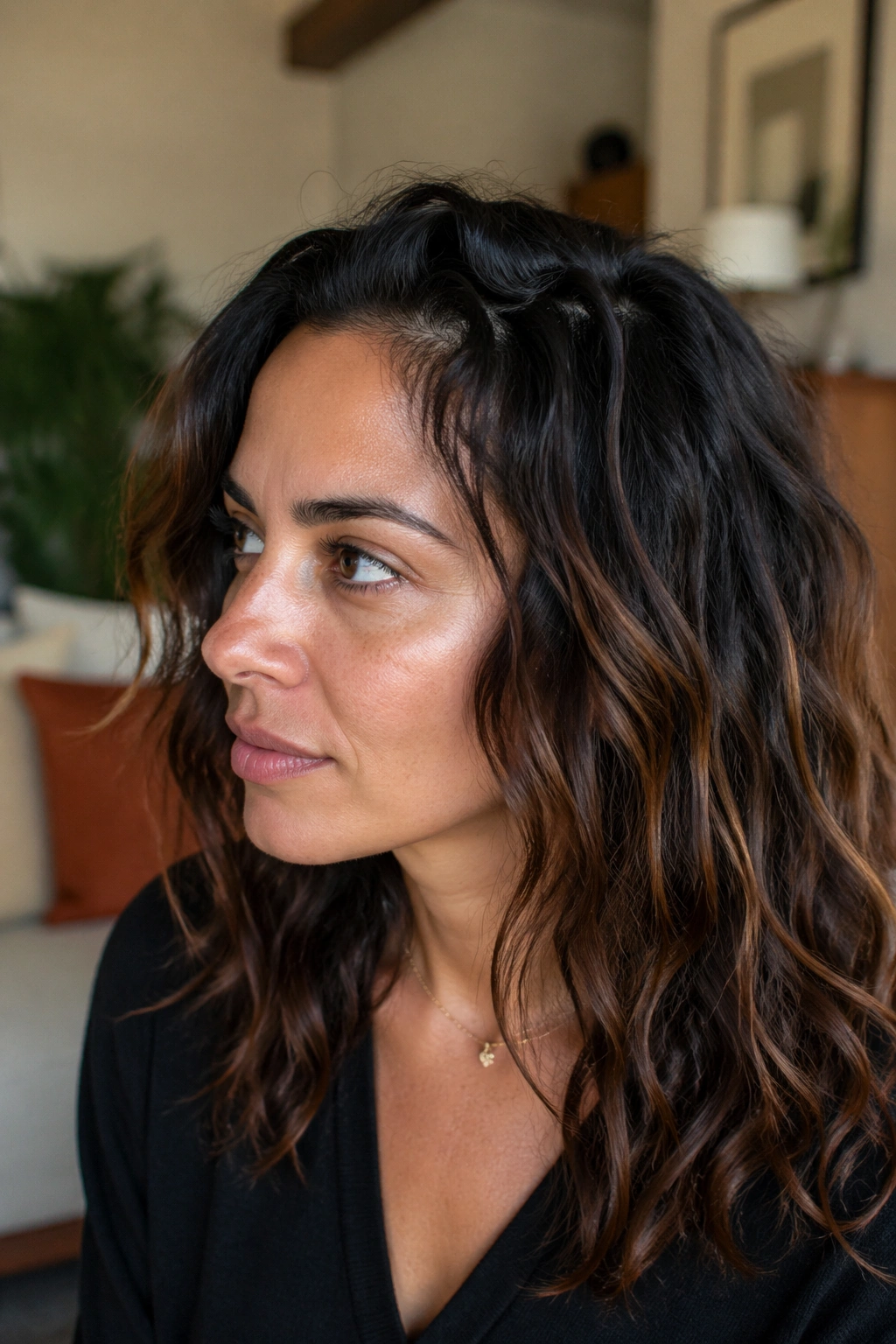
The single most common complaint from wavy natural hair wearers is that their hair looks flat and undefined at the roots, with more wave happening at the mid-shaft and ends but little to no texture at the scalp. This makes hair look half-styled — like a blowout growing out rather than a fully realized wave pattern.
The right cut changes this completely. Layering removes weight from the mid-shaft and ends, which allows the wave at the roots to “see” its shape better and express more fully. Face-framing layers and graduated cuts create movement near the face that emphasizes the wave pattern right where it’s most visible. And length reduction — even just an inch or two — can make a dramatic difference in how fully a wavy pattern expresses itself throughout the whole strand.
Wavy Natural Hair vs. Curly Natural Hair — Different Cutting Needs
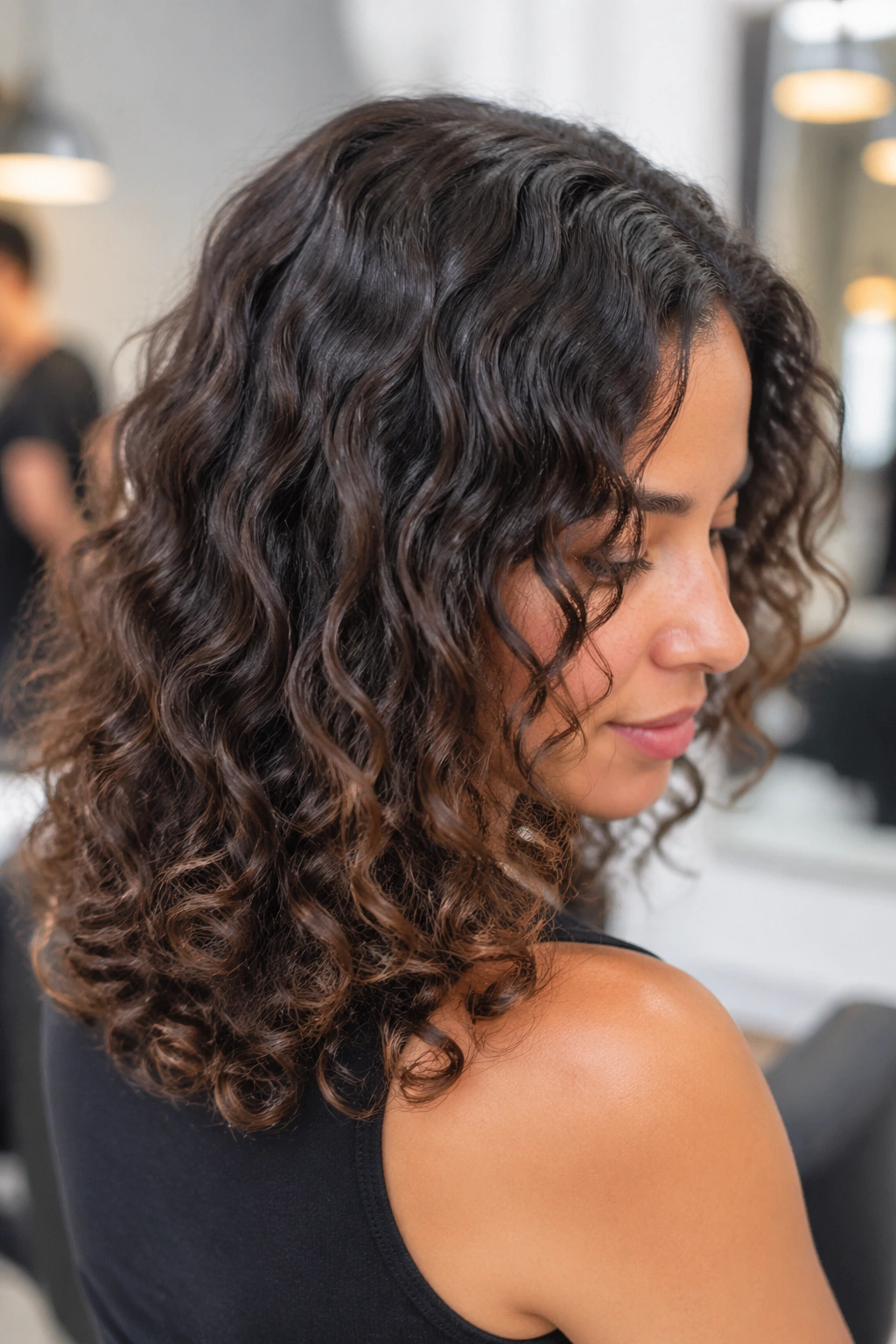
Wavy hair and curly hair need different things from a cut. Curly hair, especially in the 3C–4C range, often needs aggressive internal layering to remove bulk and allow coils to spring freely. Wavy hair, particularly in the 2A–2B range, usually needs more conservative layering because the wave pattern is more delicate — too much internal removal can strip the wave of the weight it needs to actually move in its S-wave shape.
The best stylists for wavy natural hair are those who understand this distinction — who don’t apply the same approach they use on curly clients or the same approach they use on straight clients, but who understand wavy hair as its own category with its own cutting logic.
Wet Cutting vs. Dry Cutting for Wavy Natural Hair
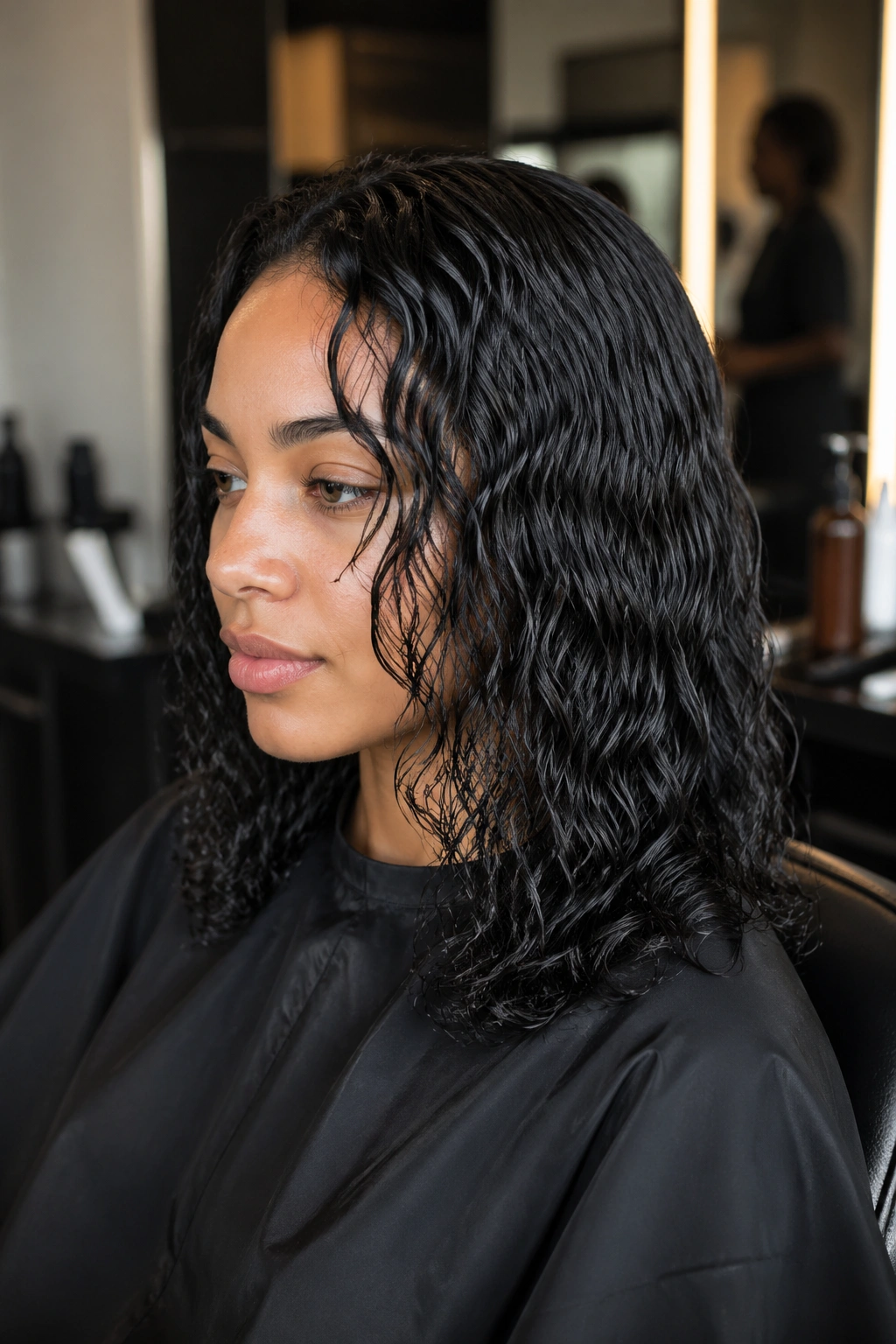
Both approaches have merit for wavy natural hair, and the right choice depends partly on your specific wave pattern. For consistent, tight waves (2C), dry cutting makes sense for the same reasons it does for curly hair — you can see the wave pattern in its natural state and cut accordingly. For looser waves (2A–2B), wet cutting can also work well because the wave pattern, while present, is less dramatically altered by water than a tight curl would be.
The most important thing is that your stylist cuts your wavy natural hair in its natural state — not blown out or heat-styled. The wave is the point. If your stylist sees straight hair when they cut and then you go home and the wave appears, they’ve made decisions without the information they needed.
Products to Use After Your Wavy Hair Cut
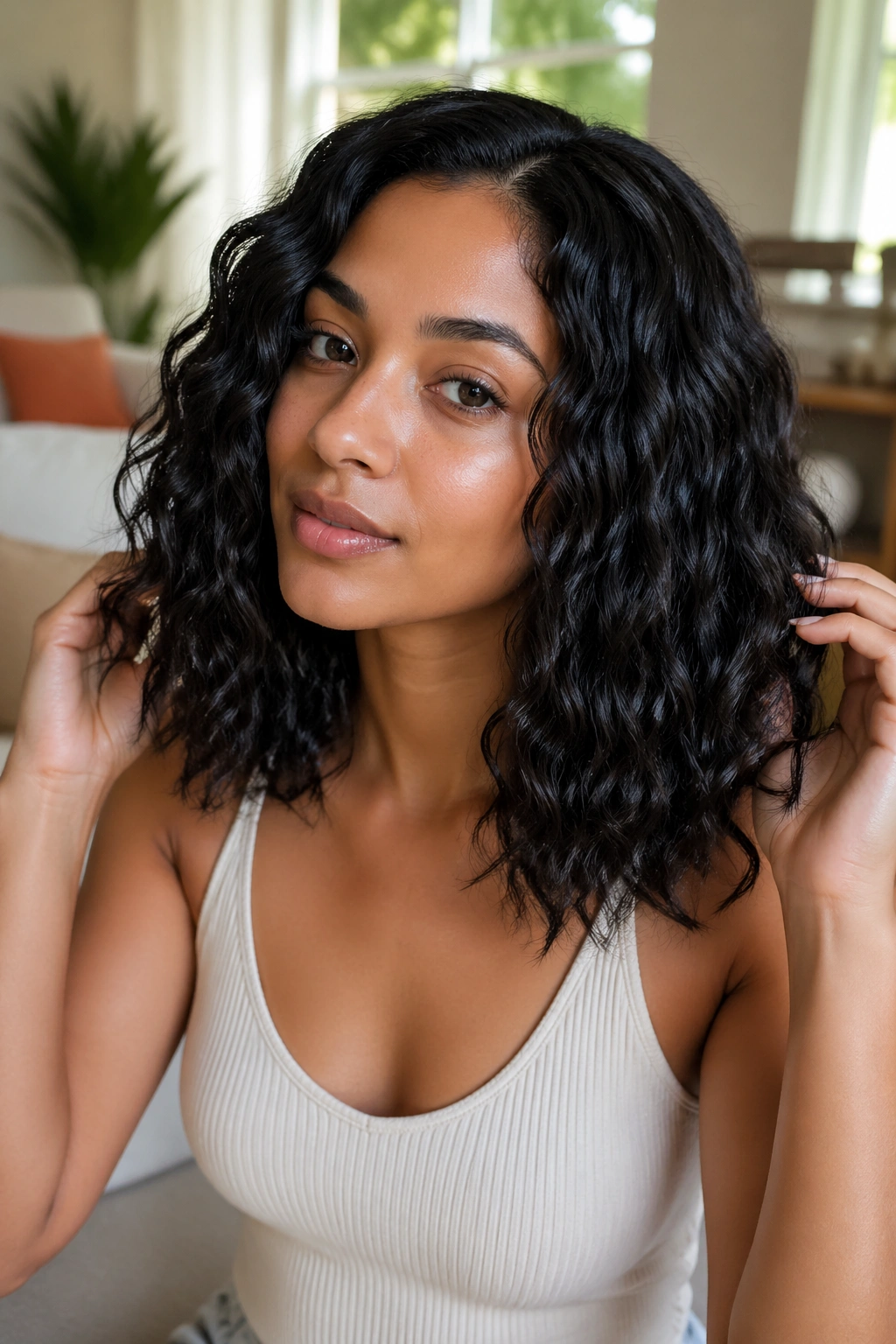
The product routine for wavy natural hair is different from the curly hair routine that gets a lot of attention. Wavy hair generally doesn’t need as heavy a product load as curly hair — heavy creams and butters can weigh the wave down and cause it to go completely flat. The products that work best for wavy natural hair are lightweight leave-in conditioners, wave-enhancing mousses or light gels, and very light serums that add shine and definition without weight.
Application technique matters as much as the products themselves. Apply products to wet or damp hair (not soaking wet the way curly hair is often styled), scrunch upward gently, and allow to air dry without touching. If you want more defined waves, use a diffuser on the lowest heat and speed setting and scrunch while diffusing.
20 Haircuts for Wavy Natural Hair
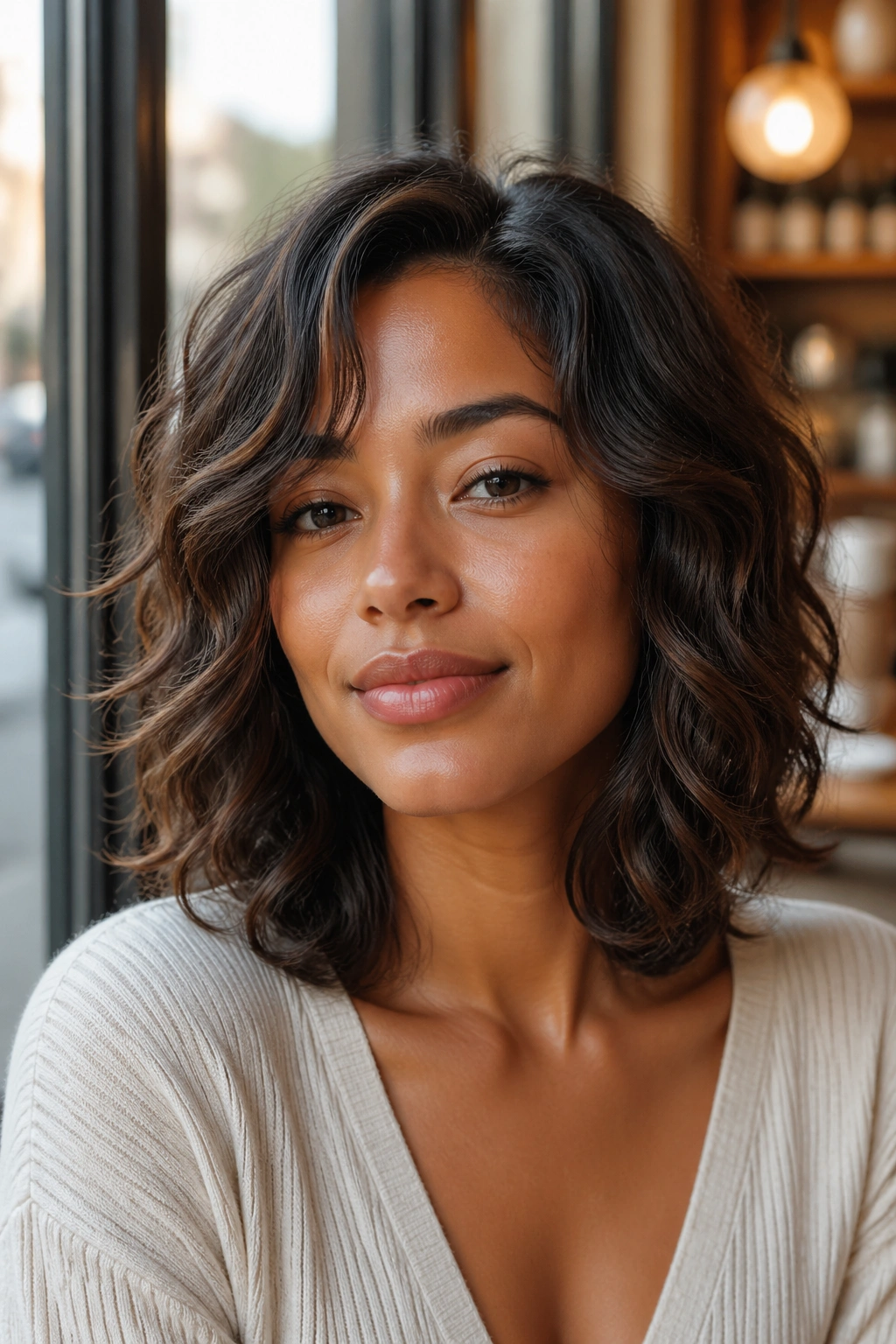
1. The Wavy Lob (Long Bob)
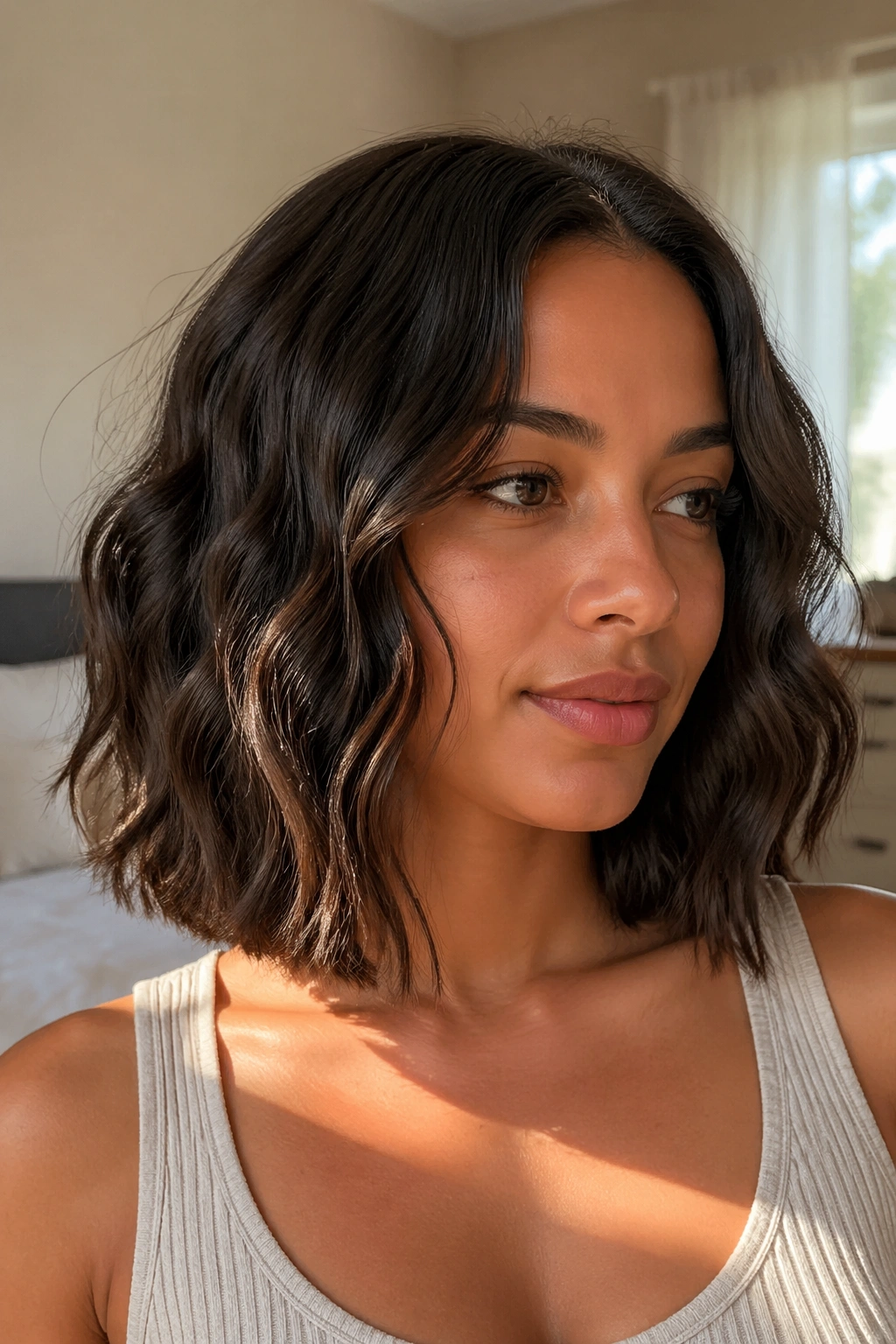
The lob at collarbone length is perhaps the most universally flattering cut for wavy natural hair. At this length, the wave pattern has room to fully develop and move without the weight of extra length pulling it flat. The ends sit right where they need to be for the wave to bounce and swing with every movement. And the collarbone-length perimeter creates a clean, polished frame that works in every context from work to weekends.
The Styling Advantage
A wavy lob wears multiple ways without any additional styling effort: air dry after washing for natural waves, gather it loosely with a clip for a half-up look, or braid loosely overnight and unravel in the morning for enhanced wave definition. The cut creates a style that’s consistently beautiful without requiring consistent effort.
- Best for: 2A–2C wave patterns
- Face shapes: suits virtually every face shape
- Styling time: 5–15 minutes depending on method
- Tip: A lob for wavy hair should be cut with subtle internal layering — no graduation so aggressive that it weighs the ends down, but enough to prevent a blunt-cut heaviness at the perimeter.
2. The Wavy Bob With Layers
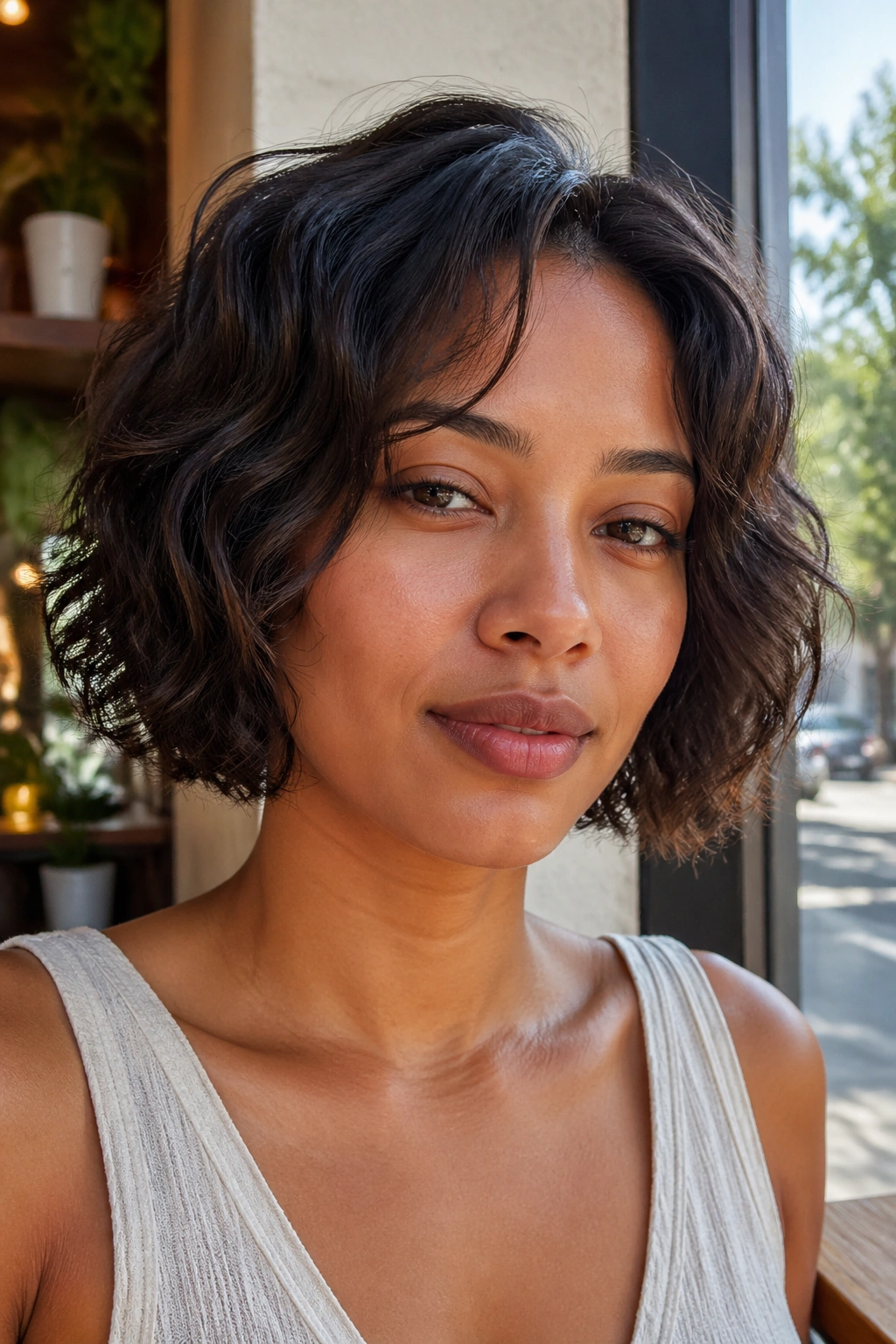
The wavy bob at jaw to chin length with interior layering is where the wave pattern tends to look its most defined and bouncy. Shorter than the lob, the bob gives the wave less weight to carry, which means more spring and more movement. The layers in a wavy bob prevent the silhouette from looking like a triangle (too wide at the bottom, too flat at the top) by distributing the wave’s behavior more evenly from root to tip.
3. The Long Layered Wavy Cut
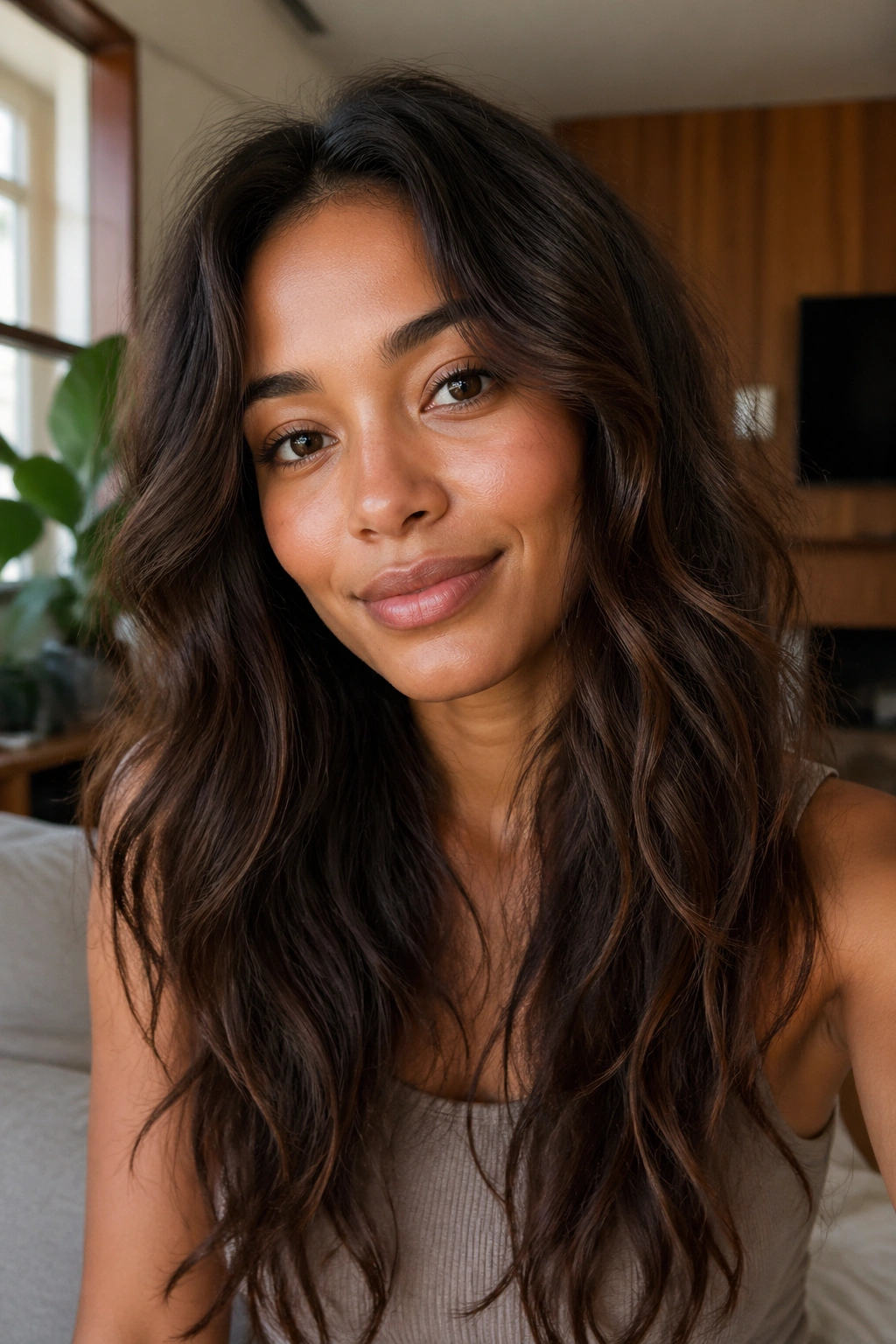
For those who want to keep significant length, long layered cuts are the key to making wavy natural hair work at longer lengths. Without layers, long wavy hair often falls flat at the top and only shows wave definition in the bottom half. Layers throughout the length allow the wave pattern to be visible from root to tip — each layer springs and waves at its own length, creating a multi-dimensional effect that flat, unlayered wavy hair simply can’t achieve.
4. The Wavy Shag
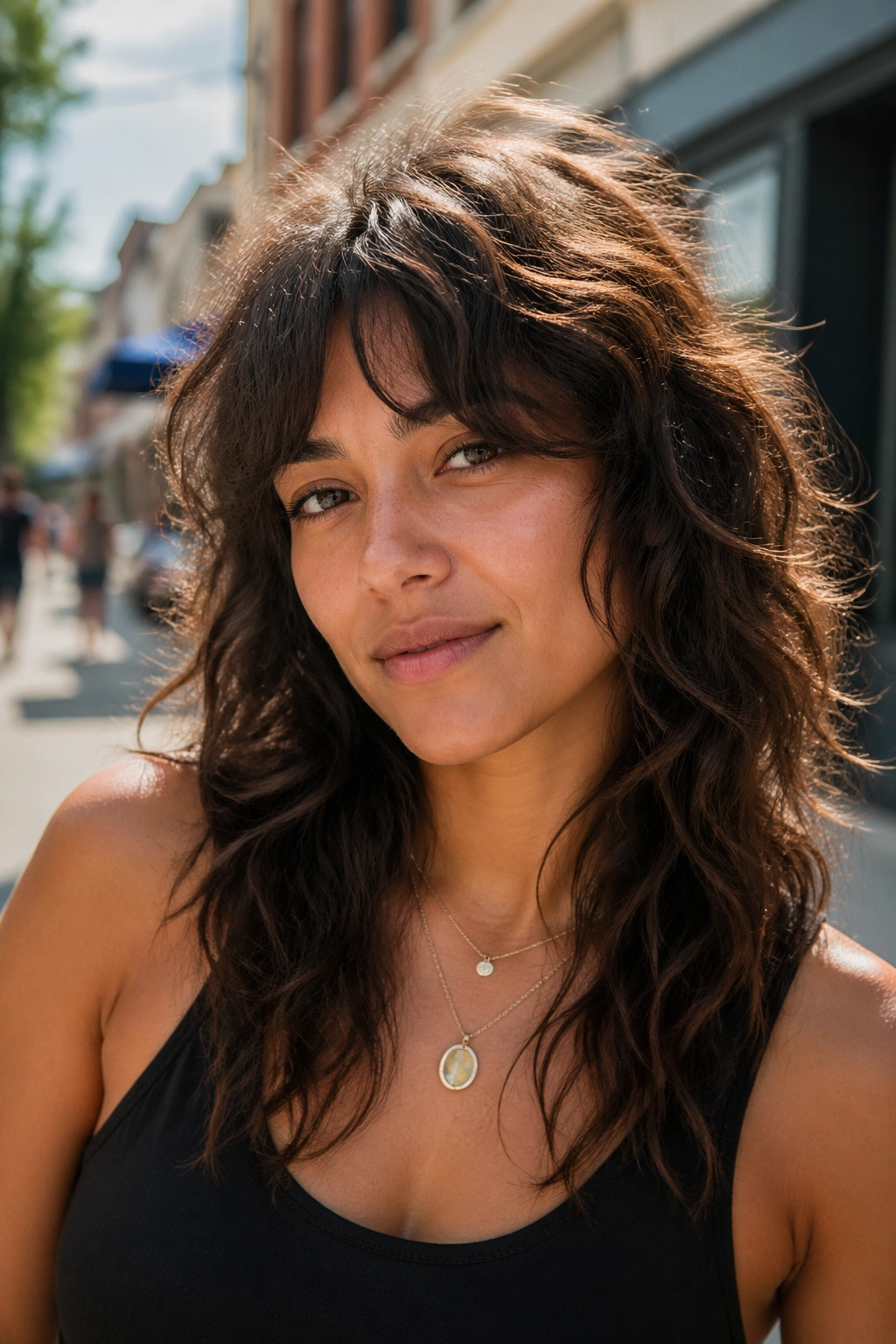
The shag — with its heavy layering, imperfect ends, and intentionally tousled finish — was practically designed for wavy natural hair. The shag’s inherent disorder works perfectly with the wave’s natural movement. You don’t have to work to make a wavy shag look casually beautiful — it is casually beautiful by definition. Add curtain bangs and you have one of the most popular, consistently stunning wavy natural hair cuts available.
Why the Shag Works So Well for Waves
The shag’s heavy layering removes weight from the mid-shaft and ends, which is exactly what waves need to express their pattern fully. The shortest layers spring and wave at short lengths while the longer layers hang with a relaxed wave, and the visual contrast between these different-length waves is what creates the depth and dimension the shag is known for.
- Best for: 2B–2C wave patterns
- Works especially well for: dense, heavy wavy hair that needs bulk removal
- Tip: Skip the heavy creams for a wavy shag and use a light mousse instead — it enhances the wave pattern without adding the weight that would make the shag look limp.
5. The Shoulder-Length Wavy Cut With V-Back
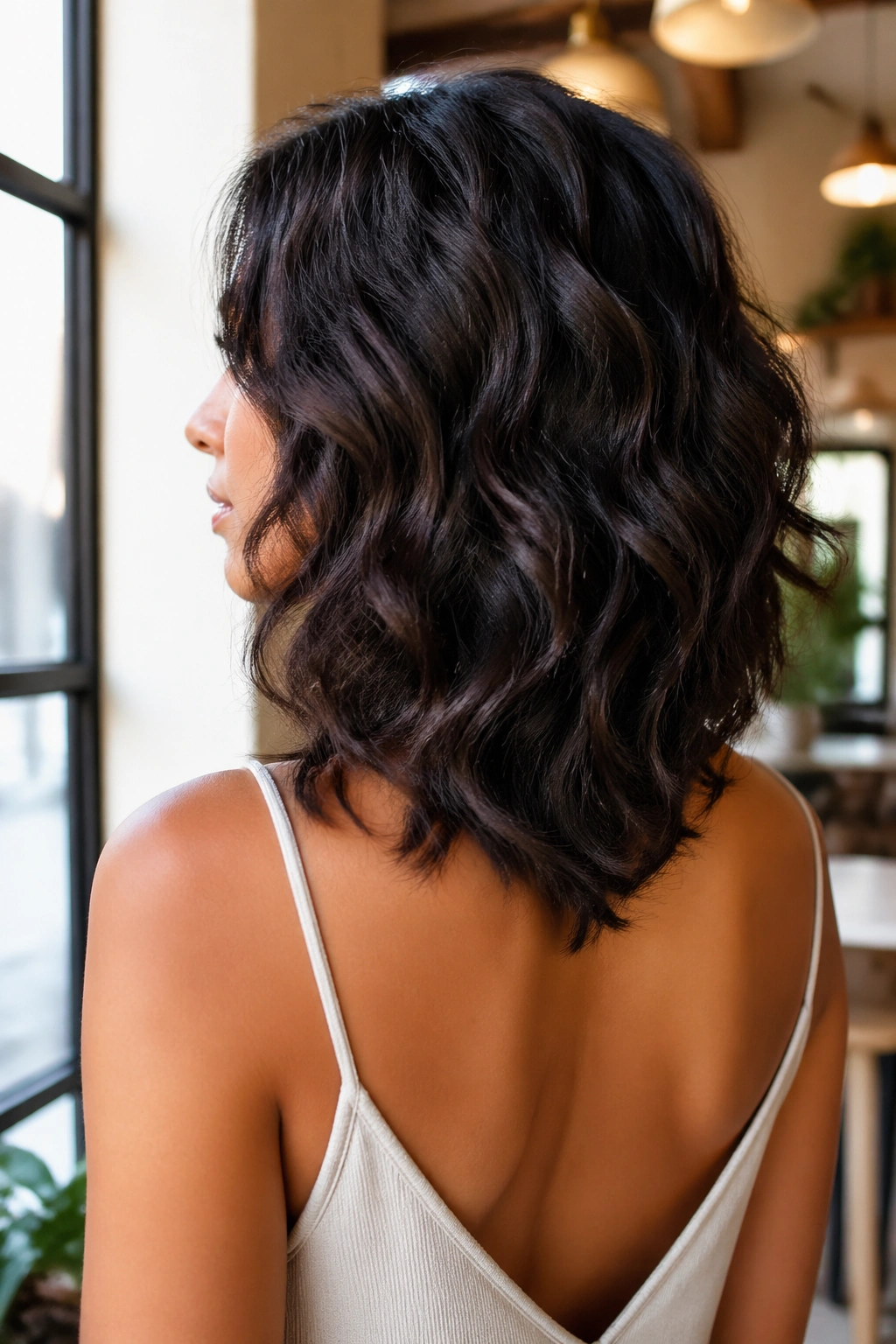
A shoulder-length cut with a V-shape at the back — longer in the center, shorter at the sides — creates a flowing, romantic quality on wavy natural hair that’s hard to achieve with any other perimeter shape. The V is most visible when wearing hair half-up or in a low ponytail, and it adds a sophisticated detail that elevates the overall cut. On wavy natural hair, the waves follow the V-shape in a way that looks almost intentionally styled, though it’s simply the wave pattern doing what it does.
6. The Wavy Pixie
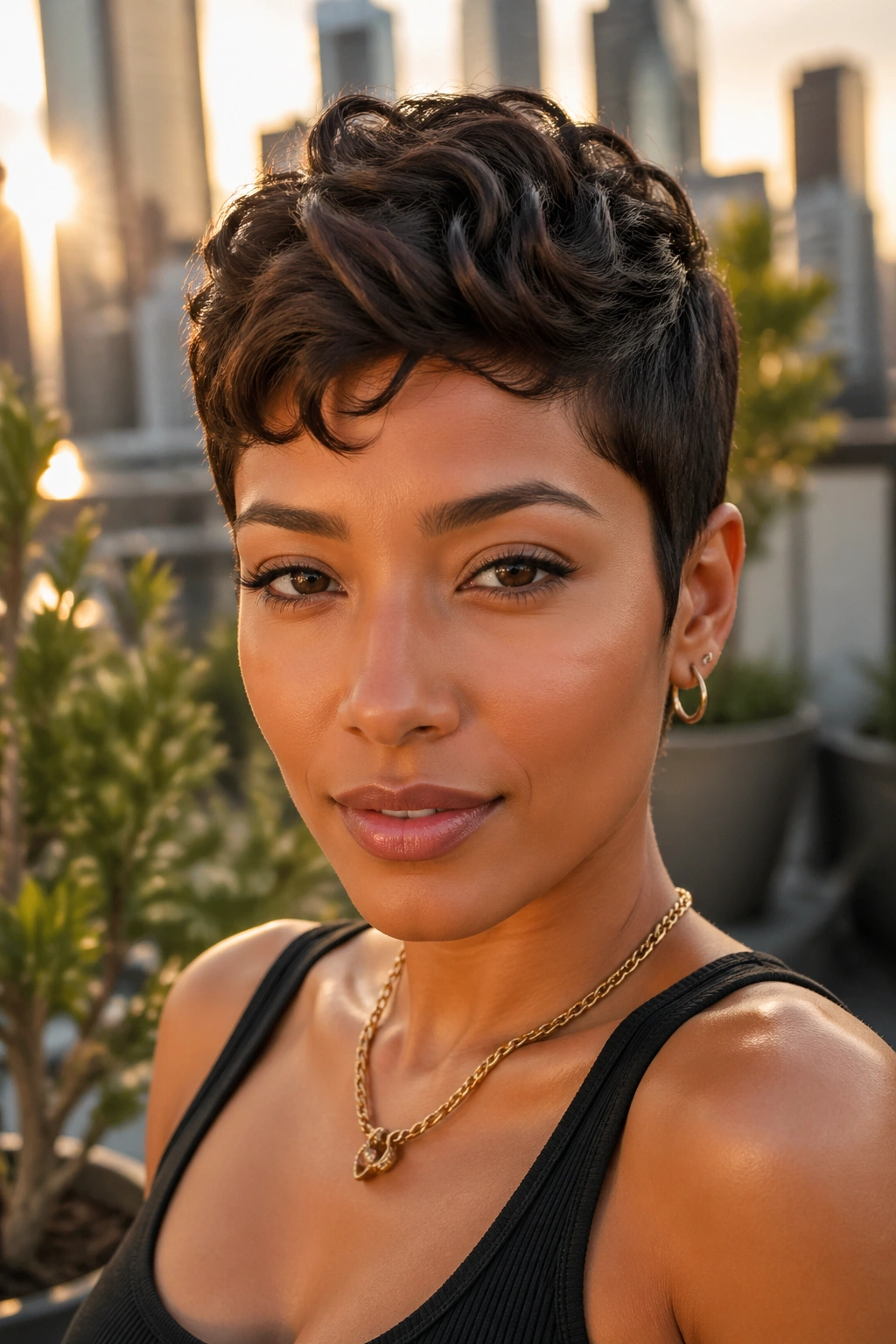
Yes — wavy hair looks stunning at pixie length. The close cut at the sides and nape with slightly more length at the crown lets the wave pattern express at a very concentrated level. The wave at the crown at pixie length looks more dramatic and defined than it does at longer lengths, simply because there’s less length competing for attention. It’s a bold choice that’s surprisingly low maintenance, given that the wave does most of the styling work itself.
7. The Blunt Cut Wavy Bob
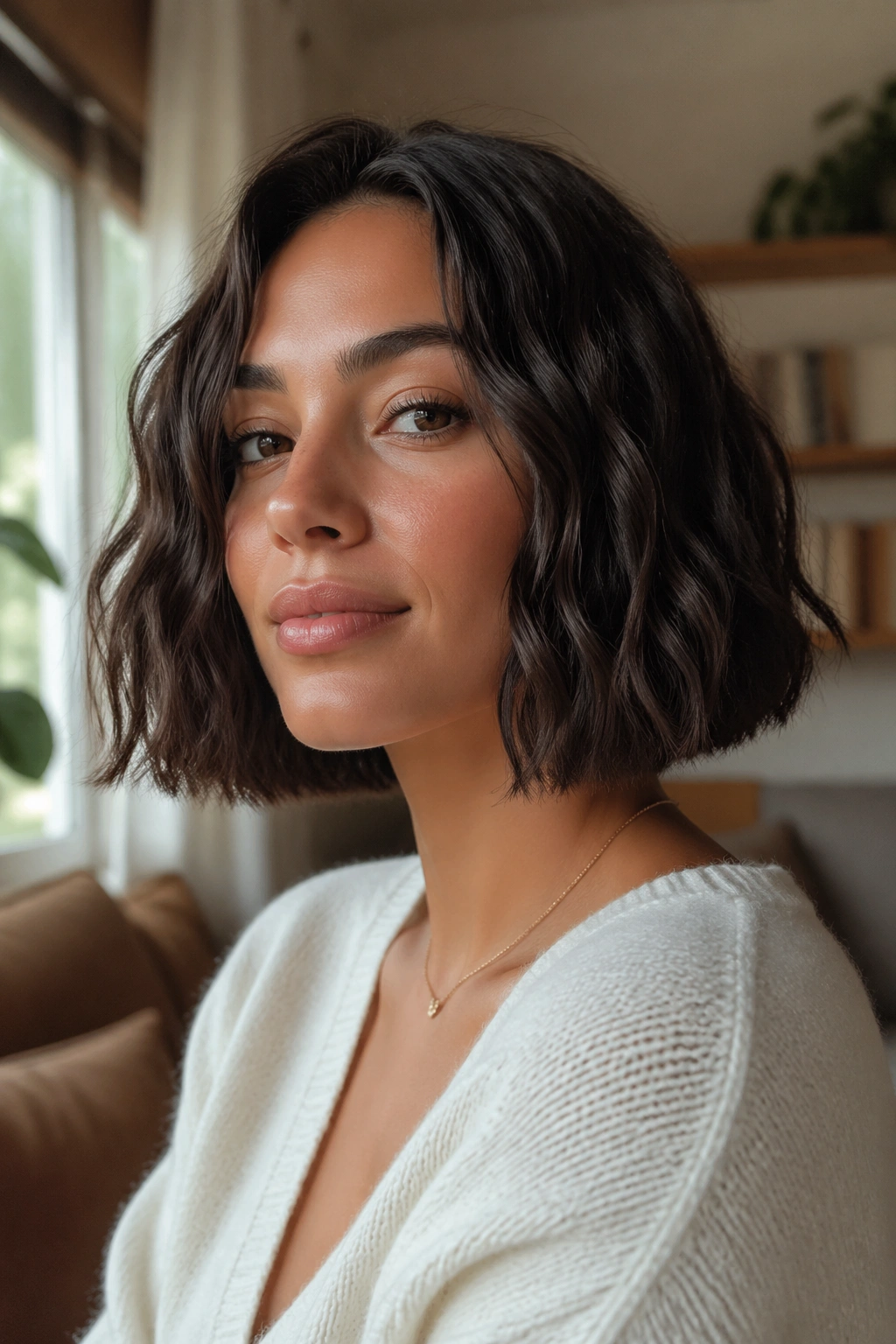
A blunt cut wavy bob — no layers, all one length — creates a strong, graphic silhouette that works particularly well on 2A wavy hair where the wave is gentle enough to create a relatively consistent texture across all strands at the perimeter. The blunt cut at bob length on wavy natural hair has a chic, editorial quality — it looks like a fashion decision rather than a maintenance cut.
8. The Wavy Cut With Side-Swept Bangs
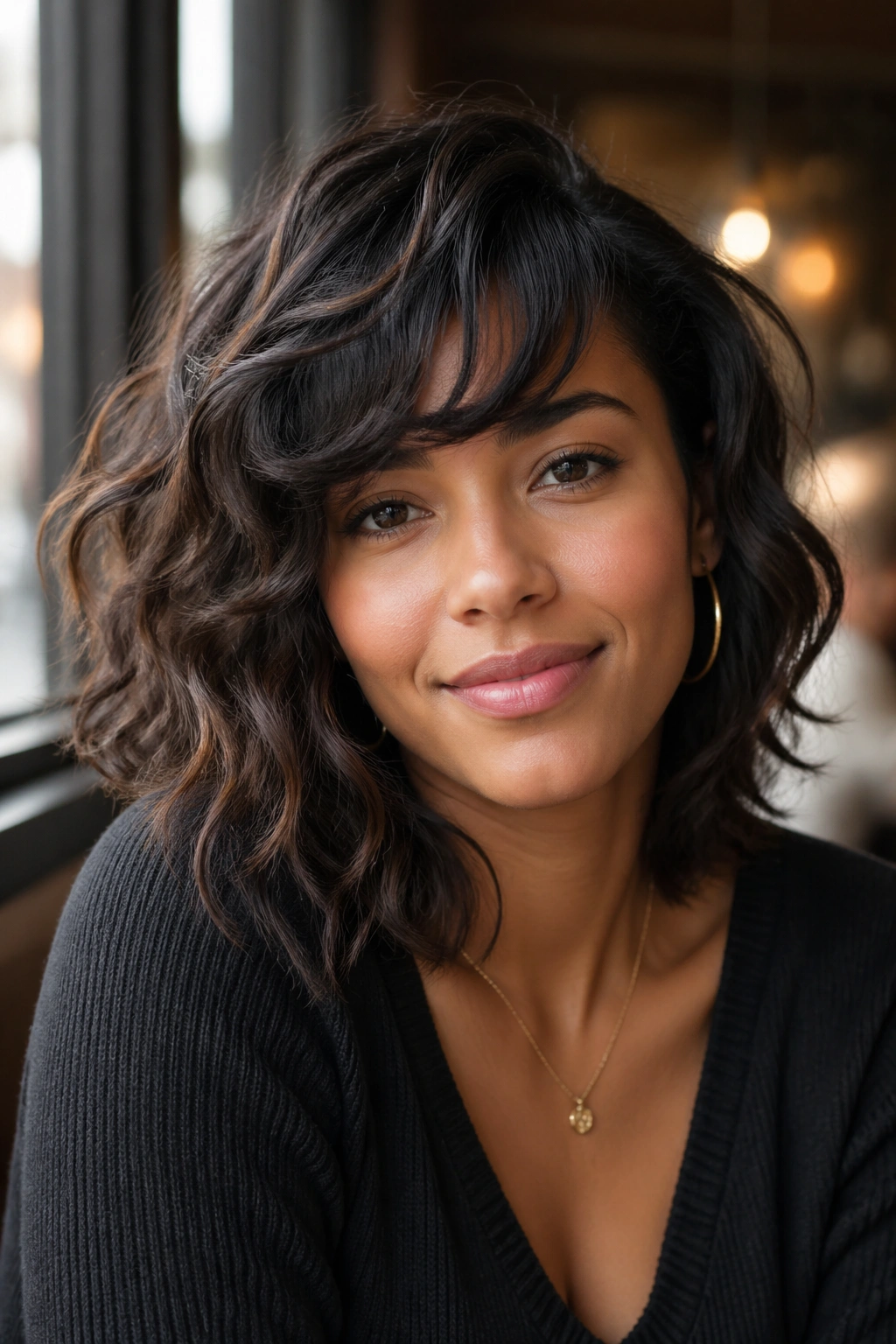
Side-swept bangs on wavy natural hair are naturally beautiful — the wave in the bang section sweeps across the forehead in a smooth, graceful arc. The key is cutting the bangs to follow the natural wave direction rather than forcing them to behave in a way that fights the wave. If your natural wave sweeps to the left, side-swept bangs should go left. Working with the wave, not against it.
Maintaining Wavy Side-Swept Bangs
Refresh the bang section daily by spritzing with water and scrunching a tiny amount of mousse or light gel in. Allow to air dry in the swept position. For extra hold, pin the bang section with a bobby pin while it dries and remove once set.
9. The Graduated Bob for Wavy Natural Hair
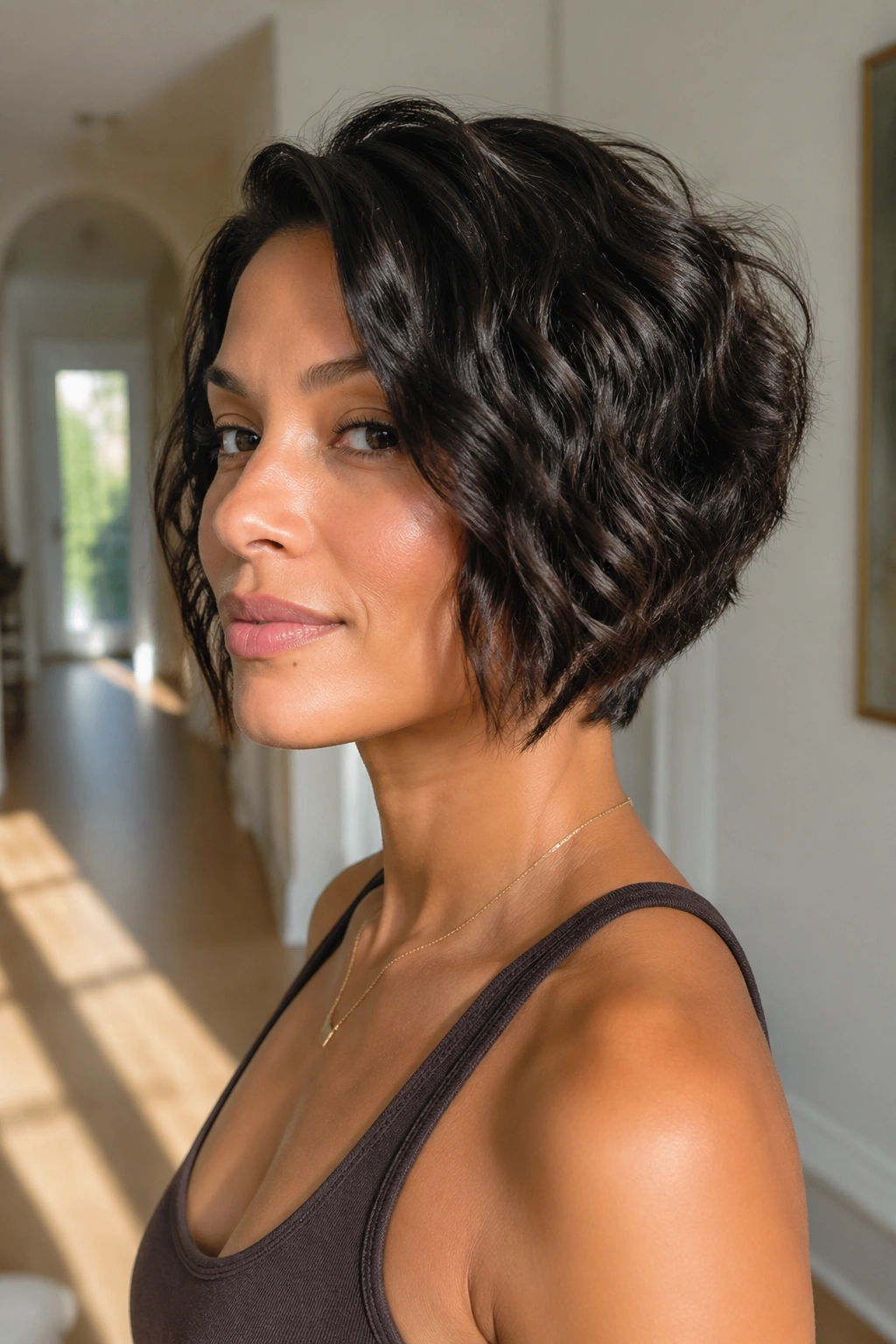
The graduated bob is shorter at the nape and gradually longer toward the front, creating a stacked effect at the back. On wavy natural hair, the stacking at the back adds volume and lift that the wave pattern enhances — each wave at the nape has less length to weigh it down, so it springs more fully. The result is a bob that has real presence and movement from every angle.
10. The Medium Wavy Cut With Curtain Bangs
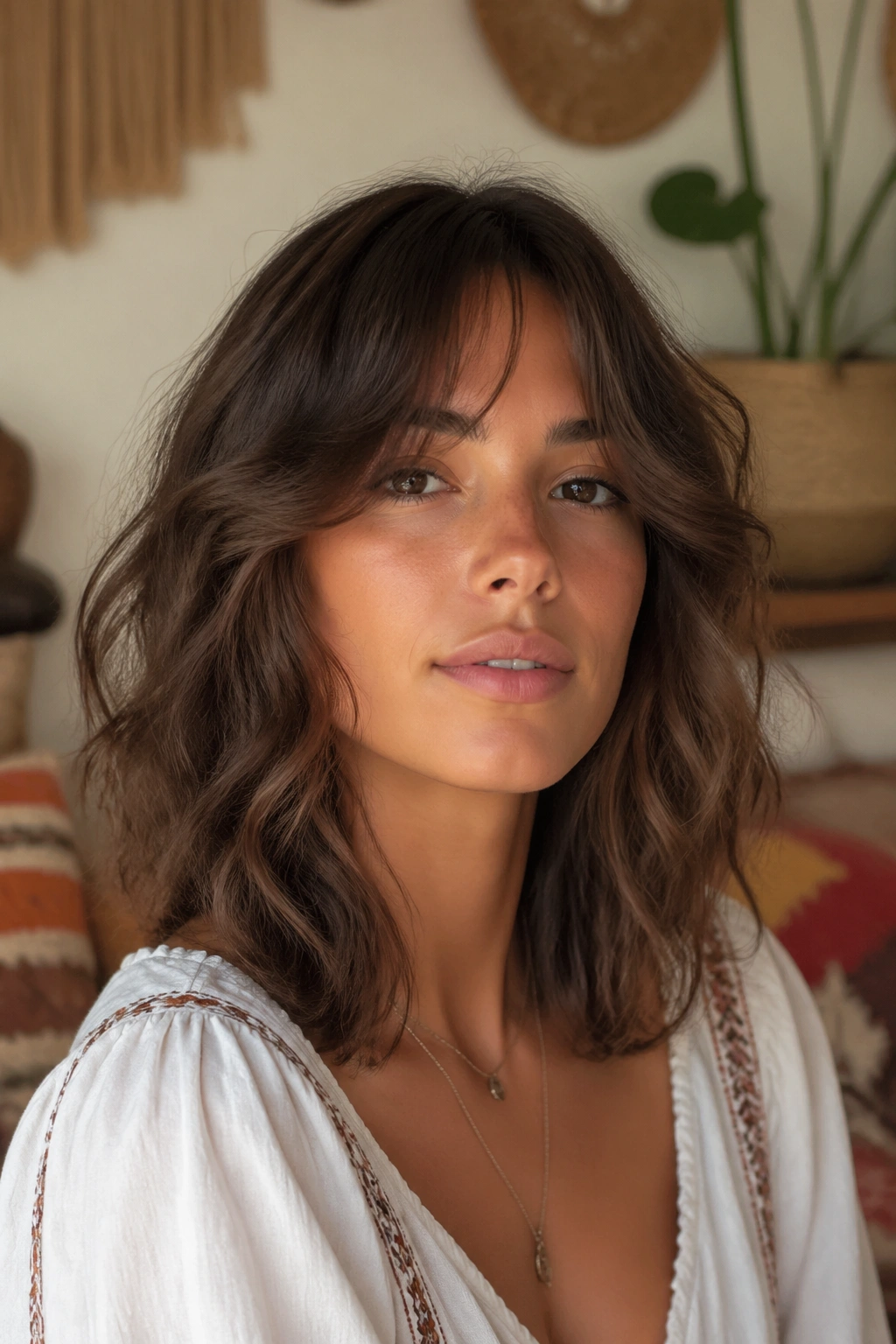
Curtain bangs on wavy natural hair are extraordinarily beautiful. The bangs part in the center and fall naturally on each side, and the natural wave in the bang section creates a graceful, soft frame that’s far more dimensional than straight curtain bangs. At medium length behind them, the overall style has a 1970s-inspired, effortlessly bohemian quality that feels completely natural and completely current simultaneously.
11. The Wavy Cut for Fine Wavy Hair

Fine wavy hair has a particular challenge: the wave pattern is real but the strands are lightweight enough to fall flat without the right cut and product support. For fine wavy natural hair, the cut should create volume without removing the limited bulk the hair has — which means light internal layering rather than aggressive layering. Face-framing layers are particularly helpful because they create movement close to the face where it’s most visible.
Product Recommendations for Fine Wavy Hair
Use a volumizing mousse rather than a cream or gel. Apply on slightly damp (not soaking wet) hair, scrunch upward, flip the head upside down while diffusing on low heat. The mousse lifts the root and gives fine waves the volume they don’t have naturally.
- Tip: Avoid products with heavy oils or butters if your wavy hair is fine — they’ll coat the strands and flatten the wave completely.
12. The Wavy Cut for Coarse Wavy Hair
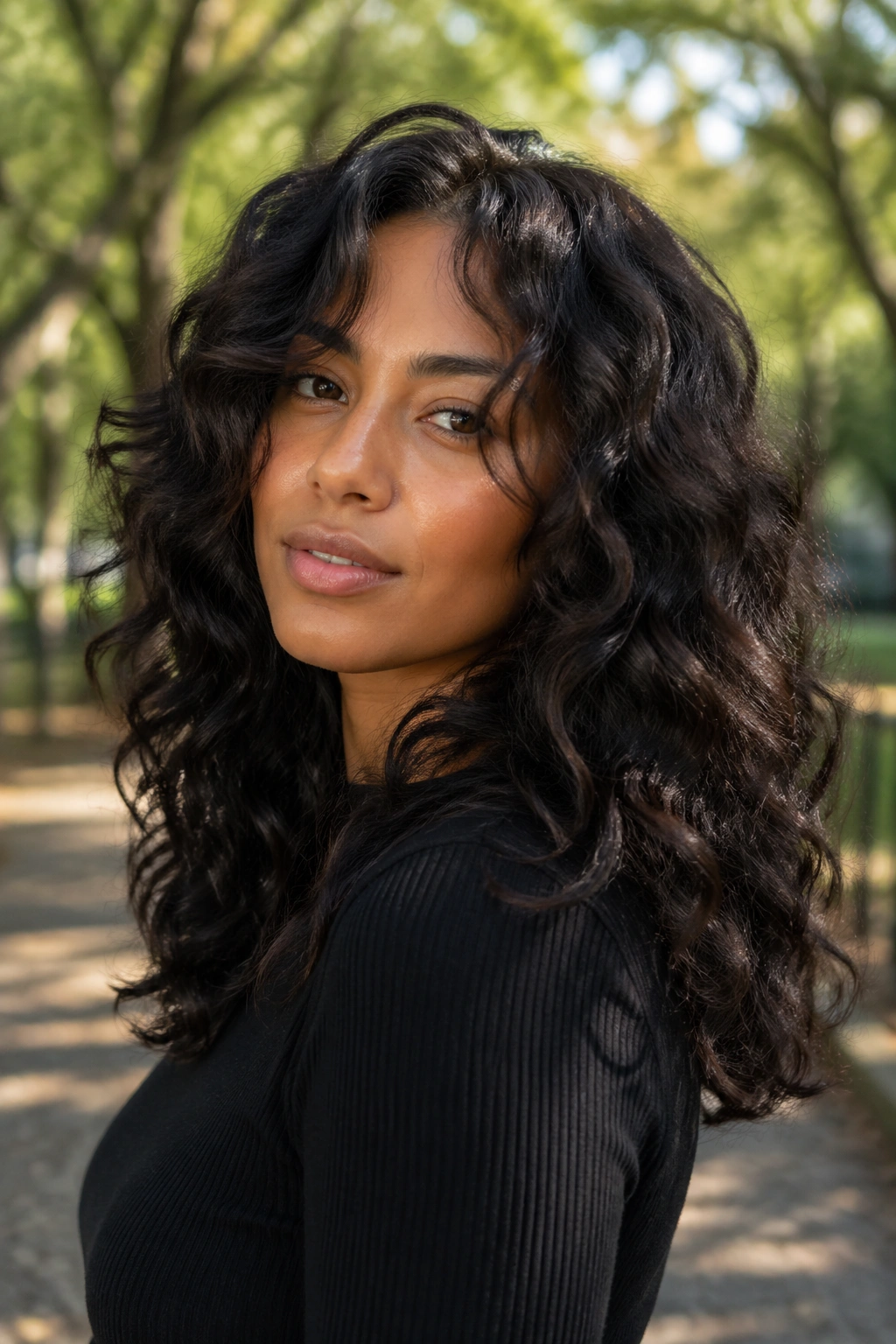
Coarse wavy hair — with thicker individual strands — tends to be resistant to wave definition and can look frizzy or poofy rather than beautifully wavy if not cut and styled correctly. Layering is essential for coarse wavy hair — it removes the bulk that causes the poofy silhouette and allows the underlying wave pattern to show. Deep conditioning is equally important to keep coarse wavy strands smooth and defined.
13. The Long Wavy Cut With Invisible Layers
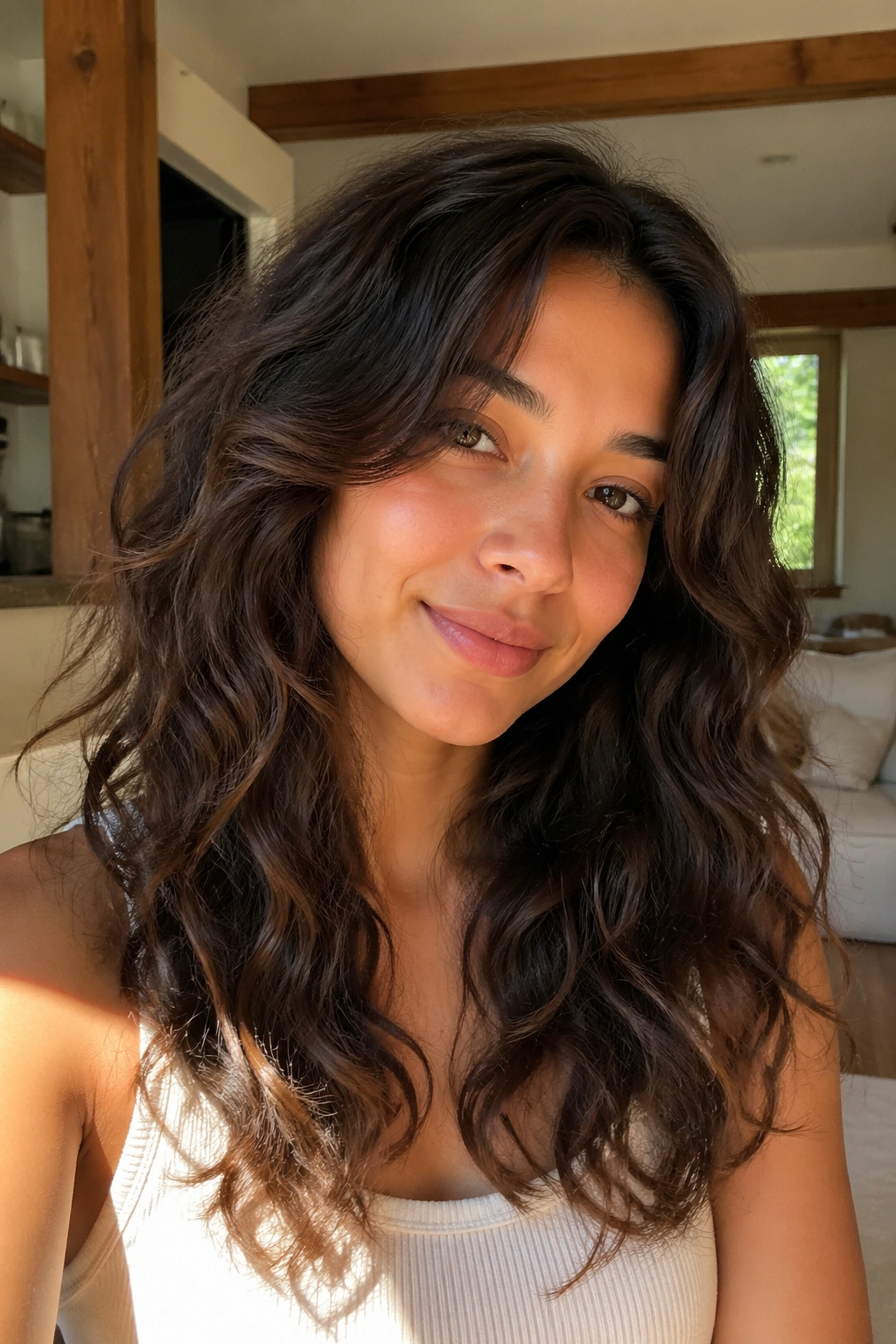
Invisible layering (interior bulk removal without visible perimeter variation) is particularly useful for long wavy natural hair that the wearer wants to keep long but needs better defined. The exterior length stays intact while the interior becomes significantly lighter, allowing the wave pattern to express more fully from root to tip without any obvious length sacrifice. It’s the best option for length-retentive natural hair enthusiasts with wavy patterns.
14. The Wavy Natural Fringe Cut

A full fringe — bangs cut straight across the forehead — on wavy natural hair creates an immediate, powerful focal point. The fringe needs to be cut carefully to account for how the wave in that section sits — it should be cut slightly longer than desired and allowed to spring back to its natural position before any final adjustments. Done right, a full fringe on wavy natural hair is strikingly beautiful.
15. The Mid-Length Wavy Cut for 2C Hair
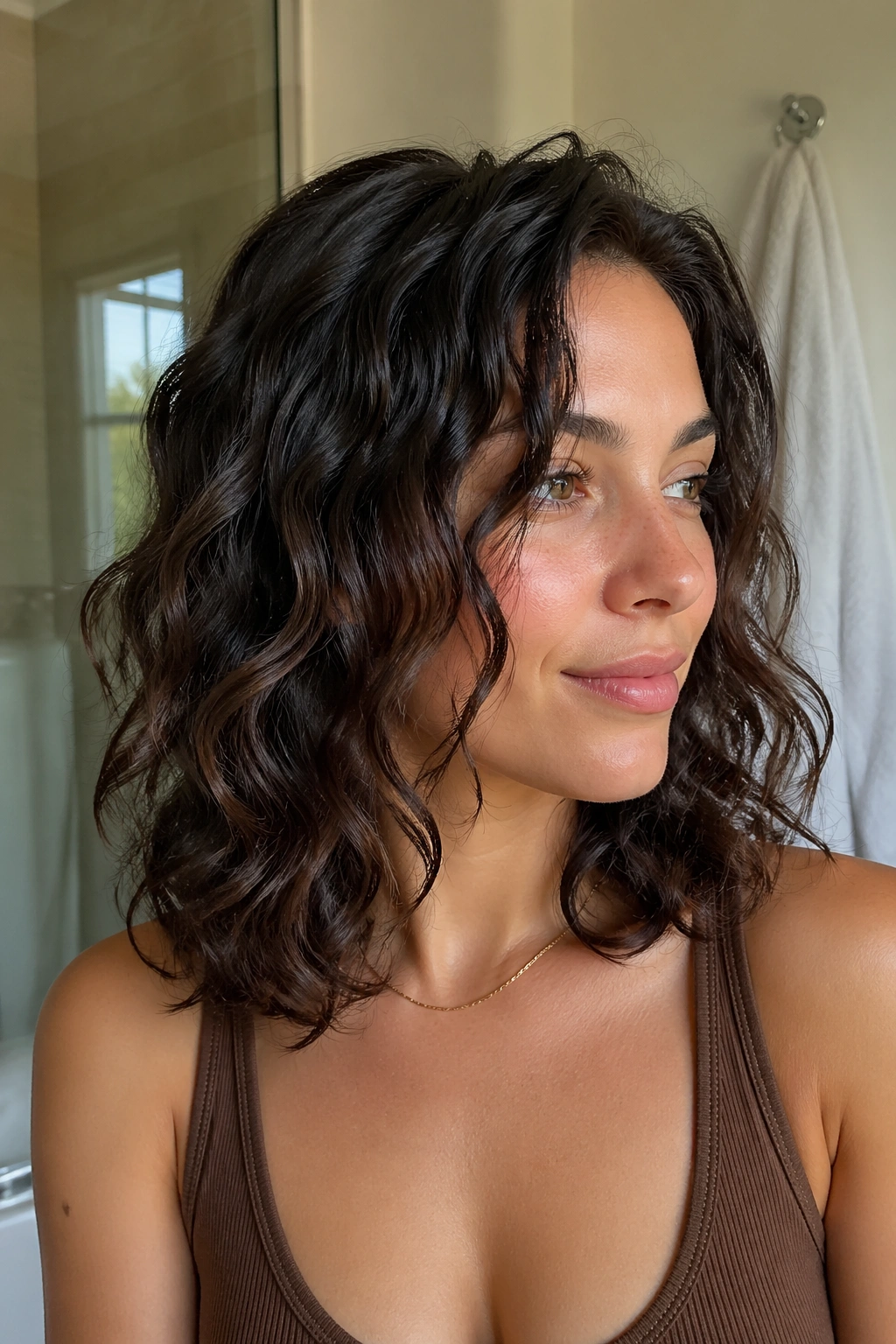
2C wavy hair sits closest to the curly category — the waves are tight and consistent, almost ringlet-like at the ends. At mid-length, 2C waves look their most defined and dramatic. The cut should include interior layering and possibly some graduation, similar to what you’d do for a loose curly cut. Products can be slightly heavier than for looser wave patterns — a light curl cream rather than just mousse.
Styling 2C Wavy Hair at Mid-Length
Apply a leave-in conditioner and a light curl cream to wet hair. Scrunch upward section by section. Plop in a microfiber towel or cotton T-shirt for 20–30 minutes to absorb excess water. Then air dry or diffuse. The result should be defined, consistent waves that look genuinely dimensional.
16. The Short Wavy Natural Cut
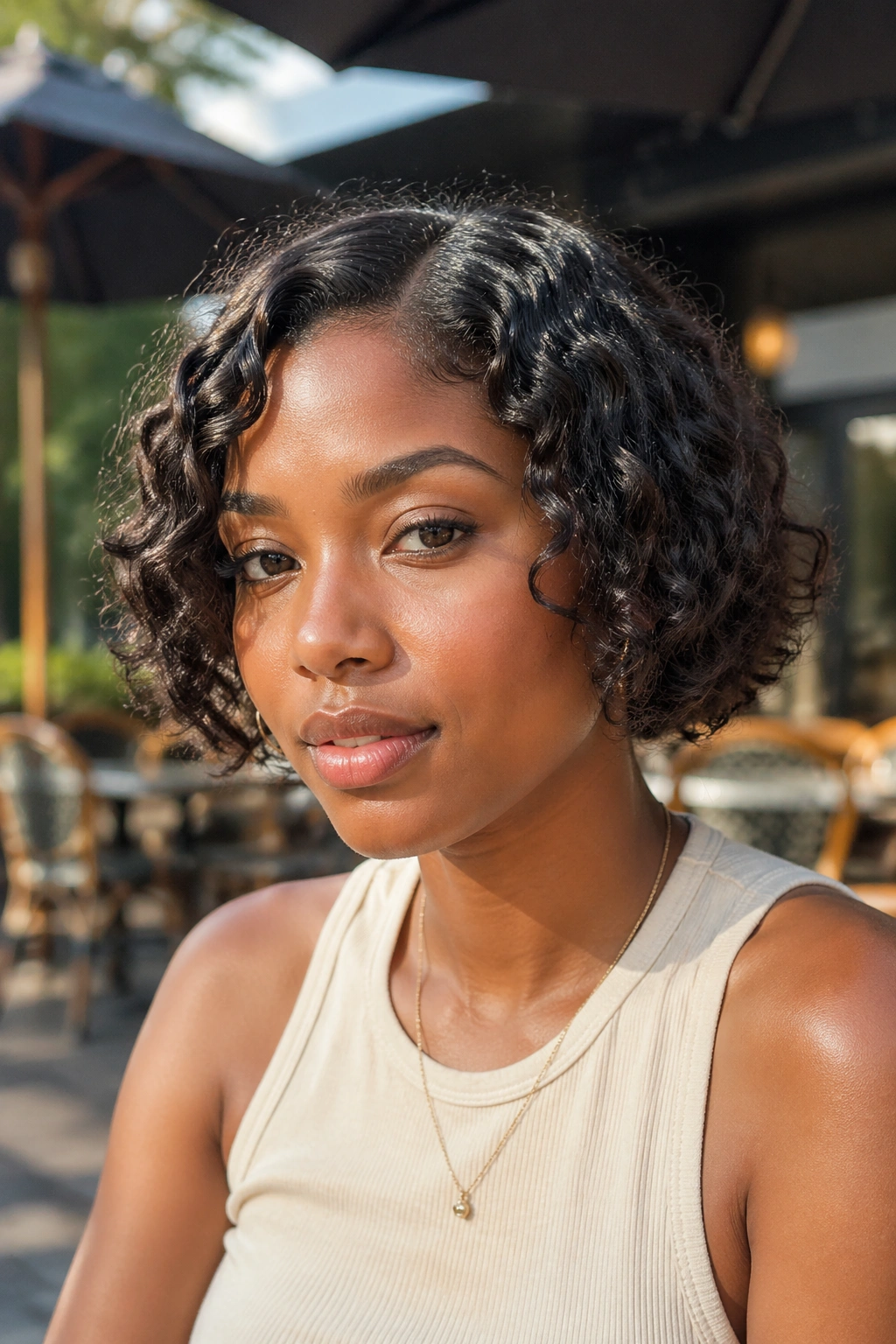
Short wavy hair — around ear to chin length — tends to have the most defined wave of any length because each strand is carrying the least amount of weight. At short lengths, even a 2A wave that’s barely visible at longer lengths can look significantly more defined. If you’ve been struggling to see your wavy pattern clearly, going shorter can be the most direct path to finally seeing it fully.
17. The Wavy Natural Cut With Textured Ends
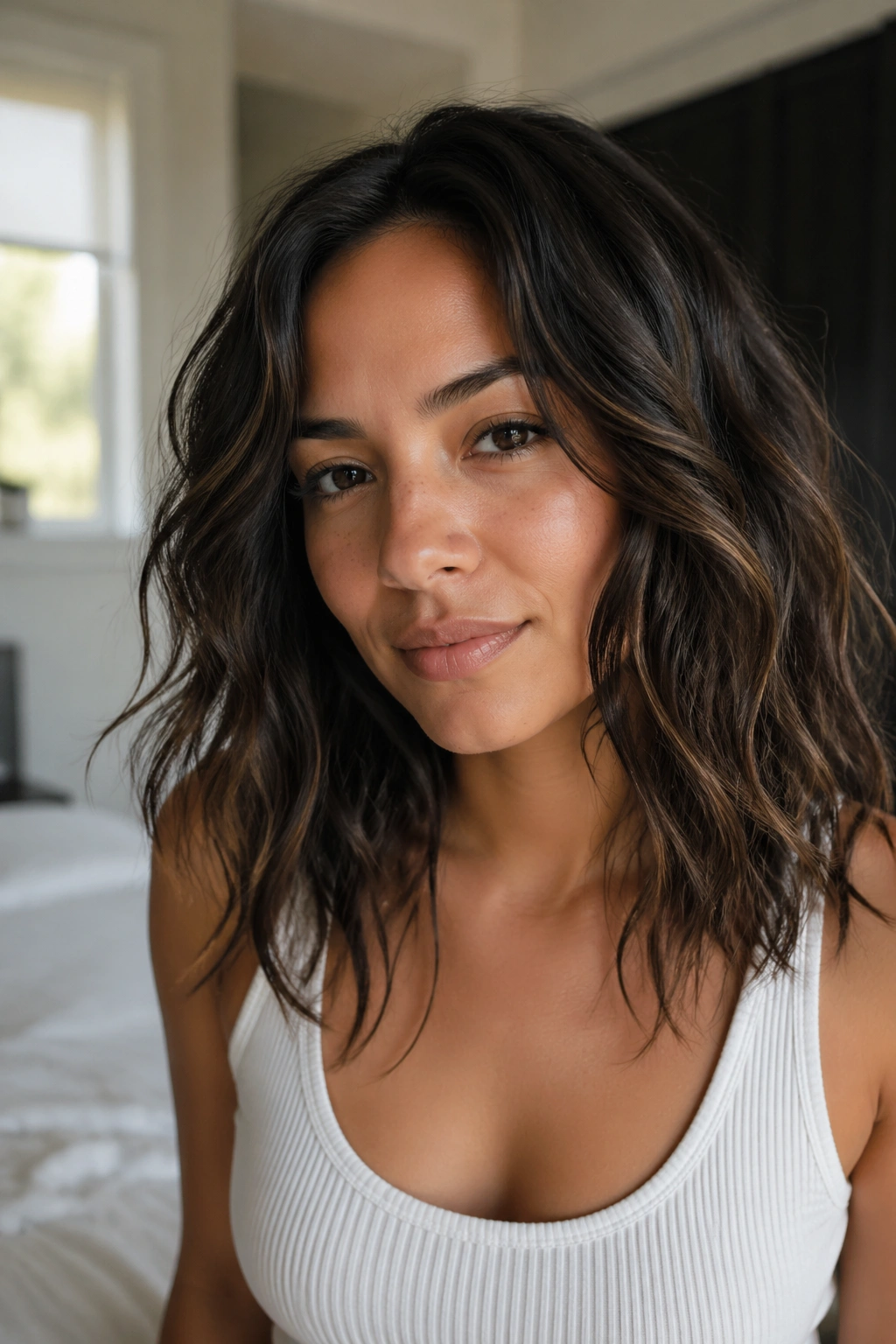
Point-cutting or texturizing shears applied to the ends of a wavy natural cut creates irregular, slightly imperfect ends that echo the natural variation in the wave pattern. Textured ends blend seamlessly into wavy natural hair and make the cut look significantly more natural — like the hair grew this way rather than being cut to a specific shape.
18. The Wavy Asymmetrical Cut
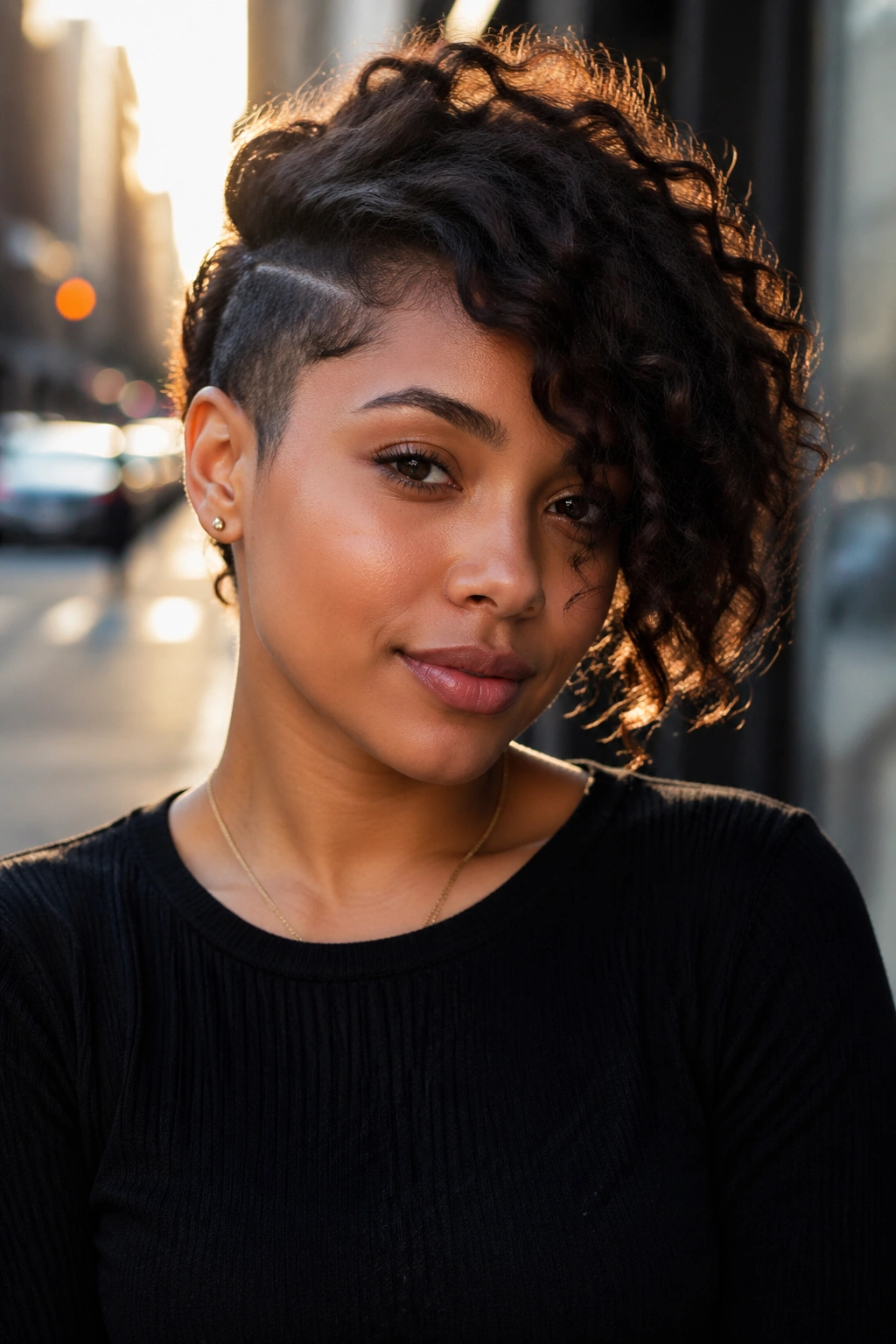
One side cut shorter than the other — dramatically, deliberately — on wavy natural hair creates an eye-catching asymmetry that works particularly well at medium length. The shorter side has a more defined, springier wave; the longer side has a more flowing, relaxed wave. The contrast between the two sides is inherently interesting and instantly fashion-forward. No accessories required.
19. The Defined Wavy Cut for 2B Hair
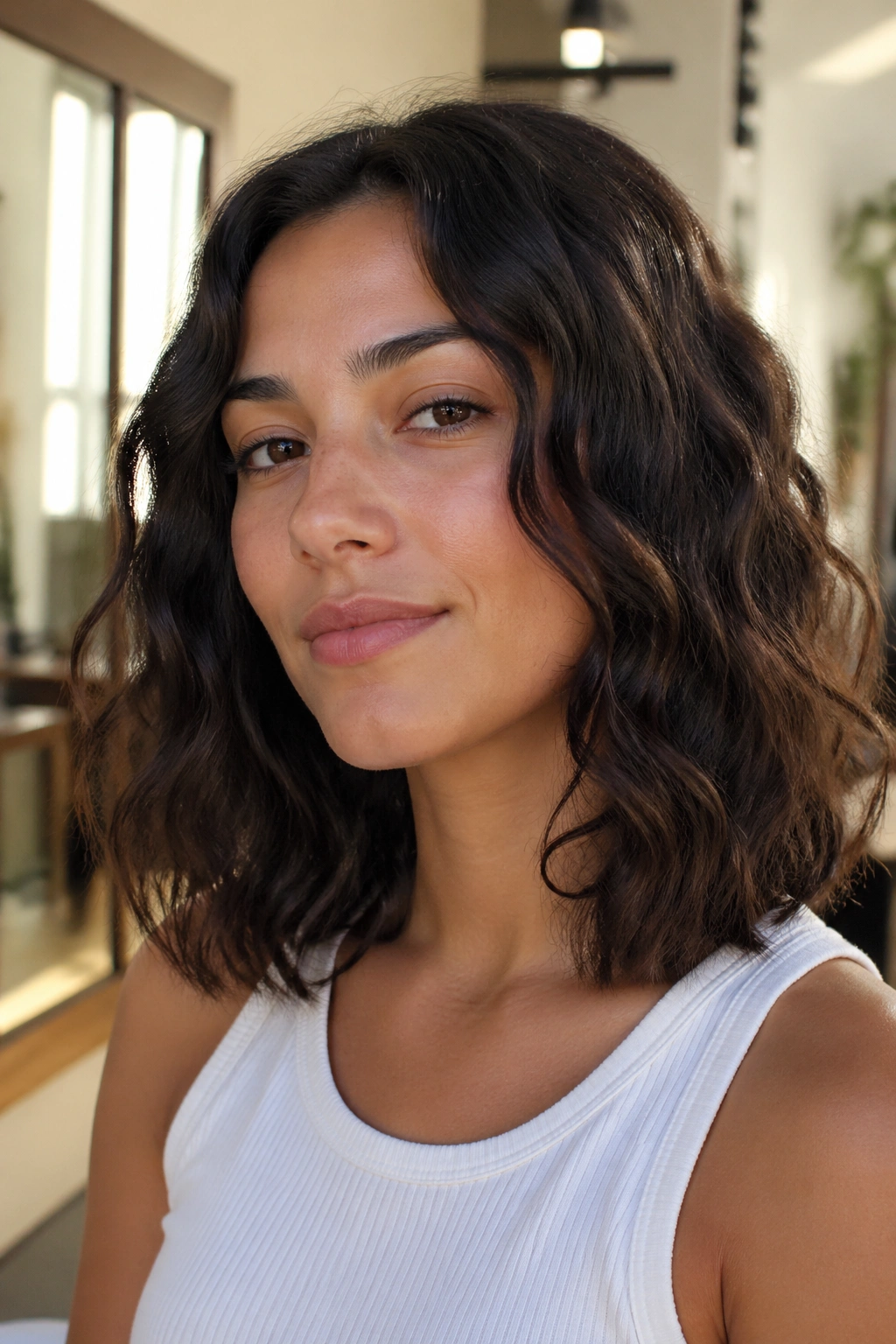
2B waves are stronger and more consistent than 2A — they have a clear S-shape that’s visible from root to tip in ideal conditions. A cut for 2B wavy natural hair should emphasize the wave pattern through layering that creates movement. Shoulder length is often the sweet spot for 2B waves — long enough to show the full S-wave pattern, short enough that the wave isn’t weighed flat by the hair’s own length.
20. The Bespoke Wavy Natural Cut
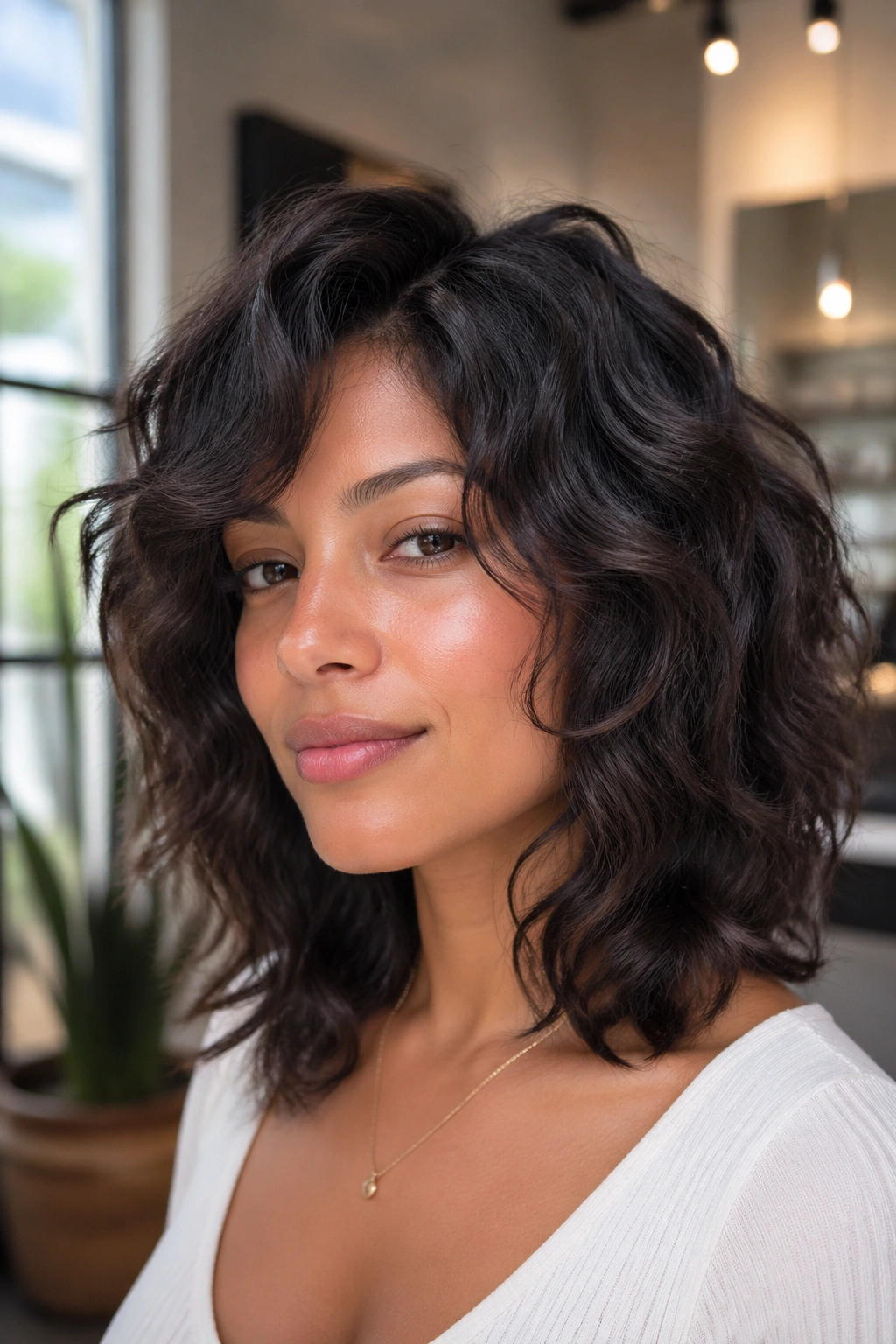
The best haircut for wavy natural hair isn’t a template — it’s a fully personalized creation based on your specific wave pattern, your density, your hair goals, and your lifestyle. The best wavy hair stylists are rare, but they exist — and they understand that 2A waves need a completely different approach from 2C waves, that fine wavy hair and coarse wavy hair need different techniques, and that the cut needs to work with the way your specific strands move and behave.
Finding that stylist is worth the search. Once you find them, your wavy natural hair will make you understand why so many people say the right cut changed everything.
Building Your Wavy Natural Hair Care Routine Around Your Cut
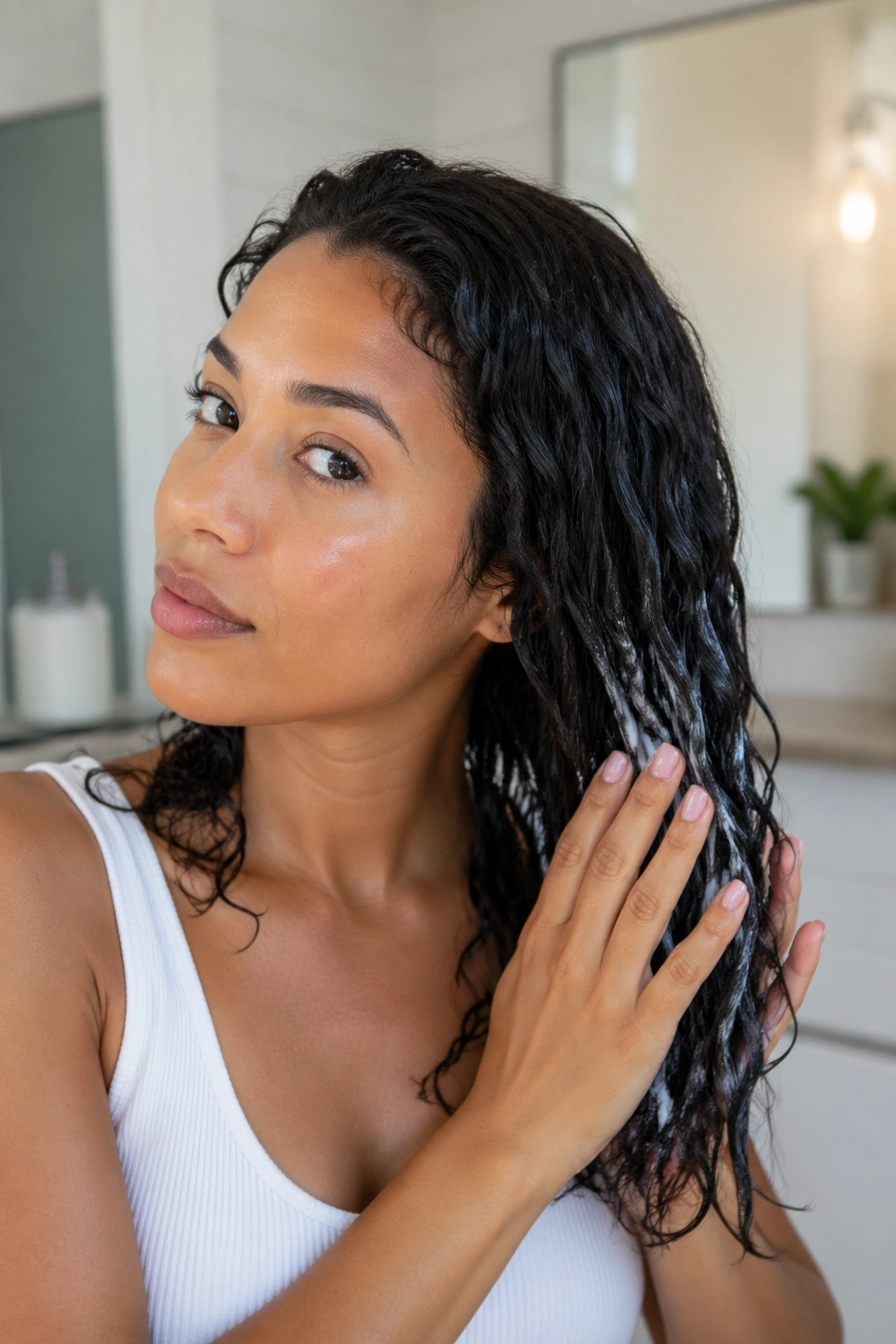
The right haircut for your wavy natural hair is the foundation, but the care routine you build around it determines how consistently great your hair looks between appointments. Wavy natural hair needs regular moisturizing — but lighter products than curly hair typically uses. A co-wash or gentle shampoo once or twice a week, a lightweight conditioner left in for several minutes and rinsed, and a mousse or light gel applied while hair is still damp is the core of a solid wavy hair routine.
Sleep with your hair gathered loosely at the top of your head or in a loose braid — not pinned down, not in a tight band that will disrupt the wave pattern. In the morning, a light refresh spray of water and a tiny amount of your styling product, scrunched in, is usually enough to revive the wave from the previous day’s style.
Styling Techniques That Enhance Wavy Natural Hair
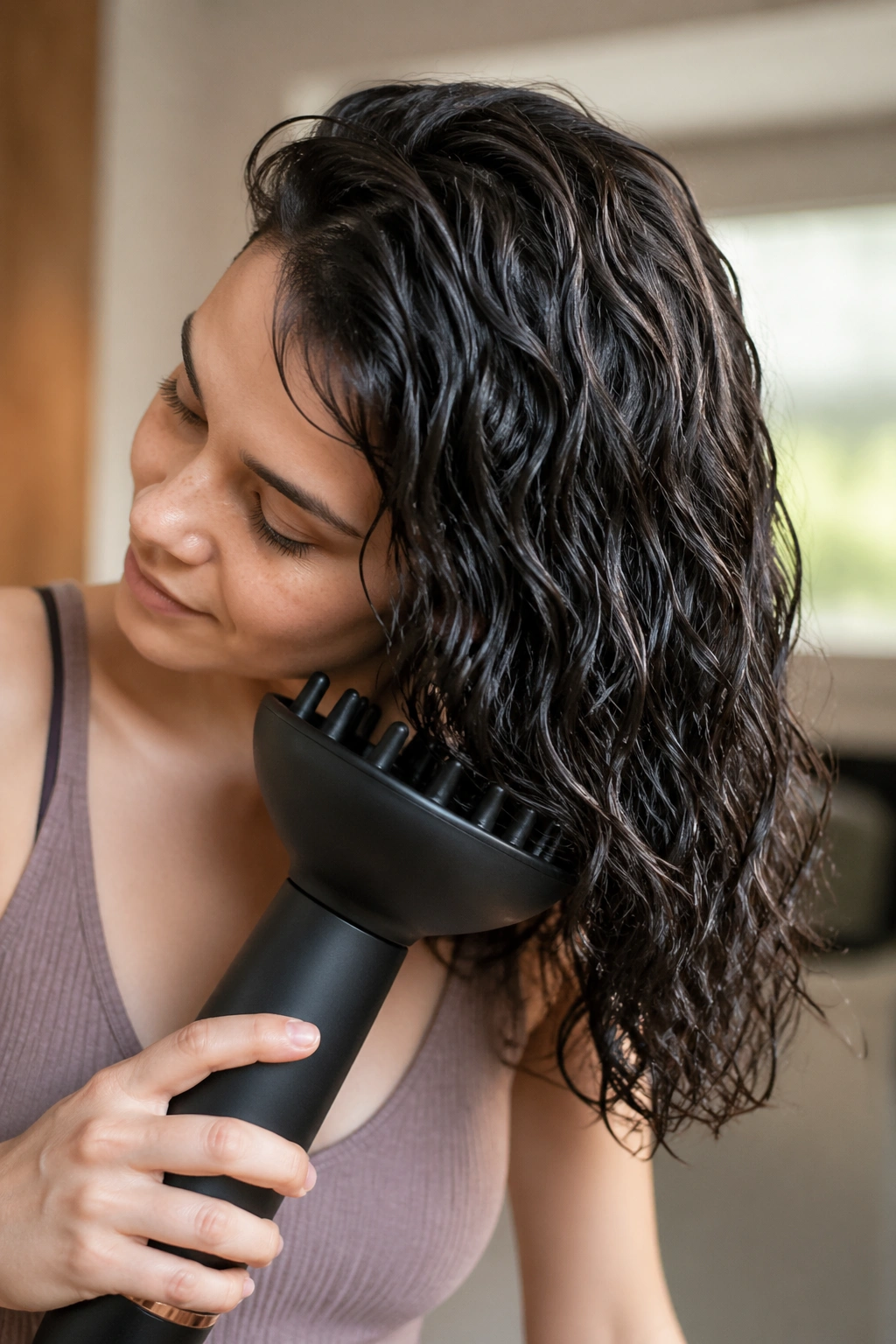
Beyond the cut and the products, the technique you use makes a real difference in how your wavy natural hair looks. The plop — wrapping wet, product-applied hair in a microfiber towel or cotton T-shirt for 15–30 minutes — removes excess water without disrupting the wave pattern, resulting in faster drying and better wave definition. Plocc-diffusing (using a diffuser attachment on your hairdryer at the lowest heat and speed setting) adds volume at the roots while setting the wave pattern with gentle heat.
What not to do: rake through your wavy hair with your fingers repeatedly while it’s drying. This disrupts the wave pattern and causes frizz. And resist the urge to touch your hair while it’s wet and drying — the wave sets best when it’s left completely alone from application until dry.
The Truth About Wavy Natural Hair and Hairstyling
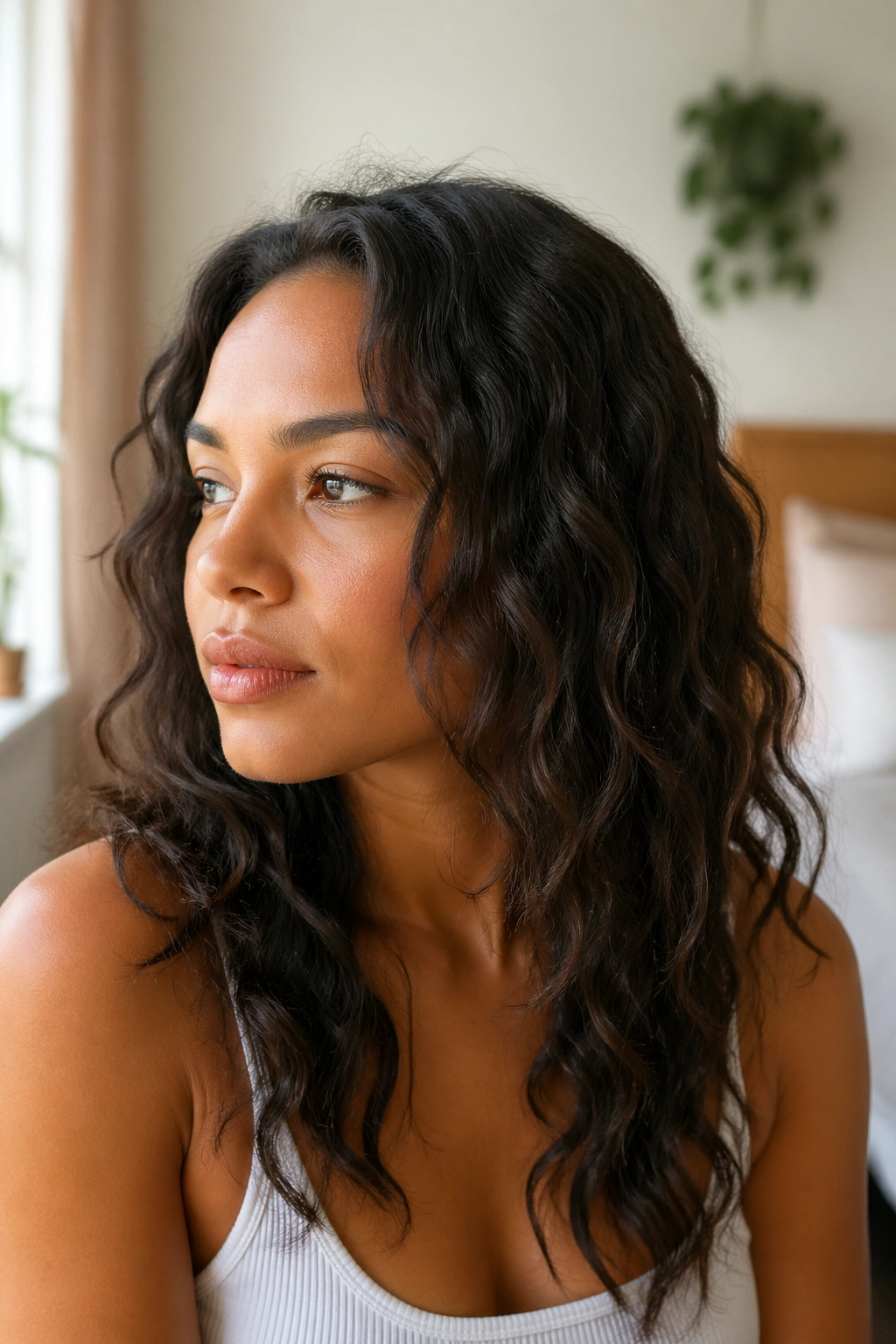
Wavy natural hair is, in some ways, the easiest natural texture to work with — it often doesn’t need the hours of manipulation that tighter curl types require, and it can look genuinely styled with minimal product and effort. But it requires finding the right cut and the right technique before that ease becomes apparent. Many wavy natural hair wearers spend years fighting their texture with the wrong cut and the wrong products, never quite achieving the look they want.
The right cut changes that experience completely. When your wavy natural hair is cut to actually work with your wave pattern, the hair that once felt like a compromise — not curly enough, not straight enough — becomes something you look forward to washing because you know exactly what it’s going to do.
That’s the promise of a great wavy natural haircut. And it’s a promise that the right stylist absolutely delivers on.