



Red and blonde curly hair is one of those combinations that just works — whether you’re going for fiery, sun-kissed, or somewhere in between. For Black women with natural curls, this color duo opens up a world of possibilities that can feel both bold and effortlessly beautiful. The right shade of red or blonde can make your curl pattern pop, add dimension to tight coils, and completely transform a style without a single cut. And with so many variations — from copper-blonde blends to cherry-red highlights — there’s genuinely something here for every curl type and skin tone.
Why Red and Blonde Work So Well on Curly Hair
Color and texture are a power couple. When you add red or blonde tones to naturally curly hair, the color catches light differently at every bend and spiral — which means your curls look fuller, more defined, and more visually complex than they would with a single flat color.
Curly hair is naturally multidimensional. Even before color enters the picture, the way light bounces off a coil is different from how it hits straight hair. Add in warm reds and golden blondes, and that dimension multiplies. The result is hair that looks alive.
This is especially true for darker base colors. When red or blonde is layered over natural black or dark brown hair, the contrast creates depth — coils look defined at the root, with warmth radiating through the lengths. It’s a look that reads as intentional and rich rather than flat or one-note.
Neither red nor blonde reads the same on every person. Warm skin tones tend to glow with copper reds and honey blondes. Cooler skin tones can handle the contrast of a brighter crimson or an ashy golden blonde. And for women with medium to deep complexions, the range of reds and blondes that look stunning is genuinely wide — don’t let anyone convince you that bold color isn’t for you.
How to Choose the Right Shade for Your Skin Tone
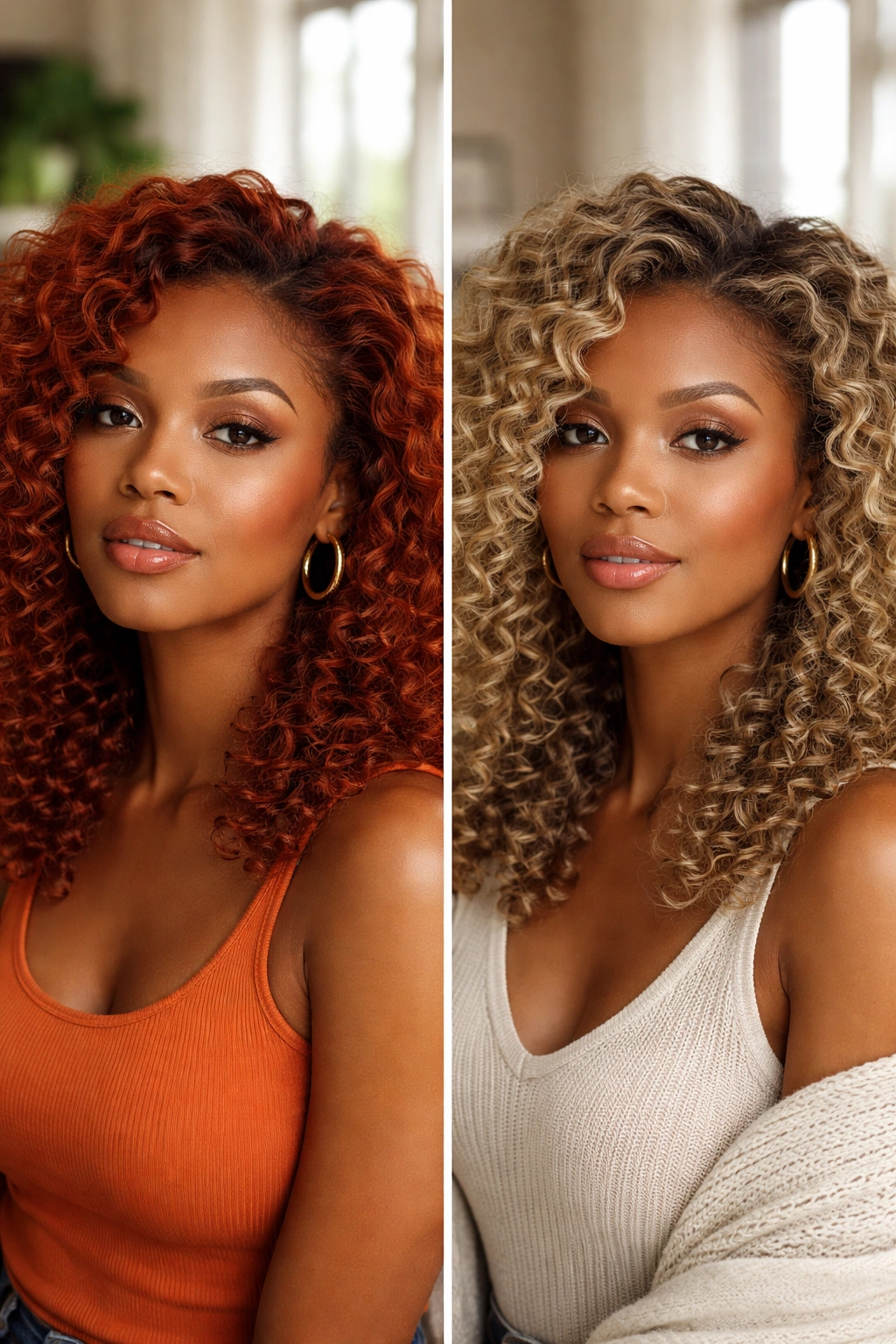
Picking a color isn’t guesswork — but it does take some honest assessment of your undertones and your lifestyle.
Start with your undertones. If you have warm undertones (yellow, peachy, or golden hues in your skin), you’ll generally find that warm colors like copper, auburn, and honey blonde feel harmonious. If you have cool undertones (pink, red, or bluish hues), cooler reds like burgundy or wine, and ashier blondes tend to look sharp rather than jarring.
Neutral undertones — which most people with medium-brown to deep brown skin have — are actually the most versatile. A true neutral undertone means almost any shade of red or blonde can work, as long as the saturation feels balanced with your complexion.
Consider your depth, too. Very deep skin tones can carry vivid, high-contrast colors with power — a bright coppery orange or a rich golden blonde can look absolutely stunning. Lighter complexions often work well with softer, more blended transitions. But these are starting points, not rules. What matters most is what makes you feel the way you want to feel when you look in the mirror.
What to Know Before You Color Natural Curls
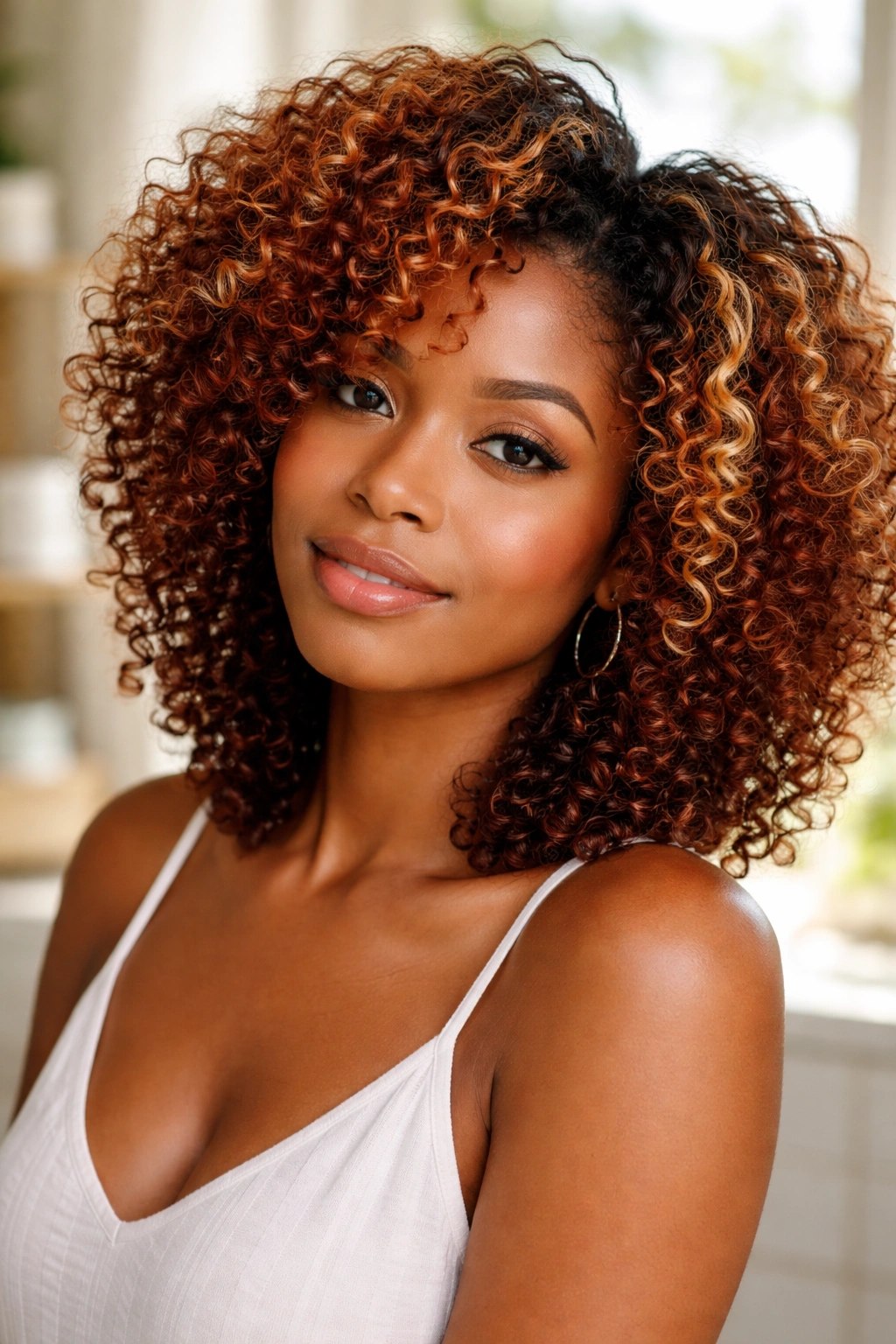
There’s a real conversation to have before you book that color appointment — because coloring natural curls isn’t the same as coloring straight hair, and going in informed protects both your hair and your results.
Bleach changes your curl pattern. This isn’t always permanent, but it’s real. When the chemical process opens the hair cuticle to lift color, it can loosen your curl pattern — sometimes temporarily while your hair adjusts, sometimes more significantly if it’s done without proper care. This is especially true for tight coils and 4c textures.
The solution isn’t to avoid color — it’s to go in with healthy hair and a solid care plan. Protein treatments before and after coloring help restore structural integrity. Deep conditioning is non-negotiable. And if your hair is already heavily processed, damaged, or very dry, it’s worth giving it a few months of intensive moisture work before adding color.
Working with a colorist who understands natural and curly hair is a game-changer in every sense. Someone who colors straight hair all day may not know how to approach your curl pattern, how much developer to use to avoid damage, or how to apply color in a way that honors your texture. Do your research. Look at their portfolios. Ask questions.
How to Maintain Color-Treated Curly Hair
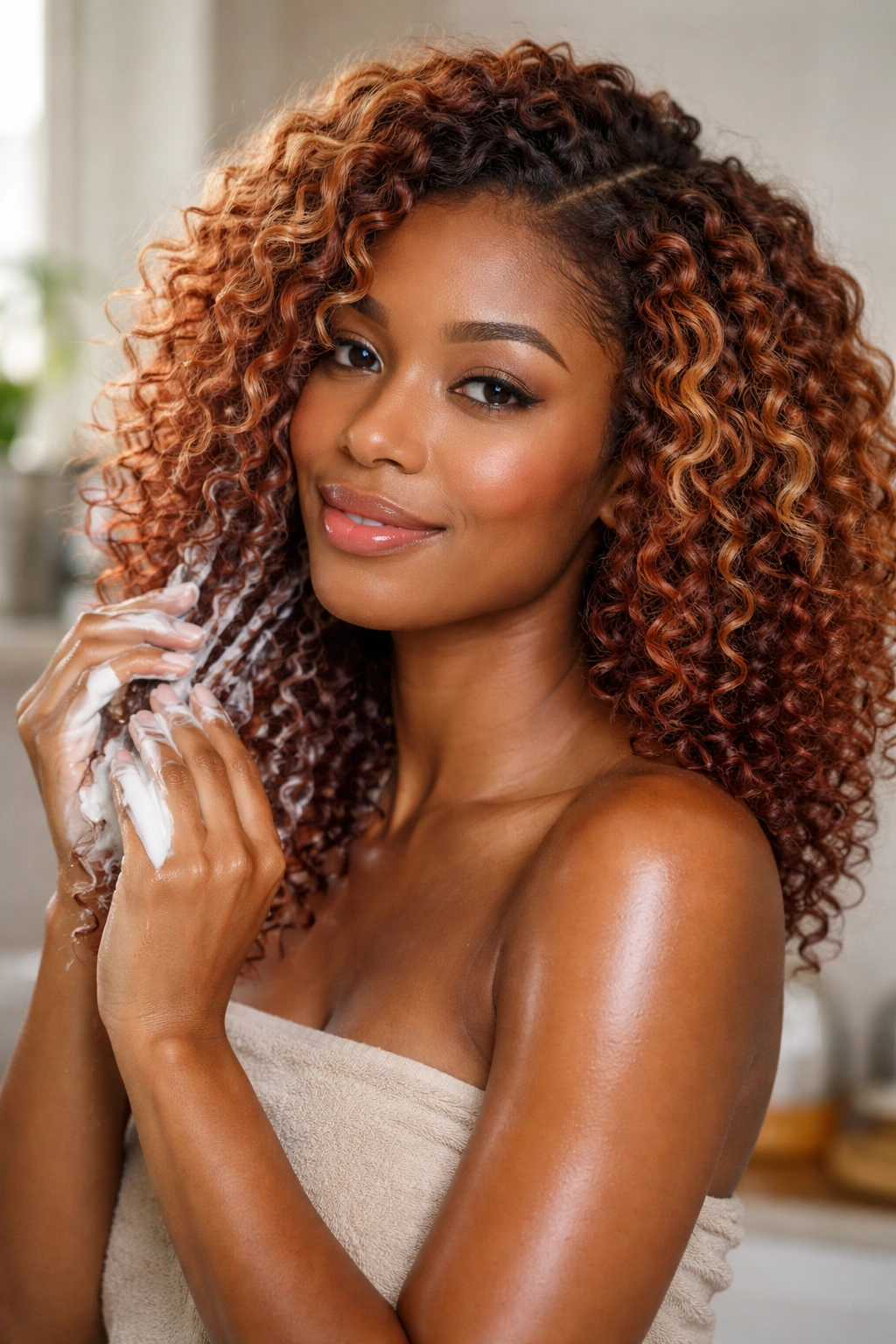
Color is a commitment — and so is the upkeep. Getting a beautiful red or blonde on your natural curls is only the beginning. Keeping it looking fresh, vibrant, and healthy is the real work.
Moisture is your number-one priority. Color-treated hair, especially lightened hair, is more porous — which means it absorbs moisture quickly but loses it just as fast. You’ll need to deep condition more often than you did before coloring. Once a week is a good baseline. Twice a week during dry seasons or if your hair feels particularly thirsty.
Use a sulfate-free shampoo. Sulfates strip color fast — you’ll notice your reds fading to orange and your blondes going brassy if you’re washing with harsh cleansers. A color-safe or gentle cleansing conditioner can extend the life of your color significantly.
Co-washing more between shampoo sessions is a smart strategy. It refreshes your hair without stripping color. And if you’ve gone red, color-depositing conditioners in red or copper tones can refresh the vibrancy between salon visits.
Seal your hair after every wash and style session. A good oil or butter applied over a leave-in conditioner creates a barrier that locks moisture in and helps prevent fading from environmental exposure.
The Role of Protective Styling Between Color Sessions
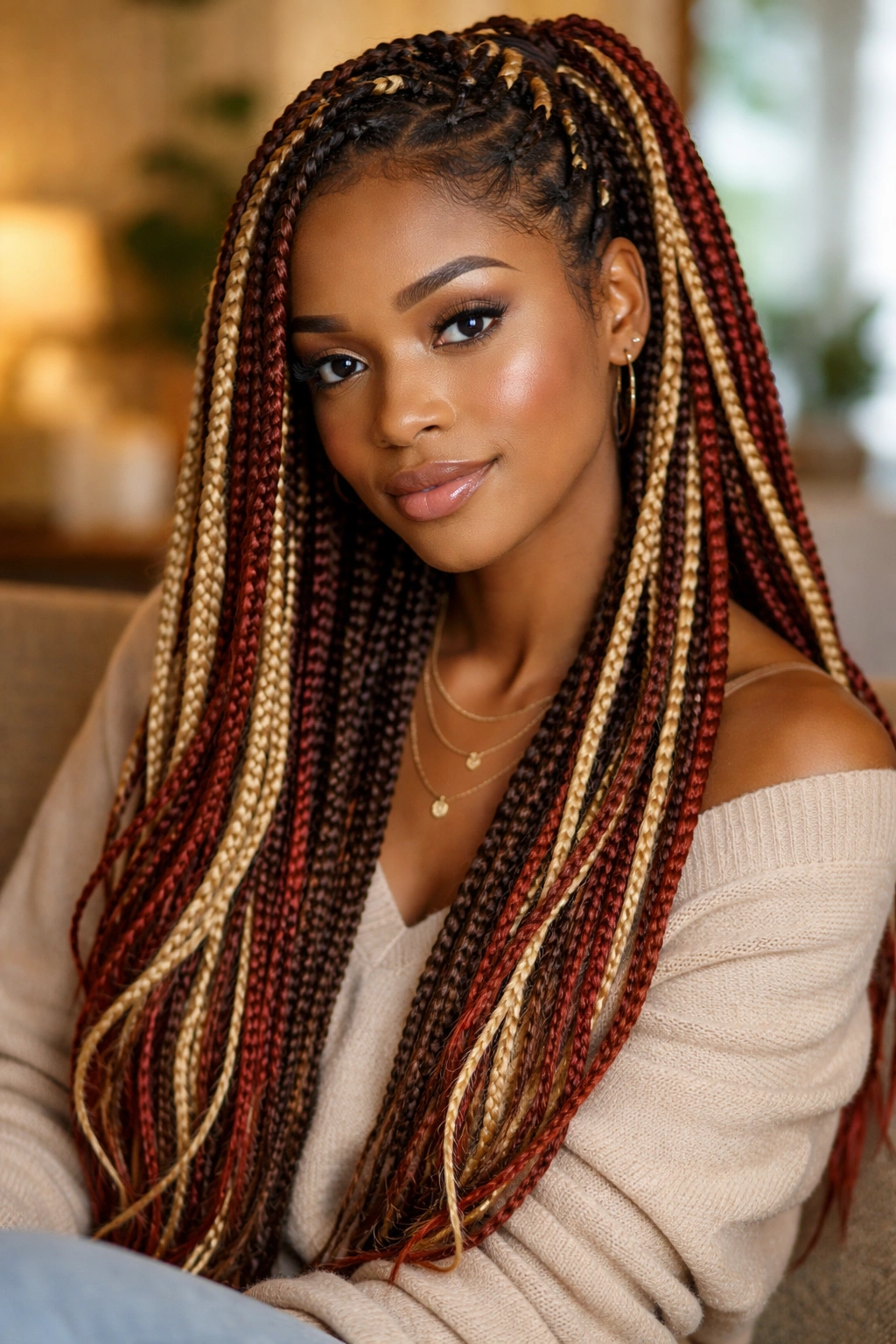
One of the smartest things you can do after coloring is to incorporate protective styles into your rotation. Buns, twists, and braids keep your ends tucked away and reduce the daily manipulation that can stress color-treated strands.
Protecting your ends matters most. The ends of your hair are the oldest, most processed part — they’ve been through everything, and after coloring, they need extra attention. Styles that keep them moisturized and tucked in prevent breakage and extend the length of your color results.
This doesn’t mean you have to hide your color. A bun with a few curls pulled out at the front, or box braids with red or blonde extensions woven in to match your natural color, keeps things protected without sacrificing the look you worked for.
Scalp health matters, too. When your hair is in protective styles, keep your scalp clean, moisturized, and massaged. A healthy scalp supports healthy growth — and healthy growth means your color grows out gracefully rather than breaking off before it has the chance to shine.
1. Auburn Highlights on 4c Coils
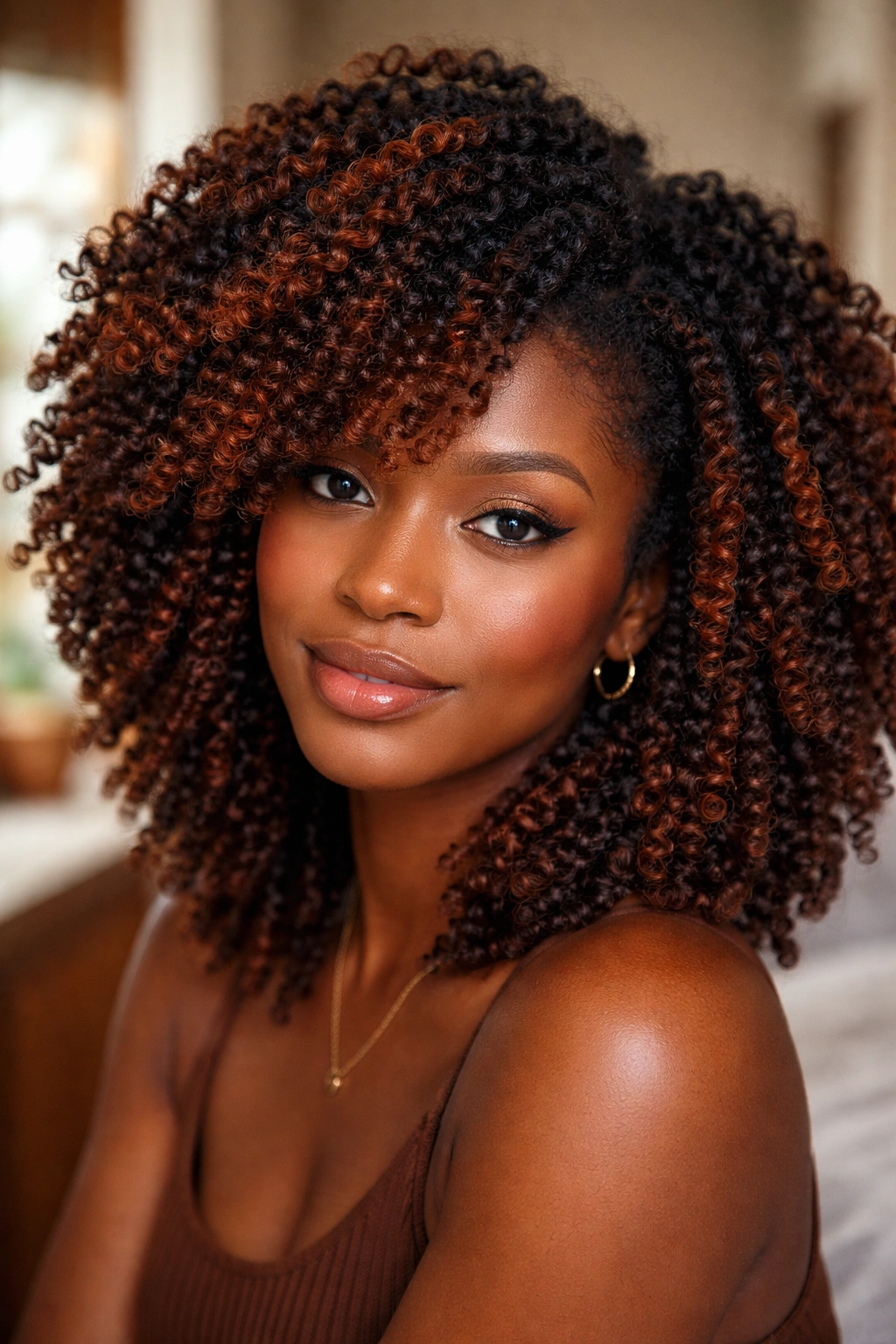
Auburn is one of the most flattering reds for deep brown and dark complexions — it’s warm without being harsh, rich without being overwhelming.
When applied as highlights over 4c coils, auburn creates a sun-kissed, halo effect that adds visible warmth to tight textures. Because 4c coils tend to have a compact curl pattern, the highlights show up as warm flickers rather than solid sections — which gives the overall look a naturally sun-kissed feel rather than an obviously processed one.
How to Achieve This Look
- Ask your colorist for hand-painted highlights in an auburn shade — freehand techniques work beautifully on coils because they follow the natural movement of the curl
- Request that the color be concentrated on the outer sections of your hair, where light naturally hits
- Use a tinted conditioner in copper or red to maintain warmth between appointments
Tip: Refresh your auburn highlights with a red color-depositing mask every 2-3 weeks to prevent fading to a dull orange.
2. Full Copper Red Curly Bob
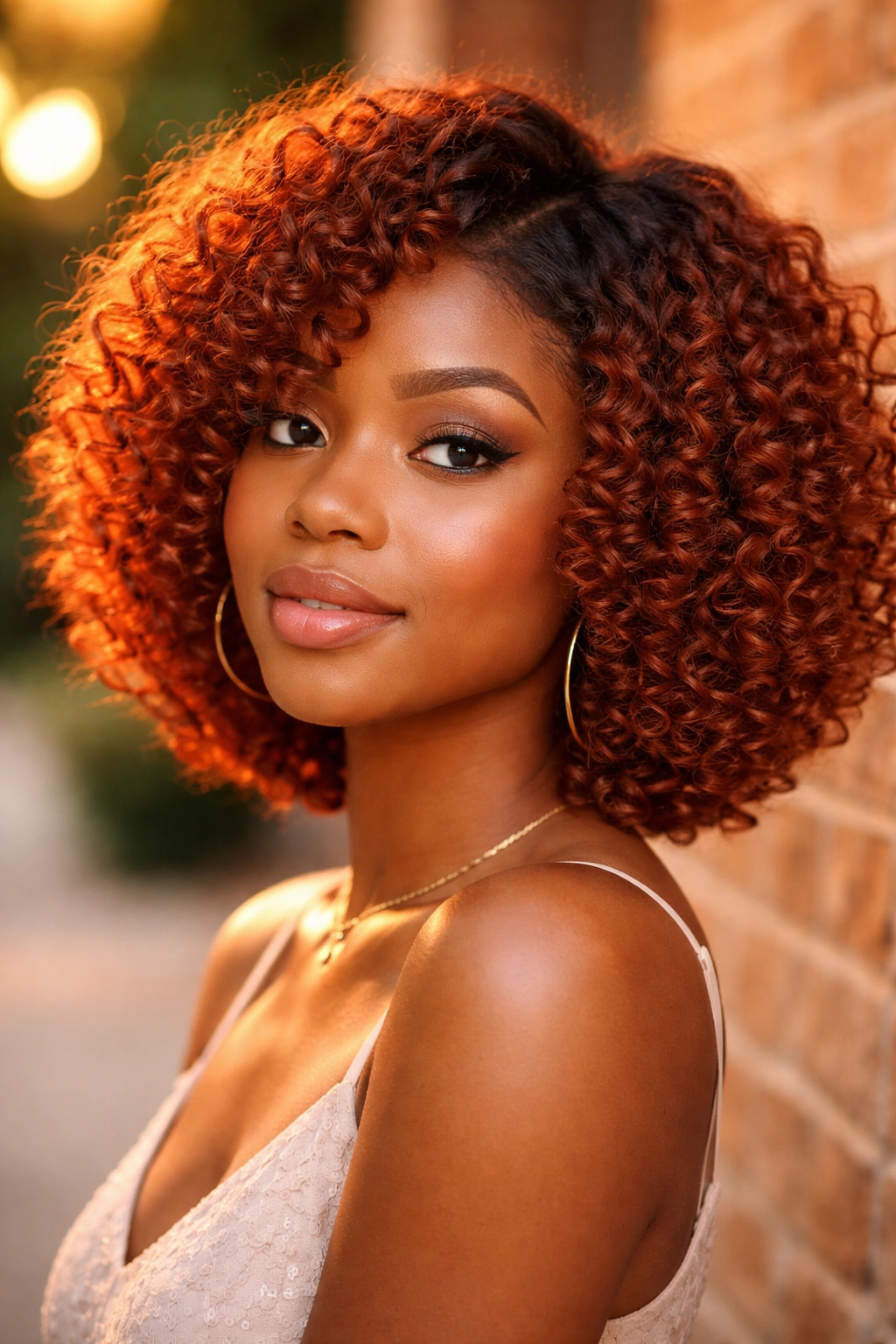
A full copper-red color on a curly bob is one of those looks that turns heads without trying.
Copper sits between red and orange on the color spectrum — and on dark complexions, it creates a striking contrast that feels intentional and fashion-forward. On a curly bob, the color is highly visible from every angle, making it a statement choice.
Copper reads differently on every curl type. On loose waves, it’s sultry. On tight coils, it’s bold and electric. Either way, a full copper application gives your bob a richness that makes it feel like a full transformation even without a dramatic cut.
The key to keeping copper looking its best is toning. Copper fades warmer and then brassy if left without maintenance. A regular gloss treatment or toning shampoo in a copper or red shade keeps the color clean and vibrant for longer between touch-ups.
For a bob specifically, consider getting a fresh cut first — and then color. The ends of a freshly cut bob absorb color more evenly than split or tapered ends. This makes a real difference in how polished the final look turns out.
3. Honey Blonde Tips on Natural Coils
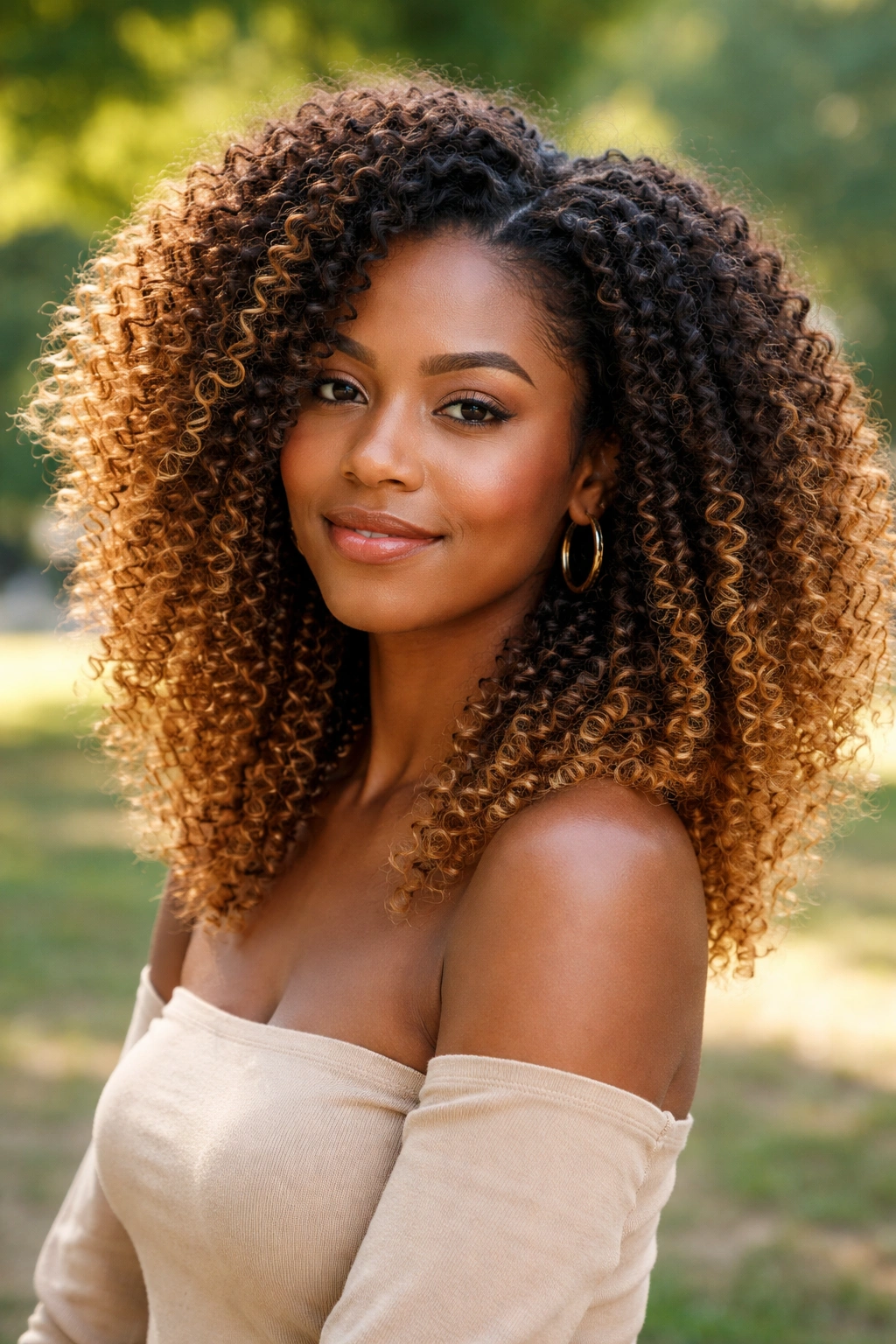
Sometimes the most impactful color technique is the simplest one — and tipping the ends of your natural coils in honey blonde is exactly that kind of easy, high-impact choice.
The visual effect is a natural-looking gradient: your darker natural color at the roots transitions into warm golden blonde at the tips. On curly hair, this creates a soft ombre that looks almost sun-bleached, like your hair has soaked up months of summer.
How to Achieve This Look
- This is a great DIY-friendly option for those comfortable with at-home color — clip the top sections up and apply a lightener or honey-blonde color only to the last 2-3 inches of the bottom sections
- Use a toning conditioner in a golden or honey shade to keep the blonde warm rather than ashy
- Moisturize the tips heavily — the ends are always the driest part of your hair, and lightened ends need even more care
Tip: A castor oil and shea butter blend applied to your ends weekly keeps lightened tips strong and healthy.
4. Strawberry Blonde Twist-Out
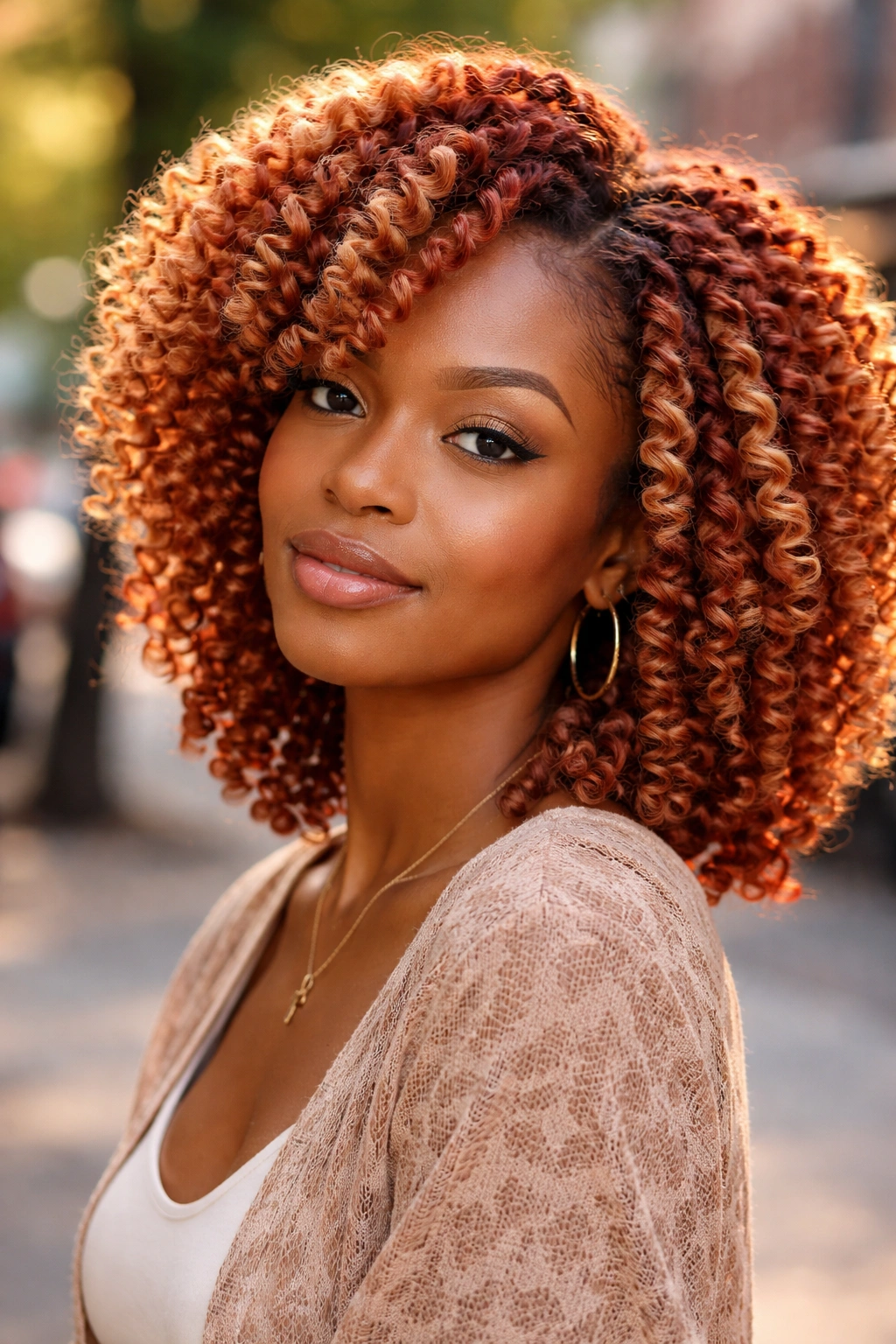
Strawberry blonde is the shade that lives right at the crossroads of red and blonde — and on a twist-out, it creates a look that’s simultaneously playful and sophisticated.
Think of strawberry blonde as the warmer, more romantic cousin of standard blonde. It reads pink-gold in direct sunlight and deeper auburn-rose in shade. On a twist-out, that color variation becomes even more dramatic because of how the light hits each individual coil from different angles as you move.
This is a versatile look — it works on everything from 3c to 4b textures, and it suits a wide range of skin tones. Warmer complexions will find the pink-rose tones especially flattering, while deeper skin tones get a beautiful high-contrast effect.
How to Achieve This Look
- Ask for a strawberry blonde all-over color or balayage, depending on how much of your natural color you want to show through
- Style into chunky two-strand twists after color is applied and hair is deep conditioned
- Unravel when fully dry for maximum volume and color visibility
5. Crimson Red Afro
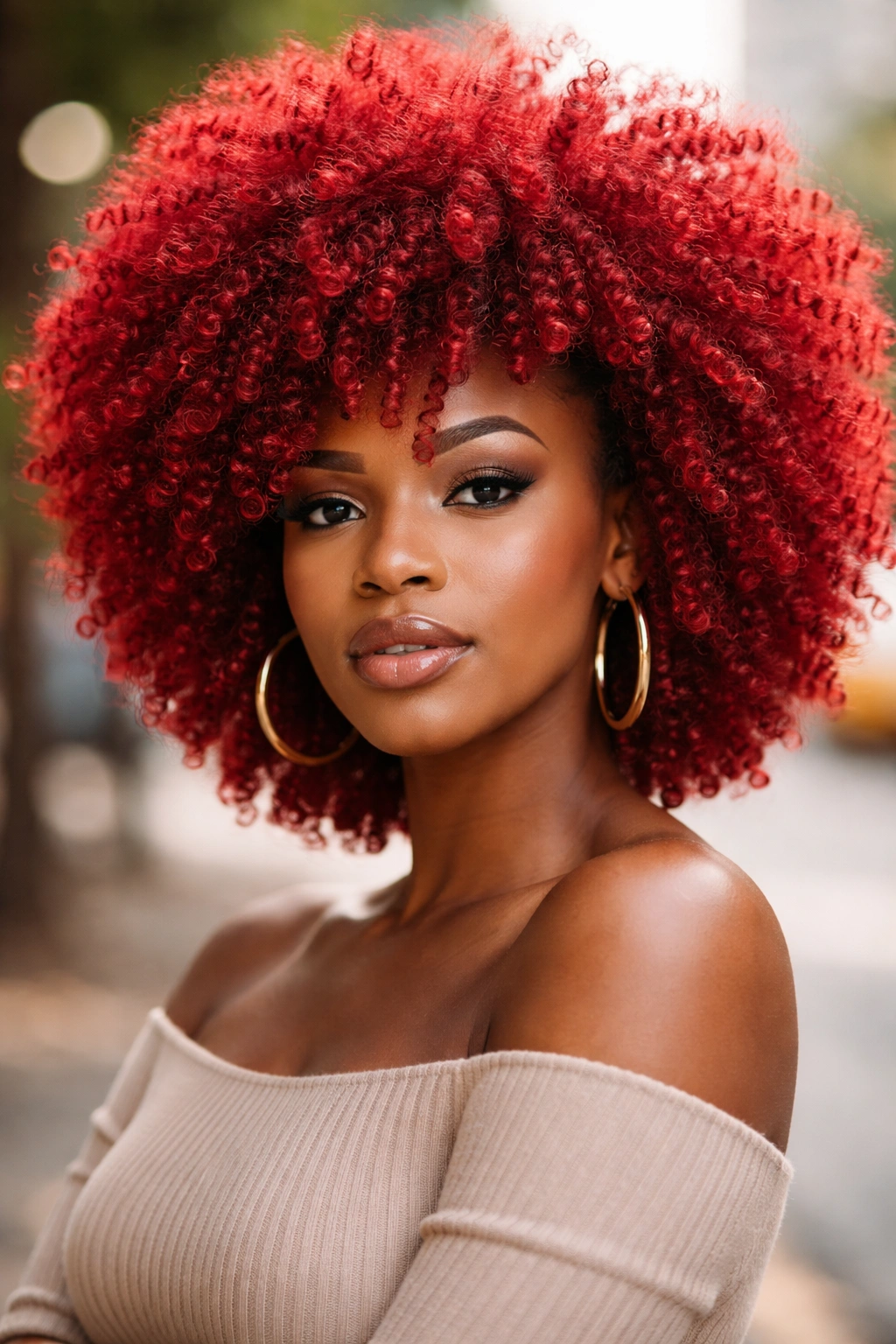
A full crimson red afro is pure power. There’s no other way to describe it.
Crimson sits on the deeper, blue-red end of the red spectrum — which means it doesn’t fade to orange the way brighter reds tend to. On an afro, full saturation in crimson creates a look that’s bold, artistic, and completely unforgettable. It’s the kind of color that feels like a statement without you having to say a word.
This look works best on thick, dense textures — the kind that create that full, round afro silhouette that makes the color feel large and intentional rather than scattered. Thinner or finer textures can still pull this off, but may want to build some volume through styling products before attempting the look.
Maintenance is key: crimson fades if not cared for properly. Use a sulfate-free shampoo, rinse with cool water, and refresh the color every 4-6 weeks with a color treatment or salon gloss.
6. Two-Tone Red and Blonde Split Color
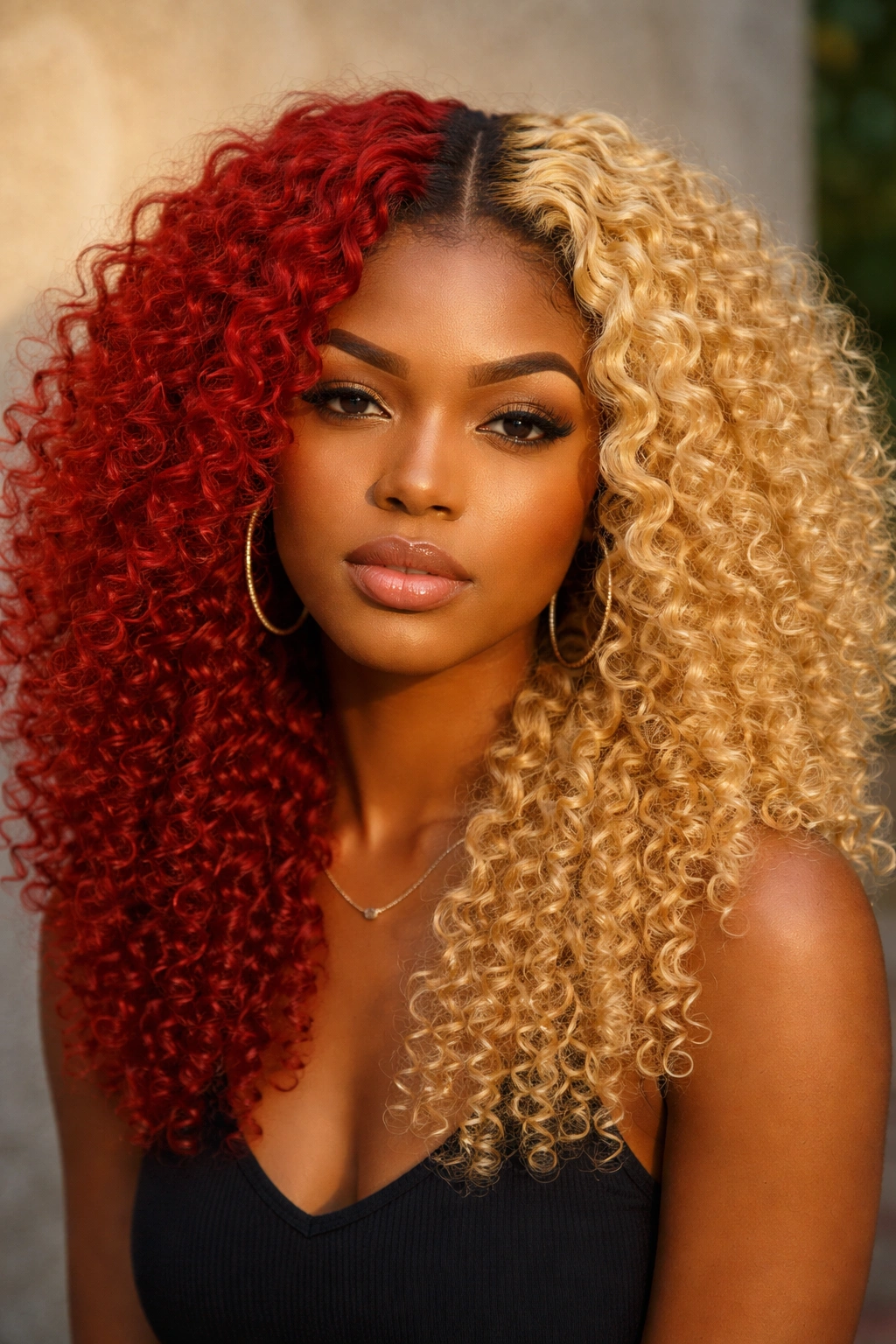
The split-color technique — where one half of the head is one color and the other is another — has made a serious comeback, and the red-and-blonde version on curly hair is one of the most striking interpretations.
This isn’t a look that requires a specific curl pattern. It works on loose curls, tight coils, and everything in between. The key is the contrast. Red and blonde side-by-side create a color combination that’s both high-fashion and deeply personal — especially when the split follows the natural parting line of your hair.
How to Achieve
- Work with a colorist who has experience with split-color techniques — the line between the two colors needs to be clean and intentional
- Ask for the red on the side you naturally part away from, so it stays visible in your everyday style
- Use separate color-depositing products for each side to maintain the integrity of both colors
Tip: Red and blonde color-depositing conditioners used on their respective sides prevent muddy blending at the roots.
7. Chocolate Brown with Blonde Balayage
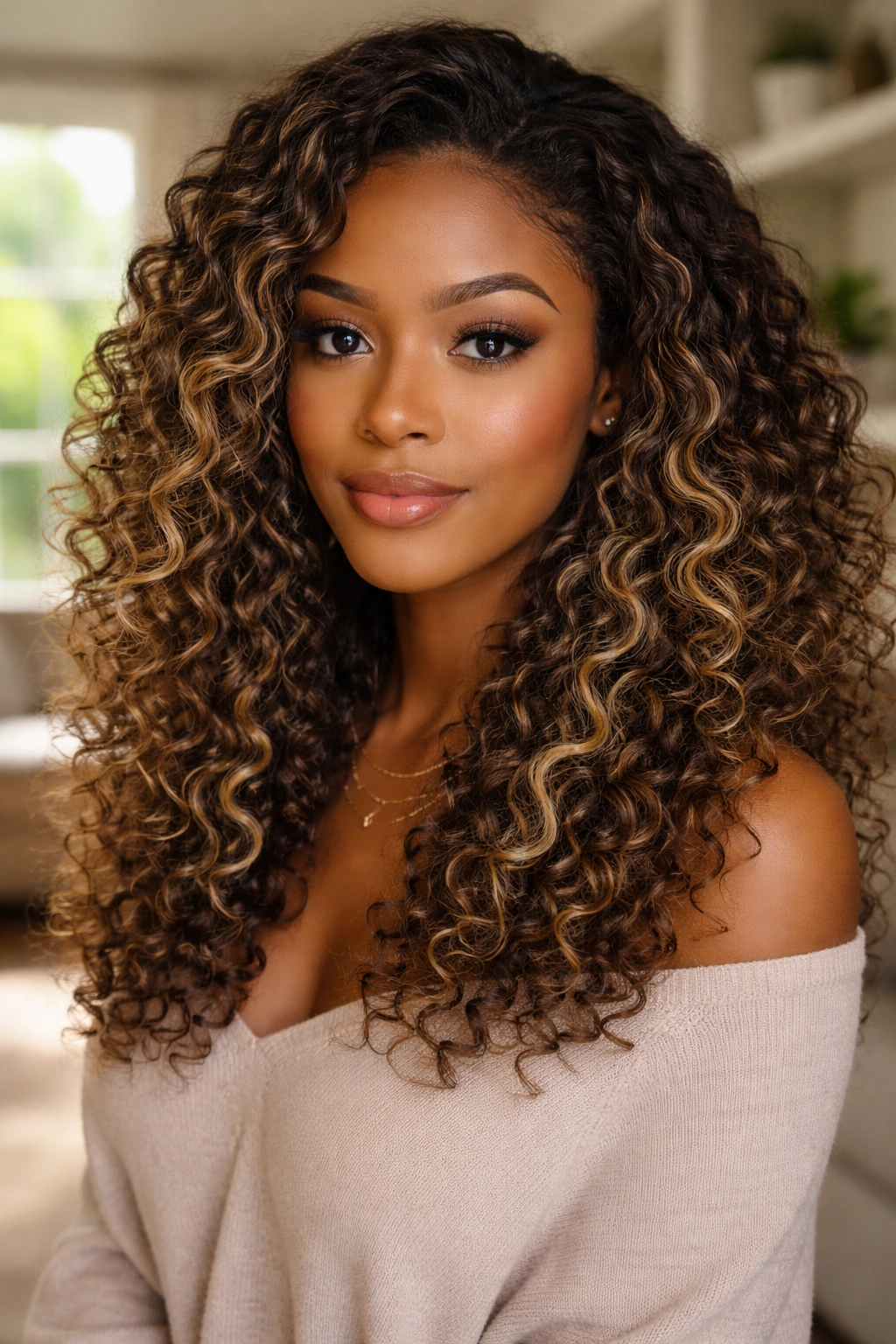
This one’s for the woman who wants dimension and warmth without a dramatic color overhaul. Chocolate brown with blonde balayage is the subtle sister to a full color — and on curly hair, it looks effortlessly rich.
Balayage on curls is different from balayage on straight hair. The color is painted on the surface of curls rather than through the lengths — which means it appears and disappears as your curls move, creating a dynamic, sun-kissed effect that looks deeply natural.
The blonde in this combination doesn’t need to be bright to be effective. A warm caramel or golden-blonde placed strategically through a chocolate brown base creates enough contrast to add life to your style without a big color commitment.
This is also one of the most low-maintenance color combinations available. Because the blonde is placed through the mid-lengths and ends rather than at the root, grow-out is seamless and barely noticeable.
8. Fire-Red Wash on Loose Curls
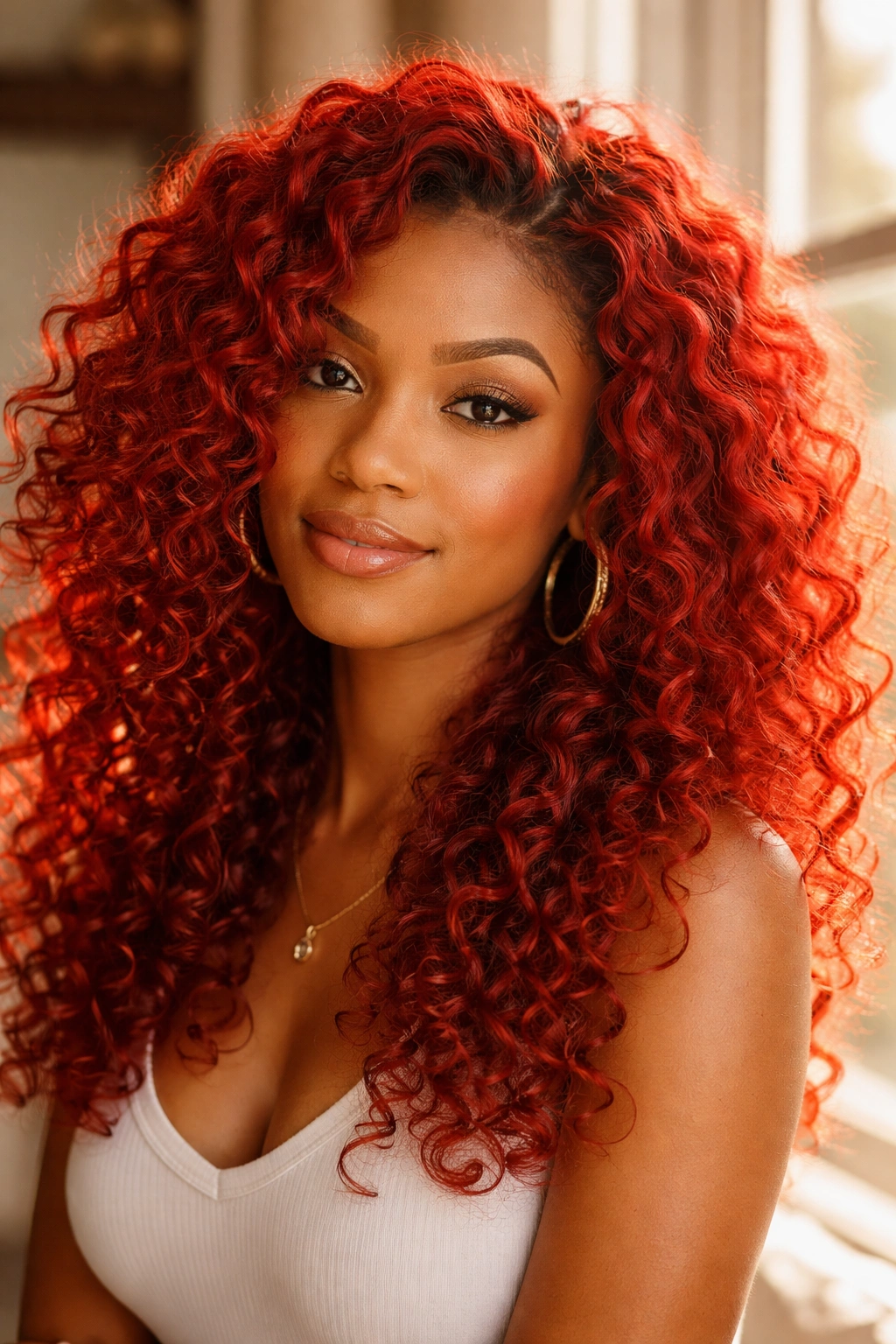
A fire-red wash on loose, bouncy curls is drama done right. This isn’t a highlight or a balayage — it’s a full, all-over application of a vivid, true red that saturates every strand from root to tip.
For this to read as “fire red” rather than just a standard red dye job, the shade needs to have warmth and brightness — think cherry, tomato, or warm scarlet rather than burgundy or wine. On loose 3a-3c curls, this level of saturation creates a bouncy, vivid look that photographs beautifully and catches light with every movement.
How to Achieve This Look
- Pre-lighten to at least a light brown (Level 6-7) before applying vivid red for the most saturated result
- Ask for a direct dye or semi-permanent vivid red for maximum vibrancy — permanent reds can look dull by comparison
- Seal your hair after color with a lightweight oil to lock in moisture and add shine
9. Sandy Blonde Locs
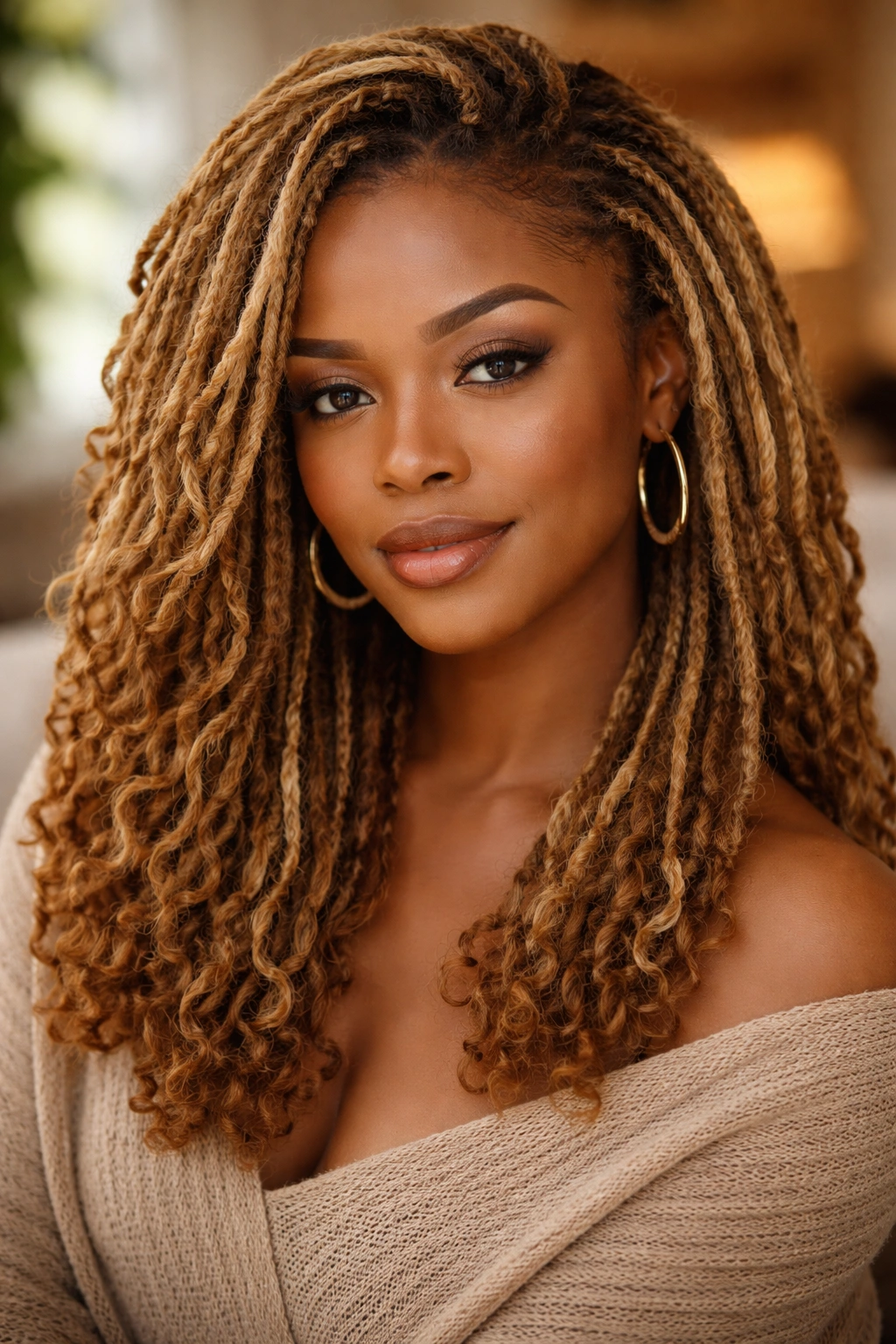
If you wear locs, you might think color is off-limits. It isn’t. And sandy blonde locs might be one of the most beautiful natural-hair color combinations in existence.
Sandy blonde sits right between light brown and golden blonde — it’s warm, earthy, and grounded without reading as a stark, high-contrast platinum. On locs, that warm tone settles into the texture of each loc and creates a look that reads as both tribal and fashion-forward.
The technique matters here. Bleaching locs is possible but requires a very careful approach — too much developer can weaken the loc structure, especially if you have mature locs that have already seen some wear. Many stylists prefer to use a gentler demi-permanent or semi-permanent color to gradually build blonde tones rather than going in with a full lift.
Moisturizing locs after any color service is crucial. A light oil massaged into the locs regularly helps prevent dryness and keeps the color looking healthy rather than dull.
10. Burgundy and Blonde Ombre
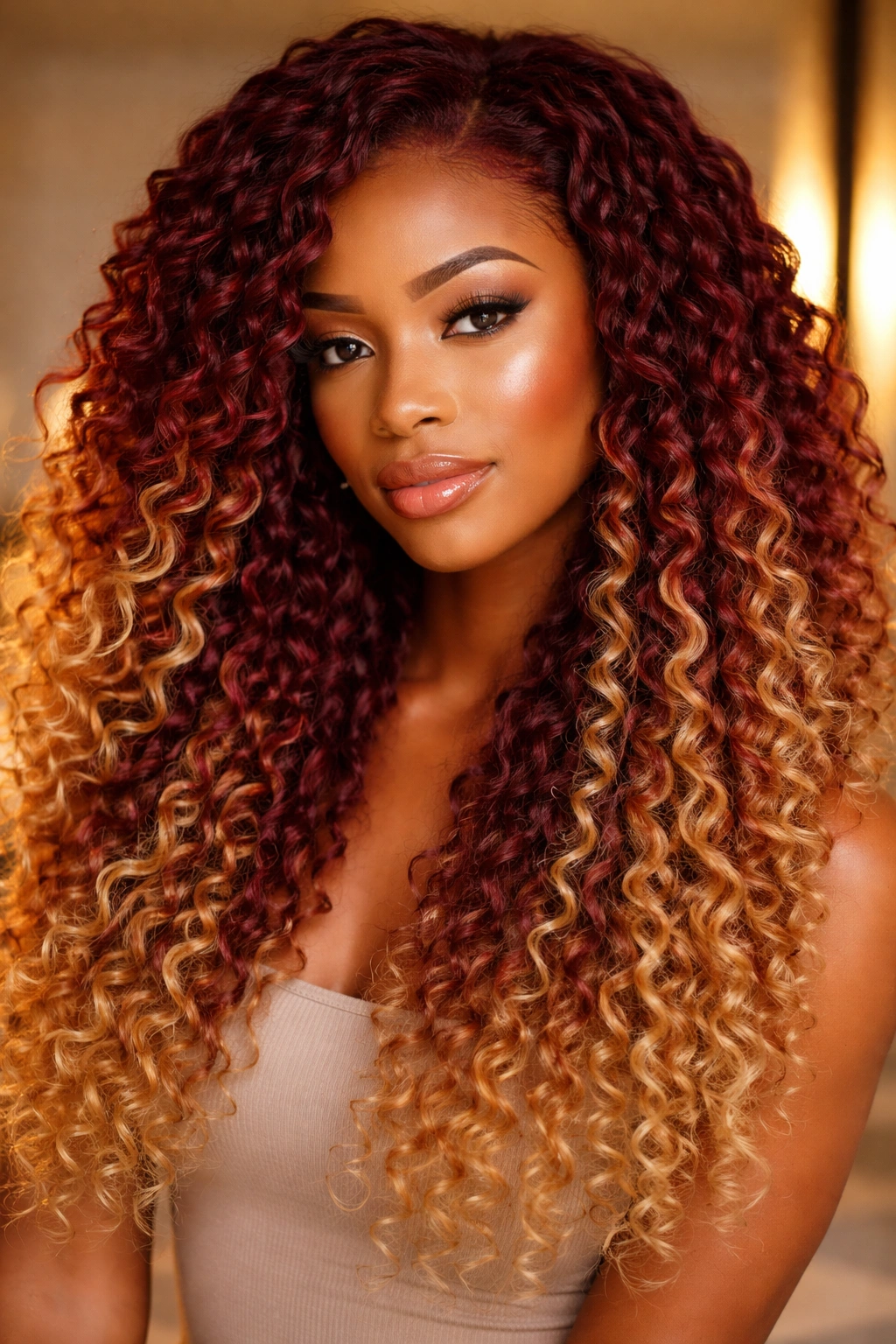
Burgundy and blonde seems like an unusual pairing on paper — but on curly hair, it’s a revelation. The rich, cool-toned burgundy at the roots transitions into warm blonde at the tips, creating a color ombre that looks deliberately artistic.
The contrast between cool and warm here is what makes it work. Burgundy has blue and purple undertones; blonde sits in the warm, yellow-gold family. When these two colors transition through a gradient on curly hair, the middle section — where they blend — creates a beautiful reddish-copper zone that ties the whole look together.
This works especially well on elongated styles. Stretched twist-outs, braid-outs, or blown-out natural hair gives the ombre the space it needs to show its full range. On very compact coils, the color story may be harder to read — but even then, the warmth at the tips creates a beautiful contrast with the deeper root color.
11. Blonde Box Braids with Red Accents
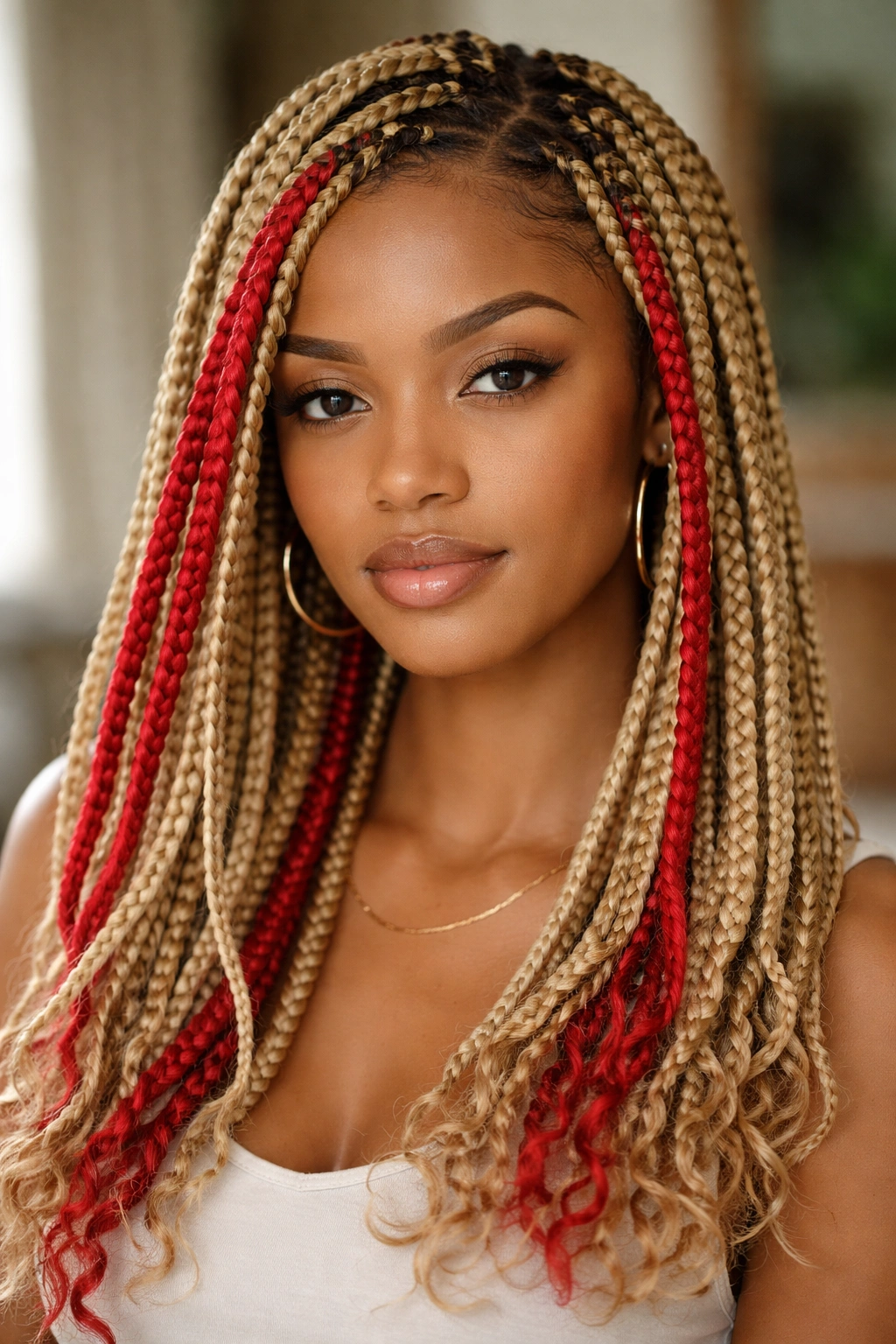
Color doesn’t have to come from chemical processing. Blonde box braids with red extension accents are a protective style that also doubles as a full color look — without putting any chemical on your natural hair.
This is a smart option if you want to experiment with the red-and-blonde combination before committing to permanent color. You can use red and blonde kanekalon or synthetic braiding hair to create exactly the color effect you want — and when you’re done, you take the braids down and your natural color is exactly as you left it.
How to Achieve This Look
- Ask your braider to create the bulk of braids in a honey or golden blonde color
- Weave in red or copper sections throughout — concentrated at the front sections or framing the face for the most visible effect
- Seal the ends of the braids well to prevent frizz and tangling, which affects how the color reads over time
Tip: Spray your braids lightly with a braid sheen that has UV protection to prevent the extension color from fading in sunlight.
12. Golden Blonde Wash on 3c Curls
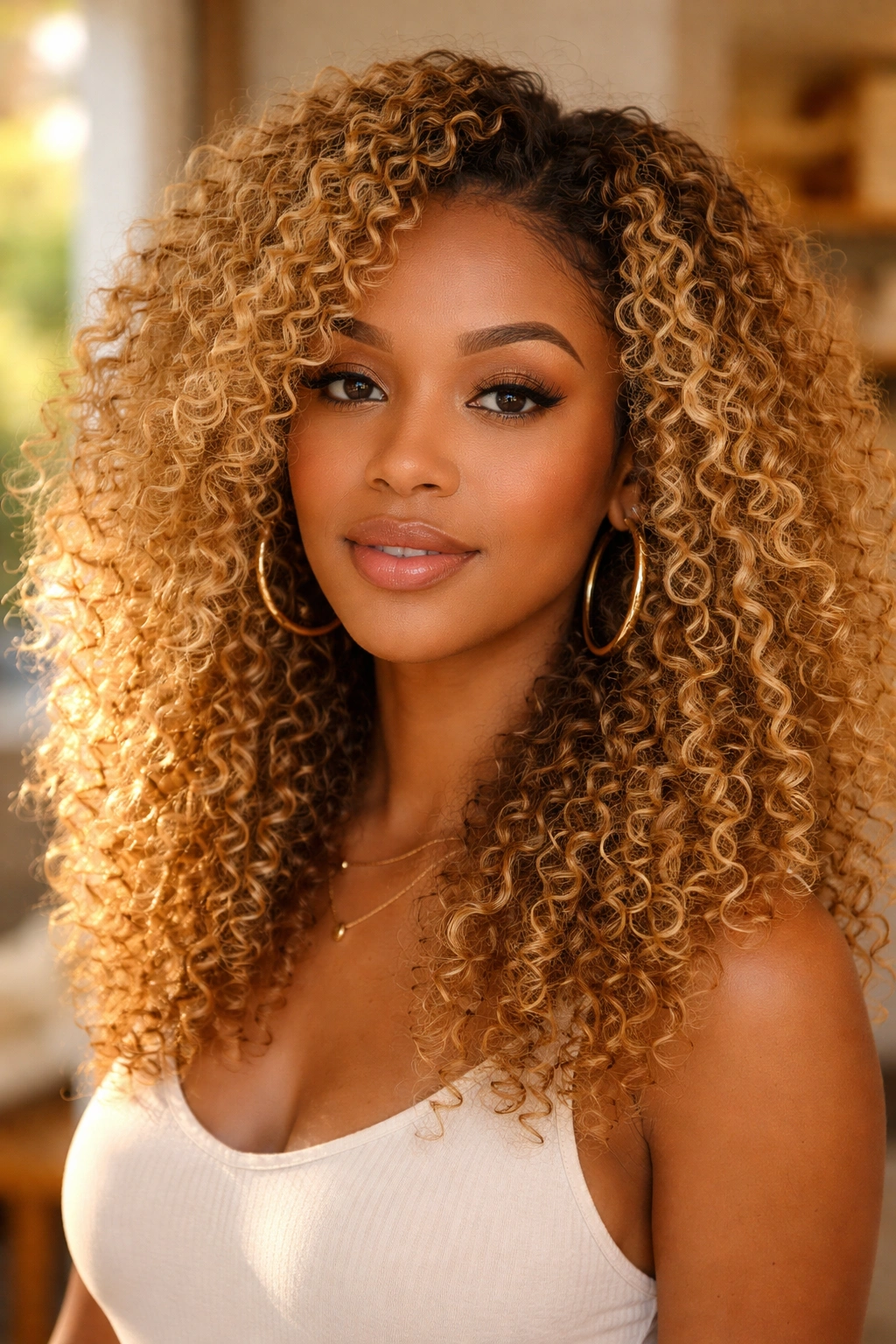
3c curls have a beautiful springy, corkscrew quality — and a golden blonde all-over wash is one of the best ways to amplify that bounce and luminosity.
The warmth of golden blonde on 3c coils reads like liquid sunshine. Unlike a cooler ash blonde that can look flat, golden blonde interacts with the warm undertones common in Black women’s skin to create a look that feels harmonious and radiant rather than stark.
Because 3c curls tend to have a more open curl pattern than 4a-4c, color shows up with more even distribution — which makes a wash or all-over color especially effective on this texture.
How to Achieve
- Start with a base lightening to a warm golden brown before applying a golden blonde gloss or toner
- Use a purple shampoo sparingly to prevent brassiness, but don’t overdo it — on warm golden blonde, too much toning can kill the warmth you’re trying to achieve
- Define curls with a light custard or gel to show off the color distribution in every coil
13. Red Ombre on Twist-Out
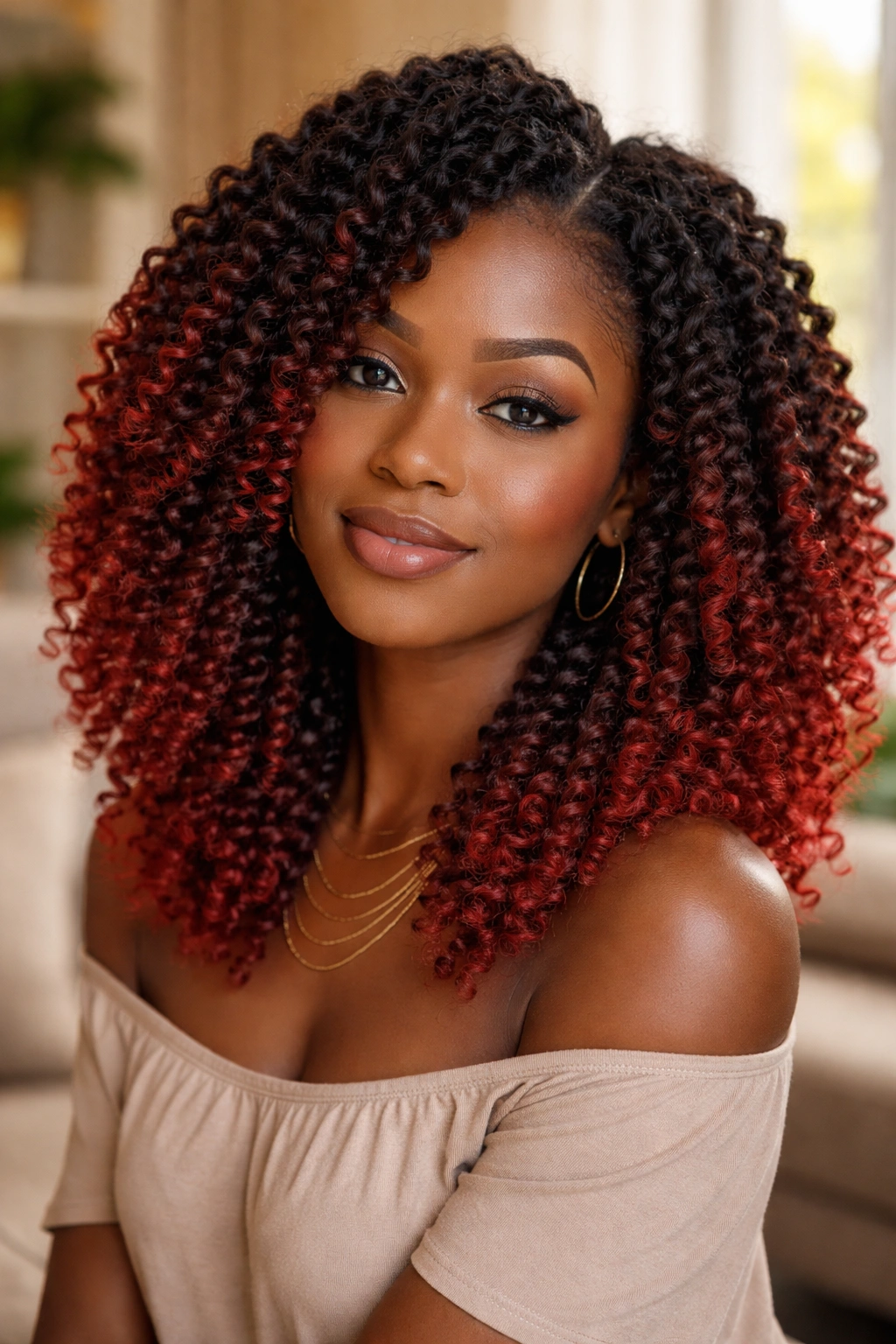
An ombre that goes from dark roots into a vivid red at the tips is one of the more dramatic looks on this list — and it’s absolutely stunning on a twist-out.
The twist-out unravels each twist into a beautiful, defined coil — and when red is concentrated at the ends of those coils, the overall look has a bright, warm fringe that catches the eye immediately. It’s like your hair has a natural glow from the bottom up.
This style works best when the ombre transition is gradual rather than sharp. A sharp line between dark and red can look abrupt and outdated. A gradual fade through auburn and copper before reaching the final red tip gives the look a more professional, intentional finish.
14. Red Roots with Blonde Lengths
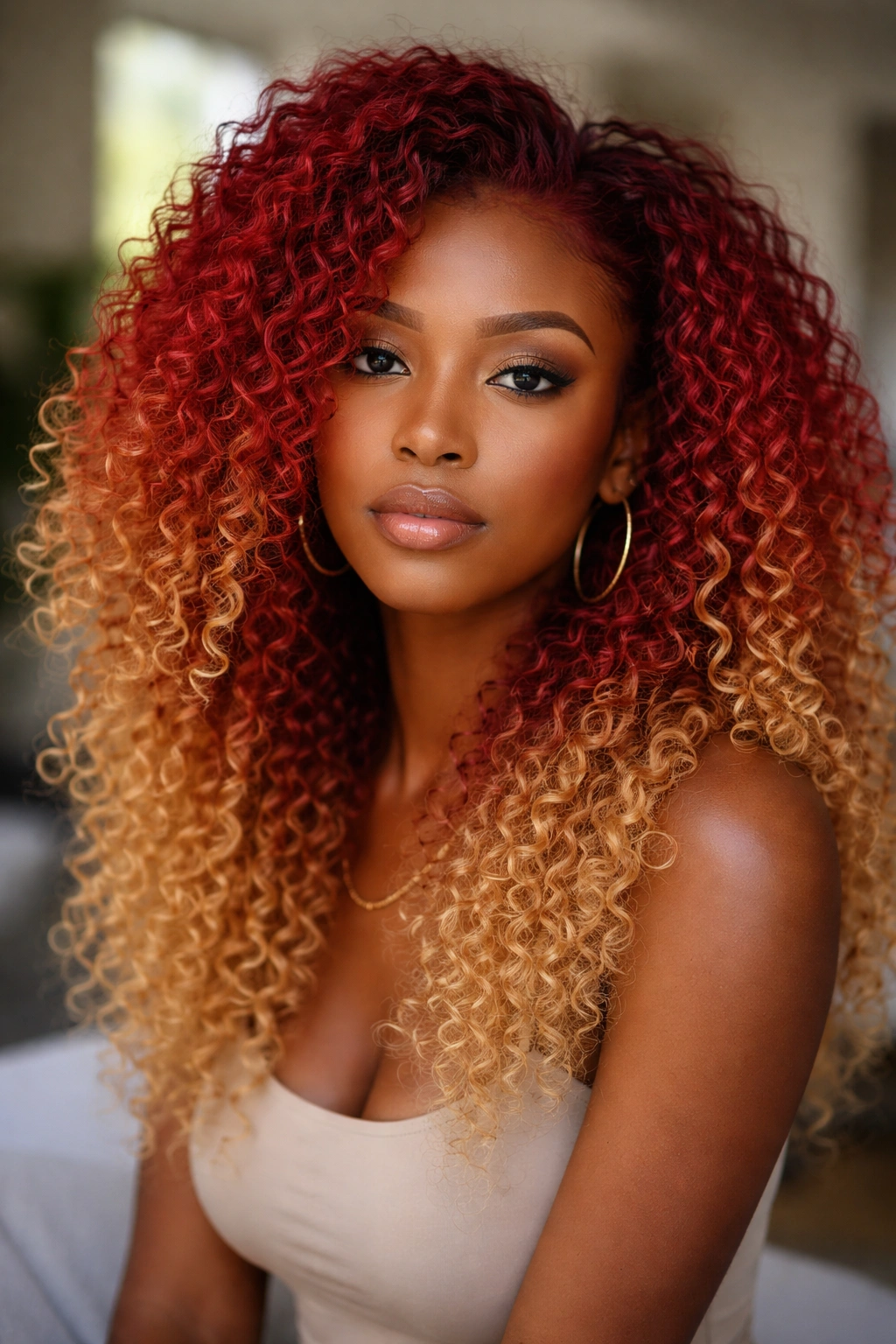
Reverse ombre is having a moment — and the red-to-blonde version is one of the most eye-catching interpretations for natural curly hair.
Here, the roots start in a vivid or deep red, and the mid-lengths and ends transition into blonde. It’s the opposite of what your hair does naturally (roots are always darkest), which gives it an immediately striking, editorial quality.
This is a high-maintenance look. The red at the roots grows out quickly and needs regular touch-ups to maintain its vibrancy. But for women who love a dramatic, fashion-forward style and are willing to commit to the upkeep, it’s a genuinely stunning result.
15. Caramel Blonde Puff
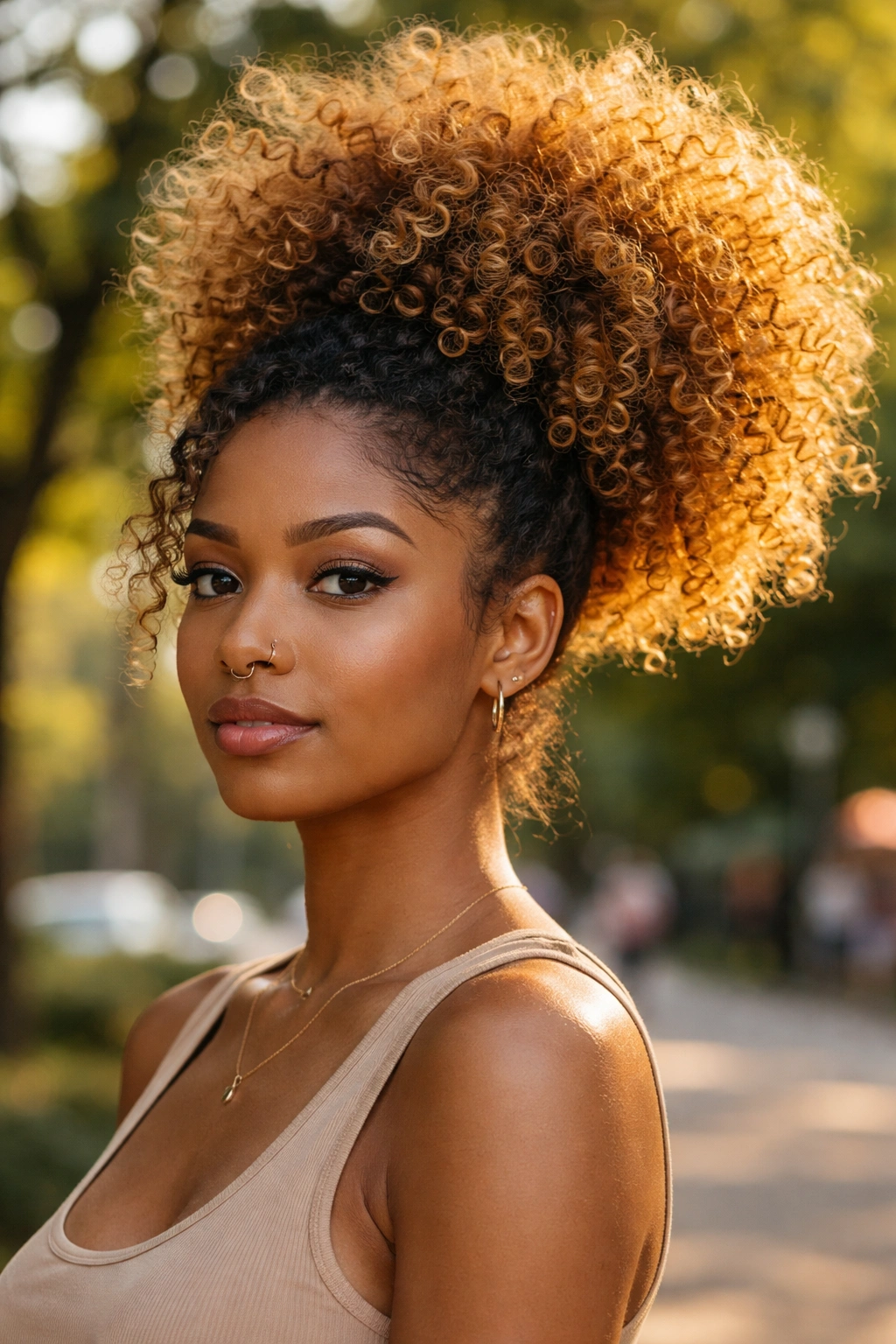
The puff is one of the most classic natural hairstyles — and a caramel blonde color makes it feel anything but basic.
Caramel sits in the warm-blonde family, leaning toward golden-brown rather than platinum. On a puff — especially a big, voluminous one — the caramel color creates a warm halo effect, with the color catching the light at the outermost coils and deepening toward the center.
This is an especially low-maintenance color choice for puffs because the warm tone doesn’t show root grow-out as starkly as cooler blondes. Your natural color growing in beneath the caramel actually adds depth rather than looking unkempt.
16. Blonde Streaks on Defined Curls
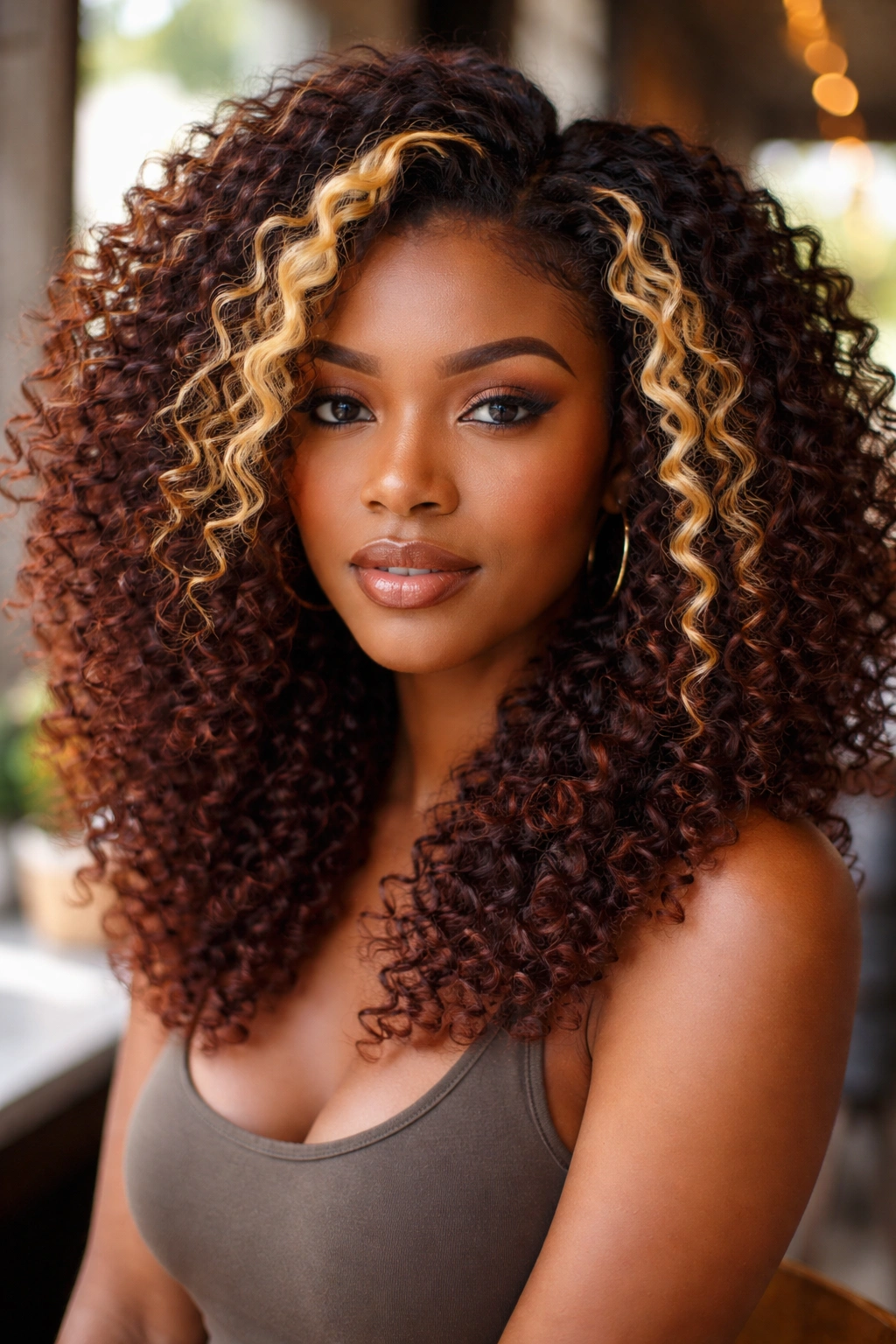
Streaks — bold, visible sections of blonde through darker natural hair — are a high-contrast technique that creates instant drama without full color commitment.
On defined curly hair, blonde streaks become three-dimensional. The way curls spiral means the blonde catches light as the curl turns, creating a flickering, dimensional effect that flat hair simply can’t replicate. From the front, the streaks frame your face. From the side, they weave through your style like threads of gold.
How to Achieve
- Ask for the streaks to be placed at the front sections — around the face and temples — for the most visible effect
- Request chunky, wide streaks rather than fine highlights for a more graphic, intentional look
- Use a bond-builder treatment during color application to protect your curl integrity through the bleaching process
17. Cherry Red Wash on 4b Hair
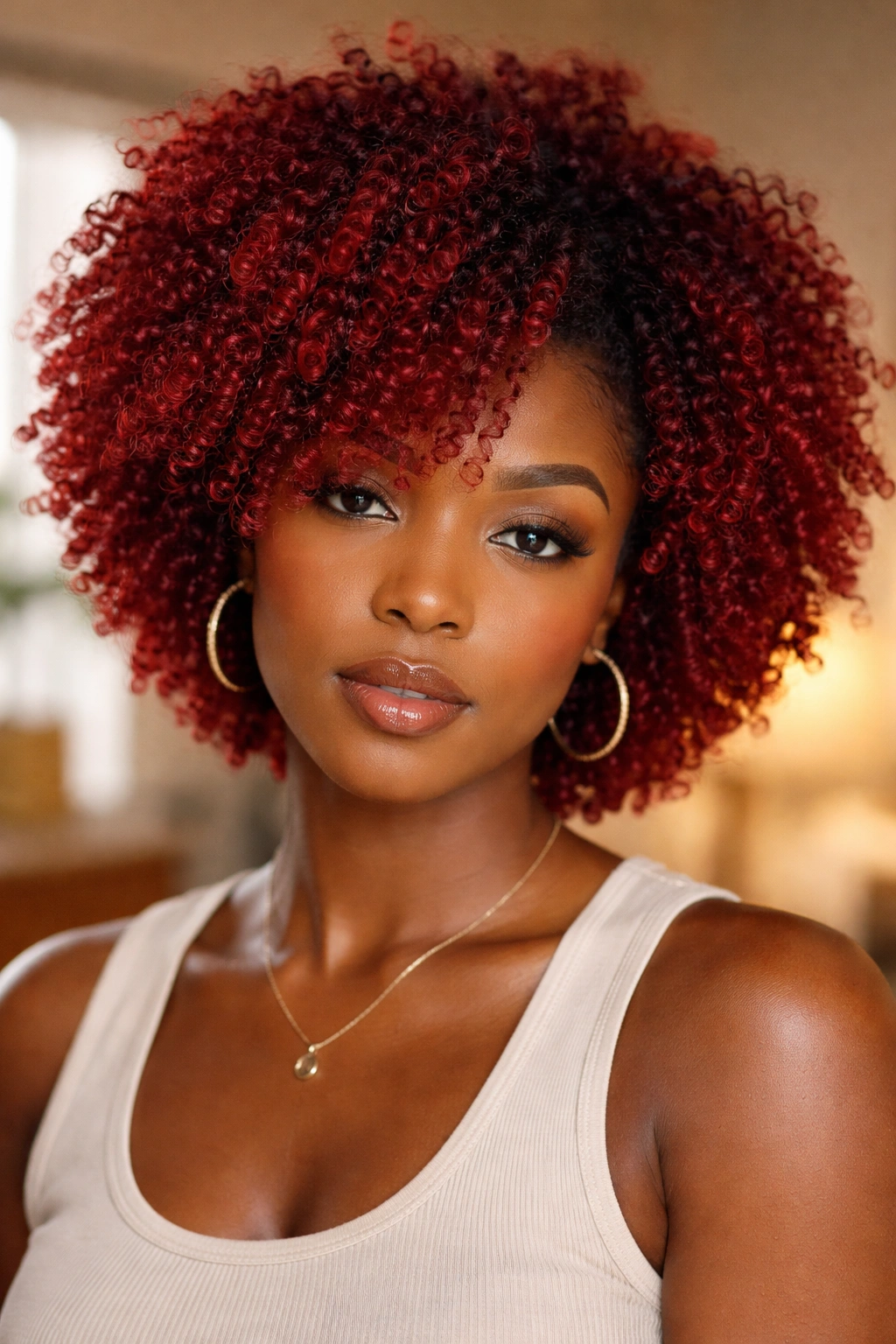
Cherry red is bright, warm, and unmistakably bold — and on 4b texture, it’s a spectacular look that celebrates both the color and the coil.
4b hair has a distinct Z-shaped coil pattern that bends sharply rather than spiraling in round loops. This pattern means color catches light in a way that’s uniquely geometric — the flat surfaces of each bend reflect the cherry red sharply, while the inner curves hold depth. The result is a color that looks layered and rich even with a single shade.
Because cherry red is a vivid color, pre-lightening is usually required for the truest result — especially over naturally dark hair. But even without full pre-lightening, a red gloss applied over dark brown hair creates a deep, red-tinted shine that reads beautifully in the right light.
18. Blonde Bantu Knot-Out
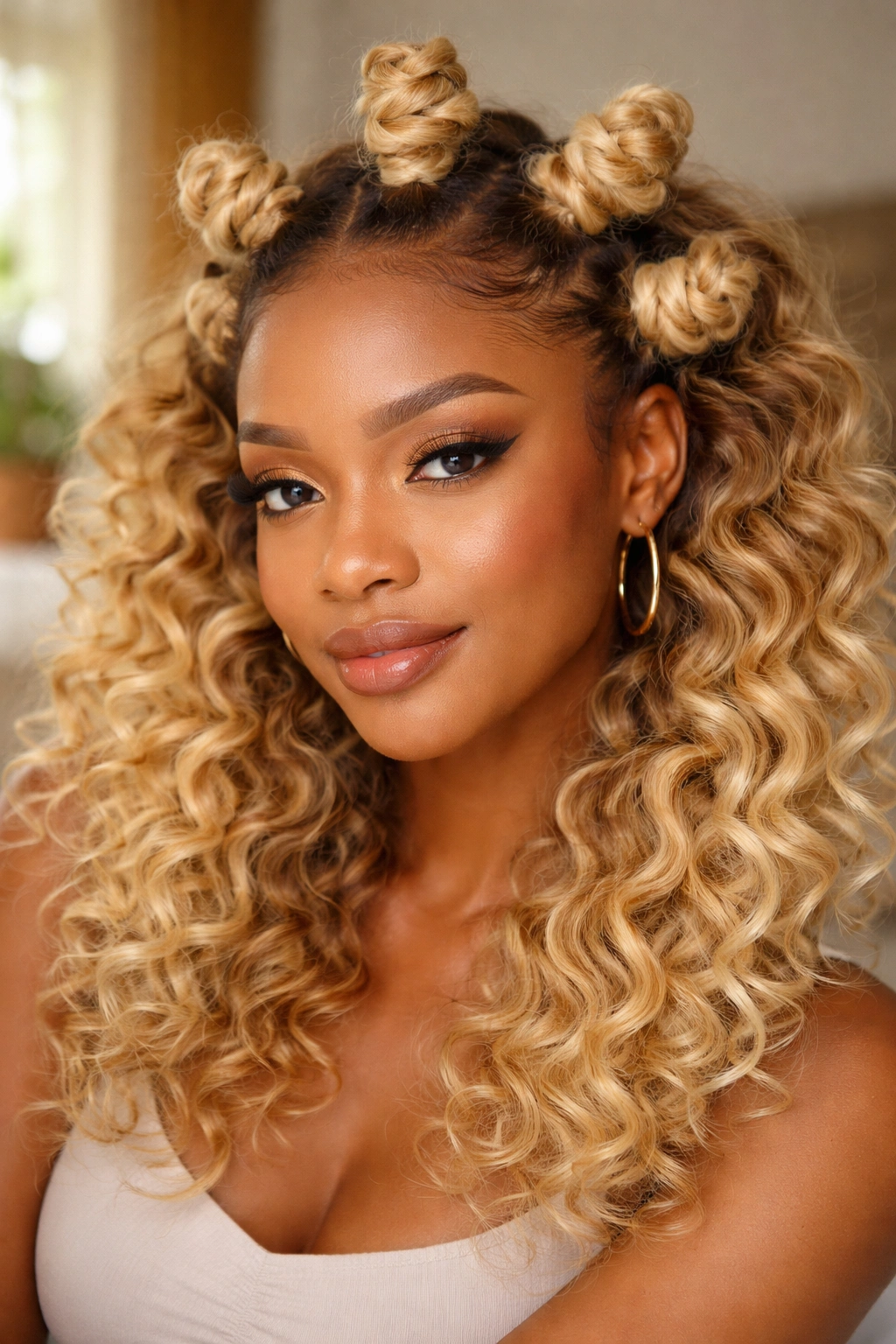
The Bantu knot-out is a styling technique that creates tight, spiraled coils by wrapping sections of hair into small knots and then unraveling them once dry. Do it with blonde hair, and you’ve got a look that’s playful, retro-inspired, and full of color-forward personality.
Blonde on Bantu knot-out coils creates a light, airy quality — the lighter shade makes each coil look voluminous and luminous. And because the Bantu knot-out creates a very specific type of spiral (tighter at the root, slightly looser at the tip), the color shows consistent gradients even if the application wasn’t perfectly even.
Tip: Prep your Bantu knots on freshly deep-conditioned hair to keep the coils hydrated and frizz-free as they unravel.
19. Copper Blonde Tapered Cut
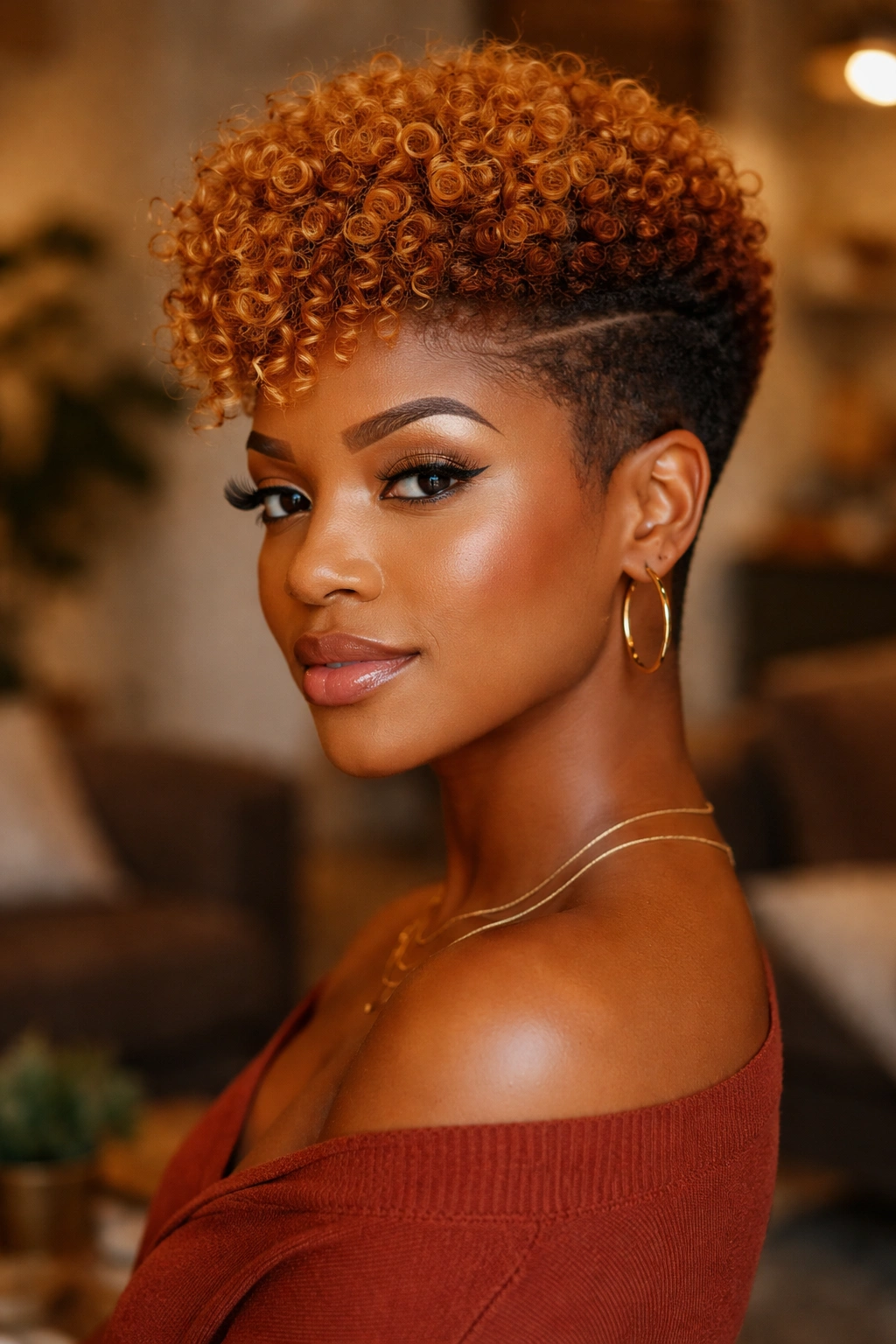
A tapered cut with copper-blonde color is one of the sharpest looks a natural can rock. The tapered sides give structure and definition, while the copper-blonde on the crown adds warmth and personality.
Copper-blonde sits between copper and golden blonde — it’s warmer than a standard blonde but less red than a true copper. On a tapered cut, this color tends to be most visible on the crown, where the hair has the most length — which draws attention to the shape of the style and the warmth of the color simultaneously.
How to Achieve
- Ask your stylist to taper the sides low, leaving 2-4 inches of length on top
- Apply the copper-blonde through the crown sections only — the close-tapered sides can be left natural for a striking contrast
- Style the crown in a defined finger-coil pattern or with a light twisting cream for maximum texture visibility
20. Red and Blonde Braided Updo
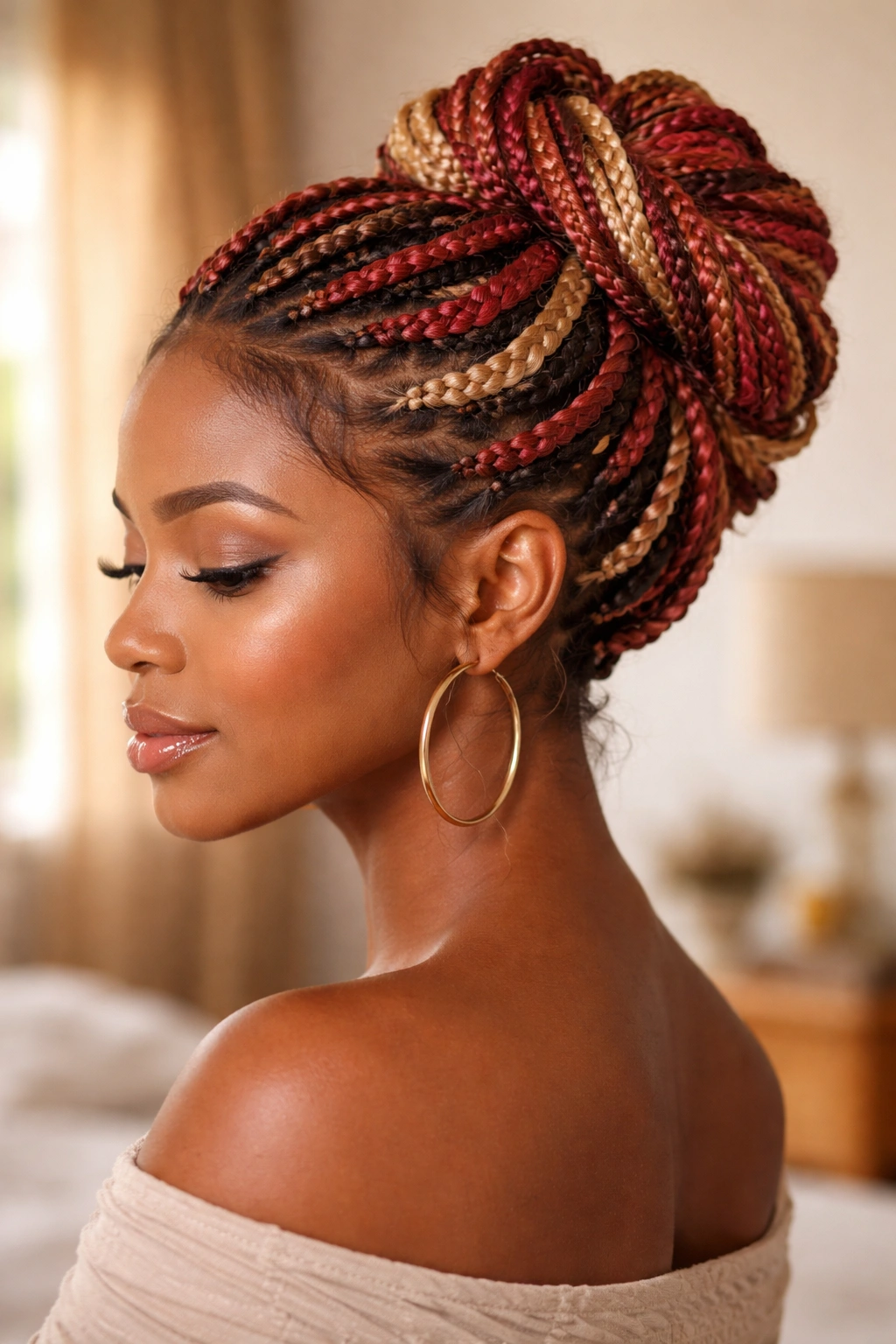
A braided updo with red and blonde accents brings all the elegance of an updo with the color energy of a bold dye choice — without actually coloring your hair.
Using red and blonde braiding hair woven into box braids or feed-in braids, this updo creates a color story that reads clearly even when your hair is pulled up and back. The accents catch the light at the hairline, frame the face, and add visual interest to what could otherwise be a simple updo.
This is also a protective style, so your natural hair rests and grows while you rock a colorful, editorial look. It’s one of the smartest ways to experiment with bold color — all the fun, none of the chemical commitment.
21. Platinum Blonde Locs with Red Tips
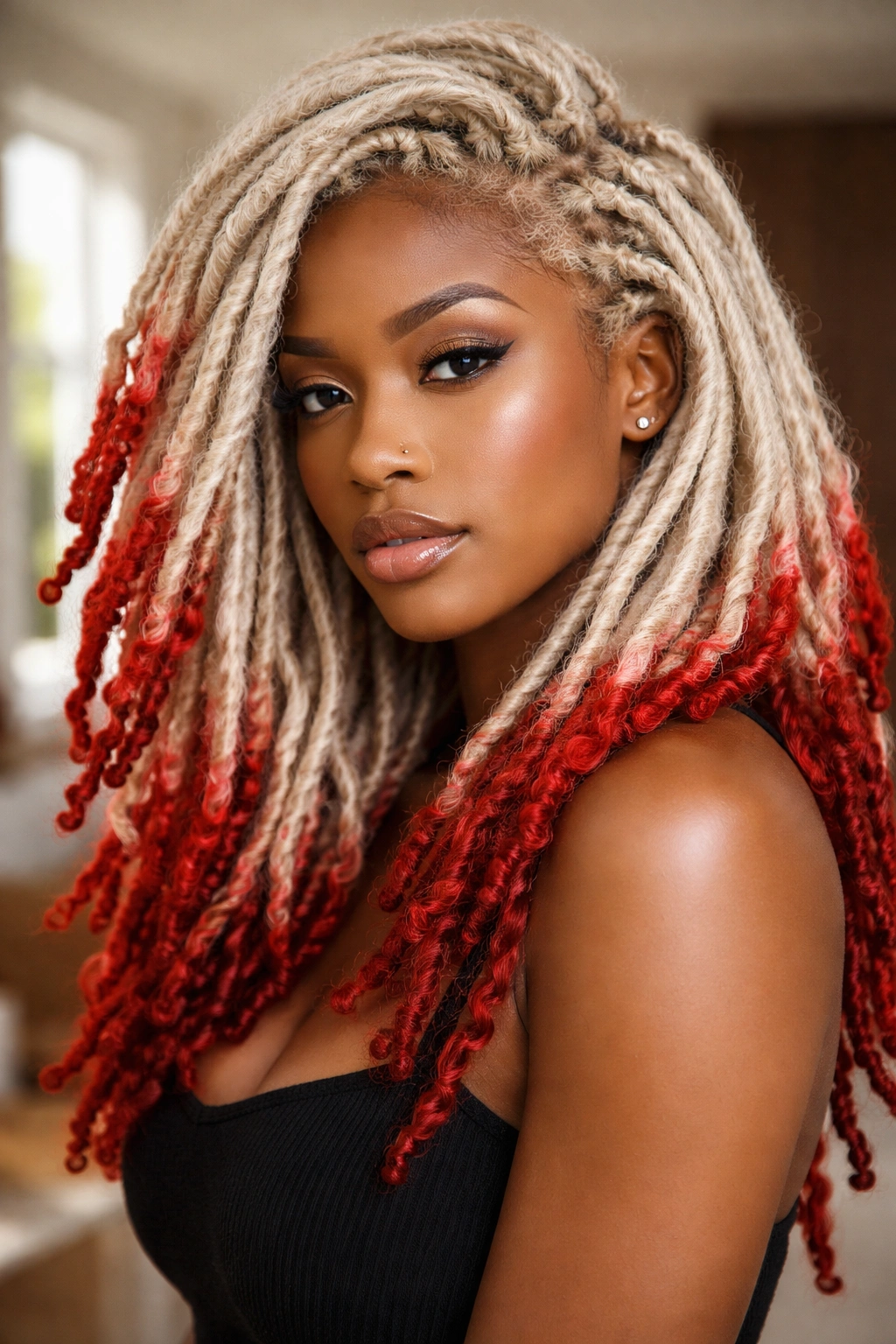
This is the most adventurous look on the list — and arguably the most stunning. Full platinum blonde locs with red tips is an artistic, high-fashion color combination that feels genuinely unique.
Platinum blonde on locs requires significant lifting — this isn’t a casual color service. For most dark-haired naturals, reaching platinum requires multiple bleaching sessions with rest periods in between to prevent loc damage. But when done correctly, platinum locs have an almost sculptural quality — the bright, icy color highlights every detail of the loc texture.
The red tips add warmth and visual punctuation at the end of each loc. As you move, the red tips swing and catch the light — creating a dynamic color effect that changes depending on your angle. It’s bold, it’s dramatic, and it’s undeniably original.
How to Achieve
- Work with a professional who specializes in locs and chemical services — attempting this at home is not advisable
- Build up to platinum gradually over multiple sessions to protect loc integrity
- Apply a vivid red direct dye only to the last 2-3 inches of each loc after the platinum is achieved and stabilized
- Maintain with regular deep moisture treatments and a UV-protecting loc oil
Caring for Color Between Appointments
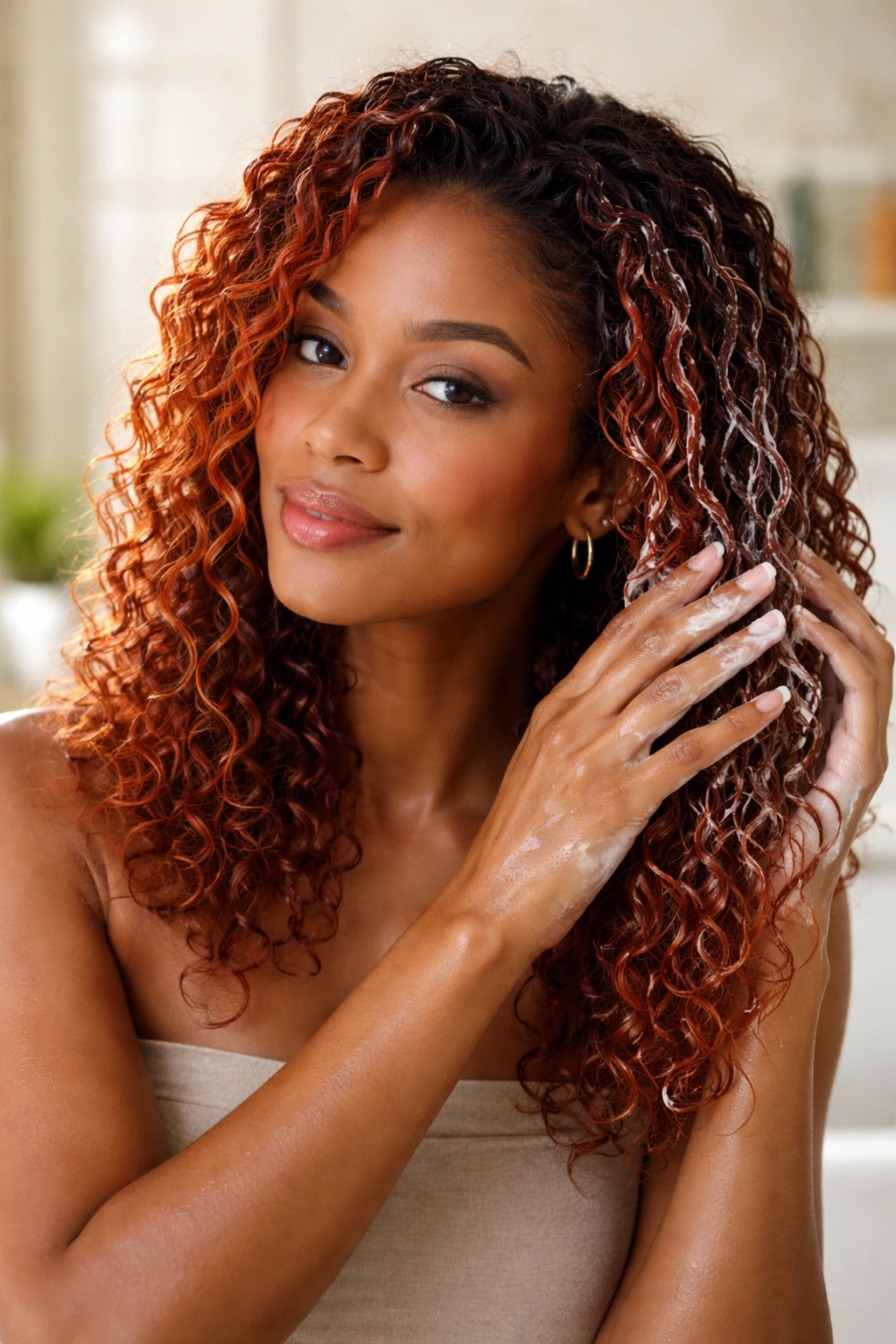
Color fades — that’s just the reality. But how fast it fades is largely within your control.
The single most impactful thing you can do is manage your wash routine. Washing too frequently strips color. Washing with hot water strips color. Washing with the wrong products strips color. Switching to cooler water temperatures, stretching your wash days, and using a color-safe cleanser can easily double the life of your color results.
Beyond washing, protect your hair from environmental fade factors. UV exposure is a significant source of color fading — a light UV-protecting spray or wearing a hat in direct sun during summer months makes a real difference. Chlorine from swimming pools is especially brutal on color-treated hair, particularly blonde shades — always wet your hair and apply conditioner before swimming, and rinse immediately after.
Getting the Most Out of Your Color Sessions
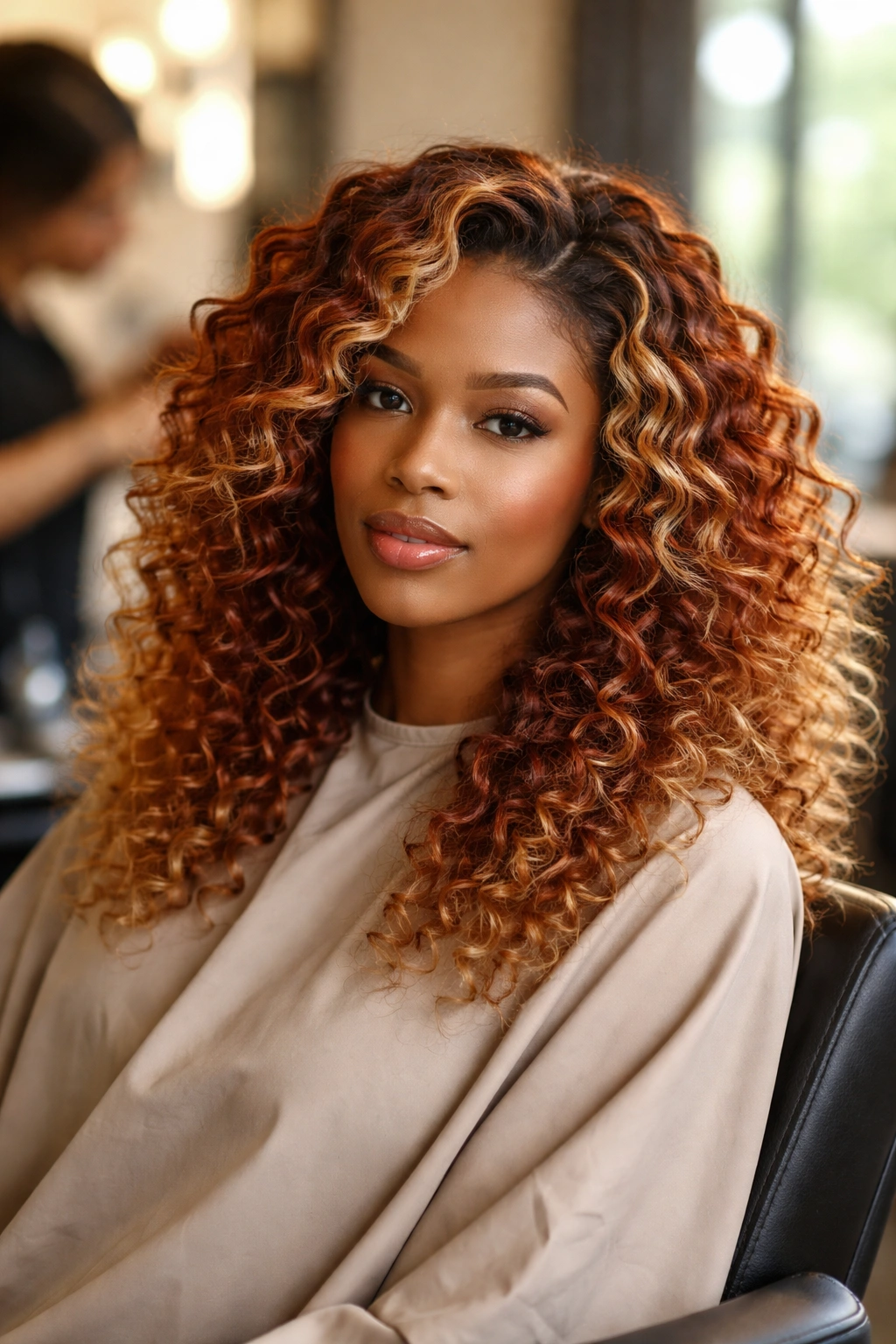
A single color appointment can deliver significantly different results depending on how prepared you are walking in. Coming to your appointment with healthy, well-moisturized hair gives the color better, more even results. Coming in with dry, damaged hair means the color may process unevenly, absorb too quickly in some areas, or look dull even right after application.
Talk to your colorist in advance. Don’t wait until you’re sitting in the chair to figure out what you want. Bring inspiration photos, be honest about your maintenance habits, and ask about the health of your hair before committing to a dramatic lift. A good colorist will tell you when your hair isn’t ready for what you’re asking for — and that’s a service, not a rejection.
Also ask about treatments that can be done in conjunction with your color service. Olaplex and similar bond-building treatments added to the color or done as a follow-up significantly reduce the damage associated with lifting. They’re worth every extra dollar.
Final Thoughts on Red and Blonde for Natural Hair
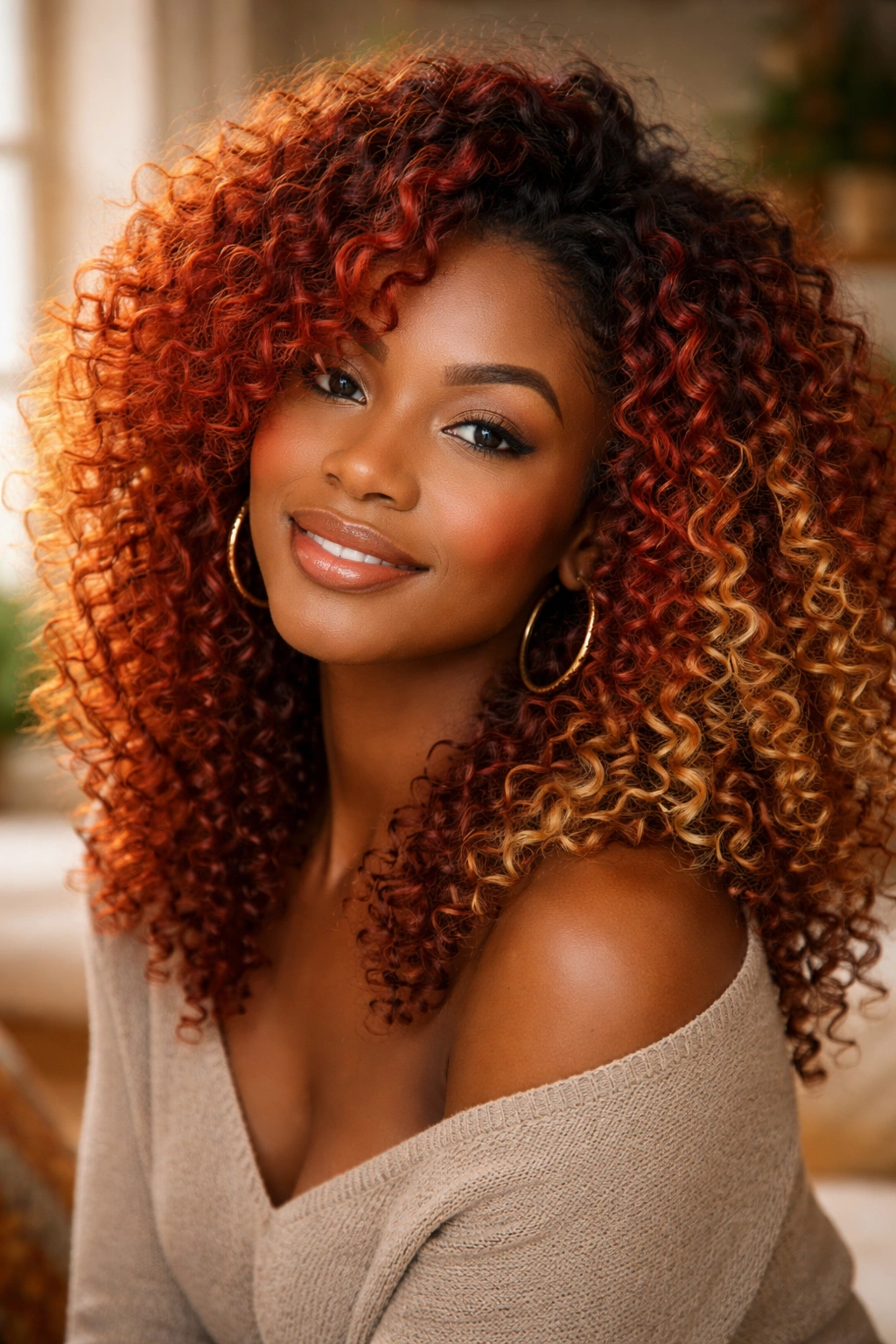
Red and blonde curly hair isn’t a trend — it’s a category of self-expression that’s been part of Black women’s hair culture for generations. Whether you’re going for a full color transformation or a few strategic highlights, the right combination of red and blonde can amplify your natural texture in ways that are genuinely exciting.
The key is understanding your hair, your skin tone, and your lifestyle before you make any decisions. Color is a commitment — but it’s also one of the most personal and powerful ways to own your look. Trust the process, invest in proper care, and don’t be afraid to be bold. Your curls can handle it.
