
A high ponytail can do a lot for curly hair — when it is built for the curl, not flattened into submission. On Black women, that difference matters even more. Coily hair brings height, softness, and shape in one move, but only if the base sits in the right place and the tension stays kind to your hairline.
Pull too hard and the style looks stiff. Place it too low and you lose the lift that makes a high ponytail feel clean and confident. Keep the crown smooth, leave the curls some room to move, and the whole thing starts working the way it should.
That is why high ponytails for Black women with curly hair stay in heavy rotation. They work on twist-outs, braid-outs, stretched coils, blow-dried lengths, and extension styles. They can be sleek, fluffy, braided, wrapped, decorated, or messy in the best way. And if one ponytail looks polished while another looks like it fought with your edges, the difference usually comes down to placement, prep, and how much the style respects your texture.
1. Sleek High Ponytail With Laid Edges
A sleek high ponytail is the style people notice first because it has that sharp crown and clean outline. On curly hair, though, it should never feel like you erased your texture just to get there.
Why It Works
Start with stretched hair if you can. A little blow-dry, banding, or a fresh twist-out gives the ponytail enough length to sit high without looking short at the roots. Smooth the hair with a firm brush, but stop before the crown turns stiff. That “helmet” effect is the enemy.
- Use a strong-hold gel only at the hairline and crown.
- Tie the ponytail with a snag-free elastic so the roots stay smooth.
- Wrap a small section of hair around the base for a cleaner finish.
- Keep the edges laid, not glued flat.
Pro tip: A satin scarf for 10 minutes after styling helps the front stay smooth without piling on more product.
2. Full Curly Puff High Ponytail
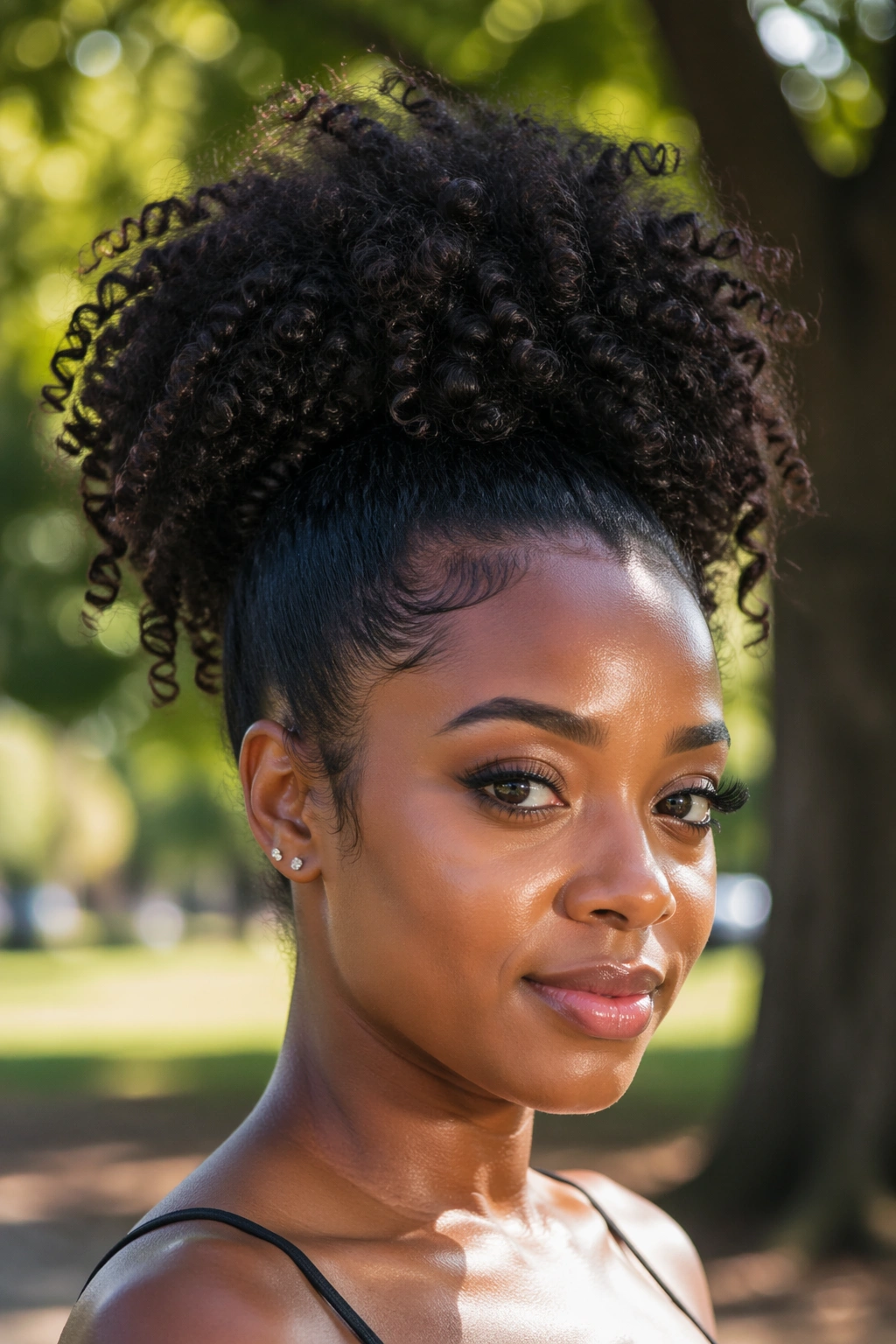
A curly puff ponytail is the easiest way to make volume work for you instead of against you. It keeps the shape soft and full, which is exactly why it looks so good on coils and tight curls.
This style is especially nice on second- or third-day hair. You gather the curls high, secure them with a wide elastic or stretchy ponytail holder, and let the puff do the talking. No need to chase every frizz spot. Honestly, the loose pieces make it better. When the texture is dense, a puff can look polished without looking overworked.
If your hair shrinks fast, stretch the lengths a bit first so the puff sits higher on the crown. That gives the shape more height and keeps the style from collapsing by lunchtime. A little leave-in on the ends helps too, but don’t soak the roots. You want lift, not limpness.
3. Braided-Base High Ponytail
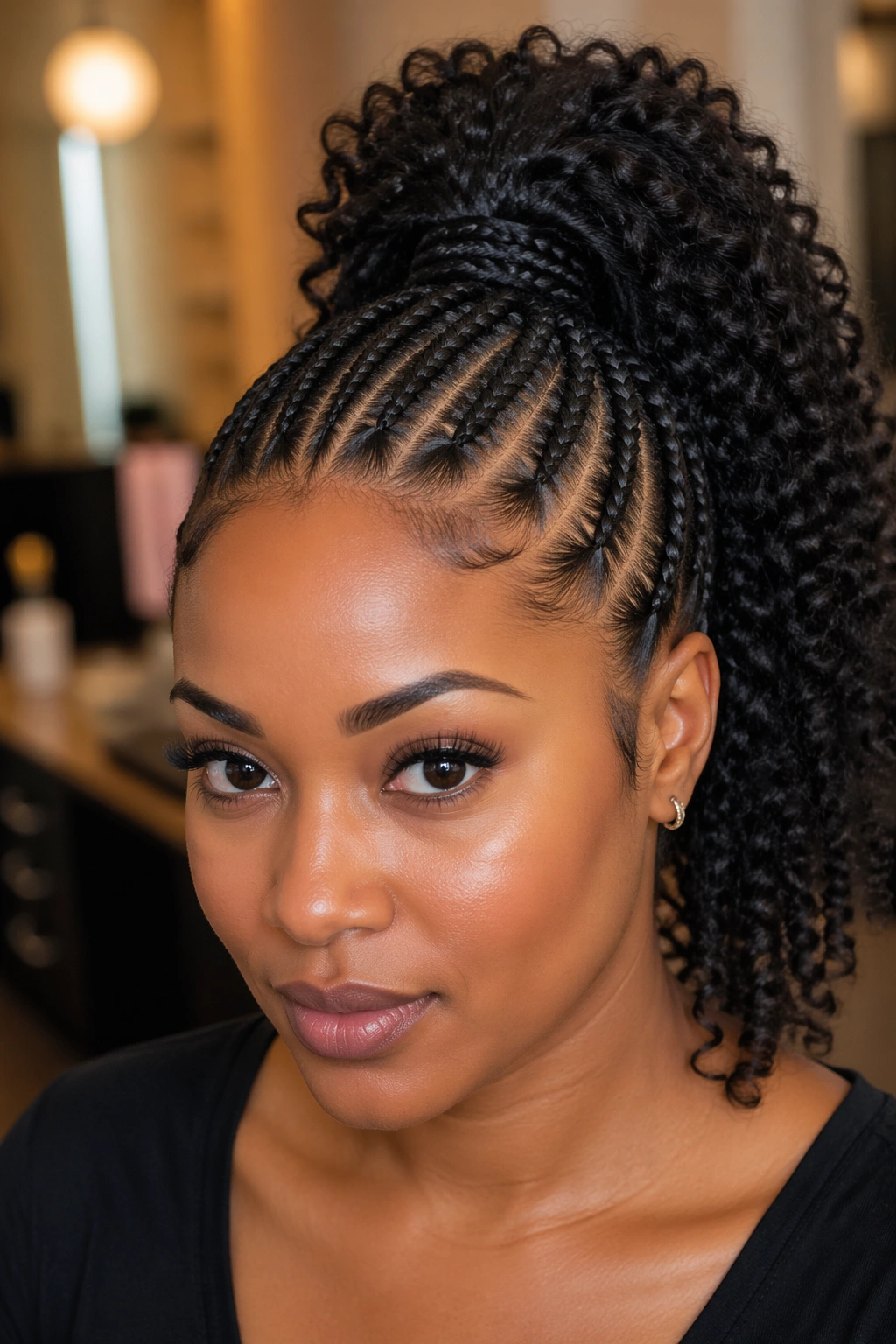
Why do braided bases matter so much on curly hair? Because they keep the front neat without asking the whole head to be slicked down.
A braided base gives you structure. It also helps the ponytail last longer, which matters if you do not want to restyle every morning. You can braid the front into two or four cornrows that lead into the ponytail, or use feed-in braids if you want the scalp parting to look extra clean. Either way, the braid does the heavy lifting while the curls stay free in the tail.
How to Wear It
Choose this when you want a style that feels secure but not heavy. It works well for weekends, travel, and any day when you do not want loose curls around your face.
A soft brush, edge control, and a few small elastics are enough. Skip anything too bulky at the base. That part has to stay flat or the whole ponytail starts sitting too high in the wrong way.
4. High Ponytail With Curly Extensions
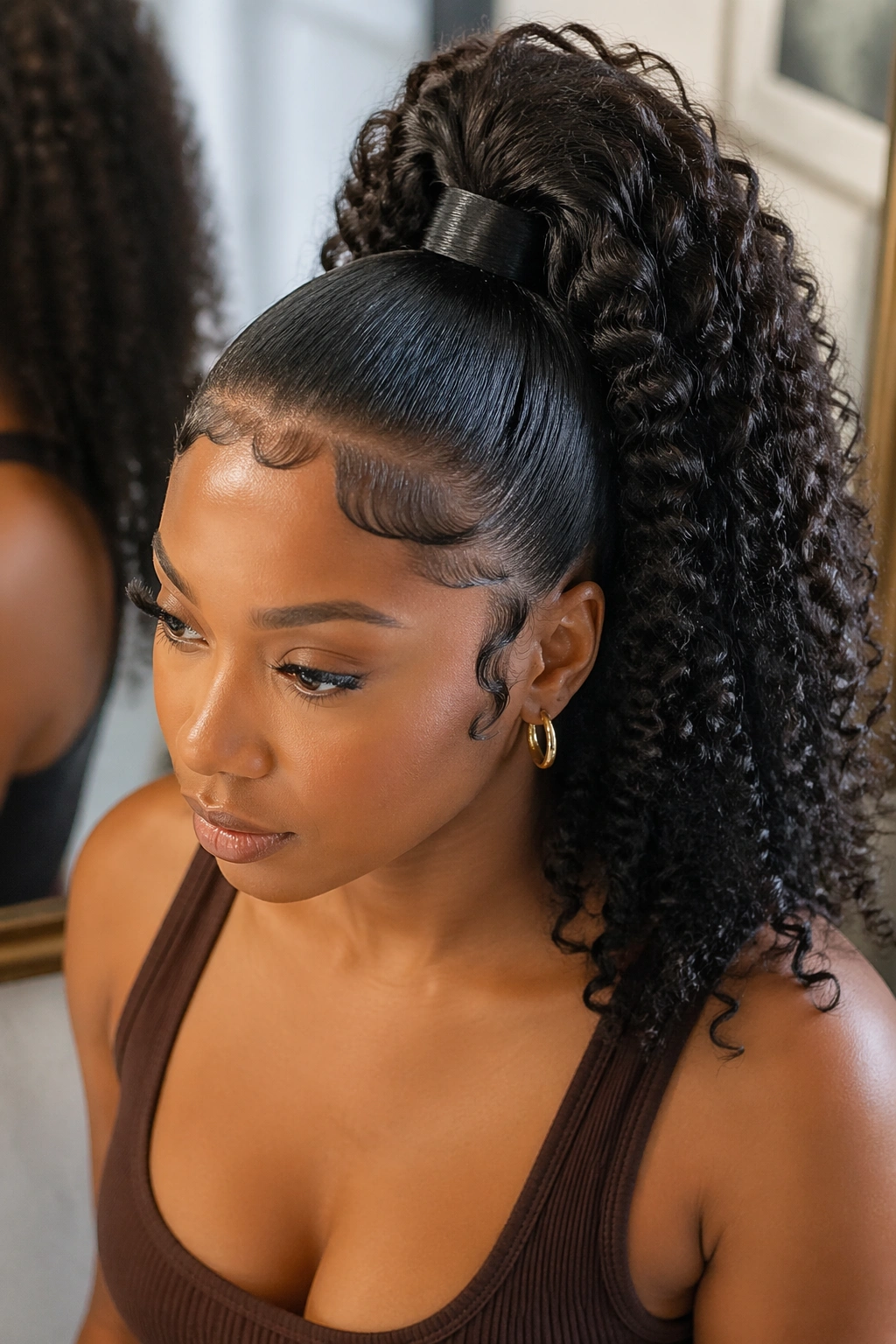
If you want length, this is the shortcut that actually makes sense. Curly ponytail extensions can turn a simple style into something dramatic without forcing your natural hair to do all the work.
The trick is matching the texture. A tight 4B or 4C base does not need silky, loose curls hanging from it. It needs a tail that blends in density and movement. Clip-in ponytails and drawstring ponytails both work, but drawstring styles usually give a smoother base when the crown is already stretched. If your hair is thick, anchor it with two small braids before attaching the extension.
- Match the extension to your curl pattern, not just your length goal.
- Secure the base with 2 to 3 strong pins if the ponytail is heavy.
- Blend with a little mousse at the join if the textures need help.
- Keep the crown smooth, but don’t over-brush the tail.
The result should look full, not fake. That difference matters.
5. Bubble Ponytail on Coils
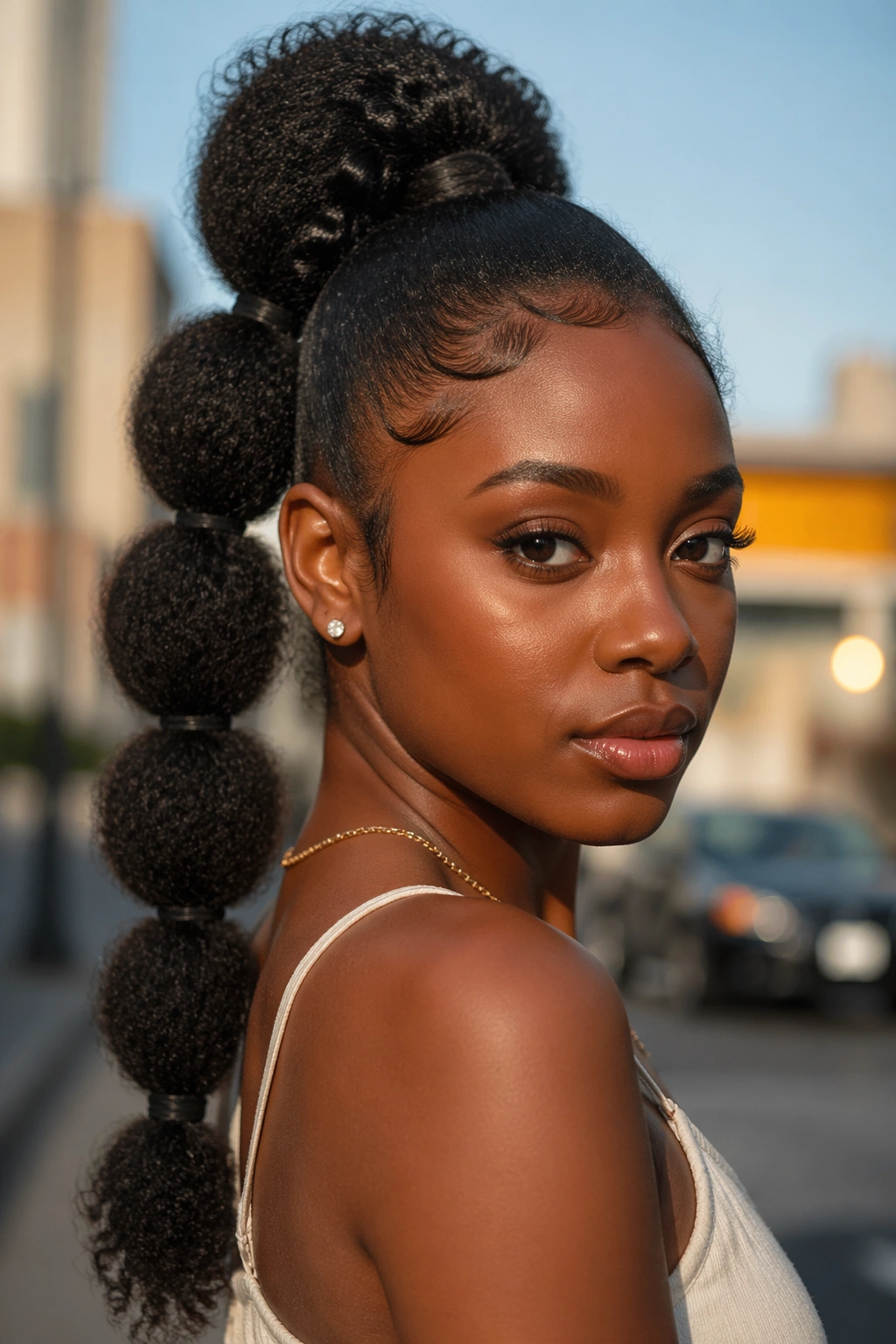
A bubble ponytail looks playful, but on curly hair it can also be neat and polished if you space the sections well. The bubbles give the ponytail shape, so the style does not depend on perfect curl definition.
Divide the tail into 3, 4, or 5 sections with small clear elastics, then gently pull each section outward until it puffs a little. On curly hair, that puffing step is what makes the bubbles read clearly. If the tail is very dense, you may want slightly wider spacing between ties — about 2 to 3 inches apart usually works better than tiny gaps.
This style is especially good when your curls are stretched. Fresh wash-and-go curls can work too, but the bubbles look sharper when the hair has some length and movement. A dab of shine serum on the outer surface keeps the sections from looking dry. Not much. Too much oil makes the bubbles slide apart, and then the whole thing loses its shape.
6. Cornrow-to-Ponytail Combo
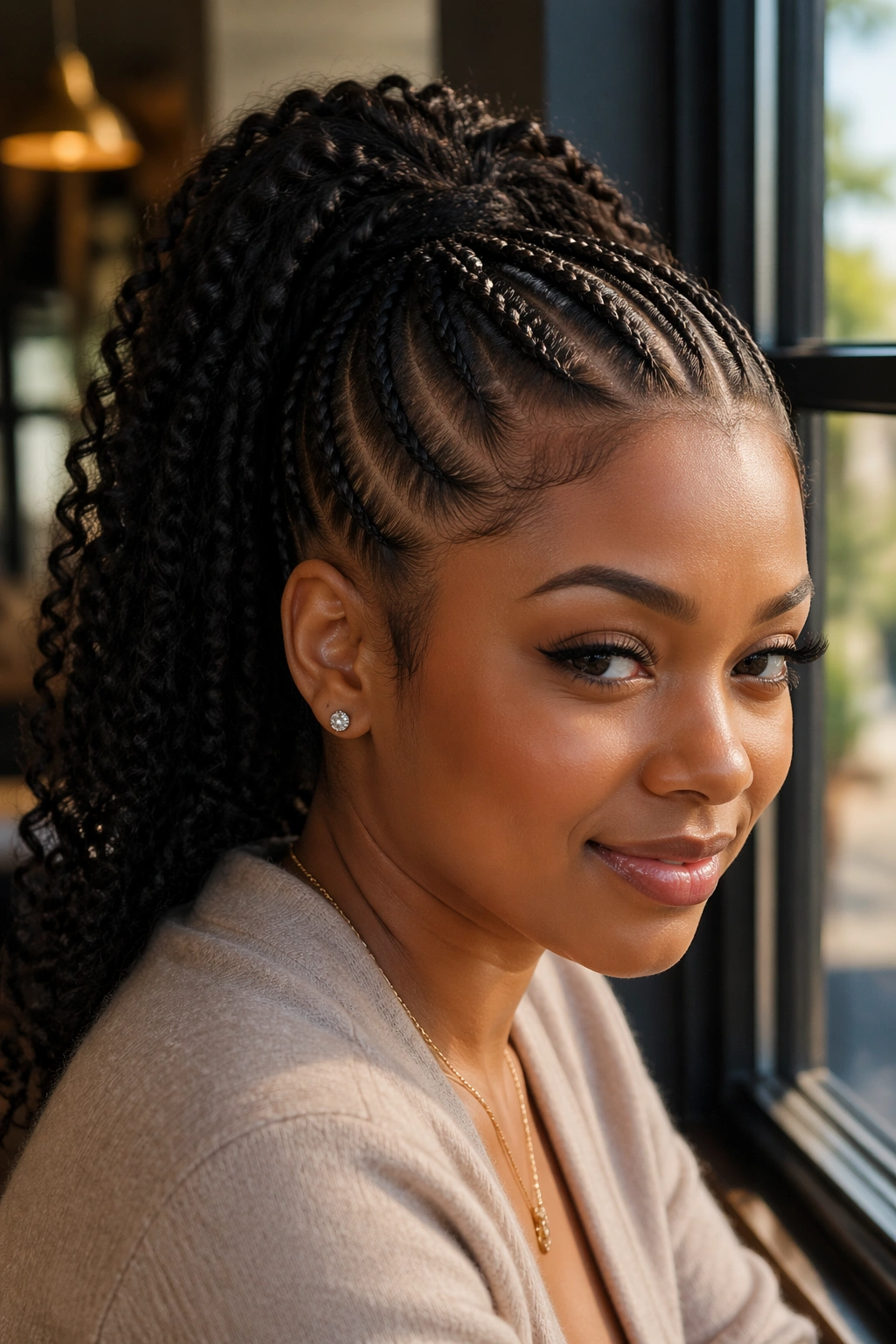
Unlike a loose curly puff, a cornrow-to-ponytail style keeps the scalp flatter and cleaner for longer. That is why it’s such a practical choice for busy days.
You get the best of both worlds: a smooth front and a textured tail. The cornrows pull the hair back from the face, which makes the ponytail feel secure, while the gathered curls or extensions give you the height and drama people usually want from a high ponytail. If you sweat easily or you like styles that stay put, this one earns its place.
The best version uses neat parts and a ponytail that starts at the crown, not the back of the head. That higher placement is what gives it energy. Too low, and it just becomes a braid style with a tail attached. Still fine, but not nearly as striking. If you like clean lines and a style that can take a little weather, this is a smart pick.
7. High Ponytail With a Wrapped Base
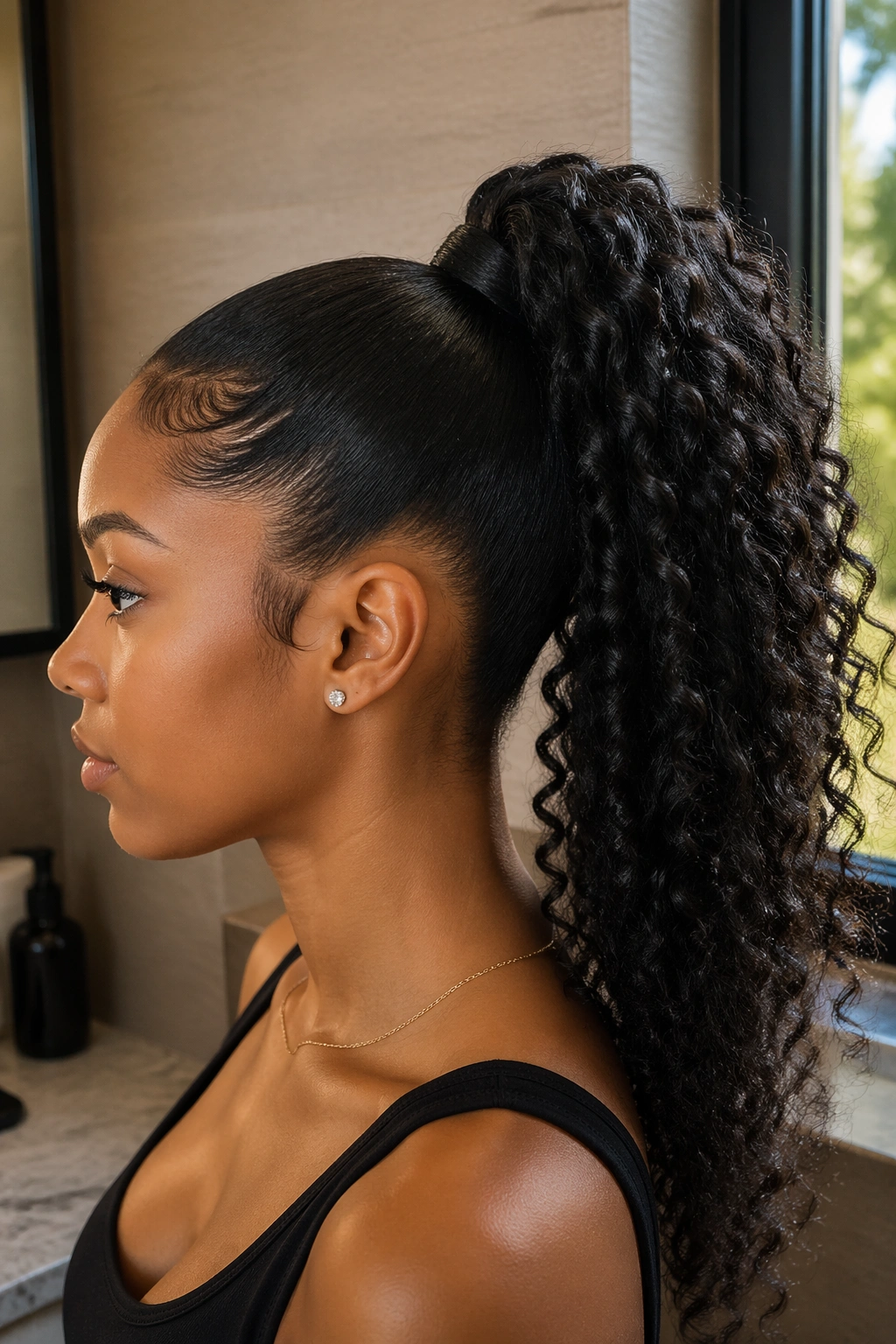
A wrapped base changes the whole mood of a ponytail. It turns a simple elastic into a finished detail, which is a small thing that makes a big difference.
What Makes It Different
Instead of leaving the hair tie visible, take a thin section from the ponytail and wrap it around the base until the elastic disappears. Pin the end underneath with a bobby pin. That tiny move makes the style look more deliberate, even if the rest of the hair is full and textured.
- Best on stretched curls or a blown-out base.
- Use a single bobby pin that matches your hair color if possible.
- Keep the wrap snug, but not so tight that it pulls the ponytail lower.
- Pair it with laid edges if you want a sharper finish.
This is one of those styles that looks more expensive than it is. Clean base, full tail, done.
8. High Afro Ponytail
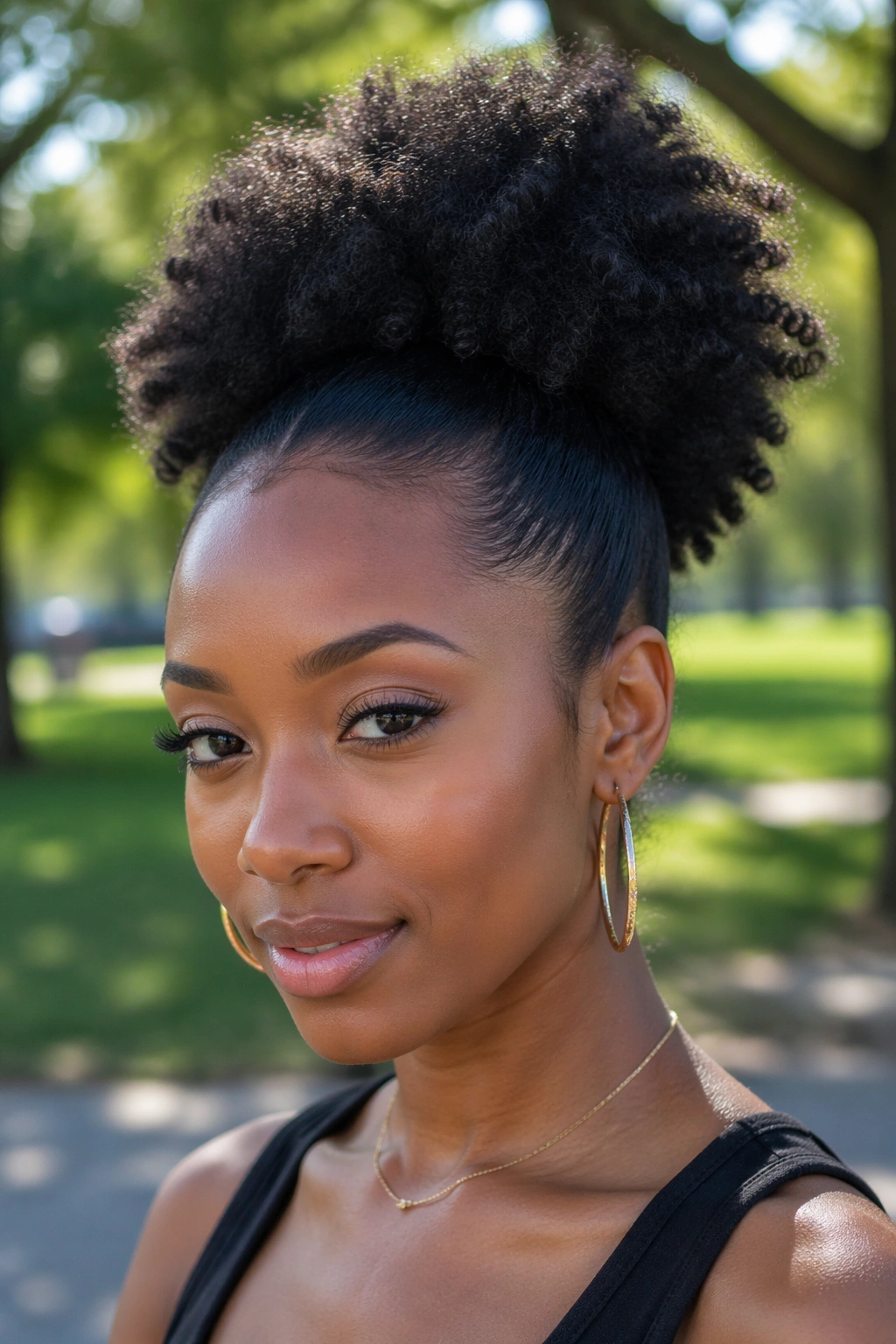
A high afro ponytail is pure volume, and that is the point. It lets the texture stay big while still giving the face a lifted shape.
This style works beautifully when the hair has been shaped into a rounded fro or gently stretched afro. Gather it high enough to keep the crown lifted, but do not compress the tail so much that the texture loses its body. You want the ponytail to sit like a cloud with a clear base, not like a squeezed knot.
It’s also one of the best choices when you want a natural look that still feels styled. The shape reads as confident without needing a lot of extras. A soft pick at the roots can give the crown more height, though you should only fluff what’s already dry. Wet manipulation is where frizz and breakage start to show up fast. Leave the texture alone once it’s set.
9. Side-Swept High Ponytail
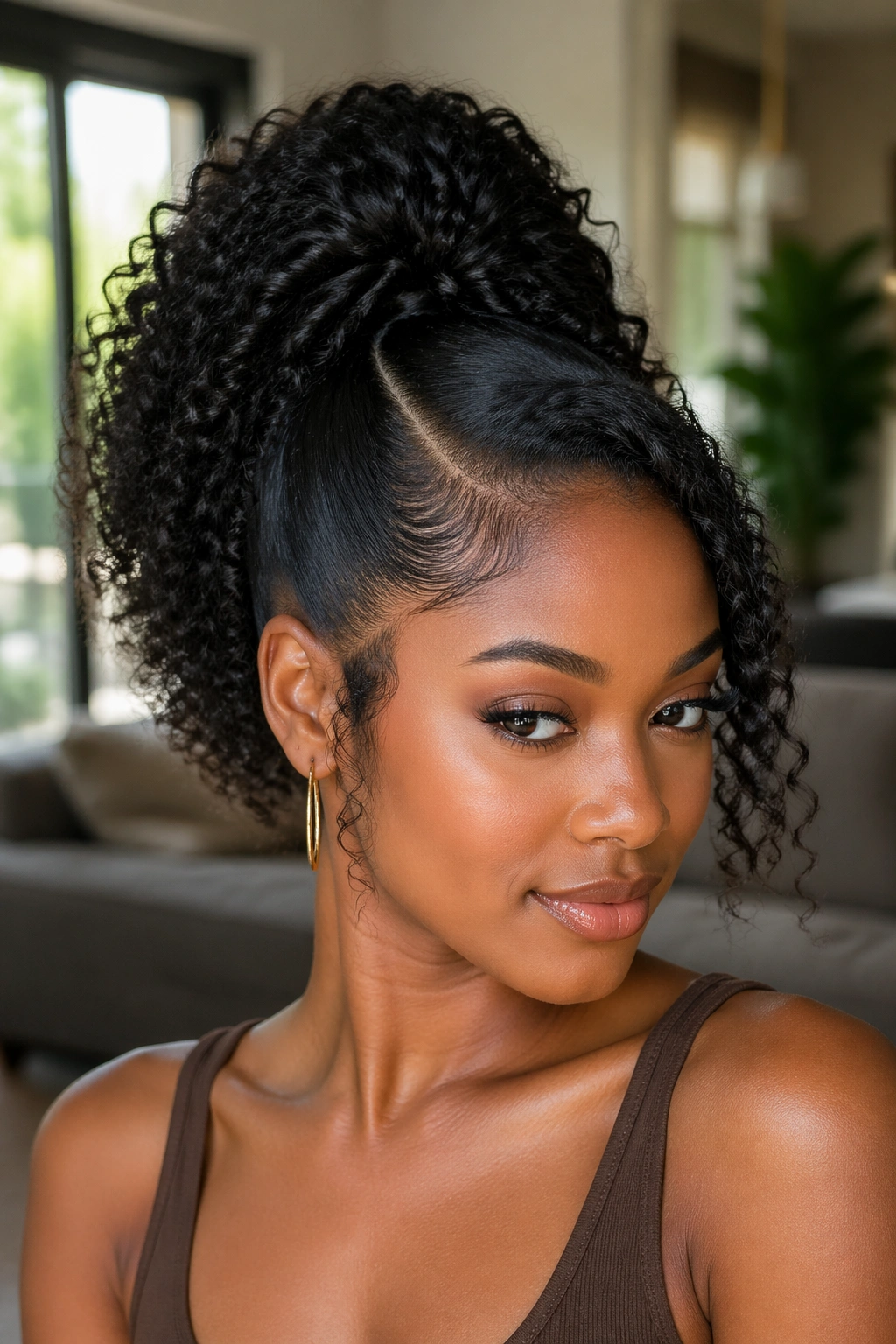
Why does a side-swept ponytail soften a high crown so well? Because asymmetry breaks up the hard line that a centered ponytail sometimes creates.
A deep side part shifts the focus and gives the face a little movement. On curly hair, that means one side can sit smoother while the tail still stays full and high. It’s a nice option when you want a high ponytail that feels less severe. The shape is especially flattering if you like one front section tucked behind the ear and the other side left with a little curl.
The trick is not to overthink the part. A clean diagonal or deep side part is enough. Brush the hair toward the higher point on the crown, secure the ponytail, then let the front follow the part naturally. One loose curl near the cheek can soften the whole look. One. Not six.
10. High Ponytail With Face-Framing Pieces
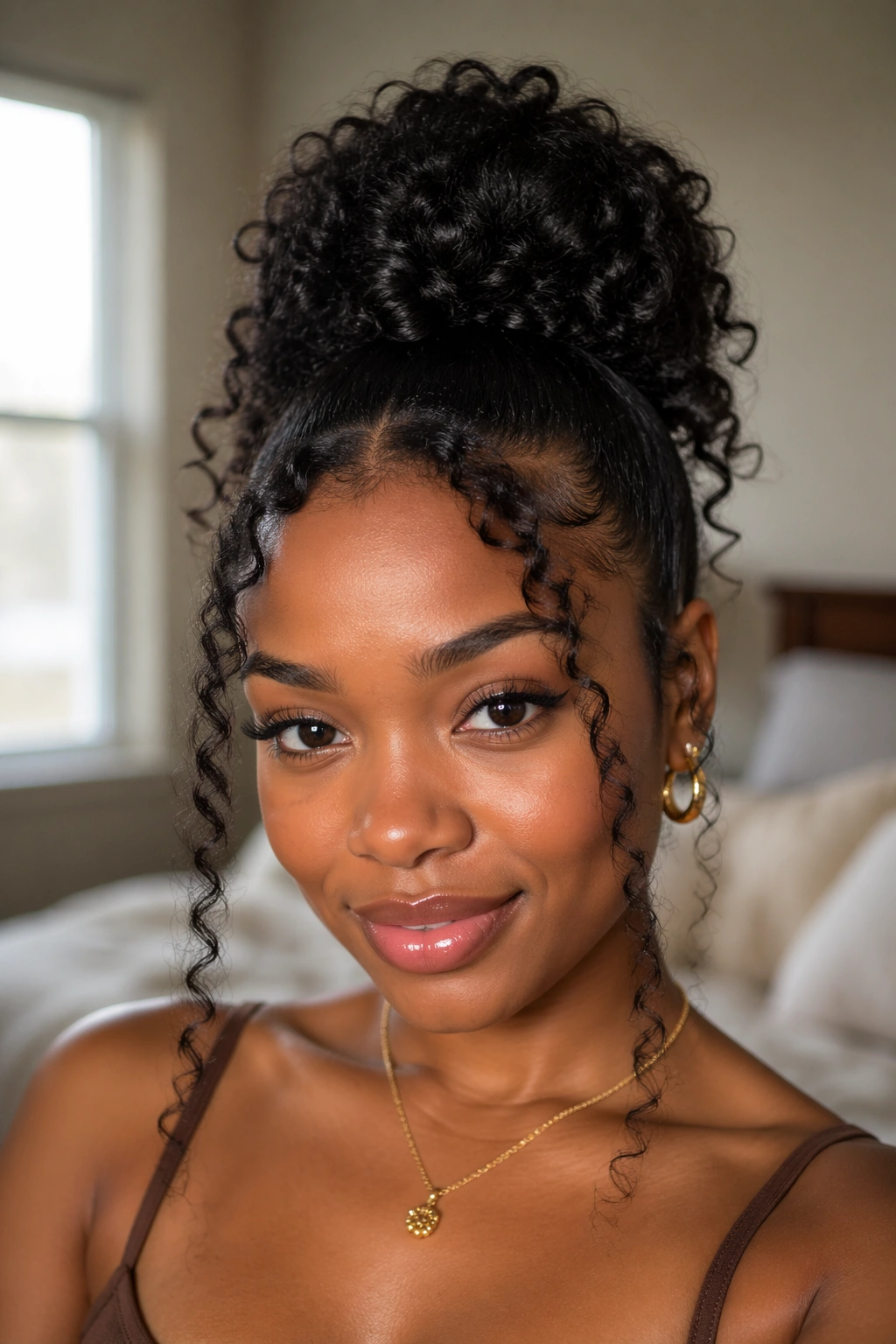
A few curls left out in front can change a ponytail from “pulled back” to “styled on purpose.” That’s the charm here.
The face-framing pieces should be deliberate, not random. Leave out one curl on each side, or a thicker front section if your hair is dense and you want more softness. Curl those front pieces with flexi rods, a wand, or a finger coil set so they look finished, not forgotten. If you use heat, keep it low and only on the pieces you plan to show.
This style is useful when you want height at the crown but still want movement around the face. It also works well with twist-outs and braid-outs, where the front pieces already have shape. The rest of the hair can be sleek or fluffy. Either way, those few curls in front keep the ponytail from feeling too strict.
11. Pineapple Ponytail
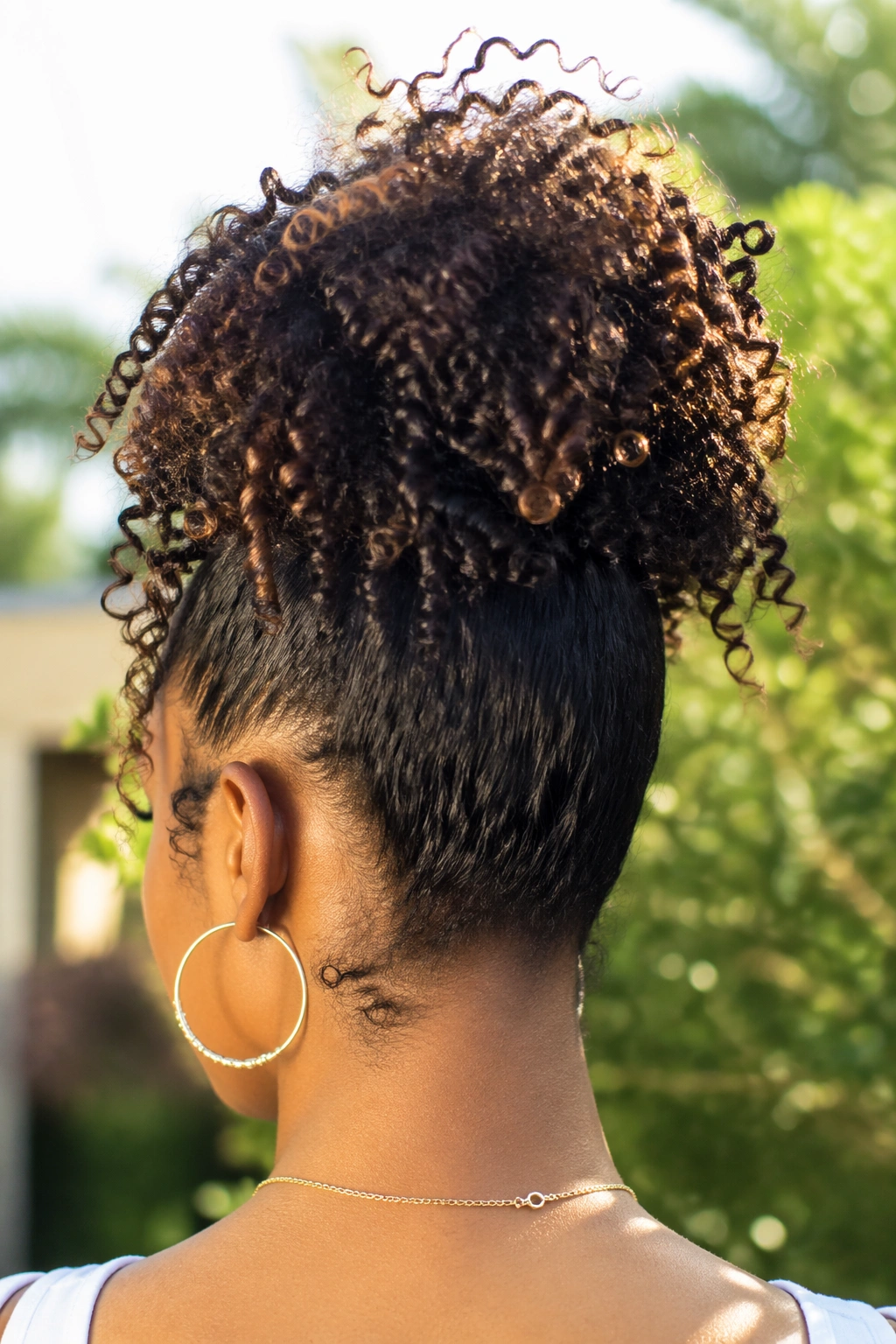
A pineapple ponytail has a little attitude. It keeps the curls stacked high and loose, which makes it a natural fit for hair that does not want to sit flat anyway.
Think of it as the daytime version of the classic pineapple shape. You gather the curls at the top of the head, but instead of forcing them into a tight ponytail, you let the lengths fan out and spill. That means less tension and more texture. It works especially well on medium-length natural hair that has a lot of spring. Shorter hair can do it too, but the shape reads differently — more compact, less dramatic.
I like this one for warm weather and casual days. It feels easy, which is a rare thing in high ponytails. A soft scrunchie is usually better than a tight elastic here, because the goal is lift, not a dent at the roots. Keep the crown lifted and leave the rest alone. The hair already knows what to do.
12. High Ponytail With Feed-In Braids
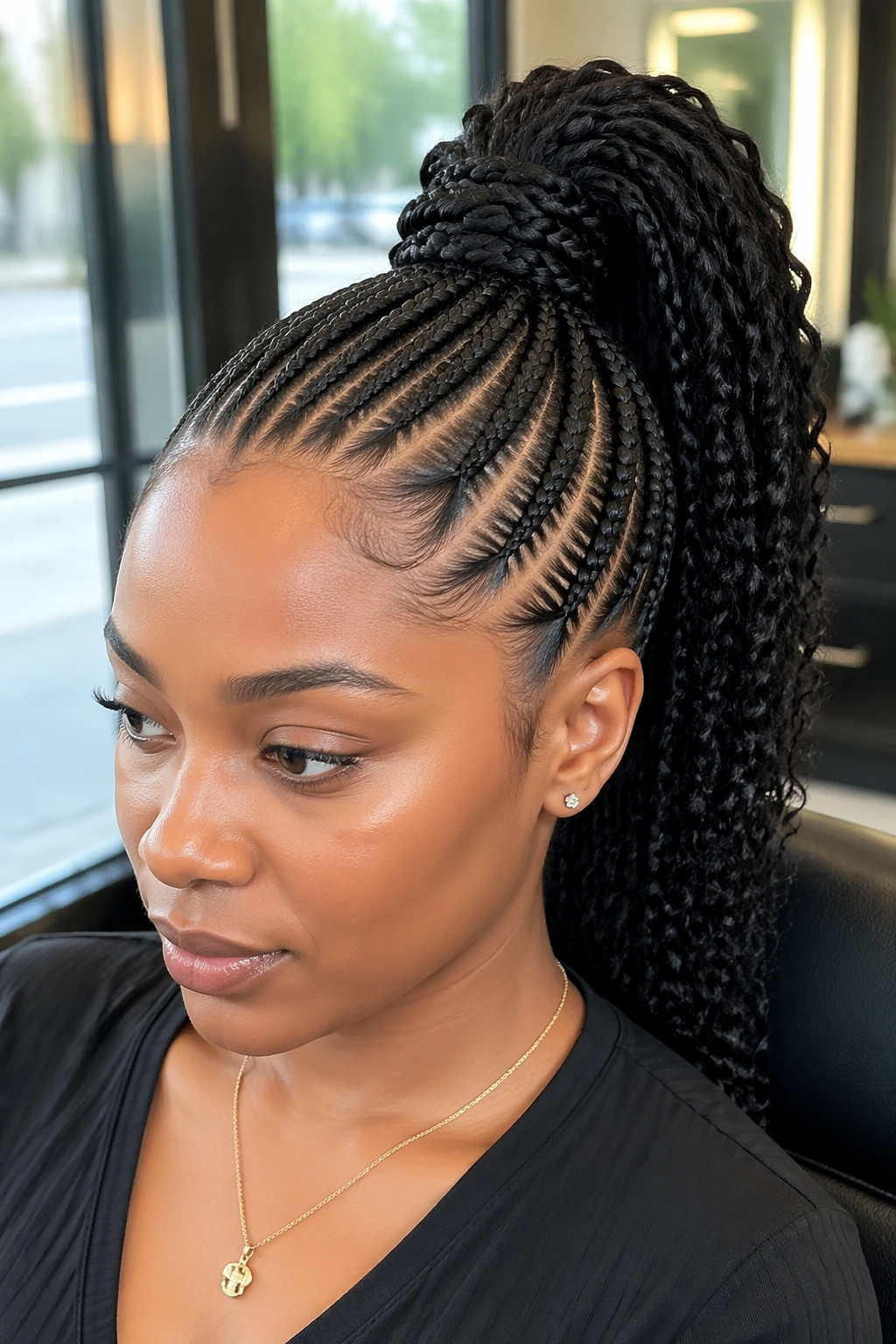
Feed-in braids bring structure to a high ponytail without making the style feel heavy. That is the big win.
The braids can start thin at the hairline and get fuller as they move toward the ponytail, which creates a smooth, clean base. Then the tail can stay curly, braided, twisted, or extended. This works well if you want the front to last several days and still look neat after sleep and scarf wear. It also gives you a chance to play with parting without changing the whole style.
Best Way to Wear It
Choose feed-in braids when you want the ponytail to feel secure and the scalp to stay tidy. It’s a strong pick for longer days, travel, or any time you know you will not want to redo your hair.
A small amount of gel on the part lines helps the braids stay crisp, but don’t drown them. Too much product can leave the roots flaky. That part is not cute.
13. Twisted High Ponytail
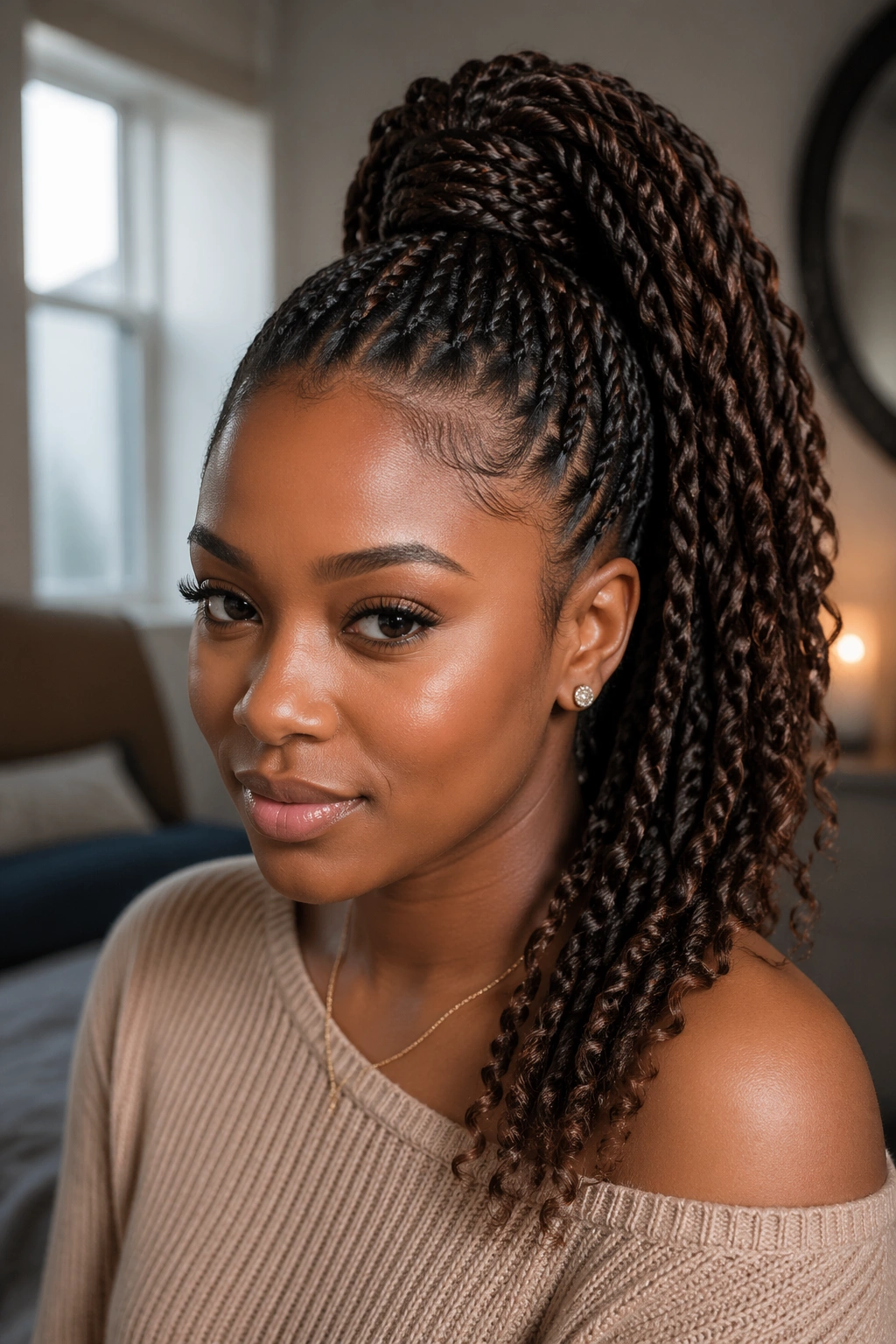
A twisted ponytail gives you texture even when the rest of the style is smooth. That contrast is what makes it interesting.
Instead of braiding the tail, split it into two sections and twist them together, or build the ponytail out of two-strand twists from the start. The style has movement, and it keeps the hair from looking flat at the ends. On curly hair, the twists also help the tail hold its shape for longer because the strands are already grouped.
This is a good option if your hair is medium to long and you want a style that feels tidy without being stiff. The twists can be chunky or small, depending on how much detail you want. Smaller twists read cleaner. Bigger twists read fuller. Both work. The main thing is to keep the base secure so the weight of the twists does not pull the ponytail down by the end of the day.
14. High Ponytail With a Scarf Wrap
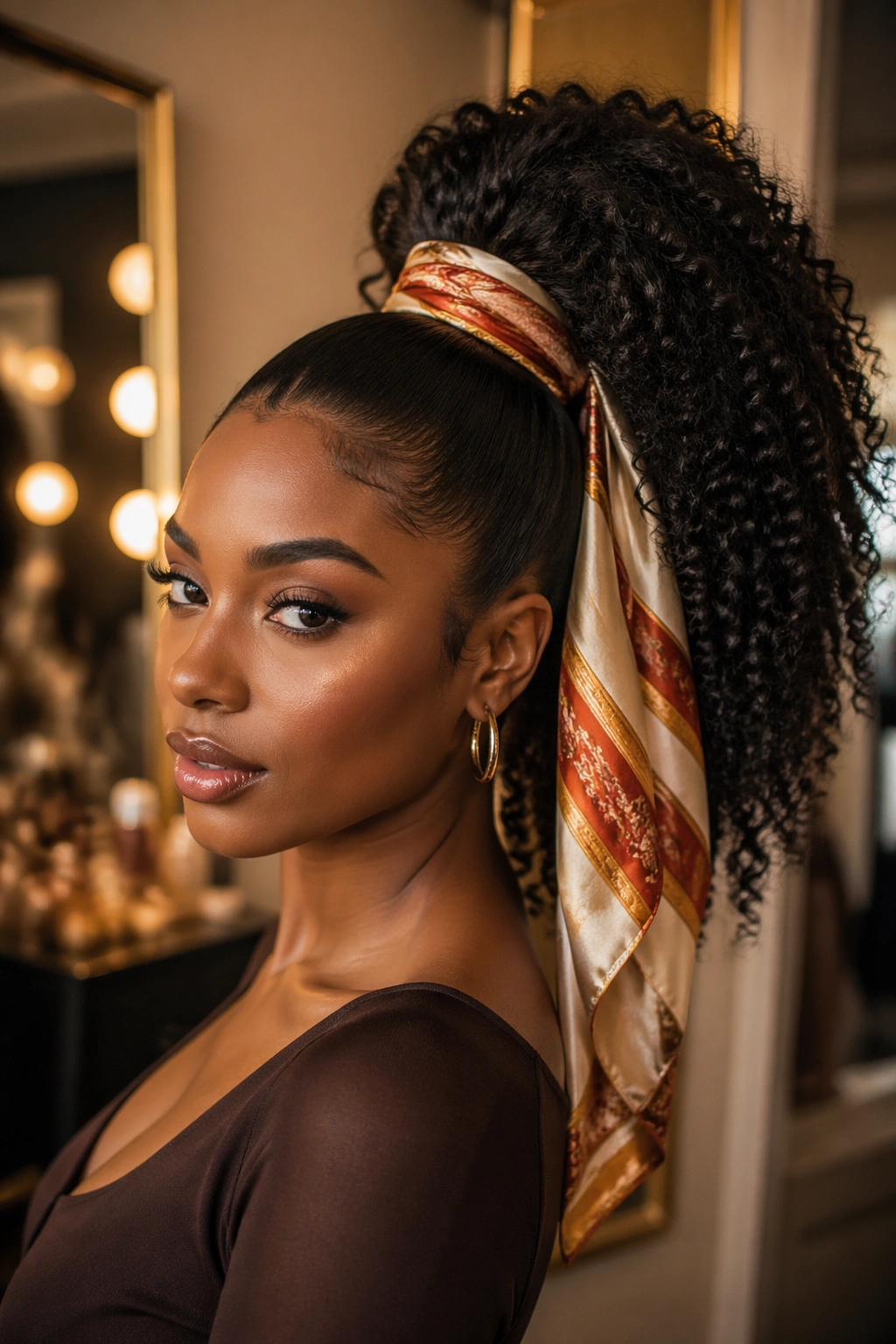
A scarf wrap does two jobs at once. It hides the elastic, and it gives the ponytail a little personality.
Use a silk or satin scarf if you want the wrap to sit smoothly. Cotton works for a casual look, but it can grab the hair a bit more. You can tie the scarf around the base and let the ends trail, or knot it in a bow for something softer. Solid colors tend to look cleaner, though a bold print can be fun if your outfit is simple.
This style is especially useful when the hairline is not at its best and you want a polished fix without adding more gel. The scarf becomes the focal point, which means the rest of the ponytail can stay a little looser. That’s a nice trade. Not every style needs to be bare and perfect to work.
15. High Ponytail on Stretched Natural Hair
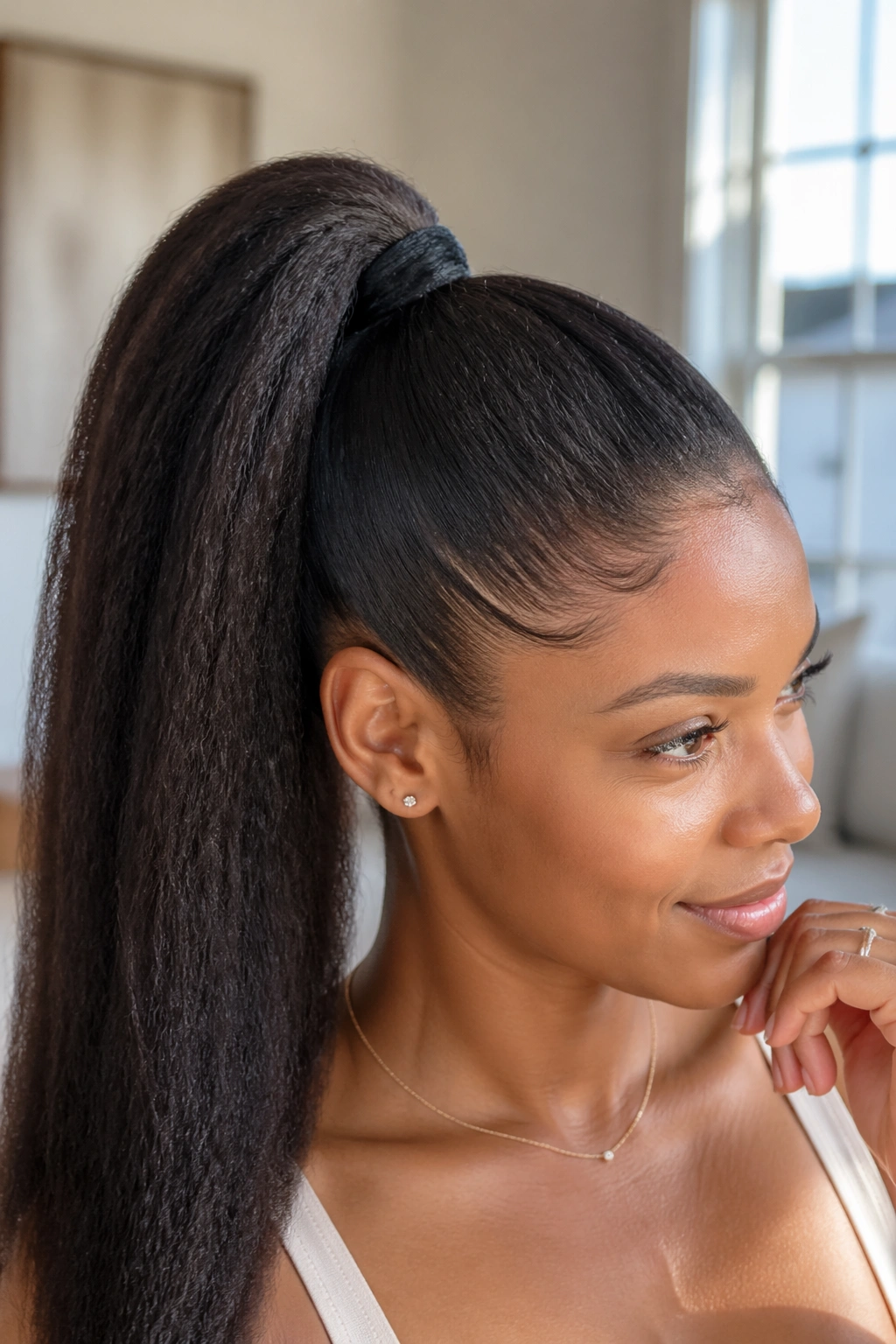
Do you want more height without using a mountain of gel? Stretch the hair first.
A high ponytail on stretched natural hair sits differently from one built on fresh shrinkage. The base feels smoother, the tail has more length, and the style usually lasts better because the curls are not fighting the shape. You can stretch with banding, twists, a blow-dryer on low heat, or a tension method that keeps the hair elongated without rough handling.
This is a good middle ground when you want definition but not a super sleek finish. The texture stays visible, but the ponytail reaches up higher and looks more controlled. If your hair is thick, sectioning helps a lot. Work in parts, gather the sides first, then bring everything into the crown. That order matters more than people think. Rushing the gather is how you end up with bumps at the back.
16. High Ponytail With a Deep Side Part
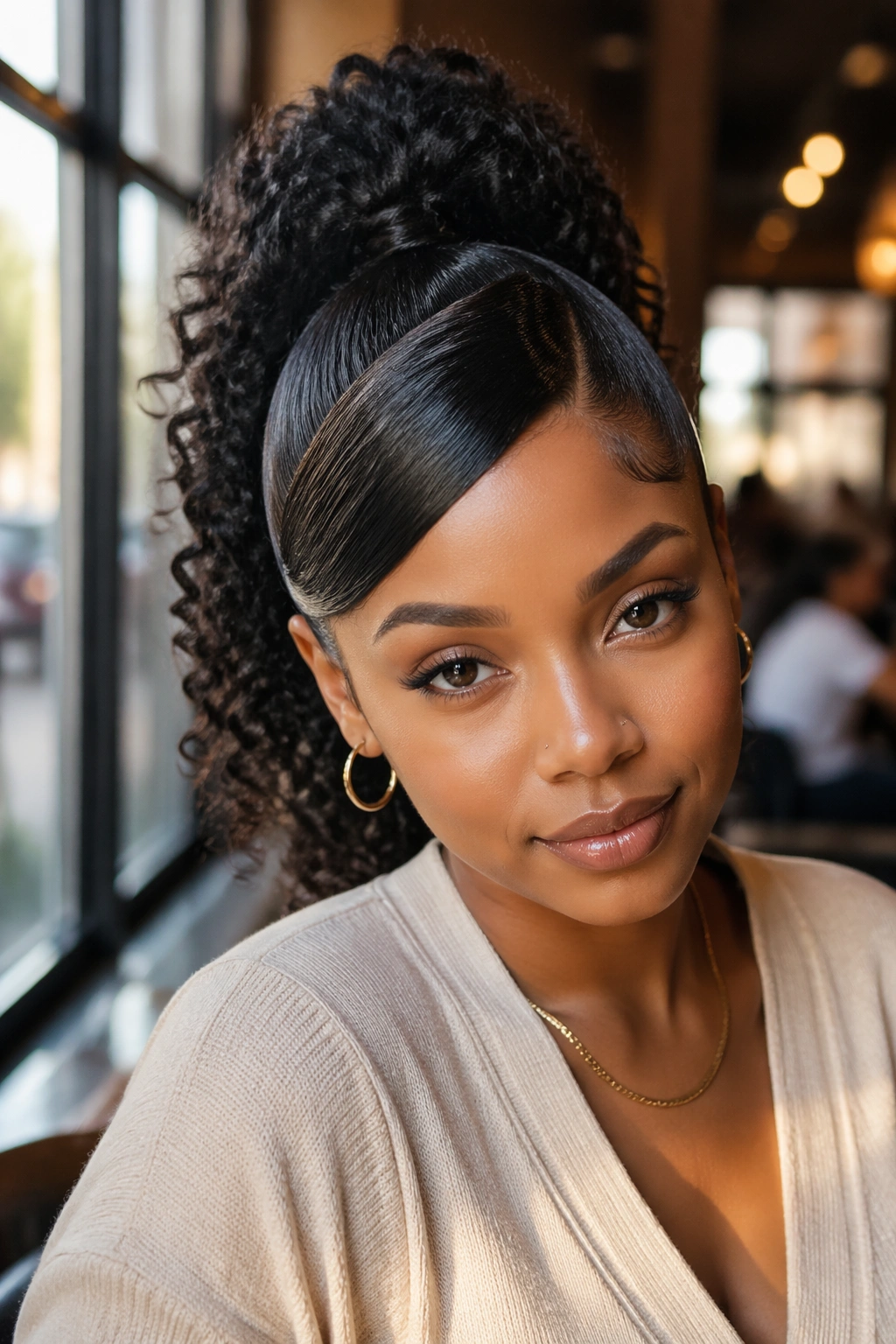
A deep side part can make a high ponytail feel softer and a little more dramatic at the same time. Strange, but true.
The part changes the direction of the whole style. Instead of a straight-up lift, the eye follows the sweep across the forehead before it lands on the ponytail. That makes it a nice option for evenings, dinners, or any time you want the style to look done without looking rigid. It can also help if your hair naturally falls to one side and fights against a center part.
Use a tail comb to create a clean part, then smooth the bigger side across the crown. Keep the smaller side low and neat so the shape does not look uneven in a sloppy way. One side should feel intentional. If both sides are fighting for attention, the part gets lost.
17. High Ponytail With Faux Locs
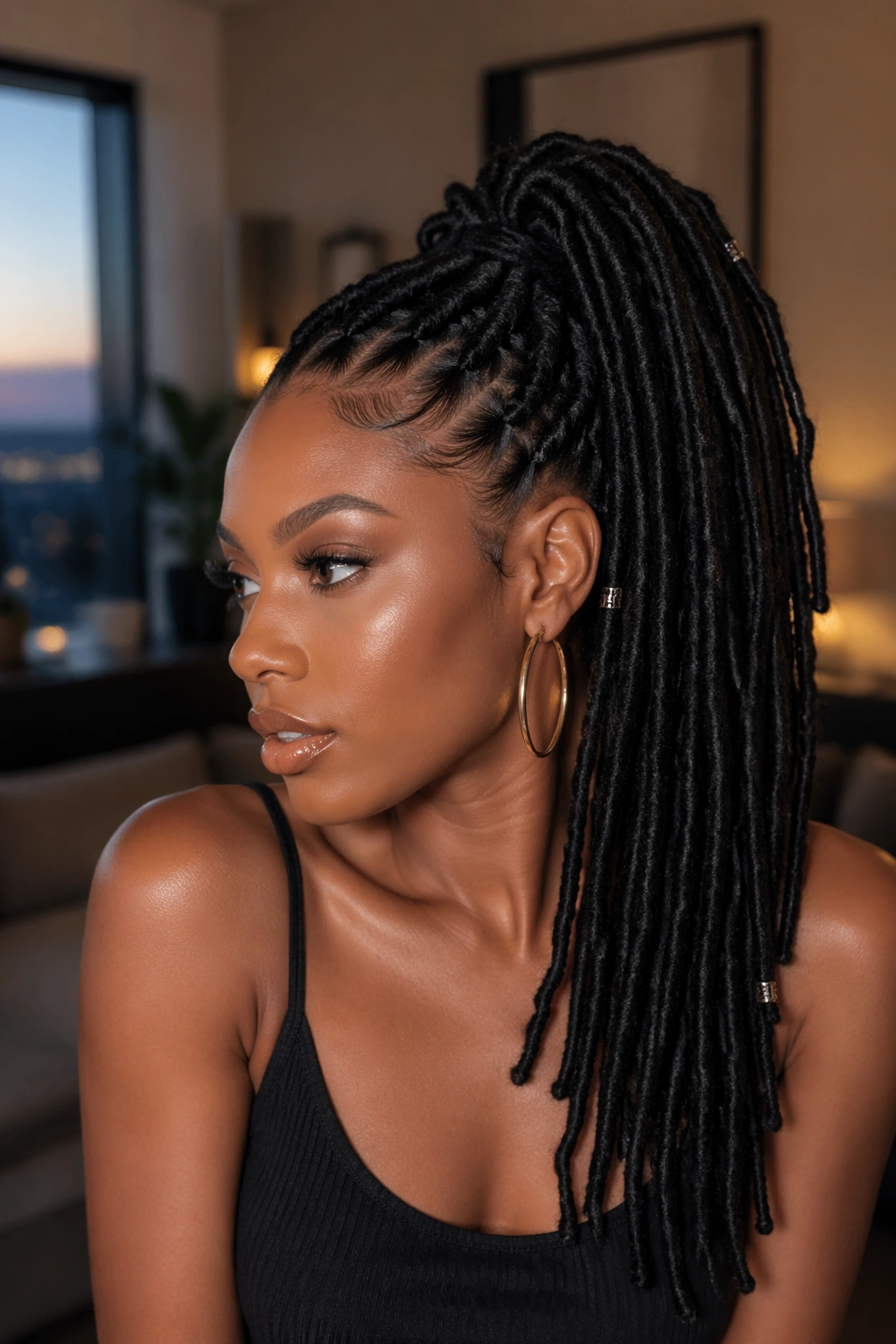
Faux locs in a high ponytail have weight, presence, and a little edge. They also sit nicely on a crown when the base is reinforced well.
The locs can be gathered into a single high ponytail and left to fall long, or looped into a fuller shape if you want more volume at the top. Because faux locs have heft, the base needs to be secure but not over-tight. A small number of braids underneath can help distribute the load, especially if the locs are long. That keeps the style from tugging on one spot.
This is one of those styles that works when you want a strong silhouette. It does not whisper. It shows up. Add gold cuffs or a few wrapped strands if you want more detail, but the locs themselves already do most of the work. The texture is the statement.
18. Double-Texture Ponytail
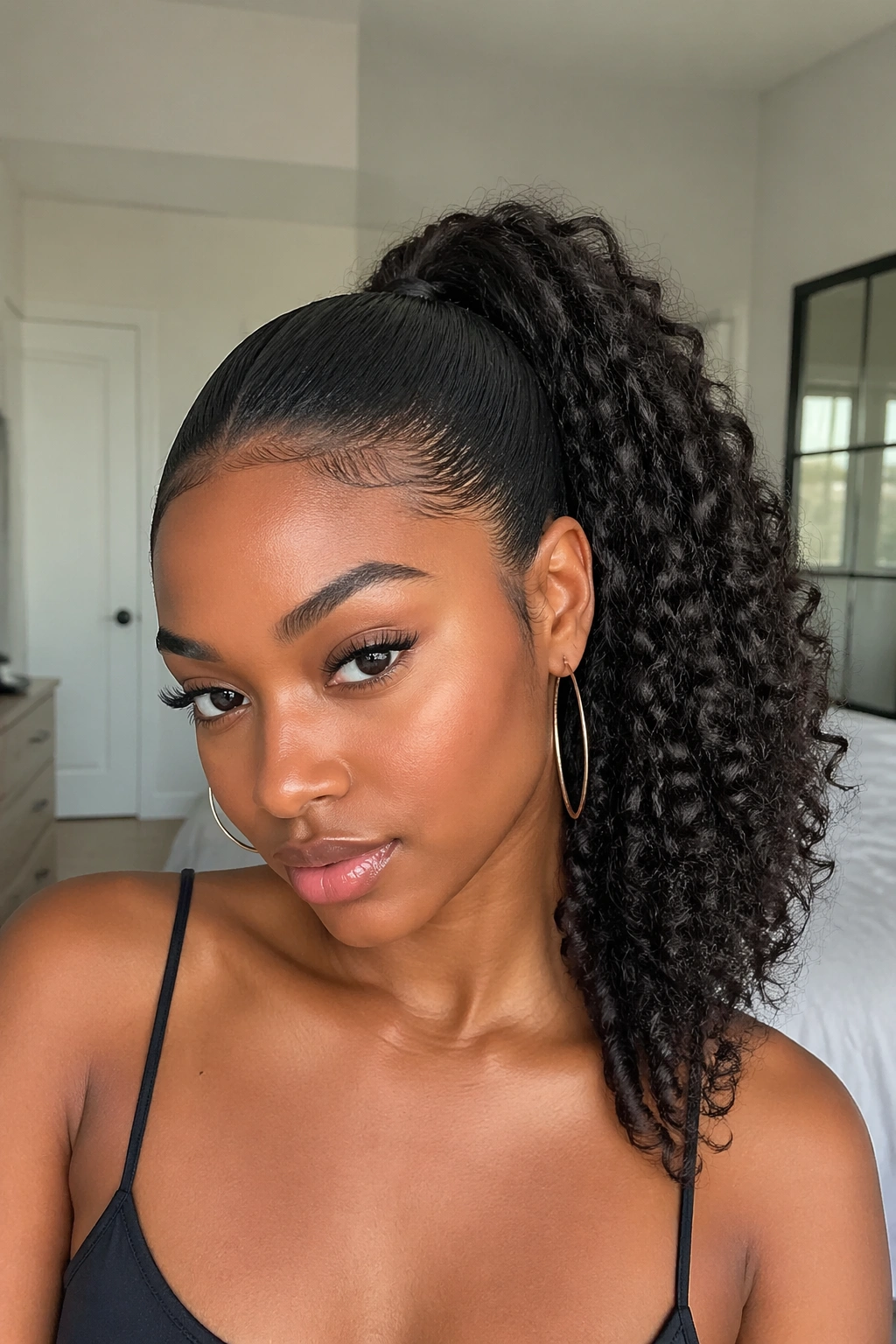
A double-texture ponytail is for the person who cannot decide between neat and full, so they do both.
The front can be sleek or braided, while the tail stays curly, or you can reverse that and let the crown keep more texture while the lengths are stretched. That contrast makes the ponytail feel modern without needing extra decoration. It also gives you room to work with your hair’s different moods. Some days the roots are cooperative and the ends are dry. Fine. Build the style around that.
This one is especially useful when your hair has multiple textures from heat styling, twisting, or protective styling. Instead of trying to make everything match, you let the mismatch become the design. That usually looks more natural anyway. The ponytail ends up with shape at the top and movement at the bottom, which is more interesting than a single-note finish.
19. Glam High Ponytail With Hair Cuffs
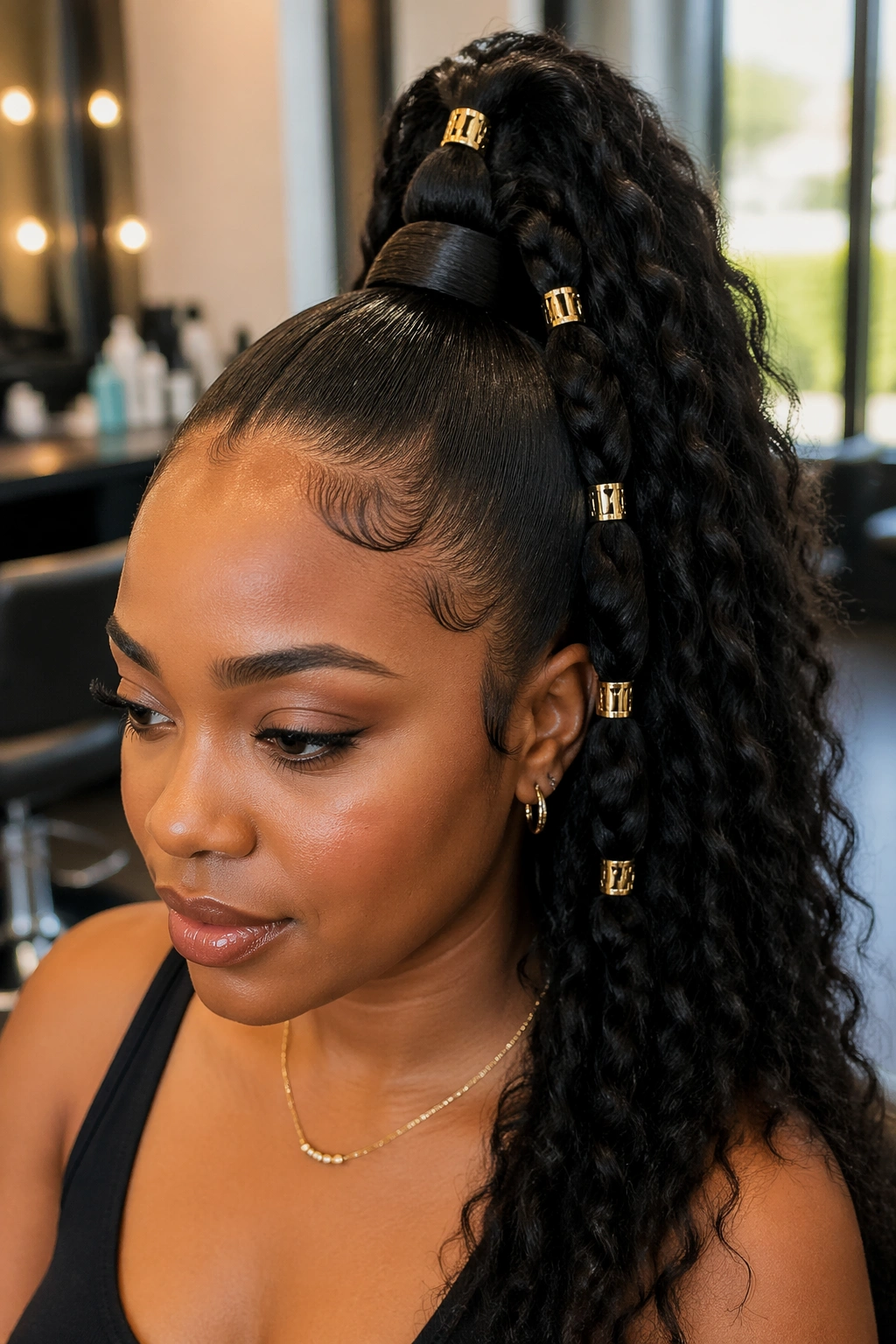
Hair cuffs are small, but they do a lot. They can turn a standard ponytail into something that looks finished in under a minute.
What to Add
- 3 to 5 metal cuffs on the braided or twisted section.
- One wrapped base for a cleaner start.
- A little shine spray on the tail, used lightly.
- Optional parting detail, like a side line or curved part.
This style works well when the ponytail already has structure. A braid or twist gives the cuffs somewhere to sit, and the shine makes the metal stand out against the curls. Keep the rest of the look simple so the accessories do their job. If everything is decorated, nothing feels special. That sounds harsh, but it’s true.
20. High Ponytail With a Curly Bang
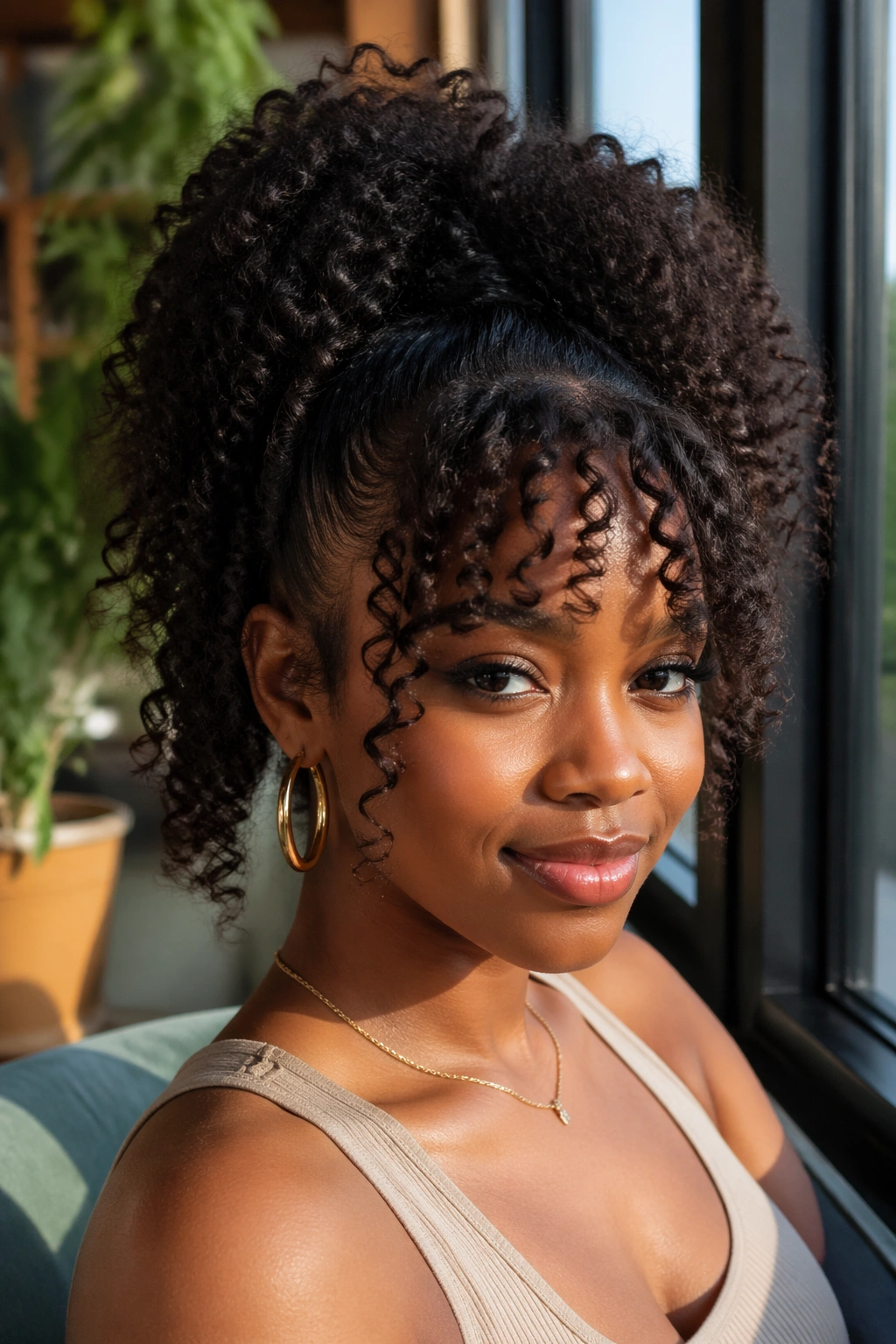
A curly bang does not fight a ponytail. It softens it, which is often better.
The bang can be a shaped front section, a swoop, or a full curly fringe that lands around the eyebrows or cheekbones. On curly hair, the bang adds movement right where the face needs it most. It also takes some attention off the crown if you do not want the ponytail to feel too severe. That is a nice trick for formal looks and everyday ones.
The only real caution is balance. If the ponytail is already very full, the bang should be shaped so it does not swallow the face. If the tail is sleeker, the fringe can carry more volume. Either way, keep the curl pattern on the bang consistent with the rest of the style. A bang that feels pasted on is worse than no bang at all.
21. Sporty High Ponytail
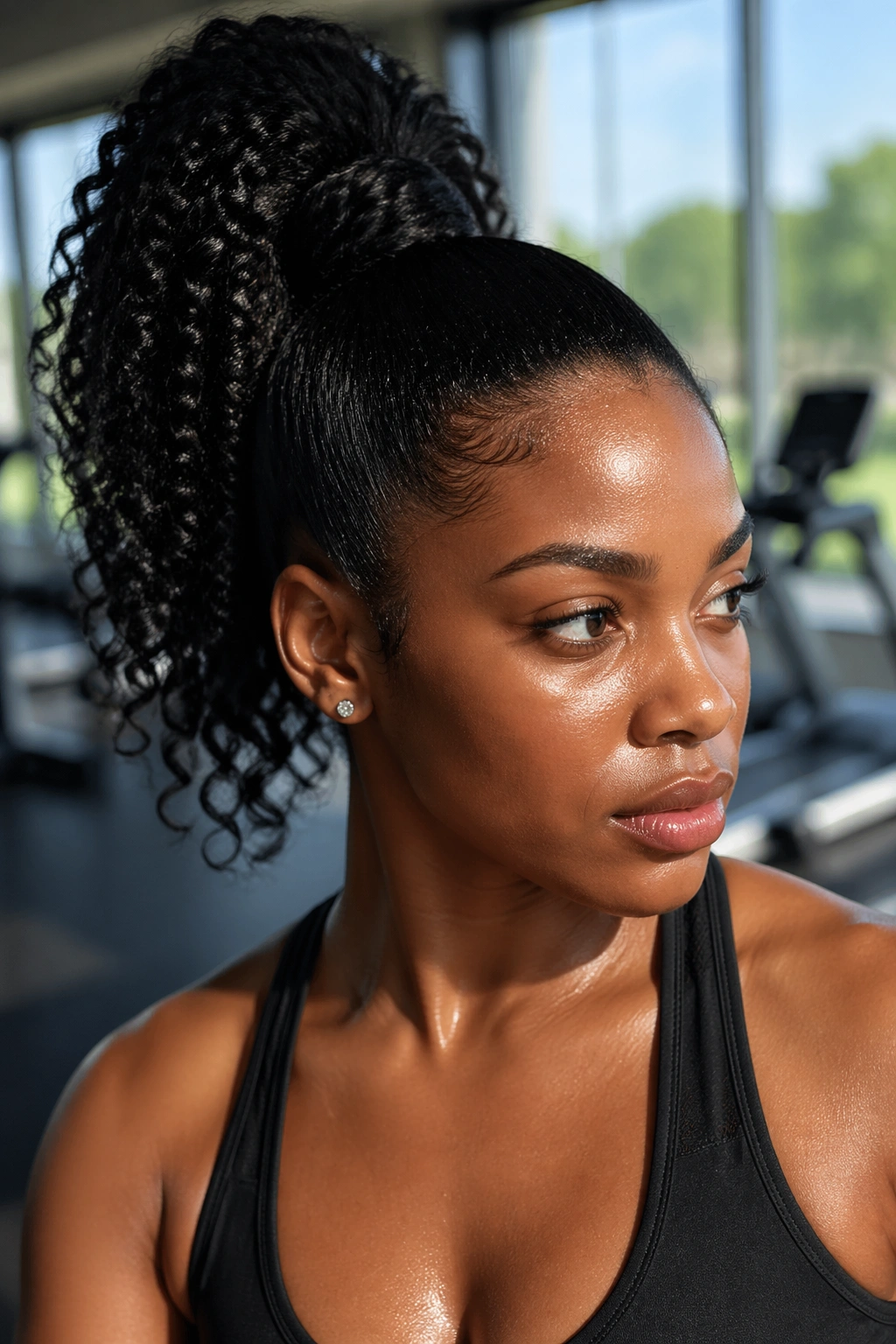
What if you want a ponytail that stays put through a long, busy day? Go sporty.
This version is built for comfort first. The base should be secure, but not tight enough to leave your scalp sore by evening. Use a soft elastic, smooth the front just enough to keep flyaways under control, and let the tail stay neat but movable. If you’re heading to work, running errands, or doing a light workout, this is the style that holds up without asking for constant checks in the mirror.
The sporty ponytail looks best when it has clean lines and not too much product. Heavy gel can make it feel sticky after a few hours, especially if you sweat. A light mousse on the tail and a brushed crown are often enough. Simple. That’s what makes it wearable.
22. Jumbo Twist Ponytail
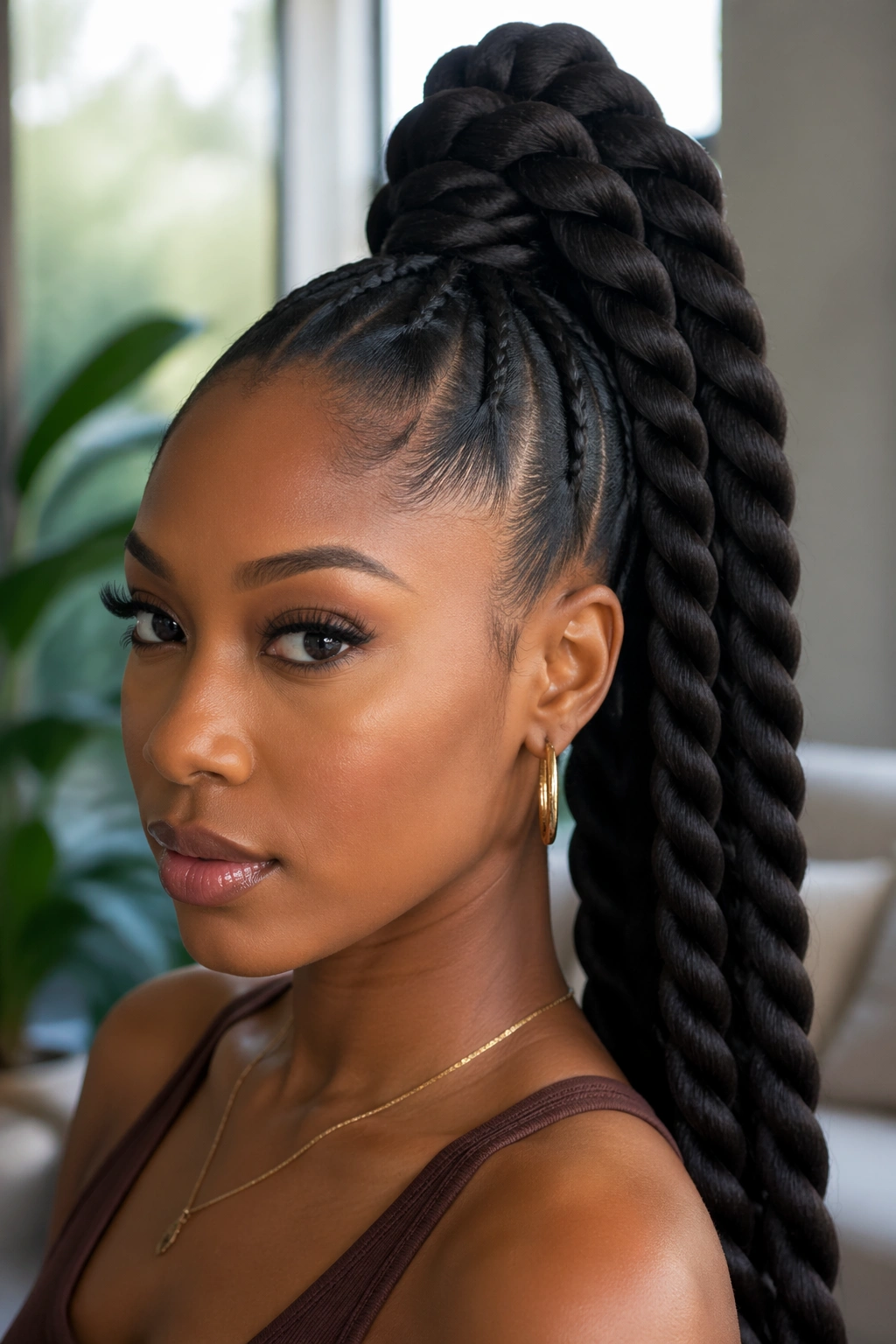
A jumbo twist ponytail gives you shape without needing a full braid pattern. The twists are big enough to read from across the room.
You can build the ponytail out of two or three thick rope twists, or gather the hair first and twist the tail once it’s secured. Either way, the result is bold and practical. Bigger twists take less time than tiny ones, and they also put less manipulation on the hair. That matters if your strands get dry easily or you are trying to keep the style friendly for the week.
The look is strongest when the base stays smooth and the twists stay defined. A touch of butter or cream on the tail helps the strands stay together, but don’t overload them. Too much product makes the twists puff apart before the day is over, and then the shape gets fuzzy.
23. High Ponytail With Beads at the Ends
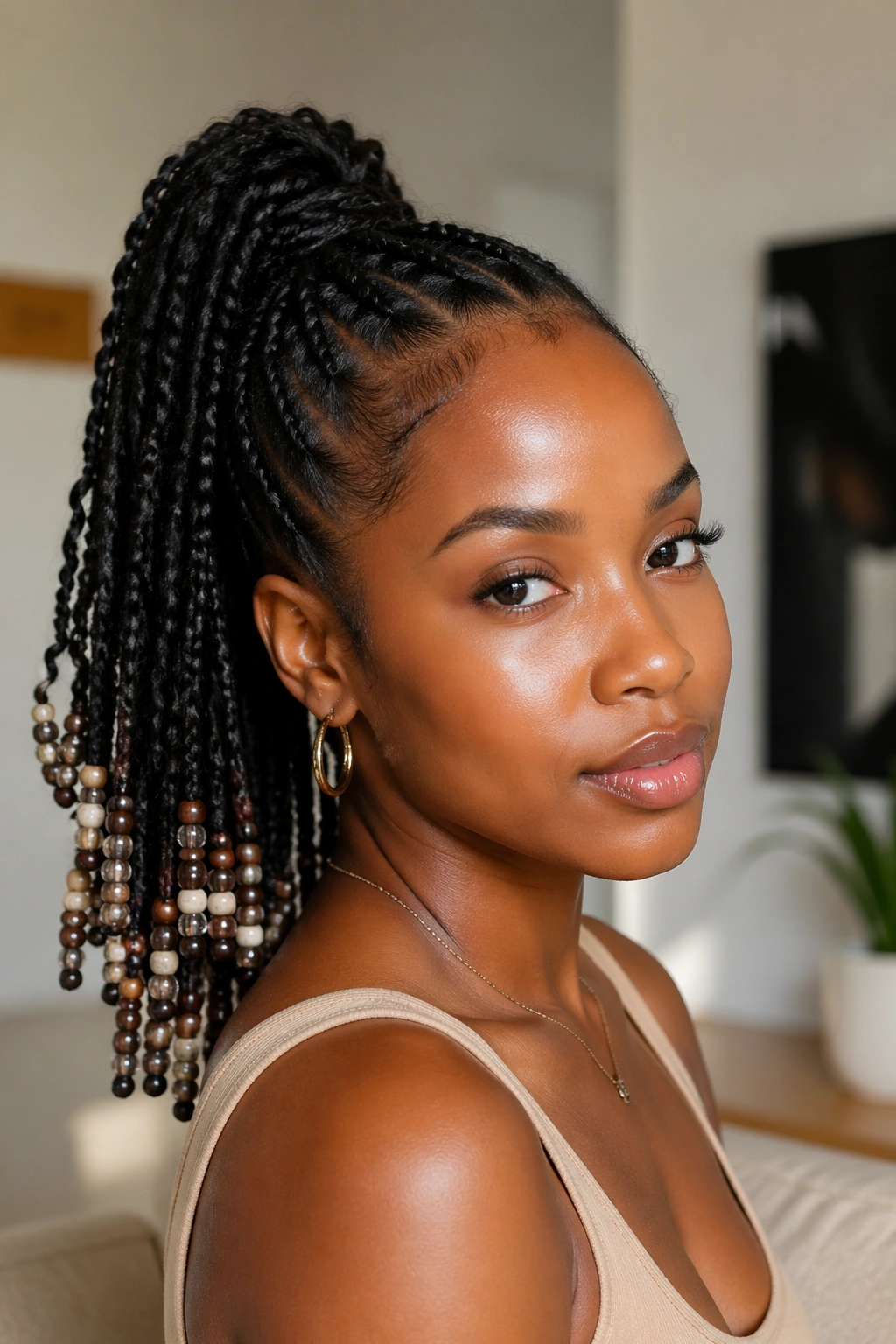
Beads change the sound, the movement, and the whole mood of a ponytail. They also make the style feel personal.
Small Details That Matter
- Use beads on the very ends of braids or twists, not on sections that need a lot of movement.
- Secure each end with a small elastic before adding the beads.
- Pick wood, clear, or metal beads depending on how heavy you want the finish to feel.
- Keep the ponytail base simple so the beads stand out.
This style works best when the ponytail already has some structure underneath. Beads on curls alone can tangle. On braids or twists, they sit better and move with a little rhythm. That small sound when you walk? Some people love it. I get why.
24. High Ponytail With a Ribbon Bow
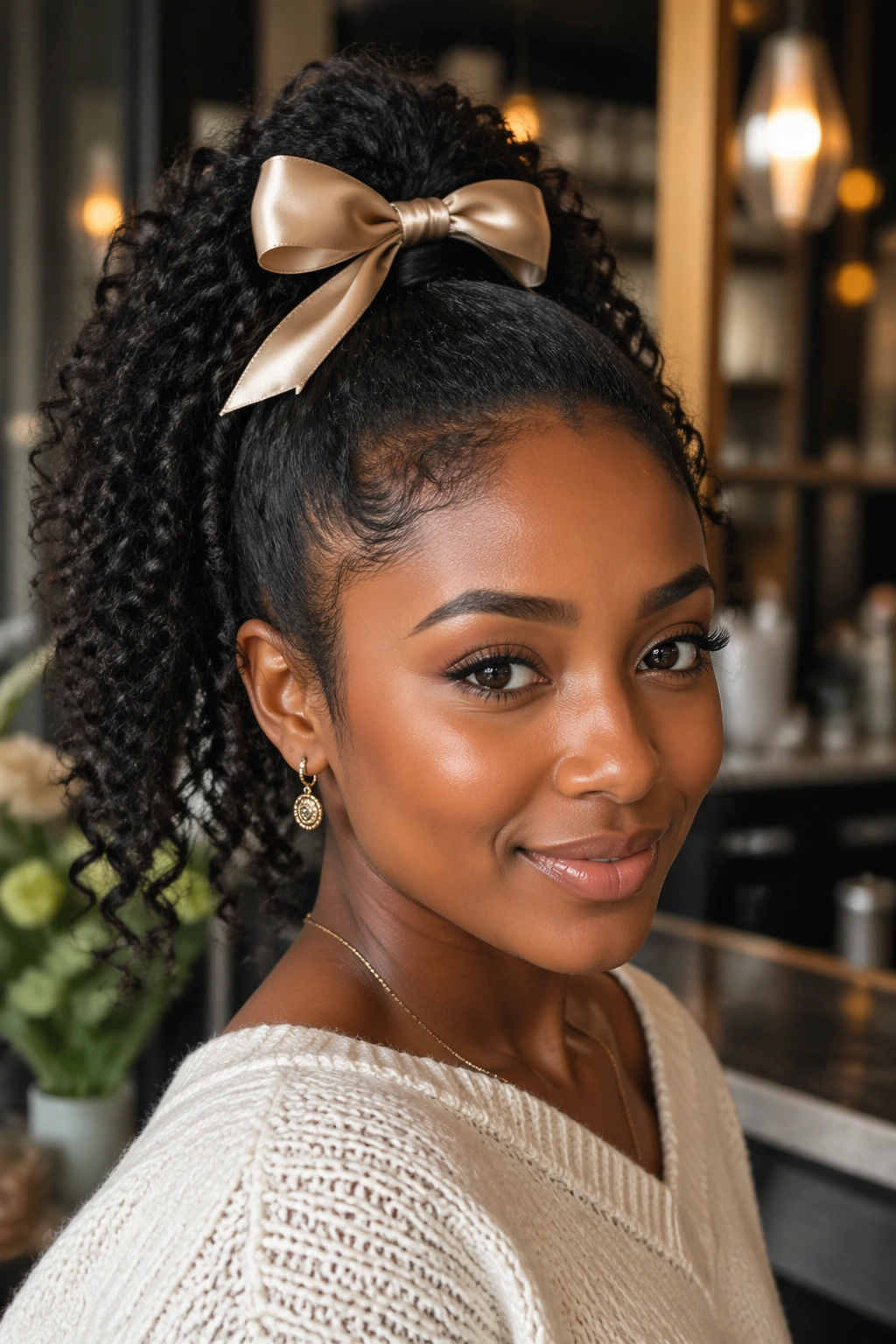
A ribbon bow softens a ponytail fast. It’s one of the easiest ways to make the style look sweeter without making it childish.
Use a satin ribbon if you want the finish to feel smooth and a bit dressy. Velvet gives a richer look in cooler weather, while grosgrain reads more casual. Tie it around the base after the ponytail is secured, then let the tails hang or loop them into a bow. The bow works best when the ponytail itself is already neat, because the contrast between clean hair and soft ribbon is what makes it land.
Best For
This is a good choice for birthdays, brunch, date nights, or any outfit that needs a softer detail near the crown. It also helps when you want the ponytail to feel finished but not too serious.
Keep the ribbon width proportional to the hair. A tiny bow on a huge ponytail gets lost. A giant bow on a small tail takes over the whole look.
25. Half-Up High Ponytail
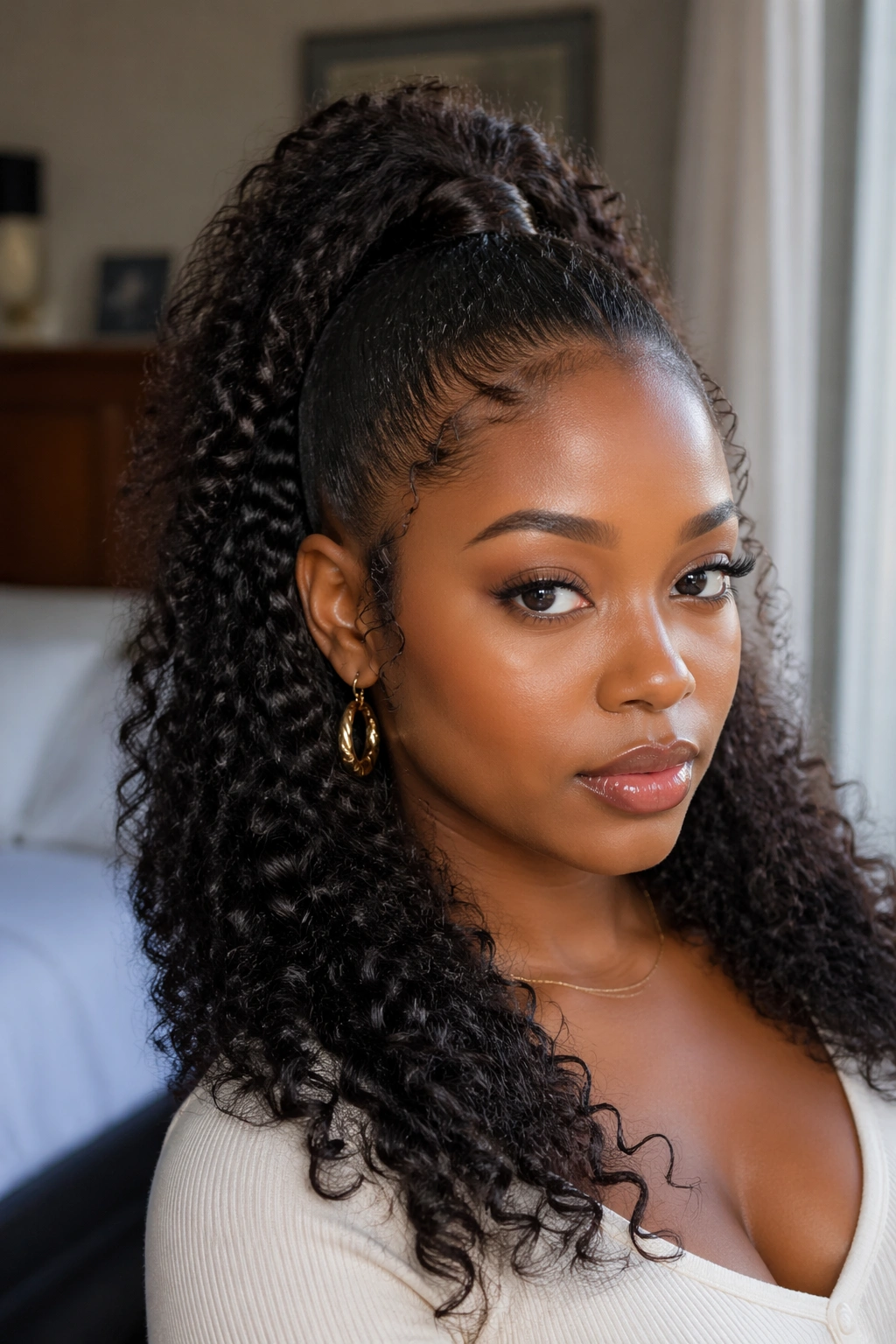
A half-up high ponytail is still a ponytail, and on curls that extra hair left down is often the reason it works so well.
The top section gives you the height, while the lower curls keep the shape relaxed. That makes it a smart pick for shorter lengths, layered cuts, or anyone who wants the lift of a ponytail without pulling all the hair away from the face. You can smooth the top half, leave the bottom half curly, and let the contrast do the styling for you.
This style also gives you room to show off curl pattern. If the top section is stretched and the lower section is fully defined, the mix feels intentional rather than unfinished. It’s an easy style to wear when you want your hair up but not all the way up. There’s a difference, and it matters.
26. Wedding-Ready High Ponytail
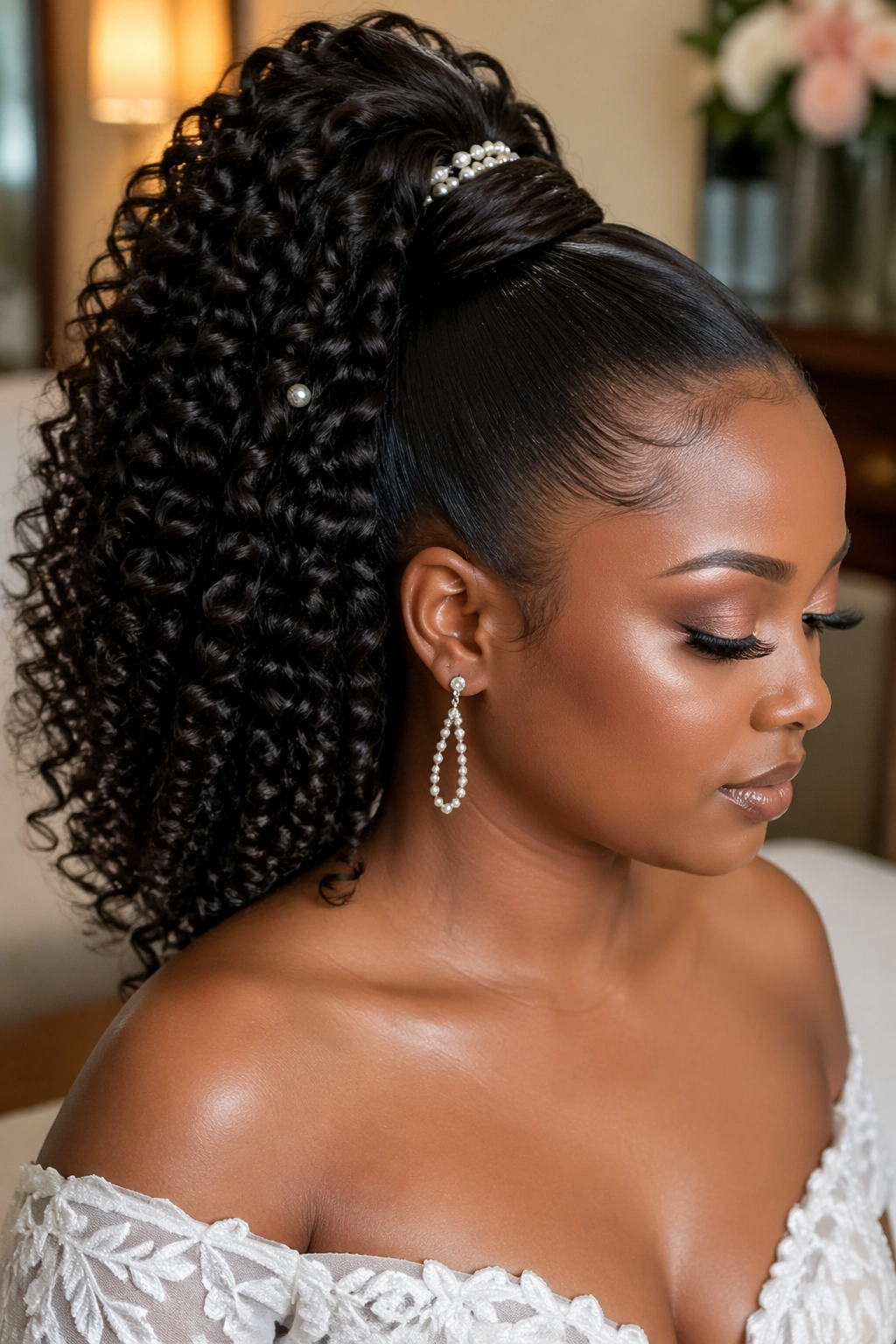
A wedding-ready high ponytail should feel polished, but not rigid. That balance is what keeps it from looking overdone.
The base is usually smooth and lifted, with curls or extensions flowing from the crown in a controlled way. Add a wrap, pearl pins, a vine, or a soft accessory if the outfit calls for it. Keep the edges neat, but do not chase perfection so hard that the hair loses movement. A ponytail can handle elegance. It does not need to turn into a shell.
This is the style for people who want the face open and the profile clean. It photographs well from the side, holds up under a veil or hairpiece, and gives you enough shape that you don’t disappear in the back row. The main thing is comfort. If the style hurts after twenty minutes, it won’t feel special for long.
27. Everyday Soft High Ponytail
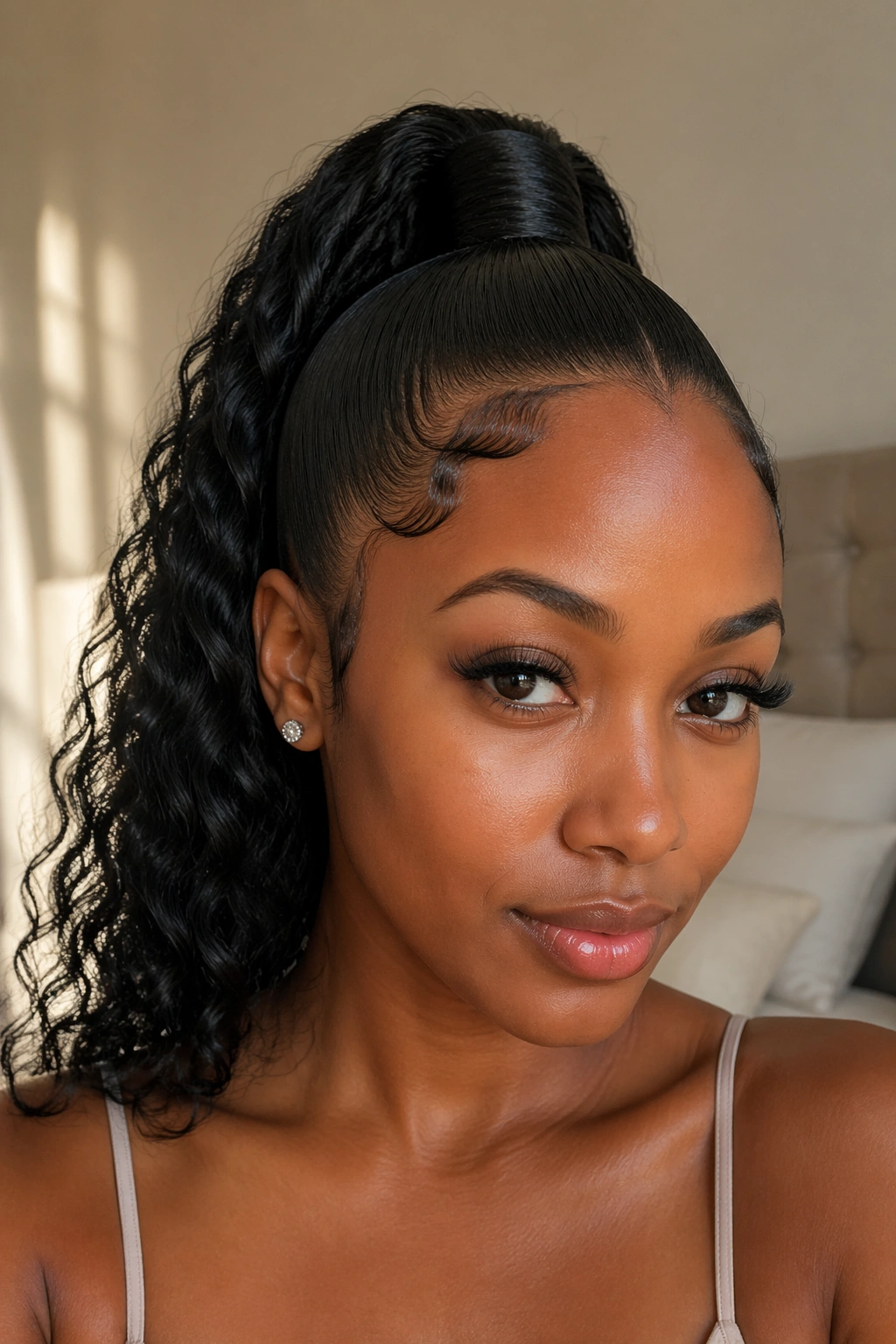
The ponytail you end up wearing most is usually the one that asks for the least drama. That’s this one.
A soft high ponytail sits high enough to lift the face, but loose enough to stay comfortable. The crown can be smooth or lightly brushed, and the tail can keep its curls without being forced into a perfect shape. It works on workdays, school runs, errands, and those in-between moments when you want your hair to look neat without looking like you spent an hour wrestling with it.
I like this version because it leaves room for the hair to behave like hair. A few flyaways are fine. A little puff at the roots is fine too. What matters is that the style stays comfortable, secure, and easy to live in. If you can move your head, answer a call, and forget about your ponytail for the rest of the day, that is a good sign. The best high ponytail often feels like that — simple, lifted, and still fully yours.