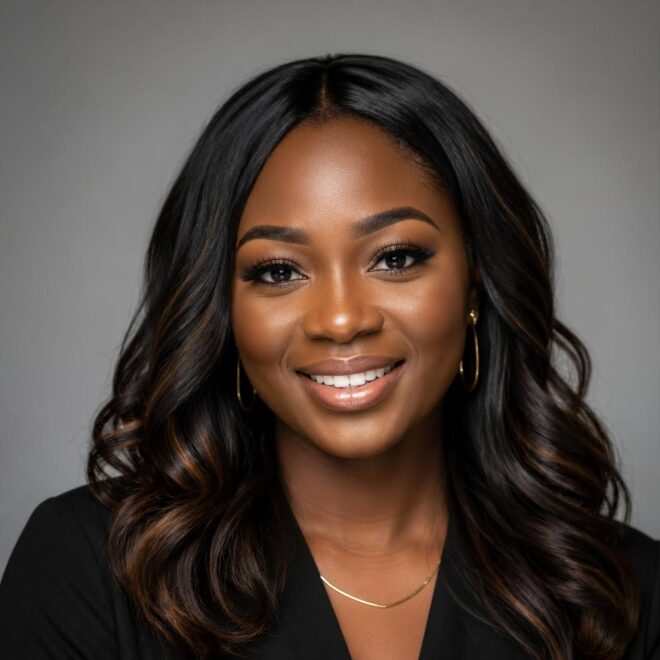


A long weave ponytail on curly hair can look sharp, soft, or a little chaotic in a way that is not flattering. The difference usually comes down to the base, not the ponytail itself. If the roots are smooth and the curls are shaped with some intention, the whole style feels pulled together; if the front is too tight or the extension is too heavy, the look starts working against you.
Curly hair gives these ponytails real body. Straight hair sometimes needs extra shaping just to avoid looking flat, but curls already bring lift, movement, and texture. That is why long weave ponytails for curly hair can work so well in real life — the curl pattern helps blend the seam, hides a messy track line better than most styles, and keeps the length from looking stiff.
Weight matters. So does tension. A ponytail that sits high on the crown and drags at the nape by lunchtime is nobody’s favorite, and neither is a style that tugs the edges so hard that you can feel every braid. The sweet spot is a base that feels secure and a tail that swings.
Some of these looks are neat and glossy. Others are more relaxed, with loose tendrils, braided details, or a little color peeking through. All of them are built around the same idea: long hair, curly texture, and a ponytail shape that looks like it belongs on your head, not borrowed from a costume rack.
1. 24-Inch Sleek High Ponytail With Curly Ends
This is the one that turns heads first. The high placement lifts the face, and the curly ends keep the look from going stiff or harsh. On curly hair, that contrast matters. A smooth base with full spirals at the bottom gives you height up top and movement where it counts.
Why the Height Works
A high ponytail pulls the eye upward, which is useful if your curls tend to create width around the sides. It also makes long weave ponytails for curly hair look longer than they are, especially when the extension is 24 inches or more. That extra inch or two changes the swing.
Ask for a clean wrap around the base, but don’t flatten the tail itself. The curls should still look airy and touchable, not shellacked into a tube.
- Best with oval, heart, and round face shapes
- Works well when the front is smoothed with a dense brush and a light gel
- Looks strongest when the wrap piece is about 1 inch wide
Tip: Leave the curls a little loose at the ends. Over-defining every coil can make the whole thing feel heavy.
2. Mid-Height Ponytail With Face-Framing Spirals
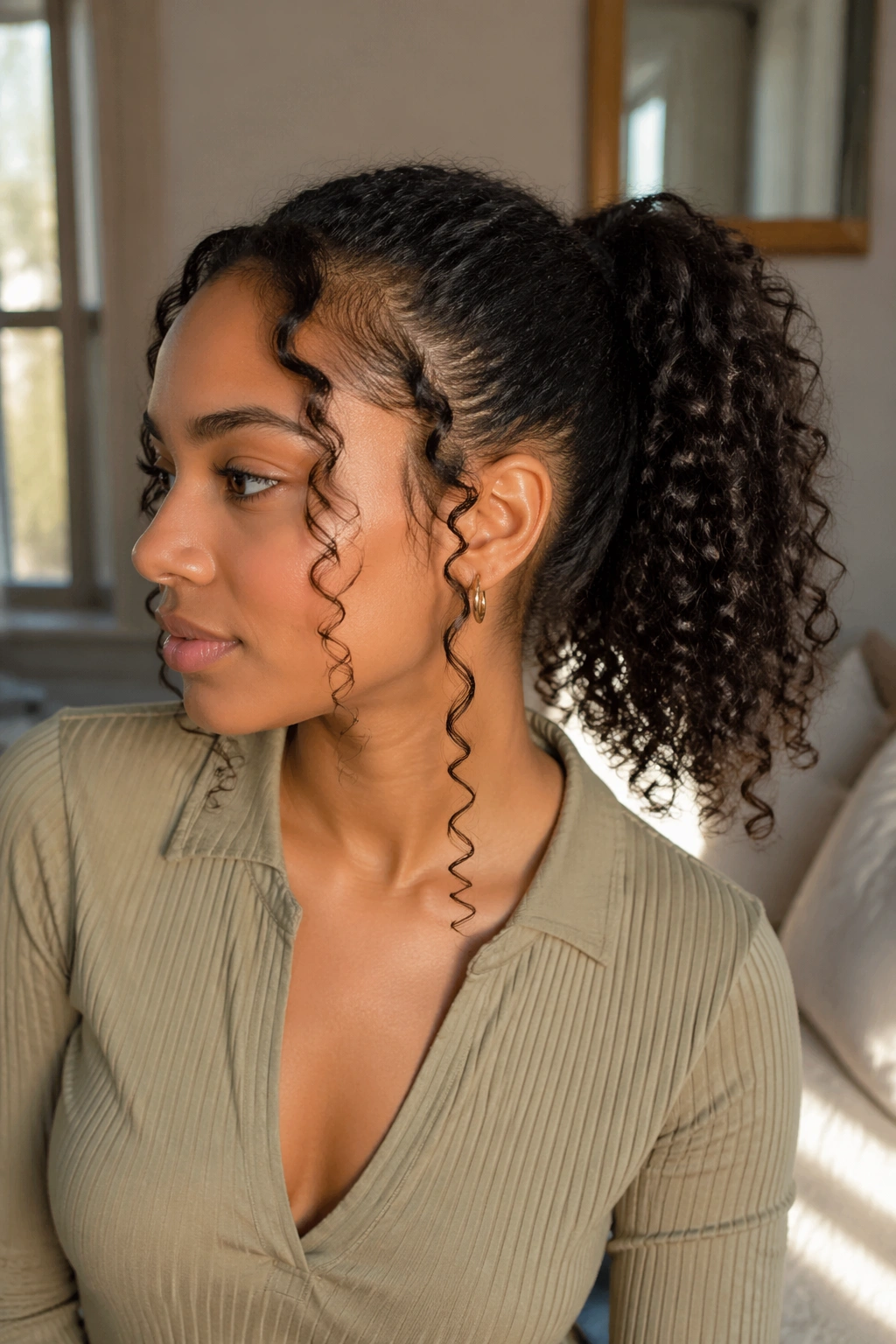
Want length without putting all the attention on the crown? Mid-height is the sweet spot. It sits low enough to feel relaxed and high enough to show off the curl pattern without dragging the style down.
This version is especially kind to curly hair because the face-framing pieces soften the line around the cheeks and temples. A few soft spirals near the front do more than a dozen accessories. They make the whole ponytail feel less severe.
I like this one when the weave is dense but not bulky. It gives you that full, swinging tail without the “my hair is doing the most” energy. Keep the face pieces about 3 to 5 inches long, depending on where you want them to land. Shorter pieces feel playful. Longer ones lean softer and more romantic.
If your natural curls are tighter than the extension curls, a mid-height ponytail also blends better than a high one. The transition is gentler. That matters more than people think.
3. Bubble Ponytail With Curly Weave Sections
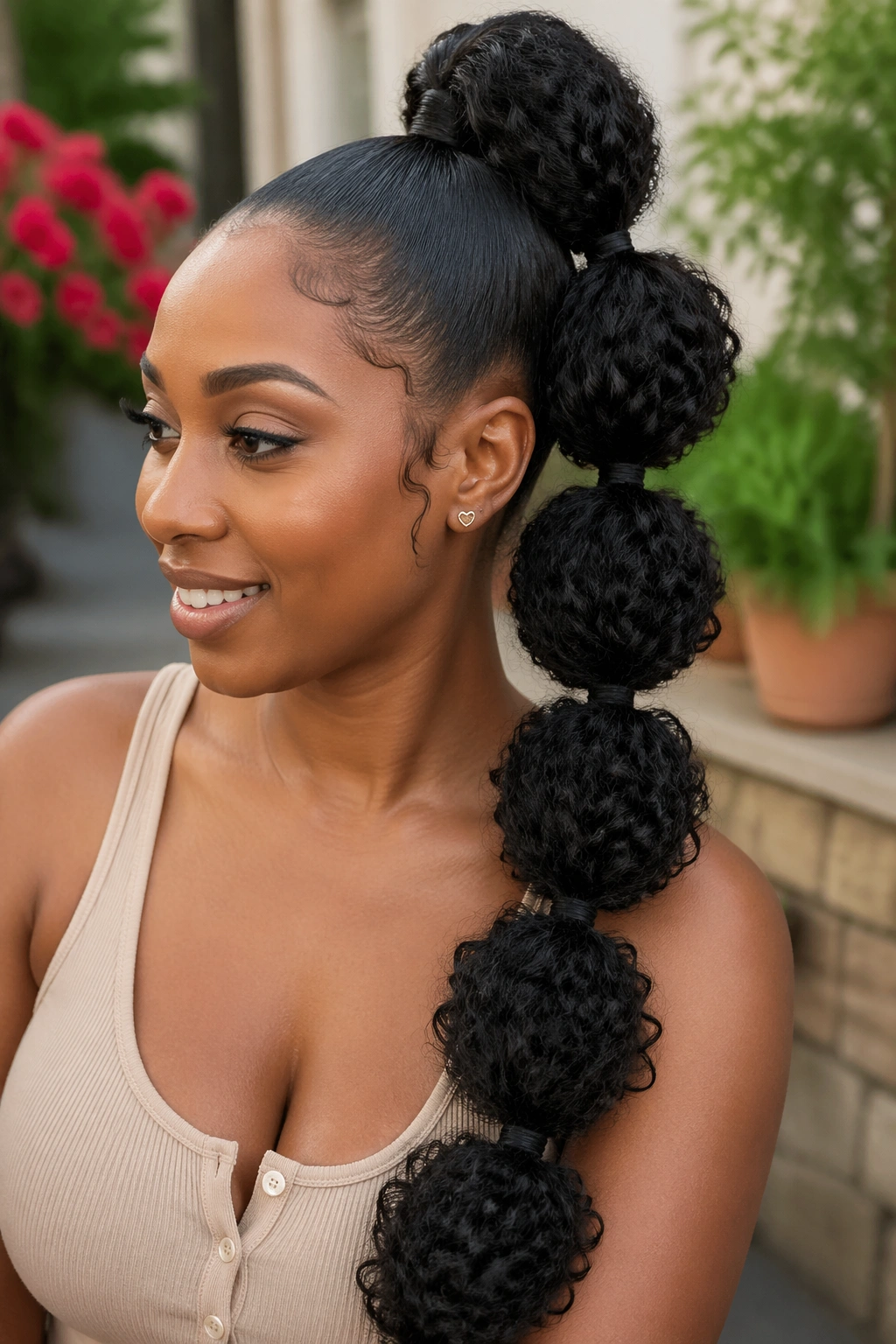
A bubble ponytail sounds playful because it is, but the style works best when the bubbles are full, not stiff. Curly weave hair makes that easier, since the texture naturally hides the little elastic ties and gives each section more body.
Keep the Bubbles Soft
Start with a sleek base, then place clear elastics every 3 to 4 inches down the tail. Gently pull each section apart until it looks rounded and full. Don’t yank it. The shape should look plush, not stretched thin.
- Use 4 to 6 elastics for a mid-length tail
- Wrap a small strand of hair around each elastic if you want a cleaner finish
- Keep each bubble slightly uneven for a more natural look
The trick here is restraint. Too much product makes the sections feel crunchy, and bubble ponytails need movement to stay pretty. If the weave has layered curls, even better. The shorter layers fill out the bubbles and keep the tail from looking like one long sausage shape. That sounds rude, but you know exactly what I mean.
4. Wrapped-Braid Ponytail With a Hidden Base
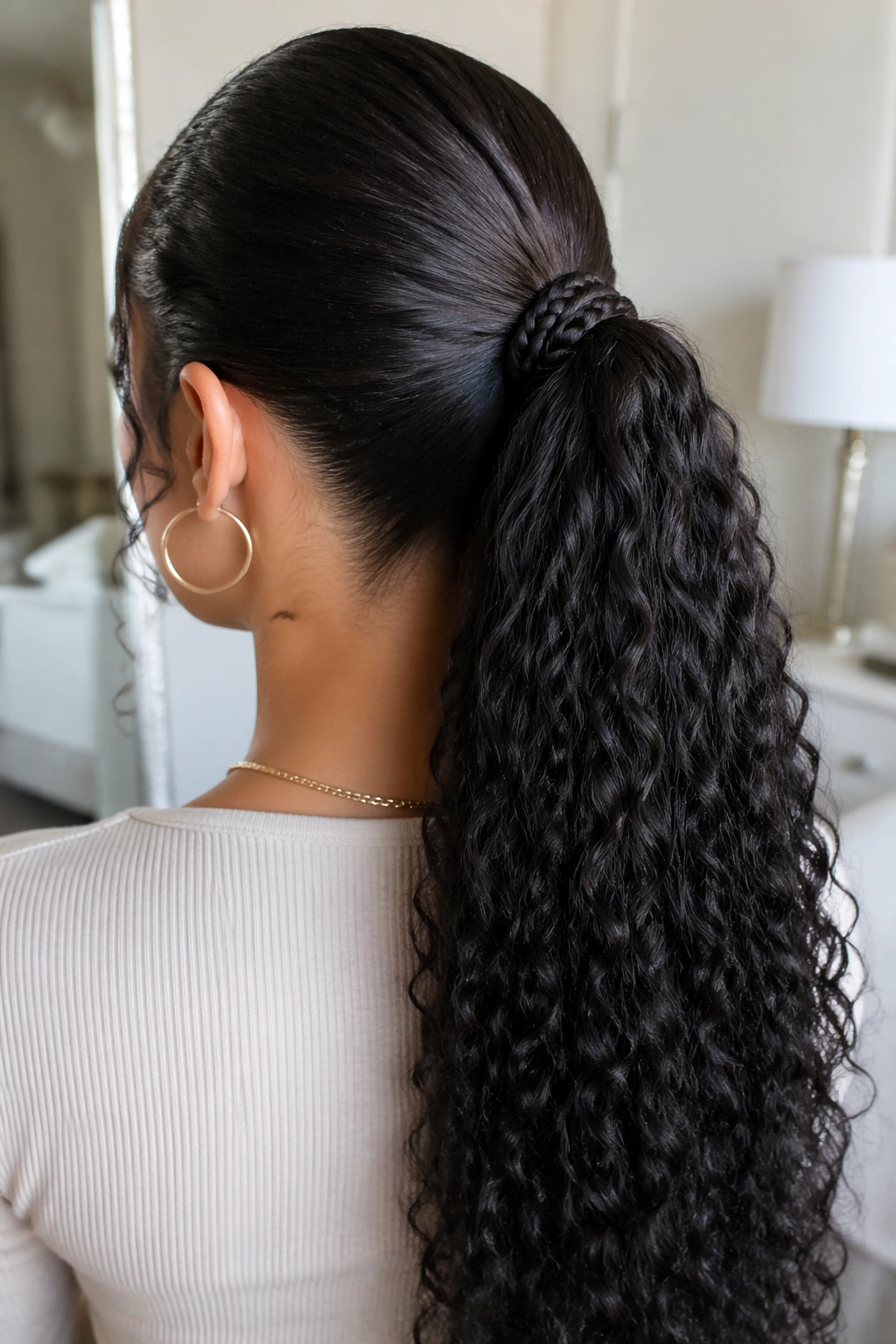
A tiny braid can carry an entire hairstyle. That’s the whole magic here. Instead of relying on flashy accessories, you use a slim braided strip to hide the elastic and give the ponytail a neat, finished center.
This style works especially well when you want a long weave ponytail that feels polished without looking overly formal. The braid can be about 1 inch wide, wrapped snugly around the base and pinned underneath. It creates a clean seam and makes the style look more intentional from the back.
The best part is how quiet it is. No giant clip. No scarf. No extra bulk. Just a clean wrap, a smooth crown, and curls falling from the back like they meant to do that all along.
Be careful with the wrap. If it is too tight, it can start to look bumpy where it crosses itself. Keep the braid flat as you go, and pin it under the ponytail where the eye won’t catch it.
5. Low Side Ponytail With a Deep Part
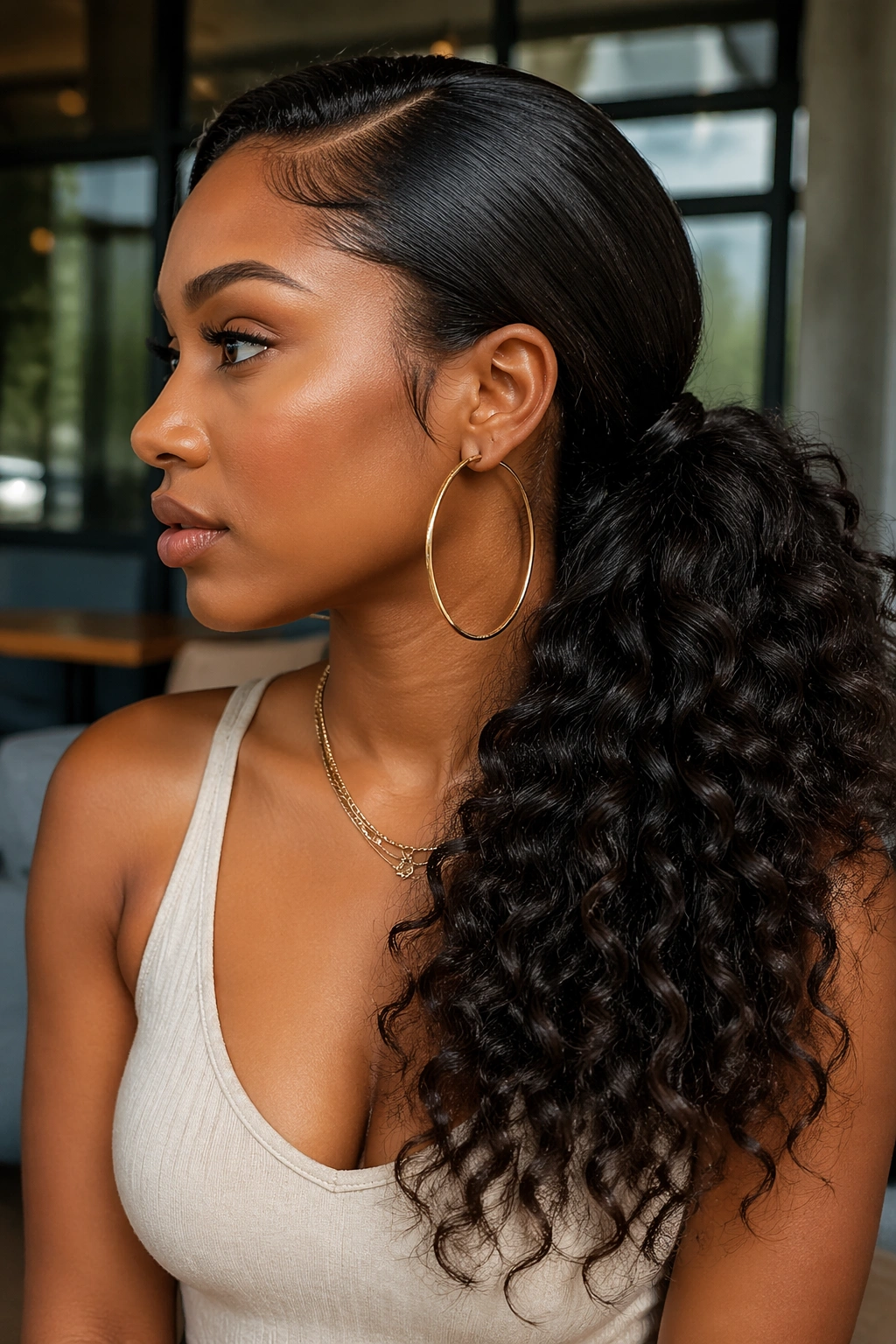
The first thing you notice is the swing. A low side ponytail moves in a way that a centered style never quite does, and curly weave hair makes that motion look even better because the tail catches a little air as it shifts.
A deep side part helps this style feel softer around the forehead, which is useful if you want to ease the look away from the face. The ponytail itself can sit just behind one ear or a few inches above the nape. Either placement works. The important part is the diagonal line from part to tail.
I reach for this shape when the outfit already has strong lines — a sharp collar, a clean neckline, a big earring moment. The ponytail becomes the softer counterpoint. It does not fight the clothes. It just moves with them.
Long curl patterns around 16 to 20 inches work well here. Too much length can weigh the tail down on one side, and the whole thing starts to tilt in a way that looks accidental. A little asymmetry is lovely. Lopsided is not.
6. Cornrow-Base Ponytail That Stays Put
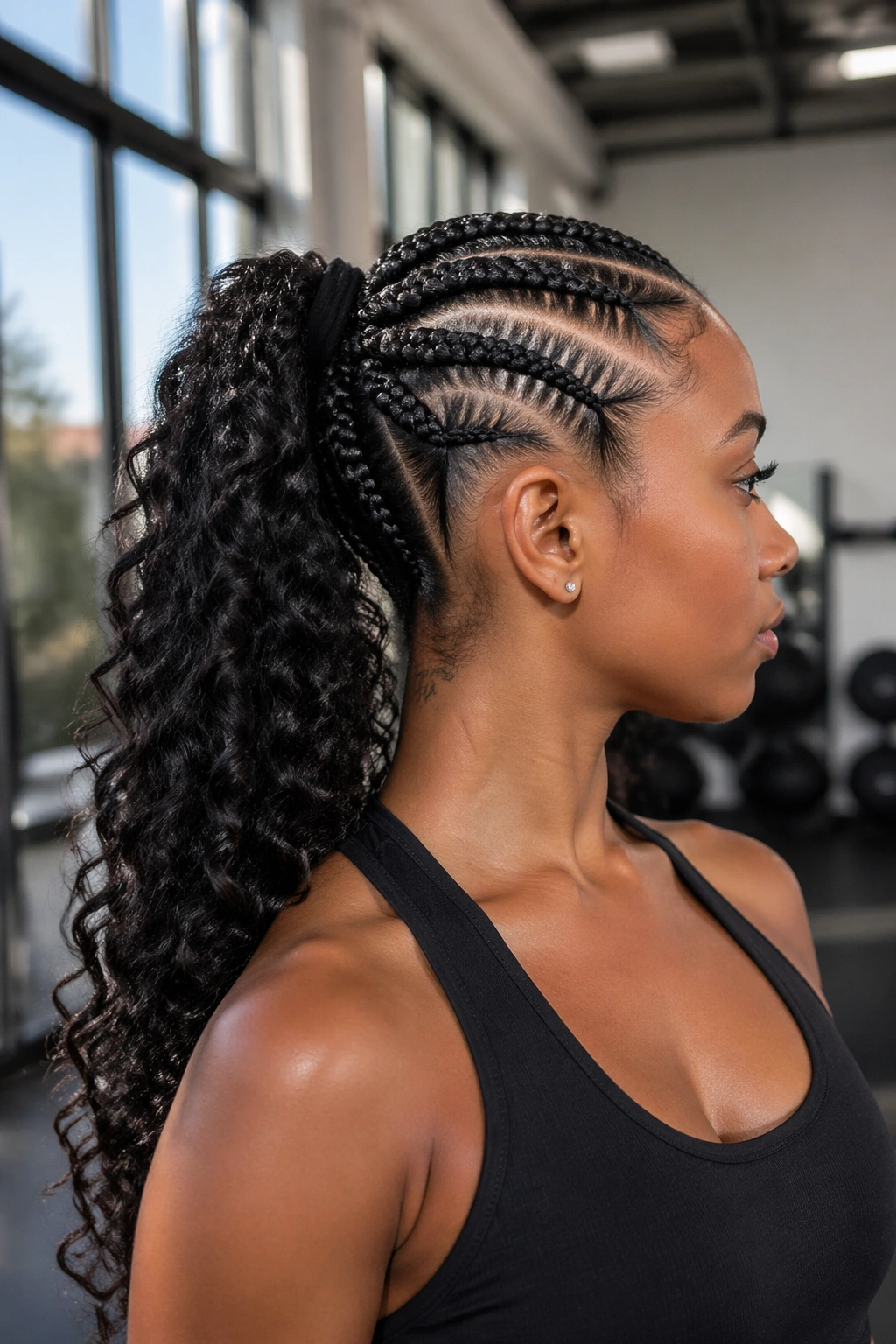
If you need the style to last through a long day, a cornrow base is the one that actually behaves. The rows keep the foundation close to the scalp, which helps the ponytail sit stable without shifting every time you turn your head.
What a Tight Foundation Buys You
Most of the work happens before the ponytail even goes on. Four to six neat feed-in cornrows usually give enough support for a long curly tail without making the head feel crowded. The rows can run straight back, curve upward, or angle into a central point depending on where you want the ponytail to sit.
- Better hold for active days
- Cleaner attachment point for heavier extensions
- Less bulk around the crown than a loose base
This style is a good choice when you want long weave ponytails for curly hair that can take some movement. Think dancing, long events, windy weather, or just a day when you do not want to fuss. It is not the softest look in the group, but it is one of the most dependable.
Skip this one if you hate structure. It is built on structure. That is the point.
7. Half-Up Curly Weave Ponytail
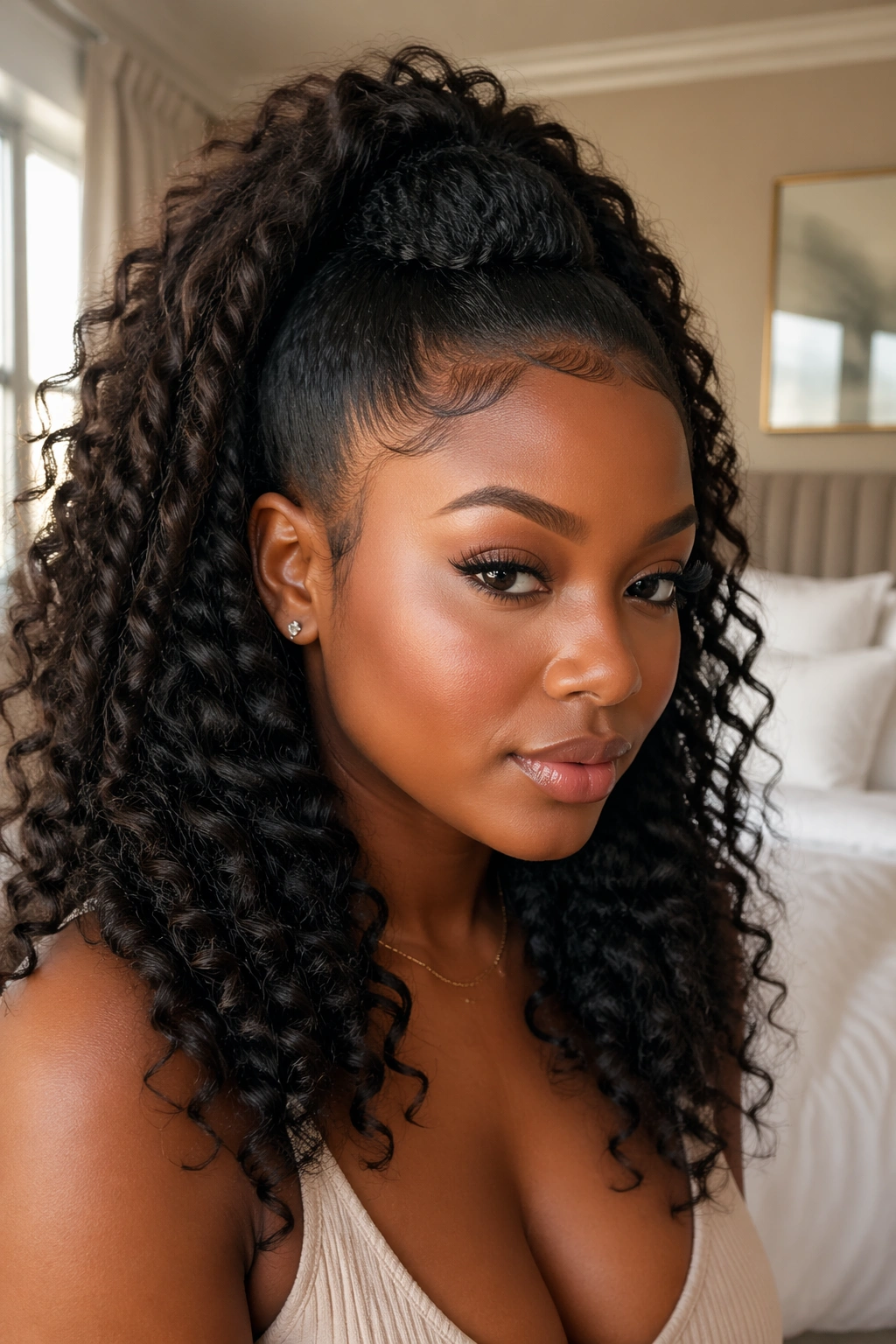
Half-up is not a compromise. It is a volume move. Pulling only the top section into a ponytail leaves the lower curls free, which gives the whole style a fuller shape than a fully slicked look can manage.
Why Half-Up Never Feels Flat
Curly hair already has a lot of texture, and this shape lets you use it instead of fighting it. The upper section gives height and lift. The bottom section keeps the length visible, which matters if you paid for long weave hair and want people to see it.
A half-up ponytail also gives you a nice place to hide the attachment point. The split between top and bottom distracts the eye, so the base does not have to be immaculate from every angle. That is useful on days when the front is neat but not perfect.
I like this version with soft, layered curls rather than a uniform pattern. The variation makes the top section feel lighter and keeps the bottom from looking like a curtain. It reads easy, but there is some real skill behind that ease.
8. Side-Swept Ponytail With Loose Tendrils
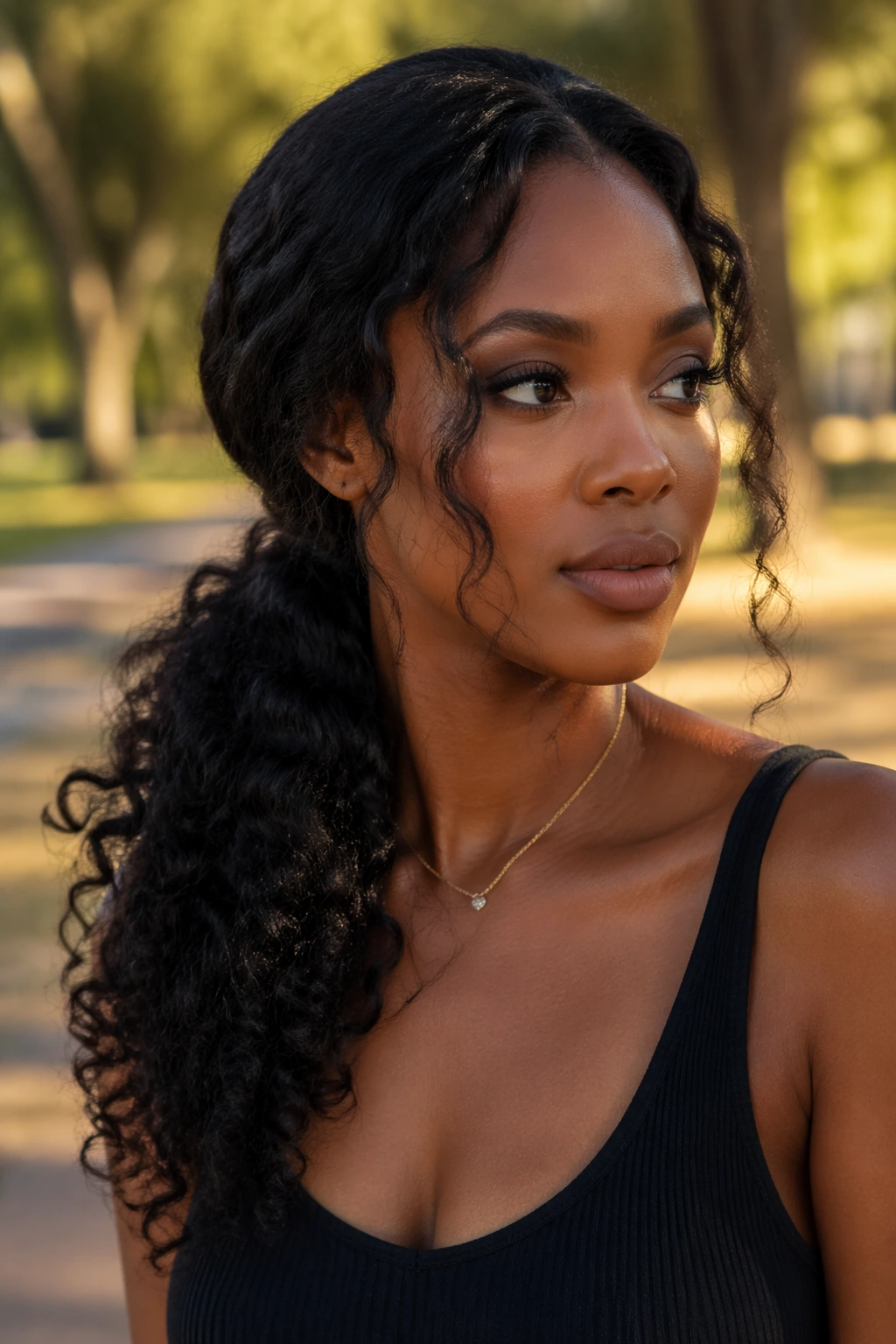
Why does this one work so well? Because it knows when to stop. A side-swept ponytail with a few loose tendrils around the face feels romantic without becoming fussy, and curly weave hair gives those little pieces enough texture to look intentional.
The ponytail sits low and off-center, usually near the base of one ear. The front can stay mostly smooth, or you can leave a soft curve around the temple. Either way, the shape has a gentler mood than a strict center or high ponytail.
I like loose tendrils in sets of two or three, not a whole curtain of pieces. Too many front pieces can make the style look unfinished. A few strands are enough. They break up the line, frame the cheeks, and let the ponytail stay the main event.
This is one of the easiest long weave ponytails for curly hair to wear with earrings, especially hoops or dangling shapes. The side sweep gives them room to show up.
9. Wet-Look Curly Ponytail With Defined Shine
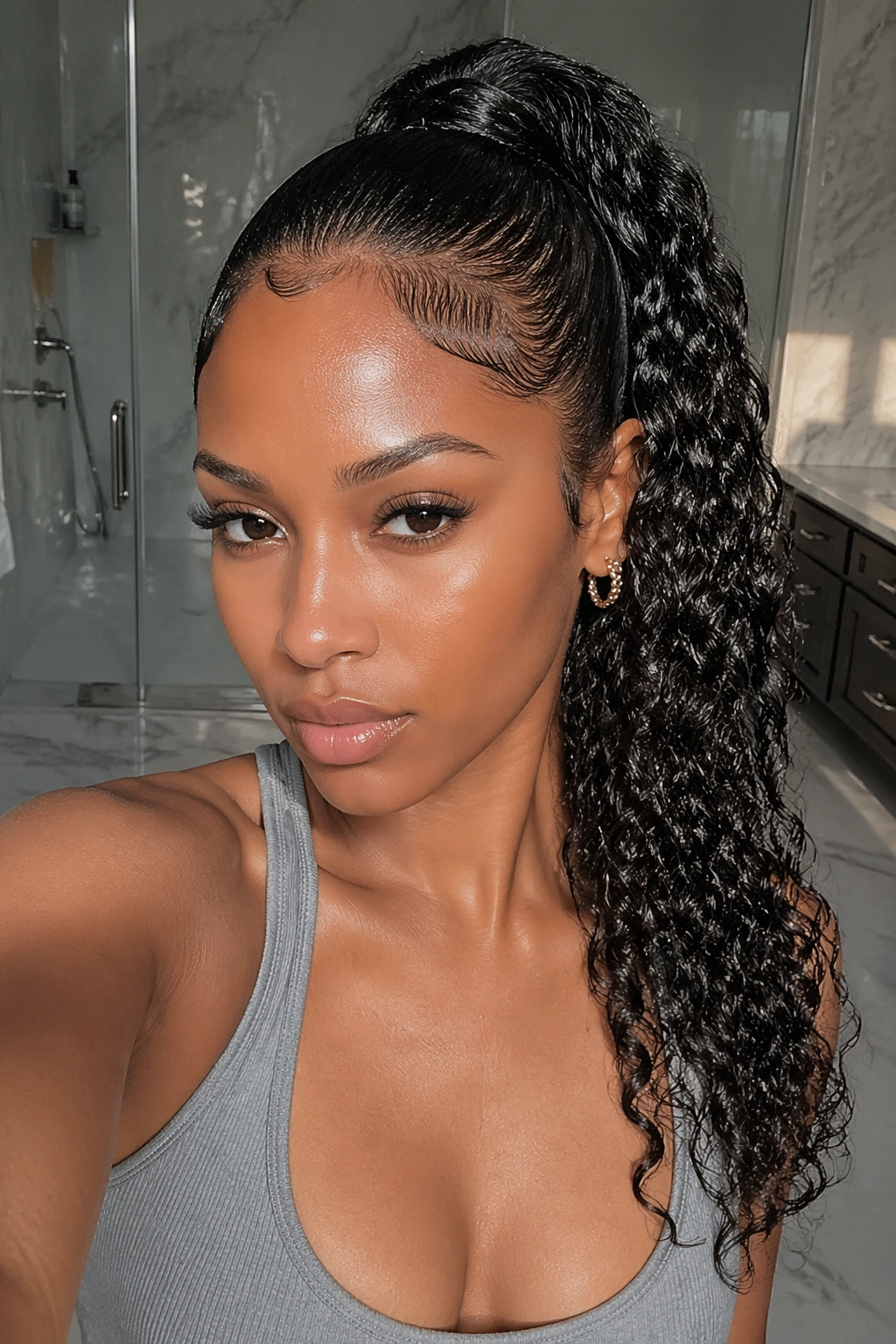
Shine can make a curly ponytail look clean and expensive-looking, but only if you stop before it turns crunchy. That line matters. A wet-look style should feel glossy and controlled, not like dried gel glued to the head.
The Line Between Glossy and Crunchy
Use enough styling product to smooth the crown and define the curls, then stop. The front should look sleek, but the ponytail itself still needs softness. If the curls are frozen in place, the style loses the whole point of using curly weave in the first place.
- A thin layer of gel at the roots
- A light mousse on the tail
- A soft brush, not a hard one, for smoothing
This version reads especially well on darker hair and high-contrast lighting, where the shine shows off the shape of each curl. It also works when the weave has a strong pattern and you want the texture to be visible from a distance.
One warning: once the product dries too hard, it is annoying to fix. Start light. You can always add a little more.
10. Scarf-Wrapped Ponytail With a Patterned Accent
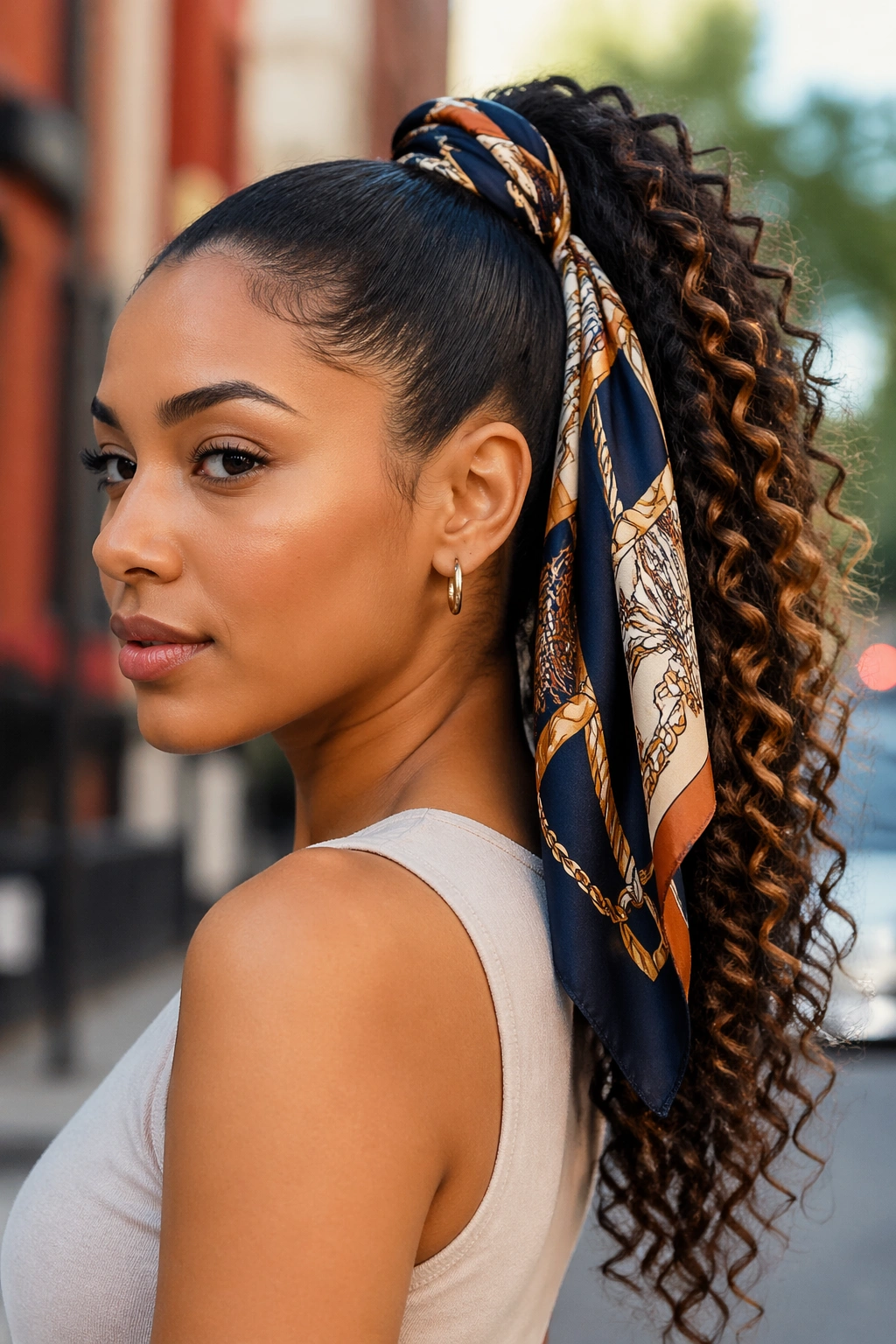
Sometimes the ponytail is already good, and the scarf is what makes it feel finished. That is the honest truth. A silk scarf wrapped around the base can cover a plain elastic, hide a slightly rough attachment point, and bring color into the style without much effort.
A patterned scarf also changes the mood fast. A bold print makes the ponytail feel playful. A solid satin band keeps it cleaner and more classic. Wrap it once or twice around the base, then let the ends fall down the back or off to one side.
This look is especially handy when the hair color and the weave color are close but not perfect. The scarf distracts the eye in the best possible way. Nobody is checking the seams when there is a nice knot sitting at the crown.
Keep the scarf tied securely, but not so tight that it dents the ponytail. The goal is shape, not pressure.
11. Waist-Length Ponytail With Extra Density
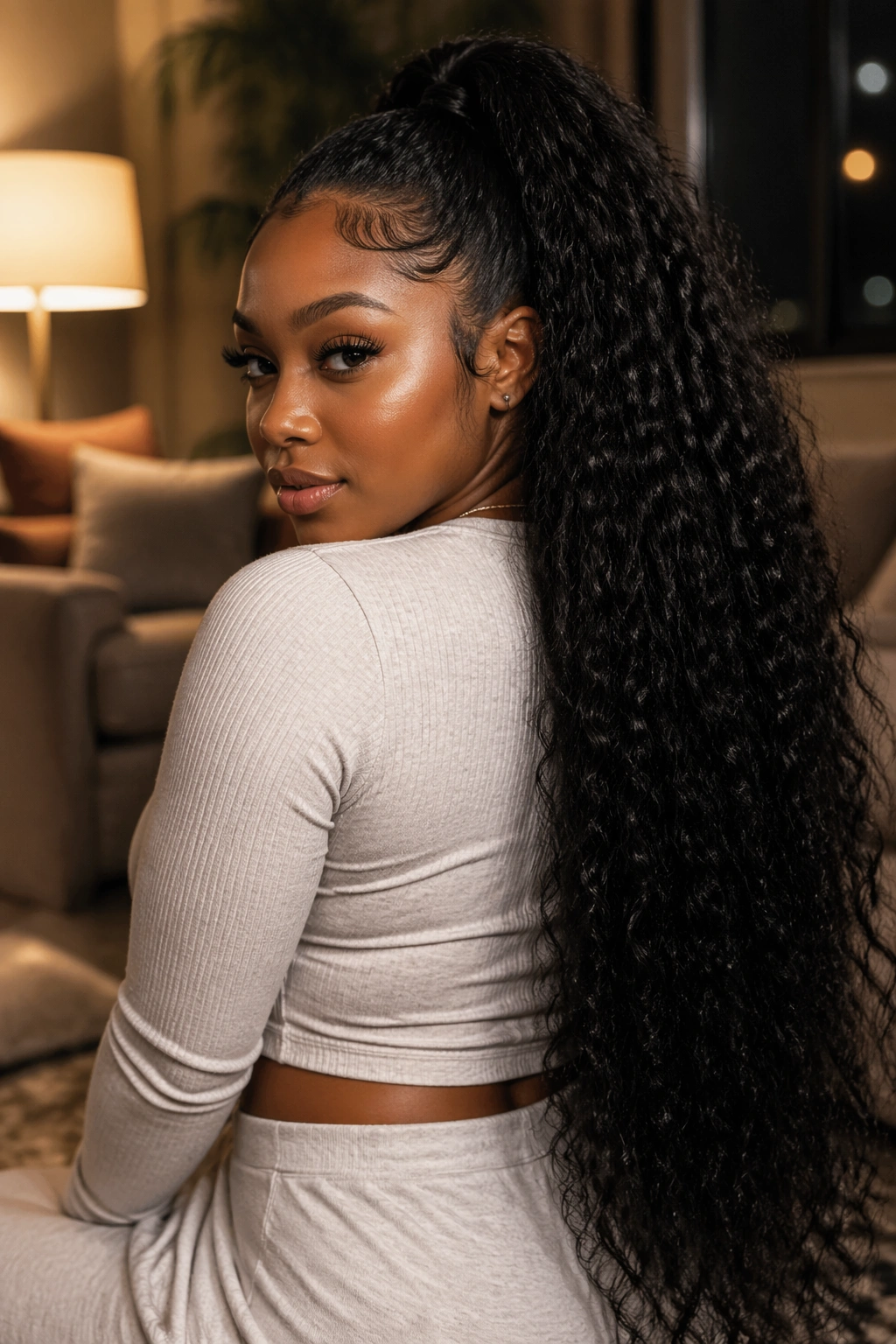
Length is the point here, but density is what makes it believable. A waist-length ponytail with full curly weave hair needs enough body to support the drop, or the tail starts looking stringy by the time it reaches the back.
Two bundles is often where this style begins to make sense, especially if the curls are looser and need more fill. Tighter curls can look fuller with a little less hair, because the pattern itself creates volume. Either way, the base needs support. Heavy tails pull.
The dramatic part is the way the curl length changes the movement of your shoulders and back. When the hair reaches the waist, every turn of the head becomes visible. It feels cinematic. That sounds dramatic because it is.
This is not the most low-maintenance option on the list. It takes storage, care, and a decent pillow setup at night. Still, if you want the kind of long weave ponytail that makes length the whole statement, this is the one.
12. Rope-Twist Ponytail With Long Curl Ends
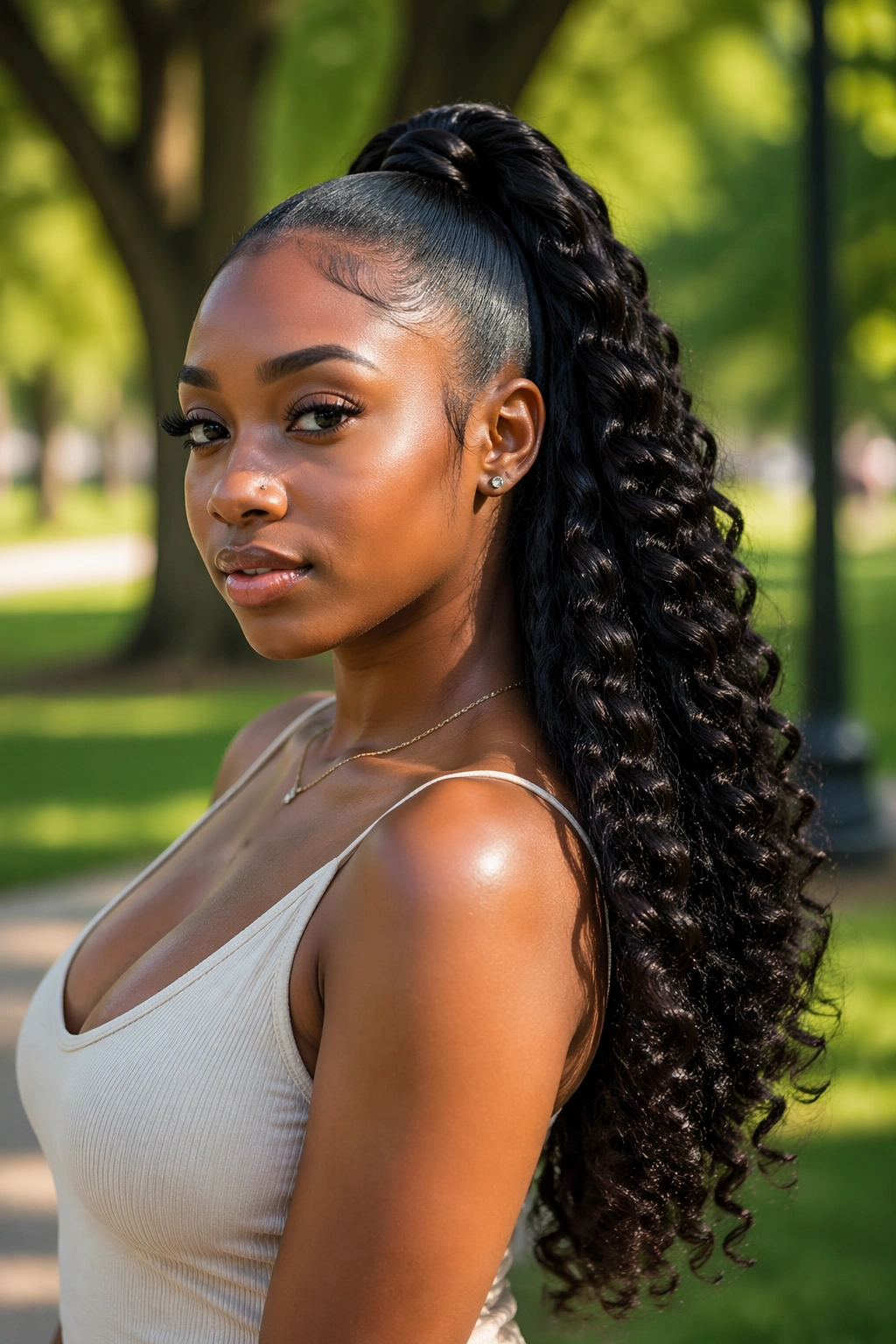
Braids get plenty of attention, but rope twists have a cleaner line. They sit flatter against the scalp, move in a tidy spiral, and feel a little less bulky when you want the ponytail base to stay light.
Why a Twist Beats a Braid Sometimes
A rope twist gives the front a smooth, elongated shape without the denser look that some braids create. That matters when the tail is already heavy. You get structure at the base and flow at the ends.
A lot of people like this style because it looks detailed without taking forever to register. The twist line reads from a distance, but it does not crowd the face. It is neat. That is the whole charm.
Best detail to ask for: keep the twist rows slim near the hairline and let the ponytail itself stay full and curly. If the base gets too thick, the entire shape starts to feel top-heavy.
This one works well for curly weave because the contrast between the smooth twist and the textured tail is strong. The style is doing two jobs, and both of them are visible.
13. Boho Ponytail With Tiny Accent Braids
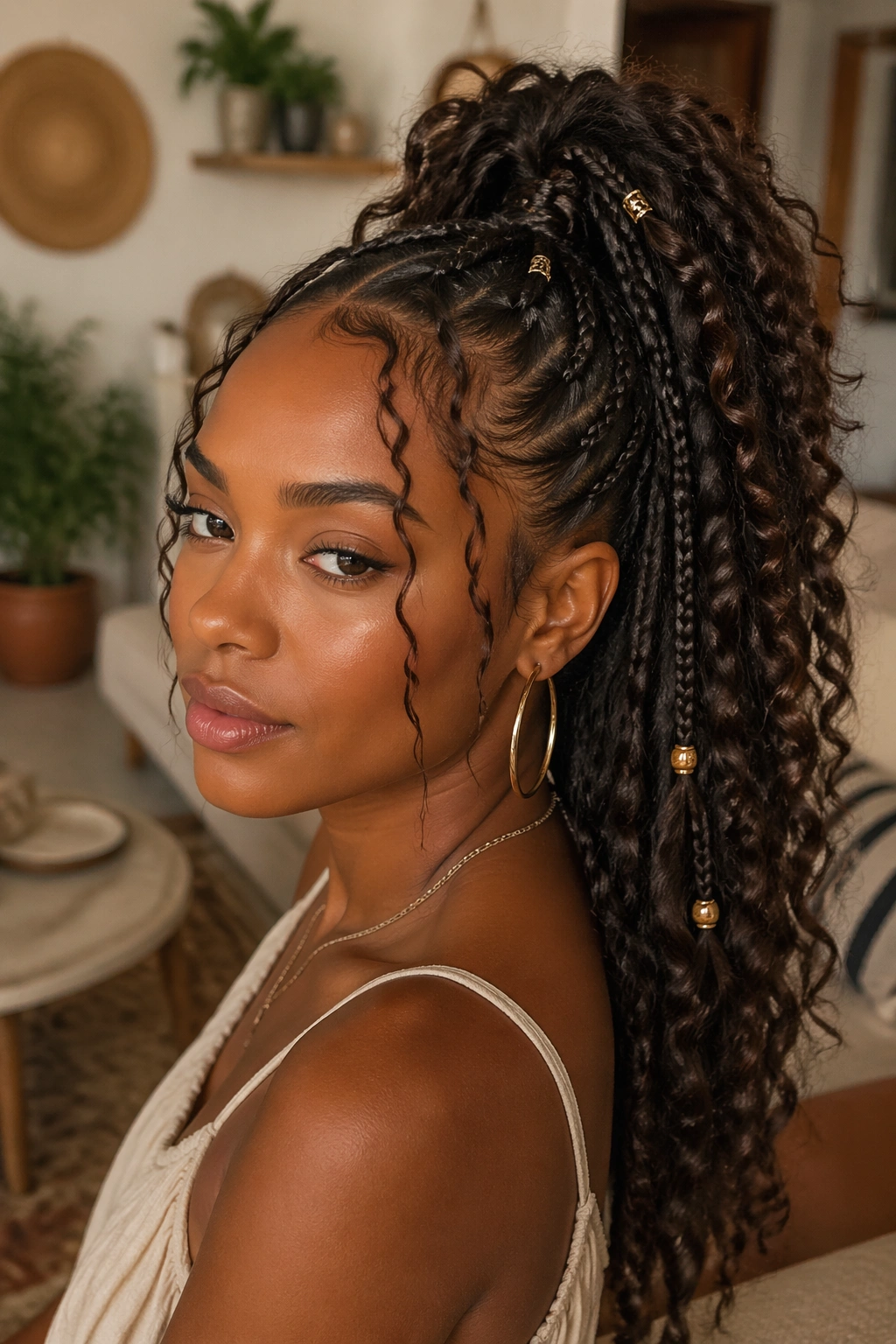
A boho ponytail needs a little disorder to work. Not mess. Disorder. There is a difference. The tiny accent braids woven through the curls keep the style from looking too neat, which is exactly why it feels interesting.
I like this look when the ponytail is already long and soft, and you want a few extra points of texture without changing the whole structure. Four to eight tiny braids is plenty. More than that and the curls start to lose their place.
You can leave the braid ends loose, tuck them into the ponytail, or add a few small beads if that suits your style. The point is not decoration for decoration’s sake. It is movement. Each little braid creates another line for the eye to follow.
This is one of those styles that looks better when you do not overthink it. Let the curls separate a little. Let the braids land where they land. The looseness is part of the appeal.
14. Center-Part Sleek Ponytail With Clean Lines
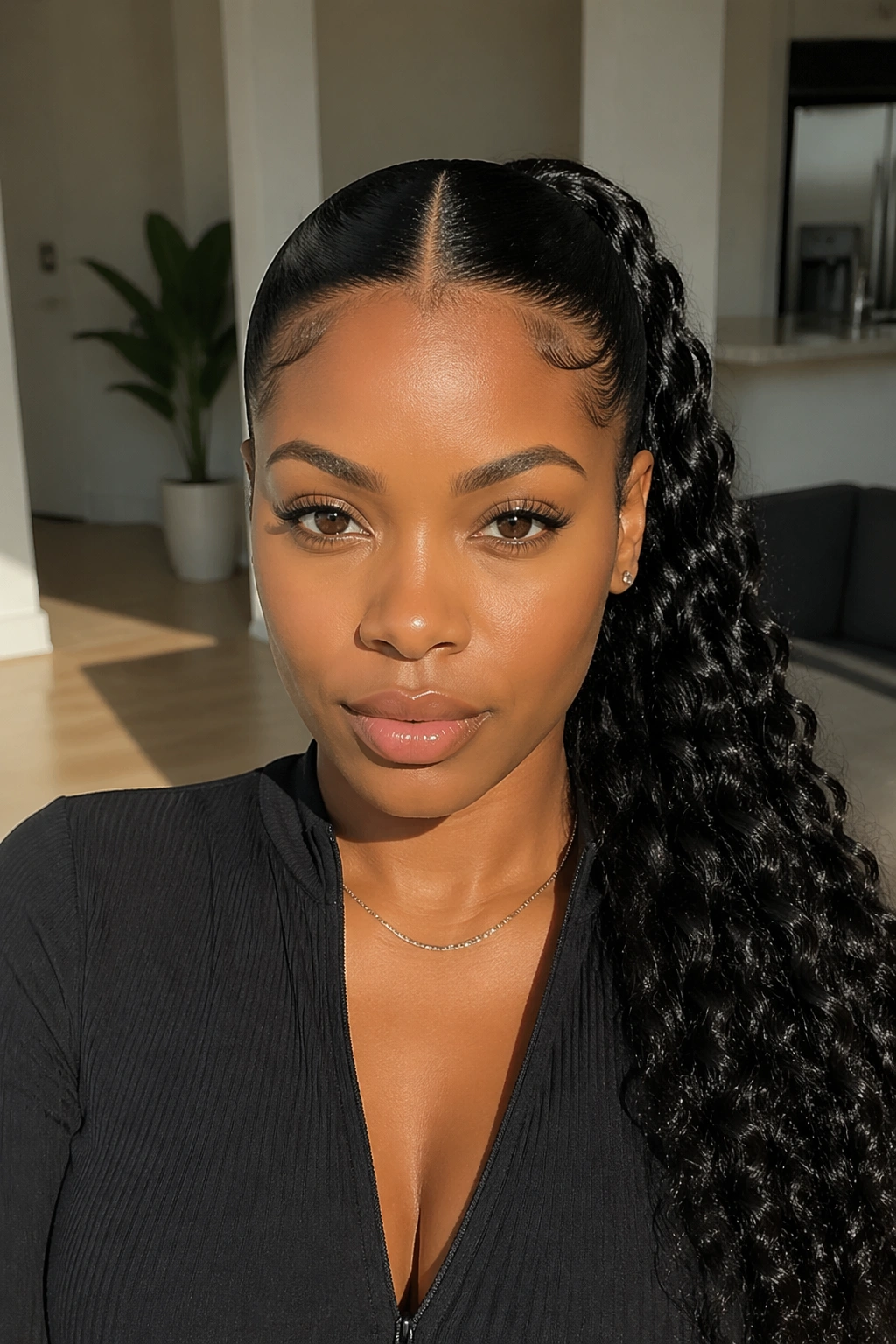
A middle part can feel harsher than people expect, which is exactly why it works here. The line from forehead to crown is clean and direct, and curly weave ponytails become sharper when the front is split right down the center.
What Makes It Different
The symmetry changes the whole mood. A center-part ponytail feels more structured than a side part, and the clean lines make the curl pattern at the back stand out even more. You notice the shape before you notice the softness.
That can be a good thing if your features already carry some symmetry. It also works when you want the hair to stay out of the face and leave the makeup, earrings, or neckline to do more of the talking.
- Best with sleek edges and a flat crown
- Strong with a dense curly tail that starts at mid-height or high
- Needs a neat part, or the whole thing loses the point
Keep the middle line crisp. If it drifts, the style stops feeling intentional. No one wants a half-right part sitting in the center of the forehead.
15. Crown-Puffed Ponytail With Lift at the Roots
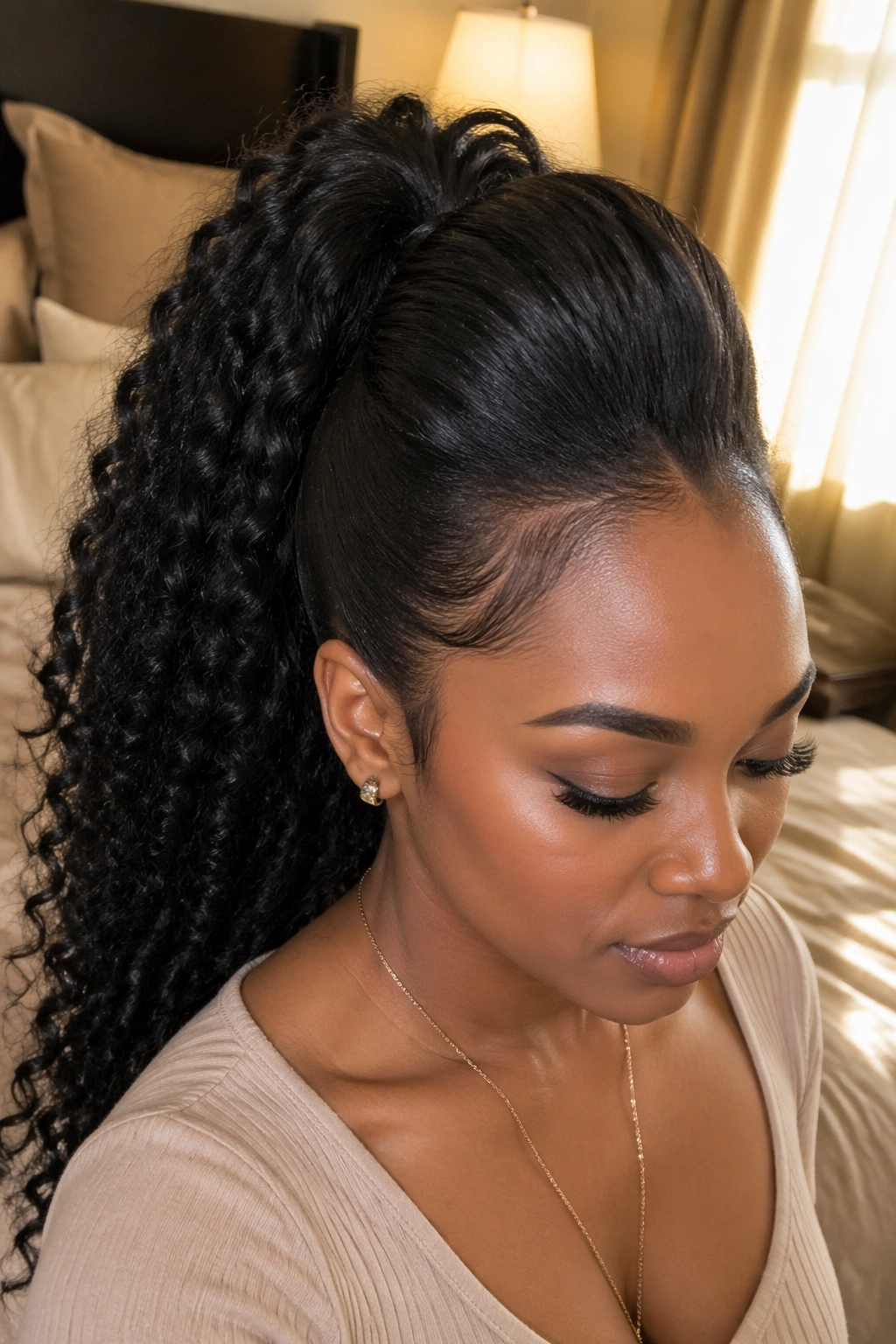
There is a specific kind of lift at the crown that makes a ponytail feel soft instead of severe. Not a huge bump. Just a little air between the scalp and the start of the tail. That small puff changes the silhouette more than people expect.
This style is useful if your curly hair tends to sit flat at the roots once it is smoothed. A slight crown lift keeps the top from looking pressed down while still keeping the front tidy. The ponytail can stay high or mid-level. The lift does the heavy work either way.
I prefer this version when the goal is balance. Too much height can start to feel like a competition with the rest of the face. A small lift is easier to wear and still gives the ponytail a nice shape from the side.
If the crown puff starts to look bulky, back off. The sweet spot is soft height, not a hump.
16. Gold-Cuff Ponytail With Jewelry Details
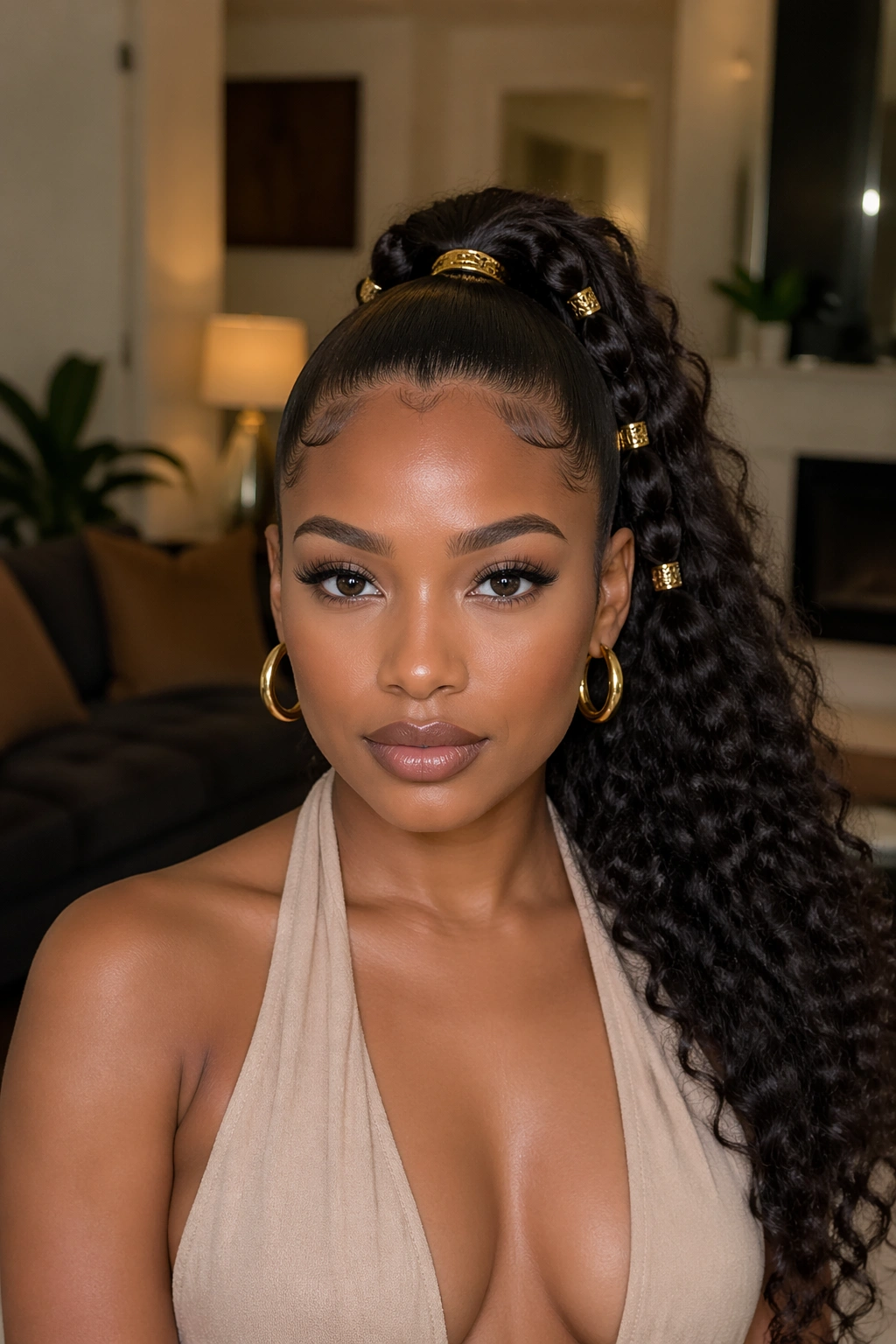
A few gold cuffs can rescue a plain ponytail fast. They do not need to be everywhere, and they definitely do not need to shout. Two or three small cuffs placed along a braid or wrapped section are enough to make the style look deliberate.
Where the Jewelry Should Go
Use the cuffs where the eye naturally lands: near the base, along a slim braid, or on a small wrapped strand that feeds into the tail. That keeps the detail focused. Scatter them too far apart and the look starts to feel busy.
- 2 to 4 cuffs for a clean finish
- 5 to 6 only if the rest of the ponytail stays simple
- Mix cuffs with one braided accent for a stronger visual line
This style works well with curly weave because the curls balance the metallic shine. The hair keeps the look soft. The gold gives it just enough edge. I’d pick this one when the outfit is plain and needs a small push.
And yes, cuff placement matters. A crooked cuff reads sloppy from across the room. Check the back.
17. Two-Tone Ombre Ponytail With Color Contrast
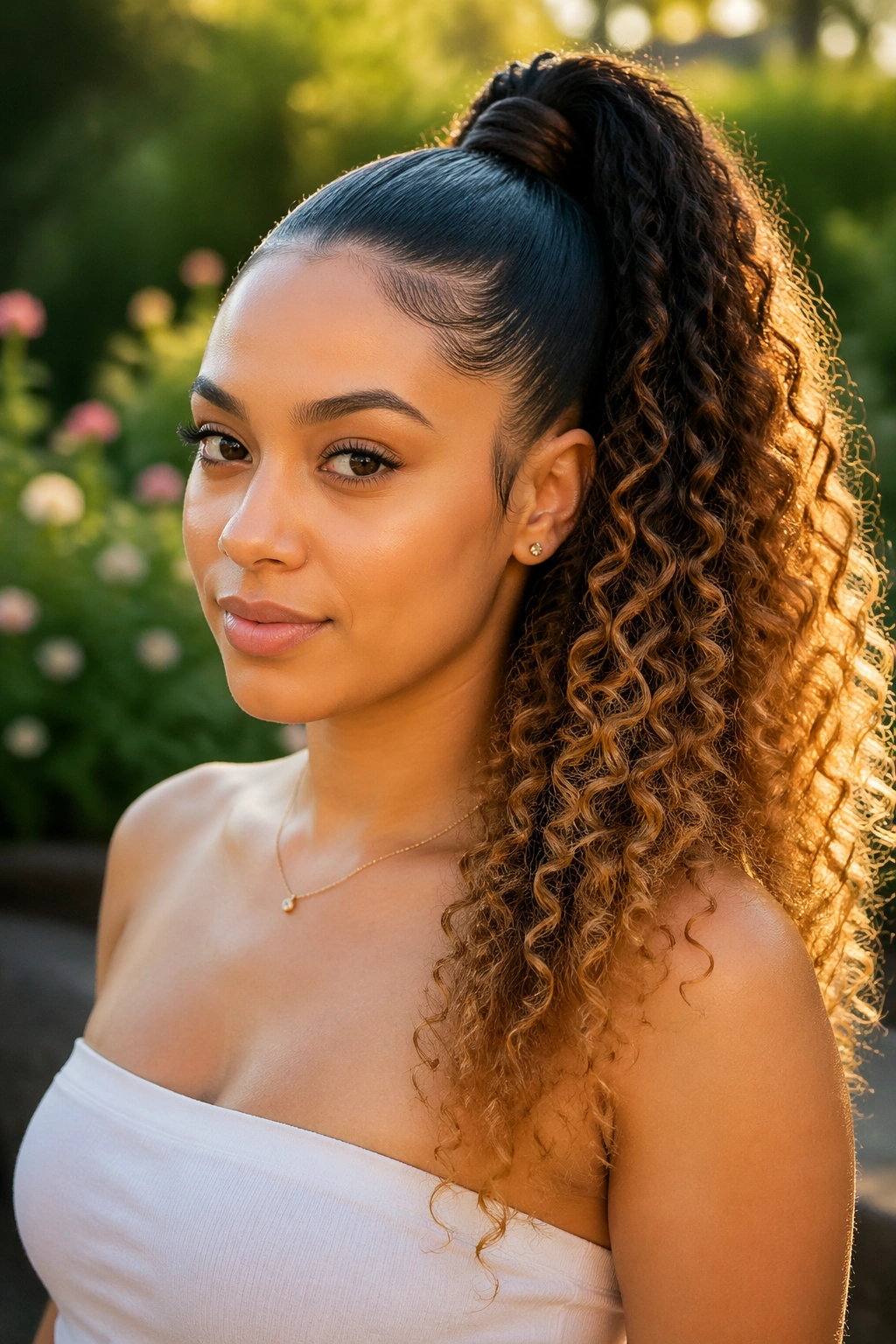
Color changes the whole story of a curly ponytail. When the roots are dark and the ends shift into honey, copper, or caramel, every curl shows up more clearly. The bends catch the lighter shade, and the hair suddenly has more depth.
That is the real benefit of an ombre weave ponytail. It adds shape without adding extra accessories. A single color can work, but two tones give the curls more edge and make the length easier to read.
This is one of the more striking long weave ponytails for curly hair because the contrast looks different as the hair moves. When the tail swings, the lighter ends flash through the darker base. Small movement turns into visual texture.
Keep the color shift natural enough that the curls still look like one piece. A harsh divide can be fun, but it is a different mood. This version is smoother, warmer, and easier to wear with casual clothes or something dressy.
18. Jumbo Braid-Into-Ponytail Hybrid
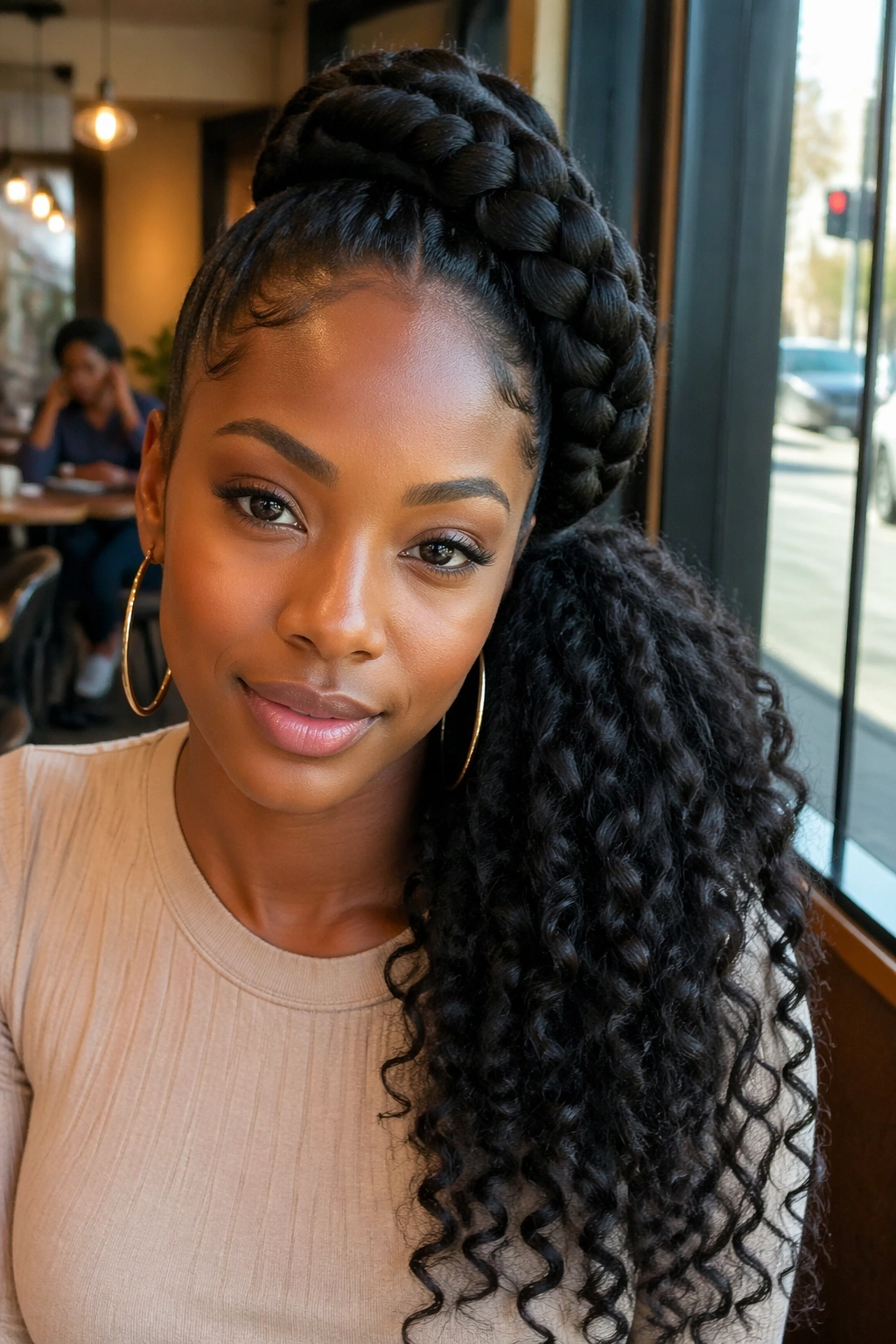
Some styles start as one thing and end as another, and that is exactly why they work. A jumbo braid that melts into a curly ponytail gives you a sculptural front and a soft back. It looks deliberate without feeling overly formal.
The braid usually runs from the front or crown into the base of the ponytail, then opens into the curly length. That shift from tight to loose is the whole point. You get control at the top and movement at the bottom.
This kind of hybrid works well when the weave is extra long. The braid keeps the top organized, so the length doesn’t feel like it is all arriving at once. It also gives your stylist room to build a shape that sits close to the scalp without flattening the curls.
I like this look when a plain ponytail feels too expected. It has a little more personality. Not a lot more. Just enough.
19. Feed-In Stitched Ponytail With Tight Rows
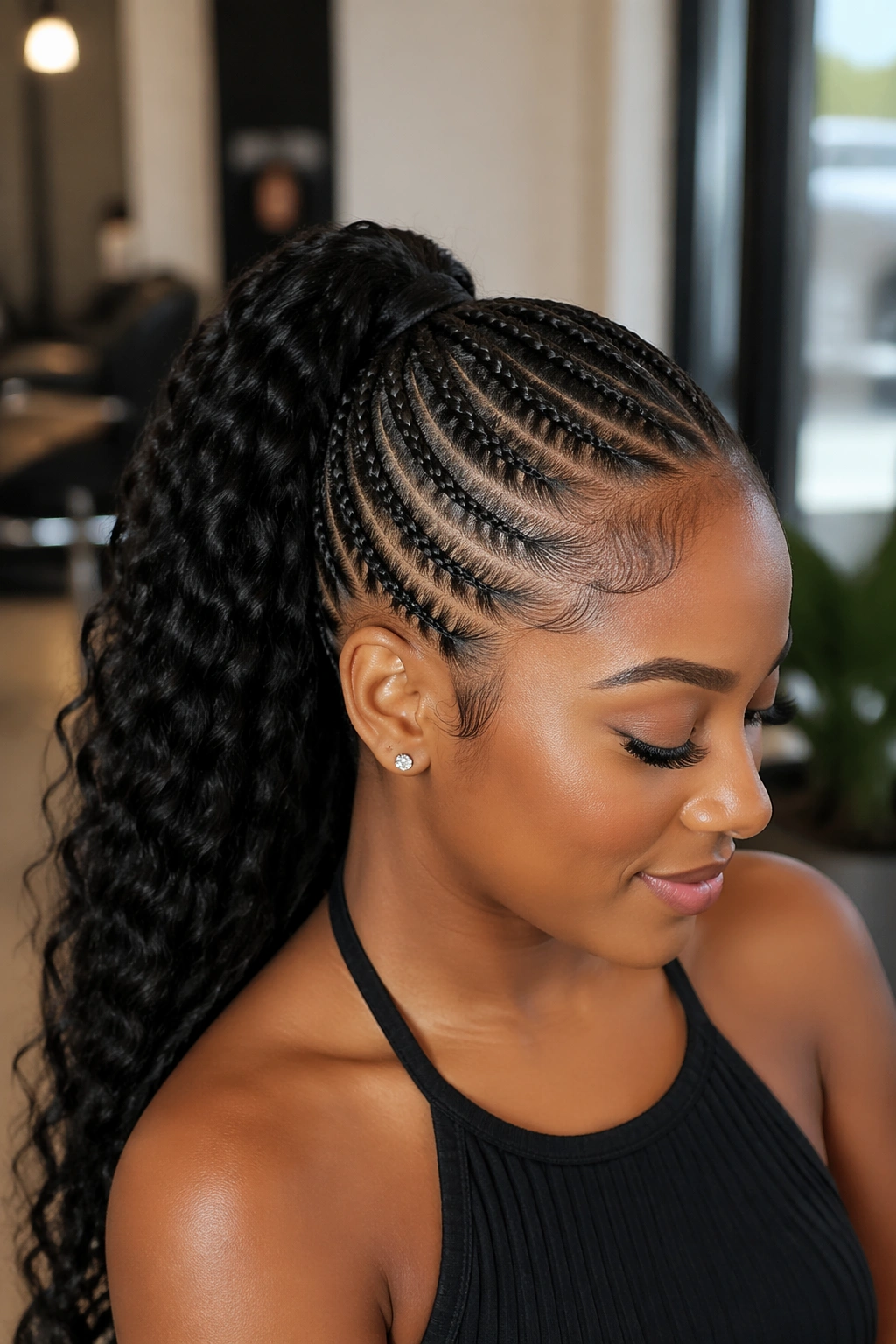
Want something neat enough to last, but not stiff? Feed-in rows solve that better than most people realize. The lines are slim near the hairline, then build gradually as they move into the ponytail base, which keeps the head from looking overloaded.
The Appeal of the Stitched Line
A stitched feed-in pattern makes the scalp design part of the hairstyle instead of hiding it. That can be really flattering on curly hair, especially when the parting is clean and the rows are symmetrical. The eye follows the stitching right into the ponytail.
This style handles long weave better than a lot of looser bases because the rows spread the weight out. That matters with thicker bundles. Heavy extensions can strain a weak foundation fast.
- Cleaner hold for full curly ponytails
- Good for styles that need to last several days
- Looks sharp from the back and the side
If you want a ponytail that feels refined without being plain, this is one of the strongest options in the group. It is not casual, exactly. It just knows what it is doing.
20. Retro High Ponytail With Flipped Ends
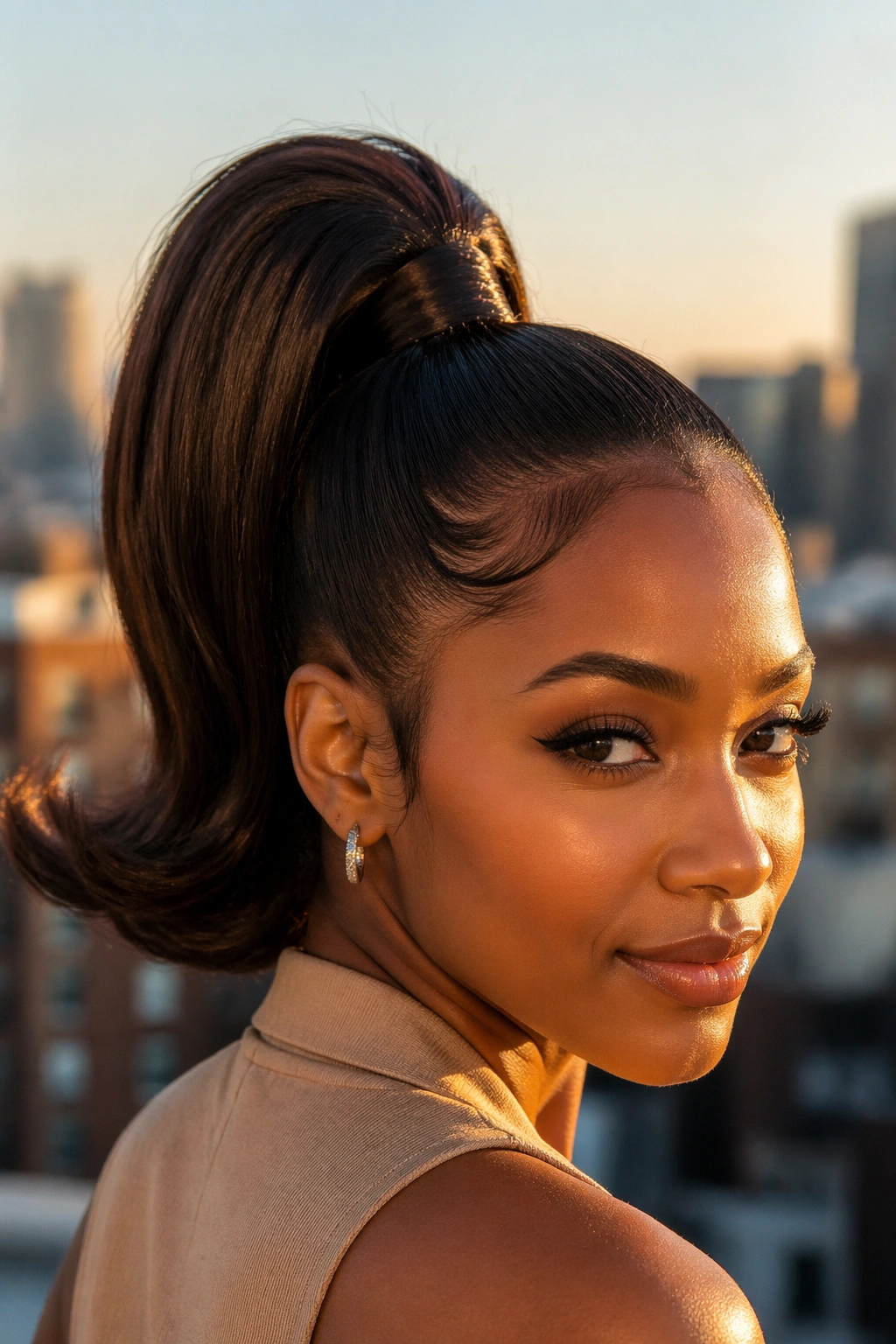
A little lift at the crown changes the mood fast. Add a high placement and a flipped tail, and suddenly the ponytail feels more retro, more playful, and a bit more dramatic in a good way.
The flip can lean outward or curl under slightly, depending on the type of extension and the finish you want. Curly weave hair makes both versions work, because the shape at the end keeps the style from feeling too rigid. The tail does not need to hang straight to make the point.
This is the style I’d choose when I want height but not severity. The crown gets enough lift to matter, while the flipped ends soften the overall line. It reads fun, but still put together.
Keep the sides smooth and the crown controlled. If the top gets puffy in the wrong places, the retro feel turns into confusion. That is a very different look.
21. Low Ponytail With Braided Bangs
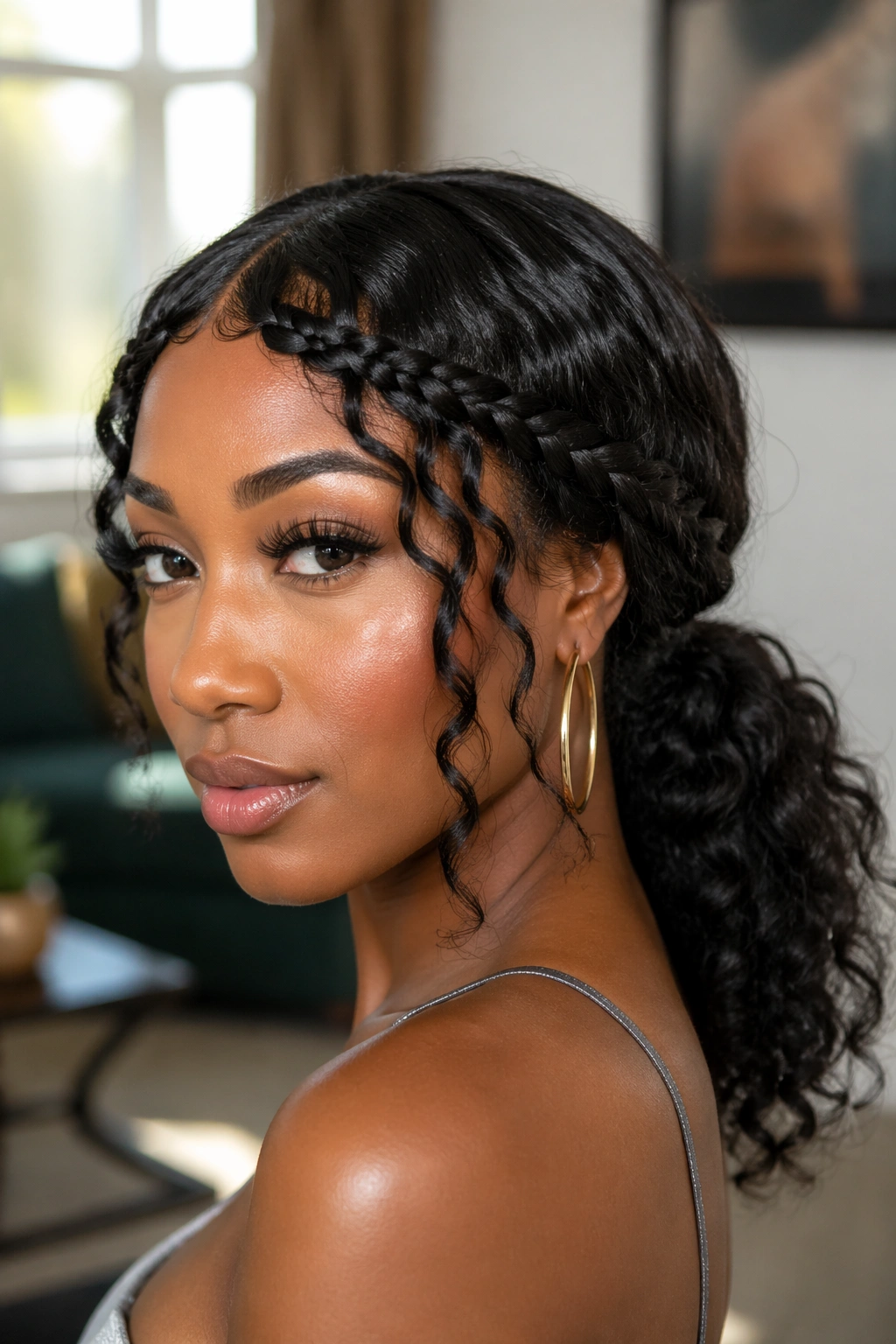
This one is smart when you want structure in front and softness in back. The braided bangs keep the hair away from the forehead, while the low ponytail gives the curls room to move at the nape and across the shoulders.
A few slim braids across the front can replace a full bang section or sit beside a side part. Either way, they create a frame that feels tidy without being severe. The curls in the tail do the rest.
It is especially useful if your natural hairline tends to puff up by the end of the day. The braids anchor the front, and the low ponytail gives the style a calm shape. No drama at the crown. No constant mirror checks.
This is not the flashiest option here, but it may be the most wearable for long days. That counts for a lot. Pretty hair that stays put is worth more than flashy hair that loosens by noon.
22. Drawstring Ponytail With Layered Curls
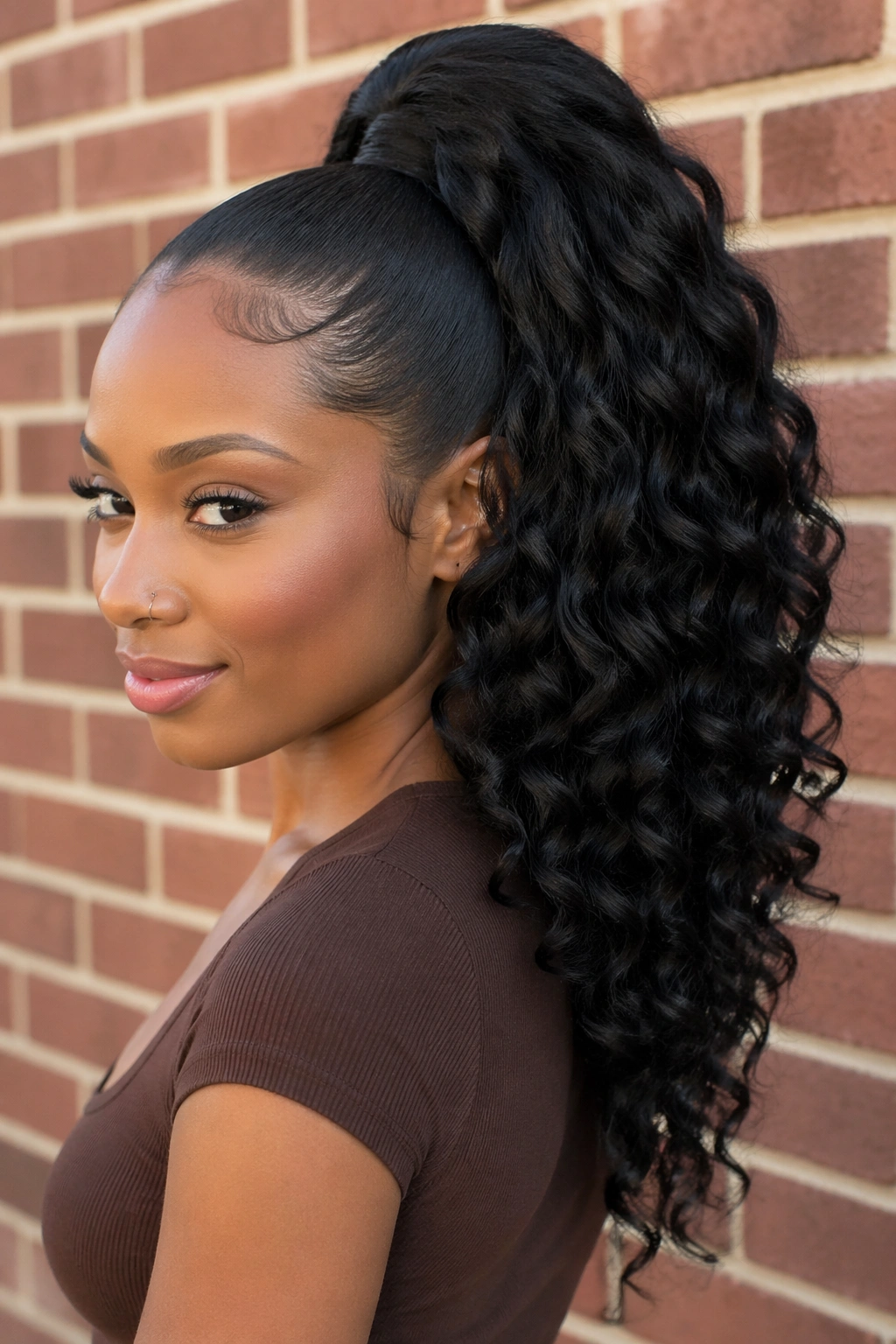
Sometimes the quickest option is the smartest one. A drawstring ponytail lets you change the whole look without building a heavy base, and layered curls make the extension move like real hair instead of one solid block.
What to Look For
Layering matters more than most people think. Without it, the tail can look blunt and heavy. With it, the curls fall in pieces, which gives the long weave ponytail more swing and a softer finish.
A drawstring style is also friendly when you want a ponytail with less commitment. You can wear it high one day and lower the next, depending on how you place the base. That flexibility is a big reason people keep coming back to it.
Good signs: the attachment feels snug, the ponytail hangs evenly, and the curls separate without looking stringy.
This is one of the easiest long weave ponytails for curly hair to dress up or dress down. The shape does most of the work for you.
23. Soft Glam Long Weave Ponytail With Loose Pieces
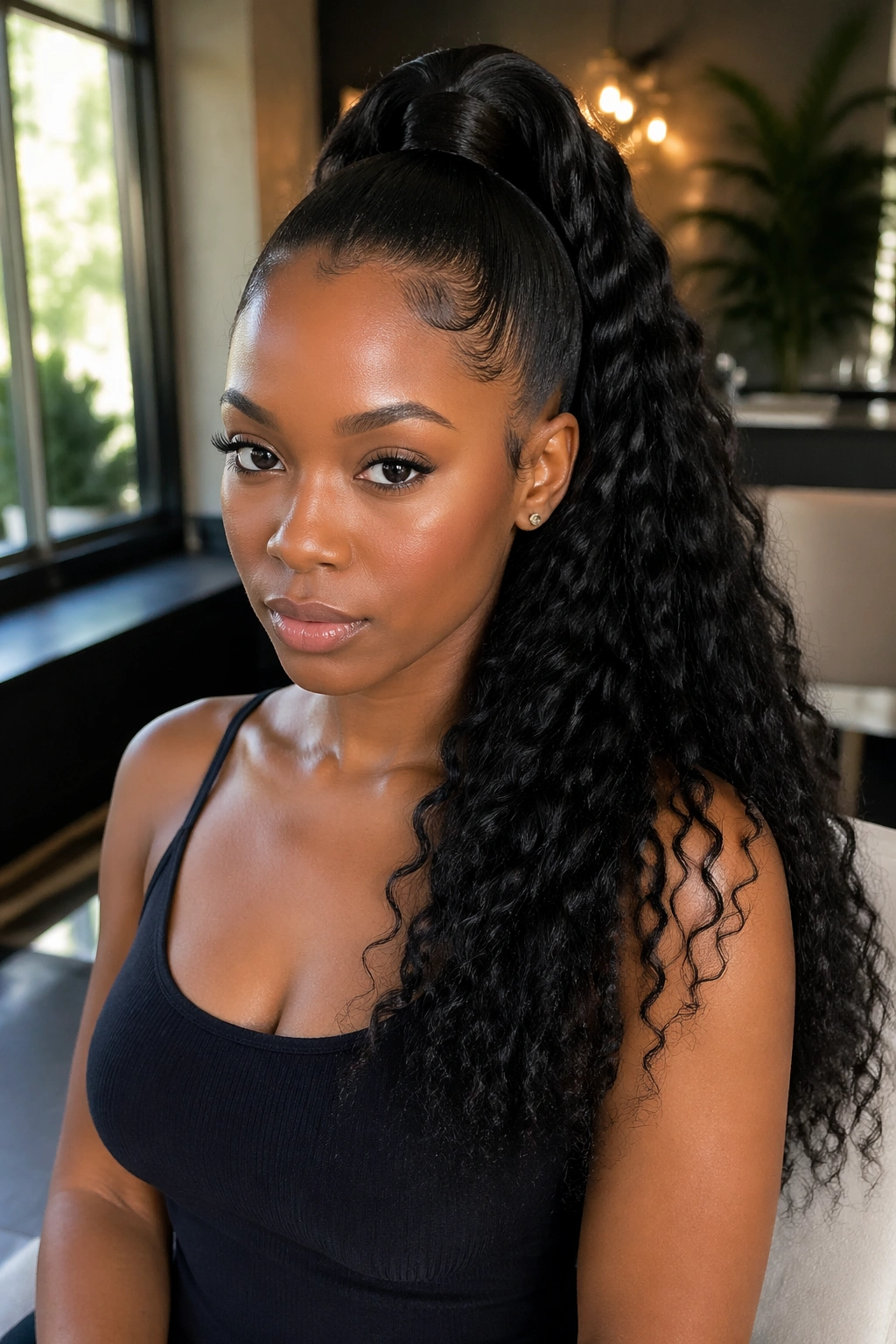
This is the ponytail I reach for when I want the style to move instead of sit there. The crown stays smooth, the tail stays full, and a few loose pieces around the face keep the whole thing from feeling too controlled.
The beauty of this version is how forgiving it is. If the curls are layered well, the ponytail falls in a soft shape even after a long wear. If the front has two loose tendrils, the style feels a little less formal and a lot more human. That matters. Hair should not look like it is trying to win a contest.
I like this finish because it works with jewelry, bare shoulders, a simple T-shirt, or a dress with a busy neckline. It does not fight the rest of the outfit. It just sits there looking composed, which is sometimes the nicest thing hair can do.
A soft glam ponytail can be the most useful look on this entire list, not because it shouts, but because it keeps its shape without looking stiff. That is a rare trick.