



A ginger ponytail on curly hair can look sharp, soft, and expensive-looking in the best possible way—or it can look like the elastic won and the curls gave up. The difference usually comes down to shape, tension, and how much of your texture you let stay visible.
That matters more with ginger shades than people expect. Copper, auburn, cinnamon, rust, apricot—those tones catch the eye fast, so every curve in the ponytail reads clearly. If the roots are flattened and the ends are dry, the whole style looks tired. If you keep some lift at the crown and let the curls do their thing, the color gets room to breathe.
Curly hair has its own rules. Fine curls need a little more support, thick coils need smarter sectioning, and tighter textures usually look better when you stop trying to force them into a perfectly smooth shell. A good ponytail should organize the hair, not erase it.
Some of the styles below are polished. Some are loose and romantic. A few are a little dramatic, which is honestly part of the fun. Start with the shape that fits your curl pattern and your mood, and the rest gets easier.
1. Cinnamon Copper High Puff Ponytail
A high puff ponytail is one of the easiest ways to make curly ginger hair look full on purpose. The height pulls the eye upward, the volume shows off the curl pattern, and the cinnamon-copper color gets a lot of light around the face. It’s the kind of style that works when you want your hair to look lively, not controlled to death.
Why It Works
The trick is placement. Set the ponytail high enough that the crown still has a little lift, then smooth only the top layer with a soft brush or your hands. Leave the curls in the ponytail loose and fluffy. That contrast is what gives the style its shape.
A puff like this looks especially good on tighter curl patterns, because the density builds a rounded silhouette without much effort. If your hair is longer, you get a fuller tail. If it’s shorter, you get a bigger puff. Either way, the ginger tone looks rich when the curls are separated just enough to show texture.
- Place the elastic 1 to 2 inches above the crown.
- Use a snag-free coil tie or satin scrunchie so the hair doesn’t break.
- Smooth the edges with a pea-size amount of gel, not a heavy layer.
- Lift the roots gently with a pick after tying it off.
Pro tip: Keep a few curls free around the temples if your face needs softness. It saves the style from looking too severe.
2. Auburn Low Nape Ponytail with Curly Ends
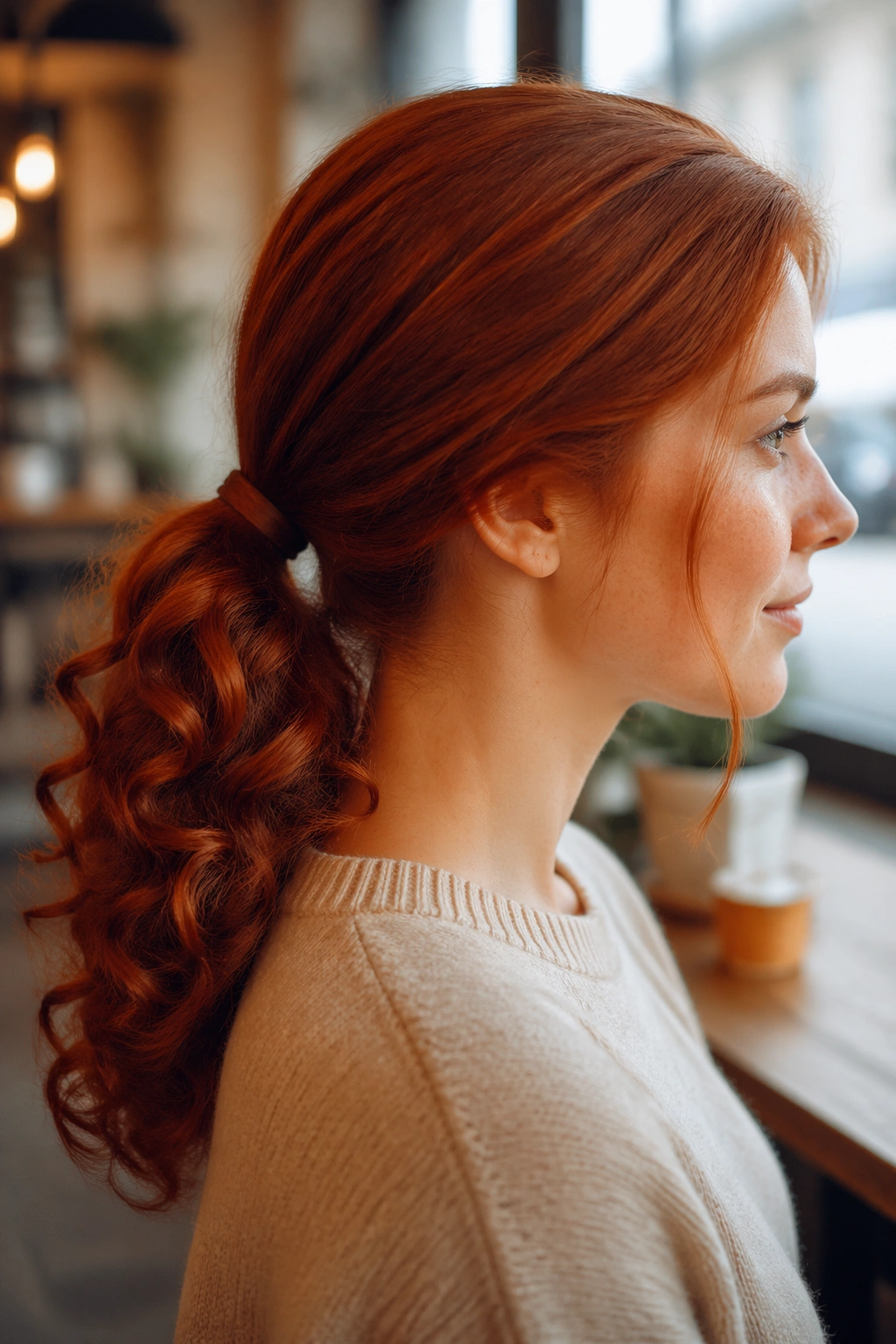
A low ponytail sits close to the neck and gives curly ginger hair a calmer, more polished shape. It’s the one I reach for when the outfit already has enough going on and the hair should just behave. The auburn shade looks deeper this way, almost velvety.
The best version keeps the top smooth but not flat. Use a leave-in cream, brush the top section back, and stop before you squeeze every ounce of life out of it. Then let the ponytail itself stay curly and open. If your ends are dry, a drop of lightweight oil through the last 2 or 3 inches makes a big difference.
This style works well for office days, dinners, and anything that asks for neatness without stiffness. It also plays nicely with side parts. A clean side part plus a low nape ponytail gives you a softer profile than a center part ever will.
3. Spiced Ginger Side Ponytail
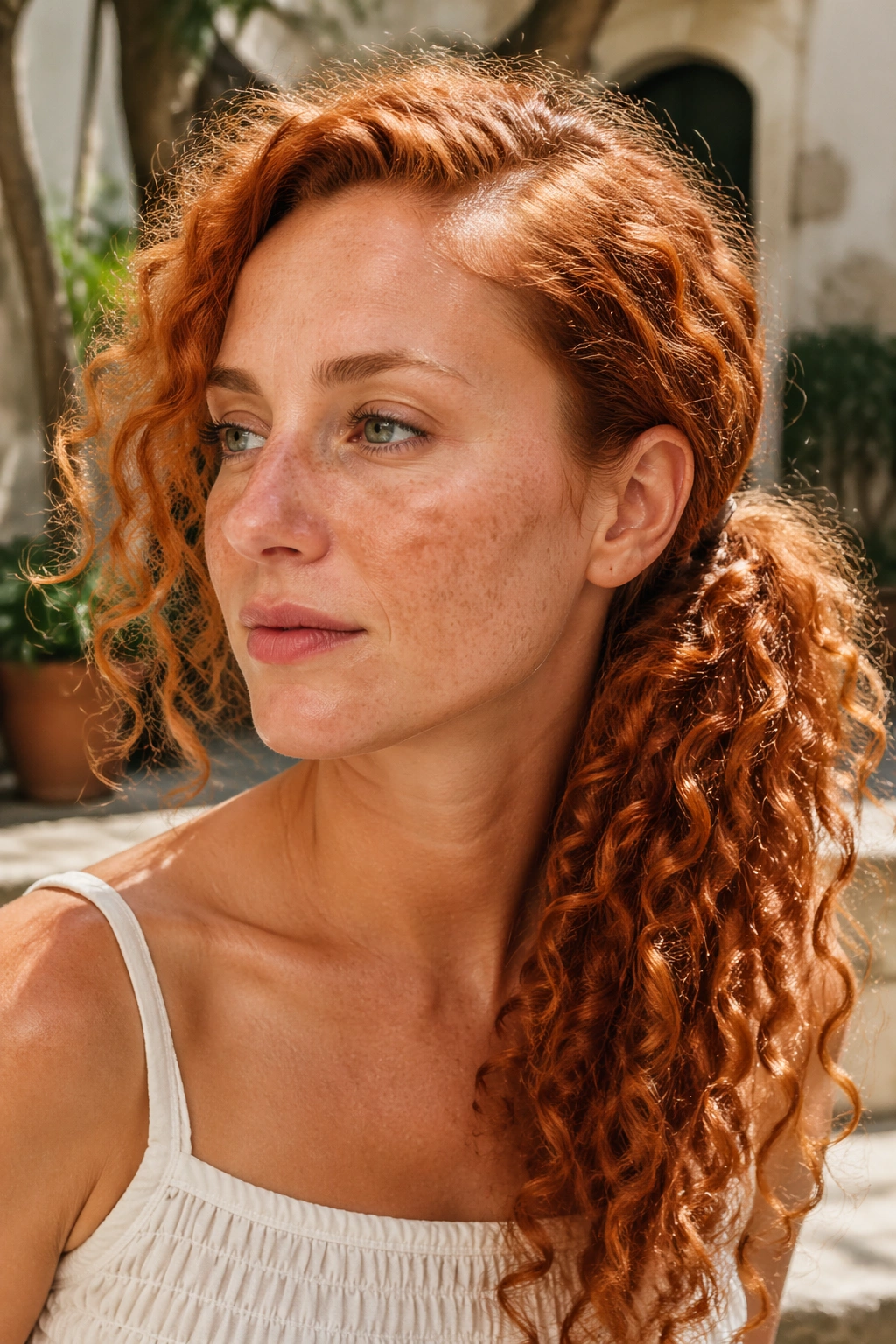
Why does a side ponytail look so good on curly ginger hair? Because it lets the texture fall in one direction instead of fighting the roundness of the head. The whole style feels a little more relaxed, and the color gets a longer, more visible sweep across the shoulder.
How to Wear It
Start with a deep side part and gather the hair just behind the ear on the heavier side. Keep the ponytail low or mid-level, depending on how much length you want to show. The curls should land over one shoulder in a thick cascade, not a tight rope.
A side ponytail is especially good if you have face-framing layers. Those shorter pieces soften the front, which matters when ginger hair is bright and the curls are bouncy. It keeps the look from feeling too severe.
- Best for one-shoulder tops and open necklines.
- Use a wide-tooth comb only at the roots you want to smooth.
- Leave one or two front curls free if your hairline feels too pulled back.
- Secure with two pins under the elastic if the ponytail slips.
The style looks easy, but it has a little drama to it. That’s the appeal.
4. Copper Bubble Ponytail for Defined Curls
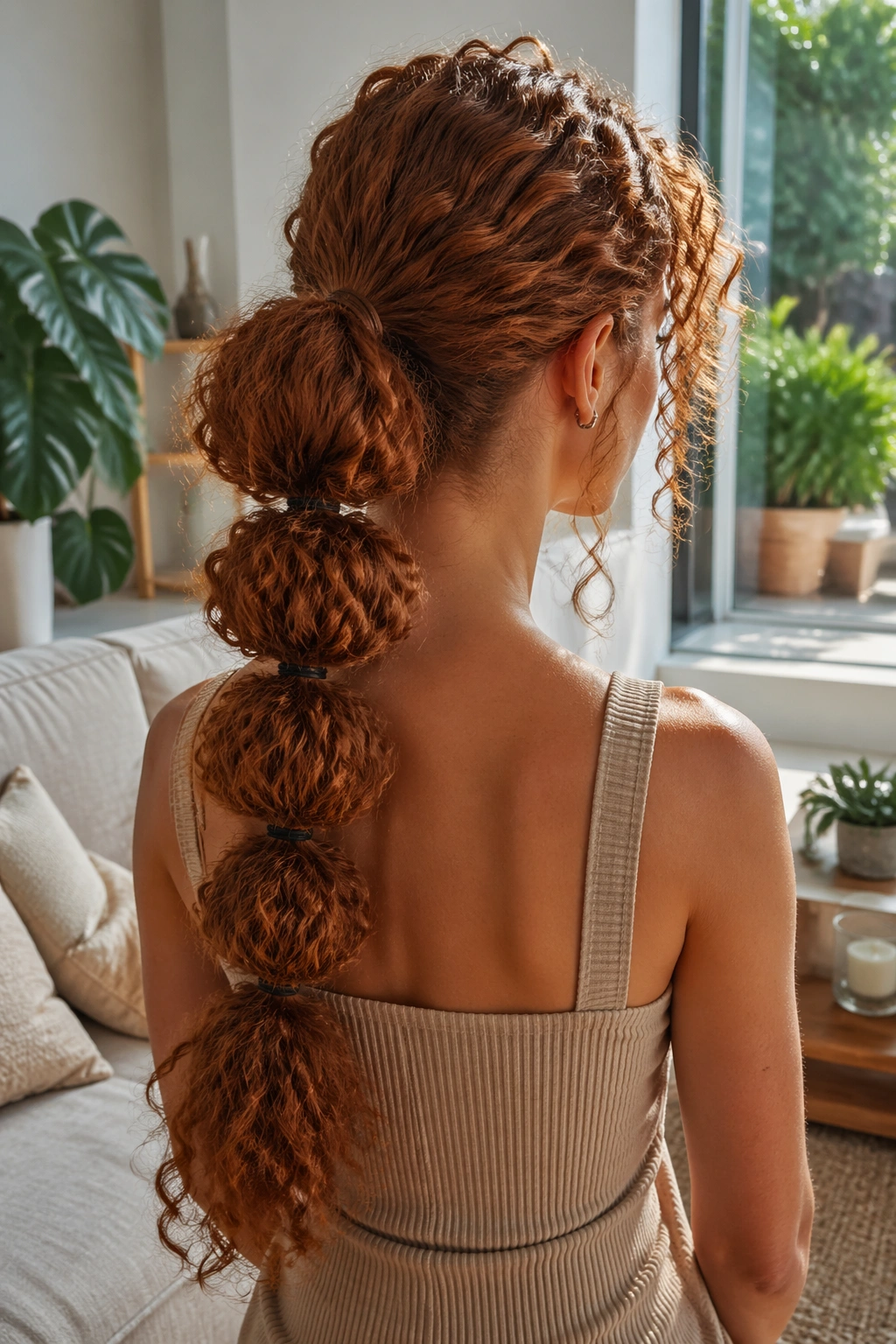
If your curls are long and dense and keep disappearing into one heavy shape, a bubble ponytail fixes that fast. You tie the hair into sections and puff each section out, so the ponytail looks intentionally segmented instead of flat at the bottom. On ginger hair, the effect is strong because the color changes slightly from bubble to bubble as the light moves.
This is one of those styles that feels playful without being childish. The key is keeping the elastic spacing even—about 2 to 3 inches apart—and then gently tugging each section until it rounds out. Don’t yank the bubbles too wide. You want shape, not frizz explosion.
Quick Details
- Use clear elastics or tiny snag-free bands.
- Start with a mid or high ponytail.
- Puff each bubble from the sides, not the center.
- Smooth the roots first, because once the bubbles are set, you won’t want to restart.
One small thing: this style looks best when the curl pattern is already defined. If the curls are fuzzy, refresh them first with water and a cream.
5. Rusty Half-Up Ponytail with Free Curls
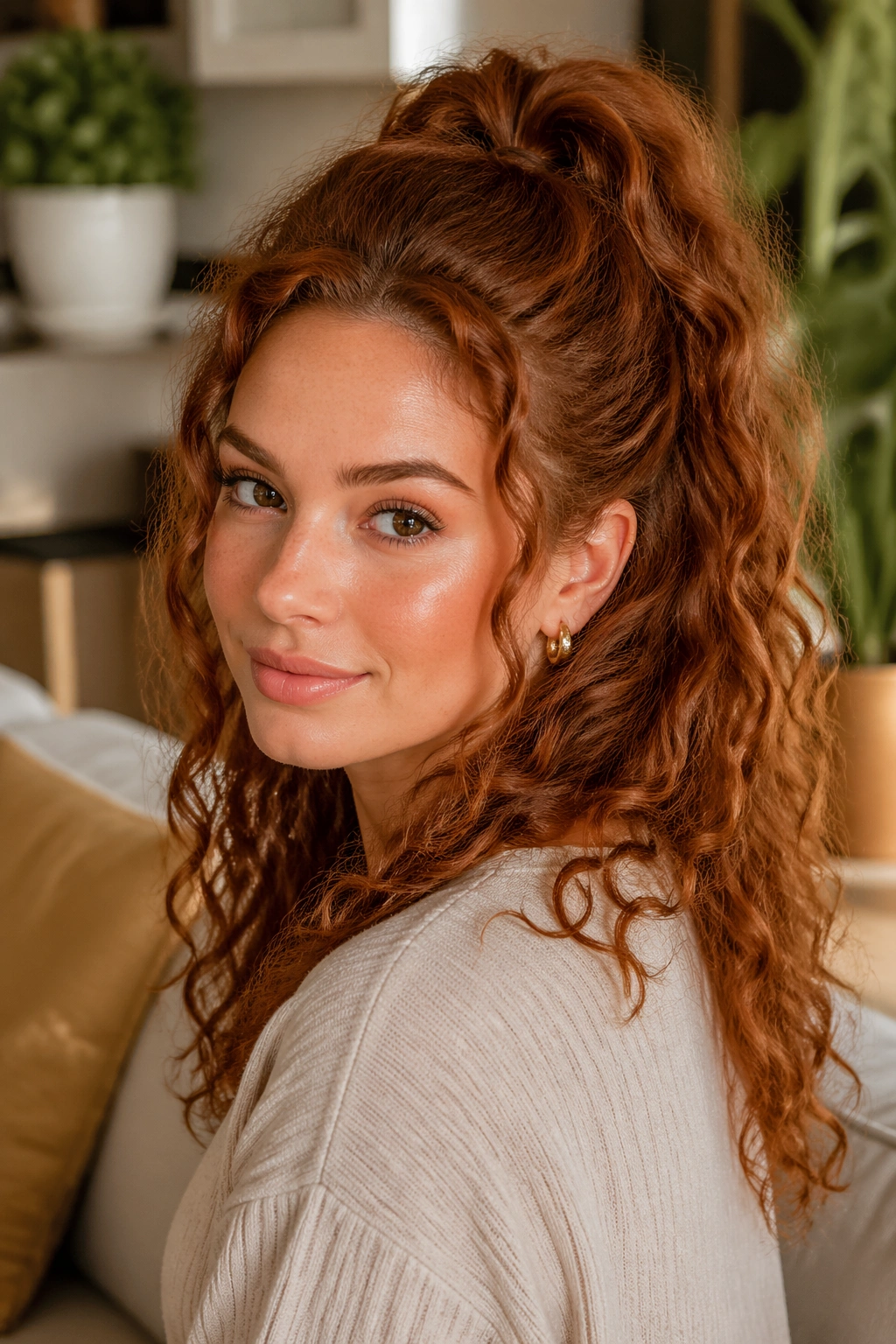
A half-up ponytail is the easiest way to keep the face open while leaving the rest of the curls alone. On rusty ginger hair, it gives a nice split between structure and softness. You get lift at the crown, movement at the ends, and enough hair down to keep the style from feeling overdone.
The part I like most is the balance. If your curls are layered, the half-up section lets the shorter pieces sit near the top without getting lost. That matters on curly hair, because too much hair in one ponytail can make the style sink. Half-up hair stays lighter and often lasts longer through the day.
Use a small elastic or a narrow scrunchie, and stop the top section around the temples rather than pulling from deep behind the ears. That keeps the shape airy. A half-up ponytail also works nicely with a little volume at the crown, which is where ginger shades tend to look most alive anyway.
6. Smoothed-Back Ginger Ponytail with a Wrapped Base
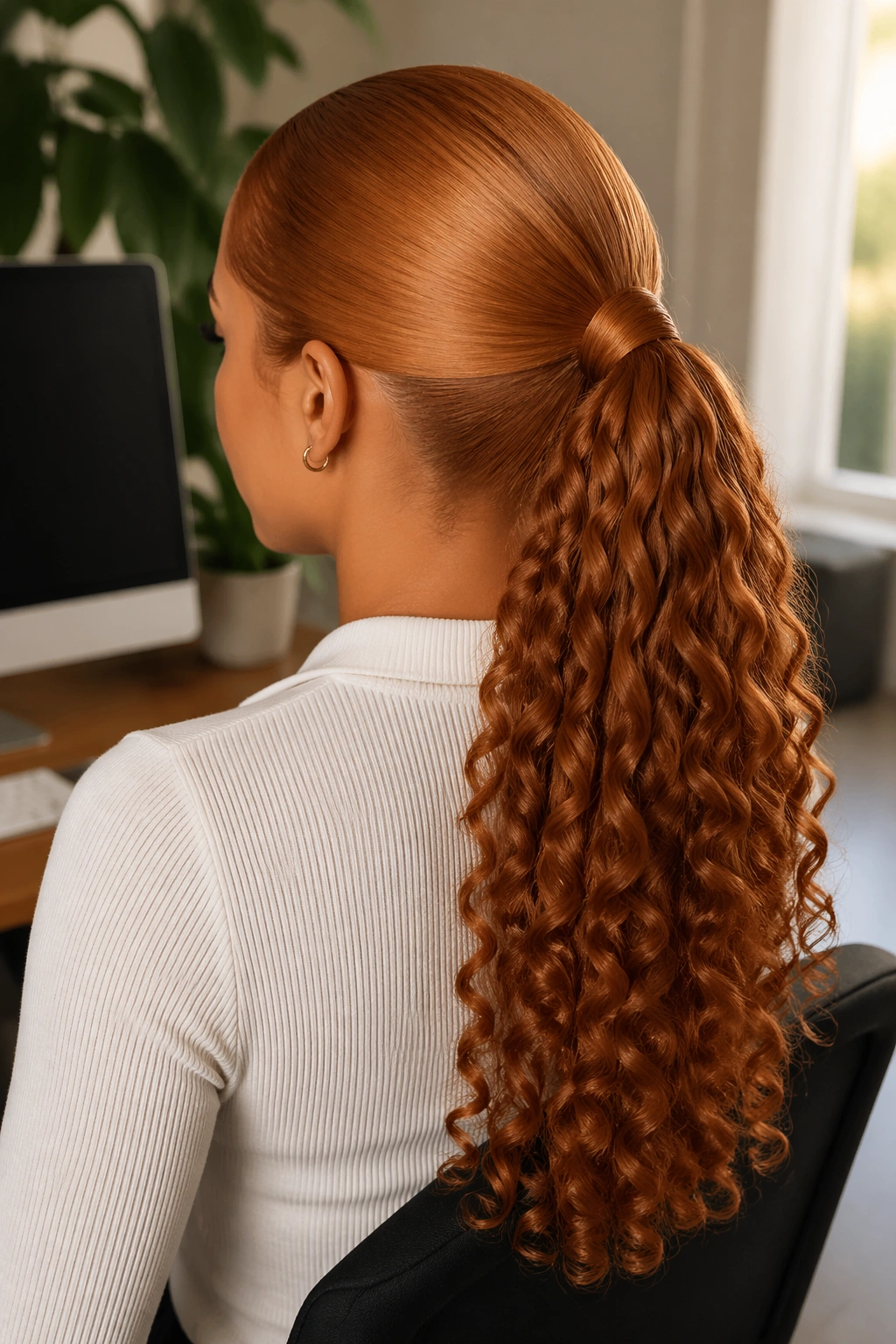
This is the sleek one. Not stiff, not helmet-like—just controlled enough to let the color and the curl length do the talking. A wrapped base ponytail looks cleaner than an exposed elastic, and on ginger hair that small detail makes the whole style feel more finished.
The difference is in the root work. Brush the hair back with a little gel or styling cream, gather it where you want the ponytail to sit, and then wrap a 1/2-inch strand around the elastic. Pin that strand under the ponytail with a bobby pin. It takes maybe a minute longer than a basic tie, which is worth it.
This version is best when you want the hair to read polished from the front and textured from the back. That contrast is strong on curly hair. The roots look neat, the tail stays curly, and the wrapped base hides the part where most ponytails look a little unfinished.
7. Auburn Braided Crown Ponytail
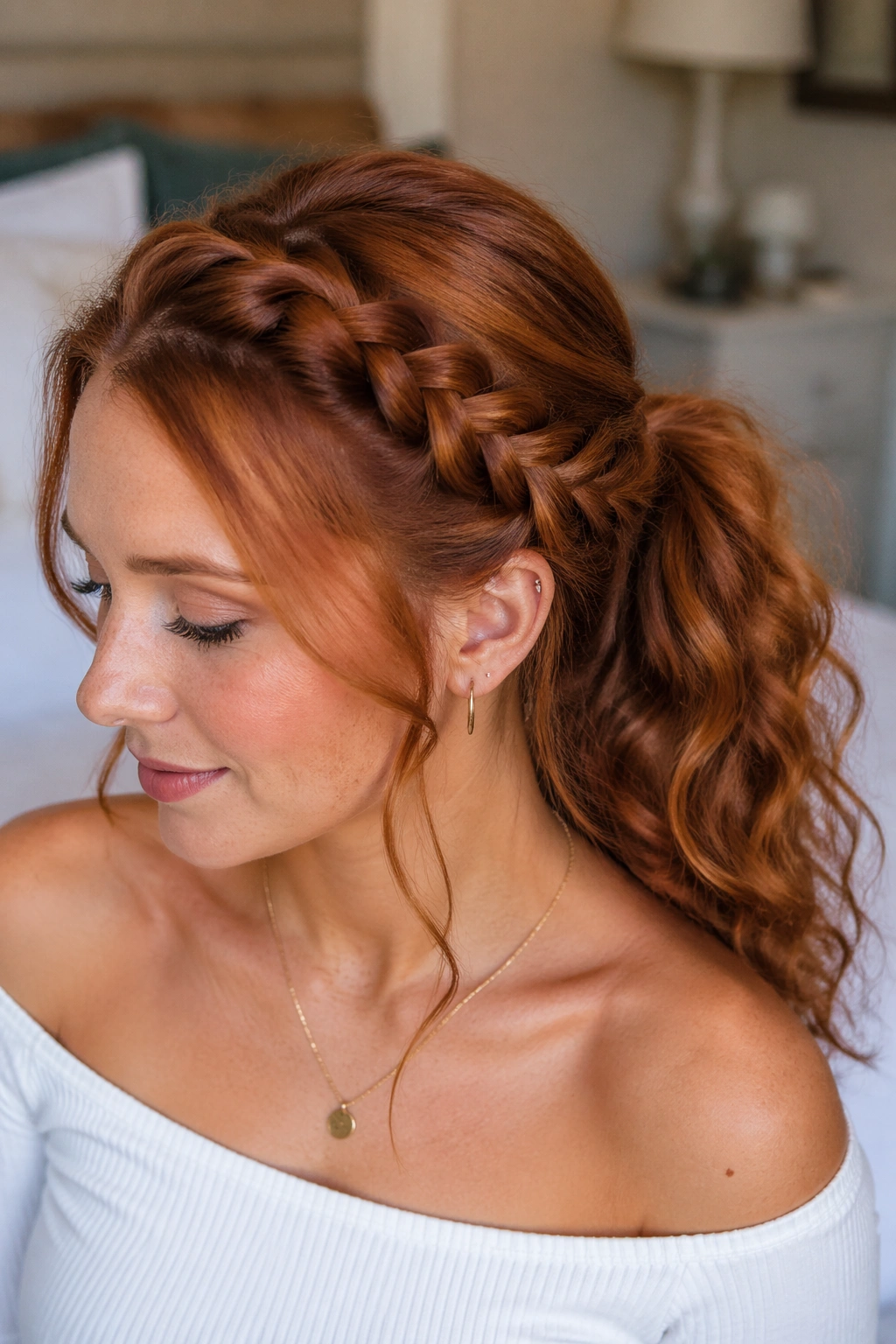
A braided crown feeding into a ponytail gives curly ginger hair a softer, more romantic frame. It starts with braid work around the front or sides, then pulls into a ponytail at the back so the length still shows. The braid keeps the hair off the face, while the ponytail keeps it from feeling too formal.
Why It Works
Braids and curls are a good match because the braid controls the top half and the ponytail lets the rest stay loose. On auburn hair, the plaited section shows depth in the color, especially if the braid is slightly loosened after it’s secured. You see the darker and lighter strands weave together, which looks richer than a plain tie.
The style works best when the braid starts about an inch back from the hairline. Too close, and it can pull. Too far back, and the crown loses its shape.
- Braid each side with medium tension, not tight tension.
- Secure the braid into the ponytail with a small clear elastic.
- Loosen the braid edges slightly for width.
- Leave the ponytail itself curly and soft.
Tip: If your curls are thick, make the braid a little bigger so it doesn’t disappear into the rest of the hair.
8. Burnt Orange Pineapple Ponytail
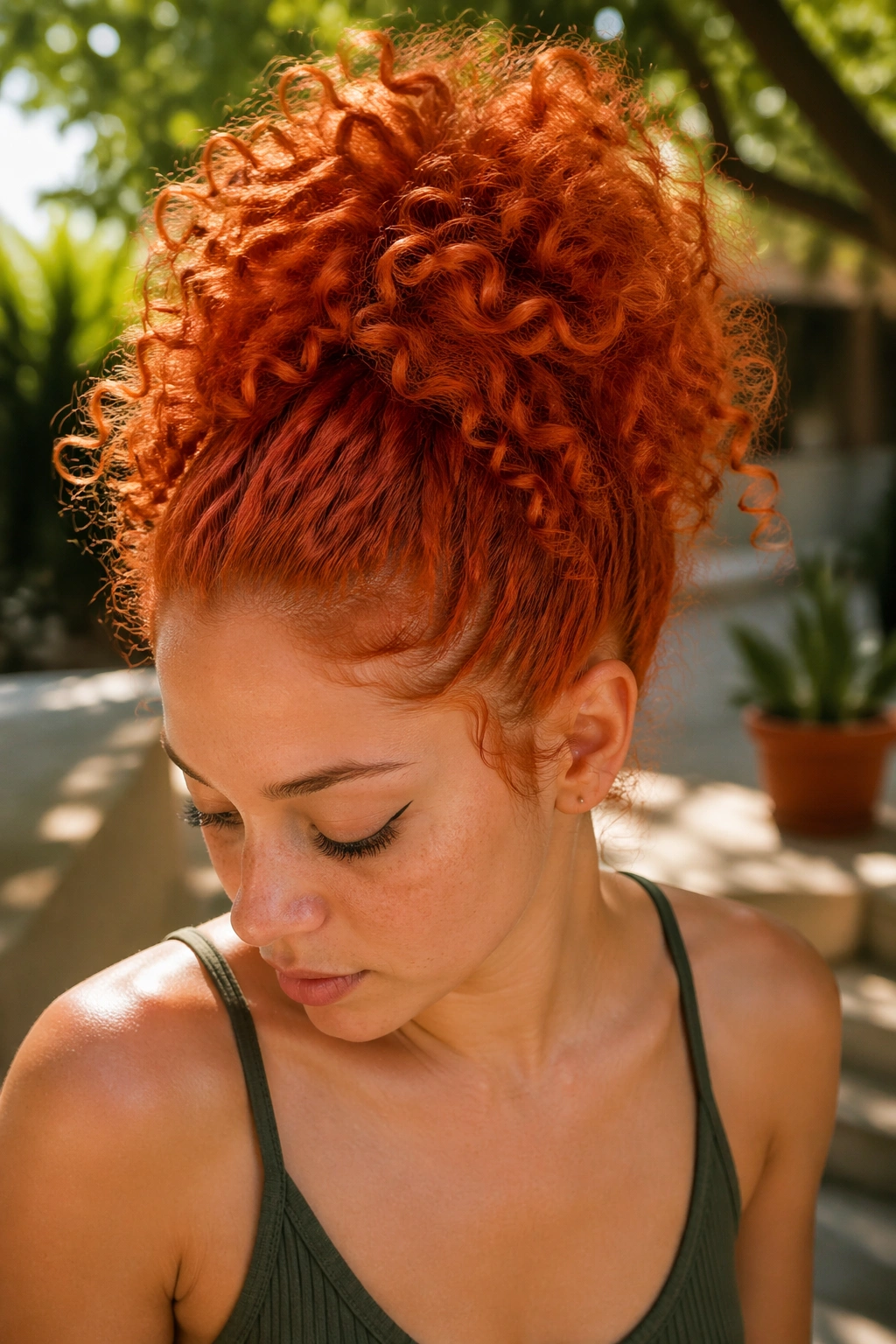
A pineapple ponytail is not lazy. It’s smart. The style sits high and loose, usually near the top of the head, which protects the curl pattern and keeps the silhouette full. Burnt orange or burnt copper shades look especially good here because the curls bunch together in a way that shows off the color from every angle.
This is the ponytail I’d use on wash day, on a casual run, or when I want the hair off my neck without flattening the curl clumps. The tail should stay soft, not stretched tight. If the hair is very long, the ponytail may flop a little to one side. That’s fine. Actually, that’s part of the charm.
You can wrap a satin scarf around the base if you want a little extra hold or a cleaner finish. Or leave it bare and fluffy. Either way, it should feel like the curls are resting on top of your head, not being pinned down.
9. Copper Rope-Twist Ponytail
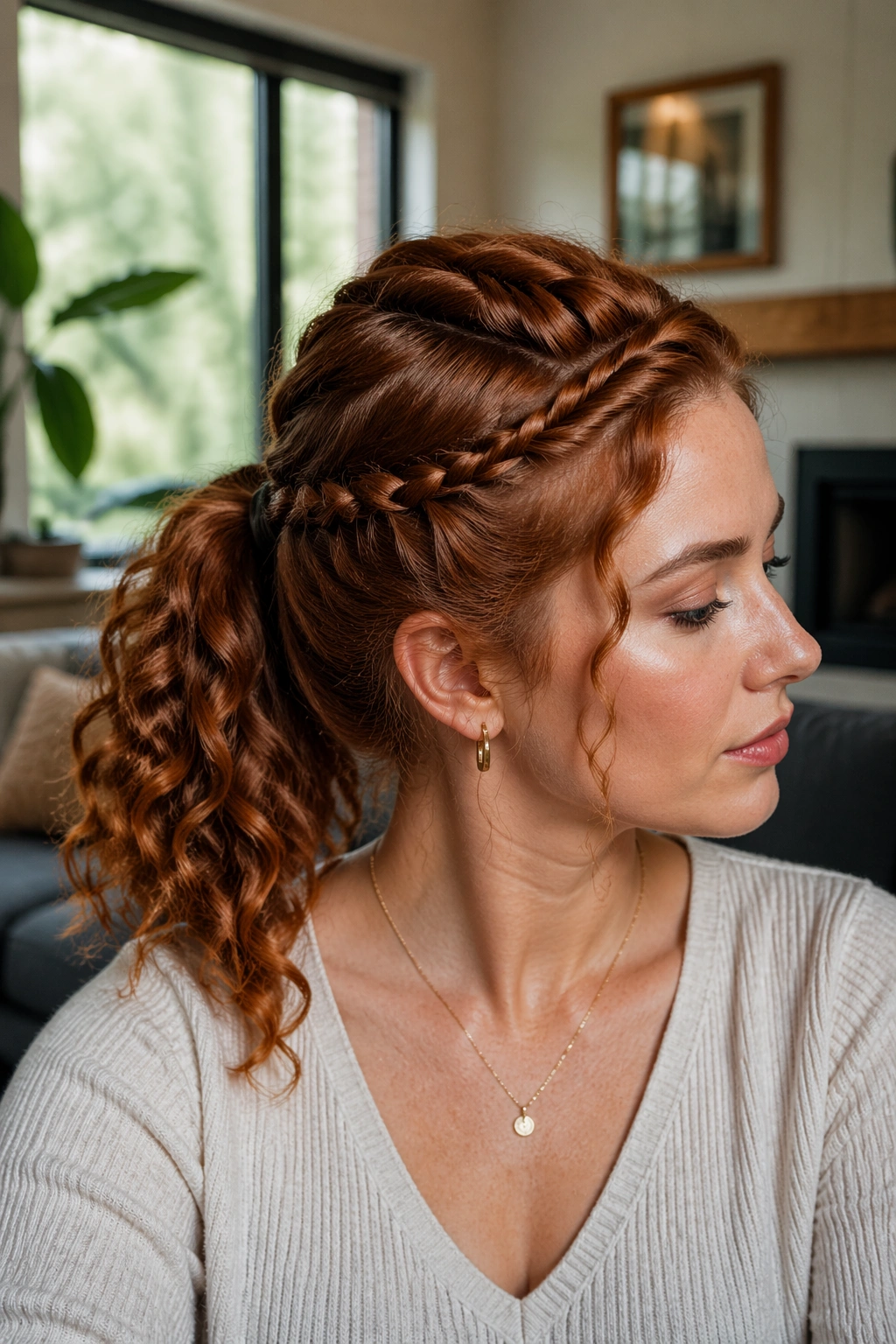
Why do rope twists work so well on curly ginger hair? Because they give you structure without making you commit to a full braid. Two twisted sections are easy to control, easy to join, and they look a little more intricate than a regular ponytail.
How to Wear It
Take two front sections, twist each one in the same direction, then cross them over each other in the opposite direction before gathering them with the rest of the hair. That reversal is what keeps the twist from unwinding. If you twist too loosely, it slips. If you twist too tightly, the front starts to feel sore after an hour or two.
The ponytail itself can sit mid-height or low. I like mid-height because it keeps the rope detail visible from the side. The style works especially well if your ginger color has dimension—copper roots, lighter ends, that kind of thing—because the twisted sections catch the shades differently.
Use this one when you want a ponytail that looks styled even if the rest of the outfit is simple.
10. Ginger French Braid into Ponytail
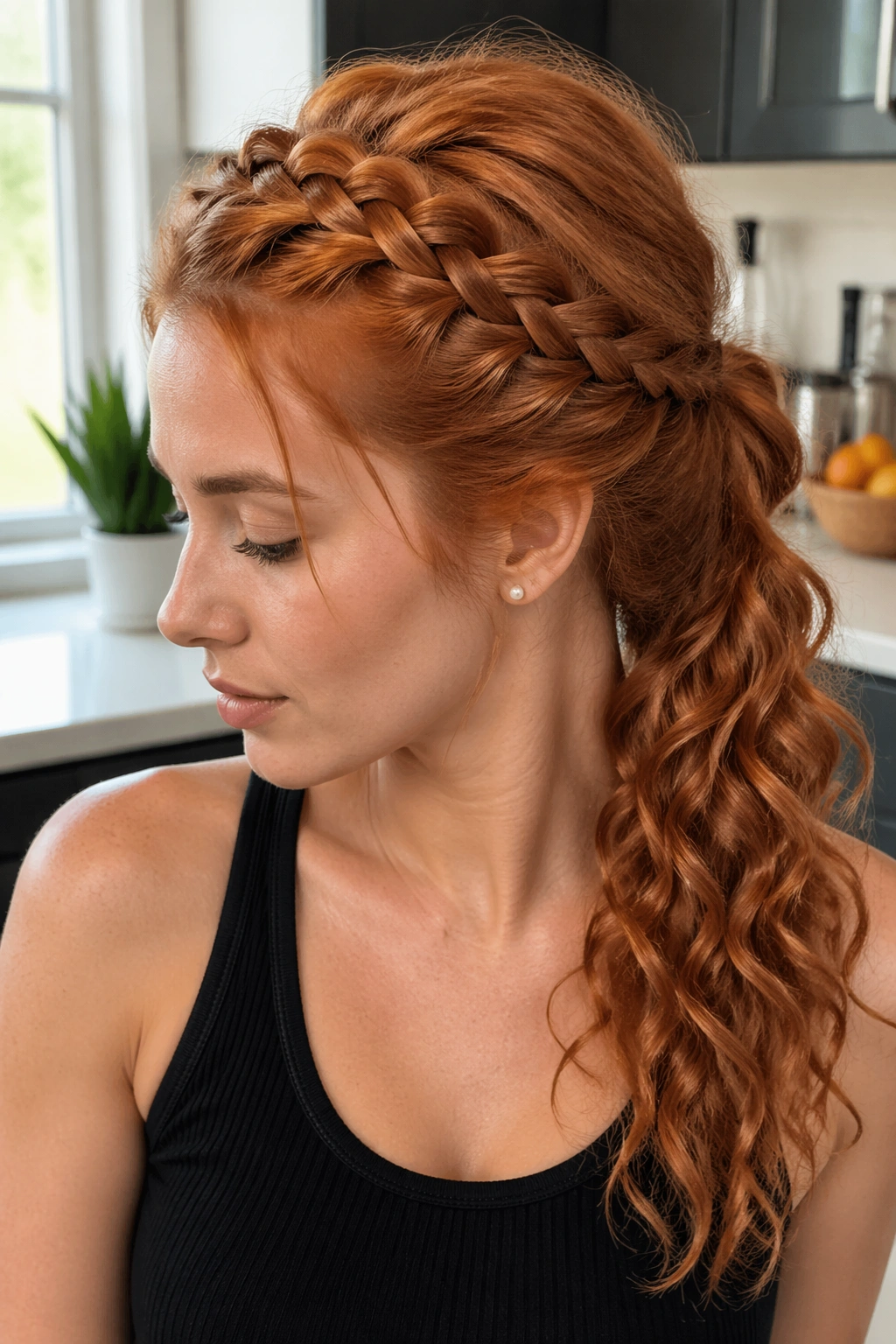
I’ve seen this save more long hair days than I can count. If your curls slip out of a regular ponytail, start with a French braid at the top and finish it with a ponytail at the back. The braid anchors the roots, and the ponytail keeps the length from feeling boxed in.
The practical benefit is obvious: less slippage. The visual benefit is just as good. A French braid gives the front of the style a clean line, then the ponytail opens up and lets the curls take over. On ginger hair, that transition from neat to loose looks especially nice because the braid shows off the color in small woven pieces before the bigger ponytail section kicks in.
- Braid the top 3 to 4 inches of hair.
- Keep the braid centered if you want symmetry, or angle it slightly for more softness.
- Tie the ponytail with a covered elastic once the braid reaches the crown.
- Pull a few curls free near the ears if the braid feels too strict.
It’s a reliable style. Not flashy. Just dependable in the best way.
11. Soft Apricot Low Ponytail
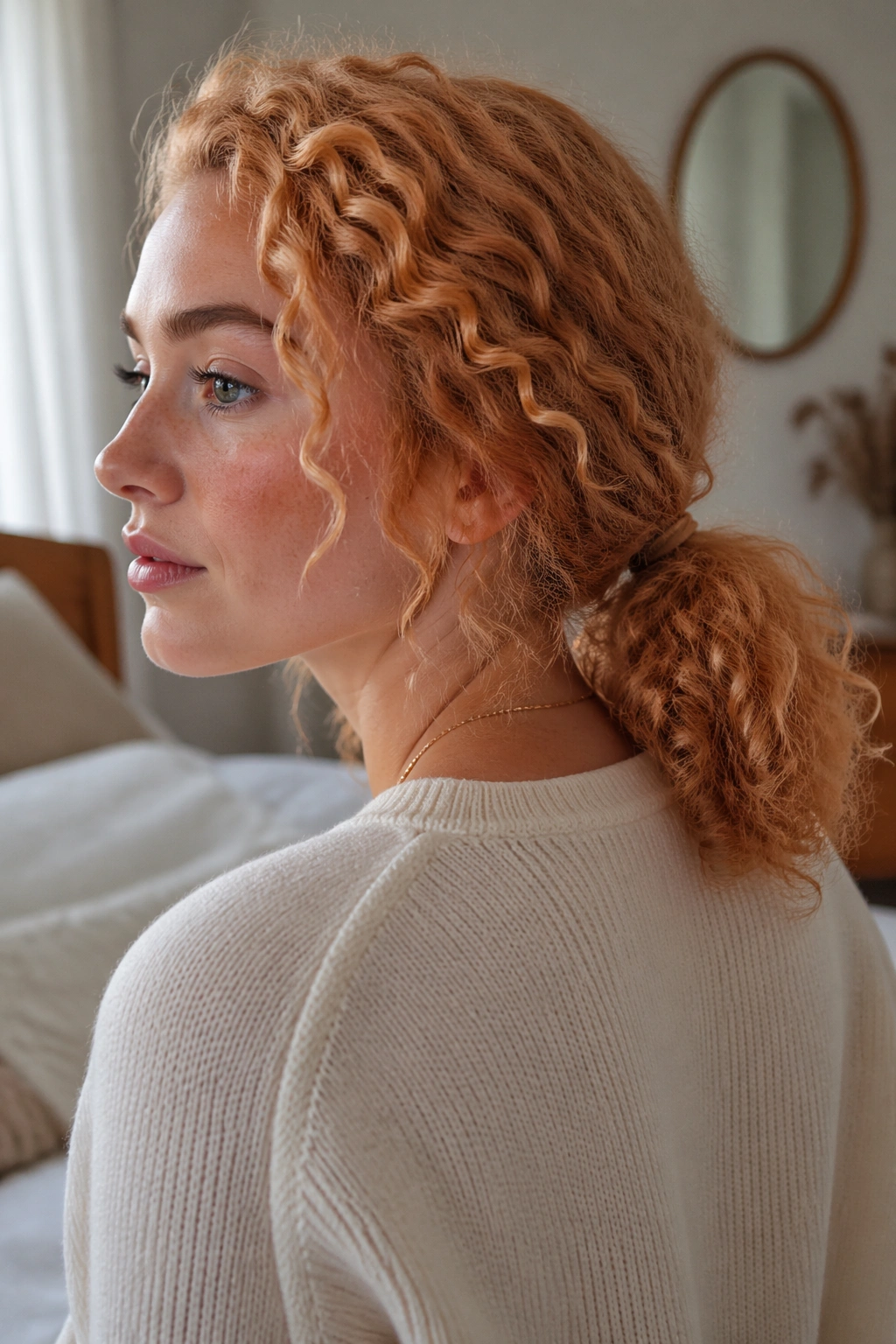
A soft apricot ponytail leans into the lighter, airier side of ginger hair. It doesn’t ask for a sharp edge or a hard part. Instead, it lets the curl pattern sit close to the neck and keeps the whole look relaxed enough to move. That makes it a smart choice for finer curls or for layers that need a little help staying together.
What makes it work is restraint. Use just enough product to keep frizz down, then stop. If you overload the hair with cream, the ponytail loses its bounce. A low ponytail like this should feel light in the hand, almost touchable. The curls can be loosely separated so the apricot shade shifts from pale to warmer tones as the tail moves.
This is also a good style for days when the roots are not cooperating. A low, soft ponytail forgives a lot. It hides uneven volume better than a high style does, and it still looks intentional if the front is brushed neatly.
12. Deep Auburn Voluminous Ponytail
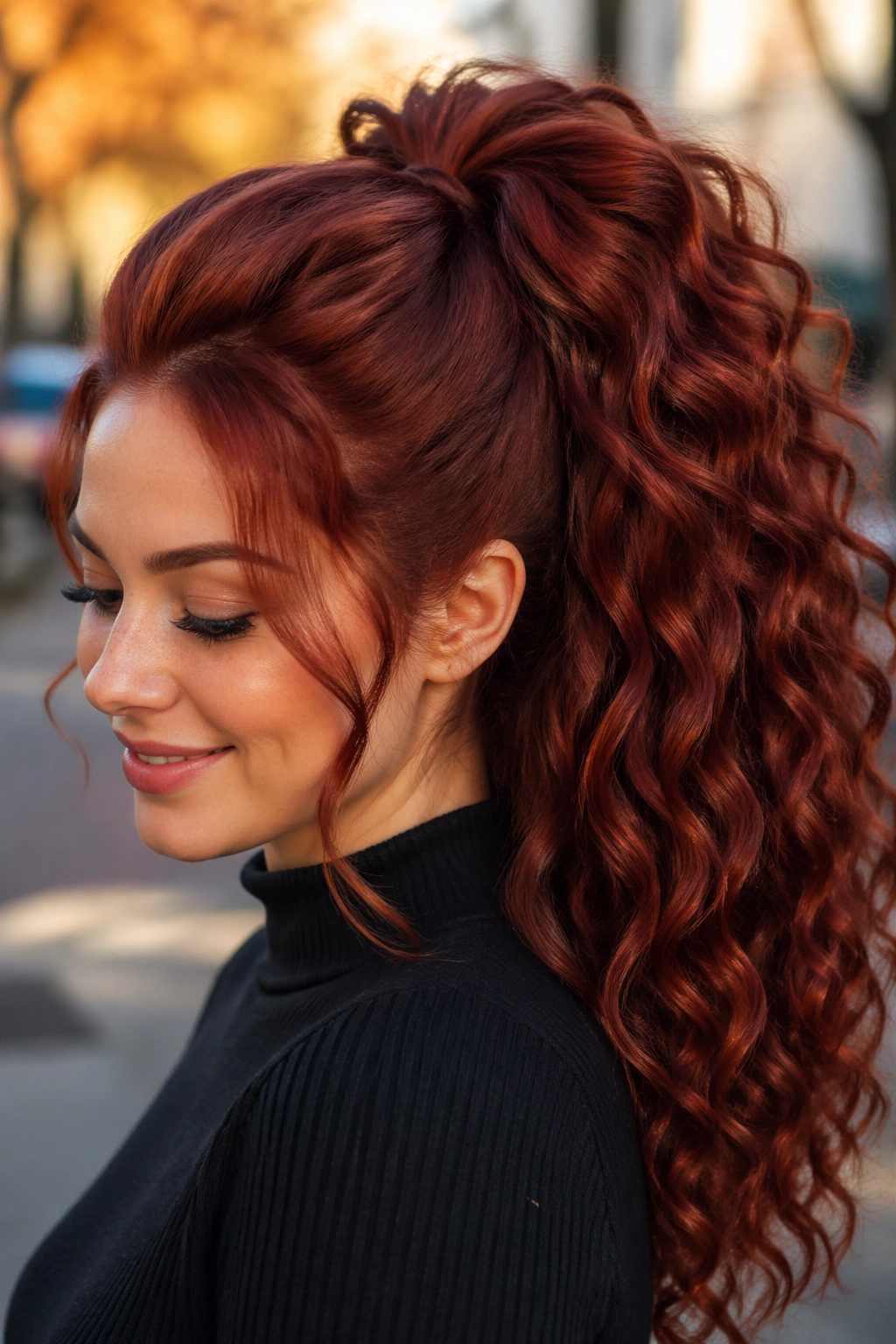
Unlike a sleek ponytail, this one wants volume first and neatness second. Deep auburn hair looks rich when the ponytail is full, because the shadows inside the curls make the color look deeper. If your curls are thick or your hair is long, this style gives you room to use that shape instead of fighting it.
The trick is to keep the crown lifted and the ponytail broad. A little root teasing at the base can help, but I’d rather use a pick and lift the crown lightly than rough up the whole head. Once the ponytail is tied, fan the curls out with your fingers so they don’t bunch into one heavy rope. The result should feel big but still controlled.
This style suits anyone who likes a strong silhouette. It’s especially good with deep necklines, structured jackets, and earrings that need a little open space around the face. It does not hide much. That’s the point.
13. Ginger Curly Ponytail with Face-Framing Tendrils
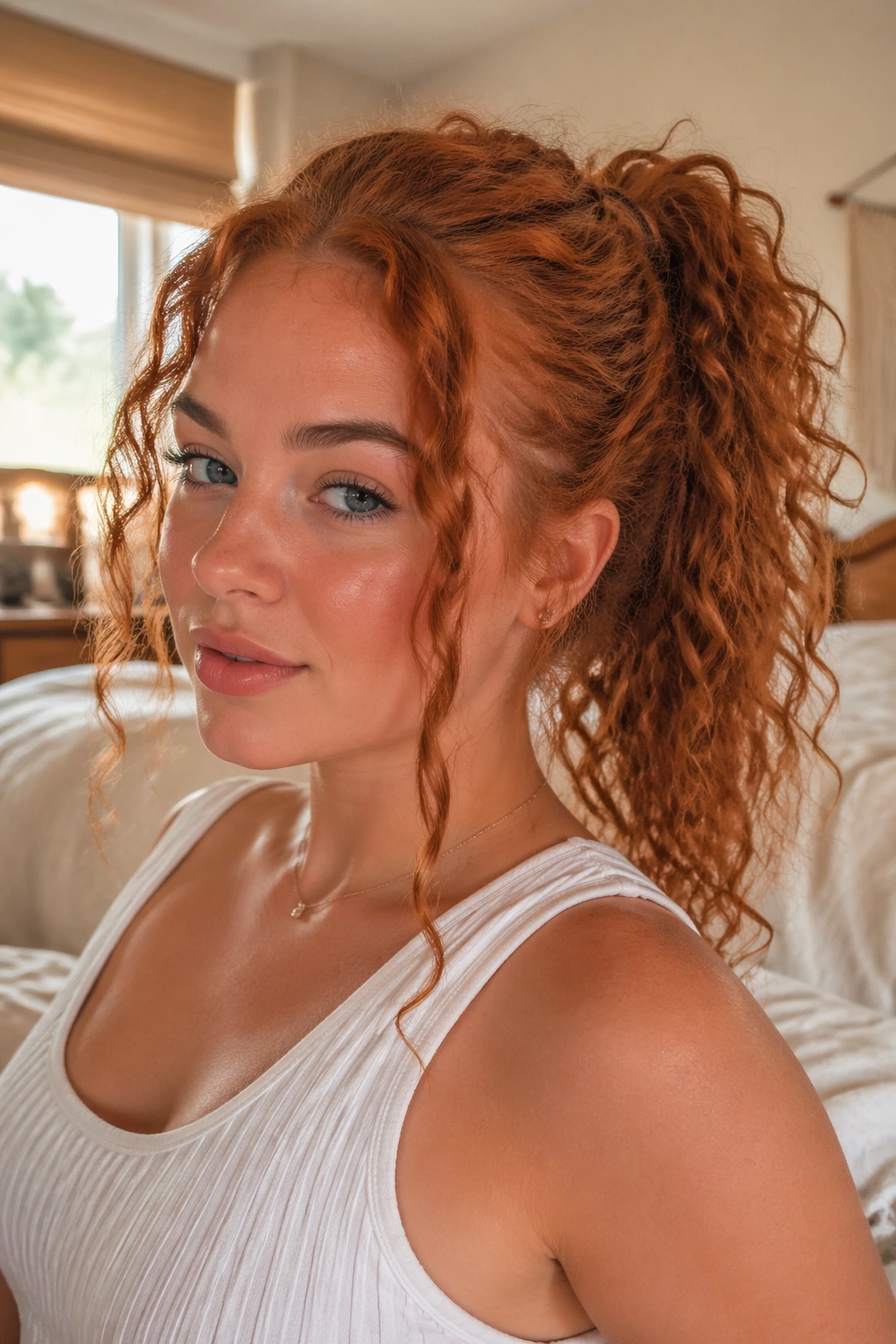
A ponytail with face-framing tendrils softens everything. It takes the brightness of ginger hair and keeps it from feeling too pulled back or too severe. You still get the lift of the ponytail, but the curls around the cheeks make the style easier to wear on round faces, heart shapes, and anyone who likes a little movement near the eyes.
The Face-Framing Trick
Leave out two slim sections in the front, about 1 inch wide each, before you tie the ponytail. Curl them or refresh them separately so they hang on their own instead of blending into the rest of the hair. If the tendrils are too short, they should still bend softly at the jawline. If they’re longer, let them graze the shoulders.
The ponytail itself can be mid-height or high. I prefer mid-height here because it gives the front pieces room to fall naturally. A little gel at the roots keeps the rest of the hair clean, but don’t drag product onto the tendrils unless you want them stiff.
Tiny warning: too many front pieces turn into a mess. Keep it to two or three, not six.
14. Cinnamon High Ponytail with Sleek Sides
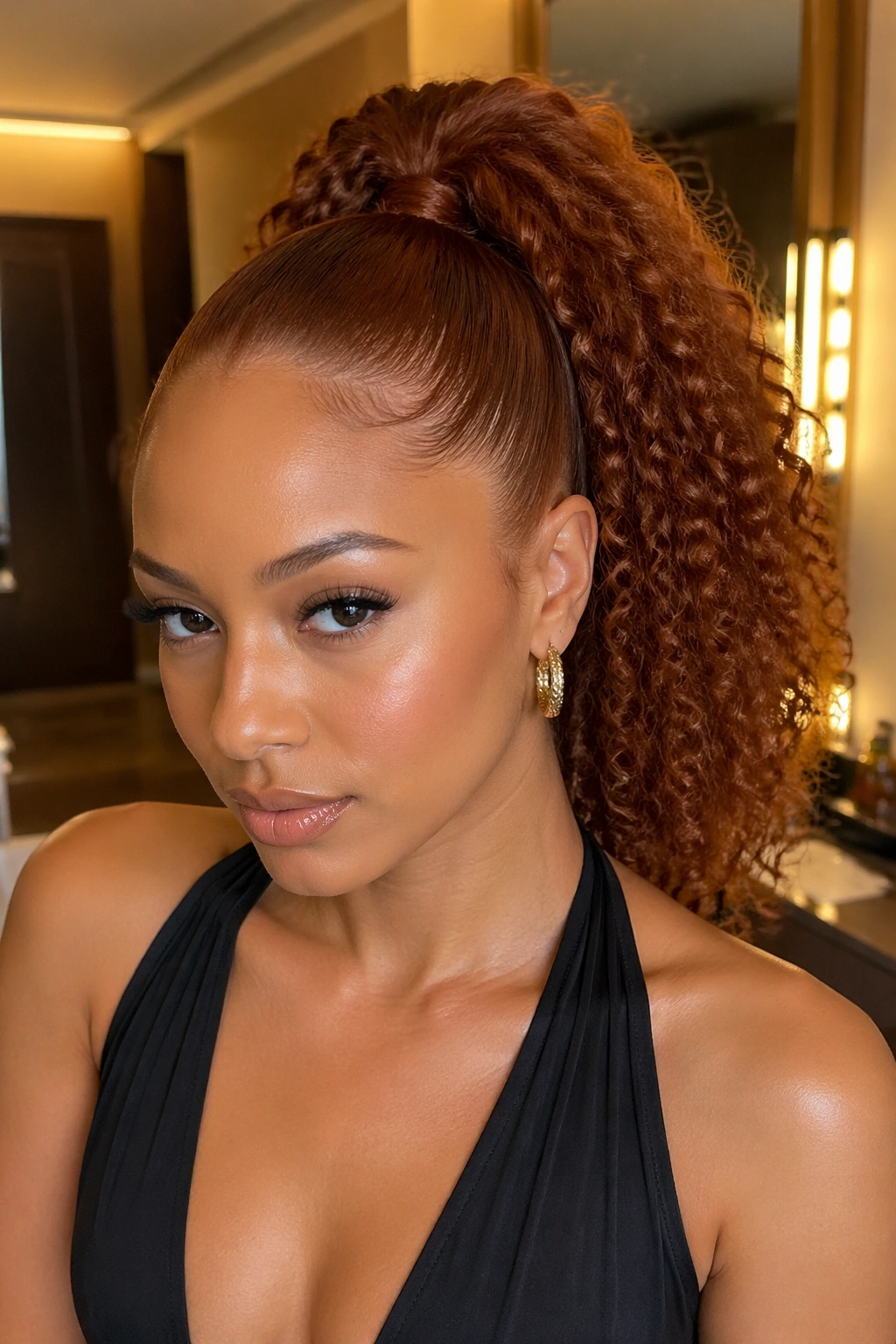
This is the ponytail when you want the style to look intentional from across the room. The sides are smooth, the crown is controlled, and the curly tail delivers all the movement. Cinnamon ginger hair handles this shape well because the slicked sides make the color in the ponytail look even brighter by contrast.
The roots need a little discipline here. Work a small amount of gel or edge control along the temples, then brush the hair upward in sections so you don’t create lumps. A soft brush helps more than a hard one. Once the ponytail is set, wrap a strand around the base for a cleaner line, then press the hair at the sides with a silk scarf for a few minutes if you want extra hold.
This style has a sharper mood than the others. It’s good for evenings, formal clothes, or days when you want the curls to look styled rather than casual. And if the ponytail itself is thick, even better. The contrast between the smooth sides and the dense tail is what makes it work.
15. Ginger Scarf-Tied Ponytail
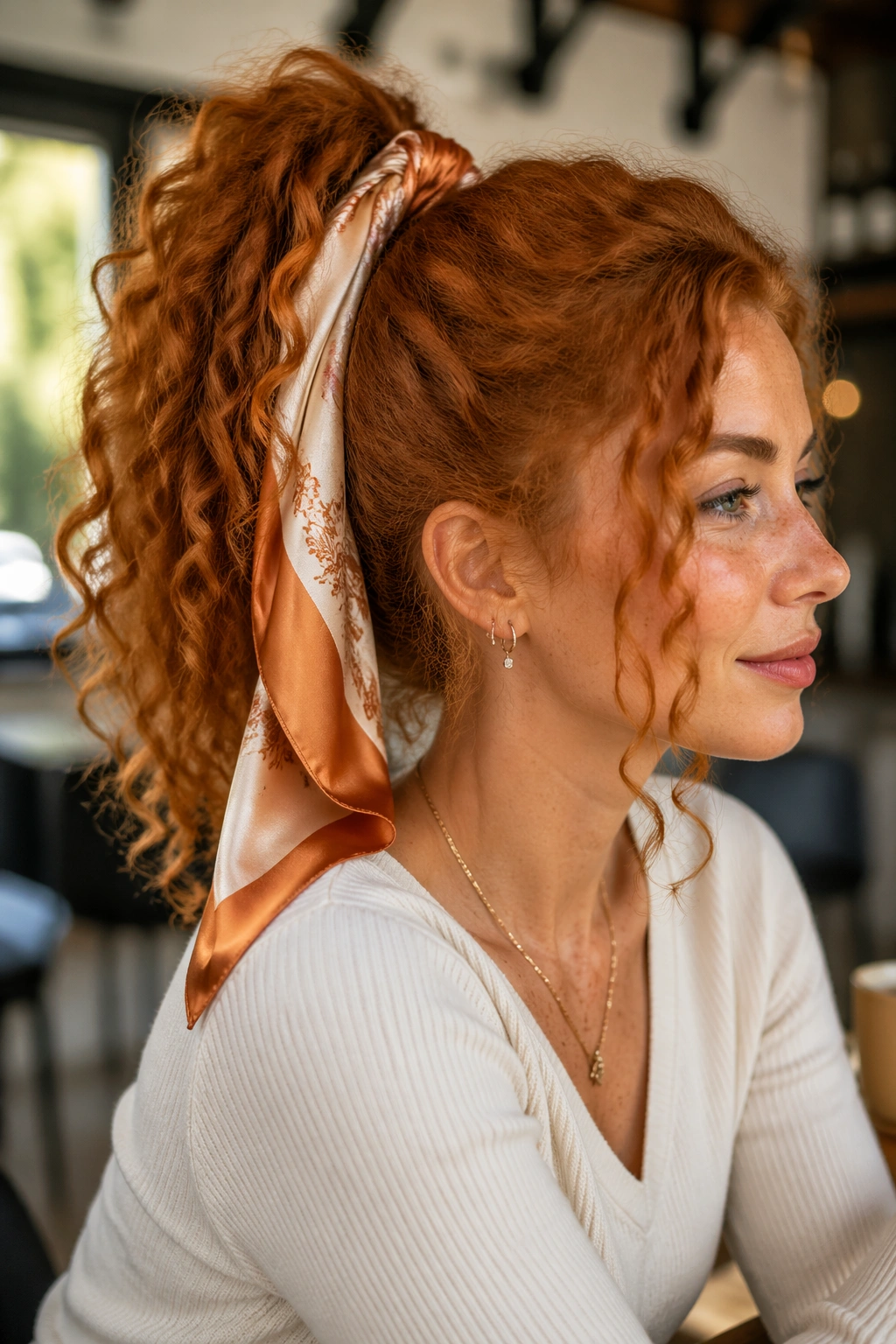
Why add a scarf to a ponytail? Because it solves three problems at once: it hides the elastic, gives the style color, and helps hold the base in place. On ginger curly hair, a silk or satin scarf can also echo the warmth of the shade without matching it too literally.
How to Wear It
Tie the ponytail first, then knot a 20-inch square scarf around the base or weave it through the elastic. Let the ends hang down, or tuck them into the ponytail if you want a cleaner look. A printed scarf with rust, cream, or deep brown in it tends to sit well against ginger tones.
The best part is how forgiving it is. If the ponytail is slightly uneven, the scarf distracts the eye. If the roots are frizzy, the scarf becomes part of the style instead of a cover-up. That’s not a bad thing. Sometimes a little disguise is what makes the whole look work.
Use this one on second-day curls, humid days, or any morning when you want the hair to look done without spending twenty minutes on it.
16. Curly Double-Section Ponytail
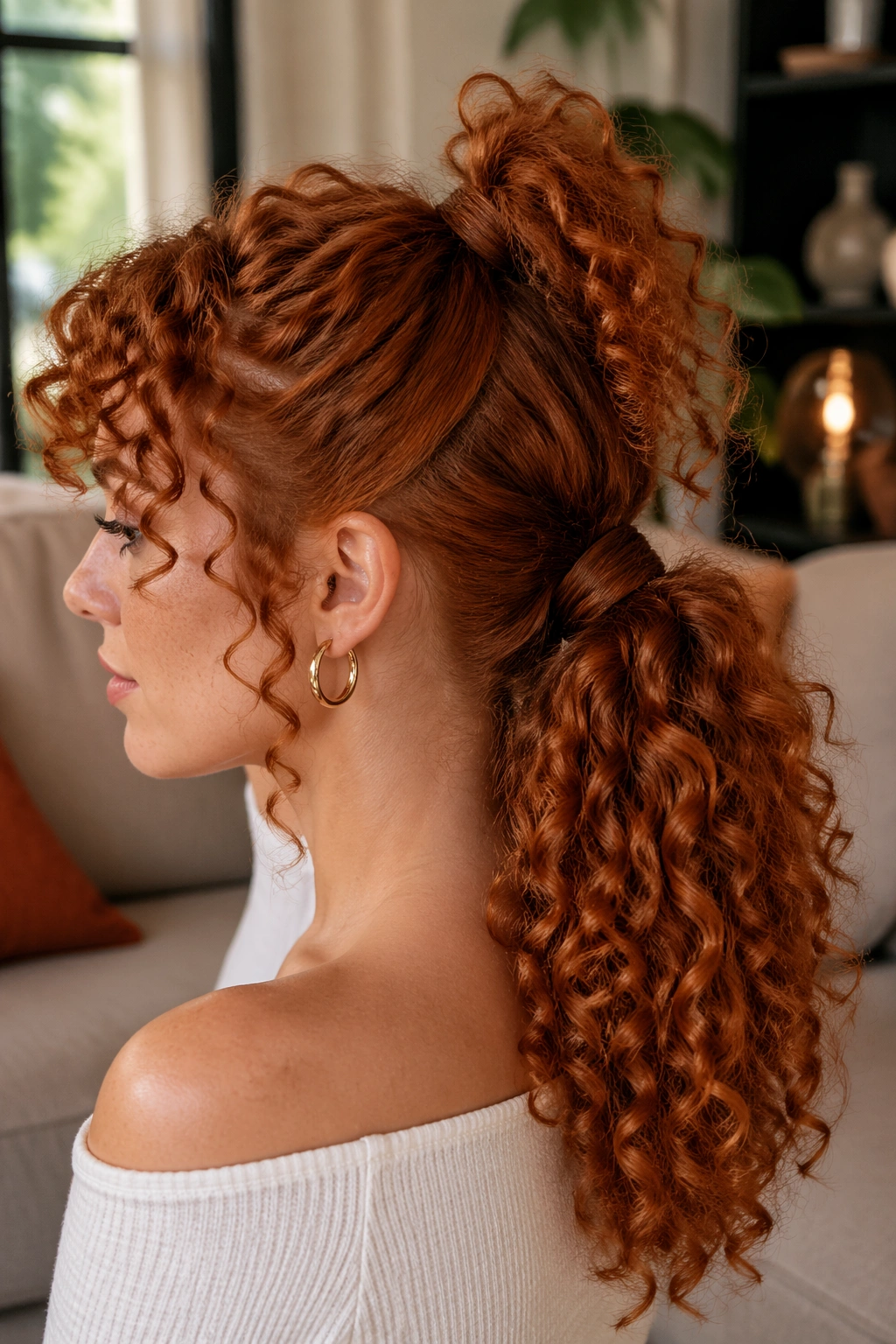
If your hair is thick, one ponytail can feel like too much weight in one place. A double-section ponytail fixes that by splitting the load into two stacked sections or two joined ponytails, depending on your length. It keeps the shape tidy and makes the curls sit more evenly.
The method is simple. Create a top ponytail at mid-head, then gather the lower section into it, or make two ponytails close together and merge them visually with a wrap of hair. The result looks like one fuller ponytail, but it stays lighter at the roots. That matters if your curls pull hard on the hairline.
This style is good for long, heavy ginger curls because it keeps the base from collapsing. It also makes the tail look longer and thicker than a single tie sometimes can. If you have a lot of density, don’t skip this one. It’s one of those boring little tricks that solves a real problem.
17. Rose-Ginger Side-Swoop Ponytail
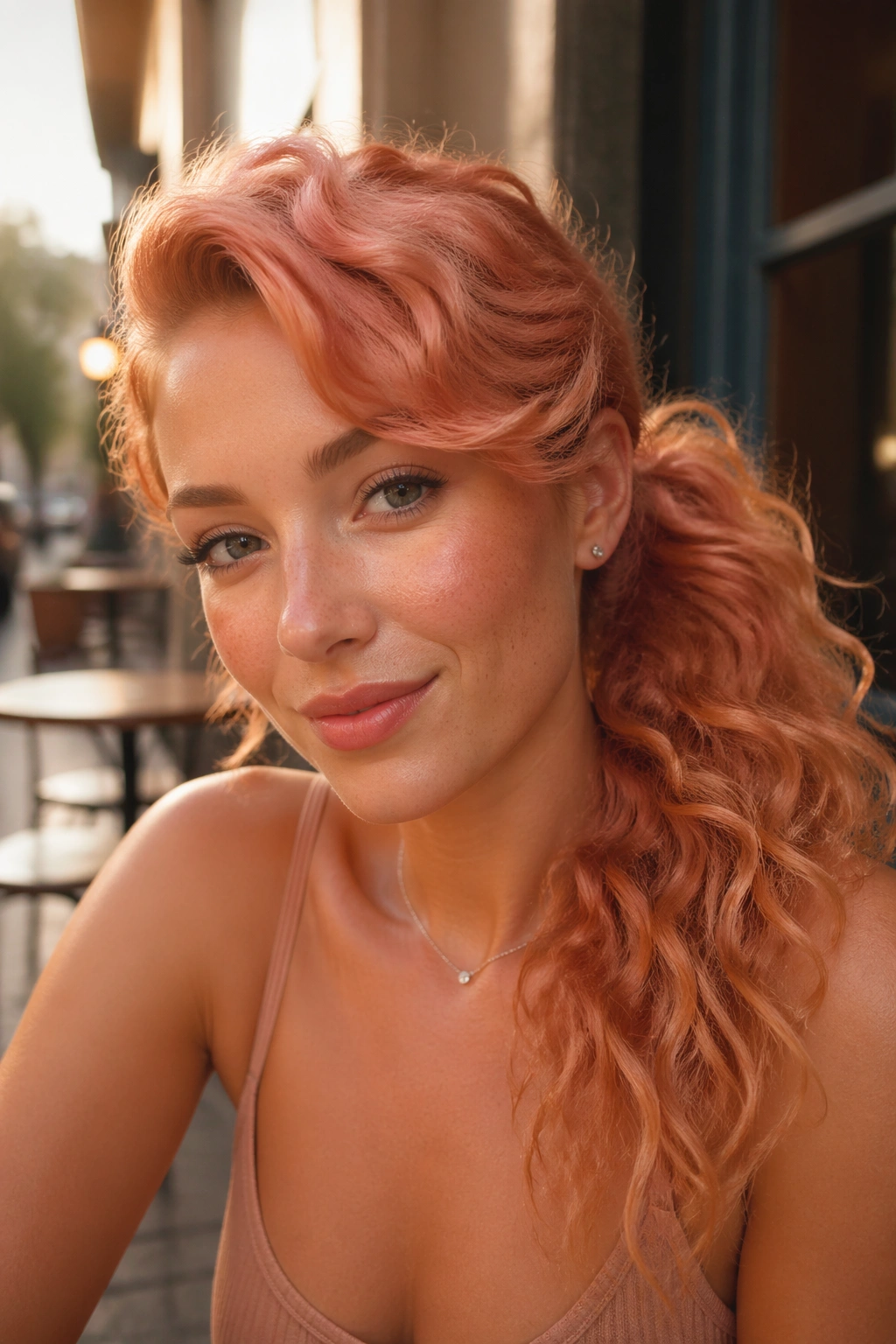
A side-swoop ponytail gives ginger curls a softer edge than a straight-back style. The front section is brushed or pinned gently across the forehead, then the rest is gathered to one side so the curls fall over the shoulder with a little more shape. On rose-ginger hair, the effect is almost painterly, though I’d rather call it flattering and leave it at that.
The real win here is movement. The swoop in front keeps the style from feeling flat, while the ponytail itself stays full. This is a nice choice for layered cuts, because the short pieces at the front can blend into the sweep instead of sticking out awkwardly. If your hair is very curly, keep the swoop loose. Tight side-sweeping can look severe fast.
Use a light cream or leave-in at the front and a slightly stronger hold at the ponytail base. That keeps the silhouette clean without making the curls crunchy. It’s a graceful shape, but not fussy.
18. Toasted Copper Mohawk Ponytail
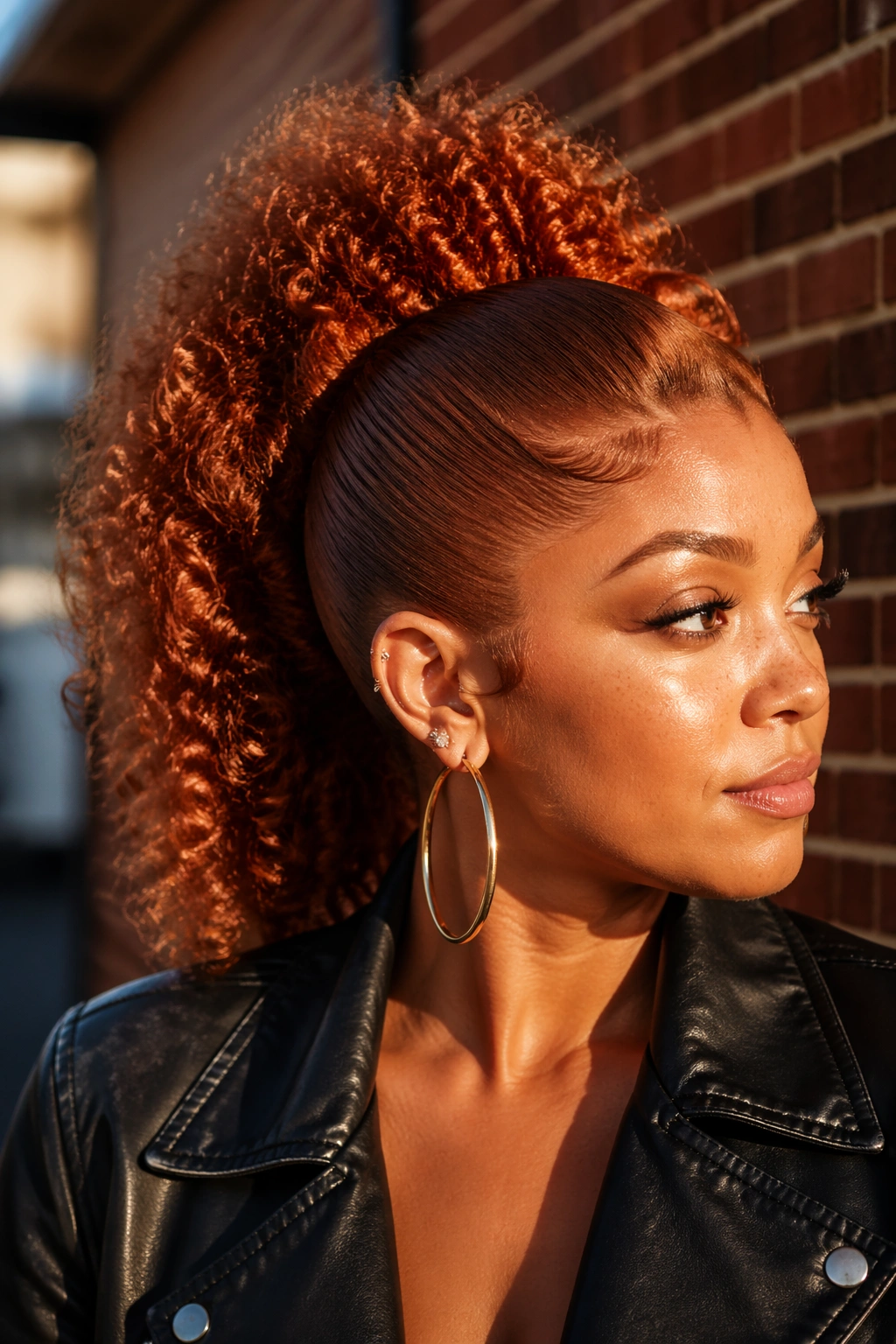
Compared with a standard high ponytail, the mohawk version keeps the sides tighter and builds height through the center. That gives curly ginger hair a sharper outline and a little edge. It works especially well if you like bold earrings, undercuts, or clothes with strong shoulders.
The center section should stay lifted from the forehead back to the crown. Smooth the sides with gel or cream, then gather the ponytail high and narrow. You want a ridge down the middle, not a puff all over. That contrast is what makes the style read as a mohawk instead of just a high ponytail with attitude.
This one is not subtle. Good. Not every style needs to be. If your curls are dense, the height looks even better because the center line stays visible while the tail gets fuller at the ends. Use a few bobby pins near the temples if the sides keep puffing out before you’re ready.
19. Auburn Loop-Through Ponytail
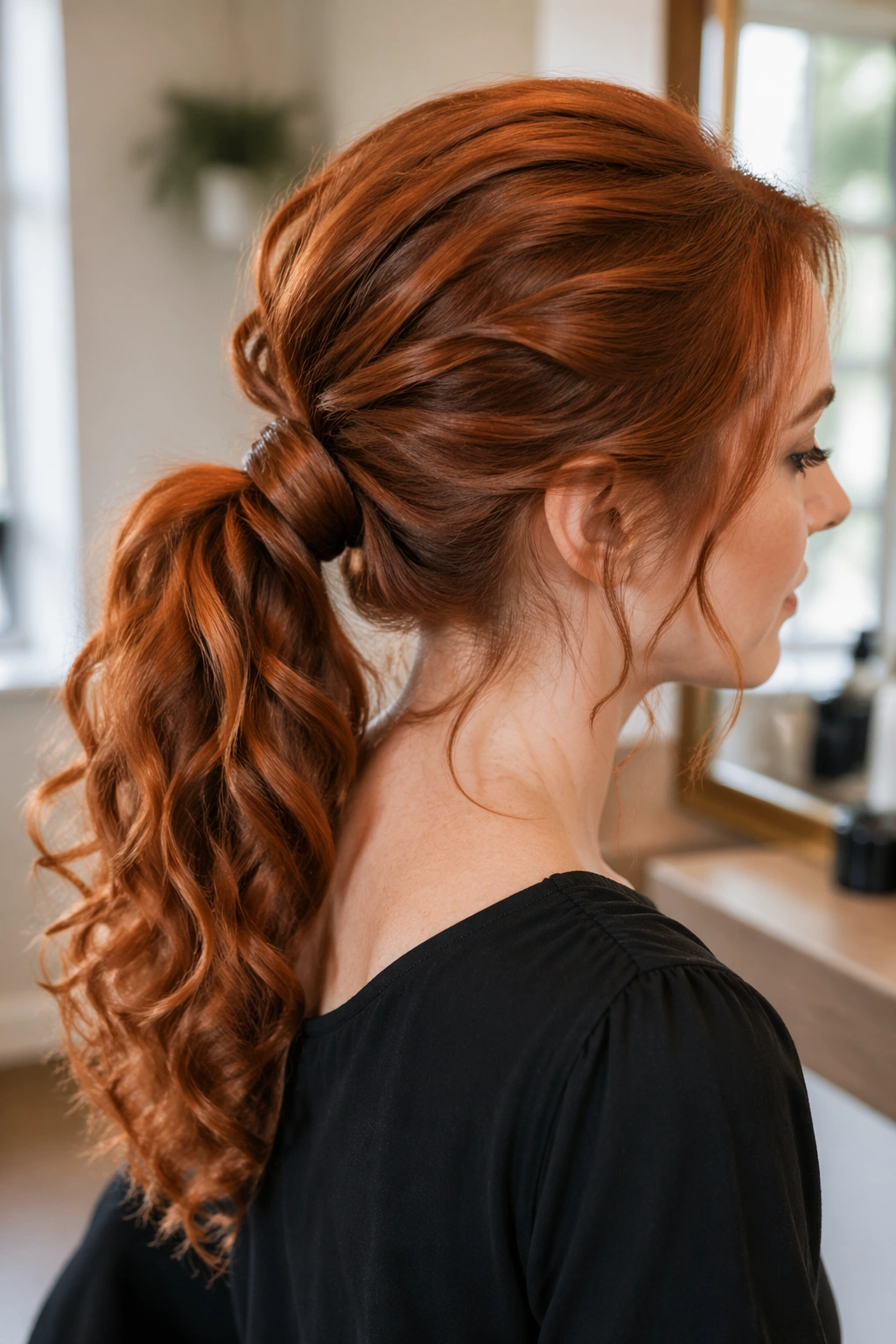
A loop-through ponytail gives curly hair lift at the base without asking for much skill. It looks a little more shaped than a basic tie, and the loop creates a subtle twist that works beautifully with auburn color because the light hits the fold in the hair.
Why the Loop Gives Lift
Tie the hair into a low or mid ponytail, leave a small gap above the elastic, and flip the tail through that space. That simple move creates a rolled effect at the base. If you want more height, tease the roots slightly before you tie it. If you want a smoother finish, use cream first and keep the loop neat.
- Best with medium to long curls.
- Use a covered elastic so the loop looks clean.
- Keep the tail curly and loose after the flip.
- Pin the base if the hair feels heavy.
It’s a small detail style, not a dramatic one. But that’s why it works. You get structure without sacrificing curl movement, and the color gets a nice break in the shape.
20. Ginger Ponytail with Braided Base and Loose Ends
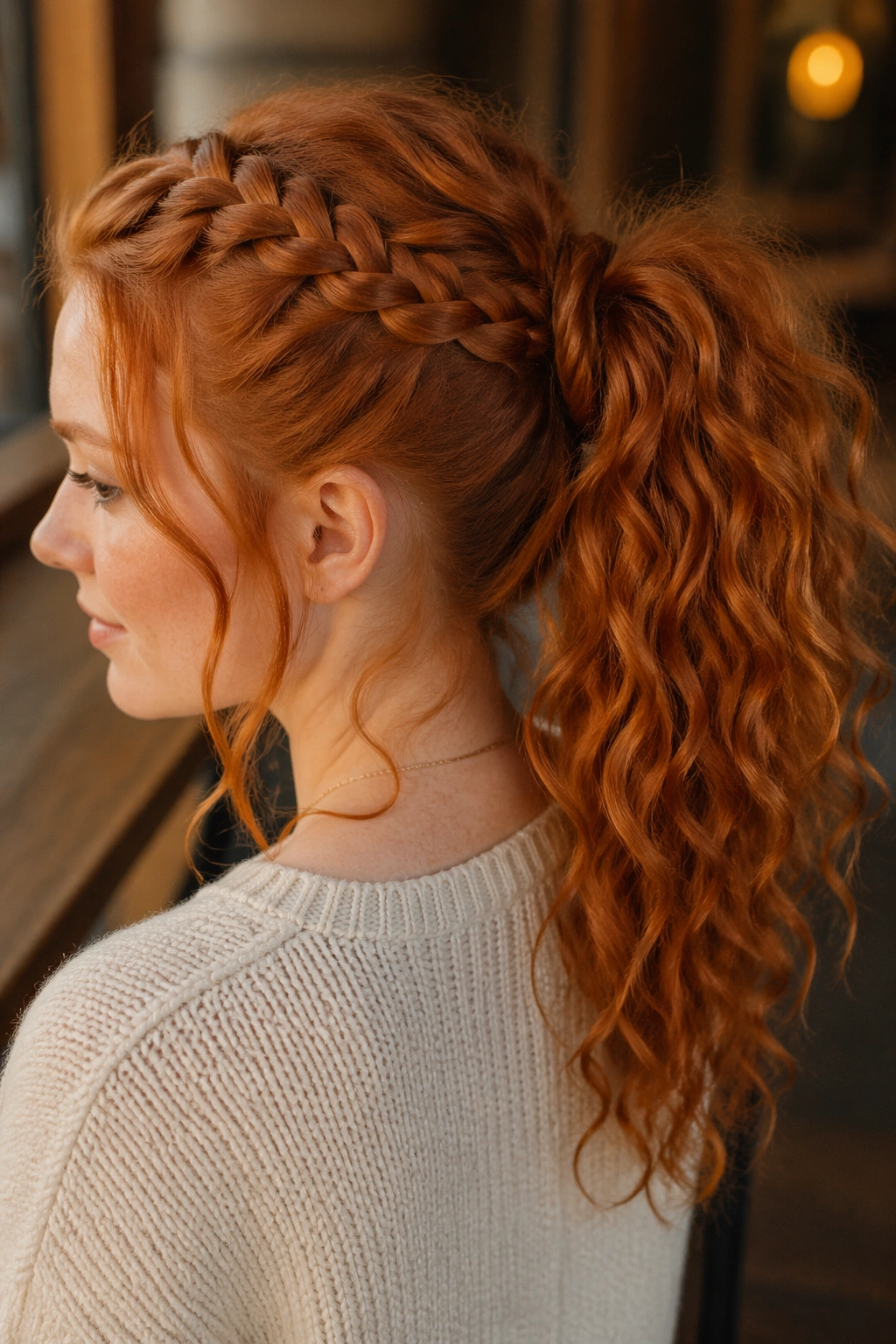
A braided base turns a plain ponytail into something more finished right away. One thick braid at the top or back gives the style a clear starting point, and then the loose curly ends keep it from feeling too rigid. On ginger hair, that braid can show off the color in a tighter pattern before the ponytail opens up.
This is one of my favorite fixes for ponytails that look a little plain. You don’t need a full head of braids. Just braid a small section—three or four plaits, maybe a little more if your hair is thick—then secure it into the ponytail. The braid becomes part of the base, and the curls take over after that.
The style works well for shoulder-length hair, too, because the braid adds visual length. It also keeps the front from puffing out too much. If you like your ponytails to look styled but not overworked, this is a very good middle ground.
21. Copper Cloud Ponytail for Long Curly Hair
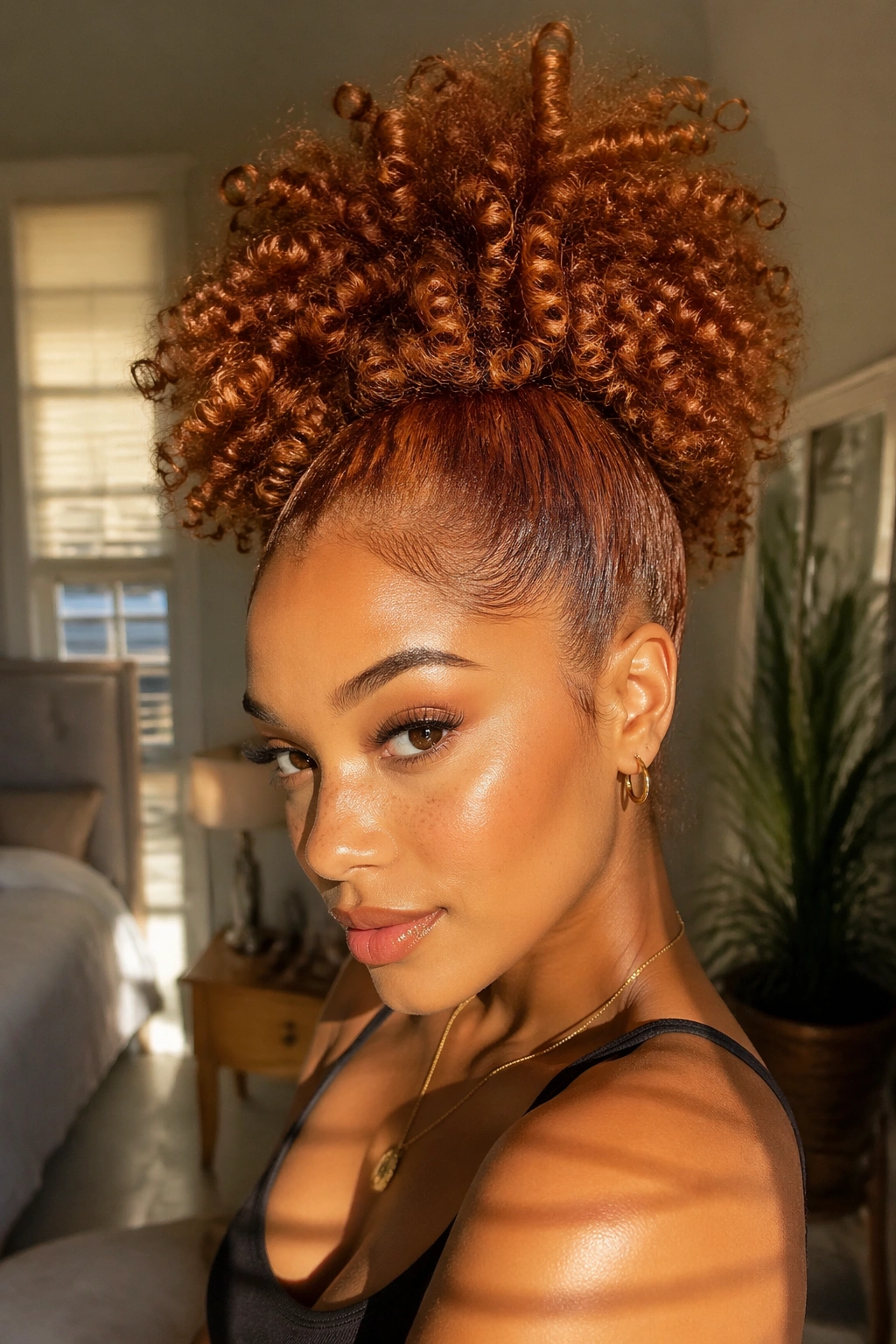
A copper cloud ponytail is what happens when you stop trying to flatten long curls into one narrow shape. The ponytail sits mid-high, the curls stay fluffy, and the whole thing reads like a soft cloud of copper movement. It’s one of the best ways to show off length without making the style feel heavy.
The important part is not over-compressing the hair at the tie. Use a gentle elastic, gather the curls with your hands instead of a brush if you can, and let the tail stay broad. Long curly hair needs room. If you squeeze it too tightly, the tail turns stringy at the bottom and loses the airy shape that makes this style worth wearing.
This is also the most forgiving of the bunch. Slight frizz? Fine. A little shrinkage? Fine. Ends that curl in different directions? Also fine. That unevenness is part of the look, and ginger hair makes it even better because the color variation shows through the layers. If you want a ponytail that feels full, warm, and alive, this is the one I’d keep near the front of the rotation.
