



The weight of thick hair is a blessing and a burden. You have the volume that everyone else tries to fake with extensions, but you also have a mane that snaps standard hair ties, creates a constant, throbbing tension at the scalp, and can literally pull your head back if you pull it too tight. Styling thick hair into a ponytail is less about “just pulling it back” and more about engineering. You need structural integrity, weight distribution, and a bit of finesse to keep your hair secure without inducing a headache by lunchtime.
When you have density, the standard one-loop elastic simply won’t cut it. You need a strategy. We are moving past the “quick-and-messy” struggle and into a place where your ponytail is actually comfortable, secure, and deliberate. Whether you are prepping for a workout, heading into a boardroom, or just trying to get your hair off your neck in the middle of a hot summer day, these styles are designed to hold up to the challenge of your specific hair type.
1. The Double-Elastic Anchor
Most people with thick hair make the mistake of using one hair tie and then wondering why it sags within twenty minutes. The solution isn’t a tighter tie—it is physics. Use two elastic bands instead of one, but apply them strategically. Gather your hair into your desired ponytail position, and secure it with the first elastic. Then, loop a second, decorative hair tie over the base. This provides a structural base that doesn’t rely on the single elastic having to do all the heavy lifting of holding up the weight of your entire ponytail.
Why It Works for Thick Hair
The first tie acts as the anchor, while the second tie (often a fabric-covered one or a velvet scrunchie) acts as the aesthetic cover that also adds a layer of friction to prevent the first band from slipping. It prevents that dreaded “pony-tail sag” where the elastic slowly creeps down the length of your hair until you are left with a low, sad lump at the base of your neck.
2. The Sleek High Pony
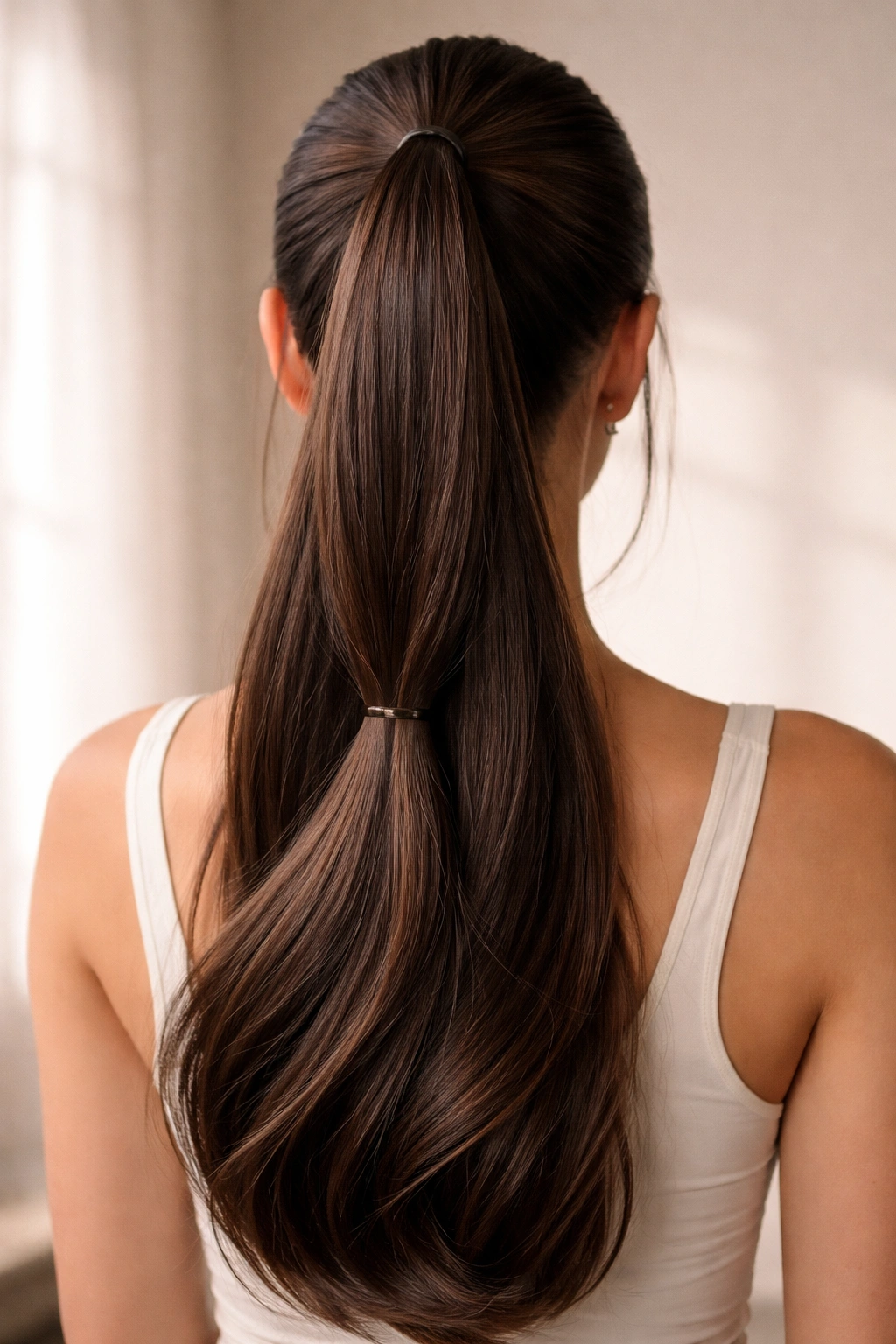
This is the classic, the standard, the look that says you mean business. To get this look without the hair pulling at your scalp, you must approach it in two sections. First, gather the top half of your hair and secure it tightly with an elastic. Then, gather the remaining bottom half and integrate it into the first, using a larger, heavy-duty elastic to combine the two. This “two-tier” technique removes the sheer weight of trying to pull all the hair up in one go, which is the leading cause of scalp pain.
Pro Technique for Smoothing
Use a boar-bristle brush to gather the hair. These brushes are superior for thick hair because they distribute your natural oils from the root down and grab the stray flyaways that synthetic bristles often miss. Start with a light spritz of water or a light-hold pomade to ensure the hairline stays crisp.
3. The Textured Low Messy Pony
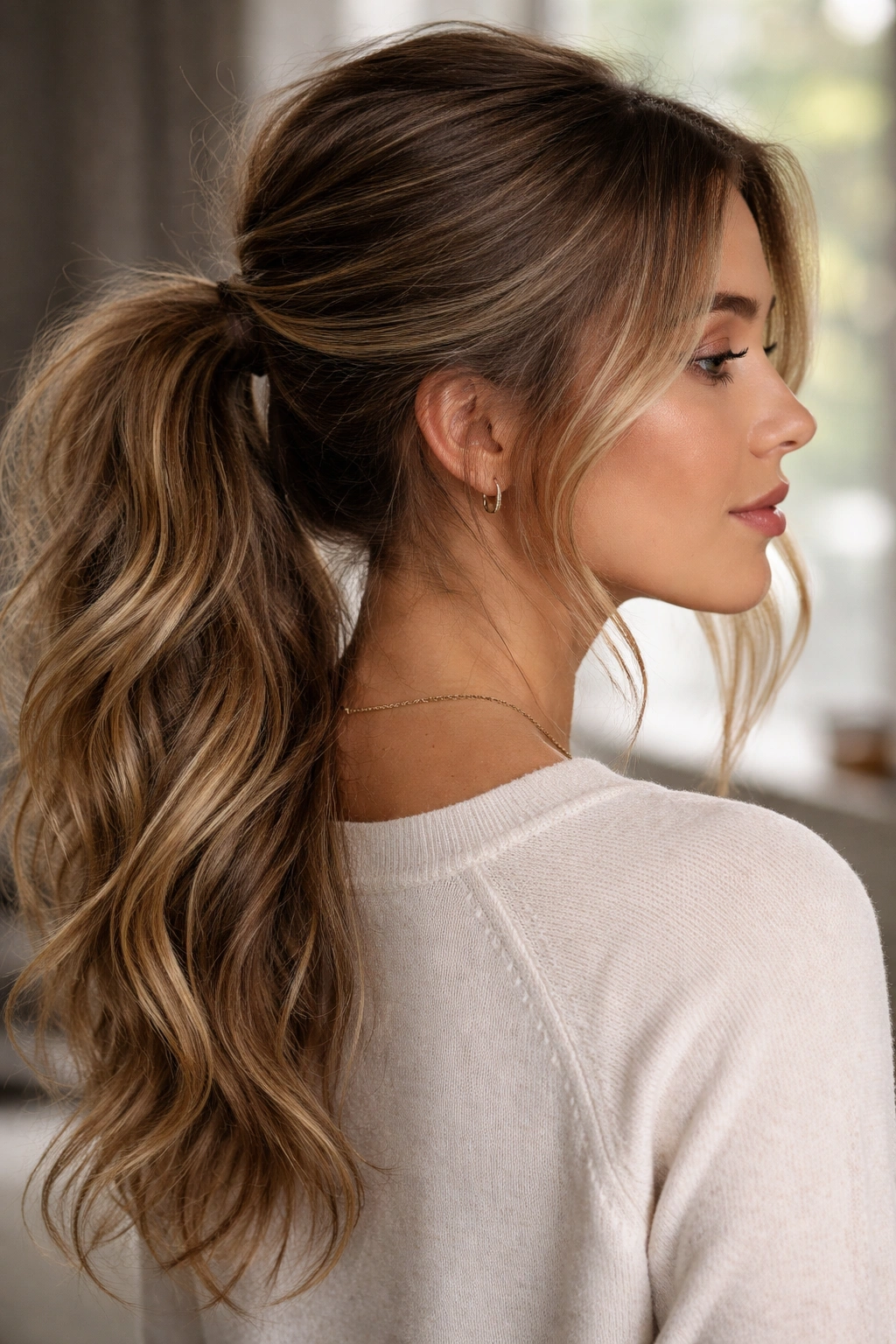
Sometimes you don’t want sleek; you want the kind of effortless look that suggests you just woke up and looked that good. The key here is not to try to make it look messy—it is to make it look purposefully messy. Use a dry texture spray throughout the roots and mid-lengths before you even start gathering your hair. The grit from the texture spray gives the elastic something to grip, so it won’t slide right out of your thick mane.
Styling Tip
Once the ponytail is secured with a loose tie, gently tug on small sections of hair at the crown of your head to create a little bit of volume. This prevents your hair from looking like a flat, heavy tail. It adds movement and softens the silhouette, making it perfect for a day out.
4. The Braided Base Pony
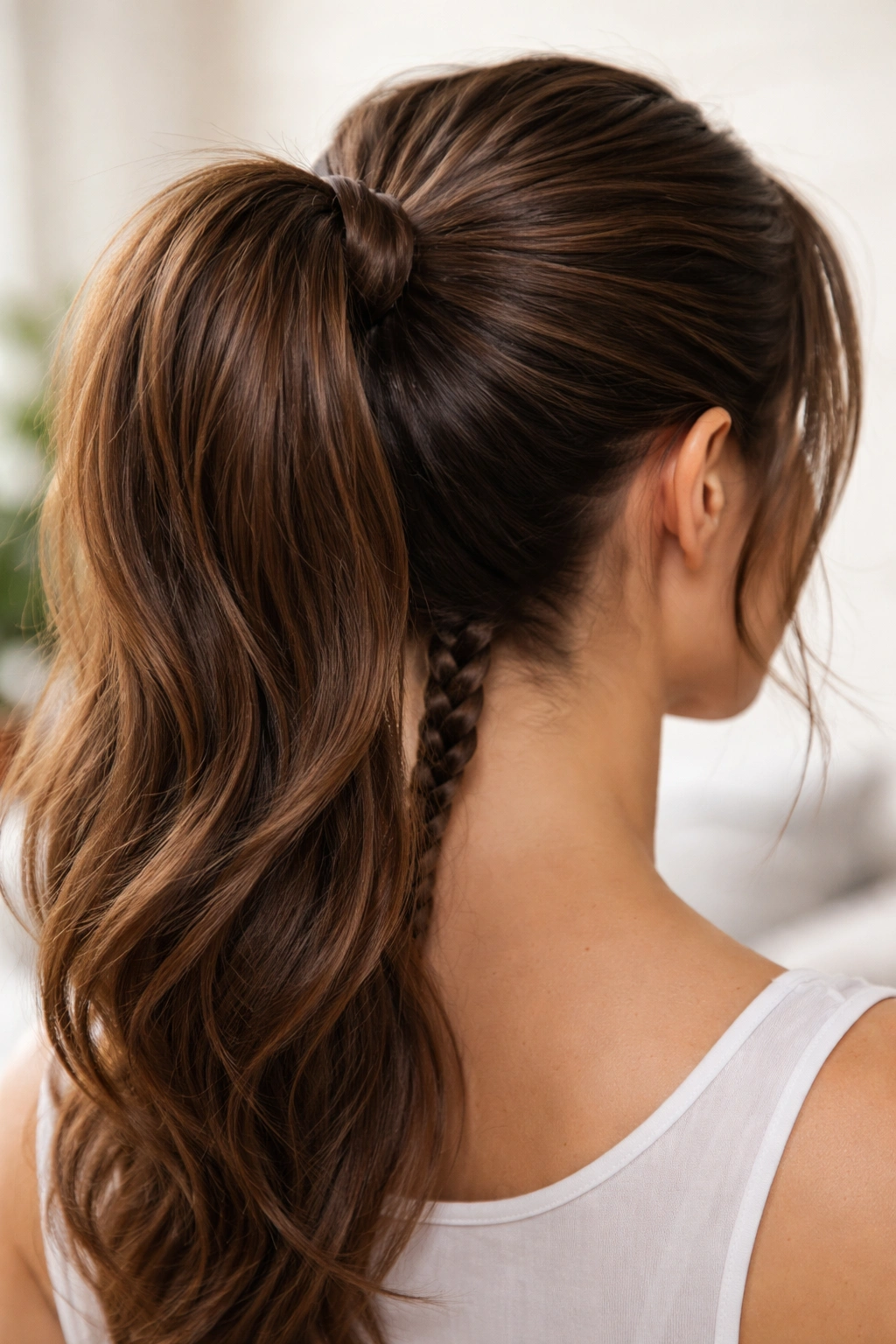
If you struggle with heavy ponytails sliding down, incorporating a braid at the base is a game-changer. Gather your hair into your pony, but leave out a small section of hair at the nape of the neck. Secure the rest of the hair into your pony. Now, braid that leftover section into a three-strand braid and wrap it tightly around the base of the ponytail, concealing the elastic.
Why This is Structural Genius
The braid acts as a structural reinforcement. Because it is wrapped tightly and pinned with a bobby pin, it acts like a clamp around the elastic, preventing it from stretching out or sliding down. Plus, it looks like you spent twenty minutes doing a complex style when it actually only took an extra minute of work.
5. The Claw Clip Pivot
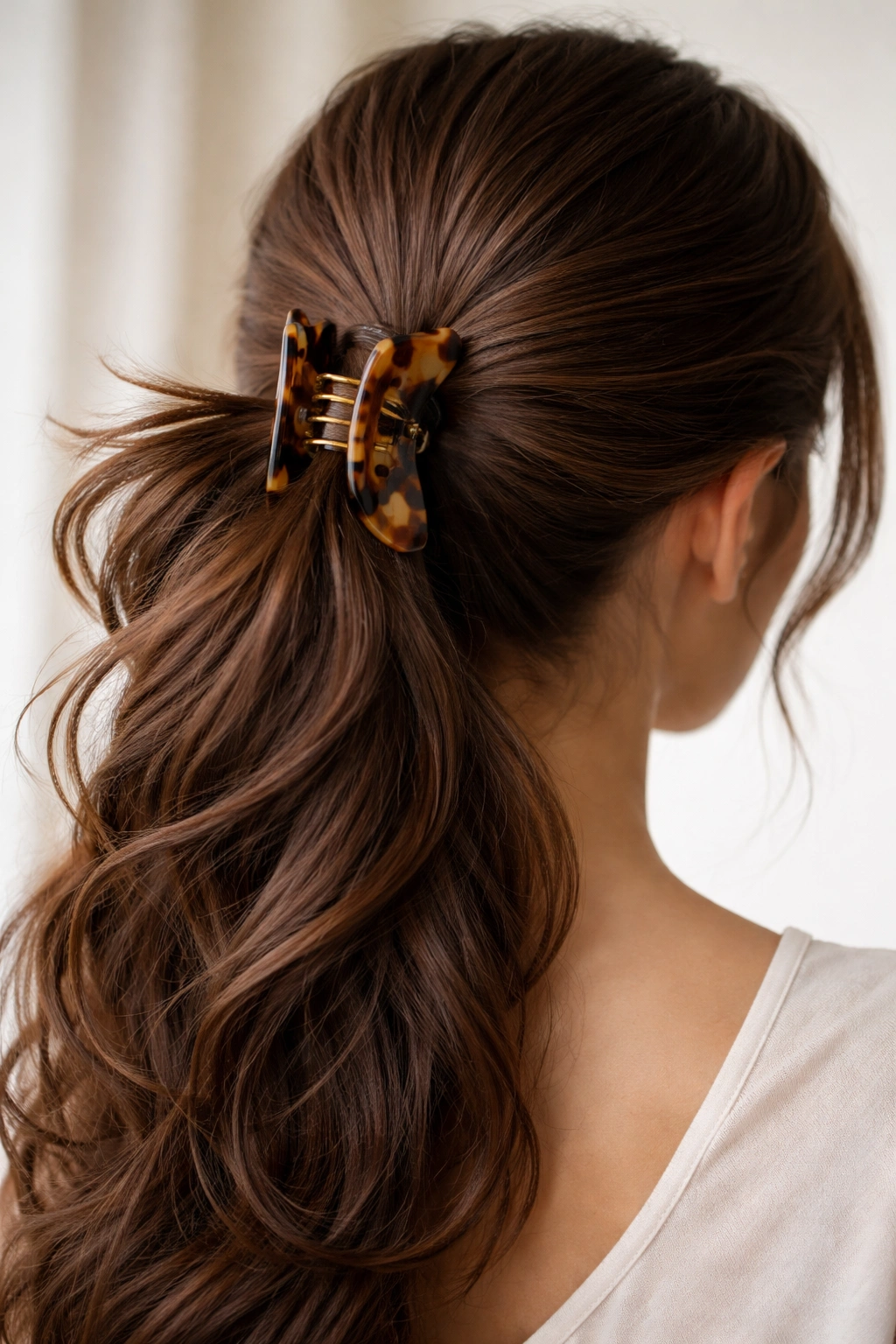
We have moved away from the era where the claw clip was strictly for “at-home hair.” A large, heavy-duty claw clip is actually better for thick hair than an elastic band, which can often act as a tourniquet. Gather your hair as if you are making a low ponytail, twist the length once, and then fold it up against the back of your head. Instead of using a tie, clamp the clip over the hair, allowing the ends of the ponytail to cascade out the top.
Choosing the Right Clip
With thick hair, size matters. Do not bother with the flimsy plastic clips found in discount bins. Look for cellulose acetate clips—they are stronger, less likely to snap under the pressure of a thick bundle of hair, and the material has a bit more “grip” on the hair strands.
6. The “Bubble” Ponytail
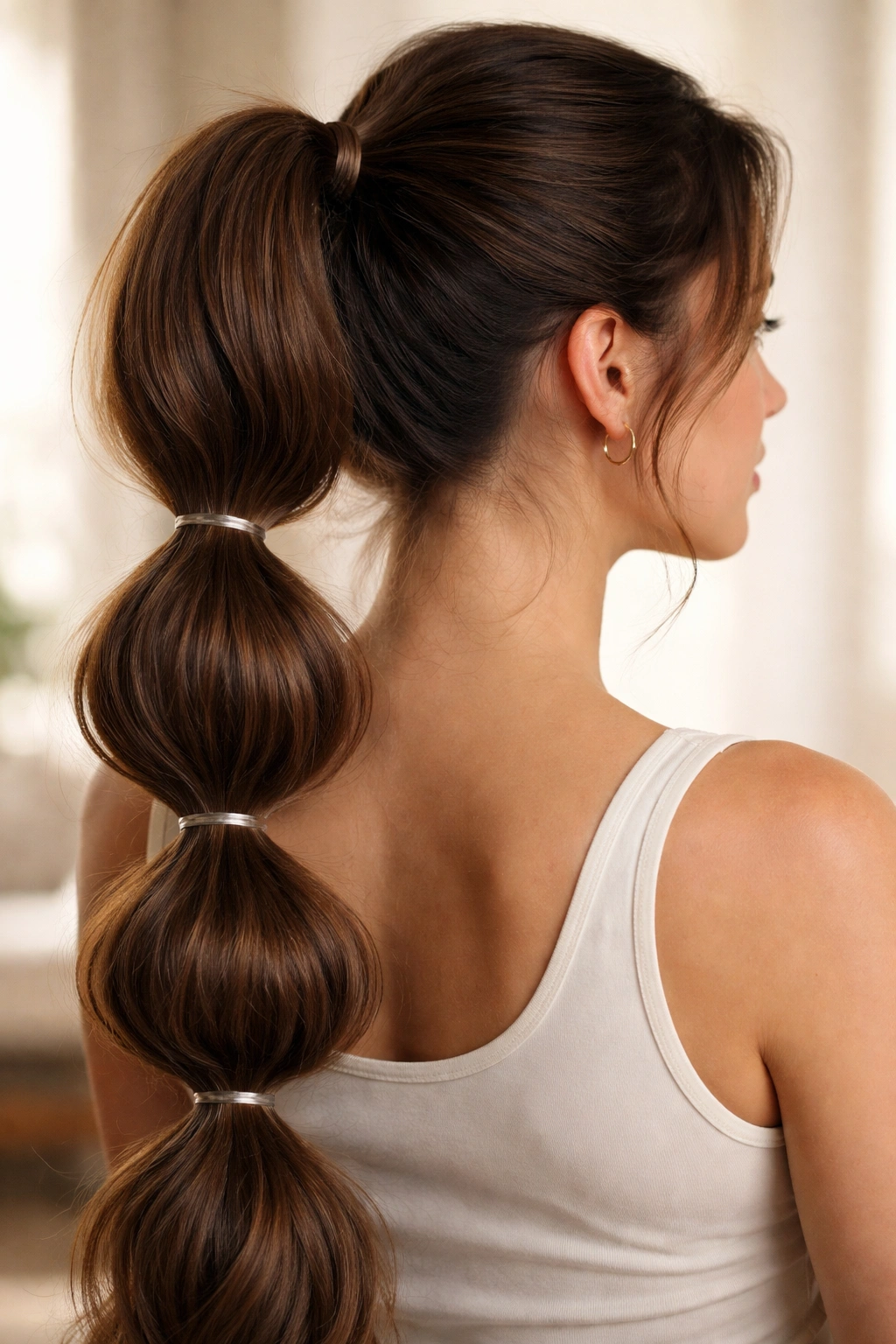
This is a fantastic way to control thick hair without it feeling like a weight on your head. Create a regular, slightly loose ponytail at your desired height. Every two inches down the length of the ponytail, place a small, clear elastic band. Once the band is secure, use your fingers to gently pull the sides of the hair between the bands to “puff” it out into a bubble.
Scaling for Thickness
Because you have thick hair, your “bubbles” will naturally be fuller and more pronounced than someone with fine hair. You don’t need to over-tease the sections; the natural volume of your hair will do the heavy lifting for you. This style is surprisingly secure because each segment of the ponytail is individually anchored.
7. The Half-Up Top Knot Pony
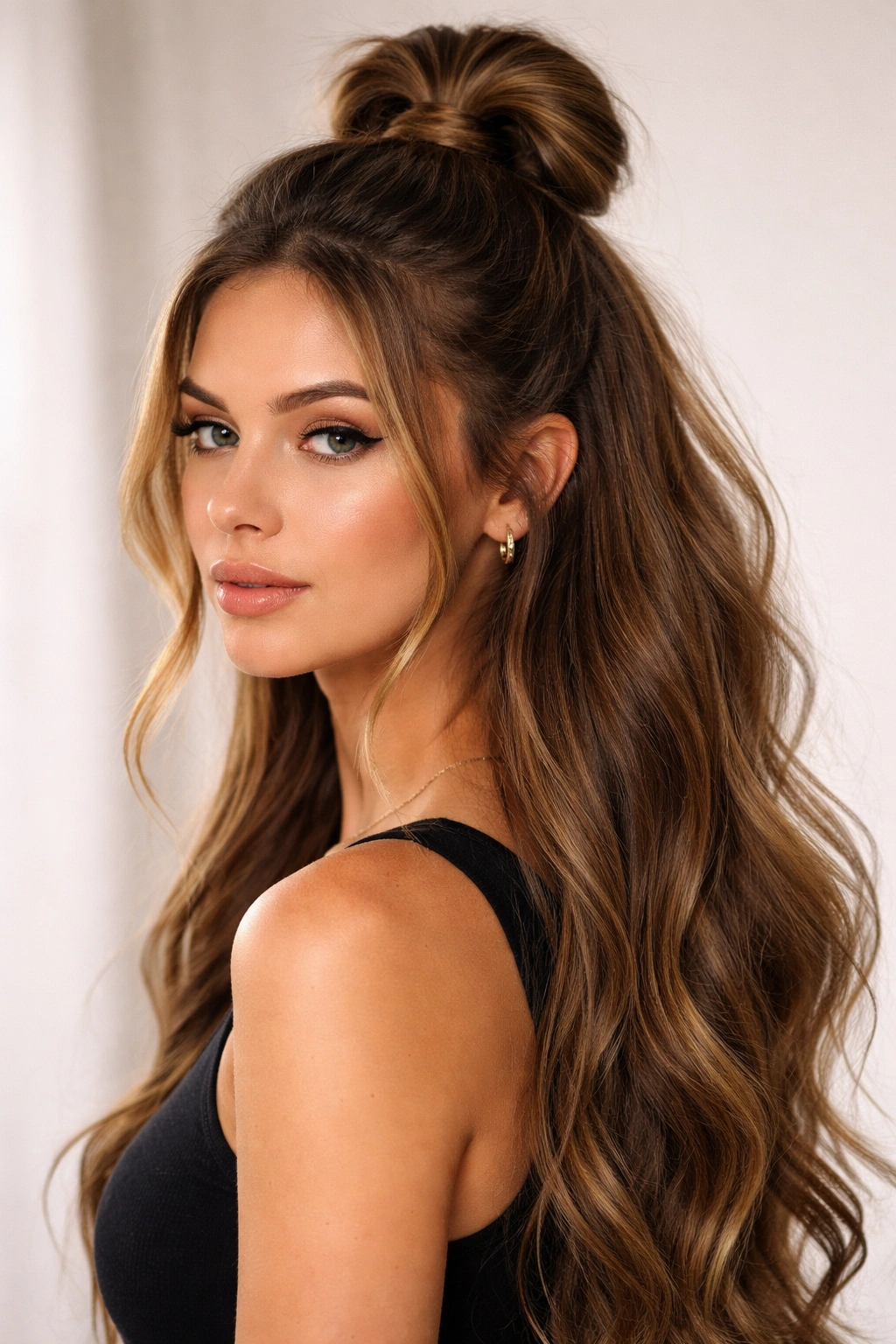
When you have thick hair, a full ponytail can feel oppressive on a hot day. This hybrid style gives you the control of a ponytail with the freedom of wearing your hair down. Gather the top half of your hair (from the temples to the crown) and secure it into a high ponytail or a small bun. Leave the rest of your hair loose.
Managing the Volume
If the top ponytail feels like too much volume, use a smaller hair tie or a thin silk scrunchie. The goal here isn’t to hold up all your hair—it is just to get the front pieces out of your eyes and create a little lift at the crown. It works beautifully with natural waves or curls.
8. The Wrapped Side Pony
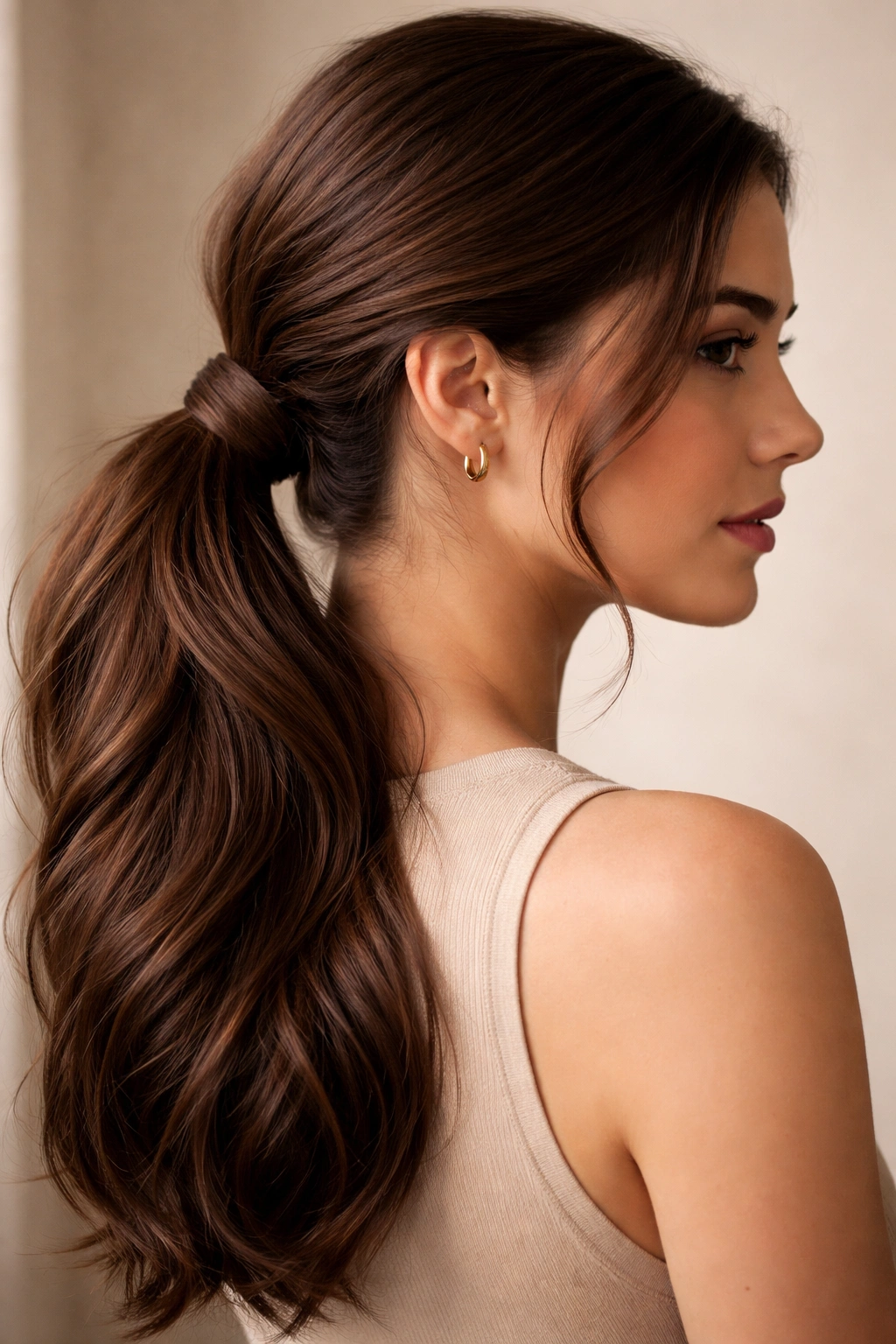
Moving your ponytail to the side instantly creates a softer, more romantic look that is easier to manage when you have a lot of hair. Gather everything to one side, just behind the ear. To elevate it, take a small one-inch section of hair from the underside of the pony, wrap it around the elastic, and pin it into place.
Why It’s Better Than a Center Pony
Side ponytails distribute the weight of the hair over your shoulder rather than letting it pull directly on the crown of your head. This significantly reduces the scalp tension that makes people with thick hair avoid ponytails in the first place. It’s a literal weight-off-your-shoulders style.
9. The Fishtail Braid Integration
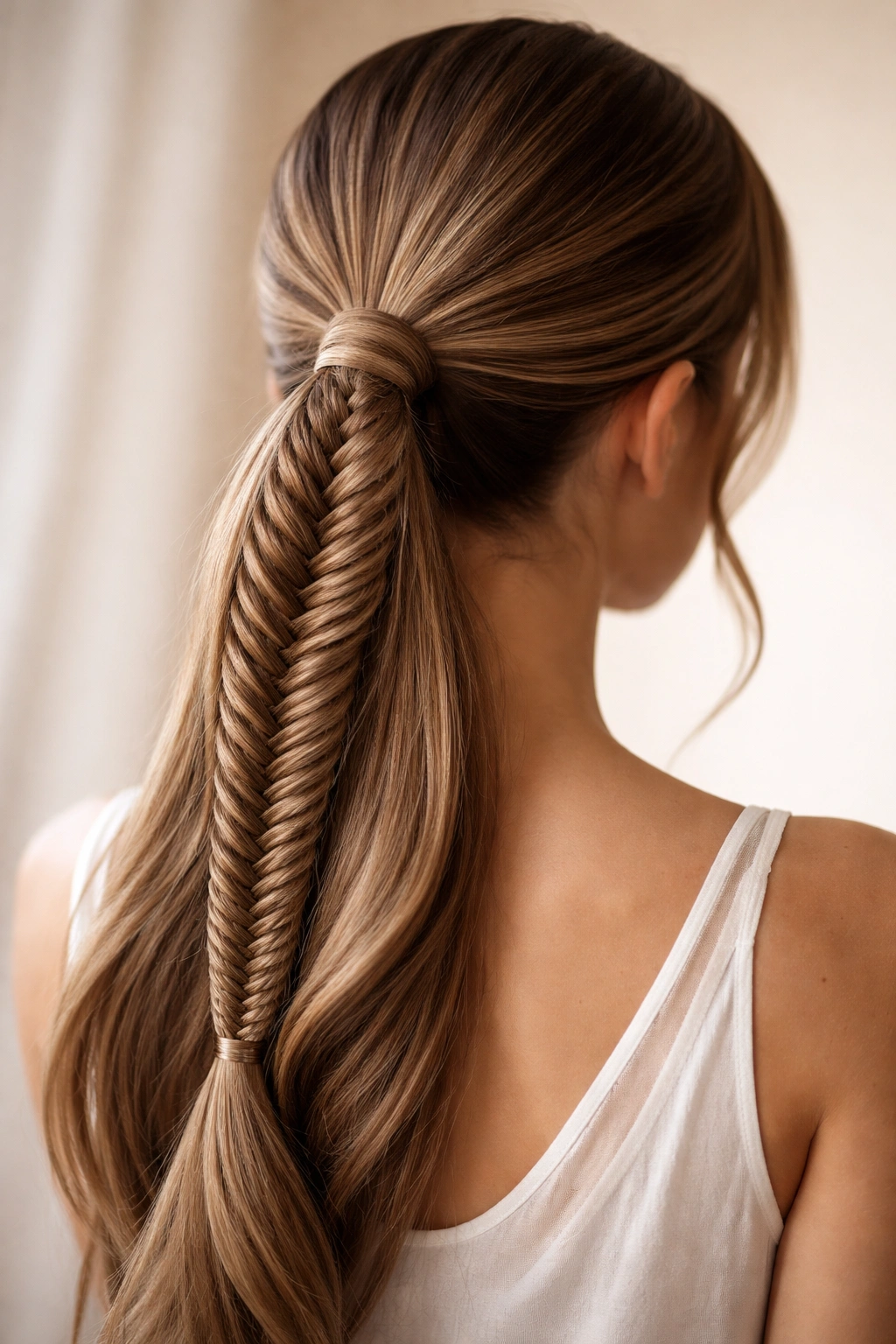
If you are tired of the standard “tail,” incorporate a fishtail braid into the length of the ponytail. Secure your hair in a low pony, then divide that pony into two sections. Alternating small pieces from the outside of each section, braid all the way to the bottom.
Troubleshooting the Tangle
Fishtail braids take time, and with thick hair, it is easy for the strands to get knotted during the process. Before you start, run a lightweight detangling serum or a tiny amount of leave-in conditioner through the length of the pony. It makes the hair much more pliable and easier to weave, which prevents you from getting frustrated halfway through.
10. The Minimalist Low Pony
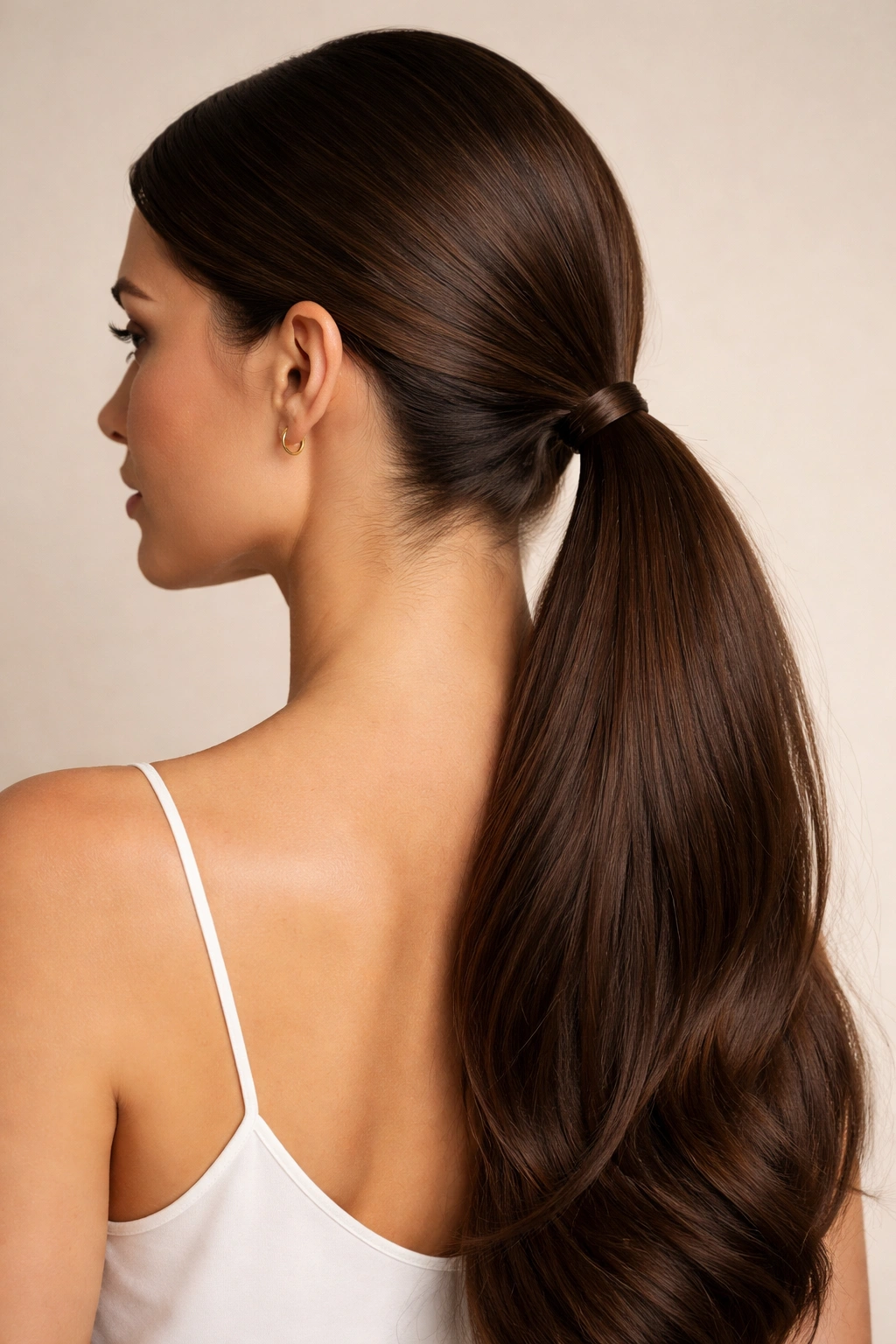
Sometimes, simplicity is the ultimate sophistication. For this, you need a high-quality, seamless hair tie that matches your hair color. Brush your hair back, keeping it centered, and secure it at the very nape of your neck. The key to making this look “done” rather than “lazy” is the parting.
The Parting Secret
A sharp center part or a dramatic side part changes the entire geometry of this style. With thick hair, a center part adds a clean, symmetrical frame to the face that balances out the weight of the pony in the back. Use a tail comb to get that line perfectly straight.
11. The Dutch Braid Crown Pony
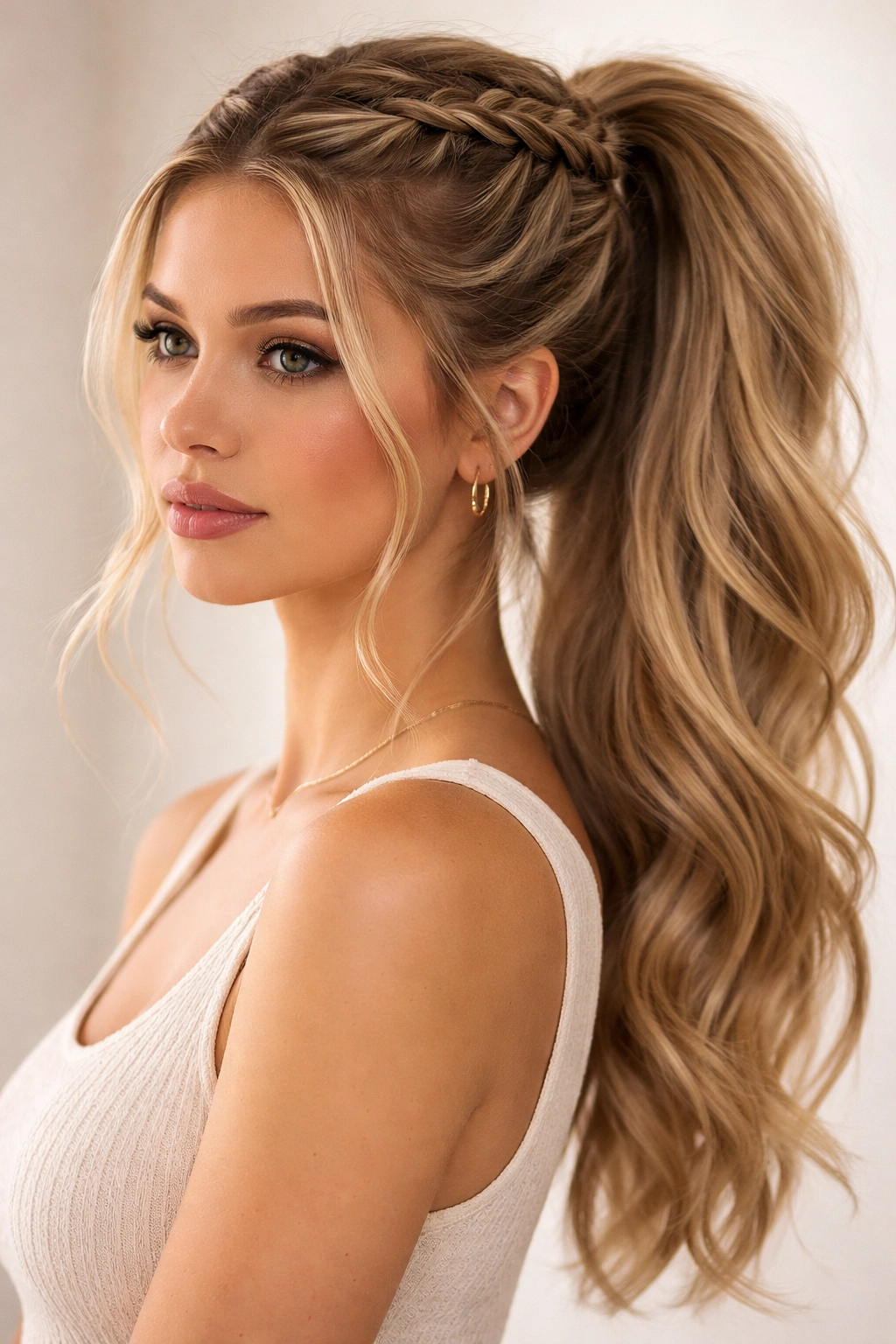
This style creates a beautiful “frame” for your face before pulling back into a secure, heavy-duty pony. Start by Dutch braiding (underhand braiding) the front sections of your hair, starting from your hairline and working back toward the crown. Once you reach the crown, gather the braids and the rest of your hair into a ponytail.
The Volume Hack
If your hair is very thick, the braids might end up being massive. Don’t pull too tightly on them as you braid. Keep them loose and slightly relaxed. This creates a softer, more romantic look that feels less like a tight, high-tension hairstyle and more like a breezy, intentional look.
12. The “Gym” High-Stability Pony
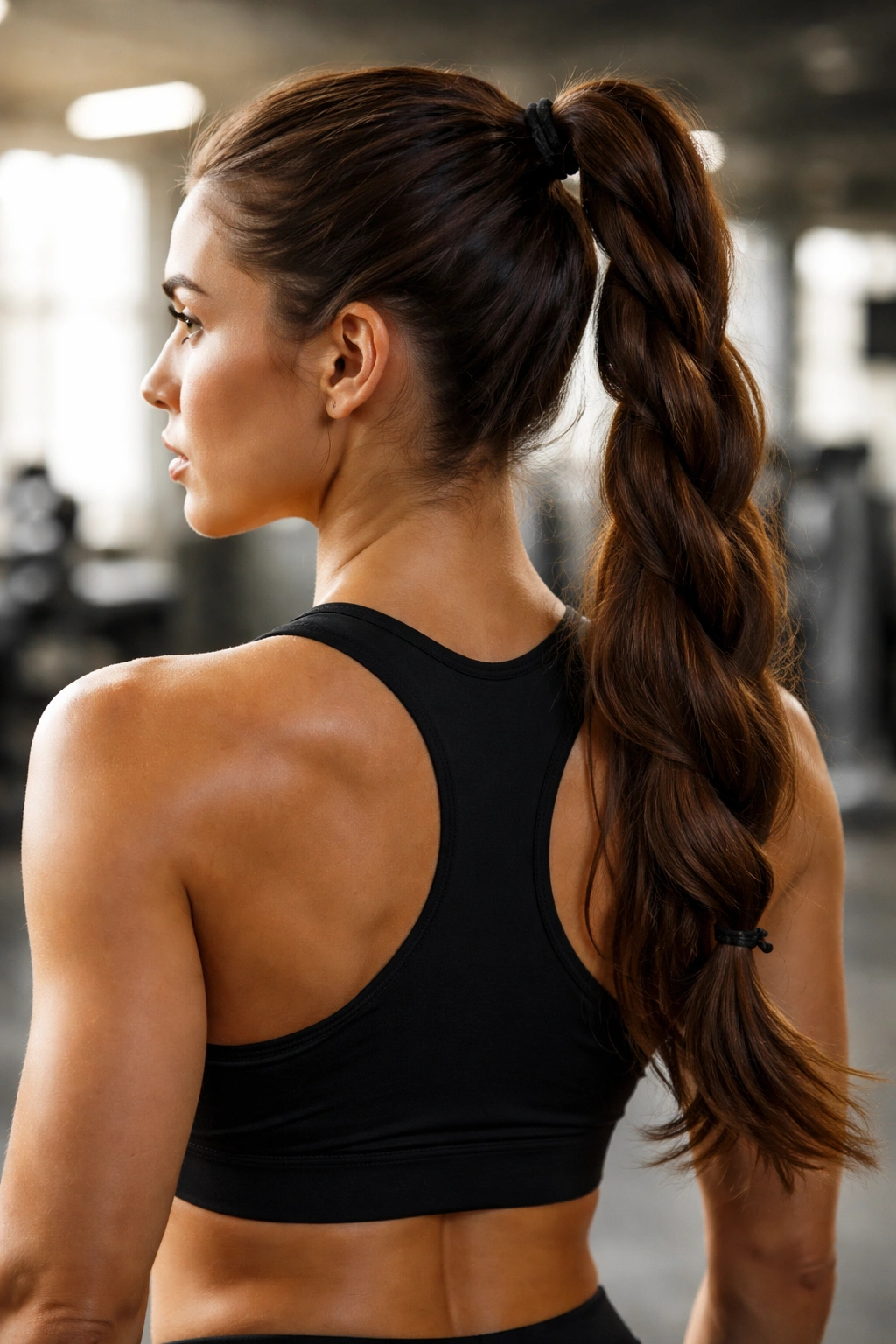
When you are actually working out, you need a ponytail that does not budge. The standard, “swinging” high pony is the enemy here. Instead, create a ponytail and then split the tail into two sections. Braid both sections tightly and then twist the two braids together into a single, rope-like ponytail.
Stability Factor
By braiding and twisting, you are effectively turning a loose, heavy mass of hair into a single, compact unit. It swings less, it stays out of your face, and it won’t whip you in the eye while you are doing cardio. Plus, you get those heatless waves when you take it out later.
13. The Retro 90s Scrunchie Style
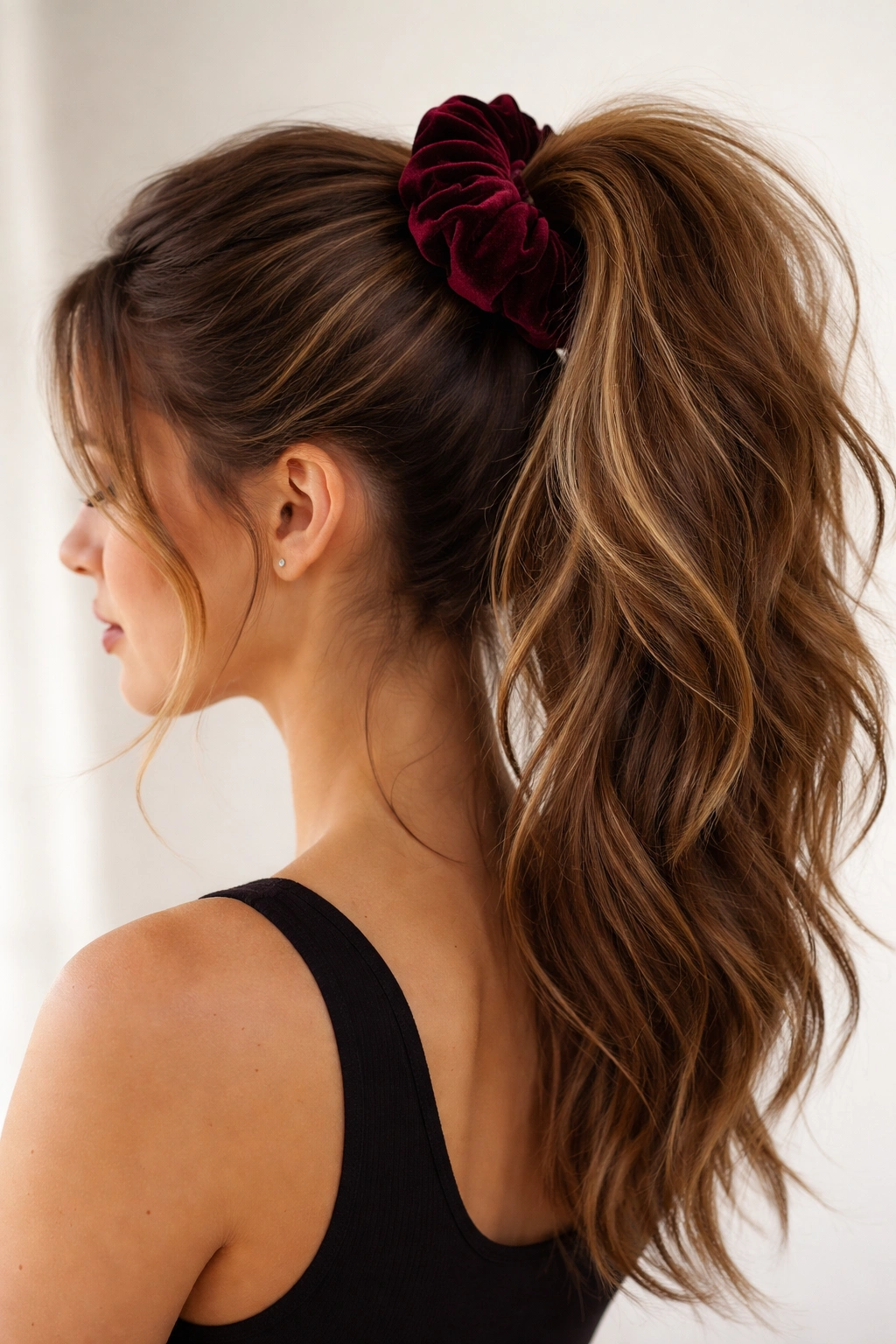
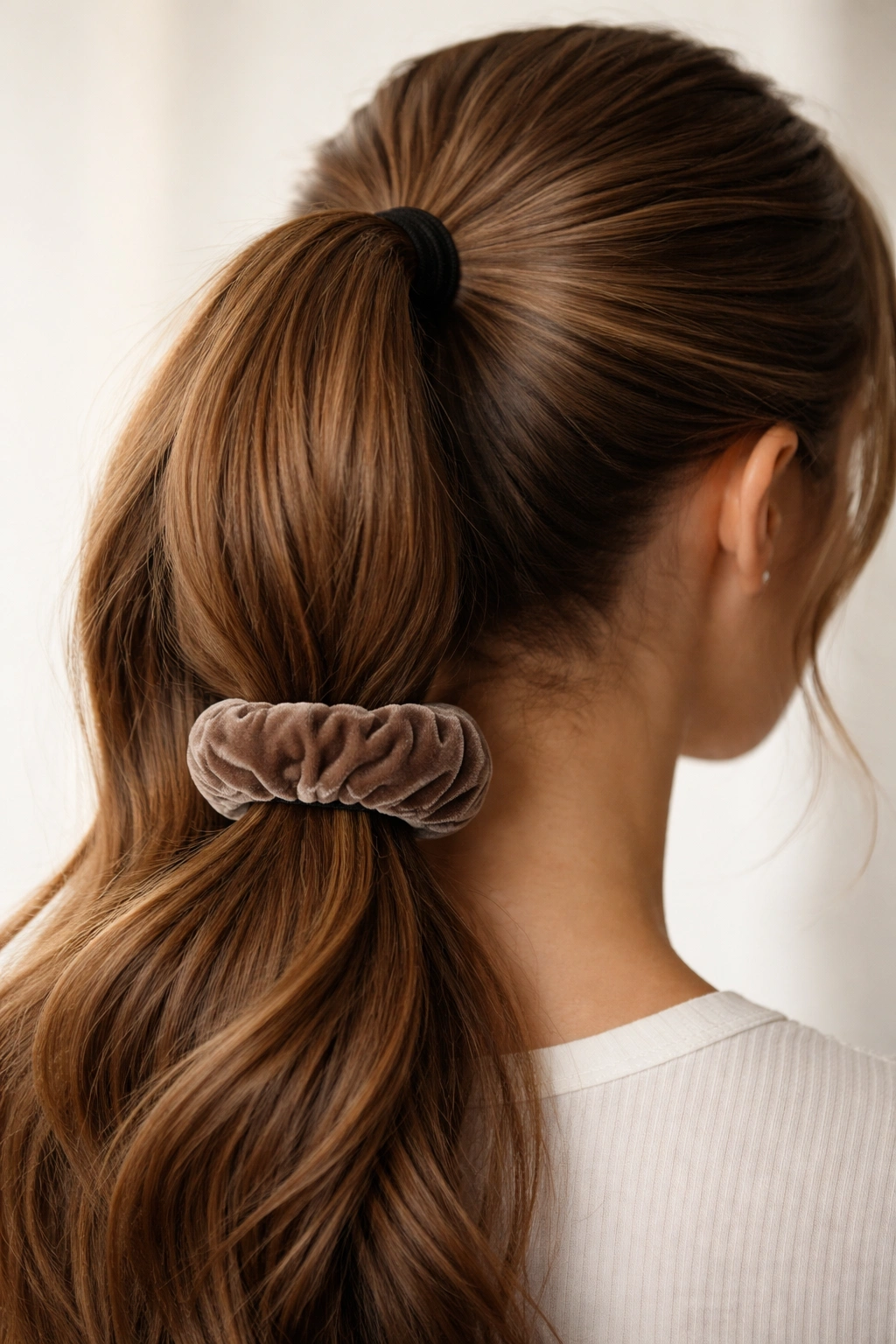
The scrunchie is back, and for thick hair, it is actually a functional tool. Because scrunchies are large and covered in fabric, they provide more “surface area” to hold onto thick hair than a thin, rubberized elastic. Gather your hair into a high, slightly messy ponytail and secure it with a large velvet or silk scrunchie.
Why it Wins
The velvet fabric grips the hair strands, preventing the slide that often happens with smooth, synthetic elastics. It is gentler on your hair cuticles, too, which means less breakage over time. It is a win for both style and hair health.
14. The Tucked-In Loop (The Inversion)
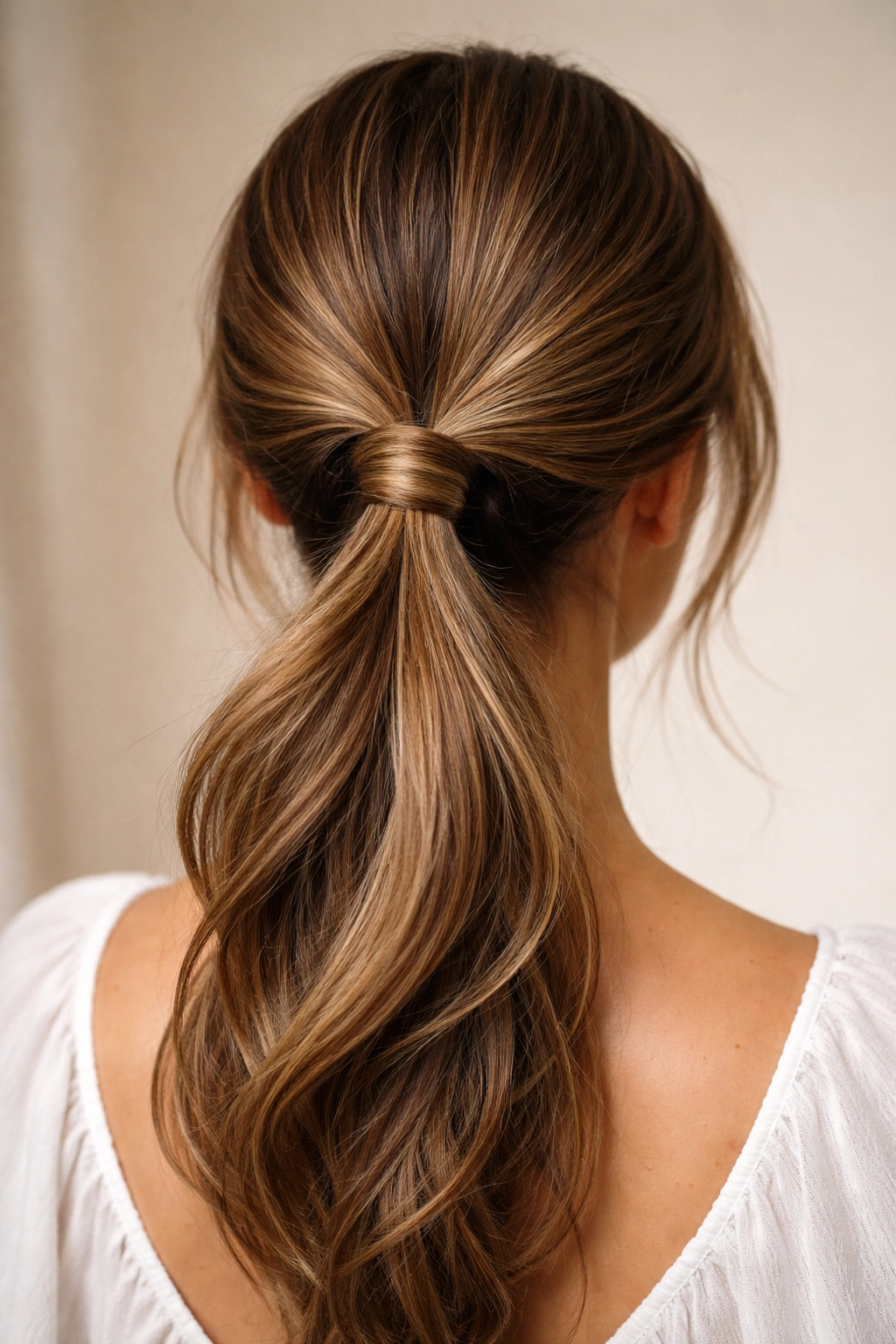
This is an incredibly easy way to make a basic low ponytail look like you spent twenty minutes on it. Secure your hair in a low ponytail, leaving the elastic slightly loose. Use your fingers to create a hole in the hair just above the elastic. Flip the ponytail up and through that hole.
The “Thick Hair” Adjustment
If your hair is super thick, that inversion might look a bit bulky. Don’t pull the hair all the way through tight. Leave it slightly loose and tease the “twist” section a little bit with a comb to give it some grip and volume. It looks like a complex tuck, but it takes less than 30 seconds.
15. The Velvet Bow Accent
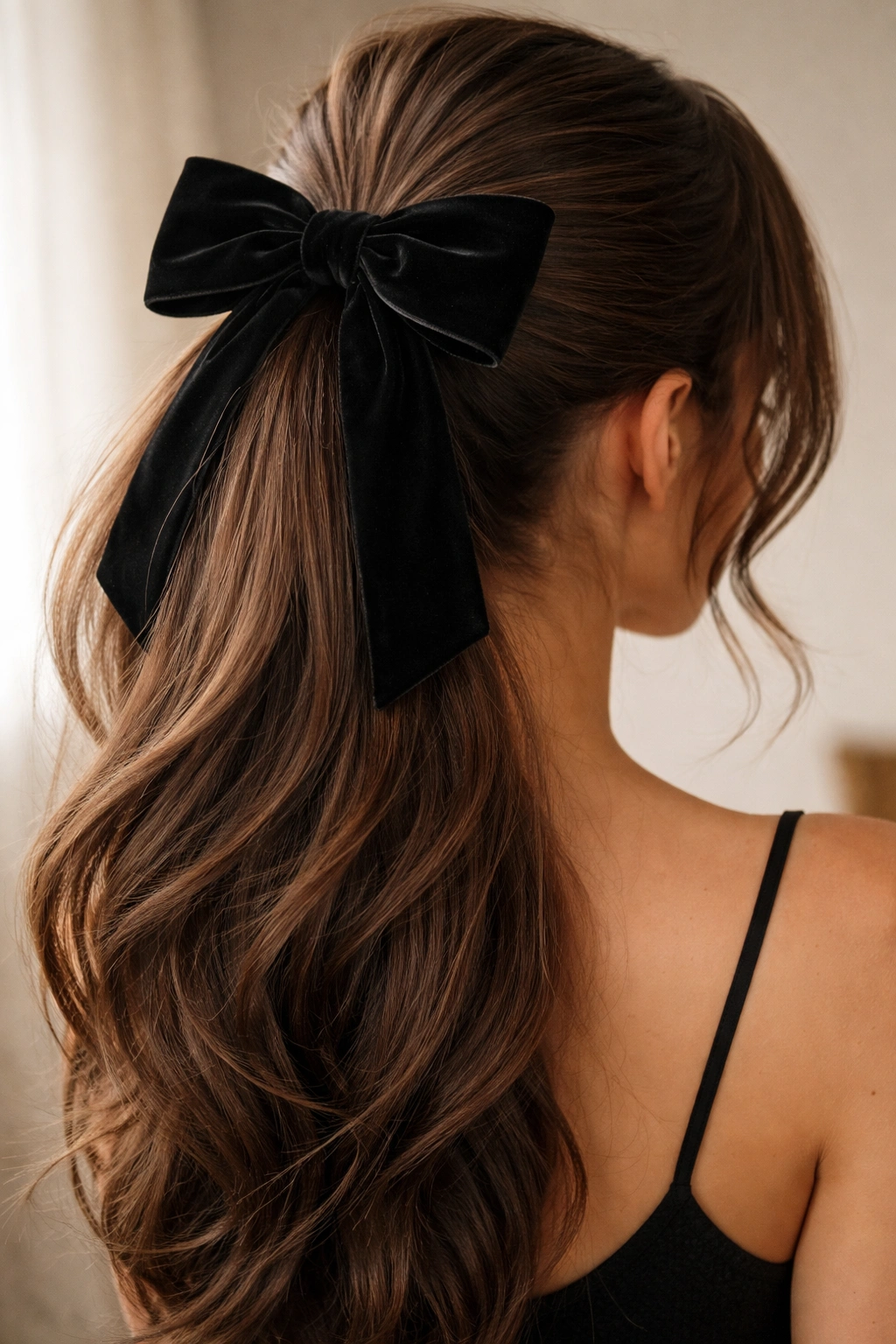
A ponytail with thick hair can sometimes look a bit “aggressive” or purely utilitarian. To soften the look, add a velvet bow. Secure your ponytail as usual, and then tie a ribbon around the base. It’s a small detail, but it breaks up the wall of hair and draws the eye to the base rather than the sheer weight of the ponytail.
Tip on Material
Avoid satin ribbons if they are too slippery; they will fall out before you finish your coffee. Stick to velvet or grosgrain ribbon—they have a natural texture that grabs onto the hair and stays put throughout the day.
16. The Wet-Look Sleek Pony
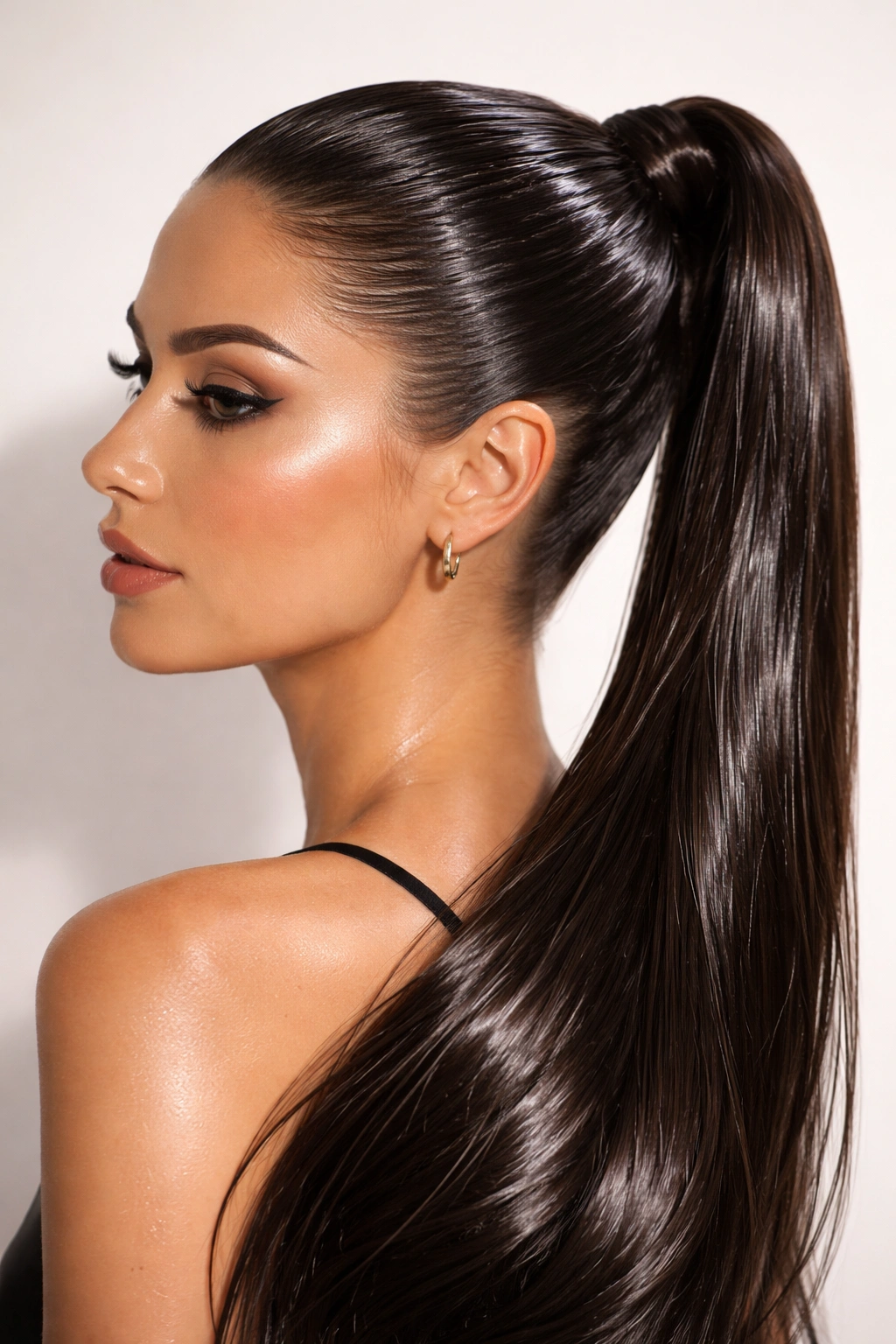
This is a red-carpet favorite, but it is also practical for thick hair because the product helps manage the volume. While your hair is damp, apply a generous amount of styling gel or a strong-hold pomade from the roots down to the mid-lengths. Comb it back tightly into a ponytail.
Product Selection
For this look, use a gel that doesn’t flake when it dries. You want a high-shine finish. Once you pull it back into the pony, the gel effectively “glues” the flyaways down. It is the most reliable way to ensure your thick hair stays smooth and contained all day long.
17. The Twisted Side Pony
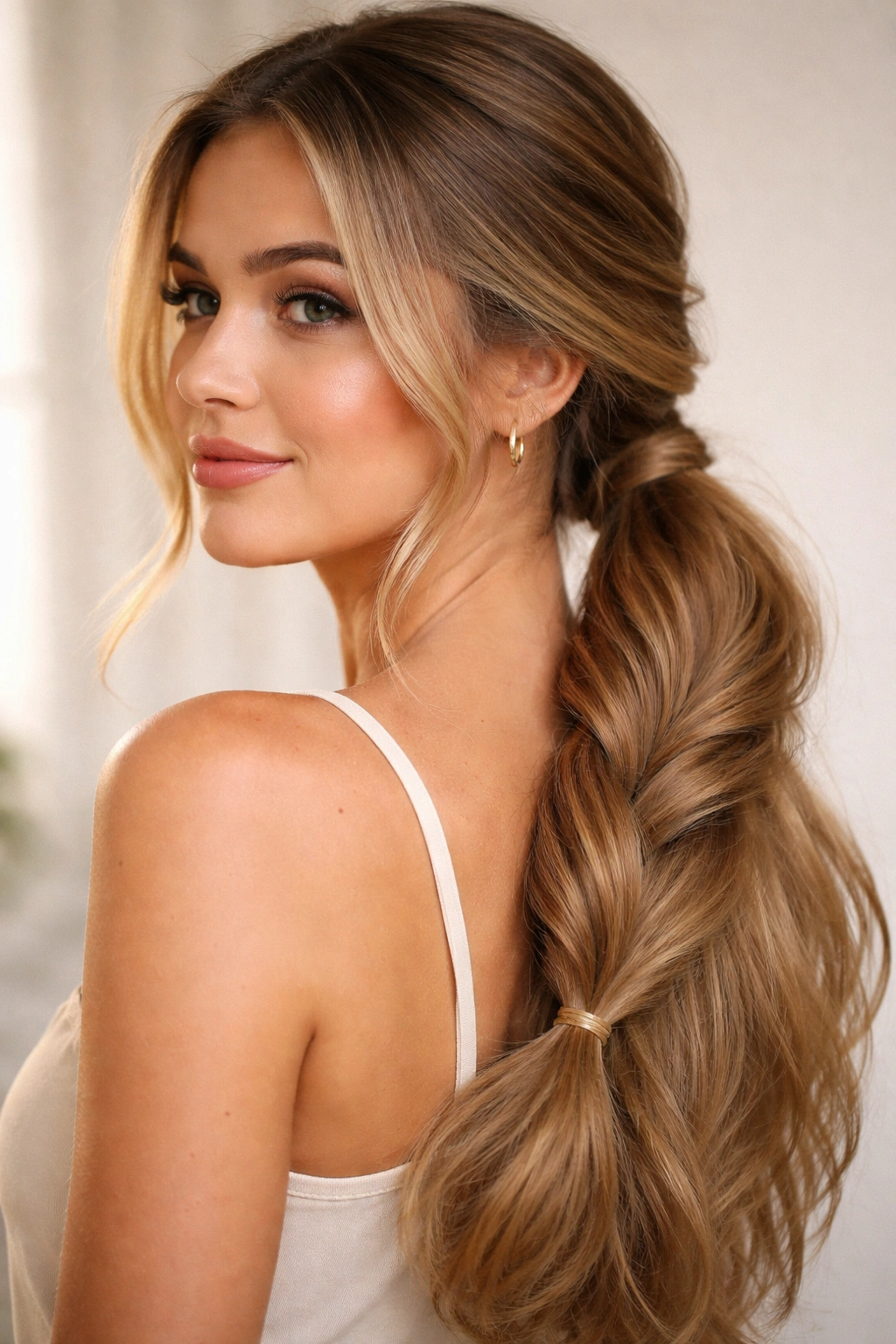
This is a variation of the side pony but with a little more detail. Gather all your hair to one side and split it into two sections. Twist each section individually away from your face, and then twist the two sections together toward your face. Secure with an elastic at the end.
Why this structure helps
Twisting the hair compresses the volume. Instead of a massive, billowing ponytail that creates a lot of drag and weight, you have a sleek, rope-like structure. It is much lighter and stays in place significantly better than a loose ponytail.
18. The “Hidden Elastic” Trick
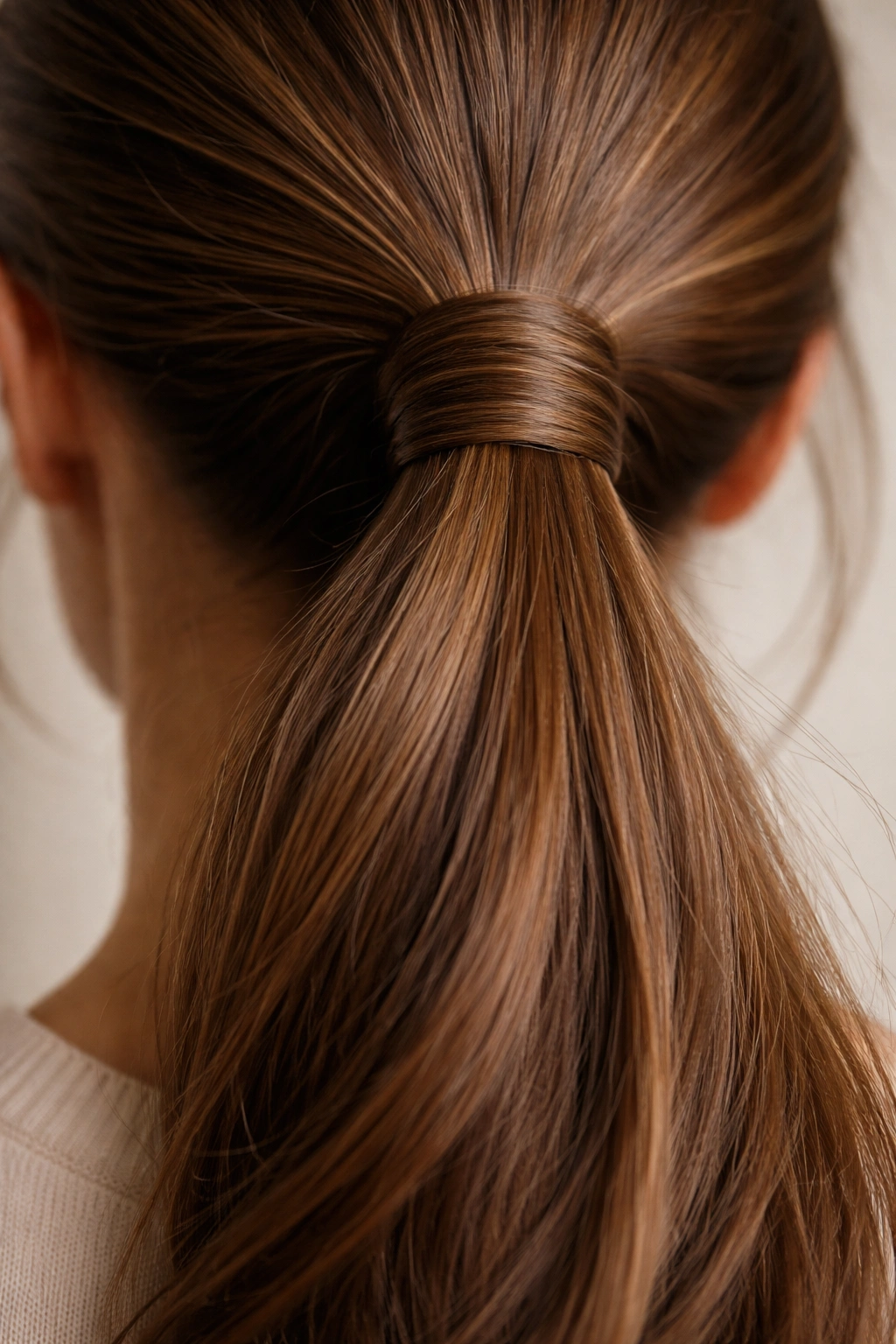
If you want the ponytail to look like it is held together by your own hair, this is the gold standard. Secure your hair in a pony using a clear elastic. Take a small, quarter-inch strand from the underside of the ponytail. Wrap that strand around the elastic repeatedly until you run out of hair.
The Final Step
Tuck the very end of that wrapped strand into the elastic (or use a small bobby pin to anchor it on the underside). If you have enough hair, you can spray a little hairspray on a toothbrush and brush the wrapped section to keep it perfectly smooth and free of flyaways.
19. The Two-Tier Ponytail
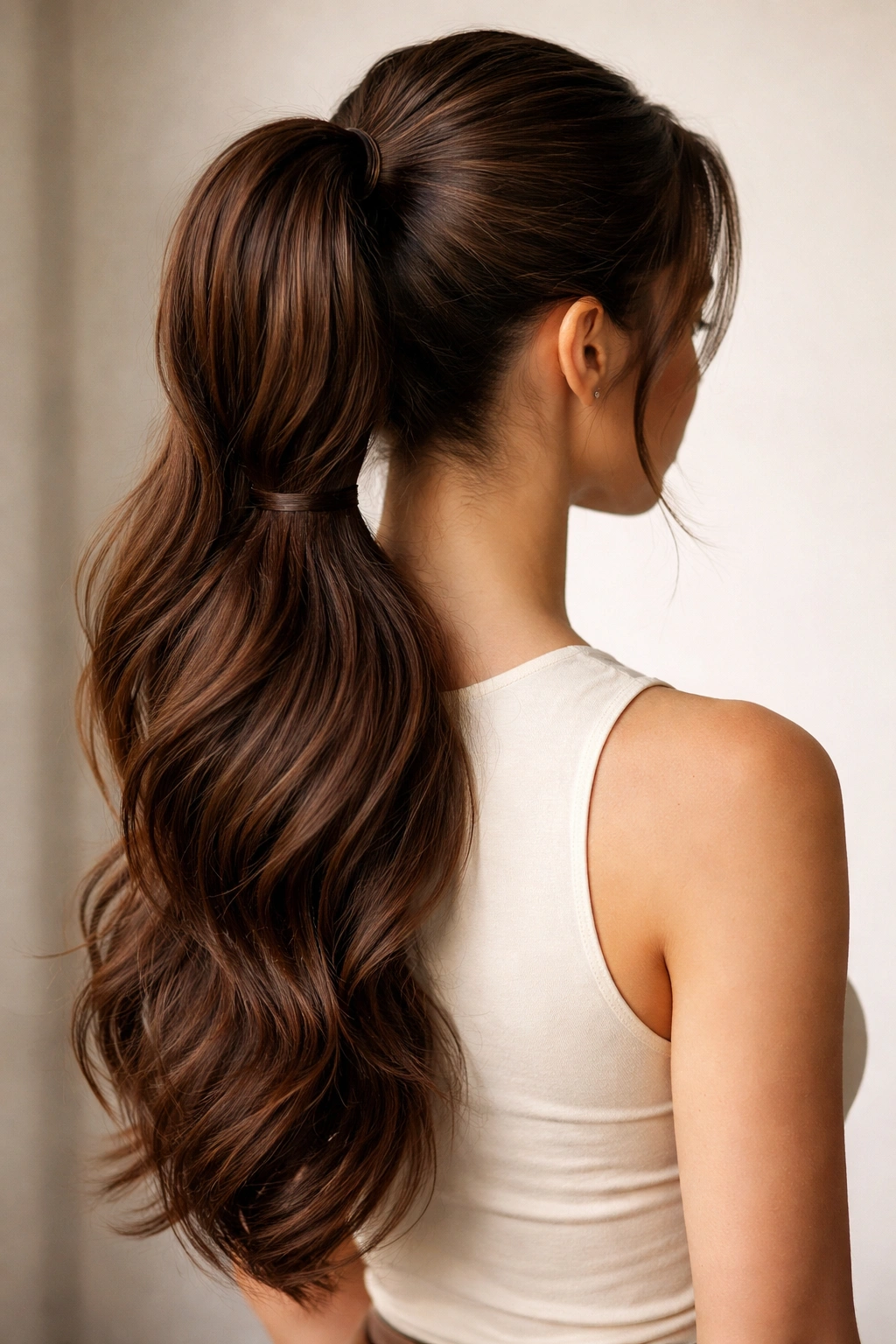
This is the ultimate hack for thick, heavy hair that refuses to stay high. Instead of one big ponytail, make two. Create a half-up ponytail at the crown and secure it. Then, gather the remaining hair at the nape of your neck and secure it into a second ponytail right underneath the first one.
The Illusion
From the front and the sides, it looks like one long, voluminous, perfect ponytail. From the back, it might look like two, but when you let the top one drape over the bottom one, it creates the illusion of a much longer, thicker, and perfectly placed high pony. It is basically an optical illusion for hair volume.
20. The “Loose” Low Pony
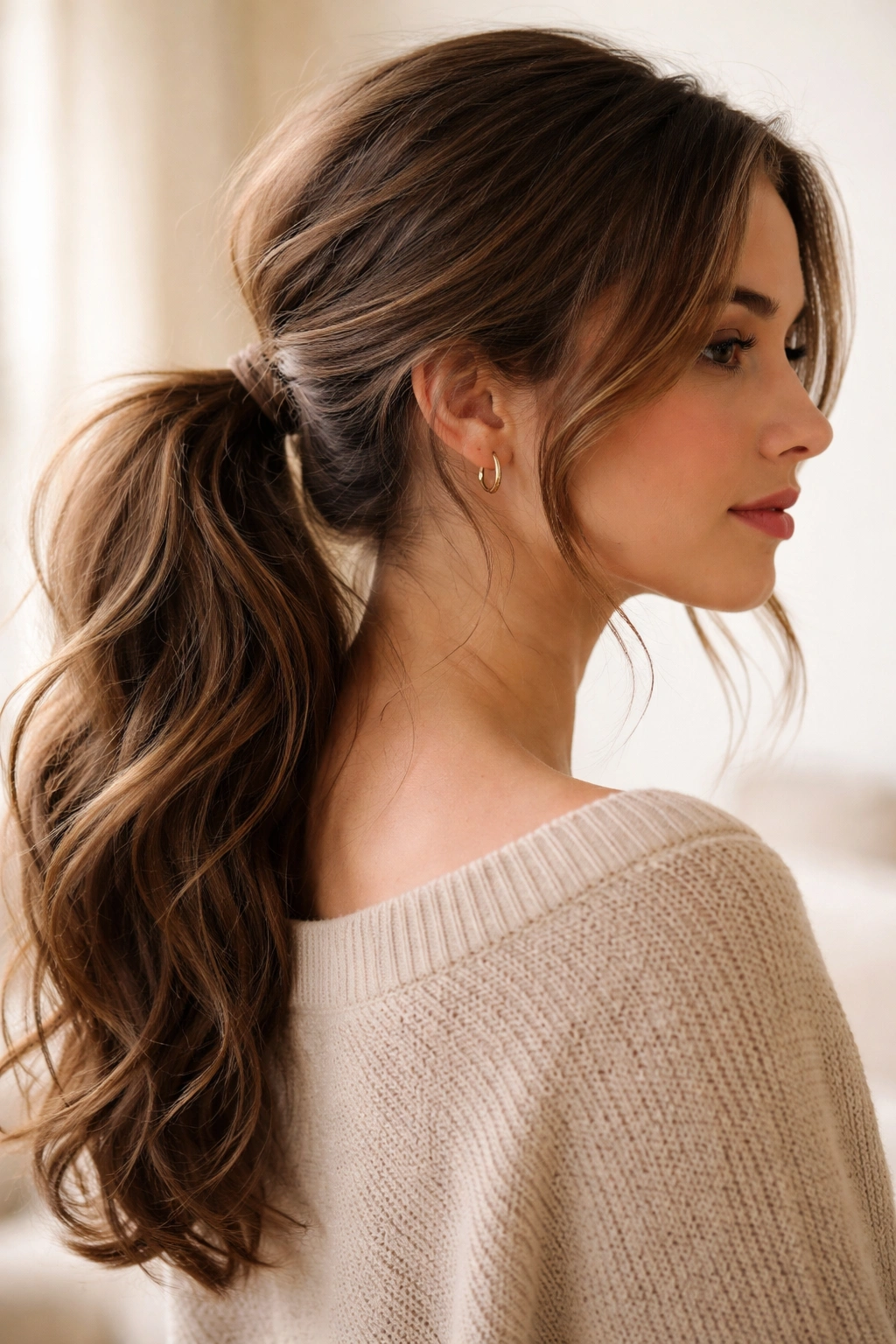
Sometimes, the best ponytail is one that doesn’t feel like a ponytail. Pull your hair back loosely, just enough to secure it at the nape of your neck, but don’t pull it tight against the scalp. Leave some volume around the face and ears.
The Balance
This style is all about balance. Because you have thick hair, if you pull it too tight, you lose the texture. By keeping it loose, you allow the natural wave or texture of your hair to shine. It is the perfect style for a casual lunch or a coffee date.
21. Volume-at-the-Crown Pony
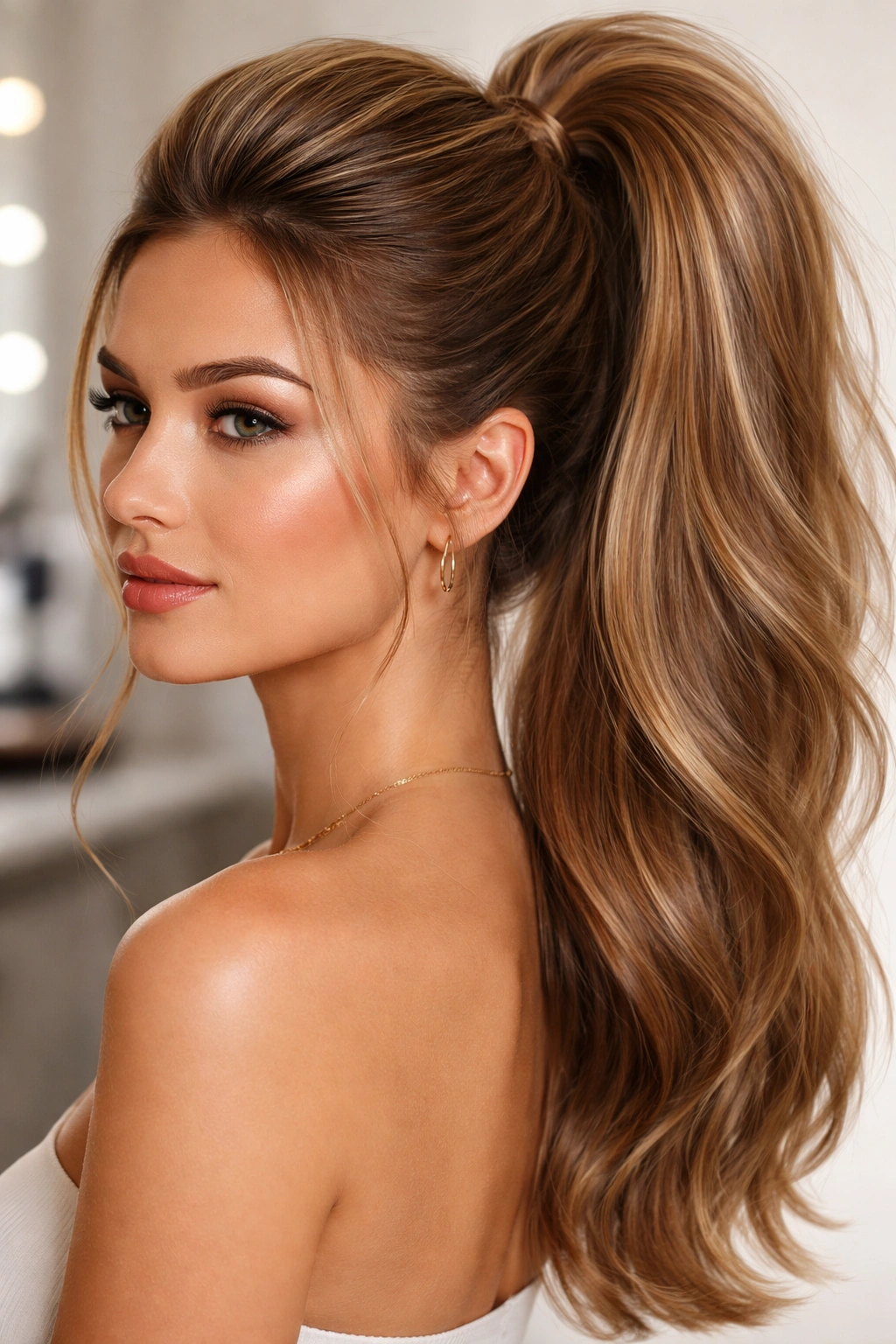
One of the biggest issues with thick hair is that the weight of the ponytail tends to pull the crown flat. To counter this, tease the hair at the crown before you pull it back. Lift a section of hair, backcomb it at the root, and smooth it over before gathering the rest of the hair into a pony.
The Hairspray Hack
A little bit of dry shampoo at the roots before you tease will give the hair the “grip” it needs to hold that teased volume. Without it, the weight of your thick hair will eventually flatten that teased section anyway. Prep is everything here.
22. Side-Parted Sophistication
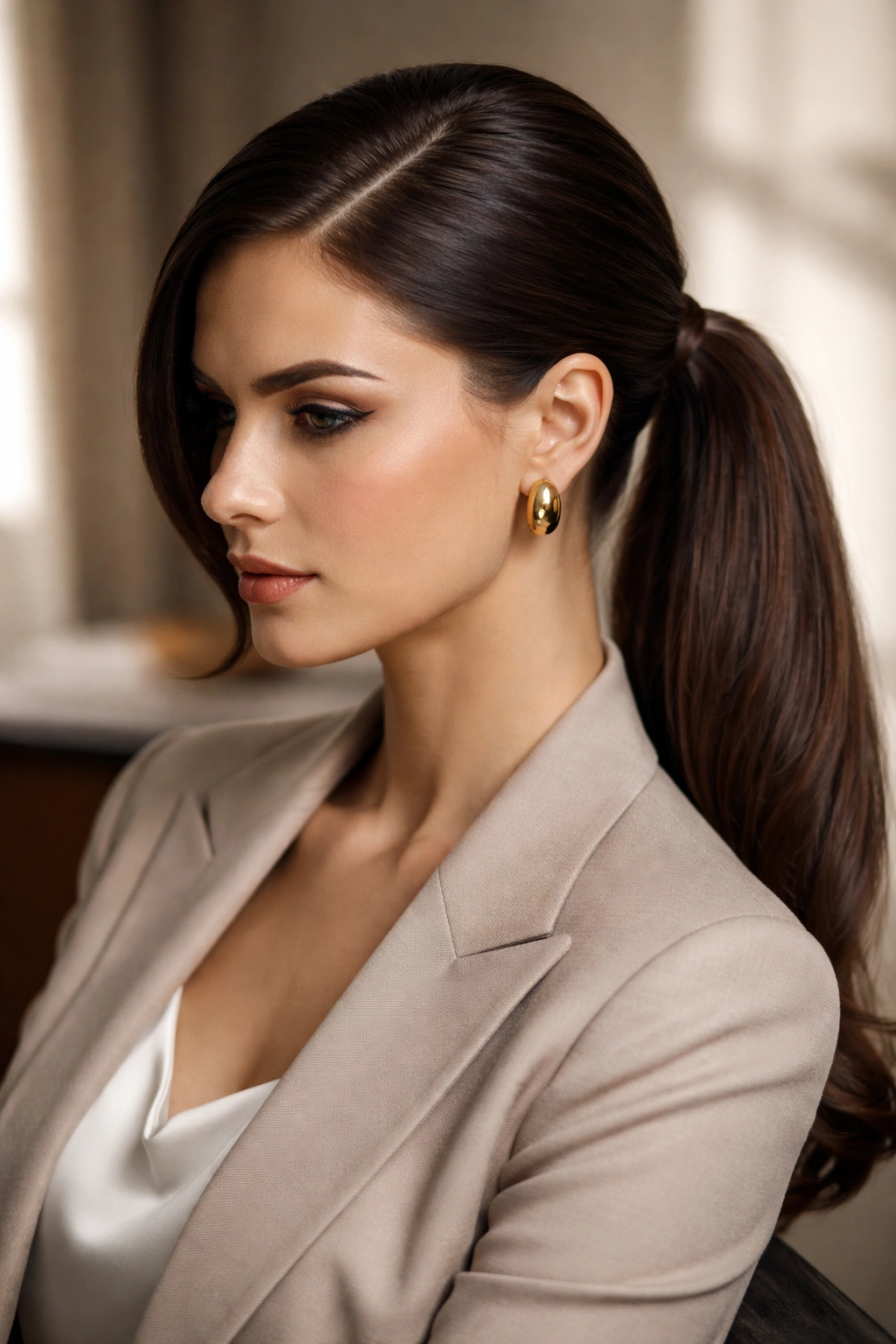
Part your hair deeply on one side before gathering it back. This asymmetrical silhouette does wonders for face framing. When you pull the hair back, maintain that clean side part. It creates a sleek, professional look that works just as well in the office as it does at a dinner party.
Pro Tip
Use a tail comb to create the part. A clean line is vital for this style. If the part is jagged, the style loses its “polished” feel. A sharp, crisp line commands attention.
23. The Bohemian Knot
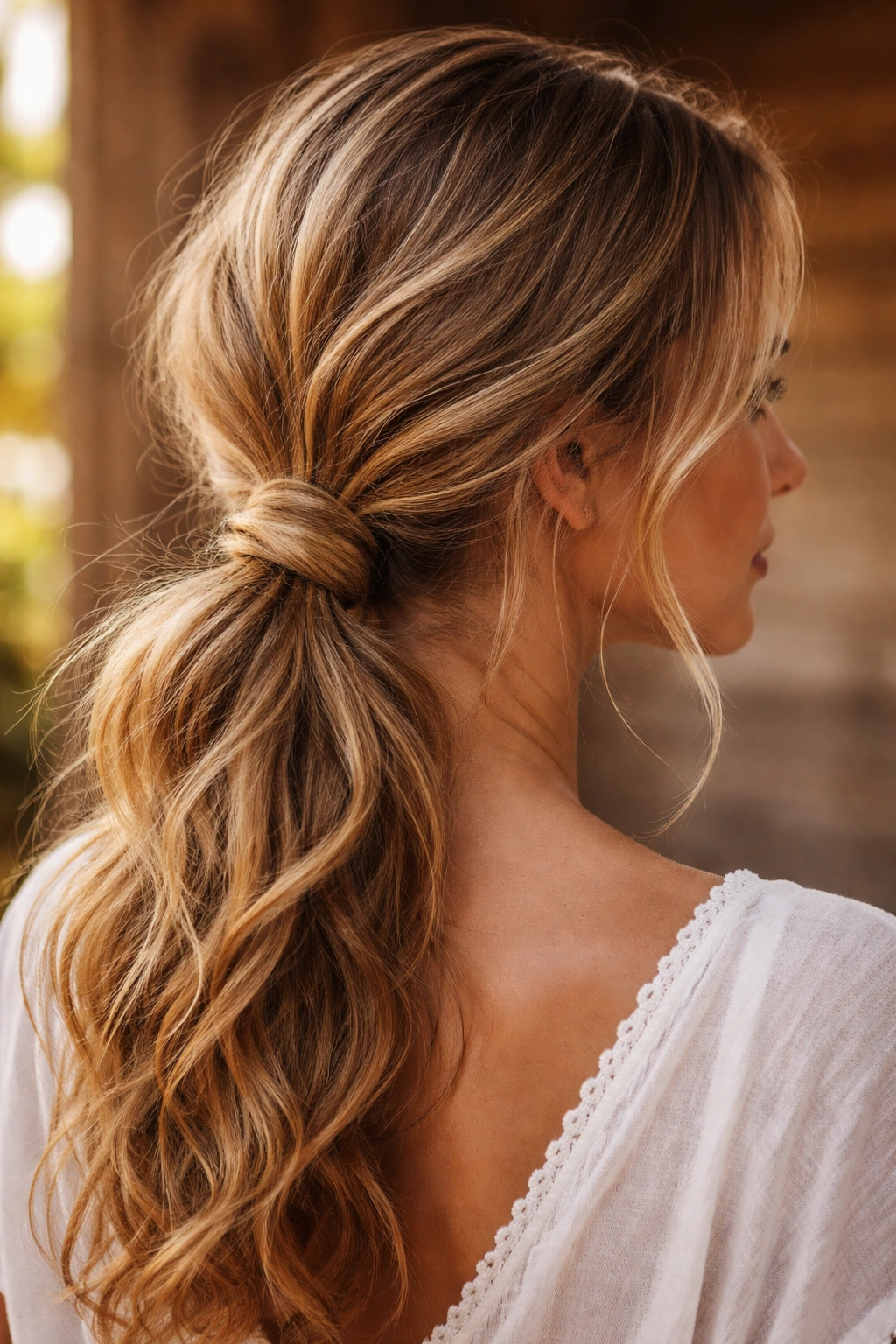
This is a more creative take on the classic pony. Gather your hair into a low ponytail, but don’t secure it with an elastic immediately. Instead, tie the hair into a loose knot—yes, literally a knot—right at the nape of your neck. Then, use a small, clear elastic to secure it below the knot so it doesn’t come undone.
The Result
It looks like an effortless, beachy knot. It is incredibly secure because the knot itself holds the weight of the hair, meaning the elastic has much less tension to deal with. It is a fantastic way to style thick hair without needing a massive amount of hardware.
24. The Wrapped Base with a Twist
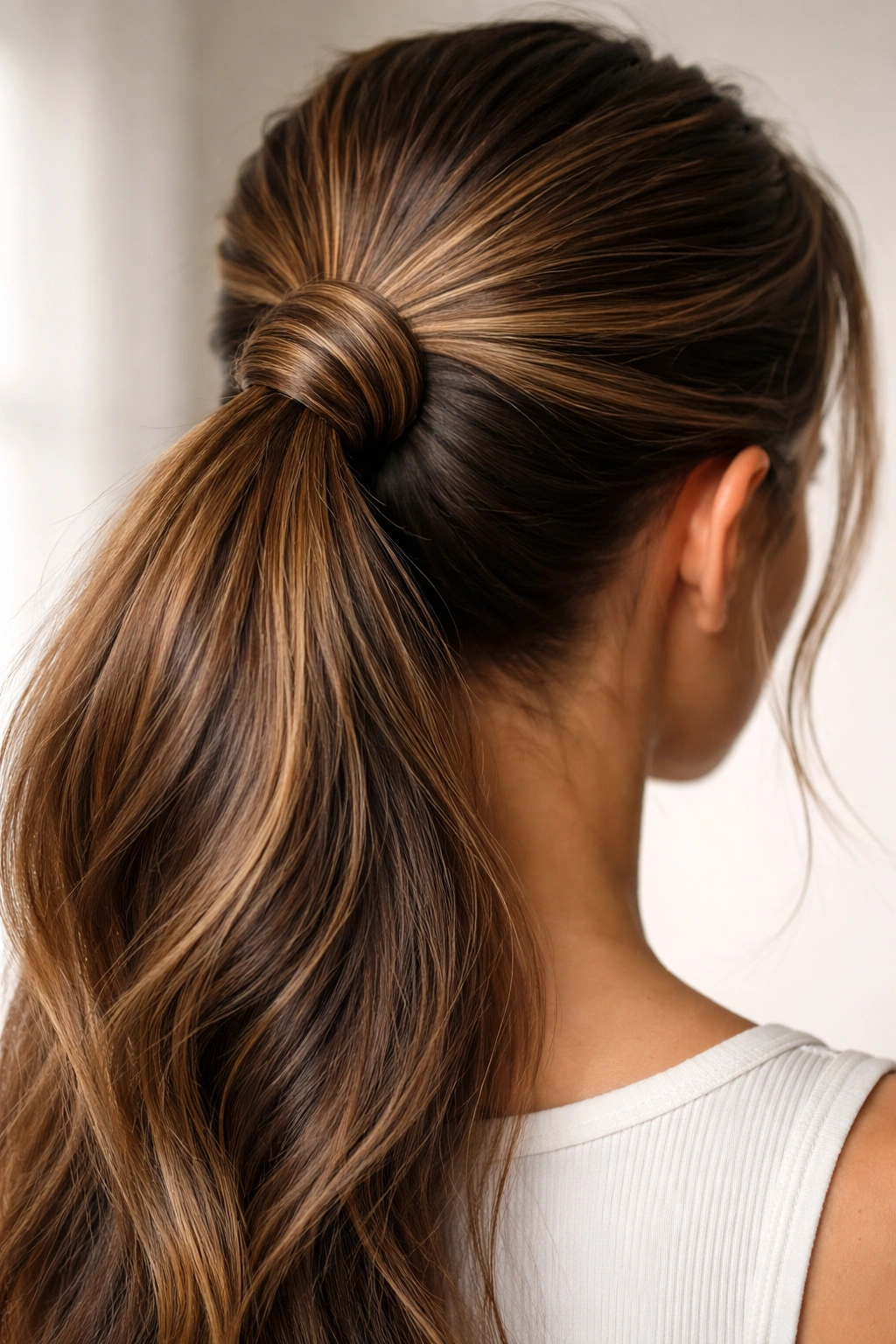
Take the “wrapped base” technique we discussed earlier, but instead of wrapping a flat strand of hair, twist the strand before wrapping it. This adds texture and a more interesting visual element to the base of your pony.
The Visual Interest
It creates a more three-dimensional look. It makes the base of your ponytail look like a deliberate design choice rather than just a way to hide an ugly elastic. It’s a small tweak that transforms the entire vibe of the hairstyle.
25. The Cascading Wave Pony
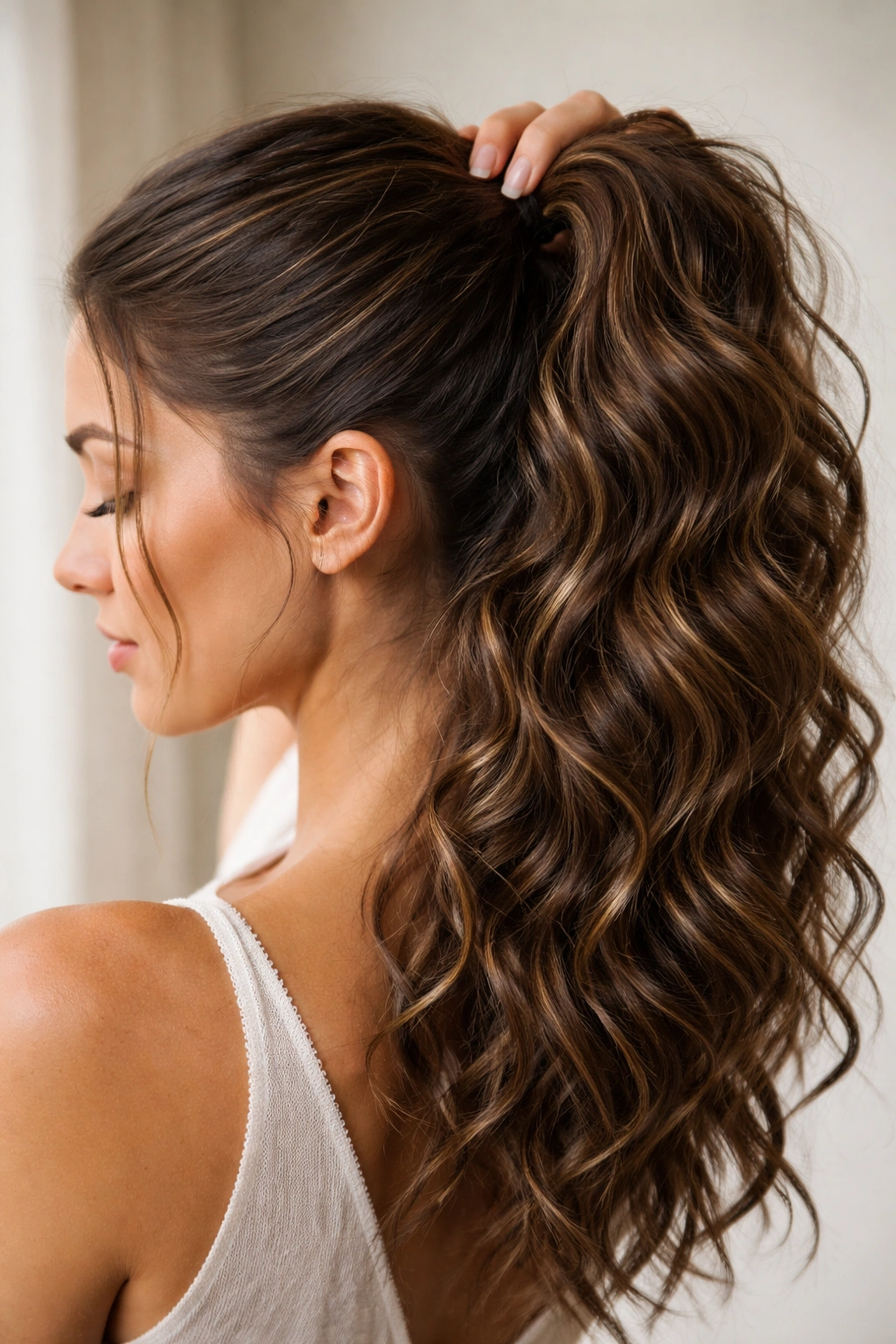
If you have natural waves or have curled your hair, don’t brush them out into a smooth, boring tail. Gather your hair into a high pony, but use your fingers—not a brush—to gather it. This keeps the wave pattern intact.
Why It Works
Using your fingers preserves the texture of your hair. When you use a brush, you merge all the waves into a singular mass. By using your hands, you keep the definition of each wave, which creates a much fuller, more romantic-looking ponytail.
26. The Chignon-Pony Hybrid
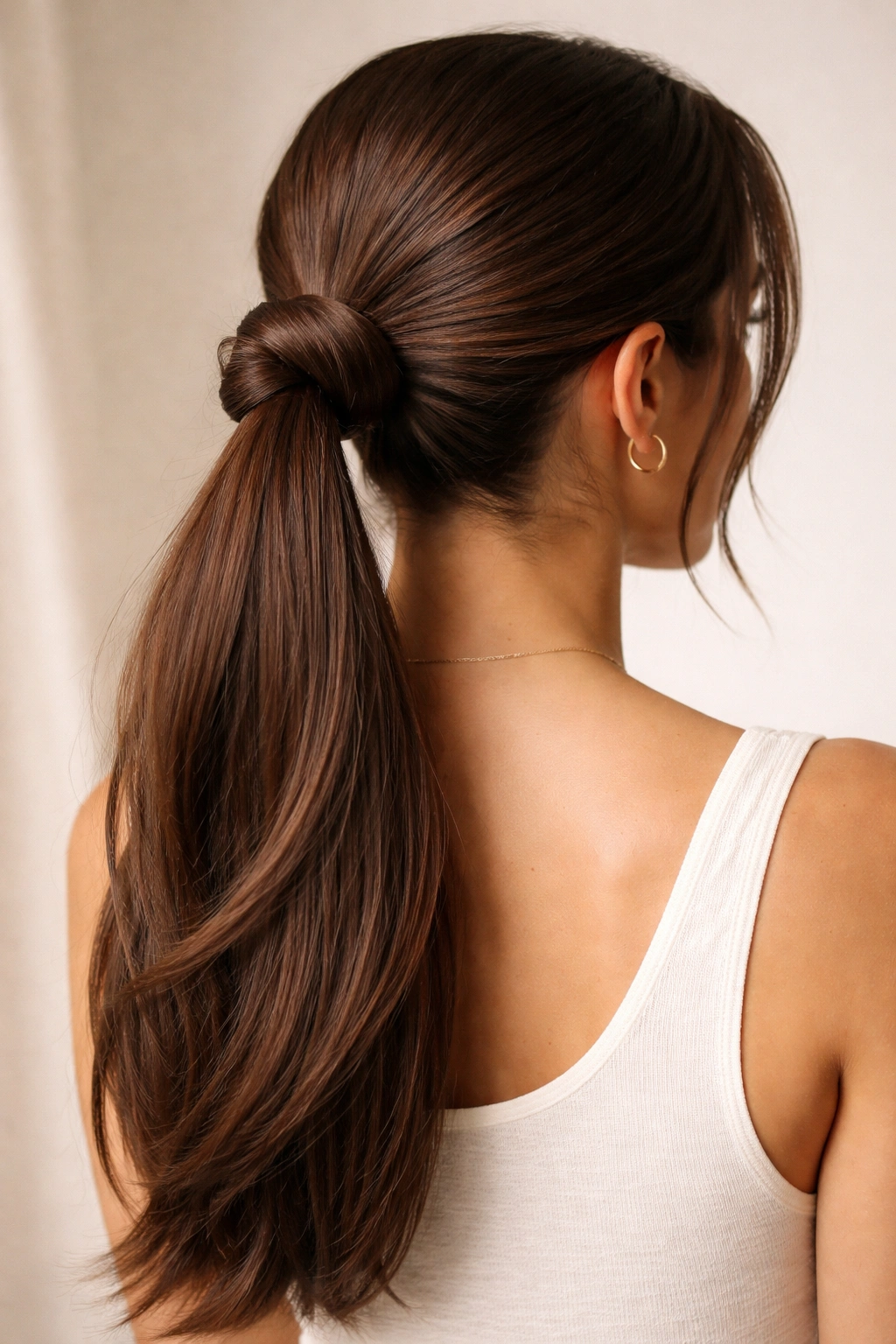
This is perfect for when you want the security of a bun but the look of a pony. Create a ponytail, but on the last loop of the elastic, pull your hair only halfway through. This creates a loop. You now have a chignon-pony hybrid—part bun, part tail.
The Practicality
It is the ultimate “I need this hair out of my face” style. It is secure, it keeps the ends protected, and it looks intentional. Plus, it uses up the length of your hair, preventing the “heavy ponytail whip” that can happen when you are moving around.
27. The Scarf-Wrapped Pony
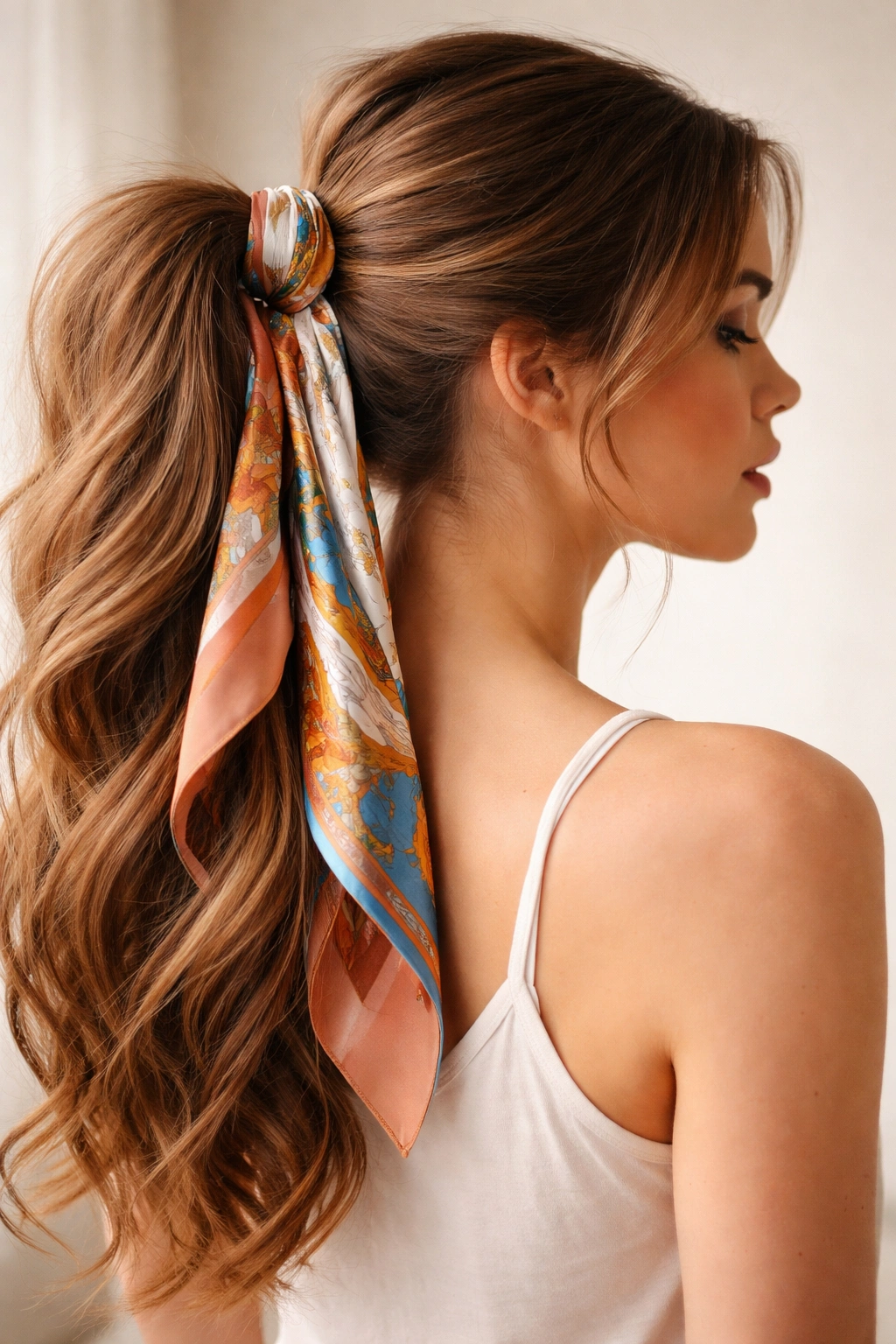
This is the ultimate thick-hair hack. If your hair is so heavy that elastics struggle to hold it, a scarf is your best friend. Gather your hair, tie it with a base elastic, and then tie a silk or cotton scarf around the base.
The Weight Distribution
The scarf allows you to create a much thicker, more robust “knot” at the base. You can tie it in a bow, let the ends trail down the length of your hair, or wrap it around the base multiple times. It adds volume, color, and—most importantly—it acts as a stabilizer for a heavy mane.
Final Thoughts
The secret to mastering ponytails with thick hair isn’t finding a “stronger” hair tie; it’s learning how to distribute the weight. Whether you are using a two-tier method to reduce scalp tension, incorporating braids to create a structural anchor, or using a scarf to add stability, the goal is always to move the burden away from a single point on your head.
Your hair is an asset, not an inconvenience. Once you stop fighting the weight and start working with the volume you have, you stop dreading the “pony headache” and start treating your hair like the full, healthy, and versatile accessory it actually is. Experiment with these styles, pay attention to which ones feel light and airy, and don’t be afraid to double up on the elastics—because sometimes, you really do need an extra layer of support.
