



Long hair and a claw clip can be a gorgeous match, but only when the shape is doing the work for you. A clipped ponytail that sits in the wrong spot, or uses a clip that’s too small, turns heavy fast and starts sliding by the second cup of coffee. A good one feels lighter than it should.
That’s the part people miss. Claw clip ponytails for long hair are less about pinning everything up and more about balancing weight, grip, and the way the tail falls down the back. Long strands change the math. Thick hair needs a stronger spring and deeper teeth. Fine hair needs a little texture so the clip has something to bite into. Layered hair needs support near the base, or the shorter pieces pop loose and make the whole style look unfinished.
Some of these looks are neat and polished. Others are the kind you wear when you want your hair off your neck, out of your face, and still looking like you meant it. A few take 30 seconds. A few need a mirror and a little patience. Either way, the trick is the same: get the base right, then let the length do what long hair does best.
1. Sleek Low Claw Clip Ponytail for Long Hair
A low claw clip ponytail is the one I reach for when long hair needs to look calm instead of fussy. It sits at the nape, keeps the tail controlled, and doesn’t pull your scalp the way a tight elastic can.
Why It Feels So Stable
The secret is the base, not the finish. Gather the hair low, smooth it with your hands or a flat brush, then twist it once before clipping so the teeth grab more than one layer of hair. That little twist gives the clip something solid to hold, which matters a lot when the hair hangs heavy down the back.
- Use a medium to large clip if your hair reaches past your shoulder blades.
- Keep the ponytail low enough that the clip sits flat, not at an angle.
- A pea-sized amount of styling cream on the palms helps control flyaways.
- Day-two hair usually holds this style better than freshly washed hair.
Best tip: don’t chase perfect smoothness. A few soft flyaways keep it from looking stiff.
2. High Bubble Claw Clip Ponytail with Extra Lift
Want height without a full updo? This is the move. A high bubble ponytail gives long hair shape, and the claw clip keeps the base from collapsing the second you move.
Start by gathering the hair high on the crown and clipping it in place, then add small clear elastics every 2 to 3 inches down the length. That spacing gives the bubbles a rounded shape instead of a stretched-out line. If your hair is very long, leave the last section loose so the ends don’t look chopped off.
Where the Lift Comes From
The crown matters more than the tail. Pull the top section up and slightly forward before clipping so the hair has a little lift instead of being dragged flat against the scalp. A quick mist of texturizing spray at the roots helps, especially if your hair is silky and slippery.
Use this when: you want a ponytail that looks playful but still stays off your face. It’s a good one for thick hair, because the bubble sections break up the weight.
3. Loose Twisted Mid Ponytail with a Soft Bend
Picture hair gathered just below the cheekbones, twisted once, and left loose enough to fall in a soft line down the back. That’s this look. It has shape without looking overworked.
The twist is the whole point. Instead of pulling everything straight back, split the sides lightly with your fingers, guide both sections toward the center, and let the clip hold the twist at mid-height. Long hair likes this because the length still shows, but the base doesn’t feel heavy or harsh.
A Small Detail That Helps
Leave the top layer a touch looser at the crown. If you pull it too tight, the style starts to look severe, and long hair rarely needs that. A soft twist keeps it relaxed and makes layered ends blend better into the tail.
This one is especially good when your hair has a little wave. The bend from the twist gives the tail movement, even if the rest of the hair is mostly straight.
4. Side-Swept Claw Clip Ponytail with Face Softness
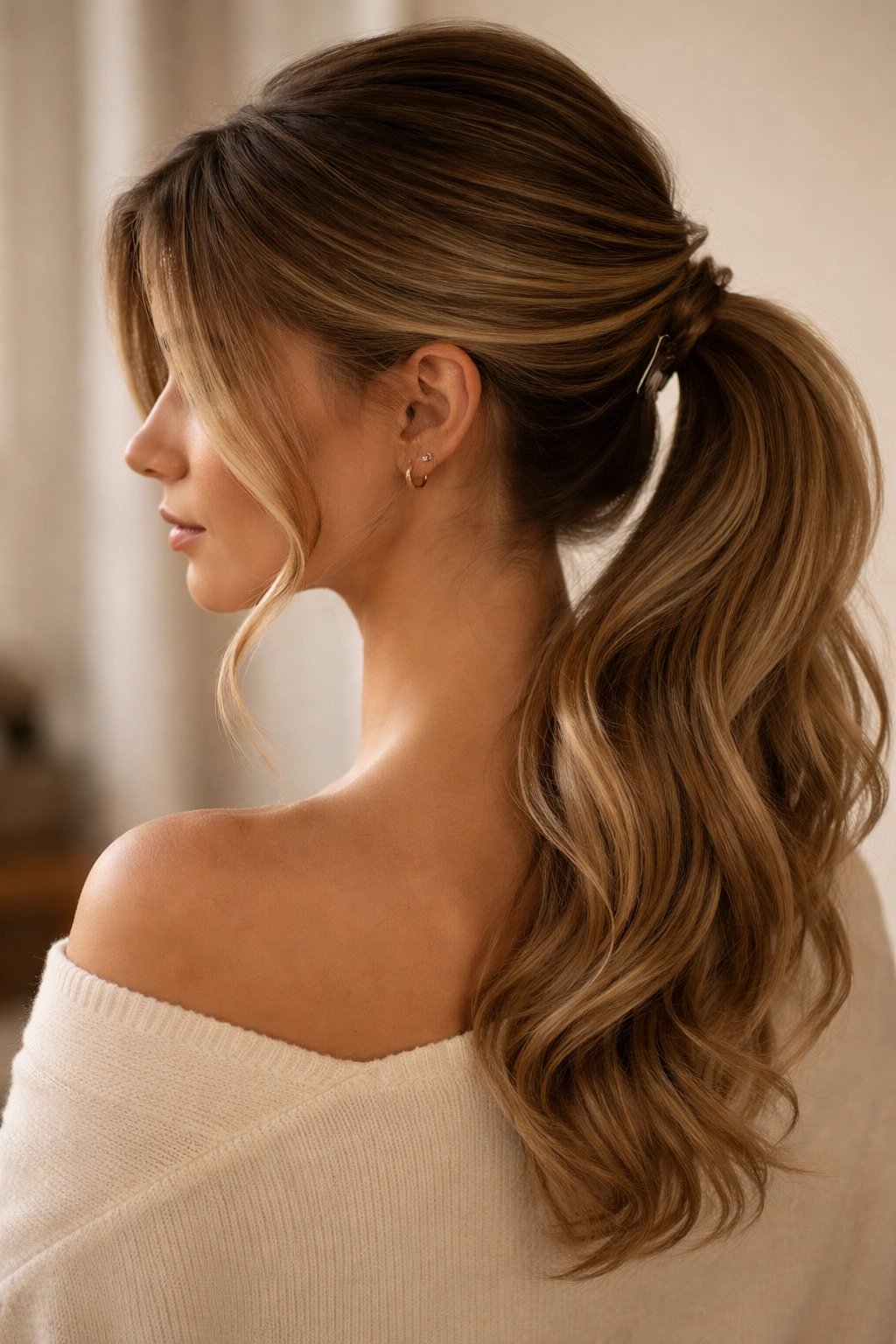
A side ponytail can look grown-up fast, but only if you keep it a little off-center. Straight down the middle, it can feel flat. Swept to one side, it starts to look deliberate.
Gather the hair behind one ear, pull it into a low side ponytail, and clip it so the teeth hide under the top layer. Leave a front section loose near the cheekbone if you want a softer edge. That single piece changes the whole mood. It keeps the style from looking too neat.
Best for Hair That Falls Heavy
Long hair often wants to split in two when it’s side-swept, so use your hands to guide the heavier side across your back before clipping. If the tail slips forward, the clip is probably too smooth or too small.
This style works especially well with a deep side part, a little root lift, and ends that bend inward at the bottom. Not rigid. Just controlled.
5. Messy Undone Claw Clip Ponytail for Long Hair
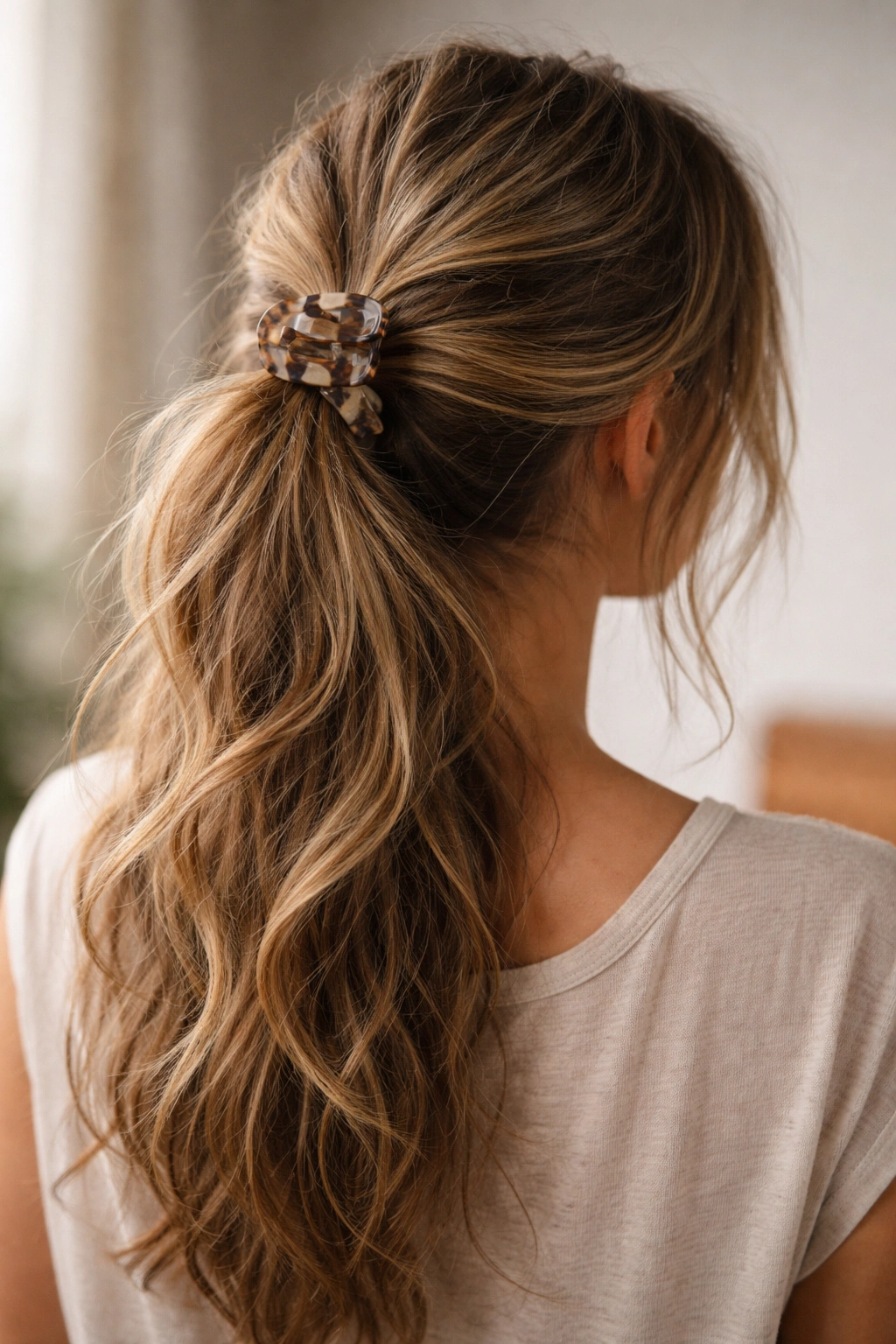
This one should feel a little rough in your hands. Not sloppy. Rough. That’s the difference between an undone ponytail and a style that just fell apart.
Skip the brush if your hair is already textured. Use your fingers to gather it low or mid-height, twist once, and let the clip catch the hair without flattening every strand. A light mist of dry shampoo or sea salt spray at the roots gives the clip something to grip and keeps the crown from looking shiny in a way that reads flat.
What to Leave Alone
Do not smooth every flyaway. Seriously. Long hair needs a little irregularity here or the style gets stiff and fake-looking. Leave a few short pieces around the temples and let the tail keep a natural bend.
Best of all, this one gets better after you stop touching it. Once the clip is in, step away from the mirror. If it holds from a few angles and feels secure, that’s enough.
6. Half-Up Claw Clip Ponytail for Heavy Length
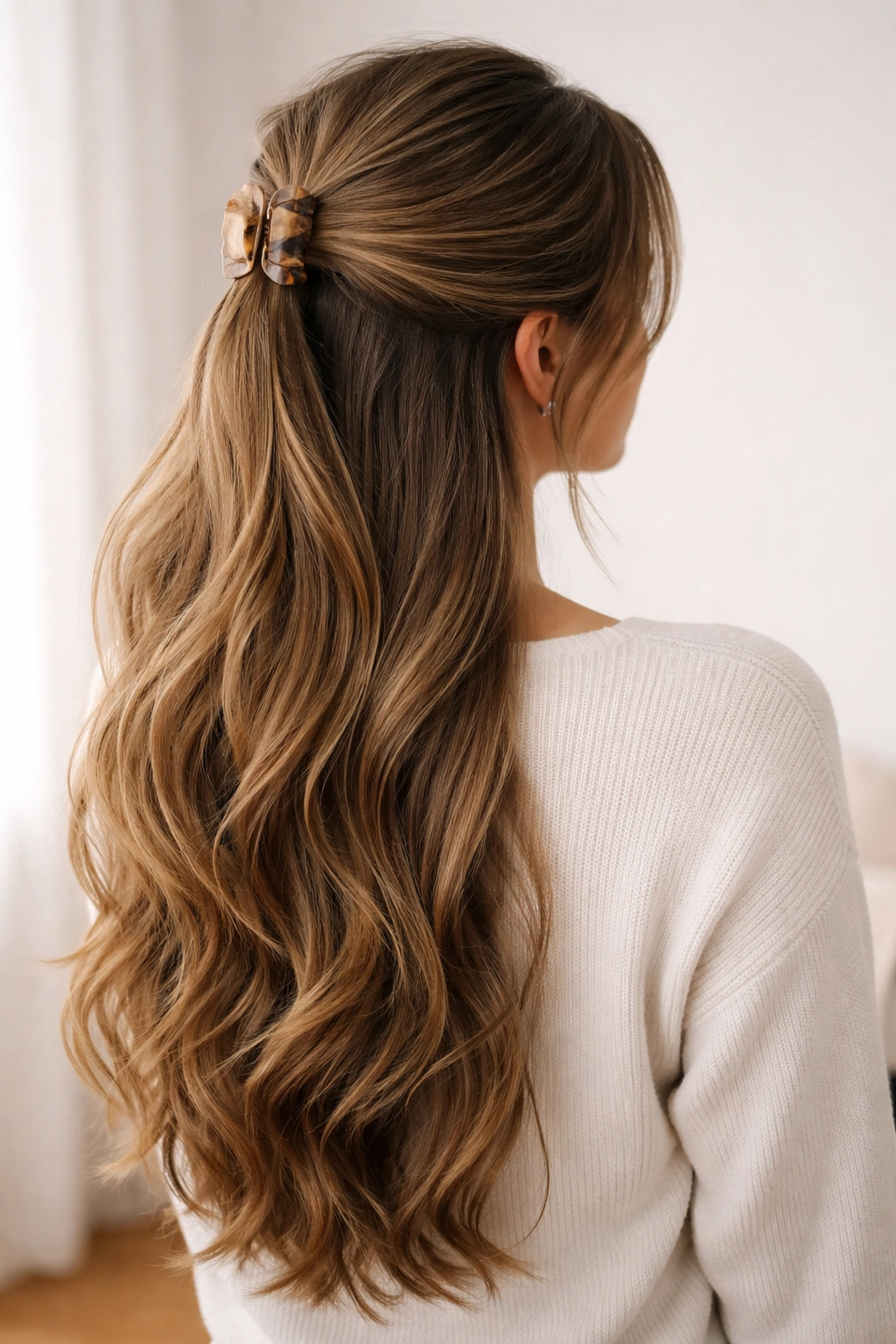
Take the top half only. That’s the whole game here, and it’s why this style is so useful on long hair.
Gather from the temples back to the crown, clip the upper section, and leave the rest loose. The result is lighter on the head, which matters when your hair is long enough to drag a full ponytail down. You still get shape and lift, but the lower length stays free.
Why Long Hair Likes This One
Long hair can get tired-looking when everything is pulled into one place. A half-up claw clip ponytail takes some of the weight off the scalp and keeps the style from flattening the whole head. It also lets the loose bottom layer move, which keeps the look from feeling boxed in.
A small or medium clip usually works here, because you’re only holding the top section. If the clip is huge, the style can start to look bulky. Keep it simple. Keep it lifted.
7. Braided Claw Clip Ponytail with a Long Tail
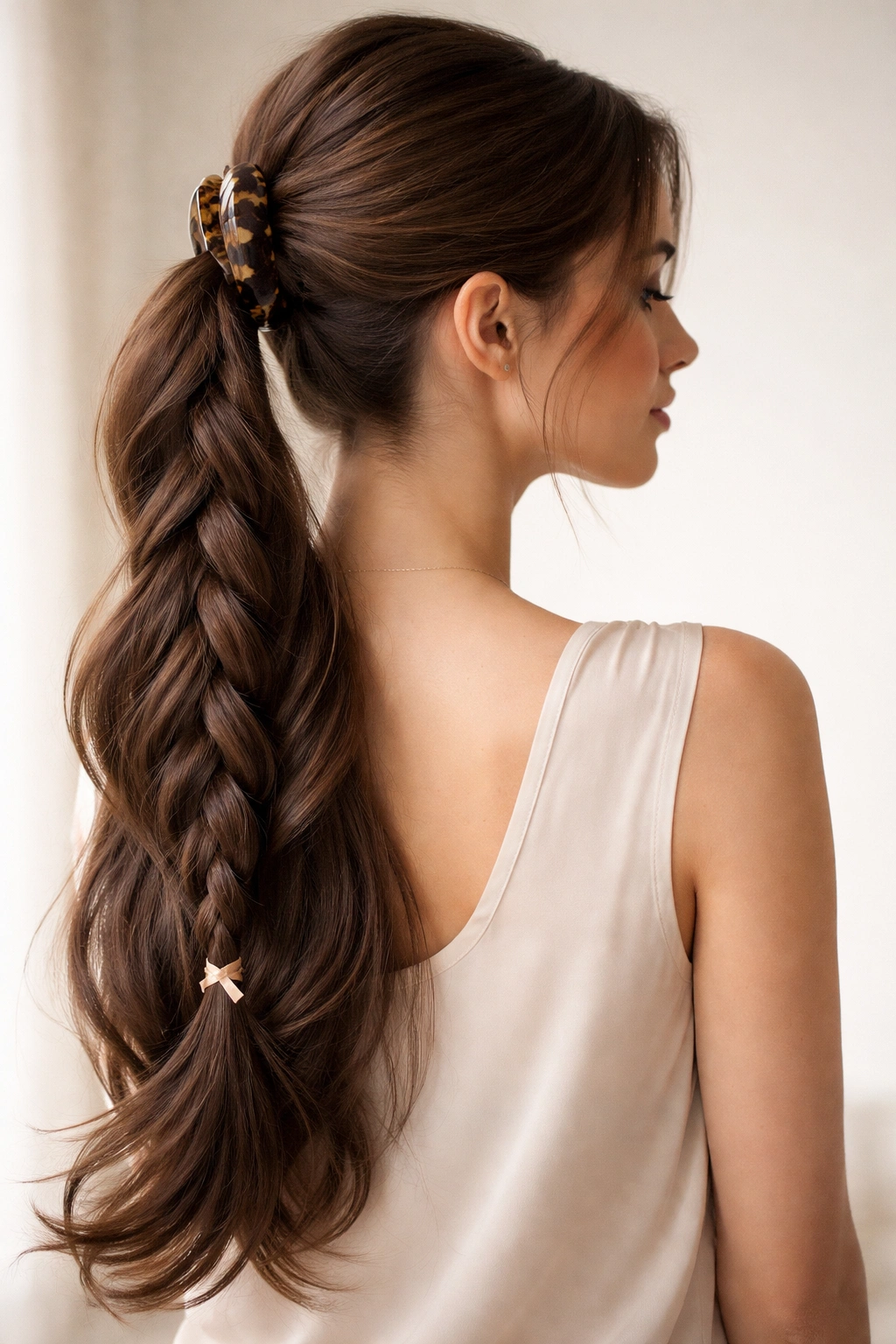
I reach for this when I want my hair to stay put through wind, a long walk, or a day when I’m not in the mood to fix it twice. The braid gives the tail structure. The clip keeps the base secure.
Gather the hair into a ponytail first, clamp the clip at the base, then braid the length in a loose three-strand braid. If the braid is too tight, it starts to look stiff and can make long hair feel even longer in a heavy way. A soft braid falls better and looks more relaxed.
A Few Things That Help
- Start the braid a little lower than you think you should.
- Pancake the braid gently if you want it wider.
- Leave the last inch or two a bit loose for softness.
- A thin ribbon tied at the end can keep the braid from unraveling.
Best for: thick or layered hair that needs more control than a plain ponytail gives.
8. Wrapped-Base Claw Clip Ponytail
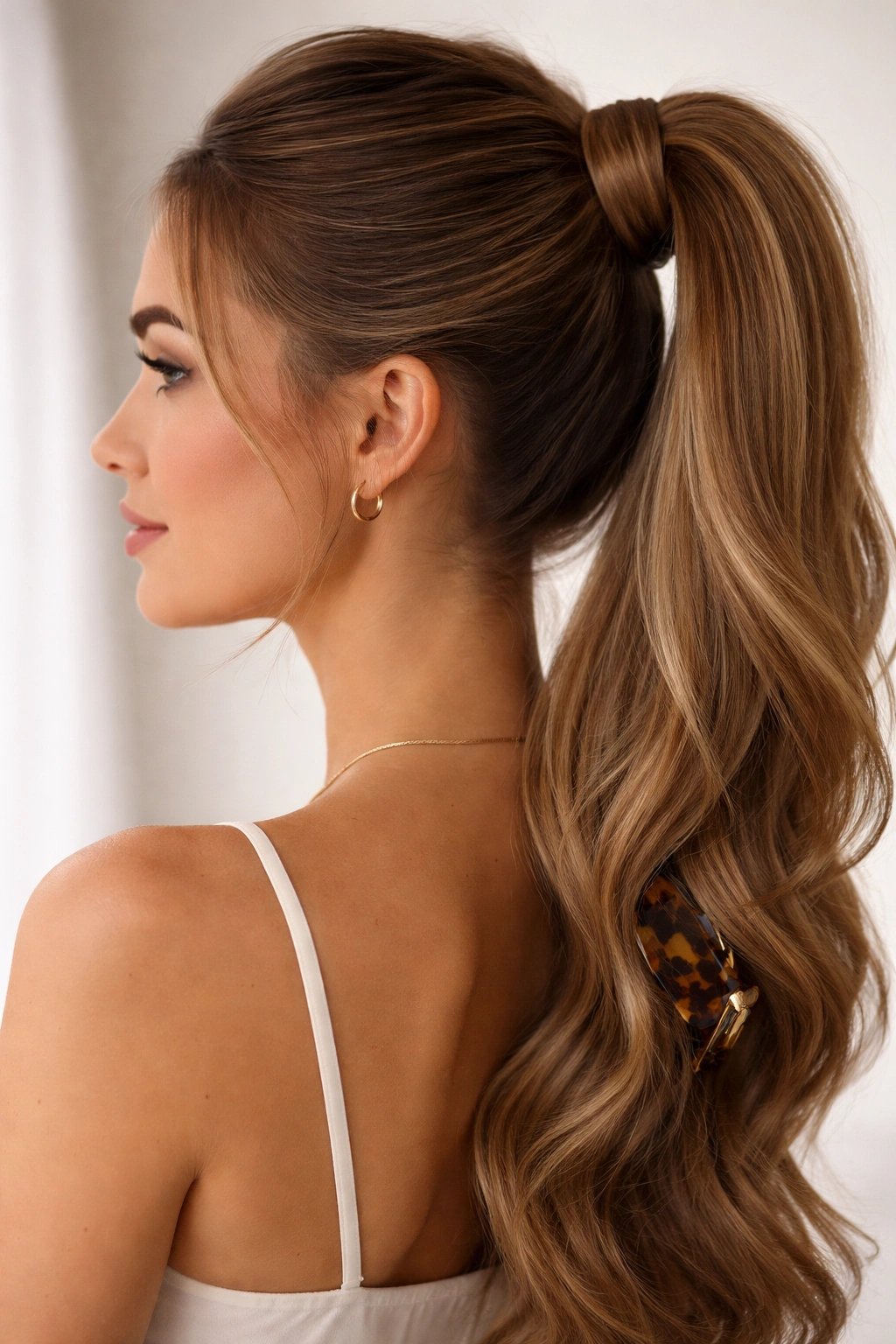
A hidden wrap turns a basic claw-clip ponytail into something neat enough for dinner. It also makes the clip look more intentional, which is useful if your clip is plain plastic or a little larger than you’d like.
After the clip is in place, take a small strand from the ponytail and wrap it around the base until the jaws are covered. Tuck the end underneath and secure it with a bobby pin if needed. The wrap should be snug, but not so tight that it pulls at the rest of the ponytail.
Why It Looks Cleaner
Long hair can make a claw clip feel bulky, especially at the base. Wrapping the anchor point hides the hardware and smooths the transition from scalp to tail. That matters more than people think. Without it, the clip can look like an afterthought.
Use this one when you want the ponytail to read polished but not formal. It sits in that nice middle space where the clip is still practical and the style looks finished.
9. Wavy Claw Clip Ponytail with Loose Ends
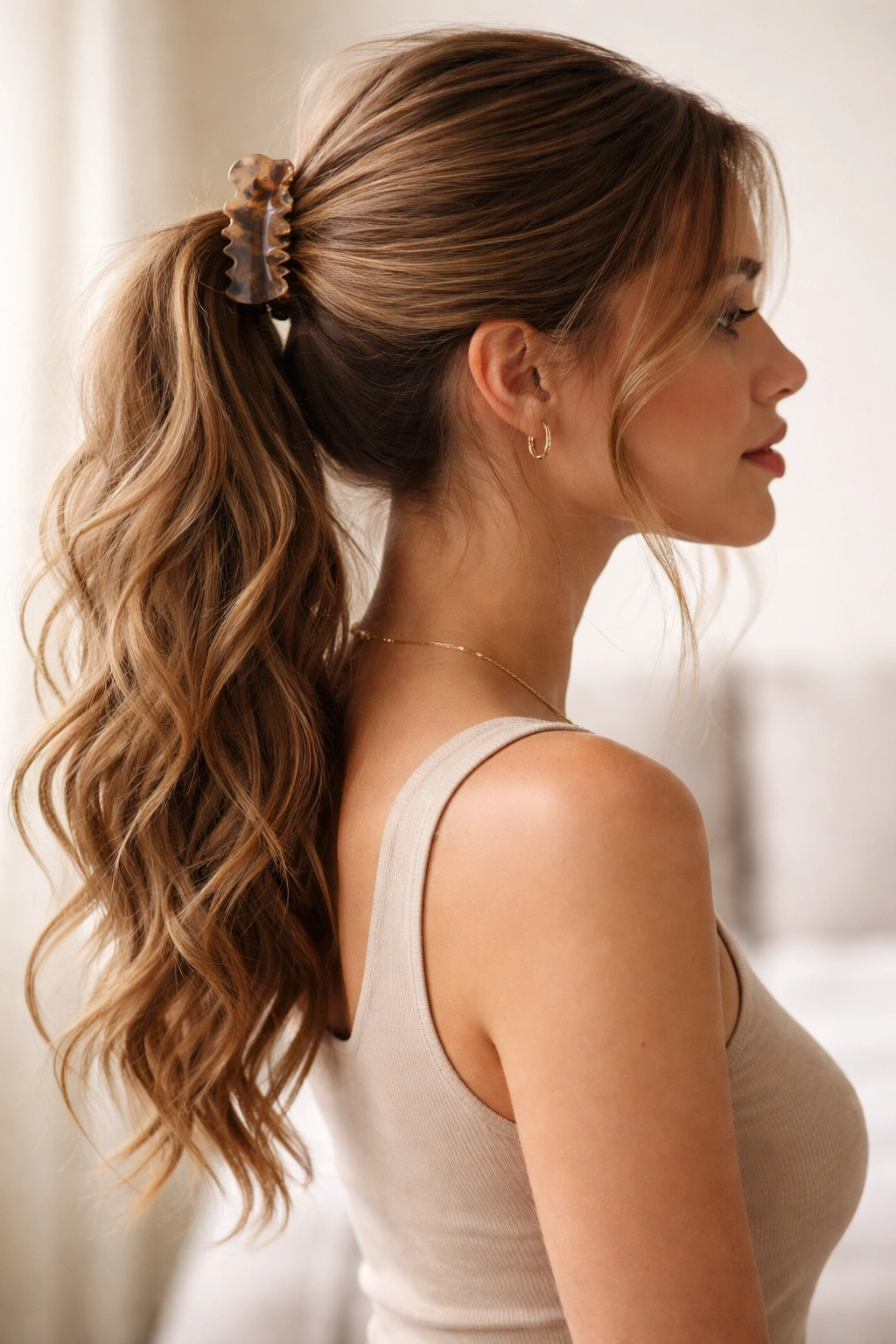
A little movement changes everything here. If your long hair already has a wave, let it show. If it doesn’t, a 1-inch curling iron can give the tail a bend that makes the whole ponytail look softer.
Gather the hair low or mid-height, clip it in place, and avoid brushing the waves out once they’re set. The tail should hang in loose curves, not form one big fluffy shape. That’s the mistake. You want pieces, not puff.
How to Keep the Waves Alive
Use a light mist of flexible-hold spray, then scrunch the tail gently from the ends upward. If the hair is very fine, skip heavy creams. They weigh the waves down and make the ponytail sag.
This style works because long hair has room to show texture. Shorter ponytails can lose the wave pattern fast. A long tail keeps the bends visible all the way down.
10. Straight Polished Claw Clip Ponytail
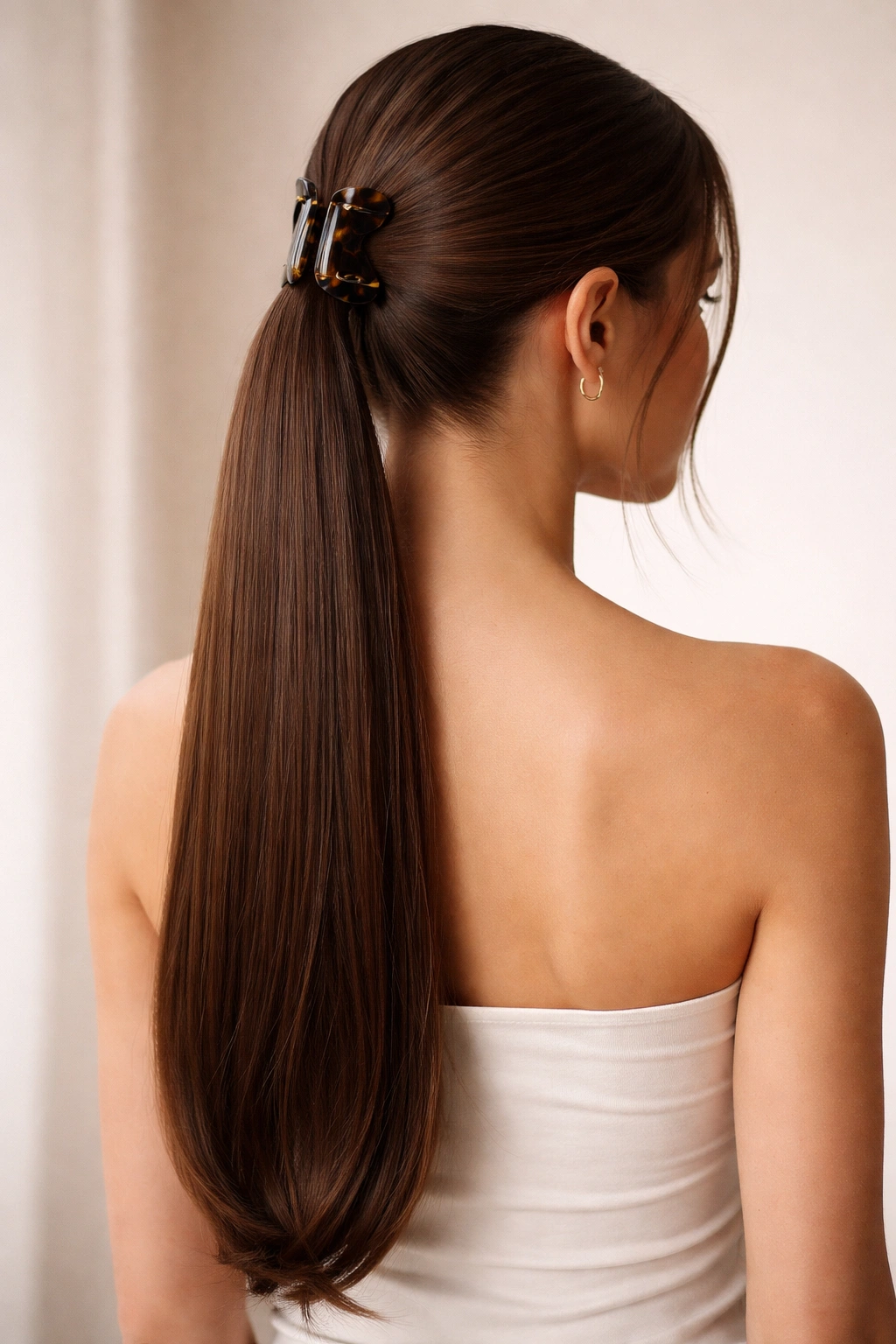
Three things matter here: shine, tension, and a clean line. If those are right, the rest is easy.
Blow-dry the hair smooth, or flatten it lightly with an iron if the ends need help. Then gather it low and clip it so the tail hangs in a clean sheet down the back. A tiny amount of serum on the palms is enough. Too much, and the clip starts to slide.
What Makes It Hold
A polished ponytail needs hair that lies together. If the top layer is frizzing or puffing away, smooth it with a soft brush and a touch of styling cream before clipping. The base should feel secure, but not tight enough to leave a crease when you let it down later.
This one looks especially good with long, blunt ends. The straight line of the tail makes the length obvious in a good way. Clean. Sharp. No fuss.
11. Twist-Through Claw Clip Ponytail
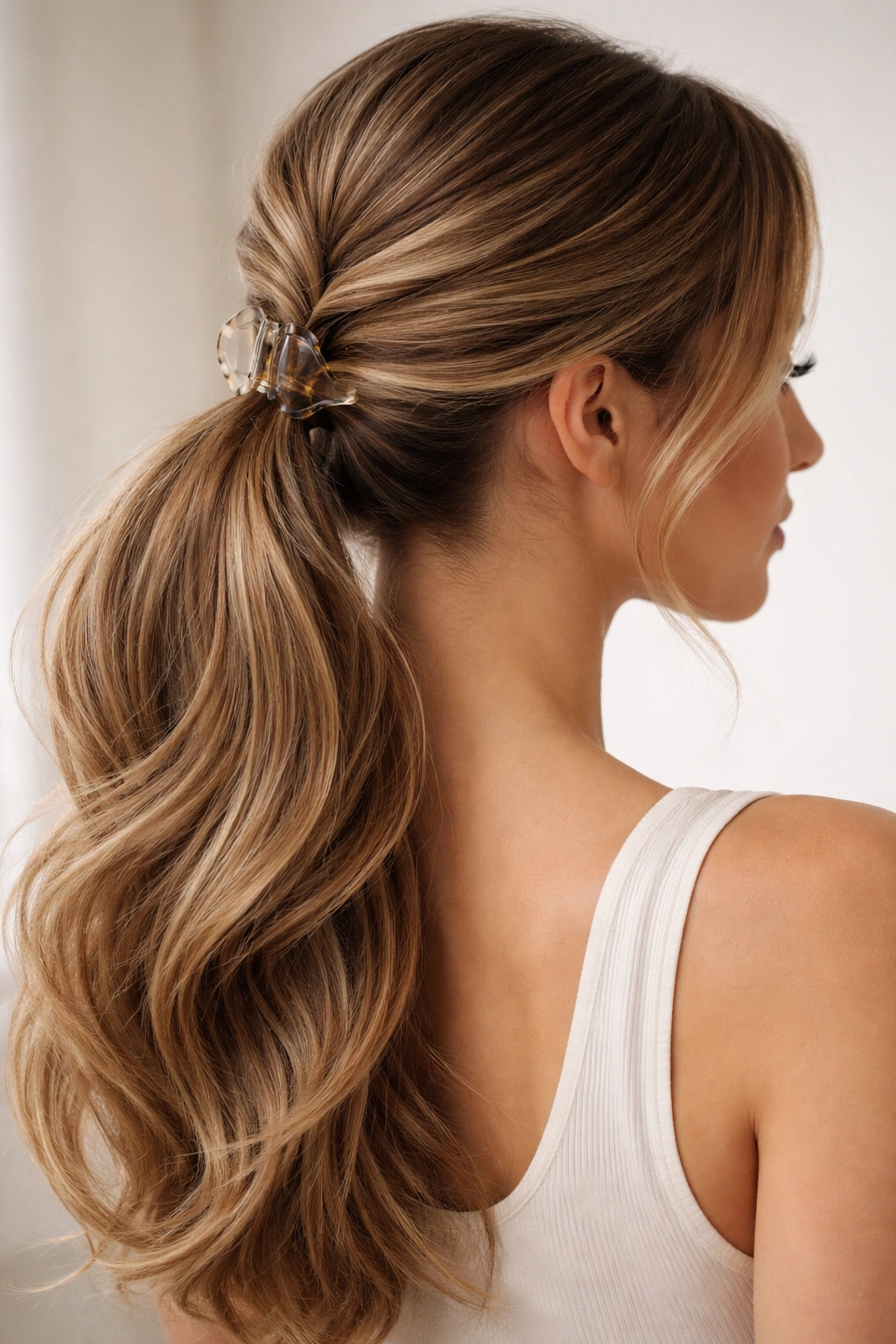
The twist-through version looks more complicated than it is. It’s the ponytail that makes people ask where the clip is hiding, and I like that.
Gather the hair low, leave a small opening above the base, and pull the ponytail through once before clamping the clip closed. That extra turn creates a little fold at the scalp and gives the base more shape. On long hair, the result feels tidy without being stiff.
When This One Shines
Use it when your hair is one length and you want a subtle change from a plain ponytail. The twist gives the base a small lift, which matters if your hair tends to lie flat. It also helps longer lengths stay centered instead of slipping to one side.
A medium clip is usually enough unless the ponytail is very thick. If the opening feels crowded, stop trying to force it. A cleaner twist is better than a crammed one.
12. Face-Framing Claw Clip Ponytail with Curtain Pieces
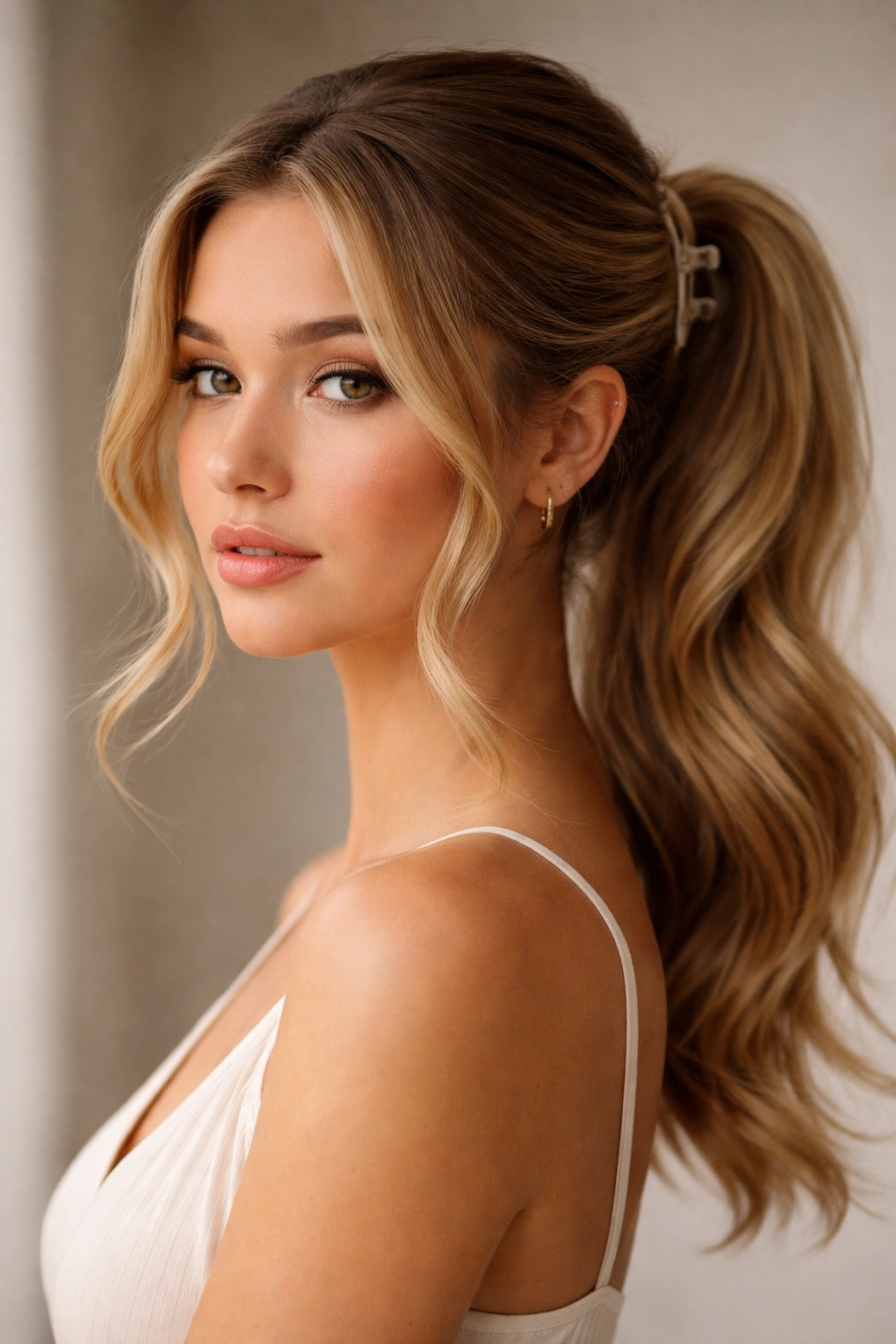
Leave the front alone. That’s what makes this style work.
Take two slim sections from the front, one on each side, and let them fall around the cheekbones before clipping the rest into a low ponytail. If you want a little bend, curl those pieces away from the face with a 1.25-inch iron. The rest of the hair can stay smoother and more controlled.
A Softening Trick That Helps
The face-framing pieces should look intentional, not like escaped strands. Keep them clean and slightly curved. Long hair can handle this contrast well because the tail gives the style weight while the front sections keep it soft.
This is a good pick if your features feel sharper with everything pulled back. The loose front pieces take the edge off, and the clip stays visible enough to feel like part of the design.
13. Layer-Friendly Double-Grip Ponytail
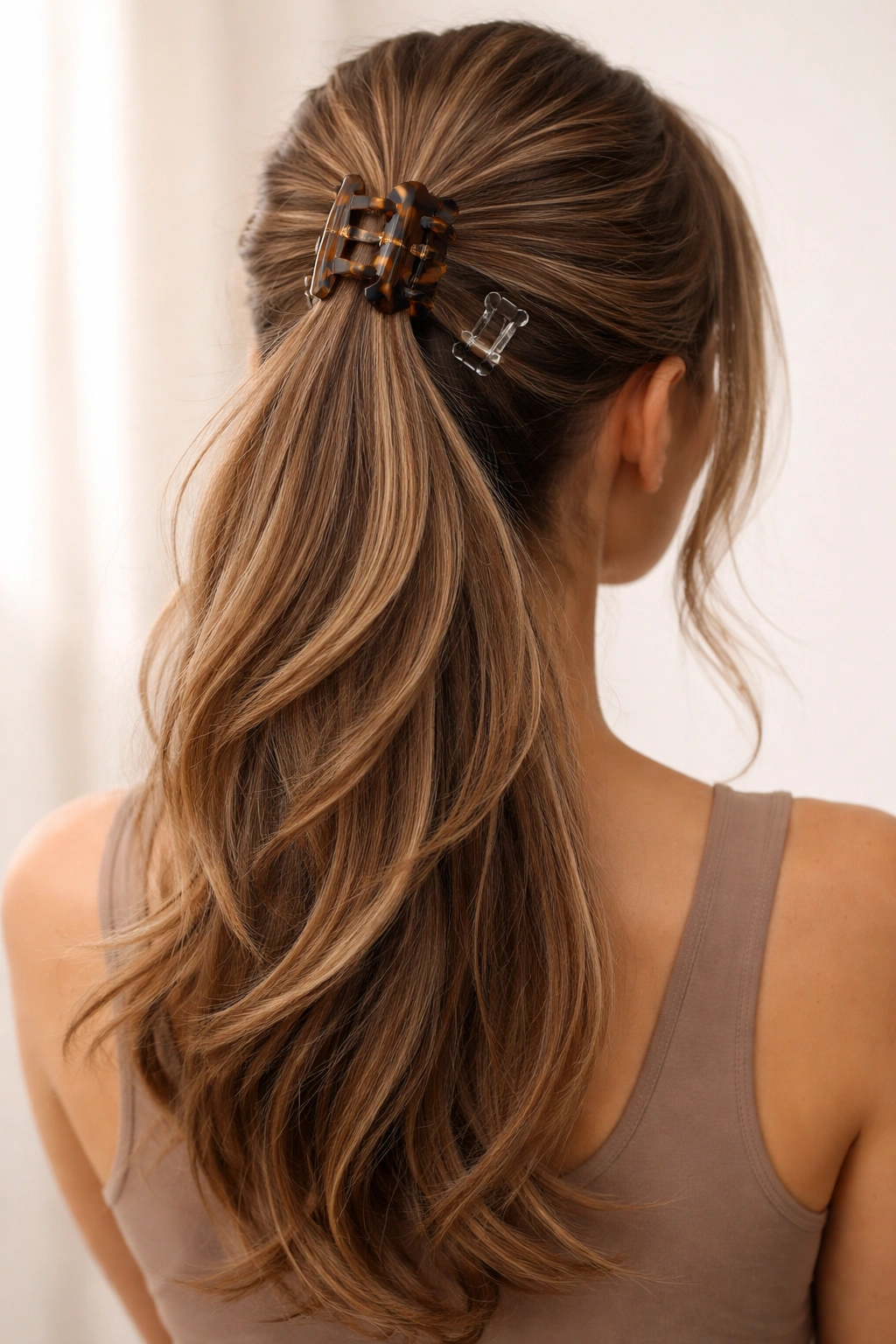
Layers are the reason a lot of claw-clip ponytails fall apart. Short pieces near the crown slip, the tail thins out, and the clip starts working against you.
A double-grip setup fixes that. Gather the hair into a low ponytail, secure the first fold with the claw clip, then pin any loose top layers with a second small clip or a couple of bobby pins tucked underneath. It sounds fussy, but it takes less time than redoing the style twice.
Why It Works on Choppy Cuts
Layered hair needs more than one point of hold. The larger clip catches the bulk of the length, while the smaller support keeps shorter pieces from slipping free at the crown. That keeps the silhouette neat.
If your layers are very short, leave a little texture around the temples instead of trying to force every strand into the base. Long hair with layers looks better when the movement is visible. Hiding every piece usually makes the style look strained.
14. Fine-Hair Puffed Claw Clip Ponytail
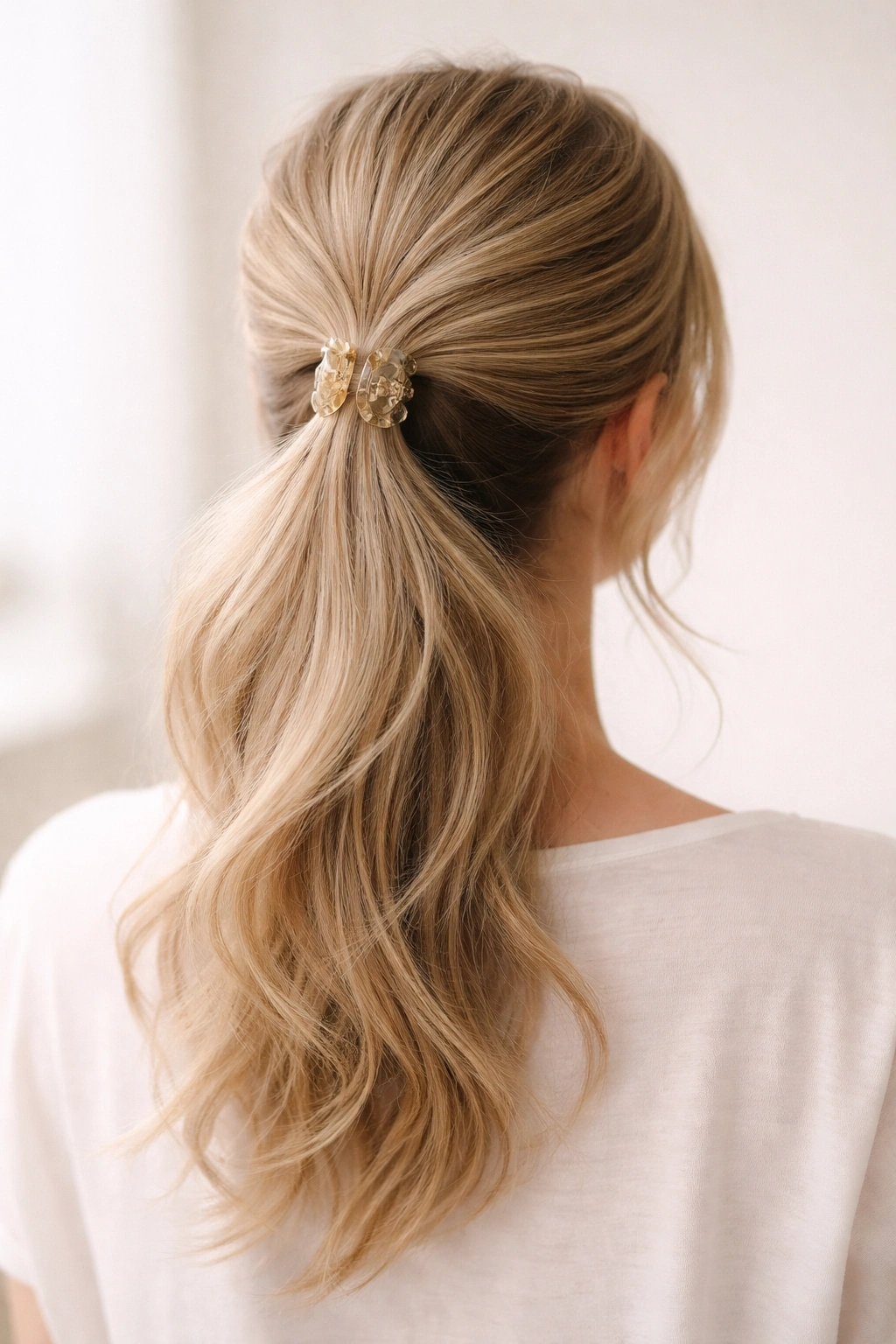
Fine hair needs lift at the crown, not more pulling at the ends. That’s the mistake people make. They add product everywhere and end up flattening the exact places that need help.
Tease the crown lightly with a fine-tooth comb, then smooth only the top layer so the puff stays soft. Clip the ponytail at the nape or slightly above it with a smaller claw clip that can close fully. If the clip is too big, the style can look hollow.
Tiny Details That Matter
A dusting of root powder or texturizing spray makes a real difference here. Fine hair can be slippery, and the clip needs some grit. Don’t coat the whole head. Just the root area.
This style looks especially nice with long, airy ends that move. The puff at the crown gives the illusion of more body without turning the ponytail into a helmet. Light, not flat. That’s the goal.
15. Thick-Hair Heavy-Duty Claw Clip Ponytail
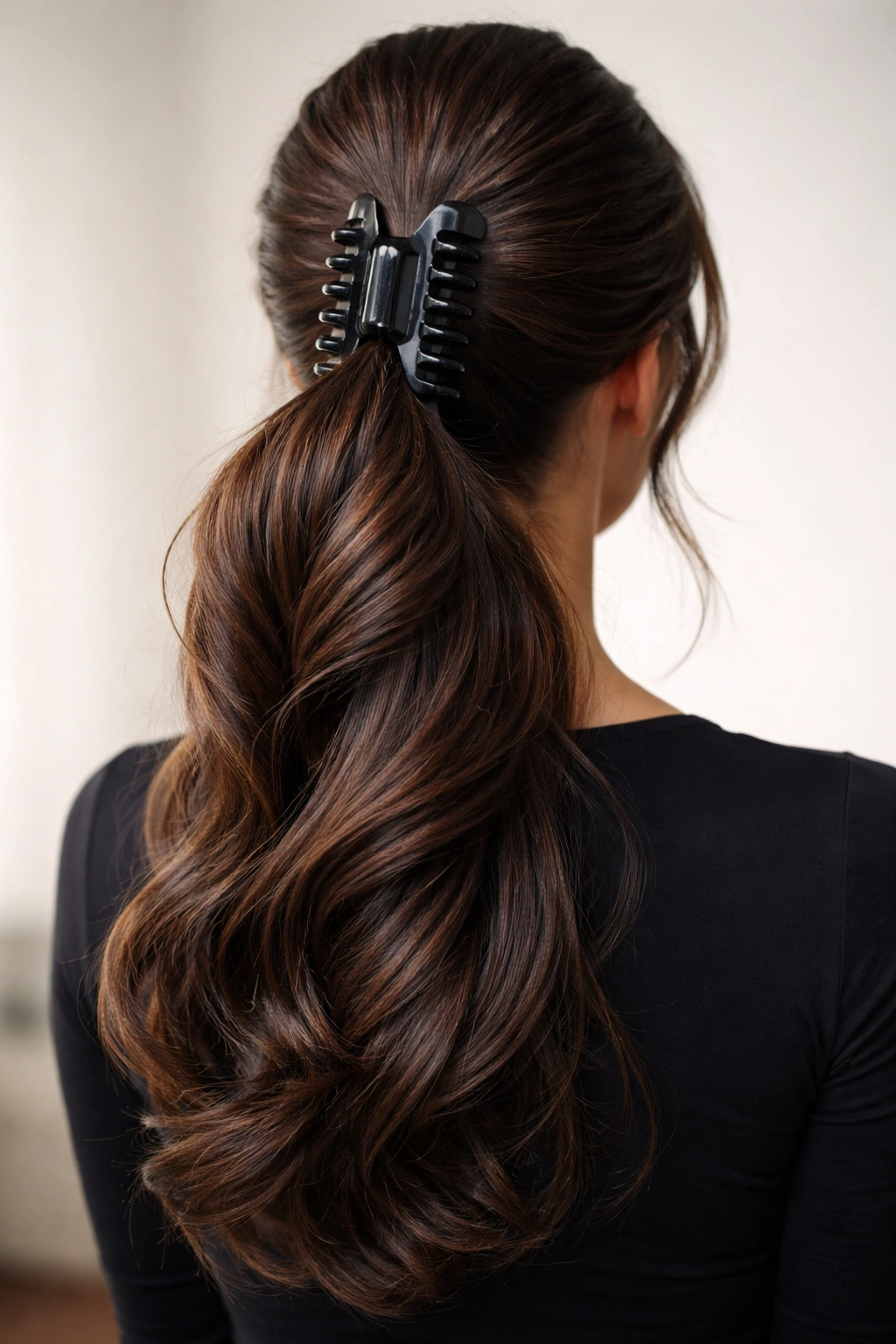
Thick hair needs a clip that can actually close. If the jaws barely meet, stop there. That clip is too small.
Choose a large claw clip with deep teeth and a strong spring, then gather the hair into a low or mid ponytail and twist once before clipping. If the hair is extremely dense, split it into two loose sections, clamp the lower part first, then set the clip over the upper layer. That extra step gives the style a better hold and keeps the weight from dragging the clip open.
Signs the Clip Is Undersized
- The jaws do not close fully.
- The tail feels heavy after ten minutes.
- The clip tilts to one side.
- The base starts slipping when you turn your head.
A thick ponytail can look gorgeous in a claw clip, but it needs hardware that matches the job. Anything flimsy gets exposed fast.
16. Office-Ready Neat Claw Clip Ponytail
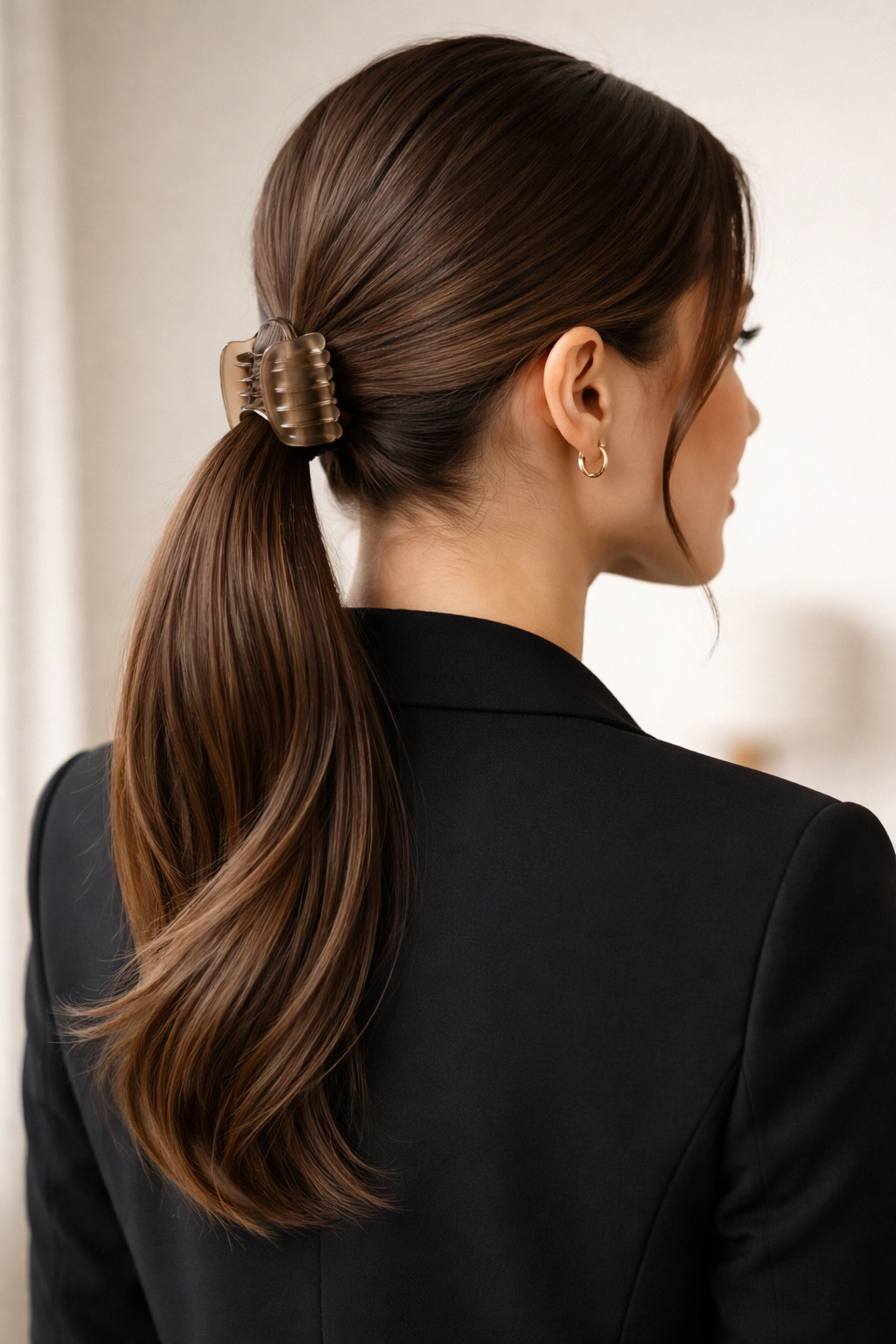
Need something that reads polished in a conference room? Start with a center part and a low clip. That alone sharpens the whole look.
Smooth the sides back with a brush, tuck the ponytail under slightly so the base sits flat, and keep the clip in a neutral shade like black, tortoiseshell, or matte beige. The tail can stay straight or take a slight bend at the ends. Either works, as long as the crown stays controlled.
The Part That Keeps It Professional
Flyaways are fine, but only a few. Too many and the style starts to look rushed. Use a dab of lightweight cream on the palms and smooth the top layer once, not five times. Repeated brushing tends to wake up more frizz than it solves.
This one is boring in the best way. It stays put, it looks tidy, and it doesn’t steal attention from anything else you’re wearing.
17. Athletic Swing Claw Clip Ponytail
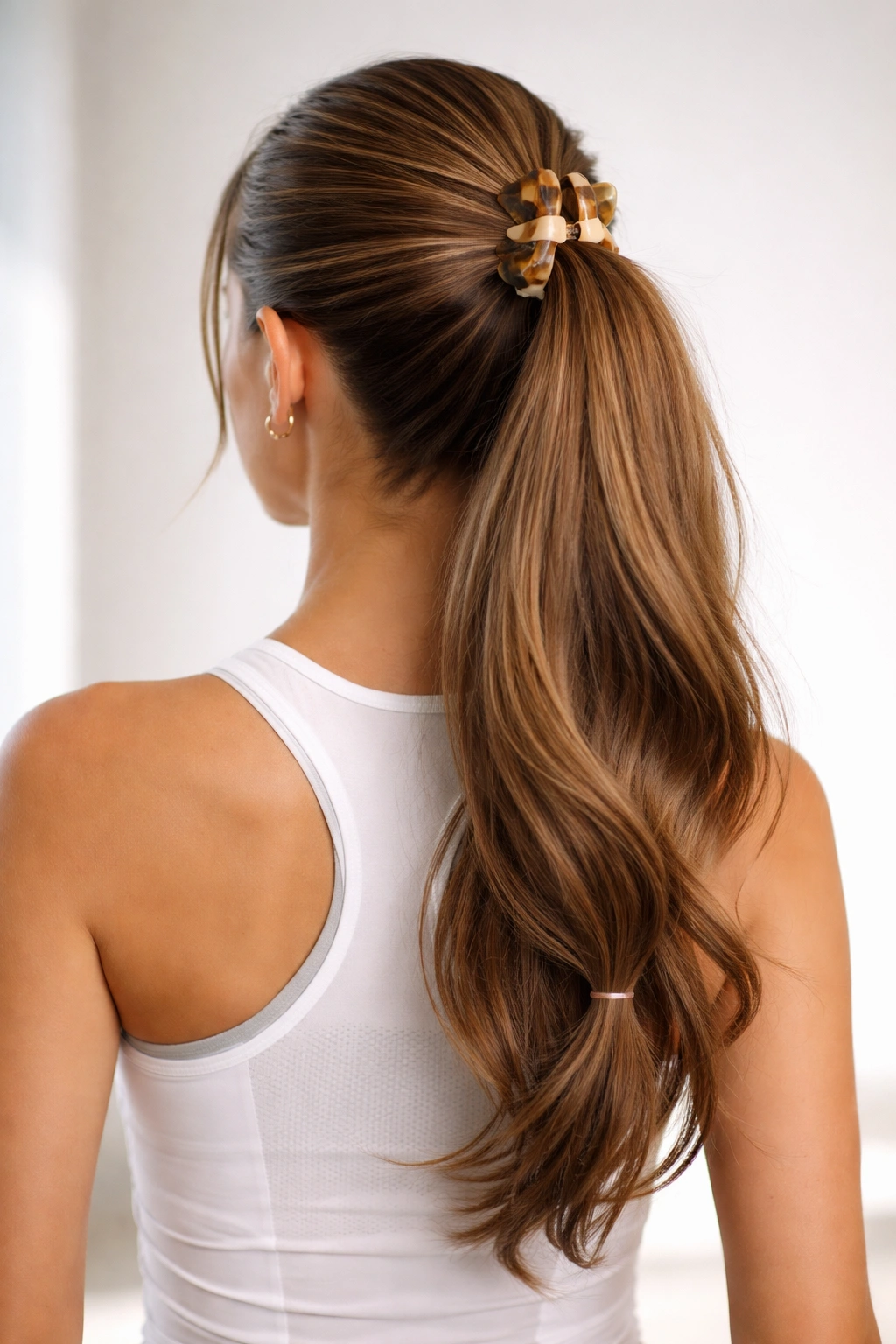
On days with a long walk, this is the style I pick. It sits high enough to stay clear of the neck, but not so high that it starts bouncing around like a topknot.
Gather the hair at the crown or just below it, clip it firmly, and keep the tail light by brushing only the top layer smooth. If your hair is very long, a small elastic near the bottom third of the ponytail can keep the swing under control. That’s handy when the length is dramatic and you don’t want it slapping your shoulders.
A Real-World Note
This isn’t my choice for hard workouts. Claw clips can shift when sweat builds up or when you move fast. For errands, walking, or a day that involves coming in and out of the car a lot, though, it’s excellent.
The style should feel secure without feeling trapped. If the base is digging in, loosen it a touch and lower it by half an inch.
18. Romantic Ribbon-Tied Claw Clip Ponytail
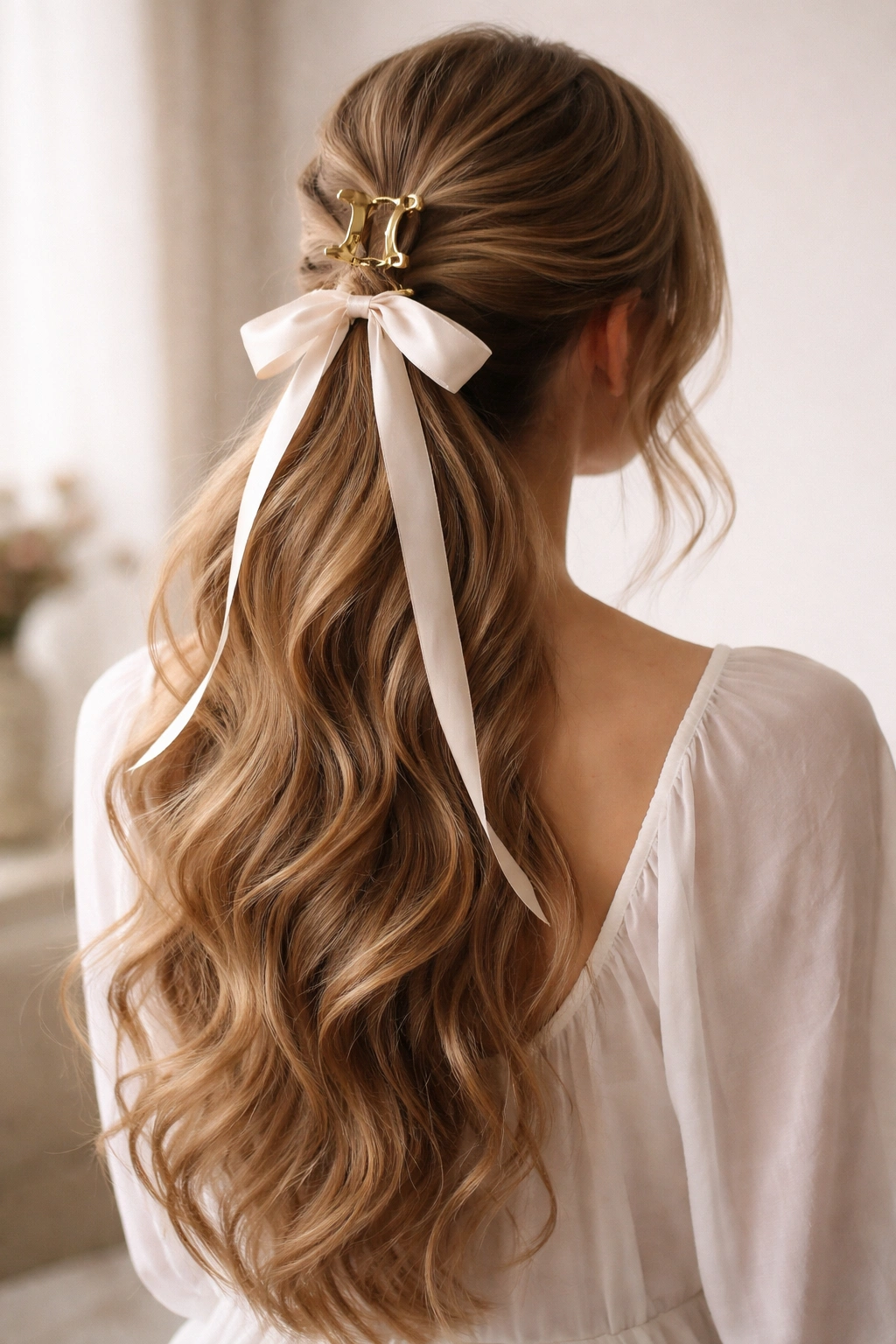
The ribbon changes the whole mood. Soft fabric against long hair does something a plain clip can’t, especially when the tail is loose and a little curved.
After clipping the ponytail in place, tie a silk or satin ribbon around the base and let the ends trail down the back. Keep the bow small if you want the look to stay refined. A big bow can take over fast. Thin ribbon is easier to wear and doesn’t add bulk near the clip.
Best Fabric Choices
- Silk drapes well and feels light.
- Satin gives a smooth shine without much weight.
- Cotton twill adds a more casual, tied-up look.
- Avoid stiff ribbon if your hair is very thick; it can sit awkwardly at the base.
This one looks especially nice with long waves or soft curls. The ribbon breaks up the length and gives the ponytail a little movement around the clip.
19. Heatless Braid-Out Claw Clip Ponytail
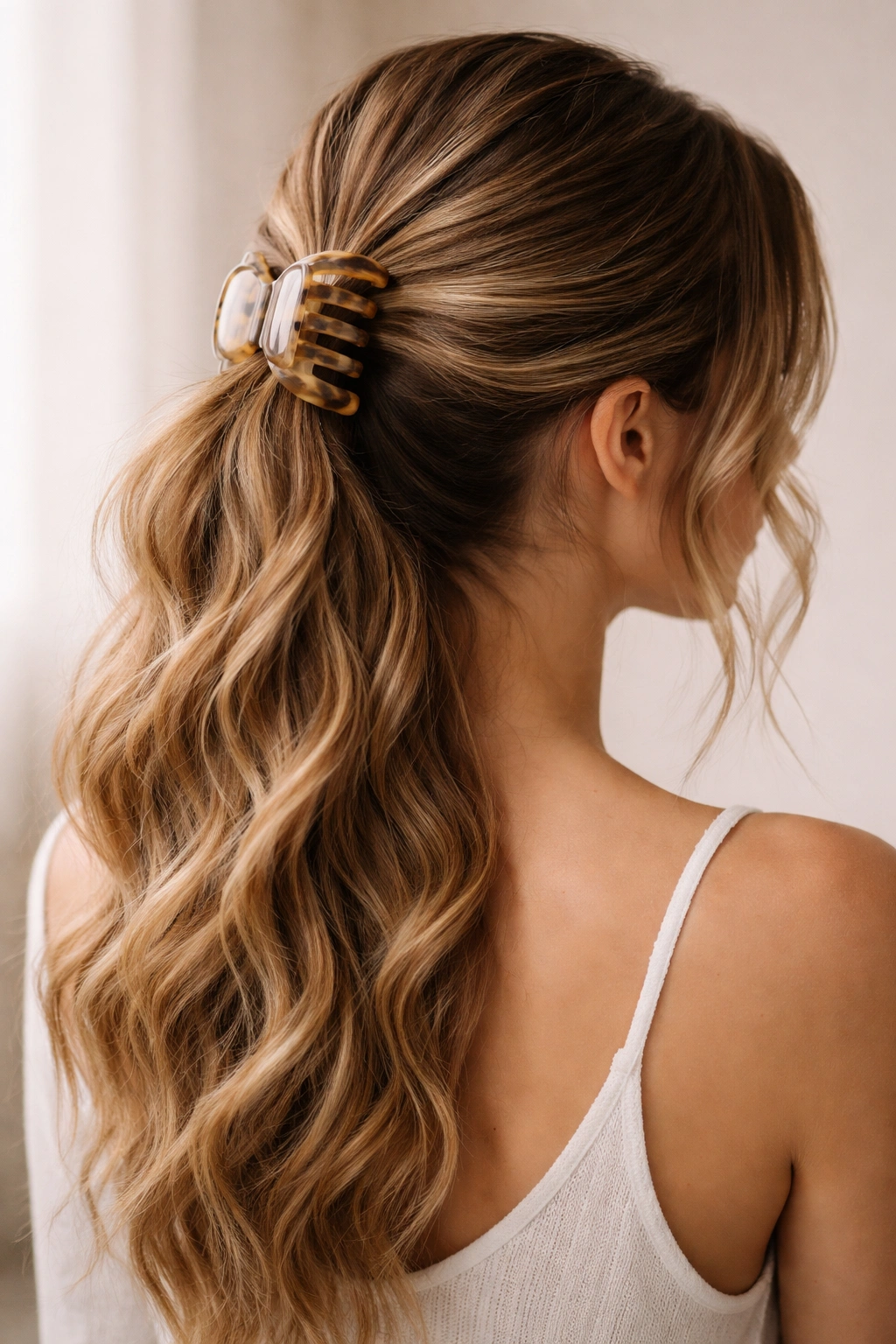
Braid the hair first, let it set, and then clip it back in the morning. That’s the trick. The braid gives the ponytail a memory of wave, which keeps the tail from falling flat.
If your hair is damp, make the braid loose enough that it can dry fully without getting crunchy or bent in one hard line. Once it’s dry, unravel it gently, gather the waves into a ponytail, and secure the base with a claw clip. The result looks soft and lived-in, not over-styled.
The Part People Rush
Drying time matters more than the braid itself. If the hair is still damp in the middle, the shape collapses fast and frizz takes over. Give it the time it needs, even if that means waiting a little longer than planned.
This style is a smart one for long hair because the length catches the wave pattern in a visible way. The movement starts near the top and continues down the tail instead of disappearing halfway through.
20. Wet-Look Slick Claw Clip Ponytail
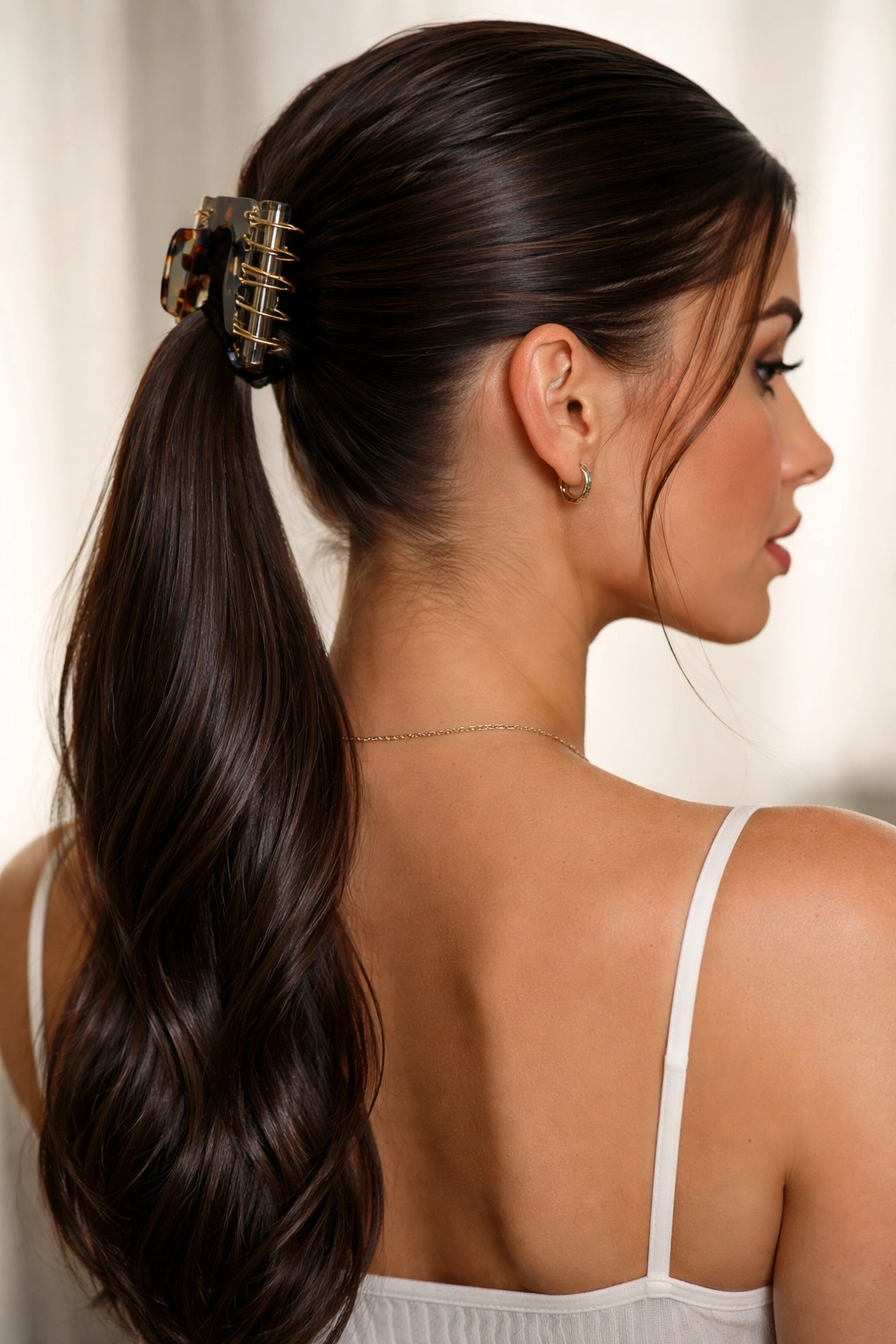
A wet-look ponytail can go wrong in one second if you use too much product. The goal is glossy, not greasy.
Work gel through the hairline and crown, comb everything back, then clip the ponytail low and flat. A soft toothbrush or edge brush can clean up the small hairs around the temples. Use a tiny bit of oil on the ends only, and keep it off the base or the clip may slip.
Where This Style Works Best
Long hair handles the wet look well because the length balances the shine. A short ponytail can look severe. A long one gives the finish some movement.
If your hair is porous, use a leave-in cream first, then gel on top. That helps the strands lie together without feeling crunchy. The finish should look smooth when you turn your head, not sticky when the light hits it.
21. Crown-Lift Claw Clip Ponytail
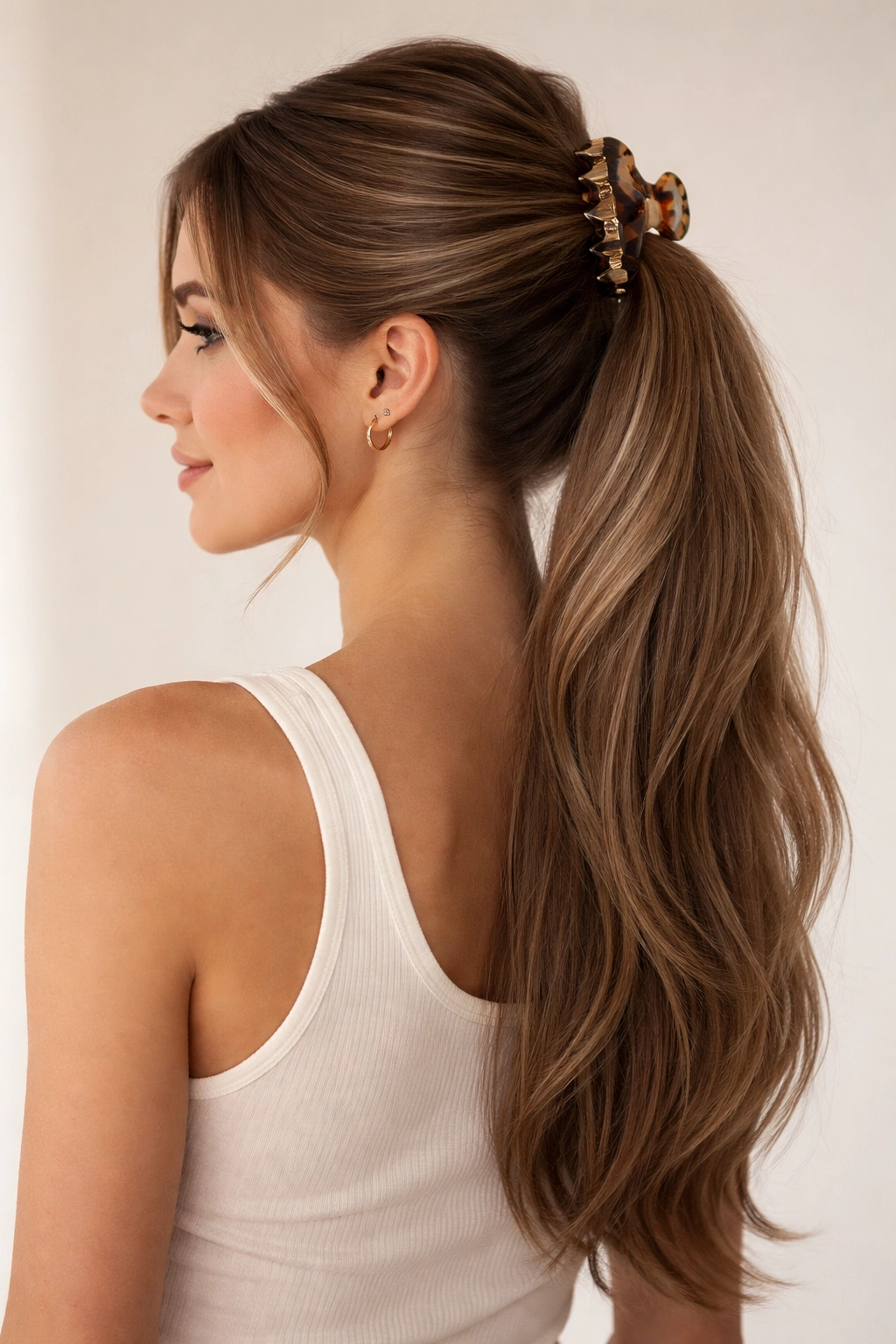
Higher isn’t always better. A quarter inch can change the whole shape.
Set the clip slightly above the middle of the head, with a touch of lift at the crown, and let the tail fall straight down the back. You get height without the full swing of a high ponytail. That makes this one easier to wear if your hair is long enough to feel heavy.
What Gives It Shape
Gently push the hair upward at the crown before clipping, then smooth the outer layer back over that lift. The trick is not to flatten the root area completely. A tiny bit of space near the scalp gives the ponytail body.
This style looks good with long hair that has a little bend in the ends. The lift up top stops the whole look from dragging downward. It also gives your profile more shape, which is a nice bonus.
22. Double-Twist Claw Clip Ponytail
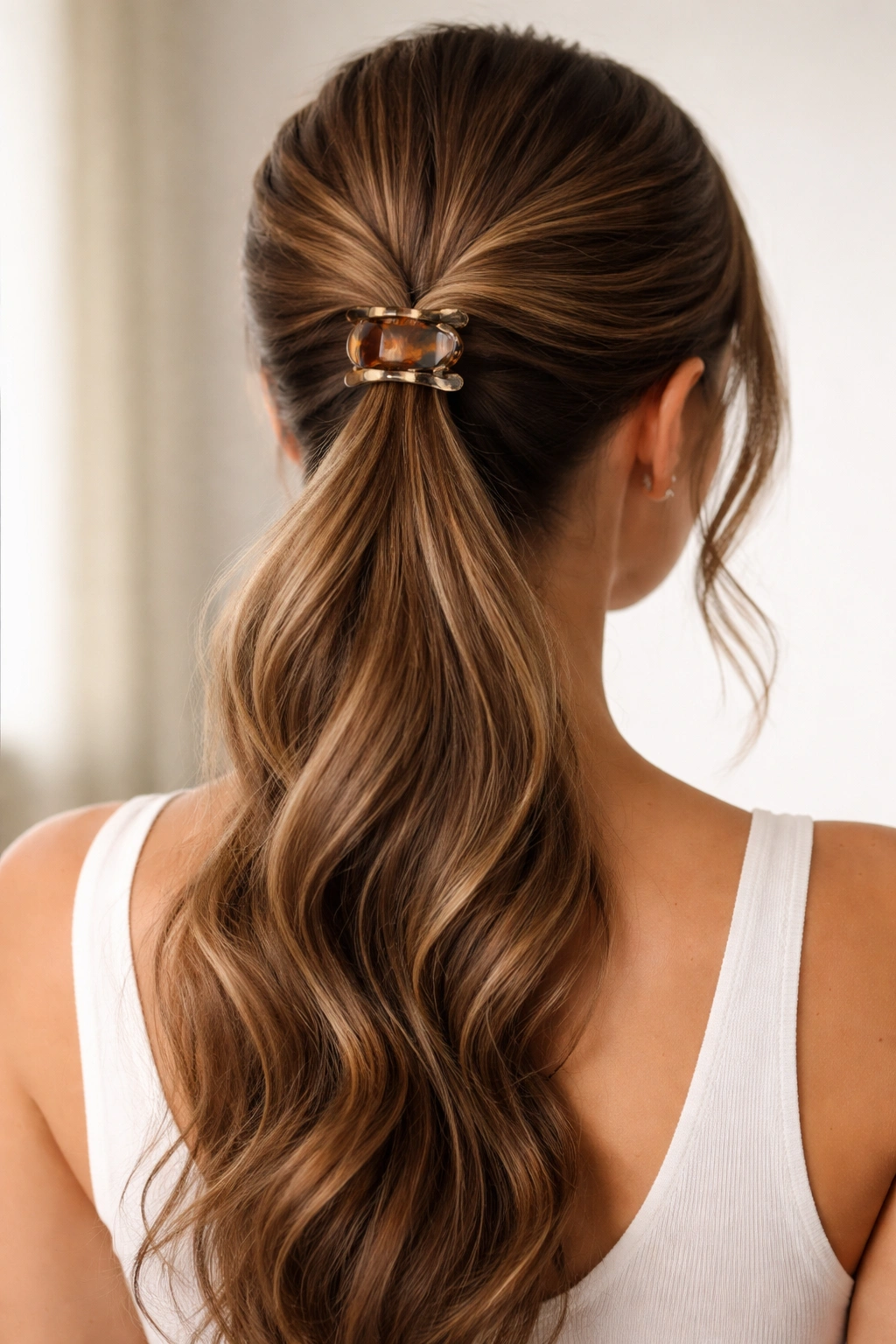
Split the front into two sections and twist both toward the center before clipping. That’s the basic move, and it gives the ponytail a stronger frame.
The twists meet at the back, where the clip catches them together. The rest of the hair falls into a long tail underneath. It sounds simple because it is. That’s part of the charm. You get a little detail at the scalp without making the style feel busy.
Why Long Hair Makes It Better
With short hair, the twists can look cramped. Long hair has room to show the full line of the twist and the tail beneath it. The style ends up looking balanced instead of crowded.
Use this when you want something a little more structured than a plain ponytail, but not as formal as a braided updo. It sits in that useful middle ground where long hair looks controlled and still has movement.
23. Scarf-Tied Claw Clip Ponytail
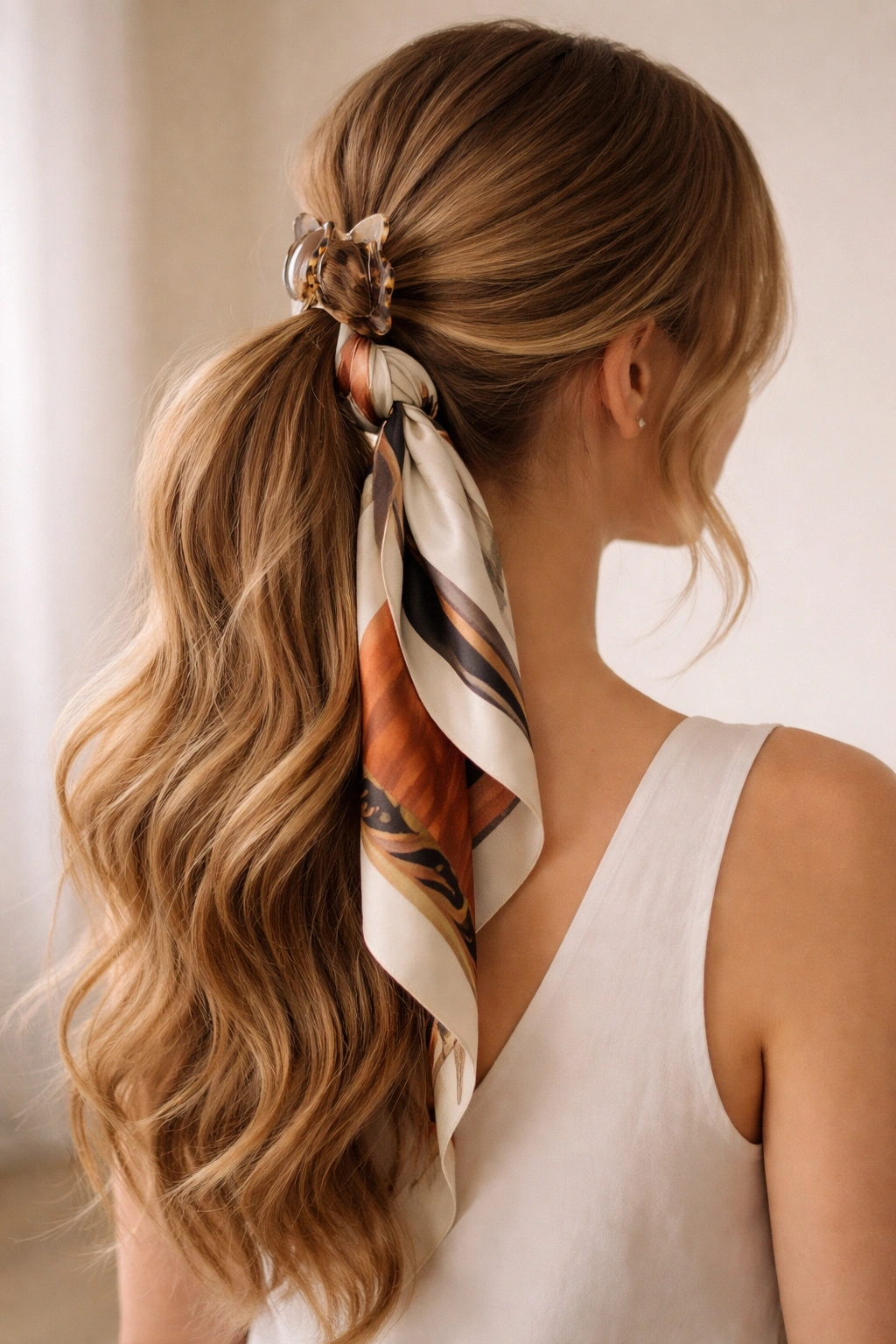
A silk scarf over a claw clip is one of those details that looks small but changes the whole outfit. It adds color, softens the clip, and gives the ponytail a more finished edge.
Tie the scarf around the base after the clip is set, or thread the scarf under the clip if it’s thin enough. Let the ends hang with the tail, or knot them into a short bow. Keep the knot neat. Sloppy scarf ties can look accidental fast.
Good Scarf Choices
A narrow silk scarf works best for long hair because it won’t bulk up the base. Cotton bandanas add a more casual feel, but they can feel heavy if your ponytail is already thick. If the clip is large and visible, a patterned scarf helps balance it.
This style is especially nice when the rest of the hair is simple. The scarf does the visual work, so the ponytail can stay easy.
24. Flipped-Under Claw Clip Ponytail
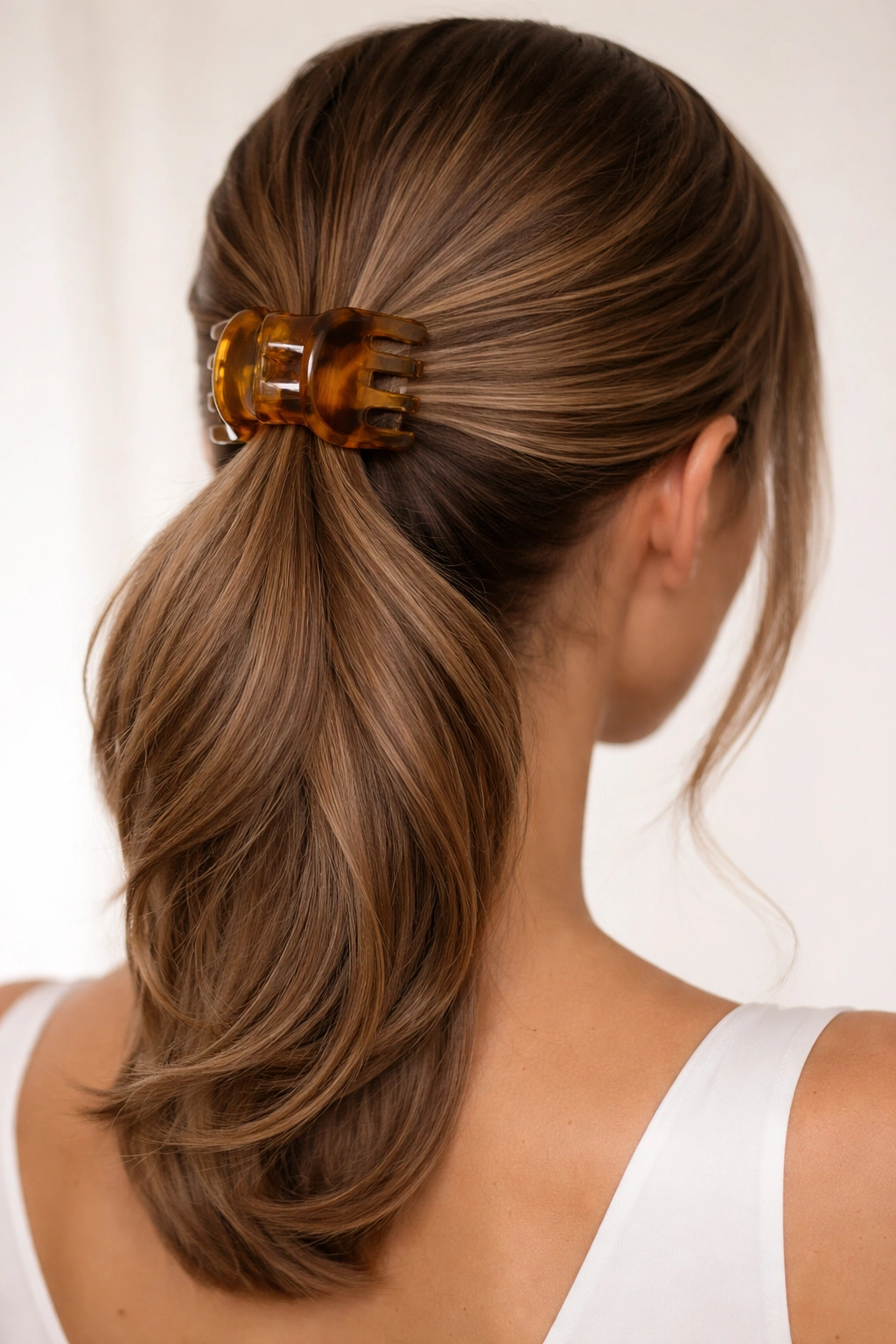
Sometimes the neatest answer is to hide the ends. This version folds the tail under the clip so the length tucks inward instead of hanging straight down.
Gather the hair low, clip it in place, then fold the ends upward and under the base so they sit just beneath the clip. You get a compact shape that feels tidy and controlled, which is handy on windy days or when you want the ponytail to stay close to the neck.
Why It’s Worth Trying
Long hair can make a ponytail look wide and heavy. Folding the tail under shrinks the visual bulk and makes the shape more compact. It also keeps the ends from catching on coats, scarves, or bag straps.
This one is especially useful if your hair is all one length and tends to swing hard. The tucked finish keeps movement quieter. Less flinging around. More control.
25. Center-Part Claw Clip Ponytail
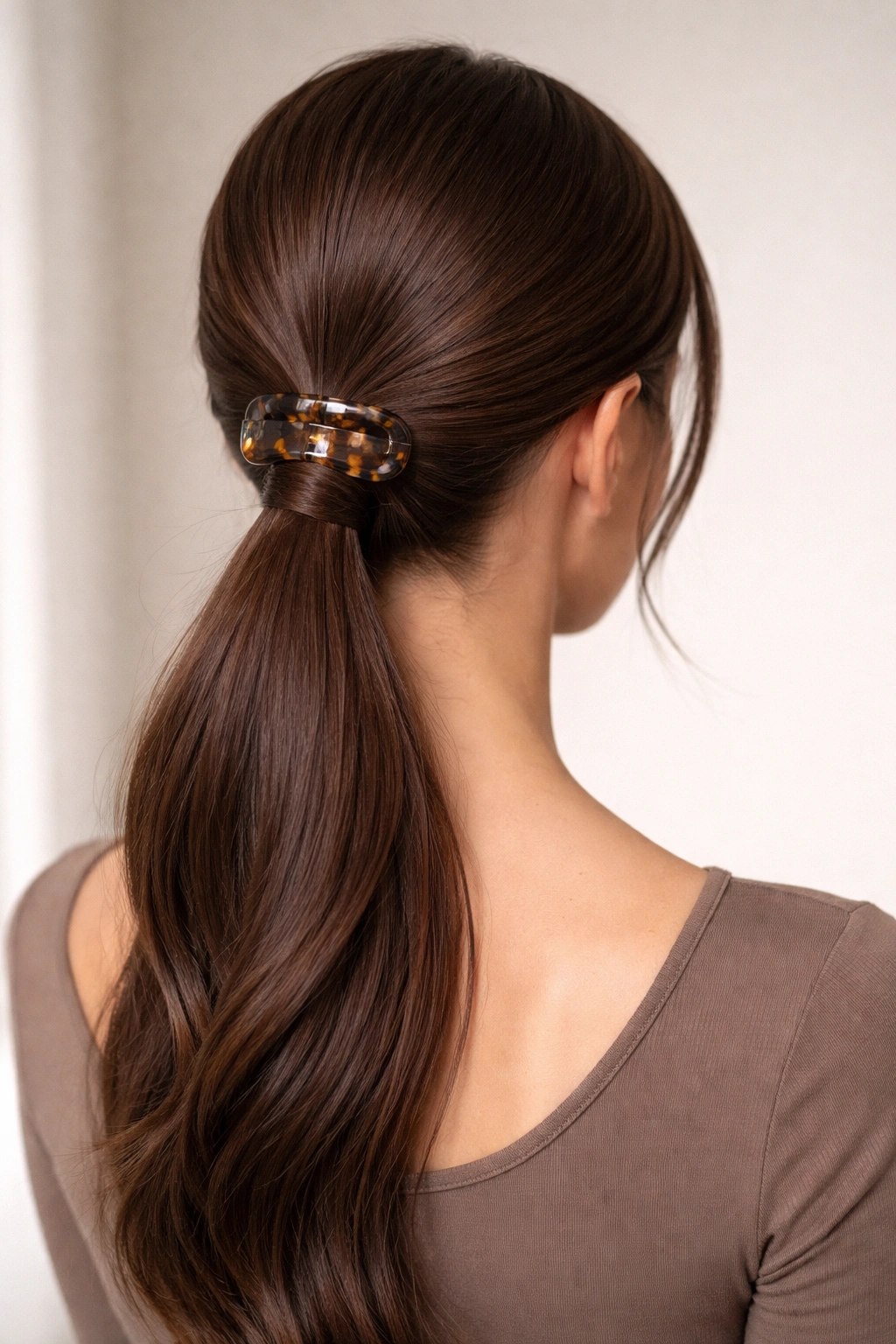
A center part does one job: it makes the clip look intentional.
Start with a clean center part, smooth both sides evenly, and gather the hair into a low ponytail with the clip placed right at the base. The symmetry helps long hair fall in a balanced way, especially if the tail is straight or only lightly waved. Uneven parts can be fine, but this version has a sharper line to it.
The Small Difference You Notice
The center part creates a frame around the face that makes the ponytail feel structured. It also keeps both sides of the head visually equal, which is useful when the clip itself is large or decorative.
Keep the front pieces clean and flat, then let the tail carry the softness. That contrast is what makes the style work. Polished at the top, loose at the bottom.
26. Soft Curled-Ends Claw Clip Ponytail
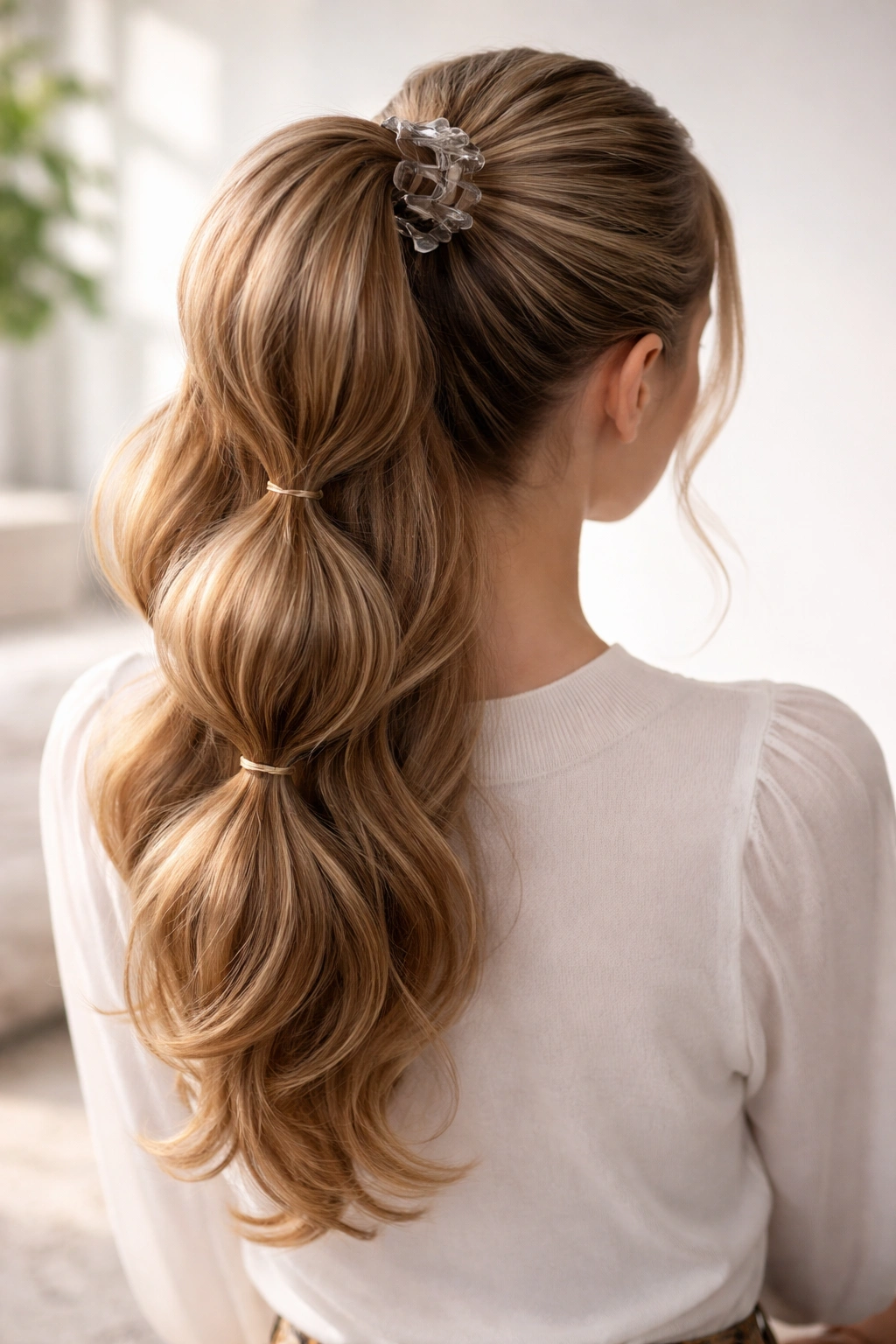
Curl only the last few inches and leave the roots smooth. That’s the move. It gives the long tail a finished shape without turning the whole ponytail into a blowout.
After clipping the base, run a 1-inch curling iron or flat iron bend through the bottom 3 to 4 inches of the tail. Curl away from the face if you want a softer line. The ends should look shaped, not ringleted. Long hair can handle that subtle finish better than shorter lengths.
What Makes It Worth the Effort
A small curl at the bottom keeps the tail from looking blunt or too straight. It also helps the ends sit neatly against clothing instead of sticking out in every direction. That matters more than people think.
This is a smart style when you want a little polish without a full heat styling session. The clip handles the base. The curl handles the finish. Done.
27. Oversized Statement Claw Clip Ponytail
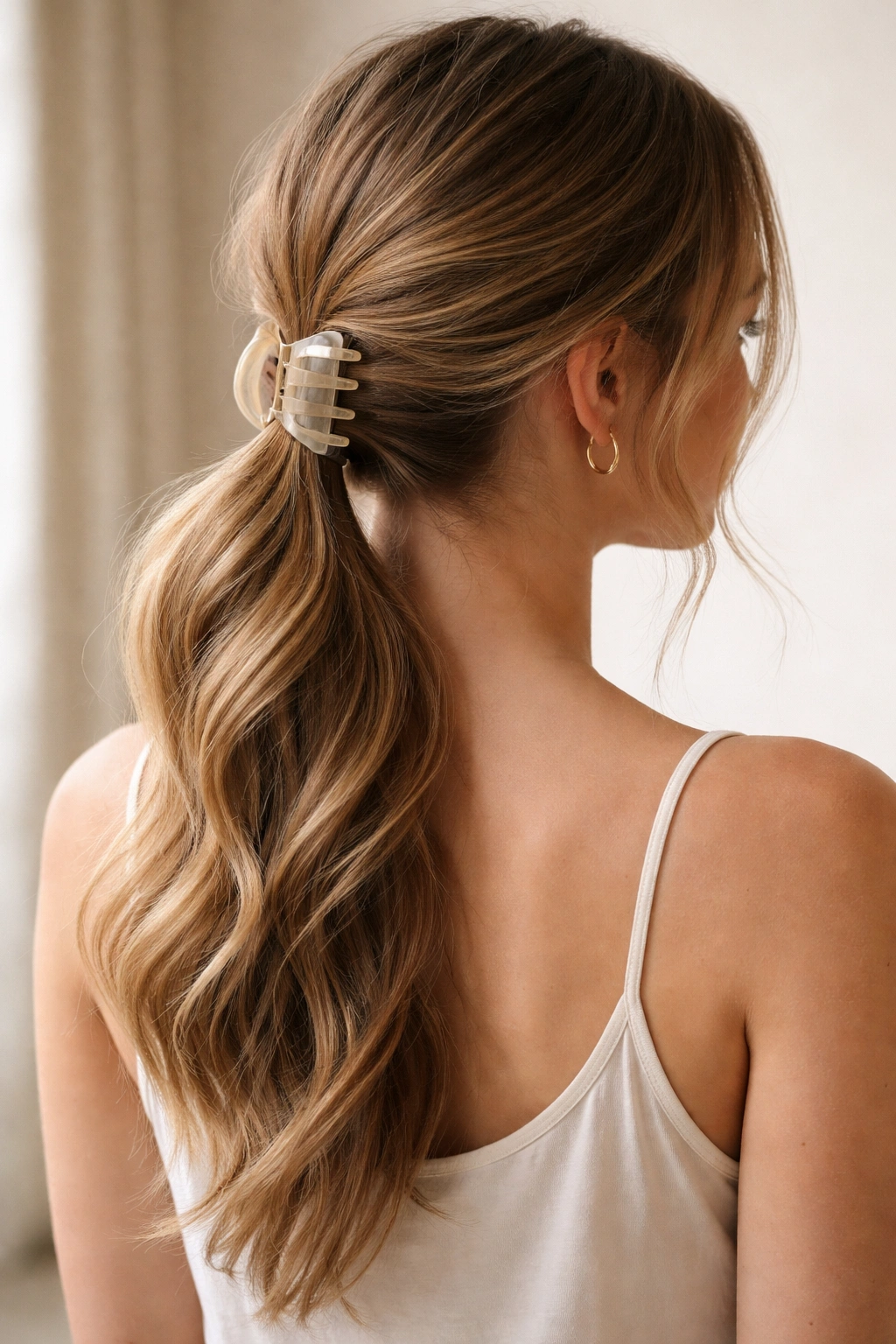
A big translucent or tortoiseshell clip can carry the whole look on its own. When the hardware has enough shape and strength, long hair doesn’t need much else.
Gather the hair low or mid-height, twist it once, and clamp the clip so it sits visible at the base. Let the tail fall long and loose. The best oversized clips have rounded teeth and a spring that closes firmly without feeling sharp. If the clip pinches or slides, it’s the wrong one for long hair.
Why This One Works So Well
Long hair gives the clip a backdrop. That’s the trick. The clip becomes part of the silhouette instead of just a tool hiding under the strands. A glossy tortoiseshell finish or a soft translucent resin can make the base look more deliberate, especially when the tail is smooth and the crown is lightly polished.
If you want one ponytail in this whole lineup that can do the most with the least effort, this is probably it. Strong clip, long tail, clean twist. That’s enough.
