



Choosing the right hair colors for curly hair can feel overwhelming — there are so many options, so many application techniques, and so much conflicting advice about what works and what damages natural curls. But color and curly natural hair are a genuinely beautiful combination when done thoughtfully. The right color on curly hair doesn’t just change how your hair looks — it changes how your curl pattern reads, how much dimension your style has, and often how confident you feel wearing your natural texture.
Why Color Looks Different on Curly Hair
Color on curly hair behaves differently than color on straight hair, and understanding why helps you make better decisions about which colors to try.
Curly hair is inherently three-dimensional. Each curl coils, spirals, or waves in a way that creates light and shadow within a single strand. When you add color — especially multi-tonal color like highlights, balayage, or ombre — those light and shadow variations multiply dramatically. A single highlight that would look like a flat streak on straight hair looks like a luminous thread woven through a coil on curly hair. The three-dimensionality of curly hair makes color more visually complex and more interesting.
Shrinkage affects how color reads at different lengths. A dark-root-to-light-ends ombre on straight hair shows the gradient in a straight, linear way. On curly hair, that same gradient is compressed and expanded as the curls contract and spring, creating a more dynamic effect where the colors appear in different concentrations depending on how the curl falls.
The curl pattern determines which coloring technique works best. Looser curls (2c-3b) tend to show traditional highlights and balayage beautifully because the curl doesn’t obscure the colored sections. Tighter coils (3c-4c) respond better to techniques that color the hair throughout rather than in sections, because the tight coil pattern can hide highlights within the interior of each curl where they’re not visible.
Color Damage and Natural Curls — The Real Talk
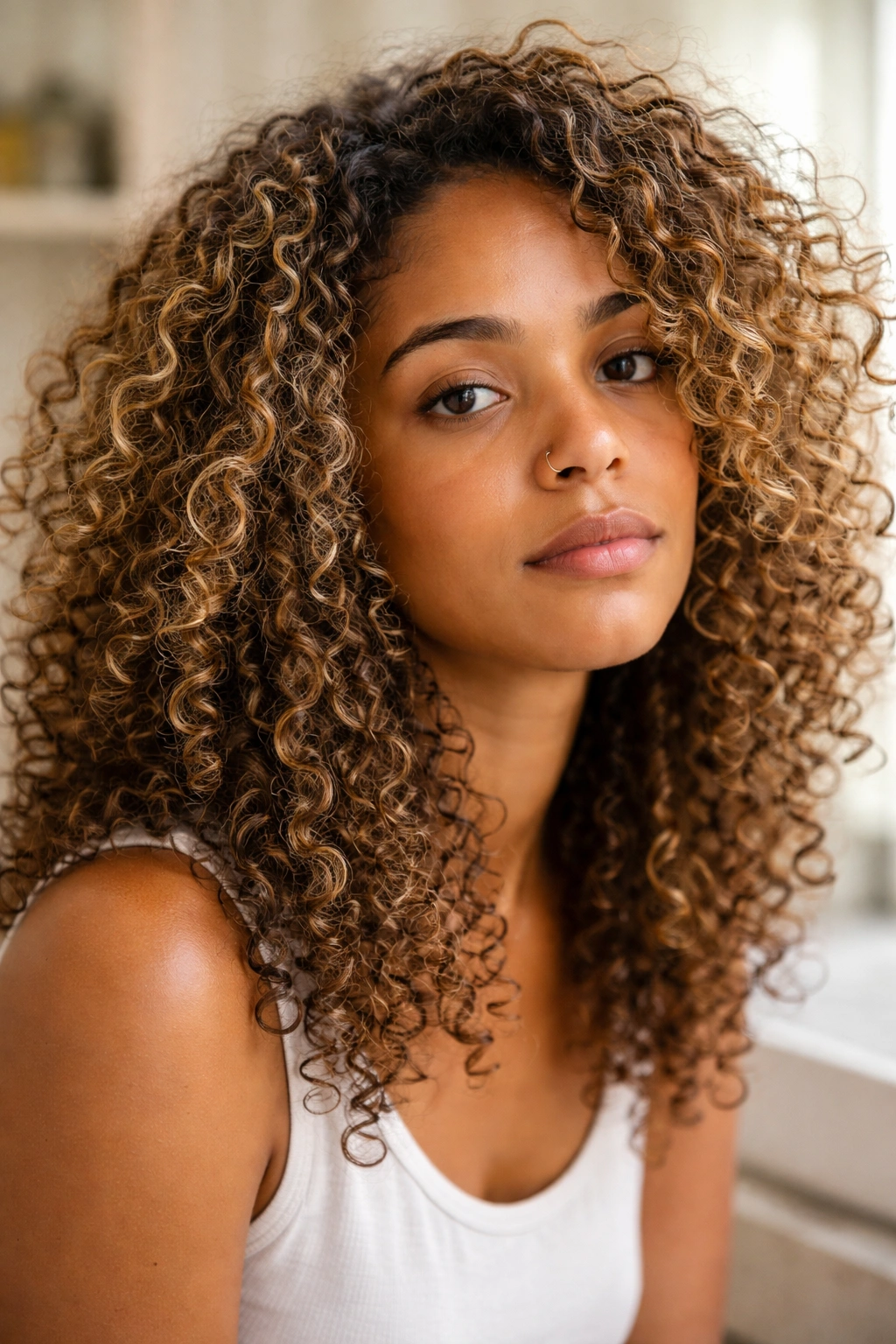
Any color process that uses lightener (bleach) or permanent dye causes some degree of structural change to the hair shaft. For natural curly hair, this matters more than it does for straight hair because curly hair is already more prone to dryness and breakage than straight hair — its coiled structure means the cuticle is more open and more vulnerable.
Bleach is the biggest concern. Full bleaching, especially on dark natural hair, requires multiple applications to achieve very light results, and each application further compromises the hair’s structural integrity. Highly bleached natural curly hair often loses curl definition, becomes more porous, and breaks more easily.
This doesn’t mean you can’t color natural curly hair — millions of women do it successfully. It means being thoughtful about how you color:
- Pre-color protein treatment helps strengthen the hair before chemical processing
- Protein-moisture balance after coloring is essential — colored curly hair needs both
- Spacing out color appointments rather than doing frequent touch-ups reduces cumulative damage
- Semi-permanent and demi-permanent options cause significantly less damage than permanent color, especially for adding tonal enhancement without dramatic lightening
The Role of Your Stylist in Natural Curl Coloring
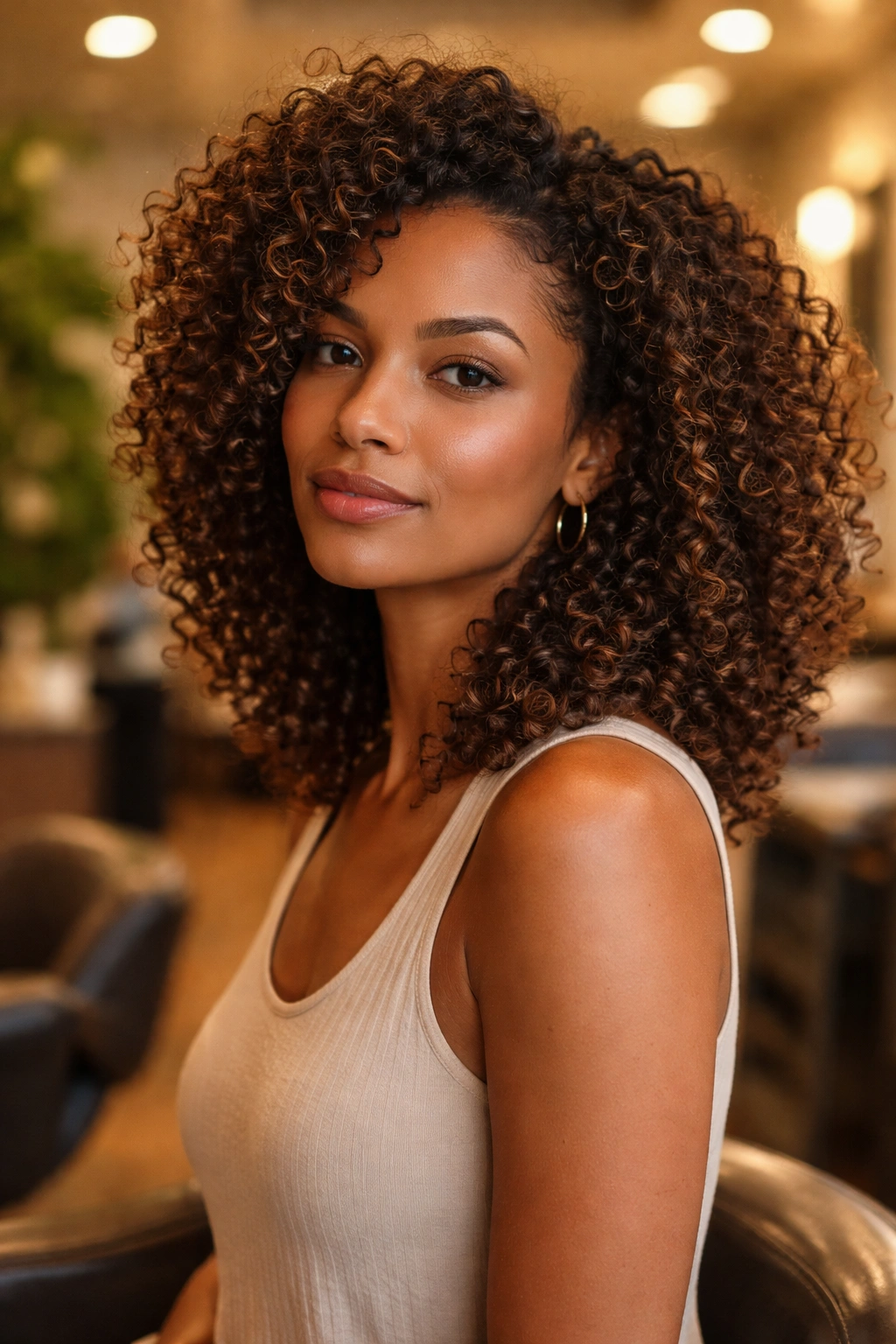
Finding a stylist who understands both color chemistry and natural curly hair texture is non-negotiable for successful results. These are two separate skill sets, and not every colorist has both.
A stylist who’s skilled in coloring natural curly hair will:
- Assess your curl pattern and porosity before recommending a color approach
- Understand how different application techniques interact with your specific curl type
- Recommend a color that will look good in your curl’s natural state, not just when it’s blow-dried
- Talk to you about ongoing maintenance and what your hair care routine needs to look like post-color
Always ask to see photos of color work they’ve done on natural curly hair specifically — not straight hair, not relaxed hair, but natural curly and coily textures.
Natural Hair Color Care Routine
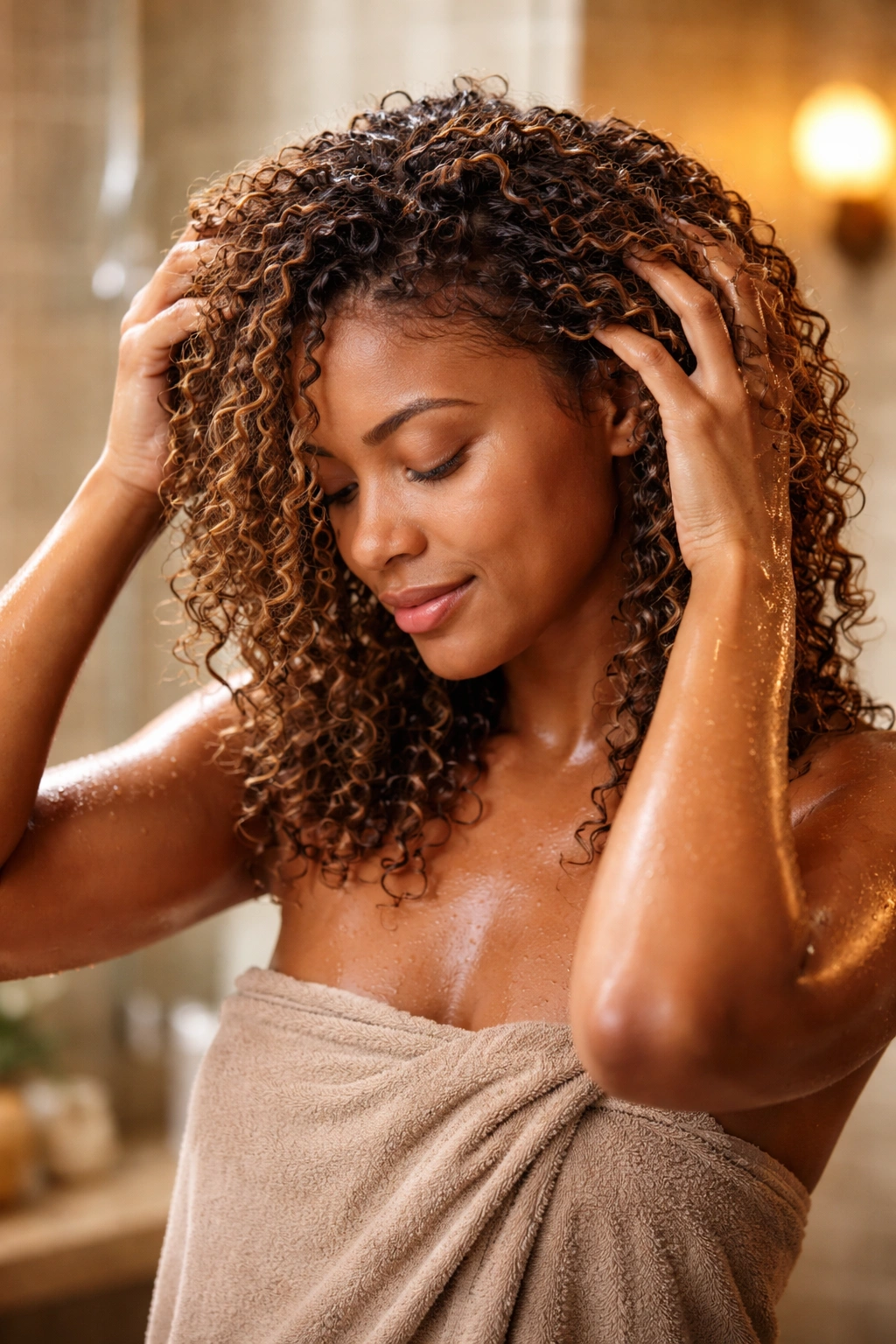
Once you’ve colored your natural curly hair, the routine needs to adjust to account for the increased porosity and potential dryness that comes with chemical processing.
Deep condition more frequently — weekly rather than bi-weekly. Colored curly hair loses moisture faster and needs more replenishment.
Alternate between protein and moisture treatments. Colored hair often needs protein to rebuild structure, but too much protein makes curly hair brittle. One protein treatment every 3-4 weeks, with moisture-focused deep conditioning every week, is a reasonable balance for most colored natural hair.
Use color-safe, sulfate-free shampoo. Regular shampooing with strong sulfates strips color and contributes to fading. Use a gentle, color-safe formula and wash less frequently.
Limit heat styling. Heat on colored curly hair compounds the structural damage from the color process. When heat is necessary, use a heat protectant every time and keep temperatures low.
1. Natural Black With Shine Enhancement
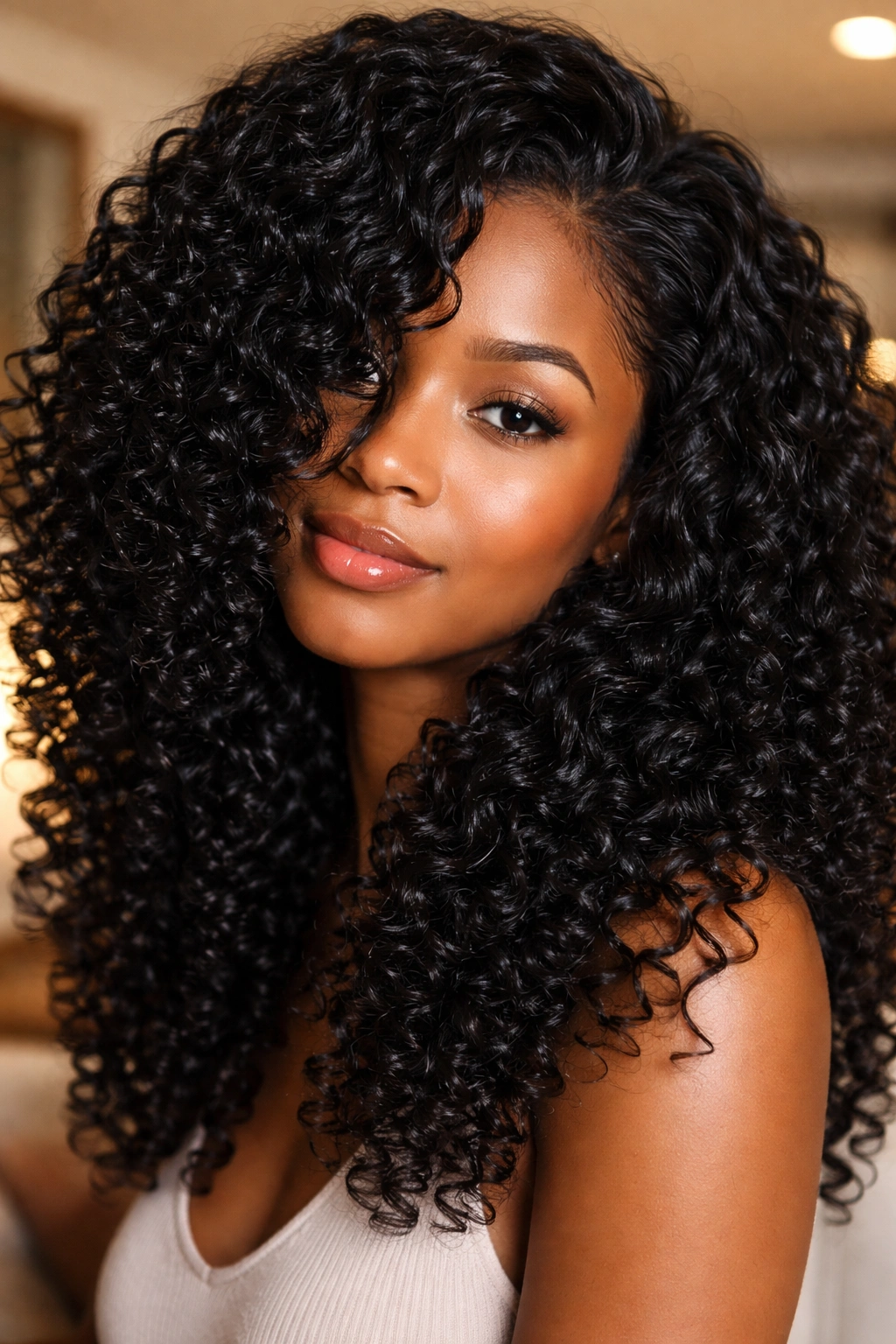
Sometimes the best color choice for curly hair is no color at all — or rather, a gloss treatment that enhances and deepens your natural black without changing the hue. A clear gloss or a black-tinted gloss applied over natural dark curly hair adds luminosity, seals the cuticle, and makes each curl look more defined and vibrant.
This is the starting point for curl color decisions — if your natural color is beautiful (and it is), sometimes the answer is to enhance what’s there rather than add something new. A gloss treatment every 4-6 weeks keeps dark natural curls looking their richest.
2. Rich Chocolate Brown
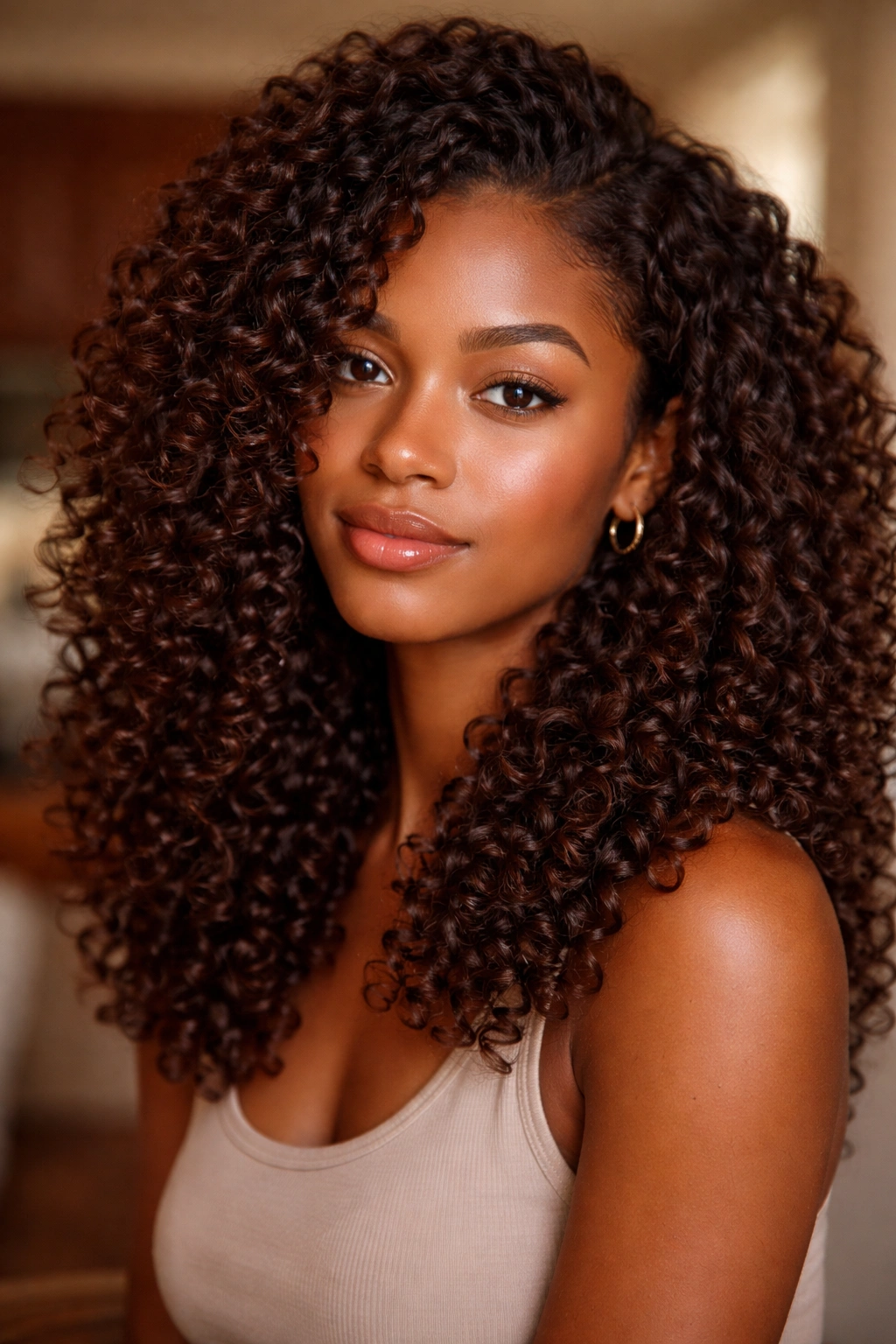
A warm chocolate brown on natural curly hair reads as a natural-looking color enhancement — close enough to dark natural hair colors that it looks intentional without looking obviously colored, but warm enough to add visible dimension and warmth to your curls.
How to Get It
Ask for a demi-permanent chocolate brown (demi-permanent is gentler than permanent and fades gradually rather than growing out in a harsh line). Apply all over or use a balayage technique for a more subtle, sun-kissed effect.
Chocolate brown works particularly well on curly hair because the brown tones reflect warmth within each coil, making the curl pattern look even more vibrant.
3. Honey Blonde Highlights
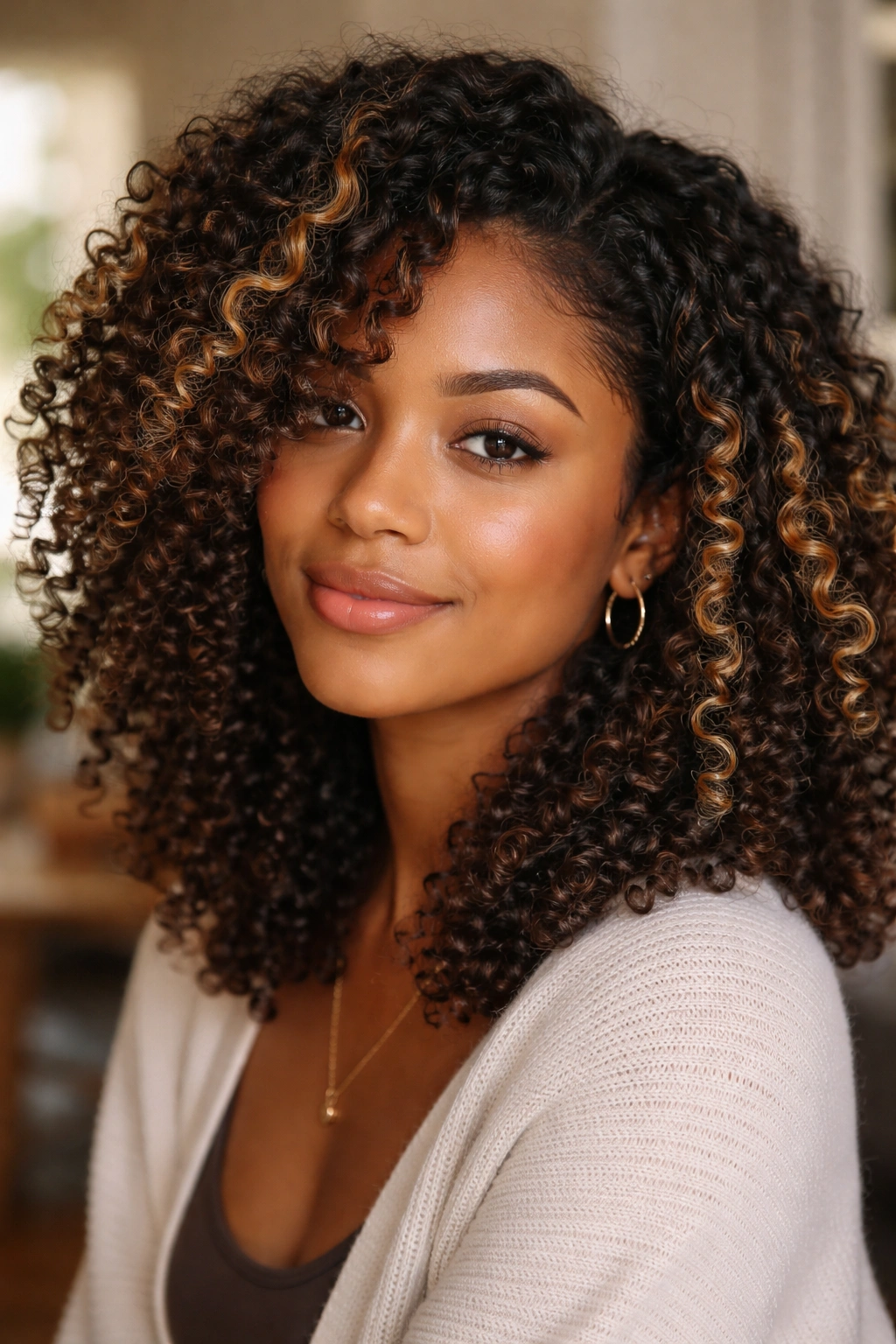
Honey blonde highlights on dark natural curly hair create a warm, sun-kissed effect that looks natural while adding significant dimension. On curly hair, highlights aren’t just streaks — they’re threads of gold woven through the coils, catching light differently as the curls move.
The key is the application technique. On tighter coils, ask for highlights applied to the surface of the curl sections rather than foiled through the interior — this keeps them visible rather than buried inside the curl.
4. Caramel Balayage
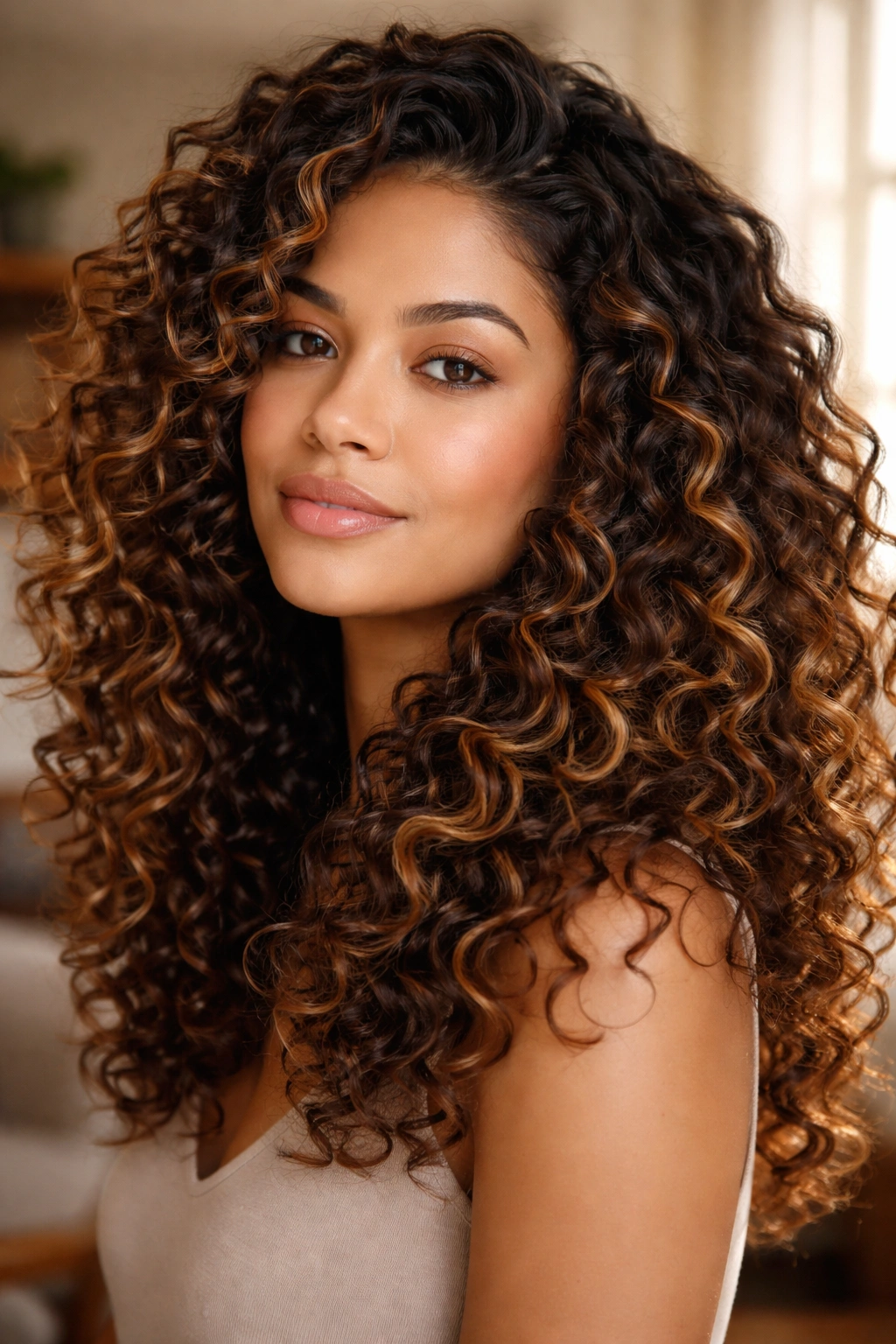
Balayage — a hand-painted highlighting technique — on natural curly hair creates one of the most organic, dimensional color results possible. Caramel tones painted onto dark curly hair create warmth and depth that looks like the hair has been kissed by the sun rather than processed in a salon.
Because balayage blends gradually rather than starting at a defined root, it grows out naturally and requires less frequent touch-up than traditional highlights. For curly natural hair that benefits from less frequent chemical processing, this is a significant advantage.
5. Burgundy and Wine Tones
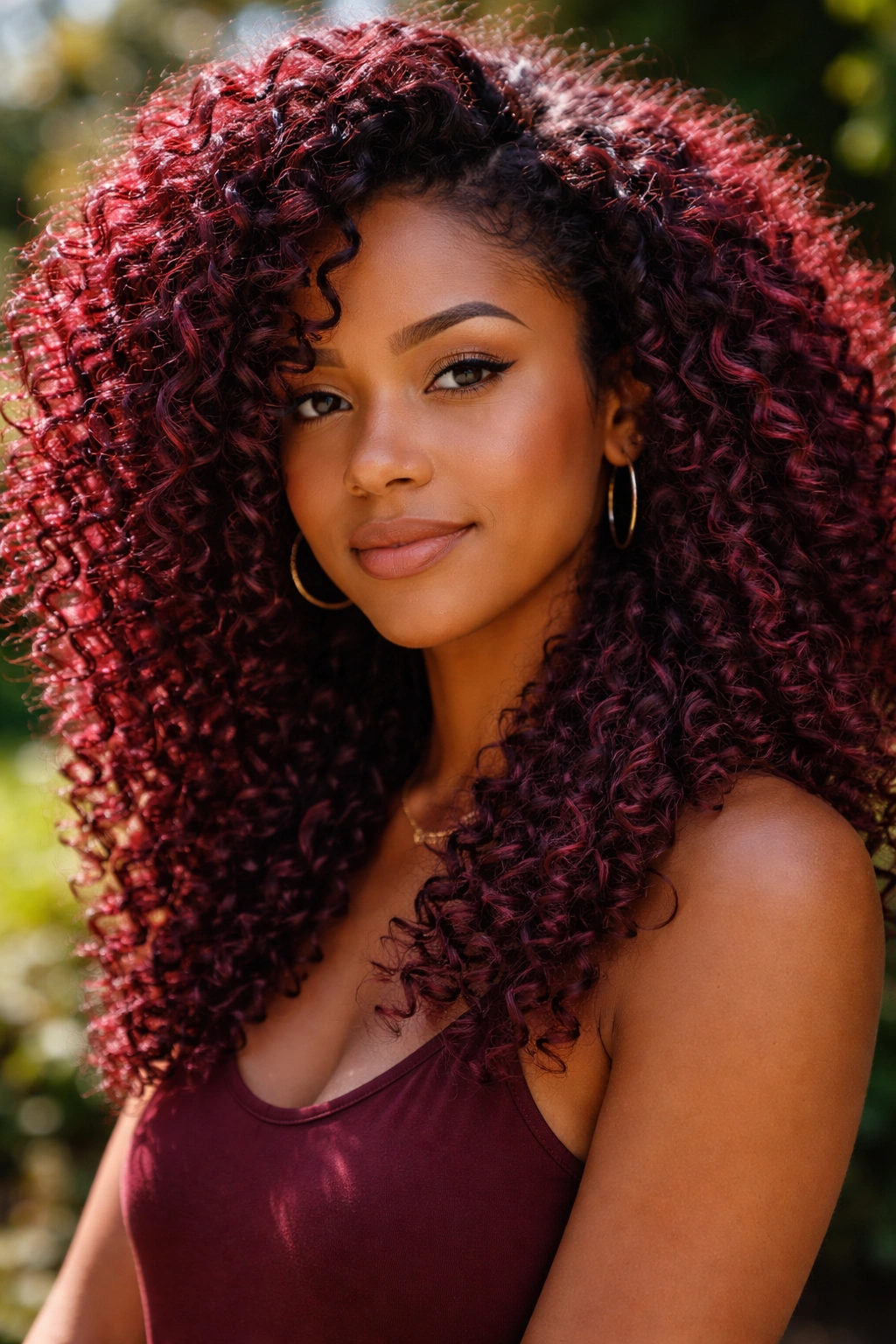
Rich red-adjacent tones — burgundy, wine, plum, and oxblood — look extraordinary on natural curly hair. On dark, pigmented hair, these colors often show best under direct light, creating a subtle but striking color dimension that reads as dark most of the time but reveals deep red tones in sunlight.
On coily type 4 hair, these tones can be achieved without full bleaching by using a demi-permanent color that deposits color without removing it — the result is a subtle, jewel-toned depth rather than a bright, obvious red.
6. Copper Red
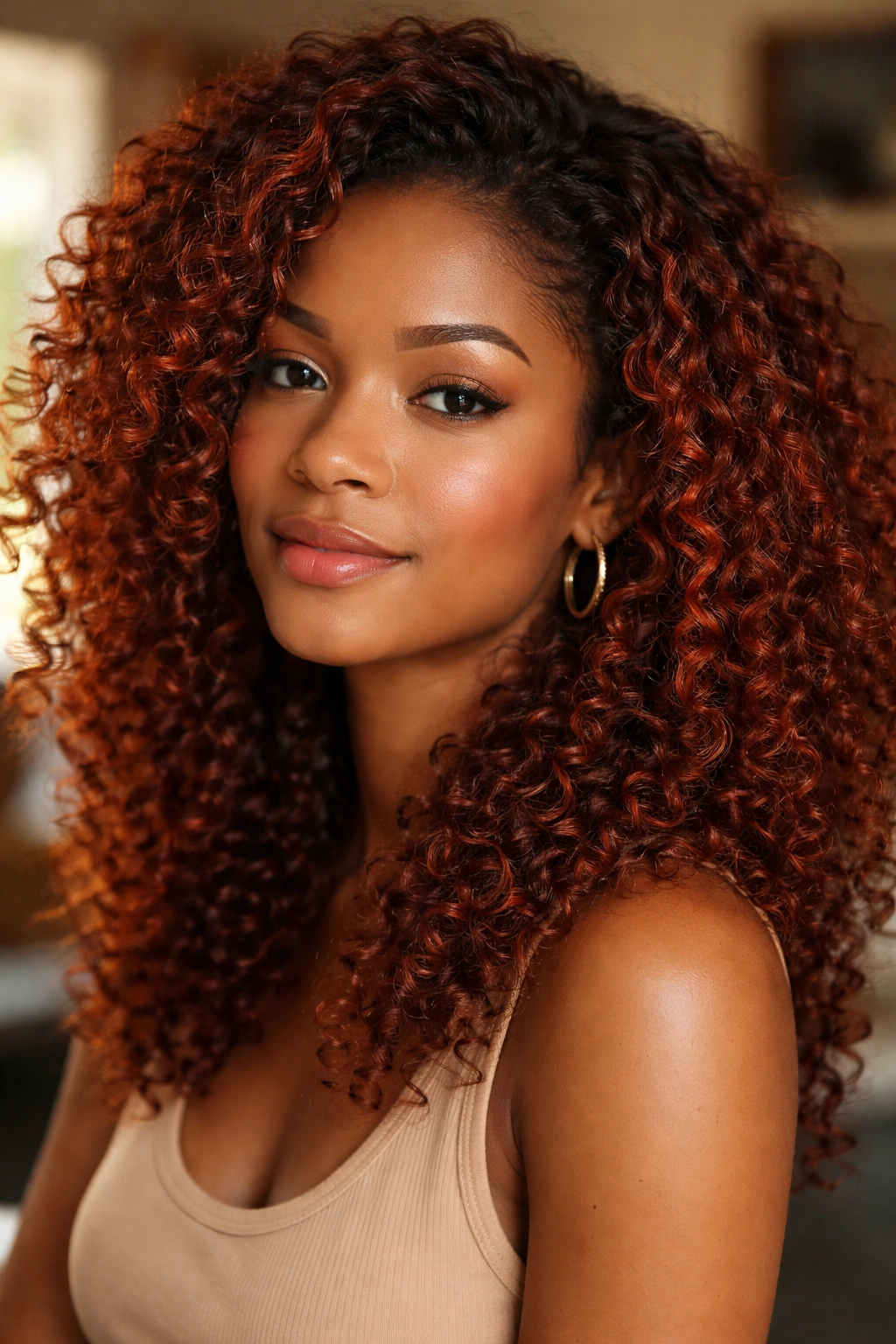
Copper on curly hair is one of the most visually striking combinations in natural hair styling. The warm orange-red tone of copper against the structure of natural curls creates a flame-like effect — each curl appears lit from within, the copper tones shifting from amber to orange to red as the light moves.
This color typically requires some level of lightening on very dark natural hair, which means it demands more maintenance and a more rigorous post-color care routine.
7. Auburn
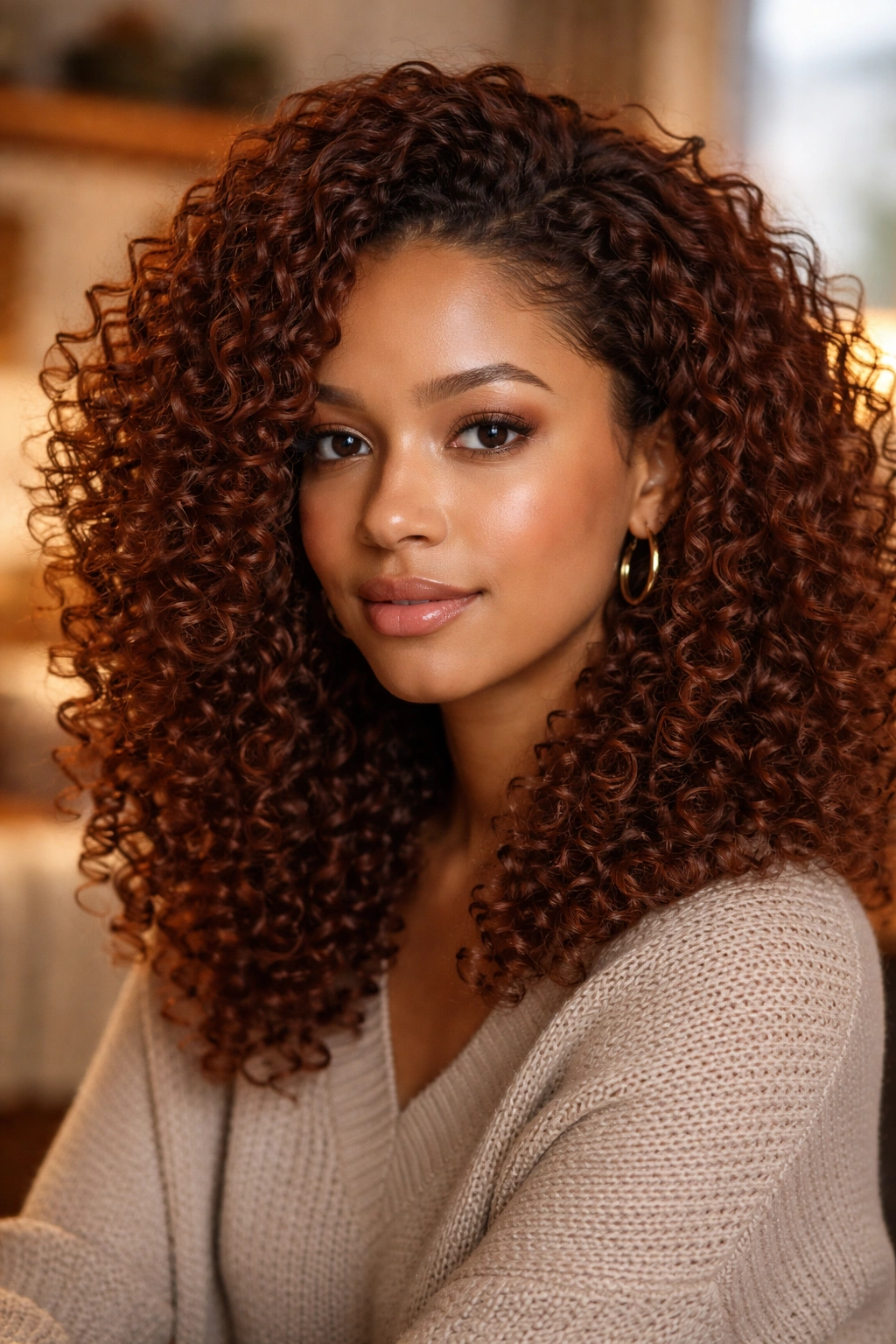
Auburn — a medium reddish-brown — is a softer alternative to full copper that still adds significant warmth and dimension to natural curly hair. It reads as a natural hair color that just happens to be particularly beautiful, rather than an obviously processed look.
Auburn works exceptionally well on medium-brown natural hair where the existing tones are already somewhat warm — the auburn deepens and amplifies what’s already there.
8. Golden Blonde Ombre
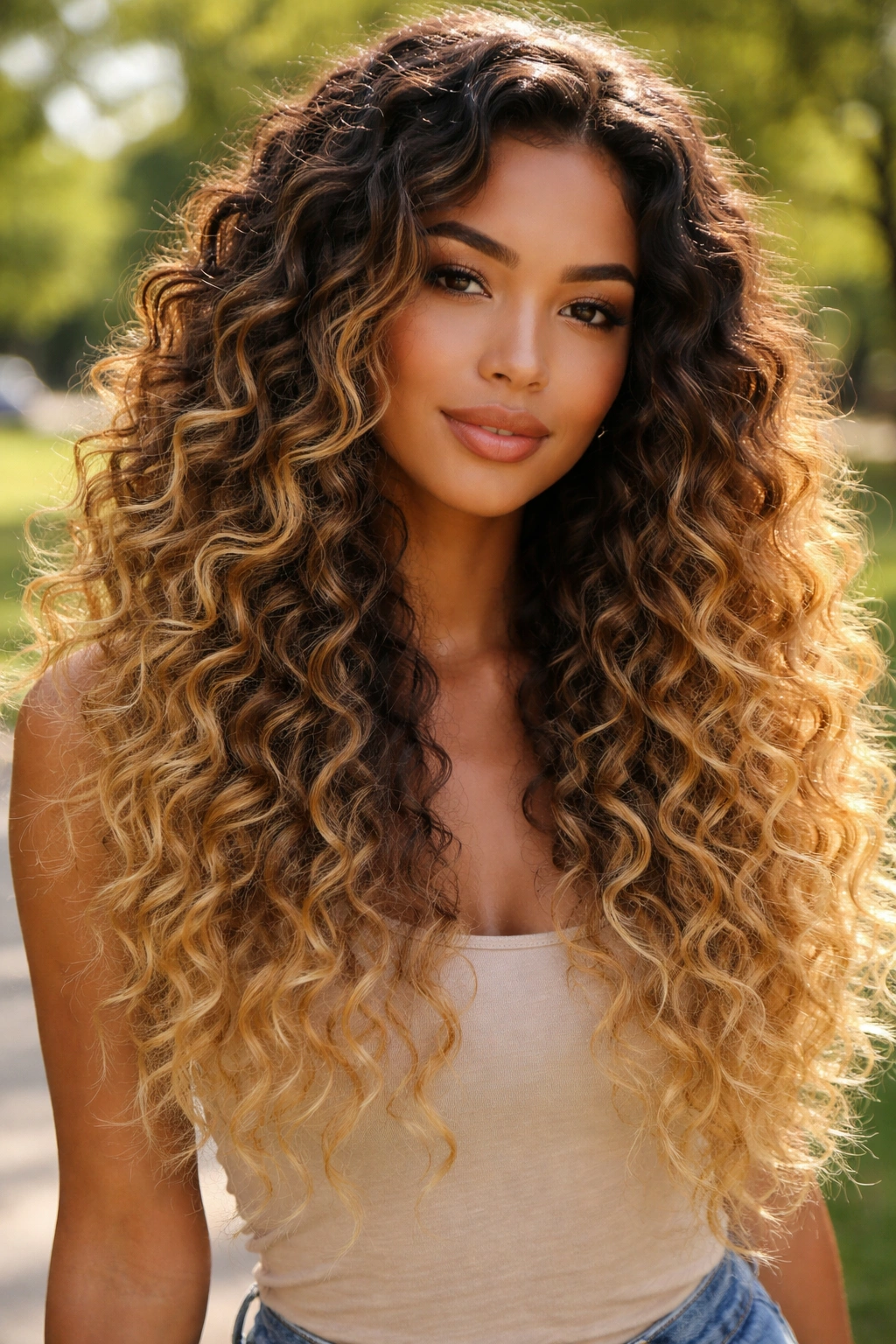
An ombre on natural curly hair — darker roots transitioning to golden blonde ends — creates a dramatic length-based color story. On curly hair with significant length, this creates a style where the curls themselves have different tonal qualities: darker at the root, progressively lighter through the length, creating natural dimension in every curl’s movement.
Ombre on curly hair grows out more gracefully than traditional root touch-ups because the gradient transition means there’s no harsh demarcation line as the natural hair grows in.
9. Silver and Grey (Intentional)
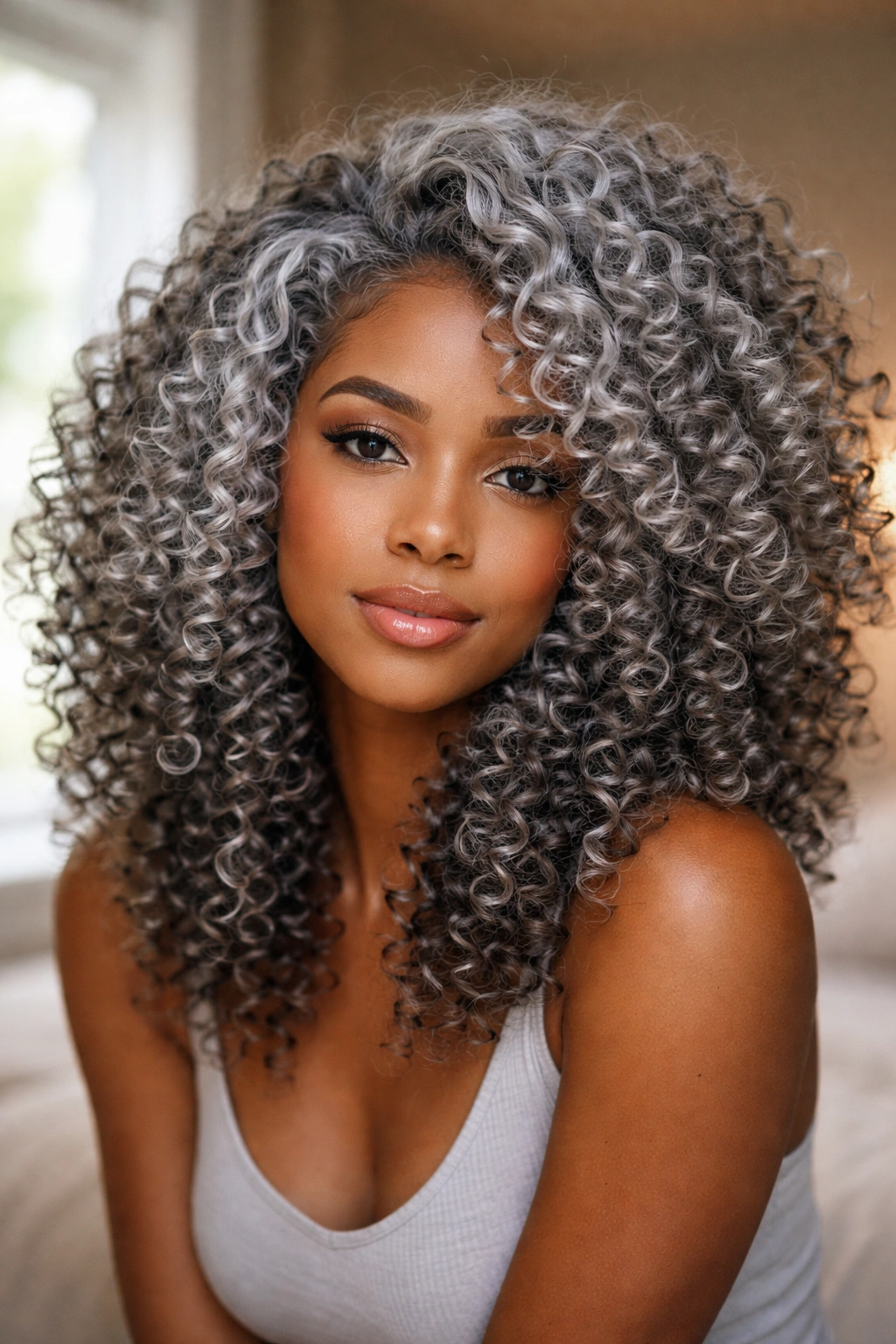
Intentionally coloring natural hair silver or grey — rather than waiting for the natural transition — has become increasingly popular, and it looks spectacular on curly hair. The cool, metallic tones of silver on curly natural hair create an almost iridescent effect, especially on hair with a strong curl pattern where each coil reflects the silver differently.
Achieving silver on dark natural hair requires significant lightening, which is a major commitment. Work with a skilled colorist and understand the process clearly before committing.
10. Platinum Blonde
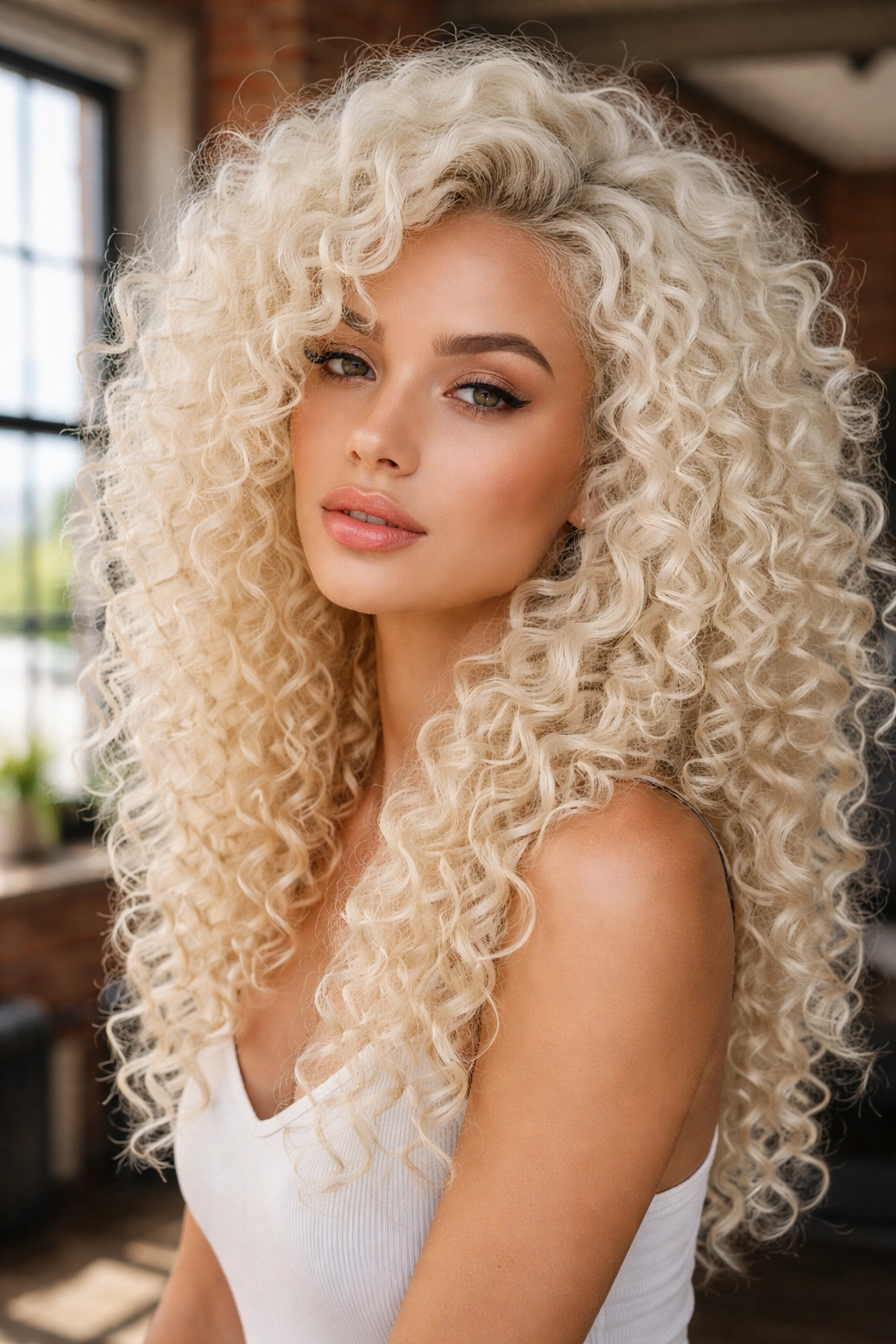
Platinum blonde on natural curly hair is one of the most dramatic color transformations possible — and one of the most beautiful when done well. The shock of platinum against natural curl pattern creates an arresting, high-fashion result.
This is also the most chemically intensive color on this list. Platinum requires multiple bleaching sessions on dark hair, and the structural compromise to the curl is significant. Not every curl pattern can withstand platinum bleaching — very tight coils (4b and 4c) are particularly vulnerable. Work with an experienced colorist who has done platinum specifically on natural coily textures.
11. Ash Brown
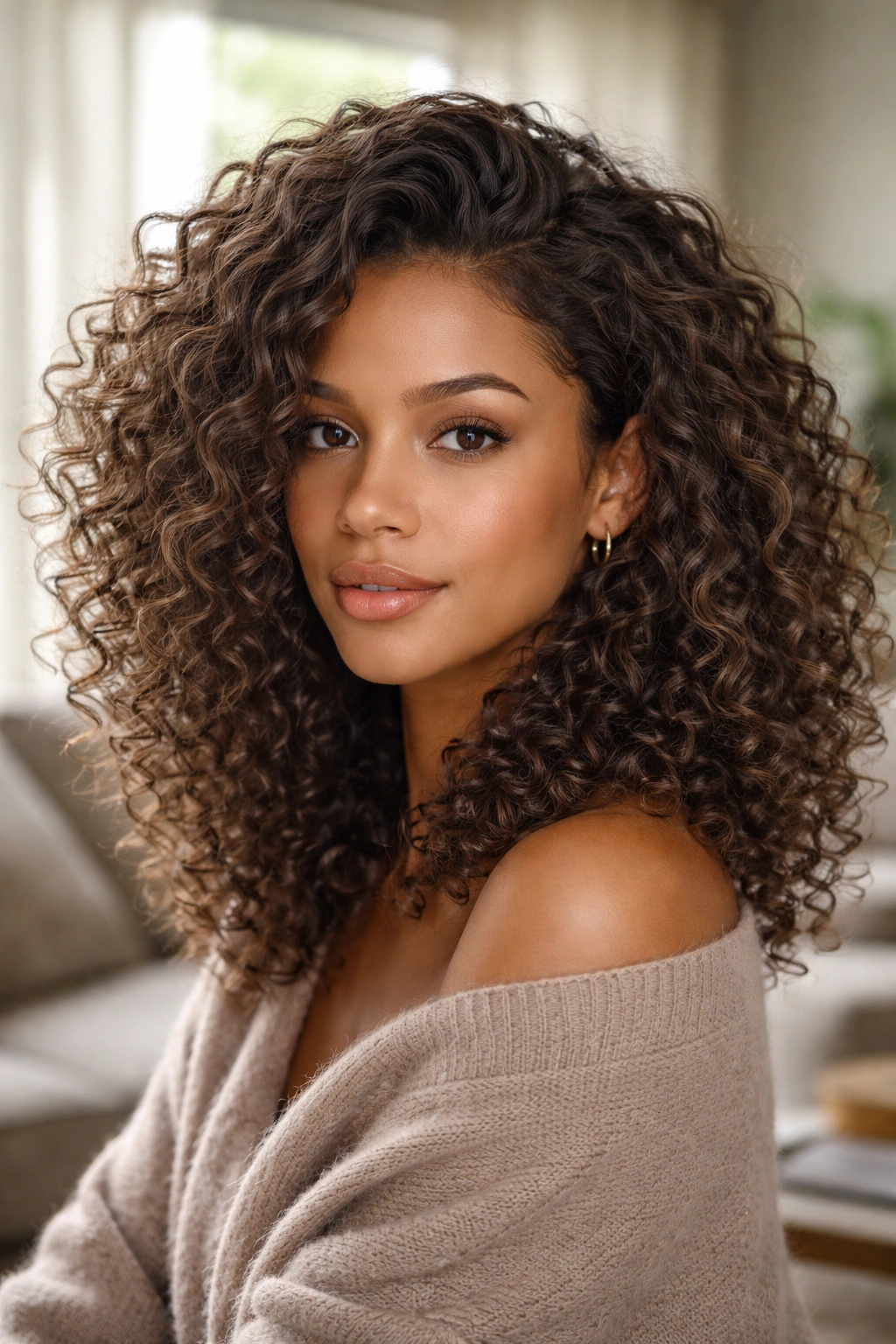
Ash brown — a cool-toned brown without warm undertones — on natural curly hair creates a sophisticated, almost smoky look. Unlike warm browns that add vibrance and energy, ash browns create a more subdued, elegant effect. Each curl looks rich and deep rather than warm and glowing.
Ash brown works particularly well as an all-over tone on natural curly hair with slight brassiness — the cool tones neutralize the warmth while adding depth.
12. Pastel Pink
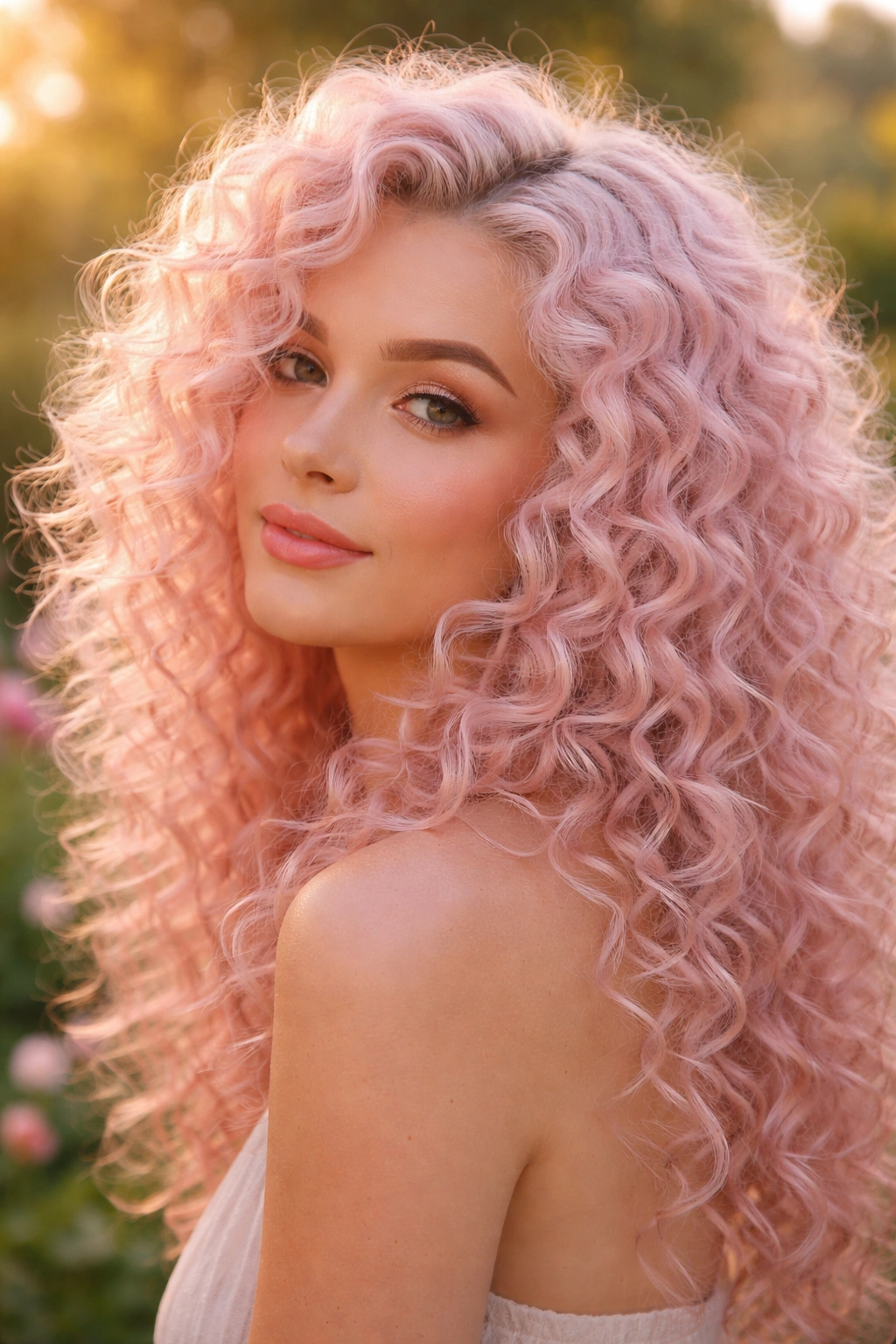
Pastel pink on natural curly hair is a soft, romantic, completely unexpected color choice that works beautifully on lighter base colors or as a diluted tone on lighter-colored natural hair. On curly hair, pastel pink has a ethereal quality — the pink tones within each curl create a soft, dreamy effect.
Achieving true pastel pink on dark natural hair requires pre-lightening to platinum or near-platinum first, which is a significant commitment. Semi-permanent pastel formulas applied over this lightened base fade beautifully through successive washes.
13. Lavender and Purple
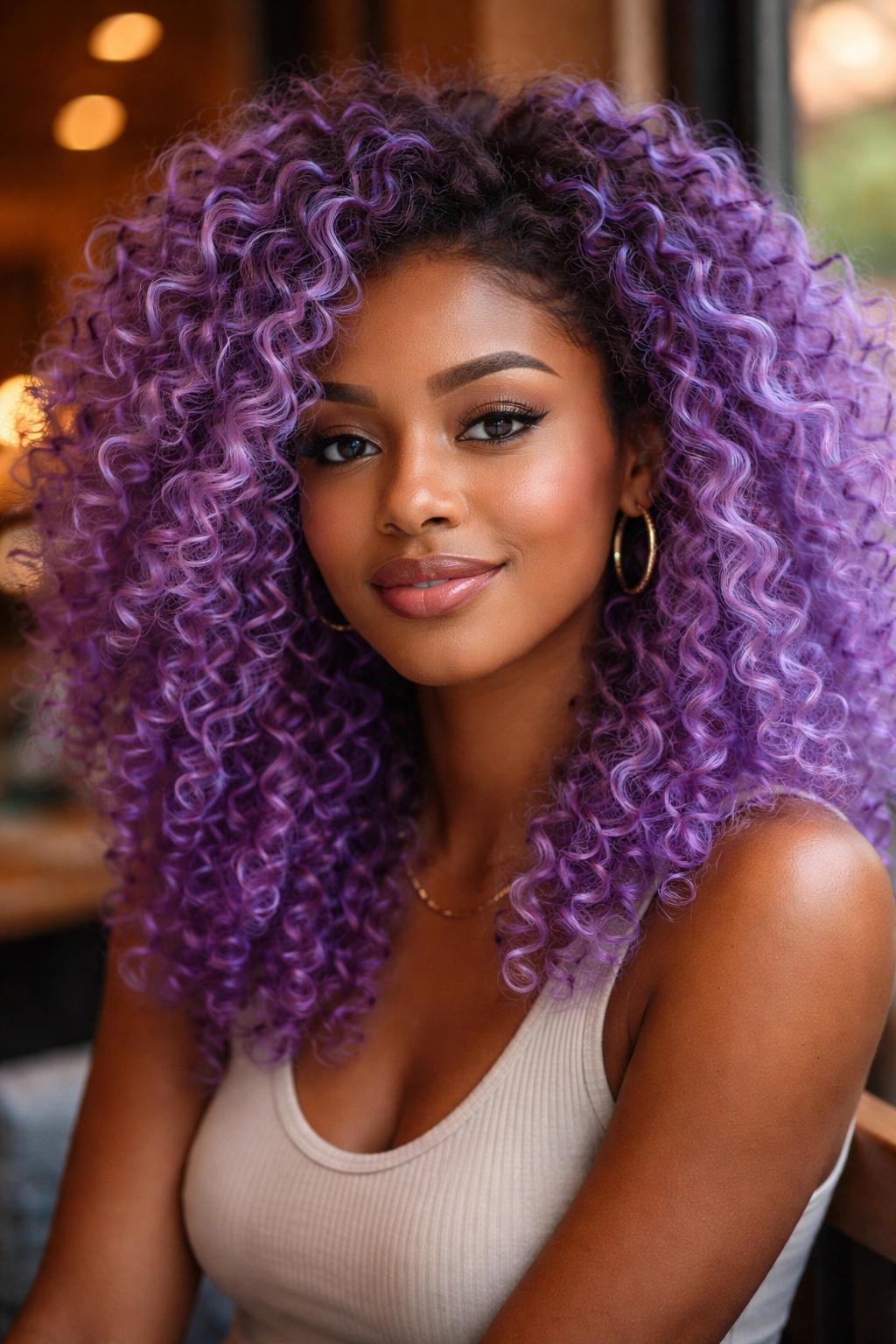
Purple tones on natural curly hair range from deep violet (which reads as a rich, jewel-toned alternative to black) to bright purple (a genuinely bold color statement) to soft lavender (a romantic, pastel variation). All three look unique and particularly beautiful on curly hair because the purple tones shift within each curl’s coil structure.
14. Mahogany
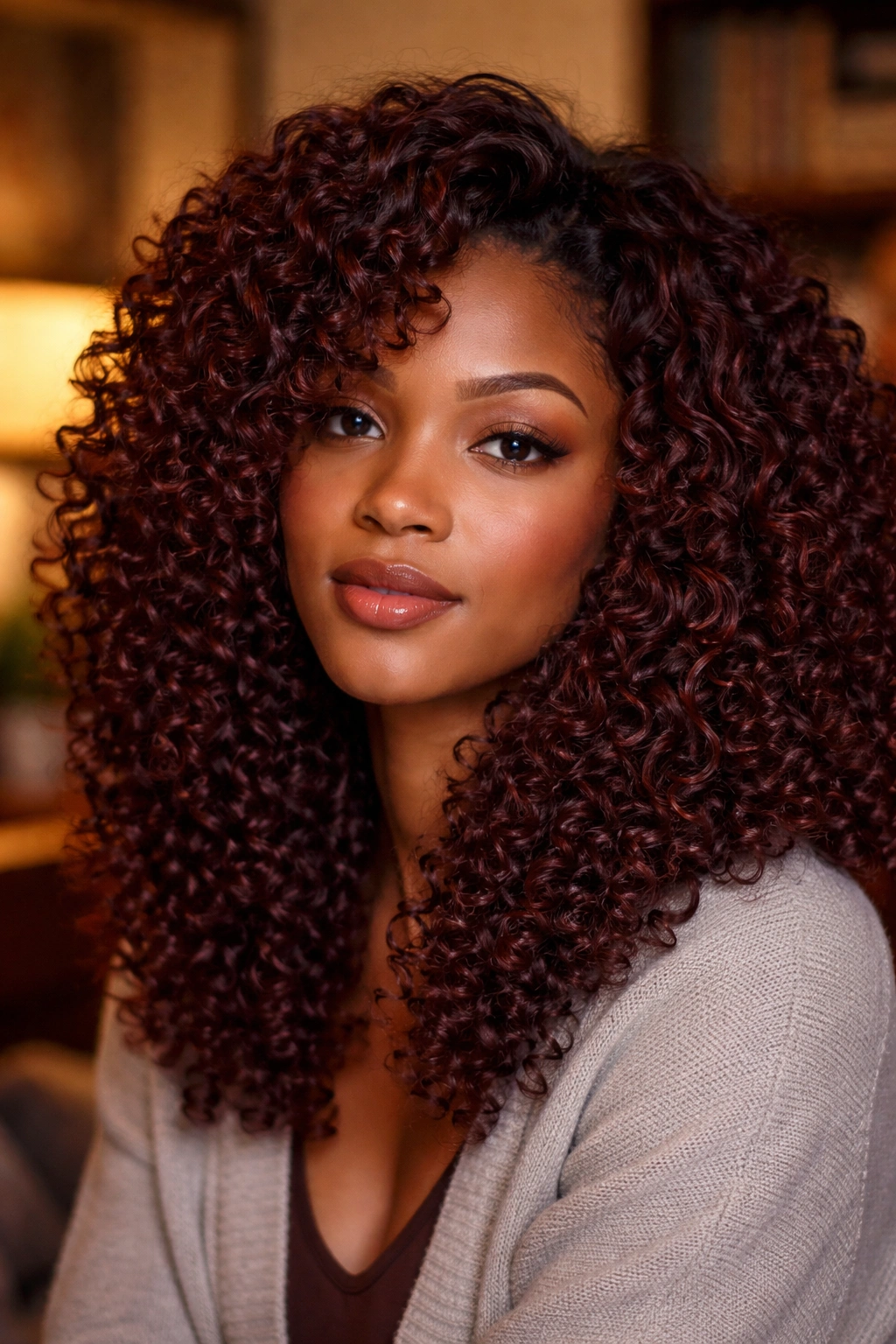
Mahogany — a deep reddish-brown with purple undertones — is one of the most flattering color choices for natural curly hair on darker skin tones. The depth of the color provides richness rather than starkness, and the reddish undertones add warmth and vitality to each curl.
This is also one of the more achievable colors on dark natural hair without extensive bleaching — demi-permanent mahogany formulas can deposit beautifully over dark bases.
15. Two-Tone Natural (Dark Roots, Lighter Ends)
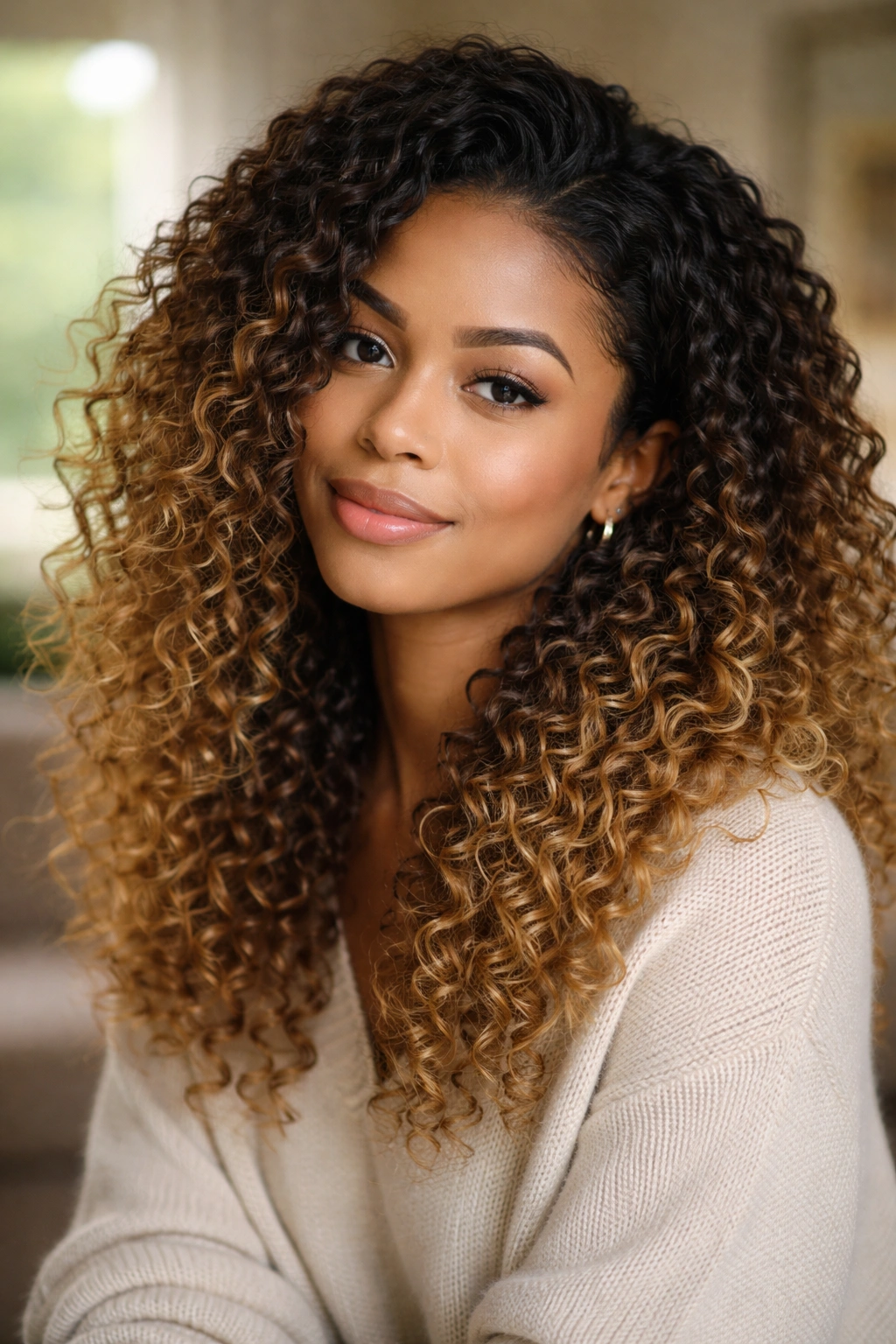
The natural two-tone look — dark roots transitioning to lighter (but not dramatically different) ends — is achieved through a balayage or ombre technique that uses subtle lightening rather than a sharp color change. On natural curly hair, this creates a sophisticated, grown-in look where the color gradient is visible but not jarring.
16. Warm Brunette With Golden Undertones
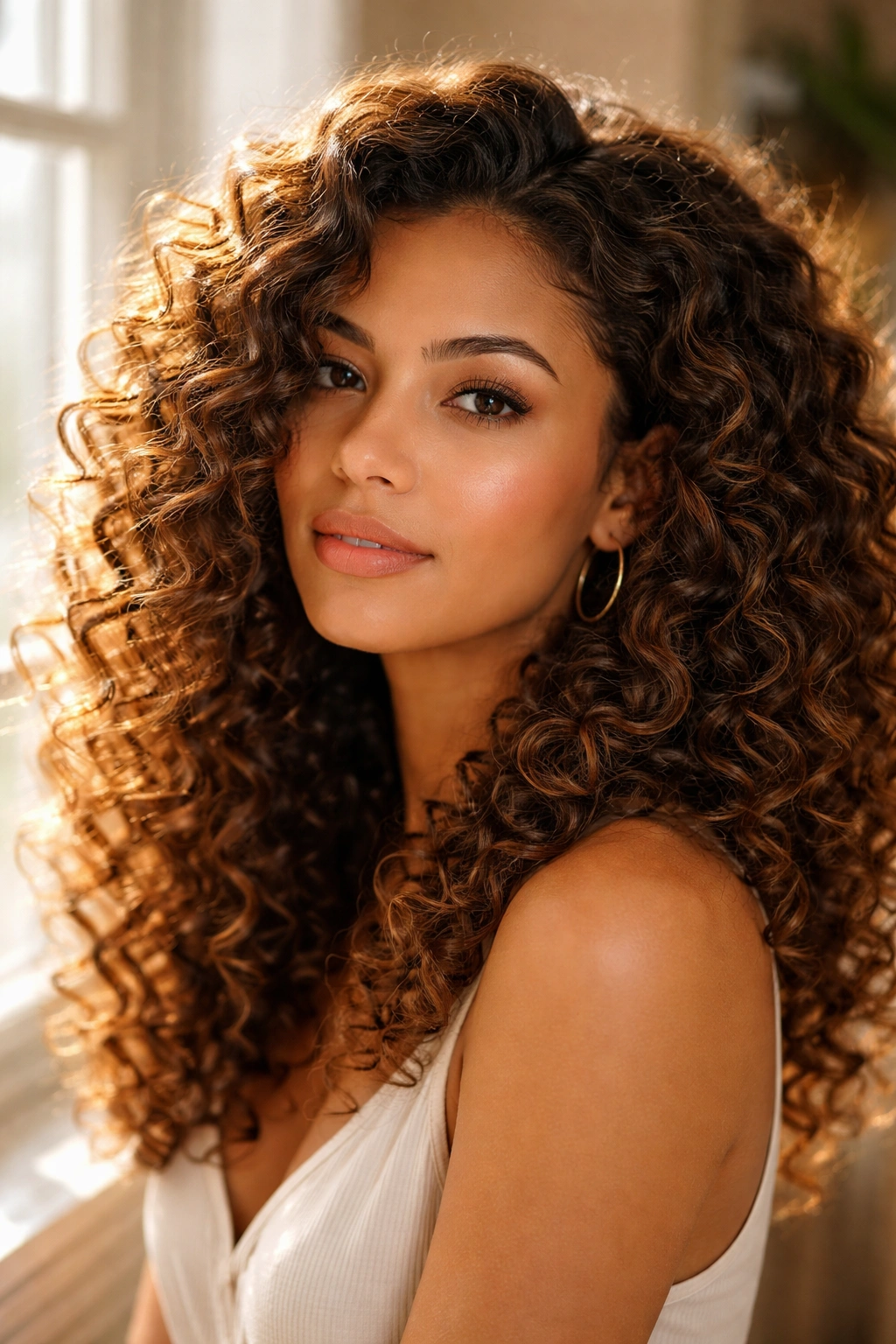
Warming up naturally dark or medium brown curly hair with golden undertones — using a toning gloss or a warm brunette demi-permanent — adds sun-kissed warmth without changing the base color dramatically. Each curl has a golden shimmer that’s visible in certain light, creating dimension without obvious color work.
17. Bright Red
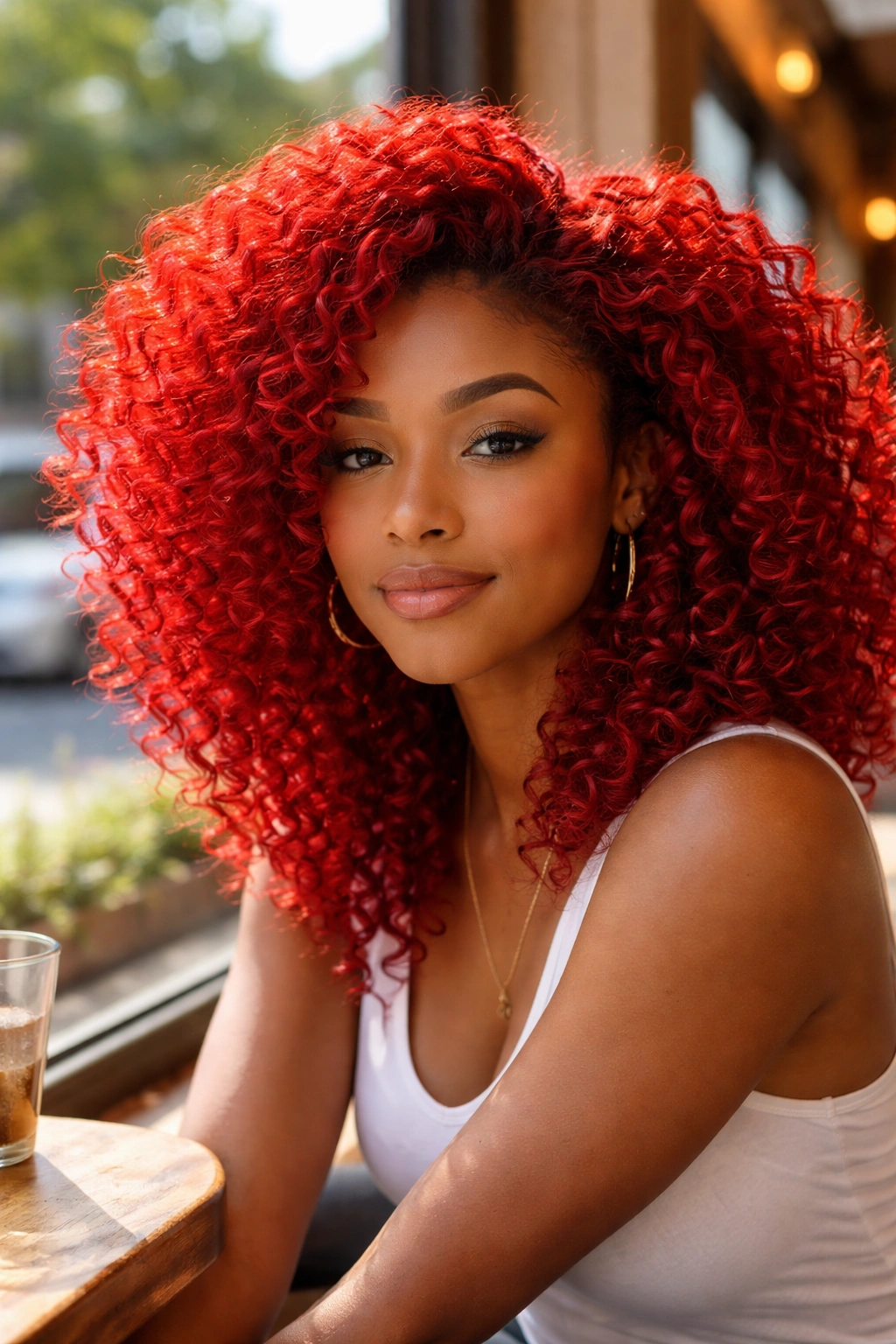
True, bright red on natural curly hair is a bold, head-turning choice — and curly texture makes it even more impactful than it would be on straight hair. Each red curl catches light at multiple points, creating a dynamic, almost glowing effect that makes red look like it’s lit from the inside.
Full bright red requires lightening on dark hair. At a minimum, a pre-lightening step before applying the red ensures the color shows true rather than reading as a subtle reddish cast on dark hair.
18. Ombre From Dark to Copper
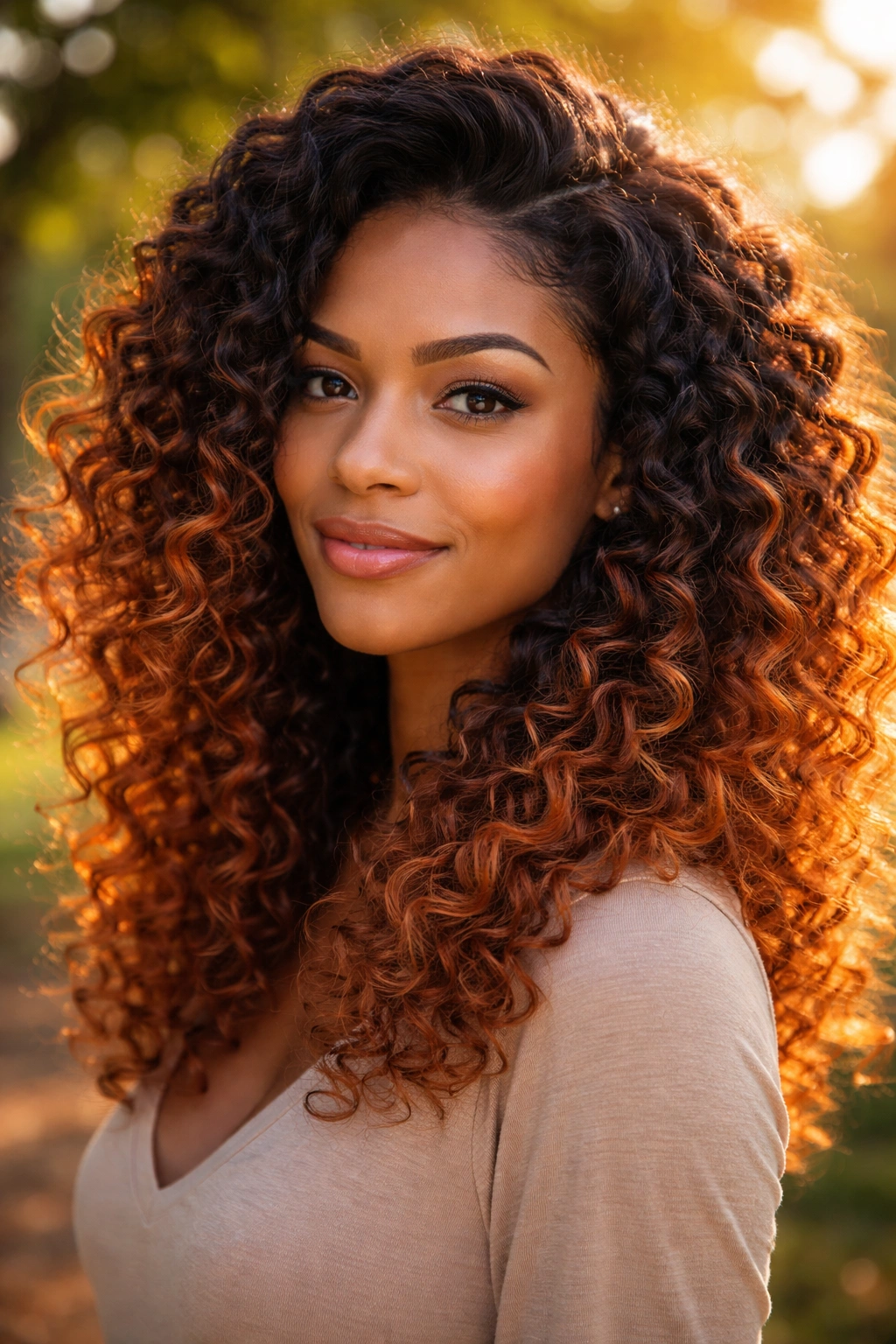
A dark-root-to-copper-ends ombre on natural curly hair creates one of the warmest, most vibrant color stories possible. The dark roots at the crown transition through chestnut and auburn tones before opening up into full copper at the ends. On curly hair with length, this gradient wraps around every curl from root to tip.
19. Dark Chocolate Ombre to Honey
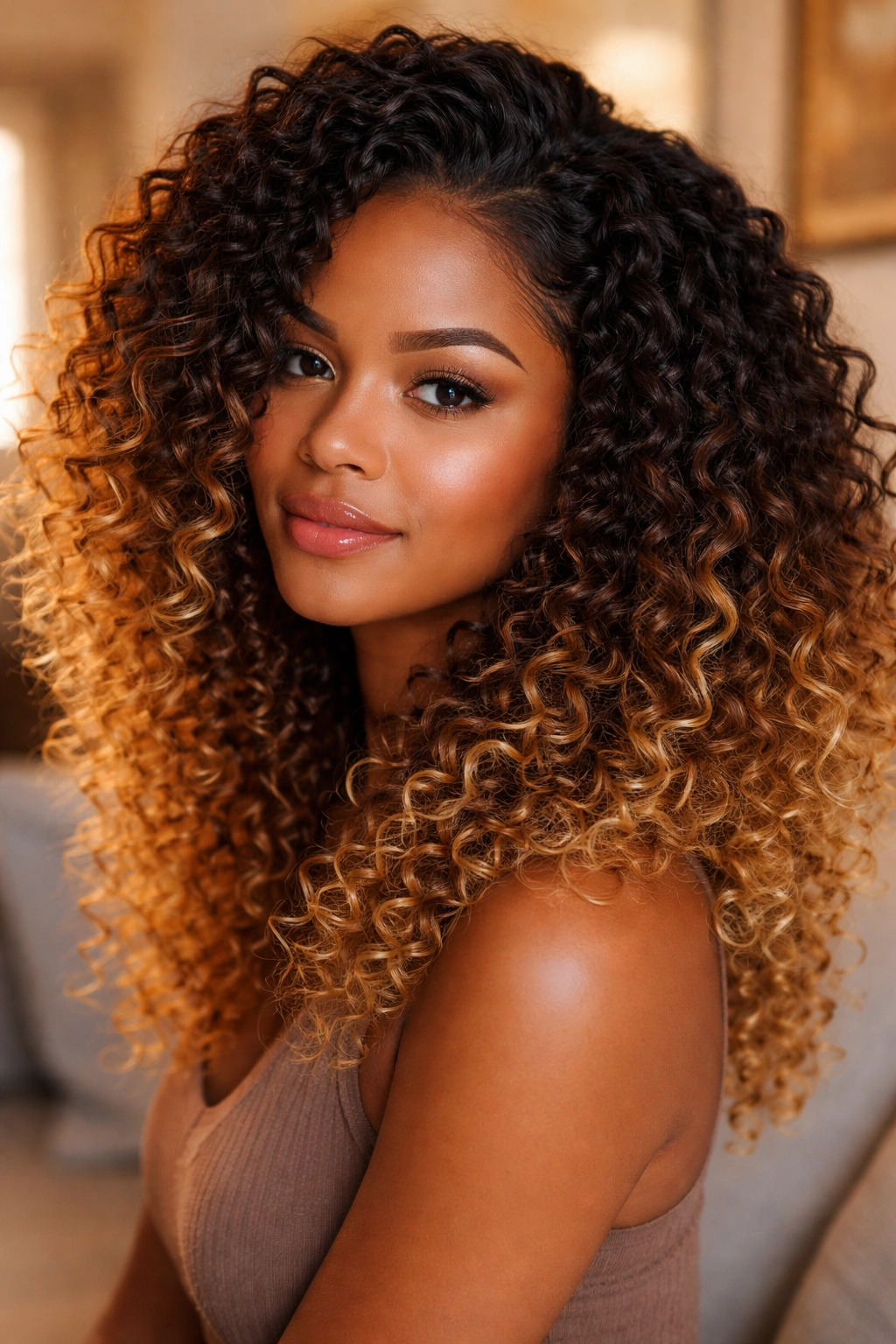
Similar in concept to the dark-to-copper ombre but warmer and more golden — dark chocolate at the roots fading to honey tones at the ends. This color combination is particularly flattering on medium and warm skin tones, and it reads as natural enough to look like sun-lightened hair rather than salon color.
20. Black Cherry
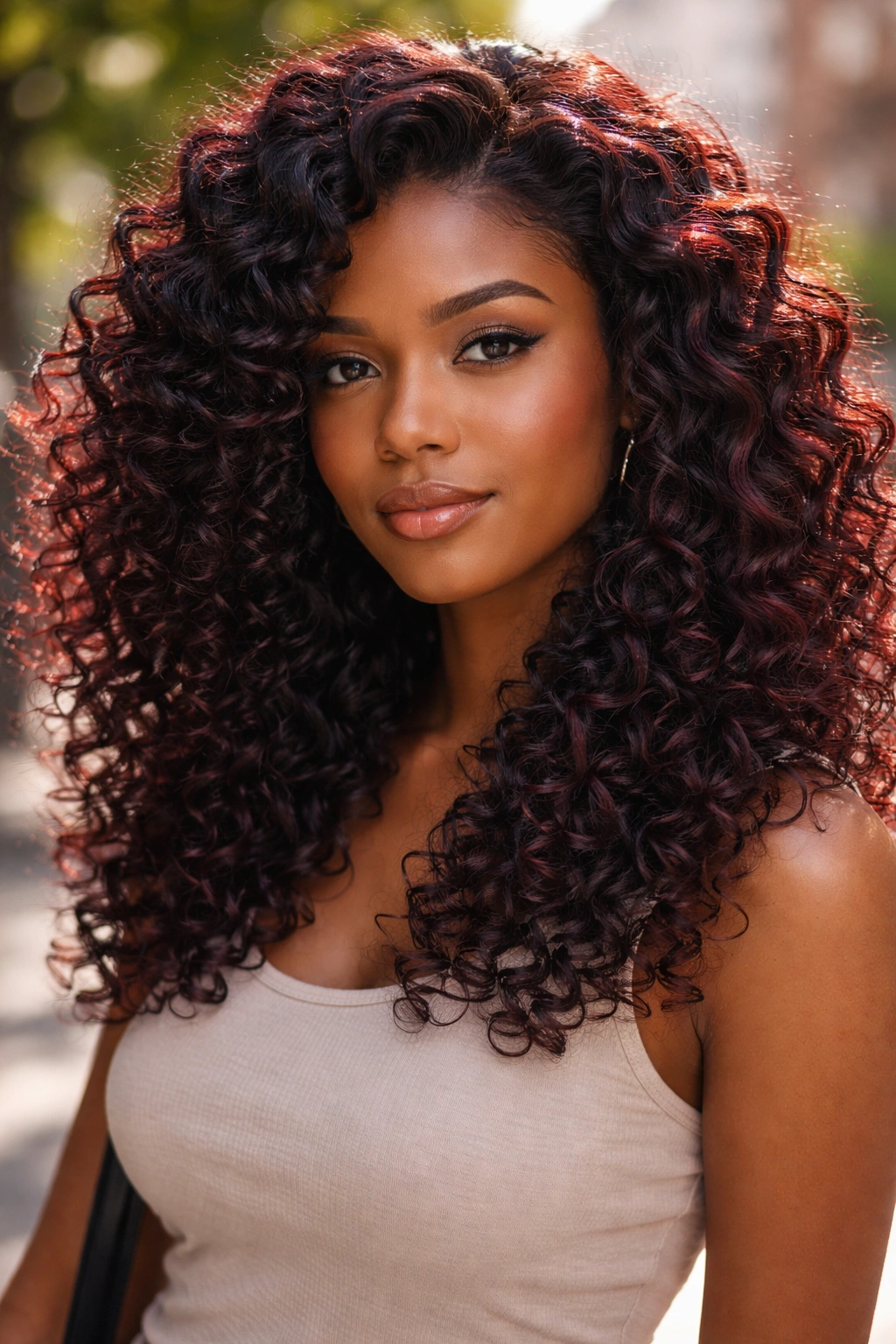
Black cherry — an extremely deep red-black that appears nearly black in most light but reveals stunning red-purple tones in direct sunlight — is one of the most sophisticated and underused colors on natural curly hair. It’s a color you feel rather than immediately see, and the moments when the light catches the cherry tones in your curls are genuinely stunning.
This can often be achieved on dark natural hair with a demi-permanent formula, making it a lower-commitment option than many other reds.
21. Indigo and Blue-Black
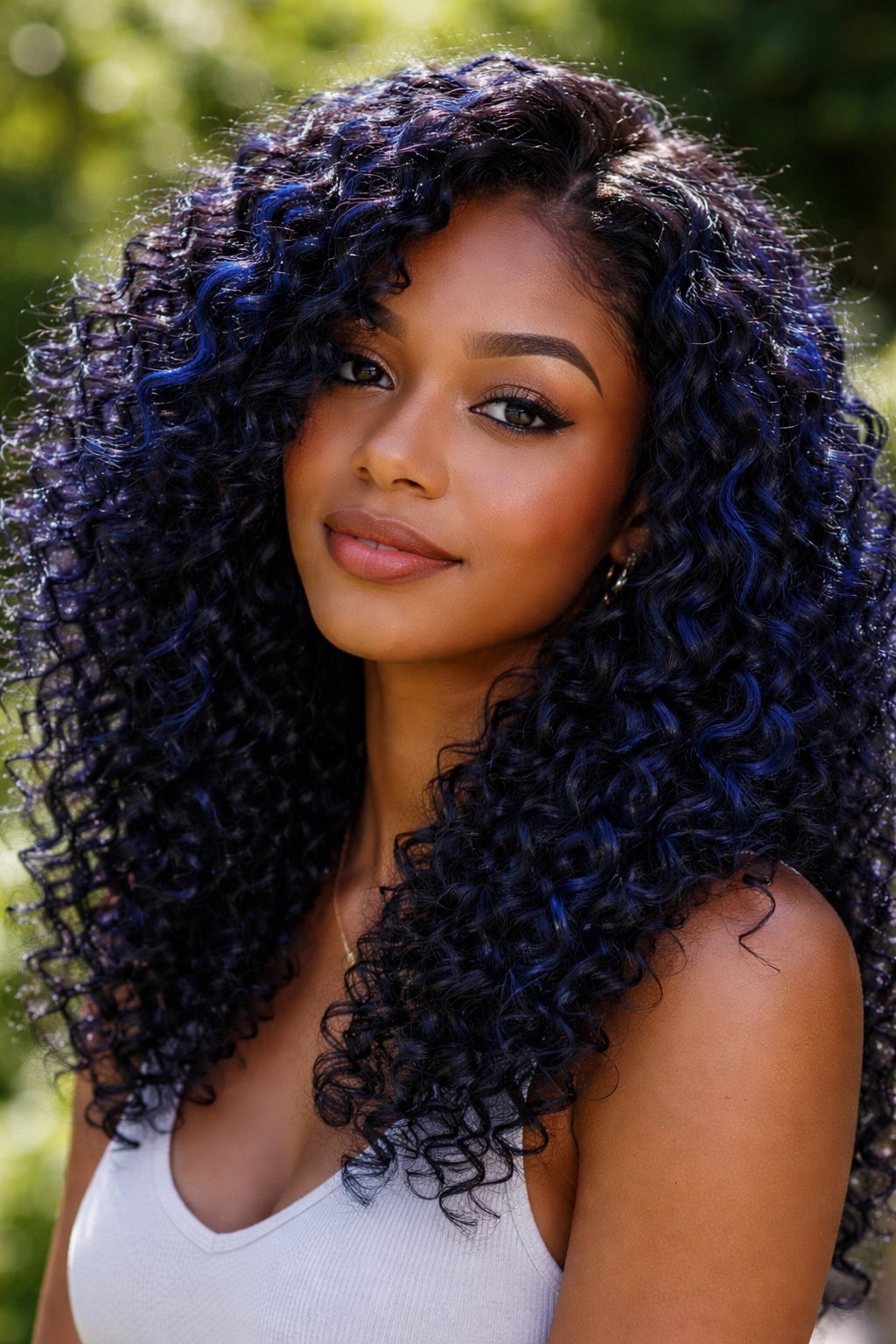
Blue-black — sometimes called jet black with blue undertones or indigo — gives naturally dark curly hair a cool, almost metallic dimension. Each curl reads as deeply dark but with a blue-indigo sheen that’s particularly visible in sunlight. It’s one of the most dramatic ways to enhance dark natural curly hair without dramatically changing the color.
22. Dimensional Brunette
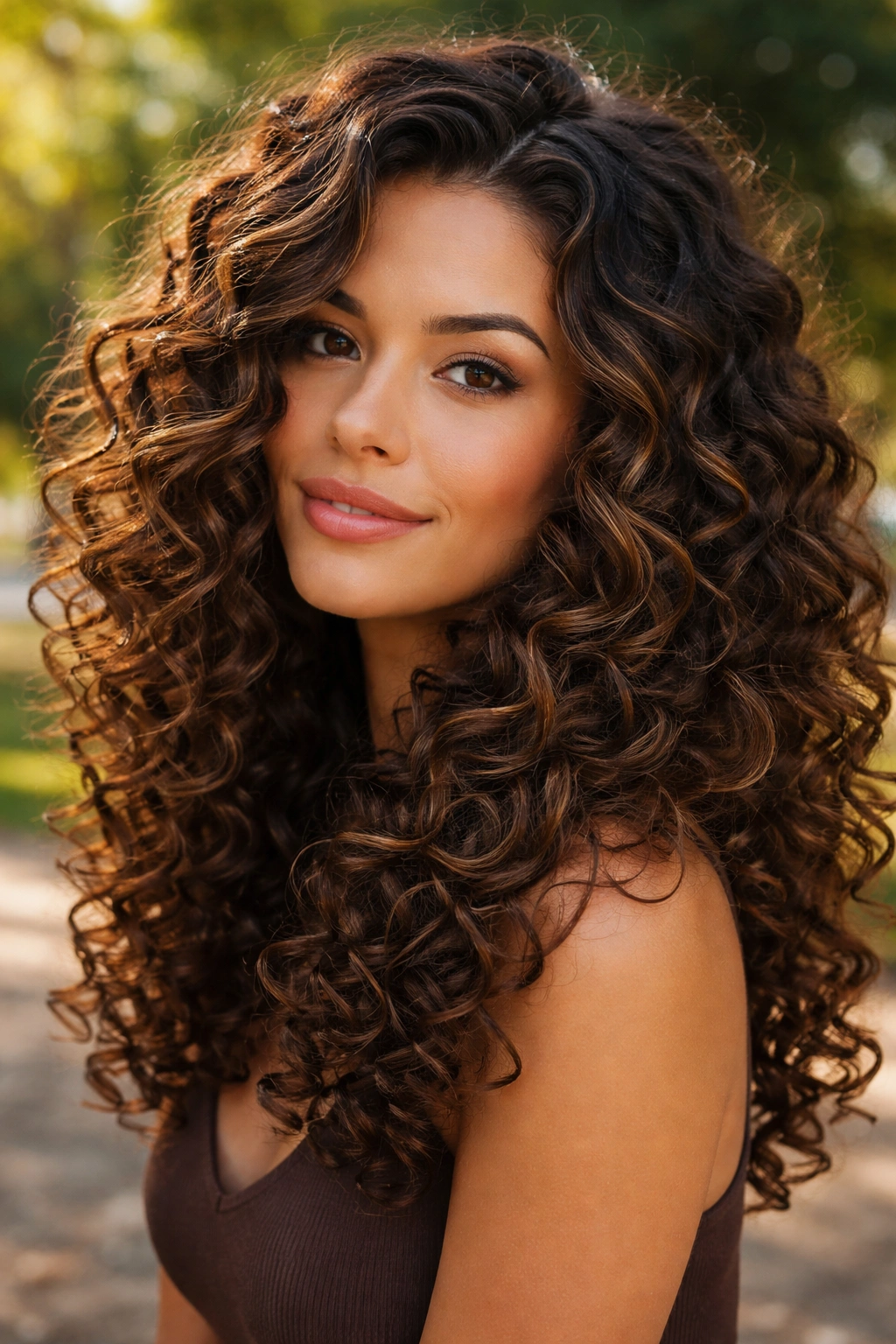
Dimensional brunette uses multiple shades of brown — lighter and darker browns applied in different sections — to create depth and variation within a brunette palette. On curly natural hair, this multi-tonal brunette approach creates a color that shifts throughout the style as the curls move and the light changes.
Who It Suits
This works on virtually all curl patterns and is one of the most universally flattering natural hair colors — particularly for women who want visible color work without something dramatic or unconventional.
23. Sun-Kissed Natural Highlights
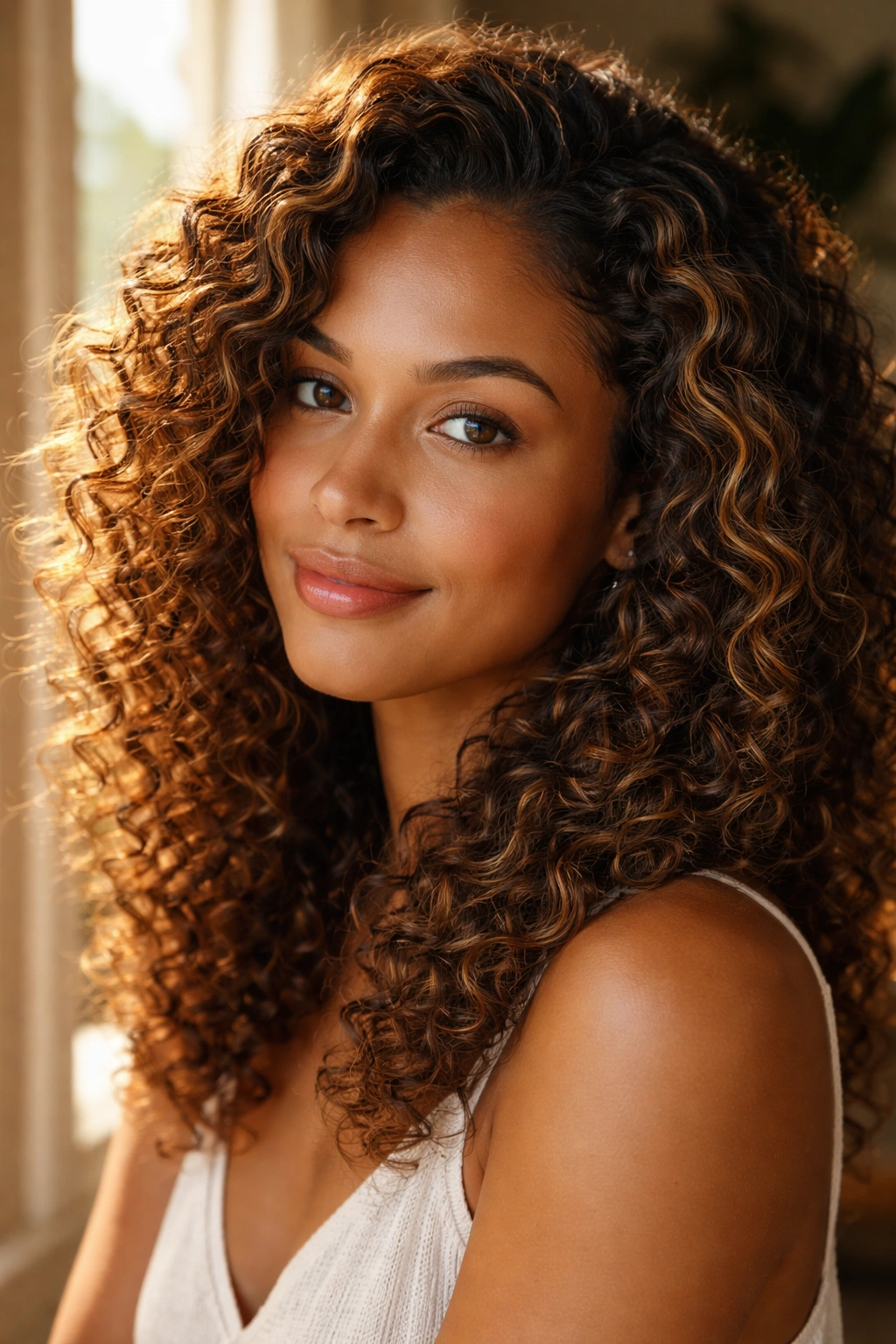
Strategic, fine highlights on natural curly hair — placed specifically where the sun would naturally hit your hair — create an effect that reads as naturally lightened rather than salon-colored. On curly hair, these sun-kissed highlights wrap around each curl and create a genuinely organic-looking dimension.
The placement is everything. Face-framing pieces, the top section of the crown, and the outer surface of the main curl sections are the areas where natural sun lightening typically shows first — so that’s where the highlights should go.
24. Rose Gold
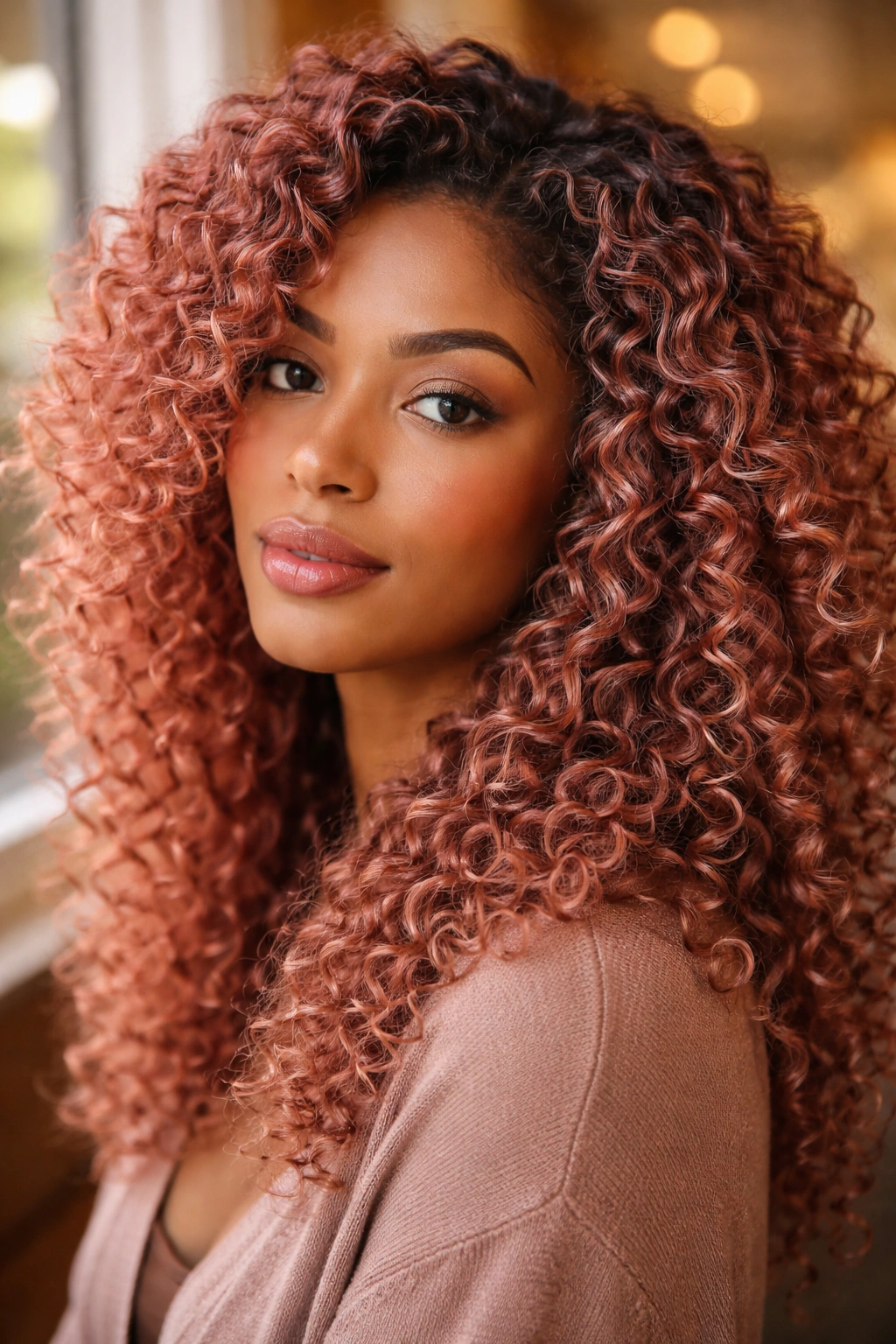
Rose gold on natural curly hair is a warm, romantic, blush-adjacent tone that reads as both soft and striking. On curly hair, the rose and gold undertones within each curl shift between pink and copper as the light changes, creating a dynamic, multi-tonal effect that looks genuinely unique.
Achieving rose gold on dark natural hair requires lightening, and the tone fades relatively quickly. Plan to refresh every 6-8 weeks or embrace the fade — which on natural curly hair often transitions beautifully through peach and golden tones.
25. Teal and Ocean Tones
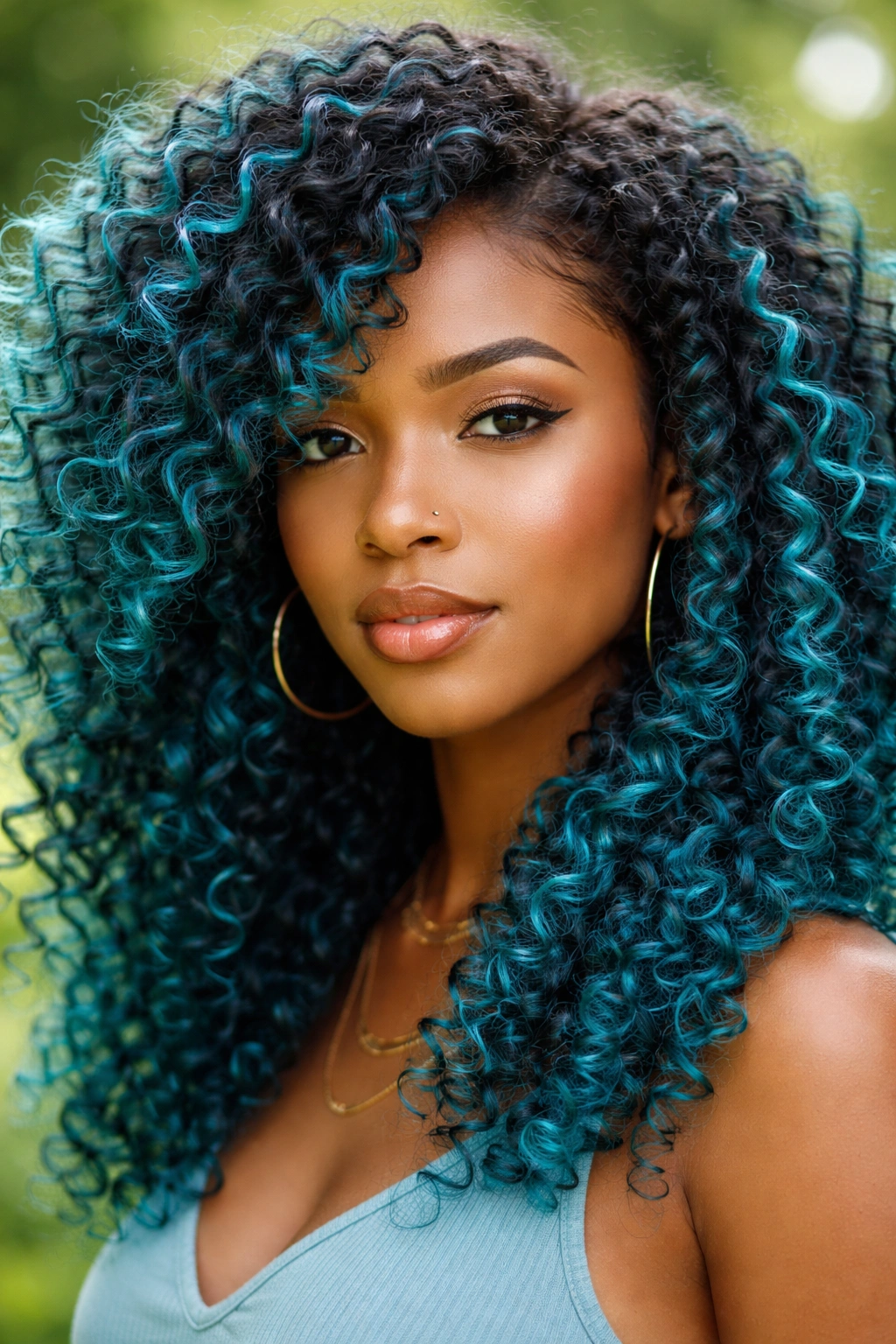
Teal — a blue-green color somewhere between deep turquoise and forest green — on natural curly hair is a bold, unconventional, and genuinely beautiful choice. On tight, defined curls, teal wraps around each coil like colored thread, creating a look that’s simultaneously structured and wild.
This is a full commitment color that requires pre-lightening on dark natural hair and regular maintenance as it fades.
26. Forest Green
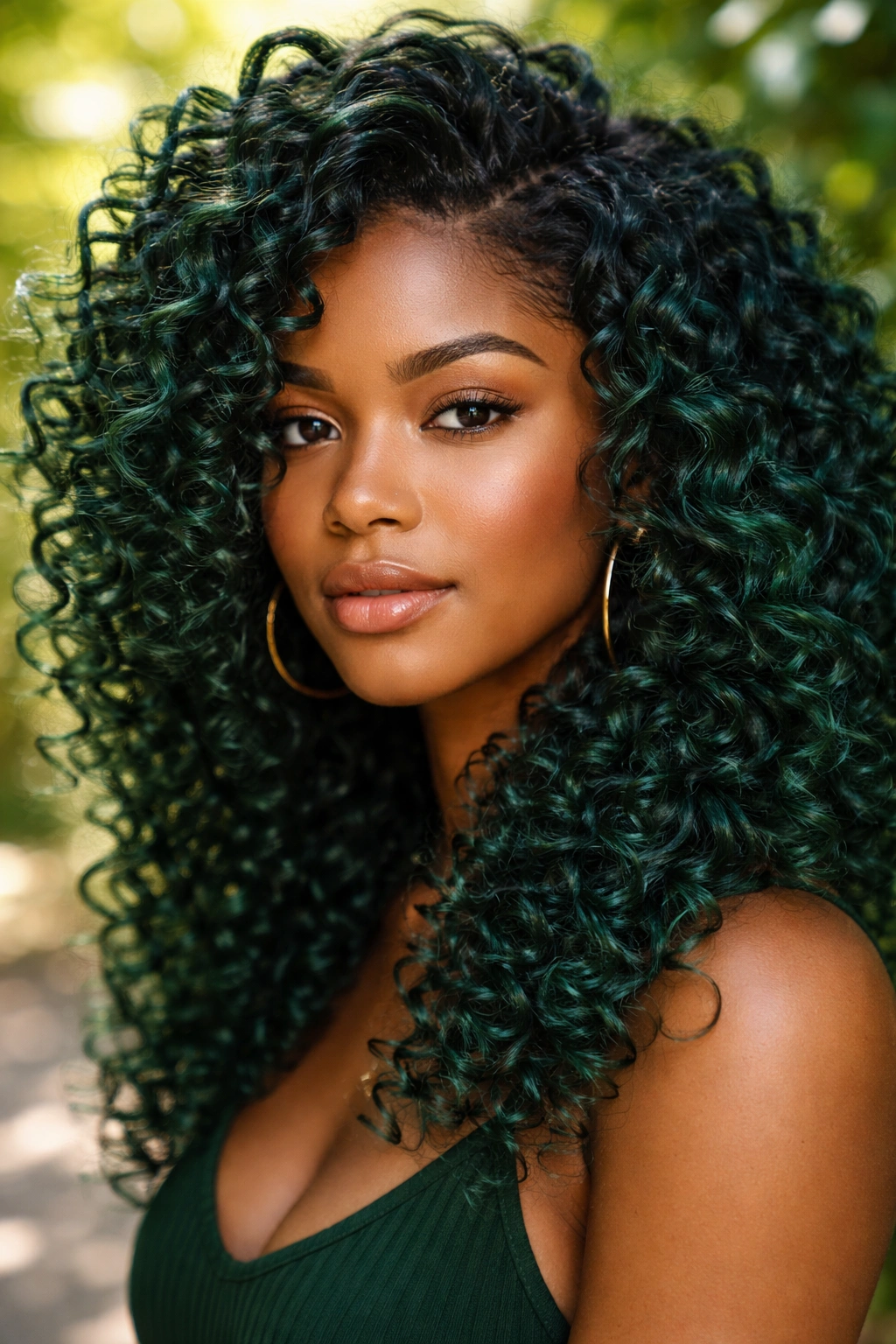
Deep, rich forest green on natural curly hair has a jewel-tone quality that’s different from brighter greens — it reads as lush and saturated rather than neon or playful. On curly natural hair, forest green creates an effect that’s almost natural-looking — like your curls have absorbed color from a dense, verdant landscape.
27. Color Melting (Multiple Tones Blended)
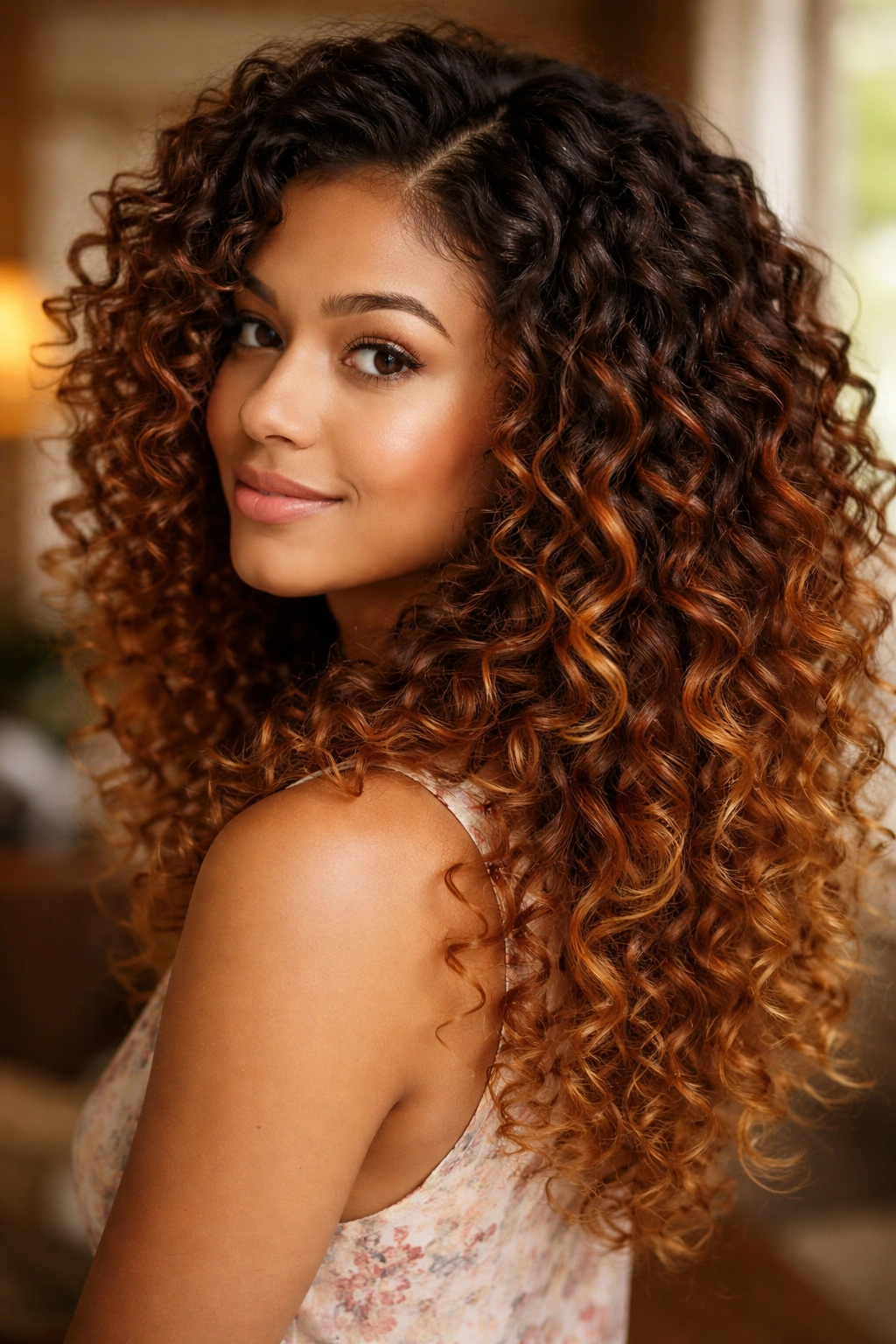
Color melting is a technique where multiple colors — often three or more — are blended seamlessly from root to end, with no harsh demarcation between them. On natural curly hair, color melting creates extraordinary dimensional results because the curl pattern itself contributes to how the colors blend visually.
A typical color melt for natural curly hair might move from deep brown at the root through chestnut and auburn in the mid-length to copper or honey at the ends — a range of warm tones that each look different in different sections of the curl.
28. Natural Hair’s Own Colour as the Feature
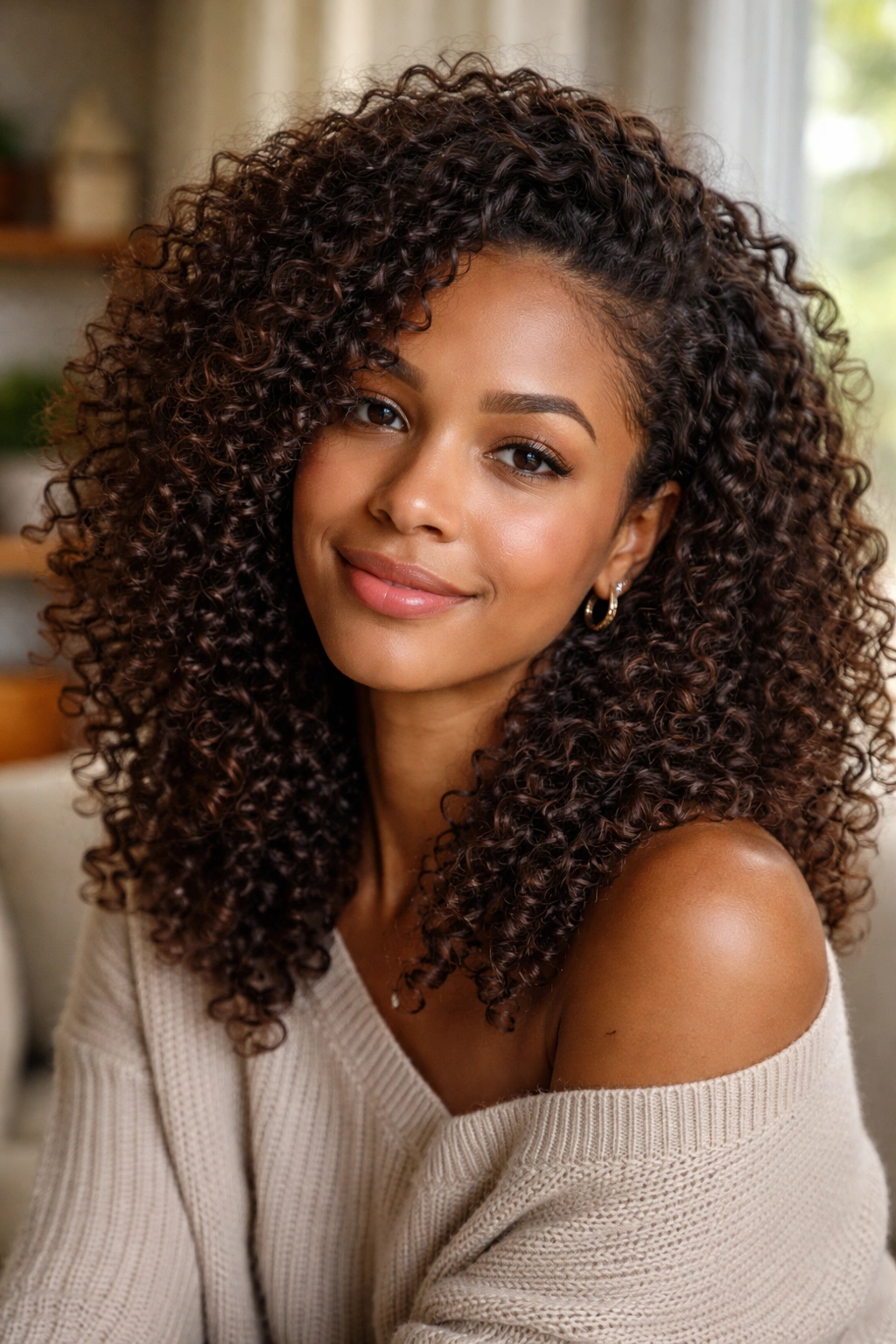
After years of being told that natural hair should be colored, straightened, or otherwise altered to be beautiful, there’s a growing and entirely valid position that says: the natural color of your hair — whatever shade it is — is already a feature, not a starting point.
The natural variation of dark, naturally pigmented hair — the slight variations in tone created by the way the cuticle absorbs light differently in different sections, the way roots and ends show different levels of pigment density — is its own form of dimension. No color process needed.
Enhancing that natural color through a clear gloss, proper moisture, and good lighting — rather than covering or changing it — is a completely valid choice. Sometimes the best hair color for curly hair is the one that was already there.
Making Color Last Longer on Curly Hair
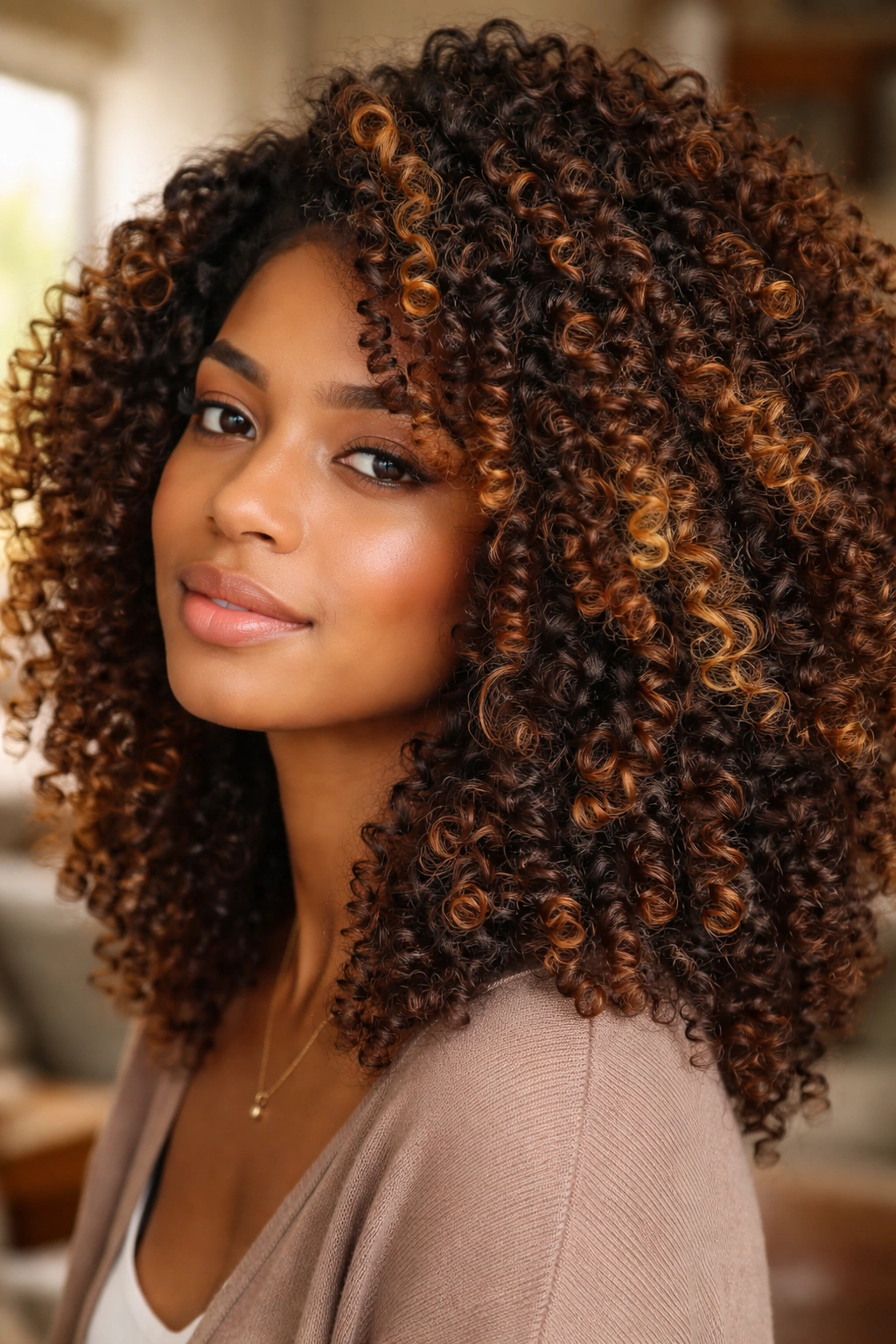
Color on curly hair tends to fade faster than on straight hair because curly hair’s more open cuticle structure releases color more quickly. A few things that help color last longer:
- Wash less frequently. Every shampoo session accelerates fading. The fewer washes, the longer the color lasts.
- Use cool water for washing. Hot water opens the cuticle and releases color; cool water seals it and locks color in.
- Use a color-depositing conditioner in your color’s shade. Used weekly, these deposit a small amount of color back into the hair with each use, maintaining vibrancy between salon visits.
- Protect from sun exposure. UV rays fade hair color, and curly hair worn at full volume exposes more surface area to the sun than straight hair does. A UV-protective spray or a hat in strong sun makes a difference.
- Deep condition regularly with a moisture-focused formula. Well-moisturized, healthy hair holds color better than dry, porous hair because a sealed, healthy cuticle retains color more effectively.
