



Dyed curly hair is one of the most jaw-dropping combinations in the natural hair world — color amplifies every coil, every ringlet, every twist into something that feels completely alive. Whether you’re thinking about a bold statement shade or a soft, sun-kissed highlight, there’s a color idea out here made specifically for your curl pattern. This guide covers 24 dyed curly hair ideas that work beautifully on natural curls, so you can walk into your next salon appointment (or DIY session) with a clear vision.
Why Color and Curls Are Such a Natural Match
Straight hair shows color in flat, uniform panels. Curly hair? It catches light from every angle. Each curl creates its own shadow and highlight, which means color on natural curls never looks one-dimensional — it shifts and moves as you do.
That’s the real magic of dyed curly hair: the texture does half the visual work for you. A single shade looks like three when your curls are bouncing. Highlights look more dimensional without extra effort. Even a simple all-over color job transforms into something that looks carefully crafted.
Black women with natural curls have a particularly stunning canvas to work with. Type 3 and 4 curls are tight, springy, and full of volume — meaning color sits in layers that read from across a room. If you’ve ever wondered why a colored wash-and-go stops traffic, this is why.
Understanding Your Curl Pattern Before You Color
Before you commit to a color, it helps to know how your specific curl type will handle the process. Color — especially bleach — opens the hair cuticle. Tighter curl patterns (4A, 4B, 4C) tend to be drier to begin with, so moisture management before and after coloring is non-negotiable.
Type 3 curls (3A, 3B, 3C) tend to hold color vibrantly and show less fading because the curl is looser and the cuticle, while still porous, responds a bit more predictably to color processing.
Type 4 curls are more porous — especially if you’ve had any heat or chemical exposure before — so they absorb color quickly and deeply. That can actually work in your favor: rich, saturated color often looks incredible on 4C hair. But it also means you’ll want to deep condition aggressively before and after.
Porosity matters more than curl pattern for color results. Low-porosity hair resists color uptake; high-porosity hair grabs it fast. Knowing which one you’re working with helps you choose the right formula and processing time.
How to Keep Dyed Curly Hair Healthy
Color and health aren’t mutually exclusive — but they do require a shift in your routine. Dyed curly hair needs more intentional care than undyed curls, and the good news is that a few habit changes make a huge difference.
Deep condition weekly. Not monthly. Weekly. A protein-moisture balance is key — too much protein on color-treated curls can cause stiffness and breakage, while too little moisture causes frizz and dryness. Rotate a protein treatment once a month and keep the rest moisture-focused.
Sulfate-free shampoo is your new best friend. Sulfates strip color fast and dry out curls in the process. Switching to a gentle, sulfate-free cleanser extends color life significantly. Co-washing between shampoo days also helps retain moisture without stripping color.
Protective styling between washes reduces manipulation and breakage — especially important when your curls are chemically processed. Twists, braids, and buns give your hair a break and help retain length while color-treated ends recover.
UV protection matters too. Sun exposure fades color and dries out curls simultaneously. A leave-in or styling product with UV filters, or a simple silk scarf when you’re outdoors, extends the life of your color considerably.
Choosing the Right Colorist for Natural Curly Hair
Not every stylist who does color also understands natural curls — and that gap can be the difference between a stunning result and a damaged disaster. When you’re looking for someone to color your dyed curly hair, ask specific questions.
Do they work with natural hair regularly? Can they show you a portfolio of color work on curl types similar to yours? Do they understand how to apply color to shrunken curls vs. stretched hair? These questions matter.
Stylists trained specifically in textured hair know how to apply color in sections that honor the curl pattern rather than fighting it. They’ll also know how long to process based on your specific porosity and starting color — two things that vary enormously between curly clients.
If you’re doing color at home, always do a strand test first. Always. Processing times listed on box color are designed for straight hair, and they’re rarely right for tightly coiled textures. A strand test tells you exactly how your curl will respond before you commit to your whole head.
The Role of Undertones in Dyed Curly Hair
Your skin’s undertone should play a role in which color you choose — not as a rule that limits you, but as a guide that helps you pick shades that feel intentional rather than accidental.
Warm undertones (yellow, peachy, golden) tend to look stunning with warm hair colors: honey blonde, copper, auburn, golden brown, warm red. Cool undertones (pink, blue, bluish) pair beautifully with cool shades: ash blonde, violet, blue-black, burgundy with blue bases.
Neutral undertones? You’re the lucky ones. Almost every color family works. The world is your palette.
That said — and this is important — personal preference overrides any undertone “rule.” If you’re obsessed with a platinum silver look and your undertones are warm, do the platinum silver. Color is supposed to be fun. Guidelines are starting points, not ceilings.
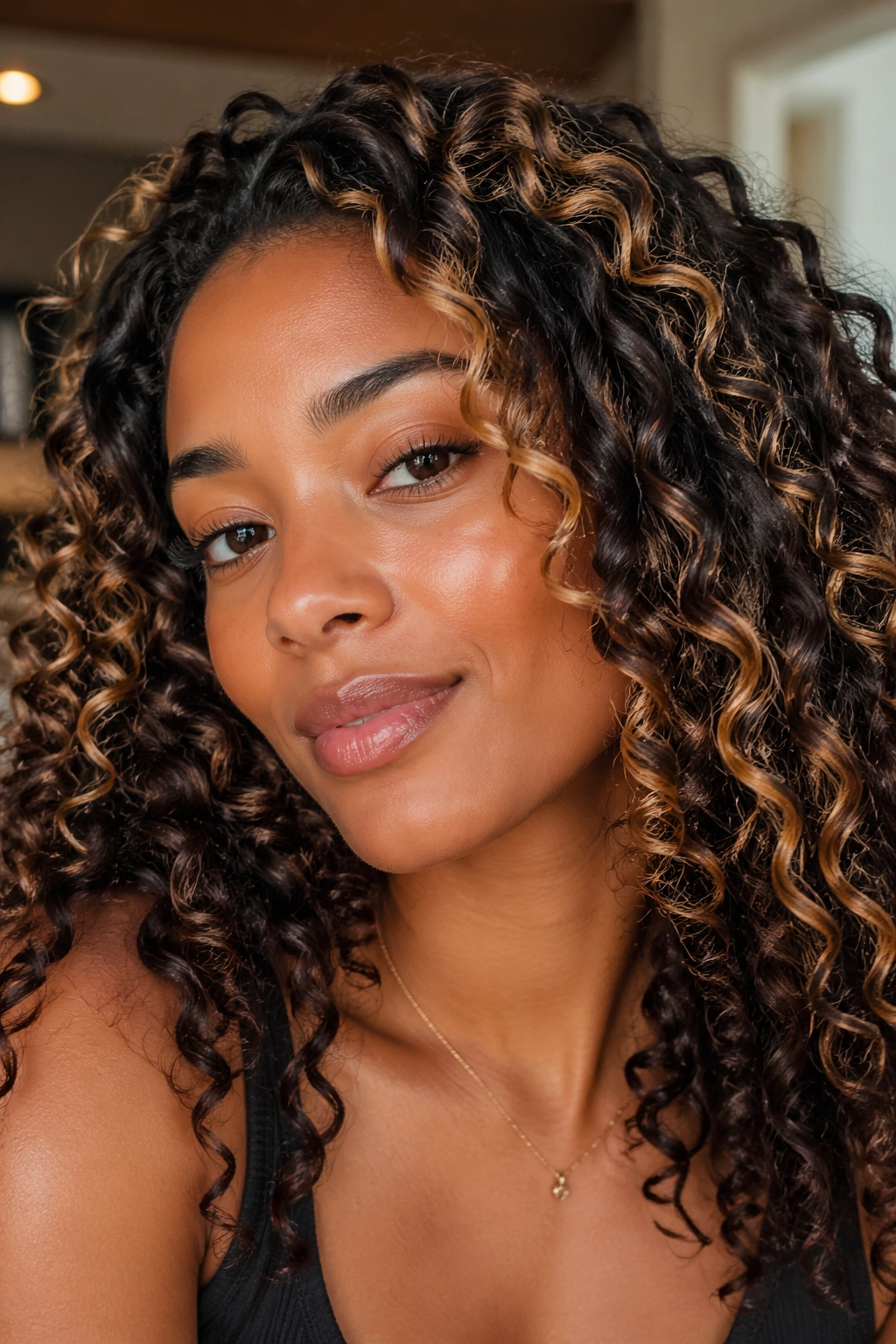
1. Honey Blonde Highlights on Dark Curls
Few things are as universally flattering as honey blonde highlights scattered through dark natural curls. The contrast is warm, glowing, and surprisingly low-maintenance once it’s done.
How to Achieve Honey Blonde Highlights
- Ask for chunky, ribbon-style highlights rather than fine foils — they show up better on curly textures and look more natural
- Concentrate placement around the face frame, crown, and ends
- Avoid highlights that are too uniform — vary the width for a sun-kissed effect
- A toning gloss in golden honey after lightening seals in warmth
Bold tip: Have your stylist apply highlights while your hair is in its natural curl state rather than blown out — you’ll see exactly where color lands when your curls spring back.
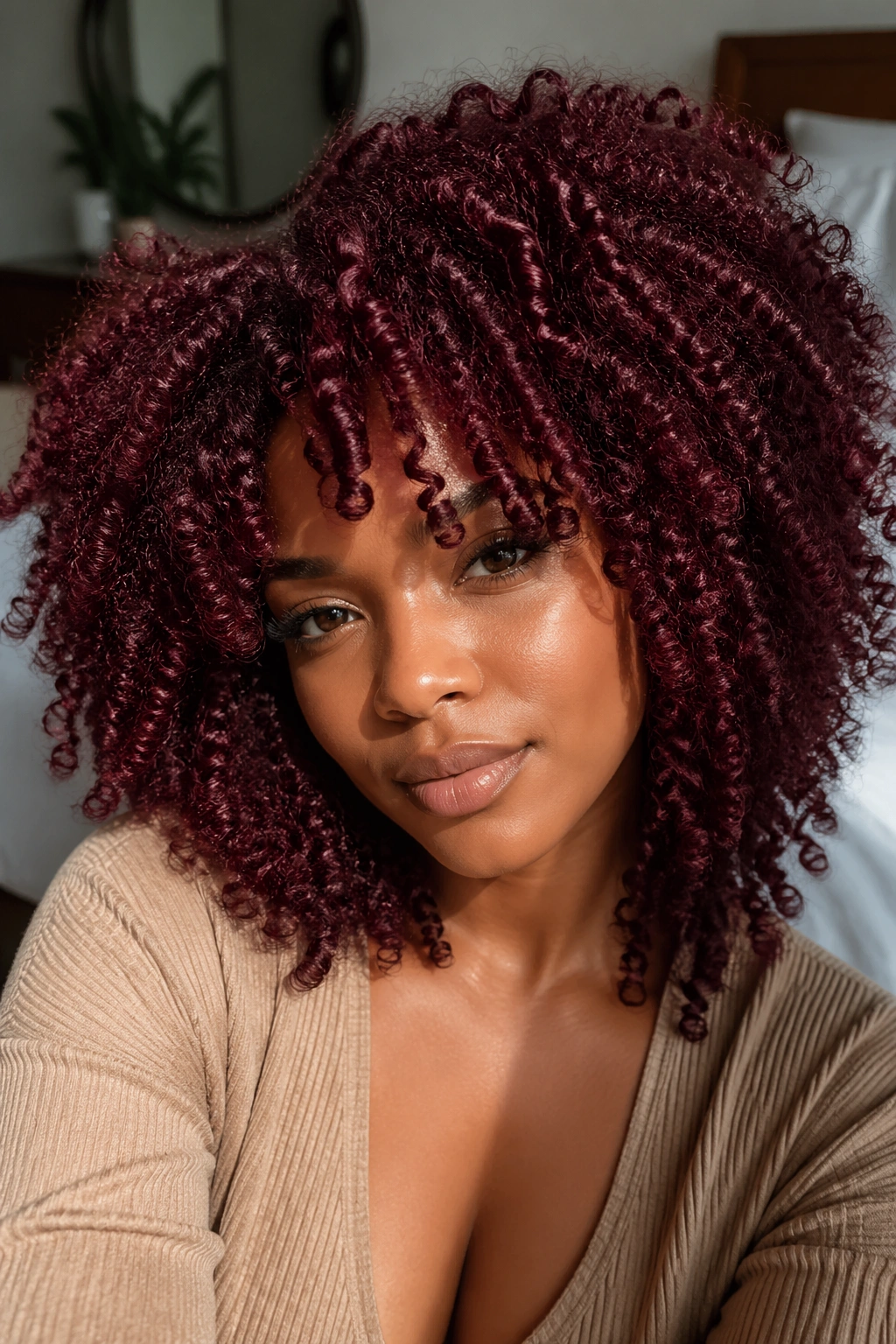
2. Burgundy All-Over Color
Burgundy on natural curls is a statement. It’s deep, it’s rich, and it shifts between red and violet depending on the light — which means it looks different in every photo and every room.
This color flatters virtually every skin tone. Cool burgundy leans purple-red and works beautifully on deeper skin tones. Warm burgundy edges toward auburn-red and glows on medium to light brown skin.
The best thing about burgundy on dyed curly hair? It doesn’t require bleaching on most natural hair if your starting color is dark brown. A high-lift or direct dye application can deposit burgundy tones without lifting to blonde first, which means significantly less damage.
How to Achieve It
Apply a direct dye burgundy formula on pre-washed, conditioned hair. Section into four quadrants. Apply from roots to ends in thin sections. Process under a plastic cap for 30-45 minutes. Rinse with cool water to seal the cuticle.
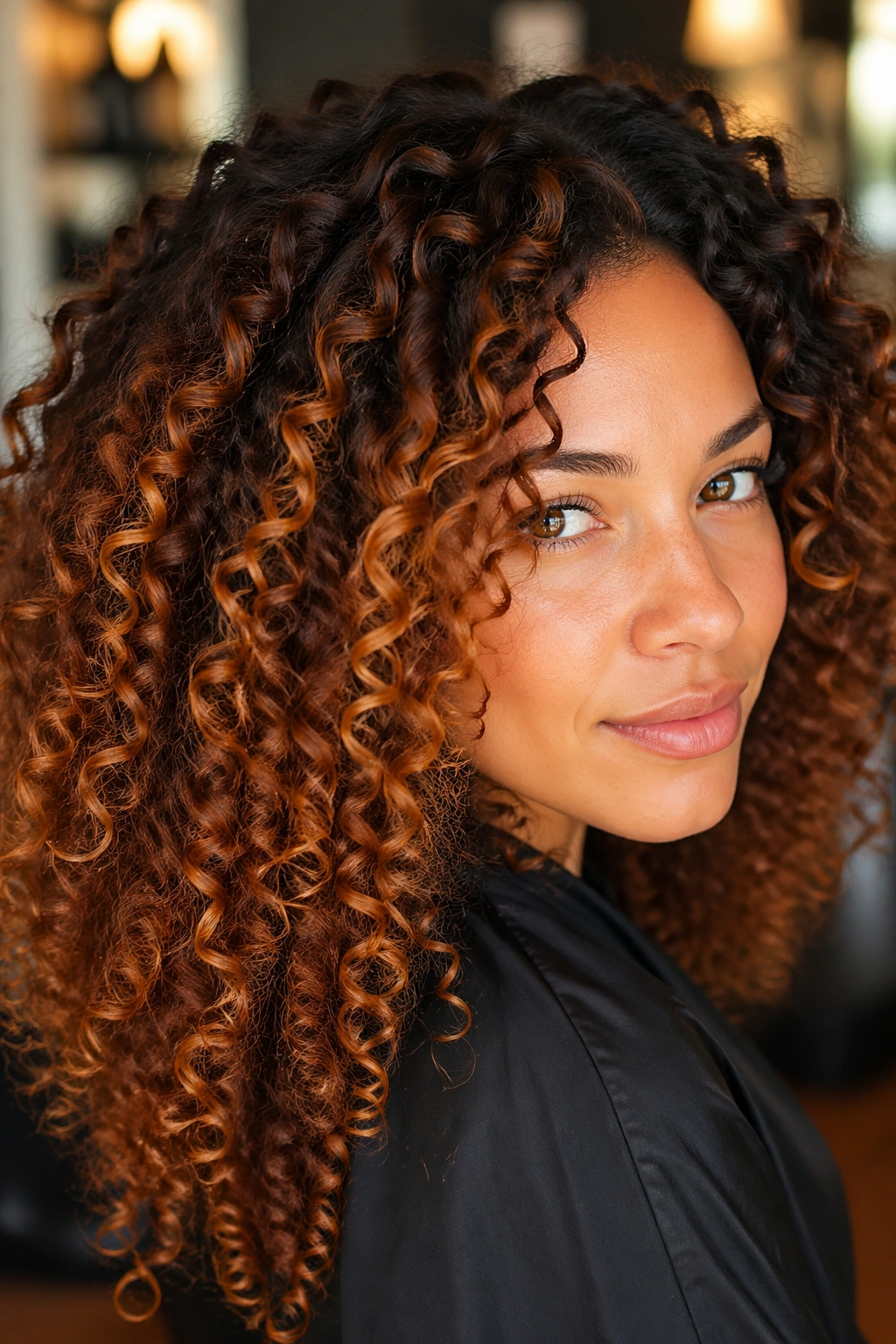
3. Copper Balayage
Copper is having a perpetual moment in natural hair — and with good reason. It’s warm, dimensional, and the balayage application technique means the color fades gradually in a way that looks intentional rather than grown-out.
Balayage on curly hair is applied freehand to the mid-lengths and ends, skipping the roots entirely. On natural curls, this creates a gradient that looks like your hair caught fire at the tips — in the best possible way.
Maintenance is gentler than traditional highlights because there’s no harsh root line to touch up. As your hair grows, the copper simply migrates further down, staying beautiful for months.
Who this suits: Anyone with 3A-4B curl patterns. The balayage effect is most visible on looser curl types but can be adapted for tighter coils with thicker painted sections.
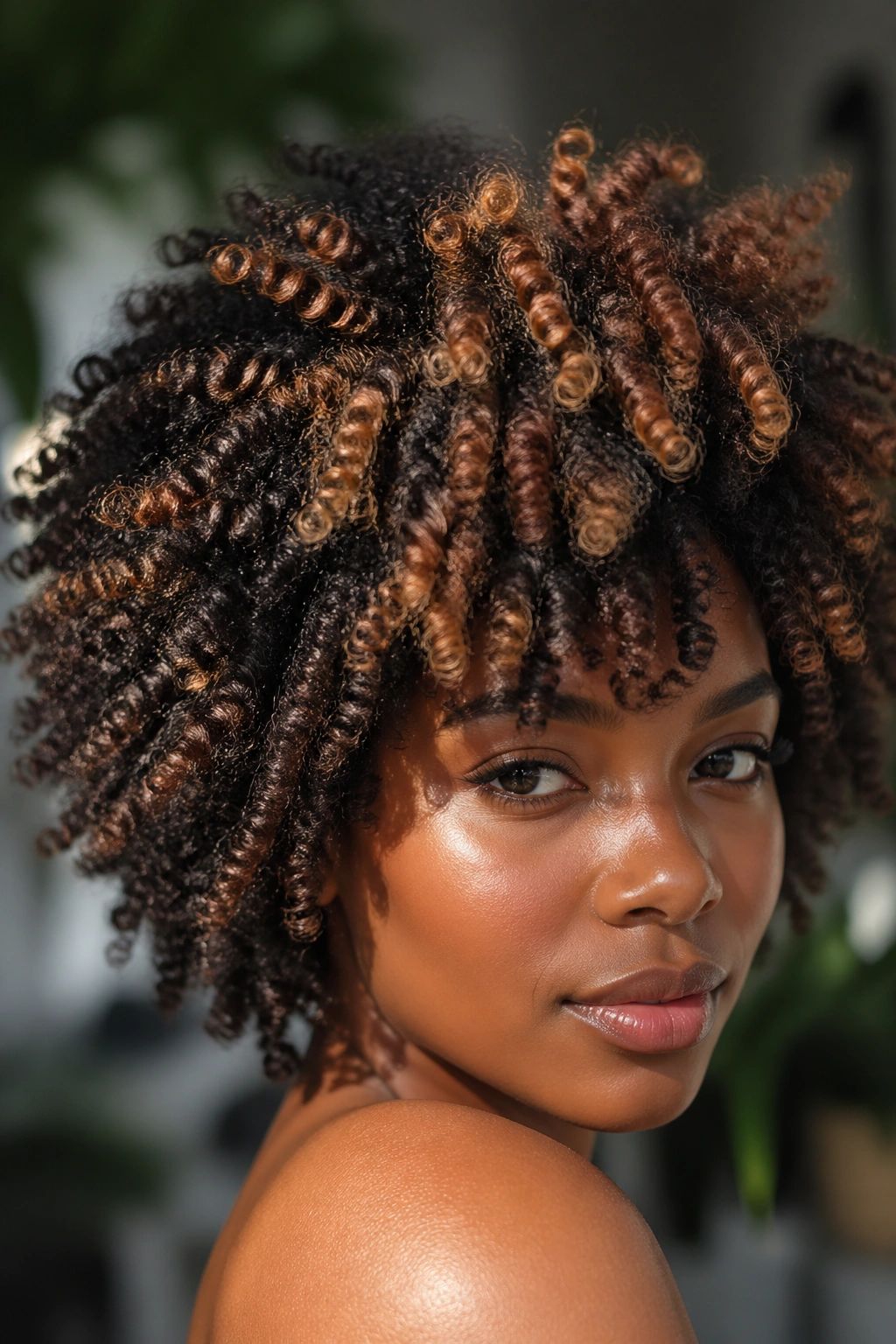
4. Caramel Highlights on 4C Hair
4C hair and caramel highlights feel like they were designed for each other. The warm, golden-brown tones against tight coils or puffs create a sun-kissed effect that looks effortlessly beautiful.
Because 4C hair is often dense and tightly coiled, highlights are typically applied to stretched sections — twists or braids being lightened, then unraveled after processing. This technique ensures even color distribution without disrupting the natural curl pattern.
The result is a multi-tonal look where some sections appear lighter and others stay dark, creating natural-looking depth throughout the hair.
Keep expectations realistic: Caramel on unbleached 4C hair that’s naturally dark brown or black usually reads as a warm auburn-brown rather than a bright caramel. For true caramel, some lifting is required. A colorist can advise on how much lightening your hair can safely handle.
5. Chocolate Brown Refresh
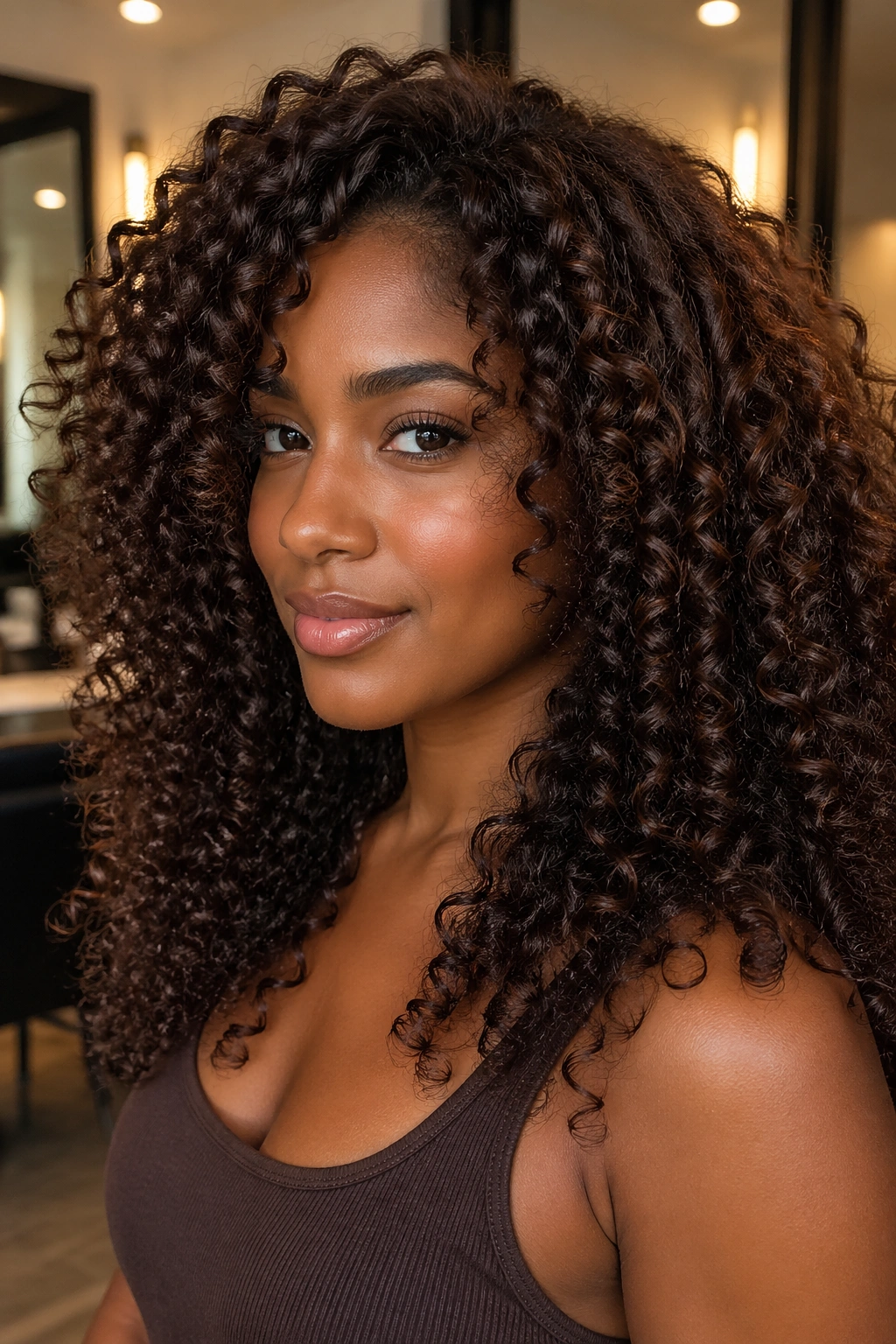
Sometimes the most beautiful thing you can do for dyed curly hair is deepen what’s already there. A rich chocolate brown all-over color adds gloss, shine, and dimension to natural curls that have lost their luster.
This is especially useful if your curls have faded, sun-bleached, or just look dull. A chocolate brown gloss or demi-permanent color refreshes the tone without significant damage, since it deposits color without heavy lifting.
How to Achieve
Use a demi-permanent formula in chocolate brown. Apply to clean, damp hair from roots to ends. Process for 20-25 minutes. The result is glossy, dimensional, and lasts 4-6 weeks before gradually fading — no harsh grow-out line.
Bonus: Demi-permanent formulas often contain conditioning agents that leave your curls softer than before. A color treatment that also deep conditions? That’s the goal.
6. Platinum Silver on Natural Curls
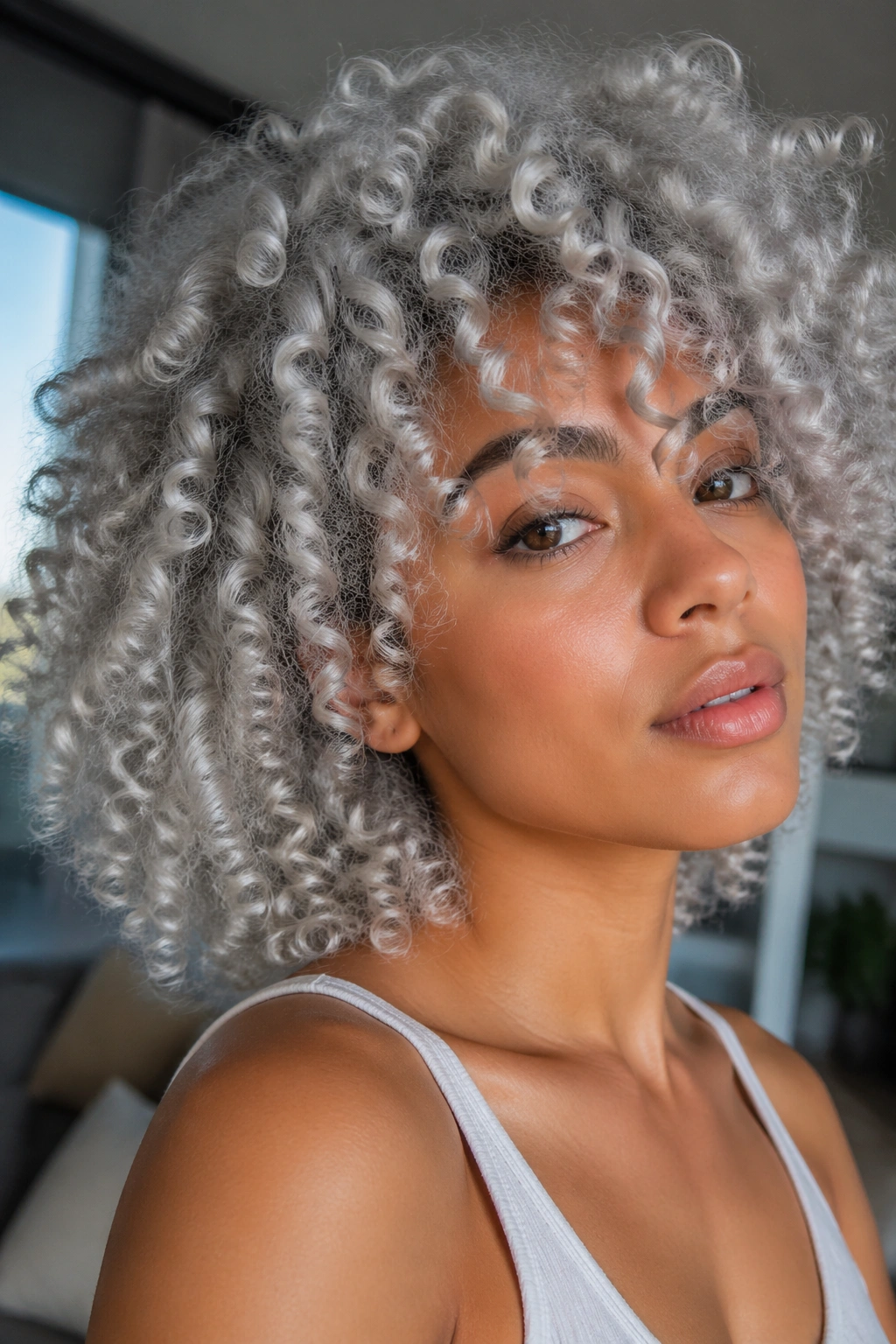
Platinum silver on natural curls is an all-out commitment — and the result is stunning enough to justify every step of the process. This look requires significant lifting, especially on darker natural hair, and it demands serious moisture-maintenance afterward.
But when done right? The contrast of bright silver or platinum against coily, textured curls is extraordinary. Your curl pattern becomes even more defined against a light background, and the overall effect reads as both bold and elegant.
The process typically involves multiple bleaching sessions spaced weeks apart to protect hair integrity, toning to achieve a true silver or pearl finish, and ongoing purple shampoo to prevent brassiness.
This look is worth a consultation first — a skilled colorist working with natural hair will assess your starting color, porosity, and overall hair health before recommending a timeline.
7. Ombre Fade from Dark Roots
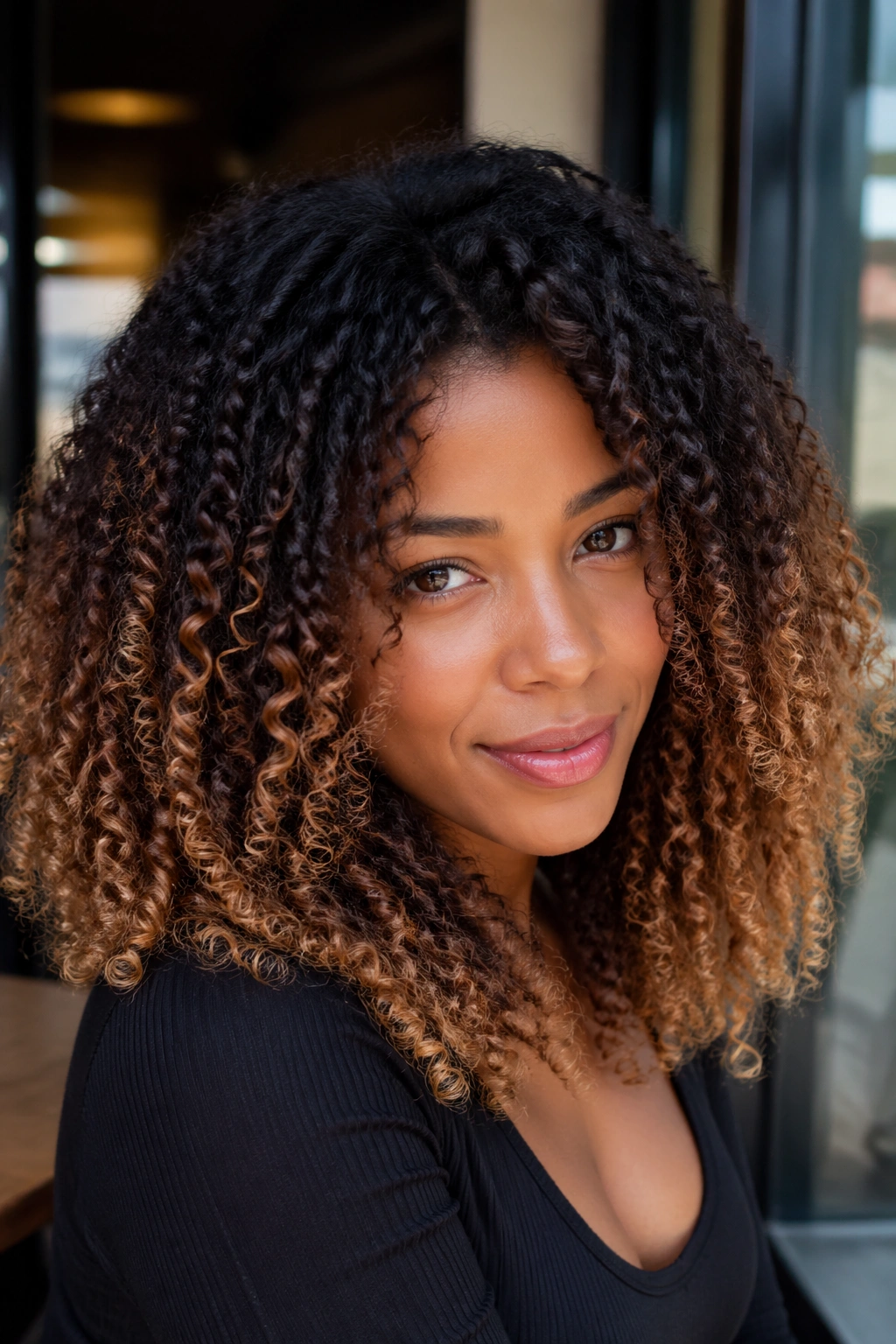
The dark-to-light ombre is one of the most flattering dyed curly hair looks because it works with natural root growth rather than against it. Dark roots at the scalp gradually lighten to honey, blonde, or copper at the ends — creating a seamless fade that looks beautiful even as it grows.
On curly hair, ombre is often achieved via a sombré technique — a softer, more blended version that avoids a harsh line of demarcation.
Application Tips
- Section hair into large parts and apply bleach from the mid-shaft down, feathering upward
- Process in sections so each area gets adequate time
- Tone ends to the desired shade after lifting
- Use a protein treatment before and a deep conditioner after
The ends of natural hair are the oldest and most vulnerable, so protecting them with consistent moisture treatments keeps this look fresh long-term.
8. Auburn Red All-Over Color
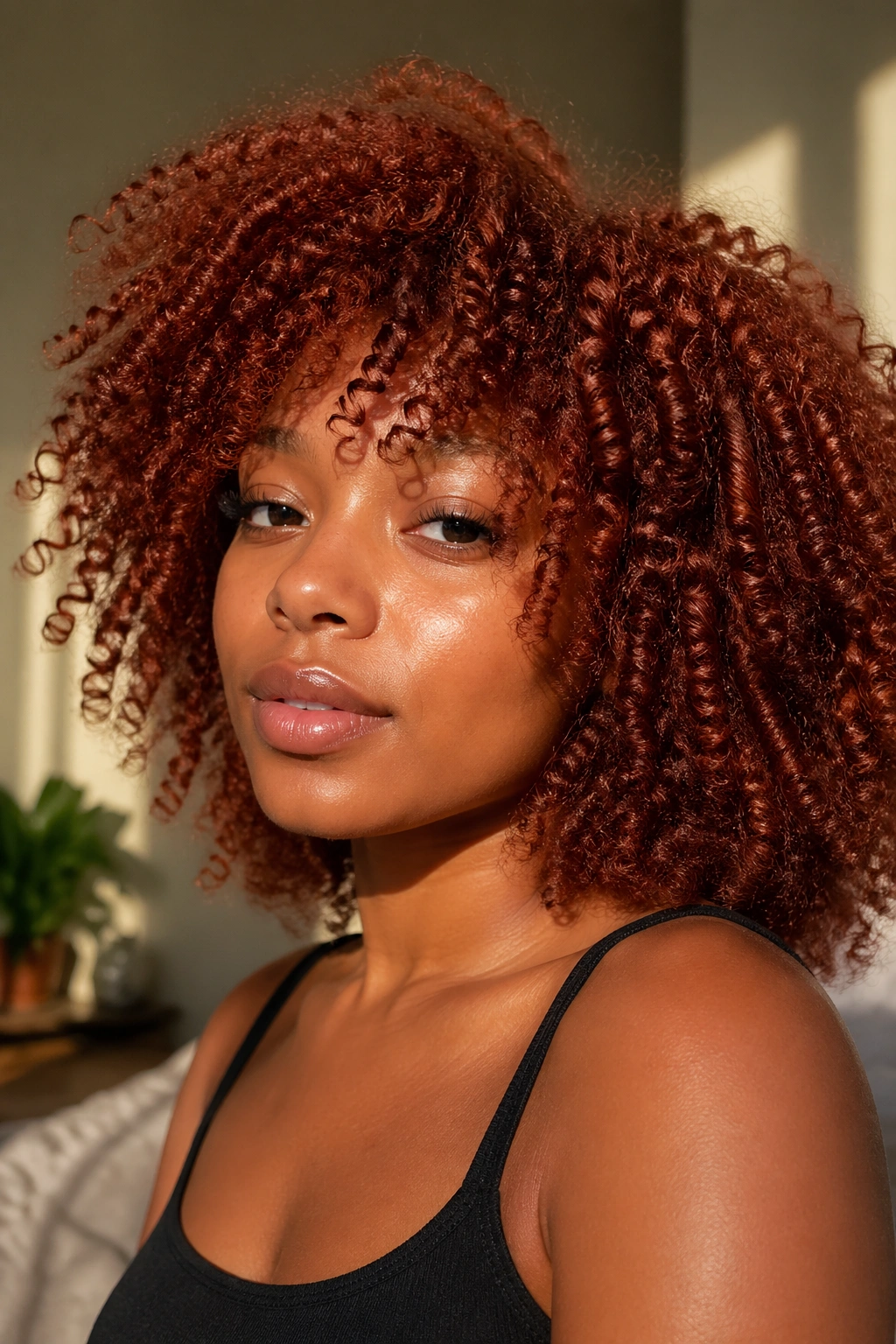
Auburn sits in the sweet spot between red and brown — warm, rich, and wearable in a way that brighter reds sometimes aren’t. On dyed curly hair, auburn reads as a natural-looking enhancement rather than an obvious color job.
Dark skin tones, this one’s especially for you. Deep auburn against rich brown or dark complexions creates a warmth that looks sun-infused rather than artificial. It’s the kind of color that makes people say “is that your natural color?” — and you get to decide how to answer.
Auburn can be achieved with a single-process dye on dark hair without heavy bleaching, particularly if you’re aiming for a deep, subtle auburn rather than a bright copper-red.
9. Two-Tone Split Dye
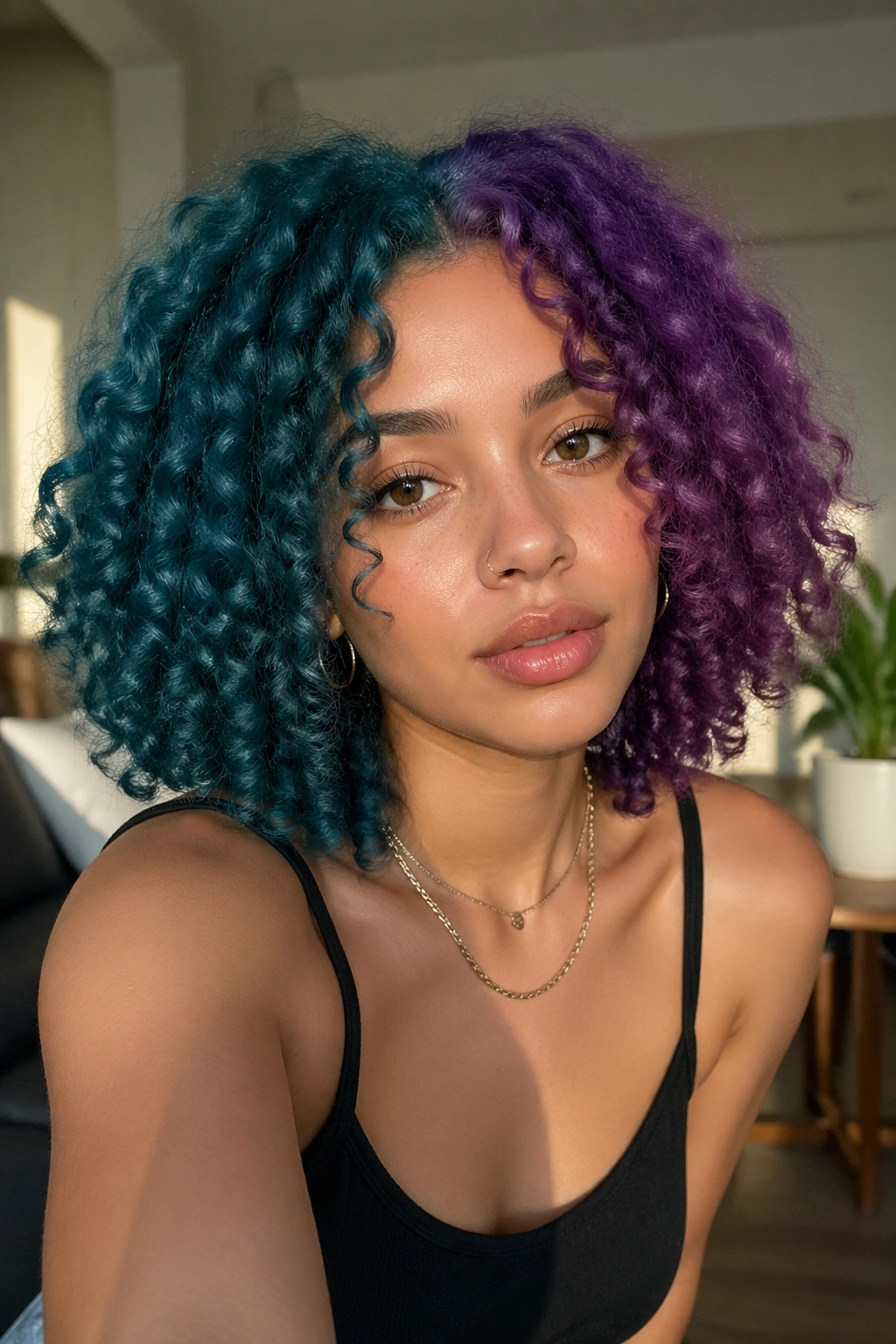
Two completely different colors, split down the middle of the head. This look has moved from avant-garde to genuinely wearable — especially on natural curls, where the volume and texture add drama without the colors competing.
Popular combinations: black and blonde, two complementary jewel tones like teal and purple, or natural brown paired with a vivid red.
The split can be literal (a clean line down the center) or blended at the part for a softer transition. On curly hair, a clean geometric split is harder to maintain as the hair grows and curls mix at the crown — so most people opt for a slightly blended version that grows out gracefully.
10. Strawberry Blonde
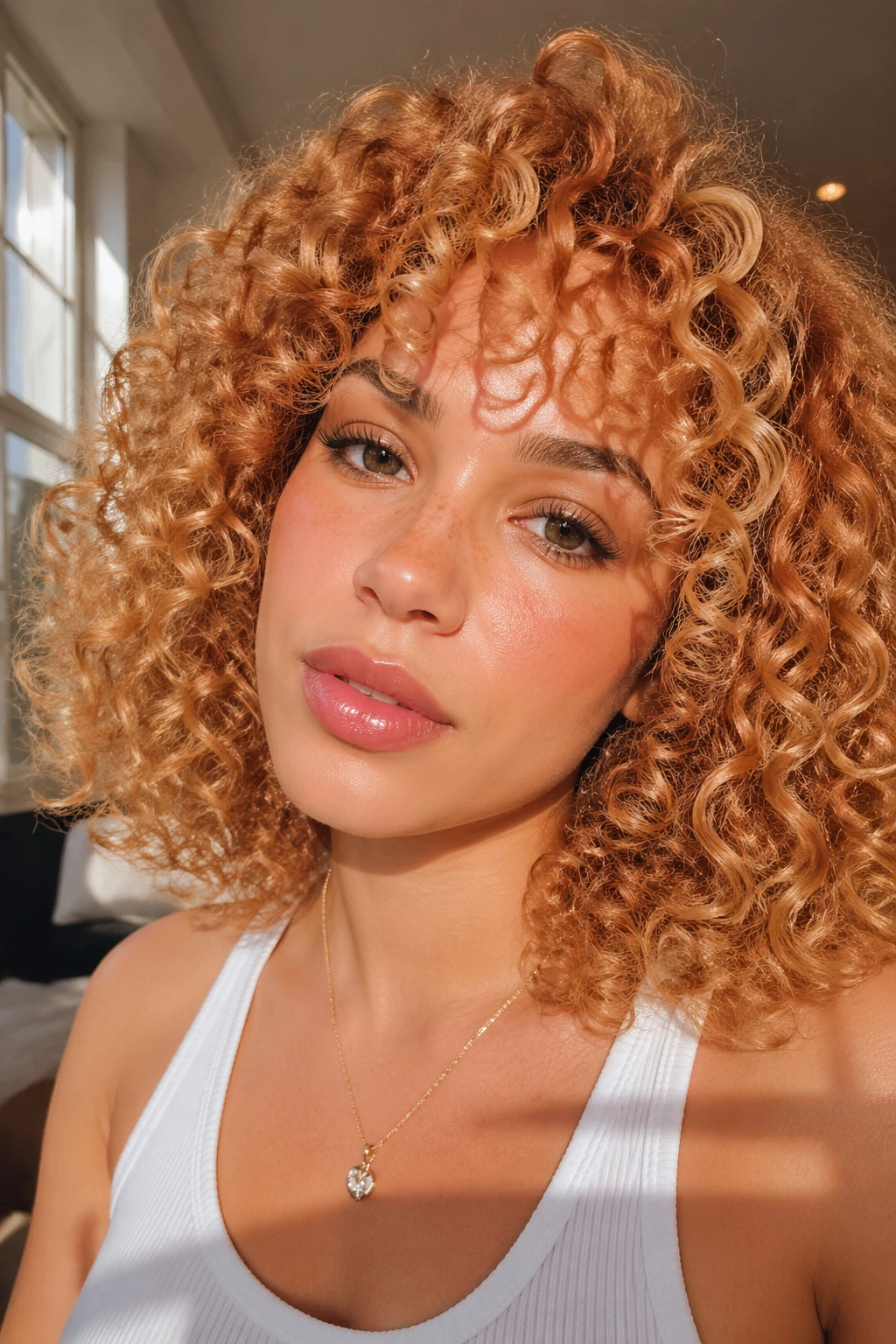
Strawberry blonde sits right at the intersection of blonde and red — it’s warm, feminine, and genuinely unusual on natural curls. On Type 3 or loosely coiled Type 4 hair, it reads as a peachy-gold that catches light beautifully.
This shade requires lightening to a level 8-9 before toning, so it’s a more committed process than darker shades. But the result — especially on longer curls — has a romantic, almost ethereal quality that’s hard to achieve with any other color.
Bold tip: Ask for a rose-gold toner over your lightened base for a version of strawberry blonde that tilts slightly pink — especially beautiful in natural light.
11. Deep Violet
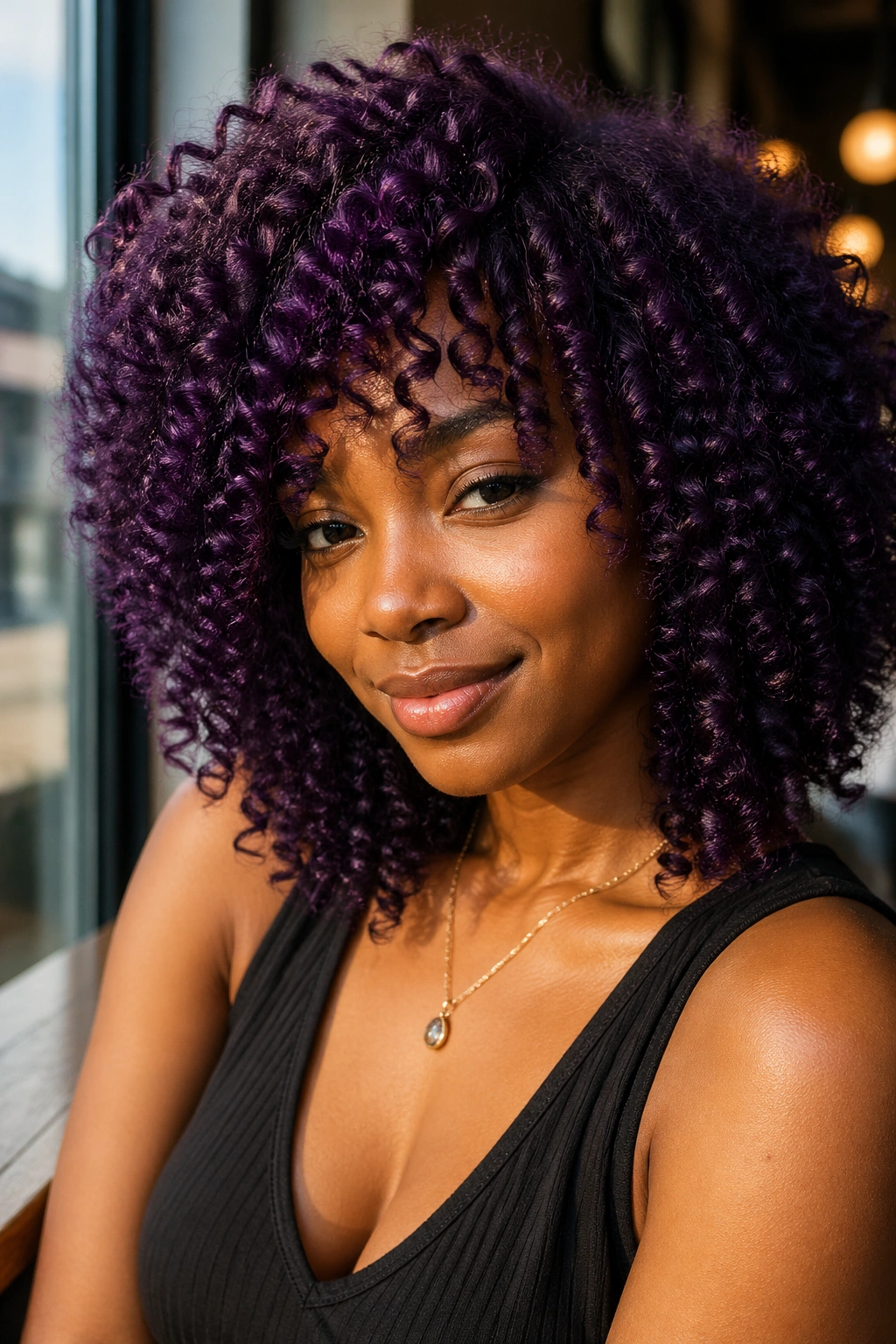
Deep violet is dark enough to read as a rich alternative to black but bright enough to catch the eye in sunlight. On natural curls, the blue and purple undertones in deep violet create a color that almost seems to glow.
No bleaching required for the deepest violet shades on dark natural hair. A direct-dye or demi-permanent formula in deep plum or eggplant deposits visible color without lifting, especially in sunlight or flash photography.
For brighter, more vivid violet, some lightening to a level 6-7 is needed first.
12. Teal and Turquoise Accents
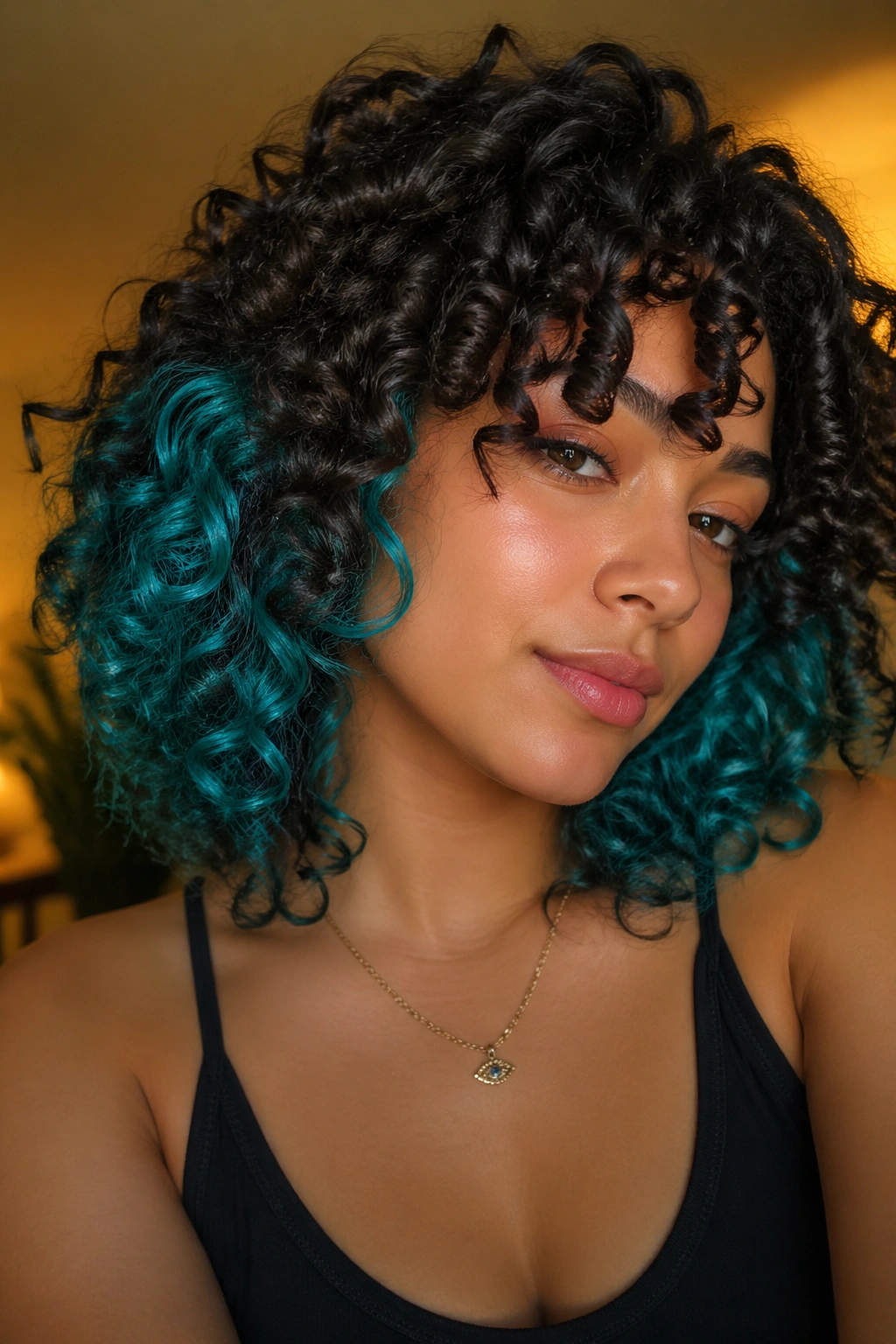
You don’t have to go all-over vivid to make an impact with color. Teal and turquoise peek-a-boo pieces tucked into natural curls — visible only when the hair moves — are playful, unexpected, and surprisingly sophisticated.
This works especially well as a DIY project: identify a few sections underneath or at the front, apply a direct dye in teal or turquoise to those sections only, and let the rest of your natural color frame the accent. No bleaching required if you want a subtle teal on dark hair; bleaching to yellow-orange first gives a vivid pop.
13. Golden Brown with Face-Framing Pieces
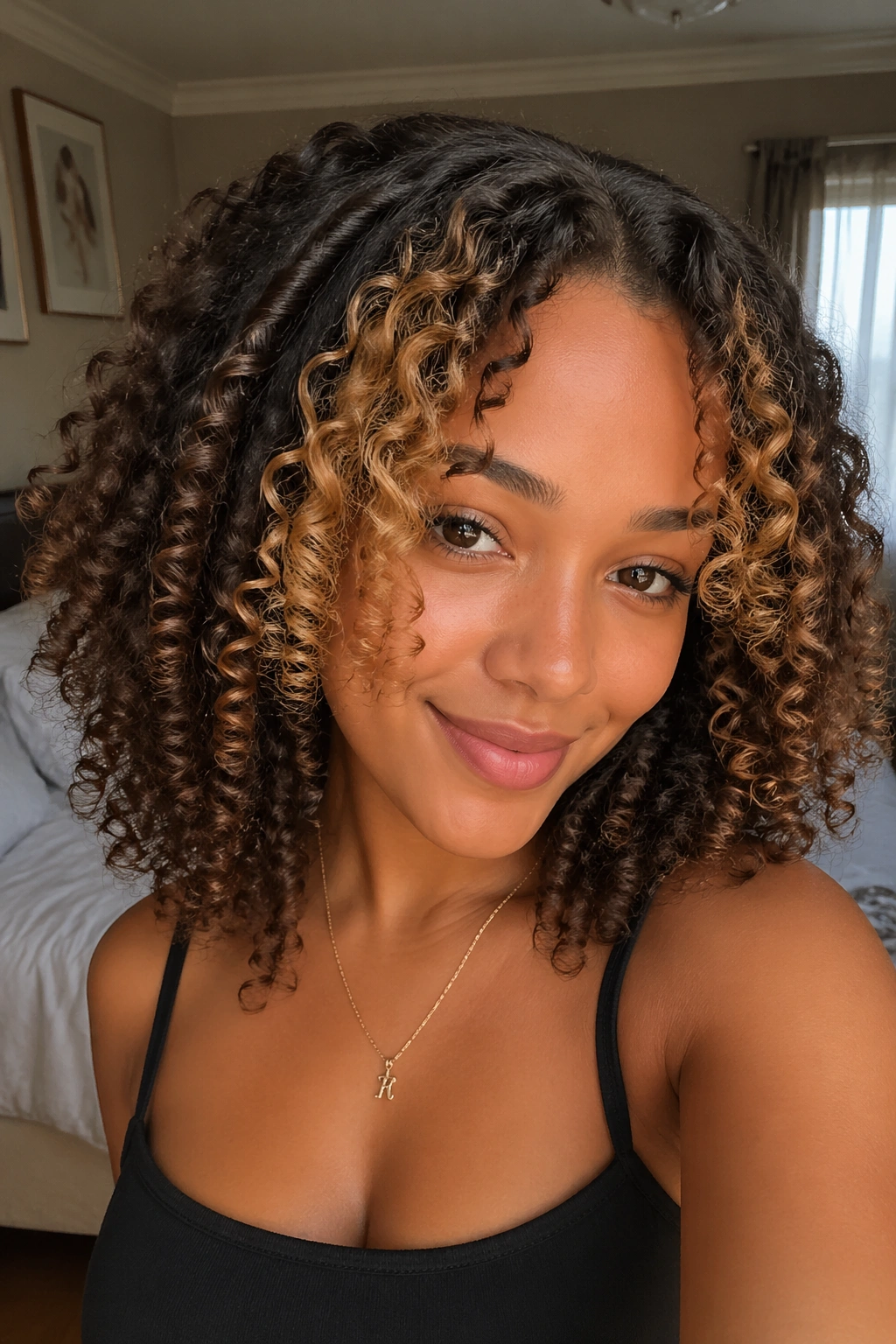
Face-framing color is strategic: lighter pieces around the hairline and temples draw attention to your face and create brightness that reads as warmth rather than dramatic color.
On dyed curly hair, face-framing pieces in golden brown lift the overall look without committing to full highlights throughout. It’s a targeted, lower-cost option for people who want color impact with less processing.
How to Achieve
Section two 1-2 inch pieces on either side of the face. Bleach or lift to your target shade. Apply a warm golden or honey toner. Style as usual — your curls will frame the lighter pieces naturally.
14. Bold Black with Blue Sheen
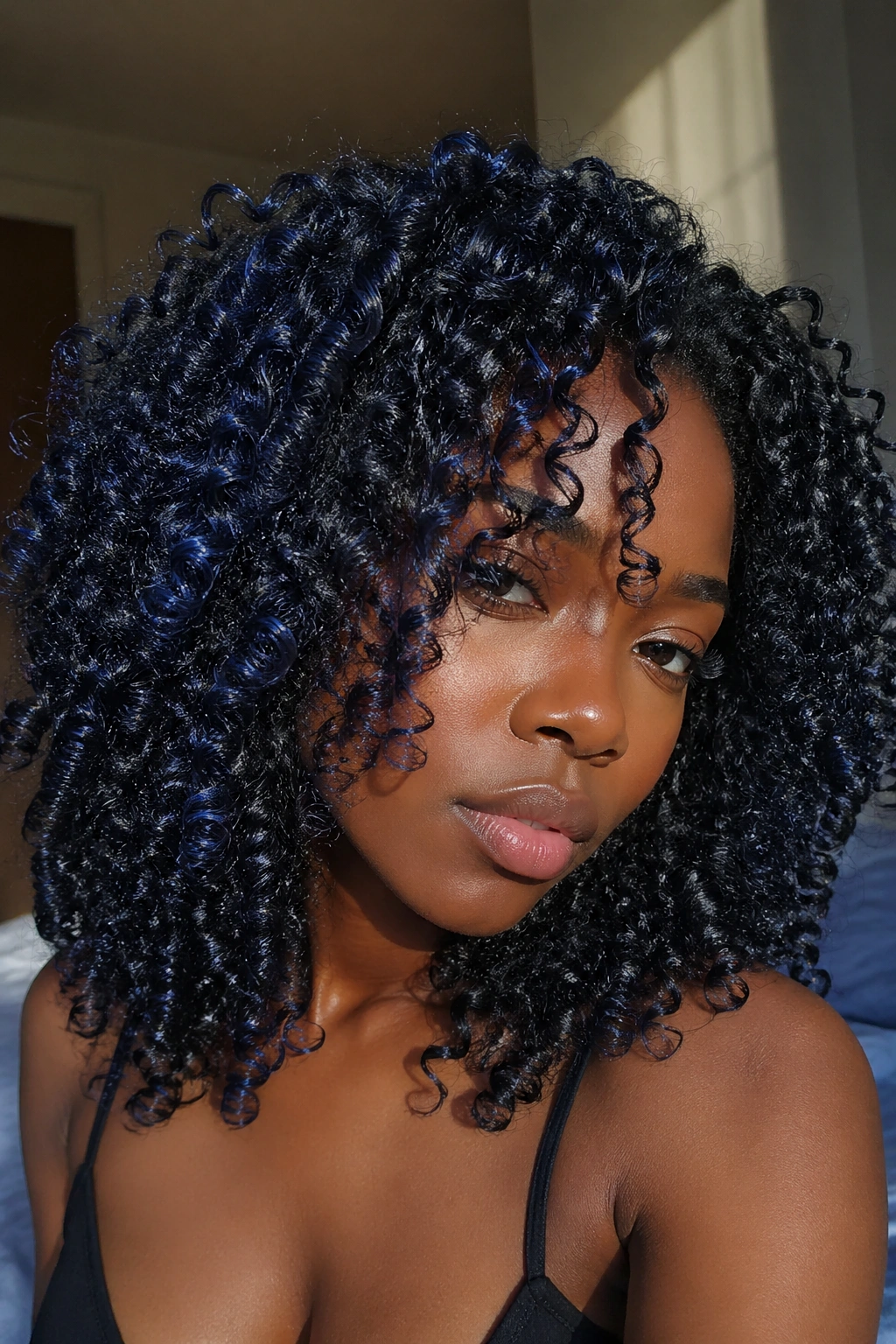
Not everyone wants to go lighter. Sometimes the most striking dyed curly hair involves going darker and deeper — and a blue-black delivers exactly that.
Blue-black is richer than standard black and catches light with a blue or violet iridescence that standard black simply doesn’t have. On natural curls, that sheen makes the texture look incredibly healthy and glossy.
This is achieved with a black formula that has blue or violet undertones — ask your colorist specifically for a “blue-black” or apply a black direct dye with a blue base tone over your natural color.
15. Warm Mahogany Brown
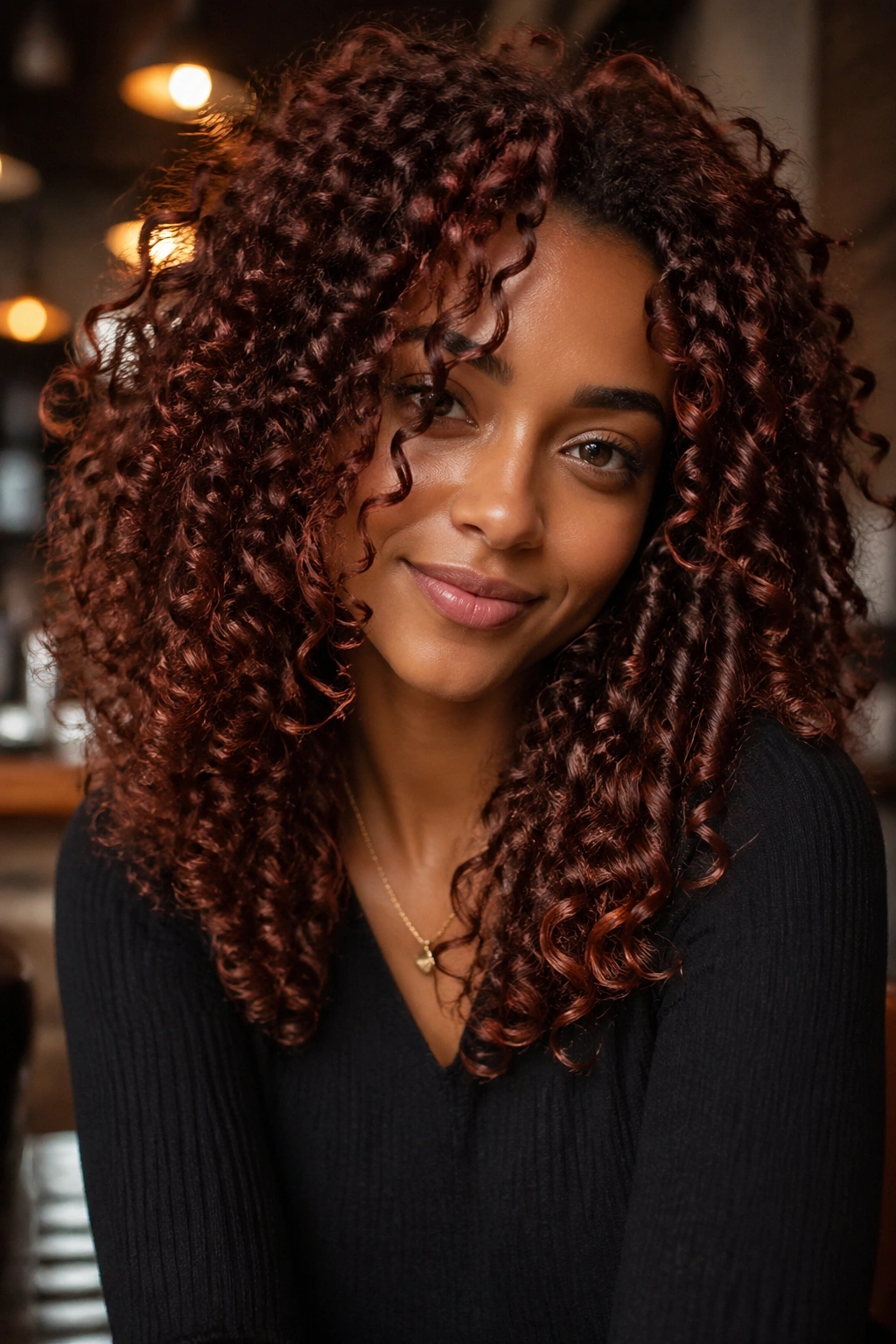
Mahogany brown is a chocolate-red hybrid that adds warmth and depth without going full red. It’s an excellent choice for first-time color — visible enough to feel exciting, subtle enough to wear in any setting.
On natural curls, mahogany creates a multi-dimensional look because the red undertones show through some sections while others read as straight brown, creating movement and depth with a single application.
16. Icy Lavender Tips
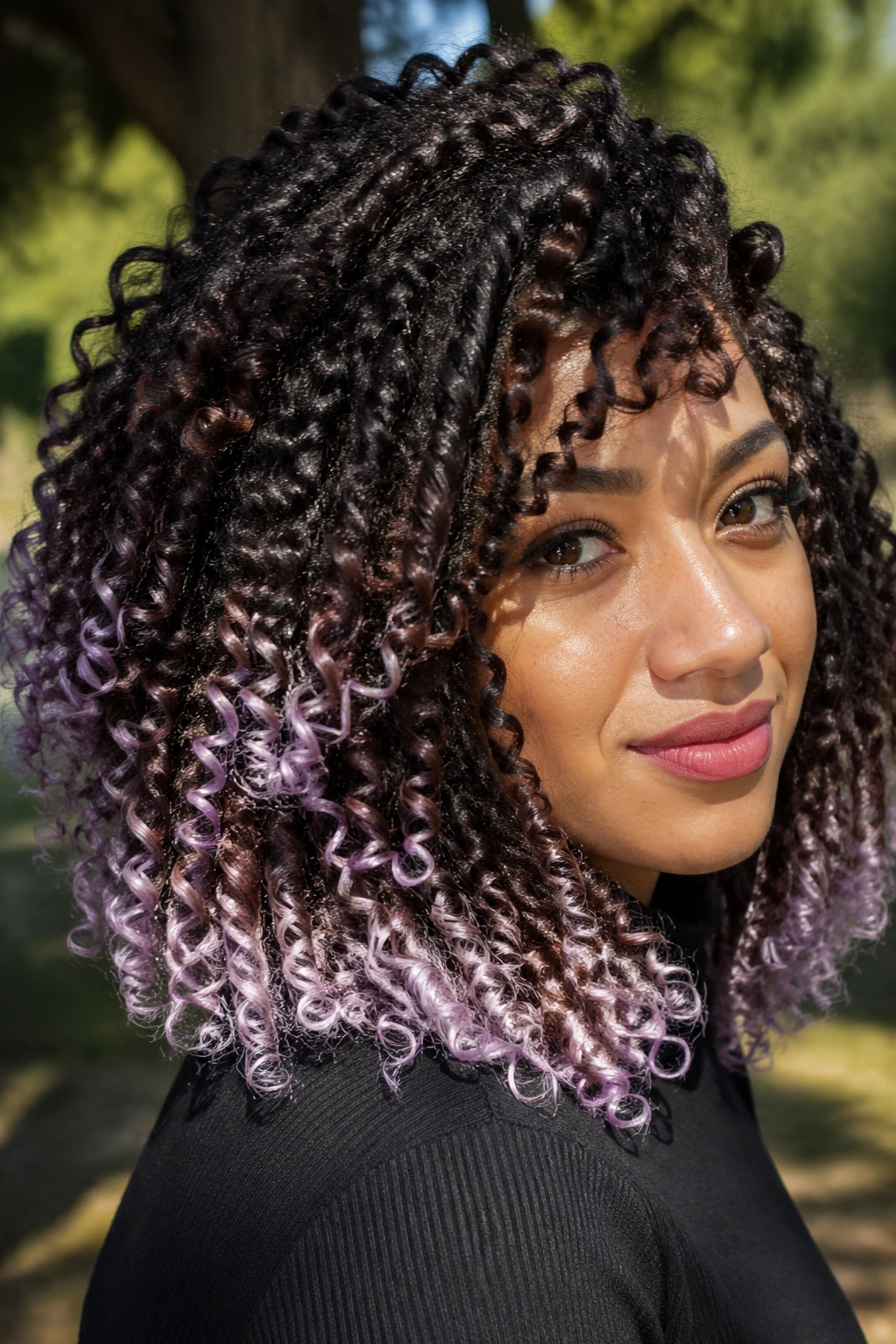
Lavender tips on dark natural curls require lightening the ends, so this is a multi-step process — but the payoff is a dreamy, gradient effect that feels both playful and fashion-forward.
The key is toning lightened ends to a true lavender rather than a pale pink or beige. A direct dye lavender formula applied to pre-bleached, pre-conditioned ends achieves this best.
Tip: Use a purple-tinted leave-in on your lavender ends to maintain vibrancy between touch-ups.
17. Rich Espresso
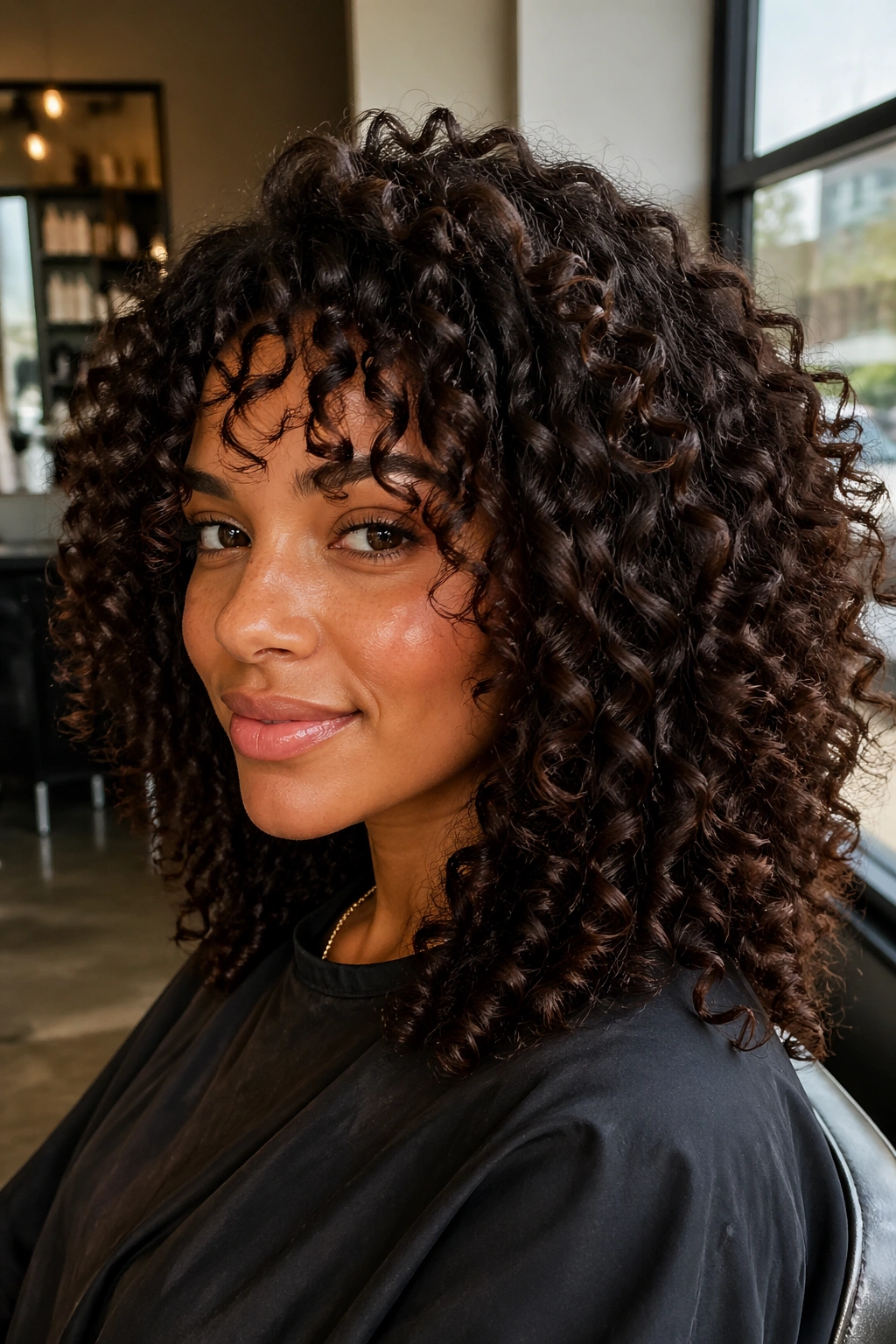
A glossy, deep espresso brown is one of the most underrated dyed curly hair looks — it’s intentional, polished, and makes curls look healthy and defined. Unlike black, espresso has warmth that prevents it from looking flat.
For naturals with dark hair, a demi-permanent espresso gloss refreshes tone and adds noticeable shine without the damage of permanent color. For lighter naturals, a deeper espresso creates stunning contrast with lighter skin tones.
18. Fire Red Vivid Color
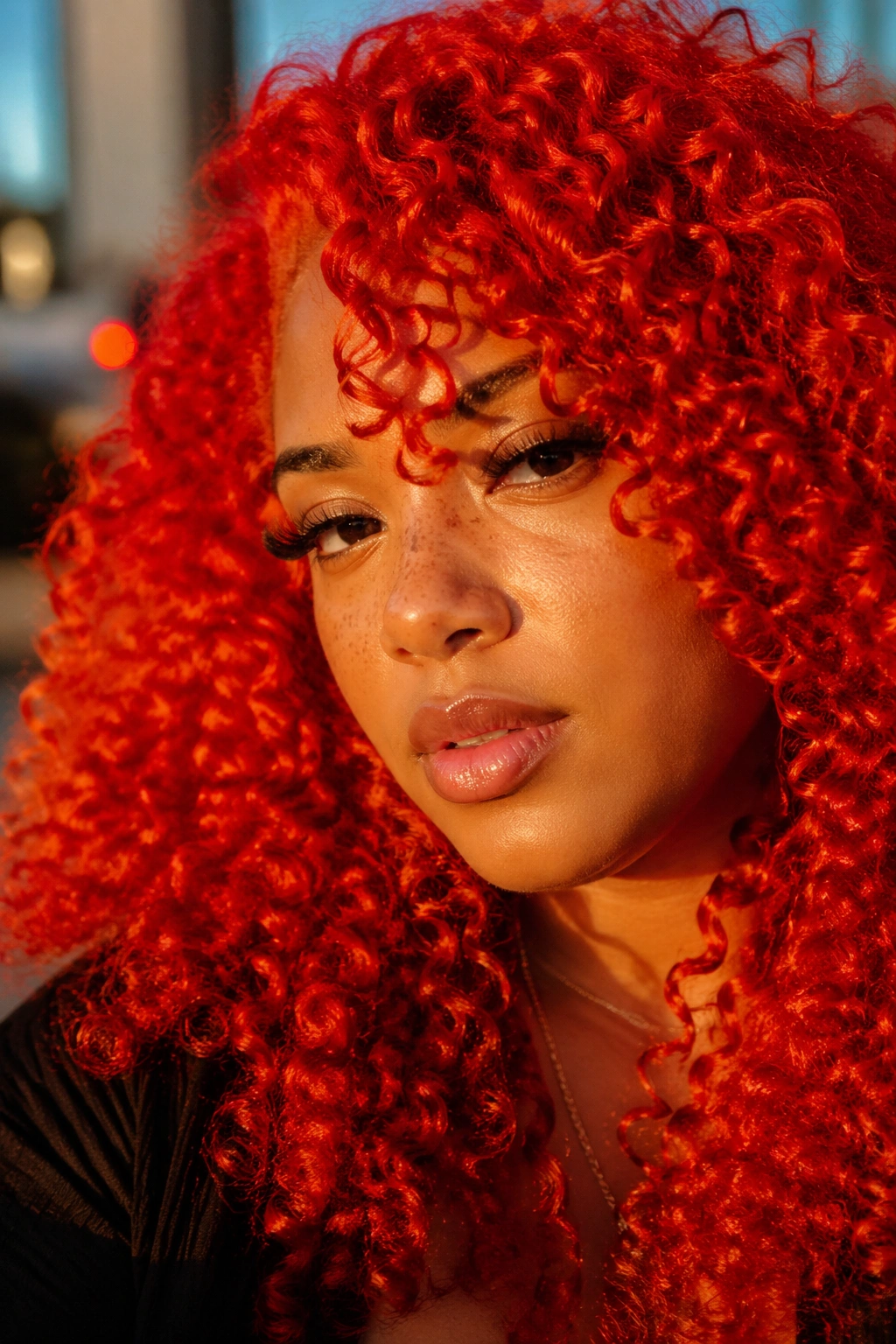
Vivid red — think bright flame, not auburn — on natural curls is a full commitment. It requires lightening and regular maintenance to stay brilliant, but the result is some of the most striking dyed curly hair you’ll ever see.
Fire red on coily textures looks almost three-dimensional. The way tight curls catch and refract light makes vivid red appear to pulse and glow.
Maintenance: vivid red fades quickly. Wash less frequently, use cool water, and use a color-depositing red conditioner to extend vibrancy.
19. Rose Gold
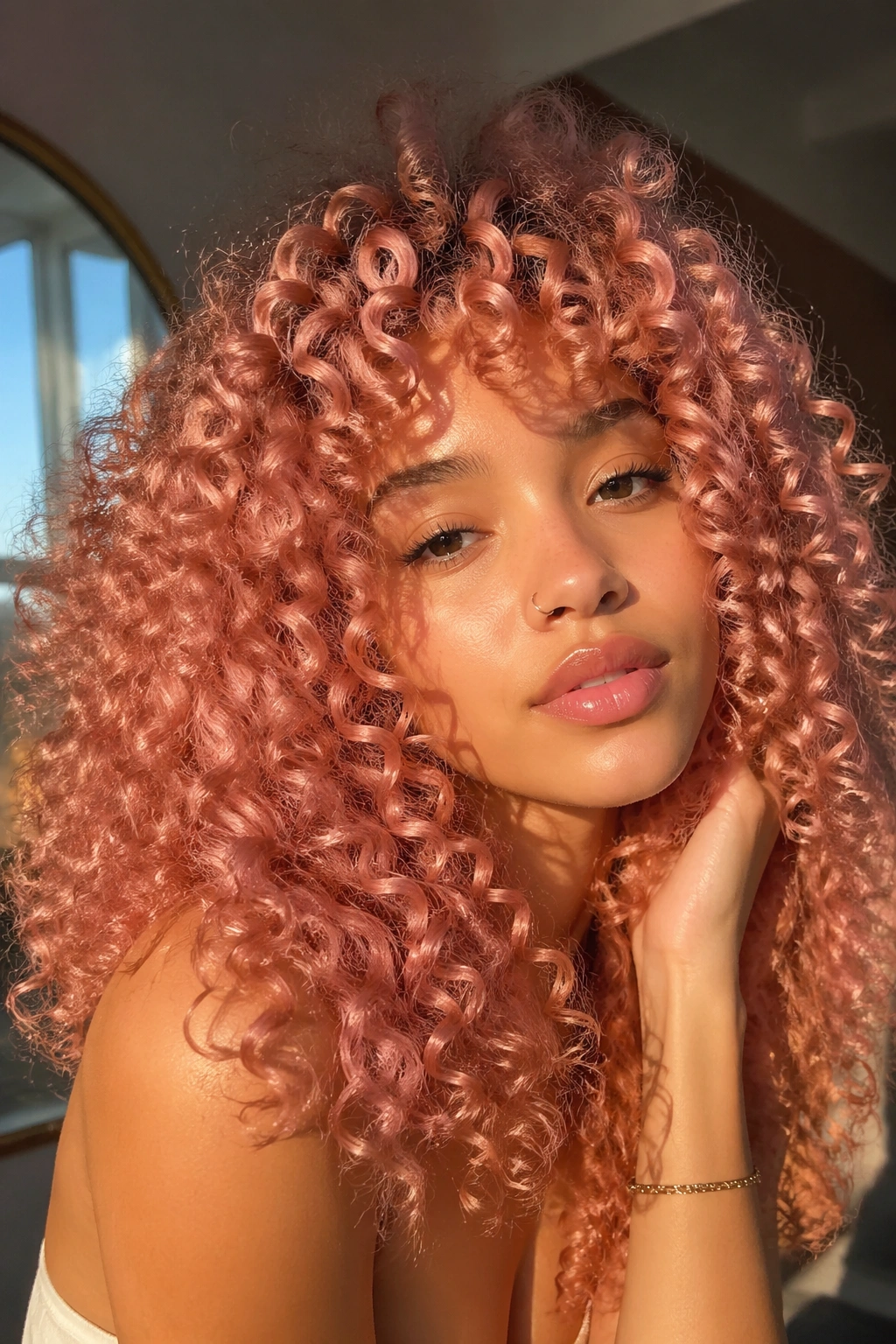
Rose gold hit the hair world and never really left — and for good reason. It’s warm, flattering on almost everyone, and looks especially beautiful on curly hair where the pink-gold tones scatter across different curl shapes.
Rose gold requires lightening to a pale yellow or level 9-10 before toning with a rose-gold formula. On some natural curl types, this is a multi-session process — but the final color is worth the patience.
20. Natural Brown with Subtle Highlights
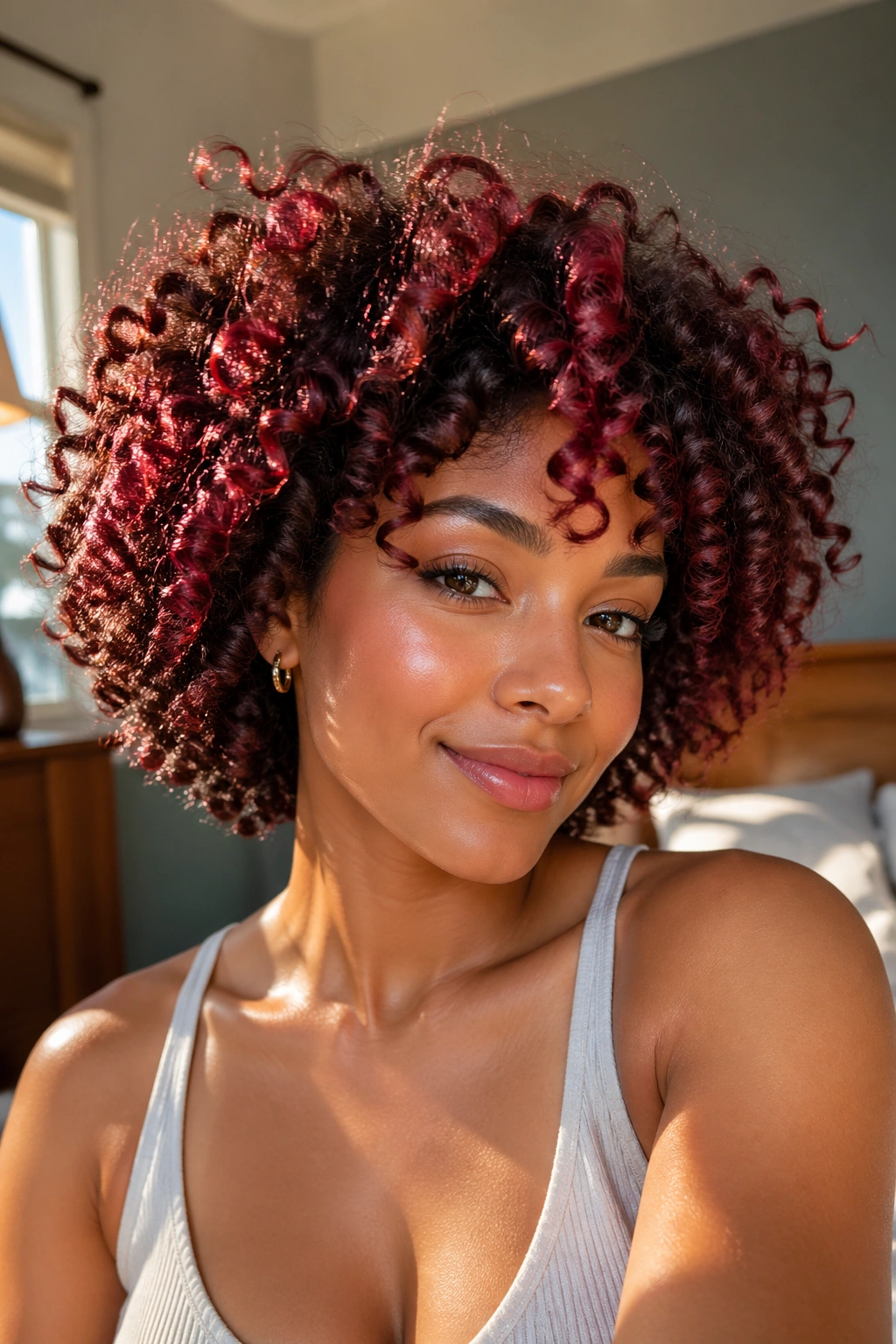
Sometimes the best dyed curly hair isn’t dramatically different from your natural color. Subtle highlights in a shade just two or three levels lighter than your base add dimension and movement without anyone being able to pinpoint exactly what changed.
This is an excellent low-commitment entry point for naturals who are curious about color but hesitant to make a drastic change. The result looks like your hair looks in direct sunlight — but better.
21. Chunky Blonde Streaks
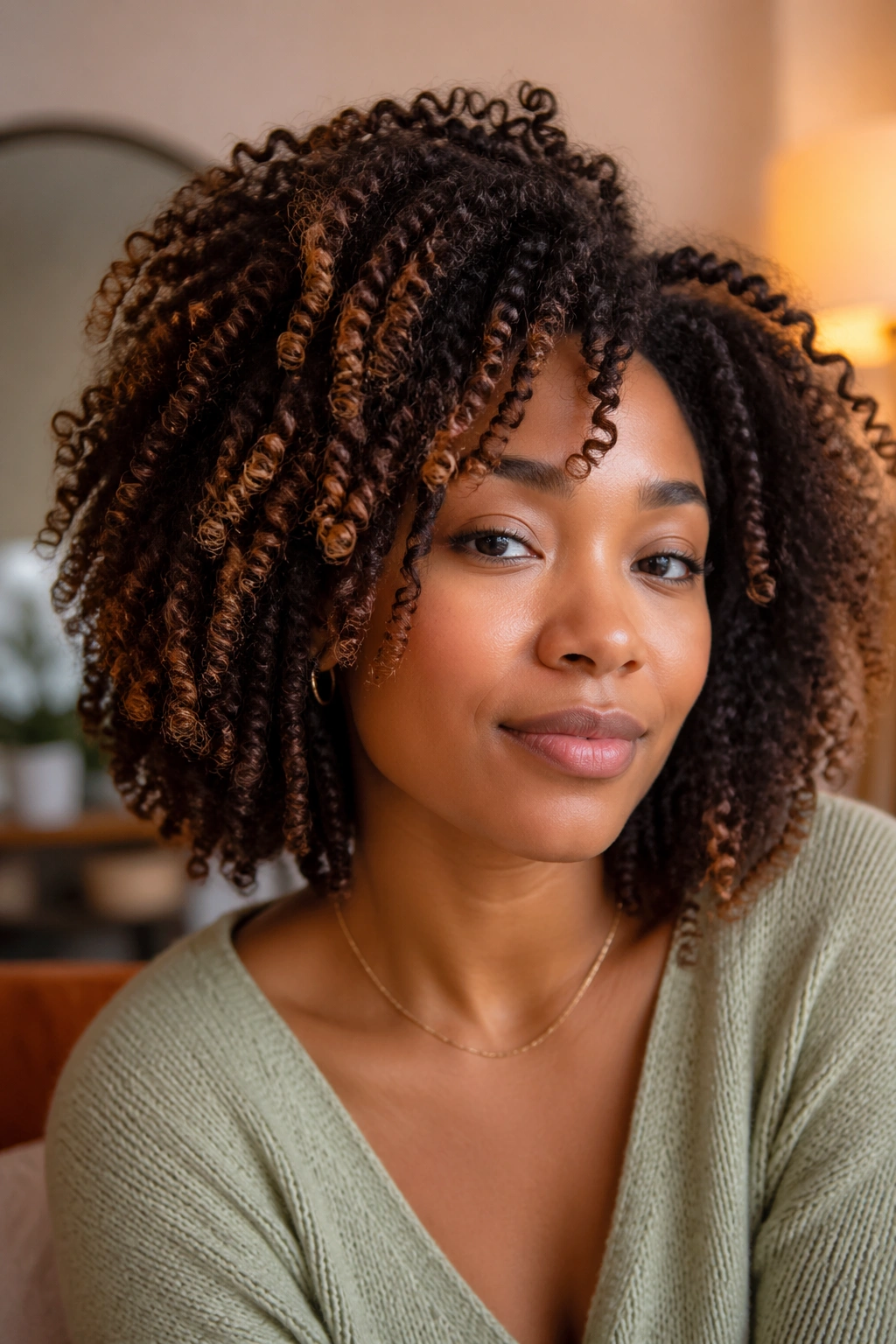
Chunky blonde streaks — wide, deliberate sections of light color against a dark base — made a strong comeback after being a staple of early-2000s hair. On natural curls, they look entirely different than they did on straight hair: more dimensional, more intentional, more striking.
The key is placement. One or two bold blonde sections at the front, framing the face, make a statement without overwhelming your natural color. More sections throughout the hair create a bolder, more uniform look.
22. Soft Ash Brown
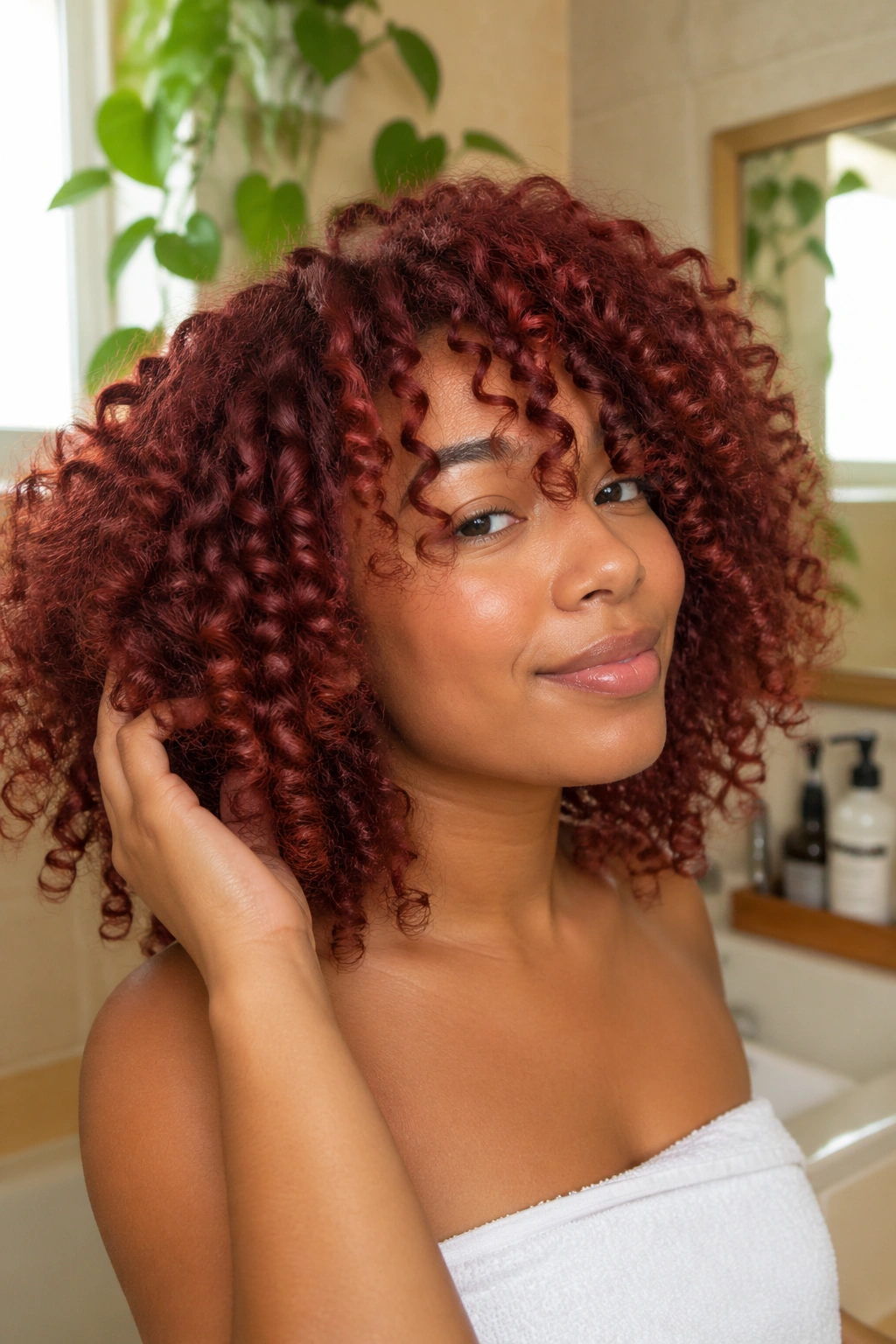
Ash brown sits on the cooler end of the brown spectrum — it’s muted, sophisticated, and surprisingly striking on natural curls. Where warm browns glow, ash brown has a misty, editorial quality.
This shade works especially well on naturals with cool or neutral skin undertones. On Type 3 curls specifically, ash brown creates a color that reads almost silver in certain lighting.
No bleaching required for most dark naturals going to a dark ash brown — a single-process dye in an ash formula achieves the result cleanly.
23. Vivid Purple All-Over
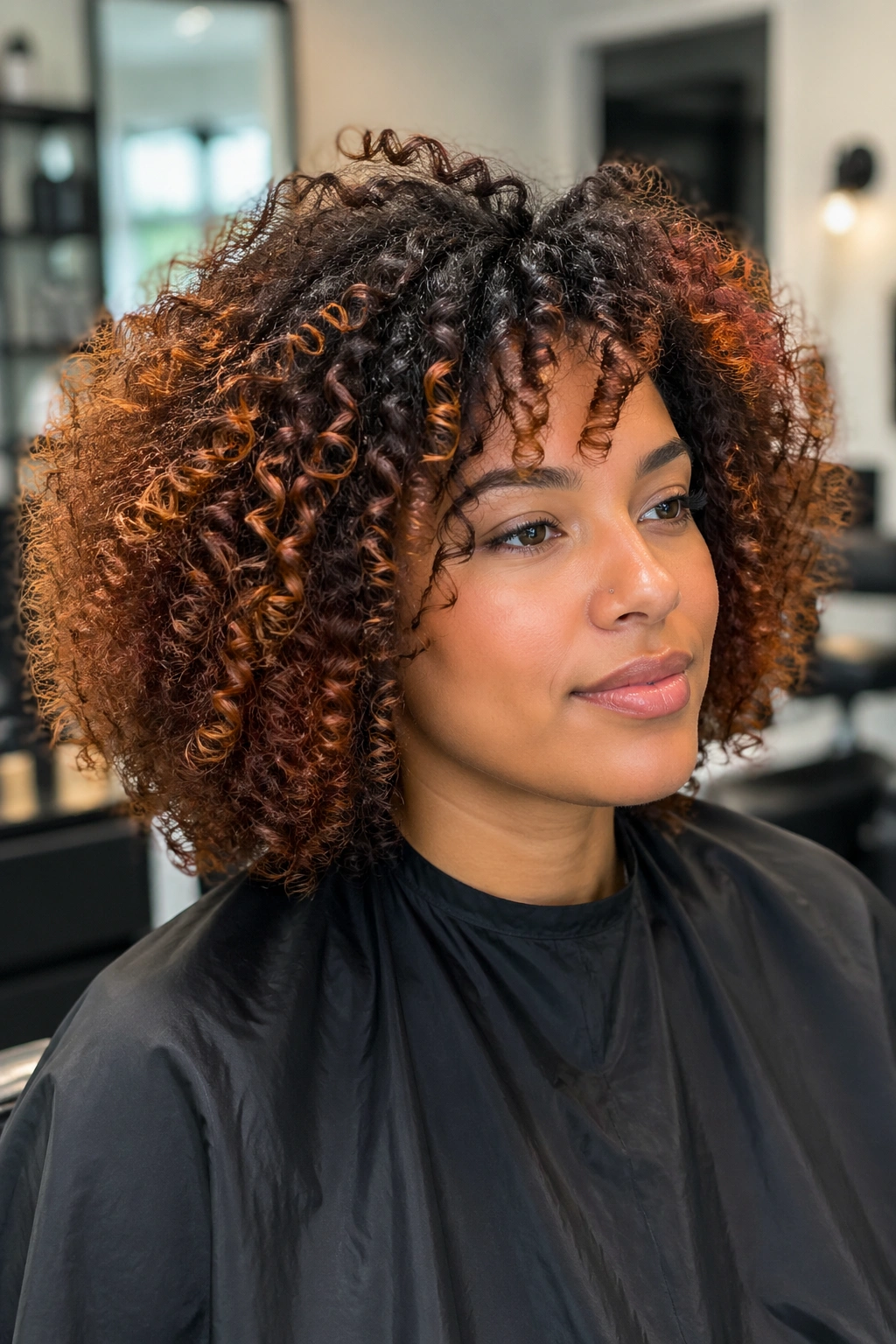
A full head of vivid purple on natural curls is an absolute showstopper. From lavender to deep grape to bright amethyst — the purple family is enormous and universally flattering because it complements every skin tone in the spectrum.
Vivid purple requires pre-lightening for most dark natural hair to achieve true vibrancy. But even without bleaching, a direct-dye purple deposits visible tone on dark hair that reads beautifully in sunlight.
How to Maintain
- Use a purple-pigmented shampoo or conditioner weekly to refresh tone
- Wash in cool water only — heat opens the cuticle and speeds fading
- Deep condition with a pigmented conditioner in between color touch-ups
24. Tortoiseshell Blend
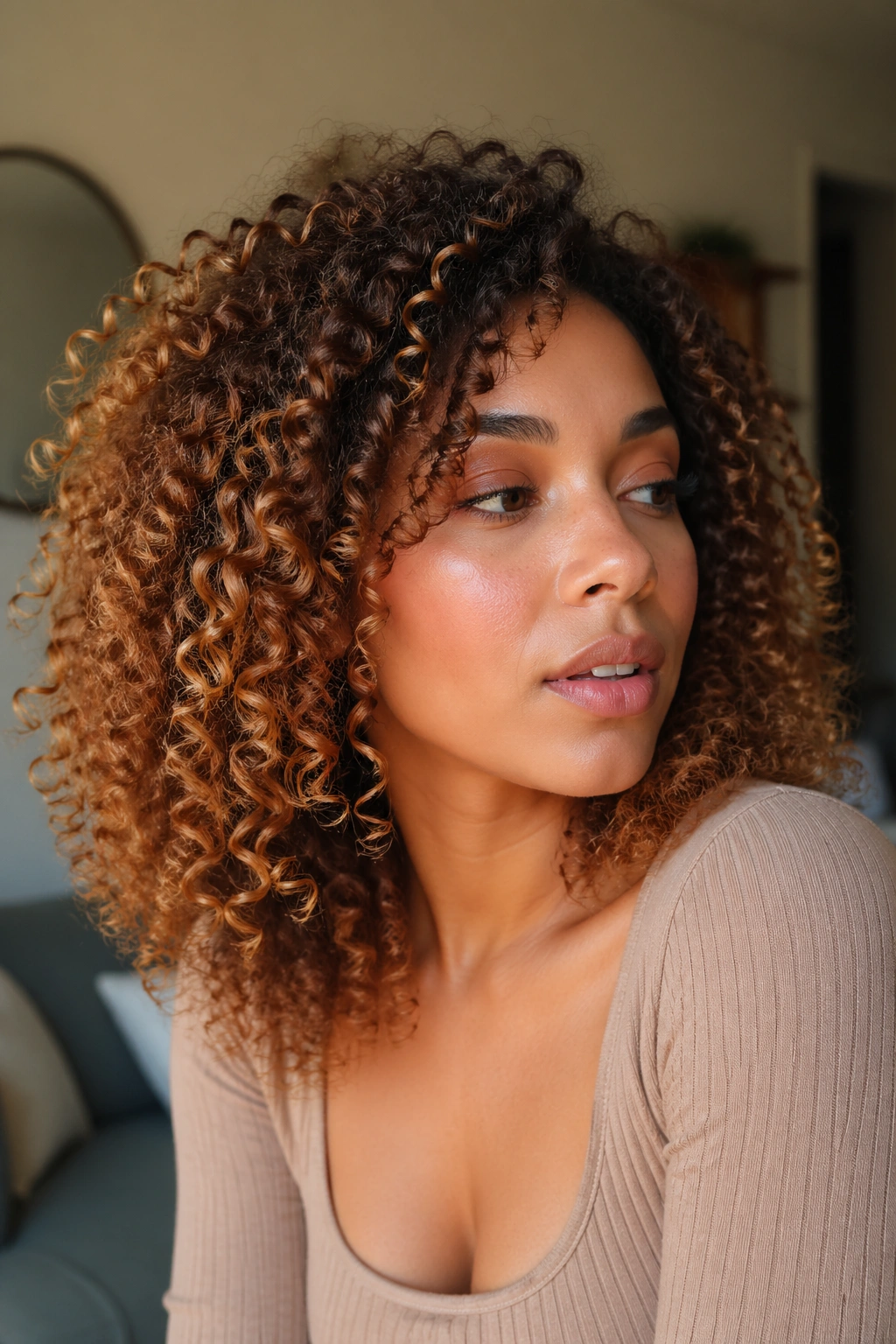
The tortoiseshell color technique takes inspiration from the blended browns, ambers, and golds of — you guessed it — tortoiseshell. On dyed curly hair, it translates to a rich, multi-tonal blend of dark brown, warm brown, amber, and hints of honey, all woven together in a way that looks organic rather than placed.
This is the ultimate low-maintenance color approach because there’s no single shade to maintain and no obvious root line to touch up. Everything is blended intentionally, so as your hair grows, the color continues to look intentional.
Who this suits: Everyone. Genuinely. The tortoiseshell blend adapts to your natural base color and can be done warmer or cooler depending on your preference.
After the Color: Building a Sustainable Routine
Getting the color done is step one. Keeping dyed curly hair healthy long-term requires a routine built around three priorities: moisture, protection, and gentle handling.
Moisture first, always. Color-treated curls need hydration more frequently than undyed hair. A leave-in conditioner after every wash, a sealing oil or butter to lock it in, and a weekly deep conditioning treatment create the foundation your curls need.
Protective styles buy you time. You don’t need to manipulate and style color-treated hair every day. Twists, braids, or buns between wash days reduce breakage and give your ends a break from daily friction.
Trim regularly. Color-treated ends are more vulnerable to split ends and breakage. A trim every 8-10 weeks removes damage before it travels up the shaft and keeps your curls looking defined rather than frayed.
How Often Should You Refresh Dyed Curly Hair?
That depends entirely on the type of color you chose. Vivid fashion colors (purple, teal, pink) fade fastest and typically need refreshing every 4-6 weeks. Semi-permanent shades fade gradually over 6-8 weeks. Demi-permanent formulas last 4-6 weeks. Permanent color and balayage/highlights can go 8-12 weeks before needing a root touch-up — sometimes longer if you chose a technique with no obvious grow-out line.
The goal isn’t to constantly redo your color. It’s to choose a technique and shade that works with your lifestyle, your budget, and your hair’s tolerance for chemical processing.
Signs Your Dyed Curls Need a Break
If your curls are snapping, feeling mushy when wet, losing definition, or becoming increasingly porous and dry — those are signals your hair needs time to recover before more color processing. This isn’t failure. It’s listening to your hair.
During a color break, focus on protein-moisture balance treatments, protective styling, trimming damaged ends, and using only the gentlest cleansers. After 8-12 weeks of intensive care, most hair recovers enough to handle color again.
Final Thoughts on Dyed Curly Hair
The best dyed curly hair isn’t necessarily the boldest or the most complex — it’s the one that works for your lifestyle, flatters your features, and keeps your curls healthy enough to thrive. Start with something that excites you. Do a consultation. Ask questions. And trust that your natural texture is the greatest asset any color can have.
Your curls are the foundation. The color is just the beginning.
