



Curly hair and twin ponytails have a complicated relationship. On a good day, they look lively, sharp, and a little bit playful. On a bad day, one side sits higher than the other, the elastics creep, and the whole thing starts to feel like a compromise.
The trick is not forcing curly hair to behave like straight hair. That usually backfires. The better move is working with shrinkage, volume, and the way your curl pattern naturally stacks on itself. Once you do that, the style starts to make sense.
The best double ponytail styles for curly hair use placement as much as product. A curl that lands at your collarbone when wet can sit near your jaw after it dries, and if you fight that shift, the style often looks squeezed or awkward. Put the bases where the hair wants to live, and the shape gets better fast.
Some versions look sporty, some feel polished, and some fall into that sweet spot where you can wear them all day without wanting to rip the elastics out by lunch. The styles below move from the easiest looks to the more styled ones, because curly hair usually rewards a little strategy.
1. High Twin Ponytails With Defined Ends
High twin ponytails are the easiest way to wake up curls fast. They lift the face, show off the curl pattern, and keep the whole style from collapsing into the neck area.
On curly hair, height matters more than people expect. A high base creates bounce at the crown, and that bounce stops the style from looking flat on top, which is where a lot of curly ponytails go wrong. The ends stay defined, too, because you are not dragging the curls into a tight, low line.
Why this works so well on curls
A center part gives the style balance, but the real win is the placement. Put each ponytail just above the tops of your ears, then let the curls fan out naturally instead of trying to squeeze them into a sleek cylinder.
- Use a rat-tail comb to make the part clean from the forehead to the crown.
- Smooth only the roots with a light gel or mousse.
- Secure each side with a snag-free elastic, then stop.
- Pull a few curls forward around the hairline if the style feels too severe.
Pro tip: leave the ponytails a little looser at the base than you think you need. Curly hair tightens up as it dries, and tight at the start usually means too tight by the end.
2. Low Puff Twin Ponytails at the Nape
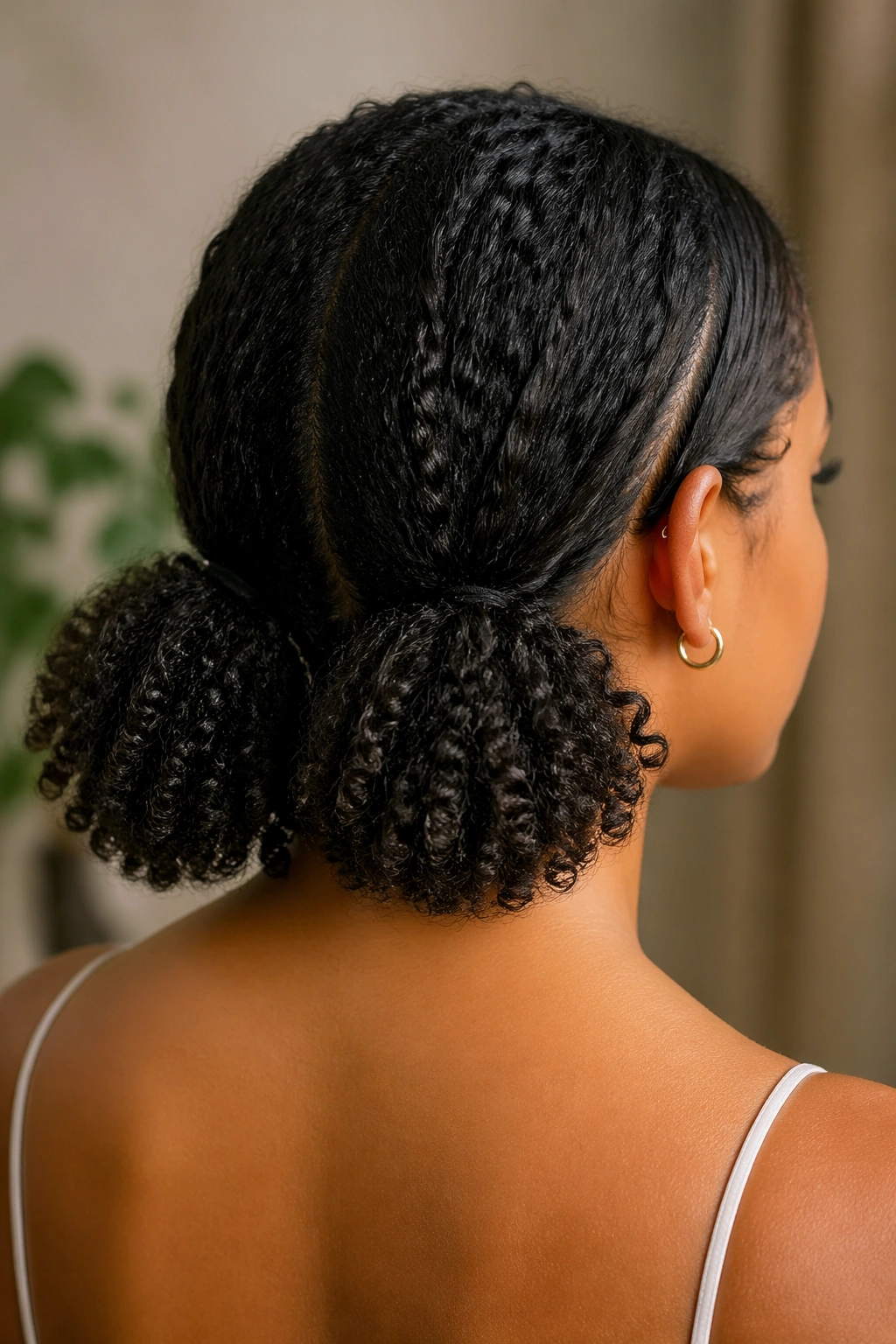
Tight is the wrong goal here.
Low puff twin ponytails are one of the simplest double ponytail styles for curly hair, and they work because they respect shrinkage instead of fighting it. The puffs sit near the nape, where the neck curve keeps them from puffing out in random directions, and the lower placement makes thick curls feel controlled without flattening them.
This look is especially good for second-day hair. Curls that have already separated a little tend to gather well at the base, and the low position keeps the shape from turning boxy. I also like it for dense hair because the weight sits lower, so your scalp does not feel tugged all afternoon.
A satin scrunchie helps here more than a tiny elastic does. The larger surface area spreads the tension, which matters if your curls are packed tight or your hair is fragile at the edges. And if your roots are puffy in a way you actually like, leave them alone. That little halo can make the whole style look intentional instead of overworked.
3. Half-Up Double Ponytails With Loose Length
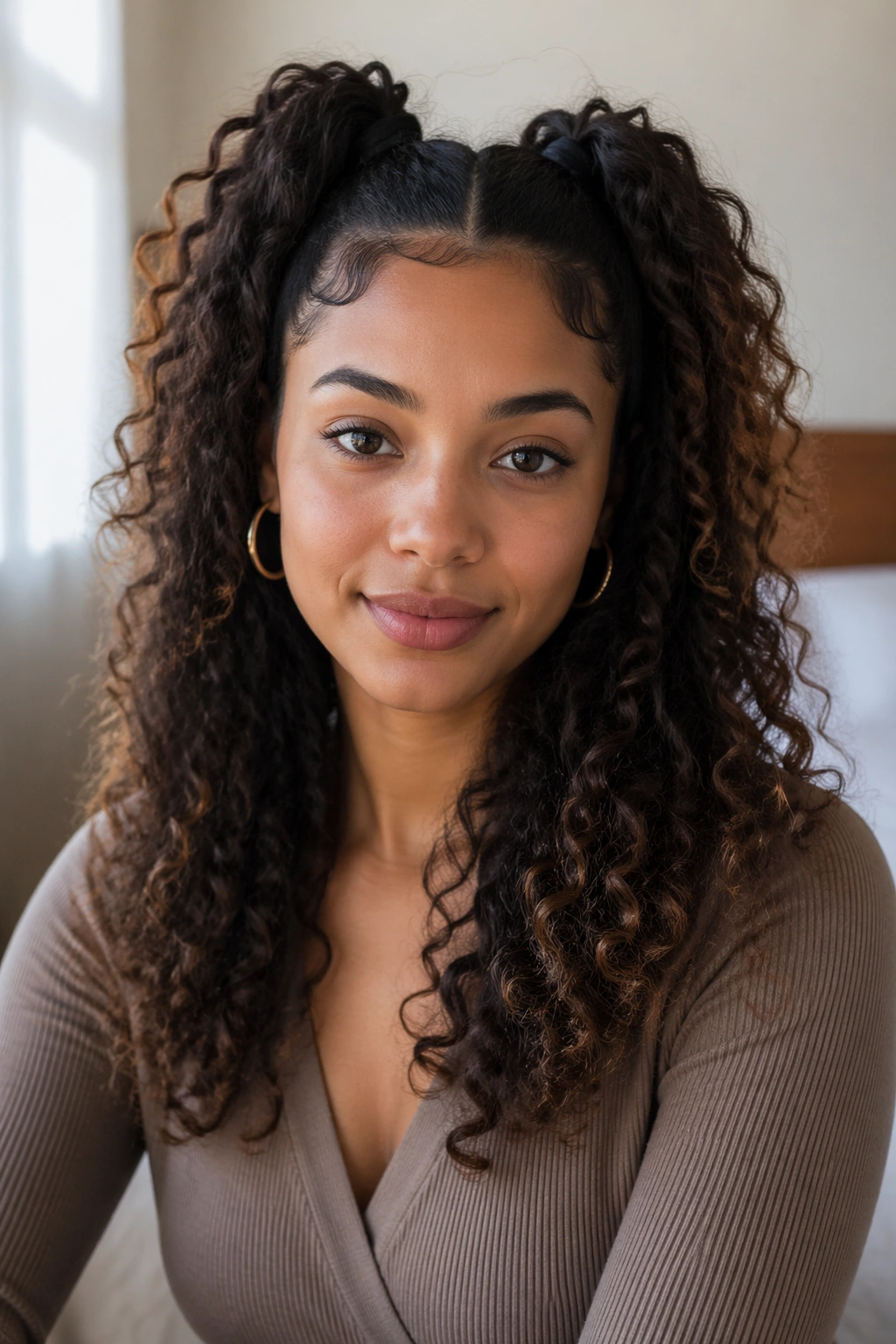
Your curls look fine through the lengths, but the roots are doing that sleepy, flat thing. That is usually when this style earns its keep.
Half-up double ponytails give you structure at the top and movement everywhere else. The upper section gets divided into two small ponytails, while the bottom curls stay loose, which keeps the style from looking heavy. It is a smart option when you want your hair off your face but still want the ends to do their own thing.
Keep the lower layer soft
The lower curls should not be brushed into submission. Finger-detangle the bottom section first, then clip it out of the way while you secure the top half. That one step saves you from frizzing up the lengths while you work.
- Part from temple to temple across the head, not too low.
- Gather the top layer into two ponytails, one on each side.
- Use a curl cream or leave-in only on the top section if the front tends to frizz.
- Let two or three face-framing curls fall loose near the cheeks.
This style is a nice middle ground. Not too casual, not too done. And if you have layers, it usually makes them behave better than a full-up ponytail ever will.
4. Sleek Center-Part Twin Ponytails
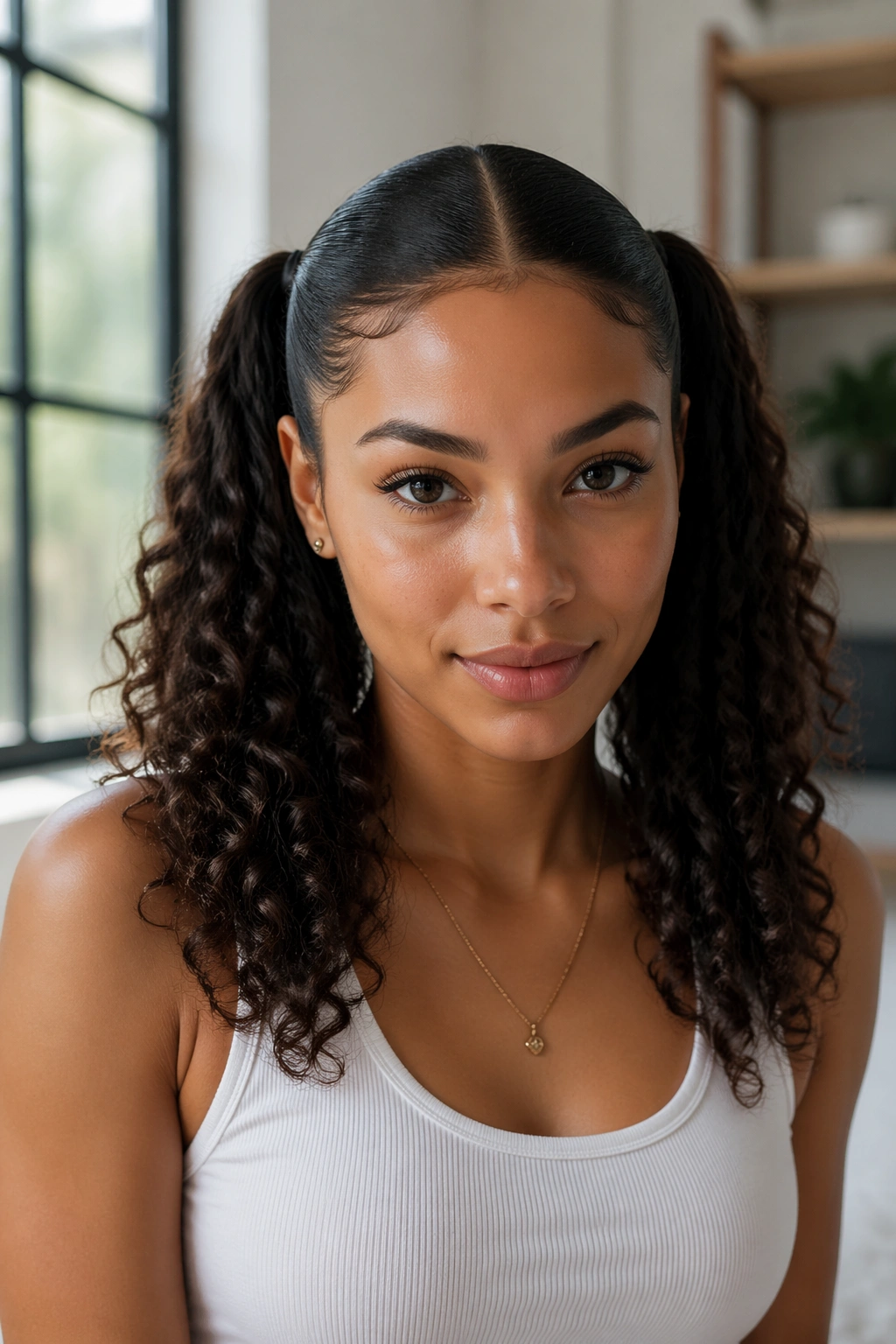
Want the neatest version without straightening your whole head? This is the one.
Sleek center-part twin ponytails work best when the roots are smooth and the lengths still read as curly. That contrast is the whole point. You get a crisp line through the top, but the ponytails themselves keep their texture, so the look stays soft instead of harsh.
The part is the whole trick. If the center line is wobbly, the style looks rushed. Use a fine-tooth comb or the pointed end of a rat-tail comb, then lay down the roots with a small amount of gel or styling cream. Do not coat the entire head. That turns curls into sticky ropes and ruins the shape.
How to keep the roots smooth
A boar-bristle brush can help, but only on the top layer. Brush from the part line to the elastic, then stop. The curls below that line should stay clumped and untouched.
If your hair is coarse, you may need a second tiny layer of gel after the first has dried for a minute. That is normal. A quick blast from a diffuser on low heat can help the roots set without turning the ends fuzzy, which is the part most people forget.
5. Braided-Base Double Ponytails
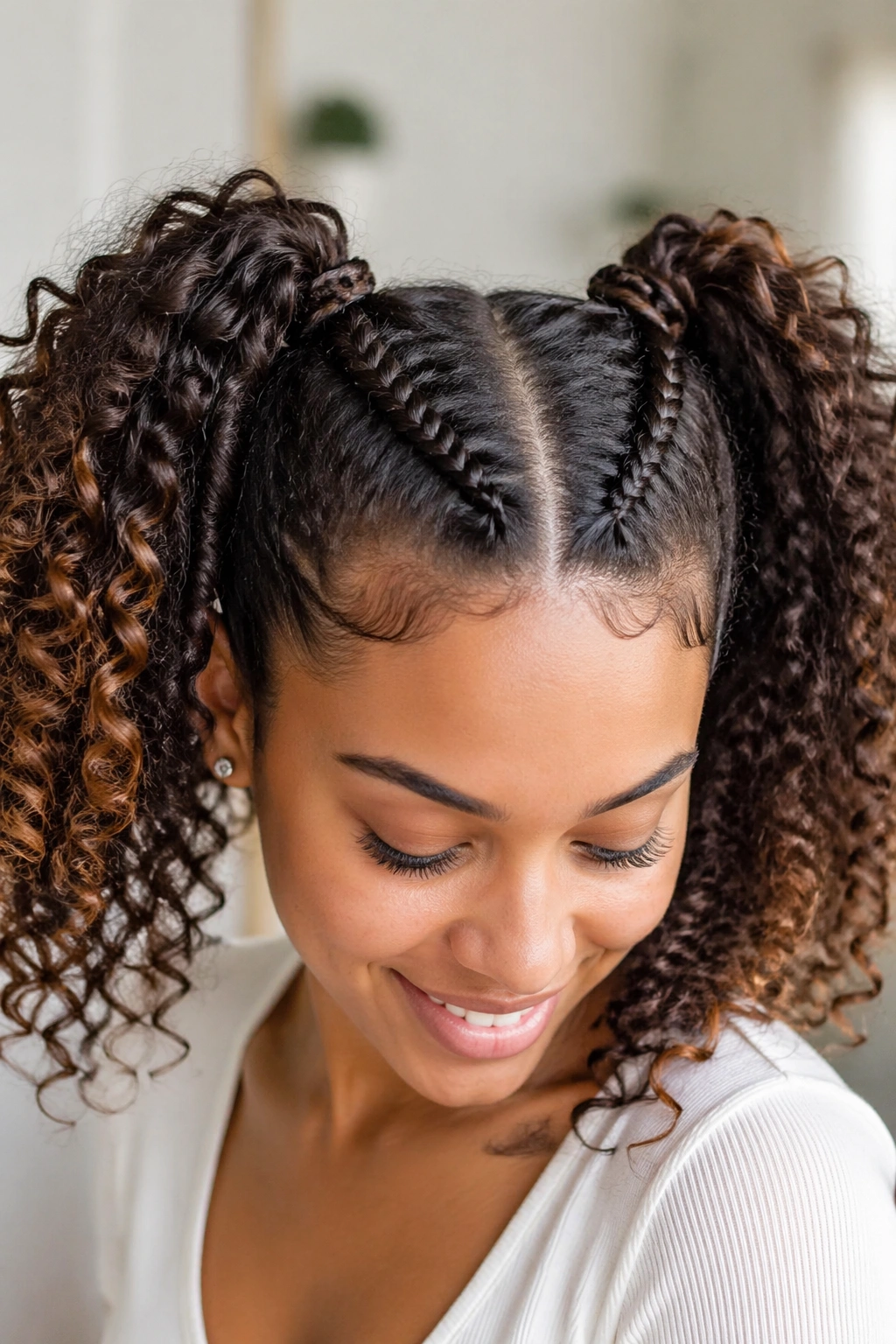
The braid at the base acts like a tiny seatbelt for your curls.
Braided-base double ponytails are one of the most useful curly hairstyles when you need the style to stay put. You can use two flat twists, two small cornrows, or even simple three-strand braids at the part line before gathering the remaining hair into ponytails. The point is to anchor the base so the style does not drift through the day.
This style feels especially good on thick or slippery curls that refuse to stay anchored with a plain elastic. The braid gives grip, and that grip keeps the ponytails from sliding down the head when you move around. It also looks more finished than a basic split ponytail, which is handy if you want something neat without going full formal.
Best moments to use it
- Long travel days when you want your hair secure.
- Hot or humid weather, because the braid keeps the roots from puffing out too fast.
- Busy days when you will not have time for touch-ups.
- Protective styling stretches, especially if your ends need to stay out of the way.
If braiding is not your strong point, twist the front sections instead. The style still reads clearly, and honestly, a neat twist is better than a messy braid just because it sounds fancier.
6. Bubble Double Ponytails for Extra Shape
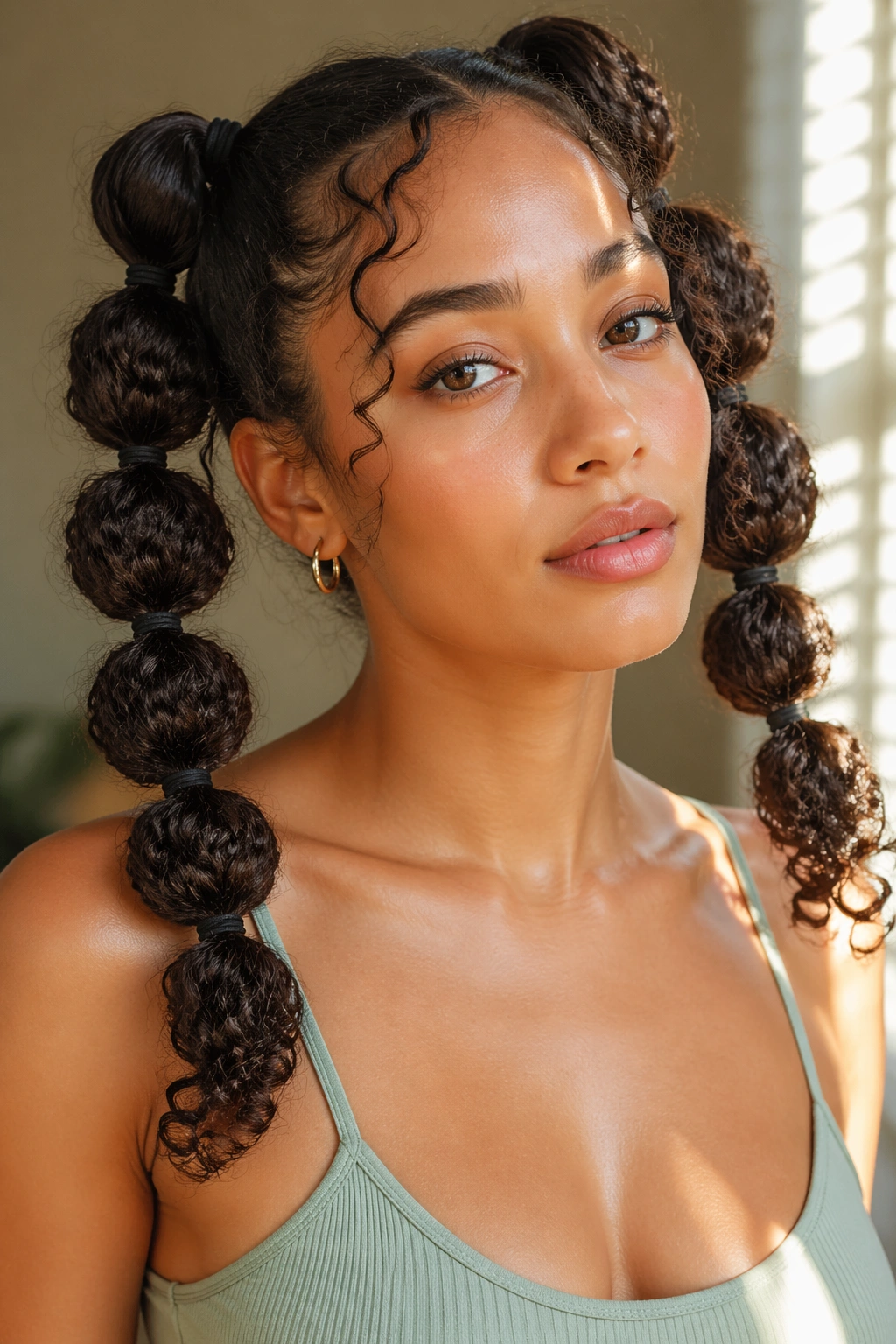
Bubble ponytails are not childish on curly hair. They’re smart.
The structure works because curly hair already has volume, so the little gathered sections read as deliberate instead of overdone. Instead of one long ponytail, each side gets spaced out with small elastics every 2 to 3 inches, then each section is gently pulled outward to form a rounded bubble.
The result is fun without turning messy. That is the part I like. Curly hair can swallow a style whole if there is no structure, and bubbles give the eye something to follow. They also help longer curls stay together when the ends tend to fray or separate.
What makes the bubbles hold
A light styling cream helps before you start, but too much product makes the elastics slip. Keep the hair slightly damp or freshly refreshed, then place each elastic with enough tension to hold but not enough to crush the curl pattern.
- Space each elastic 2 to 3 inches apart.
- Tug the sides of each section gently until it rounds out.
- Use clear elastics if you want the shape to stand out.
- Finish with a tiny bit of oil on the ends, not the roots.
The style looks especially good on stretched curls, because the sections hold their shape longer. Shorter curls can do it too. They just read more compact, which is not a bad thing.
7. Side-Swept Twin Ponytails
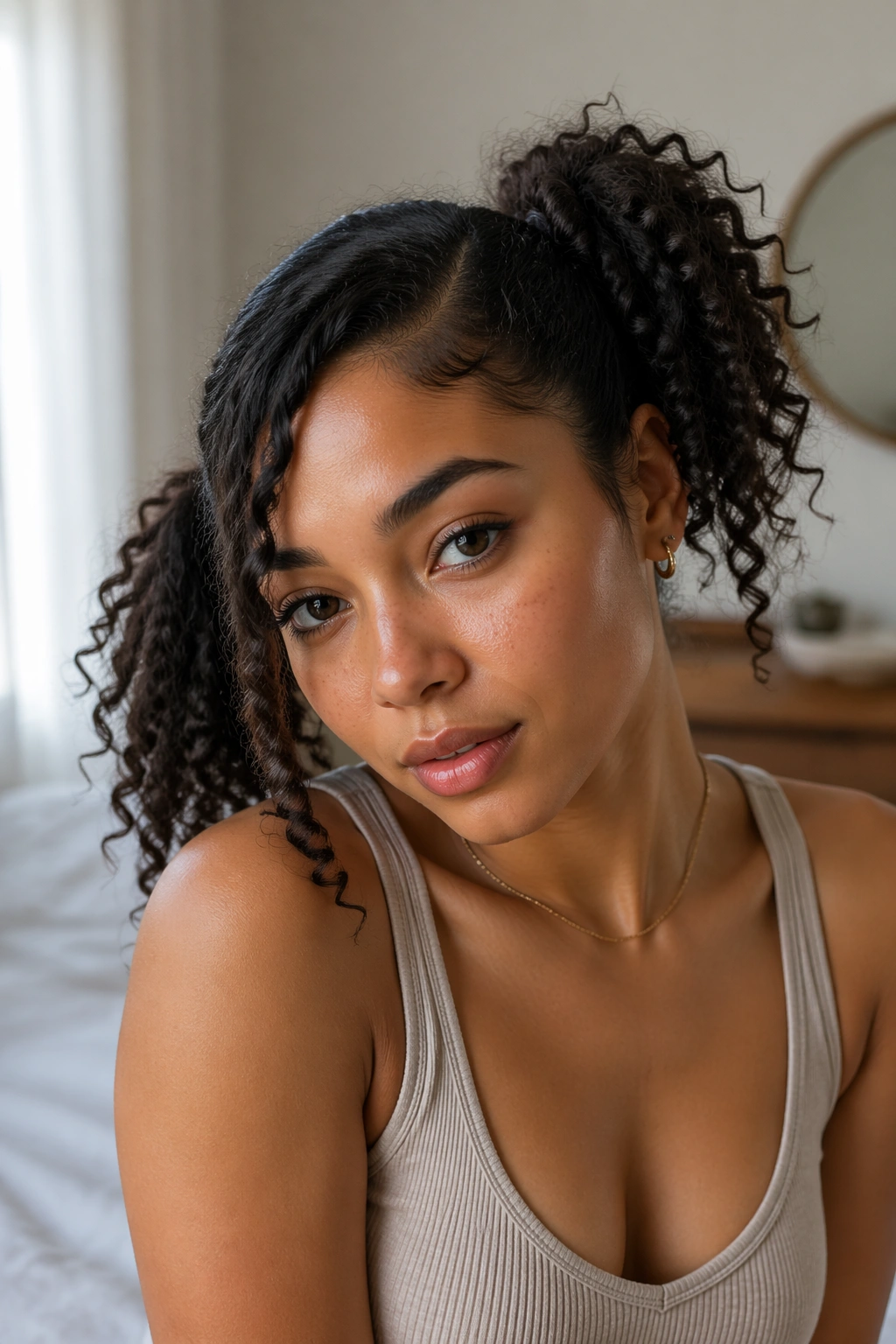
If a center part feels too neat for your face, shift the split an inch off-center and the whole style softens.
Side-swept twin ponytails are a good answer for curls that sit differently on each side. Most people have one side that is a little fuller, a little more stubborn, or simply shaped differently after a sleep session on a pillow. Side-swept placement works with that reality instead of pretending symmetry is easy.
The look is flattering because it breaks up the straight line down the middle. One ponytail can sit just behind the ear while the other lands a touch higher, and that tiny offset keeps the style from looking forced. You still get the twin-ponytail shape, but it feels less rigid.
A curl cream with a soft hold is usually enough here. Heavy gel can make the side that sits lower look stuck, and nobody wants that. Keep the part slightly off-center, gather the hair with your fingers first, then tidy the front with a comb only if the section needs it.
8. High-Low Asymmetrical Double Ponytails
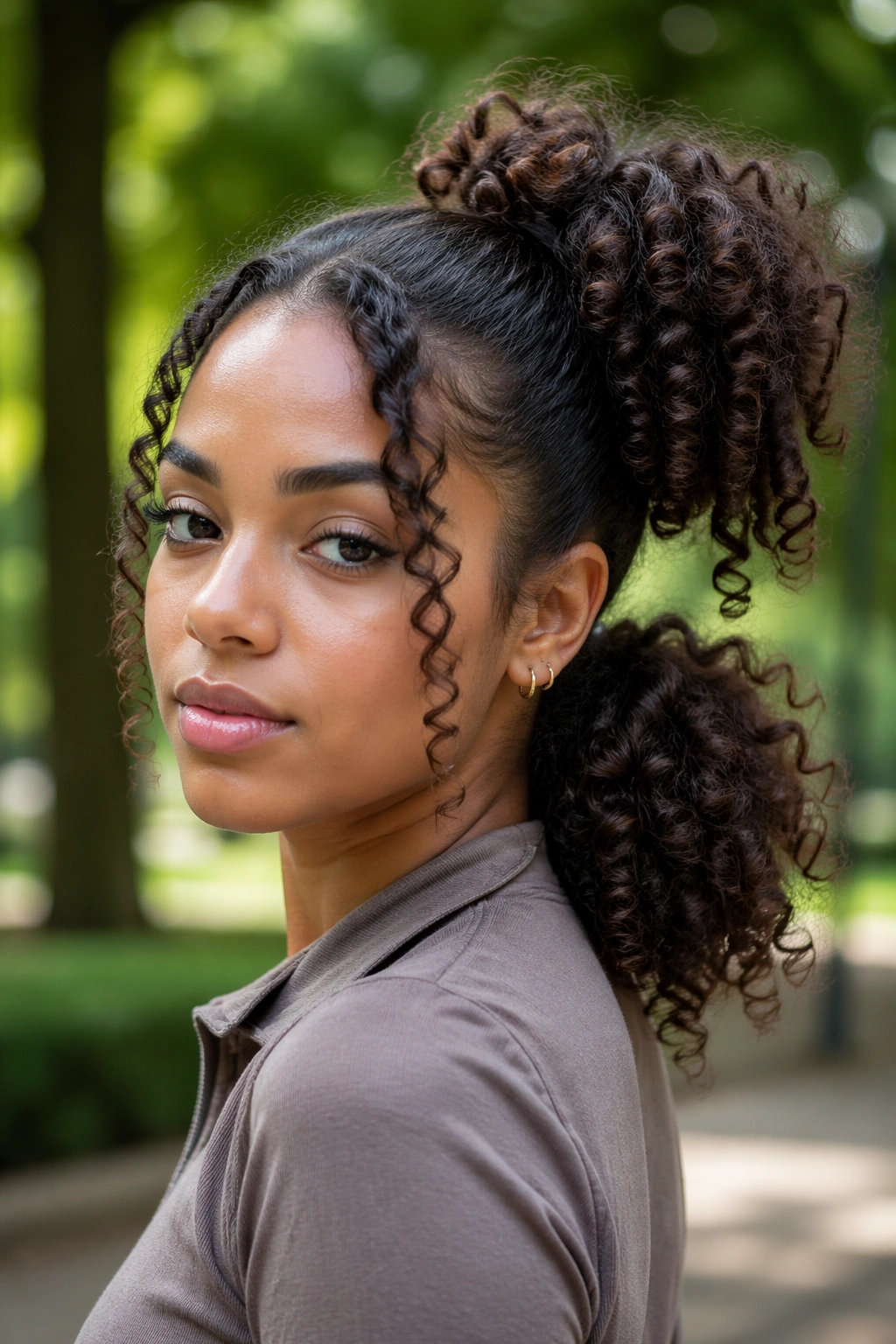
Matching ponytails are optional.
That is the beauty of this version. One ponytail sits high, near the crown, while the other drops lower, closer to the nape or mid-head. Curly hair makes this style feel especially alive because the two sides do not have to mirror each other exactly to look intentional.
This is a good choice when your haircut has layers or when one side naturally shrinks more than the other. Instead of forcing both sides to line up, you let each section find its own height. The shape ends up playful, and a little unexpected, which can be a nice change if you are tired of the same centered part every time.
Who should try it first
- Anyone with uneven shrinkage from side to side.
- People with layered curly cuts.
- Anyone who wants a softer, less school-uniform feeling version of twin ponytails.
- Hair that refuses to sit evenly after a rough wash day.
Keep the higher ponytail a touch tighter at the base so it does not sag. Leave the lower one a little looser. That imbalance is part of the charm, and if you overcorrect it, the whole style loses the point.
9. Double Ponytails With Scarf Ties
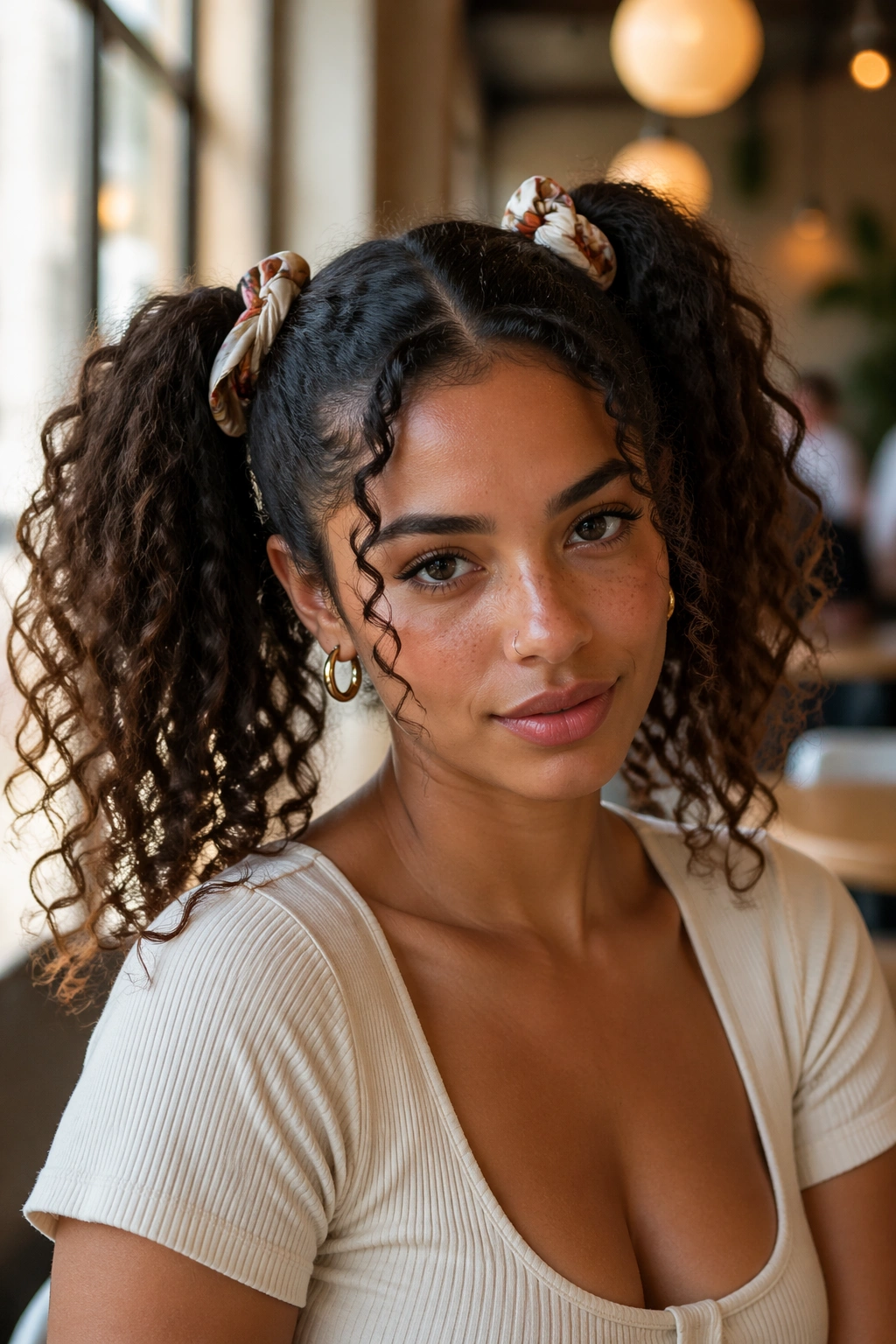
A silk scarf can calm a frizzy base in about thirty seconds.
This version is all about the finish. The ponytails themselves can be high, low, or split evenly, but each base gets wrapped with a scarf strip, ribbon, or thin fabric tie that hides the elastic and adds a cleaner edge. On curly hair, that matters because the elastic area often looks rough before the rest of the style does.
I like a strip that is roughly 1 to 1.5 inches wide. Anything much thicker starts to bulk up the base and make the ponytails look crowded. Silk or satin slips more easily and causes less friction, while cotton gives more grip but can snag if you tie it too tightly. That little tradeoff is worth knowing.
How to wrap it without bulk
Wrap the fabric once or twice around the base, then tuck the ends under the knot instead of making a huge bow. Big bows can overwhelm curly hair fast, especially if the ponytails are already full. A small knot looks cleaner and keeps the focus on the texture.
This style is especially nice when you want to hide a not-so-perfect part. It also buys you a little time between wash days because the scarf distracts from frizz at the base. Small mercy. Big payoff.
10. Mini Double Ponytails for Shorter Curls
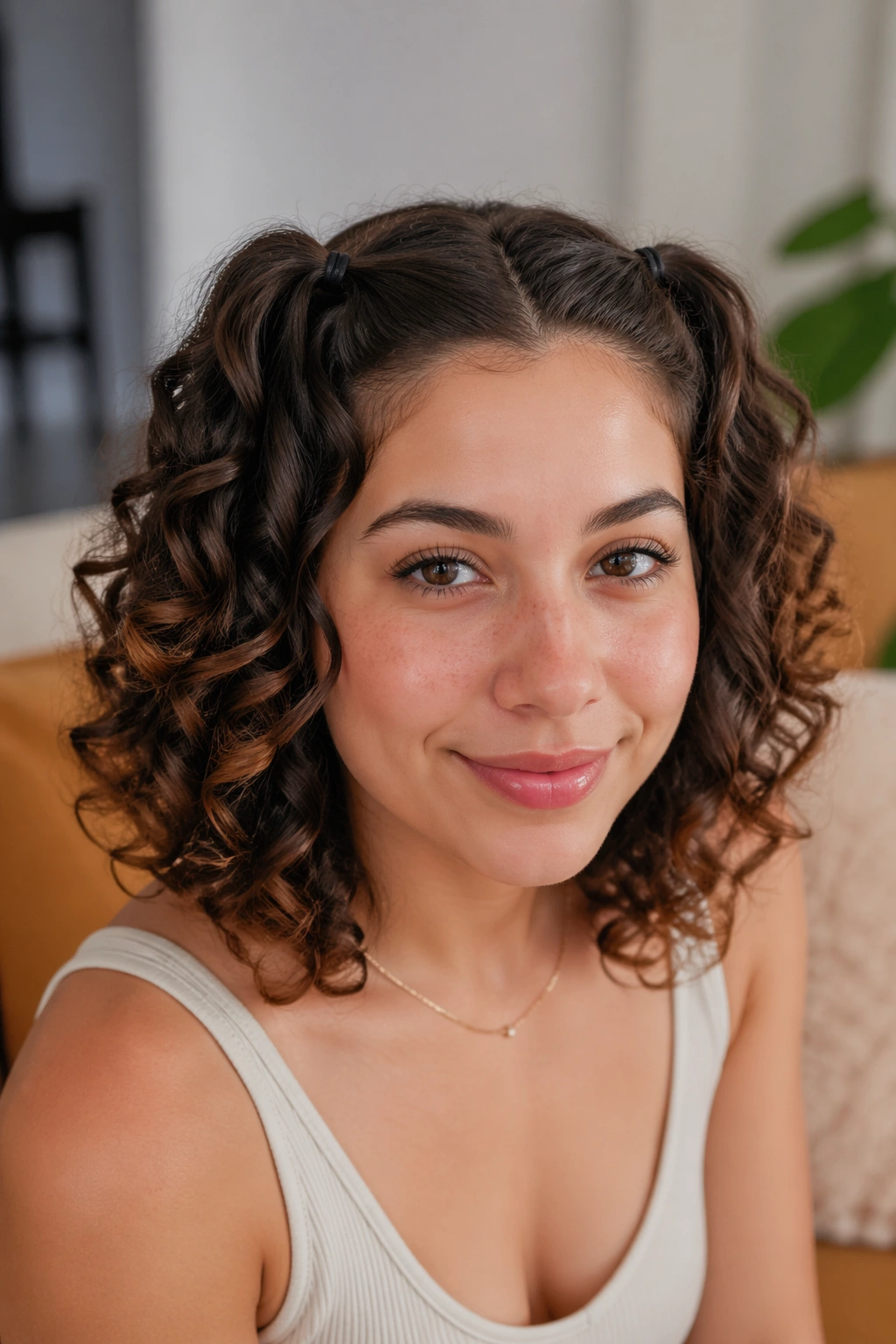
Can you do twin ponytails when your curls are shoulder-length or shorter? Yes. You just need to go smaller.
Mini double ponytails work well on curly shags, growing-out cuts, and shorter lengths that would get swallowed by full-size ponytails. Instead of trying to pull half the head into two large sections, you create two compact ponytails closer to the temples or just behind them. The shape reads as playful rather than overstuffed.
The key is control at the roots, not force at the ends. A little gel along the part line keeps short curls from springing free immediately, and a fine elastic helps hold the smaller sections in place. If the hair around the nape wants to escape, that is normal. Leave it loose or pin it down with a couple of tiny bobby pins.
What helps the most
- Keep the sections small and even.
- Use elastic bands with a smooth finish so they do not snag short curls.
- Twist the section once before securing it if the hair is extra layered.
- Let the ends stay bouncy instead of trying to stretch them flat.
Mini twin ponytails are also handy for bangs or face-framing layers that are growing out. They keep the front off your face without making the whole head look overmanaged.
11. Double Ponytails With Braided Ends
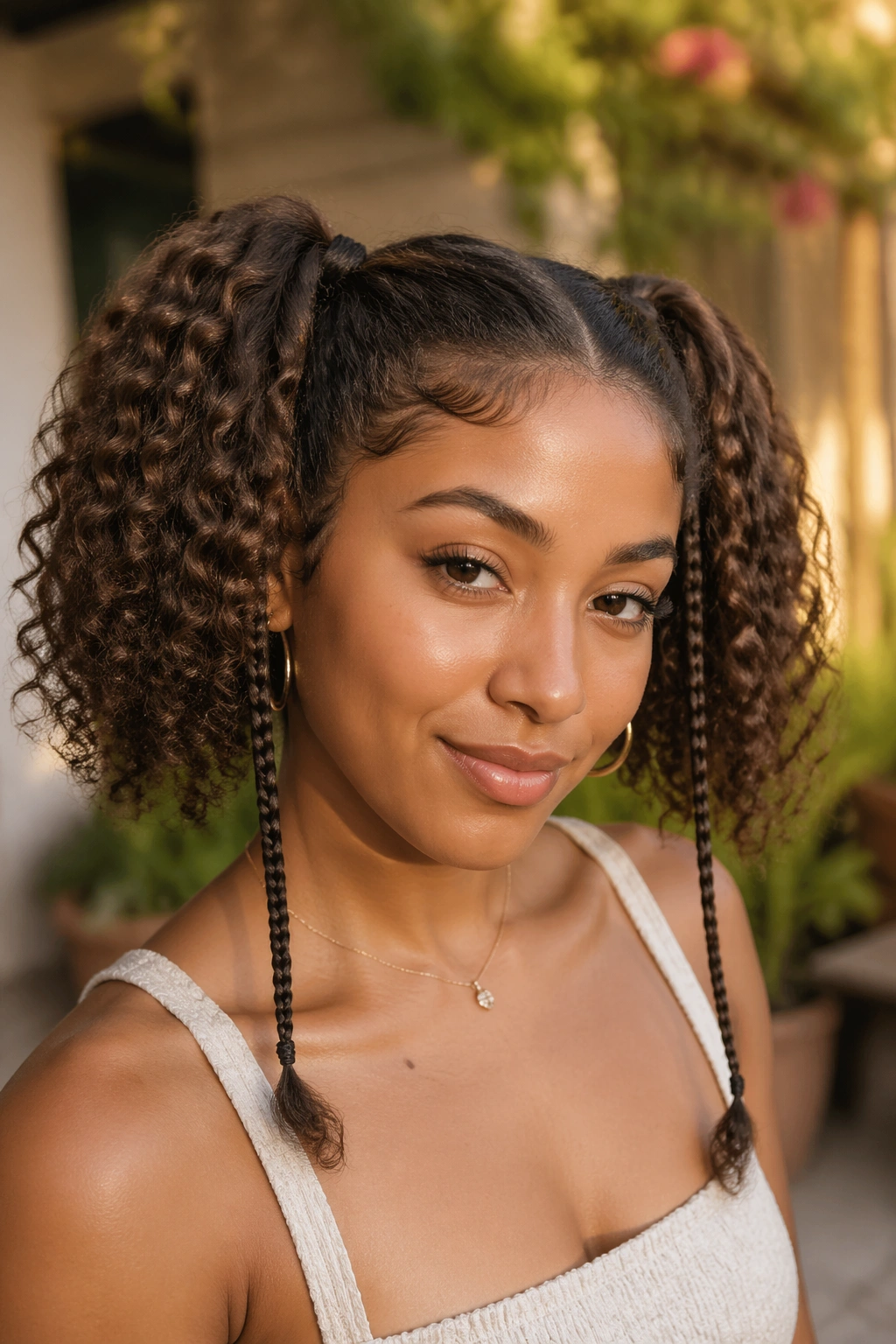
Unlike loose ends, braided tails stay put when the wind starts messing with your style.
This is one of my favorite ways to stretch the life of double ponytails on curly hair. Once each ponytail is secured, braid the lengths for 2 to 4 inches, then stop and leave the remaining ends loose, or braid all the way down if you want a firmer shape. The braid keeps the ponytail neat and gives the style a little more structure than a plain gathered tail.
It is also useful when the curls at the ends start looking separate faster than the rest of the hair. Braiding the first stretch of the ponytail keeps the top neat and buys you time before the style falls apart. A tiny elastic at the braid end is usually enough.
If you want the style to feel softer, pancake the braid a little by gently pulling the outer loops wider after it is secured. Do that slowly. Curly hair can fray if you tug like you are unpacking a parcel. A soft braid with curly ends is the sweet spot.
12. Workout-Ready Double Ponytails
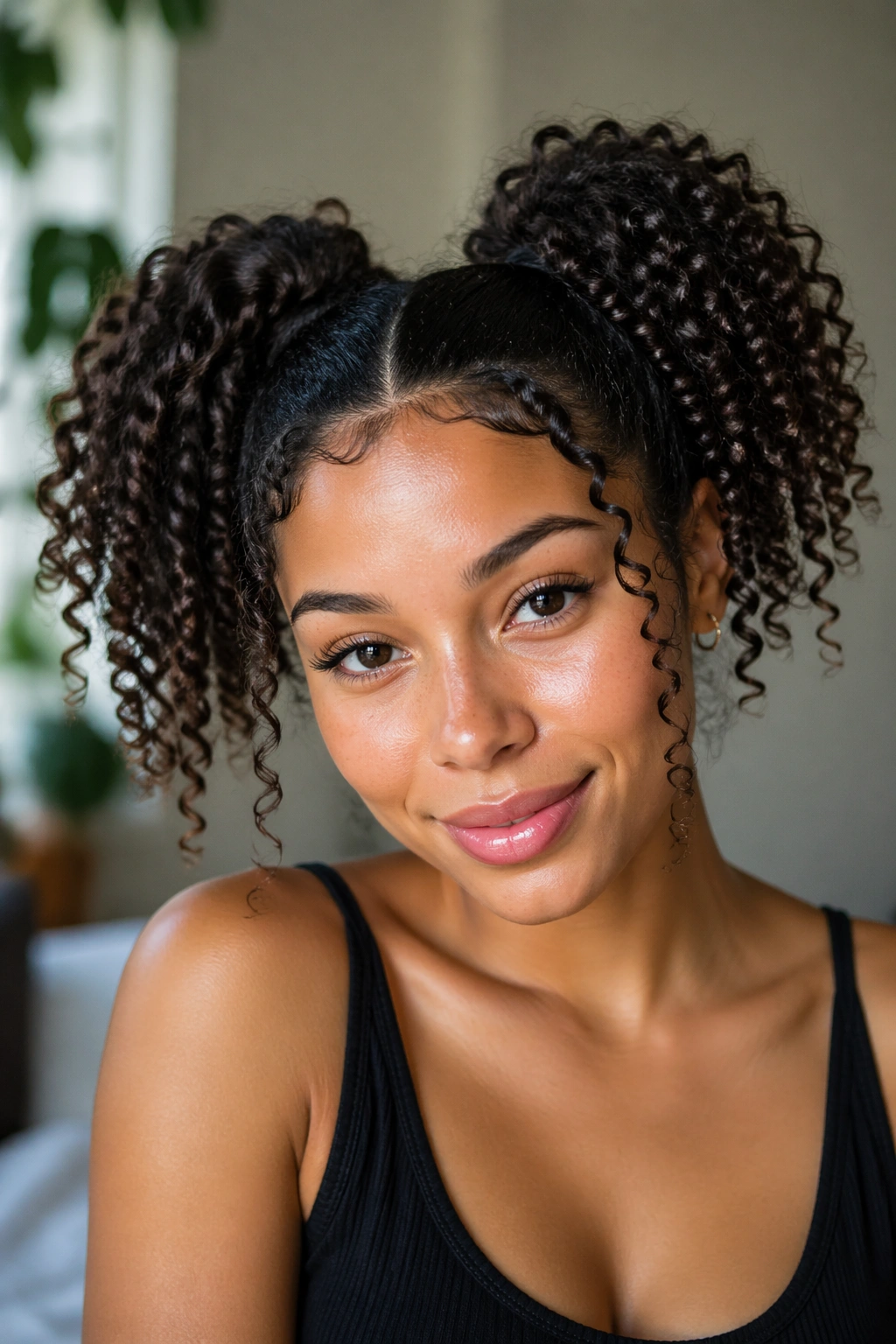
Sweat changes everything.
Workout-ready double ponytails are the version I reach for when I want zero drama and maximum hold. The bases sit low enough to work with headphones or a hood, but firm enough to keep curls from bouncing into my face every five seconds. You do not need a ton of product here. In fact, too much cream or oil can make the style slide apart the moment your scalp warms up.
Start with dry or mostly dry curls if you can. A light mist of water and a small amount of mousse is usually enough to reshape the pattern without making the roots soggy. Then split the hair, smooth the top with your fingers, and secure each side with a strong elastic. If your hair is dense, use a second elastic on each side for backup. That sounds fussy. It is not, once you have had a ponytail collapse mid-walk.
What makes this version hold
- Keep the part straight but not obsessively perfect.
- Use lightweight products that dry clean, not heavy oils.
- Place the elastics where your curls naturally sit after shrinkage.
- Leave the front hairline a little soft if a hard slick-back gives you a headache.
This style works because it accepts movement. The curls can bounce, puff, and shift a little without breaking the shape, which is honestly what makes curly hair look good in the first place. If you keep chasing symmetry, you end up fighting the texture. Let it breathe a bit, and the double ponytail does its job without asking for a full rearrangement halfway through the day.
