



A barrette can do more for curly hair than a brush ever will.
Curly hair does not want to be flattened into obedience. It wants direction, a little structure, and room to keep its shape. That’s why barrette hairstyles for curly hair work so well when they’re done with a light hand: the clip gives the curl a job without crushing the spring.
The mistake I see most often is simple. People grab a tiny clip, shove it into thick curls, and act surprised when it slides out before lunch. A better barrette has enough width for the amount of hair you’re holding, a hinge that closes with some force, and smooth edges that do not snag the outer ringlets. If it pinches, drags, or leaves a sore spot at the temple, it’s the wrong clip.
A good curly style with a barrette usually does one of three things: it lifts the crown, clears the face, or shapes the silhouette without hiding the curl pattern. That’s the sweet spot. And once you get the hang of it, the options are much better than the usual “just pin it back” advice people throw around when they don’t actually wear curls.
1. Side-Swept Half-Up with a Single Statement Barrette
A side-swept half-up style is the easiest place to start, and honestly, it still looks polished enough to wear almost anywhere. It works because curls already have built-in volume, so you do not need to force them into a stiff shape. You only need to guide the top section to one side and let the rest do its own thing.
Why It Flatters Curl Pattern
The side sweep keeps the face open without dragging the curl line flat across the scalp. That matters more than people think. When curls are pushed straight back, the roots often puff in a boxy way; when they’re swept across and clipped off to one side, the movement looks softer and more deliberate.
A single statement barrette also gives you a nice visual anchor. Pick a 2- to 3-inch clip for medium curls, or something wider if your hair has a lot of density. Place it about 1 to 2 inches behind the hairline, not right on the temple, so it can actually hold the section instead of fighting the curve of your head.
- Best for shoulder-length to long curls
- Works well with a deep side part or a soft off-center part
- Choose a barrette with a smooth hinge and a little weight
- Let the bottom layers stay loose for shape and movement
Pro tip: twist the clipped section once before closing the barrette. It gives the clip something to grip, and it keeps the style from sliding as the day goes on.
2. Clipped-Back Curly Crown Twist
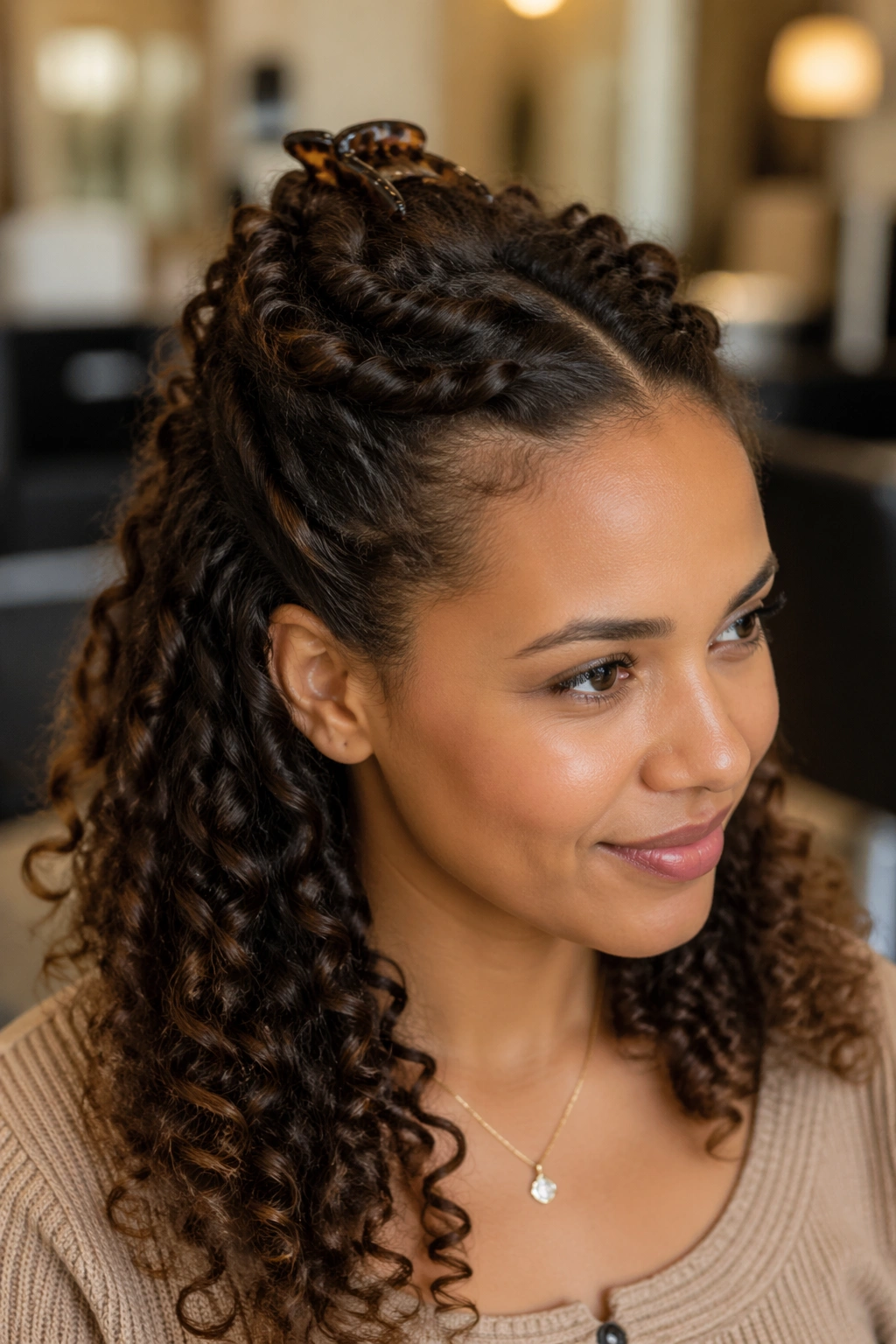
A small twist can change the whole haircut. That is the charm of this one. Two front sections get twisted back toward the crown, then the barrette sits right where the twists meet. The style looks clean, but not stiff, and the curls still show their shape instead of disappearing into a slicked-back shell.
The real win here is balance. A curly crown twist keeps hair off the face while leaving the rest loose, which means you get height at the roots without flattening the sides. If your curls are growing out layers or getting a little fuzzy around the hairline, this style hides the awkward bits without looking like you tried too hard.
I prefer this with a French-style barrette or a wider clasp clip. Tiny snaps can work, but they often struggle if the front pieces are thick or springy. Put the twist together while your curls still have some natural texture, not after you’ve brushed them into submission. That texture is what helps the style hold.
If you want a slightly dressier finish, leave the twist loose and a little imperfect. If you want a neater look, smooth only the outer surface with your fingers and keep the rest airy. Either way, the style lands in that useful middle ground: tidy enough, soft enough, and very forgiving when the weather turns humid.
3. Two-Barrette Half-Up for Dense Curls
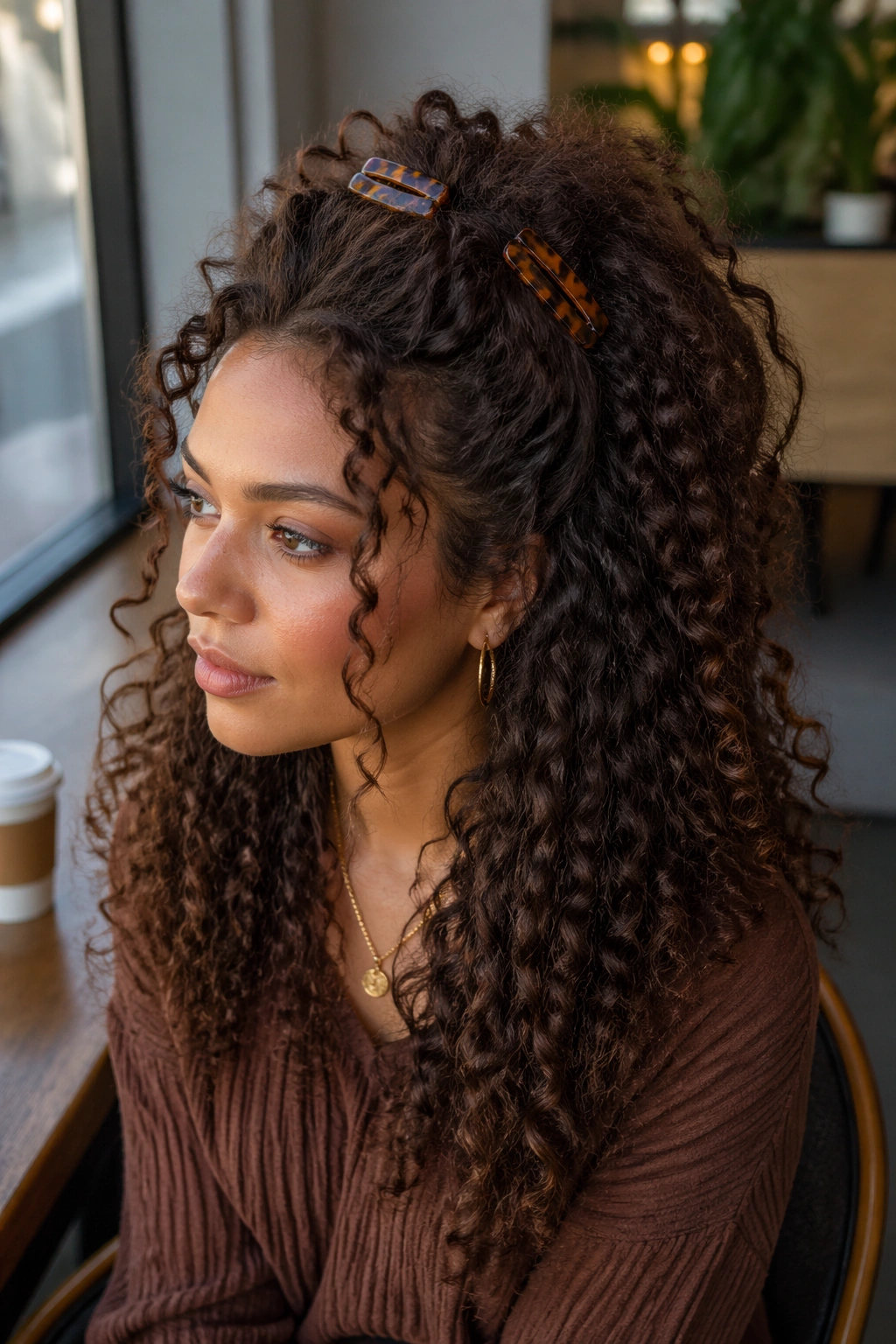
Why settle for one clip when your hair has enough volume to eat it alive?
For dense curls, a single barrette often carries too much of the load. Two barrettes solve that by spreading the hold across a wider area, which makes the style feel steadier and usually more comfortable. One clip can lift the hair, but two smaller ones can hold the same amount with less strain on each hinge.
How to Place the Pair
Start by gathering the top half of the hair from temple to temple. Clip the first barrette in the center or slightly off-center, depending on where the crown wants to sit. Then place the second one a little below or beside it, almost like an anchor. The effect is subtle, but the hold is much better.
This style is especially useful if your curls are long, springy, or layered in a way that makes one section slide apart. Two clips also let you play with shape. Match them if you want a neat finish. Stagger them if you like something a little less expected.
- Use two 1.5- to 2.5-inch barrettes for medium density
- Choose clips with lined teeth or a firm clasp
- Keep the spacing slightly uneven if your hair is thick
- Avoid placing both clips right on the temple; that gets uncomfortable fast
I like this option for days when one barrette would feel too weak but a giant clip would look bulky. It gives you structure without making the style look overbuilt.
4. Pineapple Clip with a Flat Barrette
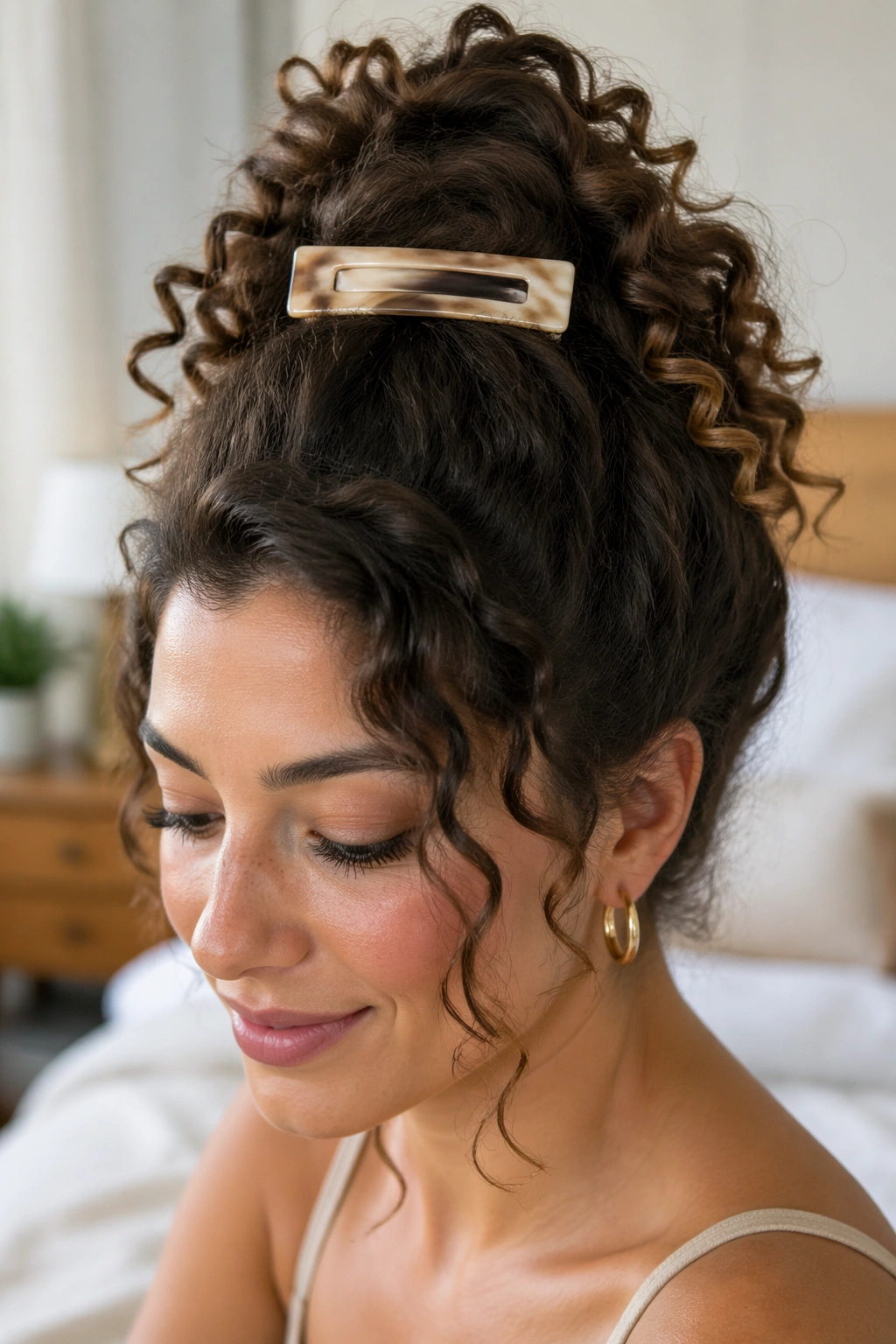
By the time the curls start expanding at the crown, a lot of people give up and throw on a scrunchie. Fine. But a flat barrette can do the job with less bulk and a cleaner line.
A pineapple-style barrette look keeps the top section lifted high and loose while the bottom curls stay free. It’s not a tight updo. It’s more like a soft, controlled puff sitting near the crown, held in place with a wide barrette that lies flatter than a chunky elastic. That means less denting and less of that weird, cramped feeling some high styles leave behind.
This is a smart move for curls that need height more than control. If your hair gets wider through the day, this style works with that shape instead of trying to crush it. It also helps on wash-and-go days when the roots are fluffy and the ends still look defined.
- Best on medium-length curls that can lift without collapsing
- Use a flat or gently curved barrette with a strong hinge
- Leave a little room at the root so the crown does not crease
- Keep the section loose enough that the curls still bounce
Do not pull it tight. If the top section feels stretched, the style has already gone too far.
5. Face-Framing Pieces Held with Mini Barrettes
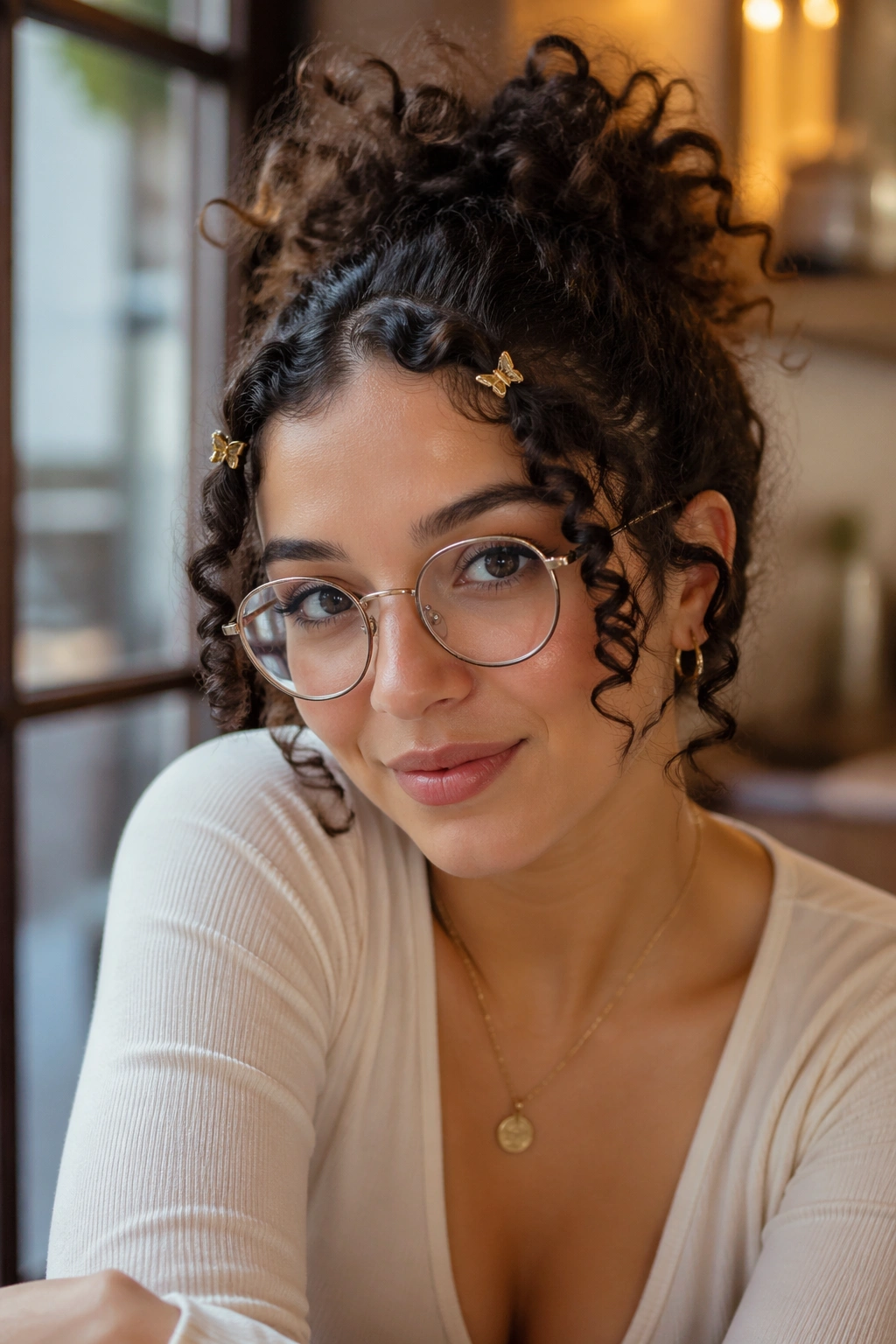
Little clips, big difference.
Mini barrettes are the quiet heroes of curly styling. They do not try to control all your hair. They just deal with the annoying front pieces that fall into your eyes, stick to lip balm, or frizz out the second you step outside. That makes them perfect for curly bangs, short layers, or the two front curls that always seem to choose chaos.
The nice thing about mini barrettes is that they work more like direction than restraint. A small clip nudges a curl back without flattening it. If you clip the curl too close to the scalp, it can pop loose. If you place it a little higher, near the arch of the eyebrow or just above the temple, it stays put and still looks soft.
This is also one of the easiest styles to wear with glasses. Keep the clip just above the frame arm so you do not get rubbing or a little metal-on-metal scrape behind the ear. That tiny adjustment saves a lot of irritation.
Use one clip on one side for a quick, casual look. Use two if you want balance. You can even mix sizes if the front layers are uneven, which is common with curly cuts anyway. There’s no prize for perfect symmetry.
6. Low Curly Chignon with a Pearl Barrette
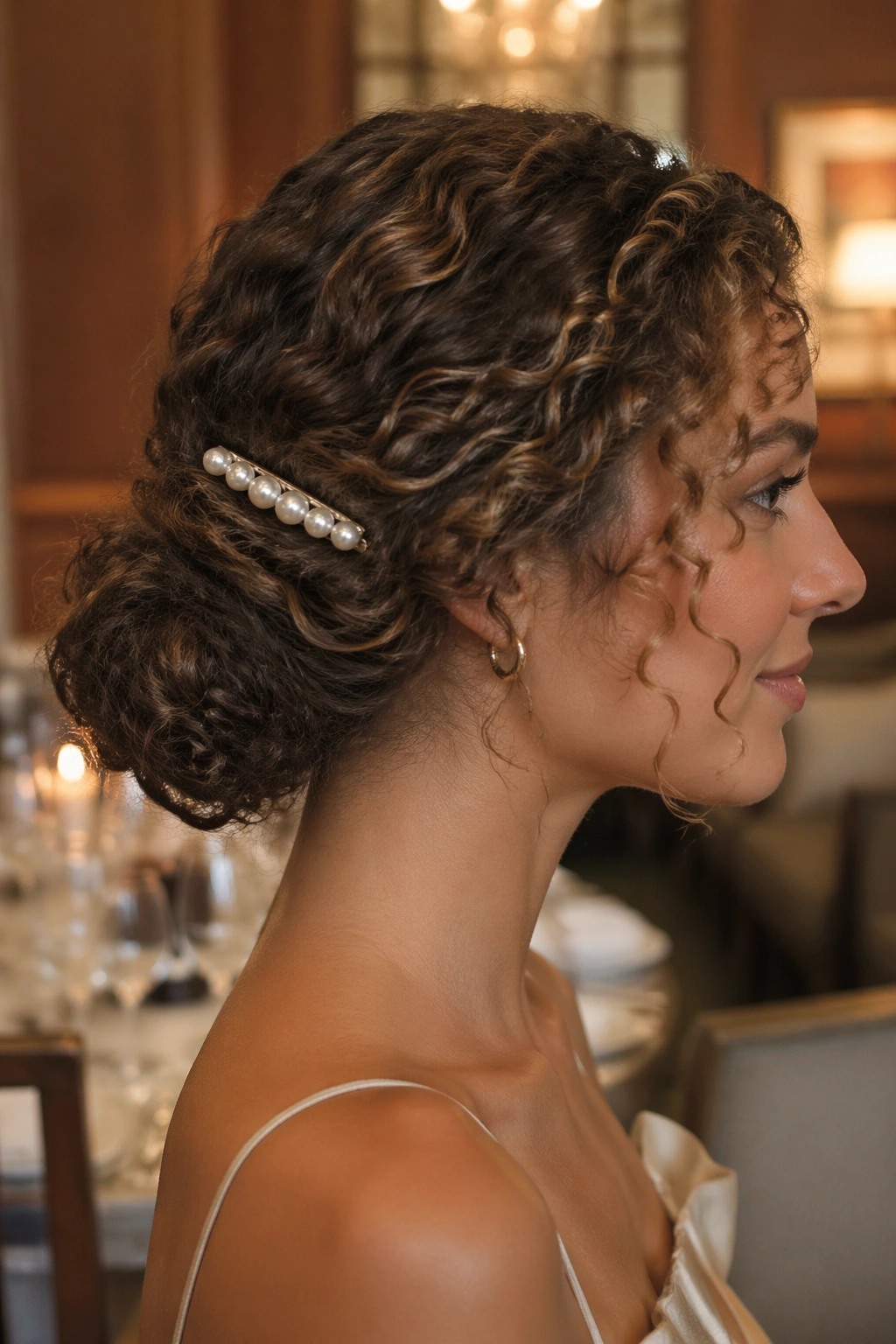
A low bun can look stern on curls. A low chignon looks softer, more lived-in, and a lot less like you borrowed the style from a boardroom in a hurry.
The shape matters here. Instead of twisting the curls into a tight knot, gather them low at the nape, coil them into a loose chignon, and let the natural curl texture stay visible around the edges. Then place the barrette over the seam where the ends tuck in. A pearl or resin finish works well because the barrette becomes part of the look rather than a plain fastener hiding in the back.
What to Pin First
Start with hidden pins if your hair is heavy or layered. The barrette should finish the style, not do all the work by itself. That’s the mistake people make when they try to make one decorative clip carry too much weight. It looks pretty for about five minutes, then the bun loosens and starts sliding.
This style is especially good for dinners, weddings, family events, or any time you want your curls to read as elegant without becoming stiff. It also works on second- or third-day curls because a little softness in the texture helps the chignon look fuller.
A low chignon with a barrette is one of those styles that looks more difficult than it is. Which, frankly, is the best kind.
7. Asymmetrical Side Part with One Oversized Clip
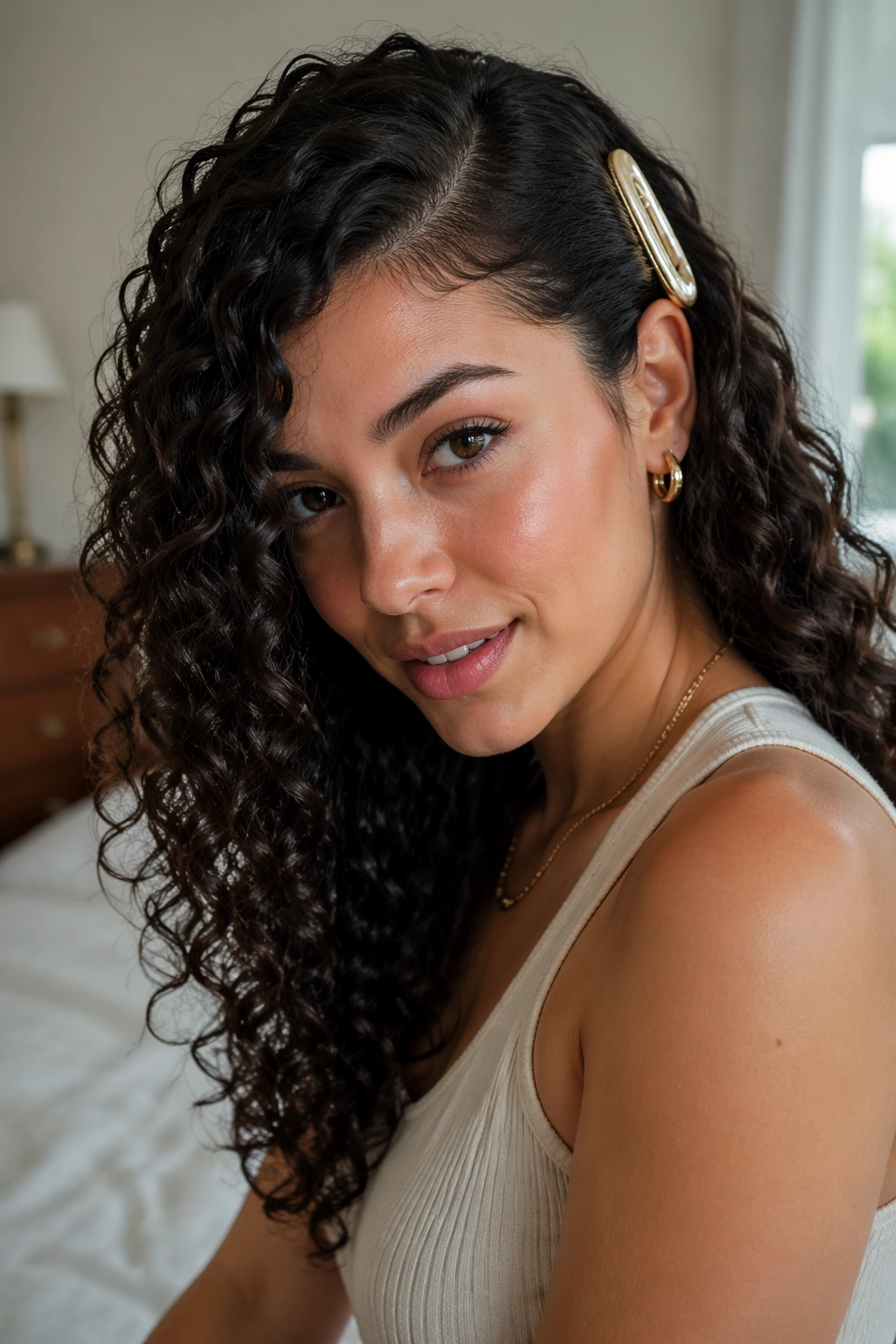
One oversized clip can do a lot of work if you give it the right job.
An asymmetrical side part gives curly hair a sharper shape right away. Instead of trying to balance both sides, you let one side fall fuller and use the barrette to control the other. The result feels modern, but not harsh. It’s a nice option when your curls have volume at the roots and you want to steer that shape instead of hiding it.
Where the Weight Lands
Put the part where the hair naturally wants to fall, then gather the heavier side back just enough to open the face. The clip goes above or just behind the ear, not too low and not too far back. If you place it too far back, the style loses its asymmetry. If you place it too low, the clip starts dragging the side down.
- Use a 3- to 4-inch barrette for thick curls
- Keep the open side loose and full
- A matte or tortoiseshell finish looks less flashy than shiny metal
- Tuck only the top layer if you want more volume
The nice part about this style is that it works even when the rest of your hair is doing its own thing. The uneven shape looks intentional. And if the clip is wide enough, it can hold a lot without making the side look jammed flat against your head.
8. Half-Up Pigtails with Matching Barrettes
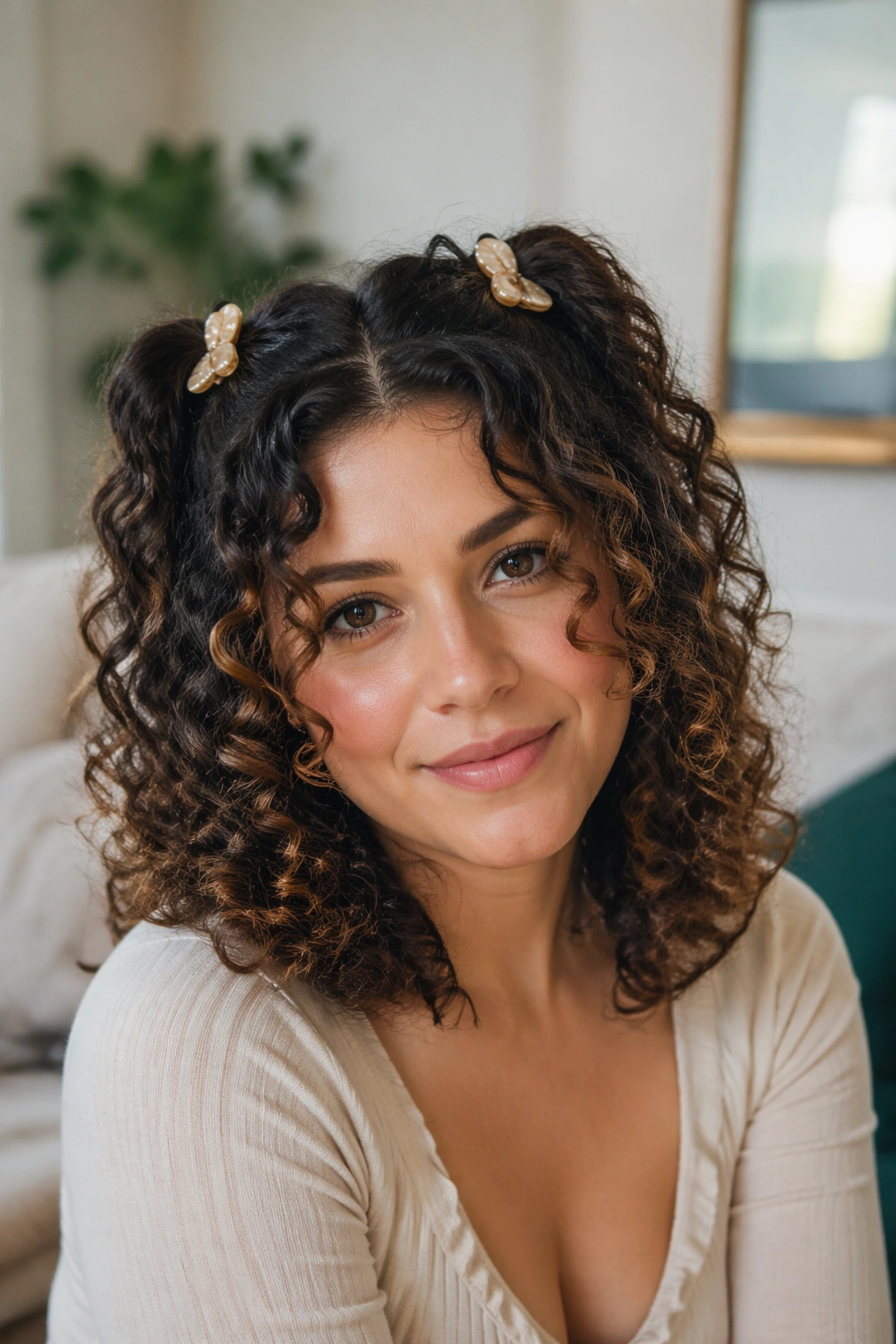
Two small sections, two clips, and suddenly the whole style feels lighter.
Half-up pigtails are playful, sure, but they’re also practical on curls because they divide the work. Instead of asking one barrette to hold the whole crown, you split the top into two side sections and clip each one back separately. That gives you lift near the temples and keeps the front from drifting into your face all day.
This style works especially well on shoulder-length curls, layered lobs, or curly bobs that have enough volume to show the shape of each side. Matching barrettes make the look feel neat. Mismatched barrettes make it feel more relaxed. I prefer the second option when the curls are full and a little wild already, because it keeps the style from getting too precious.
The key is not to make the sections too tight. You want little pockets of curl left loose around the face, not a hard pull on the hairline. If your roots are delicate, move the clips back an inch from the edge and let the front pieces fall naturally.
This is also a good one for busy days. It looks like a choice, which is often half the battle.
9. Clipped Bangs and Tendrils for Short Curls
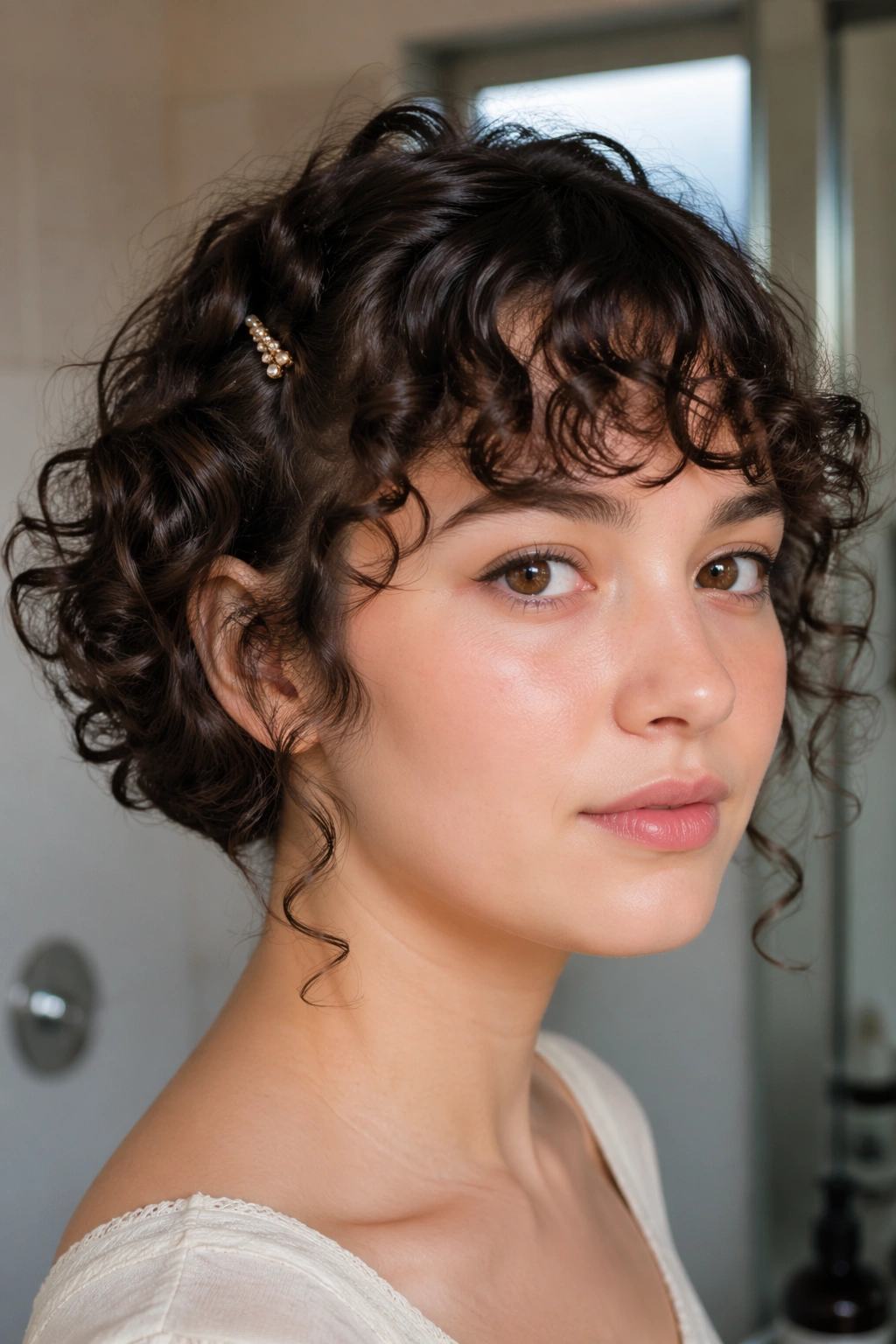
How do you keep short curls off your face without crushing them?
Use a tiny barrette, not a giant one. Short curls, curly bangs, and face-framing tendrils do not need a heavy clip. They need a small grip with a shallow curve so the hair can stay lifted without getting bent into a weird angle. Big clips often overwhelm short sections and leave the style looking lopsided.
For Curly Bangs
If you wear curly fringe, a mini barrette can sweep just one side back while leaving the rest in front. That keeps the shape of the bang intact and gives you a little asymmetry, which usually looks better than forcing every curl back from the forehead. A clip with rounded ends helps here because short curls love to snag on sharp edges.
For a Bob or Pixie
Shorter cuts need placement more than pressure. Clip the side piece slightly above the temple or at the outer edge of the bang zone. If you shove the barrette too close to the scalp, the curl springs against it and pops out. If you leave a tiny bit of slack, the style stays much easier.
This is the style I’d hand to anyone with a curly bob who wants their face open without losing personality. It’s small, quick, and a little bit flirtier than a plain pin-back look.
10. Barrettes on a Twist-Out for Day-Three Hair
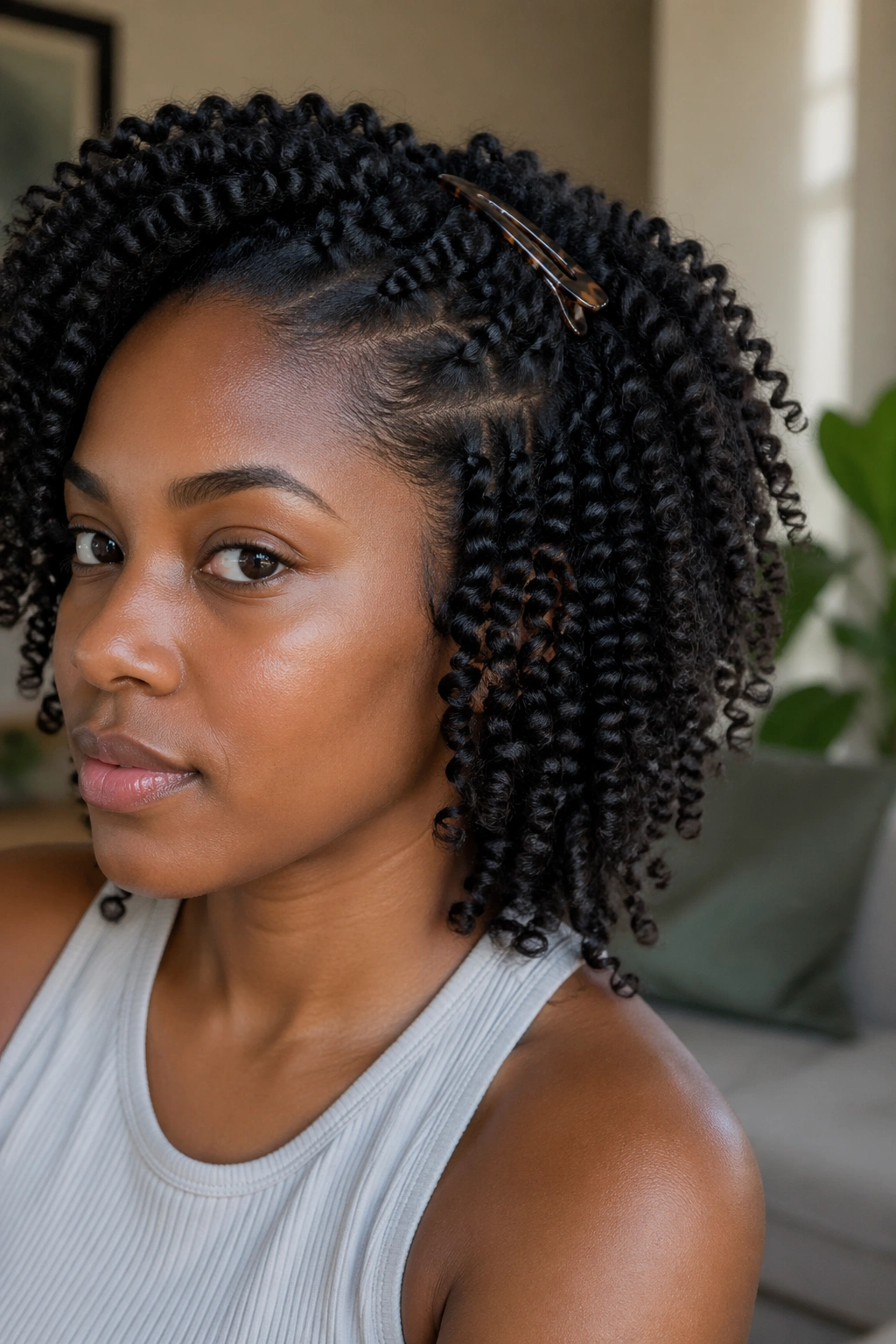
Day-three curls are usually not the problem. The problem is the shape.
A twist-out can still look good when the definition starts softening, but the crown often puffs first and the front pieces can drift into the face. A barrette gives you a way to reset the silhouette without rewetting the whole head. That matters because over-misting can turn a decent twist-out into a frizzy cloud before you even leave the house.
No, you do not need to start over.
Use a light mist only if the front feels dry and stiff. Smooth the outside layer with your hands, not a brush, then clip the top section back just enough to show off the twist pattern below it. If the ends still have definition, let them stay out. If the crown feels shapeless, a barrette can restore the line fast.
This style works best when the twist-out has some body left, not when it has already collapsed. A slim French barrette or a decorative clasp can both work, but I’d avoid flimsy snaps if the hair is dense. They tend to slide on softer, stretched curls.
The whole point is to rescue texture, not erase it.
11. Swept-Back Temple Clips for Workdays
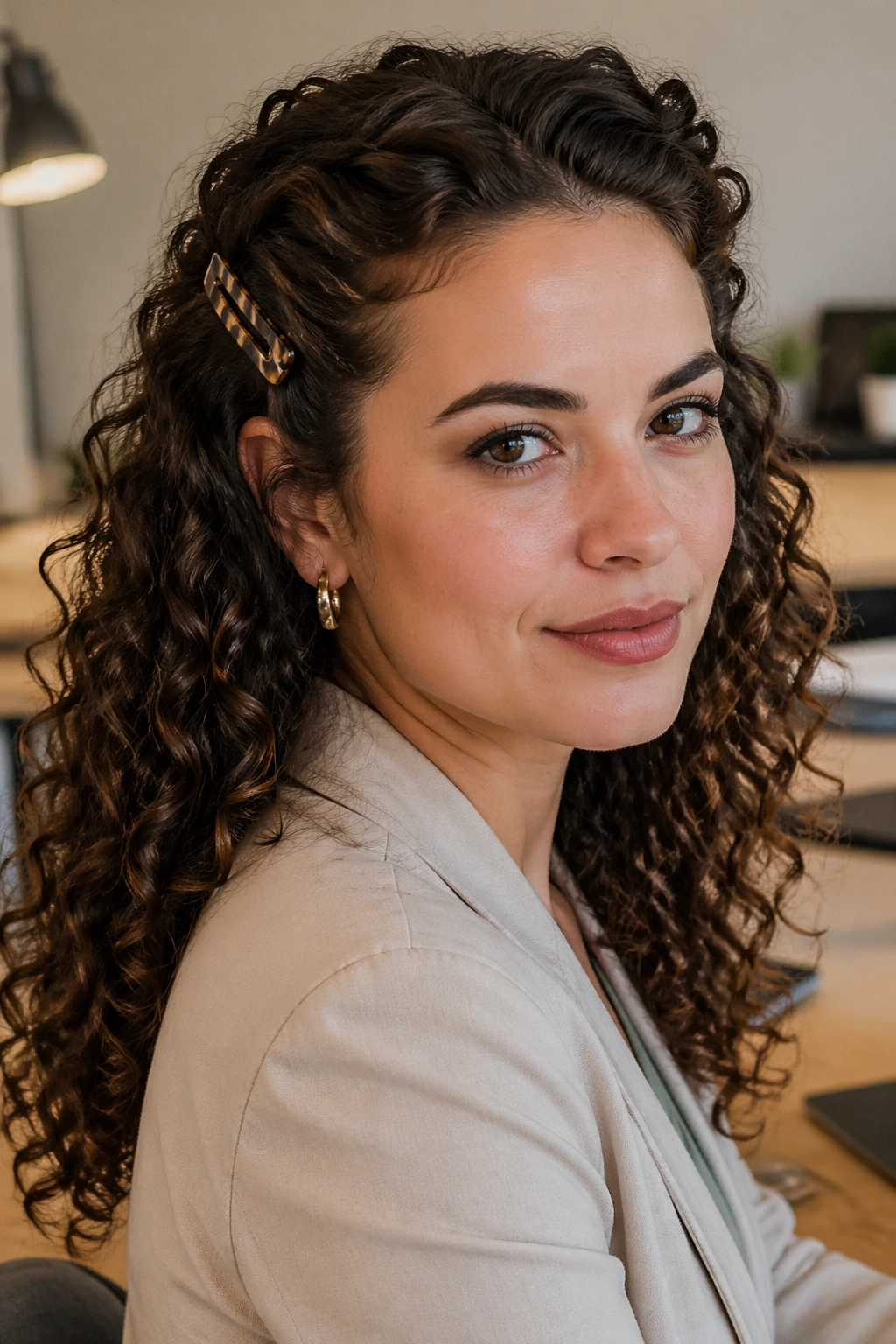
Fast, tidy, done.
Temple clips are the no-nonsense answer for days when you want your curls off your cheeks but still want to keep the rest of the hair loose. Instead of pulling the whole front back, you sweep back just the sections near the temples and clip them in place. It opens the face, keeps the eyes clear, and leaves most of the curl pattern untouched.
This style is especially handy for calls, office days, or any moment when the front of your hair keeps falling into your glasses. It also tends to age well through the day because the clips are carrying less weight than a full half-up style would. Two small barrettes on each side often hold better than one oversized clip because the pressure gets split.
I like matte or brushed finishes here. Shiny clips can look a little loud when the rest of the hair is soft and natural. A darker tortoiseshell or muted metal usually blends in more cleanly, which makes the style feel calm instead of fussy.
Keep the clips an inch or so behind the hairline if your edges are sensitive. That small gap matters. It lowers the tension and makes the style easier to wear for hours.
12. Low Puff Held with a Strong Grip Barrette
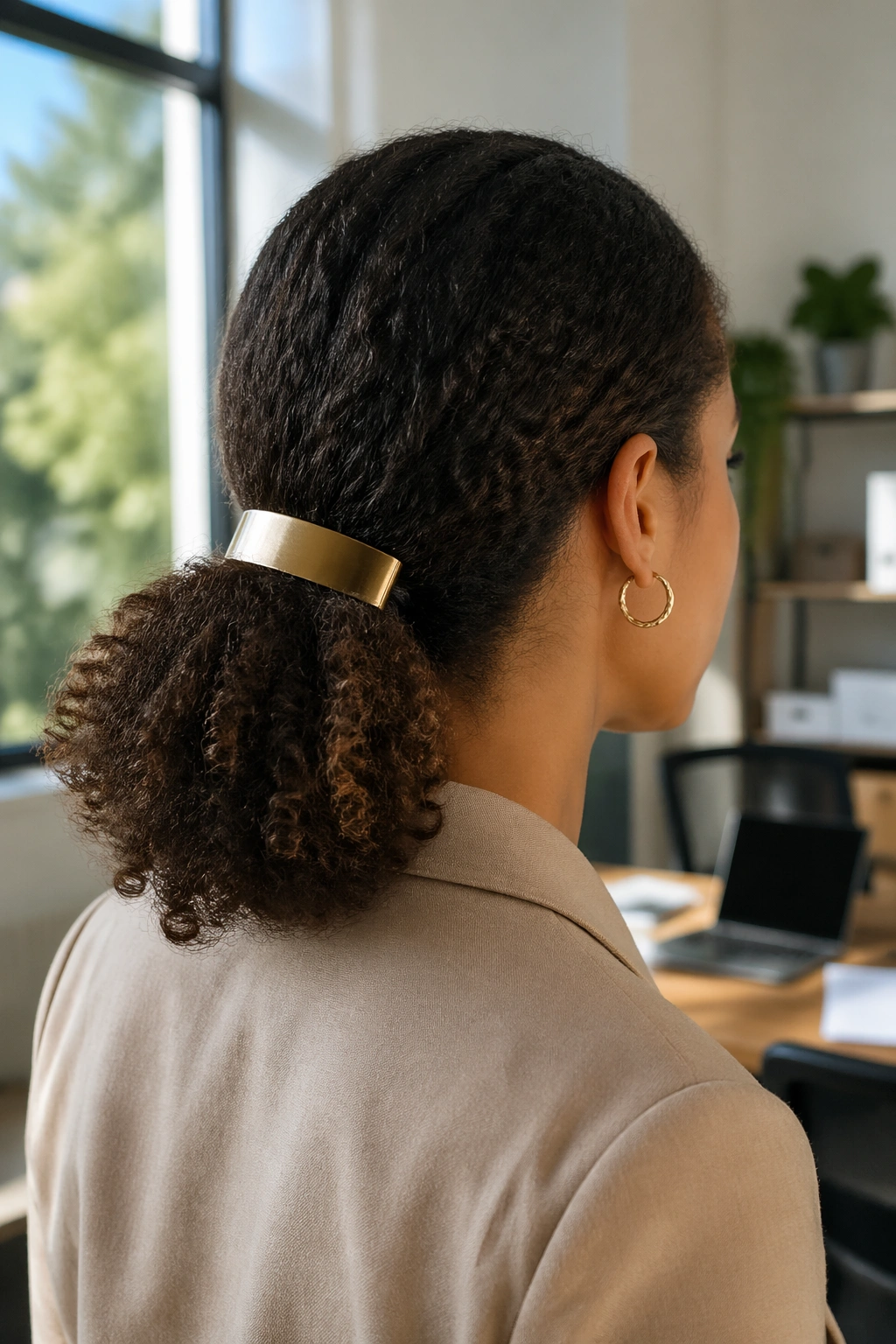
Pretty is optional. Grip is not.
A low puff with a strong barrette is one of the best choices for dense curls, coils, or any texture that laughs at lightweight clips. The style starts with a gathered low puff or puffed ponytail, then the barrette sits over the secured section to tidy the shape and keep the top line neat. In thicker hair, the barrette should be support, not the only anchor. A base elastic or hidden tie does the heavy lifting.
What to Look for in the Clip
Choose a barrette with a firm hinge and a mouth wide enough to open over the gathered hair without forcing it. If the clip feels stiff in a good way, that’s a plus. If it feels flimsy, it probably is. Decorative clips that look lovely on fine hair can fail fast on a dense puff, and that is annoying in a way only curly hair people truly understand.
- Strong metal clasp or reinforced French barrette
- Wider opening for dense hair
- Smooth inner edges to reduce snagging
- Enough length to cover the gathered section without squeezing it flat
This style is a favorite when you want a clean back shape and a bit of lift at the nape. It also keeps the puff from splitting apart the way a weak clip sometimes does. If you’ve ever had a pretty barrette snap open the second you turned your head, you already know why this matters.
Final Thoughts
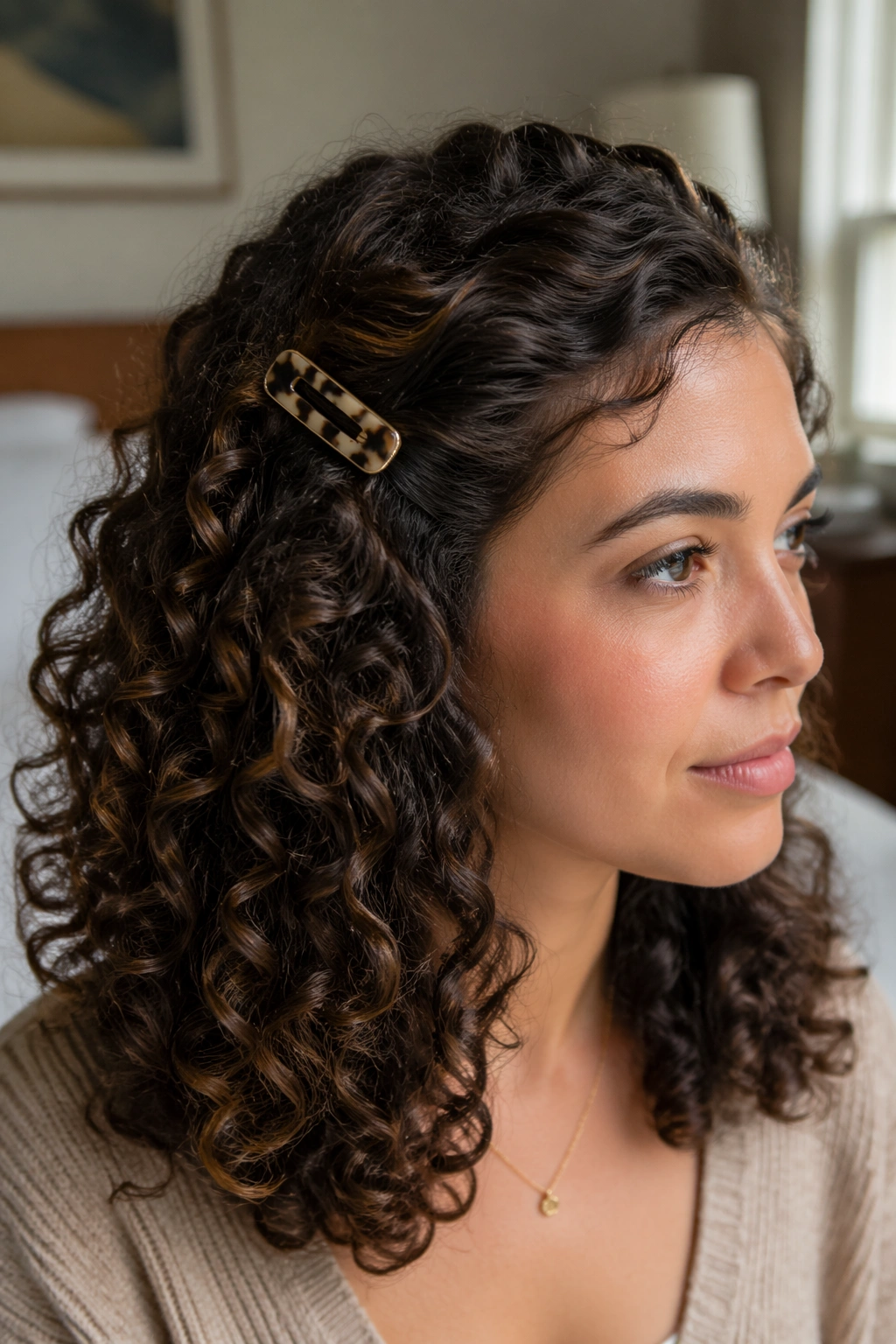
The best barrette style for curly hair is the one that matches your curl density, your length, and the way your hair actually behaves by the end of the day. A small clip can be perfect for front pieces. A wider clasp makes more sense once the volume gets serious. And if a barrette feels like it has to fight your curls, it’s the wrong one.
One practical habit helps more than people expect: keep two or three clip sizes in rotation and move them around. That gives your hairline a break, keeps one spot from getting sore, and lets you pick the right tool instead of forcing every style into the same mold.
Curly hair likes support, not a wrestling match. Pick the clip that holds without yanking, and the style usually takes care of itself.
