



Bridesmaid styles for short curly hair work best when they stop pretending the hair is longer than it is. A chin-length bob, a cropped coil, and a collarbone-grazing lob all need different handling, and the prettiest results usually come from working with the curl pattern instead of trying to iron it into submission.
That sounds obvious, but it gets ignored all the time. People reach for pins, spray, and a prayer, then wonder why the style looks stiff by cocktail hour. Short curls have their own strengths: they hold shape fast, they frame the face without swallowing it, and they can look polished with far less fuss than a big, heavy updo.
The trick is choosing a style that respects the cut. A pea-sized squeeze of curl cream, a few crossed bobby pins, a side part placed with a rat-tail comb, or a small jeweled clip in the right spot can change everything. No need to force fake length. Short hair has enough personality already.
Some bridal parties want soft and romantic. Others want something sharper, cleaner, or a little more modern. All of that can work on short curly hair. The best styles are the ones that keep the curls visible, the neckline clear, and the whole look steady long after the photos are done.
1. Side-Part Curly Bob with Lift at the Crown
A side part can do more for a short curly bob than another round of product ever will. It gives the style direction, opens up one side of the face, and keeps the curls from sitting in a flat, helmet-like shape.
That matters on short hair because the crown needs a little lift to keep the whole style from collapsing into the head. A deep part also makes earrings and necklines look intentional instead of crowded. And if the bridesmaid dress has a clean line at the shoulder, the asymmetry is a gift.
Why It Works So Well
The shape creates built-in movement. One side gets a little more height, the other side gets a little more tuck, and the curls settle into a shape that looks done without looking stiff.
Use a rat-tail comb to carve the part while the hair is still damp. Then work a light mousse through the roots and mid-lengths, scrunching upward with your hands. Diffuse on low heat until the roots are mostly dry, then let the rest air-dry if there’s time. Don’t blast the crown with high heat. It tends to flatten the lift you just built.
- Place the part about one inch off center, not halfway across the head.
- Tuck the smaller side behind the ear and pin it just above the temple.
- Use a flexible-hold spray, not a hard shell of lacquer.
- Finish with a tiny bit of shine cream on the ends only.
Tip: If the curls are loose and springy, pin the crown in place while it cools. That little extra step keeps the height from dropping halfway through the reception.
2. Pearl Clip Half Sweep on a Short Lob
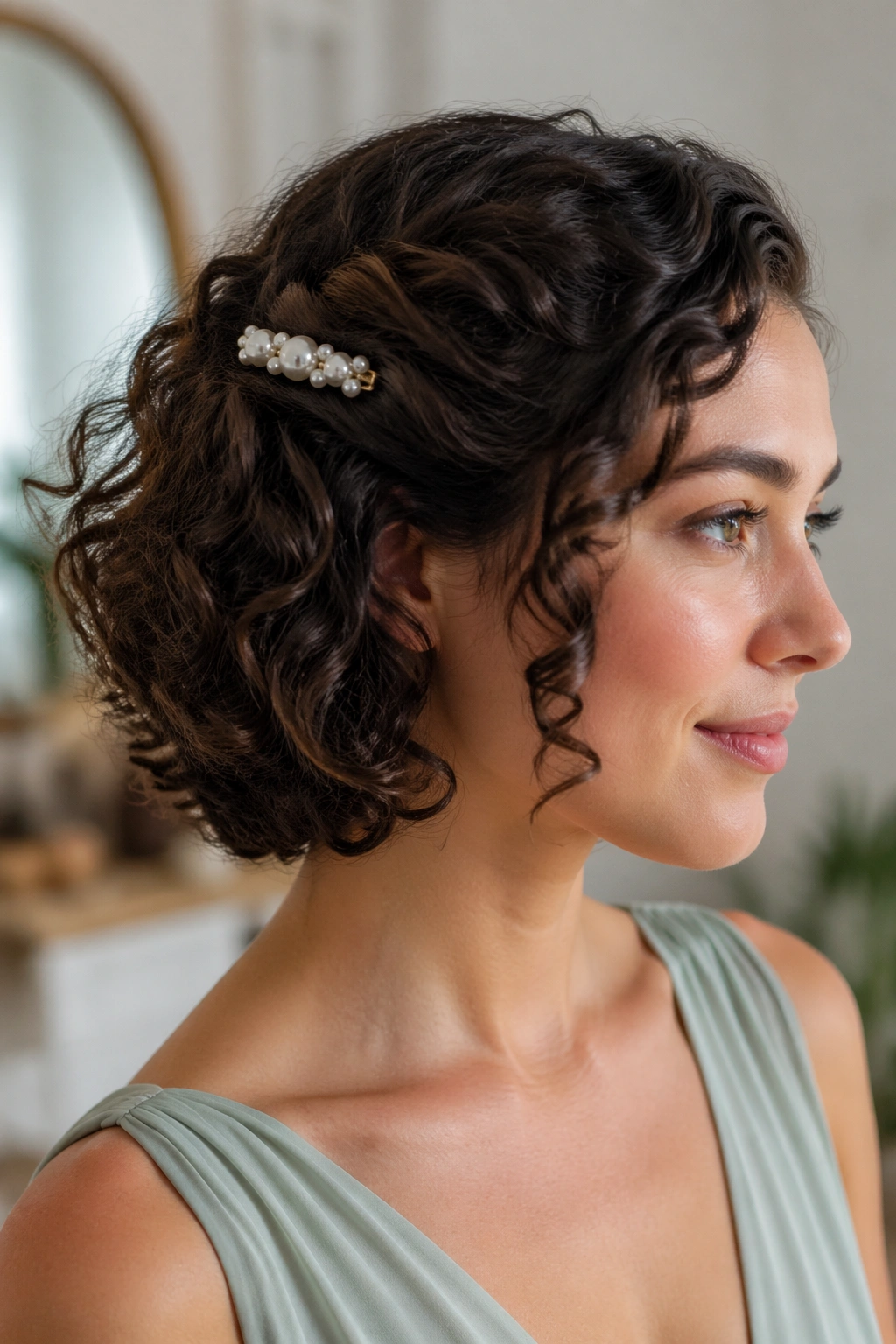
Need something that looks dressed up without hiding the curl pattern? This is the easy answer. A pearl clip half sweep gives a short lob that wedding-ready feel and still lets the texture do the talking.
The style works because it only controls part of the hair. You sweep one side back, clip it just behind the curve of the head, and leave the rest of the curls loose around the shoulders. The result feels clean but not severe. That balance matters when the dress already has lace, beading, or a strong neckline.
How to Place the Clip
The clip should sit higher than the ear and lower than the crown. Right in that sweet spot where the head curves. If it’s too low, it slips. Too high, and it starts looking like a school picture instead of a bridesmaid style.
Choose a clip that’s wide enough to catch at least a small section of hair — usually 2 to 3 inches across for a lob. Pearl accents work especially well when the dress is simple, because they add polish without stealing the whole look. If the hair is fine, slip two bobby pins under the clip in an X shape. If the hair is thick, use a clip with a strong clasp or a double-prong back.
A small detail makes a big difference here. Leave two or three curl spirals loose around the cheekbone. Those front pieces soften the whole style and keep it from looking pinned back too tightly.
3. Braided Crown on Chin-Length Curls
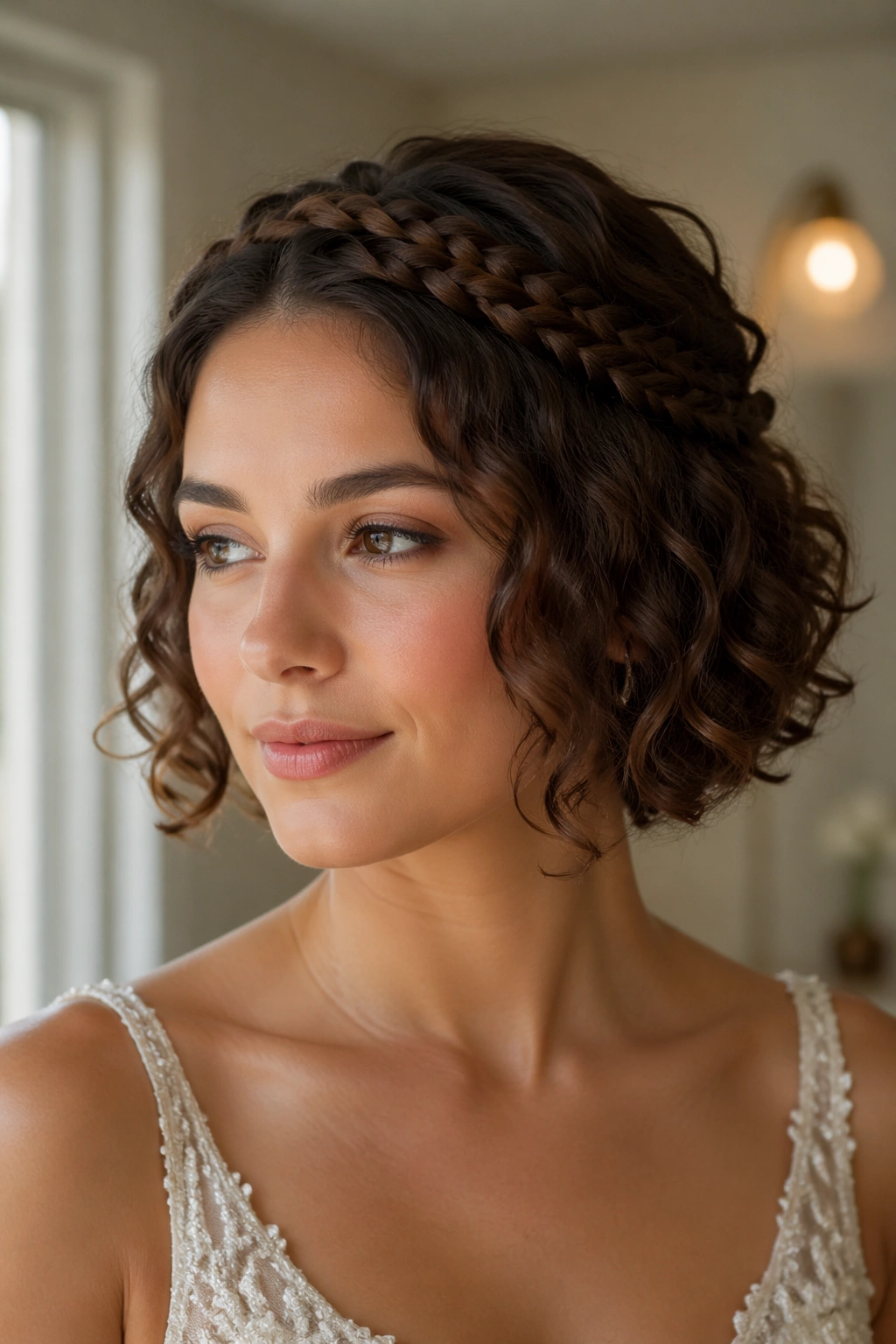
This is the style I reach for when a bridesmaid needs her hair off the face, but not off her personality. A braided crown wraps the top of the head with structure and leaves the short curls underneath free to do their thing.
It works especially well with high necklines, halters, and dresses that already draw the eye upward. Short curly hair can look surprisingly formal here, because the braid gives a clear line while the curls keep the style from feeling hard or overworked. That mix is the whole point.
Small Braids, Big Payoff
The braid does not need to be thick. In fact, a wide braid can overwhelm chin-length hair. Two thin braids from each temple, each about half an inch wide, usually look better. Bring them back toward the crown, cross them, and pin them just above the nape where the curls can hide the ends.
- Keep the braid tight enough to hold, but not so tight that it dents the front curls.
- Use clear or hair-colored pins for the cleanest finish.
- Leave a few narrow tendrils around the temples if the face needs softening.
- Mist the finished braid with a light spray, not a crunchy one.
If the curls are very springy, braid the hair after a quick blow-dry with a diffuser. That gives the front sections a little more control. And if the wedding is outdoors, this style tends to behave better than most. It has enough grip to stay put, even when the weather has opinions.
4. Soft Faux Hawk for Short Natural Curls
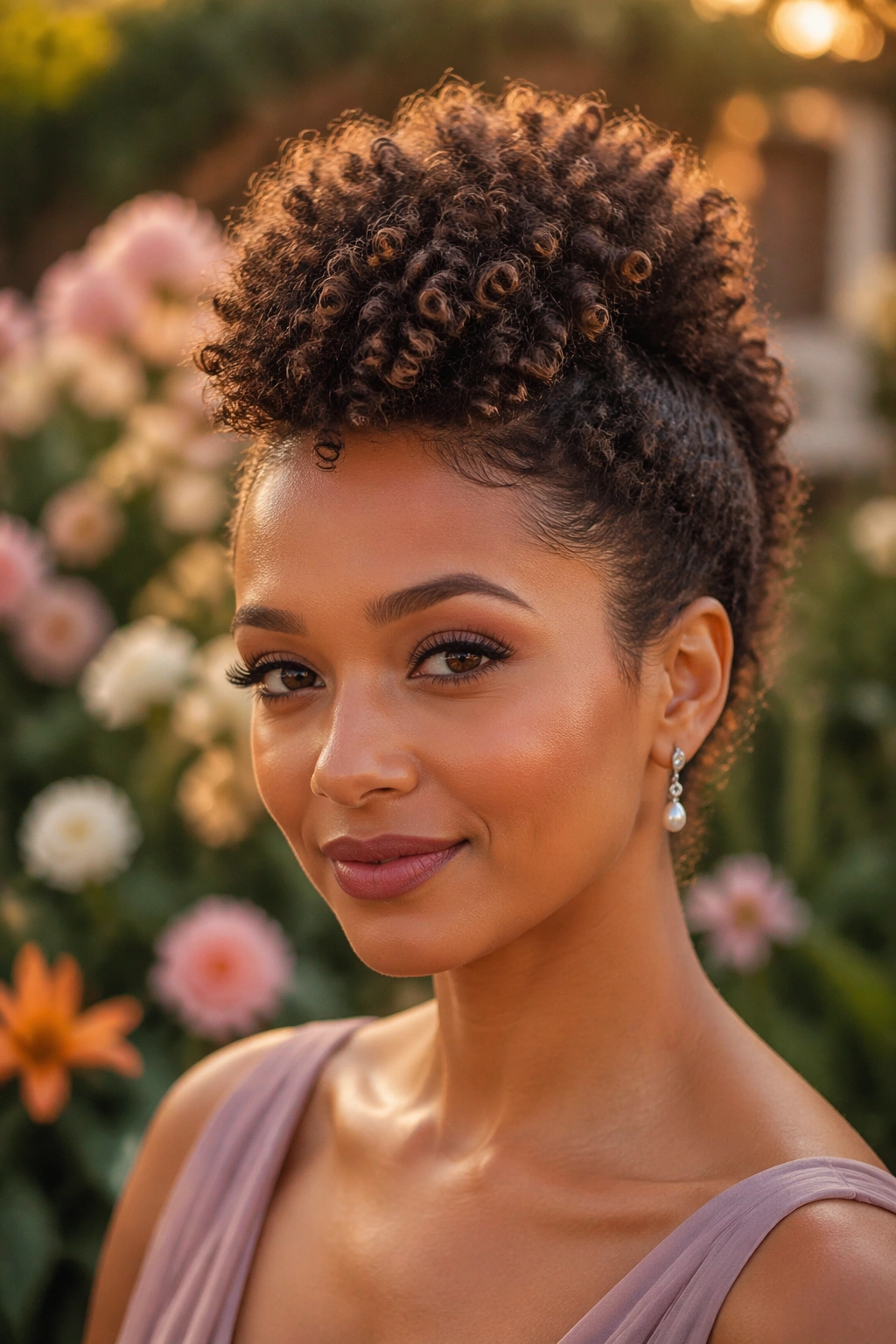
Unlike a full updo, a soft faux hawk keeps the width at the crown and lets the sides stay neat without looking flattened. That’s why it works so well on short natural curls. The shape feels modern, but it still leaves room for texture.
The style starts by directing the curls upward through the middle of the head, then pinning the sides back in a loose line from temple to nape. You end up with a ridge of curl through the center and a cleaner outline around the ears. It sounds dramatic. It isn’t, unless you make it one.
This is a good pick for bridesmaids who want earrings to show, or for dresses with open shoulders. It also handles tighter curls beautifully because the texture gives the faux hawk some natural volume. Loose waves can do it too, but they usually need a little more root lift to avoid drooping.
Use a curl-defining cream on damp hair, then shape the center section with your fingers before pinning. A few U-pins at the sides work better than bulky clips. Keep the top soft. You want lift, not a spiky ridge. The best version has movement when the head turns and a clean shape when it’s still.
5. Vintage Finger Waves on a Curly Bob
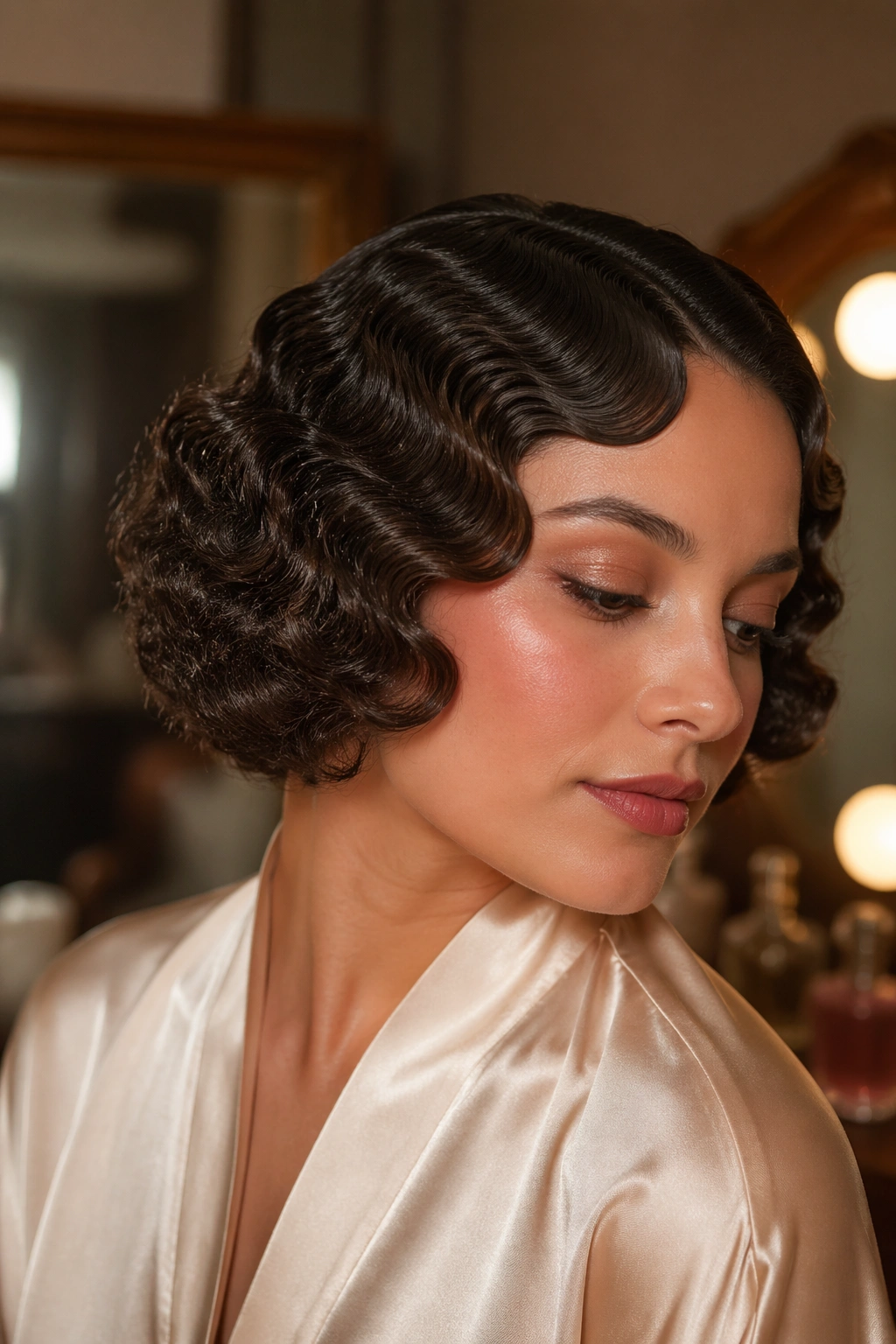
Finger waves are one of those styles that can look fussy in photos and gorgeous in person if they’re done right. On a short curly bob, they bring a lot of shape without requiring length, and that’s the real appeal. You’re not trying to build height here. You’re carving pattern.
The look suits a bob that lands around the jawline or just above it, especially if the dress has a satin finish or a more formal silhouette. There’s something sharp about finger waves next to curls. Not harsh. Sharp in the good way. The hair looks deliberate, which is half the battle with short lengths.
The best approach is to keep the front sections smooth and wave them close to the scalp, then let the back stay softly curled. Use a tail comb and a strong-hold gel on damp hair, then form the waves with your fingers and small metal clips. Let the hair dry all the way before you remove a single clip. Half-dry waves collapse fast.
A lot of people stop too early and then wonder why the shape falls apart. It’s usually because the base wasn’t dry enough. Once the clips come out, the waves should hold their curve on their own and feel slightly set to the touch, not wet or sticky.
This style loves pearl earrings and a clean neckline. It also likes a calm hand. Too much touching ruins the line.
6. Tucked-Back Romantic Bob with Loose Ends
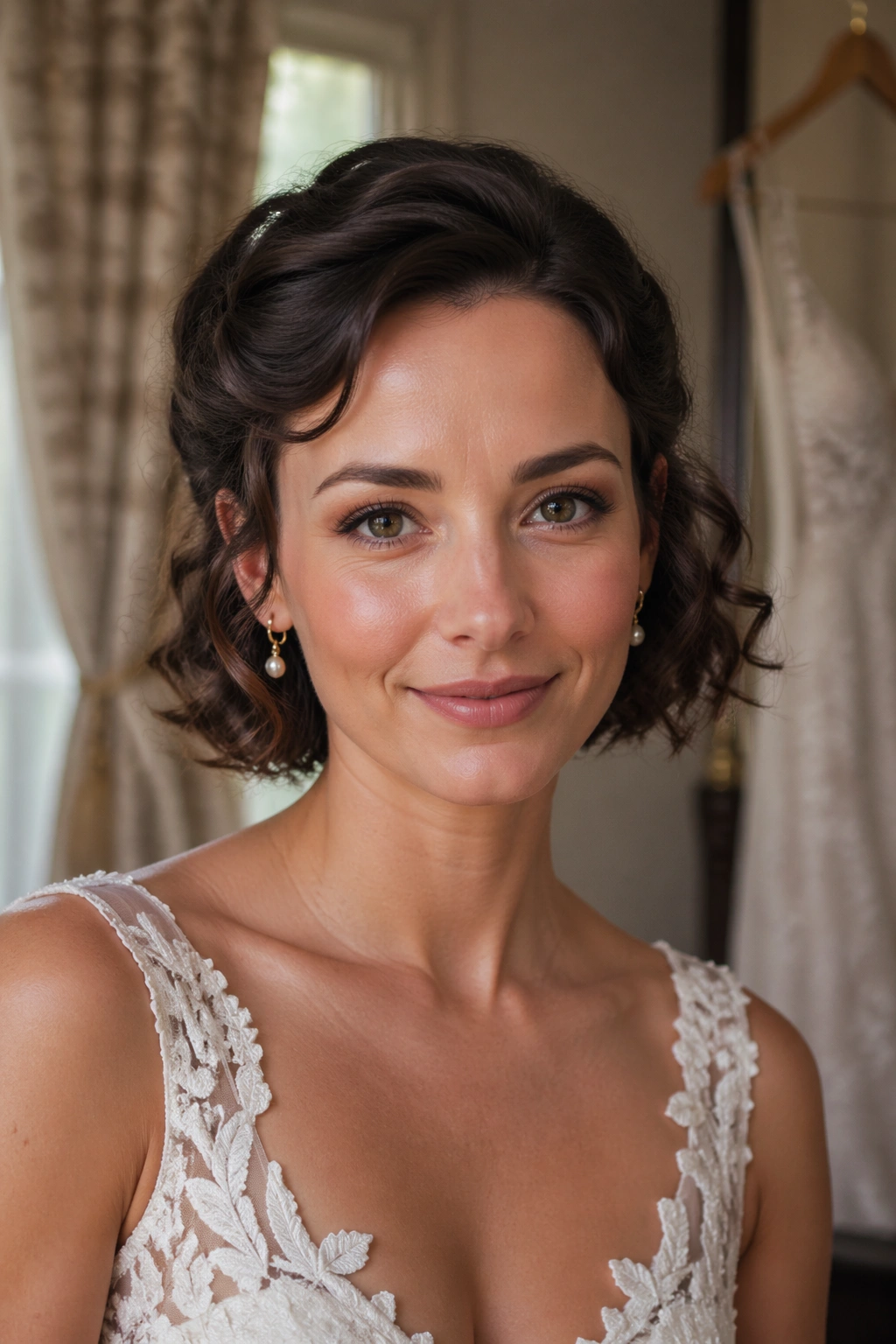
If the neckline is busy, this is the style I’d pick first. A tucked-back romantic bob clears the face, shows the dress, and still keeps the curls soft around the jaw and neck.
The reason it works is simple. You are not forcing the entire bob into a fake updo. You’re just guiding the front and side sections backward so the hair reads neat from the front and relaxed from the side. That small shift changes the whole mood of the style.
Use a light smoothing cream at the temples, then tuck one side or both sides behind the ears. Secure the tucked sections with crossed bobby pins under the top layer so the pins disappear. Leave the ends loose and rounded. If the curls are rough-drying, mist them with water before you reshape them. Dry curls often fight back.
This is a good choice for bridesmaids who want a softer look than a braid crown or faux hawk. It also works well with lace, sheer panels, and off-the-shoulder dresses, because the hair stays out of the way without looking pinned into submission. That balance is hard to fake.
One useful habit: smooth the hairline with your fingertips, not a heavy brush. Brushing too much makes short curls puff in the wrong spots. A little imperfection here actually helps.
7. Mini Top Knot with Face-Framing Curls
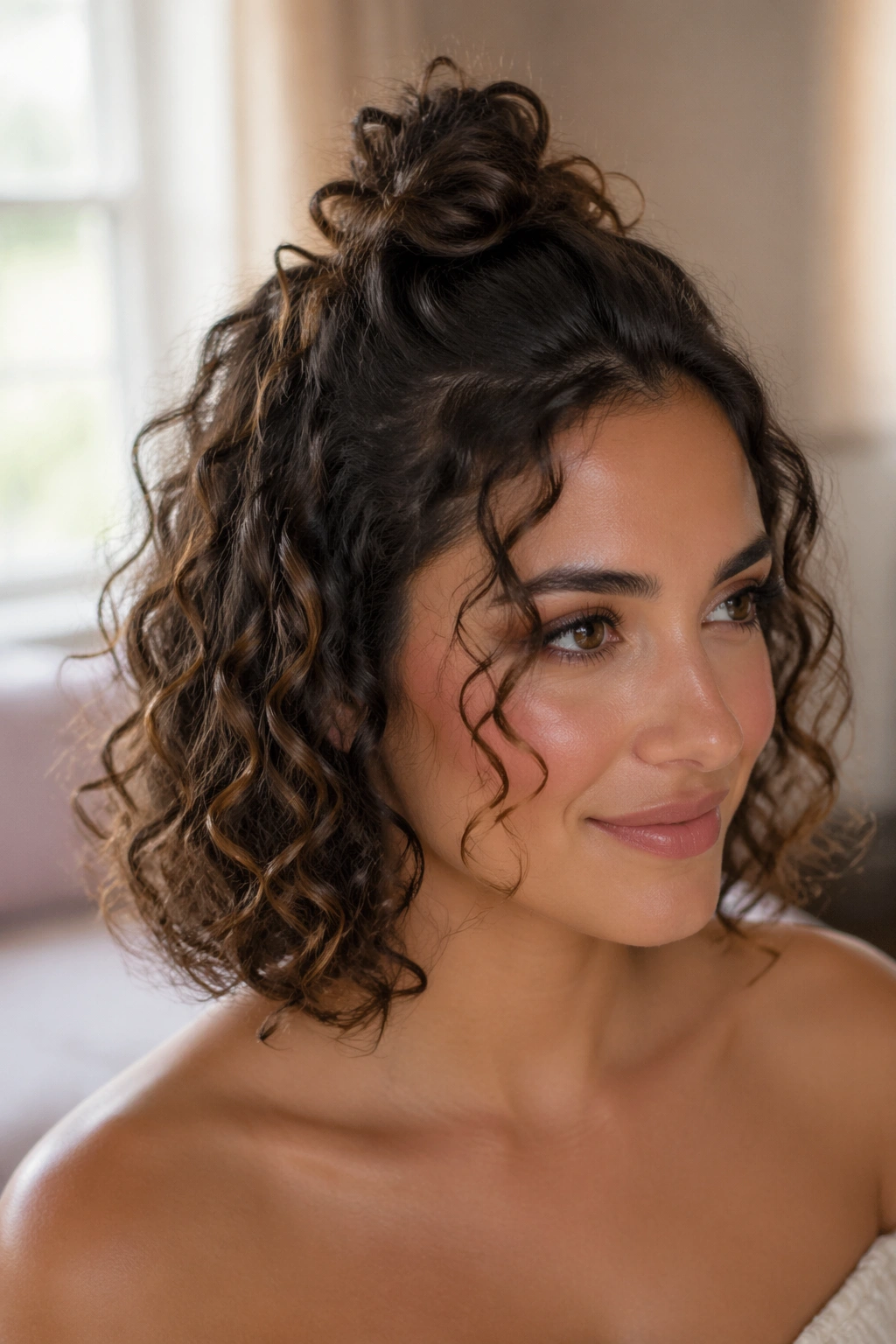
Can short curls fake a knot at the crown? They can, if you keep it tiny and stop trying to turn it into a full bun. The goal is a small top knot shape that lifts the hair enough to look styled, while the front pieces keep the face soft.
This works best on a bob or a long pixie with enough top length to twist upward. Gather the top third of the hair, twist it into a small knot or rolled loop, and pin it close to the head. Don’t stretch it tight. A snug knot looks better than a strained one. Leave the lower curls free, especially around the temples and cheeks.
Where the Knot Should Sit
Put the knot slightly behind the highest point of the head, not right on top. That keeps the style from sticking straight up and makes it feel more balanced from the side. If the hair is shorter at the back, let those curls fall naturally. They help the whole style feel intentional instead of patched together.
A mini knot pairs well with square necklines and dresses that need a little energy near the crown. Add a small crystal pin, a satin bow, or even nothing at all if the hair has enough texture. The point is shape, not decoration overload.
For hold, use a few bobby pins crossed through the knot’s base and a thin mist of spray. A thick shell of product will make the curls lose their bounce. And bounce is part of the appeal here.
8. Side-Swept Pixie with a Statement Barrette
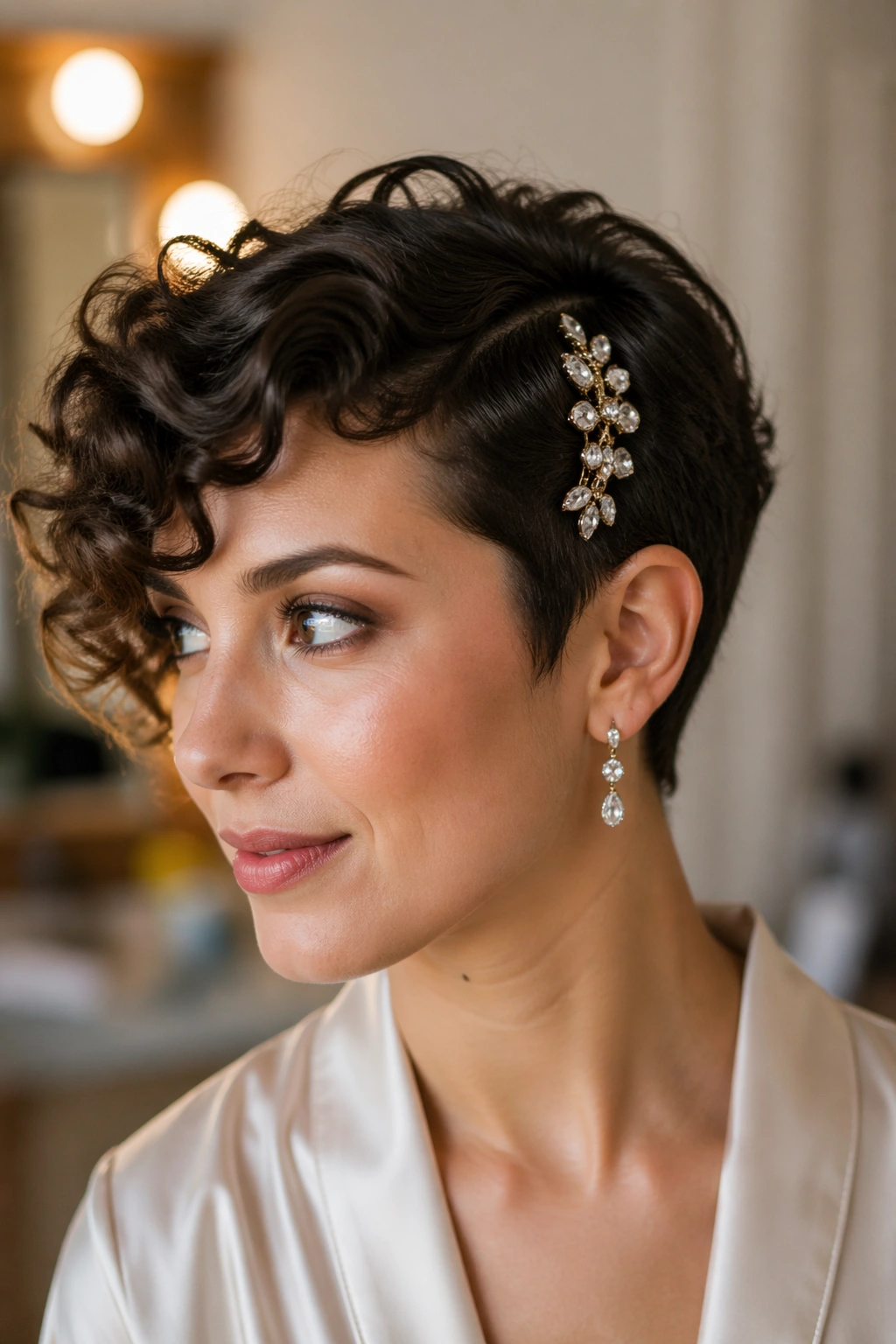
A good barrette changes the whole weight of a pixie. It turns a cropped curly cut from simple to finished in about ten seconds, which is about as close to magic as hair gets.
The side-swept pixie is one of the cleanest bridesmaid styles for short curly hair because it respects the cut. Instead of pretending the hair can be gathered into something bigger, it lets the top layer sweep across the forehead or temple and uses the accessory as the anchor. That keeps the silhouette sharp.
Choose a statement barrette that can hold real hair, not just decorative fluff. A matte metal clip, a pearl barrette, or a satin-covered bar works well. Place it above the temple, not at the ear. That gives the clip more grip and avoids that awkward dangling look. If the hair is very short, pin a small section underneath the barrette first, then place the clip over the pins.
The texture around the crown should stay visible. A little curl definition there keeps the style from looking pasted flat. Use a pea-sized amount of curl cream or pomade on the ends and a touch of shine spray on the top layer only.
This is the style I like when the dress is already doing a lot — bold earrings, strong shoulders, a dramatic neckline. The hair can step back and still look finished.
9. Twisted Halo for a Short Curly Crop
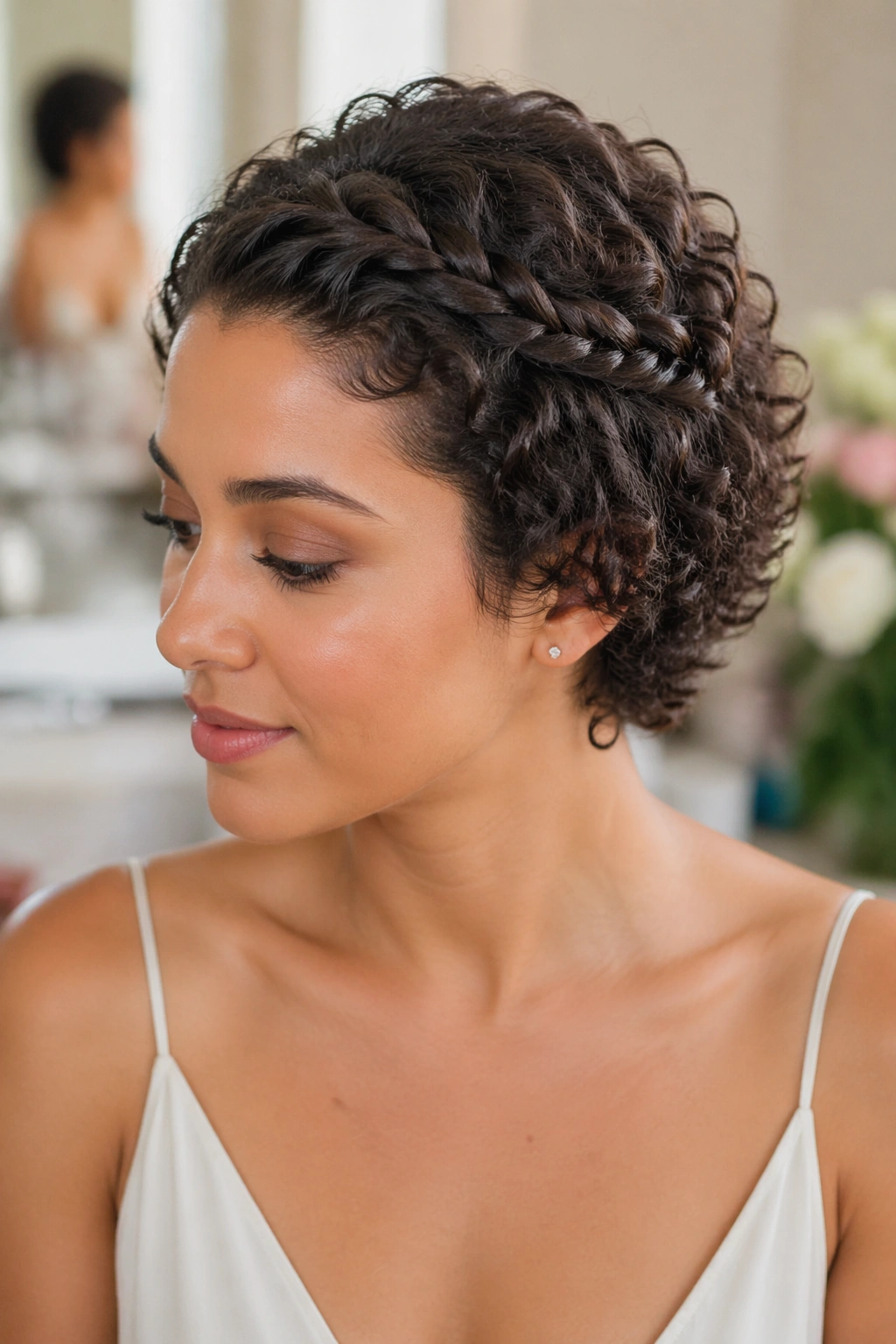
A twisted halo gives short curly hair the soft frame of a crown braid, but it asks for less length. That is the whole reason it deserves a spot here. Braids can get bulky fast on short cuts. Twists stay leaner and sit closer to the head.
The look starts with two twisted sections from the temples or just above the ears, brought back toward the center and pinned so they meet at the back. The rest of the curls stay loose or lightly shaped beneath the twist line. It’s a gentle style, not a rigid one. The twist itself should feel almost like a ribbon running through the hair.
This works especially well on natural curls and coils because the texture gives the twist extra grip. If the hair is around 3 to 5 inches long on top, it usually has enough length to hold. A bit less can still work if the sections are small and the pins are placed carefully.
Use damp fingers and a small amount of styling cream to twist the sections cleanly. Then secure each side with two pins, one crossing the other, so the halo doesn’t slip backward. If the front is layered, leave the shortest pieces out around the face. That keeps the shape soft and stops the style from looking too tight.
The best part? It looks romantic without trying too hard. That matters more than people admit.
10. Floral Comb with Loose Curl Clusters
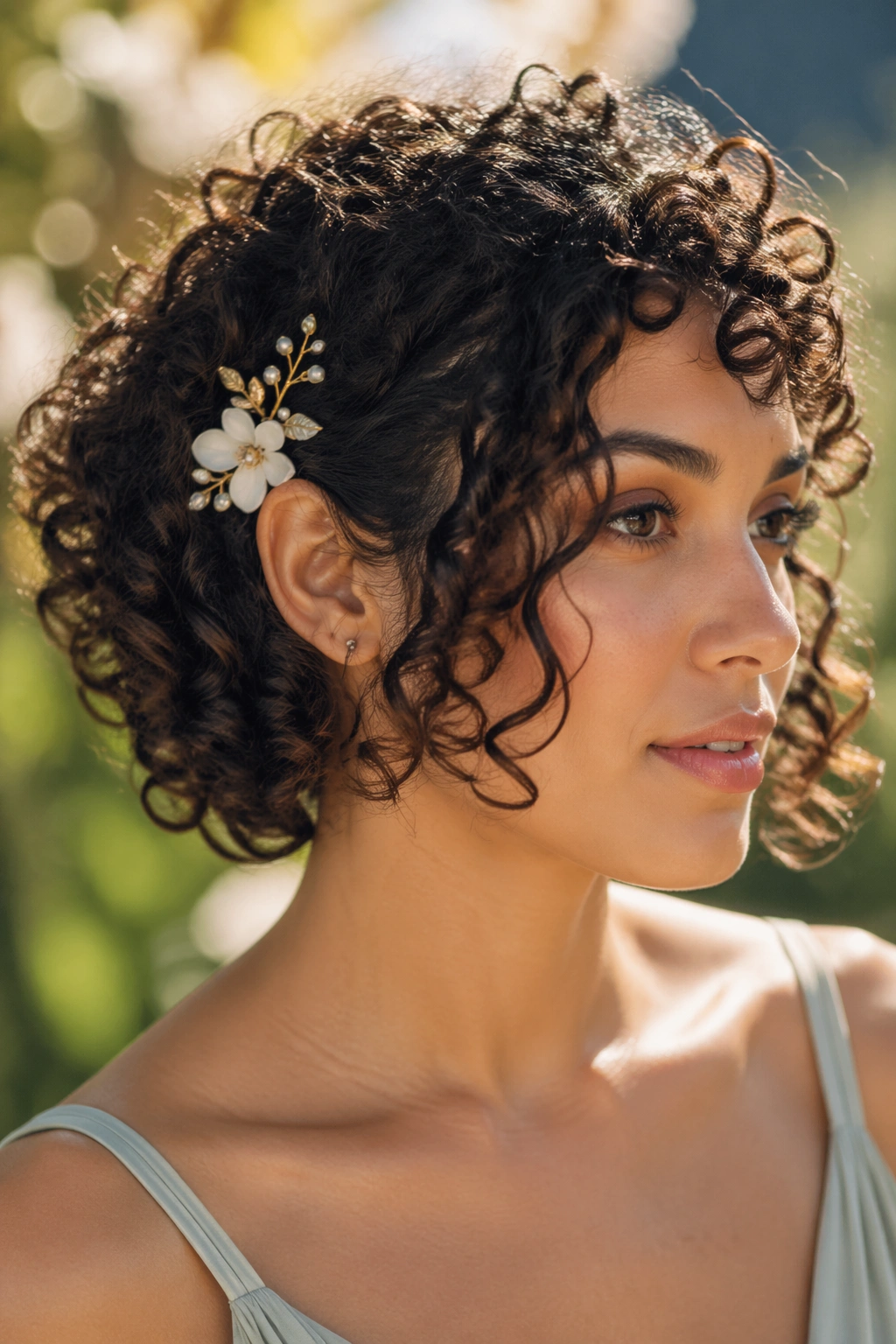
A garden ceremony, a simple dress, one well-placed comb. That’s enough. Short curly hair often looks best when the accessory sits right where the curls already want to bend, instead of fighting the shape of the cut.
A floral comb works because it adds a clear focal point without swallowing the whole hairstyle. The curls can stay loose, tucked, or half-pinned, and the comb becomes the part that says “bridal party” instead of the hair screaming for more structure. Choose flowers that suit the scale of the hair. Tiny blooms usually look better on short cuts than oversized petals that sit on top like a hat.
- Place the comb 1 to 2 inches above the ear or just behind it.
- Let 3 or 4 curl clusters fall free near the cheek and neck.
- Use a flexible comb with wire stems if the hair is dense.
- Match the flower size to the thickness of the curls. Small hair, smaller blooms.
A little detail people miss: the comb should look held by the hair, not resting on it. If it slides or tilts, add a hidden pin through the comb base. That makes a huge difference in photos and in motion.
This style is especially good when the bridesmaid dress is plain and the bouquet is full of texture. The comb gives the eye something to land on, and the curls do the rest.
11. Sleek Temple Tuck with Glossy Ends
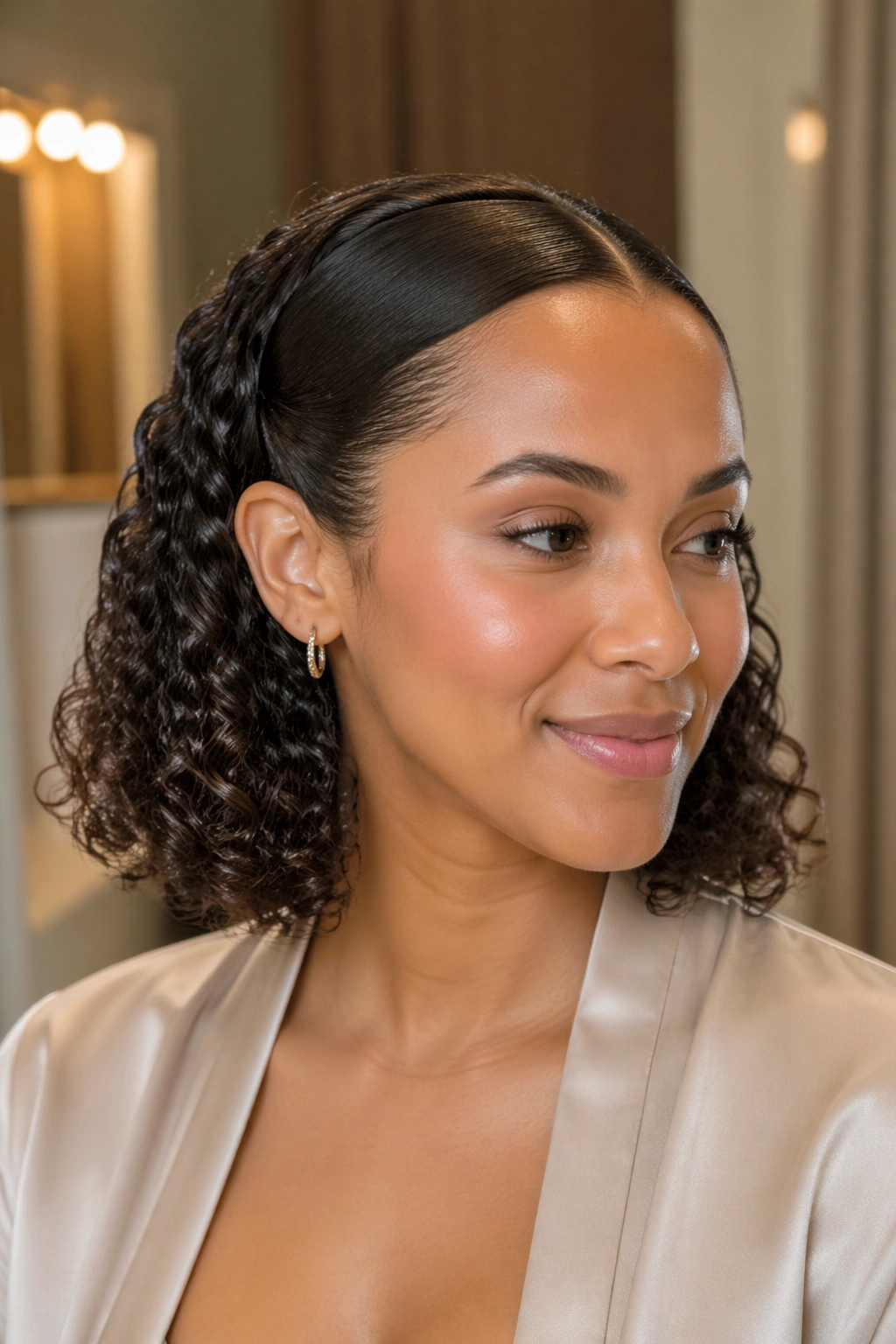
This is the easiest polished look to wear with a busy dress. If the bodice has beading, the sleeves have lace, or the earrings are large enough to do their own talking, a sleek temple tuck keeps the hair tidy without looking boring.
The trick is to smooth only the front and temple sections, then let the curls stay defined from the ears downward. That mix gives you control where you need it and texture where you want it. Too many short curly styles get flattened from root to tip. This one avoids that mistake.
Start with a small amount of smoothing cream at the hairline. Brush the front section back just enough to tuck behind the ears, then secure it with a hidden pin under the top layer. Keep the ends glossy and springy with a little curl cream or a drop of serum worked through the last inch. Don’t overload the product. Short curls go greasy fast if you do.
This style suits side-parted bobs, curly shags, and cropped lobs that need a cleaner line. It also holds up well with bold lipstick and structured dresses because nothing is competing with the face. That’s the point. The hair supports the outfit instead of fighting it.
A neat temple tuck is also kinder on windy days than it looks. The front stays in place, the curls keep movement, and the whole style remains readable even when a few pieces shift.
12. Veil-Ready Curly Crop with a Hair Vine or Comb
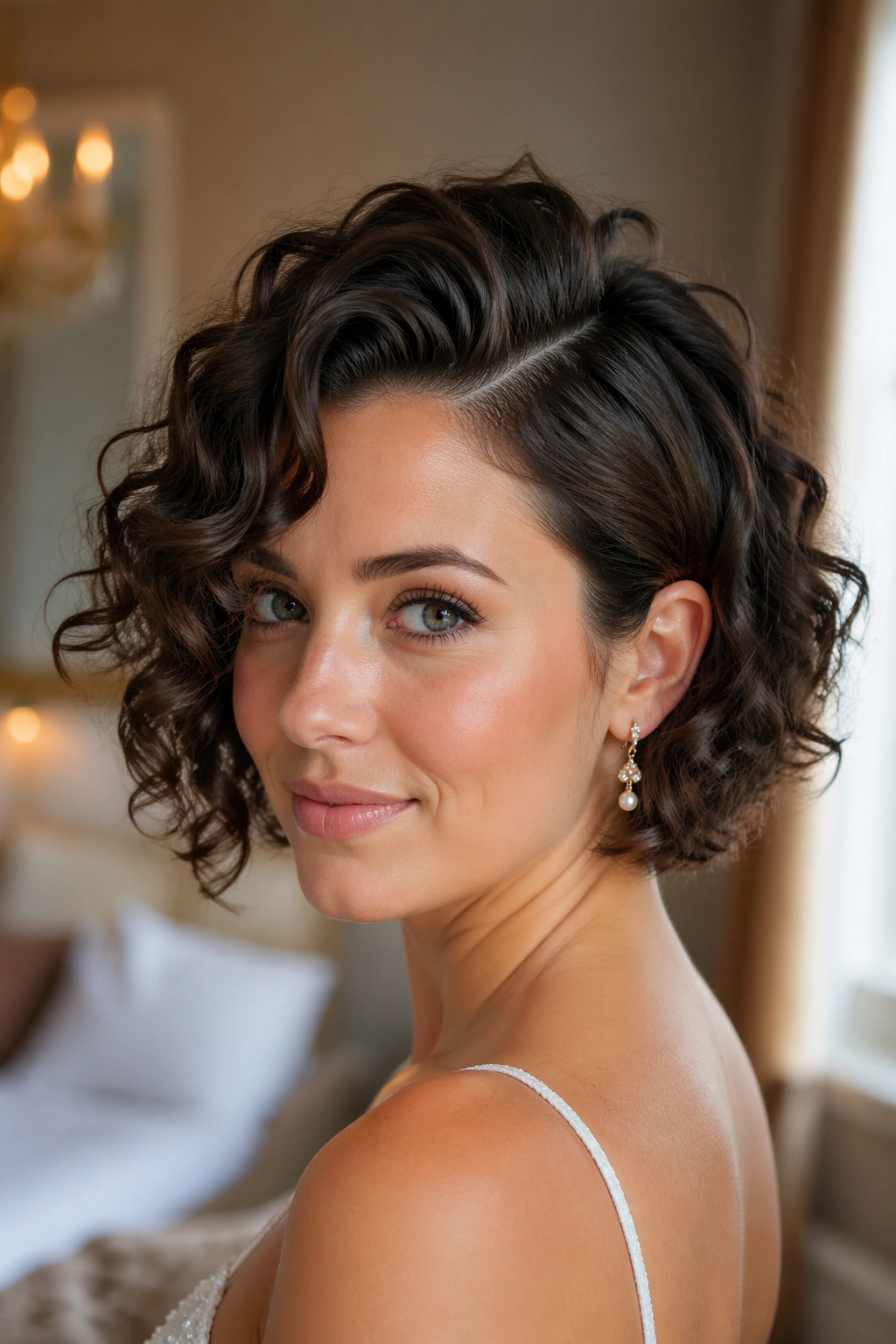
Short curls and a veil can get along just fine. They just need a smart anchor point and a lightweight accessory. The mistake most people make is placing the comb where the hair is softest, usually near the front hairline. That invites slipping. Put it where the curl pattern has some density and the whole thing behaves much better.
A hair vine or slim comb works especially well on a cropped curly style because it can follow the curve of the head instead of sitting flat and stiff. That makes it easier to wear from the ceremony into the reception, or to remove the veil later without wrecking the hair. Hair vines are especially useful if the dress has a soft neckline and the look needs a little shimmer near the crown.
How to Keep It Secure
- Anchor the comb with two bobby pins crossed over the base.
- Keep the accessory light; heavy pieces pull short hair down fast.
- Test the placement by turning your head and giving one gentle shake.
- Leave the curls around the comb soft, not packed down.
If the hair is very short, a veil with a smaller comb base is easier than a large, heavy piece. If the curls are looser, a vine can thread through the top layer and stay almost invisible until the light hits it. That subtlety is what makes it work.
A bridesmaid doesn’t need to look like she borrowed someone else’s hair. She needs a style that fits the cut, keeps its shape, and still feels like her when she turns her head and smiles for the photo.
