
Red on curls is never shy. On a bob, it can look sharp, glossy, and a little rebellious all at once — but only when the shade and the cut are doing the same job.
That part matters.
A curly bob already has motion built in. Add red, and every bend in the hair starts throwing a different note: copper in daylight, auburn indoors, wine at the nape, fire near the face. A flat color can make curls look heavy. A smarter red makes them look alive.
There’s a catch, though. Red pigments fade faster than brown or black shades, and curly hair loves to show that fade on the ends first. If the cut is too blunt, the color can look like one solid block. If the curls are too dry, the red goes dull fast. So the sweet spot is a bob with shape, movement, and enough moisture to keep the tone from turning dusty.
The good news: there are a dozen ways to wear a red curly bob without repeating yourself. Some lean bright and playful. Some look soft and expensive. Some are low-key at a glance and then catch the eye when you turn your head. Start with the shade that feels closest to your own style, then adjust the cut and finish from there.
1. Copper Red Curly Bob with Soft Layers
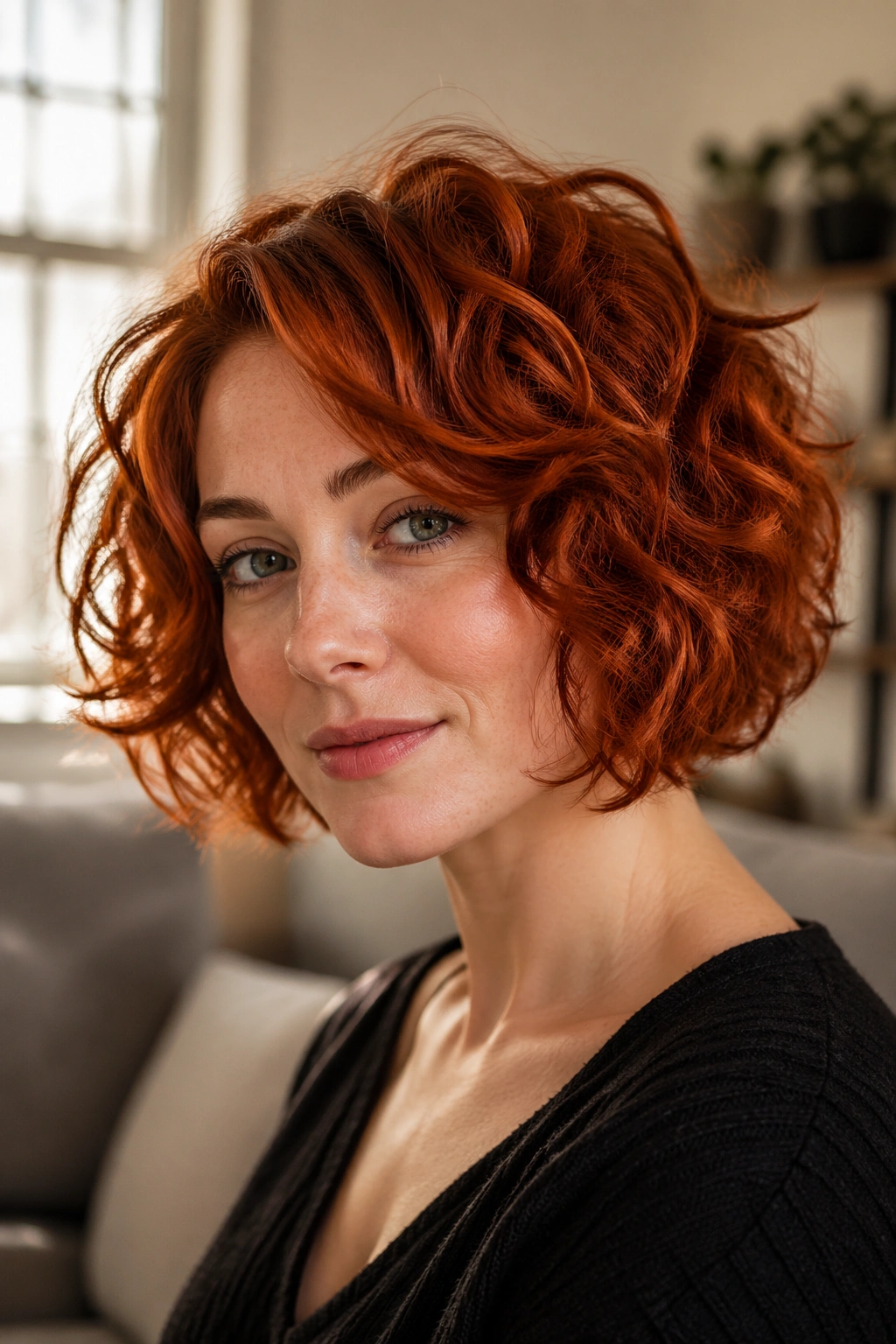
Copper is the red most people can wear without fighting the color the whole time. It brings warmth straight to the surface, and on a curly bob that warmth works like light bouncing through glass. The curls pick up the shade at the outer edge, while the layers keep the inside from turning into one heavy block.
This version looks especially good when the bob sits right at the jaw or just below it. That length keeps the shape lively, and the soft layers let the curls stack without puffing out too much at the sides. If your hair tends to expand as it dries, ask for longer interior layers rather than choppy ones. You want shape, not confusion.
Copper also plays nicely with a little root depth. A slightly deeper root — even just half a level darker — makes the red look richer and gives the cut more dimension. That’s useful if your curls are dense, because dense curls can swallow bright color fast. A soft gloss on the mids and ends helps too.
Ask for a copper tone in the level 7 to 8 range if you want brightness without neon. It keeps the look wearable and gives you room to refresh the color without starting from scratch every time.
2. Cherry Red Curly Bob with a Side Part
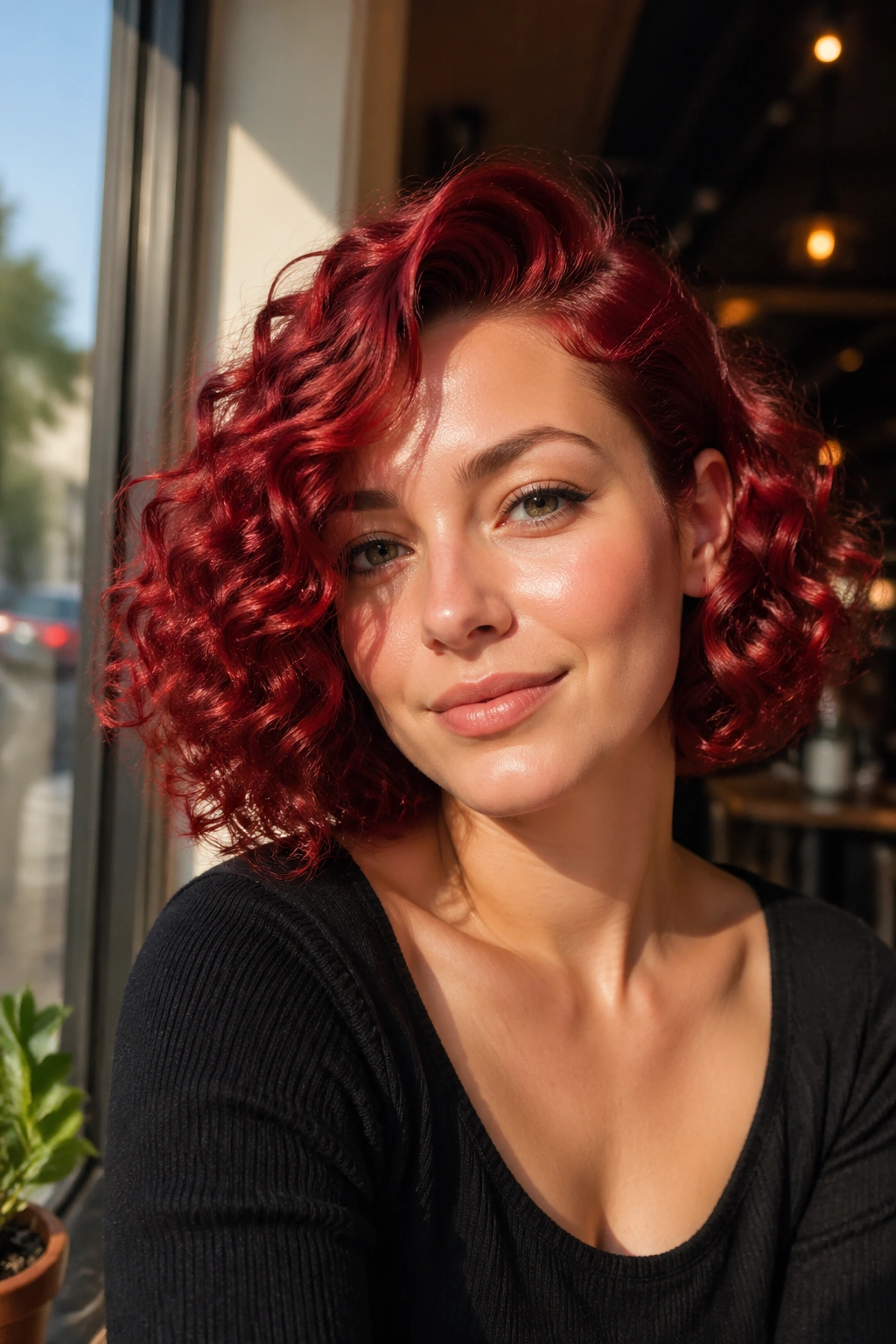
Want the red to hit harder from the first glance? Put it on a side part. Cherry red carries a little more punch than copper, and the side part gives it a shape that feels deliberate instead of loud.
Why the Side Part Helps
A deep side part shifts the volume to one side and lets the curls fall in a clean curve across the forehead. That matters with cherry red because the color already brings attention to the face. The part gives that attention somewhere to land. Without it, the style can read a bit too round.
On a curly bob, cherry red works best when the curls are defined but not stiff. You want bounce, not helmet hair. A curl cream followed by a light gel does the job for most curl patterns, especially if you diffuse until the hair is about 80 percent dry and let the rest air-dry. That last bit keeps the curl clumps soft.
What to Ask Your Stylist For
- A side part placed about 2 to 3 inches off center.
- A root shade that is one level deeper than the mids.
- Longer pieces near the cheekbones so the part has something to fall into.
- A red gloss with blue undertones if you want the cherry shade to look cooler and richer.
The style hits hardest on oval and heart-shaped faces, but the part can be moved a little for balance. Simple move. Big payoff.
3. Auburn Curly Bob with Curtain Bangs
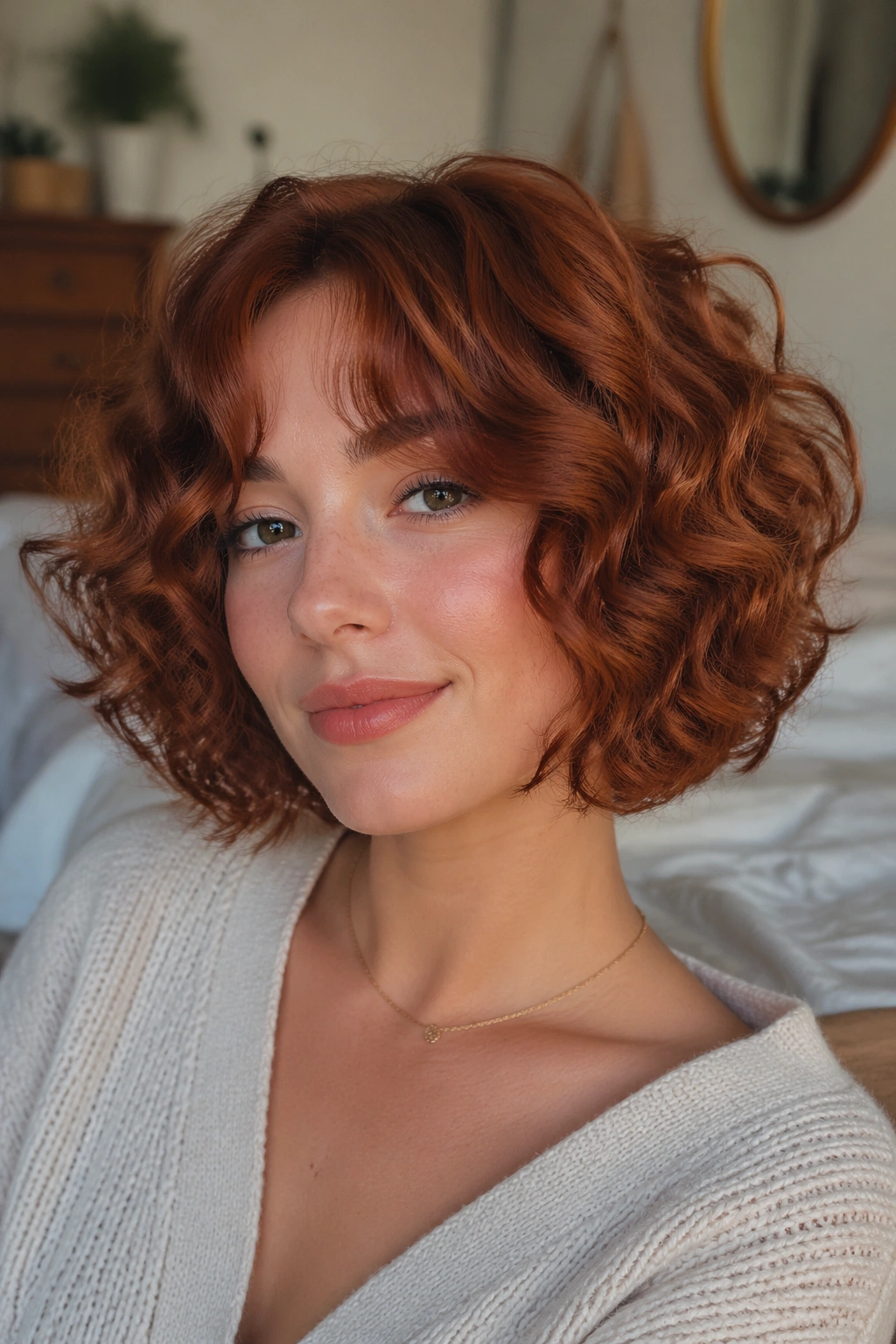
If your curls shrink a full inch or two when dry, curtain bangs can save the whole cut. Auburn gives the bob a softer, more earthy look, and the bangs break up the front in a way that feels relaxed instead of fussy.
Auburn is one of those shades that looks expensive when it’s not trying too hard. It has enough red to stand out, enough brown to keep the tone grounded, and enough warmth to flatter a lot of skin tones without screaming for attention. On curls, that balance matters. Too bright and the bang area can look too busy. Too dark and the shape disappears.
Curtain bangs also help the bob feel less boxy. That’s the real reason I like them here. They open the face, then blend into the front layers so the whole cut moves like one piece. Ask for the bangs to be cut longer than you think you need. Curly fringe always springs upward once it’s dry, and nobody wants bangs floating above the brows unless that’s the goal.
Why Auburn Wins Here
Auburn reads soft in low light and warmer in bright light, which gives the curls more range without extra styling. It’s the kind of red that looks good on day two, too, especially if you refresh the front with a mist of water and a pea-sized amount of leave-in conditioner.
4. Burgundy Curly Bob with a Rounded Shape
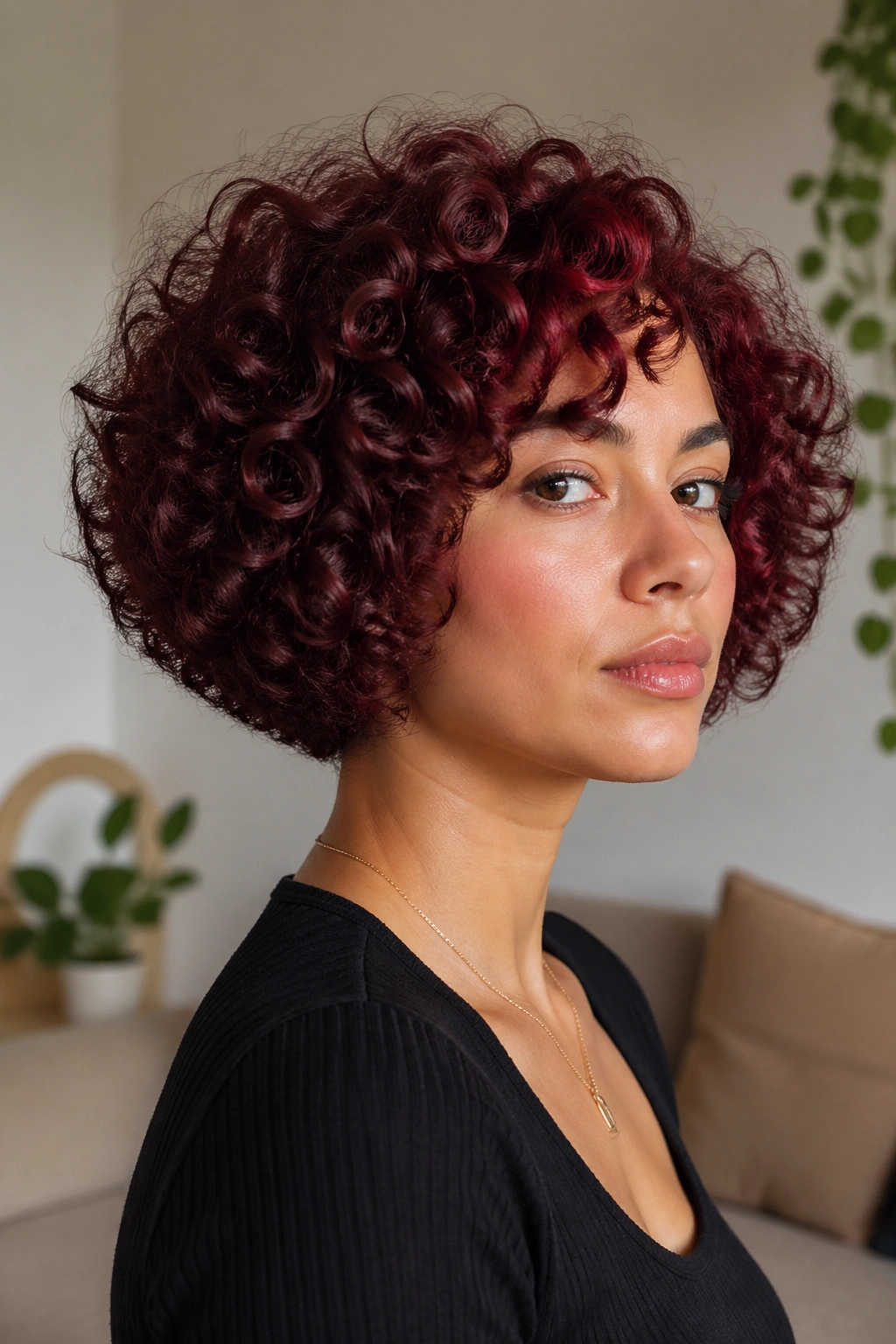
Deep burgundy is the grown-up red that still has attitude. On a curly bob, it looks especially strong when the shape is rounded through the back and gently tucked in at the nape. The result is fuller-looking hair without the puff that can happen when curls are cut too blunt.
The Shape Does Half the Work
A rounded bob lets burgundy settle into the curve of the haircut. The darker tone creates depth in the back, and the lighter catch on the outer curls keeps the style from feeling flat. If the curls are dense, this cut is a lifesaver. If they’re fine, the shape gives the illusion of more bulk without forcing the hair to stand out too far from the head.
Burgundy also behaves well when you want the color to look polished with minimal styling. A wide-tooth comb at the shower stage, a medium-hold curl gel, and a diffuser on low heat are enough for many curl types. You do not need to pile on products. Too much cream can mute the shine and make burgundy look muddy.
Things to Ask For
- A rounded perimeter that sits close to the neck.
- Longer top layers to keep the crown from collapsing.
- A rich burgundy gloss, not a flat plum.
- A shine serum used only on the outermost curls.
This is the shade I’d choose for someone who likes a red bob with a little seriousness in it. Not severe. Just more grown.
5. Ginger Red Curly Bob with Airy Fringe
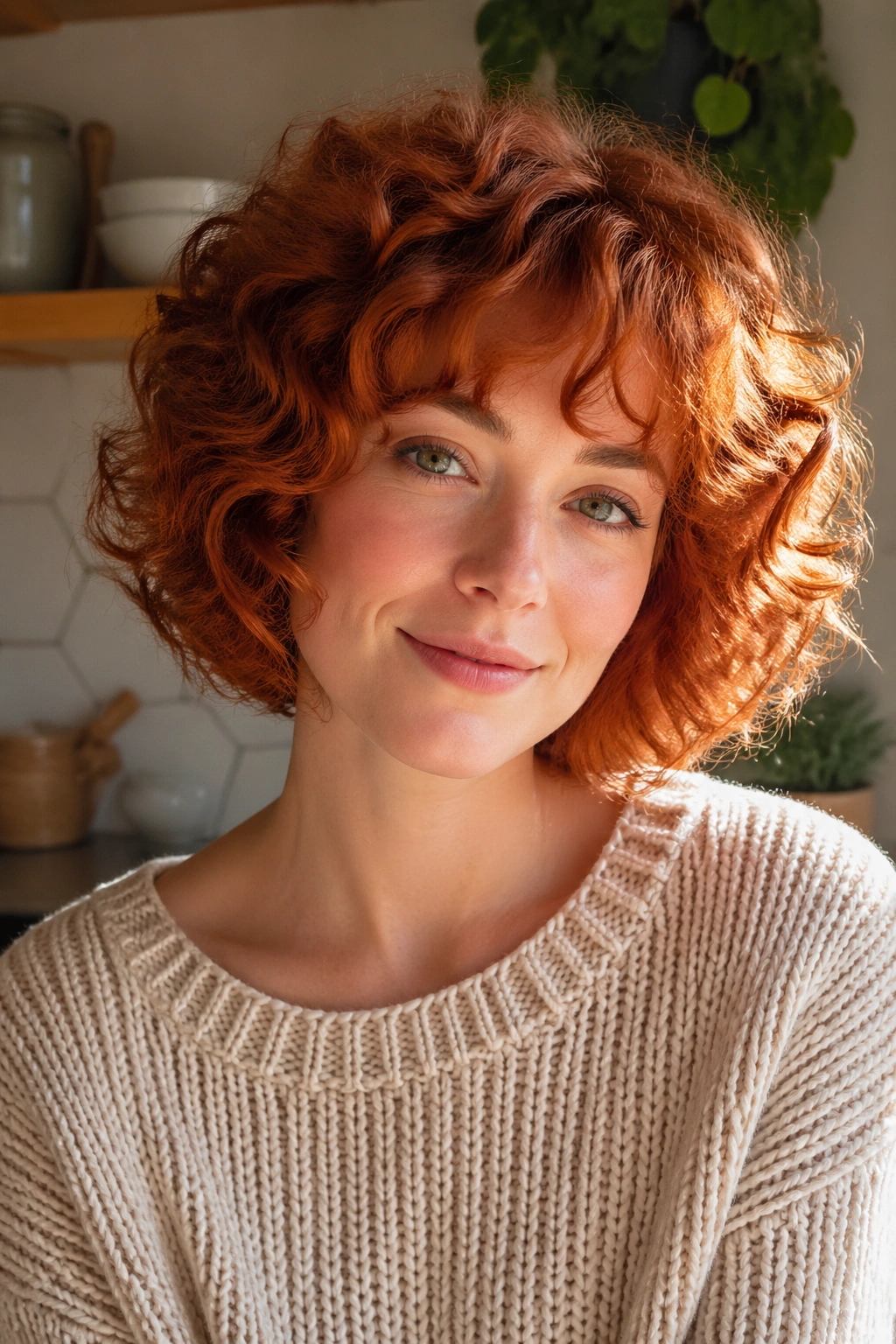
Unlike burgundy, ginger lives on brightness. It has a sunlit quality that makes curls look springy even when the cut is short and simple. On a curly bob, that can be a very good thing.
The airy fringe is the key here. Heavy bangs can swallow ginger’s movement, especially if the curls are loose. A lighter fringe keeps the face open and lets the bob feel fresh rather than crowded. If your curls are tighter, ask for the fringe to be cut in small sections while dry. Wet curls lie. Dry curls tell the truth.
Ginger tends to suit people who like a red that feels playful and a little nostalgic. It’s especially flattering when the hair has natural texture around the hairline, because the fringe and the front curls can blend instead of fighting each other. The shade also likes a bit of root shadow. That tiny bit of depth makes the brightness look intentional.
A diffuser is your friend here. Use low heat, hold the dryer still for a few seconds on each section, and stop as soon as the curls form a soft cast. Then scrunch out the crunch with clean hands. The fringe should land on the forehead, not stick to it.
6. Mahogany Curly Bob with Defined Ringlets
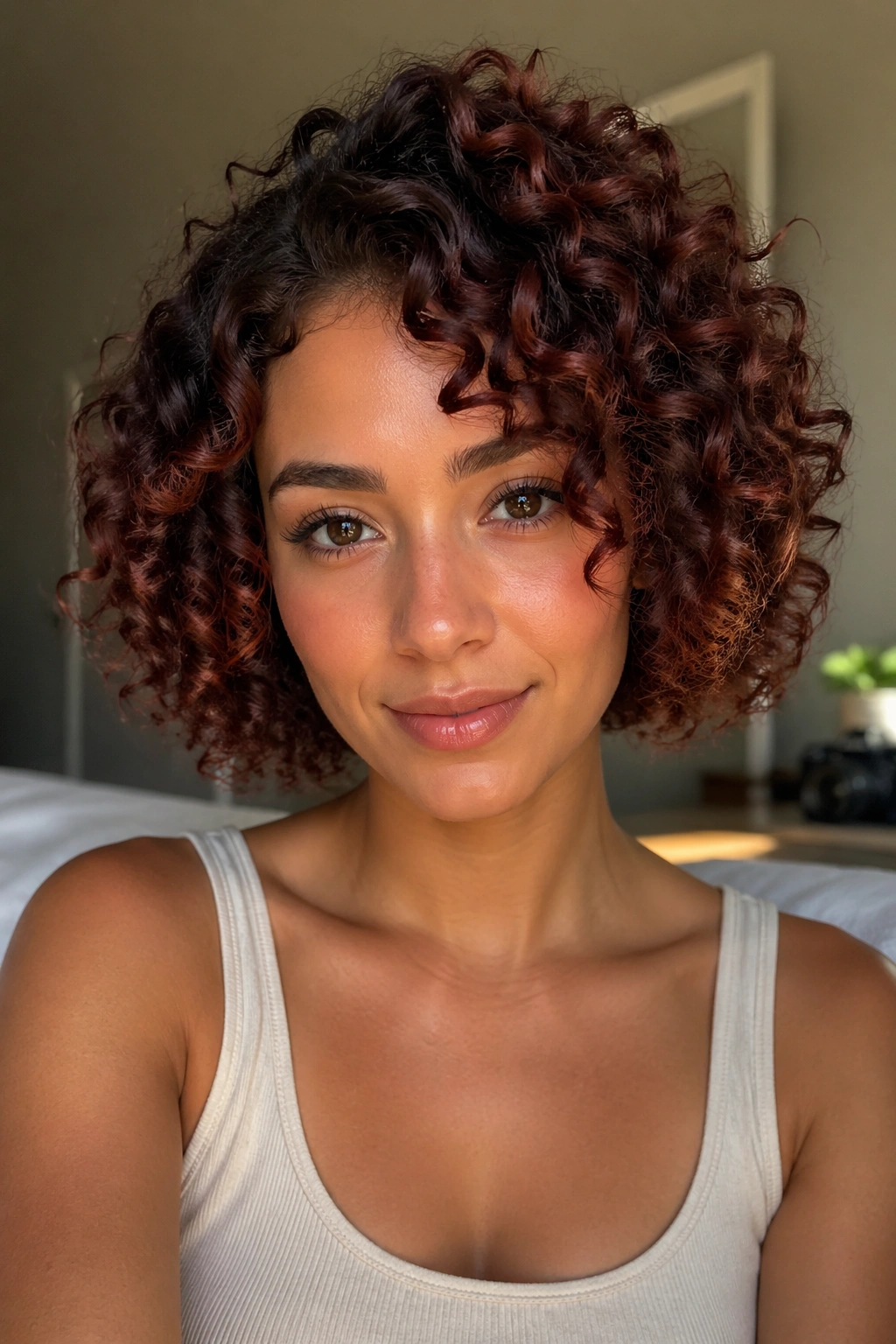
How do you keep a dark red bob from looking flat? Keep the curls defined. Mahogany gives you depth, but the definition gives you shape, and on this cut both matter more than people think.
The Curl Pattern Does the Talking
Mahogany sits in that sweet spot between brown and red, which means it can look elegant without losing warmth. The risk is dullness. If the ringlets are fuzzy or stretched out, the color can sink into the cut and disappear. Tight, clean curl clumps solve that problem fast.
A leave-in conditioner, followed by a curl cream and a medium-hold gel, helps the ringlets hold their shape from root to tip. Use a microfiber towel or a cotton T-shirt to squeeze out water before styling. Rubbing the hair roughs up the cuticle and steals shine. That matters more with dark reds because shine is what keeps the shade visible.
How to Keep It Sharp
- Use a small amount of product so the curls stay springy.
- Diffuse on low speed until the cast forms.
- Separate only a few curls at the crown, not every single one.
- Refresh with water and a drop of oil on day two.
Mahogany is a good pick if you want something rich and low-drama. It’s quiet, but not boring. There’s a difference.
7. Ruby Balayage Curly Bob
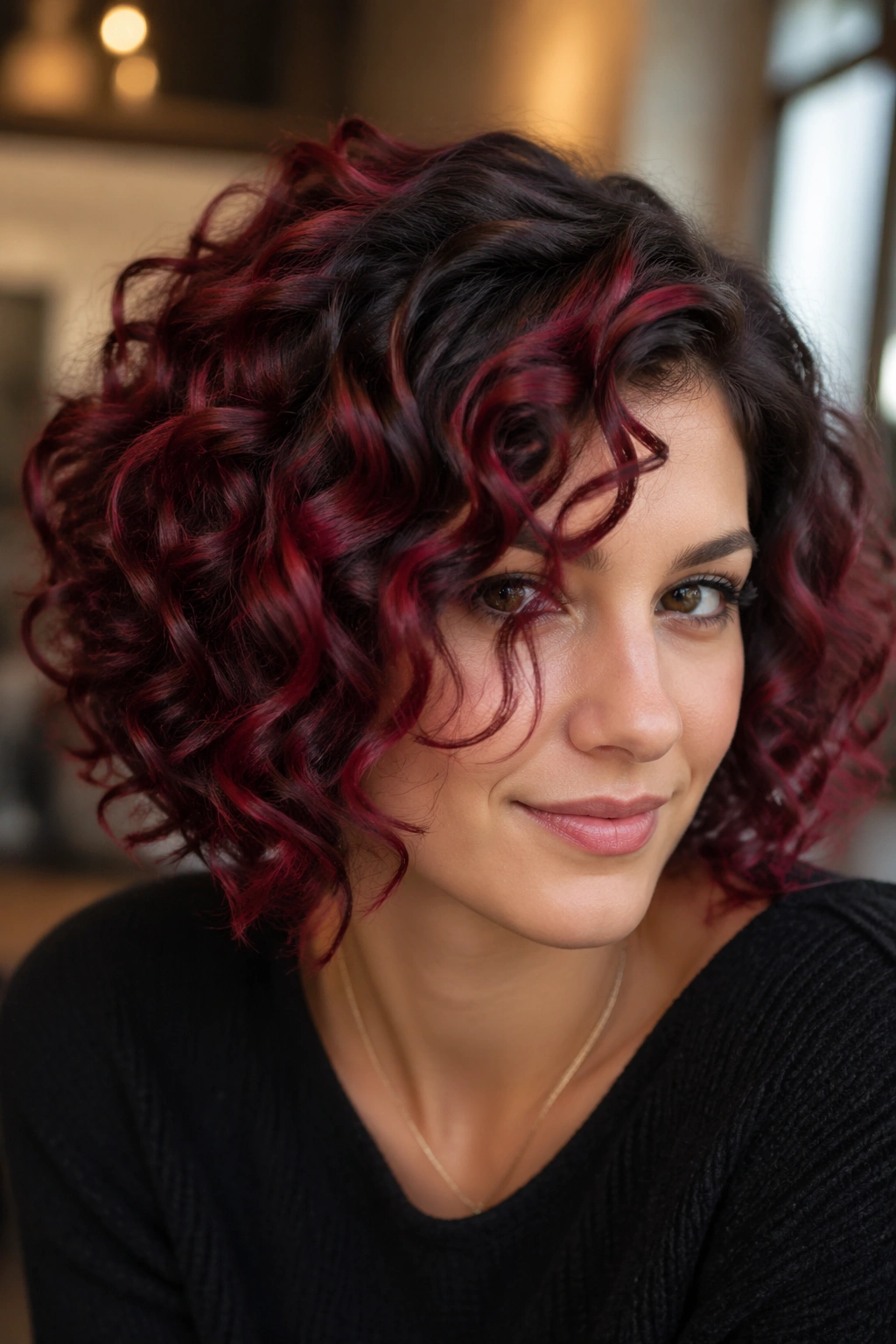
Picture a dark base with ruby ribbons running through the top layer of curls. That’s the whole point of ruby balayage on a bob — depth underneath, glow on top, and enough contrast that the curls show movement from across the room.
Balayage works well here because curls don’t lay flat. Painted pieces soften into the curl pattern instead of forming hard lines. A few brighter ruby panels around the crown and front corners can lift the whole cut without turning the head into a solid red block. If the base is natural brown or dark auburn, the effect feels even richer.
The placement matters more than the exact shade. Bright pieces near the face bring attention forward. A few narrower pieces through the back keep the color from looking overdone. That’s the part a lot of people miss. Too many red ribbons and the bob starts to lose its shape. Too few and you can’t see the dimension once the curls dry.
A ruby balayage bob needs a color-safe shampoo, cool water, and a gloss refresh when the brighter pieces start to look faded. The curl pattern will keep the color interesting, but only if the shine stays in place.
8. Rust Red Curly Bob with Piecey Ends
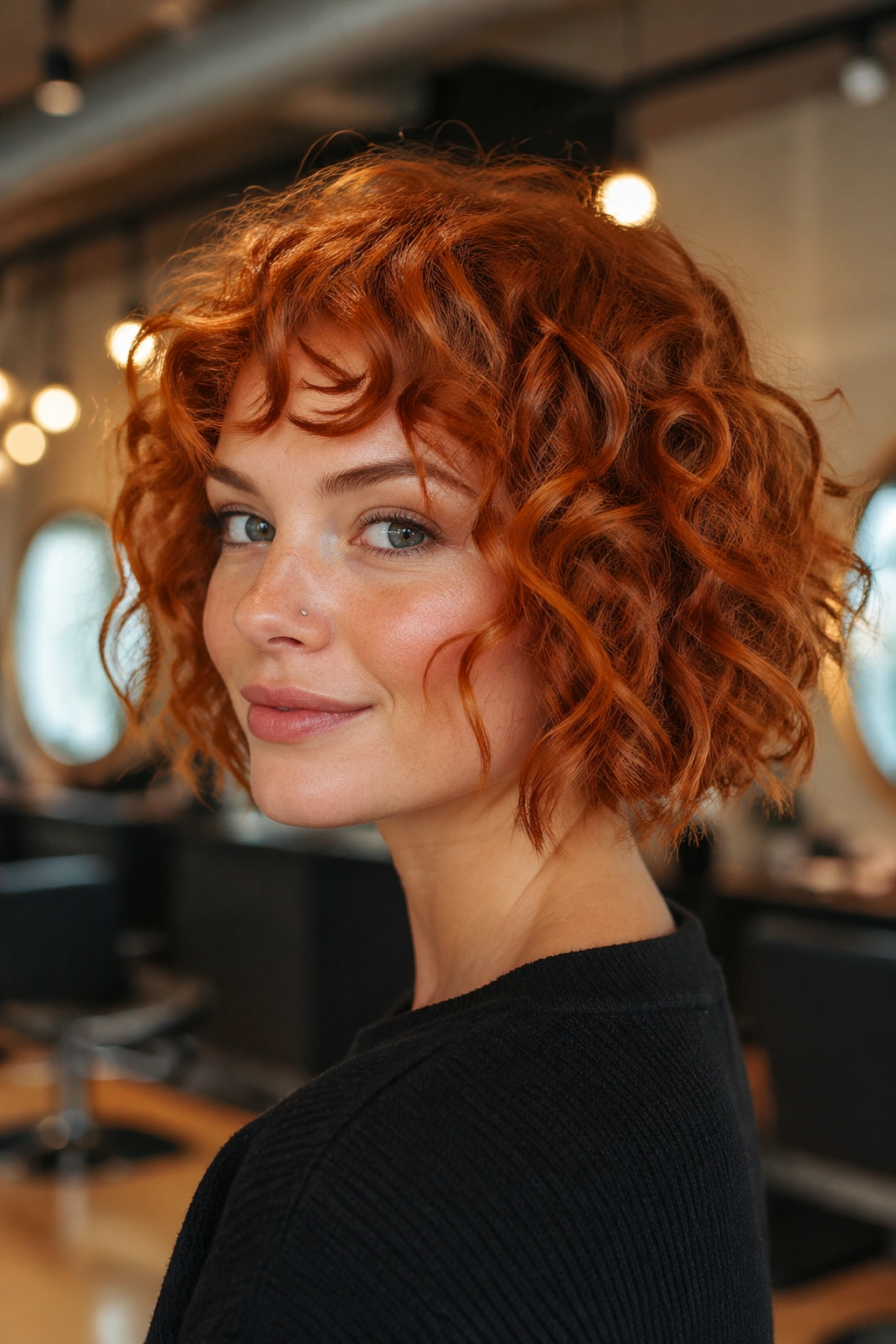
Rust red can look rough in a photo and gorgeous in person. It has that earthy, slightly burned tone that makes curls feel textured instead of polished to death. On a curly bob with piecey ends, it gets even better.
Why the Ends Matter
Piecey ends stop the bob from turning into one round puff. They create little breaks in the silhouette, which lets the red catch the light in smaller spots. That’s especially useful with rust tones, because the color shines when there’s separation. A blunt finish would take away half of what makes the shade interesting.
Ask for point-cut ends rather than a hard line. Point cutting removes weight in tiny bites, so the curls fall with more movement. This is one of those haircut details that sounds tiny and ends up changing everything. The bob feels lighter. The color shows more. The whole shape looks less buttoned-up.
Good Match For
- Hair that holds curl well but needs movement at the ends.
- People who like a lived-in finish rather than a sleek one.
- Medium to deep skin tones that can handle warm rust notes.
- A low-maintenance styling routine with air-drying and light scrunching.
Rust red is not the glossy-salon answer. It’s the more interesting answer. There’s some grit in it, and that’s part of the charm.
9. Wine Red Curly Bob with a Deep Side Sweep
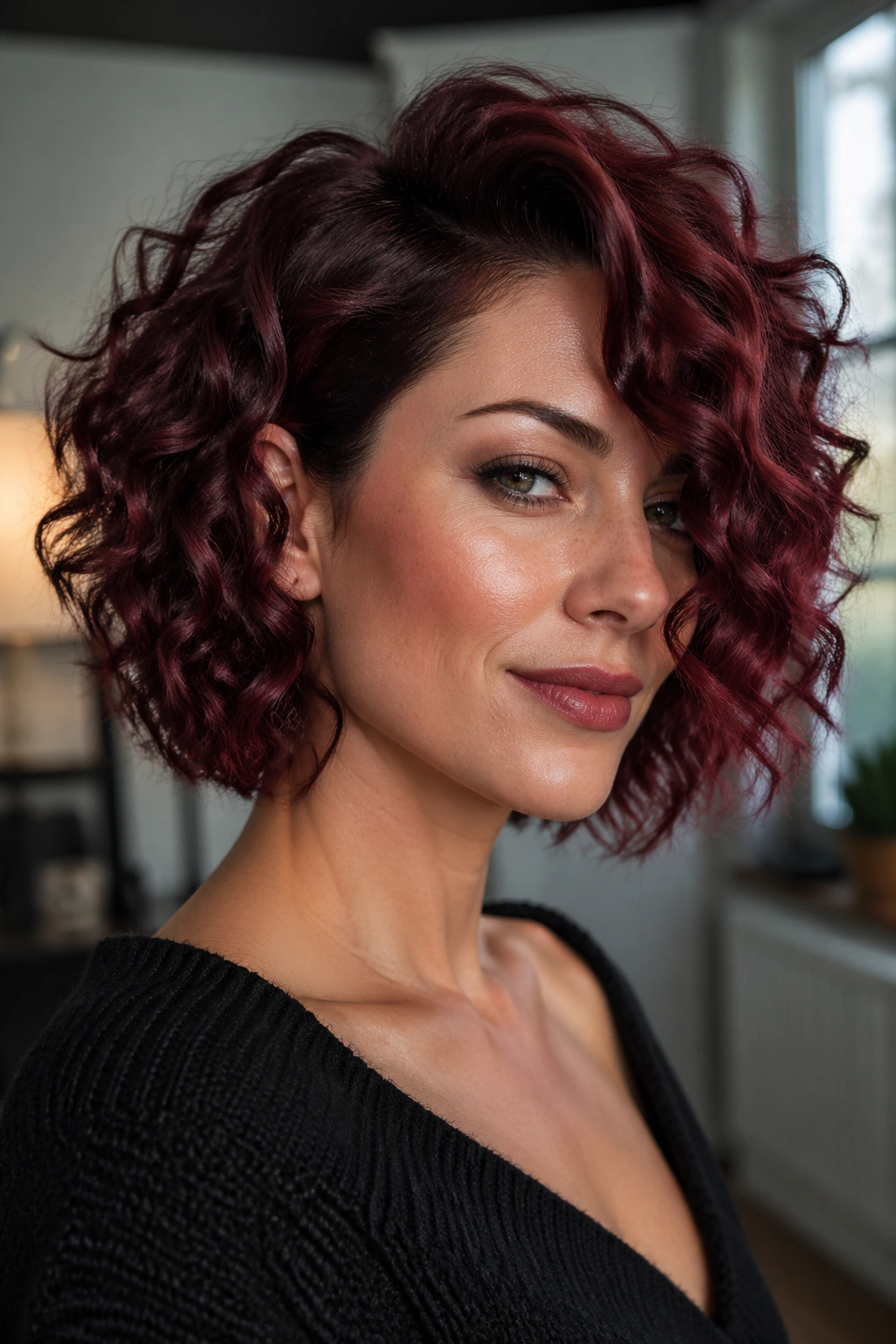
Dry curls and wine red do not get along. The color needs shine, and the curls need enough slip to keep the ends from looking thirsty. Give it both, and the result is moody in a good way.
A deep side sweep makes wine red feel intentional. It pulls the eye across the face and gives the color a strong line to follow, which helps on curly bobs that might otherwise spread outward too much. The sweep also exposes one side of the neck and cheek, so the cut feels lighter even when the color is deep.
Wine red tends to flatter people who like richer shades and less brightness around the face. It’s dramatic, but not flashy. If the curls are loose, the sweep can be soft and romantic. If the curls are tighter, the style looks sharper and a bit more editorial. Both work. The difference is mainly in the finish.
Use a nourishing mask once a week and keep heat low. That sounds boring because it is boring, but it matters. Dark reds show dry ends fast, and curly bobs put the ends right where everyone can see them.
10. Two-Tone Red Curly Bob
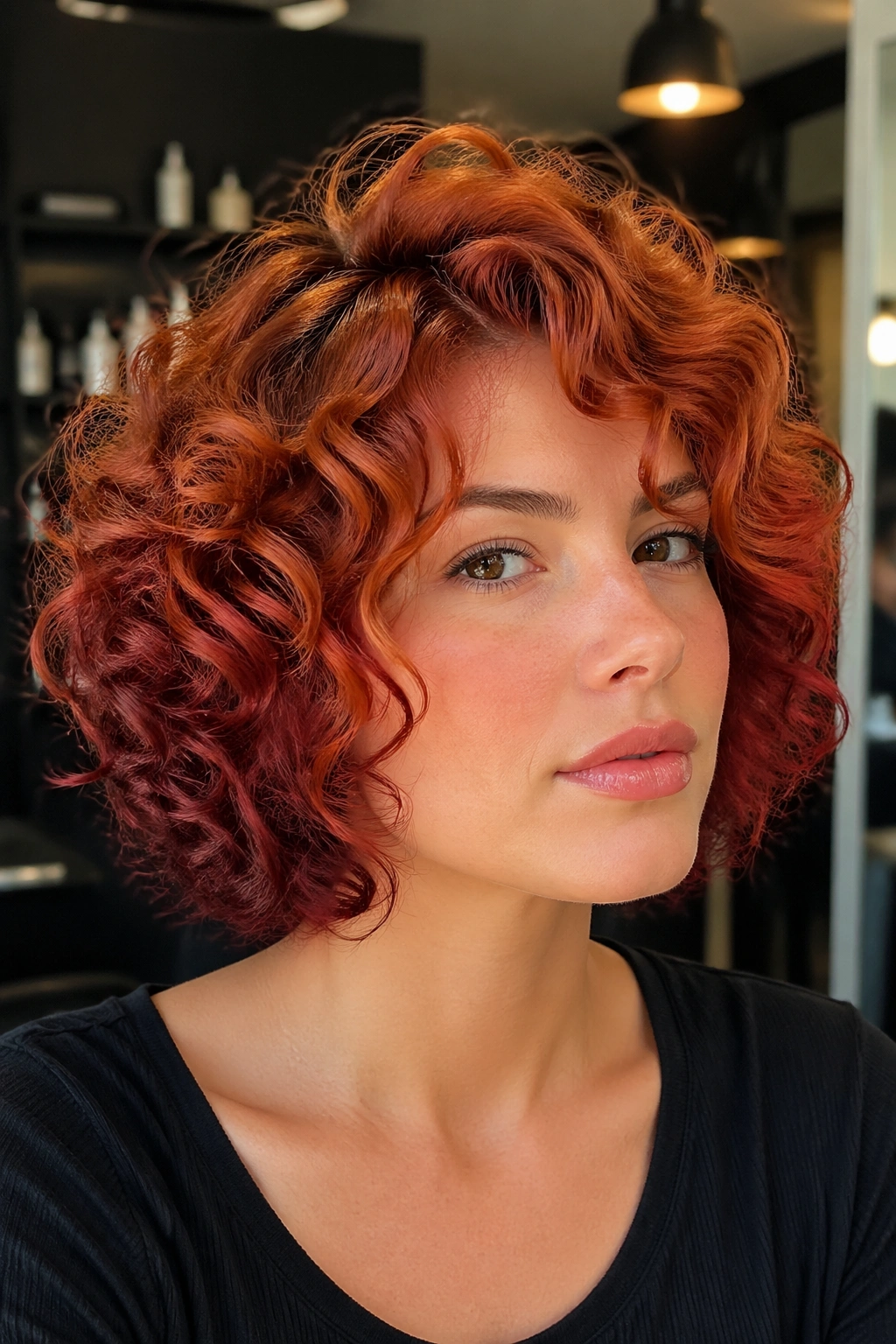
A two-tone curly bob gives you contrast without needing a huge cut or a huge color change. Think copper on top with auburn underneath, or cherry red over a darker root and midsection. The point is movement. Every curl turn reveals a different shade.
What Makes It Different
Unlike a single-process red, a two-tone bob creates visible depth even when the curls are tight. The top color catches the eye first. The lower color keeps the haircut from going flat. That means the shape still looks interesting on day three, when the curls have loosened a little and the crown has lost a bit of volume.
This style also lets you play with brightness without committing to one loud tone all over. If you want red, but not all-over red, this is the move. A darker underlayer can soften the grow-out line, too, which is a relief if you’d rather not live at the salon.
What to Ask For
- A root color at least one shade deeper than the top layer.
- A visible contrast of 2 to 3 levels, not a tiny tint shift.
- Face-framing pieces in the lighter shade.
- A gloss that keeps both tones tied together.
It’s a smart choice for curly hair because curls love contrast. Flat hair can hide it. Curls show it off.
11. Short Red Curly Bob with Micro Bangs
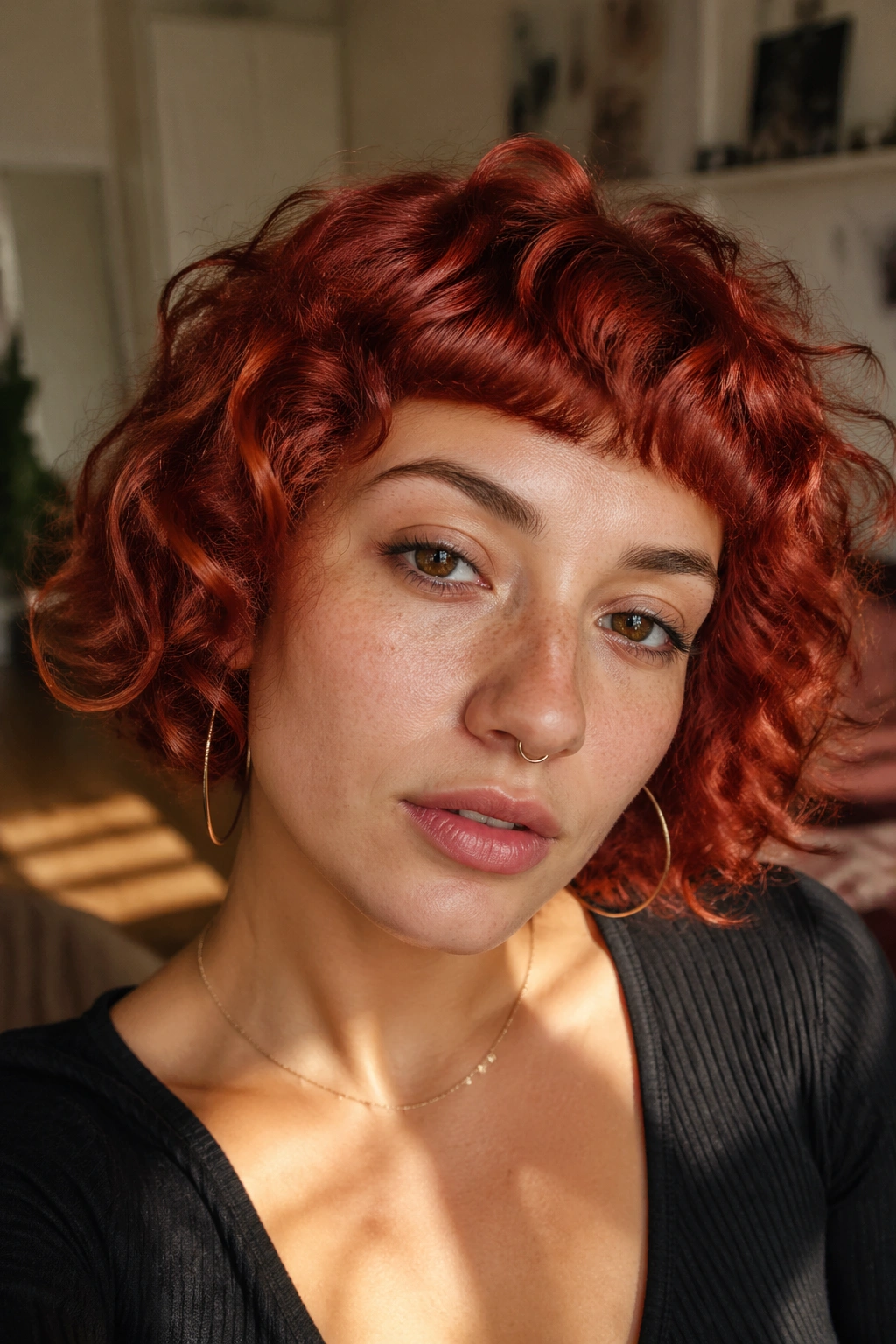
Micro bangs are not shy, and neither is this cut. On a short red curly bob, they give the whole style a sharp edge that feels playful, a little strange, and honestly pretty fun when it’s done well.
The haircut only works if the bangs are cut with shrinkage in mind. That means dry cutting, or at least cutting the fringe longer than it looks like it should be. Curly bangs bounce up fast, and if they’re too short the whole face can lose balance. Keep the bob short enough to show the neck, but leave the crown with enough length to soften the top.
Red hair makes micro bangs feel less severe than they can on dark hair. Copper and bright auburn keep the look lively. A deeper red can make it feel more fashion-forward and a little tougher. Either way, the shape needs structure. A little mousse at the roots and a light gel through the fringe usually does enough.
This is not a wash-and-go cut for everyone. It needs trims more often than a longer bob, and the bangs need a quick restyle on most mornings. If you like hair that has personality first and convenience second, this one makes sense.
12. Curly Bob with Copper Face-Framing Pieces
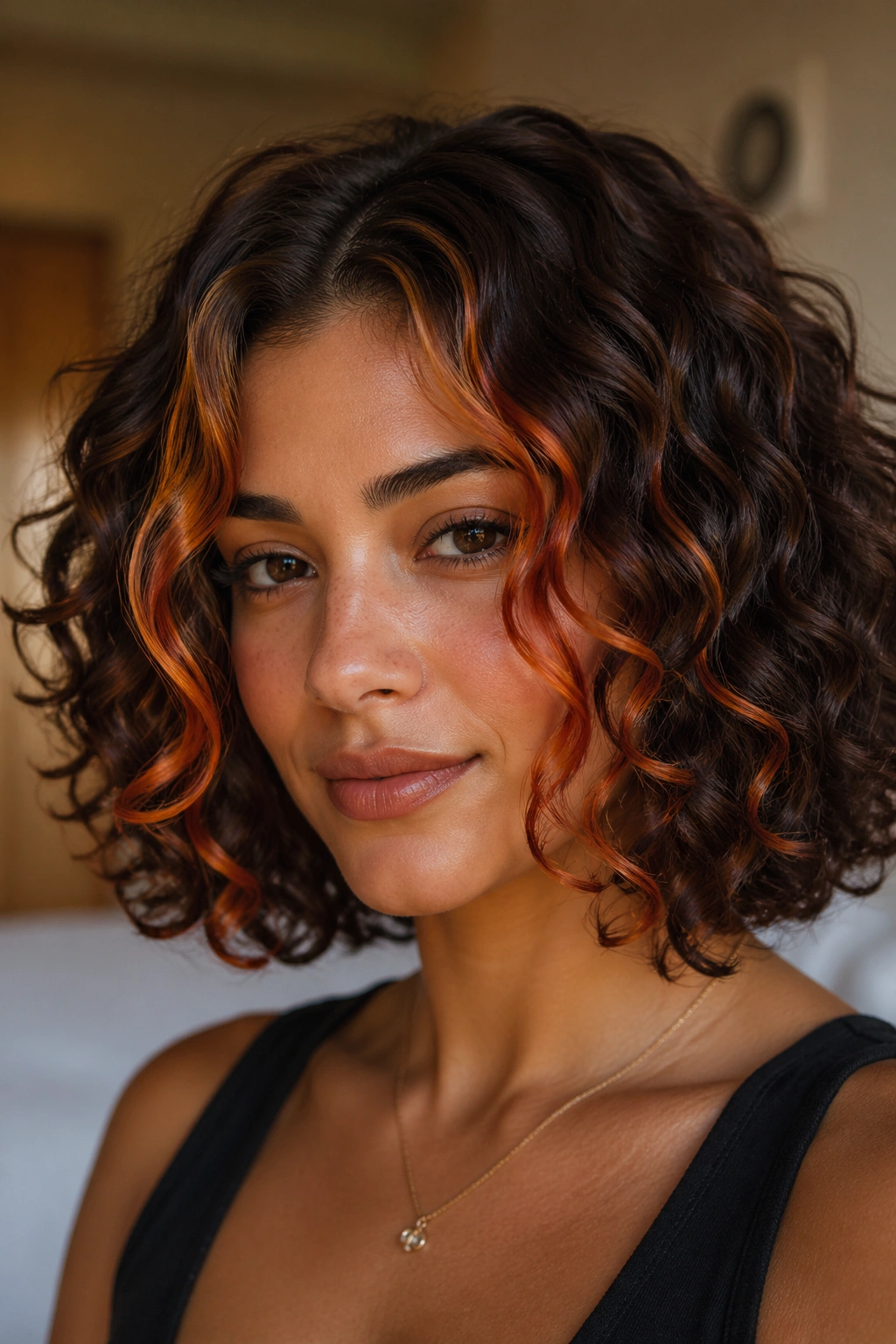
Face-framing pieces can rescue a curly bob faster than almost any other color move. Add copper around the front, and the whole cut looks brighter, softer, and more deliberate without changing the base color much.
Why the Front Pieces Matter
The front curls are the ones people see first. They sit near the eyes, cheekbones, and jaw, so even a small shift in color changes the whole mood. Copper face-framing pieces can lighten a dark red bob, warm up a brunette curly bob, or give a plain copper cut a little more contrast. The effect is strongest when the pieces start around the cheekbone and melt down into the bob instead of stopping in one hard line.
This style is also a good choice if you want a low-commitment red. The color is visible, but it doesn’t cover every strand. That means grow-out is easier, and the maintenance is lighter than with a full bright red. Nice trade.
How to Wear It Well
- Keep the front pieces one to two shades lighter than the base.
- Ask for soft placement around the temples and jawline.
- Use a small round diffuser attachment to keep the front curls separate.
- Refresh the pieces with a color-depositing gloss when they start to dull.
Copper near the face has a way of waking up the whole haircut. It’s subtle from a distance. Up close, it does the heavy lifting.
A red curly bob works best when the cut and shade agree with each other. Bright shades need shape. Deep shades need shine. Soft layers, smart placement, and the right amount of curl definition do more than any trend label ever will.