



Long 2c curls have a funny habit of looking easygoing right up until they aren’t. One bad cut, too much cream, or a style that pulls too hard at the roots, and suddenly the whole shape tilts wide at the sides and flat at the crown.
Heavy products are usually the first culprit. So is a blunt, one-length shape that gives the hair no room to move.
The nicest long hairstyles for 2c curly hair usually do two things at once: they keep the wave pattern loose enough to breathe, and they give the outline some structure so the ends don’t look thin or straggly. A little lift at the roots helps. So does a cut that respects the natural bend instead of fighting it.
That’s why long 2c hair can look better in a soft U-shape than in a heavy curtain of length, and why half-up styles, side parts, braids, and low ponytails tend to behave better than styles that pinch the whole head tight. The trick is not forcing the texture into submission. It’s choosing a shape that makes the texture look deliberate.
1. Long U-Cut With Soft Layers
A long U-cut is one of the safest bets for 2c hair because it keeps the outline soft while still letting the ends look full. Straight-across cuts can make wavy hair feel boxy. A gentle U shape does the opposite.
Why It Works
The curved hem gives the eye a cleaner line, especially when the hair falls over the shoulders. Soft layers start taking some weight out of the middle without chopping the top into pieces that puff out at the wrong spots. That matters a lot if your waves are fine to medium and collapse when they get too much product.
If you’ve ever felt like your hair looks thick at the sides but thin at the bottom, this cut helps correct that. The curve keeps the length, and the layers stop the bottom from looking blunt and dry.
What to Ask For
- A long U-shaped perimeter that lands below the shoulders.
- Face-framing layers that start around the cheekbone or jaw.
- A dry cut, or a cut on hair that’s only lightly damp, so the stylist can see the wave pattern.
- No short crown layers if your roots already sit flat.
Tip: Ask for movement, not volume for volume’s sake. The goal is shape that falls well on day one and day three.
2. V-Cut With Face-Framing Pieces
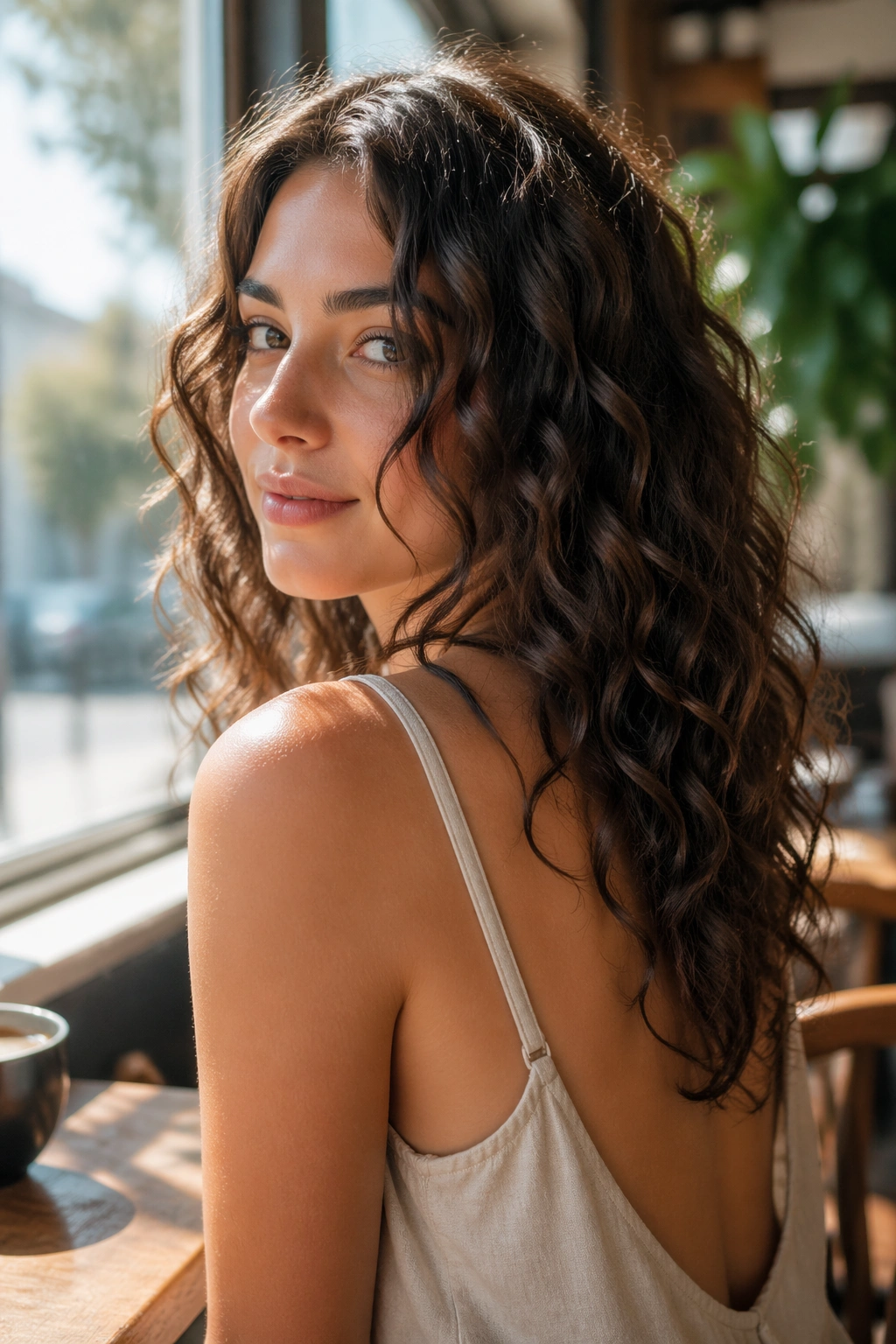
The V-cut is the quiet fix for hair that feels too wide at the bottom and too heavy on the back. It gives long 2c curls a little more direction, which is useful when the strands want to spread out instead of stack neatly.
The back falls in a softer point, so the length reads longer without needing extra inches. That’s the part people notice first, even if they can’t name why it looks cleaner. The front pieces matter too. If they’re cut at collarbone level or just below the chin, they keep the face from getting swallowed by one long sheet of texture.
This cut works best when your hair has some density. On finer 2c hair, a dramatic V can make the ends look thin if the stylist removes too much weight. A subtle V is usually enough. You want the silhouette to taper, not disappear.
I like this shape for hair that fluffs out at the shoulders. The point gives the eye a place to land. Without it, long waves can feel a little shapeless, especially when they dry with the same width from top to bottom.
3. Long Shag With Airy Crown Layers
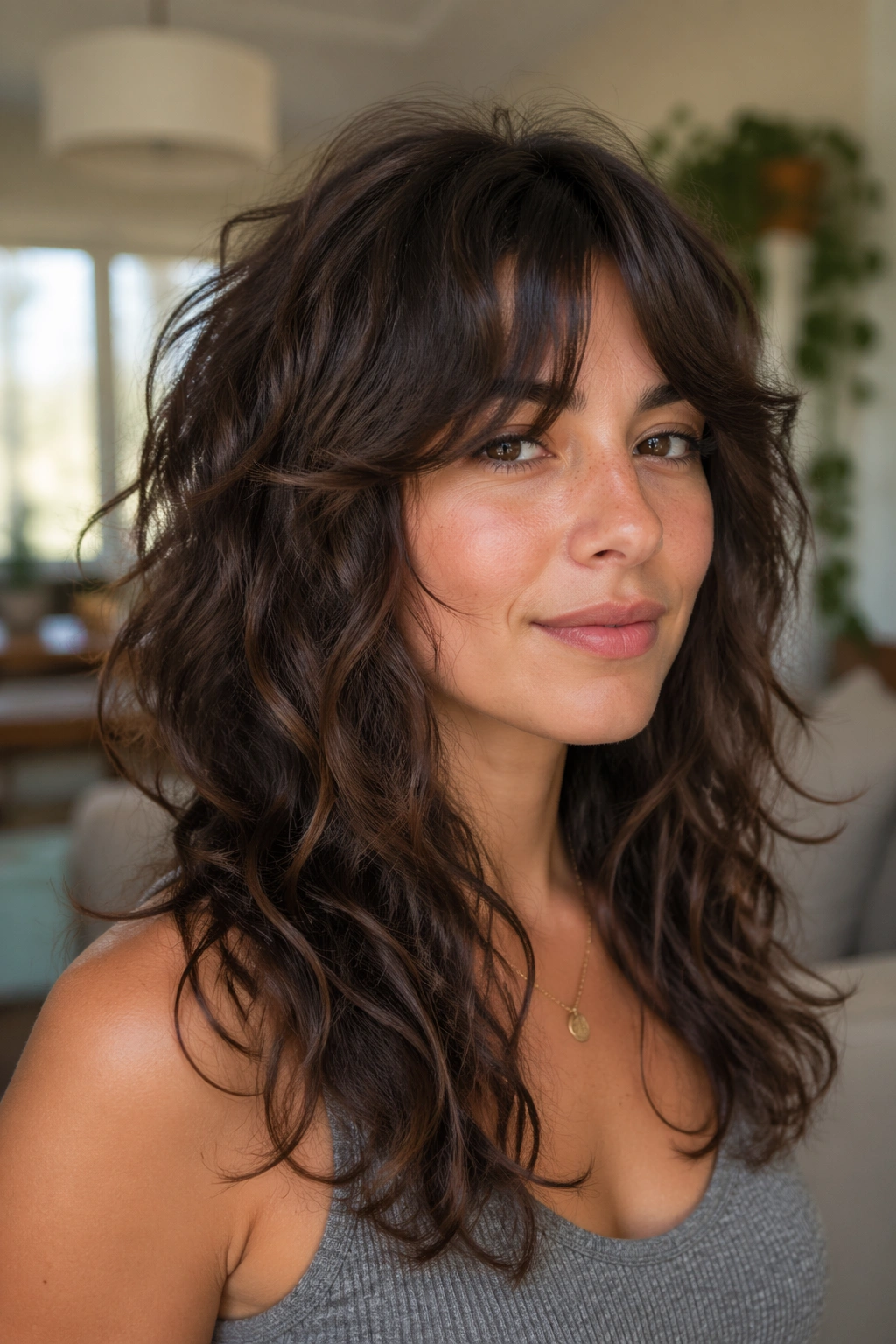
Why does a shag work so well on 2c hair? Because 2c texture usually wants movement more than it wants uniformity. A long shag gives you that movement without turning the whole cut into a cloud.
The best version keeps the crown layers airy and the bottom length intact. That combination matters. If the top layers are too short, the hair can spring up around the face and make the head look wider than it really is. If the layers are too timid, the shag loses its edge and turns into a slightly messy long cut. Nobody wants that middle ground.
How to Wear It
- Work mousse through damp roots and scrunch the mid-lengths once.
- Diffuse on low heat until the hair is about 80% dry.
- Leave the crown alone while it sets. Too much touching there creates frizz fast.
- Pick out only the front pieces with your fingers if you want a softer shape.
A long shag is for the person who likes a little edge, but not a lot of fuss. It looks especially good when the wave pattern is loose and irregular. That unevenness is the point.
4. Curtain Bangs That Blend Into Long Waves
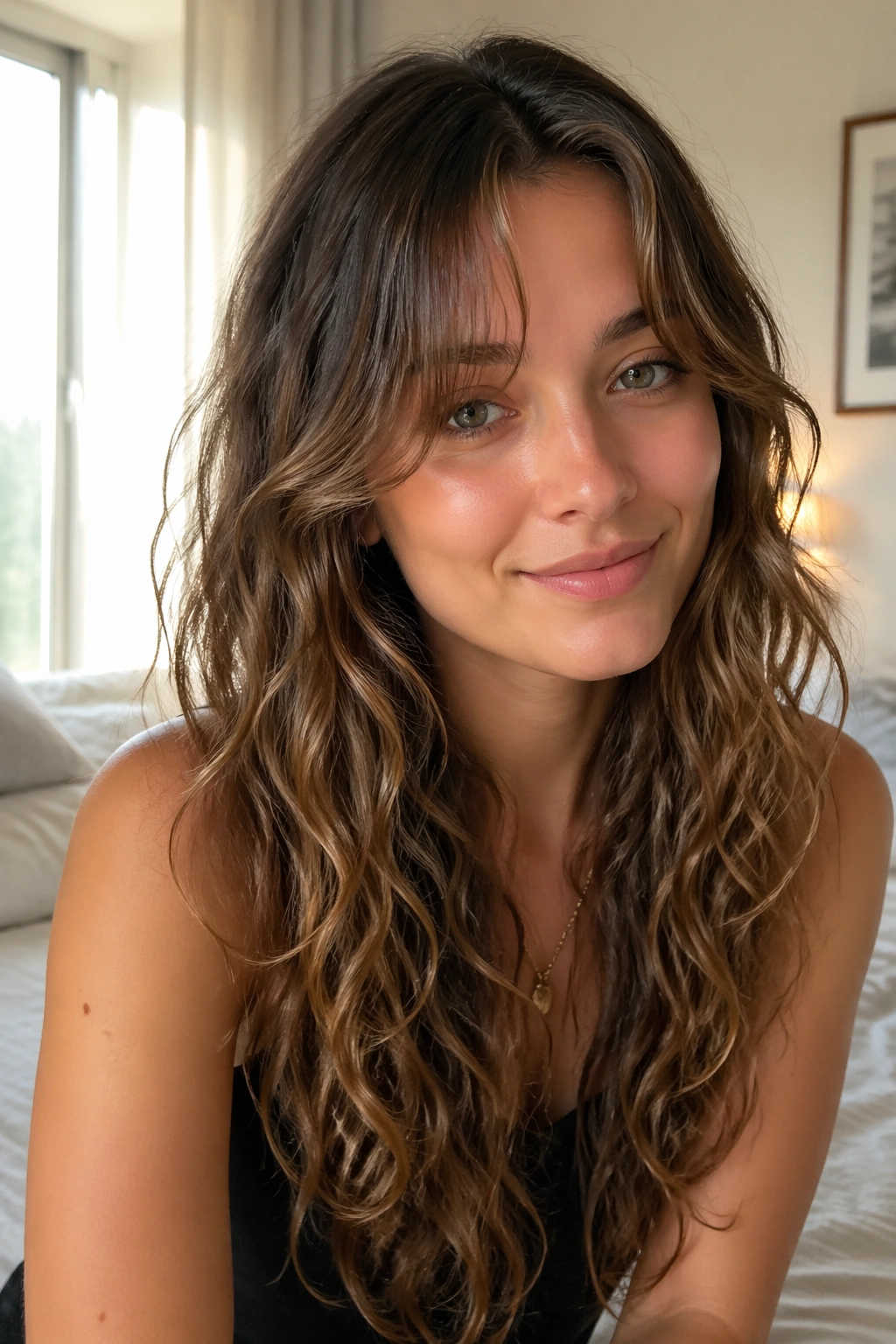
Curtain bangs and 2c hair get along better than people expect, but only when the bangs are cut with enough length to move. Too-short bangs on this texture can spring upward and sit like a shelf. That is a hard look to recover from.
The safer version starts around the cheekbone and slides into the front layers. The split in the middle lets the bangs fall away from the face instead of fighting your forehead. On long 2c hair, that matters because the bangs shouldn’t look like a separate haircut attached at the front.
The nicest part is how easily they grow out. When the front pieces are already long, you can tuck them behind the ear, sweep them into a clip, or let them fall into the rest of the wave pattern. No awkward line. No panic.
- Ask for long curtain pieces, not blunt fringe.
- Keep the shortest point below the eyebrow if your hair shrinks a lot.
- Blend the side pieces into the first layer of the haircut.
- Dry them side to side while they’re still damp so they don’t split oddly.
Curtain bangs are a smart move when you want a change without losing the feeling of length.
5. Deep Side Part With Side-Swept Lengths
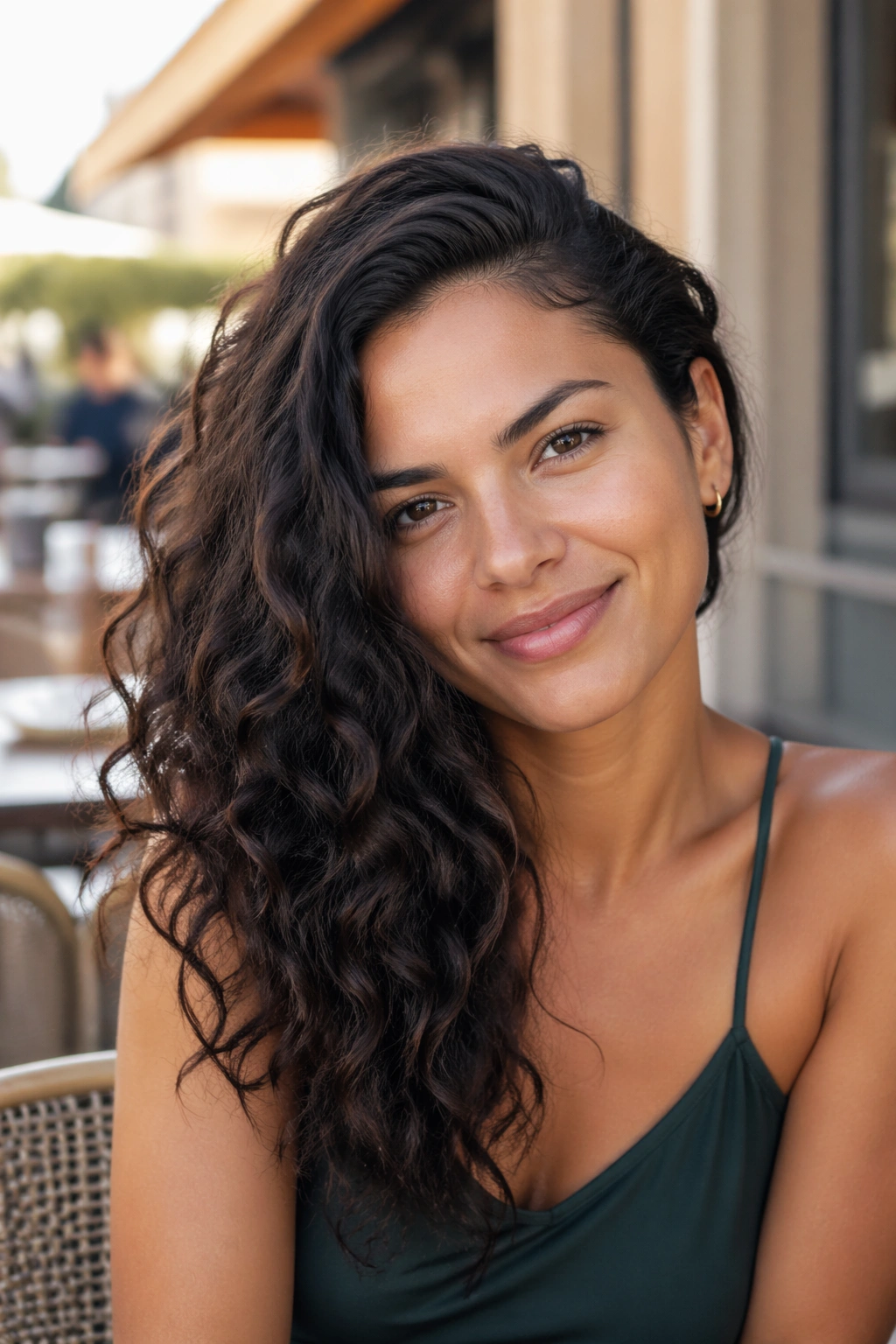
A deep side part can make 2c hair look instantly more intentional. It gives the roots lift on one side and lets the waves fall into a longer, cleaner shape on the other. That little shift matters more than people think.
The style works especially well when your hair tends to split down the middle and puff at the temples. Move the part a few inches off center, clip the heavier side at the root for ten minutes while it dries, and the whole shape settles differently. The wave pattern falls with more direction. The top stops looking so flat.
There’s also a small bonus here: a side part can make long layers look richer. A center part sometimes exposes every uneven end. A side part softens that. It hides a little frizz too, which is never a bad thing.
If you want the look to last, choose where the part lives while the hair is still damp. Once it dries, 2c texture tends to remember the shape. That’s useful when you want control and not a stiff, overworked finish. A single bobby pin hidden behind the ear on the heavier side can keep the lift in place without making the style look pinned down.
6. Half-Up Twist With Loose Ends
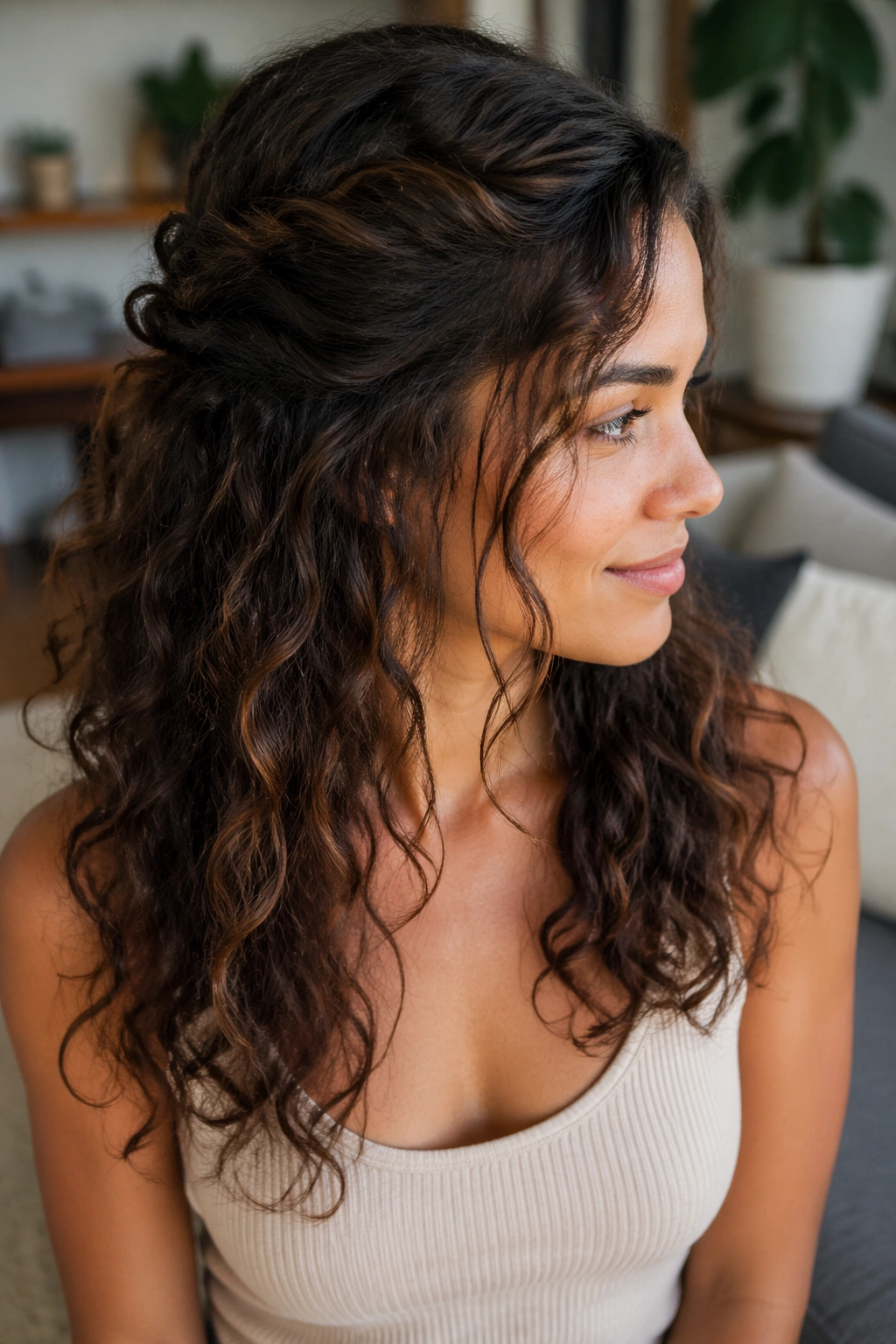
Unlike a full ponytail, a half-up twist lets you control the crown without losing the whole length. That’s a big deal for 2c hair, which often looks best when some of the wave hangs free.
Twist two sections from the temples back toward the crown, cross them once, and pin them low at the back of the head. Leave the rest down. Simple. The upper section gets structure, the lower section keeps its movement, and the whole thing feels lighter than a bun or a tight tie.
This is a good style for second-day hair when the roots are starting to misbehave. It also works when the front is a little flatter than the rest and needs a lift. The twist gives you height without crushing the wave pattern at the bottom.
The best version is never too slick. If you pull the top tight, the style starts looking formal in a stiff way. Leave a little softness around the temples and let a few front pieces bend out. That small mess is what makes it look real instead of rehearsed.
If you need a cleaner finish, mist the twist with a light spray and pinch the ends of the loose hair once. That’s usually enough.
7. Claw-Clip Half-Up Style
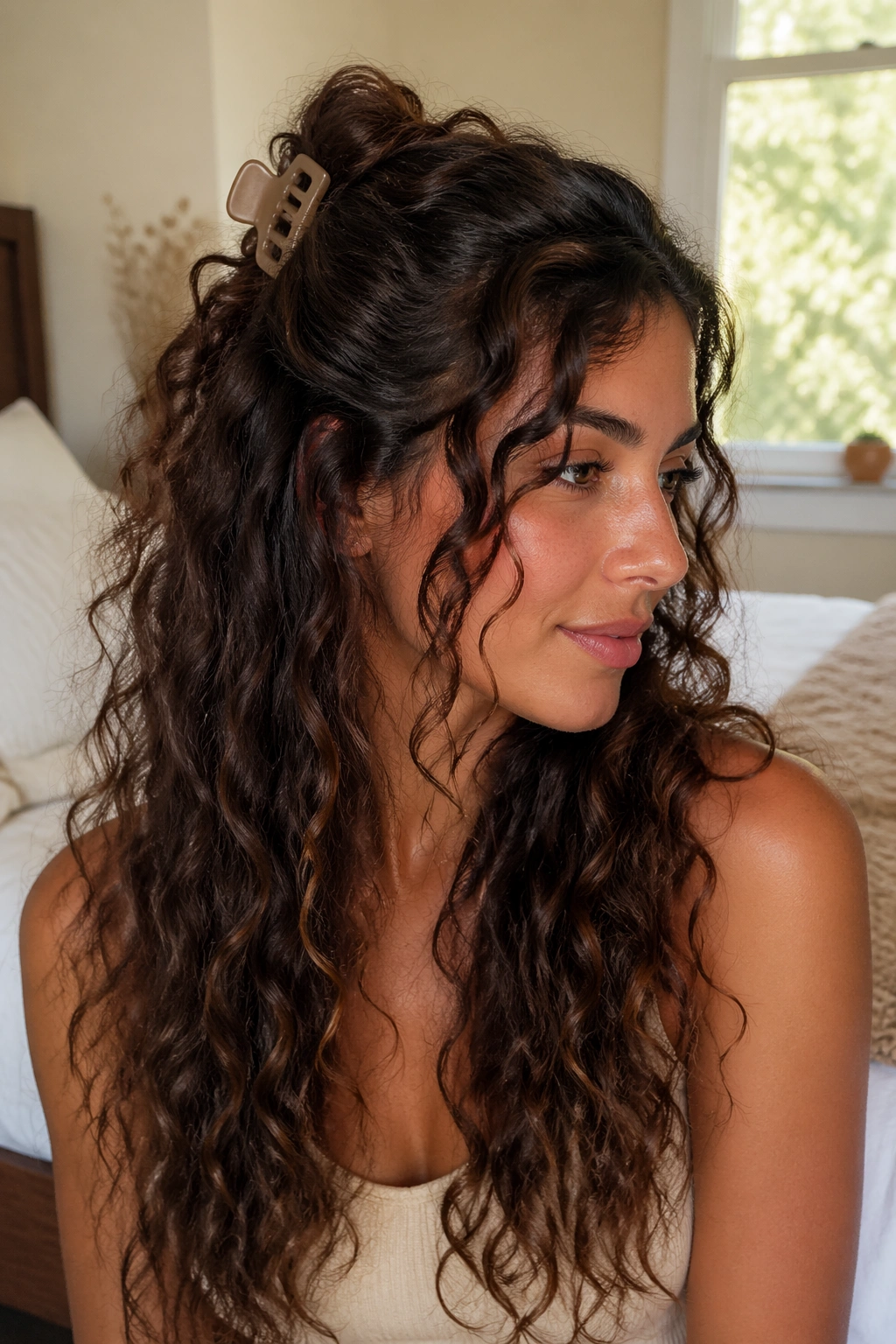
A claw clip can save a rough hair day, but only if you use it like a tool and not like a trap. On long 2c hair, the trick is to catch the top section without flattening the rest of the head.
Gather hair from just above the ears, twist it once, and let the ends spill out of the clip. Don’t tuck every last inch in. That’s where the shape gets squashed and the style starts looking like an afterthought. A medium-sized claw clip, with teeth long enough to hold slippery waves, usually works better than a giant one that slides around.
This style is good when you want the length visible but the crown controlled. It keeps the face open, and it doesn’t ask the hair to be perfectly smooth. Honestly, that’s why I like it. 2c hair often looks best when it’s not being bullied into sleekness.
A few quick details make a difference:
- Choose a medium claw clip with a strong spring.
- Twist the top section only once or twice.
- Leave 2 to 3 inches of ends outside the clip.
- Pull a little volume back at the roots after clipping.
That last step matters. A tiny lift at the temples keeps the style from looking too tight.
8. Low Curly Ponytail With a Wrapped Base
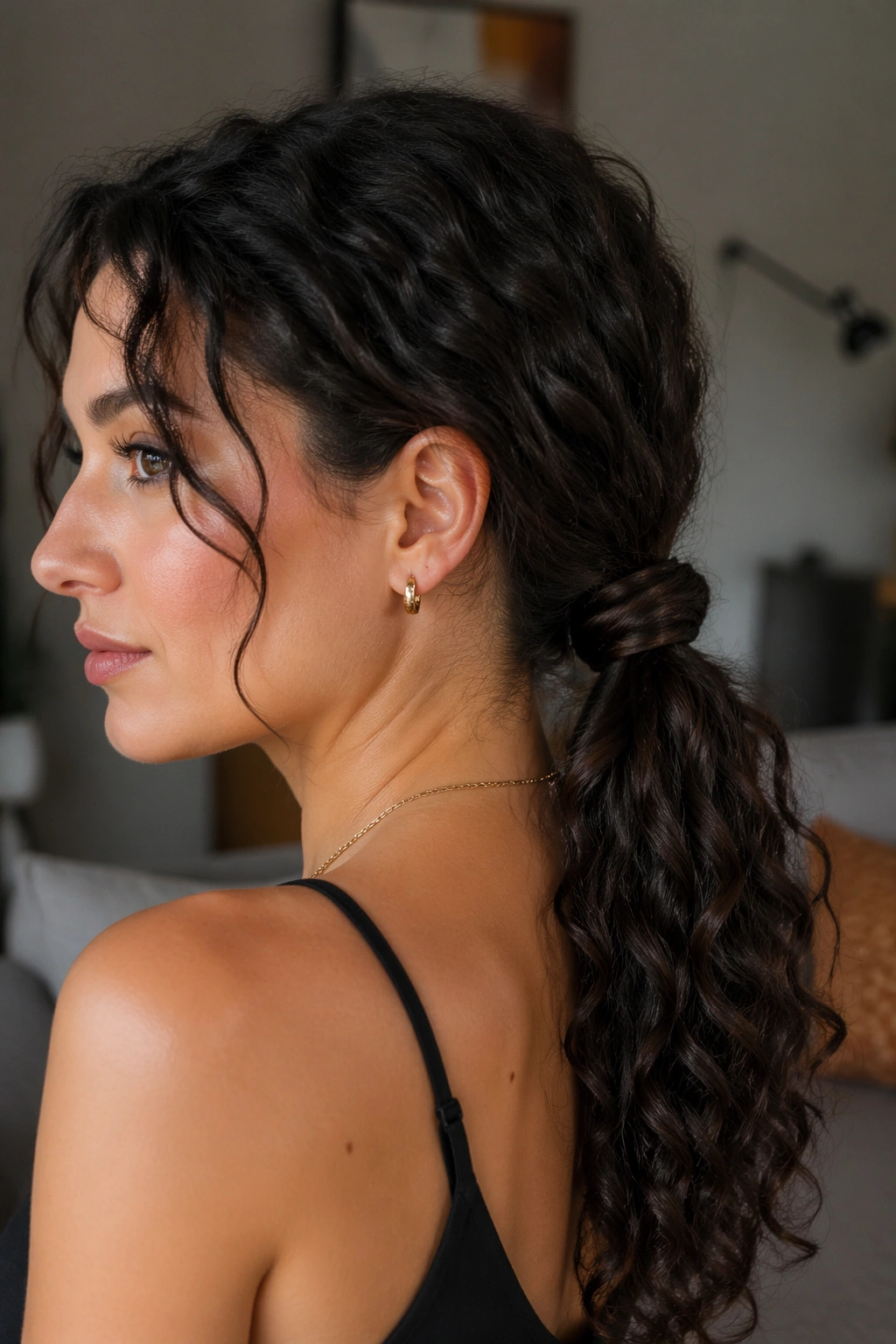
What’s better than a low ponytail for 2c hair? One that keeps the crown calm and the wave pattern intact. That’s the real win here.
A low ponytail sits near the nape, which means less tension on the top and less chance of the front pieces puffing out in odd directions. If your hair gets frizzy when it’s pulled high, this is the safer move. You still get the length on display, but the silhouette stays controlled.
How to Keep It Looking Soft
Start by gathering the hair with your hands, not a brush, unless you want a sleeker finish. Use a satin scrunchie or a soft elastic so the wave clumps don’t get crushed. Wrap a one-inch strand around the base if you want it to look finished. That tiny detail makes the ponytail feel styled instead of accidental.
If the crown falls flat, lift it a little after the tie goes in. Pinch the hair at the top with your fingers and tug upward just a touch. Not a lot. You’re trying to create shape, not a bump.
This style is especially useful with long layers because the ends fan out nicely. The ponytail looks full without requiring a ton of styling work.
9. High Curly Ponytail With Crown Volume
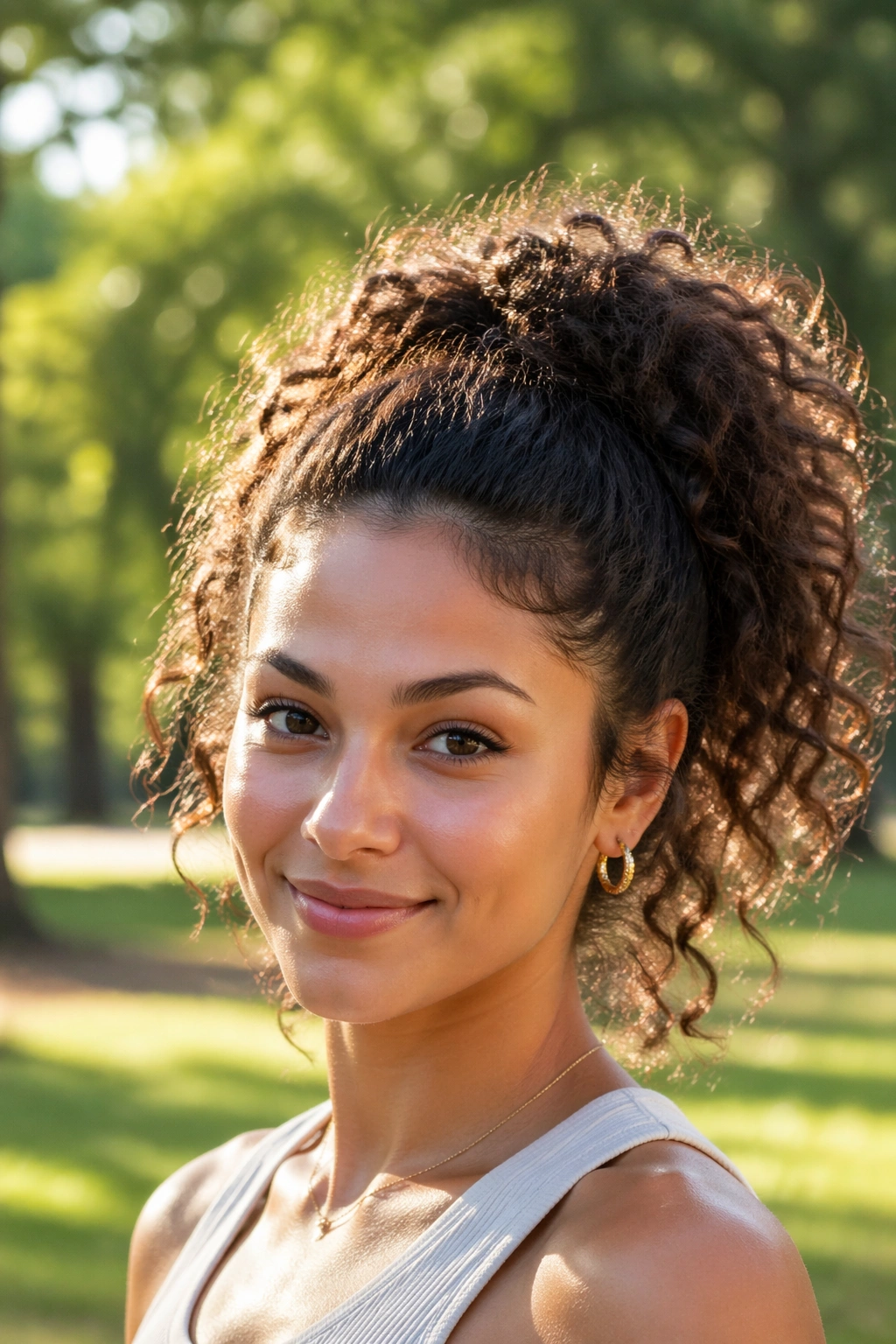
Picture the kind of day when your hair is not cooperating, your neck wants air, and you still don’t want to lose the length. That’s where the high curly ponytail earns its keep.
The placement matters. Too low, and it turns into a regular ponytail. Too high, and the roots at the front can get pulled so hard that the style starts to look severe. The sweet spot is high enough to give lift at the crown, but not so high that the sides get stretched flat against your head.
A little prep helps. Clip the roots at the crown for a few minutes while you do your makeup, or scrunch in a touch of mousse before you gather the hair. Then secure it with a soft elastic and let the ponytail fall naturally. Don’t brush the length out unless you want to trade texture for smoothness.
This style looks best when the ends stay big and a little imperfect. That’s the point. The ponytail should feel like a pile of waves, not a rope. If you want a more finished look, wrap a small section of hair around the elastic and pin it underneath. Clean enough. Still relaxed.
It’s also one of the easiest ways to show off long layers without doing much else.
10. Bubble Ponytail Down the Back
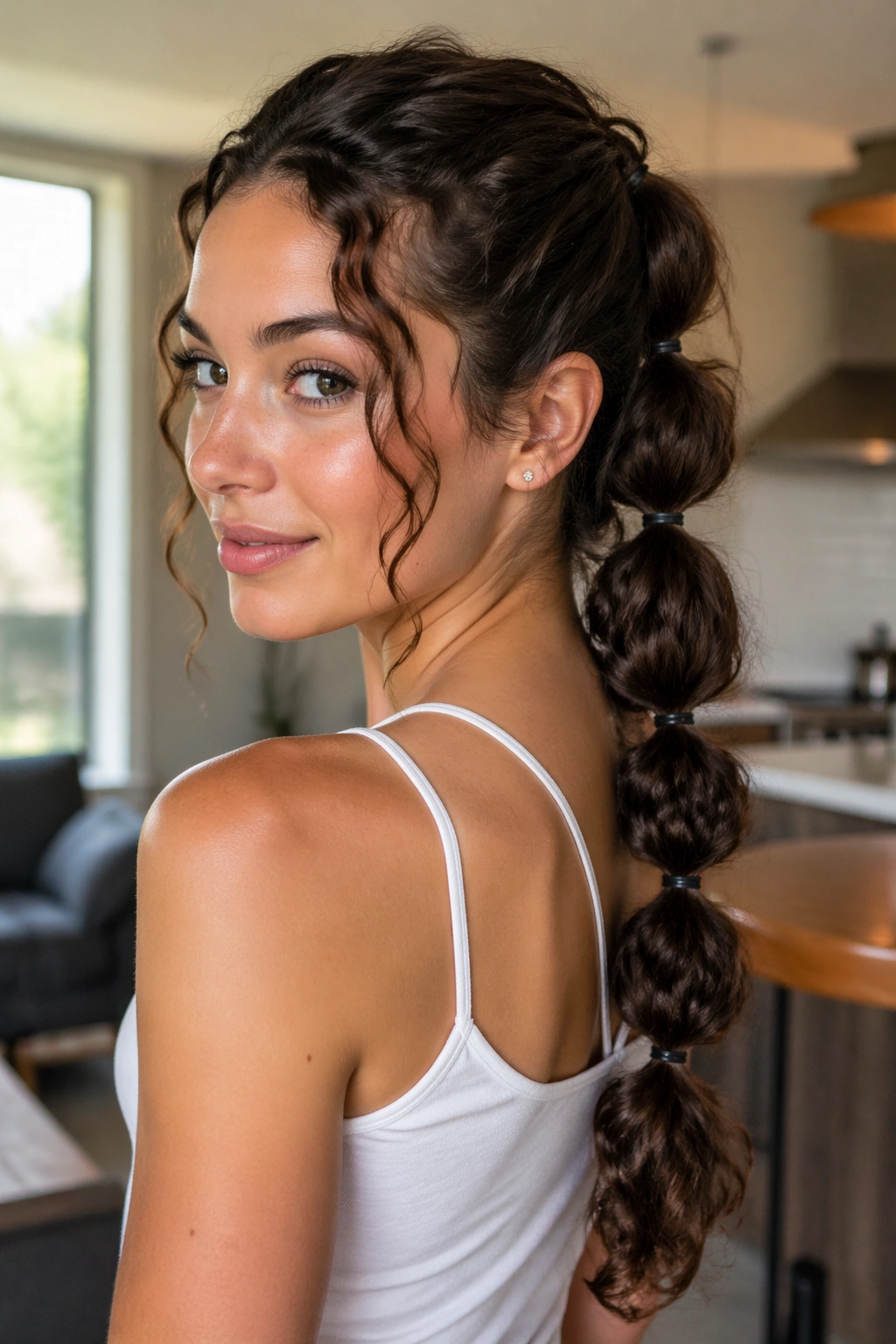
A bubble ponytail works because 2c hair already has bends built in. You’re just giving those bends a more deliberate shape. The result feels playful, but it also keeps the length neat when you don’t want hair hanging loose all day.
Start with a low or mid-height ponytail, then add clear elastics every 3 to 4 inches down the length. After each elastic goes in, gently pull the section between the ties to puff it into a bubble. The trick is to pull enough to make volume, not so much that the section loses its shape and turns fuzzy.
This style is friendlier to layered 2c hair than a regular braid can be. A braid can hide the wave pattern. Bubble sections keep it visible. That makes the style feel more personal and less like you borrowed it from somebody with straight hair.
If your hair is very slippery, a tiny mist of texture spray at the mids can help the elastics hold. If it’s frizz-prone, smooth the outer surface with a little serum on your palms before you start. Not much. A drop or two is usually enough.
The best thing about this look is that it doesn’t need symmetry to work. A slightly uneven bubble shape can look better than a perfectly matched one.
11. Crown Braid Into Loose Waves
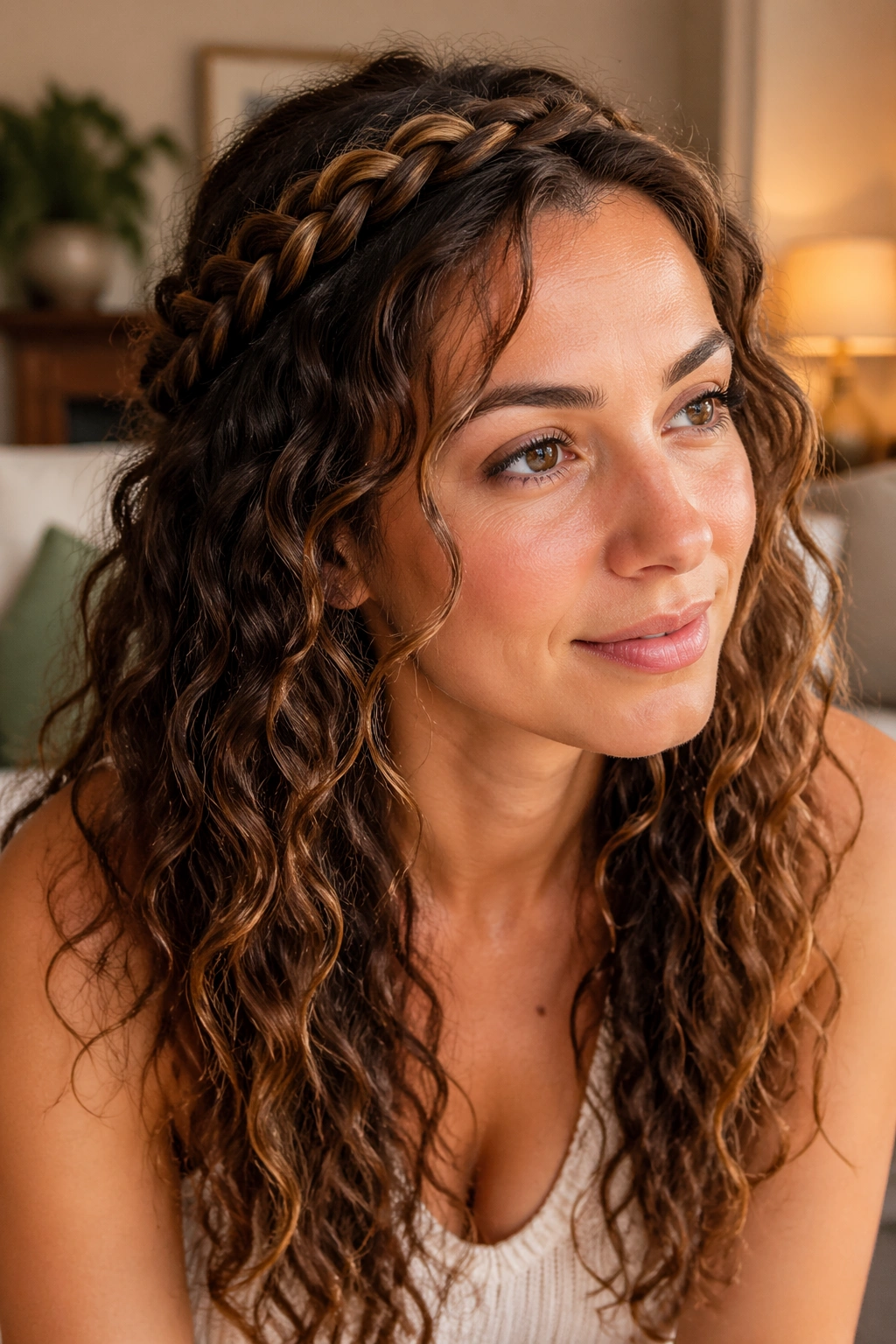
A crown braid gives long 2c hair structure without hiding the texture completely. That’s the difference between this style and a tight braid that drags every wave pattern into one flat strip.
You want the braid to sit like a frame, not a helmet. Keep it loose enough to show some curve at the sides and enough slack at the braid line so the hair can still breathe. A braid about 1 to 1.5 inches wide usually looks right on medium-density hair. Thicker hair may need a wider section so the style doesn’t feel squeezed.
This is a good choice when you need the front out of your face but don’t want to commit to a full updo. The remaining length can fall over the shoulders, and that contrast looks nice with 2c texture. Braided crown, soft ends. Clean setup, easy finish.
If you’ve got layers, leave a few shorter pieces loose near the temples. They soften the braid and stop the look from feeling too polished. That little bit of mess is the whole point.
I prefer this on hair that has been lightly dampened and set with a touch of gel or mousse. Dry hair can work too, but the braid holds better when there’s a bit of slip.
12. Rope-Twist Halo With Left-Out Ends
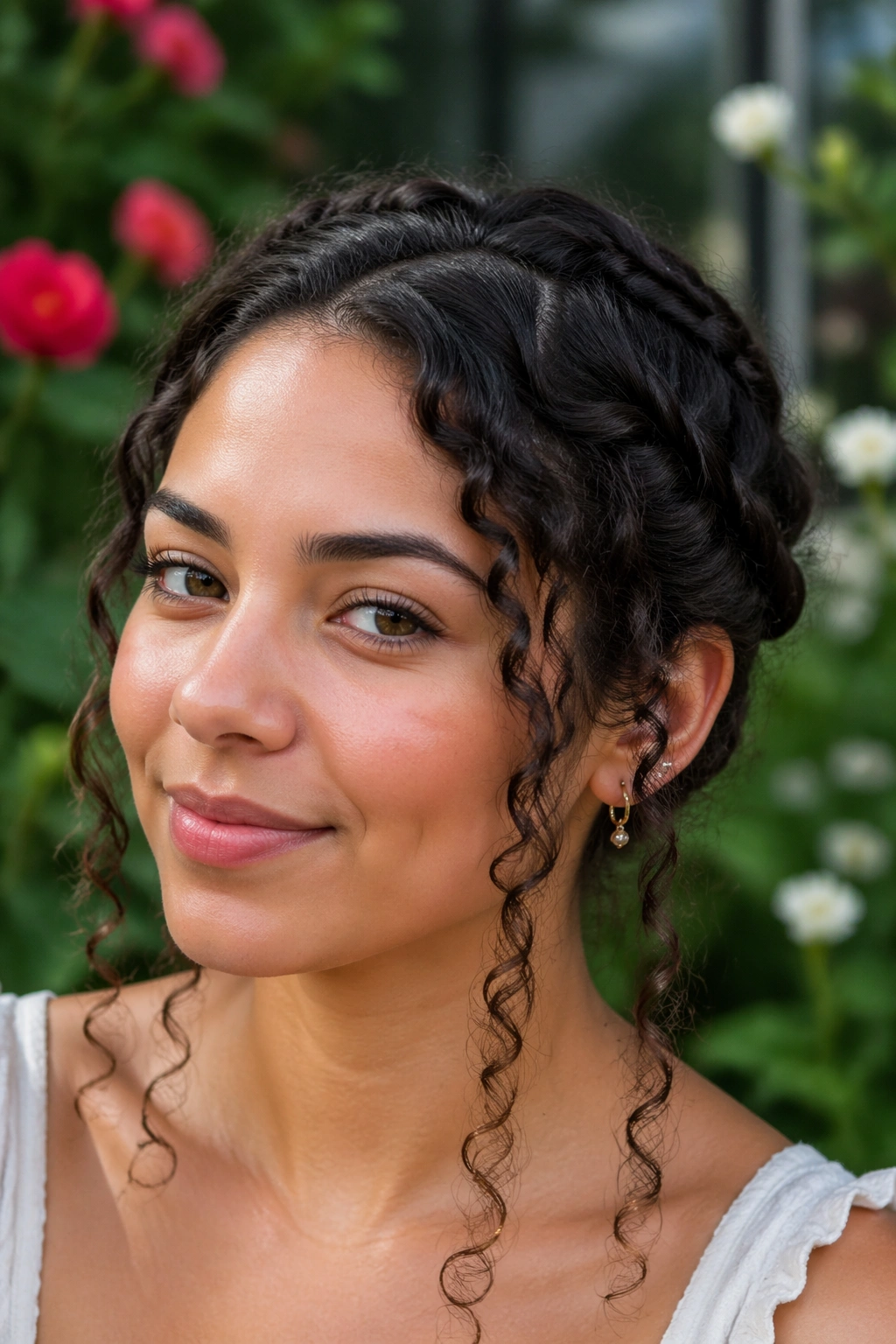
The rope-twist halo is the braid’s quieter cousin. It lays flatter against the head, which makes it useful when your 2c hair gets bulky at the crown and you want something that stays close without looking tight.
How to Place the Twists
Take a section from each side of the head, twist each one away from the face, then pin them together toward the back. Keep the twist line just above the ears if you want the shape to stay soft. Too high, and it starts to look forced. Too low, and the front falls into your eyes.
What Keeps It From Slipping
- Use two or three small pins crossed in an X.
- Add a touch of mousse before twisting if the hair is silky.
- Leave the ends out if you want the style to feel less formal.
- Tug the twist lightly after pinning so it doesn’t sit flat against the scalp.
What I like here is the contrast. The front gets control, the back keeps its wave pattern, and the style doesn’t fight your texture. It suits days when you want a frame around the face but still want to see the length move. If your hair is thick, it can look especially good because the twist has some body to it right away.
13. Low Curly Bun With Face-Framing Pieces
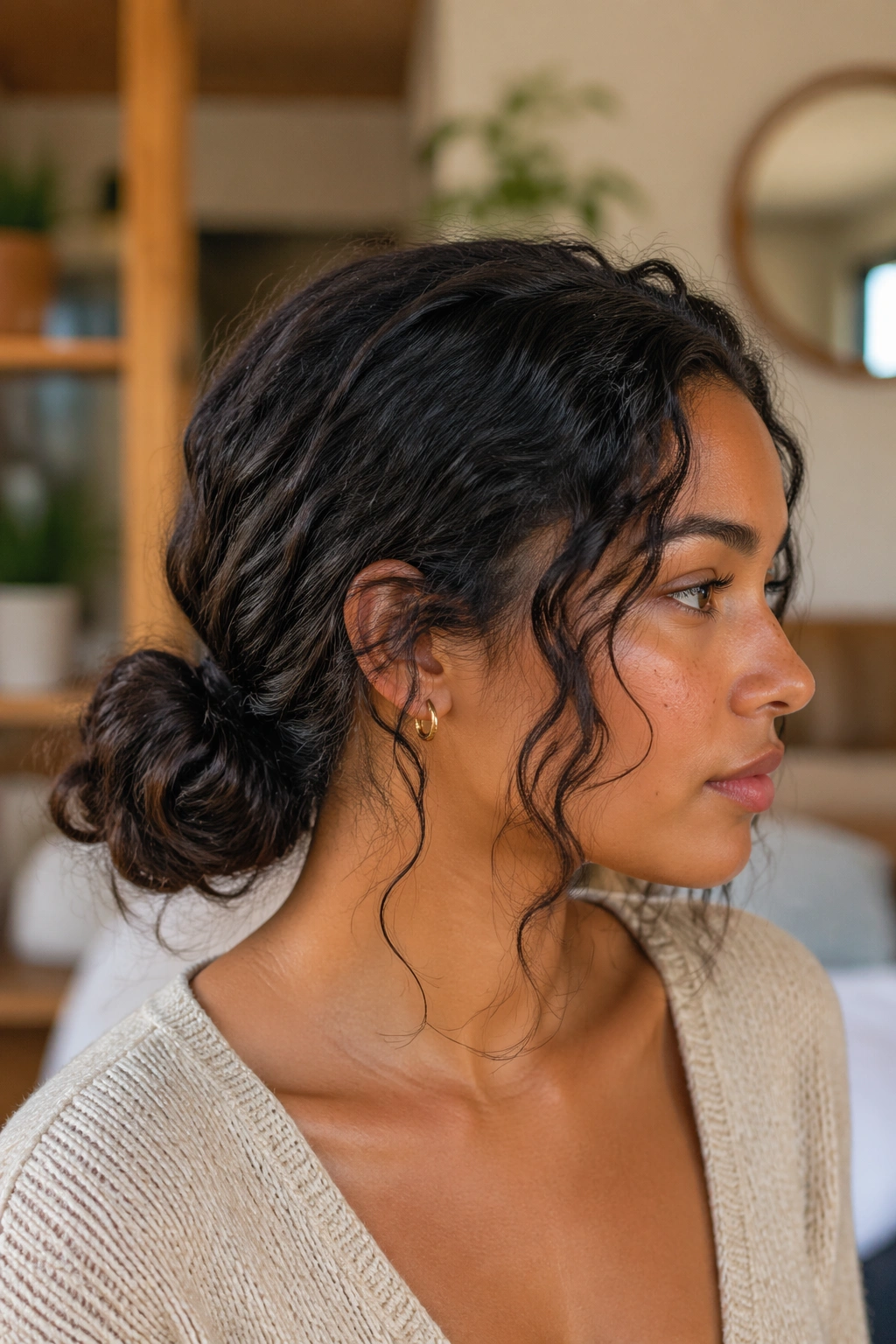
The low bun is not boring when you leave the front pieces alone. That’s the whole difference between a bun that looks stiff and one that looks lived-in.
Pull the hair into a loose ponytail at the nape, twist the length into a bun, and pin it in place with a couple of crossed bobby pins. Then stop. Don’t slick everything back unless that’s the look you want. A few face-framing pieces near the cheekbones make the style softer and keep the bun from looking too severe on 2c texture.
This style works on hair that’s a little stretched from the day before, and it works on hair that’s still holding wave. Either way, the bun sits low enough to keep the silhouette neat. If the ends are too thick to tuck cleanly, let a bit of them spill out on purpose. That can look better than forcing every strand into the center.
A light mist of hairspray around the hairline can help, but keep it away from the bun itself if you want movement. A bun with a shellacked finish tends to look older than it should.
For a cleaner shape, make the bun just above the nape, not at the exact bottom of the neck. That tiny shift gives it a better line.
14. Defined Wash-and-Go With Scrunched Ends
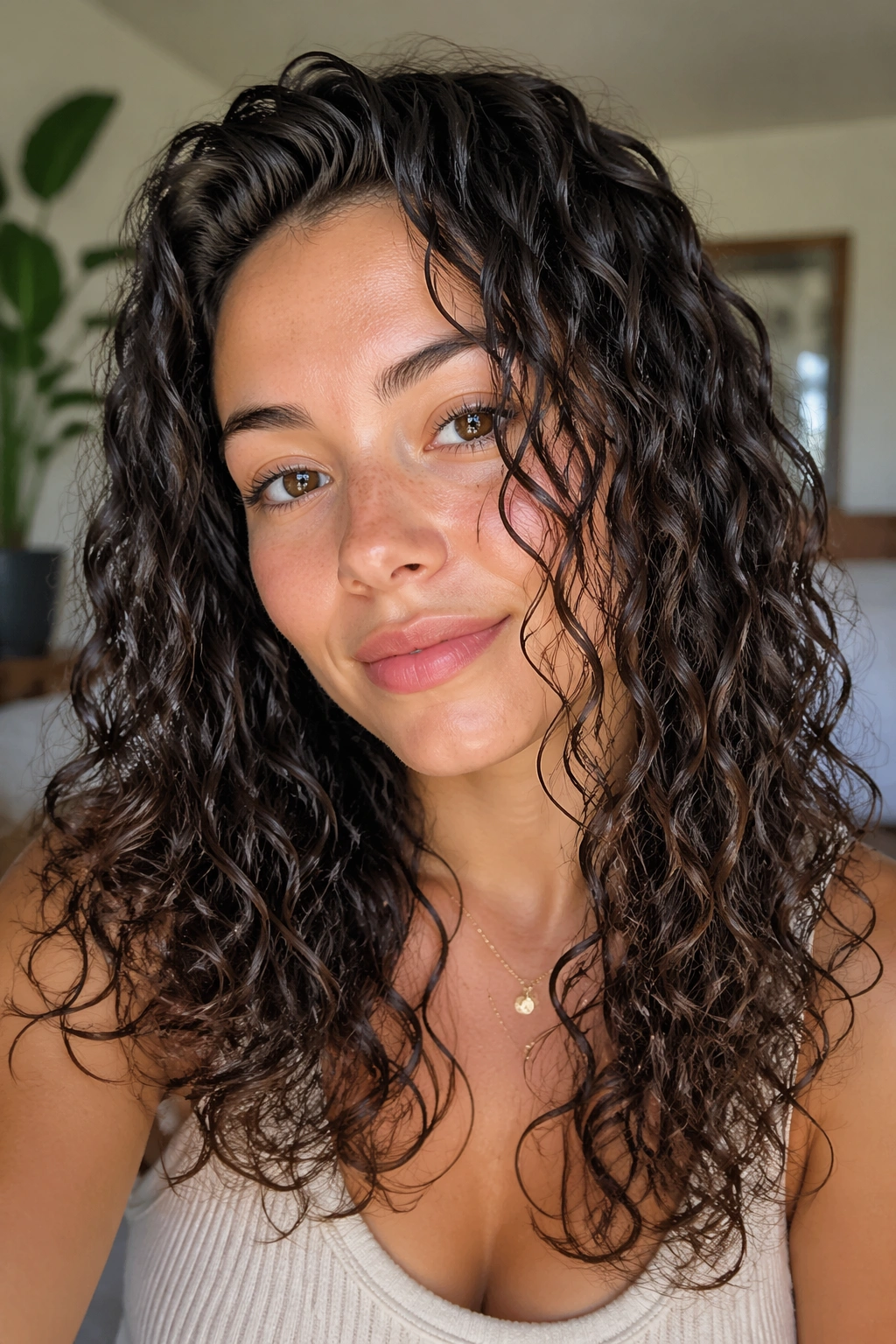
What if you don’t want an updo at all? Then the wash-and-go is still one of the smartest long hairstyles for 2c curly hair, provided you keep the product light and the shaping intentional.
Start on soaking-wet or very damp hair. Work in a small amount of leave-in conditioner first, then follow with mousse or a light gel, depending on how much hold your hair needs. Scrunch upward from the ends so the wave pattern forms in clumps instead of drying into separate strings. A microfiber towel or cotton T-shirt can help remove extra water without stripping the pattern apart.
The Product Stack
- Leave-in conditioner: just enough to soften, not coat.
- Mousse: helps the roots and mid-lengths hold shape.
- Light gel: adds hold if your hair frizzes fast.
- Microfiber towel: for gently squeezing out water.
Let the hair air-dry or diffuse on low heat. If you diffuse, keep the airflow moving and don’t blast one spot until it gets frizzy. Once the hair is about 80% dry, stop touching it. That’s the part people get wrong. They keep scrunching and separate the clumps they just built.
A good wash-and-go on 2c hair should feel soft, springy, and a little touchable—not crunchy, not floppy. When it lands right, the length looks fuller without needing much else.
15. Braid-Out Lengths With Soft Ends
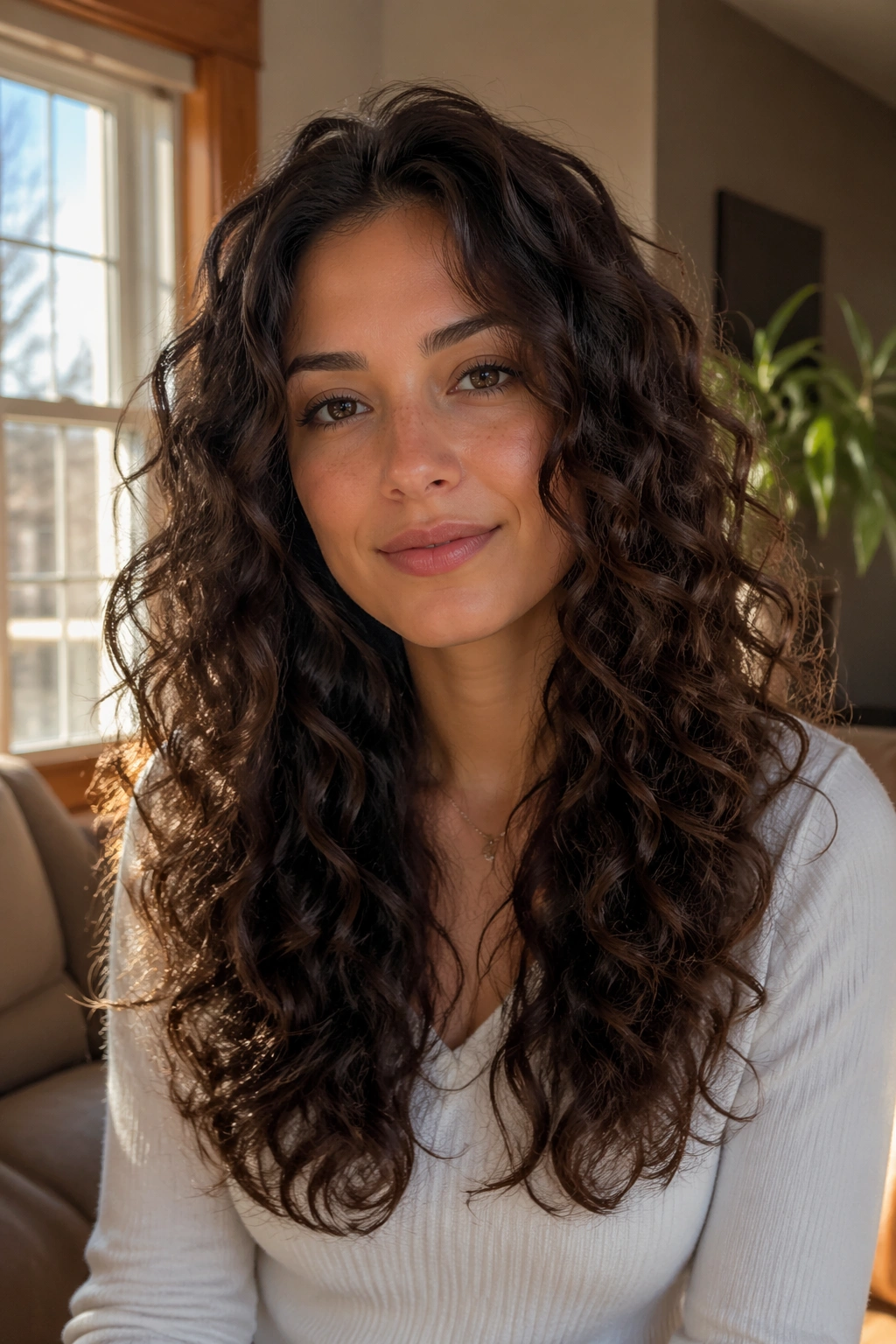
A braid-out is one of the easiest ways to give 2c hair a more deliberate wave when plain air-drying feels unpredictable. It also helps when your natural pattern is looser at the bottom and tighter near the crown, which can make long hair look uneven.
The idea is simple: braid damp hair in a few large sections, let it dry fully, then unravel it and separate the waves with your fingers. Two braids give you broader texture. Four braids give you more definition. Anything smaller can make 2c hair look too crimped if the strands are fine.
I like this style because it gives the length shape without forcing curls that are not really there. The braid adds a bend, the ends stay softer, and the result looks controlled but not stiff. If you sleep in the braids, use a satin bonnet or pillowcase so the surface stays smooth.
A few small details help a lot:
- Braid only when the hair is fully damp, not dripping.
- Use a light cream or mousse first.
- Unravel only when the hair feels dry all the way through.
- Separate each wave just once or twice so you don’t create frizz.
This is a good last-resort style when your wave pattern is behaving badly. It often looks better the second day, once the hair settles.
Long 2c hair tends to look best when the shape is doing some work for you. A clean cut, a soft part, or a style that keeps the crown under control can change the whole feel of it without making the hair lose its movement. Pick the one that matches how much effort you want to give on a normal morning, then let the texture do the rest.
