
Thick curls and a bob can look expensive in the best way. They can also go wrong fast. One blunt line too far, one heavy corner left hanging at the jaw, and the whole shape starts to feel like a triangle with a grudge. That’s why bob hairstyles for thick curly hair need a little more thought than the average chop.
The good versions do one simple thing well: they let the curl pattern keep its body while steering the bulk into a shape that looks intentional. Dry cutting helps. So does paying attention to shrinkage, because curls often sit higher once they dry than they did in the chair. A bob that looks chin-length when wet might land closer to the cheekbones after a diffuser and a bit of air.
I also think thick curls are the best case for bobs, provided the cut respects the hair instead of flattening it. You want structure, not control for the sake of control. A curl that’s been given room to move will almost always look richer than one that’s been over-thinned or hacked into a shape that only works when it’s freshly washed.
Bring a few photos to your stylist, sure, but bring the right kind. Show the hair in a similar density and curl pattern if you can. A gorgeous bob on loose waves won’t tell the full story for tight coils, and a razor-straight inspiration photo can send everyone in the wrong direction. The shapes below are the ones I’d keep in the folder.
1. Chin-Length Curly Bob
A chin-length curly bob is one of those cuts that looks simple until you try to get it right. Then the details start mattering: where the weight sits, how much shrinkage you have, and whether the curls are allowed to stack on top of each other without turning into a puffball. On thick hair, this length gives you a clean frame around the face without dragging the shape down.
The best version keeps the perimeter tidy and the interior soft. You want enough structure to stop the curls from exploding outward, but not so much layering that the whole bob loses its outline. If your curls are dense and springy, this length can look especially good when the front pieces graze the jaw and the back sits just a touch higher.
One thing I like here: it’s a bob that looks polished even when the styling is loose. A little leave-in, a curl cream, and a diffuser are enough. No drama. No heavy product pileup.
Best for:
- Curls that shrink up 1 to 3 inches after drying
- Faces that look better with a frame at the jawline
- People who want shape without a long styling routine
What to ask for: a dry cut or curl-by-curl shape, with the ends kept full and the interior lightly shaped rather than heavily thinned.
2. Layered Curly Bob
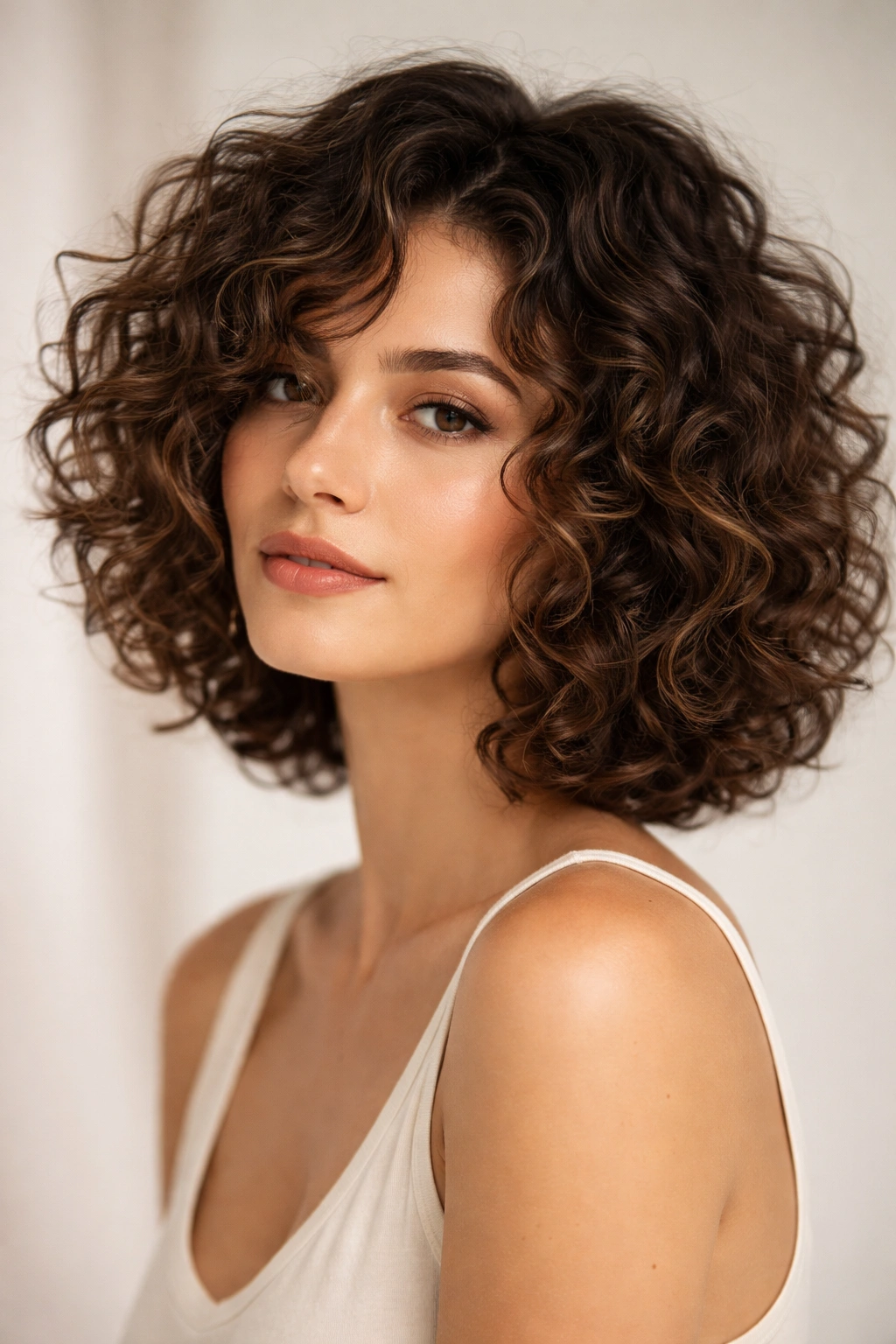
Why do layered bob hairstyles for thick curly hair work so well? Because layers give heavy curls somewhere to go. Without them, thick hair can sit like a solid block; with them, the bob starts to move, and movement is the whole point.
Why the Layers Matter
The right layers take pressure off the bottom edge and stop the hair from ballooning into one wide shape. They also help curls clump better, which matters more than people think. A curl that forms into a clean ringlet will usually look neater than three separated wisps fighting each other.
How to Keep It From Getting Too Choppy
The trick is restraint. Ask for long, soft layers rather than a lot of short pieces around the crown. That keeps the shape airy without giving you a halo of frizz on top. If the hair is cut too aggressively, the bob can lose its bottom line and start looking uneven when it dries.
Styling Notes
- Use a lightweight curl cream, then a gel with hold
- Scrunch with a microfiber towel or T-shirt
- Diffuse on low heat until the roots are dry and the curl pattern is set
My take: if your curls feel bulky at the sides, layered is usually the smartest first move.
3. Stacked Curly Bob
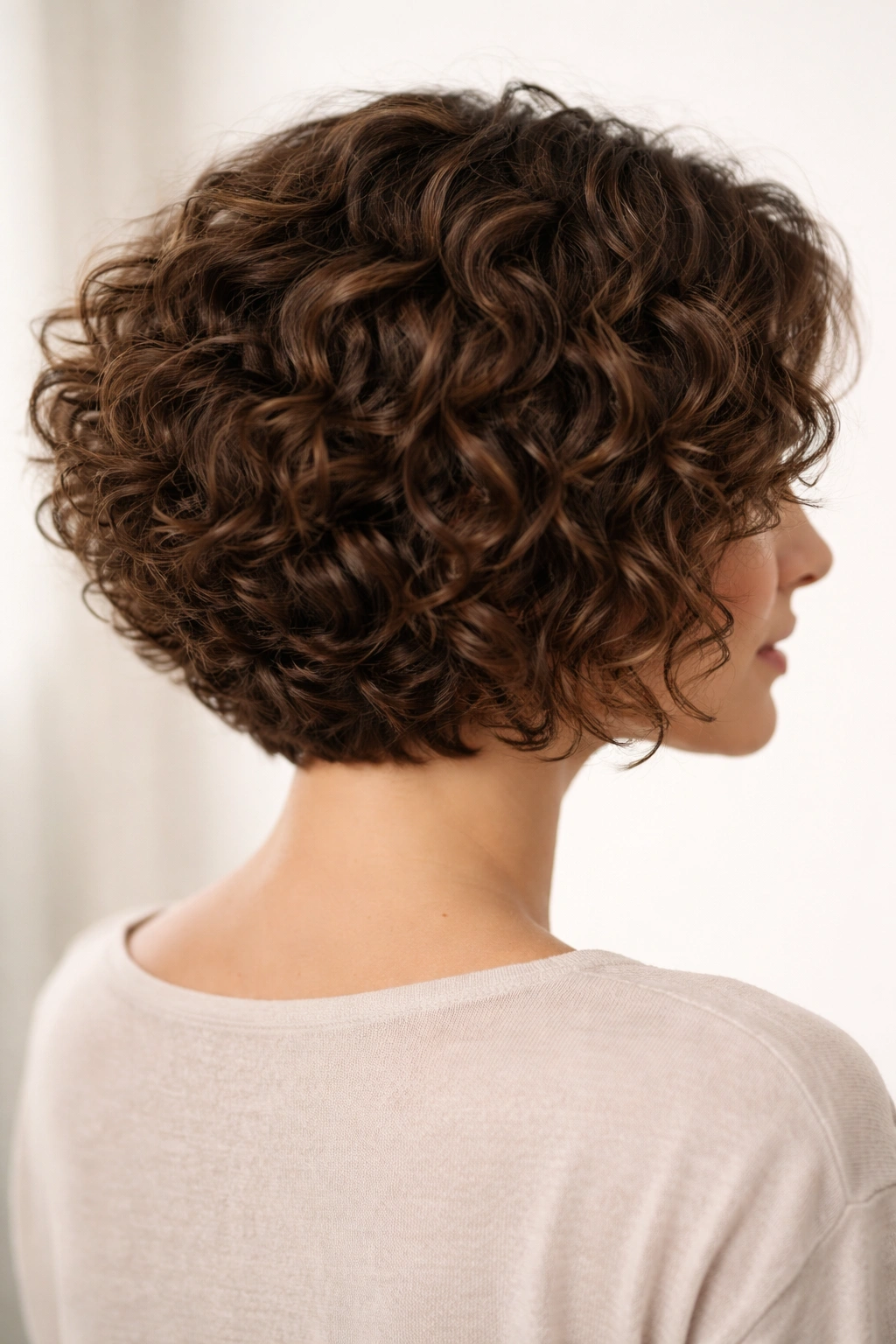
Picture the back of the head with a little lift at the nape and the curls gradually falling longer toward the front. That’s the stacked curly bob, and on thick hair it can be a lifesaver. It removes weight where curls often sit too flat or too heavy, then builds shape where the haircut needs energy.
This cut works because the stacking creates a subtle slope without making the bob feel severe. The back gets enough graduation to stop it from looking boxy, while the front stays soft enough to frame the cheekbones. Done well, it has that nice “I didn’t try too hard, but the haircut did the work” effect. Which, honestly, is a good haircut.
The one catch is density. If your curls are already tight and springy, too much stacking can make the back puff up faster than the rest. Keep the graduation gentle, especially if your hair gets bigger as the day goes on.
Good when you want:
- Lift at the crown without teasing or product overload
- A clean neckline that stays off the collar
- A shape that feels shaped from every angle, not just the front
4. A-Line Curly Bob
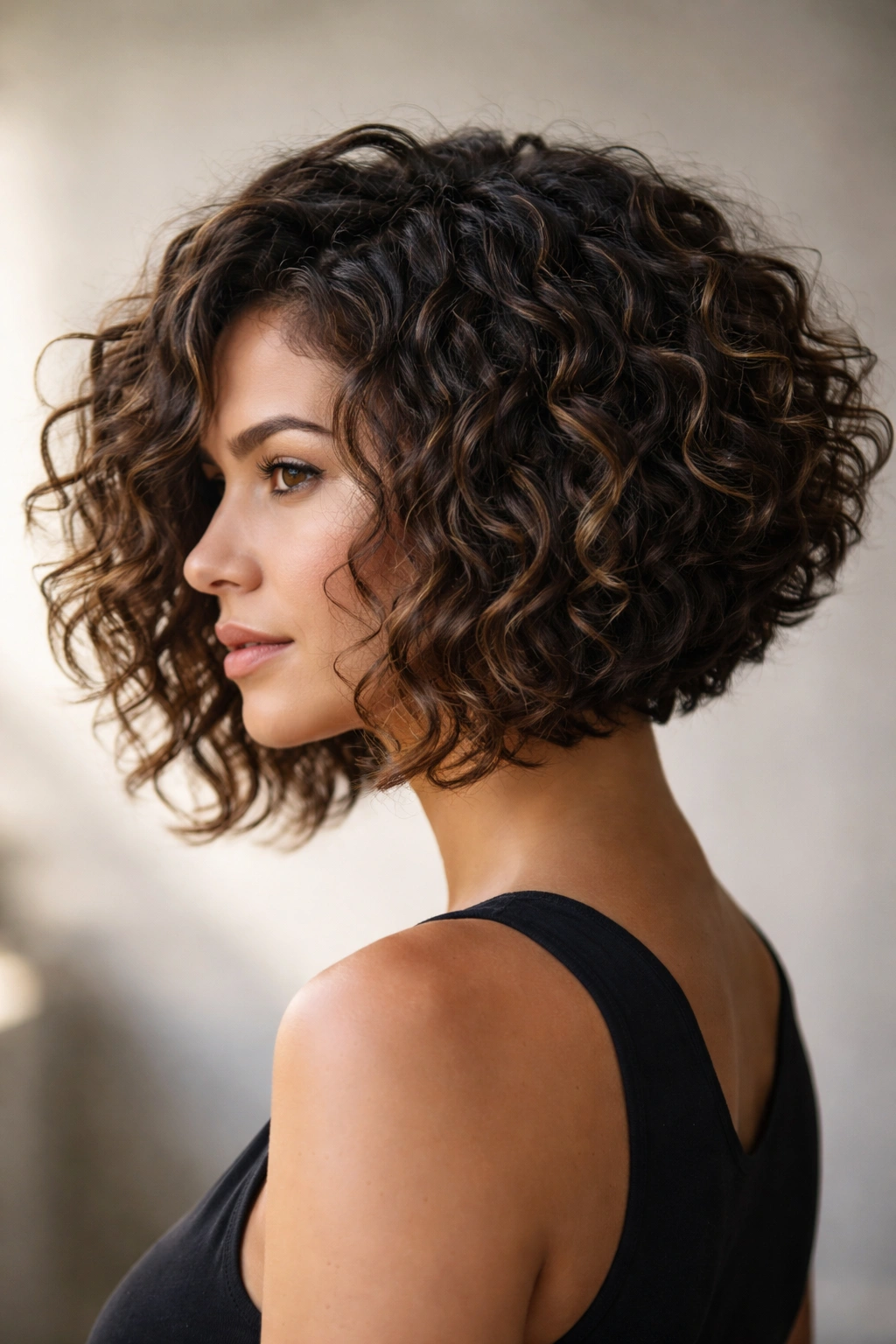
An A-line curly bob gives you a longer front and a shorter back, and that angle can be magic on thick curls. It keeps the hair from looking bottom-heavy while still letting you keep some length near the face. If you’ve ever loved a bob from the front and hated it from the side, this is the cut worth trying.
Compared with a straight-across bob, the A-line shape feels more deliberate. The front pieces stretch the silhouette a bit, which is handy if your curls are dense enough to widen around the cheeks. The back stays light and neat, so the whole style reads cleaner when you move.
I like this cut most on hair that has a mix of curl sizes. The angle helps balance the bigger curls and the tighter ones so the haircut doesn’t look lopsided. It can also soften a stronger jawline without burying the face in hair.
A useful detail: ask your stylist to check the front length when the hair is dry and fully curled. Wet curls lie. They lie a lot.
5. Asymmetrical Curly Bob
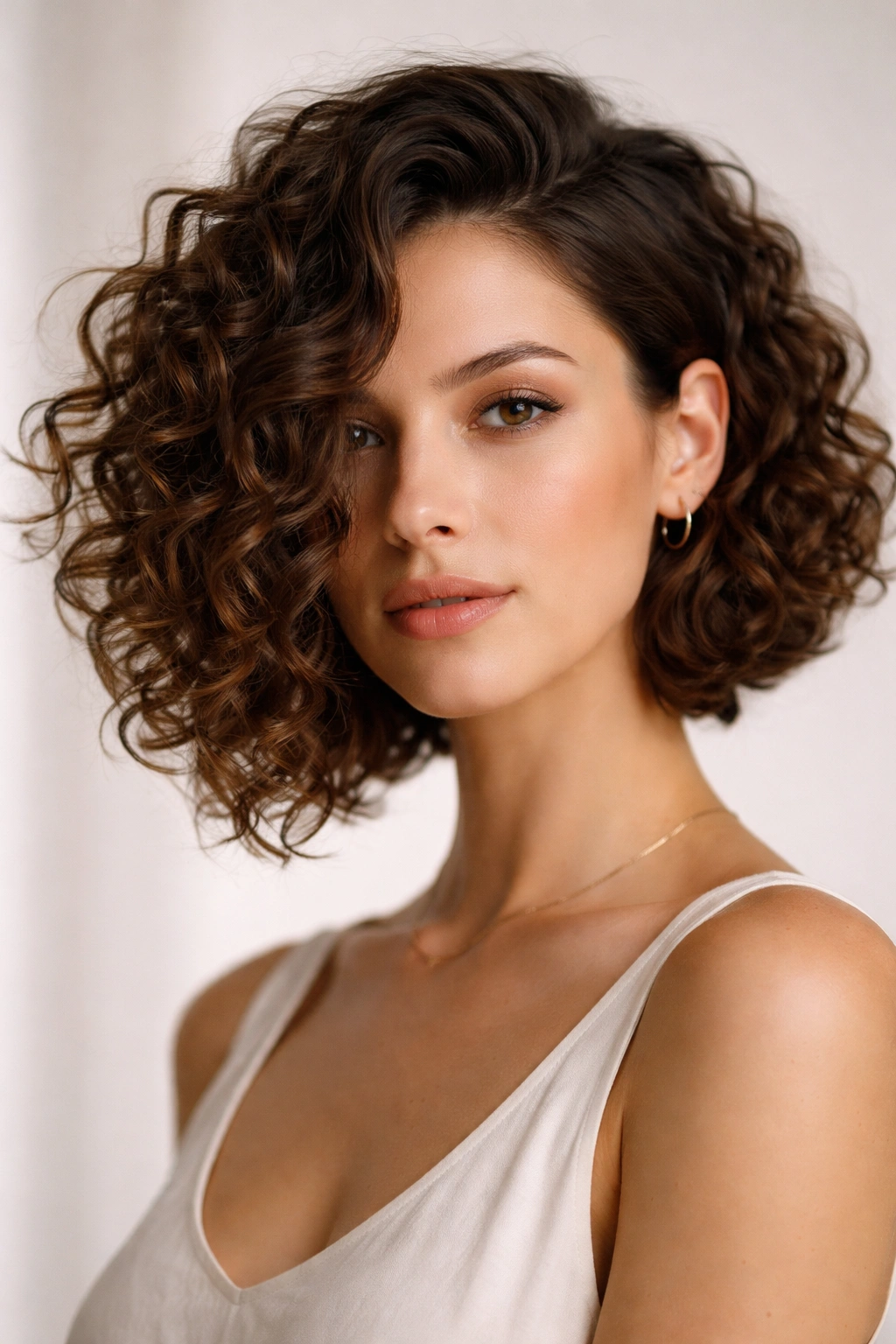
An asymmetrical curly bob is for the person who wants shape with a little attitude. One side sits longer than the other, and that uneven line makes thick curls look intentional instead of oversized. It’s a smart move when your hair has enough body to support a stronger silhouette.
The cut works especially well when one side is only an inch or two longer, not wildly different. A small shift is easier to live with and usually ages better than a dramatic angle. Thick curls already have texture; you do not need to shout with the cut itself.
This is one of those styles that looks especially good when tucked behind one ear on the shorter side. The exposed cheekbone gives the haircut room to breathe. And yes, the longer side will probably take a little more time to dry. Worth it.
Who it suits best:
- People who like a side part
- Dense curls that need a shape with movement
- Anyone bored by symmetrical cuts that sit too safely
6. French Bob with Fringe
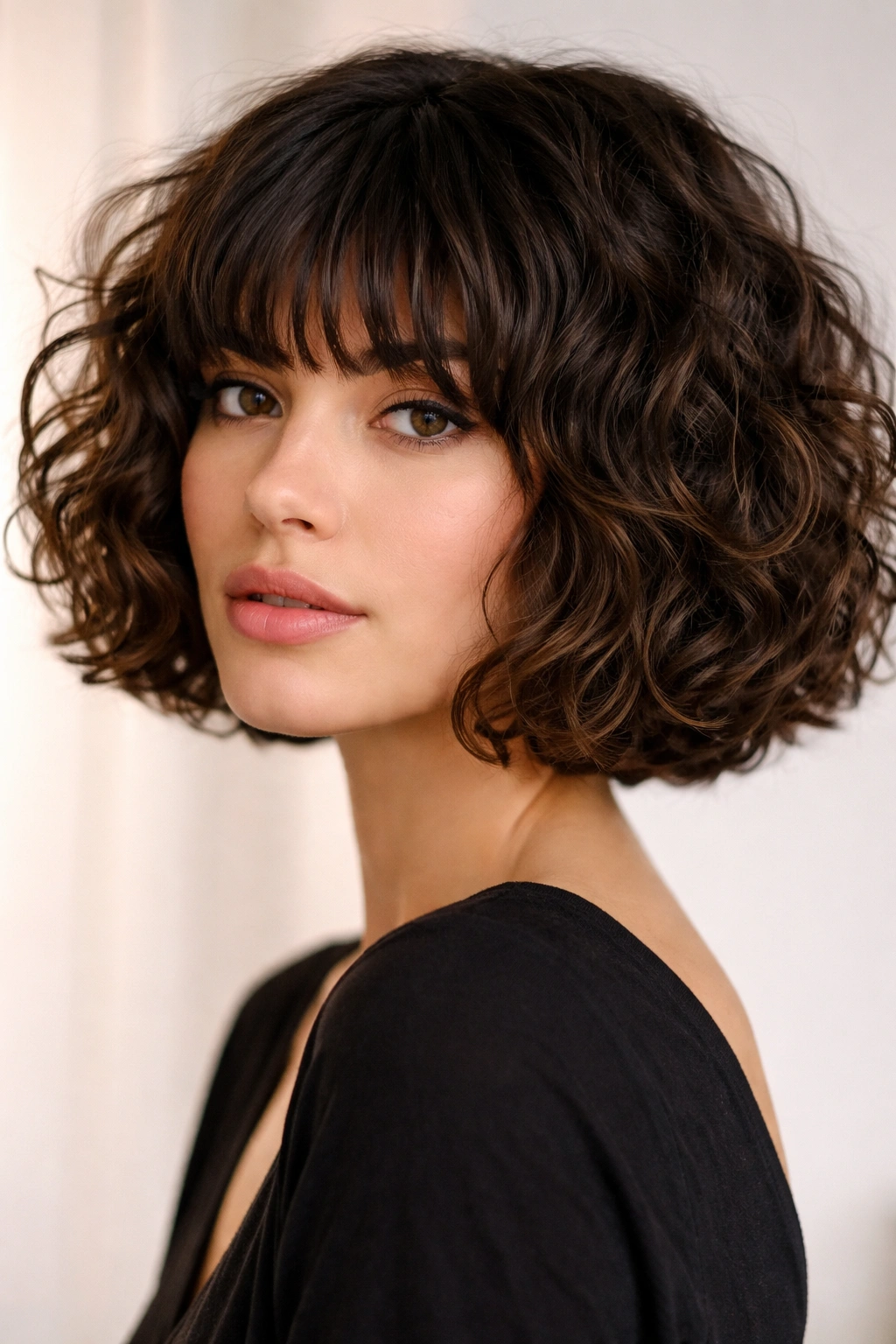
Can a short bob and a fringe work on thick curls? Absolutely, but the fringe has to be cut with the curls in mind, not against them. A French bob with fringe sits around the cheek or lip line and pairs that compact shape with a softer front edge. On thick curly hair, the result can feel chic in a slightly messy, human way.
What Makes It Different
The fringe is the whole story here. A blunt curl fringe will look much shorter once dry, so it needs to be cut with a realistic shrinkage allowance. If the curls are springy, the bangs should hit lower in the face than you expect. That sounds obvious until you’re standing in the mirror wondering where your eyebrows went.
How to Keep the Fringe From Taking Over
- Keep the fringe piecey, not dense like a curtain across the forehead
- Dry the bangs first so they don’t dry in the wrong direction
- Use a tiny amount of styling cream; too much makes the front limp
A French bob works best when the rest of the haircut stays neat. If the fringe is busy and the body of the bob is busy too, the whole thing can feel crowded. A cleaner outline keeps it wearable.
7. Curly Bob with Curtain Bangs
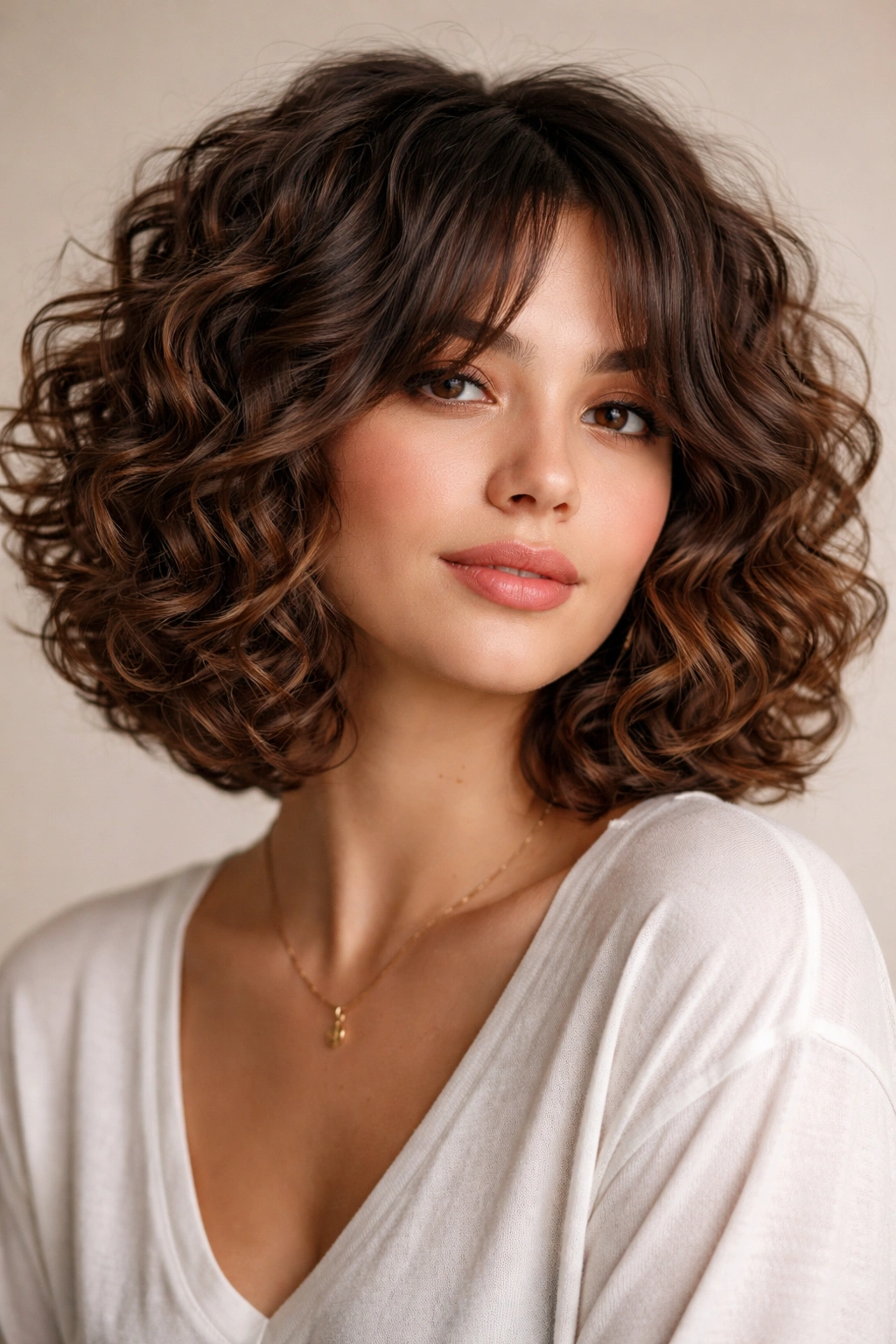
The first thing you notice with curtain bangs on thick curls is how much softness they bring to the front of the haircut. Instead of dropping a hard line across the forehead, they split the difference and let the curls fall away from the face in two loose pieces. That makes the bob feel lighter, even when the hair itself is dense.
This style is especially kind to thick hair that tends to build width at the temples. The bangs open the face and keep the bob from looking like one solid shape. They also grow out more gracefully than a blunt fringe, which matters if you do not want a trim appointment hanging over your head every few weeks.
The bangs need shape, though. If they’re cut too short or too narrow, they can spring into a strange little bump. Ask for them to blend into the front layers so they feel attached to the haircut, not dropped on top of it.
A diffuser helps here. So does patience.
8. Blunt Curly Bob
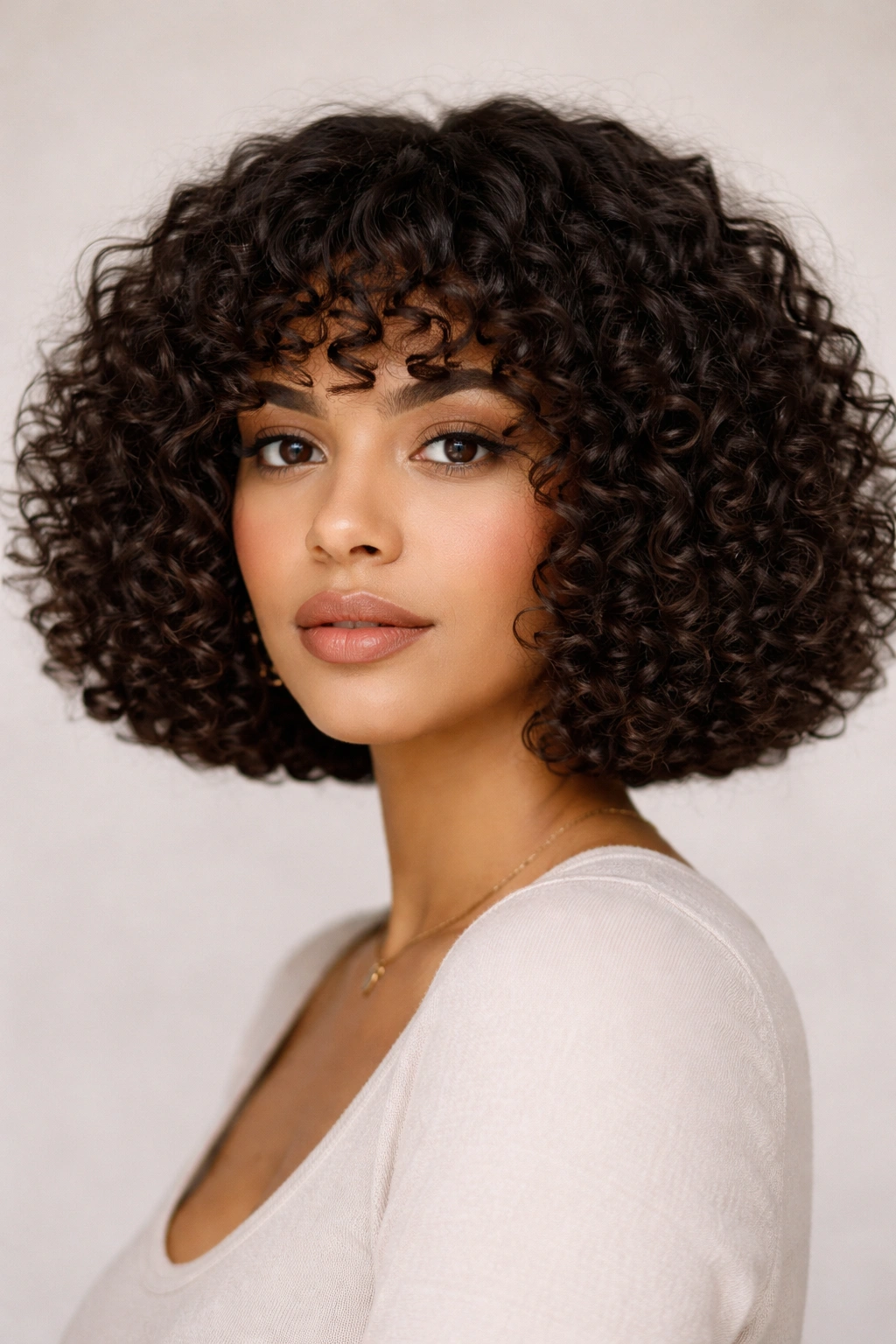
A blunt bob on thick curly hair sounds risky, and sometimes it is. But when the curls are healthy and the outline is cut cleanly, the result can be gorgeous: full, rounded, and sharp in a way that feels expensive rather than severe. The blunt edge gives the curls a strong base, which is exactly what dense hair often needs.
Why It Works
The blunt perimeter makes the curl pattern look fuller because every coil ends around the same line. That can be useful if your hair tends to spread out and lose shape. You get a solid bottom edge, and the curls above it do the decorating.
What to Watch For
- Avoid heavy product near the ends, or the blunt line can look greasy
- Ask for the shape to be checked dry, not only wet
- If your curls are very tight, a blunt cut can shrink up more than you expect
This cut is not for someone who wants a lot of swing and feathering. It’s for someone who wants the bob to feel bold, clean, and full of body without looking shaggy.
9. Shaggy Curly Bob
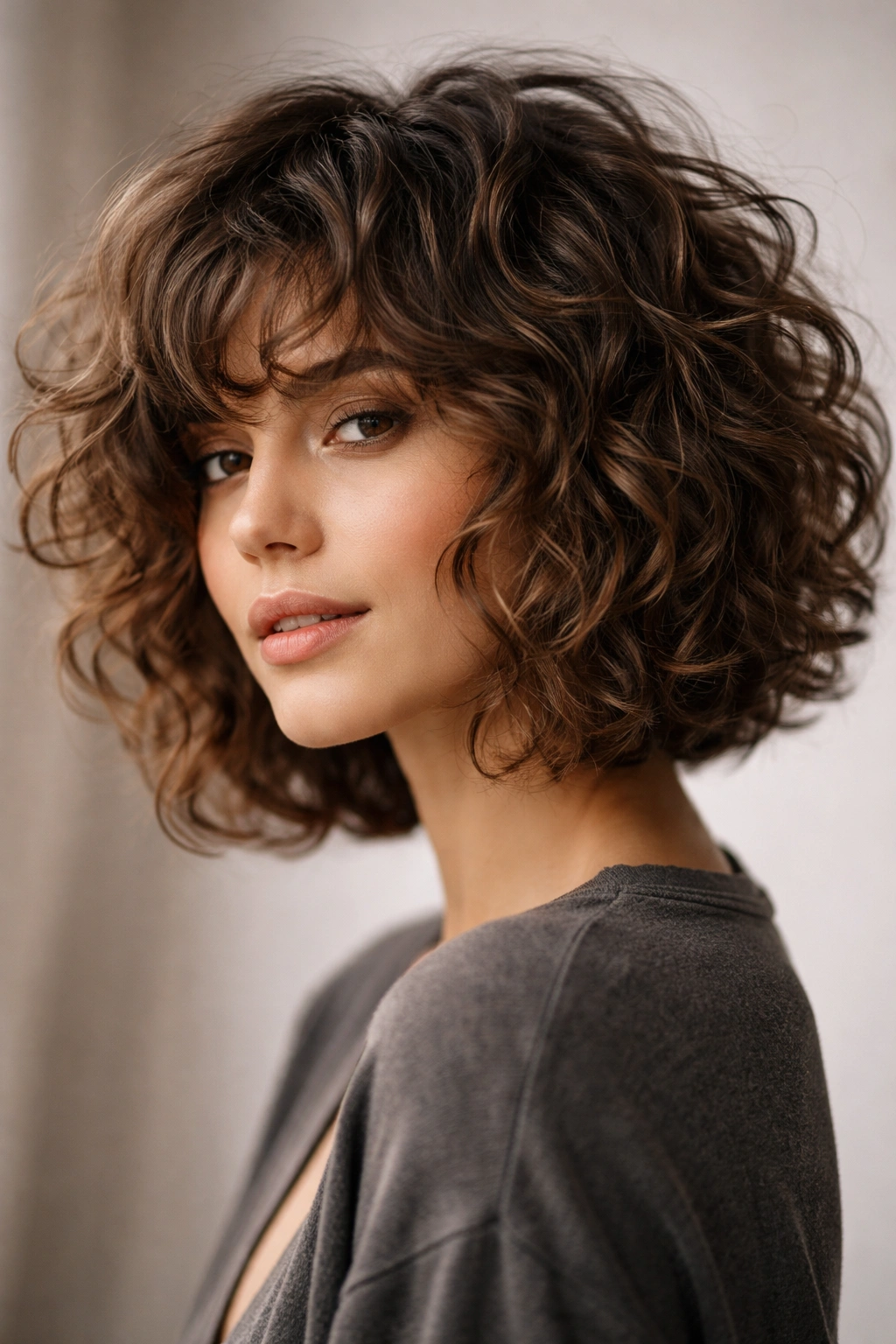
The shaggy curly bob is the one I recommend when thick curls need freedom more than polish. It takes out bulk in a way that feels lived-in, with shorter internal layers and a softer outer shape. The result is a bob that moves instead of sitting there like a helmet.
What the Shag Removes
It takes away some of the density that can make thick hair feel heavy at the bottom. That matters on curls because extra weight can flatten the top while the ends still flare out. A shag can fix that imbalance without shaving the shape down too far.
What It Adds
- Texture around the crown
- Lift through the sides
- A softer, less boxy silhouette
Styling It Without Making It Frizzy
Use a leave-in first, then a medium-hold gel. A diffuser is your friend, but keep the airflow low and let the curls set before touching them. If you rake through the hair too much while it’s drying, you’ll lose the nice separation the cut is trying to create.
This is a good cut for people who like a slightly undone finish. Not messy. Just relaxed.
10. Rounded Curly Bob
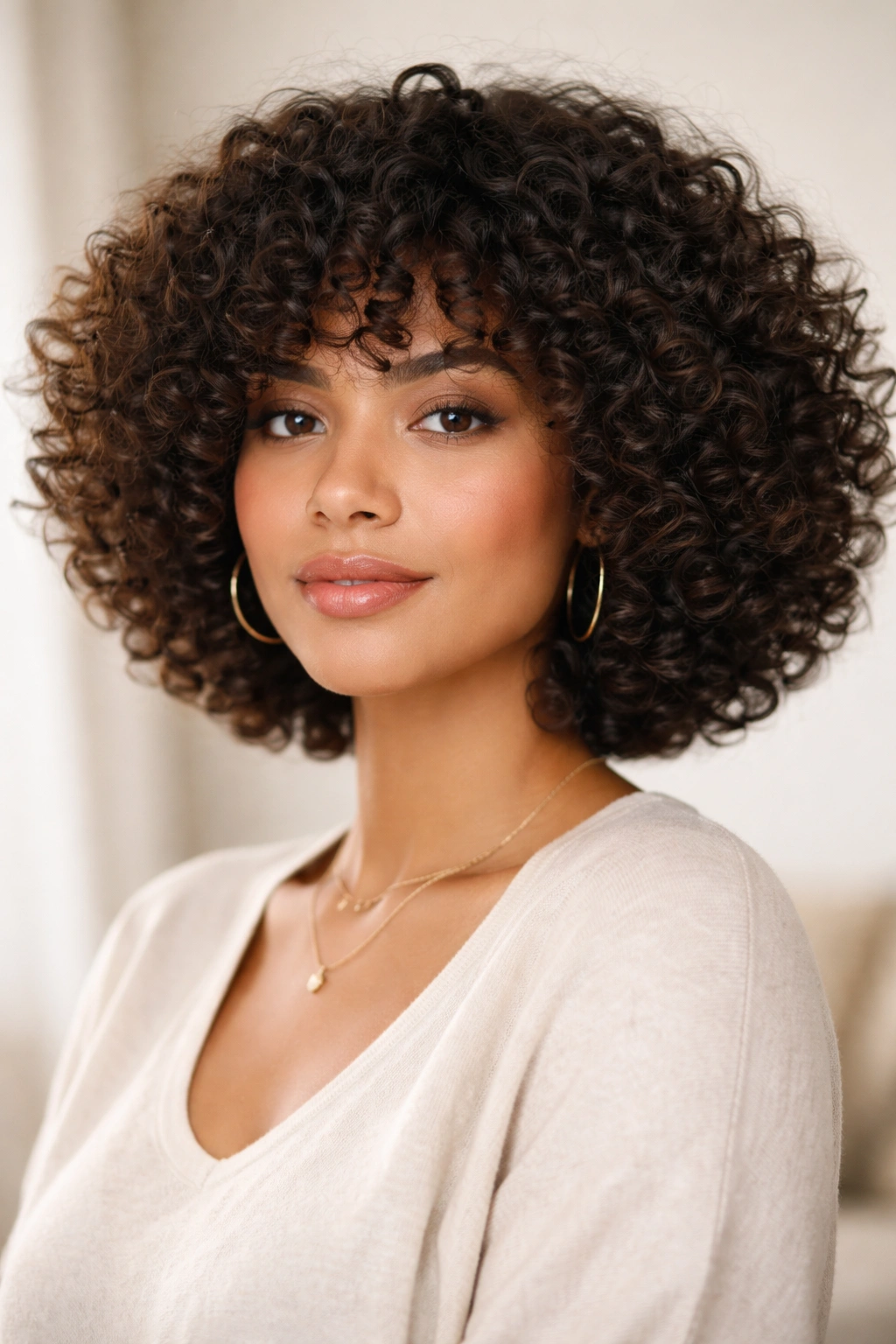
A rounded curly bob is shaped to follow the head, with volume distributed in a smooth curve rather than a sharp corner. On thick curls, that shape can be a relief. Instead of building width at random spots, the haircut keeps the fullness controlled and even.
The rounded outline tends to look especially good when the curls are medium to tight and naturally expand a bit as they dry. It gives the hair a soft dome shape, which sounds plain and maybe a little technical, but in real life it often looks polished without trying too hard. The sides stay balanced, the back stays neat, and the whole style has a pleasing symmetry.
One reason this cut works is that it avoids a hard shelf at the bottom. A straight line can be too blunt on dense curls if the hair wants to bend outward. A rounded edge respects the curl pattern and lets the hair settle into its own rhythm.
I’d call this a quietly strong haircut. It doesn’t shout. It just holds together.
11. Inverted Bob
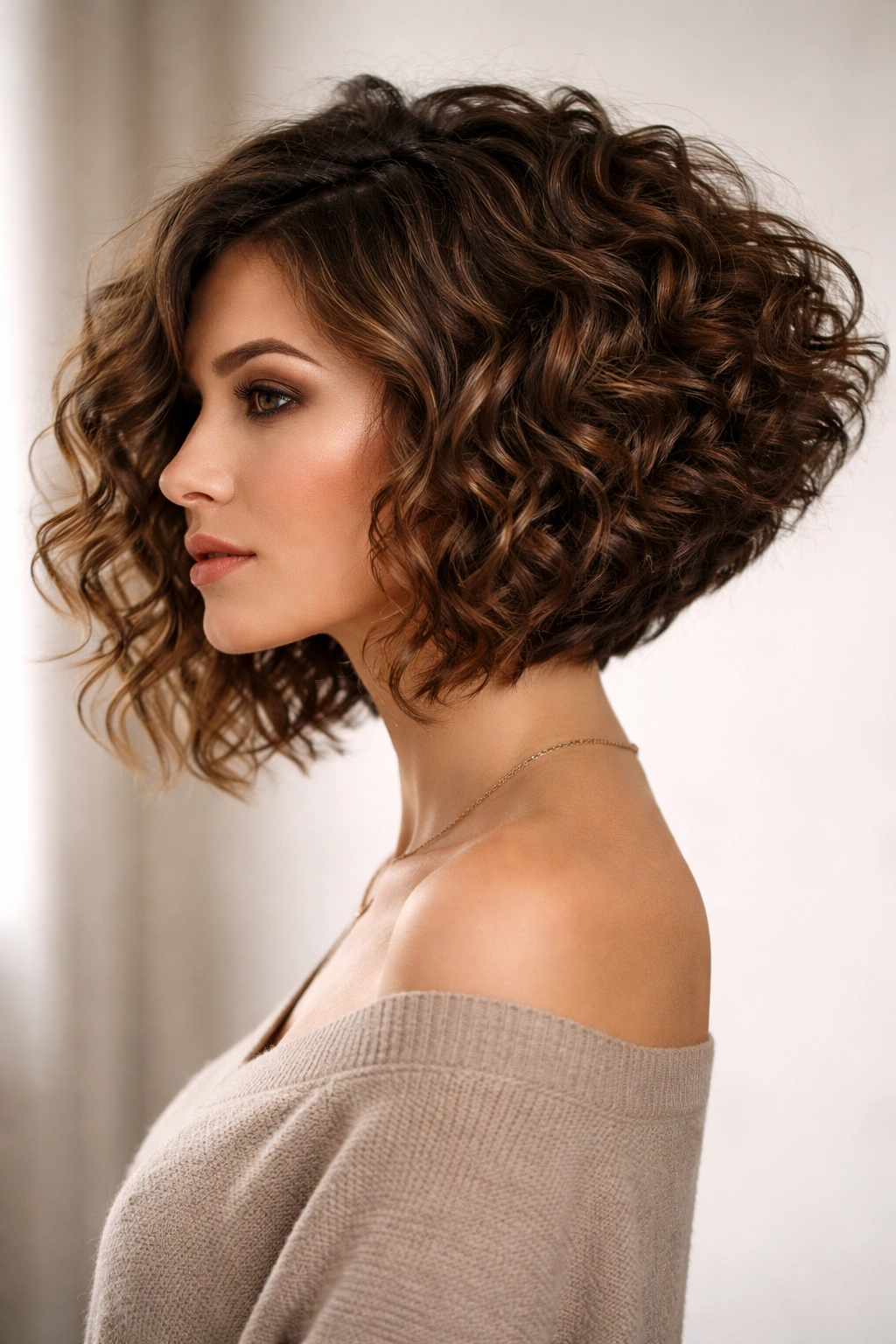
What’s the difference between an inverted bob and a stacked bob? The inverted version usually gives you a more obvious slope from back to front, with the front pieces noticeably longer. That angle can be excellent on thick curly hair because it keeps the front from feeling boxed in while the back stays lifted and tidy.
This cut has a little more drama than a standard bob, but not in a fussy way. Thick curls make the shape feel softer anyway, so the angle reads as structure rather than sharpness. If your face is round or you like a bit of length near the jaw, the forward angle can be flattering without weighing everything down.
I like this style best when the front pieces skim the collarbone or just graze it. Too short, and the angle can lose its point. Too long, and it stops reading as a bob at all. There’s a sweet spot, and once you hit it, the haircut has real presence.
12. Side-Part Curly Bob
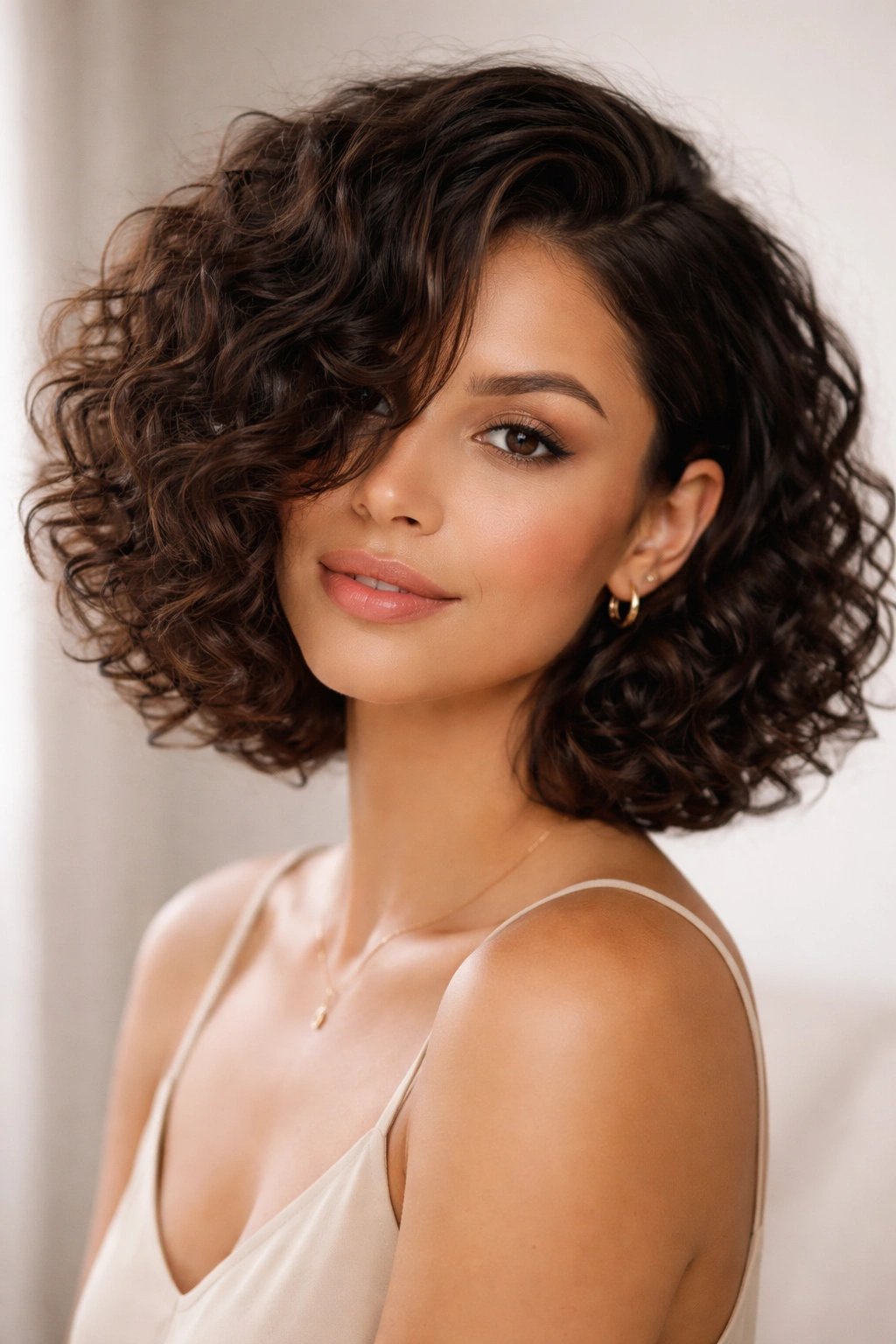
A deep side part can change a bob more than people expect. On thick curly hair, it moves the weight off the center line and gives the curls a chance to fall with more shape on one side. That asymmetry can be subtle or dramatic, depending on how much volume you want to keep.
Why the Side Part Helps
Thick curls often build up at the crown and around the cheeks. A side part breaks that up and creates a cleaner line through the top. It also makes the bob feel less symmetrical, which can be a good thing if your curl pattern naturally wants to bend one way anyway.
How to Wear It
- Place the part where the hair naturally resists least
- Clip the heavier side while diffusing for extra lift
- Use a small pick at the roots only if needed; do not fluff the ends
A side-part bob is one of the easiest ways to make an existing curly cut feel new again. Sometimes you do not need a new haircut. You need a different part and a better dry.
13. Curly Bob with Hidden Undercut
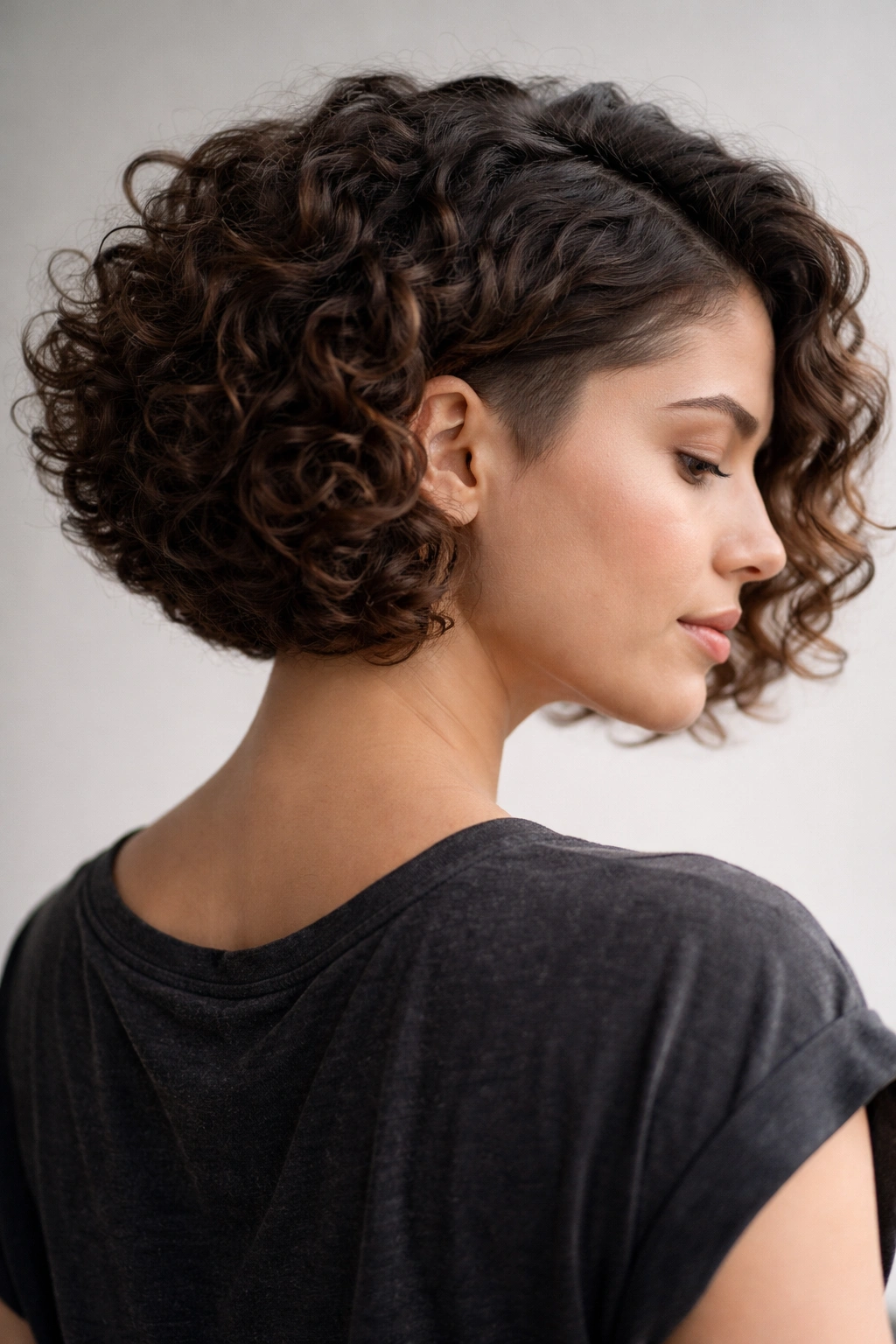
A hidden undercut sounds bold, and it is, but it can also be the most practical move on very thick curls. If the underside of your hair is dense enough to feel hot, bulky, or stubborn to dry, removing weight underneath can make the bob sit better on your head. Nobody has to see it unless you want them to.
The visible shape stays like a normal bob. That’s the point. From the outside, you still get curls, width, and movement. Underneath, the haircut is working harder so the surface looks cleaner. It can be a relief on hair that grows out wide around the nape.
This is not the first cut I’d choose for someone who likes to wear their hair up a lot, because the undercut can change how ponytails sit. But if you mostly wear your curls down and you hate the heavy mushroom effect in back, it can be a smart solution.
Best for thickest textures:
- Dense curls that take forever to dry
- Hair that bulks up at the nape
- Bob wearers who want less internal weight without losing visible fullness
14. Collarbone Curly Bob
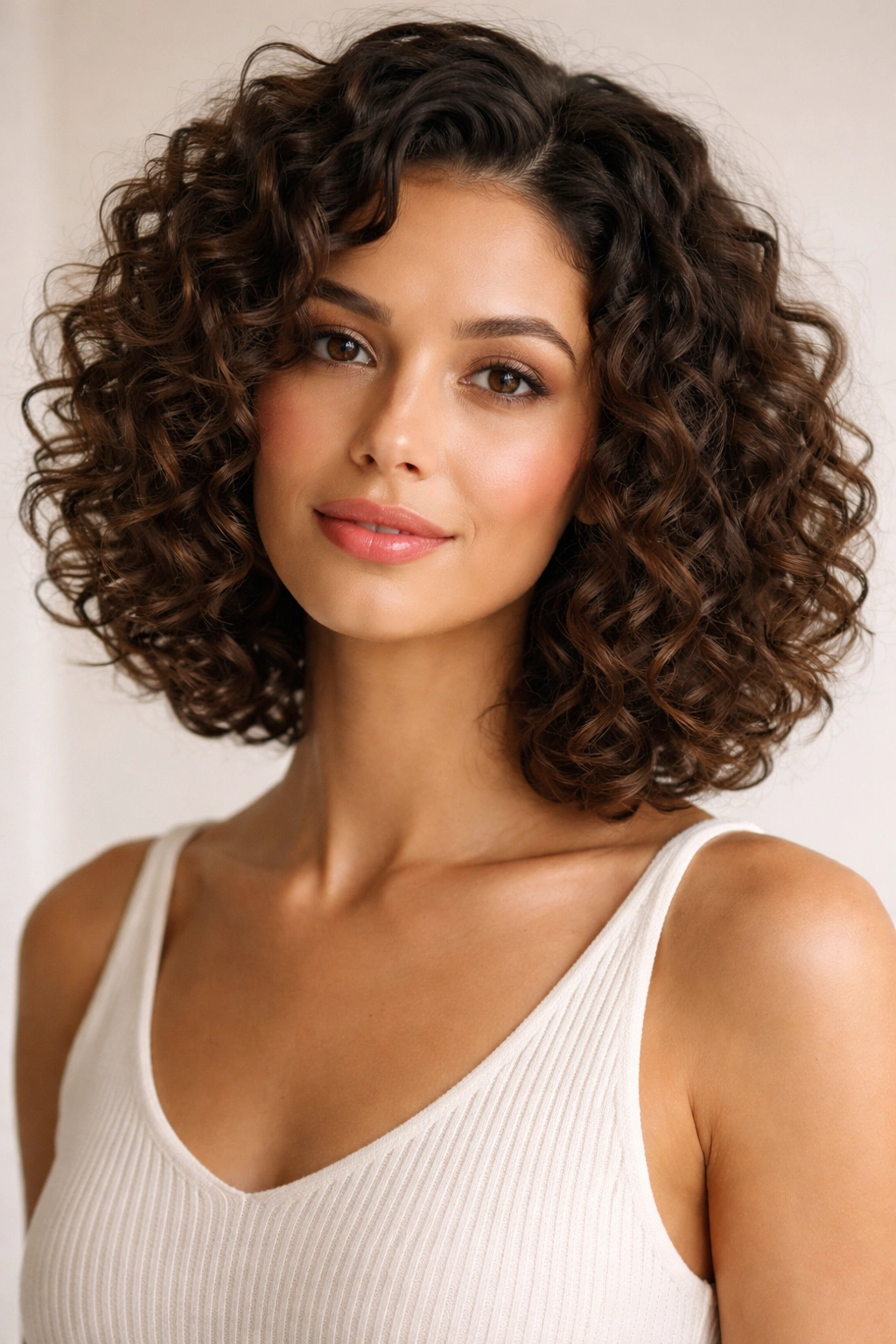
Do you want the bob shape without going all the way short? The collarbone curly bob is the safest length for thick curls, and I mean that in the best way. It keeps enough length to show off the curl pattern while still giving you the neatness that makes a bob feel fresh.
This length is useful when you’re not ready to commit to a chin-length cut or when your curls have a lot of shrinkage and need a little extra room. It can sit just below the shoulders on one head of hair and right at the collarbone on another. That flexibility is the appeal. The shape feels softer, and the grow-out is friendlier.
I also like it for people who wear their curls stretched sometimes and natural other times. The length can handle both moods. It won’t collapse if you diffuse it, and it won’t feel awkward if you air-dry and let the curls do their thing. There’s a lot to be said for a haircut that doesn’t argue with your routine.
15. Micro Curly Bob
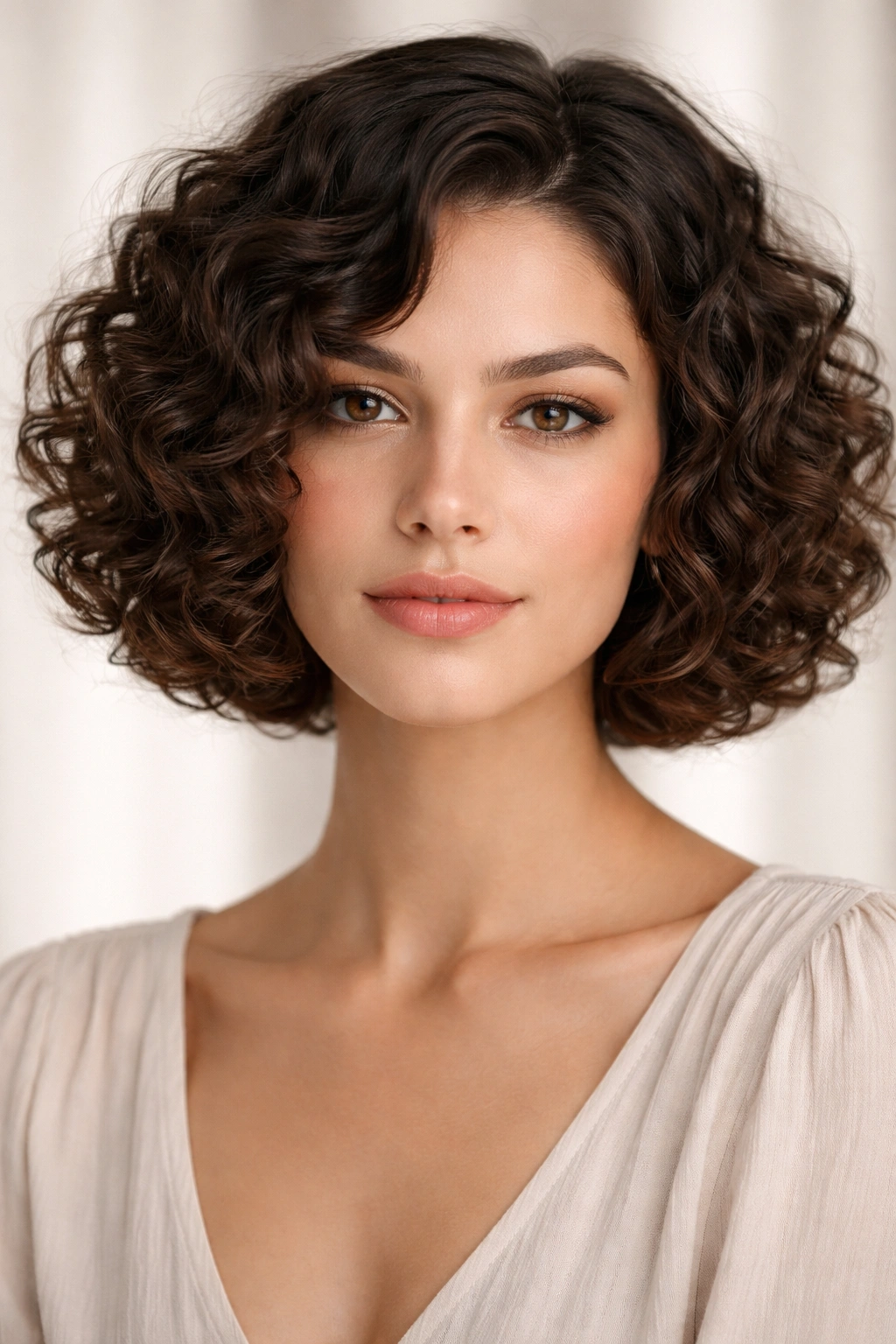
A micro curly bob is the shortest version on this list, and it has a clean little nerve to it. The cut lands somewhere between the ears and the chin, depending on shrinkage, and on thick curly hair it can look sharp without feeling severe. The shape is compact, which makes the curl pattern the star.
Here’s the catch: a micro bob lives or dies on precision. If the perimeter is uneven, you’ll notice it fast. If the curls are cut too wet, the final shape can spring up in a way nobody planned. That’s why this style works best with a stylist who knows how your curls behave when they dry, not just how they look in the chair.
It’s also a haircut that loves confidence, because there isn’t much curtain to hide behind. The face is open. The curls sit close. The neck looks longer. It’s a crisp shape, and when the density is right, it can be one of the strongest looks on thick curly hair.
If you want a bob that feels neat, modern, and a little fierce, this is the one I’d keep at the top of the list.