



A big forehead and curls can be a tricky pair. The wrong cut leaves too much open space at the front, and suddenly the whole face looks longer than it really is. The right curly style changes that fast. It breaks up the hairline, pulls the eye sideways, and gives the front of the face some texture to land on.
That is why curly styles that hide a big forehead work better when they lean on shape instead of heavy coverage. Curls already bring movement. Use that. A few pieces at the brow line, a side part, some crown lift, or a fringe that lands in the right spot can do more than a blunt curtain ever will.
The biggest mistake I see is cutting curls too short in the front and hoping they will “settle.” They won’t, at least not the way straight hair does. Curly hair shrinks, swells, and changes mood from wet to dry, so a style that looks neat in the chair can land an inch or two higher once it dries. That’s the stuff people forget, and it matters.
So the goal is not to hide your forehead like it is a problem to solve. It’s to balance it with curls that soften the upper face, keep the front interesting, and make the whole shape feel intentional. Some styles do that with bangs. Some do it with parts. A few do it with volume in the exact right place.
1. Curly Curtain Bangs That Split Softly at the Center
Curtain bangs are the easiest place to start if you want a softer forehead without giving up length. They open in the middle, sweep to the sides, and leave the front of the face looking framed instead of exposed. On curls, that little split matters. It breaks up a long forehead line without looking like you tried too hard.
Why This Shape Works
The sweet spot is the cheekbone area. If the shortest piece lands too high, the bangs can spring up and sit nowhere near where you planned. If they land too low, they stop doing the job. The best curtain bangs for curls usually start a touch longer than straight-hair bangs, because shrinkage is real and dramatic.
Dry-cutting helps a lot here. If a stylist cuts curls wet and too short, the bangs can bounce way above the brows once your hair dries. Ask for the front pieces to graze the brow area when dry, then taper longer toward the cheekbones. That keeps the forehead from feeling blank and gives the curls space to move.
- Best on shoulder-length to long curls
- Works well with 2C through 3C patterns, and sometimes tighter coils with stretch
- Needs a little side movement, not a rigid center split
- Looks best when the ends are not razor-thin
One good trick: use a tiny bit of mousse on the bangs and twist each side forward while they dry. That keeps them from flying straight up.
2. A Deep Side Part With Lift at the Roots
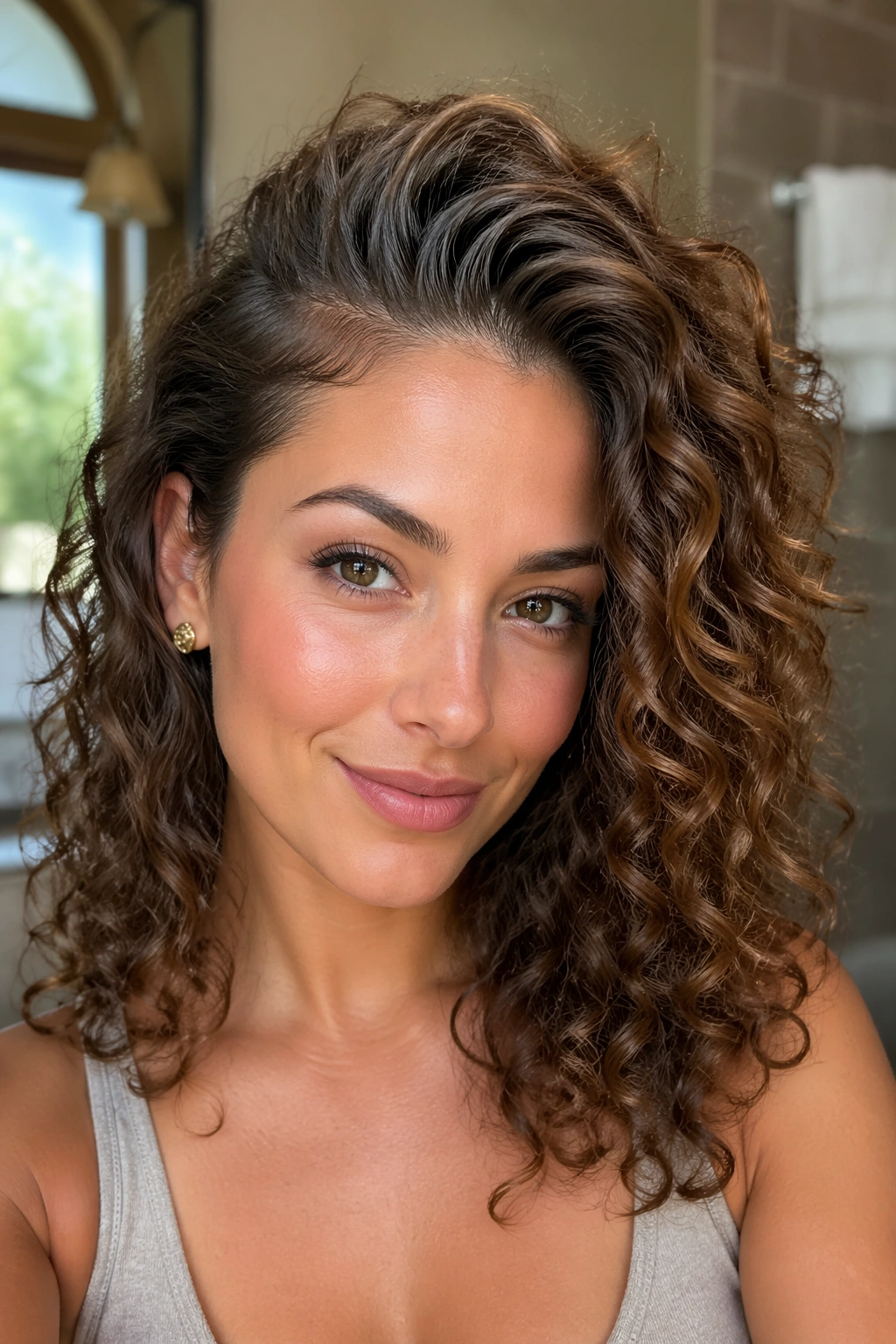
Why does a deep side part work so well? Because it changes the whole shape of the face in one move. A center part leaves a long vertical line right through the middle of the forehead. A deep side part cuts across that line and makes the upper face read shorter and softer.
The part itself is only half the story. The lift at the roots is what sells it. If the hair lies flat against the scalp, the forehead still feels wide. If the part side has some height, the eye lands there first. That little bit of volume changes everything.
How to Get the Lift
Use a rat-tail comb to set the part while your hair is damp. Then clip the roots on the heavier side for 10 to 15 minutes while drying. A diffuser on low heat works well, especially if you cup the roots instead of blasting them from underneath. You want support, not puffed-out chaos.
A light mousse at the roots helps, but don’t pile on heavy cream near the part. That only drags the curl down and makes the front look flatter. A side part needs air.
- Best for medium to dense curls
- Great for oval, heart, and longer face shapes
- Easy to pair with loose front pieces
- Works on wash-and-go styles and stretched styles
A deep side part is simple. That’s why it’s useful.
3. The Curly Shag That Builds Movement Around the Face
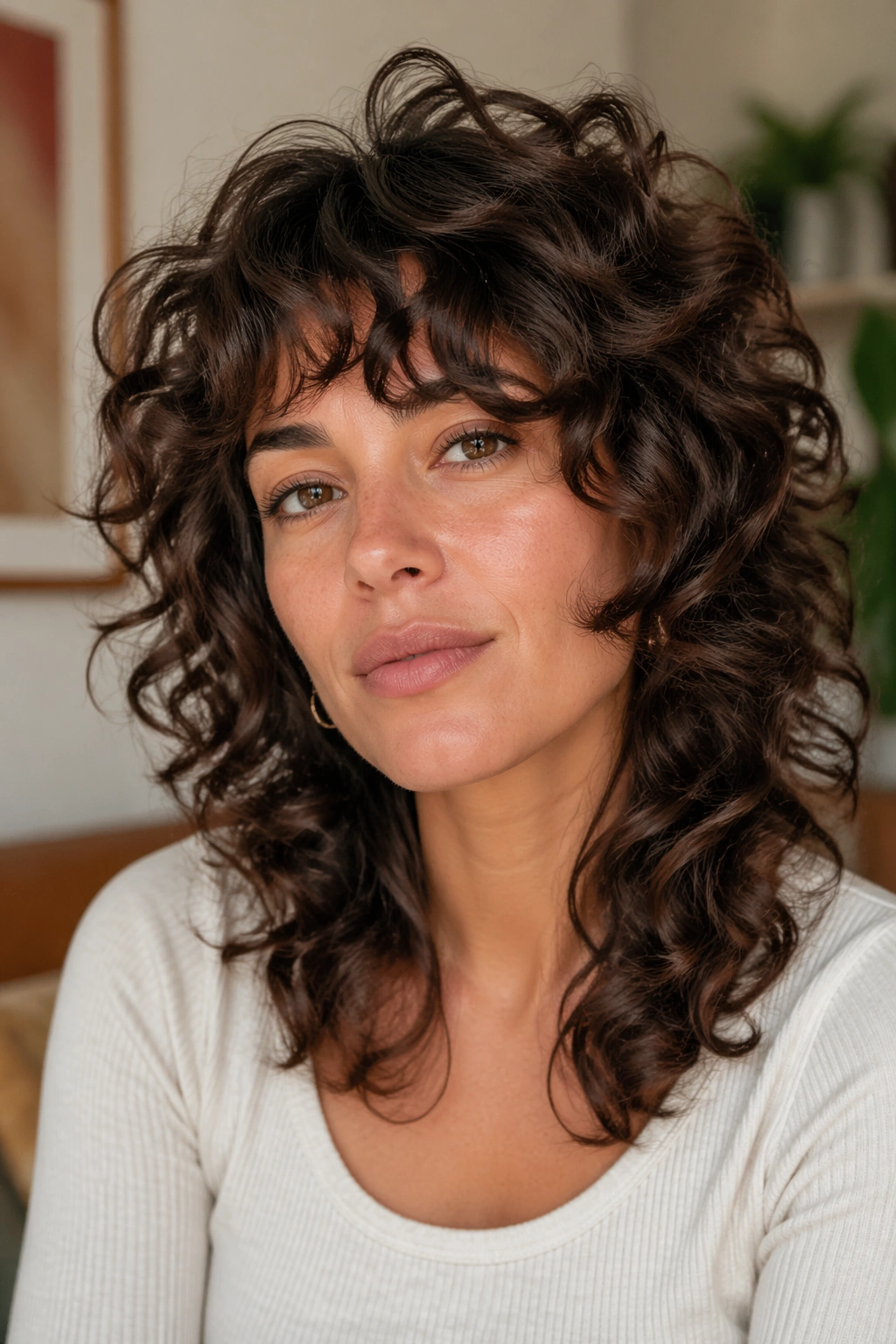
If your curls tend to form a triangle, the shag changes the whole picture. It takes bulk out of the bottom and puts movement where you actually want it — around the face, at the crown, and through the top layers. That extra activity near the forehead helps the upper face feel less open.
The shag is not about cutting everything wildly short. It is about layering curls so they fall in different places. The front pieces can sit near the brow or cheekbone, while the crown stays a little shorter and fuller. That gives the eye more to look at near the top of the face, which is the whole point.
Flat roots are the enemy here.
What to Ask For
Ask your stylist for a layered shag with soft face-framing pieces, not choppy pieces cut with no plan. On curls, “choppy” can turn into puffed-out ends fast. A good shag still has shape. It just has movement instead of one blunt curtain of hair.
- Keep the shortest layers around the crown and temples
- Let the front pieces fall near the cheekbones
- Keep the layers soft, not razor-thin
- Use a diffuser to keep the roots lifted
The shag also ages well between cuts. As the layers grow out, they usually keep doing the job. That’s useful if you do not want to spend your life chasing a perfect shape every six weeks.
4. Shoulder-Length Curls With Long Face-Framing Layers
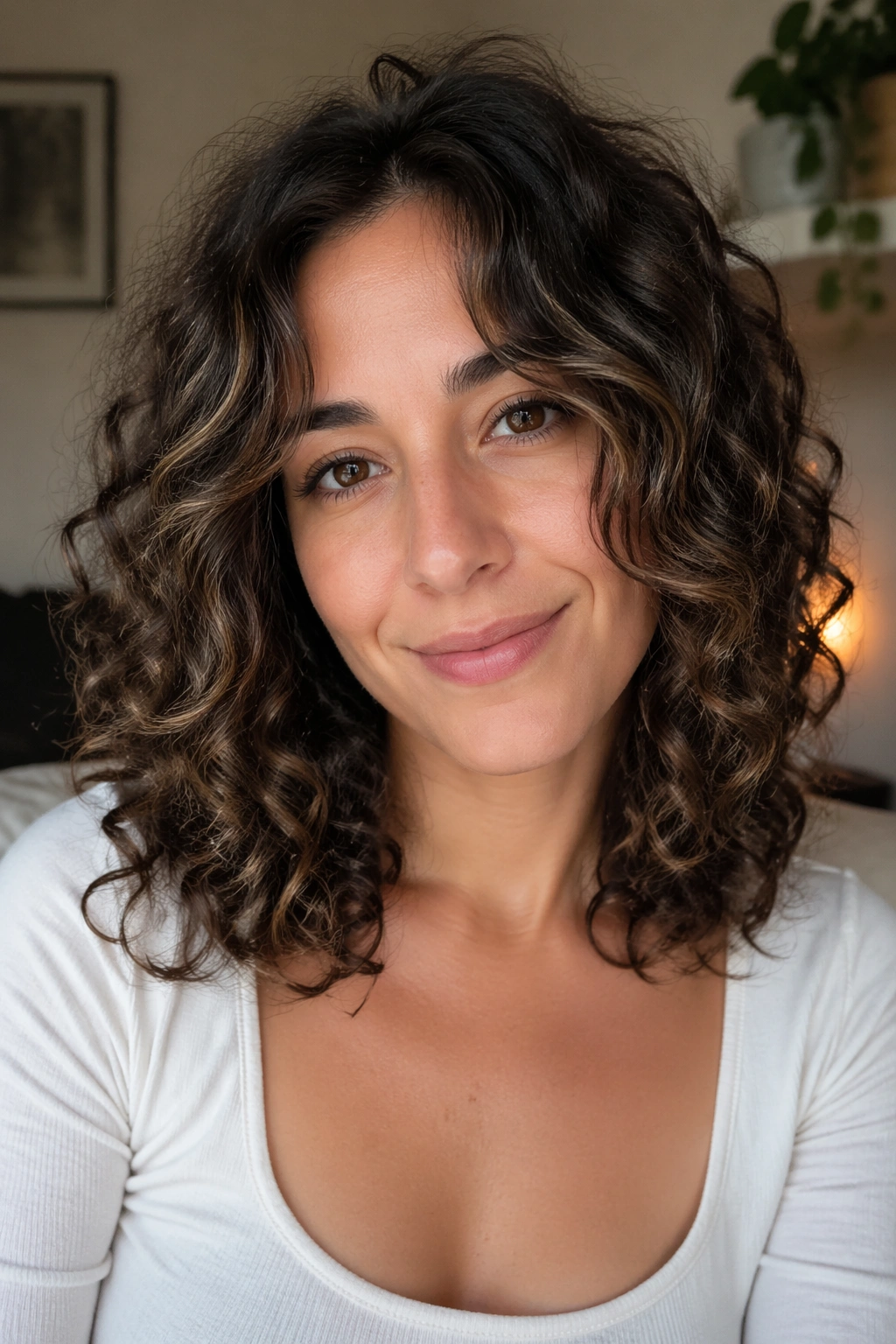
Long hair is not the problem. Heavy, one-length hair is. That’s the difference most people miss. Shoulder-length curls with long face-framing layers can soften a taller forehead because they keep the front of the style active instead of blank.
The face-framing pieces should start high enough to matter, usually around the cheekbone or just above it depending on curl pattern and shrinkage. When those pieces curve inward, they create a soft border around the forehead and temples. That border makes the upper face feel shorter, even when the rest of the hair stays long.
A blunt perimeter can make curls sit like a curtain. Layers fix that. They let the front curl forward while the back keeps its length and weight. You get movement without losing the fullness that makes curls look rich.
The Detail That Matters Most
Ask for the layers to be cut on dry or mostly dry hair. Curls lie. They shrink. They change direction while they dry. A dry cut gives the stylist a real look at where those face-framing pieces will land.
This style works especially well if you like a middle or soft off-center part. You are not trying to drag all the attention to the center of the forehead. You are trying to make the face look framed from the temples down.
A one-length shoulder cut can feel blunt. This one doesn’t.
5. The Curly Bob With Side-Swept Bangs
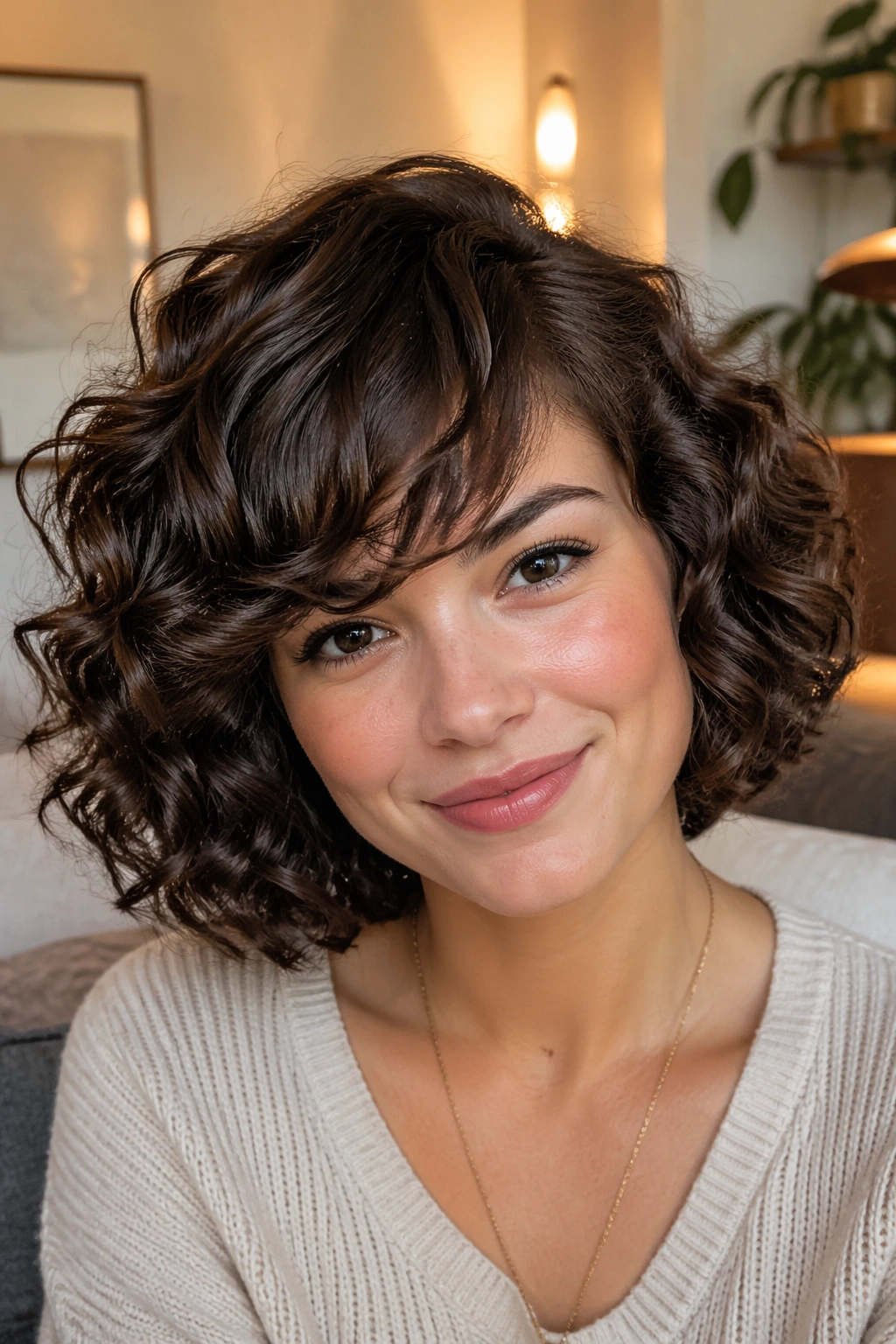
A curly bob with side-swept bangs feels crisp, airy, and a little cheeky. It is also one of the smartest cuts for a forehead that feels too tall, because the bang section gives you coverage without the heaviness of a full fringe. The sweep matters. A bang that moves diagonally across the forehead softens the line better than one that sits straight across it.
The bob itself should usually hit the jaw or just below it, depending on curl shrinkage. That keeps the silhouette compact and lifts the eye toward the face instead of letting the hair drag everything downward. A bob that lands too low can lose that quick, sharp balance.
How to Style It on Wash Day
- Define the bangs first with a small amount of curl cream
- Add gel only at the roots of the bang area if you need extra hold
- Clip the bangs to the side while drying so they sweep, not split
- Diffuse on low heat until the roots feel set
If your curls are loose, the side-swept bang can blend into the front layers without looking separated. If your curls are tighter, the bang may need a bit of stretch, which is fine. A little tension while drying helps the shape land where you want it.
This cut works because it feels light. Nothing about it screams “I’m hiding something.” It just redirects the eye.
6. A High Puff or Pineapple With Soft Edges
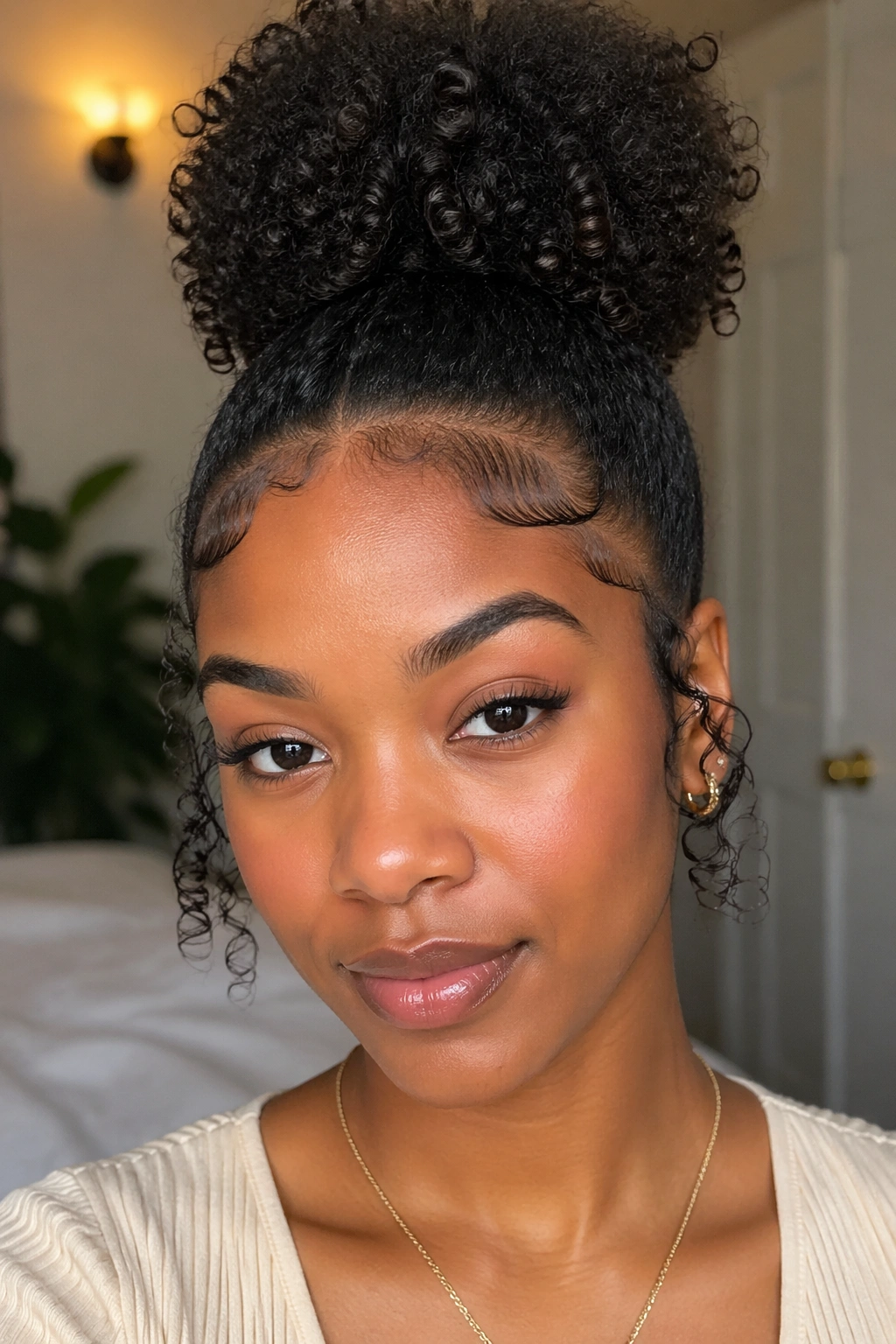
Picture a high puff with two loose curls falling along the temples. That’s the kind of shape that can make a forehead look smaller without flattening your hair at all. The height pulls the eye up, while the soft front pieces break the open space at the hairline.
This style is especially handy on wash days when your roots are cooperating but the lengths need a reset. A puff keeps the curls contained, and a pineapple does the same thing with more length left out. Both can work, but the front needs to stay soft. If you slick everything straight back, you lose the whole effect.
Keep the Front Loose
Use a satin scrunchie instead of a tight elastic. It’s kinder to curls, and it keeps the puff from looking harsh at the base. Leave a little hair loose at the temples and front hairline. Not a mess. Just enough softness to interrupt the forehead line.
A tiny bit of edge control can help, but don’t use it to draw a sharp frame unless that’s the look you want. Sharp edges and a tall forehead can work together, but they also put more focus on the hairline itself. A softer finish is usually easier on the eye.
This style is practical, quick, and strangely flattering on days when you do not want to think too hard.
7. Rounded Afro Shape With Curly Fringe
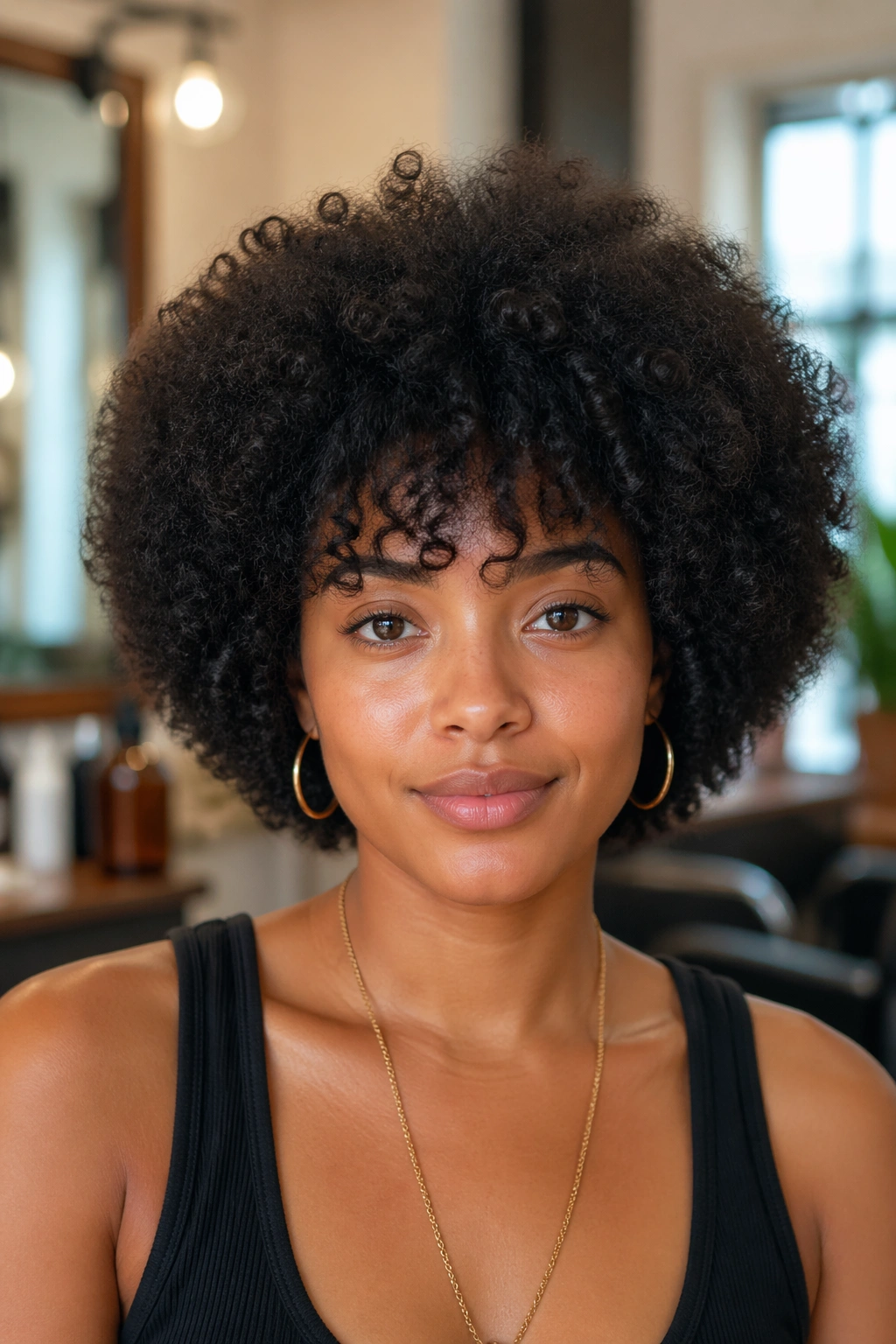
A rounded afro is one of the smartest shapes for a taller forehead. The reason is simple: the round silhouette gives width where the face needs it, and the fringe or front fluff breaks up the vertical space above the brows. You get balance without needing long length in front of your face.
The mistake people make with afros is letting the shape go too tall at the top and too flat at the sides. That can make the forehead look even longer. A rounder shape keeps the visual weight more evenly spread, so the face feels shorter and fuller. This works especially well with coils that naturally shrink upward, because the shape already wants to live close to the head.
What to Ask For at the Salon
Ask for a rounded silhouette with a soft fringe, not a boxy top or a triangle shape. The fringe should be cut on dry hair if possible. That helps the stylist see where the curls sit in real life, not in a wet guess.
- Keep the sides full at temple level
- Let the fringe sit irregularly instead of perfectly even
- Shape the top with your natural curl pattern, not a forced round brush finish
- Re-shape with a pick at the roots, not by tugging the front flat
A good rounded afro feels alive. It does not sit like a helmet. That’s the difference.
8. Half-Up, Half-Down With Crown Lift
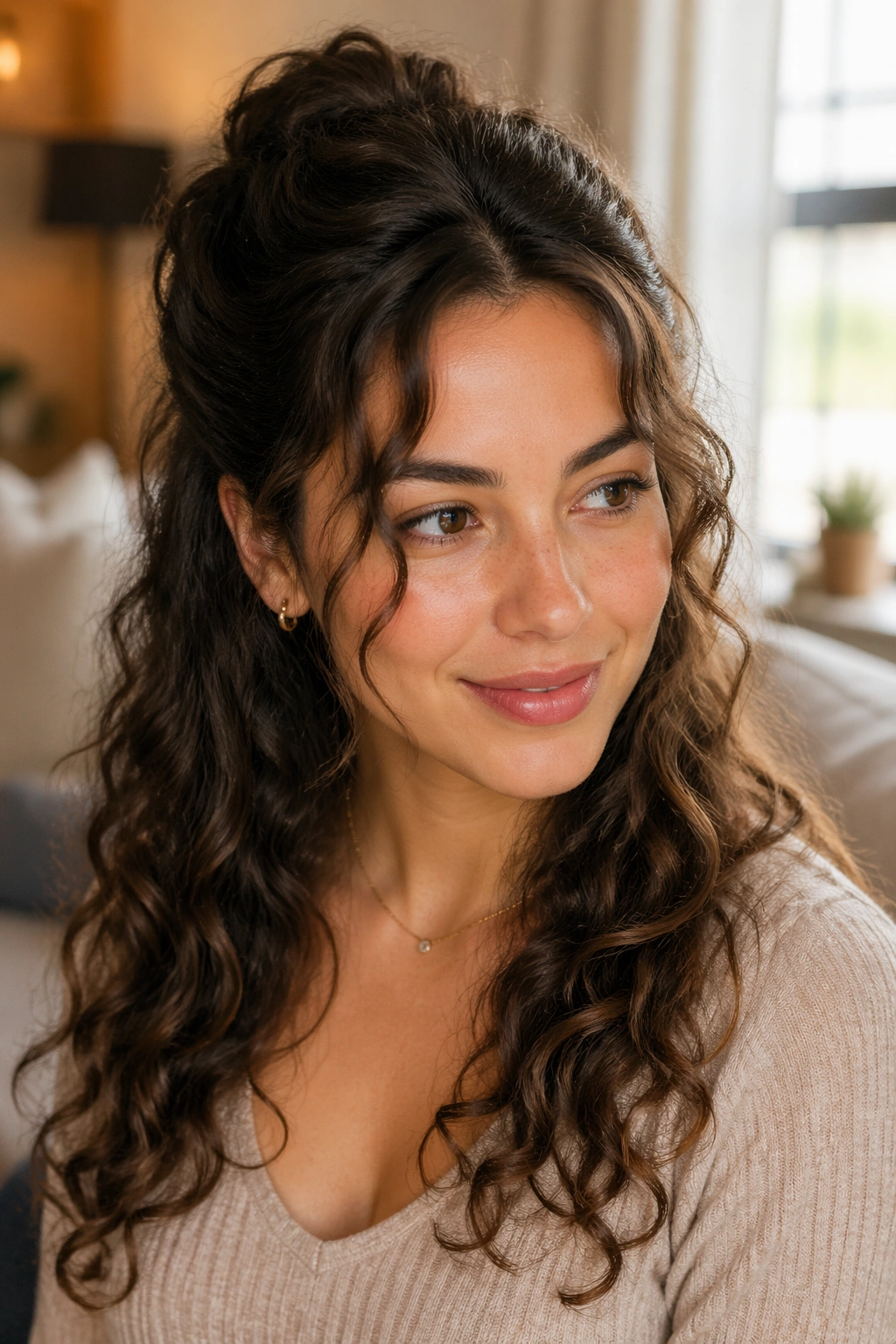
Want to keep length and still soften the forehead? Half-up, half-down is the move when the top section has some lift and the front stays loose. Pulling the top back creates a little height at the crown, which shifts the eye upward. Leaving the front pieces out keeps the forehead from looking bare.
The placement matters a lot. If the half-up section starts too far forward, right at the hairline, it can expose more forehead than you want. Pull it back a few inches instead. That tiny shift gives the style room to breathe. You can use a claw clip, a small puff, or a loose half bun depending on texture and length.
A few curls around the temples help more than most people think. They break the edge of the style and keep it from feeling too pulled back. You do not want every strand aimed away from the face. You want a little movement toward it.
This is one of those styles that looks casual but still does a job. It hides the forehead without making a big show of hiding it, which is often the point.
9. A Twist-Out With Swept-Over Front Pieces
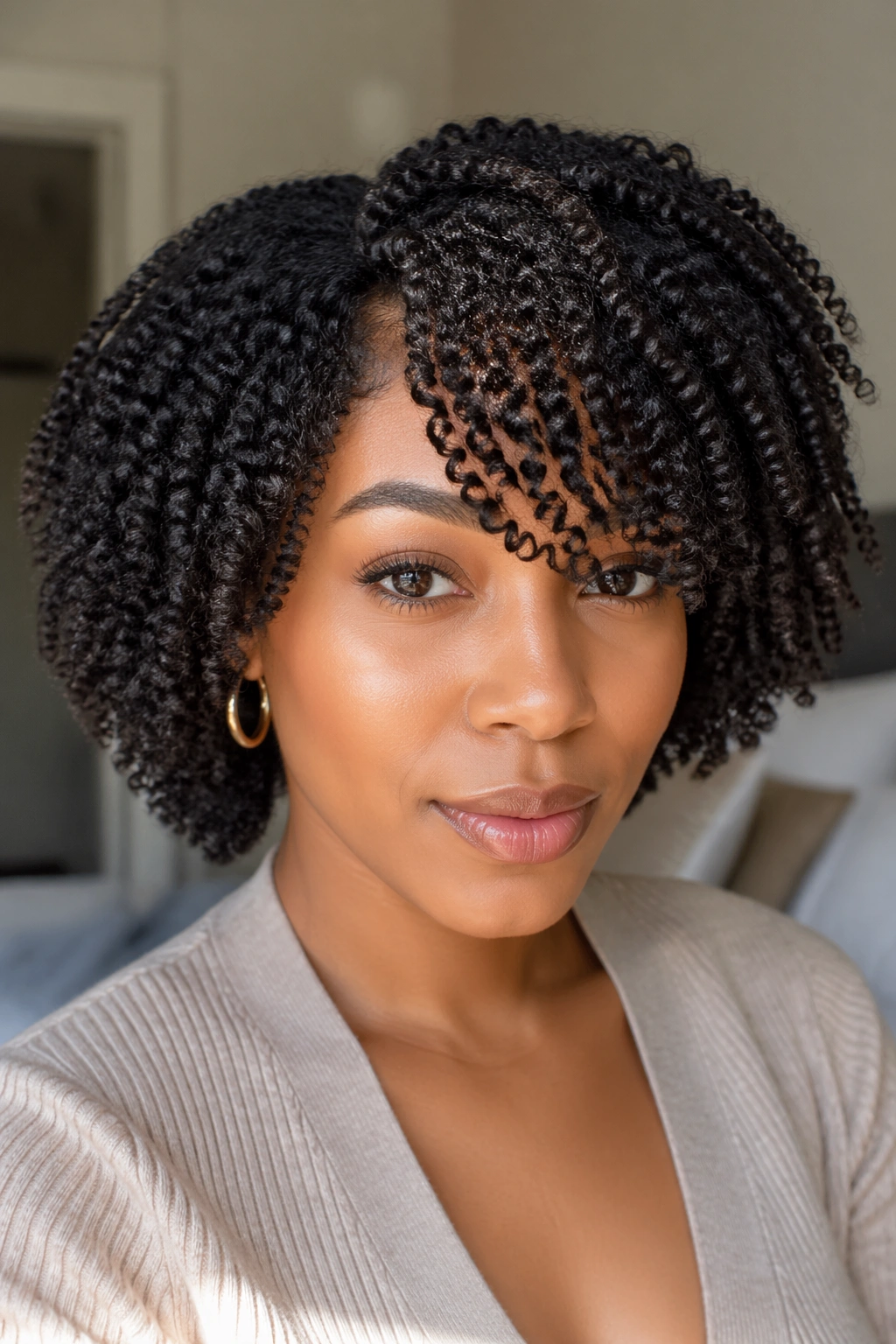
I keep coming back to twist-outs for one reason: they can be steered. If you twist the front pieces with intention, they do not have to fall straight back. They can sweep forward, soften the forehead, and frame the face in a way that feels clean rather than busy.
The direction of the twist is the trick. Front sections twisted slightly toward the face will usually land closer to the brow line once dry. That creates coverage without bangs, which is helpful if you want flexibility. You can part the rest of the hair where you like, but the front stays in control.
How to Steer the Front
- Use smaller twists at the hairline and slightly larger ones farther back
- Set the front pieces with a clip so they dry in the direction you want
- Let the hair dry completely before unraveling
- Separate the twists with clean, oiled fingers so the front does not frizz out too high
A twist-out with a little stretch at the root can make the forehead feel shorter without looking like you are wearing bangs. It is especially nice for coils and tighter curls, because the texture gives the style enough body to sit where you place it.
And yes, it takes patience. Worth it, though.
10. Braided Crown or Flat Twists Across the Hairline
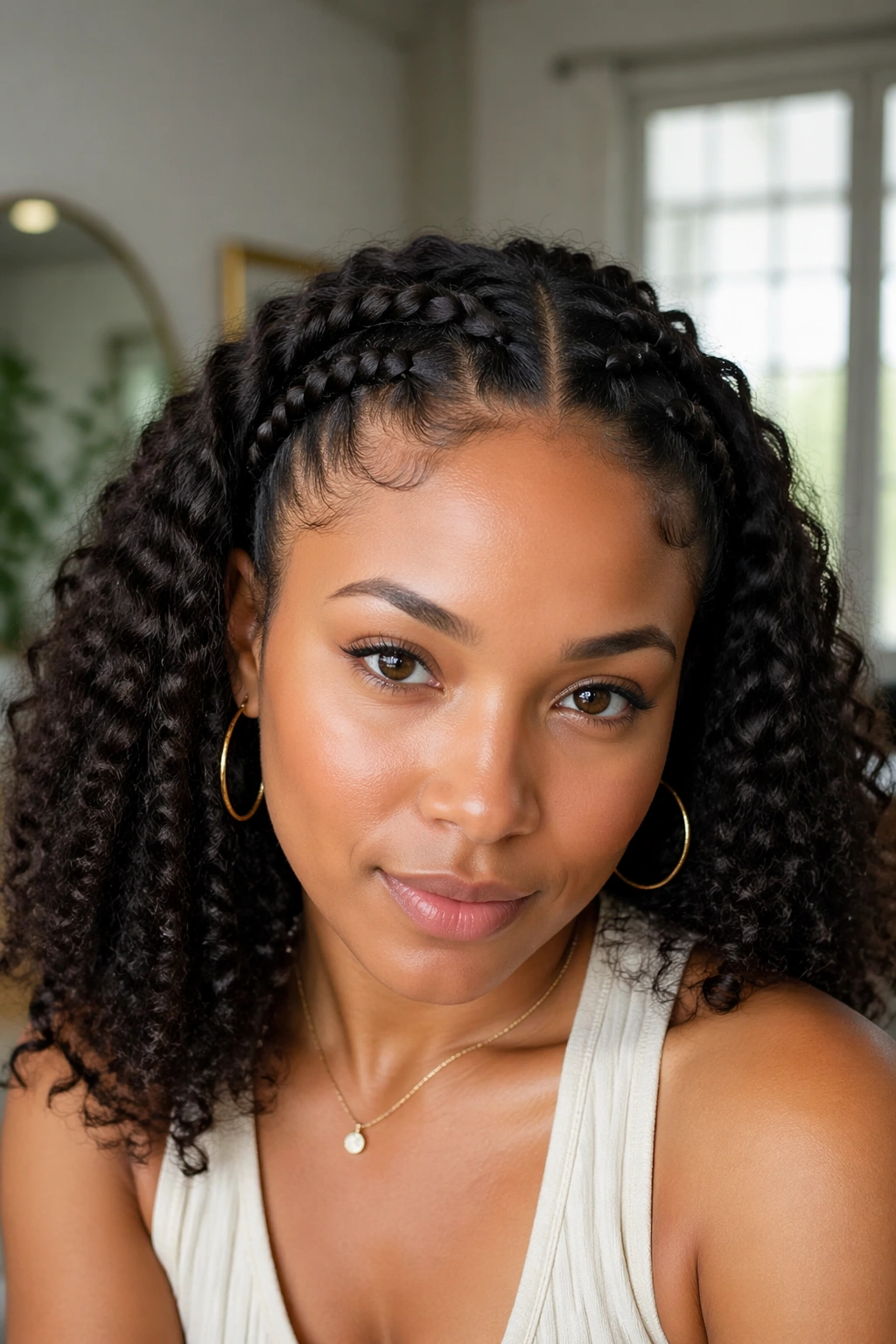
Braids across the hairline can shorten a forehead fast. A braided crown, a single flat twist, or two slim twists at the front all work because they interrupt the open space right where the forehead begins. They create a visible line before the curls even start, and that line changes the whole read of the face.
The key is softness. A braid that is pulled too tight can look severe, especially if the rest of the hair is fluffy and full. Leave a little give at the temples. Let a few curls escape near the ears. That keeps the front from feeling locked down.
Good Places to Put the Braid
- Across the top of the hairline like a crown band
- From one temple to the other in a low arc
- As two flat twists that meet near the center or slightly off-center
This style works on wash-and-go hair, stretched styles, and even puffed-out curls. It also buys you time on days when the roots are not cooperating. A braid at the front does a lot of heavy lifting.
The only real warning: do not braid so tightly that your scalp hurts. A style should soften the forehead, not punish it.
11. Long Curls With a Zigzag Part
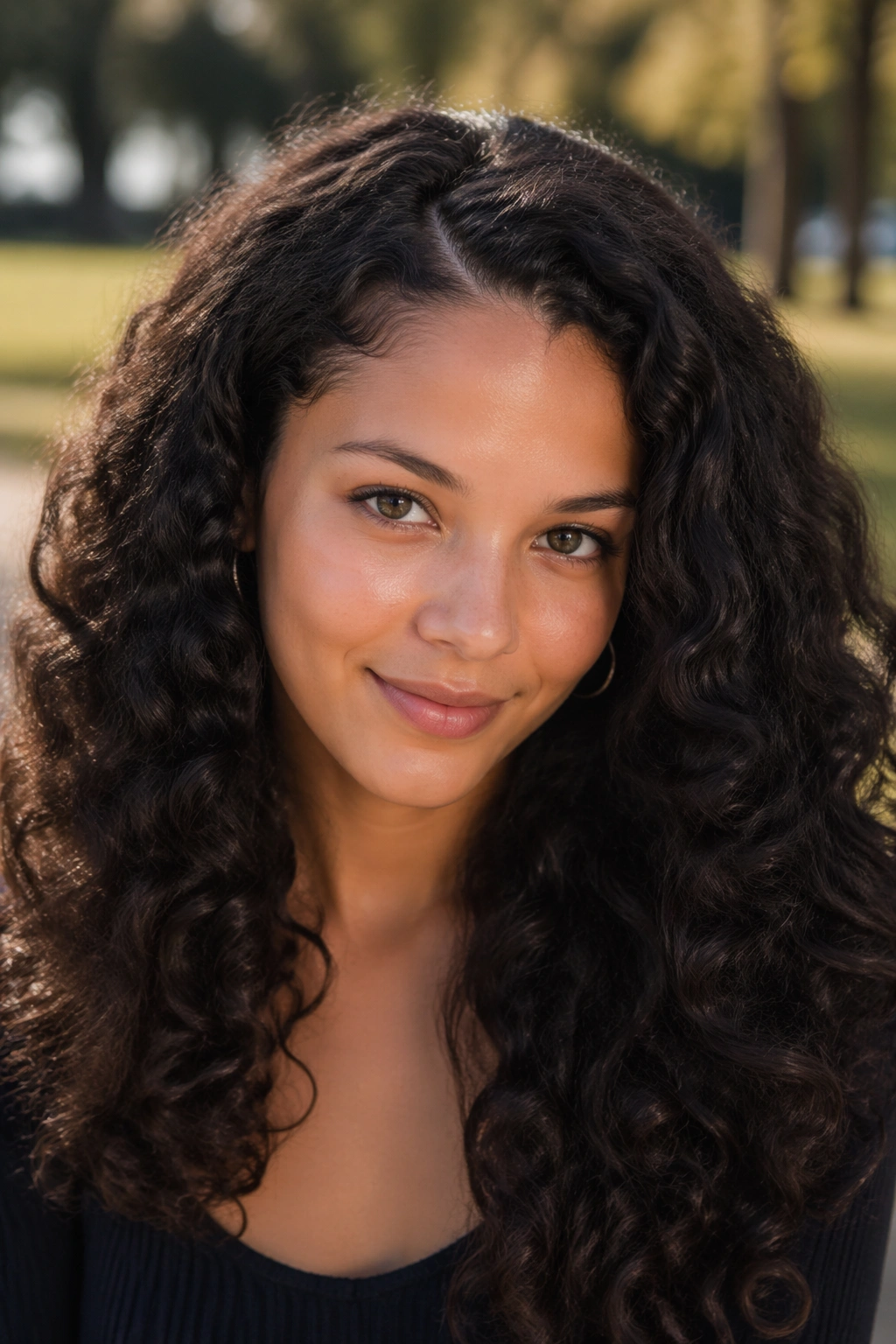
Small change. Big payoff.
A zigzag part breaks up the long uninterrupted line that a center part creates. That matters more than people realize. When the part is straight, the eye has a clean path right up the middle of the forehead. When the part shifts in little angles, the front of the style feels busier and less exposed.
This works best on long curls, especially when the lengths have enough weight to sit around the cheeks and shoulders. The zigzag gives the top some texture, and the curls take care of the rest. You do not need a dramatic shape change. You just need to interrupt the line.
Use the tail of a comb and move the part in small one-inch angles instead of one smooth split. Keep the angles soft, not sharp. Sharp lines can look too engineered and fight the curl pattern. The best version looks a little imperfect.
The nice thing about this style is that it is low commitment. You can switch it out the next wash day if you want. No hard cut. No big decision. Just a cleaner way to make the forehead feel less like the center of the conversation.
12. Waterfall Bangs and Face-Skimming Pieces
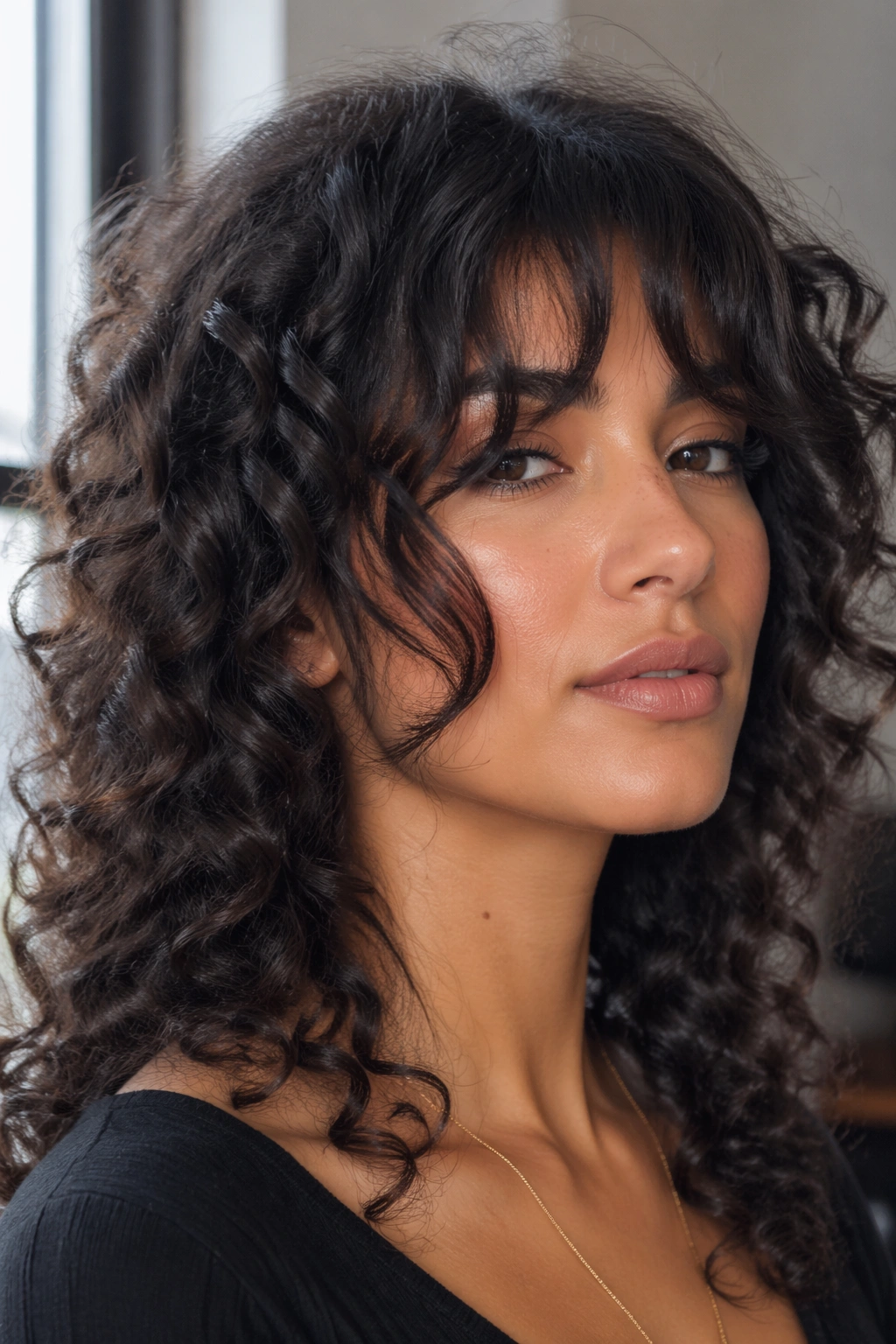
What if you want bangs, but not a heavy curtain? Waterfall bangs are a smart middle ground. They let a few shorter pieces fall near the temples and brow area while the center stays a little longer and softer. The result is less blunt than a full fringe and more useful than no front shape at all.
This style is especially good for loose curls and springy waves, though tighter textures can wear it too if the cut is handled with care. The idea is to create layers that fall like a gentle slope instead of a wall. That slope blurs the forehead without closing off the face.
How to Ask for It
- Ask for shorter pieces at the temples
- Keep the center pieces longer so they blend instead of block
- Have the cut done dry, or almost dry, if your curls shrink a lot
- Tell the stylist you want movement, not a blunt bang line
Waterfall bangs can look a little messy if the layers are cut too aggressively, so restraint matters. I like them because they feel softer than standard bangs and less fussy on grow-out. They also give you room to pin them back on days when you want the forehead more open.
That flexibility is the whole appeal.
13. A Tapered Cut With a Soft Curly Fringe
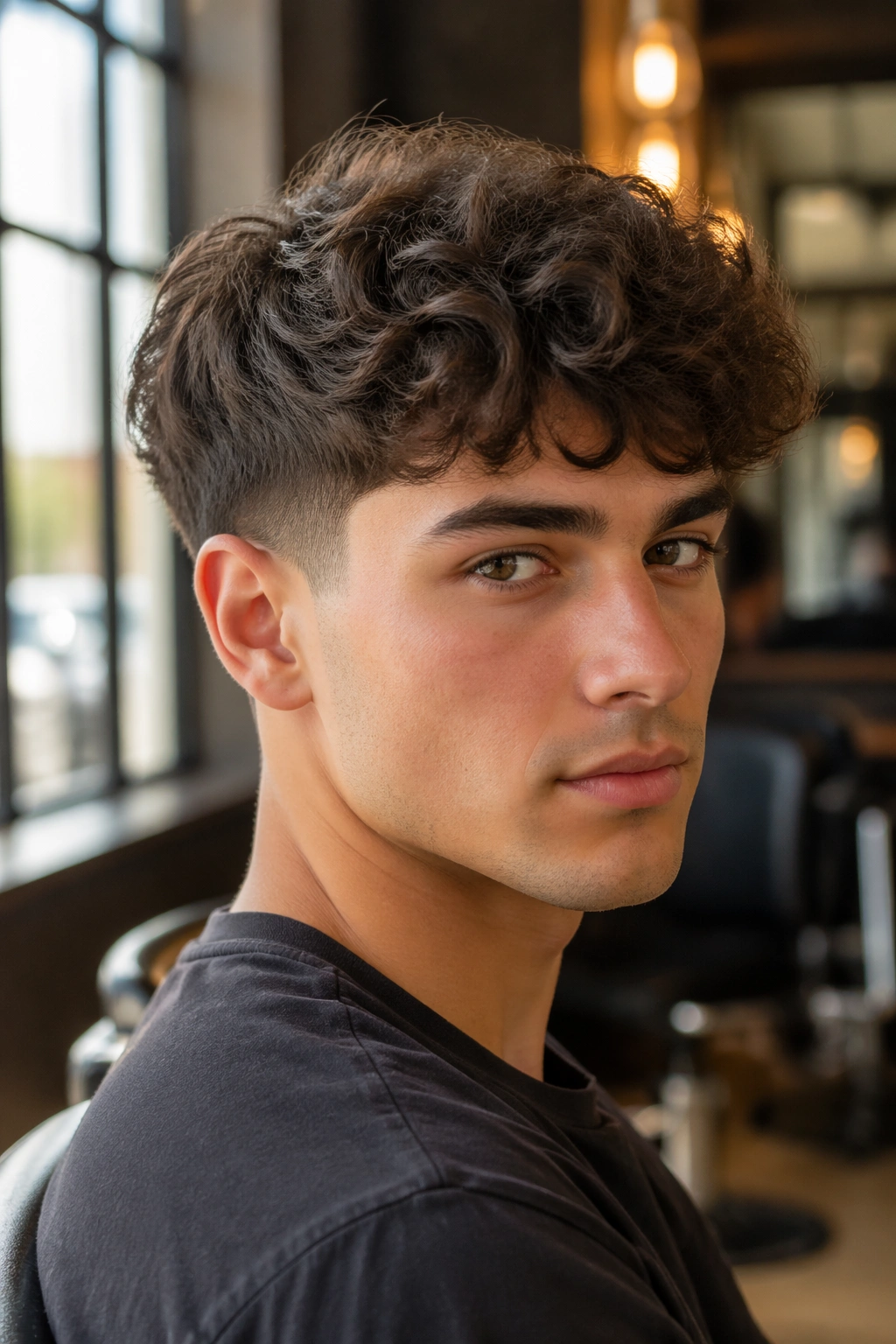
A tapered cut with a soft curly fringe does more than a long style sometimes can. Short sides and a fuller top pull the eye upward, while the fringe keeps the forehead from sitting out in the open. For tight coils and short natural hair, this is one of the cleanest shapes going.
The fringe should not be cut into a rigid line. That’s the mistake. A hard edge can make the forehead look boxed in instead of softened. A good tapered cut leaves the front a little irregular, with the fringe sitting lightly over the upper forehead or just grazing it depending on length.
Why It Works So Well
- The tapered sides narrow the face visually
- The fuller top adds height where you want it
- The fringe breaks the forehead line without dragging the style down
- It is easy to refresh with a little curl cream and a pick at the roots
This cut does require upkeep. The taper grows out fast, and the fringe can lose shape if it gets neglected. Still, the payoff is strong. It feels neat, modern, and direct.
If you like short hair, this is the cut that proves short does not mean exposed.
14. Headbands, Scarves, and Clips That Break Up the Hairline
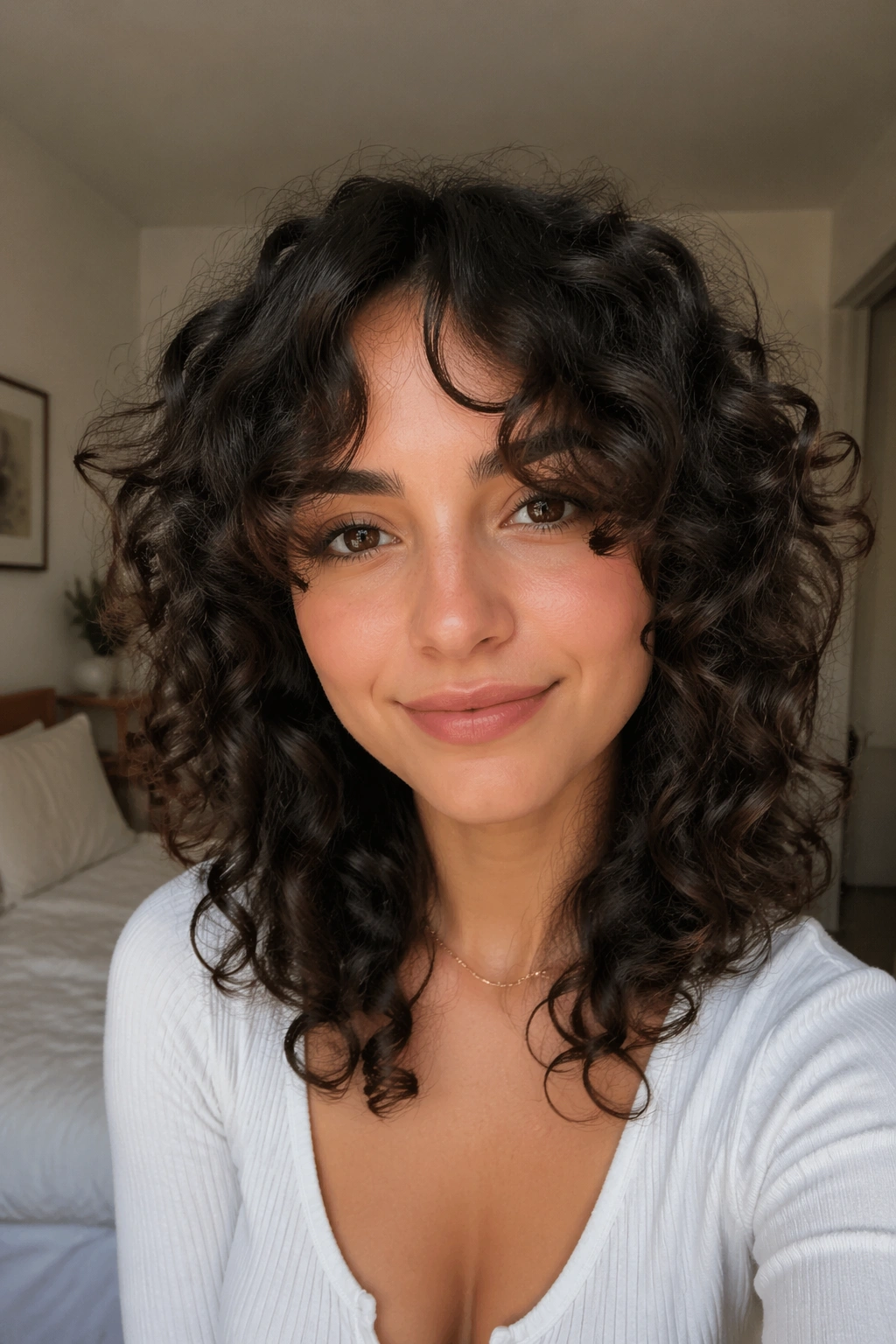
Sometimes the haircut is fine; the line at the front just needs a little interruption. That is where accessories come in. A wide headband, a folded scarf, or a well-placed clip can do a lot for curls because it creates a visual break right at the hairline. The forehead no longer sits as one large open area. It gets broken into pieces.
The best placement is usually a little behind the hairline, not jammed right on it. If you push the accessory too far forward, it can look tight and awkward. Give it an inch or two of breathing room. That lets the curls puff a little in front of it and keeps the style soft.
The Accessory Rules That Actually Help
- Use wide bands instead of thin elastic ones
- Fold scarves so they sit smoothly and do not bunch
- Place clips slightly off-center if you want the forehead to feel shorter
- Leave a few curls loose around the temples
Headbands work especially well with wash-and-go curls because they keep the front lively while still changing the shape of the face. Scarves are better when you want a bolder look. Clips are the sneaky option — quick, simple, and easy to move around until the balance feels right.
A forehead only looks “big” when the front of the style gives it too much empty space. Once you interrupt that space, the whole face reads differently. That’s the real trick, and curls are excellent at it.
