



A wedding hairstyle has a brutal job. It has to survive hugs, heat, camera flashes, dancing, and the moment your aunt leans in for a kiss before the lipstick has dried.
On Black hair, that job gets even more interesting, because curls, coils, shrinkage, and edge patterns all change how a style sits, how long it lasts, and how it looks after three hours instead of three minutes. Curly wedding hairstyles for Black women work best when they honor the texture instead of trying to flatten it into something else.
The styles that hold up usually have one thing in common: shape. A good bridal style is not random hair pinned away from the face. It has a clean line, a clear balance between softness and structure, and enough support to keep the front neat while the back still moves. That combination matters more than shine spray, more than fancy clips, and more than a dramatic last-minute idea.
And yes, the details matter. A style can fail because the curls were set too tightly, because the veil comb had nowhere to sit, because the sides were stretched too much, or because the hair never fully dried before it was pinned. Small things. Big difference.
1. Sculpted Side Part With Loose Spiral Curls
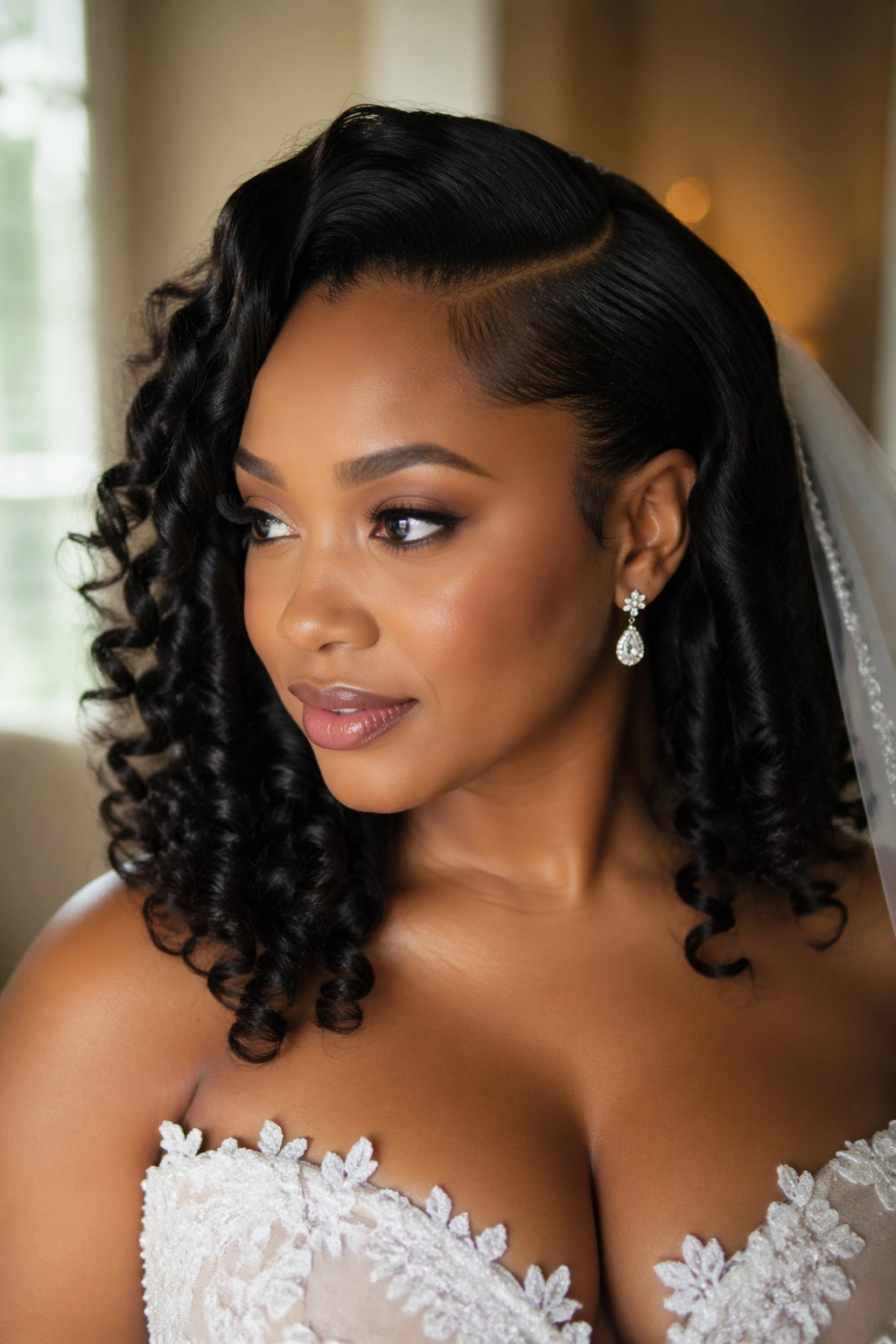
A deep side part does something useful right away: it gives curly hair a shape that looks deliberate from the first photo to the last dance. The style works especially well on shoulder-length to long hair, but it can also be built with extensions if you want more length or fullness.
What I like about this one is the contrast. One side stays sleek and close to the scalp, while the other side falls into soft spiral curls that move when you turn your head. It has enough polish for a formal gown, but it never looks stiff.
Why the side part matters
A deep side part draws the eye upward and gives the face a little lift. On Black women with defined curls or stretched curls, it can sharpen the cheekbones and make the whole style feel cleaner without taking away the texture. That little asymmetry keeps it from looking flat.
- Ask for a part set with a tail comb before styling products go on.
- Define curls with a 1-inch curling wand only if your own pattern needs help.
- Use 4 to 6 bobby pins on the flat side so the part stays in place.
- Finish with a light mist of flexible-hold spray, not a shell-like lacquer.
Best for: brides who want softness in the length but order at the crown.
If you wear a veil, place the comb just behind the highest point of the side sweep. That gives the style room to breathe instead of crushing the curl at the root.
2. Half-Up Crown With Cascading Curls
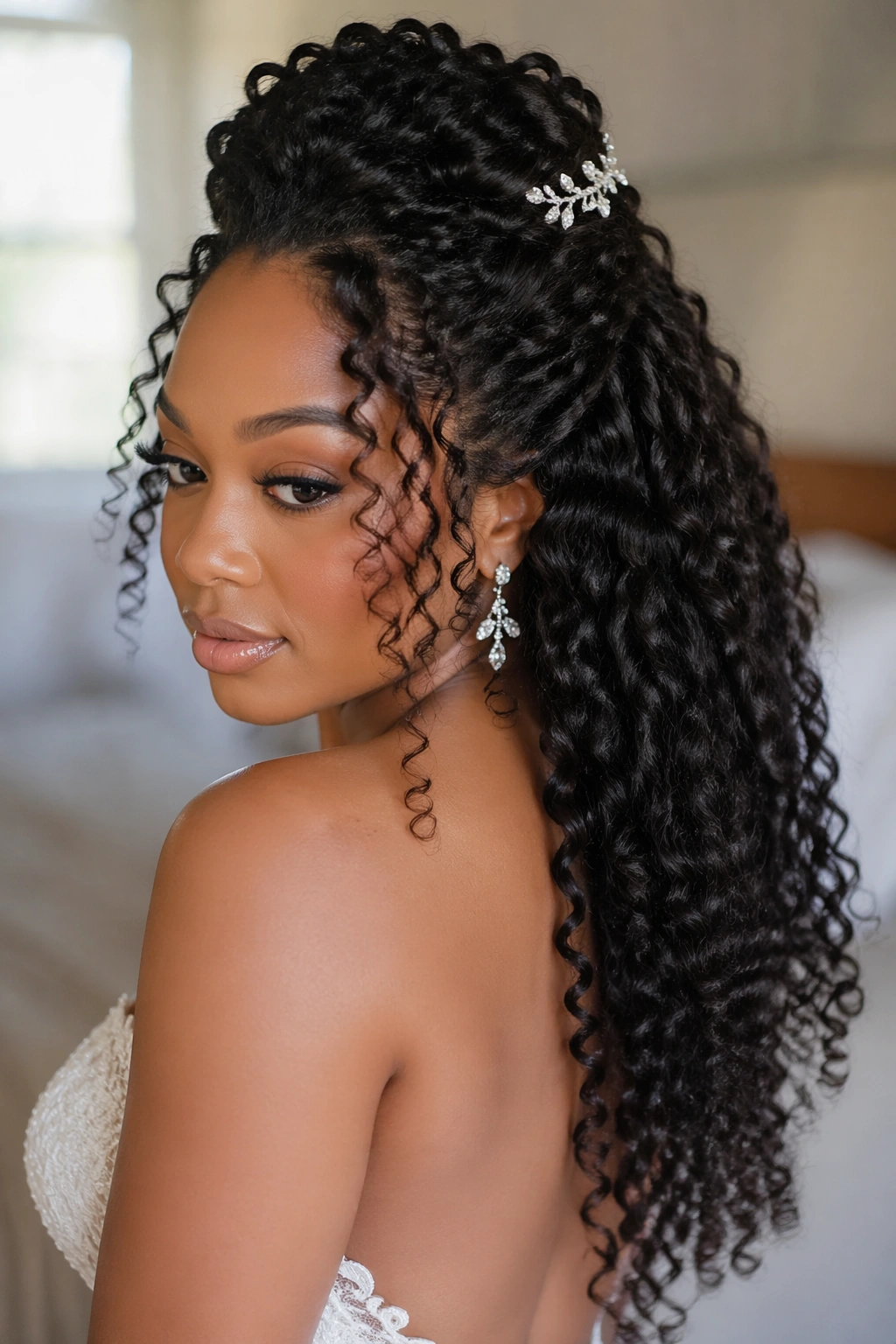
What makes a half-up crown work is simple: it keeps the face open without forcing the whole head into an updo. That matters if you want movement, because curls do their best work when they can fall a little instead of being pinned into obedience.
This style feels especially good on medium to long natural curls, twist-outs, or wand-set hair. The top section gets lifted and pinned or twisted back into a small crown, while the rest falls loose. The effect is soft, but not sloppy. There’s a clean line at the top and a full, romantic shape below.
Where this style shines
A half-up crown gives you a safe spot for a veil or floral comb without hiding the curls. It also plays nicely with face-framing pieces, which is useful if you want a little movement around the jawline.
Use two anchor points instead of one. One pin alone can slide if the hair is heavy or fine. Cross two pins in an X shape at the crown, then hide them under a curl cluster.
The style also photographs well from the side, which is where a lot of wedding pictures land anyway. Not the posed front-facing ones. The candid side angle. The one where the curls catch the light and the crown piece does its job without shouting for attention.
3. Low Curly Chignon at the Nape
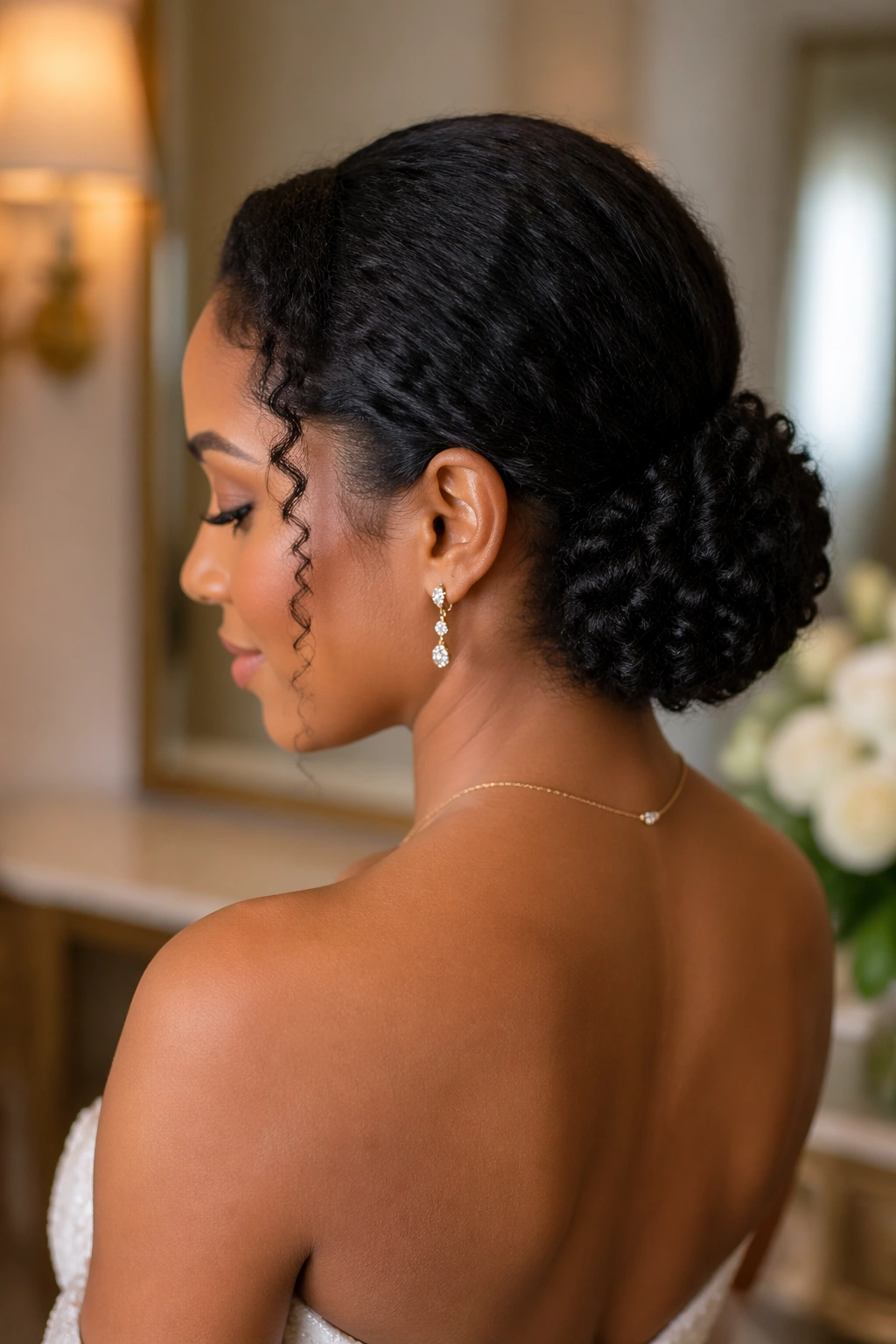
A low chignon is the quiet one in the room, and I mean that as praise. It keeps the neckline clean, works with a veil, and gives curly hair a tidy silhouette that still has texture instead of that over-sprayed helmet look nobody asks for.
For Black women with natural curls or a blowout that has been lightly curled, the nape is a smart place to anchor the style. You get stability there. The hair is less likely to puff up or frizz around the crown, and the shape stays neat even after a long ceremony.
A good version of this style usually starts with a smooth top section and a gathered roll or tucked bun at the base of the neck. The curls can be pinned in loose loops, which keeps the finish from looking too severe.
Keep a few face-framing pieces out if your dress is high-necked or if you want a little softness around the jaw. If the gown has a dramatic back, though, pull those pieces in and let the neckline do the talking. That back detail deserves a clear shot.
4. High Puff With a Wrapped Base
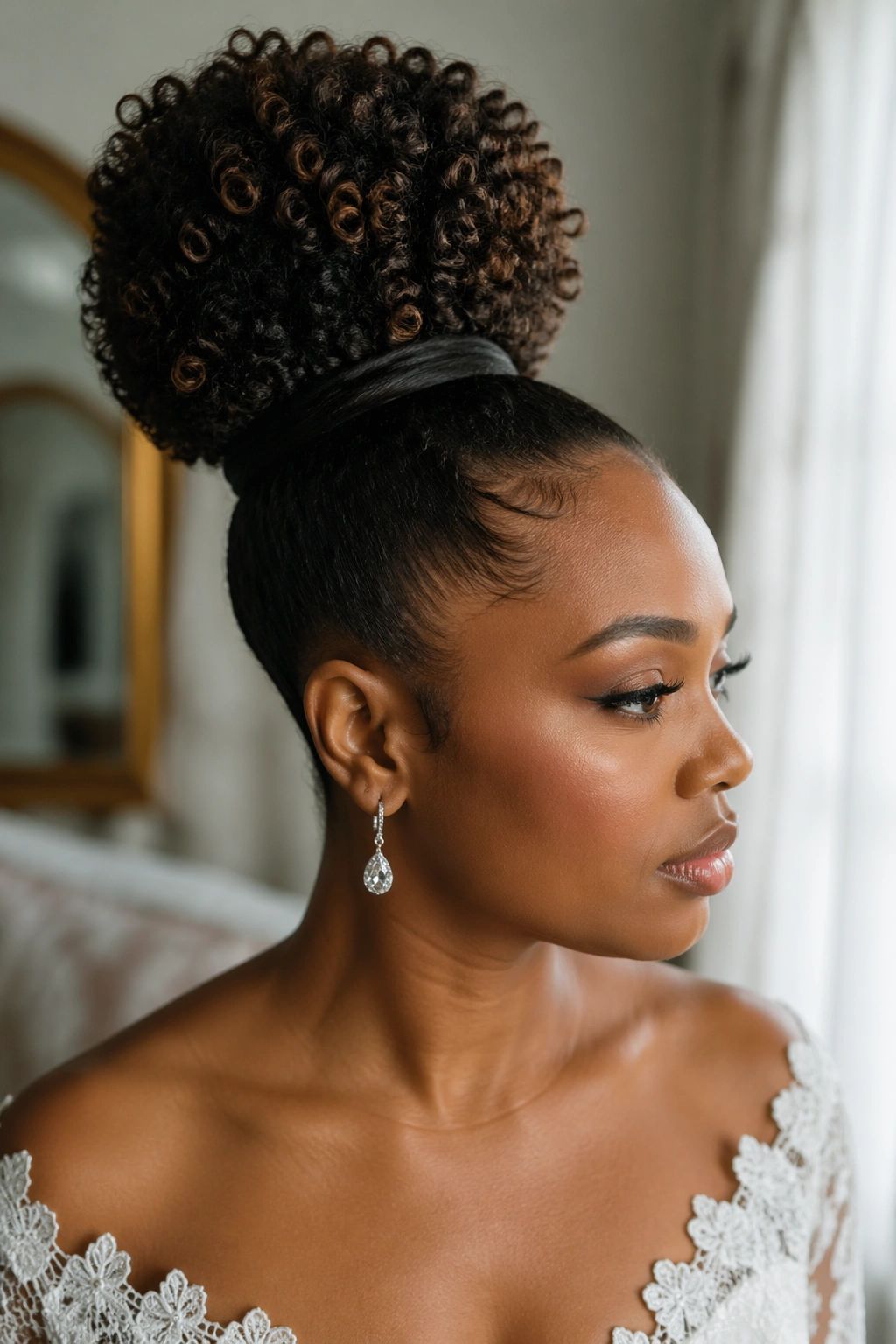
A high puff is not a fallback style. Done well, it looks intentional, regal, and strong in the best way. It also puts the curls where they can be seen, which is honestly the point if your texture is one of the things you want the wedding day to celebrate.
This style works beautifully on tightly coiled hair that has been stretched a little, or on a defined natural puff built from natural volume. The base gets slicked or wrapped, while the puff rises above it and keeps its shape. The height creates drama without needing extra length.
How to keep the base clean
- Smooth the perimeter with a small amount of gel or edge control.
- Use a satin scarf for 10 to 15 minutes before styling the puff.
- Wrap the base with a matching strand of hair or a satin band.
- Hide the ponytail holder with a small hair cuff if the dress is simple.
The trick is not making the base too tight. That’s where headaches start. A puff should sit securely, but your scalp should not feel like it has signed a contract. If the wedding lasts all day, comfort matters more than a tiny bit of extra lift.
5. Braided Halo With Curly Ends
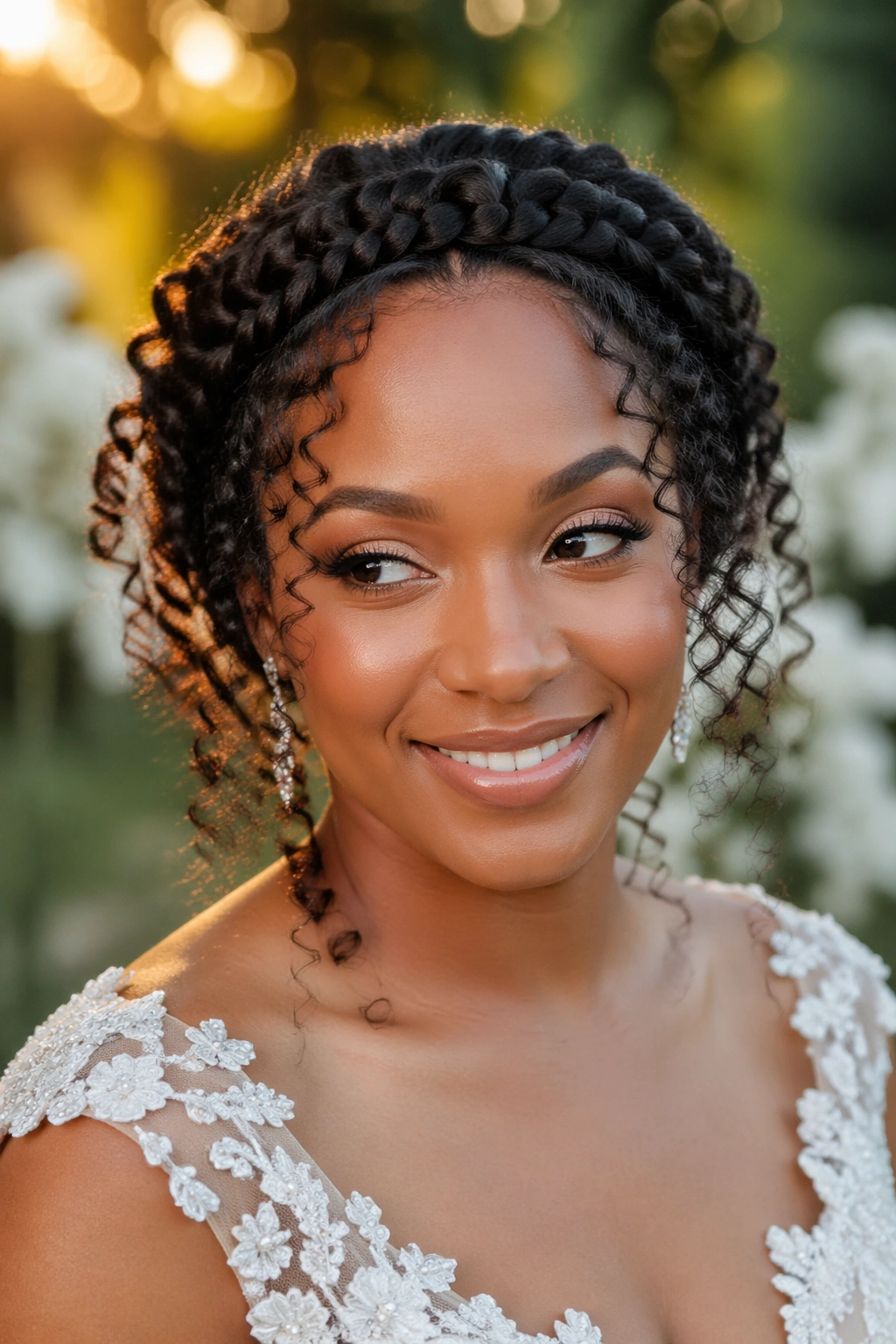
There’s something lovely about a halo braid that ends in curls instead of disappearing into a tucked-up finish. It gives the style a softer edge, and that little change makes it feel less formal in a stiff way and more formal in a graceful way.
This works especially well if you want structure around the head and movement at the ends. The braid frames the crown, while the loose curls at the back or side keep the look from becoming too rigid. It’s a good choice for medium-length hair, but it can also be built with added length if the dress calls for more drama.
The braid itself should sit close to the hairline without scraping it. Too tight, and the style loses its comfort. Too loose, and the halo starts to sag. There’s a narrow sweet spot here, and a good stylist can hit it.
Fresh flowers work, but keep them small. A single orchid or a few baby roses look better than a heavy bouquet shoved into the braid. The whole point is to keep the shape light enough that the curls still feel like curls.
6. Twist-Out Bob With Jewelry Pins
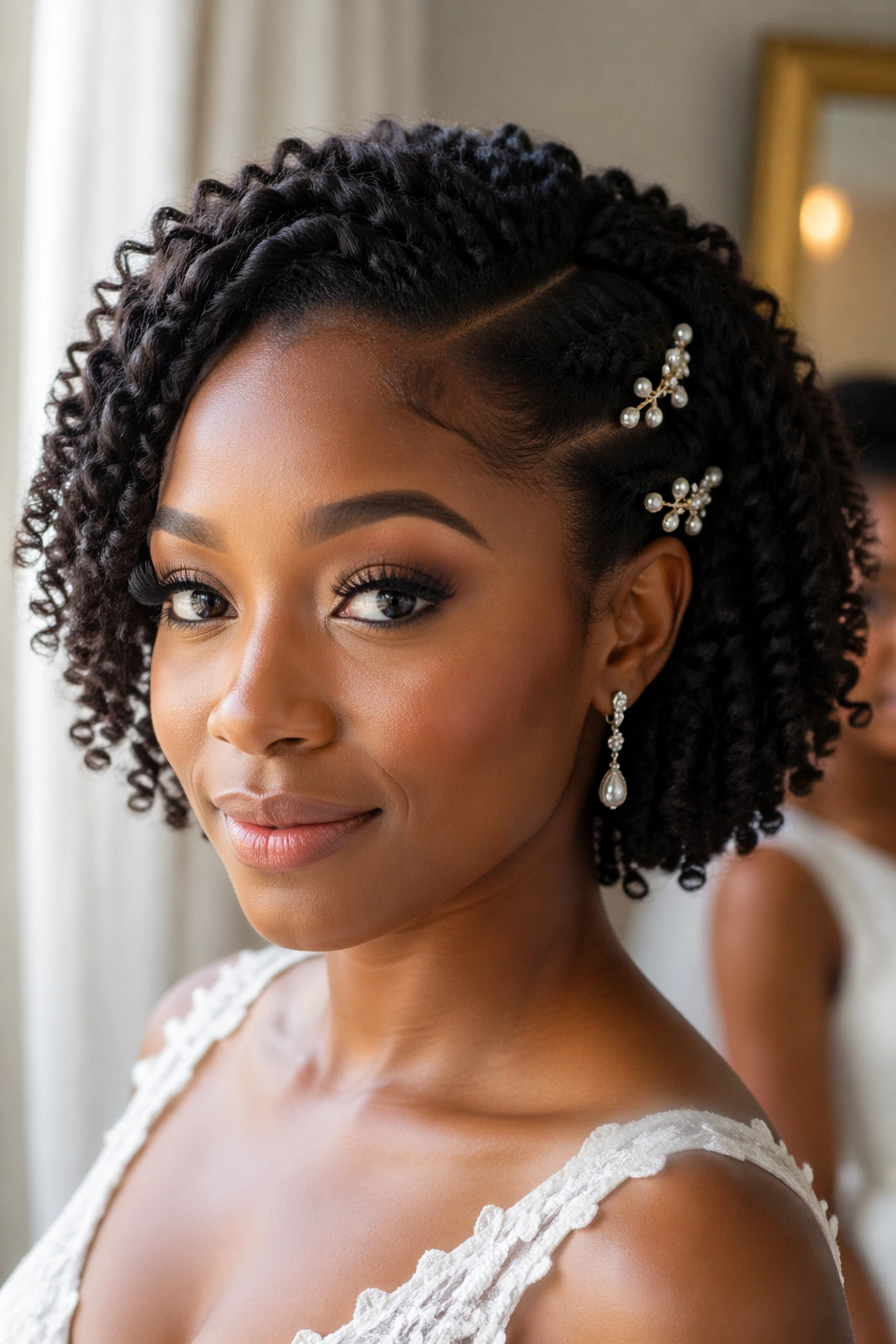
A twist-out bob is for brides who want texture first and ceremony second. Not in a careless way. In a confident way. The shape stays short enough to feel modern, but the curls still have room to spring and separate.
This style is excellent on natural hair that has been set in two-strand twists, then taken down with care so the ends keep their definition. If the hair lands around the chin or collarbone, the bob shape can look especially fresh. That length shows off earrings, necklines, and detailed makeup without competing with them.
Small details that make it look finished
Tiny jewelry pins matter here. One pearl pin at the temple. Two gold pins tucked just above one ear. That’s enough. More starts to feel busy.
- Set the twist-out at least one day before the wedding so the shape can settle.
- Separate the curls with oiled fingertips, not dry hands.
- Pin the side nearest the face so the bob keeps a clear line.
- Keep the ends rounded, not frizzy, by using a light cream during takedown.
This style also works for courthouse weddings, brunch receptions, and any setting where you want movement without a large updo taking over your whole look.
7. Faux Hawk With Pin-Swept Sides
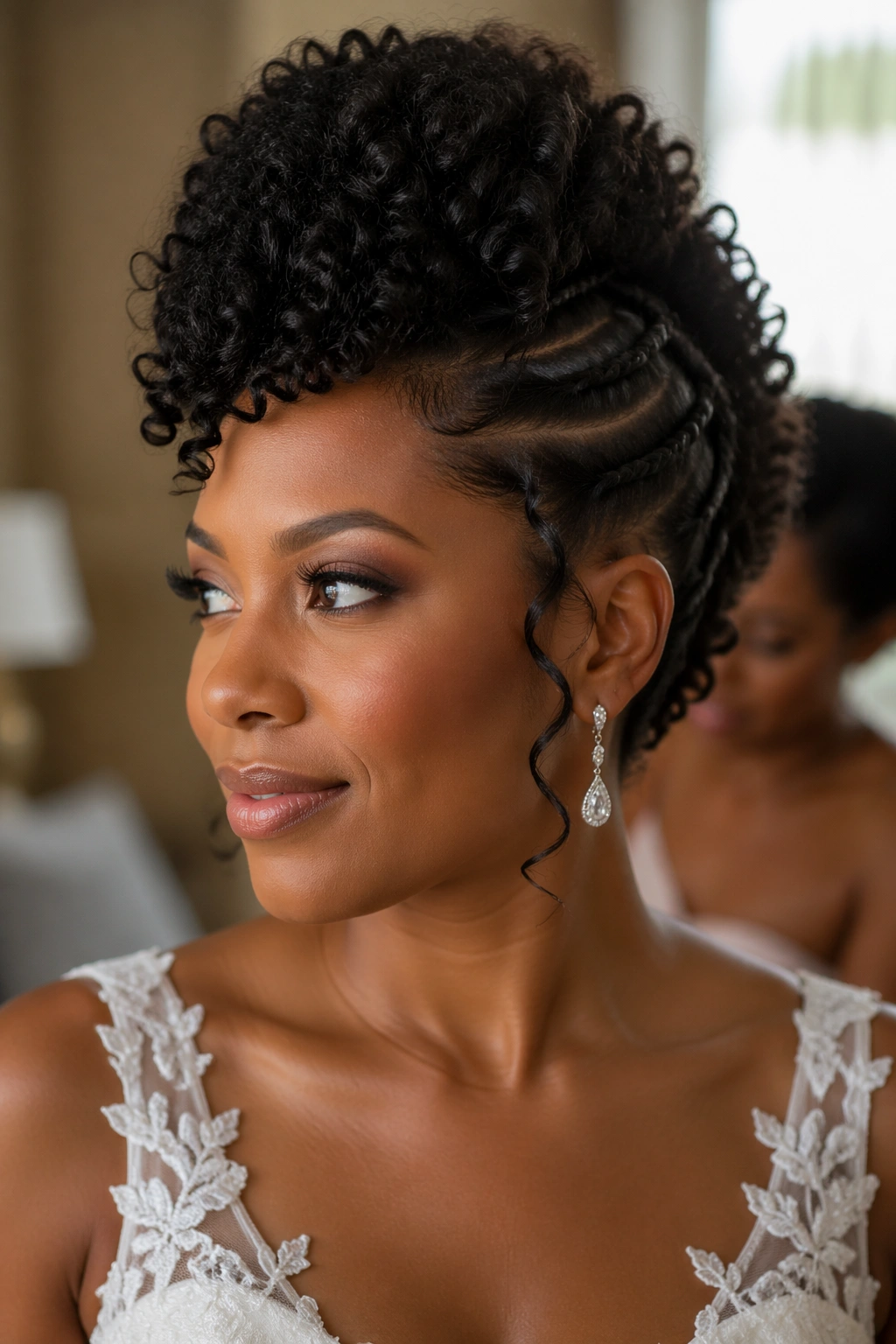
A faux hawk sounds bold because it is bold, but it does not have to feel harsh. On curly hair, the center ridge can stay full and soft while the sides are pinned tight enough to show the cheekbones and ears.
The shape is useful for brides who want edge without losing romance. The middle section can be defined coils, a stretched twist-out, or curls set with flexi rods. The side panels are usually smoothed back and secured with pins that disappear into the hair. Done right, the whole style reads as sculptural rather than severe.
This one is especially good for dresses with a structured bodice. The hairstyle can hold its own beside a corset, strong shoulders, or a high neckline. It gives the outfit a little attitude.
A few loose tendrils at the temples soften the look. Don’t overdo them. One on each side is enough. The style needs contrast, not clutter.
8. Old-Hollywood Side-Swept Curls
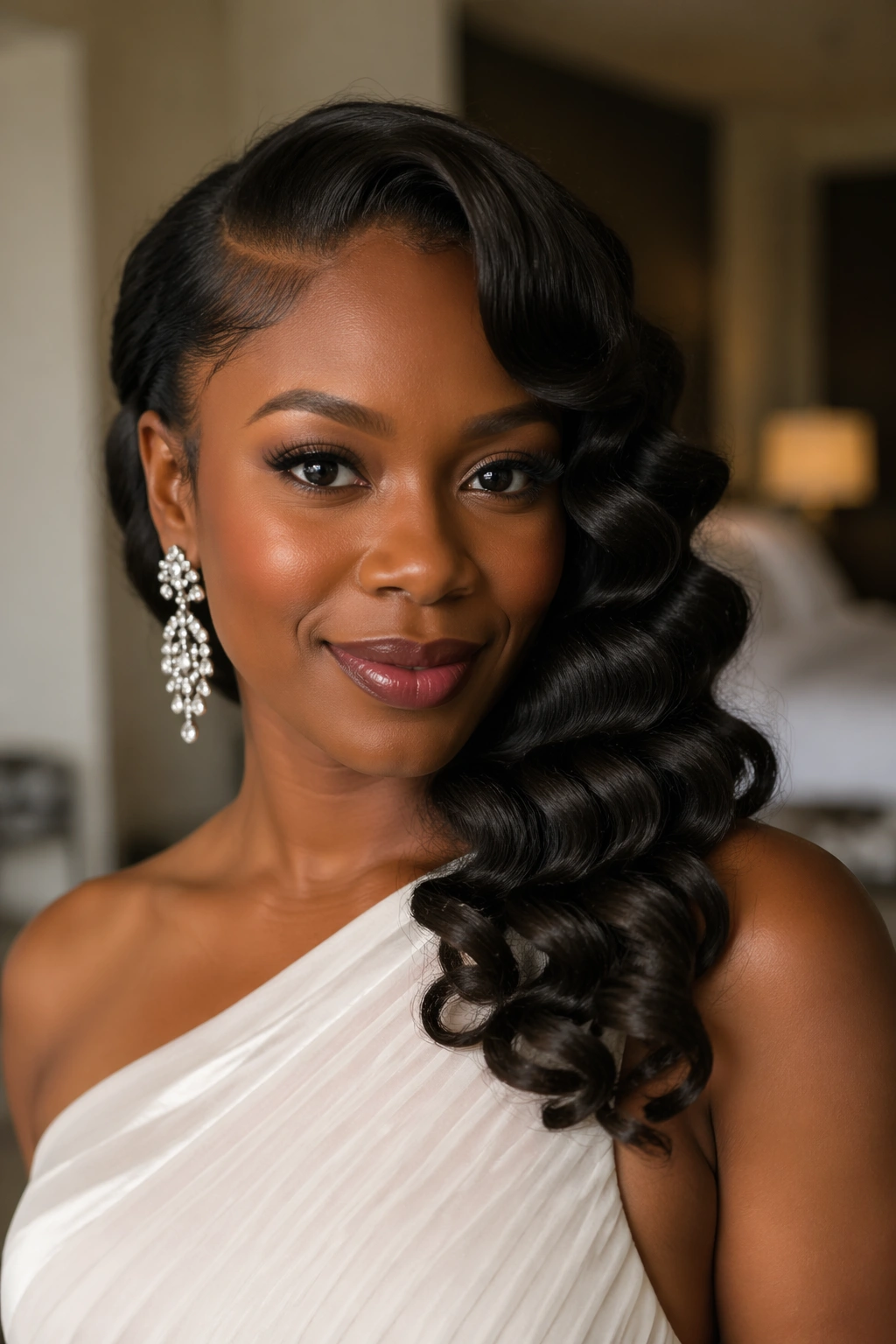
Side-swept curls have an old-school feel, but not in a dated way. They bring drama through direction, not volume alone. That makes them a smart choice for Black women with relaxed curls, wand-set hair, or a polished blowout that has been curled into wide, clean waves.
The secret is the sweep. The hair should move from one side of the forehead across the back or over one shoulder in a clear curve. If the part is too vague, the whole style loses its shape. If the curls are too tight, it stops looking soft. The middle ground is where the magic sits.
This style loves a statement earring. One side gets opened up, so the jewelry has room to matter. It also pairs well with a dress that has one shoulder detail or an embellished neckline, since the hair can echo the shape of the garment instead of fighting it.
If you want extra hold, set the curls the night before and pin the sweep while they cool. That step is boring. Also essential. Loose pins on warm hair do not stay put for long.
9. Bantu Knots Out With a Fluffy Shape
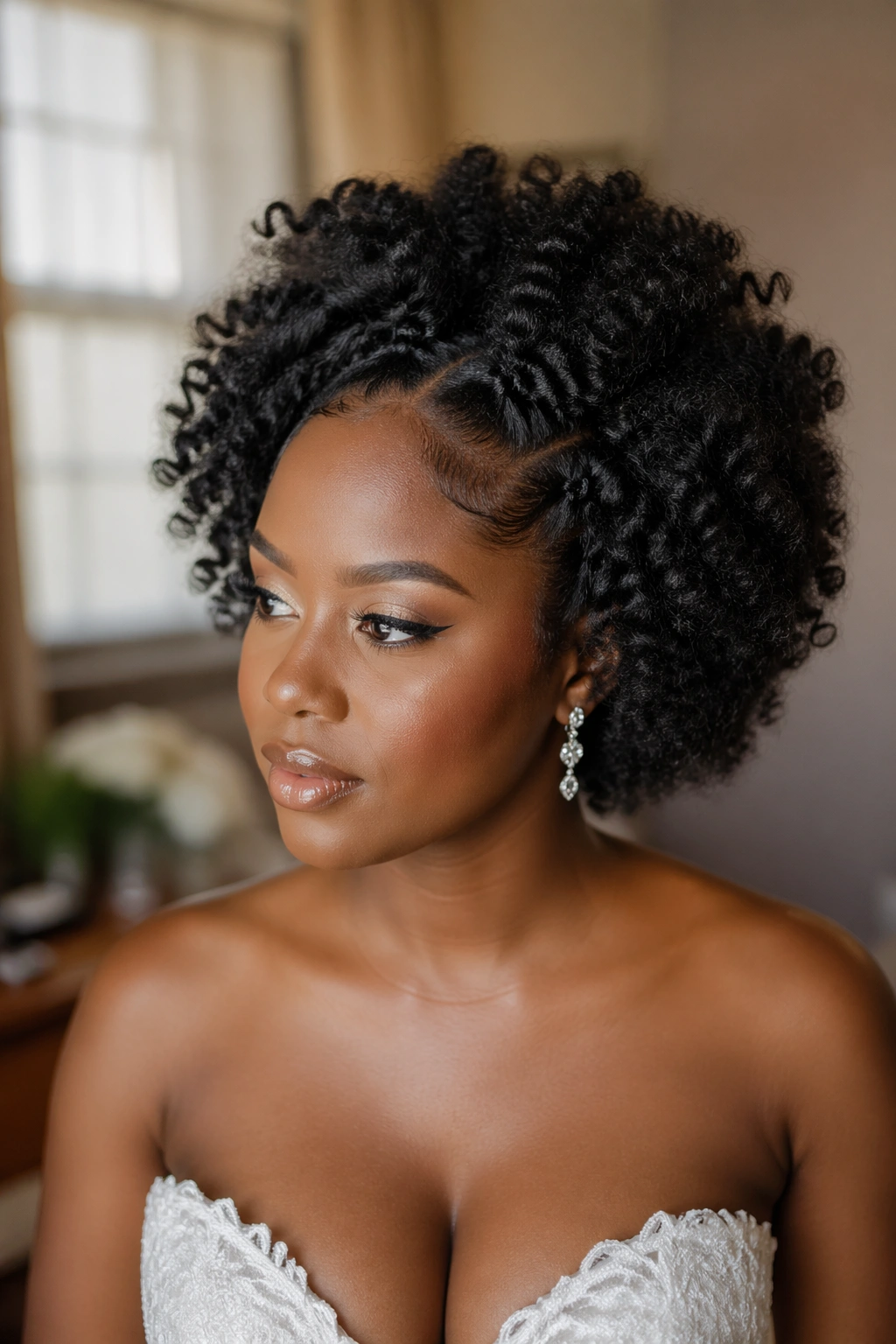
What does this style do better than a plain curl set? It gives you definition at the roots and a soft cloud of texture at the ends. A Bantu knots out can look refined enough for a wedding while still honoring the natural pattern of the hair.
It works best when the knots are fully dry before takedown. Fully dry. Not “almost dry.” If the hair is still damp in the middle, the shape falls apart fast and the curl clumps get uneven. Patience matters here more than product count.
How to get the shape right
- Part the hair evenly so the curls fall in a balanced pattern.
- Twist each section tightly before wrapping it into the knot.
- Let the set dry overnight or under a hooded dryer.
- Separate each curl with a tiny bit of oil on your fingertips.
The finished look can be big and airy, which suits brides who want volume without an updo. It also works well with a short veil or a comb positioned low at the back, because the hair has enough body to frame the accessory instead of swallowing it whole.
10. Curly Ponytail With Face-Framing Pieces
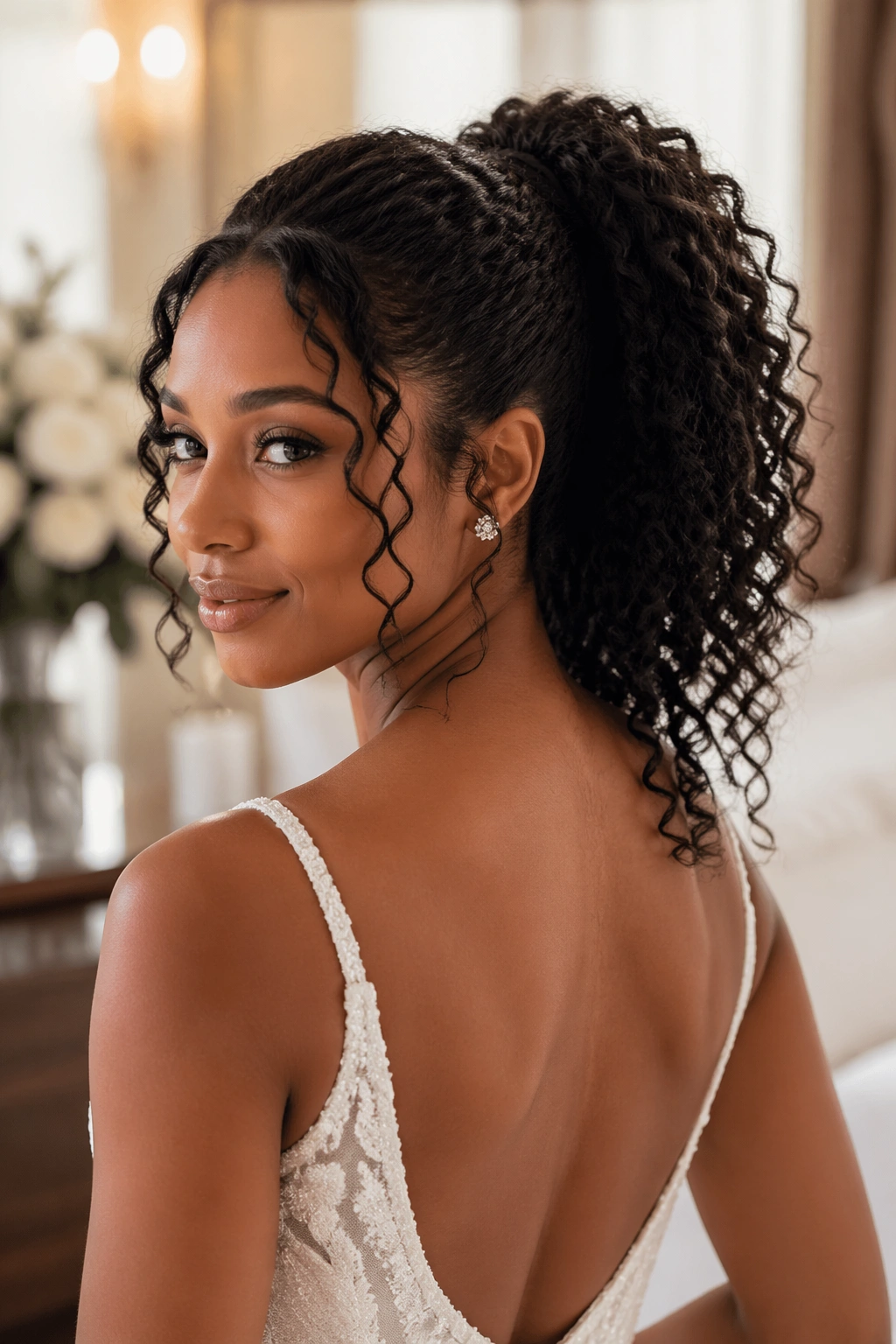
A curly ponytail is one of those styles people underestimate until they see it done properly. Then they stop underestimating it. The lift at the crown, the clean base, and the cascade of curls down the back can look crisp and relaxed at the same time.
High ponytails read more playful and bold. Low ponytails feel calmer and a little more polished. Either way, the face-framing pieces do a lot of work. They soften the forehead, keep the hair from looking pulled too tight, and give the style a little movement when you turn.
This is a strong option if you want a dress with a detailed back. The ponytail leaves the neckline open, so lace, buttons, or beading stay visible. That matters. A lot of bridal hair choices accidentally hide the best part of the dress.
Use a wrapped base if you want the style to feel refined. A strand of hair or a matching cuff around the elastic cleans it up fast. Skip the huge scrunchie unless you’re aiming for a deliberately casual mood. On a wedding day, the elastic should disappear.
11. Pineapple Updo With Soft Tendrils
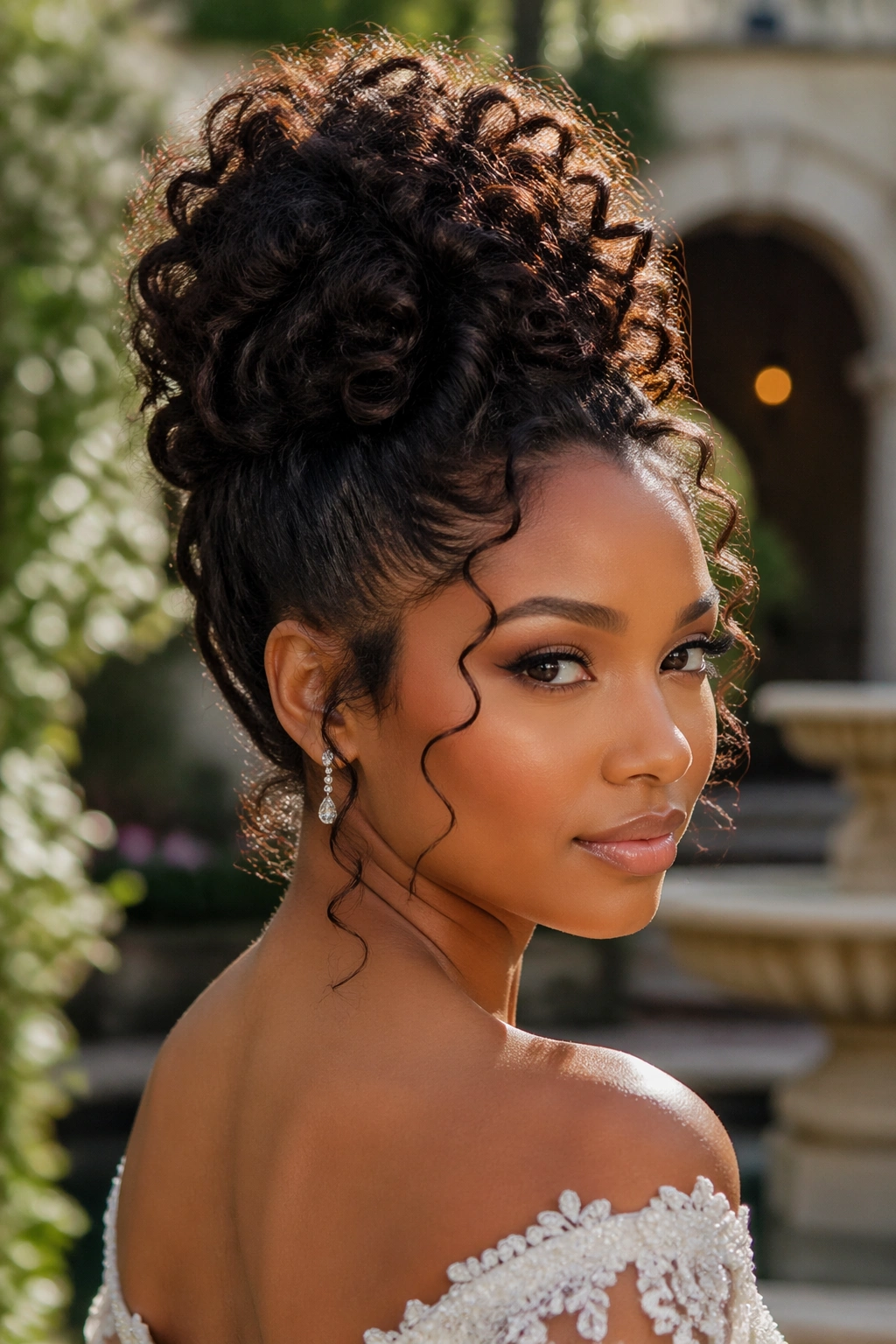
The pineapple gets a bad rap because people think of it as bedtime hair. Fair. But a polished pineapple updo can look elegant, especially on curly hair with plenty of height and shape near the crown.
The key is control. Gather the curls high enough to show the neck and shoulders, but not so high that the style becomes top-heavy. A few tendrils at the temples and one or two at the nape keep the look from becoming too rigid. That softens the outline and makes the whole thing feel intentional.
What to keep in mind
The pineapple works best with curls that hold their shape after setting. If your hair tends to sag by midday, set it with extra foam or curl cream the day before. If your curls are very thick, use a strong but not crunchy elastic.
- Leave the front hairline slightly loose so the style feels gentle.
- Use 6 to 8 pins around the base if the puff needs extra support.
- Place a comb, floral pin, or jeweled clip just above the elastic.
- Keep the ends shaped, not frizzed, by refreshing with a mist of water and a little leave-in.
It’s one of the easiest styles to wear with a veil, too, because the base sits high enough to leave room behind it.
12. Feed-In Braids Into a Curly Bun
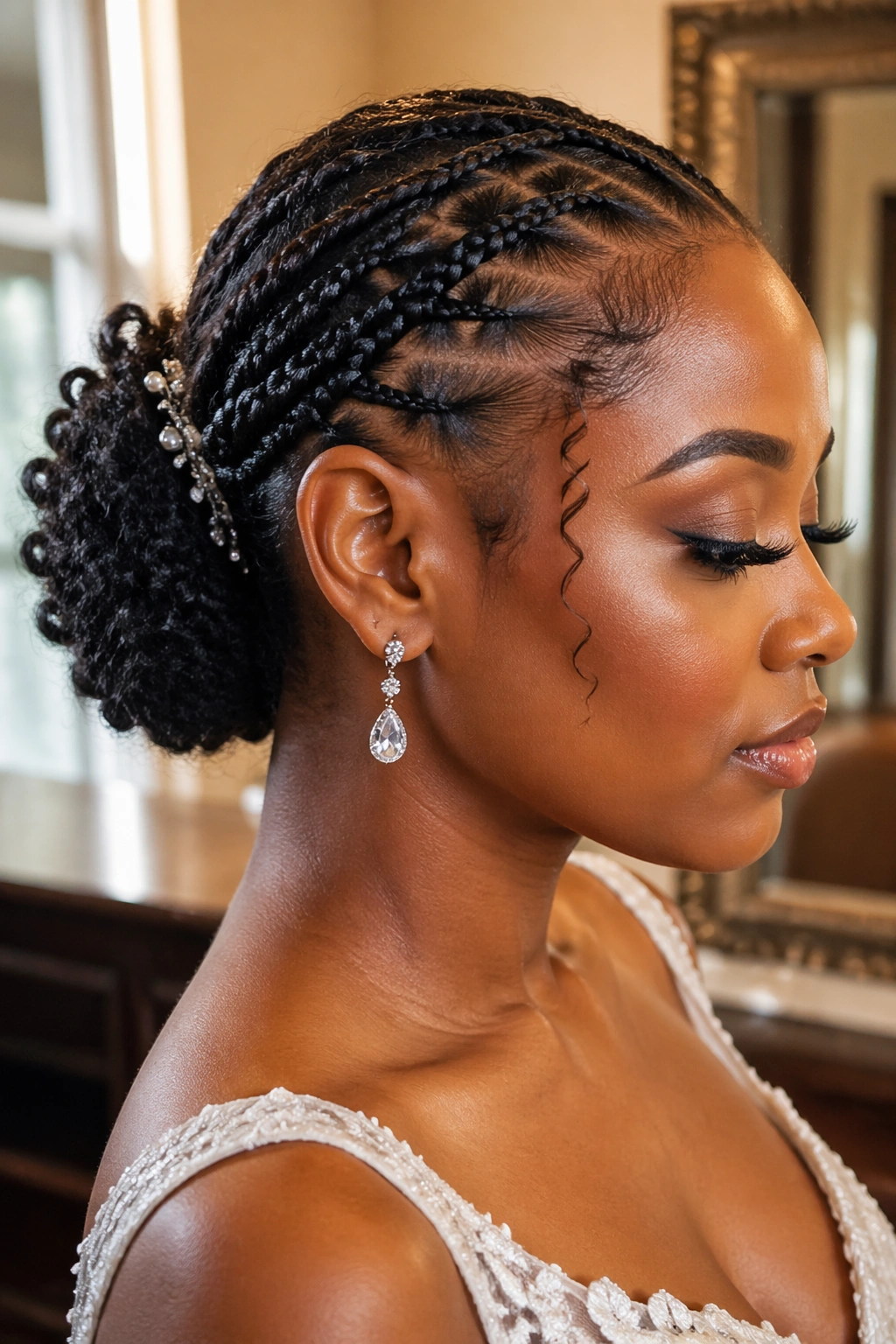
Braids and curls make a solid wedding pairing because they give you order and softness at the same time. Feed-in braids along the hairline can lead into a low or mid bun, then the bun can be finished with curly ends or loose wrapped pieces for texture.
This is a particularly nice choice if you want your style to hold through a long day without constant checking. The braids carry a lot of the structure, which means the bun does not have to do all the work alone. That helps.
The style can be sleek or a little fuller depending on how much hair you leave at the bun. If the dress is simple, I’d lean fuller. If the dress already has a lot going on, keep the bun tighter and cleaner so the whole look does not fight itself.
You can also tuck a veil under the braids rather than on top of the bun. That creates a cleaner line and keeps the veil comb from sitting awkwardly on the hairstyle. Small placement choices like that make the finish look far more expensive than it is.
13. Shoulder-Length Wash-and-Go With a Veil-Friendly Shape
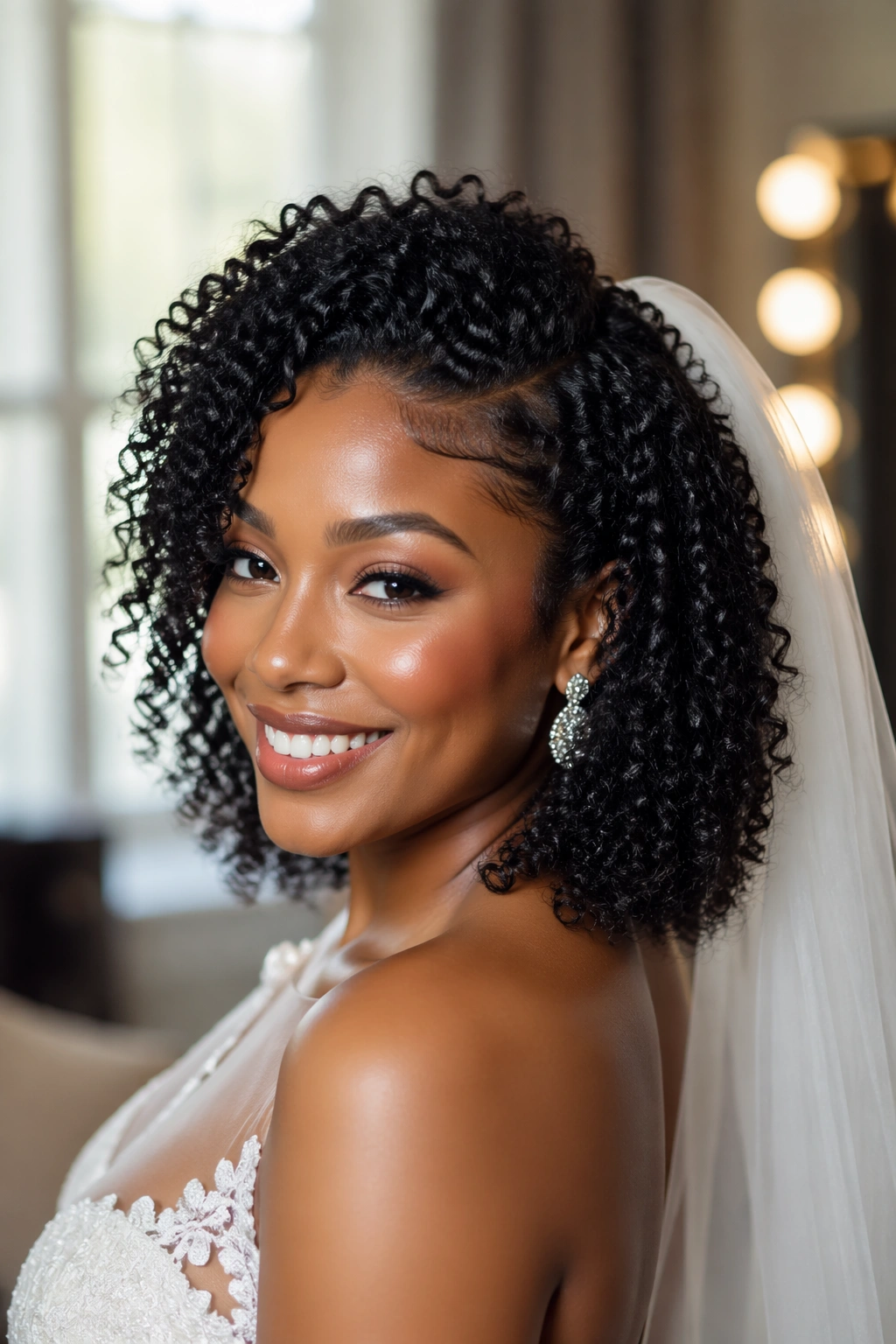
A good wash-and-go does not need to be long to be bridal. In fact, shoulder-length curls often look more balanced in person because they frame the face without swallowing the dress.
The trick is shape control. You want the curls defined at the front and sides, with enough volume to feel full but not so much that the silhouette becomes round in every direction. A well-cut wash-and-go can do that on its own. If the haircut is uneven, the style gets messy fast, and wedding day is not the place for “messy but cute.”
A veil-friendly wash-and-go usually benefits from a middle or side part and a little lift at the crown. That keeps the comb from crushing the root. If you’re wearing a cathedral-length veil, pin it lower. If the veil is short, you can sit it a little higher and let the curls show through.
This style is also one of the easiest to refresh during the day. A spritz bottle with water and a little leave-in is enough to revive a curl cluster that starts to flatten after the ceremony.
14. Halo Twist Crown on Natural Curls
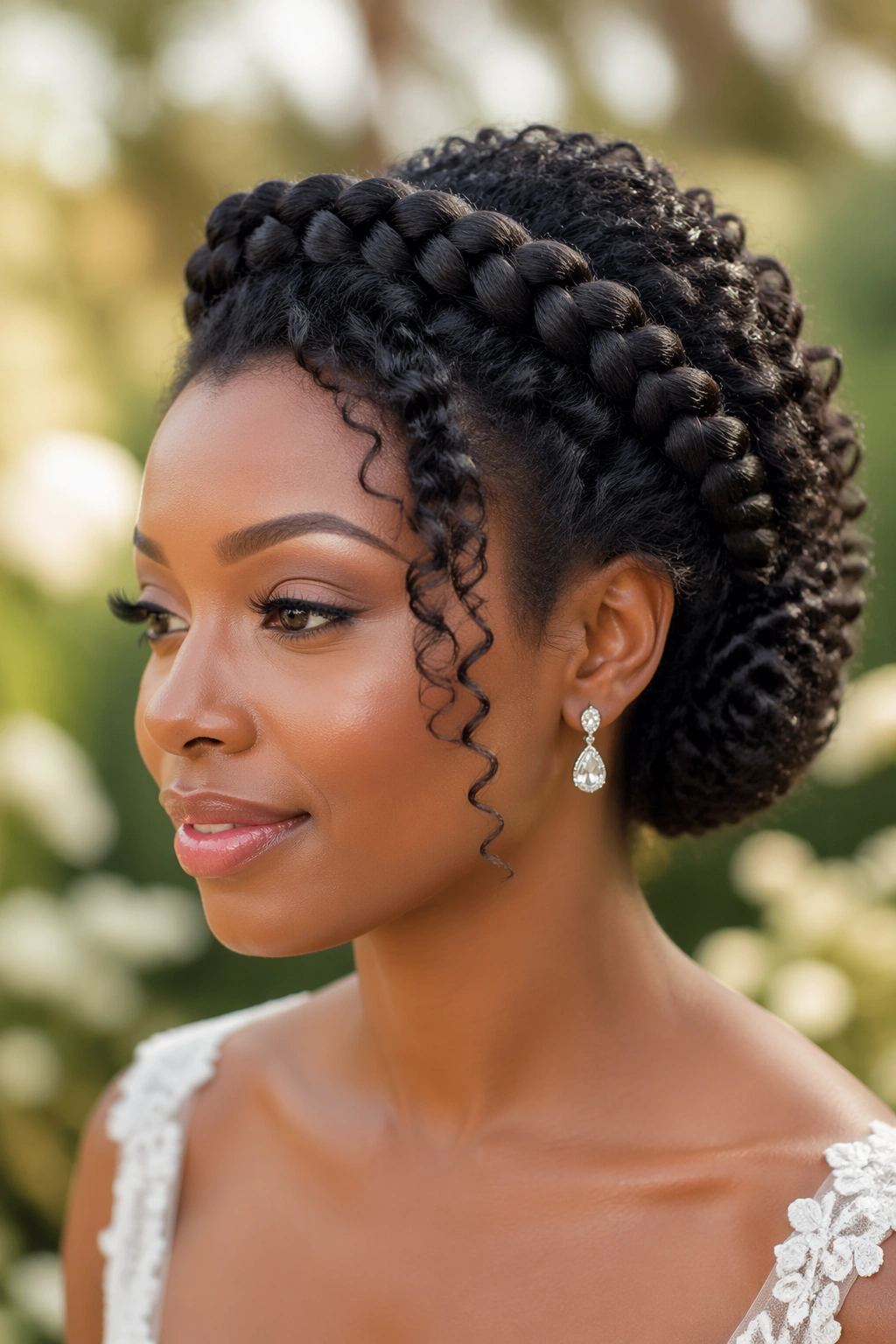
Want something that feels calm instead of busy? A halo twist crown does that job well. The hair wraps around the head in a curved band, while the rest of the curls stay tucked or softly gathered underneath.
This style sits nicely on natural texture because it creates a clear frame around the face without relying on heavy heat styling. It’s especially useful for brides who want to keep the ends protected and the front neat. The crown shape also works well with dresses that have a lot of detail at the chest or shoulders, since the hair stays out of the way.
The twist should be snug enough to hold its line, but not so tight that the crown starts to look hard. That tight-vs-soft balance is the whole style. Too hard, and it feels formal in a stiff way. Too loose, and it starts to unravel before the cake is cut.
A small floral comb tucked near one ear can finish it off without stealing the show. I like that better than scattering flowers everywhere. One thoughtful placement usually beats five tiny decorations trying to do the same job.
15. Voluminous Afro With Floral Accents
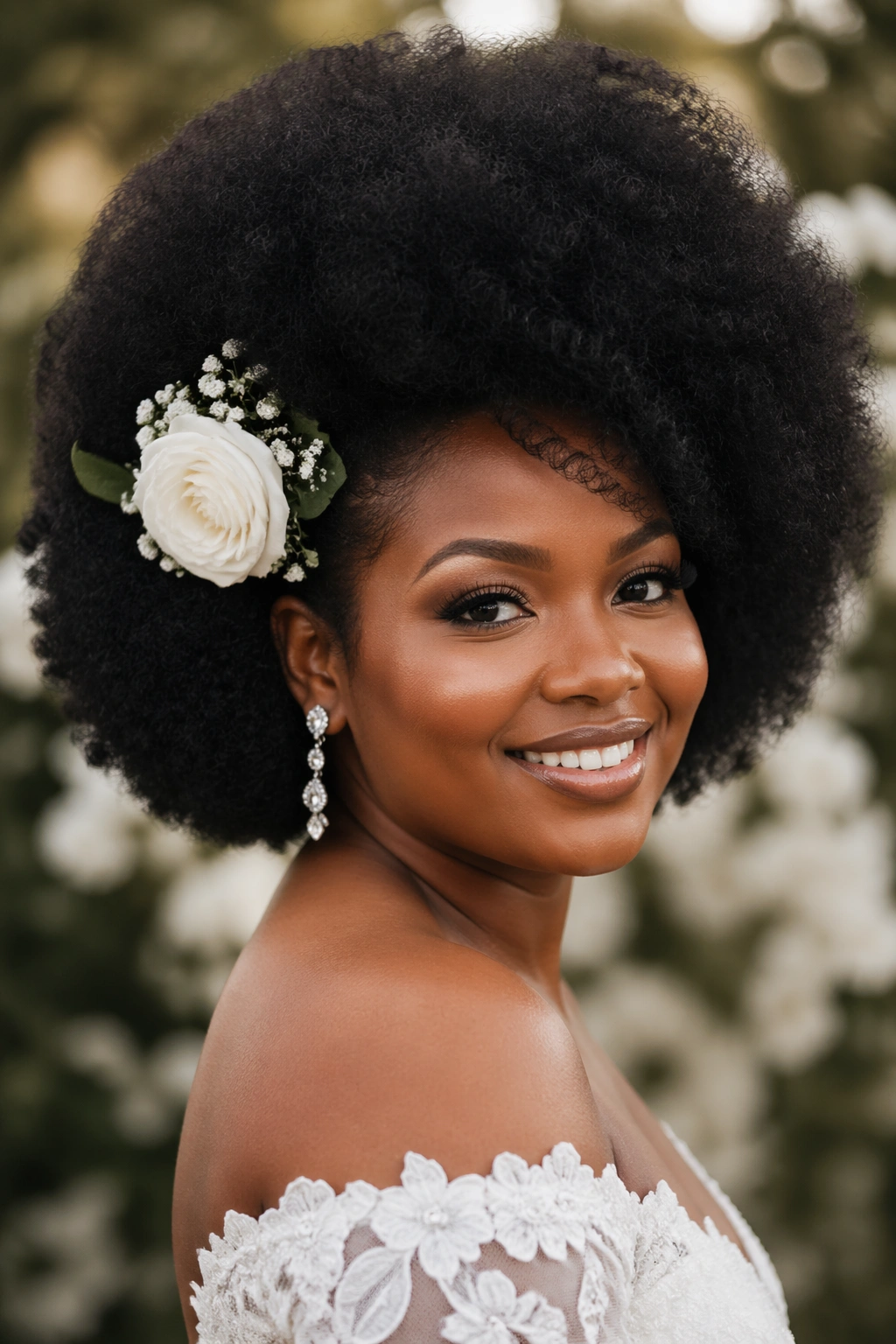
A full afro can be one of the most striking wedding looks on Black women because it does not hide the hair. It celebrates it. That alone gives it presence.
The shape matters here more than any accessory. A rounded afro that has been picked out carefully and shaped with a rounded pick or fingers can look elegant, powerful, and soft all at once. The silhouette should be balanced around the head, not wider on one side unless that asymmetry is intentional.
Floral accents done right
The flowers should feel like part of the style, not stickers tossed onto it at the last second. A single bloom near the temple or a short cluster tucked on one side usually looks better than too many pieces.
- Choose sturdy flowers that hold up for several hours.
- Keep stems short so they do not poke into the scalp.
- Match the scale of the flower to the size of the afro.
- Place the accent after shaping the hair, not before.
This style works well for brides who want texture to be the statement. It’s strong, yes, but also warm. And there’s something nice about that on a day full of formal clothes and formal words.
16. Side Twists Into a Low Puff
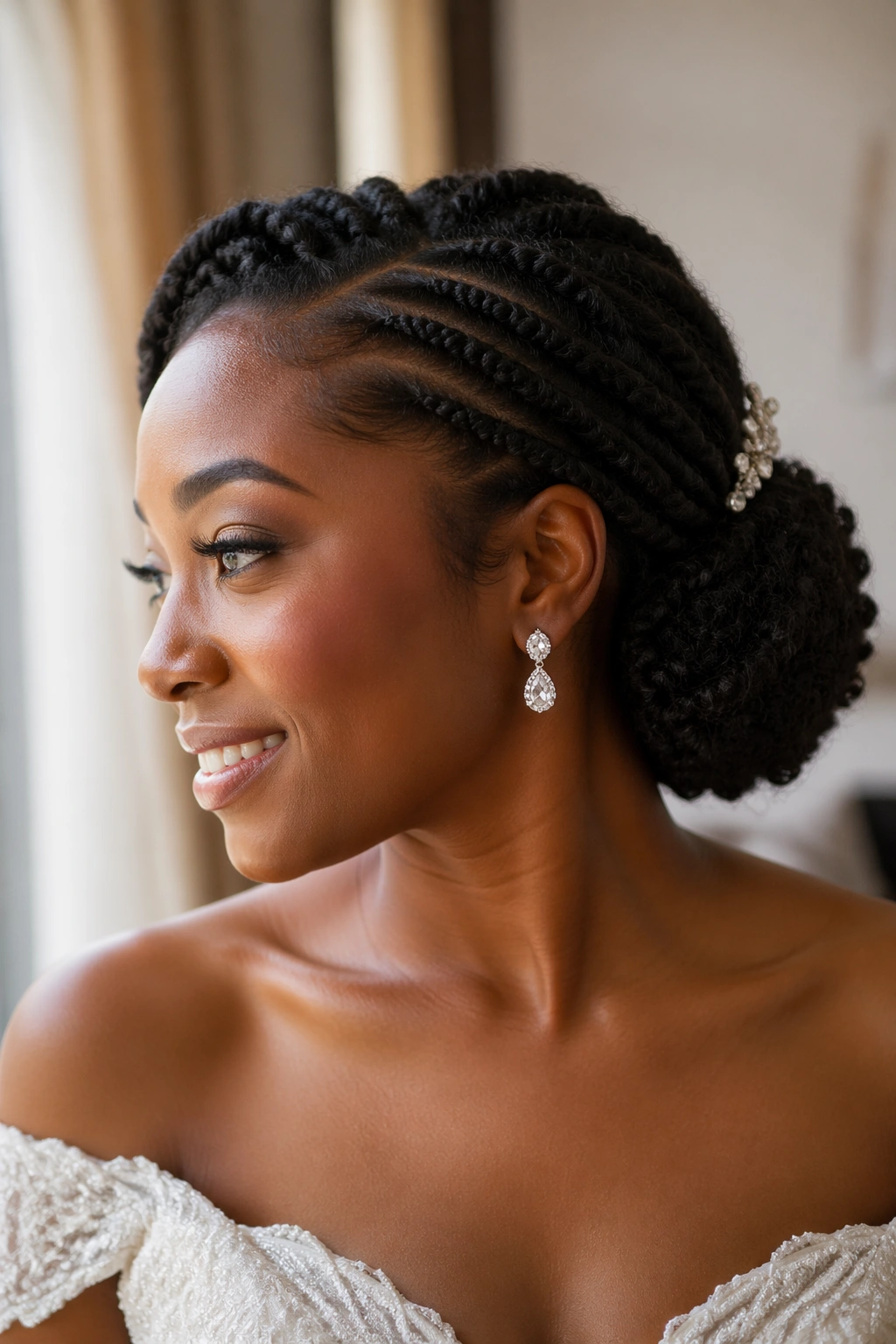
A side-twist style gives you a little visual movement before the eye lands on the puff. That’s the appeal. The front is styled with a twist or two along one side, then the back gathers into a low puff that stays soft and rounded.
It suits coily and curly textures that have enough length to gather neatly at the nape. You can keep the twists sleek or leave them slightly fuller if you want a more relaxed finish. The puff can stay modest or be built out with added hair. Either way, the shape stays elegant because the front and back are doing different jobs.
This style is a nice fit for brides who like asymmetry but do not want a heavy side-swept look. It keeps one side of the face open and creates a little line toward the ear, which can be flattering with drop earrings.
If the hair is prone to frizz, smooth the twists with a tiny bit of gel on fingertips rather than coating the whole strand. Too much product on the front can make the style look wet long after it should have settled.
17. Curly Bob With Middle Part and Pearls
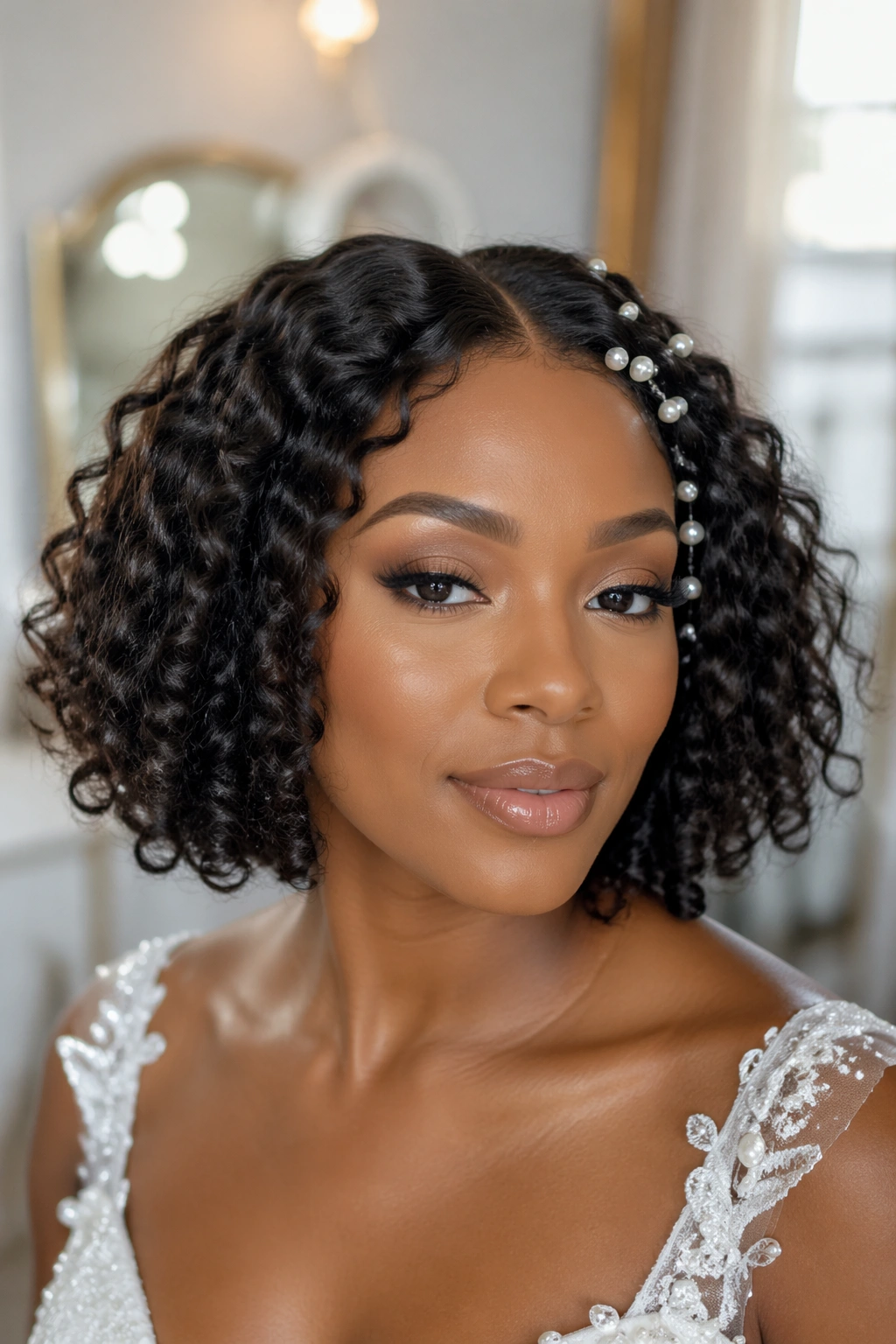
A curly bob with a middle part is clean, modern, and easier to maintain than most people expect. It gives Black women with short to medium hair a style that feels intentional instead of like the hair was simply kept short for convenience.
The middle part makes the face look balanced, and the bob length keeps the curls bouncy around the jaw and neck. Pearls can sit along one side, either in a tiny cluster or spaced out in a line, which gives the style a bridal note without turning it into costume hair.
This cut works best when the curls are shaped before the event, not discovered on the wedding morning. That means the bob should already have a defined outline, with any uneven ends trimmed ahead of time. A bad bob cut shows fast. A good one looks effortless, though that’s not the right word. It just looks clean.
If your curls shrink a lot, stretch them slightly with a diffuse dry or twist set before the wedding. That keeps the bob from sitting higher than you planned.
18. Romantic Updo With Loose Tendrils and Headpiece
A romantic updo is the style I would choose when the dress, the veil, and the jewelry all need a little room to breathe. It gathers the hair up and away, but leaves enough softness around the face that the result still feels like curly hair, not a shell.
The tendrils are where the mood lives. One at the temple, one near the cheek, maybe a softer piece at the nape if the neckline can handle it. That’s plenty. You do not need a forest of curls hanging loose to make the style feel gentle. A few well-placed pieces do more than a dozen random ones.
The headpiece should sit where the updo has structure, usually just above the crown or slightly off to one side. If the accessory is heavy, build the updo around its weight with hidden pins and a small cushion of hair underneath. If it is delicate, keep the bun tighter so the piece does not get lost.
This is the style that looks best when everything else is calm. The makeup is finished. The dress is steamed. The hair is secure. Nothing is fighting for attention. And that, honestly, is the part most bridal hair misses — not glamour, but control.
A final trial run is worth the trouble. Pin the headpiece, add the veil if there is one, move your head side to side, and check whether anything shifts. If the style survives that test, it will usually survive the rest of the day too.
