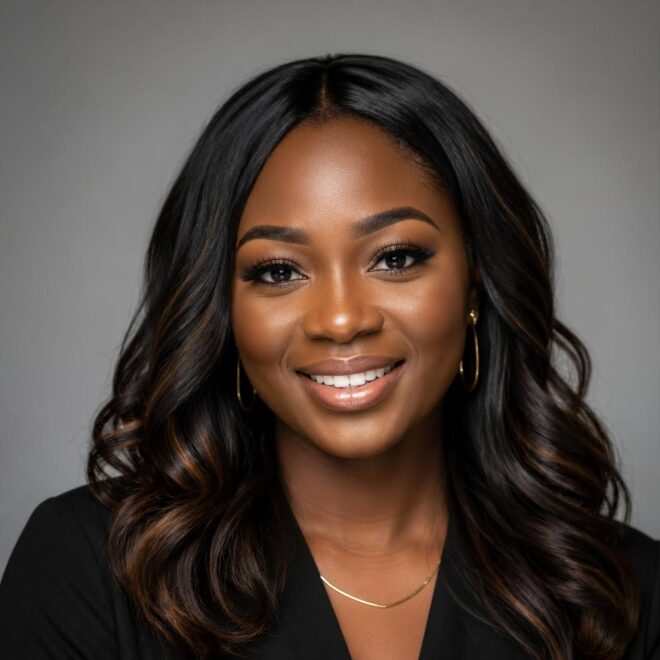


Short curly quick weave hairstyles solve a familiar problem: you want curl, shape, and movement without waiting for long hair to do the work. A short install can look sharp, soft, or a little rebellious, but only when the outline is thought through.
The part, the nape, and the curl pattern matter more than people like to admit. Leave those pieces sloppy and the whole style looks piled on. Clean them up and even a modest amount of hair can look rich, airy, and deliberate.
I’ve always thought short curly styles work best when they behave like a haircut first and a weave second. That means the silhouette has to make sense from every angle. A bob that hugs the jaw, a pixie that lifts at the crown, a shag that breaks up density — each one changes the way the curls sit and how the face reads.
Some of these looks are polished. Some are playful. A few have a little attitude baked in, which is half the fun. The first one starts with the shape I reach for most often when someone wants easy movement without extra bulk.
1. Chin-Length Curly Quick Weave Bob
A chin-length curly quick weave bob is the style I recommend when someone wants short hair that still feels soft. It sits close enough to the face to look clean, but not so close that the curls lose their bounce. That little bit of swing at the jaw makes a huge difference.
Why This Shape Works
The jawline gives the curls a place to land. Without that anchor, short curls can puff upward and start looking wide instead of shaped. A bob that stops right at the chin keeps the style tidy while still letting the texture do its thing.
This one looks especially good with loose deep wave, water wave, or soft spiral bundles in the 10- to 12-inch range before cutting. Ask for a slight stack in the back — not a harsh angle, just enough lift to keep the nape from feeling heavy. That tiny bit of graduation makes the front pieces sit prettier.
- Best for: oval, heart, and round faces
- Good curl patterns: loose deep wave, water wave, soft body curl
- Shape tip: keep the front about 1 inch longer than the back
- Maintenance: mist with water and a light foam, then finger-shape
My favorite move: dry the roots first. If the base stays damp too long, the bob can swell in weird places and lose the crisp line that makes it work.
2. Side-Part Curly Bob with Swooped Bangs
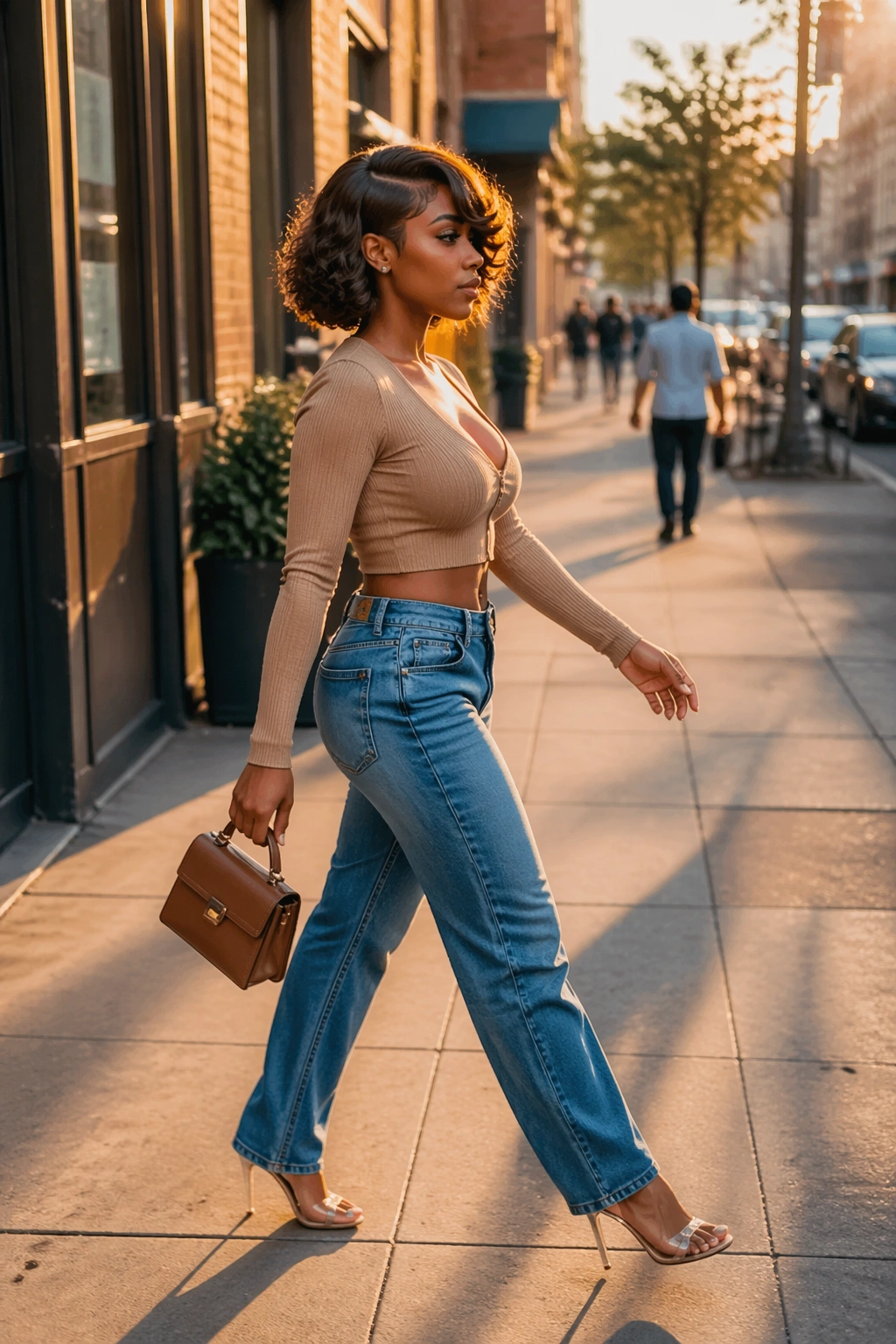
A side part fixes more curly-hair problems than people like to admit. It opens the face, gives the crown some lift, and keeps the style from sitting flat across the forehead. On a short quick weave, that little shift can change everything.
The swooped bang is the part that gives this style its personality. Not a stiff bang. Not a hard curtain. A soft curve that starts deep at one side and melts into the curls near the cheekbone feels flattering without trying too hard. It also helps balance curls that are denser on one side than the other, which happens more often than stylists admit.
For this look, I like a 7:3 or 8:2 part ratio and a curl pattern with enough spring to hold shape after finger-styling. Use mousse at the root, then lightly smooth the bang section with a wrap strip for 10 to 15 minutes. That keeps the swoop from collapsing into your eyebrow by lunchtime.
Wear this one when you want the hair to frame the face rather than sit on top of it. It’s a smart choice for round cheeks, broad foreheads, or anyone who wants a little lift without a full-on dramatic cut. The side part does the work. The curls just follow along.
3. Asymmetrical Curly Bob with One Tucked Side
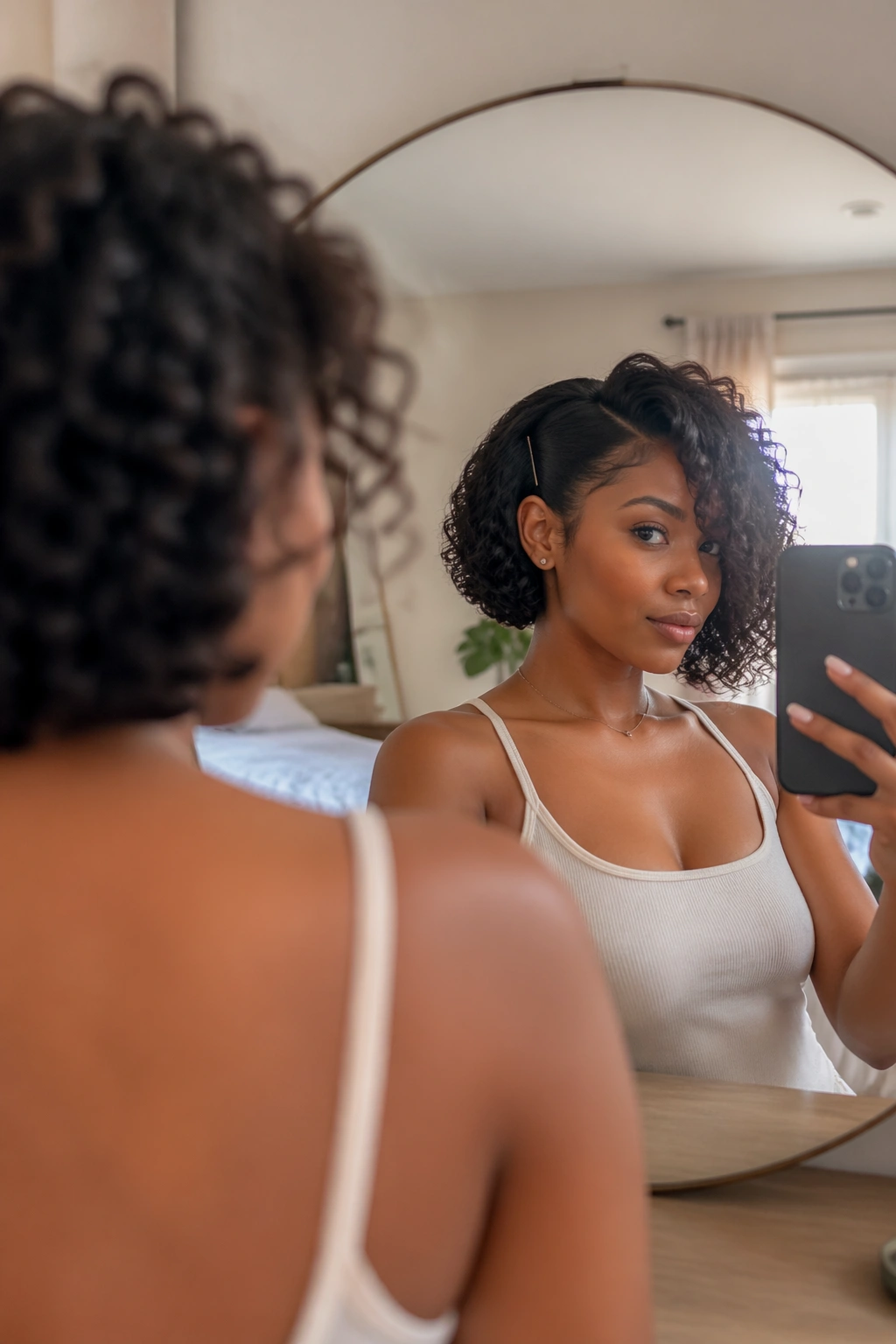
Picture a short bob that grazes the jaw on one side and sits a touch shorter on the other. Then tuck one side behind the ear and let the curls spill over the opposite cheek. That’s the whole trick.
This shape works because asymmetry pulls the eye upward. It makes the cut feel intentional, even when the curls are soft and a little unruly. A perfectly even bob can sometimes look heavy on curly hair. An off-balance one reads sharper and more modern.
The Details That Matter
- Keep the longer side 1 to 2 inches ahead of the shorter side
- Ask for a soft side part, not a straight center line
- Use a curl pattern with enough body to hold the shape after separating
- Tuck the shorter side with one pin or a slicked-back section, not three layers of clips
The clean tuck is what sells it. If the tucked side is smooth and the curl mass is concentrated on the other side, the whole style looks richer. Too much volume on both sides makes it feel busy. That’s the line to watch.
I like this cut on people who want something a little sleeker than a shag but less plain than a classic bob. It has movement, but it doesn’t look messy. Big difference.
4. Tapered Curly Pixie Quick Weave with Crown Lift
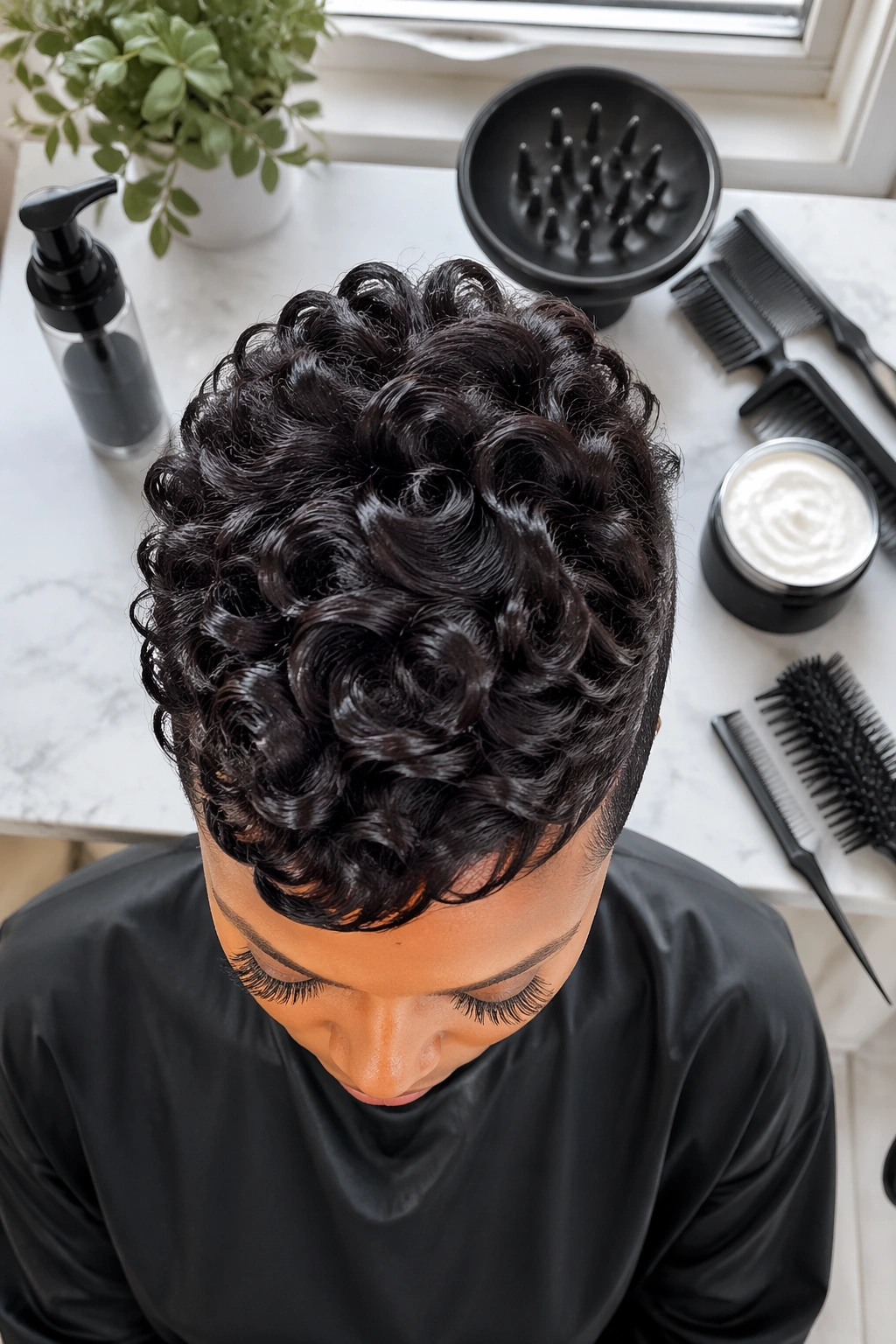
Why does a tapered curly pixie read so polished even when it’s deliberately undone? Because the shape gives the curls somewhere to go. The sides stay close. The crown rises. The neck gets room to breathe.
That’s the whole appeal here. A short curly quick weave with a tapered nape looks neat from the back and lively from the top, which is harder to achieve than people think. The cut has to be handled with care, though. If the crown is flat, the style looks small. If the sides are too full, it loses that sharp little edge.
How To Wear It
Keep the crown lightly lifted with a diffuser on low heat or a small roller set. Ask for the nape and sideburns to be tapered close, but not shaved down to nothing. You want softness around the edges, not a harsh line that fights the curls.
Best curl textures here are tight spiral, kinky curly, or small spring curl bundles. They hold shape better in a pixie cut because they don’t slump as fast. Use a small amount of foam, finger-shape the top, and let the sides stay close to the head.
This is the style I’d pick for someone who wears earrings often. It leaves the neck open, and that changes the whole look.
5. Rounded Curly Bob with Full Fringe
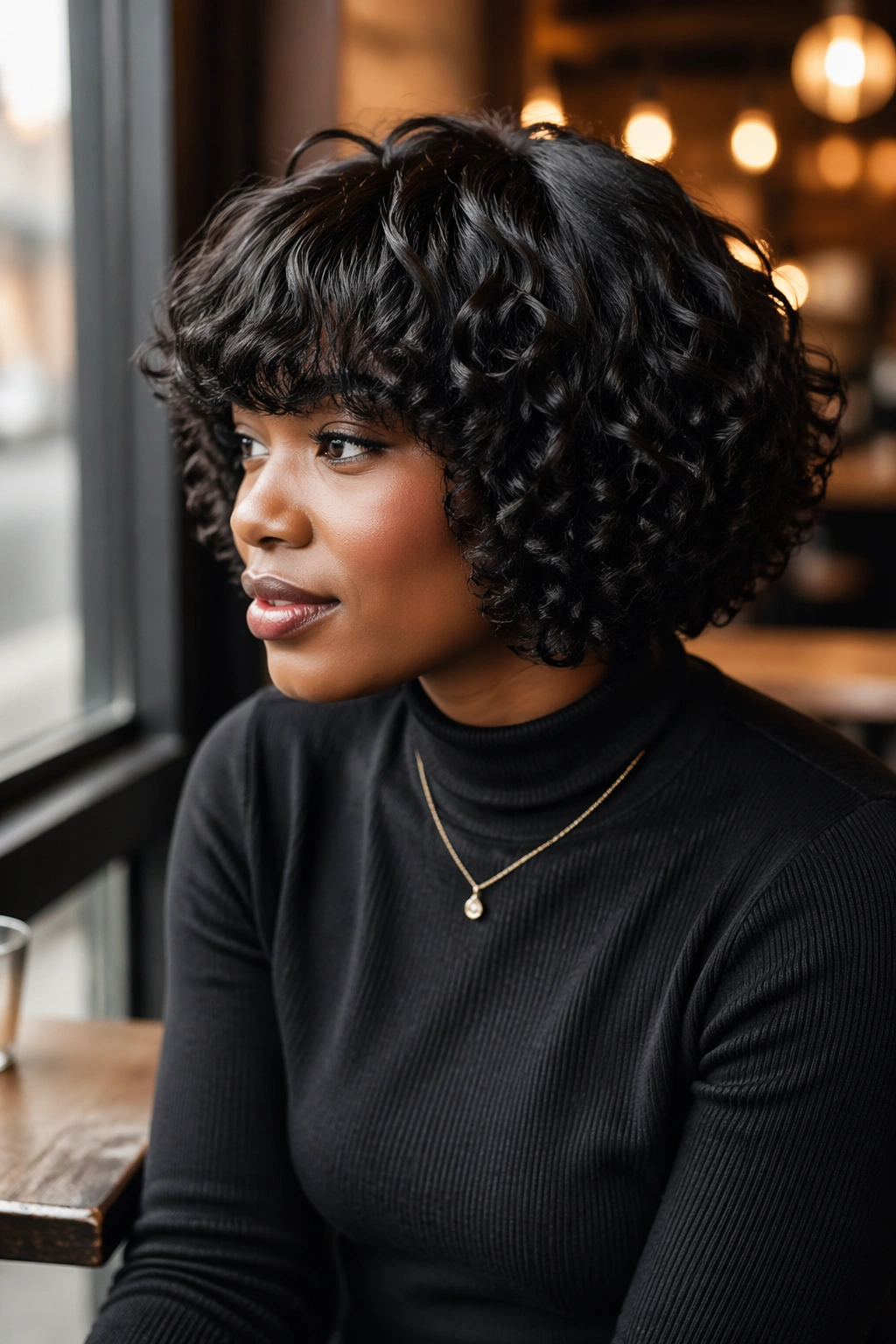
A rounded curly bob with a full fringe has a specific mood. It feels soft, a little retro, and much more expensive than it sounds when the shape is done well. The secret is in the curve. The hair should arc around the face like a bowl, not sit in a hard box.
The fringe matters more than the rest of the cut. A full bang on curly hair can look heavy fast, so the line needs to be softened with point-cutting or a light razor touch. I prefer bangs that sit just above the lashes when stretched, then spring back to skim the brows once dry. Shorter than that and they can get fussy. Longer than that and they start to hide the face.
This style works best with a curl pattern that has a clean, visible bend, like water wave or loose spiral curls. Too much frizz at the front can make the fringe lose its shape by midday. A little mousse and a touch of wrap strip at night keep the front from splitting into random pieces.
There’s also a nice bonus here: the rounded outline makes thick hair look more controlled without stripping away the body. That’s rare. Most curly styles either go too puffy or too flat. This one sits in the middle, which is exactly why it keeps getting worn.
6. Curly Shag Quick Weave with Feathered Layers
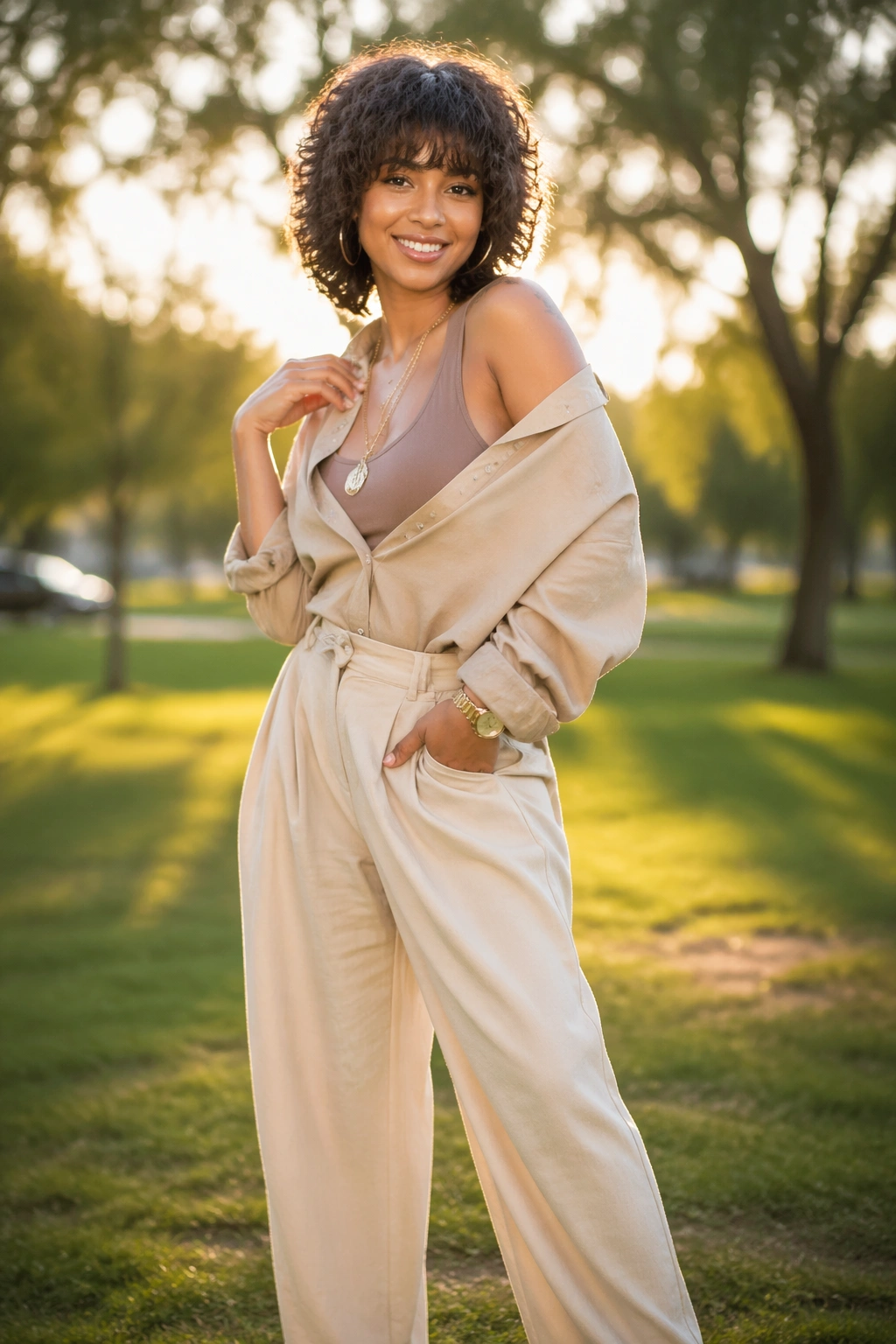
A curly shag quick weave is for people who don’t want the curls to behave too much. Unlike a blunt bob, this cut doesn’t ask for perfect symmetry. It wants movement, a little mess, and pieces that fall where they like.
That freedom is the point. Feathered layers break up density so the style doesn’t sit like a helmet. The shorter pieces around the crown keep the top lively, while the longer bits near the jaw soften the whole look. It’s one of the few short curly styles that actually gets better when the texture is a little irregular.
If you’re choosing bundles, deep wave and loose kinky curly are the textures I’d reach for first. They separate well and don’t need a ton of product to show the layer pattern. Ask for three visible levels: one near the cheekbone, one near the jaw, and one around the nape. That gives the cut enough shape to move without looking chopped up.
Who does this suit? Someone with thick hair energy, even if the weave itself isn’t overly dense. Someone who likes air around the face. Someone who’d rather have bounce than polish. It’s not the most formal style on this list, and that’s part of its charm.
7. Faux-Hawk Short Curly Quick Weave
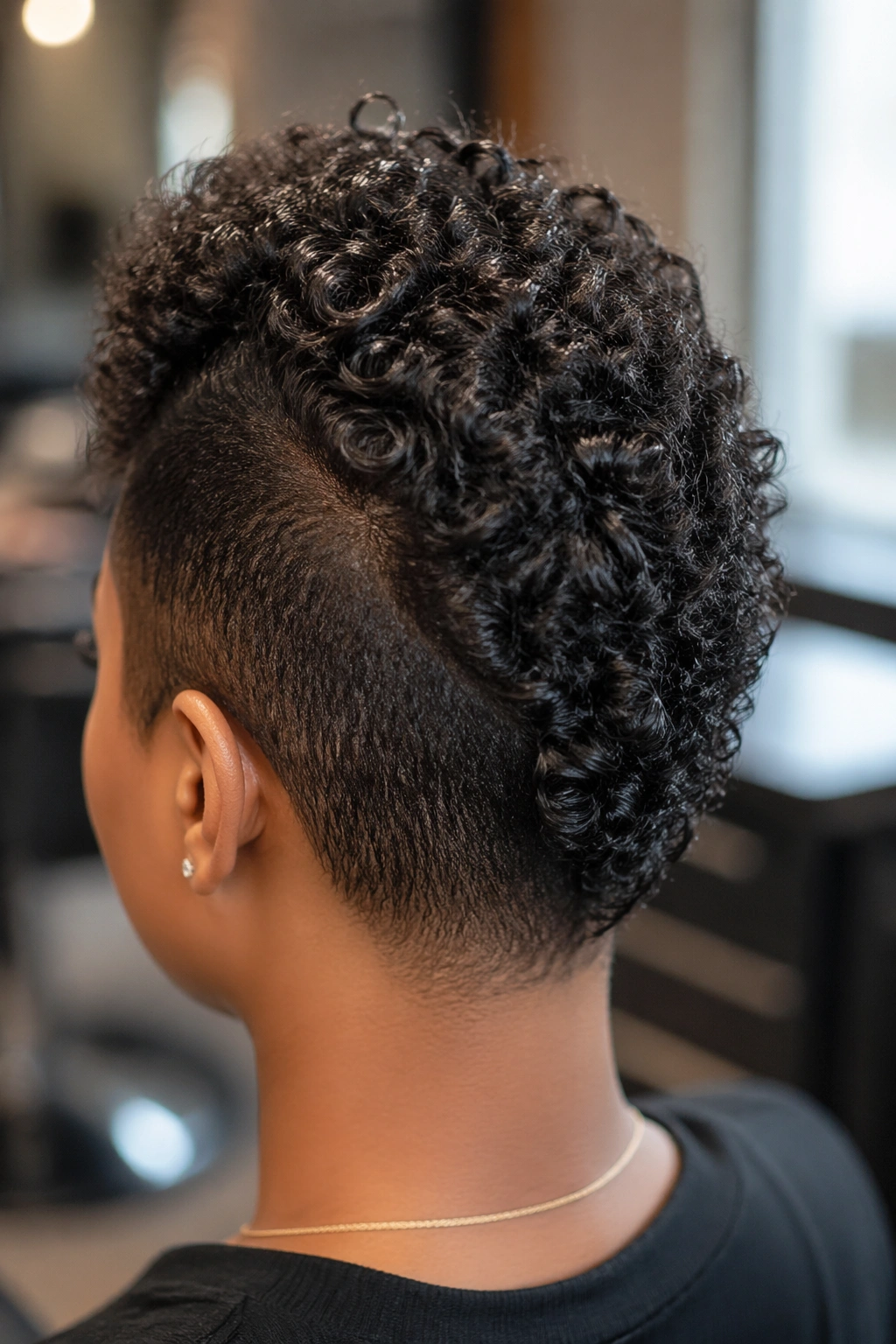
A faux-hawk can look cleaner than a plain bob when the curls are tight and the sides are kept close. That surprises people, but it’s true. The eye follows the center line, so the whole style feels lifted and leaner.
This one depends on contrast. The sides need to sit snug against the head, while the middle strip carries the volume. If the sides puff out too much, the shape turns vague. If the top is too flat, there’s no point in calling it a faux-hawk at all.
I like this style with shorter bundle lengths, around 6 to 8 inches, especially if the curls are springy and defined. A little gel at the temples goes a long way. Not a helmet. Just enough to keep the hairline smooth. The top can stay fluffy, but the profile should look intentional from the side.
Wear it when you want a little drama without adding length. It’s sharp with hoops, strong necklaces, and clean makeup, though it can read casual too if you leave the curls soft. That flexibility is why I keep coming back to it.
8. Wet-Look Curly Crop with Defined Ringlets
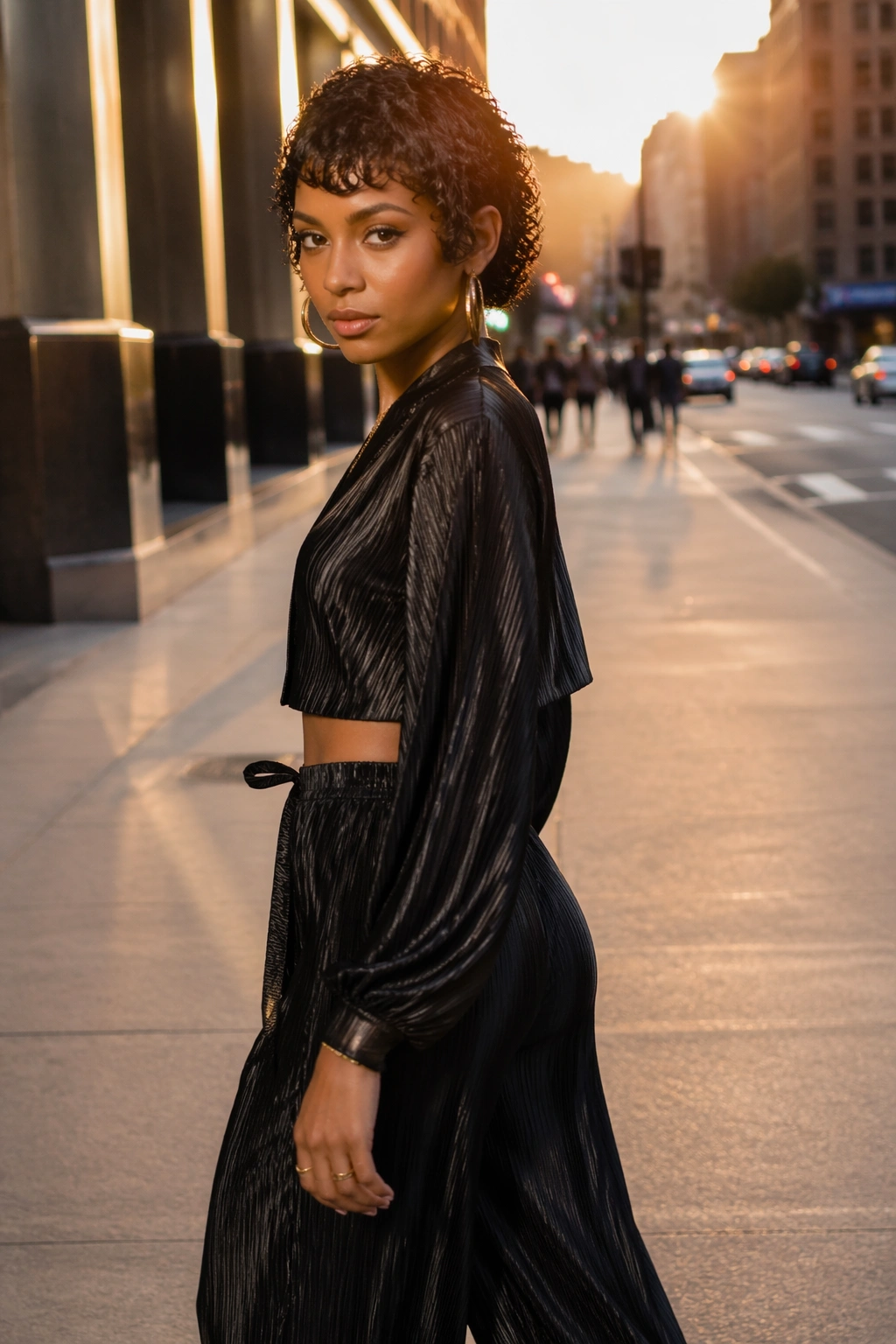
I like the wet-look crop on people who get tired of big hair at the temples. The finish is sleek at the roots, glossy through the curls, and a little cooler in tone than a fluffy style. It’s short, but it still has presence.
The process matters. Start on damp hair, work in a light gel or gel-mousse mix, then define the curls with your fingers or a small Denman brush if the texture can take it. Dry fully before you touch it again. If you separate too soon, the curls fray and the whole look loses its shine.
What Keeps It Clean
- Use a light hand with product or the curls turn sticky
- Keep the roots smooth, especially around the part and temples
- Let the hair dry fully before separating ringlets
- Add one drop of oil at the ends only, not the whole head
This style needs discipline. Not a ton, just enough to leave it alone while it sets. Once dry, the curls should look grouped and defined, almost lacquered at the surface. That finish works nicely on short lengths because it makes the style feel deliberate instead of airy.
I’d choose this one for evenings, event days, or any time you want short hair to look crisp without a lot of fuss. It has edge, but it still feels wearable.
9. Layered Curly Lob That Stops at the Collarbone
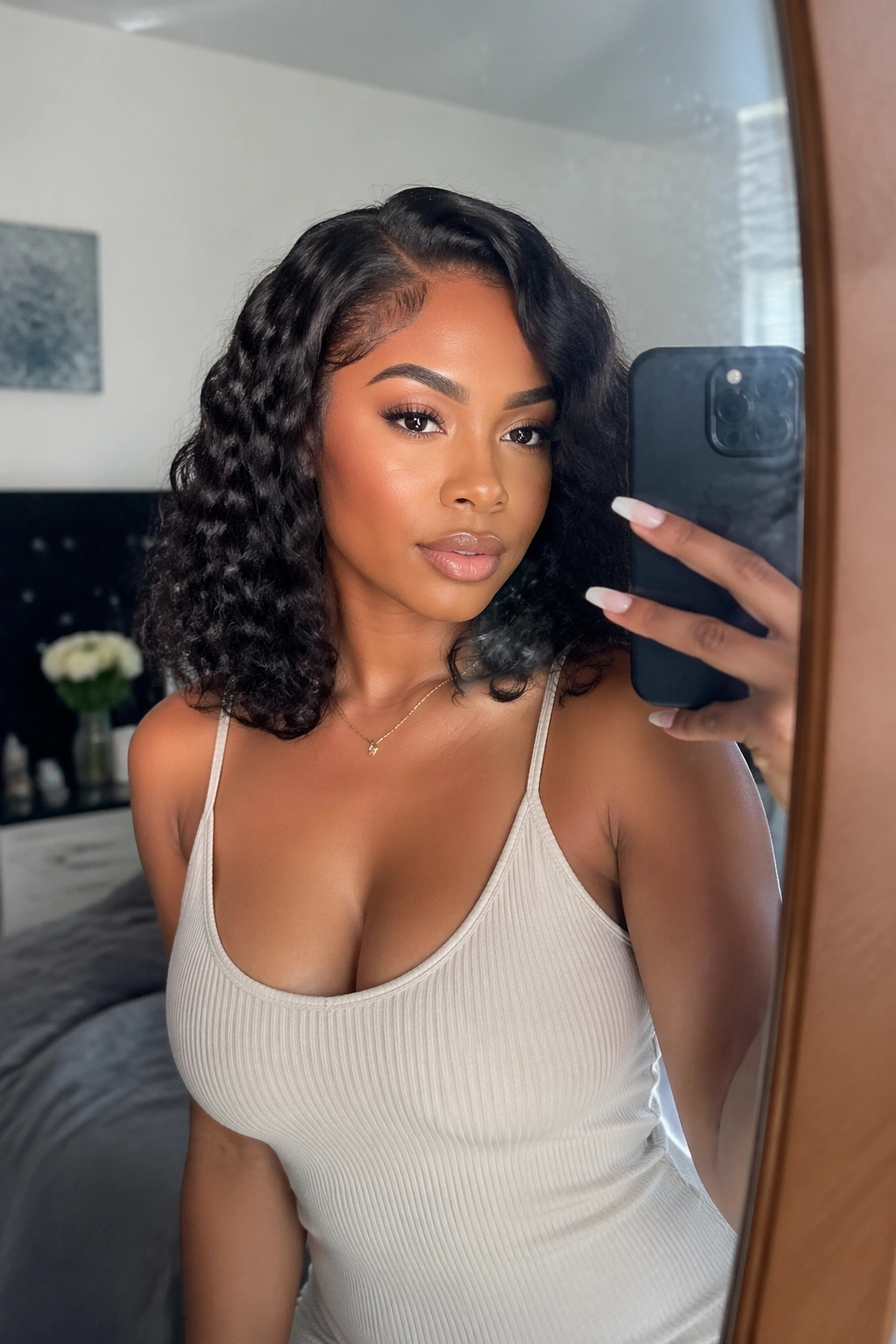
A layered curly lob is the compromise people end up loving after they swear they want something much shorter. It sits right at the collarbone or a touch above it, which means it still counts as short in everyday life, but it gives the curls a little more swing.
The collarbone is the magic point here. Hair that hits that spot tends to move well when you walk, and that movement stops the curls from getting stuck against the neck. Shorter than that, and you can lose the easy drape. Longer than that, and the style starts leaving the “quick weave” feeling behind and drifting toward a fuller medium length.
Layers are what keep it from looking blocky. A few face-framing pieces around the chin, then softer layers through the bottom, are enough. I like this with 12- to 14-inch loose curl bundles because you still get shape after the cut. A blunt bottom on curly hair can feel heavy fast. Layers fix that.
This style works for anyone who wants a short curly weave but doesn’t want to commit to a sharp crop. It gives you room to pin one side back, twist the front, or wear it loose without the shape going stale. That extra range makes it one of the easiest styles to live with.
10. Middle-Part Curly Bob with Airy Ends
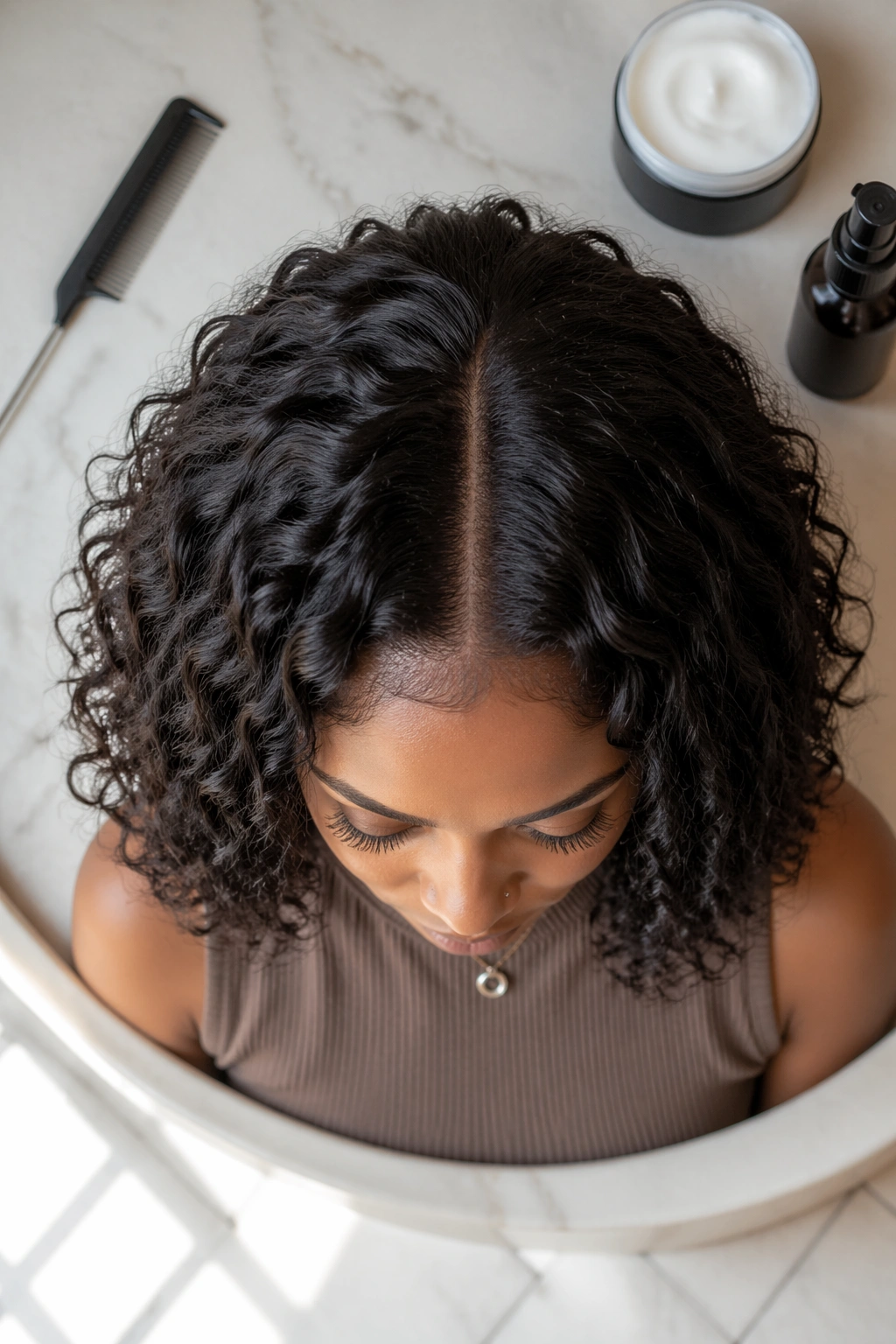
A middle part is a bold move on short curls because it shows everything. Good and bad. There’s nowhere to hide a flat crown or an uneven side. When it works, though, the look feels calm and balanced.
The trick is keeping the ends airy. Heavy ends make a center part look boxy, especially on a chin-length quick weave. Ask for the bottom to be softened a little so the curls don’t land like a hard shelf. The front pieces should frame the face, not camp there.
How To Keep It From Looking Stiff
Don’t overpack the part with product. That’s where a lot of people go wrong. A tiny bit of foam at the roots, then finger-lift the crown while it dries. If the top goes flat, the part starts looking wider than it is.
A middle part also benefits from a curl pattern that has loose bounce rather than tight ringlets. Water wave, soft spiral, and some body curl textures all work. The clean line in the middle does enough visual work on its own; the curls don’t need to fight it.
This is a good choice if you like symmetry and want the style to feel fresh without being loud. The line is simple. The detail is in how the curls fall on either side of it.
11. Curly Bob with Honey Highlights
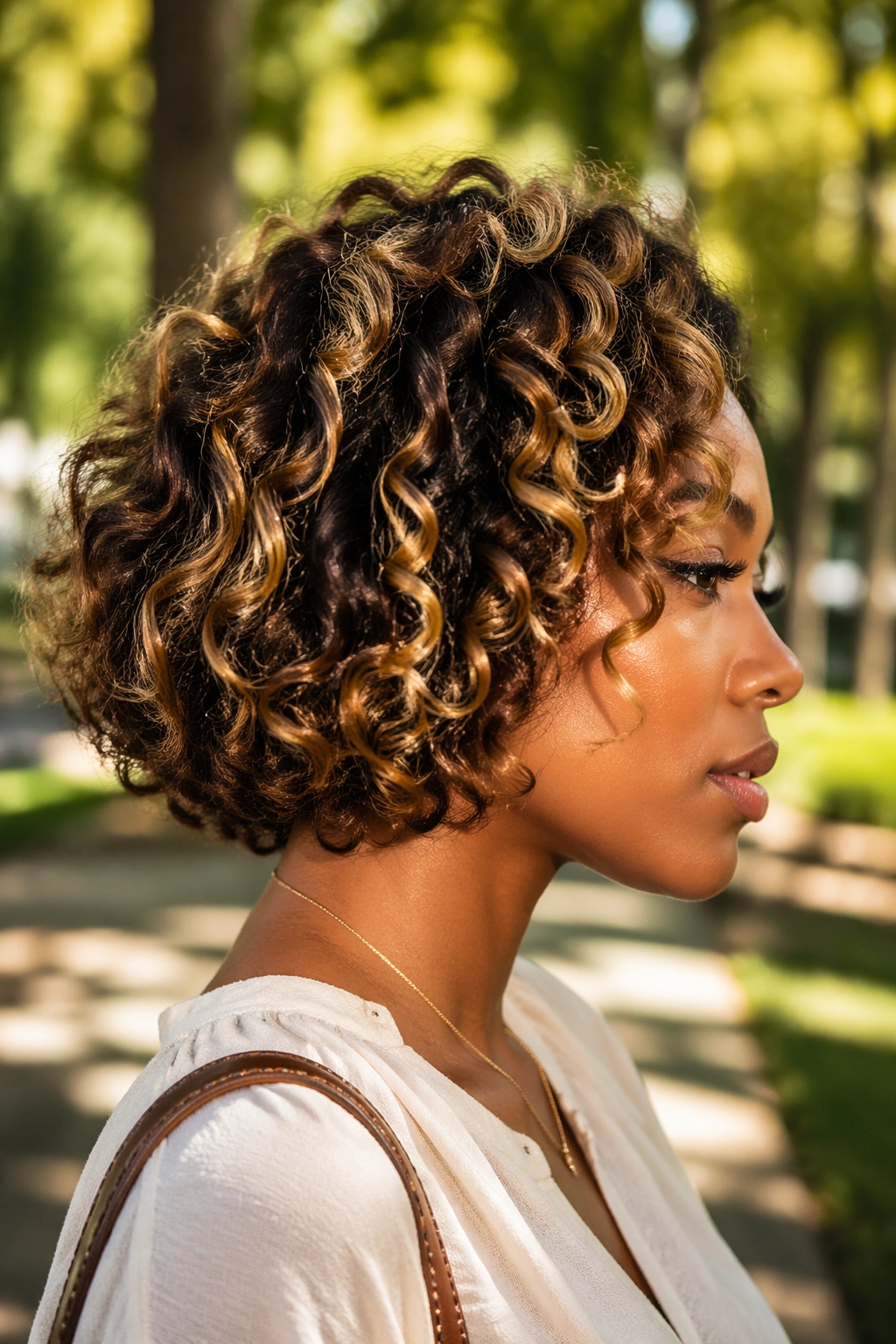
Color changes the whole mood of short curls. A curly bob with honey highlights looks warmer, lighter, and more dimensional than the same cut in a single dark shade. On short hair, even a few ribbons of color can shift the shape enough to matter.
Where the highlights land is the key. Put all the light pieces underneath and nobody sees the work. Put them around the face and through the top layers, and the curls start to pop. I like two to three face-framing highlight panels rather than thin streaks everywhere. That keeps the look soft instead of stripy.
Color Placement That Makes Sense
- Keep the base a warm brown, deep auburn, or soft black-brown
- Place honey tones near the cheekbone and crown
- Leave the nape darker so the cut still has depth
- Avoid chunky stripes at the part unless you want a loud finish
Short curls love warmth. Honey, caramel, and chestnut tones catch the eye without fighting the curl pattern. They also make the weave look less heavy, which matters when the length is compact.
This style is one of my favorites for people who want short hair to feel brighter without going blonde. It’s subtle enough for everyday wear, but the color still shows when the curls move.
12. Airy Bangs and a Soft Side Curve
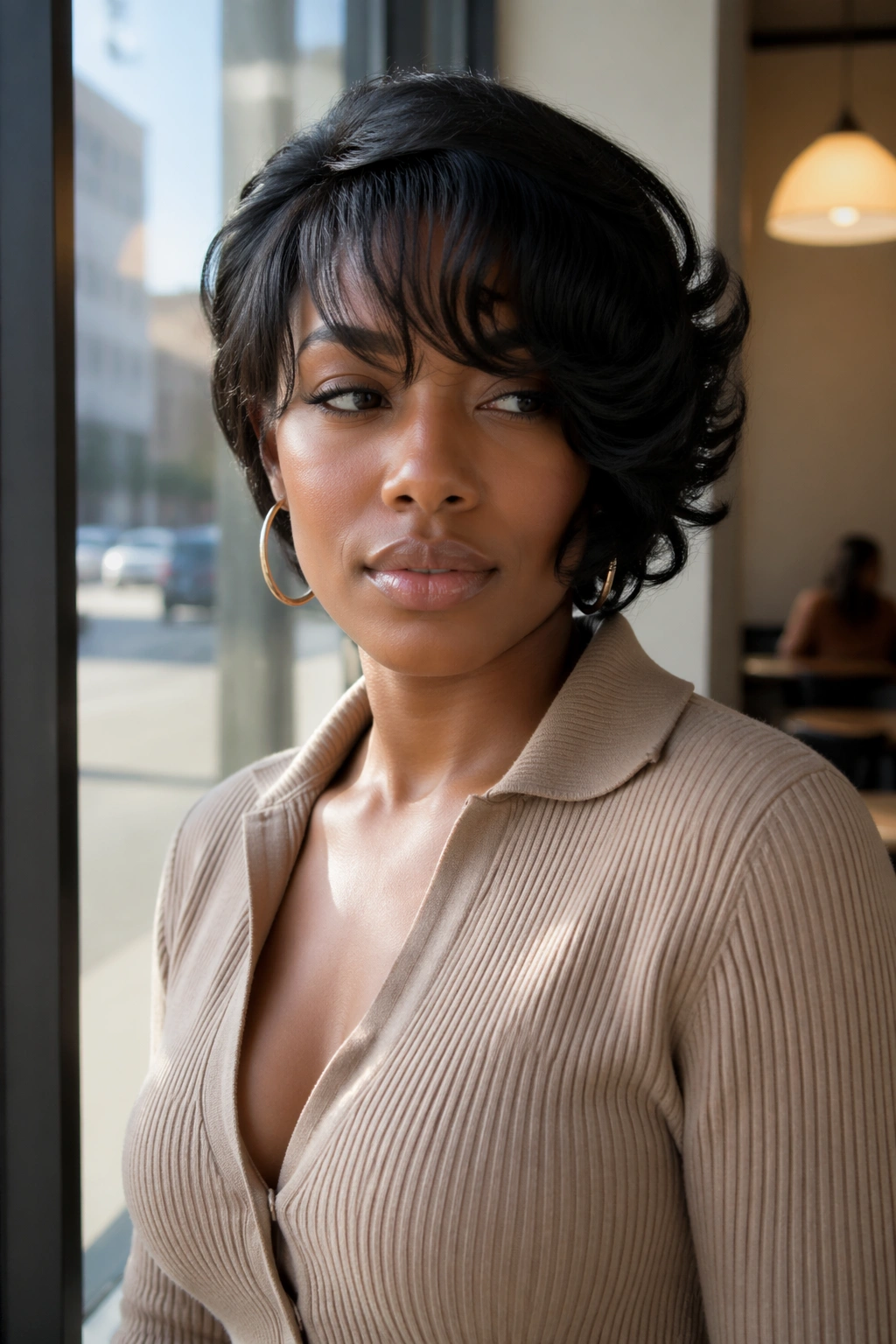
Airy bangs do something a heavy fringe never quite gets right: they leave room for the face to breathe. That matters on a short curly weave, where too much hair at the front can make the whole style feel crowded.
Unlike thick blunt bangs, airy bangs break up the line at the forehead. You get softness around the eyes without covering the upper face. The side curve keeps the cut from looking square, which is useful if the jaw is already strong or the cheeks carry a lot of the shape.
This style works best when the bangs are cut dry. Curls shrink, and if you cut them too short while wet, they can spring up like little springs and sit way above the brow. Leave them a touch longer than you think, let them dry, then make the final trim. It’s a small thing, but it saves a lot of regret.
I also like this with a curl pattern that separates easily, because the bangs shouldn’t become one solid curtain. A few wisps across the forehead look softer and more modern than a thick block. The side curve helps the rest of the hair flow into the fringe instead of stopping at it. That’s the whole reason it feels easy to wear.
13. Deep Side-Part Curly Quick Weave with One Ear Exposed
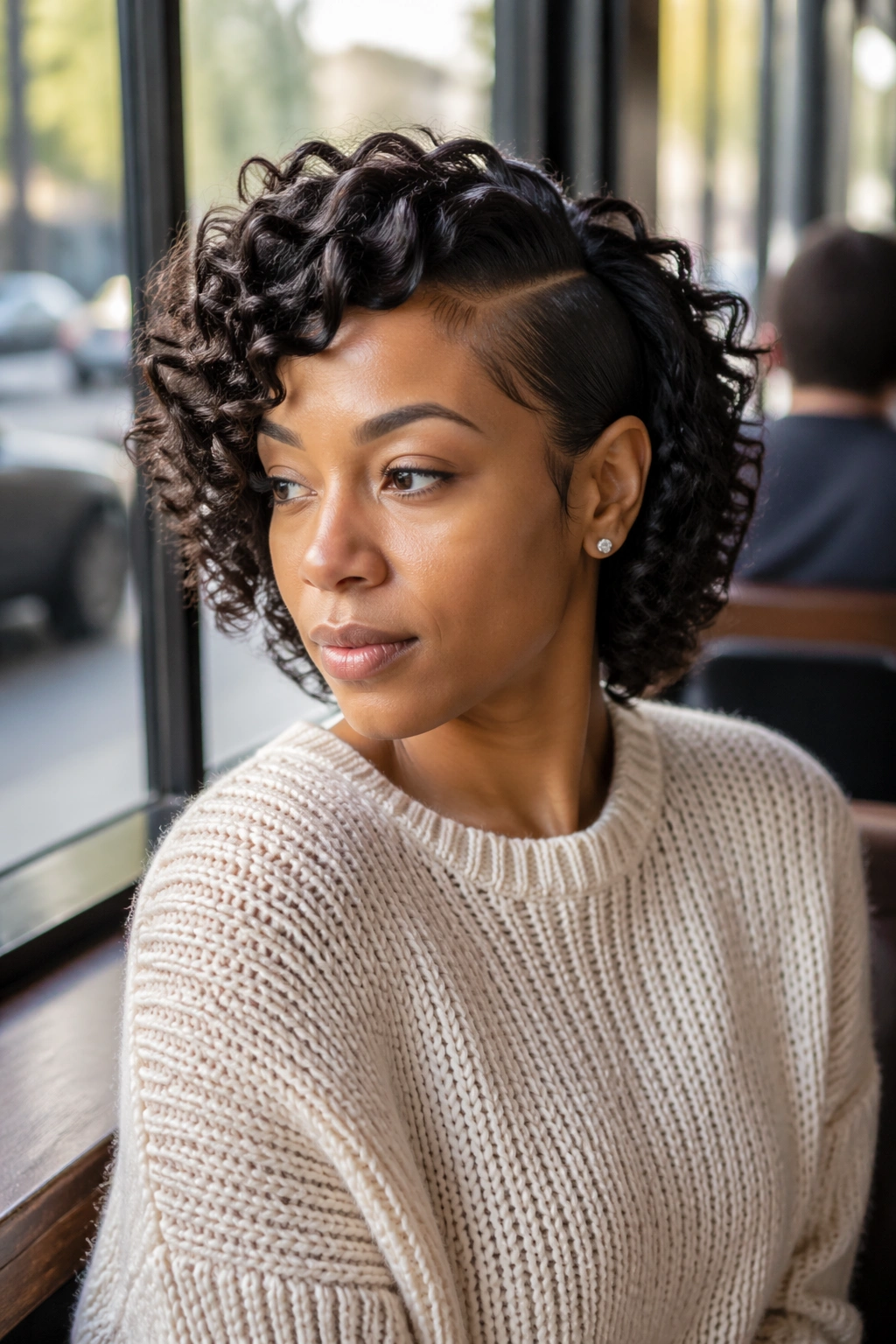
A deep side-part curly quick weave with one ear exposed is the easiest short curly style to dress up fast. One side stays full and rounded. The other gets tucked smooth, which gives you a clean line and a little skin near the jaw. That contrast does a lot of work.
The exposed ear changes the whole read of the style. Throw in a hoop, a stud, or even a bare ear with a sharp part, and the look feels more finished. You do not need extra length for that. You need placement. The curls can stay short and still look rich.
I’d keep the tucked side close with a small amount of edge control or a soft brush, then let the heavier side fall naturally. The part should be deep enough to make the imbalance obvious, but not so deep that the style starts sliding off the face. Around 3 to 4 inches from the center is usually enough.
This one works when you want a short style with a little polish and not much effort. It’s the kind of look that handles both daytime errands and a dinner out without changing much. That’s a rare combination, and I never get tired of it.
14. Finger-Coil Pixie with a Lifted Crown
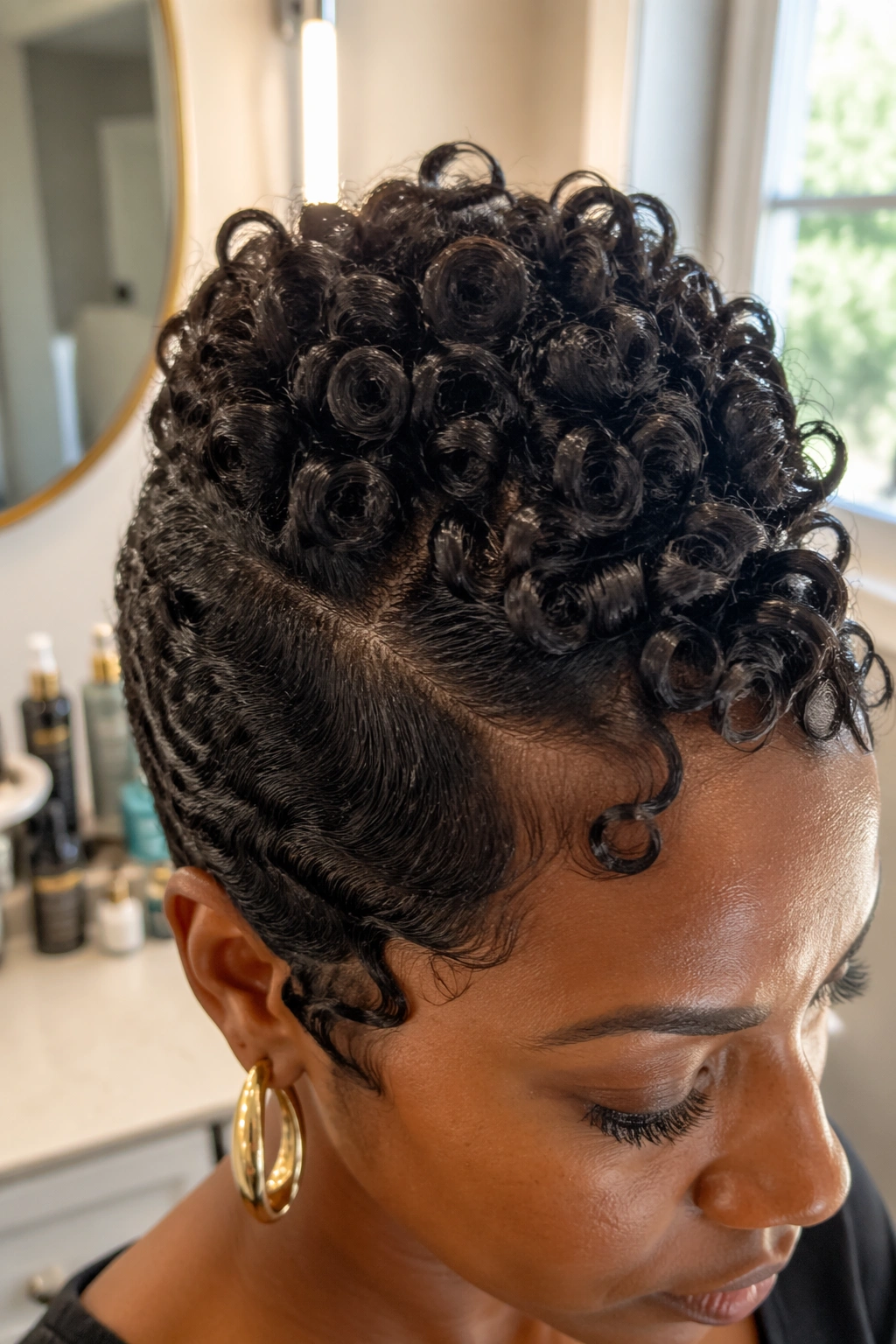
If you want a short curl pattern that looks deliberate even after a long day, finger coils are a smart move. They keep the curl grouping neat, and on a pixie-length quick weave, that neatness matters more than volume does.
The lifted crown is what keeps the style from looking too close to the head. Start there. Once the top has shape, the coils around the sides and front can stay tighter and more controlled. The nape should be clipped or tapered close so the crown has room to rise.
The Small Details That Make It Work
- Coil in small sections, about 1/2 inch wide
- Use setting mousse or a light curl cream, not a heavy butter
- Let the coils dry fully before separating them
- Separate each coil only once, or the pattern gets fuzzy fast
This is one of those styles that looks simple until you try to make it clean. The parting has to be neat. The coils need time to dry. The crown needs a little lift so the whole cut doesn’t collapse into the scalp. Get those pieces right and the result is crisp.
I like this look on people who want something short, tidy, and not at all fussy. It’s compact, but it doesn’t feel tiny. There’s enough shape at the top to keep it interesting.
15. Short Kinky Curly Quick Weave with Tapered Nape
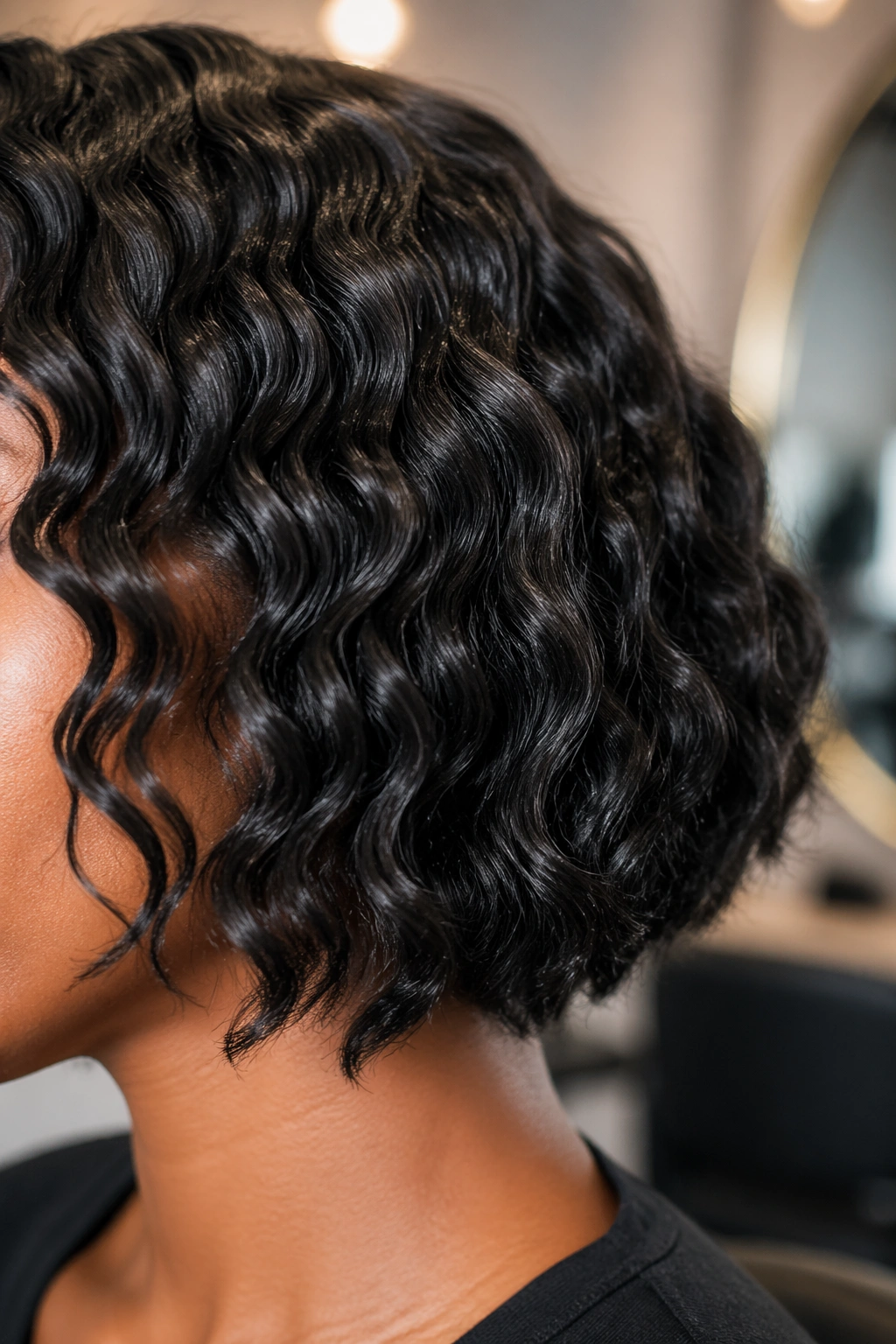
A short kinky curly quick weave with a tapered nape has a different kind of charm. It doesn’t chase smooth ringlets or obvious symmetry. The texture is the point. Dense, springy curls at the top and a close finish at the back make the whole style feel grounded.
This is the one I’d pick for someone who likes volume but not bulk. There’s a difference. Bulk sits in the wrong places and makes the head look wide. Volume lifts and moves. A tapered nape helps the curls sit higher, so the silhouette stays clean from the side and the back.
The style also wears well with a simple mist-and-fluff routine. A little water, a little foam, then fingers only. Heavy cream can drag the curls down and make them clump at the ends. On a short cut, that can flatten the whole shape by midday.
A few people want their short quick weave to look perfectly even. I usually push back on that. Texture looks better when it has some life in it, and a kinky curly pattern gives you that without much effort. If you want the shortest, fullest version of the style, this is the one to start with.