



Curly bang styles for Black women work best when the front of the haircut respects shrinkage instead of fighting it.
That sounds obvious, but a lot of bad bangs happen because someone cuts to the stretched length and forgets what happens after wash day. A coil that sits at eyebrow level when wet can spring up half an inch, sometimes more, once it dries. On tighter textures, that shift is the whole game.
The nicest curly bangs rarely lie flat like a straight fringe. They move. They break apart a little, fall into soft pieces, and leave enough shape around the temples that the forehead doesn’t look boxed in. That’s why a good curly bang can make a face look brighter without making the haircut look overworked.
Some of the styles below are soft and forgiving. Others are sharper, louder, and a little more dramatic. The real difference is shape: where the bang starts, where it lands when dry, and how much of the front hair is allowed to do its own thing.
1. Soft Curly Curtain Bangs
Soft curtain bangs are the easiest doorway into fringe if you’re nervous about the commitment. They part in the middle or just off-center, then fall away from the face in two loose, curly panels instead of one heavy block. On Black hair, that little split matters. It keeps the front from feeling stiff, and it lets the natural curl pattern keep its bounce.
Why They Work So Well
The shape is forgiving because it doesn’t demand perfect symmetry. If one side curls tighter than the other, the style still reads as intentional. That’s a gift on wash days when the front pieces dry a little differently from the rest of the head.
The cut usually sits a bit longer than you think you need. Good curtain bangs on coily hair often look best when they graze the cheekbones or land just below the brow once dry. Cut too short, and the shrinkage can push them high up the forehead fast.
A tiny amount of curl cream and gel is enough. Scrunch the front pieces, then let them dry with a side-to-side part if you want a softer fall. Do not chase a flat fringe here — the whole point is movement.
2. Tapered Wash-and-Go Bangs
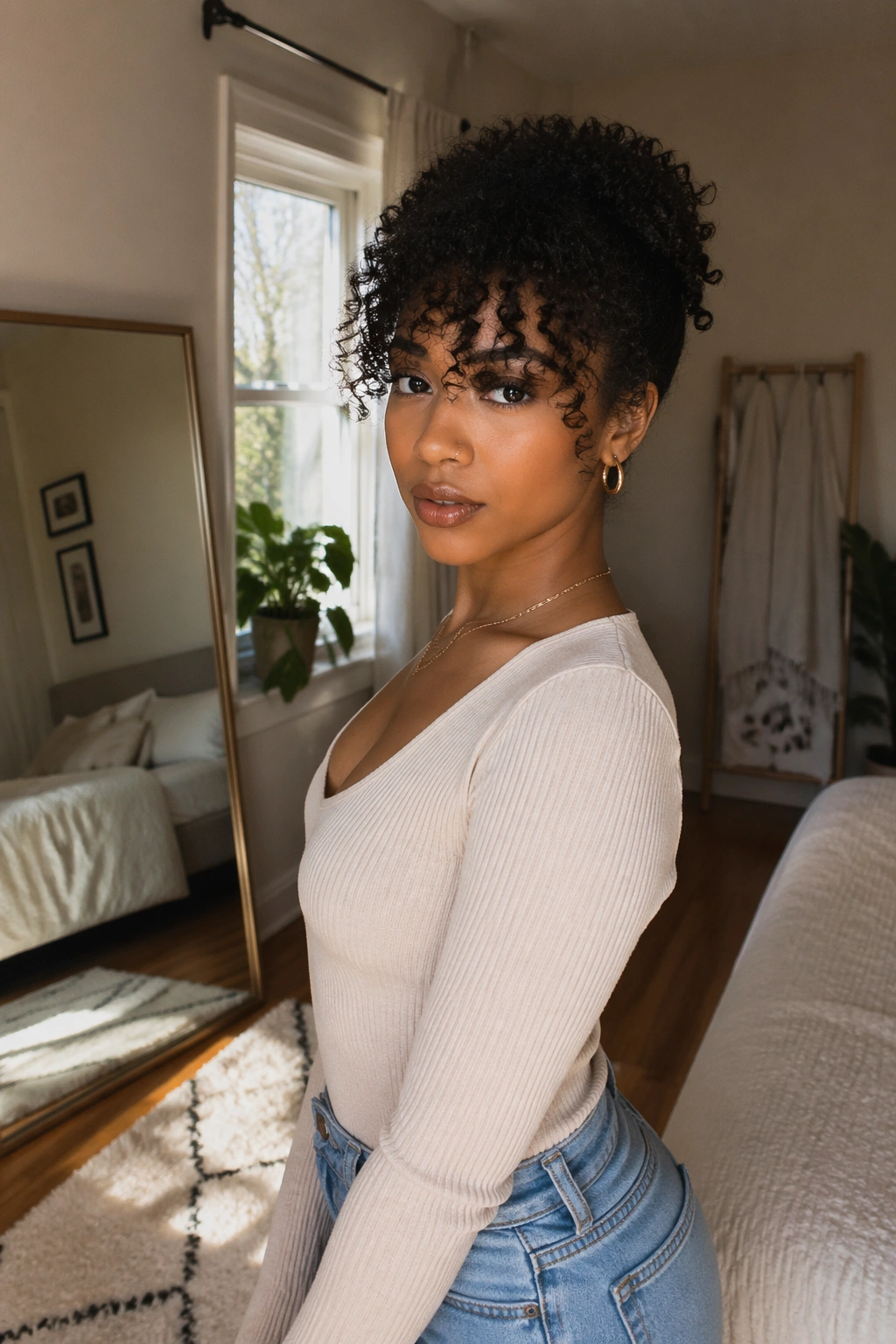
A tapered wash-and-go makes curly bangs look easy because the haircut does half the work. The sides and back are kept shorter or shaped close to the head, while the front has a little extra length to curl forward. That contrast gives the bangs room to show up without swallowing the face.
This is one of my favorite options for people who wear their natural hair out most of the time. It looks neat on day one, but it still has life on day three when the curls start to fluff a bit. That softness is not a flaw. It’s the point.
What makes this style smart is the balance between structure and freedom. The front needs enough density to form a visible bang line, but not so much that it turns into a helmet. A stylist who cuts curls dry, or mostly dry, can shape the front so the bangs land where they should after shrinkage.
Wear this style with a light leave-in, a gel that gives hold without crunch, and a diffuser on low heat if you want the front to keep its shape. Clean edges matter here too. A crisp taper in the back makes the bang area look even fuller by comparison.
3. Deep Side-Part Curly Bangs
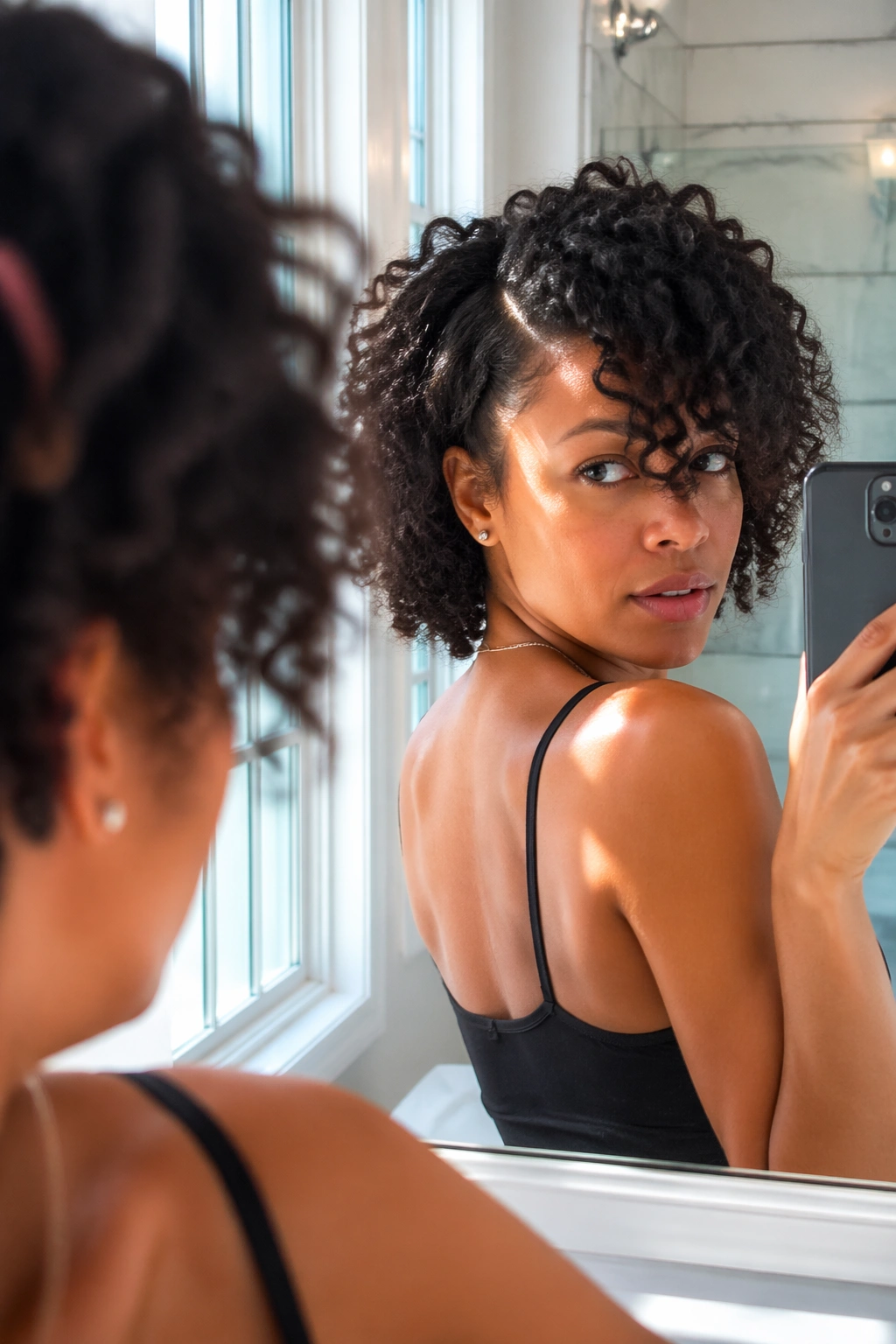
A deep side part can change a whole haircut in 10 seconds. Instead of dropping the curl pattern straight down, it sweeps the front across the forehead and lets the bang pieces land diagonally over one eye or cheekbone. The result is softer than a blunt fringe and often easier to grow out.
This style works especially well when the curls in front are medium to tight and have a little spring. You want enough movement for the bang to arc, but not so much looseness that it loses the side-swept line. If the front is dense, the part helps reduce the bulk. If the hair is fine, the diagonal line gives the illusion of more fullness.
For styling, set the part while the hair is damp, then clip the front roots at the opposite direction for 10 to 15 minutes so they dry with some lift. After that, finger-coil the longest front pieces if they keep collapsing into the eye. A small amount of edge control at the part can help, but too much turns the style stiff. Nobody needs that.
4. Rounded Fro Bangs with a Clean Arc
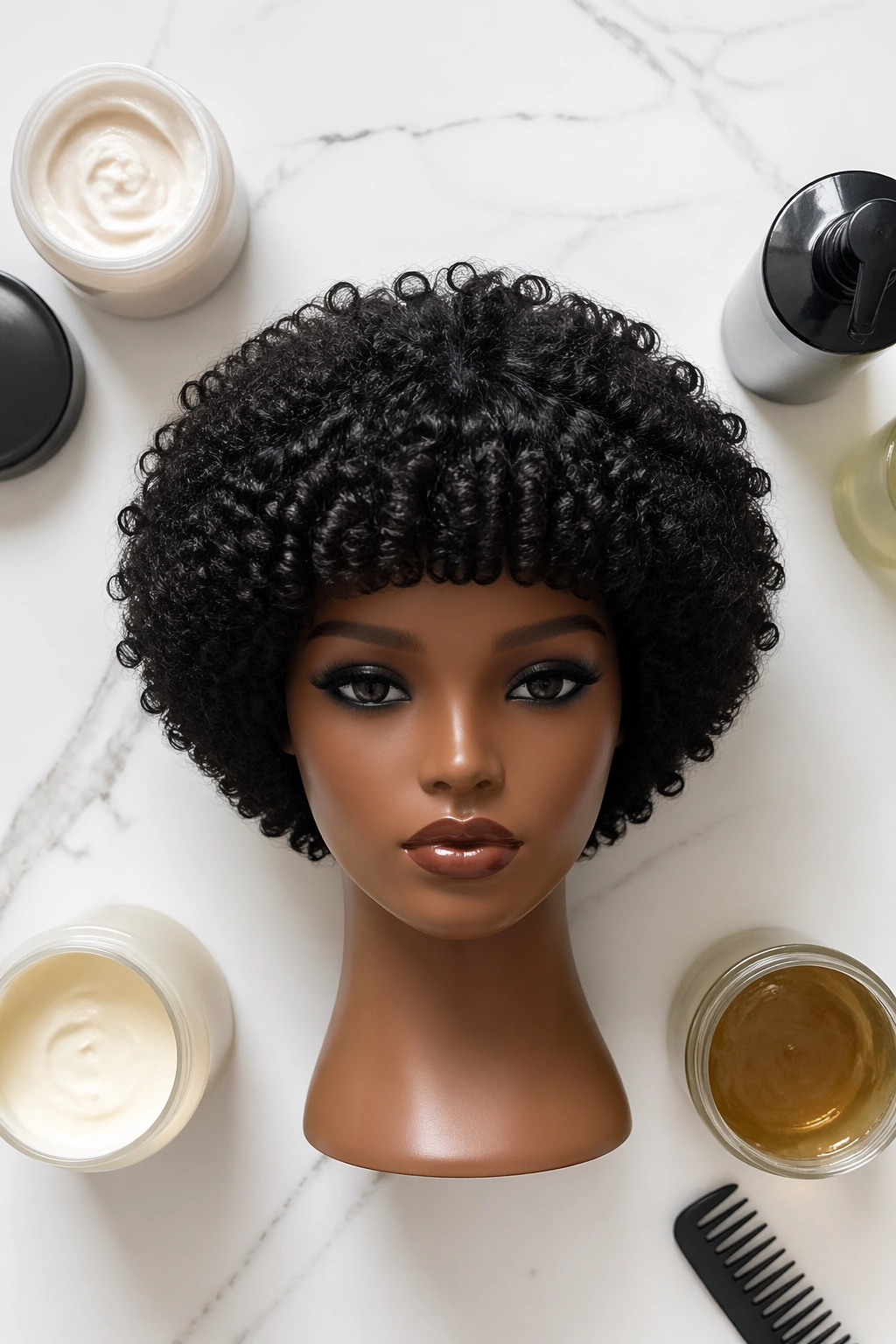
A rounded fro with bangs feels confident without trying too hard. The front is shaped into a gentle arc, so the bang line follows the natural dome of the afro instead of sitting like a separate panel. That clean curve is what makes it look polished.
This style is beautiful on dense coils because it lets the hair stay big while still showing intentional shape. The bangs don’t have to be super short. In fact, they usually look better a little longer, especially if your curl pattern tightens a lot as it dries. A bang that lands near the top of the eyelid when stretched may sit much higher once the curls dry. That’s fine, as long as the arc is planned.
I like this cut when someone wants the forehead framed but not hidden. The front pieces can be trimmed dry into a soft crescent, then shaped into the rest of the fro so there’s no hard line between “bangs” and “the haircut.” That blending matters.
Leave the curl cream light. Heavy butter will drag the front down and erase the arc. The shape should feel airy, not packed.
5. Layered Twist-Out Bangs
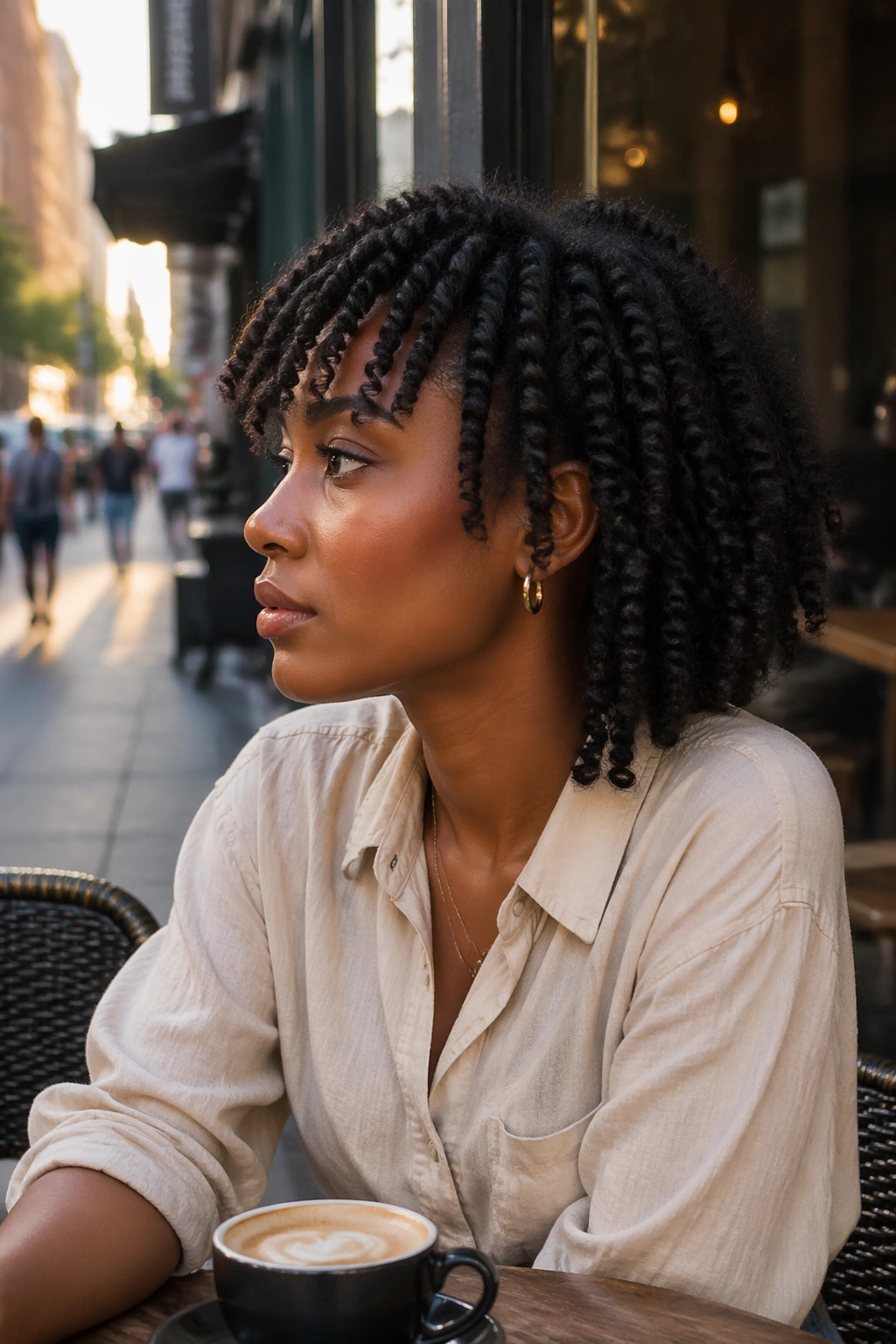
Why does a twist-out bang sit so well on Black hair? Because the front pieces are already trained to bend in the direction you want. Twists give the bang a clear pattern, a bit of stretch, and enough separation that the fringe doesn’t collapse into one blob.
The smartest version keeps the twists in the front smaller than the ones in the crown. That gives you more control over the bang length and makes it easier to get a soft curve across the forehead. Once the twists are taken down, the curls usually land in tidy clumps that frame the face instead of poking out at random angles.
How to Get the Bend
Use a leave-in, then a light mousse or foam before twisting. You want enough slip to keep the strands smooth, but not so much moisture that the front stays wet forever. Small, neat twists in the bang area usually give the best curl definition.
Sleep on a satin scarf, then separate the curls only once they’re fully dry. That part matters. Pulling them apart too soon can wreck the shape and make the front frizzy before you even leave the house. A little frizz later is normal. A fuzzy bang on day one is just rushed.
6. Bantu-Knot-Out Bangs
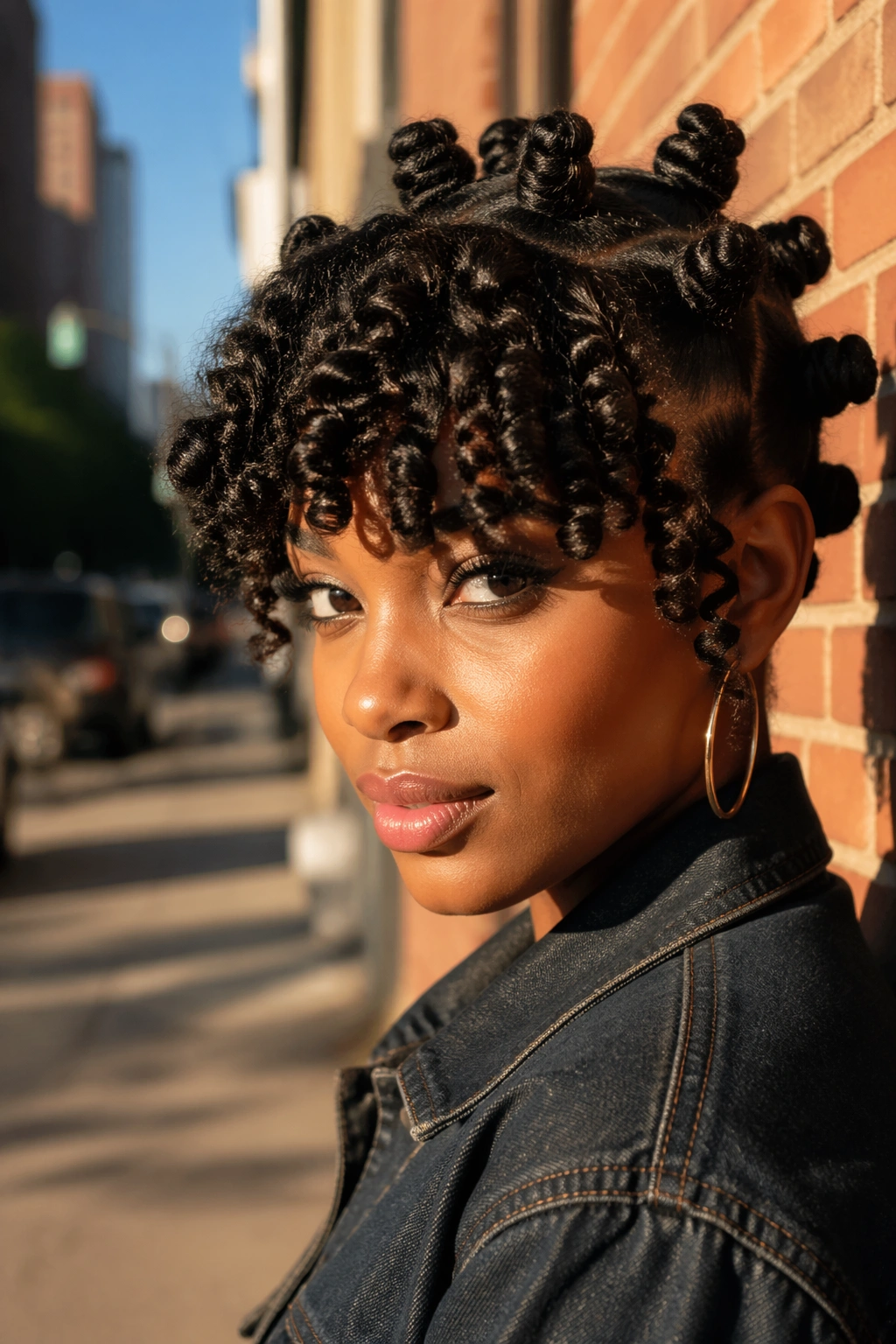
Bantu-knot-out bangs have a different kind of spring. The curls come out rounder and a little more playful than a twist-out, with a bend that feels sculpted but not stiff. If you want your bang area to have texture you can see from across the room, this is a good place to start.
Unlike a straight-across fringe, a knot-out fringe has built-in volume. That makes it useful for people with medium-density or fine strands in the front, because the style gives the illusion of a thicker bang line. It also gives the haircut a nice lift at the root, which can keep the front from falling flat by noon.
A practical note: the knots should be small enough to shape the bangs, but not so tiny that the result turns into tight, narrow coils. Think medium-small, about the size of a grape or a little smaller, depending on length. The front pieces near the temples can be set a touch looser so the style blends into the rest of the hair.
This one feels especially good with a side part or a half-up style. It has motion, and motion is what keeps it from looking too done.
7. Flexi-Rod Bangs for Extra Spring
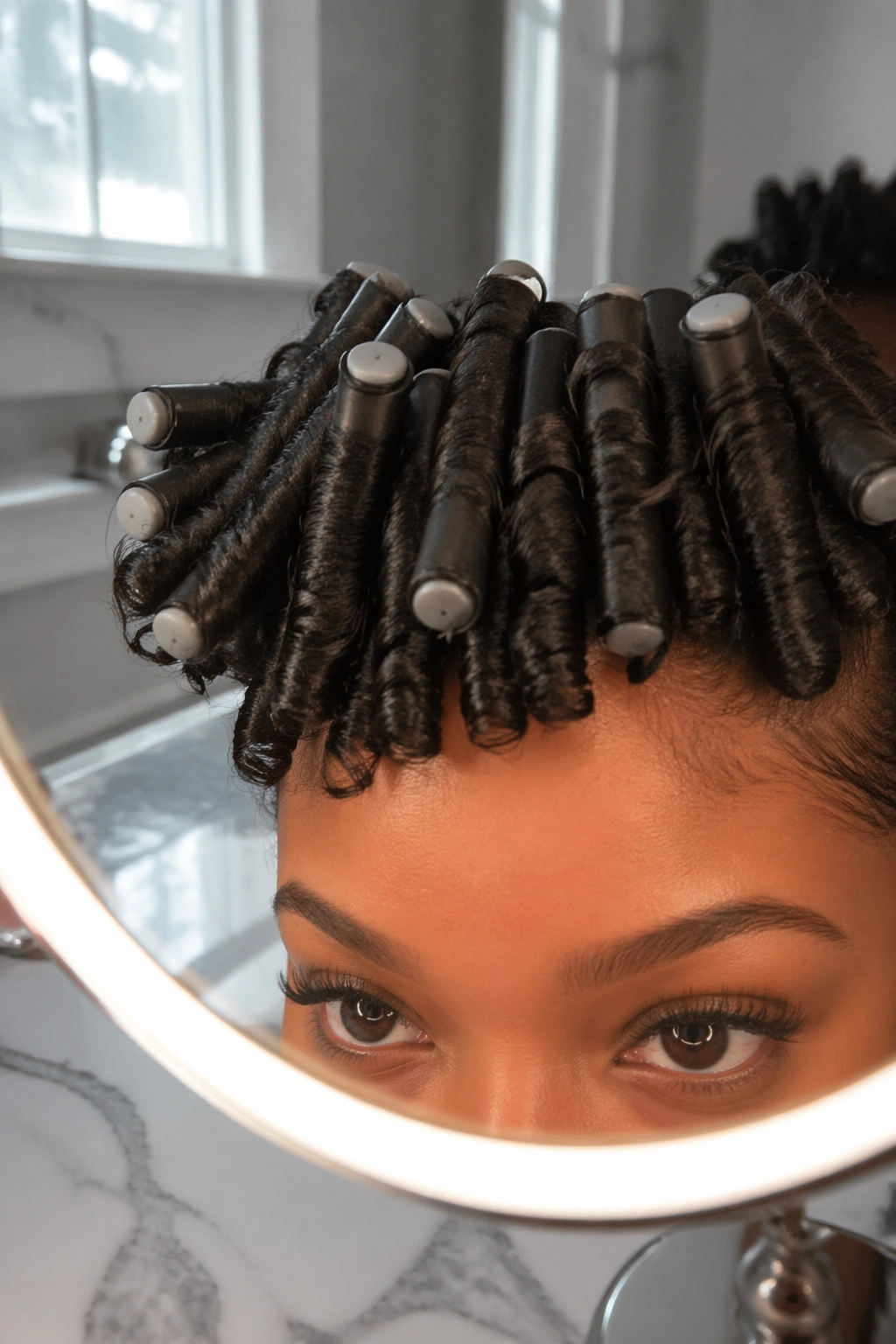
Flexi-rod bangs are for the person who wants a front section that bounces a little more than the rest of the style. The rods create a smooth, uniform curl, which is useful when the bang area needs to look neat for a braid-out, twist-out, or stretched wash-and-go.
The rods themselves matter. Smaller rods give tighter curls and more lift, while larger ones keep the front softer and longer-looking. For bang sections, rods around 5/8-inch to 1-inch are usually the sweet spot if you want definition without making the hair look cramped. Too tiny, and the bangs can end up shorter than you planned once they dry.
What Makes This Style Different
The front hair becomes the focal point, not because it’s loud, but because the curl shape is so even. That uniformity works well when the rest of the hair has more texture or more frizz. The contrast looks deliberate.
If you’re trying this at home, set the rods on damp, not soaked, hair. Leave them in until the hair is fully dry. Removing them early is the fastest way to ruin the shape. Once they’re out, separate only a little. A little polish goes a long way here.
8. Locs with Curly Face-Framing Bangs
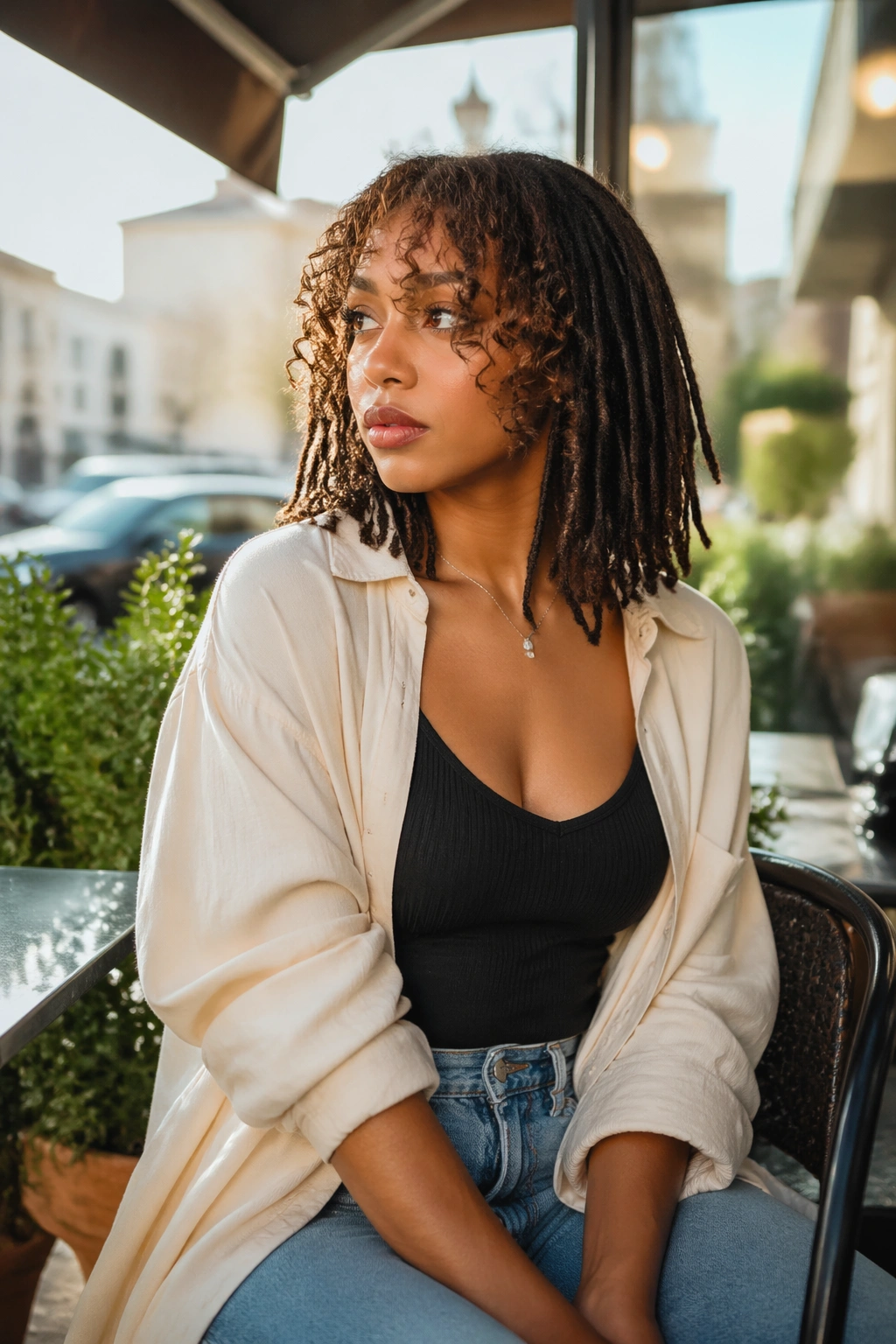
Locs and bangs can live in the same haircut if the front is shaped on purpose. The easiest version leaves a few front locs shorter so they skim the cheekbones, then adds soft curly pieces at the hairline or just inside the loc frame. That gives the face a little movement without making the style feel busy.
This look works especially well when the locs are shoulder length or longer. The curly bang pieces break up the weight near the forehead, which keeps the whole style from looking too heavy. If your locs are thicker, the bang area should stay lighter and less dense so the front doesn’t feel crowded.
I like this style because it gives a face-framing effect without asking the whole head to behave like a loose curl set. It’s a nice middle ground. A few curled tendrils around the eyes can soften the look in a way that straight loc bangs never quite do.
A small rod set or pipe cleaner curl at the ends can keep the front pieces from hanging limp. That detail is tiny, but it changes everything.
9. High Puff with Curly Bang Tendrils
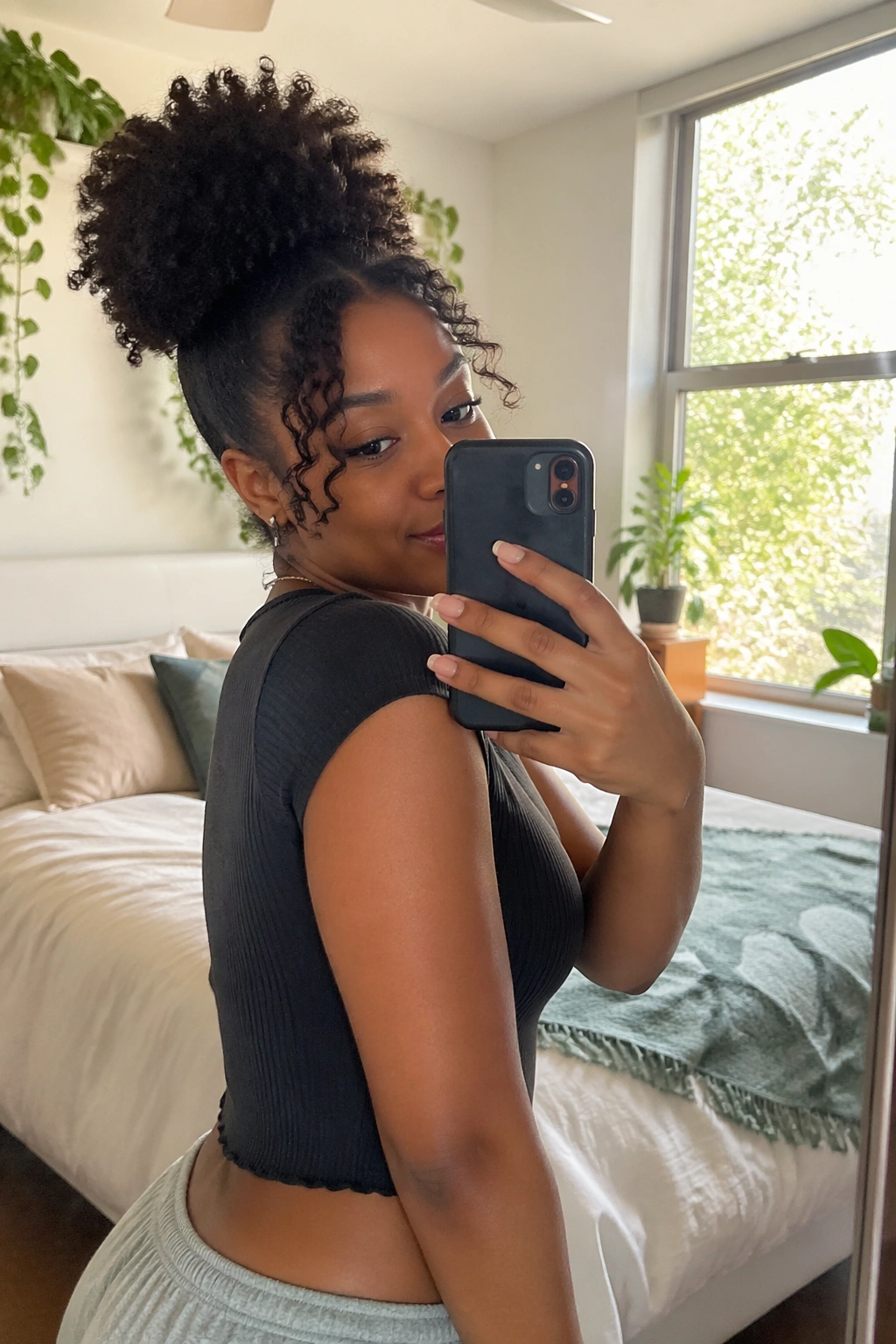
A high puff with curly bang tendrils is a cheat code on busy mornings. The puff gives you height and energy, while the front pieces are left loose enough to drop around the forehead and cheeks. It’s an easy way to get a bang effect without cutting a full fringe.
What Makes It Feel Finished
The front tendrils need to be intentional, not accidental. Usually that means leaving out two to six small sections in the front, then defining them with cream or gel so they curl instead of frizz into the rest of the puff. The pieces can be short and playful or a little longer and face-skimming.
The beauty of this style is that it looks casual and styled at the same time. You can wear it with hoops, a bare face, or a bold lip, and it still holds up. The puff keeps the crown clean, which makes the bang pieces stand out more.
A soft brush at the perimeter helps, but don’t flatten the edges too much. The contrast between the smooth base and the loose bang tendrils is what gives the style its shape. If the front pieces are too neat, the whole thing loses that easy, lived-in feel.
10. Curly Shag with Airy Fringe
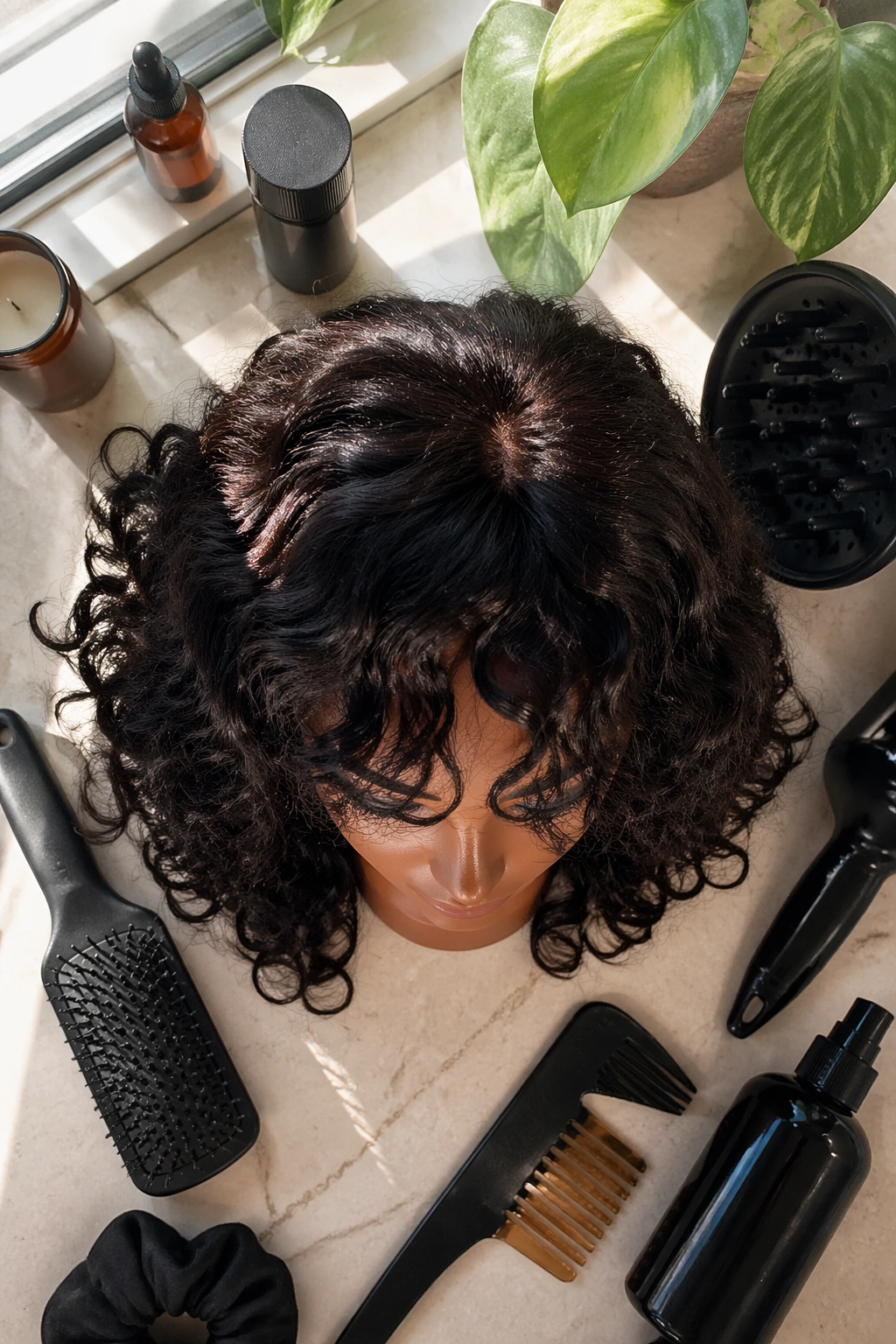
The curly shag is the one style that looks deliberate even when it’s a little messy. Layers are cut through the crown, the sides, and the front so the fringe lands lightly instead of forming a heavy curtain. On Black women’s curly hair, that can be a lifesaver if you want movement and shape without constant restyling.
Why does it work so well? Because the layers spread the volume out. Instead of one thick block at the front, you get soft pieces that land at different spots around the forehead and cheekbones. The result feels airy. Not thin. Airy.
This cut is especially good for people who like a bit of rock-and-roll energy in their hair. It looks great when the curls are defined, but it also survives a little frizz without falling apart. That matters more than people admit. Hair that only looks good for five minutes is exhausting.
Ask for layers that start higher in the crown and soften toward the bang area. If the front is cut too uniformly, the shag loses its whole point. Unevenness is the charm here.
11. Frohawk with Curved Bangs
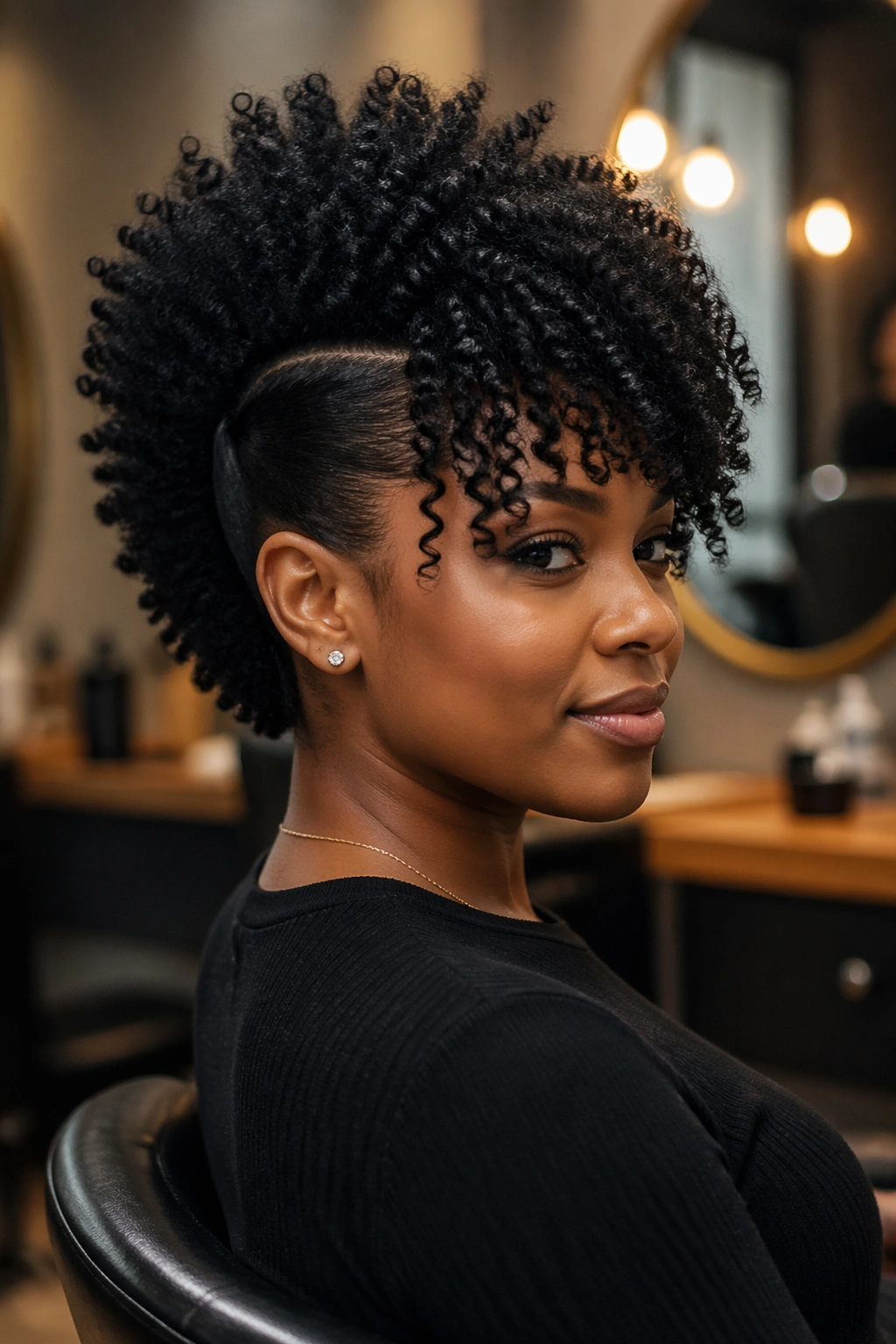
Unlike a standard frohawk, this version keeps the center strip high while the sides stay close enough to the head to let the bang shape do the talking. The curved bangs soften the front edge, which keeps the style from looking too severe. That curve is the difference between edgy and harsh.
The front can be shaped into a low arc that follows the forehead, or into a slightly off-center bend if you want more attitude. Either way, the bang area should connect to the raised center section instead of sitting on its own. That connection is what makes the style feel balanced.
Who It Suits Best
This is a strong choice for coily hair that holds shape well and for anyone who likes a bolder silhouette. It also works when you want to show off earrings, makeup, or a strong neckline. The haircut frames the face fast. No extra effort needed.
A little shine product on the sides can help the center stay the star, but don’t drown the curls. The front should still feel soft enough to move when you turn your head. A frohawk with curved bangs is sharper than a puff, yes, but it should not look frozen.
12. Crochet Curl Bangs
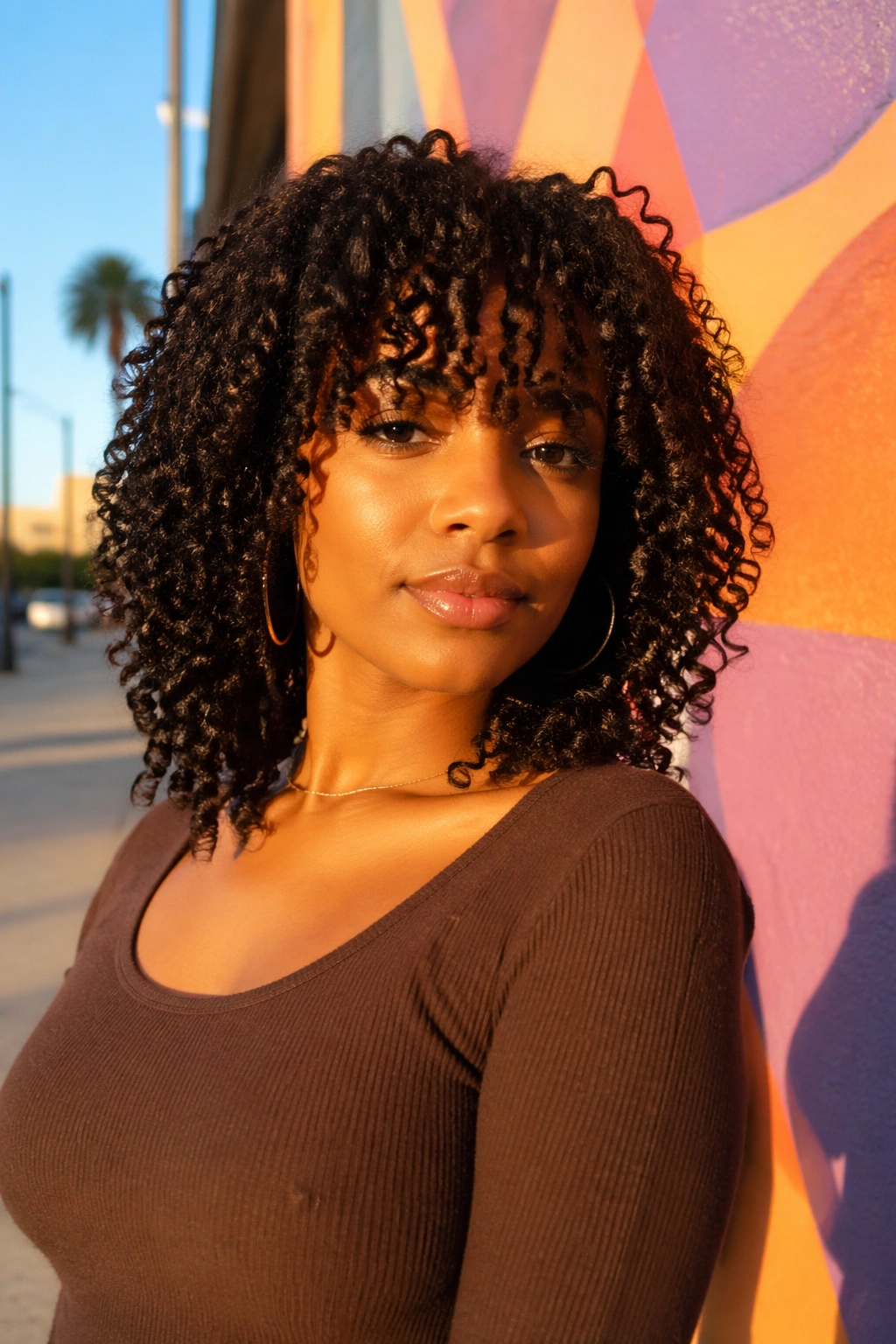
Crochet curl bangs are a smart option if you want the look of a full fringe without cutting your own hair into it. A small braid base at the front holds the crochet pieces, and the curls are added where the bangs should fall. That can save a lot of stress if you like changing your style often.
The front section should be lightweight. That part is easy to miss. If the bang area is too dense, it can tug on the hairline and look bulky against the rest of the style. A lighter curl pattern in the front keeps the fringe from overpowering your face.
What to Ask For
- A soft, narrow braid base that follows the natural front hairline.
- Curl pieces that match the texture or move just a little looser for contrast.
- Bang length that lands at eyebrow to cheekbone level when dry.
- Enough space at the temples so the fringe doesn’t look square.
This style is useful for protective styling, but it still needs care. Sleep with the curls wrapped or pinned loosely so the front doesn’t tangle overnight. A little mousse in the bang area refreshes the shape fast. More than that can make the front crunchy, and nobody wants crunchy bangs.
13. Flat-Twist Crown with Front Bang Pieces
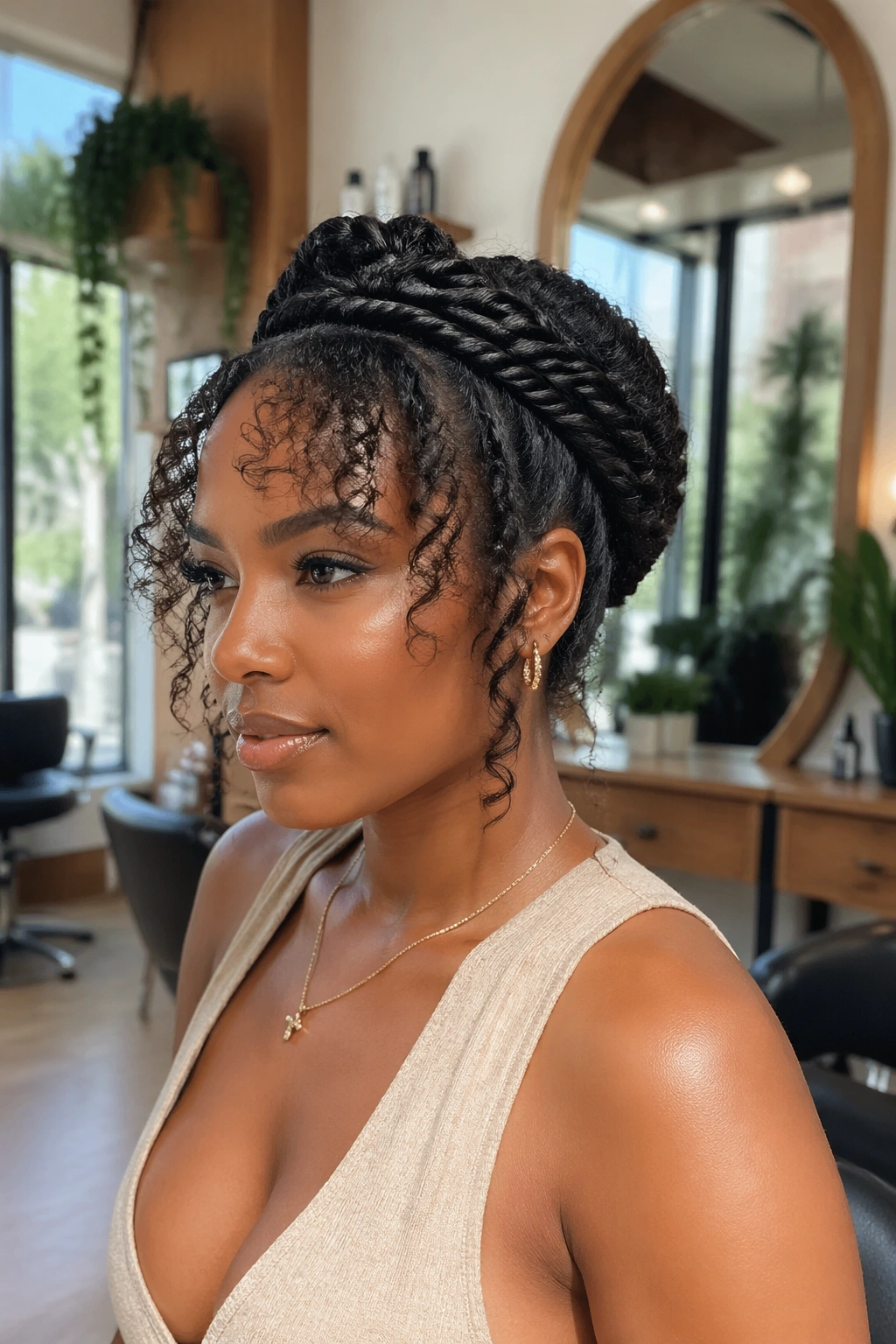
A flat-twist crown gives you a neat frame around the head while the front bang pieces stay free. That combination is useful when you want polish at the edges and softness at the face. It reads calm, clean, and a little regal without getting stiff.
The twists pull the rest of the hair back just enough to open up the forehead, which makes the fringe pieces feel more visible. The bang section can be twist-out curls, finger coils, or even rod-set pieces depending on how much definition you want. The key is leaving them distinct from the crown.
This is one of those styles that works for work, weddings, and plain old errand days. It sits comfortably in all three places. I like that it doesn’t try to do too much. The crown does the neat part; the bangs do the soft part.
If your hairline is delicate, keep the flat twists loose at the edges and let the bang section carry the visual weight. That keeps the style from looking tight or over-brushed.
14. Short Coily Micro Bangs
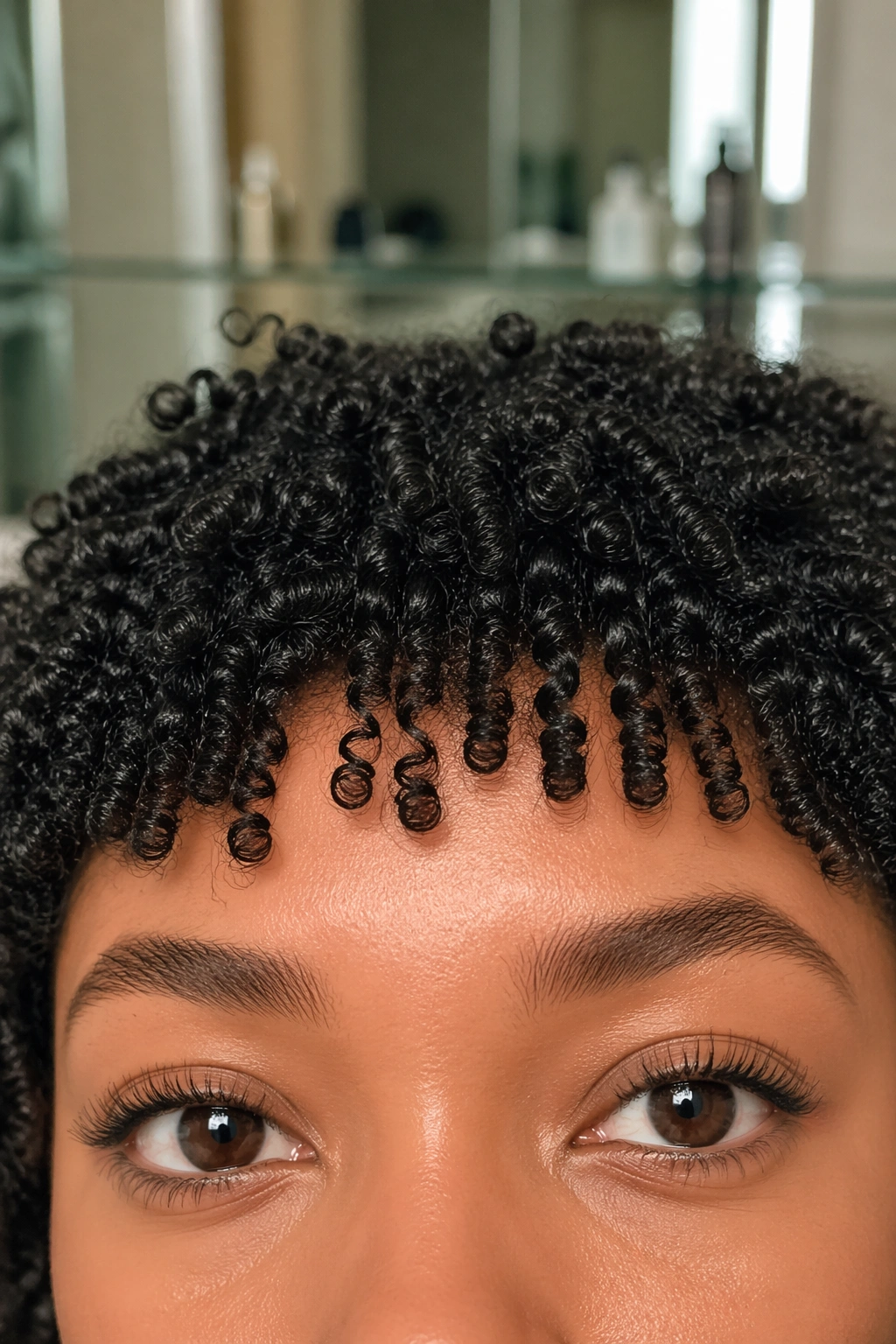
Short micro bangs are not for the timid, and that is exactly why they work. When they’re cut well, they make the face look crisp and modern, with a tiny band of coils sitting high on the forehead. On Black hair, that kind of precision can look fearless in the best way.
The cut has to be exact. Too long, and the bangs collapse into the eyes. Too short, and they can float above the brow in a way that feels accidental. The best version sits just at the edge of the brow or slightly above it, with enough texture to show the curl pattern instead of flattening it.
What to Watch For
- Dry-cutting is safer than guessing wet length.
- Tight coils usually spring up more than looser curls.
- The bang line should stay soft at the corners so it doesn’t look boxy.
- A light gel or styling foam helps the coils settle into place.
This style has attitude. It also asks for maintenance. If you like hair that can be finger-combed and forgotten, skip it. But if you want a fringe that feels graphic and current without needing a full haircut overhaul, micro bangs have a real place.
15. Asymmetrical Curly Bangs
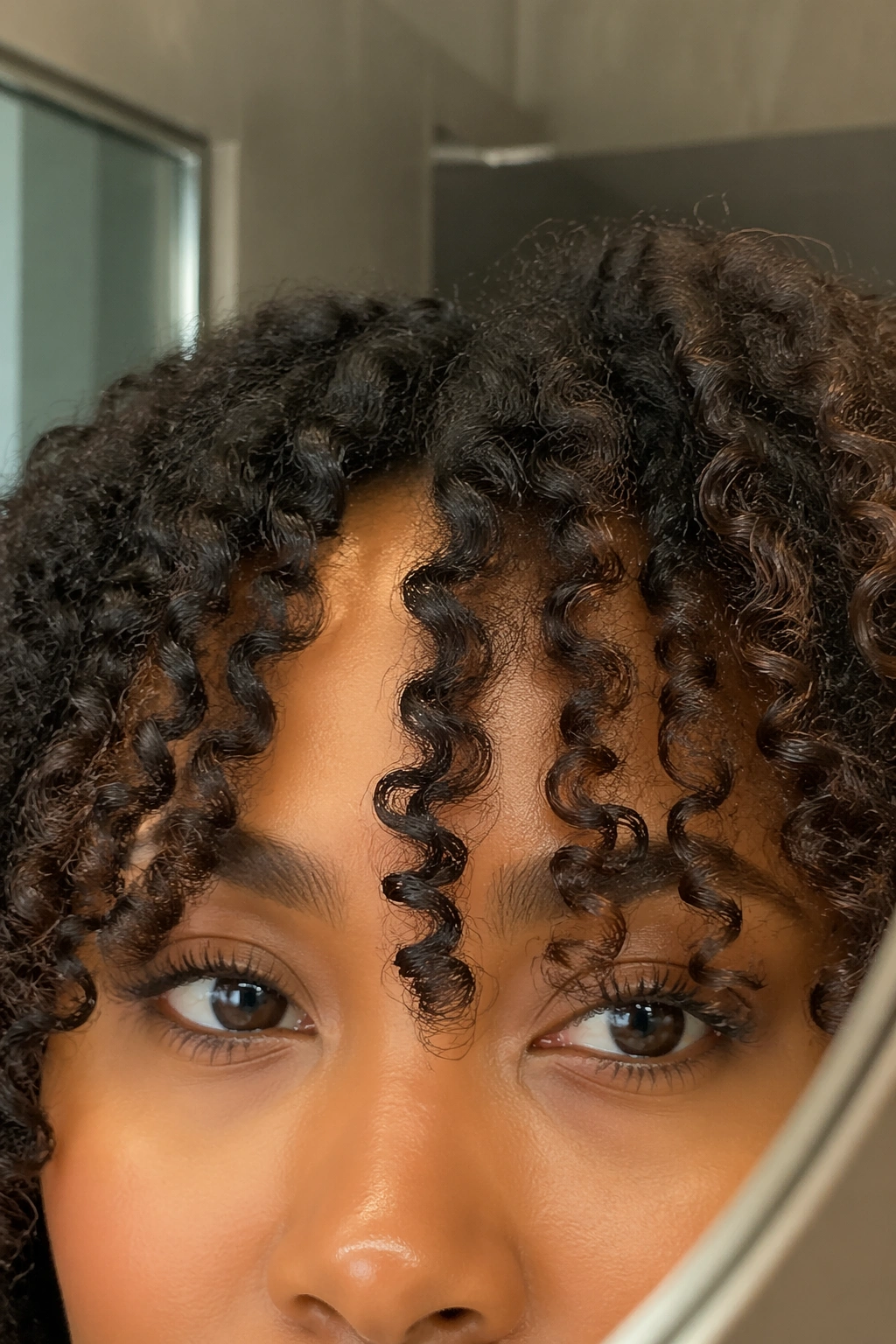
Asymmetrical curly bangs give you shape without symmetry, which is a nice change from the tidy little rules people love to impose on hair. One side can graze the eyebrow while the other falls to the cheekbone, or the whole front can taper in a diagonal sweep that feels more relaxed than blunt bangs.
The style is especially good if your face is round or softly square, because the diagonal line adds length. It also works when you want your curls to look styled but not overly matched. Perfect symmetry can feel a little too neat on textured hair. A small angle brings it back to life.
I reach for this idea when straight-across bangs feel too strict. There’s something flattering about the slight imbalance. It makes the hair move when you talk, blink, or turn your head, and that movement is half the charm.
If you want to wear curly bangs and still keep a bit of edge, this is the style to keep in your pocket. It’s expressive without being loud, and it grows out in a way that still looks deliberate for a while. That’s a rare thing in fringe.
