



Short layered curly hairstyles have a way of fixing the two complaints I hear most: “My curls feel heavy” and “My hair turns into a triangle.” Those are not the same problem, but they often show up together. Layers change the silhouette, and on curly hair that matters more than almost anything else.
A good curly cut is never only about length. It’s about where the bulk sits, where the shape starts, and how much room the curls have to spring up once they dry. A blunt cut can look sharp on straight hair and still feel oddly boxy on curls. Layering breaks that boxiness apart.
The tricky part is restraint. Too many layers can make short curly hair frizzy at the top and thin at the ends. Too few can leave the whole cut sitting like a helmet. The sweet spot is a shape that respects shrinkage, keeps the outline clean, and lets the curls do what they already want to do.
So the cuts below are not random cute ideas. They’re the ones that solve specific curly-hair problems: too much width, not enough lift, flat roots, heavy sides, weird grow-out, awkward bangs, or all of the above. Some are neat. Some are messy in a good way. A few are a little bolder than the usual bob-and-bounce routine. That’s the fun part.
1. Curly Pixie With Crown Layers
This is the cut that makes fine curls look awake. A curly pixie with crown layers keeps the sides and nape close while leaving enough length on top for the curls to pop instead of flattening out. If you’ve ever had short hair that somehow still felt heavy, this is the fix.
Why It Works
The crown does the heavy lifting here. Shorter sides expose the cheekbones and jaw, while the top stays long enough — usually around 3 to 5 inches depending on curl pattern — to keep shape and movement. That little bit of extra height at the crown keeps the cut from looking too boxy.
It also grows out nicely if the layers are placed with some thought. A good pixie on curls should look intentional on day one and still look decent six weeks later, which is not something every short cut can say.
- Ask for the sides and nape to sit close without shaving them bare.
- Leave the top longer than you think you need; curls shrink hard.
- Keep the fringe soft so it can sweep forward or off to the side.
- Style with a small amount of mousse or curl foam, not a heavy cream.
Tip: Let the stylist check the curls dry before they take off more length. Short curly pixies can disappear fast once the hair springs up.
2. Layered Curly Bob With Soft Ends

Want length around the jaw without the heavy triangle? This is the cut. A layered curly bob with soft ends sits somewhere between polished and easygoing, which is why it works for so many curl types. It gives shape without looking stiff.
The key is in the bottom edge. A blunt hemline can make curls pile outward, especially if your hair is dense. Soft ends keep the perimeter from feeling like a shelf, and the internal layers help the curls stack on top of each other instead of spreading sideways.
This version is especially good for people who want a bob but hate the “one shape everywhere” look. The front can skim the chin, the back can sit a touch shorter, and the layers can start around the cheekbone so the face gets a little movement. Not too much. Just enough.
It also behaves well on wash days that go sideways. If one section dries flatter than the rest, the layers hide that better than a solid line ever could.
3. Rounded Curly Crop
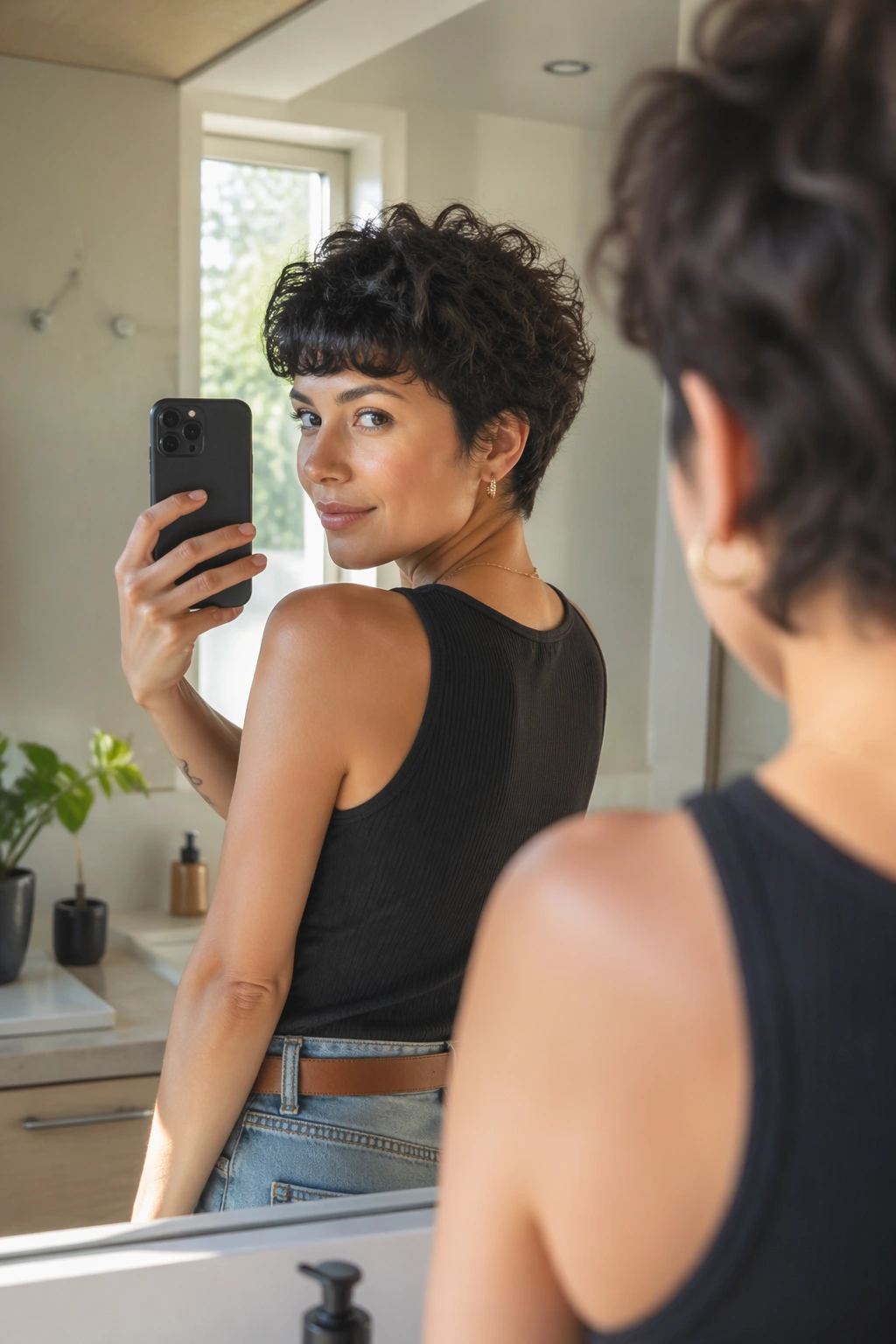
Picture a crop that follows the curve of your head instead of fighting it. That’s the whole point of a rounded curly crop. It keeps the silhouette compact but soft, with enough volume at the crown to avoid looking flat from the front or puffed from the sides.
This cut is a quiet winner for dense curls and coarse texture. The nape is trimmed shorter, the sides are curved in gently, and the top is left a little fuller so the shape reads as rounded rather than boxy. It’s neat without looking severe.
The Shape Details
If you like structure, this cut delivers it. If you like softness, the curls take care of that part for you.
- Best for curls that hold their shape well after drying.
- Works nicely when you want the neck area cleaner.
- Usually needs only a light cream and a diffuser or air-dry.
- Looks especially good when the cut follows the natural head shape.
What I like about it is the side profile. From the front, it can seem simple. From the side, it suddenly looks intentional and sharp, which is where a lot of short curly cuts either win or lose.
4. Shaggy Curly Lob
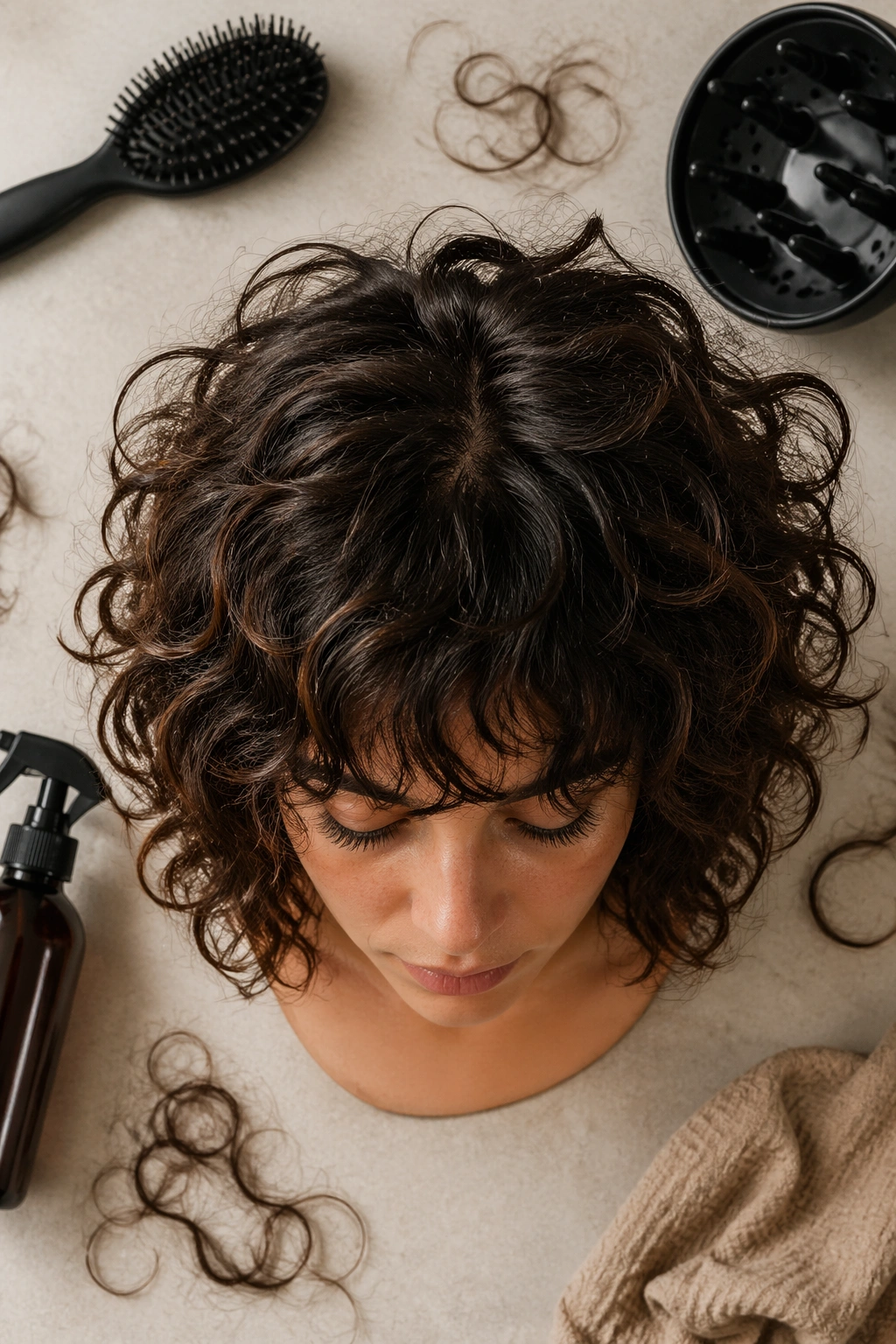
Unlike a blunt curly lob, this version keeps the perimeter lighter and the crown taller. That’s why a shaggy curly lob feels more alive. The layers don’t sit politely in rows; they stack and fall in a way that gives the curl pattern room to move.
This cut usually lands at or just above the shoulders, which is why people who are nervous about going short often start here. The length still counts as short enough to feel fresh, but it leaves some safety net if you’re attached to hair around the face.
The best version starts with the first layer around the chin or just below it. That keeps the top from collapsing and stops the lower half from turning into one big curtain. If your curls are loose, this gives shape. If they’re tighter, it gives breathing room.
A shaggy lob is also one of the more forgiving cuts on days when you do not want to style. A little frizz reads as texture here, not failure. That matters more than people admit.
5. Tapered Curly Crop With Volume Up Top
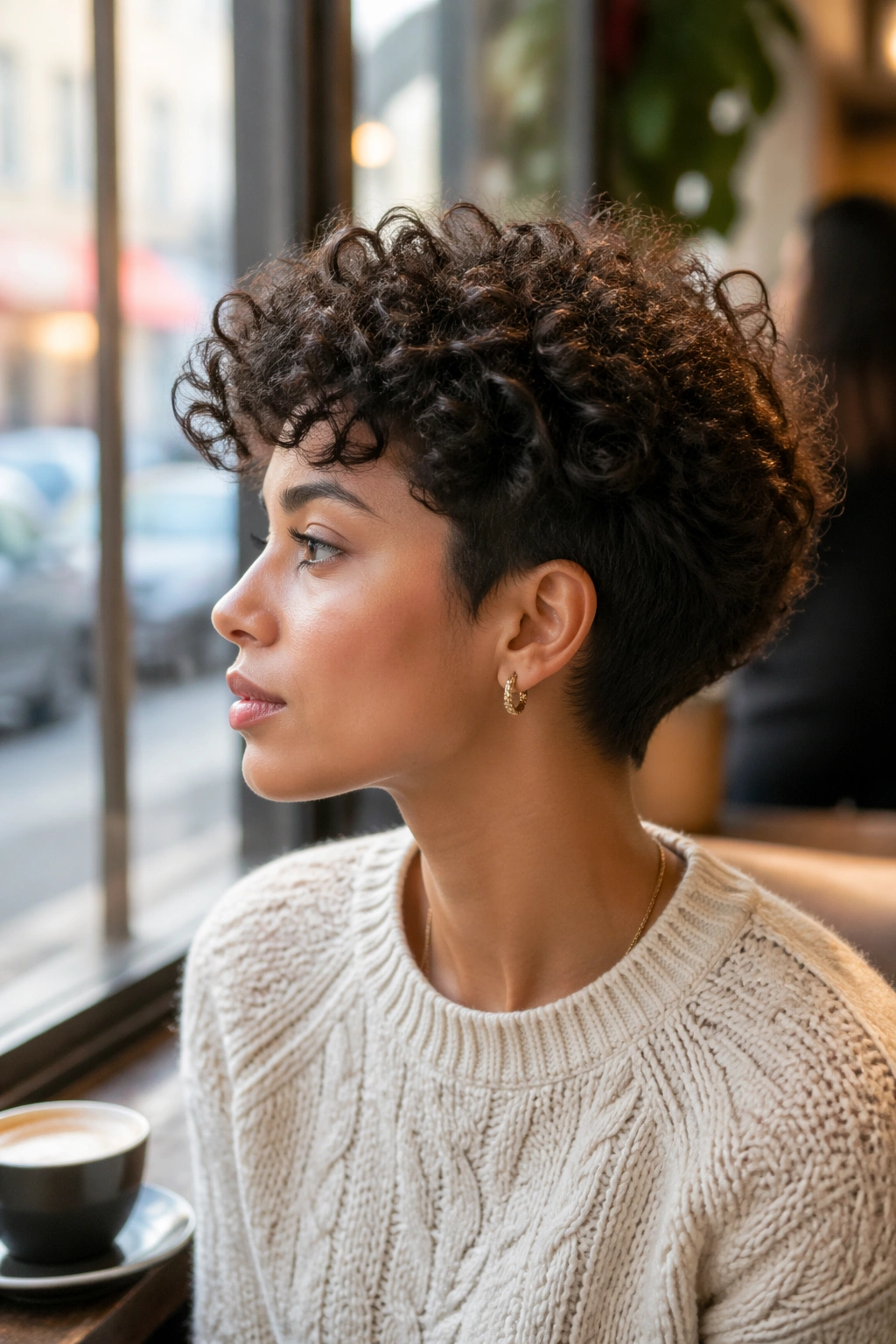
Why do tapered cuts make curls look denser on top? Because the shape removes bulk from the sides and nape, then leaves the crown free to lift. That contrast gives the illusion of more body where you want it and less width where you do not.
A tapered curly crop works especially well on thicker curls that can feel heavy around the ears or at the back of the neck. The top usually stays around 4 to 6 inches, while the sides are gradually shortened so the outline feels neat. It’s a smart choice if you like short hair that still has attitude.
How to Wear It
You do not need a complicated routine here. That’s part of the appeal.
- Use a small amount of curl cream on damp hair.
- Add gel only if you want a firmer hold.
- Diffuse at low heat to keep the top lifted.
- Lift the roots with clips if the crown tends to flatten.
This cut works because it respects the natural direction of the curls. The top gets presence. The sides stay tidy. And the whole thing dries faster than a longer layered style, which is a real bonus when you’d rather be doing literally anything else.
6. Chin-Length Face-Framing Layers

This is the safest short curly cut if you’re nervous about losing length. Chin-length face-framing layers keep the main shape short and fresh while leaving the front pieces long enough to soften the jawline. It’s a smart middle ground for anyone who wants movement without a dramatic chop.
The face-framing pieces matter more than people think. If they’re cut too short, curls can spring up and sit awkwardly above the cheekbones. If they’re too long, they just hang there and do nothing. The sweet spot usually falls between the cheekbone and the jaw, depending on how much your curls shrink.
This cut is especially good with glasses, strong brows, or a rounder face shape. The front pieces bring the eye inward, while the rest of the bob or crop keeps the length clean. It can look soft, but not mushy. There’s a difference.
I’d also call this one a good “first short haircut” if you’ve spent years keeping your curls long. You still get to keep some movement around the face, which makes the whole change easier to live with.
7. Curly Mullet With Soft Wings
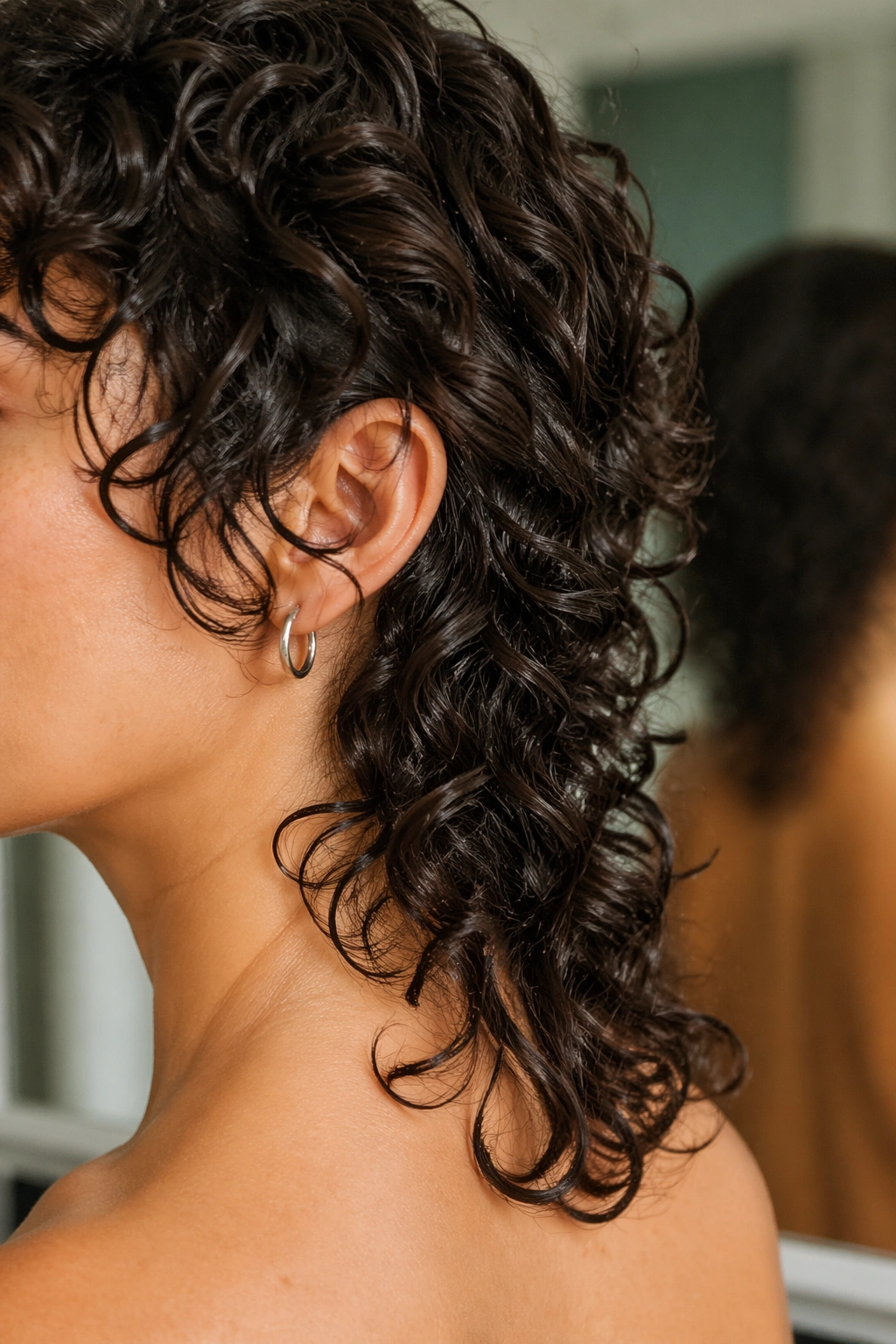
A curly mullet sounds bold because it is bold. But the soft version is much easier to wear than people expect. The front and sides stay shorter, the back keeps a little extra length, and the layers around the ears and cheekbones — the “wings” — make the whole thing feel softer.
The best part is that it takes advantage of curl shrinkage instead of fighting it. The back can sit a little longer when wet, then lift and curl once dry. That gives the cut shape without making it feel stiff or too sculpted.
This style works well if you want short hair that does not look precious. It has edge. It also has movement. That combination is rare, honestly, and a little addictive once you get used to it.
- Ask for the back to stay longer than the front by a clear margin.
- Keep the side layers feathered, not chopped blunt.
- Let the neckline taper softly so the cut grows out better.
- Use a lightweight curl cream; heavy products can drag the wings down.
If you like a little personality in your haircut, this one has it. If you want everything neat and symmetrical, skip it.
8. Asymmetrical Layered Bob
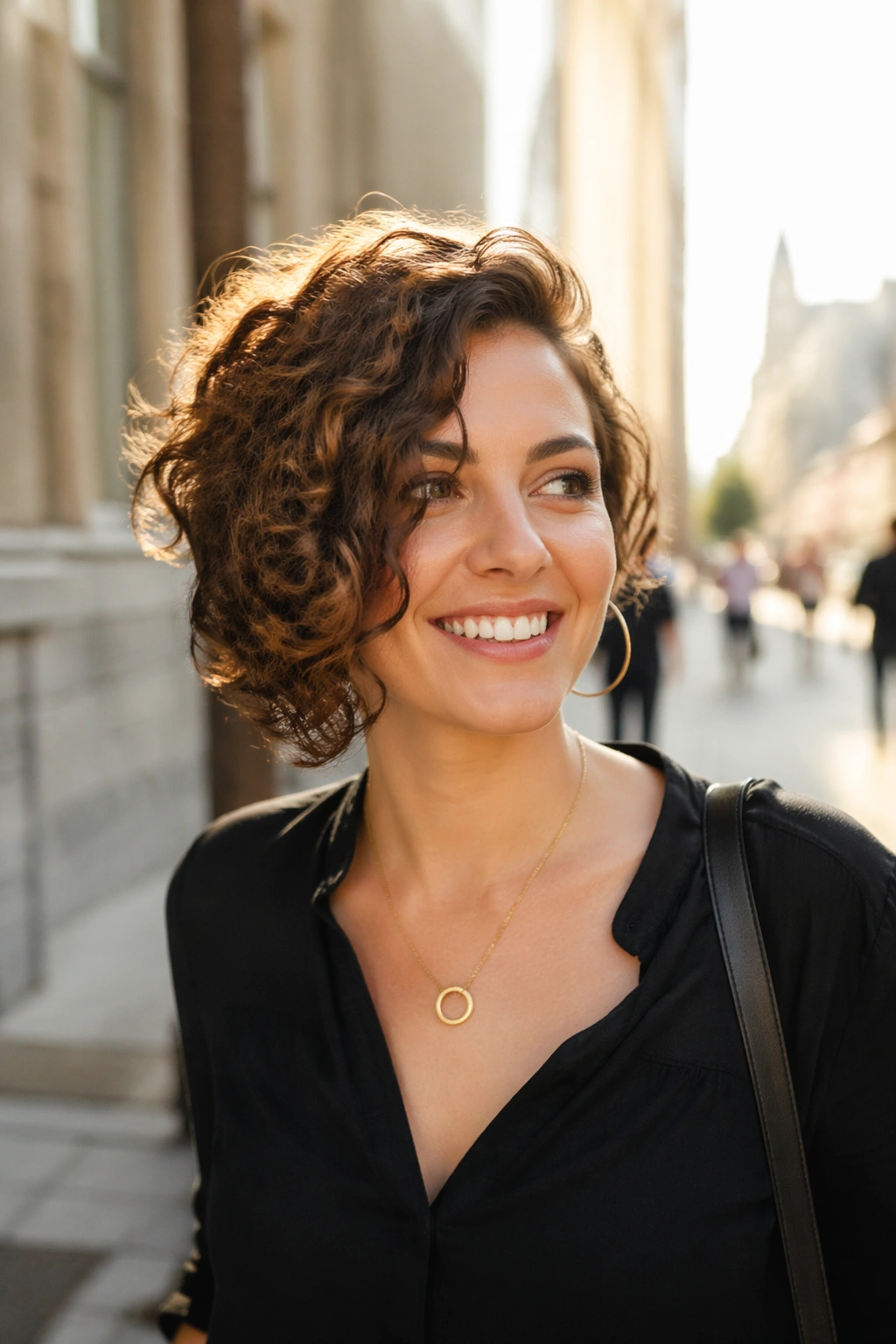
One side a little longer. That’s all it takes to change the mood of a curly bob. An asymmetrical layered bob gives the curls something to fall into, and the uneven line makes even simple styling look deliberate.
This cut is especially nice if your curl pattern behaves differently on each side of your head. Most people have one side that curls tighter, frizzes more, or sits flatter. An asymmetrical shape can balance that out instead of pretending both sides are identical.
It also adds motion without needing a lot of product. The longer side swings forward, the shorter side opens up the face, and the layers keep the bob from puffing out like a bell. That bell shape is the enemy. This cut avoids it.
What I like most is the attitude. It looks modern without trying too hard, and it still feels wearable in daily life. You can tuck one side back. You can part it deep. You can leave it messy. The haircut keeps its shape either way.
9. Feathered Curly Crop With Side Bangs
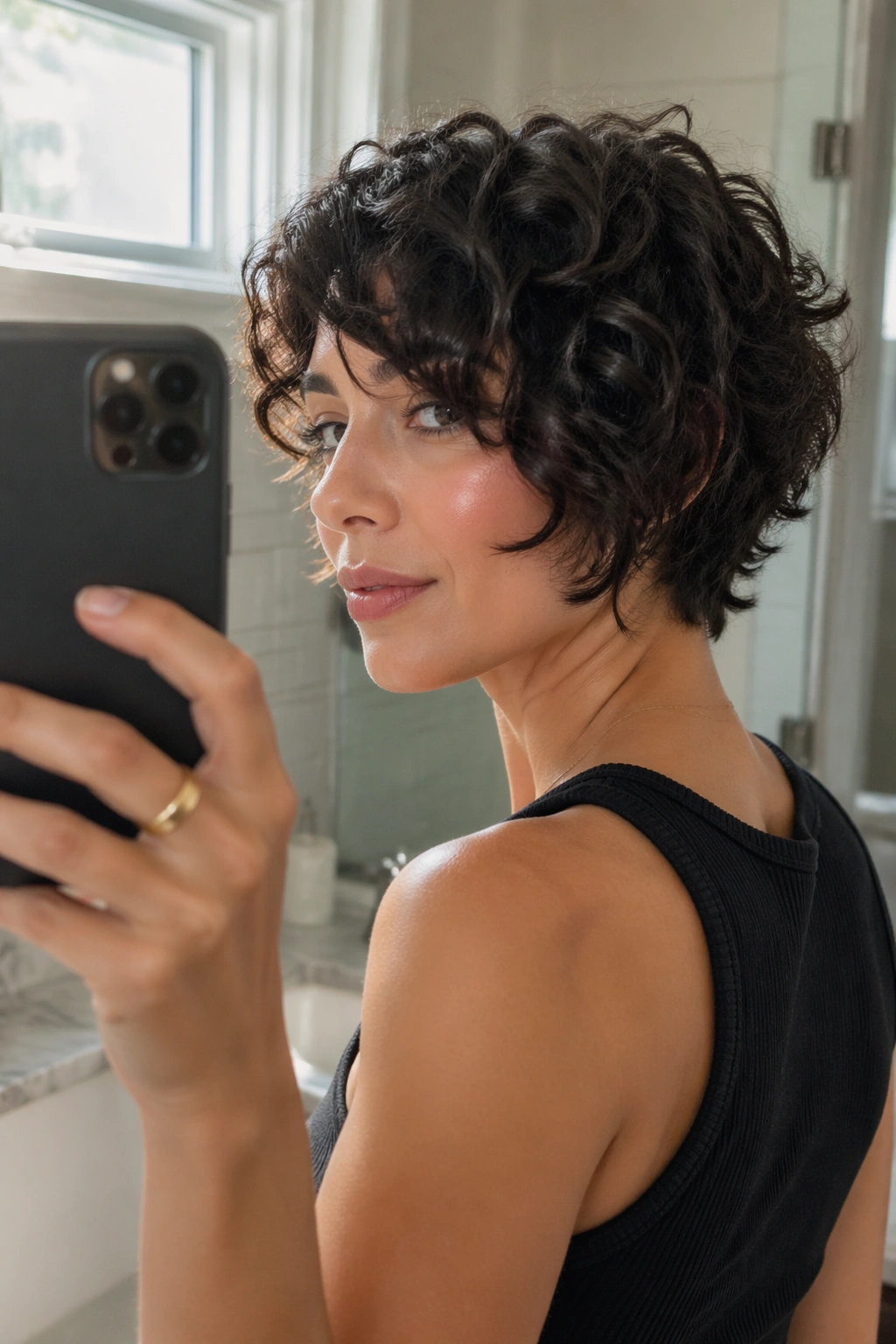
Can side bangs work on curls without looking puffed up? Yes — if they’re feathered and cut with enough length to account for shrinkage. A feathered curly crop with side bangs is one of the easiest ways to soften short hair around the forehead.
The bangs should usually land near the cheekbone or slightly below when dry, because curls spring upward after the cut. If they’re trimmed too short, you spend the next month chasing them with clips. Nobody wants that.
How to Style It
A little direction at the root makes a big difference here.
- Dry the bangs in the direction you want them to sit.
- Clip the part while the hair is still damp.
- Use a touch of mousse near the roots, not just the ends.
- If the bangs separate too much, finger-coil the front pieces only.
This style is lovely on oval and longer faces because the side fringe breaks up the vertical line of the face. It can also take some pressure off a high forehead without turning the haircut into a heavy bang situation.
The trick is keeping the feathering soft. Too much thinning and the bangs can go stringy. Too little and they sit there like a curtain. Somewhere in the middle is where the curl actually behaves.
10. Layered Afro With a Tapered Nape
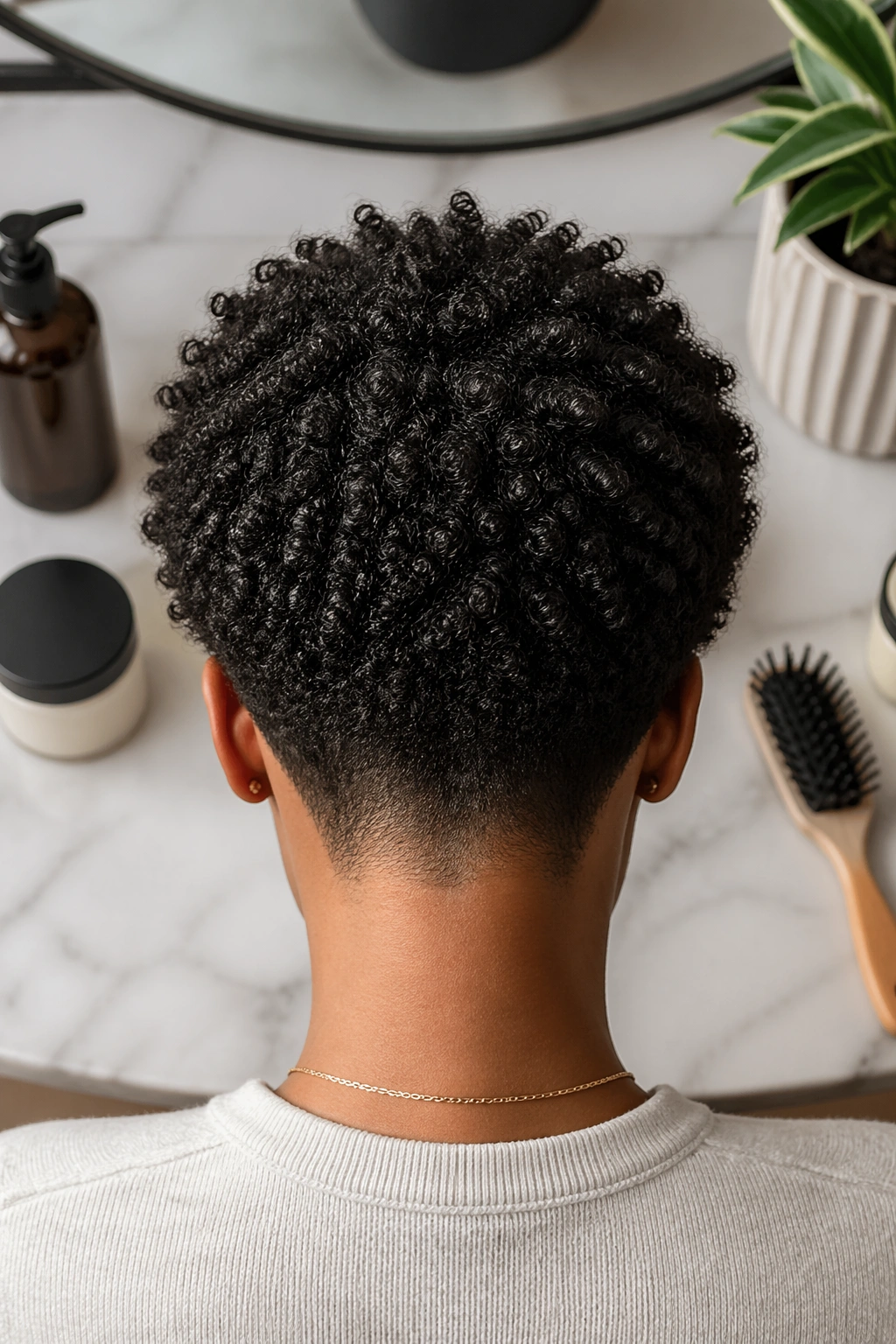
Unlike a rounded afro that keeps the outline more even, this cut uses a tighter nape and shaped sides to keep the silhouette clean. A layered afro with a tapered nape is a strong choice when you want height and definition without extra bulk at the back of the neck.
The layers here are not about removing beauty. They’re about giving the shape some control. Shorter sections underneath support the upper layers, while the crown stays full enough to keep the profile strong. If the hair is dense, that balance matters a lot.
This is one of those cuts that looks simple from far away and highly considered up close. The temples, neckline, and crown all do different jobs. If one part is off, the whole thing changes. That’s why it’s worth finding a stylist who actually understands curly shrinkage and shape control.
- Best when you want the top to stand up a little.
- Good for tighter curl patterns that need structure.
- Ask for dry shaping so the final outline is honest.
- Avoid over-thinning if your hair is fragile.
The payoff is a clean, strong silhouette that still feels soft when you move.
11. Short Curly Shag With Curtain Bangs
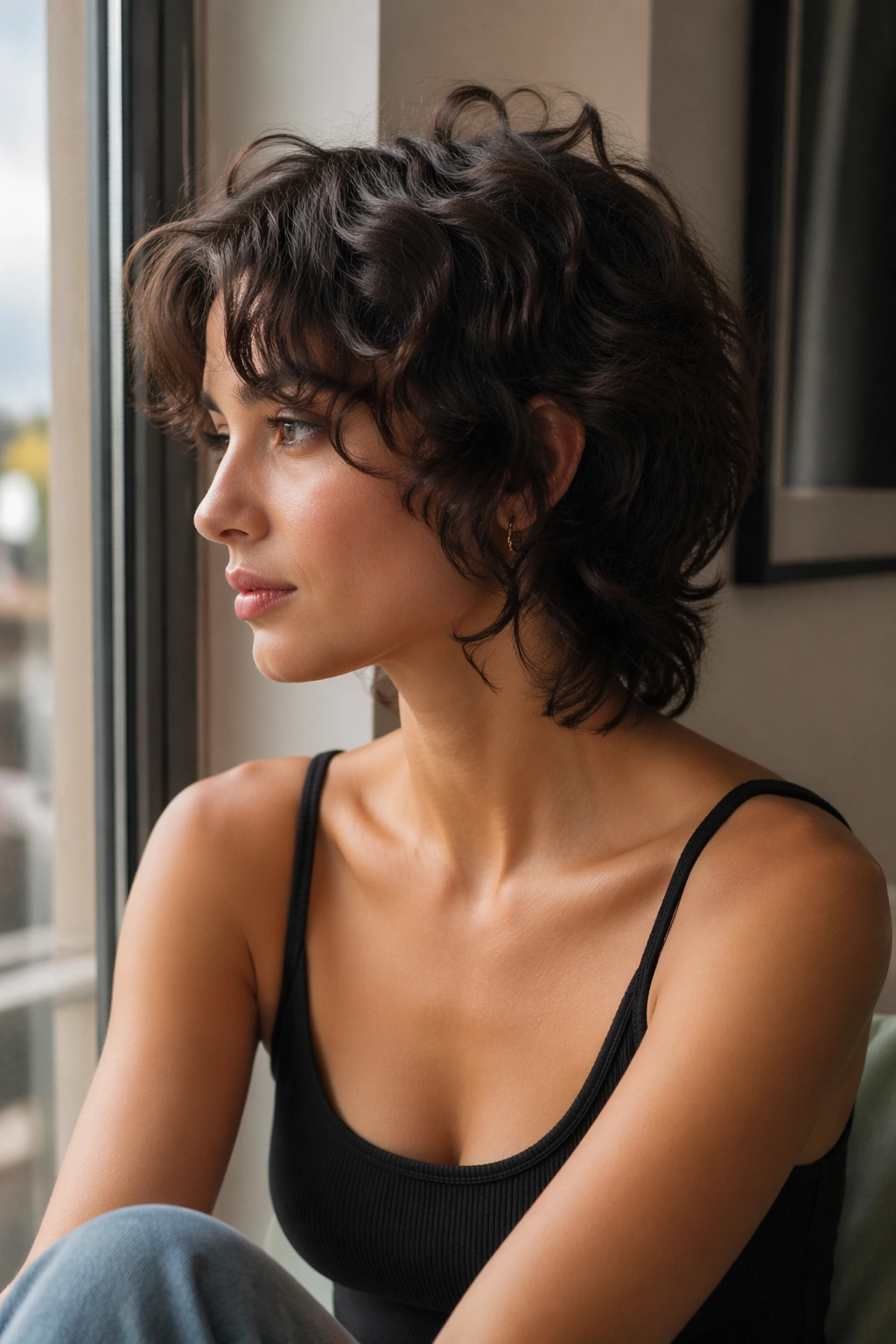
This is the cut that hides a bad wash day better than most. A short curly shag with curtain bangs gives you layers at different lengths, which means the hair can land a little unevenly and still look on purpose. That alone makes it a favorite.
The curtain bangs are what soften the whole thing. They open at the center or slightly off-center, then fall toward the cheekbones rather than stopping bluntly across the forehead. On curls, that shape is easier to wear than a straight-across fringe, which can shrink up faster than expected.
The shag layers around the crown add lift, while the longer lower layers keep the shape from becoming too puffed. If your curls are medium density, this cut can make them look fuller. If they’re thick, it can take some weight off. Either way, the shape has room to breathe.
It does need a little styling direction. A dab of curl cream, a bit of mousse at the roots, and some finger shaping around the bang area usually does the job. You do not need a perfect finish. That’s the charm of it.
12. Jaw-Length Ringlet Bob
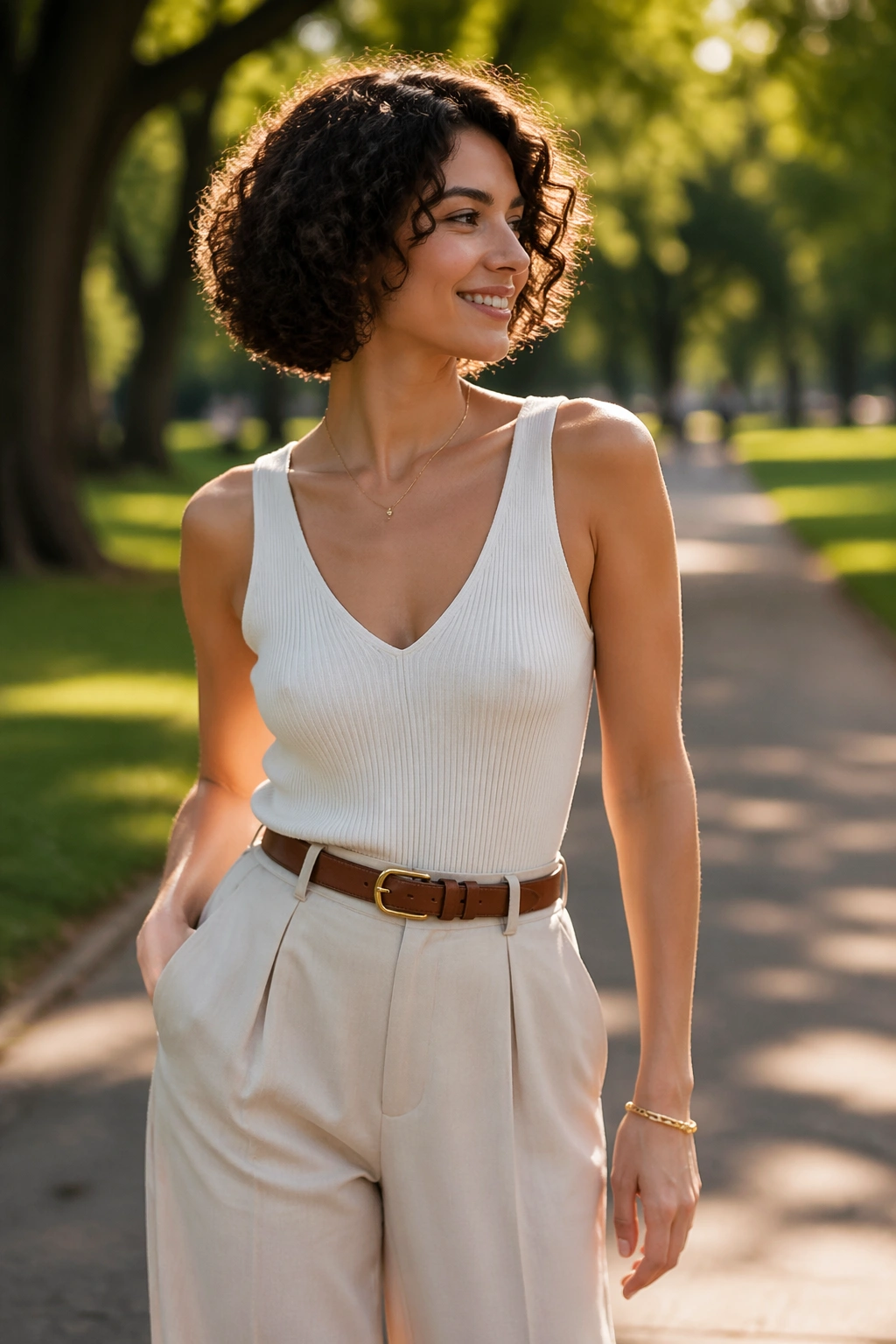
Ringlets need room to show off. A jaw-length ringlet bob gives the spiral pattern a clear edge without burying it under too many layers. The result is neat, springy, and a little bit playful.
This cut works best when the bottom line stays clean and the layers stay hidden inside the shape. Too many visible layers can break up the ringlets and make the bob lose its crisp outline. For tighter, more defined curls, that outline is the whole point.
What to Ask Your Stylist
Be specific about the finish you want.
- Keep the length around the jaw, not much shorter.
- Leave the bottom line strong and tidy.
- Add only enough internal layering to remove bulk.
- Avoid aggressive thinning on the ends.
The ringlet bob is a good choice if you like curls that look structured rather than wild. It also plays well with side parts, which can give one side a little more height and let the ringlets stack in a nice curve.
Tip: A ringlet bob falls apart fast if the layers start too high. Keep the shape anchored near the jaw and let the curls do the rest.
13. Undercut Curly Pixie With Long Top Layers
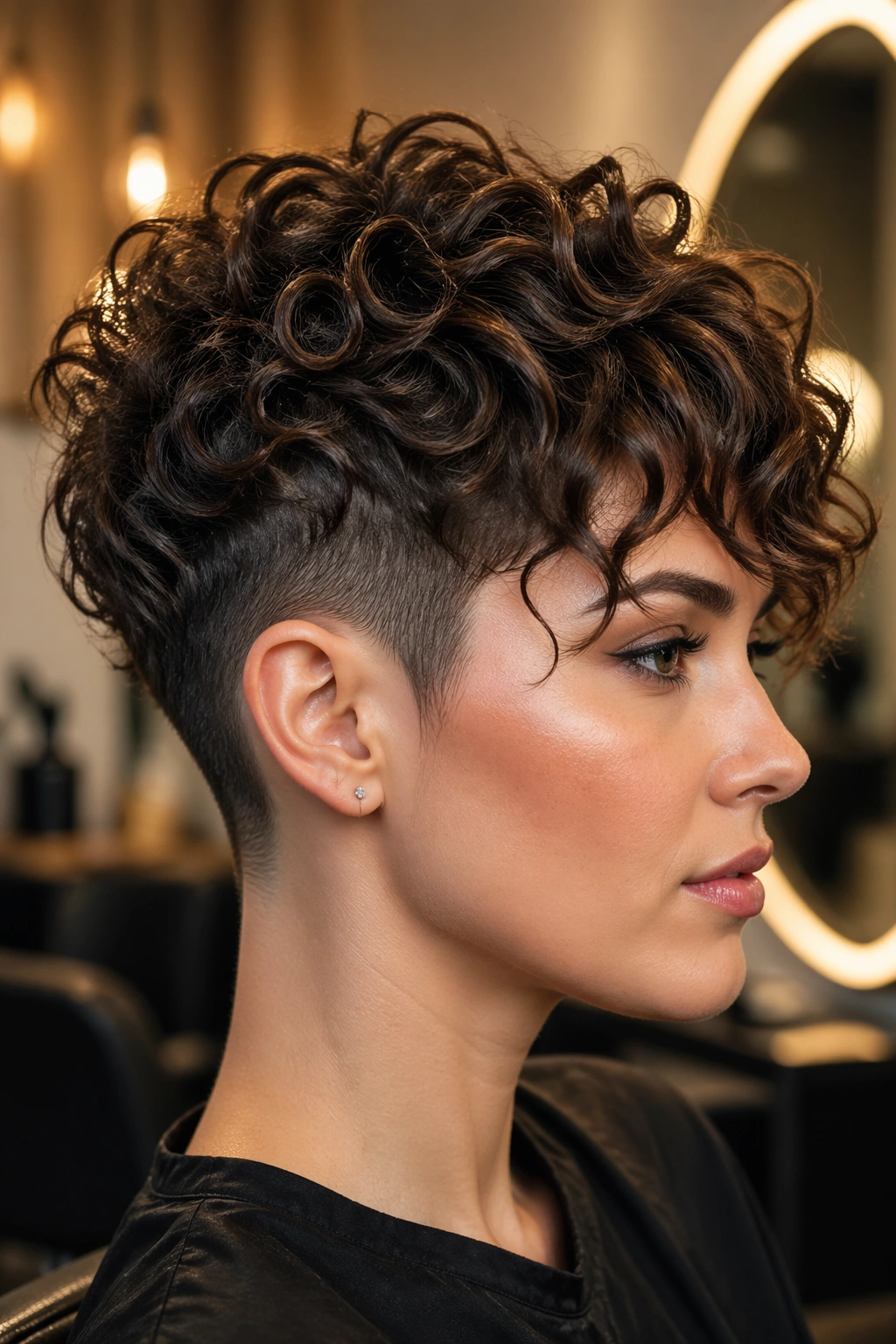
When the bulk lives under the curls, an undercut can feel like a miracle. A curly pixie with long top layers takes weight away from the hidden areas and leaves the top long enough to style in different directions. It’s practical, but not dull.
The undercut is the part most people never see once the hair is styled. That means you get the lighter feel without losing the visible shape. The top can be swept forward, fluffed up, or pushed to one side, depending on how much drama you want that day.
This cut is especially useful for dense curls that get too hot around the neck or puff out in humid air. It removes the stuff that causes the bulk without sacrificing the curl pattern on top. That balance is hard to beat.
- Top layers often sit around 5 to 7 inches.
- The undercut can be low or high, depending on how much weight you want gone.
- Styling works well with a diffuser and a light hold cream.
- Grow-out needs regular trimming if you want to keep the shape sharp.
It’s not the most conservative haircut on the list. It doesn’t need to be.
14. Soft Wedge Curly Cut
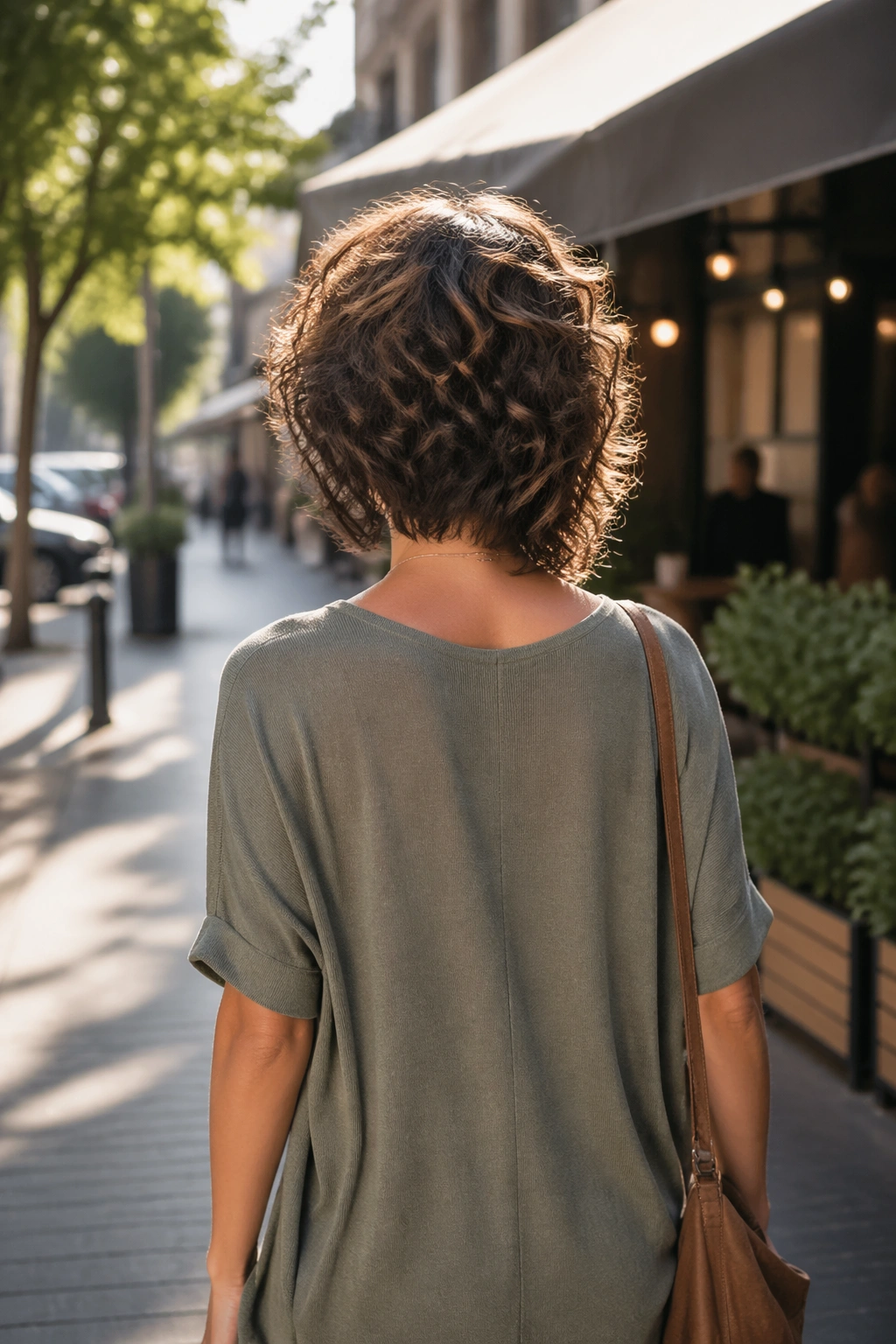
The soft wedge is one of those shapes that sounds retro until you see it on curls and realize it makes a lot of sense. The back is stacked a little shorter, the crown gets lift, and the front stays longer so the cut has movement instead of a hard line.
This shape is a good answer for curls that collapse in the back. A lot of short hair looks fine from the front and slightly flat from behind. The wedge fixes that by building a better back view, which is more useful than people give it credit for.
The “soft” part matters. If the stacking gets too sharp, the cut can start looking helmet-like. That is not the goal. The layers should blend, not stair-step. Think curve, not wedge in the literal boxy sense.
It works best on curls that can hold body at the crown. Fine curls can wear it too, but the stacking needs to stay gentle. On thicker textures, the shape can be fantastic because it keeps the head from looking wide at the sides.
15. Deep Side-Part Curly Crop
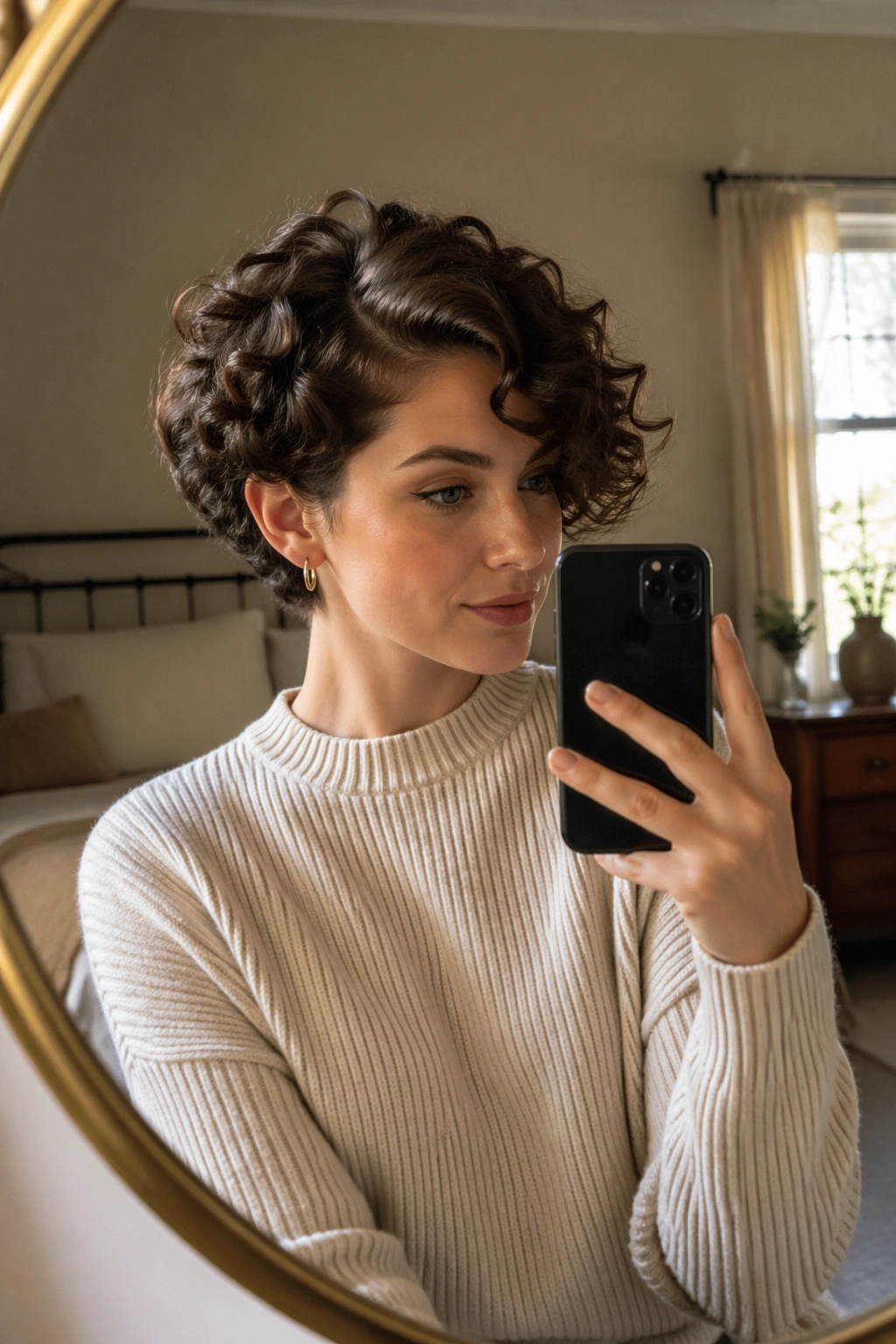
What if the part itself did the work? A deep side-part curly crop uses the part line to create height, direction, and a little asymmetry without changing the whole haircut. It’s one of the easiest ways to make short layered curly hairstyles feel fresh.
The deep side part gives you an instant lift at the root on one side, then lets the curls fall softly across the forehead or temple on the other. That shift can make a short cut look fuller and more sculpted with almost no extra effort. Almost. The cut still matters, obviously.
How to Wear It
A few small habits make this shape hold better.
- Move the part while the hair is damp.
- Clip the heavier side at the root for 10 to 15 minutes.
- Keep the layers around the face soft so they don’t stick out.
- Change the side occasionally if one area keeps going flat.
This is a good pick if you want a visible change without sacrificing much length. It’s also helpful for cowlicks, since the part can work with the natural growth pattern instead of fighting it. If your curls like to lift in one area and collapse in another, a deep side part can make the whole thing feel more balanced.
Final Thoughts
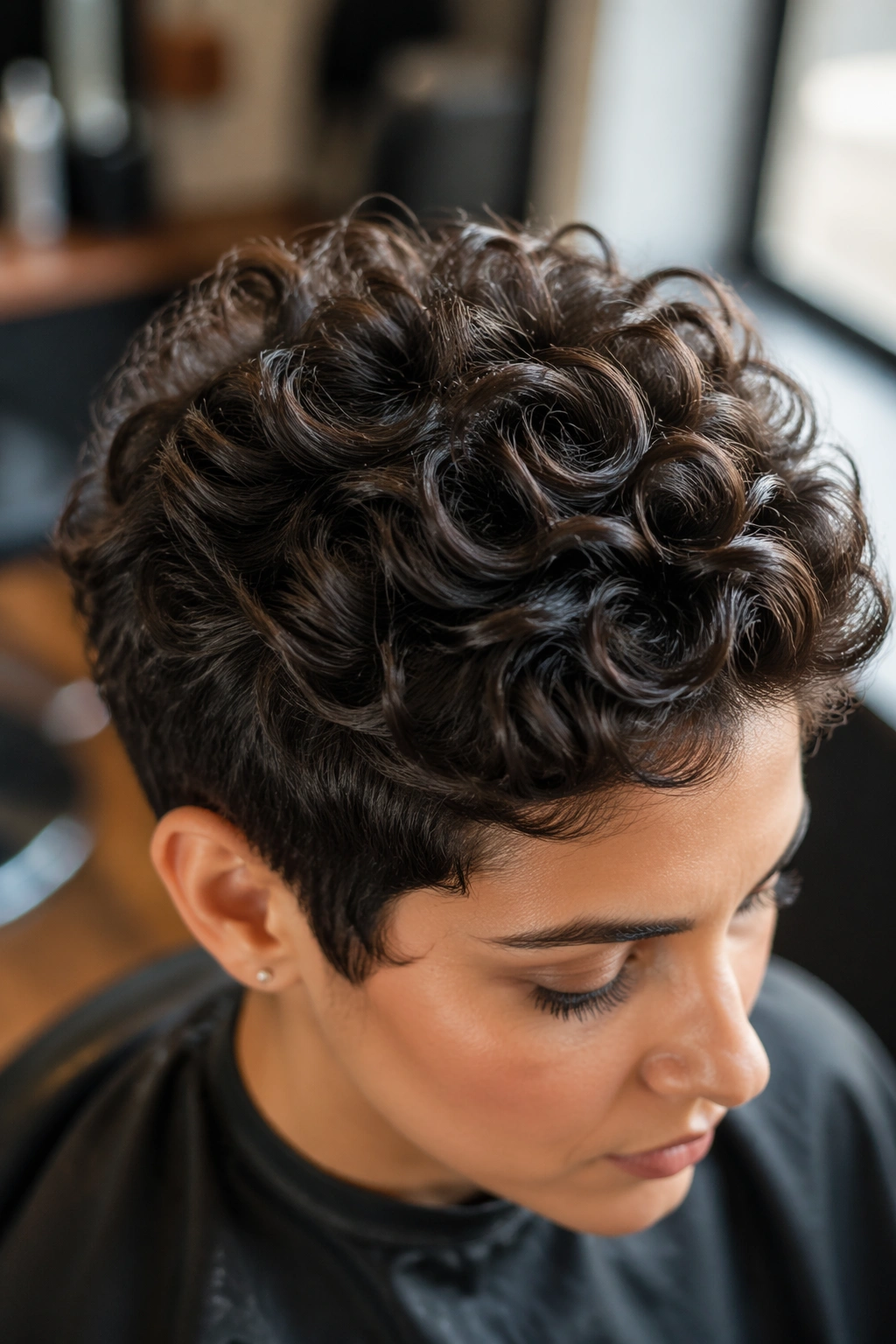
Short curly hair looks best when the cut has shape from every angle. That usually means a little lift at the crown, some control through the sides, and enough room for the curls to shrink without wrecking the outline. The photos that flatter these cuts most are the side views, because that’s where the real structure shows up.
If you’re taking reference pictures to a stylist, bring more than one. Bring a front view, a side view, and something close to your own curl pattern. A curly bob on loose waves does not behave like the same bob on tight coils, and a good stylist will want to see that difference before they pick up the scissors.
The smartest move, though, is the simplest one: ask how the cut will look once it dries. Dry shape matters more than wet shape on curly hair. Every time.
