



Square faces and curls make a better match than people assume. The trick is not to hide the jaw; it’s to soften the angles around it, add a little movement, and keep the eye from landing on one hard line.
That matters because a square face usually has a broad forehead, a strong jaw, and similar width through the face. Straight-across ends at chin length can make that structure look boxier than it really is, while curls that fall a little below the jaw, sweep across the forehead, or build height at the crown tend to work with the face instead of against it.
Curly hair makes the whole thing more interesting. Shrinkage changes where a cut lands, layers behave differently once they dry, and one curl pattern can look airy while another eats up half an inch by lunch. A good cut pays attention to that. A good styling plan does too.
The 15 looks below use those tricks in different ways — some are soft and easy, some are sharper and more fashion-forward, and a few are the kind you reach for when you want the face to look longer without giving up curl volume.
1. Soft Layered Curls That Fall Past the Jaw
Soft layers are the safest place to start. They take the weight out of the sides, which matters a lot on a square face, and they keep curls from forming one heavy block around the jawline. If your hair tends to puff out at the ends, layers can fix that fast.
Why It Works
The sweet spot is usually just below the cheekbone to the top of the collarbone. That range lets the curls swing around the face instead of sitting squarely on top of the jaw. I also like a cut where the front layers are slightly shorter than the back, because that tiny difference keeps the shape from looking stiff.
Ask for dry cutting if your stylist knows how to do it well. Curls look smaller wet, and a wet cut can land too short once everything springs up. A dry cut lets you see the real shape.
- Start layers around the cheekbone, not the jaw.
- Keep the perimeter a little below chin length.
- Use a lightweight mousse at the roots.
- Diffuse on low heat until the curls are about 80% dry.
Best result: soft movement at the sides, not a puffed-out triangle.
2. Deep Side-Part Curly Lob
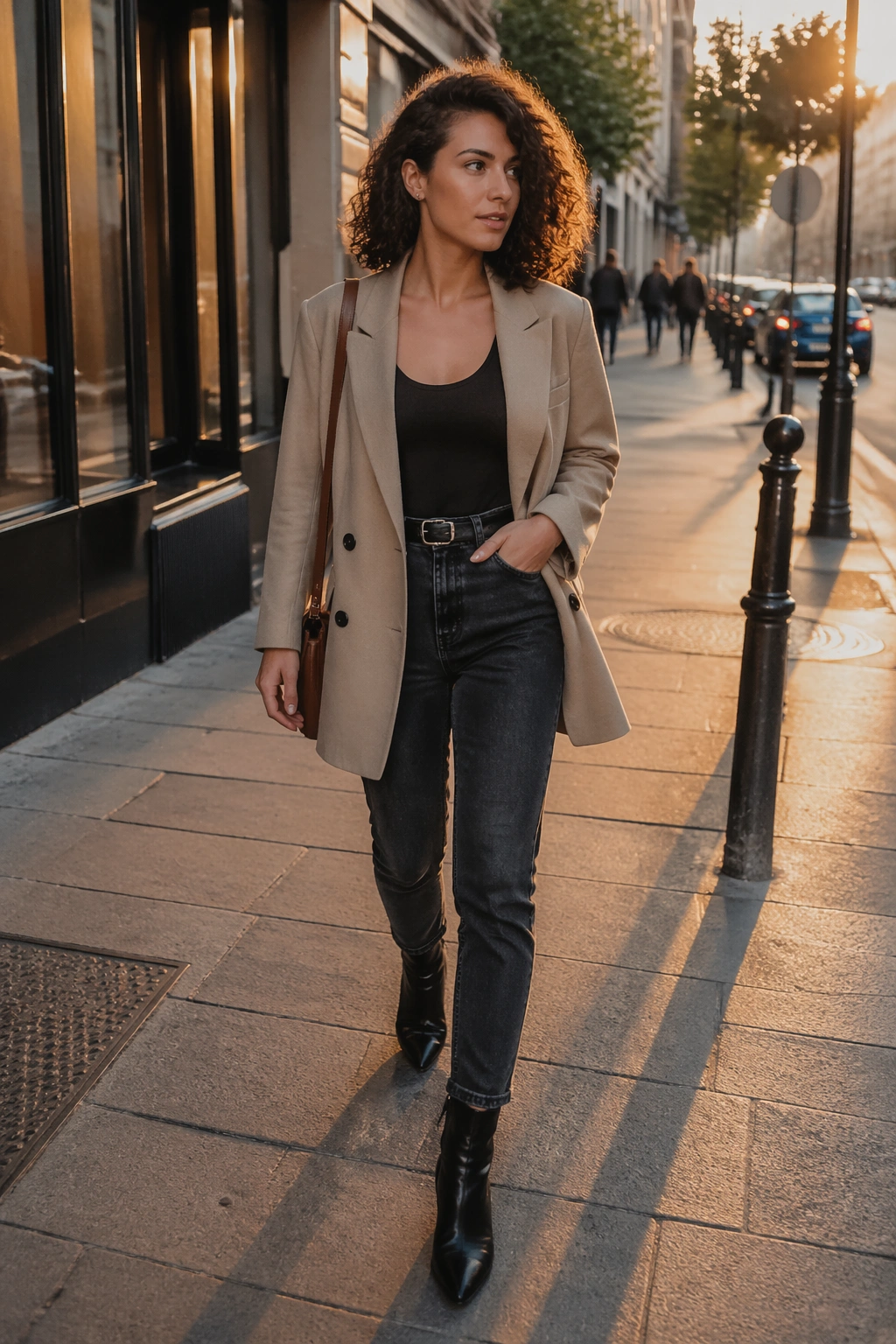
Why does a deep side part work so well on a square face? Because it breaks the symmetry that makes the jaw look more prominent. A center part can be lovely, but a side part adds a diagonal line across the forehead and pulls attention upward.
This cut works especially well if your curls are loose to medium, because the length gives the part room to sit without collapsing. The lob should hit somewhere between the collarbone and the top of the chest. Any shorter, and you risk landing right at the jaw. Any longer, and the part loses some of its shape.
A little tuck behind one ear helps more than people think. It shows the cheekbone on one side and lets the other side fall in a soft curve. That little imbalance is the whole point.
Use a cream that gives slip, not a heavy butter. The hair needs movement here. Too much product and the lob turns flat; too little and the part flies apart by noon.
3. Curly Shag with Curtain Bangs
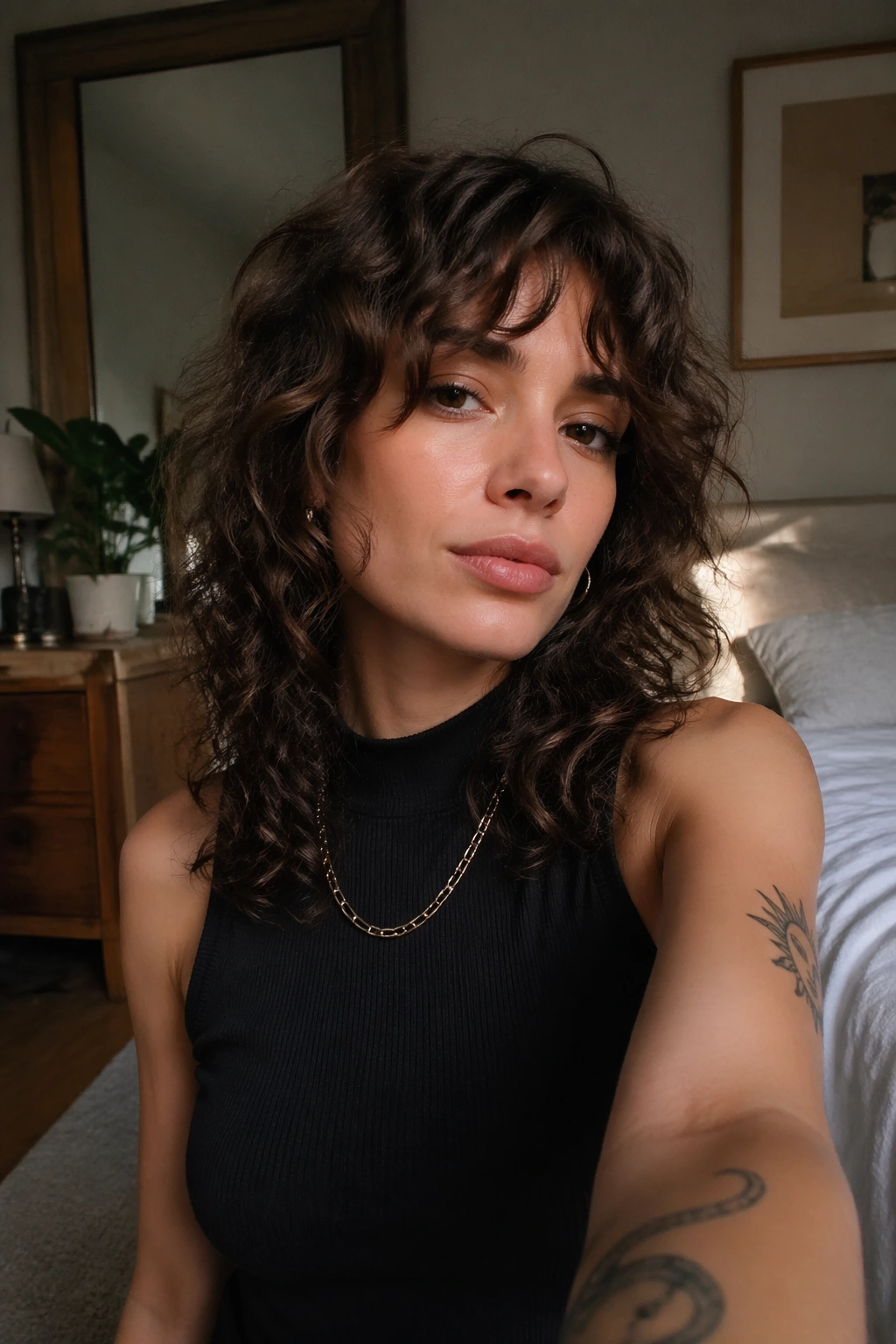
A shag can be a square face’s best friend if the layers are handled with restraint. Too much chopping, and the whole cut turns fuzzy. Done well, though, the shag gives you motion at the crown, softness at the temples, and a fringe that breaks up the forehead in a flattering way.
Curtain bangs are doing real work here. They open in the center, skim the outer edges of the forehead, and then blend into the face-framing layers. That shape keeps the face from reading as one clean rectangle. It also gives the curls somewhere to fall when they’re not cooperating.
How to Wear It
Keep the curtain pieces a little longer than you think you need. Curls shrink, and bangs that look perfect wet can sit too high once they dry. If your hair is dense, a shag with long internal layers keeps the silhouette airy without making the ends look thin.
A diffuser helps, but don’t blast the bangs first. Let them start air-drying for a few minutes so they don’t set in one hard bend. Then pinch a little styling cream through the front pieces and let them fall where they want.
4. Long Face-Framing Curls
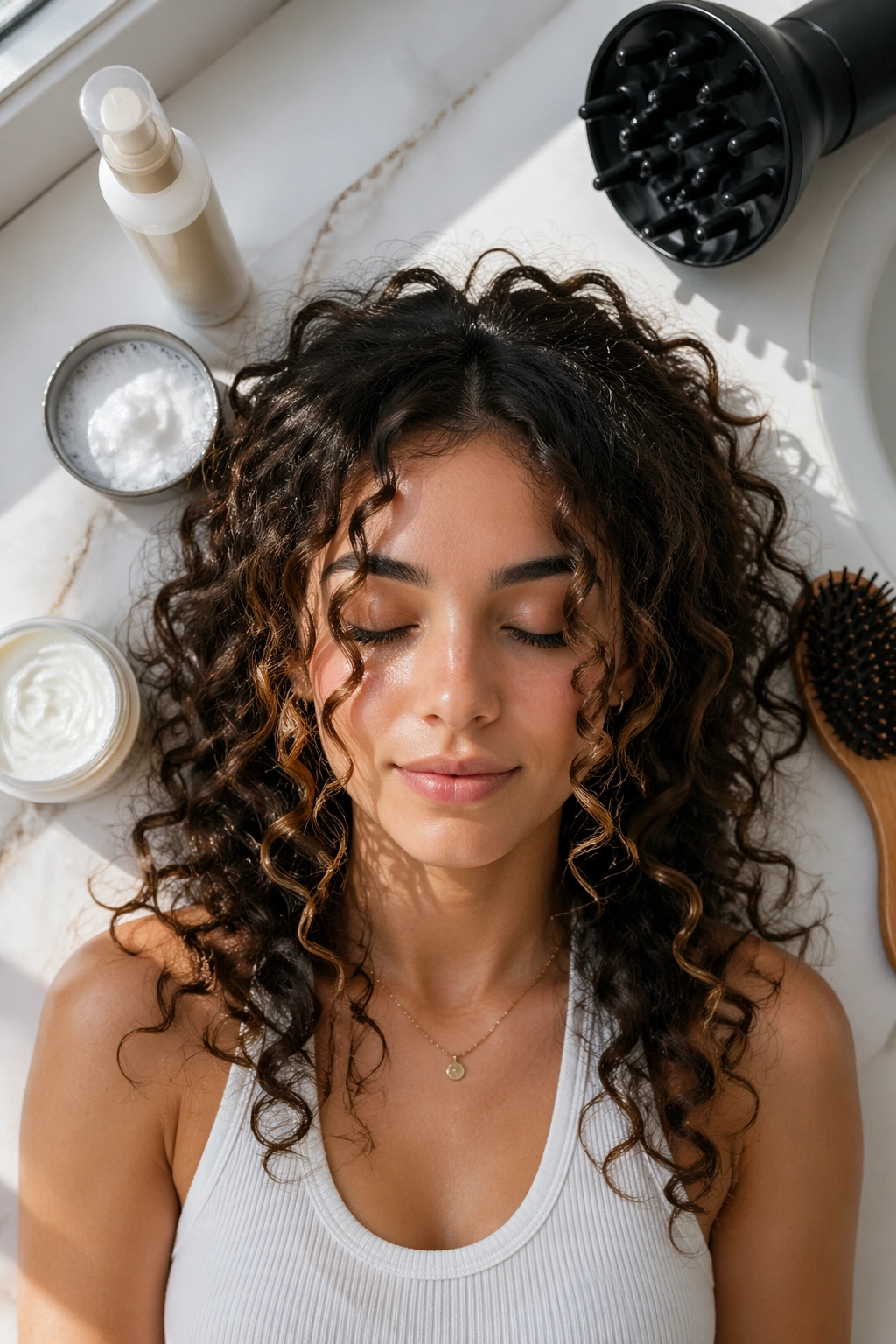
Unlike a blunt cut, long face-framing curls give the jawline some breathing room. That’s the main reason this look shows up so often on square faces. The hair still has length and polish, but the shortest pieces sit high enough to soften the upper face instead of cutting across the jaw.
The framing pieces matter more than the total length. I’d rather see two or three carefully placed layers that start at the cheekbone or lip than a dozen short layers scattered everywhere. Those front pieces create a curve around the face, and the rest of the length keeps the silhouette vertical.
What to Ask For
- Longest length below the collarbone.
- Face-framing pieces that begin at the cheekbone or slightly lower.
- Ends that are softened, not blunt.
- A shape that keeps volume away from the widest part of the jaw.
If your curls are thick, this cut keeps them from ballooning at the sides. If they’re fine, it gives the illusion of more shape without sacrificing length. Either way, it’s one of those styles that looks calm in the front and richer in motion.
5. Rounded Afro with Soft Temple Volume
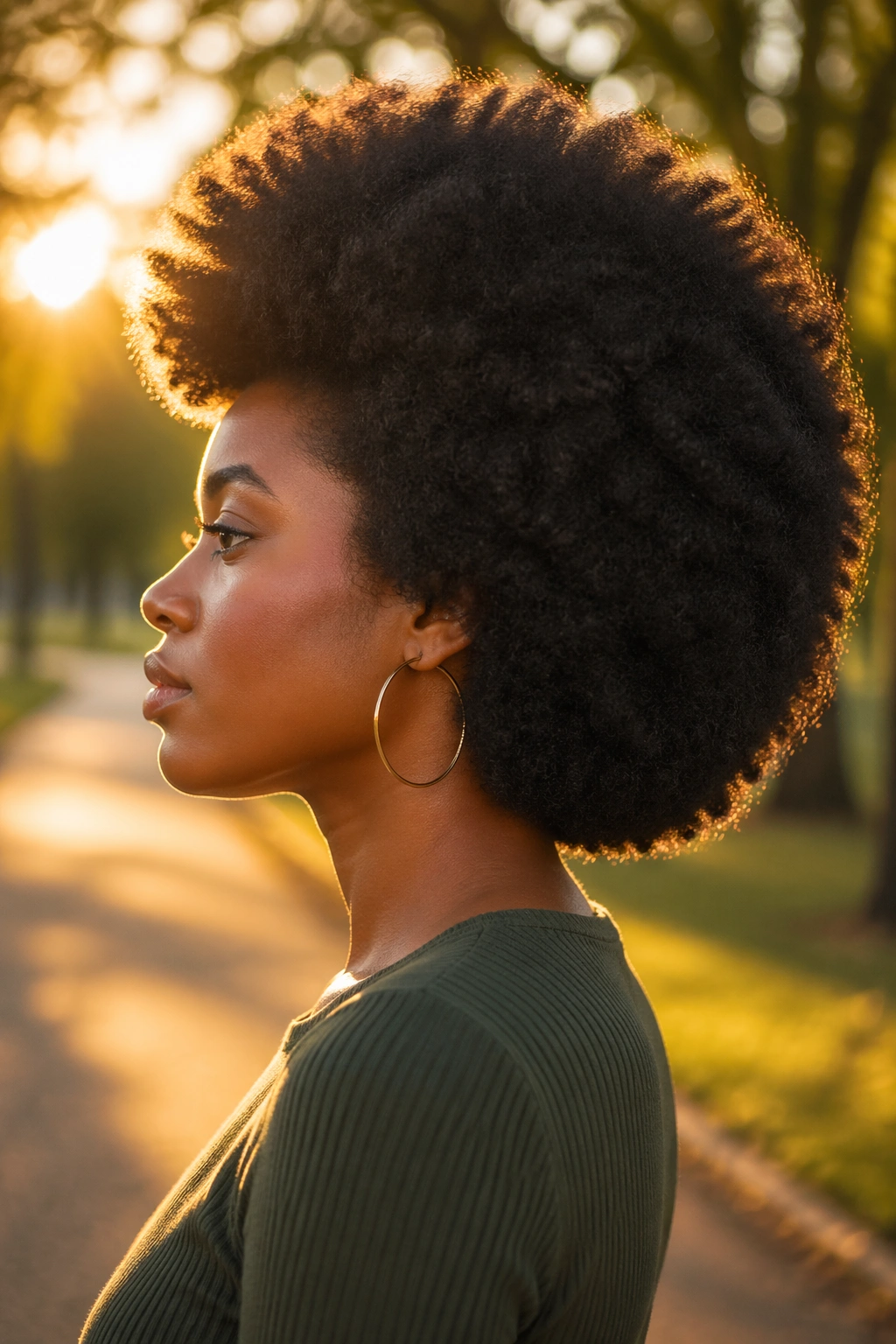
A rounded afro can be the best move when you want a square face to feel softer without losing any boldness. The shape matters here. You’re not trying to make the hair flat or narrow; you’re building a halo that rounds out the edges and keeps the silhouette lifted.
Temple area is the part I watch most. If the sides are too wide right at the temples, the face can look broader. If the crown is slightly fuller and the outer edges taper in just a bit, the whole style feels more balanced. That little bit of shaping makes a huge difference.
Moisture is nonnegotiable. Coily hair holds shape better when it’s hydrated, and a dry afro can lose its curve fast. A leave-in, a cream, and a soft oil on the ends usually do more than piling on heavy products ever will.
This is one of the few styles where I’d actually encourage a little height. Square faces handle volume well when it’s rounded, not boxy. The shape should feel generous, not square.
6. Chin-Length Curly Bob with a Side Part
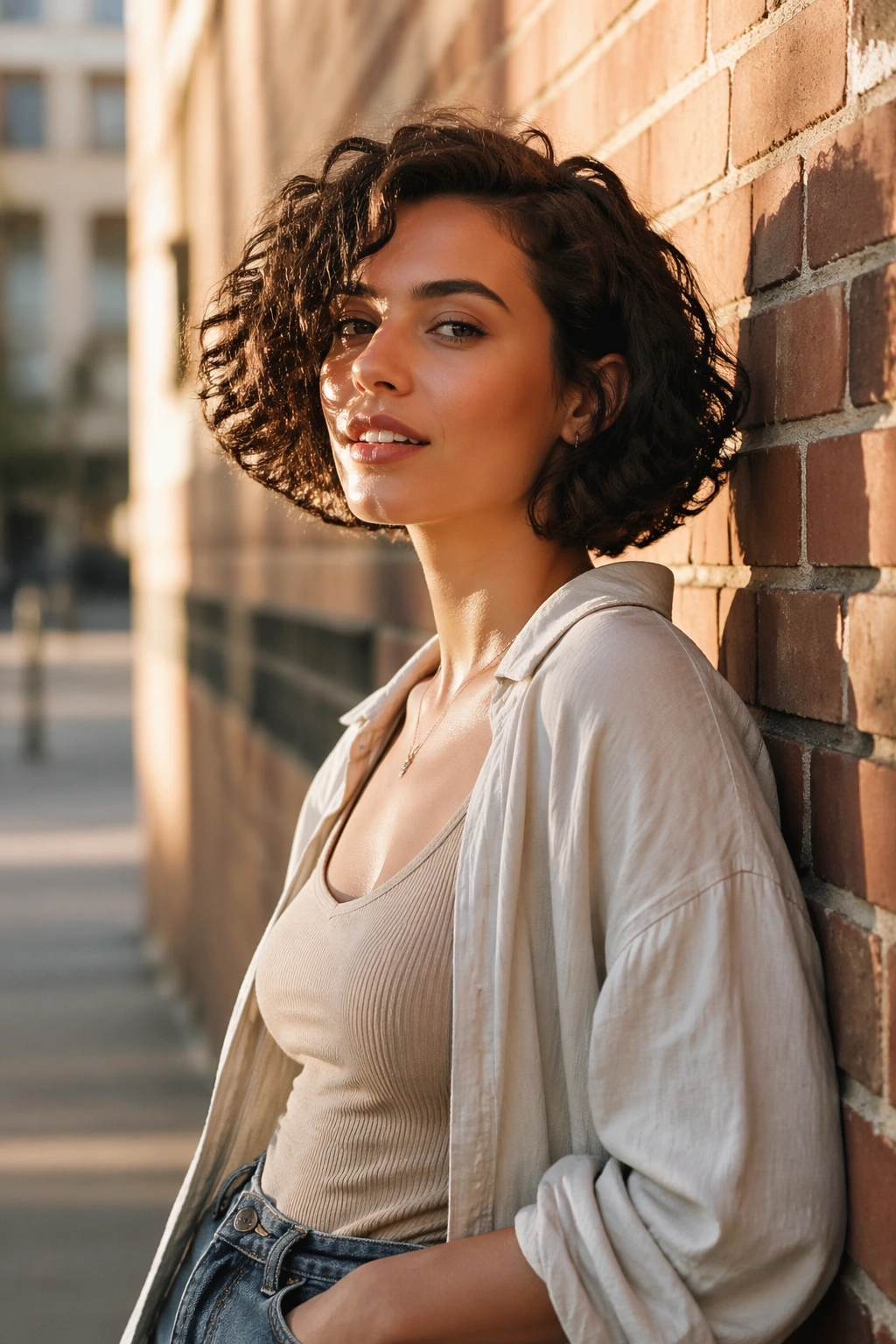
A chin-length bob is not off-limits for square faces. It just needs more shape than a straight bob would. The side part, more than anything, keeps this from turning rigid.
The safest version is a bob that sits a hair below the jaw on one side and slightly higher on the other, with curls that break up the line at the ends. That uneven finish softens the chin area instead of drawing a neat frame around it. If the curls are tighter, the bob can sit a little higher because the curl pattern adds its own volume. If they’re looser, keep the length closer to the collarbone.
What to Watch For
A blunt chin-length edge is the thing to avoid. It can make the jaw look wider and heavier than it really is. Ask for soft undercutting or point-cut ends so the perimeter feels airy.
This cut works best on hair that can hold a little structure. If your curls are too soft and stretchy, the bob may collapse toward the jaw by the end of the day. A light gel cast fixes that. So does a side pin if the front keeps falling flat.
7. Half-Up Style with Loose Curls
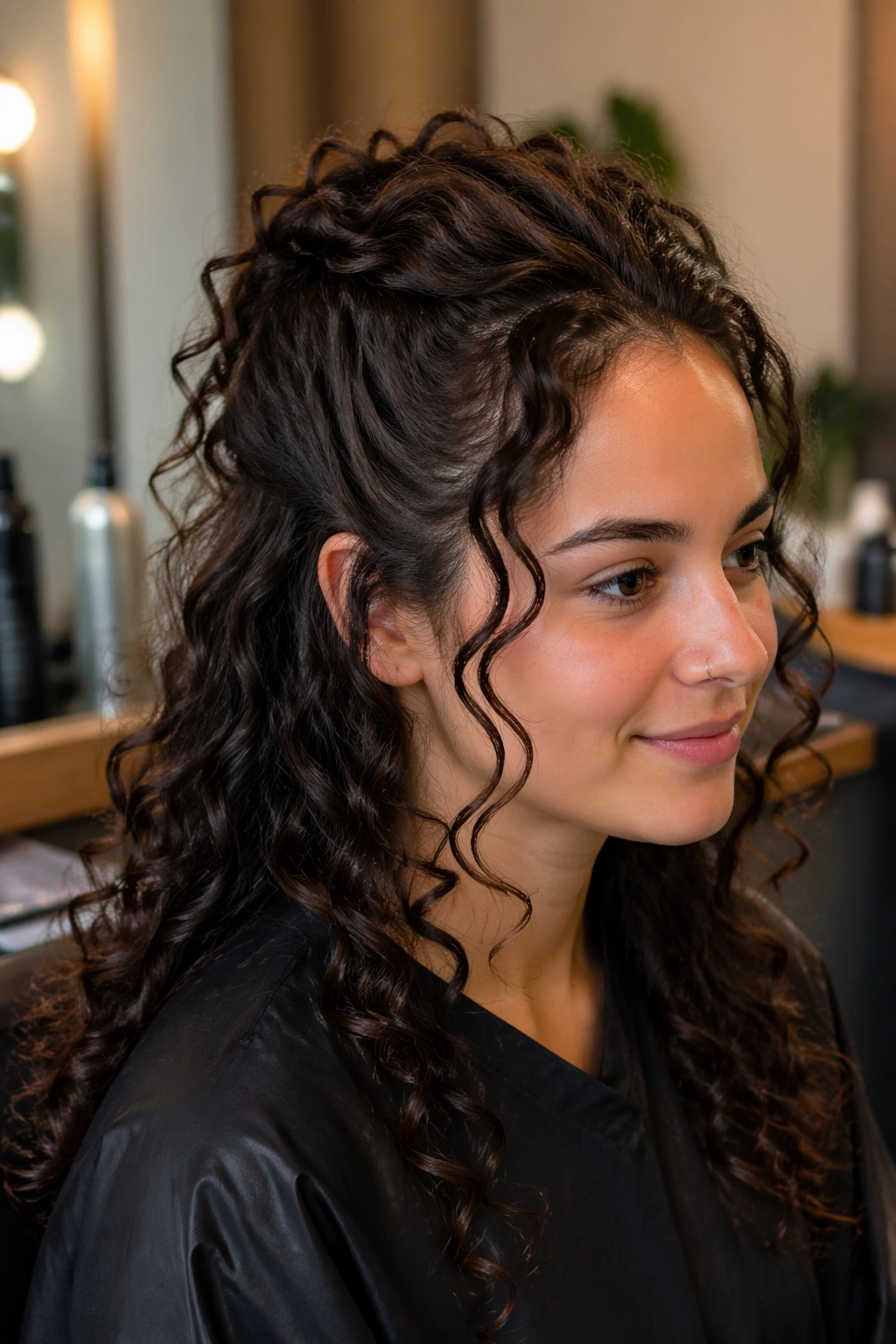
If you need your hair off your face but don’t want to lose softness, the half-up style solves the problem without making the face look harsh. Pulling only the top section back opens the forehead and crown while leaving the curls around the cheeks and jaw to do their softening job.
The key is placement. Don’t drag the top section straight back from the temples. Start the section a little farther back, lift it at the crown, and leave two small tendrils near the temples. Those loose pieces keep the style from feeling tight or severe.
This one works for weddings, workdays, and second-day curls that need a reset. It also behaves well with medium to long lengths because the bottom half still swings. If you’ve ever had a half-up style that made your face look wider, the fix is usually more height and less pull at the sides.
A claw clip can look relaxed. A wrapped elastic and a curl pinned over the band looks more polished. Pick the one that fits the day.
8. Curly Wolf Cut
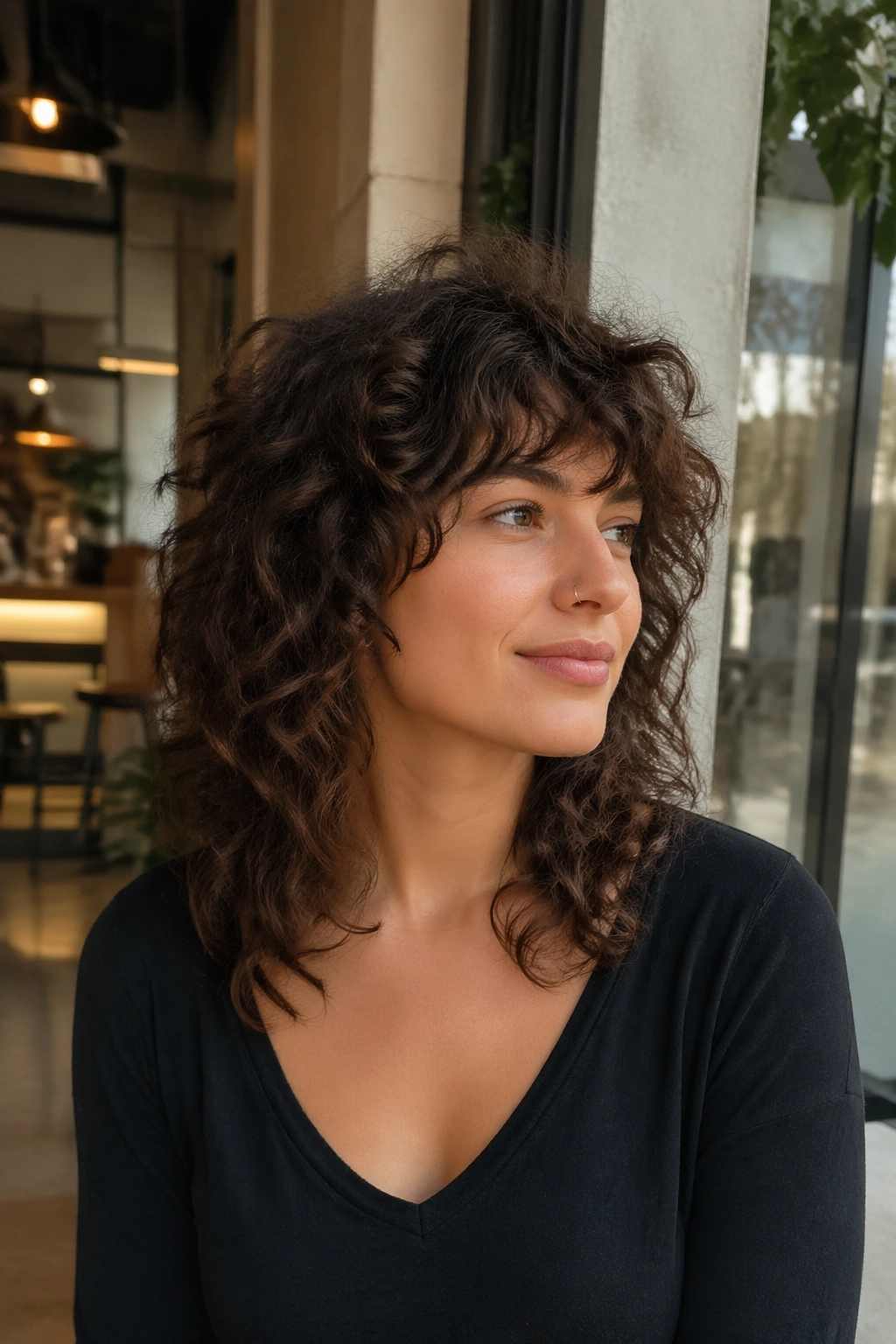
The curly wolf cut has attitude, and square faces can wear it well. The reason is simple: the layers create movement all over, which keeps the jawline from becoming the focal point. You get shape at the crown, piecey ends, and enough edge to feel deliberate.
What makes it different from a shag is the stronger contrast between the top and the bottom. The crown stays a little fuller, the lengths taper out, and the front pieces often land somewhere around the cheekbones or lips. That mix of short and long is what gives the cut its lift.
How to Keep It Balanced
- Keep the shortest layers long enough to move, not fray.
- Ask for softness around the perimeter so the ends don’t look choppy in a bad way.
- Use a diffuser to push the roots up without crushing the curl pattern.
- Skip heavy oils at the roots; they flatten the whole shape.
This cut is happiest on wavy, curly, and coily hair that likes volume. Fine curls can wear it too, but the layers should stay longer so the ends don’t go see-through.
9. Pineapple Updo with Soft Tendrils
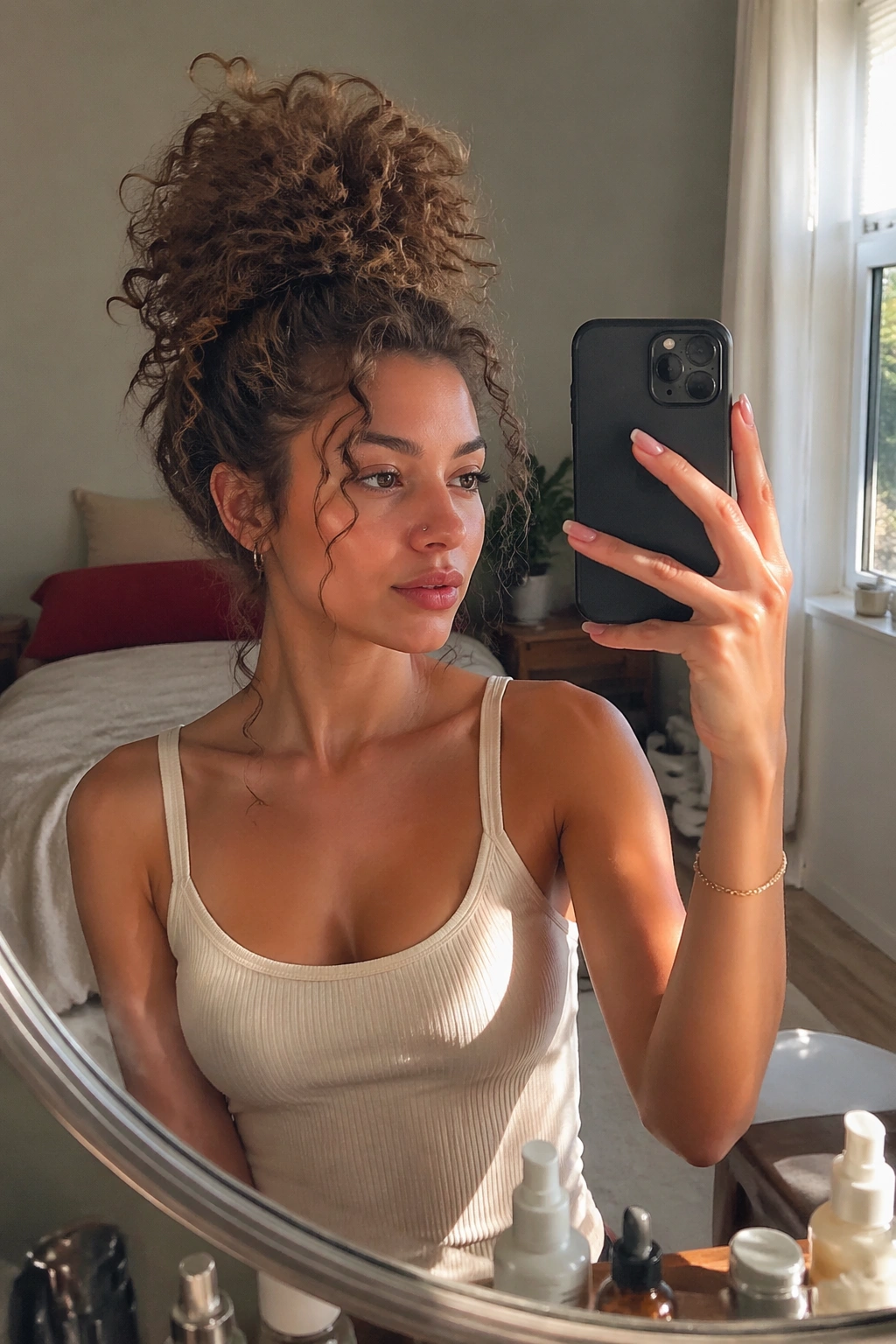
Can a pineapple style flatter a square face? Absolutely, if it’s done with height and a little softness around the hairline. The lift at the top lengthens the face, and the curls gathered high keep the profile open instead of boxed in.
The trick is not to slick everything back. Leave the front a touch loose, pull the curls up with a satin scrunchie, and let a couple of tendrils fall near the temples or just in front of the ears. Those pieces matter more than people think. Without them, the style can look too severe.
This is a strong option for busy days because it works on curls that are not perfectly fresh. A little frizz at the crown doesn’t ruin it. It actually helps. The shape is supposed to feel relaxed, not sculpted to death.
A pineapple also protects curl pattern overnight, so if you like your hair on day two or day three, it’s practical as well as flattering. That’s a nice combination. Rare, even.
10. Asymmetrical Curly Cut
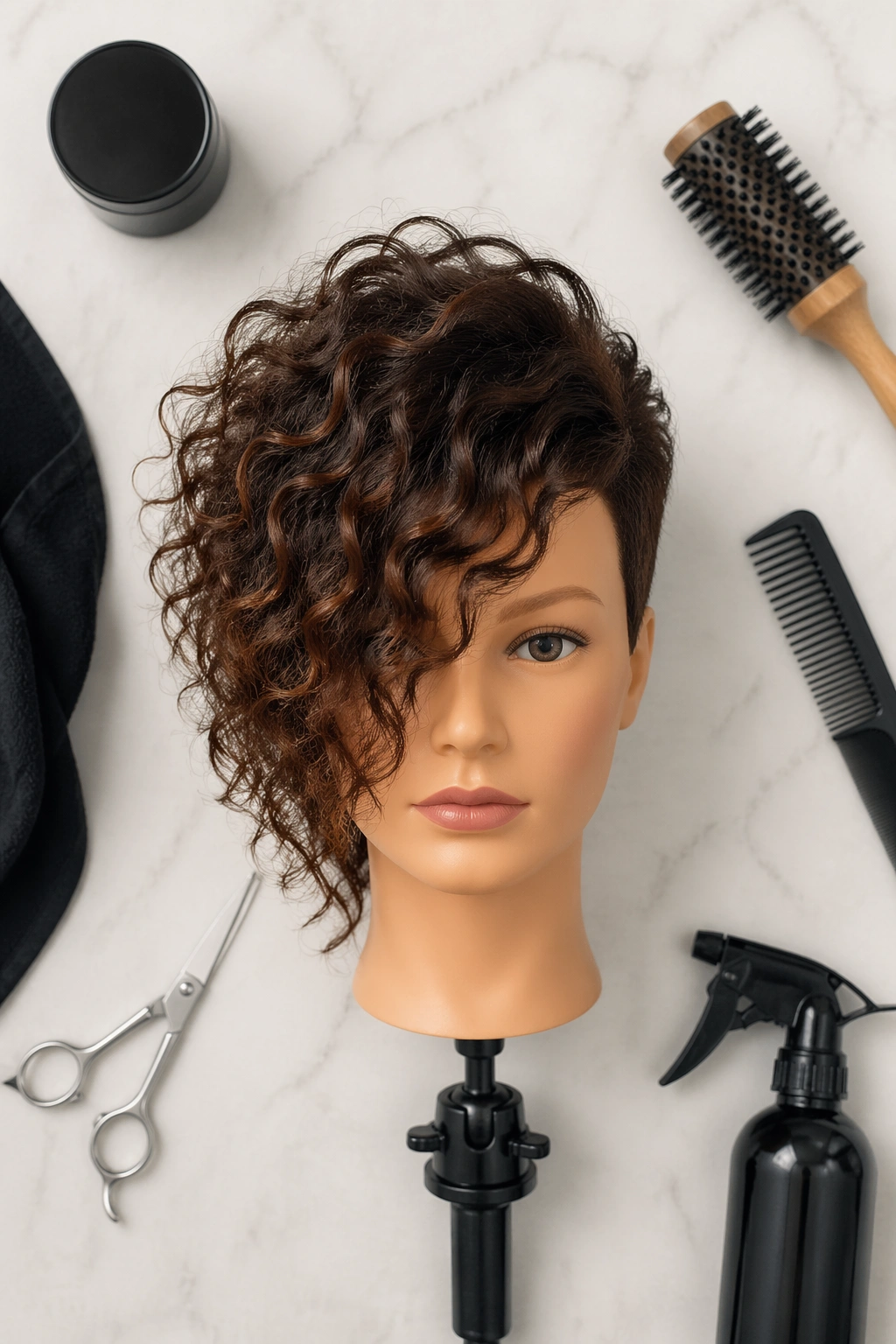
A little imbalance can be your friend. On a square face, an asymmetrical curly cut breaks up the straightness of the jaw and the evenness of the sides, which is often exactly what the face needs.
The difference does not need to be dramatic. One side can be half an inch to an inch longer, or the front can sweep more heavily to one side. That small shift changes the line of the haircut from square to diagonal, and diagonal lines are your friend here. They soften hard angles without making the whole look mushy.
The cut works best when the curls themselves have a defined shape. If the texture is too fuzzy, the asymmetry disappears into the frizz. A curl cream with hold, plus a little root clipping on the shorter side, keeps the shape visible.
I like this style on people who want something a little sharper than a basic layered cut. It feels intentional. It also grows out well, which matters more than most people admit.
11. Tapered Pixie with Defined Top Curls
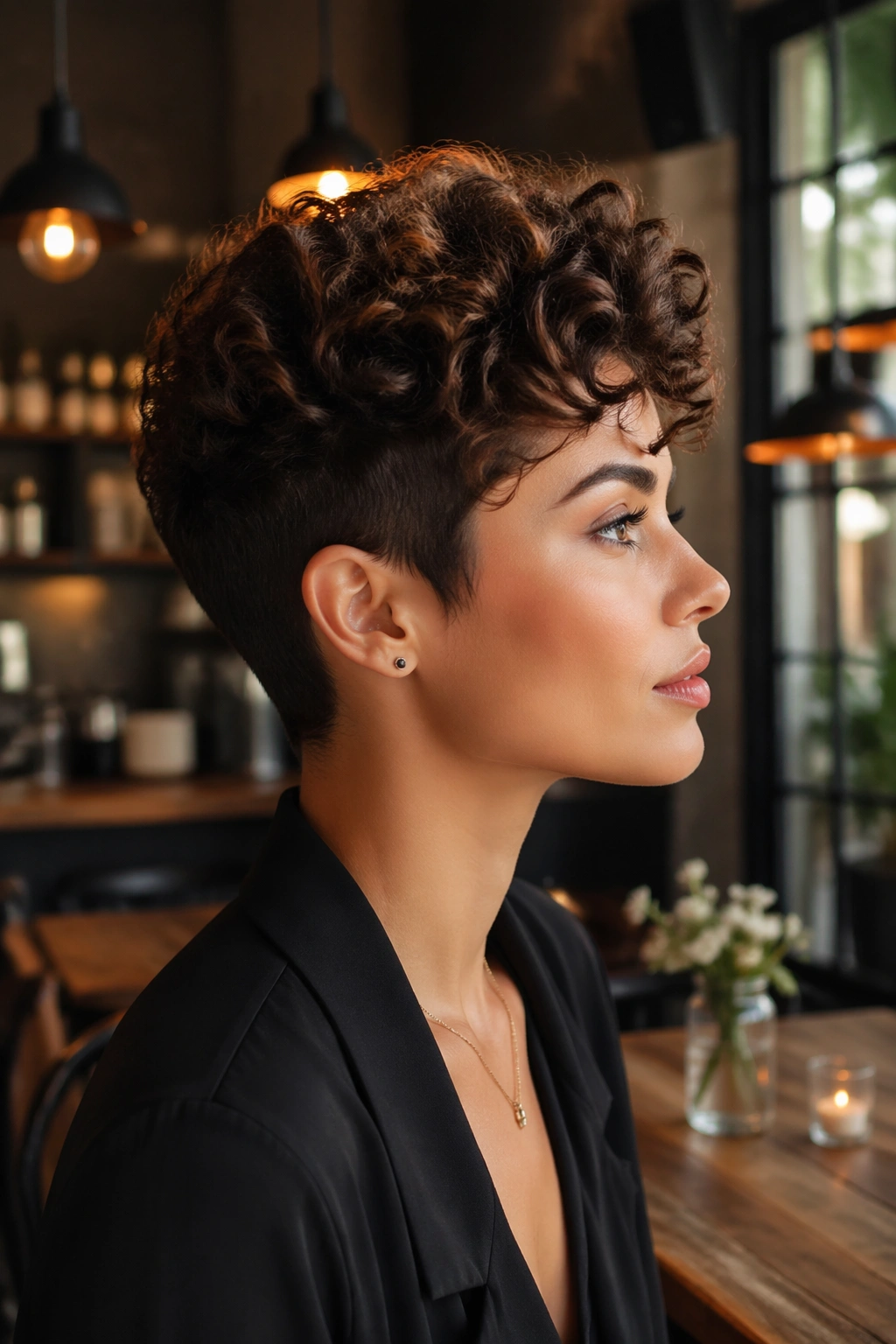
A tapered pixie shifts the attention away from the jaw and toward the eyes and cheekbones. That makes it one of the strongest short options for square faces, especially if you want something neat but not flat. The sides stay close, the top keeps height, and the curls on top get to be the main event.
The taper is the part that saves this cut. If the sides are too bulky, the face can look wider. If they’re too tight with no softness at the top, the whole thing turns severe. The sweet spot is a clean taper around the ears and neckline, with enough length on top to let the curls sit in loose spirals.
Small Details That Matter
- Leave 3 to 4 inches on top if your curls shrink a lot.
- Keep the front slightly longer than the crown.
- Finger-coil a few front pieces when you want more definition.
- Use low heat and a diffuser, not high heat that puffs the cut up.
This style is especially good for tighter curl patterns that keep shape well. It gives a square face structure, but not the heavy kind. More like clean lines with a soft top.
12. Side-Swept Mid-Length Curls

A side sweep changes the whole read of the face. Hair moving diagonally across the forehead interrupts the square shape, and that matters more than almost anything else in a curly style.
Mid-length is the comfortable zone here. The curls have enough weight to fall to one side, but they’re not so long that the sweep disappears. A cut that lands between the shoulder and collarbone gives the front pieces room to lie across the face in a soft curve.
The part does not need to be extreme. Even a slightly off-center part can work if the front hair is trained to fall across the forehead. Use a clip at the roots for a few minutes while the hair dries. That tiny bit of lift helps the sweep stay in place.
This style suits people who want softness without looking overly done. It’s one of those looks that reads easy in person and tidy in photos, which is not as common as you’d think. A lot of curls either look too loose or too formal. This one sits in the middle.
13. Mid-Length Curls with a Curly Fringe
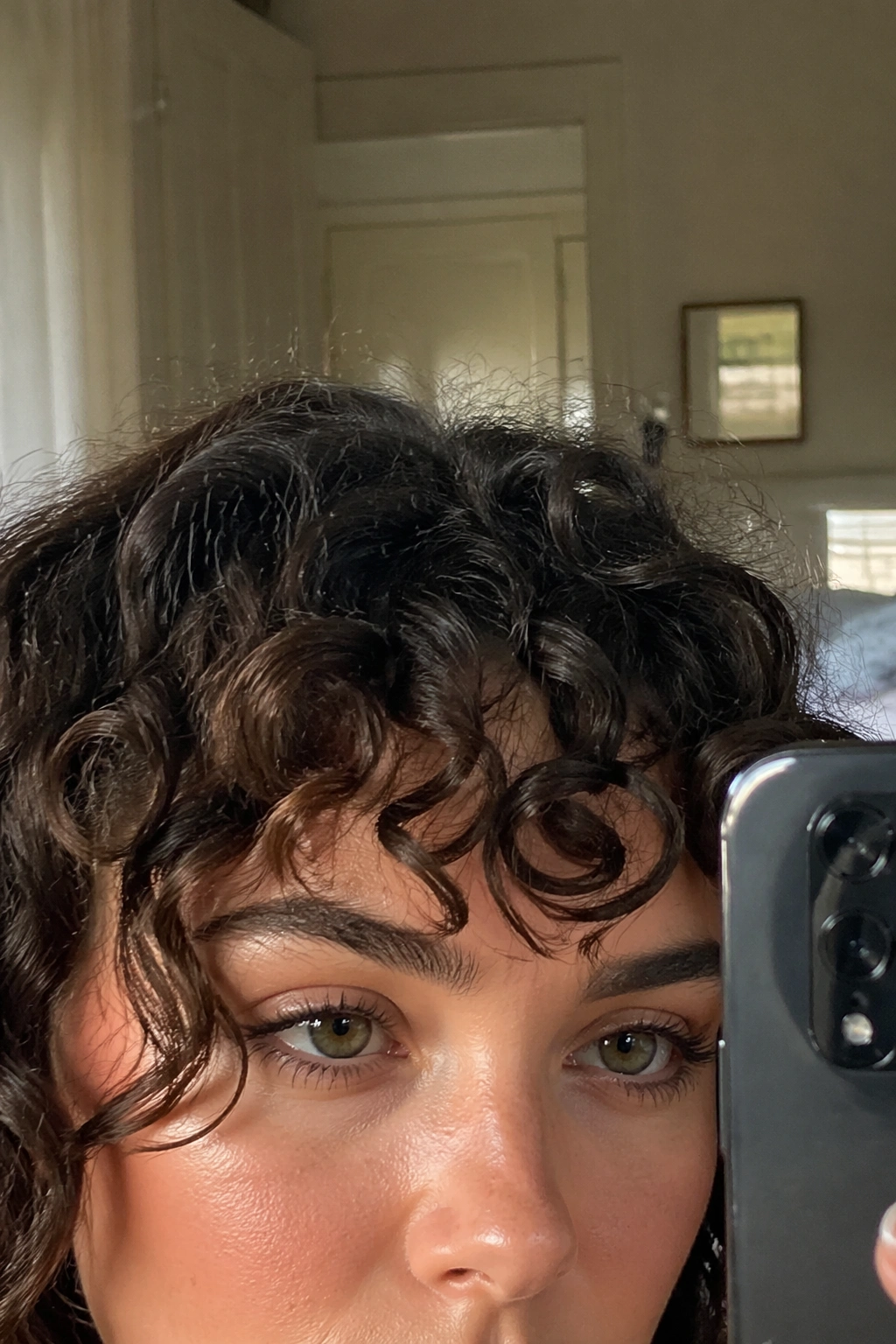
Curly fringe can be smart on square faces when the bangs are cut for movement, not for a hard line. A straight-across bang on curly hair can feel heavy fast. A soft fringe, though, breaks up the forehead and makes the whole face look less angular.
The length should usually land at the brow or just below when dry, because curls lift. The outer edges can blend into cheekbone layers so the fringe doesn’t stop abruptly. That blending is the part that keeps the style from looking like a helmet.
How to Cut and Wear It
- Ask for the fringe to be cut dry, if possible.
- Keep the center slightly shorter than the sides.
- Style with a light cream or foam, not a thick butter.
- Refresh the front with water and a small amount of product before the rest of the hair.
This look works best when the fringe is piecey. If it clumps into one dense curtain, the face can lose dimension. A little separation goes a long way here.
14. Braided Crown with Cascading Curls
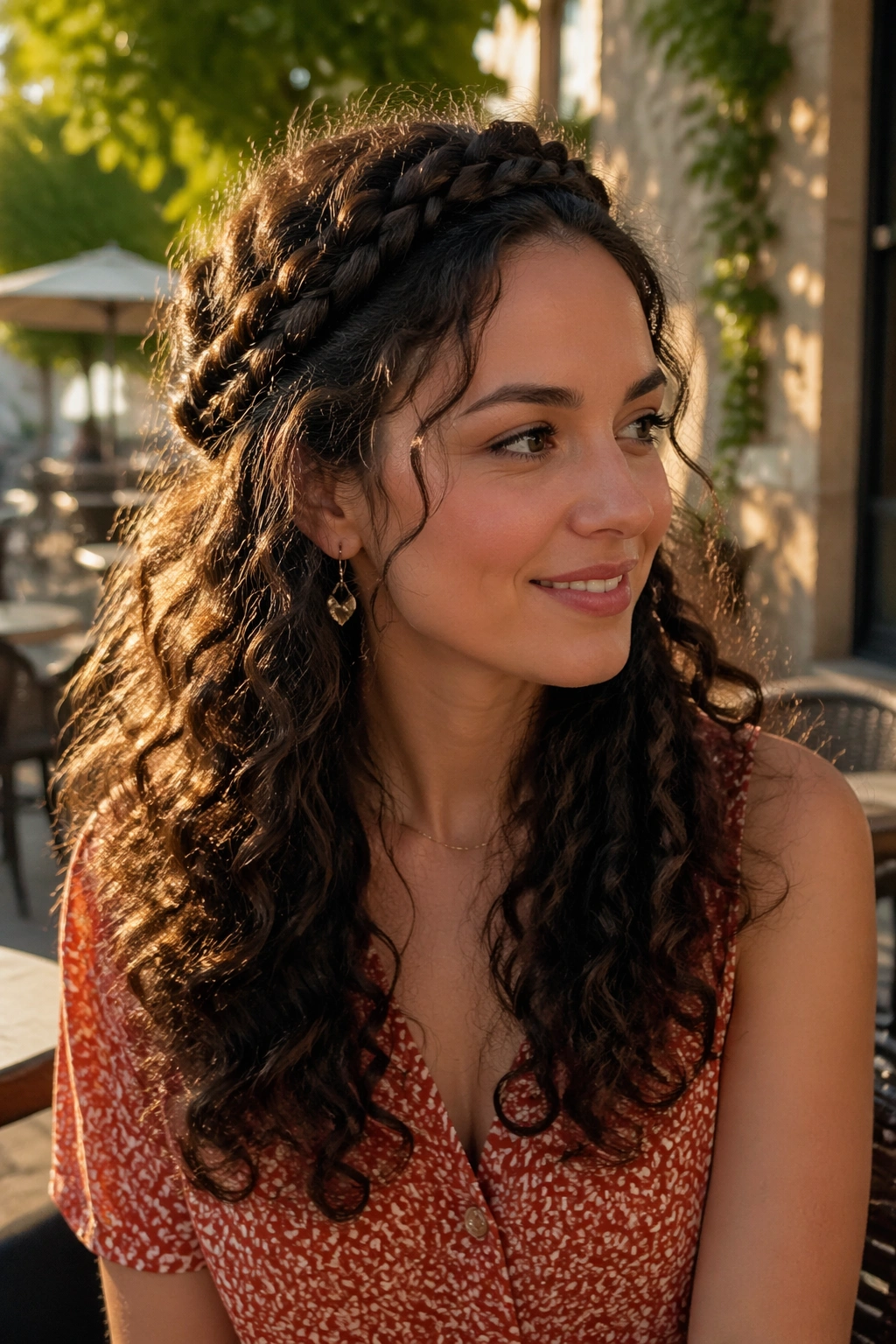
Braided crowns look fussy in pictures sometimes, but in real life they’re more practical than they seem. The braid lifts the eye line upward, which helps lengthen a square face, and the curls left down below keep the shape soft around the jaw.
The braid should sit close enough to the hairline to be visible, but not so tight that it pulls the temples back hard. That’s the mistake. A tight crown braid can make the face look narrower at the top and wider at the bottom, which is the opposite of what you want. Looser edges make the shape more flattering and easier to wear for a full day.
This style is excellent for events, hot weather, or any day when you want the hair out of your eyes without giving up length. The cascading curls can be left full, brushed out a little, or pinned on one side if you want more polish.
A few face-framing pieces near the ears change the whole thing. Tiny detail. Big payoff.
15. High Curly Ponytail with Crown Lift
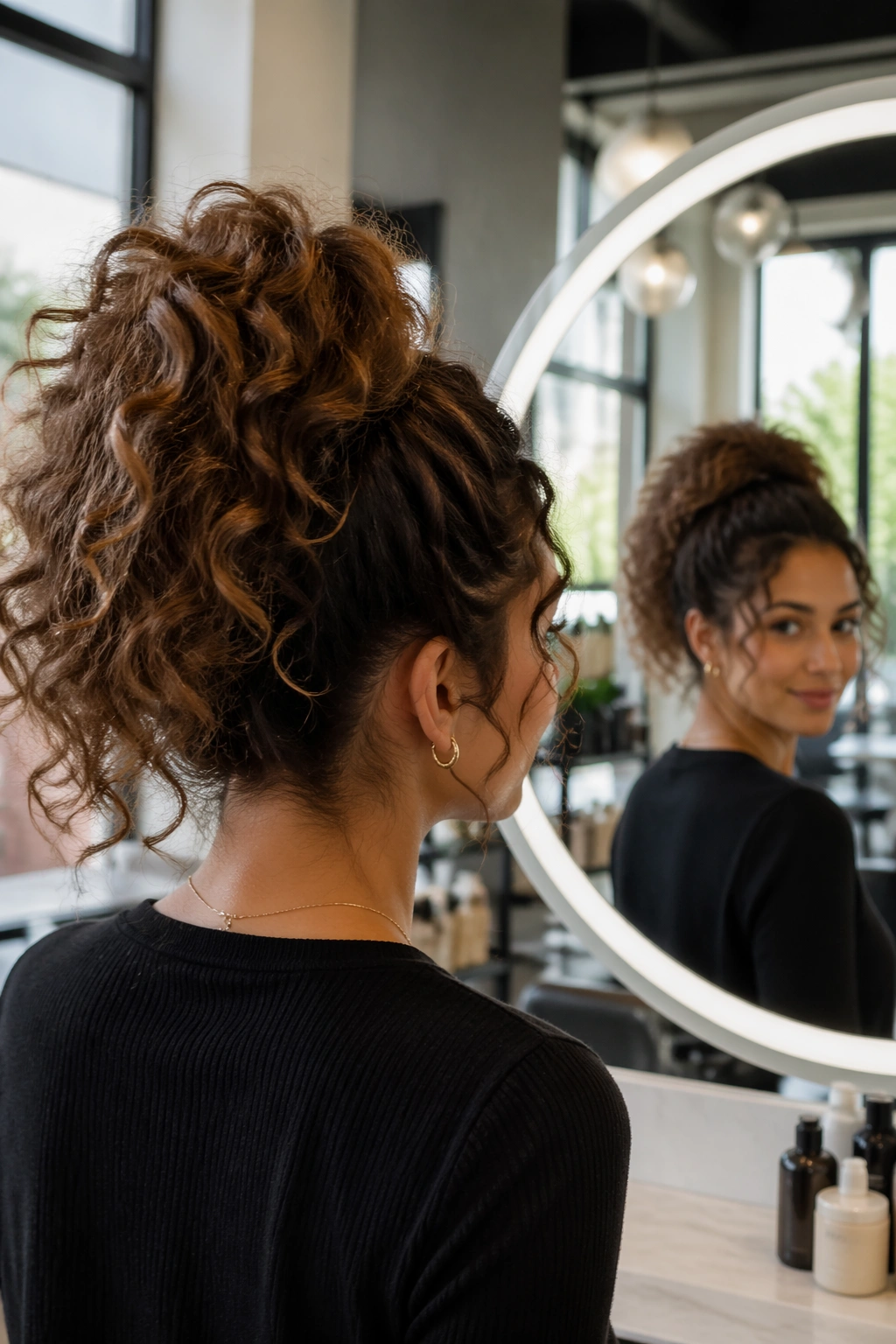
Does a high curly ponytail make a square face look harsher? Not if you keep the crown lifted and the sides soft. Done right, it actually lengthens the face and shows off the cheekbones in a clean, easy way.
The height is doing most of the work. A ponytail placed high on the head pulls the eye upward, which keeps the jaw from dominating the silhouette. What you do around the hairline matters too. Leave a few soft curls loose near the temples, or let one front piece fall forward if the shape feels too tight.
A slicked-back pony can look sharp. A curly one should usually feel a little looser. Use gel or edge control only where you need it, then stop. Too much tension around the face can sharpen the angles more than you want.
This is one of the easiest styles to dress up fast. Wrap a curl around the elastic, pin the end underneath, and you’ve got something that looks planned instead of rushed. It’s a useful style, which is maybe why I like it so much.
Final Thoughts
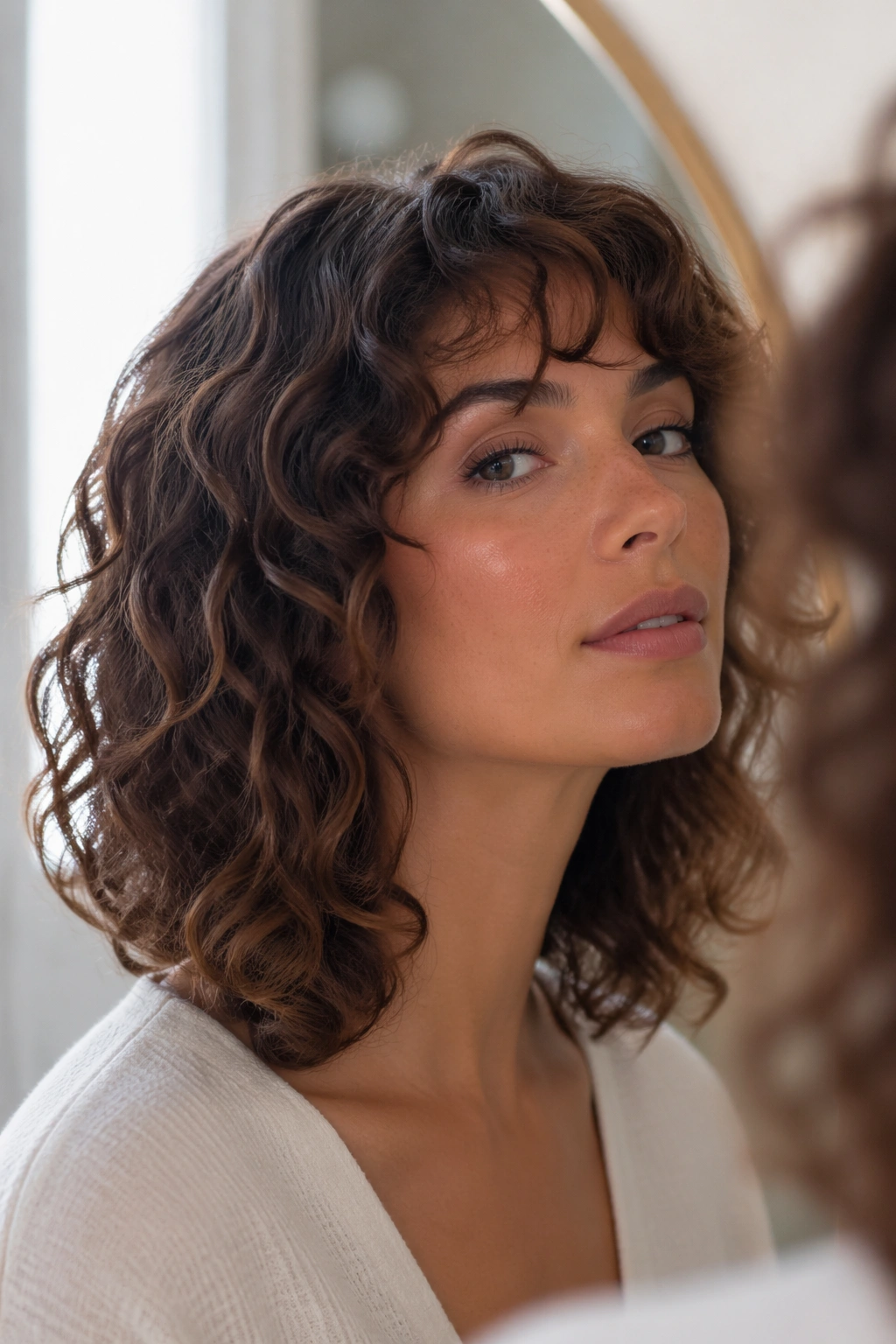
Square faces usually look best with curls that do one of three things: soften the jaw, break up symmetry, or add height at the crown. That can happen in a shag, a lob, a pixie, or a high ponytail. The shape matters more than the hair length.
Shrinkage deserves respect here. A cut that seems safe when wet can land in the wrong place once it dries, and that is where a lot of the frustration starts. Ask for face-framing pieces based on where the curls actually sit, not where they look while soaking.
If you’re trying one of these styles for the first time, bring a photo that shows the front, side, and back. One image from a perfect angle won’t tell a stylist much. A few different views will. That tiny bit of extra clarity can make the difference between a cut that fights your face and one that settles into it.
