
Short curls and blonde color can be a gorgeous pair, but the cut has to earn its keep. The strongest blonde short curly hairstyles don’t rely on color alone; they use shape, layering, and a little restraint so the curls can sit where they want instead of fighting the cut all day.
Blonde is not one color, either. Honey, champagne, beige, platinum, and butter blonde all behave differently on curls, because curls scatter light and create shadows in a way straight hair doesn’t. A pale tone can look sharp and airy on the right texture, while a warmer blonde can make a bob look fuller and kinder around the face.
That’s the part people miss. Short curly hair shows everything: the angle of the nape, the weight at the crown, whether the fringe was cut dry or guessed at when wet. Get those details right and the whole style wakes up. Get them wrong and even expensive color can look puffy, uneven, or flat.
I keep coming back to styles that let the curl pattern do half the work. A good short blonde cut should move a little, soften a jawline when it needs to, and still look decent on a day when you barely touched it. Some of these are soft and wearable. Some have more bite. All of them are worth knowing.
1. Honey Blonde Curly Pixie
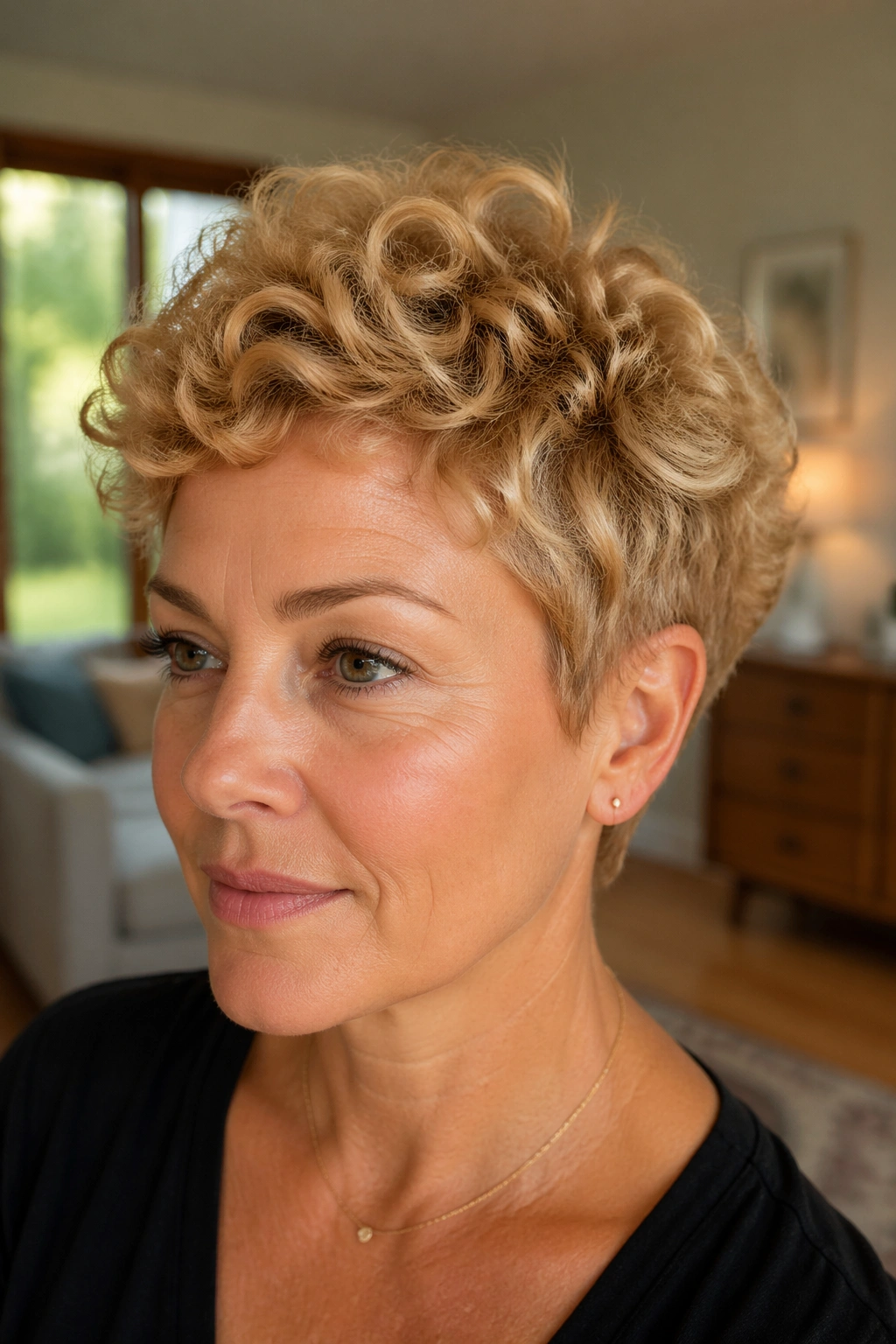
A honey blonde curly pixie is one of those cuts that looks small on the hanger and lively on the head. The color does a lot of the lifting here: honey blonde warms the skin, gives the curls a softer edge, and keeps a short cut from feeling too severe. If your curls are fine or medium in density, this shape can make them look fuller without needing much length.
Why it works on curls
The magic is in the balance. Keep the top around 1.5 to 3 inches, taper the nape close, and leave just enough length near the crown for the curls to stack instead of sticking flat. That tiny bit of height keeps the cut from looking helmet-like.
Honey blonde also behaves nicely on short hair because it gives you contrast without shouting. Darker lowlights or a slightly deeper root can make the curl pattern read better, especially if your hair naturally shrinks up a full inch after drying.
- Ask for soft point cutting on the top, not a blunt shelf.
- Keep the sides neat, but not shaved to the bone.
- Use a mousse on damp hair, then scrunch once.
- Diffuse on low for 5 to 8 minutes, then stop touching it.
My favorite detail: a pixie like this looks best when the crown has a touch more lift than the sides.
2. Platinum Tapered Curly Crop
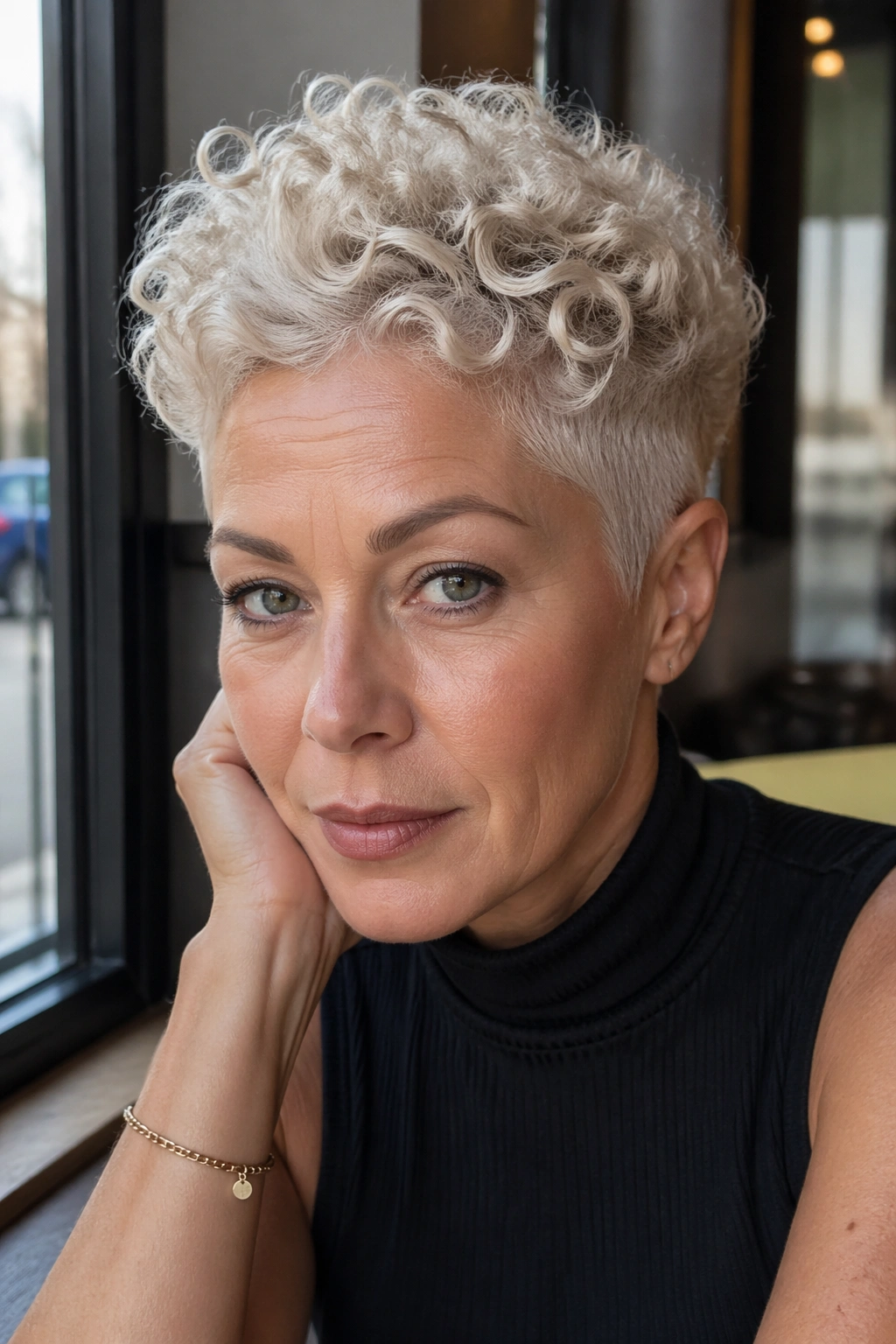
Platinum on curls is not a lazy choice. It looks crisp, bright, and a little fearless, but only when the cut underneath is clean and the hair is still healthy enough to hold shape. A tapered crop keeps the outline tidy, which matters a lot when the color is light enough to show every bend.
Bleach can rough up the cuticle, so this style works best when the curls still spring back after washing. If the hair feels mushy or stretchy when wet, I’d slow down on the lightening and lean toward beige or honey instead. Platinum looks gorgeous, but it asks for honest hair.
The cut itself should stay close at the nape and around the ears, with slightly longer curls on top so the silhouette doesn’t collapse. That little height on top stops the whole thing from looking like a cap. A cool-toned toner helps keep brass away, and a purple shampoo once in a while can keep the shade cleaner without overdoing it.
Bleach is honest.
3. Champagne Blonde Curly Bob with Root Shadow
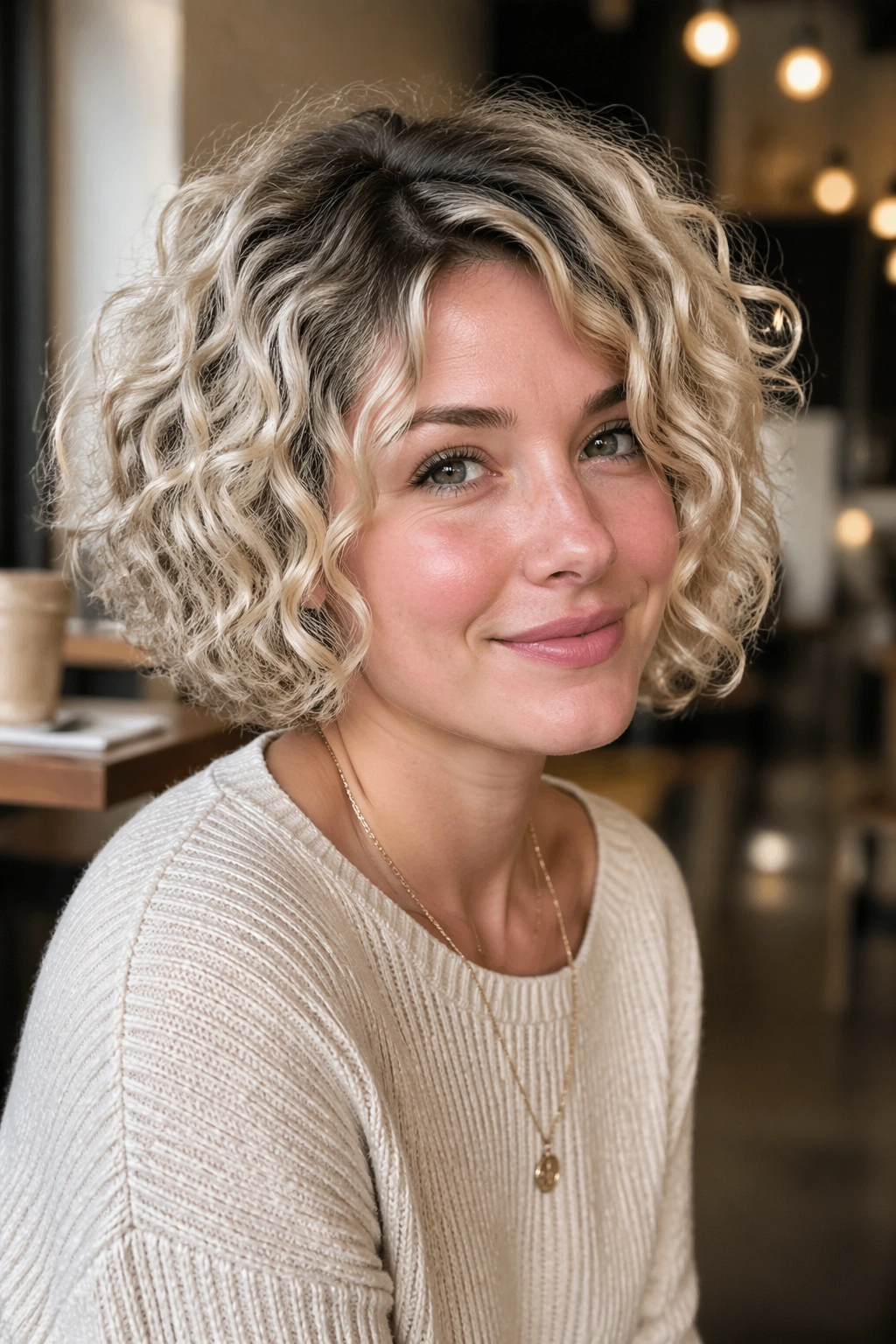
Want blonde without a harsh grow-out line? A champagne blonde curly bob with a root shadow is the graceful answer. The darker root gives the style depth at the scalp, while the lighter ends and mid-lengths keep it bright where curls catch the light. On short hair, that contrast makes the shape look fuller instead of washed out.
How to ask for it
- Keep the length at the chin or just below it.
- Ask for a soft root shadow about half an inch to 1 inch deep.
- Place the brightest pieces around the face and crown.
- Leave the ends light, but not stripey.
The bob should still feel curly, not carved into place. That means the ends need enough layering to curl under or kick out on their own, depending on your texture. A champagne tone is especially good if your skin leans warm-neutral and you want something lighter than beige without jumping straight to icy blonde.
I like this style because it does not panic when it grows out. The root shadow keeps it looking deliberate for longer, and that makes salon visits less stressful than they are with a solid blonde block.
4. Side-Parted French Curly Bob
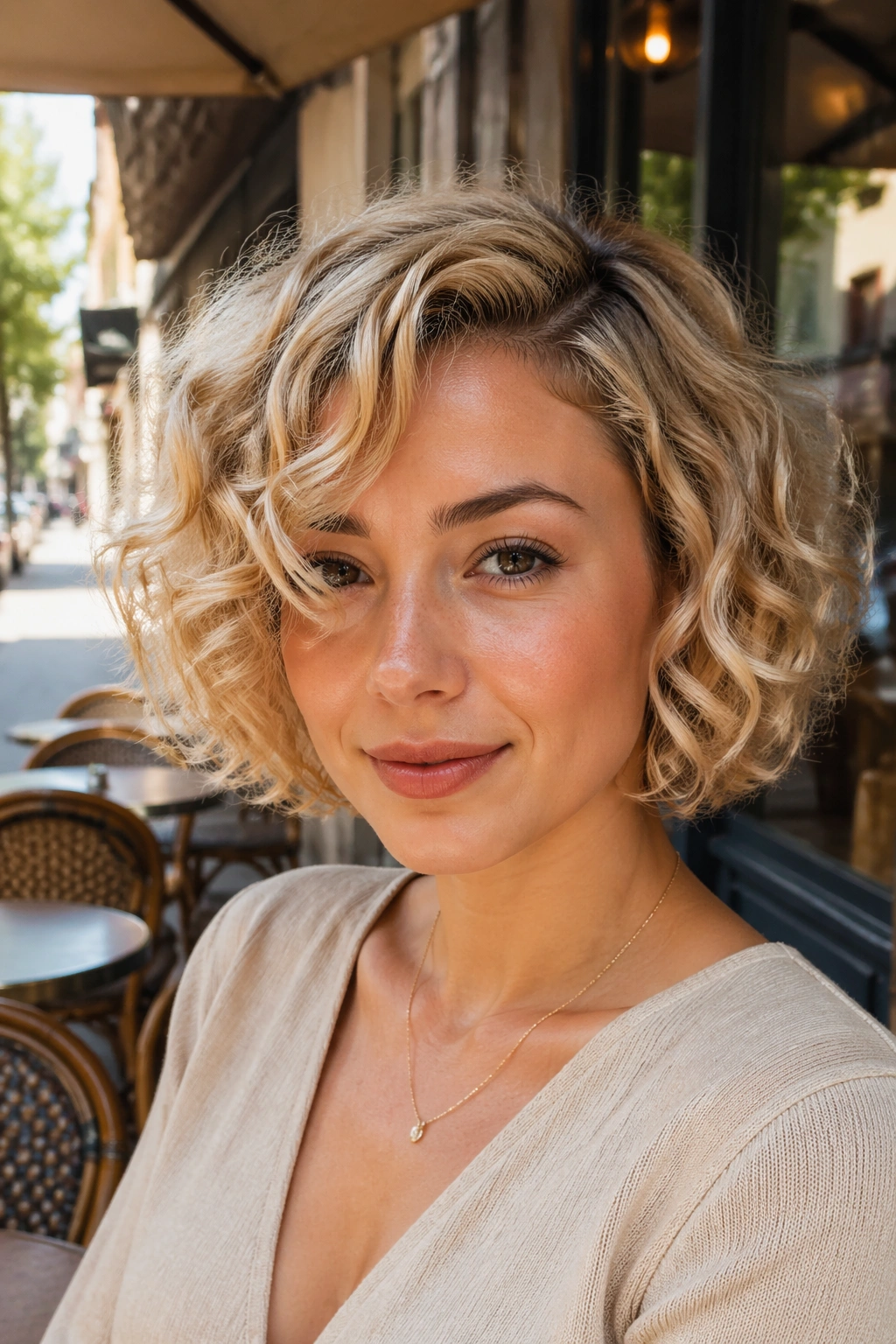
A side part changes everything. Seriously. If your curls tend to flatten at the crown, a side-parted French curly bob gives you a built-in lift on one side and a little swing through the cheekbones on the other. The shape feels easy, but it still looks like someone cared.
French bobs are usually cut around the jawline, sometimes a touch shorter, and they work best when the perimeter is soft enough to move. On curly hair, that means the ends should not sit in a hard line. You want a bob that bends, tucks, and shifts as it dries. A beige or toasted vanilla blonde works beautifully here because it keeps the shape airy instead of harsh.
The side part also changes where the blonde lands. More brightness near the heavier side can make the whole cut feel balanced, especially if one temple area tends to puff out. Clip the root at the part while it dries, and you can get a little extra height without teasing.
This is the kind of cut I recommend when someone wants polish without fuss. It looks good in the mirror and even better when it moves.
5. Curly Shag with Curtain Bangs
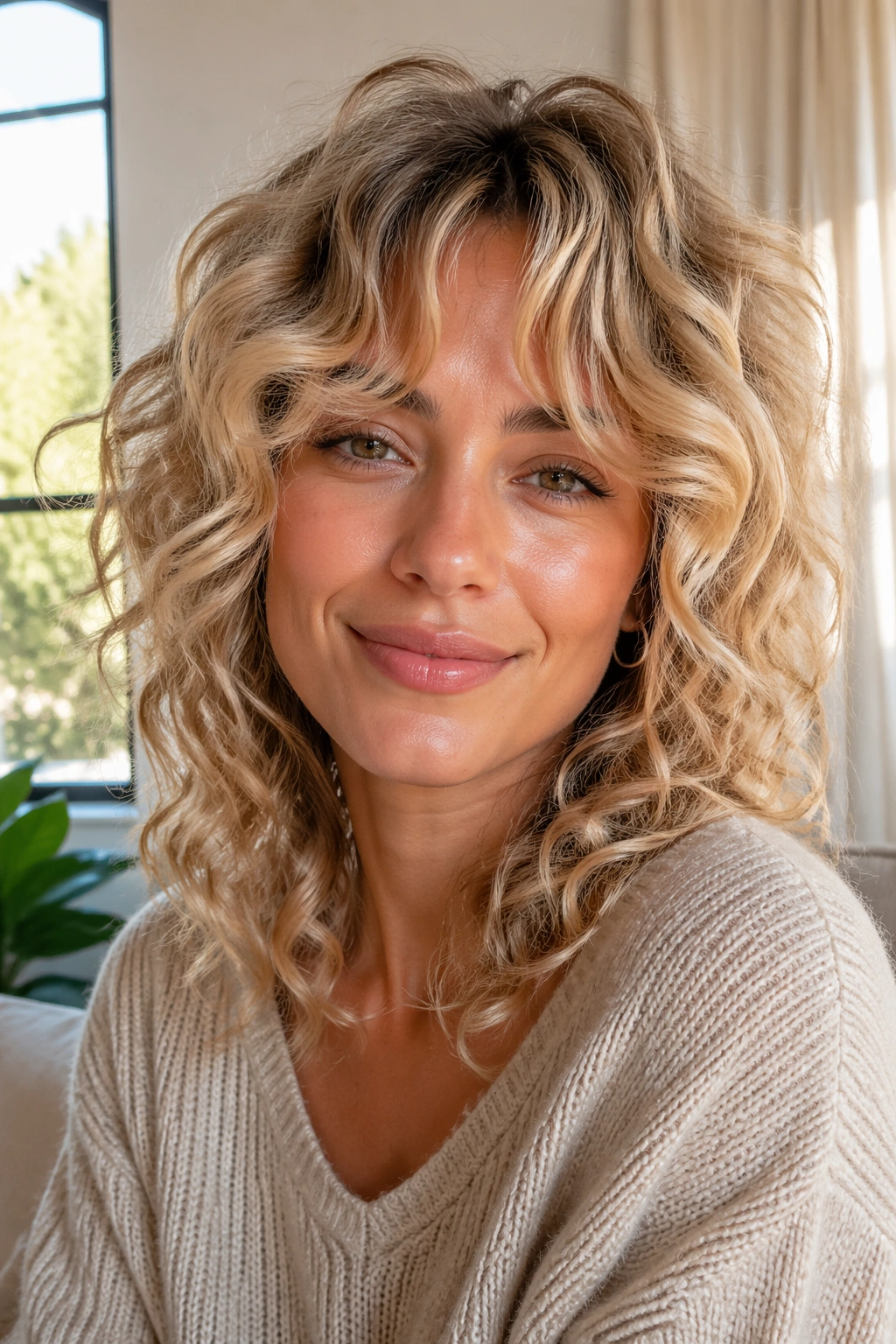
A curly shag with curtain bangs is the answer when you want movement more than neatness. The cut looks alive because the layers do the work, not because the curls were forced into a shape they never wanted. Blonde highlights make the layers read faster, especially when they sit in ribbons around the face and through the crown.
What makes it different
The shortest layers should start around the cheekbone or slightly below it, not way up at the forehead. That keeps the top from puffing out too much. Curtain bangs need a little length, too. On curly hair, I’d rather see them grazing the brows or landing at the top of the cheekbone than sitting too short and bouncing awkwardly.
A shag like this suits looser curls and stronger waves, though tighter curl patterns can wear it well if the layers are cut with a dry shape check. That last part matters. Curly bangs cut wet can shrink into something tiny and stubborn, and nobody wants that surprise in the morning.
- Use a light cream through the mid-lengths.
- Keep heavier products away from the fringe.
- Diffuse with your head tipped side to side.
- Let a few ends stay imperfect. That is the point.
The best shags never look precious.
6. Micro-Fringe Blonde Curl Crop
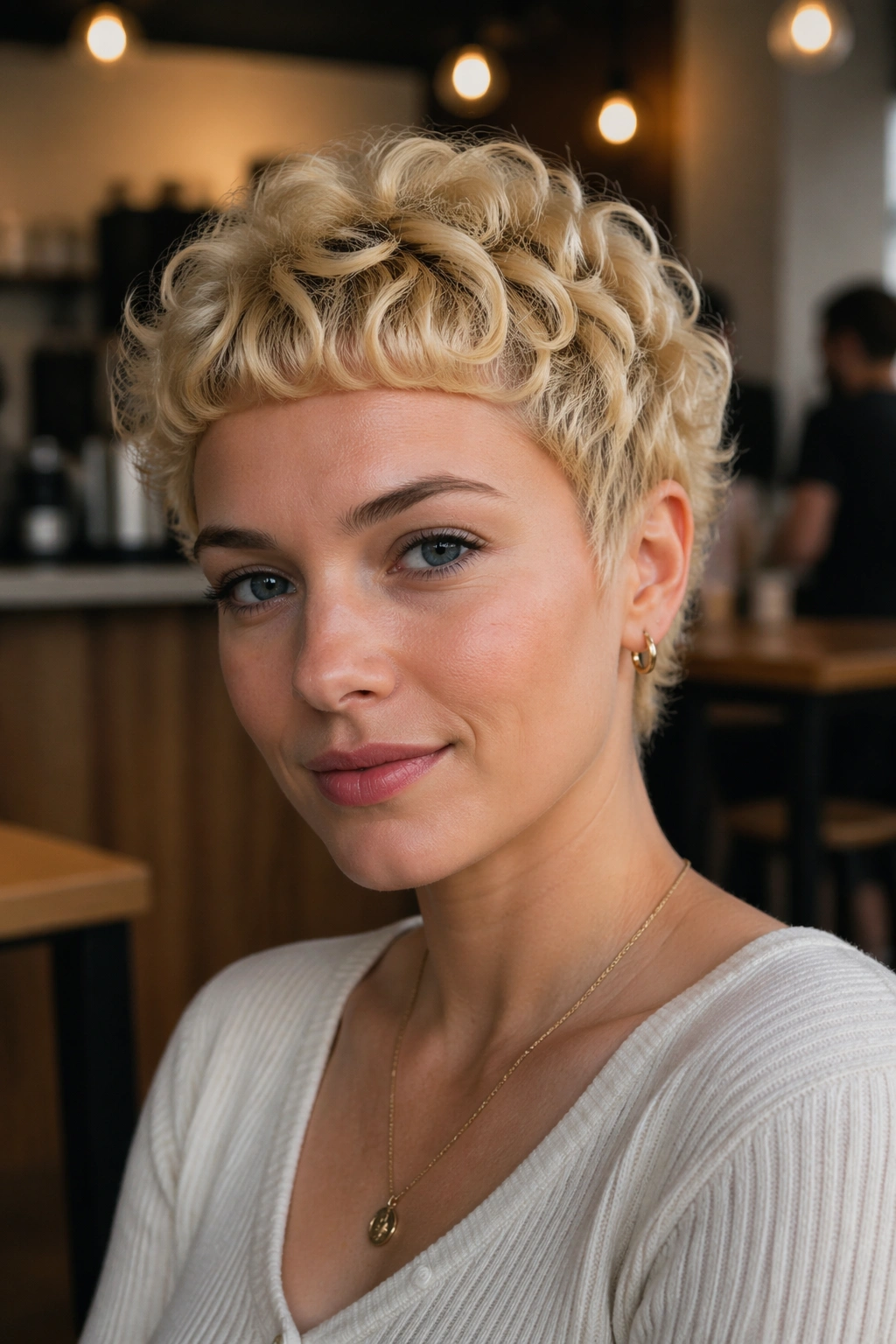
Micro bangs are a bold move. On curls, they can look sharp and modern, but only if the fringe is cut with shrinkage in mind. I’d never cut a curly micro fringe to the final length while it’s wet unless I wanted a forehead surprise later. Leave room. Always.
This crop works best on people who like a bit of edge and do not mind a little daily styling. A curly fringe that sits around 1 to 1.5 inches at the shortest point can bounce right up once it dries, so the cut needs to be slightly longer than it looks in the chair. Pair that with a blonde that has some depth — butter, beige, or pale gold — and the shape feels intentional instead of severe.
The rest of the crop should stay neat and close around the ears and nape, with enough length on top to keep the curls from looking like a flat brush cut. Piecey definition is the goal. A small amount of gel or mousse at the fringe and a touch of finger-coiling at the front usually does more than a blowout ever will.
Not for everyone. Fine. That is exactly why it works.
7. Chin-Grazing Curly Lob
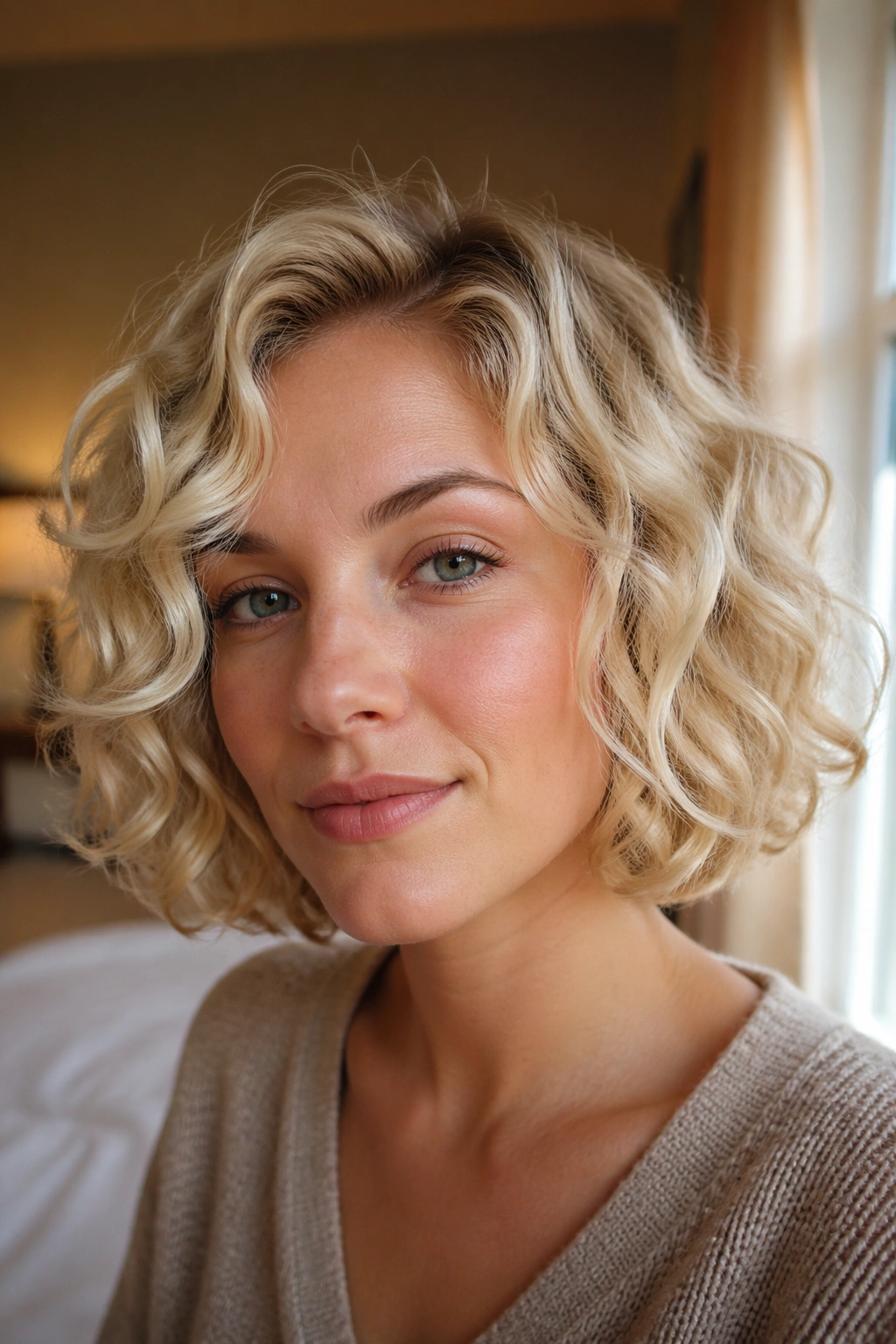
If your curls turn triangular when they get too short, a chin-grazing lob gives them room to breathe. It is long enough to hold shape, short enough to feel fresh, and just casual enough that you can pin one side back without it looking like a compromise. The blonde reads softly at this length, which helps a lot when the texture is thick.
A chin-grazing lob usually sits around 7 to 9 inches, depending on curl shrinkage and neck length. That sounds technical, but the difference matters. A curl pattern that shrinks a lot needs more literal length than you think. If not, the cut can bounce up and sit wide instead of clean.
I like this length for people who want versatility. It can look polished with a side part, loose and airy with a middle part, or a little undone if you rough it up with your fingers. Add lighter pieces around the face and slightly deeper blonde underneath, and the curls get dimension without looking stripey.
Keep the layers restrained here. Too many layers on a lob can make the ends feel thin, which defeats the point. Soft is better.
8. Asymmetrical Blonde Curly Bob
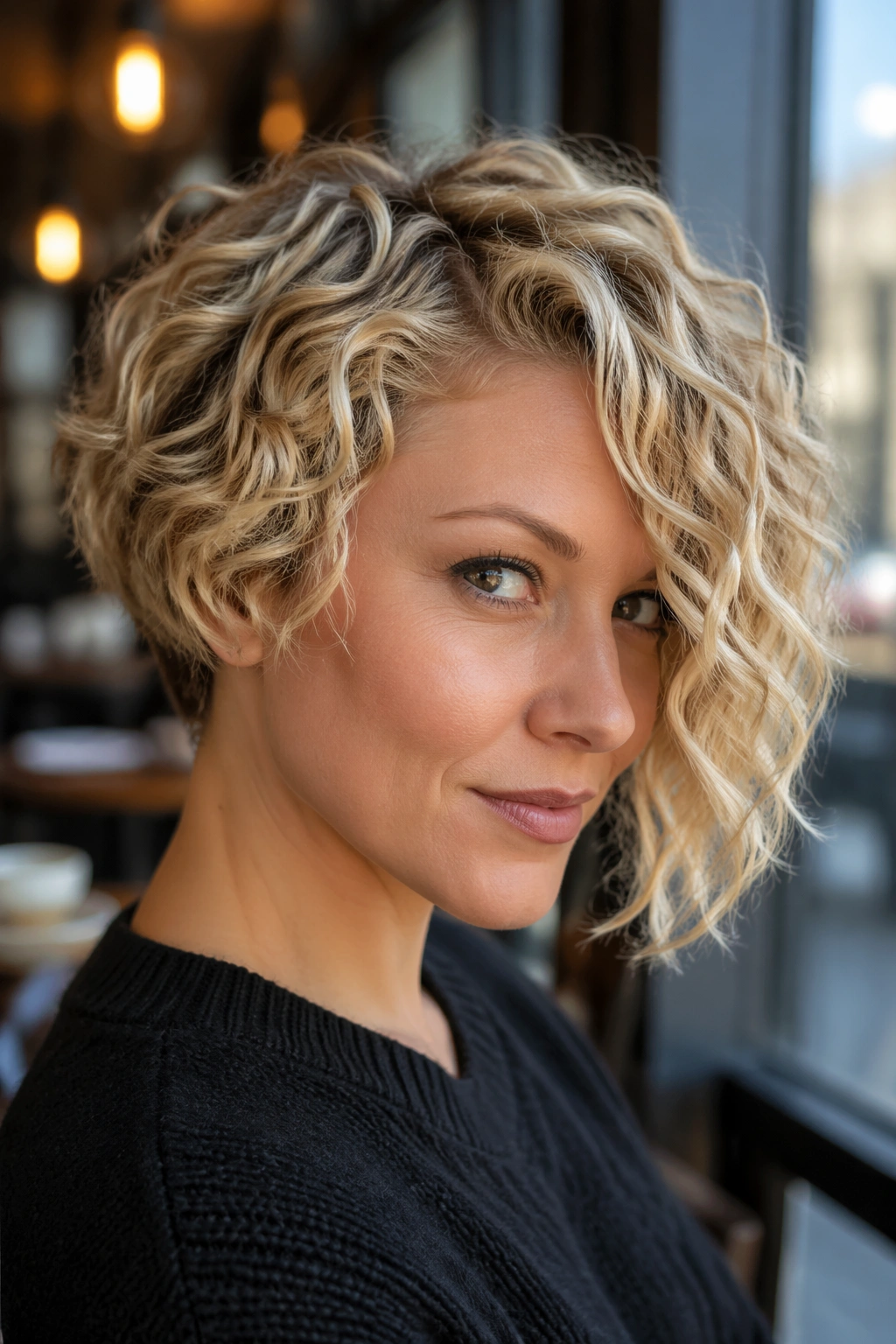
One side longer is not a gimmick when curls are involved. An asymmetrical blonde curly bob can make a face look more sculpted, especially if one side tends to fall flatter than the other anyway. The diagonal line gives the eye somewhere to go, and the curls keep it from feeling too rigid.
The difference between sides does not need to be dramatic. One to 1.5 inches is often enough to make the shape read as intentional. More than that and the cut can start to feel costume-y unless the texture is very strong. Blonde balayage or foiled ribbons can help the diagonal shape stand out, because the brighter side catches light first.
This is one of those cuts that looks better when the part is placed carefully. A deep side part can push the longer side forward and soften the jaw, while a centered part makes the asymmetry feel more graphic. Both work. Just not on every face.
If your hair is thick, ask for internal debulking so the shorter side does not balloon out. If it is finer, keep the ends blunt enough to hold the line. That difference matters more than people think.
9. Blonde Curly Mullet
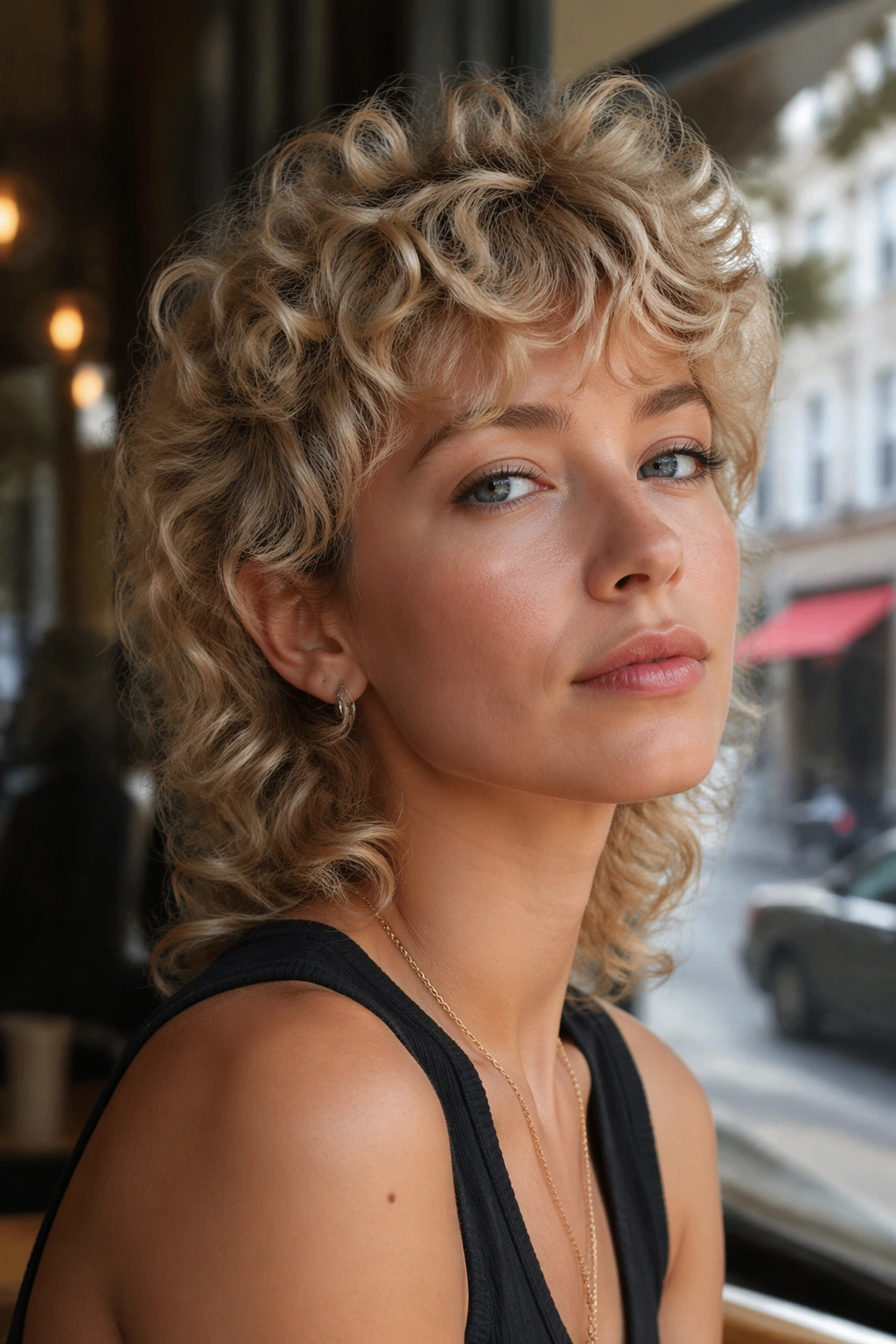
A blonde curly mullet sounds louder than it usually wears. On curly hair, the modern version is softer, more layered, and far more wearable than the old memory most people carry around. Shorter at the crown, a little longer at the nape, and fringed enough around the face to feel deliberate. That’s the whole trick.
How to keep it wearable
- Keep the crown layers feathered, not choppy.
- Let the nape stay 1 to 2 inches longer than the front.
- Choose sandy, wheat, or beige blonde for a softer finish.
- Use a light cream or foam, not a heavy oil.
The blonde color works especially well when there is dimension through the layers. A flat single-process blonde can make the mullet line look harsh. A mix of brighter pieces on top and softer lowlights underneath keeps the shape moving.
I know this cut can sound a little wild, but on dense curls it is often a relief. The short top gives lift, the longer back keeps it playful, and the whole thing dries with less bulk than a round bob. If you want a haircut with personality, this one has it.
10. Tapered Blonde Curly Afro
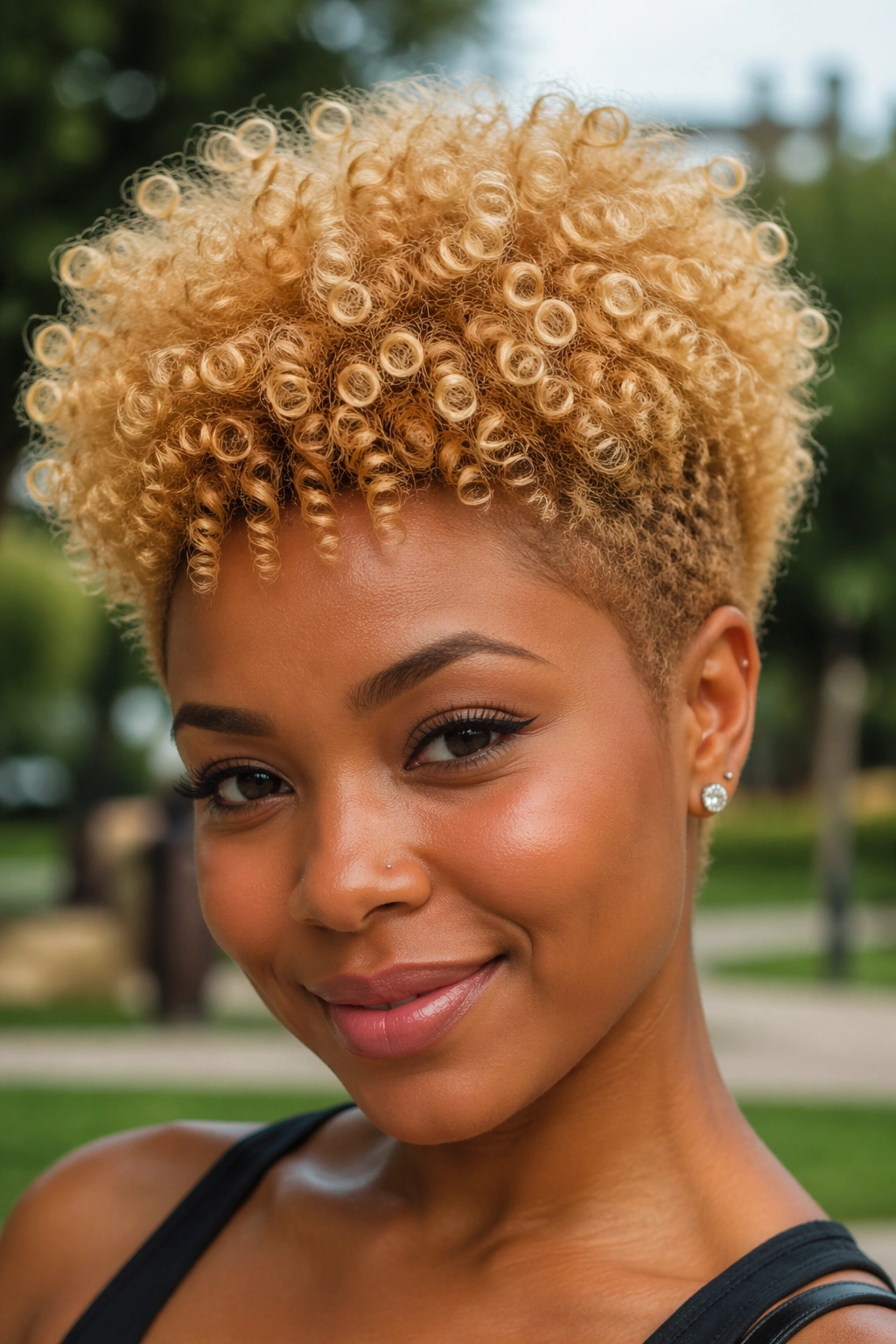
A tapered blonde curly afro has shape, height, and clean edges all at once. The crown stays round and lifted, the sides taper in, and the blonde brings a bright halo effect that looks especially good when the curls are defined from root to tip. It is one of the most flattering short curly blonde hairstyles for tighter coils because it respects the texture instead of flattening it.
The taper matters more than people realize. Clean sides and a shaped nape keep the silhouette from turning boxy, while the top stays full enough to show the curl pattern. If the blonde is too flat or too light everywhere, the style can lose depth fast. I prefer a mix of brighter tips, soft gold through the mid-lengths, and a little depth near the root so the shape keeps some shadow.
What to tell your colorist
A good plan is to lighten the outer curls and the top layer first, then decide whether the front needs more brightness. That keeps the hair from looking over-processed at the edges. If the curl pattern is fragile, highlights often make more sense than full saturation blonde.
This style loves moisture. A leave-in, a curl cream, and a diffuser on low usually beat any fancy styling trick.
11. Grown-Out Curly Crop with Shadow Root
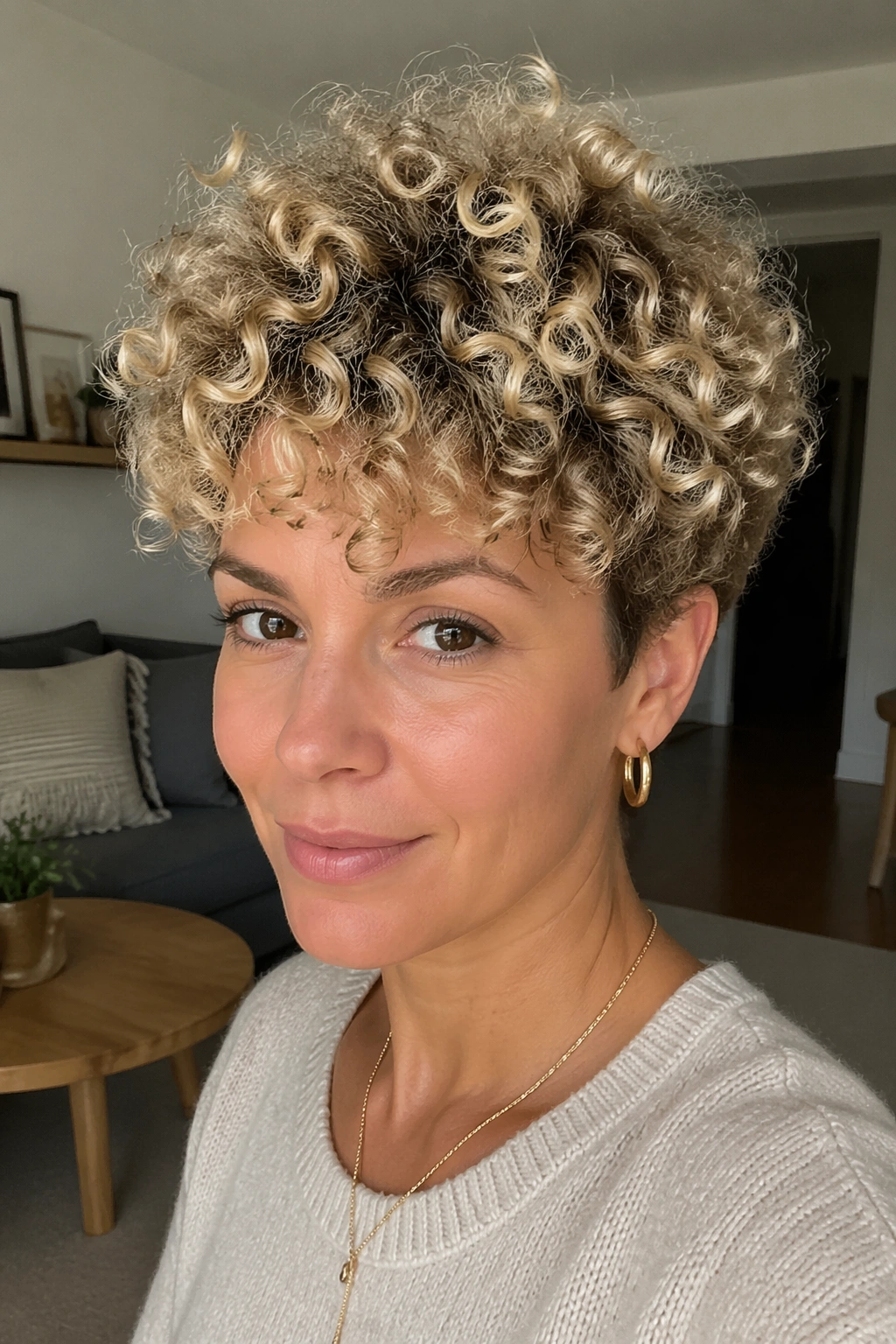
If you hate salon upkeep, this one earns its keep. A grown-out curly crop with a shadow root looks like it was meant to live for a while, not just for the first week after the appointment. The darker base softens the blonde and lets the cut age gracefully instead of showing every inch of regrowth.
The shape is usually somewhere between a pixie and a cropped bob, with enough length on top to push the curls around with your fingers. The back should stay slightly shorter so the outline stays neat as it grows. A half-inch extra in the nape can sound tiny, but that little bit gives the style room to evolve without turning into a helmet.
This cut is especially kind to people who air-dry and leave the house. A touch of mousse at the roots, a bit of cream through the ends, and a quick scrunch is often enough. The shadow root keeps the blonde from looking too icy, too fast, and that helps if you prefer a softer finish.
Not flashy. Better than flashy, honestly. Easy to live with.
12. Deep Side-Swept Blonde Curly Bob
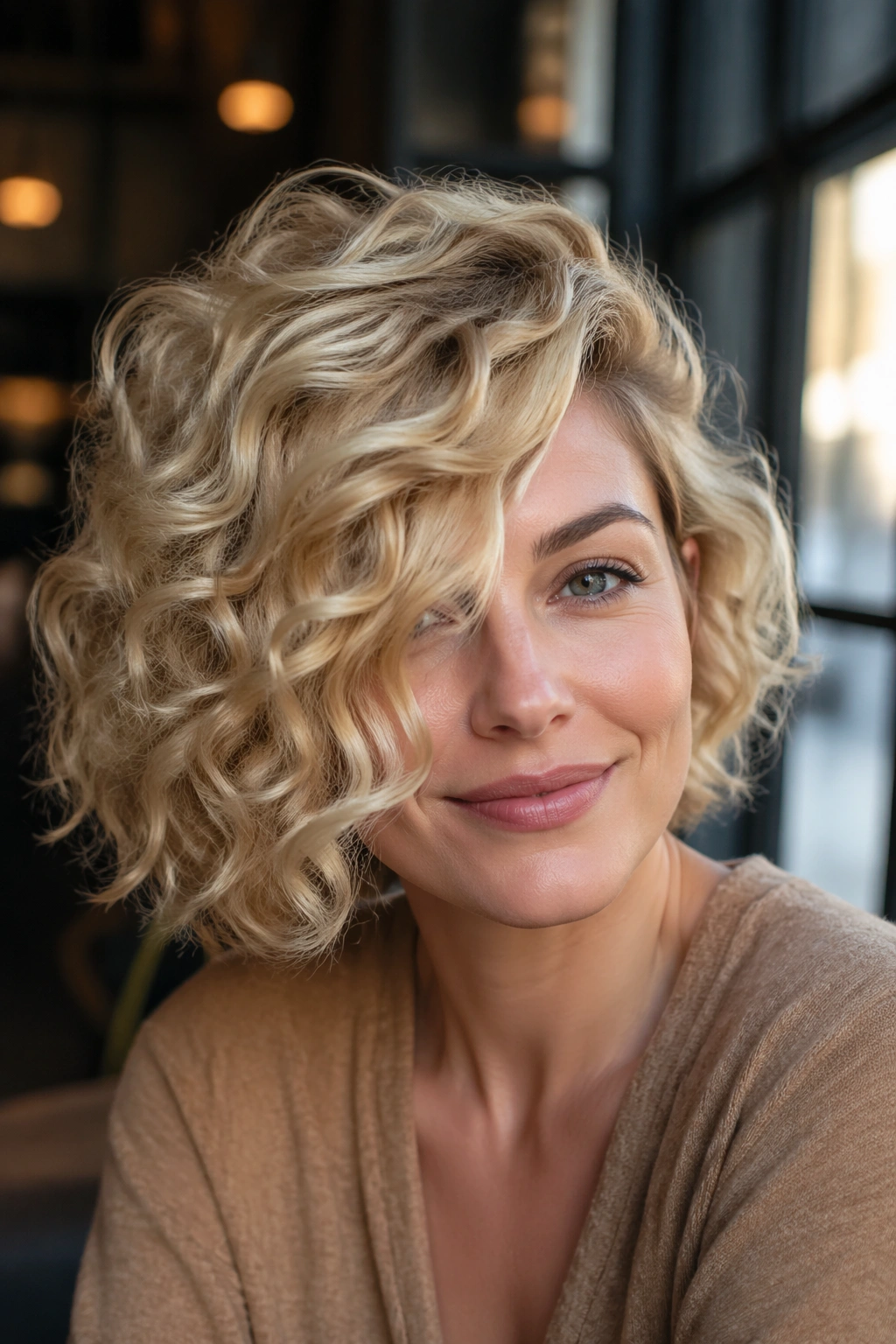
Need a little lift at the forehead? A deep side-swept blonde curly bob does that without asking the rest of the hair to work harder than necessary. The side sweep creates instant movement, and the bob length keeps the curls bouncing instead of hanging. It’s one of my favorite ways to soften a strong jaw or balance a longer face.
The part usually sits about 2 inches off center, though that depends on your growth pattern and crown swirl. Once the hair is dried in that direction, the heavy side can fall across the forehead in a soft arc. Blonde highlights placed along that sweep make the motion easier to see, especially if the base color stays a shade deeper underneath.
A bob like this likes a little root support. A bit of mousse at the scalp, a clip at the part while drying, and a gentle diffuse can make a big difference. You do not need to blow it flat. In fact, that would ruin the charm.
One good thing about this shape: it does not have to be polished to look finished. A few uneven curls along the sweep make it better.
13. Flipped-Out Curly Bob
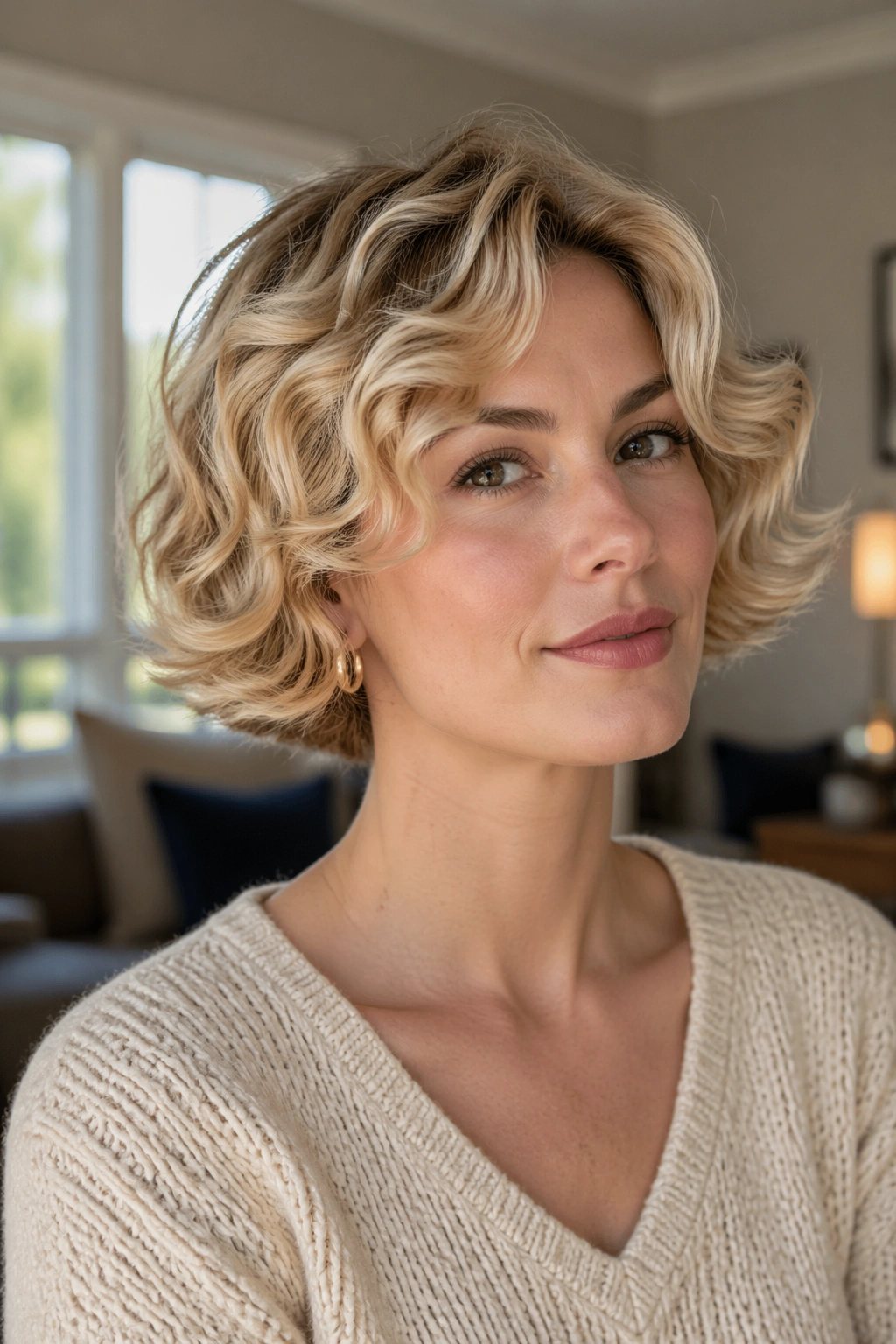
The flipped-out curly bob has a little retro energy, but it does not feel stuck in the past. On curls, the flip often happens on its own once the length lands in the right place. The ends kick out, the blonde shows movement at the edges, and the whole haircut gets a lighter feel.
This works best when the bob hits around the mouth or jaw and the ends are not over-layered. If the cut is too shattered, the flip can disappear into fuzz. A little structure helps. A soft cream or gel cast can encourage the curl to hold its bend, and a round brush used only on the last inch of the ends can coax the shape if your texture needs it.
I’d choose warmer blonde tones here — butter, beige, or pale gold — because they keep the style soft. Very cool blonde can make the ends feel a little stiff, especially if the curl pattern is loose. That is not a rule, just a pattern I keep noticing.
Stiff ends ruin it.
14. Blunt Curly Bob with Interior Layers
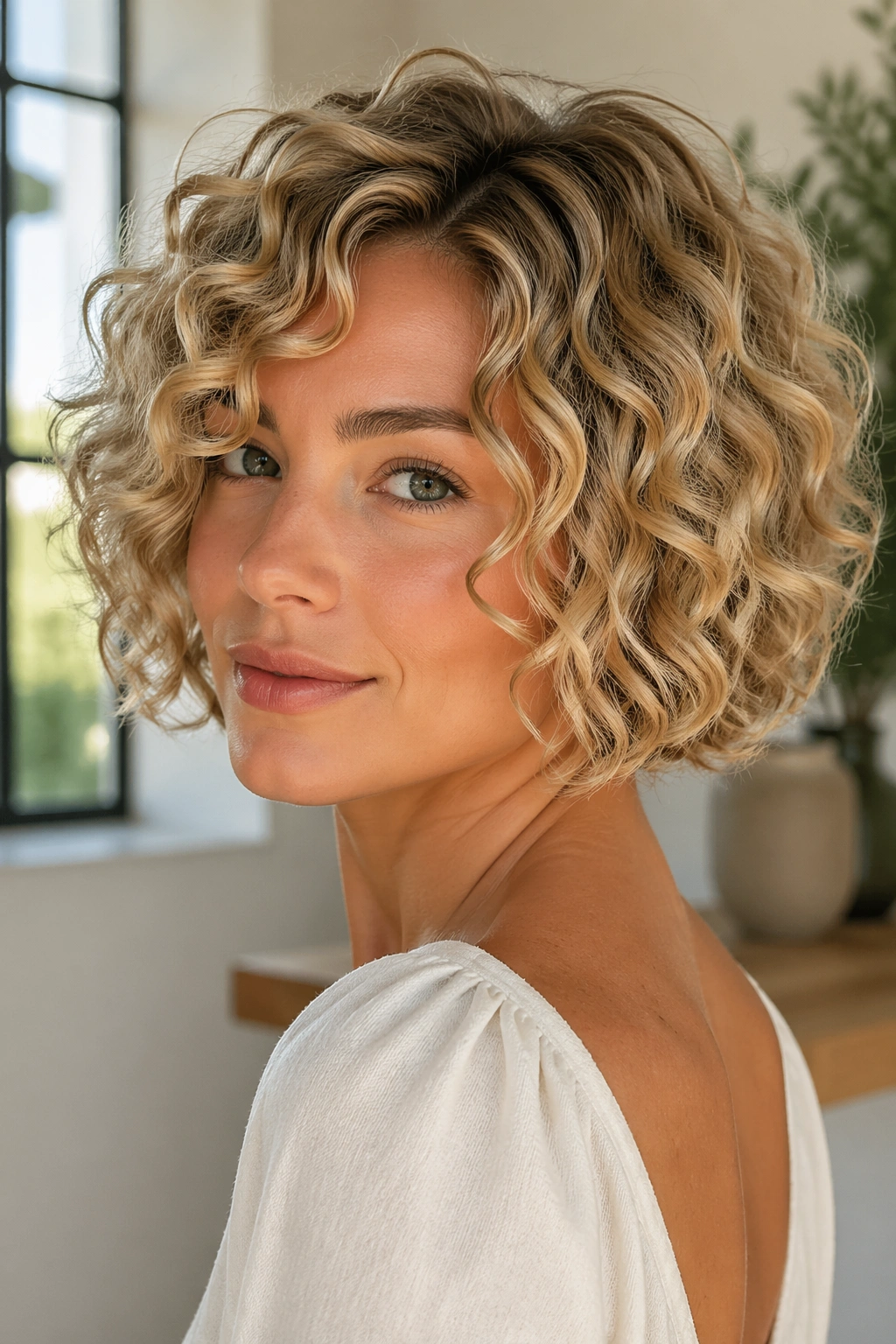
Blunt does not mean heavy. That is the whole reason this cut works. A blunt curly bob with interior layers gives you a strong outer line and enough hidden removal inside to keep the curls from mushrooming out. If your hair is dense, thick, or wide at the sides, this shape can be a lifesaver.
Cutting it the right way
- Keep the perimeter at the chin or just below it.
- Place interior layers in the crown and upper sides.
- Leave enough length for the curls to form clean bends.
- Avoid too many short pieces around the ears.
The blonde color shows the structure even more. A blunt edge looks sharper when the highlights are placed in soft panels rather than sprinkled randomly everywhere. That gives the eye a line to follow. It also keeps the bob from turning frizzy at the bottom, which is a common problem when too many light pieces sit right on the perimeter.
This is a good choice if you want polish but still need curl movement. It’s tidy, but not stiff. The haircut does the discipline; the curls get to be themselves.
15. Undercut Blonde Curly Pixie
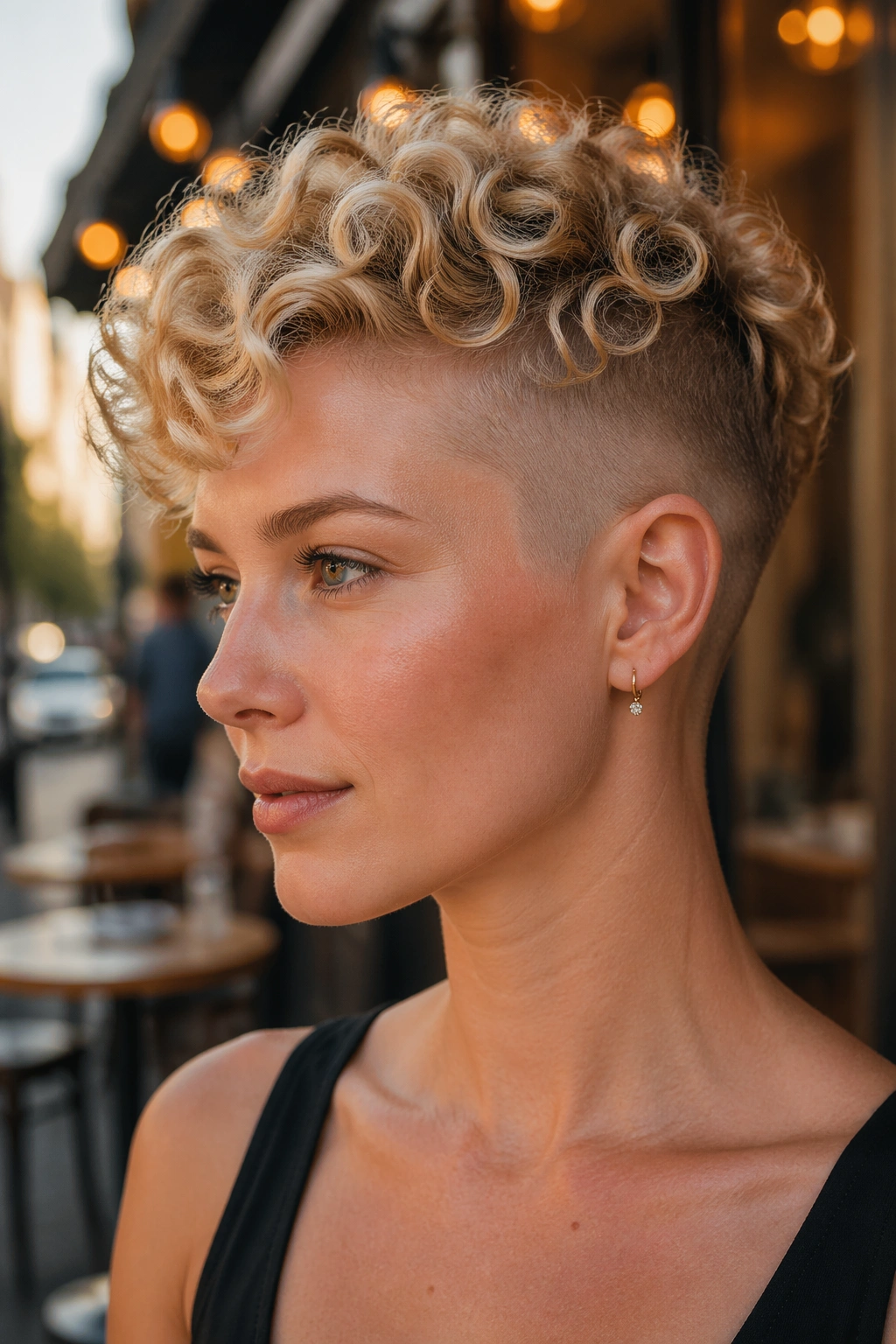
This is the shortest, sharpest version in the group, and it is not shy. An undercut blonde curly pixie puts the focus on the curls up top by removing bulk from the sides and nape. That means more volume where you want it, less puff where you do not, and a clean line that keeps the whole cut from going fuzzy.
The undercut does not need to be extreme. A close clip around 1/4 to 1/2 inch at the nape and lower sides is often enough to change the shape completely. Leave more length on top — usually enough for the curls to coil and stack — and the blonde becomes the point of the style. Bright highlights on the upper layer or a soft all-over blonde can both work, depending on how light you want the final look.
Who should think about it
- People with dense curls who want less width.
- Anyone who likes a quick styling routine.
- Heads that sit a little flat on top and need lift.
- Curls that hold shape well after a diffuse.
The grow-out needs attention. Letting the sides go too long can erase the whole point, and the pixie starts feeling busy instead of clean. Keep trims regular, keep the top soft, and the cut stays sharp.
Final Thoughts
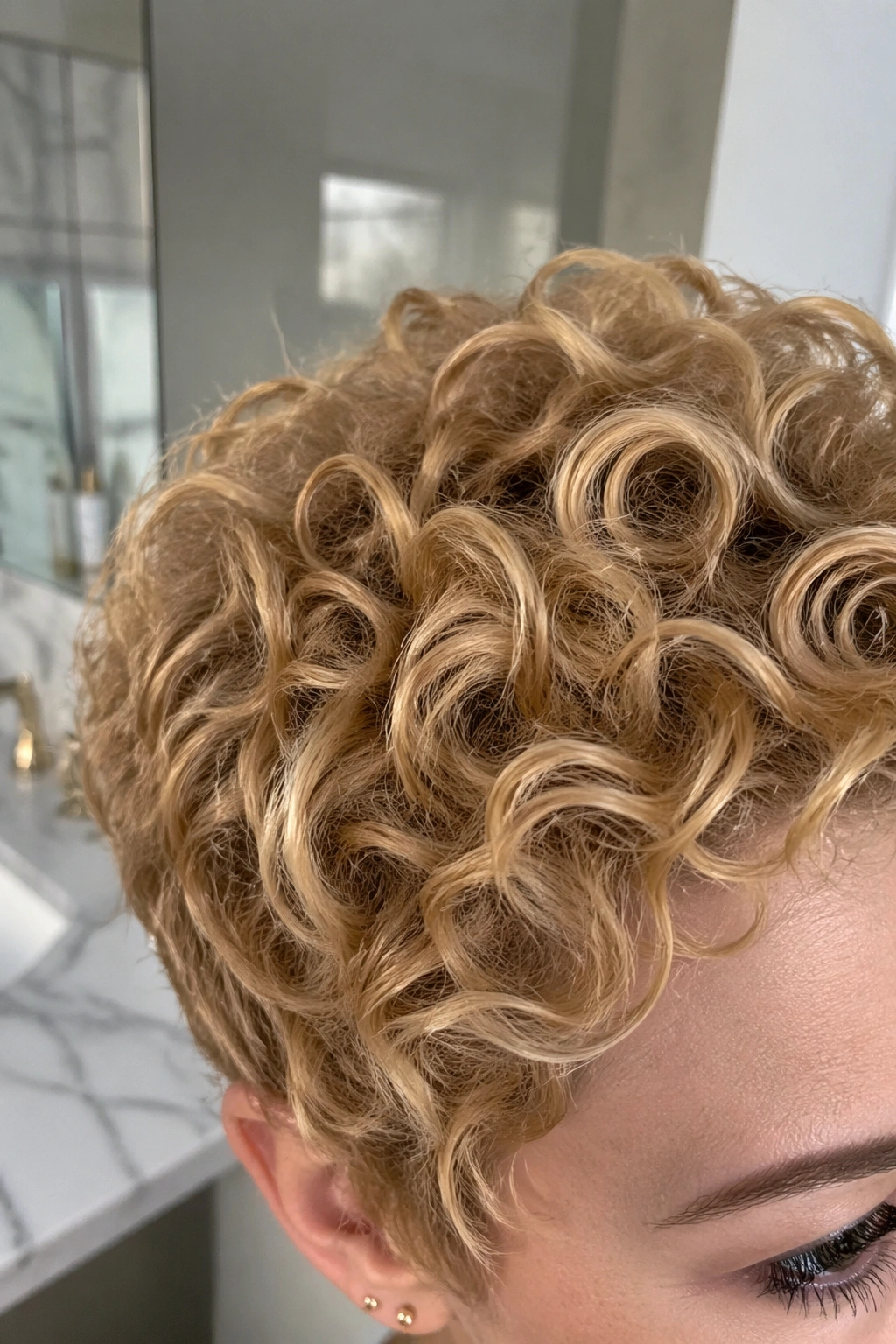
The strongest blonde short curly hairstyles all do the same quiet job: they give the curl pattern a shape worth showing off. Some lean soft and face-framing. Some feel edgy. A few are low-maintenance in a way that is almost suspiciously practical. The trick is matching the cut to the curl, not forcing the curl to obey the cut.
If you want the easiest visual payoff, a rooted bob or tapered crop is hard to beat. If you want more attitude, the shag, mullet, or undercut pixie brings it fast. And if your color tends to go flat, choose a blonde with depth at the root or through the underside so the shape still has shadows to work with.
The little details matter more than the label on the haircut. Dry-check the outline. Ask where the shortest layers will land once your curls shrink. That one conversation can save you from a style that looks good only while you are sitting still.