



Short hairstyles for fine curly hair work best when the cut does the heavy lifting. That sounds obvious, but it’s the part people miss. Fine curls can look airy and elegant, or they can look stretched, stringy, and tired by midmorning, and the difference usually comes down to shape rather than curl pattern.
Fine hair and thin hair are not the same thing, and that matters more than most people realize. Fine describes the width of each strand; density describes how many strands you have. So you can have a head of fine curls that still feels full, provided the cut doesn’t drag the curl pattern down with too much length or too much weight.
The sweet spot is usually a shape that lets curls stack, bend, and spring back into one another. A little removal at the right place can create lift. Too much removal in the wrong place can leave little see-through gaps that show every scalp line and every bad styling day. That’s why the best short curly styles aren’t just cute shapes on a mood board. They’re practical little architecture projects.
1. The Soft Curly Pixie That Leaves Length on Top
A curly pixie is one of those cuts that can look expensive without trying too hard. The trick is keeping the top long enough for the curls to form little coils or bends — usually around 2 to 4 inches — while the sides and nape stay close enough to stop the whole shape from puffing out in the wrong places.
Why It Works for Fine Curls
Fine curls need lift more than bulk. A pixie gives you that by concentrating the weight where you want the eye to go: at the crown, the fringe, or just slightly forward of center. If the top is cut with a soft point or a little asymmetry, the hair looks fuller than it is.
Keep the back clean. Seriously.
- Best for loose curls through medium spirals
- Ask for soft point cutting on top, not blunt chopping
- Style with a pea-sized mousse at the roots
- Diffuse until about 80 percent dry, then let the rest air-dry
The other nice thing about a pixie on fine curls is that it gets better on day two. The shape settles, the curl clumps tighten a little, and the whole cut often looks less precious than it did fresh from the salon.
2. The Tapered Crop That Helps Fine Curls Rise
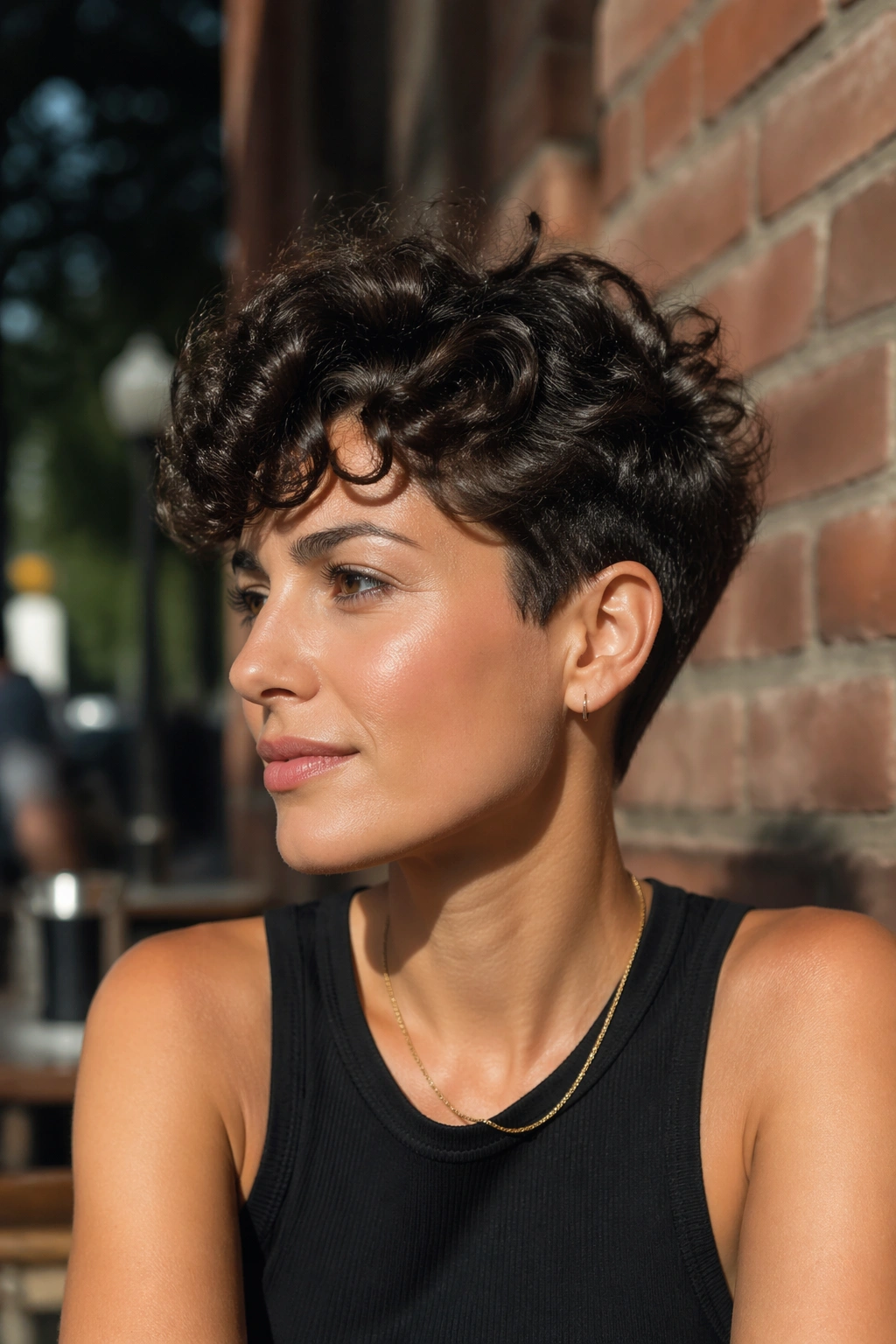
The taper is the magic here. When the nape and sides are cut shorter than the top, the eye reads height and fullness even if the actual hair is fine. That’s a big deal for curls that tend to collapse around the ears.
A tapered crop is especially good if you like a tidy silhouette. It keeps the neckline neat and the sides controlled, which means the top can stay a little softer and rounder without looking helmet-like. That balance is hard to fake with styling alone. The cut has to do it.
Ask for a gradual taper, not a hard fade unless you want a much edgier look. A softer taper usually blends better with curls because the texture itself already creates movement. If the stylist leaves a touch more length around the temples, you also avoid the “too bare” feeling that can happen with fine hair.
This is one of those cuts that looks especially good when the curls are allowed to dry in their natural direction. No over-brushing. No stretching. Just a little product and some patience.
3. The Bixie Cut for Fine Curly Hair
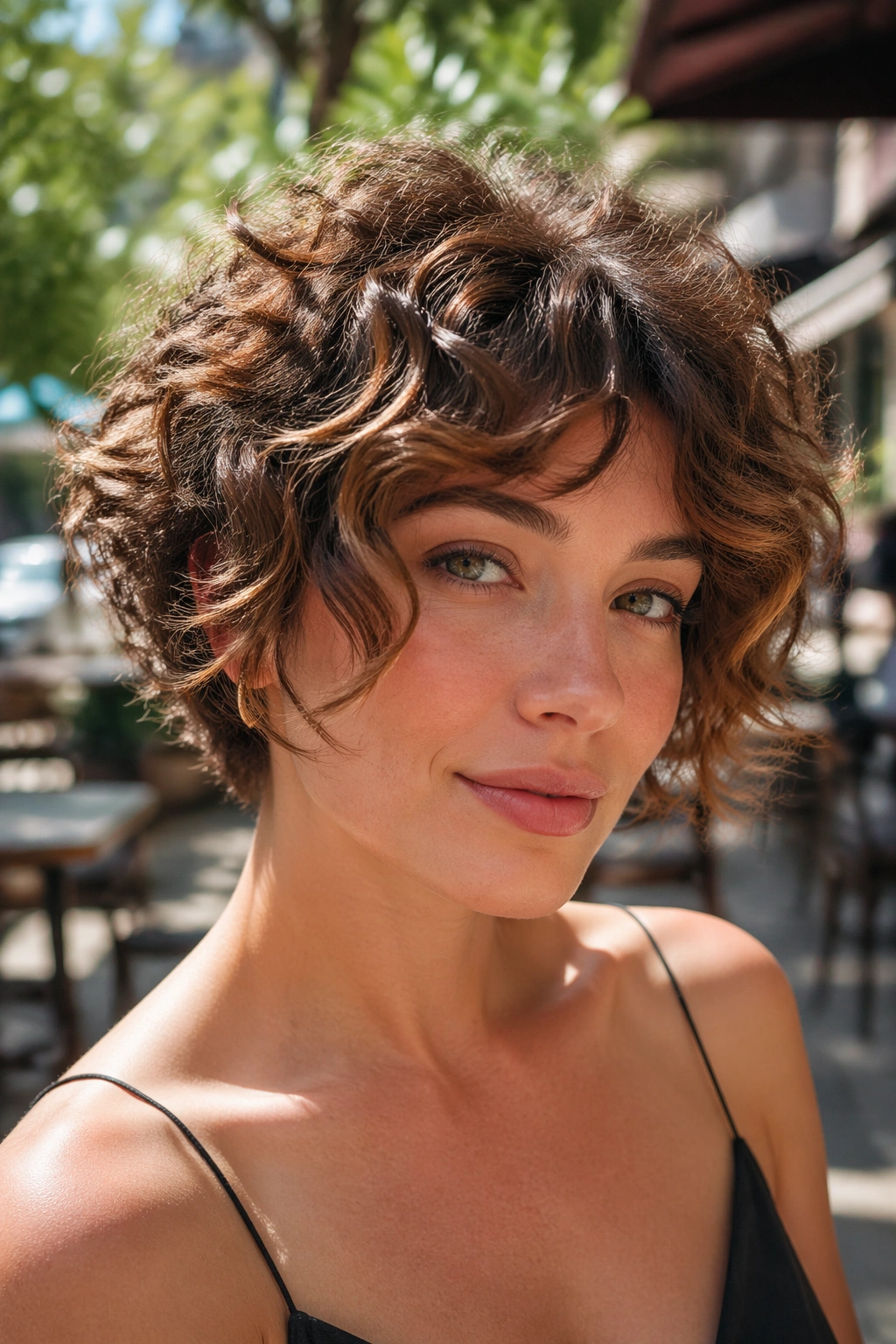
What do you get when a bob and a pixie stop arguing? A bixie. It’s short, but not severe, and that middle ground is exactly why fine curls often look good in it. You get enough length to show off curl pattern, yet not so much that the strands weigh each other down.
How to Wear It
The bixie usually sits somewhere around the cheekbone to the top of the neck, with shorter layers at the back and a little more softness around the face. That extra bit at the front is useful. It gives the cut some swing, and swing is half the battle with fine curls.
- Keep the front pieces slightly longer than the crown
- Ask for light internal layering, not chunky steps
- Try a side-swept fringe if your forehead feels too open
- Use a light gel only on the ends if frizz is your main problem
The bixie works best when the curl pattern has a bit of spring. Loose waves can wear it too, but the shape gets prettier as the curls get more defined. It’s a cut with personality. A little messy is part of the charm.
4. The Chin-Length Curly Bob With a Clean Edge
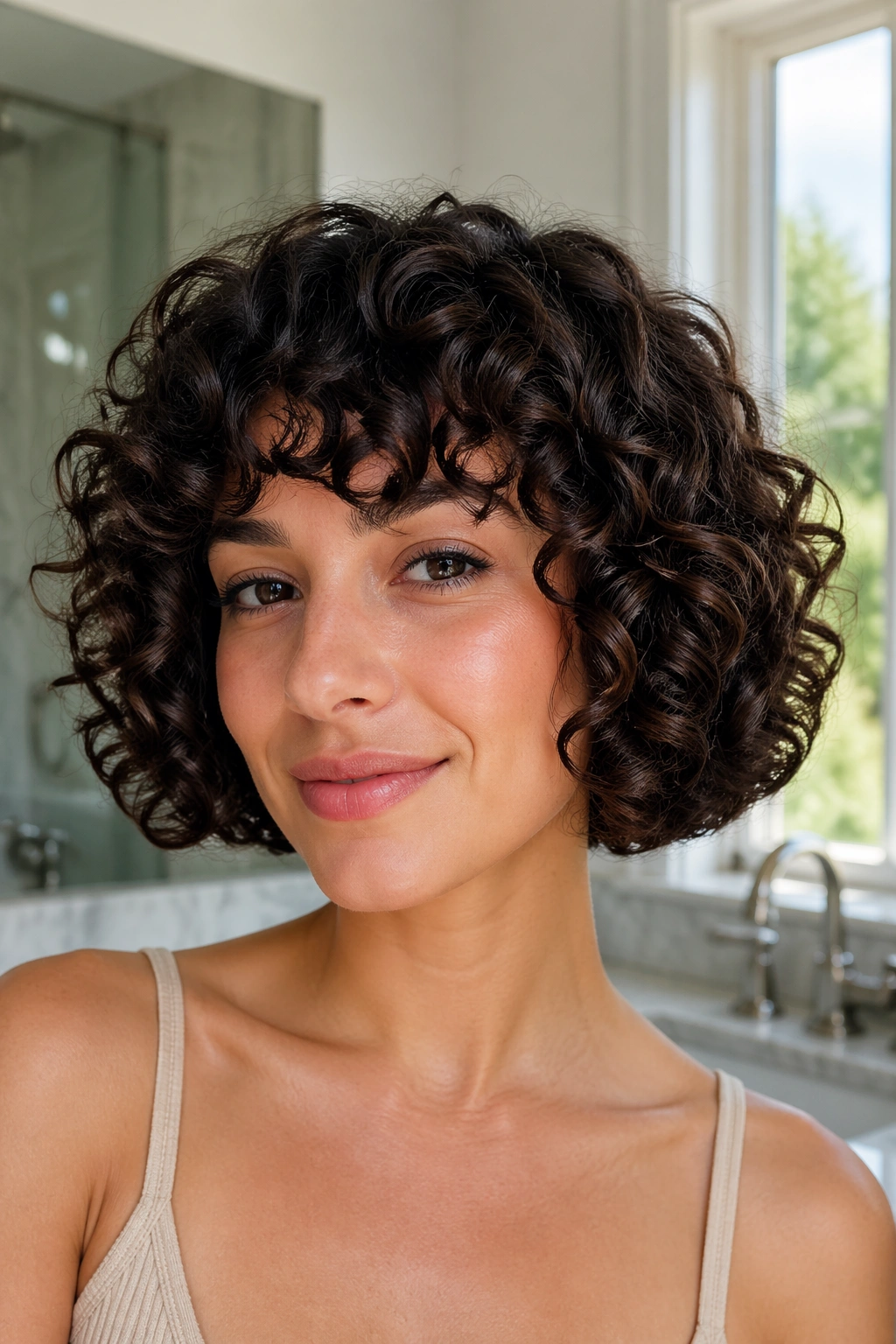
A chin-length bob can make fine curls look denser than they actually are, and that’s not a trick so much as good geometry. The line sits right where people notice the face, and because the ends gather at one level, the eye reads a fuller outline.
A blunt perimeter is not boring here. It’s load-bearing.
The key is not to shred the interior too much. Fine curly hair usually looks best with a perimeter that feels solid, plus a few careful layers if the curl pattern needs room to move. If the bob gets over-layered, the bottom starts to look see-through, and then the whole thing loses its punch.
This cut shines when the curls land just under the jaw or right at the chin. That length frames the face, keeps the hair off the shoulders, and gives you enough shape to tuck one side behind the ear without ruining the whole style. Ask your stylist to check the curl shrinkage while cutting, because wet hair can lie about almost everything.
5. The French Bob With a Curly Fringe
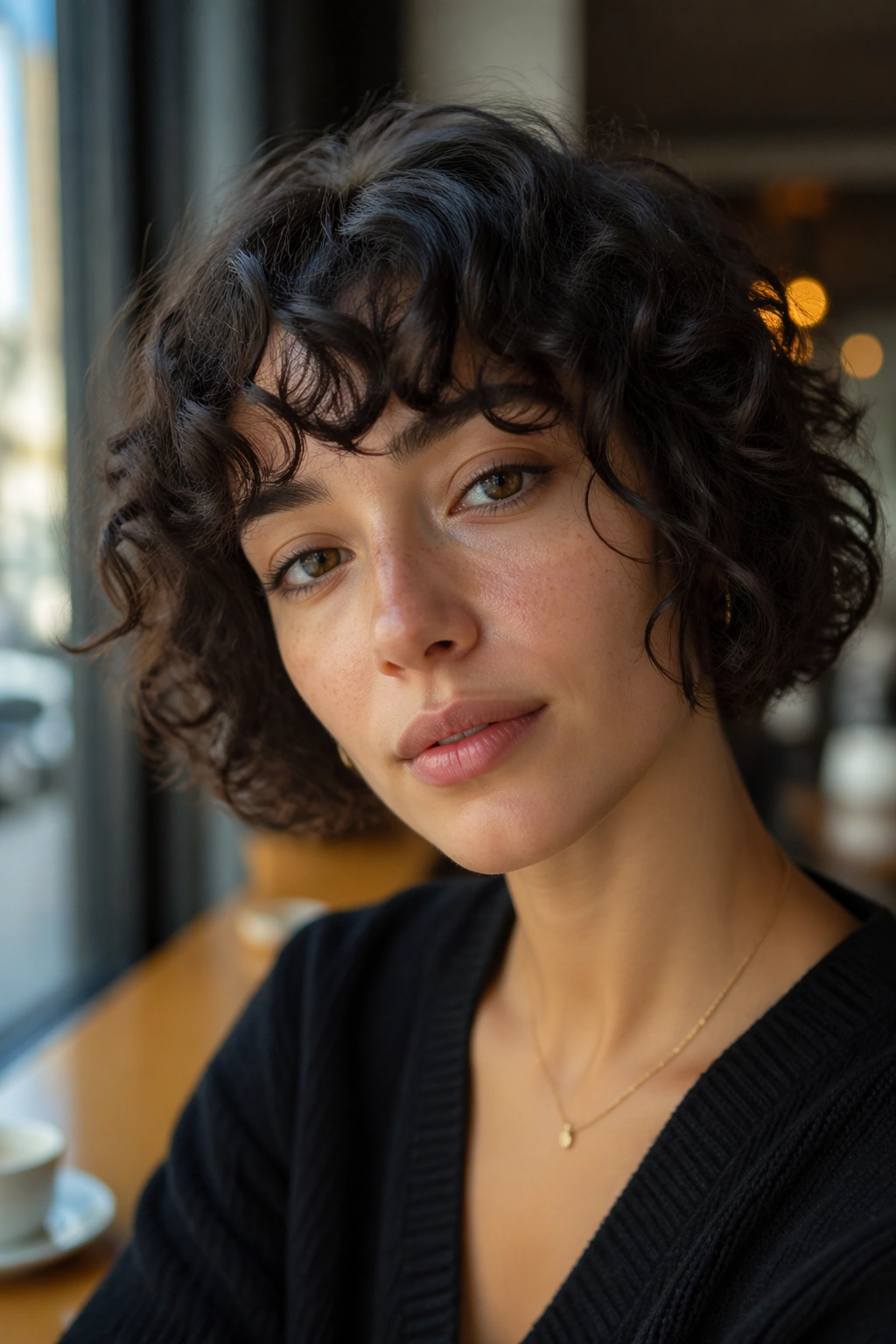
A French bob on fine curls has a slightly rebellious feel, which is probably why people keep coming back to it. The shape is short, sharp, and face-first: usually around the jawline or a touch above it, with a fringe that brushes the brows or stops just there.
If you’ve ever wanted a cut that makes your curls look deliberate instead of merely “natural,” this is a good one.
What Makes It Different
The fringe does a lot of the work. On fine curls, a curly fringe can add weight right where the eye lands, so the whole haircut seems richer. The rest of the bob stays compact, which keeps the silhouette from spreading out too much at the sides.
- Fringe usually looks best when it sits 1 to 2 inches above the brows once dry
- Ask for the bangs to be cut dry or nearly dry
- Keep the perimeter soft, not razor-sliced
- Use a tiny bit of foam on the fringe so it doesn’t frizz into a cloud
The catch is shrinkage. A curly fringe can spring up more than you expect, and nobody enjoys bangs that hover halfway up the forehead. Leave a little extra length at the cut, then let the curls reveal where they really want to sit.
6. The Rounded Bob That Builds a Fuller Outline
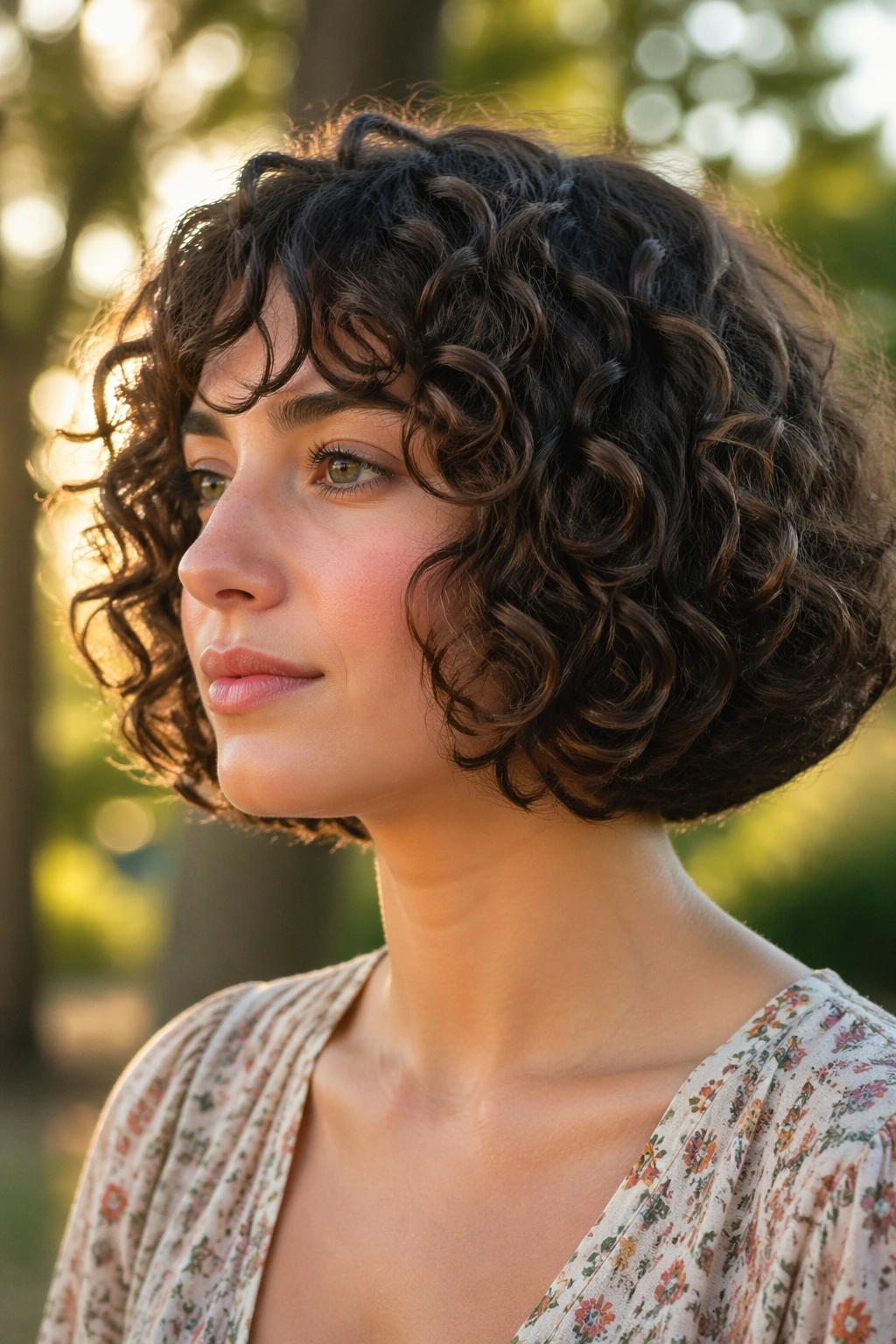
A rounded bob is for the days when you want the haircut to do the volume work before you touch a diffuser. The shape curves inward slightly at the ends and holds a soft dome around the head, which can be very flattering on fine curly hair that tends to sag when it gets long.
Unlike a flat bob, this one is meant to keep a sense of lift from crown to chin. The silhouette feels a little more polished, but not stiff. The curls stack in a way that makes the whole cut look thicker from the front and the side.
This style usually works best when the stylist leaves enough weight at the bottom to keep the line intact. Too many layers, and the curve disappears. Too little, and the hair can balloon in the wrong spots. The sweet spot is somewhere in between, with subtle shaping around the cheekbones and a clean finish around the neckline.
If your curls are finer but fairly dense, a rounded bob can be a smart choice. It gives you body without turning into a triangle.
7. The Short Curly Shag With Airy Layers
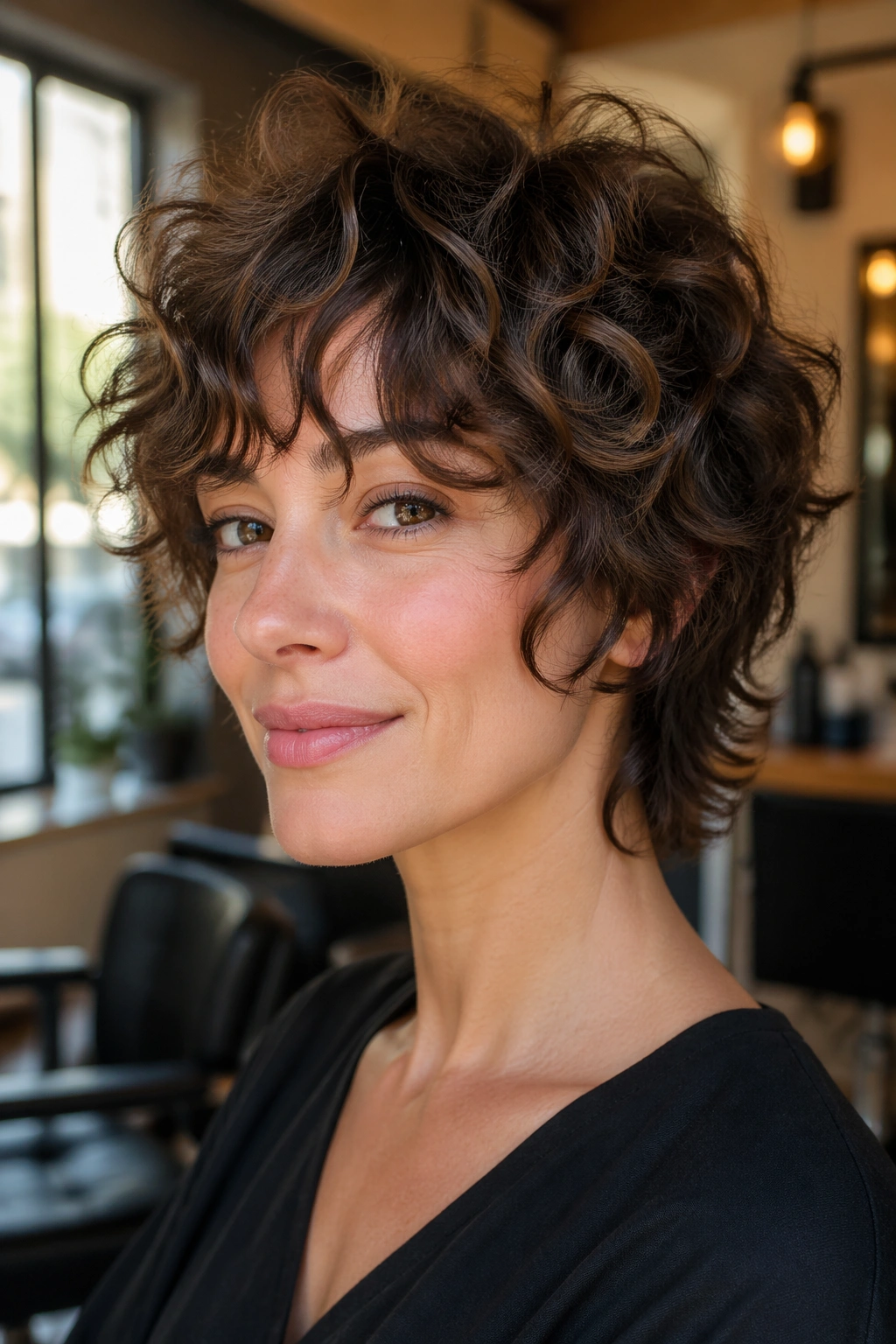
Layered does not have to mean thin. That’s the first thing to understand about a short curly shag. Done well, it lifts the crown, opens up the sides, and gives fine curls room to separate into soft clumps instead of one heavy block.
What to Ask For at the Salon
A good shag on fine curls is usually built with light, strategic layering around the top and face. The shortest pieces might hit the cheekbone or jaw, while the back stays just long enough to keep the outline from getting choppy. It’s less about volume everywhere and more about putting volume where the cut naturally wants to stand up.
- Keep the crown layers soft and blended
- Ask for face-framing pieces that start around the cheekbone
- Avoid aggressive razor work if your ends frizz easily
- Style with a diffuser and lift the roots while drying
This cut is a little more casual than a bob. I like that about it. It doesn’t pretend to be neat, and on fine curls that can be a gift, because a tiny bit of movement hides a lot of thin-looking spots.
8. The Curly Mullet Lite With Shorter Sides
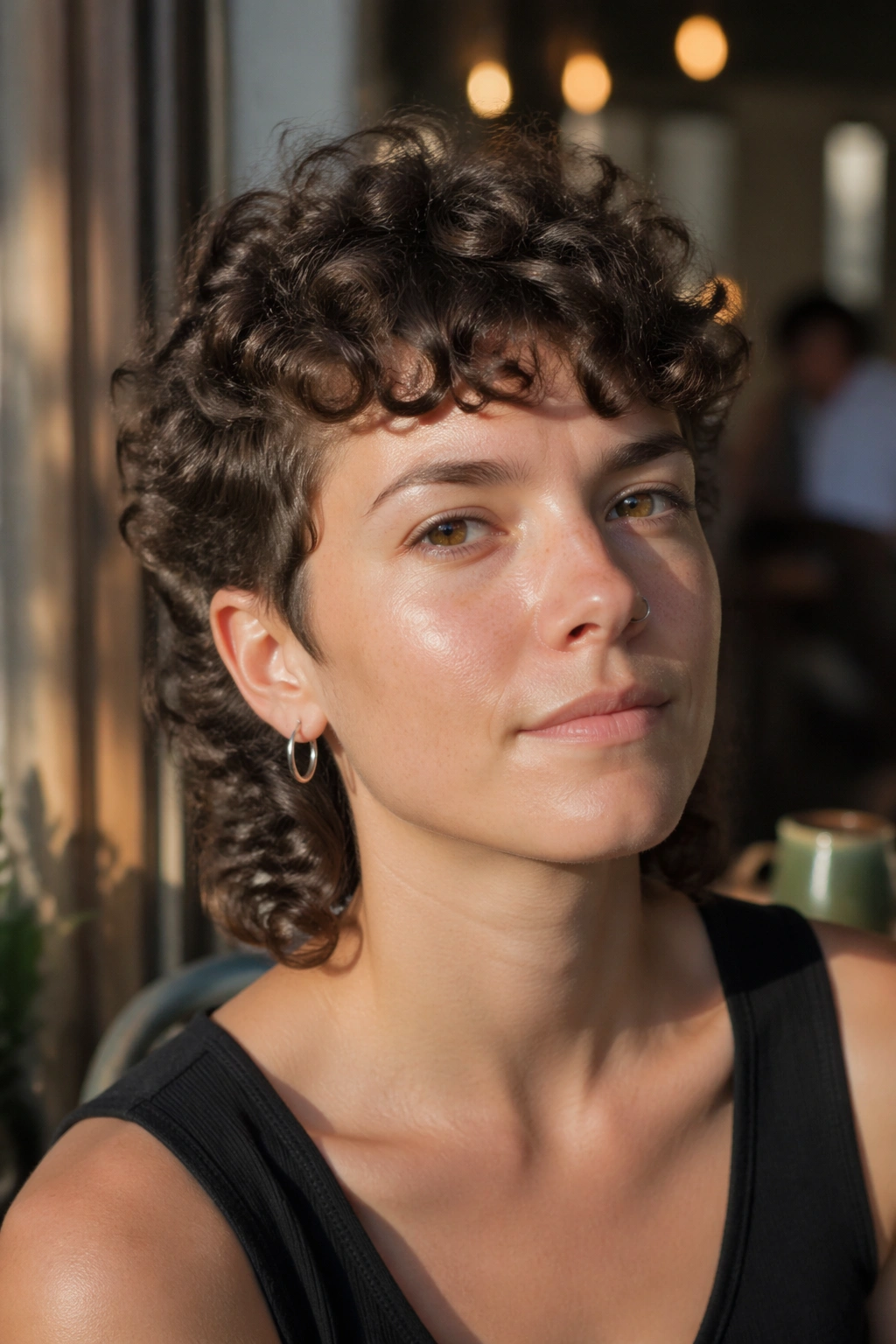
A curly mullet lite is not trying to be cute. It’s trying to make a short haircut look like it has more shape than it physically should, and on fine curls, that can be a very good thing. The front and sides stay short enough to feel lively, while the back keeps a little extra length for movement.
The important word here is lite. You do not want a full retro throwback unless that’s the point. The modern version is softer, more wearable, and less dramatic in the back. The cut works because it creates contrast: close at the temples, fuller at the crown, and a touch longer at the nape.
That contrast is useful for fine hair because it gives the illusion of density. If everything is the same length, fine curls can flatten into a single shape. A slight difference in length keeps the eye moving. It also lets you style the top with a bit of lift without worrying that the back will collapse under it.
It’s a fun cut, honestly. Not for everyone, but fun.
9. The Asymmetrical Bob That Breaks Up Flat Spots
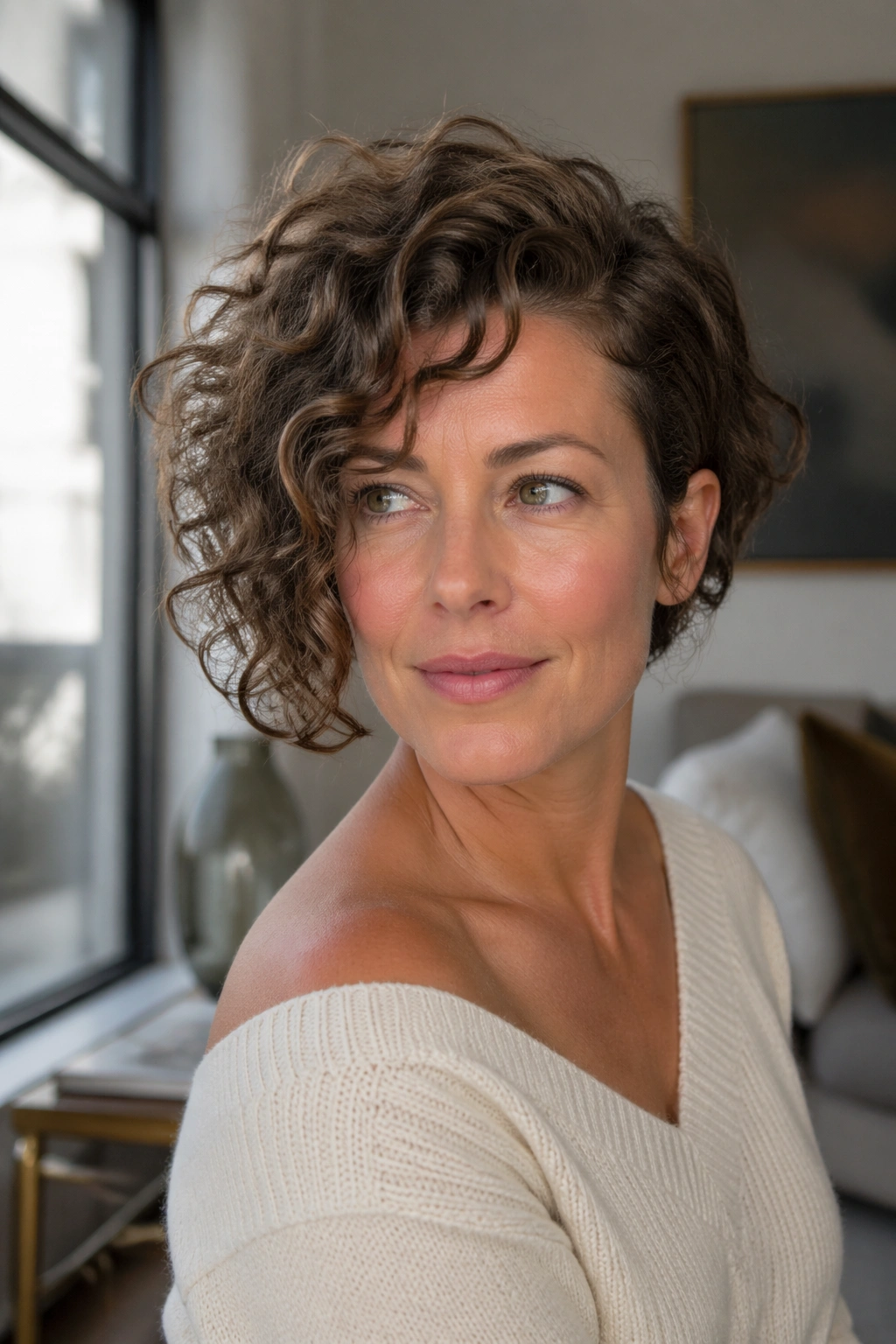
If one side of your hair always goes limp, why fight it? An asymmetrical bob solves that problem by making the imbalance part of the design. One side sits a little longer — often just half an inch to 1 inch longer — and the cut suddenly feels more intentional.
The best version of this style is subtle. You want the difference to create movement, not scream for attention. Fine curls love this because the slight unevenness keeps the outline from reading as thin or predictable. It also gives the front a little drama, which is helpful if your curl pattern falls flatter near the temples.
A side part makes this cut even better, especially if the longer side falls toward the cheekbone. That adds a diagonal line, and diagonals are your friend when you want hair to look fuller. They break up the soft, round edges that can make fine curls seem sparse.
Maintenance matters here. A sharp asymmetrical line grows out into something messy faster than a symmetrical bob does, so plan for trims that keep the difference clean.
10. The Side-Part Crop That Lifts the Front
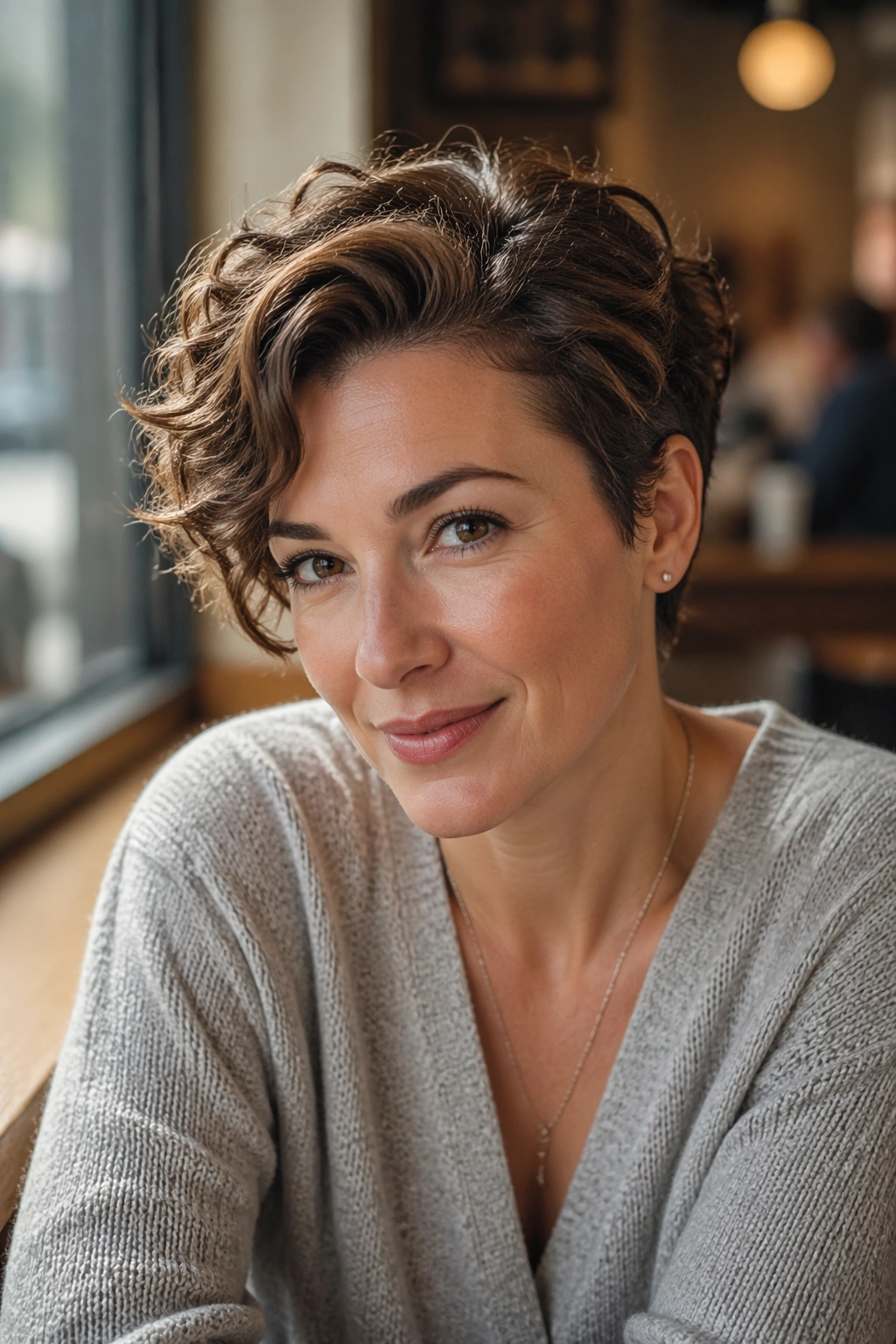
A deep side part can rescue a lot of fine curly hair, and sometimes that’s all you need. The haircut itself can stay simple, close, and short, but the part shifts the volume forward and creates instant lift where the eye notices it most.
How to Style It
For this cut, the top usually lands around the brow, temple, or upper cheekbone, with shorter sides that don’t fight the part. The front gets a little sweep, the crown gets a little height, and the whole shape feels more alive than a center-part crop would.
- Move the part about 1 to 1.5 inches off center
- Clip the roots at the crown while the hair dries
- Direct the front hair away from the face first, then let it fall back
- Use a lightweight mousse, not a heavy cream
This is one of the easiest short hairstyles for fine curly hair when you want movement without a big cut commitment. The styling trick is tiny, but it changes the balance of the whole head. You can get a surprising amount of volume out of a few inches of hair if the part is working in your favor.
11. The Ear-Length Cut That Barely Skims the Jaw
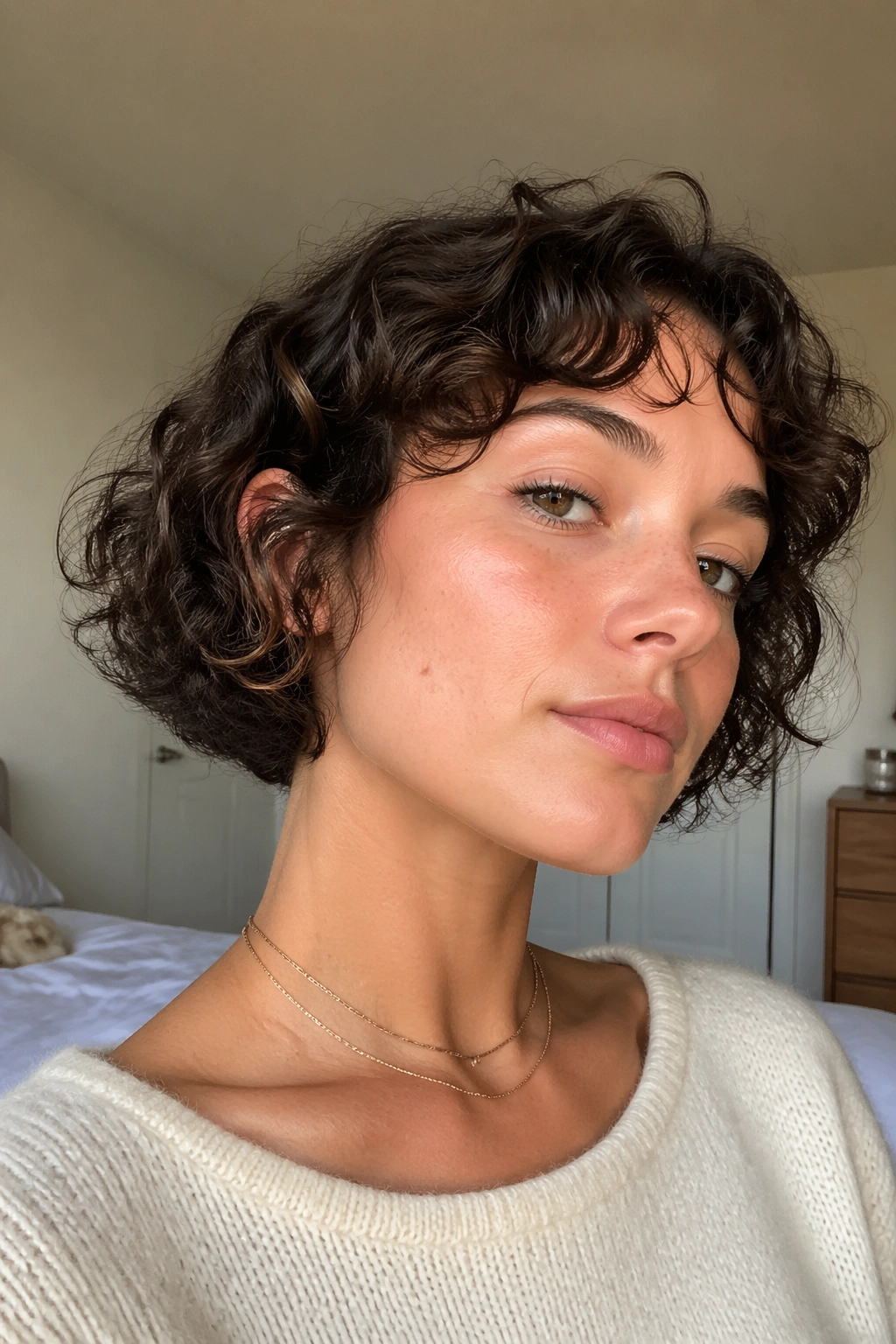
There’s something clean and unfussy about hair that stops right around the ears. On fine curls, that length can look crisp in a way longer cuts sometimes can’t, because the curl pattern has enough room to bounce without dragging at the ends.
You notice the shape the second you tuck one side behind your ear. The outline sharpens up, the jawline appears more defined, and the curls that used to hide under longer layers suddenly get to speak for themselves. That’s the charm of this cut. It doesn’t try to be bigger than it is.
Keep the edge soft, though. A hard line at ear length can make fine curls look boxy if the hair is especially thin through the ends. A tiny bit of layering near the front helps the cut curve around the face instead of sitting like a shelf.
This is a good choice if you like a neat silhouette and don’t want to spend forever styling. It dries quickly, it’s easy to refresh with water and a dab of gel, and it tends to look deliberate even when it’s slightly imperfect.
12. The Undercut Pixie for Maximum Lift at the Crown
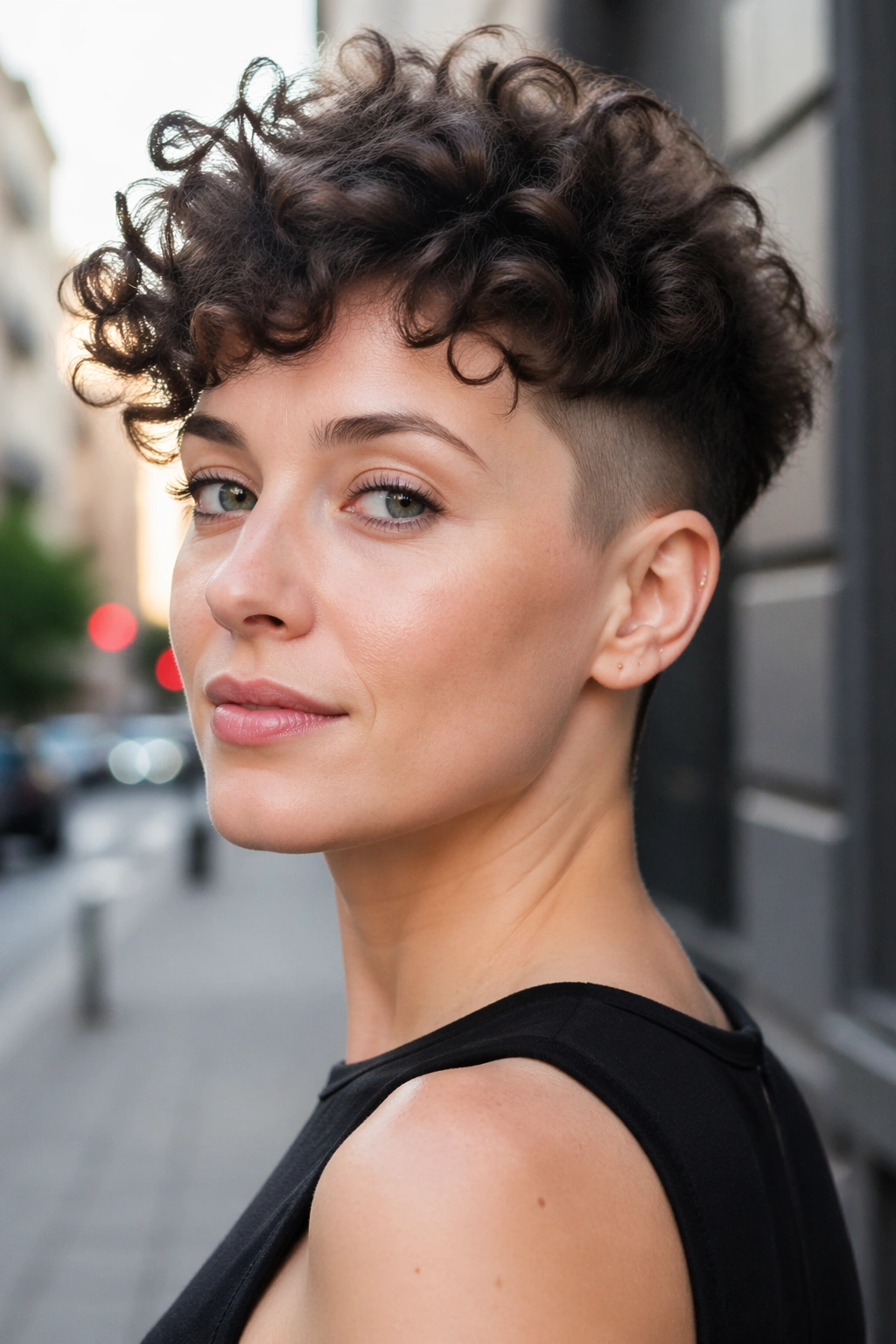
If your crown goes flat no matter what you do, an undercut pixie is the blunt answer. Taking away some bulk underneath frees the top to sit higher, and that can make fine curls look much fuller from the front.
An undercut doesn’t have to be severe. It can be a hidden nape shave, a short taper under the ears, or a more visible reduction around the sides. The point is to remove the weight that pulls the shape down. Once that’s gone, the top curls have a better shot at standing up and staying there.
This cut is especially good if you wear glasses, because the short sides keep the frame from fighting the hair. It also works well for people who like a sharper outline and don’t mind more frequent trims. You do need upkeep. There’s no getting around that.
A small warning: if you like to pull your hair back often, an undercut can limit your styling options. That’s not a flaw. It’s just the tradeoff.
13. The Modern Bowl Cut for Tight, Fine Curls
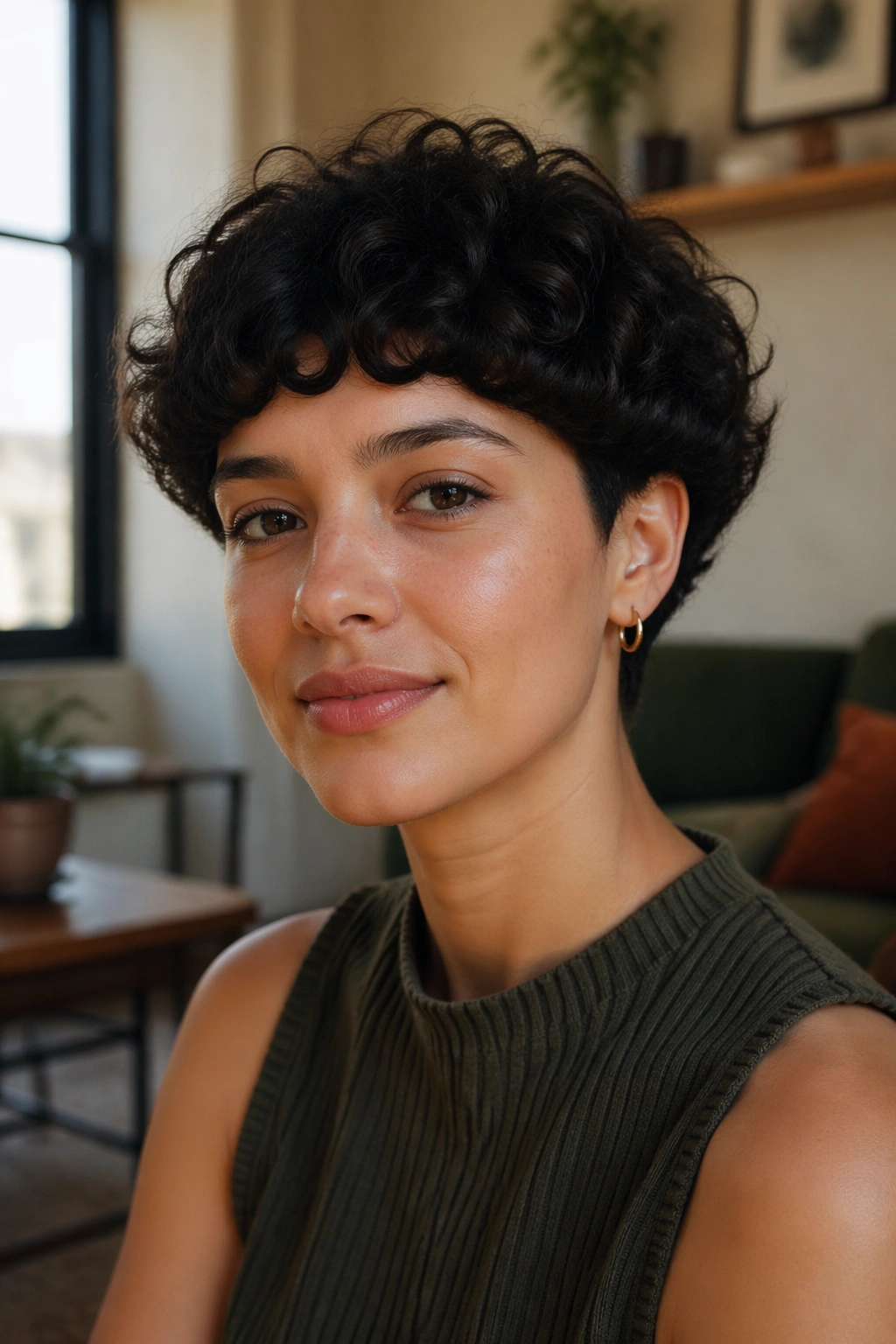
The bowl cut got a bad reputation for good reasons. Old versions were blunt in the worst way and left no room for the curl to do its own thing. The modern version is different. It’s curved, softer at the edges, and shaped to follow the head instead of sitting on top of it.
For fine curls, that shape can be surprisingly smart. Tight or springy curls tend to create their own thickness, so a rounded perimeter can make the hair look more filled in than a heavily layered cut would. The line around the head becomes a frame, and the curls inside that frame do the rest.
This cut asks for a careful hand. The perimeter should be clean, but not harsh. The top needs enough room to bounce. And the stylist should watch shrinkage closely, because a bowl shape can become tiny fast if it’s cut too short while wet.
Not everyone wants this look. Fair enough. But if you like graphic hair that still feels soft at the ends, it deserves a place on the list.
14. The Micro-Layered Bob for Fine Curly Hair
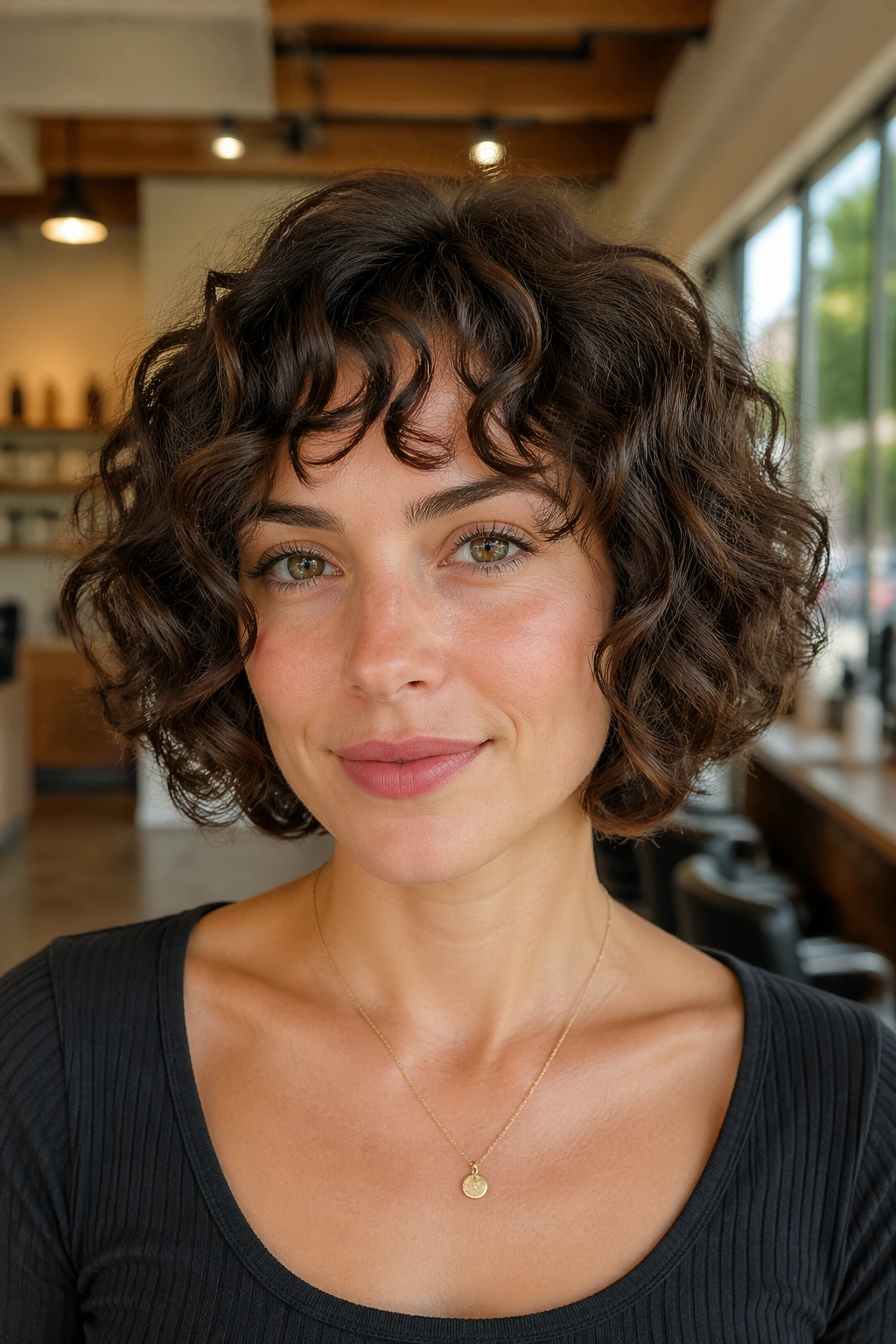
A micro-layered bob is one of my favorites for people who want short hair but hate the idea of looking wispy. The layers are tiny and controlled, often hidden inside the shape rather than sliced all over the outside, so the cut keeps its outline while still gaining a little movement.
What to Ask For
The goal is to remove just enough weight to keep the curl springy. Too much layering and the bottom becomes patchy. Too little and the bob may sit heavy, especially if your curls are looser or your strands are very fine.
- Keep the perimeter near chin to jaw length
- Ask for internal layers rather than chunky surface layers
- Leave the ends blunt enough to hold shape
- Refresh every 6 to 8 weeks before the bob loses its edge
This is a smart cut if you like to wear curls natural with minimal fuss. It gives enough polish for work or events, but it doesn’t demand a big styling routine. A little mousse, a quick scrunch, and a diffuser pass is often enough. If your curls are the type that collapse when overloaded with product, this bob behaves nicely.
15. The Tapered Mini Afro That Holds Its Shape
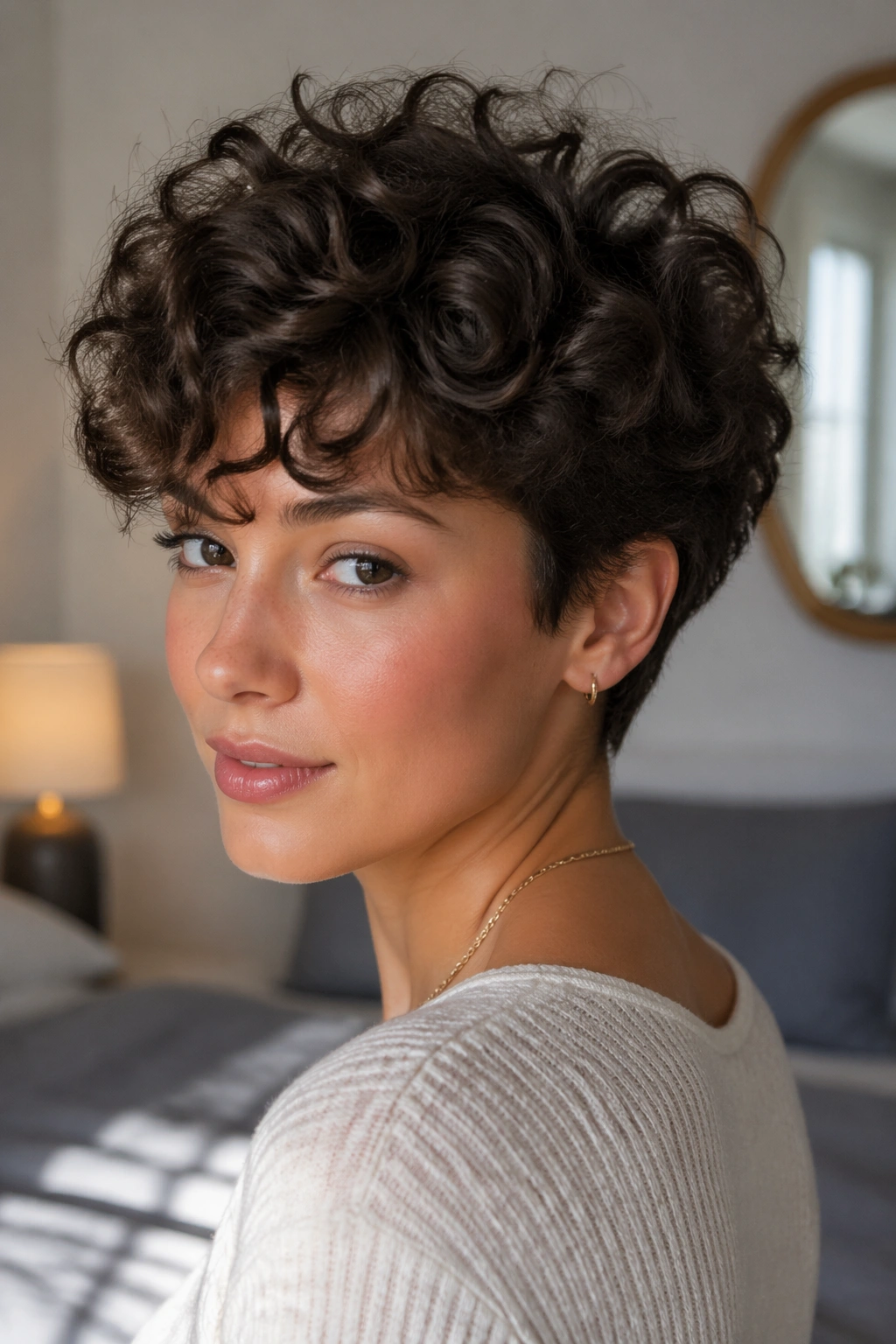
A tapered mini afro is one of the best short styles for fine curls and coils when you want the shape to feel full without looking bulky. The sides and nape are kept shorter, while the top and upper sides build a soft rounded silhouette that sits close to the head but still has presence.
What I like most about this cut is that it respects the texture instead of fighting it. The taper gives the outline a clean edge, and the top keeps enough length to create a real halo of curl or coil. That balance can be very flattering if your hair tends to shrink up in a way that makes longer styles look uneven.
It also wears well between trims. A slight grow-out can still look good because the overall shape remains compact. If your curl pattern is tighter, this cut can look especially rich with a little moisture and a light pick at the roots. If your curls are looser, the same shape still works, just with a softer outline.
If you want one short style that feels confident, tidy, and full of texture, this is the one I’d hand to a friend first.
