
Curly hairstyles with highlights work because curl pattern does half the visual job for you. A straight cut can look flat with a single block of color, but curls break light into little pockets, bends, and shadows, which means even a few well-placed strands can change the whole read of the hair.
That’s also why curls can go wrong fast. Thick, streaky highlights on a loose curl might look fine in the salon mirror, then turn striped at home once the hair dries and shrinks. Tight coils can hide color until the light hits them from the side. The trick is not “more blonde” or “more copper.” It’s placement, contrast, and keeping the curl shape intact.
I’ve always thought the smartest highlight work on curly hair looks a little bit accidental, even when it was planned carefully. A few brighter ribbons near the face. A softer glow through the mids. A deeper root so the cut still has depth. That balance matters a lot more than chasing one big dramatic change.
1. Long Layered Curls with Caramel Balayage
Long curls and caramel balayage are a natural pair because the length gives the color room to move. On a one-length cut, highlights can sit there and feel a bit heavy. Add layers, though, and the caramel pieces start to catch on the bends of the curl, which makes the whole style look softer and more alive.
Why the Layers Matter
Layers stop long curls from turning into one giant curtain. They also keep the lighter pieces from disappearing into the bulk of the hair. If you’ve ever had highlights that looked nice when wet and vanished once dry, this is usually why.
The best version keeps the caramel a shade or two lighter than the base, not four. You want ribbons, not stripes. Ask for the lightest pieces around the face and the outer canopy, then keep the underlayers deeper so the color doesn’t flatten the cut.
- Caramel works especially well on dark brown and medium brown bases.
- A gloss after lightening keeps the tone warm instead of brassy.
- Softer layers near the chin help the color show in the front.
- Diffusing upside down can make the lighter pieces pop more at the crown.
Tip: If your curls are dense, ask for finer slices around the top and wider pieces only through the ends. That keeps the color visible without making the hair look patchy.
2. Shoulder-Length Shag with Honey Highlights
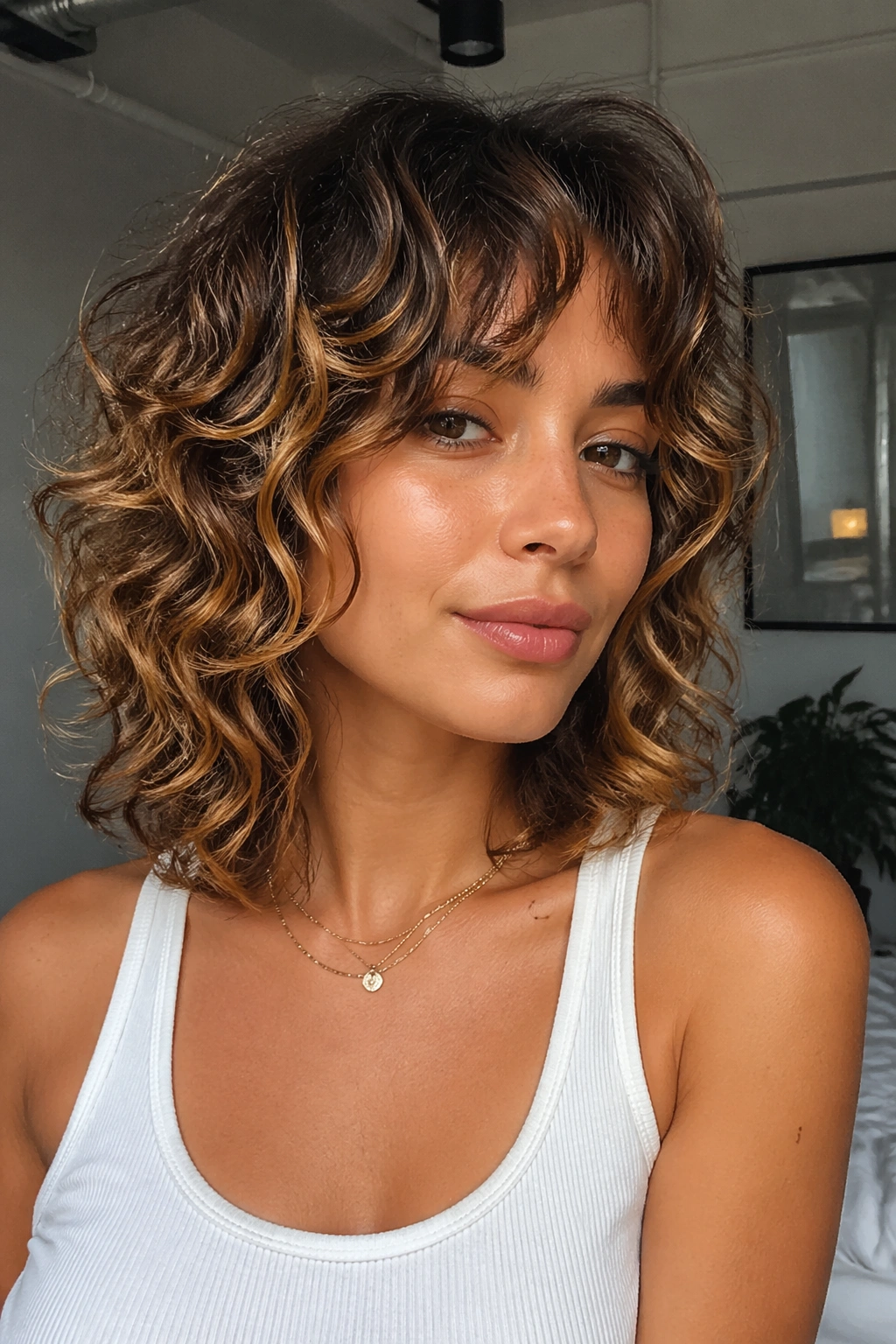
A curly shag is one of the easiest cuts to color well, and that’s not an accident. The shag already has movement built in, so honey highlights can follow the layers instead of fighting them. The result feels airy, but not fragile. That matters.
Honey is a smart choice when you want brightness without the hard edge of very pale blonde. On shoulder-length curls, it can lighten the shape around the cheeks and jaw, which is a nice trick if the haircut starts to feel heavy. I prefer this on people who wear their curls natural most of the time and only reach for a diffuser when they feel like it.
The color should sit mostly on the outer layers and the face frame. Too much honey inside the haircut can look muddy when the curls shrink. Too much at the ends can make the cut look disconnected. The sweet spot is usually a soft scatter through the mid-lengths with a little more brightness near the front.
This style also grows out gracefully. A shag does not need perfect highlight placement every single trim, which is one reason it stays such a practical choice for curly hair.
3. Curly Bob with Face-Framing Money Pieces
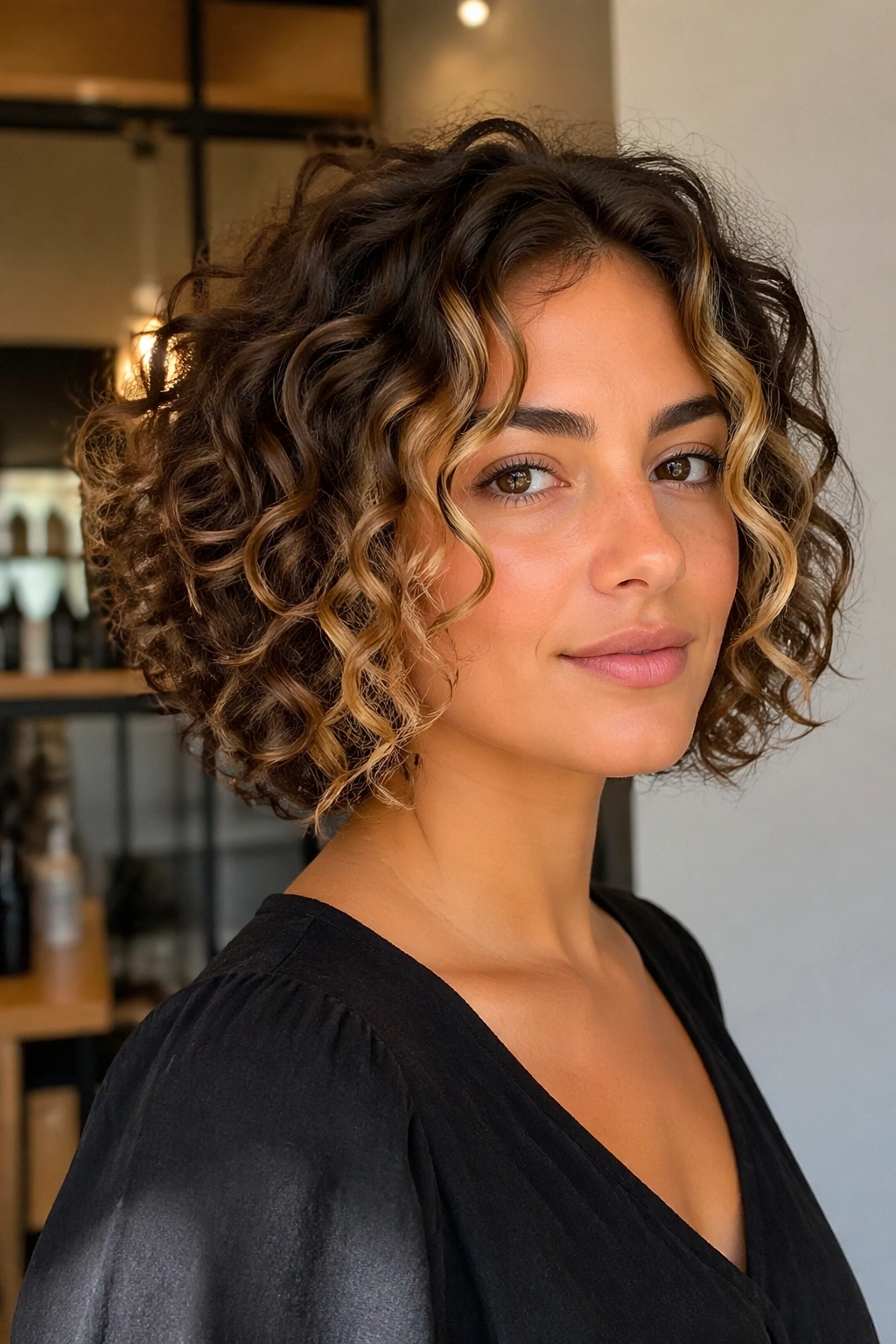
A curly bob with money pieces gives you brightness right where people actually look first. That’s the face. Shorter curls can lose definition if every highlight is tucked away inside the haircut, so a brighter front panel makes the whole shape read faster and cleaner.
What I like here is the contrast without clutter. You are not trying to light up every curl. You’re building a frame. The pieces near the temples and cheekbones should be the softest place to go lighter, then the rest of the bob can stay richer and deeper. That keeps the cut from looking busy.
Placement That Works
Money pieces on curly bobs look best when they start a little behind the hairline, not right on it. That gives you brightness when the curls spring forward, which they always do.
- Keep the front pieces narrow if your curls are tight.
- Go slightly wider if your curls are loose or brushed out.
- Ask for a softer root so the highlight does not feel like a hard stripe.
- Pair the color with a chin-skimming or jaw-length cut for the cleanest line.
Small warning: a blunt bob plus chunky front highlights can turn harsh fast. The curl pattern helps, but it cannot fix bad placement.
4. Voluminous Afro Curls with Copper Ribbons
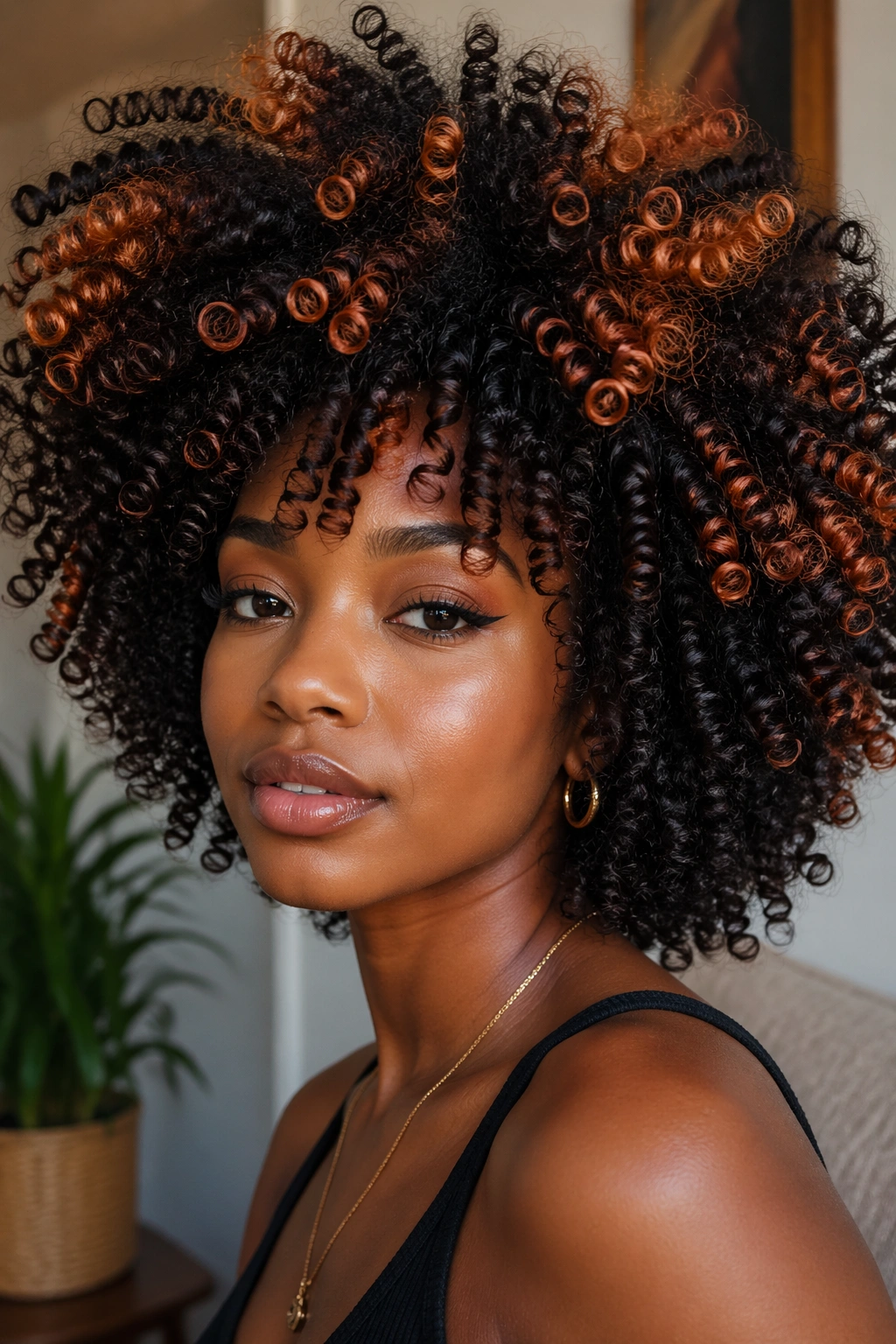
Why copper? Because deep curls love warmth. Copper reads like light moving through the surface of the hair, not like a flat coat sitting on top of it. On afro-textured curls and coils, that matters. The color needs to live inside the shape, not just on the outside.
Copper ribbons are especially good if you want visible dimension without chasing blonde. They can make coils look denser, not thinner, which is the part most people miss. A few warm streaks across the crown and outer halo will show when the hair lifts, then disappear slightly into shadow when it settles. That contrast is what makes the style feel rich.
Where to Place the Color
The best copper placement usually sits on the outer layer, with a few brighter pieces near the hairline. Don’t spread it evenly all over. That tends to erase the roundness of the curl pattern.
- Focus on the crown for lift.
- Add a few face-framing strips around the temples.
- Keep the nape deeper for contrast.
- Use a gloss to keep the copper from looking dull.
For coils, I’d rather see fewer, well-placed ribbons than a lot of soft orange strands that blur into the base. Copper needs confidence. Otherwise it just looks timid.
5. Short Curly Pixie with Frosted Tips
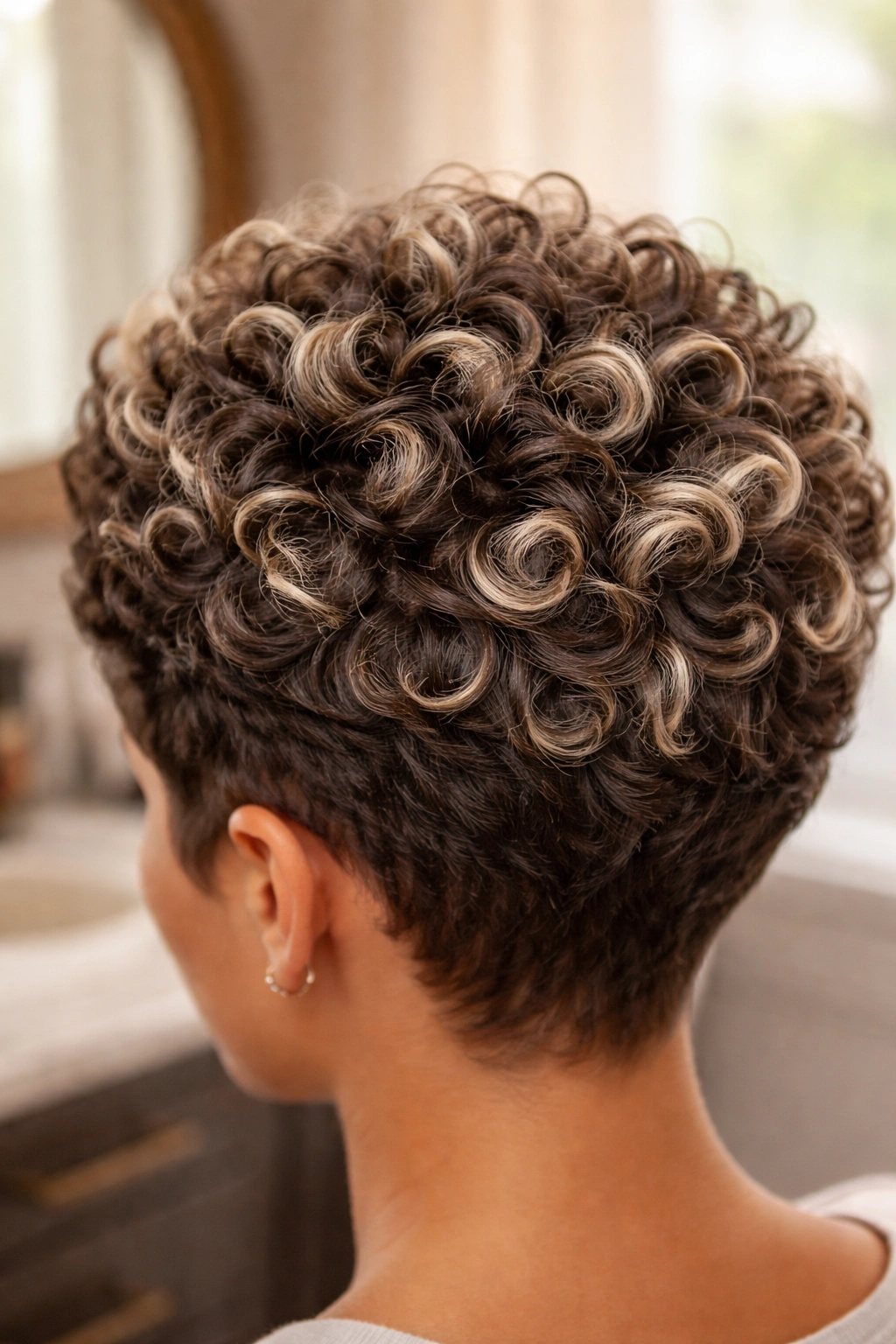
A short curly pixie gets overlooked in highlight conversations, which is a shame. On short hair, color has nowhere to hide. Every piece shows. That means frosted tips can look sharp and modern when they’re handled carefully.
The key is restraint. Lightening only the tips and a little bit of the fringe keeps the cut crisp without making it look bleached out. On very short curls, the highlight should follow the direction of the curl, not the shape of a straight haircut. That difference is huge. Straight-line foils on a pixie can look chunky fast, while hand-painted tips keep the texture intact.
I like frosted tips on pixies with a little volume at the top. If the hair sits close to the head everywhere, the lighter ends can feel harsh. With some lift, they read as texture instead of damage. And yes, the maintenance is real. Short lightened curls need trims on a tight schedule, because shape goes first, color second.
Still, this is one of the most confident-looking options on the list. It does not whisper.
6. Spiral Curls with Auburn Low-Contrast Highlights
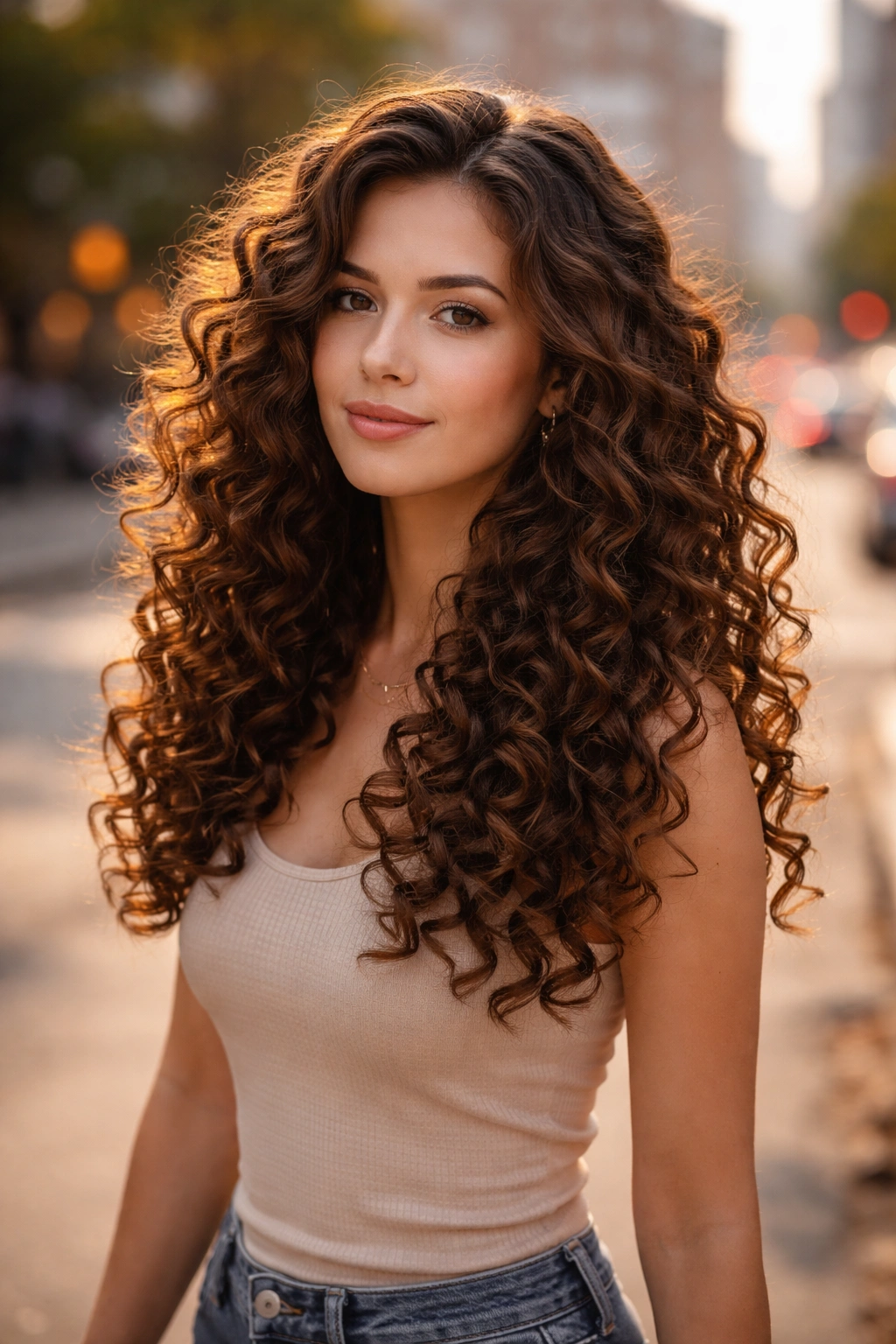
Auburn highlights are the quiet answer for anyone who wants color but not a big leap. On brunette curls, auburn reads as depth first and color second. That is why I like it more than a jump straight to blonde for a lot of people. The curl pattern gets definition, but the hair still feels like itself.
Unlike brighter highlight jobs, auburn lowlights and highlights blend into the curl instead of sitting on top of it. The contrast stays gentle. That makes this a good fit for people who wear their hair in work settings where a huge color change would feel off, or for anyone who wants something warmer without the upkeep of pale tones.
What Makes It Different
Auburn can be painted in thin, scattered ribbons through spiral curls, or used in larger pieces for a more autumnal feel. Either way, the color should be a tone lighter or richer than the base, not a full blonde move.
This style works best on medium brown, dark brown, and black-brown hair. If your base is lighter, the auburn can still help, but the contrast will be softer. Ask for a gloss finish. Auburn loves shine.
7. Curly Lob with Babylights
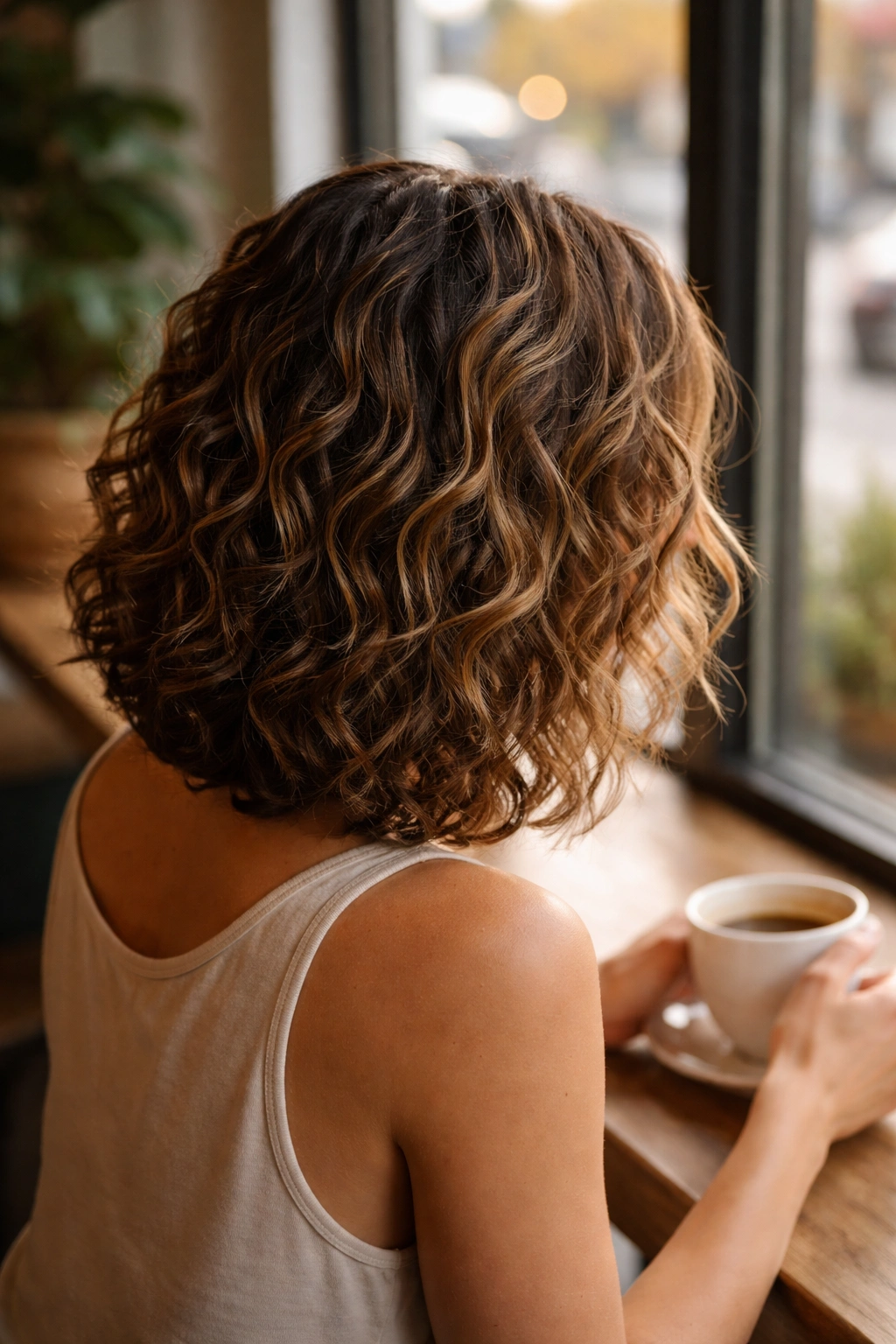
A curly lob can look almost too plain until babylights are added. Then the whole cut wakes up. Babylights are tiny, fine highlights that sit close together, and on curls they do something useful: they make the surface look textured without turning it streaky.
I reach for babylights when someone wants dimension but hates the obvious grow-out line that comes with thicker coloring. A lob sits in that sweet middle ground where the hair is long enough to move, short enough to keep shape, and babylights help both. They’re especially good if you air-dry a lot, because the finer pieces keep showing even when the curls fall in different directions.
The trick is to keep the lightening subtle and spread through the top layers, then add a slightly brighter front edge. You do not want a heavy blonde block at the front of a lob. That tends to drag the whole shape downward.
Babylights also age well. Not in the sentimental sense. In the hair sense. They grow out without shouting at you from the mirror.
8. Defined Ringlets with Bronze Peekaboo Highlights
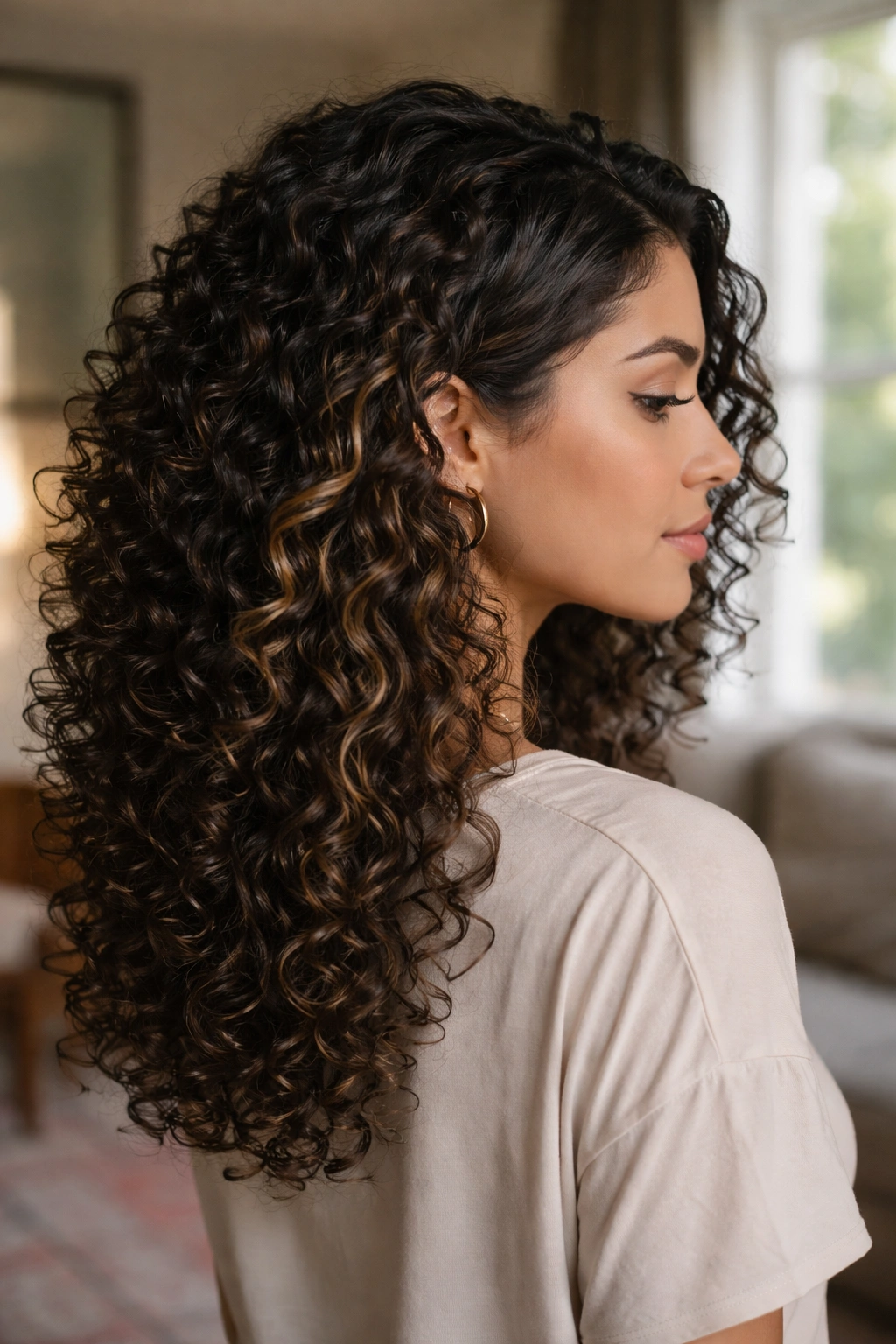
Bronze peekaboo highlights are for curls that already have shape and want depth, not drama for drama’s sake. Because the lighter pieces hide inside the layers, the hair looks richer when it’s down and more interesting when it’s pinned back or tucked behind the ear.
That hidden placement is the whole point. Ringlets already give you bounce. Bronze adds a warm flash that appears in motion instead of sitting there all day. On dark brown or espresso curls, bronze can read as copper’s calmer cousin. On medium brown hair, it brings a soft metallic feel that still looks wearable.
How to Keep It Visible
The color needs to live under the top layer, but not so deep that no one ever sees it. That’s the mistake. Put the bronze in places where the curls separate naturally — around the lower crown, beneath the face frame, and through the mid-back sections if the hair is longer.
- Great for updos and half-up styles.
- Works well with side parts.
- Keeps the root area darker for depth.
- Can be refreshed with a warm gloss instead of another full lightening session.
I like this style for people who want a little surprise when the hair moves. It’s subtle, but not shy.
9. Messy Curly Updo with Painted Ends
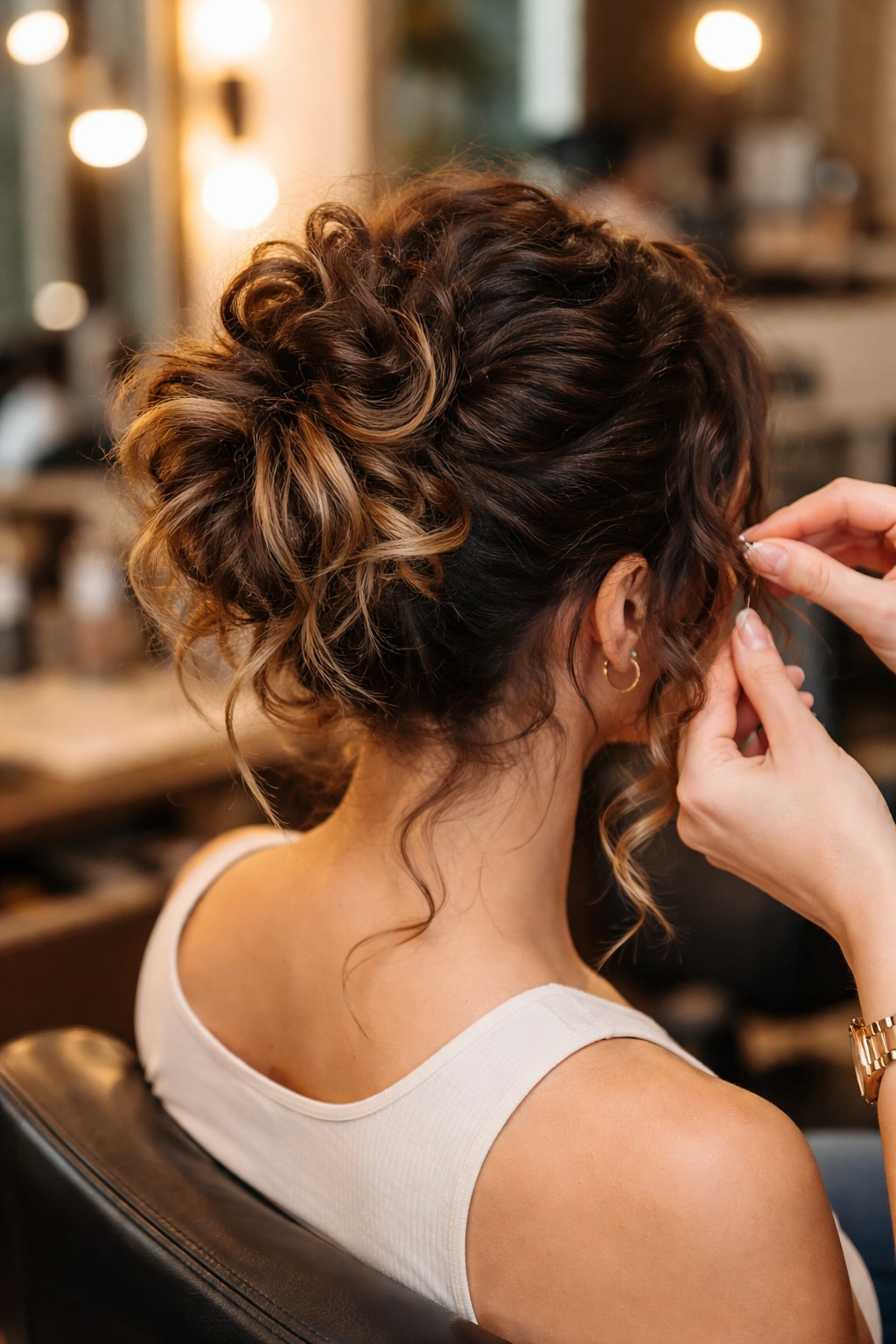
Why color only the ends? Because an updo changes everything. Once curls are pinned, twisted, or clipped, the ends become the part people actually see. Painted ends let the color live on the edges of the style, where it can peek out from buns and loose knots without requiring full-head lightening.
This is one of my favorite options for events because it gives you more freedom with the base color. The roots can stay natural, which helps the updo hold its shape visually, and the lighter ends create a little movement around the face and neck. On curls, that movement matters. A stiff updo with flat color can feel too formal. Painted ends loosen it up.
Best Colors for the Ends
Warm tones tend to look more natural here, but the choice depends on the base shade and the mood you want.
- Peach and gold give a soft, sunlit look.
- Copper feels richer and a little bolder.
- Beige-blonde works if you want less warmth.
- Rose brown adds a muted twist that still reads as color.
The beauty of this style is that it can be temporary in feel, even if the highlight work is permanent. That makes it a nice low-commitment way to try lighter curls.
10. Tapered Coils with Golden Halo Highlights
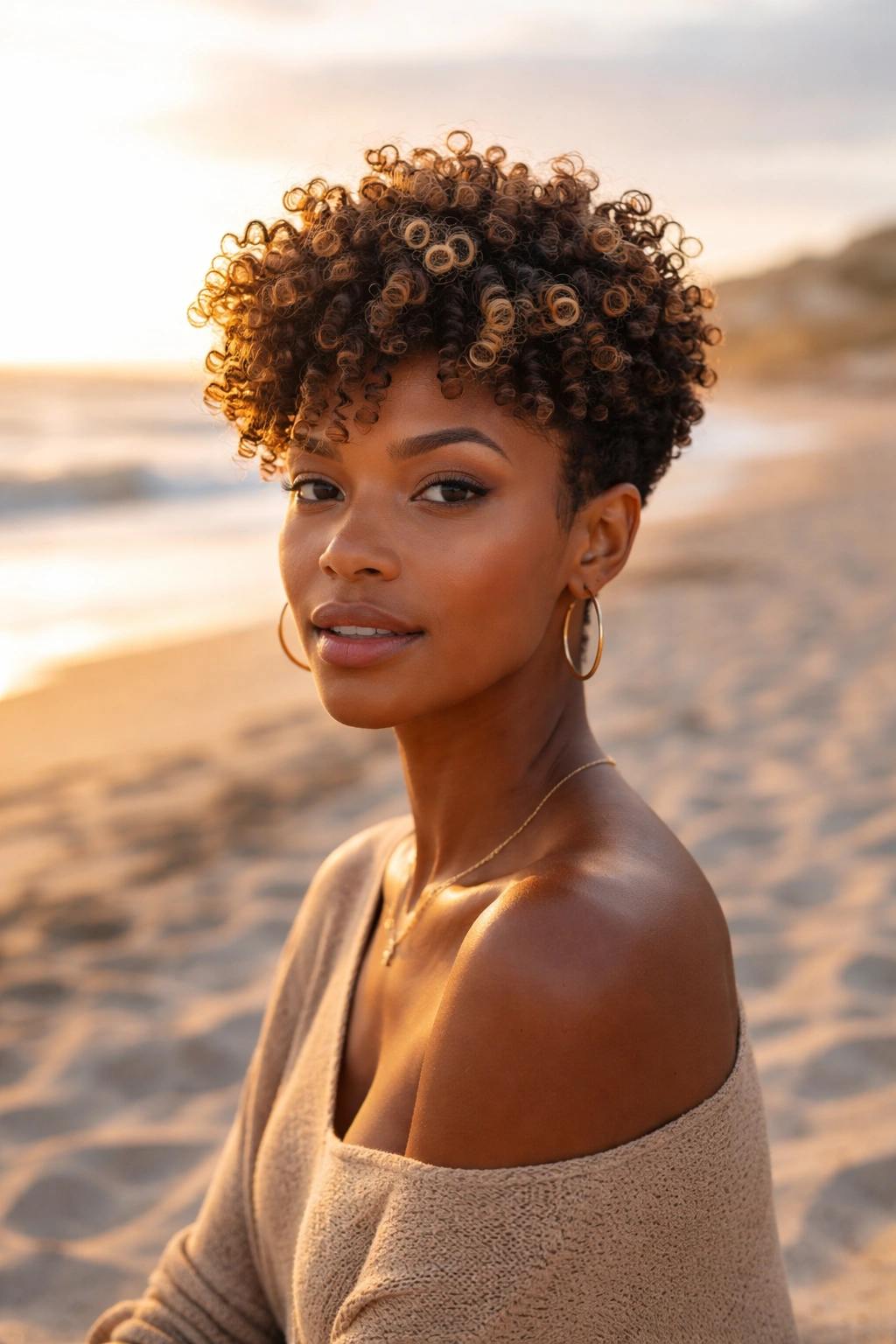
A tapered cut gives golden halo highlights a place to land. The shape is already sculpted, with more fullness on top and shorter sides, so a ring of brightness around the crown can make the entire style feel lifted without needing a lot of length.
Golden tones work well here because they sit between blonde and brown. They’re bright enough to show, soft enough not to fight the coil pattern. On tightly curled hair, I like the halo effect more than all-over lightening. It keeps the sides neat and the top lively, which is exactly what the cut wants.
The placement should follow the roundness of the head. Think of it as tracing light around the upper curve, not painting a stripe. If the golden pieces are too low, the shape can look bottom-heavy. Too high, and the crown may feel disconnected from the sides.
Moisture matters more with this style than people expect. Lightened coils can feel dry at the ends, so a leave-in cream and a satin bonnet at night are not optional extras. They are part of the look.
11. Side-Parted Curly Cut with Chunky Cinnamon Highlights
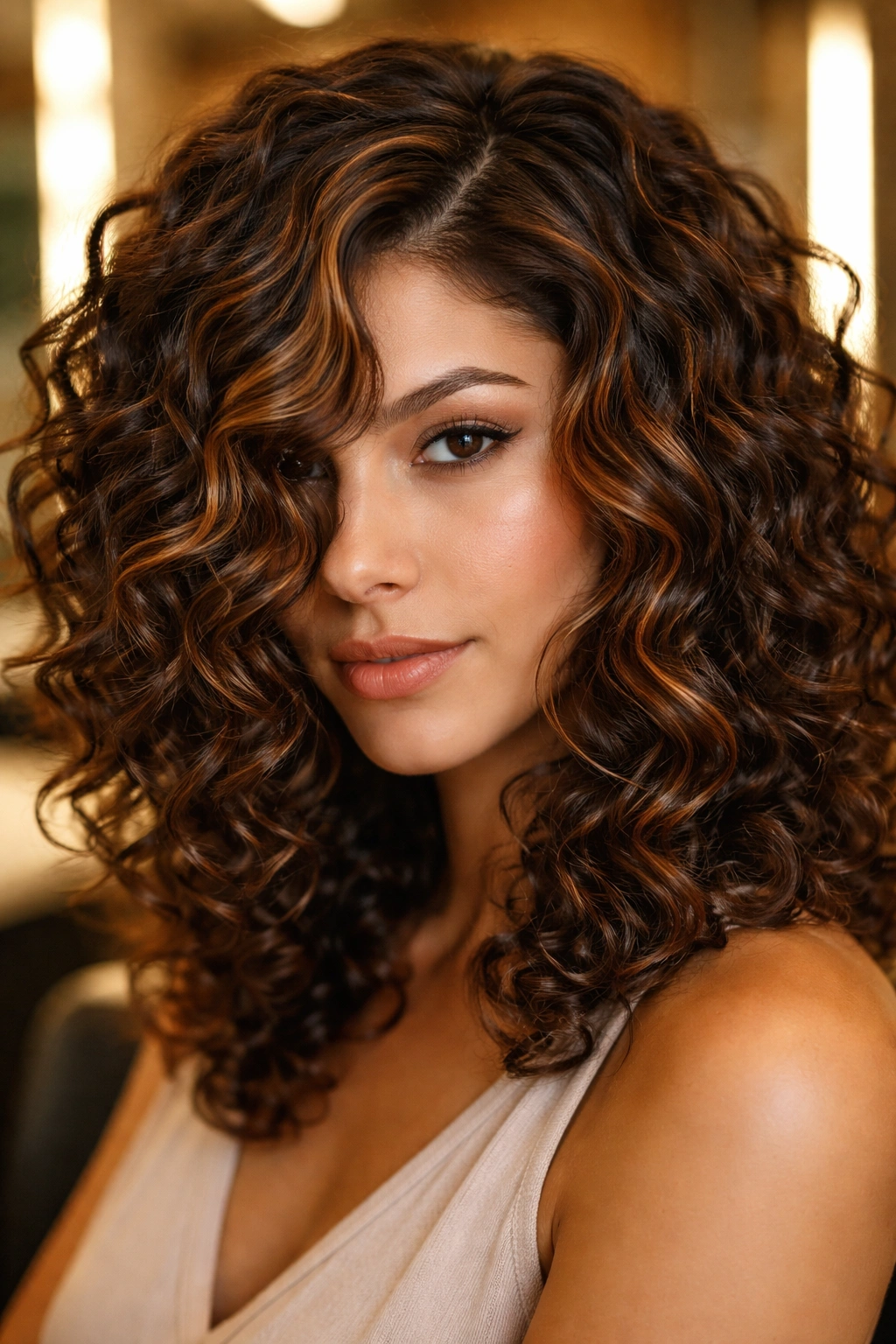
A side part gives chunky highlights room to breathe. Without that offset line, bigger color pieces can look too symmetric and a little stiff. With the part shifted, the highlights fall in a more natural way, and the curls frame the face from one side instead of both at once.
Cinnamon is a smart middle ground between red and brown. It brings warmth, but it does not shout. On dark or medium brunette curls, chunky cinnamon panels can create real dimension if the base stays deep enough. The contrast is part of the charm. If everything is too blended, the whole thing turns mushy.
Ask For This, Not That
A stylist can make chunky highlights look expensive or messy very quickly. The difference is placement.
- Keep the widest panels near the part.
- Avoid over-lightening the ends.
- Leave enough depth underneath for shadow.
- Blend the front pieces so they frame, not stripe, the face.
This style suits curls that hold definition well. If your curl pattern is loose and tends to puff, the panels may spread more than you want. In that case, finer cinnamon pieces are safer.
12. Wet-Look Curls with Soft Beige Tones
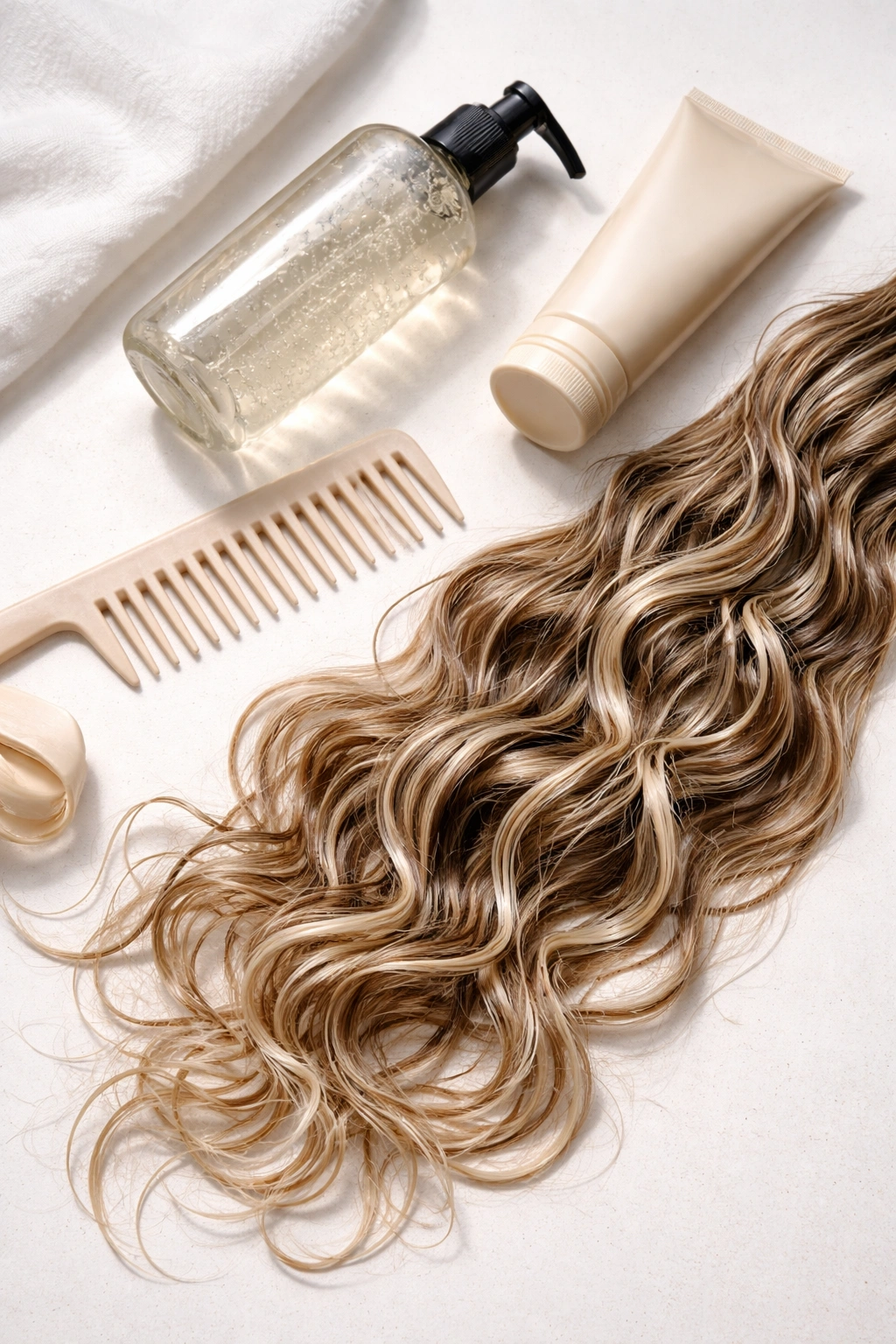
Wet-look curls do not need dark color to work. That is the part people miss. Soft beige tones can sit beautifully in a glossy, defined curl pattern because the shine does the heavy lifting. Beige keeps the hair looking light, but not bleached-out or chalky.
The style depends on contrast in texture more than contrast in color. A strong gel cast, a controlled curl pattern, and pale beige highlights can give you that slick, polished look without losing softness. I like this on medium-length curls where the shape can stay tight and the color can skim across the top layer.
The beige should stay muted. If it goes too gold, the wet finish can start to look greasy under certain lighting. If it goes too cool, the curls can lose warmth and look dull. A neutral beige with a soft root shadow is usually the safest call.
This is one of those looks that can seem simple from far away and very specific up close. That’s a good thing. It means the color and styling are doing their jobs without shouting over each other.
13. Mermaid-Length Curls with Multi-Tonal Blonde
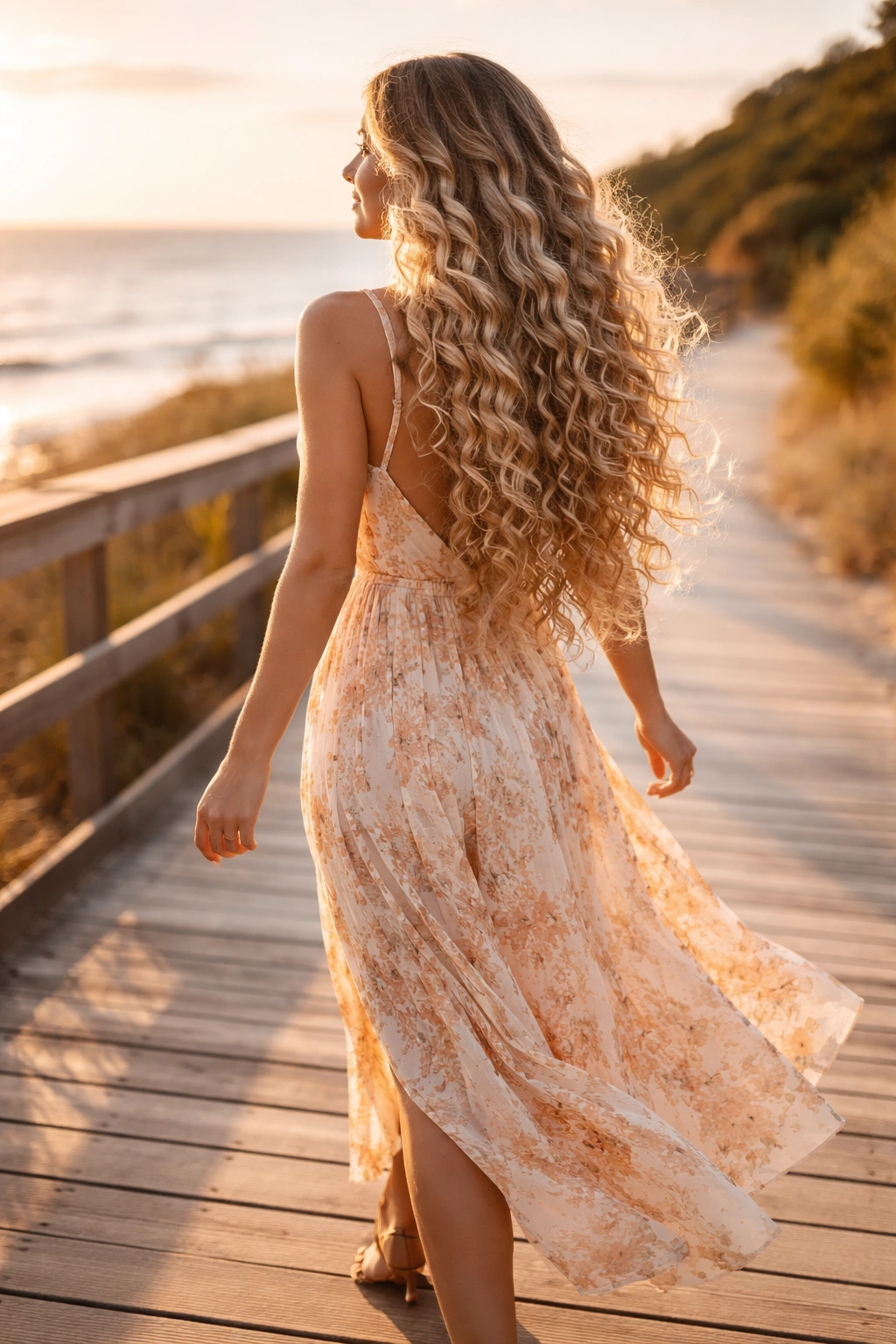
Long curls need more than one blonde tone, or they can end up looking like a helmet. Multi-tonal blonde fixes that by mixing beige, honey, and a lighter pearl shade across different sections of the hair. The curl pattern then breaks those tones apart as the hair moves, which keeps the length from feeling heavy.
This style is at its strongest when the base color stays visible. Root shadow helps. So do deeper lowlights woven between the lighter strands. Without that contrast, long curls can lose depth at the scalp and turn flat at the roots even if the ends are bright.
I’d ask for the lightest blonde pieces around the face and through the top surface, then let the mid-lengths carry a softer blend. That gives you shine where it matters most, and it keeps the lower lengths from looking overworked. Long hair already asks a lot from the curl pattern. Don’t ask the highlights to do everything too.
What Makes It Hold Together
- Use three tones, not one.
- Keep some deeper pieces near the crown.
- Refresh with a toner only when the blonde starts to yellow.
- Trim split ends before the light pieces start looking frayed.
Long curls with blonde highlights can be gorgeous. They can also look tired if the upkeep slips. That part is non-negotiable.
14. Curly Wolf Cut with Muted Dimension
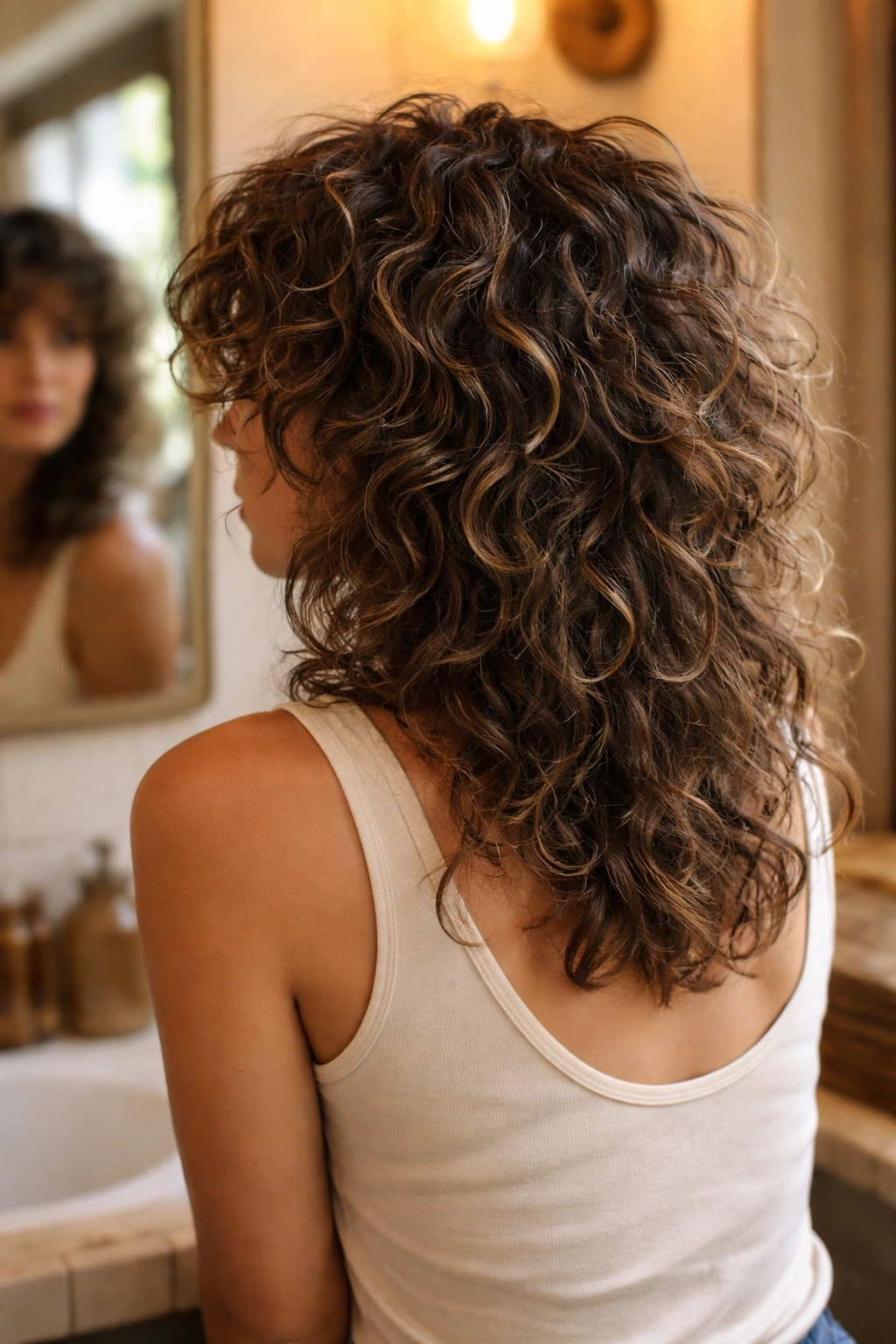
A wolf cut loves muted dimension because the haircut itself already brings the attitude. You do not need loud color fighting with those layers. A scattered mix of smoky caramel, beige brown, and soft gold gives the cut shape without turning it busy.
I like this on people who want a little edge but do not want their hair to read as high-maintenance. The layers in a wolf cut create natural gaps, and those gaps are where the lighter pieces show through. That means the highlights can be looser and a little more casual. They do not need to be perfect. In fact, perfect would be wrong here.
What to Watch For
Don’t let the color get too bright at the very ends. That can make the haircut look stringy, especially on curls that separate a lot. Keep some depth in the crown and underlayers so the shaggy shape stays visible.
- Better with soft, broken-up pieces than full foils.
- Works well with tousled styling cream.
- Good choice if you air-dry often.
- Easier to grow out than a high-contrast blonde job.
There’s a nice roughness to this combo. Not sloppy. Just relaxed.
15. Natural Curls with Soft Face-Framing Highlights
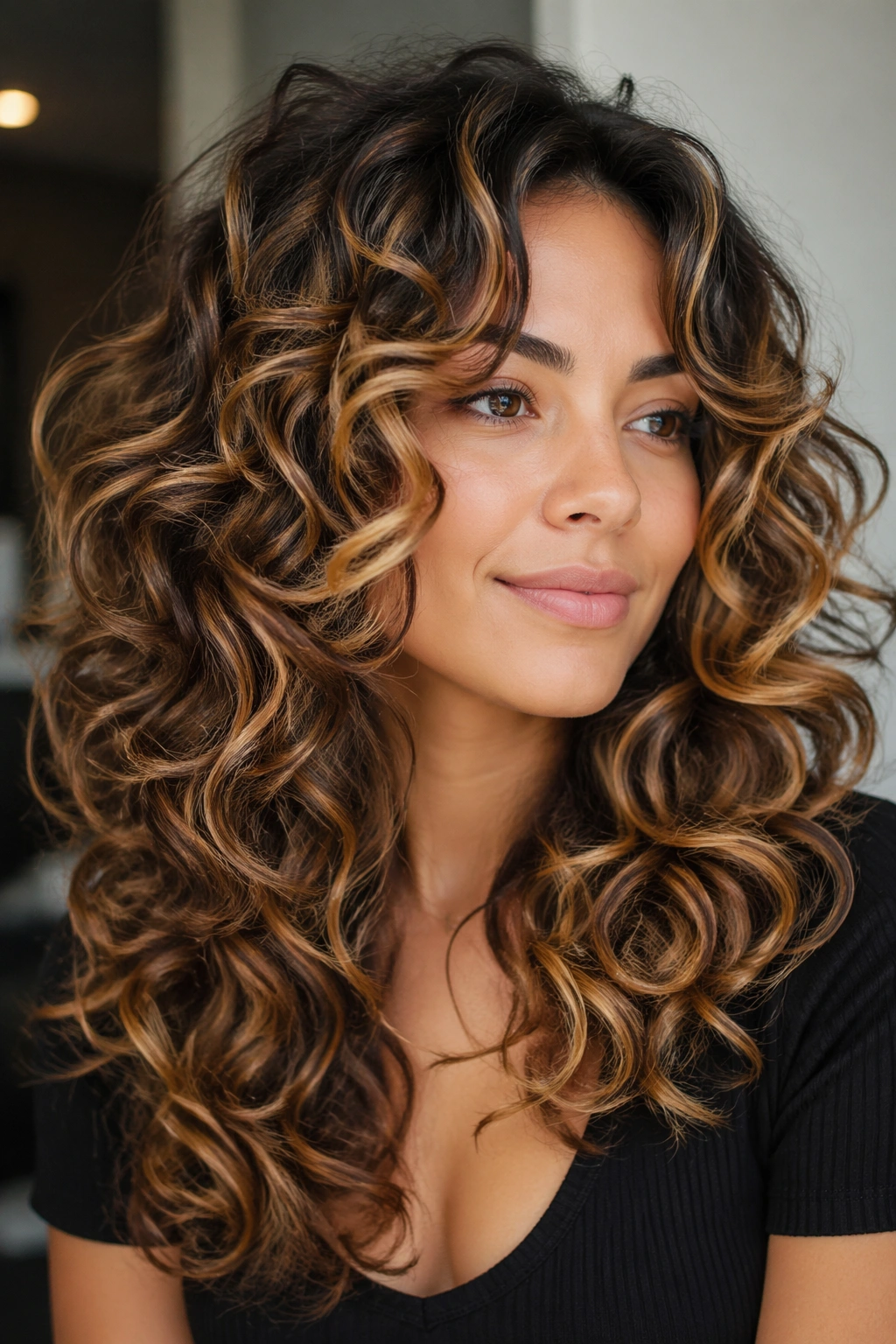
If you want the safest way to wear highlights on curly hair, this is probably it. Soft face-framing pieces give you brightness where it counts and leave the rest of the curl pattern mostly alone. That means less damage, less upkeep, and less of that awkward grow-out line that can make a highlight job feel dated before it even settles in.
I like this approach because it respects the haircut. The curls stay the star. The color just opens the face a little. On darker hair, that might mean warm honey or beige-brown. On lighter curls, it could be a pale gold or soft champagne tone. The goal is not contrast for its own sake. It is light around the edges so the center of the style feels fuller.
This is also the easiest style to keep fresh. A quick toner, a trim, and a good leave-in conditioner usually do more for the look than chasing another big color session. If you want curly hairstyles with highlights that feel wearable day after day, this one is hard to beat. It never tries too hard, and that is exactly why it works.