

Curls can do a lot of work around the face, and the best face-framing curly hairstyles make that work look easy. A few well-placed layers can open the eyes, soften a strong jaw, or keep a round face from feeling boxed in.
Curly hair has its own rules. A piece that sits at the chin when it’s damp might spring up to the cheekbone once it dries, and a front layer that looks airy on one curl pattern can look bulky on another. That’s why the cut matters more than a clever trick with a diffuser or a bottle of gel.
The styles people come back to again and again usually do one of three things: they create a diagonal line, they let a few curls fall forward on purpose, or they remove weight in the right place so the front doesn’t puff out. I love cuts that respect the curl instead of fighting it. The good ones look deliberate on day one and still make sense when your hair has lived a little.
1. Curly Curtain Bangs with Long Layers
Curtain bangs are one of the easiest ways to get face framing curly hairstyles without making the front of your hair feel chopped up. The magic is in the split: the bangs open away from the center and land somewhere around the cheekbones, not in a blunt line across the forehead.
Why It Works
Longer curtain pieces give curls room to spring. If they’re cut too short, they can bounce up like little hooks and sit awkwardly above the brow.
A good version keeps the shortest point around eyebrow to bridge-of-nose level when dry, with the outer pieces dropping toward the cheekbone. That shape softens the forehead, breaks up a long face, and still leaves your curls looking full.
- Best for looser curls and spirals that have some spring
- Works well with center parts
- Needs light shaping, not heavy thinning
- Looks better when the curl clumps stay intact
Tip: Ask for the front to be cut dry or at least checked dry. Wet curly bangs can shrink more than people expect.
2. Side-Parted Long Curls with Cheekbone Layers
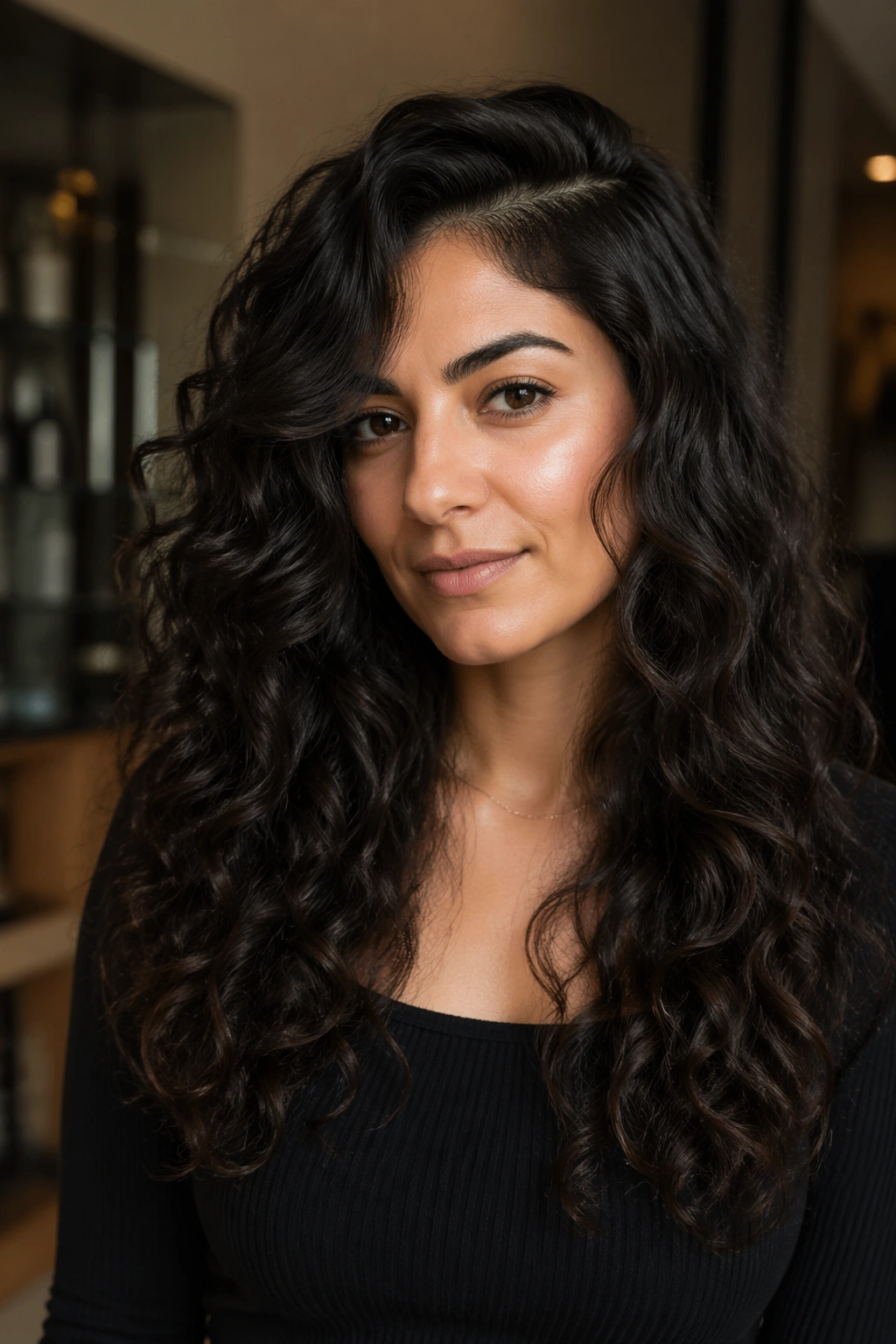
A deep side part changes the whole mood of curly hair. Instead of sitting evenly on both sides, the volume drops in a diagonal line, which is one of the quickest ways to frame the face without cutting off length.
That diagonal is doing the heavy lifting. It pulls the eye from the forehead down toward the cheek and jaw, which is especially useful if your face feels wide at the temples or you like a little asymmetry.
The trick is to keep the shortest front layers around cheekbone length and let the rest fall past the shoulders. If the top layers are too short, you can end up with a puffier crown and not much shape near the face. A little sweep looks polished. Too much height can feel dated fast.
This style is one of my favorites for days when curls are behaving but you don’t want to fuss. It looks intentional even when the rest of the hair is loose and soft.
3. Curly Shag with a Soft Fringe
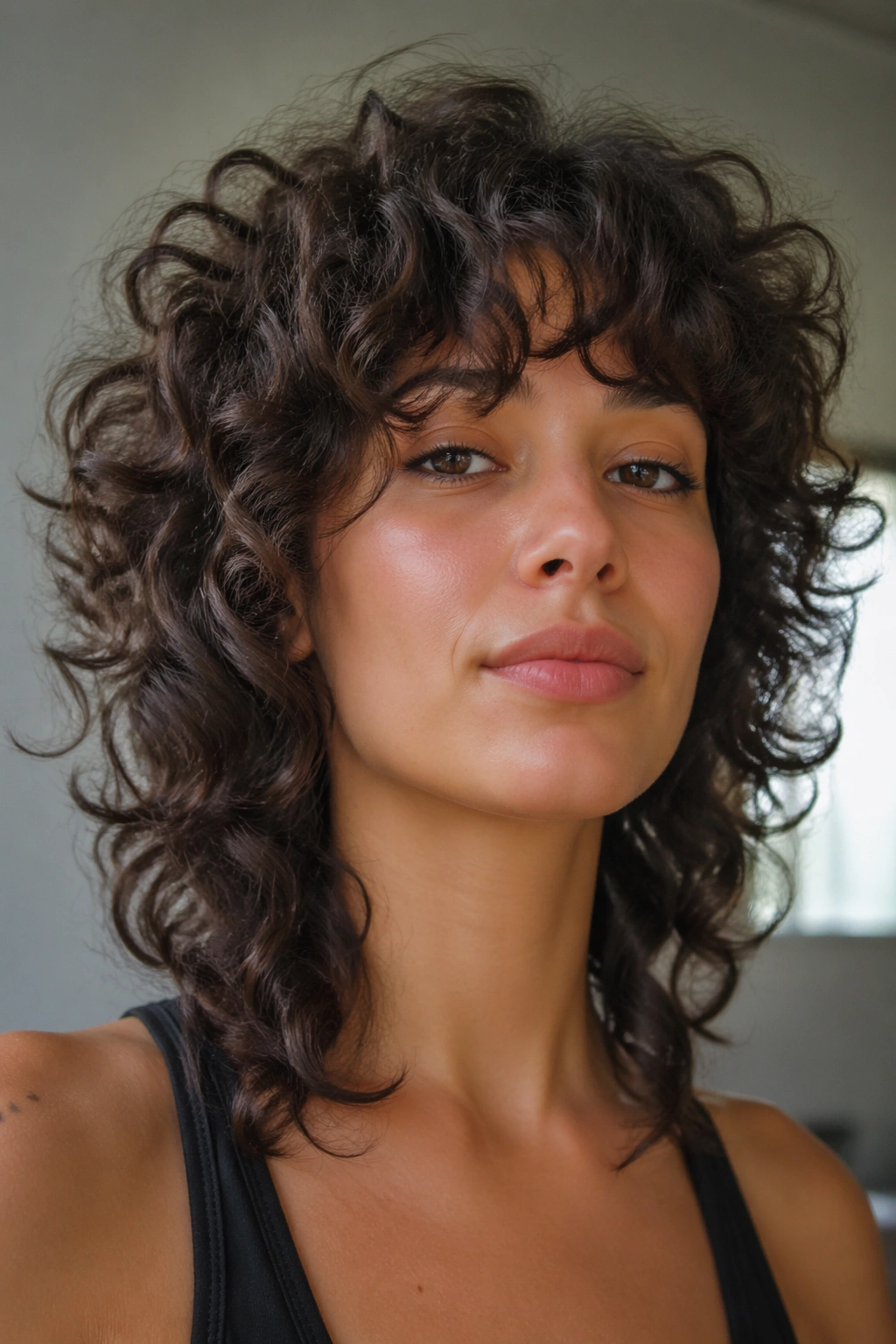
Why does the shag keep showing up in curly hair discussions? Because it solves a real problem: curls that get flat at the roots and bulky at the ends. The shag removes weight from the right places and leaves pieces around the face that don’t feel stiff or overcontrolled.
What Makes It Different
A curly shag isn’t just “lots of layers.” A good one has a soft fringe, shorter crown layers, and longer face-framing pieces that taper out as they hit the jawline. That mix gives movement around the eyes and cheekbones without making the haircut look chopped to bits.
It’s a strong choice for thicker curls, especially if the hair tends to expand outward at the sides. The layers help the silhouette sit closer to the head, which matters more than people think.
How to Style It
- Scrunch in gel while the hair is very wet
- Diffuse on low heat or air-dry with the front pieces clipped up
- Separate only the curls that clump together naturally
- Use a drop of serum on the fringe if it frizzes first
Best move: leave the fringe a little longer than you think you need. Curly fringe has a habit of shrinking right after you decide it’s perfect.
4. Chin-Length Curly Bob with Front Pieces
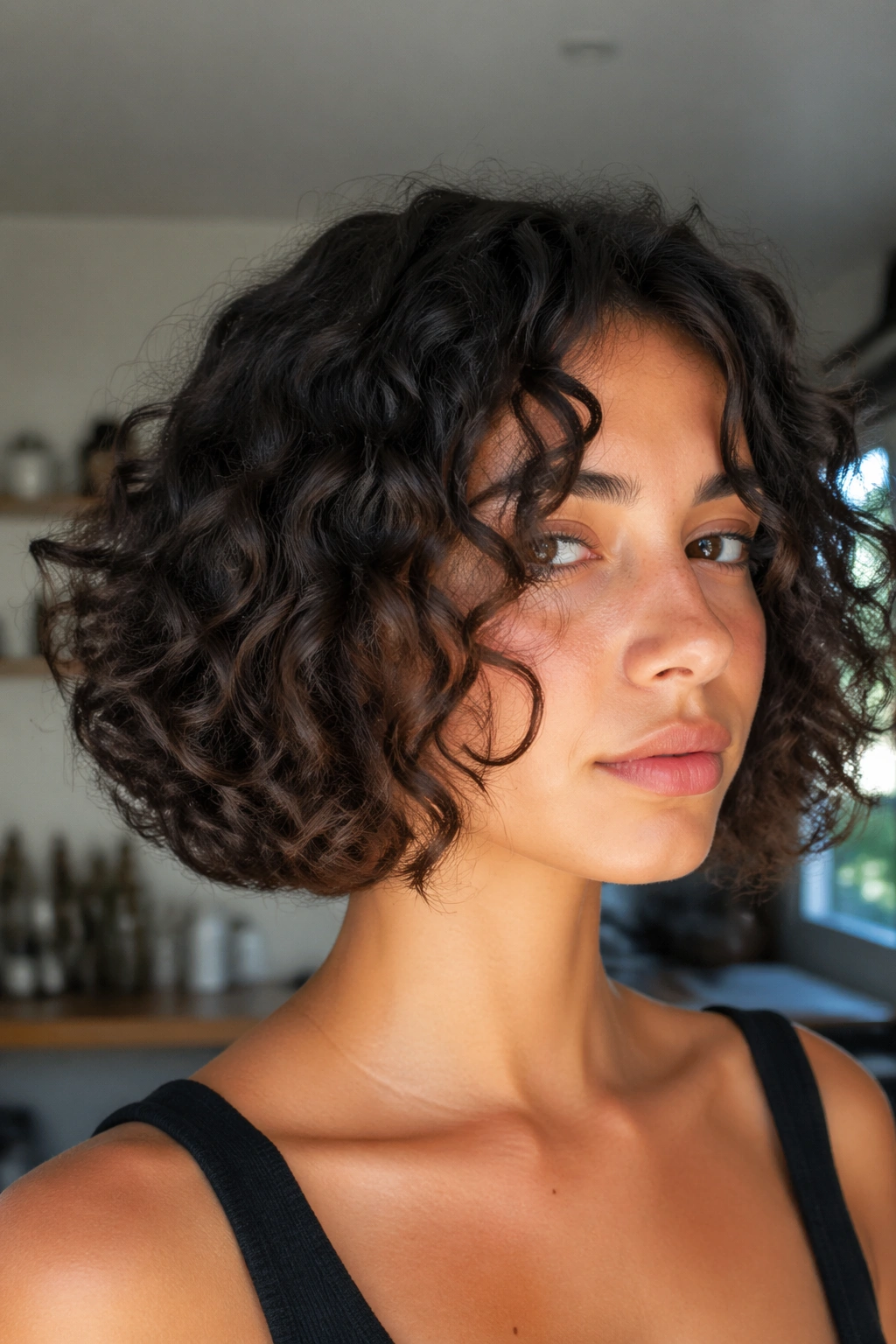
A chin-length curly bob can look sharp, fresh, and a little bit cheeky when the front pieces are shaped well. It brings the eye right to the jawline, which is useful if you want your curls to frame your face instead of hiding it behind a curtain of length.
I’ve seen this cut go wrong when the bob is made too blunt. On curls, bluntness can become triangle-shaped fast. The better version keeps the perimeter clean but sneaks in some internal layering so the front curls fall inward instead of kicking out to the sides.
The sweet spot is usually a front that lands at or just below the chin once dry. That gives the curls enough length to move, but not so much that they swallow the face. Shorter than that and you can lose the softness; longer than that and the bob starts to behave like a lob.
This one works especially well if you like a strong shape with low styling effort. It’s not fussy. It just needs a good cut.
5. Collarbone Lob with Elongated Front Layers
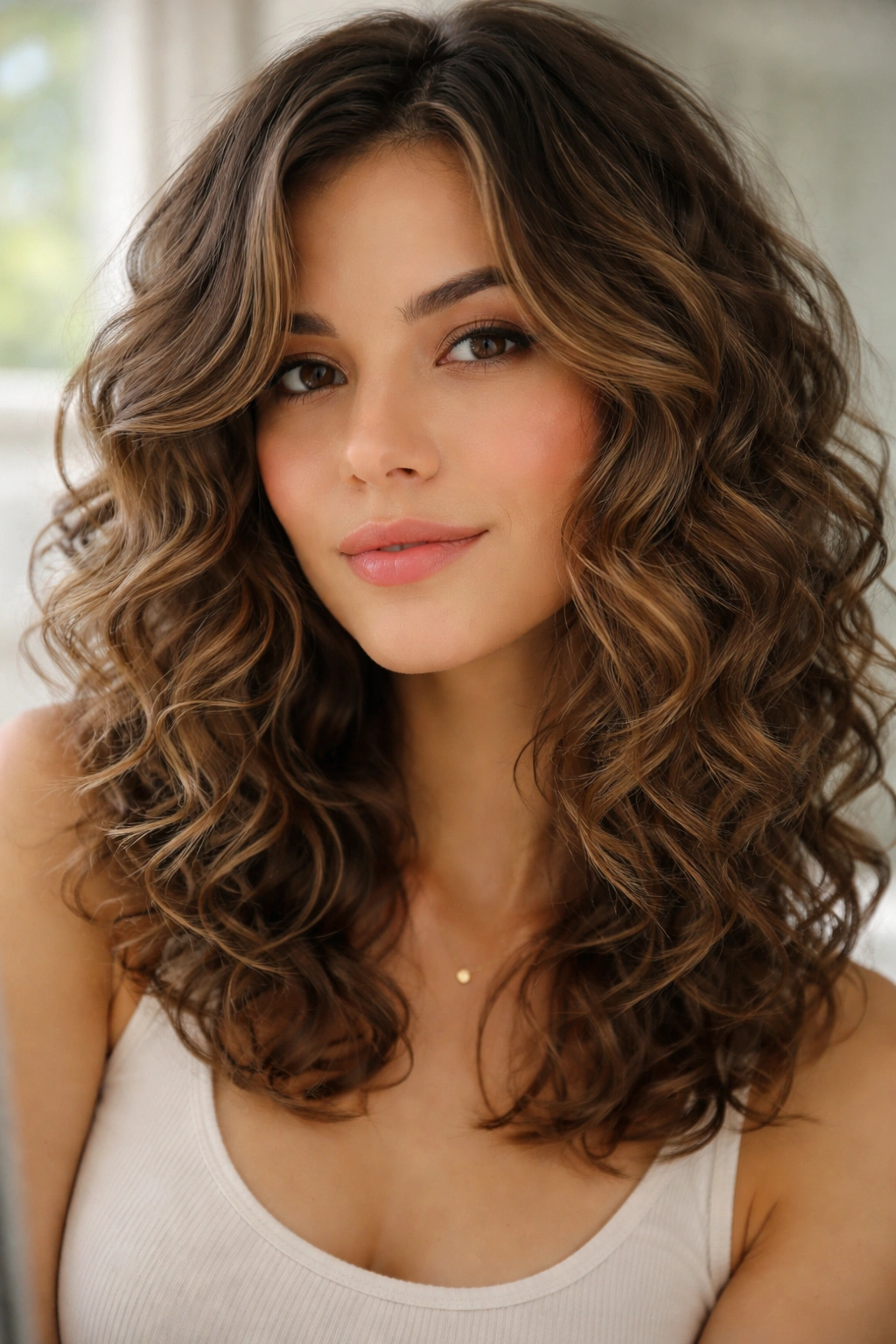
The collarbone lob is the one I recommend when someone wants face-framing curly hairstyles but isn’t ready to give up length. It sits in that narrow band between “grown-out bob” and “long hair with no shape,” which is a useful place to be.
The elongated front layers matter more than the total length. If the front only skims the collarbone, curls can sit like a shelf and feel heavy. When the front pieces are left a little longer and feathered into the rest of the cut, the whole shape bends around the face instead of hanging straight down.
This cut is good for curls that flatten under their own weight. A shoulder-length shape can lose all personality if the front is cut even on both sides and left alone. With longer face pieces, you get movement near the eyes and cheekbones, then a soft fall through the rest of the hair.
It’s also one of the few styles that works across a lot of curl types without becoming too precious. You can wear it polished, messy, or half-dried and still look like you meant it.
6. Deep Side-Swept Curls
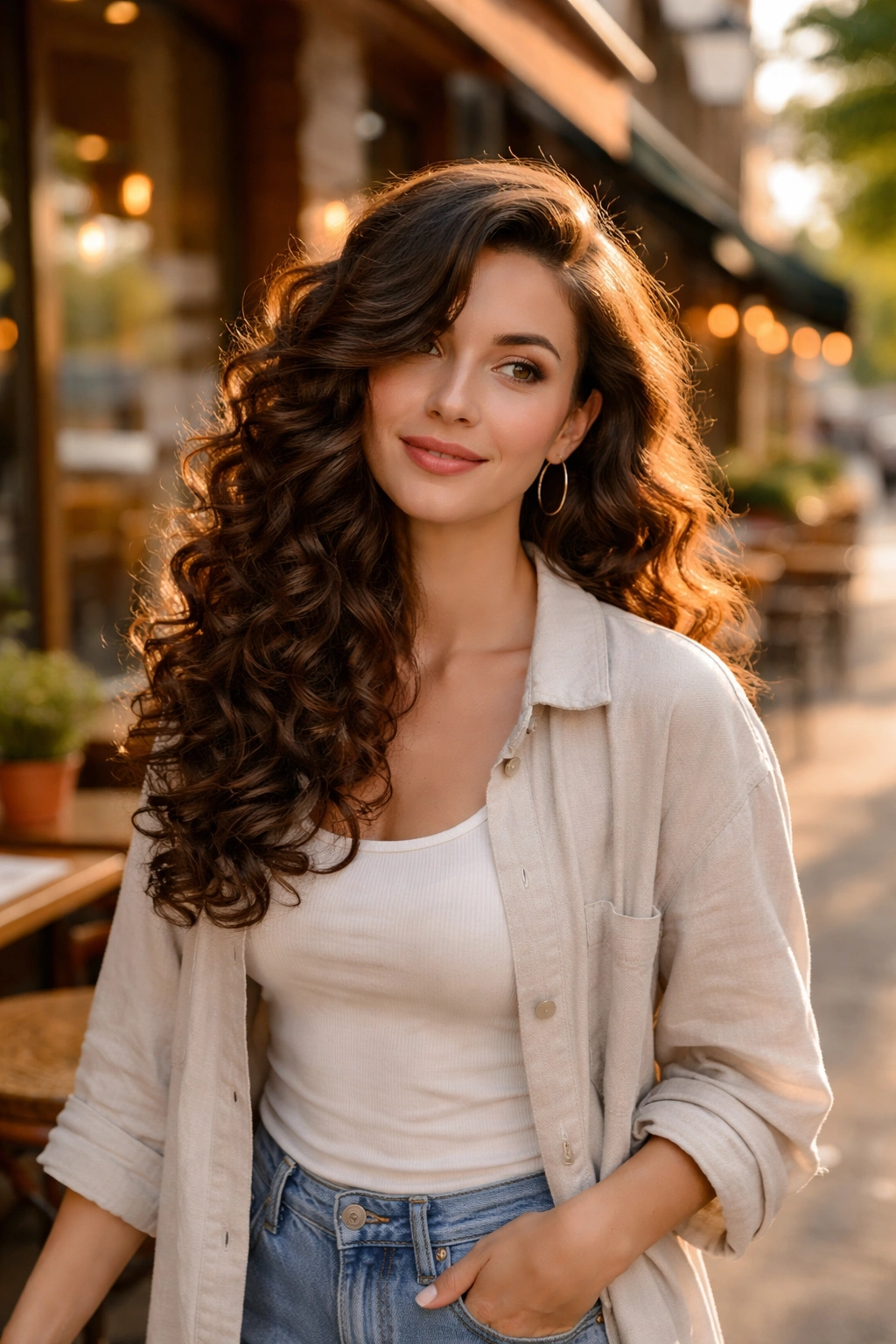
A deep side sweep gives curls an easy sense of direction. Instead of floating evenly around the head, the hair moves across the forehead and lands on one side of the face, which creates a long, flattering line.
The effect is simple, but not boring. A side sweep can soften a square jaw, take the edge off a broad forehead, and make tighter curls feel more romantic without adding extra layers. It’s also useful on days when one side of your hair is behaving better than the other. That happens. A lot.
What I like most is the control you get without pulling everything back. You can pin one side behind the ear, clip the front at the temple, or let a long curl fall over one brow. Tiny choices. Big difference.
If you want this look to last, keep the root near the part lifted with a duckbill clip while your hair dries. Flat roots kill the shape. A little lift keeps the sweep visible instead of mashed into the scalp.
7. Curly Pixie with a Longer Top
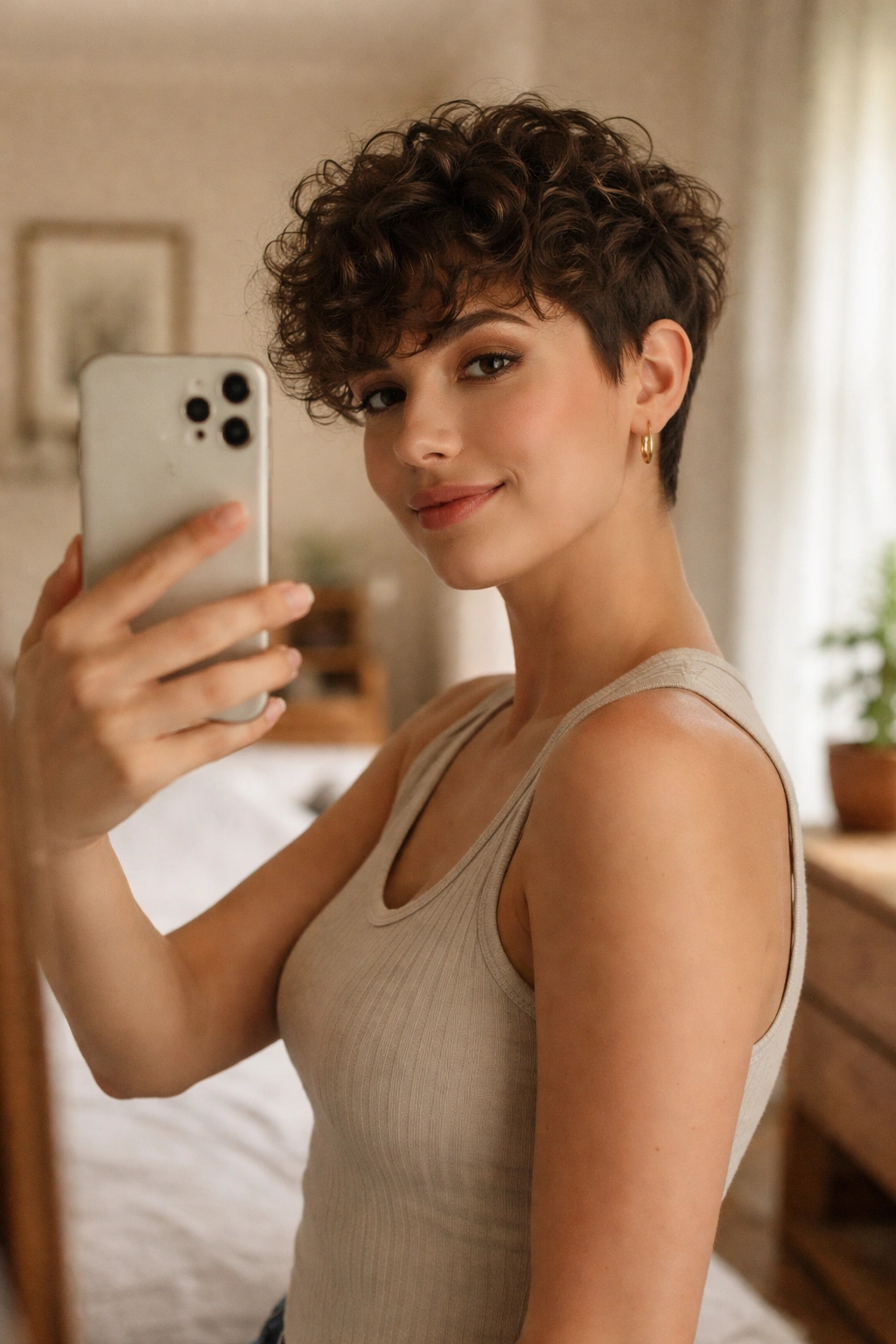
A curly pixie works when you want the face visible but not bare. The shorter sides clean up the outline, and the longer top gives you enough curl to soften the forehead and add shape around the eyes.
The best versions keep the top long enough to curl forward or diagonally, not just straight up. Around 2 to 4 inches on top can be enough, depending on curl type and density. Shorter than that, and you lose the face-framing part. Longer than that, and the cut starts acting more like a cropped curly crop than a pixie.
This cut is brave in the right way. It shows your features, so the front shape has to be planned. A little fringe or a few angled pieces at the temple make the whole thing feel intentional instead of abrupt.
I like it most on tighter curls that hold shape well. Loose waves can do it too, but they need more product support or the top gets fuzzy before lunch.
8. Half-Up Curly Puff with Loose Tendrils
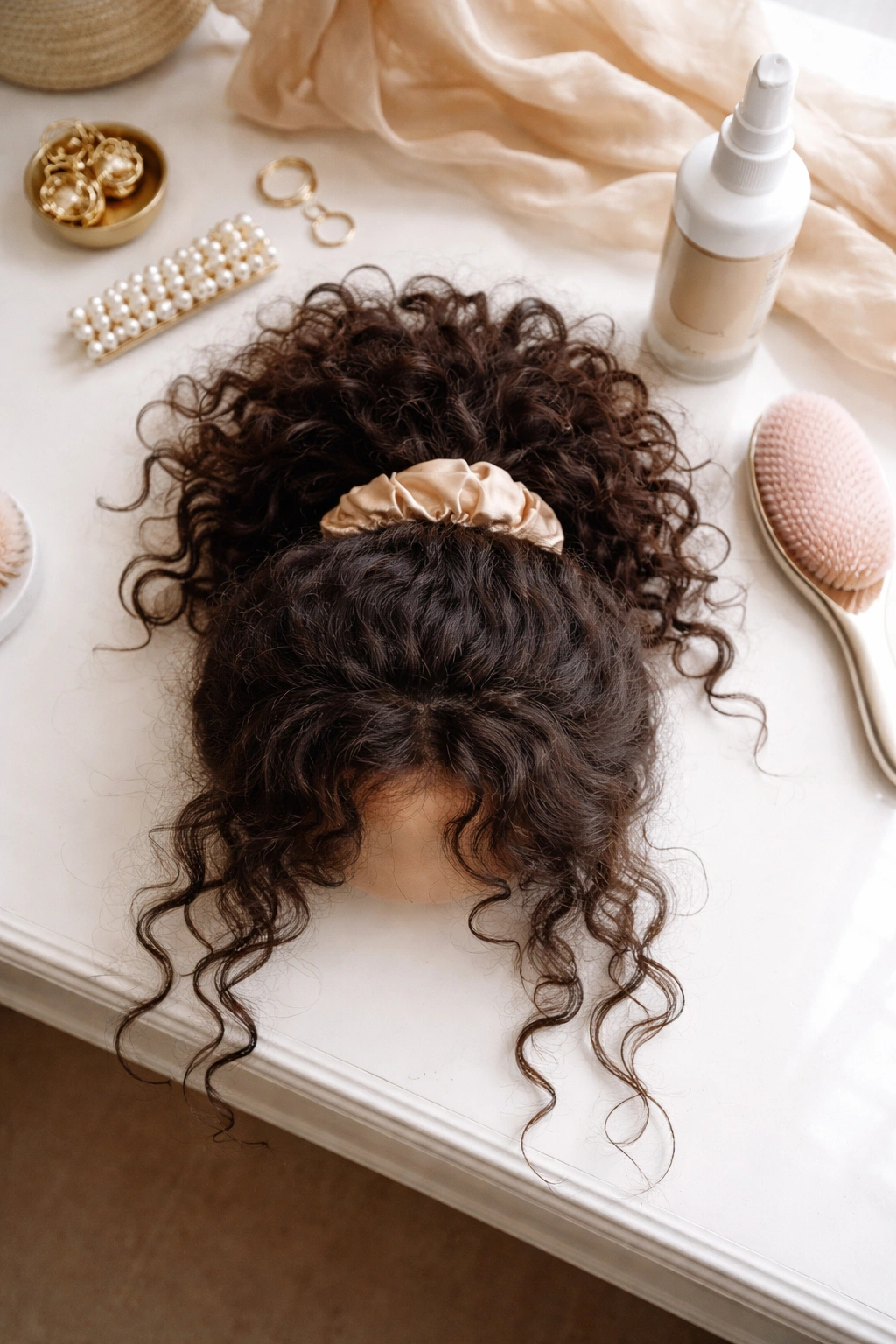
The half-up curly puff is one of those styles that looks casual but still feels styled. You pull the crown up, leave the rest free, and let a few front curls hang around the temples and cheekbones. That’s the whole idea.
It works because it gives your face room to breathe. The lifted crown adds height, while the loose pieces around the front keep the style from becoming severe. If you’ve ever put your curls all the way up and felt like your face looked too exposed, this fixes that problem.
A small detail makes it better: don’t smooth the front pieces back too tightly. Leave them with their natural bend. A curl that curves near the cheekbone looks softer than a straight strand trying to do the same job.
- Best with medium to thick curls
- Easy to dress up with a clip or silk scrunchie
- Good choice for second- or third-day hair
- Looks stronger when the front tendrils are left slightly longer than the rest
It’s not fussy, and that’s why people wear it so often.
9. Rounded Afro with Sculpted Front Shape
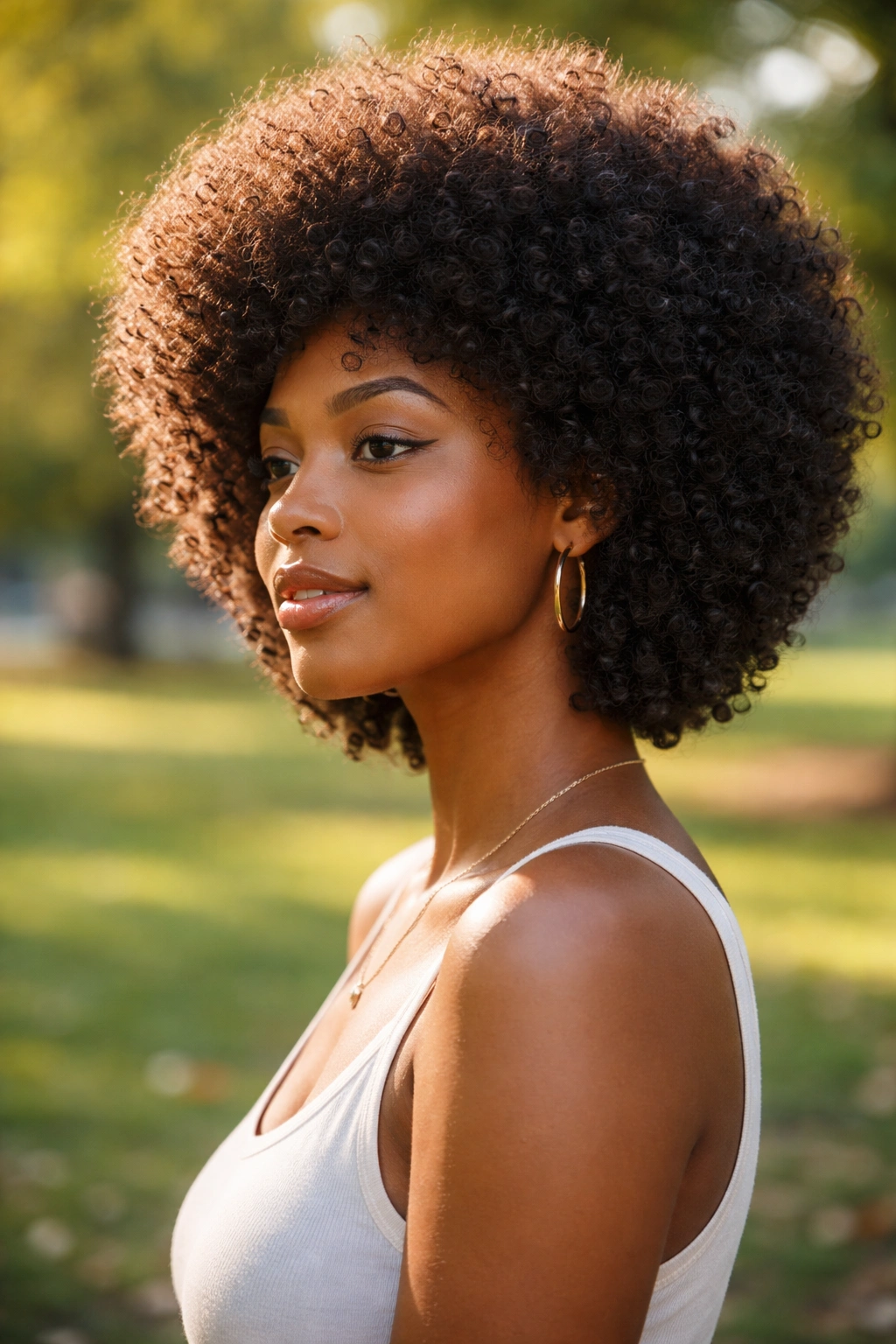
Can a rounded afro frame the face? Absolutely, if the front is shaped with care. A lot of people think a round silhouette means “all volume, no structure,” but that’s not how good afro shaping works.
The front should meet the face, not overwhelm it. That usually means keeping the temple area a touch shorter or more tapered, then building the roundness higher and wider through the crown and sides. The result is full, soft, and clear around the features instead of bulky at the brow.
Shape Notes That Matter
- Keep the front perimeter slightly lower at the center or temple
- Use dry cutting or dry shaping so shrinkage doesn’t throw off the outline
- Ask for balance, not flatness
- Let the crown stay full so the front doesn’t look dragged down
A rounded afro can be one of the most face-framing curly hairstyles when it’s cut by someone who understands proportion. Not every round shape needs to be huge. Sometimes the strongest version is the one that hugs the face in the right places and leaves the rest open.
10. Wolf Cut with Short Front Layers
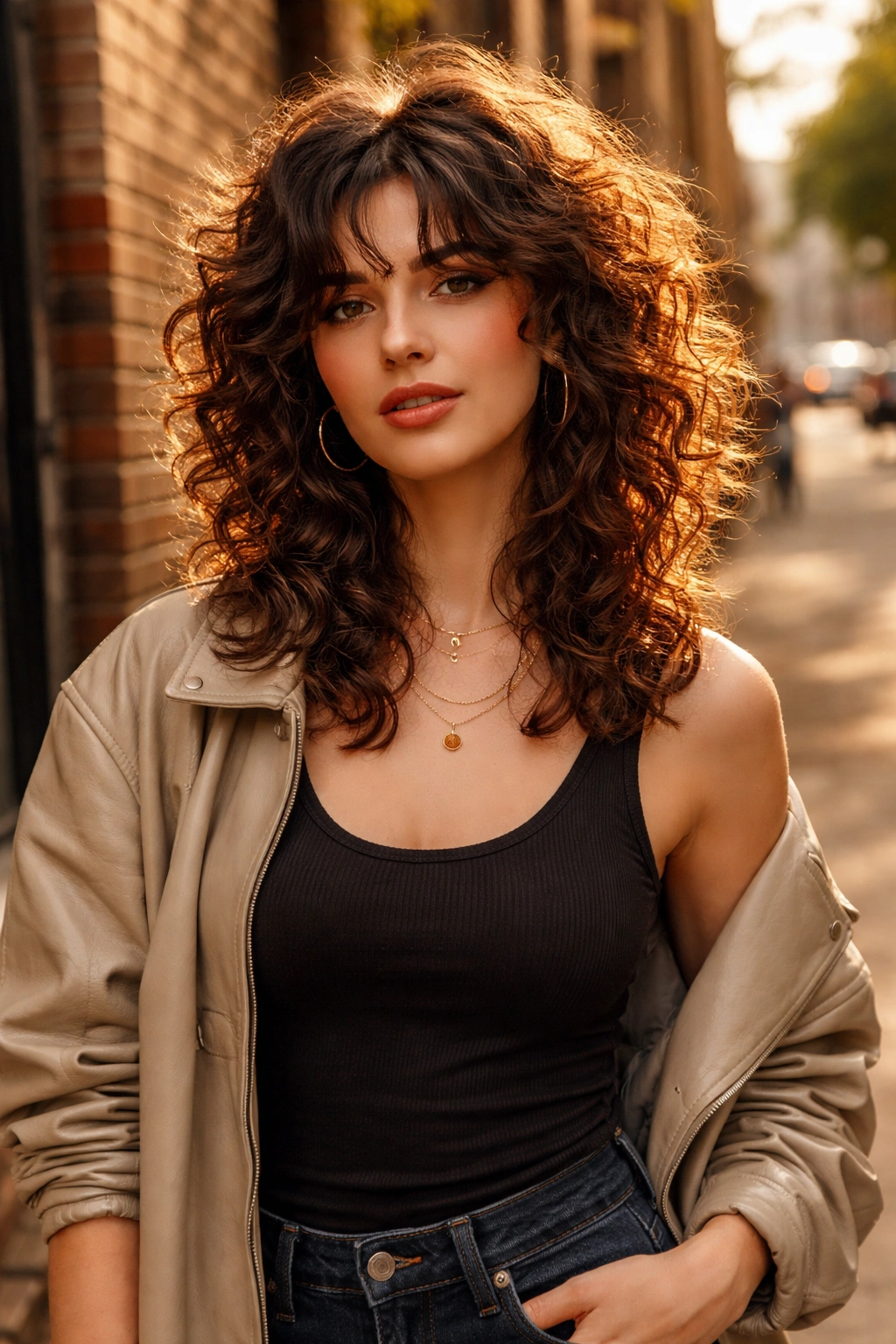
The wolf cut can look amazing on curls because it breaks up bulk at the crown and puts movement right where the face needs it. It’s messier than a shag, choppier than a bob, and a little more rebellious than both. That’s part of the appeal.
The short front layers are the reason it frames the face so well. They fall around the brow and cheekbones, then blend into longer lengths that keep the overall shape from feeling too severe. On curls with a lot of density, this can be a lifesaver. Without those short layers, the front can just swell outward.
I’d be careful with it if your curl pattern is fine or very loose. Too many short layers can make the crown frizzy and leave the ends looking thin. That is the trade-off, and it’s real.
But on medium to thick curls, the wolf cut gives a built-in halo around the face. It has a little edge, a little softness, and enough shape that you don’t need to spend half the morning coaxing it into place.
11. Braided Crown with Curly Face Pieces
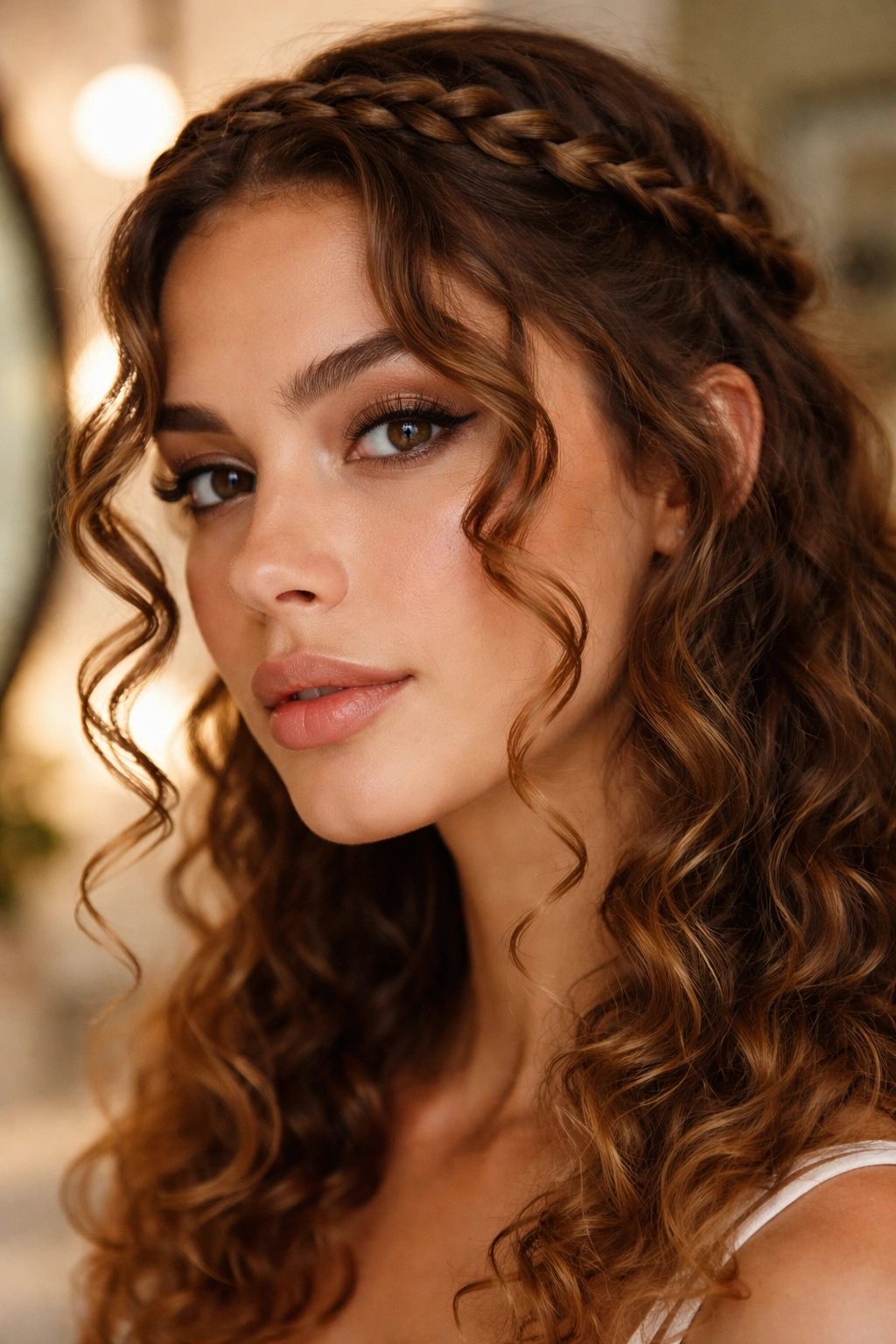
A braided crown changes the whole frame of the face because it pulls the eye upward and leaves the front curls free to soften the edges. The braid acts like a border. The loose pieces do the flattering work.
This style is especially nice when you want curls out of the way but still want movement near the cheeks. A full updo can look too severe on some faces. Leave two or three front curls out, and the look gets easier, less formal, and a lot more wearable.
What makes it different from a plain braid is the contrast. The braid is controlled. The front curls are not. That push-pull is what makes the style feel alive instead of overdone.
It also handles humidity better than people expect. Even if the braid loosens a little, the front curls still shape the face. That means the style stays useful even when every strand is not behaving like a model on a salon poster.
12. Pineapple Updo with Soft Front Coils
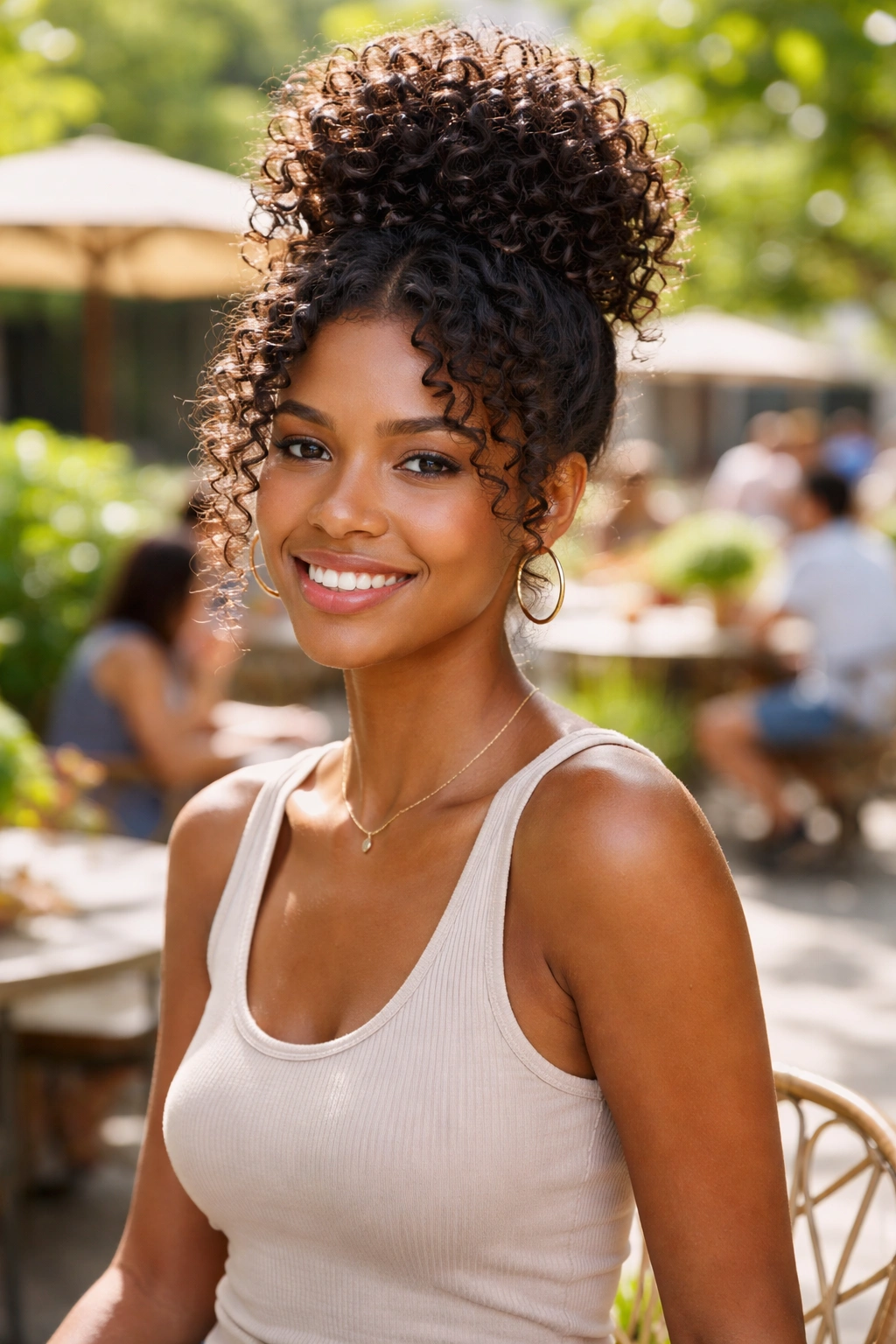
The pineapple is usually thought of as a sleep style, but it can work as a daytime face-framing look when it’s done with a little care. The curls sit high on the head, the front stays loose, and the face gets a frame made of soft coils and edges.
I like this for hot days, gym runs, or any time you want your curls off your neck without losing shape around the face. The trick is to keep the front curls separated from the gathered section so they can fall forward instead of being sucked into the top knot.
Small Things That Make It Work
- Use a loose scrunchie or coil tie
- Leave the front curl group out before gathering the rest
- Fluff the crown only after the style is set
- Add a touch of gel to the hairline if the front pieces get fuzzy
A pineapple can look careless or cute. The difference is usually the front. If those coils are left in a clean, intentional shape, the whole style reads as styling, not just “I tied it up and hoped for the best.”
13. Spiral Layers with Side-Swept Definition
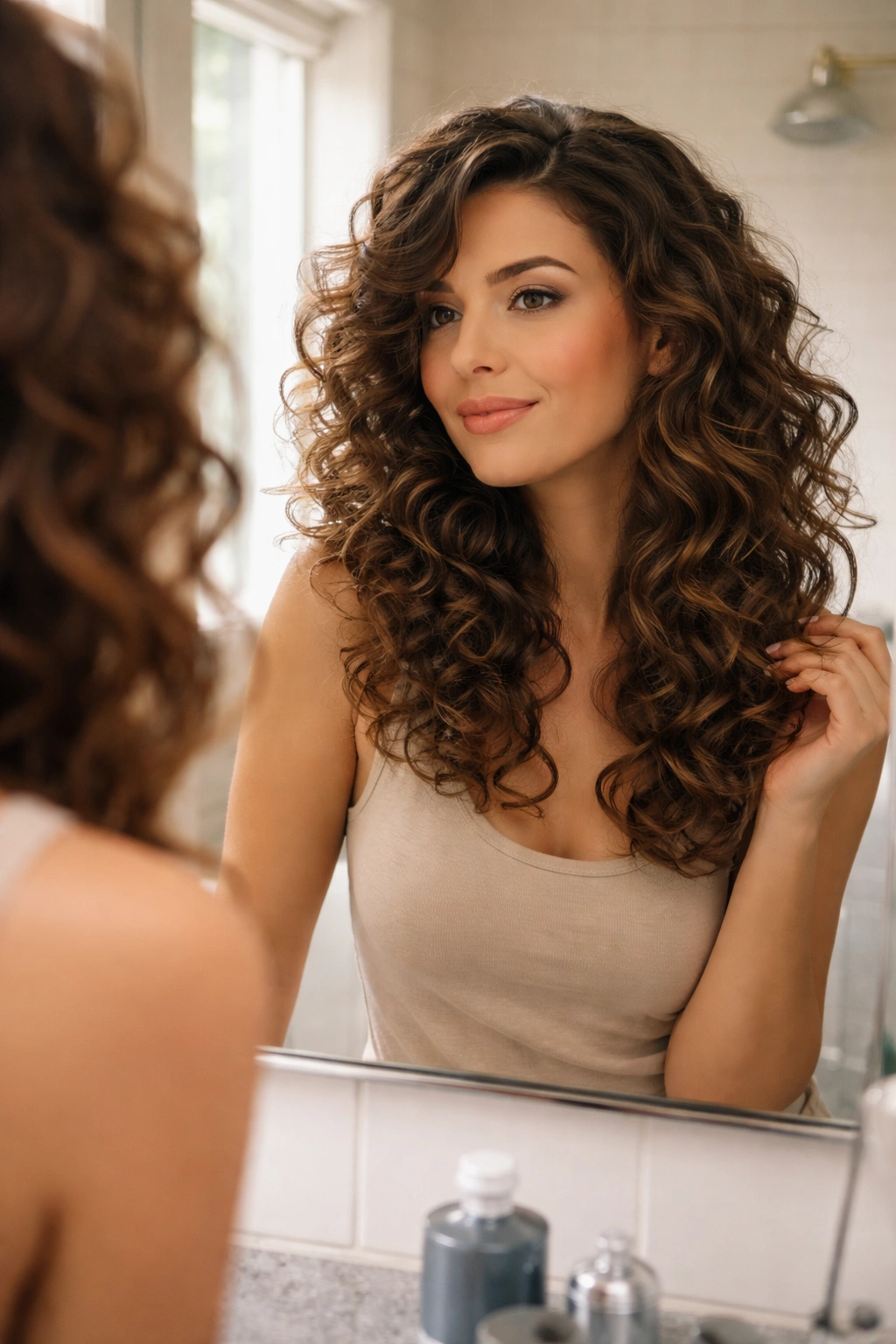
Why do spiral layers look so good around the face? Because they let each curl fall in its own lane. Instead of a block of hair, you get visible movement, a bit of space between curl groups, and a line that follows the cheeks.
How to Get the Most From It
Ask for layers that start around the cheekbone and continue downward in soft steps. The top shouldn’t be chopped too short. You want enough length for the curls to bounce, but enough shape that the front doesn’t melt into the rest of the cut.
A side-swept finish helps a lot here. Even a small shift in parting can turn spiral layers from plain to flattering. One side can sit closer to the temple while the other falls lower toward the jaw, and that unevenness keeps the face from disappearing inside the hair.
- Best on medium-length curls with strong definition
- Looks cleanest when curls are dried without touching them too much
- Pairs well with a light cream rather than heavy butter
- Needs a trim before the front layers get stringy
I’m partial to this one because it feels like the haircut is doing the styling work for you.
14. High Ponytail with Waterfall Curls
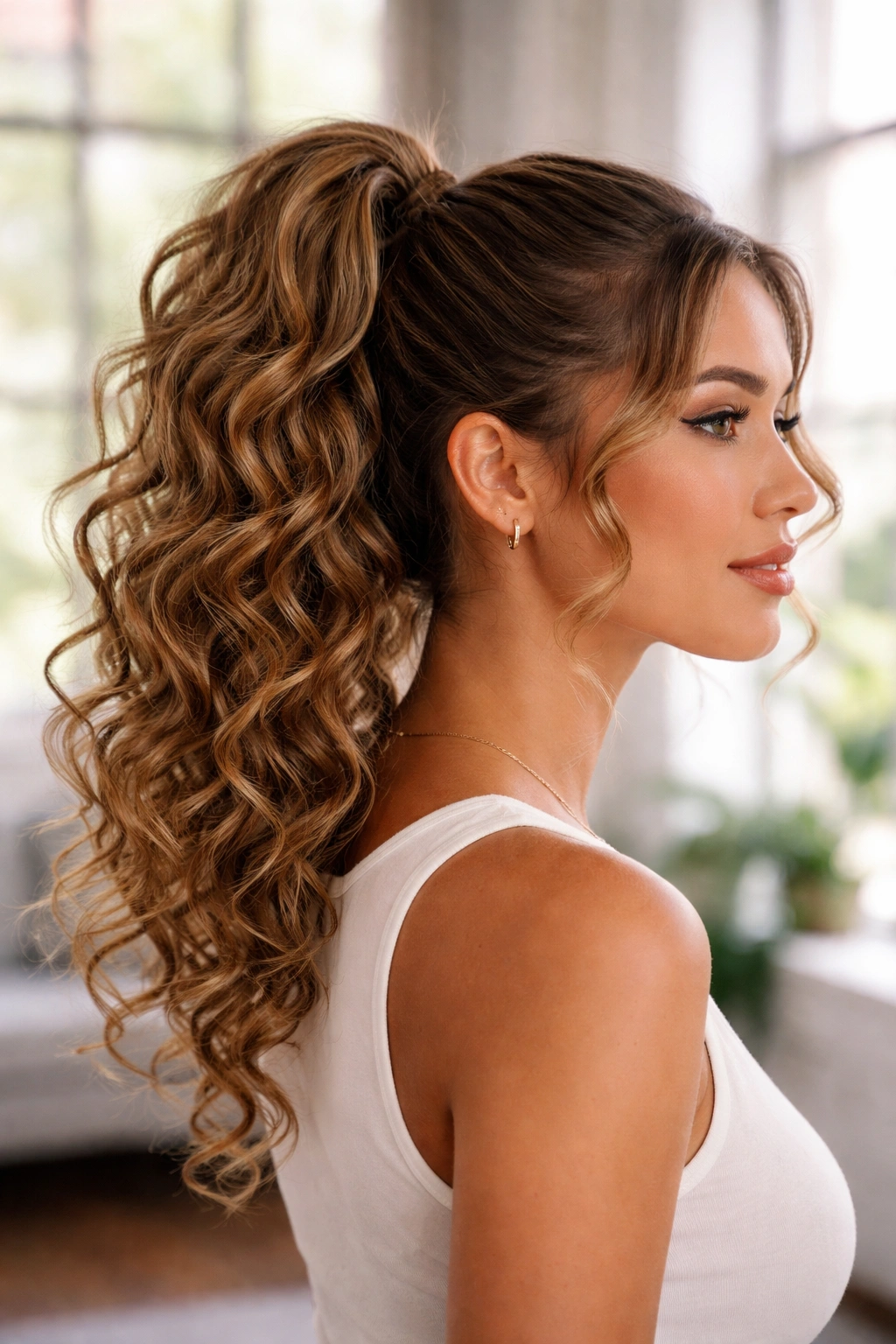
A high ponytail can frame the face better than a lot of loose styles if the front is left soft. The height lifts the face, while the curls that spill over the sides create the framing effect. It’s neat, but not hard.
The best version keeps the ponytail high at the crown, not halfway down the back of the head. That lifts the eyes and gives the front more room. Then a few front curls are left out, usually around the temples or cheekbones, so the look doesn’t pull everything away from the face.
A waterfall curl or two hanging near the ears makes a bigger difference than people expect. Those pieces break up the line of the ponytail and keep the style from feeling severe. If you have tighter curls, you may only need one or two pieces. If your curls are looser, you can leave a little more out without the style turning messy.
Keep the base secure but not tight. A ponytail that pulls the hairline flat can make the face look harsher than it should.
15. Wash-and-Go with Strategically Cut Face Layers
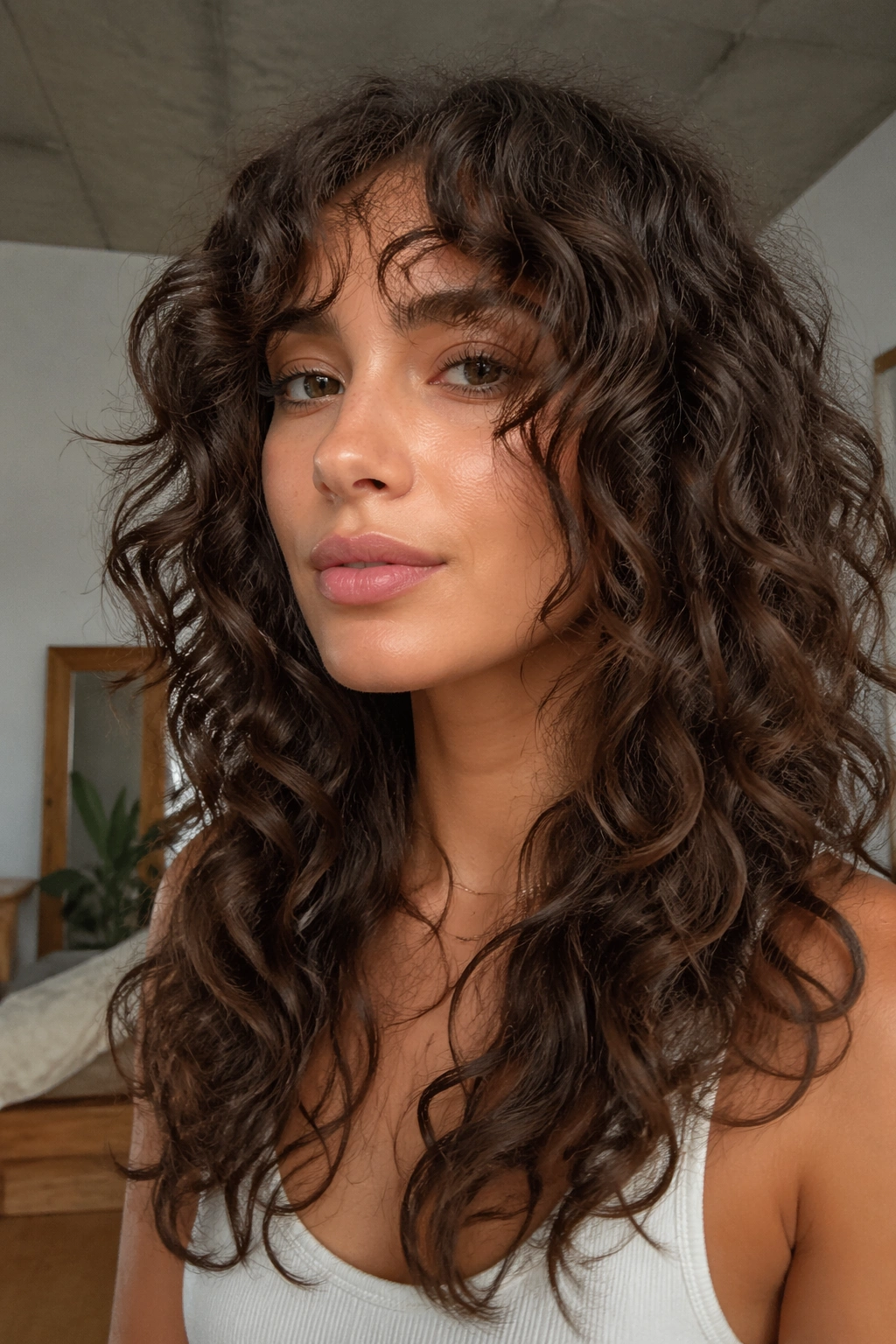
A good wash-and-go is often the most honest face-framing curly hairstyle of all, because the cut has to do the work. No pins. No braids. No rescue mission halfway through the day. Just curls, shaped in the right places, sitting where they’re meant to sit.
The face layers are the whole point here. They should start somewhere around the temple or cheekbone and taper toward the jaw, depending on the curl pattern and the face shape. If they’re too short, they puff. If they’re too long and heavy, they disappear into the rest of the hair. That narrow middle ground is where the style lives.
What to Ask For
- Dry-cut front layers so shrinkage is visible
- Soft shaping around the temple, not a hard line
- A length check on both sides of the face
- Layers that move with the curl pattern, not against it
This style is probably the easiest to live with if you like low-maintenance hair. It also shows the truth fast: if the cut is good, the curls fall into place on their own. If the cut is off, you’ll know it by the second day.
A face-framing wash-and-go works best when the front pieces are light enough to lift but heavy enough to hold shape. That balance is the whole game.
Some cuts want a lot of styling. This one doesn’t. It wants a decent trim, a diffuser, and enough patience to let the curls dry before you start poking at them. That’s all.