


Short curly wig hairstyles have a funny habit of doing half the work for you. Put on the right one and the face looks brighter, the neckline looks cleaner, and the whole look feels finished before you’ve even touched a comb. Put on the wrong one and the wig can puff out at the sides, sit too flat at the crown, or land in that awkward middle zone where it looks styled and not styled at the same time.
That middle zone is where most people get stuck. Short curls are less forgiving than long ones because the silhouette is on display right away. There’s nowhere for the shape to hide. A 6-inch coil crop, a jaw-skimming bob, or a tiny tapered fro can look chic and expensive when the cut is intentional. Same wig, different parting or a bad brushing habit, and it can look like you fought it in a parking lot.
What works best is usually the simplest thing: let the curl pattern lead, keep the roots neat, and avoid burying the whole wig under product. A little water, a little foam, a careful side part, maybe one pin or a scarf. That’s often enough. And when the shape is right, short curls do what they do best — they look lively, not stiff.
1. Tapered Pixie Curls
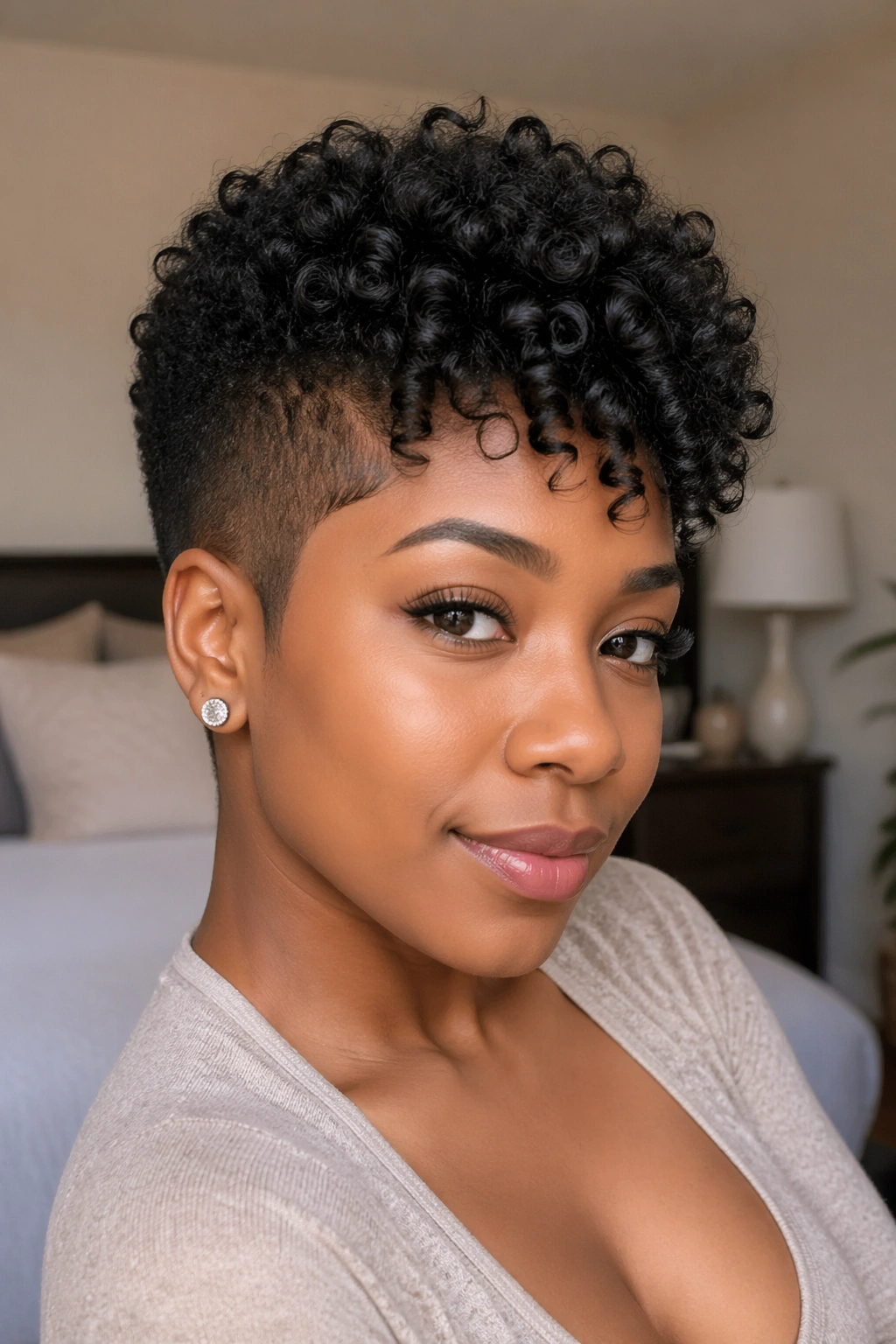
A tapered pixie is one of those short curly wig hairstyles that looks sharp without acting like it needs a full styling session. The sides stay close to the head, the nape sits neat, and the curl sits higher through the top and crown. That gives you shape without bulk, which is exactly why this cut works so well on dense curly wigs that can turn puffy fast.
Why the Taper Makes the Curl Look Cleaner
The taper removes visual weight from the sides, so the curls on top get to be the star. It also helps the face look a little more open, especially if the wig has a low hairline or a side part. I like this shape on people who want something polished but not fussy.
A small amount of mousse goes a long way here. Use your fingers to lift the top, then press the sides down gently with your palms. Do not brush the curls out. That turns a neat pixie into a triangle with opinions.
- Best on tight curls, coil patterns, or small ringlets
- Works well with a lace front and a soft side part
- Needs only a light mist of water to refresh
- Looks especially good with bold earrings or a clean neckline
Tip: If the wig feels bulky around the ears, tuck just that area with a small pin and leave the crown alone.
2. Side-Swept Short Curly Wig Hairstyle
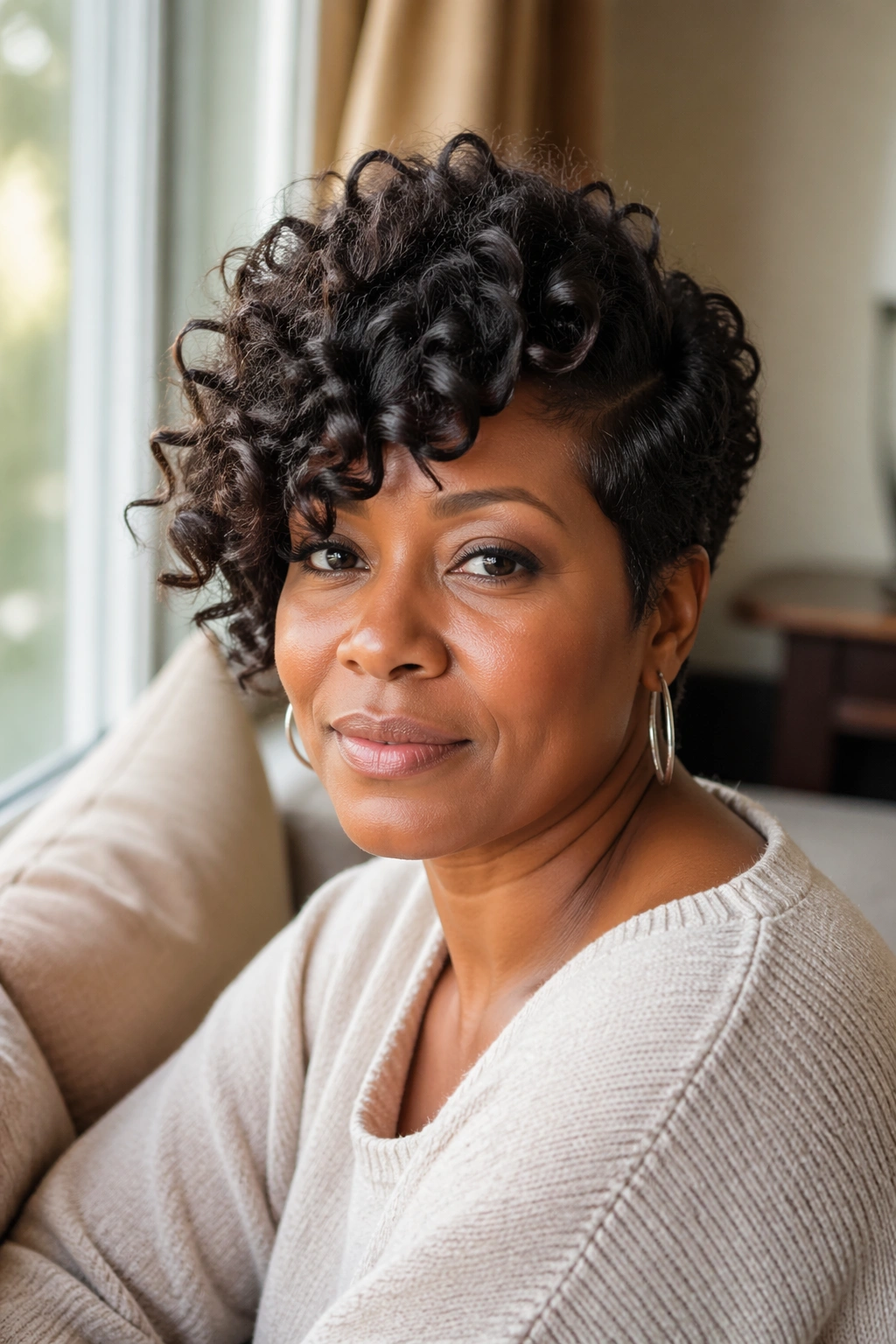
What if you want softness without losing control? A side-swept short curly wig hairstyle answers that fast. The deep part pulls the eye across the forehead, and the curls falling to one side give the face a little movement without adding a lot of length. It’s one of the easiest ways to make a short wig feel intentional instead of just short.
The trick is not to force the curl pattern into a flat wave. Part the hair where it naturally wants to split, then guide the front section over with your fingers while it’s still slightly damp. A tiny bit of styling foam helps the curl stay grouped, but too much product makes the front look sticky and heavy.
This style is especially useful when the wig has a little extra volume at the crown. The side sweep balances that out. It also plays nicely with glasses, which can be a problem with some short cuts. Here, the curls sit away from the frames instead of fighting them.
A side-swept shape feels easy. That’s the whole point.
3. Rounded Curly Afro

Some short curly wig hairstyles are about control. This one is about shape and fullness. A rounded curly afro gives you that soft cloud-like silhouette that sits evenly around the head, and when it’s cut well, it looks balanced from every angle. No harsh edges. No awkward flat spots at the temples.
It works best when the wig has a dense curl pattern that can hold a clean dome shape. If the curls are too stretched, the style can lose its outline and start looking fuzzy at the edges. So keep the shaping gentle. Use your fingers to lift the roots and let the crown build height naturally. A little bit of moisture spray helps the curls clump instead of frizzing apart.
What to Ask the Wig to Do
- Keep the width even on both sides
- Leave a soft round top, not a sharp point
- Let the nape stay slightly shorter than the crown
- Avoid over-separating the curls
This is the style I reach for when I want presence without effort. It has confidence built in. And yes, earrings help a lot here, but the real work is the shape itself.
4. Wet-Look Short Curly Wig Hairstyle
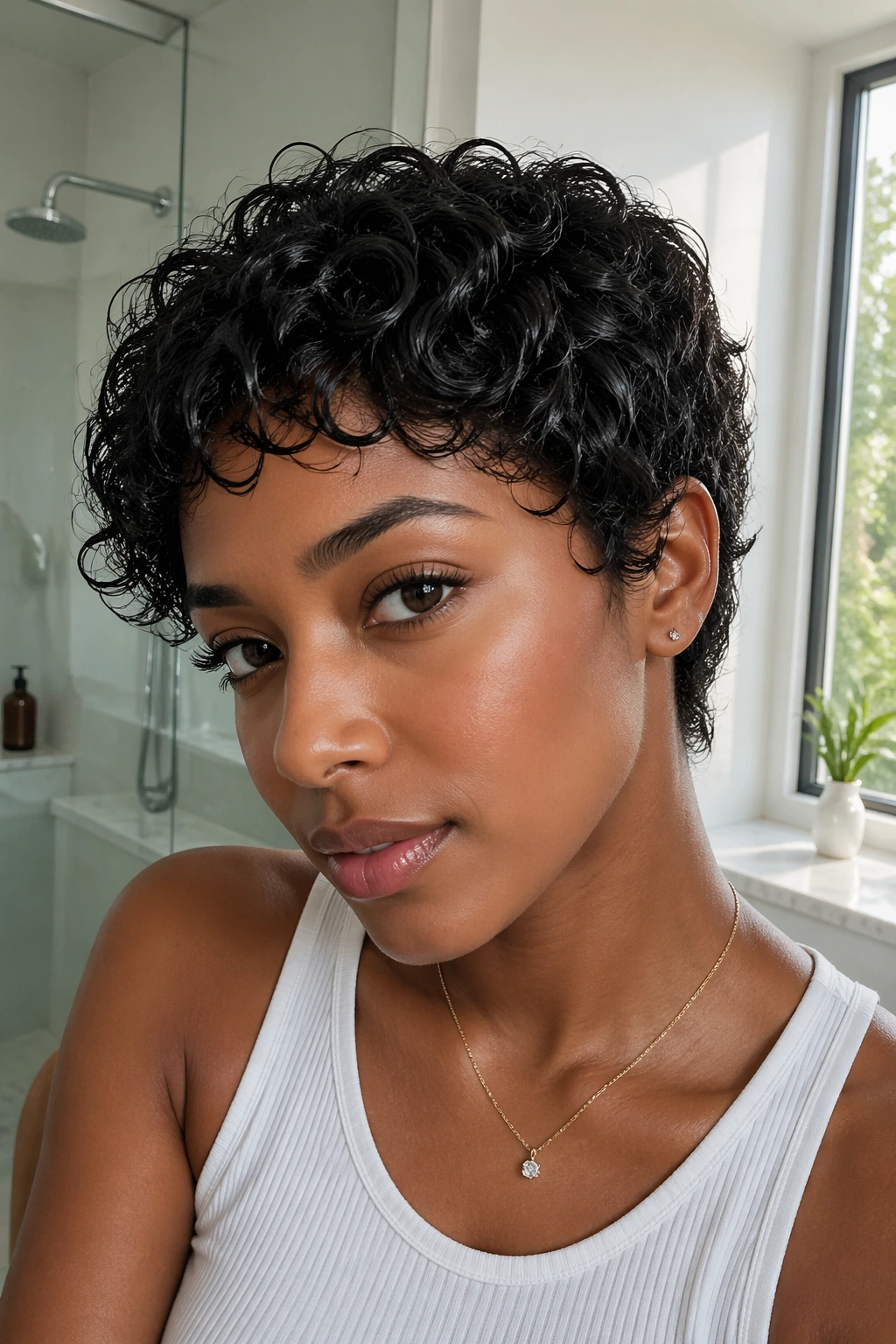
The wet look is not only for long curls and red carpet pictures. On a short curly wig, it can be cleaner, cooler, and easier to wear. The style depends on definition, shine, and a slightly sculpted finish that shows off the curl pattern instead of hiding it.
Start with a damp wig, not a soaked one. That matters. Saturated curls take forever to dry and can clump in weird ways, especially on synthetic fibers. Smooth a small amount of curl cream or foam through the mid-lengths, then use a pea-sized amount of gel only on the outer layer if you want that glassy finish. Too much gel makes short curls look crunchy fast.
This look works best when the part is neat and the hairline is clean. A center part can feel dramatic, while a side part softens the effect a bit. Either way, the goal is that the curls look grouped, heavy at the base, and slightly glossy at the surface.
I like this style when the wig itself has good curl memory. It doesn’t need drama added. It already has enough.
5. Curly Shag With Fringe

A curly shag is one of the most forgiving shapes in the whole short wig world. The layers keep the curls from sitting in one heavy block, and the fringe breaks up the forehead line so the whole style feels airy instead of helmet-like. If you’ve ever worn a short curly wig that felt too round or too neat, a shag fixes that problem fast.
The best version has uneven layers that still make sense together. That sounds odd, but you know it when you see it: curls at the crown with a little lift, lighter pieces around the cheekbones, and a fringe that falls forward without laying flat. The charm is in the mess. A little mess, not chaos.
I prefer this shape on wigs that already have a soft curl or loose coil. Tight curls can do it too, but the layers need to be cut with care or the fringe starts sticking out in awkward little springs. Finger styling works better than combing here. Comb it too hard and the shag loses its point.
There’s something honest about this cut. It doesn’t pretend to be sleek.
6. Deep Side Part Ringlets
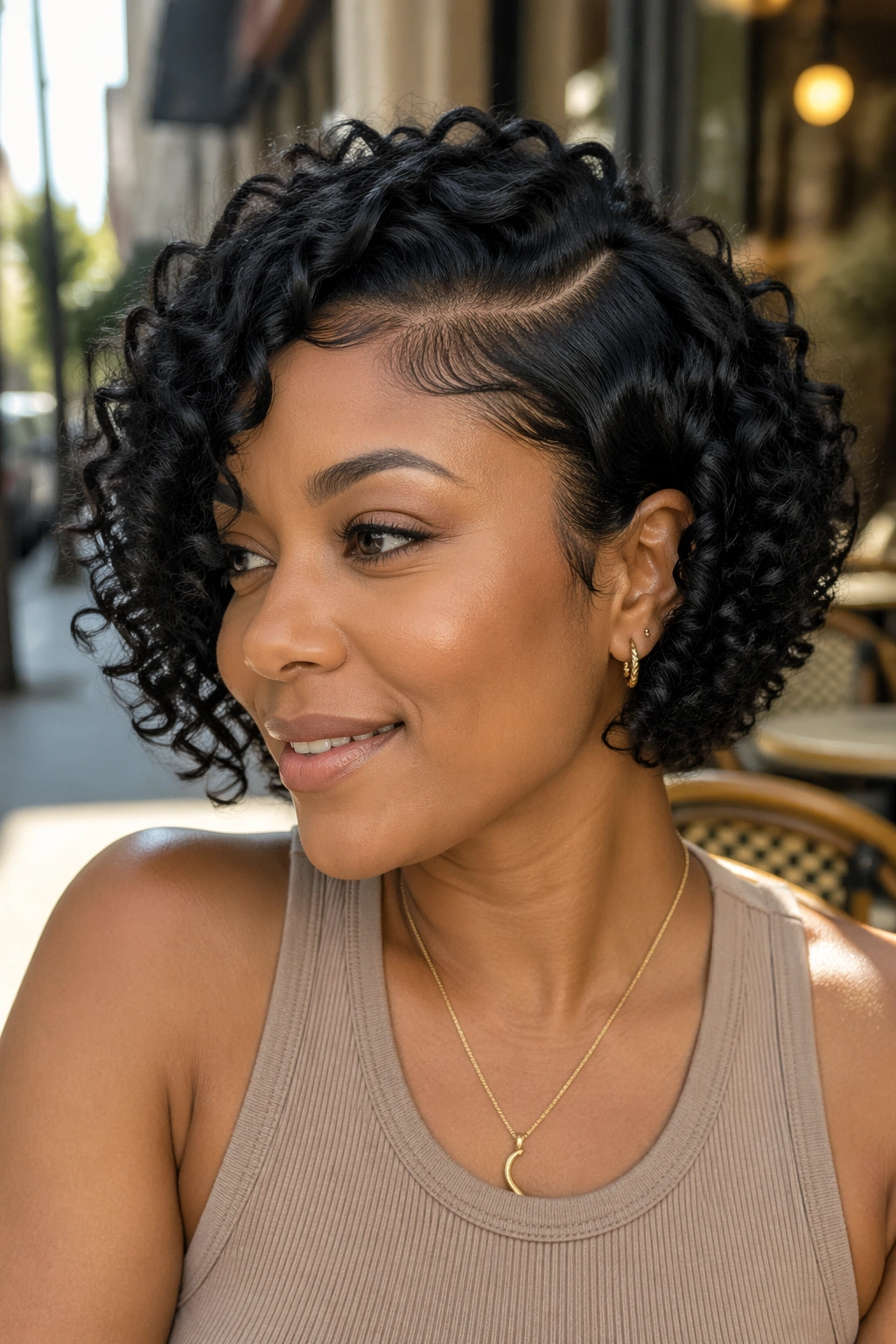
Unlike a center part, a deep side part gives a short curly wig a bit more drama right away. The hair falls heavier on one side, which makes the curl pattern look richer and the face look a little narrower. If your wig has ringlets rather than a loose wave, this shape can look expensive without trying too hard.
The part itself needs to be clean. Use a rat-tail comb if the wig cap allows it, then flatten the smaller side with a touch of mousse or wrap lotion. The larger side should stay airy, not glued down. That balance is the whole look. If both sides look equally full, the style loses its point.
This one is especially good for round or square face shapes, because the diagonal line of the part softens strong width at the cheeks. It’s also a nice fix when a short wig feels too symmetrical. A little asymmetry wakes it up.
I’d choose this style over a hard center part when the curls are dense and the crown is full. It gives the wig somewhere to go.
7. Mini Faux Hawk Curls
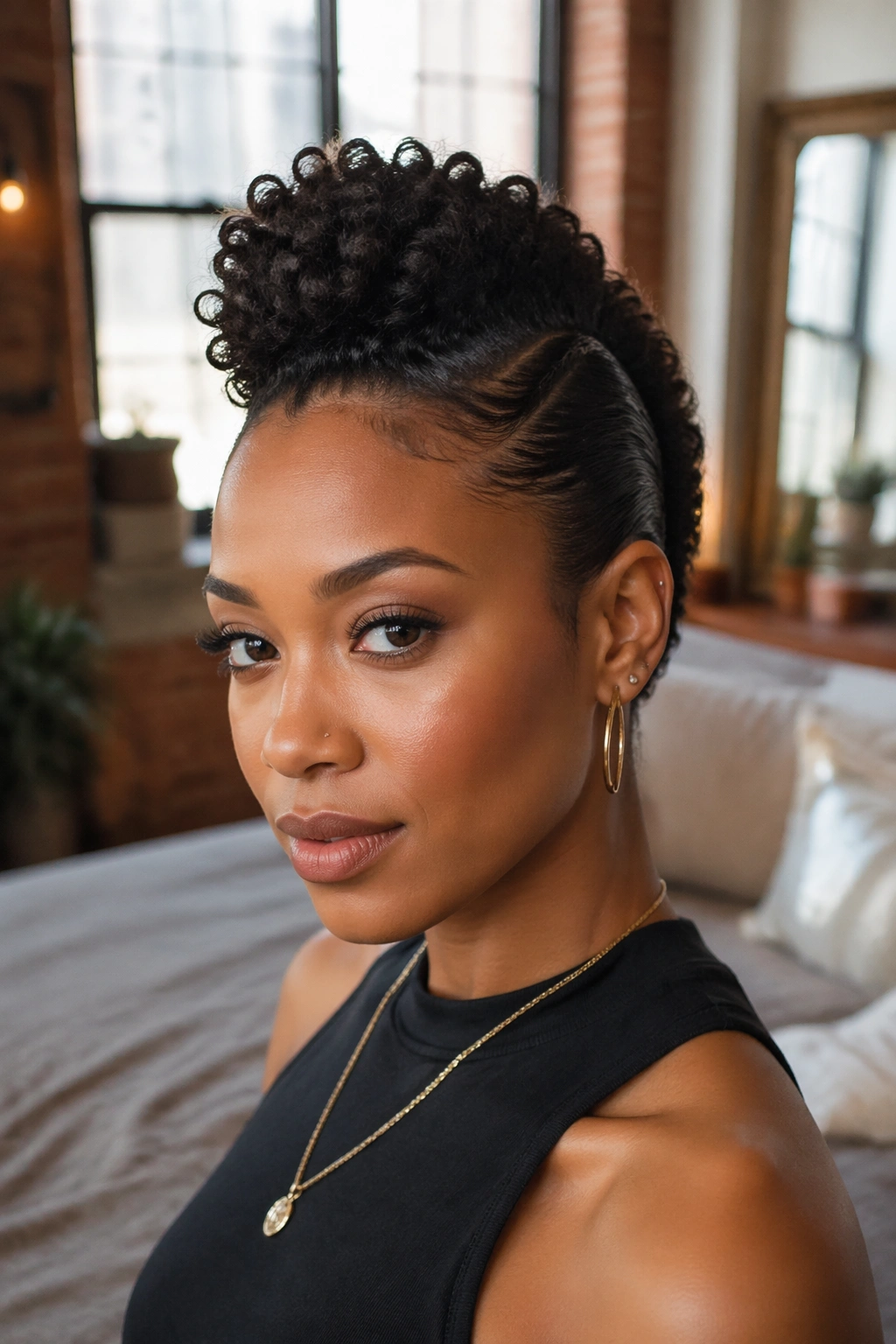
The first thing you notice is the height. Then the shape. Then the fact that it still feels wearable. A mini faux hawk on a short curly wig keeps the sides sleek while the center section rises in a narrow strip of curls from the forehead back to the crown. It sounds bold, and it is, but it does not have to be loud.
The Shape That Makes It Work
The sides are doing the quiet part of the job. Pin them flat, smooth them toward the ears, and let the center section stay lifted and textured. That central ridge can be tight curls, soft coils, or even a rounded puff shape depending on the wig’s density.
A few details matter here:
- Keep the side sections smooth, not wet-looking
- Leave the center higher at the crown than at the front
- Use small pins that match the wig color
- Skip heavy oils; they make the sides slip
Best move: Lift the center with your fingers after the product sets, not before. If you fluff too early, the shape collapses.
This is the style I’d pick for a night out, a photo, or any day when plain hair feels boring. It has edge without needing length.
8. Finger-Coiled Crop
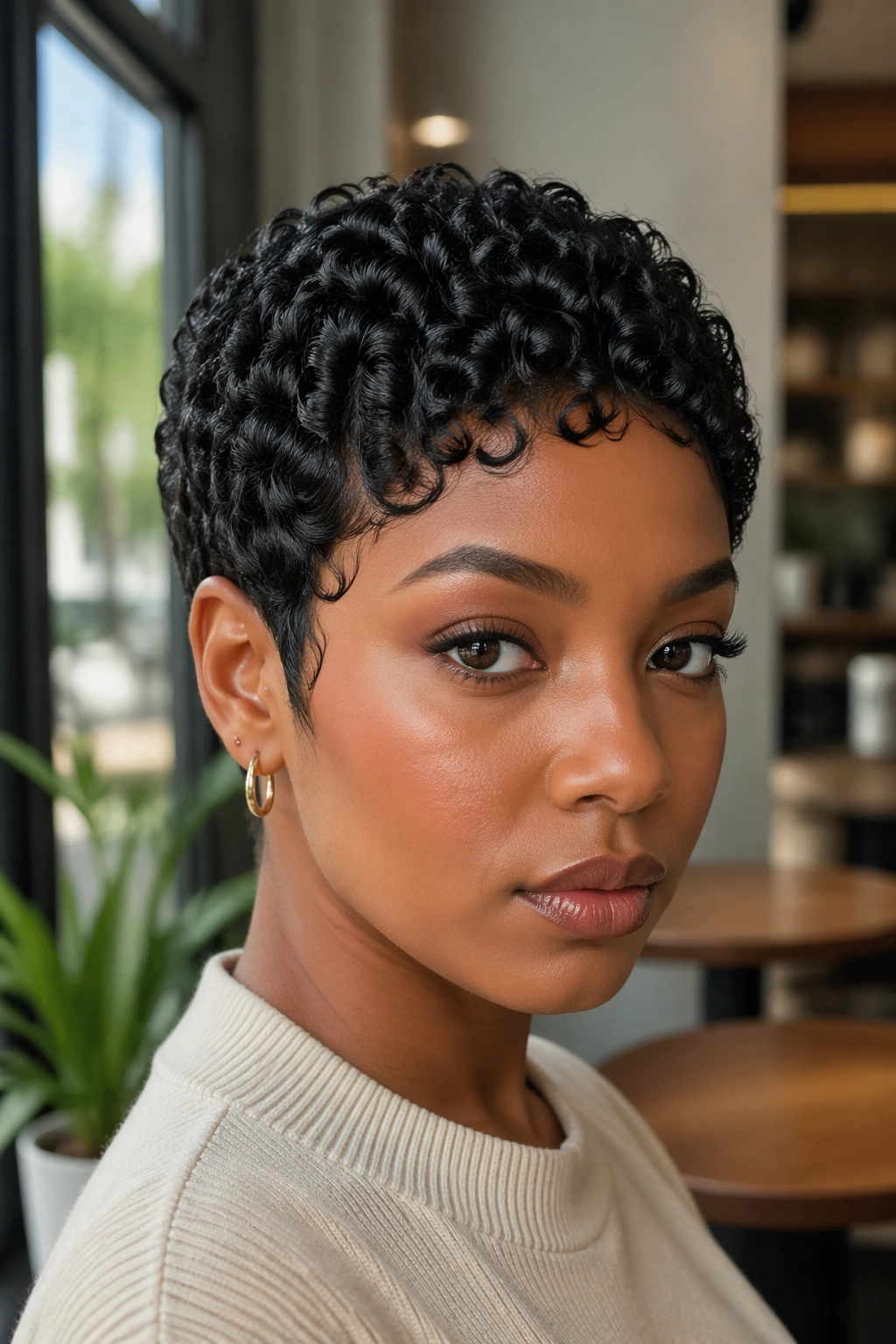
Why do finger coils look so polished on a short wig? Because the shape is controlled from the start. Each curl is grouped on purpose, which means the wig reads as neat instead of wild. On short lengths, that clean separation makes a big difference, especially around the front hairline where fuzz shows first.
The process is slower than a quick fluff, but it pays off. On human hair wigs, a light leave-in and a little styling cream help the coils hold. On synthetic wigs, use only the products the fiber can handle or you’ll end up with build-up that dulls the shine. Either way, the curls should dry in place before you touch them again.
How to Set the Coils
- Separate a small section about the width of a pencil.
- Twist the curl around your finger until it springs back.
- Release it gently and leave it alone.
- Repeat only where the wig looks sparse or uneven.
The beauty of this style is the precision. It looks tidy up close, and from a distance it reads as a smooth, shaped crop. That’s a rare combination.
9. Asymmetrical Curly Cut

I like an asymmetrical cut more than I probably should. One side grazing the cheekbone, the other sitting a little shorter, the line of the curl moving diagonally across the face — it has attitude without needing a lot of accessories. If a straight bob can feel strict, an asymmetrical curly wig feels like it has a pulse.
The cut works because curls hide the small unevenness that might look harsh on straight hair. A slight difference in length becomes part of the shape instead of a mistake. That’s useful on wigs, where the density can sometimes be too uniform. The asymmetry breaks the block up.
This style is a smart pick if you want your wig to look custom. It also helps when one side of the cap lies flatter than the other, which happens more often than people admit. Instead of fighting the difference, let it become the style.
I’d avoid over-styling the longer side. Keep the curls soft and let them fall. The whole point is movement, not precision surgery.
10. Half-Up Crown Puff
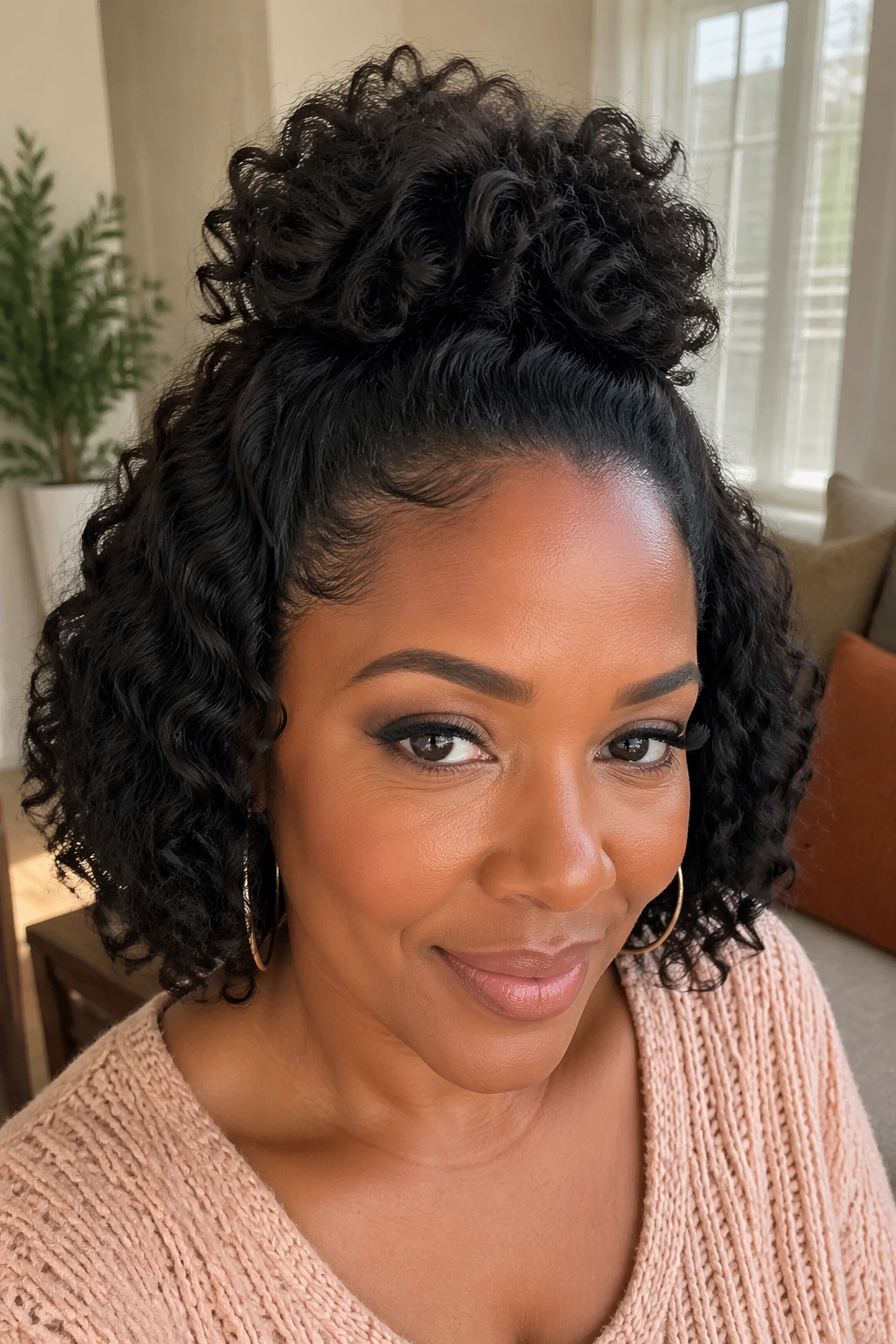
Picture a short curly wig that stays off your forehead but still has a little lift at the top. That’s the half-up crown puff, and it’s useful in a way people underestimate. It gives structure without hiding the curl pattern, which is the sweet spot for a short length.
The easiest version starts by sectioning the top third of the wig from temple to temple. Pull that section up gently — not tight — and secure it with a small elastic, clip, or soft band. Then fan the puff out just enough to show shape. Leave the bottom curls loose. If the bottom is pinned too, the style loses its softness.
This one is great when the wig feels too full at the sides or the front curls keep falling into your face. It also works on second-day wear when the top needs a reset but the rest still looks good. A tiny mist of water at the crown usually helps more than extra product.
There’s no need to make the puff perfect. A little unevenness makes it look less staged.
11. Curly Bob With Curtain Bangs

A short curly wig with curtain bangs has a very specific charm: it opens the face in the middle and softens the sides without making the wig look trimmed down to nothing. The bangs split lightly at the brow or temple, then drift into the rest of the curls. It’s a flattering shape, but the real value is how easy it is to live with.
The front pieces need to be long enough to bend away from the face without sticking straight out. That’s the part people get wrong. If the bangs are too short, they spring up and look separate from the rest of the wig. If they’re too long, they land in the eyes. The sweet spot is right around the eyebrow or just below it, depending on curl tightness.
A small round brush can help if the wig is human hair, but fingers work better for synthetic hair. Push the bangs apart at the center, then shape the outer curl line with a little mousse. The rest of the wig should stay loose and airy.
This style feels soft, familiar, and easy to wear on a regular day.
12. Slicked-Back Edges and Soft Curls
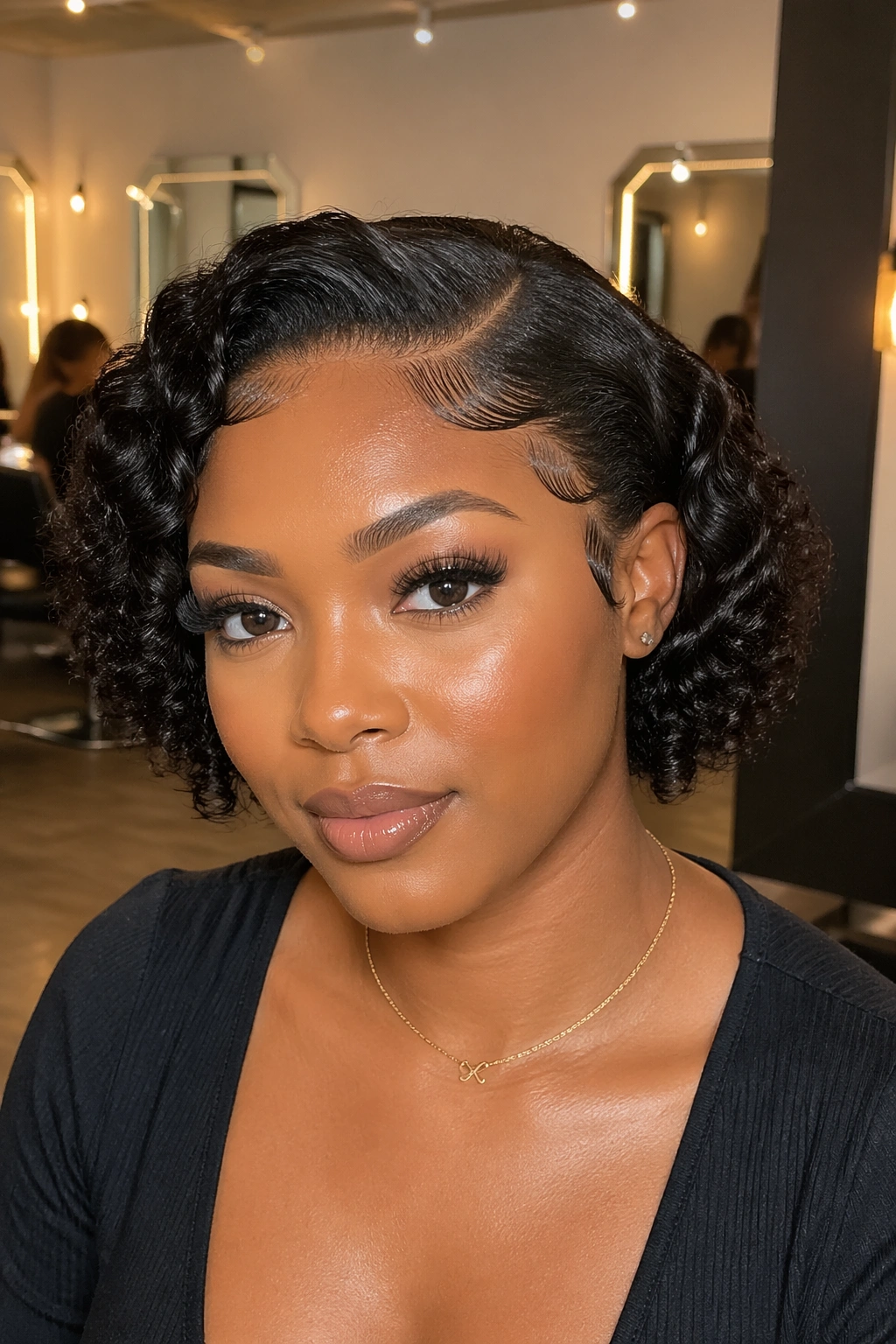
A lot of people overdo edges on short wigs. They lay everything down until the front looks painted on, and the whole thing loses its softness. I prefer a lighter hand. Slicked-back edges with soft curls let the hairline look tidy while the rest of the wig keeps its texture.
The contrast is what makes it work. The front is smooth, maybe even a little glossy, but the curls behind it stay loose and touchable. That combination keeps the style from becoming too busy. It also helps the wig sit closer to the head, which matters if the cap feels a bit roomy.
Use edge control sparingly. A thin layer is enough. A toothbrush or small edge brush can lay down the first inch or so near the hairline, and then you stop. No need to drag the product halfway back. That’s where the style turns stiff.
This is a good option if the wig has a slightly frayed front or if the lace needs help blending in. Clean edges make the rest of the curl pattern look more expensive.
13. Tuck-Behind One Side
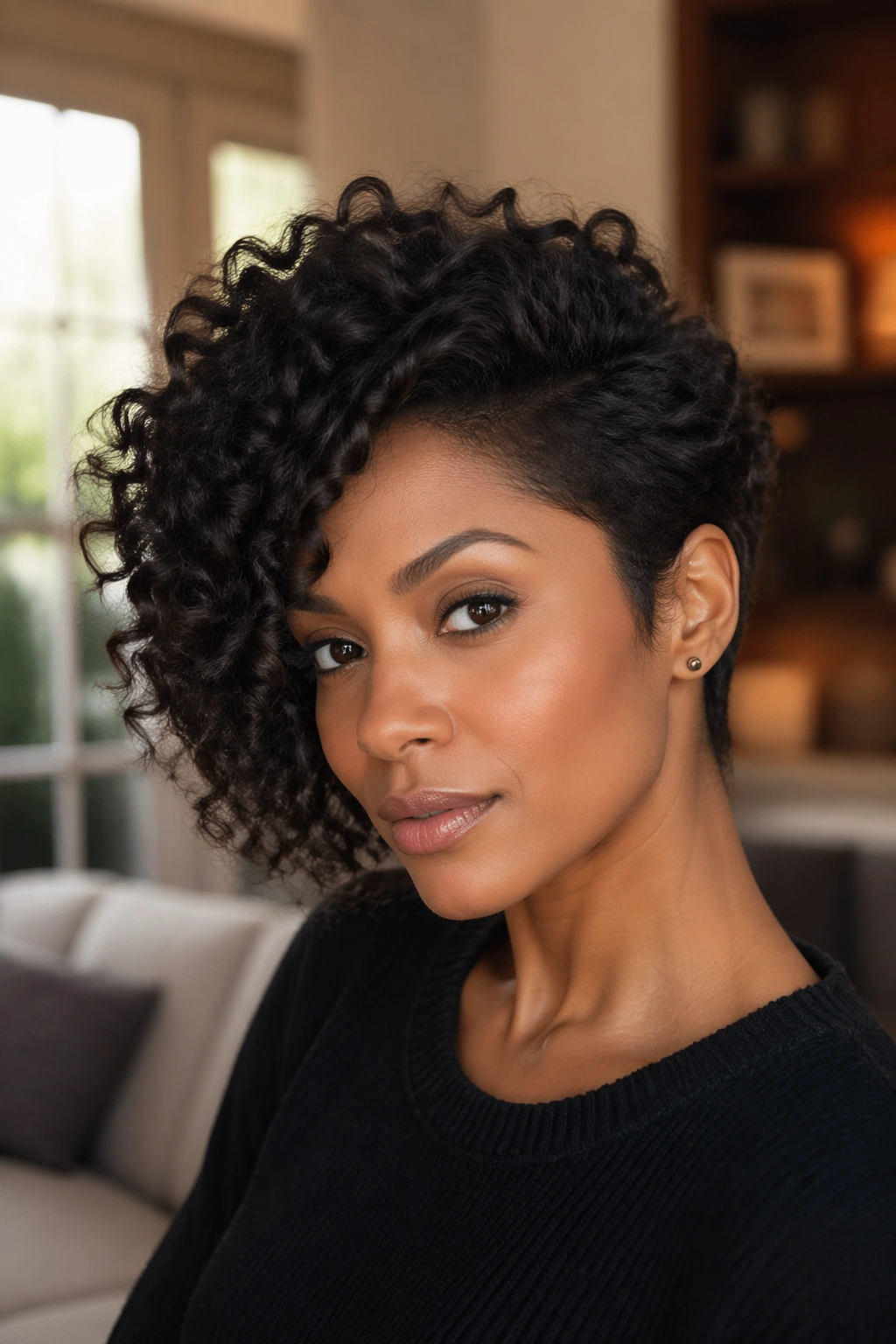
Some looks get better the moment one side goes behind the ear. That’s the whole idea here. A tuck-behind-one-side style creates instant asymmetry, shows off a cheekbone or an earring, and makes a short curly wig feel less heavy around the face. It’s simple, but the effect is strong.
Why the Tuck Changes the Whole Shape
The tucked side opens up the line of the jaw. The loose side keeps the volume. Together, they make the wig look styled, not just worn. It also helps if the front curls are a little too bulky or if the part is not sitting quite right.
A few details make the difference:
- Use a tiny pin under the tuck if the hair is slippery
- Keep the loose side fluffy, not stretched flat
- Let the front curl fall forward a little
- Match the tuck with one statement earring if you like that look
I reach for this style when I want something fast and clean. It’s not flashy. It just works, which is often better.
14. Accessory-Forward Headband Style

Short curly wig hairstyles and headbands get along better than people think, as long as the band doesn’t crush the curls. A satin band, a slim metal band, or even a patterned scarf can change the whole mood of the wig in thirty seconds. The trick is choosing an accessory that supports the shape instead of flattening it.
A wide satin band can hide a rough lace line and keep the front smooth. A narrow band sits closer to the crown and lets the curls puff a little more. Scarves are useful when the wig needs a color lift or when you want the front to feel less exposed. I’m partial to a folded scarf tied low at the nape because it gives the style some softness without stealing the show.
This style is also practical on days when the front of the wig refuses to behave. Pull the curls back a touch, set the band where the cap feels secure, and let the rest fall naturally. That’s enough.
Accessories should look chosen, not added as a rescue mission. Big difference.
15. Soft Tousled Day-After Curl Shape

A short curly wig does not need to look perfect every time you put it on. Sometimes the best shape is the one that looks a little broken in. The soft tousled day-after style uses that second-day texture on purpose: less sharp definition, more loose movement, and a slightly lived-in finish that feels easy to wear.
What makes it work is restraint. Mist the wig lightly with water, scrunch the curls from the ends upward, and separate only the curls that have fused together too much. Then stop. Seriously. If you keep touching it, the whole shape starts to frizz and lose the soft outline that makes this style appealing in the first place.
This is the look I’d choose for errands, casual meetings, or any day when I want the wig to feel friendly instead of formal. It’s especially good on synthetic wigs that hold a curl pattern well, because the texture stays visible even after a bit of wear.
A short curly wig looks best when it still looks like hair, not a project.
Final Thoughts
Short curly wig hairstyles work best when the shape fits the curl, not when the curl is forced into something it never wanted to be. A tapered pixie, a side sweep, a rounded afro, or a soft shag all depend on the same idea: give the curls enough structure to look intentional, then leave room for movement.
The styles that last are usually the ones that do one thing well. Clean part. Controlled sides. A little height. A little softness. That’s enough.
If a wig feels off, don’t rush to add more product. Change the silhouette first. That tiny shift — a side tuck, a deeper part, a pinned side, a looser crown — usually does more than another layer of mousse ever will.