



Curly hair can make color look richer than it does on straight strands. It can also make a bad dye job look louder, which is why the strongest curly hair color ideas are about placement as much as shade.
That matters.
A curl bends light. A coil hides depth. A loose wave can swallow one flat color and make it look heavy, while a few warm ribbons or a deeper root can make the same cut look fuller and more alive. That’s the part people miss when they bring in a straight-hair reference photo and expect the same result on a twist-out.
I’ve always liked color on curls when it leaves room for movement. Honey, copper, burgundy, smoky silver—these shades tend to look better when they’re painted with some breathing room instead of shoved right up to the scalp.
So the 15 ideas below lean into that. Some are low-drama, some are loud, and a couple need toner, gloss, or a good moisturizing mask to stay on track. A few are quiet at first and then change completely once the curls dry, which is honestly the fun part.
1. Honey Balayage for Curly Hair That Wants More Depth
Honey balayage is one of the easiest ways to make curls look thicker. The warmth sits inside the bend of the hair and gives each ringlet a little more shape, so the eye stops reading one big brown mass and starts seeing movement.
It works especially well when the light pieces are painted through the mid-lengths and ends, not blasted from root to tip. Leaving the top 1 to 2 inches darker keeps the cut from looking stripey, and it gives the style a little shadow, which curly hair needs more than people think.
What to ask for
- Hand-painted pieces through the outer layer and around the face.
- A soft root shadow so the top doesn’t look flat.
- Honey tones that stay golden rather than orange-gold.
- A gloss at the end if your curls pull dull after lifting.
If your hair already leans warm, stay on the gold side of honey. Too much copper can read brassy fast, especially on tighter curl patterns where the light catches in little flashes instead of one smooth sheet.
My one big rule: keep the brightest pieces away from the root unless you want maintenance to become your hobby.
2. Chocolate Cherry Brown
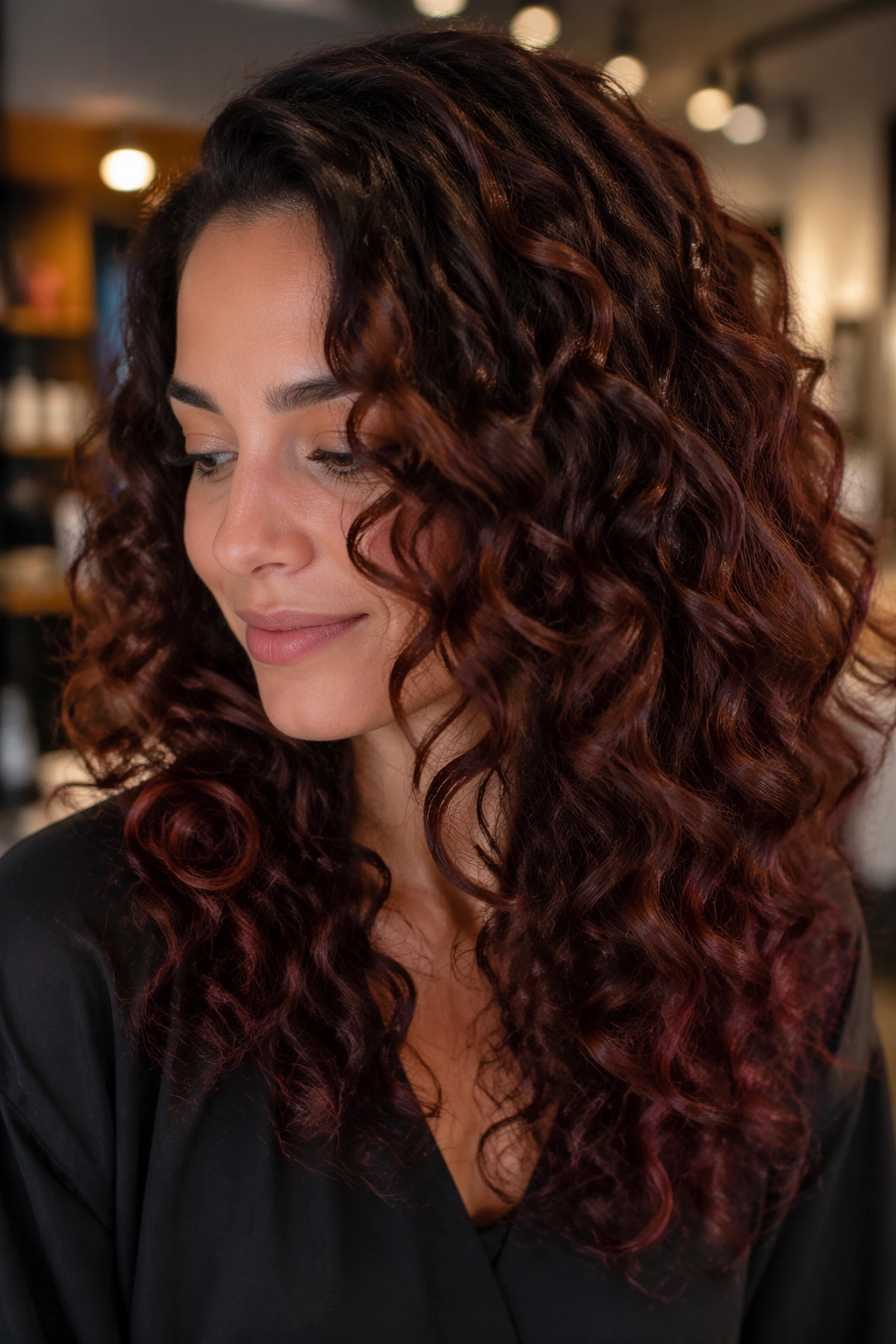
Why does chocolate cherry brown look so rich on curls? Because the red-violet undertone shows up when the hair bends, not all at once. That gives the color a darker, deeper feel than a flat brown, and curls are one of the few textures that can wear it without it looking loud.
Why it flatters curls
The chocolate base keeps things grounded. The cherry tone slips through the mid-lengths and ends, where ringlets and coils naturally separate, so the red shows up in little flashes instead of turning the whole head into one red block. That’s a good thing. It looks more expensive, if you want the honest version.
What to ask for at the chair
- A neutral chocolate base with a cherry glaze.
- Red-violet added through the lengths, not only on the surface.
- A demi-permanent formula if you want softer fade-out.
- Cool water rinses if you hate watching red wash down the drain too quickly.
This color is a smart pick if you want depth without going black. It also works when your curls are a little dry, because the darker base hides rough ends better than a pale tone does.
3. Copper Penny
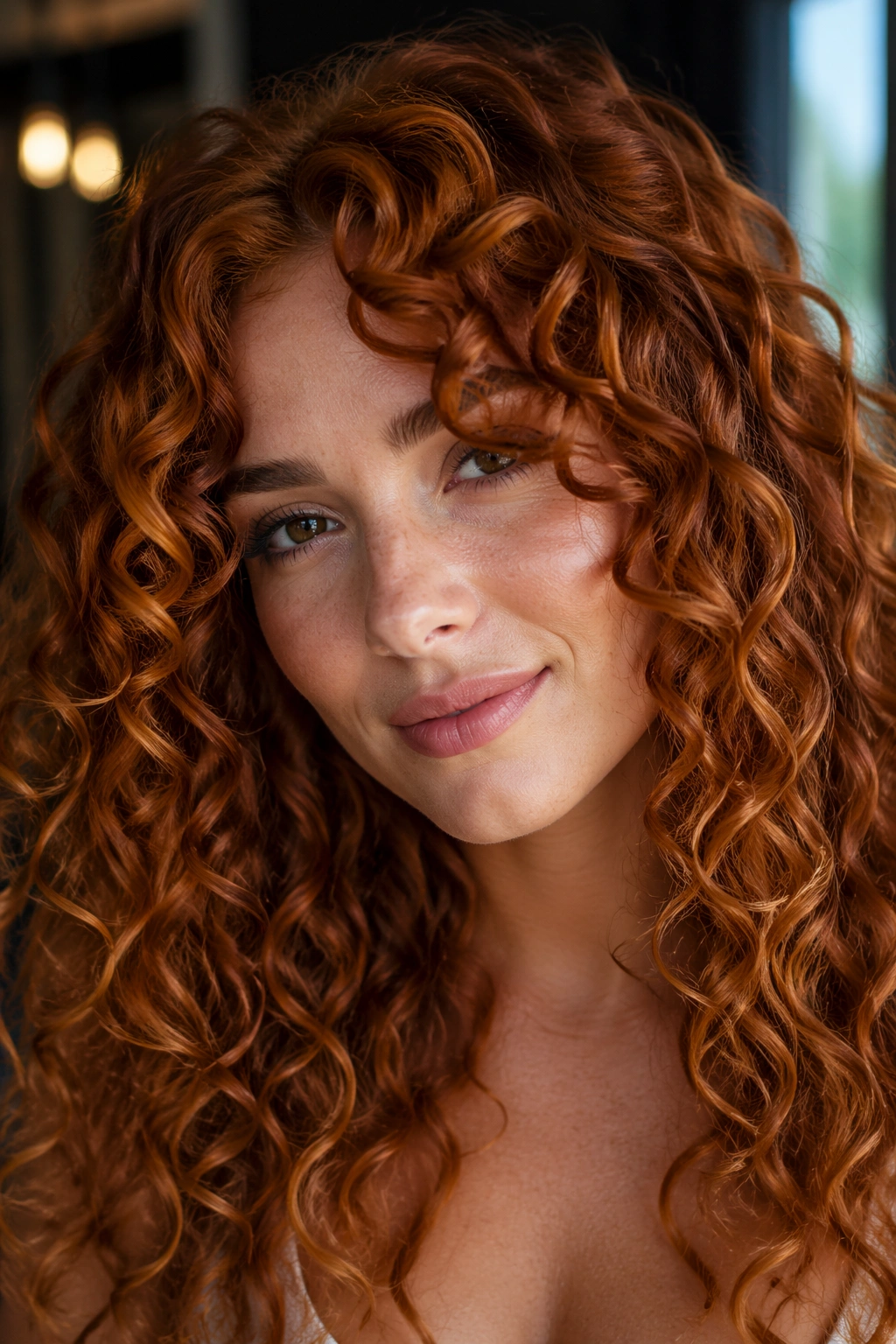
Copper penny is for the person who wants a visible change without jumping all the way to neon red. It has more heat than strawberry blonde and more life than a standard auburn, which is why it can look fresh on curls that need a little spark.
The trick is to keep the copper clean. Too much brown mixed in and it turns muddy. Too much orange and it starts to look costume-y. The sweet spot is a clear, metallic copper with a touch of gold underneath, especially if your curl pattern is loose enough to show movement.
Who it suits
- Medium to dark brown hair that can be lifted a few levels.
- Curls with a lot of shape, because the color plays off the texture.
- People who like warm shades and don’t mind a bit of upkeep.
What to watch for
- Faded copper can go dull if you wash with harsh shampoo.
- Porous ends grab red fast, so test a strand first if your hair is damaged.
- A copper conditioner or color mask can keep the tone from sliding into orange-brown.
Copper is one of those shades that looks even better when it softens a little. The first day can be bright; the second week often looks better.
4. Caramel Ribbon Highlights
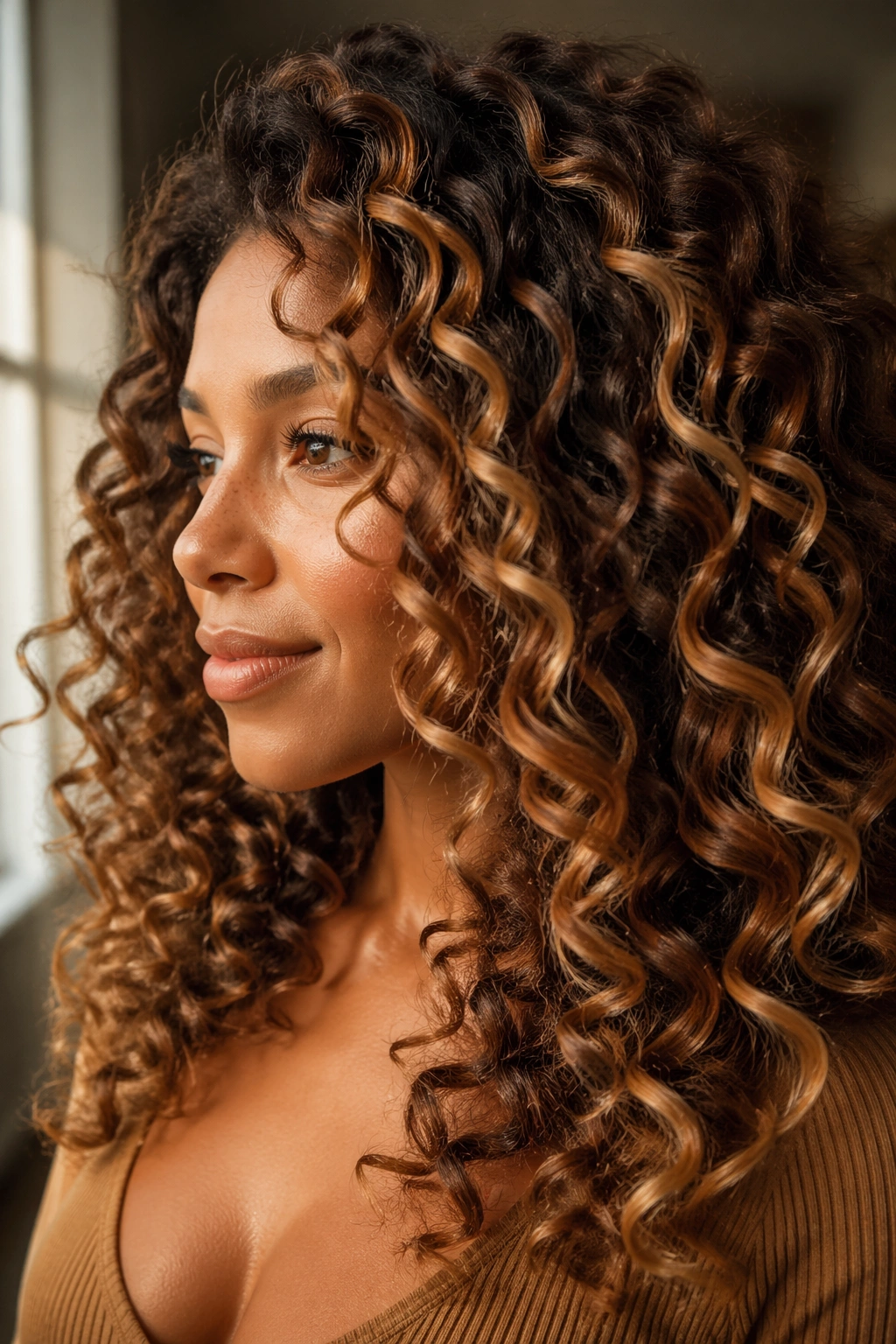
Chunky highlights are not the only way to get brightness. Caramel ribbons can do more with less, especially on curls that need dimension but not a full blonding job.
The placement matters more than the number of foils. I like caramel pieces that follow the natural S-shape of the curl, because the highlight shows up when the curl twists and hides when it turns away. That gives you movement without a harsh stripe pattern.
Where the ribbons should land
Put the lightest pieces on the top layer, around the face, and through a few ends that are already visible when the hair springs up. Underlayer brightness can be nice too, but if you overdo it, the color gets noisy. Soft is better here.
How to keep the root soft
A root shadow, even a small one, keeps the style from looking patched. Ask for a colorist to feather the lightener so there’s no blunt line where the dark stops and the caramel starts. That line is what makes a lot of curly highlights look dated.
A good caramel ribbon job should look like sun, not stripes. That’s the whole point.
5. Jet Black Gloss
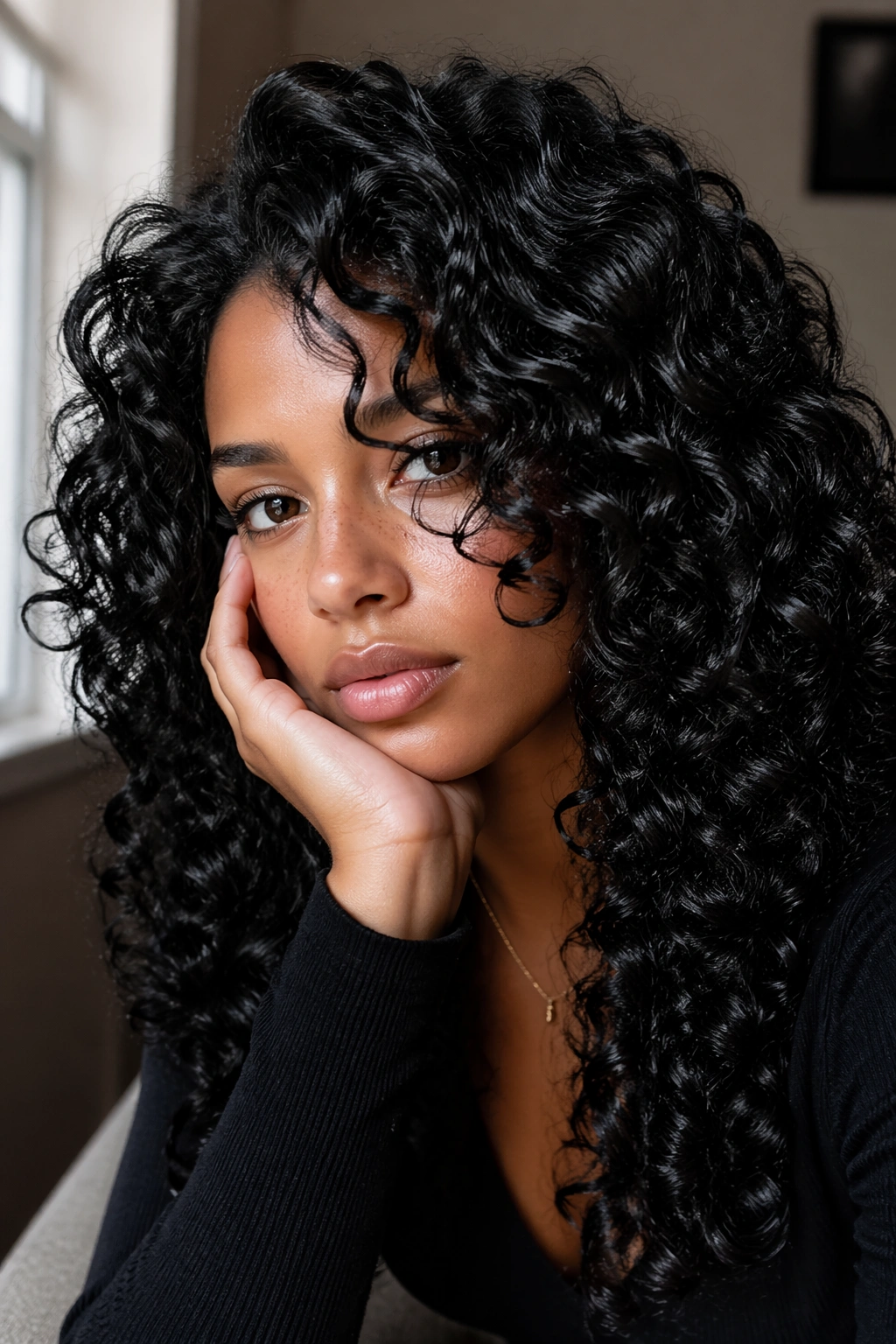
Jet black is not boring on curls.
It can look like ink. It can look sleek. It can make a wash-and-go look sharper because the shape of each curl reads more clearly against the dark surface. On a layered cut, black gives you a hard contrast between the light and shadow inside the coil, which is part of why it can look so striking.
The catch is weight. If the cut is too blunt or too wide at the bottom, jet black can turn the whole style heavy. Layers fix a lot of that. So does shine. A black gloss or a blue-black glaze gives you depth without the harsh, flat look that a one-step permanent black can leave behind.
Black also shows everything in a strange way. Frizz reads softer, but dryness reads louder. That means moisture matters more than most people expect. A leave-in with slip, a light oil on the ends, and a satin bonnet at night do a lot here.
If you want low-maintenance color, black is tempting. It’s also hard to change later. That part deserves respect.
6. Rose Gold Tint
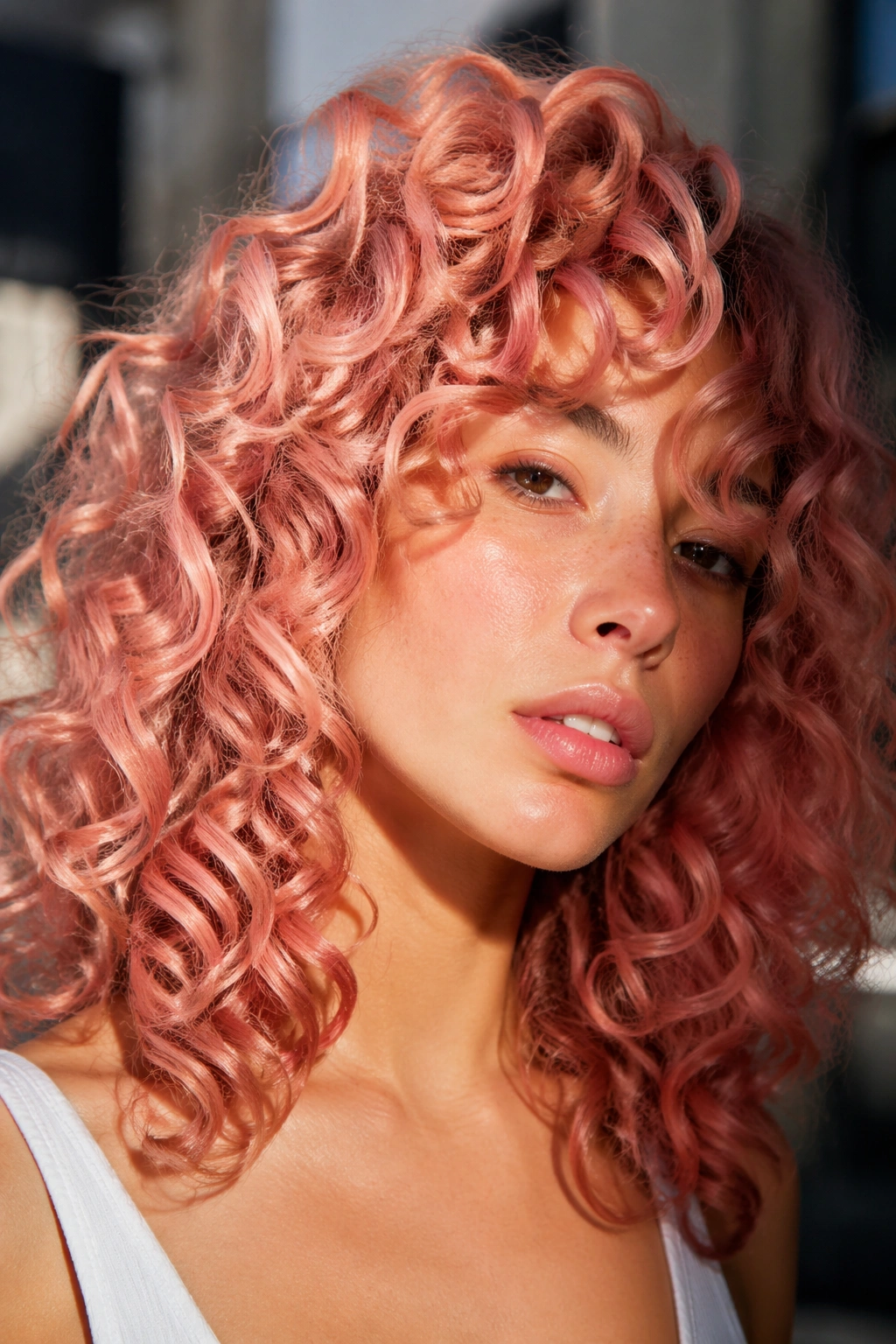
Rose gold on curls has a little personality shift built into it. Under warm light, it can lean peachy. Under cooler light, it reads pinker. That movement is what makes it fun, and it’s also why it can go wrong if the base is too dark or too uneven.
The shade works best on hair that has already been lifted to a pale blonde or light beige. On darker curls, rose gold needs a lot more prep, and the result can come out muddy if the lift isn’t clean. That’s not a moral failure. It just means the color is honest about the base it’s sitting on.
The main thing to know
- Rose gold is usually a deposit-first shade, not a heavy permanent one.
- Porous curls can grab it fast.
- A gloss or semi-permanent color usually keeps the result softer.
I like this tone on bouncy curls and soft coils because it gives the hair a warm glow without going full copper. It also fades in a way that’s easier to live with than bright pink. You end up with peach, then soft blonde, then a warm beige if you let it go long enough.
Not every pastel needs to scream. This one doesn’t.
7. Platinum Money Pieces for Curly Hair
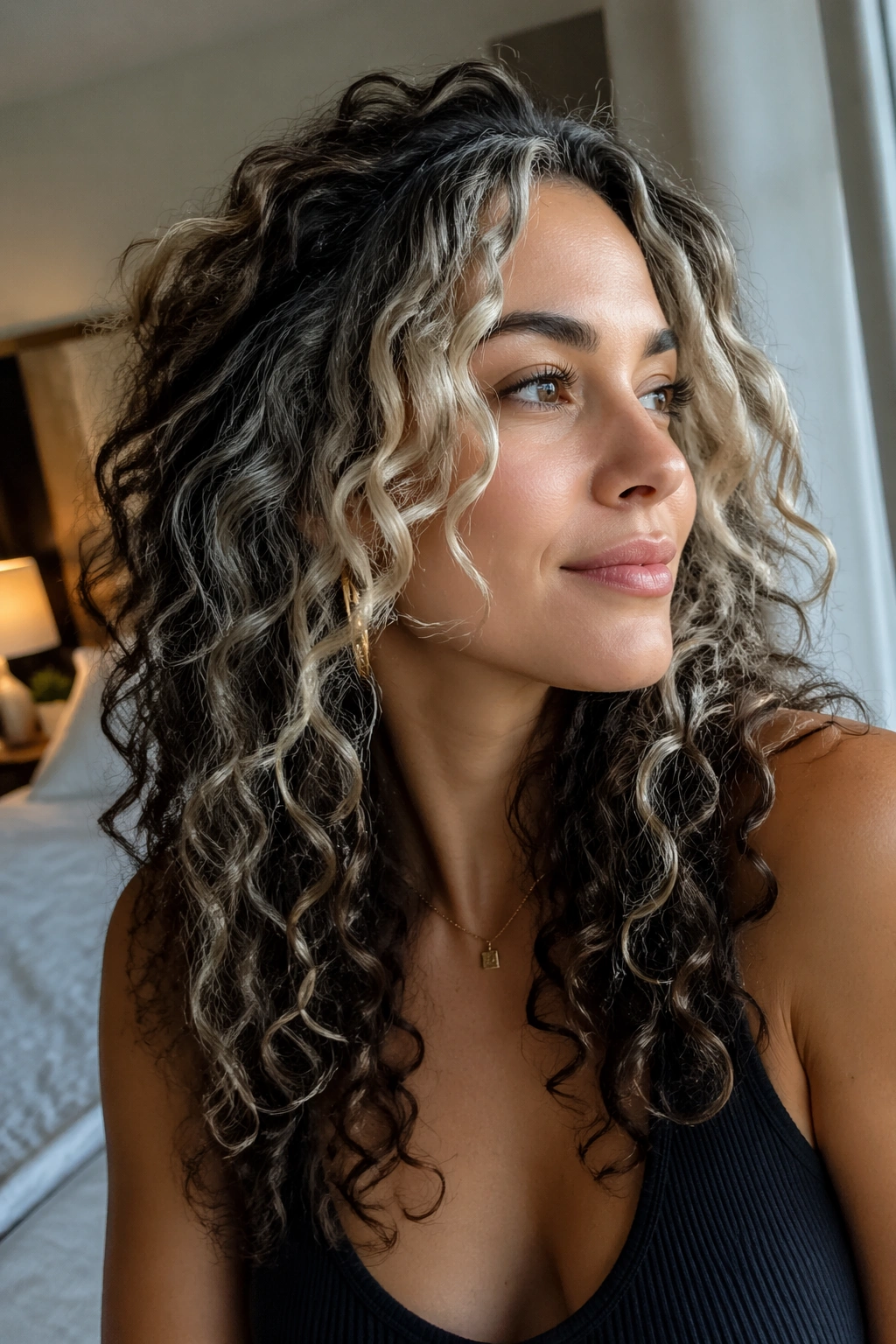
Can curls handle platinum without looking harsh? Yes, but only when you keep it limited.
Platinum money pieces work because they frame the face and catch the eye before the rest of the style even registers. On curly hair, that front brightness lands inside the curve of the curl, so it looks intentional instead of random. The rest of the head can stay deeper, which keeps the style from feeling over-bleached.
Where the lightest pieces should go
Ask for a small halo around the face, not a full crown of lightness. Two to four foils can be enough on shorter cuts. On longer hair, a few carefully placed pieces near the cheekbones and the outer fringe do the job.
What makes this version worth the trouble
- The darker base keeps the pattern visible.
- The platinum pieces make curls pop in photos and in real life.
- A limited amount of lightener is easier to maintain than a full-head blonding service.
If you do go this route, keep purple shampoo light. Once a week is usually plenty. Too much and the hair can take on a dry, chalky cast that no curl cream can fully hide. Platinum looks sharp only when the curl still feels soft.
8. Espresso with Auburn Ends
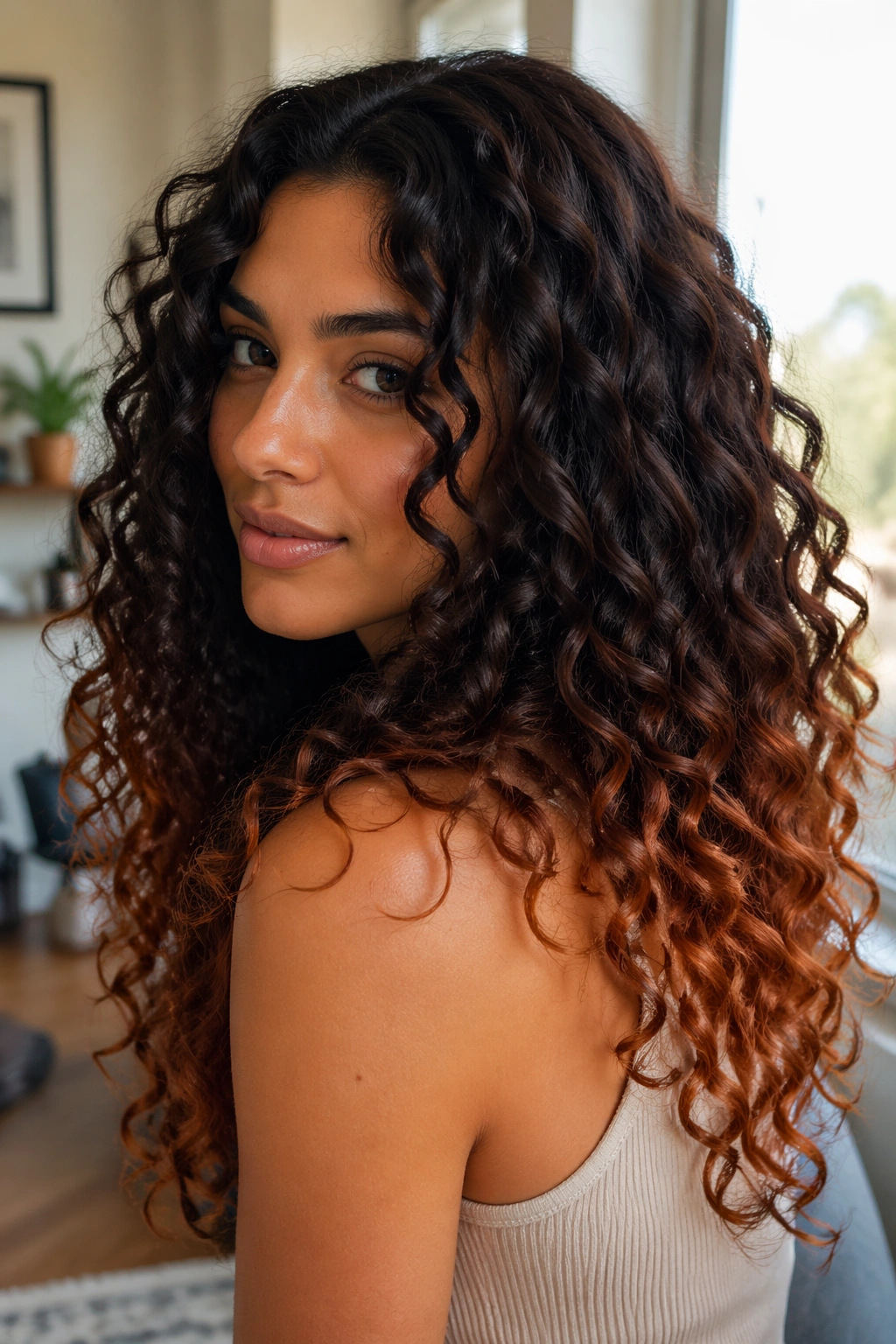
If ombré feels too obvious, espresso fading into auburn is the smarter move. The base stays deep and rich, which lets the ends do the talking without turning the whole style into a color block.
This is one of my favorite curly hair color ideas for long curls because the fade follows the length of the curl pattern instead of fighting it. The darker root and mid-shaft keep the silhouette clean, while the auburn ends add warmth that shows up when the hair swings.
The color shift does not have to be dramatic. A level 3 or 4 espresso root with a level 5 to 6 auburn end can be enough. That range keeps the style wearable and still gives you something to look at. If the auburn is too bright, the ends can look disconnected. If it is too muted, the whole effect disappears.
This is a good option when you want color that grows out softly. The root blend is forgiving. The only part that asks for attention is the ends, and that is the part most curls need moisture on anyway.
9. Mushroom Brown
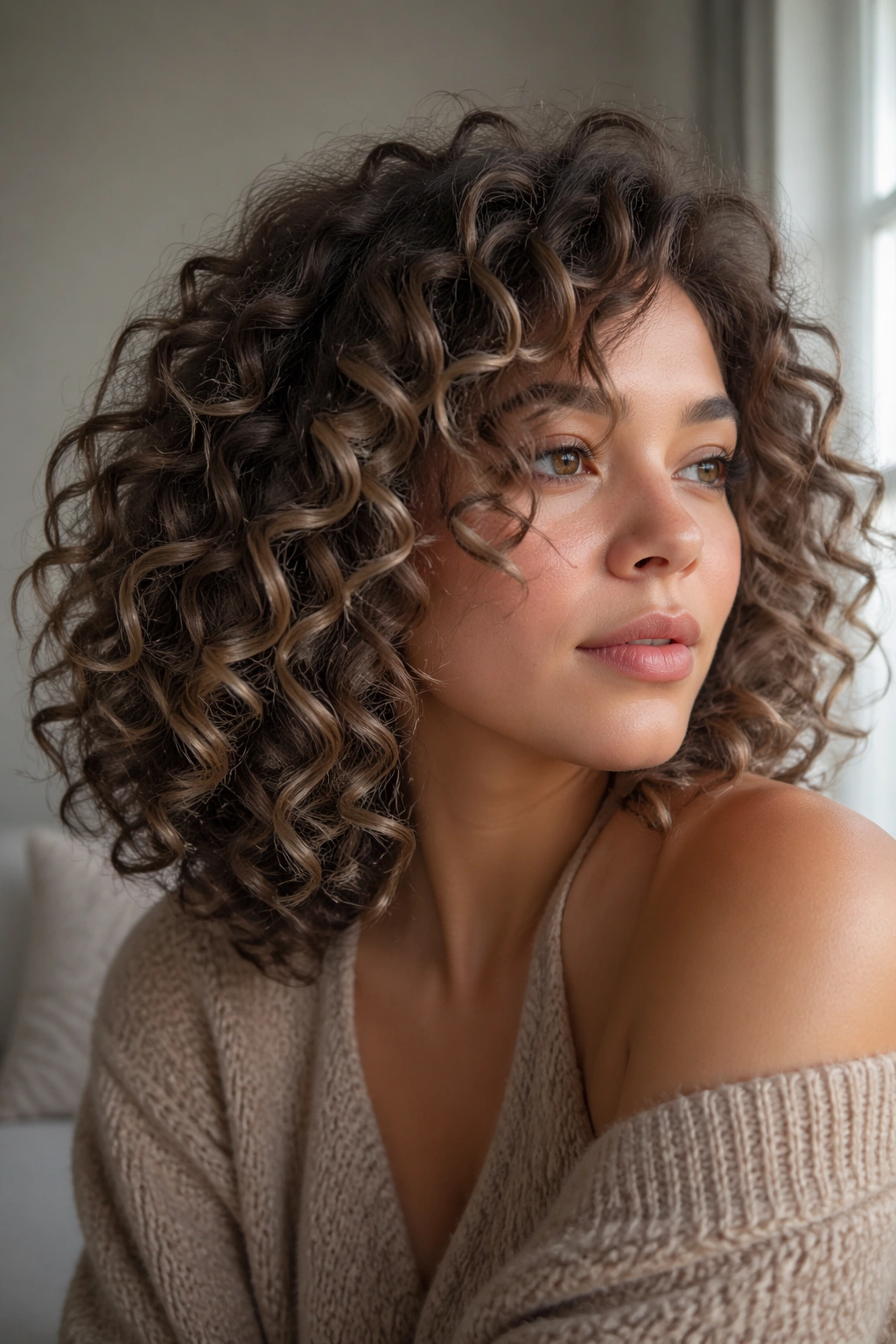
Mushroom brown gets a bad rap because people hear “brown” and expect warm. This shade is cooler, softer, and a little smoky, with taupe and beige layered into the brown so it doesn’t swing orange.
On curls, that coolness can be a gift. Many brunettes pull copper when they lighten, and mushroom brown keeps that from taking over. It also plays well with thick hair because the muted tone lets the curl shape do the work.
What makes it different
- Taupe and ash sit under the brown.
- The finish is cooler than caramel and softer than black.
- It hides unwanted warmth without looking flat.
How to keep it from going muddy
If the base is too dark and the toner is too gray, the whole thing can lose life. That is the line to watch. Ask for soft beige, not hard ash, if your skin leans warm or olive. And if your hair turns orange between appointments, use a blue shampoo sparingly, not every wash.
Mushroom brown is one of those colors that looks quiet in a swatch and expensive on a full head of curls. Strange, but true.
10. Burgundy Wine
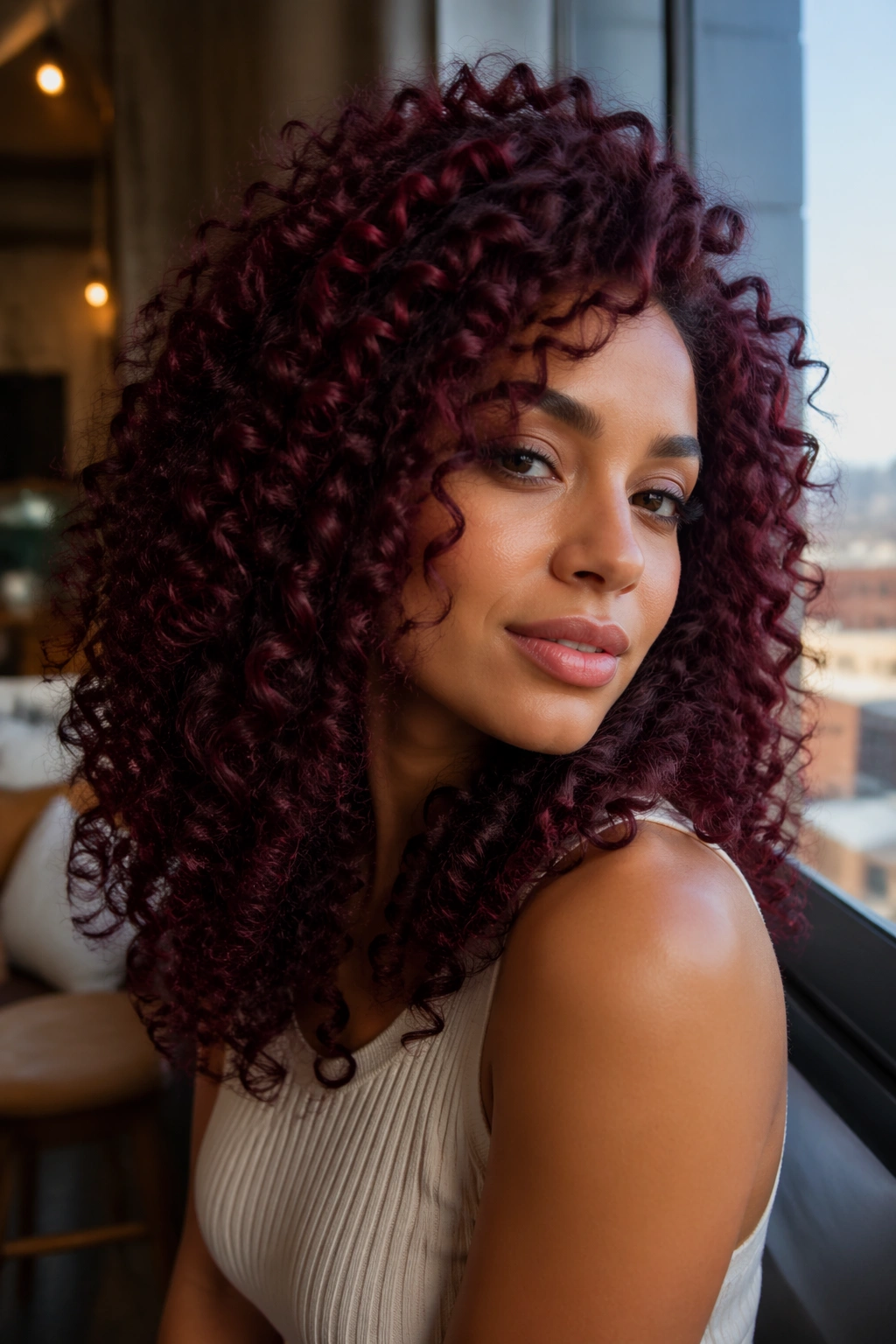
Burgundy wine has range. Indoors, it can read deep plum-brown. In daylight, the red-violet opens up and you get that soft wine color that makes curls look dense and plush.
That shift is the reason it works so well on textured hair. The color is not sitting there as one flat note. It moves. A twist-out in burgundy wine looks deliberate even on day three, and a braid-out picks up the red around every bend.
This shade works on dark bases without much lightening, which is a big reason people keep coming back to it. On lighter hair, it can turn brighter and more jewel-toned. Both versions are good, just different. If your hair is porous, a burgundy gloss may stain more deeply than you expect, so test a small section first.
The maintenance is straightforward, which I appreciate. Use a sulfate-free shampoo, keep hot tools low, and refresh with a color-depositing conditioner if the red starts to fade into flat brown. Burgundy should look rich, not dusty.
11. Sandy Beige Blonde
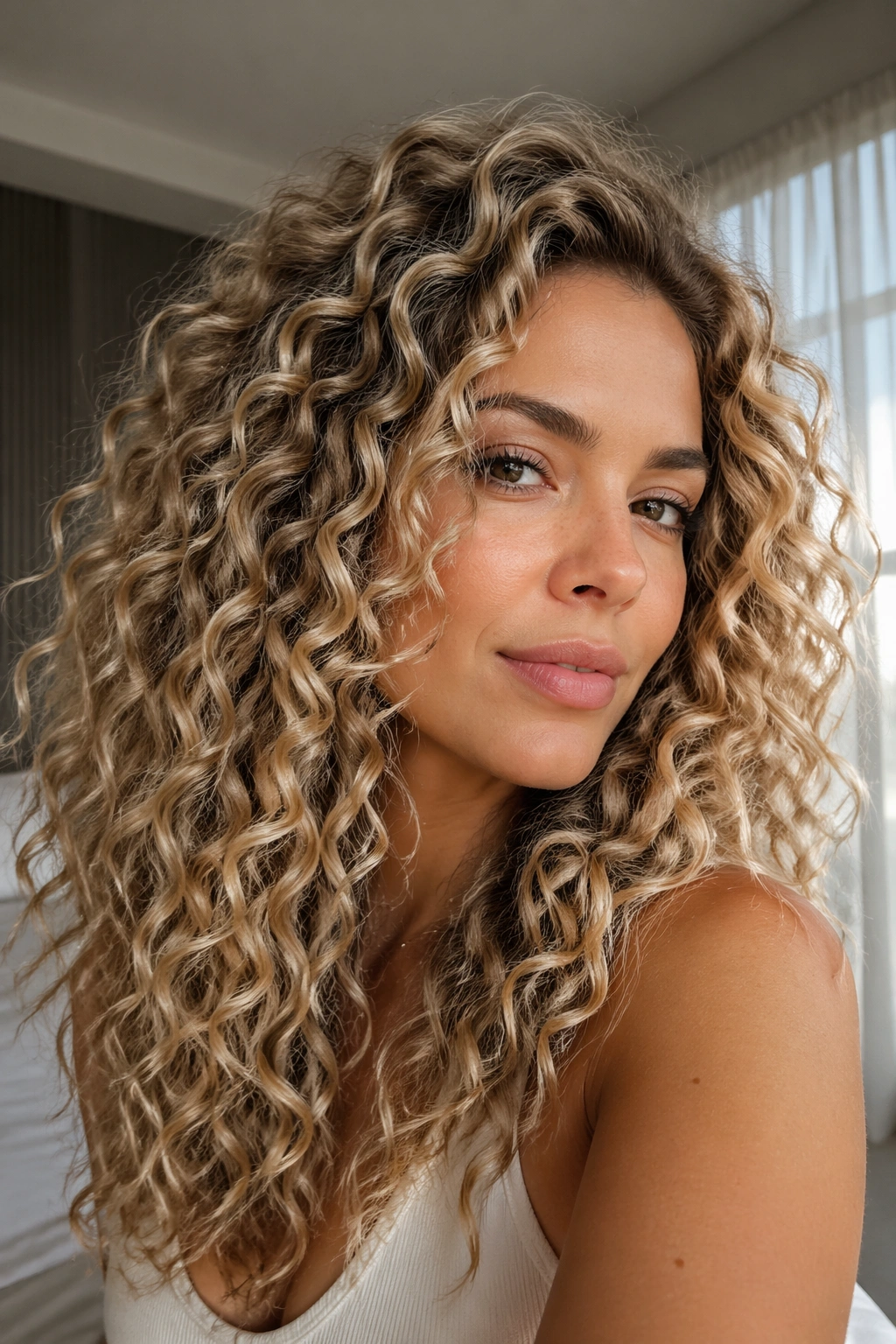
Want blonde without the brassy fight? Sandy beige is the calmer road.
It sits between gold and ash, which is why it tends to look softer on curls than icy blonde. The beige tone keeps the hair from turning yellow, while the sandy warmth stops it from looking gray or flat. On a curly cut, that balance matters because the light lands unevenly across the hair, and a harsh toner can make the ends look dull fast.
What to ask for
- A shadow root a shade or two deeper than the blonde.
- Beige toner instead of a stark silver toner.
- Soft, scattered light pieces rather than one solid block of pale color.
The other reason this shade works is the movement it creates. Curls need contrast to show off their shape, and sandy beige gives that without screaming from across the room. It’s not the highest-drama blonde, but it’s one of the easiest to wear if you want the hair to look soft, not crunchy.
Keep a moisturizing mask in the rotation. Blonde on curls tends to dry the ends first, and beige loses its charm if the hair starts to frizz into a cloud.
12. Teal Peekaboo Panels
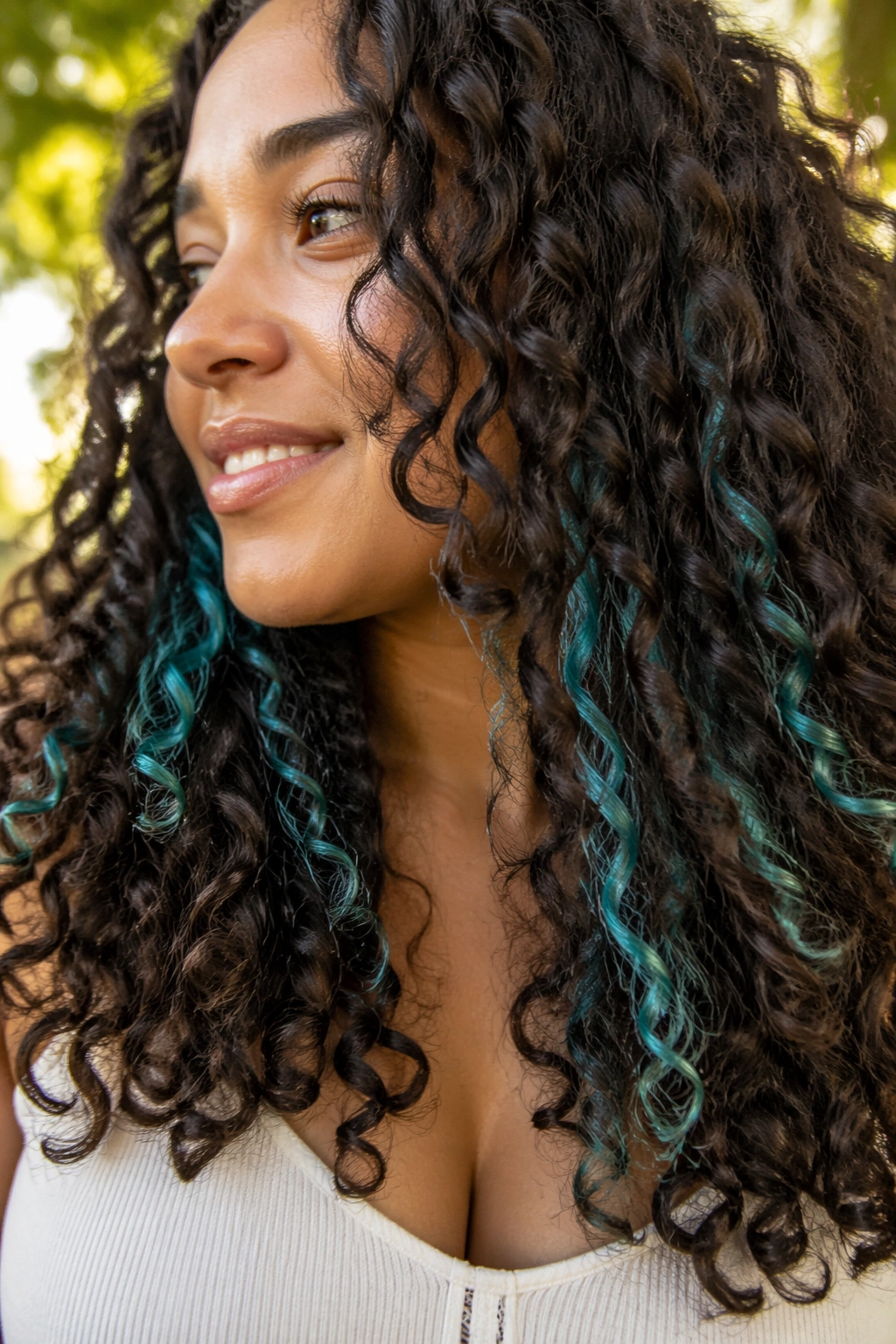
Teal peekaboo panels are for the person who wants color with a little mischief in it.
You keep the top layer natural or close to natural, then hide the bold shade underneath. When the curls move, or when you tuck the hair behind one ear, the teal flashes through. It feels playful without taking over the whole head, which is handy if your workplace is conservative or you just don’t want a full-head fantasy color.
The placement is the whole trick. Put the panels under the crown, near the nape, or through the inner sides where they only show when the curls separate. On a curly cut, that hidden layer can be surprisingly visible, so keep the panels narrow if you want a cleaner look.
How to hide the bold stuff
- Keep the top layer untouched or only lightly tinted.
- Pre-lighten the underlayer to a pale yellow before teal goes on.
- Use a color-depositing conditioner to refresh the blue-green tone between salon visits.
Teal fades faster than brown shades, no surprise there. But on curls, that fade can still look good if it stays in the blue-green family instead of going gray. That’s one of the reasons peekaboo color is so forgiving.
13. Golden Bronde for Curly Hair Without the Brass
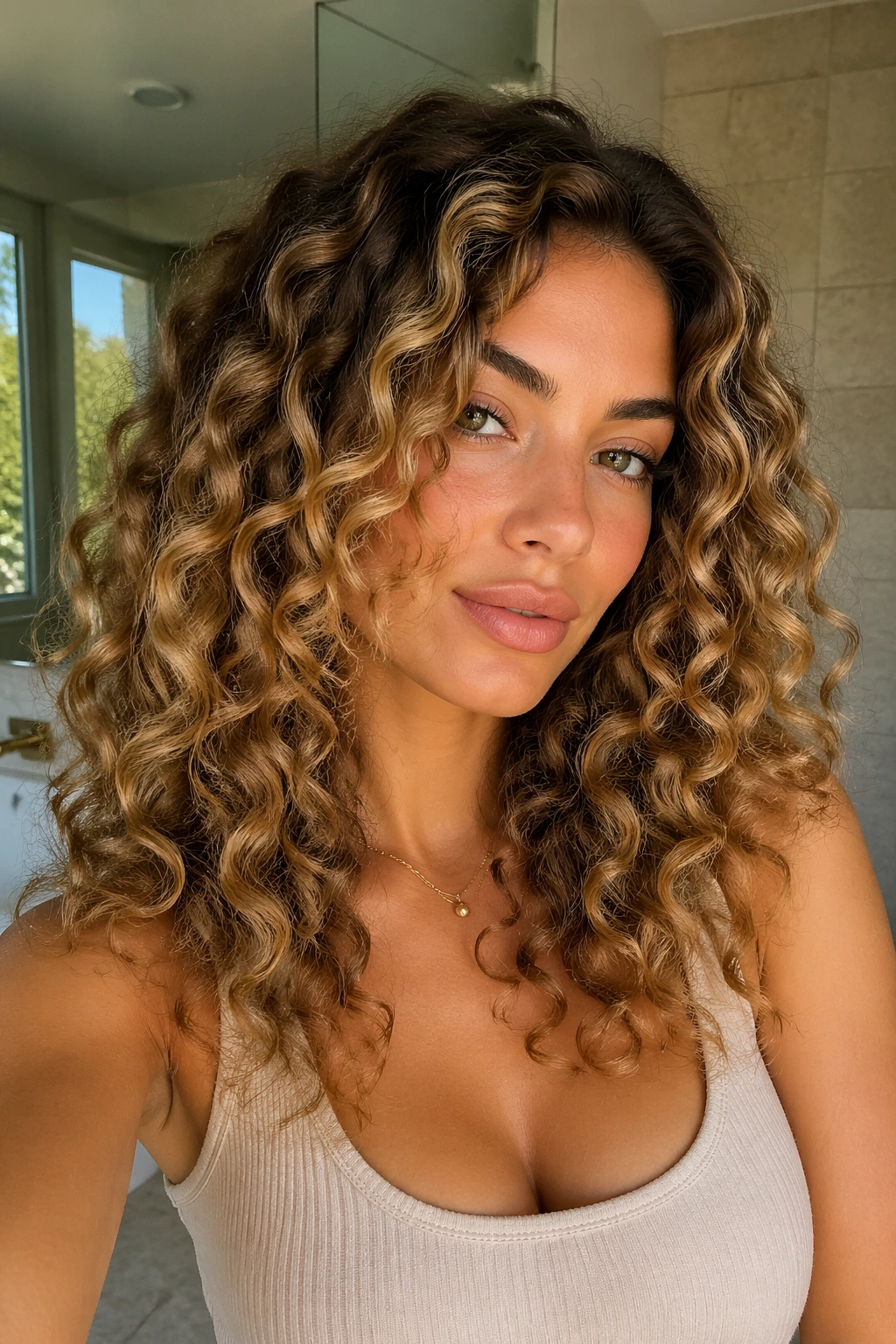
Golden bronde sits between blonde and brunette without making you choose sides. I like it on curls because it keeps the hair from looking too dark or too pale. The mix of caramel, wheat, and light brown gives the pattern a soft contrast that reads clearly even when the curls shrink up.
What matters here is the balance. If the blonde pieces are too bright, the look starts to separate. If the brown pieces are too dark, the dimension disappears. The sweet spot is a few shades apart, not ten. That keeps the style easy on the eye and easier on the hair, too.
Why curls like this mix
A bronde color job gives the curl shape a little outline. Fine curls get more visual fullness. Thicker curls get a softer edge. It’s one of those shades that looks polished without needing a huge color commitment.
Where the light pieces should land
- Around the face, where curls bounce first.
- Across the outer layer, not buried too deep.
- Through the ends of longer curls so the color moves when the hair moves.
If you want one shade that stays friendly through grow-out, this is high on the list. It doesn’t fight the curl pattern, and it doesn’t ask for a full reset every time the roots show.
14. Smoky Silver
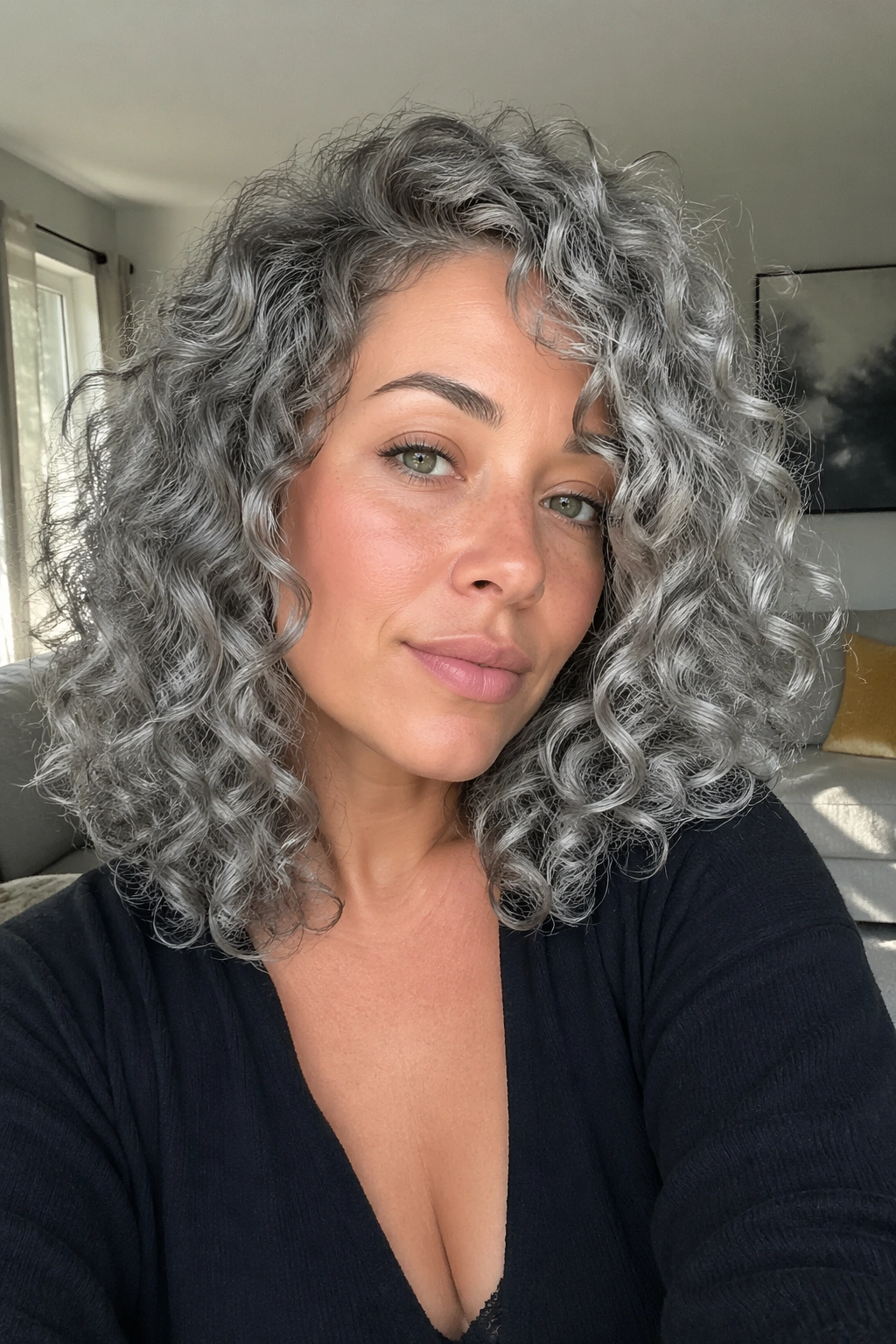
Smoky silver looks like cool metal under soft light and pearl in daylight. On curls, that shift is half the appeal. The tone can feel sleek one moment and misty the next, which keeps it from looking one-note.
The base has to be clean, though. Leftover yellow or gold in the hair will throw the whole shade off and push it toward beige or khaki instead of silver. That is why smoky silver usually needs a careful lightening step first, followed by a toner that leans cool without going flat.
The part most people miss
Silver is not a shortcut color. It needs more prep than people expect, and curly hair can be more fragile after lightening, so the order matters: lift carefully, tone carefully, then protect the curl pattern with moisture.
How to keep it from turning flat
- Use a gentle shampoo and wash less often if you can.
- Keep one moisture mask in the weekly routine.
- Add a tiny bit of shine serum to the ends, not the roots.
I like smoky silver on layered curls because the shadows between the layers keep the shade from looking washed out. Without that depth, silver can go flat fast. With it, the color has a little movement, even when the hair is still.
15. Pastel Peach Wash
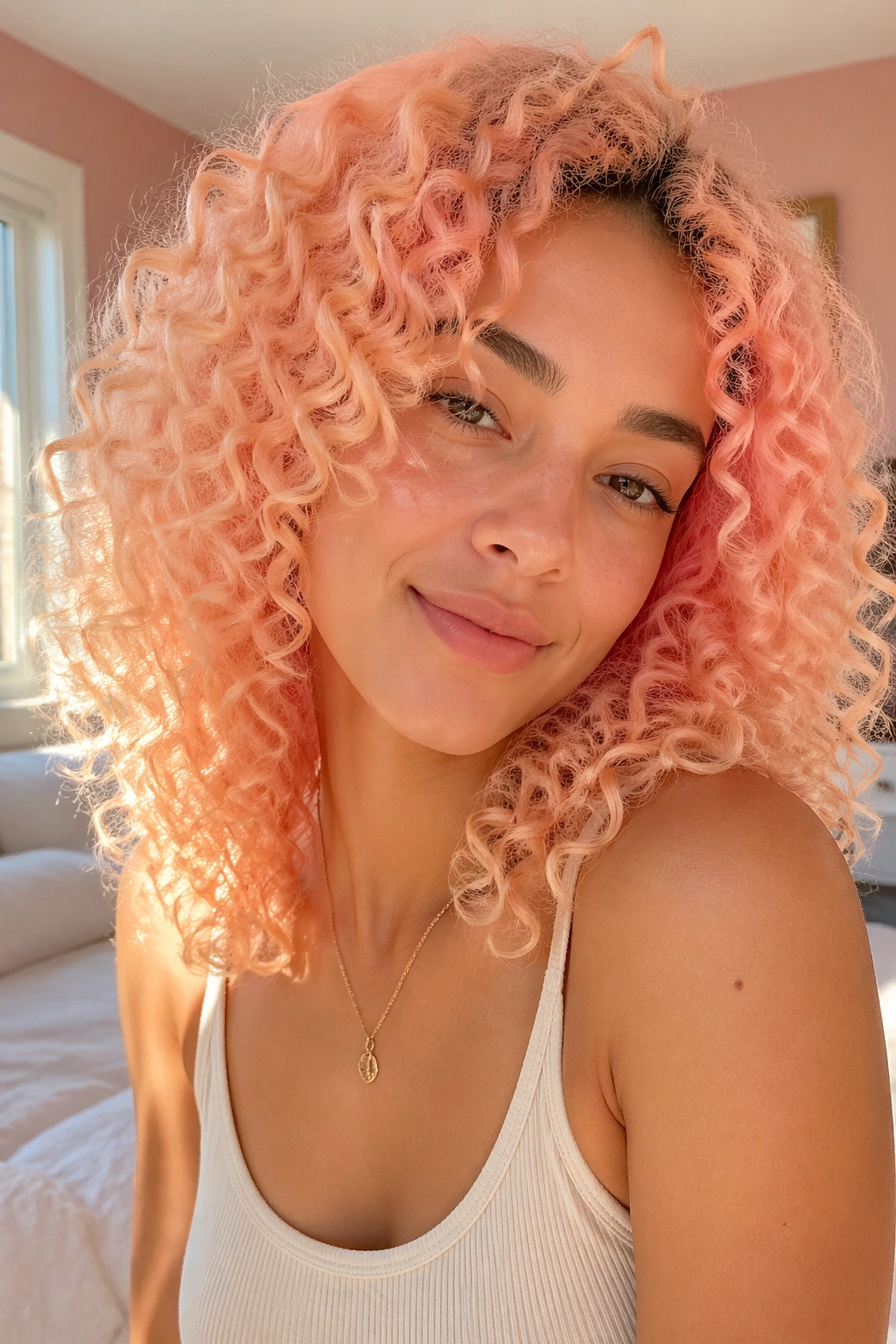
Pastel peach is the easiest pastel for curls to wear because it fades into warm blonde instead of looking like leftover dye. That sounds like a small thing. It isn’t.
On a curly head, soft peach brings out the shape without getting brittle-looking. It reads gentle, not childish, when the tone is kept warm and the base is light enough. If the hair starts from a pale blonde or a very light copper, the result can be dreamy. On darker curls, it needs more lift than most people expect, and that is where damage risk climbs.
Best use cases
- Light blonde or light beige bases.
- Shorter curls where the color can be refreshed often.
- People who want a playful shade that fades cleanly.
What to ask for
- A peach gloss instead of a hard permanent color.
- A warm peach, not a salmon-pink tone.
- A trim before coloring if the ends are already rough.
This one does not love neglect. If you wash with hot water or strip the hair with harsh shampoo, it will fade fast. Still, the fade can be graceful, and that’s why I keep coming back to it. Peach gives curls a soft edge that a lot of louder colors never manage.
Final Thoughts
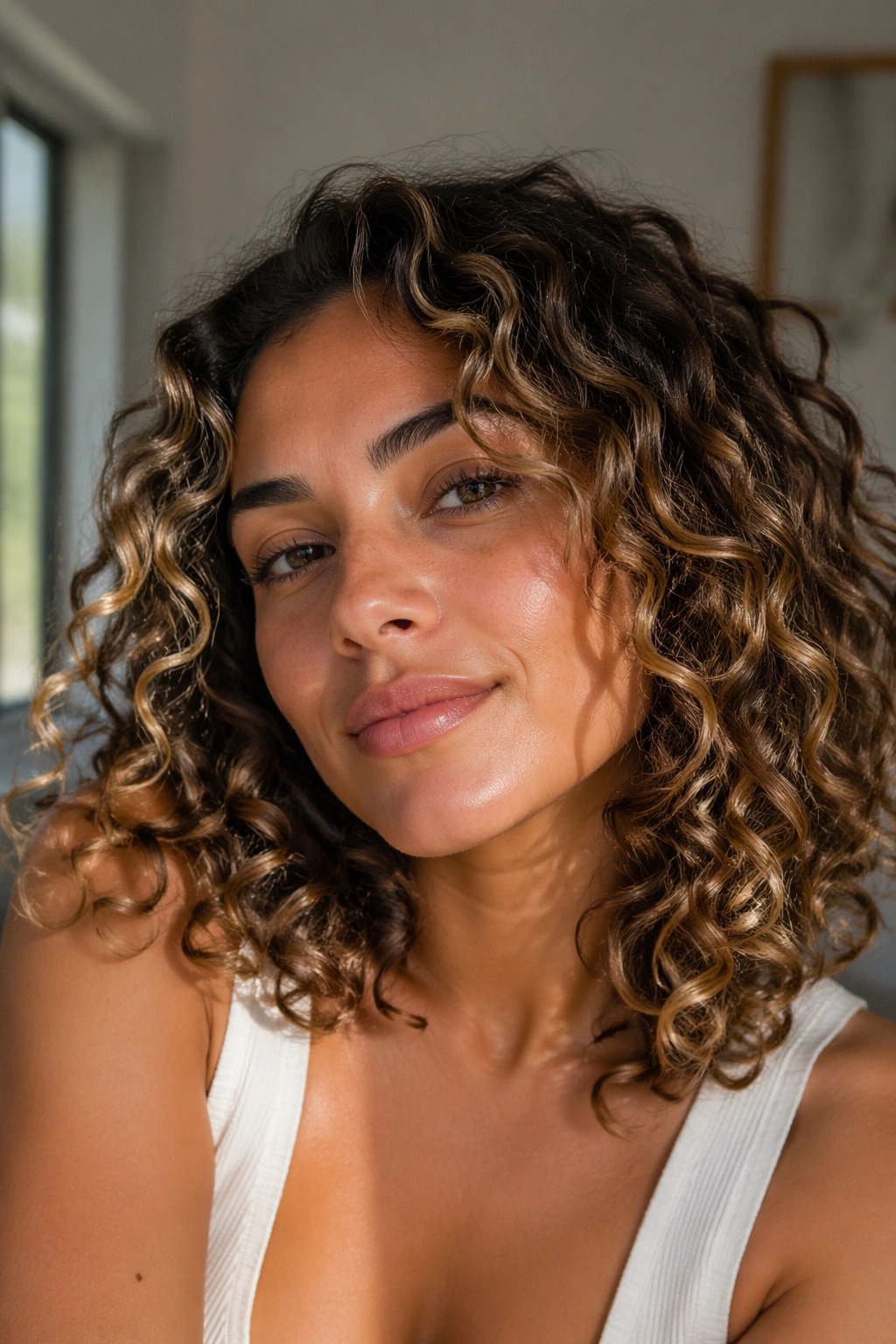
The strongest curly hair color ideas usually do one thing well: they respect the curl pattern instead of painting over it. Warm dimension, root depth, and placement that follows the way your hair bends often look better than a single flat shade.
If you want the least fuss, start with honey balayage, chocolate cherry brown, or golden bronde. If you want more drama, teal peekaboo panels, platinum money pieces, or smoky silver will give you that punch without making the entire head shout.
Bring your stylist clear photos, sure. Bring a little honesty too. Tell them how often you heat-style, how much fading you can live with, and whether you wear your curls defined, stretched, or tucked up most of the time. That’s where a good color choice starts feeling personal.
Good color on curls should move.
